 Skip to content
What Is Denim Fabric Made Of in Recycled and Circular Denim Fabrics?
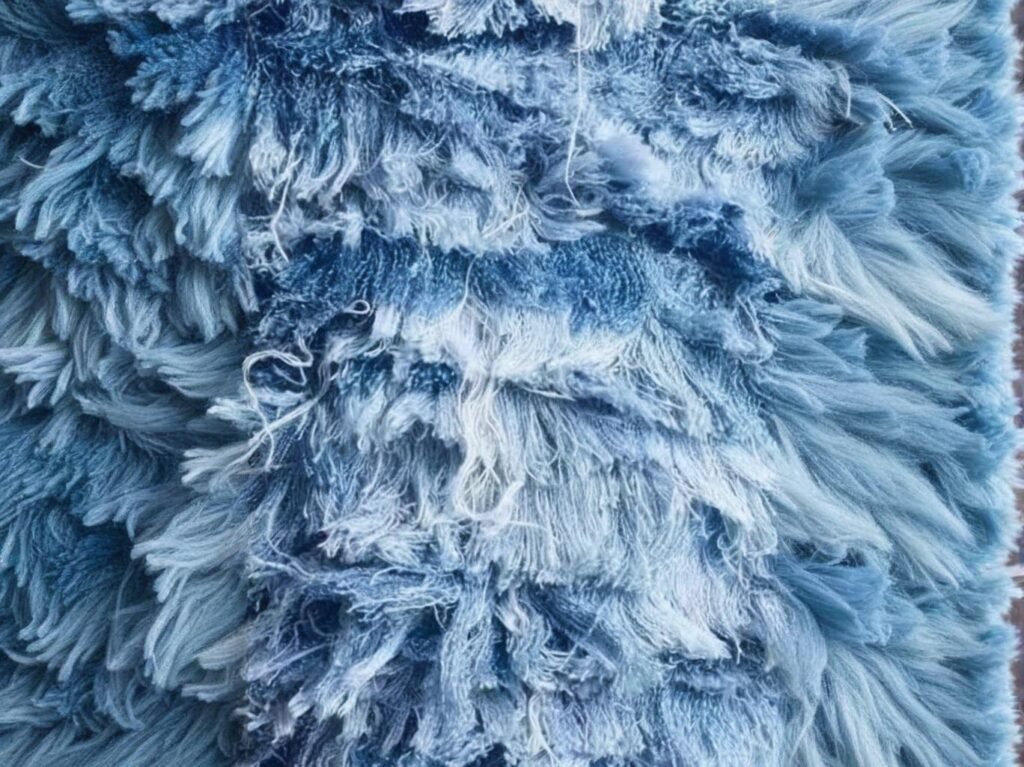
Recycled denim often gets talked about as if it were simply “old jeans made new again.” In reality, recycled and circular denim fabrics are some of the most technically demanding materials in modern textile manufacturing. They are not just about reusing fibers; they are about rebuilding performance, consistency, and appearance from materials that have already lived one life—or sometimes several.
This is where expectations and reality often diverge. Designers expect recycled denim to behave like virgin denim. Wearers expect the same comfort and durability. Manufacturers, meanwhile, must work with fibers that are shorter, weaker, and less predictable than new cotton. The success of recycled denim depends less on good intentions and more on intelligent fiber engineering. Recycled and circular denim fabrics are primarily made from recycled cotton fibers, often blended with virgin cotton, recycled polyester, and performance fibers such as elastane to restore strength, durability, and fit retention. Because recycled fibers are shorter and less uniform, modern recycled denim relies on carefully engineered blends and yarn structures to achieve consistent performance comparable to conventional denim.
One product developer put it bluntly: “Recycled denim doesn’t forgive bad engineering.” That’s exactly why understanding its fiber makeup matters.
What Is Recycled and Circular Denim Fabric Made of in Modern Manufacturing?
Recycled and circular denim fabrics are not simply “old jeans made new again.” In modern manufacturing, they are engineered hybrid textiles designed to balance sustainability goals with the mechanical realities of spinning, weaving, dyeing, and long-term wear. While marketing language often highlights recycled content percentages, real performance depends on how recycled fibers are combined with virgin materials and stabilized through yarn and fabric design.
At the fiber level, recycled denim is primarily built from recycled cotton, blended with virgin cotton, and frequently reinforced with recycled polyester or small amounts of elastane. This structure reflects a fundamental truth of textile engineering: recycling does not eliminate the need for high-quality cotton—it changes how cotton must be used.
Modern recycled denim is therefore less about purity and more about functional compromise. The goal is not to maximize recycled content at any cost, but to achieve the highest recycled ratio that still meets durability, appearance, and production reliability standards.
The Real Fiber Structure of Recycled Denim
Unlike virgin denim, which can be spun from long, uniform cotton fibers, recycled denim relies on fibers recovered from post-industrial cutting waste or post-consumer garments. These fibers have already lived one lifecycle, and that history shapes how they behave in spinning and weaving.
Core Fiber Components in Recycled Denim
| Fiber Component | Typical Role |
|---|---|
| Recycled cotton | Sustainability, reduced textile waste |
| Virgin cotton | Tensile strength, yarn stability |
| Recycled polyester | Durability, dimensional control |
| Elastane (optional) | Stretch and recovery |
Most commercially viable recycled denim fabrics are not 100% recycled fiber. Instead, they are intentionally blended constructions. Recycled cotton provides environmental value, but virgin cotton restores fiber length and strength. Recycled polyester improves abrasion resistance and reduces shrinkage, while elastane—when used—adds comfort and shape retention.
This hybrid approach allows recycled denim to perform reliably on modern high-speed looms and withstand repeated wear and washing.
Why Recycled Cotton Cannot Stand Alone
Mechanical recycling is currently the most common method used for denim fiber recovery. While effective at reducing waste, it introduces unavoidable changes to fiber quality.
During mechanical recycling, cotton fibers are:
- Torn apart during shredding
- Shortened significantly
- Mixed with residual dyes and impurities
- Less uniform in diameter and length
These changes lead to structural challenges at the yarn level.
Short, irregular fibers result in:
- Reduced yarn strength
- Increased surface hairiness
- Higher breakage rates during spinning and weaving
- Greater lint and dust generation
If recycled cotton is used alone, these weaknesses translate directly into production instability and fabric defects. Blending recycled cotton with virgin cotton restores spinnability by reintroducing longer fibers that bind the yarn together and distribute stress evenly.
In practice, virgin cotton acts as the structural backbone of recycled denim yarns.
Typical Recycled Content Ratios in Practice
While headline claims sometimes promote very high recycled percentages, most stable recycled denim programs fall within predictable ranges:
- 20–40% recycled cotton: Common starting point, high reliability
- 40–60% recycled cotton: Achievable with careful yarn engineering
- 60%+ recycled cotton: Possible, but requires lower fabric density, specialized spinning, and tighter quality control
Above certain thresholds, the trade-off between sustainability and durability becomes difficult to manage. Fabric strength drops, weaving speeds slow, and rejection rates increase.
This is why experienced manufacturers focus on workable ratios, not theoretical maximums.
The Role of Recycled Polyester in Recycled Denim
Recycled polyester plays a quiet but critical role in many modern recycled denim fabrics. While cotton contributes comfort and breathability, polyester contributes structural stability.
Recycled polyester helps:
- Increase tensile and tear strength
- Improve abrasion resistance
- Reduce shrinkage and distortion
- Maintain fabric shape after washing
Because polyester fibers are uniform and strong, even small percentages can significantly improve performance. This is especially important in recycled denim, where cotton fibers are already compromised by prior use.
From a circularity perspective, recycled polyester also extends garment lifespan, which reduces total environmental impact across multiple use cycles.
Elastane: Optional but Influential
Elastane is not required in recycled denim, but when included, it serves a very specific function. Even at low percentages, elastane improves:
- Stretch comfort
- Recovery after wear
- Resistance to bagging at knees and seat
However, elastane complicates recycling at end of life. Circular denim programs often limit elastane content or design garments so stretch components can be separated in future recycling processes.
This reflects a broader circular design philosophy: performance today must not block recyclability tomorrow.
Circular Denim vs Recycled Denim
The terms “recycled denim” and “circular denim” are often used interchangeably, but they describe different priorities.
| Term | What It Emphasizes |
|---|---|
| Recycled denim | Use of recycled fibers |
| Circular denim | Reuse plus future recyclability |
Recycled denim focuses on input materials—what the fabric is made from today. Circular denim looks further, asking how easily that fabric can be recycled again at the end of its next life.
Circular denim design typically involves:
- Mono-material or simplified fiber blends
- Reduced use of complex finishes
- Avoidance of hard-to-separate components
- Documentation of fiber composition for future recycling
In other words, circular denim is as much about design discipline as it is about fiber content.
Manufacturing Constraints Often Overlooked
From a factory perspective, recycled denim introduces constraints that do not exist with virgin materials. These include:
- Lower allowable loom speeds
- Higher yarn breakage monitoring
- Tighter humidity and tension control
- More conservative fabric densities
At SzoneierFabrics, recycled denim development usually begins with 20–40% recycled cotton. From there, ratios are adjusted based on yarn count, fabric weight, and intended end use. Higher recycled content is achievable, but only when yarn structure, weave density, and finishing processes are engineered together.
Attempting to increase recycled content without adjusting construction parameters often leads to unstable production and inconsistent quality.
Performance vs Sustainability: A Necessary Balance
A common misconception is that higher recycled content automatically equals better sustainability. In reality, fabrics that fail early or generate high waste during production can have a worse environmental footprint than slightly lower recycled alternatives that last longer.
True sustainability considers:
- Fiber sourcing
- Manufacturing efficiency
- Product lifespan
- End-of-life recyclability
Recycled denim that tears, distorts, or fades prematurely undermines its own environmental intent. That is why modern denim engineering focuses on balance rather than extremes.
What Buyers Should Really Ask
Instead of asking, “How recycled is this fabric?” more useful questions include:
- What recycled ratio is stable at scale?
- How does this blend perform after 50 washes?
- What is the expected garment lifespan?
- Can this fabric be recycled again in the future?
These questions shift the conversation from marketing claims to material reality.
Recycled and circular denim fabrics are not about maximizing recycled content at all costs. They are about identifying the highest workable ratio that still delivers reliable strength, consistent production, and acceptable longevity.
Modern recycled denim succeeds when sustainability goals are aligned with fiber physics and manufacturing constraints. When that balance is respected, recycled denim is not a compromise—it is a mature, engineered solution for responsible textile production.
Which Types of Recycled Fibers Are Most Commonly Used in Denim Production Today?
Modern recycled denim is not built around a single “green” fiber. Instead, it relies on strategic fiber combinations, each chosen to compensate for the weaknesses of the others. In real manufacturing environments, the most widely used recycled fibers are recycled cotton and recycled polyester, occasionally supported by niche recycled inputs in limited applications.
This dominance is not accidental. Denim is a high-stress fabric. It must withstand abrasion, washing, body movement, and long-term wear while maintaining shape and visual consistency. Not all recycled fibers can survive these demands at scale. The fibers that do are the ones that have earned a permanent place in modern denim programs.
Recycled fibers in denim are therefore not about ideology. They are about function. Each recycled fiber solves a specific problem, and understanding those roles is essential for brands that want both sustainability credibility and commercial reliability.
Understanding Recycled Fiber Choices in Denim
From a sourcing perspective, recycled fiber selection begins with one hard truth: recycled fibers behave differently from virgin fibers. They are shorter, less uniform, and more variable. Successful denim construction acknowledges these limitations instead of trying to disguise them.
Recycled Cotton: The Foundation
Recycled cotton is the most common recycled input in denim and the most visible from a sustainability storytelling perspective. It directly reduces cotton waste and lowers demand for virgin cotton farming.
Recycled cotton is typically sourced from:
- Pre-consumer cutting waste generated during garment manufacturing
- Post-consumer denim garments collected and mechanically recycled
| Attribute | Recycled Cotton Behavior |
|---|---|
| Fiber length | Shorter |
| Strength | Lower |
| Dye uptake | Less consistent |
| Sustainability value | High |
Mechanically recycled cotton fibers are broken down during shredding. This process inevitably shortens fibers and introduces variability. Compared with virgin cotton, recycled cotton yarns exhibit lower tensile strength and higher surface hairiness.
These characteristics have direct consequences:
- Increased yarn breakage during spinning
- Lower weaving efficiency
- Reduced abrasion resistance in finished fabric
For this reason, recycled cotton is rarely used alone in denim intended for everyday wear. When it is used without reinforcement, it is typically reserved for low-density fabrics, fashion-driven styles, or short-lifecycle products.
Despite its limitations, recycled cotton remains the cornerstone of recycled denim. It provides the environmental benefit that brands seek, while other fibers are introduced to stabilize performance.
Recycled Polyester: The Stabilizer
If recycled cotton is the sustainability anchor, recycled polyester is the engineering backbone of modern recycled denim.
Recycled polyester used in denim is usually derived from:
- Post-consumer PET bottles
- Industrial polyester waste streams
| Benefit | Why It Matters in Denim |
|---|---|
| High tensile strength | Reinforces weak recycled cotton yarns |
| Low shrinkage | Improves dimensional stability |
| Abrasion resistance | Extends garment lifespan |
Polyester fibers are long, uniform, and strong. When blended with recycled cotton, they compensate for fiber breakage and irregularity. Even relatively small percentages of recycled polyester can dramatically improve yarn stability and fabric durability.
In denim construction, recycled polyester is often placed strategically:
- In the core of core-spun yarns
- In the weft yarn, where comfort demands are lower
- In blended ring-spun yarns designed for balanced performance
This placement allows polyester to do its job without dominating the surface appearance. The fabric still looks and feels like cotton denim, but it behaves more predictably in production and use.
From a lifecycle perspective, recycled polyester also improves sustainability by extending garment life, which is a critical but often overlooked environmental factor.
Why Recycled Cotton and Recycled Polyester Work Together
Neither recycled cotton nor recycled polyester is ideal on its own. Their strength lies in combination.
Recycled cotton contributes:
- Natural handfeel
- Breathability
- Authentic denim aesthetics
Recycled polyester contributes:
- Structural reinforcement
- Shape retention
- Wash and wear durability
Together, they form a hybrid system where weaknesses are balanced rather than amplified. This is why the majority of commercially successful recycled denim fabrics rely on cotton–polyester blends, even when brands emphasize recycled cotton in their messaging.
Other Recycled Inputs (Less Common)
Beyond recycled cotton and recycled polyester, several other recycled fibers appear in denim development, though usually in niche or experimental programs.
These include:
- Recycled elastane, which offers stretch recovery but remains limited by supply and recyclability challenges
- Chemically recycled cellulose fibers, which can theoretically restore fiber length but are still costly and limited in industrial scale
These fibers are technically interesting but face barriers:
- Higher cost per kilogram
- Limited supplier base
- Inconsistent availability
- Complex recycling pathways
As a result, they are not yet mainstream in large-volume denim programs.
Typical Recycled Fiber Blend Examples
The way recycled fibers are combined matters as much as which fibers are chosen. Below are common blend structures seen in commercial denim production:
| Blend Example | Typical Use Case |
|---|---|
| 70% cotton / 30% recycled cotton | Entry-level sustainability programs |
| 60% cotton / 30% recycled cotton / 10% rPET | Balanced performance and durability |
| 75% cotton / 20% recycled cotton / 5% elastane | Comfort-focused stretch denim |
These blends reflect real-world compromises. Higher recycled content increases sustainability claims but also raises technical risk. Lower recycled content improves performance but weakens environmental positioning.
Where Performance Peaks in Practice
Many brands initially request “as much recycled fiber as possible.” In real manufacturing conditions, performance tends to peak when total recycled fiber content sits between 30% and 50%, depending on fabric weight, yarn count, and end use.
Beyond this range:
- Yarn strength drops sharply
- Weaving speeds slow
- Fabric defects increase
- Rejection and rework rates rise
At scale, these issues can outweigh the environmental benefits of higher recycled content.
This is why experienced denim developers focus on optimal recycled ratios, not maximum ones.
Sourcing Reality vs Marketing Language
Recycled fibers are often presented in simple terms to consumers, but sourcing teams know the reality is more complex. Each recycled fiber introduces trade-offs that must be managed across spinning, weaving, dyeing, finishing, and garment construction.
Using recycled fibers responsibly means:
- Acknowledging fiber limitations
- Engineering blends that protect performance
- Designing garments with realistic lifespan expectations
Hiding fiber weaknesses behind marketing language may win short-term approval but often leads to long-term quality problems.
A Manufacturing Perspective
From a mill standpoint, recycled fiber denim requires:
- Tighter yarn quality monitoring
- Adjusted loom settings
- Conservative fabric densities
- Enhanced inspection protocols
At SzoneierFabrics, recycled denim programs typically start with blended constructions that balance recycled cotton with virgin cotton and recycled polyester. Ratios are then refined based on end-use requirements rather than sustainability targets alone.
This approach reduces development risk while still delivering measurable environmental benefits.
The dominance of recycled cotton and recycled polyester in denim production is not a coincidence. These fibers are widely used because they are the only recycled options that currently meet the mechanical, economic, and scalability requirements of denim manufacturing.
True sustainability in denim is not about chasing the highest recycled percentage. It is about using recycled fibers where they work best, in combinations that preserve durability, comfort, and production stability.
When recycled fibers are chosen with clarity rather than ideology, recycled denim becomes a credible, scalable solution—not a compromise disguised as progress.
How Does Recycled Cotton Denim Differ from Virgin Cotton Denim in Performance?
Recycled cotton denim and virgin cotton denim are often presented as interchangeable materials differentiated only by sustainability credentials. In real manufacturing and real wear, that assumption does not hold. The differences between them are structural, mechanical, and cumulative—and they originate at the fiber history level, long before yarns are spun or fabrics are woven.
Virgin cotton fibers enter the denim process intact, with controlled length, strength, and uniformity. Recycled cotton fibers enter the same process already stressed, shortened, and mixed. That history changes how the fiber behaves under tension, friction, moisture, and repeated wear. As a result, recycled cotton denim cannot simply replace virgin cotton denim on a one-to-one basis. It must be re-engineered.
When recycled cotton denim performs poorly, it is rarely because recycled cotton is “bad.” It is because it has been treated as a substitute instead of a different material with different rules.
Why Fiber History Changes Everything
Cotton fiber performance depends heavily on length, maturity, and uniformity. Virgin cotton is harvested, cleaned, and spun with these parameters in mind. Recycled cotton, by contrast, has already lived at least one full textile lifecycle—spinning, weaving, dyeing, washing, wearing, and often industrial shredding.
That prior life leaves measurable consequences:
- Fibers are physically shorter
- Surface damage increases
- Uniformity decreases
- Stress tolerance drops
These changes do not disappear during spinning. They carry through into yarn behavior, fabric performance, and garment longevity.
Performance Gaps Created by Fiber History
The most significant differences between recycled cotton denim and virgin cotton denim appear in three core areas: yarn structure, fabric durability, and dimensional stability.
Fiber Length and Yarn Strength
Mechanical recycling breaks cotton fibers into shorter segments. Even with careful processing, fiber length loss is unavoidable.
| Attribute | Virgin Cotton Denim | Recycled Cotton Denim |
|---|---|---|
| Average fiber length | Long–medium | Short |
| Yarn strength | High | Lower |
| Yarn hairiness | Controlled | Higher |
| Weaving efficiency | Stable | More breaks |
Short fibers reduce tensile strength because there is less overlap between fibers within the yarn. This weakens the internal cohesion that allows yarns to withstand tension during weaving and stress during wear.
Short fibers also protrude more easily from the yarn surface, increasing hairiness. Higher hairiness leads to:
- Increased linting
- Higher pilling risk
- Faster surface wear
To compensate, recycled cotton yarns often require higher twist levels, blending with longer fibers, or reinforcement with synthetic components. Each adjustment changes fabric feel and performance.
Fabric Durability and Abrasion Resistance
Denim durability is not determined by fiber type alone. It is the interaction between fiber strength, yarn structure, and fabric density. Recycled cotton denim typically shows earlier signs of wear when exposed to abrasion and mechanical stress.
Common observations include:
- Faster breakdown at knees and elbows
- Reduced tear strength near seams
- Earlier surface fuzzing
| Durability Aspect | Virgin Cotton | Recycled Cotton |
|---|---|---|
| Abrasion cycles | Higher | Lower |
| Seam strength | Stable | Variable |
| Pilling risk | Low–medium | Medium–high |
Because recycled cotton fibers are shorter and weaker, stress concentrates more quickly at yarn intersections and seam lines. This is why recycled cotton denim is rarely used alone for high-stress garments such as workwear, heavy jackets, or rigid jeans without reinforcement.
Blending recycled cotton with virgin cotton or recycled polyester redistributes stress and restores durability closer to virgin benchmarks.
Shrinkage and Dimensional Stability
Cotton is naturally hydrophilic, but recycled cotton absorbs moisture less uniformly due to fiber damage and variability. This affects shrinkage behavior and dimensional control.
| Behavior | Virgin Cotton | Recycled Cotton |
|---|---|---|
| Shrinkage control | Predictable | Less predictable |
| Width stability | Better | Requires reinforcement |
In recycled cotton denim, uneven moisture absorption can cause:
- Width distortion after washing
- Panel mismatch during garment assembly
- Greater reliance on heat setting or blending
Virgin cotton denim responds more consistently to finishing processes because fiber behavior is more uniform. Recycled cotton denim often requires additional stabilization through yarn engineering or fabric construction adjustments.
Visual Appearance and Aging Behavior
Not all performance differences are negative. Recycled cotton denim ages differently—and in some applications, that behavior is desirable.
Recycled cotton denim often:
- Fades more evenly
- Shows lower contrast in abrasion zones
- Develops a softer, flatter surface
This softer visual evolution can suit modern, minimalist, or clean aesthetics where high-contrast whiskers and sharp fades are not required. However, for brands that rely on dramatic vintage fading, recycled cotton may feel visually muted unless carefully engineered.
The key point is that recycled cotton denim does not age like virgin cotton denim. It ages differently, and that difference must align with design intent.
Production Efficiency and Quality Control
From a manufacturing perspective, recycled cotton denim introduces additional complexity.
Compared with virgin cotton denim, recycled cotton programs often require:
- Slower loom speeds
- Tighter yarn quality monitoring
- Higher inspection frequency
- More conservative fabric densities
Yarn breaks during weaving are more common unless recycled fiber ratios are controlled. Fabric defects such as slubs, weak points, and surface irregularities become more likely at higher recycled content levels.
This does not make recycled cotton denim unworkable—but it does make it less forgiving.
A Real Development Example
In one recycled denim jacket development program, the initial construction used 50% recycled cotton blended with virgin cotton. On paper, the sustainability story was strong. In testing, abrasion resistance fell below acceptable thresholds, particularly at seam stress points.
Rather than abandoning recycled content, the development team adjusted the structure:
- Reduced recycled cotton content to 30%
- Increased yarn twist slightly
- Optimized fabric density
The result met abrasion and seam strength requirements while still delivering meaningful recycled content. Sustainability goals were preserved without sacrificing garment performance.
This kind of adjustment is typical in successful recycled denim programs.
Why Recycled Cotton Denim Must Be Engineered
The most common mistake brands make is treating recycled cotton denim as a drop-in replacement for virgin cotton denim. That approach almost always leads to disappointment.
Recycled cotton denim requires:
- Intentional fiber blending
- Yarn structure optimization
- Fabric density recalibration
- Realistic performance expectations
When these steps are taken, recycled cotton denim can perform reliably and age attractively. When they are skipped, failure is often blamed on the fiber rather than the design decisions.
Where Recycled Cotton Denim Performs Best
Recycled cotton denim excels in:
- Lifestyle garments
- Fashion-forward collections
- Lower-stress silhouettes
- Products where soft aging is acceptable
For heavy-duty workwear or high-abrasion applications, recycled cotton should be blended and reinforced rather than used alone.
Sustainability vs Substitution
Recycled cotton denim is often positioned as a sustainability upgrade, but sustainability does not mean simple substitution. A fabric that fails early or generates high waste during production undermines its own environmental purpose.
True sustainability requires:
- Adequate durability
- Stable production
- Reasonable garment lifespan
Recycled cotton denim achieves these goals only when its limitations are acknowledged and engineered around.
Recycled cotton denim is not inferior to virgin cotton denim—but it is fundamentally different. Its fibers carry the history of previous use, and that history affects strength, consistency, and durability.
Successful recycled cotton denim programs do not substitute recycled fiber blindly. They design around it.
When recycled cotton is treated as a material that must be engineered—not idealized—it becomes a powerful tool for responsible denim manufacturing rather than a source of avoidable risk.
What Role Does Recycled Polyester Play in Circular Denim Fabrics?
In discussions around circular denim, recycled polyester often sits uncomfortably in the background. Brands talk confidently about recycled cotton, mono-materials, and “natural fibers,” while recycled polyester is treated as a compromise—useful, but ideologically inconvenient. In real manufacturing, however, recycled polyester is one of the most important enablers of circular denim programs that actually survive beyond the concept stage.
Circular denim is not just about what a fabric is made from today. It is about how long a garment lasts, how consistently it performs, and how rarely it needs to be replaced. From that perspective, recycled polyester plays a structural role that recycled cotton alone cannot fulfill. It restores strength, stabilizes dimensions, and significantly extends garment lifespan—quietly offsetting the mechanical weaknesses introduced by recycled cotton.
Recycled polyester is not the headline story of circular denim. It is the backbone that keeps the story from collapsing under real-world use.
Why Recycled Polyester Matters More Than Marketing Admits
Recycled cotton carries strong sustainability symbolism, but mechanically recycled cotton fibers are shorter, weaker, and less uniform. Left unreinforced, these fibers limit fabric density, reduce abrasion resistance, and shorten garment life. Circularity, however, depends on longevity as much as recyclability.
Recycled polyester addresses these weaknesses at the fiber and yarn level. It does not replace cotton’s aesthetic or comfort qualities, but it compensates for recycled cotton’s structural limitations. This contribution is rarely visible to consumers, yet it determines whether circular denim performs acceptably after months and years of wear.
Strength Reinforcement at the Fiber Level
Polyester fibers—whether virgin or recycled—are significantly stronger than cotton fibers of similar diameter. This difference is fundamental to how blended denim fabrics behave under stress.
| Property | Recycled Cotton | Recycled Polyester |
|---|---|---|
| Tensile strength | Low | High |
| Elongation | Limited | Controlled |
| Moisture absorption | High | Very low |
When recycled polyester is blended into denim yarns, even at modest levels, it increases tensile strength and tear resistance. Stress that would otherwise concentrate at weak cotton fiber junctions is redistributed across stronger synthetic filaments.
In practical terms, this reinforcement improves:
- Seam strength at stress points
- Resistance to crotch and knee tearing
- Survival under repeated bending and abrasion
Without this reinforcement, recycled cotton denim often requires lower fabric densities or looser constructions, which can undermine both durability and perceived quality.
Yarn Engineering: Where Polyester Does Its Real Work
Recycled polyester rarely dominates the surface of circular denim. Instead, it is engineered into yarns in ways that maximize strength while minimizing visual and tactile impact.
Common approaches include:
- Core-spun yarns, where recycled polyester forms the core and cotton wraps the surface
- Weft yarn reinforcement, where polyester strengthens the less visible yarn system
- Blended ring-spun yarns, optimized for balanced performance
These strategies allow denim to retain a cotton-forward appearance and handfeel while benefiting from polyester’s mechanical stability. To the end user, the fabric still feels like denim. To the loom and the garment, it behaves far more predictably.
Dimensional Stability and Shrinkage Control
One of the most challenging aspects of recycled denim is dimensional control. Recycled cotton fibers absorb moisture unevenly and respond inconsistently to washing and drying. This variability shows up as unpredictable shrinkage, width distortion, and fit inconsistency.
Polyester fibers resist these behaviors by nature.
| Benefit | Impact on Denim |
|---|---|
| Low moisture uptake | Reduced shrinkage |
| Thermal stability | Better size retention |
| Shape memory | Improved fit consistency |
By introducing recycled polyester into the fiber mix, denim fabrics become far less sensitive to humidity, washing temperature, and drying conditions. This stability is critical not only for consumer satisfaction, but also for production efficiency. Pattern matching, grading accuracy, and size consistency all improve when fabric dimensions are predictable.
In circular denim programs, where recycled cotton already introduces variability, polyester acts as a stabilizing counterweight.
Longevity as a Core Circular Principle
One of the most overlooked truths in sustainability is that the longest-lasting garment is often the most circular one. A pair of jeans that lasts five years has a lower environmental impact than one that must be replaced after one.
Recycled polyester contributes directly to longevity by:
- Slowing abrasion-driven wear
- Maintaining seam integrity
- Reducing deformation after washing
- Preserving fit and shape
This directly improves cost-per-wear and reduces premature disposal. From a circular logic perspective, extending the usable life of a product is often more impactful than marginally increasing recycled content at the expense of durability.
This challenges the assumption that “natural-only” denim is always more sustainable. A garment that fails early, even if mono-material, undermines circular intent.
The Recycling Trade-Offs No One Avoids
The main criticism of recycled polyester in circular denim is its impact on future recyclability. This concern is valid.
| Blend Type | Recyclability Impact |
|---|---|
| Cotton-only | Easier |
| Cotton + rPET | More complex |
| Multi-fiber blends | Challenging |
Blended fabrics are harder to recycle mechanically because fibers must be separated or downcycled together. However, many circular denim programs accept this trade-off deliberately. The reasoning is pragmatic: a durable blended garment that lasts significantly longer may reduce overall waste more effectively than a fragile mono-material garment.
Some brands also plan for chemical recycling pathways in the future, where fiber separation is less restrictive. Circular design is evolving, and material decisions are often made based on current realities rather than idealized end-of-life scenarios.
How Much Recycled Polyester Is Enough?
More polyester is not always better. Excessive synthetic content can change handfeel, reduce breathability, and complicate recyclability beyond acceptable limits. The key is restraint.
At SzoneierFabrics, recycled polyester is typically limited to 5–15% of total fiber content in circular denim programs. Within this range:
- Yarn strength improves significantly
- Shrinkage becomes more controllable
- Abrasion resistance increases meaningfully
Above this threshold, performance gains begin to flatten while recyclability and aesthetic concerns grow. This is why most successful circular denims use recycled polyester as a reinforcement, not a replacement.
Visual and Tactile Impact on Denim
When used thoughtfully, recycled polyester has minimal negative impact on the look and feel of denim. Because it is often hidden within yarn structure, surface texture remains cotton-dominant.
In fact, recycled polyester can indirectly improve visual quality by:
- Reducing surface fuzzing
- Slowing fabric breakdown
- Maintaining cleaner fades over time
The result is denim that ages more evenly and retains its intended appearance longer, even if its fading character differs slightly from pure cotton.
Production Stability and Quality Control
From a manufacturing standpoint, recycled polyester improves process stability across the board.
Benefits include:
- Fewer yarn breaks during weaving
- Higher achievable fabric densities
- More consistent finishing results
- Lower rejection and rework rates
These gains matter because production waste is itself an environmental cost. Circular denim that generates excessive waste during manufacturing contradicts its own purpose. Recycled polyester helps reduce this hidden footprint.
Circularity Is a System, Not a Fiber Choice
True circular denim is not defined by eliminating synthetics at all costs. It is defined by system performance—from fiber sourcing to manufacturing efficiency, garment lifespan, and eventual recyclability.
Recycled polyester plays a role in that system by preventing premature failure. Without it, many recycled cotton denims would struggle to meet durability expectations, leading to early disposal and higher overall impact.
A Balanced Perspective
Circular denim requires uncomfortable honesty. Pure cotton solutions are appealing in theory, but often fragile in practice. Recycled polyester introduces complexity, but also realism.
At SzoneierFabrics, circular denim development treats recycled polyester as a tool, not a contradiction. Used sparingly and strategically, it enables recycled cotton to perform in ways that support real-world circularity rather than symbolic claims.
Circular denim is not about eliminating synthetics. It is about using materials responsibly to avoid failure. Recycled polyester, when applied in controlled amounts, strengthens circular denim where it would otherwise fall short.
The most circular garment is not the one with the simplest label. It is the one that stays in use the longest.
How Do Fiber Blends Affect Durability, Comfort, and Appearance in Recycled Denim?
In recycled denim development, fiber blending is not a design preference—it is a technical necessity. Recycled fibers, particularly recycled cotton, enter production with inherent disadvantages: shorter fiber length, lower tensile strength, and greater variability. Expecting these fibers to perform like virgin materials without modification leads to weak yarns, unstable fabrics, and premature garment failure.
Fiber blends exist to solve this problem. By combining recycled fibers with carefully selected reinforcing or softening fibers, manufacturers can rebuild durability, restore comfort, and control visual appearance. In other words, blending is not a compromise between sustainability and performance. It is the engineering solution that makes recycled denim commercially viable.
Understanding how blends affect durability, comfort, and appearance allows brands to move beyond recycled-content percentages and focus on how the fabric will actually behave in real garments.
Why Recycled Denim Cannot Rely on Single Fibers
Virgin denim already relies on balance—fiber quality, yarn structure, weave density, and finishing all work together. Recycled denim starts from a weaker baseline. Recycled cotton fibers have already endured one full lifecycle of mechanical stress. Their reduced length and irregular surfaces change how yarns form and how fabrics age.
Without blending, recycled denim tends to:
- Break more easily during weaving
- Wear faster at stress points
- Feel rougher against the skin
- Develop uncontrolled surface fuzz
Blending allows manufacturers to reintroduce lost performance characteristics while keeping recycled content meaningful.
How Each Performance Dimension Is Rebuilt Through Blending
The impact of fiber blends can be clearly seen across three critical performance dimensions: durability, comfort, and appearance.
Durability: Rebuilding Strength From Short Fibers
Durability is the most immediate challenge in recycled denim. Short recycled cotton fibers reduce yarn cohesion, which lowers tensile strength and tear resistance. Blending strategies compensate for this weakness in different ways.
| Fiber Blend Strategy | Durability Impact |
|---|---|
| Virgin cotton addition | Improves yarn integrity and load sharing |
| Recycled polyester addition | Increases tear and seam strength |
| Higher yarn twist | Reduces fiber slippage and breakage |
Virgin cotton introduces longer, stronger fibers that bind short recycled fibers together. This improves yarn cohesion and reduces breakage during weaving and wear. Recycled polyester adds high-strength filaments that absorb stress and limit fabric deformation, particularly at seams and high-friction areas.
Yarn twist adjustments further stabilize structure by increasing friction between fibers. While higher twist can slightly firm up handfeel, it dramatically improves resistance to abrasion and tearing.
In practice, durable recycled denim is achieved by combining fiber strength with yarn engineering, not by fiber choice alone.
Durability in Real Garments
In finished garments, blended recycled denim shows measurable improvements:
- Higher seam strength at pockets and waistbands
- Slower wear at knees and seat
- Reduced tearing during heavy use
These gains are especially important for everyday denim styles, where consumers expect multi-year wear regardless of sustainability positioning.
Comfort: Managing Stiffness vs Softness
Recycled fibers often feel harsher than virgin fibers. Mechanical recycling roughens fiber surfaces, increasing friction and creating a dry or scratchy handfeel. Comfort-focused blending addresses this directly.
| Blend Component | Comfort Effect |
|---|---|
| Virgin cotton | Restores natural softness and breathability |
| Lyocell / Modal | Smooths surface and improves drape |
| Elastane | Enhances stretch and movement comfort |
Virgin cotton softens the fabric and improves moisture management. Regenerated cellulose fibers like lyocell or modal introduce smoothness and flexibility, reducing surface friction and improving skin comfort. Elastane, even at low percentages, adds stretch recovery that improves comfort during sitting, bending, and walking.
Without these additions, recycled denim—especially in lighter weights—can feel stiff, dry, or abrasive. Blending allows comfort to be tuned without sacrificing structural stability.
Balancing Comfort and Durability
Comfort improvements must be balanced carefully. Too much soft fiber content can reduce abrasion resistance or dimensional stability. Successful recycled denim programs fine-tune blends so softness improves without undermining durability.
This balance is why recycled denim development requires multiple sampling rounds rather than one-time substitution.
Appearance: Controlling Surface Texture and Fading
Recycled denim has a distinct visual character. Short fibers and irregular surfaces change how light reflects off the fabric and how indigo wears over time.
Typical recycled denim characteristics include:
- Increased surface fuzz
- Less sharply defined twill lines
- Softer, more uniform fading
Blending helps refine these effects rather than eliminate them entirely.
| Visual Attribute | Blend Adjustment |
|---|---|
| Excess surface fuzz | Higher yarn twist or polyester reinforcement |
| Flat color appearance | Indigo concentration and dye penetration tuning |
| Weak contrast fades | Increased virgin cotton ratio |
Virgin cotton sharpens twill definition and improves dye clarity. Polyester reinforcement reduces fiber breakage, slowing fuzz development. Adjusting indigo concentration and dyeing methods compensates for altered dye uptake in recycled fibers.
For brands pursuing clean, modern aesthetics, recycled denim’s flatter aging can be an advantage. For vintage-inspired looks, blending and finishing must be optimized to restore contrast and character.
Fading Behavior and Brand Intent
Recycled denim does not fade like traditional rigid denim. Its wear patterns are generally softer and more uniform. This can align well with contemporary minimal design language but may conflict with brands known for dramatic whiskers and high-contrast fades.
Blending allows designers to dial fading behavior up or down based on brand identity rather than accepting recycled fiber limitations by default.
Production Stability and Quality Control
Blending does more than improve consumer-facing performance. It also stabilizes production.
Blended recycled denim typically shows:
- Fewer yarn breaks during weaving
- Higher achievable loom speeds
- More consistent finishing results
- Lower rejection rates
These improvements matter because production waste undermines sustainability claims. A recycled fabric that generates excessive waste during manufacturing is not environmentally efficient. Blends help reduce this hidden footprint.
A Development Insight From Practice
In one recycled denim pant program, the initial fabric used only recycled cotton and virgin cotton. While sustainability metrics were acceptable, seam durability and surface fuzz failed internal benchmarks.
By adding just 8% recycled polyester, the development team achieved:
- Noticeable improvement in seam strength
- Reduced surface fuzz after abrasion testing
- No visible change in appearance or handfeel
This small adjustment stabilized performance without compromising the brand’s sustainability narrative. It illustrates how blending acts as a precision tool rather than a blunt compromise.
Blending Ratios: Why More Is Not Always Better
Higher recycled content is often perceived as better, but performance does not scale linearly with recycled ratios. Beyond certain thresholds, durability and consistency decline rapidly.
In many programs:
- Total recycled fiber content performs best between 30–50%
- Polyester reinforcement is most effective between 5–15%
- Elastane is typically limited to 1–5%
These ranges are not rules, but they reflect where performance, comfort, and manufacturability tend to balance most effectively.
Sustainability Through Performance, Not Purity
A common misconception is that blending undermines sustainability. In reality, durability is a critical sustainability factor. A garment that lasts longer, fits better, and fails less often reduces overall resource consumption.
Blended recycled denim often has:
- Lower return rates
- Longer usable lifespan
- Better cost-per-wear
These outcomes matter more than marginal increases in recycled percentage that lead to early failure.
The Designer’s Role in Blend Decisions
Design teams play a critical role in blending decisions. Fabric engineering must align with silhouette, garment weight, and intended use. A slim-fit fashion jean and a relaxed workwear style place very different demands on the fabric.
Blends allow these differences to be addressed at the material level rather than through overbuilt garment construction.
A SzoneierFabrics Perspective
At SzoneierFabrics, recycled denim development always begins with blend strategy, not fiber purity. We evaluate:
- Expected garment stress points
- Desired handfeel and drape
- Target aging behavior
- Production efficiency requirements
Blends are adjusted iteratively until durability, comfort, and appearance align with real-world use—not just lab data or marketing claims.
Fiber blends are the foundation of functional recycled denim. They restore strength lost through recycling, improve comfort compromised by fiber damage, and refine visual appearance for brand-specific aesthetics.
Blending is not a concession. It is the mechanism that allows recycled denim to meet modern performance expectations.
Recycled denim succeeds not when recycled fibers are used alone, but when they are combined intelligently to rebuild what recycling inevitably removes.
What Technical Limitations and Quality Challenges Exist in Recycled Denim Fabrics?
Recycled denim is often presented as a straightforward upgrade to conventional denim—same product, better environmental story. In manufacturing reality, recycled denim is less forgiving, more sensitive, and more demanding at every stage of production. Its limitations are not flaws in concept, but consequences of fiber history and material physics.
Recycled denim does not tolerate shortcuts. Where virgin denim absorbs variation and still performs, recycled denim amplifies small mistakes. Fiber inconsistency, yarn weakness, and narrow process margins mean that quality depends heavily on discipline, testing, and conservative engineering choices. Brands that underestimate these challenges often encounter unexpected failures, rising costs, and inconsistent bulk output.
Understanding where recycled denim struggles is essential for building programs that scale reliably rather than collapse under pressure.
Why Recycled Denim Has Inherent Constraints
Recycled denim begins with fibers that have already been stressed, processed, and worn. Mechanical recycling shortens fibers, damages surfaces, and mixes inputs from different sources. These factors cannot be fully reversed through spinning or finishing.
As a result, recycled denim operates with reduced tolerance windows. Small variations that would be irrelevant in virgin denim can become decisive in recycled systems. Quality control therefore shifts from reactive inspection to proactive prevention.
Where Recycled Denim Most Often Fails
Failures in recycled denim programs rarely occur randomly. They cluster around predictable weak points: fiber consistency, yarn formation, fabric stability, and process control.
Fiber Inconsistency
The first and most fundamental challenge lies in recycled fiber input. Unlike virgin cotton, recycled fibers are not harvested from a single crop with defined characteristics. They are recovered from diverse waste streams.
Recycled fiber variability typically comes from:
- Different source garments or cutting waste
- Mixed fabric constructions and yarn counts
- Varying dye histories and finishes
| Issue | Result |
|---|---|
| Mixed fiber origins | Uneven yarn strength |
| Color contamination | Inconsistent dyeing |
| Fiber length variation | Yarn irregularity |
Fiber inconsistency leads directly to uneven yarn behavior. Weak sections break more easily during spinning and weaving, while stronger sections create tension imbalance. Color contamination complicates dyeing, often requiring deeper shades or masking strategies to achieve acceptable uniformity.
Maintaining consistency requires aggressive fiber sorting, controlled blending, and tighter input specifications—all of which increase cost and complexity.
Spinning and Weaving Challenges
Short recycled fibers behave differently under mechanical stress. During spinning, they generate more fly, lint, and breakage. During weaving, they are less tolerant of high tension and speed.
Key challenges include:
- Increased yarn breakage during spinning
- Higher lint accumulation on machines
- More frequent loom stoppages
| Process Stage | Risk Level |
|---|---|
| Spinning | High |
| Weaving | Medium–High |
| Finishing | Medium |
To manage these risks, recycled denim production often runs at slower speeds than virgin denim. Loom efficiency drops, and maintenance requirements increase. These adjustments are necessary for quality, but they reduce throughput and raise unit cost.
Factories that attempt to run recycled denim at virgin-denim speeds typically experience exponential increases in defects and downtime.
Narrower Performance Margins
One of the most critical realities of recycled denim is its narrower tolerance window. Parameters that allow flexibility in virgin denim must be tightly controlled in recycled programs.
| Parameter | Virgin Denim | Recycled Denim |
|---|---|---|
| Shrinkage tolerance | ±2% | ±1% |
| Strength variation | Moderate | Low tolerance |
| Dye consistency | Stable | Sensitive |
Shrinkage control becomes particularly challenging because recycled cotton absorbs moisture unevenly. Minor variations in humidity, finishing temperature, or washing conditions can push fabric outside acceptable limits.
Strength variation is another key risk. In recycled denim, weak yarn segments cannot be masked by surrounding strength. Failure tends to localize and propagate, especially at seams and stress points.
These narrower margins increase the importance of pre-production testing, including pilot runs, wash trials, and abrasion testing before bulk commitment.
Higher Defect Risk and Inspection Pressure
Recycled denim is more prone to visible and structural defects, including:
- Slubs and thin places
- Surface fuzz and linting
- Weak spots near seams
- Uneven dye uptake
To catch these issues early, inspection standards must be stricter. This often means:
- Lower acceptable defect thresholds
- Higher inspection frequency
- More roll rejections
While inspection improves quality, it also increases cost. More rejected fabric means more waste, reprocessing, or downgraded goods—another example of how recycled denim punishes loose control.
Finishing Sensitivity
Finishing processes that work reliably on virgin denim can behave unpredictably on recycled denim. Enzyme washes, abrasion treatments, and mechanical softening all interact differently with shorter, damaged fibers.
Common finishing risks include:
- Excessive fiber loss during washing
- Patchy abrasion patterns
- Accelerated pilling
Finishing recipes often need to be dialed back to preserve fabric integrity. This can limit design freedom or require additional sampling cycles to balance aesthetics with durability.
The Cost Paradox of Recycled Denim
A persistent misconception is that recycled denim should be cheaper because it uses waste materials. In practice, recycled denim often costs more than conventional denim.
Cost drivers include:
- Extra fiber sorting and processing
- Lower production efficiency
- Slower loom speeds
- Higher rejection and rework rates
- Increased testing and quality control
Sustainability does not automatically equal cost reduction. In recycled denim, environmental benefit is often achieved at the expense of operational efficiency.
Brands that plan recycled programs without accounting for this paradox frequently face margin pressure or quality compromises.
A Real Manufacturing Example
In one recycled denim program, a batch failed abrasion testing due to excessive fiber loss after finishing. Investigation traced the issue to a combination of high recycled cotton content and insufficient yarn twist.
The solution was not dramatic:
- Yarn twist was increased slightly
- Recycled content was reduced by just 5%
These small adjustments stabilized abrasion performance and restored pass rates. The sustainability impact remained meaningful, but the fabric moved back into a controllable performance window.
This example illustrates a key principle: in recycled denim, small changes matter disproportionately.
Why Recycled Denim Demands Conservative Engineering
Virgin denim allows for experimentation and tolerance. Recycled denim does not. Successful programs adopt conservative strategies:
- Moderate recycled fiber ratios
- Reinforced yarn structures
- Controlled fabric densities
- Simplified finishing processes
Pushing recycled denim too far—too high recycled content, too aggressive finishing, too tight cost targets—usually results in failure.
Conservative engineering is not a lack of ambition. It is recognition of material limits.
Planning and Communication Gaps
Many recycled denim failures stem from misalignment between design, sourcing, and production teams. Designers may push for higher recycled content or dramatic finishes without understanding fiber constraints. Sourcing teams may underestimate lead times and costs. Production teams are then forced to compensate under pressure.
Recycled denim works best when:
- Technical limitations are communicated early
- Design intent aligns with material capability
- Timelines include buffer for testing and adjustment
Without this alignment, quality issues become inevitable.
Recycled Denim Is Less Forgiving—but More Honest
One of the hidden benefits of recycled denim is that it exposes weak planning. Virgin denim can hide inefficiencies and poor assumptions. Recycled denim cannot. It forces better discipline, clearer specifications, and more realistic expectations.
Brands that master recycled denim often find their overall development process improves as a result.
A SzoneierFabrics Perspective
At SzoneierFabrics, recycled denim programs are approached with tighter specifications and stricter gatekeeping than virgin denim. We assume:
- Higher variability at the fiber level
- Lower tolerance for error
- Greater need for testing and iteration
This mindset reduces surprises later and allows recycled denim to perform reliably at scale rather than only in samples.
Recycled denim is not inherently flawed—but it is technically demanding. Fiber inconsistency, reduced yarn strength, higher defect risk, and narrow performance margins are not problems that can be wished away through marketing or certification.
Recycled denim rewards careful planning, disciplined engineering, and honest performance targets. It punishes shortcuts, overpromising, and late-stage adjustments.
Brands that succeed with recycled denim do not treat it as a drop-in replacement. They treat it as a different material with different rules—and build their programs accordingly.
How Do Circular Denim Fabric Standards and Certifications Influence Material Choices?
Circular denim standards and certifications are often discussed as labels, checkmarks, or marketing credentials. In practice, they function more like design constraints. Once a denim program commits to certification, decisions about fiber selection, blend ratios, dye chemistry, finishing methods, and even supplier eligibility are no longer fully flexible.
Standards do not simply verify what already exists. They actively shape how denim is engineered, sometimes in ways that are not immediately visible to consumers. Understanding how these frameworks influence material choices helps brands avoid a common trap: designing a fabric first and discovering later that it cannot be certified without compromising performance or cost.
Circular denim standards are not neutral observers. They change the way denim is built.
Why Standards Matter Before Fabric Development
One of the most frequent mistakes in circular denim programs is treating certification as a final step. A fabric is developed, approved for performance and aesthetics, and only then submitted for certification. At that point, conflicts often emerge—restricted chemicals, undocumented fiber sources, or blend ratios that disqualify the fabric.
Experienced developers reverse the process. They understand that standards influence:
- Which fibers are acceptable
- How much recycled content is required
- Which dyes, auxiliaries, and finishes are allowed
- How traceability must be documented
Once certification is a goal, material choices narrow significantly.
What Certifications Actually Require in Practice
Each circular or sustainability-related framework emphasizes different aspects of the denim lifecycle. Together, they create a layered set of constraints.
Common Standards Shaping Circular Denim
| Standard / Framework | Primary Focus |
|---|---|
| GRS (Global Recycled Standard) | Verified recycled content and processing |
| RCS (Recycled Claim Standard) | Chain-of-custody tracking |
| OEKO-TEX® | Chemical safety for human health |
| ZDHC | Restricted substances and wastewater impact |
| Circular design guidelines | End-of-life recyclability |
These standards overlap but are not redundant. A fabric can comply with one and fail another. Circular denim programs often need to navigate multiple frameworks simultaneously, which directly affects material decisions.
How GRS and RCS Shape Fiber Selection
GRS and RCS are the most influential standards when it comes to recycled content. Their requirements go beyond simple percentage claims.
In practice, these standards:
- Require documented recycled fiber sources
- Define how recycled content is calculated
- Audit processing stages, not just fiber input
| Requirement | Material Impact |
|---|---|
| Minimum recycled content | Forces inclusion of certified recycled fibers |
| Chain-of-custody documentation | Narrows acceptable suppliers |
| Audit-ready processing | Discourages experimental or informal inputs |
This is why certified circular denim rarely uses novel or experimental recycled fibers unless those fibers have an established certification pathway. Even if a fiber performs well technically, lack of traceability can disqualify it.
For manufacturers, this often means choosing widely recognized recycled cotton and recycled polyester streams over more innovative but undocumented alternatives.
Chemical Standards and Their Material Consequences
OEKO-TEX® and ZDHC frameworks influence denim at the chemical and finishing level, but their impact often circles back to fiber and blend choices.
Chemical restrictions can:
- Limit enzyme types used in finishing
- Restrict certain resin or coating systems
- Eliminate specific dye carriers or fixatives
When finishing options are restricted, fabric construction must compensate. For example, if aggressive finishing is limited, the base fabric must already deliver acceptable softness and appearance.
This pushes developers toward:
- Softer fiber blends
- More controlled yarn structures
- Conservative fabric densities
In other words, chemical compliance reshapes material engineering, not just finishing recipes.
Traceability: The Invisible Design Constraint
Traceability requirements sound administrative, but they have real material consequences. To maintain an unbroken chain of custody, every fiber input must be traceable back to a certified source.
This affects:
- Which spinning mills can be used
- Whether blended fibers can come from different origins
- How much flexibility exists in sourcing substitutions
Traceability often discourages last-minute material changes. A fiber that is technically suitable but lacks proper documentation becomes unusable, regardless of performance.
As a result, certified circular denim programs often rely on fewer, more controlled fiber suppliers, even if this reduces sourcing flexibility or increases cost.
How Standards Influence Fiber Composition
Certifications rarely dictate exact blend ratios, but they create boundaries within which blends must operate.
Typical influences include:
- Minimum recycled content thresholds
- Limits on non-certified additives
- Preference for fibers with established recycling pathways
This leads to predictable patterns in certified circular denim:
- Recycled cotton as the primary recycled input
- Recycled polyester used sparingly for reinforcement
- Elastane minimized or excluded in some programs
The result is not necessarily the optimal fabric from a purely performance standpoint, but one that balances certification compliance with acceptable durability.
The Recyclability Paradox in Circular Standards
One of the most important—and least discussed—tensions in circular denim standards is the conflict between durability and recyclability.
| Goal | Conflict |
|---|---|
| Long garment lifespan | Multi-fiber blends |
| Easy future recycling | Mono-material preference |
Many circular design guidelines favor mono-materials because they are easier to recycle mechanically. However, mono-material recycled cotton denim often lacks durability, especially at higher recycled content levels.
In practice, many certified circular denim programs prioritize use-phase longevity over theoretical recyclability. They accept small amounts of recycled polyester or elastane to prevent premature garment failure.
This choice reflects a pragmatic interpretation of circularity: a garment that lasts longer and is worn more reduces overall environmental impact, even if its end-of-life recycling is more complex.
Certification Does Not Equal Performance
A critical misunderstanding is assuming that certified denim is automatically suitable for all applications. Certification confirms compliance with defined criteria, not fitness for every use case.
Certified denim can still fail if:
- Recycled fiber ratios exceed structural limits
- Yarn strength is compromised
- Fabric density is too aggressive
- Performance testing is skipped
Standards rarely test for abrasion resistance, seam strength, or long-term wear behavior. These remain the responsibility of the developer.
This is why some certified circular denim fabrics perform well in lifestyle garments but struggle in workwear or high-stress silhouettes.
How Standards Affect Innovation Speed
Certifications tend to slow innovation. New fibers, new dye systems, or new finishing methods often lag behind certification frameworks.
From a development perspective, this creates a trade-off:
- Certified materials offer security and credibility
- Non-certified innovations offer performance potential but higher risk
Many brands manage this by running dual development tracks:
- Certified circular denim for core programs
- Experimental fabrics for limited collections or pilots
This approach allows learning without jeopardizing compliance.
A Practical Development Insight
At SzoneierFabrics, certified recycled and circular denim developments usually begin with performance targets, not certificates. Fabric durability, shrinkage control, and wear behavior are defined first.
Once a fabric construction proves viable, certification pathways are aligned around it. If a performance-critical component cannot be certified, adjustments are made early rather than forcing certification onto an unsuitable fabric.
This sequence avoids late-stage compromises where performance is sacrificed to meet paperwork requirements.
Cost and Lead-Time Implications
Certification also affects cost and timelines. Certified fibers often cost more due to auditing, documentation, and limited supplier pools. Processing timelines can extend due to additional testing and recordkeeping.
These factors influence material choices indirectly:
- Higher-cost fibers encourage conservative blending
- Longer lead times discourage frequent material changes
- Limited suppliers reduce experimentation
Circular denim programs that ignore these realities often struggle with margin or delivery reliability.
Certification as a Design Framework, Not a Badge
The most successful circular denim programs treat standards as design frameworks rather than marketing tools. They understand that certification influences every decision, from fiber to finish.
When standards are integrated early:
- Material choices become clearer
- Performance expectations become more realistic
- Fewer conflicts arise during approval
When standards are added late, they tend to override good engineering judgment.
Circular denim standards and certifications do more than validate claims. They actively shape fiber selection, blend ratios, chemical systems, and supplier choices.
Certifications should guide material decisions—but they should not replace functional judgment. A fabric that meets every standard but fails in real use undermines both sustainability and brand credibility.
The strongest circular denim programs align performance reality first, then choose certification pathways that support a fabric that already works. When standards and engineering move together, circular denim becomes practical, scalable, and honest rather than symbolic.
How Should Buyers and Manufacturers Specify Recycled Denim Fabrics for Consistent, Scalable Production?
Recycled denim does not fail because recycled fibers are unreliable. It fails because specifications are vague. When recycled denim programs struggle to scale, the root cause is rarely sustainability ambition—it is the lack of precise, enforceable technical definitions.
Terms like “recycled denim,” “eco denim,” or “high recycled content” may satisfy marketing narratives, but they are useless on a spinning floor, weaving loom, or inspection table. Recycled denim only becomes scalable when it is specified with the same rigor as performance fabrics: clear fiber ratios, measurable tolerances, defined testing protocols, and locked reference standards.
In recycled systems, ambiguity multiplies risk. Precision contains it.
Why Recycled Denim Requires Stronger Specifications Than Virgin Denim
Virgin denim benefits from decades of standardized behavior. Fiber length, yarn strength, dye uptake, and shrinkage are predictable within relatively wide margins. Recycled denim operates with narrower performance windows and greater variability at the fiber level.
Because recycled fibers:
- Vary by source and processing history
- Have shorter and less uniform lengths
- Respond more sensitively to tension, moisture, and finishing
Specifications that are “good enough” for virgin denim are insufficient for recycled denim. To scale reliably, recycled denim must be over-specified, not under-specified.
Writing Recycled Denim Specs That Hold Up in Production
The goal of a recycled denim specification is not to describe intent. It is to eliminate interpretation. Every line in the spec should answer a question before it becomes a dispute.
Move Beyond Recycled Content Percentages
A recycled percentage alone is meaningless in production. It tells nothing about yarn behavior, fabric density, or durability.
“30% recycled denim” could describe dozens of fundamentally different fabrics.
Effective specifications include:
- Exact fiber composition by percentage
- Fiber type (virgin cotton, recycled cotton, rPET, elastane)
- Yarn system (ring-spun, open-end, core-spun)
- Fabric construction details
| Weak Spec | Strong Spec |
|---|---|
| “Recycled denim” | 60% virgin cotton / 30% recycled cotton / 10% recycled polyester |
| “Low shrinkage” | ≤3% warp and weft after 3 home washes |
| “Durable” | ≥20,000 Martindale abrasion cycles |
| “Midweight denim” | 12.5 oz ±5% fabric weight |
Numbers eliminate interpretation gaps. Without them, suppliers will optimize for cost, speed, or convenience—often unintentionally drifting away from performance expectations.
Specify Yarn, Not Just Fabric
In recycled denim, yarn construction determines more than fabric weight ever will. Two fabrics with identical fiber ratios can behave very differently depending on yarn engineering.
Strong specifications define:
- Yarn count (Ne or Tex)
- Spinning method
- Twist level or twist direction
- Core or sheath composition (if applicable)
For example, specifying “ring-spun weft yarn with minimum twist coefficient” is far more effective than hoping durability emerges from fiber blend alone.
Yarn clarity is especially critical when recycled fiber suppliers change between seasons.
Define Tolerances Tightly—and Realistically
Recycled systems amplify variation. Loose tolerances invite batch drift that compounds over time.
| Parameter | Recommended Tolerance |
|---|---|
| Recycled fiber content | ±2% |
| Fabric weight | ±5% |
| Shrinkage (warp/weft) | ±1% |
| Width variation | ±1.5 cm |
Tighter tolerances:
- Reduce batch-to-batch inconsistency
- Protect pattern and fit stability
- Limit performance degradation across reorders
These tolerances must be achievable, not aspirational. Unrealistic tolerances create false compliance and hidden quality risk.
Lock Performance Targets, Not Descriptive Language
Words like “strong,” “durable,” or “wash-resistant” are subjective. Performance targets must be testable.
Key performance metrics for recycled denim typically include:
- Abrasion resistance
- Tensile and tear strength
- Wash dimensional stability
- Pilling resistance
- Stretch and recovery (if elastane is present)
These targets should be written directly into the spec, not left to assumption.
For example:
- Abrasion resistance: ≥20,000 cycles
- Tear strength: ≥X N warp / ≥Y N weft
- Shrinkage: ≤3% after 3 washes
When performance is quantified, suppliers can engineer toward it instead of guessing.
Require Performance Testing, Not Assumptions
Recycled denim must be proven, not presumed.
Every scalable program should define:
- Which tests are mandatory
- At which stage they are conducted
- What constitutes pass or fail
Critical tests for recycled denim include:
- Abrasion testing
- Tensile and tear strength
- Dimensional stability after washing
- Seam slippage (for garments)
Skipping testing is the fastest way to discover problems after bulk production has already shipped.
Testing also protects sustainability claims by ensuring recycled fabrics do not fail prematurely in real use.
Lock Reference Standards Early
One of the most effective tools for long-term consistency is the reference standard.
This includes:
- Approved bulk fabric swatches
- Approved washed garment samples
- Lab test reports tied to those references
These references become the benchmark for all future orders, especially important when:
- Recycled fiber sources change
- Mills adjust yarn suppliers
- Certifications introduce new constraints
At SzoneierFabrics, recycled denim programs typically include reference retention and periodic re-validation. This ensures that year-two and year-three production matches the original approved standard—not just on paper, but in behavior.
Control Change Management Explicitly
Recycled denim is vulnerable to “green drift”—small, well-intentioned changes that gradually alter fabric behavior.
Examples include:
- Increasing recycled content slightly to improve sustainability claims
- Substituting a different recycled fiber source
- Adjusting yarn twist to improve efficiency
Each change may seem harmless in isolation. Combined, they can destabilize performance.
Strong specifications include:
- Clear change-approval protocols
- Defined thresholds for re-testing
- Documentation requirements for any material adjustment
This protects both the manufacturer and the buyer from unintended degradation.
Align Specifications Across Teams
Many recycled denim failures occur not in the mill, but between teams.
Design, sourcing, sustainability, and production often interpret “recycled denim” differently. Clear specifications create a single technical language across all stakeholders.
Effective specs are shared with:
- Designers, to align aesthetic expectations
- Sourcing teams, to control supplier selection
- Production teams, to guide process settings
- Quality teams, to enforce acceptance criteria
When everyone works from the same numbers, fewer surprises emerge downstream.
Balance Sustainability Targets With Manufacturability
Specification writing is where sustainability ambition meets reality. Pushing recycled content too high without structural support often leads to:
- Higher defect rates
- Shorter garment lifespan
- Increased waste
A fabric that fails early undermines sustainability goals, regardless of recycled percentage.
Specifications should reflect:
- Target recycled content range
- Acceptable performance trade-offs
- Intended product lifespan
This balance allows recycled denim to succeed at scale rather than only in concept.
A Practical Specification Philosophy
The most reliable recycled denim specs share three traits:
- They are measurable
- They are enforceable
- They are realistic
They do not rely on trust, intention, or marketing language. They rely on numbers, references, and testing.
At SzoneierFabrics, recycled denim specifications are treated as living technical documents. They evolve through testing and production feedback, but always remain precise. This approach minimizes disputes, protects quality, and enables consistent scaling across seasons.
Communication Prevents Costly Misalignment
Clear specifications reduce friction:
- Fewer quality disputes
- Fewer rejected batches
- Fewer emergency reworks
They also protect relationships. When expectations are explicit, disagreements become technical discussions rather than blame games.
In recycled systems, clarity is not optional. It is the foundation of trust.
Recycled denim only scales when it is clearly defined. Percentages alone are not specifications. Sustainability language is not a performance guarantee.
Precise fiber ratios, tight tolerances, defined performance tests, and locked reference standards transform recycled denim from a fragile concept into a reliable production material.
Buyers and manufacturers who invest time in strong specifications early avoid the most common recycled denim failures later.
In recycled denim, clarity is not bureaucracy. It is the difference between intention and execution.
Circular denim works when engineering leads sustainability
Recycled and circular denim fabrics are not shortcuts to sustainability. They are some of the most technically demanding materials in modern manufacturing—because they must reconcile environmental responsibility with real-world performance.
Recycled cotton brings purpose, but also fragility. Recycled polyester brings strength, but also complexity. Circular denim succeeds only when fiber blends, yarn structure, and finishing are engineered together, not driven by recycled percentages alone.
SzoneierFabrics supports recycled and circular denim development through controlled fiber sourcing, performance-driven blending, flexible sampling, and repeatable production standards. Whether the goal is certified recycled denim or circular-ready fabric systems, the focus remains the same: denim that lasts, performs, and aligns sustainability with reality.
If you’re planning a recycled or circular denim program and need guidance on fiber composition, certification alignment, or scalable production, reach out to SzoneierFabrics to begin a tailored quotation and sampling discussion.
recycled denim fabric, circular denim fabric, what is recycled denim made of, recycled denim fiber composition, circular denim materials, recycled cotton denim fabric, recycled polyester denim, sustainable denim fabric, circular fashion denim, recycled denim manufacturing, recycled denim performance, recycled denim durability, recycled denim comfort, recycled denim fabric blends, recycled denim yarn quality, recycled denim fabric challenges, circular denim standards, GRS certified denim fabric, recycled denim sourcing guide, recycled denim fabric specifications, recycled denim fabric supplier, recycled denim fabric manufacturer China, custom recycled denim fabric, circular denim fabric development, recycled denim fabric testing, recycled denim fabric engineering, eco friendly denim fabric, sustainable denim materials, circular textile denim,



Can't find the answers?
No worries, please contact us and we will answer all the questions you have during the whole process of bag customization.
Make A Sample First?
If you have your own artwork, logo design files, or just an idea,please provide details about your project requirements, including preferred fabric, color, and customization options,we’re excited to assist you in bringing your bespoke bag designs to life through our sample production process.