Skip to content
Oxford cloth has quietly become one of the most widely used woven textiles in global manufacturing. From heavy-duty tactical backpacks to promotional totes, from patio covers to PPE bags, Oxford fabric is now embedded in the global textile economy. Yet few realize just how dominant it has become in sectors demanding coated, durable, and low-cost materials.
Oxford cloth held an estimated global market share of \$3.4 billion USD in 2024 and is projected to surpass \$5.1 billion by 2030, driven by rising demand in outdoor gear, medical storage, and branded merchandise. Its unique balance of price, performance, and printability is what makes it a favorite among B2B textile buyers.
Behind this success is a story of evolution—Oxford cloth has adapted from cotton shirting fabric to one of the most functional, coated materials for industrial and fashion use. In this article, we dive into hard data, forecast curves, sustainability signals, and buyer behavior trends to uncover the real growth picture of Oxford fabric worldwide.
Let’s begin with the numbers: how big is the market right now?
What Is the Global Market Size of Oxford Cloth in 2025?
Oxford cloth’s global market size in 2025 is estimated at \$3.4 billion USD, with a compound annual growth rate (CAGR) of 6.9% forecast through 2030. This growth is propelled by applications in bags, uniforms, outdoor equipment, industrial storage, and low-cost promotional products.
In 2025, Oxford cloth represents a \$3.4 billion market globally, with strong momentum across sectors due to its cost-performance advantage, versatile coatings, and customizability. Asia-Pacific leads in volume production, while North America drives value-added consumption.
Dissecting Oxford Cloth’s Market Value
1. Regional Breakdown of Market Value
| Region | 2025 Market Value (USD) | CAGR (2025–2030) | Notes |
|---|---|---|---|
| Asia-Pacific | \$1.45 billion | 7.3% | Largest producer and exporter |
| North America | \$810 million | 6.1% | Focused on technical and eco-certified use |
| Europe | \$620 million | 5.8% | Strong in sustainable fabric sourcing |
| Latin America | \$260 million | 7.0% | Growing in automotive and outdoor goods |
| Middle East & Africa | \$210 million | 6.5% | Military and industrial use expanding |
2. Volume vs. Value Dynamics
- Asia-Pacific produces \~70% of global Oxford cloth by volume, with China, Vietnam, and India being key.
- North America and EU consume premium versions: rPET, TPU-coated, and certified flame-retardant grades.
A French outdoor equipment brand increased Oxford fabric imports by 22% YOY in 2024, mainly sourcing 600D GRS-certified TPU Oxford for sustainable backpacks.
3. Product Type Segmentation
| Type | Market Share (%) | Notes |
|---|---|---|
| PU-coated Oxford | 47% | Versatile, mid-range performance |
| PVC-coated Oxford | 28% | Waterproof, for tents & covers |
| TPU-coated Oxford | 15% | Eco-conscious, rising in medical/outdoor use |
| Uncoated Oxford (cotton) | 10% | Mostly shirting fabric, declining share |
Which Regions Are Driving the Highest Demand for Oxford Cloth?
Oxford cloth demand is strongest in Asia-Pacific, North America, and parts of Western Europe, with each region prioritizing different applications. While Asia leads in production, North America leads in adoption of technical and certified Oxford fabrics for performance-based products.
Asia-Pacific drives the bulk of demand due to manufacturing scale and export needs, while North America and Europe lead in high-margin segments such as tactical bags, eco-friendly outdoor gear, and medical textiles.
Regional Drivers of Oxford Fabric Demand
1. Asia-Pacific: High Volume, Mass Export
- China: Leading global supplier; dominates in 210D–1680D PU/PVC grades
- Vietnam: Rapidly expanding capacity; exports coated Oxford to Korea, Japan, EU
- India: Growth in both coated and uncoated segments for bags and uniforms
SoneierFabrics alone ships over 120,000 meters of 600D PU-coated Oxford monthly to Southeast Asia and Australia for promotional and retail bags.
2. North America: Niche Markets, High Standards
- Buyers demand:
- GRS or OEKO-TEX-certified fabrics
- TPU over PVC
- Flame-retardant, UV-resistant coatings
- Key applications: tactical gear, fire safety bags, sustainable luggage
3. Europe: Focus on Sustainability and Supply Chain Transparency
- Strong push for rPET-based Oxford cloth
- Heavy use of solution-dyed and solvent-free PU options
- High customization demand for brand-printed fabrics
4. Middle East & Africa: Military and Industrial Use
- Increasing orders for FR-rated 1680D PVC Oxford
- Applications: desert tents, oilfield equipment bags, logistics covers
5. Emerging Demand Hotspots
- Latin America: Promotional goods and sporting bags
- South Africa: Outdoor camping and hospitality furniture covers
| Region | Key Oxford Cloth Type | Major Applications |
|---|---|---|
| North America | 600D TPU, FR-treated | Tactical gear, emergency bags |
| Europe | rPET PU Oxford (420D–600D) | Sustainable fashion and retail bags |
| Asia-Pacific | 210D/600D PU/PVC | General purpose bags, tents |
| Middle East | 1680D PVC FR Oxford | Industrial and military supply |
| Latin America | 300D PU Oxford | Event bags, lightweight gear |
How Does Oxford Cloth Compare to Competing Fabrics in Market Share?
Oxford cloth holds a significant share in the coated and woven fabric category, but it competes closely with materials like canvas, polyester, nylon, and non-woven polypropylene. Its biggest competitive advantage lies in its balance between price, performance, and ease of customization, making it the preferred choice for mass-produced, mid-range products.
Oxford cloth accounts for approximately 28% of the coated fabric market globally, outperforming canvas and non-wovens in volume, but trailing high-tenacity nylon in specific military and premium outdoor applications.
Material-by-Material Comparison
1. Oxford Cloth vs. Canvas
- Canvas is heavier, more rigid, and made from natural fibers (cotton or blends)
- Oxford is lighter, more flexible, and easier to coat for waterproofing
| Feature | Oxford Cloth | Canvas |
|---|---|---|
| Weight | Lighter | Heavier |
| Waterproof Options | PU, PVC, TPU | Wax, PU |
| Printability | High (logos, digital) | Limited (bold text only) |
| Price (USD/meter) | \$0.60–\$2.20 | \$1.30–\$3.00 |
Oxford wins in promotional bags, general-use gear; canvas remains niche in eco-conscious or heritage-style markets.
2. Oxford Cloth vs. Nylon
- Nylon is stronger per denier, better for abrasion resistance
- Oxford polyester is more UV-resistant and cost-effective
| Feature | Oxford Polyester | Nylon Fabric |
|---|---|---|
| UV Resistance | Better | Moderate |
| Strength per Denier | Moderate | High |
| Water Resistance | High (with coating) | High (with coating) |
| Cost (600D) | \~\$1.10/meter | \~\$1.70/meter |
Nylon wins in performance gear, tactical wear; Oxford wins in high-volume, budget-sensitive production.
3. Oxford vs. Non-Woven Polypropylene
- NWPP (non-woven polypropylene) is used for disposable, lightweight products
- Oxford offers better durability and reusability
| Application | Oxford | NWPP |
|---|---|---|
| Lifespan | 1–3 years | Weeks to months |
| Recyclability | Medium (rPET) | High |
| Price | Medium | Low |
NWPP wins for low-cost giveaways, but Oxford dominates reusable bag and gear markets.
What Industries Use Oxford Cloth the Most Today?

Oxford cloth has carved out a stronghold in several industries where performance, price, and printability intersect. These include bag and luggage manufacturing, outdoor gear, uniforms and workwear, automotive accessories, medical transport, and promotional merchandising.
The most active industries for Oxford cloth today are bag manufacturing, outdoor and camping equipment, uniforms and safety gear, and branded promotional goods—each leveraging the material’s adaptability for function and design.
Industry Demand Analysis
1. Bag & Luggage Manufacturing
- 600D PU and PVC Oxford dominate in school backpacks, business cases, duffels
- Brand-customizable
- High production volume with moderate margins
A South Korean luggage firm shifted 70% of its school bag product line from canvas to 600D PU Oxford, cutting material costs by 18%.
2. Outdoor & Camping Equipment
- 420D to 1680D PU/PVC or TPU Oxford
- Waterproof, UV-resistant, FR optional
- Common in tents, sleeping bag covers, folding chairs
| Product | Common Denier | Coating | Required Features |
|---|---|---|---|
| Tent flysheets | 210D–420D | PU/TPU | Water repellent, UV stable |
| Ground tarps | 1000D–1680D | PVC | Abrasion resistance, waterproof |
| Folding chairs | 600D | PU | Weight-bearing, printable |
3. Uniforms, Workwear, and Safety Gear
- 600D or 1000D Oxford with FR coating
- Used in high-visibility vests, utility belts, emergency equipment
4. Automotive and Transport Accessories
- 600D to 1680D PVC-coated Oxford
- Used for trunk organizers, seat back bags, tool roll-ups, car covers
5. Medical and Healthcare Storage
- TPU-coated 420D or 600D Oxford
- Used in PPE bags, stretcher bags, antimicrobial carry kits
A Canadian hospital procurement team sourced 600D TPU Oxford for 10,000 antimicrobial medical kits in 2024, with Szoneier providing ISO 22196 certification for antibacterial performance.
6. Promotional & Retail Branding
- 210D or 300D PU Oxford
- Lightweight and ideal for giveaways, corporate branding events, and merchandising
Promotional agencies globally are shifting from NWPP to custom-printed 210D Oxford bags, offering better logo retention and product longevity.
Are Eco-Friendly and rPET-Based Oxford Fabrics Gaining Market Share?
Yes—and rapidly. With sustainability goals taking center stage in procurement strategies across fashion, outdoor, and retail industries, rPET (recycled polyester) Oxford cloth is emerging as a preferred choice for eco-conscious brands. Certifications like GRS (Global Recycled Standard) and OEKO-TEX are now common requirements for many global B2B buyers.
Eco-friendly Oxford cloth, especially rPET-based variants, is gaining market share fast—accounting for an estimated 18% of global Oxford fabric production in 2024, with projections indicating it could reach 35% by 2030.
The Green Shift in Oxford Cloth Production
1. rPET Oxford Cloth: What It Is
- Made from recycled PET bottles
- Available in 210D–600D variants
- Often PU- or TPU-coated for durability
| Feature | rPET Oxford Cloth | Virgin Polyester Oxford |
|---|---|---|
| Source Material | Recycled PET (plastic bottles) | Crude oil-derived |
| Carbon Footprint | \~45% lower | High |
| GRS/Certification Ready | Yes | Optional |
| Price Difference | +10–20% | Baseline |
A German outdoor brand replaced all 420D Oxford SKUs with rPET versions for its backpack line, improving LCA (life cycle assessment) score and qualifying for EU sustainability incentives.
2. Certifications That Matter
- GRS (Global Recycled Standard): For recycled content verification
- OEKO-TEX Standard 100: For chemical safety
- Bluesign® Approved: For sustainable manufacturing practices
3. Solution Dyeing for Oxford Fabric
- Color is added during fiber extrusion, not post-weaving
- Saves 80–90% of water, improves colorfastness, reduces waste
4. Market Demand Signals
- Global tenders (especially in Europe and North America) now favor recycled or low-VOC coated Oxford
- Retailers expect traceable material declarations for product-level transparency
| Eco-Innovation | Benefit for Buyers |
|---|---|
| rPET Yarn Integration | Improves brand ESG compliance |
| Solvent-Free PU Coating | Meets EU chemical restrictions |
| Digital Printing on rPET | Fast, waste-reduced production |
SzoneierFabrics now offers rPET Oxford fabric with 100% GRS certification starting from 300m MOQ, with color matching, PU/TPU coating, and digital printing options.
How Are Low MOQ and Customization Demands Shaping Market Supply?
Low MOQ (minimum order quantity) flexibility and rapid customization are no longer just “nice-to-have” features—they’re essential in today’s B2B textile trade. This shift is especially visible in Oxford cloth production, where factories are restructuring their production lines to accommodate shorter runs, rapid prototyping, and digital customization.
Customization and low-MOQ production are reshaping the Oxford cloth market by opening up opportunities for smaller buyers, private-label brands, and quick-turn product lines—all while increasing competition among suppliers for flexibility.
The New Rules of Textile Engagement
1. Lower MOQs, Higher Variety
- MOQs for custom Oxford cloth used to start at 1000–3000m
- Today, many factories—like Szoneier—offer:
- 300m MOQ for standard colors
- 500m MOQ for custom color matching
- 1-piece MOQ for sample prototyping
| Product Type | MOQ (Meters) | Lead Time |
|---|---|---|
| 210D PU Oxford | 300 | 7–10 days |
| 600D PVC Oxford | 500 | 12–15 days |
| rPET Oxford (420D) | 500 | 15–20 days |
| Digital Printed Panel | 1 piece | 3–5 days |
2. Custom Coating & Color Matching
- PU, PVC, and TPU coatings now customizable in:
- Gloss/matte finish
- Thickness range (0.10mm to 0.45mm)
- FR, UV, or antimicrobial add-ons
- Pantone color matching available with >90% accuracy
3. Private Label Services Rising
- Full OEM/ODM support includes:
- Brand logo printing
- Customized packaging (FSC-certified)
- Bilingual sales & documentation
A U.K. Amazon seller sourced 600D rPET Oxford with reflective printing and private-label packaging for a gym bag line. MOQ was 300 meters, delivered within 18 days.
4. Digital Sampling & Automation
- 3D fabric simulation tools allow remote approval
- ERP and AI-driven production schedules reduce lead times
- Batch-level traceability for compliance documentation
Do Coated Oxford Fabrics (PU, PVC, TPU) Dominate the Performance Segment?
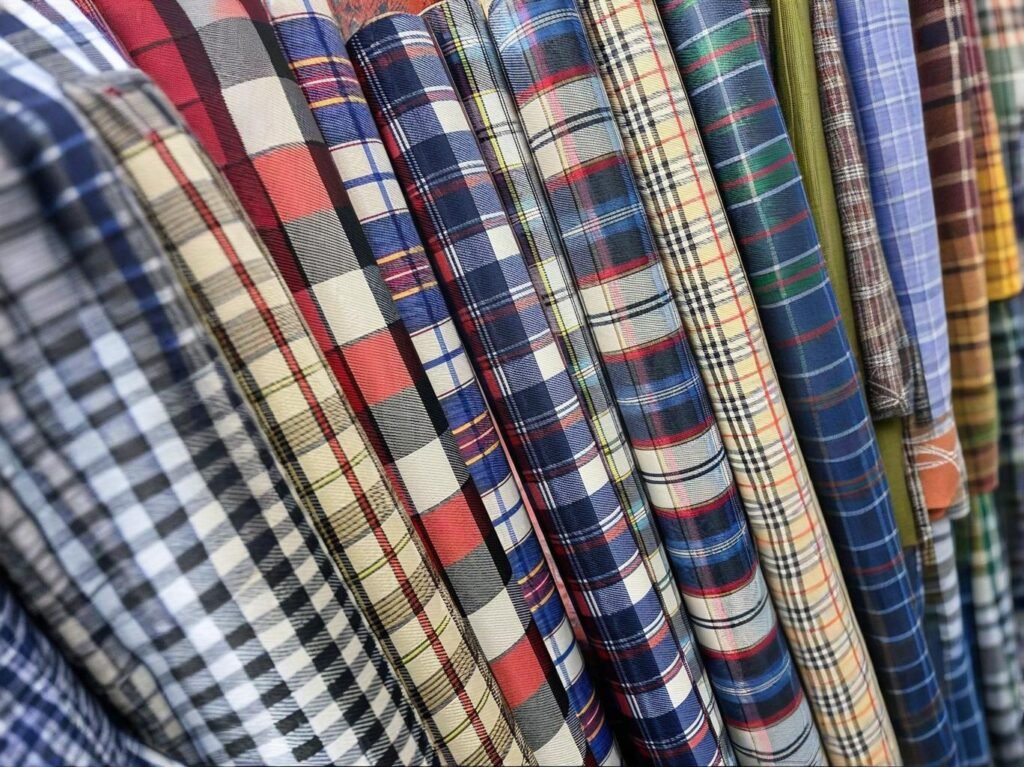
Yes. In the world of performance textiles, coated Oxford fabrics—especially PU, PVC, and TPU-coated variants—dominate the mid-range segment. These coatings enhance Oxford cloth’s resistance to water, UV, chemicals, and abrasion, making it suitable for everything from tactical gear to tents and medical transport kits.
Coated Oxford fabrics (PU, PVC, TPU) represent over 85% of all Oxford cloth used in B2B performance sectors, including luggage, industrial gear, outdoor equipment, and healthcare storage. TPU-coated Oxford is the fastest-growing segment due to its eco and flexibility advantages.
Comparing Coating Types in the Performance Segment
1. PU-Coated Oxford
- Most cost-effective
- Lightweight and moderately waterproof
- Suitable for fashion bags, promotional items, rainwear
2. PVC-Coated Oxford
- Fully waterproof, rigid
- Preferred in tents, industrial tarps, military equipment
- Higher environmental impact due to chlorine-based chemistry
3. TPU-Coated Oxford
- Excellent abrasion resistance, waterproofing, eco-compliance
- Remains flexible at low temperatures
- Ideal for medical, outdoor, and performance applications
| Coating Type | Waterproof Rating | Flexibility | Cost Impact | Eco Rating | Common Use |
|---|---|---|---|---|---|
| PU | 1,000–3,000mm | High | Low | Medium | Backpacks, giveaways |
| PVC | 5,000–10,000mm | Medium | Moderate | Low | Tents, heavy-duty covers |
| TPU | 5,000–15,000mm | Very High | High | High | Medical gear, premium bags |
PU is still the most common for budget-oriented production, but TPU-coated Oxford now commands higher prices and preference in advanced sectors like healthcare and eco brands.
4. Market Share by Coating (2025 Estimate)
| Coating Type | Share of Coated Oxford Use (%) |
|---|---|
| PU | 55% |
| PVC | 30% |
| TPU | 15% (fastest growing) |
What Is the Forecasted Demand for Oxford Cloth Through 2030?
The global Oxford cloth market is expected to grow from \$3.4 billion in 2025 to \$5.1 billion by 2030, with a CAGR of 6.9%. The fastest-growing segments include sustainable rPET-based Oxford, TPU-coated industrial fabrics, and digitally printed custom-grade Oxford cloth for retail and brand use.
Oxford cloth demand is forecast to grow steadily through 2030, driven by eco mandates, on-demand manufacturing, and the expansion of outdoor and industrial textile sectors. The biggest growth will come from North America, Southeast Asia, and Europe.
2030 Outlook by Segment
1. By Application
| Segment | 2025 Market Share | 2030 Projection | CAGR (2025–2030) |
|---|---|---|---|
| Bag & Luggage | 38% | 40% | 6.3% |
| Outdoor & Tents | 20% | 22% | 7.2% |
| Industrial Covers | 15% | 17% | 6.9% |
| Medical & PPE | 12% | 14% | 7.5% |
| Promotional Goods | 10% | 5% | -4.5% (replaced by digital gifts) |
2. By Region
- Southeast Asia and Latin America expected to see the fastest adoption of mid-to-high denier Oxford in localized production for retail and logistics
- EU and North America to lead in certified rPET Oxford cloth and compliance-driven procurement
3. Strategic Forecast Insights
- rPET Oxford expected to account for 35% of total Oxford production by 2030
- TPU-coated Oxford to outpace PVC in value-driven sectors like sportswear and medical
- On-demand custom printing will become a default expectation for e-commerce and OEM brands
Work with SzoneierFabrics for Custom Oxford Cloth Manufacturing
At SzoneierFabrics, we’re not just watching the market evolve—we’re shaping it. With over 18 years of experience in fabric R\&D, coating, lamination, and global export, we deliver Oxford cloth that’s engineered for your needs and built to scale with your business.
We offer:
- ✅ PU, PVC, and TPU-coated Oxford from 210D to 1680D
- ✅ rPET, GRS-certified Oxford for eco-forward buyers
- ✅ Low MOQ starting at 300 meters for custom orders
- ✅ Free sample development and 3–5 day sampling turnaround
- ✅ Digital printing, Pantone color matching, and brand packaging
- ✅ Full OEM/ODM manufacturing support
Let’s build smarter, faster, and greener—together.