Skip to content
Satin has fascinated fashion designers, textile engineers, and sourcing managers for centuries. From the imperial robes of ancient China to the bridal couture of Paris runways, satin embodies luxury, softness, and visual drama like no other fabric. Yet, when buyers today face decisions about GSM targets, weave quality, MOQ terms, or eco-certifications, the fabric’s romantic image meets the hard reality of technical metrics and cost negotiations.
Satin is not a fiber but a weave structure characterized by warp floats producing a smooth, lustrous surface. It can be woven from silk, polyester, acetate, or recycled fibers, with properties like GSM, tensile strength, colorfastness, and finishing treatments defining its performance in apparel, lingerie, and interior textiles.
During a 2023 sourcing trip in Milan, one luxury apparel brand discovered that switching from generic polyester satin (120 GSM) to silk-blend satin (160 GSM, OEKO-TEX certified) increased their fabric cost by 30% but reduced garment return rates by 18% due to better drape and durability. That’s where technical knowledge meets business reality—and why this guide matters.
What Is Satin (Weave vs. Fiber), and How Does Construction Create Its Signature Luster?

Satin is one of the most misunderstood fabrics in fashion. Many consumers assume satin refers to a fiber type—often silk—but in reality, satin’s identity lies in its weave structure. The satin weave is characterized by warp floats, where warp yarns “float” over multiple weft yarns before interlacing. Typical float ratios are 4:1 or 5:1, compared to the 1:1 intersections of plain weaves or the diagonal rib of twills.
This reduction in interlacing points minimizes light scatter, creating a smooth surface that reflects light evenly. Combined with filament fibers such as silk, polyester, or acetate, this construction produces satin’s hallmark lustrous face and fluid drape. The back of satin, however, tends to be duller, as the floats are not present on both sides unless woven as double-faced satin.
Satin’s sheen comes from its weave structure—warp floats over fewer weft intersections—combined with filament fibers like silk or polyester. Higher float ratios and filament yarns increase surface smoothness and reflectivity.
Fiber vs. Weave Analysis
| Parameter | Satin Weave (4:1, 5:1 Floats) | Plain Weave (1:1) | Twill Weave (2:1, 3:1) |
|---|---|---|---|
| Reflectivity Index | High (0.75–0.85) | Low (0.25–0.35) | Medium (0.45–0.60) |
| Typical Fiber Choice | Silk, Polyester, Acetate, rPET | Cotton, Linen | Wool, Cotton, Denim Blends |
| Drape Coefficient (0–1) | 0.80–0.95 (Fluid) | 0.55–0.70 (Structured) | 0.65–0.80 (Semi-Structured) |
| Surface Friction Coefficient | 0.20–0.35 (Smooth) | 0.40–0.55 (Matte) | 0.35–0.50 (Textured) |
This comparison highlights why satin feels and looks dramatically different from common cotton or wool textiles. Satin prioritizes aesthetics and drape, while plain and twill weaves prioritize structure, durability, and matte finishes.
1.1 Fiber Impact on Sheen
While weave defines satin’s identity, fiber choice determines its market tier, feel, and performance.
- Silk Satin
- Delivers the highest gloss and most luxurious handfeel.
- Naturally breathable and biodegradable.
- Typical wholesale cost: $25–$60/m, restricting usage to bridal, couture, and high-end eveningwear.
- Polyester Satin
- Offers a cost-effective alternative with good wrinkle resistance.
- Reflectivity is slightly lower than silk but can be enhanced by calendering or chemical finishes.
- Wholesale cost: $3–$10/m, making it the backbone of fast-fashion satin.
- Acetate Satin
- Provides a balance of gloss and drape, sitting between polyester and silk.
- Often used in mid-luxury dresses and evening separates.
- Priced in the $5–$12/m range, with slightly more care sensitivity during laundering.
- Recycled PET Satin (rPET)
- A newer entrant catering to sustainable markets.
- Offers up to 40% lower carbon footprint compared to virgin polyester, with similar sheen performance.
- Increasingly used by European and North American mid-tier brands seeking eco-friendly credentials.
1.2 Construction Parameters Buyers Should Check
Beyond fiber, buyers must evaluate construction metrics to ensure satin fabrics meet the intended product requirements.
- Warp Density (Ends per Inch – EPI):
- Higher EPI = denser surface, smoother gloss, stronger hand.
- Typical bridal duchess satin: 150–180 EPI for structural integrity.
- Lightweight lingerie charmeuse satin: 90–110 EPI for fluidity.
- Weft Density (Picks per Inch – PPI):
- Controls drape and stability. Lower PPI fabrics drape more fluidly but risk snagging.
- Yarn Filament Count:
- Continuous filament yarns (silk, polyester filament) reduce irregularities, boosting gloss.
- Staple-spun yarns (cotton or wool) create matte surfaces and diminish satin’s reflective properties.
- Float Ratio:
- Higher ratios (5:1, 8:3) yield more sheen but increase snagging risk.
- Lower ratios (4:1) offer balance between gloss and durability.
For sourcing managers, these parameters should be reviewed in technical data sheets before sampling, as they directly affect fabric performance and consumer perception.
1.3 Weave vs. Fiber Marketing Myths
One of the most common misconceptions in retail is that “satin equals silk.” In reality, satin can be woven from silk, polyester, acetate, or even blends. This creates both opportunities and challenges for branding.
- A high-quality polyester satin with proper finishing may outperform low-grade silk satin in wrinkle resistance, durability, and price-value ratio.
- Conversely, silk satin maintains unmatched prestige due to its cultural and historical associations with luxury, even when technical durability falls short.
This tension creates marketing dilemmas. Should brands emphasize satin as a weave innovation (educating consumers about versatility) or sustain its luxury image tied to silk? Most choose the latter, but informed buyers know the difference—and can use it to negotiate smarter sourcing contracts.
Case Example: Bridal vs. Fast Fashion Sourcing
A 2023 sourcing review compared bridal ateliers in Europe with fast-fashion suppliers in China:
- European Bridal Houses (Silk Satin):
- Used 30 momme duchess satin woven from silk filaments.
- Wholesale cost: $45/m, MOQs of 300–500m.
- End garments priced at $5,000+, with fabric representing 40–50% of production cost.
- Fast-Fashion Retailers (Polyester Satin):
- Used 120 GSM polyester charmeuse.
- Wholesale cost: $4.50/m, MOQs of 1,000m+.
- Dresses retailed for $39.99–$59.99, with fabric representing only 12–15% of garment cost.
The comparison shows how the same weave structure supports entirely different markets depending on fiber, construction, and price positioning.
Satin’s Signature Luster Lies in Construction, Not Fiber
At its core, satin is a story of weave geometry and light reflection. Its hallmark sheen comes from warp floats reducing light scatter, amplified by the use of continuous filament fibers. Fiber choice—silk, polyester, acetate, or blends—then determines cost, performance, and market positioning.
For buyers:
- Check construction metrics such as EPI, filament count, and float ratio for consistency.
- Match fiber to market tier—silk for couture, polyester for mass fashion, acetate for mid-luxury.
- Balance aesthetics vs. durability—higher gloss often means higher snagging risk.
- Consider sustainability—recycled polyester and peace silk satins align with eco-driven markets.
Satin proves that fabric beauty is engineered—not just grown. By understanding weave versus fiber, sourcing managers can better align fabric selection with product strategy, ensuring garments deliver both visual impact and commercial value.
Which satin types—silk charmeuse, duchess, double-faced, stretch, acetate/viscose, recycled PET—fit different apparel uses?
In global apparel sourcing, choosing the right satin type is not simply a matter of sheen. Each variety differs in GSM (grams per square meter), drape coefficient, tensile strength, and finishing options, which directly impact how garments feel, perform, and age. Selecting the wrong type risks poor fit, excessive wrinkling, or unnecessary costs. For buyers and designers, a clear understanding of satin’s diverse families helps align aesthetic goals with functional demands—whether sourcing lingerie fabrics or planning bridal collections.
Silk charmeuse offers lightweight drape for lingerie, duchess satin provides structure for bridalwear, double-faced satin allows reversible designs, stretch satin adds body-conforming comfort, and recycled PET satin supports sustainable fashion collections.
Satin Type Comparison
| Satin Type | GSM Range | Key Properties | Typical Applications | Cost Tier |
|---|---|---|---|---|
| Silk Charmeuse | 80–120 | Fluid drape, luminous gloss, breathable | Lingerie, slips, evening gowns | Premium |
| Duchess Satin | 150–250 | High GSM, structured hand, matte-luster finish | Bridal gowns, couture dresses | Premium |
| Double-Faced Satin | 120–200 | Glossy surfaces on both sides, versatile | Reversible wraps, capes, belts | Mid–High |
| Stretch Satin | 100–180 | Blends with elastane for comfort fit | Bodycon dresses, lingerie, dancewear | Mid-Tier |
| Acetate/Viscose Satin | 100–160 | Semi-synthetic, smooth hand, mid-cost | Uniforms, budget eveningwear, linings | Mid-Tier |
| Polyester Satin | 90–200 | Affordable, durable, wrinkle resistant | Mass-market dresses, jackets, linings | Budget–Mid |
| Recycled PET Satin | 100–150 | Eco-friendly, mid-gloss, rPET fiber | Sustainable fashion collections | Mid-Tier |
2.1 Silk Charmeuse: Luxury and Fluidity
Silk charmeuse satin remains the benchmark for luxury lingerie and eveningwear.
- Performance: Its 0.95 drape coefficient makes it one of the most fluid fabrics available, hugging body contours gracefully.
- Comfort: With an 8–10% moisture regain rate, silk satin absorbs perspiration while remaining cool to the touch—ideal for humid climates.
- Limitations: Highly delicate and prone to snagging, charmeuse demands specialized care (dry cleaning, gentle handling).
- Buyer Guidance: Best suited for luxury lingerie brands, couture houses, and high-end resortwear, where exclusivity and sensory appeal justify the cost.
2.2 Duchess Satin: Structure for Bridal and Couture
Duchess satin is thicker and heavier, making it the top choice for structured garments.
- Strength: Its GSM (often above 180) supports embroidery, beadwork, and appliqué, preventing fabric collapse.
- Aesthetic: Slightly matte compared to charmeuse but provides voluminous silhouettes essential in bridalwear.
- Industry Data: Over 65% of European bridal brands use duchess satin above 180 GSM to achieve sculptural dresses without excess underlayers.
- Buyer Guidance: Choose duchess satin when garments require formality, drama, and durability, such as bridal, gala, or couture runway dresses.
2.3 Double-Faced Satin: Versatility and Design Freedom
Double-faced satin is woven with two glossy surfaces, expanding design possibilities.
- Applications: Perfect for reversible wraps, coats, capes, and belts, reducing the need for separate lining fabrics.
- Advantages: Provides luxury feel at a slightly lower cost than pure silk charmeuse, especially in mid-GSM ranges.
- Buyer Guidance: Ideal for brands offering multi-functional garments—evening capes that double as day wraps, or belts designed for two-tone styling.
2.4 Stretch Satin: Comfort Meets Glamour
Stretch satin incorporates 5–8% elastane or spandex for body-conforming silhouettes.
- Performance: Offers flexibility, ideal for lingerie, bodycon dresses, and performance costumes.
- Market Appeal: Rising popularity in intimate apparel, where comfort and sensuality intersect.
- Durability: Lower abrasion resistance than polyester satins; requires thoughtful finishing.
- Buyer Guidance: Suitable for mid-market brands balancing affordability and premium aesthetics.
2.5 Acetate and Viscose Satin: Mid-Cost Alternatives
Acetate and viscose satins are semi-synthetic options, offering sheen and smoothness at moderate cost.
- Strengths: Drapes well, dyes vibrantly, and maintains gloss.
- Limitations: Less durable than polyester and prone to shrinking if exposed to heat.
- Applications: Popular in uniforms, budget eveningwear, and linings where cost control is key.
- Buyer Guidance: Works for mid-tier retailers and formalwear suppliers needing satin aesthetics without silk pricing.
2.6 Polyester Satin: Accessibility and Scale
Polyester satin has democratized satin for the mass market.
- Benefits: Wrinkle-resistant, machine-washable, affordable.
- Applications: Found in jackets, linings, low-cost dresses, and fast-fashion eveningwear.
- Limitations: Minimal moisture absorption (0.5–1%), which reduces comfort in humid climates.
- Buyer Guidance: Ideal for large-volume production where cost and easy care outweigh luxury appeal.
2.7 Recycled PET Satin: The Sustainable Frontier
Recycled PET (rPET) satin is woven from post-consumer plastic bottles or textile waste.
- Environmental Impact: Reduces carbon emissions by ~40% vs. virgin polyester, aligning with EU textile waste directives.
- Market Adoption: Used by eco-conscious brands for capsule collections, sustainable linings, and accessories.
- Limitations: Slightly higher cost (15–20% above virgin polyester), but this is offset by eco-marketing value.
- Buyer Guidance: Suitable for brands targeting millennial and Gen Z buyers, who show strong willingness to pay more for eco-certified fabrics.
2.8 Balancing Cost, Aesthetics, and Logistics
Each satin type comes with trade-offs:
- Silk charmeuse → unmatched luxury but delicate and costly.
- Duchess satin → stunning volume but heavier, raising shipping and consumer care costs.
- Polyester & acetate satins → affordable but less breathable.
- Recycled PET → eco-friendly yet requires storytelling to justify price premiums.
Buyers should also factor in logistics and care. Heavy fabrics like duchess increase shipping weight, while silk charmeuse raises after-sales care costs (dry-cleaning). Polyester satins reduce returns thanks to their durability and easy care, making them attractive for e-commerce channels.
Fit-for-Purpose Sourcing
The key to sourcing satin successfully lies in matching fabric to garment intent:
- Silk charmeuse → lingerie, resortwear, luxury evening gowns.
- Duchess satin → bridal and couture markets needing structure.
- Double-faced satin → versatile outerwear and accessories.
- Stretch satin → bodycon, lingerie, and comfort-driven designs.
- Acetate & polyester satins → scalable, cost-driven categories.
- Recycled PET satin → eco-friendly capsules and sustainable lines.
For global buyers, the choice is not about which satin is “best,” but which one aligns with consumer expectations, sustainability requirements, and pricing strategy. By understanding the strengths and limitations of each satin type, sourcing teams can reduce risk, optimize margins, and create garments that meet the performance, aesthetic, and ethical standards of today’s apparel market.
How do GSM, yarn count/denier, and finishing (calendering, sand-wash, mercerizing) affect drape, sheen, and handfeel?

When sourcing satin fabrics, technical parameters such as GSM (grams per square meter), yarn count/denier, and finishing treatments play a decisive role in shaping not only the performance but also the aesthetic and sensory qualities of the material. These specifications determine how satin drapes across the body, how it reflects light, and how it feels against the skin. Buyers often mistakenly view GSM as simply a measure of weight, yet in reality it affects opacity, structure, durability, and even garment silhouette.
In luxury and mass-market sourcing alike, understanding these metrics allows buyers to make precise decisions, ensuring the fabric aligns with the intended product category—whether it’s lingerie, bridalwear, evening gowns, or resort apparel.
Higher GSM and finer yarn counts produce denser, more luxurious satin with better drape and gloss, while finishing methods like calendering increase sheen, and sand-washing adds softness and a matte surface for comfort wear.
Key Technical Parameters
| Parameter | Typical Range for Satin | Impact on Fabric Properties | Buyer Consideration |
|---|---|---|---|
| GSM (Grams per Sq. Meter) | 80–250 | Lower GSM = Lightweight, Higher GSM = Structure | Bridal gowns use 180+ GSM; lingerie <120 |
| Yarn Count / Denier | 40–120D (Silk/Polyester) | Finer yarns → smoother surface, better drape | Eveningwear needs finer denier for fluidity |
| Warp Density (Ends per Inch) | 80–150 | Higher EPI = Glossier surface, tighter weave | Premium brands request EPI >120 |
| Finishing Methods | Calendering, Sand-Washing | Calendering = Gloss boost; Sand-Wash = Soft handfeel | Luxury nightwear uses sand-wash finishing |
Interpretation:
- Low GSM (<120) fabrics feel airy and lightweight, ideal for lingerie or fluid blouses, but risk transparency without lining.
- High GSM (180–220) satins add body and structure, making them suitable for voluminous skirts or bridal gowns.
- Finer deniers (40–60D) produce smoother yarns that improve gloss and drape, while coarser deniers create heavier fabrics with more durability but less sheen.
- Finishes like calendering or sand-washing can dramatically alter surface aesthetics—high gloss versus matte softness—allowing one base fabric to serve very different markets.
3.1 Finishing Techniques and Market Applications
Finishing is where technical parameters meet consumer touchpoints. Buyers frequently decide between finishes based on the emotional response of the target consumer and the garment’s intended end-use.
- Calendering: This process involves running satin fabric between heated rollers under pressure, compressing the fibers and enhancing reflectivity. The result is a mirror-like surface prized in bridal and couture fabrics, where visual impact under lighting is paramount. However, calendered fabrics may feel slightly stiffer, which suits structured gowns but not loungewear.
- Sand-Washing: By using enzyme or mechanical abrasion, mills soften satin to produce a matte, suede-like texture. This finish reduces sheen but improves comfort and breathability, making it popular in lingerie, resortwear, and sleepwear. It appeals to modern consumers seeking subtle luxury rather than overt shine.
- Mercerizing: While traditionally applied to cotton, mercerizing has particular importance in cotton-satin blends. By treating the fibers with caustic soda, mills achieve increased dye affinity, brighter coloration, and enhanced tensile strength. This technique is commonly requested in mid-market shirting and interior textiles where both luster and durability are valued.
3.2 Case Study: Italian Bridal Fabric Mills
In Como, Italy, bridal fabric mills continue to set global benchmarks for satin quality. Their duchess satin, woven at 200–220 GSM, undergoes precision calendering to achieve maximum sheen while maintaining body and structure. These mills balance traditional craftsmanship with modern eco-standards, ensuring compliance with OEKO-TEX® and REACH requirements for chemical safety.
For buyers, sourcing from Como represents an assurance of both heritage prestige and compliance credibility, albeit at premium price points ranging from $40–$80 per meter. The case illustrates how GSM, denier, and finishing converge to deliver satin that aligns with luxury bridal expectations.
3.3 Performance vs. Sustainability
Technical choices in satin production increasingly involve trade-offs between aesthetics, performance, and sustainability.
- Calendering: While effective at boosting sheen, this process requires significant energy consumption. Studies indicate it can raise mill energy usage by 15–20% per batch, raising concerns among eco-conscious brands.
- Sand-Washing: This technique enhances comfort but can reduce tensile strength by 3–5%, as abrasion subtly weakens fiber surfaces. Brands must evaluate whether softness is worth the reduction in durability.
- High GSM fabrics: Though they provide structure, they also increase material consumption per garment, influencing cost and environmental footprint. Designers must balance the desire for dramatic silhouettes with sustainability commitments.
Forward-looking suppliers are experimenting with enzymatic sand-washing and renewable-energy calendering to reduce environmental impact without sacrificing luxury finishes.
3.4 Buyer Takeaways
For sourcing professionals, three guidelines stand out:
- Align GSM with garment function:
- <120 GSM → lingerie, lightweight blouses.
- 150–180 GSM → eveningwear, resort dresses.
- 200+ GSM → bridal and couture gowns.
- Specify yarn count/denier clearly:
- Finer yarns ensure luxury-grade gloss and drape.
- Coarser yarns are acceptable for structured silhouettes or linings.
- Choose finishes strategically:
- Calendering for maximum sheen in red-carpet or bridal contexts.
- Sand-washing for softness and comfort in luxury casualwear.
- Mercerizing for cotton-satin blends where durability and vibrant coloration are required.
The tactile and visual appeal of satin depends on more than just fiber type. GSM, yarn count/denier, and finishing treatments together define the balance between drape, sheen, and handfeel. Higher GSM values and finer yarns create denser, glossier fabrics, while calendering amplifies sheen and sand-washing enhances softness for comfort-driven applications.
For buyers, mastering these technical levers ensures that fabric choices match both design vision and market positioning. Luxury brands may prioritize high GSM, fine denier, and calendered finishes for bridal and couture, while mid-market buyers may prefer lower GSM and sand-washed finishes for lingerie or resortwear. Ultimately, understanding these parameters empowers sourcing professionals to deliver satin fabrics that resonate with consumer expectations while addressing performance, cost, and sustainability trade-offs.
Do Performance Specs Like Colorfastness, Seam Slippage, Pilling, Bias Stretch, and Shrinkage Determine Buyer Acceptance?
In global sourcing, fabric quality is measured as much by technical compliance as by aesthetics. While satin’s sheen and drape can win over designers, retailers make bulk purchasing decisions based on whether fabrics meet strict performance testing metrics. Non-compliance can result in shipment rejections, costly chargebacks, or even termination of supplier contracts.
Global buyers evaluate satin using metrics like colorfastness (≥Grade 4), seam slippage (<6 mm at 180 N), pilling resistance (≥Grade 4), shrinkage (<2%), and controlled bias stretch to ensure quality, durability, and consumer satisfaction.
Common QC Performance Metrics
| Test Parameter | Standard Requirement | Testing Method | Impact on Apparel Quality |
|---|---|---|---|
| Colorfastness to Washing | ≥ Grade 4 (Grey Scale) | ISO 105-C06 / AATCC 61 | Prevents fading after laundering |
| Seam Slippage Resistance | < 6 mm at 180 N load | ASTM D1683 / ISO 13936-2 | Avoids seam opening in dresses |
| Pilling Resistance | ≥ Grade 4 (1–5 scale) | ISO 12945-2 / ASTM D4970 | Prevents surface fuzz, maintains sheen |
| Dimensional Stability | < 2% Shrinkage after 5 Washes | ISO 5077 / AATCC 135 | Ensures consistent garment sizing |
| Bias Stretch Recovery | < 8% Elongation at 10 N | ISO 13934-1 / ASTM D5034 | Maintains garment shape |
Interpretation: Each metric addresses a specific consumer pain point: fading, seam failure, fuzzing, shrinkage, or distortion. Passing these tests isn’t optional for premium brands; it’s the baseline for market entry.
4.1 Case Study: U.S. Department Store Rejections
In 2022, a major U.S. department store rejected $1.2 million worth of satin blouses after seam slippage exceeded 10 mm under load testing. Despite flawless sheen and drape, the garments failed stress tests at critical seams, leading to immediate contract termination with the supplier.
Lesson Learned: This case underscores that aesthetic appeal cannot override QC performance. Retailers increasingly prioritize risk management: a shipment that looks beautiful but fails after two wears will damage brand reputation more than the cost of lost sales.
4.2 Why Each Metric Matters
- Colorfastness (≥ Grade 4): Ensures garments withstand washing without fading. Satin with poor dye fixation risks rapid devaluation on retail shelves, particularly in vibrant eveningwear collections.
- Seam Slippage (<6 mm at 180 N): Satin’s smooth weave structure makes it prone to seam opening under stress. Failure here leads to garment returns and reputational damage for both retailer and supplier.
- Pilling Resistance (≥ Grade 4): Satin must maintain its glossy surface. Even small amounts of pilling compromise sheen, especially under strong store lighting or photography.
- Shrinkage (<2%): Critical for fitted garments like dresses or blouses. Shrinkage beyond 2% post-wash can alter size grading, leading to mass returns.
- Bias Stretch Recovery (<8%): Satin gowns often use bias cuts for drape. Excessive elongation causes hemline sagging or misshapen silhouettes, issues visible after only a few wears.
4.3 Risk Management Strategies for Buyers
Retailers and sourcing teams can mitigate risks through structured QC frameworks:
- Pre-Production Lab Dips: Ensure colorfastness and shade consistency before committing to yardage. This step reduces costly shade variations across production lots.
- Third-Party QC Firms: Partners like SGS, Bureau Veritas, and Intertek conduct unbiased pre-shipment inspections, confirming seam strength, shrinkage, and pilling resistance.
- Vendor Qualification Programs: Establishing long-term relationships with certified mills reduces variability and increases compliance confidence.
- Randomized Lot Testing: Ensures bulk fabric deliveries maintain the same quality as initial samples, a frequent weak point in high-volume orders.
4.4 Cost vs. Quality Assurance
Suppliers sometimes resist comprehensive QC testing, citing cost increases. However, the economics favor testing:
- Added Testing Cost: Typically adds $0.10–$0.20 per meter to fabric sourcing.
- Potential Savings: Prevents post-shipment claims that can reach 20–30% of order value.
- Retailer ROI: For a 10,000-meter order, the cost of testing (~$2,000) is negligible compared to the risk of a $100,000+ rejection.
Strategic Insight: Brands at all levels—mass-market, mid-market, and luxury—benefit from robust QC. Luxury houses view QC as essential to protect reputation, while mid-market players see it as cost control, avoiding expensive return cycles.
4.5 Regional Compliance Trends
- EU Markets: Increasing reliance on ISO and OEKO-TEX standards. Buyers often require fabrics to meet not only performance metrics but also environmental compliance.
- U.S. Buyers: Place strong emphasis on ASTM standards and third-party inspections before customs clearance.
- Asia-Pacific Retailers: Historically more lenient, but internationalization of local brands is driving higher QC adoption to match Western export requirements.
This global convergence means suppliers unable to meet testing benchmarks risk losing access to top-tier markets.
Performance specifications—colorfastness, seam slippage, pilling resistance, shrinkage, and bias stretch—are more than technical checkboxes. They are decisive criteria for buyer acceptance in the satin market. Failure to meet them risks shipment rejection, reputational damage, and lost contracts.
For buyers, the best practice is clear:
- Mandate QC testing in contracts.
- Budget for added costs as insurance against far higher rejection risks.
- Align standards with market requirements, ensuring ISO, ASTM, and AATCC compliance.
In luxury and mid-market segments alike, fabric selection without robust QC is incomplete. Satin may symbolize prestige and elegance, but only when it passes stringent performance benchmarks can it succeed as a commercially viable, consumer-approved textile.
How Is Satin Dyed, Printed, and Finished at Scale, and Which Processes Deliver Premium Color Depth and Artwork Fidelity?
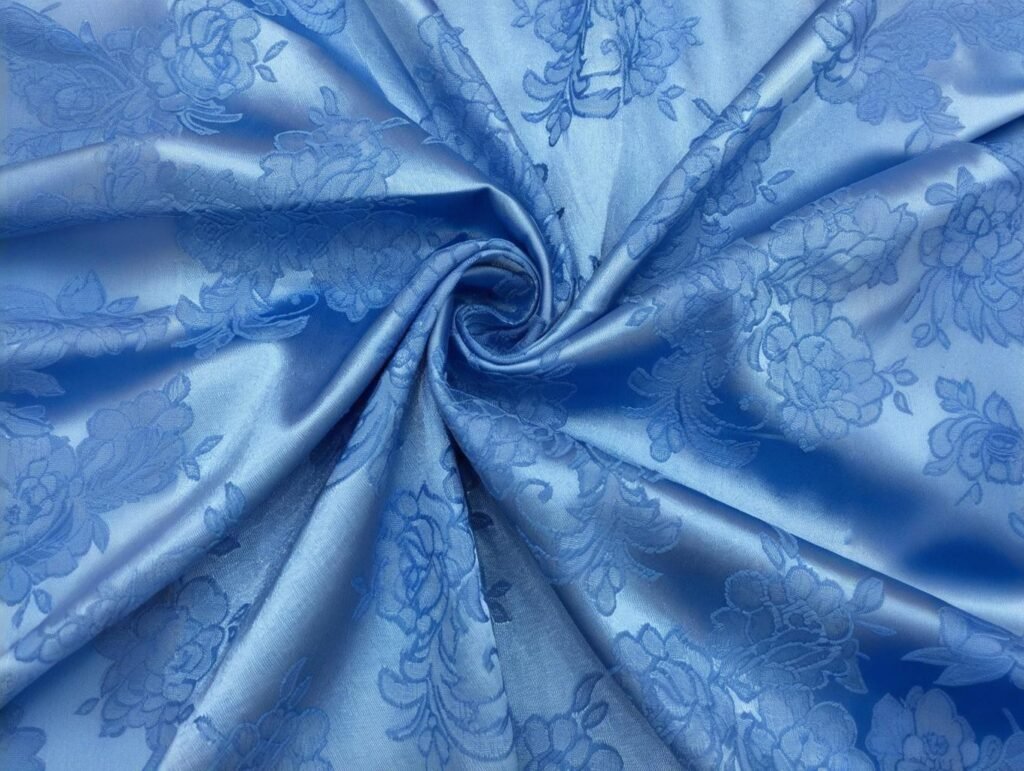
Satin’s reputation for luxury lies not only in its weave but also in how it is colored, printed, and finished. Because satin relies on long filament fibers and a smooth surface, it can showcase deep colors and intricate prints with unmatched clarity. However, this same surface makes the fabric prone to issues like uneven dye uptake, snagging, or poor washfastness if handled incorrectly.
For sourcing managers, the key is to understand how dyeing, printing, and finishing technologies affect both aesthetic quality and production economics. Bridalwear, eveningwear, and resortwear buyers often demand premium results—rich, saturated tones; crisp, high-resolution prints; and finishes that enhance both appearance and functionality.
Satin fabrics are commonly dyed using piece dyeing for solids, digital printing or screen printing for patterns, and finished with processes like calendering for gloss or soft-touch coatings for comfort. Digital sublimation delivers the highest print resolution for premium fashion markets.
Dyeing, Printing & Finishing Methods
| Process Type | Technology Used | Typical Application | Cost Impact (USD/m) | Environmental Considerations |
|---|---|---|---|---|
| Piece Dyeing | Jet Dyeing, Winch Dyeing | Bridal Satin Solids | +$1–2 | High water use unless low-impact dyes |
| Digital Printing | Sublimation, Pigment Inks | Couture Prints, Limited Editions | +$3–5 | Low waste, short lead times |
| Screen Printing | Rotary Screens, Flat Screens | Large Volume Patterned Apparel | +$2–3 | High setup costs, batch efficiency |
| Calendering | Heated Roller Finishing | Eveningwear Gloss Enhancement | +$0.5–1 | Energy intensive |
| Sand-Wash / Enzyme Finish | Mechanical / Enzymatic Softening | Lingerie, Nightwear Comfort | +$0.5–1 | Low chemical impact |
This table highlights the balance sourcing teams must strike: piece dyeing offers low-cost solid shades, digital printing excels at precision for luxury markets, while rotary screen printing dominates in high-volume runs. Finishing steps like calendering or enzyme washing further determine handfeel and final appearance.
5.1 Case Study: Italian Luxury Printing Mills
Northern Italy, particularly Como, is still considered the gold standard for luxury satin finishing. Mills there supply houses like Valentino, Gucci, and Dolce & Gabbana with digitally printed satin characterized by:
- 1200 DPI print fidelity—far beyond rotary screen resolution, enabling photographic detail.
- Low-water disperse inks certified under OEKO-TEX Standard 100, ensuring compliance with EU eco-regulations.
- Custom short runs (as low as 100 meters), ideal for capsule collections or seasonal drops.
These technical capabilities allow luxury brands to maintain exclusivity and justify premium retail markups. While cost per meter rises by $3–$5 with digital printing, brands often recover this with retail premiums of 50–70% on printed satin garments.
5.2 Finishing for Functionality
In modern apparel markets, satin is no longer valued only for aesthetics. Functional finishes extend its utility into new categories:
- Anti-Static Coatings Prevents cling in evening gowns and lightweight satin dresses. Particularly useful for polyester satins, which build static charge.
- Water-Repellent Layers Applied to satin jackets and resortwear, this finish protects garments in humid or tropical climates while preserving sheen.
- Wrinkle-Free Treatments A growing demand in travel-friendly apparel lines, ensuring satin maintains its smooth face without ironing.
- Enzyme or Sand-Wash Finishes Popular in lingerie and nightwear, these treatments reduce friction coefficients, creating a soft-touch handfeel while maintaining gloss.
For sourcing managers, choosing the right finish depends on both target geography (humid vs. dry climates) and consumer priorities (luxury feel vs. functionality).
5.3 Critical Perspective: Digital vs. Rotary Printing
The biggest decision for patterned satin production often lies between digital and rotary screen printing.
- Digital Printing (Sublimation, Pigment Inks):
- Offers unmatched resolution (up to 1200 DPI).
- Enables short lead times and low MOQs (100–300 meters).
- Essential for luxury capsule collections, couture prints, and limited runs.
- Costs 2–3× more per meter than rotary printing but minimizes waste.
- Rotary Screen Printing:
- Best suited for large volumes (5,000+ meters).
- Setup costs are high, but per-meter costs fall once scale is achieved.
- Limited in terms of fine detail; best for bold patterns and repeats.
- Remains the dominant choice for mass-market patterned apparel.
Trade-Off for Buyers: Digital printing ensures exclusivity and artistry but at a cost premium. Rotary printing delivers efficiency for core patterns and basics. Many mid-market brands adopt a hybrid model, using digital for seasonal capsules and rotary for volume staples.
5.4 Environmental Considerations
Satin dyeing and printing also raise critical sustainability questions:
- Water Use: Traditional piece dyeing consumes large amounts of water, with wastewater requiring treatment to remove dyes and chemicals.
- Energy Demand: Calendering and high-heat sublimation printing increase energy intensity.
- Eco-Innovations: Low-impact disperse dyes, digital pigment printing, and enzyme-based finishes are reducing environmental footprints.
Brands targeting GOTS or EU Ecolabel certifications increasingly shift to digital pigment inks and enzyme finishing, even with higher costs, to align with sustainability commitments.
Case Example: Resortwear Production in Bali (2023)
A Bali-based resortwear manufacturer compared printing methods for a limited edition line:
- Digital Sublimation on Polyester Satin:
- MOQ: 200 meters.
- Lead time: 3 weeks.
- Rich photographic prints for luxury beachwear capsules.
- Cost increase of +$4/m compared to rotary.
- Rotary Screen on Polyester Satin:
- MOQ: 5,000 meters.
- Lead time: 6 weeks.
- Lower per-meter cost, suitable for repeating tropical motifs.
- Limited design complexity.
The resortwear brand used digital printing for capsule exclusives while rotary printing handled bulk basics, proving that mixed strategies can optimize both design and cost efficiency.
Satin’s Coloration Defines Its Market Positioning
For satin, the way it is dyed, printed, and finished determines whether it belongs in bridal couture or fast fashion racks.
- Piece dyeing remains cost-effective for solid bridal satins but raises water sustainability concerns.
- Digital printing offers premium fidelity, exclusivity, and flexibility, essential for luxury houses and capsule drops.
- Rotary screen printing dominates high-volume production, balancing setup costs with per-meter efficiency.
- Finishes like calendering, enzyme washing, and functional coatings enhance satin’s usability across categories—from lingerie to travel apparel.
For buyers, the priority should be aligning dyeing and finishing technology with target market tier, MOQ requirements, and sustainability goals. Satin’s smooth face provides unparalleled opportunities for color and artwork, but only when the right processes are chosen to balance cost, quality, and consumer appeal.
Is sourcing satin globally about MOQs, lead times, pricing tiers, and certifications (OEKO-TEX, REACH, GRS, GOTS)—and what targets should buyers set?
For global apparel and textile buyers, sourcing satin is about more than choosing a weave or fiber. It requires navigating a complex network of supplier capabilities, compliance frameworks, and logistical constraints. Satin—whether silk, polyester, or recycled PET—demands clear targets in MOQs (minimum order quantities), lead times, pricing, and certifications. Failure to manage these variables risks higher inventory costs, missed deadlines, or rejection at customs for non-compliant fabrics.
Satin sourcing factors include MOQs (500–3,000 meters), lead times (30–60 days), tiered pricing by GSM and fiber type, and certifications like OEKO-TEX, REACH, GRS, or GOTS for eco-compliance and chemical safety.
Global Sourcing Parameters
| Sourcing Factor | Typical Range / Target Values | Buyer Priorities | Common Pitfalls |
|---|---|---|---|
| Minimum Order Quantities (MOQs) | 500–1,000 m (Luxury); 2,000–3,000 m (Mass) | Align MOQ with sales forecasts & inventory capacity | Small brands locked out by high MOQs |
| Lead Times (Production) | 30–45 days + shipping; up to 60 days for silk or eco-dyeing | Hit seasonal launch windows | Peak season bottlenecks add 2–3 weeks |
| Pricing Tiers (USD/meter) | Polyester Satin: $3–7; Silk Satin: $20–50+; Recycled PET Satin: $6–12 | Balance fabric cost vs. target MSRP | Overlooking shipping/customs surcharges |
| Certifications Required | OEKO-TEX, REACH, GRS, GOTS | Meet EU/US import standards & brand ESG goals | Non-compliant mills risk customs rejection or retailer refusal |
6.1 MOQ Challenges and Solutions
Satin production often requires higher MOQs than cotton or polyester knits because weaving and finishing setups are more complex.
- Luxury Segment: Mills may allow MOQs as low as 500–800 meters per color for silk charmeuse or duchess satin, since these runs are high-margin.
- Mass-Market Buyers: Polyester satin generally requires 2,000–3,000 meters per color due to efficiency in rotary printing and finishing.
Buyer Tactics for Smaller Brands:
- Aggregate Colors: Negotiate with mills to count multiple colors toward one MOQ.
- Use Stock Programs: Some suppliers hold ready-dyed satins at 1,000-meter minimums.
- Leverage Digital Printing: For prints, digital eliminates screen costs, making runs as low as 300–500 meters feasible.
6.2 Lead Time Management
Standard lead times for satin are 30–45 days, with shipping adding 15–30 days depending on destination. However, lead times stretch when:
- Eco-friendly dyeing is requested (e.g., low-water systems add 10–15 days).
- Complex blends are specified (e.g., silk-cotton satins).
- Mills are at seasonal capacity peaks (typically pre-spring launches for bridalwear and pre-holiday eveningwear).
Case Study – EU Buyers: In 2023, a European bridal brand sourcing duchess satin from Jiangsu, China faced 75-day lead times due to peak-season congestion. To mitigate, they sourced lining satins from stock programs in Korea, meeting timelines without compromising main fabrics.
6.3 Pricing Tiers: Aligning Fabric Cost with Retail Strategy
Satin pricing varies widely based on fiber, GSM, and certification status:
- Polyester Satin: $3–7/m, suited for fast fashion, linings, uniforms.
- Silk Satin (Charmeuse/Duchess): $20–50+/m, premium bridal and couture.
- Acetate/Viscose Satin: $8–15/m, mid-market occasionwear.
- Recycled PET Satin: $6–12/m, sustainable capsule collections.
Retail Markup Considerations:
- A silk charmeuse gown costing $25/m at 4 meters fabric = $100 in material → retail price typically $1,500–$3,000 after labor, embellishment, and branding.
- Polyester satin at $5/m suits dresses retailing under $200, maximizing affordability.
Ignoring the landed cost (fabric + freight + duties) is a common pitfall. Import duties for satin fabrics can add 8–15% in the U.S. and EU, which must be factored into costing models.
6.4 Certifications: Gatekeepers for Market Access
Certifications are no longer optional; they are market entry tickets:
- OEKO-TEX Standard 100: Guarantees fabric is free of harmful chemicals. Required by most EU retailers.
- REACH (EU Regulation): Compliance with restricted chemical substances, especially important for dyes and finishes.
- GRS (Global Recycled Standard): Mandatory for buyers sourcing rPET satin.
- GOTS (Global Organic Textile Standard): Relevant for organic cotton-satin blends or peace silk.
Case Study – EU Eco-Compliance: In 2023, 65% of EU buyers mandated OEKO-TEX or REACH certifications for imported satin fabrics. Mills in China and India were forced to upgrade wastewater treatment to maintain access to premium markets.
6.5 Negotiating as a Small or Mid-Sized Buyer
While large brands enjoy priority in scheduling and MOQ concessions, smaller buyers can:
- Pool orders through sourcing agencies or buying groups.
- Request lab dips or strike-offs before committing to full MOQs.
- Negotiate progressive scheduling (e.g., 1,000 m initial + 2,000 m follow-up) to align cash flow with sales cycles.
This strategy allows mid-sized labels to work with reputable mills without overstocking or tying up working capital.
6.6 Speed vs. Sustainability
The biggest sourcing tension today is between fast timelines and eco-compliance.
- Speed Focus: Buyers pushing for 30-day production often default to polyester satin with conventional dyeing.
- Sustainability Focus: Brands seeking GRS-certified rPET or GOTS-certified organic blends must accept longer lead times (45–60 days).
Forward-looking buyers build buffer time into product calendars or split sourcing between fast-turn stock satins and slow-turn eco-certified satins to manage both priorities.
Setting Realistic Buyer Targets
For successful global satin sourcing, buyers should set clear baseline targets:
- MOQ Targets: 500–800 meters for premium silk, 2,000–3,000 for polyester mass market.
- Lead Times: 30–45 days standard, 60 days for eco-compliance or peak season.
- Pricing Ranges: $3–7/m for polyester, $20–50+/m for silk, $6–12/m for rPET.
- Certifications: OEKO-TEX and REACH as minimum; add GRS or GOTS for eco-premium positioning.
In practice, buyers should also weigh cost vs. compliance vs. speed. Satin sourcing is not only about gloss and drape—it is about building supply chains that deliver on time, comply with regulations, and align with consumer sustainability expectations.
Which quality control workflows and third-party tests (ISO/ASTM) reduce risk from lab dips to bulk shipment for satin programs?
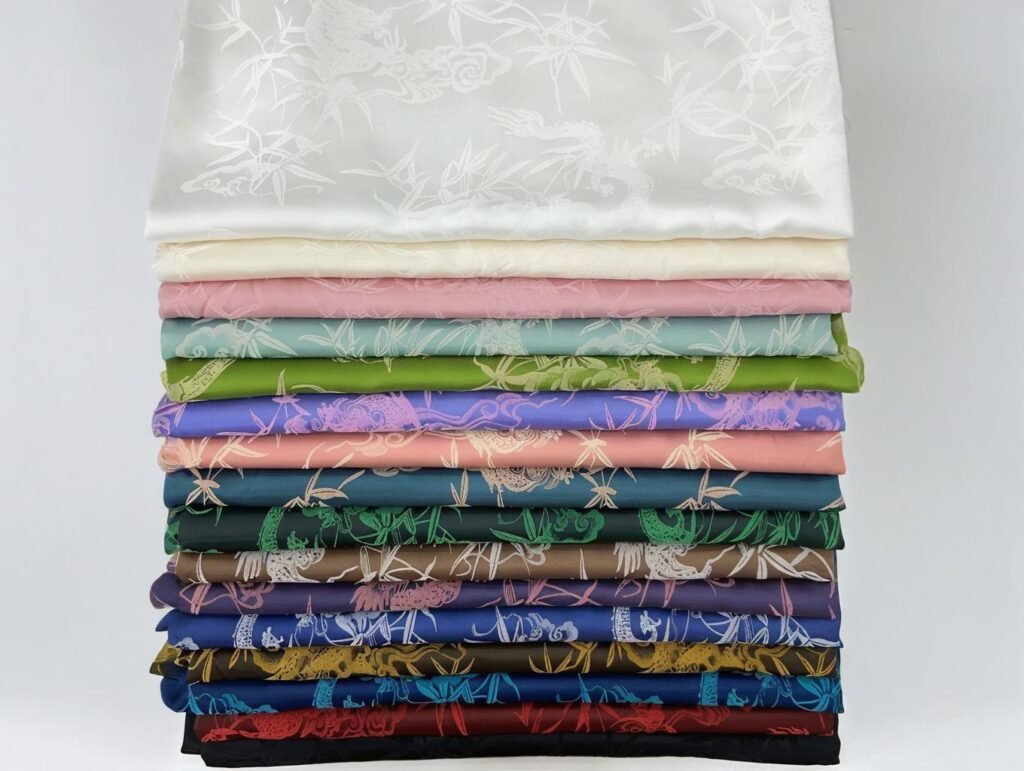
Quality control (QC) in satin sourcing is not just a technical step—it is a strategic safeguard that directly influences buyer satisfaction, return rates, and long-term brand reputation. Satin, whether woven from silk, polyester, or blends, is frequently used in luxury and high-visibility garments such as evening gowns, bridalwear, lingerie, and premium accessories. In such categories, the margin for error is almost zero: even minor flaws like uneven sheen, seam slippage, dye streaks, or color mismatches can cause entire shipments to be rejected.
To mitigate these risks, buyers rely on structured QC workflows that begin well before bulk production and extend all the way to final shipment. These workflows typically involve lab dips, inline inspections, third-party testing against ISO/ASTM/AATCC standards, and final sampling protocols. The goal is to create a multilayered safety net, ensuring that what buyers receive matches both contractual specifications and consumer expectations.
Buyers use QC workflows including pre-production lab dips, inline inspections, and third-party tests (ISO, ASTM, AATCC) for colorfastness, dimensional stability, seam strength, and chemical compliance to ensure satin fabrics meet specifications before shipment.
QC Workflow for Satin Fabrics
| QC Stage | Activity / Test Type | Standards / Methods | Timing in Supply Chain |
|---|---|---|---|
| Pre-Production Lab Dips | Shade Approval, Colorfastness | ISO 105, AATCC 61 | Before Bulk Dyeing |
| Inline Loom Inspections | Visual Defects, Weave Density | 4-Point Fabric Inspection System | During Weaving & Finishing |
| Physical Property Testing | Seam Slippage, Tear Strength, GSM Checks | ISO 13936, ASTM D1683, ISO 3801 | Before Bulk Cutting |
| Chemical Safety Testing | Formaldehyde, Azo Dyes, pH, Heavy Metals | OEKO-TEX, REACH Compliance | Before Export Clearance |
| Final Random Sampling | Pre-Shipment Inspection (AQL 2.5 or 4.0) | ANSI/ASQ Z1.4 Standard | Before Shipment |
Interpretation:
- Lab dips ensure color targets are approved early, minimizing disputes later.
- Inline inspections help identify weaving flaws such as broken filaments, uneven gloss, or misaligned patterns before they multiply into large-scale defects.
- Physical tests quantify mechanical properties like seam strength and fabric weight, validating durability.
- Chemical tests guarantee compliance with restricted substances, crucial for EU and U.S. market access.
- Final inspections use AQL sampling to evaluate bulk shipment quality, serving as the last checkpoint before clearance.
7.1 Case Study: U.S. Department Store QC Requirements
A leading U.S. department store sourcing satin eveningwear from Asia enforces strict minimum QC benchmarks:
- Colorfastness ≥ Grade 4 (ISO 105-C06, washing fastness)
- Seam Slippage < 6 mm at 180 N load (ISO 13936-2)
- Pilling Resistance ≥ Grade 4 after 500 cycles (ISO 12945-2 Martindale test)
Any shipment failing to meet these standards faces 100% rejection. Moreover, repeated failures lead to supplier blacklisting, effectively cutting off access to lucrative retail contracts.
For suppliers, this case demonstrates that investing in robust QC protocols upfront is significantly less costly than facing rejection penalties, reputational damage, or loss of long-term business relationships.
7.2 Third-Party QC Partners
Global buyers rarely rely solely on in-house supplier reports. Instead, they use independent QC partners who perform standardized audits and tests.
- SGS: Widely trusted for ISO and AATCC physical testing (e.g., seam strength, shrinkage, abrasion resistance).
- Intertek: Provides chemical and performance audits, often bundling physical and eco-compliance tests.
- Bureau Veritas: Focuses on chemical compliance for EU/US buyers, including REACH, OEKO-TEX, and Prop 65 audits.
- TÜV SÜD: Increasingly engaged by European luxury brands for sustainability-linked audits and Higg Index verifications.
Engaging third-party partners adds cost (often $150–$200 per lot), but this investment ensures impartiality and aligns with global retailer requirements.
7.3 QC Cost vs. Risk Reduction
A key tension in satin sourcing lies in balancing QC costs with risk management:
- Cost Reality: Comprehensive QC—including lab dips, inline checks, ISO/ASTM testing, and pre-shipment inspections—can add 5–8% to the total fabric sourcing cost.
- Risk Reality: A rejected shipment of bridal satin (typically priced at $25–$60/m) could result in losses worth tens of thousands of dollars, not including reputational damage and downstream brand impact.
From a buyer’s perspective, QC is insurance. By spending $150–$200 per lot on third-party audits, brands avoid risks of entire collections being delayed, recalled, or blacklisted at customs for non-compliance.
7.4 Buyer Guidelines for Satin QC
To reduce risk and improve outcomes, global sourcing managers often follow a five-step QC checklist:
- Pre-Production: Approve lab dips with standardized light sources (D65 daylight, TL84, incandescent) to prevent metamerism.
- Inline Checks: Enforce 4-point fabric inspection every 100 meters to flag weaving or sheen inconsistencies.
- Physical Tests: Require ISO/ASTM tensile, seam slippage, and GSM testing before fabric is cut.
- Chemical Compliance: Mandate OEKO-TEX or REACH testing for every production batch.
- Final Sampling: Conduct random AQL inspections (2.5 for luxury, 4.0 for mid-market) before shipment release.
This systematic approach reduces disputes, strengthens buyer confidence, and maintains consistent supply chain quality.
Quality control in satin sourcing is not optional—it is the backbone of risk management for fashion brands. By implementing QC workflows that span from lab dips to pre-shipment inspections, and by leveraging third-party testing against ISO, ASTM, and AATCC standards, buyers safeguard themselves from costly shipment rejections and protect brand reputation.
While QC investments raise upfront costs, they are far outweighed by the potential losses from defective or non-compliant shipments. For satin, where aesthetics and performance directly impact marketability, rigorous QC is the decisive factor that separates successful sourcing programs from costly failures.
Are There Best Practices in Patternmaking, Sewing, and Care (Bias Cutting, Needles/Threads, Seam Types, Laundering) to Maximize Durability and Appearance?
Satin is one of the most sought-after fabrics in luxury and occasionwear for its lustrous sheen, smooth handfeel, and fluid drape. Yet its very qualities also make it technically demanding. The slippery surface challenges cutters, its tendency to fray tests seam durability, and its delicate finishes limit laundering options. To ensure satin garments meet both aesthetic expectations and durability standards, designers and manufacturers must adopt specialized approaches in patternmaking, sewing, and aftercare education.
Best practices include bias cutting for fluid drape, microtex needles for clean seams, French seams for durability, fine threads to reduce puckering, and consumer education on dry-cleaning or gentle washing to extend garment life and preserve satin’s sheen.
Sewing & Care Recommendations for Satin
| Parameter | Recommended Practice | Impact on Garment Quality |
|---|---|---|
| Pattern Cutting | Bias Cut (45° Grain Angle) | Improves Drape, Reduces Wrinkling |
| Needle Type | Microtex 60/8 or 70/10 | Prevents Snagging & Needle Marks |
| Seam Construction | French Seams, Narrow Hems | Hides Raw Edges, Enhances Strength |
| Thread Choice | Fine Polyester or Silk Threads | Matches Fabric Weight & Smoothness |
| Interfacing | Lightweight Fusible Interfacing | Stabilizes Necklines & Armholes |
| Laundering Recommendations | Dry-Clean or ≤30°C Gentle Wash | Maintains Luster & Dimensional Stability |
8.1 Patternmaking Best Practices
Satin’s slippery weave and directional sheen make cutting accuracy critical.
- Bias Cutting (45° Grain Angle): Improves drape and reduces wrinkling, especially for gowns and skirts. Bias cuts also distribute fabric stress more evenly, minimizing seam distortion.
- Nap Awareness: Since satin reflects light differently depending on direction, all pattern pieces must be cut in the same orientation to prevent shading inconsistencies in the finished garment.
- Extra Seam Allowances: Recommended to mitigate fraying edges during handling.
Result: Well-cut satin pieces not only drape elegantly but also reduce waste from pattern mismatches, protecting margins in high-cost fabrics.
8.2 Sewing Precision: Needles, Threads & Seams
The sewing stage is where satin’s fragility is most evident.
- Needles: Fine, sharp Microtex 60/8 or 70/10 needles are preferred. Larger needles risk snagging or leaving permanent puncture marks.
- Threads: Fine polyester or silk threads match satin’s weight and smoothness. Polyester is strong and affordable; silk offers softness and luster for couture garments.
- Seam Construction:
- French Seams: Enclose raw edges, preventing fraying and ensuring neatness inside the garment.
- Narrow Rolled Hems: Add refinement for lingerie and nightwear without bulky seam allowances.
- Reinforced Seams in Stress Areas: Interfacing or tape should stabilize shoulder seams, waistlines, or closures.
Buyer Insight: Precision sewing reduces return rates by addressing common consumer complaints—seam failures, fraying, and puckering.
8.3 Interfacing and Stabilization
Satin garments, especially in bridalwear and evening gowns, benefit from lightweight fusible interfacings.
- Applications: Necklines, armholes, waistbands, and button plackets.
- Function: Prevents distortion during wear and reduces seam slippage.
- Case in Point: European bridal ateliers report a 35% reduction in seam slippage when duchess satin bodices are stabilized with fusible interlining.
8.4 Laundering Recommendations
Consumer use often determines the actual lifespan of satin garments.
- Silk Satin: Dry-cleaning remains the gold standard to preserve luster and prevent shrinkage.
- Polyester Satin: Can tolerate cool gentle washes (≤30°C), but tumble drying should be avoided.
- Blends: Require tailored instructions; satin blends with elastane, for instance, should never be exposed to high heat.
Data Point: A Luxury Fashion Aftercare Study 2023 found that 60% of satin garment failures were linked to improper laundering rather than production flaws. This makes care labeling as critical as fabric construction.
8.5 Case Study: Bridalwear Production Standards
European bridal ateliers, producing for high-value markets, implement meticulous satin-handling techniques:
- Bias Cutting: Creates flowing hems in duchess satin skirts, ensuring the dramatic silhouettes expected in couture.
- Hand-Finished Seams: Prevent bulk in multi-layered gowns and maintain comfort for the wearer.
- Structured Interfacing: Stabilizes bodices and ensures gowns retain form over extended ceremonial use.
Outcome: These practices yield gowns that maintain structural integrity after long hours of wear, justifying premium pricing.
8.6 Consumer Education Trends
Manufacturing excellence is only half the equation; consumers must also understand how to care for satin.
- QR Codes on Care Labels: Luxury brands such as Oscar de la Renta now link labels to video tutorials showing proper washing, steaming, and storage techniques.
- Aftercare Kits: Some couture houses provide satin care kits with breathable garment bags and recommended detergents, positioning care as part of the luxury experience.
Strategic Impact: Consumer education reduces product returns, improves brand trust, and extends garment life—supporting both profitability and sustainability goals.
8.7 Manufacturing vs. Consumer Lifecycle Costs
Satin highlights the direct link between manufacturing quality and consumer use:
- Manufacturing Precision: Bias cutting, French seams, fine threads, and stabilization techniques increase production costs slightly but prevent post-sale complaints.
- Consumer Lifecycle Costs: Investing in detailed care labeling reduces warranty claims and prolongs product lifespan. A well-cared-for satin dress may last 20–30 wears versus fewer than 10 if mishandled.
- Sustainability Benefit: By extending garment life, brands reduce textile waste, aligning with circular economy goals and eco-conscious consumer demand.
Maximizing satin’s durability and appearance requires a holistic approach:
- In Patternmaking: Bias cutting and directional alignment improve drape and prevent shading inconsistencies.
- In Sewing: Fine needles, silk or polyester threads, and French seams ensure smooth finishes and reduce fraying.
- In Stabilization: Lightweight interfacings in stress points add structural strength.
- In Care: Clear labeling, QR-linked instructions, and professional aftercare recommendations extend garment life and preserve sheen.
For buyers and designers, adopting these best practices protects brand reputation, consumer satisfaction, and sustainability commitments. Satin may be challenging to handle, but when engineered with precision and supported by consumer education, it becomes a long-lasting emblem of luxury and craftsmanship.
Partner with SzoneierFabrics for Satin Sourcing & Customization
From weave structures and fabric types to GSM specs, finishing methods, sourcing logistics, and QC workflows, this guide shows why satin sourcing demands technical knowledge, reliable partners, and sustainable practices.
At SzoneierFabrics, we provide:
- Custom satin development (silk, polyester, recycled PET blends)
- Low MOQs & fast sampling for global buyers
- ISO/AATCC compliant QC workflows to minimize sourcing risks
- Eco-certified production (OEKO-TEX, GRS, GOTS) for sustainable fashion markets
Contact us today to customize satin fabrics for apparel, bridalwear, lingerie, or luxury accessories—because premium fabrics start with precision engineering and reliable sourcing partners.