 Skip to content
How Cotton Material Types Affect Garment Durability and Longevity
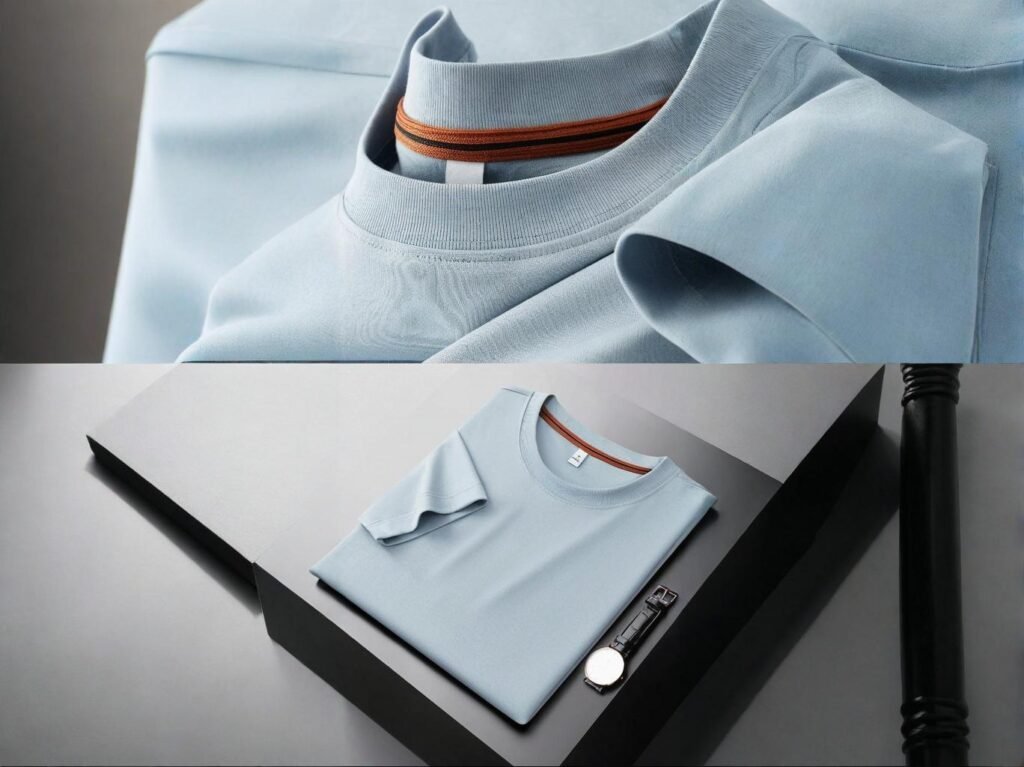
Most cotton garments don’t fail because they’re worn out — they fail because they were never designed to last in the way they’re used. A T-shirt that pills after five washes, a shirt that twists at the seams, or trousers that thin out at the knees all point to the same root cause: the wrong cotton material choice for the job. Cotton material types affect garment durability through fabric structure, fiber quality, GSM, yarn construction, and finishing. These factors determine how well a garment resists abrasion, maintains shape, survives washing, and performs over time.
A product developer once described durability as “what you notice only when it’s missing.” This article explains exactly why some cotton garments quietly last for years — and others don’t make it past a season.
What does garment durability mean in the context of cotton materials?
Garment durability, when applied to cotton materials, does not mean how strong a fabric feels when it is new, nor does it describe a single laboratory value. In practical terms, durability refers to a cotton garment’s ability to maintain its structure, appearance, and comfort through repeated real-world use. That includes wearing, washing, drying, folding, stretching, and daily handling.
A durable cotton garment is one that continues to look acceptable, feel comfortable, and function as intended long after the initial purchase. It resists gradual degradation such as thinning, pilling, seam distortion, color loss, and loss of shape. Importantly, durability is not about preventing wear altogether. All cotton garments wear. Durability is about how slowly and predictably that wear occurs.
Durability is a system, not a single metric
One of the most common misunderstandings in apparel sourcing is treating durability as a single property. In reality, cotton garment durability is a system outcome, created by the interaction of fiber quality, yarn engineering, fabric construction, finishing, and garment design.
A) The five pillars of cotton garment durability
| Durability Factor | What It Controls |
|---|---|
| Abrasion resistance | Surface wear and thinning |
| Tensile strength | Resistance to tearing |
| Shape stability | Seam twisting and distortion |
| Pilling resistance | Surface appearance |
| Wash durability | Long-term performance |
Each pillar supports the others. If one fails, the garment may still technically be wearable, but perceived quality collapses. For example, a shirt may retain tensile strength yet pill heavily, making it look old and cheap. From the consumer’s perspective, durability has already failed.
Abrasion resistance determines how well cotton fibers stay anchored under friction. This is critical at collars, cuffs, elbows, underarms, and inner thighs. Tensile strength governs resistance to sudden tearing, but in everyday garments, abrasion and fatigue are more common failure modes than outright rips. Shape stability ensures that the garment retains its intended silhouette after repeated washing. Pilling resistance preserves surface appearance, while wash durability ties all these elements together over time.
B) Why “strong cotton” is a misleading idea
Cotton is often described casually as “strong” or “weak,” but these terms are meaningless without context. Cotton strength varies dramatically depending on how the fiber is processed and engineered into fabric.
Cotton strength is influenced by:
- Fiber length and maturity
- Yarn twist and structure
- Fabric weave or knit construction
| Cotton Description | Reality |
|---|---|
| “100% cotton” | Says nothing about durability |
| “Heavy cotton” | May still pill or thin |
| “Soft cotton” | Often pills faster |
A heavy cotton jersey made with low-twist yarns can feel substantial yet degrade quickly through pilling and thinning. Conversely, a lighter fabric made with well-controlled yarns and tight construction may last far longer. Labels and marketing descriptors do not predict durability. Engineering choices do.
C) Durability versus comfort is a managed trade-off
Comfort and durability are not enemies, but they do pull in opposite directions if unmanaged. Many comfort-enhancing choices weaken durability if applied without restraint.
| Feature | Comfort Gain | Durability Impact |
|---|---|---|
| Looser structure | Softer drape | Faster wear |
| Finer yarns | Smooth touch | Lower abrasion resistance |
| Heavy softening | Immediate comfort | Reduced lifespan |
For example, looser knit structures increase softness and flexibility, but they allow fibers to move and abrade more easily. Finer yarns reduce surface roughness but expose fibers to breakage. Heavy chemical softening coats fibers and improves hand feel initially, but it often accelerates pilling and fiber fatigue during washing.
Durable cotton garments strike a deliberate balance. They may not feel exceptionally soft on day one, but they preserve acceptable comfort after dozens of wear-and-wash cycles.
D) How durability failures appear in real life
Durability problems rarely present as sudden failure. They emerge gradually and unevenly, often in predictable locations.
Common real-world durability failures include:
- Fabric thinning at high-friction areas such as elbows, knees, and seat panels
- Seam twisting or skewing after repeated washing
- Surface fuzz evolving into visible pills
- Uneven color fading or greying
These outcomes are not user mistakes. They are the natural result of fiber behavior, yarn design, and fabric structure interacting with real use conditions. When multiple durability pillars degrade at once, garments are retired long before they are structurally unusable.
E) Abrasion resistance and surface aging
Abrasion resistance is often the first durability pillar to fail in cotton garments. It governs how fibers behave under repeated rubbing, whether from body movement, washing machines, or daily handling.
Poor abrasion resistance leads to:
- Early fuzz formation
- Progressive pilling
- Surface thinning
Abrasion resistance is influenced by:
- Fiber length and cohesion
- Yarn twist level
- Fabric density and interlacing
Tightly bound fibers resist pull-out and stay anchored longer. Loosely bound fibers migrate to the surface and break off. This is why some garments look worn after a few washes despite passing tensile tests.
F) Shape stability and garment integrity
Shape stability is central to perceived durability. A cotton garment that stretches, twists, or distorts quickly feels cheap even if the fabric itself remains intact.
Shape instability typically shows up as:
- Twisted side seams
- Warped hems
- Shrinking or growth in specific directions
These issues are driven by:
- Unbalanced yarn tensions
- Inadequate fabric setting
- Poor control of shrinkage during finishing
Once a garment loses its intended shape, it often leaves rotation regardless of fabric strength. Durability, in practice, includes fit retention, not just fabric survival.
G) Pilling resistance and perceived quality
Pilling is one of the most visible and emotionally negative durability failures in cotton garments. Pills signal age and poor quality to consumers, even when the garment is still wearable.
Pilling is affected by:
- Short fiber content
- Yarn twist and ply
- Fabric surface exposure
Low-twist yarns and brushed surfaces pill more easily. Once pills form, they trap additional fibers and accelerate surface degradation. High pilling resistance does not require stiff or uncomfortable fabric, but it does require controlled yarn and surface engineering.
H) Wash durability as the ultimate test
Cotton garments are judged most harshly after washing. Washing combines heat, moisture, chemicals, and mechanical action, making it the most aggressive stress test a garment faces.
Wash durability encompasses:
- Resistance to shrinkage and distortion
- Retention of hand feel
- Stability of color and surface
Garments that rely on surface finishes for appearance often fail here. Once finishes wash out, underlying fabric weaknesses become visible. Durable cotton garments are built to perform without relying on temporary treatments.
I) Durability and color retention
Color loss is often overlooked in durability discussions, but fading and greying strongly affect perceived garment life.
Uneven color loss:
- Signals fiber damage
- Highlights abrasion zones
- Reduces perceived cleanliness
Color durability depends on:
- Fiber maturity
- Dye selection and penetration
- Finishing chemistry
A garment that remains structurally intact but looks faded or patchy is usually removed from use early, especially in professional or uniform settings.
J) Durability as value, not just lifespan
Durability matters not only because it extends garment life, but because it improves value consistency.
Longer-lasting cotton garments:
- Reduce replacement frequency
- Improve customer satisfaction
- Lower total cost of ownership
For brands and buyers, durability reduces returns and complaints. For consumers, it builds trust. For sustainability, it reduces material throughput. Durability is not simply about making garments last forever. It is about making them age predictably and gracefully.
K) Common misconceptions about durable cotton garments
Several myths persist in the market:
- Heavier always means more durable
- Softer always means higher quality
- Higher price guarantees longer life
In reality, durable cotton garments often feel ordinary when new. Their advantage becomes clear only after repeated wear and laundering. This delayed payoff is why durability must be designed intentionally, not assumed.
L) How professionals evaluate cotton garment durability
Experienced designers and sourcing teams evaluate durability through:
- Abrasion testing after washing
- Shape retention checks
- Pilling assessment over time
- Wear trials at stress points
They look for garments that change slowly and evenly rather than dramatically and unpredictably. Consistency is the hallmark of durability.
Durability insight
A durable cotton garment does not feel indestructible. It does not rely on stiffness or weight to prove its strength. Instead, it ages quietly, maintaining its structure, appearance, and comfort long enough that wear feels gradual rather than disappointing.
In cotton garments, durability is not a feature. It is the outcome of many small, disciplined engineering decisions working together over time.
Which cotton fabric structures (weaves and knits) provide the highest long-term durability?
In cotton garments, fabric structure is one of the strongest predictors of long-term durability. More than fiber type or fabric weight, the way yarns interlace or loops are formed determines how stress is absorbed, how abrasion accumulates, and how the fabric ages over time. Structures with tighter interlacing or higher loop stability—such as twill weaves and interlock knits—consistently outperform looser constructions in real-world wear.
Durability is not about resisting force once. It is about managing repeated, low-level stress thousands of times.
Structure decides how cotton handles stress
Every time a cotton garment is worn or washed, yarns experience friction, bending, and tension. Fabric structure determines whether that stress is concentrated in one direction or dispersed across multiple yarn paths. Structures that spread stress age slowly and evenly. Structures that concentrate stress fail early and visibly.
A) Woven cotton durability by weave type
In woven cotton fabrics, weave pattern directly controls abrasion behavior, crease formation, and yarn mobility.
| Weave Type | Durability Level | Reason |
|---|---|---|
| Plain weave | Medium | Balanced interlacing but high crease stress |
| Twill weave | High | Diagonal structure disperses abrasion |
| Satin / sateen | Low–medium | Long floats expose yarns |
Plain weave locks yarns tightly, which gives good baseline strength, but it also forces yarns to bend sharply at each interlacing point. Over time, this concentrates stress and leads to fiber fatigue, especially at folds and seams.
Twill weaves introduce diagonal yarn paths that distribute abrasion across multiple yarns instead of concentrating it at right angles. This makes twill fabrics more resistant to thinning and tearing at stress zones such as knees, elbows, and seat panels. For workwear, uniforms, and durable casual garments, twill is often the most reliable woven cotton structure.
Satin and sateen weaves prioritize smoothness by allowing yarns to float over several intersections. These floats feel soft and look refined, but they are more exposed to friction. Unless yarn quality is exceptionally high, satin-based cotton fabrics tend to show surface wear and pilling earlier than plainer structures.
B) Knit cotton durability by structure
In knitted cotton fabrics, durability is governed by loop stability rather than yarn interlacing. Loops that deform easily lead to distortion and pilling over time.
| Knit Type | Durability | Common Issues |
|---|---|---|
| Single jersey | Medium–low | Twisting, surface pilling |
| Rib knit | Medium | Stretch fatigue |
| Interlock | High | Higher material cost |
Single jersey is the most common cotton knit, but it is also the least durable. Its single-loop construction allows yarns to rotate and migrate, which leads to edge curling, twisting seams, and early pilling. Even with good yarn quality, single jersey garments often lose shape faster than other knit types.
Rib knits improve durability by balancing loops on both sides of the fabric. They resist edge curling and provide better recovery, but repeated stretching can still fatigue the structure over time, especially in cuffs and waistbands.
Interlock knits use a double-knit construction that locks loops together from both sides. This dramatically improves dimensional stability, abrasion resistance, and shape retention. Interlock garments feel denser and last longer, but they use more yarn and cost more to produce. For garments where durability matters more than lightness, interlock is one of the most robust cotton knit options.
C) Stress distribution and wear patterns
Different structures manage stress in fundamentally different ways.
| Structure | Stress Handling |
|---|---|
| Plain weave | Direct, localized yarn stress |
| Twill weave | Angled stress dispersion |
| Knit structures | Loop deformation and recovery |
In plain weaves, stress is transferred directly through yarn intersections, leading to sharp bending and localized wear. Twill spreads stress diagonally, reducing peak load on any single yarn. Knits rely on loop deformation, which allows flexibility but increases the risk of gradual shape loss if loops are unstable.
Better stress dispersion does not prevent wear, but it slows down visible degradation, which is the essence of durability in garments.
D) Durability at seams and edges
Fabric structure plays a critical role at seams, hems, and edges—areas where many garments fail first.
Structural effects include:
- Resistance to seam slippage in woven fabrics
- Stability around stitch holes
- Tendency to curl or stretch at cut edges
Loose structures, whether woven or knit, allow yarns to move away from stitch lines. This leads to seam puckering, tearing, or distortion even when the fabric body appears intact. Tighter, more stable structures hold yarns in place and support stitching over time.
This is why garments made from loose jersey or soft sateen often fail at seams before the main fabric wears out.
E) Structure versus GSM misconception
Fabric weight is often mistaken for durability. In reality, structure frequently outweighs GSM.
A heavy plain weave cotton can:
- Crease sharply
- Thin at fold lines
- Abrade quickly at contact points
A lighter twill cotton can:
- Distribute stress more evenly
- Retain thickness longer
- Show slower surface wear
Weight adds material, but structure controls how that material is used. Without the right structure, additional weight may simply add bulk without extending garment life.
F) Interaction between structure and yarn quality
Fabric structure amplifies yarn behavior. Good yarns perform best in stable structures, while weak yarns fail faster in exposed ones.
For example:
- Low-twist yarns pill aggressively in single jersey
- Short fibers break faster in satin weaves
- Strong, well-twisted yarns thrive in twill and interlock
This is why durability cannot be judged by structure alone. Structure and yarn must be evaluated together, but structure determines how forgiving the fabric will be if yarn quality varies.
G) Choosing structure based on garment use
High-durability cotton garments typically align structure with use case.
Common matches include:
- Twill weaves for trousers, jackets, uniforms
- Interlock knits for long-wear tops and base layers
- Plain weave for balanced, moderate-use garments
- Satin structures only where appearance outweighs longevity
Problems arise when structures designed for softness or drape are used in high-stress applications without adjustment.
H) Why structure affects perceived aging
Two garments can lose the same amount of fiber mass yet look very different. Structure controls how wear is perceived.
Stable structures age evenly, showing gradual softening and mild fading. Unstable structures age unevenly, showing pills, distortion, and localized thinning. Consumers interpret the latter as poor quality, even if technical strength remains.
Durability, in practice, is about aging behavior, not survival.
Cotton fabric structure determines how wear accumulates, how stress is shared, and how failure appears. It does not make fabric indestructible, but it controls whether aging feels acceptable or disappointing.
In long-term durability, structure often matters more than weight, softness, or even fiber length. Garments built on stable structures do not resist wear—they manage it, quietly and consistently, over time.
How do fiber quality and staple length influence cotton garment strength and wear life?
Fiber quality is the starting point of garment durability, long before yarn is spun or fabric is woven or knitted. Among all fiber-level variables, staple length and fiber maturity exert the strongest influence on how cotton garments age. They determine yarn cohesion, surface smoothness, resistance to abrasion, and the rate at which pilling, thinning, and breakage appear during real use.
A garment cannot outlast the limitations of its fibers. Processes can refine behavior, but they cannot override fiber reality.
Fiber quality is durability before fabric even exists
Cotton durability does not begin at the fabric mill. It begins in the fiber itself. Once fibers are spun into yarn, many durability outcomes are already locked in. Weak, short, or immature fibers create structural weaknesses that later stages can only partially mask.
A) Understanding staple length in practical terms
Staple length refers to the average length of individual cotton fibers within a batch. It is one of the clearest predictors of yarn quality and long-term garment performance.
| Staple Length | Fiber Category | Durability Impact |
|---|---|---|
| Short staple | <25 mm | Weak yarn, heavy pilling |
| Medium staple | 25–28 mm | Balanced performance |
| Long / extra-long staple | >28 mm | Strong, smooth, durable |
Longer fibers overlap more extensively when twisted into yarn. This overlap increases frictional contact between fibers, allowing the yarn to resist pull-out, abrasion, and fatigue. Short fibers, by contrast, rely on surface friction alone and disengage easily under stress.
From a wear-life perspective, staple length determines how quickly fibers migrate to the fabric surface and break off.
B) Staple length and yarn strength relationship
The effect of staple length becomes most visible at the yarn level, where fiber behavior directly translates into fabric aging.
| Fiber Type | Yarn Result | Garment Outcome |
|---|---|---|
| Short staple | Loose, fuzzy yarn | Early pilling |
| Medium staple | Stable yarn | Normal wear |
| Long staple | Compact yarn | Long wear life |
Short-staple cotton produces yarns with higher hairiness and lower cohesion. These yarns may pass tensile tests but fail gradually through abrasion and pilling. Medium-staple cotton represents a practical balance for most garments, offering acceptable durability at controlled cost. Long-staple and extra-long-staple cottons produce compact, smooth yarns that resist fiber migration and surface breakdown.
This is why garments made from higher-grade cotton often age better even when fabric weight and construction appear similar. The difference is not visible at first touch, but it becomes clear after repeated wear and washing.
C) Fiber maturity and abrasion resistance
Staple length alone does not guarantee durability. Fiber maturity, which describes the thickness and development of the cotton fiber cell wall, is equally important.
Immature fibers:
- Break more easily under abrasion
- Collapse or kink during processing
- Absorb dyes unevenly
- Generate excess surface fuzz
Mature fibers improve:
- Abrasion resistance
- Yarn cohesion
- Color retention
- Wash durability
Immature fibers behave unpredictably. They may feel soft initially but degrade rapidly as fiber walls fracture and detach. Mature fibers maintain structural integrity under repeated mechanical stress, slowing the onset of thinning and pilling.
In practice, a medium-staple cotton with good maturity can outperform a longer but immature fiber in garment durability.
D) Fiber uniformity and consistency
Durability is influenced not only by average fiber length, but by length distribution.
When fiber length varies widely:
- Short fibers disengage first
- Stress concentrates unevenly
- Abrasion accelerates locally
Uniform fibers share load more evenly, allowing yarns to age gradually rather than catastrophically. This is why two cottons with the same reported staple length can perform very differently in garments.
Consistency matters as much as peak quality. Garments made from uneven fiber inputs often show patchy wear patterns, which consumers interpret as poor quality.
E) Cleanliness and contamination control
Fiber cleanliness affects durability in subtle but important ways.
| Fiber Issue | Durability Risk |
|---|---|
| High trash content | Weak yarn spots |
| Mixed fiber types | Inconsistent wear |
| Residual impurities | Fiber breakage |
Trash particles and impurities interfere with yarn formation, creating localized weak points. These weak points become initiation sites for abrasion and tearing. Mixed or contaminated fiber lots often lead to garments that wear unevenly, with some areas failing much earlier than others.
Clean fiber inputs reduce hidden failure points that no finishing process can reliably correct.
F) Fiber quality and pilling behavior
Pilling is one of the most visible durability failures in cotton garments, and it is strongly tied to fiber quality.
Short, immature fibers:
- Migrate to the surface quickly
- Entangle easily
- Break off and form pills
Long, mature fibers:
- Stay anchored within the yarn
- Resist pull-out
- Produce fewer, smaller pills
Once pills form, they trap additional fibers and accelerate surface degradation. This creates a feedback loop where garments age rapidly after the first visible pilling appears. Fiber quality determines whether this loop begins early or late in the garment’s life.
G) Fiber quality versus finishing illusion
Finishing treatments can temporarily improve hand feel and appearance, but they cannot change fiber fundamentals.
Soft finishes may:
- Mask surface fuzz initially
- Reduce friction for a short period
- Improve showroom appeal
After repeated washing:
- Loose fibers resurface
- Pills reappear
- Underlying yarn weakness becomes visible
Garments made from lower-quality fibers often show dramatic degradation once finishes wash out. Garments made from good fibers change more slowly and predictably, even as finishes diminish.
True durability is built from the fiber level upward, not applied afterward.
H) Why fiber quality affects wash life more than wear life
Many garments fail not during wear, but during laundering. Washing exposes cotton fibers to heat, moisture, chemicals, and mechanical action simultaneously.
Higher-quality fibers:
- Maintain cohesion when wet
- Resist fiber swelling damage
- Retain strength after repeated cycles
Lower-quality fibers swell unevenly, fracture more easily, and detach under agitation. This accelerates thinning, fuzzing, and color loss.
Wash durability is therefore one of the clearest reflections of fiber quality, even when garments appear similar when new.
I) Cost perception versus durability reality
Higher fiber quality often increases material cost, but it reduces cost elsewhere.
Better fibers:
- Extend garment usable life
- Reduce complaints and returns
- Improve perceived quality over time
For brands and buyers, this means fewer replacements and stronger customer trust. For consumers, it means garments that remain wearable and presentable longer. Fiber quality does not make garments immortal, but it slows the pace of disappointment.
J) Fiber quality and sustainability implications
Durable garments have sustainability advantages that are often overlooked.
Longer wear life:
- Reduces replacement frequency
- Lowers material throughput
- Decreases total environmental impact per use
Choosing better fiber quality is often a more effective sustainability strategy than adding labels or marketing claims. Durability at the fiber level supports both economic and environmental goals.
If durability is the objective, fiber quality sets the ceiling that no later process can exceed. Staple length, maturity, uniformity, and cleanliness determine how yarns behave, how fabrics age, and how garments wear out.
Processes can refine performance, and finishes can enhance comfort, but fiber quality defines the limits. In cotton garments, durability is decided early, quietly, and irreversibly—long before the first stitch is sewn.
What role do GSM and fabric weight play in determining cotton garment longevity?
GSM, or grams per square meter, plays a meaningful role in cotton garment longevity, but only when it is understood as part of a structural system, not as a standalone indicator of quality. Fabric weight influences abrasion resistance, shape stability, and resistance to thinning, yet higher GSM alone does not guarantee longer wear life. When GSM is poorly matched to yarn quality, fabric structure, or garment design, added weight can even accelerate failure.
In durable cotton garments, GSM functions as a supporting factor, not the main driver. It amplifies good engineering choices and exposes bad ones.
Weight helps—but only when used correctly
In real use, garments fail gradually through surface wear, seam stress, distortion, and thinning. GSM affects how much material is available to absorb these stresses, but how that material is organized matters just as much as how much of it exists.
A) GSM ranges and expected wear life
Different GSM ranges align naturally with different garment categories and durability expectations.
| GSM Range | Typical Garment | Longevity Expectation |
|---|---|---|
| 120–150 | Lightweight tops | Low–medium |
| 160–190 | Everyday T-shirts | Medium |
| 200–240 | Work shirts, heavy tees | Medium–high |
| 260+ | Heavywear, outer layers | High |
Lightweight fabrics feel cool and flexible, but they provide less fiber mass to resist abrasion and fatigue. In contrast, heavier fabrics contain more yarn per area, which slows down thinning and extends usable life. However, weight only contributes positively when the underlying yarn and structure can support it.
Weight alone does not guarantee performance, but under-weight fabrics almost always fail early when subjected to frequent wear and washing.
B) GSM and abrasion resistance
Abrasion is the most common durability stress in cotton garments, and GSM directly affects how quickly abrasion leads to visible damage.
| GSM Level | Abrasion Performance |
|---|---|
| Low | Rapid surface wear |
| Medium | Balanced resistance |
| High | Slower wear progression |
Higher GSM increases yarn density, which means more fibers share the frictional load during rubbing. This reduces the rate at which individual fibers break and migrate to the surface. In practice, this translates to slower fuzz formation, delayed pilling, and longer time before thinning becomes visible.
However, abrasion resistance is also strongly influenced by yarn twist and fabric structure. A high-GSM fabric made from weak or loosely bound yarns may still abrade quickly, while a moderate-GSM fabric with well-engineered yarns can outperform it.
C) GSM and structural stability
Beyond abrasion, GSM contributes to structural stability. Heavier fabrics resist distortion caused by washing, drying, and daily movement.
Higher GSM fabrics generally:
- Hold seams more securely
- Resist stretching and skewing
- Maintain shape at stress points
Lower GSM fabrics are more prone to:
- Edge curling
- Seam distortion
- Localized thinning
This is why lightweight cotton garments often lose shape before they tear. Longevity is not only about fabric survival, but about shape retention, and GSM supports that when paired with stable construction.
D) GSM versus comfort compromise
Fabric weight directly affects how a garment feels on the body, creating a trade-off between durability and comfort.
| GSM Choice | Durability Gain | Comfort Trade-Off |
|---|---|---|
| Higher GSM | Longer life | Reduced breathability |
| Lower GSM | Cooler feel | Shorter lifespan |
Heavier cotton fabrics trap more heat and reduce airflow, which can feel uncomfortable in warm conditions. Lighter fabrics feel cooler and more flexible but sacrifice durability. Long-lasting garments often feel slightly heavier and more substantial, and that is not accidental. It reflects a design choice to prioritize wear life over minimal weight.
The most successful durable garments choose a GSM that feels acceptable in the intended climate while still providing enough mass to resist wear.
E) GSM mismatch problems
Problems arise when GSM is specified without regard to yarn quality, structure, or garment design.
| Mismatch Scenario | Outcome |
|---|---|
| Low GSM + tight fit | Seam stress and tearing |
| High GSM + loose weave | Stiff feel, poor comfort |
| High GSM + poor yarn | Heavy fabric that pills |
A low-GSM fabric in a tight-fitting garment concentrates stress at seams and high-movement zones, accelerating failure. A high-GSM fabric built on a loose structure may feel bulky without offering proportional durability. Heavy fabrics made from short or immature fibers can still pill aggressively, creating the impression of poor quality despite substantial weight.
GSM must align with fiber quality, yarn construction, and fabric structure to contribute positively to longevity.
F) GSM consistency and aging behavior
Nominal GSM is less important than GSM consistency across the fabric.
A fabric labeled 180 GSM that fluctuates by ±10% will:
- Wear unevenly
- Shrink or distort unpredictably
- Age inconsistently across panels
Inconsistent weight creates zones of different durability within the same garment. Thinner areas fail first, drawing attention to wear and reducing perceived quality. Controlled GSM ensures that garments age evenly, which strongly influences how durable they feel to the wearer.
From a professional sourcing perspective, tight GSM tolerance is a stronger durability indicator than a higher advertised weight.
G) GSM and wash durability
Washing exposes garments to combined stresses: heat, moisture, chemicals, and mechanical action. GSM influences how well fabrics tolerate this environment.
Higher GSM fabrics:
- Retain strength better when wet
- Resist fiber fracture during agitation
- Lose thickness more slowly over time
Lower GSM fabrics swell and weaken more quickly when wet, making them more vulnerable to washing damage. This is why lightweight cotton garments often degrade faster in laundering than in actual wear.
Wash durability is often where GSM shows its strongest effect on garment longevity.
H) GSM in knits versus wovens
The role of GSM differs between woven and knitted cotton fabrics.
In wovens, GSM is closely tied to yarn density and interlacing, which directly supports abrasion resistance and shape stability. In knits, GSM also reflects loop size and depth, influencing how much deformation the fabric can absorb before losing shape.
For knits, slightly higher GSM often improves durability by:
- Reducing loop distortion
- Increasing resistance to thinning
- Improving recovery after stretching
However, excessively heavy knits can feel stiff and restrict movement, undermining comfort.
I) Perceived durability versus actual durability
Consumers often associate heavier garments with higher quality, but perceived durability and actual durability are not always aligned.
A heavy garment may:
- Feel premium initially
- Still pill or distort quickly
A moderately weighted garment may:
- Feel ordinary at first
- Age slowly and evenly
Professional durability evaluation focuses on how garments change, not how they feel on first wear. GSM contributes to that change rate, but only as part of a balanced design.
J) How professionals specify GSM for longevity
Experienced designers and buyers specify GSM by working backward from use conditions.
They consider:
- Frequency of wear and washing
- Garment fit and stress zones
- Climate and comfort expectations
- Yarn quality and fabric structure
Instead of asking “How heavy should this be?”, they ask “How long should this last under these conditions?” GSM becomes a tool to support that goal, not a marketing claim.
The right GSM does not make cotton garments heavy. It makes them predictable, stable, and reliable over time. Weight supports longevity when it is controlled, consistent, and matched to structure and fiber quality.
In cotton garments, GSM is not about excess. It is about providing just enough material to manage stress quietly, wash after wash, wear after wear.
How does yarn type and spinning method affect pilling, abrasion resistance, and durability?
In cotton garments, durability lives inside the yarn. Two fabrics can share the same GSM, fiber content, and fabric structure, yet age in completely different ways because their yarns were engineered differently. Yarn type and spinning method determine how firmly fibers are bound together, how easily fibers migrate to the surface, and how well the yarn resists abrasion and repeated washing. These factors directly control pilling behavior, surface wear, and long-term garment life.
When garments pill early or thin unexpectedly, the root cause is often not the fabric or finish, but the yarn construction hidden inside.
Durability lives inside the yarn
Yarn is the bridge between fiber quality and fabric structure. It is where fiber length, twist, alignment, and cohesion are either translated into durability or wasted. Once yarn is formed, many durability outcomes are already set.
A) Carded vs combed cotton yarns
The first major durability difference appears at the carding and combing stage.
| Yarn Type | Key Traits | Durability Impact |
|---|---|---|
| Carded yarn | More short fibers | Higher pilling risk |
| Combed yarn | Fewer short fibers | Smoother, stronger |
Carded yarns contain a higher proportion of short fibers that were not removed during processing. These short fibers sit near the yarn surface and detach easily under abrasion. As they break and tangle, they form pills. Carded yarns can feel soft and full initially, but they typically show surface degradation much earlier.
Combed yarns undergo an additional step that removes a large percentage of short and immature fibers. The remaining fibers align more evenly and twist together more securely. This produces yarns with lower hairiness, higher strength, and significantly improved resistance to pilling and surface fuzz.
For garments expected to last, combed yarn is often one of the most cost-effective durability upgrades available.
B) Compact spinning and surface cleanliness
Compact spinning refines traditional ring spinning by condensing fibers into a tighter bundle before twist is applied. This small process change has an outsized effect on durability.
| Feature | Result |
|---|---|
| Lower hairiness | Reduced fuzz and pilling |
| Higher fiber density | Improved abrasion resistance |
| Cleaner surface | Better appearance retention |
By reducing the spinning triangle, compact spinning prevents fibers from protruding from the yarn surface. Fewer exposed fiber ends means fewer initiation points for abrasion and pilling. Over time, compact yarns lose less material at the surface and maintain a smoother appearance.
In long-wear garments, compact yarns often outperform standard ring-spun yarns even when all other fabric parameters are identical. This is why compact spinning is widely used in premium T-shirts, workwear, uniforms, and garments where appearance retention matters.
C) Open-end (rotor) vs ring-spun yarns
Spinning method strongly influences yarn structure and durability behavior.
| Spinning Method | Durability Profile |
|---|---|
| Open-end (rotor) | Lower cost, bulkier, weaker |
| Ring-spun | Higher strength, smoother |
Open-end yarns are produced by feeding fibers into a rotor, where they are deposited and twisted together. This process creates yarns that are bulkier and less uniform, with fibers wrapped rather than fully integrated. Open-end yarns tend to have lower tensile strength and higher surface irregularity.
Ring-spun yarns twist fibers along their full length, producing a more continuous and cohesive structure. This improves abrasion resistance and reduces fiber migration. As a result, ring-spun yarns age more slowly and predictably.
This structural difference is why ring-spun yarns dominate garments that require durability and refined appearance, even though they cost more to produce.
D) Twist level and its effect on wear
Twist is one of the most misunderstood yarn variables in garment durability.
| Twist Level | Effect |
|---|---|
| Low twist | Soft feel, weaker structure |
| Balanced twist | Optimal strength and wear |
| High twist | Strong but stiff hand feel |
Low-twist yarns allow fibers to move easily, which enhances softness but increases pilling and abrasion damage. High-twist yarns lock fibers tightly but can feel stiff and reduce comfort, especially in next-to-skin garments.
Durable cotton garments rely on balanced twist, where fibers are held firmly enough to resist pull-out without sacrificing flexibility. Balanced twist slows pilling, improves wash durability, and preserves hand feel over time.
Twist optimization is one of the clearest examples of durability being an engineering decision rather than a material label.
E) Yarn linear density and durability perception
Finer yarns create smoother fabrics, but they expose individual fibers to higher stress. Coarser yarns distribute stress more evenly but can feel heavier and rougher.
Durability outcomes depend on how yarn size aligns with fabric structure:
- Fine yarns in tight, stable structures can perform well
- Fine yarns in loose structures pill quickly
- Coarser yarns tolerate abrasion better in casual or work garments
Yarn fineness must match garment use. Lightweight fashion garments often prioritize smoothness over longevity, while durable garments accept slightly coarser yarns for improved wear life.
F) Yarn quality and pilling behavior
Pilling is not random. It is the visible result of fiber migration, entanglement, and breakage at the yarn surface.
| Yarn Quality | Pilling Risk |
|---|---|
| Short fibers + loose twist | High |
| Long fibers + compact spin | Low |
Yarns made from long, mature fibers and spun with compact or well-controlled ring processes resist fiber migration. Fewer fibers reach the surface, and those that do are less likely to break and entangle.
In contrast, yarns with many short fibers and low cohesion shed fibers continuously, feeding pill formation. Once pills appear, they trap additional fibers and accelerate surface degradation.
G) Abrasion resistance at the yarn level
Abrasion resistance begins inside the yarn. Yarns with high cohesion resist gradual fiber loss, while loosely bound yarns shed material quickly.
Factors that improve yarn-level abrasion resistance include:
- Longer fiber overlap
- Lower hairiness
- Balanced twist
- Compact fiber packing
These characteristics allow yarns to absorb repeated friction without losing integrity. Fabric and finishing can support this behavior, but they cannot replace it.
H) Yarn choice and wash durability
Washing is often more damaging than wearing. Heat, moisture, chemicals, and mechanical action combine to stress yarn structure.
Yarns with good cohesion:
- Retain strength when wet
- Resist fiber swelling damage
- Maintain surface integrity after repeated cycles
Poorly engineered yarns weaken rapidly during washing, leading to thinning and fuzzing even when garments are not heavily worn. Wash durability is therefore one of the clearest indicators of yarn quality.
I) Why yarn differences explain “same fabric, different lifespan”
In practice, two garments may share:
- The same GSM
- The same knit or weave
- The same finishing treatments
Yet one lasts twice as long. The difference almost always lies in:
- Fiber length distribution
- Spinning method
- Twist balance
- Yarn cleanliness
These differences are invisible to most consumers but obvious in wear results. This is why experienced buyers focus on yarn specifications rather than surface descriptors.
J) Cost versus durability trade-off in yarn selection
Higher-quality yarns cost more, but they often reduce cost elsewhere.
Benefits include:
- Lower return rates
- Fewer complaints about pilling
- Longer time before replacement
- Stronger brand trust
In long-life garments, yarn quality is often the most efficient place to invest. Small increases in yarn cost can produce large gains in perceived and actual durability.
Two cotton garments can look identical at purchase and diverge completely in performance because their yarns were built differently. Yarn type and spinning method govern how fibers stay together, how surfaces age, and how long garments remain acceptable.
Durability is not applied at the fabric surface. It is engineered deep inside the yarn, where fiber behavior is decided long before the first garment is sewn.
Which finishing treatments improve durability without compromising comfort in cotton garments?
Finishing treatments play a decisive role in how cotton garments age. When applied with restraint and technical intent, finishes can significantly improve durability by reducing pilling, stabilizing dimensions, and strengthening fibers—without sacrificing comfort. When misused, however, finishing becomes cosmetic, masking weaknesses that reappear quickly after washing. In durable cotton garments, finishing should reinforce what the fiber and yarn already do well, not attempt to correct fundamental flaws.
Finishing should support durability, not fake it
True durability-focused finishing works quietly. It does not dramatically change how a garment feels on day one, but it controls how that feel evolves after repeated wear and laundering. Comfort that lasts is almost always the result of structural finishing, not surface tricks.
A) Enzyme washing and bio-polishing
Enzyme washing, often referred to as bio-polishing, selectively removes loose, protruding fibers from the fabric surface. These loose fibers are the primary source of early pilling and surface fuzz.
| Benefit | Durability Impact |
|---|---|
| Cleaner surface | Reduced pilling initiation |
| Less surface fuzz | Slower visual aging |
| Smoother drape | Comfort maintained over time |
By eliminating weak surface fibers before the garment reaches the consumer, enzyme treatments reduce the raw material available to form pills later. This is particularly valuable for jersey knits, where loop structures naturally expose fiber ends. Importantly, well-controlled enzyme treatments do not thin the fabric or weaken yarns. They simply remove what would otherwise break off during early wear.
Garments finished this way often feel more consistent after multiple washes than untreated fabrics, even if the initial hand feel difference is subtle.
B) Mercerization and fiber strengthening
Mercerization is one of the few finishing processes that genuinely strengthens cotton fibers rather than just altering surface feel. By treating cotton under tension in a controlled alkaline environment, the fiber structure is permanently modified.
| Effect | Result |
|---|---|
| Increased luster | More refined appearance |
| Improved dye uptake | Better color durability |
| Higher tensile strength | Extended wear life |
Mercerized cotton fibers swell and become more circular, increasing internal cohesion and surface smoothness. This improves abrasion resistance and reduces fiber breakage during washing and wear. At the same GSM, mercerized fabrics often outperform untreated fabrics in both durability and appearance retention.
From a comfort perspective, mercerization improves smoothness without adding stiffness, making it one of the most effective durability-enhancing finishes for garments worn close to the skin.
C) Pre-shrinking and dimensional stability
Dimensional instability is a hidden durability problem. Garments that shrink or distort place continuous stress on seams, stitches, and fabric panels, accelerating failure even when the fabric itself remains intact.
| Treatment | Shrinkage After Wash |
|---|---|
| Untreated | 3–7% |
| Pre-shrunk | 1–3% |
Pre-shrinking stabilizes fabric dimensions before garment construction. This reduces post-wash tension at seams, prevents twisting, and maintains fit consistency over time. From a durability standpoint, stable dimensions reduce mechanical stress during every wash cycle, slowing the accumulation of damage.
Pre-shrinking does not make fabric stronger in isolation, but it prevents structural fatigue caused by repeated forced movement, which is one of the most common causes of early garment failure.
D) Finishes that quietly harm durability
Not all finishes marketed as “premium” support long-term performance. Some improve initial softness or appearance at the expense of structural integrity.
| Finish | Long-Term Risk |
|---|---|
| Heavy silicone softeners | Increased fiber slippage |
| Over-brushing or sanding | Surface fiber weakening |
| Excess resin finishes | Brittleness and cracking |
Heavy silicone softeners reduce friction temporarily, but they also allow fibers to slip more easily under stress. Once the softener washes out, the underlying yarn structure is exposed, often leading to rapid pilling. Over-brushing raises fibers intentionally, creating an appealing soft surface that wears down quickly and unevenly. Excess resin finishes may improve wrinkle resistance but reduce flexibility, leading to micro-cracking and fiber breakage over time.
These finishes create garments that feel impressive at first touch but degrade quickly under normal use.
E) Comfort versus durability balance
Durability-friendly finishing does not compete with comfort. It changes how comfort is sustained.
| Finish Strategy | Outcome |
|---|---|
| Structural finishing | Comfort improves with use |
| Cosmetic finishing | Comfort declines quickly |
Structural finishes such as enzyme treatment, mercerization, and controlled shrinkage improve the way fabric behaves mechanically. As a result, garments soften gradually, drape better over time, and maintain a clean surface. Cosmetic finishes create an artificial softness that fades, often revealing inferior underlying structure.
The most comfortable long-term garments are rarely the softest on day one.
F) Wash durability as the real test of finishing
Washing exposes finishes to heat, moisture, chemistry, and mechanical agitation simultaneously. Finishes that truly support durability remain effective after dozens of cycles.
Durability-supporting finishes:
- Reduce fiber breakage when wet
- Maintain surface integrity after repeated laundering
- Preserve dimensional stability
Finishes that wash out quickly may pass initial inspection but fail in real life. For professional garment evaluation, post-wash performance matters more than untreated hand feel.
G) Finishing as a multiplier, not a substitute
Finishing amplifies existing fabric quality. Good yarns and stable structures respond well to durability-focused finishing. Poor yarns and unstable structures do not.
A well-made fabric with the right finishing:
- Pills later
- Ages evenly
- Maintains comfort
A poorly made fabric with aggressive finishing:
- Looks good briefly
- Degrades suddenly
- Loses consumer trust
This is why finishing should never be used to compensate for weak fiber or yarn choices.
H) Long-term value of durability-focused finishing
From a value perspective, durability-oriented finishing reduces:
- Returns due to pilling or shrinkage
- Complaints about shape loss
- Early garment replacement
For brands, this improves reputation and repeat purchase. For consumers, it delivers garments that remain wearable and presentable longer. Comfort that endures builds trust in the product, even if the initial feel is less dramatic.
The best finishing treatments extend the fabric’s natural strengths rather than disguising its weaknesses. They reduce the rate of surface breakdown, stabilize shape, and allow comfort to develop naturally over time.
In cotton garments, finishing should not create an illusion of quality. It should quietly protect what quality already exists, wash after wash, wear after wear.
How do care instructions and washing behavior impact the lifespan of cotton garments?
Care instructions and real-world washing behavior have a direct and measurable impact on how long cotton garments remain wearable, presentable, and structurally sound. Even fabrics made from high-quality fibers and well-engineered yarns can degrade rapidly when laundering conditions exceed what the material system was designed to tolerate. In practice, garment durability is tested far more aggressively in the laundry room than during everyday wear.
Cotton does not fail suddenly. It fails through accumulated fatigue, and laundering is the primary driver of that fatigue.
Durability is tested in the laundry room
Each wash exposes cotton garments to a combination of heat, moisture, mechanical force, and chemicals. These stresses act simultaneously and repeatedly, making laundering a more severe durability challenge than most wearing scenarios. Garments designed without realistic care assumptions often perform well initially but decline quickly once regular washing begins.
A) Washing frequency and fabric fatigue
Every wash cycle initiates a predictable sequence of fiber-level stress.
During washing, cotton fibers:
- Absorb water and swell
- Rub against neighboring fibers and yarns
- Flex repeatedly under agitation
- Lose a small amount of strength
| Wash Frequency | Fabric Impact |
|---|---|
| Occasional | Minimal cumulative fatigue |
| Weekly | Gradual, controlled wear |
| Frequent or industrial | Accelerated degradation |
The key issue is not a single wash, but repetition. Garments intended for frequent washing, such as uniforms, active basics, or children’s wear, must be engineered with stronger yarn cohesion, higher abrasion resistance, and stable finishes. Garments designed for occasional wear often lack the structural reserve needed to survive frequent laundering.
Ignoring washing frequency during design is one of the most common reasons cotton garments underperform in real use.
B) Water temperature and fiber stress
Water temperature significantly influences how cotton fibers behave during laundering.
| Water Temperature | Effect on Cotton |
|---|---|
| Cold (≤30°C) | Minimal fiber stress |
| Warm (40–50°C) | Moderate fatigue |
| Hot (≥60°C) | Accelerated weakening and shrinkage |
Higher temperatures cause cotton fibers to swell more aggressively and relax internal stresses. This accelerates fiber fatigue, increases dimensional change, and weakens yarn cohesion over time. Lower-quality or immature fibers are particularly vulnerable to high-temperature washing, showing rapid loss of strength and increased fuzz formation.
While hot washing may improve hygiene, it shortens garment life unless the fabric is specifically engineered for it. Many garments fail not because they are poorly made, but because they are washed beyond their design envelope.
C) Mechanical action and abrasion during washing
Mechanical action is often more damaging than temperature alone.
| Washing Factor | Durability Effect |
|---|---|
| Gentle cycle | Preserves yarn integrity |
| Heavy agitation | Increases pilling and thinning |
| Overloading | Distortion and uneven wear |
During agitation, garments rub against the drum, other garments, and themselves. This friction pulls fibers to the surface and breaks weak fiber ends. Overloading machines amplifies this effect by increasing compression and distortion, especially at seams and folds.
In many cases, washing abrasion causes more surface damage than actual wear, particularly for knit garments and soft cotton fabrics.
D) Detergents and chemical exposure
Detergents influence durability by altering fiber chemistry and removing protective finishes.
Strong detergents can:
- Strip softening and protective finishes
- Increase fiber brittleness
- Accelerate color loss
- Raise surface friction after repeated use
Medical-grade or industrial detergents are especially aggressive. Garments exposed to these chemicals require higher yarn strength, better fiber maturity, and finishes designed to survive chemical stress. Standard cotton garments washed under such conditions often show rapid thinning, harsh hand feel, and visible surface degradation.
Chemical exposure is cumulative. Even mild detergents can shorten garment life when used frequently and at high concentrations.
E) Drying methods and long-term wear
Drying is one of the most underestimated contributors to cotton garment degradation.
| Drying Method | Impact |
|---|---|
| Line drying | Lowest mechanical and thermal stress |
| Tumble drying (low heat) | Moderate fatigue |
| Tumble drying (high heat) | Severe fiber damage |
High-heat tumble drying combines thermal stress with repeated mechanical tumbling. This accelerates fiber breakage, promotes shrinkage, and weakens yarn cohesion. Repeated high-heat drying can reduce garment lifespan dramatically, even when washing conditions are otherwise controlled.
Line drying avoids most of these stresses, but it is often impractical. Durable garments must therefore tolerate at least moderate tumble drying without rapid degradation.
F) Interaction between care behavior and garment engineering
Care instructions are only effective when they align with how garments are actually treated. Many garments fail because they assume ideal behavior that does not reflect real-world use.
Examples include:
- Garments labeled “cold wash only” but routinely washed warm
- Fabrics requiring gentle cycles used in mixed loads
- Air-dry recommendations ignored in favor of tumble drying
When care assumptions are unrealistic, durability expectations collapse. Professional garment engineering anticipates likely behavior, not ideal behavior.
G) Why washing damage often appears suddenly
Garments rarely degrade in a smooth, linear way. Instead, they often appear stable and then deteriorate rapidly.
This happens because:
- Finishes wash out gradually
- Fiber fatigue accumulates invisibly
- A threshold is reached where fibers begin to break en masse
Once that threshold is crossed, pilling accelerates, thinning becomes visible, and shape loss appears quickly. Consumers often interpret this as sudden failure, but it is the delayed result of cumulative laundering stress.
H) Designing garments around realistic care patterns
Durable cotton garments are designed backward from expected care conditions.
This includes:
- Anticipating wash frequency
- Accepting likely temperature ranges
- Allowing for tumble drying
- Accounting for detergent strength
When garments are engineered this way, care instructions become guidance rather than fragile rules. The garment remains functional even when users deviate slightly from recommendations.
I) Communication versus durability reality
Care labels often serve legal or branding purposes, but durability depends on whether the garment can survive actual behavior.
A garment that lasts only when perfectly cared for is not truly durable. A garment that remains acceptable despite imperfect care reflects robust engineering and appropriate material choices.
From a professional standpoint, durability is proven when garments survive misuse gracefully.
J) Lifecycle perspective on care and longevity
From a lifecycle perspective, care behavior directly influences total garment value.
Longer-lasting garments:
- Reduce replacement frequency
- Lower total cost of ownership
- Improve sustainability through extended use
Educating consumers helps, but engineering garments for realistic care has a far greater impact.
Care insight
The most durable cotton garments are not those with the strictest care instructions, but those designed with real washing habits in mind. Laundry behavior is where durability is earned or lost, cycle by cycle.
In cotton garments, longevity is not only about materials and construction. It is about anticipating how people actually wash, dry, and live with their clothes—and building resilience into the fabric system accordingly.
How should professional buyers evaluate and choose cotton materials based on durability requirements?
For professional buyers, selecting cotton materials based on durability is not about choosing the “best” cotton in abstract terms. It is about matching material engineering to real use conditions, then verifying those choices through measurable performance data. Durability emerges from the interaction between fiber quality, yarn construction, fabric structure, GSM, finishing, and care behavior. Ignoring any one of these elements almost always leads to premature failure, even when initial samples look excellent.
A durability-first approach treats cotton selection as a system decision, not a checklist item.
A durability-first selection framework
Professional buyers who succeed with long-lasting cotton products usually follow a consistent evaluation logic. They work backward from how garments are actually worn, washed, and stressed, rather than forward from trends, marketing claims, or showroom hand feel.
A) Start with use-case reality, not trends
Durability requirements vary widely depending on how and where a garment is used. The same cotton fabric can be adequate in one context and completely unsuitable in another.
Key questions to define the durability envelope include:
- How often will the garment be worn in a typical week?
- How frequently will it be washed, and at what temperatures?
- Where does abrasion concentrate: elbows, shoulders, seat, seams?
- Is the garment expected to hold shape, or is relaxed distortion acceptable?
A fashion T-shirt worn occasionally and washed gently has very different durability needs than a work shirt worn daily and laundered weekly. Buyers who fail to define this context often overpay for unnecessary specifications or under-specify fabrics that wear out too quickly.
B) Match cotton construction to durability goals
Once the use case is clear, cotton construction choices should align with the required wear life rather than aspirational positioning.
| Durability Goal | Recommended Cotton Type |
|---|---|
| Everyday wear | Medium GSM, combed yarn |
| Frequent washing | Twill weave or interlock knit |
| Heavy use | Higher GSM, compact-spun yarn |
| Premium longevity | Long-staple, mercerized cotton |
Medium GSM combed cotton works well for general consumer garments that balance comfort and lifespan. For frequent washing, structural stability becomes more important, making twill weaves or interlock knits better choices. Heavy-use garments benefit from higher GSM and compact yarns that resist abrasion and fiber migration. Premium longevity relies on fiber-level quality, where long-staple cotton and mercerization provide measurable gains in wear life and appearance retention.
The key is proportionality. Over-engineering adds cost without benefit, while under-engineering shifts cost to returns, complaints, and replacements.
C) Demand performance data, not just samples
Visual and tactile inspection alone cannot predict durability. Professional evaluation requires objective performance data that reflects real stress conditions.
Key tests to review include:
- Pilling resistance under standardized abrasion
- Abrasion cycles to visible wear
- Dimensional change after repeated washing
- Surface appearance retention after laundering
Samples without test data are incomplete. A fabric that looks perfect before washing may degrade rapidly once finishes wash out. Buyers who rely solely on first-touch evaluation often discover durability issues only after products reach the market.
Testing does not eliminate risk, but it reduces uncertainty by revealing how materials behave beyond initial presentation.
D) Watch for common durability traps
Certain sourcing patterns consistently undermine durability, even in well-intentioned projects.
| Trap | Consequence |
|---|---|
| Selecting for softness only | Early pilling and thinning |
| Over-finishing fabrics | Rapid decline after washing |
| Ignoring yarn specifications | Inconsistent wear patterns |
| Skipping wash testing | Post-launch quality failures |
Softness-driven selection often favors low-twist yarns, loose structures, or aggressive softening finishes that accelerate surface breakdown. Over-finishing can disguise weak yarns temporarily, leading to sudden quality collapse once finishes fade. Ignoring yarn-level details allows hidden variability that shows up as uneven aging across garments. Skipping wash testing leaves buyers blind to the most common source of cotton garment failure.
Avoiding these traps requires discipline, not higher budgets.
E) Evaluate supplier capability, not just price
Durability is not guaranteed by material specification alone. It depends on whether suppliers can execute consistently.
A capable supplier should be able to:
- Explain durability trade-offs clearly
- Recommend yarn, GSM, and finishing adjustments
- Control variability across production batches
- Replicate performance over time, not just once
Price-focused sourcing often overlooks this capability dimension. A lower-cost supplier who cannot control yarn quality, GSM tolerance, or finishing consistency introduces durability risk that outweighs initial savings. Reliable suppliers reduce risk by making durability repeatable rather than accidental.
From a professional standpoint, durability is a relationship outcome as much as a material outcome.
F) Balance durability with comfort and positioning
Durability does not exist in isolation. It must coexist with comfort, aesthetics, and brand positioning.
Highly durable fabrics may:
- Feel slightly heavier
- Drape less fluidly
- Appear less refined initially
The question is not whether these trade-offs exist, but whether they align with customer expectations. For workwear and daily basics, durability often outweighs initial softness. For premium casualwear, buyers may accept moderate durability in exchange for refined hand feel, provided the decline is gradual rather than sudden.
Clear prioritization prevents disappointment on both sides of the market.
G) Think in terms of lifecycle cost, not unit price
Durability-driven selection reduces total cost of ownership even when unit cost increases.
Longer-lasting cotton materials:
- Reduce replacement rates
- Lower return and complaint volumes
- Improve brand trust and repeat purchase
- Reduce environmental impact through extended use
From a business perspective, durability converts upfront material cost into downstream savings. Buyers who focus only on unit price often pay more later through reputational damage and quality remediation.
Lifecycle thinking reframes durability as an investment, not an expense.
H) Validate assumptions through pilot runs
Before committing to volume production, experienced buyers validate durability assumptions through limited runs and wash trials.
Effective validation includes:
- Producing pilot garments
- Subjecting them to repeated wash cycles
- Evaluating appearance, fit, and surface condition afterward
- Comparing results against performance targets
This step often reveals small adjustments that dramatically improve durability, such as minor GSM increases, yarn upgrades, or finishing refinements. Skipping this phase turns the market into a testing ground, which is far more expensive.
I) Align internal teams around durability criteria
Durability decisions often fail due to internal misalignment. Design, sourcing, and marketing teams may prioritize different outcomes.
Clear durability criteria help align decisions by defining:
- Minimum acceptable wear life
- Acceptable appearance change over time
- Non-negotiable performance thresholds
When durability expectations are explicit, cotton material selection becomes more objective and less vulnerable to subjective preference.
J) Durability as a brand signal
Over time, customers learn how long products last. Consistent durability becomes part of brand identity, even if it is never advertised explicitly.
Brands known for longevity:
- Face fewer quality disputes
- Command greater trust
- Benefit from organic reputation growth
This reputation is built quietly, garment by garment, wash by wash. Cotton material choices sit at the center of that process.
Selection insight
The right cotton material rarely feels extraordinary on first wear. Its value emerges gradually, through resistance to pilling, stable shape, and consistent appearance after repeated washing.
For professional buyers, durability is not something to be hoped for or described later. It is something to be engineered deliberately, validated rigorously, and delivered consistently.
Durable cotton is engineered, not assumed
Cotton garments last longer not because cotton is naturally durable, but because the right material decisions were made at every stage—from fiber selection and yarn spinning to fabric structure, finishing, and care alignment. When these choices work together, cotton garments age gracefully instead of wearing out prematurely.
SzoneierFabrics supports long-life cotton garment development through custom cotton material engineering, including fiber selection, yarn optimization, GSM control, weave and knit development, durability-focused finishing, and wash-tested performance validation. With low MOQs, fast sampling, free design support, strict quality assurance, and short lead times, we help turn durability targets into real-world results.
If you’re planning cotton garments where longevity truly matters, share your wear conditions, washing expectations, durability targets, and fabric preferences. SzoneierFabrics is ready to help you build cotton materials that stand the test of time.

Can't find the answers?
No worries, please contact us and we will answer all the questions you have during the whole process of bag customization.
Make A Sample First?
If you have your own artwork, logo design files, or just an idea,please provide details about your project requirements, including preferred fabric, color, and customization options,we’re excited to assist you in bringing your bespoke bag designs to life through our sample production process.