Skip to content
Hotel linen is judged in silence. Guests rarely praise a bedsheet that performs well—but they instantly notice when it doesn’t. Wrinkled pillowcases, scratchy sheets, towels that feel thin after a few washes—these small failures quietly shape guest experience and brand perception. The best cotton fabrics for hotel and hospitality linen are those that balance durability, wash resistance, comfort, and cost efficiency—most commonly percale and sateen weaves for bedding, terry cotton for towels, and carefully selected cotton blends for high-frequency laundering environments.
A housekeeping manager once summed it up bluntly: “If linen can’t survive industrial washing, it doesn’t belong in a hotel.” That reality defines everything discussed in this guide.
What performance qualities matter most for cotton fabrics in hotel and hospitality linen?
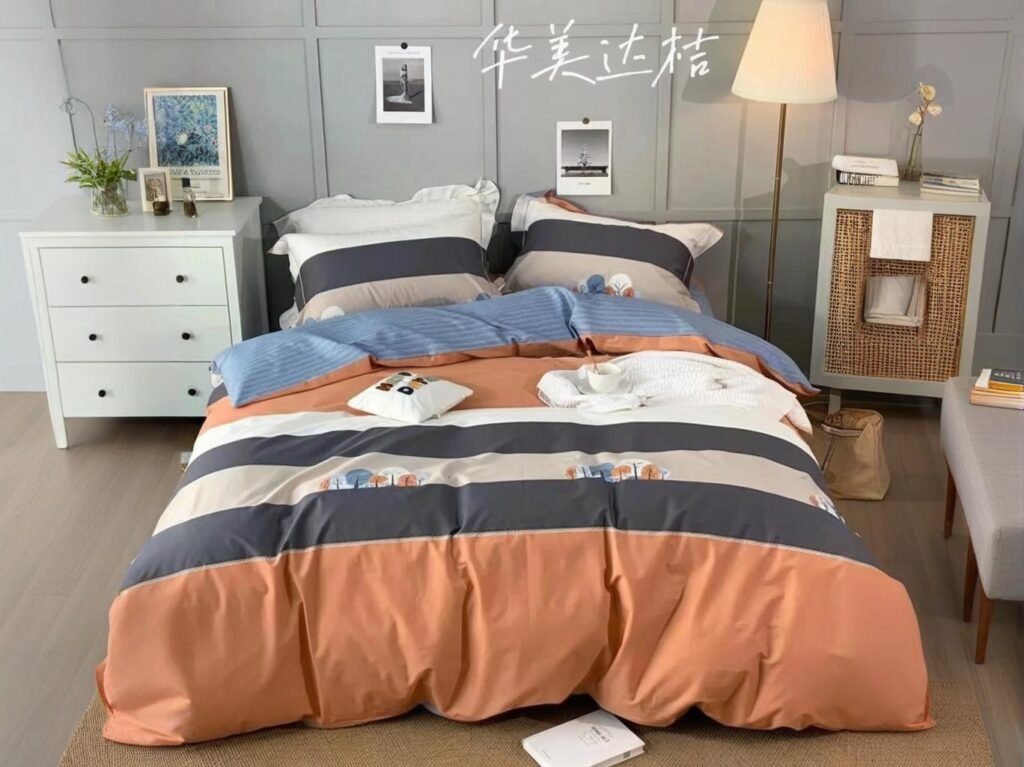
Cotton fabrics used in hotel and hospitality linen operate under one of the harshest textile environments in the industry. Unlike home bedding, hotel linen is not judged by how it feels on day one, but by how it performs after dozens, then hundreds, of industrial laundry cycles. Durability, stability, and consistency matter far more than initial softness or marketing claims.
For sourcing teams, the core question is not “Does this fabric feel good?” but “Will this fabric still function, fit, and look acceptable after months of commercial use?”
Hotels test cotton harder than homes ever will
Hotel and hospitality laundries subject cotton fabrics to conditions rarely seen in residential use:
- High-temperature washing (often 60–90°C)
- Strong alkaline detergents and bleaching agents
- Mechanical agitation in large-capacity machines
- High-heat tumble drying and calender finishing
This environment exposes weaknesses in fiber quality, yarn structure, and fabric construction very quickly. Cotton that performs well in domestic settings can degrade rapidly when exposed to professional laundry systems.
A) Wash durability is the top priority
Wash durability is the non-negotiable foundation of hospitality cotton fabrics.
Hotel linen is washed:
- After every guest change
- On tight turnaround schedules
- With minimal tolerance for damage or variation
| Use Environment | Wash Frequency |
|---|---|
| Home | 1–2 times per week |
| Hotel | Every guest change |
| Hospitality laundry | Industrial cycles |
In practice, this means a single sheet or pillowcase may be washed 150–300 times per year. Weak yarns, poor fiber cohesion, or unstable fabric structures show rapid wear under these conditions.
Common durability failures include:
- Premature thinning at fold lines
- Yarn breakage along seam areas
- Abrasion damage from repeated washing
For hotels, early replacement is not a minor inconvenience—it is a direct operating cost that affects inventory planning, laundry capacity, and guest satisfaction.
B) Dimensional stability under heat and agitation
Dimensional stability is as important as strength. Linen that shrinks or distorts creates operational problems that compound quickly.
Shrinkage and distortion lead to:
- Poor fit on mattresses and duvets
- Twisted seams and skewed hems
- Wrinkled, unprofessional presentation
| Acceptable Shrinkage | Hospitality Expectation |
|---|---|
| ≤3% | Preferred |
| 3–5% | Tolerated with caution |
| >5% | Operational problem |
In hospitality environments, even small dimensional changes can render linen unusable. A fitted sheet that shrinks unevenly no longer stays in place. A duvet cover that twists after washing looks untidy even when freshly pressed.
Stable weave structures, controlled yarn twist, and effective pre-shrinking are essential. Cotton fabrics that rely on post-sale relaxation to “settle” almost always fail in hotel use.
C) Comfort that lasts, not comfort on day one
Hospitality buyers have learned that initial softness is often misleading.
Over-soft cotton fabrics—especially those achieved through heavy chemical softening or very low yarn twist—tend to:
- Pill more quickly
- Lose structure after repeated washing
- Thin at stress points such as corners and folds
While these fabrics may impress during sampling, they frequently degrade after 20–30 industrial wash cycles.
Hotels value repeatable comfort, which means:
- A hand feel that remains acceptable after long-term use
- Surface smoothness without excessive fuzz
- Fabric body that supports crisp presentation
In practice, slightly firmer cotton fabrics often deliver better long-term guest experience than ultra-soft alternatives that deteriorate quickly.
D) Drying speed and operational efficiency
Drying performance is a critical but often overlooked factor in hospitality linen sourcing.
Laundry operations are constrained by:
- Machine capacity
- Energy consumption
- Turnaround time between guest check-out and check-in
| Fabric Behavior | Impact |
|---|---|
| Slow drying | Higher energy cost |
| Retains moisture | Odor and mildew risk |
| Even drying | Faster turnaround |
Cotton fabrics that retain moisture unevenly slow down drying cycles and increase energy usage. Worse, residual moisture trapped in thicker or denser areas can lead to odor issues, even when the fabric appears dry.
Efficient cotton fabrics dry evenly and predictably, allowing laundries to optimize cycle times and reduce energy per kilogram of linen processed.
E) Appearance retention over time
In hospitality, appearance is inseparable from perceived hygiene.
Hotel linen must:
- Stay white or color-stable
- Resist fuzzing and surface pilling
- Maintain a clean, smooth visual surface
Visual degradation—such as greying, fuzz buildup, or uneven texture—signals wear to guests, even if the fabric remains structurally sound.
Appearance-related failures often result from:
- High short-fiber content in yarn
- Poor yarn twist balance
- Inadequate fabric finishing for commercial laundering
Once appearance declines, linen is typically removed from service, regardless of remaining strength. This makes appearance retention a cost factor, not a cosmetic one.
F) Tear strength and seam durability
Hotel linen experiences concentrated stress at seams, corners, and fold lines.
Critical areas include:
- Pillowcase openings
- Sheet corners
- Duvet cover button or zipper zones
Cotton fabrics with insufficient tear strength may pass basic tensile tests but fail in real use. Seam slippage and localized tearing are among the most common causes of early linen retirement.
Balanced yarn construction and appropriate fabric density are essential to distribute stress evenly rather than concentrating it at stitch lines.
G) Resistance to pilling and surface fuzz
Pilling is particularly damaging in hospitality environments because performance is judged visually.
Fabrics prone to pilling:
- Look worn quickly
- Trap lint and hair
- Appear less hygienic
Pilling is often linked to:
- Excessive short fibers
- Low yarn twist
- Overly aggressive surface finishing
Cotton fabrics engineered for hotels prioritize fiber cohesion and surface stability, even if that means sacrificing some initial softness.
H) Chemical resistance and color stability
Hospitality laundering exposes fabrics to chemicals rarely used in home washing:
- Chlorine-based bleaches
- Optical brighteners
- High-alkaline detergents
Cotton fabrics must resist:
- Yellowing or greying over time
- Fiber damage from repeated chemical exposure
- Uneven bleaching that creates blotchy appearance
Color stability is equally important for non-white linens, where shade consistency must survive frequent processing without fading or patchiness.
I) Consistency across batches and replenishment orders
Hotels rarely purchase linen once. They replenish continuously.
Inconsistent cotton fabric behavior across batches leads to:
- Mismatched appearance on beds
- Different shrinkage behavior within the same room
- Operational confusion during sorting and folding
This makes batch-to-batch consistency a core performance requirement. Cotton fabrics that vary in hand feel, thickness, or shrinkage create hidden operational headaches long after purchase.
J) Why hospitality cotton selection differs from retail bedding
Retail bedding prioritizes:
- Immediate softness
- Marketing appeal
- Visual presentation in packaging
Hospitality linen prioritizes:
- Longevity under stress
- Predictable laundering behavior
- Consistent appearance over time
The two use cases require fundamentally different performance trade-offs. Applying retail cotton standards to hospitality environments almost always leads to premature failure and higher total cost.
K) A practical performance hierarchy for hospitality cotton
Experienced hospitality sourcing teams often rank cotton performance priorities as follows:
- Wash durability
- Dimensional stability
- Appearance retention
- Drying efficiency
- Long-term comfort
Initial hand feel ranks far lower than most suppliers expect.
L) How SzoneierFabrics approaches cotton fabrics for hospitality use
At SzoneierFabrics, cotton fabrics developed for hotel and hospitality linen are engineered starting from laundry reality, not showroom conditions.
Development focus typically includes:
- Yarn structures optimized for abrasion resistance
- Fabric constructions proven under industrial washing
- Pre-shrinking and finishing designed for heat stability
- Surface control to reduce pilling and fuzz
Rather than chasing extreme softness, the goal is predictable performance over time—because in hospitality, consistency is comfort.
Performance insight
In hotels, cotton is selected for laundry survival first, guest comfort second, and marketing last. Fabrics that respect this hierarchy reduce replacement rates, stabilize operations, and protect brand perception.
A cotton fabric that looks perfect on day one but fails after 30 washes is not a premium product—it is an expensive mistake.
Which cotton weave types are most suitable for hotel bed sheets and why?
For hotel and hospitality bed sheets, weave structure matters more than fiber marketing terms or thread count claims. Among all cotton weave options, percale and sateen consistently perform best because they balance durability, comfort, appearance, and laundering stability under commercial conditions.
Hotels do not choose sheets based on how they feel in a showroom. They choose them based on how they behave after 50, 100, or 200 industrial wash cycles.
Why hotels choose structure over softness
Hospitality linen must survive a cycle that includes high heat, chemicals, mechanical stress, and rapid turnaround. In this environment, weave structure determines:
- How well yarns lock together
- How stress is distributed during washing and drying
- How the fabric surface ages over time
A weave that feels luxurious on day one but loses integrity after repeated laundering is not suitable for hotel use—regardless of its thread count or marketing appeal.
A) Percale cotton sheets in hotels
Percale is a plain weave structure, typically using a one-over-one-under interlacing pattern. This simple structure is the primary reason for its dominance in hospitality applications.
| Percale Feature | Hotel Benefit |
|---|---|
| Crisp hand feel | Clean, fresh impression |
| High breathability | Guest comfort |
| Strong interlacing | Wash durability |
| Lower pilling | Longer service life |
From an engineering perspective, percale’s tight interlacing distributes stress evenly across the fabric. During washing and drying, yarns support each other instead of sliding excessively, which reduces abrasion and yarn breakage.
Operational advantages of percale include:
- Stable dimensions after repeated hot washes
- Predictable shrinkage behavior when properly pre-shrunk
- Resistance to surface fuzz and pills
Because percale dries efficiently and responds well to pressing and calendering, it fits seamlessly into industrial laundry workflows. This is why percale is widely used in mid-range, upscale, and even many luxury hotels worldwide.
B) Sateen cotton sheets in hospitality
Sateen uses a satin-style weave, usually with a four-over-one or similar float structure. This creates a smoother surface and softer drape compared to percale.
| Sateen Feature | Hotel Impact |
|---|---|
| Smooth surface | “Luxury” feel |
| Softer drape | Premium positioning |
| Slight sheen | Visual appeal |
However, the longer floats that give sateen its softness also introduce vulnerability. These floats are more exposed to abrasion during washing, drying, and handling.
To perform acceptably in hospitality environments, sateen sheets require:
- Higher yarn quality with good fiber cohesion
- Adequate yarn twist to resist abrasion
- Controlled fabric density to limit float damage
When these conditions are met, sateen can deliver a premium guest experience. When they are not, sateen fabrics tend to pill, fuzz, or lose surface uniformity much faster than percale.
As a result, sateen is commonly used in premium rooms, suites, and boutique hotels, where replacement cycles are shorter and guest experience is prioritized over maximum lifespan.
C) Percale vs sateen: hotel perspective
From a hotel operator’s standpoint, the comparison between percale and sateen is not about which is “better,” but which is appropriate for a specific room category and operational model.
| Property | Percale | Sateen |
|---|---|---|
| Durability | Very high | Medium–high |
| Breathability | Excellent | Good |
| Wrinkle resistance | Moderate | Better |
| Maintenance ease | High | Medium |
Key operational considerations include:
- Laundry throughput: Percale handles faster, harsher cycles better
- Replacement cost: Percale typically lasts longer
- Guest expectation: Sateen feels more luxurious but requires care
For this reason, many hotel groups standardize on percale for core rooms and selectively introduce sateen for higher-tier offerings.
D) Why plain weave often outperforms high thread count
Thread count is one of the most misunderstood metrics in hospitality sourcing.
High thread count fabrics often:
- Use finer, weaker yarns
- Increase surface exposure and abrasion
- Mask structural weakness with softness
In industrial laundering, these fabrics frequently show:
- Faster thinning
- Higher pilling rates
- Loss of dimensional stability
Hotels prioritize weave integrity, not inflated thread count numbers. A well-constructed 200–300 thread count percale often outperforms a loosely woven 500+ thread count sateen in real-world hotel use.
Thread count without weave context:
- exaggerates perceived softness
- hides yarn quality issues
- shortens usable lifespan
This is why many hospitality buyers deliberately specify moderate thread counts with proven weave structures.
E) Failure patterns seen in wrong sheet choices
When inappropriate weave structures are selected, failure patterns appear quickly and predictably.
| Wrong Choice | Result |
|---|---|
| Ultra-soft sateen | Early pilling |
| Loose weave | Shrinkage and distortion |
| Low-quality yarn | Surface fuzz |
| Over-finished fabric | Rapid degradation after washing |
These failures increase:
- Linen replacement frequency
- Laundry downtime
- Guest complaints
In most cases, the root cause is not cotton itself, but a mismatch between weave structure and usage environment.
F) Breathability and thermal comfort
Hotel guests vary widely in their comfort preferences, making breathability an important factor.
Percale’s plain weave allows:
- Better air circulation
- Faster moisture evaporation
- Cooler sleep experience
Sateen’s denser surface retains more warmth, which some guests prefer in cooler environments or luxury settings.
Hotels operating across different climates often standardize percale to ensure thermal neutrality, reducing the risk of guest discomfort.
G) Wrinkling, finishing, and presentation
Wrinkle behavior matters in hospitality because linen presentation is part of the guest’s first impression.
- Percale wrinkles more naturally but presses cleanly
- Sateen wrinkles less but can show shine marks under heat
Industrial finishing systems are typically optimized for percale, which responds predictably to calendering and folding.
In contrast, sateen requires more careful finishing to avoid surface damage—another operational consideration that influences weave choice.
H) Interaction with detergents and chemicals
Weave structure influences how chemicals interact with fabric during laundering.
- Percale allows more even detergent penetration
- Sateen’s floats can trap residues if not rinsed properly
Over time, residue buildup contributes to:
- Fabric greying
- Stiff hand feel
- Reduced breathability
Hotels aiming for long linen life often prefer fabrics that rinse cleanly and dry evenly, which favors percale.
I) Weave choice and inventory consistency
Hotels rarely replace all linen at once. New batches must blend visually and physically with existing stock.
Percale’s structural stability makes it easier to:
- Match appearance across batches
- Maintain consistent fit and feel
- Avoid noticeable differences room-to-room
Sateen, being more sensitive to yarn and finishing variation, requires tighter supplier control to maintain consistency.
J) When alternative weaves are used—and why they often fail
Other weave types, such as twill or novelty structures, occasionally appear in hospitality sourcing. They are usually rejected after limited use due to:
- Reduced breathability
- Increased weight and drying time
- Visual inconsistency after laundering
While these weaves may work in decorative or low-use applications, they rarely survive the demands of hotel bedding.
K) Practical sourcing hierarchy for hotel sheets
Experienced hospitality sourcing teams typically rank weave-related priorities as follows:
- Structural durability under industrial washing
- Dimensional stability and fit
- Surface aging behavior (pilling, fuzz)
- Guest comfort over time
- Initial showroom softness
Percale and well-specified sateen remain the only weave structures that reliably meet these priorities.
L) How SzoneierFabrics approaches weave selection for hospitality bedding
At SzoneierFabrics, weave selection for hotel bed sheets begins with laundry behavior analysis, not visual appeal.
Development typically includes:
- Comparative percale and sateen trials
- Repeated industrial wash simulations
- Evaluation of surface aging and shrinkage
- Assessment of drying and finishing efficiency
Rather than promoting a single “best” weave, the focus is on matching weave structure to room category, laundering system, and replacement strategy.
Bedding insight
The best hotel sheets are the ones guests rarely think about—because they feel clean, sleep comfortably, and look right every time.
In hospitality, weave structure is not a design choice. It is an operational decision. Percale and sateen succeed not because they are fashionable, but because they quietly balance durability, comfort, and efficiency in an environment where cotton is tested far harder than any home will ever test it.
How do cotton fabrics for towels differ from those used in bedding within hospitality settings?
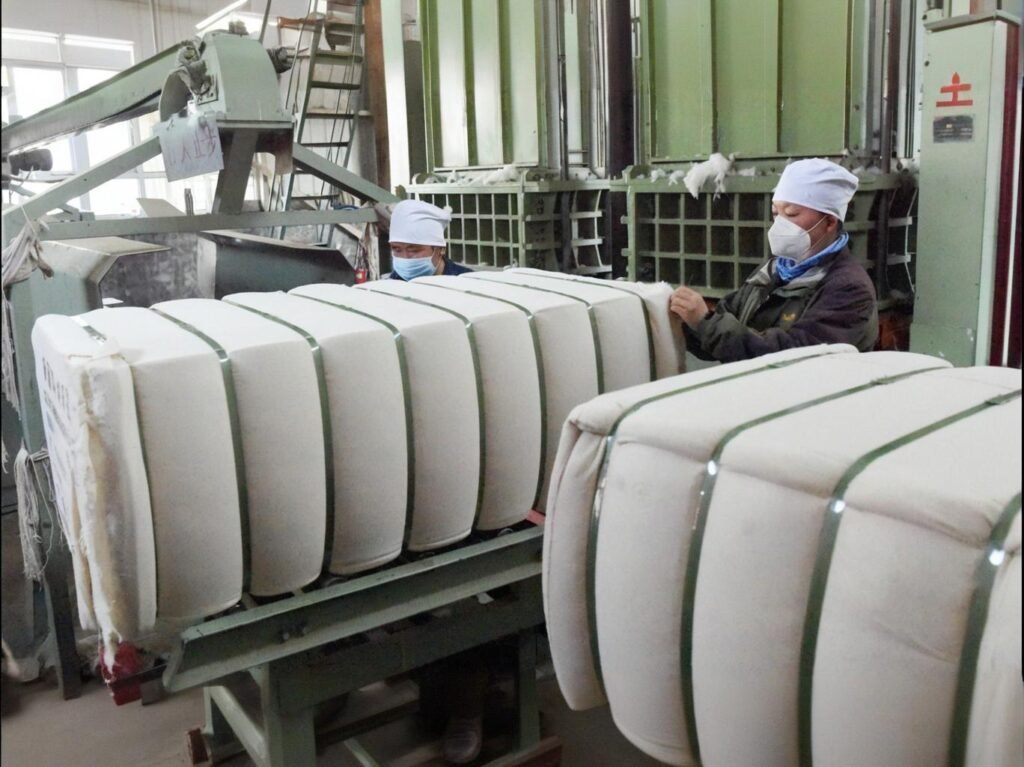
Cotton fabrics for hotel towels and hotel bedding are often grouped together in sourcing discussions, but from a textile engineering and operational standpoint, they are fundamentally different products. Towels are designed to manage water, friction, and mechanical stress, while bedding fabrics are designed to manage airflow, skin contact, and dimensional stability.
Trying to apply the same cotton logic to both categories almost always leads to premature failure.
In hospitality environments, towels live a harder life than sheets—and their fabric structure reflects that reality.
Towels live a harder life than sheets
A hotel towel experiences stresses that bedding rarely encounters:
- Full water saturation multiple times per day
- Heavy mechanical action during washing and extraction
- High tumble-drying temperatures
- Frequent chemical exposure
A sheet may be washed daily, but it is rarely soaked, twisted, and dried to the same degree. This difference alone explains why towel fabrics require very different construction logic.
A) Terry loop construction vs flat weave
The defining difference between towel cotton and bedding cotton is structure.
Hotel towels rely on terry loop construction, not flat woven fabrics.
| Structure Element | Function |
|---|---|
| Loop height | Determines absorbency |
| Loop density | Controls durability |
| Ground fabric | Provides tensile strength |
Terry loops dramatically increase surface area, allowing towels to absorb and release moisture efficiently. The ground fabric beneath the loops provides strength, preventing deformation when the towel is wet and heavy.
Bedding fabrics, by contrast, are flat woven or sateen constructions. They are engineered for smoothness and airflow, not water management.
Sheets do not need loops. Towels absolutely do.
B) Absorbency vs durability: a controlled trade-off
In towel design, absorbency and durability are always in tension.
| Loop Style | Absorbency | Lifespan |
|---|---|---|
| Long loop | Very high | Lower |
| Medium loop | High | High |
| Short loop | Moderate | Very high |
Longer loops trap more water but are more prone to:
- Snagging
- Loop pull-out
- Fiber fatigue during washing
Short loops are extremely durable but can feel less plush and absorb less water initially.
For hospitality use, medium-loop terry is the industry standard because it balances:
- Guest-perceived absorbency
- Mechanical durability
- Reasonable drying time
This balance reduces replacement frequency without sacrificing guest satisfaction.
C) Wet strength: the hidden requirement
One of the most important differences between towel cotton and bedding cotton is wet strength.
When saturated, a bath towel can weigh several times its dry weight. The cotton yarns and loops must withstand:
- Tensile stress from gravity
- Centrifugal force during extraction
- Mechanical impact during tumble drying
Cotton fabrics used for bedding are not designed for this load. Even if they feel strong when dry, their yarn structure often collapses when wet.
Towel fabrics therefore prioritize:
- Higher yarn twist for strength
- Stronger ground fabric construction
- Fiber cohesion over softness
This is why towel cotton often feels firmer than bedding cotton when new.
D) Cotton fiber selection for hospitality towels
Fiber choice plays a different role in towels than in sheets.
| Fiber Type | Performance |
|---|---|
| Standard cotton | Durable, economical |
| Long-staple cotton | Softer, stronger |
| Zero-twist cotton | Plush feel, shorter life |
Standard upland cotton is widely used because it offers:
- Good durability
- Predictable laundering behavior
- Lower replacement cost
Long-staple cotton improves softness and tensile strength, but increases cost. It is often used selectively in higher-tier hotels.
Zero-twist cotton, while extremely soft, is problematic in hospitality settings. The lack of twist reduces fiber cohesion, leading to:
- Faster loop breakdown
- Higher linting
- Shorter service life
Ultra-soft towels often impress on day one and disappoint after repeated washes.
E) GSM benchmarks for hotel towels
Fabric weight is far more critical for towels than for sheets.
| Towel Type | Typical GSM |
|---|---|
| Hand towel | 450–550 |
| Bath towel | 500–650 |
| Luxury spa towel | 650–750 |
Higher GSM increases absorbency and perceived luxury, but it also:
- Increases drying time
- Raises energy consumption
- Slows laundry turnaround
For high-volume hotels, excessively heavy towels often increase operational cost more than guest satisfaction. This is why many properties deliberately cap GSM below luxury retail levels.
F) Drying efficiency and energy cost
Towels dominate laundry energy consumption in hotels.
Poorly engineered towel fabrics:
- Retain water unevenly
- Dry slowly
- Require longer tumble cycles
This leads to:
- Higher energy cost per kilogram
- Bottlenecks in laundry operations
- Increased wear from extended drying
Well-designed terry fabrics release moisture efficiently and dry evenly, allowing laundries to maintain throughput without over-drying, which damages fibers.
G) Linting and shedding: a towel-only problem
Lint is a minor issue for bedding. For towels, it is a major operational concern.
Excessive linting causes:
- Guest complaints
- Blocked dryers and filters
- Cross-contamination with other linen
Linting is often caused by:
- Low yarn twist
- Immature fibers
- Poor loop anchoring
Hospitality towel fabrics are therefore engineered to shed minimally after initial break-in, even if that means sacrificing some early softness.
H) Why bedding cotton fails as towel cotton
Using flat woven bedding cotton for towels is a common mistake in budget or experimental programs.
Flat woven cotton:
- Absorbs water slowly
- Feels heavy and slick when wet
- Lacks surface area for drying
The guest experience suffers immediately, and the fabric degrades quickly under towel-like stress.
Sheets and towels may both be “cotton,” but they are not interchangeable materials.
I) Chemical exposure tolerance
Towels are exposed to higher chemical loads than bedding:
- More bleach
- More stain removers
- More aggressive detergents
Cotton fibers and dyes used in towels must resist:
- Strength loss
- Yellowing
- Harsh hand feel after washing
This often requires different finishing strategies than bedding fabrics, where chemical exposure is comparatively gentler.
J) Appearance standards for towels vs sheets
While bedding must look crisp and smooth, towel appearance is judged differently.
Guests expect towels to:
- Look clean and fluffy
- Maintain bulk and volume
- Avoid bald spots or flattened loops
Loop damage and thinning are visible signs of wear. Once these appear, towels are usually retired—even if the fabric is still technically usable.
K) Replacement economics in hospitality towels
Towels typically have a shorter service life than sheets, and hotels plan accordingly.
A towel that lasts:
- 150–200 wash cycles is considered successful
- Beyond that is a bonus
This reality shapes sourcing decisions. Hotels often prefer a towel with slightly lower initial luxury but longer usable life over an ultra-plush towel with frequent replacement needs.
L) How SzoneierFabrics approaches towel cotton development
At SzoneierFabrics, cotton fabrics for hospitality towels are developed starting from laundry stress profiles, not showroom feel.
Development priorities typically include:
- Loop durability testing under wet load
- Controlled lint release after break-in
- GSM optimization for drying efficiency
- Fiber and yarn choices that preserve wet strength
Rather than chasing extreme softness, the goal is absorbency that survives repetition.
Towel insight
In hospitality, the best towel is not the softest one on day one. It is the one that:
- Absorbs quickly
- Dries efficiently
- Holds its loops
- Still performs after 200 industrial wash cycles
Towels and sheets serve different purposes, face different stresses, and require different cotton strategies. Treating them as the same material is one of the fastest ways to increase replacement cost and operational friction.
In hotels, cotton earns its value not by how it feels once—but by how reliably it performs, again and again.
Which cotton fabric types are ideal for hotel pillowcases and duvet covers?
Hotel pillowcases and duvet covers are among the highest-contact textile items in any hospitality environment. They are handled daily, washed more frequently than sheets, and exposed to direct contact with skin, hair, cosmetics, and body oils. As a result, they demand more disciplined fabric engineering than standard bed sheets.
In hospitality use, pillowcases and duvet covers perform best when made from durable woven cotton fabrics such as percale or reinforced sateen, using stable yarn constructions and moderate thread counts. The goal is not peak softness, but resistance to friction, laundering stress, and visual degradation over time.
High-contact items need extra discipline
Unlike flat sheets, pillowcases and duvet covers experience localized, repetitive stress. Failures tend to appear faster and more visibly, which is why hotels often replace these items earlier than sheets—even when made from the same fabric.
Key stress factors include:
- Repeated facial and hand contact
- Concentrated friction during sleep
- Higher exposure to oils, skincare products, and hair treatments
- More frequent washing for hygiene reasons
These factors reshape how cotton fabric should be specified.
A) Why pillowcases need stronger cotton than sheets
Pillowcases are deceptively demanding. They may appear lightweight, but they face constant abrasion and chemical exposure that accelerate surface breakdown.
Pillowcases face:
- Continuous facial contact
- High friction from hair movement
- Absorption of oils and cosmetics
- More frequent wash cycles than sheets
| Risk Area | Impact |
|---|---|
| Surface fuzz | Visible within weeks |
| Seam stress | Early tearing or slippage |
| Oil absorption | Yellowing, shade change |
Surface fuzz and pilling appear far more quickly on pillowcases because the face and hair create constant micro-abrasion. Oils and skincare products further weaken fiber cohesion, making poor yarn choices immediately obvious.
For this reason, durability and surface stability matter more than softness alone. Pillowcases that feel luxurious on day one but pill after 20 washes quickly damage perceived cleanliness and brand image.
B) Percale for pillowcases: the durability benchmark
Percale is widely regarded as the safest and most durable choice for hotel pillowcases.
| Percale Advantage | Result |
|---|---|
| Tight interlacing | Low pilling and fuzz |
| High breathability | Comfortable sleep |
| Structural stability | Long service life |
The plain weave structure of percale distributes friction evenly across yarn intersections rather than allowing yarns to float freely. This significantly reduces:
- Fiber pull-out
- Surface hairiness
- Premature thinning
In hospitality settings, percale pillowcases tend to age more gracefully. They may lose some crispness over time, but they retain a clean surface and uniform appearance far longer than softer alternatives.
Operationally, percale pillowcases also:
- Tolerate aggressive bleaching better
- Maintain shape at seams and openings
- Show fewer visual differences between batches
For these reasons, percale is the default choice for pillowcases in mid-range, upscale, and many luxury hotels.
C) When sateen is used for pillowcases—and the risks
Sateen pillowcases are occasionally used in premium hospitality environments to deliver a smoother, more luxurious feel. However, they are far more sensitive to specification errors.
Sateen’s longer floats:
- Increase softness
- Improve drape
- Create subtle sheen
But they also:
- Expose yarns to friction
- Increase pilling risk
- Wear faster at contact points
Only reinforced sateen constructions perform acceptably for hotel pillowcases. These require:
- Strong, well-twisted yarns
- Controlled float length
- Moderate fabric density
Weak or over-softened sateen pillowcases often show visible fuzz, thinning, and seam damage within a short service window, making them unsuitable for high-turnover hotels.
D) Why duvet covers behave differently from sheets
Duvet covers are handled more aggressively than sheets, even though they are not always washed more frequently.
Unique stress factors for duvet covers include:
- Repeated insertion and removal of duvets
- Pulling and tugging at corners and closures
- Larger surface area under tension during laundering
This means duvet covers require better tear strength and seam stability than flat sheets.
Failures typically occur at:
- Corner seams
- Button or zipper plackets
- Fold lines created during laundering
Fabric choice must account for handling stress, not just sleep comfort.
E) Sateen for duvet covers: where it makes sense
Sateen is often a good choice for duvet covers—when properly specified.
Duvet covers benefit from:
- Smoother surface that slides over duvets
- Softer drape for neat bed presentation
- Reduced wrinkle visibility
| Requirement | Why It Matters |
|---|---|
| Strong yarn | Prevent float abrasion |
| Controlled GSM | Balance drape & strength |
Because duvet covers experience less direct skin friction than pillowcases, sateen’s surface vulnerability is less of a problem. However, yarn quality becomes critical. Weak yarns lead to float breakage, seam distortion, and early fabric thinning.
Hotels that successfully use sateen duvet covers typically pair them with percale pillowcases, combining luxury appearance with durability where it matters most.
F) Percale duvet covers: the workhorse option
Many hotels still choose percale for duvet covers, especially in high-occupancy properties.
Advantages include:
- Superior durability
- Faster drying
- Easier laundering and finishing
- Lower replacement cost
Percale duvet covers may wrinkle slightly more than sateen, but industrial calendering largely mitigates this. In exchange, hotels gain predictable lifespan and easier maintenance.
G) Thread count reality check for pillowcases and duvet covers
Thread count is frequently misunderstood in hospitality sourcing.
| Thread Count | Hospitality Reality |
|---|---|
| <200 | Often too thin for durability |
| 200–300 | Balanced choice |
| >400 | Higher cost, lower durability |
High thread count fabrics often rely on:
- Finer yarns with lower abrasion resistance
- Softer finishing that degrades quickly
- Reduced air permeability
In high-contact items like pillowcases, these fabrics often pill and thin faster than moderate thread count alternatives.
Hotels prioritize service life and appearance retention, not marketing numbers. A well-made 250 TC percale pillowcase often outlasts and outperforms a 500 TC sateen in real hospitality use.
H) Color stability and bleaching resistance
Pillowcases and duvet covers—especially white and light-colored ones—are exposed to the harshest bleaching regimes.
They must tolerate:
- Chlorine bleaching
- Oxygen bleach
- High-temperature washing
- Repeated optical brightener exposure
Failures typically appear as:
- Yellowing at edges and folds
- Uneven whiteness
- Premature fabric weakening
Success depends on:
- Yarn purity and maturity
- Controlled finishing chemistry
- Balanced fabric density
Fabric that looks identical at delivery can age very differently depending on these factors.
I) Seam construction and fabric interaction
Fabric choice and seam performance are inseparable.
Pillowcases and duvet covers place stress on:
- Envelope closures
- Button or zipper areas
- Corner reinforcements
Stable fabrics with good yarn cohesion resist seam slippage and tearing. Softer, loosely constructed fabrics often fail at seams first—even when the fabric body appears intact.
This is why hotels often report seam failures before fabric failure in pillowcases.
J) Appearance retention and guest perception
Guests judge pillowcases and duvet covers more critically than sheets.
Visible issues include:
- Fuzz near the opening
- Shine or abrasion marks
- Uneven whiteness
Because these items are closest to the guest’s face, visual cleanliness is non-negotiable. Once appearance declines, items are removed from service—even if they are structurally usable.
This makes appearance retention a cost driver, not a cosmetic preference.
K) Replacement economics: why conservative specs win
Hotels rarely replace all pillowcases or duvet covers at once. New stock must blend with existing inventory.
Conservative fabric specifications:
- Reduce visible variation between batches
- Simplify inventory management
- Lower early replacement rates
Aggressive softness-driven specs often lead to mixed appearance within the same room category, forcing premature retirement of older stock.
L) How SzoneierFabrics develops cotton fabrics for pillowcases and duvet covers
At SzoneierFabrics, cotton fabric development for hospitality pillowcases and duvet covers starts with contact analysis, not showroom feel.
Development priorities typically include:
- Surface abrasion testing
- Seam stress simulation
- Repeated industrial wash cycles
- Bleaching and whitening stability
Percale is favored for pillowcases, while sateen—when used—is reinforced through yarn selection and fabric density adjustments.
The goal is simple: fabric that looks clean, feels right, and survives repetition.
In hotels, pillowcases and duvet covers succeed or fail faster than any other bedding component.
They succeed when they:
- Resist surface breakdown
- Maintain color and shape
- Survive hundreds of laundry cycles
They fail when softness is prioritized over structure.
Hospitality linen is not about first impressions—it is about lasting impressions. Cotton fabrics that respect this reality protect both operational cost and brand perception long after the first guest check-in.
How do GSM and thread count influence comfort and durability in hospitality cotton linens?
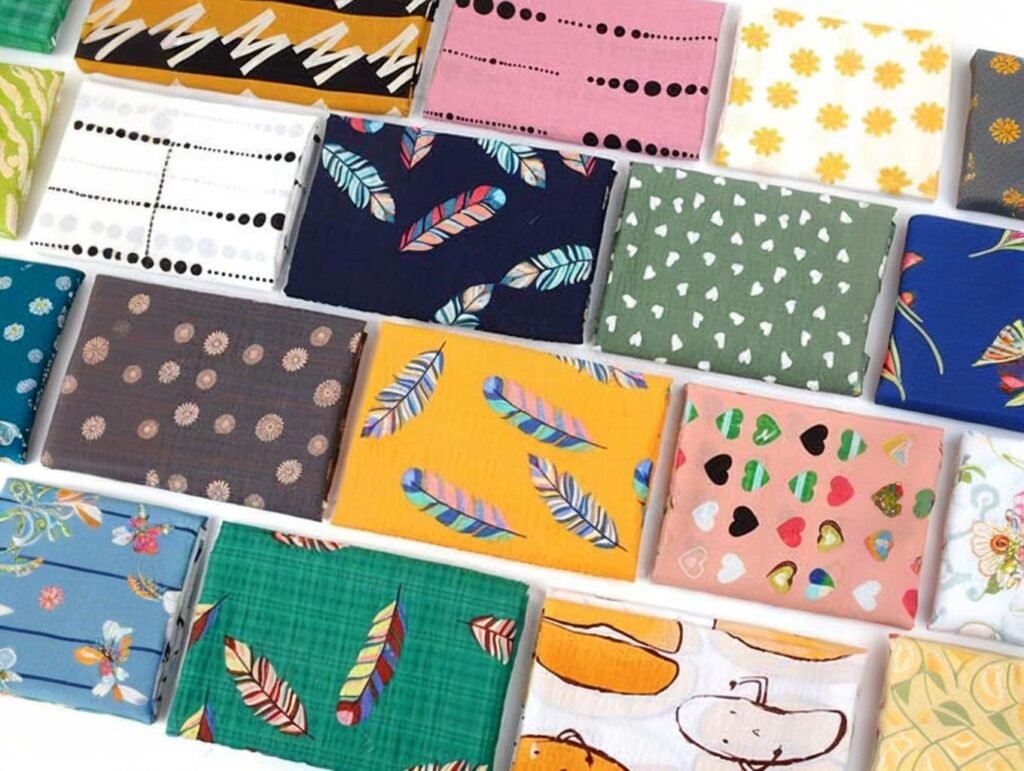
In hospitality linens, GSM and thread count only become meaningful when interpreted alongside weave structure, yarn quality, and finishing discipline. On their own, these numbers describe mass and density—but they do not guarantee performance. In real hotel laundry conditions, moderate, well-balanced specifications consistently outperform extreme values that look impressive on paper but fail under stress.
Numbers don’t guarantee performance—engineering does
Hotels operate textiles in an environment defined by repetition: frequent washing, high heat, strong chemicals, mechanical agitation, and tight turnaround times. In this context, GSM and thread count influence outcomes only if the underlying engineering supports them. When they don’t, higher numbers often accelerate failure rather than prevent it.
A) GSM benchmarks that actually work in hotels
GSM (grams per square meter) indicates fabric mass, which affects hand feel, drape, absorbency, drying time, and abrasion resistance. In hospitality, the goal is sufficient mass to resist wear without creating operational penalties.
| Linen Category | Recommended GSM Range | Why It Works |
|---|---|---|
| Bed sheets | 120–160 | Breathable, durable |
| Pillowcases | 130–170 | Extra abrasion resistance |
| Duvet covers | 140–200 | Better drape & strength |
| Towels | 450–650 | Absorbency + drying speed |
These ranges reflect decades of commercial laundering experience. Fabrics below these ranges tend to thin, tear, or lose shape. Fabrics above them often increase drying time, energy cost, and handling fatigue without extending service life.
Key insight: Excessive weight does not equal durability. It often equals higher energy bills and slower laundry throughput.
B) Why heavier is not always stronger
A common assumption is that heavier fabric lasts longer. In practice, this depends on how the weight is achieved.
Heavier GSM can come from:
- Higher yarn count (more yarns per inch)
- Thicker yarns
- Denser weave
- Heavier finishing chemicals
Only the first three contribute to mechanical strength. Weight from finishing chemicals washes out quickly and leaves the fabric weaker than expected. This is why some heavy-feeling linens degrade rapidly after 20–30 washes.
Hotels benefit most when GSM is achieved through structural density and yarn integrity, not surface treatments.
C) Thread count myths in hospitality
Thread count is one of the most misused metrics in hospitality sourcing. It was designed as a comparative indicator, not a performance guarantee.
Thread count marketing often hides:
- Weaker, finer yarns
- Multi-ply counting tricks
- Lower resistance to abrasion
- Reduced wash durability
| Thread Count | Hospitality Reality |
|---|---|
| 180–250 | Most reliable |
| 300–400 | Acceptable with strong yarn |
| 500+ | Often shorter lifespan |
In hotel use, ultra-high thread count fabrics frequently rely on very fine yarns with low abrasion resistance. They feel smooth initially but thin and pill quickly under industrial laundering.
Operational reality: A well-engineered 220 TC percale often outlasts a 500 TC sateen in hotels by a wide margin.
D) The relationship between GSM and yarn strength
GSM and thread count cannot be evaluated independently of yarn strength and twist.
| Scenario | Result |
|---|---|
| High GSM + weak yarn | Early pilling and thinning |
| Low GSM + strong yarn | Better longevity |
| Balanced GSM + strong yarn | Best outcome |
Strong yarns distribute stress more evenly across the fabric. Weak yarns—no matter how many are packed into a square meter—fail at contact points, seams, and fold lines.
This is why hospitality textiles often specify moderate GSM with higher yarn integrity, rather than chasing mass or count.
E) Comfort perception vs operational reality
Guests and hotel operations experience textiles very differently.
Guests perceive:
- Surface smoothness
- Breathability and temperature regulation
- Dryness and cleanliness
Operations experience:
- Replacement frequency
- Laundry energy consumption
- Drying time and throughput
- Shrinkage and fit consistency
The right GSM bridges these two worlds. Too light, and guests feel flimsiness and wear shows quickly. Too heavy, and operations pay the price in energy, time, and handling fatigue.
Balanced specifications deliver neutral comfort—neither too crisp nor too heavy—while protecting operational efficiency.
F) GSM, weave, and drying efficiency
Drying speed is a hidden cost driver in hospitality laundries. GSM directly affects how much water a fabric retains and how quickly it releases moisture.
- Lower GSM percale sheets dry faster and press cleanly
- Heavier sateen dries more slowly and requires careful finishing
- Overweight towels dramatically increase energy use
Hotels that standardize GSM within optimal ranges often reduce kWh per kilogram of linen processed, even when machine settings remain unchanged.
G) Thread count and breathability
Higher thread count generally reduces air permeability, especially in sateen weaves with longer floats. In hospitality settings, reduced breathability can cause:
- Warmer sleep experience
- Slower moisture evaporation
- Higher perceived discomfort in warm climates
This is why many global hotel brands specify moderate thread counts across regions. Breathability remains consistent, and guest comfort varies less by climate and season.
H) How GSM and thread count affect shrinkage and fit
Dimensional stability is strongly influenced by fabric density and yarn behavior.
- Very light fabrics tend to shrink unevenly
- Very dense fabrics resist relaxation and distort under heat
- Balanced constructions shrink predictably when pre-treated correctly
For fitted sheets, pillowcases, and duvet covers, predictable shrinkage is more valuable than minimal shrinkage. Linen that shrinks uniformly can be sized accurately. Linen that shrinks unpredictably becomes an operational problem.
I) Pilling and surface aging: where numbers mislead
Pilling is driven by:
- Short fiber content
- Yarn twist
- Surface exposure (weave)
High thread count fabrics often increase surface exposure, especially in sateen constructions, which accelerates pilling unless yarn quality is exceptional.
Moderate thread count percale, with tighter interlacing, locks fibers in place and resists fuzz formation—even at lower GSM.
J) Towels: why GSM matters differently
For towels, GSM plays a more visible role—but still requires balance.
- Low GSM towels feel thin and absorb poorly
- Very high GSM towels absorb well but dry slowly and age unevenly
The hospitality sweet spot (450–650 GSM) balances:
- Absorbency
- Wet strength
- Drying speed
- Replacement economics
Above this range, energy cost and wear often rise faster than guest satisfaction.
K) Testing beyond numbers
Effective evaluation of GSM and thread count must go beyond specification sheets.
Meaningful testing includes:
- Abrasion resistance after repeated washing
- Shrinkage and distortion measurement
- Post-wash hand feel and surface inspection
- Drying time under real laundry conditions
Paper specs describe intent. Testing reveals behavior.
L) How SzoneierFabrics evaluates GSM and thread count for hospitality linens
At SzoneierFabrics, GSM and thread count are treated as engineering variables, not selling points.
Development typically includes:
- Multiple GSM options tested side-by-side
- Identical yarns across different constructions
- Repeated industrial wash simulations
- Measurement of drying time, shrinkage, and surface aging
This process consistently shows that moderate, well-balanced specifications deliver the lowest total cost of ownership, even if they appear less impressive in catalogs.
In hospitality linens, balanced specifications quietly outperform bold numbers.
GSM and thread count matter—but only when they support:
- Strong yarns
- Stable weave structures
- Predictable laundering behavior
Hotels that understand this stop chasing extremes and start buying textiles that work—cycle after cycle, room after room, year after year.
Are certain cotton blends better than 100% cotton for hotel linen, and if so, why?
Yes. In many hospitality environments, well-engineered cotton blends—especially cotton–polyester—outperform 100% cotton in real operating conditions. The reason is not cost alone. It is control: control over wrinkles, drying time, dimensional stability, and replacement cycles under industrial laundering.
Hotels do not choose blends as a compromise. They choose them for survival under pressure.
Blends are chosen for survival, not compromise
In high-volume hospitality operations, linen is judged less by fiber purity and more by total cost of ownership. That includes how often linen must be replaced, how much energy it consumes in laundry, and how consistently it looks room after room.
Cotton blends address several structural weaknesses of pure cotton when exposed to:
- High-temperature washing
- Aggressive chemicals
- Repeated tumble drying
- Mechanical finishing
This is why blends dominate large hotel chains, resorts, hospitals, and commercial laundries, even though marketing materials often emphasize “100% cotton.”
A) Cotton–polyester blends in hotels
Cotton–polyester blends are the most common alternative to pure cotton in hospitality textiles. Polyester contributes strength, elasticity, and thermal stability, while cotton preserves comfort and moisture absorption.
| Blend Ratio | Key Benefit |
|---|---|
| 65/35 (C/P) | Wrinkle resistance |
| 60/40 (C/P) | Improved durability |
| 50/50 (C/P) | Fast drying |
Each ratio reflects a different operational priority.
- 65/35 blends prioritize appearance retention and reduced ironing
- 60/40 balances durability with cotton hand feel
- 50/50 maximizes drying speed and dimensional stability
There is no single “best” ratio—only the ratio that best matches a hotel’s laundry model and brand positioning.
B) Operational advantages of blends
From an operational standpoint, blends solve several persistent problems associated with 100% cotton.
Blended fabrics typically:
- Dry faster due to lower moisture retention
- Shrink less under heat
- Recover shape more easily after washing
| Benefit | Operational Impact |
|---|---|
| Faster drying | Lower energy cost |
| Fewer wrinkles | Reduced ironing and pressing |
| Shape retention | Longer replacement cycle |
In large-scale laundries, even a 10–15% reduction in drying time can translate into meaningful energy savings and higher daily throughput. Over thousands of wash cycles, this advantage compounds quickly.
Blends also tolerate over-drying better than pure cotton, reducing fiber damage when laundry loads vary.
C) Dimensional stability and fit consistency
One of the most expensive hidden costs in hospitality linen is loss of fit.
Pure cotton fabrics are more prone to:
- Lengthwise and widthwise shrinkage
- Twisting after repeated washing
- Size mismatch between replacement batches
Cotton–polyester blends reduce these risks because polyester fibers:
- Resist thermal shrinkage
- Provide elastic recovery
- Stabilize yarn geometry
For fitted sheets, duvet covers, and pillowcases, this stability directly reduces operational friction—linen fits better, looks neater, and lasts longer in rotation.
D) Wrinkle resistance and labor reduction
Wrinkles are not just a visual issue; they are a labor issue.
Pure cotton creases easily and often requires:
- Higher pressing temperatures
- Longer ironing time
- More handling per piece
Blends, especially in the 60/40 to 65/35 range, recover more readily after drying. This allows:
- Faster calender speeds
- Lower finishing temperatures
- Reduced manual intervention
For hotels running on tight housekeeping schedules, this difference can significantly reduce labor strain during peak turnover periods.
E) Guest perception of blends
Guest acceptance of blends has changed dramatically in recent years.
Modern cotton–polyester fabrics:
- Feel similar to cotton against skin
- Maintain smoothness longer
- Show less visible wear over time
Most guests judge linen by touch, temperature, and appearance, not by fiber label. A well-engineered blend that stays crisp and clean often outperforms a worn, wrinkled cotton sheet in perceived quality.
Poorly engineered blends still exist, but when blends fail, it is usually due to low yarn quality or incorrect ratios, not the concept of blending itself.
F) Breathability and comfort considerations
A common concern with blends is reduced breathability. This risk increases as polyester content rises.
High-polyester blends can:
- Trap heat
- Reduce moisture vapor transfer
- Feel slick rather than breathable
This is why hospitality blends rarely exceed 50% polyester for bedding. Within the 35–50% polyester range, most hotels achieve acceptable breathability while gaining operational benefits.
Proper weave structure and yarn selection are critical here. Breathability is influenced as much by fabric construction as by fiber composition.
G) When 100% cotton still makes sense
Despite the advantages of blends, 100% cotton still plays an important role in specific hospitality contexts.
| Scenario | Recommendation |
|---|---|
| Luxury boutique hotels | 100% cotton |
| Spa-focused brands | Long-staple cotton |
| Eco-positioned properties | Certified cotton |
In these environments, emotional value, branding, and guest expectation outweigh operational efficiency. Guests expect natural fibers, and hotels are often willing to accept higher replacement and laundry costs to support that positioning.
For these properties, cotton selection must be especially disciplined to avoid premature failure.
H) Sustainability and lifecycle thinking
From a sustainability perspective, the choice between cotton and blends is not as simple as “natural vs synthetic.”
Blends often:
- Last longer
- Require less energy to dry
- Reduce replacement frequency
Over a full lifecycle, a blended fabric that lasts 30–40% longer may have lower total environmental impact than pure cotton replaced more frequently.
This is why some environmentally conscious hotel groups now evaluate sustainability based on use-phase impact, not just fiber origin.
I) Common mistakes with blends
Blends fail when they are specified carelessly.
| Mistake | Outcome |
|---|---|
| Too high polyester content | Reduced breathability |
| Low-quality yarn | “Plastic” hand feel |
| No wash testing | Unexpected degradation |
Another frequent mistake is assuming that any cotton–polyester blend will behave well. Without proper yarn balance and finishing, blends can pill, stiffen, or yellow over time.
Blends must be engineered, not guessed.
J) The role of finishing in blend performance
Finishing processes play a major role in whether blends succeed.
Critical factors include:
- Heat setting to stabilize polyester
- Controlled softening to avoid coating fibers
- Proper singeing to reduce fuzz
When finishing is rushed or inconsistent, blends can lose their advantages quickly. This is why supplier capability matters as much as blend ratio.
K) Blends vs pure cotton: cost in real terms
When evaluated purely on purchase price, blends may appear similar or slightly cheaper than cotton. The real difference appears after months of use.
Blends typically deliver:
- Longer service life
- Lower laundry energy cost
- Fewer fit and appearance complaints
These benefits reduce total cost per use, which is the metric hotels ultimately care about—even if it is rarely written on purchase orders.
L) How SzoneierFabrics evaluates blends for hospitality programs
At SzoneierFabrics, cotton blends are evaluated through laundry performance modeling, not marketing claims.
Development typically includes:
- Side-by-side wash testing against 100% cotton
- Measurement of drying time and energy use
- Evaluation of wrinkle recovery and appearance retention
- Monitoring of hand feel after repeated cycles
Only blends that maintain comfort and deliver measurable operational savings are approved.
In hospitality, blends succeed when guests feel comfort and operators feel control.
100% cotton remains emotionally powerful, but cotton blends quietly solve the problems that cost hotels the most: energy, labor, shrinkage, and premature replacement.
The smartest linen programs do not ask “Is this pure cotton?” They ask “How long will this perform—and at what cost?”
In many hotels, the honest answer points to well-engineered blends.
What finishing treatments improve performance for hospitality cotton linens (e.g., wrinkle resistance, absorbency)?
Finishing treatments play a decisive role in how cotton linens perform after 50, 100, or even 200 industrial laundry cycles. In hospitality settings, finishing is not about creating a showroom feel; it is about controlling shrinkage, surface stability, drying behavior, wrinkle recovery, and long-term appearance. The right finishes quietly reduce replacement rates and operating cost. The wrong ones create early failure that no fiber upgrade can fix.
Finishing determines how linen behaves after 100 washes
Hotels do not experience linen failure on day one. Failure shows up gradually as misfit, greying, pilling, stiffness, or loss of absorbency. These outcomes are heavily influenced by finishing choices made long before linen reaches a guest room.
A) Pre-shrinking and dimensional stabilization
Pre-shrinking is non-negotiable for hospitality cotton linens. Without it, even high-quality cotton will relax unpredictably under heat and agitation.
| Treatment | Impact in Hotels |
|---|---|
| No pre-shrink | Sheet misfit, seam twisting |
| Mechanical pre-shrink | Reduced size change |
| Combined shrink control | Best long-term stability |
Mechanical pre-shrinking (such as compressive shrinkage) reduces initial relaxation but does not fully control long-term movement. The most stable hospitality linens combine mechanical methods with controlled finishing tension and fabric setting.
Why this matters operationally:
- Fitted sheets stop fitting mattresses correctly
- Pillowcases twist and lose symmetry
- Mixed batches behave differently room to room
Hotels cannot afford inconsistent fit across rooms. Dimensional stability is a logistics issue, not a cosmetic one.
B) Enzyme washing and bio-polishing
Enzyme treatments remove loose surface fibers created during weaving and sewing. These loose fibers are the primary cause of early fuzzing and pilling.
| Benefit | Operational Result |
|---|---|
| Less surface fuzz | Cleaner appearance |
| Reduced pilling | Longer service life |
| Softer hand feel | Better guest comfort |
Bio-polishing does not make fabric weaker when applied correctly. Instead, it removes fibers that would otherwise break off during early wash cycles and clog dryers, reduce appearance quality, and generate lint complaints.
This finish is especially valuable for:
- Pillowcases (high facial contact)
- Flat sheets (large surface area)
- Percale constructions prone to initial fuzz
The key is moderation. Over-processing can reduce yarn mass and shorten lifespan, while under-processing leaves the fabric vulnerable during the first 20–30 washes.
C) Wrinkle-resistant finishes used carefully
Wrinkle control is desirable in hospitality, but it must be approached with restraint. Excessive wrinkle resistance often comes at the cost of fiber flexibility.
| Method | Trade-Off |
|---|---|
| Resin finish | Smoother look, possible stiffness |
| Blend-based wrinkle control | Better durability |
| Mechanical finishing | No chemical residue |
Traditional resin-based finishes improve crease recovery but can:
- Reduce tear strength
- Increase brittleness over time
- Accelerate fabric thinning under repeated washing
Hotels that rely heavily on resin finishes often see linens look good early and fail suddenly later.
More durable approaches include:
- Using cotton–polyester blends for inherent recovery
- Mechanical calendering and tension control
- Moderate resin levels combined with strong yarns
Wrinkle resistance should support laundry efficiency, not undermine fabric longevity.
D) Absorbency-enhancing finishes for towels
Towel performance depends on how quickly and evenly cotton absorbs water. Certain finishes improve initial absorbency and guest satisfaction.
Hydrophilic finishes:
- Speed up water uptake
- Improve first-use towel performance
- Reduce guest complaints about “non-absorbing towels”
For hospitality use, these finishes must:
- Survive repeated high-temperature washing
- Resist detergent buildup
- Avoid blocking fiber capillaries over time
The best absorbency finishes are durable and wash-resistant, not surface coatings that disappear or reverse after a few cycles.
E) Finishes that harm hospitality linen over time
Some finishes deliver impressive softness or appearance in samples but quietly damage long-term performance.
| Overused Finish | Long-Term Issue |
|---|---|
| Heavy silicone | Reduced absorbency |
| Excess brushing | Fiber weakening |
| Aggressive resin | Brittleness |
Heavy silicone softeners coat fibers, reducing friction initially but blocking moisture transfer. In towels, this directly reduces absorbency. In bedding, it traps detergent residue and accelerates greying.
Excessive brushing and sanding weaken yarn surfaces, making fabrics prone to thinning and tearing under industrial laundering.
Aggressive resin finishes may improve wrinkle recovery on paper but often shorten usable life significantly.
Short-term softness often leads to long-term failure.
F) Finishing and drying efficiency
Finishing directly influences drying behavior, which is a major cost driver in hospitality laundries.
Well-finished linens:
- Release water evenly
- Dry predictably
- Require shorter drying cycles
Poorly finished linens:
- Retain moisture unevenly
- Require longer drying
- Suffer heat damage from over-drying
Hotels that optimize finishing for drying efficiency often reduce energy consumption without changing machines or detergents.
G) Finishing impact on color and whiteness retention
Finishing affects how cotton interacts with bleach, brighteners, and detergents.
Proper finishing:
- Allows even chemical penetration
- Reduces localized fiber damage
- Slows greying and yellowing
Poor finishing leads to:
- Patchy whiteness
- Yellowing at folds and seams
- Faster visual degradation
For white hospitality linens, finishing quality often determines whether fabrics remain acceptable for years or are downgraded prematurely.
H) Interaction between finishing and yarn quality
Finishing cannot compensate for weak yarns. In fact, aggressive finishing often amplifies yarn weaknesses.
Strong yarns:
- Tolerate enzyme and mechanical finishing
- Maintain integrity after resin exposure
- Recover better from repeated washing
Weak yarns:
- Break under finishing stress
- Thin rapidly after washing
- Fail at seams and fold lines
This is why finishing must be specified together with yarn construction, not applied as an afterthought.
I) Testing finishes under real hospitality conditions
Laboratory hand-feel tests do not predict hospitality performance. Effective evaluation includes:
- Repeated industrial wash cycles
- Drying time measurement
- Post-wash surface inspection
- Shrinkage and fit checks
- Absorbency testing after multiple washes
Finishes that perform well after 5 washes but fail after 30 are unsuitable for hotels, regardless of initial appearance.
J) How SzoneierFabrics approaches finishing for hospitality cotton linens
At SzoneierFabrics, finishing is treated as an engineering stage, not a cosmetic one.
Development typically includes:
- Controlled pre-shrinking for size stability
- Moderate enzyme treatment to stabilize surfaces
- Conservative wrinkle control aligned with yarn strength
- Absorbency testing after repeated high-temperature washing
Finishes are evaluated based on how they affect:
- Laundry efficiency
- Replacement cycles
- Appearance retention
- Guest perception over time
Only finishes that reduce operational friction without compromising fabric life are approved.
In hospitality, the best finishes are invisible to guests but obvious in operations.
Guests notice:
- Clean appearance
- Comfortable touch
- Functional absorbency
Operations notice:
- Fewer replacements
- Lower energy use
- Stable sizing
- Predictable performance
Finishing treatments succeed when they quietly protect cotton from the realities of hotel laundering. When finishing is overused or misapplied, even the best cotton fails early. In hotels, finishing is not decoration. It is risk management built into the fabric.
How should professional buyers evaluate and choose cotton fabrics for hotel linen to balance cost, comfort, and durability?
Choosing cotton fabrics for hotel linen is not a styling decision and not a one-time procurement exercise. It is a long-term operational decision that directly affects laundry cost, replacement cycles, guest perception, and brand consistency. Professional buyers who perform well in hospitality sourcing evaluate cotton fabrics based on total lifecycle performance, not purchase price, showroom softness, or marketing specifications.
In practice, the most successful linen programs are built by buyers who understand how cotton behaves after months of use, not how it looks on delivery day.
A practical hospitality linen selection framework
A) Start with laundry reality, not showroom feel
The first evaluation step should never be the sample room. It should be the laundry room.
Key questions include:
- How often is linen washed per week?
- What wash temperatures are standard?
- Is chlorine or oxygen bleaching routine?
- Are loads mixed or strictly separated?
Cotton fabrics that feel luxurious in a showroom but degrade quickly under industrial laundering create long-term cost pressure. If a fabric maintains structure, appearance, and fit after repeated washing, guest comfort usually follows naturally.
Professional buyers often reverse the traditional process:
- Validate laundry survival
- Confirm dimensional stability
- Evaluate appearance retention
- Then consider hand feel
This order consistently produces better outcomes.
B) Match fabric type to hotel positioning
Cotton fabric selection should reflect how the hotel actually operates, not how it markets itself.
| Hotel Type | Fabric Strategy |
|---|---|
| Budget / chain | Cotton blends, percale |
| Mid-range | Percale or reinforced sateen |
| Luxury | High-quality 100% cotton |
| Resort / spa | Soft cotton or cotton–modal |
High-occupancy chain hotels benefit from fabrics that prioritize wrinkle resistance, fast drying, and durability, even if they sacrifice some fiber purity. Luxury and boutique properties may accept higher replacement costs in exchange for emotional value and tactile experience.
No single cotton fabric fits all hotels. Problems arise when buyers copy specifications from a different hotel category without considering operational differences.
C) Evaluate fabric structure before numbers
Experienced buyers look at weave and construction before GSM or thread count.
Questions that matter:
- Is the weave plain, sateen, or specialty?
- Are yarns tightly interlaced or highly exposed?
- Does the structure resist abrasion at contact points?
A moderate GSM percale with strong yarns often outperforms a heavier, high-thread-count sateen in hospitality use. Structure determines how cotton ages, not how it photographs.
D) Test beyond the first sample
One of the most common sourcing mistakes is approving fabric based on unwashed samples.
Effective evaluation includes:
- 10–20 industrial wash simulations
- Shrinkage and distortion tracking
- Surface fuzz and pilling inspection
- Hand feel retention after washing
Samples should be allowed to age. Cotton that looks acceptable only when new is a liability. Buyers who insist on post-wash evaluation catch problems early, when changes are still inexpensive.
E) Balance GSM with drying efficiency
Fabric weight should be evaluated alongside laundry throughput and energy cost.
Higher GSM:
- Feels substantial
- Absorbs more water
- Dries slower
- Consumes more energy
Lower GSM:
- Dries faster
- Saves energy
- May sacrifice durability if yarn quality is poor
The optimal choice is rarely the lightest or the heaviest fabric. It is the one that dries efficiently without thinning prematurely. Professional buyers often ask suppliers for drying-time comparisons, not just GSM figures.
F) Understand when blends reduce cost without hurting comfort
Cotton blends are not shortcuts. When specified correctly, they are risk management tools.
Blends can:
- Reduce shrinkage
- Improve wrinkle recovery
- Shorten drying time
- Extend replacement cycles
For many chain and business hotels, blends deliver a better balance of appearance and control than pure cotton. The key is keeping polyester content within breathable ranges and pairing it with appropriate weave structures.
Ignoring blends entirely often leads to higher operating cost disguised as fiber purity.
G) Evaluate finishing as part of the fabric, not an add-on
Finishing treatments determine how cotton behaves over time.
Buyers should ask:
- Is the fabric pre-shrunk?
- Are enzyme or bio-polishing treatments used?
- How is wrinkle resistance achieved?
- Are absorbency finishes durable or surface-level?
Finishes that create extreme softness or shine often fade quickly and can damage fibers. Finishes that stabilize structure and surface behavior usually reduce long-term cost, even if they are less noticeable at first touch.
H) Assess supplier capability, not just quoted price
Hospitality linen programs fail more often due to inconsistent supply than poor initial quality.
Reliable suppliers demonstrate:
- Tight GSM control across batches
- Stable yarn sourcing
- Transparent finishing processes
- Willingness to resample and adjust
- Experience with hospitality laundering conditions
| Supplier Weakness | Cost Impact |
|---|---|
| Inconsistent GSM | Fit and appearance mismatch |
| Variable finishing | Uneven aging |
| Poor resampling support | Delayed corrections |
Consistency beats perfection. A fabric that performs predictably across years is more valuable than one that performs exceptionally once.
I) Avoid common hospitality sourcing mistakes
Many costly errors repeat across hotel groups.
| Mistake | Costly Result |
|---|---|
| Buying by thread count | Early replacement |
| Over-softening fabrics | Reduced lifespan |
| Ignoring blends | Higher operating cost |
Another frequent mistake is changing fabric specifications too often. Frequent specification shifts create mixed inventory that ages unevenly, forcing premature replacement of otherwise usable linen.
J) Think in terms of total cost per use
Professional buyers think beyond unit price.
Key metrics include:
- Cost per wash cycle
- Average number of usable washes
- Energy and labor cost impact
- Replacement frequency
A fabric that costs 10% more upfront but lasts 30% longer is usually the cheaper choice. This logic is simple, but it requires discipline to apply in procurement systems focused on unit price.
K) Align internal teams early
Successful linen programs involve:
- Procurement
- Housekeeping
- Laundry management
- Brand or operations leadership
When buyers source linen without laundry input, problems surface later. When laundry teams are involved early, fabric specifications tend to be more realistic and sustainable.
L) How SzoneierFabrics supports professional buyers
At SzoneierFabrics, hospitality cotton fabrics are evaluated from a use-phase perspective, not a catalog perspective.
Support typically includes:
- Application-based fabric recommendations
- Side-by-side laundering simulations
- GSM, weave, and blend optimization
- Clear communication of trade-offs
The goal is not to sell the “best” cotton, but the most appropriate cotton for the hotel’s actual operating conditions.
Buyer insight
The best hotel linens are chosen by people who understand laundry rooms as well as guest rooms.
Professional buyers succeed when they:
- Look past first impressions
- Question extreme specifications
- Demand tested performance
- Prioritize consistency over novelty
In hospitality, cotton earns its value not when it arrives—but every time it survives another wash cycle while still looking right on the bed.
Hotel cotton succeeds when performance stays invisible
The cotton fabrics that dominate hotel and hospitality linen are not chosen for trends or marketing claims. They succeed because they perform quietly—wash after wash, guest after guest—maintaining comfort, cleanliness, and appearance without drama.
SzoneierFabrics supports hotel and hospitality linen development through custom cotton fabric engineering, including weave selection, GSM optimization, blend design, finishing control, and wash-tested performance validation. With low MOQs, free design support, fast sampling, strict quality control, and short lead times, we help hospitality brands and operators build linen programs that last.
If you’re planning or upgrading a hotel linen range, share your property type, laundering conditions, target feel, and cost expectations. SzoneierFabrics is ready to develop cotton fabrics that work as hard as your operation does.