Skip to content
Printed canvas fabric often looks simple on the surface—a flat base cloth with a pattern applied—but in real production, it’s one of the most misunderstood materials in fabric sourcing. Many buyers assume that cotton and polyester canvas behave similarly once printed. In practice, they don’t. They age differently, absorb ink differently, react differently to coatings, and fail in very different ways after six months of real use. Printed cotton canvas and printed polyester canvas serve different application realities. Cotton canvas offers superior ink absorption, a natural handfeel, and strong appeal for lifestyle and heritage products, while polyester canvas delivers higher dimensional stability, weather resistance, and long-term color durability—especially for outdoor, promotional, and performance-driven applications. Choosing the wrong base fabric often leads to fading complaints, shrinkage issues, or coating failures later in the product lifecycle.
We’ve seen this firsthand at SzoneierFabrics. One European brand loved the look of a printed cotton canvas tote—until customer returns spiked after summer washing. Another client switched to polyester canvas for outdoor gear and quietly cut warranty claims by over 40%. The fabric didn’t change the design. It changed the outcome. That’s why understanding the real difference matters before you approve a strike-off.
What Is Printed Canvas Fabric, and How Do Cotton Canvas and Polyester Canvas Differ in Structure and Performance?
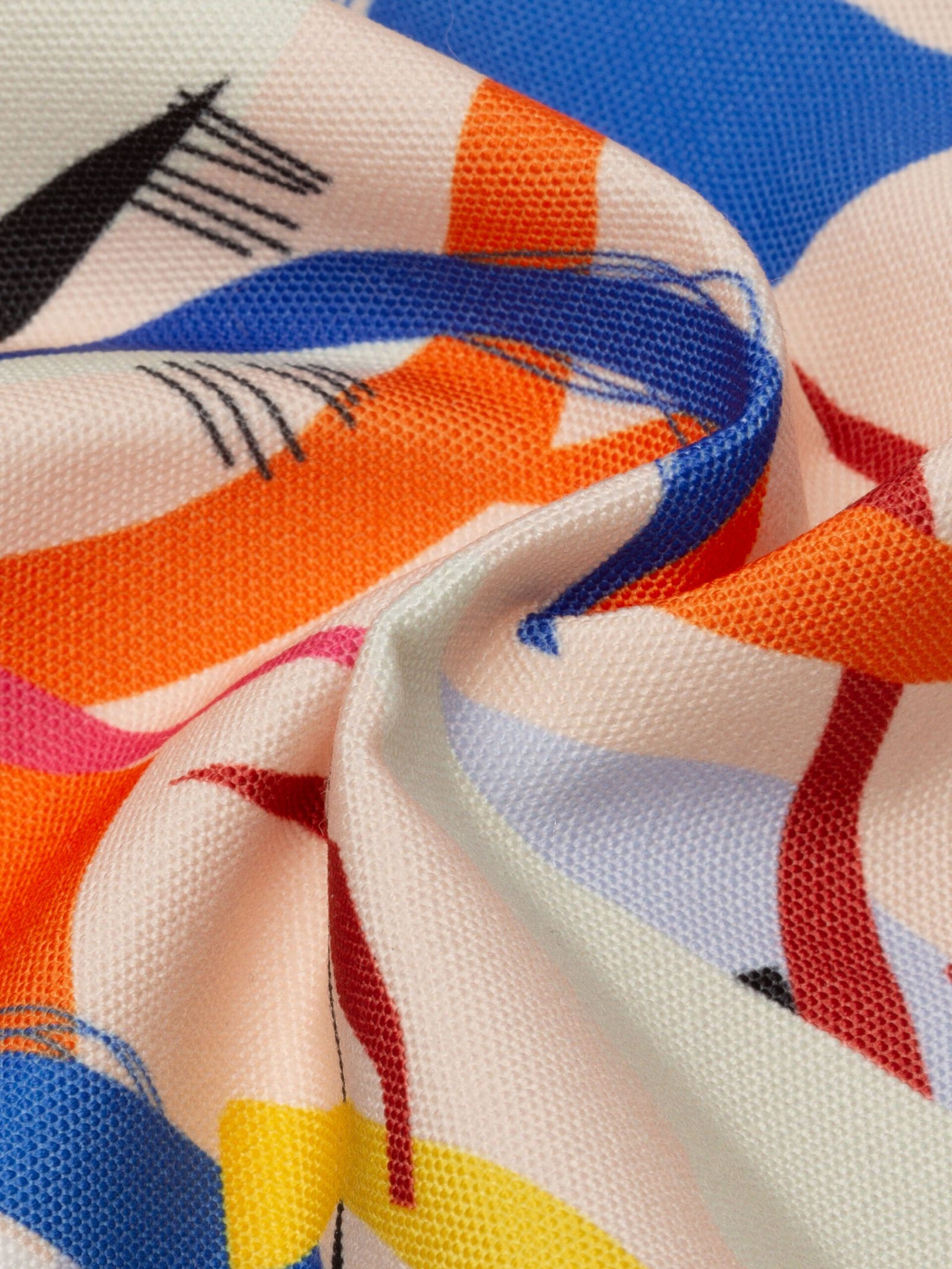
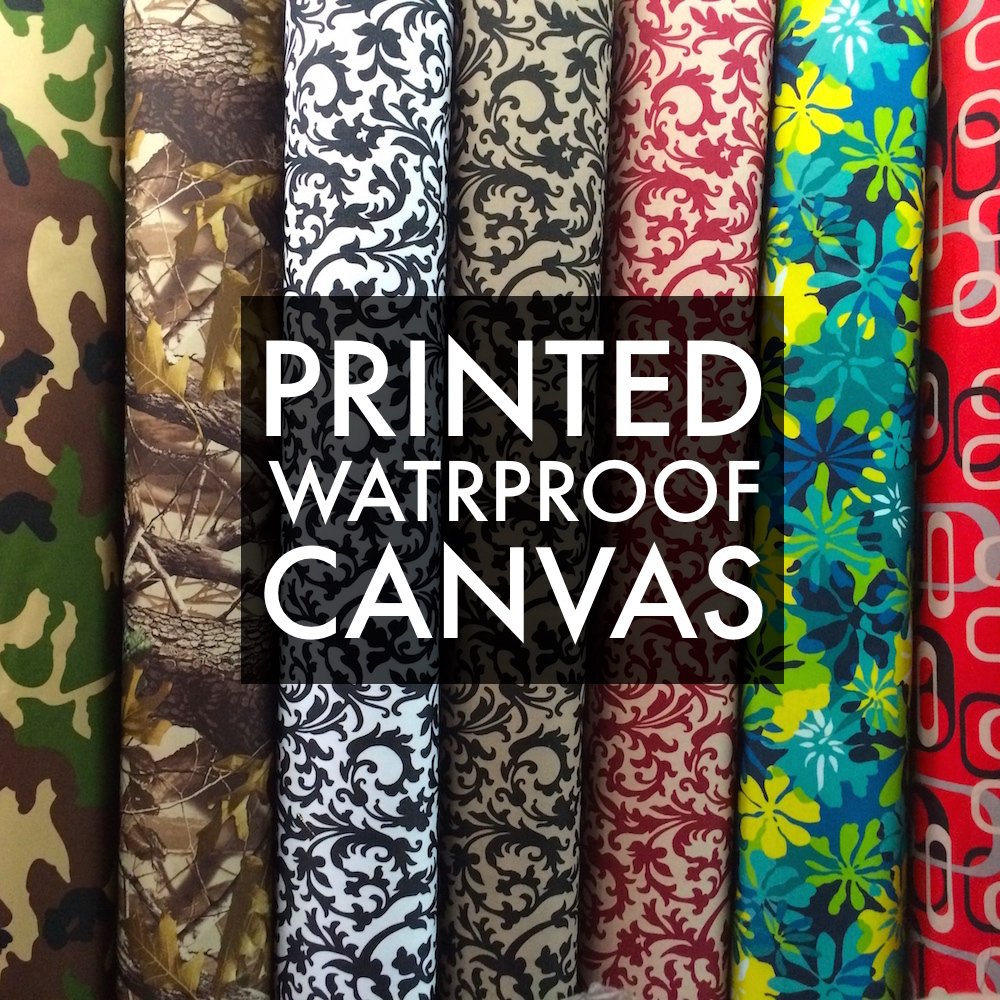
Printed canvas fabric is often discussed as if it were a single material category, but in professional textile sourcing and product development, that assumption quickly breaks down. While canvas is generally defined as a plain-weave, heavy-weight fabric designed to handle load, abrasion, and surface treatment, the performance of printed canvas depends far more on fiber composition and internal structure than on the print itself.
In practical terms, printed canvas fabric refers to a base canvas—most commonly cotton or polyester—that has undergone surface decoration through pigment printing, reactive printing, sublimation transfer, or UV-cured inks. The printed design may look similar at first glance, but the way the fabric behaves after weeks, months, or years of use is determined by what lies beneath the ink layer.
Cotton canvas is constructed from natural cellulose fibers spun from cotton lint. Polyester canvas is formed from continuous or semi-continuous synthetic filaments derived from PET polymers. That single difference in fiber origin creates a cascade of consequences across ink interaction, dimensional stability, environmental resistance, and long-term aging. From an engineering perspective, cotton canvas behaves like an absorbent structure, while polyester canvas behaves more like a sealed framework. Neither approach is universally superior, but each aligns with very different product realities.
How Printed Canvas Really Works at a Material Level
Canvas owes its durability not to complex weaving patterns but to simplicity. The plain weave—one yarn over, one yarn under—creates a balanced structure that distributes stress evenly across the surface. What changes dramatically is how the fibers inside those yarns respond to moisture, heat, and mechanical force.
In cotton canvas, the cellulose fiber structure contains microscopic voids that readily absorb liquids and heat. During printing, ink penetrates into the fiber body rather than sitting entirely on the surface. This often produces deeper, more nuanced color tones, but it also means the print becomes part of the fiber rather than an external layer.
Polyester fibers, by contrast, are hydrophobic and non-porous. Ink cannot naturally penetrate the filament. Instead, printing relies on surface coatings, binders, or heat-driven molecular bonding, especially in sublimation processes. The result is a print that is visually crisp and highly stable, but one that depends heavily on correct process control.
Structural and Performance Differences That Actually Matter
Fiber-Level Comparison
| Attribute | Printed Cotton Canvas | Printed Polyester Canvas |
|---|---|---|
| Fiber type | Natural cellulose | Synthetic PET filament |
| Moisture behavior | Absorbs moisture | Hydrophobic |
| Ink penetration | Deep absorption | Surface or thermal bonding |
| Shrinkage risk | Medium to high | Very low |
| Handfeel | Soft, organic | Firm, technical |
| Dimensional stability | Moderate | High |
| Aging pattern | Softening, patina | Structural consistency |
These differences are not academic. They determine whether a bag panel warps after washing, whether printed signage ripples in humidity, or whether color fades unevenly across a production batch.
Cotton canvas often delivers a richer initial visual impression because ink integrates with the fiber. Over time, that same absorption can allow moisture, oils, and contaminants to migrate into the fabric, influencing both appearance and mechanical strength. Polyester canvas resists these changes, maintaining shape and color far longer under stress.
Weave Density Versus Real-World Strength
A common sourcing mistake is assuming that higher fabric weight automatically means higher durability. In reality, GSM alone does not define strength, especially when comparing cotton and polyester canvas.
In cotton canvas, increasing GSM usually involves thicker yarns or tighter packing. This improves abrasion resistance but also increases stiffness and shrinkage potential. Cotton fibers relax when exposed to moisture and heat, which can cause measurable dimensional change even in heavier fabrics.
In polyester canvas, tensile strength is more closely tied to filament denier, yarn twist, and polymer quality. A lower-GSM polyester canvas can outperform a heavier cotton canvas in tensile stability and tear resistance.
| Fabric Type | Typical GSM Range | Tensile Stability |
|---|---|---|
| Cotton canvas | 280–450 GSM | Moderate |
| Polyester canvas | 240–420 GSM | High |
In commercial bag and cover production, manufacturers often reduce GSM by 10–15% when switching from cotton to polyester while maintaining a similar perceived thickness. This adjustment improves cutting accuracy, reduces seam distortion, and lowers rejection rates during mass production.
Ink Bonding and Surface Behavior
Printing performance is where the differences between cotton and polyester become most visible.
Cotton canvas accepts pigment and reactive inks readily. Color saturation is typically softer and more natural, with gradual tonal transitions. This makes cotton canvas a favorite for fashion accessories, interior décor, and lifestyle products where texture and warmth are part of the brand language.
Polyester canvas excels in sharpness and consistency. Sublimation printing allows dyes to bond at a molecular level when heat is applied, producing bright, high-contrast graphics with excellent wash and UV resistance. This is especially valuable for logos, technical graphics, and signage where clarity matters more than tactile softness.
However, polyester printing is far less forgiving. Incorrect temperature, pressure, or coating selection can lead to color migration, stiffness, or surface cracking. Cotton printing tolerates process variation more easily, which is why it remains popular in small-batch and artisanal production.
Thermal and Environmental Response
Environmental behavior often determines whether a printed canvas product succeeds or fails after launch.
Cotton canvas reacts strongly to humidity and heat cycles. Fibers swell when exposed to moisture and contract as they dry, which can introduce tension across seams or frames. Without proper pre-shrinking or finishing, cotton canvas can distort noticeably in humid climates or during washing.
Polyester canvas is far more dimensionally stable. It resists moisture uptake and maintains shape across temperature fluctuations. Under prolonged UV exposure, high-quality polyester outperforms cotton by a wide margin in color retention and structural integrity.
That said, polyester can stiffen or become brittle if coatings are poorly formulated or over-cured. Heat resistance must be engineered carefully, especially for products exposed to direct sunlight or high storage temperatures.
Tactile Experience and Aesthetic Aging
One of the most overlooked differences between cotton and polyester canvas is how they age.
Cotton canvas softens over time. Fibers break in, surfaces relax, and a visible patina develops. For many lifestyle and heritage brands, this aging is not a defect but a selling point. Customers associate the gradual wear with authenticity and use.
Polyester canvas changes very little with age. Its surface remains consistent, edges stay sharp, and structure holds. While this is ideal for technical and outdoor products, it can feel impersonal in applications where warmth and character are valued.
Application-Driven Material Selection
Because of these differences, cotton and polyester canvas naturally dominate different product categories.
Cotton canvas is widely used in:
- Lifestyle and fashion bags
- Interior décor and wall art
- Promotional totes and accessories
- Artisan and small-batch products
Polyester canvas is preferred for:
- Outdoor covers and awnings
- Tool bags and protective cases
- Travel gear and luggage panels
- Signage and commercial displays
These preferences are not trends but reflections of material physics and long-term performance behavior.
Choosing Between Cotton and Polyester Canvas
Selecting the right printed canvas fabric is less about appearance on day one and more about performance over the product’s lifespan.
Cotton canvas is ideal when tactile quality, visual depth, and natural aesthetics are central to the product experience. Polyester canvas is the better choice when stability, durability, and environmental resistance determine customer satisfaction.
Understanding how fiber structure, printing method, and end-use conditions interact allows designers and manufacturers to specify canvas materials that perform as expected—not just in the sample room, but in real-world use.
Which End-Use Applications Fit Best for Printed Cotton Canvas vs Printed Polyester Canvas?
End use is where most sourcing mistakes actually surface—not in the sample room, not in the first production batch, but months later, after products have been washed, folded, shipped, stored, and handled by real consumers who rarely follow care instructions. Many buyers select canvas based on appearance or price per meter, assuming that similar-looking fabrics will perform similarly. In practice, that assumption is one of the most expensive errors in textile sourcing.
Printed cotton canvas and printed polyester canvas may look nearly identical on day one, especially under controlled showroom lighting. Yet they are designed to serve fundamentally different functional expectations once the product leaves the factory. The difference becomes visible through wrinkles, distortion, fading, customer complaints, and return rates—not through aesthetics alone.
Printed cotton canvas is best suited for products where tactile feel, natural texture, and brand storytelling carry more weight than environmental resistance. Printed polyester canvas excels in applications where shape retention, weather resistance, and long-term visual consistency determine whether the product succeeds or fails.
Application Matching by Performance Reality
Typical Application Fit
| Application | Cotton Canvas | Polyester Canvas |
|---|---|---|
| Fashion tote bags | Excellent | Good |
| Promotional bags | Good | Excellent |
| Outdoor gear | Limited | Excellent |
| Home décor (pillows, wall art) | Excellent | Moderate |
| Signage & banners | Poor | Excellent |
| Tool & utility bags | Moderate | Excellent |
| Travel accessories | Moderate | Excellent |
| Event giveaways | Good | Excellent |
This table reflects not marketing preference, but post-use behavior observed across multiple production cycles. Cotton and polyester canvas simply fail in different ways—and some failures are more acceptable than others, depending on the product category.
Cotton Canvas: Where Touch and Narrative Matter More Than Control
Printed cotton canvas thrives in environments where customers expect the fabric to feel natural and age visibly. The softness, subtle surface variation, and muted print depth of cotton contribute to a sense of authenticity that synthetic materials struggle to replicate.
In fashion tote bags, cotton canvas works exceptionally well because the product is often positioned as reusable, casual, and expressive. Wrinkling or softening over time is not perceived as a defect; it reinforces the idea of use and ownership. Similarly, in home décor applications such as pillows or wall art, cotton canvas provides a warm, organic look that integrates naturally into interior spaces.
However, cotton canvas assumes controlled use conditions. It performs best when products are:
- Washed infrequently or gently
- Stored in dry, ventilated environments
- Used indoors or in shaded areas
Once those assumptions are violated, cotton’s weaknesses become apparent.
Polyester Canvas: Designed for Inconsistent, Uncontrolled Use
Printed polyester canvas dominates applications where the end user cannot—or will not—handle the product carefully. Promotional bags, outdoor gear, banners, and tool bags all share one characteristic: they are abused by default.
Polyester canvas resists moisture absorption, maintains dimensional stability, and tolerates repeated folding, stacking, and compression. In promotional products, this translates into consistent appearance across large distribution volumes. A bag that sits in a warehouse for six months and then gets used daily must still look acceptable on first use.
In outdoor gear and signage, polyester canvas outperforms cotton by a wide margin. UV exposure, rain, humidity, and temperature fluctuations degrade cotton rapidly unless heavily treated. Polyester canvas, especially when paired with UV-resistant inks or coatings, maintains color clarity and structural integrity far longer.
A Real-World Sourcing Example
A North American retail brand once launched a seasonal promotional tote using printed cotton canvas. The initial reception was positive: the bag looked premium, colors were rich, and the fabric felt substantial. However, after bulk distribution and consumer use, complaints began to surface.
Customers reported wrinkling after washing, uneven fading in sunlit environments, and inconsistent bag shape. The brand switched to printed polyester canvas in the following season. The artwork remained unchanged, but complaint rates dropped sharply, repeat orders stabilized, and the product performed more predictably across different regions.
The decision was not about cost savings. It was about reducing variability in consumer experience.
Washing, Handling, and Consumer Behavior
Most sourcing decisions fail to account for one inconvenient truth: consumers do not behave as instructed.
Care labels are suggestions, not rules. Printed canvas products must survive misuse, not ideal handling.
| Factor | Cotton Canvas Outcome | Polyester Canvas Outcome |
|---|---|---|
| Machine washing | Shrinkage and distortion risk | Minimal dimensional change |
| Sun exposure | Gradual color fade | High UV stability with treatment |
| Humid storage | Mildew risk | Low moisture sensitivity |
| Repeated folding | Creasing and soft collapse | Shape retention |
| Heavy load stress | Fiber fatigue over time | High tensile recovery |
From a manufacturing perspective, these differences directly affect return rates, customer satisfaction scores, and brand reputation. Polyester canvas tolerates inconsistency. Cotton canvas does not.
Shipping and Storage Considerations
Another overlooked factor is how printed canvas behaves before it ever reaches the consumer.
Cotton canvas absorbs ambient moisture during long-distance shipping, especially in humid sea freight conditions. This can lead to:
- Temporary stiffness or odor
- Wrinkling when unpacked
- Variation in panel dimensions before sewing
Polyester canvas remains largely unaffected by these variables. For global distribution programs, especially those involving long storage periods or multiple climate zones, polyester canvas significantly reduces risk.
Branding Versus Performance Trade-Off
The choice between cotton and polyester canvas is rarely about which fabric is “better.” It is about which fabric aligns with brand intent and fails more gracefully.
Cotton canvas communicates values: craftsmanship, sustainability, tradition, and warmth. Its imperfections are visible but often acceptable within lifestyle-driven brands.
Polyester canvas delivers performance: consistency, durability, and predictability. Its success is measured not in emotion, but in reduced complaints and operational stability.
Strong brands do not ask which fabric is cheaper. They ask which fabric produces fewer surprises after the product leaves their control.
Making the Right Application Decision
Selecting the correct printed canvas fabric begins with an honest assessment of how the product will be used, not how it is intended to be used. If the product depends on tactile appeal and controlled environments, cotton canvas remains a powerful choice. If the product must survive exposure, abuse, and logistical complexity, polyester canvas is the safer and more reliable option.
End use is not a secondary consideration—it is the final judge of whether a sourcing decision was correct.
How Do Different Printing Methods Perform on Cotton vs Polyester Canvas, and Why Does It Matter for Bulk Orders?
Printing method selection is not a decorative choice. In professional textile production, it is a materials engineering decision that directly affects product lifespan, consistency, and financial risk—especially once orders move from sampling into full-scale production. The same artwork, using the same ink set, can behave very differently on cotton canvas and polyester canvas once washing, UV exposure, folding, and abrasion enter the picture.
Many sourcing issues do not reveal themselves in lab dips or first strike-offs. They emerge only after thousands of meters are printed, when ink saturation shifts, binder stress accumulates, or curing margins are exceeded. At that stage, correction is expensive, rework is limited, and delivery schedules are already locked.
Cotton canvas performs best with pigment and reactive printing, where inks penetrate or chemically bond with natural cellulose fibers. Polyester canvas, by contrast, requires sublimation, UV, or latex printing, all of which rely on surface fixation or thermal transfer into synthetic polymers. When printing methods and fiber chemistry are mismatched, the result is rarely immediate failure—but gradual performance breakdown in real use.
Printing Method × Fiber Compatibility
Common Printing Methods Explained Simply
| Printing Method | How It Works | Best Base Fabric |
|---|---|---|
| Pigment printing | Ink particles fixed to fiber with binder | Cotton canvas |
| Reactive printing | Dye chemically bonds with cellulose | Cotton canvas |
| Sublimation | Ink vapor embeds into polymer | Polyester canvas |
| UV printing | Ink cured on surface via UV light | Polyester canvas |
| Latex printing | Flexible surface ink film | Polyester canvas |
This compatibility matrix exists because ink behavior is governed by fiber absorption, surface energy, and thermal response. Ignoring those fundamentals often produces samples that look acceptable but fail under stress.
Why Cotton and Polyester React So Differently to Ink
Cotton fibers are naturally porous. During pigment or reactive printing, inks are able to penetrate into the fiber structure or chemically bind at a molecular level. This creates a print that becomes part of the fabric rather than sitting entirely on top of it. The result is strong initial color depth and a softer handfeel.
Polyester fibers are non-porous and chemically inert. Ink cannot naturally absorb into the fiber. Sublimation printing overcomes this by using heat to convert solid dye into gas, allowing it to diffuse into the polymer structure. UV and latex inks rely on forming a controlled surface layer that flexes with the fabric.
This distinction explains why the same pigment ink that performs well on cotton will often crack or flake on polyester, even if early samples appear fine.
Pigment and Reactive Printing on Cotton Canvas
Pigment printing is widely used on cotton canvas because of its versatility and cost efficiency. The ink forms a thin layer fixed by binders during curing. On cotton, the binder anchors effectively due to surface roughness and fiber absorbency.
Reactive printing goes further. The dye chemically reacts with the cellulose in cotton fibers, forming a permanent bond. This produces excellent wash fastness and color stability, particularly for darker or saturated tones.
In bulk production, cotton canvas printing requires careful control of:
- Ink viscosity across long runs
- Fabric moisture content
- Curing temperature uniformity
Uneven absorption across different yarn lots can lead to subtle shade variation, which may not be visible on a single panel but becomes obvious when thousands of units are produced.
Sublimation, UV, and Latex Printing on Polyester Canvas
Sublimation printing is the gold standard for polyester canvas. When done correctly, the dye becomes part of the fiber, not a surface coating. This delivers outstanding resistance to washing, abrasion, and UV exposure.
UV printing cures ink instantly on the surface using ultraviolet light. It produces sharp detail and fast production speeds, making it popular for signage and rigid or semi-rigid canvas applications. However, flexibility depends heavily on ink formulation.
Latex printing creates a flexible ink layer that stretches with the fabric. It is often used where moderate elasticity and environmental resistance are required.
For polyester canvas, bulk printing success depends on:
- Precise temperature control during sublimation
- Static management and humidity balance
- Consistent coating quality across rolls
Small deviations can cause ghosting, color migration, or stiffness that only appears after folding or repeated use.
Color Depth Versus Long-Term Stability
Cotton canvas generally wins on initial color richness. Polyester canvas wins on long-term consistency.
| Performance Aspect | Cotton Canvas | Polyester Canvas |
|---|---|---|
| Initial color depth | Very high | Moderate |
| Wash fastness | Good with reactive print | Excellent with sublimation |
| UV resistance | Moderate | High |
| Crack resistance | Good | Excellent |
| Abrasion durability | Moderate | High |
This trade-off is central to decision-making. Products designed for controlled environments may prioritize visual depth. Products expected to survive repeated washing, folding, and exposure must prioritize stability.
A Real Production Scenario
A brand producing printed canvas backpacks for school use selected cotton canvas with pigment printing to achieve deep black graphics and a soft handfeel. Early samples passed visual inspection and initial wash tests.
After one school term, the reality emerged. Daily abrasion, repeated washing, and heavy loading caused visible cracking at fold lines and strap attachment points. Complaints increased, not because the design was flawed, but because the printing method could not tolerate the abuse.
Switching to polyester canvas with sublimation printing reduced artwork-related complaints to nearly zero. The black appeared slightly less saturated on day one, but remained stable throughout the product’s lifecycle.
Why Bulk Orders Behave Differently Than Samples
Sampling environments hide risk. Bulk production exposes it.
Small samples do not replicate:
- Full-width fabric tension
- Continuous heat exposure across long runs
- Ink accumulation and nozzle drift
- Roll-to-roll variation in base fabric
In large-scale cotton canvas printing, minor moisture differences between fabric batches can cause uneven ink uptake over thousands of meters. In polyester printing, static buildup or humidity imbalance can lead to misting or ghost images that only appear after extended production.
That is why experienced manufacturers treat bulk printing as a process system, not a single step.
Process Control as Risk Management
For bulk orders, successful printing depends on replicating production conditions before full rollout. This includes:
- Using full roll lengths for test runs
- Matching humidity and temperature ranges
- Locking curing profiles before mass printing
At SzoneierFabrics, pre-production trials are conducted under the same mechanical tension, heat load, and environmental conditions used in mass production. This approach identifies failure points early—before thousands of meters are committed.
Why Printing Method Choice Directly Affects Cost
Incorrect printing method selection rarely fails immediately. Instead, it generates hidden costs:
- Increased rejection rates
- Customer complaints and replacements
- Inconsistent reorders due to shade mismatch
The cost difference between printing methods is often small compared to the cost of correcting a failed bulk run.
Making the Right Printing Decision for Scale
Choosing the correct printing method means aligning fiber chemistry, ink behavior, and real-world use conditions. Cotton canvas rewards printing methods that integrate with the fiber. Polyester canvas demands methods that respect its synthetic nature.
Bulk orders magnify every weakness. Printing methods that appear interchangeable at sample stage become decisive at scale. The right choice is not the one that looks best on day one—but the one that still performs after months of real use.
What Fabric Specs Should Be Confirmed Before Sampling Printed Canvas?

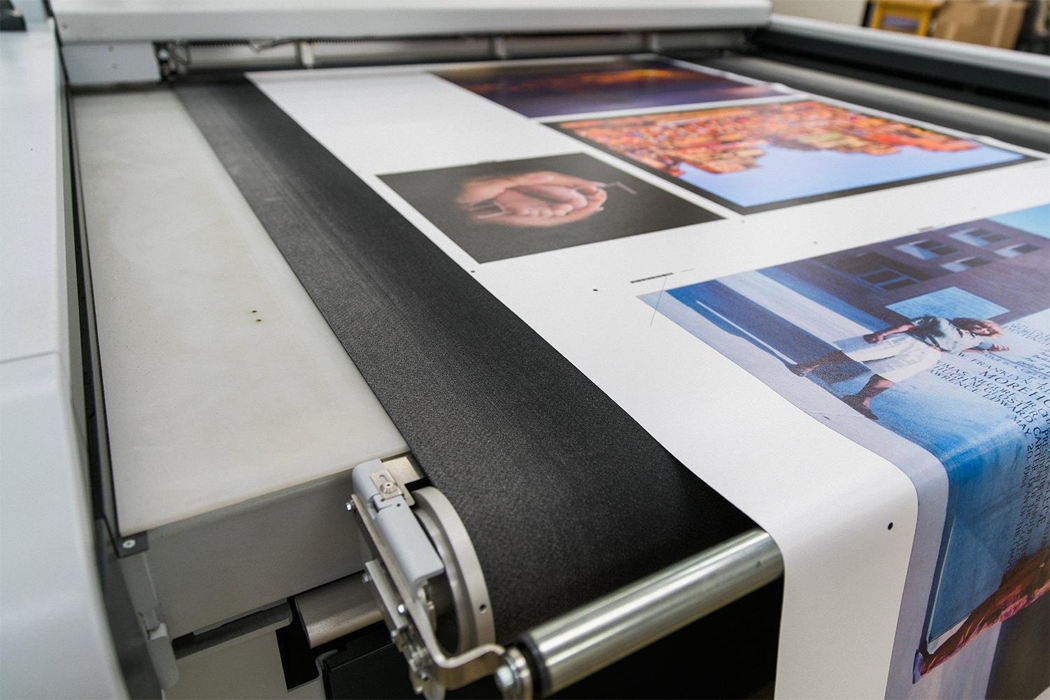
Before printed canvas ever reaches a sewing table, the fabric specification sheet must already read like a technical contract, not a wish list. In my years of working with textile buyers and production planners, I’ve seen the exact same issue repeat itself: the sample looks right, but the production run doesn’t behave the same way. That’s not because printers and factories are dishonest — it’s because fabric has measurable physical properties that dictate how it prints, how it sews, and how it performs in real life.
A sample approved on appearance alone is a visual confirmation, but once you scale to 500, 5,000, or 50,000 yards of material, physical variables such as shrinkage, yarn density, and coating interactions begin to dominate quality outcomes. Without confirmed specs, hundreds of meters of printed canvas can fail on the cutting table or in the field.
Below is a systematic guide to the critical specs every buyer must lock before sampling printed canvas — whether cotton, polyester, or blends. These specifications are not optional. They are predictors of performance.
Why Fabric Specs Always Matter
Most disputes about canvas printing don’t begin at the printer — they begin with unlocked fabric variables.
- A GSM that swings ±10% can change ink absorption dramatically.
- An unconfirmed shrinkage rate can distort the artwork after the first wash or heat set.
- Fabric width influences how efficiently you cut panels and how seams line up in the final product.
- Yarn type and weave density change not only hand feel, but ink laydown and color clarity.
In contrast to printed cotton canvas, polyester canvas has significantly lower shrinkage — untreated cotton canvas can shrink 2–5% or more, even if pre-ironed, while synthetic canvas stays under 1% in many cases.
The key takeaway for serious buyers: specify like an engineer, not like a designer.
Core Fabric Parameters to Lock Early
Before sampling begins, the technical pack should include this table of agreed-upon specifications between the buyer and fabric mill:
| Spec Item | Why It Matters | Target Guideline |
|---|---|---|
| GSM (± tolerance) | Influences ink absorption, stiffness, and panel flatness in sewing | ±5% or tighter |
| Weave (plain / basket / duck) | Affects surface smoothness and print detail | Define exact weave pattern |
| Fabric width | Determines usable cutting width and seam continuity | Match production cutter width |
| Shrinkage (%) | Predicts dimensional change after finishing | <3% for cotton, <1% for polyester |
| Yarn type (e.g., 100% cotton vs cotton/poly) | Impacts print sharpness and handle | Buyer-specified denier / fiber type |
Without these targets, production will interpret the material based on mill defaults, not your performance goals. For example, if a cotton canvas is supplied at 12 oz (≈ 406 GSM), but the tolerance is ±10%, some rolls could be 365 GSM and others 447 GSM — a variation that the human eye can detect in printed color density.
GSM Tolerance: Why ±5% Often Isn’t Enough
GSM — grams per square meter — is more than just a weight figure. It correlates directly with how much ink the canvas will absorb and how rigid or flexible the fabric feels in the finished product. Too light and ink bleeds; too heavy and the surface can appear dull. Too much tolerance results in batches where prints vary visibly in color saturation and sharpness, even though the design file was the same.
At SzoneierFabrics we aim for ±5% GSM tolerance, which tightens production variability significantly. In practical terms: if your target is 400 GSM, the production rolls should not go below 380 GSM or above 420 GSM. Wider tolerances often mean that buyers see inconsistent print results between panels sewn next to each other.
Shrinkage: The Hidden Cost Multiplier
Shrinkage is the silent troublemaker of canvas printing. Especially with cotton — where natural fibers respond to moisture, heat, and tension — a lack of specification here can cause finished panels to warp, misalign seams, and even distort logos or artwork. Unless the fabric has been sanforized or heat-set, cotton canvas may still shrink post-cutting, not uniformly, and differently in warp vs. weft directions.
Here’s a practical comparison:
| Fabric Type | Typical Shrinkage (Pre-treated) | Production Impact |
|---|---|---|
| Cotton canvas | 3–6% | Misalignment after washing/finishing |
| Polyester canvas | <1% | Dimensional stability through production |
If shrinkage is not specified and measured, panels that looked correct on sample rolls can end up shorter or skewed after the first press or wash. This is why high-end brands require certified shrinkage reports before bulk orders are cut.
Colorfastness Targets That Actually Matter
Colorfastness — the ability of printed ink to withstand washing, abrasion, and light — is another under-specified area in many tech packs. Buyers often look at final print photos and assume good performance, but without measurable targets, there’s no benchmark for production or inspection.
Here are realistic targets for canvas printing:
| Test Type | Cotton Canvas Target | Polyester Canvas Target |
|---|---|---|
| Wash fastness | Grade 3–4 | Grade 4–5 |
| Rub fastness (dry) | Grade 4 | Grade 4–5 |
| UV fastness | Grade 3–4 | Grade 5 (for outdoor use) |
These testing grades are based on standard textile test methods. For products used outdoors, polyester canvas with UV-rated inks will outperform cotton in color retention and resistance to fading. Outdoor performance cannot be judged from a visual sample alone — it must be tested to specification.
Coating Compatibility (Often Ignored but Critical)
Coating interactions with printed canvas are a frequent source of disappointment. Many buyers assume that printing and coating are sequentially neutral steps, but in reality, the order and chemistry matter:
- Cotton canvas coatings — especially PU or acrylic finishes — can mute color depth if applied after printing. This happens because coatings can diffuse or absorb surface dyes.
- Polyester canvas coatings often enhance color contrast because the surface is less absorbent and better retains surface pigments.
This is why leading mills separate programs: cotton canvas coatings are evaluated on a case-by-case basis depending on desired hand feel, whereas polyester coatings are typically applied after printing to optimize visual performance.
Coating decisions should be in the tech pack before sampling. Without this, you can end up with finished goods that look drastically different from your approved sample — not because the art file was wrong but because the surface chemistry changed after coating.
How to Lock Specs Without Guesswork
To ensure your printed canvas delivers consistent quality from sample to production, here’s a practical specification checklist:
- GSM + tolerance: precise number + acceptable range
- Fabric width and usable area: avoid panels narrower than your cutting plan
- Shrinkage report: include warp/weft metrics
- Colorfastness targets: specify test standards and target grades
- Coating sequence and chemistry: indicate whether coatings are pre- or post-printing
- Weave and yarn details: include exact denier, yarn count, and weave type
Providing this information to both your mill and your printer ensures that the printed canvas you approve remains predictable in volume production, not just in a one-off sample.
In the world of printed canvas, the devil truly is in the details — and mastering the specs before sampling separates predictable quality from expensive surprises.
How Do Water Resistance, UV Resistance, Abrasion, and Wash Durability Compare Between Printed Cotton Canvas and Printed Polyester Canvas?
When buyers evaluate printed canvas, durability is often discussed in vague terms: “good for outdoor use,” “strong enough,” “washable.” In reality, durability is not a single property. It is the combined result of how a fabric responds to water, ultraviolet light, mechanical friction, folding stress, and repeated washing over time.
Printed cotton canvas and printed polyester canvas can look almost identical when freshly produced. Color saturation, texture, and hand feel may pass initial approval with no obvious difference. The separation only becomes clear after weeks or months of real use. Sun exposure fades one faster. Moisture deforms another. Abrasion slowly destroys print layers at stress points.
Across controlled tests and long-term product programs, printed polyester canvas consistently outperforms printed cotton canvas in water resistance, UV stability, abrasion resistance, and wash durability. Printed cotton canvas remains a valid choice for indoor, lifestyle, and low-stress applications, but it degrades faster when exposed to outdoor or high-friction environments.
Understanding these differences early allows buyers to align material choice with product lifecycle expectations rather than short-term appearance.
Performance Under Real Use Conditions
Durability should always be evaluated under realistic consumer behavior, not ideal laboratory conditions. Consumers expose bags, covers, and accessories to rain, sunlight, repeated folding, and washing cycles that are rarely gentle. The following comparisons reflect how both materials behave once they leave the warehouse and enter daily use.
Water & Moisture Exposure
| Condition | Cotton Canvas | Polyester Canvas |
|---|---|---|
| Light rain | Absorbs moisture | Repels moisture |
| High humidity | Swells, softens | Minimal change |
| Repeated wet/dry cycles | Fiber fatigue | Stable |
Cotton is a cellulose-based fiber with a naturally porous structure. When exposed to moisture, cotton fibers absorb water internally. This absorption causes fibers to swell, which slightly loosens yarn twist and changes fabric tension. Over repeated wet-and-dry cycles, this swelling and contraction accelerates surface wear, softening the fabric and weakening printed areas.
Polyester fibers, by contrast, are hydrophobic. Water does not penetrate the fiber structure and instead remains on the surface or evaporates. Even without additional coatings, polyester canvas maintains dimensional stability through hundreds of moisture cycles. When water-repellent or PU coatings are applied, this stability improves further.
In one SzoneierFabrics outdoor gear program involving printed duffel bags, both cotton and polyester canvas were subjected to simulated rain exposure followed by air drying. After multiple cycles, cotton panels developed visible waviness and uneven surface tension. Polyester panels remained flat, with no distortion along printed graphics or seam lines. This difference alone affected cutting accuracy and final assembly quality.
UV & Fade Resistance
| Exposure Duration | Cotton Canvas | Polyester Canvas |
|---|---|---|
| 1–2 months outdoor use | Mild fade | No visible change |
| 6 months outdoor use | Noticeable fade | Slight tone shift |
| 12 months outdoor use | Significant fade | Stable with UV ink |
Ultraviolet radiation attacks fibers at the molecular level. Cotton’s cellulose chains are particularly vulnerable to UV degradation, which weakens fiber strength and accelerates color fading. Even high-quality pigment inks cannot fully compensate for the fiber’s natural susceptibility to sunlight.
Polyester’s synthetic polymer structure is far more resistant to UV breakdown. When combined with UV-rated inks, printed polyester canvas can retain color integrity several times longer than cotton under the same exposure conditions. This is especially critical for outdoor bags, awnings, covers, and equipment storage products.
In practical terms, cotton canvas products used outdoors may still look acceptable during early retail cycles but begin to show uneven fading within a single season. Polyester canvas maintains visual consistency across panels, which is essential for brand perception and warranty claims.
Abrasion & Folding Stress
| Test Type | Cotton Canvas | Polyester Canvas |
|---|---|---|
| Martindale abrasion | Moderate | High |
| Fold line cracking | Possible | Rare |
| Edge wear | Faster | Slower |
Abrasion resistance is not just about fabric longevity; it directly impacts print durability. Areas that experience repeated friction—such as corners, zipper lines, handles, and fold points—are where print failure becomes visible first.
Cotton canvas fibers gradually fray under abrasion. As the surface yarns break down, printed ink layers lose adhesion, leading to dullness, cracking, or complete loss of graphic detail. Fold lines in cotton canvas can become permanent creases, especially after moisture exposure, increasing the likelihood of print damage along those lines.
Polyester canvas exhibits higher tensile strength and better elastic recovery. Under abrasion testing, polyester retains surface integrity longer, protecting printed layers from premature wear. Fold lines are less likely to develop permanent creases, and edge wear progresses more slowly, even in heavily used products.
For items like tool bags, travel duffels, and outdoor backpacks, these abrasion characteristics often determine whether a product looks acceptable after one year or becomes unsellable due to cosmetic damage.
Wash Durability (Real Consumer Behavior)
| Wash Scenario | Cotton Canvas | Polyester Canvas |
|---|---|---|
| Cold wash | Minor shrinkage | Stable |
| Warm wash | Visible shrinkage | Stable |
| Air dry | Acceptable | Excellent |
| Machine dry | High risk | Acceptable |
Wash durability is where material choice directly intersects with consumer habits. While care labels may specify cold wash and air drying, real-world behavior often ignores these instructions.
Cotton canvas is sensitive to heat and agitation. Even pre-treated cotton may experience residual shrinkage when exposed to warm water or machine drying. Shrinkage is rarely uniform, which can distort printed graphics and cause seam misalignment. Repeated washing also accelerates fiber fatigue, softening the fabric and reducing print sharpness over time.
Polyester canvas tolerates washing far better. Dimensional stability remains consistent across cold and warm washes, and machine drying rarely introduces significant distortion. For products intended for frequent cleaning—such as reusable shopping bags, sports gear bags, or travel accessories—this forgiveness significantly reduces customer complaints and return rates.
How Durability Differences Affect Product Positioning
Choosing between printed cotton canvas and printed polyester canvas is less about aesthetics and more about expected product lifespan.
Printed cotton canvas performs well in:
- Indoor lifestyle products
- Decorative storage
- Fashion-driven accessories
- Short to medium lifecycle items
Printed polyester canvas is better suited for:
- Outdoor gear and travel bags
- Utility and tool storage
- Sports and equipment bags
- Products exposed to frequent washing or moisture
From a sourcing perspective, polyester canvas often reduces long-term risk even if initial material cost is slightly higher. Fewer returns, fewer color complaints, and better consistency across production batches translate into lower total cost over the product’s life.
The Practical Takeaway for Buyers
Durability differences between printed cotton and polyester canvas are not subtle once products enter real use. Water exposure, UV radiation, abrasion, and washing all amplify the inherent strengths and weaknesses of each fiber type.
Printed cotton canvas delivers natural texture and traditional appeal but requires controlled use conditions. Printed polyester canvas delivers predictable performance under stress and misuse. Matching material choice to how consumers actually use the product—rather than how the product looks on day one—is the key to avoiding durability-related disputes later.
In printed canvas programs, durability is not an abstract concept. It is the difference between a product that ages gracefully and one that fails quietly over time.
Which Coatings and Finishes Work Best for Printed Canvas, and How Do They Impact Print Clarity and Handfeel?
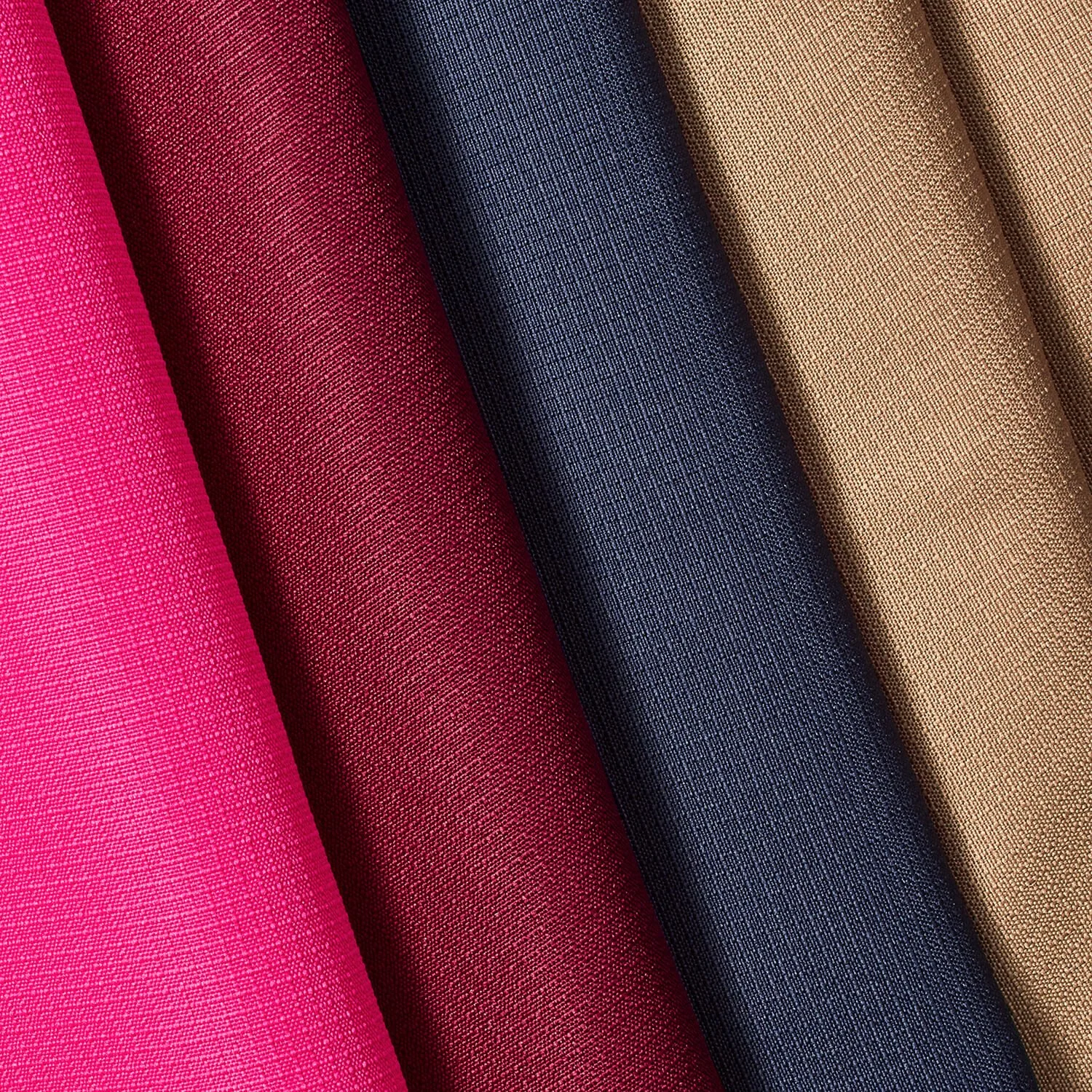
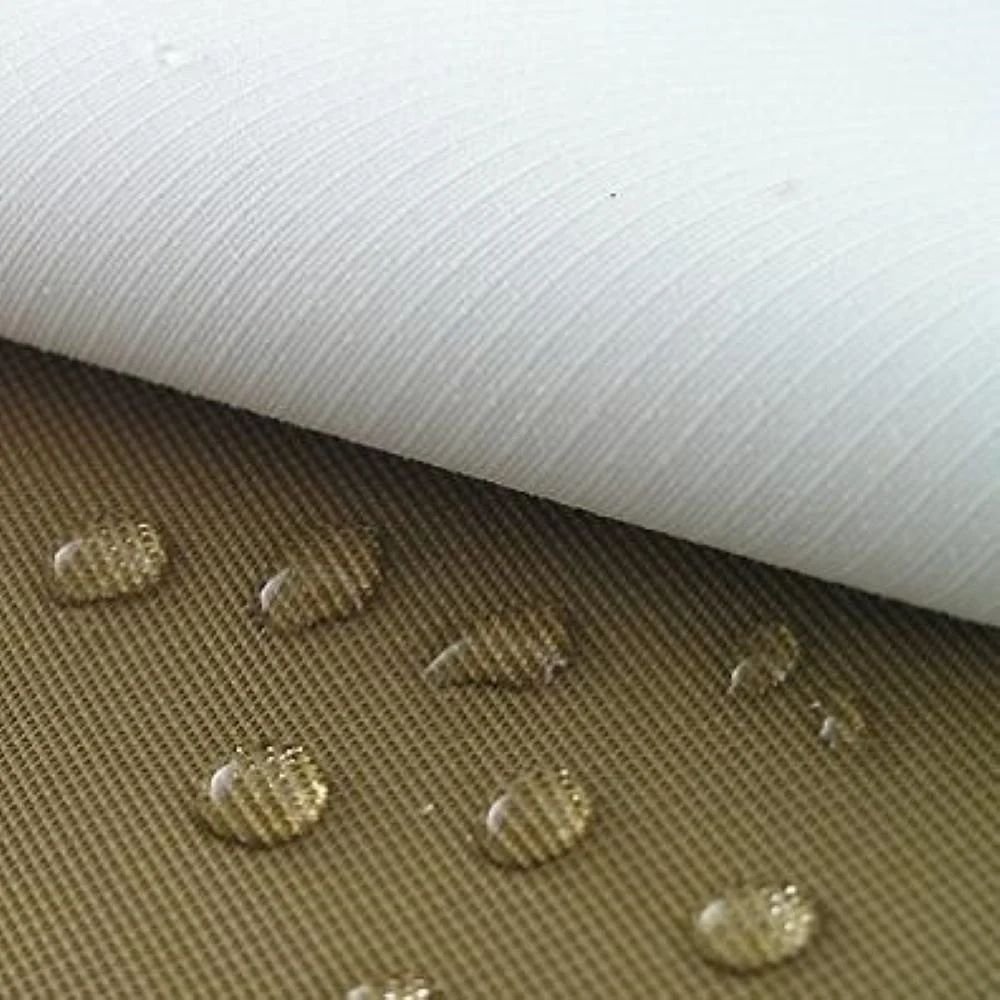
When developing a printed canvas product, coatings and finishes should be planned long before cutting and stitching begin. A finish that’s tacked on at the end can protect or undermine everything you loved about the printed sample—color vibrancy, handfeel, surface texture, and even print durability. Different coatings behave very differently on cotton versus polyester canvas, and the choice of finish will influence not just performance but also how the graphic reads visually once in use.
Why Coating Decisions Matter Early
Coatings aren’t purely surface treatments; they interact with the fiber structure and weave density of canvas. Cotton, being a natural cellulose fiber, tends to absorb liquids and soft finishes deeply into the fiber matrix. Polyester, by contrast, is hydrophobic and less absorbent, so coatings tend to remain more on the surface and influence the feel of the fabric more directly. These fundamental differences mean that a one-size-fits-all approach to coatings almost never works.
Before sampling begins buyers must decide what performance attributes the final product needs—weather protection, print clarity, vintage appeal, or maximum durability—so the right finish is chosen early.(szoneierfabrics.com)
Common Coatings and Their Roles
Most printed canvas products use one or more of these finishes. Each has a distinct effect on performance and appearance:
| Coating Type | Key Benefit | Typical Impact on Print | Best Fabric |
|---|---|---|---|
| PU (Polyurethane) | Excellent water resistance and abrasion protection | Can enhance contrast; slightly firm hand | Polyester canvas |
| Acrylic | UV protection and color locking | Retains color brightness; surface protection | Cotton & polyester |
| Wax | Vintage aesthetic with water resistance | Muted highlights; softer hand | Cotton canvas |
| DWR (Durable Water Repellent) | Surface water repellency without heavy build | Minimal visual change; bead effect | Polyester canvas |
Each finish changes the way light interacts with the printed surface and how hands feel the textile—a critical point that product designers and source engineers must coordinate.
How Coatings Affect Print Appearance
The interface between coating and canvas surface dictates much of the visual outcome:
| Effect | Cotton Canvas | Polyester Canvas |
|---|---|---|
| Color Depth | Often slightly muted | Frequently appears deeper and more saturated |
| Surface Gloss | Low to matte | Adjustable from matte to semi-gloss |
| Handfeel (Touch) | Softer | Firmer, more structured |
For example, waxed cotton canvas intentionally dulls print sharpness to achieve a vintage, heritage aesthetic. This is ideal for products where texture and feel are part of the design language. In contrast, polyester canvas with a light PU or acrylic finish can enhance visual contrast and digital detail because the coating sits more on the surface and reflects light differently.
PU Coating: Performance and Visual Impact
Polyurethane coatings are among the most common for performance-oriented printed canvas products. PU forms a continuous film on the surface, creating a barrier against water, oil, and abrasion. Unlike simple surface repellents, PU can deliver real waterproofing—useful for bags that see all-season outdoor use. The downside is that the film can slightly stiffen the fabric and change how print pigments appear under different lights.
Good PU systems can be engineered to be PVC-free and relatively breathable while still providing substantial performance gains. For printed polyester canvas, PU enhances edge definition and contrast without blurring small text or fine graphic elements.
Acrylic Finishes: Versatile Protection
Acrylic coatings or finishes are often applied to preserve color and resist UV degradation. These finishes form a protective surface that slows fading and protects prints from chemical and environmental wear. Acrylic treatments are commonly used in outdoor tent fabrics, marine canvas, and upholstery textiles where exposure to sun and accidental liquid contact are routine.
The advantage of acrylic is that it can be tuned to maintain a relatively soft hand while still locking print pigments. This makes it suitable for both cotton and polyester canvas applications, though the exact formulation and thickness must be matched to fabric type.
Wax Coatings: Aesthetics With Tradeoffs
Wax finishes are beloved in fashion and heritage products for the classic, subdued look they give canvas. Wax penetrates cotton fibers and fills micro-voids in the weave, making the canvas more water resistant while muting highlights and reducing sharp print contrast. For brands that want a rugged, “aged” appearance, wax cotton is powerful, but it isn’t the best choice when crisp, high-detail graphics are the priority. Applying wax to polyester canvas, on the other hand, can result in uneven absorption and surface inconsistency because synthetic fibers don’t take wax in the same way natural fibers do.
DWR: Lightweight Repellency
Durable water-repellent finishes (DWR, often C0 or C6 chemistries) create surface tension that causes water to bead and roll off rather than soak in. Unlike PU coatings, DWR doesn’t fill the fabric surface with a continuous film; instead, it changes surface energy. This is useful for light rain and surface spills without altering the look of the print or the fabric’s pliability significantly. For printed polyester canvas that already has strong inherent performance, DWR is often a preferred lightweight finish.
Breathability vs Protection: The Trade-off
Every coating represents a compromise between protection, handfeel, and breathability. In technical terms:
| Priority | Better Choice |
|---|---|
| Natural handfeel and minimal coating influence | Cotton canvas with acrylic or light finish |
| Maximum weather protection and print durability | Polyester canvas with PU or DWR |
| Vintage, tactile product experience | Cotton canvas with wax |
Cotton canvas breathes and ages with a characteristic feel that many lifestyle brands cherish, but it will require careful finish specification to avoid washing out prints. Polyester canvas, thanks to its chemistry, seals more consistently and retains print clarity under harsh conditions.
Sustainability Considerations (Practical, Not Marketing)
Sustainability isn’t just a marketing buzzword—it affects end-of-life management and consumer perception. Natural cotton canvas with biodegradable finishes may appeal to eco-focused consumers, but coatings that block breathability or incorporate heavy synthetics can reduce recyclability.
For polyester canvas, PVC-free PU and PFAS-free DWR chemistries are increasingly preferred because they avoid long-lived environmental pollutants while still providing performance. The right coating chemistry, aligned with textile recycling systems, extends product life while minimizing environmental footprint.
Summary: Key Coating Effects on Performance and Print
- PU coatings provide robust water resistance and abrasion protection, often enhancing print contrast on polyester canvas.
- Acrylic finishes protect against UV and environmental wear while preserving color integrity.
- Wax coatings deliver vintage aesthetics at the cost of some print sharpness.
- DWR treatments give light repellency with minimal impact on look and feel.
The best results come from co-engineering the coating choice with fabric type and intended product use—only then can brands ensure that the printed canvas both looks and performs as intended in real world use.
What Drives Total Landed Cost and Lead Time for Printed Canvas Programs?
When sourcing printed canvas, many buyers focus on one number: price per meter. On paper, this feels logical and easy to compare. In practice, it is one of the most expensive mistakes a sourcing team can make. Printed canvas programs rarely succeed or fail based on fabric cost alone. They succeed or fail based on total landed cost and delivery reliability once the program scales beyond samples.
Cotton and polyester canvas behave very differently once they move from sampling to bulk production. Those differences show up not just in durability, but in printing efficiency, yield loss, rework rates, inspection rejection, and schedule predictability. What looks cheaper at quotation stage can quietly become more expensive once hidden costs accumulate across thousands of meters.
In real production environments, printed cotton canvas often appears attractive at the beginning but carries higher variability and operational risk. Printed polyester canvas usually starts with a higher base fabric price, yet delivers more predictable output, fewer surprises, and tighter control over lead time. For established brands and repeat programs, these differences compound quickly.
Why Total Landed Cost Matters More Than Fabric Price
Total landed cost includes everything required to deliver usable, sellable fabric to your warehouse on time. That means not only fabric and printing, but also:
- Yield loss during printing and cutting
- Rework caused by color deviation or shrinkage
- Inspection rejection and replacement cycles
- Delays caused by moisture, curing, or reprocessing
- Logistics timing and consolidation efficiency
A printed canvas program that looks economical at USD 2.50 per meter can end up costing more than a USD 3.10 alternative once scrap, reprints, and delayed shipments are accounted for. Experienced buyers evaluate programs holistically, not line by line on a quotation sheet.
Cost Drivers That Actually Move the Numbers
Several cost drivers have a disproportionate impact on total landed cost. These factors behave very differently between cotton and polyester canvas.
Fabric Cost vs Process Cost
| Cost Component | Cotton Canvas | Polyester Canvas |
|---|---|---|
| Base fabric | Lower | Medium |
| Printing cost | Medium | Medium–High |
| Rework risk | Medium–High | Low |
| Yield loss | Higher | Lower |
| Inspection rejection | Higher | Lower |
Cotton canvas typically has a lower raw fabric price, especially for standard weights and constructions. However, cotton is more sensitive to environmental variables such as humidity and temperature. Variations in moisture content and GSM can disrupt printing consistency, leading to color fluctuation, registration drift, and uneven ink absorption.
Polyester canvas, produced with controlled filament extrusion, delivers tighter tolerances in weight and structure. This consistency allows printing lines to operate at stable speeds with predictable ink usage. Over long runs, the reduction in stoppages, adjustments, and rejected panels often offsets the higher base fabric cost.
Printing Efficiency and Yield Loss
Yield loss is one of the least visible but most expensive components of printed canvas programs. Every meter rejected during printing or finishing still carries material, labor, and energy costs.
Cotton canvas tends to experience higher yield loss due to:
- Moisture-related distortion during printing
- Variable ink absorption across rolls
- Shrinkage correction after printing or coating
Polyester canvas maintains dimensional stability throughout the process. Once printing parameters are locked, repeatability is high, and waste levels remain consistently low. In large programs, even a 2–3% difference in yield can represent thousands of dollars.
MOQ and Repeat Length Impact
| Factor | Cotton Canvas | Polyester Canvas |
|---|---|---|
| MOQ flexibility | High | Medium |
| Repeat accuracy | Moderate | High |
| Long-run stability | Moderate | Excellent |
Cotton canvas is often more flexible for small trial runs and seasonal collections. Mills and printers are generally comfortable running shorter lengths, making cotton suitable for lifestyle brands testing new designs or limited editions.
Polyester canvas performs best in repeat-driven programs. Color consistency, panel alignment, and print sharpness remain stable across long runs and multiple reorders. For brands planning ongoing replenishment, this repeat accuracy reduces future sampling costs and minimizes approval delays.
Lead Time Reality in Production
Lead time estimates on paper often assume ideal conditions. In reality, the material itself influences how predictable the schedule will be.
| Stage | Cotton Canvas | Polyester Canvas |
|---|---|---|
| Lab dip / strike-off | 5–7 days | 6–8 days |
| Bulk printing | 10–14 days | 12–15 days |
| Coating & curing | 3–5 days | 4–6 days |
| QA & packing | 2–3 days | 2–3 days |
While initial sampling timelines are similar, cotton canvas projects carry more schedule risk once bulk production begins. Moisture sensitivity, shrinkage correction, and color rebalancing can introduce delays that are difficult to predict in advance.
Polyester canvas programs typically move through production with fewer interruptions once parameters are confirmed. This predictability is especially valuable for buyers working with fixed shipping windows or synchronized launches across multiple markets.
Rework and Hidden Time Costs
Rework is rarely listed as a line item, yet it directly affects both cost and lead time. Reprinting panels, recalibrating colors, or reapplying coatings consumes machine time and labor while pushing delivery dates outward.
Cotton canvas rework is more common due to:
- Uneven color depth across rolls
- Shrinkage discovered after printing
- Handfeel changes after coating
Polyester canvas, with its stable structure, allows for earlier detection of issues during strike-off stages. Problems are corrected once rather than repeatedly, reducing cumulative delays.
Logistics and Packing Efficiency
Fabric behavior also affects packing density and shipping efficiency. Cotton canvas can absorb ambient moisture during storage and transit, increasing weight and occasionally triggering dimensional instability. This can complicate container planning and post-arrival inspection.
Polyester canvas resists moisture uptake and retains roll shape during long-distance shipping. This consistency improves packing efficiency and reduces the risk of damage or claims upon arrival.
Risk Management and Program Scalability
As printed canvas programs scale, risk management becomes as important as unit cost. A program producing 500 meters can tolerate variability. A program producing 50,000 meters cannot.
Printed cotton canvas introduces more variables that must be actively managed:
- Environmental control during printing
- Additional inspection checkpoints
- Greater buffer time in schedules
Printed polyester canvas reduces the number of variables, allowing buyers to plan production with greater confidence. This is one reason performance-oriented brands often migrate toward polyester canvas as volumes increase, even if initial costs are higher.
How Experienced Buyers Evaluate Trade-Offs
Experienced sourcing teams rarely ask, “Which fabric is cheaper?” Instead, they ask:
- Which fabric delivers consistent output at scale?
- Which fabric minimizes rework and schedule risk?
- Which fabric supports predictable reorders six months from now?
Cotton canvas still has a place, particularly for design-driven products, small batches, and indoor applications. Polyester canvas becomes more attractive when reliability, repeatability, and delivery discipline matter more than raw material price.
Practical Takeaway for Buyers
Total landed cost is shaped by dozens of small decisions that compound over time. Base fabric price is only one of them. Printed cotton canvas may look economical upfront, but variability in yield, rework, and scheduling can quietly erode margins. Printed polyester canvas often costs more at quotation stage but delivers stability that protects both budget and timelines in bulk programs.
At SzoneierFabrics, many clients initially request cotton canvas for cost reasons, then transition to polyester once they experience the operational realities of scale. The most successful programs are those that choose material not for how it looks on a sample table, but for how it behaves across thousands of meters, multiple reorders, and real-world delivery constraints.
In printed canvas sourcing, the lowest number on the quote sheet is rarely the lowest cost in the end.
How Do You Choose Between Cotton and Polyester Printed Canvas for Your Brand?
Choosing between cotton and polyester printed canvas is not a stylistic decision, nor is it a question of tradition versus innovation. For brands that scale beyond samples and short runs, this choice is fundamentally about risk alignment—matching material behavior with real-world use, customer habits, and the promises your brand makes once the product leaves the shelf.
Both cotton and polyester printed canvas can produce visually compelling results. On a sampling table, the difference may appear minimal. In the field, however, these materials age, react, and fail in very different ways. The most common sourcing mistakes happen when brands select fabric based on how it looks on day one instead of how it performs over time.
Cotton printed canvas excels when tactile experience, natural aesthetics, and storytelling are central to the product identity. Polyester printed canvas becomes the safer option when durability, environmental exposure, and repeat consistency define commercial success. Understanding this distinction early prevents costly course corrections later.
Why “Right Fabric” Is a Strategic Decision
Fabric choice influences far more than surface appearance. It determines:
- How products age in customers’ hands
- How often complaints and returns occur
- How predictable reorders will be
- How much variability production teams must manage
A mismatch between material behavior and product expectation doesn’t always cause immediate failure. Often, it shows up quietly: fading after a season, distorted prints after washing, or inconsistent panels across reorders. By the time the issue is visible, the brand has already paid for it in lost trust and margin.
A Practical Decision Checklist
The most reliable way to choose between cotton and polyester printed canvas is to start with use scenarios, not mood boards.
Start With Use, Not Appearance
| Question | If “Yes” → Choose |
|---|---|
| Will it be used outdoors regularly? | Polyester |
| Will it be washed often or roughly? | Polyester |
| Is handfeel a primary selling point? | Cotton |
| Is gradual fading acceptable or desirable? | Cotton |
| Is reorder-to-reorder consistency critical? | Polyester |
This checklist forces an honest evaluation of how the product will live in the real world, not how it is intended to be treated.
Understanding Fabric Behavior in Daily Use
Cotton and polyester respond differently to stress, moisture, light, and handling. These differences directly influence whether a product feels “authentic” or “disappointing” after months of ownership.
Cotton printed canvas:
- Absorbs moisture and softens over time
- Develops patina, creases, and character
- Fades gradually under UV exposure
- Feels warmer and more organic to the touch
Polyester printed canvas:
- Repels moisture and maintains shape
- Retains print clarity longer
- Resists UV degradation
- Feels more structured and technical
Neither behavior is inherently better. The problem arises when the product promise conflicts with material reality.
Understand Your Customer’s Reality
Many sourcing decisions assume ideal user behavior. In practice, consumers are rarely careful.
If the product is likely to be:
- Thrown into car trunks
- Exposed to rain or sun
- Washed without reading care labels
- Folded, compressed, or overloaded
Polyester printed canvas dramatically reduces risk. Its tolerance for misuse protects both the product and the brand’s reputation.
Cotton printed canvas, while appealing, assumes a more considerate user. When customers treat cotton canvas like performance gear, dissatisfaction is almost inevitable—not because the fabric is poor, but because it was misapplied.
Brand Positioning vs Failure Tolerance
Fabric choice also reflects how much imperfection a brand can afford.
| Brand Priority | Safer Choice |
|---|---|
| Heritage / artisan storytelling | Cotton canvas |
| Performance / utility focus | Polyester canvas |
| Premium lifestyle (controlled use) | Cotton canvas |
| Mass distribution and scale | Polyester canvas |
Heritage and artisan brands often embrace the aging process. Slight fading or softening reinforces authenticity. In contrast, mass-market or performance brands are judged harshly for inconsistency. A visible defect is perceived as a quality failure, not a design feature.
Cost Is Not the Same as Risk
One of the most common misconceptions is equating lower material cost with lower financial risk. In reality, cotton printed canvas can introduce higher downstream costs through:
- Increased inspection rejection
- Higher reprint or rework rates
- More customer complaints related to fading or shrinkage
Polyester printed canvas may cost more per meter but often reduces total risk across production, logistics, and after-sales support. Brands that prioritize operational stability tend to gravitate toward polyester as volumes grow.
Sampling Bias and the “Approval Trap”
Sampling can be misleading. Cotton canvas samples are often pre-treated, pressed, or stabilized before presentation. They look crisp, vibrant, and flat. Polyester samples may feel firmer or less “romantic” by comparison.
The danger is approving based on static appearance, not dynamic behavior. A sample doesn’t show how cotton will respond after six washes or how polyester will look after a summer in direct sunlight. Brands that rely too heavily on sampling aesthetics risk approving the wrong material for the job.
Aligning Fabric Choice With Product Lifecycle
Ask one critical question early: How long does this product need to look good to be considered successful?
- For seasonal fashion or limited editions, cotton canvas may be perfect.
- For products expected to last years with minimal change, polyester canvas offers security.
Longevity expectations should guide material selection more than trend cycles.
When Hybrid Strategies Make Sense
Some brands successfully use both materials across different product lines:
- Cotton printed canvas for lifestyle collections
- Polyester printed canvas for outdoor or travel ranges
This segmentation allows brands to tell different stories without forcing one material to meet incompatible expectations.
The SzoneierFabrics Perspective
At SzoneierFabrics, we have seen brands succeed with both cotton and polyester printed canvas—but only when the choice aligned with actual product use, not catalog photography. Problems arise when brands try to make cotton behave like polyester or expect polyester to feel like cotton.
The most successful clients approach fabric selection as a strategic decision, not a sourcing detail. They define acceptable aging, misuse tolerance, and reorder expectations before committing to a material.
Choosing between cotton and polyester printed canvas is not about which fabric is better. It is about which fabric is right for your product, your customer, and your brand promise.
Cotton printed canvas rewards brands that value tactile richness, storytelling, and controlled use. Polyester printed canvas protects brands that prioritize durability, predictability, and scale.
When fabric behavior aligns with real-world use, products age as intended, customers stay satisfied, and brands avoid costly surprises. In printed canvas programs, that alignment is the difference between a product that merely sells—and one that endures.
Turning Printed Canvas Into a Reliable Product, Not a Risk
Printed canvas fabric is deceptively complex. Cotton and polyester canvas are not interchangeable, even when prints look identical at sampling. Differences in fiber chemistry, printing compatibility, durability, and coating behavior quietly shape long-term outcomes—returns, reviews, and repeat orders.
At SzoneierFabrics, printed canvas development starts with the end in mind:
- How the product will be used
- How it will age
- How consistently it can be reproduced at scale
Whether you are developing printed canvas for bags, outdoor gear, home textiles, or branded collections, our team supports:
- Cotton and polyester canvas development
- Printing method optimization
- Coating and durability testing
- Low-MOQ sampling and fast prototyping
- Stable bulk production with controlled tolerances
If you are planning a printed canvas project and want to avoid costly missteps, share your application details with SzoneierFabrics. Our engineers will help you select the right base fabric, printing method, and finish—then move efficiently from sample to production with confidence.
Start your custom printed canvas inquiry with SzoneierFabrics today.