Skip to content

In Oxford fabric production, width is one of the most underestimated cost drivers. Many people focus on denier, coating, or GSM, but ignore a quiet reality on the factory floor: two fabrics with the same price per meter can produce very different finished costs depending on width. The difference doesn’t show up in the sample room—it shows up in the cutting room, where waste, layout efficiency, and labor hours quietly decide margins. Oxford fabric width directly affects cutting efficiency, material utilization, and overall production cost. Wider fabrics can reduce waste and cutting time when matched correctly to product dimensions, while poorly chosen widths increase scrap rates and labor even if the fabric price appears competitive.
At SzoneierFabrics, we’ve seen brands save 6–12% on material usage simply by changing width—not fabric type. One backpack program switched from a narrow roll to a wider one and reduced cutting waste enough to offset a higher fabric price. Another project learned the hard way that “extra wide” isn’t always better. Width is not a number—it’s a production strategy.
What Are the Common Width Options for Oxford Fabric Material, and Why Do They Matter in Production?
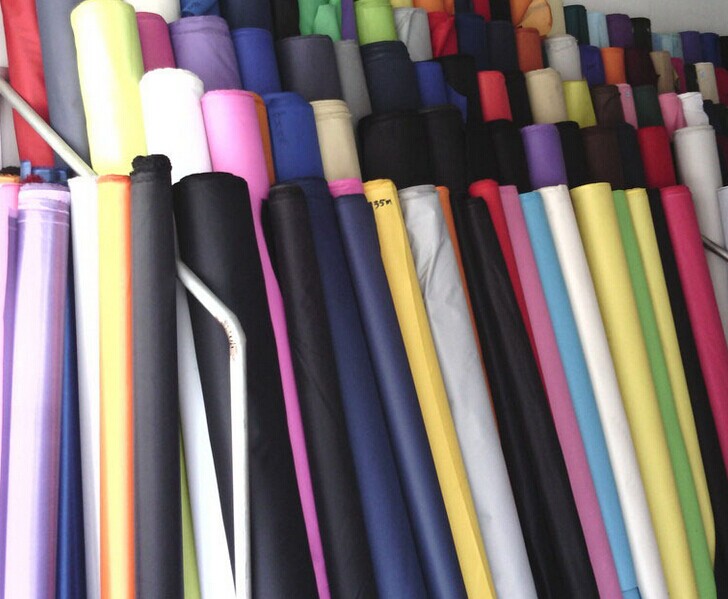
Oxford fabric is one of the most versatile and widely used technical textiles in modern manufacturing, spanning applications from bags and luggage to outdoor gear and industrial coverings. Its popularity lies in a balanced combination of durability, flexibility, and cost-efficiency. An aspect that often gets overlooked by many buyers—yet has a direct impact on production efficiency and cost per finished product—is fabric width.
Fabric width is more than a number on a spec sheet. It is a critical design and sourcing parameter that influences cutting layouts, material waste, production yield, and ultimately, the cost structure of finished goods. For buyers who work with bulk orders, even a few centimeters of width variation can translate into significant financial impact over thousands of units.
This article provides a detailed, professional breakdown of the common width standards for Oxford fabric, where these numbers come from, how they translate into manufacturing realities, and why making informed decisions about width is essential for efficient production planning.
Common Standard Widths for Oxford Fabric
Oxford fabric—whether polyester or nylon, coated or uncoated—is typically produced in a handful of standardized widths that align with common industrial looms and finishing constraints. While there are specialized widths tailored to specific use cases, most material options fall into the ranges listed below:
| Nominal Width | Finished Width Range | Typical Application | Manufacturing Reality |
|---|---|---|---|
| 57/58″ | 145–148 cm | General bag fabrics, mid-weight textiles | Standard loom setups produce this width most economically. |
| 60″ | ~150 cm | Bags, backpacks, cover fabrics | Most common polyester Oxford width in global supply. |
| 63″ | ~160 cm | Wider panels, multi-panel goods | Usually from custom looms or adjusted shed settings. |
| 72″ | ~183 cm | Large-format goods, industrial covers | Specialized wide-width looms or wider finishing lines. |
Finished width refers to the actual usable width after weaving, edge trimming, and finishing processes (such as coating or heat setting). The figure is always less than loom width due to necessary edge roll trimming and material relaxation after processing. These practical adjustments ensure fabric edges lay flat and meet quality standards for production use.
In industry practice, finished widths of 145–150 cm are considered highly versatile because they balance yield with manageable handling on cutting tables. Wider widths like 160–183 cm are chosen for products where large uninterrupted panels reduce seams and stitching labor—but they also demand corresponding cutting and QC adjustments.
Understanding these nuances prevents costly assumptions such as “wider is always better,” which is one of the most common misinterpretations among buyers new to technical fabrics. (Oreate AI)
How Fabric Width Impacts Production Efficiency
Fabric width affects manufacturing outcomes in several key ways:
1. Cutting Yield and Nesting Efficiency
When producing garments, bags, or functional goods, fabric is typically “nested”—meaning patterns are laid out to maximize the number of parts cut from each length of material. The usable width dictates how many panels can fit side by side.
For example, if a bag panel is 35 cm wide:
- On a 145 cm finished width fabric, you can fit 4 panels (4 × 35 = 140 cm), leaving about 5 cm of edge space. This is efficient but tight.
- On a 150 cm finished width fabric, the same 4 panels result in slightly more buffer space, reducing edge waste and making manual cutting easier.
A small margin can improve cutting speed and reduce edge defects, especially when cutting wider or heavier fabrics. This seemingly minor difference is a recurring theme in high-volume production where cumulative waste adds up quickly.
2. Material Waste and Cost per Unit
Buying fabric that seems cheaper per meter doesn’t always mean you will pay less per finished unit. For example:
- Fabric that is too narrow for your part layout might require additional material runs, increasing waste.
- Fabric that is too wide relative to your pattern might leave unused center or edge space, which is essentially deadstock.
Because of this, experienced production planners often balance cost per meter against layout efficiency to determine true cost-per-unit.
3. Handling and Equipment Compatibility
Different manufacturing environments have varying capabilities:
- Cutting tables and spreaders are typically designed for certain maximum widths (often 150–160 cm).
- Wider fabrics might require specialized equipment or operators trained to handle larger spreads, which can slow down throughput.
This is why many mass producers standardize around 150 cm-ish widths—they fit well with existing equipment and strike a balance between yield and practical handling.
Why Finished Width Differs from Loom Width
It is important to understand that “nominal” or “loom” width refers to the width of the fabric as it comes off the weaving machine. After weaving, fabric passes through multiple post-weaving processes such as:
- Heat setting and relaxation – releases internal tension
- Edge trimming – removes selvedges for quality
- Coating (PU, PVC, TPU, etc.) – may constrict width slightly due to tension and drying
These processes ensure the fabric performs consistently during cutting and sewing but reduce the available width slightly. Hence, the finished width is what matters for cutting calculations, not the loom width.
Case Scenario: Width Choices in Real Production
Let’s imagine a production run of 10,000 units of a soft-sided tote bag with a panel width requirement of approximately 35 cm.
- 145 cm fabric, 4 panels per width: 10,000 ÷ 4 ≈ 2,500 meters required
- 150 cm fabric, 4 panels per width comfortably: 2,350–2,400 meters required (due to a slightly better nesting and lower slack allowance)
- 160+ cm fabric, if the pattern cannot fit an extra 5th panel, the “wider” advantage is wasted, and this width actually becomes less yield-efficient.
This illustrates how choosing the right width is not simply about “getting the widest possible roll,” but about aligning pattern design, cutting strategy, and machine capability.
Common Misconceptions About Fabric Width
Misconception #1: “Wider is always better.”
Too wide a fabric can actually reduce yield if the pattern is not designed to take advantage of the width. Unused central space becomes deadstock and is often trimmed off before cutting.
Misconception #2: All mill widths are accurate to the number on the spec sheet.
In reality, finished widths vary slightly due to thermal, mechanical, and finish process tolerances. Most reputable mills control finished width within a tolerance of ±1–2 cm to maintain quality and consistency, but some flexible or wet processes may introduce small variations.
Misconception #3: Width does not affect cost.
It does—just not always in expected ways. A slightly more expensive per-meter price might deliver better yield, reduce seams, and lower labor costs, leading to lower total production cost.
Practical Recommendations for Buyers
- Define patterns early – Before RFQ (request for quote), lock down panel sizes and nesting strategy.
- Ask for finished width – Always confirm finished usable width, not just nominal or loom width.
- Evaluate tolerances – Ask suppliers about width tolerances (e.g., ±1 cm) and how they measure them post-finish.
- Consider equipment – Match fabric width to your cutting table and spreader capabilities to avoid bottlenecks.
- Balance cost and yield – Calculate true cost per unit by factoring yield, labor, and waste, not just fabric price.
Which Factors Influence the Choice of Oxford Fabric Width for Different Product Types?
Choosing the correct width for Oxford fabric is rarely a simple purchasing decision. In real manufacturing environments, width selection sits at the intersection of product engineering, cutting efficiency, equipment capability, and production economics. Treating width as a secondary detail—or worse, defaulting to “whatever the supplier offers cheapest”—often results in material waste that no price negotiation can offset later.
Oxford fabric width should be selected only after understanding how the product is built, how panels are arranged, how they are cut, and how many units will be produced. Different product categories demand very different width strategies, even when they use the same fabric construction, denier, and coating.
The correct width is not the widest available option. It is the width that produces the highest usable yield per roll under real production conditions.
The Real Drivers Behind Width Selection
Width decisions are shaped by several interrelated factors. Ignoring even one of them usually leads to sub-optimal yield and inflated material cost per unit.
The most influential drivers are:
- Product size and panel geometry
- Pattern shape and nesting behavior
- Cutting method and equipment constraints
- Batch size and production rhythm
- Acceptable waste tolerance
Each factor affects how much of the fabric roll can actually be converted into sellable product components.
Product Size and Panel Geometry
Product dimensions are the most visible influence on width choice, but they are often oversimplified. What matters is not just overall product size, but how that size translates into individual panels.
| Product Type | Panel Characteristics | Typical Width Preference |
|---|---|---|
| Backpacks | Medium panels, mixed shapes | 150–160 cm |
| Tote bags | Large flat rectangular panels | Wider widths (160–180 cm) |
| Small pouches | Small repetitive components | 145–150 cm |
| Luggage | Large structured panels | Wide widths (160 cm+) |
Backpacks usually consist of front, back, side, and bottom panels of varying shapes. A mid-wide fabric (around 150–160 cm finished width) allows flexible nesting without creating large unused zones.
Tote bags, by contrast, rely heavily on large rectangular panels. Wider fabric enables more panels across the width, often reducing seam counts and cutting passes. In these cases, wide width directly improves efficiency.
Small accessories behave differently. When panels are small and repetitive, extra width often goes unused. Standard widths can outperform wider ones because the entire roll is consistently utilized.
Pattern Shape Matters More Than Area
A common mistake is evaluating width based on panel area alone. In practice, panel shape has a much greater impact on yield.
Two panels with the same surface area can produce very different results during cutting:
- Rectangular panels nest tightly with minimal gaps
- Curved or tapered panels create irregular dead zones
Oxford fabric width only adds value if those dead zones can be reused by other parts in the layout. Otherwise, wider fabric simply creates larger unused strips.
For products with curved silhouettes—such as sling bags, crossbody bags, or contoured backpack fronts—excess width often cannot be fully exploited. In these cases, moderate widths frequently outperform wider options in terms of real yield.
Cutting Method Constraints
The cutting method used in production strongly influences how sensitive a project is to fabric width.
| Cutting Method | Width Sensitivity | Practical Impact |
|---|---|---|
| Manual cutting | Low–Medium | Operator skill compensates for inefficiencies |
| Straight-knife cutting | Medium | Layout planning becomes more important |
| Automatic CNC cutting | High | Width optimization directly affects yield |
Manual cutting allows operators to make small adjustments on the fly. Slight inefficiencies in width can often be mitigated through experience, though this comes at the cost of consistency.
Straight-knife cutting introduces more structure. Width matters more because layouts are planned in advance, and edge margins must be respected for safety and accuracy.
Automatic CNC cutting systems are the most width-sensitive. These systems rely on software to generate nesting layouts. They can maximize efficiency—but only within the usable finished width. Even a 10 mm difference in finished width can alter nesting results across thousands of cuts.
For factories running automated cutting lines, width decisions should be tested digitally before fabric is finalized.
Batch Size and Production Rhythm
Production volume determines how much flexibility exists in width selection.
| Batch Size | Width Strategy |
|---|---|
| Small runs | Standard widths |
| Medium runs | Optimized standard widths |
| Large runs | Custom width justified |
For small runs, the cost and lead time associated with custom width are rarely justified. Standard 145–150 cm widths provide sufficient flexibility and minimize risk.
Medium-sized runs benefit from careful selection within standard offerings. Choosing between 145 cm, 150 cm, or 160 cm can produce meaningful yield differences without requiring loom modification.
Large, repeat production runs may justify custom width development. When volumes reach tens of thousands of meters, even a 2–3% improvement in yield can offset loom adjustment costs and stabilize long-term production efficiency.
At SzoneierFabrics, custom widths are typically recommended only after production volumes and cutting simulations confirm a clear efficiency gain.
Acceptable Waste Tolerance
Every production line operates with an implicit waste tolerance. Some products can absorb higher material loss due to premium pricing or simplified assembly. Others operate on tight margins where every percentage point matters.
Waste tolerance is influenced by:
- Target unit cost
- Fabric price per meter
- Labor cost ratio
- Sustainability requirements
When waste tolerance is low, width selection becomes a precision exercise. When tolerance is higher, flexibility increases—but inefficiencies still accumulate over time.
Real Production Insight from the Factory Floor
In one sling bag program, a 160 cm wide Oxford fabric was initially selected under the assumption that wider fabric would improve yield. After trial cutting, only 135 cm of the width was consistently usable due to curved panel geometry.
The unused 25 cm represented pure waste.
After switching to a 150 cm finished width, nesting efficiency improved. Edge waste decreased, layout stability increased, and overall material consumption dropped by approximately 7%, even though the fabric was technically narrower.
The result was lower cost per unit and more predictable cutting performance.
This outcome highlights a recurring pattern in real production: effective width matters more than nominal width.
Width Selection by Product Category
Different product types benefit from different width philosophies:
- Backpacks: Balanced widths that support varied shapes without excess waste
- Tote bags: Wider fabrics that reduce seams and cutting passes
- Accessories: Standard widths that maximize repetition efficiency
- Luggage: Wide widths that support large panels and structural components
There is no universal “best width.” The optimal choice is always product-specific.
Practical Guidance for Buyers and Product Teams
To select Oxford fabric width intelligently:
- Finalize panel dimensions before requesting fabric quotes
- Ask suppliers for finished usable width, not loom width
- Match width to cutting method and equipment limitations
- Run layout simulations for automated or large-volume programs
- Evaluate cost per finished unit, not cost per meter
Width selection should be treated as part of product engineering, not an afterthought during sourcing.
Why Width Strategy Beats Price Negotiation
Fabric cost reductions achieved through negotiation are often erased by poor width decisions. A fabric that looks cheaper on paper can become more expensive once waste, labor, and inefficiency are factored in.
Choosing width correctly is a manufacturing decision grounded in geometry, process, and volume. When handled properly, it quietly improves margins, stabilizes production, and reduces material loss without compromising quality.
That is why experienced factories focus on usable width, not headline numbers—and why width strategy consistently outperforms intuition.
How Does Fabric Width Affect Cutting Efficiency and Material Utilization in Mass Production?
In mass production, fabric width stops being a specification and starts becoming a financial variable. Two Oxford fabrics with the same denier, coating, weight, and price per meter can produce very different outcomes once they reach the cutting table. The difference is rarely visible in the fabric roll itself—it appears later, in utilization rates, cutting speed, labor efficiency, and cumulative waste.
Cutting is where theoretical material value is either realized or lost. Width determines how effectively pattern pieces can be nested across the fabric, how many layers can be cut per lay, and how much material is discarded before sewing even begins. In large-volume programs, width decisions can quietly shift total fabric consumption by thousands of meters without any change in product design.
In production terms, fabric width does not decide coverage. It decides yield.
What Really Happens on the Cutting Table
On paper, a fabric roll looks simple: width multiplied by length equals area. In reality, cutting tables expose the mismatch between nominal area and usable area.
During cutting, several constraints apply simultaneously:
- Finished usable width is always narrower than nominal width
- Edge margins are required for alignment and stability
- Pattern geometry limits how close pieces can be nested
- Coated Oxford fabrics cannot easily reuse trimmed edges
The cutting table is where these constraints intersect. Width that cannot accept pattern pieces becomes waste, regardless of how premium or inexpensive the fabric is.
In mass production, even a well-designed pattern cannot overcome a poorly chosen width.
Utilization Rate: The Metric That Actually Matters
Material utilization is the most reliable indicator of cutting efficiency. It measures how much of the fabric entering the cutting room actually becomes product components.
Utilization is typically calculated as:
Utilization (%) = (Area of cut panels ÷ Area of fabric used) × 100
This metric reveals why width matters so much. A small numerical improvement translates into large material savings at scale.
| Utilization Rate | Waste Level | Production Impact |
|---|---|---|
| 80% | High | Persistent cost pressure |
| 85% | Acceptable | Industry baseline |
| 90%+ | Excellent | Optimized cutting |
In real factory environments, moving utilization by 3–5 percentage points is considered a major achievement. It often delivers more savings than aggressive price negotiation with fabric suppliers.
At SzoneierFabrics, utilization gains above 3% are typically flagged as process-level improvements rather than routine adjustments.
How Width Controls Panel Nesting Density
Fabric width directly determines how many pattern pieces can be placed side by side in a single lay. This affects not only material usage, but also cutting speed and labor efficiency.
Consider a simple example using a 32 cm wide panel:
| Finished Width | Panels per Lay |
|---|---|
| 145 cm | 4 panels (128 cm) |
| 150 cm | 4 panels with margin |
| 160 cm | 5 panels (160 cm) |
At first glance, the difference between 145 cm and 150 cm seems minor. In practice, the additional margin on 150 cm improves stability, reduces edge trimming errors, and allows more consistent layouts across multiple lays.
The jump to 160 cm is more dramatic. Adding a fifth panel across the width can eliminate entire additional lays over a production run. Fewer lays mean fewer spreading cycles, fewer cutting passes, and lower labor input.
However, this advantage only exists if the panel geometry allows that extra panel to fit cleanly. If not, the extra width becomes unused space.
Edge Waste: The Silent Cost Driver
Edge waste is one of the most underestimated cost drivers in cutting operations. Unlike offcuts from lengthwise trimming, edge waste is often non-recoverable, especially with coated Oxford fabrics.
| Width Choice | Typical Edge Waste Behavior |
|---|---|
| Too narrow | Forced extra rows and additional lays |
| Too wide | Unused side zones that cannot be nested |
| Matched to pattern | Minimal, predictable waste |
When fabric is too narrow, layouts are forced into inefficient configurations. More rows are required, increasing total fabric length consumed.
When fabric is too wide, unused zones appear along one or both edges. These zones often cannot be reused due to coating stiffness, color consistency requirements, or panel shape mismatch.
Matched width minimizes both problems. The goal is not zero waste, but controlled waste that remains consistent across production.
Width and Cutting Speed
Fabric width also influences cutting speed in indirect but meaningful ways.
- Wider fabrics with optimized layouts reduce the number of lays required
- Fewer lays mean fewer spreading and alignment cycles
- Stable layouts reduce repositioning and manual correction
In automated or semi-automated cutting environments, this translates into higher throughput. In manual cutting operations, it reduces operator fatigue and error rates.
Cutting speed improvements are often overlooked because they do not appear directly on material cost sheets. Over long production runs, however, time savings translate into real labor cost reductions.
Why Coated Oxford Fabrics Are Less Forgiving
Oxford fabrics with PU, TPU, or PVC coatings behave differently from uncoated textiles during cutting.
- Coated edges cannot easily be repurposed
- Friction and stiffness limit flexible nesting
- Small misalignments increase scrap rates
Because of this, coated Oxford fabrics are less forgiving of poor width choices. A width mismatch that might be tolerable in uncoated fabric can generate disproportionate waste once coating is added.
This is why width optimization becomes increasingly important as fabric performance requirements rise.
Real Production Case: Backpack Program Optimization
A backpack production program running 20,000 units initially used a 145 cm finished-width Oxford fabric. Cutting layouts achieved an average utilization of approximately 83%, which was considered acceptable but not optimal.
After reviewing cutting layouts, the fabric was switched to a 150 cm finished width without changing the pattern design. The result:
- Utilization increased to approximately 88%
- Total fabric consumption dropped by over 1,200 meters
- Cutting stability improved, reducing rework
The key point is that no redesign was required. The savings came entirely from better width alignment with existing patterns.
In material terms, this reduction translated into several percentage points of margin improvement—purely from width selection.
Width Decisions at Scale
In small production runs, width inefficiencies are often hidden. In mass production, they compound rapidly.
For example:
- A 2% utilization loss on a 5,000-meter program is noticeable but manageable
- The same 2% loss on a 100,000-meter program represents thousands of meters of wasted fabric
This is why large-scale programs demand more rigorous width analysis. Cutting simulations, trial lays, and historical data all play a role in selecting the correct width.
Why Price Per Meter Can Be Misleading
Fabric is often quoted and negotiated on a price-per-meter basis. This metric ignores utilization entirely.
A fabric that costs slightly more per meter but delivers higher utilization frequently results in a lower cost per finished unit. Conversely, a cheaper fabric with poor width alignment can quietly inflate material consumption.
Experienced production teams evaluate fabric cost in terms of:
- Cost per usable square meter
- Cost per finished panel
- Cost per completed unit
Width is central to all three calculations.
Practical Guidance for Production Teams
To maximize cutting efficiency and material utilization:
- Base width decisions on finished usable width, not nominal loom width
- Evaluate width against actual cutting layouts, not theoretical coverage
- Track utilization rates across production batches
- Treat width changes as process optimizations, not sourcing shortcuts
When width is aligned with pattern geometry and cutting method, it becomes one of the most powerful levers for cost control in mass production.
Why Width Optimization Delivers Hidden Competitive Advantage
Most competitors focus on visible cost factors: fabric price, labor rate, shipping cost. Width optimization operates quietly in the background, improving efficiency without altering product appearance or quality.
Over time, these quiet gains compound. Lower waste, faster cutting, and more stable production create room for better pricing, higher margins, or both.
That is why in professional manufacturing environments, fabric width is never treated as a minor detail. It is treated as a core efficiency parameter—one that determines whether material value is captured or discarded long before the first stitch is sewn.
What Are the Standard Width Tolerances for Oxford Fabric Rolls, and How Do They Impact Accuracy?
In real production, fabric width is never a single, fixed number printed neatly on a specification sheet. It is a controlled range, governed by loom mechanics, finishing processes, coating behavior, and environmental conditions. Ignoring this reality can undermine even the most carefully planned cutting layouts.
Oxford fabric width tolerance is not a quality defect—it is an inherent characteristic of textile manufacturing. Problems arise only when tolerances are misunderstood, underestimated, or excluded from layout planning. In mass production, the difference between a smooth cutting process and constant improvisation often comes down to how well width tolerance has been anticipated.
Production does not operate on ideals. It operates on minimums, maximums, and margins.
Understanding Width Tolerance in Practice
Width tolerance refers to the allowable variation between the specified width and the actual finished width of the fabric roll. This variation exists because fabric width is influenced at multiple stages:
- Yarn tension during weaving
- Loom type and reed configuration
- Heat-setting temperature and dwell time
- Coating thickness and drying tension
- Edge trimming consistency
Each stage introduces small, cumulative changes. By the time Oxford fabric is fully finished, coated, and rolled, its usable width will naturally fluctuate within a defined range.
Professional production planning assumes this variability from the beginning.
Typical Width Tolerance Standards
Different Oxford fabric constructions exhibit different tolerance behavior. Heavier fabrics and coated fabrics tend to have wider tolerance bands due to higher internal stress and post-process shrinkage.
| Fabric Type | Common Width Tolerance |
|---|---|
| Standard Oxford | ±1.5 cm |
| Coated Oxford (PU / TPU / PVC) | ±2.0 cm |
| Heavy-duty Oxford | ±2.5 cm |
These ranges reflect real manufacturing conditions, not loose quality control. Coating and heat-setting processes, in particular, introduce width contraction as the fabric cools and stabilizes after finishing.
A roll specified at 150 cm finished width may legally and practically arrive anywhere between 148–152 cm, depending on the agreed tolerance.
Why Coating Expands the Tolerance Band
Coated Oxford fabrics behave differently from greige or lightly finished textiles. During coating:
- Fabric is held under controlled tension
- Liquid coating is applied and cured
- Heat causes fiber relaxation and shrinkage
Even with precise tension control, slight differences between batches or rolls are unavoidable. Thicker coatings and heavier base fabrics amplify this effect.
For this reason, coated Oxford fabrics are usually assigned wider tolerance ranges than uncoated versions. Attempting to force tighter tolerances often leads to rejected rolls, delays, or inflated costs.
Why Width Tolerance Matters in Cutting Accuracy
Cutting layouts are typically designed digitally, using a defined finished width. Problems begin when that width exists only on paper.
If a layout requires 148 cm of usable width, but a roll arrives at 146.5 cm, several issues arise immediately:
- Pattern pieces overhang the fabric edge
- Edge safety margins disappear
- Operators must manually adjust layouts
These adjustments slow production and increase the risk of cutting errors. More importantly, they introduce inconsistency. Each operator may solve the problem differently, leading to variable results across shifts or batches.
In automated or CNC cutting environments, tolerance issues are even more disruptive. Software layouts cannot improvise. Any mismatch forces reprogramming, re-nesting, or emergency manual intervention.
The Hidden Cost of Improvisation
When layouts are designed too close to nominal width, tolerance issues force operators to “make it work” on the floor. This improvisation carries hidden costs:
- Increased setup time per lay
- Higher risk of miscuts near edges
- More frequent layout interruptions
- Additional quality checks and rework
None of these costs appear on fabric invoices, but they accumulate rapidly in mass production.
Smart Layout Planning Strategies
Experienced factories design layouts around minimum guaranteed usable width, not average or nominal values.
| Strategy | Practical Benefit |
|---|---|
| Design to minimum usable width | Built-in safety margin |
| Avoid edge-critical nesting | Lower defect risk |
| Validate first roll before full cutting | Early correction |
| Keep consistent edge allowances | Stable operator workflow |
Designing to the lowest guaranteed width ensures that every roll can be cut using the same layout without emergency adjustments.
At SzoneierFabrics, cutting plans are always based on the minimum confirmed finished width, even if most rolls measure wider. This approach sacrifices a small amount of theoretical efficiency to gain consistency and reliability across the entire production run.
Why “Perfect Width” Layouts Fail in Production
Designing layouts to an exact width—such as 150.0 cm—assumes perfect uniformity across all rolls. This assumption rarely survives first contact with real fabric.
Even when average width is close to spec, natural variation means some rolls will fall below the ideal. When layouts have no margin, these rolls become problematic immediately.
Production teams then face three choices:
- Reject the roll
- Re-layout the cut
- Accept higher risk
All three options carry cost or delay.
Common Buyer Mistake: Ambiguous Width Specifications
One of the most frequent sourcing errors is specifying width without defining what that width actually means.
For example:
“Width: 150 cm”
Without clarification, this statement leaves several questions unanswered:
- Is this loom width or finished width?
- Is it average width or minimum guaranteed width?
- What tolerance applies?
This ambiguity often leads to disputes later—especially when cutting issues arise and responsibility is unclear.
Professional specifications should always define:
- Finished usable width
- Minimum guaranteed width
- Allowed tolerance range
Clear definitions align expectations between buyer, mill, and factory.
Real Factory Insight: When Tolerance Is Ignored
In one tote bag production program, layouts were designed to use exactly 150 cm of finished width. During bulk production, approximately half of the coated Oxford fabric rolls measured 148.5–149 cm after finishing.
Although technically within tolerance, these rolls could not support the original layouts without adjustment. The result was:
- Repeated layout modifications
- Slower cutting speed
- Increased labor hours
- Delayed delivery schedule
No fabric was defective. The issue was purely a mismatch between layout assumptions and tolerance reality.
The lesson was simple: designing to nominal width created fragility in the production process.
Tolerance and Nesting Software
Modern nesting software can optimize layouts with impressive precision—but only when provided with realistic inputs.
If software assumes a fixed width with zero variation, its output becomes brittle. A more robust approach is to input the minimum usable width and treat any additional width as bonus margin rather than guaranteed space.
This mindset produces layouts that remain valid across roll-to-roll variation.
How Tolerance Affects Yield Calculations
Yield calculations based on nominal width tend to be optimistic. When actual widths fluctuate downward, real utilization drops.
By contrast, yield calculations based on minimum guaranteed width are conservative but reliable. Any roll wider than the minimum improves utilization rather than breaking the layout.
Over long production runs, this conservative approach delivers more predictable material consumption and fewer surprises.
Practical Recommendations for Buyers and Product Teams
To manage width tolerance effectively:
- Always request finished width with stated tolerance
- Confirm minimum guaranteed usable width in writing
- Design cutting layouts to the minimum, not the average
- Validate width on the first roll before full-scale cutting
- Treat tolerance as a planning parameter, not a defect
Width tolerance is not a minor technical detail. It is a fundamental production variable that influences accuracy, speed, and cost.
Why Tolerance Awareness Improves Production Stability
Factories that respect tolerance operate more smoothly. Operators follow consistent layouts, cutting speed stabilizes, and defect rates remain predictable. Buyers experience fewer delays and fewer disputes over responsibility.
Ignoring tolerance creates fragile processes that depend on luck. Accounting for tolerance builds resilience into production.
Width tolerance may seem abstract on paper, but on the factory floor it determines whether production flows—or constantly stops to adjust. In that sense, tolerance is not a limitation. It is the reality that disciplined manufacturing plans are built around.
How Do Fabric Width and Lay Planning Strategies Reduce Waste in Cutting Operations?
Fabric width, by itself, does not save a single centimeter of material. Width is only potential capacity. Whether that capacity turns into real savings—or quietly becomes waste—depends entirely on how the fabric is laid, nested, and cut.
In professional cutting rooms, waste is not driven by poor fabric quality or high prices. It is driven by misalignment between usable width and lay planning strategy. Two factories using the same Oxford fabric can achieve very different utilization rates purely because of how intelligently they plan their lays.
Fabric width creates the opportunity. Lay planning converts opportunity into yield.
Inside Effective Lay Planning
Lay planning is the discipline of deciding how fabric layers are spread and how patterns are positioned before cutting begins. It is one of the least visible yet most powerful cost-control tools in mass production.
Effective lay planning aligns three elements simultaneously:
- Finished usable fabric width
- Panel geometry and orientation
- Production rhythm and batch structure
When any of these elements is ignored, even wide fabric can produce poor utilization.
What Lay Planning Actually Controls
Lay planning determines far more than many buyers realize. It directly controls:
- How many layers are cut per lay
- How panels are oriented relative to grain
- How edge margins are managed
- Where leftover zones appear
A wide fabric with poor lay planning can generate more waste than a narrower fabric with disciplined layouts. Width does not compensate for disorganization.
In practice, lay planning is the interface between material reality and production intent.
The Relationship Between Width and Lay Depth
Lay depth refers to how many fabric layers are stacked and cut at once. Width influences lay depth indirectly:
- Wider fabric often allows fewer lays with more panels per lay
- Narrow fabric may require deeper lays to achieve volume targets
However, deeper lays increase cutting resistance, blade wear, and alignment risk. For this reason, experienced factories prefer shallower, wider-optimized lays when width allows.
Lay planning balances width against manageable lay height to maintain cutting accuracy and operator safety.
Pattern Orientation: Straight vs Rotated Layouts
One of the most powerful tools in lay planning is pattern orientation. How panels are rotated across the width directly affects utilization.
| Orientation Strategy | Waste Impact | Practical Notes |
|---|---|---|
| All panels aligned | Predictable, stable | Lowest risk, moderate utilization |
| Selective rotation | Higher utilization | Requires experience and checks |
| Aggressive rotation | Potentially high | Risk of distortion or mismatch |
Oxford fabric—especially coated varieties—has grain direction and mechanical stability that cannot be ignored. Excessive rotation can introduce stretching, visual inconsistency, or coating stress.
Selective rotation is often the sweet spot. Panels that are less visually or structurally sensitive can be rotated to fill gaps, while critical panels remain aligned.
This approach increases utilization without compromising product integrity.
Why Grain Direction Still Matters
Even in synthetic Oxford fabrics, grain direction influences:
- Tensile behavior under load
- Stitching stability
- Visual consistency of coatings or prints
Lay planning must respect these constraints. Saving material at the expense of performance leads to higher rejection rates later.
Effective planners know which components tolerate rotation and which do not. This knowledge is built through production experience, not software alone.
Understanding and Managing “Dead Zones”
Dead zones are areas of fabric between pattern pieces that cannot accommodate primary panels. They are inevitable—but how they are treated determines waste levels.
| Dead Zone Strategy | Outcome |
|---|---|
| Ignore zones | Pure waste |
| Fill with small components | Higher utilization |
| Design parts for zones | Value recovery |
Dead zones are not accidental. They are predictable results of geometry. The key is planning for them rather than reacting to them.
At SzoneierFabrics, small functional components are often deliberately designed to fit common dead-zone dimensions. These include:
- Zipper plackets
- Reinforcement tabs
- Pocket facings
- Internal binding strips
By planning these components into the layout from the beginning, dead zones become productive space rather than scrap.
Designing Components Around Width Reality
One advanced strategy is designing certain non-visual components after width and layout constraints are known. Instead of forcing layouts to fit existing parts, parts are adapted to fit leftover spaces.
This approach is particularly effective for internal or structural elements where exact dimensions are flexible.
The result is higher utilization without affecting product appearance or function.
Multi-Product Lay Planning: Advanced Waste Reduction
In high-volume environments, some factories go a step further by combining compatible products within the same lay.
| Mixed Lay Scenario | Benefit |
|---|---|
| Backpack + pouch | Dead zone utilization |
| Large panels + small accessories | Improved nesting density |
This strategy requires coordination across production planning, inventory management, and quality control. However, when executed well, it can significantly reduce waste.
Mixed lays work best when:
- Fabrics, colors, and coatings match
- Production schedules are aligned
- Quality requirements are compatible
When these conditions are met, utilization improvements of 3–6% are common.
Why Software Alone Is Not Enough
Modern nesting software is a powerful tool, but it does not replace experienced judgment.
Software optimizes based on inputs. If inputs ignore real-world constraints—such as minimum guaranteed width, grain sensitivity, or operator handling limits—the output becomes theoretical rather than practical.
The most effective cutting rooms use software for initial optimization, then refine layouts based on production realities.
Lay planning remains a human-led discipline supported by tools, not driven by them.
Width Planning Across Multiple Batches
Waste reduction is not a single-lay exercise. It happens across batches.
Consistent width and lay strategies allow:
- Reuse of proven layouts
- Stable operator workflows
- Predictable material consumption
When width varies unpredictably or layouts are redesigned frequently, waste increases due to constant adjustment.
This is why experienced factories prefer repeatable width and lay combinations over chasing marginal gains with inconsistent setups.
Real Production Example: Planning-Driven Savings
In one backpack production program, single-product lays achieved an average utilization of 86%. Layouts were stable but left unavoidable dead zones around curved panels.
By introducing small internal pocket components into these dead zones, utilization increased to 91%. No changes were made to:
- Fabric width
- Main panel patterns
- Cutting equipment
The improvement came entirely from better lay planning.
Across the full production run, this translated into thousands of square meters of fabric saved—without any visible change to the product.
Why Lay Planning Beats Width Alone
Wider fabric without planning often results in wider waste. Narrower fabric with disciplined planning can outperform it.
Lay planning determines:
- Whether width is fully used
- Whether waste is concentrated or dispersed
- Whether layouts remain stable across rolls
This is why width decisions must always be evaluated together with lay strategy. One without the other is incomplete.
Practical Guidelines for Reducing Waste Through Lay Planning
To reduce waste effectively:
- Start lay planning at the same time as width selection
- Design layouts to minimum guaranteed width
- Identify reusable dead-zone dimensions early
- Classify components by rotation tolerance
- Track utilization data across batches
Waste reduction is rarely achieved through one dramatic change. It comes from consistent, disciplined planning applied over time.
Why Lay Planning Creates a Structural Advantage
Many competitors focus on visible cost drivers such as fabric price or labor rates. Lay planning operates quietly in the background, improving efficiency without changing materials or designs.
Over long production cycles, this discipline compounds into:
- Lower material consumption
- Faster cutting throughput
- More stable quality outcomes
Fabric width creates opportunity. Lay planning decides whether that opportunity becomes waste—or profit.
In professional cutting operations, waste is not inevitable. It is planned—or prevented—long before the blade ever touches the fabric.
Which Cutting Technologies and Setups Optimize Oxford Fabric Utilization for Different Widths?
Fabric width does not create efficiency on its own. Cutting technology decides whether width becomes a competitive advantage or an exposed weakness. The more advanced and precise the cutting system, the more brutally it reveals poor width planning, unstable tolerances, or unrealistic layout assumptions.
In Oxford fabric production, cutting technology acts like a multiplier. Manual systems absorb inconsistency but limit upside. Automated systems unlock high utilization—but only when width, tolerance, and lay planning are tightly controlled. When they are not, the same technology amplifies waste, delays, and rework.
Technology does not replace planning. It magnifies its impact.
Cutting Methods vs Width Efficiency
Different cutting technologies respond very differently to fabric width. Understanding this relationship is essential when choosing both fabric specifications and production setup.
Common Cutting Methods in Oxford Fabric Production
| Cutting Method | Width Sensitivity | Typical Use |
|---|---|---|
| Manual cutting | Low | Small runs, sampling |
| Straight knife | Medium | Medium-volume production |
| CNC knife cutting | High | Large-scale mass production |
| Laser cutting | Very high | Precision components |
Manual cutting systems rely heavily on operator skill. Variations in width can often be compensated for visually and tactically, though at the cost of speed and consistency. Straight-knife systems introduce more structure and therefore more sensitivity to width variation.
CNC knife and laser systems operate on digital layouts. They reward precision aggressively—and punish variability just as aggressively.
Manual Cutting: Tolerant but Inefficient
Manual cutting is the most forgiving method when it comes to width variation. Operators can:
- Shift layouts slightly roll by roll
- Adjust margins visually
- Reposition patterns to avoid narrow spots
This tolerance makes manual cutting suitable for small runs, prototyping, or irregular materials. However, this flexibility comes at a price:
- Lower nesting density
- Higher labor dependency
- Inconsistent utilization
Extra fabric width does not translate into proportional savings under manual cutting. Human operators rarely exploit marginal width gains consistently, especially over long production runs.
Manual cutting absorbs variability—but it also caps efficiency.
Straight-Knife Cutting: Transitional Sensitivity
Straight-knife cutting represents the midpoint between manual flexibility and automated precision.
Width matters more here because:
- Layouts are pre-planned
- Edge margins must be respected
- Repeated layouts are expected to match
Operators still retain some flexibility, but repeated width variation causes friction. Frequent adjustments slow throughput and increase setup time.
For straight-knife cutting, modest width optimization can improve yield, but returns diminish if width consistency is poor.
CNC Knife Cutting: Precision With Conditions
CNC cutting systems are where width optimization delivers the largest gains—and the largest risks.
These systems can:
- Nest patterns extremely tightly
- Reproduce identical layouts across hundreds of lays
- Track utilization with high accuracy
However, CNC systems require stable inputs. Fabric width is one of the most critical.
CNC cutting software assumes a defined usable width. Any deviation below that width forces:
- Reprogramming
- Layout shrinkage
- Emergency manual intervention
This is why CNC-driven factories treat width as a contractual parameter, not a casual spec.
Laser Cutting: Extreme Precision, Extreme Sensitivity
Laser cutting is used for select Oxford fabric applications such as reinforcement components, technical panels, or laminated structures.
Laser systems demand:
- Highly consistent width
- Stable material behavior
- Strict tolerance control
Even small width variations can cause misalignment between the laser path and material edge. For this reason, laser cutting is typically paired with:
- Narrow tolerance agreements
- Lower stack heights
- Highly standardized fabric sources
Laser cutting rewards perfect discipline—and exposes any weakness instantly.
Width Accuracy and Automation
Automation changes how width variation is experienced. What a manual operator might adapt to smoothly can completely disrupt an automated line.
| Width Condition | CNC Performance |
|---|---|
| Consistent width | Excellent |
| Minor variation | Manageable |
| Large variation | Frequent reprogramming |
With consistent width, CNC systems deliver:
- High nesting density
- Stable cycle times
- Predictable material consumption
With inconsistent width, the same systems become conservative. Layouts must be designed to minimum width, reducing theoretical utilization and eroding the value of automation.
This is why automated factories insist on clearly defined finished width and tolerance agreements with Oxford fabric suppliers.
Stack Height and Width Interaction
Fabric width does not operate in isolation. It interacts with stack height, which is limited by fabric stiffness, thickness, and cutting method.
Wider fabric often allows fewer lays with more panels per lay. However, heavier Oxford fabrics reduce maximum stack height, offsetting some width advantages.
| Fabric Type | Practical Stack Height |
|---|---|
| 210D Oxford | High |
| 420D Oxford | Medium–High |
| 600D Oxford | Medium |
| 1680D Oxford | Low |
For lighter fabrics, width gains translate cleanly into productivity. For heavier fabrics, width must be evaluated together with reduced stack height and increased cutting resistance.
In practice, a 160 cm width on 1680D Oxford may not outperform a 150 cm width once stack height limitations are factored in.
Width, Stiffness, and Cutting Stability
Heavier or coated Oxford fabrics introduce additional considerations:
- Higher blade resistance
- Increased edge curl
- Greater sensitivity to misalignment
In these cases, cutting setups often require:
- Lower stack heights
- Wider safety margins
- More conservative nesting
This means that aggressive width exploitation becomes harder as fabric weight increases. The cutting technology must be matched not just to width, but to material behavior.
CNC Nesting Software: Powerful but Literal
CNC nesting software optimizes based on defined constraints. It does not improvise.
If software is programmed for:
- Nominal width instead of minimum guaranteed width
- Idealized tolerance instead of real variation
The resulting layouts become fragile. One narrow roll can invalidate an entire cutting plan.
Experienced factories deliberately program CNC systems to the lowest guaranteed usable width, treating any additional width as bonus margin rather than guaranteed space.
This conservative approach sacrifices small theoretical gains to protect production continuity.
Technology Selection by Production Scale
Different cutting technologies make sense at different production scales and width strategies:
- Small runs: Manual cutting with standard widths
- Medium runs: Straight-knife cutting with optimized standard widths
- Large runs: CNC cutting with tightly controlled widths
- Precision parts: Laser cutting with strict tolerances
Choosing advanced technology without upgrading width discipline often leads to disappointment.
A Technology-Driven Insight From the Factory Floor
One factory invested heavily in CNC cutting, expecting immediate material savings. Early results showed only marginal improvement.
The root cause was not machine performance—it was fabric width variability. Layouts were forced to assume conservative widths, limiting nesting density.
After renegotiating width specifications with suppliers and enforcing tighter finished-width control, utilization increased by approximately 8% without any change to patterns or equipment.
The machine had always been capable. The system around it was not.
Why Automation Punishes Poor Planning
Automation removes human buffering. Operators can no longer “make it work” quietly. Any mismatch between layout assumptions and material reality becomes visible immediately.
This visibility is not a disadvantage—it is a diagnostic tool. Automated systems reveal inefficiencies that manual processes hide.
Factories that respond by improving width discipline unlock the full value of automation. Those that do not experience frustration instead of savings.
Practical Guidance for Matching Width and Cutting Technology
To optimize Oxford fabric utilization:
- Match cutting technology to production scale and width stability
- Define finished width and tolerance before choosing automation level
- Program CNC systems to minimum guaranteed width
- Evaluate stack height together with width and fabric stiffness
- Treat cutting technology as part of a system, not a standalone upgrade
Width optimization is not a machine feature. It is a process discipline.
Why Technology Rewards Discipline
Advanced cutting systems do not create efficiency by themselves. They expose the efficiency—or inefficiency—already built into width planning, tolerance control, and layout strategy.
When those foundations are solid, technology multiplies gains. When they are weak, technology magnifies loss.
That is why experienced manufacturers treat cutting technology and fabric width as inseparable decisions. One defines the potential. The other determines whether that potential is realized—or wasted—at industrial scale.
How Do Buyers Evaluate Oxford Fabric Width Specifications During Sourcing and Sampling?
For experienced buyers, fabric width evaluation does not begin at bulk production—and it certainly does not end with a number written on a quotation sheet. Width is screened, tested, questioned, and validated long before the first mass-production lay reaches the cutting table.
Buyers who have lived through cutting delays, layout failures, and material overconsumption understand a simple truth: width that cannot be used reliably is not real width. What matters is not what the supplier claims, but what production can consistently depend on.
In professional sourcing, Oxford fabric width is evaluated as a functional production input, not a static specification.
Width Evaluation Starts Before Price Comparison
In mature sourcing processes, width is reviewed at the same time as:
- Denier and yarn type
- Coating method and thickness
- Finished weight (GSM)
- Color consistency
Buyers do not treat width as an afterthought because they know that fabric price comparisons are meaningless without understanding how much of that fabric will actually convert into product.
Two suppliers quoting the same price per meter can deliver very different real costs once width usability is factored in.
What Buyers Actually Check
Professional buyers evaluate width across several layers of detail. Each layer filters out risk before it reaches production.
Nominal Width vs Usable Width
One of the first questions experienced buyers ask is deceptively simple: “Is this width nominal, or finished usable?”
| Term | What It Represents |
|---|---|
| Loom width | Width before finishing and trimming |
| Nominal width | Quoted target specification |
| Finished usable width | What cutting actually sees |
Many sourcing mistakes begin when buyers accept nominal width at face value. Loom width and nominal width may look generous, but finishing, coating, and trimming reduce what is actually available.
Buyers who fail to confirm finished usable width often overestimate yield during costing and layout planning.
Why Finished Usable Width Is the Only Number That Matters
Finished usable width is the minimum width that can be safely relied on for cutting without operator improvisation. It accounts for:
- Edge trimming
- Coating shrinkage
- Tension relaxation
- Quality-controlled margins
Cutting rooms do not operate on averages. They operate on minimums. Buyers who understand this insist on minimum guaranteed usable width rather than optimistic nominal figures.
Width Tolerance Is Evaluated, Not Assumed
A width specification without a tolerance range is incomplete. But a tolerance range without distribution insight is still risky.
Buyers look beyond statements like:
“Width: 150 cm ±2 cm”
What they want to know is:
- How often does the width hit the lower limit?
- Is the variation random or systematic?
- Does coating push widths consistently downward?
A tolerance that clusters near the minimum behaves very differently from one centered around the nominal value.
Roll-to-Roll Consistency Matters More Than Single Measurements
Width consistency across rolls is one of the strongest predictors of cutting stability.
| Consistency Level | Practical Impact |
|---|---|
| High | Stable layouts, predictable yield |
| Medium | Occasional adjustments |
| Low | Frequent re-layouts and delays |
In real production, layout changes are expensive. They slow cutting speed, disrupt operator rhythm, and increase error risk.
That is why experienced buyers care less about a single wide roll and more about how predictable width is across the entire batch.
At SzoneierFabrics, roll-to-roll width consistency is tracked because cutting plans depend on predictability, not optimistic averages.
Sampling Is the Critical Moment for Width Evaluation
Sampling is not just about color, hand feel, or coating performance. For experienced buyers, it is the only low-risk opportunity to test width behavior under real conditions.
Smart buyers use sampling to:
- Measure finished width after coating
- Compare multiple sample rolls, not just one
- Simulate real cutting layouts
- Check edge stability and usable margins
Waiting until bulk production to discover width issues is too late. By then, schedules and commitments are already in motion.
Measuring Width the Right Way During Sampling
Professional buyers do not measure width casually. They apply consistent methods:
- Measure after fabric has relaxed, not immediately off the roll
- Take multiple measurements along the roll length
- Measure usable width, excluding unstable edges
- Record lowest observed width, not the average
This data feeds directly into cutting layout assumptions and yield calculations.
Layout Simulation During Sampling
Experienced buyers often simulate cutting layouts during the sampling stage, even if production is months away.
This simulation answers critical questions:
- Do panels fit comfortably within minimum width?
- Are edge margins sufficient under worst-case tolerance?
- Are dead zones predictable and reusable?
A layout that only works at nominal width is rejected early. A layout that works at minimum width is considered production-safe.
Compatibility With Cutting Technology
Buyers also evaluate width based on the cutting technology planned for production.
- Manual cutting tolerates variation
- Straight-knife cutting requires moderate consistency
- CNC cutting demands tight width control
A width spec acceptable for manual cutting may be unacceptable for CNC automation. Buyers who plan to scale production evaluate width through the lens of future cutting setups, not just initial runs.
Why Buyers Ask for Multiple Sample Rolls
Requesting multiple sample rolls is not about distrust—it is about understanding variability.
One roll shows possibility. Multiple rolls show reality.
By comparing widths across sample rolls, buyers can identify:
- Systematic shrinkage trends
- Batch-level consistency
- Early warning signs of instability
Suppliers who can provide consistent sample data inspire confidence. Those who cannot often struggle in mass production.
How Buyers Interpret Supplier Width Claims
Experienced buyers read between the lines of width specifications.
For example:
- “Approximately 150 cm” signals loose control
- “150 cm finished, min. 148 cm guaranteed” signals discipline
- “Custom width available” triggers volume and lead-time questions
Buyers know that tighter width control usually implies higher process discipline—not just better machines, but better quality systems.
Common Buyer Mistake: Accepting Tolerance Without Distribution Insight
One of the most frequent sourcing errors is approving fabric based solely on a tolerance statement, without understanding how widths are distributed within that range.
Approving fabric based on:
“Width: 150 cm ±2 cm”
Without asking:
- How many rolls measure 148 cm?
- How many measure 150–152 cm?
Creates hidden risk. If most rolls sit near the lower limit, layouts designed around nominal width will fail repeatedly.
Experienced buyers ask for real measurement data, not just tolerance language.
Pre-Production Review: The Final Width Checkpoint
Before bulk cutting begins, width evaluation enters its final stage.
At this point, buyers typically:
- Measure the first bulk roll
- Compare it against sample data
- Validate that layouts still fit safely
- Approve or adjust cutting plans
This step prevents surprises from creeping into full-scale production.
Skipping this checkpoint often leads to rushed adjustments later—when time pressure is highest and options are limited.
Width Evaluation as Part of Total Cost Assessment
Sophisticated buyers do not treat width as a technical footnote. They integrate it directly into cost analysis.
Width affects:
- Fabric consumption per unit
- Cutting efficiency
- Labor hours
- Waste disposal cost
A fabric that looks cheaper on paper can become more expensive once width-driven inefficiencies are included.
This is why seasoned buyers evaluate cost per usable unit, not cost per meter.
Why Reliable Width Builds Supplier Trust
Suppliers who communicate width clearly, define minimum guarantees, and deliver consistent rolls build long-term buyer confidence.
Reliable width reduces:
- Layout disputes
- Cutting delays
- Emergency adjustments
- Post-production blame
From a buyer’s perspective, predictable width is a sign of operational maturity.
Practical Buyer Checklist for Width Evaluation
Before approving Oxford fabric, experienced buyers confirm:
- Finished usable width is clearly defined
- Minimum guaranteed width is stated
- Tolerance range is realistic and supported by data
- Sample rolls reflect bulk behavior
- Layouts work at minimum width
- Width matches planned cutting technology
Width that passes these checks is production-ready. Width that fails them is a hidden liability.
Why Width Evaluation Separates Experienced Buyers From New Ones
New buyers often focus on visible attributes: color, texture, price. Experienced buyers focus on what affects production stability.
They know that width problems rarely announce themselves early. They surface later, quietly, in waste percentages, delays, and cost overruns.
By evaluating width during sourcing and sampling, experienced buyers prevent problems instead of reacting to them.
In the end, Oxford fabric width is not judged by how it looks on a spec sheet. It is judged by how reliably it performs when production pressure is highest.
And for buyers who understand manufacturing, reliability is the real specification.
How Can Brands Choose the Right Oxford Fabric Width to Balance Cost, Yield, and Production Efficiency?
For brands involved in bags, luggage, outdoor gear, or functional accessories, Oxford fabric width is one of the most underestimated cost levers in the entire supply chain. Many sourcing teams instinctively believe that wider fabric equals better value, or that width is simply a mill-side technical detail. In reality, width choice directly determines material yield, cutting stability, labor efficiency, and delivery reliability.
The “best” width is rarely the widest option available. It is the width that delivers the lowest cost per finished unit once waste, labor time, re-layout risk, and production delays are factored in. Brands that treat width as a strategic parameter consistently outperform those that treat it as a purchasing shortcut.
Choosing width correctly is not about chasing specifications. It is about engineering predictability into production.
Why Width Decisions Affect Total Manufacturing Cost
From a brand perspective, fabric cost is often evaluated per meter. Production cost, however, is driven by how efficiently that meter turns into sellable products.
Width influences:
- How many panels fit across a lay
- How stable cutting layouts remain across rolls
- How much edge waste is generated
- How often cutting plans must be adjusted
- How smoothly production scales
A width that looks attractive on a quotation sheet can quietly inflate total cost through poor utilization or unstable cutting. Conversely, a slightly more expensive fabric with better width alignment can reduce overall cost per unit.
Brands that understand this evaluate width through the lens of unit economics, not fabric pricing alone.
A Practical Width Selection Framework
Rather than relying on intuition or supplier defaults, experienced brands follow a structured decision framework. This approach aligns fabric width with real production behavior instead of theoretical coverage.
Step 1: Start With Product Geometry, Not Fabric Availability
Width selection should always begin with the product, not the supplier’s standard offering.
| Product Panel Type | Width Strategy |
|---|---|
| Large flat panels | Wider widths |
| Mixed shapes and curves | Moderate widths |
| Small repetitive parts | Standard widths |
Large, flat panels—such as tote bag bodies or luggage shells—benefit from wider widths because panels nest efficiently and seams can be reduced. Wider fabric often lowers labor input and simplifies assembly.
Products with mixed geometries, such as backpacks or tactical bags, typically perform better with moderate widths. Excess width often turns into unusable zones due to curved panels and reinforcement areas.
Small accessories or pouches rarely benefit from wide fabric. Standard widths often deliver the best utilization because patterns repeat densely.
Brands that reverse this logic—choosing width first and forcing products to adapt—usually experience hidden inefficiencies later.
Step 2: Model Utilization Before Committing to Width
Width decisions should never be finalized without at least a basic layout simulation. This does not require advanced software in early stages; even rough modeling can expose major risks.
Effective modeling reveals:
- Where edge waste will appear
- Whether panels fit safely under minimum width
- How sensitive layouts are to tolerance variation
At SzoneierFabrics, layout modeling is frequently done before fabric is ordered, not after sampling. This prevents late-stage surprises and allows width decisions to be adjusted while options are still flexible.
A layout that only works at nominal width is fragile. A layout that works comfortably at minimum guaranteed width is production-ready.
Step 3: Factor Tolerance Into All Width Decisions
Nominal width without tolerance is meaningless in production. Brands must assume that some rolls will arrive at the lower end of the allowed range.
Width selection should always be based on:
- Finished usable width
- Minimum guaranteed width
- Realistic tolerance behavior
If a layout requires 150 cm to function, a fabric specified as “150 cm ±2 cm” is risky. A single roll at 148 cm can disrupt the entire cutting plan.
Smart brands deliberately choose widths that leave buffer space even at minimum tolerance. This buffer stabilizes cutting and reduces operator intervention.
Step 4: Balance Fabric Price Against Yield, Not Against Other Quotes
One of the most common sourcing mistakes is comparing fabric prices without accounting for yield differences.
| Scenario | Production Outcome |
|---|---|
| Cheaper fabric, poor width match | Higher total cost |
| Higher price, optimized width | Lower unit cost |
Fabric price per meter becomes irrelevant if utilization drops or layouts require frequent adjustment. What matters is cost per finished unit, which is driven by how much fabric is consumed per product.
Brands that track yield during sampling and pilot runs often discover that a 5–10% price difference at the fabric level can be completely offset—or reversed—by better width utilization.
Step 5: Match Width Strategy to Production Volume
Production scale determines how much effort width optimization deserves.
- Small runs tolerate standard widths and some inefficiency
- Medium runs benefit from optimized standard widths
- Large runs justify deeper width analysis or custom widths
For high-volume programs, even a 2–3% utilization improvement can translate into significant material savings. At that scale, width becomes a strategic investment rather than a minor spec adjustment.
Brands planning long-term or repeat programs should evaluate width decisions across the entire lifecycle, not just the first order.
Step 6: Align Width With Cutting Technology
Width strategy must match the cutting method used in production.
- Manual cutting tolerates variability but limits upside
- Straight-knife cutting benefits from moderate consistency
- CNC cutting demands stable, well-defined widths
A width acceptable for manual cutting may become problematic when production scales and automation is introduced. Brands that plan to grow volumes should choose widths compatible with future cutting upgrades, not just current capacity.
This forward-looking approach avoids painful requalification later.
Step 7: Lock Width Specifications Clearly in Documentation
Once the right width is identified, ambiguity must be eliminated.
Clear width specifications include:
- Finished usable width
- Minimum guaranteed width
- Defined tolerance range
- Measurement method
Vague language creates room for misalignment between brand, mill, and factory. Clear specifications create shared expectations and reduce disputes during production.
Brands that insist on clarity at this stage save time, cost, and frustration later.
Why Width Is a Strategic Brand Decision
Width selection influences more than immediate cost. It affects:
- Production predictability
- Delivery reliability
- Supplier performance consistency
- Scalability of the product line
Brands that approach width strategically experience fewer surprises when scaling up. Their production runs are smoother, their costing is more accurate, and their supplier relationships are more stable.
Width decisions made casually often resurface later as delays, waste, or margin erosion.
A Realistic Brand Perspective
From a brand standpoint, the goal is not maximum width or minimum price. The goal is controlled efficiency.
The right width is the one that:
- Fits the product geometry naturally
- Remains usable across tolerance variation
- Supports stable cutting layouts
- Minimizes waste without increasing risk
When these conditions are met, width quietly improves margins without changing product appearance or performance.
Common Brand Misconception: “We’ll Fix It in Production”
Some brands assume that factories will compensate for poor width choices during production. In reality, factories can only adapt within limits.
When width is wrong, adaptation means:
- Slower cutting
- Higher labor input
- More waste
- Increased defect risk
These costs eventually flow back to the brand—either directly or indirectly.
Width problems are far cheaper to prevent than to correct.
Practical Checklist for Brands
Before approving Oxford fabric width, brands should confirm:
- Product geometry supports the chosen width
- Layouts work at minimum guaranteed width
- Tolerance has been realistically considered
- Width aligns with cutting technology
- Cost per unit improves, not just cost per meter
If any of these checks fail, width selection should be revisited.
Why Disciplined Width Choices Create Competitive Advantage
Most competitors focus on visible cost factors. Width optimization operates quietly, improving efficiency without marketing claims or design changes.
Over time, disciplined width choices lead to:
- Lower material consumption
- More predictable production schedules
- Stronger supplier relationships
- Better margin control
Width choice is not a tactical sourcing decision. It is a structural decision that shapes how efficiently a product can be manufactured at scale.
For brands that understand manufacturing, width is not a number to accept—it is a variable to design around. And when designed correctly, it becomes one of the simplest ways to balance cost, yield, and production efficiency without compromising quality.
Width Is a Hidden Lever of Manufacturing Efficiency
Oxford fabric width rarely appears in marketing—but it quietly controls waste, labor efficiency, and delivery reliability. Choosing the right width aligns material behavior with cutting reality, turning potential waste into usable value.
At SzoneierFabrics, Oxford fabric development always includes:
- Width optimization by product type
- Tight width tolerance control
- Cutting-layout-aware fabric recommendations
- Low-MOQ sampling and fast validation
- Stable bulk production with predictable yields
If you are developing Oxford fabric products and want to reduce waste, improve cutting efficiency, and control real production cost—not just fabric price—contact SzoneierFabrics to start your custom fabric inquiry and technical evaluation.
Oxford fabric width, Oxford fabric width options, Oxford fabric cutting efficiency, Oxford fabric usable width, Oxford fabric width tolerance, Oxford fabric production efficiency, Oxford fabric material utilization, Oxford fabric lay planning, Oxford fabric cutting waste reduction, Oxford fabric width and yield, Oxford fabric cutting layout, Oxford fabric manufacturing guide, Oxford fabric width for bags, Oxford fabric width for backpacks, Oxford fabric sourcing China, custom Oxford fabric width, Oxford fabric roll width, Oxford fabric width optimization, Oxford fabric cost efficiency, Oxford fabric cutting strategy, Oxford fabric width selection, Oxford fabric production planning, Oxford fabric CNC cutting, Oxford fabric cutting utilization rate, Oxford fabric width specification, Oxford fabric width vs cost, Oxford fabric bulk production, Oxford fabric manufacturing efficiency, Oxford fabric technical guide,