Skip to content
Most people assume that if a bag keeps water out, it should also keep smells in. But in reality, waterproofing and odor control are two completely different engineering challenges. One deals with liquid penetration, the other with microscopic gas molecules—and solving both at the same time requires far more than just thick material or tight stitching.
Here’s the key answer: waterproof and smellproof bag design is achieved through a multi-layer system combining waterproof fabrics, barrier films, activated carbon layers, and airtight sealing structures. Waterproofing blocks liquid entry, while smellproofing absorbs and prevents odor molecules from escaping. When these systems are properly integrated, the result is a bag that performs reliably in demanding environments.
Think of it like this: waterproofing is about keeping the outside out, while smellproofing is about keeping the inside in. When both are done right, you get a bag that protects contents from the environment and protects the environment from the contents.
Imagine being outdoors in heavy rain, confident your belongings are dry—only to later notice unwanted odor spreading through your gear. That moment reveals the gap between waterproof and smellproof design. Understanding how these systems work together changes everything.
What Is a Waterproof and Smellproof Bag?
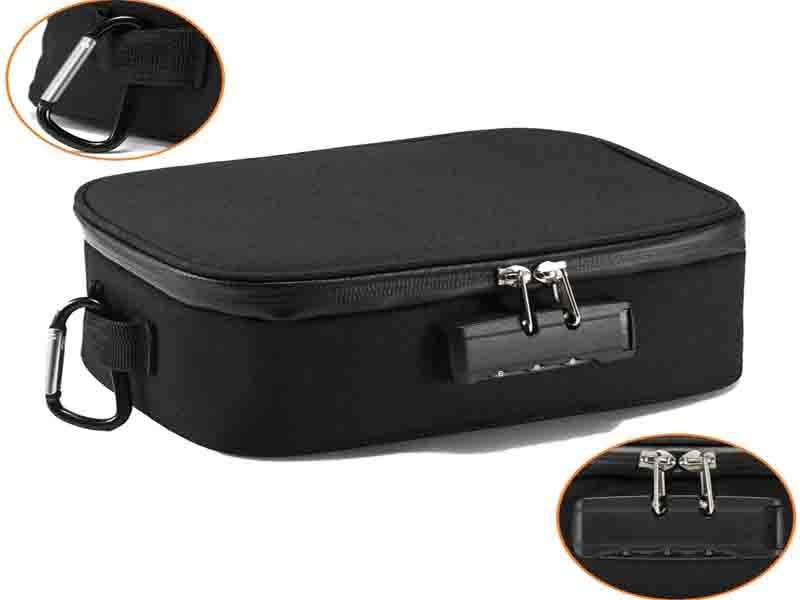
A waterproof and smellproof bag is a specialized multi-functional product engineered to prevent water penetration while simultaneously restricting odor leakage. Unlike conventional bags that are optimized for a single purpose—either keeping contents dry or containing smells—these products combine liquid barrier technology with gas control systems into a single integrated structure.
In practical use, a well-developed bag can achieve IPX6 to IPX7 water resistance, meaning it can withstand strong water jets or temporary immersion, while also delivering over 90% odor containment efficiency under controlled conditions. However, these performance levels depend heavily on the quality of materials, sealing systems, and how well different functional layers are integrated.
From a product development perspective, combining waterproofing and smellproofing is not simply about adding features. It requires balancing two very different physical challenges: blocking liquid ingress and controlling the movement of microscopic odor molecules. This is why dual-function bags are typically more complex in both design and manufacturing than standard waterproof or smellproof products.
Dual-Function Design Logic
At the core of a waterproof and smellproof bag is a layered system where each component serves a distinct role. Waterproofing focuses on preventing liquid penetration, while smellproofing focuses on controlling airflow and molecular diffusion. These functions operate on different physical principles, which is why they require different technical solutions.
How Do Waterproof and Smellproof Functions Differ?
| Function | Waterproof | Smellproof |
|---|---|---|
| Target | Liquids | Gas molecules |
| Challenge level | Moderate | High |
| Solution type | Physical barrier | Absorption + sealing |
| Material requirement | Coated fabric | Multi-layer system |
Waterproofing is relatively straightforward. It relies on continuous surface barriers, such as TPU or PVC coatings, to prevent water from passing through. As long as the material has no holes or weak points, water can be effectively blocked.
Smellproofing, by contrast, is more complex. Odor molecules are extremely small and can pass through tiny gaps or even diffuse through certain materials over time. This requires a combination of airtight sealing, adsorption layers (such as activated carbon), and diffusion-resistant barrier films.
Because of this difference, a bag that performs well in waterproof testing may still fail to contain odors if it lacks the necessary internal structure.
Why Combine Waterproofing and Odor Control in One Bag?
The demand for dual-function bags has increased as users expect more versatility from a single product. Combining waterproof and smellproof features allows the bag to perform reliably across a wider range of environments.
| Benefit | Explanation |
|---|---|
| Multi-environment use | Suitable for outdoor, travel, and storage scenarios |
| Improved hygiene | Prevents moisture and odor cross-contamination |
| Enhanced durability | Multi-layer construction increases structural strength |
| User convenience | Eliminates need for multiple specialized bags |
For example, in outdoor scenarios, a user may need to protect contents from rain while also preventing odor from spreading in enclosed spaces such as vehicles or tents. In travel use, the ability to handle both moisture and odor control reduces the need for separate storage solutions.
From a design standpoint, combining these functions also leads to stronger overall construction, as the materials required for waterproofing often complement the structural needs of smellproof systems.
Are All Waterproof Bags Also Smellproof?
A common misconception is that waterproof performance automatically implies odor containment. In reality, these are independent functions.
| Bag Type | Waterproof | Smellproof |
|---|---|---|
| Standard dry bag | Yes | No |
| Basic fabric bag | No | No |
| Smellproof bag | Sometimes | Yes |
| Combined system bag | Yes | Yes |
Standard dry bags, for instance, are designed to keep water out using roll-top closures and coated fabrics. However, they typically lack airtight sealing precision and internal adsorption layers, which are necessary for odor control.
Similarly, some smellproof bags may not be fully waterproof if they prioritize airflow restriction over liquid resistance.
Only bags specifically engineered as combined systems can reliably deliver both functions at a high level.
What Makes a Bag Truly Dual-Function?
Achieving both waterproof and smellproof performance requires a carefully coordinated combination of materials and structural features.
| Requirement | Importance |
|---|---|
| Multi-layer structure | Critical |
| Airtight sealing | Critical |
| Carbon layer | Essential |
| Waterproof coating | Essential |
A multi-layer structure forms the foundation, typically combining outer waterproof fabrics with internal barrier films and carbon layers. Airtight sealing systems—such as precision zippers or roll-top closures—ensure that both water and air pathways are minimized.
The carbon layer is responsible for adsorbing odor molecules, while the waterproof coating prevents liquid penetration. These elements must be compatible and properly integrated; otherwise, one function may compromise the other.
For example, a waterproof coating alone cannot prevent odor leakage, and a carbon layer without proper sealing will not perform effectively because air exchange will carry odor molecules out of the bag.
In real-world purchasing decisions, many users assume that a waterproof bag will also control odors. This often leads to disappointment when standard dry bags fail to meet expectations in enclosed environments.
The difference lies not in the outer appearance of the product, but in the internal material architecture and sealing precision. Bags that look similar externally can perform very differently depending on whether they include multi-layer odor control systems.
From a product development and sourcing perspective, this highlights the importance of evaluating not just surface features, but the entire system design, including materials, construction methods, and sealing mechanisms.
How Do Waterproof and Smellproof Systems Work Together?
Waterproof and smellproof performance is achieved through a layered engineering system, not a single material or feature. Each layer in the construction is designed to handle a specific task—blocking liquid, reducing gas diffusion, or absorbing odor molecules—while the sealing system ensures that all layers operate within a controlled environment.
The key principle is integration. Waterproofing prevents external moisture from entering the bag, while smellproofing controls how odor molecules behave inside it. If either system is poorly designed or not properly aligned with the other, the overall performance drops significantly.
In real-world product testing, dual-function bags with well-integrated multi-layer structures can deliver 2–3 times better odor retention and significantly higher water resistance stability compared to single-function designs. This is not because they use more materials, but because each component is engineered to work in coordination.
From a development standpoint, the goal is to create a balanced system, where no single layer becomes a weak point.
Multi-Layer Interaction
A high-performance waterproof and smellproof bag typically consists of multiple functional layers, each contributing to a specific aspect of performance. These layers are not independent—they interact with each other to create a unified barrier system.
How Do Multi-Layer Structures Prevent Water and Odor?
| Layer | Function | Contribution |
|---|---|---|
| Outer fabric (nylon/Oxford) | Structural strength | Protects inner layers from abrasion and stress |
| Waterproof coating (TPU/PVC) | Blocks water | Prevents liquid penetration |
| Barrier film (Mylar) | Reduces gas diffusion | Limits odor molecule movement |
| Carbon layer | Absorbs odor | Core smellproof function |
| Inner lining | Stabilizes structure | Maintains shape and layer alignment |
The outer fabric provides mechanical strength, ensuring that the bag can withstand external forces without compromising internal layers. The waterproof coating forms the first barrier against liquid ingress, creating a continuous surface that prevents water penetration.
Barrier films such as Mylar reduce the rate at which odor molecules diffuse through the material. While they do not stop airflow entirely, they significantly slow down molecular movement, supporting the effectiveness of the sealing system.
The carbon layer acts as the primary odor control component, adsorbing odor molecules within its porous structure. The inner lining helps maintain the position and stability of all layers, ensuring consistent performance over time.
Together, these layers create a system where liquid is blocked, airflow is restricted, and odor is actively absorbed.
Do Waterproof Coatings Improve Odor Control?
Waterproof coatings contribute indirectly to odor control by reducing permeability, but they are not sufficient on their own.
| Coating Type | Water Resistance | Odor Control Impact |
|---|---|---|
| TPU | High | Medium |
| PVC | High | Medium |
| PU | Medium | Low–Medium |
TPU and PVC coatings are effective at blocking water and can also reduce the number of pathways through which air can move. This helps stabilize the internal environment, which is beneficial for odor containment.
However, these coatings do not have adsorption capabilities. They cannot capture odor molecules, which means they must be paired with carbon layers and proper sealing systems to achieve true smellproof performance.
PU coatings, while more flexible and cost-effective, generally offer lower resistance to both water and gas movement, making them less suitable for high-performance dual-function applications.
Which Layer Combinations Deliver the Best Results?
The effectiveness of a waterproof and smellproof bag depends heavily on how its layers are combined.
| Structure | Performance |
|---|---|
| Fabric + coating | Waterproof only |
| Fabric + carbon | Smellproof only |
| Fabric + coating + carbon | Dual-function |
| Multi-layer laminate system | Maximum performance |
A simple combination of fabric and coating provides water resistance but does not address odor control. Adding a carbon layer introduces odor adsorption, enabling basic smellproof functionality.
However, the highest level of performance is achieved with multi-layer laminate systems, where barrier films, coatings, and carbon layers are bonded together in a controlled structure. This minimizes internal gaps and ensures that each layer supports the others.
In advanced designs, these layers are engineered to maintain consistent thickness and alignment, which is critical for both sealing performance and long-term durability.
What Happens If Systems Are Not Balanced?
When waterproof and smellproof systems are not properly balanced, performance issues become evident quickly.
| Issue | Result |
|---|---|
| Strong waterproofing, weak sealing | Odor leakage |
| Strong carbon, poor coating | Water penetration |
| Poor integration | Overall system failure |
For example, a bag with excellent waterproof coating but weak sealing will still allow odor to escape through openings. Similarly, a strong carbon layer cannot function effectively if water penetrates the structure and disrupts the internal environment.
Poor integration between layers can create hidden pathways for both air and water, reducing the effectiveness of the entire system. This is often the result of inconsistent lamination, misaligned materials, or uneven thickness during manufacturing.
These issues highlight the importance of treating the bag as a complete system rather than a collection of individual features.
In real-world product comparisons, the best-performing waterproof and smellproof bags are not necessarily those with the highest number of layers, but those where each layer is precisely engineered and properly integrated.
Overloading a design with additional materials can sometimes introduce new problems, such as increased stiffness, reduced flexibility, or inconsistent sealing pressure. What matters more is how effectively each layer contributes to the overall function.
This is where manufacturing expertise becomes critical. Companies with strong capabilities in fabric development, lamination, and structural design are better positioned to create systems where waterproof and smellproof functions complement each other rather than interfere.
In practice, the difference between a mid-range product and a high-performance one often comes down to integration quality, not just material selection.
What Materials Are Used in Waterproof Smellproof Bags?

Waterproof and smellproof performance is not the result of a single “special” material. It comes from a carefully engineered combination of fabrics, coatings, barrier films, and odor-absorbing layers, each solving a different physical problem. Water must be blocked at the surface, odor molecules must be captured or slowed, and the entire structure must remain stable under real-world use.
The most effective waterproof smellproof bags typically combine high-density outer fabrics (such as nylon, Oxford, or polyester), waterproof coatings (TPU or PVC), gas barrier films (Mylar or laminated polymers), and activated carbon layers. When properly integrated, these materials create a system that controls both liquid and gas movement.
In practical product comparisons, upgrading from a basic single-layer structure to a well-designed multi-layer system can improve odor containment by 40–60%, while also significantly increasing resistance to water penetration and long-term wear. This is why material selection is one of the most critical decisions in product development.
Material-Level Engineering
Each material layer has a defined role. The performance of the final product depends less on any individual layer and more on how these materials interact as a system.
Why Is Activated Carbon Used for Odor Control?
Activated carbon is widely recognized as the core functional material for odor control due to its unique physical structure.
| Property | Function | Impact |
|---|---|---|
| Microporous structure | Traps odor molecules | High absorption efficiency |
| Large surface area | Increases adsorption capacity | Longer-lasting performance |
| Chemical stability | Resists degradation | Reliable over time |
The effectiveness of activated carbon comes from its extremely high internal surface area. A single gram can contain hundreds of square meters of microscopic pores, which capture odor molecules through adsorption rather than simple blocking.
However, carbon alone is not sufficient. Without proper sealing and supporting layers, airflow can carry odor molecules out before they are absorbed. This is why carbon must always be paired with airtight sealing systems and barrier materials.
In lower-quality products, thin or uneven carbon layers often lead to rapid performance decline, as the material becomes saturated quickly and cannot maintain consistent odor control.
Which Waterproof Fabrics Are Most Effective?
The outer fabric provides structural strength and supports the waterproof layer. Its density and durability directly affect how well the bag performs under stress.
| Fabric Type | Water Resistance | Durability | Use Case |
|---|---|---|---|
| Nylon | High (with coating) | Very high | Outdoor and travel |
| Oxford fabric | High | High | Multi-purpose applications |
| Polyester | Medium–High | Medium | Daily use |
| Canvas | Low (without coating) | High | Heavy-duty (requires treatment) |
Nylon is widely used in high-performance products because of its high tensile strength and resistance to abrasion, making it suitable for demanding environments. Oxford fabric, which is typically a structured weave of polyester or nylon, offers a balance between durability and cost, making it common in mid- to high-range products.
Polyester is more cost-effective and performs well for everyday use, though it generally offers lower abrasion resistance than nylon. Canvas, while strong, requires additional coating or treatment to achieve waterproof performance.
The key point is that fabric alone does not determine waterproofing—it acts as the support layer for coatings and laminations.
How Do Barrier Films Enhance Performance?
Barrier films are responsible for reducing the movement of odor molecules through the material itself. While sealing systems control airflow at openings, barrier films address molecular diffusion across surfaces.
| Material | Function | Effectiveness |
|---|---|---|
| Mylar film | Blocks gas diffusion | High |
| Aluminum foil layer | Maximum barrier | Very high |
| TPU laminate | Flexible barrier | Medium–High |
Mylar and aluminum-based films are highly effective because they create dense, non-porous layers that significantly slow down gas transmission. These materials are often used in applications where odor containment must remain stable over time.
TPU laminates provide a more flexible alternative, offering a balance between barrier performance and usability. While not as effective as foil-based layers, they are better suited for soft, foldable bag designs.
In multi-layer systems, barrier films reduce the “load” on the sealing system by limiting how much odor reaches potential exit points.
How Do Coatings Support Waterproofing?
Waterproof coatings are applied to fabrics to create a continuous surface that prevents water penetration. They form the first line of defense against liquid ingress.
| Coating Type | Benefit |
|---|---|
| TPU | Flexible, durable waterproofing |
| PVC | Strong barrier, cost-effective |
| PU | Lightweight protection |
TPU coatings are widely used in higher-end products due to their flexibility and resistance to cracking over time. They maintain performance even when the bag is folded or compressed repeatedly.
PVC coatings provide a strong and cost-efficient barrier but are generally less flexible, which can affect long-term durability in certain applications.
PU coatings are lighter and more flexible but typically offer lower resistance to prolonged water exposure, making them more suitable for moderate-use scenarios.
It is important to note that while coatings effectively block water, they do not provide meaningful odor control on their own.
Material Combination Performance Comparison
The overall performance of a bag depends on how these materials are combined.
| Material Setup | Waterproof | Smellproof | Overall Performance |
|---|---|---|---|
| Fabric only | Low | Low | Poor |
| Fabric + coating | High | Low | Moderate |
| Fabric + carbon | Low | High | Moderate |
| Multi-layer system | High | High | Excellent |
A fabric-only structure lacks both water resistance and odor control. Adding a waterproof coating improves liquid protection but does not address odor leakage. Incorporating carbon introduces odor absorption but still leaves the system vulnerable to water penetration.
Only a fully integrated multi-layer system can deliver both functions effectively, as each layer compensates for the limitations of the others.
What Happens with Low-Quality Materials?
Material quality plays a direct role in determining how long a bag can maintain its performance.
| Issue | Result |
|---|---|
| Thin carbon layer | Reduced odor absorption capacity |
| Poor coating quality | Increased risk of water leakage |
| Low-density fabric | Lower durability and structural stability |
Thin or low-grade carbon layers saturate quickly, leading to noticeable odor leakage after limited use. Poor coatings may crack or peel, allowing water to penetrate the structure.
Low-density fabrics are more prone to wear and deformation, which can affect both waterproofing and sealing performance. Over time, these weaknesses compound, resulting in a product that performs well initially but deteriorates rapidly.
In real-world product development, one of the most common mistakes is relying too heavily on a single “strong” material. For example, using high-grade carbon without proper sealing, or applying a thick waterproof coating without considering flexibility and durability.
High-performance products are not defined by individual materials, but by how well those materials work together as a system. A balanced structure, where each layer supports the others, consistently outperforms designs that prioritize one function at the expense of others.
Manufacturers with strong experience in fabric development and lamination processes are better equipped to make these decisions. By matching material combinations to specific use cases—such as travel, outdoor use, or storage—they can ensure that performance remains consistent across different environments rather than only under ideal conditions.
How Do Zippers and Seals Affect Waterproof and Smellproof Design?
Zippers and sealing systems are the most critical control point in any waterproof smellproof bag. Regardless of how advanced the material structure is, the entire system ultimately depends on how well the opening is sealed. If the closure fails, both water and odor will find a path through—even if every other layer performs perfectly.
In real-world product testing and customer feedback, closure systems are responsible for up to 60–70% of leakage-related issues, making them the primary focus in high-performance design. This is because the opening of a bag is the only intentional break in the material barrier, and therefore the most vulnerable point.
The function of zippers and seals goes beyond simply closing the bag. They must eliminate air and water pathways, maintain consistent compression, and adapt to movement and environmental changes. Their effectiveness determines whether the internal material system can operate as intended.
Closure System Performance
Closure systems act as the interface between the internal controlled environment and the external conditions. Their design directly affects both waterproofing and odor containment.
What Is an Airtight Waterproof Zipper?
An airtight waterproof zipper is a specialized closure designed to handle both liquid resistance and airflow restriction. Unlike standard zippers, these systems incorporate additional structural and material features to improve sealing performance.
| Feature | Function |
|---|---|
| Coated surface | Blocks water penetration along zipper line |
| Tight alignment | Minimizes microscopic air gaps |
| Compression design | Enhances contact between sealing surfaces |
The coating—often made from TPU or similar materials—creates a smooth, continuous surface over the zipper track, preventing water from entering through the gaps between teeth. At the same time, precise alignment ensures that the two sides meet consistently לאורך the entire length.
Compression is equally important. When the zipper is closed, the surrounding materials press together, reducing the space available for both air and water to pass through. This combination of features allows airtight waterproof zippers to perform significantly better than standard closures in dual-function applications.
How Do Double-Seal Closures Improve Protection?
Because no single closure system is perfect under all conditions, many designs incorporate redundant sealing layers to improve reliability.
| System | Benefit |
|---|---|
| Double zipper | Provides a backup sealing line |
| Zipper + Velcro flap | Reduces exposure to external airflow |
| Roll-top + buckle | Adds compression-based sealing |
Double-seal systems introduce a second barrier, which is particularly useful when the primary closure experiences wear or misalignment. Even if one layer becomes less effective, the second layer continues to limit leakage.
Adding a Velcro flap over a zipper reduces direct airflow across the closure line, while also protecting it from dust and debris. Roll-top systems introduce compression by folding the material multiple times, forcing air and water to follow a longer, more complex path.
In practice, these combinations significantly reduce the likelihood of failure under dynamic conditions such as travel or outdoor use.
Do Sealing Systems Prevent Both Water and Odor Leakage?
Sealing systems are effective for both functions, but their performance varies depending on the type of leakage being controlled.
| Function | Effectiveness |
|---|---|
| Water sealing | High |
| Odor sealing | Medium–High |
| Combined performance | Depends on integration |
Waterproofing is generally easier to achieve because liquid requires a continuous opening to pass through. A properly coated and aligned zipper can block water effectively under most conditions.
Odor control is more challenging because gas molecules can pass through much smaller gaps. Even minor inconsistencies in alignment or compression can allow odor to escape over time.
This is why sealing systems must work in conjunction with carbon layers and barrier films, which handle adsorption and diffusion. The seal controls airflow, while the materials handle molecular behavior.
How Do Seams Affect Performance?
Seams are another critical factor in overall performance, often representing hidden weak points in the structure.
| Area | Risk Level |
|---|---|
| Stitching lines | High |
| Corners | Medium |
| Flat surfaces | Low |
Traditional stitching introduces small needle holes, which can act as pathways for both water and air. Without additional treatment, these areas can compromise both waterproofing and smellproofing.
Corners are subject to higher stress and may not maintain consistent material contact, increasing the risk of leakage. Flat surfaces, by contrast, are easier to seal effectively due to their uniform structure.
To address these issues, advanced manufacturing techniques such as seam taping, heat sealing, or high-frequency welding are often used. These methods reinforce or eliminate weak points, ensuring that the sealing system is supported across the entire bag, not just at the closure.
What Are Common Closure Failures?
Even well-designed closure systems can fail if material quality or manufacturing precision is insufficient.
| Issue | Cause |
|---|---|
| Zipper gaps | Misalignment during production or use |
| Seal wear | Repeated opening and closing cycles |
| Water seepage | Inadequate coating or damage |
| Odor leakage | Incomplete sealing or debris interference |
Misalignment is one of the most common issues, often resulting from inconsistent manufacturing tolerances. Over time, repeated use can also cause deformation, leading to gaps along the closure line.
Seal wear is inevitable in reusable systems. Materials lose elasticity, and mechanical components experience friction, which gradually reduces performance.
Water seepage typically occurs when coatings are damaged or insufficient, while odor leakage is often linked to incomplete sealing or contamination along the closure surface.
Advanced Sealing Features
To improve durability and performance, high-quality products incorporate additional design features that enhance closure reliability.
| Feature | Benefit |
|---|---|
| Waterproof zipper coating | Blocks liquid penetration |
| Reinforced tracks | Maintains alignment over time |
| Hidden flaps | Provides secondary barrier and protection |
Reinforced tracks help maintain structural integrity even after extended use, reducing the likelihood of misalignment. Hidden flaps protect the zipper from environmental exposure, while also adding an extra layer of airflow resistance.
These features may seem minor individually, but together they contribute to a more stable and reliable sealing system.
Closure vs Material Importance
Both material systems and closure systems are essential, but they serve different roles within the overall design.
| Factor | Impact |
|---|---|
| Material system | Provides foundational protection |
| Closure system | Determines real-world effectiveness |
The material system establishes the baseline performance by blocking water and absorbing odor. However, the closure system determines whether that performance can be maintained in practice.
A high-quality material structure with a weak closure will underperform, while a strong closure can significantly enhance the effectiveness of mid-range materials by maintaining a stable internal environment.
In real-world product evaluation, users often focus on fabric quality or thickness when assessing performance. However, field data consistently shows that closure system design is the primary factor influencing failure rates.
Two bags with similar materials can perform very differently depending on the precision and durability of their sealing systems. A well-engineered zipper with proper alignment and compression can dramatically improve both waterproofing and odor containment.
This highlights a key principle in product design: materials provide potential, but closures determine execution.
Which Design Features Improve Performance in Real Use?

The gap between a product that performs well in testing and one that performs reliably in everyday use is almost always determined by design execution. Materials and sealing systems provide the foundation, but it is the structural design that ensures these elements continue to function under movement, pressure, moisture exposure, and repeated handling.
In real-world scenarios—such as travel, outdoor use, or daily carry—bags are constantly subjected to stress. They are compressed, bent, opened frequently, and exposed to varying environmental conditions. Under these circumstances, even high-quality materials can fail if the design does not support them properly.
Field testing and product comparisons consistently show that bags with optimized structural design can achieve 30–50% better durability and performance consistency than basic designs using the same materials. This highlights a key principle: performance is not just about what materials are used, but how they are applied and supported within the structure.
Structural Design Matters
A well-designed structure distributes stress evenly, protects critical components, and maintains the integrity of sealing systems. Poor design, on the other hand, creates weak points where failure is more likely to occur.
How Does Bag Structure Affect Protection?
| Structure Type | Performance Impact |
|---|---|
| Flat pouch | Limited capacity, moderate protection |
| Box-structured bag | Better load distribution |
| Reinforced frame design | Improved durability under stress |
| Multi-compartment design | Reduces internal odor mixing |
Flat pouches are simple and lightweight but tend to concentrate stress along edges and seams, which can lead to faster wear. Box-structured designs distribute load more evenly, reducing pressure on specific points and helping maintain the integrity of both materials and closures.
Reinforced frame designs, often achieved through added panels or internal supports, improve the bag’s ability to resist deformation. This is particularly important for maintaining airtight sealing, as deformation can create gaps along closure lines.
Multi-compartment structures add another layer of functionality by separating contents. This not only improves organization but also reduces the mixing of odors inside the bag, which can help maintain overall performance.
Do Reinforced Seams Improve Durability?
Seams are one of the most common failure points in waterproof and smellproof bags. Their construction directly affects both durability and leakage resistance.
| Seam Type | Strength | Waterproof Performance |
|---|---|---|
| Standard stitching | Medium | Low |
| Double stitching | High | Medium |
| Seam sealing (taped/welded) | Very high | High |
Standard stitching introduces needle holes, which can act as pathways for water and air. While double stitching improves mechanical strength, it does not fully address leakage.
Seam sealing techniques—such as taping or welding—are far more effective. They create a continuous barrier over stitched areas, eliminating micro gaps and significantly improving both waterproofing and odor containment.
In high-performance designs, seam treatment is not optional—it is a critical component of the overall system.
What Additional Features Enhance Usability?
Beyond structural integrity, certain design features improve how the bag performs during actual use.
| Feature | Benefit |
|---|---|
| Waterproof lining | Prevents internal moisture spread |
| Internal dividers | Keeps contents organized and separated |
| Compression straps | Helps maintain sealing pressure |
| Carry handles | Improves portability |
| Lockable zippers | Adds security for storage and travel |
A waterproof lining ensures that any internal moisture does not spread to other areas, preserving both contents and material integrity. Internal dividers prevent items from shifting excessively, which reduces stress on seams and closures.
Compression straps are particularly useful for maintaining airtight performance. By applying external pressure, they help keep closure systems tightly sealed, especially in partially filled bags.
While features like handles and lockable zippers may seem secondary, they contribute to overall usability, which in turn affects how consistently the bag is used and maintained.
How Does Shape Influence Performance?
The shape of a bag plays a subtle but important role in both usability and sealing effectiveness.
| Shape Factor | Effect |
|---|---|
| Compact design | Improves odor containment by reducing internal air volume |
| Flexible design | Adapts to different storage spaces |
| Rigid panels | Maintains structure and protects sealing alignment |
Compact designs reduce the amount of air inside the bag, which can help limit odor movement. Flexible designs are easier to pack and adapt to different environments, but may require stronger reinforcement to maintain sealing integrity.
Rigid panels help preserve the shape of the bag, preventing deformation that could compromise closures. This is especially important for larger bags, where maintaining alignment לאורך the sealing system is more challenging.
Why Internal Layout Matters
Internal layout is often overlooked, but it has a direct impact on both performance and user experience.
| Layout Feature | Benefit |
|---|---|
| Separate compartments | Prevents odor transfer between items |
| Layered storage zones | Improves organization and load distribution |
| Airflow control zones | Helps stabilize internal pressure |
Separating items into compartments reduces the mixing of odors, which can improve overall containment. Layered storage zones distribute weight more evenly, reducing stress on specific areas of the bag.
Airflow control within the bag—while limited—can help stabilize pressure changes, especially when the bag is opened and closed frequently.
A well-thought-out internal layout supports both the material system and the sealing system, ensuring that neither is compromised during use.
Real Insight
In practical use, many performance issues are not caused by material failure, but by design limitations that expose materials to unnecessary stress. For example, a high-quality waterproof fabric may still leak if seams are not properly reinforced, or an advanced sealing system may underperform if the bag structure allows deformation.
Users often focus on visible features such as fabric thickness or zipper type, but long-term performance is more closely tied to how the entire structure manages stress and maintains alignment.
Manufacturers with strong design and engineering capabilities tend to approach product development holistically, ensuring that every structural element contributes to performance rather than introducing new weaknesses.
Adding more features does not automatically improve performance. In fact, excessive complexity can create additional failure points and reduce reliability.
The most effective designs are those that prioritize functional simplicity, where each feature serves a clear purpose and integrates seamlessly with the overall system. This approach not only improves performance but also enhances durability and ease of use.
Ultimately, real-world performance is determined by how well a product handles everyday conditions—not just how it performs under ideal testing scenarios.
How Do Waterproof Smellproof Bags Perform in Travel and Outdoor Use?
Waterproof smellproof bags are specifically engineered for environments where moisture exposure, constant movement, pressure variation, and odor containment all occur at the same time. Unlike controlled indoor conditions, travel and outdoor scenarios introduce unpredictable variables that quickly reveal weaknesses in both materials and construction.
In practical use, high-quality bags maintain performance by combining stable waterproof barriers, consistent airtight sealing, and structurally reinforced designs. When these elements are properly integrated, the bag can continue to perform reliably even under repeated stress and environmental changes.
Field observations and product testing show that well-designed bags retain 80–90% of their sealing and waterproof performance during active travel use, while lower-quality designs often degrade much faster. This difference is not only due to materials, but also how the product is engineered to handle real-world conditions.
Real-World Performance Testing
Travel and outdoor environments create a combination of stress factors that are rarely present in laboratory conditions. Performance must be evaluated based on how well the bag adapts to these variables.
Are These Bags Suitable for Harsh Environments?
| Environment | Performance |
|---|---|
| Heavy rain | Excellent (with coating + sealed seams) |
| Humid conditions | Very good |
| Dusty environments | Good |
| Extreme cold/heat | Depends on materials |
In heavy rain, waterproof coatings and properly sealed seams are the primary defense. Bags with TPU or PVC coatings combined with seam sealing techniques can effectively prevent water penetration even under prolonged exposure.
High humidity environments test both waterproofing and internal stability. Moisture can accumulate externally and internally, making material resistance and structural integrity critical.
Dusty environments introduce contamination risks, especially around closures. While most bags can handle dust reasonably well, performance depends on how protected the sealing system is from particle intrusion.
Extreme temperatures are more challenging. Materials can soften in heat or become rigid in cold conditions, which directly affects sealing performance. This is why material selection—particularly for coatings and gaskets—is crucial for consistent performance across different climates.
How Do They Handle Pressure, Moisture, and Movement?
Travel environments are dynamic, and performance depends on how well the bag responds to continuous change.
| Factor | Impact | Performance |
|---|---|---|
| Pressure changes | Can stress seals | Stable with proper design |
| Moisture exposure | Tests waterproofing | High resistance |
| Constant movement | Tests durability | High with reinforced structure |
Pressure changes, such as those experienced during air travel, can affect internal air volume and place stress on sealing systems. High-quality closures with good compression and alignment can maintain stability under these conditions.
Moisture exposure tests the effectiveness of coatings and seam construction. In well-designed bags, water is prevented from penetrating both the surface and the structural joints.
Constant movement—such as carrying, packing, and repositioning—introduces mechanical stress. Reinforced structures and durable fabrics help maintain shape and prevent deformation that could compromise sealing.
Which Designs Work Best for Travel vs Outdoor Use?
Different use scenarios require different design priorities, even within the same product category.
| Use Case | Best Design |
|---|---|
| Travel | Flexible, lightweight, sealed zipper |
| Outdoor use | Reinforced fabric + roll-top |
| Storage | Multi-layer, high barrier design |
Travel-oriented designs prioritize portability and accessibility. Lightweight materials and airtight zippers allow for quick use while maintaining sufficient performance.
Outdoor designs emphasize durability and environmental resistance. Reinforced fabrics and roll-top closures provide additional protection against water, dirt, and physical stress.
Storage-focused designs shift the priority toward maximum containment, often using thicker multi-layer structures and higher barrier materials to maintain long-term performance.
How Does Bag Size Affect Performance?
Size has a direct impact on how well a bag maintains its structural integrity and sealing performance.
| Size | Effect |
|---|---|
| Small | Better sealing, easier to control |
| Medium | Balanced performance |
| Large | Increased stress on seams and seals |
Smaller bags tend to perform better in terms of sealing because there is less surface area and fewer stress points. They are also easier to compress evenly, which improves airtight performance.
Medium-sized bags offer a balance between capacity and control, making them suitable for most applications.
Larger bags introduce more complexity. Increased surface area and weight place additional stress on seams and closures, requiring stronger reinforcement and higher-quality materials to maintain performance.
What Are Common Issues in Outdoor Use?
Even well-designed bags can encounter issues if certain aspects of the design or materials are insufficient.
| Issue | Cause |
|---|---|
| Water seepage | Inadequate seam sealing |
| Odor leakage | Weak or worn closure system |
| Material wear | Low-density or low-quality fabric |
Water seepage often occurs at seams rather than flat surfaces, highlighting the importance of proper seam sealing techniques. Odor leakage is typically linked to closure systems, especially when alignment or compression is compromised.
Material wear is a long-term issue, particularly in outdoor environments where abrasion, UV exposure, and repeated handling are common. Higher-density fabrics and durable coatings help mitigate this risk.
Performance Comparison: Standard vs Advanced Bags
The difference between basic and advanced designs becomes more apparent under real-world conditions.
| Feature | Standard Bag | Advanced Design |
|---|---|---|
| Waterproofing | Medium | High |
| Odor control | Low | High |
| Durability | Medium | High |
| Reliability | Moderate | Strong |
Standard bags may perform adequately under light use but often struggle in demanding environments. Advanced designs, with optimized materials and reinforced structures, maintain consistent performance across a wider range of conditions.
Real Insight
Travel and outdoor use quickly expose design weaknesses that may not be apparent in controlled testing. Bags that perform reliably in these environments are typically those that have been engineered as complete systems, where materials, structure, and sealing mechanisms are all optimized to work together.
Users often notice that performance differences become more pronounced over time, especially after repeated exposure to stress and environmental variation. This is where design quality and manufacturing consistency make a measurable difference.
No bag can perform perfectly under every possible condition. Extreme environments will always introduce variables that challenge both materials and design.
The most effective products are those that strike a balance across multiple performance factors, rather than maximizing a single feature at the expense of others. For example, improving waterproofing at the cost of flexibility may reduce usability, while prioritizing lightweight design without reinforcement may compromise durability.
In real-world applications, the goal is not perfection, but reliable performance across the conditions that matter most to the user.
What Are the Common Design Mistakes in Waterproof Smellproof Bags?

Despite the availability of advanced materials and manufacturing techniques, many waterproof smellproof bags still fail in real-world use. The issue is rarely the absence of technology—it is almost always the result of poor design execution, weak system integration, or incorrect prioritization during development.
In practice, performance failures are most often linked to imbalanced design decisions, where one function is optimized at the expense of another, or where critical structural details are overlooked. Industry testing and product feedback consistently indicate that over 60% of failures are caused by design flaws rather than material limitations.
A waterproof smellproof bag is a system. If any part of that system—sealing, materials, seams, or structure—is not properly aligned with the others, the entire product becomes vulnerable.
Failure Analysis
Understanding where and why products fail is essential for improving design outcomes. Most issues can be traced back to a few recurring weaknesses.
Why Do Some Bags Leak Odor or Water?
| Root Cause | Explanation |
|---|---|
| Weak sealing system | Allows air and odor to escape through gaps |
| Poor seam construction | Creates hidden leakage pathways |
| Incomplete layering | Reduces overall protection efficiency |
| Material mismatch | Leads to inconsistent performance across layers |
A common misconception is that failure requires multiple defects. In reality, a single weak point—such as a poorly aligned zipper or unsealed seam—can compromise the entire system. Because odor molecules and water follow the path of least resistance, they will exploit even the smallest structural flaw.
This is why high-performance products focus heavily on eliminating weak points rather than simply adding more materials.
How Do Poor Materials Affect Performance?
Material selection must align with the intended function of each layer. Using inappropriate or low-quality materials can undermine the entire design.
| Material Issue | Result |
|---|---|
| Thin carbon layer | Reduced odor absorption capacity |
| Low-quality coating | Increased risk of water penetration |
| Weak fabric | Lower resistance to wear and deformation |
| Poor lamination | Layer separation and internal leakage |
For example, a thin carbon layer may initially perform adequately but will saturate quickly, leading to noticeable odor leakage after limited use. Similarly, coatings that lack durability may crack or peel, exposing the underlying fabric to moisture.
Lamination quality is another critical factor. If layers are not properly bonded, air and water can travel between them, bypassing both the barrier materials and the sealing system.
What Design Flaws Should You Avoid?
Even with good materials, poor structural design can introduce unnecessary failure points.
| Design Flaw | Impact |
|---|---|
| Overly complex structure | Increases the number of potential weak points |
| Poor weight distribution | Concentrates stress on seams and closures |
| Weak zipper alignment | Creates continuous leakage paths |
| Lack of reinforcement | Accelerates wear and reduces lifespan |
Complex designs often appear more advanced but can actually reduce reliability by introducing additional seams, joints, and stress points. Simpler, well-optimized structures tend to perform more consistently.
Weight distribution is another overlooked factor. Uneven load can place excessive pressure on specific areas, leading to deformation and reduced sealing effectiveness.
Zipper alignment is particularly critical. Even a slight deviation can create a continuous gap לאורך the closure line, significantly reducing odor containment.
Why Over-Focusing on Waterproofing Is a Mistake
One of the most common design errors is prioritizing waterproofing while neglecting odor control, or vice versa.
| Focus Area | Consequence |
|---|---|
| Waterproof only | Odor leakage remains uncontrolled |
| Smellproof only | Increased risk of water penetration |
| Balanced design | Achieves reliable dual-function performance |
Waterproofing is often easier to achieve and more visible in testing, which can lead designers to overemphasize it. However, without proper sealing and odor control layers, the bag will still fail in smellproof applications.
Conversely, focusing only on odor absorption without addressing water resistance can lead to material degradation and reduced durability.
The most effective designs treat both functions as equally important and ensure that neither compromises the other.
How Does Lack of Testing Affect Design?
Design assumptions that are not validated through real-world testing often lead to unexpected failures.
| Missing Test | Risk |
|---|---|
| Pressure testing | Seal failure during travel or altitude changes |
| Water exposure testing | Leakage under rain or immersion |
| Repeated use testing | Premature wear and performance decline |
Laboratory conditions rarely replicate the complexity of actual use. For example, a zipper that performs well in static testing may fail under repeated opening and closing, or under pressure changes during travel.
Water exposure testing is essential to identify weak points in seams and coatings, while repeated use testing reveals how materials and closures degrade over time.
Without these tests, products may perform well initially but fail quickly once exposed to real conditions.
What Happens When Sealing Is Ignored?
Sealing systems are often underestimated during design, but they are the most critical factor in both waterproof and smellproof performance.
| Issue | Result |
|---|---|
| Poor zipper design | Major leakage pathway |
| No secondary closure | Reduced redundancy and protection |
| Weak compression | Persistent air gaps along closure |
A high-quality material system cannot compensate for a weak seal. If the closure allows air or water to pass through, the internal layers cannot function effectively.
Secondary closures, such as flaps or roll-top systems, provide additional protection by reducing exposure to external conditions and adding redundancy. Without them, the entire system depends on a single point of failure.
Compression is equally important. Without sufficient pressure along the sealing line, micro gaps will remain, allowing leakage to occur even in otherwise well-designed products.
Design mistakes are not always immediately visible. Many issues only become apparent after repeated use, exposure to environmental stress, or long-term wear.
This is why durability and lifecycle performance should be considered from the beginning of the design process. A product that performs well in the first few uses but degrades quickly does not meet real-world expectations.
Ultimately, the goal is not to create a product that performs perfectly under ideal conditions, but one that maintains reliable performance over time, across the conditions it is actually used in.
How Should You Design or Choose the Right Waterproof Smellproof Bag?
Designing—or selecting—the right waterproof smellproof bag is ultimately about fit-for-purpose engineering. There is no universal “best” configuration. The optimal solution depends on how the bag will be used, the environments it will face, and how much convenience you’re willing to trade for performance.
At a system level, strong results come from balancing material selection, sealing performance, structural integrity, and usability. When these elements are aligned, the bag performs consistently across real conditions—movement, moisture exposure, pressure changes, and repeated handling.
In practice, products that follow this balanced approach tend to maintain stable waterproofing and odor containment over longer periods, while poorly matched designs either overperform in one area and fail in another, or degrade quickly in everyday use.
Decision Framework
A structured framework helps avoid common mistakes—such as over-specifying materials or underestimating closure systems—and ensures the design aligns with actual needs.
What Factors Matter Most?
| Factor | Importance | Why It Matters |
|---|---|---|
| Material quality | Critical | Defines baseline waterproofing and odor control |
| Sealing system | Critical | Determines real-world leakage performance |
| Structural design | High | Maintains integrity under stress and movement |
| Usage environment | High | Influences material and closure selection |
| Size and capacity | Medium | Affects usability and pressure distribution |
Material quality sets the foundation, but the sealing system determines execution. A high-end fabric with a weak closure will still fail. Structural design ensures the system holds together over time, especially under load or deformation.
Usage environment is often underestimated. A bag designed for indoor storage will not perform the same way during outdoor travel or in high-humidity conditions.
Which Design Is Best for Different Use Cases?
Different scenarios demand different priorities. Matching design to use case is one of the most effective ways to improve performance without increasing cost unnecessarily.
| Use Case | Recommended Design |
|---|---|
| Travel | Lightweight structure + airtight zipper + flexible body |
| Outdoor | Reinforced fabric + roll-top closure + durable coating |
| Storage | Multi-layer system + high barrier film + strong seal |
| Daily use | Balanced design with moderate sealing and durability |
Travel applications require portability and quick access, so zipper-based systems with secondary protection are typically preferred. Outdoor use introduces harsher conditions, making reinforcement and compression-based closures more important.
Storage prioritizes containment over convenience, favoring thicker, multi-layer systems with stronger barriers. Daily use benefits from a balanced approach that avoids unnecessary complexity while maintaining reliable performance.
How Do You Balance Performance and Cost?
Cost should always be evaluated relative to actual performance requirements. Over-engineering increases cost without adding meaningful value, while under-engineering leads to early failure.
| Approach | Outcome |
|---|---|
| Low-cost focus | Reduced durability and inconsistent performance |
| High-end focus | Maximum performance, higher cost |
| Balanced design | Optimal value for real-world use |
A basic zipper system may be sufficient for low-demand scenarios, but for more demanding applications, adding features like gaskets or secondary closures can significantly improve performance with a moderate cost increase.
The most effective approach is to invest where it matters most—sealing systems and material integration—while avoiding unnecessary features that do not contribute to performance.
How Do Custom Manufacturers Optimize Design?
Experienced manufacturers approach waterproof smellproof bags as integrated systems, not isolated components. Optimization typically involves:
- Selecting appropriate fabric combinations (nylon, polyester, Oxford) based on durability and use case
- Integrating coatings and barrier layers to balance flexibility and protection
- Designing sealing systems with precise alignment and consistent compression
- Reinforcing structural weak points such as seams, corners, and closure interfaces
This process ensures that each component contributes to overall performance rather than introducing inconsistencies. In advanced production environments, attention is also given to manufacturing precision, which directly affects how consistently products perform across batches.
What Are the Key Design Principles?
Successful designs follow a set of consistent principles that prioritize performance and reliability over complexity.
| Principle | Explanation |
|---|---|
| Integration | Materials, structure, and sealing must function as a unified system |
| Simplicity | Fewer components reduce potential failure points |
| Durability | Design must withstand repeated use and environmental stress |
| Functionality | Real-world performance takes priority over theoretical features |
Integration is the most important principle. Even high-quality components will underperform if they are not properly aligned with each other. Simplicity helps reduce risk, as every additional feature introduces potential points of failure.
Durability ensures that performance is maintained over time, while functionality keeps the design focused on actual user needs rather than unnecessary enhancements.
Design Checklist
A practical checklist can help guide both design and purchasing decisions.
| Checklist Item | Priority |
|---|---|
| Multi-layer material system | Essential |
| Reliable sealing system | Essential |
| Reinforced seams | High |
| Waterproof coating | High |
| Functional structure | High |
The sealing system and material structure should always be prioritized first. Reinforced seams and coatings support these elements, while functional structure ensures that the system remains stable during use.
It is easy to assume that adding more layers, features, or advanced materials will automatically improve performance. In reality, complexity often introduces new risks—misalignment, uneven pressure, or additional wear points.
The most effective designs focus on balance rather than extremes. They deliver sufficient waterproofing, reliable odor containment, and long-term durability without compromising usability.
Ultimately, the goal is not to create the most advanced product on paper, but to develop a bag that performs reliably in the conditions it is actually used in.
What Makes the Best Waterproof and Smellproof Bag Design?
The best waterproof and smellproof bag design is the result of balanced engineering, where materials, sealing systems, and structure work together seamlessly.
- Waterproofing protects contents from external moisture
- Smellproofing prevents internal odor from escaping
- Sealing systems ensure both functions remain effective
- Structural design supports durability and usability
Understanding how these elements interact allows you to make better decisions when selecting or developing a product.
If you are looking to create high-performance waterproof smellproof bags tailored to your specific needs, working with an experienced manufacturer makes all the difference.
Szoneier, with over 18 years of expertise in fabric R&D and product manufacturing, offers custom waterproof and smellproof bag solutions using a wide range of materials including nylon, polyester, canvas, neoprene, and more. From design and sampling to full production, every detail can be optimized for performance, durability, and user experience.
Whether your focus is outdoor use, travel convenience, or specialized storage, Szoneier can help turn your concept into a reliable, high-quality product.
Now is the right time to develop a waterproof smellproof bag that truly performs—reach out to Szoneier today to start your custom project.