Skip to content
A ski bag is often judged by its outer fabric first: thick polyester, coated Oxford, rugged nylon, padded lining, tarpaulin panels, reinforced base, or clean brand printing. Yet many real travel failures begin at a much smaller part—the zipper. A ski bag can use strong 600D polyester or 1680D Oxford fabric, but if the zipper teeth split, the slider jams, or the pull tab snaps when the user is wearing gloves at an airport check-in counter, the whole product feels unreliable. Ski bags are not ordinary storage sleeves. They carry long, sharp-edged, heavy equipment through snow, wet floors, car trunks, airline belts, hotel lobbies, resort buses, and repeated winter trips.
Durable zippers used in ski bags are usually heavy-duty coil zippers or molded plastic zippers in #8 or #10 size, often paired with wide zipper tape, lockable sliders, double sliders, extended pullers, reinforced stitching, and water-resistant coating when wet snow exposure is expected. For padded ski bags and long ski travel bags, #10 coil or #10 molded zippers are common choices because they offer better strength, smoother operation over long openings, and better resistance against stress from overpacked gear. For lighter ski sleeves, #8 zippers can work when the bag carries one pair of skis without boots or bulky apparel.
Think of a skier rushing from a snowy parking lot to a shuttle bus. One hand is holding poles, the other is pulling a 175 cm ski roller bag across slush. The zipper is cold, wet, and slightly curved around a padded corner. At that moment, nobody cares about a beautiful product rendering. They care whether the zipper opens smoothly, closes fully, and keeps the gear inside. That small hardware decision can decide whether a ski bag becomes a repeat-purchase product or a one-season complaint.
What Makes Ski Bag Zippers Durable?
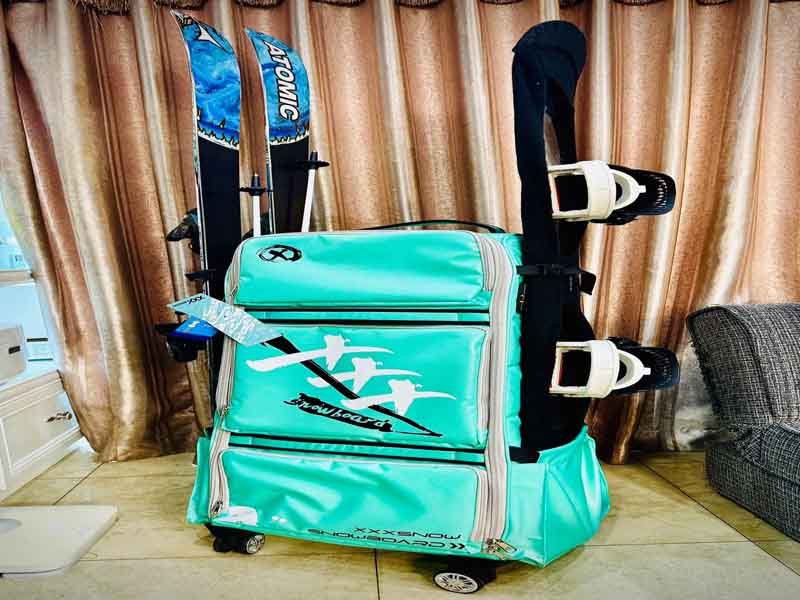
A durable ski bag zipper is not defined by zipper size alone. Strength comes from the full zipper system: chain structure, tooth material, tape density, slider quality, puller design, sewing method, corner shape, fabric support, and how much stress the zipper receives after packing. The most reliable ski bags usually avoid placing the zipper directly on the highest load-bearing edge. They use larger #8 or #10 zippers, reinforced zipper ends, smooth slider movement, and enough seam allowance so the zipper is not forced to carry the whole weight of the skis, boots, poles, and clothing. For brands developing ski bags, zipper durability should be treated as a structure decision, not a decoration choice.
What Stress Do Ski Bags Face?
Ski bags face a strange combination of stresses that normal tote bags, gym bags, and apparel pockets rarely experience at the same time. The bag is long, the gear inside is rigid, the edges of skis can be sharp, and users often pack extra items such as gloves, base layers, helmets, wax kits, goggles, poles, or even boots. When a long ski bag is lifted from the center handle, the fabric bends, but the zipper line may remain under tension. When the same bag is dragged across a car park or airport belt, the zipper may rub against hard surfaces if it is placed too close to the edge.
The most important point is simple: ski bag zippers are punished by length. A 30 cm backpack zipper can tolerate minor misalignment because the opening is short. A 160–190 cm ski bag zipper has far more opportunity to twist, wave, bend, or receive uneven tension. The longer the zipper path, the more important the chain quality, tape stability, slider alignment, and sewing accuracy become.
A ski bag zipper is also exposed to temperature changes. A product may move from a warm hotel room to a freezing parking lot, then into a heated bus, then into an aircraft cargo area. Cold weather can make some materials feel stiffer. Snow and moisture can carry dirt into the zipper teeth. If the user pulls hard while the zipper is blocked by fabric, lining, or ski straps, the slider can deform or the teeth can separate.
| Stress Type | Where It Happens | Impact on Zipper | Better Design Response |
|---|---|---|---|
| Long opening tension | Full-length ski bag opening | Teeth may separate if the bag is overpacked | Use #10 zipper, wide tape, reinforced seam allowance |
| Cold stiffness | Ski resort, car trunk, airport cargo | Slider feels harder to move | Choose smooth-running coil or quality molded zipper |
| Wet snow exposure | Resort floors, roof boxes, outdoor loading | Moisture enters zipper line | Use water-resistant zipper or storm flap |
| Abrasion | Conveyor belts, boot edges, ski edges | Tape frays or coating scratches | Recess zipper away from direct contact zones |
| User force | Gloved hands, rushed packing | Puller breaks or slider bends | Use large puller, rubber tab, metal or reinforced slider |
| Curved corners | Padded ski roller bags | Slider jams around tight bends | Use gentle zipper radius and avoid sharp corner patterning |
| Overpacking | Ski plus boots and apparel | Zipper carries bursting force | Add compression straps and internal gear dividers |
For Szoneier-style custom ski bag development, the zipper specification should be discussed together with fabric GSM, coating, padding thickness, bag length, loading weight, and the target user scenario. A ski sleeve for a single pair of skis may not need the same zipper as a wheeled ski travel bag carrying two pairs of skis and boots. The mistake many new projects make is choosing the zipper after the outer fabric is confirmed. In reality, zipper selection should happen at the same time as the bag structure.
How Do Zippers Fail in Winter Use?
Zipper failure in ski bags usually appears in five ways: teeth separation, slider jamming, puller breakage, tape tearing, and end-stop failure. Each failure has a different cause. When a zipper separates in the middle, the first instinct is to blame the chain, but the deeper reason may be overpacking, weak slider pressure, poor sewing alignment, or a zipper size too small for the bag load. When a slider jams, the reason may be fabric caught in the slider, ice, dirt, coating friction, tight curves, or a low-quality slider surface.
Winter users are often impatient, not because they are careless, but because the environment pushes them. They may be wearing thick gloves. Their hands may be cold. They may be closing the ski bag outside in wind or snow. The bag may be placed on wet ground. The zipper pull may be hidden under a flap. If the slider requires delicate handling, the product already has a usability problem.
A good ski bag zipper should feel easy even when the user is not gentle. That does not mean the zipper should tolerate abuse forever, but it should be designed for real human behavior. A person packing skis after a long day on the mountain will not slowly align every tooth like a technician. They will zip, lift, drag, and go.
| Failure Mode | Common Cause | Warning Sign Before Failure | Manufacturing Solution |
|---|---|---|---|
| Teeth split open | Slider too weak, zipper too small, overpacking | Zipper opens behind slider | Upgrade to #10, use better slider, add compression straps |
| Slider jams | Tight curve, lining caught, dirty chain | Pulling feels rough in one area | Improve pattern radius, add zipper guard, check sewing alignment |
| Puller breaks | Small metal pull, brittle plastic, high force | Pull tab bends or cracks | Use webbing puller, rubberized tab, reinforced metal pull |
| Tape tears | Narrow tape, weak stitching, edge stress | Stitch holes stretch | Use wider tape, stronger thread, more seam allowance |
| End stop fails | Repeated hard pulling at zipper end | Slider hits end harshly | Reinforce zipper end with bartack and fabric patch |
| Coating peels | Low-quality PU film, sharp abrasion | Surface cracks or flakes | Choose better water-resistant zipper and protect exposed zones |
| Corrosion appears | Low-grade metal parts, salt exposure | Slider discoloration | Use plastic, coated, or corrosion-resistant slider |
A common ski bag complaint sounds like “the zipper broke,” but a factory engineer will ask more specific questions: Did the teeth split? Did the slider come off? Did the puller break? Did the tape rip out from the seam? Did the zipper jam only at the corner? Did failure happen during first use or after repeated trips? These questions matter because the solution may not always be “use a bigger zipper.” Sometimes the correct solution is a better sewing path, a wider zipper tape, a stronger slider, or a smarter bag opening.
For example, a long ski bag with a zipper running around three sides can offer excellent access, but it creates corner stress. A straight full-length zipper on the top may reduce corner friction but can expose the zipper more directly to snow and impact. A side-opening short-end flap may improve loading for certain gear layouts, but it needs reinforcement around the opening. Good zipper durability is therefore a balance between access, strength, water resistance, cost, and the way users pack the bag.
Are Ski Bag Zippers Different from Luggage Zippers?
Ski bag zippers and luggage zippers share many features, but they are not used in the same mechanical environment. A suitcase zipper usually follows a structured frame. The luggage shell or soft case provides relatively even support. A ski bag is long and flexible, so the zipper may be exposed to bending and twisting over a much longer distance. Ski bags also carry gear with hard edges, uneven shapes, and wet surfaces.
Luggage zippers are often judged by security, smoothness, and repeated opening cycles. Ski bag zippers must also handle long-span tension, cold-weather operation, wet gear, and oversized contents. Roller ski bags may be closer to luggage because they include wheels, padding, handles, and travel-oriented construction. Lightweight ski sleeves are closer to sports equipment covers. The zipper requirement changes with the bag category.
| Product Type | Zipper Priority | Recommended Zipper Direction | Notes for Custom Development |
|---|---|---|---|
| Basic ski sleeve | Light weight, simple access | #8 coil or molded zipper | Suitable for one pair of skis, lower packing volume |
| Padded ski bag | Strength and smooth operation | #8 or #10 coil zipper | Padding thickness affects zipper sewing and slider path |
| Ski roller bag | Heavy-duty travel durability | #10 coil or molded zipper | Lockable slider and reinforced zipper ends are recommended |
| Double ski bag | Load control and long opening stability | #10 zipper | Internal straps reduce pressure on zipper line |
| Ski and boot bag combo | Burst resistance | #10 zipper with compression system | Avoid relying on zipper alone to contain volume |
| Snowboard bag | Wider shape, curved load | #8 or #10 zipper | Larger panels need stable tape and clean seam alignment |
| Waterproof-style ski bag | Moisture control | Water-resistant zipper plus flap | Zipper alone does not make the full bag waterproof |
A useful way to think about the difference is to compare “box stress” and “beam stress.” A suitcase is more like a box; the zipper closes around a relatively stable form. A ski bag is more like a beam; the contents are long, stiff, and can lever against the zipper when the bag bends. That is why zipper tape strength and seam reinforcement become so important.
For premium private label ski bags, a lockable #10 zipper is often preferred for the main opening, especially when the product is designed for flights or resort travel. However, not every project needs the most expensive zipper. A lower-cost ski sleeve for rental shops may prioritize easy replacement and simple sewing. A high-end travel ski roller bag may need branded pullers, lockable sliders, water-resistant tape, and stronger zipper ends. The correct zipper is not the most expensive option; it is the option that matches the use case.
What Parts Affect Zipper Strength?
A zipper is a system made from chain, tape, slider, puller, stops, sewing thread, and the surrounding bag fabric. If one part is weak, the whole system feels weak. Many product teams focus on the zipper teeth but ignore zipper tape. That is risky because the tape is the part sewn into the ski bag. If the tape stretches, frays, or tears at the stitch holes, even strong teeth cannot save the bag.
The slider is equally important. A slider must press the zipper teeth into the correct engagement. If the slider is low quality, worn, or not matched to the chain, the zipper may open behind the slider. For ski bags, slider smoothness also affects user experience. A slider that feels rough may encourage users to pull harder, increasing the chance of failure.
Pullers deserve more respect than they usually get. A tiny fashion puller may look clean in a studio photo, but it is frustrating on a ski bag. Users often wear gloves, and they may need to open the bag while standing in snow. A longer webbing puller, rubber pull tab, cord puller, or molded logo puller improves usability and reduces direct stress on the slider.
| Zipper Component | Why It Matters | Poor Choice Result | Better Ski Bag Choice |
|---|---|---|---|
| Teeth or coil | Controls chain engagement | Splitting, jamming, weak closure | #8 or #10 heavy-duty chain |
| Tape | Holds zipper to fabric | Tape tear, stitch-hole damage | Wider, dense polyester tape |
| Slider | Opens and closes chain | Rough movement, separation | Matched slider with stable pressure |
| Puller | User grip and pulling control | Breakage, hard glove use | Larger puller, cord tab, rubber tab, logo puller |
| Top and bottom stops | Prevent slider from escaping | Slider comes off | Reinforced stops and bartack |
| Sewing thread | Connects zipper to bag panel | Seam failure | High-tenacity polyester thread |
| Zipper flap | Protects from snow and abrasion | Water entry, coating wear | Storm flap or recessed zipper line |
| Corner radius | Controls slider smoothness | Jamming at corners | Wider curve and pattern testing |
Szoneier’s advantage in ski bag development is that zipper selection can be coordinated with fabric, padding, coating, logo method, and production structure. For example, a 600D polyester ski bag with light padding may use a different zipper plan from a 1680D Oxford ski roller bag with tarpaulin bottom and wheel housing. A water-resistant zipper may look attractive, but if the zipper is placed directly on the bottom edge where it rubs against the ground, the coating may wear faster. A stronger zipper may be needed, but the surrounding fabric must also be strong enough to hold it.
The most reliable development approach is to build a zipper specification sheet before sampling. That sheet should include zipper type, size, tape width, slider type, puller style, color, coating, opening direction, zipper length, end reinforcement, seam allowance, stitching method, and inspection standard. When these details are clear, sampling becomes faster and bulk production is easier to control.
Strong Zipper or Balanced Structure?
A stronger zipper is not always the full answer. If a ski bag uses a #10 zipper but has poor internal straps, users may still overpack the bag and force the zipper line to carry too much pressure. If a bag uses a water-resistant zipper but no storm flap, snow can still enter through stitching holes or side seams. If a premium zipper is sewn with weak thread, the seam may fail before the chain does.
The smarter question is not only “Which zipper is strongest?” The better question is “How much stress should the zipper be allowed to carry?” In a well-designed ski bag, the zipper closes the bag, but compression straps, internal dividers, padded panels, reinforced ends, and fabric structure control the load. The zipper should not act as the main load-bearing frame.
| Design Choice | Short-Term Benefit | Hidden Risk | Better Decision |
|---|---|---|---|
| Very large zipper on thin fabric | Looks strong | Fabric may tear before zipper fails | Match zipper strength with fabric denier and coating |
| Water-resistant zipper without flap | Clean premium appearance | Coating may wear under abrasion | Use recessed placement or protective flap |
| Long zipper around tight corners | Wide access | Slider may jam at curves | Increase corner radius and test with packed sample |
| Small puller for clean look | Minimal visual design | Hard to use with gloves | Use branded extended puller |
| Low-cost zipper on premium bag | Saves unit cost | High complaint risk | Spend more on main zipper, save on less critical trims |
| Zipper as compression tool | Simple construction | Teeth separation under overpacking | Add compression straps and internal anchors |
For clients planning custom ski bags, zipper cost should be evaluated against return rate, review score, and brand trust. A zipper upgrade may add a small amount to the unit cost, but a failed zipper can damage the entire product value. For travel ski bags, the zipper is one of those components where “almost good enough” can become expensive later.
Which Zipper Types Work Best?
The best zipper type for a ski bag depends on the bag’s weight, structure, fabric, target price, water-resistance requirement, and packing volume. Heavy-duty coil zippers are often preferred for long padded ski bags because they are flexible, smooth, and suitable for curved openings. Molded plastic zippers are strong, visually rugged, and suitable for outdoor-style bags where larger teeth and bold appearance are welcome. Metal zippers are usually less common for ski bags because they add weight, can feel cold, and may not perform as comfortably in wet winter travel. For most ski bag projects, #8 or #10 coil and molded plastic zippers are the strongest starting choices.
What Is a Coil Zipper?
A coil zipper uses a continuous spiral element, usually polyester or nylon, stitched onto zipper tape. It is flexible, relatively lightweight, smooth to operate, and suitable for long openings. This makes it popular in travel bags, outdoor bags, backpacks, soft luggage, and padded sports gear. For ski bags, coil zippers work well because the bag body is soft and long. The zipper needs to move with the fabric rather than fight against it.
One of the biggest advantages of a coil zipper is flexibility. A ski bag rarely stays perfectly straight. It bends when lifted, packed into a car, stored in a closet, or placed on an airport belt. A coil zipper can follow this movement more naturally than a stiff zipper type. Coil zippers also tend to perform well on curved openings when the pattern is designed correctly.
Another advantage is water-resistant compatibility. Many water-resistant zippers used in outdoor bags are based on coil zipper structures with a polyurethane film applied to the tape or chain side. For ski bags exposed to wet snow, a coated coil zipper can provide better surface resistance than a basic zipper. However, water-resistant does not mean fully waterproof. Sewing holes, slider gaps, zipper ends, and seams still require careful design.
| Coil Zipper Feature | Benefit for Ski Bags | Possible Limitation | Best Use |
|---|---|---|---|
| Flexible chain | Moves well with long soft bag panels | Can deform under heavy bursting force if undersized | Padded ski bags, snowboard bags, ski sleeves |
| Smooth slider action | Easier long opening operation | Dirt or fabric catch can still cause jamming | Full-length openings |
| Lower profile | Cleaner appearance | Less rugged visual than molded teeth | Premium minimalist designs |
| Water-resistant versions available | Better snow and moisture protection | Coating can wear if exposed to abrasion | Top opening, protected zipper placement |
| Easy color matching | Works with brand color programs | Special colors may affect MOQ | Private label ski bags |
| Good for curved paths | Better around soft corners | Tight curves still need testing | Three-side openings, shaped panels |
For a custom ski bag, coil zippers are often the safest choice when the design includes a long top opening, padded body, soft fabric, and clean brand appearance. A #10 coil zipper can offer a good balance between strength and flexibility. A #8 coil zipper may be enough for lighter single-ski bags or lower-volume storage bags. The key is not to underspecify the zipper because the zipper length is long and user force can be high.
What Is a Molded Zipper?
A molded zipper uses individual plastic teeth molded onto the zipper tape. The teeth are usually larger and more visible than coil elements. Molded zippers create a strong outdoor look and can perform well in rugged sports bags, duffel bags, tool bags, and heavy gear carriers. For ski bags, molded zippers are useful when the design wants a tough appearance, strong tooth engagement, and easy visual inspection.
Molded zippers can be less flexible than coil zippers, depending on size and structure. On a very long ski bag with soft panels, this matters. If the zipper path is straight, molded zippers can work very well. If the zipper must move around tight corners or follow a curved padded structure, the development team should test slider smoothness carefully. A molded zipper can feel strong, but if the curve is too sharp, the slider may not move as smoothly.
The visual style of molded zippers is another factor. Some outdoor brands like the bold, technical appearance. A molded #10 zipper can make the bag look durable even before the user touches it. For premium minimalist ski bags, however, the larger teeth may feel too aggressive. For rental, resort, or utility-style ski bags, molded zippers can be a good match.
| Molded Zipper Feature | Benefit for Ski Bags | Possible Limitation | Best Use |
|---|---|---|---|
| Individual plastic teeth | Strong visual and physical structure | Less flexible than coil | Straight main openings |
| Rugged appearance | Looks suitable for outdoor gear | May look bulky on slim bags | Utility ski bags, rental bags, gear carriers |
| Easy tooth inspection | Damaged teeth are visible | Tooth damage may require replacement | High-use commercial programs |
| Good grip with large sliders | Strong closure feeling | Slider can feel stiff if low quality | Travel bags and large openings |
| Works with thick fabrics | Matches Oxford and coated polyester | Needs accurate sewing alignment | 600D–1680D bag shells |
| Corrosion-resistant teeth | Better than metal in wet use | Slider material still matters | Snow and resort environments |
For Szoneier clients, molded zippers may be recommended when the ski bag has a rugged outer design, structured side panels, reinforced ends, or a utility-oriented product position. Coil zippers may be better when the bag needs smoother movement, cleaner appearance, or water-resistant coating. The choice should reflect both performance and brand style.
Which Zipper Suits Padded Ski Bags?
Padded ski bags need zippers that can move smoothly over thicker fabric layers. Padding protects skis, but it also changes zipper behavior. When foam padding sits near the zipper seam, the seam becomes bulkier. If the zipper is sewn too close to the padding edge, the slider can rub against the fabric or lining. If the zipper path curves around a padded end, the slider may feel tight.
For padded ski bags, #8 or #10 coil zippers are often strong options. Coil zippers handle softness and bending better, which matters when the bag body is cushioned. A #10 coil zipper is better for heavier bags, double ski bags, or travel ski bags carrying extra gear. A #8 zipper may be acceptable for lighter padded sleeves, but only if the packing volume is controlled.
The zipper placement is just as important as zipper type. A padded ski bag can use a straight top zipper, a U-shaped opening, or a three-side opening. Each layout changes stress.
| Padded Ski Bag Design | Zipper Recommendation | Reason | Watch-Out Point |
|---|---|---|---|
| Straight top opening | #8 or #10 coil | Smooth, simple, lower stress | May provide less access than U-shape |
| U-shaped opening | #10 coil | Better access and flexibility | Corner radius must be generous |
| Three-side opening | #10 coil or molded | Wide packing access | Corners and end stops need reinforcement |
| Fully padded double ski bag | #10 coil | Handles heavier contents | Add internal straps to reduce zipper load |
| Padded ski sleeve | #8 coil | Balanced cost and function | Avoid overpacking claims |
| Premium travel ski bag | #10 coil water-resistant option | Strong and clean appearance | Protect coated zipper from abrasion |
The best padded ski bags also include internal straps. These straps hold skis in place and reduce shifting. Without them, skis may push against the zipper during transport. A zipper is designed to open and close the bag, not to stop heavy gear from sliding inside. Internal webbing anchors, compression straps, and padded dividers can reduce zipper stress and improve the user experience.
A useful project rule is simple: if the bag is padded and designed for flights, choose a stronger zipper than the minimum. Airports are not gentle places. Ski bags may be stacked, pulled, bent, and thrown. A zipper that works in a showroom may fail after real travel if the specification is too light.
Which Zipper Suits Roller Ski Bags?
Roller ski bags usually need the strongest zipper system because they carry more weight and travel through rougher handling. A roller bag may hold two pairs of skis, poles, boots, outerwear, and accessories. The user may pull it across pavement, snow, airport floors, and hotel entrances. The zipper may be opened and closed repeatedly during packing, security checks, and resort transfers.
For roller ski bags, #10 zippers are commonly preferred for the main opening. A lockable slider is also valuable because travel users often want basic security. Large pullers help users open the bag quickly while wearing gloves. If the bag uses a long three-side opening, double sliders can improve access by allowing the user to open the bag from either end.
The zipper must also coordinate with the wheel structure. Roller bags often have reinforced bottom panels, wheel housings, skid plates, and thicker padding. If the zipper is placed too low, it may be exposed to abrasion. If placed too high, access may become less convenient. The design team must balance protection and usability.
| Roller Ski Bag Feature | Zipper Impact | Recommended Specification |
|---|---|---|
| Heavy packing volume | Higher bursting stress | #10 main zipper |
| Airline travel | Security concern | Lockable sliders |
| Long opening | More slider travel | Smooth coil zipper or tested molded zipper |
| Glove use | Harder grip | Large puller or cord pull tab |
| Wet airport floors | Moisture exposure | Water-resistant zipper or storm flap |
| Wheel base abrasion | Edge wear risk | Recess zipper away from bottom edge |
| Double ski capacity | Gear shifting pressure | Internal straps plus zipper reinforcement |
A roller ski bag should not depend on the zipper to control the whole load. Compression straps, wheel-end reinforcement, internal ski anchors, and padded separators are part of the zipper protection system. When these components work together, the zipper receives less stress and lasts longer.
For premium ski roller bags, a custom logo puller can add brand value without sacrificing function. The puller should be large enough for glove use and strong enough for repeated pulling. Rubberized pull tabs, woven webbing pullers, and molded pullers are common options. The brand logo can be embossed, debossed, printed, woven, or molded depending on the material.
Is Metal Zipper a Good Choice?
Metal zippers are strong in many applications, but they are usually not the first choice for ski bags. They add weight, can feel cold in winter, may be less smooth over long curved openings, and can be more vulnerable to corrosion if the metal quality or finish is not suitable for wet environments. Metal zippers also create a fashion or vintage look that may not match most technical ski bag designs.
That does not mean metal zippers are always wrong. They can work for small pockets, decorative openings, leather-trimmed ski accessories, or heritage-style bags. But for the main opening of a long ski bag, coil or molded plastic zippers usually offer better balance.
| Zipper Type | Strength | Flexibility | Water-Resistance Options | Weight | Best Ski Bag Use |
|---|---|---|---|---|---|
| Coil zipper | High when sized correctly | Very good | Strong options available | Light to medium | Padded ski bags, long openings, premium travel bags |
| Molded zipper | High | Medium | Some options available | Medium | Rugged ski bags, straight openings, utility designs |
| Metal zipper | Medium to high | Lower | Limited for ski use | Heavier | Small pockets, style details, non-main openings |
| Invisible zipper | Low for gear bags | Good | Poor for ski use | Light | Not recommended for main ski bag structure |
| Waterproof dry zipper | Very high sealing | Lower, stiff | Excellent sealing | Higher | Special waterproof cases, not common for standard ski bags |
A metal zipper may look premium in a product photo, but ski bag design should start with the use environment. Wet snow, long zipper paths, gloves, cold hands, and rough handling all push the decision toward coil or molded plastic. For most ski bag brands, the better investment is a high-quality #10 coil or molded zipper with a strong slider and smart puller.
Coil vs Molded Is Not a Beauty Contest
The coil-versus-molded discussion often becomes too simple. Some people say coil is smoother. Some say molded is stronger. In real product development, both can fail if the size, slider, sewing, or bag structure is wrong. A #10 coil zipper from a reliable supplier may outperform a cheap molded zipper. A well-made molded zipper may outperform an undersized coil zipper. The question is not “Which type is always best?” The question is “Which zipper works best for this ski bag, this user, this fabric, this price level, and this packing behavior?”
| Decision Factor | Coil Zipper Advantage | Molded Zipper Advantage | Better Choice |
|---|---|---|---|
| Long curved opening | Smoother and more flexible | May feel stiff on tight curves | Coil |
| Straight rugged opening | Good but less bold visually | Strong outdoor appearance | Molded |
| Water-resistant look | Many coated options | Some technical options | Coil for most designs |
| Premium clean style | Low profile and refined | Can look bulky | Coil |
| Utility rental program | Smooth but may look less heavy-duty | Easy rugged positioning | Molded |
| Heavy roller bag | Strong if #10 and well sewn | Strong if path is straight | Test both |
| Cost-sensitive sleeve | #8 coil can be efficient | Molded may cost more depending on spec | Coil |
| Brand differentiation | Color and puller options | Bold teeth and contrast color | Depends on design identity |
For Szoneier, the most practical development route is to create two zipper sample options when a client is unsure: one #10 coil version and one #10 molded version, both tested on the same bag body. The team can compare slider smoothness, appearance, sewing difficulty, water-resistance plan, packing experience, and final unit cost. This approach gives the brand a real product decision, not a guess.
A good ski bag zipper should disappear during use. Users should not think about it. It should open smoothly, close cleanly, survive travel stress, and match the bag’s fabric and structure. When users notice the zipper, it is usually because something is wrong. For custom ski bag programs, that is why zipper engineering deserves attention early in the sample stage, not after the outer design is already finished.
How to Choose Zipper Size?
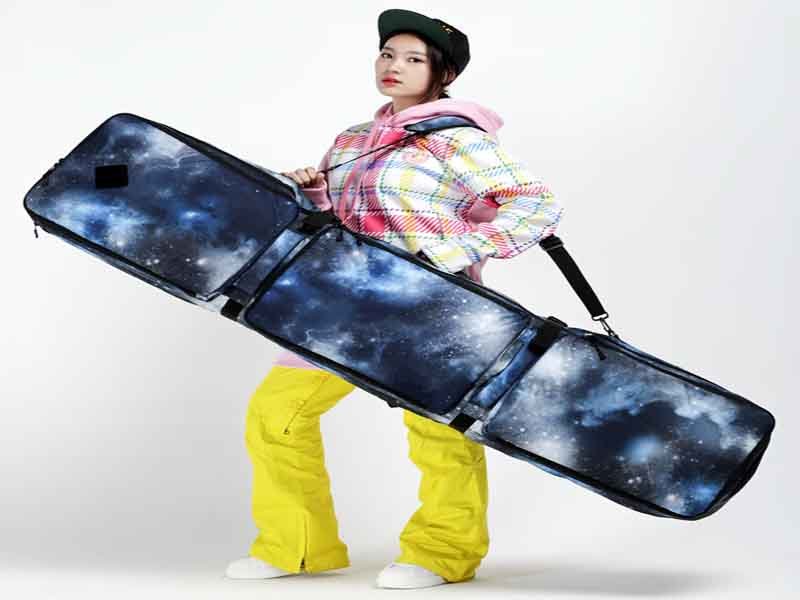
Zipper size should be chosen by bag load, zipper length, fabric thickness, opening structure, and expected travel abuse—not by appearance alone. For ski bags, #8 and #10 are the most common practical choices for main openings. A #8 zipper can work for lighter single-ski sleeves, slim padded bags, and storage-focused products. A #10 zipper is usually better for ski roller bags, double ski bags, snowboard bags, and travel designs where users may pack extra clothing or accessories. The larger the bag, the longer the zipper, and the heavier the load, the more important zipper size becomes. A ski bag zipper is not only a closure; it is a long mechanical line under repeated pulling, bending, cold-weather movement, and packing pressure.
What Does Zipper Size Mean?
Zipper size generally refers to the approximate width of the closed zipper teeth or coil in millimeters. A #5 zipper is smaller than a #8 zipper, and a #10 zipper is larger and stronger than both. In bag manufacturing, zipper size affects chain strength, slider size, tape width, visual impact, sewing requirements, and final cost. For ski bags, zipper size becomes especially important because the opening can run across a very long distance. A small zipper may work on a jacket pocket, but the same size may feel weak on a 180 cm ski travel bag.
A common mistake is choosing a zipper size based only on sample appearance. A #5 zipper may look cleaner and lighter, especially on a slim ski sleeve, but it may not provide enough strength for repeated outdoor travel. A #10 zipper may look more rugged, but it may be too bulky for a low-cost storage sleeve. The correct choice comes from the product’s real use case.
| Zipper Size | Approximate Use Level | Ski Bag Suitability | Main Strength | Main Risk |
|---|---|---|---|---|
| #5 | Light-duty bags, pockets, apparel, small compartments | Not recommended for main ski bag openings | Lightweight and low profile | Too weak for long loaded ski bag openings |
| #8 | Medium-heavy bags, sleeves, padded covers | Good for single ski sleeves and lighter padded bags | Balanced cost, strength, and appearance | May be weak for overpacked travel bags |
| #10 | Heavy-duty bags, luggage, roller bags, large sports gear | Strong choice for main ski bag openings | Better strength and user confidence | Higher cost and more visual bulk |
| #10 water-resistant | Premium outdoor bags, snow gear bags | Good for wet snow exposure when protected | Better moisture resistance and strong appearance | Coating may wear if exposed to abrasion |
| Oversized specialty zipper | Heavy gear cases and extreme-duty products | Rare for regular ski bags | Very high strength | Higher cost, heavier feel, limited flexibility |
A buyer looking at zipper size should also consider the zipper chain type. A #10 coil zipper and a #10 molded zipper do not feel exactly the same. Coil may be smoother and more flexible for long openings, while molded teeth may create a more rugged look. Size tells only part of the story. The chain design, tape quality, slider quality, and sewing method complete the performance picture.
For Szoneier custom ski bag projects, zipper size can be matched with fabric denier and structure. For example, a 600D polyester ski sleeve may use a #8 zipper, while a 1680D Oxford ski roller bag with padding, wheels, and heavy handles may need a #10 zipper. When a brand wants a premium travel product, it is safer to upgrade the main zipper and control cost in less critical areas such as interior pocket zipper size or decorative trims.
Is #8 or #10 Better?
The answer depends on the bag category. #8 is better when the bag is lighter, slimmer, more cost-sensitive, and not designed for heavy travel. #10 is better when the bag is longer, heavier, padded, wheeled, or expected to carry more than one pair of skis. A #10 zipper gives stronger hand-feel and better tolerance against user force. It also communicates durability visually, which can matter for online shoppers comparing product photos.
However, bigger does not automatically mean better. A #10 zipper sewn into a thin, unreinforced fabric panel may create imbalance. The zipper may survive while the fabric tears around the seam. A #8 zipper with proper reinforcement, clean stitching, and internal straps may perform better than a poorly assembled #10 zipper. Product engineering should treat zipper size as one layer of durability, not a magic fix.
| Product Scenario | Recommended Main Zipper | Why It Works | Extra Design Advice |
|---|---|---|---|
| Lightweight ski sleeve for one pair of skis | #8 coil zipper | Keeps weight and cost controlled | Add end reinforcement and smooth puller |
| Basic padded ski bag | #8 or #10 coil zipper | Depends on padding and target price | Test packing with actual ski length |
| Premium padded ski bag | #10 coil zipper | Better travel durability and smoother long opening | Use double sliders for easier access |
| Ski roller bag | #10 coil or molded zipper | Stronger for heavy load and frequent travel | Add lockable sliders and internal straps |
| Double ski travel bag | #10 zipper | Handles larger packing pressure | Avoid tight zipper curves around padded ends |
| Rental or resort-use ski bag | #10 molded zipper | Rugged appearance and strong closure | Use easy-repair construction where possible |
| Snowboard bag with apparel space | #10 coil zipper | Flexible across wider padded panels | Prevent lining from catching in slider |
From a customer-experience angle, #10 often feels more reassuring on a ski bag. When a user sees a large zipper on a travel ski bag, they immediately understand the product is made for heavier use. For e-commerce product pages, this matters because shoppers cannot physically pull the zipper before buying. Hardware details become trust signals.
From a manufacturing angle, #10 can increase cost, but the upgrade is often reasonable compared with the cost of returns, bad reviews, or warranty claims. If a ski bag sells as a premium travel product, a weak zipper damages the whole product positioning. A customer may forgive a small scuff on the fabric after travel, but a broken zipper feels like product failure.
A practical decision rule can be used during development:
| Bag Length and Load | Suggested Zipper Choice | Reason |
|---|---|---|
| Under 150 cm, light storage use | #8 | Suitable for shorter or junior ski bags |
| 150–180 cm, one pair of skis, light padding | #8 or #10 | Choose based on price level and brand positioning |
| 170–195 cm, padded travel use | #10 | Better for long zipper path and heavy pulling |
| Double ski or ski plus gear | #10 | Reduces risk under packing pressure |
| Wheeled ski travel bag | #10 | Best match for high travel stress |
| Premium snow-resistant model | #10 water-resistant or protected zipper | Better for wet handling and outdoor appearance |
For Szoneier, a smart sampling method is to prepare zipper options based on final selling position. If the ski bag is for promotional use, a #8 zipper may be enough. If it is for outdoor brands, resorts, Amazon sellers, or private label travel gear, #10 should be strongly considered for the main compartment.
How Wide Should the Tape Be?
Zipper tape is often ignored, but it is one of the most important details in ski bag durability. The tape is the woven fabric section on both sides of the zipper chain. It is sewn into the bag panel and carries much of the stress between zipper and fabric. If the tape is too narrow, weak, or loosely woven, the stitch holes may stretch, the edge may fray, or the zipper seam may fail even when the teeth remain intact.
Wide, dense polyester tape is usually preferred for ski bags. Polyester performs well with common ski bag fabrics such as polyester Oxford, nylon, coated polyester, and mixed fabric constructions. Wider tape gives the sewing line more room, improves seam security, and allows better attachment to thick fabric layers. For padded ski bags, tape width becomes even more important because the seam may include outer fabric, foam, lining, binding, and reinforcement patches.
| Tape Factor | Why It Matters | Poor Specification Risk | Better Ski Bag Standard |
|---|---|---|---|
| Tape width | Gives space for stitching and seam strength | Stitches too close to chain or edge | Use wider tape for #8 and #10 main zippers |
| Tape density | Holds stitches under tension | Tape distortion and fraying | Choose dense woven polyester tape |
| Tape color | Affects product appearance | Mismatch with fabric or logo color | Match shell color or create contrast design |
| Tape coating | Affects water resistance | Coating cracks or stiff slider movement | Use tested water-resistant tape for snow exposure |
| Tape shrinkage | Affects zipper alignment after sewing | Wavy zipper line | Confirm tape stability before bulk production |
| Tape compatibility | Must match fabric and thread | Poor seam strength | Test with final fabric and padding layers |
Tape width should also be considered together with seam allowance. A ski bag with a strong zipper but narrow seam allowance can still fail because the stitching line has too little fabric to hold. For long ski bags, small sewing errors can accumulate across the full zipper length. A slightly uneven zipper line may not look serious during flat inspection, but after packing, it can create tight spots where the slider feels rough.
A good factory will test the zipper tape under real sewing conditions. The zipper should be sewn into the same fabric, padding, lining, binding, and reinforcement structure planned for bulk production. Testing the zipper separately on a table does not reveal enough. Ski bag zippers must be tested as part of a complete bag body.
For custom designs, zipper tape can also support brand appearance. A black shell with a contrast red zipper tape can create a sporty look. A tone-on-tone tape can create a premium minimalist look. A water-resistant matte tape can make the bag look more technical. But style should not weaken function. If a special color or coating increases lead time or MOQ, the brand should decide early before sampling.
Do Long Ski Bags Need Stronger Zippers?
Yes, long ski bags usually need stronger zippers because zipper length increases exposure to misalignment, twisting, bending, and pulling force. A longer zipper also means the slider travels farther, so the chance of friction, fabric catching, or uneven sewing becomes higher. Even if the load is not extremely heavy, the zipper system must remain smooth across the full opening.
A ski bag length may range from junior sizes around 130 cm to adult travel sizes around 190 cm or more. A full-length zipper on a 190 cm bag is not just a longer version of a small zipper. It behaves differently because the bag panel can shift, fold, and bend along the zipper line. If the zipper is low quality, the user will feel it immediately: one section moves smoothly, another section feels tight, and one corner may require extra force.
| Bag Length | Common Use | Zipper Concern | Better Specification |
|---|---|---|---|
| 120–140 cm | Junior skis, short gear storage | Lower load but still needs smooth opening | #8 zipper can work with proper reinforcement |
| 150–165 cm | Single adult skis or compact sleeve | Moderate zipper length | #8 or #10 depending on price and padding |
| 170–185 cm | Standard adult ski bags | Long zipper path and heavier equipment | #10 recommended for travel models |
| 185–200 cm | Long skis, double ski bags, roller bags | High stress and more fabric movement | #10 heavy-duty zipper with strong slider |
| Over 200 cm | Oversized gear or special programs | Custom stress and shipping requirements | Prototype testing required before confirmation |
Long zippers also need better end reinforcement. Users often pull hard at the beginning and end of the zipper path. These points receive repeated impact from the slider. If the zipper end is not reinforced with bartacks, fabric patches, or binding protection, the slider may eventually damage the end stop or pull away from the seam.
Another important issue is zipper wave. On long bags, if the zipper tape stretches slightly during sewing, the zipper may become wavy. A wavy zipper can look poor and feel rough. It can also make the bag harder to close when packed. Skilled sewing operators, correct tension settings, zipper guides, and quality inspection are essential for long zipper production.
Szoneier’s production experience with fabric goods is useful here because ski bag zipper quality depends heavily on sewing control. Fabric selection alone does not solve zipper durability. A 900D or 1680D fabric shell still needs accurate zipper insertion. During sampling, the bag should be packed with actual skis or a weight-and-shape substitute, then opened and closed repeatedly. A flat empty sample may hide zipper problems.
How Does Zipper Size Affect Cost and Brand Position?
Zipper size affects both manufacturing cost and perceived product value. A larger zipper usually costs more because the chain, tape, slider, puller, and sewing handling are heavier. Water-resistant coating, branded pullers, lockable sliders, and custom colors can add more cost. But in many ski bag programs, zipper cost is not the right place to over-save, especially for the main opening.
A ski bag is a high-trust product. Users place expensive equipment inside. Skis, bindings, poles, boots, and goggles can cost far more than the bag itself. When the zipper looks weak, the whole product feels risky. Strong zipper details can support a higher price point because they are visible and easy for customers to understand.
| Zipper Upgrade | Cost Impact | Customer Value | Best For |
|---|---|---|---|
| #8 to #10 main zipper | Medium | Stronger hand-feel and better durability perception | Premium sleeves, travel bags |
| Standard to lockable slider | Low to medium | Better travel confidence | Airline ski bags, roller bags |
| Basic puller to rubber/webbing puller | Low | Easier glove use and better branding | All ski bags |
| Standard to water-resistant zipper | Medium to high | Better wet-weather appearance and snow protection | Premium snow gear bags |
| Generic to branded puller | Low to medium | Stronger private label identity | Retail and direct-to-consumer products |
| Single to double slider | Low to medium | Easier access on long bags | Long ski bags, snowboard bags |
A brand selling a ski bag at a premium price should not use a zipper that belongs on a basic storage cover. Customers may not know the technical difference between #8 and #10, but they can feel the difference when they pull the zipper. They can also see whether the puller is glove-friendly, whether the slider feels stable, and whether the zipper line looks straight.
For cost-sensitive programs, Szoneier can help balance zipper performance with target price. For example, the main compartment can use a stronger #10 zipper, while small accessory pockets can use #5 or #8 zippers. A water-resistant zipper can be used only on the most exposed opening, while internal compartments use standard zippers. This layered approach keeps the product reliable without wasting cost on areas that do not need heavy-duty hardware.
How Should Zipper Size Be Confirmed Before Sampling?
Before sampling, the brand should confirm bag size, fabric type, padding thickness, expected load, main opening style, target price, water-resistance level, and logo requirements. Without these details, zipper selection becomes guesswork. A factory may choose a standard zipper, but standard does not always mean best.
A simple zipper confirmation sheet helps avoid confusion.
| Confirmation Item | Recommended Question | Why It Matters |
|---|---|---|
| Bag length | What ski length should the bag fit? | Longer bags need stronger and smoother zipper systems |
| Gear capacity | One pair, two pairs, or ski plus boots? | More load increases zipper stress |
| Bag structure | Sleeve, padded bag, roller bag, or combo bag? | Different structures need different zipper sizes |
| Fabric | 600D, 900D, 1680D, nylon, Oxford, coated fabric? | Fabric thickness affects sewing and zipper balance |
| Padding | No padding, partial padding, or full padding? | Padding changes zipper seam bulk |
| Opening shape | Straight, U-shape, three-side, or full clamshell? | Curves affect slider movement |
| Water exposure | Snow splash, wet gear, or waterproof-style requirement? | Determines standard or water-resistant zipper |
| User condition | Glove use, travel use, rental use, or retail use? | Affects puller size and slider choice |
| Brand details | Logo puller, special color, contrast tape? | Affects MOQ, cost, and lead time |
| Testing plan | Pull test, cycle test, packed test, cold handling? | Confirms real performance before bulk order |
A proper sample should not only look good. It should be packed, lifted, dragged, zipped, unzipped, and inspected at stress points. If the zipper feels rough during sample review, the problem should be corrected before bulk production. Once thousands of bags are sewn, zipper changes become expensive.
For a ski bag manufacturer, zipper size is one of the easiest details to under-discuss and one of the hardest details to fix after production. A clear specification saves time, reduces risk, and helps the final product feel more professional.
What About Water Resistance?
Water resistance matters in ski bag zippers because ski bags often touch snow, wet floors, slush, vehicle roofs, and damp equipment. However, a water-resistant zipper does not automatically make a ski bag waterproof. The zipper can reduce water entry through the opening, but seams, stitch holes, zipper ends, fabric coating, and bag construction also decide moisture protection. For most ski bags, the best solution is a water-resistant zipper or protected zipper flap combined with coated polyester, nylon, or Oxford fabric, reinforced seams, smart zipper placement, and internal lining that can handle wet gear. The goal is not always full waterproof sealing; the real goal is to protect skis and accessories from normal snow exposure during travel.
Is Waterproof Zipper Necessary?
A fully waterproof zipper is not necessary for most ski bags. True waterproof zippers are usually stiffer, more expensive, and harder to use across long openings. They are common in dry bags, diving gear, survival equipment, and waterproof cases, but standard ski bags usually do not need that level of sealing. Ski bags are exposed to wet snow and short-term moisture, not constant underwater pressure.
Most brands should think in terms of water resistance rather than full waterproofness. Water resistance means the zipper helps reduce water entry from snow, splashes, and damp handling. It does not mean the bag can be submerged or left in heavy rain for hours without moisture risk. This distinction matters because many customers use the word “waterproof” loosely. If a product page claims full waterproof performance but uses regular stitched seams and a normal slider gap, complaints may follow.
| Protection Level | Meaning | Zipper Choice | Suitable Ski Bag Use |
|---|---|---|---|
| Basic protection | Keeps dry gear organized indoors or in vehicles | Standard coil or molded zipper | Storage sleeves, low-cost ski bags |
| Snow-resistant protection | Handles snow splash and wet resort floors | Water-resistant zipper or storm flap | Most outdoor ski bags |
| Travel wet-weather protection | Better protection during airport and resort transfers | Water-resistant zipper plus coated fabric and protected seams | Premium padded ski bags |
| Waterproof-style protection | Strong moisture barrier but not submersible unless fully engineered | Coated zipper, seam sealing, waterproof fabric | Technical snow gear bags |
| Fully waterproof sealing | Designed against strong water entry | Dry zipper and sealed construction | Rare for regular ski bags |
A fully waterproof zipper can also reduce user comfort. Long waterproof zippers may feel stiff, especially in cold conditions. A skier wearing gloves may find them harder to operate. If the zipper is too hard to pull, users may apply extra force and damage the slider or bag seam. In product design, durability and usability must be balanced.
For most Szoneier ski bag clients, a water-resistant zipper with a storm flap or recessed placement is more practical than a true waterproof zipper. It improves weather performance while keeping the bag easier to use and more cost-efficient.
What Is Water-Resistant Zipper?
A water-resistant zipper is designed to reduce water penetration through the zipper area. Many water-resistant zippers use a coated surface, often with a PU film, to cover the zipper tape and chain area. The smooth coated face helps shed water and gives the bag a technical appearance. These zippers are widely used in outdoor backpacks, soft coolers, travel bags, snow gear bags, and performance luggage.
The most important detail is that water-resistant zippers are not completely sealed at every point. Water may still enter near the slider, zipper ends, stitching holes, or if the zipper is bent under pressure. When a ski bag uses a water-resistant zipper, the surrounding construction must support the same goal. If the zipper is water-resistant but the fabric is uncoated, the seams are open, and the zipper ends are not protected, the upgrade loses much of its value.
| Water-Resistant Zipper Feature | Benefit | Limitation | Better Application |
|---|---|---|---|
| PU-coated surface | Helps shed snow and moisture | Coating can scratch under abrasion | Place away from ground-contact zones |
| Smooth technical look | Supports premium outdoor positioning | May look too glossy for some designs | Match with coated Oxford or nylon |
| Reduced water entry | Better than standard zipper in snow exposure | Not fully waterproof | Use with storm flap or seam protection |
| Easy cleaning | Snow and dirt wipe off more easily | Mud can still enter slider area | Add zipper garage at end |
| Brand value | Visible premium component | Higher cost | Use on main opening or exposed pockets |
| Color options | Can match shell or contrast design | Special colors may need higher MOQ | Confirm early before sample |
Water-resistant zipper choice should also consider flexibility. Coated zippers can feel slightly stiffer than standard coil zippers. On a long ski bag, this stiffness may affect slider smoothness. The factory should test the zipper on the actual opening shape. A coated zipper that works perfectly on a straight pocket may not feel as smooth on a long curved ski bag.
For ski bags with a clean technical design, a matte water-resistant zipper can look excellent. It gives the product a modern snow-sport feel. But for rugged rental bags or cost-sensitive ski sleeves, a standard heavy-duty zipper with a protective flap may be more durable and easier to repair.
How Does PU Coating Help?
PU coating helps by creating a smoother, more water-shedding surface over the zipper tape. When snow melts on the bag, the coated surface slows water entry through the zipper area. It also gives the zipper a cleaner technical look, which many outdoor and snow-sport brands prefer. PU-coated zippers are especially useful on top openings, front pockets, accessory compartments, and main openings that are exposed during travel.
However, PU coating is not armor. It can wear, scratch, peel, or crack if exposed to constant abrasion. A ski bag may be dragged, stacked, or rubbed against ski edges and airport belts. If the coated zipper is placed on a bottom edge or high-friction zone, the coating may deteriorate faster. Good design protects the coated zipper instead of treating it as indestructible.
| PU-Coated Zipper Design Factor | Good Practice | Bad Practice | Result |
|---|---|---|---|
| Zipper placement | Place on upper or side-protected zone | Place directly on bottom abrasion edge | Better coating life |
| Slider garage | Cover zipper end with fabric pocket | Leave slider exposed to snow and impact | Less water entry at zipper end |
| Seam allowance | Keep stitching clean and stable | Stitch too close to coating | Lower risk of coating damage |
| Puller design | Use large puller to reduce harsh pulling | Use tiny puller that encourages force | Longer slider life |
| Cleaning | Wipe snow and dirt after use | Let salt, mud, and ice remain | Better appearance over seasons |
| Packaging | Avoid sharp folding across coated zipper | Fold tightly over zipper chain | Lower risk of coating crease |
PU-coated zippers can also affect sewing. Operators must avoid damaging the coated surface during production. Needle position, presser foot pressure, and seam alignment should be controlled. The zipper may require careful handling so the coating does not show scratches before shipping. For premium ski bags, visual quality matters as much as function because customers notice coating defects quickly.
A brand should decide whether PU-coated zipper value matches the product level. On a high-end ski travel bag, it can be a strong selling point. On a low-cost ski sleeve, it may not be necessary. If the bag already uses a protective storm flap, a standard heavy-duty zipper may deliver enough moisture protection at a lower cost.
Are Taped Seams Still Needed?
Taped seams may be needed if the ski bag is marketed as highly water-resistant or waterproof-style. A water-resistant zipper alone cannot stop moisture through stitch holes and seams. Every stitch creates a small hole in coated fabric. In normal snow exposure, this may not be a serious issue. But if the brand promises strong water protection, seam treatment becomes important.
Ski bags vary widely in moisture expectations. Some are only meant to protect skis from scratches during storage. Others are designed for resort travel, wet car trunks, snowy sidewalks, or roof box use. The more aggressive the moisture claim, the more the construction must support it.
| Moisture Claim | Zipper Requirement | Seam Requirement | Fabric Requirement | Suitable Claim Language |
|---|---|---|---|---|
| Basic ski storage | Standard zipper | Regular stitching | Polyester or Oxford shell | Helps protect skis from dust and light contact |
| Water-resistant ski bag | Heavy-duty zipper or protected zipper | Strong seams, optional flap | Coated polyester or nylon | Resists snow splash and light moisture |
| Snow-ready travel bag | Water-resistant zipper | Reinforced seams, strategic seam protection | Coated Oxford or nylon | Designed for wet resort and travel conditions |
| Waterproof-style gear bag | Water-resistant or specialty zipper | Seam taping or sealing | Waterproof-coated fabric | Built for stronger moisture protection |
| Fully waterproof bag | Specialty waterproof zipper | Fully sealed seams | Waterproof fabric | Only if tested and engineered for sealing |
Taped seams add cost and production complexity. They also require compatible fabric coating and careful temperature control during application. Not every fabric accepts seam tape equally. If the fabric surface, coating, or seam shape is not suitable, tape adhesion may be weak. For long ski bags with curved seams and bulky padding, seam taping may also be more challenging than on simple flat dry bags.
For many ski bags, a storm flap is a practical alternative. A flap covers the zipper line and reduces direct snow exposure. It can be made from the same outer fabric and secured by stitching, binding, or hook-and-loop details depending on design. A flap also protects the zipper from abrasion and helps hide the zipper for a cleaner look.
The key is honest product positioning. If the bag is water-resistant, say so. If it is fully waterproof, the full structure must be tested. Customers understand that ski gear gets wet; they mainly want the bag to reduce mess, protect equipment, and survive real travel conditions. Overclaiming waterproof performance can create unnecessary risk.
How to Protect Wet Ski Gear?
Wet ski gear creates two challenges: keeping outside moisture from entering the bag and managing moisture already inside the bag. After skiing, skis may carry snow, water, ice, wax residue, dirt, and sharp edge contact. A water-resistant zipper protects against outside moisture, but it does not dry the equipment inside. The bag interior must be designed to tolerate damp gear.
A ski bag can use water-resistant lining, drainage-friendly structure, wipeable interior panels, reinforced ski-edge zones, and separated compartments. If users pack wet skis with dry gloves or apparel, internal organization matters. The zipper should not be the only moisture-control feature.
| Wet Gear Issue | Product Risk | Design Solution |
|---|---|---|
| Melting snow from skis | Water pools inside bag | Use wipeable lining or coated interior |
| Sharp ski edges | Fabric and zipper tape abrasion | Add reinforced edge zones |
| Wet gloves or clothing | Moisture spreads to dry items | Add separated pocket or internal divider |
| Snow near zipper line | Moisture enters opening | Use water-resistant zipper or storm flap |
| Ice on zipper | Slider becomes difficult | Use larger puller and avoid tiny slider parts |
| Damp storage | Odor and mildew risk | Recommend drying bag after use |
| Dirty resort floors | Exterior wet abrasion | Use reinforced bottom fabric |
A good user-focused ski bag design accepts that people will not always clean and dry skis perfectly before packing. The bag should be forgiving. It should allow quick loading, protect the zipper from direct wet pressure, and make cleaning easy. If the interior lining absorbs too much water, the bag becomes heavy and unpleasant. A coated or wipeable lining can improve the experience.
For Szoneier’s custom fabric development, fabric and zipper selection can be coordinated for wet gear scenarios. A ski bag could combine 600D or 900D coated polyester, reinforced Oxford bottom panels, a #10 water-resistant zipper, internal webbing straps, and a wipeable lining. A more economical version could use standard #10 zipper plus a storm flap and coated polyester shell. Both can be valid, depending on the market and price point.
How Should Brands Describe Water Resistance Honestly?
Water-resistance language must be accurate because customers use ski bags in unpredictable weather. Words such as waterproof, water-resistant, snow-resistant, weather-resistant, and moisture-repellent are not the same. A product page should match the real construction. If a bag has coated fabric and a water-resistant zipper but no sealed seams, “water-resistant” or “snow-resistant” is usually safer than “fully waterproof.”
Clear language builds trust. Customers are more likely to accept a product that honestly explains its protection level than one that overpromises. For example, “water-resistant zipper helps reduce snow and moisture entry during normal resort travel” is more believable than “100% waterproof ski bag” if the seams are stitched normally.
| Claim Term | What Customers Expect | Construction Needed | Risk If Overused |
|---|---|---|---|
| Water-resistant | Handles splashes and light moisture | Coated fabric, protected zipper, good seams | Low if described clearly |
| Snow-resistant | Suitable for snow exposure during travel | Durable shell, water-resistant zipper or flap | Low to medium |
| Weather-resistant | Handles changing outdoor conditions | Strong fabric, protected openings | Medium if too vague |
| Waterproof-style | Strong moisture-focused design | Better zipper, seam treatment, coated fabric | Medium if not tested |
| Fully waterproof | Blocks water under serious exposure | Waterproof zipper, sealed seams, tested structure | High if not truly engineered |
A professional ski bag article or product page should educate the reader without sounding defensive. The goal is to help them choose the right product. Many users do not need a fully waterproof bag. They need a bag that handles wet snow, protects the car trunk, keeps ski edges contained, and survives travel. Honest language can actually increase confidence because it shows the brand understands real use.
For custom private label programs, Szoneier can help brands define the correct performance claim before production. The claim should be based on fabric coating, zipper type, seam construction, lining, testing, and intended use. This prevents mismatch between marketing and manufacturing.
Zipper Upgrade or Full Moisture System?
Water resistance is a system. A water-resistant zipper is valuable, but it cannot compensate for weak fabric coating, unprotected seams, poor zipper placement, or absorbent lining. A ski bag with a premium coated zipper but thin uncoated fabric may still perform poorly. A bag with strong coated fabric but a low-quality zipper may leak through the opening. The best result comes from matching all moisture-control details.
| Moisture-Control Component | Role in Ski Bag | What Happens If Ignored |
|---|---|---|
| Outer fabric coating | Reduces water absorption | Bag becomes heavy and damp |
| Zipper type | Reduces water entry at opening | Snow and slush enter main compartment |
| Zipper placement | Controls exposure | Zipper coating wears faster |
| Storm flap | Shields zipper from direct snow | Zipper line receives more moisture |
| Seam construction | Controls stitch-hole leakage | Moisture enters through seams |
| Interior lining | Handles wet gear inside | Water spreads and creates odor risk |
| Bottom reinforcement | Resists wet floor abrasion | Fabric and zipper zones wear faster |
| User care guidance | Helps long-term performance | Customers misuse or store wet bag |
The critical question is not “Should the ski bag use a water-resistant zipper?” The better question is “What level of moisture exposure should the whole bag handle?” For a budget storage sleeve, a standard zipper may be acceptable. For a premium ski travel bag, a water-resistant zipper, coated fabric, storm flap, and wipeable lining may be worth the investment. For a technical waterproof-style bag, seam sealing and full material testing are needed.
In practical product development, the smartest approach is to define three levels before sampling:
| Product Level | Zipper Plan | Fabric Plan | Best Market Fit |
|---|---|---|---|
| Essential ski sleeve | #8 standard zipper | 600D polyester or Oxford | Entry-level retail, promotional programs, light storage |
| Performance ski bag | #10 zipper with flap or water-resistant option | Coated polyester, nylon, or Oxford | Outdoor brands, ski shops, Amazon sellers |
| Premium travel ski bag | #10 water-resistant zipper with lockable slider | Heavy coated Oxford, reinforced bottom, wipeable lining | High-end private label, travel-focused winter gear |
This kind of tiered planning helps brands control cost and avoid overbuilding. Not every ski bag needs the same zipper. But every ski bag needs a zipper choice that matches its promise. When zipper, fabric, lining, seam, and structure work together, the bag feels trustworthy from the first pull.
Which Slider Design Matters?
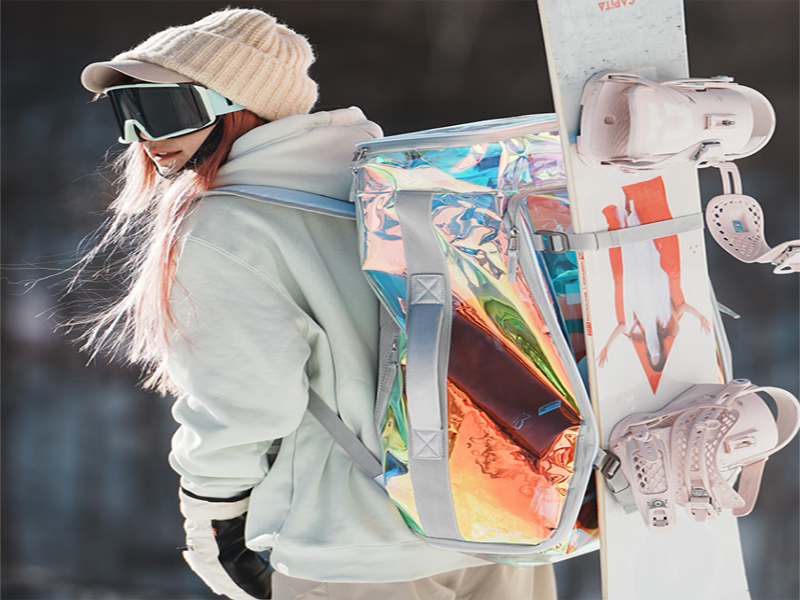
Slider design matters because the slider is the part users touch, pull, force, lock, and judge first. A ski bag may use a strong #10 zipper chain, but if the slider is weak, poorly matched, too small for gloves, or difficult to move in cold weather, the whole zipper system feels unreliable. For ski bags, the best slider design usually includes a stable body, smooth movement, proper pressure on the chain, large pull access, optional lockable function, and enough clearance to avoid catching fabric or lining. On premium ski travel bags, double sliders and lockable sliders are often worth considering because they improve access, security, and user confidence during airport and resort travel.
What Is a Lockable Slider?
A lockable slider is a zipper slider designed with a small hole or locking structure that allows a luggage lock, cable lock, or security tie to pass through. For ski bags used in air travel, buses, hotels, rental storage areas, and resort luggage rooms, lockable sliders provide basic protection against casual opening. They do not turn a soft bag into a theft-proof case, but they do give travelers a better sense of control.
For ski roller bags and premium padded ski bags, lockable sliders are especially useful because users may pack expensive skis, bindings, poles, avalanche tools, goggles, gloves, and outerwear inside. A pair of quality skis can be expensive, and travel users often want at least a simple lock option when checking the bag at the airport or leaving it in temporary storage.
A lockable slider can be used as a single slider, but double lockable sliders are more convenient on long ski bags. Two sliders can meet at the center or at one end, allowing the user to open only part of the bag. This is useful when the bag is long and fully packed. Users may need to remove poles, check bindings, adjust straps, or add gloves without opening the entire zipper path.
| Slider Type | Main Benefit | Best Ski Bag Use | Possible Limitation |
|---|---|---|---|
| Standard slider | Lower cost and simple function | Basic ski sleeves and storage bags | No travel lock function |
| Lockable slider | Allows small lock or security tie | Ski roller bags, premium travel ski bags | Adds small cost and may need larger puller |
| Auto-lock slider | Helps prevent zipper creep | Bags under movement or vibration | Can feel less smooth if low quality |
| Non-lock slider | Smooth and easy operation | Light sports bags and pockets | May open slightly under tension |
| Double lockable sliders | Better access and lock position control | Long full-length ski bags | Requires clean zipper alignment |
| Reverse coil slider | Works with water-resistant zipper structures | Snow-resistant bag openings | Must match chain and coating correctly |
A common misunderstanding is that lockable means secure against serious theft. It does not. A soft fabric bag can still be cut. The purpose is to prevent accidental opening, reduce casual tampering, and give the traveler a simple control point. This is still valuable because many ski bag problems happen during transit, not only from theft. If a zipper creeps open on an airport belt, gear can shift or become exposed. A lockable slider can reduce that risk when used with proper zipper ends and internal straps.
For private label ski bag programs, lockable sliders also help product positioning. Online shoppers often scan product images quickly. When they see a heavy-duty zipper with lockable sliders, they understand the bag is made for travel. The detail supports a stronger price point because it is visible, functional, and easy to explain.
| Use Scenario | Is Lockable Slider Worth It? | Reason |
|---|---|---|
| Home storage ski sleeve | Usually not necessary | User mainly stores skis indoors |
| Car travel ski bag | Optional | Useful if bag is left in shared spaces |
| Airline ski bag | Strongly recommended | Better travel confidence and reduced accidental opening |
| Resort rental program | Useful | Staff can secure equipment during handling |
| Premium ski roller bag | Strongly recommended | Matches high-value product positioning |
| Promotional ski bag | Usually not necessary | Cost may matter more than travel security |
| Snowboard travel bag | Recommended for larger models | Similar travel risk and loading behavior |
The slider body should also match the zipper size. A #10 zipper needs a slider made for #10 chain. Mismatched sliders can create rough pulling, chain separation, or early wear. During development, the factory should test the lockable slider with the actual zipper chain, fabric thickness, and bag opening shape. A slider that works smoothly on loose zipper tape may behave differently once sewn into a padded ski bag.
Do Double Sliders Improve Access?
Double sliders improve access on long ski bags because users can open the bag from either end, meet the sliders in the middle, or open only the section they need. This is especially helpful when the bag is over 170 cm long. A single slider forces the user to pull across the whole opening every time. With double sliders, the user can access poles, straps, ski tips, or bindings without fully opening the bag.
For a ski bag with a straight top zipper, double sliders are convenient. For a U-shaped or three-side opening, they can make packing even easier because the user can control the opening width. Ski bags are long and awkward by nature. Anything that reduces unnecessary movement improves the user experience.
Double sliders also support travel security when both sliders are lockable. Users can bring the two sliders together and lock them. This simple feature can be a strong selling point for ski roller bags and padded travel ski bags. It also reduces the chance of a zipper opening from one end under vibration or movement.
| Bag Opening Style | Double Slider Value | Why It Helps | Design Warning |
|---|---|---|---|
| Straight full-length opening | High | Access from both ends | Zipper line must be straight and smooth |
| U-shaped opening | High | Opens wide for easier packing | Corners need generous radius |
| Three-side clamshell opening | Very high | Large access for double skis or snowboard | Slider path must be carefully tested |
| Short storage sleeve | Medium | Convenience, but less critical | May not justify cost on budget models |
| Boot-and-ski combo bag | High | Access to separate zones | Internal layout must support partial opening |
| Roller ski bag | Very high | Better airport and resort use | Lockable double sliders recommended |
| Rental ski bag | Medium to high | Faster staff handling | Durable pullers needed for repeated use |
Double sliders are not automatically better if the zipper path is poorly designed. On a long bag, both sliders must move smoothly. If one section is tight, users may pull harder and damage the slider or chain. Pattern engineering matters. The zipper should avoid sharp turns, thick seam stacks, and areas where lining can be caught. The more complex the opening, the more important sample testing becomes.
The best double-slider ski bags often include zipper garages at both ends or at the locking point. A zipper garage is a small fabric cover or pocket that shelters the slider. It reduces snow entry, protects the slider from impact, and creates a cleaner finish. On water-resistant zipper designs, a zipper garage also helps protect the small gap near the slider where moisture can enter.
| Double Slider Detail | Function | Recommended Practice |
|---|---|---|
| Two-way opening | Allows partial access | Use for long ski and snowboard bags |
| Lockable meeting point | Allows travel lock | Use sliders with aligned lock holes |
| Large pull tabs | Improves glove operation | Add rubber, webbing, or cord pullers |
| Zipper garage | Protects slider end | Add at high-exposure end or center lock point |
| Smooth zipper radius | Prevents jamming | Avoid tight corners below practical sewing limits |
| Reinforced end stops | Prevents slider escape | Use bartack and patch reinforcement |
| Internal flap or guard | Stops lining catch | Add zipper guard near soft lining |
From a user perspective, double sliders feel more thoughtful. They save time. They reduce awkward handling. They let the user open only what is needed. In a competitive ski bag market, these small usability details can help a product stand out without completely changing the bag structure.
How Do Pullers Affect Glove Use?
Pullers affect glove use more than many brands realize. A ski bag is often opened outdoors, in parking lots, on resort floors, near shuttle buses, or beside a car in cold weather. Users may be wearing thick gloves or have cold fingers. A small metal puller may look neat, but it can be frustrating when hands are numb or covered.
A good ski bag puller should be large, easy to grip, durable, and comfortable to pull with gloves. It should not twist too easily, cut into the fingers, or break under sudden force. Puller design can also support branding, because the puller is one of the most touched parts of the bag.
Common ski bag puller options include cord pullers, rubberized pull tabs, woven webbing pullers, molded plastic pullers, and metal pullers with extended fabric loops. Each has advantages. Cord pullers are lightweight and easy to grip. Rubber pullers feel premium and can carry an embossed logo. Webbing pullers are durable and match outdoor bag construction. Molded pullers allow custom shapes but may require tooling. Metal pullers feel strong but can be cold and less comfortable in winter.
| Puller Type | Glove Friendliness | Branding Potential | Durability | Best Use |
|---|---|---|---|---|
| Basic metal puller | Low to medium | Low | Medium | Inner pockets or budget bags |
| Cord puller | High | Medium | Good | Outdoor ski bags and lightweight sleeves |
| Rubber pull tab | High | High | Good if material is stable | Premium ski bags and snow gear |
| Woven webbing puller | Very high | Medium to high | Very good | Heavy-duty ski roller bags |
| Molded logo puller | High | Very high | Good to excellent | Private label premium programs |
| Metal puller with fabric loop | High | Medium | Good | Travel ski bags needing stronger appearance |
The puller length should be long enough for easy grip but not so long that it catches on airport belts, straps, or car trunks. For ski bags, a puller length around 5–8 cm is often comfortable, depending on bag size and puller material. Longer pullers may be useful on roller bags, while shorter pullers may be cleaner on slim sleeves.
The connection between puller and slider is also important. A strong pull tab attached to a weak slider connector can still fail. During testing, the puller should be pulled at different angles, not only straight forward. Real users rarely pull perfectly in line with the zipper. They pull upward, sideways, around corners, and sometimes too hard when the bag is packed tightly.
| Puller Design Factor | Why It Matters | Poor Design Result | Better Choice |
|---|---|---|---|
| Puller length | Controls grip comfort | Hard to use with gloves | 5–8 cm for many ski bag main zippers |
| Puller thickness | Affects hand feel | Cuts into fingers or feels flimsy | Use padded, rubber, cord, or webbing pull |
| Attachment strength | Prevents puller loss | Puller detaches from slider | Reinforced connector or tested knot |
| Surface texture | Helps grip in snow | Slippery when wet | Rubber texture, woven tape, or knotted cord |
| Logo method | Adds brand identity | Logo wears quickly | Embossed, woven, molded, or durable print |
| Swing range | Affects pulling angle | Slider twists or jams | Allow natural movement without excess looseness |
Szoneier can support custom puller development as part of private label ski bag production. A simple branded puller can make the bag feel more complete. It also helps build recognition because users touch it every time they use the bag. For outdoor brands, the puller is not a small decoration; it is part of the product interface.
Are Anti-Slip Pull Tabs Useful?
Anti-slip pull tabs are useful for ski bags because snow, gloves, and cold fingers reduce grip. A textured puller can help users open the bag more easily without yanking too hard. Less force means less stress on the slider, zipper chain, and zipper seam. In other words, a better puller can indirectly improve zipper durability.
Anti-slip designs can be created through rubber textures, woven webbing, knotted cord, silicone coating, raised logo patterns, or molded surface grooves. The design should feel secure but not rough. It should also survive cold temperatures and repeated bending. Some low-quality rubber or plastic pullers may crack, harden, or lose flexibility in cold use, so material choice matters.
| Anti-Slip Method | Benefit | Risk | Recommended Use |
|---|---|---|---|
| Textured rubber puller | Strong grip and premium feel | Poor rubber may crack in cold | Premium ski bags |
| Knotted cord puller | Simple, light, glove-friendly | Knot may loosen if poorly made | Outdoor and travel ski bags |
| Woven webbing puller | Strong and comfortable | Edges may fray if untreated | Heavy-duty roller bags |
| Silicone-coated puller | Good wet grip | May attract dirt | Snow-resistant designs |
| Raised logo puller | Branding plus grip | Tooling may add cost | Private label bags |
| Heat-cut webbing end | Prevents fraying | Can feel sharp if poorly finished | Cost-efficient puller solution |
A pull tab can also reduce slider damage. When the puller is too small, users pinch the slider body directly or pull at awkward angles. This can bend the slider, especially on low-quality hardware. A larger pull tab gives users a better pulling angle and reduces sudden force. It also helps when the zipper has a water-resistant coating, which may feel slightly stiffer than a regular zipper.
For brands, anti-slip pullers are an easy upgrade because they are visible, functional, and not extremely expensive compared with changing the entire bag structure. They can be customized in color, logo, texture, and length. On product photos, a branded puller also communicates attention to detail.
How Does Slider Quality Affect Zipper Life?
Slider quality affects zipper life because the slider controls tooth engagement. When the slider moves, it aligns and closes the chain. If the slider is poorly shaped, too loose, too tight, or made from weak material, the zipper may fail even if the chain itself is good. On ski bags, slider quality is especially important because users pull long distances and often apply force under cold or wet conditions.
A weak slider can cause several problems. If the slider pressure is too loose, the zipper may open behind the slider. If it is too tight, the zipper feels rough and users pull harder. If the slider material is low-grade, it may deform after repeated use. If the slider coating is poor, it may corrode or look worn after exposure to snow, salt, and moisture.
| Slider Issue | User Experience | Product Risk | Better Specification |
|---|---|---|---|
| Loose slider pressure | Zipper closes then splits | High complaint risk | Use matched slider and quality chain |
| Tight slider pressure | Pulling feels rough | User pulls harder and damages zipper | Test slider smoothness after sewing |
| Weak slider body | Slider bends under force | Zipper becomes unusable | Use stronger slider material |
| Poor finish | Corrosion or discoloration | Bad appearance after wet use | Use coated or corrosion-resistant finish |
| Small slider bridge | Puller detaches | Loss of function | Reinforced puller connection |
| Wrong slider for chain | Jamming or separation | Production defect | Confirm slider-chain compatibility |
Slider testing should include more than simple opening and closing. The bag should be packed with realistic weight and shape. The slider should be moved across straight sections, corners, padded areas, and zipper ends. Testers should pull with normal force and slightly rough force because real users will not be gentle all the time.
For long ski bags, smoothness consistency matters. A slider that feels smooth at the beginning but rough near the middle may indicate sewing tension problems, tape distortion, lining interference, or zipper wave. These issues should be corrected before bulk production.
Security, Comfort, or Cost?
Slider selection involves trade-offs. A lockable slider gives travel confidence but may cost more than a basic slider. A large puller improves glove use but may catch if too long. A water-resistant reverse slider looks technical but may feel stiffer. A basic slider lowers cost but may weaken product positioning.
The best slider decision depends on how the ski bag will be sold and used. A low-cost ski sleeve may not need lockable sliders. A premium travel ski roller bag almost certainly should have them. A resort rental bag may prioritize rugged pullers and easy replacement over premium branding. A direct-to-consumer winter sports brand may benefit from custom logo pullers because they improve perceived value.
| Product Position | Slider Priority | Recommended Slider Plan |
|---|---|---|
| Entry-level ski sleeve | Cost and simple use | Standard slider with larger pull tab |
| Mid-range padded ski bag | Smoothness and durability | Strong slider with cord or webbing puller |
| Premium ski travel bag | Security and brand detail | Double lockable sliders with branded pullers |
| Ski roller bag | Heavy-duty use and travel | #10 lockable sliders with reinforced ends |
| Resort rental bag | Repeated handling | Rugged slider, simple puller, easy repair focus |
| Snow-resistant bag | Moisture control | Reverse slider matched with water-resistant zipper |
| Private label outdoor bag | Brand identity | Custom pullers, matching color, lock option |
A slider is small, but it carries a large part of the user experience. If the slider feels smooth and confident, the bag feels better. If it jams, bends, or feels weak, the user questions the entire product. For ski bags, slider design should be decided as early as fabric and zipper size, not treated as a last-minute accessory.
How Zippers Match Bag Fabric?
Zippers must match ski bag fabric because fabric thickness, coating, stiffness, weave, padding, and surface treatment all affect how the zipper is sewn, how smoothly it moves, and how long the seam lasts. A heavy #10 zipper may suit 1680D Oxford, coated nylon, or reinforced polyester, but it can overpower a thin fabric if the seam is not reinforced. A water-resistant zipper may look excellent with coated Oxford or nylon, but it must be protected from abrasion and sewn without damaging the coating. The most reliable ski bags use zipper, fabric, thread, lining, padding, and reinforcement as one system. When these parts are matched correctly, the bag feels strong, opens smoothly, and performs better through wet winter travel.
What Works With Polyester Fabric?
Polyester fabric is widely used in ski bags because it offers good durability, stable color, reasonable cost, and strong compatibility with coatings and printing. Common ski bag fabrics may include 600D polyester, 900D polyester, 1200D polyester, and 1680D polyester Oxford-style constructions. Polyester can work with both coil and molded zippers, but the zipper size should match the fabric weight and bag structure.
For lightweight 600D polyester ski sleeves, #8 coil zippers often provide a balanced solution. They keep weight and cost under control while offering enough strength for basic ski storage and light travel. For padded ski bags, double ski bags, or roller bags using heavier polyester, #10 coil or molded zippers are a safer choice. If the polyester fabric has PVC, PU, or other coating, the zipper should be selected with moisture resistance and sewing thickness in mind.
| Polyester Fabric Type | Common Ski Bag Use | Suitable Zipper | Design Notes |
|---|---|---|---|
| 300D polyester | Light promotional covers | #5 or #8 for small openings; not ideal for heavy ski bags | Better for dust covers than serious travel bags |
| 600D polyester | Entry to mid-range ski sleeves | #8 coil or molded zipper | Add reinforcement at zipper ends |
| 900D polyester | Padded ski bags | #8 or #10 coil zipper | Good balance of weight and strength |
| 1200D polyester | Heavier travel bags | #10 coil or molded zipper | Suitable for stronger main openings |
| 1680D polyester Oxford | Premium roller bags and gear bags | #10 heavy-duty zipper | Match with reinforced stitching and strong tape |
| Coated polyester | Snow-resistant ski bags | #8 or #10 water-resistant zipper or flap | Check coating compatibility during sewing |
Polyester fabric is also friendly for color matching. If a brand wants black fabric with contrast zipper tape, polyester can support clean color programs. Zipper tape can be tone-on-tone for a premium look or contrast-colored for sportier visual identity. Pullers can also match brand colors.
The main risk with polyester ski bags is not usually the fabric itself, but the way zipper and seam are constructed. If the fabric is coated, needle holes can affect water resistance. If the fabric is thin, a heavy zipper may create stress along the seam. If the bag is padded, the zipper seam may become bulky. These details must be tested in the sample.
For Szoneier clients, polyester is often a practical starting material because it supports cost control, color options, coating, printing, and scalable manufacturing. A strong zipper plan can upgrade the product from a simple sleeve into a reliable travel ski bag.
Which Zipper Suits Nylon Fabric?
Nylon fabric is valued for strength, abrasion resistance, flexibility, and a more premium outdoor feel. It is often used in higher-end sports bags, technical backpacks, snow gear, and travel products. Nylon ski bags can feel lighter and tougher than basic polyester versions, depending on denier, weave, and coating. Because nylon is often used for performance positioning, the zipper should match that level.
For nylon ski bags, coil zippers are often a strong choice because they match the fabric’s flexibility. A #10 coil zipper works well on premium padded nylon ski bags, while #8 coil may work for slimmer designs. Water-resistant coil zippers can also pair nicely with coated nylon, especially for snow-resistant products.
Molded zippers can also work with nylon, especially if the design wants a rugged outdoor look. However, nylon fabric may be more flexible than molded zipper teeth, so the zipper path should be tested carefully. If the bag bends a lot, coil may feel smoother.
| Nylon Fabric Feature | Zipper Consideration | Recommended Option |
|---|---|---|
| High flexibility | Zipper should move with fabric | Coil zipper, especially for long openings |
| Strong abrasion resistance | Zipper should not be weaker than shell | #8 or #10 based on load |
| Premium outdoor feel | Hardware should look high quality | Branded pullers and quality sliders |
| Coating compatibility | Moisture claims need careful design | Water-resistant zipper or storm flap |
| Lightweight strength | Avoid unnecessary bulk | #8 for light bags, #10 for travel bags |
| Technical appearance | Zipper can support premium look | Matte coated zipper or contrast tape |
Nylon can be more sensitive to heat and sewing conditions depending on finish. Coated nylon may require careful needle selection and seam handling. If the zipper is sewn with too much tension, the seam can pucker or wave. On long ski bags, this affects both appearance and zipper smoothness.
A premium nylon ski bag might use a #10 water-resistant coil zipper, double lockable sliders, rubberized logo pullers, reinforced zipper ends, and a coated lining. This creates a technical product suitable for outdoor brands and high-end retail. A lighter nylon ski sleeve might use a #8 coil zipper with cord pullers and reinforcement only at the high-stress points. Both can work if the zipper matches the design promise.
How Does Oxford Fabric Affect Sewing?
Oxford fabric is popular for ski bags because it has a basket-weave structure, good strength, and a durable hand-feel. Polyester Oxford and nylon Oxford can be made in different deniers and finishes, such as 600D Oxford, 900D Oxford, 1200D Oxford, and 1680D Oxford. Oxford fabric often pairs well with heavy-duty zippers because the fabric has enough body to support stronger hardware.
However, Oxford fabric can also create sewing challenges when used with coating, padding, lining, and reinforcement layers. The zipper seam may include multiple thick layers. If the sewing machine tension, needle size, thread, and seam allowance are not controlled, the zipper line may become uneven or bulky. This can make the slider feel rough.
| Oxford Fabric Type | Ski Bag Application | Zipper Match | Manufacturing Note |
|---|---|---|---|
| 600D Oxford | Standard ski sleeves and padded bags | #8 or #10 zipper | Good entry-level strength |
| 900D Oxford | Mid-range padded travel bags | #10 coil zipper | Better support for long openings |
| 1200D Oxford | Strong gear bags | #10 coil or molded zipper | Needs strong thread and seam control |
| 1680D Oxford | Premium roller bags | #10 heavy-duty zipper | Works well with reinforced structures |
| PU-coated Oxford | Snow-resistant ski bags | Water-resistant zipper or flap | Stitch holes and coating need attention |
| PVC-coated Oxford | Rugged wet-use bags | Heavy-duty zipper with protective flap | Can be stiff at zipper seams |
Oxford fabric is especially suitable for ski roller bags because it can support wheel bases, handles, bottom reinforcement, and large zipper systems. A #10 zipper on 1680D Oxford feels natural because both fabric and hardware communicate strength. On the other hand, a small #5 zipper on heavy Oxford can look and feel mismatched.
The weave texture of Oxford fabric also affects the visual relationship with zipper tape. A matte zipper tape often blends well. A glossy water-resistant zipper can create a technical contrast. For private label programs, zipper color and puller design should be considered with the fabric texture, not separately.
A good ski bag factory will test Oxford zipper seams after packing. Thick Oxford panels may look perfect when flat, but once the bag is loaded, the zipper seam receives bending stress. A long zipper should remain smooth under realistic load. The slider should not catch on seam bulk, lining, binding, or internal padding.
Do Coated Fabrics Need Special Zippers?
Coated fabrics often need more careful zipper planning because coating changes water resistance, stiffness, sewing behavior, and surface durability. A coated polyester or coated Oxford ski bag may use PU, PVC, TPU, or other finish depending on the target performance. The zipper should support the same moisture and durability promise.
If a ski bag uses coated fabric for snow resistance, a standard zipper may become the weak point unless protected by a flap. A water-resistant zipper can improve the design, but it should be placed where abrasion is controlled. Coated zipper surfaces can wear if dragged against rough ground or pressed against ski edges.
| Coated Fabric Type | Common Benefit | Zipper Strategy | Caution |
|---|---|---|---|
| PU-coated polyester | Light moisture resistance and flexible hand-feel | Standard zipper with flap or water-resistant zipper | Avoid overclaiming waterproofness |
| PVC-coated Oxford | Rugged and more water-resistant surface | Heavy-duty zipper with storm flap | Fabric stiffness may affect zipper curve |
| TPU-coated fabric | Better flexible waterproof-style performance | Water-resistant zipper and seam planning | Cost is higher |
| Tarpaulin panels | Strong wet-zone reinforcement | Protected zipper, often not placed on heavy abrasion zone | Thick material needs special sewing control |
| Laminated nylon | Premium outdoor feel | High-quality coil or water-resistant zipper | Test coating and seam compatibility |
| Recycled coated polyester | Sustainability plus function | Match zipper with product level | Confirm durability and color consistency |
Coated fabrics also make claim language more sensitive. A coated fabric shell does not automatically make the full bag waterproof. If the zipper is standard and seams are stitched normally, the bag is water-resistant at best. If a brand wants stronger claims, zipper, seam, lining, and construction must be upgraded together.
Szoneier’s fabric background is useful for coated ski bag projects because fabric coating and zipper selection can be developed together. For example, a resort-focused ski bag may use 600D PU-coated polyester with a #8 zipper and protective flap. A premium roller bag may use 1680D coated Oxford, #10 water-resistant zipper, lockable double sliders, and reinforced bottom panels. A technical wet-use model may need TPU-coated fabric, seam sealing, and more advanced zipper testing.
Is Neoprene Useful Near Zipper Zones?
Neoprene can be useful near zipper zones when softness, cushioning, flexibility, or protection is needed. It is not usually the main shell fabric for full-size ski bags, but it can be used as a protective panel, padding detail, zipper garage, internal divider, sleeve insert, handle wrap, or anti-scratch contact zone. Szoneier has experience with neoprene fabric products, so neoprene can be considered when a ski bag needs soft protection around hard ski edges or delicate gear.
Near zipper zones, neoprene can help reduce pressure points. For example, a neoprene zipper garage can cover the slider and reduce scratching. A neoprene flap can protect the zipper area while adding a soft premium feel. Internal neoprene padding near ski tips or bindings can reduce rubbing against the zipper seam.
| Neoprene Use Area | Benefit | Best Application |
|---|---|---|
| Zipper garage | Softly protects slider end | Premium ski bag openings |
| Inner zipper guard | Prevents ski edges from rubbing zipper tape | Padded ski bags |
| Handle wrap | Improves hand comfort | Roller ski bags and heavy travel bags |
| Tip protection zone | Cushions ski tips near bag end | Long ski sleeves |
| Internal divider | Separates gear and reduces scratching | Double ski bags |
| Puller detail | Adds soft grip | Glove-friendly zipper pulls |
| Pocket lining | Protects goggles or small gear | Accessory compartments |
Neoprene should not be used carelessly near zipper seams because it adds thickness. If the seam becomes too bulky, the slider may rub or the zipper may wave. The pattern must allow enough clearance. Neoprene also needs correct edge finishing to avoid a messy look. Binding, stitching, lamination, or clean-cut techniques can be used depending on the design.
For premium ski bags, neoprene details can add comfort and differentiation. Many ski bags look similar from far away: black fabric, long zipper, handle, and logo. A carefully placed neoprene detail can make the product feel more engineered. But the detail should solve a real problem, such as grip, cushioning, scratch reduction, or slider protection. Decoration without function can add cost without improving user value.
How Do Jute, Cotton, Canvas, and Linen Fit This Topic?
Jute, cotton, canvas, and linen are not the first choices for main ski bag shells when wet snow, abrasion, and travel durability are required. However, Szoneier works with these materials across many fabric products, and they can still appear in ski-related products in specific ways. Canvas may be used for lifestyle ski totes, boot accessory bags, indoor storage covers, brand gift bags, or heritage-style ski sleeves. Cotton and linen may be used for dust bags, packaging, or inner protective covers. Jute may be used for promotional packaging or eco-style retail presentation.
The key is to avoid forcing natural fabrics into harsh wet travel use unless they are treated, lined, or combined with stronger technical fabrics. A canvas ski bag can look beautiful, but if it has no coating and uses a weak zipper, it may not perform well in snow travel. A natural-fabric storage cover can be excellent for indoor brand presentation, but it should not be marketed as a heavy-duty waterproof ski travel bag.
| Material | Good Ski-Related Use | Zipper Match | Limitation |
|---|---|---|---|
| Canvas | Lifestyle ski sleeve, indoor storage, heritage collection | #8 or #10 metal-look or coil zipper | Needs coating or lining for wet use |
| Cotton fabric | Dust cover, packaging, inner sleeve | Light zipper or drawstring | Not ideal for wet travel |
| Linen fabric | Premium packaging or accessory bag | Small coil zipper | Lower abrasion resistance for gear transport |
| Jute fabric | Gift packaging or eco retail bag | Usually not main zipper use | Rough texture and lower snow suitability |
| Waxed canvas | Heritage outdoor-style ski bag | #8 or #10 coil/molded zipper | Needs care instructions |
| Canvas with PU backing | More durable lifestyle ski bag | #10 zipper with reinforced seam | Still needs testing for snow exposure |
Natural fabrics can support brand storytelling. A boutique ski brand may want a waxed canvas ski sleeve with leather-style trims and antique-color hardware. A resort gift program may want cotton dust bags for ski accessories. A rental shop may want branded canvas storage covers. These products can be valuable, but zipper expectations should be matched to actual use.
For heavy snow travel, polyester, nylon, Oxford, and coated technical fabrics are usually better. For lifestyle presentation and brand packaging, cotton, canvas, linen, and jute can create a warmer visual identity. Szoneier’s material range allows these combinations, which can be useful for brands that want both technical bags and supporting accessory products.
How Should Thread and Stitching Match Zipper and Fabric?
Thread and stitching must match zipper and fabric because the seam is where the zipper system becomes part of the bag. A strong zipper with weak thread is a false economy. The zipper may remain intact while the seam opens. For ski bags, high-tenacity polyester thread is commonly used because it offers strength, abrasion resistance, and compatibility with synthetic fabrics.
Stitch density matters too. Too few stitches may reduce seam strength. Too many stitches can perforate the fabric and weaken coated materials. The correct stitch length depends on fabric thickness, coating, zipper tape, and seam structure. For long zipper seams, consistent tension is essential because uneven stitching can cause zipper wave or puckering.
| Sewing Factor | Impact on Zipper Performance | Poor Result | Better Practice |
|---|---|---|---|
| Thread strength | Holds zipper tape to fabric | Seam breaks under load | Use high-tenacity polyester thread |
| Stitch length | Balances strength and fabric damage | Too loose or too perforated | Adjust by fabric and coating |
| Seam allowance | Gives material for load transfer | Fabric tears near zipper | Use enough allowance for heavy bags |
| Bartack | Reinforces stress points | Zipper end pulls out | Add bartack at zipper ends and handle stress zones |
| Binding | Protects raw edges | Fraying and weak seam finish | Use binding on thick or layered seams |
| Sewing tension | Controls zipper straightness | Wavy zipper and rough slider | Calibrate machine for long zipper lines |
| Lining control | Prevents fabric catch | Slider jams on inner fabric | Add zipper guard or stitch lining away from chain |
Ski bag zipper sewing should also consider stress direction. When the bag is lifted, the load may pull across the zipper seam. When the user overpacks, the load pushes outward. When the bag bends, the zipper tape may twist. Reinforcement patches and internal straps can redirect some stress away from the zipper line.
For Szoneier bulk production, zipper inspection should include visual alignment, slider smoothness, seam strength, end reinforcement, puller function, and packed-use testing. A zipper that looks straight on an empty bag should still work after the bag is filled to realistic capacity.
Is the Zipper Stronger Than the Bag?
A ski bag can fail when one component is much stronger or weaker than the rest. If the zipper is stronger than the fabric, the fabric may tear. If the fabric is stronger than the zipper, the chain may split. If both are strong but the stitching is weak, the seam may open. A reliable ski bag is not made by choosing the strongest possible component in every position. It is made by balancing materials so stress moves safely through the structure.
| Component Balance | Good Match | Bad Match | Risk |
|---|---|---|---|
| Thin fabric plus large #10 zipper | Only works with reinforcement | Heavy zipper on weak shell | Fabric tearing or seam distortion |
| Heavy Oxford plus small zipper | Not recommended for main opening | Strong shell with weak closure | Zipper failure and poor user trust |
| Coated fabric plus standard zipper | Works if flap is added | Moisture-resistant shell with exposed basic zipper | Water entry through opening |
| Premium zipper plus weak puller | Not balanced | Strong chain with poor interface | Puller breakage and user frustration |
| Strong zipper plus weak stitching | Not balanced | Hardware outperforms seam | Seam opening |
| Flexible nylon plus stiff molded zipper | Needs testing | Poor bend compatibility | Rough slider movement |
| Water-resistant zipper plus abrasive placement | Not balanced | Coating exposed to ground contact | Fast coating wear |
The most professional approach is to define the bag’s performance level first, then match every component to that level. For a simple storage sleeve, moderate fabric and #8 zipper may be enough. For a premium travel ski bag, heavy coated Oxford, #10 zipper, lockable sliders, reinforced stitching, and strong internal straps make sense. For a snow-resistant product, zipper and fabric must support the moisture claim together.
Szoneier’s custom manufacturing advantage is the ability to coordinate fabric development, zipper selection, sample making, logo treatment, and quality inspection within one product plan. Ski bag zipper durability is not only a hardware question. It is a fabric engineering question, a sewing control question, and a user-experience question. When those pieces are aligned, the zipper does exactly what customers expect: it works quietly, smoothly, and reliably every time the bag is packed.
How to Test Zipper Quality?
Zipper quality should be tested as a complete ski bag system, not only as a loose zipper sample. A zipper may look strong before sewing, but real performance depends on how it behaves after being stitched into coated polyester, nylon, Oxford fabric, padding, lining, binding, and reinforced panels. For ski bags, useful zipper testing should cover chain strength, slider smoothness, puller strength, seam security, packed-bag stress, cold handling, abrasion exposure, and bulk production consistency. A reliable test plan helps brands reduce returns, avoid zipper complaints, and confirm whether the selected #8, #10, coil, molded, standard, or water-resistant zipper truly matches the bag’s intended use.
What Tests Check Zipper Strength?
Zipper strength testing should begin with the chain, but it should not stop there. The zipper chain must resist separation when the bag is packed, lifted, bent, and pulled. A ski bag zipper faces pressure from long rigid skis, ski poles, clothing, boots, and sometimes overpacking. If the zipper is too small or the slider does not hold the teeth correctly, the chain may split behind the slider.
A practical zipper strength review includes lateral strength, top-stop strength, bottom-stop strength, slider pull strength, puller attachment strength, and zipper tape seam strength. These areas reflect real failure points. A ski bag does not usually fail because the zipper looks weak. It fails because one small point cannot handle repeated force.
| Test Area | What It Checks | Why It Matters for Ski Bags | Better Target for Premium Ski Bags |
|---|---|---|---|
| Chain crosswise strength | Resistance against teeth or coil separation | Overpacked bags push outward against the zipper | Main zipper should not split under normal packed pressure |
| Slider holding strength | Whether the slider keeps teeth engaged | Weak sliders cause zipper opening behind the pull | Slider must match chain size and type |
| Puller attachment strength | Whether pull tab stays connected | Users pull hard with gloves in cold weather | Puller should survive repeated angled pulling |
| Top-stop strength | Whether slider stays on the zipper | Long openings receive strong end impact | Reinforced stop plus bartack is recommended |
| Bottom-stop strength | Whether zipper end resists force | Users often pull hard at closure end | End patch and dense stitching improve durability |
| Tape tear resistance | Whether tape holds under stitching | Long ski bags place stress along seam | Dense polyester tape and wider seam allowance help |
| Seam holding strength | Whether zipper stays attached to bag | Strong chain is useless if seam fails | Use strong thread, correct stitch length, reinforcement |
Loose zipper testing is useful for supplier selection, but sewn zipper testing is more realistic. A #10 zipper may pass chain strength checks before sewing, but if the seam allowance is narrow or the fabric is too thin, the final bag may still fail. The zipper must be tested on the actual ski bag structure, especially when the product uses padding, coated fabric, or a long opening.
For custom ski bag projects, Szoneier can help brands compare zipper samples before production. A practical comparison may include a #8 coil, #10 coil, #10 molded, and water-resistant #10 coil option. Each version can be evaluated for hand-feel, strength, smoothness, cost, appearance, and compatibility with final fabric. This helps the brand choose based on evidence instead of guessing.
How to Test Slider Smoothness?
Slider smoothness is one of the first things users notice. A zipper can be technically strong but still feel poor if the slider is rough, noisy, sticky, or inconsistent. On ski bags, smoothness matters because the zipper path is long. A small amount of friction becomes annoying when the user needs to pull across 170–190 cm of zipper length.
Slider smoothness should be checked in three conditions: empty bag, lightly packed bag, and fully packed bag. Empty testing shows basic sewing quality. Lightly packed testing shows normal use. Fully packed testing reveals stress points. If a zipper only works smoothly when the bag is empty, the design is not ready.
| Smoothness Check | Testing Method | What to Watch | Possible Correction |
|---|---|---|---|
| Empty bag zip test | Open and close the full zipper path 10–20 times | Rough points, fabric catch, zipper wave | Adjust sewing tension or zipper guard |
| Packed bag zip test | Pack skis or equivalent long rigid load | Slider resistance under real shape | Upgrade zipper size or improve panel support |
| Corner movement test | Pull slider around curves and padded ends | Jamming at curves | Increase radius or reduce seam bulk |
| Double slider test | Move both sliders from each end | Uneven performance between sliders | Check slider quality and chain alignment |
| Glove-use test | Operate zipper with ski gloves | Puller too small or slippery | Add longer cord, rubber, or webbing puller |
| One-hand test | Close bag with one hand while holding gear | Hard starting points | Improve zipper end construction |
| Wet surface test | Lightly dampen zipper area | Increased friction or coating drag | Review water-resistant zipper type and slider match |
A ski bag zipper should not require delicate handling. Real users may zip the bag while standing on snow, wearing gloves, holding poles, and trying not to miss a shuttle. If the zipper needs perfect alignment every time, the product is too fragile for winter travel.
Slider smoothness can be affected by several small manufacturing details. If the zipper tape is stretched during sewing, the zipper line may become wavy. If the lining is too close to the chain, it may get caught. If the padding is too thick near the zipper, the slider may rub against the seam. If the zipper turns around a tight corner, the slider may jam even when the chain is good.
A good inspection team should mark any rough point on the sample and identify the cause. Is it the zipper itself? The stitching? The pattern curve? The lining? The coating? The slider? The answer matters because the solution changes. Upgrading the zipper will not fix a bad pattern curve. Adding a zipper guard will not fix a low-quality slider. The test must lead to a specific correction.
Do Zippers Need Cold Testing?
Cold testing is valuable for ski bags because the product is used in winter conditions. The zipper does not need to be tested like extreme expedition equipment for every project, but it should at least be reviewed for cold-weather hand-feel, puller flexibility, slider movement, and coating behavior. Cold can make some materials feel stiffer. If a zipper already feels tight at room temperature, it may feel worse in freezing conditions.
Cold testing does not always need a complicated lab setup during early development. A basic practical test can place the sample bag or zipper panel in a cold environment, then operate the zipper with gloves after the material temperature drops. The goal is to observe user experience. Does the slider move smoothly? Does the puller remain flexible? Does the water-resistant coating crease? Does the zipper tape feel overly stiff? Does the slider become hard to grip?
| Cold-Use Factor | What Can Happen | Better Design Response |
|---|---|---|
| Slider movement | More friction when material stiffens | Use quality slider and smooth chain |
| Puller flexibility | Low-grade plastic may harden or crack | Use tested rubber, cord, or webbing pullers |
| Water-resistant coating | Coating may feel stiffer | Test coated zipper on full bag shape |
| Fabric near zipper | Coated fabric may become less flexible | Avoid tight zipper curves |
| User grip | Gloves reduce control | Use large anti-slip pull tabs |
| Snow and ice | Moisture can freeze near zipper teeth | Add flap, zipper garage, and care guidance |
| Overpacking in cold | Users pull harder when fabric is stiff | Use stronger zipper and internal compression straps |
Cold testing is also useful for puller design. A glossy plastic puller may look fine in warm sample review but feel slippery in cold weather. A small metal puller may feel uncomfortable with bare fingers and difficult with gloves. A woven webbing puller or textured rubber pull tab often gives a better winter user experience.
For water-resistant zippers, cold review is especially important. Coated zippers can look technical and premium, but if the coating makes the zipper too stiff on a long ski bag, users may struggle. The best design balances moisture protection with easy operation. A zipper that keeps out snow but annoys the user every time they open the bag is not a successful choice.
Szoneier can support practical sample review based on the final market. A ski bag designed for Japan, Canada, Northern Europe, or mountain resort regions should be tested with colder use in mind. A ski bag sold mainly for indoor storage or casual travel may not need the same level of cold-performance validation. Testing should match the product promise.
Are Abrasion Tests Important?
Abrasion testing is important because ski bags are dragged, stacked, rubbed, and handled roughly. The zipper may contact airport belts, car trunks, icy ground, ski edges, boot buckles, and metal bindings. Even when the zipper chain is strong, zipper tape and coated surfaces can wear if placed in high-friction areas.
Water-resistant zippers deserve extra attention because coated surfaces can scratch or peel under abrasion. A premium coated zipper should not be placed directly on the bottom edge of a ski bag where it will scrape against floors. If the zipper must be near a high-wear zone, a flap, raised seam, protective binding, or recessed design can reduce damage.
| Abrasion Source | Where It Happens | Zipper Risk | Better Design Choice |
|---|---|---|---|
| Airport conveyor belt | Checked luggage handling | Tape fray, coating scratch | Keep zipper away from bottom contact zone |
| Ski edges | Inside bag during movement | Inner tape abrasion | Add internal guard or ski-edge reinforcement |
| Car trunk | Loading and unloading | Puller impact, slider scratch | Use zipper garage and durable puller |
| Resort floor | Snow, dirt, salt, rough surfaces | Coating wear and dirty slider | Add protective flap |
| Boot buckles | Overpacked gear bags | Chain and tape damage | Separate boot compartment or divider |
| Repeated stacking | Warehouse and transport | Slider pressure and deformation | Protect slider ends and avoid exposed placement |
| Dragging | User pulls bag across ground | Severe bottom-edge wear | Use reinforced bottom fabric and raised zipper line |
Abrasion review should include both outside and inside contact. Many teams only inspect the exterior zipper surface. However, the inside of a ski bag can be even harsher because ski edges and bindings can rub against the zipper seam from within. A strong internal lining, ski straps, divider panels, and protective binding can reduce this problem.
A practical packed abrasion test can be simple: place skis or a rigid substitute inside the sample, move the bag, lift it, drag it lightly across controlled surfaces, and inspect zipper tape, stitching, slider, puller, and seam areas. For premium programs, more formal abrasion testing can be arranged based on the client’s quality requirements.
A zipper that survives one opening test is not enough. Ski bags should be built for repeated trips. Many customers use the same bag across several seasons. If the zipper coating looks damaged after a few uses, the product feels old quickly. This matters for reviews, repeat orders, and brand reputation.
How to Inspect Bulk Production?
Bulk production inspection must confirm that every bag follows the approved zipper standard. A perfect sample does not guarantee perfect bulk goods. Zipper issues can appear when operators sew long zipper lines at scale, when material lots change, when slider batches vary, or when production speed increases. Inspection should focus on both appearance and function.
A ski bag zipper inspection should include zipper size, zipper type, color, tape quality, slider style, puller design, opening length, stitching alignment, zipper end reinforcement, slider smoothness, lock function, and packed-use performance. Inspectors should not only look at the bag; they should operate the zipper.
| Inspection Point | What to Check | Pass Standard |
|---|---|---|
| Zipper specification | Size, type, color, coating, tape width | Matches approved sample and production sheet |
| Slider and puller | Slider type, lock hole, pull tab style | Correct style and secure attachment |
| Zipper alignment | Straight line or smooth curve | No severe wave, twist, or misalignment |
| Stitching | Stitch length, tension, skipped stitches | Clean, even, strong, no loose thread |
| End reinforcement | Bartack, patch, stop security | Slider cannot pull off under normal force |
| Slider movement | Full open-close function | Smooth across full path |
| Double slider function | Both sliders move and meet properly | No mismatch or locking issue |
| Lining clearance | No fabric caught in slider | Zipper guard works correctly |
| Coating surface | Scratches, cracks, peeling | No visible damage on premium coated zippers |
| Packed test | Bag closes with realistic load | No splitting, severe strain, or distortion |
Bulk inspection should also include random sampling from different production stages, not only final cartons. Early-line inspection helps catch problems before too many units are completed. Mid-line inspection checks consistency. Final inspection confirms shipment readiness.
For ski bags, zipper function should be tested more seriously than on simple drawstring bags or flat pouches. The zipper is long, expensive to replace, and highly visible to the user. A failed zipper can make the whole bag unusable. That is why Szoneier’s 100% quality assurance mindset is important for custom ski bag production. The goal is to catch issues before shipment, not after customers complain.
How Should Brands Define Zipper QC Standards?
Brands should define zipper QC standards before bulk production. Clear standards reduce misunderstanding between brand, factory, and inspection team. A vague instruction such as “use good zipper” is not enough. The production sheet should specify zipper size, chain type, tape color, slider type, puller material, coating, lock function, seam requirement, reinforcement method, and acceptable defect criteria.
A useful zipper QC checklist can include critical, major, and minor defects. Critical defects affect safety or complete product failure. Major defects affect function or customer satisfaction. Minor defects affect appearance but may not stop use.
| Defect Level | Example | Why It Matters | Action |
|---|---|---|---|
| Critical | Zipper cannot close, slider missing, chain split | Bag cannot function | Reject or repair |
| Critical | Slider comes off zipper end | Product failure risk | Reject or reinforce |
| Major | Rough zipper movement across main opening | Poor user experience | Repair or review batch |
| Major | Wrong zipper size or wrong slider | Does not match approved sample | Hold production for decision |
| Major | Puller weak or detached | User cannot operate properly | Replace or repair |
| Major | Water-resistant coating scratched heavily | Premium feature damaged | Reject or downgrade only with approval |
| Minor | Slight thread end near zipper seam | Appearance issue | Trim and clean |
| Minor | Small color shade variation within approved tolerance | Usually acceptable | Confirm with brand standard |
| Minor | Small zipper tape wave not affecting function | Cosmetic concern | Accept if within tolerance |
QC standards also help with supplier control. If a brand requires #10 water-resistant zipper with lockable double sliders and custom rubber pullers, the factory must control multiple components. Any mismatch can affect function or appearance. A written standard makes bulk production easier to manage.
For Szoneier, zipper QC can be integrated with full bag inspection. The zipper should be checked together with fabric defects, stitching, logo placement, padding, lining, handle strength, wheel function, carton packing, and shipping preparation. Ski bags are large products, so small mistakes become obvious. A clear inspection plan protects both the brand and the factory.
Lab Test or Real-Use Test?
Lab testing and real-use testing both matter, but they answer different questions. Lab testing gives measurable data. Real-use testing shows how the product feels in a human situation. A ski bag can pass basic component checks but still annoy users if the zipper is hard to pull with gloves. It can also feel smooth in hand but fail under heavier travel stress if the chain or seam is underspecified.
A strong development plan uses both.
| Test Type | Main Value | Limitation | Best Use |
|---|---|---|---|
| Component test | Measures zipper chain, slider, tape, or puller strength | Does not show full bag behavior | Supplier qualification |
| Sewn panel test | Shows zipper and fabric compatibility | Still not a full product | Early material and sewing review |
| Full sample test | Shows real construction performance | May not provide exact lab data | Pre-production confirmation |
| Packed-use test | Reveals tension, bending, and access issues | Depends on test method | Ski bag function review |
| Cold handling test | Shows winter usability | May vary by environment | Snow-market product validation |
| Abrasion review | Shows wear risk | Needs controlled repeat method | Travel durability improvement |
| Bulk inspection | Confirms production consistency | Cannot replace good development | Shipment quality control |
The critical point is that zipper durability is not proven by one test. It is proven by a chain of decisions: correct zipper selection, good fabric match, strong sewing, smart bag structure, realistic sample review, and disciplined bulk inspection. When those steps are followed, zipper complaints drop and product confidence rises.
A brand developing ski bags should ask the factory for practical evidence. How does the zipper perform after packing? Are zipper ends reinforced? Does the slider move smoothly around the full opening? Is the puller comfortable with gloves? Can the zipper close without forcing when the bag is loaded? These questions are more valuable than asking only for a zipper brand name.
How Brands Customize Ski Bag Zippers?
Brands can customize ski bag zippers through zipper size, chain type, tape color, slider style, puller design, logo detail, lock function, water-resistant coating, opening direction, and placement. The goal is not only to make the zipper look different, but to make the bag easier to use, more durable, and more recognizable. For custom ski bags, the best zipper customization balances performance, brand identity, cost, MOQ, and lead time. A ski bag used for resort travel may need a #10 lockable zipper with glove-friendly pullers, while a lightweight promotional ski sleeve may only need a reliable #8 zipper with simple branded tape or pull tab. Good customization starts with the user’s packing experience, then builds the brand details around that function.
What Colors Can Be Customized?
Zipper color can be customized through zipper tape, chain, slider, puller, stitching, and surrounding fabric panels. For ski bags, color is more than decoration. It helps communicate product level, brand identity, and use style. A black ski roller bag with matte black water-resistant zipper feels technical and premium. A navy ski sleeve with bright orange pullers feels sporty and easy to spot. A grey Oxford ski bag with tone-on-tone zipper looks clean and retail-friendly.
The most common zipper color approach is tone-on-tone matching. Black fabric uses black zipper tape. Navy fabric uses navy tape. Grey fabric uses grey tape. This creates a clean and professional look. Contrast zippers are useful when the brand wants visibility or a stronger outdoor identity. Bright pullers can also help users find the zipper quickly in snow, storage rooms, or low-light resort areas.
| Custom Color Area | Purpose | Good For | Watch-Out Point |
|---|---|---|---|
| Zipper tape color | Matches or contrasts with shell fabric | Brand color consistency | Special dye colors may affect MOQ |
| Chain color | Creates visible design style | Molded zippers and contrast looks | Must match slider and tape well |
| Slider color | Adds hardware detail | Premium bags and logo programs | Coating must resist wear |
| Puller color | Improves visibility and branding | Outdoor bags, resort bags, retail products | Very light colors may show dirt |
| Stitching color | Adds subtle contrast | Fashion ski sleeves and premium designs | Must stay consistent across production |
| Zipper flap color | Creates layered design | Technical or sport-style bags | Contrast flap should not look messy |
| Logo puller color | Builds brand recognition | Private label ski bags | Confirm color tolerance before bulk |
Color customization should be decided early because special zipper colors may require longer lead time. If a brand wants a very specific Pantone-matched zipper tape, the factory needs enough time to confirm material availability, dyeing tolerance, and MOQ. For smaller custom orders, it may be more practical to use standard zipper colors and customize the puller or logo patch instead.
For Szoneier clients, zipper color can be coordinated with fabric, logo, webbing, handle, lining, and packaging. A ski bag should look like one complete product, not a mix of random trims. If the outer fabric is black 1680D Oxford, the zipper could be black for a premium look, or a contrast color for sporty visibility. If the bag is for a resort, rental fleet, or team program, color coding can even help organize sizes or product lines.
How to Add Logo Pullers?
Logo pullers are one of the most effective ways to customize ski bag zippers because they are visible, functional, and touched every time the bag is used. A logo puller can be made from rubber, silicone, woven webbing, molded plastic, metal, cord with branded tab, or leather-like material. The best puller for ski bags should be glove-friendly, durable, and large enough to grip without looking oversized.
Logo pullers can carry a brand name, icon, mountain symbol, ski club mark, resort logo, team logo, or product series mark. The logo method depends on the puller material. Rubber and silicone can use embossed or debossed logos. Webbing can use woven labels, jacquard patterns, or stitched logo tabs. Molded plastic can use raised logos or custom shapes. Metal can use engraving, debossing, or enamel detail, though metal may feel colder in winter.
| Logo Puller Type | Branding Method | User Feel | Best Ski Bag Use |
|---|---|---|---|
| Rubber puller | Embossed or debossed logo | Soft, grippy, premium | Snow-resistant and premium ski bags |
| Silicone puller | Raised logo or color fill | Flexible and modern | Outdoor and youth-focused designs |
| Webbing puller | Woven label or printed tab | Strong and glove-friendly | Roller bags and rugged travel bags |
| Cord puller with logo tab | Molded or sewn logo end | Lightweight and easy grip | Ski sleeves and outdoor bags |
| Molded plastic puller | Custom shape and raised logo | Structured and visible | Private label retail collections |
| Metal logo puller | Engraved or stamped logo | Strong but colder feel | Small pockets or lifestyle designs |
| Leather-like puller | Debossed logo | Premium heritage look | Waxed canvas or lifestyle ski bags |
A logo puller should not sacrifice function. Some decorative pullers look great in photos but fail in use. If the puller is too thin, it may cut into gloves. If it is too rigid, it may crack in cold conditions. If the logo print is weak, it may wear off after repeated use. If the puller is too long, it may catch during travel.
A good logo puller should be tested with the actual slider and zipper size. It should be pulled straight, sideways, and at an angle. It should remain secure after repeated opening and closing. For premium programs, the puller should also be reviewed after cold exposure and wet handling.
For brands building a ski bag collection, logo pullers can help unify multiple products. A ski sleeve, snowboard bag, boot bag, helmet bag, and gear duffel can all share the same puller design. This creates a recognizable family look and improves perceived brand value.
Do Private Label Bags Need Branded Zippers?
Private label ski bags do not always need branded zipper chains, but they often benefit from branded pullers, custom slider details, or color-matched zipper tape. A fully custom branded zipper may be unnecessary for small or medium orders because it can increase MOQ, cost, and lead time. A branded puller is usually more flexible and gives strong visual impact without requiring every zipper component to be custom-made.
The decision depends on brand level. A premium outdoor brand may want custom pullers, lockable sliders, water-resistant zipper tape, and color-matched trim. A new retail brand may start with standard #10 zippers and add logo pullers or woven zipper tabs. A resort or club program may use standard zippers with bright branded pull cords for easy identification.
| Branding Level | Zipper Customization | Cost Impact | Best For |
|---|---|---|---|
| Basic private label | Standard zipper, branded woven label on bag | Low | Entry ski sleeves and small runs |
| Functional branding | Standard zipper with custom puller | Low to medium | Most custom ski bags |
| Color branding | Custom tape or puller color | Medium | Retail collections and team programs |
| Premium branding | Water-resistant zipper, logo puller, lockable slider | Medium to high | Premium travel ski bags |
| Full custom zipper | Custom tape, chain, slider, puller, logo details | High | Large-volume branded collections |
| Technical branding | Special zipper plus moisture system | High | Snow-resistant or waterproof-style product lines |
Private label decisions should also consider repeat orders. If a brand plans a long-term ski bag collection, investing in custom puller tooling or exclusive color details may be worthwhile. If the project is a one-time promotional run, standard zipper components with a branded pull tab may be enough.
Szoneier can help brands choose a customization level that fits order quantity and target price. The goal is not to add cost everywhere. The goal is to spend customization budget where users notice and value it. On ski bags, the main zipper puller is one of the best places to invest because it affects both function and brand identity.
How MOQ Affects Zipper Choice?
MOQ affects zipper choice because custom zipper colors, special pullers, branded sliders, coated zippers, and unique chain types may require minimum production quantities. Standard black #8 or #10 zippers are easier to source and usually support faster sampling. Custom colors and logo parts can take longer and may require tooling, dyeing, or mold development.
For low MOQ ski bag projects, it is often smart to use standard zipper chains and customize visible accessories such as pullers, logo patches, zipper tabs, webbing color, or printed panels. This keeps cost controlled while still giving the bag a private label identity. For larger orders, more advanced zipper customization becomes easier.
| Order Situation | Better Zipper Strategy | Reason |
|---|---|---|
| Small trial order | Use standard zipper, customize puller or logo patch | Lower risk and faster sampling |
| Medium retail launch | Standard #10 zipper with custom puller and color-matched tape if available | Good balance of brand and cost |
| Large seasonal order | Consider custom tape color, puller mold, lockable sliders | More room for customization |
| Premium long-term program | Develop exclusive zipper and puller system | Stronger brand identity |
| Promotional program | Keep zipper simple and reliable | Cost and delivery speed matter most |
| Resort or team order | Use color-coded pullers or tape | Easy identification and practical branding |
| Technical snow product | Prioritize water-resistant zipper and testing | Function matters more than decoration |
MOQ should not push a brand into weak hardware. If a project cannot support a fully custom zipper, the main zipper should still be strong enough. Standard #10 zippers can be very reliable when correctly selected and sewn. A standard zipper with excellent construction is better than a custom-colored zipper that performs poorly.
Lead time is another factor. A ski bag product often follows seasonal planning. If samples are delayed because of custom zipper color development, the brand may miss the winter sales window. For first orders, it may be better to confirm bag structure with available zipper options, then upgrade custom zipper details in the second production run.
Szoneier’s low MOQ customization approach can help brands start efficiently. The sample can be developed with reliable standard hardware first, while custom branding details are added based on order scale. This reduces early development risk and keeps the project moving.
What Should Brands Confirm Before Sampling?
Before sampling, brands should confirm zipper function, appearance, cost level, moisture requirement, puller style, opening layout, and target use. A ski bag sample is much easier to improve when the zipper direction is clear from the beginning. If zipper changes happen after the full pattern is built, the sample may need major adjustment.
A professional sampling brief should answer several questions. What type of ski bag is being developed? How many pairs of skis should it carry? Will users travel by air? Does the bag need wheels? Will it hold wet gear? Should the zipper be lockable? Should the zipper be water-resistant? Should the puller carry a logo? What is the target retail price? What is the expected order quantity?
| Sampling Question | Why It Matters | Example Decision |
|---|---|---|
| What is the bag length? | Determines zipper length and stress | 190 cm roller bag may need #10 zipper |
| What is the gear capacity? | Affects bursting pressure | Double ski bag needs internal straps |
| Is airline travel expected? | Affects lockable slider need | Use double lockable sliders |
| Is snow exposure expected? | Affects water-resistant zipper or flap | Use coated zipper or storm flap |
| What fabric is used? | Affects zipper size and sewing | 1680D Oxford pairs well with #10 |
| Is padding included? | Affects seam bulk and slider path | Test zipper around padded zones |
| Is glove use important? | Affects puller size | Use large rubber or webbing pullers |
| Is logo customization needed? | Affects MOQ and tooling | Start with custom puller if quantity is moderate |
| What is the target price? | Controls zipper upgrade level | Choose main zipper upgrade first |
| What quality level is promised? | Affects testing and inspection | Define QC checklist before bulk |
A good factory will also ask for reference images, target dimensions, fabric preference, logo artwork, color direction, packing method, and shipping requirements. These details influence zipper choice. For example, a bag packed folded in a carton should not be folded sharply across a coated zipper. A bag shipped flat may require different packaging. A bag with a large printed logo near the zipper must allow enough seam space.
For Szoneier, sampling is not only about making a visual prototype. It is about confirming fabric, zipper, padding, structure, logo method, sewing process, and quality standard. Fast sampling is valuable, but fast sampling without the right zipper brief can create rework. A clear zipper plan helps the first sample get closer to final production.
How Can Zipper Customization Improve Online Sales?
Zipper customization can improve online sales because hardware details make durability visible. Online shoppers cannot touch the fabric, pull the zipper, or inspect the stitching before buying. They rely on photos, descriptions, and close-up details. A clear image of a #10 zipper, lockable slider, branded puller, water-resistant tape, or reinforced zipper end can increase trust.
A ski bag product listing should show zipper details in a practical way. Instead of only saying “durable zipper,” the page can explain what makes it durable: heavy-duty #10 main zipper, glove-friendly pull tabs, reinforced zipper ends, double sliders for easy access, water-resistant zipper option for wet snow, or lockable sliders for travel.
| Product Page Detail | Customer Message | Why It Helps Conversion |
|---|---|---|
| Close-up of main zipper | Hardware looks strong | Builds confidence in durability |
| Puller shown with glove | Easy winter operation | Makes usability visible |
| Lockable slider photo | Travel-friendly design | Supports airport and resort use |
| Water-resistant zipper image | Better snow protection | Appeals to outdoor users |
| Reinforced zipper end | Built for repeated pulling | Shows manufacturing quality |
| Interior zipper guard | Protects gear and lining | Signals thoughtful design |
| Double slider demonstration | Easier access | Helps customer imagine real use |
Good zipper descriptions should stay specific. “Premium zipper” is vague. “#10 lockable main zipper with glove-friendly pull tabs” is stronger. “Water-resistant zipper with protective flap helps reduce snow entry during resort travel” is clearer than “waterproof zipper” if the full bag is not fully sealed.
Szoneier can support brands not only with production but also with product detail planning. When zipper features are photographed and described correctly, the final ski bag becomes easier to sell. A strong zipper is not only a manufacturing detail; it is a marketing asset when presented honestly.
What Is Worth Paying For?
Not every zipper customization is worth paying for. Some upgrades improve real use; others mainly add decoration. A brand should decide which details affect customer satisfaction, review quality, and product positioning. For ski bags, functional upgrades usually deserve priority over purely decorative upgrades.
The most valuable zipper upgrades often include #10 main zipper, double sliders, lockable sliders, glove-friendly pullers, reinforced zipper ends, and water-resistant zipper or flap for snow exposure. Custom logo pullers are also worthwhile because they combine function and branding. Full custom zipper tape color or exclusive chain color may be valuable for larger brand collections, but less necessary for early-stage orders.
| Upgrade | Functional Value | Branding Value | Priority |
|---|---|---|---|
| #10 main zipper | High | Medium | Very high for travel bags |
| Lockable slider | High for travel | Medium | High for roller bags |
| Double sliders | High | Low to medium | High for long bags |
| Glove-friendly puller | Very high | High if branded | Very high |
| Water-resistant zipper | Medium to high | High | High for snow-resistant products |
| Reinforced zipper ends | Very high | Low | Essential |
| Custom puller logo | Medium | Very high | High |
| Custom zipper tape color | Low to medium | High | Medium |
| Custom chain color | Low to medium | Medium | Medium |
| Decorative metal puller | Medium | Medium | Low to medium for main ski bags |
A useful budget rule is to spend first on the main zipper function, then on puller usability, then on brand appearance. If budget allows only one upgrade, choose the one users feel during every use. A comfortable puller and smooth #10 zipper may create more satisfaction than a special color that does not improve performance.
For premium ski bag collections, customization can go deeper. The zipper system can become part of the product identity: matte water-resistant zipper, oversized rubber logo pullers, contrast stitch around the zipper flap, lockable double sliders, and reinforced zipper garage. These details tell customers the bag is made for winter travel, not just storage.
Build the Ski Bag Around the Zipper, Not After It
A durable ski bag zipper is never an isolated trim. It is connected to fabric, padding, lining, seam strength, user behavior, moisture exposure, travel stress, and brand positioning. The strongest ski bags are designed with the zipper in mind from the beginning. The zipper path avoids unnecessary stress. The puller fits gloved hands. The slider moves smoothly across the full opening. The zipper ends are reinforced. The fabric supports the zipper instead of fighting it. The product claim matches the real construction.
For brands developing ski bags, the best zipper choice usually starts with a few honest questions: How heavy will the bag be when packed? Will users travel by air? Will the bag touch snow and wet floors? Will it carry one pair of skis or more? Is the product a basic sleeve, a padded travel bag, or a premium roller bag? Does the brand need custom pullers, lockable sliders, or water-resistant zipper tape? Once these answers are clear, zipper selection becomes much easier.
Szoneier helps brands turn these decisions into manufacturable ski bag solutions. With over 18 years of experience in fabric development, finished product manufacturing, and custom OEM/ODM production, Szoneier can support ski bags made from polyester, nylon, Oxford fabric, coated fabrics, neoprene details, canvas-style materials, and other fabric combinations. The team can assist with material selection, zipper specification, logo customization, private label details, sample development, quality inspection, and bulk production planning.
If you are developing custom ski bags, padded ski travel bags, snowboard bags, roller ski bags, ski sleeves, or winter sports gear bags, Szoneier can help you choose the right durable zipper system before production starts. Send your size requirements, fabric preference, logo artwork, target use, and order plan to Szoneier for a custom ski bag solution built around real winter travel—not just a good-looking sample.