Skip to content
A camera bag is not just a storage product. It quietly shapes how a photographer moves, shoots, rests, travels, and protects expensive gear. Two bags can use similar fabrics, similar padding, and similar zippers, yet feel completely different in real life. A camera backpack says, “I can carry more and go farther.” A shoulder camera bag says, “I can open fast and keep gear close.” Neither style wins forever. The right choice depends on the photographer’s body, gear load, shooting rhythm, weather, travel scene, and personal style.
Camera backpacks are usually better for photographers who carry heavier gear, laptops, drones, tripods, clothing layers, and accessories for long periods, because the two-shoulder structure distributes weight more evenly and allows larger padded compartments. Shoulder camera bags are usually better for lighter camera kits, city shoots, weddings, street photography, and fast lens changes because the main compartment stays close to the hand and can be opened without taking the bag off. For brands, the best product decision should come from use case first: capacity, access speed, protection, comfort, material choice, and price positioning all change when the carry style changes.
The mistake many brands make is treating backpacks and shoulder bags as two shapes of the same product. They are not. A backpack needs stronger back panels, breathable mesh, balanced load placement, shoulder strap engineering, and often a laptop sleeve. A shoulder camera bag needs a stable strap, flap or zipper access, removable insert, clean side shape, and better one-hand usability. Szoneier helps brands develop both styles from the fabric and construction level, using cotton fabric, canvas fabric, polyester fabric, nylon fabric, neoprene fabric, jute fabric, linen fabric, Oxford fabric, coated fabrics, EVA padding, soft lining, custom dividers, logo trims, and OEM/ODM finished bag manufacturing. In the sections below, the comparison moves beyond simple opinion and looks at how real camera bag choices are made.
What Is the Main Difference?
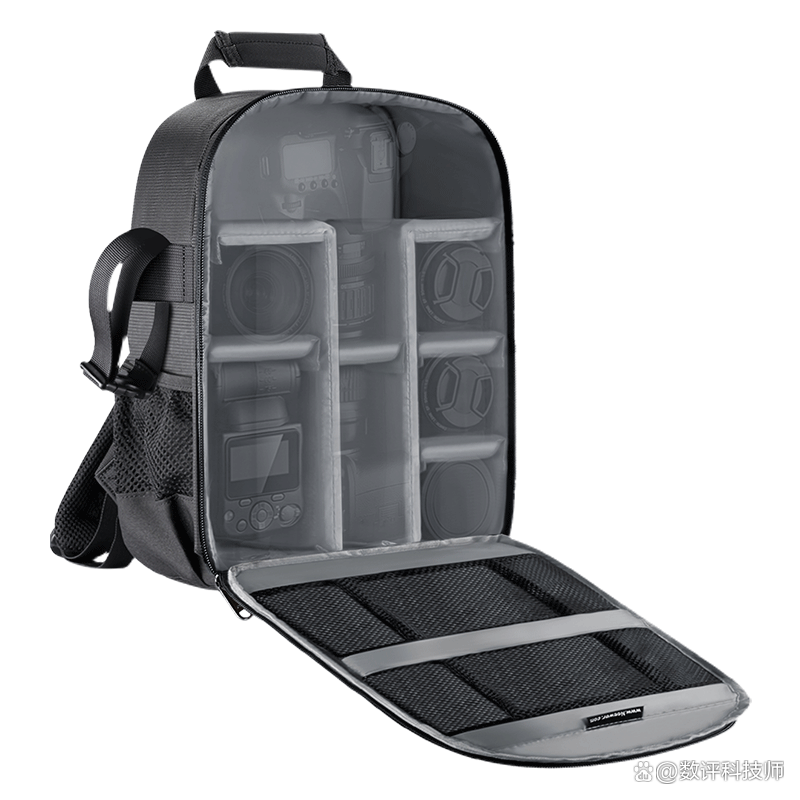
The main difference between a camera backpack and a shoulder camera bag is how the weight is carried and how the gear is accessed. A camera backpack is worn on both shoulders and usually offers more capacity, better load distribution, stronger outdoor comfort, larger divider systems, and room for laptops or tripods. A shoulder camera bag is worn on one shoulder or crossbody and usually offers faster access, a more compact profile, easier lens changes, and a more lifestyle-friendly appearance. A backpack supports longer carry. A shoulder bag supports quicker reach.
This difference affects nearly every part of the product. A backpack needs a padded back panel, two shoulder straps, balanced internal layout, and often a reinforced bottom because it may carry heavier loads. A shoulder bag needs a comfortable strap pad, flap or zipper opening, compact padded insert, and side-stable structure because the load sits on one side of the body. A backpack can feel protective but slower. A shoulder bag can feel agile but less suitable for heavy gear.
For brands developing custom camera bags, the first decision should not be “which style looks better?” It should be “how will the end user shoot?” A hiking photographer, travel creator, wedding photographer, street photographer, drone user, and casual mirrorless camera owner all behave differently. Once the user routine is clear, the correct style becomes much easier to choose.
What Is a Camera Backpack?
A camera backpack is a two-shoulder carrying bag designed to hold camera gear, lenses, accessories, and often a laptop or personal items in padded compartments. It usually includes adjustable dividers, EVA foam protection, soft lining, side or rear access, shoulder straps, back panel padding, tripod holder, and sometimes rain cover or waterproof fabric. It is built for users who need more capacity and longer carry comfort.
Camera backpacks are common among travel photographers, outdoor photographers, drone users, content creators, landscape photographers, and professionals who carry multiple pieces of equipment. The backpack format allows the bag to sit close to the body and distribute weight across both shoulders. Larger models may include a chest strap or waist belt to reduce movement during hiking or long travel days.
The biggest advantage of a camera backpack is carrying efficiency. It can hold more gear with better comfort than most shoulder bags. It can also separate gear into zones: camera compartment, laptop sleeve, personal storage, tripod area, accessory pockets, and sometimes wet-item or top storage sections.
| Camera Backpack Feature | Main Function | Why It Matters |
|---|---|---|
| Two Shoulder Straps | Distributes weight across both shoulders | Better for heavy gear and long carry |
| Back Panel | Adds comfort and structure | Reduces pressure from gear |
| Padded Camera Compartment | Protects cameras and lenses | Supports larger kits |
| Adjustable Dividers | Allows layout changes | Fits different lenses and bodies |
| Laptop Sleeve | Stores editing devices | Useful for travel and creators |
| Tripod Holder | Carries external gear | Helpful for outdoor photography |
| Side or Rear Access | Improves gear reach | Reduces need to fully unpack |
| Rain Cover or Coated Fabric | Supports outdoor use | Adds weather protection |
A backpack is usually the better platform when the product needs more engineering. Brands can add outdoor features, modular inserts, reinforced bottoms, breathable mesh, multiple access points, hidden pockets, drone sections, or expandable storage. But a backpack can become too large or complicated if the target user only carries one camera and one lens.
For Szoneier custom projects, camera backpacks can be developed in nylon, polyester, Oxford fabric, canvas, coated fabrics, TPU/PVC panels, ripstop fabrics, EVA padding, PE board support, breathable mesh, and custom logo trims. The style can move from budget daily backpacks to premium outdoor camera packs depending on material and structure.
What Is a Shoulder Camera Bag?
A shoulder camera bag is a one-shoulder or crossbody bag designed for fast access to camera gear. It may look like a messenger bag, satchel, compact case, or lifestyle shoulder bag. It usually includes a flap or zipper opening, padded insert, adjustable dividers, shoulder strap, soft lining, and accessory pockets. It is often chosen for city photography, street shoots, weddings, casual travel, and lighter camera kits.
The main advantage is access. A shoulder bag sits near the hand, so users can open the top flap or main zipper quickly. They do not need to remove a backpack from both shoulders, place it down, and open a rear panel. This makes shoulder bags popular for photographers who change lenses often, move through crowds, or need to react fast.
Shoulder camera bags also have strong style value. Canvas, waxed canvas, leather trims, PU patches, brushed lining, and metal hardware can create a premium lifestyle feel. Some brands design shoulder bags to look less like camera equipment and more like everyday carry bags. This can appeal to photographers who want discretion.
| Shoulder Camera Bag Feature | Main Function | Why It Matters |
|---|---|---|
| One-Shoulder Carry | Keeps bag close to hand | Fast access during shooting |
| Flap or Top Opening | Opens quickly | Good for lens changes |
| Removable Insert | Adds camera protection | Converts bag for daily use |
| Compact Layout | Holds lighter gear kits | Easier for city movement |
| Padded Shoulder Pad | Reduces shoulder pressure | Important for one-side load |
| Canvas or Lifestyle Shell | Creates premium appearance | Useful for fashion-led brands |
| Accessory Pockets | Organizes batteries and cards | Prevents small items from scratching gear |
| Soft Lining | Protects camera surfaces | Improves perceived quality |
The limitation is load. A shoulder bag places weight on one side of the body. It can become uncomfortable when carrying multiple camera bodies, large lenses, laptops, or drones for long periods. It may also swing more than a backpack while walking. For heavy outdoor use, shoulder bags are usually not the best choice.
For Szoneier manufacturing, shoulder camera bags can be made with canvas, waxed canvas, polyester, nylon, Oxford fabric, PU leather trims, genuine leather trims, EVA inserts, neoprene strap pads, and custom logo labels. They work especially well for brands targeting lifestyle photography, urban creators, wedding shooters, and mirrorless camera users.
Are They Used Differently?
Camera backpacks and shoulder camera bags are used differently because photographers move differently in different shooting scenes. A backpack is often used when the photographer needs to carry gear for longer periods, travel farther, or pack more equipment. A shoulder bag is used when the photographer needs fast access and carries a lighter kit.
A backpack is common in hiking, travel, landscape, outdoor, drone, wildlife, and airport situations. It allows the user to carry more comfortably and keeps gear organized for longer movement. A shoulder camera bag is common in street photography, weddings, city shoots, studio days, short travel walks, and daily creator work. It allows quick top access and a less technical look.
The difference is also psychological. A backpack often feels like preparation. It says the user is carrying a kit for a full day. A shoulder bag feels more immediate. It says the camera is part of the moment and should be reached quickly.
| Shooting Scenario | Better Style | Reason |
|---|---|---|
| Hiking Photography | Backpack | Better load distribution and outdoor support |
| Street Photography | Shoulder Bag | Faster access and smaller profile |
| Wedding Photography | Shoulder Bag or Backpack | Shoulder bag for fast access, backpack for backup gear |
| Travel Photography | Backpack | More capacity for camera, laptop, personal items |
| City Creator Work | Shoulder Bag or Compact Backpack | Depends on gear size and style preference |
| Drone Photography | Backpack | Better compartment and battery storage |
| Studio Transport | Backpack or Shoulder Bag | Depends on distance and gear load |
| Wildlife Photography | Backpack | Better for telephoto lenses and tripod support |
| Light Mirrorless Kit | Shoulder Bag | Compact and convenient |
| Full DSLR Kit | Backpack | Better weight and protection |
Brands should not force one product style into every user group. A camera backpack may rank well for outdoor and travel searches, while a shoulder camera bag may perform better for style, quick access, and street photography searches. Product collections can include both styles to cover different demand.
Szoneier can help develop product families where backpack and shoulder bag versions share brand materials, logo style, lining color, and divider quality, while each structure remains optimized for its own use case.
Which Style Feels More Professional?
Both styles can feel professional, but they communicate different kinds of professionalism. A camera backpack often feels professional because it carries more gear, protects equipment in a structured way, and supports long workdays. A shoulder camera bag feels professional when it gives fast access, refined appearance, and clean organization for active shooting. The more professional style depends on the customer’s work environment.
For outdoor photographers, a technical camera backpack with coated nylon, reinforced bottom, EVA dividers, laptop sleeve, tripod holder, and rain cover can feel more professional. For wedding photographers or street photographers, a canvas or leather-trimmed shoulder bag with soft lining and quick access may feel more polished and less bulky. For travel creators, a sleek backpack may look professional because it can hold camera gear and daily items together.
Professional feeling comes from details. A bag with cheap lining, weak dividers, rough zippers, and poor stitching will not feel professional even if it has the right shape. A shoulder bag with high-quality canvas, clean flap structure, dense insert, and premium strap can feel more professional than a poorly built backpack. A backpack with excellent back support and modular access can feel more professional than a stylish shoulder bag that becomes painful after one hour.
| Professional Signal | Backpack Expression | Shoulder Bag Expression |
|---|---|---|
| Protection | Larger padded compartment, reinforced bottom | Dense removable insert, padded walls |
| Access | Side/rear access, organized layout | Fast flap/top opening |
| Appearance | Technical, outdoor, travel-ready | Refined, urban, lifestyle |
| Comfort | Two straps, back panel, chest/waist support | Shoulder pad and crossbody stability |
| Capacity | Multiple bodies, lenses, laptop, drone | Smaller working kit |
| Brand Style | Rugged or modern | Premium casual or classic |
| User Trust | Strong load-bearing structure | Smooth shooting workflow |
For custom manufacturing, professionalism should be designed into both styles through materials, construction, and use logic. Szoneier can help brands choose the right materials and structure so the bag does not only look professional in photos but feels professional in daily use.
Which Bag Is More Comfortable?

A camera backpack is usually more comfortable for heavy gear and long carry because it distributes weight across both shoulders and can use padded back panels, chest straps, waist belts, and ergonomic shoulder straps. A shoulder camera bag is usually more comfortable for short shoots, light camera kits, and fast access because it keeps gear close and avoids the need to remove a backpack. When the gear load increases, backpacks usually win. When access speed and compact movement matter more, shoulder bags can feel better.
Comfort is not only about padding. It depends on weight distribution, strap width, body contact, bag stability, back ventilation, carry time, and user movement. A camera backpack can be uncomfortable if the straps are narrow, the back panel is hot, or the gear sits too far from the body. A shoulder bag can be comfortable if the load is light, the strap pad is wide, and the bag shape stays stable. Bad design can ruin either style.
For brands, comfort is a repeat-purchase issue. Customers may buy a camera bag for appearance, but they keep using it because it feels good. Complaints often come from shoulder pain, sweaty backs, bouncing straps, poor balance, or heavy empty weight. Szoneier can help brands build comfort into camera backpacks and shoulder camera bags through fabric choice, foam density, strap engineering, webbing width, neoprene padding, breathable mesh, and weight-aware construction.
How Does Weight Distribution Work?
Weight distribution describes how the bag spreads load across the body. Camera backpacks spread weight across both shoulders and often against the back. Larger models can transfer part of the load to the hips through a waist belt. Shoulder camera bags place most of the load on one shoulder, though crossbody wear can improve stability. This is the main reason backpacks are usually better for heavier gear.
Camera gear is dense. A small lens can weigh more than users expect. Add a camera body, laptop, drone, charger, batteries, filters, microphone, and tripod, and the load becomes serious. If all that weight hangs from one shoulder, fatigue appears quickly. If the load is balanced across a backpack system, users can carry longer with less strain.
However, backpack weight distribution also depends on internal layout. Heavy items should sit close to the user’s back and not too low or too far outward. If heavy lenses sit at the front of the bag, the backpack pulls backward. If a laptop sleeve lacks support, the bag can feel stiff or awkward.
| Carry Style | Weight Path | Comfort Strength | Comfort Risk |
|---|---|---|---|
| Camera Backpack | Both shoulders and back | Better for heavy and long carry | Can feel hot or bulky |
| Backpack with Waist Belt | Shoulders, back, hips | Best for hiking and heavy loads | More technical appearance |
| Shoulder Bag | One shoulder | Easy for light kits | Shoulder fatigue with heavy gear |
| Crossbody Shoulder Bag | Shoulder and torso | More stable than one-shoulder carry | Strap pressure across chest |
| Sling Style | One shoulder with body rotation | Fast access and compact carry | Not ideal for heavy kits |
| Hand Carry Case | Hand and arm | Good for short transport | Poor for long walking |
A simple comfort rule works well for product planning. If the bag must carry more than a small camera kit for over one hour, consider backpack structure. If the bag must support fast access and a compact load for short shoots, shoulder structure may be better.
Szoneier can help brands match strap system and internal layout with expected gear weight. This includes shoulder strap width, EVA padding, neoprene shoulder pads, back panel mesh, waist belt options, and internal divider placement.
Are Backpacks Better for Heavy Gear?
Backpacks are better for heavy gear in most cases because they distribute weight more evenly and allow stronger support systems. A backpack can carry multiple cameras, lenses, drone kits, laptops, tripods, and personal items with less one-sided strain. This makes backpacks suitable for outdoor photography, travel, landscape work, wildlife photography, and professional kits.
A heavy-gear camera backpack should not only be large. It should be engineered for load. Strong shoulder straps, breathable back panel, PE board support, reinforced bottom, EVA dividers, chest strap, waist belt, and strong webbing are all important. Without these, a large backpack can become uncomfortable and unsafe.
For heavy gear, internal placement is critical. Large lenses should sit close to the back. Laptop sleeves should be padded and suspended. Tripod holders should be reinforced. Bottom panels should include EVA foam or PE board support. If the bag is large but poorly organized, heavy gear may shift during movement and create discomfort.
| Heavy Gear Need | Backpack Solution | Material or Construction Detail |
|---|---|---|
| Multiple Lenses | Modular dividers | 8–10 mm EVA dividers |
| Laptop Storage | Dedicated sleeve | EVA padding and smooth lining |
| Tripod Carry | External holder | Reinforced webbing and side panel |
| Long Wear | Back support | Spacer mesh and PE board |
| Bottom Protection | Reinforced base | EVA foam plus 1680D Oxford |
| Load Stability | Chest/waist support | Adjustable webbing and buckles |
| Outdoor Use | Weather resistance | Coated nylon or Oxford fabric |
Backpacks also allow better separation between gear and personal items. This matters for travel creators who carry clothing, snacks, chargers, power banks, and cameras in one bag. A shoulder bag with heavy gear can become crowded and hard to balance.
For brands targeting professional or outdoor users, Szoneier can develop heavy-gear backpacks using high-denier Oxford fabric, nylon, coated materials, EVA padding, reinforced bottoms, breathable mesh, and customized divider layouts. A strong heavy-gear backpack should feel stable, not just spacious.
Do Shoulder Bags Cause Strain?
Shoulder bags can cause strain when they carry too much weight, use narrow straps, lack padded shoulder support, or swing away from the body. Because most weight sits on one shoulder, fatigue can build faster than with a backpack. This does not mean shoulder camera bags are uncomfortable by nature. It means they should be designed for the right gear load.
A shoulder camera bag works best with a moderate kit: one camera body, one or two lenses, batteries, cards, small accessories, and maybe a tablet. Once the bag holds multiple large lenses, laptop, drone, and heavy accessories, strain becomes more likely. The user may shift the bag from one shoulder to another, which interrupts shooting comfort.
Good shoulder bag design reduces strain through wide webbing, movable shoulder pad, neoprene or EVA padding, crossbody wear option, stable bag shape, and compact internal layout. The strap should not cut into the shoulder. The bag should not bounce heavily against the hip. The insert should hold gear close to the body.
| Shoulder Strain Cause | Design Solution | Customer Benefit |
|---|---|---|
| Narrow Strap | Wider webbing or padded shoulder pad | Less pressure |
| Heavy Load | Smaller capacity or backpack alternative | Better comfort expectation |
| Bag Swinging | Crossbody strap and stable body shape | More control |
| Hard Strap Edge | Soft binding or neoprene pad | Better touch comfort |
| Uneven Gear Placement | Balanced insert layout | Less pulling |
| Long Carry Time | Removable pad or lighter materials | Reduced fatigue |
Shoulder bags should be marketed honestly. They are excellent for fast access and lighter working kits. They are not the best solution for all-day heavy hiking loads. When product positioning matches real use, customers are happier.
Szoneier can customize shoulder camera bags with padded strap pads, neoprene sections, adjustable webbing, canvas or nylon shells, EVA inserts, and soft lining. The goal is to keep the bag agile while still protecting gear.
Which Style Fits Long Shoots?
Backpacks usually fit long shoots better when the photographer needs to carry gear for hours, especially outdoors, during travel, or across large venues. The two-shoulder structure reduces fatigue and supports larger loads. Shoulder bags can fit long shoots only when the gear load is light and the photographer needs frequent access, such as street shooting, event photography, or wedding work with a small active kit.
A long shoot creates different problems than a short walk. The bag must stay comfortable after the first hour. Straps must not dig into the body. The back panel should not overheat too quickly. The bag should allow gear changes without unpacking everything. Accessories should be easy to find. A backpack can carry more, but if access is poor, it may slow the photographer down. A shoulder bag is faster, but if it is too heavy, it becomes tiring.
Some professional users combine both. They may use a backpack for backup gear and a shoulder bag or sling for active gear. This is common for weddings, video production, studio travel, or location shoots. Brands can design product lines around this behavior.
| Long Shoot Type | Better Bag Style | Reason |
|---|---|---|
| Landscape Shoot | Backpack | Long carry, tripod, weather gear |
| Wedding Day | Shoulder bag plus backpack option | Fast access plus backup storage |
| Street Photography | Shoulder bag | Quick access and low profile |
| Travel Day | Backpack | Camera plus laptop and personal items |
| Studio Location Shoot | Backpack or hard case | Transport multiple items |
| Hiking Content Shoot | Backpack | Comfort and outdoor storage |
| City Creator Shoot | Shoulder bag or compact backpack | Depends on gear and style |
| Wildlife Shoot | Backpack | Heavy lenses and tripod support |
For long shoots, material choice affects comfort. Lightweight nylon, balanced polyester Oxford, breathable mesh, EVA straps, neoprene shoulder pads, and strong webbing can make a big difference. A heavy canvas bag may look premium but become tiring if oversized. A technical backpack may carry well but feel too bulky in a small event space.
Szoneier can help brands build long-shoot comfort into both styles by adjusting fabric weight, strap structure, padding density, capacity, and access layout.
How Do Straps Affect Comfort?
Straps affect comfort by controlling pressure, stability, adjustability, and load movement. A good camera bag strap is both a comfort component and a safety component. It supports the weight of expensive gear and determines how the bag feels during real use. Poor straps can make an otherwise good bag feel cheap or painful.
Backpack straps should be shaped, padded, breathable, and strongly anchored. They may use EVA foam, sponge, spacer mesh, nylon webbing, polyester webbing, and bartack stitching. Shoulder camera bag straps should be wide enough, adjustable, smooth against clothing, and often include a movable padded section. Neoprene can be useful for shoulder pads and handle grips because it adds soft cushioning and flexibility.
Strap hardware also matters. Buckles should adjust smoothly. D-rings should not twist. Metal hardware can feel premium but adds weight. Plastic buckles can be lighter and practical if quality is good. Webbing should not slip under load.
| Strap Component | Backpack Use | Shoulder Bag Use | Quality Point |
|---|---|---|---|
| Webbing | Load adjustment and anchor strength | Main carry strap | Width and tensile strength |
| EVA Padding | Shoulder comfort | Shoulder pad support | Density and recovery |
| Neoprene | Handle or comfort layer | Soft shoulder pad | Good for flexible cushioning |
| Mesh | Breathability against body | Less common but useful | Comfort in warm weather |
| Buckles | Strap adjustment | Length adjustment | Smooth and secure |
| Bartack Stitching | Anchor reinforcement | Strap end strength | Prevents tearing |
| Strap Shape | Ergonomic body fit | Crossbody stability | Reduces pressure points |
A strap should be tested while the bag is packed. Empty-bag comfort tells very little. A fully loaded camera backpack or shoulder bag reveals whether the strap twists, slips, digs into the shoulder, or pulls the bag away from the body.
Szoneier can customize straps with different webbing widths, foam thicknesses, neoprene pads, mesh surfaces, buckle types, stitching methods, and logo details. For camera bags, strap comfort is not a small detail. It is one of the reasons customers keep using the product.
How Much Gear Can Each Bag Carry?
Camera backpacks usually carry more gear than shoulder camera bags because they have larger body volume, deeper padded compartments, stronger load-bearing systems, and better space for laptops, drones, tripods, personal items, and accessories. Shoulder camera bags usually carry less gear, but they are easier to access and better suited for lighter working kits. The right choice depends on how much equipment the photographer actually carries during a real shoot, not how much the bag can theoretically hold.
Capacity should never be planned only by external dimensions. A camera bag can look large but waste space if the divider system is poorly designed. A smaller bag can carry more useful gear if the internal layout is clean. A camera backpack may offer 18L, 25L, or 35L volume, but if the laptop sleeve presses into the camera compartment or the top pocket collapses into the dividers, real usable capacity becomes lower. A shoulder bag may look compact, but a well-fitted insert can hold one camera body, two lenses, batteries, memory cards, and a tablet very efficiently.
For brands, capacity planning should start with a target gear list. A product designed for mirrorless travel creators should not copy the same layout as a product designed for wildlife photographers. A shoulder bag for wedding photographers should prioritize fast access to an active kit. A camera backpack for outdoor creators should prioritize balanced load, protected lens slots, laptop storage, and external tripod support. Szoneier can help brands translate gear lists into dimensions, dividers, padding thickness, fabric choice, and finished bag structure.
What Fits in a Backpack?
A camera backpack can fit a larger and more varied gear setup, such as one or two camera bodies, multiple lenses, a laptop, drone, chargers, power banks, filters, microphones, tripod, water bottle, jacket, and personal items. The backpack format gives more vertical and horizontal space for dedicated compartments, making it suitable for travel, outdoor photography, drone work, video creation, and professional use.
Backpacks are especially useful when the user carries gear for a full day. The internal layout can be divided into a camera compartment, laptop sleeve, accessory panel, top storage, side pockets, and tripod holder. Larger models can include a modular camera cube or removable divider system. This makes the backpack more flexible for customers who carry different gear on different days.
However, more capacity can become a problem if it encourages overpacking. A large camera backpack with poor support can become uncomfortable quickly. If the internal structure is too open, gear may move inside. If the padding is too thick, usable capacity shrinks. Good backpack capacity is not just bigger space; it is organized space.
| Backpack Capacity Zone | Typical Items | Construction Need | Material Suggestion |
|---|---|---|---|
| Main Camera Compartment | Camera body, lenses, flash, drone controller | Adjustable EVA dividers | Soft lining and 5–10 mm EVA |
| Laptop Sleeve | 13–16 inch laptop or tablet | Suspended padded sleeve | EVA foam and smooth lining |
| Top Storage | Jacket, headphones, personal items | Flexible fabric compartment | Nylon, polyester, Oxford fabric |
| Side Pocket | Water bottle, small tripod, monopod | Elastic or reinforced pocket | Mesh or coated fabric |
| Front Organizer | Batteries, memory cards, cables | Small pockets and zipper panels | Polyester lining, mesh |
| Tripod Holder | Tripod or light stand | Webbing straps and base support | Reinforced Oxford or nylon |
| Rain Cover Pocket | Folded rain cover | Hidden pocket | Coated polyester cover fabric |
| Back Panel Area | Support structure | PE board, foam, mesh | Spacer mesh and EVA |
A practical backpack capacity strategy is to design around use tiers. A compact 10–15L backpack can fit one camera, two lenses, tablet, and small accessories. A 20–25L backpack can fit a camera kit, laptop, drone, and travel items. A 30L+ backpack can support professional outdoor gear, larger lenses, and more personal storage. Each tier needs different strap and back support.
Szoneier can help brands create backpack capacities based on real photography categories: mirrorless creator backpack, travel camera backpack, outdoor hiking camera backpack, drone camera backpack, laptop-camera backpack, or premium professional camera backpack. The capacity should feel natural for the user, not forced into a generic shell.
What Fits in a Shoulder Bag?
A shoulder camera bag usually fits a lighter and more active shooting kit: one camera body, one to three lenses, batteries, memory cards, filters, cleaning cloth, phone, wallet, small tablet, and a few accessories. Larger shoulder camera bags can fit more, but comfort decreases as weight increases. The strength of a shoulder bag is not maximum capacity. Its strength is keeping the active kit close and easy to reach.
Shoulder bags work well for photographers who do not want to carry their full gear collection during every shoot. Street photographers, wedding photographers, event shooters, and travel users often prefer a smaller active kit. They want the camera ready, the lens accessible, and accessories organized without removing a backpack.
A shoulder bag may use a padded insert instead of a fully built-in camera compartment. This keeps the outer shape clean and lets the user remove the insert when using the bag as an everyday bag. Canvas, waxed canvas, polyester Oxford, nylon, PU leather trim, and leather details are common because shoulder bags often carry stronger lifestyle appeal.
| Shoulder Bag Zone | Typical Items | Construction Need | Material Suggestion |
|---|---|---|---|
| Main Insert | Camera body and lenses | Removable EVA insert | Soft lining and dividers |
| Front Pocket | Batteries, cards, phone | Organizer slots | Polyester lining or mesh |
| Flap Area | Quick cover and style | Secure closure | Canvas, nylon, PU/leather trim |
| Side Pocket | Small bottle or lens cap | Compact elastic pocket | Mesh or fabric panel |
| Back Pocket | Documents or tablet | Flat sleeve | Padded lining if needed |
| Strap Pad | Shoulder comfort | Movable padded pad | Neoprene, EVA, or sponge |
| Bottom Panel | Basic shock protection | EVA or reinforced fabric | Oxford, canvas, or coated fabric |
| Logo Area | Brand identity | Patch or woven label | Rubber, PU, leather, embroidery |
Shoulder bag capacity should remain honest. A shoulder bag that claims to carry too much may disappoint users because it becomes heavy and uncomfortable. A good shoulder camera bag should feel purposeful: enough room for the working kit, not so much room that the bag becomes a one-shoulder backpack.
Szoneier can customize shoulder camera bags for different market levels. A budget shoulder bag may use polyester Oxford and a simple padded insert. A lifestyle premium version may use waxed canvas, leather trim, and a soft EVA insert. A technical shoulder bag may use coated nylon, water-repellent zipper, and reinforced padding.
Do Photographers Need Laptop Space?
Many photographers and creators need laptop space, especially travel photographers, YouTubers, drone users, wedding photographers, commercial shooters, and digital nomads. Camera backpacks are usually better for laptop storage because they can include a dedicated padded sleeve close to the back panel. Shoulder bags can include tablet or small laptop sleeves, but larger laptops make shoulder carry heavier and less comfortable.
Laptop compartments should be planned carefully. A laptop is flat, wide, and sensitive at corners. It should not press directly against camera bodies or lenses. A good laptop sleeve should be padded, smooth-lined, and slightly suspended above the bottom edge to reduce impact when the bag is placed down. For backpacks, the laptop sleeve often sits at the back. For shoulder bags, it may sit in a rear flat pocket or separate central sleeve.
The decision depends on target customer. A street photographer may not need laptop space. A travel creator almost certainly does. A wedding photographer may need space for a tablet, contract folder, or laptop depending on workflow. A drone user may need tablet controller storage more than a full laptop.
| Device Need | Backpack Suitability | Shoulder Bag Suitability | Design Note |
|---|---|---|---|
| Tablet | Very suitable | Suitable | Light and easy to add |
| 13-inch Laptop | Suitable | Possible in larger shoulder bags | Watch shoulder weight |
| 14-inch Laptop | Very suitable | Limited | Needs padded structure |
| 15.6-inch Laptop | Very suitable | Not ideal for most shoulder bags | Backpack recommended |
| 16-inch Laptop | Best in backpack | Usually too heavy | Strong back panel needed |
| Drone Controller Tablet | Suitable | Suitable in selected designs | Needs separate pocket |
| Documents/Folder | Suitable | Suitable | Flat sleeve enough |
Laptop space also changes the product search intent. Customers searching for camera backpacks often include “camera backpack with laptop compartment” or “travel camera backpack laptop.” Shoulder bag searches may focus more on “camera messenger bag,” “camera shoulder bag for mirrorless,” or “camera bag for street photography.” Brands can use these differences to plan product pages and SEO content.
Szoneier can develop laptop-camera hybrid backpacks and shoulder bags with EVA padding, suspended sleeves, smooth lining, water-resistant shell fabric, and custom sizing. The laptop sleeve should protect the device without stealing too much camera space.
Which Bag Fits Drone Gear?
Camera backpacks usually fit drone gear better than shoulder camera bags because drone kits need structured space for the drone body, controller, batteries, propellers, charger, cables, camera gear, and sometimes a laptop or tablet. A backpack can provide larger compartments, better weight distribution, and more stable movement. A shoulder bag can fit compact drones or accessories, but it becomes crowded if the full kit is included.
Drone gear needs compartment planning because the parts are irregular. A drone body has arms, propellers, sensors, and delicate surfaces. Batteries are dense and should not float freely. Controllers need protection from pressure on joysticks. Chargers and cables should be separated from camera bodies and lenses. A standard open camera compartment may not be enough unless dividers are shaped properly.
Backpacks can use molded EVA inserts, adjustable dividers, elastic battery slots, mesh pockets, and reinforced panels to hold drone gear securely. Shoulder bags can work for minimal drone kits, but heavy drone setups usually feel better in backpacks.
| Drone Gear Item | Protection Need | Better Bag Style | Construction Suggestion |
|---|---|---|---|
| Drone Body | Shaped space and pressure control | Backpack | Molded EVA or shaped dividers |
| Controller | Joystick protection | Backpack or larger shoulder bag | Padded pocket or molded section |
| Batteries | Separate stable slots | Backpack | Elastic loops or divided pockets |
| Charger | Hard accessory separation | Backpack | Mesh or zip pocket |
| Propellers | Flat protected storage | Backpack or shoulder bag | Slim sleeve |
| Tablet | Smooth padded section | Backpack | Dedicated sleeve |
| Camera Gear | Separate from drone items | Backpack | Dual-zone layout |
| Travel Items | Extra storage | Backpack | Top or front compartment |
Drone-focused products often perform well when marketed as camera-drone hybrid bags. This allows brands to target modern creators who shoot both photo and video. The bag should not feel like a generic backpack with dividers added. It should show thoughtful storage for drone accessories.
Szoneier can develop drone camera backpacks with molded EVA, PE board support, Oxford fabric, nylon, water-resistant coatings, soft lining, battery pockets, laptop sleeves, and custom logo details. For smaller drone kits, Szoneier can also produce compact shoulder bags or camera cubes.
How Should Capacity Be Planned?
Capacity should be planned by user scenario, gear list, carry comfort, access frequency, and product price tier. The best process is to define what the user must carry, what they may carry, and what should be left out. A camera bag that tries to carry everything can become too heavy, too bulky, and too expensive. A bag that carries too little becomes frustrating.
Capacity planning should include both volume and layout. Volume tells how much space the bag has. Layout tells how useful that space is. A good layout separates camera gear, laptop, accessories, personal items, wet items, and external equipment. Dividers should be adjustable, but the base structure should guide users naturally.
Brands should also consider padding thickness. More padding improves protection but reduces internal space. A backpack can absorb this trade-off more easily than a shoulder bag because it has more volume. In shoulder bags, every millimeter of foam affects usable space and carry feel.
| Planning Question | Backpack Impact | Shoulder Bag Impact |
|---|---|---|
| How many lenses? | Can support more with dividers | Best for 1–3 lenses |
| Is a laptop needed? | Easy to add padded sleeve | Adds weight quickly |
| Is a drone included? | Suitable for structured layout | Limited to compact kits |
| Is tripod carry needed? | External holder works well | Usually less stable |
| Is fast access key? | Needs side/rear access design | Natural advantage |
| Is long carry expected? | Better support system | Weight must stay low |
| Is style important? | Can be technical or minimal | Strong lifestyle potential |
| Is low MOQ needed? | Standard materials help | Simple inserts help |
A useful product line strategy is to build three capacity levels: compact shoulder bag or sling for active shooting, mid-size backpack for travel creators, and outdoor backpack for larger gear and weather protection. This gives customers choices and helps brands cover more search intent.
Szoneier can help brands turn capacity plans into finished bag dimensions, divider kits, material choices, sample prototypes, and cost comparisons. Capacity should support the customer’s work, not just fill a product specification sheet.
Which Bag Gives Faster Access?

Shoulder camera bags usually give faster access because the main compartment sits near the hand and can often be opened while the bag remains on the body. This makes them ideal for street photography, weddings, events, travel walks, and situations where the photographer needs to react quickly. Camera backpacks can also provide fast access when designed with side openings, rear panels, or top quick-access zones, but they usually require more movement than shoulder bags.
Fast access is not only about speed. It is also about safety and control. A bag that opens quickly but lets gear fall out is poorly designed. A bag that protects gear but takes too long to open can frustrate users. Shoulder bags naturally support quick top access, but they need secure flaps, strong zippers, and stable inserts. Backpacks need smart access points that do not weaken weather protection or gear security.
For brands, access design can define the user group. Street photographers often value speed and discretion. Outdoor photographers may value secure rear access and weather protection. Travel creators may want side access to grab the camera without fully removing the backpack. Wedding photographers may prefer a shoulder bag for active lenses and a backpack for backup gear. Szoneier can help brands plan access around shooting behavior, not just appearance.
Are Shoulder Bags Quicker?
Shoulder bags are usually quicker because they hang at the side or across the body and open from the top or front. A photographer can lift a flap, unzip the top, grab a camera, change a lens, and continue shooting without placing the bag down. This is especially useful in fast-moving environments such as street scenes, wedding venues, events, markets, public transport, and city travel.
The speed comes from position. The bag stays within hand reach. The user can see or feel the compartment quickly. The top opening often reveals the active kit immediately. A shoulder bag can become part of the shooting rhythm rather than a storage container that must be removed.
However, quick access needs control. If the flap is too loose, the bag may open unintentionally. If the zipper is stiff, access slows. If the insert is too deep, gear is hard to grab. If accessories float freely, users waste time searching. A good shoulder camera bag should be quick but not chaotic.
| Shoulder Bag Access Feature | Speed Benefit | Risk | Better Design |
|---|---|---|---|
| Top Opening | Fast camera reach | Rain or dust exposure | Add flap or zipper cover |
| Large Flap | Quick visual access | Can slow if buckles are complex | Use magnetic or quick-release closure |
| Padded Insert | Organized active kit | Insert may shift | Fit insert snugly |
| Front Pocket | Fast accessory reach | Small items may mix | Add organizer slots |
| Crossbody Carry | Keeps bag stable | Strap may press body | Add padded shoulder pad |
| Light Capacity | Less digging | Limited gear | Position as active kit bag |
Shoulder bags are quicker when the user carries fewer items. If the bag is overloaded, speed disappears because gear becomes crowded. Product pages should explain the ideal load clearly. A shoulder camera bag is not supposed to replace a full expedition backpack.
Szoneier can develop fast-access shoulder camera bags with canvas, nylon, Oxford fabric, water-resistant coating, EVA inserts, quick-release closures, soft lining, and strap pads. The goal is to make the bag feel smooth in real shooting moments.
How Do Side-Access Backpacks Work?
Side-access backpacks work by adding a camera opening on the left or right side of the bag so users can swing one shoulder strap off, rotate the backpack forward, and grab the camera without fully removing the bag. This design brings some of the speed of a shoulder bag into a backpack format. It is popular for travel camera backpacks, outdoor creator bags, and mirrorless camera backpacks.
Side access works best when the camera compartment is positioned correctly. The camera body should sit near the side door with the grip facing the user. The zipper should open smoothly. The divider should hold the camera securely so it does not fall out when the side panel opens. The side wall should have enough padding because the opening area can be weaker than a closed panel.
Side access also creates weather and security questions. A side zipper may be exposed to rain. It may also be easier to access in crowded places if not designed carefully. Water-repellent zippers, zipper garages, flaps, and thoughtful placement can reduce these risks.
| Side-Access Design Point | Why It Matters | Better Construction |
|---|---|---|
| Camera Position | Controls grab speed | Place active camera near side door |
| Divider Support | Prevents gear falling out | Foldable EVA divider around camera body |
| Zipper Quality | Affects smooth access | Use reliable zipper and puller |
| Weather Protection | Reduces leakage | Water-repellent zipper or flap |
| Door Padding | Protects side impact | EVA foam in access panel |
| Opening Angle | Controls usability | Open enough for hand reach |
| Security | Prevents accidental access | Hidden zipper path or lockable puller |
Side access is not always needed. A professional hiking backpack may prioritize rear access for security and full layout view. A travel creator backpack may benefit greatly from side access. A drone backpack may need a larger front or rear panel instead.
Szoneier can customize side-access camera backpacks with EVA side panels, water-resistant zippers, reinforced divider structures, and ergonomic strap layouts. During sampling, side access should be tested with real gear because small pattern changes can affect speed and safety.
Is Rear Access Safer?
Rear access is often safer for camera backpacks because the camera compartment opens from the back panel, which faces the user’s body when worn. This makes it harder for others to open the bag in crowded places and can protect the main zipper from direct rain exposure. Rear access also allows a wide opening, giving users a full view of the divider layout.
Rear access is popular in travel and outdoor camera backpacks. The user usually removes the backpack, places it front-side down, and opens the back panel to access gear. This keeps the harness side up and can prevent the front shell from touching the ground if designed properly. It also allows a cleaner external appearance because the main camera access is hidden.
The downside is speed. Rear access is slower than shoulder bag top access or backpack side access. It may not suit street photographers who need instant reach. It is better for users who value security, organization, and full compartment access.
| Rear Access Feature | Advantage | Limitation | Best Use |
|---|---|---|---|
| Hidden Main Opening | Better security | Slower access | Travel and city commuting |
| Full Compartment View | Easy packing | Requires removing bag | Outdoor and professional kits |
| Protected Zipper Position | Less direct rain exposure | Back panel must be strong | Weather-aware backpacks |
| Back Panel Integration | Clean exterior | More complex sewing | Premium backpacks |
| Gear Safety | Less accidental opening | Not ideal for quick shooting | Drone and multi-lens kits |
Rear access should be paired with a comfortable back panel. Since the zipper and opening are part of the back structure, the design must avoid discomfort. Padding, mesh, zipper placement, and seam thickness must be planned carefully.
Szoneier can support rear-access camera backpack development with padded back panels, PE board support, breathable mesh, smooth zipper paths, EVA dividers, and hidden security-oriented layouts. This style is especially useful for premium travel and outdoor camera backpacks.
Do Flaps Slow Access?
Flaps can slow access if they use complex buckles, stiff materials, or overly secure closures, but they can also improve weather protection, security, and style. In shoulder camera bags, flaps are common because they cover the main opening and create a classic camera messenger look. The design challenge is to make the flap protective without making the bag annoying to open.
A flap with magnetic closure or quick-release buckle can be fast. A flap with traditional belt buckles may look premium but slow down frequent shooting. A flap with hidden zipper underneath can improve security but adds another step. A short flap may open quickly but offer less rain protection. A longer flap protects better but may get in the way.
For backpacks, flap-like storm guards may cover zippers to improve water resistance. These flaps should not block access too much. A zipper flap that constantly catches the puller becomes frustrating.
| Flap Design | Access Speed | Protection Level | Best Use |
|---|---|---|---|
| Magnetic Flap | Fast | Medium | Lifestyle shoulder bags |
| Quick-Release Buckle Flap | Medium-fast | Medium to high | Outdoor messenger bags |
| Traditional Buckle Flap | Slow | Medium | Vintage premium bags |
| Flap + Zipper | Medium | Higher | Travel shoulder bags |
| Storm Flap over Zipper | Medium-fast | Weather protection | Outdoor backpacks |
| Short Top Flap | Fast | Lower | City camera bags |
| Long Cover Flap | Slower | Higher | Rain-aware shoulder bags |
The right flap depends on user behavior. A wedding photographer may prefer faster closures. A lifestyle brand may prefer a classic buckle look. An outdoor brand may use quick-release buckles and water-resistant fabric. A street photographer may want silent magnetic access.
Szoneier can customize flap shape, closure type, fabric weight, lining, padding, buckles, magnets, zipper combinations, and logo placement. A flap should support the bag’s personality while respecting the photographer’s need for speed.
Which Style Fits Street Photography?
Shoulder camera bags usually fit street photography better because they are compact, fast, discreet, and easy to access while moving. Street photographers often carry a light kit and need to react quickly. A shoulder bag or small crossbody camera bag keeps gear close without the bulk of a backpack. It also looks more casual in city environments.
Street photography values rhythm. The user walks, observes, shoots, changes position, and sometimes changes lenses quickly. A large backpack can feel slow or too obvious. A shoulder bag with a quiet flap, soft insert, and compact profile feels more natural.
However, a compact backpack can also work for street photography if the user carries more gear or wants better weight distribution. The key is to avoid overbuilt designs. A street camera backpack should be slim, low-profile, and quick-access.
| Street Photography Need | Better Style | Reason |
|---|---|---|
| Fast Camera Reach | Shoulder bag | Top or flap access is quick |
| Low Profile | Shoulder bag | Looks like daily carry |
| Light Gear Kit | Shoulder bag | One body and small lens set fit well |
| Longer City Walks | Compact backpack | Better weight distribution |
| Rainy City Use | Either style | Depends on fabric and closure |
| Discretion | Shoulder bag | Less technical appearance |
| Laptop Carry | Backpack | More comfortable for electronics |
For street-focused shoulder bags, materials matter. Canvas, waxed canvas, soft nylon, matte polyester, and leather trims can make the bag look less like equipment. Soft lining and dense EVA inserts protect gear without creating a bulky shape.
Szoneier can help brands develop street photography shoulder bags that balance quiet appearance, quick access, and reliable protection. This style works well for mirrorless camera users, urban creators, travel influencers, and lifestyle photography brands.
Which Bag Protects Cameras Better?
Camera backpacks usually protect more gear better because they have more space for padded dividers, reinforced bottoms, laptop sleeves, structured side walls, and balanced load systems. Shoulder camera bags can also protect cameras very well, especially for lighter kits, when they use dense EVA inserts, soft lining, stable compartments, and reinforced bottom panels. The real answer is not only about style. Protection depends on construction quality, padding design, compartment fit, material selection, and how much gear the user carries.
A backpack has a natural advantage when the kit is heavy or complex. It can hold multiple camera bodies, lenses, drone parts, laptop, tripod, and accessories in separate zones. It also keeps the weight closer to the body, reducing swing and internal movement. A shoulder camera bag has a natural advantage for quick control of a smaller active kit. Because the bag stays close to the hand, users can open it often without placing it on the ground. This reduces some handling risks during fast shoots.
For brands, the best protection strategy begins with the gear profile. A shoulder bag for one mirrorless camera and two compact lenses can be excellent. A shoulder bag for two DSLR bodies, laptop, telephoto lens, and drone batteries will feel overloaded and less protective. A backpack for a small kit can feel excessive if the user wants simple city carry. Protection is strongest when the bag size matches the load.
Szoneier can help brands develop both styles with suitable materials: nylon, polyester, Oxford fabric, canvas, coated fabrics, waxed canvas, neoprene padding zones, EVA foam dividers, PE board support, soft lining, webbing reinforcement, and custom logo details. A good camera bag protects not by being huge, but by placing the right protective materials in the right locations.
How Do Padded Dividers Help?
Padded dividers help by separating cameras, lenses, drones, flashes, chargers, filters, and accessories so they do not hit each other during movement. Most padded dividers use EVA foam, PE foam, or layered foam covered with soft lining fabric. They often attach through hook-and-loop systems, allowing users to adjust the interior layout.
In backpacks, dividers usually build a larger modular wall system. Users can create slots for lenses, camera bodies, drone controllers, batteries, and laptop-adjacent accessories. Backpack dividers can be deeper and taller because the bag has more internal volume. This makes backpacks better for mixed gear setups.
In shoulder bags, dividers usually sit inside a removable insert or smaller padded compartment. They are often shorter and more compact. This supports fast access because the user can look down and grab gear quickly. However, dividers in shoulder bags must be firm enough to stop lenses from leaning or rolling when the bag swings at the hip.
| Divider Factor | Backpack Use | Shoulder Bag Use | Key Insight |
|---|---|---|---|
| Divider Height | Taller, deeper dividers | Shorter, quick-access dividers | Must match bag depth |
| Foam Thickness | 5–10 mm EVA common | 5–8 mm EVA common | Heavy gear needs firmer foam |
| Layout Flexibility | High, supports multiple kits | Medium, supports active kit | Do not overcomplicate small bags |
| Access Speed | Needs side/rear/top planning | Naturally fast from top | Layout affects real speed |
| Gear Stability | Strong for heavy kits | Good for light to medium kits | Bag swing must be controlled |
| Removability | Optional camera cube or fixed section | Often removable insert | Adds daily-use flexibility |
Padded dividers should not feel flimsy. A customer may not know foam density, but they can immediately feel whether dividers stand upright. Weak dividers make a bag feel cheap and risky. Strong dividers create trust as soon as the bag opens.
Szoneier can customize divider thickness, lining color, hook-and-loop strength, fold design, label placement, and compartment layout for both backpacks and shoulder bags. For camera bag collections, consistent divider quality across styles helps the brand feel professional.
Do Backpacks Protect More Gear?
Backpacks protect more gear because they offer larger internal volume, better load distribution, and more separate storage zones. A camera backpack can hold active gear, backup gear, laptop, drone, tripod, personal items, and accessories in different compartments. This reduces crowding and lowers the risk of internal collision.
A backpack also allows better placement of heavier items. Lenses and camera bodies can sit close to the back panel for balance. A laptop can sit in a suspended sleeve. A tripod can attach outside. Small accessories can stay in mesh or zip pockets. This structured layout gives backpacks a protection advantage when the gear list is larger.
However, backpacks protect more gear only if the layout is well designed. A large open compartment without stable dividers can be risky. A backpack with too many pockets but weak padding can feel organized but not protective. A heavy bag with poor straps can swing and create internal movement. Size alone is not protection.
| Gear Type | Backpack Protection Advantage | Shoulder Bag Limitation |
|---|---|---|
| Multiple Camera Bodies | Separate padded zones | Becomes crowded quickly |
| Long Lenses | Deeper divider channels | May not fit comfortably |
| Laptop | Dedicated back sleeve | Adds one-side weight |
| Drone Kit | Modular or molded compartments | Limited space |
| Tripod | External holder with webbing | Less stable attachment |
| Flash and Audio Gear | Organizer panels | Smaller pocket capacity |
| Personal Items | Separate top/front section | May mix with camera gear |
| Wet or Dirty Items | Dedicated outside pocket possible | Less room for separation |
For professional or outdoor users, backpack protection is usually more scalable. It can handle future gear upgrades better. A photographer may start with two lenses and later add a drone, laptop, or additional body. A backpack can adapt more easily.
Szoneier can help brands create backpack protection systems for different user groups: travel creators, outdoor photographers, drone users, professional event shooters, or daily camera-laptop users. The final design can include removable cubes, adjustable dividers, reinforced bottom panels, and weather-resistant materials.
Do Shoulder Bags Need Inserts?
Shoulder camera bags usually need padded inserts unless the entire bag is built as a dedicated camera bag with integrated padding. Inserts create a protective camera compartment inside the outer shell. They separate gear, absorb impact, and allow the bag to keep a clean lifestyle shape. A shoulder bag without an insert may look nice, but it will not protect cameras properly.
The insert is especially important for canvas, waxed canvas, leather-trimmed, or lifestyle shoulder bags. These bags often use a softer outer structure, so the insert becomes the main protection system. A good insert uses EVA foam, soft lining, adjustable dividers, reinforced bottom, and sometimes a top cover.
Removable inserts also add versatility. Users can take out the camera insert and use the bag as an everyday shoulder bag. This is a strong selling point for lifestyle brands. But the insert must fit properly. A loose insert slides and reduces protection. A tight insert distorts the bag shape and slows access.
| Insert Detail | Why It Matters | Better Design Choice |
|---|---|---|
| Foam Wall | Main impact protection | 5–10 mm EVA or PE foam |
| Soft Lining | Prevents scratches | Brushed polyester or tricot |
| Divider System | Separates lenses and body | Adjustable EVA dividers |
| Bottom Padding | Protects from table/floor impact | Thicker EVA base |
| Top Cover | Reduces dust and pressure | Optional flap or zip cover |
| Fit in Outer Bag | Prevents movement | Snug dimensions |
| Handle or Pull Tab | Easy removal | Reinforced fabric or webbing |
A shoulder bag insert should match the intended kit. A street photography insert may hold one body and two lenses. A wedding active-kit insert may hold two lenses and flash accessories. A compact travel insert may hold a mirrorless camera, charger, and filters.
Szoneier can design shoulder bag inserts as removable cubes, open-top padded trays, zipper inserts, or built-in divider systems. The choice depends on whether the brand wants a pure camera bag or a lifestyle bag that can convert.
Is Bottom Padding Important?
Bottom padding is important for both backpacks and shoulder camera bags because the bottom panel often receives the strongest daily impact. Users place bags on floors, car trunks, benches, stone steps, wet ground, and tables. A thin bottom panel can transmit shock directly to cameras and lenses.
Backpacks usually need stronger bottom padding because they often carry heavier loads and are placed on rougher surfaces during travel or outdoor use. A backpack bottom may use EVA foam, PE board, reinforced Oxford fabric, 1680D bottom fabric, TPU/PVC coated panels, or rubber feet. Shoulder bags also need bottom padding, especially if the camera insert sits directly at the base.
For shoulder bags, bottom padding must balance protection and shape. Too much padding can make a lifestyle bag look boxy. Too little padding makes the insert feel weak. A removable insert with a thicker base can solve this without changing the outer style too much.
| Bottom Protection Method | Backpack Use | Shoulder Bag Use | Benefit |
|---|---|---|---|
| EVA Foam Base | Common and recommended | Common inside insert | Absorbs impact |
| PE Board Support | Useful for heavy gear | Useful in larger bags | Spreads pressure |
| Reinforced Oxford Bottom | Strong outdoor option | Less common but possible | Resists abrasion |
| TPU/PVC Bottom Panel | Wet-ground protection | Best for rugged styles | Blocks moisture |
| Rubber Feet | Structured premium bags | Messenger/case styles | Reduces direct contact |
| Double-Layer Fabric | Entry to mid-range bags | Common simple upgrade | Improves wear resistance |
Bottom padding is one of those features customers only notice when it fails. If a lens gets a hard knock when the bag touches the ground, the whole product feels unsafe. If the base feels stable, users trust the bag more.
Szoneier can customize bottom structures for different product positions, from lightweight daily shoulder bags to rugged outdoor camera backpacks. This includes material reinforcement, foam thickness, PE board, and waterproof bottom options.
Which Style Handles Shock Better?
A camera backpack usually handles shock better for larger gear loads because it has more space for layered padding, reinforced panels, stable load placement, and stronger carry systems. A shoulder camera bag handles shock well for smaller gear loads when it uses a dense padded insert and stable strap design. For maximum crush protection, a hard case or semi-rigid case may outperform both, but it is less comfortable for daily carry.
Shock handling depends on how force moves through the bag. In a backpack, force can be spread across the back panel, side walls, bottom, and divider system. Heavy gear can be placed closer to the body. The bag usually swings less if straps are well designed. In a shoulder bag, the bag may swing more, especially while walking quickly. This can create internal movement if the insert is loose.
However, shoulder bags can reduce handling shock in another way: they are opened and used without being placed down as often. A backpack may be removed and set on the ground repeatedly. A shoulder bag stays on the body. That can reduce some ground-impact events during short shoots.
| Shock Scenario | Backpack Performance | Shoulder Bag Performance | Better Choice |
|---|---|---|---|
| Heavy Gear Carry | Strong | Weaker due to one-side load | Backpack |
| Light Mirrorless Kit | Good but may be excessive | Very good with insert | Shoulder bag |
| Ground Impact | Strong with reinforced bottom | Good if insert base is padded | Depends on construction |
| Side Swing | Low if fitted well | Higher risk | Backpack for heavy loads |
| Fast Lens Change | Slower unless side access | Faster | Shoulder bag |
| Travel Vibration | Strong with divider layout | Medium | Backpack |
| Street Movement | Can be bulky | Agile | Shoulder bag |
| Outdoor Hiking | Stronger | Less stable | Backpack |
The practical answer is simple: backpacks handle shock better when load and movement are demanding; shoulder bags handle active small kits better when fast use matters. Brands should avoid making one style compete in the wrong scenario.
Szoneier can develop shockproof structures for both styles using EVA foam, PE board, reinforced bottoms, soft lining, durable shell fabrics, and tested seams. The best design is not the biggest bag. It is the bag that protects the right gear in the right situation.
Which Style Works Better Outdoors?

Camera backpacks usually work better outdoors because they offer better weight distribution, larger capacity, stronger weather protection options, tripod carrying systems, breathable back panels, and safer storage for extra gear. Shoulder camera bags can work outdoors for short shoots, city rain, casual travel, and lightweight kits, especially when made with waxed canvas, coated nylon, Oxford fabric, or a protective flap. For serious hiking, wet environments, drone work, or heavy equipment, backpacks are usually the more reliable choice.
Outdoor photography creates more demands than studio or city use. The bag may face rain, dust, mud, sweat, rocks, branches, wet grass, and long walking time. It may need to carry a tripod, jacket, water bottle, laptop, drone, and camera gear together. A backpack has more room for reinforced materials and comfort systems. A shoulder bag has better quick access but less stability during long movement.
Material selection is critical outdoors. A backpack can use coated nylon, PU-coated Oxford, ripstop fabric, TPU/PVC panels, spacer mesh, 1680D bottom reinforcement, and rain cover fabric. A shoulder camera bag can use waxed canvas, coated canvas, nylon, Oxford fabric, PU leather trim, flap closure, and removable EVA insert. The outdoor level should match the product promise.
Are Backpacks Better for Hiking?
Backpacks are better for hiking because they distribute weight across both shoulders and can include chest straps, waist belts, breathable back panels, tripod holders, rain covers, and larger padded compartments. Hiking photographers often carry more than a camera. They may carry lenses, tripod, water, jacket, snacks, drone, batteries, and personal items. A shoulder bag becomes tiring and unstable under this kind of load.
A hiking camera backpack should be designed for movement. The bag should sit close to the body. The back panel should breathe. The shoulder straps should not dig into the body. The waist belt should help with heavier loads. The tripod holder should not swing excessively. The bottom should resist rough surfaces. The camera compartment should keep gear from shifting.
| Hiking Requirement | Backpack Solution | Material Direction |
|---|---|---|
| Long Carry | Two straps and waist support | EVA straps, mesh back panel |
| Heavy Gear | Larger padded compartment | EVA dividers and PE board |
| Tripod | External holder | Reinforced webbing and Oxford panels |
| Rain | Coated fabric and rain cover | PU/TPU coating, coated nylon |
| Wet Ground | Reinforced bottom | 1680D Oxford or TPU/PVC panel |
| Heat | Breathable back panel | Spacer mesh and foam channels |
| Personal Items | Separate storage zones | Top/front compartments |
| Stability | Chest strap and balanced layout | Adjustable webbing |
For hiking, backpack size should be controlled. Too small and it cannot carry the needed gear. Too large and it becomes heavy. Many hiking camera bags work best in the mid-size to larger range, depending on the gear list.
Szoneier can develop hiking camera backpacks with waterproof or water-resistant fabrics, reinforced bottom structures, EVA protection, breathable mesh, tripod holders, and private label branding. For outdoor brands, this style offers strong commercial potential.
Do Shoulder Bags Work in Rain?
Shoulder bags can work in rain when they use water-resistant fabric, protective flaps, coated materials, zipper covers, and padded inserts. They are suitable for light rain, urban outdoor shoots, travel walks, wedding venues, and casual outdoor photography. They are less suitable for heavy rain, hiking storms, or wet ground exposure unless the structure is specifically designed for stronger weather protection.
Shoulder bags often use flaps, which can help cover the main opening. Waxed canvas can resist light moisture and gives a premium heritage look. Coated nylon or Oxford fabric can offer a more technical rain-ready style. A removable EVA insert inside can keep camera gear protected from bumps, while the outer shell handles light weather.
The problem is exposure. A shoulder bag sits at the side of the body and may swing. Rain can enter from side gaps, flap edges, or top openings if not designed well. If the bag is placed on wet ground, the bottom may soak unless reinforced.
| Rain Protection Detail | Shoulder Bag Benefit | Design Watch Point |
|---|---|---|
| Large Flap | Covers main opening | Wind or side rain can enter |
| Waxed Canvas | Stylish light water resistance | Not fully waterproof |
| Coated Nylon/Oxford | Better rain performance | More technical appearance |
| Water-Repellent Zipper | Protects zipper line | Higher cost |
| Reinforced Bottom | Reduces wet surface risk | Must not ruin shape |
| Rain Cover | Adds emergency protection | Less common for shoulder bags |
| Inner Insert | Keeps gear padded | Does not stop water alone |
Shoulder bags should be marketed honestly for rain. “Water-resistant” is often safer than “waterproof” unless the structure is truly built and tested for waterproof performance. For many users, a rain-ready shoulder camera bag is enough for city and event use.
Szoneier can customize rain-resistant shoulder camera bags using waxed canvas, coated canvas, polyester Oxford, nylon, water-repellent zippers, protective flaps, reinforced bottoms, and soft EVA inserts. This creates a good balance between style and function.
Which Materials Suit Outdoor Use?
Outdoor camera bags need materials that resist abrasion, moisture, weight, and repeated movement. For backpacks, suitable materials include nylon, ripstop nylon, polyester Oxford, 900D or 1200D Oxford, 1680D bottom fabric, TPU-coated fabric, PVC tarpaulin, PU-coated fabric, breathable mesh, EVA foam, PE board, and strong webbing. For shoulder bags, suitable outdoor materials include waxed canvas, coated canvas, nylon, Oxford fabric, PU-coated polyester, EVA inserts, neoprene shoulder pads, and reinforced leather or PU trims.
The material should match the outdoor level. A hiking backpack needs more technical materials. A city rain shoulder bag can use lifestyle materials with water-resistant treatments. A fishing or kayaking camera bag may need TPU or PVC waterproof construction. A travel camera bag may need lightweight nylon or polyester with a rain cover.
| Material | Backpack Use | Shoulder Bag Use | Outdoor Value |
|---|---|---|---|
| Nylon | Premium outdoor shell | Technical shoulder bag shell | Durable and lightweight |
| Polyester Oxford | Cost-effective backpack shell | Practical shoulder bag fabric | Stable and scalable |
| 900D/1200D Oxford | Outdoor backpack structure | Rugged shoulder bag option | Strong abrasion resistance |
| 1680D Oxford | Bottom reinforcement | Reinforced base | High wear resistance |
| Waxed Canvas | Lifestyle outdoor backpack | Premium shoulder bag | Heritage water resistance |
| TPU/PVC Fabric | Waterproof backpacks | Rugged waterproof bags | Strong water barrier |
| EVA Foam | Dividers and panels | Inserts and base | Shock protection |
| Neoprene | Strap comfort | Shoulder pad and pouch | Soft cushioning |
| Spacer Mesh | Back panel comfort | Limited use | Breathability |
Outdoor materials also affect appearance. A nylon backpack feels technical. A waxed canvas shoulder bag feels heritage. A TPU roll-top bag feels rugged and waterproof. Brands should choose materials that fit both function and identity.
Szoneier’s fabric development background allows brands to compare materials by hand feel, denier, coating, weight, color, MOQ, and cost before sample development. This helps avoid choosing outdoor materials only by name.
Are Tripod Holders Needed?
Tripod holders are often needed for outdoor camera backpacks but less common on shoulder camera bags. Landscape photographers, wildlife photographers, travel creators, and video users often carry tripods or monopods. A backpack can hold a tripod on the side, front, or bottom with reinforced straps. A shoulder bag can carry a small tripod, but larger tripods may make the bag unbalanced.
A tripod holder needs more than a strap. It requires reinforced webbing, strong stitching, abrasion-resistant side panels, stable buckle placement, and sometimes a bottom pocket or elastic holder. Tripods create pulling and rubbing forces while walking. If the holder is weak, it can tear the bag or swing uncomfortably.
| Tripod Carry Method | Backpack Suitability | Shoulder Bag Suitability | Notes |
|---|---|---|---|
| Side Strap Holder | High | Low to medium | Common for backpacks |
| Front Center Holder | High | Low | Better weight balance |
| Bottom Strap Holder | Medium | Low | Works for compact tripods |
| Small Side Pocket | Medium | Medium for mini tripod | Must control swing |
| External Webbing Loops | High | Medium | Depends on bag size |
| No Holder | Suitable for city bags | Suitable for shoulder bags | Keeps design clean |
For outdoor backpacks, tripod holders are a strong selling point. For shoulder bags, they should be added only if the target user truly needs them. A small lifestyle shoulder camera bag may look awkward with tripod straps.
Szoneier can design tripod holders with reinforced webbing, buckles, side pockets, abrasion-resistant fabric, and bartack stitching. Brands can choose visible rugged holders or hidden clean strap systems.
How Does Weather Protection Differ?
Weather protection differs because backpacks have more structure and surface area for coatings, rain covers, protected zippers, bottom reinforcement, and roll-top designs. Shoulder bags rely more on flaps, fabric treatment, compact shape, and inserts. Backpacks can be engineered for stronger outdoor weather. Shoulder bags can be made rain-resistant but usually stay better for moderate exposure.
A backpack may use PU-coated nylon, water-repellent zippers, rain cover, sealed seams, reinforced bottom, and waterproof pockets. A shoulder bag may use waxed canvas, coated fabric, large flap, covered zipper, and removable insert. Both can resist rain, but the backpack usually supports stronger weather claims.
| Weather Feature | Backpack Advantage | Shoulder Bag Advantage |
|---|---|---|
| Rain Cover | Easy to include and store | Less common but possible |
| Roll-Top Closure | Works well on outdoor backpacks | Less common |
| Large Flap | Less common | Strong natural feature |
| Coated Fabric | Works very well | Works well |
| Waterproof Zipper | Useful on access points | Useful but may affect style |
| Reinforced Bottom | Easy to build strongly | Must balance appearance |
| Wet Gear Pocket | More space available | Limited |
| Sealed Seams | More suitable for technical designs | Less common in lifestyle styles |
Brands should be careful with wording. A shoulder bag with waxed canvas and flap may be water-resistant, not waterproof. A backpack with TPU roll-top and sealed seams may support stronger waterproof positioning. Accurate wording improves trust and reduces customer disappointment.
Szoneier can support both light rain-resistant shoulder bags and stronger weather-resistant or waterproof-style backpacks. The material and structure package can be matched to the brand’s target market and pricing.
Which Bag Fits Different Customers?
Camera backpacks fit customers who carry more gear, walk longer distances, need laptop space, travel often, shoot outdoors, or want stronger all-around protection. Shoulder camera bags fit customers who carry a lighter working kit, need faster access, prefer a more stylish or discreet look, and shoot in cities, events, weddings, or short travel scenes. The best choice depends on customer behavior, not only product category.
Different customers buy camera bags for different reasons. Some want to protect expensive professional gear. Some want a stylish bag that does not look like a camera bag. Some need one backpack for camera gear, laptop, drone, tripod, and clothes. Some only need one small shoulder bag for a mirrorless camera and two lenses. If a brand chooses the wrong style for the wrong customer, the product may look good but fail in real use.
For custom manufacturing, customer segmentation should guide every design decision: fabric, padding, access, pocket layout, waterproof level, logo method, MOQ, and price tier. A travel photographer may value a laptop sleeve and luggage strap. A wedding photographer may value quiet fast access. A daily creator may want compact style and easy camera reach. An outdoor user may need coated fabric, rain cover, breathable straps, and tripod support.
Szoneier can help brands create camera bag collections for different customer groups by adjusting materials and construction. A brand can build a camera backpack for travel and outdoor users, a shoulder camera bag for city creators, a sling bag for fast access, and a camera cube for modular storage. Each style can share the same brand identity while serving a different user routine.
What Do Travel Photographers Need?
Travel photographers need camera bags that balance protection, comfort, capacity, weather resistance, laptop storage, and easy access. They often move through airports, hotels, trains, sidewalks, beaches, mountains, and crowded streets. Their bag may carry camera gear, passport, laptop, charger, power bank, drone, jacket, water bottle, and daily essentials. For this group, camera backpacks usually work better than shoulder bags, especially for longer trips.
A travel camera backpack should be comfortable when worn for hours. It should fit under practical travel conditions, protect gear from bumps, and provide smart pockets for small accessories. A laptop sleeve is often important because many travel photographers edit on the road. Water-resistant fabric and a rain cover are also useful because travel weather can change quickly.
Shoulder camera bags can still fit travel photographers who carry a lighter city kit. Many travelers use a backpack for main gear and a shoulder bag for daily shooting after arriving at the destination. This creates a useful product strategy: one larger backpack plus one smaller active camera bag.
| Travel Need | Best Bag Choice | Design Recommendation |
|---|---|---|
| Full-Day Carry | Backpack | Padded straps, breathable back panel |
| Laptop Editing | Backpack | Suspended laptop sleeve |
| Airport Movement | Backpack | Luggage strap and organized pockets |
| City Walks | Shoulder bag or compact backpack | Quick access and smaller profile |
| Weather Changes | Backpack or treated shoulder bag | Coated fabric and rain cover |
| Drone Travel | Backpack | Molded or modular divider zones |
| Personal Items | Backpack | Separate top or front storage |
| Light Daily Kit | Shoulder bag | Removable padded insert |
For travel customers, the bag must feel reliable without looking overly bulky. Lightweight nylon, polyester Oxford, coated fabrics, EVA dividers, soft lining, breathable mesh, and reinforced webbing can help create a strong travel product. A camera backpack may carry the main load, while a shoulder bag can become a companion piece for short daily shoots.
Szoneier can support travel camera bag programs with low MOQ customization, fast samples, custom logo details, and material packages for different price levels. Travel users are picky because they live with the bag all day. Comfort and organization matter as much as protection.
What Do Wedding Photographers Prefer?
Wedding photographers often prefer fast-access shoulder bags for active shooting and backpacks or rolling cases for backup gear. During a wedding, the photographer may move quickly between ceremony, portraits, reception, and detail shots. They need to change lenses, grab batteries, access flash accessories, and keep gear close without interrupting the flow. A shoulder camera bag can be very useful here because it stays at the side and opens quickly.
However, wedding photographers also carry a lot of equipment: multiple camera bodies, lenses, flashes, batteries, memory cards, chargers, and sometimes a laptop or tablet. A single shoulder bag may become too heavy if it holds everything. Many professionals use a two-bag system: a backpack or case for transport and backup gear, plus a shoulder bag or sling for the working kit.
Wedding camera bags also need to look professional in refined environments. A rugged hiking backpack may feel out of place in a luxury venue. A canvas, nylon, or leather-trimmed shoulder bag may look cleaner. Quiet closures can matter because loud hook-and-loop or noisy buckles may be distracting during ceremonies.
| Wedding Need | Better Style | Design Detail |
|---|---|---|
| Fast Lens Change | Shoulder bag | Top access and removable insert |
| Backup Gear Storage | Backpack | Larger padded compartment |
| Professional Appearance | Shoulder bag | Canvas, nylon, or leather trim |
| Quiet Operation | Shoulder bag | Magnetic or smooth zipper closure |
| Full-Day Comfort | Backpack for transport | Two-shoulder support |
| Battery/Card Access | Both styles | Small organizer pockets |
| Flash Gear | Shoulder bag or backpack | Separate padded sections |
| Venue Movement | Shoulder bag | Compact and less bulky |
For brands targeting wedding photographers, shoulder bags should focus on quick access, elegant appearance, soft lining, organized accessory pockets, and comfortable strap pads. Backpacks should focus on backup storage, laptop space, and secure transport.
Szoneier can help develop wedding-focused camera bags using canvas, waxed canvas, nylon, soft lining, EVA inserts, quiet closures, premium logo patches, and refined stitching. The product should feel practical without looking too outdoor or tactical.
Which Bag Fits Daily Creators?
Daily creators often need compact, stylish, protective, and easy-to-carry camera bags. They may shoot social content, YouTube videos, travel vlogs, product photos, street clips, café scenes, or casual outdoor content. Their gear may include a mirrorless camera, small lens, microphone, tripod grip, battery, phone, power bank, and small accessories. For this group, shoulder camera bags, slings, and compact backpacks all work depending on gear load.
Daily creators care about convenience. They do not want a huge technical backpack if they only carry a small camera. They also care about appearance because the bag may appear in videos, photos, or lifestyle scenes. A shoulder bag can look more natural and stylish. A compact backpack works better when they need a laptop, drone, or more accessories.
The material direction can be more lifestyle-friendly: canvas, matte nylon, polyester, Oxford fabric, neoprene details, soft lining, and simple logo patches. Waterproof or shockproof details should be present but not overbuilt unless the creator shoots outdoors often.
| Daily Creator Need | Better Bag Style | Material Direction |
|---|---|---|
| Small Camera Kit | Shoulder bag or sling | Canvas, nylon, polyester |
| Laptop + Camera | Compact backpack | Oxford, nylon, EVA padding |
| Social Video Gear | Sling or backpack | Organizer pockets and tripod holder |
| Style in Photos | Shoulder bag | Waxed canvas, PU trim, clean logo |
| Quick City Access | Shoulder bag | Top opening and soft insert |
| Travel Day Use | Compact backpack | Lightweight fabric and mesh straps |
| Weather Backup | Either style | PU coating or rain cover |
| Brand Customization | Both styles | Rubber patch, woven label, heat transfer |
Daily creator bags should avoid unnecessary complexity. Too many dividers or technical straps can make the product feel heavy. The ideal bag protects a compact kit and fits naturally into daily life.
Szoneier can customize daily creator camera bags with low MOQ options, fast sample support, private label logos, and materials that balance appearance and protection. This customer group is strong for modern online brands because the bags can be styled visually for social media.
What Do Retail Brands Choose?
Retail brands often choose both backpacks and shoulder camera bags because the two styles serve different buyers. Backpacks usually create higher perceived utility and can support higher price points due to capacity, laptop storage, outdoor features, and technical construction. Shoulder camera bags can attract lifestyle buyers, entry-level photographers, mirrorless users, and gift buyers because they are compact, stylish, and easier to understand.
A strong retail assortment may include a good-better-best structure. The entry model could be a compact shoulder camera bag or sling. The mid-range model could be a travel camera backpack. The premium model could be an outdoor waterproof or shockproof backpack with advanced padding and weather-resistant materials. This allows the brand to serve multiple budgets and search intents.
Retail brands should also consider shelf appeal and online photography. Shoulder bags often photograph well in lifestyle scenes. Backpacks can show technical features with open compartments, laptop sleeves, tripod holders, and rain covers. Both styles need clear product benefit communication.
| Retail Product Type | Target Buyer | Main Selling Point | Material Direction |
|---|---|---|---|
| Entry Shoulder Bag | Beginner photographers, mirrorless users | Affordable protection and fast access | Polyester, Oxford, EVA insert |
| Lifestyle Shoulder Bag | Urban creators, wedding users | Style and quick access | Canvas, waxed canvas, PU/leather trim |
| Compact Backpack | Daily creators | Camera + laptop carry | Nylon or Oxford, EVA dividers |
| Travel Backpack | Travel photographers | Capacity and organization | Coated fabric, laptop sleeve |
| Outdoor Backpack | Hikers and landscape users | Weather protection and comfort | Coated nylon, rain cover, reinforced bottom |
| Premium Camera Bag | Brand-led customers | Materials, details, protection | Nylon, waxed canvas, custom trims |
| Camera Cube | Modular users | Convert any bag | EVA foam and soft lining |
Retail brands should avoid making every model too similar. If a backpack and shoulder bag share the same features but not a clear use difference, customers become confused. Each style should have a clear reason to exist.
Szoneier can help retail brands build a product matrix with material, function, MOQ, price, and branding choices. This makes product development more organized and easier to scale.
How Should Price Positioning Work?
Price positioning should be based on material quality, protection level, capacity, construction complexity, brand details, and target customer expectation. A shoulder camera bag can be entry-level or premium depending on materials and finish. A backpack can be budget or high-end depending on fabric, padding, access, back panel, rain cover, and trims. The style alone does not decide price.
Entry-level products may use 600D polyester, basic PU coating, standard EVA insert, simple zipper, and woven label. Mid-range products may use better Oxford fabric, denser EVA dividers, water-resistant zippers, soft lining, and reinforced bottom. Premium products may use nylon, waxed canvas, TPU/PVC panels, molded EVA, custom pullers, rubber patches, leather trims, breathable back panels, and refined packaging.
| Price Tier | Backpack Direction | Shoulder Bag Direction | Key Upgrade |
|---|---|---|---|
| Entry | Polyester/Oxford, simple dividers | Polyester/Oxford with insert | Basic protection |
| Mid-Range | Better EVA, laptop sleeve, coated fabric | Canvas or nylon, better insert | Comfort and organization |
| Outdoor | Reinforced bottom, rain cover, tripod holder | Coated fabric, flap protection | Weather and durability |
| Premium Lifestyle | Matte nylon or waxed canvas, clean trims | Waxed canvas, leather/PU trim | Appearance and touch |
| Professional | High-density EVA, strong webbing, modular layout | Active kit shoulder bag plus premium insert | Workflow support |
| Waterproof/Technical | TPU/PVC, roll-top, sealed zones | Limited, niche rugged shoulder style | Strong weather protection |
Brands should not compete only on low price. Camera bag buyers are protecting expensive gear, so they often care about trust. A slightly higher price can be justified by better padding, stronger strap anchors, water-resistant fabric, and more thoughtful compartments. Product pages should explain these details clearly.
Szoneier can help brands develop price-tiered camera bag collections by adjusting material packages, foam levels, logo methods, and packaging. This allows brands to meet different market needs without losing product quality.
How Can Szoneier Customize Both Styles?
Szoneier can customize both camera backpacks and shoulder camera bags by developing the right fabric, padding, lining, divider system, strap structure, waterproof treatment, logo method, capacity layout, and packaging for each product style. With more than 18 years of experience in fabric research and development, finished product manufacturing, and sales, Szoneier supports custom camera bag projects using cotton fabric, canvas fabric, polyester fabric, nylon fabric, neoprene fabric, jute fabric, linen fabric, Oxford fabric, coated fabrics, EVA padding, PE board, mesh, webbing, zippers, and private label trims.
For camera backpacks, Szoneier can focus on comfort, capacity, protection, and outdoor performance. Options may include nylon or Oxford shell fabric, waterproof coating, EVA dividers, breathable back panel, reinforced bottom, laptop sleeve, rain cover, tripod holder, side access, rear access, and custom logo patches. For shoulder camera bags, Szoneier can focus on fast access, appearance, compact protection, and lifestyle appeal. Options may include canvas, waxed canvas, polyester, nylon, PU/leather trim, removable EVA insert, flap closure, shoulder pad, soft lining, and woven or rubber labels.
The biggest advantage of working from both fabric and finished product experience is that material decisions can be connected to real bag construction. A backpack fabric must support load, abrasion, and weather. A shoulder bag fabric must support shape, style, and hand feel. Padding must fit the gear. Logos must match the surface. MOQ must remain realistic. Szoneier helps brands move from idea to sample to production with fewer material and construction gaps.
What Fabrics Can Szoneier Offer?
Szoneier can offer a wide range of fabrics for camera backpacks and shoulder camera bags, including nylon, polyester, Oxford fabric, canvas, waxed canvas, cotton fabric, neoprene, TPU-coated fabric, PU-coated fabric, PVC tarpaulin, ripstop fabric, mesh, jute, linen, and mixed-material combinations. The best fabric depends on the bag style and target customer.
Backpacks usually benefit from technical and durable fabrics. Nylon, polyester Oxford, 900D Oxford, 1200D Oxford, ripstop nylon, coated fabrics, and reinforced bottom panels are strong choices. Shoulder bags often benefit from canvas, waxed canvas, nylon, polyester, PU/leather trims, and lifestyle-friendly fabrics. Waterproof or outdoor shoulder bags can use coated Oxford or nylon.
| Fabric Type | Backpack Use | Shoulder Bag Use | Best Value |
|---|---|---|---|
| Nylon | Premium outdoor backpacks | Technical shoulder bags | Durable and professional |
| Polyester | Entry and mid-range backpacks | Cost-effective shoulder bags | Stable and scalable |
| Oxford Fabric | Durable backpacks | Structured shoulder bags | Strong cost-performance |
| Canvas | Lifestyle backpacks | Premium shoulder bags | Natural style |
| Waxed Canvas | Heritage outdoor styles | Classic camera messenger bags | Water-resistant lifestyle look |
| Neoprene | Strap padding, pouches | Shoulder pads, inserts | Soft cushioning |
| TPU/PVC Fabric | Waterproof backpacks | Rugged niche bags | Strong water resistance |
| Ripstop Fabric | Lightweight travel backpacks | Compact technical bags | Tear control |
| Mesh | Back panels and pockets | Organizer pockets | Breathability and visibility |
Fabric should match both function and brand identity. A rugged outdoor backpack should not use delicate lifestyle materials unless reinforced properly. A premium shoulder bag should not feel like a cheap school bag. Szoneier can help brands compare swatches, coatings, hand feel, color, MOQ, and cost before sampling.
Which Padding Options Are Available?
Szoneier can offer multiple padding options for camera backpacks and shoulder camera bags, including EVA foam, PE foam, EPE foam, sponge foam, neoprene padding, PE board, molded EVA, soft lining, and removable divider systems. The right padding option depends on gear weight, product size, price tier, and protection promise.
Camera backpacks often need more padding zones: side walls, bottom panel, laptop sleeve, dividers, back panel, shoulder straps, and handle grips. Shoulder camera bags usually rely on a removable padded insert, bottom padding, side padding, and shoulder strap pad. Padding should be dense enough to protect but not so thick that it wastes space.
| Padding Option | Backpack Application | Shoulder Bag Application |
|---|---|---|
| EVA Foam | Dividers, bottom, side walls | Inserts and bottom pads |
| PE Foam | Structural padding | Cost-effective inserts |
| EPE Foam | Lightweight protection | Budget inserts |
| Sponge Foam | Back panel and straps | Shoulder pad comfort |
| Neoprene | Handle and strap comfort | Shoulder pad and small pouches |
| PE Board | Back and bottom support | Larger insert base |
| Molded EVA | Drone or premium cases | Structured small cases |
| Soft Lining | Camera compartment | Insert lining |
Szoneier can create padding samples with different thicknesses and densities so brands can compare real hand feel and protection. This is useful because foam performance is difficult to judge only from specifications.
How Can Logos Be Customized?
Logos can be customized through woven labels, rubber patches, silicone patches, PU leather patches, genuine leather patches, embroidery, screen printing, heat transfer, reflective printing, debossing, custom zipper pullers, jacquard webbing, hangtags, and packaging. The best logo method depends on fabric, style, waterproof requirement, MOQ, and brand positioning.
Backpacks often work well with rubber patches, woven labels, reflective prints, heat transfer logos, and custom zipper pullers. Shoulder bags often work well with leather or PU patches, woven labels, embroidery, metal trims, and embossed logo details. Outdoor bags should use logo methods that resist moisture and abrasion. Lifestyle bags should use logo methods that feel refined and match the material.
| Logo Method | Backpack Fit | Shoulder Bag Fit | Design Note |
|---|---|---|---|
| Rubber Patch | Strong outdoor look | Works on casual bags | Durable and visible |
| Woven Label | Flexible and cost-friendly | Very suitable | Good for low MOQ |
| PU/Leather Patch | Premium detail | Excellent for canvas bags | Best on lifestyle styles |
| Embroidery | Works on fabric panels | Works well on canvas | Adds stitch holes |
| Heat Transfer | Smooth technical fabrics | Polyester or coated fabric | Needs adhesion testing |
| Reflective Print | Outdoor backpacks | Limited use | Adds safety detail |
| Custom Zipper Pull | Premium touchpoint | Premium touchpoint | Useful for brand recognition |
| Jacquard Webbing | Strap branding | Strap branding | Higher MOQ possible |
Logo placement should not weaken protection. For waterproof bags, stitching through critical panels should be considered carefully. For padded inserts, inner labels can add brand identity without affecting outer performance.
Szoneier can help brands choose logo methods that fit the bag style, fabric, and budget. A good logo detail should look intentional and survive real use.
How Can MOQ Stay Flexible?
MOQ can stay flexible by using available fabrics, standard colors, existing foam options, common lining materials, standard zipper colors, practical logo methods, and proven bag structures. Brands can still create a custom product without making every component custom from the first order. This is especially useful for new camera bag collections or market testing.
Custom-dyed fabric, special coating, custom molded EVA, jacquard webbing, custom metal hardware, printed lining, and exclusive zipper tape can increase MOQ and lead time. These upgrades are valuable for mature product lines but may not be necessary for the first launch.
| Custom Area | Flexible MOQ Option | Higher MOQ Upgrade |
|---|---|---|
| Outer Fabric | In-stock nylon, Oxford, canvas, polyester | Custom-dyed or special coated fabric |
| Padding | Standard EVA or PE foam | Molded EVA or special density |
| Lining | Available grey, black, beige, orange | Custom printed lining |
| Logo | Woven label or rubber patch | Custom metal or molded patch |
| Zipper | Standard black or grey zipper | Custom zipper tape and puller |
| Webbing | Stock webbing | Jacquard logo webbing |
| Hardware | Standard buckles | Custom metal hardware |
| Packaging | Polybag and carton | Retail box and custom inserts |
A smart MOQ strategy is to customize the parts customers notice most: fabric feel, bag shape, divider layout, logo patch, and packaging. More specialized material upgrades can come later as order quantity grows.
Szoneier supports low MOQ customization, fast sampling, free design support, and private label manufacturing. This helps brands launch camera backpacks and shoulder camera bags without excessive starting risk.
How Should Brands Request a Quote?
Brands should request a quote by sharing the bag style, target size, gear list, fabric preference, padding level, access style, waterproof requirement, logo method, color direction, order quantity, packaging needs, and reference images. A clear request helps Szoneier recommend the right materials and provide a more accurate quotation.
For a camera backpack, brands should specify whether it needs laptop space, tripod holder, side access, rear access, rain cover, drone storage, waist belt, or outdoor fabric. For a shoulder camera bag, brands should specify whether it needs a removable insert, flap closure, zipper opening, canvas or nylon shell, shoulder pad, tablet sleeve, or premium trims.
| Quote Detail | Why It Matters | Example |
|---|---|---|
| Bag Style | Defines structure | Backpack, shoulder bag, messenger, sling |
| Size | Controls material and capacity | 15L backpack, compact shoulder bag |
| Gear List | Guides dividers | 1 body, 3 lenses, laptop |
| Fabric | Affects look and cost | Nylon, Oxford, canvas, coated fabric |
| Padding | Defines protection | EVA insert, PE board, molded panel |
| Access | Affects pattern and zipper | Side, rear, top, flap |
| Waterproof Need | Affects coating and trims | Water-resistant or waterproof-style |
| Logo | Affects branding | Rubber patch, woven label, embroidery |
| Quantity | Affects unit price | 300, 500, 1,000, 5,000 pcs |
| Packaging | Affects presentation | Polybag, hangtag, retail box |
Even if a brand does not have a complete tech pack, Szoneier can begin with sketches, reference photos, target users, and a gear list. From there, Szoneier can provide material suggestions, sample direction, MOQ planning, and custom manufacturing support.
Camera backpacks and shoulder camera bags are not rivals. They are different answers to different photography habits. Backpacks carry more and travel farther. Shoulder bags open faster and feel closer to the action. If you are developing a custom camera bag collection and need help choosing fabrics, padding, structures, logos, MOQ options, or sample direction, contact Szoneier to request material recommendations and a custom quotation for your next camera backpack or shoulder camera bag project.