Skip to content
Outdoor photography has a funny way of exposing weak product design. A camera bag can look perfect in a studio photo, with clean fabric, sharp lines, and a smart-looking logo. Then comes the real world: mountain mist, sudden rain, wet grass, dusty trails, boat spray, muddy campsites, airport floors, cold mornings, sweaty backs, rough stone steps, and one tired photographer dropping the bag beside a tripod. At that moment, the bag is no longer judged by appearance. It is judged by trust.
A waterproof camera bag for outdoor photography is a protective carrying system designed to reduce water entry, cushion camera gear, organize lenses and accessories, and stay comfortable during movement. A strong waterproof camera bag usually combines coated or laminated outer fabric such as TPU, PVC tarpaulin, coated nylon, coated polyester, or Oxford fabric; protected openings such as roll-top closures, waterproof zippers, zipper flaps, or rain covers; reinforced seams or seam-sealed structures; EVA foam padding; soft inner lining; adjustable dividers; durable webbing; and reinforced stress points. For brands, the goal is not simply to print “waterproof” on a product label, but to match material, structure, and user scenario with honest protection.
The difference between an average camera bag and a serious outdoor camera bag is often hidden. A customer may not see PU coating thickness, seam construction, zipper tape quality, bottom reinforcement, foam density, or lining abrasion performance at first glance. But they will feel the difference when rain starts during a hiking shoot or when a lens stays dry after the bag sits on a wet deck. Szoneier helps brands turn those hidden material decisions into finished products that feel reliable in real use, with custom options across cotton fabric, canvas fabric, polyester fabric, nylon fabric, neoprene fabric, jute fabric, linen fabric, Oxford fabric, coated fabrics, foam structures, trims, and private label manufacturing.
What Is a Waterproof Camera Bag?
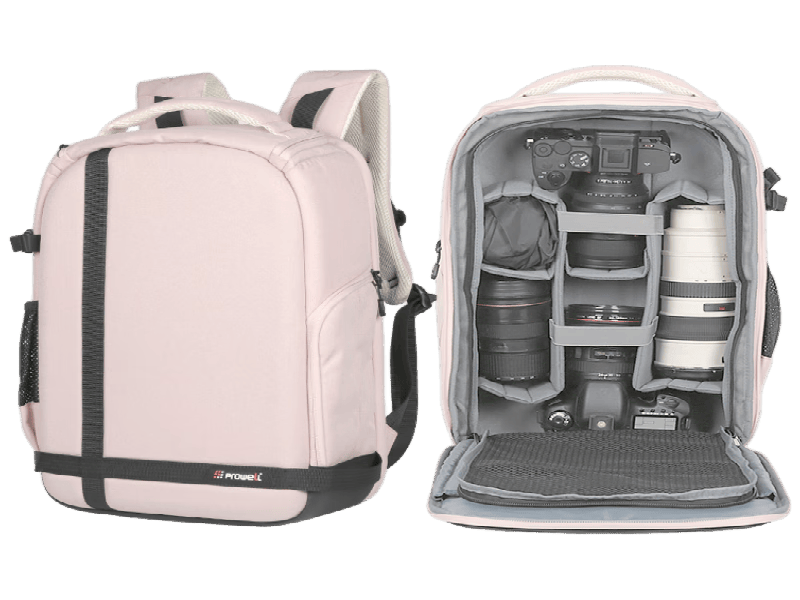
A waterproof camera bag is a bag designed to protect cameras, lenses, drones, laptops, batteries, and accessories from water exposure through a combination of waterproof or water-resistant materials, protected openings, reinforced seams, coated panels, reliable zipper systems, padding, and smart compartment design. For outdoor photography, waterproof performance should be defined by real use: light rain, heavy rain, splashes, wet ground, boat spray, snow, mud, or short accidental exposure. A bag made from waterproof fabric alone is not automatically waterproof because water can still enter through zippers, seams, stitching holes, top openings, and poorly designed pockets.
The best way to understand a waterproof camera bag is to think of it as a controlled barrier. The outer shell blocks water. The coating or lamination slows penetration. The closure controls the main entry point. The seams protect stitched areas. The padding keeps gear away from wet surfaces. The lining protects camera finishes. The structure keeps water from pooling near openings. When all layers work together, the bag can protect gear in outdoor conditions with much higher confidence.
For a brand developing camera bags, the first decision is not color or shape. The first decision is the protection promise. A bag for city creators walking through light rain can use a different waterproof strategy than a hiking camera backpack for mountain weather. A dry-bag-style camera bag for kayaking or fishing photography needs a different structure from a luxury canvas camera messenger. Clear product positioning prevents overbuilding, underbuilding, and vague marketing claims.
What Does Waterproof Really Mean?
Waterproof means the bag is designed to resist water entry at a defined level. In common market language, many bags called “waterproof” are actually water-resistant, rain-resistant, or weather-resistant. True waterproof performance requires attention to fabric, coating, seams, openings, zippers, and construction. If only the fabric is waterproof but the zipper and seams are not protected, the full bag should not be described as fully waterproof.
For camera bags, wording matters because the product protects expensive electronics. A photographer may carry a full-frame camera body, two lenses, a drone controller, memory cards, batteries, filters, a 14-inch laptop, and a microphone kit. If the product claim creates false confidence, one rainy shoot can damage both equipment and brand reputation. Honest waterproof language is not only safer; it is also more credible.
Waterproof performance can be divided into several realistic levels. Entry-level water resistance may handle splashes and short light rain. Outdoor weather resistance may handle longer rain with coated fabric, protected zipper paths, and a rain cover. Strong waterproof protection may require roll-top closure, welded or sealed seams, TPU or PVC laminated fabric, and fewer exposed stitching points. Submersible protection is another level entirely and usually requires specialized dry-bag construction, waterproof closures, and strict testing.
| Protection Level | Common Market Wording | Material and Structure Direction | Suitable Outdoor Scenario | Risk if Overclaimed |
|---|---|---|---|---|
| Basic splash resistance | Water-resistant | Polyester or Oxford fabric with PU coating, standard zipper flap | Short walks, city use, light drizzle | Users may expect storm protection |
| Daily rain protection | Weather-resistant | Coated nylon or polyester, reverse zipper, rain cover, reinforced bottom | Travel, commuting, casual outdoor shoots | Zippers and seams may still leak |
| Outdoor rain protection | High water-resistant | Coated Oxford or nylon, water-repellent zipper, storm flap, better seam control | Hiking, landscape photography, wet ground | Not safe for submersion |
| Waterproof-style protection | Waterproof outdoor bag | TPU/PVC fabric, roll-top closure, sealed or welded zones | Fishing, kayaking support, heavy rain | Poor access if overbuilt |
| Dry-bag protection | Dry bag for camera gear | Laminated fabric, roll-top, welded seams, removable padded insert | Water sports, boat use, river trips | Limited compartment access |
A useful manufacturing question is: “How long should the bag protect gear under which condition?” For example, five minutes of light rain is very different from one hour of mountain rain. Water resistance is not a mood. It is a design target. Szoneier can help brands define that target early so fabric, zipper, lining, padding, and seam methods support the same promise.
Is Water-Resistant the Same?
Water-resistant is not the same as waterproof. Water-resistant means the bag can resist water penetration to some degree, usually during light rain, splashes, or short exposure. Waterproof suggests a stronger barrier against water entry. In camera bag development, this difference should be handled carefully because most outdoor camera backpacks sold for travel and hiking are better described as weather-resistant or water-resistant unless they use specialized waterproof construction.
A water-resistant camera bag may use 600D or 900D polyester Oxford with PU coating, a water-repellent finish, zipper flaps, and a rain cover. It may protect gear well during everyday outdoor use. But if water sits on the zipper, enters through seams, or reaches the bottom panel for a long time, moisture may still pass through. That does not mean the bag is bad. It means the product claim must match the construction.
A waterproof camera bag needs more serious control of weak points. Roll-top closures reduce zipper exposure. TPU or PVC laminated fabrics create stronger water barriers. Seam sealing or welding can reduce leakage through stitching holes. Waterproof zippers can help, though they may increase cost and reduce smoothness. The more waterproof the bag becomes, the more the brand must manage trade-offs in access, weight, stiffness, cost, and manufacturing complexity.
| Question | Water-Resistant Camera Bag | Waterproof Camera Bag |
|---|---|---|
| Can it handle light rain? | Usually yes | Yes |
| Can it handle long heavy rain? | Maybe, with rain cover and good structure | Better chance if properly built |
| Can it be submerged? | No | Only if designed and tested as submersible |
| Are normal zippers acceptable? | Sometimes, with flaps | Usually not enough |
| Are seams a risk? | Yes | Must be sealed, welded, or carefully protected |
| Is access fast? | Usually faster | May be slower with roll-top or waterproof closures |
| Is cost lower? | Usually lower | Usually higher |
| Best use | Travel, city, hiking in mild weather | Wet outdoor work, water-side photography, strong weather claims |
For brands, water-resistant bags often offer better value for mainstream outdoor photographers. They can be lighter, easier to access, more affordable, and comfortable enough for daily use. Fully waterproof-style bags are ideal for specific markets such as fishing photography, kayaking creators, motorcycle travel, field work, boating, or rainy-climate outdoor programs.
The smart move is not to choose the strongest word. The smart move is to choose the most accurate product level. A well-built water-resistant camera backpack with a rain cover can satisfy many users. A poorly built “waterproof” backpack can create disappointment quickly. Szoneier can help compare both paths with material samples, construction options, and cost planning.
Are Dry Bags Good for Cameras?
Dry bags can be good for cameras when water exposure is the main risk, but they are not always the best everyday camera bag. A dry bag is designed to keep water out through laminated fabric, welded seams, and a roll-top closure. It works well around boats, beaches, rivers, fishing trips, kayaking, rainy travel, and wet outdoor environments. However, a standard dry bag may lack camera padding, dividers, quick access, laptop protection, breathable straps, and organized storage.
For camera use, a dry bag needs a camera-specific insert or built-in padded compartment. Without padding, cameras and lenses can collide inside the bag. A waterproof shell protects from water, but it does not automatically protect from shock. A lens damaged by impact inside a dry bag is still a failed user experience.
Dry-bag-style camera bags solve this by combining waterproof outer construction with EVA padded inserts. Some designs use a roll-top main compartment and removable camera cube. Others use a waterproof lower compartment with padded dividers and a separate dry storage zone for clothes or wet gear. This type of hybrid design can be very attractive for outdoor photography brands.
| Dry Bag Feature | Benefit for Camera Use | Limitation | Better Camera Bag Solution |
|---|---|---|---|
| Roll-top closure | Strong water barrier | Slower access | Add side or rear camera access if possible |
| Welded seams | Better leakage control | Higher production complexity | Use only where waterproof claim needs it |
| TPU/PVC shell | Easy cleaning, strong water resistance | Can feel stiff | Balance with ergonomic carry system |
| Open main compartment | Flexible storage | Gear can collide | Add padded camera insert |
| Simple straps | Lightweight | Poor long-carry comfort | Add padded shoulder straps and back panel |
| No small pockets | Less leakage risk | Poor accessory organization | Add protected inner organizer pockets |
Dry bags are best for photographers who prioritize water protection over instant access. For example, a travel creator shooting from a boat may value waterproof protection more than fast lens changes. A wedding photographer in a city may prefer a water-resistant backpack with quick access. A hiking photographer may want a hybrid: weather-resistant camera backpack with rain cover and strong padding, rather than a full dry bag.
Szoneier can help brands develop waterproof dry-bag-style camera bags with removable EVA inserts, roll-top closures, TPU-coated fabric, welded or sealed areas, and custom logo treatments. The design should make one thing clear: water protection and camera protection are two separate jobs, and a good product must handle both.
What Outdoor Risks Matter Most?
Outdoor camera bags face water, impact, abrasion, dust, mud, sweat, sunlight, temperature changes, heavy load, and repeated access. Water is only one risk. A bag that keeps rain out but hurts the shoulder, tears at the tripod strap, collapses under gear weight, or scratches lenses is not ready for outdoor photography.
The most common outdoor risks happen in ordinary moments. A photographer places the bag on wet grass. A tripod rubs against the side panel during hiking. Rain hits the zipper path. A lens cap drops into a dark compartment. A shoulder strap pulls hard when climbing stairs. A camera body presses against a divider during travel. A laptop corner hits the bottom when the bag is set down quickly. These small events decide whether the material system works.
Brands should design around the real movement of photographers. Outdoor users rarely stand still in perfect conditions. They bend, walk, climb, kneel, change lenses, open the bag with cold hands, carry wet jackets, pull out batteries, and place the bag on rough ground. The material package must support those behaviors.
| Outdoor Risk | Damage Path | Material or Structure Solution | Customer Benefit |
|---|---|---|---|
| Light rain | Water enters through fabric or zipper | PU/TPU coating, zipper flap, rain cover | Gear stays dry during short exposure |
| Heavy rain | Water pools near openings | Roll-top closure, sealed seams, water-repellent zipper | Better storm confidence |
| Wet ground | Moisture enters bottom panel | Reinforced coated base, 1680D Oxford, EVA bottom padding | Safer bag placement |
| Impact | Gear hits floor or side wall | EVA foam, PE board, padded dividers | Lower damage risk |
| Abrasion | Fabric rubs against rocks or tripod | High-denier Oxford, nylon, reinforced webbing | Longer service life |
| Dust and mud | Dirt enters pockets or sticks to fabric | Smooth coated fabric, covered zippers | Easier cleaning |
| Sweat and heat | Back panel becomes uncomfortable | Spacer mesh, breathable foam channels | Better long carry comfort |
| Heavy load | Strap or seam stress | Strong webbing, bartack stitching, reinforced anchors | More reliable carry |
| Poor visibility | Small accessories are hard to find | Light lining, mesh pockets, organized panels | Faster gear access |
A strong outdoor camera bag should reduce the number of things a photographer worries about. It should not require users to constantly think: Is my zipper leaking? Is my lens hitting another lens? Is the bottom wet? Is my shoulder strap safe? When materials are chosen properly, the bag becomes quiet support in the background.
For custom projects, Szoneier can help brands map outdoor risks before sampling. A hiking camera backpack, fishing camera dry bag, motorcycle camera sling, drone field bag, or travel photography backpack will each need different risk priorities. Building from the use scenario makes the final product more useful and more believable.
Which Materials Make Camera Bags Waterproof?
Materials that make camera bags waterproof or highly water-resistant include TPU-coated fabric, PVC tarpaulin, PU-coated nylon, PU-coated polyester, coated Oxford fabric, ripstop nylon, waterproof laminated fabric, rubberized fabric, waterproof zipper tape, seam-sealing tape, coated rain-cover fabric, and reinforced bottom materials. However, the material must work with bag structure. A waterproof fabric with exposed seams and ordinary zipper construction will not create a truly waterproof bag.
The most common outdoor camera bag material strategy is layered protection. The outer fabric provides abrasion resistance and the main look. The coating or lamination reduces water penetration. The zipper system controls access points. The seam method reduces leakage from stitching. The bottom panel protects against wet ground. The rain cover adds emergency protection. The inner lining and padding keep camera gear protected even if the outside gets wet.
For brands, material choice should match target retail level and usage. TPU fabric is strong for waterproof-style products and premium outdoor concepts. PVC tarpaulin works well for rugged waterproof bags and dry-bag structures. Nylon performs well in premium outdoor backpacks when coated properly. Oxford fabric offers durability and flexible cost control. Polyester can serve daily weather-resistant camera bags when paired with PU coating and good construction.
Is TPU Fabric Better?
TPU fabric is often better for waterproof-style camera bags when the product needs strong water resistance, technical appearance, easy cleaning, and outdoor durability. TPU, or thermoplastic polyurethane, can be laminated or coated onto base fabrics such as nylon or polyester. It creates a flexible waterproof barrier and is widely used in outdoor gear, dry bags, waterproof pouches, inflatable products, medical bags, and performance equipment.
For waterproof camera bags, TPU fabric can provide a premium technical feel. It works well for roll-top camera backpacks, dry-bag-style camera bags, waterproof camera inserts, bottom panels, rainproof covers, cycling photography bags, fishing camera bags, and outdoor equipment cases. It can also support welded or heat-bonded construction in certain designs, reducing reliance on stitched seams.
The trade-off is cost and hand feel. TPU materials are usually more expensive than standard PU-coated polyester. They may feel stiffer or more technical, which can be excellent for outdoor use but less suitable for soft lifestyle camera bags. TPU production may also require more careful process control, especially around sewing, bonding, folding, and edge finishing.
| TPU Fabric Factor | Advantage | Possible Limitation | Best Product Fit |
|---|---|---|---|
| Water resistance | Strong barrier against water penetration | Must still protect seams and closures | Waterproof-style outdoor bags |
| Hand feel | Technical, smooth, premium outdoor look | Less natural than canvas | Modern outdoor backpacks |
| Cleaning | Easy to wipe mud and water | Surface scratches may show on some finishes | Fishing, hiking, travel bags |
| Welding potential | Supports sealed construction in some structures | Requires suitable design and process | Dry-bag camera bags |
| Cost | Higher perceived value | Higher unit cost | Mid-to-premium products |
| Branding | Works with rubber patches, printed logos, debossed details | Some logo methods need testing | Technical private label lines |
TPU is not automatically the best answer for every project. A city camera backpack may not need TPU. A canvas-style premium camera shoulder bag may look better with waxed canvas and a rain cover. A cost-sensitive camera sling may perform well with PU-coated Oxford fabric. TPU becomes valuable when the product story clearly includes wet environments, outdoor work, water-side activities, or premium weather protection.
Szoneier can help brands compare TPU-coated nylon, TPU-coated polyester, PVC tarpaulin, PU-coated Oxford, and coated canvas alternatives. By reviewing material weight, hand feel, water resistance, stitching behavior, color options, MOQ, and price, brands can choose a material that fits the product rather than chasing a fashionable word.
Is PVC Tarpaulin Suitable?
PVC tarpaulin is suitable for waterproof camera bags when the product needs rugged water resistance, easy cleaning, strong structure, and a dry-bag or outdoor equipment style. It is commonly used in waterproof bags, truck covers, outdoor covers, dry bags, tool bags, marine bags, and heavy-duty protective products. For camera bags, PVC tarpaulin can work well in roll-top backpacks, waterproof camera cases, fishing photography bags, kayaking support bags, motorcycle camera bags, and rugged gear organizers.
The biggest strength of PVC tarpaulin is its water-blocking surface. It can handle wet environments better than many ordinary woven fabrics. It is also easy to wipe clean after mud, sand, or spray exposure. For brands targeting outdoor adventure, marine, or fishing photography users, PVC tarpaulin can create a strong and clear product message.
The limitation is comfort and style. PVC tarpaulin can feel heavier, stiffer, and less breathable than nylon or polyester. It may not fit brands aiming for a soft premium lifestyle look. It also needs careful sewing or welding decisions, because stitched seams remain potential leakage points unless sealed or protected. For large camera backpacks, tarpaulin should be balanced with padded straps, back ventilation, and ergonomic design.
| PVC Tarpaulin Use | Benefit | Limitation | Design Recommendation |
|---|---|---|---|
| Roll-top camera bag | Strong water barrier | Slower gear access | Add removable camera insert |
| Waterproof bottom panel | Excellent wet-ground protection | Can feel stiff | Use only in high-wear zones |
| Outdoor gear pocket | Easy cleaning | Less refined hand feel | Use for wet accessory storage |
| Marine camera bag | Good splash resistance | Needs strong closure | Pair with sealed seams |
| Motorcycle camera bag | Rugged and wipe-clean | Weight may increase | Add comfort-focused strap system |
| Dry-bag style backpack | Clear waterproof story | Less compartment complexity | Add modular interior padding |
PVC tarpaulin is especially effective when the product is not trying to hide its outdoor identity. A rugged waterproof camera bag can proudly use tarpaulin. A luxury urban camera bag may need a different material. As always, the end user decides the right material.
For Szoneier custom production, PVC tarpaulin can be combined with EVA padded inserts, inner lining, roll-top closure, reinforced webbing, rubber logo patches, reflective details, and drainage-friendly pocket planning. The result can be a practical outdoor camera bag for photographers working around water, mud, boats, fishing locations, or wet travel.
Does Nylon Work Outdoors?
Nylon works very well outdoors when selected and coated properly. It is one of the most trusted materials for premium outdoor camera backpacks, hiking bags, travel bags, tactical bags, and technical equipment carriers. Nylon offers strong tear resistance, abrasion performance, and a refined technical look. When combined with PU or TPU coating, water-repellent finish, reinforced bottom panels, and good zipper protection, nylon becomes a powerful material for outdoor photography bags.
Different nylon grades serve different product levels. Lightweight ripstop nylon can help reduce travel weight. 420D or 500D nylon can create a balanced outdoor bag with good strength. 840D or 1000D nylon can support rugged camera backpacks and heavy-load equipment bags. The right choice depends on gear weight, bag size, target market, and expected outdoor exposure.
Nylon is not automatically waterproof. Untreated nylon can absorb water. Coating, lamination, fabric density, and construction determine weather protection. A coated nylon camera backpack with poor zipper design may still leak. A well-built nylon bag with protected zippers and rain cover can perform very well for hiking and travel photography.
| Nylon Type | Outdoor Strength | Best Camera Bag Use | Waterproof Planning |
|---|---|---|---|
| Ripstop Nylon | Tear control with low weight | Lightweight travel camera bags | Add coating or rain cover |
| 420D Nylon | Balanced weight and durability | Camera sling, compact backpack | PU coating works well |
| 500D Nylon | Strong outdoor performance | Premium camera backpack | Pair with water-repellent zipper |
| 840D Nylon | Higher structure and abrasion resistance | Large gear backpack | Reinforce seams and base |
| 1000D Nylon | Rugged heavy-duty use | Tactical or field camera bag | Manage weight and stiffness |
| TPU-Coated Nylon | Strong waterproof potential | Waterproof-style outdoor bag | Consider sealed construction |
Nylon is a strong choice for brands that want a premium outdoor image without the stiff feel of tarpaulin. It can look sleek, technical, and professional. It also works well with ergonomic designs, modular dividers, padded straps, laptop sleeves, and clean branding.
Szoneier can support nylon camera bag development with fabric selection, coating options, lining matching, EVA divider design, zipper planning, and custom logo solutions. Nylon is especially suitable for product lines targeting outdoor photographers, travel creators, drone users, and professional camera equipment owners.
Which Oxford Fabric Is Best?
The best Oxford fabric for waterproof or water-resistant camera bags depends on denier, coating, yarn quality, weave density, backing, and target use. Oxford fabric is widely used because it offers strong durability, flexible sourcing, good structure, and multiple coating options. Common choices for camera bags include 420D Oxford, 600D Oxford, 900D Oxford, 1200D Oxford, and 1680D Oxford. For outdoor camera bags, 600D to 1200D Oxford is often suitable for main body panels, while 1680D Oxford can be used for bottom and high-abrasion zones.
Oxford fabric is not one fixed material. A 210D Oxford lining fabric and a 1680D Oxford bottom panel are completely different in strength and function. Brands should avoid asking only for “Oxford fabric” without defining performance needs. Waterproof performance comes from coating and construction, not only the Oxford weave.
PU-coated Oxford is commonly used for cost-effective weather-resistant camera backpacks. PVC-coated Oxford can create stronger water resistance but may be stiffer. TPU-coated Oxford can serve more premium waterproof concepts. Oxford also works well with embroidery, rubber patches, woven labels, printed logos, and private label trims.
| Oxford Fabric Grade | Best Use in Camera Bags | Strength Level | Waterproof Strategy |
|---|---|---|---|
| 210D Oxford | Lining, rain cover, inner pocket | Light | Coating for rain cover use |
| 420D Oxford | Compact camera bags, light backpacks | Medium-light | PU coating for daily resistance |
| 600D Oxford | Main shell for standard backpacks | Medium | PU coating plus zipper flap |
| 900D Oxford | Outdoor camera backpacks | Medium-high | Better coating and reinforced seams |
| 1200D Oxford | Heavy-duty equipment bags | High | Coating plus reinforced base |
| 1680D Oxford | Bottom panels, wear zones | Very high | Coated backing for wet ground |
Oxford fabric is a practical choice when brands want durability and cost control. It can support low MOQ custom projects better than some special fabrics, especially when using available colors and standard coatings. It also gives structure to backpacks and cases without always requiring expensive premium nylon.
For Szoneier, Oxford fabric is one of the most flexible materials for camera bag development. It can be used for outdoor backpacks, camera cases, tripod bags, drone bags, tool-style camera bags, and waterproof accessory organizers. The key is choosing the right denier and coating for the product promise.
Are Coated Fabrics Enough?
Coated fabrics are important, but they are not enough by themselves. A coated fabric can resist water penetration through the material surface, but a camera bag also has seams, zippers, openings, handles, pockets, webbing anchors, and stitched panels. Water usually enters through weak construction points, not always through the middle of the fabric.
PU coating, TPU lamination, PVC backing, and water-repellent finishes can all improve outdoor performance. But if the zipper is exposed, rain can enter. If stitching holes are not protected, water can seep in. If the bottom panel sits in a puddle, moisture may travel through seams. If side pockets are open, water can collect near gear compartments. A strong waterproof camera bag needs both coated materials and waterproof-aware design.
A good way to think about coated fabric is as the first wall of protection. It reduces water absorption, improves structure, and gives the bag a weather-ready base. Then the other parts must complete the system.
| Coated Fabric Element | What It Does Well | What It Cannot Solve Alone |
|---|---|---|
| PU coating | Good daily water resistance, cost control | Heavy rain through seams or zippers |
| TPU lamination | Stronger water barrier and technical feel | Poor closure design |
| PVC backing | Rugged waterproof surface | Comfort and weight challenges |
| DWR finish | Water beads on surface | Long exposure after surface wets out |
| Coated Oxford | Durable and structured | Leakage through stitching |
| Coated nylon | Premium outdoor performance | Needs zipper and seam planning |
| Coated rain cover fabric | Emergency outer protection | Does not replace bag construction |
Brands should combine coated fabric with smart opening design. Roll-top closures, zipper flaps, water-repellent zippers, seam taping, reinforced bottom panels, and rain covers all improve real-world performance. For mainstream outdoor camera bags, a coated fabric plus rain cover can be a strong and cost-effective solution. For stronger waterproof claims, seam sealing or welded construction may be needed.
Szoneier can help brands test several material packages before final development. One version may use PU-coated Oxford and rain cover for daily outdoor use. Another may use coated nylon with water-repellent zippers for premium hiking bags. A third may use TPU or PVC laminated fabric with roll-top closure for wet-environment photography. Comparing these options makes the final decision clearer and more commercially realistic.
How Do Waterproof Structures Work?

Waterproof structures work by controlling every place where water may enter: the main opening, zipper line, seam path, stitching hole, pocket edge, bottom panel, and fabric fold. In waterproof camera bag manufacturing, structure often matters more than material alone. A TPU-coated fabric, PVC tarpaulin, or PU-coated Oxford fabric may block water on a flat surface, but once the fabric is cut, sewn, folded, zipped, and connected with straps, the full bag becomes a system with many possible leakage points.
A strong waterproof structure usually includes one or more protective design methods: roll-top closure, water-repellent zipper, zipper storm flap, covered zipper garage, seam sealing, welded seam, raised opening, inner dry compartment, rain cover, reinforced bottom, and drainage-friendly outer pocket planning. For camera bags, structure must also protect access speed. Outdoor photographers often need quick access to cameras, lenses, batteries, filters, and tripods. A bag that keeps water out but makes gear painfully slow to reach may frustrate users in real shooting conditions.
The best design depends on the photography scenario. A hiking camera backpack can use coated fabric, water-repellent zippers, rear access, side access, rain cover, and reinforced seams. A fishing or kayaking camera bag may need roll-top closure, TPU/PVC shell, welded seams, and a removable padded camera cube. A travel camera sling may need compact zipper protection and waterproof fabric without becoming stiff or bulky. Brands should not copy one waterproof structure across every product style. The structure should match the environment, gear type, and user habits.
For Szoneier, waterproof structure development usually starts with a simple question: where will the user open the bag, and where will rain hit first? Once that question is answered, fabric choice, zipper type, seam method, pocket placement, and padding layout become much easier to plan.
How Does Roll-Top Closure Work?
A roll-top closure works by folding the top opening several times and securing it with buckles or side clips. Each fold creates a physical barrier that makes it harder for water to enter. This structure is common in dry bags, waterproof backpacks, cycling bags, marine bags, and outdoor camera bags because it reduces reliance on long zipper openings. For wet environments, a roll-top closure is one of the most effective ways to improve waterproof performance.
In camera bag manufacturing, roll-top design is useful for bags that may face rain, spray, mud, snow, or wet ground. It works especially well when paired with TPU-coated fabric, PVC tarpaulin, or coated nylon. It can also help expand capacity because users can roll the top higher or lower depending on load volume. For photographers carrying jackets, drones, snacks, or travel items above a padded camera cube, roll-top design can offer flexible storage.
However, roll-top closure is not perfect for every camera bag. It can slow access if the camera compartment is only reachable from the top. Outdoor photographers often need quick side or rear access to grab a camera without fully unrolling the bag. For that reason, many advanced camera backpacks combine a roll-top upper storage area with a separate padded camera compartment accessible from the side or back.
| Roll-Top Design Factor | Benefit | Possible Limitation | Better Design Choice |
|---|---|---|---|
| Multiple folds | Stronger water barrier | Slower access | Add side camera access |
| Buckle closure | Secure and adjustable | Can feel bulky | Use durable lightweight buckles |
| Expandable volume | Flexible storage for clothing or gear | Top shape may change when full | Control pattern and strap length |
| Fewer zipper openings | Reduces leakage risk | Less organization if poorly planned | Add inner pockets and camera cube |
| TPU/PVC compatibility | Supports waterproof bag concept | May create stiff structure | Balance with ergonomic straps |
| Outdoor look | Strong adventure positioning | Less formal for urban use | Match with target customer style |
For camera bags, roll-top closure should be designed around user rhythm. A photographer standing in rain may not want to open the whole top section just to change a battery. A removable camera cube with side access can solve this. A separate top dry compartment can hold clothing or wet items, while the lower padded camera zone keeps cameras stable and protected.
Szoneier can develop roll-top waterproof camera bags with TPU fabric, PVC tarpaulin, coated Oxford fabric, welded or sewn structures, waterproof lining options, EVA camera inserts, and custom logo details. Roll-top design is especially suitable for outdoor, fishing, hiking, cycling, motorcycle, and travel photography products.
Do Waterproof Zippers Matter?
Waterproof or water-repellent zippers matter because zippers are one of the weakest points in any camera bag. A fabric panel can be coated, laminated, or highly water-resistant, but if rain enters through the zipper teeth or zipper end, the camera compartment may still get wet. Camera bags often need wide openings for quick access, and wide openings create long zipper paths. The longer the zipper path, the more important zipper protection becomes.
There are several zipper levels used in camera bags. Standard coil zippers are affordable and smooth but offer limited water protection. Reverse coil zippers expose less of the zipper teeth and create a cleaner appearance. Water-repellent zippers use coated zipper tape to reduce water entry. Waterproof zippers provide stronger water barriers but may be stiffer, more expensive, and less suitable for curved openings or fast daily access.
For many outdoor camera backpacks, water-repellent zippers are a practical balance. They improve rain protection while keeping usability acceptable. For dry-bag-style products, roll-top closure may reduce the need for long waterproof zippers. For premium camera bags, custom zipper pullers, zipper garages, storm flaps, and water-repellent zipper tape can create both function and brand value.
| Zipper Type | Water Protection | Smoothness | Cost Level | Best Camera Bag Use |
|---|---|---|---|---|
| Standard Coil Zipper | Low | High | Low | Inner pockets, budget pouches |
| Reverse Coil Zipper | Low to medium | High | Low to medium | Daily camera backpacks |
| Zipper with Storm Flap | Medium | Medium to high | Medium | Canvas or travel camera bags |
| Water-Repellent Zipper | Medium to high | Medium | Medium to high | Outdoor camera backpacks |
| Waterproof Zipper | High | Lower to medium | High | Waterproof cases and high-performance bags |
| Roll-Top Without Main Zipper | High at opening | Access depends on design | Medium to high | Dry-bag camera backpacks |
Zipper placement also matters. A horizontal top zipper can allow rain to sit directly on the zipper line. A vertical side-access zipper may need a zipper garage at the top and bottom. A curved camera compartment zipper should be tested because coating stiffness can affect smooth movement. A laptop zipper should be protected with a flap or placed under a back panel when possible.
A good camera bag does not use one zipper solution everywhere. Inner accessory pockets may use standard zippers. Main outdoor openings may use water-repellent zippers. A rain cover pocket may use a simple zipper because it is not protecting gear directly. This selective approach controls cost without weakening critical protection areas.
Szoneier can help brands choose zipper level based on bag style, target price, waterproof claim, and user access needs. During sampling, zipper smoothness, puller strength, water exposure, sewing tension, and appearance should all be checked. A zipper is small compared with the whole bag, but it heavily influences user trust.
Are Seam-Sealed Bags Better?
Seam-sealed bags are better when the product needs higher waterproof performance, but they are not necessary for every outdoor camera bag. Seam sealing helps cover needle holes created during sewing. It reduces water seepage through stitched areas, especially on top panels, bottom seams, front pockets, and rain-facing surfaces. For camera bags used in heavy rain, marine environments, cycling, fishing, snow, or wet outdoor work, seam sealing can significantly improve protection.
The challenge is that seam sealing adds cost, production complexity, material requirements, and design limitations. Not every fabric works well with every sealing tape. Curved seams, thick foam areas, multi-layer junctions, and complex pockets can be difficult to seal cleanly. If a bag has many stitched compartments and decorative seams, full seam sealing may be expensive and inefficient.
For mainstream outdoor camera backpacks, partial seam sealing or strategic seam protection may be more practical. For example, the bottom panel, top lid, front rain-facing seams, and rain cover seams can receive extra waterproof treatment, while inner pockets and low-risk seams use standard sewing. This protects key zones without overcomplicating the entire product.
| Seam Method | Protection Level | Cost Impact | Manufacturing Complexity | Best Use |
|---|---|---|---|---|
| Standard Sewing | Low to medium | Low | Low | Daily water-resistant camera bags |
| Bound Seams | Medium | Low to medium | Medium | Interior and structured panels |
| Covered Seams | Medium | Medium | Medium | Outdoor backpacks |
| Seam Taping | Medium to high | Medium to high | High | Rain-facing panels |
| Heat-Sealed Seams | High | High | High | Waterproof-style compartments |
| Welded Seams | High | High | High | Dry-bag and marine products |
| Hybrid Seam Protection | Targeted high protection | Controlled | Medium to high | Outdoor camera backpacks |
The key question is not “Should every seam be sealed?” The better question is “Which seams face water and protect expensive gear?” A seam at the top of a camera compartment is more important than a decorative seam on an outside organizer pocket. A bottom seam that touches wet ground is more important than an internal divider seam.
Brands should also think about repairability and appearance. Seam tape can sometimes create a technical look inside the bag. Welded seams can make the bag feel more like outdoor equipment than lifestyle gear. For some brands, that is perfect. For others, it may feel too industrial.
Szoneier can support both standard sewn waterproof-style bags and more advanced seam-protected designs. By reviewing the product promise, target use, and budget, Szoneier can recommend where seam sealing brings real value and where normal sewing with better fabric and flaps is enough.
How Does a Rain Cover Help?
A rain cover helps by adding an extra waterproof or water-resistant layer over the camera bag during rain. It protects zipper lines, seams, front panels, side pockets, and fabric surfaces from direct water exposure. For outdoor camera backpacks, a rain cover is one of the most useful and cost-effective ways to improve weather protection without making the main bag too stiff, heavy, or expensive.
Rain covers are usually made from lightweight coated polyester or nylon. They may be stored in a hidden bottom pocket, side zipper pocket, or dedicated pouch. Some covers use elastic edges to wrap around the bag, while others add buckles or straps to secure the cover in wind. Reflective logos, bright safety colors, or brand-colored fabrics can also be added depending on the product style.
A rain cover is not a replacement for good bag construction. If the main bag has weak fabric, thin padding, exposed zippers, and poor seams, a rain cover only helps during temporary weather. But when paired with PU-coated fabric, water-repellent zippers, reinforced bottom, and smart opening design, a rain cover gives users strong extra confidence.
| Rain Cover Detail | Better Design Choice | Why It Matters |
|---|---|---|
| Fabric | Coated polyester or nylon | Keeps cover lightweight and water-resistant |
| Storage | Hidden bottom pocket or side pocket | Easy access during sudden rain |
| Edge | Elastic binding | Helps cover fit around the bag |
| Wind Control | Buckle or strap | Prevents cover from slipping |
| Size | Patterned to actual bag volume | Covers front, sides, and zipper areas |
| Color | Black, grey, orange, reflective trim, or brand color | Supports safety or branding |
| Logo | Small print or reflective logo | Adds brand visibility |
Rain covers are especially valuable for hiking camera bags, travel camera backpacks, and outdoor creator bags. A photographer may start shooting in clear weather and face sudden rain later. A built-in rain cover feels like a thoughtful detail, and users often appreciate it even if they do not use it every day.
However, the cover must be designed well. If it is too small, it leaves side pockets exposed. If it is too loose, wind pulls it away. If it is hard to fold back into its pocket, users stop using it. If the tripod is attached outside the bag, the cover should account for the extra shape or at least protect the main gear compartment.
Szoneier can customize rain covers with coated fabric, elastic edges, reflective prints, brand colors, storage pockets, and size patterns based on the final camera bag shape. For many brands, adding a rain cover is a smart way to strengthen outdoor positioning while keeping the main bag comfortable.
Which Opening Design Is Safer?
The safest opening design depends on weather exposure, access speed, and where the camera compartment sits. In general, openings that face away from direct rain, sit under flaps, use roll-top folds, or access gear from the back panel are safer than exposed top zippers. Outdoor camera bags often use rear access, side access, roll-top upper storage, zipper flaps, and protected compartments to balance waterproofing and usability.
Top openings are convenient but risky if rain falls directly onto the zipper. Side-access openings are fast, but the zipper must be protected by a flap or water-repellent zipper. Rear access can be safer because the back panel sits against the user while walking and may be less exposed to rain. Roll-top openings provide strong water protection but may slow access unless combined with another camera entry point.
The opening should also prevent gear from falling out. A side-access camera compartment must hold the camera securely when opened. A rear-access panel should open wide enough for packing but not so loose that dividers shift. A roll-top opening should not force the user to remove all items to reach camera gear.
| Opening Type | Waterproof Advantage | Access Advantage | Risk | Best Use |
|---|---|---|---|---|
| Roll-Top Opening | Strong water barrier | Good for main storage | Slower camera access | Dry-bag style backpacks |
| Rear Access | Less exposed during wear | Secure full compartment access | Requires taking bag off | Hiking camera backpacks |
| Side Access | Fast camera reach | Great for quick shooting | Zipper exposed if unprotected | Travel and outdoor backpacks |
| Top Zipper | Easy packing | Simple and familiar | Rain can pool on zipper | City and light outdoor bags |
| Front Panel Access | Wide visibility | Easy organization | More exposed to rain and impact | Weather-resistant bags with flap |
| Clamshell Opening | Excellent packing | Full interior access | Long zipper path | Travel camera backpacks |
The safest design often combines several access points. A hiking camera backpack might use rear camera access, a roll-top top compartment, and a small protected side pocket for batteries. A creator sling might use a water-repellent front zipper and flap. A dry-bag camera backpack might use roll-top closure and a removable padded cube.
For brands, opening design should be decided before final material selection. A waterproof zipper may be needed for side access. A roll-top design may require TPU or PVC fabric. A rear panel may need stronger padding and breathable mesh. A flap may require extra fabric and stitching. Szoneier can help connect opening design with material and manufacturing feasibility early in development.
What Protection Do Cameras Need Outdoors?
Cameras need protection from water, shock, vibration, abrasion, dust, temperature changes, and internal collision during outdoor photography. Waterproof fabric helps protect against rain, but camera gear also needs padding, dividers, soft lining, stable compartments, reinforced bottom panels, and smart storage for lenses, batteries, laptops, drones, filters, and tripods. A waterproof camera bag that lacks padding is not a complete camera bag. It is only a water-resistant container.
Outdoor protection should be designed around real equipment movement. Camera bodies and lenses are heavy for their size. They can hit each other inside the bag if dividers are weak. A laptop can press against gear if the back structure is poor. Batteries and chargers can scratch camera bodies if not separated. A tripod attached outside can pull the side panel during hiking. A waterproof shell can keep rain away, but the inner structure keeps gear alive during bumps, drops, and long travel.
The best outdoor camera bag protection combines three layers. The outer layer resists water, abrasion, and dirt. The middle layer absorbs impact with EVA foam, PE board, EPE foam, sponge, or molded padding. The inner layer organizes gear with soft lining, dividers, mesh pockets, elastic loops, and dedicated sleeves. Each layer supports a different part of the user experience.
For Szoneier, camera protection development can include EVA divider thickness selection, soft lining comparison, removable insert design, bottom panel reinforcement, laptop sleeve suspension, strap load testing, and real gear layout review. The final goal is simple: the photographer should feel confident enough to move, shoot, travel, and set the bag down without constantly worrying about the equipment inside.
How Much Padding Is Needed?
Padding thickness depends on the gear weight, bag style, carry method, and protection level. A small camera pouch for one compact mirrorless camera may only need light padding. A professional hiking camera backpack carrying two bodies, four lenses, drone, laptop, tripod, and batteries needs thicker and more structured padding. For most camera bags, padding is needed in the dividers, side walls, bottom panel, back panel, laptop sleeve, shoulder straps, and handle areas.
More padding is not always better. Too much foam makes a bag bulky, heavy, and less efficient inside. A thick divider reduces compartment space. A heavily padded shell may look oversized. The best design places stronger padding in high-risk zones such as bottom, corners, camera compartment walls, and side access areas, while using lighter padding where flexibility and weight savings matter.
Foam density is as important as thickness. A thin high-density EVA panel may protect better than a thick low-density sponge. EVA foam is commonly used because it offers good structure and recovery. EPE foam can help with lighter cushioning. Sponge foam can improve comfort in straps and back panels. PE board can spread pressure and improve structure when used with foam.
| Bag Area | Light Gear Padding | Standard Outdoor Padding | Heavy Gear Padding | Material Direction |
|---|---|---|---|---|
| Divider Panels | 3–5 mm | 5–8 mm | 8–10 mm | EVA or PE foam with soft lining |
| Bottom Panel | 5–8 mm | 8–12 mm | 12–15 mm plus PE board | EVA + PE board |
| Side Walls | 3–5 mm | 5–10 mm | 10–12 mm | EVA or EPE foam |
| Back Panel | 8–10 mm | 10–15 mm | 15–20 mm layered foam | Sponge + EVA + mesh |
| Shoulder Straps | 5–8 mm | 8–12 mm | 10–15 mm layered | EVA, sponge, neoprene |
| Laptop Sleeve | 3–5 mm | 5–8 mm | 8–10 mm | EVA + soft lining |
| Top Lid | 3–5 mm | 5–8 mm | 8–10 mm | Foam + lining |
Outdoor photography adds pressure because users often carry gear for long periods and place the bag on uneven surfaces. A reinforced bottom is usually worth the small cost increase. Side access areas also need careful padding because users may swing the bag around the body or place it sideways while changing lenses.
Szoneier can create sample versions with different foam thicknesses and densities. Brands can compare weight, hand feel, internal capacity, and protection confidence before confirming bulk production. This is much better than guessing from a spec sheet.
Are EVA Dividers Important?
EVA dividers are important because they keep camera equipment separated, stable, and protected inside the bag. Outdoor photographers rarely carry only one item. They may carry a camera body, lenses, flash, drone, filters, batteries, chargers, microphone, laptop, tripod plate, and personal items. Without dividers, these objects can collide, scratch, press, and shift during movement.
EVA dividers provide both cushioning and structure. They are usually laminated with soft lining fabric and equipped with hook-and-loop edges so users can adjust the layout. Good dividers should stay upright, bend where needed, grip the lining properly, and recover after pressure. Poor dividers collapse, curl, lose grip, or feel too thin to protect lenses.
The divider system should match the equipment category. A mirrorless camera kit needs smaller flexible sections. A DSLR kit needs wider and deeper compartments. Long telephoto lenses need longer channels. Drone kits may need shaped sections. A hybrid camera-laptop bag may need a separate padded laptop sleeve and modular camera cube.
| Divider Type | Best Use | Benefit | Risk to Check |
|---|---|---|---|
| Straight EVA Divider | Basic lens separation | Simple and efficient | Limited layout flexibility |
| Foldable Divider | Camera body with attached lens | Better shape control | More sewing complexity |
| Thick EVA Divider | Heavy lenses and pro gear | Stronger cushioning | Reduces internal space |
| Slim EVA Divider | Mirrorless and compact gear | Saves weight and space | Less impact protection |
| Removable Camera Cube | Hybrid backpacks | Converts daily bag into camera bag | Must fit tightly |
| Custom Molded Insert | Drone or special gear | Better equipment fit | Higher development cost |
EVA dividers also improve user speed. A photographer can open the bag and immediately know where each lens belongs. This matters during weddings, hiking shoots, wildlife sessions, and travel days when time is limited. A messy interior creates stress. A clean divider layout creates confidence.
For Szoneier custom camera bags, dividers can be customized by thickness, lining color, shape, fold design, hook-and-loop strength, logo label, pull tab, and compartment layout. Brands can even create different divider kits for the same outer bag: one for camera gear, one for drone gear, and one for daily travel.
How Should Lenses Be Stored?
Lenses should be stored in padded compartments that prevent movement, reduce pressure, protect glass and barrel surfaces, and separate each lens from hard accessories. The lens should not freely roll inside the bag. It should sit in a stable divider channel or padded pocket, ideally with caps attached and enough room to remove it without scraping against rough surfaces.
Lens storage depends on lens size. Small prime lenses may fit in vertical padded slots. Zoom lenses may need wider compartments. Telephoto lenses need long channels and stronger bottom support. Expensive lenses should not sit directly against batteries, chargers, tripod plates, or metal tools. Filters and lens caps should have separate pockets.
Outdoor photographers often change lenses in unstable conditions: wind, rain, dust, cold weather, or uneven ground. The bag interior should make lens changes easier, not harder. Light-colored lining can help users find rear caps and small accessories. Soft dividers reduce friction. Mesh pockets can hold filters and cleaning cloths, but rough mesh should not rub directly against glass or lens coatings.
| Lens Type | Storage Need | Recommended Material or Structure |
|---|---|---|
| Small Prime Lens | Compact padded slot | Slim EVA divider with soft lining |
| Standard Zoom Lens | Wider compartment | Medium EVA divider |
| Telephoto Lens | Long stable channel | Thick EVA divider plus bottom support |
| Wide-Angle Lens | Scratch-safe space | Soft lining and separate cap pocket |
| Lens with Hood | Larger flexible compartment | Foldable divider layout |
| Filter Kit | Flat protected pocket | Soft pocket or hard filter case zone |
| Lens Cleaning Kit | Small organizer pocket | Mesh or zip pocket away from glass |
A good lens layout also considers weight distribution. Heavy lenses should sit close to the user’s back in a backpack to improve carry comfort. If heavy lenses sit far from the body, the bag pulls backward and feels heavier. For sling bags, lens placement should prevent the bag from twisting.
Szoneier can help brands create sample layouts based on real lens dimensions. If a target product is designed for wildlife photography, the interior should fit longer lenses. If it targets travel creators, it may need a camera body with lens attached plus two small lenses and a drone controller. Matching the layout to actual gear makes the final bag feel more professional.
Do Laptop Compartments Need Padding?
Laptop compartments in outdoor camera bags need padding because many photographers and content creators carry laptops, tablets, or editing devices with camera gear. The laptop section should be separated from the camera compartment, lined with smooth fabric, padded with EVA or similar foam, and ideally suspended above the bottom edge of the bag. This reduces damage risk when the bag is set down quickly.
A laptop has different protection needs than a camera. It is flat, wide, and sensitive at corners. It can bend under pressure or get scratched by hard accessories. If a laptop compartment shares space with camera gear, lenses and chargers may press into the laptop surface. A dedicated sleeve is safer and more professional.
Outdoor laptop protection also affects comfort. If the laptop sits directly against the user’s back without enough padding, the bag may feel hard. A good back panel can combine laptop protection with user comfort through foam, PE board, and breathable mesh. Larger laptops require stronger structure and wider patterns.
| Laptop Sleeve Detail | Recommended Design | Customer Benefit |
|---|---|---|
| Padding | 5–10 mm EVA foam | Protects laptop surface |
| Bottom Position | Suspended 1–3 cm above base | Reduces impact from drops |
| Lining | Smooth tricot or brushed polyester | Prevents surface scratches |
| Closure | Elastic strap, hook-and-loop tab, or zipper | Keeps laptop stable |
| Separation | Dedicated back compartment | Prevents pressure from lenses |
| Size | 13, 14, 15.6, or 16 inch options | Matches target user device |
| Back Support | Foam plus PE board if needed | Improves comfort and structure |
Brands should define laptop size early. A bag for 13-inch tablets can remain compact. A bag for 16-inch laptops needs more structure and may change the entire backpack size. The laptop sleeve also affects zipper length, back panel design, and shoulder strap balance.
Szoneier can support laptop-camera hybrid bag development with padded sleeve structures, smooth linings, reinforced back panels, and custom sizing. This is especially useful for travel photographers, YouTube creators, drone pilots, and digital nomads who need both camera protection and mobile editing support.
How Can Bags Prevent Shock?
Camera bags prevent shock through foam padding, structured panels, stable dividers, suspended compartments, reinforced bottoms, soft lining, and tight gear organization. Shock protection is about reducing impact energy and stopping gear from moving inside the bag. Waterproof material protects from rain. Padding protects from bumps. Both are necessary for outdoor photography.
Shock can come from many directions. A bag may be dropped onto the ground. A user may place it down too quickly. The bag may hit a rock while hiking. A tripod may pull on the side. Gear may move inside during running or cycling. The bottom panel and corners are especially important because they often take the first impact.
A good shock-prevention strategy uses different materials together. EVA foam absorbs impact. PE board spreads pressure. Soft lining reduces surface friction. Dividers stop internal collision. Bottom reinforcement protects against hard surfaces. Shoulder straps and back panels stabilize the bag during movement.
| Shock Risk | Protective Structure | Material Direction |
|---|---|---|
| Bag dropped on bottom | Reinforced padded base | EVA foam + PE board + coated bottom fabric |
| Side impact | Padded side walls | EVA or EPE foam |
| Lens collision | Adjustable dividers | EVA divider with soft lining |
| Laptop corner hit | Suspended laptop sleeve | EVA foam + smooth lining |
| Camera body pressure | Stable central compartment | Thick divider and firm base |
| Tripod pulling side | Reinforced strap anchor | Strong webbing + bartack stitching |
| Travel vibration | Tight compartment layout | Dividers plus elastic support |
| Gear surface scratches | Soft anti-scratch lining | Brushed polyester, tricot, velvet-touch fabric |
Outdoor shock protection should be tested with real gear weight. An empty sample can look good, but a loaded bag reveals weaknesses. The bottom may sag. Dividers may collapse. Strap anchors may pull. Side panels may lose shape. Zippers may become hard to close when the interior is packed.
For Szoneier custom projects, sample testing can include loaded carry checks, bottom impact observation, divider stability review, strap stress checks, and compartment fit evaluation. Brands that invest in this stage usually create better products and reduce customer complaints after launch.
Which Camera Bag Style Fits Outdoor Use?
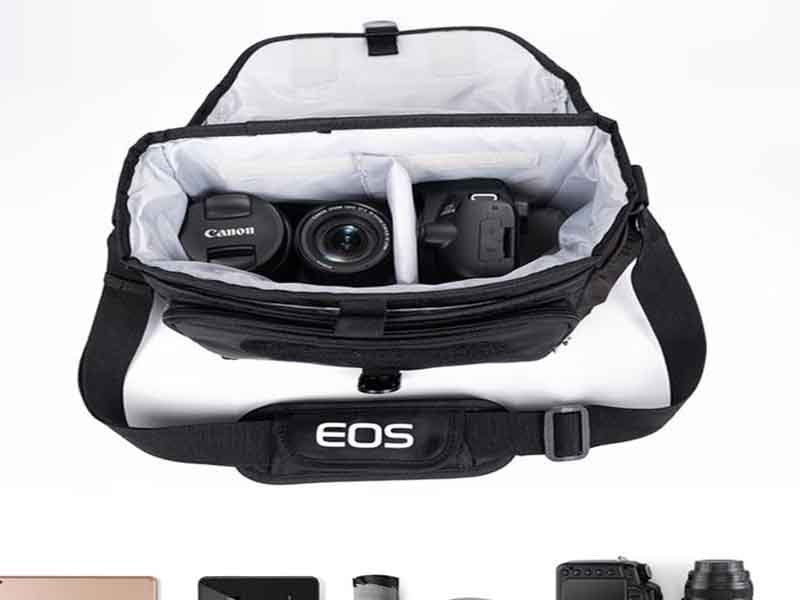
The best camera bag style for outdoor use depends on shooting behavior, gear weight, weather exposure, body movement, and access speed. A waterproof camera backpack is usually the strongest all-around choice for hiking, travel, landscape photography, drone work, and long outdoor days because it spreads weight across both shoulders and offers larger capacity. A sling bag works better for fast access and lighter camera kits. A shoulder bag can work for city rain or short outdoor shoots, but it is less comfortable for heavy gear. A hard case gives strong impact protection, but it is less flexible for walking, hiking, or daily photography. For wet environments, roll-top backpacks, dry-bag-style camera bags, and waterproof camera inserts are often more suitable than ordinary zipper camera bags.
Outdoor photography is not one fixed use case. A wildlife photographer may carry a telephoto lens and tripod for hours. A travel creator may carry a mirrorless camera, drone, laptop, power bank, and jacket. A fishing photographer may need waterproof storage near water. A wedding photographer may need quick access during rain but also a polished appearance. A camera bag style should be chosen after understanding how the user moves, opens the bag, changes lenses, and stores gear in rough conditions.
For brands, style choice affects every material decision. A backpack needs breathable mesh, padded straps, back support, strong webbing, and balanced compartments. A sling bag needs a stable strap, side-access opening, compact waterproof zipper, and lightweight shell. A shoulder bag needs a good flap, water-resistant canvas or coated fabric, and a comfortable pad. A hard case needs molded EVA, PE board, or shell structure. The same waterproof fabric can behave very differently across these styles.
Szoneier can develop waterproof camera backpacks, sling bags, shoulder bags, camera inserts, drone bags, tripod bags, dry-bag-style camera bags, and protective camera cases using nylon, polyester, Oxford fabric, canvas, neoprene, TPU-coated fabric, PVC tarpaulin, EVA padding, and custom lining systems. The right style should make the user feel that the bag fits their shooting routine, not just their camera model.
Is a Backpack Best?
A backpack is often the best choice for outdoor photography when users carry multiple lenses, a camera body, laptop, drone, tripod, jacket, water bottle, batteries, and personal items. It spreads weight across both shoulders and can support larger internal layouts than a sling or shoulder bag. For hiking, travel, landscape photography, and long shooting days, a waterproof camera backpack usually gives the best balance of capacity, protection, comfort, and organization.
The main strength of a camera backpack is load distribution. Heavy camera gear can quickly become uncomfortable if carried on one shoulder. A backpack allows thicker shoulder straps, chest strap, waist belt, breathable back panel, and better weight placement near the body. It also allows separate compartments for camera gear, laptop, clothing, and accessories.
However, backpacks are not perfect. Access can be slower than sling bags unless the design includes side access or rear access. Larger backpacks may feel bulky in crowded spaces. If the waterproof structure relies only on top zippers, rain can still be a problem. A good outdoor camera backpack should combine comfort, protection, and access rather than only offering large capacity.
| Backpack Feature | Outdoor Benefit | Design Risk | Recommended Material Direction |
|---|---|---|---|
| Dual shoulder carry | Better weight distribution | Poor straps cause pressure | EVA padded straps, spacer mesh |
| Large capacity | Fits camera, lenses, laptop, drone | Can become too heavy | Lightweight nylon or Oxford fabric |
| Rear access | Safer gear opening | Requires removing bag | Padded back panel and strong zipper |
| Side access | Fast camera reach | Zipper needs protection | Water-repellent zipper and flap |
| Tripod holder | Supports outdoor shooting | Side panel stress | Reinforced webbing and bartack stitching |
| Rain cover pocket | Emergency rain protection | Poor fit reduces value | Coated polyester cover |
| Laptop sleeve | Supports creators and travel | Adds weight and structure | EVA padded suspended sleeve |
| Waist/chest strap | Improves stability | May feel excessive for city use | Adjustable webbing and durable buckles |
A backpack is best for outdoor users who carry gear for more than short walks. It can also support more premium product positioning because brands have room to add features: padded back panel, modular dividers, rain cover, hydration pocket, tripod holder, laptop sleeve, side access, anti-theft rear access, and custom logo trims.
For Szoneier custom camera backpack projects, brands can create different backpack tiers. A daily outdoor version may use 600D or 900D Oxford fabric with PU coating and rain cover. A premium hiking version may use coated nylon, water-repellent zipper, reinforced bottom, thick EVA dividers, and breathable back panel. A waterproof-style version may use TPU or PVC fabric with roll-top closure and a removable camera insert.
Are Sling Bags Good Outdoors?
Sling bags are good outdoors when the camera kit is light to medium and fast access matters more than maximum capacity. A waterproof camera sling can be ideal for street photography, travel walks, day hikes, cycling creators, mirrorless camera users, and photographers who want to swing the bag to the front without taking it off. Sling bags feel agile, compact, and easy to use.
The main advantage of a sling bag is speed. A user can rotate the bag from back to chest and open the camera compartment quickly. This is useful when shooting in changing outdoor moments, such as travel streets, forest paths, scenic viewpoints, festivals, or light rain. A sling bag can also feel less bulky than a backpack.
The trade-off is load comfort. Because a sling bag places weight on one shoulder, it is not ideal for heavy camera kits or long hiking days. Strap design becomes very important. The strap should be wide enough, padded enough, and stable enough to prevent shoulder pain. Neoprene, EVA padding, breathable mesh, and strong webbing can improve comfort. The bag body should sit close to the user to prevent bouncing.
| Sling Bag Feature | Benefit | Limitation | Better Design Choice |
|---|---|---|---|
| Quick rotation | Fast camera access | One-shoulder load | Wide padded strap |
| Compact size | Easier travel and city use | Limited gear capacity | Modular divider layout |
| Side/front opening | Easy lens change | Zipper exposure in rain | Water-repellent zipper or flap |
| Lightweight shell | Comfortable for walking | Less heavy-duty structure | Ripstop nylon or coated polyester |
| Stabilizer strap | Reduces bouncing | Adds complexity | Adjustable secondary strap |
| Weather protection | Good for short outdoor use | Not ideal for heavy storms | PU coating plus rain cover |
Sling bags work best for smaller gear setups: one camera body, one or two lenses, batteries, memory cards, and a compact tripod or strap. They are less suitable for long telephoto lenses, 16-inch laptops, multiple bodies, or full drone kits unless the sling becomes large, at which point comfort becomes difficult.
For brands, waterproof camera slings can be attractive because they match modern creator habits. Many users want a bag for short shoots, travel, social content, and mirrorless cameras. Szoneier can customize sling bags with coated nylon, Oxford fabric, polyester, neoprene strap padding, EVA dividers, soft lining, water-repellent zippers, and logo patches. A good sling should feel easy, protective, and ready for sudden weather.
Do Shoulder Bags Work in Rain?
Shoulder bags can work in rain when they use water-resistant materials, covered openings, protective flaps, coated fabric, and a rain-aware structure. They are especially suitable for urban photography, wedding photography, travel, vintage-style camera bags, and lifestyle camera brands. However, shoulder bags are less ideal for heavy outdoor rain, hiking, or long-distance carrying because the weight sits on one side of the body and the top opening may be more exposed.
A camera shoulder bag often uses canvas, waxed canvas, nylon, polyester Oxford, leather trim, PU leather details, or coated fabric. A large flap can provide good rain protection by covering the zipper or main compartment. Waxed canvas can add water resistance and a premium heritage look. Coated nylon or Oxford fabric can create a more technical shoulder bag.
The challenge is keeping the bag protective without making it too bulky. Shoulder bags are often chosen for style and access. If the padding is too thick, the bag may look heavy. If the padding is too thin, cameras may not be protected. A removable padded insert can solve this by allowing the outer bag to keep a clean shape while the inner cube protects gear.
| Shoulder Bag Design | Rain Benefit | Risk | Material Suggestion |
|---|---|---|---|
| Large front flap | Covers main opening | Wind may lift flap | Add buckle or magnetic closure |
| Waxed canvas shell | Heritage water resistance | Not fully waterproof | Pair with inner coating or rain cover |
| Coated Oxford shell | Durable and practical | Less premium than canvas | Good for daily outdoor use |
| Water-repellent zipper | Protects inner compartment | Adds cost | Use on main gear opening |
| Removable insert | Adds camera protection | Insert may shift if loose | Use snug EVA camera cube |
| Padded shoulder pad | Improves carry comfort | Can slide if poorly designed | Neoprene or EVA pad |
Shoulder bags work best in rain when the exposure is moderate. A city photographer walking from a car to a venue may be fine with waxed canvas, flap closure, and a padded insert. A landscape photographer hiking through mountain rain may need a backpack or roll-top waterproof design instead.
Szoneier can develop custom camera shoulder bags in canvas, waxed canvas, polyester, nylon, Oxford fabric, coated fabrics, and mixed-material designs with leather or PU trim. For brands targeting lifestyle photography, a shoulder bag can offer strong visual identity while still providing practical water resistance and padding.
Are Hard Cases Better?
Hard cases are better for impact protection, equipment transport, drone kits, cinema gear, and situations where gear may be stacked, shipped, checked, or handled roughly. They can protect cameras from crushing, drops, and external pressure better than soft bags. However, hard cases are not always better for outdoor photography because they are heavier, less comfortable to carry, and slower for active shooting.
A hard camera case may use molded EVA, hard plastic shell, PE board, composite panel, foam insert, rubberized exterior, waterproof gasket, and lockable latches. These structures are excellent for transport and storage. For photographers who move between vehicles, studios, boats, or job sites, hard cases can be very useful.
For hiking, travel walking, or fast outdoor shooting, a soft waterproof camera backpack may be more comfortable. Soft bags conform better to the body, allow padded straps, and support quicker access. A hybrid option is also possible: semi-rigid EVA camera cases or molded camera inserts placed inside a waterproof backpack.
| Case Style | Protection Strength | Comfort | Best Use |
|---|---|---|---|
| Hard Plastic Case | Very high impact and crush protection | Low for long carry | Transport, storage, professional gear |
| Molded EVA Case | Medium to high protection | Medium | Drone kits, lens cases, accessories |
| Semi-Rigid Camera Bag | Good shape support | Medium to high | Travel and field work |
| Soft Padded Backpack | Good daily protection | High | Hiking and outdoor photography |
| Waterproof Dry Bag + Insert | Strong water protection | Medium | Marine and wet environments |
| Camera Cube | Flexible protection | Depends on parent bag | Hybrid travel systems |
The decision should be based on movement. If the user carries gear by hand or vehicle and needs maximum crush protection, a hard case can be better. If the user wears the product for hours outdoors, comfort and weight may matter more than hard-shell strength. For many outdoor photography brands, semi-rigid designs offer the best compromise: strong enough to protect gear, soft enough to carry comfortably.
Szoneier can develop soft padded bags, semi-rigid EVA protective cases, removable camera cubes, and structured camera inserts. This allows brands to offer different protection levels across one product line.
Which Style Fits Hiking?
A waterproof camera backpack is usually the best style for hiking because it balances capacity, comfort, weather resistance, and gear organization. Hiking requires hands-free carry, stable weight distribution, breathable back panels, secure straps, water-resistant fabric, reinforced bottom panels, and protected camera compartments. A sling bag may work for short hikes with light gear, but a backpack is better for longer routes or heavier kits.
A hiking camera bag should carry more than camera gear. Users may need a jacket, water bottle, snacks, first-aid items, phone, power bank, tripod, drone, filters, and personal items. The bag should organize these without letting wet or dirty items touch camera equipment. A separate top compartment or front pocket can help.
Comfort is critical for hiking. The bag should sit close to the body, distribute weight through shoulder straps and possibly waist belt, allow airflow, and avoid bouncing. Materials should be durable but not unnecessarily heavy. Ripstop nylon, coated nylon, 900D Oxford, PU-coated polyester, TPU bottom panels, EVA foam, spacer mesh, and strong webbing are common choices.
| Hiking Requirement | Recommended Bag Feature | Material Direction |
|---|---|---|
| Long carry comfort | Padded shoulder straps, chest strap, breathable back | EVA foam, spacer mesh, strong webbing |
| Rain readiness | Coated fabric, rain cover, protected zippers | PU/TPU coating, coated cover fabric |
| Ground protection | Reinforced bottom | 1680D Oxford, TPU/PVC bottom panel |
| Camera organization | Adjustable divider system | EVA foam with soft lining |
| Quick shooting | Side or rear access | Water-repellent zipper and flap |
| Tripod carry | Side/bottom tripod holder | Reinforced webbing and buckles |
| Personal storage | Separate dry compartment | Lined top or front section |
| Lightweight movement | Balanced fabric weight | Ripstop nylon or coated Oxford |
A good hiking camera backpack should feel stable when the user climbs, bends, or walks downhill. The tripod should not swing wildly. The camera compartment should not shift. The back panel should not become unbearable in warm weather. The bottom should not soak quickly when placed on wet soil.
For Szoneier custom hiking camera bags, brands can request fabric packages for different markets: lightweight travel hiking, rugged outdoor hiking, rain-focused hiking, drone hiking, or premium creator hiking. Each version can use different material combinations while keeping brand identity consistent.
How Should Brands Choose Features?
Brands should choose waterproof camera bag features by studying how outdoor photographers actually use the bag: what gear they carry, how fast they need access, how long they wear the bag, what weather they face, where wet items go, and what product price they expect. Features should solve real problems, not decorate the bag with complexity. A strong outdoor camera bag may include modular capacity, side or rear access, tripod holder, breathable back panel, laptop sleeve, wet gear pocket, rain cover, reinforced bottom, removable dividers, and water-resistant zipper systems.
The danger in camera bag design is adding too many features without a clear hierarchy. More pockets can create confusion. More openings can create more leakage risk. More padding can reduce usable space. More hardware can increase weight. More waterproof parts can slow access. Good design chooses the right features for the target user and removes what does not help.
For custom manufacturing, feature selection should be connected with material choice. A tripod holder needs reinforced webbing and stress-point stitching. A wet gear pocket may need coated lining or drainage planning. A breathable back panel needs mesh and foam channels. A laptop sleeve needs EVA padding and a suspended bottom. Side access needs protected zipper design. Rain cover storage needs a dedicated pocket and correct cover size.
Szoneier supports feature development from material selection to sample construction. Brands can build a feature matrix before sampling, separating must-have features from optional upgrades. This makes the project easier to quote, easier to sample, and easier to position in the market.
What Capacity Do Photographers Need?
Photographers need capacity based on their shooting style, not only camera size. A casual outdoor user may carry one mirrorless camera, one extra lens, batteries, and a phone. A travel creator may carry a camera, drone, laptop, microphone, charger, power bank, tripod, and clothing layer. A professional landscape photographer may carry two camera bodies, several lenses, filters, tripod, rain jacket, water bottle, and food. The bag capacity should match these real load patterns.
Capacity is often measured in liters, but internal layout matters just as much. A 20L bag with poor dividers may fit less camera gear than a 16L bag with a smart modular system. A 30L hiking camera backpack may be too large for daily city creators. A compact sling may feel perfect for mirrorless users but useless for telephoto lens owners.
Brands should define a target gear list before development. This list can guide bag dimensions, divider quantity, laptop sleeve size, top compartment volume, side pocket size, and tripod attachment. Without this step, capacity planning becomes guesswork.
| User Type | Typical Gear Load | Suggested Bag Capacity | Better Bag Style |
|---|---|---|---|
| Beginner Outdoor Shooter | Camera body, 1–2 lenses, batteries | 6–12L | Sling or compact backpack |
| Travel Creator | Camera, drone, laptop, charger, mic | 15–25L | Camera backpack |
| Hiking Photographer | Camera, 2–4 lenses, tripod, jacket | 20–35L | Outdoor camera backpack |
| Wildlife Photographer | Camera, telephoto lens, tripod support | 25–40L | Large structured backpack |
| Drone User | Drone, controller, batteries, camera | 15–30L | Drone camera backpack |
| Wedding Photographer | 2 bodies, lenses, flash, laptop | 20–35L | Professional backpack or rolling case |
| Water-Side Photographer | Camera kit, dry storage, wet gear | 15–30L | Roll-top waterproof bag |
Capacity should also consider weight limit. A large bag encourages users to pack more. If the strap system is weak, a high-capacity bag becomes uncomfortable or unsafe. The larger the bag, the more important the back panel, strap padding, waist belt, webbing strength, and bottom support become.
Szoneier can help brands develop capacity around actual equipment dimensions. Sample layouts can be tested with camera body mockups, lens sizes, laptop dimensions, and tripod placement. This makes the product more believable and reduces the chance of customer complaints about “not fitting enough gear.”
Which Access Points Are Useful?
Useful access points include side access, rear access, top access, front organizer access, laptop access, rain cover access, and quick accessory pockets. The right access design depends on how the photographer uses the bag. Outdoor users need a balance between fast gear access and water protection. Every opening improves convenience but also creates a possible leakage or security point.
Side access is popular because users can swing the bag around and grab a camera quickly. Rear access is secure and keeps the camera compartment protected when the bag is worn. Top access is good for personal items or roll-top storage. Front organizer access helps with filters, batteries, cables, and small accessories. Laptop access matters for travel creators and professionals moving through airports or client meetings.
For waterproof camera bags, access points should be protected with zipper flaps, water-repellent zippers, storm guards, raised seams, or covered placement. A bag with too many exposed zippers may look functional but perform poorly in rain.
| Access Point | User Benefit | Waterproof Concern | Better Design Choice |
|---|---|---|---|
| Side Camera Access | Fast shooting | Exposed zipper line | Water-repellent zipper and zipper garage |
| Rear Camera Access | Secure and less rain-exposed | Requires taking bag off | Large padded panel opening |
| Top Access | Flexible storage | Rain can enter from above | Roll-top or covered zipper |
| Front Organizer | Easy small item storage | Front faces rain directly | Flap or coated zipper |
| Laptop Access | Travel convenience | Zipper near electronics | Back-side or protected zipper |
| Rain Cover Pocket | Fast weather response | Pocket may collect dirt | Hidden bottom storage |
| Tripod Strap Access | Outdoor support | Strap holes and anchors | Reinforced and bartacked zones |
The best camera bags make access feel natural. A photographer should not need to think too hard about where to place batteries, where to grab a lens, or how to open the camera compartment in light rain. Good access is intuitive.
Szoneier can support access design during sample development by testing zipper paths, opening angles, divider positions, pocket placement, and rain cover reach. For outdoor bags, access testing should be done with real or sample gear inside because packed shape changes how the opening works.
Do Tripod Holders Matter?
Tripod holders matter for outdoor camera bags because many landscape, wildlife, travel, and video creators carry tripods. A tripod holder allows users to attach a tripod securely without using their hands. It can be placed on the side, front, bottom, or center of the bag depending on the style and balance.
A tripod holder is not just a strap. It needs reinforced webbing, strong stitching, abrasion-resistant panels, stable buckle placement, and sometimes a bottom pocket or elastic holder. Tripods create dynamic load. They swing, pull, and rub against the bag while walking. If the holder is weak, it can damage the bag or make the user uncomfortable.
Side tripod holders are common and easy to access, but they can create imbalance if the tripod is heavy. Center-front holders balance weight better but may block access to pockets. Bottom holders can work for compact tripods but may hit the user while walking. The best design depends on tripod size and bag capacity.
| Tripod Holder Position | Benefit | Limitation | Material Requirement |
|---|---|---|---|
| Side Holder | Easy access, common layout | Can create side imbalance | Reinforced side panel and webbing |
| Front Center Holder | Better weight balance | Blocks front opening | Strong straps and buckle system |
| Bottom Holder | Good for compact tripods | May swing or hit body | Tight compression straps |
| Hidden Strap System | Clean appearance | Lower capacity for large tripod | Durable webbing storage |
| Dual-Use Side Pocket | Holds bottle or tripod leg | Pocket may wear quickly | Abrasion-resistant fabric |
Tripod holder design should also protect the bag fabric. A tripod leg can rub against the side panel repeatedly. Strong Oxford fabric, nylon reinforcement, or extra abrasion-resistant patches can prevent early wear. Buckles should be easy to operate with cold or wet hands.
For Szoneier custom outdoor camera bags, tripod holder options can be adjusted by user segment. A city creator bag may use a light side strap. A hiking camera backpack may need reinforced side compression straps and a base holder. A professional outdoor bag may need both tripod and trekking pole compatibility.
Are Breathable Back Panels Needed?
Breathable back panels are needed for most outdoor camera backpacks because camera gear is heavy and often carried for long periods. A non-breathable back panel can become hot, sweaty, and uncomfortable during hiking, travel, or summer shoots. Breathable mesh, spacer mesh, air channels, molded foam, and padded ventilation structures help improve comfort.
Back panel comfort is especially important for waterproof camera bags because waterproof fabrics can be less breathable than ordinary fabrics. If the outer shell is TPU, PVC, or heavily coated fabric, the bag may feel more technical and less soft. A breathable back panel helps balance this by improving body contact comfort.
A good back panel should provide airflow, cushioning, shape support, and load stability. Too much soft foam can collapse. Too much hard structure can feel uncomfortable. Mesh that is too rough may irritate clothing. The best solution often combines EVA foam, sponge foam, PE support, and spacer mesh.
| Back Panel Design | Benefit | Material Direction |
|---|---|---|
| Spacer Mesh Panel | Better airflow and cushioning | 3D mesh plus foam |
| Air Channel Foam | Reduces full back contact | Molded EVA or cut foam |
| Lumbar Padding | Improves load support | Layered sponge and mesh |
| PE Board Support | Stabilizes heavy bag | Board plus foam cover |
| Moisture-Friendly Surface | Reduces sweaty feel | Breathable mesh fabric |
| Ergonomic Shape | Fits body better | Patterned foam zones |
Back panel design should be tested with actual weight. An empty bag can feel fine in a showroom. A loaded bag on a two-hour walk reveals pressure points, heat buildup, and strap imbalance. For outdoor photography bags, comfort testing is not optional if the brand wants strong user reviews.
Szoneier can customize breathable back panels using spacer mesh, air mesh, EVA foam, sponge, PE board, and ergonomic stitching. The design can be matched with the bag capacity and expected load.
How Should Wet Gear Be Stored?
Wet gear should be stored separately from camera equipment. Outdoor photographers may carry a wet rain jacket, towel, water bottle, muddy tripod feet, damp gloves, fishing tools, or rain cover after use. If these items touch camera bodies, lenses, batteries, or laptop compartments, moisture and dirt can cause problems. A waterproof camera bag should include a plan for wet or dirty items.
A wet gear compartment may use coated lining, waterproof pocket fabric, drainage eyelets, removable pouch, front shove-it pocket, side pocket, or roll-top separate compartment. The design should prevent moisture from migrating into the camera zone. If a pocket is intended for wet items, it should be easy to clean.
For hiking and travel bags, a separate top compartment can hold clothing or wet outerwear while the lower camera compartment stays protected. For fishing or marine photography bags, an exterior waterproof pocket may hold wet accessories. For city travel bags, a simple coated front pocket may be enough.
| Wet Item | Storage Solution | Material Direction |
|---|---|---|
| Wet Rain Cover | Dedicated bottom or side pocket | Coated lining, easy-drain design |
| Damp Jacket | Separate top compartment | PU-coated lining or dry divider |
| Muddy Tripod Feet | External tripod holder | Reinforced washable fabric |
| Water Bottle | Side pocket outside camera zone | Elastic mesh or coated pocket |
| Wet Gloves | Small exterior pocket | Coated fabric and drain hole |
| Towel | Separate organizer section | Washable lining |
| Fishing/Marine Gear | Waterproof outer pocket | TPU/PVC fabric |
Wet gear storage is a detail that makes outdoor camera bags feel realistic. Photographers do not operate in clean studio conditions. They need somewhere to put the messy stuff. If the bag does not provide that space, users improvise, often in ways that put camera gear at risk.
Szoneier can develop wet-gear storage solutions based on product type: coated front pocket, waterproof lower pocket, separate roll-top zone, removable pouch, or external attachment system. This feature can become a strong selling point for outdoor, fishing, hiking, and travel photography markets.
Do Waterproof Bags Need Testing?

Waterproof camera bags need testing because waterproof performance cannot be judged by appearance, fabric name, or product description alone. A bag may use TPU fabric, PVC tarpaulin, PU-coated Oxford fabric, or coated nylon, but water can still enter through zippers, seams, stitching holes, pocket openings, strap anchors, and bottom edges. Testing helps confirm whether the complete bag structure matches the product claim and protects real camera gear in outdoor conditions.
For brands, testing is not only a technical step. It protects reputation. Camera bags carry expensive equipment, and outdoor photographers make buying decisions based on trust. If a product says waterproof but fails during rain, the customer does not blame the fabric supplier. They blame the brand. A clear testing process helps brands avoid exaggerated claims, improve product pages, support sales conversations, and reduce return risks.
Waterproof camera bag testing should include fabric coating checks, water spray or rain simulation, zipper leakage review, seam inspection, bottom panel exposure, lining color fastness, divider stability, strap load testing, and final quality control. For higher-performance products, brands may request more advanced tests such as hydrostatic pressure testing, seam-sealing checks, pull strength tests, abrasion tests, and loaded-use trials. Not every project needs laboratory-level testing, but every waterproof camera bag should be checked under realistic use conditions before bulk production.
Szoneier can help brands build a practical quality plan based on the target waterproof level. A daily water-resistant camera backpack may need coating review, spray test, zipper check, rain cover fit, and loaded carry inspection. A dry-bag-style waterproof camera bag may need stronger seam and closure evaluation. Testing should match the promise. That is what makes the final product credible.
What Water Tests Are Useful?
Useful water tests for waterproof camera bags include fabric surface spray tests, coating water resistance checks, rain simulation, zipper exposure checks, bottom wet-ground tests, seam leakage checks, and full-bag practical water exposure tests. The goal is to understand where water may enter and whether the bag protects gear under the intended use scenario.
A simple spray test can show whether water beads on the fabric surface or wets out quickly. A rain simulation can show how the bag handles water falling from above. A bottom panel test can show whether the bag resists moisture when placed on wet ground. A zipper exposure test can reveal whether water passes through zipper teeth or zipper ends. For waterproof-style bags, a roll-top closure test can show whether the folding structure is enough for outdoor exposure.
Water testing should be realistic. A bag designed for light rain does not need to pass the same test as a marine dry bag. A bag designed for kayaking or fishing photography needs stronger evaluation than a city camera sling. Brands should define the target environment before choosing tests.
| Test Type | What It Checks | Suitable Product Level | Key Insight |
|---|---|---|---|
| Fabric Spray Test | Surface water beading and wet-out speed | Water-resistant and outdoor bags | Shows DWR or surface finish quality |
| Coating Water Check | Back-side water penetration | Coated fabric bags | Confirms coating consistency |
| Rain Simulation | Whole-bag exposure from above | Outdoor backpacks and slings | Reveals zipper and seam risks |
| Zipper Exposure Test | Leakage through zipper line | Bags with exposed openings | Helps choose zipper and flap design |
| Bottom Wet-Ground Test | Moisture from ground contact | Hiking and travel backpacks | Checks bottom panel protection |
| Seam Leakage Check | Water entry through stitched seams | Outdoor and waterproof-style bags | Shows whether seam protection is needed |
| Roll-Top Closure Test | Top opening water barrier | Dry-bag-style camera bags | Confirms fold depth and buckle tension |
| Rain Cover Fit Test | Cover size and wind security | Backpack with rain cover | Confirms real emergency protection |
A practical water test can also use absorbent paper or white tissue placed inside the camera compartment during controlled exposure. If water enters, the tissue reveals the leakage zone quickly. This is a simple but useful sample-stage method before more formal testing.
Brands should keep test reports, sample notes, and production specifications together. If the product page claims “water-resistant,” the material and structure should support that claim. If the page claims “waterproof,” the test evidence must be stronger. Szoneier can help brands avoid unclear wording by connecting water test results with product-level descriptions.
How Is Fabric Coating Checked?
Fabric coating is checked by reviewing coating type, coating uniformity, adhesion, hand feel, water resistance, abrasion behavior, peeling risk, color consistency, and compatibility with sewing. For waterproof camera bags, coating quality matters because it forms the water-blocking layer behind or on the fabric. Common coating and lamination options include PU coating, TPU lamination, PVC backing, rubberized finish, and water-repellent surface treatment.
A coating should be even. If coating thickness varies too much, some areas may resist water better than others. If the coating has pinholes, cracks, poor adhesion, or weak bonding, water may penetrate or the coating may peel during use. If the coating is too stiff, the bag may be hard to sew or uncomfortable to carry. If it is too soft or poorly cured, it may stick, wrinkle, or wear too quickly.
Coating should also be tested after sewing and folding. A flat fabric sample may perform well, but once the material is folded at corners, stitched into seams, or bent around foam, the coating may behave differently. Outdoor camera bags often include curved panels, padded structures, and stress areas, so material behavior during construction matters.
| Coating Check Point | Why It Matters | Common Issue | Better Control Method |
|---|---|---|---|
| Coating Type | Defines waterproof potential and hand feel | Wrong coating for product claim | Match PU, TPU, PVC to use case |
| Uniformity | Ensures stable performance | Thin or uneven coating areas | Inspect fabric roll and sample panels |
| Adhesion | Prevents peeling | Coating separates after bending | Bend and rub test before bulk |
| Pinholes | Stops small leakage points | Tiny holes in coating layer | Backlight or water check |
| Flexibility | Affects sewing and user comfort | Cracking at folds | Fold and stress testing |
| Abrasion Resistance | Protects long-term use | Coating wears at bottom or corners | Use reinforced panels |
| Color Consistency | Supports brand appearance | Shade variation between batches | Lab dip and bulk color review |
| Odor and Finish | Affects user perception | Strong chemical smell | Material curing and airing control |
PU coating is widely used for camera backpacks because it balances cost, flexibility, and water resistance. TPU coating or lamination is stronger for waterproof-style bags and technical outdoor products. PVC backing can work for rugged waterproof structures but may feel heavier and stiffer. Surface water-repellent finish helps water bead on the fabric but should not be treated as full waterproof protection by itself.
Szoneier can help brands compare coating options through material swatches and sample prototypes. The best coating is not always the thickest or most expensive. It is the coating that matches the bag style, waterproof claim, sewing structure, hand feel, MOQ, and target price.
Do Zippers Need Leak Tests?
Zippers need leak tests when they protect camera compartments, laptop sections, or important openings exposed to rain. Zippers are one of the most common water-entry points in camera bags. Even water-repellent zippers are not always fully waterproof, especially around zipper ends, corners, curves, puller gaps, and stitched zipper tape. Testing helps confirm whether the zipper choice and zipper placement match the intended weather performance.
A zipper leak test can be simple at the sample stage. Water can be sprayed along the zipper line while absorbent paper is placed inside the compartment. The sample can be checked after a set time to see whether moisture entered. For higher-performance products, more controlled testing may be used. The key is to test the zipper as part of the bag, not only as a separate trim.
Zipper direction and shape matter. A straight zipper under a flap may perform better than a curved exposed zipper. A top-facing zipper may collect rainwater. A side-access zipper may need a zipper garage. A rear-access zipper may be better protected while worn. Water-repellent zipper tape may reduce leakage, but the sewing holes along both sides of the zipper can still allow moisture to enter.
| Zipper Test Area | What to Check | Risk if Ignored | Better Design Response |
|---|---|---|---|
| Zipper Teeth | Water passing through chain | Camera compartment gets wet | Use water-repellent zipper or flap |
| Zipper Tape | Water soaking into stitched area | Moisture moves along seam | Add coating, flap, or seam treatment |
| Zipper Ends | Leakage at puller garage | Water enters at corners | Add zipper garage or end cover |
| Curved Sections | Tension and gaps | Coating opens or zipper pulls unevenly | Adjust pattern and zipper type |
| Top Zippers | Water pooling | Long exposure leakage | Use raised flap or roll-top design |
| Side Access Zippers | Rain exposure when walking | Side compartment leakage | Use flap and protected orientation |
| Laptop Zippers | Electronics exposure | Laptop moisture risk | Place zipper under back protection |
Not every zipper needs the same waterproof level. Inner pockets can use standard zippers. External accessory pockets may use reverse zippers or flaps. Main camera openings should receive higher protection. Laptop openings should also be treated seriously because laptops are sensitive to moisture.
Szoneier can provide zipper options for different product levels: standard coil zippers, reverse zippers, water-repellent zippers, zipper flaps, custom pullers, and waterproof-style closures. During sampling, the zipper should be checked for water resistance, smoothness, strength, appearance, and ease of use with gloves or wet hands.
How Is Seam Strength Tested?
Seam strength is tested by checking stitch quality, pull resistance, seam slippage, bartack performance, stress-point reinforcement, and material behavior around sewn areas. In waterproof camera bags, seams have two jobs: they must hold the bag together under load and they must reduce water entry. A seam that looks neat but fails under weight is dangerous. A seam that is strong but unprotected may leak in rain.
Camera bags need strong seams because they carry dense and expensive gear. Shoulder strap anchors, handles, tripod holders, side compression straps, bottom corners, laptop compartments, and main zipper areas are high-stress zones. These areas should be reinforced with bartack stitching, box stitching, extra fabric layers, stronger thread, or load-bearing webbing.
Seam waterproofing is another issue. Needle holes can allow water to pass through. Seam taping, sealing, binding, flaps, or welded construction can reduce leakage. The right method depends on the product claim. A weather-resistant backpack may only need protected seams in key zones. A waterproof dry-bag-style product may need welded or heat-sealed seams in critical areas.
| Seam Area | Strength Requirement | Waterproof Concern | Recommended Check |
|---|---|---|---|
| Shoulder Strap Anchor | Very high | Stitch holes and stress | Pull test and bartack review |
| Top Handle | Very high | Rain exposure around seam | Load test and seam protection |
| Bottom Panel | High | Wet ground leakage | Abrasion and water exposure test |
| Side Access Panel | Medium to high | Zipper seam leakage | Spray test and seam inspection |
| Tripod Holder | High | Stress and abrasion | Repeated pull and rubbing check |
| Laptop Sleeve | Medium | Moisture near electronics | Stitching and lining check |
| Rain Cover Pocket | Medium | Wet cover storage | Coating and drainage check |
| Roll-Top Edge | High | Main water barrier | Fold stress and closure test |
Seam strength should be tested with a loaded bag. Outdoor camera bags often fail not because the fabric tears in the middle, but because stress concentrates where straps and panels connect. A tripod holder pulling on one side can damage stitching. A heavy laptop can pull on the back panel. A user grabbing the top handle quickly can stress the anchor.
Szoneier can help brands review seam specifications before production, including stitch density, thread type, reinforcement location, bartack placement, edge binding, and waterproof treatment. Strong seams are invisible when they work, but painfully obvious when they fail.
What QC Checks Matter Most?
The most important QC checks for waterproof camera bags include material inspection, coating review, zipper function, water exposure check, seam inspection, padding thickness, divider fit, lining quality, strap strength, hardware performance, logo placement, color consistency, size accuracy, packing method, and final loaded-use review. Waterproof camera bags require more careful QC than ordinary bags because they combine protection, weather performance, and gear organization.
QC should begin before sewing. Fabric rolls should be checked for defects, coating quality, color consistency, odor, and thickness. Trims such as zippers, buckles, webbing, hook-and-loop, and logo patches should match approved samples. Foam should be checked for thickness and density. Lining should be checked for softness, pilling, shedding, and color fastness.
During production, sewing quality matters. Stitch lines should be clean. Stress points should be reinforced. Zipper paths should be smooth. Dividers should fit correctly. Rain covers should match bag size. Straps should adjust properly. Water-resistant panels should not be damaged by careless needle selection or excessive folding.
| QC Stage | Key Check | Why It Matters |
|---|---|---|
| Incoming Fabric | Coating, color, hand feel, defects | Prevents material-level failures |
| Trim Inspection | Zippers, buckles, webbing, logo parts | Protects function and appearance |
| Foam Inspection | Thickness, density, recovery | Confirms camera protection |
| Cutting Stage | Panel size and direction | Prevents shape and assembly issues |
| Sewing Stage | Stitching, bartacks, seam alignment | Controls strength and appearance |
| Zipper Stage | Smoothness, leakage risk, end finishing | Protects access and water resistance |
| Divider Stage | Fit, hook-and-loop grip, lining quality | Supports gear organization |
| Rain Cover Check | Size, storage, elastic fit | Confirms emergency weather value |
| Final Inspection | Size, load feel, appearance, packing | Confirms product readiness |
For camera bags, a practical final check should include packing sample gear or dummy gear into the bag. This reveals real issues: dividers too loose, laptop sleeve too tight, tripod holder unstable, side access blocked, straps uncomfortable, zipper under tension, or rain cover too small. These are the details users notice immediately.
Szoneier supports quality control through material checks, sample confirmation, production inspection, and final product review. For custom camera bag projects, brands can request specific QC points based on their product promise, such as water-resistance checks, strap load checks, divider layout review, or packaging inspection.
How Can Szoneier Customize Waterproof Camera Bags?
Szoneier can customize waterproof camera bags by developing the right combination of outer fabric, coating, waterproof structure, padding, lining, zipper system, webbing, hardware, logo method, compartment layout, and packaging for each brand’s target market. With more than 18 years of experience in fabric research and development, finished product manufacturing, and sales, Szoneier can support camera bag projects using cotton fabric, canvas fabric, polyester fabric, nylon fabric, neoprene fabric, jute fabric, linen fabric, Oxford fabric, TPU-coated fabric, PVC tarpaulin, PU-coated fabric, EVA padding, and mixed-material systems.
For brands planning outdoor photography products, Szoneier can help develop waterproof camera backpacks, hiking camera bags, roll-top camera bags, camera sling bags, camera shoulder bags, drone camera bags, dry-bag-style camera bags, laptop-camera backpacks, camera inserts, lens pouches, tripod bags, and protective cases. Customization can include fabric selection, coating level, waterproof zipper choice, rain cover design, EVA divider layout, breathable back panel, tripod holder, laptop sleeve, wet gear pocket, private label logo, custom color, packaging, and production specification.
The biggest value of working with Szoneier is material-to-product integration. Many suppliers can offer fabric. Many factories can sew bags. But waterproof camera bags need both fabric understanding and product construction experience. A coated fabric must be matched with the correct zipper, seam, foam, lining, and stress-point design. A premium logo patch must match the shell fabric and user scenario. A low MOQ project needs smart material choices to avoid unnecessary delays. Szoneier can help brands turn a product concept into a manufacturable sample and then into reliable bulk production.
For customers, the final result should feel simple: a waterproof camera bag that looks right, carries comfortably, protects gear, supports the brand identity, and performs in the outdoor scenes promised on the product page.
What Materials Can Szoneier Offer?
Szoneier can offer a wide range of materials for waterproof and water-resistant camera bag manufacturing, including nylon, polyester, Oxford fabric, canvas, waxed canvas, neoprene, TPU-coated fabric, PVC tarpaulin, PU-coated fabric, coated polyester, coated nylon, ripstop fabric, mesh, EVA foam, PE board, soft lining, webbing, buckles, waterproof-style zippers, and custom logo materials. The material choice can be adjusted based on product level, target customer, waterproof requirement, and budget.
For outdoor camera bags, nylon and Oxford fabric are strong choices for durable backpacks. TPU-coated and PVC tarpaulin materials fit waterproof-style bags and wet environments. Polyester and PU-coated Oxford can support value-focused water-resistant bags. Canvas or waxed canvas can support lifestyle camera shoulder bags when combined with waterproof planning. Neoprene works well for soft protective pouches, shoulder padding, handle grips, and accessory sleeves.
Szoneier can also help brands combine materials by function. For example, a camera backpack can use coated nylon on the main shell, 1680D Oxford on the bottom, spacer mesh on the back panel, EVA dividers inside, soft brushed lining, water-repellent zippers, and reinforced nylon webbing. A roll-top dry-bag-style camera bag can use TPU fabric, welded or sealed zones, removable EVA insert, and rubber logo patch.
| Product Goal | Recommended Szoneier Material Direction | Why It Works |
|---|---|---|
| Budget water-resistant camera bag | 600D polyester or Oxford + PU coating | Cost-friendly and scalable |
| Outdoor hiking camera backpack | Coated nylon or 900D Oxford + rain cover | Durable and weather-ready |
| Waterproof dry-bag-style camera bag | TPU-coated fabric or PVC tarpaulin | Strong water barrier |
| Premium lifestyle camera bag | Waxed canvas + leather/PU trim + EVA insert | Stylish and protective |
| Lightweight travel camera sling | Ripstop nylon or coated polyester | Lower weight and quick carry |
| Drone camera backpack | Oxford fabric + EVA dividers + PE board | Structured gear protection |
| Wet-environment camera bag | TPU/PVC panels + roll-top closure | Better water-side use |
| Comfortable camera pouch | Neoprene + soft lining | Flexible cushioning |
Material selection should be guided by the final use, not only by cost. Szoneier can prepare material recommendations based on the brand’s product photo, sketch, tech pack, target retail price, logo requirement, and expected quantity. This helps reduce development mistakes and keeps the project practical.
Which Logo Options Work Outdoors?
Outdoor camera bag logo options should be durable, weather-resistant, and matched to the fabric surface. Common logo methods include woven labels, rubber patches, silicone patches, PU leather patches, genuine leather patches, embroidery, screen printing, heat transfer, reflective printing, debossing, embossed patches, zipper pull logos, jacquard webbing, and metal logo plates. The best choice depends on fabric, waterproof level, brand style, and product price.
For waterproof camera bags, rubber patches, silicone patches, reflective prints, heat transfer logos, and debossed TPU/PVC panels can work well because they fit outdoor aesthetics and resist moisture better than some delicate decorative methods. For canvas or lifestyle camera bags, leather or PU patches can create a premium feel. For budget camera bags, woven labels or simple screen printing may be cost-effective.
Logo placement should not damage waterproof performance. Stitching a logo patch through a waterproof panel creates needle holes. This may be acceptable on low-risk decorative zones, but not ideal on critical waterproof areas unless properly sealed or backed. Heat-applied or bonded logos may reduce stitching but need compatibility testing with coated fabrics.
| Logo Method | Best Fabric Match | Outdoor Strength | Design Note |
|---|---|---|---|
| Rubber Patch | Nylon, Oxford, TPU, polyester | High | Strong outdoor look |
| Silicone Patch | Technical fabrics, coated materials | High | Clean modern finish |
| Woven Label | Polyester, canvas, Oxford | Medium | Cost-friendly and flexible |
| Embroidery | Canvas, polyester, Oxford | Medium | Adds stitch holes |
| Reflective Print | Outdoor nylon, polyester, Oxford | Medium to high | Adds safety visibility |
| PU Leather Patch | Canvas, polyester, lifestyle bags | Medium | Premium but less rugged |
| Genuine Leather Patch | Waxed canvas and premium bags | Medium | Needs care in wet use |
| Heat Transfer Logo | Coated fabric, polyester | Medium | Needs adhesion testing |
| Debossed Panel | TPU/PVC or rubberized surface | High | Premium waterproof look |
| Custom Zipper Pull | Most bag types | High touchpoint value | Supports brand identity |
A strong outdoor logo should look good after rain, friction, packing, and repeated use. It should not peel, bleed, crack, or look out of place. Color should match the overall material palette. For technical outdoor bags, low-profile tonal logos often look more premium. For creator-focused bags, reflective or contrast logos may work better.
Szoneier can help brands choose logo methods that fit the material and construction. During sampling, logo adhesion, stitching, color, placement, and waterproof impact can be reviewed before bulk production.
How Can MOQ Stay Flexible?
MOQ can stay flexible by using available materials, standard fabric colors, existing trims, proven zipper options, standard webbing, simple logo methods, and modular construction. For first-time custom waterproof camera bag projects, it is often smarter to begin with a material package that supports low MOQ and faster sampling, then upgrade special fabrics, custom colors, molded parts, or unique trims after sales validation.
Special materials can increase MOQ. Custom-dyed nylon, unique TPU colors, exclusive lining prints, custom zipper tape, molded rubber patches, metal hardware, jacquard logo webbing, and special coating treatments may require higher minimums. These details can be valuable for established product lines, but they may slow down a first launch if the order quantity is small.
Flexible MOQ does not mean generic design. Brands can still customize shape, compartment layout, logo placement, lining color from available options, webbing style, zipper puller, rain cover, packaging, and product details. The key is choosing where to customize first.
| Custom Element | Lower-MOQ Route | Higher-MOQ Upgrade |
|---|---|---|
| Outer Fabric | In-stock nylon, Oxford, polyester, canvas | Custom-dyed fabric or special coating |
| Waterproof Layer | Standard PU coating | TPU lamination or special waterproof finish |
| Lining | Available grey, black, beige, orange lining | Custom printed lining |
| Logo | Woven label, rubber patch from standard mold | Custom molded patch or metal logo |
| Zipper | Standard black or grey zipper | Custom zipper tape color and puller |
| Webbing | Stock color webbing | Jacquard logo webbing |
| Hardware | Standard buckle | Custom molded or metal buckle |
| Divider System | Standard EVA divider shapes | Fully custom molded insert |
| Packaging | Polybag and standard carton | Custom box, hangtag, retail packaging |
A good first order strategy may use a high-quality standard fabric, strong construction, and one or two visible brand details. For example, a brand could choose black PU-coated Oxford fabric, grey lining, EVA dividers, water-repellent zipper, rain cover, rubber logo patch, and custom hangtag. This creates a professional product without forcing every component into custom MOQ.
Szoneier supports low MOQ customization, free design support, fast sampling, and private label options. Brands can start with a realistic first production plan and scale into more customized materials as demand grows.
How Fast Can Samples Be Made?
Sample time depends on design complexity, material availability, logo method, waterproof structure, and whether the bag requires special tooling or custom fabric. For many custom bag projects, a simple sample can move faster when materials are available and the structure is based on proven construction. A complex waterproof camera backpack with TPU fabric, roll-top closure, side access, EVA dividers, rain cover, laptop compartment, tripod holder, and custom logo details may require more development time.
Fast sampling does not mean rushing blindly. A waterproof camera bag sample should be reviewed carefully because small details affect performance. The zipper path, opening angle, divider fit, rain cover size, seam construction, strap comfort, bottom reinforcement, and logo placement should all be checked. A sample that looks good but fails real use is not a success.
Brands can speed up sampling by preparing clear information: target bag style, dimensions, gear list, fabric preference, waterproof level, logo file, color direction, reference photos, expected quantity, target price range, and packaging requirements. The more complete the brief, the fewer revisions are needed.
| Sample Factor | Faster When | Slower When |
|---|---|---|
| Fabric | In-stock material is selected | Custom coating or dyeing is needed |
| Structure | Similar proven bag structure exists | New waterproof structure is developed |
| Logo | Woven label or standard patch is used | Custom mold or special technique is needed |
| Divider | Standard EVA layout is used | Complex molded insert is required |
| Zipper | Standard zipper option is chosen | Special waterproof zipper sourcing is needed |
| Rain Cover | Standard coated fabric and shape | Custom printed or complex fit |
| Packaging | Standard export packaging | Retail box or custom insert needed |
| Approval | Clear feedback is provided | Multiple design direction changes occur |
A useful sampling approach is to create a first functional sample, review structure and fit, then refine materials and branding in the next stage if needed. For waterproof camera bags, testing should happen at sample stage, not after bulk production begins.
Szoneier can support fast sample development and sample revisions based on the project requirement. With fabric development knowledge and finished product manufacturing experience, Szoneier can help brands move from idea to physical sample with fewer communication gaps.
How Should Brands Request a Quote?
Brands should request a quote by sharing clear product information, including bag style, dimensions, target material, waterproof requirement, gear capacity, padding level, divider layout, laptop size, zipper preference, logo method, color, expected quantity, packaging requirement, target market, and reference images. A complete request helps Szoneier recommend accurate materials, estimate cost, plan sampling, and avoid repeated revisions.
A vague request such as “I need a waterproof camera bag” is difficult to quote accurately because the cost difference between a PU-coated polyester sling and a TPU roll-top waterproof camera backpack is large. Even the same outer size can have very different costs depending on foam thickness, zipper type, lining, webbing strength, number of dividers, logo method, and packaging.
A strong quote request should include the real use scenario. Is the bag for hiking, travel, fishing, drone storage, cycling, outdoor video shooting, wedding photography, or daily creator use? Will it carry a 16-inch laptop? Does it need a tripod holder? Should it handle light rain or heavy wet environments? Does the brand need low MOQ or premium custom materials? These details help build a better material recommendation.
| Quote Information | Why It Matters | Example Detail |
|---|---|---|
| Bag Type | Defines structure and labor | Backpack, sling, shoulder bag, dry bag |
| Size | Controls material usage | 20L backpack, 10L sling, 15-inch laptop fit |
| Waterproof Level | Determines fabric and closure | Water-resistant, outdoor rain, dry-bag style |
| Gear List | Guides divider design | 1 body, 3 lenses, drone, laptop |
| Material Preference | Affects cost and MOQ | TPU, PVC, nylon, Oxford, canvas |
| Padding Requirement | Affects protection and volume | EVA divider, PE board bottom, laptop sleeve |
| Logo Method | Affects branding and setup | Rubber patch, woven label, heat transfer |
| Quantity | Affects unit price and material options | 300 pcs, 500 pcs, 1,000 pcs, 5,000 pcs |
| Packaging | Affects total cost | Polybag, hangtag, retail box, carton |
| Target Price | Helps recommend practical options | Entry, mid-range, premium |
For brands that do not yet have a tech pack, Szoneier can still help. Reference photos, sketches, target gear list, and material preferences are enough to begin discussion. Szoneier can support free design guidance, material suggestions, low MOQ customization, fast sampling, free sample options depending on project conditions, and OEM/ODM manufacturing for custom logo camera bag products.
A strong waterproof camera bag starts before the first stitch. It starts with a clear brief, honest protection target, suitable material package, and sample testing. If you are developing waterproof camera backpacks, outdoor camera slings, dry-bag-style camera bags, drone camera bags, hiking camera bags, or private label photography gear, contact Szoneier to request material recommendations, sample support, and a custom quotation for your next product line.