Skip to content
In the world of luxury fashion, fabric isn’t just a material—it’s a language of value, prestige, and creativity. The right textile doesn’t simply shape a garment; it embodies brand identity, defines how clothing feels and moves, and communicates a message before a word is spoken. While designs change with seasons, fabric choices remain the bedrock of timeless elegance. Luxury fashion brands rely on high-quality fabrics like silk, cashmere, and fine wool to create garments that embody refinement, durability, and superior craftsmanship.
From the soft drape of 22 momme mulberry silk to the tactile grain of Italian wool, fabric choices directly influence the perceived quality and retail value of any luxury product. It’s the material that consumers touch, wear, and remember.
Consider the tactile pull of a Dior wool coat or the whisper of a Hermès scarf. These garments command premium prices not only because of design—but because of the careful curation of fabric behind them.
Let’s dive deeper into the material strategies that define the high-end fashion industry.
What Types of Fabrics Are Commonly Used in High-End Fashion?

High-end fashion relies heavily on natural fibers such as silk, cashmere, alpaca, fine wool, linen, and Egyptian cotton. In addition, premium synthetic blends like silk-organza, tulle, or satin-backed crepe are used for structure, innovation, and modernity. These fabrics are chosen for their feel, drape, exclusivity, and ability to elevate design. Luxury garments are typically made from silk, cashmere, fine wool, linen, and high-grade cotton, chosen for their softness, rarity, and superior performance.
These fabrics undergo meticulous selection for things like fiber diameter, GSM weight, weave type, and finishing process. Brands often go beyond the raw material, requiring special treatments—such as enzyme washing, hand-loom finishing, or custom dyeing—to enhance exclusivity.
Fabric Types and Their Luxury Applications
Natural Fibers Dominating High-End Fashion
- Silk (Mulberry, Charmeuse, Organza) Used in scarves, blouses, lining, and gowns for its luster and comfort.
- Cashmere (Grade A) Lightweight but warm, often used in coats, sweaters, and suiting.
- Fine Merino Wool (Super 100s–180s) Breathable and wrinkle-resistant, ideal for tailored pieces and outerwear.
- Linen (European flax-based) Known for its refined texture, especially in summer collections.
- Sea Island & Pima Cotton Ultra-long staple cottons offering softness and durability.
Selective Synthetic & Blended Fabrics
- Silk + Elastane Blends: Add movement to fitted silhouettes
- Wool + Cashmere Blends: Create softness with structure
- Viscose Satin: Offers sheen and fluidity at a lower cost
Performance & Visual Comparison
| Fabric Type | Hand Feel | Durability | Typical Garment Use | Cost (USD/meter) |
|---|---|---|---|---|
| Mulberry Silk 22mm | Smooth, light | Medium | Gowns, linings, scarves | $18–40 |
| Grade A Cashmere | Soft, warm | High | Coats, sweaters, scarves | $35–120 |
| Super 150s Wool | Crisp, dry | High | Suits, outerwear | $30–60 |
| European Linen | Crisp, matte | Medium | Dresses, shirts | $10–25 |
| Pima Cotton Poplin | Silky, dense | High | Blouses, trousers | $8–18 |
Designer Insight
Giorgio Armani famously stated, “Luxury lies in the detail—starting with the fabric.” His ateliers test every new wool and silk blend in real lighting to evaluate how it behaves on body and under spotlight before approving a seasonal collection.
How Do Luxury Brands Choose the Right Fabrics for Their Collections?
Luxury brands select fabrics based on aesthetics, brand DNA, seasonal goals, tactile performance, and increasingly, sustainability credentials. Each material must match the garment’s intended structure, movement, and emotional impact, as well as align with the visual narrative of the collection. Luxury brands choose fabrics based on look, feel, structure, seasonal goals, and alignment with the brand’s identity and storytelling for the collection.
Choosing the right fabric is a collaborative process between designers, textile developers, and sourcing teams. Every meter must justify its inclusion.
Fabric Selection Criteria in Luxury Design
1. Brand Heritage and Aesthetic
- Chanel prioritizes bouclé tweed as a signature
- Hermès leans into silk twill and vegetable-tanned leathers
2. Seasonal Functionality
- Fall/Winter collections emphasize insulation, texture, layering
- Spring/Summer favors lightness, breathability, natural sheen
3. Garment Purpose
- A structured trench demands a dense cotton gabardine
- A flowing dress needs bias-cut silk chiffon
4. Color and Dye Absorption
- Some fabrics take pigment more vividly (e.g., silk vs linen)
- Dye uniformity affects visual balance across the runway
5. Sustainable or Ethical Sourcing
- Organic certifications, traceability, and low-impact finishes are now baseline requirements for many luxury houses
Example of Fabric Planning by Garment Type
| Garment Type | Preferred Fabrics | Justification |
|---|---|---|
| Suit Jacket | Superfine wool, wool-cashmere blend | Structure, breathability, heritage |
| Evening Gown | Charmeuse silk, satin crepe | Drape, shine, softness |
| Summer Dress | Organic cotton voile, European linen | Light, airy, easy dyeing |
| Scarf | Twill silk, modal-silk blend | Silky texture, vibrant color depth |
Brand Perspective
A product developer at Celine explained, “We begin our season not with sketches, but with tactile moodboards—because the feel of the fabric will shape everything else.”
What Are the Key Characteristics of Premium Fashion Fabrics?
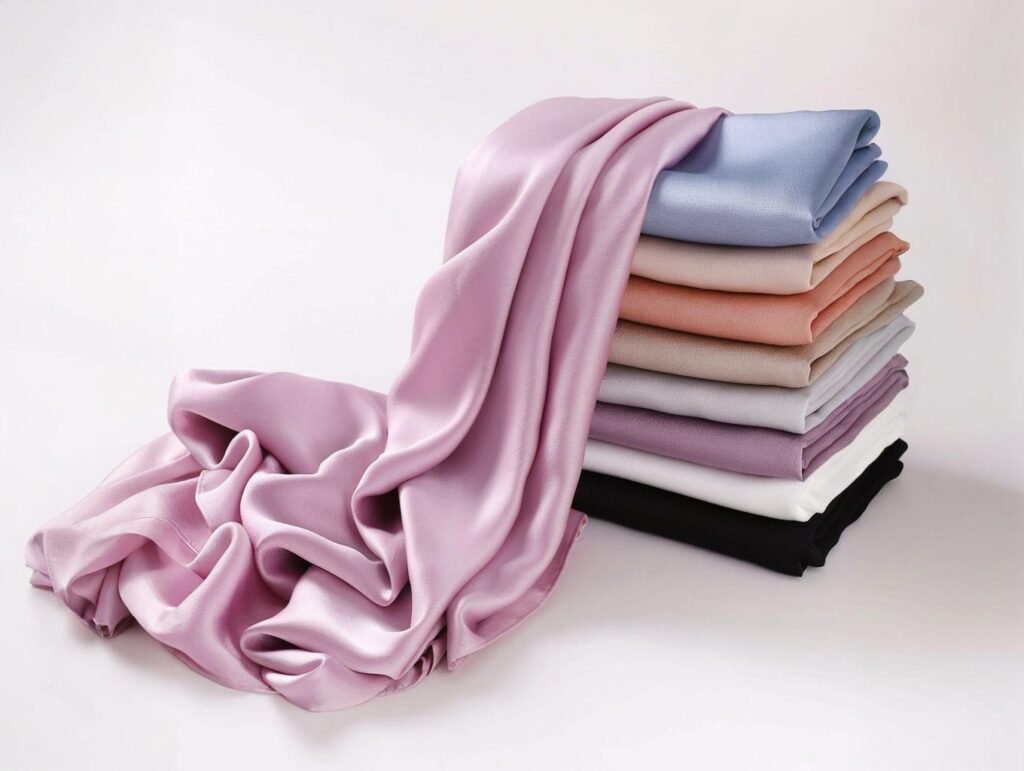
Premium fashion fabrics are defined by their hand feel, fiber length, yarn count, weave density, surface finish, and dimensional stability. But beyond technical parameters, luxury-grade fabrics also possess emotional characteristics—they create a tactile memory, a sense of elegance, or effortless movement that cheaper materials cannot replicate. Premium fashion fabrics are distinguished by softness, drape, weave density, fiber quality, and how they age—often improving over time with wear.
Luxury isn’t always visible at first glance. It’s in the way silk floats, how wool retains shape, or how linen softens with age.
Core Characteristics That Define Fabric Quality
1. Fiber Length and Diameter
- Longer fibers = smoother yarns = softer fabric
- Examples: Extra-long staple (ELS) cotton, superfine Merino wool (≤18 microns)
2. Weave Density and GSM
- Higher thread count or grams per square meter often indicate durability and structure
- Example: 120s wool suiting vs. 80s = finer drape, better wrinkle resistance
3. Finishing and Softening Processes
- Enzyme washing, calendaring, sand washing, mercerizing all affect final touch
- Hand-finishing elevates the value of silk, cashmere, and wool
4. Dimensional Stability and Colorfastness
- Premium fabrics hold their shape and color after multiple wears or cleanings
- Important in suiting, trousers, formal dresses
5. Breathability and Thermoregulation
- Natural fabrics like silk and wool outperform synthetics in climate adaptability
- They wick moisture, retain or release heat, and enhance comfort
Comparison Table: Luxury Fabric Quality Metrics
| Characteristic | Premium Fabric Example | Average Fabric Equivalent |
|---|---|---|
| Fiber Length | Sea Island cotton (35+ mm) | Regular cotton (21–28 mm) |
| Micron Count | Superfine Merino (16.5 µ) | Standard wool (21–24 µ) |
| GSM (shirt weight) | Pima poplin ~125–145 | Polyester blend ~90–110 |
| Surface Finish | Silk satin (luster, smooth) | Poly satin (shiny, flat) |
| Drape Behavior | Chiffon, charmeuse | Poly crepe (stiffer) |
Sensory Test in Real Life
A tactile test done by a design college in Milan showed that 90% of consumers could distinguish real silk from polyester satin by touch alone within 5 seconds. Hand feel remains one of the strongest decision-making factors for luxury shoppers.
Which Natural and Synthetic Fabrics Dominate Luxury Fashion Today?
While natural fabrics dominate traditional luxury collections, many high-end brands are now incorporating advanced synthetics and sustainable alternatives into their collections—especially in outerwear, sports-luxury, or innovative couture pieces. Natural fabrics like silk, cashmere, and wool dominate luxury fashion, but technical synthetics like bio-nylon, recycled polyester, and stretch blends are gaining ground.
Today’s luxury isn’t limited to nature—it embraces technical excellence, as long as the outcome matches the brand’s standard of elegance, innovation, and performance.
Natural vs Synthetic in Luxury Fashion
Natural Fibers Still Reign Supreme
- Silk: Timeless, breathable, luminous
- Cashmere: Softness and warmth, prized for knitwear
- Alpaca, Vicuna: Rare, ethical alternatives to wool
- Organic Cotton: Used in elevated basics and loungewear
- Linen: A staple for Mediterranean and resort wear
Selective Use of Synthetics in Luxury
- Elastane/Spandex: For fit retention in pants, dresses, bodywear
- Recycled Polyamide/Polyester: Used in conscious collections
- Bio-nylon (e.g., EVO®): Plant-based, high-performance knit
- Cupro, Tencel, Modal: Regenerated cellulose with silk-like softness
Examples of Fabric Pairing by Luxury Brands
| Brand | Fabric Innovation Use Case |
|---|---|
| Prada (Re-Nylon) | Recycled ocean plastic transformed into luxury nylon |
| Stella McCartney | Organic cotton + bio-based synthetics in activewear |
| Hermès | Traditional silk twill and sustainable regenerative silk |
| Gucci Off The Grid | Econyl® regenerated nylon from landfill waste |
| Loro Piana | Superfine cashmere and Storm System® weatherproof wool |
Key Consideration: Not All Synthetics Are “Cheap”
Advanced synthetics for luxury are often more expensive than traditional cotton, especially when sustainably sourced or enhanced with technology (e.g., wrinkle-resistance, water-repellency, thermal regulation).
A couture house in Paris recently replaced 100% silk linings in some tailored garments with Cupro, a breathable, anti-static cellulose fiber, citing both performance advantages and sustainability alignment.
How Important Is Fabric Origin and Certification in High-End Design?
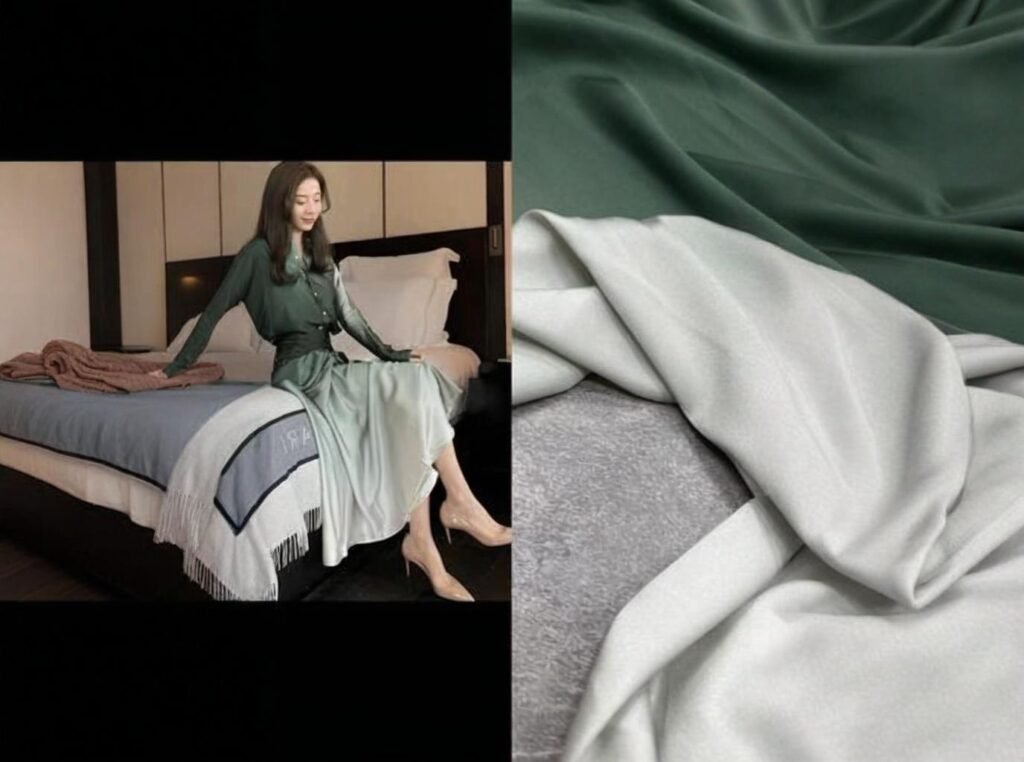
In luxury fashion, fabric origin and certification are no longer optional—they’re essential. Provenance adds credibility, supply chain transparency, and ethical value to garments. Certifications like GOTS, OEKO-TEX, RWS, and Cradle to Cradle ensure that materials meet high standards for sustainability, safety, and traceability. Fabric origin and certification validate quality, ethics, and environmental compliance, making them vital for premium positioning and global brand trust.
Whether it’s silk from Suzhou, wool from New Zealand, or cotton from Egypt, fabric source affects texture, story, and marketing power.
Why Fabric Certifications Matter in Luxury
1. Country of Origin = Quality Signal
- Italian wool (e.g., Loro Piana) = ultra-fine, legacy craftsmanship
- Japanese cotton (e.g., Banshu, Okayama) = rare, heritage spinning
- Chinese mulberry silk = finest filament length and sheen
2. Certifications That Luxury Brands Rely On
| Certification | Focus | Common in Fabrics |
|---|---|---|
| GOTS | Organic status + social standards | Cotton, linen, silk |
| OEKO-TEX® 100 | Chemical safety for skin contact | All fibers |
| RWS | Ethical wool harvesting | Merino, alpaca |
| FSC | Wood-pulp sourcing | Tencel, viscose, modal |
| Cradle to Cradle | Circular economy compatibility | Regenerative textiles |
3. Marketing & Legal Relevance
- Certified fabrics help brands meet ESG goals, EU digital product passport standards, and pass retailer compliance audits
- Luxury customers increasingly ask “where is this fabric from?” and expect credible answers
Case in Point A Scandinavian luxury label rebranded its shirt line with GOTS-certified organic cotton poplin and saw a 22% increase in customer dwell time on product pages—proving transparency boosts consumer trust.
Do Fabric Innovations Influence Luxury Fashion Trends?
Absolutely. Fabric innovation doesn’t just support design—it often drives it. Many of today’s most influential trends—from genderless tailoring to techwear, from eco-conscious loungewear to wrinkle-free travel collections—start with what’s possible at the fiber level. Luxury fashion trends are increasingly shaped by innovative fabrics offering new textures, functionalities, or sustainability narratives that align with modern consumer values.
When designers gain access to a new stretch satin or a thermoregulating wool, entire silhouettes and product categories evolve with it.
Fabric Innovation’s Role in Trend Creation
1. Function-First Luxury
- Wrinkle-resistant silk blends have revolutionized occasionwear
- UV-resistant linen allows resort brands to push into sunny markets
- Thermo-regulating wools are enabling cold-to-warm layering concepts
2. Material as Design Language
- Designers use fabric texture, stiffness, or transparency to express season narratives
- Example: Dior’s use of light-reflective technical tulle for futuristic couture
3. Fashion Meets Science
- Stella McCartney’s use of Mylo™ (mushroom leather) sparked demand for biodegradable materials
- Balenciaga’s oversized outerwear features memory-shape nylon and bonded neoprene
4. Emerging Trend Areas Tied to Fabric
| Trend Theme | Fabric Driver |
|---|---|
| Quiet Luxury | Cashmere blends, fine merino, heavy silk |
| Genderless Tailoring | Stretch wool, lyocell-viscose suiting |
| Climate Adaptive Wear | PCM textiles, merino-Tencel hybrids |
| Sustainable Elegance | Organic voile, peace silk, Cupro |
| Luxe Comfort | Double-faced knits, silk jersey |
Real World Reflection
When Loro Piana introduced its Storm System® water-repellent wool, it didn’t just protect the wearer—it created a new category: luxury outerwear that performs like sportswear.
Innovation, in the hands of luxury designers, becomes the spark for entire seasonal narratives.
Is There a Cost Difference Between Fabrics Used in Luxury vs Mass Market?

Yes—significant cost differences exist between fabrics used in luxury fashion and those used in the mass market. These differences are not only due to raw material quality, but also origin, processing methods, exclusivity, and minimum order sizes. High-end fabrics often undergo artisanal or proprietary treatments, contributing to both higher prices and unmatched feel. Luxury fabrics cost more due to premium raw materials, artisanal processing, lower volumes, and superior performance, whereas mass-market fabrics prioritize affordability and scale.
But price is not the only differentiator. It’s about how the fabric performs, ages, and supports brand values.
Price vs Value in Fashion Fabric Economics
Cost Comparison Table (per meter)
| Fabric Type | Luxury Market Price (USD) | Mass Market Equivalent Price (USD) |
|---|---|---|
| 22 Momme Mulberry Silk | $26–40 | Polyester satin: $1.5–3 |
| Grade A Mongolian Cashmere | $50–120 | Acrylic blend knit: $3–7 |
| Super 150s Italian Wool | $30–60 | Poly-viscose suiting: $2.5–6 |
| Organic Pima Cotton Poplin | $10–18 | Cotton-poly broadcloth: $1–2.5 |
| Recycled Nylon (Luxury grade) | $7–14 | Virgin nylon (commodity): $1–2 |
Reasons for Price Gaps
- Production location (Italy, Japan, China high-end mills)
- Sourcing traceability and sustainability
- Post-processing treatments (anti-wrinkle, softening, mercerizing)
- Volume and exclusivity—luxury brands may custom-weave in small batches
Example A luxury silk scarf may cost $60+ per meter in premium-grade silk twill, while a mass-produced poly-chiffon scarf costs $2/m. But only one of them maintains its drape, softness, and prestige for a decade.
How Can Designers Source Custom Fashion Fabrics for Luxury Brands?
Designers seeking premium fabrics should work with experienced suppliers who understand luxury standards, offer custom weaving, dyeing, finishing, and provide low-MOQ development services for trial runs. The right supplier will offer not just fabric, but also sampling support, swatch libraries, and certification transparency. To source custom luxury fabrics, designers should partner with experienced textile manufacturers offering premium quality, flexible MOQ, design consultation, and technical transparency.
It’s not just about buying fabric—it’s about co-developing the right fabric for the right product vision.
What to Look For in a Luxury Fabric Partner
1. Customization Capabilities
- Yarn-dyed or piece-dyed options
- GSM, weave, and finish adjustments
- Exclusive color development or digital printing
2. Sample Access & MOQ Flexibility
- Swatchbooks and 1–5 meter test runs
- Low minimums for early-stage design teams
3. Technical Support
- Shrinkage, colorfastness, and finish testing
- Washing and care instructions aligned with luxury standards
4. Certifications & Sustainability
- GOTS, OEKO-TEX, FSC, RWS, and traceability documentation
- Optional biodegradable, recycled, or bio-based fibers
5. Design Collaboration
- Consultation on fabric matching for silhouettes
- Support on labeling and fabric narrative for branding
Designer Feedback
A startup luxury resortwear brand working with SzoneierFabrics was able to prototype a 100% linen-lyocell blend with custom digital tropical print—within 7 days. The ability to test fast with low MOQ helped them meet deadlines while staying true to their premium positioning.
Looking for Premium Fashion Fabrics Tailored to Your Brand?
At SzoneierFabrics, we specialize in custom fashion textiles for modern designers and luxury creators. With deep expertise in natural, blended, and innovative fabrics, we support your vision from sketch to showroom.
What we offer:
- Certified silk, linen, cotton, cashmere, and wool blends
- Bespoke weaving, GSM control, and eco-finishing options
- Low MOQ sampling, free design consultation, and fast turnaround
- Transparent sourcing with full traceability and quality assurance
- Free swatches and fabric catalogs tailored to your needs
Contact SzoneierFabrics today to request your swatch pack, discuss a custom order, or develop a premium textile that defines your next collection.
Let your fabric do the storytelling—crafted to your exact standard.