Skip to content
A camera bag is not only a container for lenses, bodies, batteries, memory cards, tripods, laptops, drones, and chargers. It is a moving protection system. A photographer may carry several thousand dollars of equipment through rain, airports, motorcycles, hiking trails, studios, wedding venues, dusty streets, humid beaches, and crowded city trains. One weak fabric, one cheap zipper, one poorly chosen foam layer, or one lining that scratches lenses can turn a good-looking bag into an expensive problem.
The best materials used in camera bag manufacturing usually include a durable outer shell such as nylon, polyester, canvas, Oxford fabric, or coated technical fabric; an inner lining such as brushed polyester, velvet-touch fabric, or tricot; protective padding such as EVA foam, PE foam, EPE foam, sponge, or molded inserts; waterproof or water-resistant treatments such as PU coating, TPU lamination, DWR finish, rain cover fabric, sealed seams, and water-repellent zippers; plus load-bearing trims such as webbing, buckles, D-rings, hook-and-loop panels, and reinforced stitching. For brands, the right material package should match the bag’s use scene, target retail price, protection level, appearance, minimum order quantity, and production timeline.
The mistake many brands make is choosing materials from a photo. A camera backpack can look rugged online but collapse under a full-frame body, two lenses, a laptop, and a tripod. A canvas camera shoulder bag can look premium but become too heavy for travel. A low-cost polyester bag can be fine for entry-level camera kits but risky for outdoor photographers if coating, seams, and zippers are not planned properly. Material choice is where product positioning becomes real. Szoneier works with cotton fabric, canvas fabric, polyester fabric, nylon fabric, neoprene fabric, jute fabric, linen fabric, Oxford fabric, coated fabrics, and engineered textile combinations, helping foreign brands and private label programs turn a camera bag idea into a product that feels reliable in the hand, protects gear in daily use, and carries the brand logo with confidence.
What Materials Are Used in Camera Bags?
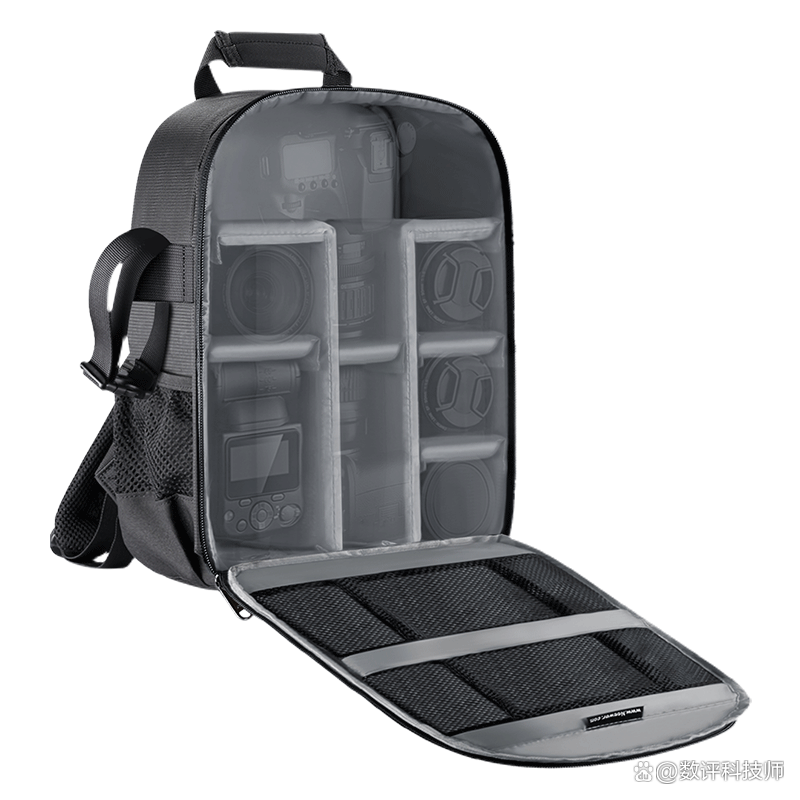
Camera bags are made from layered material systems rather than one single fabric. A complete camera bag normally includes an abrasion-resistant outer shell, water-resistant treatment, foam padding, flexible inner dividers, soft lining, structural panels, webbing, zipper systems, buckles, hardware, stitching thread, label materials, and sometimes leather, neoprene, mesh, EVA molded parts, or recycled fabric. Each material plays a different role: the outer fabric resists abrasion and weather, the padding absorbs impact, the lining protects camera surfaces, and the trims keep weight stable during movement.
For a camera bag brand, material selection should start from the use case instead of the fabric catalog. A city camera sling for mirrorless users may need lightweight polyester, soft lining, quick-access zippers, and thin EVA dividers. A professional outdoor camera backpack may require high-denier nylon or Oxford fabric, TPU or PU coating, stronger webbing, thicker foam, padded back panels, rain cover storage, and reinforced bottom panels. A premium lifestyle camera tote may use waxed canvas, leather trims, brushed lining, and a removable padded camera insert.
Camera gear is not soft cargo. Lenses have glass elements, camera bodies have screens and electronic parts, and drones or gimbals require shaped compartments. So camera bag manufacturing is closer to protective equipment development than ordinary bag sewing. Szoneier often recommends a “material stack” approach: first define the external environment, then define gear weight, then define protection level, then match the fabric, foam, lining, zipper, and hardware as one system.
What Is the Outer Shell Fabric?
The outer shell is the first material people see and the first layer that touches the outside world. It decides much of the bag’s appearance, hand feel, abrasion resistance, color options, waterproof potential, and perceived value. Common camera bag shell fabrics include nylon, polyester, canvas, Oxford fabric, ripstop fabric, tarpaulin, coated fabrics, recycled polyester, and sometimes leather or waxed cotton canvas.
Nylon is often selected for higher-end outdoor and travel camera bags because it offers strong tensile performance, good abrasion resistance, and a technical hand feel. Polyester is widely used for mid-range and promotional camera bags because it is cost-controlled, color-stable, and easy to print or dye. Canvas gives a lifestyle look and works well for vintage-style shoulder bags, camera totes, and hybrid everyday carry bags. Oxford fabric is common in durable backpacks and protective cases because it can be made in many denier levels and coating options.
Outer shell fabric should not be judged only by thickness. A 600D polyester with good PU coating and strong stitching may outperform a poorly finished heavier fabric. A lighter ripstop nylon can be more suitable for travel than a bulky fabric if the bag needs to remain comfortable for long wear. Brands should compare abrasion, tear strength, water resistance, color fastness, coating quality, fabric weight, and MOQ before confirming the final material.
| Outer Shell Material | Common Use in Camera Bags | Main Strength | Main Limitation | Suitable Product Position |
|---|---|---|---|---|
| Nylon | Outdoor camera backpacks, travel camera bags, tactical camera bags | Strong, durable, technical look | Higher cost than basic polyester | Mid to premium |
| Polyester | Entry to mid-range backpacks, sling bags, pouches | Stable color, cost-friendly, easy sourcing | Lower premium feel than nylon | Budget to mid-range |
| Canvas | Vintage shoulder bags, lifestyle camera totes | Natural hand feel, premium casual look | Heavier, needs water treatment | Lifestyle and premium casual |
| Oxford Fabric | Camera backpacks, protective cases, tool-style bags | Durable, versatile, coating-friendly | Quality varies by denier and coating | Mid-range to outdoor |
| Ripstop Fabric | Lightweight travel camera bags | Tear-resistant grid, lighter weight | May need coating for weather resistance | Travel and outdoor |
| Tarpaulin/Coated Fabric | Waterproof camera cases, cycling camera bags | Strong water resistance, easy cleaning | Stiffer hand feel | Outdoor and waterproof lines |
A useful rule: if the bag is designed for heavy gear, choose the shell for strength first and appearance second. If the bag is designed for urban creators, choose a fabric that balances comfort, style, and water resistance. If the bag is designed for outdoor photographers, coatings, seams, zippers, and bottom reinforcement matter as much as the shell fabric itself.
Which Inner Lining Works Best?
The inner lining of a camera bag should be soft, clean, low-shedding, and friendly to camera finishes. It touches lenses, screens, camera bodies, filters, drones, flash units, batteries, and laptops. A lining that feels acceptable in a regular backpack may be too rough for camera equipment. Common lining options include brushed polyester, tricot, velvet-touch fabric, 210D polyester, microfiber-like fabric, and soft knit lining.
For camera compartments, brands often prefer a lighter color lining because it helps users find small black items such as lens caps, SD cards, cables, batteries, and adapters. Dark lining looks clean and premium, but small accessories disappear easily inside black compartments. Grey, beige, orange, light blue, or soft green linings are often chosen for better visibility and brand identity.
The lining also affects divider performance. Many adjustable camera dividers rely on hook-and-loop fastening. If the lining is too fuzzy, too weak, or poorly laminated, the divider may lose grip after repeated adjustments. If the lining is too smooth, hook-and-loop panels may not hold well. Szoneier can help brands test lining compatibility with divider systems before bulk production, especially when the bag includes removable cubes or adjustable partitions.
| Lining Material | Camera Bag Function | Benefit | Risk to Check |
|---|---|---|---|
| Brushed Polyester | Main camera compartment | Soft, affordable, easy to source | Check pilling and abrasion |
| Tricot Lining | Lens and electronics sections | Smooth hand feel, good protection | May need lamination support |
| Velvet-Touch Fabric | Premium camera inserts | Soft, luxury feel | Higher cost, dust attraction possible |
| 210D Polyester | General pocket lining | Lightweight and economical | Less premium for direct gear contact |
| Microfiber-Like Fabric | Lens-friendly compartments | Soft surface, refined look | Must test shedding and color fastness |
Good lining should not only protect; it should also improve daily use. A photographer changing lenses during a wedding or outdoor shoot does not want to fight with a dark, rough, messy interior. Inner color, pocket mapping, divider grip, and lining texture all influence the final user experience.
What Padding Materials Protect Cameras?
Padding is the hidden hero of a camera bag. A camera bag without proper padding is only a styled backpack. The most common padding materials include EVA foam, PE foam, EPE foam, sponge foam, high-density foam, molded EVA shells, and sometimes composite panels made with foam plus plastic board or honeycomb board. The padding must absorb shock, keep shape, reduce pressure points, and prevent gear from hitting hard surfaces.
EVA foam is widely used in camera bag dividers, bottom panels, shoulder straps, and molded protective parts because it offers good resilience, structure, and cushioning. PE foam and EPE foam can be used where brands need lighter weight or cost control. Sponge foam gives softness but may not provide enough structure for heavy professional gear unless combined with stiffer layers.
The bottom area deserves special attention. Most drops happen when a user places a bag on the floor too quickly, drops it from a car seat, or bumps it against stairs. A camera backpack may need thicker bottom padding than side padding. A camera sling may need stronger side wall protection because the bag rotates around the body. A camera cube may need balanced protection on every side because it may be placed inside different parent bags.
| Padding Area | Recommended Material | Common Thickness Range | Reason |
|---|---|---|---|
| Main Divider | EVA foam or PE foam | 5–10 mm | Keeps lenses separated and stable |
| Bottom Panel | EVA foam + PE board | 8–15 mm | Protects against floor impact |
| Side Wall | EVA foam or EPE foam | 5–12 mm | Reduces side collision damage |
| Back Panel | Sponge + EVA + mesh | 8–20 mm | Balances comfort and structure |
| Shoulder Strap | EVA or neoprene padding | 5–12 mm | Reduces shoulder pressure |
| Laptop Section | EVA + soft lining | 5–10 mm | Protects laptop corners and surface |
Padding design should be based on gear weight. A compact mirrorless camera kit and a cinema camera setup do not need the same foam density or wall thickness. Over-padding can make the bag bulky and expensive. Under-padding creates risk and poor reviews. The smart choice is controlled protection: enough foam where impact happens, flexible structure where access matters, and clean lining where surfaces touch.
Are Camera Bags Made with Mixed Materials?
Yes, most good camera bags use mixed materials. A single-material camera bag rarely performs well across protection, comfort, waterproofing, appearance, and price. For example, a camera backpack may use 900D Oxford fabric on the main shell, 1680D ballistic-style fabric on the bottom, breathable mesh on the back panel, EVA foam inside the dividers, polyester lining in pockets, neoprene on the handle grip, nylon webbing on straps, PU leather logo patches, and water-repellent zipper tape.
Mixed materials make the bag more functional. The bottom needs abrasion resistance. The back panel needs breathability. The camera compartment needs soft lining. The laptop sleeve needs smooth padding. The tripod holder needs strong webbing and elastic control. The rain cover needs lightweight waterproof fabric. Each part has a different job.
However, mixed materials also create production challenges. Different materials shrink, fold, sew, and age differently. Color matching between nylon, polyester webbing, zipper tape, PU leather, and printed labels can be difficult. Coated fabrics may require different needle selection and sewing tension. Thick foam may affect seam bulk. Szoneier’s integrated fabric and product development experience helps reduce these risks before mass production by checking material compatibility during sample development.
| Bag Part | Material Combination | Why It Works |
|---|---|---|
| Main Body | Nylon or Oxford + PU coating | Durable shell with water resistance |
| Bottom Panel | High-denier fabric + foam + board | Better abrasion and drop protection |
| Camera Compartment | Soft lining + EVA dividers | Scratch reduction and modular storage |
| Back Panel | Mesh + sponge + EVA | Comfort during long wear |
| Shoulder Strap | Webbing + EVA/neoprene + mesh | Load support and pressure relief |
| Rain Cover | Polyester taffeta + waterproof coating | Lightweight emergency protection |
| Brand Patch | PU leather, woven label, rubber patch | Adds brand recognition |
Mixed material planning should feel intentional, not random. When users touch a premium camera bag, they notice harmony: the zipper pulls feel solid, the fabric feels protective, the handle does not twist, the divider holds firmly, and the lining looks clean. That harmony begins with material engineering.
Do Material Choices Affect Bag Price?
Material choices strongly affect camera bag price. Fabric type, denier, coating, foam density, lining grade, zipper brand, hardware quality, webbing strength, printing method, logo technique, waterproof construction, and internal divider quantity all influence cost. A small camera sling with basic polyester and simple foam may be economical. A weather-resistant outdoor camera backpack with high-denier nylon, molded EVA, waterproof zipper, breathable back panel, laptop compartment, tripod system, and rain cover will cost much more.
Cost should be evaluated by total product value, not by fabric price alone. A cheap zipper failure can cause more damage to brand reputation than the money saved. Thin bottom padding may reduce the unit cost but increase negative reviews. Overly expensive fabric may make a product hard to sell if the retail positioning does not support it. The goal is not always to choose the most expensive material; the goal is to choose the most suitable material mix for the target user and sales channel.
| Cost Driver | Low-Cost Choice | Higher-Value Choice | When to Upgrade |
|---|---|---|---|
| Outer Fabric | 300D/600D polyester | 900D/1200D Oxford, nylon, ripstop | Outdoor, premium, heavy gear |
| Coating | Basic PU coating | TPU lamination or higher-grade PU | Wet climates, outdoor use |
| Padding | Sponge or thin PE foam | EVA foam, molded EVA, composite board | Expensive camera gear |
| Zipper | Standard zipper | Water-repellent zipper, branded zipper | Weather-resistant models |
| Lining | Basic polyester | Brushed/tricot/velvet-touch lining | Premium camera compartments |
| Hardware | Plastic buckle | Stronger buckle, metal hook, reinforced D-ring | Heavy load or pro use |
| Logo | Simple woven label | Rubber patch, PU patch, embossed label | Brand-focused collections |
For custom production, Szoneier can help brands build different material versions: entry version, standard version, outdoor version, and premium version. This approach helps teams compare feel, weight, function, and cost before committing to bulk production.
Which Fabric Is Best for Camera Bags?
The best fabric for camera bags depends on the product’s target use. Nylon is often better for premium outdoor camera bags because it offers strong durability and a technical feel. Polyester is better for cost-controlled camera bags because it is stable, versatile, and widely available. Canvas is better for lifestyle camera bags because it creates a natural, vintage, and premium casual look. Oxford fabric is better for durable structured bags because it supports multiple denier levels and coating options. Ripstop fabric is useful for lightweight travel bags, while coated fabrics are useful for waterproof or easy-clean designs.
There is no single “best” camera bag fabric for every brand. A wedding photographer, a YouTube creator, a drone pilot, a hiking photographer, and a beginner mirrorless camera owner all carry different gear in different environments. Material choice should match the user’s real routine. A camera bag used in Tokyo streets, New York subways, Dubai travel shoots, or New Zealand hiking trails will face different weather, abrasion, weight, and appearance expectations.
Szoneier usually suggests brands define four things before selecting fabric: expected gear weight, expected outdoor exposure, target retail price, and brand style. Once these points are clear, the fabric selection becomes much more accurate. The right fabric is not only strong on paper; it must sew cleanly, hold color, work with coatings, support logo customization, meet MOQ requirements, and look right in final product photography.
Is Nylon Good for Camera Bags?
Nylon is one of the strongest choices for camera bags, especially for outdoor backpacks, travel camera bags, tactical camera bags, and higher-end sling bags. It is valued for durability, abrasion resistance, tear strength, and a technical appearance. Nylon fabrics can be made in different denier levels, textures, and finishes, giving brands room to balance weight and strength.
For premium camera bags, nylon often feels more refined than basic polyester. It works well with coatings and can support water-resistant construction. High-denier nylon can handle tripod straps, heavy gear, and repeated travel use better than many lower-grade fabrics. Ripstop nylon is especially useful when brands want lighter weight with better tear control.
The challenge is cost. Nylon is usually more expensive than standard polyester. It may also require careful dyeing and color control. If a brand sells a budget camera pouch, nylon may not be necessary. If a brand sells an outdoor backpack for photographers carrying two bodies, several lenses, laptop, drone, tripod, and accessories, nylon becomes much easier to justify.
| Nylon Fabric Type | Best Use | Advantage | Watch Point |
|---|---|---|---|
| 420D Nylon | Lightweight sling bags, travel inserts | Good balance of weight and strength | May need reinforcement for heavy loads |
| 500D Nylon | Outdoor camera backpacks | Durable, refined, popular for gear bags | Higher cost than polyester |
| 840D Nylon | Structured backpacks and cases | Stronger body and abrasion resistance | Slightly heavier |
| 1000D Nylon | Tactical and rugged camera bags | Heavy-duty durability | Can feel stiff or bulky |
| Ripstop Nylon | Lightweight travel bags | Tear control with lower weight | Coating quality matters |
Nylon is a strong option when the camera bag promises protection, outdoor readiness, or long service life. It works especially well when paired with EVA padding, reinforced bottom fabric, water-repellent zipper, and breathable back panel construction.
Is Polyester Good for Camera Bags?
Polyester is widely used in camera bag manufacturing because it offers a strong balance of cost, color stability, availability, print compatibility, and production efficiency. It is especially suitable for entry-level camera bags, promotional camera pouches, creator backpacks, camera sling bags, laptop-camera hybrid bags, and private label programs that need controlled pricing.
Polyester is not automatically “cheap.” Quality depends on yarn, denier, weave, coating, backing, finishing, and sewing quality. A well-made 600D polyester camera bag with PU coating, proper foam, clean lining, and reinforced stitching can serve many everyday users well. A poor-quality polyester bag with weak coating and thin padding will fail quickly.
For brands, polyester also supports a wide range of colors and surface treatments. It is easier to source in large quantities and often works well for logo printing, heat transfer, embroidery patches, and color-matched trims. If the camera bag is designed for daily urban use rather than extreme outdoor use, polyester can be a smart choice.
| Polyester Fabric | Common Camera Bag Use | Benefit | Suitable User |
|---|---|---|---|
| 300D Polyester | Small pouches and light inserts | Lightweight, economical | Entry-level users |
| 600D Polyester | Backpacks, slings, shoulder bags | Good cost-performance | Everyday creators |
| 900D Polyester | More durable backpacks | Better structure and strength | Travel photographers |
| Recycled Polyester | Eco-focused collections | Sustainability story | Brand-led programs |
| Polyester Oxford | Durable structured bags | Coating-friendly, versatile | Mid-range camera bags |
Polyester is best when the brand needs value, color control, and scalable production. It becomes stronger when paired with correct coating, bottom reinforcement, strong webbing, and properly tested zippers.
Is Canvas Suitable for Camera Bags?
Canvas is suitable for camera bags when the brand wants a lifestyle, vintage, handmade, outdoor casual, or premium daily-carry feeling. Canvas camera bags are common in shoulder bags, messenger bags, camera totes, insert bags, and city backpacks. Cotton canvas and blended canvas offer a warmer, more natural hand feel than many synthetic fabrics, making the bag look less technical and more fashion-friendly.
The main appeal of canvas is emotional. A canvas camera bag can feel like a trusted travel companion rather than a piece of equipment. It photographs well in lifestyle campaigns and works nicely with leather trims, brass-tone hardware, woven labels, and waxed finishes. For boutique camera accessory brands, canvas can help create a strong identity.
However, canvas has trade-offs. It is usually heavier than polyester or nylon at similar strength levels. Untreated canvas absorbs water more easily, so brands should consider wax finish, PU backing, waterproof coating, or a separate rain cover. Cotton canvas can also shrink or show color variation if not controlled properly.
| Canvas Option | Look and Feel | Best Camera Bag Style | Technical Note |
|---|---|---|---|
| Cotton Canvas | Natural, casual, textured | Vintage shoulder bag, camera tote | Needs water treatment |
| Washed Canvas | Soft, relaxed, worn-in look | Lifestyle camera messenger | Color variation may occur |
| Waxed Canvas | Rugged, heritage feel | Outdoor casual camera bag | Requires care instructions |
| Polyester-Cotton Canvas | More stable than pure cotton | Hybrid camera backpacks | Better dimensional control |
| Heavy Canvas | Premium, structured | High-end shoulder bags | Adds weight |
Canvas is not the best choice for every camera bag, but it is excellent for brands selling emotion, craft, and style. The key is to combine the visual appeal of canvas with hidden protection: EVA padding, soft lining, reinforced bottom, strong stitching, and reliable closures.
Is Oxford Fabric Durable Enough?
Oxford fabric can be highly durable when selected correctly. It is widely used for backpacks, tool bags, outdoor bags, luggage, protective covers, and camera bags because it can be produced in many denier levels and finished with PU, PVC, TPU, or water-repellent treatments. Oxford fabric is often chosen for camera backpacks that need structure, durability, and controlled cost.
The word “Oxford” describes a fabric weave style, not a single quality level. A 210D Oxford lining, a 600D Oxford backpack fabric, and a 1680D Oxford bottom panel perform very differently. Brands should not simply ask for “Oxford fabric.” They should define denier, coating, hand feel, color, abrasion needs, and waterproof target.
Oxford fabric works especially well for camera backpacks, protective camera cases, drone bags, tripod bags, and equipment organizers. It can provide a clean technical appearance without the higher cost of some premium nylon fabrics. For many private label camera bag programs, 600D, 900D, 1200D, or 1680D Oxford can create a strong balance of durability and price.
| Oxford Fabric Grade | Common Use | Strength Level | Suggested Application |
|---|---|---|---|
| 210D Oxford | Lining, rain cover, inner pockets | Light | Secondary areas |
| 420D Oxford | Light backpacks and pouches | Medium-light | Travel camera accessories |
| 600D Oxford | Main camera bag shell | Medium | Daily camera backpacks |
| 900D Oxford | Stronger backpack shell | Medium-high | Outdoor camera bags |
| 1200D Oxford | Heavy-duty shell | High | Equipment bags |
| 1680D Oxford | Bottom and wear zones | Very high | Reinforced panels |
Oxford fabric is durable enough when matched with the right construction. For a camera bag, Szoneier often recommends using higher-grade Oxford on stress zones such as the bottom, front panel, strap anchors, and side areas where tripods or water bottles create abrasion.
Which Fabric Fits Outdoor Use?
Outdoor camera bags need materials that handle abrasion, light rain, dust, mud, sunlight, temperature changes, and heavy gear. The best outdoor fabrics are usually high-denier nylon, ripstop nylon, coated Oxford fabric, TPU-laminated fabric, tarpaulin, or reinforced polyester Oxford. However, outdoor performance depends on the whole construction, not only the fabric.
A hiking photographer may care about rain resistance, back ventilation, strap comfort, load stability, and quick access. A cycling photographer may need waterproof coating, welded or sealed areas, reflective details, and compact structure. A wildlife photographer may prefer quiet fabric, muted colors, and strong tripod support. A travel photographer may need lighter materials and airline-friendly dimensions.
For outdoor use, fabric should be tested with the intended hardware and structure. Heavy coating can improve water resistance but make the bag stiff. Lightweight ripstop can reduce weight but may need stronger bottom panels. Tarpaulin can resist water well but may not fit a premium camera backpack aesthetic. Oxford fabric can be an excellent middle option when coated and reinforced properly.
| Outdoor Requirement | Material Solution | Why It Matters |
|---|---|---|
| Rain exposure | PU/TPU coated nylon or Oxford | Reduces water penetration |
| Ground abrasion | 1200D/1680D bottom panel | Protects bag when placed on rocks or floors |
| Long carry time | Lightweight ripstop + padded mesh | Reduces fatigue |
| Mud and dust | Smooth coated fabric | Easier cleaning |
| Heavy tripod | Reinforced webbing + bartack stitching | Prevents strap failure |
| Lens protection | EVA dividers + soft lining | Reduces impact risk |
| Emergency weather | Rain cover fabric | Adds extra protection |
The best outdoor camera bag fabric is usually a combination: durable shell, reinforced bottom, breathable contact zones, coated water-resistant surface, and reliable closures. Szoneier can develop different outdoor material packages based on target climate, product weight, retail tier, and brand design direction.
How Do Waterproof Materials Work?
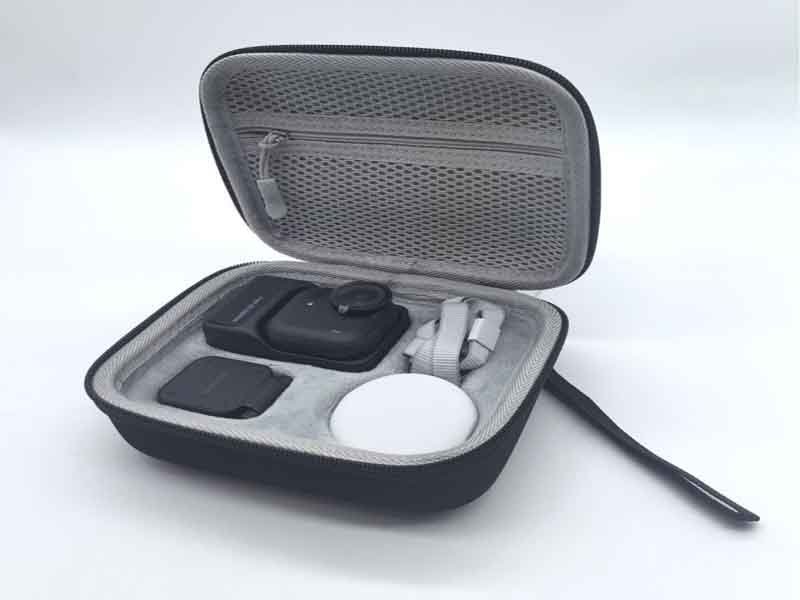
Waterproof materials in camera bag manufacturing work by combining coated fabrics, water-repellent surface finishes, protected zipper systems, controlled seam construction, and sometimes a separate rain cover. A camera bag is rarely made waterproof by fabric alone. Even when the shell fabric has PU coating, TPU lamination, or PVC backing, water can still enter through zipper teeth, sewing holes, seam gaps, flap openings, and poorly protected bottom panels. For camera equipment, “water-resistant” and “waterproof” must be treated carefully because a short drizzle, a wet airport floor, and a full outdoor storm are very different use situations.
The most reliable camera bag designs use layered weather protection. The first layer is the outer fabric, often nylon, polyester Oxford, or coated technical fabric. The second layer is a water-repellent finish on the fabric surface, helping rain bead up instead of soaking in quickly. The third layer is a coating or lamination on the back side, such as PU or TPU, which slows water penetration. The fourth layer is construction: zipper flap, sealed seam, storm guard, bottom reinforcement, and smart opening placement. The final layer may be a rain cover, especially for camera backpacks used outdoors.
For brands, the real question is not simply “Can you make it waterproof?” A better question is: “What level of water protection does the end user actually need?” A street photography sling bag may only need light water resistance. A hiking camera backpack may need coated fabric, water-repellent zipper, rain cover, and reinforced base. A cycling camera bag or boat photography case may need stronger waterproof construction, possibly with welded seams or roll-top closure. Szoneier can help brands define the target water-resistance level before material selection, so the final product avoids both under-protection and unnecessary cost.
What Makes a Camera Bag Water-Resistant?
A water-resistant camera bag is designed to delay water entry during light rain, splashes, wet surfaces, or short outdoor exposure. It is not always designed for submersion or long storm exposure. Water resistance usually comes from a combination of fabric denier, surface treatment, back coating, zipper protection, and seam structure.
Many brands make the mistake of assuming a coated fabric automatically creates a water-resistant bag. In reality, the coating only protects the fabric surface. When the fabric is cut and sewn, needle holes appear along seams. If a zipper is exposed, rain can enter through the zipper chain. If a top opening is flat and uncovered, water can pool around the zipper. If the bottom panel is weak, water from wet ground can slowly penetrate. These small details decide real user experience.
A camera bag needs better water resistance than an ordinary backpack because the contents are more sensitive. A wet T-shirt can dry. A wet lens, battery, or camera body can become a costly repair. Even if the camera gear itself has weather sealing, accessories like filters, microphones, lights, chargers, and memory cards may not tolerate moisture well. This is why water resistance in camera bag manufacturing should be treated as a protection system, not a marketing phrase.
| Water-Resistance Component | Function | Common Material or Method | Key Risk if Ignored |
|---|---|---|---|
| Surface finish | Helps water bead on the fabric | DWR finish, water-repellent finish | Fabric wets out quickly |
| Back coating | Slows water penetration | PU, TPU, PVC backing | Water passes through fabric |
| Zipper protection | Reduces zipper leakage | Flap, reverse zipper, water-repellent zipper | Water enters through opening |
| Seam control | Reduces needle-hole leakage | Seam tape, binding, covered seams | Water seeps through stitching |
| Bottom protection | Protects from wet ground | Coated bottom, reinforced Oxford, rubberized panel | Moisture enters from floor |
| Rain cover | Adds emergency weather layer | Coated polyester taffeta | Bag shell gets fully exposed |
A useful way to define water resistance is by usage time. A city camera bag may be expected to handle 5–15 minutes of light rain while walking from a café to a studio. An outdoor camera backpack may need to handle 30–60 minutes of rain during travel or hiking. A waterproof-style camera case may need stronger protection against heavy splashes, wet ground, or boat use. Each level requires different material choices and construction costs.
Is TPU Better Than PU Coating?
TPU and PU coatings are both used to improve water resistance, but they are not the same. PU coating is common, cost-efficient, flexible, and suitable for many camera bags. TPU lamination or coating often provides stronger waterproof performance, better abrasion resistance in some constructions, and a more technical feel, but it usually costs more and may affect fabric stiffness, sewing difficulty, and MOQ.
PU coating is a practical choice for many camera backpacks, sling bags, shoulder bags, and camera pouches. It can be applied to polyester, nylon, Oxford fabric, and canvas blends. It helps reduce water penetration and gives the fabric more structure. For daily-use camera bags, a good PU-coated fabric plus proper zipper protection and rain cover can be enough.
TPU is often chosen when the product needs a more advanced waterproof story. It is common in dry bags, waterproof outdoor gear, cycling bags, medical bags, and high-performance protective cases. In camera bag manufacturing, TPU-coated or laminated fabric can work well for waterproof panels, bottom areas, roll-top sections, rainproof covers, or outdoor gear compartments. However, TPU may not always be ideal for a soft, luxury-style camera bag because it can create a more technical or stiffer hand feel.
| Comparison Point | PU Coating | TPU Coating or Lamination | Brand Decision Insight |
|---|---|---|---|
| Cost | Lower to medium | Medium to higher | PU fits most standard programs |
| Hand feel | Softer, more flexible | Can feel smoother, rubberized, or technical | Choose based on style target |
| Water resistance | Good for daily water resistance | Stronger for outdoor waterproof concepts | TPU suits higher weather claims |
| Sewing difficulty | Easier | May require more process control | Sample testing is important |
| Durability | Good when coating quality is stable | Strong in many high-performance applications | Depends on formulation and fabric base |
| Appearance | Matte, normal fabric look | Technical, premium outdoor look | Match brand visual direction |
| MOQ impact | Usually easier sourcing | May need higher MOQ or longer sourcing | Confirm before launch timeline |
The smartest choice is not always TPU. If a brand is making a city camera sling for content creators, high-quality PU-coated polyester or nylon may be more suitable than TPU because it keeps the bag softer and cost-controlled. If the brand is making a waterproof outdoor camera backpack for hiking, kayaking support, cycling, or field production, TPU can become more valuable.
Szoneier can help brands compare material swatches before final development. A useful sample test is to compare three versions: standard PU-coated fabric, upgraded PU-coated fabric with water-repellent zipper, and TPU-coated fabric with reinforced seam design. Once the team checks hand feel, sewing effect, water resistance, weight, and cost, the final decision becomes much easier.
Do Waterproof Zippers Matter?
Waterproof or water-repellent zippers matter a lot in camera bags because zippers are one of the most common leakage points. Even when the outer fabric is strong and coated, water can enter through zipper teeth, zipper tape, puller openings, and curved zipper paths. Camera bags often need large openings for quick access, but large openings create more potential water entry points.
There are several zipper approaches. A standard zipper can be protected with a fabric flap. A reverse coil zipper can reduce exposure and give a cleaner look. A water-repellent zipper has a coated surface that helps block water better than a standard zipper. A true waterproof zipper is more specialized and often used in higher-performance waterproof products, but it can be stiffer and more expensive.
For most camera bags, a water-repellent zipper plus zipper garage, storm flap, or raised opening design is a good balance. For fully waterproof bag claims, zipper choice must be handled with caution because a weak zipper can make the claim unreliable. Brands should also think about user experience. Very stiff waterproof zippers can frustrate photographers who need quick access during shoots.
| Zipper Type | Camera Bag Use | Benefit | Limitation |
|---|---|---|---|
| Standard Coil Zipper | Budget pouches, inner compartments | Affordable, smooth | Low water protection |
| Reverse Coil Zipper | Main openings, clean design bags | Better appearance, less exposed teeth | Still not fully waterproof |
| Water-Repellent Zipper | Outdoor backpacks, premium slings | Better rain protection | Higher cost |
| Covered Zipper with Flap | Canvas bags, travel backpacks | Good protection with classic look | Flap may slow access |
| Waterproof Zipper | High-performance waterproof cases | Stronger water barrier | Stiff, expensive, harder sewing |
Zipper placement is just as important as zipper type. A top-facing zipper that allows water to sit directly on the zipper is risky. A side-access zipper needs a garage at the end to prevent water entry. A curved zipper around a camera compartment should be tested because tension can affect smoothness and water resistance. A laptop zipper should be protected because electronics are often placed near the back or side wall.
For a custom camera bag, Szoneier can provide zipper options based on product level. Budget models may use standard zippers with protective flaps. Mid-range models may use reverse zippers and PU-coated fabric. Outdoor models may use water-repellent zipper tape, storm flap, rain cover, and reinforced zipper ends. Premium models may combine water-repellent zippers with custom pullers, rubber logo tabs, and branded color matching.
Are Sealed Seams Necessary?
Sealed seams are necessary only when the product needs stronger waterproof performance. For normal water-resistant camera bags, seam binding, proper stitching, coated fabric, and zipper protection may be enough. For outdoor, cycling, snow, marine, or heavy rain camera bags, sealed seams become much more important because sewing holes can allow water to pass through.
Every time fabric is sewn, the needle creates holes. In ordinary bags, these holes may not matter much. In camera bags, they can become weak points when the bag is exposed to rain. Seam sealing uses tape, heat bonding, welding, or coating methods to cover these holes and reduce water penetration. However, sealed seams add cost, require compatible materials, and may slow production.
Brands should not request sealed seams automatically. If the bag uses a traditional sewn structure with many small panels, pockets, curves, and padded dividers, full seam sealing can become expensive and difficult. A better approach may be to seal only key areas: top lid, front panel, bottom seams, rain cover seams, or waterproof compartment seams.
| Seam Method | Water Protection Level | Cost Impact | Best Use |
|---|---|---|---|
| Standard Sewing | Low to medium | Low | Daily camera bags |
| Bound Seams | Medium | Low to medium | Inner finishing and structure |
| Covered Seams | Medium | Medium | Outdoor backpacks |
| Seam Taping | Medium to high | Medium to high | Rainproof panels |
| Welded Seams | High | High | Waterproof cases and dry-bag style products |
| Hybrid Sealing | Targeted high protection | Controlled | Outdoor camera backpacks |
The critical question is where water is most likely to enter. A bottom seam touching wet ground may need more attention than a decorative front pocket seam. A top zipper seam may need extra protection if rain can pool there. A roll-top waterproof camera bag may require different construction from a zipper-opening camera backpack.
For many camera bag brands, hybrid seam protection is the best solution. Use coated fabric, strengthen critical seams, protect zippers, add a rain cover, and avoid unnecessary sealing on low-risk areas. This keeps the bag functional, manufacturable, and cost-realistic.
How Does a Rain Cover Help?
A rain cover is one of the most cost-effective ways to improve camera bag weather protection. It does not make the bag itself waterproof, but it gives users an emergency outer layer during sudden rain. For camera backpacks, a rain cover is especially useful because photographers may be outdoors, away from shelter, or carrying expensive gear that cannot be exposed to moisture.
Rain covers are usually made from lightweight coated polyester or nylon fabric. They can be stored in a bottom pocket, side pocket, or hidden zipper pouch. Some brands use bright colors for safety visibility, while others prefer black, grey, or brand-matched colors. Elastic edges help the cover wrap around the backpack, while buckles or straps can prevent the cover from blowing away in wind.
A rain cover should not feel like an afterthought. Poor rain covers are too small, too loose, too thin, or hard to store after use. A good rain cover fits the bag shape, covers zipper areas, protects the front panel, and allows shoulder straps to remain wearable. For camera backpacks with tripod holders, side pockets, or large front panels, cover sizing should be checked during sampling.
| Rain Cover Detail | Better Design Choice | User Benefit |
|---|---|---|
| Storage pocket | Bottom hidden pocket or side zipper pouch | Easy access during rain |
| Fabric | Lightweight coated polyester or nylon | Low weight, good emergency protection |
| Edge structure | Elastic edge plus optional buckle | Better fit in wind |
| Color | Black, grey, safety orange, or brand color | Matches positioning |
| Size | Patterned to actual bag volume | Covers full front and sides |
| Logo | Small reflective print or woven label | Adds brand detail |
For brands launching outdoor camera bags, adding a rain cover can improve perceived value without dramatically increasing cost. It also gives sales teams and product pages a clear protection story. Still, it should be presented honestly: a rain cover helps during rain, but the bag construction underneath should also be water-resistant.
What Padding Protects Camera Gear?
Camera gear is protected by a combination of EVA foam, PE foam, EPE foam, sponge padding, molded panels, divider boards, soft lining, and structural reinforcement. The padding system must prevent direct impact, reduce internal movement, separate hard objects, and protect corners where damage often happens. Good padding is not simply thick. It needs the right density, recovery, flexibility, and placement.
A camera body with a lens attached can create pressure in one specific area. A telephoto lens may press against a divider. A drone controller may damage another accessory if not separated properly. A laptop corner can hit the camera compartment if the structure is weak. So padding should be designed around gear shape, weight, and access habits.
Camera bags usually need several padding zones: main camera compartment, removable dividers, side access area, bottom panel, back panel, laptop sleeve, shoulder straps, handle grip, and sometimes the top lid. Each zone needs different material behavior. Bottom padding should resist compression. Divider padding should be flexible and adjustable. Back padding should combine comfort and airflow. Laptop padding should be smooth and flat. Shoulder padding should distribute pressure.
Szoneier often recommends that brands prepare a target equipment list before sampling. Even a simple list helps: one camera body, two lenses, one flash, one drone, one 14-inch laptop, one tripod, one water bottle, and small accessories. Once the gear list is clear, the foam thickness, divider layout, compartment size, and structure can be developed more accurately.
What Is EVA Foam Used For?
EVA foam is one of the most important materials in camera bag manufacturing. It is used for internal dividers, bottom protection, side walls, shoulder straps, handles, molded panels, protective inserts, and sometimes semi-rigid shells. EVA is popular because it combines cushioning, resilience, shape support, and relatively clean processing.
In camera bags, EVA foam helps absorb impact and keep equipment separated. It can be laminated with soft lining fabric on one or both sides, then cut and sewn into dividers. It can also be used as a flat panel inside bag walls to create structure. Higher-density EVA can help the bag keep its shape, while softer EVA can improve comfort in shoulder straps and back panels.
EVA is not one single material. Density, thickness, hardness, lamination method, and recovery performance can vary. A very soft EVA may feel nice but collapse under heavy lenses. A very hard EVA may protect well but feel stiff and reduce bag flexibility. The best choice depends on the product style and gear weight.
| EVA Application | Common Function | Typical Requirement | Design Note |
|---|---|---|---|
| Camera dividers | Separate lenses and bodies | Flexible but stable | Needs hook-and-loop compatibility |
| Bottom panel | Absorb ground impact | Higher density and thickness | Often combined with PE board |
| Side walls | Protect from bumps | Medium density | Should not make bag too bulky |
| Shoulder straps | Reduce shoulder pressure | Softer EVA or layered foam | Needs breathable outer fabric |
| Molded panels | Create semi-rigid shape | Higher-density EVA | Useful for premium protective cases |
| Handle grip | Improve comfort | Soft to medium EVA | Can pair with neoprene or fabric wrap |
EVA foam is especially valuable for camera bag brands because it allows modular protection. Removable EVA dividers let users adjust compartments for different lenses, drones, flashes, or gimbals. That flexibility is a major selling point in camera bags and often matters more than adding many fixed pockets.
Is PE Board Needed?
PE board is not always needed, but it is useful when the camera bag requires stronger structure, better bottom support, or more shape stability. PE board is a semi-rigid plastic sheet that can be placed inside the bottom, back, divider panels, frame areas, or structural walls. It does not replace foam; it usually works with foam.
For example, a bottom panel may use EVA foam for shock absorption and PE board for shape support. Foam alone can compress under heavy gear. PE board alone may feel hard and transmit impact. Together, they create better protection: the board spreads pressure, while the foam softens impact.
PE board is common in professional camera backpacks, drone bags, equipment cases, and camera inserts that need to keep a defined shape. It can help prevent the bag from collapsing when empty and can support heavier loads. It can also protect laptop compartments from bending.
| PE Board Location | Why It Helps | When to Use |
|---|---|---|
| Bottom panel | Spreads pressure and improves support | Heavy camera gear or outdoor bags |
| Back panel | Keeps backpack shape stable | Larger camera backpacks |
| Divider core | Makes divider stronger | Large lenses or cinema gear |
| Front panel | Protects from frontal pressure | Equipment cases |
| Laptop sleeve | Reduces bending | Laptop-camera hybrid bags |
| Side panel | Improves impact resistance | Drone or hard-gear storage |
However, PE board can add weight and reduce softness. It can also make a bag feel rigid if overused. For compact camera slings or soft lifestyle bags, too much PE board may hurt comfort and style. For larger backpacks carrying expensive equipment, structural board is often worth the weight.
A balanced design might use PE board only in the bottom and back panel, while using flexible EVA dividers inside. This keeps the bag protective without making it feel like a hard case. Szoneier can help brands decide where structure is necessary and where flexibility creates better user experience.
How Thick Should Padding Be?
Camera bag padding thickness depends on gear weight, product size, carry style, fabric structure, and target protection level. There is no universal thickness that works for every camera bag. Small camera pouches may use 3–5 mm padding. Standard camera dividers often use 5–10 mm foam. Bottom panels for camera backpacks may use 8–15 mm or more when combined with structural board. Shoulder straps and back panels may use layered foam systems from 8–20 mm depending on comfort goals.
Thicker padding is not always better. Too much foam makes a bag bulky, reduces internal space, increases shipping volume, and may make the product look oversized. Too little foam makes the bag risky for real gear. The best design places thicker padding in high-risk impact zones and lighter padding in low-risk zones.
A camera bag should protect against three main risks: impact from outside, collision between internal gear, and pressure from carrying. Bottom panels, corners, and side access areas need special attention because they experience frequent contact. Dividers need enough thickness to prevent lenses from knocking into each other. Laptop compartments need smooth, even padding to protect screens and corners.
| Bag Area | Light Gear Thickness | Standard Gear Thickness | Heavy Gear Thickness |
|---|---|---|---|
| Divider panels | 3–5 mm | 5–8 mm | 8–10 mm |
| Bottom panel | 5–8 mm | 8–12 mm | 12–15 mm+ board |
| Side wall | 3–5 mm | 5–10 mm | 10–12 mm |
| Back panel | 8–10 mm | 10–15 mm | 15–20 mm layered |
| Shoulder strap | 5–8 mm | 8–10 mm | 10–12 mm layered |
| Laptop sleeve | 3–5 mm | 5–8 mm | 8–10 mm |
Brands should also consider foam density. A 10 mm low-density sponge may protect less than a 6 mm high-quality EVA layer. Density, recovery, lamination, and compartment structure matter as much as thickness. During sampling, Szoneier can create different padding versions for comparison: lighter version, standard version, and heavy-duty version. This helps brands feel the real difference instead of choosing only from numbers.
Are Removable Dividers Important?
Removable dividers are extremely important for most camera bags because photographers carry different gear setups. One user may carry a mirrorless camera and two compact lenses. Another may carry a DSLR body, telephoto lens, drone, microphone, light panel, and laptop. Fixed compartments cannot serve all these needs well.
Removable dividers usually use EVA foam laminated with soft fabric and hook-and-loop edges. They allow users to adjust the interior layout. Good dividers should attach firmly, bend cleanly, resist deformation, and feel soft enough against equipment. Poor dividers are thin, weak, noisy, rough, or lose grip after a few uses.
Divider design affects product reviews. If the dividers collapse, users feel the bag is unsafe. If they are too stiff, users cannot configure the space easily. If the hook-and-loop is too aggressive, it damages lining. If it is too weak, the layout shifts during movement. For camera bags, divider quality often matters more than the number of pockets.
| Divider Type | Best Use | Benefit | Limitation |
|---|---|---|---|
| Straight Divider | Basic lens separation | Simple, economical | Limited flexibility |
| Foldable Divider | Camera body with attached lens | Better layout control | Requires better sewing |
| Multi-Section Divider | Mixed gear setup | More configurations | Higher labor cost |
| Thick EVA Divider | Heavy lenses | Strong protection | Takes more space |
| Slim Divider | Compact mirrorless gear | Lightweight and space-saving | Less impact absorption |
| Removable Camera Cube | Hybrid backpack use | Converts regular bag into camera bag | Needs accurate sizing |
For brands, removable dividers also create product line flexibility. The same outer bag can be sold with different insert systems: light camera insert, professional insert, drone insert, or laptop-camera hybrid insert. This can help build multiple SKUs without redesigning every component.
Szoneier can support divider customization including thickness, lining color, hook-and-loop type, fold design, logo label, pull tabs, and compartment layout. For private label programs, a well-designed divider system can become a strong selling point because it makes the bag feel more professional and user-friendly.
How Do Inner Partitions Reduce Impact?
Inner partitions reduce impact by stopping camera gear from moving freely inside the bag. During walking, running, cycling, travel, or placing the bag on the ground, equipment can shift, collide, or press against hard objects. Partitions create controlled spaces so each item stays in position.
Impact damage often happens inside the bag, not only from outside. A lens can hit another lens. A camera body can press against a battery charger. A flash can scratch a screen. A tripod plate can damage a filter case. Proper partitions reduce these collisions by separating objects and limiting movement.
The partition system should match gear shapes. Long lenses need vertical channels. Camera bodies with lenses attached need wider zones. Drones need shaped spaces. Small accessories need mesh pockets or zip pockets so they do not float around. Laptop compartments should be separated from camera gear because laptops are flat and hard while camera gear is irregular and fragile.
| Gear Type | Partition Need | Better Material Choice |
|---|---|---|
| Camera body | Stable central space | EVA divider with soft lining |
| Short lens | Narrow padded slot | Medium EVA divider |
| Telephoto lens | Long padded channel | Thicker EVA and bottom support |
| Drone | Shaped compartment | EVA divider plus elastic or flap |
| Flash unit | Separate small compartment | Soft divider or pocket |
| Batteries | Small zip pocket or elastic loops | Lining plus mesh |
| Laptop | Flat padded sleeve | EVA + smooth lining + PE support |
| Filters/cards | Small organizer pocket | Microfiber lining or mesh |
Good partition design improves both protection and speed. Photographers often need to find gear quickly. A clean layout helps them grab the right lens without digging. This matters in weddings, sports, wildlife shoots, travel content creation, and studio work.
A strong camera bag interior should answer one simple question: can the user open the bag and immediately understand where everything belongs? If yes, the partition system is doing its job. If no, the bag may look professional outside but feel chaotic in real use.
Are Premium Materials Worth It?
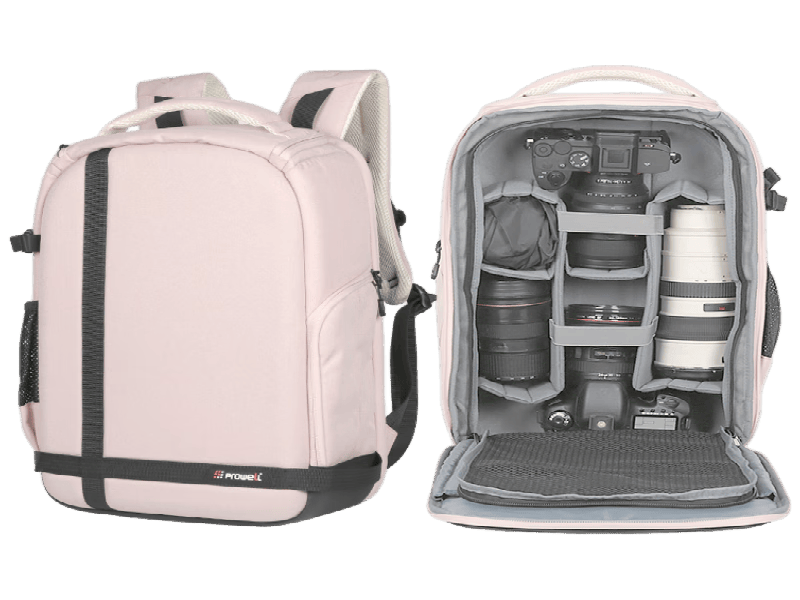
Premium materials are worth it when they create visible value, stronger protection, better comfort, longer product life, or clearer brand positioning. In camera bag manufacturing, premium does not only mean “expensive fabric.” A premium material package can include high-denier nylon, waxed canvas, leather trim, ripstop panels, water-repellent zippers, molded EVA parts, soft tricot lining, stronger webbing, custom hardware, recycled technical fabrics, or a more refined coating finish. The real value appears when the end user feels the bag is safer, smoother, stronger, and more enjoyable to carry.
For camera bags, premium material choices often influence trust. A photographer may place a camera body, lens set, laptop, drone, microphone, batteries, and tripod inside one bag. The gear inside may be worth far more than the bag itself. When users touch the fabric, open the zipper, adjust the divider, lift the handle, or place the bag on wet ground, they are quietly asking one question: “Can I trust this bag with my equipment?” Premium materials help answer that question before a single word is spoken.
However, brands should not upgrade materials blindly. A luxury canvas camera bag may not need tactical-grade 1000D nylon. A lightweight creator sling may not need heavy waterproof tarpaulin. A budget camera pouch may not need custom metal buckles. Premium materials should serve a real use scenario. When material upgrades become decorative only, they increase cost without improving reviews, repeat orders, or user satisfaction.
Szoneier often supports brands with material tier planning. One version can target entry-level creators with durable polyester and standard EVA padding. Another can target outdoor photographers with nylon or coated Oxford fabric, water-repellent zippers, reinforced bottom, and rain cover. A premium lifestyle version can combine waxed canvas, leather trims, soft lining, and refined metal hardware. The best choice depends on product story, sales channel, retail price, target market, and expected user behavior.
Is Leather Used in Camera Bags?
Leather is used in camera bags, but usually as a trim, reinforcement, handle detail, zipper puller, logo patch, flap, base accent, or premium decorative panel rather than the full main structure. Full leather camera bags exist, especially in luxury shoulder bags or vintage camera cases, but they are heavier, more expensive, and less suitable for wet outdoor use unless carefully treated. For most modern camera bags, leather works best when it adds visual value without compromising weight, flexibility, or weather performance.
Leather creates instant premium perception. A canvas camera shoulder bag with leather straps can feel like a heritage travel piece. A nylon camera backpack with leather zipper pullers and a debossed logo patch can look more refined. A camera tote with leather handles can appeal to lifestyle photographers, content creators, and urban users who want a bag that does not look overly technical.
The main risk is practicality. Leather needs care, can absorb moisture, may scratch, and can increase cost. Genuine leather also raises sourcing, consistency, and sustainability questions for some markets. PU leather or microfiber leather can be used as alternatives when brands want leather-like appearance with better color control, lower cost, or animal-free positioning.
| Leather Option | Common Camera Bag Use | Strength | Limitation | Best Fit |
|---|---|---|---|---|
| Genuine Leather | Handles, logo patches, straps, trim | Premium feel, strong brand value | Higher cost, moisture care needed | Luxury and heritage styles |
| PU Leather | Patches, zipper pullers, decorative panels | Cost-controlled, color flexible | Lower long-term aging quality than genuine leather | Mid-range lifestyle bags |
| Microfiber Leather | Premium synthetic trim | Better durability than basic PU | Higher cost than standard PU | Vegan premium lines |
| Suede-Like Trim | Soft decorative areas | Warm hand feel | Easy to stain | Fashion-led camera totes |
| Leather Reinforcement | Stress points and corners | Strong visual and structural detail | Adds labor complexity | Canvas and messenger bags |
For brands, leather should be planned around touchpoints. Users notice handles, zipper pulls, strap anchors, logo patches, and front flaps first. Adding leather to these areas can improve perceived value without making the whole bag heavy. Szoneier can help match leather trims with canvas, Oxford, nylon, polyester, and coated fabrics, while checking color harmony, stitching method, edge finishing, and logo technique.
Is Waxed Canvas Good for Camera Bags?
Waxed canvas is a strong choice for camera bags that need a vintage, rugged, lifestyle, outdoor casual, or premium craft look. It has a distinctive texture and develops character over time. For brands that want their camera bag to feel less like electronics luggage and more like a personal travel companion, waxed canvas can be a very attractive material.
The wax treatment gives canvas better resistance to light moisture and dirt than untreated cotton canvas. It also creates a firm hand feel, a slightly weathered surface, and a heritage-style appearance. Waxed canvas works especially well for camera messenger bags, shoulder bags, roll-top backpacks, tote-style camera bags, and removable camera inserts for lifestyle collections.
Still, waxed canvas has trade-offs. It is heavier than many synthetic fabrics. It may show creases, marks, or color variation, which some customers love and others may see as defects. It requires clearer product education. If a brand sells through online marketplaces where buyers expect perfect uniform surfaces, waxed canvas should be presented carefully with lifestyle images and material notes. If marketed correctly, the marks and patina become part of the charm.
| Waxed Canvas Feature | Advantage | Possible Concern | Brand Advice |
|---|---|---|---|
| Water resistance | Handles light rain better than untreated canvas | Not equal to waterproof fabric | Add rain cover for outdoor models |
| Appearance | Heritage, vintage, premium casual | Surface marks may vary | Explain patina in product copy |
| Hand feel | Firm, textured, substantial | Heavier than polyester | Use for lifestyle positioning |
| Durability | Good abrasion resistance in daily use | Needs suitable care | Provide care instructions |
| Logo compatibility | Works with leather patch, woven label, embossing | Printing can be harder | Use stitched or debossed branding |
| Market appeal | Strong emotional value | Not for all technical users | Match with urban and travel photography |
Waxed canvas becomes especially powerful when paired with leather trims, brass-tone hardware, soft lining, and removable padded inserts. The outside feels timeless, while the inside provides modern camera protection. This contrast can help brands build a product that appeals to photographers who want both style and function.
For Szoneier, waxed canvas camera bags can be developed with different canvas weights, wax finishes, inner coatings, linings, divider structures, and logo treatments. A brand can choose a lighter waxed canvas for an urban sling or a heavier waxed canvas for a premium messenger bag. The final result should feel natural, protective, and intentionally crafted.
Are Ripstop Fabrics Stronger?
Ripstop fabrics are stronger in tear control, not always stronger in every possible way. The key feature of ripstop fabric is the grid structure woven into the material. This grid helps prevent small tears from spreading quickly. For camera bags used in travel, hiking, cycling, or field shooting, ripstop fabric can be valuable because sharp edges, branches, airport handling, and rough surfaces can damage ordinary fabric.
Ripstop fabric is often made from nylon or polyester. Ripstop nylon is especially popular in outdoor gear because it can be lightweight while still offering good tear resistance. In camera bag manufacturing, ripstop fabric works well for lightweight backpacks, packable rain covers, outdoor camera inserts, side pockets, inner organizers, and certain technical panels.
However, ripstop does not automatically mean the whole bag is heavy-duty. A lightweight ripstop fabric may resist tear spreading but still need coating, backing, padding, and reinforcement for camera protection. A high-denier Oxford or ballistic-style fabric may offer better abrasion resistance in bottom panels. So ripstop is best used where tear control and weight saving matter, while heavier fabrics may still be better for high-abrasion zones.
| Fabric Type | Tear Resistance | Abrasion Resistance | Weight | Best Camera Bag Use |
|---|---|---|---|---|
| Lightweight Ripstop Nylon | High for its weight | Medium | Low | Travel bags, rain covers, inner panels |
| Heavy Ripstop Nylon | High | Medium-high | Medium | Outdoor camera backpacks |
| 600D Polyester | Medium | Medium | Medium | Daily camera bags |
| 900D Oxford | Medium-high | High | Medium-high | Outdoor and structured backpacks |
| 1680D Oxford | High | Very high | High | Bottom panels and stress zones |
| Tarpaulin | Medium to high | High | Medium-high | Waterproof-style compartments |
A smart camera bag can use ripstop fabric strategically. For example, ripstop nylon can be used on the main upper shell to reduce weight, while 1680D Oxford can be used on the bottom to improve abrasion resistance. A rain cover can use lightweight ripstop with waterproof coating. Inner accessory pockets can use ripstop to reduce bulk.
For brands, ripstop is especially useful when the product story includes travel, outdoor movement, lightweight performance, or technical design. It gives sales content a clear explanation: the grid helps control tearing while keeping the bag lighter than some heavy-duty fabrics. Szoneier can help compare ripstop options by denier, coating, hand feel, color, MOQ, and price before final sample development.
Which Materials Look More Premium?
Premium appearance comes from the full material language, not a single expensive fabric. A camera bag looks premium when the outer fabric has the right texture, the zipper tape matches cleanly, the hardware feels solid, the lining color looks intentional, the stitching is neat, the logo method fits the surface, and the bag keeps its shape after packing. A costly shell fabric can still look cheap if paired with weak webbing or poor zipper pulls.
Different materials create different premium signals. Waxed canvas and leather create a heritage premium feeling. High-denier nylon and matte coated fabric create a technical premium feeling. Recycled fabrics create a modern responsible premium feeling. Soft lining and molded EVA create a protective premium feeling. Metal hardware, rubber patches, custom zipper pullers, and tonal webbing create detail-level premium value.
| Premium Style Direction | Suitable Materials | Visual Message | Best Product Type |
|---|---|---|---|
| Heritage Lifestyle | Waxed canvas, leather trim, brass hardware | Classic, warm, travel-ready | Messenger bag, shoulder bag |
| Technical Outdoor | Nylon, ripstop, coated Oxford, waterproof zipper | Rugged, protective, professional | Outdoor backpack |
| Minimal Urban | Matte polyester, smooth nylon, tonal zipper, clean logo | Modern, clean, discreet | Sling bag, commuter backpack |
| Luxury Casual | Canvas, microfiber leather, soft lining, metal trim | Refined and brand-led | Camera tote, fashion camera bag |
| Eco Premium | Recycled polyester, recycled nylon, natural-tone trims | Responsible, modern | Travel and lifestyle collections |
| Protective Pro | Molded EVA, high-density foam, structured panels | Serious gear protection | Camera case, drone bag |
Premium appearance should match the target user. A wildlife photographer may see matte technical nylon and reinforced webbing as premium. A wedding photographer may prefer clean black fabric, quiet zippers, laptop protection, and elegant branding. A travel influencer may want stylish canvas, comfortable straps, and quick camera access. A drone creator may value molded protection and organized compartments more than decorative trims.
For custom camera bag programs, Szoneier can develop premium material boards before sampling. These boards may include outer fabric swatches, lining options, zipper tape, pullers, webbing, logo labels, buckles, leather patches, and foam samples. This helps brands judge the total look instead of approving materials one by one in isolation.
How Do Materials Affect Brand Positioning?
Materials directly affect brand positioning because they tell users what kind of camera bag they are buying before they read the product description. A soft canvas messenger bag suggests lifestyle photography, travel journaling, and creative daily carry. A black nylon backpack with water-repellent zippers suggests professional outdoor work. A bright recycled polyester camera sling suggests modern creator culture. A molded EVA camera case suggests hard protection and equipment safety.
Material positioning also affects pricing. Customers are more willing to pay for a camera bag when the material story matches the product promise. If a product claims outdoor durability, the fabric, zipper, base, and straps must support that claim. If a product claims premium lifestyle, the hand feel, stitching, lining, and branding need to look refined. If a product claims eco-conscious design, recycled content and responsible material documentation become important.
| Brand Position | Material Direction | Key Selling Point | Risk to Avoid |
|---|---|---|---|
| Entry-Level Creator | 600D polyester, standard EVA, basic lining | Affordable camera protection | Looking too generic |
| Urban Professional | Matte nylon/polyester, clean hardware, laptop padding | Work-friendly camera carry | Too little camera protection |
| Outdoor Photographer | High-denier nylon/Oxford, PU/TPU coating, rain cover | Weather and abrasion resistance | Overweight structure |
| Lifestyle Premium | Canvas, waxed canvas, leather trim, soft lining | Style plus protection | Weak waterproofing |
| Eco Collection | Recycled polyester/nylon, low-impact trims | Sustainability story | No proof or weak durability |
| Drone/Tech Gear | Molded EVA, structured panels, dense foam | Organized impact protection | Too bulky for daily use |
This is where material planning becomes marketing strategy. A brand can build a full collection around different material families: lightweight creator bags, rugged outdoor bags, premium canvas bags, and protective drone bags. Each family can use a different fabric stack while keeping consistent logo details and brand colors.
Szoneier’s strength is not limited to cutting and sewing. With experience across fabric development, coating, printing, bag manufacturing, and custom finished products, Szoneier can help brands connect material choice with product identity. That connection matters because customers do not buy fabric names. They buy confidence, convenience, protection, and a bag that fits their life.
How Are Camera Bag Linings Chosen?
Camera bag linings are chosen based on gear protection, hand feel, color visibility, divider compatibility, abrasion resistance, dust control, and overall product positioning. The lining is the material most often touched by cameras and lenses, so it must be softer and more controlled than the lining used in ordinary backpacks. A good lining protects screens, lens barrels, filters, camera bodies, laptops, and accessories while helping users see and organize small items quickly.
The lining should never be treated as a hidden low-cost detail. Many users judge camera bag quality the moment they open the main compartment. If the lining feels rough, thin, noisy, dusty, or poorly attached, the whole bag feels less trustworthy. If the lining is soft, clean, bright enough to see gear, and firmly connected to dividers, the product feels more professional.
For brands, lining selection should answer several questions. Will the bag carry camera bodies directly or only a removable insert? Will users adjust dividers often? Will small black accessories need high visibility? Does the brand want a luxury interior color? Does the product need laptop protection? Will the lining touch coated camera surfaces, lenses, screens, or delicate accessories?
Szoneier can support lining development using brushed polyester, tricot, velvet-touch fabric, soft polyester lining, mesh, microfiber-like materials, and laminated divider fabrics. The goal is to make the inside of the camera bag feel safe, organized, and aligned with the outer design.
What Is Soft Velvet Lining?
Soft velvet lining is a plush-feel interior fabric used to create a gentle surface for camera gear. It can make the inner compartment feel more premium and protective, especially in camera inserts, lens compartments, luxury camera bags, and cases for delicate gear. The soft surface reduces direct friction between equipment and the bag interior.
Velvet lining is often chosen when brands want a premium unboxing and daily-use feeling. When a user opens a camera bag and sees a soft, refined interior, the product feels more protective. This is especially useful for camera bags positioned toward professionals, wedding photographers, boutique creators, or giftable camera accessories.
However, velvet lining must be selected carefully. Some velvet-like fabrics may attract dust, lint, or small particles. Some may show pressure marks. Some may not hold hook-and-loop dividers well unless paired with dedicated attachment zones. The lining must also pass color fastness checks because dark lining touching light camera accessories, cables, or packaging could create staining risk if quality is poor.
| Velvet Lining Factor | Benefit | Risk to Check | Brand Advice |
|---|---|---|---|
| Soft hand feel | Protects gear surfaces | May collect dust | Choose low-shedding quality |
| Premium appearance | Improves perceived value | Can look too delicate for outdoor bags | Use for premium and lifestyle lines |
| Color options | Creates brand identity | Dark colors hide accessories | Consider grey, beige, or brand color |
| Divider compatibility | Works in fixed compartments | May not grip hook-and-loop well | Add separate loop fabric zones |
| Cleaning | Comfortable touch | Lint may be visible | Provide care guidance |
Soft velvet lining is excellent when used in the right areas. It may be ideal for lens slots, camera inserts, or premium shoulder bags. For rugged outdoor backpacks, brushed polyester or tricot may be more practical because they can be easier to clean and better suited to frequent gear changes.
Is Brushed Polyester Safe for Lenses?
Brushed polyester can be safe for camera gear when the quality is controlled and the surface is soft, clean, and low-shedding. It is widely used in camera bag interiors because it balances softness, cost, durability, and production efficiency. It can be laminated to foam for dividers and used as lining for compartments, pockets, and protective inserts.
The key is not just the word “polyester.” A rough polyester lining is not suitable for direct lens or camera contact. A well-brushed polyester lining can feel soft and protective. Brands should test surface friction, pilling, lint release, color fastness, and hook-and-loop compatibility before confirming bulk production.
Brushed polyester is often more practical than velvet for daily-use camera bags. It can be easier to clean, more stable in production, and better suited to adjustable divider systems. It also offers many color choices. Light grey, warm grey, beige, orange, blue, and green are common camera bag lining colors because they improve visibility inside the compartment.
| Brushed Polyester Feature | Why It Matters | Better Specification Direction |
|---|---|---|
| Softness | Reduces surface friction | Use brushed or peached finish |
| Low shedding | Keeps gear cleaner | Test lint before bulk order |
| Color fastness | Prevents staining | Check wet/dry rubbing performance |
| Divider grip | Holds removable dividers | Match with hook-and-loop system |
| Durability | Handles repeated gear movement | Test abrasion and pilling |
| Lamination | Creates padded divider panels | Bond evenly with EVA foam |
A useful testing method is simple but effective: place a black camera body, rubber lens cap, and clear plastic filter box inside the sample compartment, then move them repeatedly by hand. Check for lint, marks, rubbing, or color transfer. This type of practical test can reveal issues that fabric data alone may miss.
For brands building mid-range or premium camera bags, brushed polyester is often one of the best lining choices because it is protective, scalable, and customizable. Szoneier can help match brushed polyester lining with EVA divider thickness, inner color, logo label, and overall product structure.
Do Anti-Scratch Linings Matter?
Anti-scratch linings matter because camera gear has surfaces that users care about: LCD screens, lens barrels, filter rings, battery chargers, microphones, drones, laptops, tablets, and small accessories. Even if the bag protects against major impact, a rough lining can create daily friction marks, dust problems, or surface wear.
In real use, photographers constantly insert and remove equipment. A camera body may rub against a divider. A lens hood may scrape along a lining wall. A laptop may slide into a sleeve several times a day. Small items may move around during travel. Anti-scratch lining reduces these small but repeated contact risks.
Anti-scratch does not always require a special branded material. It means the lining surface is properly selected for softness, smoothness, pilling control, and cleanliness. Tricot, brushed polyester, microfiber-like lining, velvet-touch fabric, and smooth soft polyester can all serve anti-scratch goals when quality is right.
| Gear Surface | Scratch Risk | Recommended Lining Approach |
|---|---|---|
| Camera LCD screen | Rubbing against hard objects | Soft divider and screen-facing lining |
| Lens barrel | Friction during insertion | Brushed polyester or tricot |
| Lens glass/filter | Contact with loose accessories | Separate padded slot or cap pocket |
| Laptop shell | Sliding wear | Smooth padded sleeve lining |
| Drone body | Pressure points | Shaped padded compartment |
| Microphone/light | Small part abrasion | Mesh or soft zip pocket |
| Cables/chargers | Tangling and rubbing | Organizer pockets |
Anti-scratch lining should work together with compartment design. If all gear is thrown into one open space, even the softest lining cannot prevent collisions. The best solution is soft lining plus proper dividers, zip pockets, elastic loops, and accessory organization.
For product pages, brands can explain anti-scratch lining in a human way. Instead of saying only “soft lining,” describe how the interior helps separate lenses, protect camera surfaces, and make small accessories easier to find. That language connects material choice with customer benefit.
Are Mesh Pockets Useful Inside?
Mesh pockets are useful inside camera bags when they help organize small accessories without scratching sensitive gear. They are commonly used for batteries, memory cards, cables, chargers, filters, cleaning cloths, lens caps, microphones, remote controls, and small tools. Mesh allows users to see what is inside, which is valuable during shoots when speed matters.
However, mesh should not be used everywhere. Rough mesh placed directly against camera screens or lens surfaces can create friction. Stretch mesh can lose elasticity if overloaded. Thin mesh can tear when holding heavy chargers or metal accessories. The best design uses mesh pockets in accessory zones, not in areas where expensive gear surfaces rub directly.
Camera bags often use different mesh types. Fine mesh works for small pockets and clean interiors. Elastic mesh works for cables and batteries. Spacer mesh works for back panels because it provides cushioning and airflow. Heavy-duty mesh can be used for side bottle pockets or tripod support areas. Each mesh has a different role.
| Mesh Type | Camera Bag Use | Benefit | Watch Point |
|---|---|---|---|
| Fine Mesh | Inner zip pockets | Good visibility, neat look | Not for heavy items |
| Elastic Mesh | Battery and cable pockets | Flexible storage | Can stretch over time |
| Spacer Mesh | Back panel and straps | Breathability and comfort | Adds thickness |
| Heavy Mesh | Side pockets | Stronger holding power | Rougher hand feel |
| Laminated Mesh | Structured pockets | Better shape retention | Higher cost |
Inside a camera bag, mesh pockets should be placed where the user naturally searches for small items. Lid pockets, side inner panels, front organizer panels, and battery zones are common locations. Clear labeling or color contrast can also improve usability.
Szoneier can customize mesh pocket size, stretch level, zipper closure, binding, color, and placement. For premium camera bags, mesh should be cleanly finished and not overused. A well-designed interior feels organized. Too many pockets can make the bag confusing.
How Should Laptop Sections Be Padded?
Laptop sections in camera bags should be padded with EVA foam or similar protective foam, lined with smooth fabric, lifted slightly from the bottom, and separated from the camera compartment. Many photographers and creators carry a laptop or tablet with camera gear, so laptop protection has become a core requirement in modern camera backpack design.
The laptop section has different needs from the camera section. A laptop is flat, wide, and sensitive at the corners. It needs broad, even pressure protection. It should not press directly against lenses or camera bodies. It should also be easy to access during airport security, office work, or client meetings.
A good laptop sleeve often includes foam on both sides, a soft lining, a retaining strap or elastic closure, and a suspended bottom. A suspended bottom means the laptop sleeve does not touch the very bottom edge of the bag. This helps reduce impact if the bag is placed down quickly.
| Laptop Sleeve Detail | Recommended Design | Why It Matters |
|---|---|---|
| Foam layer | 5–10 mm EVA or similar foam | Protects flat surfaces |
| Bottom position | Suspended 1–3 cm above bag base | Reduces drop impact |
| Lining | Smooth polyester, tricot, or soft brushed fabric | Prevents surface wear |
| Closure | Elastic strap, hook-and-loop tab, or zipper | Keeps laptop stable |
| Compartment separation | Dedicated back section | Prevents pressure on camera gear |
| Size planning | 13-inch, 14-inch, 15.6-inch, 16-inch options | Fits target user devices |
| Back support | Foam plus PE board where needed | Improves carry comfort |
Laptop padding also affects comfort. If the laptop sits directly against the user’s back without enough padding, the bag may feel hard during walking. A breathable back panel with foam channels can improve comfort, especially for photographers carrying gear for long periods.
For brands, laptop sleeve sizing should be decided early. A bag designed for 13-inch tablets can stay slim. A bag designed for 16-inch laptops needs wider panels, stronger back structure, and better weight distribution. Szoneier can help develop laptop-camera hybrid layouts that protect electronics without making the bag bulky or difficult to access.
Do Materials Affect Comfort?

Materials affect comfort in every part of a camera bag: back panel, shoulder straps, handle grip, waist belt, chest strap, lining stiffness, shell weight, foam density, webbing texture, and even zipper placement. A camera bag may look strong on a product photo, but if it becomes painful after thirty minutes of carrying gear, users will stop using it. Comfort is not decoration. It is one of the core functions of camera bag manufacturing.
Camera equipment is dense. A camera body, two lenses, a laptop, tripod, batteries, charger, microphone, water bottle, and personal items can easily turn a backpack into a heavy daily load. For professional photographers, travel creators, drone pilots, and outdoor shooters, comfort decides whether the bag supports work or becomes a burden. The right material choices can reduce shoulder pressure, improve airflow, stabilize weight, and make the bag feel lighter than its actual load.
Comfort should be designed through a full material system. Breathable mesh helps reduce heat on the back. EVA or sponge foam spreads pressure in shoulder straps. Neoprene can add soft stretch and cushioning to handles or strap sections. Strong nylon webbing keeps load-bearing parts stable. Lightweight shell fabrics reduce total weight. Smooth lining and flexible dividers make gear access easier. A well-padded back panel can protect the user from feeling hard camera equipment through the bag wall.
For brands, comfort is also a product review issue. Users may forgive a slightly higher price if the bag feels good during long carry. They rarely forgive shoulder pain, sweaty back panels, slipping straps, or handles that dig into the hand. Szoneier helps brands review camera bag comfort from material, structure, and actual use scenes, so the final product feels better after it is packed with real equipment.
Which Back Panel Fabric Breathes Better?
Breathable back panels usually use spacer mesh, air mesh, sandwich mesh, perforated foam, molded foam channels, or mesh-covered padding. The goal is to reduce heat buildup between the user’s back and the camera bag. Camera backpacks often carry more weight than ordinary backpacks, so the back panel must balance softness, airflow, shape support, and long-term durability.
Spacer mesh is commonly used because it creates a three-dimensional structure that allows some air movement while adding cushioning. Air mesh can feel softer and lighter. Molded foam panels can create airflow channels, reducing full-surface contact with the back. Some outdoor camera bags combine EVA foam, sponge padding, and mesh fabric to create both support and ventilation.
However, breathable materials are not magic. A thick backpack pressed tightly against the body will still feel warm in summer. Larger camera bags with laptop sleeves and rigid back panels need careful channel design. If the mesh is too soft, it may collapse under weight. If the foam is too hard, it may feel uncomfortable. If the back panel absorbs too much sweat, odor and cleaning issues can appear.
| Back Panel Material | Comfort Benefit | Possible Limitation | Best Use |
|---|---|---|---|
| Spacer Mesh | Good airflow and cushioning | Can add thickness | Outdoor camera backpacks |
| Air Mesh | Soft, light, breathable feel | Less structure than molded panels | Daily camera backpacks |
| Molded EVA Foam | Shape support and pressure control | Higher tooling or process cost | Premium outdoor bags |
| Sponge Foam + Mesh | Soft and economical | May compress over time | Mid-range camera backpacks |
| Perforated Foam | Better ventilation than solid foam | Needs stable lamination | Travel camera bags |
| PE Board + Foam + Mesh | Strong back support | Adds weight | Heavy gear backpacks |
A strong back panel also needs the right layout. Air channels should run in directions that allow heat to escape. Lumbar padding can improve load comfort. A central spine channel can reduce pressure. For larger camera backpacks, chest straps and waist belts can work with the back panel to distribute load better.
For Szoneier camera bag development, back panel testing should include loaded carry trials. A sample may feel comfortable when empty, but the real test begins when the bag carries a camera body, lenses, laptop, and tripod. Comfort should be judged after walking, bending, opening side access, and wearing the bag in warm conditions.
How Do Shoulder Strap Materials Work?
Shoulder strap materials work by spreading weight, reducing pressure, preventing slipping, and keeping the camera bag stable during movement. A shoulder strap is not just a strip of webbing. A good strap may include outer fabric, EVA foam, sponge foam, neoprene, spacer mesh, nylon webbing, edge binding, bartack reinforcement, adjustable buckles, and sometimes load-lifter straps.
Camera bag shoulder straps need more strength than many fashion backpacks because the load can be heavy and expensive. If a strap stretches, twists, slides, or cuts into the shoulder, users lose trust. If stitching at the strap anchor fails, the result can be serious equipment damage. That is why strap material and sewing reinforcement are both critical.
The strap padding should match the carry style. A camera sling needs a wider and more stable strap because the load sits on one shoulder. A backpack needs two balanced padded straps, often with sternum support. A shoulder camera bag needs a padded shoulder pad that can move along the strap. A small camera pouch may only need lightweight webbing.
| Strap Component | Common Material | Function | Quality Point |
|---|---|---|---|
| Outer Strap Fabric | Polyester or nylon fabric | Covers padding and matches bag style | Abrasion and color match |
| Padding Core | EVA, sponge, or neoprene | Reduces shoulder pressure | Density and recovery |
| Inner Contact Layer | Spacer mesh or air mesh | Improves comfort and grip | Breathability and softness |
| Main Webbing | Nylon or polyester webbing | Carries load | Tensile strength |
| Adjustment Buckle | Plastic or metal buckle | Controls fit | Strength and smooth adjustment |
| Anchor Reinforcement | Bartack stitching, extra fabric layers | Prevents tearing | Stitch count and placement |
Wider is not always better. A very wide strap may feel bulky on smaller bags. A narrow strap may dig into the shoulder when loaded. Strap curve also matters. Ergonomic curved straps can sit better on the body than straight straps, especially for camera backpacks used during travel or hiking.
For custom camera bag programs, Szoneier can develop strap samples with different foam thicknesses, mesh layers, webbing widths, and buckle choices. Brands can test the strap with real load before final approval. This practical step helps avoid one of the most common problems in bag reviews: “Nice bag, but uncomfortable when full.”
Is Neoprene Useful for Strap Padding?
Neoprene is useful for strap padding, handle grips, camera pouches, lens sleeves, and protective accessory sections because it provides softness, flexibility, shock absorption, and a smooth hand feel. It is especially valuable where the material touches the user’s body or needs gentle cushioning. Since Szoneier works with neoprene fabric and related finished products, it can support camera bag designs that use neoprene in targeted comfort and protection zones.
In camera bag shoulder straps, neoprene can improve softness and flexibility. It can work as a padded layer or as part of a movable shoulder pad on messenger bags and sling bags. In handle grips, neoprene can reduce hand pressure when users lift a heavy camera bag. In lens pouches or accessory sleeves, neoprene provides a close-fitting protective layer.
Neoprene also gives a more premium tactile experience than basic sponge in certain designs. It has a slight stretch and comfortable compression, which can make carrying feel smoother. However, neoprene should be used carefully. It can feel warmer than mesh, may not provide enough structure alone for heavy backpack straps, and must be combined with webbing or reinforcement in load-bearing areas.
| Neoprene Application | Benefit | Limitation | Better Design Choice |
|---|---|---|---|
| Shoulder Pad | Soft pressure relief | Can feel warm | Add breathable contact layer |
| Handle Grip | Comfortable lifting | Needs strong stitching | Wrap around webbing handle |
| Lens Sleeve | Flexible protection | Less rigid than EVA | Use for light lens protection |
| Camera Insert Edge | Soft cushioning | May not hold shape alone | Combine with EVA or PE board |
| Strap Cushion | Flexible comfort | Not enough load structure alone | Pair with nylon webbing |
| Accessory Pouch | Shock absorption | Bulkier than thin lining | Use for chargers or small gear |
Neoprene is not a replacement for EVA foam in every area. EVA is better for structured dividers and impact panels. Neoprene is better where flexibility, touch comfort, and soft cushioning matter. A well-designed camera bag may use EVA for protection and neoprene for user-contact areas.
For brands seeking a more comfortable camera sling, shoulder bag, or camera pouch, neoprene can create a clear product advantage. It also supports custom colors, laminated fabric surfaces, embossed logos, woven labels, and shaped construction. Szoneier can help match neoprene thickness and surface fabric with the rest of the camera bag material system.
What Webbing Strength Is Needed?
Webbing strength depends on the expected load, bag size, carry style, and stress points. Camera bags use webbing for shoulder straps, handles, tripod holders, side compression straps, waist belts, chest straps, bottom loops, buckle connections, and accessory attachment points. Because camera gear can be heavy and expensive, weak webbing is a serious risk.
Common webbing materials include polyester and nylon. Polyester webbing offers good dimensional stability, colorfastness, and cost control. Nylon webbing can feel stronger and more flexible in some applications, but it may cost more and absorb slightly more moisture depending on construction. The choice should match the product tier and load requirements.
Webbing width also matters. Small camera pouches may use 15–20 mm webbing. Sling bags often use 25–38 mm webbing. Camera backpacks may use 25–50 mm webbing depending on the strap structure and load zone. Tripod holders, waist belts, and heavy handles need stronger webbing and reinforced stitching.
| Webbing Area | Common Width Range | Material Direction | Quality Requirement |
|---|---|---|---|
| Small Pouch Strap | 15–20 mm | Polyester webbing | Light load stability |
| Sling Main Strap | 25–38 mm | Nylon or polyester webbing | Smooth adjustment, high strength |
| Backpack Shoulder Strap Webbing | 25–38 mm | Strong polyester/nylon | Load-bearing consistency |
| Waist Belt Webbing | 38–50 mm | Heavy-duty webbing | Strong buckle compatibility |
| Tripod Holder | 20–38 mm | Durable webbing | Abrasion and tension resistance |
| Top Handle Core | 25–50 mm | Reinforced nylon/polyester | High tensile strength |
| Compression Strap | 20–25 mm | Polyester webbing | Stable adjustment |
Stitching can be more important than webbing strength alone. A strong webbing strip is useless if the anchor seam fails. Bartack stitching, box stitching, reinforced fabric layers, and stress-point testing are important for camera bags. Tripod holders and shoulder strap anchors should receive special attention because they carry dynamic load during walking.
For Szoneier custom production, webbing can be color-matched with shell fabric, zipper tape, lining, and logo trim. Brands can choose matte webbing, smooth webbing, textured webbing, jacquard logo webbing, reflective webbing, or reinforced outdoor webbing. The right choice improves both function and brand identity.
Are Lightweight Materials Better for Travel?
Lightweight materials are better for travel when they reduce fatigue without sacrificing protection. Travel photographers often carry bags for long hours through airports, train stations, hotels, city streets, and outdoor routes. A heavy empty bag becomes even heavier once camera gear, laptop, chargers, and personal items are added. Lightweight fabric can make the whole experience easier.
However, lightweight should not mean weak. A camera bag must still protect equipment. Lightweight travel camera bags often use ripstop nylon, 420D or 500D nylon, 600D polyester, light Oxford fabric, thinner but higher-quality EVA padding, and strategic reinforcement in stress areas. The goal is to remove unnecessary bulk while protecting the parts that matter most.
Travel camera bags also need packability and organization. A lighter shell can help, but poor divider design, weak straps, or thin bottom padding can make the product risky. Brands should use lightweight materials where abrasion is lower and stronger materials where stress is higher. For example, use lighter ripstop on upper panels and stronger Oxford on the bottom.
| Travel Bag Goal | Material Strategy | Why It Works |
|---|---|---|
| Lower empty weight | Ripstop nylon or lighter polyester | Reduces daily fatigue |
| Maintain protection | EVA dividers and reinforced bottom | Protects fragile gear |
| Better comfort | Spacer mesh back panel | Improves long carry use |
| Weather readiness | PU coating and rain cover | Handles travel rain |
| Compact structure | Slim foam where possible | Saves luggage space |
| Strong stress points | Reinforced webbing and bartacks | Prevents failure under load |
| Easy cleaning | Smooth coated panels | Useful during travel |
For travel camera bags, brands should pay attention to total product weight. A small reduction in fabric weight may not matter if the bag uses too much foam, metal hardware, or unnecessary panels. A balanced design considers shell material, foam thickness, hardware choice, compartment layout, and carry system together.
Szoneier can help develop travel-friendly material packages for camera backpacks, sling bags, camera inserts, and hybrid laptop-camera bags. The final product should feel light when empty, stable when full, and protective enough for real travel.
How Should Brands Choose Materials?
Brands should choose camera bag materials by matching the target user, gear value, use environment, protection level, style direction, price range, MOQ, and production timeline. The best material package is not always the most expensive one. It is the one that fits the product promise. A beginner camera pouch, outdoor camera backpack, luxury canvas messenger, drone equipment case, and creator sling bag all need different material systems.
A smart material decision begins with the customer’s real routine. What gear do they carry? Where do they shoot? How long do they wear the bag? Do they need quick side access? Will they travel by plane? Do they carry a tripod? Is rain protection important? Do they want a bag that looks like outdoor gear or a stylish daily bag? Once these answers are clear, the fabric, foam, lining, zipper, hardware, and logo details become easier to select.
For custom manufacturing, material selection should also consider supply reality. Some premium fabrics require higher MOQ. Some special coatings need longer lead time. Some custom colors may require dyeing minimums. Some logo methods work better on specific fabrics. Some linings need compatibility testing with hook-and-loop dividers. A beautiful idea can become expensive or delayed if material planning starts too late.
Szoneier supports brands through fabric sourcing, material comparison, free design support, sample development, low MOQ customization, private label options, OEM/ODM production, and quality control. With experience across cotton, canvas, polyester, nylon, neoprene, jute, linen, Oxford fabric, coated materials, and finished product manufacturing, Szoneier can help brands turn design goals into manufacturable camera bags.
What Materials Fit Budget Camera Bags?
Budget camera bags should use cost-effective materials without ignoring protection. A good budget camera bag may use 600D polyester, 300D or 600D Oxford fabric, standard PU coating, 5–8 mm EVA or PE foam dividers, basic brushed polyester lining, standard zipper, polyester webbing, and simple woven label or printed logo. The goal is to deliver reliable daily protection at a controlled unit cost.
Budget should not mean unsafe. Camera gear is valuable even for beginners. A low-cost bag still needs enough padding, clean stitching, stable dividers, and reliable zippers. The best cost control comes from simplifying construction, reducing unnecessary pockets, using available fabric colors, standardizing divider shapes, and choosing proven materials.
For entry-level camera bags, users often care about basic protection, lightweight carry, easy access, and affordable price. They may not need waterproof zippers, leather trims, molded EVA panels, or complex modular systems. They do need a bag that does not tear quickly, scratch gear, or feel uncomfortable.
| Budget Camera Bag Area | Recommended Material | Cost-Control Logic |
|---|---|---|
| Outer Shell | 600D polyester or 600D Oxford | Good durability at reasonable cost |
| Coating | Standard PU coating | Basic water resistance |
| Divider | PE foam or EVA foam | Controlled protection |
| Lining | Brushed polyester or 210D polyester | Soft enough for daily use |
| Zipper | Standard coil zipper | Smooth and affordable |
| Webbing | Polyester webbing | Stable and cost-friendly |
| Logo | Woven label or screen print | Low setup cost |
| Hardware | Standard plastic buckle | Practical and lightweight |
A strong budget camera bag is honest. It does not overclaim waterproof performance or professional-grade protection. It presents itself as daily protection for entry-level cameras, mirrorless kits, small drones, or light creator gear. With good construction, it can still feel dependable.
Szoneier can help brands create budget versions by using in-stock fabric colors, standard trims, efficient cutting layouts, and simplified inner structures. This supports low MOQ custom programs and faster sampling while maintaining quality control.
Which Materials Fit Outdoor Camera Bags?
Outdoor camera bags need materials that resist abrasion, moisture, dirt, pressure, and long carry fatigue. Good choices include high-denier nylon, 900D or 1200D Oxford fabric, ripstop nylon, PU-coated polyester, TPU-coated fabric, reinforced bottom panels, water-repellent zippers, EVA foam, PE board, breathable mesh, strong webbing, and rain cover fabric.
Outdoor camera bags are exposed to more unpredictable conditions than city camera bags. They may be placed on rocks, grass, mud, snow, wet ground, or boat decks. Users may carry tripods, drones, large lenses, jackets, water bottles, and laptops. The material system must protect both equipment and the user’s body.
A good outdoor camera bag should include abrasion-resistant shell fabric, reinforced base, water-resistant coating, protected zipper paths, thicker padding in key areas, breathable back panel, strong shoulder straps, and secure tripod attachment. It should also remain manageable in weight. A bag that is too heavy empty becomes tiring outdoors.
| Outdoor Need | Material Choice | Practical Benefit |
|---|---|---|
| Abrasion resistance | 900D/1200D Oxford or high-denier nylon | Handles rough ground and travel |
| Rain protection | PU/TPU coating, water-repellent zipper | Reduces moisture risk |
| Emergency weather | Coated rain cover fabric | Adds extra rain layer |
| Heavy gear support | EVA foam + PE board | Improves structure |
| Long carry comfort | Spacer mesh + padded straps | Reduces heat and pressure |
| Tripod stability | Strong webbing + reinforced anchors | Keeps tripod secure |
| Bottom protection | 1680D Oxford or coated base panel | Protects high-wear zone |
| Dust and mud cleaning | Smooth coated fabric | Easier wipe-down |
Outdoor material selection should be honest about water claims. A water-resistant outdoor camera backpack is not the same as a waterproof dry bag. If the brand wants a stronger waterproof claim, construction methods such as welded seams, roll-top closure, waterproof zipper, or special laminated fabrics may be required.
Szoneier can develop outdoor camera bag material packages based on different climates and use cases: hiking photography, cycling creators, travel photographers, drone users, fishing or marine photography, tactical field work, or professional equipment transport.
What Materials Fit Luxury Camera Bags?
Luxury camera bags need materials that feel refined, photograph beautifully, age well, and still protect equipment. Suitable materials include waxed canvas, high-quality cotton canvas, premium nylon, microfiber leather, genuine leather trims, soft velvet lining, tricot lining, matte metal hardware, custom zipper pullers, tonal webbing, embossed logo patches, and structured EVA inserts.
Luxury does not always mean formal. In camera bags, luxury can be quiet and functional. A premium photographer may not want shiny decorations. They may prefer smooth zippers, clean stitching, strong but soft straps, elegant lining, hidden pockets, and materials that feel calm and durable. The bag should protect expensive equipment while fitting professional settings such as client meetings, weddings, studios, travel lounges, and creative offices.
Luxury camera bags often use mixed materials. Canvas gives warmth. Leather adds heritage. Nylon adds technical precision. Soft lining adds protection. Metal hardware adds weight and confidence. Custom logo details complete the brand language. The challenge is balancing beauty and practical protection.
| Luxury Style | Material Package | Best Product Direction |
|---|---|---|
| Heritage Luxury | Waxed canvas + leather trim + brass-tone hardware | Messenger and shoulder bags |
| Minimal Professional | Matte nylon + tonal webbing + clean logo | Work-camera backpacks |
| Fashion Lifestyle | Canvas + microfiber leather + soft lining | Camera totes and sling bags |
| Technical Premium | High-denier nylon + water-repellent zipper + molded EVA | Outdoor pro backpacks |
| Boutique Creator | Custom lining color + branded pullers + soft dividers | Small camera bags |
| Vegan Premium | Microfiber leather + recycled polyester + metal trims | Modern lifestyle collections |
Luxury camera bags require detail control. Stitching lines should be clean. Logo placement should feel intentional. Lining color should support the brand mood. Zipper pullers should feel good in the hand. Handles should be comfortable. Dividers should not look cheap when the bag opens.
Szoneier can help brands create luxury material boards and sample options before production. This helps teams compare canvas weight, leather trim, lining texture, zipper finish, hardware color, foam structure, and logo method. A premium camera bag succeeds when every touchpoint feels aligned.
How Does MOQ Affect Material Choice?
MOQ affects material choice because special fabrics, custom colors, coatings, logo trims, zipper colors, hardware finishes, and lining materials often require minimum order quantities. A brand may want a custom-dyed nylon fabric, special TPU coating, unique lining color, branded jacquard webbing, custom metal buckle, or molded EVA panel, but each element may affect MOQ, cost, and lead time.
For smaller custom camera bag programs, in-stock materials can be the smarter choice. Szoneier can help brands select available nylon, polyester, Oxford fabric, canvas, neoprene, lining, webbing, and zipper options that already match the design direction. This can reduce sampling time and production risk. Custom materials can be introduced later when order quantity grows.
MOQ should be planned by material layer. The outer fabric may have one MOQ. The lining may have another. Custom zipper tape may have another. Metal hardware may require mold fees. Rubber logo patches may need tooling. Printed lining may require minimum printing volume. A camera bag with ten custom material details may become difficult for a small first order.
| Material or Trim | MOQ Sensitivity | Lower-MOQ Option | Upgrade Option |
|---|---|---|---|
| Outer Fabric | Medium to high for custom color | In-stock fabric color | Custom dye or special coating |
| Lining | Medium for custom color | Standard grey/black/beige lining | Custom branded lining |
| Zipper | Medium for special tape color | Standard black/grey zipper | Custom zipper tape and puller |
| Webbing | Medium for color matching | Stock webbing | Jacquard logo webbing |
| Hardware | Low to high depending style | Standard buckle | Custom metal or molded buckle |
| Logo Patch | Low to medium | Woven label or print | Rubber, leather, embossed patch |
| EVA Molded Part | High if tooling needed | Cut-and-sewn EVA | Custom molded EVA panel |
| Coated Fabric | Medium to high | Standard PU coating | TPU lamination or special finish |
A practical strategy is to launch with a material package that supports low MOQ and fast sampling, then upgrade custom details after sales validation. For example, a first camera sling can use stock matte black nylon, standard soft lining, branded woven label, and standard water-repellent zipper. A second production run can add custom zipper pullers, lining color, rubber patch, or upgraded coating.
Szoneier’s low MOQ customization and free design support are valuable for brands that want to test camera bag designs without overcommitting to high material minimums. Careful material planning helps keep the first project realistic while leaving room for future premium upgrades.
How Can Szoneier Support Custom Materials?
Szoneier can support custom camera bag materials from concept to finished product by helping brands choose fabrics, coatings, padding, lining, trims, logo methods, sample structures, and production-ready specifications. As a Chinese factory with more than 18 years of experience in fabric research and development, finished product manufacturing, and sales, Szoneier can develop camera bags using cotton fabric, canvas fabric, polyester fabric, nylon fabric, neoprene fabric, jute fabric, linen fabric, Oxford fabric, coated fabrics, and mixed-material systems.
For camera bag projects, Szoneier can help with outer shell fabric selection, water-resistant treatments, EVA padding, removable dividers, soft lining, laptop sleeve materials, breathable back panels, shoulder strap padding, rain cover fabric, zipper choices, webbing strength, hardware options, and logo customization. Brands can request private label, OEM, ODM, and custom logo solutions based on their target market.
Szoneier’s support is especially useful when a brand needs to balance protection, appearance, MOQ, cost, and lead time. Instead of choosing materials from a catalog alone, brands can compare swatches, review sample structures, test padding thickness, adjust lining color, evaluate zipper smoothness, and check how the bag performs with real camera gear.
| Custom Need | Szoneier Support | Product Value |
|---|---|---|
| Fabric selection | Nylon, polyester, canvas, Oxford, neoprene, coated fabric options | Better match with target use |
| Waterproof planning | PU/TPU coating, water-repellent zipper, rain cover | Clearer weather protection |
| Protection design | EVA foam, PE board, removable dividers | Safer camera storage |
| Comfort development | Mesh back panel, padded straps, neoprene handle | Better carry experience |
| Branding | Woven label, rubber patch, leather patch, embroidery, print | Stronger brand identity |
| Low MOQ customization | Suitable material packages for smaller orders | Easier first launch |
| Fast sampling | Sample development and revision support | Faster project validation |
| Quality control | Material inspection, sewing check, final inspection | More reliable bulk production |
| OEM/ODM service | Design support and finished product manufacturing | Full project execution |
A strong camera bag is born from material decisions that feel invisible when everything works well. The user does not think about EVA density when the lens stays safe. They do not think about webbing strength when the tripod remains stable. They do not think about lining quality when the camera comes out clean. They simply trust the bag.
For brands planning a new camera bag, camera backpack, camera sling, camera insert, drone bag, travel photography bag, or premium canvas camera shoulder bag, Szoneier can help turn material choices into a finished product with better protection, stronger branding, and smoother production.
If you are developing a custom camera bag collection and need help choosing fabrics, padding, coatings, linings, zippers, trims, or logo details, contact Szoneier to request material recommendations, sample support, and a custom quotation for your project.