Skip to content

The difference between a shoulder bag and a crossbody bag looks almost ridiculously small when both are sitting on a product table. One strap is shorter, one is longer. Yet the moment you put them on, that small construction decision changes nearly everything: where the bag rests, how quickly you can reach it, how much it moves while walking, how the load interacts with your body, how secure it feels in a crowded place, and even how large the bag can become before it stops being comfortable. For brands developing a collection, choosing between the two is therefore much more than choosing a fashion silhouette.
Shoulder bags are currently enjoying strong fashion visibility. Vogue’s Fall 2026 coverage specifically identifies “super shoulder bags” as an important direction, noting that designers have enlarged the traditional under-arm shoulder format to create more room for everyday belongings, with some examples large enough for a laptop. At the same time, contemporary bag design increasingly blurs traditional categories through adjustable and detachable straps, allowing one bag to shift between shoulder and crossbody wear.
A shoulder bag is usually the better choice when quick access, a polished under-arm silhouette and medium-to-large capacity matter most. A crossbody bag is usually better when hands-free movement, greater retention against the body and longer periods of active wear are priorities. Neither style is automatically more comfortable or more practical: comfort depends on total bag weight, strap width, strap length, load position and the user’s body. For brands, the best design starts with how the customer will actually carry the bag rather than simply deciding which category is more fashionable.
That last point is easy to underestimate. Picture two customers leaving the same café. One slips a short-handled shoulder bag under her arm, opens it in seconds, retrieves her phone and walks into an office. The other is crossing a crowded railway station with coffee in one hand and luggage in the other; her crossbody bag stays against her torso while both hands remain available. Neither person has chosen the “better” bag. They have chosen a carrying architecture that fits the moment. Understanding that architecture is the key to designing either style well.
What Is the Difference Between Shoulder and Crossbody Bags?
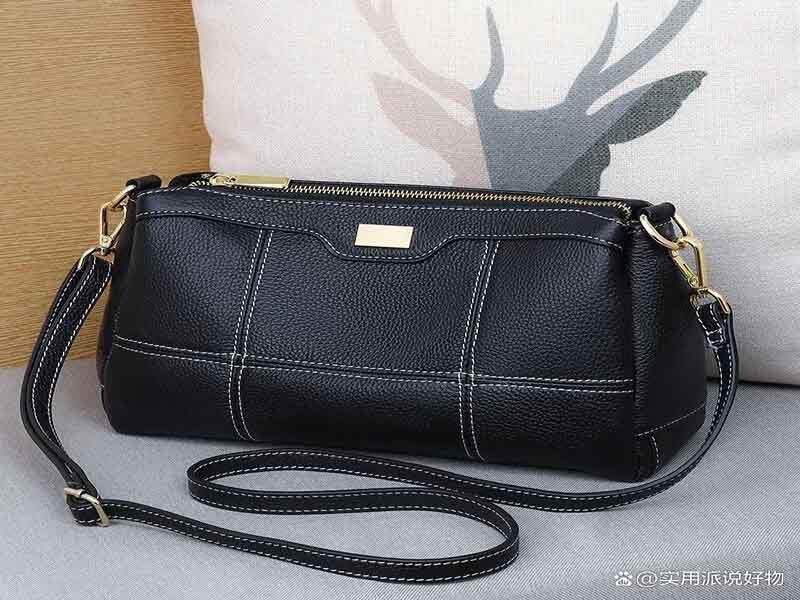
The main difference is how the strap positions the bag on the body. A shoulder bag normally uses a shorter strap and hangs from one shoulder, usually beside the torso or directly under the arm. A crossbody bag uses a longer strap that travels diagonally across the torso and positions the bag on the opposite side of the body. That change affects stability, access, capacity, perceived security, strap loading and the entire visual proportion of the product.
For designers and product developers, this means that a shoulder bag should not simply become a crossbody bag by attaching a longer strap.
The pattern may be identical, but the user experience will not be.
A shoulder bag tends to hang more vertically from one point or one side of the upper body. A crossbody bag is constrained by a strap running across the torso, which changes how the product moves forward, backward and outward while walking. Strap anchor position therefore becomes especially important.
A bag that behaves beautifully as a shoulder bag can tilt forward when converted to crossbody use because its center of gravity no longer aligns with the strap attachments.
That is why convertible designs need to be worn and tested in every intended configuration.
What Makes a Shoulder Bag Different?
A traditional shoulder bag is defined less by its exact shape than by its carrying position.
The strap usually sits on one shoulder while the bag rests near the side of the torso, under the arm or around the upper hip. Fashion-focused versions can sit extremely close beneath the arm, while larger everyday shoulder bags may hang lower.
This architecture gives the shoulder bag an immediate practical advantage: access.
The user can often slide the bag forward, open the zipper or flap and retrieve an item without removing the strap. With some short under-arm designs, the opening is already positioned almost directly beneath the hand.
That makes shoulder bags attractive for daily situations involving frequent access to a phone, wallet, keys, cosmetics or transit card.
The structure also allows considerable variation in size.
Traditional fashion shoulder bags can be compact, but the category is expanding. Vogue’s Fall 2026 reporting notes the emergence of larger “super shoulder bags” that maintain a close shoulder position while increasing practical carrying space.
From a product-development perspective, shoulder bags typically create several recurring design priorities.
The strap needs enough grip or geometry to remain on the shoulder.
The opening needs to remain accessible beneath the arm.
The side of the bag contacting the body should not contain uncomfortable protruding hardware.
The overall width and gusset depth need to work with the customer’s arm movement.
The strap attachment must withstand concentrated unilateral loading.
That last issue becomes increasingly important as capacity increases.
A tiny shoulder bag containing a phone and cardholder imposes relatively little demand on its attachment points. A large fashion shoulder bag carrying a laptop, water bottle, cosmetics and charger creates a very different load.
The visual trend toward larger shoulder bags therefore has engineering consequences.
| Shoulder Bag Variable | Fashion-Led Design | Everyday Design | Large Carry Design |
|---|---|---|---|
| Typical body position | High under arm | Side of torso | Lower side of torso |
| Strap direction | One shoulder | One shoulder | One shoulder |
| Access speed | Very high | High | High |
| Capacity | Small | Medium | Medium to large |
| Strap width priority | Visual proportion | Comfort balance | Load distribution |
| Reinforcement need | Low to moderate | Moderate | High |
| Main risk | Strap slipping | Uneven loading | Excess shoulder pressure |
| Best feature | Clean silhouette | Easy access | Capacity |
These are design tendencies rather than industry standards. A soft oversized bag and a rigid mini shoulder bag obviously require very different engineering.
Material changes the equation as well.
A cotton canvas shoulder bag may naturally grip clothing better than a very smooth coated nylon strap. A dense webbing strap may hold its position differently from a soft self-fabric strap. A padded neoprene section may increase comfort but add visual volume.
This is why Szoneier evaluates the strap material together with the finished construction rather than assuming that strap length alone determines how a shoulder bag will behave.
What Defines a Crossbody Bag?
A crossbody bag uses a strap long enough to travel from one shoulder diagonally across the torso, placing the bag on or near the opposite hip. The diagonal route is the defining functional difference.
That strap position changes the relationship between body and bag.
A conventional shoulder bag can slide off the shoulder when the wearer bends, runs or moves quickly. A properly adjusted crossbody strap is physically constrained by the torso, so the product generally remains more stable during movement.
That makes the category particularly attractive for commuting, sightseeing, shopping, festivals, airports and other situations where the user wants both hands available.
But crossbody stability is not automatic.
If the strap is too long, the bag can bounce against the hip.
If the strap is too short, it can pull across the neck or chest.
If the bag is too heavy, diagonal carriage can still produce pressure and discomfort.
If the strap anchors are positioned badly, the entire bag can rotate outward.
A well-designed crossbody bag therefore depends heavily on geometry.
The strap needs to be long enough for different bodies and clothing layers. The adjustment range should allow users to position the bag higher for security or lower for styling. Hardware should remain accessible. Strap edges should not feel sharp against the neck.
The bag body also needs to remain reasonably close to the wearer.
Depth becomes important here.
A crossbody bag with a 4–6 cm gusset can sit relatively flat. Increase the depth to 12–15 cm and the same design projects much farther away from the torso. That can increase capacity, but it can also cause more swinging and make the bag feel bulky in crowds.
This is one reason many successful crossbody designs use relatively compact depth even when their front dimensions are generous.
| Crossbody Design Factor | Lower Setting | Higher Setting | User Effect |
|---|---|---|---|
| Strap length | Bag sits high | Bag sits low | Changes access and movement |
| Strap width | Slim appearance | Wider surface | Changes pressure distribution |
| Gusset depth | Flatter profile | More volume | Changes stability |
| Bag weight | Easier movement | Greater load | Changes comfort |
| Anchor spacing | More rotation possible | More stable geometry | Changes bag orientation |
| Strap adjustment | Limited | Wide range | Changes body-size compatibility |
A crossbody bag is therefore not merely a shoulder bag with extra strap length. Its proportions should be designed around diagonal carriage from the beginning.
For custom production, Szoneier can also develop dual-purpose formats using removable snap hooks, D-rings or additional attachment points. But the sample should always be reviewed in both shoulder and crossbody configurations before the design is released.
Convertible claims are easy to put in a product description.
Making both carrying modes genuinely comfortable is harder.
How Do Strap Lengths Change the Carry?
Strap length changes where the bag sits and therefore changes comfort, access, security and visual proportion.
In a short shoulder configuration, the bag is held relatively high and close to the torso. That generally reduces swinging and creates a clean fashion silhouette.
As the strap becomes longer, the bag drops toward the hip. The user gains more room between the arm and bag, but the product also has more freedom to move.
Cross the strap diagonally over the torso and the movement changes again.
The exact required strap length cannot be selected from a single universal chart because body height, shoulder width, chest circumference, outerwear thickness, bag dimensions and desired position all matter.
The most useful specification is often an adjustable range rather than one fixed length.
These are practical development ranges, not formal industry standards:
| Carry Configuration | Approximate Strap Length | Typical Bag Position | Design Focus |
|---|---|---|---|
| Short shoulder | 40–60 cm | Under arm | Compact fashion styling |
| Regular shoulder | 55–80 cm | Upper torso to waist | Everyday access |
| Long shoulder | 75–100 cm | Around hip | Relaxed styling |
| Compact crossbody | 95–120 cm | High hip | Security and close fit |
| Standard adjustable crossbody | 105–140 cm | Waist to hip | Broad fit range |
| Extended crossbody | 120–160 cm | Lower hip | Layering and larger bodies |
Finished strap drop and total strap length are not interchangeable measurements.
A 110 cm strap fitted to a wide bag may produce a different drop from the same strap fitted to a narrow bag because the distance between attachment points changes the effective geometry.
Hardware consumes length as well.
Snap hooks, D-rings, adjusters and folded attachment sections all influence the final usable range.
This is why development teams should specify how the measurement is taken.
For example, “120 cm maximum strap length” is incomplete unless everyone knows whether that dimension includes the hooks and whether it is measured from end to end under tension.
Adjusters also need sufficient tail length.
A strap may technically adjust from 80 cm to 130 cm, but if shortening it to 80 cm leaves an awkward 50 cm loose tail hanging from the bag, the usable range is not nearly as elegant as the specification suggests.
For fashion products, strap adjustment needs to look intentional at both extremes.
How Do Their Shapes and Capacities Differ?
Shoulder bags generally tolerate greater capacity more naturally than many crossbody designs because the category can expand upward and outward while remaining visually familiar.
Crossbody bags can also be large, but increasing volume creates additional movement and pressure because the bag is tethered diagonally against the body.
That does not mean shoulder bags are always larger.
Mini shoulder bags can be smaller than many phone-sized crossbody bags.
The difference is that each category responds differently when dimensions increase.
A large shoulder bag can evolve toward a hobo, carryall or tote-like silhouette.
A large crossbody bag begins to resemble a messenger or satchel and normally needs a wider strap, stronger attachment and more deliberate load management.
Current fashion trends make this distinction especially interesting. Summer and Fall 2026 runway reporting has emphasized increasingly roomy bags, including enlarged shoulder formats designed around modern everyday carrying needs.
For brands, the question should therefore be “what needs to fit?” before “how big should the bag be?”
A practical comparison might look like this:
| Use Case | Shoulder Bag | Crossbody Bag | Better Starting Direction |
|---|---|---|---|
| Phone + cards + keys | Excellent | Excellent | Either |
| Cosmetics + wallet + sunglasses | Excellent | Excellent | Either |
| Daily commuting essentials | Excellent | Good | Shoulder |
| Tablet | Excellent | Good if reinforced | Shoulder |
| Laptop | Possible in large formats | Less common | Shoulder |
| Passport + phone while traveling | Good | Excellent | Crossbody |
| Camera or compact electronics | Good | Excellent with padding | Crossbody |
| Frequent shopping movement | Good | Excellent | Crossbody |
| Quick office access | Excellent | Good | Shoulder |
| Minimal evening styling | Excellent | Good | Shoulder |
Capacity should be measured through usable volume, not simply external dimensions.
Consider two bags that are each 28 cm wide.
One is a rectangular shoulder bag with an 11 cm gusset.
The other is a crescent crossbody bag with a narrow base and strongly curved upper seam.
The rectangular bag may provide significantly more usable interior space even though both products have the same listed width.
Pockets change usable space as well.
A thick divider can make organization easier but reduce capacity. Foam padding protects electronics but consumes interior dimensions. A deeply inset zipper can reduce access to the top corners.
This is why physical load testing during sampling is so useful.
Put the actual intended items inside.
If the product is marketed as an everyday shoulder bag, test a phone, wallet, cosmetics case, sunglasses, charger, keys and bottle.
If it is designed as a travel crossbody, test a passport, phone, power bank, cable, wallet and travel documents.
The customer will perform that test eventually.
It is much cheaper for the development team to perform it first.
Are Shoulder and Crossbody Categories Becoming Less Separate?
Yes, particularly in fashion.
Detachable straps, multiple D-rings and adjustable webbing allow many contemporary bags to move between shoulder and crossbody configurations. Current fashion examples such as Coach’s Tabby family illustrate this broader demand for carrying versatility, with detachable straps used to support different wearing modes.
This can be commercially attractive because one SKU delivers more styling options.
But convertible design introduces another layer of engineering.
A shoulder strap attachment may look elegant when the bag is worn high but cause the body to tilt when a longer crossbody strap is clipped into the same rings.
Additional anchors can solve the geometry problem but add hardware and complexity.
Removable straps create another question: where does the customer store the unused strap?
A thin shoulder strap and wide crossbody strap may deliver the best individual experiences, but two straps increase material, hardware, packaging volume and cost.
A single adjustable strap simplifies the BOM but may involve visual compromises.
Brands therefore need to decide whether convertibility is a genuine customer benefit or merely another feature to list online.
A strong convertible bag feels deliberate in both modes.
A weak one feels excellent in one mode and technically possible in the other.
That difference is worth discovering during sampling.
Which Bag Is More Comfortable to Carry?

A crossbody bag often provides better stability and can reduce some of the postural impact associated with carrying a load entirely on one shoulder, but it is not automatically more comfortable. Comfort depends on bag weight, strap width, strap position, duration and fit. A lightweight shoulder bag can be extremely comfortable for short everyday use, while an overloaded crossbody can create neck, shoulder or torso pressure. The most comfortable design keeps the load reasonable, positions it close to the body and uses a strap appropriate to the weight.
There is useful research behind part of this distinction, although it needs to be interpreted carefully.
A randomized study involving 21 healthy young adults compared same-side and cross-body carriage using a load equivalent to 15% of body weight and found significantly less impact on spinal posture from cross-body carriage than same-side carriage. Another study evaluating shoulder bags at 15% of body weight found that unilateral carriage produced asymmetrical postural adaptations.
Those findings are informative, but they should not be turned into exaggerated claims about ordinary handbags.
Fifteen percent of body weight is substantial. For a 60 kg person, that would equal 9 kg—far heavier than most everyday fashion bags. The studies tell us something important about asymmetrical load behavior, but they do not prove that every crossbody bag is “healthy” or every shoulder bag is “bad for posture.”
Product design still matters enormously.
How Does Weight Distribution Differ?
A traditional shoulder bag concentrates its load through one strap onto one side of the body.
The body naturally responds to that load.
Depending on weight and position, the wearer may elevate the loaded shoulder, shift the torso or make other compensatory adjustments. Research into unilateral bag carriage has observed asymmetrical changes in posture and muscle activity under relatively heavy experimental loads.
A crossbody bag changes the force path.
The strap runs from one shoulder toward the opposite side of the torso, while the bag usually rests around the opposite hip. This diagonal arrangement can provide greater stability and reduce the tendency for the strap simply to slide off.
The user may therefore feel that the load is more securely connected to the body.
But the entire bag still ultimately has mass.
Crossbody geometry does not make 5 kg become 2 kg.
A heavy bag can still create pressure where the strap passes over the shoulder or neck. If the product swings during walking, the user also has to control that movement repeatedly.
Bag position matters almost as much as category.
A crossbody bag sitting close against the upper hip generally moves less than the same bag hanging loosely around the lower thigh.
The closer the mass stays to the body, the less dramatic the pendulum effect tends to feel during normal movement.
This produces several useful design principles.
| Comfort Variable | Shoulder Bag | Crossbody Bag | Design Implication |
|---|---|---|---|
| Load path | One shoulder | Diagonal across torso | Crossbody usually feels more anchored |
| Strap retention | Can slip | More constrained | Crossbody better for active movement |
| Quick removal | Very easy | Slightly slower | Shoulder better for frequent on/off use |
| Bag movement | Low if held under arm | Depends on strap length | Crossbody length requires tuning |
| Pressure point | Top of one shoulder | Shoulder + diagonal strap contact | Wider straps can help |
| Heavy-load suitability | Limited by one-side pressure | Better stability, not unlimited comfort | Control capacity and weight |
| Active walking | Moderate | Strong | Crossbody often preferred |
| Formal posture/styling | Strong | More casual/functional | Shoulder often preferred |
There is another factor brands sometimes overlook: what customers put in the bag changes after they own it.
Make a bag larger and people tend to use the extra space.
A product-development team might design a spacious shoulder bag expecting a 2 kg load. Customers discover that it also holds a laptop, bottle, charger, cosmetics and book, and suddenly the practical load is much greater.
Capacity therefore creates responsibility.
If the bag looks capable of carrying more, strap width, attachment strength and reinforcement should be designed accordingly.
Which Strap Width Feels More Comfortable?
For the same load, increasing the contact area of the strap can reduce how concentrated the pressure feels on the shoulder.
That is why heavy travel bags rarely use delicate 8 mm fashion straps.
But wider is not automatically better.
A 60 mm utility strap on a tiny evening crossbody may be physically comfortable and visually ridiculous.
The correct width balances expected load, body contact and design language.
A useful development framework is:
| Strap Width | Typical Visual Character | Practical Load Direction | Key Consideration |
|---|---|---|---|
| 8–15 mm | Delicate, dressy | Very light | Can create concentrated pressure |
| 15–25 mm | Refined fashion | Light | Good for compact bags |
| 25–35 mm | Balanced everyday | Light to moderate | Versatile |
| 35–50 mm | Casual/technical | Moderate | Better load distribution |
| 50–70 mm | Utility/travel | Moderate to heavier | Comfort prioritized |
| 70 mm+ | Statement or equipment-led | Specialized | Can restrict neck movement |
These ranges are development references rather than formal performance standards.
Strap material matters just as much as width.
A soft 30 mm woven nylon strap may feel more comfortable than a rigid 40 mm coated strap with sharp edges.
A cotton webbing strap can feel pleasant against casual clothing but may absorb moisture differently.
A padded neoprene section can increase softness, although too much foam makes the strap bulky.
A self-fabric canvas strap can visually integrate beautifully with the bag but may require internal webbing or backing for strength.
Edge treatment deserves attention too.
A strap may have enough width but still feel uncomfortable if stiff piping, rough stitching or a hard folded edge sits directly against the neck.
This becomes particularly important for crossbody bags because the strap may contact the neck depending on body shape and adjustment.
Szoneier can therefore prototype different strap constructions using materials such as cotton webbing, polyester webbing, nylon webbing, padded textile structures, neoprene sections or self-fabric straps before finalizing the production specification.
The goal is not simply to pass a strength test.
The customer has to want to wear it.
Is a Crossbody Better for All-Day Wear?
Often, but not always.
A properly fitted crossbody bag is particularly useful when the wearer walks for long periods because the product remains connected to the body without requiring constant shoulder adjustment.
That is why the category is so common for sightseeing, commuting, shopping and events.
Hands remain free.
The strap is less likely to slip off.
The bag can often be positioned toward the front when entering a crowded environment.
Yet all-day comfort can deteriorate quickly if the bag is overloaded.
Imagine a crossbody designed to carry a phone, wallet, sunglasses and small power bank. That might produce a finished loaded weight around 1–1.5 kg depending on materials and belongings.
Now add a 750 ml water bottle, tablet, camera, cosmetics pouch and charger.
The category name is unchanged.
The ergonomic problem is completely different.
Crossbody straps can also rub against clothing or the neck during repetitive walking. On hot days, a broad strap across the torso can feel warm. Against delicate garments, certain webbing textures may cause surface abrasion.
For all-day wear, comfort should therefore be evaluated as a system.
Bag weight.
Contents.
Strap width.
Strap material.
Strap length.
Bag position.
Clothing.
Walking duration.
There is no single magic strap measurement that solves all eight.
Product sampling can nevertheless simulate realistic use. Instead of approving the bag while it contains lightweight tissue paper, the development team can load it with representative contents and wear it while walking.
After twenty or thirty minutes, problems become easier to notice.
Does the strap creep toward the neck?
Does the hardware press into the chest?
Does the bag bounce?
Does the buckle sit directly on top of the shoulder?
Does the zipper pull rub against the hip?
Small changes in attachment angle or adjuster position can substantially improve the experience.
That is the kind of correction a product photograph will never reveal.
How Does Bag Weight Affect Comfort?
Empty bag weight establishes the starting point before the customer adds anything.
That makes material selection surprisingly important.
A lightweight nylon crossbody shell, polyester lining and modest hardware package can produce a very light finished product.
A heavy cotton canvas body, thick lining, foam reinforcement, large metal components and substantial zipper can make a bag of similar size weigh considerably more before anything is placed inside it.
Neither approach is wrong.
The heavier product may intentionally communicate substance and durability.
But weight needs to align with purpose.
A compact travel crossbody should probably not consume a large portion of its comfortable carrying weight through decorative hardware alone.
A substantial fashion shoulder bag may justify heavier construction because handfeel and shape are central to the design.
Product teams can think about weight through three layers:
| Weight Layer | Examples | Can It Be Optimized? |
|---|---|---|
| Shell weight | Canvas, nylon, polyester, neoprene | Yes, through material specification |
| Construction weight | Lining, foam, reinforcement | Yes, selectively |
| Component weight | Zippers, buckles, hooks, logos | Yes, through design/material |
| Customer load | Phone, wallet, laptop, bottle | Not directly |
| Perceived weight | Strap pressure and bag balance | Yes, through geometry |
Perceived weight is particularly interesting.
Two bags can weigh exactly the same on a scale and feel very different when worn.
A narrow strap concentrates pressure.
A wider strap spreads it.
A bag that swings feels more demanding than one that stays close to the body.
A poorly balanced bag may require the wearer to hold it with one hand, defeating the reason for choosing a shoulder or crossbody configuration in the first place.
This is why weighing the finished sample is useful but insufficient.
The bag needs to be worn.
Which Style Fits Different Body Types?
Neither shoulder nor crossbody bags belong to one specific body type, and rigid rules such as “short people should never wear large bags” are mostly styling shortcuts rather than engineering principles.
What genuinely changes from person to person is fit.
A fixed 115 cm crossbody strap may position a bag perfectly on one wearer and awkwardly high on another.
Chest circumference, shoulder width, torso length and clothing thickness all influence the effective position.
Seasonality compounds the issue.
A crossbody developed and fitted over a thin T-shirt may need substantially more adjustment range when worn over a winter coat.
Shoulder bags face a different fit problem.
A very short strap drop may work well on a narrow sleeveless garment but feel cramped over a structured jacket.
The available space between strap and bag body must accommodate both the arm and clothing.
Brands planning broad customer reach should therefore build useful adjustability into the design rather than trying to define an “average body” too narrowly.
For crossbody bags, that often means a generous but controlled adjustment range.
For shoulder bags, it may mean evaluating strap drop across several body sizes or providing multiple attachment positions.
Convertible straps can extend this flexibility further.
However, extended sizing introduces hardware and visual considerations.
A longer strap requires additional material.
A greater adjustment range can create a longer loose tail.
Larger adjusters may look disproportionate on a small fashion bag.
The engineering challenge is to increase fit range without making the strap look like equipment.
Which Is More Comfortable in Real Life?
For very light loads and frequent access, many users will find a shoulder bag extremely convenient.
For active movement and longer periods of walking, a properly fitted crossbody often has the advantage because it stays more securely connected to the body.
For heavier loads, neither is ideal indefinitely. Load should be controlled, straps widened appropriately and customers should avoid treating fashion bags as unlimited carrying systems.
The scientific evidence supports being cautious about prolonged asymmetrical loading rather than declaring one fashionable bag universally ergonomic. Studies using relatively heavy test loads have observed asymmetrical postural or muscular responses with one-sided carriage, while cross-body carriage has shown less postural impact than same-side carriage in one controlled comparison.
The useful product-development lesson is not “crossbody wins.”
It is that carrying geometry matters.
A fashion brand can use that insight constructively.
If the bag is intended for all-day city travel, build around a light shell, controlled capacity, sufficiently broad adjustable strap and secure close-to-body position.
If it is intended for quick everyday access and office styling, a shorter shoulder configuration may create a much better experience.
If customers are likely to want both, develop a convertible system and test both modes properly.
The strongest bag is not the one that performs best in an abstract comparison.
It is the one whose construction matches the day its customer is going to have.
Which Bag Is Better for Everyday Use?
For everyday use, shoulder bags usually offer faster access and greater freedom in size, while crossbody bags provide better hands-free stability during walking, commuting and shopping. The better choice depends on what the customer carries, how often the bag is opened, how long it stays on the body and how active the day is. A fashion-focused commuter may prefer a roomy shoulder bag that fits a tablet and bottle; someone moving between trains, shops and city streets may find a compact crossbody more convenient. The strongest everyday bag is therefore designed around a routine rather than around a category name.
This is an important product-development distinction. “Everyday bag” sounds like one market segment, but everyday life varies enormously.
One customer spends most of the day moving between a car, office and restaurant. Another stands on public transport for an hour each morning. Another walks several kilometers through a city. Another needs to carry children’s items while keeping both hands available. Another mainly wants a bag large enough for cosmetics, phone and wallet without looking like a travel accessory.
The same bag cannot optimize every scenario equally well.
A useful starting point is to map the customer’s day before developing the product.
| Everyday Situation | Shoulder Bag | Crossbody Bag | Main Design Priority |
|---|---|---|---|
| Office commute | Excellent | Good | Capacity and polished appearance |
| Public transport | Good | Excellent | Stability and secure access |
| Shopping | Good | Excellent | Hands-free movement |
| Short errands | Excellent | Excellent | Quick access |
| Café and social use | Excellent | Good | Styling and easy removal |
| Cycling or active movement | Limited | Strong | Close-to-body stability |
| Carrying tablet/notebook | Strong | Moderate | Capacity and strap strength |
| Frequent phone access | Excellent | Strong | Opening and pocket position |
| Parenting/day out | Good | Excellent | Hands-free use |
| Evening use | Strong | Good | Compact proportion |
This table should not be interpreted as a fixed rule. A wide, stable crossbody can work very well for office commuting, while a small under-arm shoulder bag can be extremely practical on public transport if it remains closely controlled by the wearer.
The more useful lesson is that bag architecture should follow activity.
Which Bag Works Better for Commuting?
For commuting, the answer depends heavily on transportation method.
A customer driving to work may prioritize appearance and capacity. The bag is carried from house to car, car to office and perhaps to lunch. A medium or large shoulder bag can work extremely well because the user gets fast access to a phone, wallet, access card and other essentials without needing the restraint of a crossbody strap.
Public transportation changes the problem.
Someone standing on a crowded train may need one hand for a rail and the other for a phone. A crossbody bag allows the product to remain attached to the body without being actively held.
The user can also rotate a compact crossbody toward the front of the torso when entering a crowded space.
This does not automatically make every crossbody better for commuting. Capacity can become a limitation.
Once the customer needs to carry a tablet, notebook, lunch container, bottle, charger and cosmetics, a small crossbody becomes overloaded quickly.
Making the crossbody larger solves capacity but introduces other issues:
greater swinging mass
more strap pressure
greater projection from the body
more reinforcement
larger hardware
higher empty weight
At some point, a shoulder bag, tote or backpack may become the more rational carrying system.
Brands should therefore identify the intended commuter load before determining dimensions.
A useful design exercise is to build a physical “commuter load kit.”
For example:
smartphone
wallet
keys
earbuds
charger
power bank
small cosmetics pouch
500–750 ml bottle
A5 notebook
compact umbrella
tablet
Then decide which items the target customer realistically carries.
This makes capacity measurable.
Suppose a proposed crossbody comfortably fits everything except the bottle. Increasing the bag width by 30 mm may not solve the problem if the gusset remains too shallow. Increasing depth may solve it, but then the product could project awkwardly from the hip.
Product development is full of these trade-offs.
The solution might instead be to position the bag as a lighter commuter model and leave larger loads to another SKU.
That is often smarter than forcing one product to carry everything.
Which Is Better for Work and Shopping?
For work, shoulder bags often have an advantage because larger rectangular or east-west silhouettes accommodate documents, tablets and work accessories more naturally.
For shopping, crossbody bags often gain the advantage because they leave both hands free.
But customers do not live in cleanly separated use cases.
A person may commute to work, stop at a supermarket, collect a parcel and meet friends without changing bags.
That creates an opportunity for hybrid design.
A medium shoulder bag can use a detachable longer strap so customers can switch to crossbody wear when needed.
Alternatively, a crossbody can be designed with a short grab or shoulder handle for moments when quick carrying is more convenient.
The decision should consider how frequently each configuration will actually be used.
| Requirement | Shoulder Bag Advantage | Crossbody Advantage |
|---|---|---|
| Laptop/tablet capacity | Strong | Moderate |
| Formal office styling | Strong | Moderate |
| Quick desk-to-meeting movement | Strong | Good |
| Hands-free shopping | Moderate | Strong |
| Handling multiple shopping bags | Moderate | Strong |
| Fast wallet access | Strong | Strong |
| Removing bag frequently | Strong | Moderate |
| Long city walking | Moderate | Strong |
| Large daily load | Strong | Moderate |
| Close-body control | Moderate | Strong |
A work-oriented shoulder bag also needs to consider how it sits when placed down.
This may sound minor, but office users frequently put bags beside chairs, under desks and on meeting-room floors.
A structured or semi-structured base helps the product remain upright.
A highly slouchy shoulder bag may collapse and make contents harder to find.
Crossbody bags, particularly compact versions, are less dependent on standing independently because they are often worn for longer periods.
That difference can influence reinforcement strategy.
For a shoulder work bag, Szoneier may use a combination of suitable canvas, Oxford fabric, polyester or nylon with localized backing around the base, upper opening and strap attachments.
For a crossbody intended for shopping or city movement, the priority may instead be low weight, flexible body structure and reinforcement concentrated around strap anchors and zipper areas.
The same material family can therefore be engineered very differently depending on use.
How Much Capacity Do You Need?
Capacity should be designed around objects rather than vague size categories.
Terms such as mini, small, medium and large are useful for merchandising but not precise enough for development.
A “small” crossbody might hold a phone and cardholder.
Another brand’s “small” model could fit a 500 ml bottle.
Both descriptions can technically be true.
Useful internal dimensions and opening geometry matter more.
A practical capacity framework for early product planning can look like this:
| Product Direction | Typical Contents | Approximate Useful Capacity Direction |
|---|---|---|
| Micro/occasion | Cards, key, lipstick | Very low |
| Phone crossbody | Phone, cards, key | Low |
| Compact everyday | Phone, wallet, sunglasses, cosmetics | Low to medium |
| Standard everyday | Above + charger, small bottle | Medium |
| Large shoulder | Above + notebook/tablet | Medium to high |
| Work shoulder | Tablet/laptop, documents, daily items | High |
These are design categories rather than standardized liter measurements.
For soft fashion bags, theoretical volume can also be misleading because the silhouette changes when loaded.
A crescent bag may have generous width but narrow sharply toward each end.
A tapered shoulder bag may lose capacity near the top.
A thick lining or padded wall can consume several millimeters of internal space on every side.
Pockets consume volume too.
A flat internal pocket costs very little space when empty.
A padded tablet sleeve can take a noticeable portion of the usable compartment.
An external bellows pocket may add capacity without occupying the central interior.
That is why capacity planning should happen together with pocket development.
Brands also need to decide whether the bag should visually change when filled.
A slouchy shoulder bag may be designed to expand and develop shape around the contents.
A clean structured crossbody should probably retain most of its intended geometry.
The latter generally requires more control around material stretch and internal reinforcement.
Increasing capacity therefore changes more than dimensions.
It can change the engineering philosophy of the bag.
Which Bag Gives Faster Access?
Shoulder bags generally provide the fastest access because the opening naturally sits close to the user’s hand and can often be reached without moving the bag significantly.
This is one of the category’s biggest everyday advantages.
A short shoulder bag can remain under the arm while the user opens a zipper.
A medium shoulder bag can be pulled slightly forward, opened and returned to position quickly.
Crossbody bags can also provide excellent access, particularly when worn toward the front or rotated from the hip.
The difference is that the diagonal strap limits how far the bag can move without changing strap tension.
Closure selection becomes critical.
Consider four versions of the same compact everyday bag:
open top
magnetic flap
single top zipper
zipper plus flap
Each produces a different balance between speed and security.
| Closure | Access Speed | Security | Best Everyday Use |
|---|---|---|---|
| Open top | Very high | Low | Low-risk casual use |
| Magnetic snap | Very high | Moderate | Fashion/everyday |
| Top zipper | High | High | Commuting |
| Flap + magnet | High | Moderate to high | Fashion crossbody |
| Flap + zipper | Moderate | Very high | Travel |
| Turn lock | Moderate | High | Structured fashion |
| Drawcord | Moderate | Moderate | Casual styles |
More security is not always better.
A customer who needs to unlock a clasp, lift a flap and open a zipper every time she checks her phone may eventually find the product annoying.
Conversely, a completely open shoulder bag may provide excellent access but be inappropriate for commuting in crowded environments.
A good design establishes a hierarchy.
Frequently used items can go in a convenient but controlled pocket.
Valuable items can sit deeper behind a secure closure.
For example, an everyday crossbody might use:
one main zip compartment
one external quick-access phone pocket
one internal zipper pocket for valuables
one small slip pocket
This often provides better usability than five equally secure compartments.
Designers sometimes add pockets because organization sounds like value.
Customers experience value only when those pockets correspond to actual objects.
How Do Pockets Improve Daily Use?
A useful pocket answers three questions:
What goes inside it?
How often is that item used?
How secure does it need to be?
If nobody can answer those questions, the pocket may be unnecessary.
Phone pockets are a good example.
Smartphones have increased in size, and many are used with protective cases. A narrow pocket based on an older device dimension may appear perfectly acceptable in a technical drawing but fail in real life.
Pocket openings should therefore be tested with physical devices or representative dimensions.
Keys create a different problem.
They are small but can scratch screens and other items. A dedicated zipper pocket or key leash can create meaningful value.
Travel cards need frequent access and very little volume.
A flat exterior pocket may be ideal.
Wallets and passports benefit from more controlled storage.
That suggests an internal zipper compartment.
An everyday pocket architecture might be evaluated like this:
| Item | Access Frequency | Security Need | Useful Pocket Direction |
|---|---|---|---|
| Smartphone | Very high | Moderate | Exterior or easy slip pocket |
| Transit card | Very high | Moderate | Small quick-access pocket |
| Keys | High | Moderate | Zipper pocket or key clip |
| Wallet | Medium | High | Main compartment/internal zip |
| Earbuds | High | Moderate | Small slip pocket |
| Cosmetics | Medium | Low | Open interior area/pouch |
| Passport | Low during normal day | High | Secure internal pocket |
| Bottle | Medium | Low | Main compartment/elastic holder |
| Tablet | Moderate | High/protection | Padded sleeve |
Pocket location also changes how the bag hangs.
A large phone positioned in an exterior pocket on a very soft shoulder bag may pull one panel outward.
A heavy wallet placed against the front of a shallow crossbody can cause the product to tilt.
Sometimes the solution is not adding reinforcement.
Moving the pocket closer to the body-facing panel can improve balance more efficiently.
This type of change costs almost nothing once incorporated into the pattern but can substantially improve everyday use.
That is exactly why sample testing should happen before a production order is finalized.
What Makes an Everyday Bag Feel Easy to Use?
Ease comes from small decisions that customers rarely describe in product reviews unless they go wrong.
The zipper opens from the direction the hand expects.
The phone pocket is deep enough but not so deep that the phone disappears.
The strap adjuster stays where it is set.
The hardware does not rotate.
The lining does not pull out with the wallet.
The bag opening remains wide enough after the product is filled.
The shoulder strap does not constantly slide.
The crossbody does not bounce against the hip.
Good bag design removes friction.
A useful usability test can therefore ask a person unfamiliar with the sample to perform simple tasks:
Put the bag on.
Adjust the strap.
Insert a phone.
Insert a wallet.
Add normal daily contents.
Walk around.
Remove the phone.
Open the main compartment.
Find the keys.
Close the bag.
Remove it.
The observer should resist explaining how the product works.
If the test user repeatedly needs instructions, the design may be less intuitive than the development team believes.
This type of informal user test does not replace technical inspection, but it reveals behavioral problems exceptionally well.
Szoneier can use this practical feedback during sampling to adjust dimensions, openings, pocket placement, strap length and reinforcement before the design moves toward production.
An everyday bag earns its place in a customer’s routine through hundreds of tiny interactions.
Those interactions deserve to be designed deliberately.
Which Bag Is Better for Travel and Security?

For travel, a crossbody bag is usually the stronger starting choice because it stays attached diagonally to the body, leaves both hands free and can be moved toward the front in crowded environments. A shoulder bag may provide easier access and more capacity, but its single-shoulder position makes it easier to put down, slip off or carry loosely. Security, however, depends far more on closure design, pocket placement, situational awareness and how the bag is worn than on the label “crossbody.” No bag construction can eliminate theft risk.
This last point is important because travel accessories are often marketed with exaggerated security language.
A zipper does not make a bag theft-proof.
A slash-resistant material does not make someone immune to theft.
An RFID pocket does not prevent a bag from being lost.
A crossbody strap does not replace awareness.
Current U.S. State Department travel guidance advises travelers to remain alert and notes crimes of opportunity such as purse snatching and pickpocketing in travel destinations. In some destination-specific guidance, travelers are explicitly advised to maintain physical contact with their belongings and stay alert in crowds and on public transportation.
That makes the design goal more realistic.
A good travel bag should make attentive behavior easier.
Are Crossbody Bags Safer for Travel?
Crossbody bags can offer practical security advantages because the strap passes across the torso rather than simply resting on one shoulder.
This makes the bag harder to drop accidentally and generally more difficult to remove without the wearer noticing.
The user can also position the bag toward the front of the body in a crowded train, market or queue.
These are meaningful advantages.
But “safer” should be interpreted as increased control, not guaranteed protection.
A poorly designed crossbody can still expose valuables.
For example:
an open-top crossbody worn behind the hip
a bag with an easily accessible exterior wallet pocket
a zipper opening facing outward
an excessively long strap allowing the bag to swing behind the body
a weak strap attachment
These designs technically qualify as crossbody bags but may not provide the travel advantages customers expect.
Security should therefore be built through layers.
| Security Layer | Design Choice | Benefit |
|---|---|---|
| Retention | Crossbody strap | Keeps bag connected to body |
| Position | Adjustable strap | Allows front/side carry |
| Main closure | Zipper | Controls compartment access |
| Valuable storage | Internal zipper pocket | Keeps wallet/passport deeper inside |
| Opening direction | Planned zipper orientation | Makes access more deliberate |
| Hardware | Reliable hooks and adjusters | Prevents accidental release |
| Material | Appropriate abrasion/tear performance | Supports durability |
| Visibility | Organized interior | Reduces need to expose contents |
A shoulder bag can incorporate many of these same features.
A zip-top shoulder bag carried tightly under the arm can provide good personal control.
The reason crossbody designs generally receive the travel advantage is not a magical anti-theft feature.
It is retention.
The user does not need to actively squeeze the strap onto one shoulder throughout the day.
Which Bag Keeps Your Hands Free?
Both can technically leave the hands free, but crossbody bags do so more reliably during active movement.
A shoulder bag can stay on the shoulder while walking, yet movement of the arm, a slippery garment or a crowded environment may cause the strap to slide.
Many users instinctively hold the strap or bag body with one hand.
Once that happens, the bag is no longer truly hands-free.
The diagonal crossbody configuration reduces this need.
That becomes particularly useful during travel when users may simultaneously be handling:
a suitcase
boarding pass
phone
coffee
child’s hand
shopping bag
public-transport rail
camera
The value of hands-free use therefore increases as the environment becomes more complicated.
This suggests that travel crossbodies should avoid design details that force the customer to keep adjusting the bag.
Hardware is one example.
If a strap adjuster gradually slips under load, the bag becomes lower as the day continues.
The user repeatedly pulls it upward.
A component that costs very little has just undermined the product’s core benefit.
Snap hooks are another example.
The hooks should rotate or articulate sufficiently for the intended strap geometry without constantly flipping the webbing.
Strap attachment position also matters.
Two anchor points spaced appropriately along the bag can help stabilize orientation.
A single central attachment may allow more rotation.
Material affects hands-free comfort as well.
Light nylon or polyester can reduce the empty weight of a travel crossbody. Canvas can provide more tactile grip and a lifestyle appearance but may be heavier depending on GSM. Neoprene can provide cushioning but increases thickness.
There is no universally correct travel material.
The best one depends on the product promise.
How Do Secure Closures Reduce Theft Risk?
Secure closures create additional actions between an outside person and the contents of the bag.
That does not make theft impossible, but it can reduce casual accessibility.
The simplest example is the difference between an open tote-like shoulder bag and a zipped crossbody.
The zipper creates an obvious barrier.
Add an internal zipper pocket and valuable items sit behind a second layer.
For travel use, however, closure complexity needs to remain reasonable.
A bag may become secure enough to frustrate its owner.
Imagine needing to:
release a buckle
lift a flap
open a zipper
open another zipper
every time a transit card is needed.
That is not thoughtful security.
A better strategy separates low-risk frequent-use items from higher-value belongings.
| Item | Access Need | Recommended Travel Storage |
|---|---|---|
| Transit card | Very frequent | Controlled quick-access pocket |
| Phone | Frequent | Close-body or secure exterior pocket |
| Earbuds | Frequent | Small slip/zip pocket |
| Wallet | Moderate | Main compartment/internal zip |
| Passport | Occasional | Internal secure pocket |
| Emergency cash | Rare | Hidden/deeper pocket |
| Hotel key | Moderate | Separate small pocket |
| Power bank | Moderate | Main compartment |
Zipper direction can also influence convenience.
On a crossbody designed to sit on the customer’s right hip, the development team should test whether the natural hand can reach the zipper pull and close the compartment completely.
This is why specifying “top zipper” is not enough.
Slider count and opening direction matter.
A two-way zipper may improve access on a larger bag.
A single slider can be simpler on a compact product.
Flaps create another security layer and a visual opportunity.
A magnetic flap can hide the main zipper while keeping the exterior clean.
A buckle may increase security but slow access.
A turn lock can add fashion character while requiring precise alignment.
Security features should reinforce the intended style rather than turning every travel bag into tactical equipment.
Which Style Works Better in Crowded Places?
A compact crossbody worn toward the front generally provides greater physical awareness of the bag in crowded environments.
The user can see or feel the product more easily and does not need to keep one hand on it continuously.
Official travel guidance frequently emphasizes staying aware in crowds and maintaining control of personal belongings because pickpocketing and bag-snatching are common forms of opportunity crime in many destinations.
Bag dimensions become important here.
A huge crossbody may stay attached to the wearer but still be awkward on a packed train.
It projects into other people.
It catches against seats.
Its long body can swing when the wearer turns.
Compactness therefore becomes part of security through control.
The ideal crowded-space bag is often large enough for essential valuables but small enough to remain within the wearer’s physical awareness.
A practical travel crossbody might prioritize:
phone
wallet
passport
small charger
earbuds
keys
travel documents
rather than trying to replace the carry-on suitcase.
Body-facing pockets can be useful for selected valuables.
However, manufacturers need to consider comfort.
A thick zipper slider directly against the body can create pressure.
A large passport pocket positioned behind heavy contents may also become uncomfortable.
There is always a trade-off between concealment and wearability.
Shoulder bags can still work well in crowded spaces when designed to sit high beneath the arm.
A short strap keeps the product close, and the wearer’s arm naturally covers much of the opening.
This illustrates an important point:
Crossbody is not the only way to achieve close-body control.
Bag position matters at least as much as category.
Which Bag Is Easier at Airports?
For moving through an airport, a crossbody bag can be especially convenient because important items remain accessible while both hands are available for luggage.
Travelers frequently need to handle a passport or identification, phone, boarding information and suitcase in quick succession.
A small organized crossbody gives these items a consistent location.
Security screening creates different requirements.
TSA guidance advises travelers to organize carry-on contents for screening and notes that valuables can be placed in carry-on baggage. Current TSA checklists also recommend packing large electronics where they can be readily accessed when screening requirements call for removal.
A small crossbody is excellent for personal essentials but may not be the best place for large electronics.
This suggests a two-bag travel system:
personal crossbody for immediate valuables
larger carry-on for electronics, clothing and larger items
For brands developing travel collections, the two products can be designed together.
They might share:
main fabric
lining color
custom zipper pull
webbing
hardware finish
logo system
This creates a cohesive range without asking one bag to perform every travel function.
Shoulder bags can also work well at airports, particularly if they have a wide opening and enough capacity to hold a tablet, documents and personal items.
However, large shoulder bags can become uncomfortable when paired with rolling luggage because one shoulder carries the bag while the opposite arm manages the suitcase.
A luggage pass-through can solve part of that problem for larger travel shoulder bags by allowing the product to sit on the extended suitcase handle.
That small construction detail may have more practical value than adding another decorative pocket.
How Should Travel Bags Organize Passports, Phones and Valuables?
Travel organization works best when each important object has an obvious home.
The customer should not have to empty the bag onto an airport seat to find a passport.
At the same time, the interior should not become a maze of tiny compartments.
A useful hierarchy can be built around frequency and consequence.
The phone is used constantly.
The passport is used occasionally but is difficult to replace.
Cash and cards may need separation.
A charger is useful but not usually urgent.
This suggests organizing travel storage into three zones.
Quick access
Protected access
Deep storage
| Zone | Typical Items | Design Direction |
|---|---|---|
| Quick access | Phone, transit card | Controlled exterior/upper pocket |
| Protected access | Passport, wallet | Interior zipper pocket |
| Deep storage | Charger, cable, cosmetics | Main compartment |
| Optional hidden storage | Emergency cash | Discreet internal pocket |
The lining color can improve usability too.
A completely black interior may align with the exterior but make small black objects difficult to locate.
A lighter or contrast lining can make contents easier to see.
This is a small design decision that often creates a surprisingly noticeable improvement.
Szoneier can develop custom lining colors or prints to combine usability with brand identity.
For example, a black nylon crossbody could use a muted orange or light gray lining.
The customer sees the interior more clearly, while the brand gains an additional recognizable color cue.
Do Travel Bags Need Anti-Theft Features?
Some features can provide genuine functional value, but brands should avoid turning “anti-theft” into an unsupported guarantee.
Locking zipper clips, covered openings, body-facing pockets and reinforced straps can make unwanted access more difficult.
Slash-resistant layers may be appropriate for specialized products when properly specified and tested.
RFID-blocking materials can also be incorporated where a product brief genuinely calls for them, although that solves a specific electromagnetic shielding problem rather than every form of payment or identity theft.
The strongest travel design usually begins with simpler fundamentals:
secure closure
logical pocket placement
close-to-body fit
reliable strap attachments
strong hardware
controlled bag size
durable materials
Those features improve the product every day, not only during a hypothetical theft attempt.
Brands should also be careful with language.
“Designed with secure internal storage” is a product feature.
“Theft-proof” is a much broader promise.
Unless a finished product has been designed and validated against a clearly defined performance standard, absolute claims are difficult to justify.
That distinction increases credibility.
Customers generally appreciate useful security features without needing dramatic marketing language.
Which Materials Make Sense for Travel Use?
Travel material selection should balance weight, abrasion resistance, cleanability, structure, weather exposure and appearance.
Nylon is widely used because it can provide strong performance at relatively low weight.
Polyester offers broad cost, texture, color and printing options and works particularly well for many Oxford constructions.
Canvas creates a more natural and lifestyle-oriented appearance but tends to be heavier at substantial weights and may absorb more moisture without suitable treatment.
Neoprene or laminated structures can introduce cushioning where electronics or delicate items need extra protection.
| Material Direction | Main Travel Strength | Main Trade-Off | Suitable Product |
|---|---|---|---|
| Lightweight nylon | Low weight, flexible | Can look technical | Compact crossbody |
| Dense nylon | Strong wear performance | Higher material cost | Premium travel bag |
| Polyester Oxford | Durable, versatile | Handfeel varies widely | Everyday travel |
| Coated polyester | Easier surface protection | Can become stiff | Utility crossbody |
| Cotton canvas | Natural appearance | Heavier, moisture behavior | Lifestyle travel |
| Washed canvas | Soft, casual | Less uniform structure | Casual shoulder bag |
| Neoprene | Cushioning | Bulk and heat | Electronics-focused bag |
| Laminated fabric | Structure/protection | Added weight | Organized travel design |
Finish can matter as much as fiber.
A lightweight polyester with an appropriate water-repellent treatment may suit a travel concept better than a heavier untreated material.
A highly coated nylon may resist surface moisture better but create unwanted stiffness or noise.
Brands should define which performance matters rather than asking for the most technical material available.
If the target customer is traveling between hotels and cafés, extreme outdoor specifications may add cost and weight without meaningful benefit.
If the product is intended for frequent outdoor transit, different priorities apply.
Material should follow real exposure.
Shoulder or Crossbody: What Should a Travel Brand Actually Develop?
If the primary customer need is passport, phone, wallet and hands-free movement, start with a crossbody.
If the product needs to carry a tablet, larger cosmetics kit, bottle and substantial everyday contents, a shoulder bag may provide a more natural platform.
If customers regularly need both, a convertible design can be valuable.
The strongest collection may include more than one answer.
For example:
Compact Crossbody
Designed for passport, phone, wallet and transit essentials.
Everyday Crossbody
Adds capacity for charger, sunglasses and small bottle.
Travel Shoulder Bag
Carries tablet, documents and larger personal items.
Convertible Shoulder/Crossbody
Bridges fashion and mobility through interchangeable strap configurations.
Instead of forcing one bag to satisfy every traveler, each SKU solves a clearer problem.
That also gives Szoneier more freedom to optimize materials and construction.
The compact crossbody can use lightweight nylon and narrow reinforced webbing.
The larger shoulder bag might use structured Oxford fabric with a wider strap.
The fashion-oriented convertible version could use washed canvas, customized hardware and a more refined lining.
They can still share colors, logos, zipper pulls and packaging so the range reads as one family.
That is a stronger product strategy than taking one generic bag, changing its size four times and calling the result a collection.
Travel customers notice quickly when a product was designed around movement rather than simply marketed for it.
Which Bag Is More Stylish and Versatile?
Shoulder bags generally have the advantage when a brand wants a stronger fashion silhouette, while crossbody bags usually offer greater functional versatility. Shoulder bags can sit tightly under the arm, hang in an elongated east-west shape, become oversized, slouch naturally or use structured proportions that make the bag part of the outfit. Crossbody bags are usually more constrained by the need to sit comfortably against the torso, but adjustable and detachable straps allow them to work across commuting, travel, casual and increasingly fashion-focused settings. The most versatile commercial designs often combine elements of both categories rather than treating them as opposites.
The 2026 handbag market makes that distinction particularly visible. Vogue’s Fall 2026 trend coverage highlights enlarged “super shoulder bags” that preserve the familiar under-arm position while creating substantially more capacity, including examples capable of holding laptops. Harper’s Bazaar has simultaneously identified slouchy shapes, oversized proportions, flap bags, texture and craftsmanship as important Fall/Winter 2026 directions. Fashion is therefore not simply moving toward smaller practical crossbody bags or larger shoulder bags; it is rewarding bags that combine recognizable silhouettes with useful everyday function.
That creates a useful opportunity for fashion brands. Instead of asking which category is more fashionable in isolation, they can decide what visual role the product needs to play inside the collection.
A shoulder bag can become the collection’s fashion hero.
A crossbody can become its everyday mobility product.
A convertible style can bridge the two.
The distinction helps avoid designing five products that look different but solve exactly the same customer problem.
Are Shoulder Bags More Fashionable?
Shoulder bags currently have particularly strong fashion momentum because designers can manipulate their silhouette more freely without the functional constraints created by a strap running diagonally across the body.
A shoulder bag can be extremely short and compact.
It can extend horizontally into an east-west shape.
It can become oversized.
It can be soft and slouchy.
It can use exaggerated handles, sculptural gussets or asymmetrical panels.
It can sit directly below the armpit or drop toward the hip.
That range gives designers substantial freedom to change the visual relationship between bag and outfit.
Current runway coverage reflects this flexibility. Vogue’s 2026 handbag reporting highlights both oversized shoulder-carried formats and more relaxed practical bags, while Harper’s Bazaar describes a market interested in distinctive shape, texture and craftsmanship alongside functionality.
For a manufacturer, however, runway appearance is only the beginning.
Some fashion proportions introduce real construction challenges.
Consider a wide east-west shoulder bag measuring approximately 42 cm across but only 16 cm high.
Visually, that extreme horizontal proportion may be the entire attraction.
Structurally, however, the long upper edge can become unstable. A lightweight fabric may sag between the strap anchors. A heavy zipper can pull the opening downward. A soft lining may distort the internal shape.
Possible solutions include:
localized top-edge reinforcement
a slightly heavier shell fabric
bonded backing
revised strap-anchor position
a lighter zipper construction
internal seam support
The objective is not to make the bag rigid.
The objective is to preserve the specific kind of softness the designer intended.
Oversized shoulder bags raise another issue: customers tend to fill available space.
A bag that photographs as a soft fashion accessory may eventually contain a laptop, water bottle, charger, cosmetics and notebook.
That means fashion scale becomes structural load.
The table below shows how different shoulder bag directions translate into development requirements.
| Shoulder Style | Fashion Effect | Material Need | Main Construction Risk |
|---|---|---|---|
| Short under-arm bag | Compact, polished | Stable but comfortable | Restricted arm space |
| East-west bag | Modern, elongated | Controlled top-edge behavior | Opening deformation |
| Slouchy hobo | Relaxed, tactile | Good drape | Excessive collapse |
| Oversized shoulder bag | Statement + practical | Strength without excess weight | Strap loading |
| Structured flap bag | Refined, architectural | Firm body | Warping or stiffness |
| Padded shoulder bag | Soft-volume look | Lightweight shell + padding | Bulky seams |
| Crescent shoulder bag | Curved, body-hugging | Flexible fabric | Curved seam puckering |
Fashionability therefore does not come from choosing “shoulder bag” on a product specification.
It comes from proportion.
A conventional rectangular bag with a short strap may technically be a shoulder bag while looking completely ordinary.
A recognizable fashion shoulder bag normally has one or more deliberate visual characteristics: unusual width-to-height ratio, distinct curve, oversized volume, recognizable flap, tactile surface, specific strap geometry or unusual hardware placement.
Brands developing with Szoneier can use material development to support those proportions rather than treating the fabric as decoration added afterward.
A soft 210D nylon, dense Oxford polyester and 420 GSM cotton canvas will not interpret the same pattern in the same way.
The silhouette should therefore be sampled in the intended fabric as early as possible.
Are Crossbody Bags Still in Style?
Yes. Crossbody bags remain highly relevant because their core benefit—hands-free carrying—has not disappeared, and contemporary designs increasingly integrate fashion details that move the category beyond purely practical travel bags.
The difference is that crossbody styles often evolve through proportion, material and strap treatment rather than extreme volume.
A compact crossbody can become fashion-led through:
an east-west body
a curved crescent shape
oversized hardware
contrast webbing
custom jacquard strap
padded construction
textured fabric
unusual zipper geometry
embroidered or printed surface treatment
The strap itself can become part of the design.
Traditional crossbody development sometimes treats the strap as a functional accessory added after the body is designed.
Fashion-focused crossbody products often reverse that logic.
A 50 mm jacquard strap can become a major visual feature.
A narrow self-fabric strap can create a cleaner, dressier appearance.
A detachable chain section can shift the bag toward evening use.
A padded technical strap can communicate sport or outdoor influence.
The strap may occupy more visible area than the logo, which means it deserves equal design attention.
Crossbody bags also benefit from current fashion’s broader preference for practicality. Harper’s Bazaar’s Spring 2026 handbag coverage notes that many of the season’s key designs combine everyday capacity with thoughtful functional details instead of treating practicality as something separate from fashion.
This helps explain why crossbody bags remain commercially resilient even when shoulder bags dominate particular runway stories.
Consumers may buy the dramatic shoulder silhouette they love visually and still use a crossbody frequently because it solves a different part of their life.
For a collection planner, that makes crossbody products useful anchors.
They can provide stable, year-round functionality while shoulder silhouettes absorb more seasonal fashion change.
| Fashion Variable | Shoulder Bag | Crossbody Bag |
|---|---|---|
| Silhouette freedom | Very high | High |
| Extreme sizing | Easier | More constrained |
| Strap as fashion feature | Moderate to high | Very high |
| Hands-free styling | Moderate | Excellent |
| Seasonal trend sensitivity | Higher | Moderate |
| Travel crossover | Moderate | Strong |
| Formal styling potential | Strong | Moderate |
| Casual styling potential | Strong | Strong |
| Technical-fashion potential | Strong | Very strong |
| Convertible potential | Strong | Strong |
Crossbody bags should therefore not be positioned as the “practical alternative” to fashionable shoulder bags.
That framing undersells the category.
A well-developed crossbody can carry just as much brand identity, but it expresses that identity differently.
Which Bag Works With More Outfits?
Crossbody bags generally work across more active casual situations, while shoulder bags can move more easily between casual, office, occasion and polished fashion styling. Material, scale and hardware usually matter more than the category itself.
Take a simple black bag.
A black ripstop nylon crossbody with a 50 mm webbing strap naturally reads as casual or technical.
Use the same basic dimensions with a matte woven shell, narrow strap and understated metal hardware and the product immediately becomes more refined.
Likewise, a cotton canvas shoulder bag may feel relaxed and natural.
Replace the material with a dense satin-finish textile, reduce the dimensions and add polished hardware, and the same shoulder configuration can move toward evening styling.
This means versatility can be engineered.
Brands should decide whether they want versatility through neutral design or through physical transformation.
Neutral design uses a restrained combination of silhouette, color and hardware that works across multiple outfits.
Transformational versatility uses removable straps, reversible construction, adjustable shape or interchangeable accessories.
Both approaches can work.
They have different manufacturing consequences.
| Versatility Strategy | Design Method | Benefit | Manufacturing Effect |
|---|---|---|---|
| Neutral color | Black, beige, navy, olive | Easy outfit matching | Minimal complexity |
| Clean silhouette | Reduced visual detail | Broad styling range | Often simpler |
| Removable strap | Snap hooks/D-rings | Multiple carry modes | Added hardware |
| Adjustable strap | Slider/buckle | Different body positions | Added components |
| Two strap options | Short + long | Strong fashion flexibility | Higher BOM/cost |
| Reversible body | Dual-face construction | Two visual looks | Complex sewing |
| Detachable pouch | Modular storage | Functional flexibility | Additional component |
| Changeable charms | Removable decoration | Seasonal refresh | Extra sourcing |
A brand targeting a broad lifestyle customer may prefer a neutral shoulder/crossbody convertible design.
A trend-driven fashion label may deliberately sacrifice some versatility for a distinctive silhouette.
That can be commercially rational.
Not every product needs to work with every outfit.
Sometimes recognizability is more valuable than neutrality.
A bright oversized shoulder bag may be harder to coordinate but far more memorable.
A technical crossbody with bold webbing may not work for a formal dinner, but that may not matter if its intended customer wears outdoor-inspired streetwear.
The correct decision comes back to positioning.
Versatility should be measured against the target customer’s wardrobe rather than an imaginary universal consumer.
How Do Bag Sizes Change the Look?
Size changes both fashion proportion and functional expectation.
A mini shoulder bag reads differently from the same silhouette enlarged to 40 cm.
The mini version may function almost like jewelry.
The larger version becomes part fashion accessory, part carrying equipment.
The same effect applies to crossbody bags.
A tiny phone crossbody feels light and minimal.
A 35 cm crossbody begins moving toward a messenger-bag visual language, particularly if the strap becomes wider to accommodate the additional load.
Current 2026 fashion strongly demonstrates how scale can transform familiar bag categories. Vogue notes that designers have enlarged traditional shoulder bags while retaining a snug under-arm position, and Summer 2026 coverage also points toward highly roomy, functional bag proportions.
Scale therefore becomes a design tool.
| Size Direction | Shoulder Bag Effect | Crossbody Effect |
|---|---|---|
| Micro | Decorative, occasion-led | Minimal phone/card carrier |
| Small | Fashion-focused | Compact daily essential |
| Medium | Everyday fashion | Most versatile crossbody |
| Large | Strong statement + capacity | Messenger-like |
| Oversized | Runway/commuter hybrid | Can become cumbersome |
Changing scale should never be done through uniform mathematical enlargement alone.
Suppose a 24 cm-wide crossbody uses a 20 mm strap.
If the body is enlarged to 38 cm and the bag is expected to hold considerably more weight, simply increasing every dimension by 58 percent may produce an awkward strap width, oversized zipper pulls and unnecessarily large logo.
Each component has its own visual and functional scaling curve.
Strap width usually increases with load, but not necessarily at the same percentage as bag width.
Hardware may remain exactly the same across multiple sizes to preserve brand identity.
Logo size may increase only slightly.
Pocket dimensions may remain based on the same phone and wallet because people’s belongings do not scale with the bag.
This is why multi-size collections require actual design development rather than an automatic resize function.
Szoneier can use one approved hero style as a starting point and then separately refine Mini, Medium and Large versions through prototype testing.
That approach preserves family resemblance without creating awkward scaled components.
Are Convertible Bags More Versatile?
Yes, when both carrying modes are properly engineered. A shoulder/crossbody convertible can provide substantial value because customers can wear one product high under the arm, lower on the shoulder or diagonally across the torso depending on activity and outfit.
The commercial appeal is easy to understand.
One bag supports more situations.
Fashion examples reinforce this demand for adaptability. Harper’s Bazaar’s recent coverage of Coach’s Tabby notes the use of detachable straps as part of the bag’s flexibility across carrying modes, alongside multiple sizes and organized compartments.
But convertible construction creates several decisions that single-mode bags avoid.
Should one strap perform both functions?
Should there be two straps?
Should both be detachable?
Where should the attachment rings sit?
Will the hardware remain attractive when one strap is removed?
Does the bag tilt in crossbody mode?
Does the shoulder strap interfere with the longer strap?
A development comparison helps:
| Convertible Method | Advantage | Drawback |
|---|---|---|
| One long adjustable strap | Simple BOM | May compromise short-shoulder look |
| Short strap + long strap | Best experience in both modes | Higher cost |
| Detachable chain + webbing | Strong styling options | Added weight |
| Multiple D-ring positions | Better geometry | More visible hardware |
| Adjustable self-fabric strap | Clean appearance | Limited adjustment range |
| Detachable padded strap | Comfortable | More storage/packaging volume |
The strongest method depends on how central convertibility is to the product promise.
If the product is primarily a shoulder bag with occasional crossbody use, one adjustable strap may be enough.
If “two bags in one” is a major selling point, two dedicated straps may create a better customer experience.
During sampling, both configurations should be evaluated with realistic contents.
Check whether the bag remains level.
Check whether the opening remains accessible.
Check whether hardware presses against the body.
Check whether the unused attachment points look unfinished.
Check whether straps twist.
A convertible bag is only genuinely versatile when customers enjoy using each mode.
A second strap in the package is not, by itself, versatility.
Which Materials Work Best for Each Bag?

Shoulder bags work particularly well with canvas, cotton, linen blends, polyester Oxford, nylon, neoprene and other fabrics ranging from structured to highly drapable, because the category supports both soft and architectural silhouettes. Crossbody bags often benefit from lighter nylon, polyester and controlled-weight canvas because the entire product remains on the body for longer periods. Material choice should therefore consider not only appearance but also GSM or denier, abrasion resistance, drape, backing, surface finish, moisture behavior, strap construction and finished bag weight.
There is no universally superior shoulder-bag or crossbody-bag material.
The same fiber can behave in radically different ways according to yarn and construction.
CORDURA’s technical portfolio illustrates the point clearly. Its Lite fabrics use high-tenacity nylon 6,6 in constructions designed around low weight combined with tear and abrasion resistance, while Classic fabrics range through heavier 330D, 500D, 700D and 1000D constructions and can be coated or laminated for demanding applications such as bags and luggage. The word “nylon” alone therefore says very little about how a finished bag will behave.
Fashion textiles deserve the same level of specificity.
“Canvas shoulder bag” should be the start of a material discussion, not the end of it.
Is Canvas Good for Both Bag Styles?
Yes. Canvas can work exceptionally well for both shoulder and crossbody bags because its construction provides a substantial textile appearance while remaining highly adaptable through weight, weave, fiber, washing, coating, printing and backing.
For shoulder bags, medium or heavy canvas can help create clear shape.
A structured east-west bag might use a relatively dense canvas with localized backing.
A relaxed hobo could use washed cotton canvas with significantly softer handfeel.
An oversized shoulder carryall may use a medium-weight canvas to balance capacity and empty weight.
Crossbody bags often benefit from slightly lighter canvas because they remain on the body for longer periods.
That does not mean the crossbody must feel thin.
A well-chosen 260–320 GSM canvas can feel substantial while remaining easier to carry than a 450–500 GSM construction.
These ranges are illustrative development references rather than universal specifications.
| Canvas Direction | Approximate Development Range | Shoulder Bag Use | Crossbody Use |
|---|---|---|---|
| Light canvas | 180–250 GSM | Soft/minimal bag | Excellent |
| Medium canvas | 250–350 GSM | Excellent everyday option | Excellent |
| Heavy canvas | 350–450 GSM | Structured/large styles | Use selectively |
| Extra-heavy canvas | 450+ GSM | Heritage/rigid direction | Usually heavy |
| Washed canvas | Varies | Excellent slouchy styles | Excellent casual style |
| Coated canvas | Varies | Refined structure | Useful for travel |
GSM should not be treated as quality by itself.
A heavier fabric is not automatically better.
Increasing weight can:
increase structure
increase abrasion resistance in some constructions
increase perceived substance
increase sewing difficulty
increase empty bag weight
increase freight cost
reduce natural drape
The right weight depends on silhouette.
A 500 GSM canvas might be ideal for a structured work shoulder bag but completely undermine a soft crescent crossbody.
Finishing changes canvas even more.
Washing can soften the fabric and create a relaxed appearance.
Brushing or peaching can modify surface touch.
Coating can improve surface resistance and alter stiffness.
Lamination can add backing or structure.
Printing can transform the product from minimalist to graphic.
Embroidery can create tactile branding.
CottonWorks also notes that cotton fabric durability can be modified through finishing technologies designed to improve properties such as abrasion resistance and strength, which reinforces the broader point that fiber identity and finished performance are not the same thing.
For Szoneier, canvas development can therefore begin with a target experience rather than only a requested ounce or GSM.
“Natural, slightly washed, medium body, suitable for large embroidery and soft enough to fold against the body” is a far more useful brief than “heavy canvas.”
Are Nylon and Polyester Better for Travel?
Often, yes. Nylon and polyester can be especially suitable for travel crossbody and shoulder bags because they allow good strength-to-weight performance, broad finishing options, relatively easy cleaning and lower empty weight than many heavy natural fabrics.
The important qualifier is “appropriate construction.”
Not every nylon is durable.
Not every polyester is lightweight.
A 70D nylon and a 1000D nylon are both nylon, but their behavior and intended applications are dramatically different.
CORDURA, for example, specifies its Lite family in high-tenacity nylon constructions designed to provide low weight with tear and abrasion resistance for applications including technical packs, messenger bags, luggage and accessories. Its heavier Classic family includes 330D through 1000D options with strong abrasion and tear characteristics.
For fashion and travel bags, brands usually do not need to automatically choose the heaviest specification.
A compact city crossbody might benefit from 210D or 420D-style material territory depending on construction and yarn.
A larger utility shoulder bag may require greater fabric body.
A luxury-inspired fashion nylon might prioritize tactile smoothness, subtle sheen and drape rather than maximum abrasion performance.
Polyester expands the options even further.
It can be woven into:
plain weave
Oxford
twill
ripstop
jacquard
satin-like constructions
textured weaves
It also works well with many printing processes and color programs.
The following comparison is useful during early development.
| Material Factor | Nylon | Polyester |
|---|---|---|
| Weight efficiency | Excellent | Good to excellent |
| Abrasion potential | Very high in suitable constructions | Good to high |
| Color range | Broad | Very broad |
| Printing flexibility | Good | Excellent |
| Technical appearance | Strong | Highly variable |
| Soft fashion drape | Excellent in lighter constructions | Excellent |
| Oxford structures | Available | Very common |
| Cost flexibility | Moderate | Very broad |
| Coating options | Extensive | Extensive |
| Travel crossbody | Excellent | Excellent |
Fiber choice also affects brand positioning.
Nylon often communicates technical sophistication, particularly when the surface has a smooth or slightly crinkled character.
Polyester can imitate a much wider range of visual categories.
It can appear highly technical, matte and understated, coarse and rugged, or smooth and fashion-oriented depending on construction.
Brands should therefore judge actual fabric swatches rather than relying on assumptions about the fiber name.
How Do Cotton and Linen Change the Look?
Cotton and linen move the visual story away from overt technical performance and toward natural texture, lifestyle, resort, craft or heritage positioning.
Cotton works particularly well when a bag needs to feel approachable and tactile.
It accepts washes and many decorative processes well and can be coordinated naturally with cotton webbing, embroidery, woven labels and printed graphics.
Linen creates a more visibly irregular surface.
Slubs and yarn variation can add character that would look like a defect on a smooth technical nylon.
That makes linen and linen blends particularly useful for resort collections, natural-lifestyle brands and warm-weather shoulder bags.
The trade-off is that natural character requires clear quality standards.
If a brand approves a linen sample because it contains irregular texture, how much irregularity is acceptable in bulk?
Are occasional thicker slubs allowed?
How much shade movement is acceptable?
Should every panel face the same grain direction?
Without an approved physical reference, one inspector may reject the very surface character the designer intended while another may accept excessive variation.
Material control therefore needs to define aesthetics as well as measurable properties.
| Natural Material | Visual Character | Shoulder Bag Fit | Crossbody Fit | Main Watchpoint |
|---|---|---|---|---|
| Cotton plain weave | Clean, natural | Good | Good | Structure |
| Cotton canvas | Substantial | Excellent | Excellent | Weight |
| Washed cotton | Casual, vintage | Excellent | Excellent | Lot variation |
| Linen | Textured, resort | Excellent | Good | Surface variability |
| Cotton-linen blend | Refined natural | Excellent | Excellent | Wrinkling |
| Jute blend | Rustic, strong texture | Good for specific styles | Limited for body contact | Surface roughness |
Jute deserves separate thought.
Its distinctive coarse texture can create strong visual identity for resort, promotional or eco-inspired lifestyle collections, but direct contact with clothing and skin may be less comfortable than cotton or smooth synthetics.
A jute-bodied shoulder bag might therefore use softer cotton webbing or a different shoulder-contact material.
The bag does not need to be made from one material throughout.
Mixed-material construction often solves practical problems better.
A linen exterior can use a polyester lining.
A jute shell can use cotton handles.
A cotton canvas body can use nylon reinforcement.
A fashion bag is a material system.
Is Neoprene Suitable for Crossbody Bags?
Yes, particularly when cushioning, softness and dimensional volume are part of the product concept.
Neoprene and similar foam-laminated materials behave very differently from conventional woven fabrics.
The material already contains thickness.
That can give a small crossbody a soft, rounded body without requiring multiple reinforcement layers.
It also makes neoprene useful for products carrying:
phones
small electronics
cameras
fitness accessories
wellness products
travel items
The trade-off is bulk.
A 2–3 mm foam-based material consumes substantially more seam volume than a thin woven nylon.
A pattern designed in polyester Oxford cannot simply be transferred unchanged.
Turning corners becomes harder.
Zipper installation changes.
Bound seams become thicker.
Internal compartments consume more space.
Several layers at the strap attachment can become difficult to sew cleanly.
This means thickness should be treated as a construction variable, not simply a material specification.
| Neoprene Direction | Benefit | Risk |
|---|---|---|
| Thin laminated structure | Flexible, light cushioning | Limited body |
| Medium thickness | Good padded feel | Bulkier seams |
| Heavy thickness | Strong shape and protection | High weight/bulk |
| Perforated surface | Sport aesthetic | Reduced weather protection |
| Printed face fabric | Strong customization | Print/lamination compatibility |
| Smooth face | Clean modern look | Surface marking may be visible |
For crossbody bags, neoprene can be particularly comfortable when used intelligently in the strap.
A small padded shoulder section can distribute pressure and create a softer contact point.
Making the entire strap thick may be unnecessary and visually heavy.
Another strategy is to use neoprene only for the main body while using polyester or nylon webbing for the strap.
This provides cushioning where it matters without adding excessive stretch to the carrying system.
For fashion shoulder bags, neoprene can also create sculptural volume.
A padded crescent, soft geometric pouch or oversized minimalist bag can exploit the material’s thickness as part of the silhouette.
The design should begin around that material behavior rather than trying to force neoprene into a pattern created for canvas.
How Do Fabric Weight and Finish Matter?
Fabric weight and finish determine much of what customers interpret as quality even though they may never know the technical specification.
Weight influences:
drape
body
empty bag weight
seam bulk
shape retention
reinforcement requirements
shipping weight
Finish influences:
touch
shine
color depth
water behavior
abrasion appearance
wrinkling
print compatibility
brand positioning
This is why two fabrics with identical fiber composition can produce completely different products.
Consider three polyester options:
Option A: lightweight smooth polyester with soft drape.
Option B: medium-weight matte Oxford with backing.
Option C: heavy coated polyester with rigid handfeel.
All three might be described online simply as “100% polyester.”
In a shoulder bag, Option A might create a soft fashion hobo.
Option B could produce an everyday structured shoulder bag.
Option C could work for a utility or equipment-inspired design.
The fiber has not changed.
Everything customers actually experience has.
A useful development matrix can connect silhouette with material behavior.
| Bag Direction | Target Fabric Behavior | Approximate Priority |
|---|---|---|
| Slouchy shoulder | High drape, soft hand | Drape > stiffness |
| East-west shoulder | Controlled flexibility | Shape + drape |
| Structured shoulder | Low collapse | Stability |
| Mini crossbody | Low weight | Weight > structure |
| Travel crossbody | Lightweight + durable | Strength-to-weight |
| Padded crossbody | Soft thickness | Cushioning |
| Work shoulder | Stable + abrasion resistant | Structure + durability |
| Resort bag | Natural texture | Handfeel + appearance |
Finish can also turn an ordinary construction into something much more distinctive.
A washed finish may transform clean cotton canvas into something relaxed and vintage-looking.
Peaching creates a softer surface.
Water-repellent finishing can add functionality without necessarily changing the visual identity dramatically.
PU or other coating systems can create increased surface protection and a more technical appearance.
Lamination can add backing, structure or combined performance.
Brands should avoid piling finishes onto the material simply because they are available.
Every treatment creates consequences.
A strong coating may improve surface resistance but reduce drape.
A softening process may improve handfeel but change dimensional stability.
A brushed surface can feel premium but show directional shading.
A heavy lamination can improve structure while increasing weight and seam bulk.
Good material development is therefore a negotiation between properties.
Which Material Should a Brand Actually Choose?
The most efficient way to choose is to begin with five questions:
How should the bag look?
How should it feel?
What should it carry?
Where will it be used?
What price and production structure must the product support?
From those answers, fiber selection becomes easier.
A brand developing a lightweight city crossbody might describe the target like this:
soft matte surface
under 400 g finished bag weight
moderate water resistance
compact profile
adjustable webbing strap
easy-clean interior
embroidered logo
That specification points naturally toward lighter nylon or polyester constructions.
A resort shoulder bag may instead require:
natural visible texture
soft drape
warm neutral colors
embroidered branding
cotton webbing
minimal hardware
relaxed silhouette
Cotton canvas or a cotton-linen blend becomes a stronger starting direction.
A large commuter shoulder bag might require:
high abrasion resistance
stable base
tablet capacity
moderate empty weight
water-repellent surface
reinforced straps
dark commercial colors
A denser nylon or polyester Oxford construction becomes more logical.
The comparison can be summarized this way:
| Customer Need | Strong Material Starting Point |
|---|---|
| Lightweight travel | Nylon / lightweight polyester |
| Fashion slouch | Soft nylon / polyester / washed cotton |
| Natural lifestyle | Cotton / canvas / linen blend |
| Structured everyday | Canvas / Oxford polyester |
| Technical fashion | Nylon / ripstop / coated textile |
| Padded protection | Neoprene / laminated textile |
| Resort texture | Linen / cotton-linen / jute blend |
| Printed collection | Polyester / cotton depending process |
| Heavy everyday use | Dense nylon / polyester Oxford / robust canvas |
These are starting points, not prescriptions.
Szoneier’s advantage in this type of development is that the conversation can move beyond choosing from a handful of existing bag materials. With experience across cotton, canvas, polyester, nylon, neoprene, jute, linen, Oxford fabrics and multiple post-finishing processes, the material specification can be adjusted around the finished shoulder or crossbody design.
A brand may like a fabric’s appearance but find it too soft.
Backing can be evaluated.
It may like the structure but find the handfeel too rigid.
Another weight or finish can be sampled.
It may want nylon performance with less shine.
A matte or different yarn/construction direction can be explored.
It may like cotton canvas but want better surface protection.
A suitable finishing route can be considered.
This is where fabric development and finished-bag manufacturing need to communicate closely.
The material should not merely survive sewing.
It should create the product the customer imagined.
When the right fabric, weight, finish, lining and reinforcement are selected together, the distinction between shoulder and crossbody bags becomes much clearer. Shoulder bags can exploit structure, texture and exaggerated fashion proportions. Crossbody bags can prioritize low weight, body contact, mobility and controlled capacity.
The fiber label is only the first line of the specification.
The way that material behaves on the body is what ultimately determines whether the bag feels right.