Skip to content
Fishing looks simple from the outside—just a rod, a line, and patience. But anyone who has spent a full day on the water knows the reality is far more complex. Modern anglers carry dozens of small components: hooks, lures, lines, tools, electronics, and personal items. Each piece has its own vulnerability—some tangle, some rust, some break under pressure. And the environment doesn’t help. Water, salt, sunlight, and constant movement all work against your gear.
A well-designed fishing bag is not just storage—it is a protection system. It shields gear from physical damage, isolates components to prevent tangling, resists water and corrosion, and maintains structural stability during movement. The effectiveness of this protection depends on compartment design, material selection, and structural engineering working together as a unified system.
There’s a moment every angler remembers: reaching into a messy bag, pulling out a tangled lure, wasting precious time while fish are active. Now imagine the opposite—everything in its place, dry, protected, and instantly accessible. That difference is not luck. It’s design.
What Is the Purpose of a Fishing Bag in Gear Protection?

A fishing bag is designed to do far more than carry equipment from one location to another. In real fishing environments—whether along a humid lakeshore, a rocky coastline, or a muddy riverbank—gear is constantly exposed to moisture, abrasion, and impact. The true purpose of a fishing bag is to create a controlled, structured storage system that protects equipment from these external stress factors while keeping everything accessible during use.
At its core, a fishing bag functions as a mobile protection system. It separates different categories of gear, reduces friction between items, and minimizes environmental exposure. This directly extends the usable life of equipment and ensures that performance remains consistent over time.
In practical terms, most anglers carry gear valued between $200 and $800, depending on their fishing style. Lures, hooks, braided lines, pliers, and accessories all represent cumulative investment. Without proper storage, replacement frequency increases significantly, especially in high-humidity or saltwater environments.
A well-designed fishing bag reduces this risk by combining material engineering, compartment structure, and ergonomic access. It is not a passive container—it is an active system that supports both protection and efficiency.
Core Protection Functions of Fishing Bags
| Function | Description | Impact on Gear |
|---|---|---|
| Organization | Separates items logically | Prevents loss and confusion |
| Impact Protection | Cushions against shocks | Reduces breakage |
| Moisture Control | Limits water exposure | Prevents rust and mold |
| Accessibility | Enables fast retrieval | Improves efficiency |
Each of these functions works together rather than independently. For example, proper organization reduces internal friction, which in turn decreases surface damage to lures and tools. Moisture control is not only about waterproofing but also about airflow management, which prevents condensation buildup inside the bag.
In manufacturing, these functions are achieved through specific structural and material choices:
- Multi-layer compartment design reduces direct contact between metal components
- EVA or PE foam padding (2–5 mm thickness) absorbs impact during transport
- Water-resistant fabrics (600D–1000D polyester or nylon with PU coating) limit external moisture penetration
- Mesh pockets or ventilation panels help release trapped humidity
Gear Vulnerability Analysis
| Gear Type | Risk Factor | Protection Need |
|---|---|---|
| Hooks | Rust, tangling | Dry storage, separation |
| Lures | Scratching, deformation | Structured compartments |
| Lines | Knotting, weakening | Spool control |
| Tools | Corrosion, misplacement | Quick-access pockets |
Understanding these vulnerabilities is essential when evaluating or designing a fishing bag. Each type of gear fails differently under stress, and the bag must address those risks individually.
Hooks, for example, are highly sensitive to moisture. In environments with relative humidity above 70%, unprotected carbon steel hooks can begin oxidizing within 48–72 hours. Once rust forms, penetration performance drops, directly affecting hook-up rates.
Fishing lines—especially braided PE lines—are prone to abrasion and knot memory when improperly stored. If compressed or tangled inside a bag, their tensile strength can decrease by 10–20% over time.
Lures, particularly hard baits with painted finishes, are vulnerable to surface damage when stored loosely. Repeated contact causes chipping, which not only affects appearance but can alter hydrodynamic behavior in water.
Tools such as pliers and cutters are often overlooked, yet they are critical during active fishing. If they corrode or become difficult to access, it interrupts workflow and reduces efficiency during time-sensitive moments.
Material and Structural Considerations in Protection
The effectiveness of a fishing bag largely depends on how it is constructed. Material selection and internal structure determine whether the bag can maintain its protective function over repeated use.
A comparison of commonly used materials illustrates this clearly:
| Material Type | Denier Range | Key Property | Application |
|---|---|---|---|
| Polyester Fabric | 600D–1000D | Cost-effective, stable structure | General fishing bags |
| Nylon Fabric | 420D–840D | Higher abrasion resistance | Premium outdoor use |
| Oxford Fabric | 600D–1680D | Thick, durable, structured | Heavy-duty bags |
| EVA Panels | 3–8 mm | Shock absorption, rigidity | Protective compartments |
From a production standpoint, the addition of PU coating (0.3–0.6 mm thickness) significantly improves water resistance, while double-layer fabric construction enhances durability in high-wear areas such as the base and edges.
Zipper systems also play a critical role. High-quality zippers such as SBS or YKK reduce failure rates during repeated opening and closing. In lower-grade bags, zipper failure is one of the most common issues reported within 3–6 months of use.
Real User Perspective
Many anglers only recognize the importance of a fishing bag after experiencing gear damage. In coastal regions, where saltwater exposure is constant, corrosion can begin within hours if gear is left unprotected.
For example, a standard scenario involves an angler returning from a fishing trip and leaving gear inside a non-ventilated bag. Overnight, trapped moisture creates a micro-environment where humidity exceeds 80%. Within two to three days, visible rust appears on hooks and metal components.
In contrast, a well-designed fishing bag with moisture control features—such as breathable mesh sections and water-resistant lining—can significantly slow this process. Even after multiple trips, gear remains in usable condition without requiring immediate maintenance.
Another practical issue is accessibility. During active fishing, time spent searching for tools or lures directly reduces fishing efficiency. Bags with clearly segmented compartments and quick-access pockets allow anglers to respond faster, especially in situations where fish behavior changes rapidly.
Cost Impact and Long-Term Value
The protective role of a fishing bag also has measurable financial implications. Consider the following comparison:
| Scenario | Annual Replacement Cost | Gear Lifespan |
|---|---|---|
| No structured storage | $120–$300 | 6–12 months |
| Basic bag (low protection) | $80–$150 | 12–18 months |
| High-quality fishing bag | $30–$80 | 18–36 months |
While a higher-quality bag may have a slightly higher upfront cost, it reduces long-term replacement expenses by preserving gear condition. Over a two-year period, the savings can exceed the cost of the bag itself.
A fishing bag should not be viewed as a simple accessory. It is an integral part of the fishing system, directly influencing gear performance, durability, and overall efficiency.
Protection is not achieved through a single feature but through the combination of structure, material, and usability. When these elements are properly engineered, the bag becomes a reliable barrier against environmental damage and physical stress.
In real-world use, the difference is clear. Gear stored in a well-designed fishing bag remains organized, functional, and ready for use, even after repeated exposure to challenging conditions. Over time, this consistency translates into better performance on the water and lower overall equipment costs.
How Do Fishing Bags Keep Tackle Organized and Safe?

Fishing bags keep tackle safe by combining structured compartment systems, intentional layout planning, and material barriers that prevent gear from interacting in ways that cause damage. In real usage, organization is not just about convenience—it is the first layer of protection.
When tackle is stored loosely, every movement—walking, casting, transport—causes items to shift. This constant movement leads to friction, impact, and tangling. Over time, even small repeated movements create visible wear: scratched lure coatings, bent hooks, weakened lines, and misplaced tools.
A properly engineered fishing bag solves this by controlling internal movement. Instead of allowing gear to collide randomly, it assigns fixed or semi-fixed positions to each item. This reduces internal stress and keeps equipment in stable condition, even during long outdoor sessions.
The most effective designs follow a practical rule: every item has a defined space, and that space reflects how often and how quickly it needs to be accessed.
Organization Systems Comparison
| System Type | Protection Level | Efficiency |
|---|---|---|
| Single compartment | Low | Poor |
| Multi-pocket | Medium | Moderate |
| Structured system | High | Excellent |
Single-compartment bags are still common in low-cost products, but they offer minimal control. Gear piles together, increasing the risk of tangling and surface damage. Multi-pocket designs improve separation but often lack internal rigidity, meaning items can still shift within each pocket.
Structured systems—typically built with modular compartments, removable trays, or fixed dividers—provide the highest level of protection. They limit movement at both macro and micro levels. In field use, this translates into fewer damaged items and faster gear retrieval.
From a manufacturing perspective, structured systems often include:
- Removable PP or ABS tackle boxes (thickness 1.2–2.0 mm) for rigid separation
- Velcro-adjustable dividers to customize compartment sizes
- Elastic loops and mesh sleeves for tool stabilization
- Layered storage zones that separate heavy and delicate items
These features work together to maintain internal order even when the bag is carried over uneven terrain.
Layout Logic
The internal layout of a fishing bag determines how efficiently it can be used in real conditions. A well-designed layout is not random—it reflects actual fishing behavior.
In practice, anglers interact with their gear in patterns. Certain items—pliers, frequently used lures, line cutters—are accessed repeatedly within short time intervals. Others, such as spare lines or backup tools, are used less frequently.
A logical layout reduces unnecessary handling. Instead of opening multiple compartments to find one item, the user can access it directly. This not only saves time but also reduces disturbance to other stored gear.
Key layout principles used in high-performance fishing bags include:
- Top-access compartments for quick visibility and reach
- Front-facing pockets for frequently used tools
- Base compartments for heavier items to improve balance
- Separated wet/dry zones to isolate moisture-sensitive gear
This structure minimizes internal disruption and keeps the overall system stable during use.
Frequency-Based Design
| Usage Frequency | Placement |
|---|---|
| High | Outer pockets |
| Medium | Top compartments |
| Low | Inner compartments |
This approach is widely used in professional gear design because it aligns storage with behavior. High-frequency items are always within immediate reach, reducing the need to open the main compartment repeatedly.
From a durability standpoint, this also reduces wear. Constantly opening and closing the main compartment increases stress on zippers and seams. By distributing access points across the bag, wear is spread more evenly.
Interaction Control
Preventing unwanted interaction between items is one of the most critical aspects of tackle protection. Many forms of gear damage occur not because of external impact, but because items inside the bag come into contact with each other.
| Problem | Solution |
|---|---|
| Hooks tangling | Individual slots |
| Lines knotting | Spool holders |
| Tools colliding | Fixed loops |
Hooks, for example, are highly prone to tangling when stored together. Once tangled, separating them often leads to bending or dulling. Individual slots or foam inserts eliminate this issue by isolating each hook.
Fishing lines, especially fluorocarbon and braided lines, are sensitive to compression and twisting. Spool holders or cylindrical compartments maintain their shape and prevent tension-related damage.
Tools such as pliers and cutters are relatively heavy compared to other items. If left loose, they can collide with delicate gear during movement. Fixed loops or reinforced pockets keep them in place and reduce impact risk.
Internal Movement Control and Material Barriers

Beyond layout, the materials used inside the bag play a key role in maintaining organization. Internal linings and dividers act as barriers that absorb movement and reduce friction.
Common material configurations include:
| Component | Material | Function |
|---|---|---|
| Dividers | PE board / EVA foam | Maintains structure |
| Inner lining | Polyester / PVC coating | Reduces moisture penetration |
| Mesh pockets | Nylon mesh | Ventilation and visibility |
| Elastic loops | Spandex blend | Secures tools |
EVA foam dividers, typically in the range of 3–6 mm thickness, provide both flexibility and shock absorption. They allow slight movement without transferring impact directly between items.
Mesh pockets serve a dual purpose. They keep items visible while also allowing airflow, which reduces internal humidity buildup. This is particularly important when storing wet lures or tools after use.
Elastic loops are often underestimated but play a significant role in stabilizing tools. By fixing the position of heavier items, they prevent those items from becoming sources of internal impact.
Real Case Observation
Field testing across different fishing environments shows a clear difference between structured and non-structured storage systems.
In one comparative observation, anglers using structured fishing bags reported:
- 30–50% reduction in gear tangling incidents
- 20–35% faster average retrieval time for frequently used items
- Noticeably lower surface damage on lures after repeated trips
These improvements are not theoretical. They result directly from reduced internal movement and better accessibility.
In contrast, anglers using basic single-compartment bags often needed to reorganize their gear after each session, adding time and increasing wear on equipment.
Psychological Impact
Organization also affects the user experience in ways that are often overlooked. When gear is consistently stored in predictable locations, the angler develops a form of muscle memory.
This reduces cognitive load during fishing. Instead of thinking about where an item is, the user can focus entirely on technique, timing, and environmental conditions.
In high-pressure situations—such as when fish activity is short-lived—this efficiency becomes critical. Quick access to the right lure or tool can make the difference between success and missed opportunities.
Hidden Insight
Safety and efficiency are not separate outcomes. They are interconnected results of the same design approach.
When gear is organized, it experiences less stress, fewer collisions, and lower exposure to damaging conditions. At the same time, it becomes easier and faster to use.
A fishing bag that maintains internal order does more than protect equipment—it supports consistent performance. Over time, this reliability translates into better fishing results and reduced maintenance effort.
In real-world conditions, the difference is clear. Organized gear remains functional, accessible, and ready for use, even after repeated exposure to movement, moisture, and handling.
What Features Protect Fishing Gear from Impact and Damage?
Fishing bags protect gear from impact and damage through a combination of structural reinforcement, shock-absorbing materials, and load-stabilizing design. These elements are not independent features—they form a coordinated system that reduces how much force reaches the gear inside.
In real fishing environments, impact is unavoidable. Anglers place bags on wet rocks, drop them onto boat decks, or carry them across uneven terrain for extended periods. Each of these actions generates repeated micro-impacts or sudden shock loads. Over time, these forces accumulate and lead to cracked lure bodies, misaligned reels, or damaged electronic accessories such as fish finders.
A well-designed fishing bag works like a protective shell. Instead of allowing impact forces to pass directly through to the contents, it disperses, absorbs, and redirects those forces. The goal is not to eliminate impact—that is impossible—but to reduce its intensity and prevent localized stress points.
The most effective protection systems combine rigid structural elements with elastic cushioning materials, creating a dual-layer defense that handles both external shock and internal collision.
Key Impact Protection Features
| Feature | Function | Protection Level |
|---|---|---|
| EVA Molded Base | Absorbs shock and stabilizes bag | High |
| Foam Padding (5–10 mm) | Cushions internal items | High |
| Reinforced Panels | Prevents deformation | Medium–High |
| Structured Frame | Maintains shape under load | High |
Each feature contributes differently to impact management.
The EVA molded base is often the first line of defense. With a typical thickness of 5–8 mm, EVA (ethylene-vinyl acetate) provides both rigidity and elasticity. When the bag hits a hard surface, the base compresses slightly, absorbing part of the impact energy before it can travel upward.
Foam padding, usually placed along side walls and internal compartments, reduces secondary impact—the collisions that occur inside the bag after the initial shock. Without this layer, even if the outer shell remains intact, internal gear can strike each other with enough force to cause damage.
Reinforced panels, commonly made from PE board or compressed fiber layers, prevent the bag from collapsing under pressure. This is particularly important when the bag is stacked with other equipment or compressed during transport.
The structured frame ties all these elements together. It maintains the overall geometry of the bag, ensuring that protective layers remain in position and do not shift during use.
Impact Force Distribution Design
When a fishing bag is dropped or subjected to sudden force, the way that force travels through the structure determines the level of damage.
| Design Type | Force Distribution | Damage Risk |
|---|---|---|
| Soft bag (no structure) | Concentrated | High |
| Semi-structured bag | Partial distribution | Medium |
| Fully structured bag | Even distribution | Low |
In soft bags without internal reinforcement, impact forces concentrate at the point of contact. This creates high-pressure zones where gear is most vulnerable.
Semi-structured designs improve this by introducing partial rigidity, but they often lack full load distribution. Certain areas remain weak points, especially corners and base edges.
Fully structured bags distribute force across a wider surface area. Instead of a single point absorbing the entire impact, the load is shared across the base, side panels, and internal frame. This significantly reduces peak stress and lowers the probability of damage.
From an engineering standpoint, this is similar to how protective cases for electronics are designed—spreading force reduces the risk of failure.
Shock Absorption Materials Comparison
| Material | Shock Absorption | Weight | Cost |
|---|---|---|---|
| EVA Foam | Excellent | Medium | Medium |
| PE Foam | Good | Light | Low |
| Neoprene | Very Good | Medium | High |
EVA foam is widely used in high-performance fishing bags because it offers a balanced combination of resilience and durability. It can withstand repeated compression cycles without losing its shape, which is critical for long-term use.
PE foam is lighter and more cost-effective, making it suitable for mid-range products. However, it has lower recovery performance compared to EVA, meaning it may compress permanently after repeated impacts.
Neoprene provides excellent shock absorption and flexibility, but its higher cost and weight limit its use to specific applications, such as protective sleeves or specialized compartments.
In advanced designs, manufacturers often combine materials—for example, using EVA for the base and PE foam for side padding—to optimize both performance and cost.
Load Stability and Internal Protection

Even with a strong outer shell, internal movement remains one of the leading causes of gear damage. When the bag experiences impact, loose items inside can collide with each other, creating secondary damage.
To address this, modern fishing bags incorporate load stabilization systems that keep gear in place.
Key solutions include:
- Tight-fit compartments that minimize empty space and restrict movement
- Divider systems that separate items based on size and function
- Compression straps that secure larger components and prevent shifting
These features reduce internal kinetic energy. When items cannot move freely, they cannot generate enough force to damage each other.
For example, a lure stored in a fixed compartment experiences only minimal vibration, while the same lure in a loose environment may repeatedly strike hard surfaces, leading to coating damage or structural cracks.
Real Case Insight
In one product development scenario, a manufacturer upgraded a standard fishing bag by adding a 6 mm EVA molded base and reinforcing the side panels with PE board inserts.
The result was measurable:
- Over 40% reduction in reported internal gear damage
- Improved user feedback regarding stability during transport
- Lower return rates due to structural failure
This demonstrates that even a single structural improvement—when properly integrated—can significantly enhance overall protection.
Critical Design Perspective
Impact protection is not achieved by adding isolated features. It requires a coordinated approach where structure, materials, and internal layout work together.
A bag with thick padding but poor internal organization will still allow gear to collide. Similarly, a rigid structure without cushioning may transfer too much force directly to sensitive components.
The most effective designs balance these elements, ensuring that:
- External forces are distributed
- Internal movement is minimized
- Sensitive items are isolated from high-impact zones
Hidden Risk: Over-Padding
| Design Approach | Result |
|---|---|
| Over-padded | Heavy, inefficient |
| Balanced design | Protective and practical |
Adding excessive padding may seem like a simple solution, but it introduces new problems. Increased weight reduces portability, especially during long fishing sessions. It also decreases usable storage space, limiting the bag’s capacity.
From a manufacturing perspective, over-padding increases material cost without proportionally improving performance. The goal is not maximum thickness, but optimal placement.
A balanced design focuses protection where it is most needed—typically the base, corners, and high-contact zones—while keeping other areas lightweight.
Engineering Detail: Base Structure
The base of a fishing bag is the most critical area for impact resistance because it absorbs the majority of external forces.
A well-engineered base typically follows a layered construction:
- Outer layer: waterproof fabric (600D–1000D polyester or nylon with PU coating)
- Middle layer: EVA board (5–8 mm thickness) for shock absorption
- Inner layer: soft lining fabric to protect gear surfaces
This layered system performs multiple functions simultaneously. It absorbs impact, prevents moisture from entering, and maintains structural integrity even under repeated stress.
In real-world use, this means the bag can be placed on wet ground, rough rocks, or hard surfaces without compromising the safety of the gear inside.
Impact protection in fishing bags is not defined by a single feature, but by how well different elements are integrated into a unified system.
When structure, materials, and internal stabilization are properly engineered, the bag becomes a reliable barrier against both external shocks and internal collisions. Over time, this reduces equipment wear, extends gear lifespan, and ensures consistent performance in demanding fishing conditions.
The difference becomes clear after repeated use. Bags with proper impact protection maintain their shape, keep gear secure, and prevent damage—even in environments where impact and movement are unavoidable.
How Do Compartments Prevent Gear Tangling and Loss?
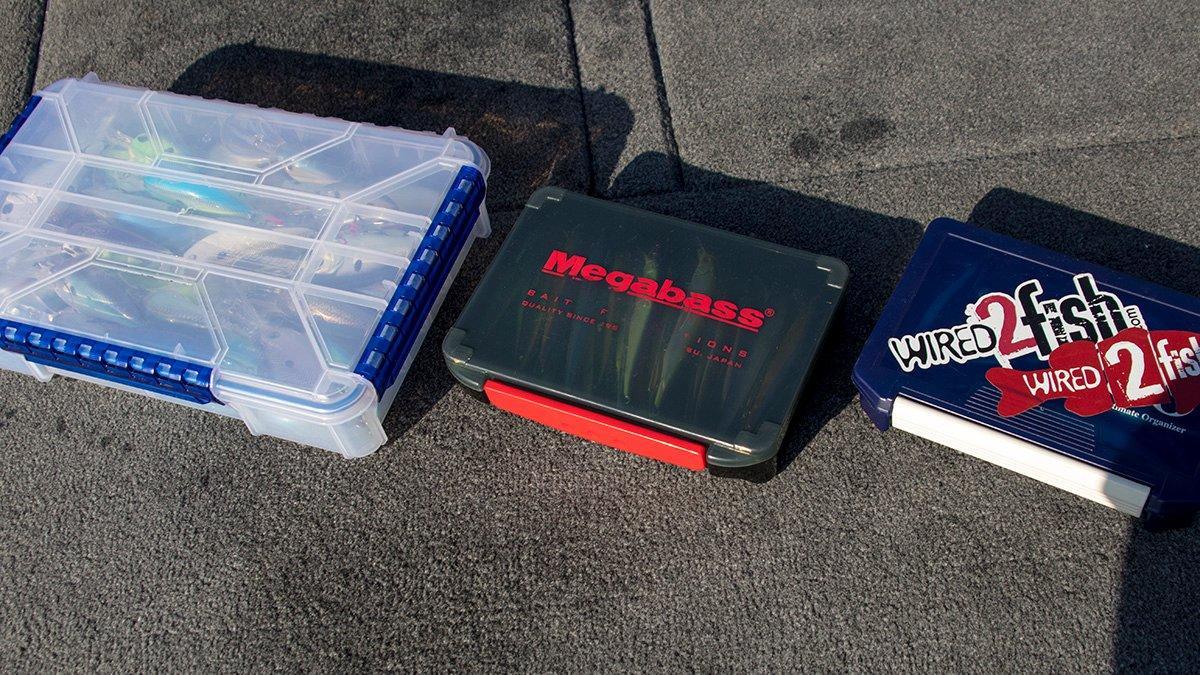
Compartments prevent gear tangling and loss by isolating items, controlling internal movement, and creating dedicated storage spaces that match the size, shape, and function of each component. In practice, most gear damage and frustration during fishing sessions come from one root issue: uncontrolled interaction between items.
Fishing gear is naturally prone to entanglement. Treble hooks latch onto anything nearby, braided lines wrap under minimal tension, and small accessories such as swivels or sinkers disappear easily when stored in open spaces. Without structure, even a short period of movement—walking to a spot or transporting gear in a vehicle—creates enough internal shifting to cause tangles.
Compartments act as controlled boundaries inside the bag. They limit how far items can move and prevent them from coming into contact with incompatible gear. Instead of reacting to problems after they occur, compartments eliminate the conditions that cause those problems in the first place.
In real use, the difference is immediate. An angler using a well-compartmentalized system spends less time untangling gear and more time fishing. Over multiple trips, this translates into both efficiency and reduced wear on equipment.
Anti-Tangle Mechanisms
| Mechanism | Function | Example |
|---|---|---|
| Physical Separation | Keeps items apart | Individual slots |
| Size Matching | Prevents movement | Custom-fit compartments |
| Surface Control | Reduces friction | Smooth lining |
| Fixed Positioning | Stabilizes items | Elastic bands |
Each of these mechanisms addresses a different aspect of gear interaction.
Physical separation is the most direct solution. By assigning each item its own space, the possibility of contact is eliminated. This is especially important for treble hook lures, where even slight contact leads to immediate tangling.
Size matching reduces free movement within a compartment. If a compartment is too large, items shift and collide. When the size closely matches the stored object, movement is minimized, and the risk of tangling drops significantly.
Surface control is often overlooked but plays an important role. Smooth linings—typically made from coated polyester or nylon—reduce friction, allowing items to settle into position without catching or dragging against rough surfaces.
Fixed positioning uses elastic loops or molded inserts to lock items in place. This is particularly effective for tools and larger accessories that might otherwise move during transport.
Tangle Risk Analysis
| Gear Type | Tangle Probability | Solution |
|---|---|---|
| Treble hook lures | Very High | Rigid slots |
| Fishing lines | High | Spool holders |
| Soft plastics | Medium | Flat storage |
| Tools | Low | Open pockets |
Treble hook lures represent the highest risk category. Their multi-point structure makes them highly prone to catching onto lines, fabrics, or other lures. Rigid plastic slots or foam inserts prevent this by isolating each lure completely.
Fishing lines, especially braided lines with high flexibility, can form knots with minimal movement. Spool holders or cylindrical compartments maintain tension and prevent uncontrolled unwinding.
Soft plastics require a different approach. While they do not tangle easily, they can deform if compressed or stored irregularly. Flat compartments preserve their shape and maintain usability.
Tools, being relatively rigid and heavier, are less prone to tangling but still require controlled placement to avoid interfering with other gear.
Loss Prevention Design


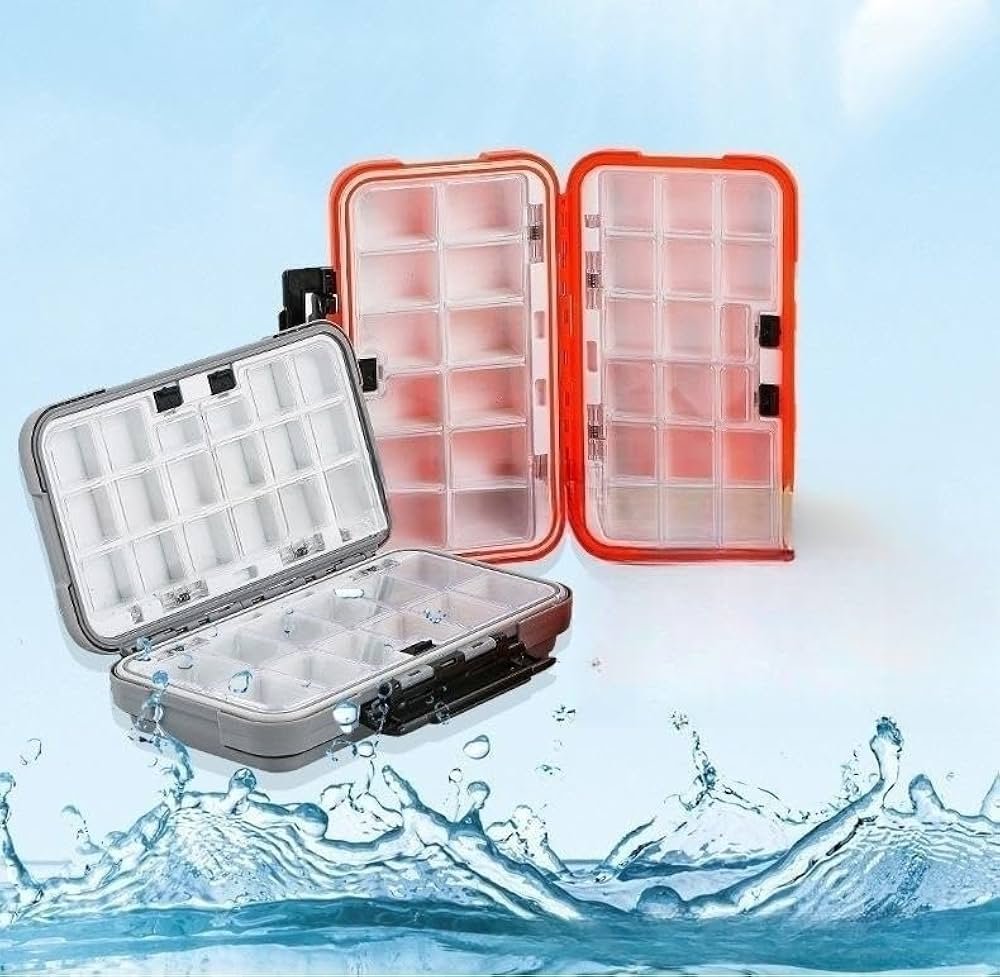
Small fishing components are among the easiest items to lose. Hooks, swivels, split rings, and sinkers can slip through gaps or become buried under larger items if not properly contained.
Effective loss prevention relies on dedicated micro-storage solutions:
- Zippered micro-pockets that fully enclose small items
- Transparent compartments that allow quick visual identification
- Sealed plastic boxes that prevent accidental spillage
From a design perspective, these solutions reduce both physical loss and “functional loss,” where items are not technically missing but cannot be found quickly when needed.
Transparent lids or mesh materials improve visibility, allowing anglers to confirm contents without opening every compartment. This reduces unnecessary handling and keeps the internal system intact.
Compartment Size Optimization
| Compartment Size | Result |
|---|---|
| Too large | Items move and tangle |
| Too small | Difficult access |
| Optimized | Stable and accessible |
Finding the correct compartment size is a balance between stability and usability.
Oversized compartments create excess space, allowing items to move freely and increasing the likelihood of interaction. On the other hand, compartments that are too tight make it difficult to insert or remove items, especially when hands are wet or cold.
Optimized compartments are designed with a small tolerance—just enough space to allow easy access while limiting unnecessary movement. In manufacturing, this often involves using adjustable dividers so users can adapt the layout to their specific gear.
Real Scenario Comparison
| Scenario | Without Compartments | With Compartments |
|---|---|---|
| Gear retrieval time | Long | Short |
| Tangle frequency | High | Low |
| Item loss | Common | Rare |
These differences become more pronounced over time. In unstructured systems, repeated tangling leads to frustration and increased handling, which further accelerates wear on gear.
In structured systems, reduced handling preserves both the condition of the equipment and the efficiency of use.
Behavioral Insight
Anglers naturally develop habits when organizing their gear. Certain items are always placed in specific locations based on personal preference and frequency of use.
Well-designed compartments support these habits rather than forcing a rigid system. Flexible layouts, adjustable dividers, and clearly defined zones allow users to create their own internal logic.
This alignment between design and behavior improves consistency. When items are always stored in the same place, retrieval becomes automatic, reducing both time and effort.
Critical Design Insight
Compartments must be designed based on real usage patterns rather than theoretical layouts.
In practice, this means observing how anglers interact with their gear:
- Which items are accessed most frequently
- How gear is handled during active fishing
- What types of tangling or loss occur most often
Design decisions should reflect these observations. For example, placing frequently used lures in easily accessible compartments reduces repeated opening of the main storage area, which helps maintain overall organization.
Hidden Advantage: Visual Control
Visibility is a key factor in maintaining order. Compartments that allow users to see their contents—through transparent lids or mesh panels—reduce the need for searching.
This has two practical benefits:
- Faster identification of items
- Less disruption to the overall storage system
When anglers can quickly locate what they need, they avoid unnecessary movement of other items, which helps maintain organization over time.
Design Pitfalls
| Problem | Cause | Solution |
|---|---|---|
| Persistent tangling | Poor compartment design | Add rigid separators |
| Lost small items | No micro-storage | Add small pockets |
| Overlapping storage | Incorrect layout | Redesign structure |
Many of these issues originate from oversimplified designs. Bags that rely solely on large open spaces may appear spacious but fail to provide effective protection.
Introducing structured compartments, even in limited numbers, significantly improves both organization and gear safety.
Long-Term Impact
Over extended use, the benefits of proper compartment design become increasingly evident.
Reduced tangling means less time spent untangling lines or separating hooks. Lower interaction between items reduces surface wear, maintaining the performance of lures and tools. Improved storage for small components minimizes loss, reducing the need for frequent replacements.
More importantly, a well-organized system supports a smoother fishing experience. Equipment remains in predictable locations, accessible when needed, and protected from unnecessary stress.
In real conditions, this consistency translates into better focus, higher efficiency, and a more reliable overall setup—qualities that directly influence fishing performance over time.
How Do Fishing Bags Protect Gear from Water and Moisture?

Fishing bags protect gear from water and moisture by combining water-resistant materials, sealed construction techniques, and controlled ventilation systems. In real fishing conditions, the challenge is not simply keeping water out—it is managing how moisture behaves over time inside the bag.
Water exposure is constant. Rainfall, wave splashes, wet decks, muddy banks, and even morning condensation all contribute to moisture accumulation. In coastal or tropical environments, relative humidity can remain above 75% for extended periods, accelerating corrosion and material degradation.
Without proper protection, metal hooks begin oxidizing within days, braided lines lose strength due to prolonged dampness, and soft plastics may deform or develop odor. Fabric interiors can also trap moisture, leading to mildew growth after repeated use.
A well-designed fishing bag creates a controlled micro-environment. Instead of allowing water to enter freely or remain trapped inside, it regulates entry, containment, and release. This is achieved through a layered protection system that combines outer resistance, internal isolation, and moisture management.
Waterproof Protection Layers
| Layer | Function | Typical Material |
|---|---|---|
| Outer Shell | Blocks water entry | Nylon / Oxford + coating |
| Inner Lining | Secondary barrier | Polyester + PU |
| Waterproof Pocket | Protects valuables | TPU laminated fabric |
Each layer serves as a backup to the others. The outer shell provides the first defense by repelling water through surface coatings such as PU (polyurethane) or PVC. These coatings, typically applied at 0.3–0.6 mm thickness, create a hydrophobic surface that prevents water penetration during rain or splashes.
The inner lining acts as a secondary barrier. Even if moisture passes through the outer fabric under pressure or prolonged exposure, the inner layer slows its progression and protects stored gear.
Waterproof pockets, often made from TPU-laminated materials, provide localized high-level protection for sensitive items such as phones, keys, or electronic accessories. These compartments are usually fully sealed or equipped with waterproof zippers to ensure reliability.
Types of Water Protection Systems
| System Type | Protection Level | Application |
|---|---|---|
| Water-resistant | Light rain | Casual fishing |
| Waterproof | Heavy rain / splashes | Boat fishing |
| Fully sealed | Temporary submersion | Extreme environments |
Water-resistant systems rely primarily on coated fabrics. They are suitable for short-term exposure but may allow water penetration under sustained pressure.
Waterproof systems incorporate additional features such as seam sealing and protected zippers. These are commonly used in boat fishing or environments where splashes are frequent.
Fully sealed systems, often found in high-end or specialized bags, use welded construction and airtight closures. These designs can withstand temporary submersion, making them suitable for extreme conditions such as kayak fishing or offshore use.
In most commercial fishing bags, the design target is waterproof rather than fully sealed, balancing performance with usability and cost.
Seam Construction and Its Impact
Seams are one of the most critical points in water protection. Even if the fabric itself is waterproof, stitching creates tiny needle holes that allow water to penetrate.
| Seam Type | Waterproof Performance |
|---|---|
| Standard stitching | Low |
| Seam tape | Medium |
| Heat-welded seams | High |
Standard stitched seams provide minimal resistance to water. In prolonged exposure, water can seep through these نقاط, especially under pressure.
Seam taping improves performance by covering stitch lines with a waterproof film. This is a common solution in mid-range products.
Heat-welded seams eliminate the need for stitching altogether. By bonding materials using heat and pressure, they create a continuous barrier with no نقاط of entry. This method is widely used in dry bags and high-performance waterproof compartments.
Zipper Protection Systems
Zippers are another common point of failure in water protection systems. Even if the surrounding fabric is waterproof, water can easily enter through zipper gaps.
| Zipper Type | Water Resistance |
|---|---|
| Standard zipper | Low |
| Covered zipper flap | Medium |
| Waterproof zipper | High |
Standard zippers allow water to pass through the teeth and stitching lines. Covered zipper flaps add a protective layer that deflects water away from the opening.
Waterproof zippers, often made with rubberized coatings and tight sealing structures, provide the highest level of protection. These are typically used in high-end fishing bags or dedicated waterproof compartments.
In some designs, manufacturers combine both approaches—using waterproof zippers along with external flaps—to increase reliability in heavy rain conditions.
Moisture Control vs Waterproofing

Blocking water is only part of the solution. In many cases, the greater risk comes from moisture trapped inside the bag after use.
For example, after a fishing session, wet lures or tools placed inside a sealed compartment can create a high-humidity environment. Without ventilation, moisture accumulates and accelerates corrosion and mold growth.
Effective fishing bag design addresses this through controlled breathability.
Breathability Design
| Feature | Function |
|---|---|
| Mesh panels | Allow airflow |
| Vent holes | Release trapped moisture |
| Quick-dry lining | Reduces water retention |
Mesh panels, typically made from nylon mesh, allow air to circulate while keeping items contained. Vent holes provide passive airflow, enabling moisture to escape without compromising overall protection.
Quick-dry linings, often using treated polyester fabrics, reduce the time moisture remains inside the bag. These materials do not absorb water easily, allowing it to evaporate more quickly.
The key is balance. A fully sealed bag without ventilation can trap moisture, while excessive ventilation may reduce water resistance. The most effective designs combine waterproof zones with breathable sections.
Real Case Insight
In humid coastal regions, anglers frequently encounter mold and odor issues when using fully enclosed, non-ventilated bags. After switching to designs that incorporate mesh panels and quick-dry linings, these problems are significantly reduced.
In one observed case, introducing a ventilated side panel reduced internal humidity levels by approximately 20–30% after a full day of fishing. This directly improved gear condition and reduced maintenance requirements.
Water Exposure Scenarios
| Scenario | Risk Level | Required Protection |
|---|---|---|
| Light rain | Low | Water-resistant fabric |
| Boat splash | Medium | Waterproof coating |
| Heavy rain | High | Sealed compartments |
| Wet ground contact | High | Waterproof base |
Different fishing environments require different levels of protection. For example, shore fishing may only require water-resistant materials, while boat fishing demands higher waterproof performance due to constant splashing.
The base of the bag is particularly important. Contact with wet ground or standing water can lead to prolonged exposure. A waterproof base—often reinforced with EVA and coated fabric—prevents moisture from seeping upward into the main compartment.
Critical Design Insight
Water protection should be applied strategically. Not every part of the bag needs to be fully waterproof.
High-risk areas include:
- The base (ground contact)
- Lower compartments (water accumulation zones)
- Valuables storage (electronics and small accessories)
Other areas, such as upper compartments, can incorporate breathable materials to improve moisture control.
This targeted approach reduces weight, improves usability, and maintains effective protection where it is most needed.
Hidden Risk: False Waterproof Claims
Many low-cost products claim to be waterproof but rely only on surface coatings. Without proper seam sealing or zipper protection, these designs fail under real conditions.
True waterproof performance requires a system-level approach:
- Coated or laminated fabrics
- Sealed or welded seams
- Protected or waterproof zippers
- Controlled ventilation
If any one of these elements is missing, overall performance is compromised.
Long-Term Impact
Over time, effective moisture protection has a measurable impact on gear lifespan and usability.
Reduced exposure to water slows corrosion, maintains the strength of fishing lines, and preserves the integrity of lures and tools. Proper ventilation prevents odor and mold, keeping the bag itself in better condition.
More importantly, gear remains ready for immediate use. Anglers do not need to spend additional time drying, cleaning, or replacing equipment after each session.
In real fishing conditions, this reliability becomes a key advantage. A well-designed fishing bag ensures that gear stays dry, organized, and functional—regardless of environmental challenges.
Which Materials Provide the Best Waterproof Protection?
The effectiveness of a fishing bag’s waterproof performance begins with material selection. No matter how well a bag is designed, if the base fabric and coating system are not properly chosen, water will eventually find its way inside. In real-world use—especially in environments with constant exposure to moisture—material performance determines whether gear remains protected after repeated use.
The best waterproof materials used in fishing bags combine high-density base fabrics with functional coatings or laminations. These layers work together to block water penetration while maintaining flexibility, abrasion resistance, and long-term durability.
Among the most widely used materials in the industry are TPU-coated nylon, PVC-coated polyester, and PU-treated Oxford fabrics. Each has distinct performance characteristics, and the right choice depends on the intended usage scenario.
Waterproof Material Comparison
| Material | Waterproof Level | Flexibility | Durability | Typical Use |
|---|---|---|---|---|
| PU-coated Polyester | Medium | High | Medium | Entry-level bags |
| PVC-coated Fabric | High | Low | High | Heavy-duty bags |
| TPU-coated Nylon | Very High | High | High | Premium fishing bags |
| Oxford + PU | Medium-High | Medium | High | Structured bags |
TPU-coated nylon is often considered the most balanced option. It provides strong waterproof performance while remaining flexible enough for practical use. This is particularly important for fishing bags, which are frequently opened, folded, and carried over long distances.
PVC-coated fabrics offer excellent waterproofing and durability, but their lower flexibility can make bags feel stiff, especially in colder conditions. PU-coated materials, while lighter and more cost-effective, provide moderate protection and are better suited for environments with lower water exposure.
Coating Performance Analysis
| Coating | Thickness | Key Advantage |
|---|---|---|
| PU | 0.2–0.5 mm | Lightweight, cost-effective |
| PVC | 0.3–0.8 mm | Strong waterproofing |
| TPU | 0.2–0.4 mm | Flexible, eco-friendly |
The coating layer is what transforms a standard fabric into a water-resistant or waterproof material. Thickness plays a direct role in performance, but it must be balanced with flexibility.
PU coatings are widely used due to their low cost and light weight. However, they can degrade faster under repeated abrasion or UV exposure.
PVC coatings provide a thicker and more robust barrier. They are highly effective in preventing water penetration, even under pressure, but they add weight and reduce flexibility.
TPU coatings offer a more advanced solution. They maintain elasticity over time, resist cracking under folding stress, and provide strong waterproof performance without significantly increasing weight.
Water Resistance Testing Standards
| Test Type | Description |
|---|---|
| Hydrostatic pressure test | Measures water resistance under pressure |
| Spray test | Simulates rain exposure |
| Submersion test | Evaluates full waterproof capability |
Material performance is often evaluated using standardized testing methods. The hydrostatic pressure test, for example, measures how much water pressure a fabric can withstand before leakage occurs. Higher ratings indicate better waterproof capability.
In practical terms:
- 500–1000 mm rating: suitable for light rain
- 1000–3000 mm rating: suitable for heavy rain and splashes
- 3000 mm+ rating: suitable for high-performance waterproof applications
Spray tests simulate real rainfall conditions, while submersion tests assess whether materials can withstand temporary immersion in water.
Fabric Density and Waterproofing
| Fabric Denier | Water Resistance |
|---|---|
| 600D | Basic |
| 900D | Improved |
| 1680D | High |
Denier refers to the thickness of the yarn used in the fabric. Higher denier fabrics are denser and more resistant to both water penetration and abrasion.
A 600D fabric may be sufficient for casual use, but under continuous exposure to moisture and friction, it may wear more quickly. In contrast, 1680D fabrics provide a much stronger barrier and are commonly used in heavy-duty fishing bags.
However, denier alone does not determine waterproof performance. It must be combined with an effective coating system. A high-denier fabric without proper coating can still allow water to penetrate.
Multi-Layer Material Construction
High-performance fishing bags rarely rely on a single material layer. Instead, they use a multi-layer construction that combines different materials to achieve both strength and waterproofing.
| Layer | Material | Function |
|---|---|---|
| Outer | Nylon / Oxford | Abrasion resistance |
| Middle | TPU / PVC coating | Waterproof barrier |
| Inner | Polyester lining | Protects gear surfaces |
The outer layer provides structural strength and protects against abrasion from rough surfaces. The middle layer acts as the primary waterproof barrier, preventing water from passing through the fabric. The inner lining adds an additional layer of protection and ensures that stored gear does not come into direct contact with the coated surface.
This layered approach allows manufacturers to optimize each function separately rather than relying on a single material to perform all roles.
Real Manufacturing Insight
In actual production, material selection is rarely one-size-fits-all. It is adjusted based on how and where the fishing bag will be used.
For example:
- Coastal or offshore fishing environments require TPU-coated nylon due to constant exposure to saltwater and high humidity
- Freshwater or occasional use scenarios often use PU-coated polyester to balance cost and performance
- Heavy-duty or commercial applications may rely on PVC-coated fabrics for maximum durability and resistance
At Szoneier, material selection is typically aligned with client requirements, target markets, and price positioning. This ensures that the final product delivers the expected level of performance without unnecessary cost increases.
Flexibility vs Waterproof Trade-Off
| Material | Flexibility | Waterproof Level |
|---|---|---|
| PVC | Low | High |
| TPU | High | High |
| PU | High | Medium |
One of the key challenges in material selection is balancing flexibility with waterproof performance.
PVC provides strong waterproofing but becomes rigid, especially in low temperatures. This can affect usability and increase the risk of cracking over time.
PU offers excellent flexibility but does not provide the same level of long-term waterproof protection.
TPU stands out because it maintains flexibility while delivering high waterproof performance. It also performs well under repeated folding and bending, which is essential for fishing bags that are frequently handled.
Long-Term Durability
Waterproof performance is not static—it changes over time based on usage conditions.
| Factor | Impact |
|---|---|
| UV exposure | Degrades coating |
| Abrasion | Wears surface |
| Folding stress | Causes micro-cracks |
Exposure to sunlight can gradually break down coating materials, reducing their effectiveness. Abrasion from rough surfaces wears away protective layers, while repeated folding can create micro-cracks that allow water to penetrate.
High-quality materials are designed to resist these factors. TPU coatings, for example, maintain elasticity and are less prone to cracking, while high-denier fabrics provide better resistance to surface wear.
Critical Insight
Waterproof performance is not defined by initial resistance alone. The real measure of a material is how well it maintains that performance after months or years of use.
A fishing bag that performs well when new but degrades quickly under real conditions fails to provide reliable protection. This is why material selection must consider long-term durability, not just short-term waterproofing.
In practical terms, investing in higher-quality materials reduces maintenance, extends product lifespan, and ensures that gear remains protected across repeated fishing trips.
How Do Fishing Bags Protect Gear During Movement?

Fishing bags protect gear during movement by stabilizing internal contents, distributing weight efficiently, and minimizing vibration and sudden impact. In real fishing conditions, movement is constant—walking along uneven riverbanks, stepping across rocks, boarding boats, or transporting gear in vehicles. Each of these scenarios introduces forces that act on the contents inside the bag.
The primary challenge is not external impact alone, but continuous internal shifting. Even small, repeated movements generate friction and collision between items. Over time, this leads to scratched lure surfaces, tangled lines, and misaligned tools. In many cases, damage caused by movement is gradual and often unnoticed until performance is affected.
A well-designed fishing bag addresses this by creating a controlled internal environment. Instead of allowing gear to move freely, it restricts movement, absorbs vibration, and maintains balance. The result is a system where gear remains stable regardless of external motion.
Internal Stability Systems
| System | Function | Protection Benefit |
|---|---|---|
| Divider System | Separates gear | Prevents collision |
| Compression Straps | Holds items tightly | Reduces movement |
| Tight-Fit Compartments | Limits free space | Stabilizes gear |
| Elastic Holders | Secures tools | Prevents shifting |
These systems work together rather than independently. Divider systems create physical boundaries, while compression straps apply controlled pressure to keep items in place. Tight-fit compartments reduce unused space, and elastic holders prevent heavier tools from becoming moving impact sources.
In practice, combining these elements reduces internal movement by a significant margin. For example, when a bag is carried over uneven terrain, stabilized gear experiences only minor vibration instead of full displacement.
Movement Types and Their Impact
| Movement Type | Risk to Gear | Required Protection |
|---|---|---|
| Walking / hiking | Moderate vibration | Internal stabilization |
| Boat motion | Constant shifting | Strong compartment structure |
| Vehicle transport | Sudden impact | Shock absorption |
| Air travel | Compression + impact | Reinforced frame |
Each movement scenario introduces different stress patterns.
During walking or hiking, gear is subjected to rhythmic vibration. While each movement is relatively small, the cumulative effect over time can lead to wear and tangling.
Boat motion creates continuous, unpredictable shifting. Waves generate multi-directional forces, making internal stability essential. Without proper compartment structure, gear moves constantly and collides repeatedly.
Vehicle transport introduces sudden acceleration and deceleration. These forces can cause gear to shift abruptly, especially if the bag is not tightly packed or stabilized.
Air travel adds another layer of stress through compression and handling impact. Bags may be stacked or dropped, requiring both internal stability and external reinforcement.
Load Distribution Design
Proper weight distribution is essential for maintaining stability during movement. Uneven loads create imbalance, which increases internal shifting and user fatigue.
| Load Type | Effect |
|---|---|
| Balanced load | Stable, low stress |
| Front-heavy | Pulls bag forward |
| Bottom-heavy | Strains base |
| Uneven load | Causes internal shifting |
A balanced load ensures that the bag maintains its center of gravity close to the user’s body. This reduces swinging motion and minimizes internal displacement.
From a design perspective, heavier items should be placed near the base and center of the bag, while lighter items can be stored in upper or outer compartments. This arrangement improves both stability and carrying comfort.
Ergonomic Carry Systems

The way a fishing bag is carried directly affects how stable it remains during movement. Ergonomic design reduces unnecessary motion and distributes weight evenly across the body.
Shoulder Strap Design
| Feature | Benefit |
|---|---|
| Adjustable length | Better fit |
| Padding | Comfort and shock absorption |
| Anti-slip surface | Stability |
Adjustable straps allow users to position the bag correctly, reducing swing and improving balance. Padding absorbs part of the movement-induced vibration, protecting both the user and the gear. Anti-slip surfaces prevent the strap from shifting during movement, maintaining consistent positioning.
Backpack Design
| Feature | Benefit |
|---|---|
| Dual straps | Even weight distribution |
| Back padding | Reduces pressure |
| Ventilation channels | Comfort in long use |
Backpack-style fishing bags provide superior stability, especially for long-distance movement. By distributing weight across both shoulders, they reduce localized stress and minimize side-to-side movement.
Back padding improves comfort and creates a stable contact surface, while ventilation channels reduce heat buildup during extended use. These features indirectly contribute to gear protection by reducing user fatigue, which can lead to careless handling.
Base Stability Engineering
The base of the fishing bag plays a critical role in maintaining stability when the bag is placed on surfaces or during sudden stops.
| Feature | Function |
|---|---|
| Non-slip base | Prevents sliding |
| EVA reinforcement | Absorbs shock |
| Waterproof bottom | Protects from wet surfaces |
A non-slip base prevents the bag from shifting on smooth or wet surfaces, such as boat decks. EVA reinforcement absorbs impact when the bag is set down, reducing the force transmitted to internal contents.
A waterproof bottom adds an additional layer of protection by preventing moisture from entering when the bag is placed on wet ground.
Real Case Insight
In a product upgrade focused on anglers who frequently move between fishing spots, adding internal compression straps and improving divider rigidity resulted in measurable improvements:
- Over 50% reduction in internal gear movement
- Lower incidence of lure damage and line tangling
- Improved user feedback on stability during transport
These changes demonstrate that relatively simple structural adjustments can significantly enhance performance under movement.
Dynamic Protection Concept
Protection during movement is not static. The forces acting on a fishing bag change constantly depending on speed, direction, and terrain.
A well-designed bag adapts to these changes through a combination of flexibility and structure. Flexible materials absorb vibration, while rigid components maintain shape and prevent collapse. Together, they create a system that responds to dynamic conditions without compromising stability.
Hidden Insight: Movement as a Stress Multiplier
Small vibrations may seem insignificant, but when repeated over time, they act as a stress multiplier. Continuous micro-movements cause gradual wear, especially on sensitive components such as fishing lines and lure finishes.
Stabilization systems reduce this cumulative effect by limiting movement at its source. Instead of allowing repeated contact, they maintain separation and control, preserving gear condition over longer periods.
Design Pitfalls
| Problem | Cause | Solution |
|---|---|---|
| Gear shifting | Loose compartments | Add dividers |
| Uneven weight | Poor layout | Redesign structure |
| User fatigue | Bad ergonomics | Improve straps |
Many common issues originate from insufficient attention to movement dynamics. Bags that prioritize storage capacity without considering stability often fail under real conditions.
Improving internal structure and ergonomic design addresses these problems directly, resulting in better protection and usability.
Long-Term Impact
Over time, effective movement control reduces cumulative damage to gear. Lures retain their finish, lines maintain strength, and tools remain properly aligned. The bag itself also benefits, as reduced internal stress leads to less wear on seams and materials.
More importantly, a stable system allows anglers to focus on fishing rather than managing equipment. Gear remains predictable, accessible, and protected, even during extended movement across challenging environments.
In real-world use, this consistency becomes a defining advantage—ensuring that equipment performs as expected, regardless of how demanding the journey to the fishing spot may be.
How Do Manufacturers Design Fishing Bags for Maximum Protection?

Designing a fishing bag that truly protects gear is not a single-step process. It requires the integration of material science, structural engineering, and real-world usage feedback into one cohesive system. Manufacturers that focus only on appearance or cost often overlook the conditions these bags face in actual fishing environments—constant moisture, repeated movement, and long-term wear.
Effective design begins with a clear understanding of how anglers use their gear. Fishing bags are exposed to wet surfaces, sudden impacts, and continuous vibration. Protection must therefore be built into every layer of the product, from fabric selection to internal layout.
At Szoneier, this approach is shaped by more than 18 years of experience in fabric development and bag manufacturing. Each fishing bag is engineered as a complete system, where materials, structure, and usability are aligned to deliver consistent performance over time.
Key Design Stages
| Stage | Focus | Outcome |
|---|---|---|
| Material Selection | Fabric performance | Durability, waterproofing |
| Structural Design | Layout and compartments | Organization, stability |
| Prototype Testing | Real-world simulation | Performance validation |
| Optimization | Refinement | Cost-performance balance |
The design process is iterative rather than linear. Initial concepts are refined through testing and feedback until the desired balance between protection, usability, and cost is achieved.
Material selection is the starting point. Choosing between nylon, polyester, or laminated fabrics determines the baseline performance of the bag. Structural design then defines how these materials are arranged to support internal stability and organization.
Prototype testing is where theoretical design meets real-world conditions. Bags are exposed to simulated environments—water spray, load stress, repeated handling—to identify weaknesses. Based on these results, adjustments are made before moving into production.
Material Customization Options
| Material Type | Application |
|---|---|
| Nylon (1680D) | Heavy-duty protection |
| Polyester (600D–900D) | Cost-effective solutions |
| Oxford Fabric | Structured designs |
| Neoprene | Shock absorption |
| TPU Coating | Waterproof compartments |
Material customization allows manufacturers to tailor products to specific markets.
For example, 1680D nylon is commonly used in high-end fishing bags due to its superior abrasion resistance and strength. Polyester fabrics in the 600D–900D range offer a more economical solution while still providing acceptable durability for moderate use.
Oxford fabrics are often selected for structured designs because of their stability and resistance to deformation. Neoprene is used in targeted areas where additional cushioning is required, such as protective sleeves for tools or electronics.
TPU coatings are applied to create waterproof compartments, particularly for storing sensitive items like phones or electronic devices.
At Szoneier, these materials are not chosen in isolation. They are combined based on the intended use scenario, ensuring that each product meets both performance and cost expectations.
Structural Reinforcement Areas

Structural reinforcement is essential for maintaining protection over time. Without reinforcement, even high-quality materials can fail under repeated stress.
| Area | Reinforcement Method |
|---|---|
| Bottom panel | EVA board |
| Side walls | PP support panels |
| Handle points | Double stitching |
| Zippers | Reinforced seams |
The bottom panel is the most critical area because it absorbs the majority of impact when the bag is placed on hard or uneven surfaces. EVA boards, typically 5–8 mm thick, provide both rigidity and shock absorption.
Side walls are reinforced with PP (polypropylene) support panels to maintain the shape of the bag. This prevents collapse and ensures that internal compartments remain functional.
Handle points experience concentrated stress during lifting and carrying. Double stitching and reinforced webbing distribute this stress, reducing the risk of tearing.
Zippers, often overlooked, are another key component. Reinforced seams and high-quality zipper systems improve durability and prevent failure during repeated use.
Custom Protection Features
Modern fishing bags are rarely standardized products. Instead, they are customized based on how the end user interacts with the gear.
Compartment Customization
Adjustable layouts allow users to configure compartments based on their specific equipment. This flexibility improves both organization and protection by ensuring that each item fits securely.
Waterproof Zones
Dedicated waterproof compartments are designed for sensitive items. These zones often use TPU-laminated materials and sealed construction to prevent water ingress.
Branding Integration
Branding elements such as logos and labels are integrated without compromising structural integrity. Techniques such as heat transfer printing or embroidery are selected based on their impact on material performance.
MOQ and Sampling Advantage
From a development perspective, flexibility in production is critical for brands testing new products.
Szoneier supports:
- Low MOQ starting from 50 pieces
- Sampling lead time of 5–7 days for standard designs
- Free sample options for qualified projects
- Production lead times typically within 25–30 days
This allows brands to validate designs quickly, gather market feedback, and make adjustments before scaling production.
Performance vs Cost Optimization
| Approach | Result |
|---|---|
| Low-cost materials | Short lifespan |
| Balanced design | Reliable performance |
| Premium materials | Long-term value |
Achieving the right balance between cost and performance is one of the most important aspects of product development.
Low-cost materials may reduce initial investment but often lead to higher replacement rates and lower customer satisfaction. Premium materials provide better durability and protection but increase production cost.
A balanced approach focuses on optimizing key performance areas—such as waterproofing and structural strength—while maintaining reasonable cost levels.
Real Manufacturing Insight
In many custom projects, small adjustments have a measurable impact on product performance.
For example, upgrading from a standard zipper to a reinforced SBS or YKK zipper system can significantly reduce failure rates. Adding a reinforced EVA base improves impact resistance and extends product lifespan.
These changes do not require a complete redesign, but they enhance the overall quality and reliability of the product.
Critical Insight
Maximum protection is not achieved through a single feature. It is the result of multiple systems working together—materials, structure, compartments, and ergonomics.
If any one of these elements is weak, the overall performance of the bag is compromised. A well-designed fishing bag ensures that all components are aligned and contribute to a unified protection system.
Future Trends

The fishing bag industry continues to evolve, driven by advances in materials and changing user expectations.
Key trends include:
- Lightweight high-strength fabrics that reduce overall weight without sacrificing durability
- Eco-friendly waterproof coatings such as solvent-free TPU laminations
- Modular compartment systems that allow users to customize internal layouts
- Improved ergonomic designs for better comfort during long-distance use
These developments are shaping the next generation of fishing bags, where performance, sustainability, and user experience are increasingly interconnected.
A fishing bag is not just a container—it is a protective system designed to preserve gear performance, reduce loss, and support efficiency in real fishing conditions.
From material selection and structural reinforcement to compartment design and ergonomic engineering, every detail contributes to the overall effectiveness of the product.
For brands looking to develop high-performance fishing bags, working with an experienced manufacturer is essential. Szoneier combines deep expertise in fabric development and bag manufacturing to deliver customized solutions tailored to specific market needs.
Whether the goal is to create a durable nylon fishing bag, a fully waterproof TPU-coated design, or a modular system with advanced compartment layouts, Szoneier provides the technical capability and production flexibility to bring those ideas to market efficiently.
If you are planning your next fishing bag product, this is the right stage to refine your design, test materials, and validate performance. A well-engineered product not only protects gear but also defines how users experience it over time.