Skip to content
Polyester is everywhere—clothing, bags, linings, home décor, and outdoor gear—yet many beginners find it harder to sew than cotton. The irony is that polyester is engineered to be strong, smooth, and stable, but those same qualities can make it unforgiving under a sewing machine. A needle that’s slightly wrong, tension that’s a bit off, or heat that’s too high can quickly turn a clean project into puckered seams or shiny burn marks.
The good news is this: polyester is not difficult to sew once you understand how it behaves. It doesn’t absorb moisture like cotton, it reacts differently to heat, and it slides more easily under the presser foot. When your setup matches these characteristics, polyester becomes one of the most reliable fabrics to work with—especially for long-lasting projects. Sewing with polyester fabric is easiest when you match the needle type, thread, stitch settings, and heat level to the fabric’s structure. Sharp or microtex needles, moderate stitch length, balanced tension, and low-heat pressing prevent puckering, skipped stitches, and melting. Beginners succeed with polyester by adjusting machine settings, handling the fabric gently, and testing on scraps before sewing final seams.
Many first-time sewing problems don’t come from lack of skill, but from using cotton habits on synthetic fabric. In the sections below, we’ll break polyester sewing down step by step—from understanding why it behaves the way it does, to choosing needles, settings, and techniques that make your work look clean and professional.
1. What makes polyester fabric tricky to sew compared with cotton or blends?
Polyester looks straightforward on the cutting table. It lies flat, holds its shape, and doesn’t wrinkle the way cotton does. Many people assume that means it will be easier to sew. In practice, the opposite is often true—especially for anyone transitioning from cotton or cotton-rich blends.
The difficulty is not about strength or durability. Polyester is mechanically strong and dimensionally stable. The real challenge comes from a combination of low friction, elastic recovery, and sensitivity to heat and tension. These properties interact at the needle, the thread path, and the seam line, making small setup errors immediately visible.
Cotton tends to “absorb” mistakes. Its fibers compress, swell slightly with moisture, and relax around stitches. Polyester does none of that. Every imbalance—needle size, stitch length, thread tension, presser foot pressure—shows up as puckering, skipped stitches, seam waviness, or fabric distortion. That is why a sewing machine that performs perfectly on cotton can suddenly seem unreliable when polyester is introduced.
Understanding why polyester behaves this way is the key to sewing it cleanly and consistently.
Why polyester behaves the way it does
A) Fiber structure and surface friction
Polyester is a synthetic polymer extruded into continuous filaments. Unlike cotton, which is a short-staple natural fiber with surface irregularities, polyester filaments are smooth and uniform by design.
| Fiber Type | Surface Feel | Sewing Impact |
|---|---|---|
| Cotton | Slightly rough | Grips thread naturally |
| Polyester | Smooth | More slippage |
| Cotton blends | Mixed | Easier transition |
This smooth surface reduces friction at two critical points:
- Needle penetration – The needle passes through with less resistance, which sounds positive, but it also means the fabric does not “hold” the stitch as it forms.
- Thread–fabric interaction – The thread slides more freely inside the fabric, making tension balance far more sensitive.
On cotton, slightly uneven upper or bobbin tension is often masked by fiber friction. On polyester, the same imbalance immediately results in loops, puckers, or loose stitches. This is why polyester demands more precise tension tuning.
In industrial settings, this is also why polyester fabrics often require tighter process control—the material itself will not compensate for operator inconsistency.
B) Low moisture absorption
Moisture behavior is one of the most underestimated differences between polyester and natural fibers.
| Property | Cotton | Polyester |
|---|---|---|
| Moisture absorption | High (7–8%) | Very low (<0.5%) |
| Thread swelling | Yes | No |
| Static buildup | Low | Higher |
Cotton absorbs ambient moisture, which slightly swells the fibers. This increases friction and helps stabilize stitches during sewing. Polyester remains dry, smooth, and dimensionally unchanged.
The practical effects include:
- Higher static electricity, especially in dry environments
- Fabric layers shifting, particularly on lightweight or satin-weave polyester
- Thread behaving “slicker”, making tension adjustments more critical
In production environments, factories often control humidity (typically 55–65% RH) specifically to reduce static issues when sewing synthetic fabrics. Home sewing rooms rarely have this control, which is why polyester can feel unpredictable depending on season or climate.
C) Elastic recovery and seam behavior
Polyester fibers are engineered for resilience. They stretch slightly under load and snap back quickly once tension is released. This property—called elastic recovery—is useful in performance fabrics but challenging at the seam line.
| Result | What You See |
|---|---|
| High recovery | Seams pull back after stitching |
| Low relaxation | Puckering appears |
| Strong fibers | Needle deflection risk |
When a seam is stitched, the needle and thread temporarily stretch the fabric. Cotton relaxes and stays close to its stitched shape. Polyester pulls back. If stitch length is too short or tension too high, the seam contracts, creating ripples or a “corrugated” look.
This is especially noticeable on:
- Lightweight polyester linings
- Tightly woven microfibers
- Stretch or mechanical-stretch poly fabrics
In these cases, increasing stitch length slightly (for example, from 2.2 mm to 2.8–3.0 mm) often improves seam appearance because it reduces stitch density and allows the fabric to recover without bunching.
D) Needle interaction and skipped stitches
Polyester’s strength works against the needle. The fibers resist displacement, which can cause needle deflection—a slight bending of the needle as it penetrates the fabric.
When deflection occurs, the needle may miss the loop of the upper thread, leading to skipped stitches. This is why polyester often benefits from:
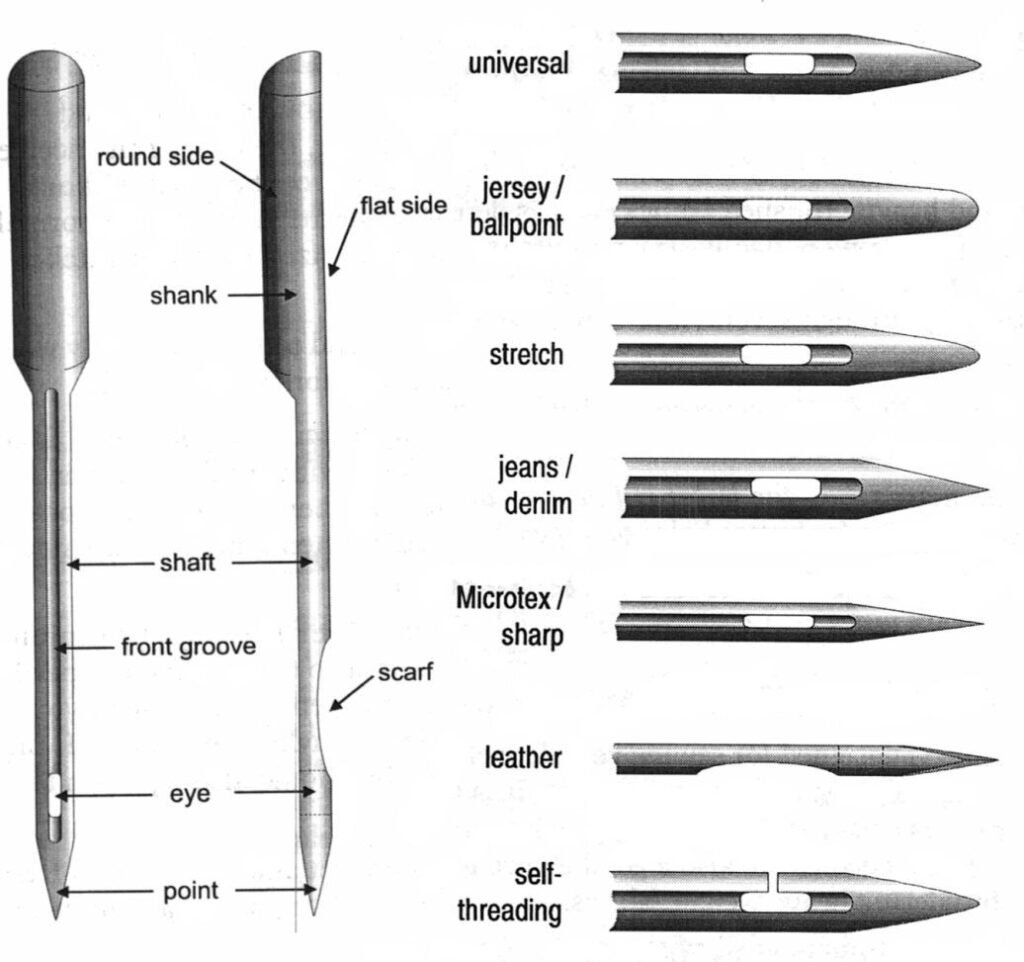
- Sharp or Microtex needles, rather than universal needles
- A slightly smaller needle size for lightweight fabrics (e.g., 70/10 instead of 80/12)
- Slower sewing speeds for dense weaves
Cotton’s softer fibers allow the needle to pass with less resistance and less deflection, which is why skipped stitches are less common.
E) Heat sensitivity and pressing risks
Unlike cotton, polyester does not scorch—it softens. This difference is subtle but critical.
| Heat Issue | Result |
|---|---|
| Iron too hot | Shine or melting |
| Steam overload | Fabric distortion |
| Pressing too long | Permanent marks |
At temperatures above roughly 150–160°C, polyester begins to deform. Even before melting, the fiber surface can flatten, creating a shiny appearance that cannot be reversed. Steam can temporarily relax polyester, but if the fabric cools while under pressure, the distortion becomes permanent.
This affects sewing in two ways:
- Press-as-you-go techniques must be adjusted – Light pressure, lower heat, and pressing cloths become essential.
- Seam correction is limited – Unpicking and re-pressing a polyester seam may leave visible marks, unlike cotton which tolerates repeated pressing.
For professional results, many manufacturers rely on heat testing during development to define safe pressing temperatures before bulk production begins.
F) Interaction with thread choice
Polyester fabric is often sewn with polyester thread for strength and durability, but this combination increases smooth-on-smooth interaction.
Polyester thread:
- Has low friction
- Does not swell with moisture
- Slides easily through the needle eye and fabric
When paired with polyester fabric, this can exaggerate tension problems. Some sewists find improved results by:
- Using high-quality, slightly textured polyester thread
- Avoiding overly glossy threads on fine fabrics
- Testing cotton-wrapped polyester thread on stable poly fabrics
In industrial contexts, thread selection is often adjusted by fabric weight and weave, not just fiber type.
G) Feed and presser foot behavior
Polyester’s smooth surface affects how it moves under the presser foot. Layers may not advance evenly, especially on lightweight or coated poly fabrics.
Common symptoms include:
- Uneven seam lengths
- Fabric creeping ahead or lagging behind
- Mismatched edges after stitching
Solutions typically involve:
- Reducing presser foot pressure
- Using walking feet or even-feed systems
- Adding tissue paper or stabilizer for very slippery fabrics
Cotton rarely requires these measures because its surface friction helps the feed dogs grip consistently.
H) Long-term seam appearance
One reason polyester seams look “wrong” to beginners is that the problem may not appear immediately. Seams can look fine off the machine and then develop puckering after the fabric relaxes or cools.
This delayed effect is tied to:
- Elastic recovery
- Heat exposure during pressing
- Thread tension settling after stitching
Professional sample rooms often allow polyester garments to rest for 12–24 hours before final inspection to catch these issues early.
I) Comparison summary: polyester vs cotton in sewing
From a technical standpoint, polyester is not inferior—it is simply less tolerant.
- Cotton hides mistakes through friction and fiber relaxation
- Polyester exposes mistakes through smoothness and recovery
This difference explains why experienced operators often prefer polyester once settings are dialed in. The fabric behaves consistently from piece to piece, which is ideal for repeat production. Beginners, however, feel punished because the margin for error is smaller.
J) Beginner takeaway
Polyester is not “harder” than cotton in absolute terms—it is less forgiving of imprecision. Once needle type, stitch length, tension, and heat are properly controlled, polyester becomes predictable, durable, and efficient to sew.
The key shift is mindset: with polyester, success comes from setup and control, not force or correction after the fact. That discipline is exactly why polyester dominates modern apparel, bags, linings, and technical textiles—both in factories and in high-quality finished products.
2. Which needle types and sizes work best for different polyester fabrics?

The needle is the most underestimated variable when sewing polyester. Many sewing problems blamed on machines, thread quality, or tension settings actually start at the needle tip. With polyester, this is even more pronounced. The needle does not simply “make a hole”—it controls how fibers are displaced, how the thread loop is formed, and how cleanly the fabric recovers after penetration.
Polyester fibers are strong, smooth, and resilient. If the needle geometry is wrong, the fabric resists penetration instead of yielding to it. The result is skipped stitches, uneven seams, pulled threads, or visible needle marks that cannot be pressed away. On cotton, these issues may appear gradually. On polyester, they show up immediately. Sharp or Microtex needles perform best on most woven polyester fabrics. Ballpoint or stretch needles are required for polyester knits. Needle size must be matched to fabric weight and construction, not just fiber type. Using a needle that is even one size off can visibly degrade seam quality.
Matching needle geometry to polyester fabric
A) Why sharp needles matter for polyester
Sharp needles—often labeled “Sharp” or “Microtex”—have a slim shaft and an acute, narrow point. This geometry is particularly effective on tightly woven or smooth-surface polyester fabrics.
| Needle Type | Best Use |
|---|---|
| Microtex | Tightly woven polyester |
| Universal | Medium-weight blends |
| Sharp | Satin, lining fabrics |
Polyester filaments resist displacement. A blunt or rounded point pushes fibers aside instead of cutting a clean path, increasing friction and needle deflection. Sharp needles slice cleanly between filaments, allowing the thread loop to form consistently.
Microtex needles are especially useful for:
- Polyester satin
- Taffeta
- Chiffon
- Microfiber linings
- High-density woven poly fabrics used in bags or outerwear
In controlled production environments, sharp needles are often specified by default for woven polyester because they reduce seam variability and minimize cosmetic defects.
B) Universal needles: when they work and when they don’t
Universal needles sit between sharp and ballpoint designs. They have a slightly rounded tip, making them flexible across fabric types. On cotton-poly blends or medium-weight polyester with looser weaves, they can perform acceptably.
However, universal needles become unreliable when:
- The polyester weave is dense
- The fabric has a smooth or glossy surface
- Stitch length is short
- Sewing speed is high
In these cases, the rounded point increases the chance of skipped stitches or seam puckering. Universal needles are best treated as a compromise, not a default, when working primarily with polyester.
C) When to use ballpoint or stretch needles
Polyester knits behave very differently from wovens. The fabric structure is looped rather than interlaced, and the goal is to avoid breaking those loops.
| Fabric Type | Recommended Needle |
|---|---|
| Jersey polyester | Ballpoint |
| Spandex blends | Stretch |
| Athletic knits | Stretch (smaller size) |
Ballpoint needles have a rounded tip that slides between knit loops instead of piercing them. This prevents laddering, runs, and weakened seams. Stretch needles go a step further, combining a rounded point with a special scarf design that improves loop pickup when sewing elastic fabrics.
Stretch needles are particularly effective for:
- Polyester–spandex blends
- Activewear
- Swimwear linings
- Compression fabrics
Using a sharp needle on knit polyester often results in seams that look fine initially but fail under stretch because the loops have been cut rather than displaced.
D) Needle size guidelines (beginner-friendly)
Needle size affects both penetration force and hole visibility. With polyester, choosing the correct size is as important as choosing the correct type.
| Fabric Weight | Needle Size |
|---|---|
| Lightweight lining | 70/10 |
| Medium apparel | 80/12 |
| Heavy polyester | 90/14 |
| Coated fabrics | 90/14–100/16 |
A needle that is too small may deflect when meeting resistance, causing skipped stitches or inconsistent tension. A needle that is too large creates holes that remain visible, especially on tightly woven or satin-finish polyester.
As a general rule:
- Increase needle size as fabric density increases
- Reduce needle size for fine, drapey polyester
- Test one size up and one size down before committing to production seams
E) Coated and laminated polyester fabrics
Coated polyester—such as PU-coated, PVC-backed, or TPU-laminated fabrics—introduces additional resistance at the needle.
Common applications include:
- Bags and backpacks
- Rainwear
- Outdoor covers
- Technical accessories
For these materials:
- Use a sharp needle
- Choose a larger size (90/14 or higher)
- Reduce sewing speed
- Consider longer stitch lengths
The coating layer increases friction and can cause heat buildup at the needle tip. A needle that is too fine will overheat quickly, leading to thread shredding or skipped stitches.
F) Needle finish and quality matter more with polyester
Not all needles of the same size and type perform equally. Surface finish plays a major role when sewing synthetic fibers.
High-quality needles feature:
- Polished shafts
- Smoothly finished eyes
- Precisely shaped points
Low-quality needles may have microscopic burrs that catch polyester filaments, causing:
- Thread shredding
- Snags along the seam line
- Inconsistent stitch formation
Because polyester fibers are smooth and strong, they reveal these defects more readily than cotton. This is why professional sewing rooms often standardize on specific needle brands and change needles on a fixed schedule.
G) Signs your needle is wrong
Polyester gives clear feedback when the needle is mismatched.
| Symptom | Likely Cause |
|---|---|
| Skipped stitches | Dull or wrong point |
| Snags | Needle too large |
| Puckering | Needle too fine |
| Thread shredding | Burr on needle |
One additional sign to watch for is noise. A sharp “popping” or snapping sound during sewing often indicates excessive resistance at the needle, suggesting the size or type is incorrect.
H) Needle lifespan: polyester vs cotton
Polyester dulls needles faster than cotton. The fiber’s strength and low friction generate more wear at the needle tip and eye, especially at higher speeds.
Typical guidelines:
- Cotton sewing: change needle every 8–10 hours of sewing
- Polyester sewing: change needle every 4–6 hours
- Coated polyester: change even more frequently
In industrial settings, needle changes are often scheduled per shift when sewing polyester-heavy programs. Home sewists benefit from adopting a similar habit, even if it feels excessive at first.
I) Needle choice and seam appearance
Needle selection directly affects seam aesthetics, not just stitch integrity. With polyester, a poor needle choice can cause:
- Visible needle holes that do not close
- Shiny lines along seams
- Distorted fabric texture
Once these marks appear, pressing rarely fixes them. Prevention through correct needle choice is the only reliable solution.
J) Testing protocol used by professionals
Before bulk sewing polyester fabrics, professional sample rooms typically run a short needle test:
- Sew test seams with two needle sizes
- Compare stitch formation under tension
- Press lightly and recheck seam appearance
- Stretch or manipulate the seam (if applicable)
- Inspect after resting for several hours
This process identifies needle-related issues early, saving time and material later.
K) Practical habit to build
When sewing polyester, assume the needle is a consumable, not a long-term tool. Replace needles more frequently than you would for cotton, and change them immediately when switching fabric types.
Polyester rewards precision. When the needle geometry and size are correct, the fabric sews cleanly, consistently, and at high speed. When they are wrong, no amount of tension adjustment or troubleshooting will fully compensate.
3. How do you choose the right thread for polyester sewing?
Thread choice has a much bigger impact on polyester sewing than most beginners realize. With cotton fabrics, the material itself absorbs tension differences and masks small mismatches between thread, needle, and stitch settings. Polyester does not. Its strength, smooth surface, and low friction mean the thread must work in harmony with the fabric, not fight against it.
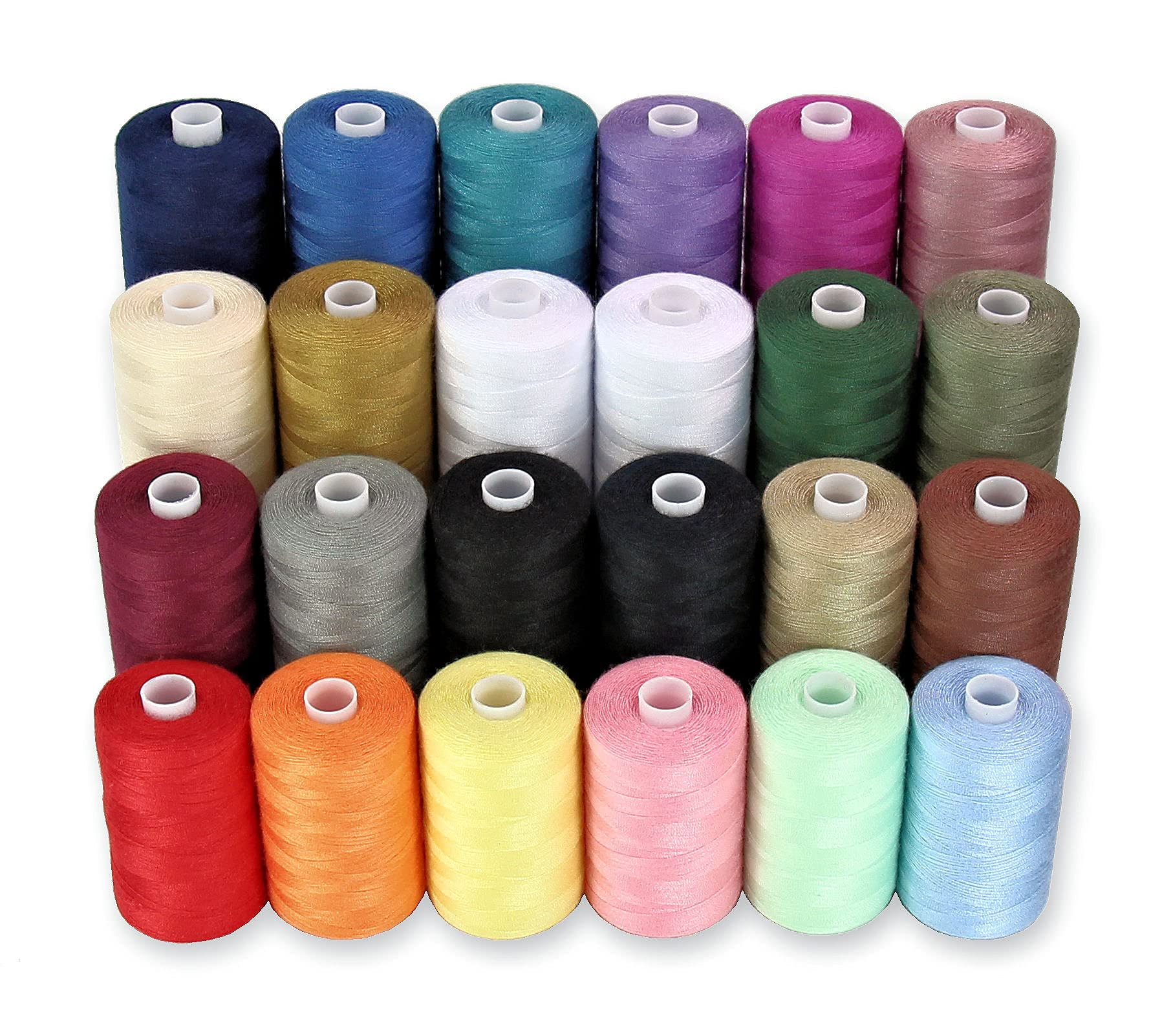
When the wrong thread is used on polyester, the symptoms are immediate and frustrating: uneven stitches, seam puckering that cannot be pressed out, thread shredding near the needle eye, or seams that snap under stress even though the fabric remains intact. In many cases, the machine is blamed—but the real issue is thread behavior. All-purpose polyester thread is the most reliable choice for most polyester fabrics. Core-spun thread offers a more refined balance of strength and smoothness for higher-quality results. Bonded nylon thread should be reserved for heavy-duty or high-stress applications, not everyday polyester sewing.
Understanding thread behavior on polyester
A) Why polyester thread pairs best with polyester fabric
Polyester fabric and polyester thread share similar mechanical properties. This compatibility is the single most important reason polyester thread performs so consistently on polyester fabric.
| Thread Type | Best Match With Polyester | Why |
|---|---|---|
| Polyester (all-purpose) | Excellent | Similar elasticity |
| Cotton | Poor–Fair | Weakens under tension |
| Nylon | Good | Strong but slick |
Polyester thread stretches slightly under load and then recovers. Polyester fabric behaves the same way. When both components stretch and relax together, seam tension remains stable over time.
Cotton thread behaves differently. It has very little elastic recovery and is more sensitive to abrasion. On polyester fabric—which does not give or cushion the thread—cotton thread often becomes the weakest point in the seam. In stress situations, the thread breaks before the fabric shows any damage.
This is why, in real-world use, seams sewn with cotton thread on polyester garments may fail during wear or washing even though they looked fine during construction.
B) Friction, glide, and stitch formation
Polyester fabric has a smooth surface. Polyester thread is also smooth. This low-friction interaction allows the thread to glide easily through the needle eye, tension discs, and fabric layers.
This glide has two important effects:
- Cleaner stitch formation – The thread loop forms and seats consistently.
- Predictable tension response – Adjustments to upper or bobbin tension produce clear, repeatable results.
Threads with higher surface friction—such as cotton—can behave inconsistently on polyester. They may drag slightly at the needle eye or resist tightening at the stitch, causing uneven stitch appearance.
In production environments, thread glide consistency is a key reason polyester thread dominates synthetic fabric sewing.
C) Core-spun thread: the quiet upgrade
Core-spun thread is often overlooked because it looks similar to standard polyester thread. Internally, however, it is engineered differently.
Core-spun thread consists of:
- A continuous polyester filament core (for strength)
- A wrapped outer layer (for smoothness and grip)
| Benefit | Result |
|---|---|
| High strength | Durable seams |
| Smooth surface | Fewer skipped stitches |
| Balanced tension | Cleaner topstitching |
This construction provides strength without excessive slickness. The wrapped surface slightly increases friction compared to filament polyester thread, making tension easier to control—especially on home machines.
Core-spun thread is widely used in garment factories because it produces:
- More uniform seams
- Better topstitch definition
- Reduced puckering on fine polyester fabrics
For sewists seeking a more professional finish without changing needles or machine settings, core-spun thread is often the most effective upgrade.
D) Nylon thread: strong, but not always suitable
Nylon thread is extremely strong and abrasion-resistant. That strength makes it attractive—but also potentially problematic.
| Use Case | Recommendation |
|---|---|
| Bags, straps | Yes |
| Upholstery | Yes |
| Apparel | No (too stiff) |
| Lightweight fabrics | No |
Nylon thread has higher stretch than polyester thread and a very smooth surface. On lightweight or medium polyester fabrics, this combination can overpower the material. Instead of forming a balanced seam, the thread pulls the fabric inward, leading to puckering and seam distortion.
In addition, nylon thread is more sensitive to UV exposure and heat. In garments or products exposed to sunlight, nylon seams may degrade faster than polyester seams.
For heavy polyester fabrics—such as webbing, coated materials, or structural seams—bonded nylon can be an excellent choice. For apparel and general sewing, it is usually unnecessary.
E) Bonded nylon: when it actually makes sense
Bonded nylon thread is nylon thread coated with a resin that reduces fraying and increases abrasion resistance. This makes it ideal for high-stress seams knowing that seam stiffness is acceptable.
Typical applications include:
- Backpack straps
- Outdoor gear
- Luggage
- Industrial covers
In these contexts, the stiffness of bonded nylon is an advantage. It resists abrasion and maintains seam integrity under load. On drapey or fine polyester fabrics, however, the same stiffness ruins seam appearance.
F) Thread weight basics (a practical rule)
Thread weight must be matched to fabric weight. This matters more with polyester because the fabric will not hide mismatches.
| Fabric Weight | Thread Weight |
|---|---|
| Lightweight | Tex 27–30 |
| Medium | Tex 35–40 |
| Heavy | Tex 45–70 |
A thread that is too fine lacks seam strength and may break under tension. A thread that is too heavy creates bulky seams and visible stitch holes.
For beginners, the simplest rule is:
- Lightweight fabric → fine thread
- Medium fabric → medium thread
- Heavy fabric → heavy thread
Avoid mixing extremes. Medium-weight thread on medium-weight polyester is the fastest path to consistent results.
G) Thread finish and quality differences
Not all polyester threads behave the same, even when labeled similarly. Manufacturing quality matters.
Higher-quality threads feature:
- Uniform filament structure
- Consistent diameter
- Smooth, polished surfaces
- Stable dyeing
Lower-quality threads may show:
- Inconsistent thickness
- Excess lint or fuzz
- Weak spots along the spool
Polyester fabric exposes these flaws quickly. Lint buildup around the needle, sudden thread breaks, or irregular stitch tension are often signs of poor thread quality rather than incorrect machine settings.
H) Interaction between thread and needle
Thread choice cannot be separated from needle choice. The needle eye must be large enough to allow the thread to move freely without abrasion.
Common problems include:
- Thread shredding from a needle eye that is too small
- Skipped stitches caused by excessive friction
- Heat buildup at high sewing speeds
As a guideline:
- Finer thread → smaller needle eye
- Heavier thread → larger needle size
If thread breaks persist despite correct tension, the needle size should be increased before adjusting the machine.
I) Seam durability vs seam appearance
With polyester sewing, there is often a trade-off between strength and appearance if the wrong thread is chosen.
- Too strong a thread on light fabric → puckering and distortion
- Too weak a thread on strong fabric → seam failure
The goal is balance. The ideal seam fails neither at the fabric nor at the thread but distributes stress evenly across both.
This balance is why polyester thread—matched by weight to fabric—is the default choice in most apparel and soft goods manufacturing.
J) Testing protocol used by professionals
Before committing to a thread choice, professional sample rooms typically perform a simple but revealing test:
- Sew a test seam
- Press lightly at safe temperature
- Stretch or manipulate the seam
- Inspect stitch consistency
- Allow fabric to rest, then recheck
If the seam remains flat, even, and intact after resting, the thread choice is usually correct.
K) Practical habit to adopt
Always test thread on scraps of the same polyester fabric—not just for color matching, but for behavior. The correct thread forms flat stitches, resists breakage, and does not distort the fabric under normal handling.
Polyester fabric rewards balance and precision. When thread strength, elasticity, and surface finish align with the fabric’s characteristics, sewing becomes predictable and professional. When they do not, no amount of adjustment can fully compensate.
4. What stitch length, tension, and presser-foot settings prevent puckering?

Puckering is the most common frustration when sewing polyester, and it often feels mysterious—especially to beginners who are confident in their technique. Seams look neat as they come off the machine, but moments later the fabric ripples, tightens, or looks permanently distorted. Pressing doesn’t help. Re-stitching sometimes makes it worse.
In almost every case, puckering is not a sewing skill problem. It is a mechanical imbalance between stitch length, thread tension, and how the fabric is being fed under the presser foot.
Polyester behaves differently from cotton because it does not relax after stitching. Cotton fibers compress, absorb moisture, and rebound gently around stitches. Polyester holds exactly the shape it was forced into during sewing. If it was stretched, compressed, or over-tightened at the needle, the distortion remains visible. Use a slightly longer stitch length than you would for cotton, keep thread tension balanced rather than tight, and reduce presser-foot pressure so the fabric feeds without being stretched. These three adjustments work together to prevent polyester from being mechanically deformed during stitching.
Dialing in machine settings step by step
A) Stitch length: longer is usually better
Stitch length is the first and most powerful control for puckering. Polyester reacts poorly to dense stitching because short stitches concentrate stress along the seam line.
| Fabric Type | Recommended Stitch Length |
|---|---|
| Lightweight lining | 2.5–2.8 mm |
| Medium apparel | 2.8–3.0 mm |
| Heavy polyester | 3.0–3.5 mm |
Short stitch lengths compress polyester fibers tightly together. Because the fabric does not relax afterward, this compression forces the seam to contract, producing ripples or a corrugated appearance.
Longer stitches reduce stitch density, which allows:
- Less compression per unit length
- More even distribution of tension
- Better visual drape along the seam
A stitch length that feels “slightly long” to someone used to cotton often looks exactly right on polyester.
B) Why short stitches fail on polyester
Many beginners instinctively shorten stitch length to “strengthen” seams. On polyester, this often backfires.
Short stitches:
- Increase needle penetrations per inch
- Increase friction and heat
- Increase fabric restraint at the seam line
The result is a seam that pulls inward after stitching, especially on lightweight or tightly woven polyester. Strength does not improve proportionally, but distortion increases dramatically.
In professional sewing rooms, stitch length is chosen to balance seam strength and seam appearance. For polyester, that balance usually favors longer stitches.
C) Tension: aim for balance, not tightness
Thread tension is the second major contributor to puckering. Polyester exposes tension errors immediately because the fabric does not absorb excess force.
| Symptom | Adjustment |
|---|---|
| Fabric puckers | Lower top tension |
| Loops on underside | Increase top tension |
| Thread breaks | Lower tension or change needle |
The correct tension creates stitches that sit inside the fabric layers, not on top of them and not pulling them together.
A useful diagnostic habit:
- Look at the seam from the side
- If the fabric curves inward at the stitches, tension is too high
- If the seam lies flat and relaxed, tension is close to correct
Polyester seams should look calm, not tight.
D) Why “tight looks neat” is misleading
On cotton, slightly high tension often looks neat and crisp. On polyester, that same tension creates latent stress.
When tension is too high:
- The thread pulls the fabric inward
- The seam looks flat only while under machine pressure
- After feeding tension is released, the fabric contracts
This delayed puckering effect is common with polyester. Seams look acceptable immediately but develop ripples minutes or hours later.
Professional manufacturers often allow polyester garments to rest before final inspection precisely because of this delayed behavior.
E) Upper tension vs bobbin tension
Most puckering adjustments should be made using upper tension, not bobbin tension. Bobbin tension should remain relatively stable unless it has been previously altered.
Best practice:
- Adjust upper tension in small increments
- Test after each change
- Avoid “chasing” puckering by over-adjusting both sides
If correct stitch balance cannot be achieved with reasonable upper tension settings, the issue is usually needle size, stitch length, or presser-foot pressure—not the bobbin.
F) Presser-foot pressure: the hidden variable
Presser-foot pressure is frequently overlooked because many machines hide the adjustment or label it poorly. For polyester, it is often the missing piece.
Too much pressure stretches polyester as it feeds. Once the fabric exits the foot and relaxes, the seam puckers.
| Pressure Setting | Effect |
|---|---|
| High | Fabric distortion |
| Medium | Balanced feed |
| Low | Slippage (if too low) |
Reducing pressure slightly allows the feed dogs to move the fabric without stretching it against the presser foot.
Signs presser-foot pressure is too high:
- Fabric feels resistant when pulling gently behind the needle
- Seam puckers even with long stitch length
- Multiple layers feed unevenly
G) How pressure interacts with stitch length and tension
These three settings do not work independently.
- Short stitches + high pressure = severe puckering
- High tension + high pressure = delayed seam distortion
- Longer stitches + reduced pressure = smoother seams
This interaction explains why changing just one setting sometimes appears to “fix” the issue temporarily. True stability comes from balancing all three.
H) Fabric weight changes everything
Polyester covers a wide range of fabric weights, from sheer linings to stiff coated materials. Settings that work on one will fail on another.
Lightweight polyester:
- Needs longer stitches
- Lower tension
- Reduced presser-foot pressure
Medium-weight polyester:
- Moderately long stitches
- Balanced tension
- Medium pressure
Heavy polyester:
- Longer stitches still help
- Slightly higher tension may be required
- Pressure may need to increase carefully
The lighter the fabric, the more sensitive it is to pressure and tension errors.
I) Feed aids that help beginners
Some tools compensate mechanically for polyester’s low friction and sensitivity.
| Tool | Benefit |
|---|---|
| Walking foot | Even feeding |
| Teflon foot | Reduces drag |
| Tissue paper | Stabilizes thin fabric |
A walking foot is especially effective because it feeds the top and bottom layers at the same rate, preventing stretching at the seam line.
Tissue paper or lightweight stabilizer is a practical solution for very thin polyester linings. It absorbs feed stress during stitching and tears away afterward.
J) Sewing speed and operator input
Speed matters more with polyester than many people expect. High speed increases:
- Needle heat
- Friction
- Fabric stretch under the presser foot
Slowing down gives the fabric time to feed naturally and reduces mechanical stress. In professional environments, speed is often reduced deliberately for fine polyester fabrics to protect seam appearance.
Similarly, pulling or guiding the fabric manually—common habits when sewing cotton—can introduce stretch into polyester. The fabric should be guided, not held taut.
K) Pressing can’t fix mechanical puckering
One of the most important realities to accept: pressing cannot fix puckering caused by sewing settings.
Polyester softens under heat, but if it was distorted mechanically during stitching, pressing may:
- Flatten the puckers temporarily
- Introduce shine or marks
- Lock in distortion permanently
Correcting puckering must happen at the machine, not the ironing board.
L) Real-world example
A very common fix in beginner projects involves only one change: increasing stitch length.
A seam sewn at 2.0 mm on lightweight polyester lining often puckers badly. Increasing the stitch length to 3.0 mm—without changing thread, needle, or tension—frequently eliminates puckering entirely.
This works because:
- Stitch density is reduced
- Compression along the seam line decreases
- The fabric is no longer forced into recovery stress
This single adjustment explains why many polyester “problems” disappear once stitch length is corrected.
M) A professional setup sequence
When setting up to sew polyester, professionals typically follow this order:
- Choose needle type and size
- Set stitch length slightly longer than cotton default
- Adjust presser-foot pressure downward if possible
- Balance upper tension last
- Sew, rest, and recheck the seam
This sequence prevents chasing symptoms and focuses on root causes.
N) Practical takeaway
Polyester puckering is not random. It is the predictable result of fabric being stretched or compressed during stitching. Longer stitches, balanced tension, and controlled presser-foot pressure work together to keep the fabric neutral as it passes under the needle.
Once these settings are aligned, polyester becomes consistent and stable. The machine feels smoother, seams lie flatter, and adjustments become repeatable rather than frustrating.
5. How do you cut, mark, and pin polyester fabric without snagging or distortion?
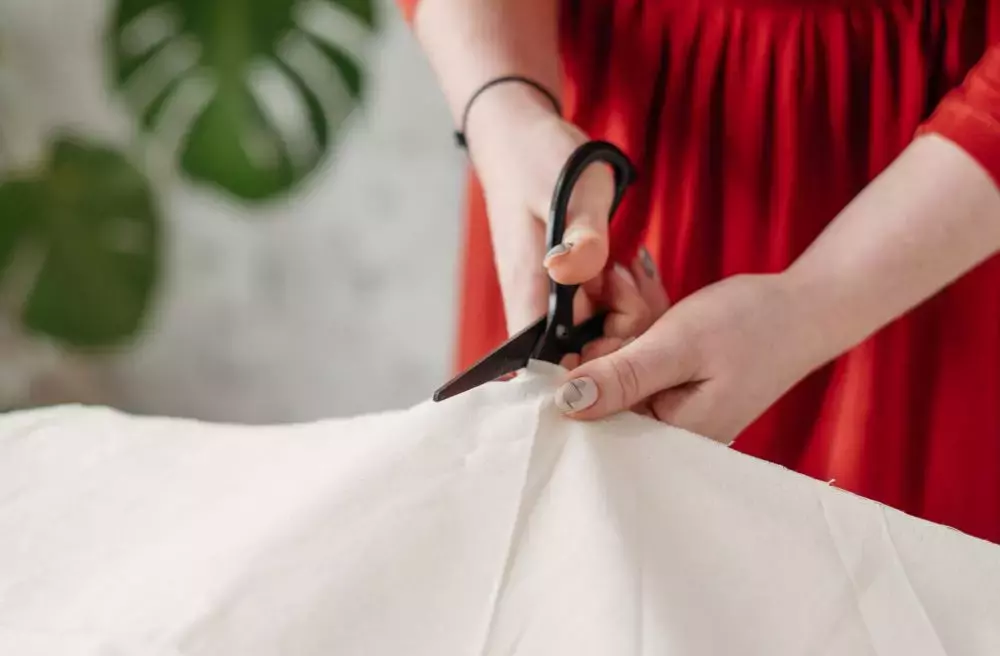
Preparation is where polyester projects are won or lost. Sewing problems that appear later—misaligned seams, puckering, uneven hems—often originate long before the needle touches the fabric. Polyester’s smooth surface and strong continuous filaments make it durable in use, but unforgiving during handling. Once distorted, stretched, or snagged, it rarely returns to its original state.
Unlike cotton, polyester does not relax after cutting or marking. Any mechanical stress introduced during prep—drag from dull blades, pressure from marking tools, stretching while pinning—tends to remain visible all the way through the finished product. That is why clean cutting, gentle marking, and controlled holding methods are not optional details but essential process steps. Use sharp cutting tools, limit fabric handling, and rely on non-damaging marking methods. Fabric clips often outperform pins, and rotary cutters reduce drag on slippery polyester. The goal is to keep the fabric neutral—neither stretched nor compressed—from table to machine.
Prep techniques that protect the fabric
A) Cutting tools: sharpness beats force
Polyester filaments are strong and smooth. When a cutting tool is even slightly dull, it does not slice cleanly—it pulls and drags, distorting the edge as it goes.
| Tool | Best Use | Why |
|---|---|---|
| Rotary cutter | Long straight cuts | Minimal drag |
| Sharp shears | Curves & notches | Precision control |
| Micro-serrated shears | Slippery satins | Reduced slipping |
A rotary cutter is often the safest option for woven polyester because it cuts straight down through the fabric instead of shearing it sideways. This reduces edge distortion, especially on linings, satins, and fine weaves.
Shears still have a place, particularly for curves and small details, but they must be sharp. Polyester dulls blades faster than cotton, so replacement intervals should be shorter. In professional cutting rooms, rotary blades are often changed daily when working with synthetic fabrics.
Micro-serrated shears help grip slippery surfaces like charmeuse or satin, preventing the fabric from sliding away from the blade during cutting.
B) Cutting technique matters as much as tools
Even with the right tool, technique can introduce distortion.
Best practices include:
- Keep fabric fully supported on the cutting surface
- Avoid lifting the fabric while cutting
- Cut in smooth, continuous motions
- Let the tool do the work—do not force it
Pulling fabric taut to “straighten” it before cutting is a common beginner habit. With polyester, this permanently changes the grain. Once released, the fabric relaxes unevenly, leading to twisted seams or mismatched edges later.
C) Stabilizing polyester while cutting
Lightweight and slippery polyester fabrics tend to shift under pattern pieces, especially during rotary cutting. Stabilization prevents movement without stressing the fabric.
| Method | When to Use |
|---|---|
| Pattern weights | Slippery or thin fabric |
| Non-slip mat | Rotary cutting |
| Light spray starch | Very soft weaves |
Pattern weights are preferable to pinning during cutting because they hold the fabric flat without piercing it. For very slick polyester, heavier weights placed along edges and corners reduce drift.
A non-slip cutting mat underneath the fabric adds friction without pressure, particularly helpful for long straight cuts.
Light spray starch can be useful for extremely soft or fluid polyester. It temporarily adds body, making cutting and marking easier. However, starch should be applied lightly and evenly, and removed before final pressing, as buildup can affect seam behavior.
D) Grain alignment: critical for polyester
Polyester shows grain distortion more clearly than cotton. A small misalignment at cutting becomes obvious once the garment or product is assembled.
Before cutting:
- Square the fabric carefully
- Align selvages without stretching
- Smooth the fabric flat rather than pulling it
In factories, polyester fabrics are often allowed to rest flat after spreading to eliminate tension introduced during rolling or shipping. At home, simply letting the fabric relax on the table for a few minutes before cutting can improve accuracy.
E) Marking without permanent damage
Marking polyester requires restraint. Heat, pressure, and abrasion can all leave marks that do not wash out or press away.
| Marking Tool | Safe for Polyester |
|---|---|
| Tailor’s chalk | Yes |
| Air/water-soluble pens | Yes (test first) |
| Tracing wheel | Risky on satins |
| Heat-erase pens | Avoid |
Tailor’s chalk is generally safe but should be applied lightly. Pressing too hard can burnish the surface, especially on satin or coated polyester.
Water-soluble or air-soluble pens work well on many polyester fabrics, but testing is essential. Some dyes interact unpredictably with synthetic fibers and may leave faint shadows after removal.
Tracing wheels can permanently mark smooth polyester by crushing the filaments rather than marking them. On satins and microfibers, these impressions can remain visible even without ink.
Heat-erase pens should be avoided entirely. Polyester softens under heat, and the marks may reappear later or become permanent after pressing.
F) Remove markings early
Unlike cotton, polyester does not tolerate prolonged marking. Chalk can bond with surface finishes, and pen marks may set under pressure or heat.
Best practice:
- Mark only what you need
- Sew promptly
- Remove markings before pressing whenever possible
In production settings, operators often mark polyester minimally and rely more on guides, templates, or basting rather than extensive surface marking.
G) Pins vs clips: choose wisely
Holding polyester layers together is another stage where damage can occur. Pins create holes, and some polyester fabrics do not recover from them.
| Fastener | Best Scenario |
|---|---|
| Fine glass-head pins | Medium-weight woven |
| Clips | Coated, satin, or thick |
| Basting stitches | Precision seams |
Fine glass-head pins are acceptable for stable, medium-weight woven polyester, but they should be inserted within seam allowances only.
For delicate, coated, or satin polyester, clips are safer. They hold layers together without piercing fibers, eliminating the risk of visible holes or snags.
Clips also reduce handling time and are less likely to distort layers as they are placed and removed.
H) When basting is the best option
For high-precision seams—such as inset panels, curved seams, or visible topstitching—temporary basting stitches often outperform pins or clips.
Hand basting:
- Holds fabric evenly along the entire seam
- Prevents shifting on slippery surfaces
- Introduces no permanent damage
In professional sewing rooms, basting is common for polyester linings and outer shells where appearance matters more than speed.
I) Avoid over-handling
Polyester responds poorly to excessive handling. Repeated lifting, repositioning, or smoothing can introduce stretch and distortion, particularly on the bias.
Strategies to reduce handling:
- Cut accurately the first time
- Stack and move pieces carefully
- Keep orientation consistent
- Avoid hanging cut pieces for long periods
Cut polyester pieces should be stored flat whenever possible. Hanging can stretch edges, especially on lightweight fabrics.
J) Static control during prep
Static electricity increases shifting and attracts lint, which interferes with accurate cutting and marking.
Ways to reduce static:
- Maintain moderate humidity in the room
- Use a light mist of water on the cutting surface (not the fabric)
- Avoid synthetic table coverings
In dry environments, static is one of the hidden reasons polyester “won’t behave” during prep.
K) Edge treatment after cutting
Freshly cut polyester edges can fray or curl slightly, depending on weave and finish. This can complicate handling before sewing.
Options include:
- Lightly staying seams immediately
- Using clips instead of pins to avoid edge stress
- Handling edges minimally until sewn
Heat sealing cut edges is sometimes used in industrial settings, but it is rarely appropriate for home sewing due to the risk of distortion or melting.
L) Prep sequence used by professionals
Professionals approach polyester prep methodically:
- Relax fabric flat before cutting
- Stabilize with weights or non-slip surface
- Cut using sharp, appropriate tools
- Mark lightly and minimally
- Hold layers with clips or basting
- Sew promptly before distortion develops
This sequence minimizes opportunities for damage at each stage.
M) Common prep mistakes to avoid
Some frequent errors that cause problems later:
- Forcing dull scissors through fabric
- Pinning heavily along edges
- Using heat-erase pens
- Stretching fabric to align pattern pieces
- Pressing marks before removing them
Each of these introduces stress that polyester will not forgive.
N) Real-world example
A common beginner issue occurs when cutting slippery polyester lining with dull shears. The fabric appears to cut cleanly, but the edge is subtly stretched. Once sewn, the seam puckers no matter how tension is adjusted.
Switching to a rotary cutter on a non-slip mat often eliminates the problem entirely—without changing thread, needle, or machine settings. The issue was never sewing; it was preparation.
O) Prep habit that saves time
Pre-cut a small “settings swatch” from the same polyester fabric. Use it to test:
- Cutting behavior
- Marking tools
- Pinning or clipping
- Initial seam handling
This small step prevents costly mistakes on full-size pieces and reflects how professionals protect material during development.
P) Practical takeaway
Polyester demands respect at the preparation stage. Clean cuts, gentle marks, and non-damaging holding methods preserve the fabric’s integrity before sewing begins. Once polyester is distorted, it rarely recovers—but when handled correctly from the start, it delivers clean seams, accurate alignment, and a finished result that looks intentional and professional.
6. Which pressing and heat-setting techniques avoid melting, shine, and seam damage?

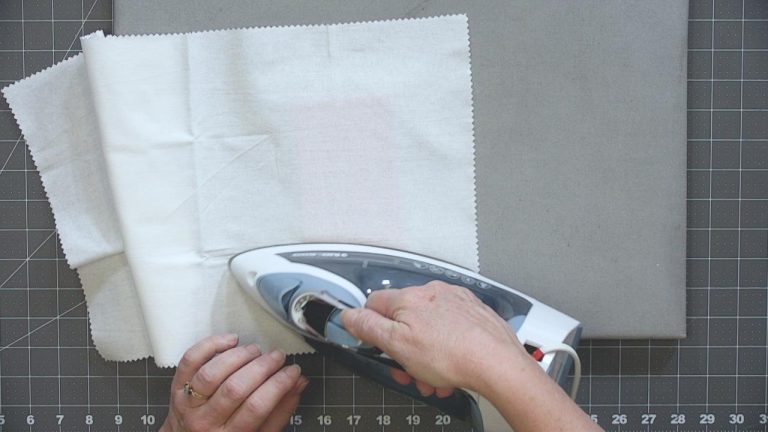
Pressing polyester is where many otherwise well-sewn projects fail. Seams are straight, stitching is clean, and then a single pass with the iron leaves shiny marks, flattened texture, or warped seam allowances that cannot be undone. This happens because polyester behaves fundamentally differently from natural fibers when exposed to heat.
Cotton scorches when overheated. Polyester softens first. Once softened, the fibers deform under pressure—and when they cool, that deformation can become permanent. Shine, imprinting, seam ridges, and surface flattening are not “burns”; they are structural changes in the fiber.
The good news is that heat damage to polyester is highly preventable. It is not about avoiding pressing altogether, but about controlling temperature, pressure, moisture, and time with intention. Press polyester at low temperature using a press cloth, minimal steam, and short contact time. Use lift-and-press motions instead of sliding the iron, and allow the fabric to cool fully between steps to set the shape without distortion.
Heat control that keeps polyester looking new
A) Iron temperature basics (keep it low)
Most household irons are calibrated with cotton in mind. Even the “polyester” setting can be hotter than necessary for some modern synthetic fabrics.
| Iron Setting | Recommendation |
|---|---|
| Polyester / Synthetic | Safe starting point |
| Silk | Often safer |
| Cotton / Linen | Too hot |
Polyester typically begins to soften around 150–160°C (300–320°F). Many irons exceed this temperature quickly, especially when steam is engaged. Starting at a silk setting and increasing gradually is safer than trusting preset labels.
A practical habit is to test heat on a fabric scrap and look for early warning signs:
- Surface sheen
- Texture flattening
- Slight waviness after cooling
If any of these appear, the temperature is already too high.
B) Why shine happens on polyester
Shine is not residue—it is fiber damage. When polyester is pressed under excessive heat or pressure, the filament surface flattens and reflects light differently. This effect is most visible on:
- Dark colors
- Satin or twill weaves
- Areas with seam bulk underneath
Once shine appears, it is extremely difficult to remove completely. Prevention is far easier than correction.
C) Press cloths: your best protection
A press cloth acts as a buffer between the iron and the fabric. It diffuses heat, reduces direct pressure, and prevents surface glazing.
| Press Cloth | Best For |
|---|---|
| Cotton muslin | General use |
| Silk organza | Visible areas |
| Teflon sheet | Coated fabrics |
Cotton muslin is widely used because it is breathable and easy to see steam through. Silk organza is preferred for visible garment areas because it allows precise placement while still protecting the surface.
Teflon sheets are useful for coated or laminated polyester, where moisture and friction must be minimized. However, they can trap heat, so contact time should be very short.
Pressing directly on polyester—especially shiny or dark fabric—without a cloth is one of the most common causes of irreversible damage.
D) Steam: helpful but risky
Steam relaxes polyester fibers, which can be useful—but also dangerous.
| Steam Use | Guidance |
|---|---|
| Light steam | Seams, allowances |
| Heavy steam | Avoid on satins |
| No steam | Coated fabrics |
Light steam can help seams settle and allowances lie flat, particularly on medium-weight woven polyester. However, excessive steam introduces moisture and heat simultaneously, increasing the risk of distortion.
Some polyester fabrics “watermark,” meaning moisture leaves visible rings or shading once dried. This is especially common with satins and microfiber finishes.
For coated or laminated polyester, steam should be avoided entirely. Moisture can weaken adhesives or cause bubbling under the coating.
E) Pressing technique matters more than temperature alone
Even at a safe temperature, how the iron is used makes a major difference.
| Technique | Result |
|---|---|
| Lift and press | Clean seams |
| Sliding iron | Distortion risk |
| Finger pressing | Safe alternative |
Sliding the iron stretches softened polyester, especially on the bias or near curved seams. This creates distortion that sets as the fabric cools.
Lift-and-press means placing the iron down briefly, applying gentle pressure, then lifting straight up before moving to the next area. This avoids lateral force and preserves the fabric’s original dimensions.
Finger pressing—using fingers or a seam roller to open seams before light pressing—reduces the amount of heat needed and improves control.
F) Pressure: the silent contributor to damage
Heat alone does not cause most polyester damage. Heat plus pressure does.
Heavy downward force:
- Flattens surface texture
- Imprints seam allowances onto the right side
- Increases shine risk
When pressing polyester, pressure should be minimal. The iron’s weight alone is often sufficient. Additional force should be applied only through a press cloth and only where structure is needed.
This is especially important for:
- Princess seams
- Dart tips
- Faced edges
- Collars and lapels
G) Letting seams cool to set shape
Polyester “sets” as it cools. Moving or manipulating the fabric while it is still warm allows fibers to relax unpredictably.
Best practice:
- Press briefly
- Lift the iron
- Leave the fabric untouched until cool
This cooling phase locks in the intended shape. In professional environments, operators often press and then immediately place the piece on a flat surface to cool undisturbed.
H) Pressing from the wrong side
Pressing from the wrong side reduces the risk of shine and surface damage. When possible:
- Press seams from the inside
- Use a press cloth even on the wrong side
- Use seam rolls or pressing hams to avoid imprinting
On garments, many seams are pressed open from the wrong side first, then lightly touched on the right side through a cloth only if necessary.
I) Managing seam bulk and imprints
Polyester shows seam imprints more readily than cotton. Thick seam allowances underneath can telegraph through to the right side.
Techniques to reduce imprinting:
- Grade seam allowances
- Use a seam roll to lift the seam line
- Press allowances away from visible areas
- Reduce pressure directly over seams
A seam roll is particularly effective. It supports the seam while allowing the surrounding fabric to fall away, preventing ridges from forming.
J) Heat-setting vs pressing: know the difference
Pressing shapes fabric temporarily. Heat-setting reshapes polyester at a molecular level.
Most home sewing should avoid intentional heat-setting. Industrial heat-setting is done under controlled conditions to stabilize fabric before cutting. Attempting similar effects at home often results in distortion or damage.
If a seam looks wrong, pressing harder is rarely the solution. Adjusting sewing settings is safer than forcing the fabric into submission with heat.
K) Special cases: coated and laminated polyester
Coated polyester requires extra caution.
Guidelines include:
- Lowest possible heat
- No steam
- Press from the wrong side only
- Use a press cloth or Teflon sheet
- Very short contact time
In many cases, finger pressing or using a seam roller is preferable to ironing at all. Once a coating is damaged, it cannot be restored.
L) Testing before committing
Professional sample rooms always test pressing behavior before final assembly. A simple test saves time and material.
Test protocol:
- Press a scrap at the intended setting
- Let it cool completely
- Check for shine, distortion, or texture change
- Adjust temperature or technique as needed
This test should be repeated if fabric color, finish, or thickness changes.
M) Recovery attempts when damage appears
If shine or flattening appears, recovery is limited but sometimes possible.
| Issue | Possible Recovery |
|---|---|
| Mild shine | Steam from wrong side through cloth |
| Flattened pile | Gentle brushing after steaming |
| Seam ridge | Light re-press with seam roll |
Steaming from the wrong side allows fibers to relax slightly without direct pressure. Results vary and are never guaranteed.
N) Real-world save
A common rescue technique involves light steaming from the wrong side through a cotton press cloth, followed by complete cooling without touching the fabric. In some cases, this restores enough texture to make the damage unnoticeable—though it rarely returns the fabric to its original state.
O) Why polyester rewards restraint
The biggest mindset shift when pressing polyester is learning to do less. Lower heat, lighter pressure, shorter contact time, and more patience produce better results than aggressive pressing.
In factories, operators often press polyester faster than cotton—not because it needs less attention, but because prolonged heat is avoided by design.
P) Practical takeaway
Polyester pressing is about control, not force. Low temperature, protective layers, minimal pressure, and deliberate technique prevent melting, shine, and seam damage. Once polyester is overheated, correction options are limited—but when handled with restraint, it holds shape cleanly and looks new far longer than many natural fibers.
Mastering heat control is the final step in making polyester projects look professional rather than homemade.
7. What common sewing problems happen with polyester, and how do you fix them fast?
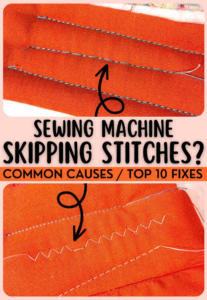
Polyester has a reputation for being “fussy,” but in reality it is extremely consistent. The same problems appear again and again, and they almost always trace back to a small number of mechanical causes. What makes polyester frustrating—especially for beginners—is that it does not hide those mistakes the way cotton does. It shows them immediately and keeps showing them.
That honesty is actually an advantage. Once you learn to read the symptoms, troubleshooting becomes fast and predictable. There is rarely a need for dramatic changes or complex adjustments. In most cases, the solution is one small correction: a needle swap, a slight stitch-length increase, a minor tension reduction, or a change in how the fabric is fed. Skipped stitches, puckering, thread breakage, thread shredding, fabric slipping, and heat shine are the most common polyester sewing problems. They are usually fixed by changing the needle, lengthening the stitch slightly, reducing upper tension, lowering presser-foot pressure, or switching to a better-matched thread—often just one adjustment at a time.
Symptom → cause → fix (copy-friendly table)
A) Fast diagnosis table
| Problem | Likely Cause | Quick Fix |
|---|---|---|
| Skipped stitches | Wrong or dull needle | Switch to microtex or stretch |
| Puckered seams | Stitch too short / tension high | Lengthen stitch, lower tension |
| Thread breaks | Tension too tight | Reduce top tension |
| Thread shredding | Burr on needle / wrong size | Replace needle |
| Fabric slipping | Smooth surface | Walking foot or clips |
| Shiny seams | Iron too hot | Press cloth + lower heat |
For many sewists, this table alone solves 80–90% of polyester-related problems. The key is trusting the symptom instead of fighting it.
B) Skipped stitches: the classic polyester complaint
Skipped stitches are often the first issue people encounter when sewing polyester. The machine seems fine on cotton, but suddenly misses stitches on smooth synthetic fabric.
Why it happens: Polyester fibers resist displacement. If the needle point is not sharp enough—or if it is slightly dull—it deflects instead of piercing cleanly. This prevents the hook from catching the thread loop consistently.
Fast fixes:
- Replace the needle immediately
- Use a Microtex (sharp) needle for woven polyester
- Use a stretch needle for polyester knits
- Slow sewing speed slightly on dense fabrics
Skipped stitches are almost never caused by tension alone. Changing the needle first saves time and frustration.
C) Puckered seams: compression, not construction
Puckering is the number-one complaint with polyester seams, and it is almost always mechanical.
Why it happens: Polyester does not relax after stitching. If it is compressed by short stitches, pulled by tight tension, or stretched under high presser-foot pressure, that distortion remains.
Fast fixes:
- Increase stitch length by 0.3–0.5 mm
- Lower upper tension slightly
- Reduce presser-foot pressure if adjustable
Many beginners try to “fix” puckering by pressing harder. With polyester, this often locks the problem in permanently.
D) Thread breakage: when the thread is the weak link
Thread breakage on polyester fabric feels counterintuitive because polyester is strong. That strength is exactly why breakage occurs.
Why it happens: If tension is too high or the needle eye is too small, the thread experiences more stress than the fabric. Cotton thread is especially prone to breaking on polyester fabric.
Fast fixes:
- Reduce upper tension
- Switch to polyester or core-spun thread
- Increase needle size slightly to reduce friction
If thread breaks repeatedly at the needle, look at the needle first—not the machine.
E) Thread shredding: a needle problem in disguise
Shredded thread near the needle eye or along the stitch line is a clear warning sign.
Why it happens: A microscopic burr on the needle eye or a needle that is too small for the thread creates abrasion. Polyester thread, being strong and smooth, reveals this quickly.
Fast fixes:
- Replace the needle (even if it looks fine)
- Match needle size to thread weight
- Avoid low-quality thread with inconsistent thickness
This is one of the few polyester problems that almost always disappears instantly when the needle is changed.
F) Fabric slipping or creeping: feed imbalance
Polyester’s smooth surface makes it easy for layers to shift relative to each other during sewing.
Why it happens: Low surface friction combined with presser-foot pressure causes uneven feeding. The bottom layer moves with the feed dogs while the top layer lags or advances.
Fast fixes:
- Use a walking foot or even-feed foot
- Reduce presser-foot pressure slightly
- Use clips instead of pins
- Add tissue paper or stabilizer for very thin fabric
Trying to hold or pull the fabric manually usually makes this worse by introducing stretch.
G) Shiny seams or marks: heat and pressure, not sewing
Shine is often blamed on thread or stitching, but it is almost always a pressing issue.
Why it happens: Polyester softens under heat. When pressed under pressure, the fiber surface flattens and reflects light differently.
Fast fixes:
- Lower iron temperature
- Use a press cloth
- Press from the wrong side
- Use lift-and-press, not sliding motions
Once shine appears, it is difficult to reverse completely. Prevention is critical.
H) Why “small” adjustments matter more with polyester
Polyester magnifies small imbalances. Changes that feel insignificant on cotton can completely transform polyester results.
Examples:
- A ¼-turn reduction in upper tension
- A 0.5 mm increase in stitch length
- A slight reduction in presser-foot pressure
These small changes work because polyester does not self-correct. Once the mechanical balance is right, the fabric behaves consistently.
I) When multiple problems appear at once
Sometimes polyester projects fail in several ways simultaneously—skipped stitches and puckering and thread breakage. This usually means the setup is fundamentally mismatched.
Reset strategy (fast and effective):
- Rethread the machine completely
- Install a brand-new needle
- Set stitch length slightly longer than default
- Return upper tension to a neutral setting
- Test on scrap fabric
Then adjust one variable at a time. Polyester rewards isolation and punishes guesswork.
J) The danger of changing too many settings at once
A common beginner mistake is adjusting tension, stitch length, needle, thread, and pressure all at once. When the problem improves—or worsens—it becomes impossible to know why.
Professional troubleshooting follows one rule: Change one thing, test, then decide.
Polyester’s clear feedback makes this approach especially effective.
K) Machine maintenance matters more than you think
Polyester exposes mechanical issues that cotton hides. A machine that “mostly works” on cotton may struggle with synthetic fabrics.
| Maintenance Item | Frequency |
|---|---|
| Needle replacement | Every project |
| Bobbin area cleaning | Every few hours |
| Tension discs | Keep dust-free |
Lint buildup, dull needles, and dust in tension discs all increase friction—exactly what polyester reacts badly to.
Many sewists are surprised by how much smoother polyester runs on a freshly cleaned machine.
L) Speed and handling errors
High sewing speed increases:
- Needle heat
- Thread friction
- Fabric stretch under pressure
Slowing down often eliminates problems without any setting changes. Polyester does not need force; it needs consistency.
Similarly, guiding the fabric too firmly introduces tension before the needle ever penetrates. Hands should guide direction, not control feed.
M) The “why it worked yesterday” problem
Polyester sometimes behaves differently from one session to the next. This is usually due to:
- Needle wear
- Changes in room humidity
- Static buildup
- Slight thread damage from previous sewing
Replacing the needle and rethreading often restores yesterday’s results immediately.
N) How professionals troubleshoot polyester
In production and sample rooms, polyester issues are handled methodically:
- Check needle type and condition
- Confirm stitch length is appropriate
- Balance upper tension
- Adjust presser-foot pressure
- Evaluate pressing technique last
Heat is always the final variable, not the first.
O) Mindset shift that helps beginners
If polyester misbehaves, it is not a personal failure or a lack of skill. It is feedback. Polyester is simply telling you which setting is off.
Once you stop fighting it and start listening to it, troubleshooting becomes fast and logical. Each symptom points clearly to a cause, and each cause has a straightforward fix.
P) Practical takeaway
Polyester sewing problems are repetitive—and that is good news. Skipped stitches, puckering, breakage, slipping, and shine all have known causes and fast solutions. With a sharp needle, balanced settings, clean machine, and restrained heat, polyester becomes predictable and efficient.
Mastering these fixes does not just improve polyester projects. It sharpens your overall understanding of how machines, materials, and mechanics interact—skills that transfer to every fabric you sew.
8. How do you pick beginner-friendly polyester fabrics and plan a simple first project?

One of the biggest mistakes beginners make with polyester is assuming all polyester fabrics behave the same. They don’t. “Polyester” only describes the fiber—not the weave, finish, weight, or surface behavior. Two polyester fabrics can share the same fiber content and still sew like completely different materials.
For beginners, success with polyester is less about technique and more about starting with the right fabric and a realistic first project. The wrong fabric magnifies every small setup error. The right one allows you to learn machine control, tension balance, and pressing habits without fighting the material at every step. Begin with medium-weight, woven polyester fabrics that have a matte or lightly textured surface. Avoid ultra-slippery satins, sheer linings, heavy coatings, and high-stretch knits until basic handling and machine setup feel automatic.
A beginner-first selection guide
A) What actually makes a polyester fabric “easy”
Beginner-friendly polyester fabrics share a few structural traits:
- Stable weave (doesn’t stretch easily on grain)
- Moderate thickness (not sheer, not bulky)
- Matte or textured surface (adds friction)
- Predictable recovery (returns to shape without rippling)
These traits reduce sensitivity to small tension errors, feeding inconsistencies, and handling mistakes.
B) Polyester fabrics that are easiest to sew
| Fabric Type | Why It’s Beginner-Friendly |
|---|---|
| Woven twill polyester | Stable, forgiving |
| Polyester poplin | Clean edges, low slip |
| Medium oxford | Holds shape |
| Textured polyester | Reduced slipperiness |
Woven twill polyester Twill weaves add diagonal structure, which increases stability and reduces edge distortion. This makes twill an excellent training fabric for straight seams, topstitching, and basic pressing.
Polyester poplin Poplin has a tight, plain weave that cuts cleanly and feeds evenly. It rarely frays aggressively and responds well to standard needles and stitch lengths.
Medium-weight oxford polyester Oxford-style weaves are slightly thicker and more dimensional, making seam behavior easy to see. This is ideal for learning how stitch length and tension affect appearance.
Textured polyester Fabrics with a subtle texture—such as crepe-like surfaces—naturally hide minor stitch irregularities and reduce surface shine, giving beginners more margin for error.
C) Why matte finishes matter
Glossy polyester reflects light strongly. Any small distortion—needle marks, uneven stitches, pressing errors—becomes highly visible.
Matte or semi-matte finishes:
- Conceal minor tension imbalance
- Show less shine from pressing
- Hide tiny needle penetrations
- Look cleaner under imperfect lighting
This visual forgiveness makes learning less frustrating and results more satisfying.
D) Polyester fabrics to save for later
| Fabric | Why It’s Tricky |
|---|---|
| Satin | Slippery, needle marks |
| Chiffon | Shifts easily |
| Coated polyester | Needs special needles |
| High-stretch knits | Requires stretch setup |
These fabrics are not “bad”—they simply require tighter control and experience.
Satin Polyester satin is smooth, slippery, and shows every mistake. Needle holes can remain visible, seams shine easily, and pressing errors are permanent.
Chiffon Ultra-lightweight polyester chiffon shifts during cutting, feeds unevenly, and reacts strongly to tension and pressure. It is best attempted after mastering stabilization techniques.
Coated polyester PU- or PVC-coated fabrics resist needles, require heavier thread and needles, and are sensitive to heat. They are excellent materials—but poor learning tools.
High-stretch polyester knits These combine polyester’s recovery with elasticity, adding complexity in needle choice, stitch selection, and feeding control.
E) Weight matters more than fiber content
When shopping, beginners often focus on fiber labels. A better question is: How does this fabric behave when handled?
A simple test:
- Drape it over your hand
- Gently tug on grain and bias
- Rub the surface lightly
- Fold and unfold it
If the fabric:
- Springs back cleanly
- Feels stable in the hand
- Doesn’t slide excessively
…it is likely beginner-friendly, regardless of fiber label.
F) Planning a simple first project (that still looks professional)
The goal of a first polyester project is process learning, not complexity. Straight seams, repeatable steps, and visible improvement matter more than advanced shaping.
Recommended first projects:
- Zipper pouch
- Simple tote bag
- Drawstring bag
- Cushion cover
Among these, the zipper pouch and tote bag offer the best balance of challenge and reward.
G) A simple first project plan (looks professional)
Project: Zipper pouch or basic tote bag Why it works: Straight seams, flat construction, minimal pressing risk, useful final product
| Step | Recommendation |
|---|---|
| Fabric | Medium woven polyester |
| Needle | 80/12 microtex |
| Thread | All-purpose polyester |
| Stitch length | 2.8–3.0 mm |
| Pressing | Low heat + press cloth |
This setup avoids most beginner pitfalls while still teaching essential skills: seam alignment, consistent feeding, zipper control, and light pressing.
H) Why bags beat garments for first projects
Garments introduce curves, fit tolerance, and bias edges early—all areas where polyester is unforgiving.
Bags:
- Use straight seams
- Rely on structure, not drape
- Tolerate minor size variation
- Require less pressing
This makes bags ideal for building confidence before moving into apparel.
I) Pre-project testing: the fastest learning shortcut
Before sewing the actual project, professionals always test. Beginners benefit even more from this habit.
Before starting:
- Sew two straight seams on scraps
- Test stitch length at 2.8 vs 3.0 mm
- Lightly press with a cloth
- Observe puckering, shine, and feed
This 10-minute test reveals:
- Whether needle choice is correct
- Whether tension is balanced
- How the fabric reacts to heat
It also removes anxiety before working on the real pieces.
J) Build skill in layers, not all at once
A common beginner mistake is attempting to learn:
- Polyester behavior
- Zippers
- Curves
- Decorative topstitching
- Heavy pressing
…all in one project.
Instead:
- First project: straight seams only
- Second project: add a zipper
- Third project: introduce light curves
- Later: explore slippery or shiny polyesters
Polyester rewards incremental skill building.
K) What “professional” really looks like in polyester
Many beginners assume professional results require advanced techniques. In polyester, the opposite is often true.
Professional-looking results come from:
- Flat seams
- Consistent stitch length
- Balanced tension
- No shine or distortion
- Clean edges
A simple tote with clean seams looks far more professional than a complex design with visible puckering.
L) Color choice affects learning
Light colors reveal dirt and marks. Dark colors show shine and needle errors.
For learning:
- Mid-tone colors (gray, navy, olive) are ideal
- Avoid jet black satin or bright white lining
- Avoid very pale pastels that show handling marks
Color choice can make or break the learning experience.
M) Where beginners usually go wrong
Common early mistakes include:
- Starting with lining fabric because it’s “cheap”
- Choosing satin because it “looks nice”
- Selecting fabric too thin to handle confidently
- Attempting garments before understanding polyester’s recovery
These choices increase frustration without improving skill.
N) How professionals choose test fabrics
In sample rooms, even experienced technicians test new patterns on stable polyester first, not the most delicate version.
They use:
- Medium-weight woven polyester
- Matte finish
- Neutral color
If it works there, they scale complexity later. Beginners benefit from the same logic.
O) A realistic expectation reset
Your first polyester project should teach you:
- How settings affect seams
- How fabric reacts to handling
- How little heat is actually needed
- How small changes create big improvements
It does not need to impress anyone. It needs to behave predictably.
P) Polyester is predictable when you respect it
Polyester does not demand advanced skill—it demands correct setup. When beginners start with the right fabric and a simple project, polyester becomes one of the most reliable materials to sew.
With a stable woven polyester, a sharp needle, balanced settings, and restrained heat, success becomes repeatable. That repeatability builds confidence faster than fighting delicate fabrics ever will.
Once beginners stop treating polyester like cotton—and start choosing fabrics and projects that suit its behavior—everything clicks.
Ready to work with sew-friendly custom polyester fabrics?
SzoneierFabrics is a China-based fabric R&D and manufacturing partner with years of experience developing stable, consistent, and easy-to-sew polyester fabrics. From lightweight linings to durable woven and coated polyesters, the team supports custom development with:
- Free design support
- Low-MOQ customization
- Fast sampling & free samples
- Short, reliable lead times
- 100% quality assurance
If you’re planning a sewing project, product line, or need polyester fabric that behaves consistently under the machine, share your use case and requirements. Request a custom quotation or samples from SzoneierFabrics—and start sewing polyester with confidence, not guesswork.