Skip to content
Most shoe-storage problems do not begin with an obviously bad product. They begin with a reasonable choice used in the wrong situation. A breathable cotton bag keeps dust away from a pair of leather shoes, yet it cannot stop a heavy suitcase from crushing them. A rigid plastic box protects a collectible sneaker from pressure, yet it may trap moisture when the shoe is stored before it has fully dried. Both products appear protective. Each controls a different risk.
Shoe bags are usually better for breathable storage, surface separation, compact organization, travel, and shoes that need a soft contact layer. Shoe boxes are generally better for stacking, crush resistance, shape protection, visibility, and structured long-term organization. For valuable or delicate footwear, the strongest storage method often combines both: each clean, dry shoe is placed in a breathable fabric bag or separate sleeve, then stored inside a correctly sized ventilated box.
The right option depends on footwear material, storage duration, available space, humidity, access frequency, and the type of damage most likely to occur. Dust, pressure, sunlight, rubbing, moisture, and dirt do not require the same solution. A storage product should therefore be judged by the risk it controls, not simply by how tidy it makes a closet look.
Consider two identical pairs of white sneakers stored for one year. One pair is pushed into its original cardboard box under four heavier boxes. The other is placed in a soft cotton bag on an open shelf beside a window. When the pairs are checked, the first has a compressed collar and damaged box corners; the second has retained its shape but collected more light exposure and shelf dust around the bag opening. Neither method completely failed. Neither method completely succeeded. The difference lies in the details most people overlook.
What Are Shoe Bags and Shoe Boxes?
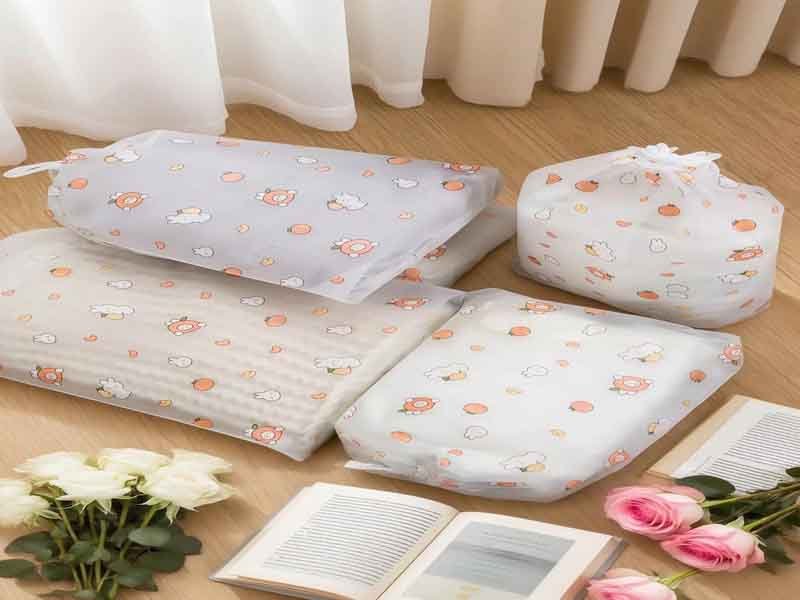
Shoe bags are flexible textile enclosures used to separate footwear from dust, dirty surfaces, luggage, clothing, and other shoes. Shoe boxes are rigid or semi-rigid containers that create a defined storage volume around footwear and allow pairs to be stacked, labeled, and protected from compression. Bags prioritize flexibility and soft contact, while boxes prioritize structure and spatial organization.
The term “shoe bag” may describe anything from a lightweight cotton drawstring pouch to a padded Oxford travel case. “Shoe box” may refer to original cardboard packaging, a transparent plastic drop-front box, a folding fabric organizer, or a rigid display case. Comparing the two categories only makes sense after their material, closure, ventilation, and intended use are identified.
A thin nonwoven pouch should not be expected to perform like a padded sneaker case. A lightweight retail carton should not be treated like a load-bearing plastic storage box. The construction determines the real level of protection.
What Is a Shoe Storage Bag?
A shoe storage bag is a flexible enclosure made from cotton, canvas, polyester, nylon, linen, mesh, Oxford fabric, neoprene, nonwoven fabric, or a combination of materials. It may hold one shoe, one pair, or several pairs in divided compartments.
Common closures include:
Drawstrings
Zippers
Flaps
Hook-and-loop strips
Snaps
Roll-top closures
Buckles
Elastic openings
Basic dust bags create a soft barrier between shoes and the surrounding environment. More advanced designs may include:
A washable lining
Separate left and right shoe compartments
Mesh ventilation panels
A water-resistant base
Foam padding
Semi-rigid side panels
A reinforced handle
A luggage attachment sleeve
An identification window
A removable divider
A coated outsole section
A shoe bag can perform one or several functions, but every added feature changes its behavior. A mesh panel improves airflow while reducing dust protection. A waterproof lining isolates wet soles but lowers breathability. Padding improves impact protection while increasing weight and drying time.
| Shoe Bag Type | Main Material | Primary Function | Structural Protection |
|---|---|---|---|
| Cotton dust bag | Cotton muslin or twill | Dust and surface separation | Low |
| Canvas shoe pouch | Cotton or blended canvas | Reusable closet storage | Low to moderate |
| Polyester travel bag | Taffeta or Oxford fabric | Luggage organization | Moderate |
| Nylon ripstop bag | Lightweight nylon | Compact travel storage | Moderate |
| Mesh shoe bag | Polyester or nylon mesh | Ventilation and drying | Low |
| Padded sneaker case | Oxford, foam, and lining | Travel and scuff protection | High |
| Neoprene shoe sleeve | Neoprene laminate | Cushioning and flexible protection | Moderate |
| Laminated wet-shoe bag | Coated or film-laminated textile | Temporary moisture containment | Moderate |
| Divided pair bag | Woven fabric with internal panel | Shoe-to-shoe separation | Moderate to high |
The most important characteristic of a storage bag is its flexibility. It conforms to the shoe and occupies little space when empty. This makes it convenient for small closets, suitcases, gym lockers, retail packaging, and seasonal storage.
Flexibility can also be a weakness. A soft bag does not create much resistance against external pressure. If heavy objects are placed on top, the bag transfers that load to the footwear inside.
A bag therefore protects surfaces better than shapes unless additional structural components are included.
What Is a Shoe Storage Box?
A shoe storage box is a rigid or semi-rigid container designed to hold footwear within a fixed internal space. Boxes may be made from corrugated cardboard, paperboard, polypropylene, polyethylene, PET, acrylic, wood, molded plastic, fabric-covered board, or foldable plastic sheet.
Common box formats include:
Original retail cardboard boxes
Transparent stackable plastic boxes
Drop-front sneaker boxes
Pull-out drawer boxes
Magnetic rigid boxes
Ventilated folding boxes
Fabric-covered storage boxes
Clear acrylic display cases
Under-bed shoe boxes
Multi-pair storage cabinets
Boxes provide three benefits that ordinary soft bags cannot easily match:
They resist external compression.
They create predictable stacking dimensions.
They preserve open space around the shoe.
A properly sized box protects the toe box, heel counter, collar, decorations, and laces from being pressed by neighboring items. It also simplifies inventory because boxes can be stacked in rows, labeled, or made transparent.
| Shoe Box Type | Main Material | Best Use | Main Limitation |
|---|---|---|---|
| Original retail box | Corrugated cardboard | Short- to medium-term storage | Weakens under moisture and stacking |
| Clear plastic box | PP, PET, or similar plastic | Visible closet organization | May trap heat and moisture |
| Drop-front box | Molded plastic | Frequent sneaker access | Requires more fixed space |
| Drawer-style box | Plastic, board, or wood | Organized shelving | Higher material use |
| Foldable plastic box | PP sheet or panels | Flexible home organization | Hinges and joints may weaken |
| Rigid gift box | Paperboard with wrap | Premium presentation | Limited ventilation |
| Acrylic display case | Acrylic | Collectible display | Heavy and less breathable |
| Fabric storage box | Textile over board | Decorative closet storage | Difficult to wash |
| Under-bed box | Plastic or fabric-board structure | Space-efficient storage | Restricted airflow under furniture |
Rigid construction does not automatically guarantee protection. A box that is too short may force a high-top collar to fold. A narrow box may press both shoes together. A clear box near direct sunlight can expose footwear to light and heat. An airtight box can retain moisture introduced by a recently worn shoe.
The most useful box is large enough to avoid contact with the shoe, strong enough for the intended stacking load, and ventilated appropriately for the environment.
How Do Their Structures Differ?
The fundamental structural difference is that a bag follows the shape of the footwear, while a box creates a separate shape around it.
A bag uses fabric tension, seams, gussets, lining, padding, and closures to form its internal space. A box uses walls, corners, panels, hinges, and lids to maintain volume.
This affects nearly every aspect of storage performance.
| Performance Factor | Soft Shoe Bag | Structured Shoe Bag | Cardboard Box | Plastic Box |
|---|---|---|---|---|
| Empty storage volume | Very low | Moderate | High | High |
| Compression resistance | Low | Moderate | Moderate | High |
| Dust protection | High with secure closure | High | High | Very high |
| Breathability | High to moderate | Moderate to low | Moderate | Low unless vented |
| Shoe-to-shoe separation | Optional | Usually available | Depends on packing | Depends on packing |
| Stackability | Very low | Low to moderate | High when undamaged | Very high |
| Portability | Very high | High | Moderate | Low to moderate |
| Washability | Often high | Depends on construction | Very low | High |
| Visual identification | Low unless labeled | Moderate | Low | High when transparent |
| Water resistance | Depends on fabric | Moderate to high | Low | High |
| Surface softness | High | High with lining | Moderate | Low without inner sleeve |
| Long-term shape protection | Low | Moderate to high | Moderate | High |
A soft bag changes shape when the shoe is inserted. This allows one bag to fit several similar shoe sizes, but it also means the bag may become tight around wider outsoles or decorations.
A box provides fixed internal dimensions. It is less forgiving but easier to evaluate. If the internal length, width, and height exceed the external footwear measurements by a suitable margin, the shoe remains free from wall pressure.
Bags distribute pressure differently from boxes. When a suitcase presses against a soft bag, force reaches the shoe almost immediately. A structured padded bag absorbs part of that force. A rigid box spreads pressure across its walls, although weak cardboard can eventually buckle.
Boxes also behave differently when stacked. Weight is carried through corners and sidewalls. If the box material, wall thickness, or assembly is inadequate, the lower units deform. A stack may look organized while gradually placing pressure on the shoes inside.
A storage system should therefore consider both individual packaging and total stack load.
Which Storage Types Are Available?
Shoe storage can be divided into five broad systems:
Soft individual storage
Structured portable storage
Rigid individual storage
Multi-pair furniture storage
Combined bag-and-box storage
Each system serves a different routine.
| Storage System | Typical Product | Best For | Main Trade-Off |
|---|---|---|---|
| Soft individual storage | Cotton or polyester shoe bag | Dust control and compact storage | Little crush protection |
| Structured portable storage | Padded zipper case | Travel and premium sneakers | More bulk |
| Rigid individual storage | Plastic or cardboard box | Stacking and shape protection | Fixed space |
| Multi-pair storage | Cabinet, rack, or under-bed organizer | Large footwear collections | Less individual protection |
| Combined storage | Fabric sleeve inside ventilated box | Delicate and long-term storage | More components and cost |
Original cardboard boxes are familiar and convenient because they already fit the footwear. They also display model, size, and product information. However, repeated opening, humidity, stacking, and transport weaken corners and lids.
Transparent boxes solve identification problems but may expose shoes to more light. Opaque boxes provide stronger light reduction but require labels.
Drop-front boxes allow users to access lower pairs without removing an entire stack. This is useful for frequently worn sneakers. The hinges, latches, and front panels should withstand repeated cycles.
Under-bed storage uses otherwise empty space, but low airflow and infrequent inspection can create hidden moisture problems. Shoes should be clean and fully dry, and the container should not rest directly against a damp floor.
Fabric-covered boxes provide a softer decorative appearance. Their internal boards may still absorb moisture, and the complete unit may be difficult to wash.
The right system should match frequency of access.
Frequently worn shoes need fast opening, ventilation, and easy cleaning.
Seasonal shoes need dust protection, clear labels, and periodic inspection.
Collectible shoes need light control, shape support, surface separation, and stable surroundings.
Travel shoes need compact packing, secure closure, and dirt containment.
A family shoe cabinet may use multiple systems at once: mesh or ventilated bags for sports shoes, fabric pouches for leather shoes, and stackable boxes for seasonal or valuable pairs.
Which Offers Better Shoe Protection?
Shoe boxes generally provide better protection against crushing, stacking pressure, falling objects, and shape deformation. Shoe bags generally provide better soft-surface separation and reduce rubbing between delicate uppers, luggage hardware, and dirty outsoles. For broad protection, a soft individual shoe bag placed inside a ventilated rigid box offers the strongest combination.
The phrase “better protection” is too broad unless the risk is identified. Protection may refer to:
Blocking dust
Preventing surface scratches
Avoiding outsole contamination
Resisting compression
Reducing light exposure
Controlling moisture
Preserving shape
Preventing shoe-to-shoe contact
A clear plastic box may score highly for dust and compression but poorly for light reduction and ventilation. A cotton bag may score highly for breathability and soft contact but poorly for stacking resistance.
The best option is the one that controls the most relevant risks without introducing a more serious new problem.
Do Shoe Bags Block Dust?
Shoe bags block dust effectively when made from closely woven fabric and fitted with a secure closure. Cotton twill, canvas, polyester taffeta, nylon, and Oxford fabric provide much stronger dust protection than open mesh.
Dust performance depends on:
Fabric density
Opening size
Closure coverage
Seam construction
Storage position
Cleaning frequency
A drawstring bag may leave a small opening around the cord channel. A zipper bag normally offers more complete coverage. A flap can be added over the drawstring area to reduce the opening without eliminating breathability.
| Shoe Bag Construction | Dust Protection | Breathability | Best Use |
|---|---|---|---|
| Large mesh bag | Low | Very high | Active footwear |
| Fine mesh bag | Moderate | High | Ventilated short-term storage |
| Lightweight cotton bag | High | High | Closet storage |
| Cotton canvas bag | Very high | Moderate | Long-term dry storage |
| Polyester zipper bag | Very high | Moderate | Travel and closet organization |
| Coated Oxford bag | Very high | Low | Temporary dirt containment |
| Padded lined case | Very high | Low to moderate | Premium travel storage |
A shoe bag acts as the first contact layer. Dust settles on the outer textile rather than directly on leather, suede, knit, laces, or stitching.
The bag must also be cleaned. Reusing a heavily dusty bag can transfer particles back onto the shoe. Light-colored interiors make contamination easier to see.
Dust can be more damaging than its appearance suggests. Fine particles enter suede nap, knit openings, perforations, seam lines, and outsole channels. Once mixed with moisture or oils, they may become difficult to remove.
A bag is particularly useful for shoes placed on open racks, wardrobe shelves, or inside larger boxes shared with other items.
The main limitation is the closure. If a loosely closed bag sits below a dusty shelf or ventilation outlet, particles may enter through the opening. The closure should cover the shoe without pressing against the upper.
Are Shoe Boxes More Protective?
Shoe boxes provide stronger overall physical protection because rigid walls separate footwear from external pressure, falling objects, and neighboring shoes. They also reduce direct dust exposure and keep pairs within a defined space.
A box is more protective only when:
Its dimensions fit the shoes.
Its walls remain structurally stable.
The interior is clean.
The closure remains secure.
Moisture is controlled.
The boxes are stacked correctly.
Weak, damaged, or overloaded boxes lose much of their advantage.
| Protection Risk | Fabric Bag | Cardboard Box | Plastic Box | Bag Inside Box |
|---|---|---|---|---|
| Dust | High | High | Very high | Very high |
| Scuffing | High with soft lining | Moderate | Moderate | Very high |
| Crushing | Low | Moderate | High | High |
| Shoe-to-shoe contact | Moderate with divider | Moderate | Moderate | Very high |
| Light exposure | High with opaque fabric | High | Low if clear | Very high with opaque box |
| Moisture escape | Moderate to high | Moderate | Low | Depends on ventilation |
| Water from outside | Low to moderate | Very low | High | High |
| Stack organization | Low | High | Very high | Very high |
Cardboard boxes distribute load through their sidewalls and corners. When dry and undamaged, they provide useful protection. High humidity, crushed corners, torn lids, and long-term stacking reduce their strength.
Plastic boxes maintain shape better and resist external water. They can still crack under impact, warp under heat, or collapse if thin panels support excessive weight.
A box should not be filled so tightly that the shoe touches every wall. Some clearance is needed around high collars, thick tongues, heel tabs, and projecting outsole edges.
Interior surfaces deserve attention. Rough cardboard edges, staples, hard plastic corners, and manufacturing residue can mark delicate shoes. A fabric sleeve creates a softer contact layer.
Which Prevents Scuffs Better?
A soft lined shoe bag prevents surface scuffs better than an unlined box because the textile creates a low-friction contact layer around the shoe. A box prevents outside objects from reaching the shoe, but the shoes may still rub against each other or against the box walls when moved.
Scuff protection depends on two boundaries:
The boundary between the shoe and its immediate enclosure
The boundary between the enclosure and the outside environment
A bag protects the first boundary.
A box protects the second.
Combining both protects both boundaries.
| Shoe Surface | Main Scuff Risk | Recommended Storage Layer |
|---|---|---|
| Smooth leather | Scratches and dull patches | Soft microfiber or fine woven bag |
| Suede | Flattened nap and polished areas | Breathable cotton sleeve |
| Knit fabric | Snagging and pilling | Smooth woven individual bag |
| Patent finish | Scratching and surface sticking | Separate non-abrasive sleeve |
| Metallic coating | Visible rubbing and edge wear | Soft lined bag inside rigid box |
| Printed film | Abrasion and lifting | Smooth divider and stable box |
| Embroidery | Thread snagging | Bag without exposed hook-and-loop |
| Molded decoration | Cracking from contact | Clearance and local padding |
Placing both shoes loose inside one box may allow the outsole of one shoe to rub against the upper of the other. A paper wrap can reduce contact, but it may tear or shift during repeated access.
Individual bags or sleeves provide more reliable separation. A divided pair bag can also work, provided the divider covers the full outsole contact area.
Scuffs may also come from identification windows, zipper teeth, metal eyelets, and rough seams. A storage product should be inspected inside, not judged only by its exterior.
For pale shoes, inner materials should be tested for color transfer. Dark textile dye, printed paper, and recycled cardboard ink may transfer under pressure and humidity.
How Do Boxes Prevent Crushing?
Boxes prevent crushing by transferring external load through rigid walls rather than directly through the footwear. Their effectiveness depends on material stiffness, wall thickness, corner design, stacking alignment, and the weight placed above.
Compression protection is especially important for:
High-top collars
Soft knit uppers
Structured toe boxes
Foam midsoles
Decorative sneakers
Platform shoes
Footwear with molded accessories
Formal shoes with polished uppers
A box works like a small load-bearing structure. Vertical weight should travel through the corners and sidewalls. When boxes are misaligned, the center of a lid may receive pressure it was not designed to support.
| Box Condition | Compression Protection | Main Concern |
|---|---|---|
| New corrugated shoe box | Moderate | Weakens with repeated use |
| Crushed cardboard box | Low | Load reaches footwear |
| Thick rigid paperboard box | Moderate to high | Sensitive to moisture |
| Thin folding plastic box | Moderate | Panel and hinge deformation |
| Reinforced PP box | High | Fixed storage volume |
| Acrylic display box | High | Weight and brittleness |
| Box with internal divider | High | Correct divider positioning |
| Overloaded stack | Reduced | Lower boxes deform |
Several habits improve protection:
Place heavier shoes on lower shelves.
Avoid stacking damaged cardboard boxes.
Align box corners vertically.
Do not place boxes beneath unrelated heavy items.
Choose boxes with enough internal height.
Use internal support for soft shoes.
Inspect lower boxes for bowing.
Avoid long-term storage in humid locations.
Boxes should not become an excuse to ignore internal shoe support. A soft high-top may still collapse within a large box if it is stored on its side or pressed by the second shoe.
Lightweight internal forms, clean tissue, or suitable shoe trees can maintain shape. Support should be gentle rather than tight.
A box that is excessively large may allow shoes to slide during moving or transport. Dividers, individual bags, or internal positioning panels reduce movement.
Do Shoe Bags Protect Delicate Uppers?
Shoe bags protect delicate uppers effectively when the interior is soft, colorfast, clean, and correctly sized. They reduce contact with dust, rough shelves, neighboring footwear, box walls, and hard luggage components.
Suitable bag materials for delicate uppers include:
Fine cotton
Cotton twill
Soft microfiber
Smooth polyester
Brushed lining fabric
Lightweight non-abrasive canvas
The bag should avoid:
Coarse raw canvas against suede
Hard monofilament mesh
Exposed zipper teeth
Sharp metal eyelets
Rough overlocked seams
Dark untested dyes
Strongly textured heat-transfer graphics inside
Hook-and-loop hooks near the shoe
| Delicate Material | Suitable Bag Direction | Important Detail |
|---|---|---|
| Suede | Soft breathable cotton | Avoid compression of the nap |
| Nubuck | Fine woven fabric | Keep inner surface free from grit |
| Patent leather | Smooth individual sleeve | Prevent surface-to-surface sticking |
| Knit upper | Smooth polyester or cotton | Avoid snagging |
| Satin shoe | Soft lined bag | Use individual storage |
| Metallic finish | Microfiber-lined pouch | Limit movement |
| Beaded upper | Roomy padded bag | Avoid pressure on decorations |
| Embroidered shoe | Smooth bag with covered seams | Prevent thread catching |
| White leather | Light colorfast lining | Test wet and dry rubbing |
| Reflective film | Soft non-abrasive lining | Avoid sharp folds |
Sizing is critical. A tight bag creates constant contact and can flatten decorations or mark soft surfaces. A very loose bag permits movement during travel.
The opening should be wide enough to insert the shoe without dragging the upper against the zipper, drawstring channel, or seam.
For high-value footwear, one bag per shoe provides the safest surface separation. The individual bags may then be placed side by side inside one rigid box.
Is a Bag-and-Box System More Protective?
A bag-and-box system provides the broadest protection because the bag controls surface contact while the box controls external pressure.
The system can be arranged as follows:
Clean and dry each shoe.
Add gentle internal support where needed.
Place each shoe in an individual breathable sleeve.
Position the shoes inside a ventilated rigid box.
Add a divider if the pair may shift.
Label the box externally.
Store it in a cool, dry, shaded location.
Inspect the contents periodically.
| Protective Layer | Main Function |
|---|---|
| Internal shoe support | Maintains toe, heel, and collar shape |
| Individual fabric bag | Reduces dust, rubbing, and dye transfer |
| Divider | Stops shoe-to-shoe movement |
| Rigid box | Resists crushing and supports stacking |
| External label | Reduces unnecessary opening |
| Shelf system | Controls overall load and access |
| Stable storage room | Reduces heat and moisture stress |
The method is especially useful for:
Collectible sneakers
White leather shoes
Suede footwear
Formal shoes
Decorated fashion shoes
Seasonal footwear
Archived samples
Pairs moved between locations
The system should not be over-sealed. Breathable bags cannot release moisture effectively if placed inside an airtight box containing damp shoes.
Ventilation openings, dry storage conditions, and complete pre-storage drying remain necessary.
Which Option Protects Against Light?
Opaque shoe bags and opaque boxes protect against light better than transparent plastic boxes or full-mesh bags. Light exposure can contribute to fading, yellowing, and changes in some foams, adhesives, plastics, dyes, and surface finishes.
A clear box offers convenient identification, but it should not be placed in direct sunlight. Curtains, closed cabinets, UV-reducing panels, or opaque outer covers can reduce exposure.
| Storage Type | Light Protection |
|---|---|
| Full mesh bag | Very low |
| Clear plastic box | Very low |
| Small-window fabric bag | Moderate |
| Opaque cotton bag | High |
| Opaque Oxford bag | High |
| Cardboard shoe box | Very high |
| Opaque plastic box | Very high |
| Fabric bag inside cardboard box | Very high |
Large transparent doors are attractive for display collections, but display and preservation are not always the same goal. A pair intended for visual enjoyment may accept more light exposure than a pair stored primarily for long-term condition.
An external photo label can identify shoes without exposing them through a fully clear box.
Which Option Protects Against External Water?
Plastic boxes and coated shoe bags resist external water better than cardboard boxes and untreated cotton bags. However, no ordinary storage product should be assumed waterproof unless its seams, lid, closure, and material have been designed and tested for that purpose.
| Storage Product | External Water Resistance | Internal Moisture Escape |
|---|---|---|
| Cotton shoe bag | Low | High |
| Canvas shoe bag | Low | Moderate |
| Coated Oxford bag | High | Low |
| Cardboard shoe box | Very low | Moderate |
| Clear plastic box | High | Low |
| Vented plastic box | High around walls | Moderate |
| Laminated wet-shoe bag | Very high | Very low |
External water protection matters in basements, entry areas, vehicles, moving trucks, gyms, and travel environments.
The better solution is still to avoid damp storage locations. A water-resistant box may protect against a small leak while creating an enclosed humid environment if water enters unnoticed.
The box and bag should be inspected after exposure. Wet cardboard should be replaced. Fabric bags should be washed or dried fully. Plastic boxes should be opened and wiped to prevent condensation and odor.
Protection is strongest when the storage product remains clean, dry, correctly sized, and actively maintained. A neglected container eventually becomes part of the problem it was meant to solve.
Which Controls Moisture Better?
Breathable shoe bags generally manage residual moisture better because water vapor can move through uncoated cotton, linen, mesh, and selected woven fabrics. Plastic shoe boxes provide stronger protection from external water but can retain humidity when damp shoes are placed inside or ventilation openings are inadequate. Cardboard boxes absorb some atmospheric moisture, yet repeated dampness can weaken the box and create an unstable storage environment.
Neither a bag nor a box actively dries footwear. Moisture control begins by cleaning the shoes, opening the tongue, removing detachable insoles where appropriate, and allowing every layer to dry before storage. The enclosure should then protect the shoes without creating a warm, stagnant space.
The most suitable choice depends on the source of moisture:
Residual perspiration inside recently worn shoes
Rain or surface water on the upper
Moisture rising from a floor or wall
High room humidity
Condensation inside a closed container
Water leaking during travel or moving
Breathable bags are usually safer for dry indoor storage. Ventilated plastic boxes are useful when stacking and crush protection matter. Fully sealed containers are better reserved for controlled conditions rather than everyday footwear placed directly into storage after use.
Are Shoe Bags More Breathable?
Shoe bags are usually more breathable than plastic boxes when they are made from uncoated cotton, linen, canvas, mesh, or porous synthetic fabric. The textile structure allows varying amounts of air and water vapor to pass through the bag.
Breathability depends on fabric construction rather than fiber name alone.
A lightweight open cotton weave allows more airflow than dense cotton canvas.
A polyester mesh permits more airflow than coated polyester Oxford.
A PU-coated nylon bag may breathe less than a cardboard box with lid gaps.
A padded neoprene case provides very little ventilation despite being made from textile-based materials.
| Shoe Bag Material | Relative Breathability | Moisture Behavior | Suitable Storage |
|---|---|---|---|
| Polyester mesh | Very high | Releases heat and vapor quickly | Gym and active footwear |
| Cotton muslin | High | Absorbs and releases some moisture | Dry closet storage |
| Linen blend | High | Breathable with moderate absorption | Indoor seasonal storage |
| Lightweight canvas | Moderate | Absorbs more moisture | Dry footwear |
| Heavy canvas | Low to moderate | Dries slowly when damp | Structured closet storage |
| Uncoated polyester | Moderate | Low absorption and quick drying | Daily storage and travel |
| Nylon ripstop | Low to moderate | Lightweight and fast drying | Compact travel storage |
| Coated Oxford | Very low | Blocks liquid but traps vapor | Short-term dirty-shoe transport |
| Neoprene | Very low | Cushioned but poorly ventilated | Temporary protective carrying |
| Laminated wet-shoe bag | Minimal | Strong liquid containment | Short-term wet-shoe isolation |
A breathable bag does not guarantee dry shoes. If the bag is tightly packed between boxes, placed against a damp wall, or stored inside an airtight cabinet, the surrounding airflow may be too limited to provide a meaningful benefit.
Bag dimensions also affect moisture movement. A tight pouch presses fabric directly against the shoe and reduces the internal air space. A slightly roomier gusseted bag allows air to circulate around the upper more effectively.
Ventilation can be improved through:
Mesh side panels
Covered eyelets
A breathable upper section
An uncoated lining
A wide zipper opening
A hanging loop
A removable outsole liner
A structure that can remain open after use
For shoes worn daily, the bag should be easy to open and close. People are more likely to air footwear properly when the storage routine is simple.
Do Shoe Boxes Trap Moisture?
Shoe boxes can trap moisture when they have limited ventilation or when damp footwear is stored before drying. Plastic boxes are particularly effective at preventing air exchange unless designed with vents, lid gaps, perforations, or drop-front openings that allow some circulation.
Cardboard boxes are more porous, but they can absorb moisture from humid surroundings. Once damp, cardboard dries slowly in enclosed closets and may lose stiffness, develop odor, or support surface growth.
| Box Type | Moisture Escape | External Water Protection | Main Risk |
|---|---|---|---|
| Original cardboard box | Moderate | Very low | Absorbs humidity and weakens |
| Rigid paperboard box | Low to moderate | Low | Retains moisture in thick walls |
| Clear sealed plastic box | Very low | High | Condensation and stagnant air |
| Vented plastic box | Moderate | High | Vents may be too small or blocked |
| Drop-front plastic box | Moderate | High | Frequent opening improves exchange |
| Acrylic display case | Very low | High | Heat and humidity accumulation |
| Fabric-covered board box | Low to moderate | Low | Hidden moisture in internal board |
| Perforated PP box | Moderate to high | Moderate to high | Dust enters through openings |
Moisture can enter a box through several routes:
Perspiration retained in the lining
A damp outsole
Recently cleaned material
Humid room air trapped at closing
Wet cardboard walls
Condensation caused by temperature changes
A wet cloth or accessory placed beside the shoes
Once the lid is closed, the enclosed air may remain humid for many hours. Foam collars, thick insoles, and padded tongues release moisture slowly, even when the outer surface feels dry.
Transparent boxes make condensation easier to see. Small droplets or fogging on the inner wall indicate that moisture has become trapped. Opaque boxes can hide the same problem until odor or material changes become noticeable.
A box should not be treated as a drying device. Shoes should enter only after the interior, insole, upper, and outsole are dry.
How Does Ventilation Prevent Odor?
Ventilation reduces odor concentration by allowing warm, humid air and volatile compounds to leave the storage space. It also supports evaporation, which makes the environment less favorable for odor-producing microorganisms.
Ventilation does not clean shoes. Sweat residue, skin oils, dirt, and contaminated insoles remain present until they are cleaned.
| Odor Source | How Ventilation Helps | What Still Needs to Be Done |
|---|---|---|
| Warm air after wear | Releases heat | Allow shoes to cool before storage |
| Damp lining | Supports evaporation | Open tongue and remove insoles if suitable |
| Perspiration residue | Reduces prolonged dampness | Clean lining periodically |
| Wet outsole | Allows some surface drying | Wipe and dry before storage |
| Dirty storage container | Limited benefit | Clean the bag or box |
| Damp room | Very limited benefit | Improve the surrounding environment |
| Closed plastic container | Little natural exchange | Add vents or open regularly |
A box with several tiny decorative holes may look ventilated while moving very little air. The total vent area, position, and surrounding clearance determine whether ventilation is useful.
Effective vents should not be blocked by:
The shoe upper
The outsole
A neighboring box
A closet wall
A shelf panel
Fabric placed around the box
For warm air to escape, vents near the upper section of the box can be more effective than holes beneath the outsole. Opposing side vents may support cross-flow.
Shoe bags naturally expose a greater surface area to the surrounding environment. Mesh provides the highest airflow, while uncoated woven materials provide a more moderate exchange with stronger dust protection.
A practical combined system may use a breathable individual shoe bag inside a plastic box with functional side vents. The bag protects the surface, while the box maintains shape. The vents reduce the risk of creating a completely stagnant space.
Are Airtight Boxes Safe?
Airtight boxes can be safe only when the shoes, internal supports, box interior, and surrounding air are sufficiently dry before sealing. They are less forgiving than breathable storage because any moisture introduced at closing remains inside for a longer period.
Airtight storage may appear attractive because it blocks:
Dust
Outside moisture
Insects
Odor transfer
Airborne dirt
Accidental spills
However, it can also retain:
Residual perspiration
Cleaning moisture
Volatile odors
Humidity from the room air
Moisture released by absorbent materials
Chemical vapors from new plastic or foam
Airtight boxes are therefore not automatically suitable for leather, suede, textile sneakers, or frequently worn shoes.
| Storage Condition | Airtight Box Suitability |
|---|---|
| Shoes are recently worn | Poor |
| Shoes are rain-wet | Unsuitable |
| Shoes have been cleaned but not fully dried | Unsuitable |
| Shoes are fully dry and stored in stable conditions | Possible |
| Shoes contain thick foam padding | Requires caution |
| Box includes unconditioned cardboard inserts | Requires caution |
| Collection is inspected regularly | Safer |
| Box will remain unopened for years | Higher hidden-risk potential |
Desiccant packets are sometimes added to airtight boxes. They can absorb a limited amount of moisture, but their effectiveness depends on:
Packet capacity
Box volume
Initial humidity
Seal quality
Storage duration
Replacement schedule
Once saturated, a desiccant provides little additional protection. Packets should not be used as a substitute for drying footwear.
A humidity indicator card can provide a simple warning, but it must be visible and interpreted correctly. For valuable footwear, periodic inspection remains necessary.
Airtight storage may be useful during short-term transport through a wet environment or for protecting an already dry item from a temporary external risk. For ordinary home storage, controlled ventilation is usually easier to manage.
Which Option Reduces Mold Risk?
A breathable bag or ventilated box reduces mold risk more effectively than a sealed container when shoes may retain small amounts of moisture. The most important factors are still complete drying, stable room conditions, cleanliness, and regular inspection.
Mold risk increases when several conditions occur together:
High humidity
Warm temperature
Limited airflow
Organic dirt
Absorbent materials
Extended storage time
A damp location
Neither bags nor boxes can correct a persistently humid room.
| Storage Condition | Mold Risk | Recommended Response |
|---|---|---|
| Dry shoes in breathable bag | Low | Store in clean, stable room |
| Dry shoes in vented plastic box | Low | Keep vents unobstructed |
| Damp shoes in mesh bag | Moderate | Remove and dry openly |
| Damp shoes in sealed plastic box | High | Open immediately and dry |
| Shoes in damp cardboard box | High | Replace box and relocate storage |
| Clean shoes in humid basement | High | Move to a controlled area |
| Dry shoes in bag inside vented box | Low | Inspect periodically |
| Wet gym shoes left overnight in coated bag | High | Wash and dry both shoes and bag |
Cardboard deserves special attention because it can absorb moisture without appearing visibly wet. A musty smell, softened corners, surface spotting, or warping suggests that the environment is unsuitable.
Fabric bags can also develop mold if stored damp. Cotton and canvas absorb water more readily than lightweight synthetic fabric. They should be dried completely after washing.
Plastic boxes do not provide an organic food source in the same way as cardboard or cotton, but dirt and residue inside the box can support growth. Smooth plastic is easier to wipe and disinfect, provided the container is then dried.
Which Option Handles Humid Climates Better?
In humid climates, a ventilated plastic box combined with a breathable inner bag often provides the most balanced storage. The plastic box resists external moisture and maintains structure, while the inner textile sleeve reduces surface rubbing. Functional vents and periodic opening reduce stagnant humidity.
Cotton bags alone may absorb moisture from the surrounding air. Fully sealed plastic boxes may retain humid air at the moment of closing. Cardboard boxes can soften or develop odor over time.
| Storage Option | Humid-Climate Performance | Main Precaution |
|---|---|---|
| Cotton bag on open shelf | Moderate | Monitor fabric dampness |
| Polyester breathable bag | Good | Keep away from damp walls |
| Cardboard box | Low to moderate | Inspect for softness and odor |
| Sealed plastic box | Moderate | Close only under dry conditions |
| Vented plastic box | Good | Keep vents open |
| Bag inside vented box | Very good | Inspect and air periodically |
| Coated bag | Low for long storage | Avoid trapping moisture |
Room placement matters. Avoid storing shoes:
Directly on the floor
Against exterior walls
Near bathrooms
Inside unventilated cabinets
Under leaking pipes
In rooms with frequent condensation
A raised shelf allows better circulation and reduces exposure to floor-level dampness.
How Should Damp Shoes Be Stored Temporarily?
Damp shoes should not be placed into long-term storage. For short transport, a water-resistant fabric bag can contain moisture and protect nearby items. Once the destination is reached, both shoes and bag should be opened and dried.
A temporary damp-shoe routine can follow these steps:
Remove surface water and loose dirt.
Loosen the laces.
Open the tongue.
Remove detachable insoles where appropriate.
Place the shoes in a coated or lined transport bag.
Keep the storage period as short as possible.
Remove the shoes on arrival.
Dry shoes and bag separately.
Do not return them to a box until fully dry.
| Damp-Shoe Situation | Temporary Container | Next Action |
|---|---|---|
| Light rain on outsole | Coated fabric bag | Wipe and air dry |
| Wet running shoes | Water-resistant travel bag | Remove immediately after travel |
| Muddy hiking boots | Reinforced lined bag | Clean and dry fully |
| Pool shoes | Mesh drainage bag | Hang in open air |
| Damp leather shoes | Breathable carrying bag | Dry slowly away from heat |
| Wet suede shoes | Loose temporary enclosure | Use material-appropriate drying care |
A cardboard box should not be used for wet footwear because it absorbs water, loses strength, and becomes difficult to clean.
A sealed plastic box contains moisture effectively but provides no meaningful drying. It is useful only as a brief emergency barrier.
What Is the Best Moisture-Control System?
The most reliable system combines preparation, breathable contact materials, structural protection, and an appropriate storage environment.
A practical sequence is:
Clean the shoes.
Dry the upper, lining, insole, and outsole.
Insert gentle shape support where needed.
Place delicate shoes in breathable individual bags.
Use a ventilated box when stacking or crush protection is required.
Label the box.
Store it off the floor.
Inspect periodically.
| System Component | Moisture-Control Function |
|---|---|
| Pre-storage drying | Removes the primary moisture source |
| Breathable fabric bag | Allows gradual vapor movement |
| Ventilated rigid box | Maintains structure without fully sealing |
| Raised shelving | Reduces contact with floor humidity |
| Periodic inspection | Identifies odor or condensation early |
| Clean storage room | Reduces dirt and biological growth |
| Stable temperature | Limits condensation cycles |
| Replaceable indicator or desiccant | Provides supplementary monitoring |
The system should remain easy enough to maintain. A complicated enclosure that users never inspect may be less safe than a simple breathable bag that is opened regularly.
Which Saves More Storage Space?

Shoe bags save more space when empty and adapt more easily to irregular shelves, drawers, suitcases, and under-bed areas. Stackable shoe boxes use vertical space more efficiently and create an orderly footprint when many pairs must be stored in a fixed location. Bags are better for flexible, compact storage; boxes are better for dense, structured collections.
The right answer depends on what “saving space” means.
Reducing unused container volume
Using shelf height
Fitting around other items
Keeping pairs visible
Allowing quick access
Collapsing when empty
Preventing shoes from being crushed
A flat fabric bag uses almost no space without shoes, but filled bags cannot be stacked safely. A rigid box occupies the same volume whether full or empty, yet it allows several pairs to be stored vertically.
Closet design, shoe type, access frequency, and collection size all affect which system uses space more effectively.
Are Shoe Bags More Space-Saving?
Shoe bags are more space-saving in flexible environments because they conform to the shoe and add little external volume. They can be placed in drawers, baskets, suitcases, cabinets, or under furniture.
Their main space advantages include:
Minimal material thickness
Low empty volume
Flexible positioning
Ability to fold
Easy seasonal storage
Efficient suitcase packing
Compatibility with irregular shelf dimensions
A soft bag can also be placed inside the shoe or another bag when not in use.
| Storage Factor | Shoe Bag Performance |
|---|---|
| Empty storage volume | Excellent |
| Irregular-space use | Excellent |
| Drawer storage | Excellent |
| Suitcase packing | Excellent |
| Safe vertical stacking | Poor |
| Visual organization | Moderate with labels |
| Shape protection | Low |
| Fast access | High when not stacked |
A shoe bag may fit more pairs into a low drawer than individual boxes. The shoes can be arranged heel-to-toe, side by side, or in separate sleeves.
However, space efficiency can become false economy if shoes are compressed. Packing soft bags too tightly may flatten uppers, bend heel counters, or crush high-top collars.
The goal should be reducing wasted space rather than eliminating all clearance.
Soft bags work especially well for:
Sandals
Slippers
Lightweight sneakers
Flat shoes
Children’s footwear
Seasonal shoes stored in larger drawers
Individual shoes inside shared boxes
They are less suitable for heavy boots or structured footwear that needs open space around the upper.
Do Stackable Boxes Use Space Better?
Stackable boxes use vertical space better because their rigid walls support additional boxes above. A well-planned stack converts shelf height into organized storage without placing direct pressure on the footwear.
Boxes are most efficient when their dimensions match the shoes and shelf.
| Box-Sizing Result | Space Consequence |
|---|---|
| Box closely matches shoe size | Efficient storage |
| Box is much larger than shoes | Wasted internal volume |
| Box is too short | Shoe deformation |
| Different box sizes cannot align | Unstable stacking |
| Uniform boxes fit shelf depth | Efficient organized rows |
| Boxes extend beyond shelf | Reduced safety and access |
Uniform transparent boxes are popular because they create consistent rows and make shoes easy to identify. They may still waste space if every pair is placed into one oversized standard container.
A graded box system can improve efficiency:
Small boxes for children’s shoes and sandals
Medium boxes for low-top sneakers
Large boxes for running shoes and chunky footwear
Extra-tall boxes for high-tops
Extra-large boxes for boots
Stacking height should remain practical. A tall stack may technically use vertical space efficiently but become inconvenient if several boxes must be removed to reach a lower pair.
Drop-front boxes solve this problem by allowing access without dismantling the stack. Their door mechanism and frame consume some internal or external space, but convenience may justify the difference.
Which Works in Small Closets?
Small closets benefit from a mixed system rather than one universal container. Shoe bags work well in drawers, baskets, hanging organizers, and irregular corners. Boxes work well on shelves where vertical stacking is possible.
A small-closet plan can divide shoes by frequency:
Daily shoes remain accessible on a rack.
Weekly shoes use labeled bags or drop-front boxes.
Seasonal shoes go into upper-shelf boxes.
Delicate shoes use bags inside boxes.
Sports shoes use ventilated bags.
Boots occupy lower reinforced storage.
| Closet Area | Suitable Storage |
|---|---|
| Narrow upper shelf | Uniform stackable boxes |
| Deep lower shelf | Drop-front boxes |
| Drawer | Individual fabric bags |
| Hanging organizer | Lightweight shoe bags |
| Under clothing rail | Low boxes or structured bags |
| Door organizer | Small flexible shoe sleeves |
| Under-bed extension | Labeled breathable containers |
| Irregular corner | Flexible bags in a basket |
Bags allow pairs to be grouped inside one larger basket. This reduces the visual clutter of loose footwear while preserving flexibility.
Boxes provide cleaner geometry but require precise shelf depth and height. Measuring the closet before purchasing or developing a storage system prevents wasted space.
Important measurements include:
Shelf width
Shelf depth
Usable shelf height
Door clearance
Baseboard obstruction
Hinge position
Ventilation gaps
Maximum safe stack height
High-top shoes often create the biggest planning error. A box designed around standard low-top sneakers may not provide enough height, while placing high-tops in soft bags beneath other items can damage the collar.
Are Foldable Boxes More Practical?
Foldable boxes are practical when storage needs change or when empty containers must be kept compact. They offer more structure than bags while occupying less space than permanently rigid boxes when disassembled.
Common foldable box materials include:
Corrugated plastic
Polypropylene sheet
Fabric over removable board
Folding paperboard
Panel-and-frame plastic
Zippered fabric structures
| Foldable Box Type | Empty Compactness | Loaded Structure | Washability |
|---|---|---|---|
| Folding paperboard | High | Moderate | Very low |
| Corrugated PP box | High | Moderate to high | High |
| Fabric-board box | Moderate | Moderate | Low |
| Folding plastic panel box | High | High | High |
| Zippered fabric box | High | Moderate | Depends on structure |
| Collapsible wire-frame box | Moderate | High | Moderate |
Foldable boxes introduce potential failure points:
Panel hinges
Snap locks
Corner joints
Zippered frames
Removable boards
Front-door latches
Frequent folding can weaken crease lines or loosen connections. The product should be developed according to whether users will collapse it often or only once before assembly.
A foldable box is more practical than a rigid box for temporary housing, seasonal retail, moving, or users who frequently reorganize their closets.
It is less practical when the box will remain assembled permanently and support a heavy stack. A rigid molded structure may provide better long-term stability.
How Should Shoes Be Organized?
Shoes should be organized by use frequency, material sensitivity, size, and environmental needs rather than color alone.
A practical system can use four groups:
Frequently worn shoes
Sports and moisture-prone shoes
Seasonal footwear
Valuable or delicate footwear
| Shoe Group | Recommended Storage |
|---|---|
| Daily casual shoes | Open rack or breathable easy-access bag |
| Gym and running shoes | Ventilated bag |
| Business shoes | Individual fabric sleeves |
| Seasonal shoes | Labeled box |
| Suede and delicate shoes | Soft bag inside box |
| Collectible sneakers | Padded or bag-and-box system |
| Boots | Tall structured box or reinforced bag |
| Children’s shoes | Washable labeled bags or small boxes |
Labels reduce unnecessary opening. Useful label information includes:
Shoe type
Color
Size
Season
Last cleaning date
Storage date
Special care note
A transparent box allows visual identification, but an external photo label provides similar convenience with better light protection.
The storage order should reflect access frequency. Daily shoes belong at hand or eye level. Seasonal pairs can use higher shelves. Heavy boots should remain low to reduce lifting risk and stack pressure.
Do Original Shoe Boxes Save Space?
Original shoe boxes can save space when their dimensions closely match the footwear and they stack neatly. They become inefficient when box sizes vary greatly, lids overhang, corners weaken, or labels face different directions.
Their advantages include:
No additional purchase
Model and size information
Reasonable shoe fit
Opaque light protection
Familiar stacking format
Their disadvantages include:
Inconsistent dimensions
Limited visibility
Weak moisture resistance
Declining strength
Separate removable lids
Poor access to lower boxes
| Original Box Condition | Storage Efficiency |
|---|---|
| Uniform and undamaged | Good |
| Mixed dimensions | Moderate |
| Crushed corners | Poor |
| Loose lids | Poor |
| Clear external labels | Improved |
| Stored in dry shelving | Good |
| Stored in damp environment | Poor |
Collectors may prefer original packaging for completeness or resale considerations. In that case, the retail box should be protected from humidity, excessive stacking, and frequent abrasion.
A larger shelving system can group boxes by width or model. Shelf dividers reduce side-to-side movement and prevent unstable towers.
Which Option Works Better Under the Bed?
Low-profile boxes usually work better under the bed because they protect shoes from dust and pressure while allowing several pairs to be organized in one defined container. Individual shoe bags can be used inside the box to prevent rubbing and improve separation.
Under-bed storage creates several concerns:
Low airflow
Dust accumulation
Infrequent inspection
Floor-level humidity
Compression from a low bed frame
Difficult access
| Under-Bed Option | Protection | Access | Space Efficiency |
|---|---|---|---|
| Loose shoe bags | Low to moderate | Moderate | High |
| Bags in open basket | Moderate | Good | High |
| Fabric-board organizer | Moderate | Good | High |
| Vented plastic box | High | Good with wheels | High |
| Cardboard box | Moderate | Moderate | High |
| Individual rigid boxes | High | Low if many units | Moderate |
A low plastic container with wheels, handles, labels, and ventilation openings provides practical access. Internal individual bags can protect delicate pairs.
The container should not be pushed against a damp wall or stored on a floor prone to condensation. Periodic removal and inspection are important.
Which Option Works Better for Large Collections?
Large collections usually benefit from standardized stackable boxes because uniform dimensions improve counting, access, labeling, and shelf planning. Shoe bags remain useful as inner protective layers or for categories that need ventilation.
A collection system may combine:
Drop-front boxes for frequently worn sneakers
Opaque boxes for light-sensitive footwear
Fabric sleeves for leather and suede
Ventilated bags for sports shoes
Tall boxes for high-tops
Reinforced floor-level boxes for boots
| Collection Priority | Recommended Storage Direction |
|---|---|
| Maximum visibility | Clear drop-front boxes |
| Light protection | Opaque labeled boxes |
| Surface preservation | Individual fabric bags |
| Frequent access | Front-opening boxes |
| Compact seasonal storage | Bags inside larger boxes |
| Inventory control | Numbered or QR-labeled boxes |
| Moisture management | Vented boxes and breathable bags |
| Moving collection | Structured fabric cases or reinforced boxes |
Standardization should not force every shoe into the same internal size. Two or three box dimensions usually provide a better balance between organization and space efficiency.
Is a Bag-and-Box System Space-Efficient?
A bag-and-box system uses slightly more material but does not necessarily require more shelf space. A thin individual bag adds minimal thickness inside a correctly sized box while greatly improving surface protection.
The system becomes inefficient when:
The bag is heavily padded.
The box is already too small.
Extra tissue and accessories fill the interior.
One shoe is placed into several overlapping bags.
The selected box is much larger than necessary.
A lightweight cotton or polyester sleeve generally adds very little volume. It can also replace loose wrapping paper that shifts or tears.
| Combined System | Space Impact | Protection Gain |
|---|---|---|
| Thin sleeve inside fitted box | Minimal | High |
| Two individual sleeves inside box | Low | Very high |
| Padded bag inside rigid box | Moderate to high | Very high |
| Oversized bag inside oversized box | High | Limited efficiency |
| Divider plus sleeves | Moderate | Strong organization |
| Breathable bag inside vented box | Low | Balanced protection |
For delicate and valuable footwear, the small increase in material can be justified by reduced rubbing, easier handling, and cleaner storage.
For ordinary daily sneakers, a combined system may be unnecessary. A single ventilated bag or accessible box may be more convenient.
The best space-saving approach is selective. Use structure where shape matters, soft separation where surfaces matter, and minimal packaging where neither risk is significant.
Which Is Best for Different Shoes?
The best storage method depends on the shoe’s material, structure, weight, use frequency, and sensitivity to pressure. Shoe bags are usually better for soft surface protection, flexible organization, and breathable storage. Shoe boxes are generally better for preserving shape, supporting stacks, and protecting footwear from outside pressure. Delicate or valuable shoes often benefit from a breathable individual bag placed inside a correctly sized box.
No single storage method suits every pair. A mesh running shoe needs airflow after use, while a suede loafer needs protection from dust and friction. A structured high-top needs enough vertical room to prevent collar folding, while a soft sandal may require little more than a clean fabric pouch.
The most reliable decision begins by identifying the shoe’s greatest storage risk:
Moisture retained after wear
Dust settling into textured materials
Outsole dirt touching clean uppers
Pressure deforming the toe or collar
Hardware scratching another shoe
Light affecting pale or sensitive materials
Infrequent inspection during seasonal storage
Once the main risk is clear, choosing between a bag, box, or combined system becomes much easier.
Which Suits Everyday Sneakers?
Everyday sneakers are usually best stored in breathable shoe bags, ventilated boxes, or open shelving used with individual dust covers. The right choice depends on how soon the shoes are stored after being worn.
Frequently worn sneakers may retain heat and perspiration in the tongue, insole, heel lining, and foam padding. Placing them immediately into an airtight plastic box can concentrate odor and moisture. A breathable polyester, cotton, or mesh-panel shoe bag allows more vapor to escape.
Boxes become more useful when sneakers are:
Made with structured leather panels
Stored in crowded closets
Stacked with other footwear
Worn only occasionally
Vulnerable to being crushed
Part of an organized collection
| Everyday Sneaker Condition | Better Storage Choice | Reason |
|---|---|---|
| Warm after several hours of wear | Ventilated bag | Releases heat and moisture |
| Completely dry and worn weekly | Vented box | Protects shape and keeps pair organized |
| Stored on an open shelf | Opaque fabric bag | Reduces dust exposure |
| Packed in a crowded wardrobe | Rigid box | Resists outside pressure |
| Lightweight knit sneaker | Bag with light internal support | Reduces collapse and dust |
| Chunky lifestyle sneaker | Large structured box | Preserves sole and upper shape |
| White leather sneaker | Colorfast fabric bag inside box | Prevents dirt and rubbing |
| Daily gym-style sneaker | Hybrid mesh and fabric bag | Balances airflow and outsole isolation |
Daily footwear should remain easy to access. A complicated storage system often fails because people stop using it after a few days. A breathable drawstring pouch, open-front box, or labeled drop-front container may offer a better balance than tightly wrapped archival-style storage.
Shoes should be allowed to cool and dry before being enclosed. Loosening the laces and opening the tongue speeds this process. Detachable insoles may be removed when they remain damp.
The storage enclosure should also be cleaned regularly. Everyday shoes bring more dust, soil, and moisture into the bag or box than seasonal footwear.
What Protects Leather Shoes?
Leather shoes are best protected by breathable individual fabric bags, especially when they have polished, smooth, pale, or easily marked uppers. A rigid box can then provide shape and crush protection when the shoes will be stacked or stored for a longer period.
Suitable bag materials include:
Soft cotton
Cotton twill
Fine canvas
Microfiber
Smooth polyester
Brushed lining fabric
Leather requires some air exchange, but the storage area should remain stable and dry. A fully sealed box can retain moisture, while an open mesh bag may provide insufficient dust and scuff protection.
| Leather Shoe Type | Main Storage Risk | Recommended Storage |
|---|---|---|
| Smooth leather sneaker | Scratches and dirt transfer | Individual soft bag |
| White leather shoe | Dye and outsole marks | Light-colored bag inside box |
| Polished dress shoe | Surface rubbing | Separate fabric sleeves |
| Patent leather shoe | Scratching and sticking | Smooth individual bags with separation |
| Leather high-top | Collar creasing | Tall ventilated box |
| Embossed leather shoe | Dust in surface texture | Closely woven breathable bag |
| Decorated leather shoe | Hardware pressure | Padded bag inside structured box |
| Seasonal leather boot | Shaft collapse | Tall box with internal support |
Leather shoes should not rest directly against dark, untested textiles for extended periods. Lining materials should be checked for dry and damp color transfer, particularly when used with white, beige, pastel, or unfinished leather.
Internal support may help maintain the toe and heel. The support should not overstretch the upper. Lightweight shaped inserts, clean tissue, or suitable shoe trees can be used according to the shoe construction.
Plastic boxes may be appropriate when they include vents and sufficient internal space. The shoe should not touch the lid or sides, and the box should not be stored near direct sunlight or heat.
Which Is Better for Suede?
Suede shoes are generally better stored in soft, breathable, opaque fabric bags. The bag protects the raised nap from dust, friction, and direct contact with rough box surfaces. A box may be added when external pressure or stacking is a concern.
Suede is sensitive to rubbing because repeated contact can flatten the nap and create shiny or uneven areas. Full mesh may also be unsuitable when the yarn is coarse enough to leave impressions or catch the surface.
A suitable suede storage bag should provide:
Soft inner contact
Breathable construction
Adequate internal space
Covered seams
No exposed zipper teeth
No rough hook-and-loop fasteners
Colorfast fabric
Secure dust protection
| Suede Storage Issue | Better Response |
|---|---|
| Dust entering the nap | Closely woven cotton or polyester bag |
| Surface flattening | Loose fit with soft interior |
| Shoe-to-shoe rubbing | One bag per shoe |
| Pressure from other items | Bag inside rigid box |
| Color transfer | Tested light-colored lining |
| Moisture sensitivity | Store only when completely dry |
| High-top collar folding | Taller box or gusseted bag |
| Long seasonal storage | Periodic inspection and gentle brushing |
If both shoes are placed into one box, their outsoles and eyelets should not touch the opposite upper. Individual bags, a soft divider, or separate compartments reduce this risk.
Suede should not be sealed while damp. The material may feel dry on the outside while retaining moisture around seams, lining, or padding. Slow air drying is safer than direct heat.
An external label or photo card can identify the pair without opening the storage system repeatedly. Less handling means fewer opportunities to rub or mark the surface.
How Should Collectible Sneakers Be Stored?
Collectible sneakers are best stored in a combined system that provides surface separation, light reduction, shape support, and crush protection. A breathable, colorfast fabric bag protects the upper, while a rigid ventilated box prevents pressure and supports organized stacking.
The storage sequence can include:
Cleaning the shoe with material-appropriate methods
Allowing every component to dry completely
Adding gentle internal support
Placing each shoe into an individual sleeve
Positioning the pair in a ventilated box
Using a divider to prevent movement
Adding an external identification label
Storing the box in a cool and shaded location
Inspecting the pair periodically
| Collectible Storage Risk | Recommended Control |
|---|---|
| Dust | Closely woven fabric sleeve |
| Scuffing | Individual shoe bags |
| Collar and toe collapse | Internal support |
| Stack pressure | Rigid box |
| Direct light | Opaque bag or box |
| Trapped moisture | Ventilated enclosure |
| Dye transfer | Colorfast inner materials |
| Outsole-to-upper contact | Divider or separate compartments |
| Repeated handling | External labels and photos |
| Long-term neglect | Scheduled inspection |
A clear plastic display box improves visibility but allows more light to reach the shoe. It can be suitable in a shaded room, yet it should not be placed near windows or strong display lighting for prolonged periods.
Original packaging may have value for collectors, but an original box is not always the most protective enclosure. Cardboard weakens with humidity and repeated stacking. Some internal papers or printed surfaces may also contact the shoe.
A collectible pair should not be vacuum sealed casually. Removing air does not stop all material aging, and the resulting pressure may deform soft uppers. Any residual moisture also remains trapped.
Storage cannot permanently stop oxidation, foam breakdown, adhesive aging, or changes in synthetic materials. It can only reduce avoidable exposure to damaging conditions.
What Works Best for Boots?
Boots generally need structured boxes or reinforced fabric carriers because they are heavier, taller, and more likely to deform than low-top shoes. The best solution depends on whether the boots are stored at home, transported, or used in wet outdoor environments.
Boot storage must account for:
Shaft height
Outsole weight
Metal hooks
Rigid toe caps
Thick insulation
Mud and moisture
Pair-to-pair abrasion
Handle load
| Boot Type | Better Storage Method | Key Feature |
|---|---|---|
| Hiking boot | Coated fabric bag or reinforced box | Dirt containment and ventilation |
| Work boot | Heavy-duty structured carrier | Strong base and handles |
| Fashion ankle boot | Fabric sleeve inside box | Surface and shape protection |
| Tall leather boot | Tall rigid box | Shaft support |
| Winter boot | Large ventilated box | Volume and drying space |
| Platform boot | Reinforced structured box | Load-bearing base |
| Suede boot | Soft bag inside tall box | Nap protection |
| Riding boot | Individual long storage bags | Shaft separation |
Tall boots need internal shaft support to prevent folding. The support should follow the natural form without stretching leather or fabric.
A standard low shoe box should not be used when it forces the shaft or collar to bend. Repeated seasonal storage in a folded position can create permanent creases.
Hiking and work boots should be cleaned before storage. Mud holds moisture and abrasive grit. Metal hooks and deep tread should be separated from the opposite boot by a divider or individual sleeve.
A reinforced fabric boot bag is useful when the footwear must be carried. It should include:
A strong webbing handle
Bound seams
A coated base
A large zipper opening
Ventilation near the upper section
Separate compartments
Washable lining
Home storage may still benefit from a rigid box because soft carriers cannot prevent heavier objects from compressing the boot shaft.
Which Storage Is Best for High Heels?
High heels benefit from individual soft bags placed inside divided or structured boxes. The narrow heel, decorative surface, buckle, and outsole can damage the opposite shoe when both are stored loosely.
Important protection areas include:
Heel tip
Toe decoration
Ankle straps
Buckles
Patent or satin uppers
Beading
Metallic finishes
| High-Heel Risk | Recommended Storage Feature |
|---|---|
| Heel scratching the opposite shoe | Individual bags |
| Heel snapping under pressure | Rigid box |
| Satin abrasion | Soft lining |
| Buckle contact | Separate compartment |
| Strap tangling | Interior strap holder |
| Decoration crushing | Extra internal clearance |
| Pair movement during transport | Padded divider |
| Dust on open uppers | Secure fabric cover |
A shoe box should be high enough to prevent the heel from contacting the lid. The pair may be positioned in opposite directions to use space efficiently, but direct contact should still be avoided.
A fabric bag alone is useful for wardrobe separation but provides little protection against heel damage from stacking. A rigid box or structured travel case is safer for transportation.
Which Storage Suits Children’s Shoes?
Children’s shoes benefit from washable fabric bags and smaller stackable boxes. Because they are frequently dirty, storage should prioritize easy cleaning, simple identification, and fast access.
Useful features include:
Machine-washable polyester
Name labels
Color coding
Wide openings
Lightweight handles
Clear box fronts
Rounded hardware
Simple closures
| Children’s Shoe Use | Recommended Storage |
|---|---|
| Daily school shoes | Open shelf or washable bag |
| Sports shoes | Ventilated mesh-panel bag |
| Seasonal shoes | Labeled plastic box |
| Formal shoes | Fabric bag inside box |
| Wet outdoor shoes | Temporary coated bag, then open drying |
| Hand-me-down storage | Clean bag inside labeled vented box |
Children’s shoes should not be stored simply because they appear clean. Sand, moisture, food residue, and outdoor dirt may remain in the tread or lining.
Labels should include the size because children’s footwear may remain in storage after it no longer fits. This simplifies sorting, donation, resale, or future family use.
Which Is Better for Seasonal Shoes?
Seasonal shoes are usually better stored in labeled boxes because they remain unused for months and need protection from pressure, dust, and accidental handling. Individual fabric bags inside the boxes improve surface protection.
Seasonal storage should include:
Thorough cleaning
Complete drying
Condition assessment
Gentle shape support
Individual separation
External labeling
Periodic inspection
| Seasonal Footwear | Recommended Method |
|---|---|
| Summer sandals | Lightweight fabric bags in one divided box |
| Winter boots | Tall ventilated boxes |
| Holiday dress shoes | Individual soft bags inside rigid box |
| Rain shoes | Clean, dry, ventilated container |
| Seasonal sneakers | Breathable bag inside labeled box |
| Beach shoes | Mesh bag after complete drying |
The storage location should not experience extreme temperature changes. Attics, garages, basements, and vehicle storage areas may expose shoes to heat, cold, humidity, insects, or condensation.
One large box can hold several lightweight seasonal shoes, but each pair should remain separated. A shared box saves space only when the footwear is not compressed.
Which Is Better for Travel and Daily Use?

Shoe bags are usually better for travel and daily carrying because they are lightweight, flexible, washable, and easy to pack around clothing. Shoe boxes are better for moving, shipping, and transporting delicate or structured footwear when crushing is the main concern. For ordinary trips, a zipper shoe bag offers the strongest balance of cleanliness, portability, and storage efficiency.
Travel storage and home storage should not be evaluated in the same way. A home container may remain undisturbed on a level shelf. A travel product is compressed, rotated, carried by handles, placed on floors, and packed beside clean clothes.
A useful travel solution should:
Contain dirty outsoles
Load quickly
Close securely
Fit the intended footwear
Clean easily
Use little empty space
Resist repeated handling
Protect vulnerable surfaces
The decision between a bag and box depends on whether portability or rigid protection carries greater importance.
Are Shoe Bags Better for Travel?
Shoe bags are better for most travel because they add little weight, fold flat, and adapt to suitcase spaces. They keep dirty soles away from clothing and can be washed more easily than luggage interiors.
Common travel bag materials include:
Polyester taffeta
Polyester Oxford
Nylon ripstop
Coated polyester
Mesh-panel fabric
Canvas
Neoprene
| Travel Requirement | Suitable Shoe Bag Feature |
|---|---|
| Keep clothing clean | Solid or coated body |
| Release light moisture | Upper mesh panels |
| Fast loading | U-shaped zipper |
| Compact empty storage | Foldable lightweight fabric |
| Prevent shoe rubbing | Divider or separate sleeves |
| Carry outside luggage | Reinforced handle |
| Clean after travel | Wipeable lining |
| Identify contents | Small window or label pocket |
| Protect premium sneakers | Light padding and structured sides |
A full-mesh bag is suitable when shoes are dry and ventilation matters more than dirt containment. It is less appropriate when muddy outsoles sit beside clean clothing.
A fully coated bag keeps luggage cleaner but should not hold damp shoes for longer than necessary. The shoes and bag should be opened at the destination.
Travel shoe bags should be tested with the largest intended footwear. The internal volume may be sufficient while the opening remains too narrow for a chunky sneaker or boot.
Do Shoe Boxes Work for Moving?
Shoe boxes work well for moving because rigid walls protect footwear from compression and make pairs easier to count, stack, and label. Original cardboard boxes may be used when they remain strong and dry, while plastic boxes offer better resistance to external moisture.
Moving creates several risks:
Crushing beneath heavier cartons
Box lids opening
Pairs becoming separated
Hardware scratching other shoes
Moisture exposure
Unclear labeling
Excessive internal movement
| Moving Method | Protection Level | Main Limitation |
|---|---|---|
| Shoes loose in large carton | Low | Rubbing and crushing |
| Individual fabric bags in carton | Moderate | Limited structural protection |
| Original shoe boxes | Moderate | Variable strength |
| Plastic shoe boxes | High | More weight and volume |
| Padded shoe cases | High | Higher cost |
| Bags inside individual boxes | Very high | More packing materials |
A box used for moving should have enough internal support to prevent the shoes from sliding. Individual bags, dividers, or clean padding can reduce movement.
Boxes should be placed inside larger moving cartons rather than carried as loose stacks. This protects lids and corners from abrasion and accidental opening.
Heavy boots should be packed at the bottom, while delicate shoes should remain above them. Clear external labels reduce unnecessary handling.
Plastic boxes can be reused after moving, but they take up more space in the moving vehicle. Foldable boxes provide a compromise when structure is needed at the destination but compact shipment matters.
Which Is Easier to Carry?
Shoe bags are easier to carry because they can include integrated handles, shoulder straps, hanging loops, or luggage sleeves. Boxes usually require two hands or an additional outer bag unless they are specifically designed with handles.
| Carrying Feature | Shoe Bag | Shoe Box |
|---|---|---|
| Built-in grab handle | Common | Less common |
| Shoulder strap | Available | Rare |
| Luggage sleeve | Available | Rare |
| Flexible hand position | High | Low |
| One-handed use | High | Moderate |
| Stack carrying | Low | High when stable |
| Weight efficiency | High | Lower |
| Protection while carried | Moderate | High |
A shoe bag handle should be attached to reinforced fabric. The strap strength alone does not determine durability; the body material and stitching must distribute the load.
Box handles cut into thin cardboard can tear when heavy footwear is carried. Molded plastic handles offer better durability but add material and may complicate stacking.
For team sports, gyms, dance schools, or rental programs, bags with name panels and handles are easier to distribute individually.
For moving an entire collection, standardized boxes are easier to count and stack, even though each unit is less convenient for casual carrying.
How Do You Store Gym Shoes?
Gym shoes should be transported in a ventilated fabric bag and removed for drying after use. A rigid box is generally unsuitable immediately after exercise because it provides limited airflow and occupies unnecessary locker or travel space.
A practical gym-shoe bag combines:
Mesh upper panels
A coated solid base
Quick-drying polyester
A washable liner
A wide zipper opening
A hanging loop
A carry handle
A separate clean-sock pocket
| Gym Storage Stage | Recommended Action |
|---|---|
| Immediately after training | Place in ventilated bag |
| During short commute | Keep mesh panels exposed |
| After arriving home | Remove shoes from bag |
| Drying period | Open tongue and air shoes |
| After shoes are dry | Store in breathable bag or vented box |
| Bag cleaning | Wash after several uses or visible soiling |
The bag should not become permanent storage for damp shoes. Mesh supports evaporation but does not clean sweat residue or fully dry thick foam.
A locker may be humid and poorly ventilated. Leaving gym shoes inside a mesh bag overnight may still result in odor if the entire locker remains closed.
A removable base liner is useful because it receives most outsole dirt. The liner can be cleaned more frequently than the whole bag.
Which Option Offers Faster Access?
Drop-front boxes offer the fastest access in organized home collections because users can open a lower box without moving the stack. Shoe bags offer fast access when stored individually on a shelf or inside a basket, but labels are needed when the contents are not visible.
| Storage Format | Access Speed | Organization |
|---|---|---|
| Loose drawstring bags | High | Moderate |
| Labeled zipper bags | High | High |
| Bags inside shared basket | Moderate | Moderate |
| Original stacked boxes | Low | High |
| Drop-front clear boxes | Very high | Very high |
| Drawer-style boxes | High | Very high |
| Individual bags inside boxes | Moderate | Very high |
Frequent access creates wear. Zippers, hinges, latches, drawstrings, and labels should be developed for repeated cycles.
Transparent fronts improve identification but increase light exposure. External photo labels on opaque boxes offer an alternative.
For daily shoes, accessibility may matter more than maximum protection. A pair that requires removing six boxes and opening two inner bags may eventually be left on the floor instead.
The storage routine should be convenient enough to remain consistent.
Which Is Better for Business Travel?
Fabric shoe bags are usually better for business travel because they protect clothing from outsoles while occupying little luggage space. Dress shoes benefit from individual sleeves or a divided bag to prevent polished uppers and buckles from touching.
A suitable business-travel design may include:
Smooth lining
Two separate compartments
A lightweight outer shell
A secure zipper
A carrying handle
A small accessory pocket
A luggage sleeve
A restrained logo
| Business Footwear | Recommended Bag |
|---|---|
| Leather dress shoes | Individual microfiber sleeves |
| Polished loafers | Divided cotton or polyester bag |
| High heels | Padded divided case |
| Formal sneakers | Smooth lined zipper bag |
| Boots | Reinforced structured carrier |
A rigid shoe box consumes more suitcase volume and is difficult to adapt around clothing. It may be justified for highly delicate or valuable shoes but is excessive for most trips.
The bag interior should be clean and non-abrasive. A coated outsole panel can keep polish, dirt, or moisture away from clothing without lining the entire bag in non-breathable film.
Which Is Better for Outdoor Trips?
Outdoor trips usually require a reinforced coated shoe bag for transport and open drying after arrival. A rigid plastic box may be useful in a vehicle, but it is bulky for backpacks and soft luggage.
Outdoor footwear can carry:
Mud
Sand
Water
Leaves
Small stones
Salt
Oil
Snow residue
| Outdoor Use | Recommended Storage |
|---|---|
| Day hike | Coated hybrid shoe bag |
| Camping by vehicle | Vented plastic box |
| Backpacking | Lightweight roll-top shoe bag |
| Trail race | Washable ventilated bag |
| Beach trip | Mesh drainage bag |
| Snow travel | Water-resistant boot carrier |
| Muddy worksite | Reinforced lined bag |
A coated base contains dirt, while mesh or protected vents near the top provide limited airflow. The bag should be easy to wash and hang.
Waterproof roll-top bags can temporarily isolate very wet shoes. They should be opened as soon as possible because they provide almost no passive drying.
Which Works Better for Daily Home Use?
For daily home use, ventilated boxes, open racks, and breathable shoe bags all work well when matched to the room and footwear. The best solution is usually the one that encourages people to clean, dry, and return shoes consistently.
Shoe bags are useful when:
Shelves are dusty.
Shoes have delicate surfaces.
Closet space is irregular.
Pairs need individual separation.
Boxes are useful when:
Shoes are stacked.
The wardrobe is crowded.
Quick identification matters.
Footwear needs shape protection.
| Daily Routine | Better Storage |
|---|---|
| Shoes worn every day | Open rack or ventilated bag |
| Shoes worn weekly | Drop-front box |
| Delicate leather shoes | Fabric bag |
| Several stacked sneakers | Vented plastic boxes |
| Limited drawer space | Soft shoe bags |
| Dusty open closet | Zipper or drawstring bags |
| Small children’s shoes | Washable labeled bags |
| Mixed family collection | Combination system |
Daily footwear should not be hidden in deep seasonal storage. Fast access and airflow are more valuable than elaborate packaging.
How Should Shoes Be Stored in a Car?
Shoes should remain in a ventilated or coated travel bag for short periods in a car, but vehicles are unsuitable for long-term storage because interior temperatures and humidity can change dramatically.
A car storage bag should:
Contain dirt
Remain easy to clean
Use a secure closure
Fit beneath a seat or in the trunk
Include ventilation when shoes are dry
Avoid loose long straps
A rigid plastic box can keep equipment organized in a trunk, yet it may become very hot. Heat can affect adhesives, foam, coatings, and synthetic materials.
Wet shoes should be removed from the vehicle promptly. A sealed container inside a warm trunk can develop strong odor and condensation.
Is One System Enough for Travel and Home?
One system can work for both travel and home when it combines a durable fabric body, moderate ventilation, a washable lining, accurate dimensions, and light structural support. However, highly specialized needs may still require separate products.
A versatile shoe bag may include:
Removable divider
Detachable padding
Mesh panels with covers
Coated lower section
Foldable side structure
Carry handle
External label pocket
| Requirement | Modular Feature |
|---|---|
| Home breathability | Exposed mesh panel |
| Travel dirt containment | Coated lower body |
| Delicate shoe separation | Removable divider |
| Collectible protection | Detachable padding |
| Compact storage | Collapsible side panels |
| Easy carrying | Reinforced handle |
| Identification | Label pocket |
A modular bag is more practical than forcing a rigid box into travel use. At home, the filled bag can be placed on a shelf or inside a larger ventilated box when stacking protection is required.
The best arrangement may still involve two complementary products: a portable shoe bag for movement and a rigid box for permanent home storage.
Which Is Easier to Maintain?
Plastic shoe boxes are usually easier to wipe clean, while lightweight synthetic shoe bags are easier to wash and dry. Cardboard boxes require the least routine cleaning but are difficult to restore after moisture, staining, crushing, or mold exposure. Maintenance depends on the material, frequency of use, type of footwear, and whether the storage product includes foam, coatings, linings, windows, dividers, or structural panels.
A shoe-storage product should not only protect footwear when new. It should remain clean, dry, functional, and visually acceptable after repeated use. A washable bag with inaccessible corners can become unhygienic. A clear plastic box that looks spotless outside may still hold dust and moisture beneath the shoes. A cardboard box may appear usable long after its corners have lost enough strength to make stacking unsafe.
The easiest system to maintain usually has:
A wide opening
Smooth interior surfaces
Few hidden dirt traps
Removable inserts
Stable colorfast materials
Clear washing instructions
Fast drying
Replaceable labels
Accessible ventilation openings
A storage system that is difficult to clean is often cleaned less frequently than it should be. Good maintenance therefore begins with product design rather than with the care label alone.
How Should Shoe Bags Be Cleaned?
Shoe bags should be cleaned according to the most sensitive material used in the finished product. A cotton body may tolerate machine washing, but an attached leather patch, foam layer, clear window, coating, or rigid base may require hand cleaning.
Before washing a shoe bag:
Remove loose dust and soil.
Empty every pocket.
Take out detachable dividers and base boards.
Close zippers.
Secure drawstrings.
Shake out sand and grit.
Brush dry mud from coated panels.
Read the care instructions.
Test any stain treatment on a hidden area.
| Shoe Bag Construction | Preferred Cleaning Method | Main Risk |
|---|---|---|
| Lightweight cotton bag | Gentle machine or hand wash | Shrinkage and wrinkling |
| Cotton canvas bag | Hand wash or gentle cycle | Slow drying and color fading |
| Polyester drawstring bag | Gentle machine wash | Heat damage |
| Nylon ripstop bag | Hand or gentle machine wash | Coating or finish damage |
| Mesh gym bag | Gentle machine wash in laundry net | Snagging |
| Coated Oxford bag | Wipe clean or hand wash | Coating delamination |
| Neoprene sleeve | Cool hand wash | Odor trapped in thick layers |
| Padded travel case | Spot clean or hand wash | Foam deformation |
| Bag with clear window | Gentle wiping | Film cracking or clouding |
| Bag with leather patch | Spot cleaning | Leather hardening or discoloration |
Water temperature should remain moderate unless the product has been tested for hotter washing. High heat can shrink cotton, distort mesh, soften adhesives, crack printed graphics, and affect laminated layers.
Tumble drying is generally unsuitable for structured shoe bags. Air drying reduces the risk of coating damage, foam distortion, and zipper deformation.
The bag should be opened fully while drying. A zipper case left closed may feel dry outside while moisture remains trapped in the lining or base seam.
For heavily soiled travel and gym bags, the outsole area needs the most attention. Removable liners make this easier because they can be cleaned separately without repeatedly soaking the entire bag.
A light-colored lining helps reveal when cleaning is necessary. Dark interiors hide dirt, salt marks, and residue until odor develops.
Are Plastic Boxes Easy to Clean?
Plastic shoe boxes are easy to wipe, rinse, and inspect because they have smooth non-absorbent surfaces. They are particularly practical for muddy footwear, children’s shoes, and storage areas where dust accumulates quickly.
Cleaning should still account for:
Hinges
Ventilation holes
Door tracks
Latches
Stacking grooves
Textured bases
Removable dividers
Label adhesive
Corners
Plastic boxes should be emptied before cleaning. Loose grit can scratch clear walls if rubbed across the surface with a dry cloth.
A basic cleaning routine can include:
Remove loose dust with a soft cloth.
Wash with mild soap and water.
Use a soft brush around vents and hinges.
Rinse away detergent residue.
Dry every surface completely.
Leave the box open before returning shoes.
| Plastic Box Area | Common Contamination | Cleaning Response |
|---|---|---|
| Base | Outsole dirt and grit | Wipe or wash after removing shoes |
| Corners | Dust accumulation | Use soft narrow brush |
| Door track | Hair and lint | Vacuum or brush |
| Vent holes | Dust blockage | Clear without enlarging openings |
| Clear walls | Fingerprints and haze | Use non-abrasive cloth |
| Hinges | Dirt and stiffness | Clean gently and dry |
| Label area | Adhesive residue | Use plastic-safe cleaner |
| Divider | Outsole marks | Remove and wash separately |
Strong solvents may cloud, crack, or weaken some plastics. Abrasive pads can scratch clear surfaces and reduce visibility.
Plastic boxes should be dried thoroughly before closing. Water trapped in corners or beneath removable panels can increase humidity around the shoes.
Odor can remain in plastic boxes when damp footwear has been stored for too long. Cleaning the walls alone may not solve the problem if odor has entered foam inserts, paper labels, fabric dividers, or other absorbent accessories.
A removable washable mat can keep the main box cleaner, provided it is taken out and dried regularly.
Do Cardboard Boxes Attract Moisture?
Cardboard boxes do not actively attract moisture, but their paper fibers absorb water vapor and liquid more readily than plastic. In humid rooms, the box may take up moisture from the surrounding air and release it again as conditions change.
This moisture movement can lead to:
Softened corners
Warped lids
Reduced stacking strength
Musty odor
Surface spotting
Ink transfer
Adhesive failure
Insect damage
Mold growth under severe conditions
| Cardboard Condition | Meaning | Recommended Action |
|---|---|---|
| Firm and odor-free | Storage conditions likely acceptable | Continue periodic inspection |
| Slightly warped lid | Humidity or stacking stress | Reduce load and check location |
| Soft corners | Moisture exposure | Replace box |
| Musty smell | Possible prolonged dampness | Inspect shoes and relocate |
| Visible spots | Possible mold or staining | Isolate and replace |
| Peeling label | Humidity or adhesive aging | Check entire box |
| Crushed lower walls | Excess stack load | Reorganize immediately |
| Damp base | Floor or leak exposure | Remove shoes and dry separately |
Cardboard should not be washed. Once heavily wet, it is difficult to dry evenly and may lose strength permanently.
Original shoe boxes should be stored:
Off the floor
Away from exterior walls
Below a safe stack height
Inside a dry cabinet or shelving system
Away from plumbing
Outside humid basements
Away from direct contact with wet cleaning tools
A plastic shelf liner may protect boxes from minor spills, but it should not trap moisture beneath them. Air should still circulate around the stack.
For long-term storage, an inner fabric bag protects the shoe if the cardboard interior becomes dusty or rough. The outer box should still be replaced when structurally damaged.
Which Option Lasts Longer?
Rigid plastic boxes usually last longer structurally than cardboard boxes and ordinary lightweight shoe bags. Durable Oxford, nylon, canvas, and padded fabric bags can also provide long service life when seams, zippers, handles, and coatings are developed correctly.
Service life should be evaluated in more than one way.
Structural life refers to whether the product still holds its shape and load.
Functional life refers to whether closures, handles, vents, dividers, and linings still work.
Visual life refers to whether the surface remains presentable.
Hygienic life refers to whether the product can still be cleaned and dried properly.
| Storage Product | Structural Life | Repairability | Cleaning Life | Typical Failure |
|---|---|---|---|---|
| Lightweight cotton bag | Moderate | High | High | Seam wear or shrinkage |
| Heavy canvas bag | High | High | Moderate | Corner abrasion |
| Polyester Oxford bag | High | Moderate | High | Coating wear |
| Nylon travel bag | High | Moderate | High | Zipper or seam failure |
| Mesh shoe bag | Moderate | Moderate | High | Snagging or stretched openings |
| Padded shoe case | High | Low to moderate | Moderate | Foam or zipper damage |
| Cardboard box | Low to moderate | Low | Very low | Crushing and moisture damage |
| Folding plastic box | High | Moderate | High | Hinge or latch wear |
| Rigid plastic box | Very high | Low | Very high | Cracking or warping |
| Acrylic case | Very high | Low | High | Scratching or brittle impact failure |
A plastic box may remain usable for years but develop scratches, cloudy panels, or broken latches. A fabric bag may look worn while still protecting shoes effectively.
Repairability gives fabric bags an advantage. Drawcords, webbing handles, seam sections, and some zippers can be replaced. Cracked molded plastic is usually more difficult to repair neatly.
Cardboard boxes may be reinforced temporarily with tape, but this rarely restores their original stacking performance. Tape can also leave residue and trap dust.
A long product life depends on correct use. An underloaded 300D polyester bag may last longer than a heavy 600D bag repeatedly forced around oversized boots.
How Often Should Storage Be Inspected?
Frequently worn shoes and their storage should be checked every few weeks. Seasonal or collectible footwear should be inspected at least several times a year, especially in humid climates or rooms with changing temperature.
Inspection frequency should increase when:
The shoes were recently cleaned.
The room is humid.
The storage is near a floor or outside wall.
The box is sealed.
The footwear contains leather, foam, glue, or delicate coatings.
The bag was exposed to rain.
The collection has shown past mold or odor problems.
| Storage Situation | Suggested Inspection Rhythm | What to Check |
|---|---|---|
| Daily shoes | Weekly | Dirt, odor, dampness |
| Gym footwear | After each use cycle | Moisture and lining condition |
| Business shoes | Monthly | Dust and surface marks |
| Seasonal shoes | Every 2–3 months | Moisture, shape, and odor |
| Collectible sneakers | Every 1–3 months | Yellowing, separation, compression |
| Boots | Before and after each season | Shaft shape and mold |
| Cardboard-box storage | Every 1–2 months in humid areas | Softening and musty odor |
| Sealed plastic boxes | Monthly | Condensation and trapped odor |
| Under-bed storage | Every 1–2 months | Dust and floor humidity |
| Long-term archived samples | Scheduled quarterly review | Materials, labels, and packaging |
Inspection does not require extensive handling. A quick check can include:
Smelling for musty odor
Looking for condensation
Touching the bag or box for dampness
Checking lower box walls
Examining shoe shape
Looking for color transfer
Inspecting outsole contact
Opening ventilation paths
Checking labels and dates
Problems found early are easier to correct. A slightly damp bag can be washed and dried. A softened cardboard box can be replaced. A shoe beginning to lean can be repositioned and supported.
Which Storage Is More Sustainable?
There is no universal environmental winner. A reusable fabric bag may use less material and ship more efficiently, while a durable plastic box may remain in service for many years. A cardboard box may contain recycled fiber but require replacement sooner in humid or heavy-use conditions.
A useful sustainability review should consider:
Material origin
Product weight
Manufacturing complexity
Shipping volume
Durability
Wash requirements
Repairability
Recyclability
Number of uses
End-of-life disposal
| Option | Environmental Strength | Environmental Concern |
|---|---|---|
| Cotton bag | Renewable fiber and reusable | Water, energy, and washing impact |
| Recycled polyester bag | Reuses plastic feedstock | Microfiber release and mixed components |
| Canvas bag | Durable and repairable | Heavier material use |
| Nylon bag | Long life at low weight | Fossil-based feedstock |
| Cardboard box | Widely recyclable when clean | Shorter life in damp conditions |
| Recycled plastic box | Durable and washable | High material volume |
| Virgin plastic box | Long service life | Fossil material and end-of-life issues |
| Bag-and-box system | High protection and reuse | More components |
A product used 200 times may have a lower impact per use than a lighter product replaced every ten uses. Durability and real behavior matter more than a single material claim.
Mixed-material products can be difficult to recycle. A padded travel case may combine polyester, foam, coating, zipper, metal puller, plastic board, and printed labels.
Designing for longer life can include:
Replaceable cords
Removable liners
Repairable seams
Single-material panels where possible
Detachable rigid inserts
Minimal decorative hardware
Wash-durable logos
Clear material labeling
Compact packaging
The most sustainable storage product is often the one that people continue using because it remains functional and easy to maintain.
How Can Storage Life Be Extended?
Storage life can be extended by keeping products clean, dry, correctly loaded, and away from damaging heat, sunlight, moisture, and excessive stacking pressure.
For shoe bags:
Do not overload them.
Clean dirt before it becomes embedded.
Dry completely before folding.
Avoid forcing zippers.
Repair small snags early.
Remove rigid inserts before washing.
Store coatings without sharp creases.
For shoe boxes:
Keep stacks aligned.
Replace crushed units.
Clean ventilation holes.
Avoid direct sunlight.
Keep away from wet floors.
Do not overload lids.
Clean and dry before reuse.
For cardboard boxes:
Reduce stacking height.
Avoid humid rooms.
Keep off the floor.
Handle lids carefully.
Replace damaged boxes promptly.
Maintenance does not need to be elaborate. A clean, dry, correctly sized product usually lasts far longer than one exposed repeatedly to damp shoes and excessive load.
How Should You Choose Shoe Storage?

Choose shoe bags when you need soft surface protection, breathability, portability, compact storage, or travel convenience. Choose shoe boxes when you need stacking, shape protection, visibility, or resistance to external pressure. Choose a breathable bag inside a ventilated box when footwear is delicate, valuable, seasonal, or vulnerable to both rubbing and crushing.
The right choice should be based on the complete storage routine rather than one attractive feature. Clear boxes improve visibility but expose shoes to more light. Cotton bags breathe well but provide little crush resistance. Coated bags isolate dirty footwear but can retain moisture. Original boxes fit the product but weaken with age.
A clear decision can be made by answering five questions:
How long will the shoes remain stored?
Are they worn frequently or seasonally?
What material is the upper?
Will containers be stacked?
Is moisture, dust, rubbing, or crushing the greatest risk?
A storage system should solve the main problem without creating a more serious secondary one.
Which Option Fits Your Storage Period?
Short-term storage prioritizes access and ventilation. Medium-term storage requires cleaner separation and organization. Long-term storage requires stable conditions, dust control, shape preservation, and periodic inspection.
| Storage Period | Recommended Option | Main Priority |
|---|---|---|
| Several hours | Ventilated or coated travel bag | Transport cleanliness |
| Daily overnight storage | Breathable bag or open rack | Airflow and access |
| One to four weeks | Fabric bag or vented box | Dust and organization |
| Several months | Labeled box with breathable inner bag | Shape and surface protection |
| Seasonal storage | Ventilated rigid box | Compression and inspection |
| Long-term collectible storage | Individual bags inside opaque or controlled box | Light, dust, rubbing, and shape |
| Moving or shipping | Structured case or reinforced box | Impact and crushing |
| Temporary wet-shoe transport | Coated bag | Moisture containment |
Recently worn shoes should not move directly into long-term storage. They need time to cool, dry, and release moisture first.
For daily shoes, overly complicated packaging can reduce compliance. An easy-open breathable bag or drop-front box is more realistic than a multilayer system.
For seasonal shoes, labels and inspection dates are useful because the footwear may remain untouched for months.
What Materials Should You Choose?
Material should match the required balance of breathability, structure, softness, water resistance, durability, and appearance.
| Storage Need | Recommended Material Direction |
|---|---|
| Breathable closet storage | Cotton, linen blend, or uncoated polyester |
| Premium presentation | Cotton twill or canvas |
| Lightweight travel | Polyester taffeta or nylon ripstop |
| Durable travel | Polyester or nylon Oxford |
| Gym ventilation | Polyester mesh with coated base |
| Wet-shoe transport | Laminated polyester or nylon |
| Delicate upper protection | Microfiber or soft cotton lining |
| Cushioned travel | Neoprene or foam-laminated Oxford |
| Rigid stacking | PP or other durable plastic box |
| Original packaging retention | Cardboard box in dry shelving |
Fabric specifications should include more than the fiber name. A useful development brief may define:
Fiber composition
Fabric weight
Yarn denier or count
Weave or knit structure
Mesh opening
Coating type
Water-resistance target
Colorfastness
Abrasion requirement
Shrinkage
Lining
Padding
Care method
A request for a “polyester shoe bag” could refer to anything from a thin foldable pouch to a padded 600D Oxford case. Precise specifications reduce sampling errors.
For direct contact with white, suede, patent, satin, or metallic footwear, the interior should be smooth and colorfast.
How Do You Select the Right Size?
Shoe-storage dimensions should be based on the actual external measurements of the footwear rather than the size printed on the shoe.
Measure:
Overall outsole length
Maximum outsole width
Total height
High-top collar height
Pair thickness
Heel projection
Hardware projection
Required opening width
Space consumed by padding or dividers
| Measurement | Why It Matters |
|---|---|
| Outsole length | Establishes minimum internal length |
| Maximum width | Prevents side compression |
| Total height | Protects tongue and upper |
| Collar height | Prevents high-top folding |
| Pair arrangement | Determines total internal volume |
| Opening width | Controls loading access |
| Divider thickness | Reduces usable space |
| Padding thickness | Reduces interior dimensions |
| Heel or decoration projection | Prevents pressure points |
A shoe bag should allow the shoes to enter without force while limiting excessive movement. A box should provide enough clearance to prevent contact with walls and lid.
Common packing arrangements include:
Side by side
Sole to sole
Heel to toe
One shoe above the other
One shoe in each sleeve
Separate vertical compartments
The selected arrangement affects every dimension.
Sample testing should use the largest intended shoe. A medium sample that fits perfectly does not prove that the full product range will fit.
Is a Bag-and-Box System Better?
A bag-and-box system is better when both surface and structural protection matter. The bag reduces rubbing, dust, and dye transfer, while the box resists pressure and enables stacking.
It is particularly useful for:
Suede shoes
White leather shoes
Patent footwear
Collectible sneakers
Formal shoes
Decorated footwear
Seasonal boots
Archived product samples
| Layer | Main Role |
|---|---|
| Internal shoe form | Maintains shape |
| Individual fabric sleeve | Protects upper surface |
| Divider | Prevents pair contact |
| Ventilated rigid box | Resists crushing |
| Opaque outer layer | Reduces light |
| Label | Simplifies identification |
| Shelf | Controls stack load |
The system should not become excessively tight. Adding thick padded bags inside small boxes can compress the shoes.
A thin breathable sleeve usually adds minimal volume while improving protection substantially.
For ordinary daily shoes, a combined system may be unnecessary. The extra handling can make storage less convenient. Use it where the shoe’s value, material, or storage duration justifies the additional layer.
How Should Ventilation Be Designed?
Ventilation should allow residual heat and vapor to escape without exposing the entire shoe to dust, dirt, or external moisture.
For shoe bags, ventilation may come from:
Breathable woven fabric
Mesh side panels
Covered eyelets
Open upper gussets
Two-way zipper gaps
Perforated padding
For boxes, ventilation may come from:
Opposing side holes
Upper wall vents
Perforated doors
Gaps around a drop-front panel
Raised base channels
Ventilated dividers
| Vent Location | Benefit | Potential Risk |
|---|---|---|
| Upper sidewalls | Releases warm air | Allows some dust |
| Opposing sidewalls | Supports cross-flow | Can be blocked by neighboring boxes |
| Top panel | Allows heat to rise out | Exposes contents to falling dust |
| Lower wall | Supports airflow path | May release outsole dirt |
| Door gap | Provides passive exchange | May not be enough alone |
| Mesh bag upper | Good around collar and tongue | Lower protection from spills |
Ventilation openings should remain unobstructed after stacking. A hole pressed directly against another box wall offers little airflow.
The box should not be described as breathable merely because it has two small decorative holes. Vent area must be meaningful relative to the container volume and storage environment.
What Features Improve Daily Use?
The most useful features are those that simplify loading, identification, carrying, cleaning, and inspection.
Useful shoe-bag features include:
Wide zipper opening
Smooth lining
Removable divider
Carrying handle
Washable base
External label pocket
Mesh ventilation
Foldable structure
Useful shoe-box features include:
Drop-front access
Stacking grooves
Functional vents
Clear or labeled front
Removable divider
Rounded internal corners
Strong hinges
Stable base
| User Problem | Helpful Feature |
|---|---|
| Shoes are hard to insert | U-shaped zipper |
| Lower boxes are difficult to reach | Drop-front door |
| Pairs look similar | Label or photo pocket |
| Dirty sole touches upper | Divider |
| Bag lining pulls out | Fixed or lightly secured liner |
| Box becomes humid | Functional ventilation |
| High-top collar bends | Taller dimensions |
| Bag is awkward to carry | Balanced handle |
| Corners trap dirt | Rounded or removable base |
| Empty storage takes space | Foldable construction |
Feature lists should remain disciplined. Every added component creates more cost, sewing, assembly, inspection, and possible failure points.
A good product does not need every feature. It needs the correct features for its use.
Which Performance Tests Matter?
Testing should match the storage product and the claims made about it.
For fabric shoe bags, useful tests may include:
Fabric weight
Tensile strength
Tear strength
Abrasion resistance
Air permeability
Colorfastness to rubbing
Colorfastness to washing
Shrinkage
Water resistance
Seam strength
Handle loading
Zipper cycling
Wash durability
For shoe boxes, useful evaluations may include:
Wall compression
Stack load
Drop resistance
Hinge cycling
Door-latch cycling
Dimensional stability
Ventilation review
Plastic cracking
Surface scratch resistance
Label adhesion
| Test | Product Type | Purpose |
|---|---|---|
| Air permeability | Breathable bags | Confirms airflow |
| Wet rubbing | Fabric linings | Checks dye transfer |
| Seam strength | Fabric bags | Evaluates construction |
| Handle-load test | Travel bags | Confirms carrying capacity |
| Zipper-cycle test | Zipper bags | Reviews repeated opening |
| Abrasion test | Oxford and nylon bags | Measures surface wear |
| Compression test | Boxes | Reviews stacking resistance |
| Drop test | Boxes and structured cases | Evaluates handling damage |
| Hinge-cycle test | Drop-front boxes | Checks access durability |
| Wash test | Reusable bags | Confirms care performance |
| Dimensional inspection | All custom products | Confirms fit |
| Actual-shoe loading | All storage systems | Verifies real use |
A finished-product trial is essential. Material data alone cannot reveal whether a shoe catches the opening, a divider shifts, a high-top collar touches the lid, or a handle makes the bag tilt.
What Information Is Needed for Custom Development?
A clear project brief should include:
Shoe type
External shoe dimensions
One-shoe or one-pair capacity
Use scenario
Storage period
Preferred material
Ventilation requirement
Water-resistance requirement
Closure type
Handle design
Divider requirement
Padding level
Logo artwork
Color reference
Packaging method
Target quantity
Destination market
Requested schedule
| Information | Why It Matters |
|---|---|
| Actual shoe measurements | Determines internal size |
| Product photos | Reveals shape and hardware |
| Use scenario | Guides bag or box structure |
| Moisture exposure | Guides ventilation and coating |
| Storage period | Defines protection level |
| Logo file | Supports branding development |
| Quantity | Affects material and logo options |
| Cleaning expectation | Guides care-compatible materials |
| Destination market | Supports labeling discussions |
| Reference sample | Clarifies construction and hand feel |
Physical shoe samples are particularly useful for chunky sneakers, high-tops, boots, platform footwear, and decorated styles.
The sample should be evaluated by inserting, removing, carrying, stacking, cleaning, and reopening the product rather than approving it from photographs alone.
How Can Szoneier Customize Shoe Bags?
Szoneier can develop custom shoe bags for closet storage, travel, gym use, retail packaging, premium sneakers, boots, sports teams, outdoor footwear, and seasonal organization.
Available material directions include:
Cotton
Canvas
Polyester
Nylon
Polyester mesh
Nylon mesh
Oxford fabric
Neoprene
Linen blends
Jute blends
Ripstop fabric
Coated fabric
Laminated fabric
Mixed-material structures
Custom styles can include:
Cotton dust bags
Canvas shoe pouches
Mesh gym bags
Polyester travel organizers
Nylon ripstop bags
Oxford sneaker cases
Neoprene shoe sleeves
Padded collectible cases
High-top sneaker bags
Boot carriers
Individual shoe sleeves
Divided pair bags
Multi-pair storage bags
Wet-shoe transport pouches
Development options can cover:
Dimensions
Fabric weight
Color
Coating
Mesh placement
Lining
Padding
Closure
Handle
Divider
Label
Printing
Embroidery
Zipper pull
Care label
Individual packaging
Master-carton packing
Szoneier combines more than 18 years of fabric research, product development, finished-goods manufacturing, quality inspection, finishing, and packaging experience. Material samples can be prepared to compare hand feel, fabric weight, breathability, coating, color, print quality, and lining softness before the structure is finalized.
Free design support and rapid sampling can help refine practical details such as:
Whether the shoe enters easily
Whether the bag fits high-top collars
Whether ventilation remains exposed
Whether the divider covers the outsole
Whether the handle remains balanced
Whether the lining transfers color
Whether the bag dries after washing
Whether the logo remains stable
Start Your Custom Shoe Storage Project
Shoe bags and shoe boxes should not be viewed as interchangeable containers. They solve different storage problems.
Shoe bags provide soft contact, flexible organization, breathability, portability, and efficient packing. Shoe boxes provide structure, stackability, visibility, and resistance to external pressure. For delicate or valuable footwear, combining a breathable individual bag with a correctly sized ventilated box creates a stronger storage system than relying on either product alone.
The best product begins with the actual shoe and real use scenario. A daily gym trainer, a suede loafer, a high-top collectible, and a muddy hiking boot need different materials, dimensions, ventilation, and internal structures.
Send Szoneier your footwear measurements, reference images, preferred fabric, logo artwork, quantity, packaging needs, and storage scenario. Our team can recommend suitable cotton, canvas, polyester, nylon, mesh, Oxford, neoprene, or mixed-material constructions, prepare material samples, develop prototypes, refine the fit, and arrange production.
Contact Szoneier to request free fabric samples, discuss a custom shoe bag design, or receive a quotation for your footwear storage project.