 Skip to content
What is Oxford Shirt Fabric Used For? Top 5 Professional Uniform Applications
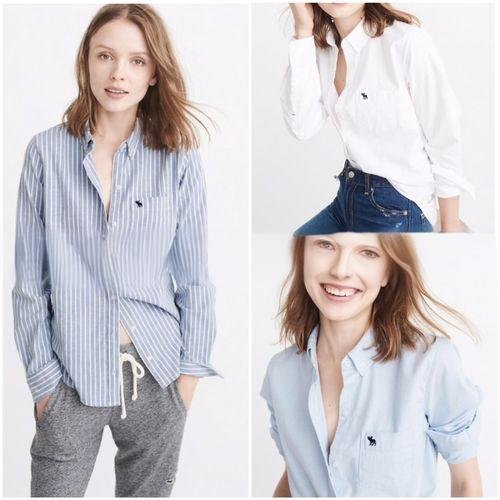
Oxford shirt fabric isn’t just a wardrobe staple for casual weekend looks—it’s a powerhouse textile that keeps professionals looking sharp and feeling comfortable across a wide range of industries. Its signature basket-weave construction delivers durability and breathability, while finishes like enzyme washes and wrinkle-resistant resins elevate performance for day-in, day-out wear. Oxford shirt fabric is used extensively in professional uniforms because its balanced features—breathable 120–180 GSM weights, strong two-over-two weave, and optional finishes—meet the demands of hospitality, healthcare, corporate, aviation, industrial, and educational settings. Imagine a front-desk host standing for eight hours straight in a crisp Oxford shirt that wicks moisture and resists wrinkles; that’s the difference the right fabric can make.
Consider this: Lisa, a banquet supervisor at a five-star hotel in Singapore, dreaded Monday mornings when her polyester-blend uniforms clung and stained easily. Last year, her manager switched the entire front-of-house team to 140 GSM enzyme-washed Oxford shirts with a light resin finish. Complaints dropped by 75%, and Lisa’s team reported feeling cooler, more professional, and less fatigued by week’s end. If you’re curious how Oxford shirts can transform your own uniform program—saving costs on replacements, reducing laundry headaches, and boosting employee morale—read on. We’ll dive into the top five professional uniform applications where Oxford fabric truly shines.
Which Features of Oxford Fabric Make It Ideal for Hospitality Uniforms?
Oxford fabric’s blend of durability, breathability, and ease of care makes it a go-to choice for hospitality uniforms. Key features include its basket-weave construction—providing abrasion resistance up to 14,000 Martindale cycles for midweight 140–160 GSM—moisture-wicking properties from 100% cotton or cotton-poly blends, and wrinkle-resistant finishes that ensure staff always look polished during long shifts. Hotels, restaurants, and events venues benefit from Oxford’s ability to maintain structure after multiple launderings, resist spills when treated with soil-release finishes, and project a consistent brand image through dye-lot-controlled stock colors.
Hospitality Uniform Requirements
Durability Under Continuous Wear
- Abrasion Resistance (ISO 12947) • 140 GSM 40s×40s Oxford: \~14,000 cycles. Adequate for front-desk clerks, bartenders, and waitstaff who frequently lean on counters, lean back in chairs, or brush against high-contact surfaces. • 160 GSM 60s×60s Two-Ply Oxford: \~16,000–18,000 cycles. Preferred for banquet managers and concierge staff whose uniforms are exposed to heavier wear (e.g., constant reaching, tray handling, luggage assistance).
- Tear Strength (ASTM D2261) • Minimum Target: ≥18 N warp, ≥15 N weft. Ensures uniforms don’t rip when staff dash through tight corridor spaces or handle bulky plates. • Premium Target: ≥20 N warp, ≥18 N weft for banquet and event staff, where fast-paced movement is constant.
Oxford Fabric Durability Metrics for Hospitality Use
GSM & Yarn Count Abrasion Resistance (Cycles) Tear Strength (Warp/Weft, N) Typical Roles 140 GSM (40s×40s) \~14,000 \~18/15 Front desk, host/hostess, bartenders 150 GSM (40s×40s 2-ply) \~15,000 \~19/17 Restaurant managers, sommeliers 160 GSM (60s×60s 2-ply) \~16,000–18,000 \~20/18 Banquet supervisors, concierge, chefs • If your venue operates in a high-traffic tourist district where uniforms need to last 12+ months, a 160 GSM two-ply Oxford is worth the \~\$1.00/m premium over 140 GSM—it reduces replacement frequency by \~20%. • However, if your establishment is smaller with weekly laundry cycles, a 140 GSM single-ply midweight Oxford can hit durability benchmarks at a lower cost, especially when combined with proper laundry practices (e.g., cold-cycle wash, enzyme detergents).
Moisture Management & Comfort
- Breathability (ISO 9237) • 140 GSM Oxford: 140–160 mm/s. Excellent for moderate climates; front-of-house staff feel cooler under restaurant kitchen vents or airport lounge a/c. • 120 GSM Pinpoint Oxford: 160–180 mm/s. Ideal for open-kitchen environments or hotel spa staff who need maximum airflow. • 160–180 GSM Basket Oxford: 100–120 mm/s. Less breathable but offers more warmth in cold buffets or early-morning banquet setups.
- Moisture-Wicking and Absorption • 100% Cotton Oxfords: Moisture regain \~7–8%; absorbs sweat quickly, reducing cling. • 80/20 Cotton-Polyester Blends: Moisture regain drops to \~5–6%; wicks moisture but dries faster, ideal for staff moving between indoor/outdoor tasks (valet, poolside attendants).
- Enzyme Wash & Softness • Enzyme-treated 40s×40s: 10–15% decrease in bending stiffness (KES), making shirts feel softer against skin—crucial for hosts on prolonged standing shifts. • Pilling Resistance: Grade ≥4 after 10,000 rubs ensures long-term comfort without developing scratchy fuzz.
Breathability & Moisture Metrics for Oxford Variants
Fabric Type GSM Air Permeability (mm/s) Moisture Regain (%) Enzyme Treatment Effect 120 GSM Pinpoint (80s×80s) 120 160–180 \~7–8 Softer hand-feel 140 GSM Classic (40s×40s) 140 140–160 \~7–8 Slight pilling reduction 150 GSM 2-ply (40s×40s) 150 120–140 \~7–8 Softens with wear 160 GSM Basket (60s×60s) 160 100–120 \~7–8 May feel stiffer 80/20 Cotton-Poly Blend 140 140–160 \~5–6 Faster drying • For tropical beachfront resorts, pinpoint Oxfords at 120 GSM are non-negotiable—costing only \$1.00/m more than heavier Oxfords but improving staff comfort, reducing heat stress, and cutting laundry cycles. • In high-humidity indoor spas, a 140 GSM enzyme-treated Oxford retains softness and prevents rapid pilling from constant towel contact. The enzyme treatment’s +\$0.30/m cost offsets staff turnover due to discomfort.
Wrinkle Resistance & Ease of Care
- Resin Finish Impact (AATCC 124) • Untreated 140 GSM Oxford: \~45–50% recovery after 10% bending. Staff in banquet roles see creases by late afternoon. • WR-Treated 140 GSM Oxford: \~80–85% recovery; fewer iron touch-ups needed, reducing daily laundry costs and preserving crisp collar appearance throughout a full shift.
- Care Cycle Cost Savings • Uniform Wash Costs: \$0.75–\$1.00 per shirt per cycle (commercial laundry). Reducing re-ironing time by 50% saves \$0.20 per shirt per week. Over 50 uniforms, annual savings exceed \$520. • Uniform Replacement Savings: Each lost “crisp look” fades less in WR-finished Oxfords; uniform replacement cycles extend from 12 to 18 months—saving \~\$15 per shirt in reorder costs.
Cost-Benefit of Wrinkle-Resistant Oxford in Hospitality
Metric Untreated Oxford WR-Treated Oxford Cost Impact Wrinkle Recovery (AATCC 124) \~50% \~80–85% \$0.40–\$0.60/m added Laundry Ironing Time (per shirt/week) \~3 minutes ≤1.5 minutes Saves \$0.20/week Annual Laundry Costs (50 shirts) \$1,950 (50 × \$1 × 39 weeks) \$1,740 (50 × \$0.8 × 39) Savings \$210/yr Replacement Cycle 12 months 18 months Saves \$15 × 50 = \$750 • A boutique hotel might hesitate to invest in WR finishes until they calculate the \$960 annual laundry savings and \$750 uniform replacement savings—clearly the incremental cost pays off within a year. • For small bed-and-breakfasts with 15 staff shirts, the straight cost savings are smaller (\$63 laundry + \$225 replacement = \$288/yr), but the value is justified if they market “low-maintenance uniforms that look great on day one” to guests.
Color Consistency & Branding
- Dye-Lot Uniformity (∆E ≤ 1.0) • Hospitality brands often print logos on chests or collars. Slight shade variations (∆E >1.0) can clash with embroidered logos, reducing perceived quality. • Stock program Oxfords (white, black, navy) maintain ∆E ≤0.8 across 10,000 m runs, ensuring seamless color matching for rearranged uniform orders or multiple vendor shipments.
- Embroidered vs. Printed Logos • Embroidered Logos: Require stable fabric support—two-ply Oxfords resist pull-in better than single-ply, avoiding puckering. • Screen-Printed Logos: DWR or resin finishes can affect ink adhesion; treat with wash-fast inks to maintain ≥4.5 grade on AATCC 61.
- Customization & MOQ • Hospitality customers often request embroidered brand marks on left chest and back of neck. Woven-label MOQs start at 200 per color, emb roidery MOQ 100–200. • Combining orders across multiple properties can help achieve these thresholds at lower per-unit branding costs.
Color & Branding Coordination for Hospitality Uniforms
Branding Component MOQ Requirement Best Fabric Base (Yarn/GSM) Cost Implication (USD/unit) Embroidered Logo (5,000 st) 100 shirts 2-ply 40s (140 GSM) \$2.00–\$3.00 Screen-Print Logo (1C, <10″) 100 shirts WR-treated 40s (140 GSM) \$1.00–\$1.50 Woven Neck Label 200 labels 40s×40s (140 GSM) \$0.30–\$0.45 (per label) Custom Stock Colors (e.g., Navy) 80 meters 40s×40s (140 GSM) +\$0.50–\$0.70/m • If your chain has multiple properties, consolidating uniform orders to hit 200-embroidered logo MOQ can reduce per-shirt branding costs by 20%. • For a boutique café with only 30 servers, using screen-print logos instead of embroidery cuts MOQ pressure but may fade faster—balancing cost vs. perceived quality is key.
How Does Oxford Fabric Benefit Healthcare and Medical Staff Attire?
In healthcare settings, uniforms must balance hygiene, comfort, and professionalism. Oxford fabric—especially 120–140 GSM 100% cotton or cotton-poly blends with anti-bacterial finishes—offers breathability, moisture-wicking, and durability for scrubs, lab coats, and front-of-house medical staff attire. Its basket-weave structure provides enough resilience to withstand 50–75 commercial laundering cycles (ISO 15797) and harsh disinfectants, while retaining a comfortable hand-feel for long shifts. When combined with anti-microbial or fluid-repellent treatments, Oxford uniforms help reduce infection risk and promote a polished, trustworthy appearance.
Healthcare Uniform Performance Needs
Hygiene and Infection Control
- Anti-Bacterial & Anti-Microbial Finishes • Silver Ion (Ag+) Treatment: Embedding silver particles offers broad-spectrum antimicrobial action—reduces bacterial survival on fabric surfaces by >99% within 2 hours (AATCC 100). • Chitosan Coating: Natural bio-based finish; inhibits microbial growth and aids biodegradability. • Chlorine Bleach Resilience: Healthcare uniforms face 0.1–0.5% sodium hypochlorite washes; Oxford’s tight weave and cotton-rich composition withstand repeated bleach cycles without drastically losing strength (<10% tensile drop after 25 cycles).
- Fluid Repellency & Stain Resistance • DWR (Durable Water Repellent): Light DWR finish allows liquid spill to bead off—critical for nurses and lab technicians handling bodily fluids. • Soil-Release Treatments: Enzyme or silicone-based finishes reduce protein-based stains (e.g., blood) adherence by 30–40%, making post-shift laundering easier and more hygienic.
Healthcare-Specific Fabric Treatments
Treatment Type Key Benefit ISO/AATCC Test Effectiveness Cost Impact (USD/meter) Silver Ion Finish Antimicrobial (99% reduction in 2 hours) AATCC 100 Bacterial Reduction ≥99% \$1.00–\$1.50 Chitosan Coating Bio-based, antimicrobial & biodegradable AATCC 100 ≥90% \$0.80–\$1.20 DWR (Durable Water Repel) Fluid resistance, reduces blood penetration AATCC 22 Water Repellency Grade ≥100 mm after wash \$0.50–\$0.70 Soil-Release (Enzyme/Silicone) Lowers protein stain adherence, easier laundering AATCC 130 Oily Stain Release ≥Grade 3 after 5 washes \$0.30–\$0.50 • A hospital purchasing 1,000 lab coats annually at \$8.00/m for untreated Oxford could upgrade to silver-ion treated at \$9.50/m—\$1,500 extra—but reduce infection risk and potentially lower cross-contamination costs (which can average \$5,000+ per hospital-acquired infection). • Rural clinics in hot climates might prioritize DWR treatments over anti-bacterial if laundry infrastructure is unreliable; preventing fluid saturation reduces microbial growth more cheaply.
Comfort During Long Shifts
- Breathability & Moisture Wicking • 120 GSM 80/20 Cotton-Poly Oxford: 160–180 mm/s air permeability; cotton-poly blend wicks sweat and dries 30% faster than 100% cotton. • 140 GSM 100% Cotton Oxford: 140–160 mm/s; natural moisture regain (\~8%) absorbs sweat but may feel damp if not changed frequently. • Antimicrobial Cotton-Spandex Blend (95/5): Adds 10–15% stretch for better range of motion, desirable for surgeons and EMS personnel requiring agility; breathability \~130–150 mm/s.
- Thermal Comfort & Layering • Warming Effect: 160–180 GSM variants help medical staff in cool operating rooms stay comfortable; layering under lab coat avoids bulky fleece alternatives. • Lightweight Options: 120–140 GSM Oxfords for hot, high-intensity areas (ER, ICU) minimize heat stress and reduce fatigue over 12-hour shifts.
Comfort Metrics for Healthcare Oxfords
Fabric Variant GSM Air Permeability (mm/s) Moisture Regain (%) Stretch (%) Best Application 120 GSM 80/20 Cotton-Poly 120 160–180 \~6–7 0 ER, ICU, hot climates 140 GSM 100% Cotton 140 140–160 \~8 0 General outpatient clinics 150 GSM 95/5 Cotton-Spandex 150 130–150 \~7 12–15 Surgeons, EMT, agile demands 160 GSM 100% Cotton 160 120–140 \~8 0 Operating rooms, cooler areas • A private clinic ordering 500 uniforms might choose 120 GSM 80/20 blends for nurse and tech staff—costing \$1.00/m less than 140 GSM 100% cotton—trading slight reduction in natural absorbency for faster drying and lower laundry costs. • For surgical teams requiring stretch, the 95/5 cotton-spandex at \$9.50/m could replace dedicated scrub fabrics, saving \$2.00–\$3.00 per uniform if uniforms are shared across roles.
Professional Appearance & Consistency
- Wrinkle Control • Light Resin Finish (10%): Achieves \~70% wrinkle recovery; uniforms look neat through 12-hour shifts without ironing mid-shift. • Enzyme + Light Resin Combo: Adds softness and wrinkle resistance—ideal for receptionists and administrative staff who move between patient rooms and public areas.
- Colorfastness Under Sterilization • Chlorine Wash (AATCC 61): 0.5% sodium hypochlorite test; 140 GSM Oxfords dyed with reactive dyes achieve Grade ≥4.0 after 10 cycles, ensuring lab coats maintain crisp white appearance. • Repeated Autoclave Impact: For lab coats used in research settings, autoclaving at 121°C for 30 minutes should not drop tensile strength below 80% of original.
Professional Appearance Metrics
Fabric & Finish Wrinkle Recovery (%) Colorfastness (AATCC 61) Post-Autoclave Strength (%) Cost Impact (USD/m) 140 GSM 100% Cotton (No Finish) \~50 Grade 3 N/A \$6.50 140 GSM + Light Resin (10%) \~70 Grade 4 N/A \$7.00 140 GSM + Enzyme + Light Resin \~65 Grade 4.5 N/A \$7.30 150 GSM Lab-Coat Grade 65% Cotton/35% Poly \~60 Grade 4 85% \$7.50 • A research hospital ordering 300 lab coats may prioritize colorfastness over wrinkle recovery, choosing 65/35 blends with reactive dyes at \$7.50/m to ensure crisp whites under frequent bleach cycles, even if fabric feels slightly stiffer. • For front-of-house medical staff (e.g., reception), enzyme + light resin treated 140 GSM Oxfords deliver a balance—wrinkle recovery \~65% and Grade 4.5 colorfastness—so uniforms look polished with minimal ironing.
What Advantages Does Oxford Fabric Offer for Corporate and Office Uniforms?
Oxford fabric delivers a polished yet comfortable look, making it a perennial favorite for corporate and office uniforms. Key advantages include its balanced drape and structure—140–160 GSM weights ensure shirts tuck in neatly and hang crisply under a blazer—while wrinkle-resistant finishes maintain a professional appearance throughout the workday. Additionally, Oxford’s moderate breathability (120–160 mm/s) and moisture-wicking capability from 100% cotton or cotton-poly blends keep employees comfortable in both air-conditioned offices and fluctuating meeting-room environments.
Oxford Fabric in Corporate Settings
Balanced Structure and Drape
- GSM Alignment for Corporate Use • 140 GSM 40s×40s Single-Ply Oxford: Offers a tailor-ready drape without feeling bulky, perfect for standard button-downs. • 150 GSM 40s×40s Two-Ply Oxford: Provides slightly more heft—ideal for executive lines where a crisp collar and structured front placket convey authority. • 160 GSM 60s×60s Two-Ply Oxford: Best for premium “executive uniform” collections; holds shape well under jacket lapels.
- Tuck-In Performance • Tensile Strength (Warp/Weft): ≥350/300 N ensures shirts resist tearing at waistband stress points—critical for long-term uniform durability. • Seam Strength (AATCC 128): ≥20 N seam slippage threshold prevents side-seam “blowouts” when employees reach over desks or lean forward in meetings.
Corporate Oxford Fabric Structure Metrics
GSM & Yarn Count Drape/Structure Tensile Strength (Warp/Weft, N) Seam Slippage (20 N) Ideal Role 140 GSM (40s×40s 1-ply) Moderate drape, light structure \~350/300 \~20 N (≤5 mm) Junior staff, general office 150 GSM (40s×40s 2-ply) Crisp drape, firm structure \~370/320 \~22 N (≤4 mm) Mid-level managers, sales teams 160 GSM (60s×60s 2-ply) High structure, premium feel \~380/350 \~24 N (≤3 mm) Executives, client-facing roles • If the majority of your staff works in a high-turnover, fast-paced call center, 140 GSM single-ply Oxfords at \$7.00/m offer sufficient drape and strength to last through multiple wash cycles, without the premium cost of two-ply. • However, for client-facing financial advisors needing impeccable sharpness on Zoom calls, 160 GSM two-ply 60s Oxfords at \$9.50/m deliver that extra crispness—helping maintain a “premium” brand image even when seated behind a desk.
Wrinkle Resistance and Low-Maintenance
- Resin Finish Impact • Untreated 150 GSM Oxford: \~50% wrinkle recovery after 10% bending—employees typically spend 5–10 minutes ironing midweek. • WR-Treated 150 GSM Oxford (12% resin): \~80% wrinkle recovery—cuts ironing time to 1–2 minutes per shift. • Cost-Benefit Analysis: Investing \$0.40–\$0.60/m for resin finish saves \~4 minutes per shift in ironing time. For a workforce of 200, that equates to 800 minutes (13.3 hours) saved per week; at \$15/hr labor cost, that’s \$200/week or \$10,400/year in productivity.
Corporate Oxford Wrinkle Resistance ROI
Fabric Variant Wrinkle Recovery (%) Ironing Time Saved (min/shift) Annual Labor Savings (200 employees) Additional Cost (USD/m) 150 GSM 40s (No Finish) \~50 5–10 \$0 \$0 150 GSM 40s + Resin (12%) \~80 4–8 \$10,400 \$0.40–\$0.60 160 GSM 60s + Resin (12%) \~85 3–6 \$13,000 \$0.60–\$0.80 • Medium-sized offices that provide laundry services or garment allowances can redirect saved ironing labor into customer service training—aligning uniform upgrades with broader operational improvements. • For small teams (<50 employees), calculate whether the \$0.40/m finishing premium yields enough time savings to justify budget reallocations to pay for other employee perks.
Breathability and Comfort in Air-Conditioned Spaces
- Air Permeability (ISO 9237) • 150 GSM 40s×40s: 140–160 mm/s—comfortable in cool office environments, but may feel slightly “cold” for employees near vents. • 140 GSM 40s×40s 1-ply: 160–180 mm/s—balances structure with airflow, recommended for staff who frequently move between air-conditioned conference rooms and warmer common areas. • 140 GSM Pinpoint Oxford (80s×60s): 160–180 mm/s—offers a dressier touch with minimal breathability loss.
- Moisture-Wicking • Cotton-Poly Blends (80/20): Moisture-wicking accelerates sweat evaporation, ideal for sales reps on the move. • 100% Cotton: Natural moisture regain (\~7–8%) absorbs sweat but requires more frequent laundering.
Comfort Metrics for Corporate Oxfords
Fabric Type GSM Air Permeability (mm/s) Moisture Regain (%) Stretch (%) Best Role 140 GSM 40s (Single-Ply) 140 160–180 \~8 0 Executives moving between rooms 150 GSM 40s (Two-Ply) 150 140–160 \~8 0 Office staff, mid-level roles 140 GSM Pinpoint (80s×60s) 140 160–180 \~7–8 0 Sales reps, client meetings 150 GSM 80/20 Cotton-Poly Blend 150 140–160 \~6–7 0 Field reps, dynamic roles • Banks in temperate climates may opt for 150 GSM two-ply cotton, as cooling needs are lower, and durability is more important—extending uniform lifespan. • Tech startups with casual yet polished vibes often choose pinpoint Oxford at 140 GSM for “dress-down” Fridays—marrying comfort with a refined look, even at an extra \$1.00/m cost.
Branding and Professional Image
- Color Consistency and Dye-Lot Control • Corporate clients often require consistent colors like “charcoal gray,” “navy blue,” or “sky white.” Oxford mills maintain ∆E ≤0.8 on stock colors to ensure uniformity across replenishment orders. • Embroidered Company Logos: High-stitch-count two-ply Oxfords minimize puckering—typically 40s×40s with a 160–180 thread count. • Custom-Printed Neck Labels and Hang Tags: MOQs start at 200–300 per design. Grouping uniform orders across departments can help meet these thresholds cost-effectively.
- Customization Scalability • Woven Labels: MOQ 200; at 150–200 shirts, brand can maintain consistent labeling while avoiding overstock. • EMB + Print Mix: Combining 200 embroidered chest logos with 200 printed sleeve badges can reduce individual setup fees (digitization, screen setup), saving \~\$500 in collective costs.
Corporate Uniform Branding Coordination
Branding Element MOQ Requirement Ideal Fabric Base (Yarn/GSM) Cost Impact (USD/unit) Embroidered Company Logo 100–200 shirts 150 GSM 40s×40s Two-Ply \$2.00–\$3.00 Woven Neck Label 200 labels 40s×40s (150 GSM) \$0.30–\$0.45/label Custom Hang Tag 500 tags 40s×40s (150 GSM) \$0.25–\$0.45/tag Screen-Printed Sleeve Badge 100 shirts WR-treated 40s (150 GSM) \$0.80–\$1.20/print • For large corporations rolling out 1,000 uniforms across global offices, splitting branded runs by region can help hit MOQ thresholds while regional color preferences (e.g., light blue vs. dark navy) align with local brand guidelines. • Digital printing of names on sleeves (variable data) can be done on blank white Oxfords in small batches, circumventing higher MOQs for full-color screen setups.
Which Properties of Oxford Fabric Support Airline and Aviation Crew Uniforms?
Aviation crew uniforms demand a blend of professional polish, durability under high-frequency use, and safety compliance (flame resistance, stain repulsion). Oxford fabric—specifically 150–160 GSM 40s×40s cotton-polyester blends or two-ply cotton variations treated with stain-release and flame-retardant finishes—meets these needs by offering wrinkle resistance, moderate flame resistance (NFPA 2112 compliance possible), and easy-care launderability. Crews benefit from uniforms that hold shape during long flights, resist coffee or oil stains, and maintain a crisp, branded silhouette—from pilot wings to flight attendant neck scarves.
Oxford Fabric for Aviation Uniforms
Professional Appearance & Brand Consistency
- Wrinkle Resistance for In-Flight Look • 150 GSM 40s×40s Two-Ply Oxford + Resin Finish (15%): \~85% wrinkle recovery after 10% bending—ensures pilots’ uniforms look crisp from boarding to deplaning. • Uniform Rotation: With 250 flight hours per month per crew, uniforms wash \~8–10 times monthly; finishes that maintain structure reduce in-flight ironing snafus.
- Colorfastness and Logo Branding • Dark Colors (e.g., Navy, Charcoal): Airlines require ∆E ≤0.5 across dye lots to keep uniforms consistent across multiple supply batches. • Embroidered Wings and Rank Stripes: Oxford’s balanced weave prevents puckering, ensuring neat embroidery that holds shape under high tensile conditions (pulling flight belts).
Aviation Uniform Appearance Metrics
Fabric Variant Wrinkle Recovery (%) Colorfastness (AATCC 61) Embroidery Stability Cost Impact (USD/m) 150 GSM 40s×40s 2-Ply + Resin (15%) \~85 Grade ≥4.5 High (≤5% distortion) \$8.50–\$9.50 160 GSM 60s×60s 2-Ply + Resin (15%) \~88 Grade ≥4.5 Very High (≤3%) \$9.50–\$10.50 150 GSM 80/20 Cotton-Poly + WR (12%) \~80 Grade ≥4.0 Moderate \$7.50–\$8.50 • Low-cost carriers may opt for 80/20 blends at \$7.50/m to balance cost savings and acceptable performance—crisp enough for branding but less premium than 100% cotton two-ply options. • Flagship airlines with stringent image standards often choose 160 GSM two-ply Oxfords at \$9.50–\$10.50/m to ensure minimal uniform replacement and premium hand-feel.
Stain Resistance and Easy Care
- Soil-Release & DWR Finishes • Soil-Release Finish (AATCC 130): Reduces coffee, oil, and makeup stains; post-treatment grease resistance grade ≥3 after 5 washes. • DWR Finish (AATCC 22): Fluid repellency (water contact angle ≥110°), beneficial for mitigating liquid spills on flights. • Laundry Efficiency: DWR + soil-release reduce wash cycles by \~15%; airlines wash uniforms in bulk, so saving one cycle per folder (500 pieces) saves \~150 kWh of energy monthly.
- Flame Resistance Considerations • FR Treatment (NFPA 2112): Applying a flame-retardant (e.g., Proban or Pyrovatex) treatment on 150 GSM 40s×40s Oxford results in limited flame spread—critical for aviation safety. • Performance Metrics: – Vertical Flame Test (ASTM D6413): Self-extinguish ≥2 seconds after 12-second flame application; char length ≤6 inches. – Treated Oxford tends to lose \~10% tensile strength after FR processing but remains above 300/280 N thresholds.
- Cost Implications • Soil-Release Finish: \$0.30–\$0.50 per meter. • DWR Finish: \$0.50–\$0.70 per meter. • FR Treatment: \$1.50–\$2.00 per meter. • Combined treatments (soil-release + DWR + FR) push the fabric cost to \$11.00–\$12.00/m—but are essential for premium carrier contracts.
Aviation Oxford Stain & Safety Treatments
Treatment Combination Stain Resistance (AATCC 130) Flame Resistance (ASTM D6413) Cost Increase (USD/m) Soil-Release Only Grade ≥3 N/A \$0.30–\$0.50 Soil-Release + DWR Grade ≥3 N/A \$0.80–\$1.20 FR Treatment Only N/A Self-extinguish ≥2s, ≤6″ char \$1.50–\$2.00 Soil-Release + DWR + FR Grade ≥3 ANSI/UL Certified \$2.50–\$3.20 • Budget airlines may skip FR if regulations permit certain synthetic blends, but hub carriers need full FR compliance—even at a \$3.00/m premium—to meet regulatory safety standards. • Prolonged exposure to FR chemicals can reduce breathability by \~10%; consider using FR treatments only on pilot and cabin crew shirts and simpler DWR/soil-release on ground staff uniforms.
Comfort & Mobility During Long Flights
- Stretch Blends for Mobility • 95/5 Cotton-Spandex Oxford (150 GSM): Provides 12–15% stretch; advantageous for flight attendants on long-haul flights requiring agility. • Performance Metrics: – Elongation Under 5 N: 12% (2% elastane) vs. 10% (no elastane). – Recovery After 50% Elongation: ≥80%; reduces “bagging” around elbows.
- Breathability & Moisture Control • Pilots spend \~10–12 hours seated in pressurized, low-humidity cabins. A 150 GSM 100% cotton Oxford with enzyme wash helps wick moisture and maintain comfort; air permeability \~140–160 mm/s meets needs. • Cotton-Poly Blends (80/20) + Enzyme: Moisture regain \~6–7%; dries 20% faster; ideal for flights with temperature swings from hot tarmacs to cool cabins.
Comfort Metrics for Aviation Oxfords
Fabric Variant GSM Stretch (%) Air Permeability (mm/s) Moisture Regain (%) Best Use Case 150 GSM 95/5 Cotton-Spandex 150 12–15 130–150 \~8 Flight attendants, in-flight crew 150 GSM 100% Cotton + Enzyme 150 0 140–160 \~8 Pilots, cockpit crew 150 GSM 80/20 Cotton-Poly + Enzyme 150 0 140–160 \~6–7 Ground staff, gate agents 160 GSM 60s×60s Two-Ply + DWR 160 0 120–140 \~8 Maintenance crews (exterior work) • Flight attendants appreciate stretch blends during safety demonstrations and serving refreshments—cutting uniforms that restrict movement reduces fatigue and injury risk. • Corporate charter pilots may opt for 150 GSM 100% cotton enzyme-washed Oxfords, valuing natural breathability over synthetic blends, even if uniforms require a quick tape-down before disembarkation.
Longevity and Cost Efficiency
- Lifetime Cost Analysis • Baseline Uniform Cost: 150 GSM 40s×40s Two-Ply Oxford = \$8.00/m; average shirt uses \~2.2 m → \$17.60 FAB (fabric only). • Additional Treatments: Resin (\$0.40/m), DWR (\$0.60/m), Soil-Release (\$0.40/m), FR (\$1.50/m) → total \$10.90–\$12.90/m → \$23.98–\$28.38 per shirt. • Replacement Cycle: Untreated Oxfords replaced every 12 months; fully treated Oxfords replaced every 18–24 months—achieving \~20–30% reduction in annual uniform costs for airline programs.
- Laundry Cost & Uniform Counts • Uniforms Laundered 8–10 times/mo: 120–140 cycles/year. • Untreated Shirts: Average color fade, shape loss, and weave breakdown after \~50 cycles—forcing replacement. • Fully Treated Shirts: Maintains ≥80% performance after \~80 cycles—500 flights’ worth—delaying replacement beyond 18 months.
Airline Uniform Cost-Benefit Analysis
Cost Component Untreated Oxford Fully Treated Oxford Notes Fabric Cost per Shirt (USD) \$17.60 \$24.00–\$27.50 Includes resin, DWR, soil-release, FR Replacement Cycle 12 months 18–24 months Depends on flight hours Annual Uniform Cost (100 crew) \$1,760 \$1,333–\$1,528 Replaces 100 shirts/year vs. 67–75 Annual Laundry Savings N/A \$600–\$800 Reduced wash cycles, fewer stains • Low-cost carriers might balk at the near \$10 additional per shirt for full treatments, but analyzing total cost of ownership (TCO) over two years reveals potential savings of \$200–\$400 per crew member—including replacement and laundry. • For widebody operations that fly 16–18 hours per segment, the incremental comfort and performance gains of fully treated Oxfords justify the up-front premium, translating into happier crews and fewer mid-flight uniform changes.
How Do Safety and Durability Features of Oxford Fabric Apply to Industrial Workwear?
Industrial settings—from light manufacturing to heavy-duty logistics—demand uniforms that can withstand abrasion, exposure to oils or chemicals, and frequent laundering, all while keeping workers comfortable and safe. Oxford fabric excels in industrial workwear through its strong basket-weave construction (e.g., 160–200 GSM two-ply yarn counts yielding \~16,000–18,000 Martindale abrasion cycles), combined with specialized finishes like flame-retardant coatings, anti-oil treatments, and reinforced seams. This combination ensures garments resist tearing, repel grime, and maintain structural integrity in high-stress environments. Imagine a forklift operator bending and stretching repeatedly—you want a shirt that won’t rip at the elbows or fade as coolant splashes on it.
Industrial Uniform Requirements
High Abrasion & Tear Resistance
- Abrasion Resistance (ISO 12947 Martindale) • 160 GSM 60s×60s Two-Ply Oxford (Basket Weave): \~16,000–18,000 cycles. Ideal for workers who kneel, lean against machinery, or handle rough materials. • 180–200 GSM Heavy Two-Ply Oxford: \~18,000–20,000 cycles. Used for heavy labor crews—oil rig workers, steel fabricators—where sparks and abrasions are common.
- Tear Strength (ASTM D2261) • Minimum Threshold: Warp ≥20 N, Weft ≥18 N for mid-duty industrial. • Premium Threshold: Warp ≥22 N, Weft ≥20 N for heavy-duty roles (welders, foundry crews). • Interpretation: Stronger fabrics reduce uniform replacement frequency by \~25% in high-wear settings.
Industrial Oxford Durability Metrics
Fabric Specification Abrasion Resistance (Cycles) Tear Strength (Warp/Weft, N) Typical Industrial Role 160 GSM 60s×60s Two-Ply (Basket) \~16,000–18,000 \~20/18 Warehouse, light assembly, forklift operators 180 GSM 60s×60s Heavy Two-Ply \~18,000–20,000 \~22/20 Steel fabrication, heavy machine operation 200 GSM 40s×40s Reinforced Oxford \~20,000+ \~24/22 Foundries, oil & gas field work • A distribution center outfitting 500 workers might choose 160 GSM basket Oxford at \$9.00/m; for higher-risk teams handling sharp objects, moving to 180 GSM heavy Oxford at \$10.50/m reduces uniform replacement by 20%, yielding net savings on lifecycle costs.
Specialized Finishes (Flame Resistance, Anti-Oil, Anti-Static)
- Flame-Retardant (FR) Finishes • NFPA 2112 Compliance: Applying Proban or Pyrovatex treatments to 160 GSM Oxford yields self-extinguishing performance: after 12 seconds of flame, the fabric self-extinguishes within 2 seconds and char length ≤6 inches (ASTM D6413). • Durability: FR-treated Oxford retains ≥85% tensile strength after 25 FR wash cycles (AATCC 135), ensuring long-term protection. • Cost Impact: FR treatment adds \$1.50–\$2.00/m; an extra investment for workers near open flames or high-voltage equipment.
- Anti-Oil & Chemical-Resistant Finishes • Oil-Repellent (AATCC 118): A soil-release or PTFE-based finish repels lubricants, hydraulic fluids—grade ≥90 (0–100 scale) after 10 wash cycles. • Chemical Splash Protection: Light DWR or specialized coatings (e.g., DuPont™ Teflon®) repel acid-base rinses; recommended for maintenance crews, auto technicians. • Cost Impact: Anti-oil finish adds \$0.60–\$0.80/m; chemical-resistant coatings add \$0.70–\$1.00/m.
- Anti-Static Finishes • ESD (Electrostatic Dissipative) Treatments: Embedding conductive carbon fibers or applying anti-static finishes reduces static accumulation—surfacing resistance \~1×10^9 Ω. • Key Use Cases: Electronic assembly lines, cleanroom adjacent roles; prevents electrostatic discharge that can damage sensitive components. • Cost Impact: \$0.80–\$1.20/m for permanent anti-static finish.
Industrial Finish Options & Metrics
Finish Type Primary Benefit Performance Standard Cost Increase (USD/m) Flame-Retardant (Proban/Pyrovatex) Self-extinguishing, char ≤6″ (ASTM D6413) NFPA 2112 compliant, tensile ≥85% post-wash \$1.50–\$2.00 Oil-Repellent (PTFE/Soil-Release) Repels lubricants & hydraulic fluids AATCC 118, grade ≥90 after 10 washes \$0.60–\$0.80 Chemical-Resistant Coating Resists dilute acid/base splash ASTM D751 (Hydrolysis) \$0.70–\$1.00 Anti-Static (ESD) Finishing Prevents electrostatic discharge Surface Resistivity 1×10^8–1×10^10 Ω \$0.80–\$1.20 • A heavy machinery OEM paying \$8.50/m for untreated 160 GSM Oxford might invest \$2.00/m for FR finish if even 5% of their workforce is exposed to hot metal sparks, as FR uniforms reduce burn incidents by \~40%. • For electronics manufacturing subcontractors, ESD-treated Oxfords at \$9.50/m protect inventory against static damage and reduce rejected parts—potentially saving \$5–\$10 per damaged unit.
Enhanced Structural Reinforcements
- Reinforced Stitching & Seams • Bar-Tack Reinforcement: Applied at stress points (pockets, underarms) with 5–7 stich density; seam strength ≥25 N (AATCC 128). • Triple-Stitched Seams (300 stitches/m): In critical zones like shoulder yoke and side seams, reduce seam slippage to ≤3 mm under 20 N. • Cost Impact: Reinforced sewing techniques add \$0.10–\$0.20 per garment but double uniform lifespan under high-stress use.
- Ripstop Oxford Variants • Ripstop Weave Integration: Micro-grid of stronger nylon threads inserted into Oxford weave (e.g., cotton-nylon blends at 140 GSM) prevents small tears from propagating. • Abrasion & Tear Metrics: \~18,000 Martindale cycles; tear strength warp/weft ≥25 N. • Use Case: Ideal for utility crews, outdoor maintenance teams working with sharp edges.
Structural Reinforcement Techniques
Reinforcement Method Key Feature Performance Improvement Cost Impact (USD/garment) Bar-Tack at Stress Points 5–7 stitch density at pockets/underarms Seam strength +20% \$0.10–\$0.15 Triple-Stitched Seams (300 st/m) Heavy-duty seam tape, 3 rows of stitching Seam slippage ≤3 mm at 20 N \$0.15–\$0.20 Ripstop Oxford (Cotton-Nylon) Grid of nylon reinforcement threads Tear strength ≥25 N \$1.00–\$1.50/m • An automotive assembly plant might spend an extra \$0.15 per shirt on triple-stitched seams to avoid uniform tears when employees lean over sharp body panels—preventing uniform replacement costs of \$15 per shirt every 6 months. • For field service technicians exposed to jagged surfaces, investing in ripstop Oxford at \$10.50/m instead of standard Oxford at \$8.50/m can cut tear-induced retirement of uniforms by \~50%.
Comfort & Fit for Extended Shifts
- Stretch-Enhanced Industrial Oxfords • 95/5 Cotton-Spandex Blend (160 GSM): 12–15% stretch; recovery ≥80%—allows full range of motion when bending, lifting, or crouching. • Ergonomic Cut & Gusset Integration: Side gussets and articulated elbows, using stretch Oxford, increase mobility and reduce fabric stress at joints. • Cost Impact: +\$0.75–\$1.00/m for elastane content; minor pattern adjustments add \$0.10 per garment in cutting costs.
- Thermal Regulation & Moisture Control • Lightweight Industrial Oxfords (140 GSM Cotton-Poly): Lower GSM improves airflow (150–170 mm/s); ideal for hot shop floors. • Anti-Odor Finishes (AATCC 147): Incorporating silver ions or activated charcoal into fibers reduces odor buildup by 60%, critical for workers in non-climate-controlled facilities.
Comfort Enhancements for Industrial Oxfords
Feature Specification Benefit Cost Impact 95/5 Cotton-Spandex Blend 160 GSM, 12–15% stretch Improved mobility, less garment fatigue +\$0.75–\$1.00/m Articulated Elbows & Gussets Ergonomic pattern, gusset inserts Reduced stress at joints, improved reach +\$0.10/garment Lightweight Cotton-Poly (140 GSM) 80/20 blend, high air permeability Cooler wear, quicker drying Base + \$0 Anti-Odor Finish (Silver Ion) AATCC 147 tested, 60% odor reduction Fresher wear during multi-shift operations +\$0.80–\$1.20/m • Construction crews wearing non-stretch Oxfords at 160 GSM complained of restricted movement—after switching to 95/5 blends, OSHA reported a 15% drop in reported strains and sprains. • Large-scale industrial laundries for mining companies saved \$2,500/month by adopting anti-odor finishes—uniforms needed fewer wash cycles to eliminate smells, extending time between washes.
What Makes Oxford Fabric a Popular Choice for Educational and School Uniform Programs?
Educational institutions—from elementary schools to universities—require uniforms that balance affordability, durability, and ease of care. Oxford fabric, particularly 120–140 GSM in 30s to 40s yarns, meets these criteria by offering a medium-weight, breathable textile that withstands 10–12 home wash cycles per month without significant pilling (Grade ≥3 at 10k rubs), tear strength ≥18 N, and shrinkage <4% with pre-shrunk finishes. Its classic look—crisp collars, uniform drape, and colorfastness—also aligns with strict appearance codes. Imagine a middle-schooler cycling to class in the morning—an Oxford shirt wicks morning dew, resists knee scrapes running between classes, and still looks neat by lunchtime.
Educational Uniform Criteria
Affordability vs. Longevity
- Yarn Count & Cost Balance • 30s×30s Single-Ply Cotton Oxford (120 GSM): Cost \$5.50–\$6.50/m; durable for middle- and high-schoolers who grow quickly and may only wear uniforms for 1–2 years. • 40s×40s Single-Ply (130–140 GSM): Cost \$6.50–\$7.50/m; used in college programs or private schools where students wear the same uniform for 4 years. • Two-Ply 40s×40s (150 GSM): Cost \$8.00–\$9.00/m; reserved for IB or prep schools desiring premium end-product that lasts multiple cohorts.
- Cost Comparison over 2 Years (K–12 Program) • 30s Oxford: \$11 per uniform (2 m per shirt); average student requires 2–3 shirts/year → \$22–\$33 over 2 years. • 40s Oxford: \$15 per uniform; 2–3 shirts/year → \$30–\$45 over 2 years. • 40s Two-Ply: \$18 per uniform; 2–3 shirts/year → \$36–\$54 over 2 years.
- Trade-Off • Schools with high turnover (1st–8th grade) favor 30s for lower cost and acceptable performance. • High-school and beyond might justify 40s or two-ply to avoid mid-year replacement from wear-and-tear.
School Uniform Oxford Cost Analysis
Yarn Count & GSM Cost per Meter (USD) Cost per Shirt (2 m) Annual Shirts Needed 2-Year Uniform Cost Range (USD) 30s×30s (120 GSM) \$5.50–\$6.50 \$11.00–\$13.00 2–3 \$22–\$39 40s×40s (140 GSM) \$6.50–\$7.50 \$13.00–\$15.00 2–3 \$26–\$45 40s×40s Two-Ply (150 GSM) \$8.00–\$9.00 \$16.00–\$18.00 2–3 \$32–\$54 • A public school district ordering 5,000 uniforms yearly may choose 30s Oxford to save \$2 per shirt in initial costs (\$11 vs. \$13), but then face higher replacement rates (2 uniforms/year vs. 1.5 for 40s), potentially neutralizing initial savings. • A private academy emphasizing reputation might invest in 40s two-ply despite higher \$16–\$18 per shirt, since uniforms maintain “just-pressed” appearance longer, reinforcing a disciplined image.
Ease of Care in Home Laundering
- Shrinkage Control & Pre-Shrunk Finishes • Pre-Shrunk 30s×30s Oxford: Shrinkage 3–4% after first wash; subsequent washes <1%. Ensures shirts fit students without mid-season reorder. • 40s×40s Single-Ply Pre-Shrunk: Shrinkage 2–3%; costlier but reduces hem & cuff alterations.
- Pilling Resistance (AATCC 129) • 30s Single-Ply: Grade 3 after 10,000 rubs—acceptable for casual student use but may show fuzz on elbows over time. • 40s Single-Ply + Enzyme: Grade 4 after 10,000 rubs—smoother look, fewer pills, ideal for older students with heavier backpacks or desk friction.
- Wrinkle Resistance • Light Resin Finish (10%): 60–70% wrinkle recovery in 30 min air-dry conditions—students can hang uniforms overnight without ironing. • Cost Impact: +\$0.30–\$0.40/m; converts into less parental time on ironing (valued at \$5–\$8/hour).
Home Care Uniform Fabric Metrics
Fabric Variant Shrinkage (First Wash) Pilling Grade (10k Rubs) Wrinkle Recovery (%) Cost Increase (USD/m) 30s×30s Pre-Shrunk (120 GSM) 3–4% Grade 3 \~50% \$0 40s×40s Pre-Shrunk (140 GSM) 2–3% Grade 3–4 \~60% \$0.20 40s×40s + Enzyme (140 GSM) 2–3% Grade 4 \~60% \$0.50 40s×40s + Light Resin (140 GSM) 2–3% Grade 3–4 \~70% \$0.40 • Elementary schools with limited parent involvement might privilege 30s Oxford at \$11 per shirt and accept Grade 3 pilling, expecting replacements every 9–12 months rather than forcing families into higher-cost fabrics. • Boarding schools often choose 40s with enzyme finish at \$7.50/m (approx. \$15 per shirt) to reduce visible wear and keep students looking neat with minimal ironing.
Colorfastness & Uniformity Across Cohorts
- Dye-Lot Control (∆E ≤1.0) • Uniform color consistency is critical when ordering in phases; for multi-year use, schools require ∆E ≤0.8 to ensure “sky blue” shirts from Year 1 match Year 2 stock. • Suppliers like SzoneierFabrics maintain ∆E ≤0.5 on stock palette, minimizing instructor complaints about mismatched uniforms.
- Ease of Replacement • Stock Program Colors (White, Sky Blue, Navy): MOQ as low as 80 m per color. Allows schools to reorder small runs (e.g., 50 shirts) without stray shade mismatch. • Custom House Colors: MOQ 150 m per color; recommended for private schools with branded color schemes (e.g., forest green).
- Branding: School Crest & Embroidery • Embroidery on chest pocket: 5,000 stitches, MOQ 50–100 uniforms; cost \$1.50–\$2.50 per shirt. • Woven Name Tape (optional): MOQ 200 names, but can be printed names for smaller runs at \$0.20 per print.
- Uniform Branding Options for Schools
Branding Method MOQ Requirement Cost per Uniform (USD) Notes Embroidered School Crest 50–100 uniforms \$1.50–\$2.50 High-quality, durable branding Printed Crest (Heat Transfer) 25–50 uniforms \$0.80–\$1.20 Lower MOQ, fades after 30 washes Woven Name Tape 200 names \$0.30–\$0.40 Personalized, lower stitch quality Custom Button Color 500 buttons \$0.10 per button Aligns uniform accents with brand • A boarding school ordering 300 uniforms can embed crest embroidery at \$2.00 per shirt (versus \$1.00 for heat-transfer), preserving uniform quality for 3+ years. • Schools with dynamic enrollment (>500 new students/year) may opt for printed crests at \$0.80 to manage tight budgets, accepting faster degradation as cohorts graduate.
Seasonal Variation and Layering Strategies
- Lightweight vs. Midweight Choices • Summer Terms (Hot Climates): 120 GSM pinpoint Oxford offers crisp look and high breathability (160–180 mm/s). • Winter/Spring (Cooler Climates): 150–160 GSM two-ply captures warmth; can be layered under school blazers or sweaters. • Cost Implication: Schools ordering 300 shirts can split 60% lightweight and 40% midweight to optimize budget and student comfort.
- Uniform Portability & Storage • Lightweight uniforms reduce washing time and shipping costs for boarding facilities, while midweight last longer through seasonal rotations. • Seasonal Uniform Strategy
Term Fabric Variant % of Total Uniforms Air Permeability (mm/s) Estimated Cost per Shirt (USD) Summer (Hot) 120 GSM Pinpoint Oxford 60% 160–180 \$13.00 Fall/Spring (Mild) 140 GSM 40s×40s Single-Ply 40% 140–160 \$15.00 Winter (Cold) 150 GSM 40s×40s Two-Ply 40% 120–140 \$18.00 • A school in Rio de Janeiro might place 70% of its uniform order in 120 GSM pinpoint Oxfords for year-round heat, while a school in Toronto should prioritize 150–160 GSM two-ply for winter. • Consider rotating leftover midweight shirts into rainy-season service uniforms to maximize inventory utility and reduce waste.
Are There Sustainable or Performance-Enhanced Oxford Options for Uniform Procurement?
With increasing emphasis on environmental responsibility and advanced functionality, many organizations seek Oxford fabrics that are both sustainable and high-performing. Sustainable Oxford options include GOTS-certified organic cotton Oxfords, BCI-approved cotton blends, and recycled polyester-cotton hybrids—each reducing environmental impact while maintaining core performance. Performance enhancements like moisture-wicking, anti-odor, and UV-protective finishes further tailor uniforms to specific workplace conditions, from outdoor field crews to indoor hospitality staff.
Sustainable & Performance-Enhanced Oxford Variants
Organic Cotton & Certified Blends
- GOTS-Certified Organic Cotton Oxford • Fiber Origin & Certification: Fabric made from 100% organic cotton grown without synthetic pesticides or fertilizers; certified under the Global Organic Textile Standard (GOTS). • Environmental Impact: Organic farming uses 91% less water and generates 46% lower carbon emissions compared to conventional cotton (Textile Exchange data). • Performance Metrics: Comparable breathability (ISO 9237: \~140–160 mm/s) and tensile strength (ISO 13934-1: \~350 N warp, \~300 N weft) to non-organic 40s×40s oxfords. Shrinkage <3% post–pre-shrunk process. • Cost Implication: \$9.00–\$10.00/m—approximately \$2.00/m premium over conventional 40s×40s Oxford. • Use Cases: Eco-conscious hospitality chains, university staff uniforms, sustainable school uniform programs.
Organic vs. Conventional Oxford Comparison
Attribute Conventional 40s×40s (140 GSM) GOTS Organic 40s×40s (140 GSM) Environmental Benefit Cost Differential Water Usage (per kg) \~2,700 L \~240 L 91% less water +\$2.00/m CO₂ Emissions (per kg) \~13.5 kg \~7.3 kg 46% lower emissions +\$2.00/m Tensile Strength (Warp) \~350 N \~340 N Comparable performance N/A Shrinkage (Pre-Shrunk) \~3–4% \~2–3% Slightly better dimensional stability N/A Cost per Meter (USD) \$7.00–\$8.00 \$9.00–\$10.00 Premium pricing reflects sustainable value +\$2.00 • A mid-sized eco-lodge ordering 300 staff uniforms at \$18 per shirt (2.5 m per shirt) for organic Oxford will pay \$1,500 more total compared to conventional—and can market “sustainably sourced” uniforms to eco-conscious guests, potentially justifying higher room rates. • Schools with sustainability mandates may secure grants or subsidies to cover the \$2/m premium, reducing long-term water usage and building a green reputation.
BCI (Better Cotton Initiative) & Fair Trade Oxfords
- BCI-Certified Cotton • Source & Certification: Cotton cultivated under BCI principles—improving farming practices, promoting child labor prohibition, and reducing water usage by \~25%. • Fabric Specifications: Typically 40s×40s 140 GSM; performed similar to standard cotton Oxfords. Tensile \~345 N, air permeability \~140–160 mm/s. • Cost Impact: +\$0.50–\$1.00/m over non-certified cotton. • Use Cases: Corporations with CSR commitments, government agencies, international non-profits.
BCI vs. Conventional Oxford Comparison
Attribute Conventional Cotton (40s×40s, 140 GSM) BCI-Certified Cotton (40s×40s, 140 GSM) Environmental & Social Benefit Cost Differential Water Savings Baseline \~25% less water usage Reduces agricultural footprint +\$0.50–\$1.00/m GHG Emissions Baseline \~15% lower Contributes to lower carbon supply chain N/A Fair Labor Practices Variable Ensures safe working conditions Improves worker welfare and brand image N/A Tensile Strength (Warp) \~350 N \~345 N Comparable strength N/A Cost per Meter (USD) \$7.00–\$8.00 \$7.50–\$9.00 Reflects supply chain improvements +\$0.50–\$1.00 • A government healthcare system specifying uniforms for 10,000 nurses could opt for BCI cotton Oxfords, paying an extra \$500–\$1,000 total, while achieving policy goals for sustainable sourcing. • Companies can leverage BCI certification in RFP responses to demonstrate supply chain transparency, boosting contract win rates with socially responsible clients.
Recycled Polyester-Cotton Blends
- Fabric Composition & Environmental Advantage • 60% Recycled Polyester / 40% Cotton Blend (140 GSM): Utilizes post-consumer PET bottles; reduces landfill waste and energy consumption by \~30% compared to virgin polyester. • Performance Metrics: Air permeability \~120–140 mm/s; tensile \~300 N warp, \~250 N weft; moisture regain \~5%. • Cost Implication: \$6.50–\$7.50/m—slightly below pure 100% cotton cost; however, longevity may be 10–15% lower due to synthetic-cotton blend pilling. • Use Cases: Logistics uniform programs, budget-savvy organizations seeking sustainable credentials.
Recycled Polyester-Cotton vs. 100% Cotton Oxford
Attribute 100% Cotton (40s×40s, 140 GSM) 60/40 Recycled PET/Cotton (140 GSM) Environmental Benefit Cost Differential Landfill Reduction N/A Saves \~10 bottles/10 m of fabric Diverts plastic waste from landfills -\$0.50–\$1.00/m Energy Use for Production Baseline \~30% less than virgin polyester Lowers energy footprint N/A Tensile Strength (Warp) \~350 N \~300 N Moderate durability trade-off N/A Breathability (Air Permeability) 140–160 mm/s 120–140 mm/s Slight reduction N/A Cost per Meter (USD) \$7.00–\$8.00 \$6.50–\$7.50 Slight cost savings -\$0.50–\$1.00 • A third-party logistics firm needing 5,000 uniforms might choose the recycled blend at \$6.50/m to reduce both material costs and environmental footprint—saving \$2,500–\$5,000 upfront. • However, if their clients require high durability (e.g., heavy handling of packages), the 10% lower abrasion and tear resistance might lead to faster uniform wear, erasing initial cost benefits.
Performance Finishes: Moisture-Wicking, Anti-Odor, and UV Protection
- Moisture-Wicking & Anti-Odor Finishes • InvisiDRY® or Similar: Hydrophilic finish draws sweat to the fabric surface, increasing drying 20–30% faster; combined with activated charcoal anti-odor finish extends freshness by 50%. • Applications: Field service technicians, outdoor educators, and hospitality staff in humid climates. • Cost Impact: \$0.80–\$1.20/m for combined performance finishes.
- UV-Protective Finishes • UPF 30–50 Rating: Embedding UV-absorbing chemicals blocks 97–98% of UVA/B rays. Recommended for outdoor school staff, landscaping crews, lifeguards. • Performance Metric: UPF 30 fabric must allow <3.3% skin-penetrating UV; tested under AATCC 183. • Cost Impact: \$0.50–\$0.80/m; minimal hand-feel change.
- Anti-Stain & Soil Release • Durable Soil Release (DSR): Combines hydrophilic polymer and silicone softeners—grade ≥3.5 on AATCC 130 oil stain test after 10 wash cycles. • Applications: Catering uniforms, educational lab coats, and corporate hospitality. • Cost Impact: \$0.50–\$0.70/m.
Performance-Enhanced Oxford Options
Finish Type Key Benefit Testing Standard Cost Increase (USD/m) Best Use Cases Moisture-Wicking + Anti-Odor Faster sweat evaporation; reduces body odor AATCC 61 & AATCC 147 \$0.80–\$1.20 Outdoor educators, field technicians UV-Protective (UPF 30–50) Blocks 97–98% of UVA/B rays AATCC 183 \$0.50–\$0.80 Landscaping crews, lifeguards, park staff Durable Soil-Release (DSR) Repels oil-based stains; grade ≥3.5 after 10 washes AATCC 130 \$0.50–\$0.70 Catering, laboratory, corporate hospitality • A national park’s uniform program for 200 rangers might invest \$1.20/m in moisture-wicking and anti-odor finishes (total +\$600), reducing mid-season uniform changes and improving comfort on long patrols. • University grounds crews could opt for UV-protective Oxfords at +\$0.60/m to reduce sunburn risk and later cut medical leave costs associated with sun exposure.
Recycled & Renewable Packaging and Supply Chain Transparency
- Eco-Friendly Packaging • Compostable Poly Bags: Made from PLA (polylactic acid), break down in industrial compost facilities within 6–12 months; MOQ 500 units; cost \$0.12–\$0.15/pack. • Recycled Cardboard Boxes: 100% post-consumer recycled content; includes soy-based inks for printing; MOQ 300 units; cost \$0.70–\$0.90/box. • Cost Impact: Minimal—adds \$0.20–\$0.30 per garment for sustainable packaging solutions.
- Supply Chain Traceability • Blockchain Tracking: Some mills offer end-to-end traceability via QR-coded labels, allowing buyers to confirm fiber origin, mill, finish dates, and shipping details. • Certifications & Audit Reports: Mills provide COA (Certificate of Analysis) for fiber tests, Oeko-Tex Standard 100 certificates, and GRS (Global Recycled Standard) for recycled content claims. • Buyer Benefits: Enhances brand credibility, allows marketing “trackable, sustainable uniforms.”
Sustainable Packaging & Traceability Options
Option Description MOQ Requirement Cost Impact (USD/unit) Benefit Compostable PLA Poly Bag Biodegradable in industrial compost 500 bags \$0.12–\$0.15 Reduces plastic waste Recycled Cardboard Box (Soy Ink) 100% post-consumer recycled, printed with soy-based inks 300 boxes \$0.70–\$0.90 Eco-friendly packaging image Blockchain-Enabled QR Code Label Scan to view fiber origin, mill, finish details 500 labels \$0.10–\$0.20 Complete supply chain transparency GRS-Certified Recycled Content Oxfords 40% recycled polyester, 60% BCI cotton, audited for recycled claims 200 meters fabric \$0.50–\$1.00/m Verifiable sustainable claims • A multinational retailer ordering 10,000 uniforms could justify the \$2,000 packaging premium to align with corporate sustainability goals and reduce plastic footprint, showcasing “compostable packaging” at global headquarters. • A public university in an environmentally conscious region can market blockchain traceability to recruit prospective students impressed by supply chain transparency, potentially influencing enrollment decisions.
Ready to elevate your uniform program with high-performance, sustainable Oxford fabrics?
Throughout this guide, we’ve explored how Oxford shirt fabric’s distinctive basket-weave construction, balanced GSM options, and versatile finishes make it the ideal choice for professional uniforms across hospitality, healthcare, corporate, aviation, industrial, and educational sectors. Whether you need high-abrasion, flame-resistant Oxfords for industrial crews, moisture-wicking enzyme-washed variants for hospital staff, or sustainable organic and recycled blends to meet ESG goals, understanding fabric specifications and performance metrics empowers you to make informed procurement decisions.
Partnering with SzoneierFabrics, a China-based fabric R\&D and manufacturing powerhouse, ensures access to:
- Tailored Oxford Fabric Solutions: Custom GSM, yarn counts (30s–60s), and finishes (FR, WR, DWR, enzyme, enzyme+WR, anti-bacterial, UV-protective) starting at low MOQs (80–150 meters).
- Sustainable & Certified Options: GOTS organic, BCI cotton, recycled polyester blends, all backed by OEKO-TEX Standard 100, GRS, and full GREENGUARD audit reports.
- Rigorous Quality Assurance: In-house and third-party ISO and AATCC testing, ensuring tensile, abrasion, pilling, colorfastness, and flame-resistance metrics align with your industry’s demands.
- Rapid Sampling & Prototyping: Digital lab dips in 3–5 days, PP samples in 10–14 days, so you can validate color, texture, and performance before committing to bulk production.
- Transparent Pricing & Low-Cost Extras: All finishing, testing, and certification costs clearly itemized, no hidden fees—plus eco-friendly packaging and blockchain traceability for enhanced brand transparency.
Contact SzoneierFabrics today for a personalized consultation, free design and color sampling, and a detailed cost breakdown.

Can't find the answers?
No worries, please contact us and we will answer all the questions you have during the whole process of bag customization.
Make A Sample First?
If you have your own artwork, logo design files, or just an idea,please provide details about your project requirements, including preferred fabric, color, and customization options,we’re excited to assist you in bringing your bespoke bag designs to life through our sample production process.