 Skip to content
Cotton or Polyester for Medical Scrubs Wholesalers
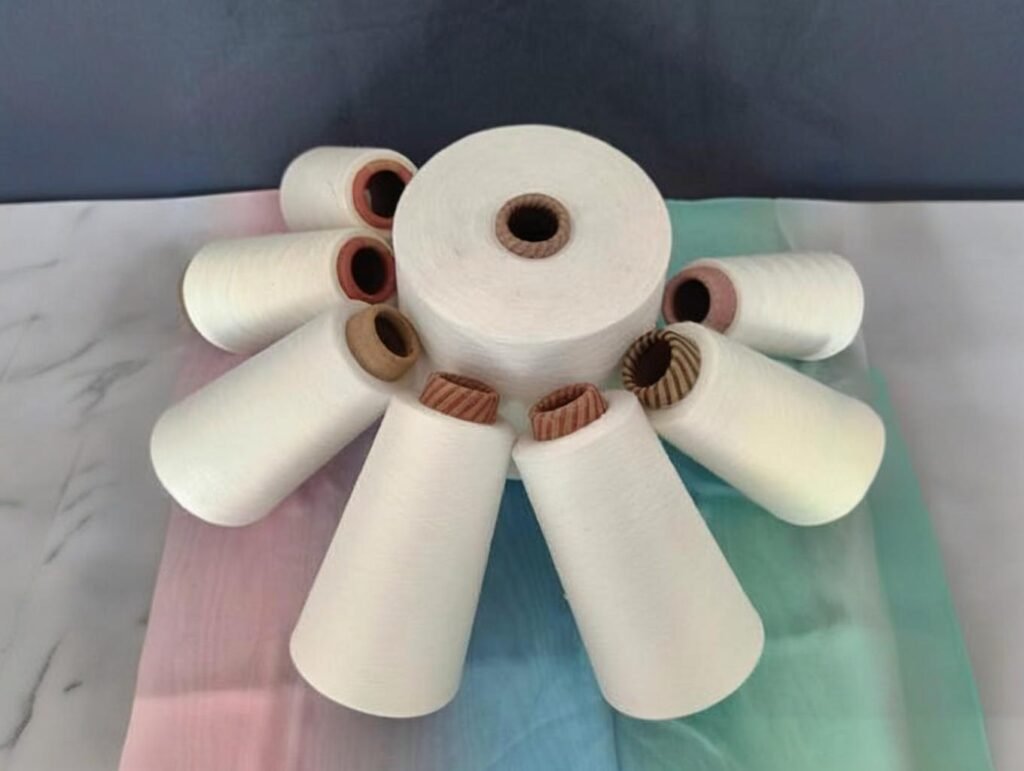
Choosing fabric for medical scrubs is not a small decision. Scrubs are worn for long shifts, washed frequently at high temperatures, exposed to sweat, disinfectants, and constant movement. A fabric that feels fine in a showroom can behave very differently after months of daily use in real healthcare environments.
Among all fabric options, cotton and polyester remain the two most common—and most debated—choices. Cotton is often associated with comfort and breathability. Polyester is known for durability and easy care. But when it comes to medical scrubs, the real question isn’t which fiber sounds better, but which performs better under pressure. For medical scrubs, cotton offers superior breathability and natural comfort, while polyester provides better durability, wrinkle resistance, and long-term shape retention. The optimal choice depends on usage intensity, laundering frequency, climate, and cost expectations—many programs ultimately choose blends to balance both.
Understanding the differences at fiber level helps avoid costly mistakes later, such as premature fabric failure, discomfort complaints, or excessive replacement cycles.
To make a smart choice, we need to break this down step by step—starting with how cotton and polyester are fundamentally different fibers.
What Are the Key Differences Between Cotton and Polyester Fibers for Medical Scrubs?
The key difference between cotton and polyester fibers lies in their origin and internal structure. Cotton is a natural cellulose fiber that absorbs moisture, allows airflow, and feels soft against the skin, while polyester is a synthetic polymer fiber engineered to repel moisture, resist wrinkles, and maintain shape under repeated wear and washing. In medical scrubs, these differences directly affect comfort during long shifts, durability under hospital laundering protocols, hygiene control, and overall lifecycle cost.
This distinction is not theoretical. It explains why cotton and polyester scrubs behave so differently during extended wear, exposure to bodily fluids, and industrial washing environments.
Fiber-Level Differences That Matter in Scrubs
Medical scrubs are not fashion garments. They are functional workwear worn in high-stress, high-hygiene environments such as hospitals, clinics, laboratories, and surgical centers. A typical healthcare worker may wear scrubs 8–12 hours per shift, often under physical and psychological stress, while exposing the fabric to sweat, disinfectants, and frequent laundering—sometimes 100+ wash cycles per year.
Understanding cotton and polyester at the fiber level clarifies why material choice plays such a critical role in daily performance.
Fiber Origin and Structure
| Aspect | Cotton | Polyester |
|---|---|---|
| Fiber type | Natural (cellulose) | Synthetic (polymer) |
| Source | Cotton plant | Petroleum-based |
| Surface | Soft, porous | Smooth, hydrophobic |
| Elastic recovery | Low | High |
Cotton fibers are composed primarily of cellulose and form a twisted, ribbon-like structure with natural pores. These pores allow air and moisture to move freely, which contributes to cotton’s softness and breathability. However, this same porous structure also makes cotton more vulnerable to deformation, shrinkage, and fiber fatigue over time.
Polyester fibers are extruded through precise industrial processes, resulting in smooth, uniform filaments with high tensile strength and elastic recovery. This engineered consistency explains why polyester fabrics hold their shape, resist wrinkling, and maintain size even after repeated washing.
In practical terms, cotton’s structure favors comfort, while polyester’s structure favors control and predictability.
Moisture Interaction at Fiber Level
| Behavior | Cotton | Polyester |
|---|---|---|
| Absorbs sweat | Yes | No (moves moisture) |
| Holds moisture | High | Low |
| Drying speed | Slow | Fast |
| Damp feeling | Possible | Minimal |
Moisture management is one of the most important performance criteria for medical scrubs. Cotton absorbs sweat directly into the fiber core, which can amount to 20–25% of its own weight. This absorption initially feels comfortable, as it prevents sweat from remaining on the skin.
However, once saturated, cotton tends to stay damp, especially in warm environments or during high-activity shifts. This can lead to discomfort, chilling during rest periods, and a perception of heaviness.
Polyester does not absorb moisture into the fiber. Instead, it transports sweat along the surface of the yarn through capillary action, allowing moisture to evaporate more quickly. As a result, polyester scrubs typically dry faster during wear and feel lighter over long shifts.
This difference explains why cotton scrubs often feel better at the start of a shift, while polyester scrubs feel more consistent by the end.
Thermal and Wear Feel
| Sensation | Cotton | Polyester |
|---|---|---|
| Initial comfort | Very good | Good |
| Long-shift dryness | Moderate | Good |
| Heat buildup | Low–moderate | Moderate |
| Static buildup | None | Possible |
Thermal comfort in scrubs is closely tied to airflow and moisture behavior. Cotton’s breathability allows heat to dissipate naturally, reducing the risk of overheating in controlled indoor environments. For staff working in air-conditioned hospitals, this can be a significant advantage.
Polyester, while effective at moisture transport, can trap heat more easily if fabric construction is dense or ventilation is limited. In some cases, this may lead to a warmer feel, particularly during physically demanding tasks.
Static buildup is another practical consideration. Cotton rarely generates static electricity, which is beneficial in environments where comfort and ease of movement are essential. Polyester, unless treated with antistatic finishes, may generate static, especially in dry indoor conditions.
Chemical and Wash Resistance
| Factor | Cotton | Polyester |
|---|---|---|
| Resistance to bleach | Moderate | High |
| Resistance to chemicals | Lower | Higher |
| Fiber degradation | Faster | Slower |
Medical scrubs are subjected to far harsher laundering conditions than everyday apparel. Hospital laundering protocols often involve:
- High-temperature washing (60–75°C)
- Chlorine or oxygen-based bleach
- Strong alkaline detergents
- Mechanical agitation
Cotton can tolerate these conditions, but repeated exposure gradually weakens cellulose fibers. Over time, this leads to thinning fabric, loss of softness, and eventual tearing—especially at stress points such as seams and pockets.
Polyester fibers are chemically stable and resist degradation under these same conditions. They maintain tensile strength and color integrity even after hundreds of wash cycles, making them well-suited for institutional laundry systems.
This durability is one reason many hospitals specify polyester-rich scrubs for staff uniforms.
Durability and Lifespan in Clinical Use
From a lifecycle perspective, polyester scrubs generally outlast cotton scrubs under identical usage conditions. Cotton garments may show visible wear after 50–70 wash cycles, while polyester garments often remain serviceable beyond 150 cycles, depending on fabric weight and construction.
Durability directly affects replacement frequency and inventory costs. In large healthcare systems employing hundreds or thousands of staff, extending scrub lifespan by even a small margin can translate into substantial cost savings over time.
That said, durability alone does not determine suitability. Comfort, perception, and staff acceptance all play important roles.
Hygiene, Bacteria, and Odor Considerations
There is a common perception that natural fibers are inherently more hygienic. In reality, hygiene depends more on laundering effectiveness than fiber type. Cotton’s absorbency can trap moisture and organic matter, which may contribute to odor retention if laundering is insufficient.
Polyester’s low moisture retention reduces the likelihood of persistent dampness, but it can also trap oils on the fiber surface, potentially leading to odor buildup if not properly treated.
Modern medical scrubs often incorporate antimicrobial finishes or blended constructions to mitigate these issues, regardless of base fiber.
Care Requirements and Operational Impact
Cotton scrubs typically require more careful handling to maintain size, softness, and appearance. Over-drying can cause shrinkage, and aggressive bleaching may accelerate fiber damage. This makes cotton more sensitive to process variation in centralized laundry systems.
Polyester scrubs are more forgiving. They resist shrinkage, dry faster, and require less ironing, which simplifies processing and reduces labor and energy costs.
In facilities with decentralized or inconsistent laundering practices, polyester’s tolerance to error is a major advantage.
Environmental and Sustainability Context
Cotton is renewable and biodegradable, but conventional cotton farming is resource-intensive, consuming large volumes of water and agricultural chemicals. Polyester is derived from fossil fuels and does not biodegrade, but it is highly durable and increasingly available in recycled forms.
From a sustainability standpoint, the longer service life of polyester scrubs can partially offset environmental concerns by reducing replacement frequency. Cotton, when sourced responsibly and maintained properly, can also align with sustainability goals.
Key Difference Takeaway
Cotton prioritizes natural comfort, breathability, and immediate wear satisfaction, making it appealing for healthcare professionals who value softness and skin-friendly materials. Polyester prioritizes performance, durability, and wash resistance, making it more suitable for high-intensity clinical environments and centralized laundering systems.
Neither fiber is universally better. The optimal choice depends on work conditions, laundering infrastructure, budget constraints, and staff expectations. In practice, many medical scrubs use cotton–polyester blends to balance comfort and longevity—reflecting the reality that performance in healthcare textiles is always context-driven, not absolute.
Which Fabric (Cotton or Polyester) Offers Better Comfort and Breathability for Healthcare Professionals?
Cotton generally offers superior natural breathability and softness, which many healthcare professionals find more comfortable in hot, crowded, or high-sweat working environments. Polyester, while less breathable in terms of airflow, provides better moisture management and maintains a more consistent feel over long shifts. For extended wear, especially in warm conditions, cotton or cotton-rich blends are often perceived as more breathable, while polyester excels in dryness and durability.
For healthcare professionals, comfort is not a short-term sensation. It is something experienced after six, eight, or even twelve hours of continuous movement, stress, and exposure to fluctuating indoor climates. Fabric behavior over time—not just at first touch—matters most.
Understanding Comfort in Real Shifts
Healthcare environments place unique demands on workwear. Nurses, doctors, and technicians move frequently between patient rooms, corridors, operating areas, and administrative spaces. Temperature, humidity, and activity levels can change repeatedly within a single shift. As a result, fabric comfort must be evaluated dynamically rather than at a single point in time.
Three factors consistently define comfort for healthcare professionals:
- Breathability and heat dissipation
- Moisture and sweat management
- Skin feel and sensory fatigue over long hours
Cotton and polyester address these factors in fundamentally different ways.
Airflow and Breathability
Breathability refers to how easily air can pass through a fabric and help dissipate body heat. This is especially important in high-activity roles or facilities with limited climate control.
| Property | Cotton | Polyester |
|---|---|---|
| Air permeability | High | Moderate |
| Heat release | Efficient | Less efficient |
| Fabric density options | Wide | Wide |
Cotton fibers are naturally porous and allow air to move not only between yarns but through the fiber structure itself. This promotes heat exchange and helps prevent the buildup of warm air near the skin. In contrast, polyester fibers are solid and smooth, so airflow relies more heavily on fabric construction rather than fiber structure.
In practice, this means:
- Cotton uniforms often feel cooler when standing or walking.
- Polyester uniforms may trap more heat, especially in tightly woven constructions.
- Lightweight weaves improve breathability for both fabrics, but cotton still retains an advantage in passive airflow.
For professionals working in wards, emergency rooms, or non-air-conditioned environments, this difference can become noticeable within the first few hours of a shift.
Skin Feel Over Long Hours
Initial comfort does not always predict end-of-shift comfort. Healthcare professionals frequently report that fabrics feel very different after prolonged wear.
| Wear Stage | Cotton Feel | Polyester Feel |
|---|---|---|
| First hour | Soft, cool | Smooth |
| Mid-shift | Comfortable | Neutral |
| End of shift | May feel damp | Drier |
Cotton’s soft hand feel is widely appreciated at the start of a shift. It feels familiar, gentle, and less synthetic against the skin. However, because cotton absorbs moisture, its comfort can change as sweat accumulates. In long shifts, particularly under heavy protective layers, cotton garments may begin to feel heavier or cling to the body.
Polyester, on the other hand, tends to maintain a more stable texture. While it may not feel as cool initially, its low moisture absorption helps prevent fabric saturation. This consistency is often cited by healthcare workers who prioritize predictable comfort throughout extended shifts.
Sweat and Humidity Response
Sweat management is one of the most debated aspects of healthcare uniform comfort. The way fabrics interact with moisture directly affects perceived dryness, odor, and thermal comfort.
| Condition | Cotton | Polyester |
|---|---|---|
| High humidity | Can feel heavy | Stays lighter |
| High sweat output | Absorbs | Wicks |
| Odor retention | Higher | Lower |
Cotton absorbs sweat into the fiber, which can be beneficial in low to moderate activity levels, as it pulls moisture away from the skin. However, in high-humidity environments or during intense physical activity, that absorbed moisture may not evaporate quickly, leading to a damp sensation.
Polyester does not absorb moisture. Instead, it moves sweat along the surface of the fabric through capillary action, spreading it out so it can evaporate more efficiently. This is why polyester garments often feel drier during prolonged activity, even though they may feel warmer initially.
Odor retention is another practical consideration. Because cotton holds moisture, it can also retain odor-causing bacteria more readily. Polyester fabrics, especially those engineered with antimicrobial finishes, tend to resist odor buildup more effectively across repeated wears and washes.
Thermal Comfort vs Moisture Comfort
An important distinction often overlooked is the difference between thermal comfort and moisture comfort:
- Thermal comfort relates to how cool or warm the fabric feels.
- Moisture comfort relates to how dry the fabric feels over time.
Cotton generally performs better in thermal comfort due to airflow and heat release. Polyester performs better in moisture comfort by limiting saturation and drying quickly. Healthcare professionals often prioritize one over the other depending on their role:
- Staff in stationary or moderately active roles may favor cotton.
- Staff in fast-paced, physically demanding roles often lean toward polyester.
Fabric Behavior Under Protective Layers
In healthcare settings, uniforms are frequently worn under additional layers such as gowns, lab coats, or protective equipment. These layers restrict airflow and increase heat buildup.
Under such conditions:
- Cotton’s breathability advantage is reduced, as airflow is limited.
- Polyester’s moisture-wicking properties become more noticeable, helping maintain dryness even when ventilation is poor.
This is one reason why polyester or blended fabrics are common in departments with strict protective requirements, such as operating rooms or isolation units.
Real-World Insight
Across hospitals and clinics, recurring feedback from healthcare professionals shows consistent patterns:
- Cotton feels more breathable and comfortable initially
- Polyester feels more stable and predictable across long shifts
- Blended fabrics often feel best overall, balancing airflow and moisture control
Blends typically combine cotton’s softness and breathability with polyester’s durability and moisture performance. A common ratio, such as 60/40 cotton-polyester, is often cited as a practical compromise for daily healthcare uniforms.
Durability and Comfort Over Time
Comfort is also influenced by how fabrics age. Cotton tends to soften with repeated washing, which many wearers appreciate. However, it can also thin, shrink, or lose shape over time. Polyester retains its structure and fit more reliably but may feel unchanged rather than increasingly comfortable.
Healthcare institutions must consider how uniforms feel not just after one shift, but after dozens of wash cycles in industrial laundry systems. A fabric that becomes uncomfortable or misshapen over time can undermine initial comfort advantages.
Individual Sensitivity and Preference
It is important to acknowledge that comfort remains subjective. Skin sensitivity, personal sweat levels, and temperature tolerance vary widely among individuals. Some healthcare professionals strongly prefer natural fibers, while others prioritize dryness and low maintenance.
This variability explains why no single fabric choice satisfies every wearer and why uniform programs increasingly offer multiple fabric options or blended solutions.
Comfort Takeaway
Cotton and polyester each offer distinct comfort advantages for healthcare professionals. Cotton leads in natural breathability, softness, and thermal comfort, making it appealing in warm or moderately active environments. Polyester excels in moisture management, odor resistance, and consistency over long shifts.
The real-world solution for many healthcare settings lies in cotton-polyester blends, which balance airflow, dryness, durability, and long-term wear comfort. Ultimately, the “better” fabric depends on shift length, activity level, environmental conditions, and individual preference rather than a single universal standard.
How Do Cotton and Polyester Compare in Durability and Wear Resistance for Medical Scrubs?
Polyester is generally more durable than cotton for medical scrubs, delivering higher resistance to abrasion, tearing, shrinkage, and repeated high-temperature industrial laundering. Cotton offers acceptable short-term durability and comfort but tends to wear out faster, lose shape, and show visual aging sooner under intensive hospital washing conditions. In long-term scrub programs, polyester or polyester-rich fabrics typically provide a longer service life and more consistent performance.
In healthcare environments, durability is not a theoretical concern—it directly affects uniform budgets, staff appearance, infection control workflows, and operational efficiency. Medical scrubs are among the most aggressively laundered garments in the apparel industry, and fabric choice plays a decisive role in how well they hold up over time.
Durability Under Real Hospital Conditions
Medical scrubs are subjected to conditions far harsher than everyday workwear. In most hospitals, scrubs are washed after every shift, often at temperatures between 60–75°C (140–167°F), combined with alkaline detergents, disinfectants, and high-speed extraction. Over a year, a single scrub set can easily undergo 150–250 wash cycles, depending on staffing rotations.
Under these conditions, durability is defined not only by how strong a fabric is on day one, but by how well it retains strength, shape, and appearance after months of continuous use.
Fabric Strength and Tear Resistance
Fabric strength is the foundation of durability. It determines whether scrubs can withstand stretching, bending, lifting, and friction during long shifts.
| Property | Cotton | Polyester |
|---|---|---|
| Tensile strength | Medium | High |
| Tear resistance | Moderate | High |
| Seam stress tolerance | Moderate | High |
Cotton fibers are natural cellulose fibers with a relatively short staple length. While they offer good initial comfort, they are more prone to fiber breakage under repeated stress. Over time, this leads to thinning areas, especially at seams, pockets, and high-movement zones such as knees and elbows.
Polyester fibers are synthetic filaments engineered for strength. Their long, continuous molecular chains provide higher tensile and tear strength, allowing scrubs to tolerate frequent bending, pulling, and seam stress without structural failure. This is particularly important in clinical roles that involve patient handling, frequent squatting, or rapid movement.
From a uniform management perspective, stronger fibers mean fewer seam failures and fewer garments removed from service due to tearing.
Resistance to Repeated Washing
Unlike casual apparel, medical scrubs are washed far more aggressively and far more often.
| Wash Factor | Cotton | Polyester |
|---|---|---|
| High-temperature washing | Causes shrinkage | Stable |
| Frequent washing cycles | Fiber fatigue | Minimal fatigue |
| Color fading | Faster | Slower |
Cotton fibers absorb water readily, swelling during washing and contracting during drying. This repeated expansion and contraction accelerates fiber fatigue, gradually weakening the fabric. Over many cycles, cotton scrubs may become thinner, softer, and less durable, eventually developing holes or seam separation.
Polyester absorbs very little moisture, which significantly reduces mechanical and thermal stress during laundering. As a result, polyester maintains its fiber integrity over a greater number of wash cycles. In controlled studies and hospital laundry audits, polyester-rich scrubs often retain usable strength 30–50% longer than comparable cotton garments.
Color retention is another factor. Cotton dyes tend to fade faster under repeated exposure to heat, chemicals, and friction, while polyester dyes are more colorfast, helping scrubs maintain a professional appearance over time.
Shrinkage and Shape Retention
Dimensional stability is critical in medical uniforms, where fit affects comfort, mobility, and professional appearance.
| Aspect | Cotton | Polyester |
|---|---|---|
| Initial shrinkage risk | High | Very low |
| Long-term shape | Looser | Stable |
| Wrinkle resistance | Low | High |
Cotton is naturally prone to shrinkage, particularly if not fully pre-shrunk or if exposed to high drying temperatures. Initial shrinkage of 3–5% is common, and additional gradual distortion can occur over time. This leads to uneven sizing across uniform inventories, complicating distribution and replacement planning.
Polyester is highly dimensionally stable. Its low moisture absorption and thermal resilience allow scrubs to retain their original size and shape even after extensive laundering. Wrinkle resistance is also higher, which reduces the need for pressing and helps staff maintain a neat appearance throughout long shifts.
In real hospital settings, better shape retention means more consistent fit across staff, fewer complaints, and less time spent managing size discrepancies.
Abrasion Resistance and Daily Wear
Scrubs experience constant surface abrasion—from chairs, beds, equipment, and repeated contact with the body.
Polyester’s abrasion resistance is significantly higher than cotton’s. In standardized abrasion testing, polyester fabrics typically endure more cycles before visible wear compared to cotton fabrics of similar weight. This makes polyester particularly suitable for high-contact areas such as seat panels, thighs, and pockets.
Cotton, while comfortable, tends to abrade more quickly. Over time, the fabric surface becomes thinner and weaker, increasing the risk of tearing. This wear is often uneven, leading to garments being retired not because they are unsafe, but because they no longer meet appearance standards.
Pilling and Surface Wear
Surface appearance plays an important role in how professional scrubs look over time.
| Surface Issue | Cotton | Polyester |
|---|---|---|
| Pilling | Low–moderate | Moderate |
| Surface fuzz | Common | Rare |
| Visual aging | Faster | Slower |
Cotton fibers tend to break and protrude from the fabric surface, creating fuzz and a worn look. Even when structurally intact, cotton scrubs may appear “tired” after extended use, which can negatively affect staff presentation.
Polyester may develop some pilling, particularly in lower-quality constructions. However, modern scrub fabrics often use anti-pilling yarns or blended constructions to minimize this effect. Overall, polyester garments tend to retain a cleaner, more uniform surface appearance over time.
Impact of Blended Fabrics
Many medical scrub programs use cotton–polyester blends to balance durability and comfort. Blends such as 65/35 or 60/40 polyester-cotton combine the strength and stability of polyester with the breathability and softness of cotton.
Blended scrubs typically:
- Outlast 100% cotton garments
- Shrink less and hold shape better
- Feel more comfortable than 100% polyester for extended wear
From a durability standpoint, blends significantly improve wear resistance while maintaining acceptable comfort levels for healthcare professionals working long shifts.
Real-World Durability Insight
In large hospital and healthcare uniform programs, polyester-rich scrubs consistently demonstrate measurable advantages:
- 30–50% longer service life compared to pure cotton scrubs
- Lower replacement rates, reducing procurement and inventory costs
- More consistent sizing, simplifying distribution and reuse
- Better appearance retention, supporting a professional clinical image
These benefits compound over time. Fewer replacements mean lower textile waste, reduced logistical handling, and less disruption to uniform supply systems.
Cost and Operational Implications
Durability directly influences total cost of ownership. While cotton scrubs may have a lower upfront unit cost, their shorter lifespan often results in a higher cost per wear. Polyester or blended scrubs, though sometimes slightly more expensive initially, typically deliver better value over time due to extended usability.
For hospitals managing thousands of scrub sets, even a small increase in lifespan can translate into significant annual savings in purchasing, laundering, and waste management.
Durability Takeaway
For medical scrubs exposed to heavy daily use and industrial laundering, polyester clearly outperforms cotton in durability, wear resistance, and shape retention. Cotton remains valued for comfort and breathability but requires more frequent replacement and closer laundering control to maintain acceptable performance.
In long-term scrub programs, especially in large healthcare systems, durability is often the decisive factor. Polyester-rich fabrics provide greater consistency, lower replacement frequency, and better overall lifecycle performance—making them the practical choice where reliability and cost control matter most.
What Are the Moisture Management and Sweat Wicking Properties of Cotton vs Polyester?
Cotton absorbs sweat directly into the fiber, creating a cool and soft initial feel but drying slowly as moisture accumulates. Polyester does not absorb moisture; instead, it wicks sweat across the fabric surface, allowing it to evaporate quickly and keeping the garment lighter during long periods of wear. Over extended shifts or high-activity use, polyester typically maintains dryness and comfort longer than cotton.
This distinction plays a critical role in workwear, uniforms, and performance-driven garments.
How Each Fabric Handles Sweat
Moisture management is not a single property—it is a system of absorption, movement, evaporation, and retention. Cotton and polyester handle each stage of this system in fundamentally different ways due to their fiber chemistry and structure.
Cotton is a hydrophilic fiber. Its cellulose structure naturally attracts and holds water molecules. Polyester is hydrophobic, meaning it resists water absorption at the fiber level. Instead of pulling sweat inward, polyester relies on engineered yarn shapes and fabric construction to move moisture outward.
Understanding this distinction is essential when selecting fabrics for long shifts, physically demanding roles, or environments where temperature and humidity fluctuate throughout the day.
Moisture Absorption vs Moisture Movement
| Behavior | Cotton | Polyester |
|---|---|---|
| Absorbs moisture | Yes | No |
| Wicks moisture | Limited | Excellent |
| Holds moisture | High | Low |
| Drying speed | Slow | Fast |
Cotton absorbs moisture into the fiber core, where it remains until it slowly evaporates. Cotton can absorb approximately 7–10% of its own weight in moisture without immediately feeling wet, which explains why it feels comfortable at first contact with sweat.
Polyester absorbs less than 1% of its weight in moisture. Instead, moisture remains on the surface of the fiber and is transported through capillary action across the fabric face. This movement increases the surface area of sweat exposure to air, accelerating evaporation.
In practical terms:
- Cotton manages sweat by storage
- Polyester manages sweat by transport
Neither approach is inherently “better”—but they perform very differently over time.
Comfort During Long Shifts
| Shift Stage | Cotton Experience | Polyester Experience |
|---|---|---|
| Early shift | Cool, soft | Neutral |
| Mid shift | May feel damp | Remains dry |
| End of shift | Heavier feel | Lightweight |
During the early phase of wear, cotton often feels superior. Its softness and immediate absorption create a cooling sensation, particularly in dry or well-ventilated environments.
As activity continues, cotton’s absorbed moisture begins to accumulate. Once saturation increases, evaporation slows, and the fabric may feel damp, cling to the skin, or become heavier. In high-sweat scenarios, this can lead to discomfort, especially when airflow is limited.
Polyester behaves differently. It may feel less luxurious at first touch, but as sweat production increases, its wicking ability keeps moisture moving away from the skin. Even after several hours, polyester garments typically maintain a lighter, drier feel.
This is why polyester dominates in:
- Medical scrubs
- Emergency response uniforms
- Industrial workwear
- Athletic and performance apparel
In these contexts, end-of-shift comfort matters more than initial feel.
Thermal Perception and Heat Retention
Moisture management directly influences how warm or cool a fabric feels on the body.
Cotton’s absorbed moisture can create evaporative cooling at first, but once saturated, wet cotton reduces airflow and traps heat. This can make the wearer feel warmer and more uncomfortable over time.
Polyester, by keeping moisture on the surface and promoting evaporation, helps stabilize skin temperature during continuous movement. However, in low-activity situations, polyester’s lower breathability may cause heat retention.
This explains a common user experience:
- Cotton feels cooler initially, warmer later
- Polyester feels stable throughout prolonged activity
Odor Control Considerations
| Factor | Cotton | Polyester |
|---|---|---|
| Odor absorption | Higher | Lower |
| Bacteria growth | Moderate | Lower (with finishes) |
| Freshness retention | Shorter | Longer |
Odor development is influenced by moisture retention and bacterial growth.
Cotton’s absorbent nature allows sweat, oils, and odor-causing compounds to penetrate the fiber. While cotton is easy to wash, odors can develop quickly during wear because moisture remains trapped close to the skin.
Polyester does not absorb sweat, which reduces immediate odor absorption. Modern polyester fabrics often incorporate:
- Antimicrobial finishes
- Silver-ion or zinc-based treatments
- Moisture-wicking yarn cross-sections
These technologies significantly reduce bacterial growth during extended wear. As a result, polyester garments often maintain a “fresher” feel for longer periods, especially in professional or medical settings.
That said, poorly laundered polyester can retain odors if oils bind to the fiber surface over time. Proper washing protocols are essential for long-term odor control.
Drying Time and Recovery Between Uses
Drying speed is not only about convenience—it affects garment readiness, hygiene, and rotation efficiency.
Cotton’s high moisture retention means longer drying times, whether air-dried or machine-dried. In humid environments, cotton garments may remain damp for extended periods, increasing the risk of odor or mildew if not properly handled.
Polyester dries significantly faster—often 30–50% quicker than cotton under comparable conditions. This makes it particularly suitable for:
- Daily uniform rotation
- Limited wardrobe scenarios
- Travel or on-call roles
In professional environments where garments are worn repeatedly with minimal downtime, drying speed becomes a critical comfort and hygiene factor.
Climate Sensitivity
| Environment | Better Choice |
|---|---|
| Hot & humid | Polyester |
| Warm & dry | Cotton |
| Variable climates | Blends |
Climate has a powerful influence on how moisture behavior is perceived.
In hot and humid conditions, evaporation is slow. Cotton’s absorbed moisture struggles to evaporate, leading to a heavy, damp feeling. Polyester performs better by maintaining surface moisture movement even when humidity is high.
In warm but dry climates, cotton performs well. Sweat evaporates more easily, and cotton’s absorption does not lead to prolonged dampness. The natural feel and softness can outweigh polyester’s performance benefits.
In variable climates, blended fabrics provide stability. Blends reduce cotton’s saturation issues while improving polyester’s hand feel and breathability.
Practical Example: High-Intensity Professional Use
In emergency response, surgical, or industrial environments where:
- Movement is constant
- Sweat levels are high
- Breaks are limited
- Garments are worn for 8–12 hours
polyester-rich or blended fabrics consistently outperform pure cotton in sustained comfort.
Medical professionals often report that cotton scrubs feel comfortable during the first hours of a shift but become heavy and uncomfortable later. Polyester or poly-blend scrubs, while less soft initially, remain drier and lighter through the end of the day.
This real-world feedback is a key reason many institutions have shifted away from 100% cotton uniforms.
The Role of Fabric Construction
It is important to note that fiber type alone does not determine performance. Yarn structure, knit vs weave, and fabric weight also matter.
- Open knits enhance airflow and evaporation
- Microfiber polyester improves capillary action
- Heavier cotton fabrics increase moisture retention
A well-engineered polyester fabric can outperform a poorly constructed cotton fabric—and vice versa. Evaluating moisture management should always consider fiber + fabric design together.
Moisture Management Takeaway
Cotton and polyester approach sweat management from opposite directions.
- Cotton feels better initially due to absorption and softness but becomes heavier and slower to dry as sweat accumulates.
- Polyester may feel less luxurious at first contact but delivers superior long-term comfort by wicking moisture and drying quickly.
- Blended fabrics often provide the most balanced solution for extended wear.
For moisture-heavy environments, long shifts, or high-activity roles, polyester or cotton–polyester blends typically deliver more consistent comfort over time. Cotton remains a strong choice for low-activity, dry-climate, or short-duration wear where initial comfort is the priority.
Which Fabric Performs Better in Terms of Infection Control and Cleanability?
Polyester generally performs better than cotton in infection control and cleanability because it withstands high-temperature washing, chemical disinfectants, and repeated industrial laundering with less fiber degradation. Cotton is hygienic and breathable but retains moisture more easily and breaks down faster under harsh cleaning protocols, which can compromise long-term cleanliness performance.
In medical settings, cleanability is not a preference—it is a non-negotiable requirement tied directly to patient safety and staff protection.
Fabric Behavior in Hygiene-Critical Environments
Hospitals, clinics, and surgical centers operate under strict infection control protocols. Medical scrubs are routinely exposed to blood, bodily fluids, microorganisms, disinfectants, and repeated high-temperature laundering. A single set of scrubs may be washed 2–3 times per week, resulting in 120–150 wash cycles annually.
Under these conditions, the fabric’s ability to remain structurally intact, hygienic, and easy to disinfect over time becomes just as important as initial comfort.
Resistance to High-Temperature Washing
| Cleaning Factor | Cotton | Polyester |
|---|---|---|
| Tolerance to 60–75°C washing | Moderate | Excellent |
| Fiber damage risk | Higher | Low |
| Shape retention after heat | Poorer | Strong |
Thermal disinfection is one of the most effective methods for killing bacteria, viruses, and fungi. Many healthcare laundering standards rely on wash temperatures between 60–75°C (140–167°F), sometimes combined with extended dwell times.
Cotton can tolerate these temperatures, but repeated exposure causes cellulose fibers to swell, weaken, and gradually lose tensile strength. Over time, this leads to thinning fabric, seam failure, and surface pilling—areas where microorganisms may more easily adhere.
Polyester fibers are thermally stable within this temperature range. They do not swell or weaken in the same way and retain dimensional stability even after hundreds of heat cycles. This stability ensures that garments continue to meet hygiene and fit requirements over a longer service life.
Chemical and Disinfectant Resistance
| Exposure | Cotton | Polyester |
|---|---|---|
| Chlorine bleach | Weakens fiber | Highly resistant |
| Alcohol-based cleaners | Limited impact | Minimal impact |
| Industrial detergents | Fiber wear | Stable |
Chemical disinfection is another cornerstone of infection control. Hospital laundries frequently use:
- Chlorine or oxygen-based bleach
- Alkaline industrial detergents
- Enzymatic cleaners
- Alcohol-based surface disinfectants
Cotton fibers are particularly sensitive to chlorine bleach. While bleach is effective for whitening and pathogen elimination, it accelerates cellulose breakdown, leading to brittleness and reduced fabric strength. Over time, cotton scrubs may develop weak spots or tears, especially in high-stress areas.
Polyester’s polymer structure is far more resistant to chemical attack. It tolerates repeated exposure to disinfectants without significant fiber damage, maintaining both strength and surface integrity. This chemical resilience supports consistent hygiene performance over extended use.
Moisture Retention and Bacterial Growth
| Factor | Cotton | Polyester |
|---|---|---|
| Moisture retention | High | Low |
| Drying time | Long | Short |
| Bacterial growth risk | Higher | Lower |
Moisture plays a critical role in microbial survival and growth. Cotton’s absorbent nature allows it to hold moisture deep within the fiber, sometimes up to 20–25% of its own weight. If drying is incomplete or delayed, residual moisture can create conditions favorable for bacterial persistence.
Polyester absorbs less than 1% moisture by weight, allowing garments to dry quickly both during laundering and while worn. Faster drying reduces the time window in which microorganisms can survive on the fabric surface.
In busy hospital laundries where throughput is high and drying loads may be heavy, polyester’s rapid moisture release provides a measurable hygiene advantage.
Surface Smoothness and Contaminant Release
| Property | Cotton | Polyester |
|---|---|---|
| Fiber surface | Porous | Smooth |
| Stain release | Moderate | High |
| Particle retention | Higher | Lower |
The physical surface of a fiber affects how easily contaminants are removed during washing. Cotton fibers have a naturally irregular, porous surface that can trap particles, organic matter, and microorganisms within micro-crevices.
Polyester fibers are smoother and more uniform. This smooth surface allows soils, oils, and biological contaminants to release more readily during mechanical agitation in the wash cycle. As a result, polyester fabrics typically achieve higher soil removal efficiency under identical laundering conditions.
This difference is particularly important for oil-based contaminants, such as skin lipids and certain pathogens that adhere to organic residues.
Consistency of Cleanability Over Time
Infection control is not only about whether a garment can be cleaned once—it is about whether it can be cleaned reliably over its entire service life. As fabrics age, micro-damage accumulates at the fiber level.
Cotton’s gradual fiber breakdown increases surface roughness, which can:
- Reduce stain release
- Increase soil redeposition
- Require harsher cleaning to achieve the same level of hygiene
Polyester maintains a more consistent surface structure over time, allowing laundering protocols to remain effective without escalation. This consistency reduces the need for stronger chemicals or higher temperatures later in the garment’s life.
Rewash Rates and Hygiene Risk
In large healthcare facilities, rewash rates are closely monitored. A rewash rate of even 5–8% can significantly impact laundry capacity, energy consumption, and turnaround times.
Cotton garments are more likely to require rewashing due to:
- Residual staining
- Odor retention
- Shrinkage-related fit issues
Polyester garments, with better stain release and shape retention, typically achieve acceptable cleanliness in fewer cycles. Lower rewash rates not only improve efficiency but also reduce the cumulative exposure of garments to heat and chemicals, further extending their usable life.
Lint Generation and Environmental Contamination
Lint is an often-overlooked factor in infection control. Cotton fibers shed lint as they degrade, especially under mechanical stress. Lint particles can act as carriers for microorganisms and contribute to airborne contamination in laundry and clinical environments.
Polyester sheds significantly less lint due to its continuous filament structure and higher fiber strength. Reduced lint generation supports cleaner laundry facilities and lowers the risk of secondary contamination.
Impact on Centralized Hospital Laundries
Most hospitals rely on centralized laundry systems processing thousands of garments daily. These systems prioritize:
- Predictable outcomes
- Process standardization
- Minimal operator intervention
Polyester aligns well with these priorities because it tolerates variation in load size, chemical dosing, and drying conditions without compromising hygiene. Cotton, while effective when perfectly processed, is more sensitive to deviations, increasing the risk of inconsistent results.
Perception vs. Measured Hygiene
It is important to distinguish between perceived hygiene and measurable cleanliness. Cotton is often perceived as “more natural” and therefore “cleaner,” but perception does not always reflect performance under industrial conditions.
Measured hygiene outcomes—such as microbial reduction, stain removal efficiency, and fabric integrity—often favor polyester in institutional laundering environments. This is why many hospitals specify polyester-rich scrubs despite some staff preference for cotton.
The Role of Blends and Finishes
Modern medical scrubs frequently use cotton–polyester blends or apply antimicrobial finishes to enhance hygiene performance. Blends aim to:
- Reduce moisture retention
- Improve chemical resistance
- Maintain acceptable comfort levels
However, even in blends, the polyester component typically drives infection-control performance, while cotton contributes to tactile comfort.
Hygiene Takeaway
For environments requiring frequent disinfection, high-temperature washing, and strict hygiene control, polyester offers more reliable long-term cleanability and infection-control performance. Its resistance to heat, chemicals, moisture retention, and fiber degradation makes it better suited to the realities of medical laundering systems.
Cotton remains hygienic when properly cleaned, but its sensitivity to moisture and chemical stress increases the risk of performance decline over time. In healthcare settings where consistency and safety are paramount, fabric choice should be based not on perception, but on how materials perform after hundreds of real-world cleaning cycles.
How Do Cost, Availability, and Production Considerations Affect Fabric Choice for Medical Scrubs Wholesalers?
Polyester typically delivers lower long-term cost and higher operational predictability for medical scrubs wholesalers due to its durability, stable global supply, and consistent pricing. Cotton, while widely accepted and familiar, often carries higher replacement rates and greater price volatility driven by agricultural factors. For large-scale scrub programs, these economic and supply-chain variables strongly shape fabric selection decisions.
In wholesale scrub programs, fabric choice is not only about wearer comfort or performance in isolation. It is a strategic sourcing decision that affects budget planning, production scheduling, inventory risk, and long-term customer contracts. At scale, even small differences in fabric behavior can translate into substantial financial impact.
The Economics Behind Fabric Selection
Medical scrubs wholesalers operate under very different constraints than individual brands or boutique uniform suppliers. Orders are larger, replenishment cycles are ongoing, and customers—such as hospital groups, distributors, or government buyers—expect consistency over years, not seasons.
As a result, fabric choice must be evaluated across four economic dimensions:
- Raw material price stability
- Manufacturing efficiency and yield
- Replacement and lifecycle cost
- Supply availability and lead-time reliability
Cotton and polyester behave very differently across each of these dimensions.
Raw Material Cost Stability
Raw material pricing directly influences garment costing, contract pricing, and margin stability. For wholesalers managing long-term supply agreements, price predictability is often more important than absolute price.
| Factor | Cotton | Polyester |
|---|---|---|
| Price volatility | High | Low |
| Seasonal impact | Significant | Minimal |
| Market predictability | Lower | Higher |
Cotton is an agricultural commodity. Its price is influenced by:
- Weather conditions and crop yields
- Water availability and farming costs
- Global demand fluctuations
- Government subsidies and export policies
As a result, cotton prices can swing noticeably from year to year, and sometimes within a single season. For wholesalers, this volatility complicates long-term pricing agreements with buyers.
Polyester, by contrast, is petrochemical-based and produced through industrial processes. While it is still influenced by energy markets, its pricing is generally more stable and predictable. This stability allows wholesalers to:
- Lock in costs more accurately
- Offer fixed-price contracts with greater confidence
- Reduce margin erosion caused by raw material swings
Production Yield and Manufacturing Efficiency
Beyond fabric price, production efficiency plays a major role in overall cost structure. Fabric behavior during cutting, sewing, and finishing affects yield, defect rates, and throughput.
| Aspect | Cotton | Polyester |
|---|---|---|
| Cutting yield | Moderate | High |
| Fabric defect rate | Moderate | Low |
| Batch consistency | Variable | High |
Cotton fabrics can vary between batches due to differences in fiber length, yarn quality, and finishing processes. This variability may lead to:
- Higher fabric wastage during cutting
- More frequent quality inspections
- Adjustments in production parameters
Polyester fabrics are engineered for uniformity. Yarn thickness, tensile strength, and fabric density are tightly controlled, resulting in more predictable behavior on production lines. For wholesalers, this translates into:
- Higher cutting efficiency
- Fewer rejected panels
- Smoother scaling from sample to bulk production
In high-volume scrub manufacturing, even a 1–2% difference in cutting yield can significantly affect overall unit cost.
Process Control and Quality Consistency
Medical scrubs are often subject to strict specifications for color, weight, and durability. Polyester’s consistency simplifies process control, especially in dyeing and finishing.
Cotton dye uptake can vary based on fiber maturity and finishing treatments, increasing the risk of shade variation across batches. Polyester’s controlled dyeing process allows for:
- Better color repeatability
- Easier matching across replenishment orders
- Reduced risk of customer rejections due to shade inconsistency
For wholesalers supplying national or international programs, this consistency is a major operational advantage.
Replacement and Lifecycle Cost
From a wholesaler’s perspective, the real cost of a scrub garment is not its manufacturing price, but how often it must be replaced.
| Cost Element | Cotton | Polyester |
|---|---|---|
| Initial garment cost | Moderate | Low–moderate |
| Replacement frequency | Higher | Lower |
| Cost per wear | Higher | Lower |
Cotton scrubs are more prone to:
- Shrinkage after repeated washing
- Fabric thinning and tearing
- Loss of shape and appearance
As a result, they often require replacement sooner, particularly in industrial laundry environments common in healthcare systems.
Polyester scrubs typically withstand more wash cycles before showing unacceptable wear. Their resistance to shrinkage and deformation lowers replacement frequency, which significantly reduces total cost over the lifecycle of a uniform program.
For wholesalers supplying large healthcare networks, lower replacement rates mean:
- Fewer reorders driven by wear-out
- More predictable replenishment volumes
- Stronger value proposition for cost-conscious buyers
Cost per Wear as a Decision Metric
Many professional scrub buyers now evaluate garments using cost per wear rather than unit price. This metric considers:
- Initial garment cost
- Average number of wash cycles
- Expected service life
Under this lens, polyester frequently outperforms cotton, even when cotton garments are priced competitively at the outset. This economic logic strongly influences procurement decisions for hospital groups and distributors.
Lead Time and Availability
Supply reliability is critical for wholesalers operating on tight delivery schedules or just-in-time inventory models.
| Supply Aspect | Cotton | Polyester |
|---|---|---|
| Global availability | Wide | Very wide |
| Lead time stability | Variable | Stable |
| MOQ flexibility | Moderate | High |
Cotton supply chains are tied to agricultural cycles, which can affect lead times and availability. Unexpected demand surges or crop disruptions may lead to delays or price adjustments.
Polyester benefits from continuous industrial production, making it easier to:
- Secure large volumes on short notice
- Maintain consistent lead times
- Adjust order quantities with greater flexibility
This advantage becomes especially important during demand spikes, such as public health emergencies or large institutional rollouts.
Inventory Planning and Risk Management
For wholesalers, inventory risk is a constant concern. Overstocking ties up capital, while understocking risks lost sales and damaged customer relationships.
Polyester’s stable availability and consistent quality allow for more precise inventory planning. Cotton’s variability may require:
- Higher safety stock
- More conservative forecasting
- Buffer inventory to manage uncertainty
Over time, these factors affect cash flow and warehouse utilization, further influencing fabric choice.
Scalability for Large Programs
Medical scrub wholesalers often serve customers who require tens or hundreds of thousands of units per year. Scaling production reliably is essential.
Polyester-rich fabrics are generally easier to scale because:
- Raw material supply is less constrained
- Production parameters remain consistent
- Quality outcomes are more predictable
Cotton programs can scale successfully, but they often require tighter supplier coordination and closer quality oversight, increasing operational complexity.
Real-World Sourcing Insight
In practice, many large scrub programs favor polyester or polyester-rich blends because:
- Budget forecasting becomes simpler
- Unit economics remain stable year over year
- Quality consistency supports long-term contracts
- Delivery timelines are easier to guarantee
Cotton is still widely used, particularly where buyer preference or branding emphasizes natural fibers. However, at scale, economic and operational considerations often outweigh tradition.
Balancing Buyer Expectations and Wholesale Realities
Wholesalers must balance what end users prefer with what large buyers demand. While some healthcare professionals favor cotton for comfort reasons, procurement departments often prioritize:
- Total program cost
- Replacement frequency
- Supply security
This disconnect is one reason blended fabrics are common. By combining cotton’s familiarity with polyester’s economic advantages, wholesalers can satisfy both wearer expectations and operational requirements.
Strategic Fabric Selection for Wholesalers
From a strategic standpoint, fabric choice affects more than a single product line. It influences:
- Contract competitiveness
- Long-term customer retention
- Operational risk exposure
Wholesalers that align fabric strategy with their target market—whether cost-driven public tenders or premium private buyers—are better positioned to compete sustainably.
Cost & Supply Takeaway
For medical scrubs wholesalers, cotton represents tradition and familiarity, but polyester delivers stronger financial and operational predictability at scale. Lower price volatility, higher production efficiency, longer garment lifespan, and more reliable supply chains make polyester a practical choice for large, ongoing programs.
Ultimately, the most successful wholesalers evaluate fabric selection through the lens of total cost, supply stability, and scalability, rather than material preference alone.
What Are the Environmental and Sustainability Impacts of Cotton vs Polyester in Scrubs Manufacturing?
Cotton and polyester have fundamentally different environmental profiles in scrubs manufacturing. Cotton is renewable and biodegradable but requires substantial water, land, and chemical inputs, while polyester relies on fossil resources and is not biodegradable but delivers longer garment lifespan, more efficient manufacturing, and lower replacement frequency. In healthcare uniforms, sustainability is determined less by fiber labels and more by sourcing practices, production efficiency, durability, and total lifecycle impact.
In medical apparel, there is no single “perfect” material. Sustainability is the result of informed trade-offs, not absolute choices.
Sustainability Beyond Simple Labels
In discussions about sustainable textiles, cotton is often positioned as the “natural” choice and polyester as the “synthetic” one. While technically accurate, this framing oversimplifies reality—especially for medical scrubs.
Scrubs are not seasonal fashion items. They are industrial garments designed for daily wear, daily washing, and strict hygiene compliance. A sustainability assessment that ignores lifespan, laundering impact, and replacement rates risks drawing misleading conclusions. For hospitals and uniform suppliers, the environmental footprint of scrubs must be evaluated across the entire product lifecycle, from raw material extraction to end-of-life handling.
Raw Material Impact
The starting point for sustainability is raw material sourcing.
| Factor | Cotton | Polyester |
|---|---|---|
| Resource base | Agricultural | Fossil-based |
| Renewability | Renewable | Non-renewable |
| Biodegradability | Yes | No |
Cotton’s appeal lies in its agricultural origin. As a plant-based fiber, it is renewable and biodegradable under appropriate conditions. However, renewability alone does not automatically translate into low environmental impact. Conventional cotton cultivation often depends on intensive irrigation, fertilizers, and pesticides, especially in regions with limited rainfall.
Polyester, derived from petroleum-based feedstocks, is non-renewable and does not biodegrade. This is a clear disadvantage at the raw-material level. However, polyester production is highly standardized and efficient at scale, with predictable yields and relatively low land use. The environmental burden is concentrated in energy consumption rather than land and water resources.
For scrubs manufacturing, this means cotton’s impact is spread across ecosystems and agriculture, while polyester’s impact is more closely tied to energy systems and carbon emissions.
Water and Land Use
Water scarcity and land pressure are central sustainability concerns in global textiles.
| Metric | Cotton | Polyester |
|---|---|---|
| Water consumption | Very high | Low |
| Land requirement | High | Minimal |
| Climate dependency | Strong | Low |
Cotton is one of the most water-intensive fibers in the textile industry. Estimates commonly cited in lifecycle assessments suggest that producing 1 kilogram of conventional cotton fiber can require thousands of liters of water, depending on region and farming practices. Large-scale cotton farming also occupies significant land area, which can contribute to soil degradation and biodiversity loss if poorly managed.
Polyester production requires minimal water by comparison and does not depend on arable land. Its environmental burden is instead concentrated in energy use and greenhouse gas emissions during polymerization and fiber extrusion.
In regions facing water stress, this distinction becomes particularly important. For healthcare systems seeking to reduce water-related environmental risk, polyester or polyester-rich blends can offer structural advantages despite their fossil origin.
Chemical and Energy Use
Beyond water and land, chemical and energy inputs play a major role in environmental performance.
| Aspect | Cotton | Polyester |
|---|---|---|
| Pesticide use | Often high | None |
| Energy use in production | Lower | Higher |
| Dyeing efficiency | Moderate | High |
Cotton cultivation frequently involves pesticides and herbicides unless certified organic or responsibly managed. These chemicals can affect soil health, water systems, and farmworker safety. Even after harvesting, cotton fibers require extensive processing, including scouring, bleaching, and finishing, all of which consume water and chemicals.
Polyester production is energy-intensive at the fiber stage, as it involves high-temperature chemical processes. However, polyester fibers generally accept dyes more efficiently and consistently than cotton. This can reduce the need for repeated dyeing, high water volumes, and corrective processing during fabric finishing.
In scrub manufacturing, where color consistency and durability are critical, dye efficiency translates into lower rework rates and less chemical waste, which can partially offset polyester’s higher energy footprint at the polymer stage.
Product Lifespan and Replacement Rate
Durability is often the most overlooked sustainability factor in uniform programs.
| Lifecycle Factor | Cotton | Polyester |
|---|---|---|
| Average scrub lifespan | Shorter | Longer |
| Replacement frequency | Higher | Lower |
| Total garments needed | More | Fewer |
Medical scrubs are washed after every shift, often at high temperatures and with disinfecting chemicals. Under these conditions, cotton fibers tend to degrade faster, leading to thinning, tearing, shrinkage, and loss of professional appearance.
Polyester scrubs typically last 30–50% longer than comparable cotton scrubs in hospital laundering systems. This extended lifespan has a direct environmental benefit: fewer garments need to be produced, transported, stored, and eventually discarded.
From a lifecycle perspective, producing fewer garments can outweigh the disadvantages of using a non-biodegradable fiber. Lower replacement rates mean reduced demand for raw materials, energy, packaging, and logistics—factors that significantly influence overall environmental impact.
Laundering and Use-Phase Sustainability
For scrubs, the use phase is often more environmentally significant than the production phase.
Cotton absorbs large amounts of water, which leads to:
- Longer wash cycles
- Higher rinse water usage
- Extended drying times
Polyester absorbs very little moisture, allowing:
- Shorter wash programs
- Lower drying temperatures
- Reduced energy consumption per cycle
Over hundreds of washes, these differences compound. In large hospitals laundering thousands of scrub sets weekly, even small per-cycle savings can translate into substantial reductions in water and energy use.
This is why many sustainability audits in healthcare increasingly focus on laundering efficiency rather than fiber origin alone.
Waste and End-of-Life Considerations
End-of-life impact is another area where cotton and polyester differ significantly.
Cotton is biodegradable, but this advantage is conditional. Heavily dyed, finished, or chemically treated cotton may not break down as readily as untreated fiber. Additionally, in institutional settings, scrubs are often disposed of due to contamination concerns rather than natural degradation pathways.
Polyester does not biodegrade, but it is recyclable under appropriate systems. Mechanical and chemical recycling technologies can convert polyester garments back into fiber feedstock, particularly when garments are collected and sorted at scale.
In practice, many hospitals extend garment life through:
- Downgrading worn scrubs to non-clinical use
- Reusing fabrics as cleaning cloths
- Participating in textile recycling programs
These strategies reduce landfill impact regardless of fiber type and emphasize system-level sustainability over material purity.
Blended and Improved Options
To balance performance and environmental concerns, many scrub programs adopt hybrid solutions.
Common approaches include:
- Cotton–polyester blends, which reduce water and land impact while maintaining comfort
- Recycled polyester, which lowers reliance on virgin fossil resources
- Improved cotton sourcing, such as Better Cotton Initiative (BCI) or organic cotton
Blended fabrics are particularly effective in scrubs manufacturing because they combine polyester’s durability and laundering efficiency with cotton’s breathability and tactile comfort. This often results in garments that last longer and perform more consistently, improving sustainability outcomes across the lifecycle.
Recycled polyester further improves the environmental profile by diverting plastic waste from landfills and reducing energy use compared to virgin polyester production.
Regulatory and Institutional Sustainability Goals
Healthcare institutions increasingly operate under sustainability frameworks tied to carbon reduction, water stewardship, and waste minimization. In this context, uniform programs are evaluated on measurable outcomes, such as:
- Reduction in annual textile purchases
- Lower water and energy consumption per employee
- Decreased textile waste volume
Polyester-rich or blended scrubs often align more easily with these goals because their durability and laundering efficiency support predictable, data-driven improvements.
Sustainability Takeaway
In scrubs manufacturing, sustainability cannot be reduced to whether a fiber is natural or synthetic. It is defined by how the garment performs over time—how much water and energy it consumes, how often it must be replaced, and how much waste it generates throughout its life.
Cotton offers biodegradability and renewability but carries heavy water, land, and chemical costs. Polyester relies on fossil resources and is not biodegradable, yet its durability, efficiency, and extended lifespan often result in a lower environmental burden per year of use.
For modern healthcare systems, the most sustainable scrub is rarely the one with the simplest label. It is the one that lasts longer, launders efficiently, and minimizes total resource consumption across its full lifecycle.
How Should Scrubs Wholesalers Choose Between Cotton and Polyester Based on Market Needs?
Scrubs wholesalers should choose between cotton, polyester, or blended fabrics by evaluating real-world usage intensity, laundering conditions, climate, price sensitivity, and wearer expectations. Cotton supports comfort-first and lower-intensity use, while polyester performs better in high-wear, high-wash environments. Cotton–polyester blends often deliver the most commercially practical balance across diverse medical and institutional markets.
The right decision depends less on fiber ideology and more on who will wear the scrubs, how long they will wear them, and how often they will be washed.
A Practical Decision Framework
In the medical apparel market, scrubs are not lifestyle garments—they are functional work tools. They must withstand long shifts, frequent laundering, exposure to fluids, and constant movement, while still meeting comfort and appearance expectations.
For wholesalers, fabric selection is therefore a strategic positioning decision, not just a sourcing choice. The wrong fabric can increase return rates, shorten product lifespan, and damage brand trust—even if the unit price looks attractive on paper.
Match Fabric to Usage Scenario
| Usage Scenario | Recommended Fabric |
|---|---|
| Long shifts, heavy movement | Polyester or blend |
| High-temperature laundering | Polyester |
| Warm, dry climates | Cotton or blend |
| Humid, high-sweat settings | Polyester |
| Comfort-first positioning | Cotton-rich |
Long shifts and heavy movement In hospitals, emergency departments, and surgical wards, professionals often wear scrubs for 8–12 hours per shift, with constant walking, bending, lifting, and reaching. Polyester and poly-blends perform better here because they wick moisture, resist deformation, and remain lightweight even after prolonged wear.
High-temperature laundering Institutional laundries frequently use high wash temperatures, industrial detergents, and mechanical agitation. Polyester tolerates these conditions far better than cotton, which can shrink, weaken, or lose shape over time.
Warm, dry climates In lower-humidity environments, cotton’s breathability and softness can be a genuine advantage. Sweat evaporates efficiently, and cotton does not remain damp for long periods, making cotton or cotton-rich blends viable options.
Humid, high-sweat settings In humid regions or high-intensity departments, cotton can become saturated and heavy. Polyester’s moisture-wicking behavior helps garments feel drier and more stable across the entire shift.
Comfort-first positioning For clinics, wellness centers, dental offices, or private practices emphasizing comfort and patient-facing aesthetics, cotton-rich scrubs may align better with brand perception—even if durability is slightly lower.
Consider Market Expectations
| Market Focus | Fabric Preference |
|---|---|
| Cost-sensitive | Polyester |
| Premium comfort | Cotton |
| Institutional programs | Polyester-rich |
| Mixed user groups | Cotton–poly blends |
Fabric choice must align with buyer psychology, not just technical performance.
Cost-sensitive markets Budget-focused buyers prioritize price stability, durability, and low replacement frequency. Polyester dominates here due to lower cost per wear and reduced laundry-related damage.
Premium comfort markets Some buyers associate cotton with quality, natural feel, and skin-friendliness. In premium retail channels, cotton scrubs can command higher perceived value—provided expectations around care and lifespan are managed.
Institutional programs Hospitals, group purchasing organizations (GPOs), and government contracts overwhelmingly favor polyester-rich fabrics. Their priorities are consistency, hygiene, and predictable performance across thousands of wash cycles.
Mixed user groups When scrubs are worn by staff with varying roles, climates, and activity levels, cotton–poly blends offer the safest middle ground. They reduce extreme complaints at both ends of the comfort–durability spectrum.
From a wholesaler’s perspective, blends often result in fewer returns and fewer polarized reviews.
Balance Comfort, Cost, and Durability
| Priority | Best Option |
|---|---|
| Lowest cost per wear | Polyester |
| Soft hand feel | Cotton |
| Overall balance | Cotton–poly blend |
| Long-term consistency | Polyester |
Wholesalers should evaluate fabrics through a total performance lens, not single attributes.
- Polyester delivers the lowest cost per wear due to long service life and fast drying.
- Cotton delivers superior softness and immediate comfort but degrades faster under aggressive laundering.
- Blends reduce cotton’s weaknesses while softening polyester’s feel, often outperforming both in real-world usage.
In many cases, a 60/40 or 65/35 cotton–poly blend provides:
- Acceptable softness
- Improved wrinkle resistance
- Better shape retention
- Faster drying than cotton alone
This is why blends dominate large-scale scrub programs globally.
Think in Terms of Total Lifecycle
Instead of asking “Which fiber is cheaper?”, wholesalers should ask:
- How many wash cycles will the scrubs realistically survive?
- How will the fabric look and feel after 30, 50, or 100 washes?
- Will the color fade, the fabric pill, or the shape distort?
- How often will customers need to reorder or replace?
These questions often change the economic conclusion.
A cotton scrub with a lower purchase price may cost more in the long run if it:
- Shrinks after repeated washing
- Loses shape and looks unprofessional
- Requires earlier replacement
Polyester or blended scrubs may cost slightly more upfront but deliver greater lifetime value, especially in institutional or professional settings.
Appearance Retention and Professional Image
Scrubs are part of a professional identity. Fabric choice directly affects how garments look over time.
- Cotton wrinkles more easily and may require ironing to maintain a crisp appearance.
- Polyester resists wrinkling and maintains a smoother look straight out of the dryer.
- Blends strike a balance, reducing ironing needs while avoiding an overly synthetic feel.
For roles with frequent patient interaction, appearance consistency is not optional—it influences trust and professionalism.
Hygiene and Cleanability Factors
Scrubs are exposed to:
- Bodily fluids
- Disinfectants
- Frequent washing
Polyester’s low moisture absorption allows it to release stains more easily during washing. Cotton, while absorbent, can trap fluids deeper in the fiber, requiring stronger detergents or higher temperatures to achieve the same level of cleanliness.
In environments with strict infection-control protocols, polyester-rich fabrics provide a margin of safety through easier and more consistent cleanability.
Climate, Geography, and Global Distribution
For wholesalers supplying multiple regions, fabric standardization becomes challenging.
- Cotton that performs well in dry climates may underperform in tropical regions.
- Polyester provides more consistent performance across diverse climates.
- Blends reduce climate sensitivity, making them suitable for international distribution.
This is a key reason many global scrub brands default to blends for their core product lines.
User Preference vs Institutional Reality
Individual wearers may express strong preferences—often favoring cotton for softness or polyester for dryness. However, large buyers and institutions prioritize:
- Standardization
- Cost predictability
- Laundry compatibility
Successful wholesalers learn to balance end-user comfort with buyer constraints, often by offering:
- Cotton-rich lines for retail or boutique channels
- Polyester-rich lines for institutional contracts
- Blended lines as flagship, high-volume products
Decision Takeaway
The smartest scrub programs do not choose sides in the cotton-versus-polyester debate. They choose fit-for-purpose fabrics.
Cotton, polyester, and blends all have valid roles—when selected intentionally and aligned with real usage conditions.
Cotton or Polyester—What Really Works for Medical Scrubs?
There is no universal winner in scrubs fabric selection.
- Cotton delivers natural softness, breathability, and immediate comfort, but wears out faster under aggressive use.
- Polyester delivers durability, cleanability, and long-term consistency, but may sacrifice some tactile comfort.
- Blends often provide the most practical balance, combining comfort, performance, cost control, and longevity.
For scrubs wholesalers, the most successful strategy is not to champion a fiber—but to understand market needs, usage realities, and lifecycle performance. When fabric decisions are grounded in how scrubs are actually worn, washed, and replaced, product satisfaction and commercial performance both improve.
Develop Custom Medical Scrub Fabrics with SzoneierFabrics
If you are sourcing fabrics for medical scrubs and need:
- Cotton, polyester, or cotton–polyester blended fabrics
- Custom fabric development based on usage scenarios
- Low MOQ support and fast sampling
- Stable quality control and short lead times
- A manufacturer experienced in healthcare textile requirements
SzoneierFabrics works closely with partners to develop medical scrub fabrics that balance comfort, durability, hygiene performance, and cost efficiency.
Share your scrub program requirements with our team, and we’ll help you engineer the right fabric solution for your market.
Contact SzoneierFabrics today to request samples or start your custom fabric inquiry.
cotton or polyester medical scrubs, cotton vs polyester scrubs, best fabric for medical scrubs, medical scrubs fabric comparison, cotton medical scrubs fabric, polyester medical scrubs fabric, cotton polyester scrubs blend, medical scrubs comfort fabric, durable fabric for medical scrubs, breathable fabric for scrubs, moisture wicking medical scrubs, infection control scrubs fabric, hospital scrubs fabric choice, healthcare uniforms fabric guide, scrubs fabric durability comparison, cotton vs polyester healthcare uniforms, medical scrubs fabric sourcing, wholesale medical scrubs fabric, cost effective scrubs fabric, sustainable medical scrubs fabric, cotton scrubs advantages, polyester scrubs advantages, scrubs fabric washing resistance, medical uniform fabric performance, custom medical scrubs fabric, medical scrubs manufacturer fabric, healthcare workwear fabric guide, cotton polyester blend scrubs fabric, medical apparel fabric selection



Can't find the answers?
No worries, please contact us and we will answer all the questions you have during the whole process of bag customization.
Make A Sample First?
If you have your own artwork, logo design files, or just an idea,please provide details about your project requirements, including preferred fabric, color, and customization options,we’re excited to assist you in bringing your bespoke bag designs to life through our sample production process.