Skip to content
Walk into any gym, sports field, or training facility today, and you’ll see athletes carrying gear in all kinds of bags. But one type keeps showing up again and again—nylon drawstring bags. They may look simple, but their growing popularity isn’t accidental. It’s the result of a perfect balance between performance, weight, and practicality.
Nylon drawstring bags for sports use are lightweight, durable carry solutions made from high-strength nylon fabric, designed to transport athletic gear such as clothing, shoes, towels, and accessories while offering flexibility, quick access, and long-term durability. Their high strength-to-weight ratio, resistance to wear, and adaptability make them one of the most efficient options for sports and fitness environments.
Imagine heading to a workout, needing something that won’t slow you down. You don’t want a heavy bag, complicated compartments, or unnecessary bulk—you want something reliable, simple, and strong. That’s exactly what nylon drawstring bags deliver. But behind that simplicity lies a lot of material science and design thinking that most people never notice.
What Are Nylon Drawstring Bags Used for in Sports?
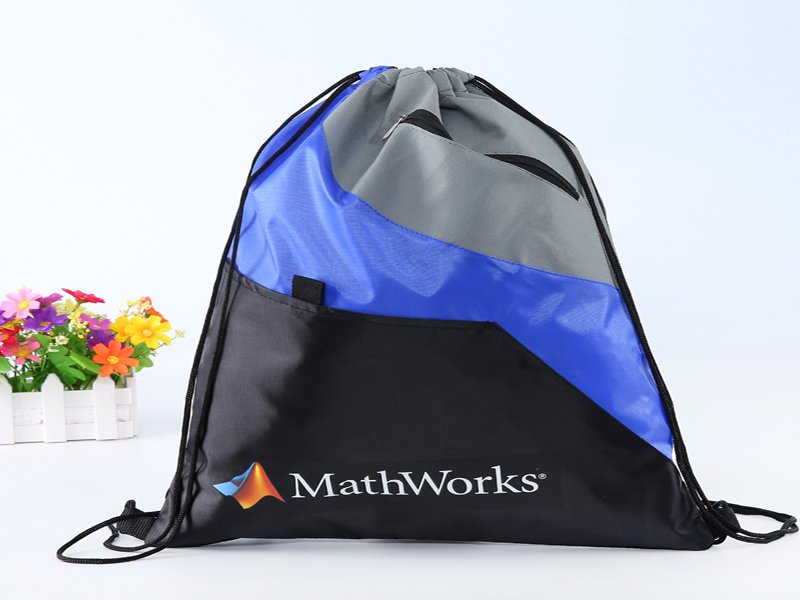
Nylon drawstring bags are widely used in sports because they solve a very practical problem: athletes, students, gym members, coaches, and outdoor users often need a lightweight bag that can carry daily training essentials without the bulk of a traditional sports duffel. In many sports environments, the bag does not need to be overly structured or heavy. It needs to be easy to grab, quick to open, comfortable to wear, resistant to repeated friction, and strong enough to hold items such as shoes, towels, water bottles, uniforms, light equipment, and personal accessories.
This is where nylon drawstring bags perform especially well. Compared with cotton or non-woven promotional bags, nylon offers better tear resistance, stronger abrasion performance, and improved moisture handling. Compared with large sports bags, nylon drawstring bags are lighter, easier to distribute in bulk, and more cost-efficient for teams, schools, gyms, sports events, and fitness brands. A well-made nylon drawstring sports bag can weigh only a few hundred grams while still carrying several kilograms of daily gear, depending on the fabric denier, seam construction, cord strength, and reinforcement design.
In real sports use, these bags are not treated gently. They are thrown into lockers, placed on gym floors, carried outdoors, packed with sweaty clothing, and used repeatedly during training seasons. For this reason, a sports drawstring bag cannot be judged only by appearance. The fabric strength, stitching quality, corner reinforcement, cord channel construction, water resistance, logo durability, and inner capacity all affect whether the bag performs reliably in daily use.
For brands, schools, clubs, and distributors, nylon drawstring bags are also valuable because they combine function with visibility. A simple bag can carry a printed logo, team name, sponsor message, event branding, or retail design. This makes it useful not only as a storage item but also as a mobile branding tool. At Szoneier, nylon drawstring bags for sports applications are developed with this practical logic in mind: lightweight enough for mobility, strong enough for repeated use, and customizable enough for different sports markets.
Common Sports Applications
Nylon drawstring bags are used across many sports and fitness scenarios because they adapt to different carrying needs without requiring a complex structure. In gyms, they are often used to carry workout clothes, training shoes, towels, resistance bands, gloves, water bottles, toiletries, and small accessories. Many gym users prefer drawstring bags because they can move quickly between work, training, and home without carrying a large duffel bag.
In team sports, nylon drawstring bags are frequently used by football, basketball, baseball, volleyball, swimming, running, and youth sports teams. Players can use them to store uniforms, socks, warm-up clothing, training bibs, mouthguards, caps, and personal items. Coaches and clubs often choose these bags because they are easy to order in bulk and can be customized with team logos or player numbers.
Outdoor training is another important use case. Runners, hikers, cyclists, and outdoor fitness groups often need a bag that is light, foldable, and easy to carry. Nylon works well here because it can provide a certain level of water resistance, especially when coated or treated. While a standard nylon drawstring bag is not the same as a fully waterproof dry bag, it can still protect contents from light rain, splashes, and damp surfaces better than many untreated fabric options.
Fitness classes and wellness studios also use nylon drawstring bags for member kits, welcome packs, merchandise, or event giveaways. Yoga studios, Pilates clubs, boxing gyms, dance schools, and personal training brands often provide branded bags as part of their membership package. Because the bag is used repeatedly, the brand gains continuous exposure long after the first purchase or registration.
| Sports Scenario | Common Items Carried | Key Bag Requirement |
|---|---|---|
| Gym workouts | Clothes, shoes, towel, bottle | Lightweight and easy to clean |
| Team sports | Uniforms, accessories, light gear | Strong seams and logo customization |
| Outdoor training | Gloves, cap, bottle, small tools | Abrasion resistance and water resistance |
| Fitness classes | Personal items, towel, merchandise | Attractive branding and comfort |
| School sports | Shoes, PE clothes, student items | Cost-effective bulk production |
| Sports events | Race kits, sponsor items, medals | Fast production and clear printing |
| Swimming clubs | Goggles, cap, towel, wet clothing | Moisture-resistant nylon fabric |
| Travel fitness | Shoes, laundry, accessories | Foldable and space-saving structure |
The wide application range is one of the main reasons nylon drawstring bags remain popular in the sports market. They are simple, but when designed correctly, they can support a surprising number of daily carrying needs.
Why Nylon Works Well for Sports Bags
Nylon is one of the most practical materials for sports drawstring bags because it offers a strong balance between weight, durability, flexibility, and cost. In sports environments, fabric must handle friction, pulling, bending, and repeated contact with hard surfaces. Nylon performs well under these conditions because its fiber structure provides high tensile strength and good resistance to abrasion.
Fabric strength is especially important when the bag carries shoes, bottles, or training accessories. A low-quality bag may fail at the bottom corners, side seams, or drawstring channel after repeated use. Nylon can help reduce this risk when paired with proper stitching and reinforcement. For example, 210D nylon is commonly used for lightweight promotional sports bags, while 420D or higher-denier nylon may be selected for stronger, more durable sports products. For heavier use, some brands may choose 600D polyester or nylon-polyester blends, but nylon remains a strong choice where light weight and flexibility are priorities.
Nylon also has good flexibility. A drawstring sports bag often needs to expand around irregular items such as shoes, rolled towels, gloves, and clothing. A rigid bag may feel bulky or uncomfortable, but nylon can adapt to different contents without adding unnecessary weight. This flexibility makes the bag suitable for users who carry different items from day to day.
Another advantage is moisture handling. Sports bags are often exposed to sweat, damp towels, wet grass, rain, locker room floors, and water bottles. Nylon absorbs less moisture than cotton, dries faster, and can be treated with water-resistant coatings. This makes it more suitable for active environments where hygiene and quick drying matter.
| Nylon Property | Sports Benefit | Practical Value |
|---|---|---|
| High tensile strength | Supports loaded gear | Reduces tearing risk |
| Lightweight structure | Easier daily carrying | Improves mobility |
| Abrasion resistance | Handles floor and locker friction | Extends product life |
| Flexibility | Fits irregular sports items | Improves usability |
| Faster drying than cotton | Better for sweat and damp conditions | Supports hygiene |
| Printable surface | Suitable for logos and graphics | Adds brand exposure |
| Foldable body | Easy storage when not in use | Reduces shipping and storage space |
The material itself is only one part of the performance. A good nylon drawstring sports bag also depends on construction. The seams, corners, drawcord, eyelets, and closure channel all need to match the expected load. At Szoneier, fabric selection is combined with structural design, so the final product is not only lightweight but also suitable for real sports use.
How Nylon Drawstring Bags Improve Sports Mobility
Mobility is one of the biggest reasons users choose drawstring bags over traditional sports bags. In many sports situations, users do not want to carry a heavy bag with shoulder pads, large zippers, multiple compartments, and rigid panels. They want something fast and simple. A nylon drawstring bag can be worn on the back, carried by hand, placed inside a locker, or folded into another travel bag.
For gym members, this mobility matters during daily routines. A user may go from home to work, then to the gym, then back home. A bulky sports bag can become inconvenient on public transport or in crowded spaces. A drawstring bag keeps the carrying process simple while still providing enough room for core items.
For students, lightweight construction is also important. School sports programs often require students to carry PE clothes, sneakers, water bottles, and personal accessories. A nylon drawstring bag can serve as a secondary sports bag without adding too much weight to the student’s daily load.
For sports events, mobility is linked to distribution efficiency. Marathon events, charity runs, school competitions, basketball camps, and fitness challenges often prepare participant kits. Nylon drawstring bags can be packed flat, shipped in large quantities, and distributed quickly at registration desks. This makes them practical for organizers who need thousands of bags without excessive storage volume.
| Bag Type | Approximate Use Character | Best For |
|---|---|---|
| Nylon drawstring bag | Lightweight, flexible, fast access | Daily training, events, teams |
| Traditional duffel bag | Larger capacity, heavier structure | Full equipment sets, travel |
| Backpack | More support and organization | School, commuting, electronics |
| Tote bag | Open access, casual use | Light items and promotions |
Nylon drawstring bags do not replace every type of sports bag. Instead, they fill a specific need: fast carrying, light storage, and flexible movement. For many brands and sports programs, that is exactly the function required.
What Items Can a Nylon Sports Drawstring Bag Carry?
A well-designed nylon drawstring sports bag can carry more than many people expect. The exact capacity depends on size, material weight, and construction. Common sports drawstring bag sizes range from around 34 × 42 cm to 40 × 50 cm, though custom dimensions can be developed based on the product purpose. Smaller bags may be suitable for event giveaways or children’s sports kits, while larger bags can hold shoes, clothing, and training accessories.
For gym use, a standard adult-size nylon drawstring bag can usually hold a pair of lightweight shoes, a T-shirt, shorts, a towel, a water bottle, and small personal items. For team sports, it can carry a uniform set, socks, gloves, warm-up gear, and basic accessories. For swimming or beach fitness, it can hold goggles, swimwear, a towel, and a cap, especially when the nylon fabric has a water-resistant coating.
The bag’s carrying performance should not be judged only by volume. Weight distribution matters. A bottle, shoes, and equipment can create pressure at the bottom corners. If the corners are not reinforced, the fabric may tear around the cord attachment points. For this reason, sports drawstring bags often require stronger stitching, reinforced bottom corners, metal or plastic eyelets, or fabric tabs.
| Item Category | Examples | Design Consideration |
|---|---|---|
| Clothing | T-shirts, shorts, uniforms | Adequate volume and flexible body |
| Footwear | Sneakers, cleats, training shoes | Strong bottom and abrasion resistance |
| Hydration | Water bottle, shaker bottle | Side pressure and weight support |
| Accessories | Gloves, bands, caps, towels | Easy opening and fast access |
| Wet items | Swimwear, damp towel | Water-resistant fabric or lining option |
| Event kits | Brochures, gifts, medals, samples | Printing quality and bulk packing |
For custom orders, Szoneier can adjust fabric thickness, bag size, cord strength, printing method, pocket layout, and reinforcement details based on what the end user will actually carry. This helps avoid under-designing the bag for heavy-use markets or over-designing it for simple promotional needs.
Sports Team and Event Branding Uses
Nylon drawstring bags are not only functional sports accessories. They are also effective branding products. In sports, visibility matters. A bag carried to gyms, schools, courts, parks, and events can display a logo many times over its usable life. This makes drawstring bags popular for teams, clubs, fitness brands, sports retailers, corporate wellness programs, and event sponsors.
For teams, the bag can include the club logo, team name, player number, sponsor logo, or school identity. For fitness brands, it can carry a clean logo print, slogan, or product campaign message. For sports events, it can be used as a participant kit bag, helping organizers package event materials while increasing sponsor exposure.
Printing method selection depends on the artwork, quantity, budget, and expected use. Screen printing is common for simple logos and larger production runs. Heat transfer can support more colorful graphics. Digital printing may be suitable for complex artwork or smaller batches. Embroidery is less common on lightweight nylon drawstring bags but may be used for premium versions with thicker fabric panels.
| Branding Method | Suitable For | Key Advantage |
|---|---|---|
| Screen printing | Simple logos, team names, event graphics | Cost-effective for bulk orders |
| Heat transfer | Multi-color designs and sharp artwork | Clean visual effect |
| Digital printing | Complex graphics and smaller runs | Flexible customization |
| Woven label | Premium retail or brand detail | Adds product identity |
| Rubber patch | Outdoor or performance style | Strong visual texture |
| Reflective print | Running and outdoor sports bags | Improves low-light visibility |
For B2B orders, logo durability is important. Sports bags are often exposed to friction, sweat, moisture, and repeated folding. A beautiful logo that cracks or peels too quickly can damage the brand image. That is why printing tests, material matching, and production sampling are important before bulk manufacturing.
Performance Details That Matter in Manufacturing
A nylon drawstring bag may look simple, but manufacturing quality determines whether it performs well after weeks or months of use. Many problems appear in small structural areas: the bottom corners tear, the cord channel splits, the drawstring becomes uncomfortable, the logo peels, or the seams open under repeated loading.
The first detail is fabric denier. Lightweight promotional bags may use thinner nylon, while sports bags intended for regular use should use stronger fabric. The second detail is stitching density. If stitch spacing is too wide, the seam may fail under tension. If the thread quality is poor, the bag may break even when the fabric itself is strong.
The bottom corner design is also critical because this is where the drawcord often connects. When the bag is worn on the back, load pressure pulls directly against these points. Reinforced corner patches, bar-tack stitching, or stronger tabs can improve durability. For heavier sports use, this is one of the most important structural upgrades.
Cord quality affects comfort. Thin, rough cords may cut into the shoulders when the bag is loaded. Wider or softer cords improve comfort, especially for school sports, youth teams, and gym users carrying shoes or bottles. Some brands may also choose flat drawcords for a more premium feel.
| Manufacturing Detail | Common Risk if Ignored | Better Solution |
|---|---|---|
| Fabric selection | Tearing or weak hand feel | Match denier to use case |
| Bottom corners | Cord pull-out or fabric ripping | Reinforced tabs or patches |
| Stitching | Seam opening under load | Strong thread and proper stitch density |
| Drawcord | Shoulder discomfort | Softer or wider cord option |
| Logo printing | Cracking or peeling | Test print method before bulk production |
| Closure channel | Fraying or splitting | Clean folding and reinforced sewing |
| Inner finish | Loose threads and poor appearance | Controlled trimming and inspection |
At Szoneier, these details are reviewed during sample development. A sports drawstring bag can be adjusted before production through fabric testing, structure improvement, logo trial, and load evaluation. This prevents many quality problems that would otherwise appear after delivery.
Nylon Drawstring Bag vs Traditional Sports Bag
Nylon drawstring bags and traditional sports bags serve different purposes. A traditional sports bag provides higher capacity, more compartments, and stronger support for bulky equipment. However, it is also heavier, more expensive, and less convenient for quick daily use. A nylon drawstring bag is lighter, simpler, and easier to produce in large quantities.
For users carrying only daily essentials, a drawstring bag is often enough. For full equipment sets, travel, or professional sports gear, a duffel or backpack may be more suitable. From a brand or procurement perspective, the drawstring bag offers strong value when the goal is wide distribution, logo exposure, and practical everyday use.
| Factor | Nylon Drawstring Bag | Traditional Sports Bag |
|---|---|---|
| Weight | Very low | Medium to high |
| Cost | Lower for bulk orders | Higher |
| Storage | Folds flat | Requires more space |
| Branding area | Large and visible | Large but more complex |
| Capacity | Medium | High |
| Organization | Basic | Multiple compartments |
| Best use | Daily gear, events, teams | Heavy equipment and travel |
| Production speed | Faster | Longer due to structure |
This does not mean one option is better in every situation. The right choice depends on the user’s carrying habits, product positioning, target price, and expected durability. For many sports brands and organizations, nylon drawstring bags offer the best balance between function, cost, and brand exposure.
Custom Options for Sports Brands and Teams
Customization is one of the biggest advantages of nylon drawstring bags. A brand can adjust the product from a simple event giveaway to a more durable retail-ready sports accessory. The main customization areas include fabric, size, color, logo method, cord type, pocket design, reinforcement, packaging, and labeling.
For sports teams, color matching is often important. The bag may need to match team uniforms, school colors, or sponsor guidelines. For fitness brands, the design may require a cleaner retail appearance with subtle logos and premium trims. For outdoor brands, stronger nylon, water-resistant coating, reflective details, or zip pockets may be more suitable.
Pockets can also improve usability. A front zipper pocket can hold keys, phones, cards, or earphones. A mesh side pocket can hold a bottle. An inner small pocket can separate valuables from clothes. However, every added feature affects cost and production complexity, so the design should match the intended market.
| Custom Option | Possible Choices | Suitable Use |
|---|---|---|
| Fabric | 210D, 420D, coated nylon, ripstop nylon | Different strength and price levels |
| Size | Small, standard, oversized | Kids, adults, events, team use |
| Logo | Screen print, heat transfer, label, patch | Branding and retail positioning |
| Cord | Round cord, flat cord, thick cord | Comfort and appearance |
| Front zipper, side mesh, inner pocket | Better organization | |
| Reinforcement | Bottom patch, bar tack, stronger eyelets | Higher load performance |
| Finish | Water-resistant coating, lining option | Outdoor or wet-use applications |
| Packaging | Bulk pack, individual polybag, retail card | Distribution or retail sale |
Szoneier supports custom development for different sports markets by combining fabric knowledge, bag manufacturing experience, and sample adjustment. For clients developing a product line, the bag can be designed around target price, expected order quantity, branding needs, and real usage environment.
Real-World Usage Example
Consider a gym chain preparing a new member welcome kit. The bag must be affordable enough for bulk distribution, but it cannot feel disposable. Members may use it to carry shoes, towels, bottles, gloves, and spare clothing several times per week. In this case, a lightweight nylon drawstring bag with reinforced corners, clean logo printing, and a practical size around 38 × 45 cm could be a strong option.
For a school sports program, the priorities may be different. The bag must be durable enough for students, easy to identify, and suitable for team colors. A stronger nylon fabric, bold school logo, and reinforced cord connection points would be more important than extra pockets.
For a running event, the organizer may need thousands of bags delivered before a fixed event date. The bag must be lightweight, printable, easy to pack, and suitable for race kits. Production consistency, packing efficiency, and logo accuracy become critical because any delay affects event operations.
These examples show why product design should follow real use rather than only appearance. A nylon drawstring bag for sports needs to match the activity, carrying weight, branding purpose, and expected lifespan.
Why Szoneier Nylon Drawstring Bags Suit Sports Applications
Szoneier develops nylon drawstring bags with a practical manufacturing approach built around material selection, structure, customization, and quality control. With experience in fabric-based bag production, Szoneier can help clients choose suitable nylon materials based on the intended use, from lightweight promotional sports bags to stronger drawstring bags for gyms, teams, and outdoor activities.
For sports applications, Szoneier focuses on several key details: reinforced stress points, suitable fabric weight, clean sewing, reliable drawcords, accurate logo application, and consistent bulk production. These details may seem small, but they directly affect user experience and product lifespan.
The company can also support different branding needs, including custom colors, logo printing, private label production, packaging customization, and OEM/ODM development. For clients who need samples before bulk production, Szoneier can help test size, material feel, logo effect, and structural details before confirming the final specification.
A nylon drawstring sports bag is not only a simple carrying item. When properly designed, it becomes a useful product for daily training, a reliable tool for teams and events, and a visible brand asset. For sports brands, gyms, schools, clubs, and distributors, choosing the right manufacturer means fewer quality complaints, better product consistency, and stronger long-term value.
Why Are Nylon Drawstring Bags Popular for Sports Use?
Nylon drawstring bags are popular for sports use because they match the way people actually train, move, and manage gear. In sports environments, a bag is not only judged by how it looks. It is judged by how quickly it can be packed, how comfortably it can be carried, how well it handles repeated use, and whether it survives daily contact with locker rooms, gym floors, outdoor surfaces, sweaty clothing, shoes, bottles, and training accessories.
The reason nylon drawstring bags remain so common in gyms, schools, sports clubs, fitness events, team programs, and outdoor activities is simple: they offer enough function without unnecessary bulk. A traditional duffel bag may provide more space, but many users do not need a full-size bag for every training session. A structured backpack may provide better organization, but it can feel too heavy or too formal for quick sports use. A nylon drawstring bag fills the gap between a basic tote and a full sports bag. It is light, flexible, easy to carry, cost-efficient, and highly suitable for customization.
For brands, clubs, schools, and event organizers, the popularity of nylon drawstring bags is also connected to production efficiency. They are easier to manufacture in bulk than complex backpacks, easier to ship because they pack flat, and easier to customize with logos, team names, campaign artwork, or sponsor graphics. This makes them useful not only as personal sports gear but also as branded merchandise, team equipment, fitness welcome kits, promotional products, and retail accessories.
At Szoneier, nylon drawstring sports bags are developed around these real usage requirements. The focus is not only on making a lightweight bag, but on balancing fabric strength, stitching quality, drawcord comfort, reinforcement design, printing durability, and order customization. When these details are handled properly, a simple drawstring bag becomes a reliable product that can support daily sports routines for months or even years.
Lightweight Design Matches Sports Mobility
Weight is one of the strongest reasons nylon drawstring bags are preferred in sports. Most users already carry clothing, shoes, towels, water bottles, gloves, accessories, or personal items. They do not want the bag itself to add unnecessary weight. A nylon drawstring bag usually weighs far less than a traditional duffel or structured backpack, which makes it easier to carry during short-distance movement, commuting, training, and event participation.
A standard nylon drawstring bag may weigh around 150–300 grams, depending on fabric thickness, size, cord type, pocket design, and reinforcement. By comparison, many duffel bags can weigh 700–1200 grams before anything is placed inside. Sports backpacks often weigh 500–900 grams, especially when they include padded panels, multiple compartments, heavy zippers, and thicker straps. For users carrying only daily essentials, the difference is noticeable.
| Bag Type | Common Empty Weight Range | Best Use Scenario |
|---|---|---|
| Nylon drawstring bag | 150–300g | Daily training, gym use, sports events |
| Lightweight backpack | 500–900g | School, commuting, organized storage |
| Sports duffel bag | 700–1200g | Larger equipment, travel, team gear |
| Heavy-duty gear bag | 1200g+ | Professional equipment and bulky loads |
This lightweight advantage is especially useful for gym members, students, runners, youth sports teams, and event participants. A person walking from home to the gym, moving between classes, or attending a sports event wants something easy to carry and quick to manage. The lighter the bag, the less friction it adds to the routine.
For children and school sports programs, weight matters even more. Students may already carry books, lunch boxes, electronic devices, or uniforms. A lightweight drawstring sports bag gives them a separate place for PE clothes or sports shoes without adding the burden of another heavy backpack. For team orders, this makes nylon drawstring bags a practical option for schools, youth clubs, training camps, and after-school programs.
From a logistics perspective, lightweight construction also reduces storage and shipping pressure. A flat-packed drawstring bag takes much less carton space than structured bags. For bulk orders of 1,000, 5,000, or 10,000 pieces, this can make a measurable difference in freight cost, warehouse handling, and event distribution.
Durability Under Daily Sports Stress
Nylon drawstring bags are popular not only because they are light, but because nylon can handle active use better than many basic fabric options. Sports environments create repeated stress. Bags are placed on rough floors, pulled open and closed many times, packed with shoes and bottles, exposed to sweat, and often used in a hurry. In this kind of environment, weak materials or poor stitching fail quickly.
Nylon has strong tensile performance for its weight. This means the fabric can resist pulling and tearing better than many lighter natural fabrics. It also performs well against abrasion, which is important when bags rub against lockers, benches, gym floors, playground surfaces, grass, concrete, or vehicle interiors. The level of durability depends on the nylon specification. Common options include 210D nylon for lightweight sports or promotional use, 420D nylon for stronger daily bags, and ripstop nylon when tear resistance and outdoor performance are important.
| Material Factor | Why It Matters in Sports Use | Practical Result |
|---|---|---|
| Tensile strength | Resists pulling from loaded gear | Lower risk of fabric tearing |
| Abrasion resistance | Handles contact with rough surfaces | Longer usable life |
| Flexibility | Reduces pressure from irregular items | Better comfort and packing |
| Moisture resistance | Performs better around sweat and damp clothing | Easier daily maintenance |
| Denier selection | Controls strength and weight balance | Better fit for different markets |
The strongest nylon fabric will still perform poorly if the structure is weak. In drawstring bags, stress often concentrates at the bottom corners and cord attachment points. When the bag is worn on the back, the weight of the contents pulls against these areas. If the corners are not reinforced, the bag may tear even if the main fabric remains intact.
For sports use, reinforced corners, stronger stitching, durable drawcords, and secure eyelet or tab construction are important. Bar-tack stitching can be used at high-stress points. Thicker thread can improve seam strength. Better cord material can reduce fraying and improve comfort. These details are often invisible in product photos, but they determine whether the bag can survive real use.
At Szoneier, sports drawstring bags can be developed with reinforced construction based on intended load and use environment. A simple event giveaway bag may not need the same structure as a gym retail bag or school sports bag. Matching the construction level to the market helps control cost while still protecting product quality.
Convenience Reduces Friction in Training Routines
Sports users often choose nylon drawstring bags because they are fast. The closure is simple, the opening is wide, and the bag can be packed without much thought. This is important because sports routines often involve movement, time pressure, and frequent transitions.
A gym user may need to pack shoes, clothes, a towel, headphones, and a bottle before leaving work. A basketball player may need to grab warm-up gear and personal items between games. A runner may need a small bag for post-race clothing and event materials. In these situations, speed and simplicity are more valuable than complex compartments.
The drawstring closure system also has fewer mechanical failure points than zipper-heavy bags. Zippers can jam, break, rust, or fail under pressure, especially when used with overloaded bags or low-quality components. A drawstring system is simpler. It opens quickly, closes quickly, and is easier to repair or replace if needed.
| Convenience Feature | User Benefit | Sports Value |
|---|---|---|
| Wide opening | Faster packing and access | Useful before and after training |
| Drawstring closure | Quick closing and carrying | Saves time during movement |
| Flexible body | Accepts irregular items | Better for shoes and clothing |
| Low-maintenance structure | Easy to clean and store | Suitable for daily sports use |
| Foldable design | Fits inside another bag | Helpful for travel and events |
This simplicity is one of the reasons drawstring bags are popular for sports events. Organizers can fill them with race kits, uniforms, brochures, sponsor items, snacks, or accessories. Participants can receive them at registration and use them immediately. No instructions are needed. The product is intuitive.
For branded sports programs, convenience affects how often the bag is used. A bag that is too complicated, too heavy, or too stiff may be left at home. A lightweight nylon drawstring bag is more likely to become part of a user’s weekly routine. More use means more brand exposure, which is valuable for clubs, gyms, schools, and sponsors.
Versatility Across Different Sports Activities
Another reason nylon drawstring bags are popular is their versatility. The same basic bag structure can serve many sports categories with only small adjustments. A gym bag may need a front zipper pocket. A swim bag may need water-resistant nylon or mesh ventilation. A running event bag may need reflective printing. A school sports bag may need strong corners and bold identification. A fitness brand bag may need premium color matching and clean logo placement.
| Sports Category | Common Bag Use | Recommended Design Focus |
|---|---|---|
| Gym and fitness | Clothing, shoes, towel, bottle | Lightweight nylon and strong corners |
| Team sports | Uniforms, socks, accessories | Logo customization and durability |
| Running events | Race kits, personal items | Flat packing and sponsor printing |
| Swimming | Goggles, cap, towel, wet items | Water-resistant fabric or mesh detail |
| Outdoor training | Gloves, cap, light accessories | Abrasion resistance and coated nylon |
| School sports | PE clothes, sneakers, student items | Cost control and reinforced structure |
| Promotional sports campaigns | Gifts, samples, branded items | Low MOQ and clear logo printing |
This versatility makes nylon drawstring bags attractive for both product development and procurement. A company can use one bag style across several campaigns by changing size, color, print, or material. A sports club can order different color versions for different teams. A retailer can develop a basic model and a premium model using different fabric weights and add-on features.
For manufacturers, this flexibility also makes production more efficient. Compared with complex backpacks, drawstring bags have fewer components and a shorter development path. That does not mean they should be treated casually, but it does mean they can often move from sample to production faster when specifications are clear.
Szoneier can support different versions of nylon sports drawstring bags based on market needs, including lightweight promotional bags, reinforced team bags, gym merchandise bags, and outdoor activity bags. This makes it easier for clients to build a product line instead of relying on one generic model.
Cost Efficiency for Bulk Sports Orders
Nylon drawstring bags are popular in sports because they offer strong practical value at a manageable cost. For schools, gyms, events, sports teams, and distributors, price matters. Many orders are purchased in bulk, and the product must balance cost, function, and appearance.
Compared with backpacks or duffel bags, drawstring bags require fewer components. There are usually fewer zippers, buckles, padded panels, inner dividers, and hardware parts. This helps reduce material cost and production complexity. It also reduces failure risks linked to low-quality accessories.
The cost will still vary depending on fabric, size, printing method, number of colors, pockets, reinforcement, packaging, and quantity. A basic 210D nylon drawstring bag for promotional use will cost less than a 420D nylon bag with zipper pocket, reinforced corners, custom cords, and retail packaging. The key is choosing the right specification for the intended use.
| Cost Driver | Lower-Cost Option | Higher-Performance Option |
|---|---|---|
| Fabric | 210D nylon | 420D nylon or ripstop nylon |
| Logo | One-color screen print | Multi-color heat transfer or patch |
| Structure | Basic seam construction | Reinforced bottom and bar-tack stitching |
| Pockets | No pocket | Front zipper or inner pocket |
| Packaging | Bulk pack | Individual retail packaging |
| Cord | Standard round cord | Thicker or flat comfort cord |
For sports events, cost efficiency is especially important because order quantities can be large. A marathon, school tournament, fitness challenge, or corporate wellness event may require hundreds or thousands of bags. The bag must look good and function properly, but it must also stay within budget.
This is why professional material and structure recommendations matter. Overbuilding the bag can waste budget. Underbuilding it can cause complaints. Szoneier helps clients match the correct specifications to the project goal, whether the bag is intended for one-time event distribution, seasonal team use, or retail sales.
Strong Branding Value in Sports Environments
Sports environments provide excellent visibility for branded bags. A nylon drawstring bag may be carried through gyms, schools, parks, stadiums, locker rooms, buses, campuses, fitness studios, and outdoor events. This gives logos and team identities repeated exposure.
The front panel of a drawstring bag usually provides a large, clear branding area. Unlike some complex bags with seams, pockets, and curved panels, a drawstring bag often has a clean surface that works well for printing. This is useful for team logos, sponsor names, fitness brand artwork, event titles, school mascots, and promotional slogans.
| Branding Use | Common Application | Design Priority |
|---|---|---|
| Team identity | Club logo and player number | Strong color matching |
| Event promotion | Race name and sponsor logos | Clear large-area printing |
| Gym merchandise | Brand logo and membership kit | Premium appearance |
| School sports | School name and mascot | Durability and easy identification |
| Retail sports accessory | Brand label or patch | Better finish and packaging |
Logo method should be selected carefully. Screen printing is cost-effective for simple artwork and larger orders. Heat transfer supports more detailed and colorful graphics. Reflective printing is useful for running and outdoor markets. Woven labels and rubber patches can create a more premium retail appearance.
For sports use, logo durability matters. Bags are folded, rubbed, compressed, and sometimes exposed to moisture. Poor printing can crack, peel, or fade too quickly. Szoneier can help test logo methods on selected nylon fabric before production, reducing the risk of poor print adhesion or inconsistent color.
Practicality for Sports Events and Team Distribution
Nylon drawstring bags are especially popular for sports events because they solve distribution problems. Event organizers need products that are easy to pack, easy to transport, easy to hand out, and useful after the event. Drawstring bags meet these needs well.
For a running event, the bag can hold a race bib, shirt, medal, snack, sponsor brochure, and small gifts. For a basketball camp, it can hold training shirts, water bottles, socks, and participant materials. For school sports days, it can serve as a simple equipment and identity bag. Because the bags are flat and lightweight, large quantities can be prepared without requiring excessive storage space.
Team distribution works in a similar way. A club can provide each player with the same bag, printed with the team logo or sponsor name. This creates a consistent visual identity and gives players a practical item for training days. For youth teams, individual names or numbers can also be added depending on the printing method and budget.
| Distribution Scenario | Why Drawstring Bags Work Well |
|---|---|
| Marathon and race events | Lightweight, printable, easy to distribute |
| School sports programs | Affordable and useful for PE gear |
| Youth team kits | Consistent team identity and simple storage |
| Fitness club welcome packs | Practical member gift with repeat use |
| Corporate wellness events | Good branding value at bulk quantities |
| Summer sports camps | Easy to organize participant items |
For these projects, lead time and consistency are important. A late delivery can affect an event. Color inconsistency can weaken brand presentation. Poor packing can slow down distribution. Szoneier supports bulk production planning, sample confirmation, logo approval, and packaging arrangements to help sports orders stay organized from development to shipment.
Easy Maintenance for Active Users
Sports bags get dirty. They come into contact with sweat, shoes, floors, grass, dust, rain, and food or drink spills. Nylon drawstring bags are popular because they are easier to maintain than many heavier fabric bags. Nylon does not absorb moisture as easily as cotton, and many nylon fabrics can be wiped clean with a damp cloth.
Quick drying is another benefit. A cotton bag may stay damp for longer after contact with sweat or rain. Nylon dries faster, which helps reduce unpleasant odor and makes the bag more suitable for repeated sports use. For swimming, outdoor fitness, or rainy environments, coated nylon can improve surface water resistance.
Maintenance should still match the product finish. Printed logos, coated fabrics, and heat transfer graphics may require gentle cleaning. Harsh washing, high heat, or aggressive chemicals can damage the print or coating. For retail or branded sports bags, care instructions may be included on a label or packaging card.
| Maintenance Factor | Nylon Advantage |
|---|---|
| Sweat exposure | Lower moisture absorption than cotton |
| Dirt and dust | Easier surface cleaning |
| Light rain | Better protection with coating |
| Odor control | Faster drying after damp use |
| Storage | Foldable and space-saving |
For active users, low maintenance increases product satisfaction. A bag that is easy to clean and dry is more likely to be used regularly. This adds to the long-term popularity of nylon drawstring bags in sports markets.
Why Szoneier Enhances These Advantages
The popularity of nylon drawstring bags comes from practical benefits: light weight, durability, speed, versatility, cost control, and strong branding value. However, these benefits only become reliable when the product is manufactured correctly. A poorly made nylon bag may look acceptable at first but fail quickly under sports use.
Szoneier enhances these advantages by combining suitable nylon materials with reinforced construction and custom manufacturing support. Fabric selection can be adjusted based on whether the bag is intended for promotional distribution, gym retail, school sports, team use, or outdoor activity. Reinforced stress points can be added where needed. Logo methods can be tested according to artwork and fabric surface. Cord, size, pocket, color, and packaging can also be customized.
For sports brands, gyms, schools, event organizers, and distributors, this manufacturing support reduces risk. The final bag is not just a low-cost accessory. It becomes a practical sports product that users can carry repeatedly, while also supporting brand visibility in real training environments.
Nylon drawstring bags are popular because they respect how sports users actually behave. They are light when users are moving, strong enough for daily gear, simple when time is limited, and flexible across many activities. With the right material, structure, and manufacturing control, they remain one of the most useful and cost-effective sports bag options in the market.
Which Materials Make Nylon Drawstring Bags Ideal for Sports?

Nylon drawstring bags are ideal for sports because the material can deliver a strong balance of light weight, durability, flexibility, and resistance to daily wear. In sports environments, bags are rarely used in a calm or controlled way. They are pulled open quickly, packed with shoes and damp clothing, placed on locker room floors, carried outdoors, squeezed into gym lockers, and exposed to sweat, dust, rain, and repeated friction. A sports bag material must therefore do more than look clean in a product photo. It must perform under movement, pressure, moisture, and repeated handling.
Nylon is widely used for sports drawstring bags because it offers an excellent strength-to-weight ratio. This means the fabric can remain relatively light while still providing reliable resistance against tearing and abrasion. For users, this matters because the bag itself should not add unnecessary weight to the gear they already carry. For brands, teams, schools, gyms, and sports event organizers, this material balance makes nylon drawstring bags practical for bulk production, daily use, and logo customization.
However, not all nylon fabrics perform the same way. A lightweight 210D nylon bag designed for a running event giveaway will not have the same strength as a 600D nylon bag developed for regular gym or team use. A ripstop nylon bag will behave differently from a smooth plain-weave nylon bag. A PU-coated nylon surface will handle light moisture better than an untreated fabric. For this reason, the real quality of a nylon sports drawstring bag depends on material specification, denier level, weave structure, coating, sewing quality, and reinforcement design.
At Szoneier, nylon material selection is treated as a practical product decision, not just a fabric name on a specification sheet. The right choice depends on what the bag will carry, how often it will be used, where it will be used, how much branding is needed, and what price level the project must achieve.
Why Nylon Works So Well in Sports Bag Manufacturing
Nylon became popular in sports bag manufacturing because it solves several problems at once. It is lighter than many heavy woven fabrics, stronger than many low-cost promotional materials, more flexible than rigid materials, and easier to finish into different bag shapes. For drawstring bags, these advantages are especially important because the structure is simple. The fabric itself carries much of the performance responsibility.
A sports drawstring bag must bend and expand around different items. One day it may carry a pair of running shoes and a towel. Another day it may carry a uniform, gloves, resistance bands, a water bottle, and personal items. Nylon can adapt to these irregular shapes without making the bag feel stiff or bulky.
Nylon also has strong abrasion resistance compared with many lightweight fabrics. In sports use, the bag frequently rubs against floors, benches, lockers, bicycles, bus seats, concrete, grass, or other equipment. If the fabric surface breaks down too quickly, the bag begins to look old even when the seams are still intact. A suitable nylon fabric helps maintain appearance and function through repeated use.
Another important advantage is moisture behavior. Nylon does not absorb water in the same way as cotton canvas. It can dry faster and can be combined with water-resistant coatings. This makes it useful for gym clothing, swim items, damp towels, outdoor training accessories, and sports environments where sweat or light rain is common.
| Material Requirement in Sports Use | Why Nylon Performs Well |
|---|---|
| Low carrying weight | Nylon offers strength without heavy fabric bulk |
| Repeated pulling and packing | Good tensile strength supports daily movement |
| Contact with rough surfaces | Abrasion resistance helps extend product life |
| Irregular sports items | Flexible structure adapts to shoes and clothing |
| Sweat and damp conditions | Faster drying and coating compatibility improve usability |
| Logo customization | Smooth nylon surfaces support multiple branding methods |
The result is a material that fits the real rhythm of sports use. It is practical, scalable, and adaptable to many product levels, from low-cost event bags to stronger branded sports accessories.
Standard Nylon for General Sports Drawstring Bags
Standard nylon is commonly used for general sports drawstring bags because it provides a good balance between performance and cost. It usually has a smooth surface, lightweight hand feel, and enough strength for everyday sports items such as clothing, towels, bottles, and small accessories.
For gyms, schools, fitness studios, promotional sports events, and basic team use, standard nylon can be a very efficient choice. It is easy to fold, easy to print, and simple to produce in bulk. It also keeps the bag light, which is one of the main reasons users choose drawstring bags in the first place.
Standard nylon is often used when the bag does not need to carry very heavy equipment. For example, a gym welcome bag may only need to hold a T-shirt, towel, bottle, and small personal items. A school sports bag may carry PE clothes and sneakers. A running event bag may hold race materials, a shirt, snacks, and sponsor items. For these uses, a medium-weight standard nylon fabric can offer enough durability without increasing cost unnecessarily.
The key is not to use standard nylon blindly. The denier, coating, stitching, and reinforcement still need to match the expected load. A thin standard nylon fabric may work for one-day promotional distribution, but it may not be suitable for long-term daily gym use. If the bag will be used repeatedly, stronger fabric or reinforced construction should be considered.
| Standard Nylon Feature | Practical Sports Benefit |
|---|---|
| Smooth fabric surface | Clean appearance and easy logo printing |
| Lightweight structure | Comfortable for daily carrying |
| Flexible hand feel | Fits clothing, shoes, and accessories |
| Cost-efficient production | Suitable for bulk team and event orders |
| Good basic durability | Works well for regular light-to-medium use |
For many B2B projects, standard nylon is a strong starting point. It can then be upgraded through denier selection, coating, reinforced corners, stronger cords, or pocket additions depending on the target market.
Ripstop Nylon for Tear Resistance
Ripstop nylon is especially valuable in sports drawstring bags because it helps control tearing. The fabric is woven with a reinforced grid pattern, usually visible as small squares across the surface. This structure is designed to stop small tears from spreading across the fabric.
In sports use, small tears can happen easily. A shoe edge may press against the fabric. A bag may catch on a locker hook. Outdoor users may place the bag on rough ground. A sharp accessory may create a small puncture. On ordinary fabric, that small tear can grow larger as the bag continues to be used. Ripstop nylon helps reduce this risk by containing the damage within the reinforced grid.
Ripstop nylon is particularly useful for outdoor training, hiking, running clubs, cycling groups, camping activities, school sports, and travel fitness bags. It is also suitable for brands that want to position their drawstring bags as more durable or performance-oriented.
Although ripstop nylon provides strong tear resistance, it is not automatically the best option for every project. It can cost more than standard nylon and may have a more technical appearance. For simple indoor gym use or one-time event bags, standard nylon may be enough. For outdoor sports, repeated use, or higher-value branded bags, ripstop nylon can be worth the upgrade.
| Ripstop Nylon Advantage | Sports Application |
|---|---|
| Reinforced grid structure | Helps prevent tear expansion |
| Lightweight durability | Suitable for outdoor and travel use |
| Technical appearance | Fits performance sports branding |
| Better damage control | Useful for rough handling environments |
| Stronger perceived value | Suitable for premium sports merchandise |
For clients developing sports bags for active outdoor conditions, Szoneier may recommend ripstop nylon when tear resistance is more important than achieving the lowest possible unit cost.
High-Denier Nylon for Heavy-Duty Sports Use
Denier refers to the thickness and weight of the yarn used in the fabric. In simple terms, a higher denier usually means thicker yarn, stronger fabric, and higher abrasion resistance. However, it also usually means more weight and a less compact feel. This is why material selection must consider both durability and comfort.
Common nylon denier levels for drawstring bags include 210D, 420D, 600D, and sometimes higher. A 210D nylon fabric is lightweight and suitable for promotional sports bags, race kits, and basic gym use. A 420D nylon fabric provides a stronger hand feel and better durability while still keeping the bag reasonably light. A 600D or higher fabric offers stronger structure and abrasion resistance, but it increases weight and may make the bag feel less flexible.
| Denier Level | Fabric Character | Sports Suitability |
|---|---|---|
| 210D nylon | Thin, light, flexible | Events, giveaways, light gym use |
| 420D nylon | Medium weight, stronger hand feel | Team bags, school sports, daily training |
| 600D nylon | Thick, more durable | Heavier gym gear, outdoor use, retail bags |
| 1000D nylon | Very heavy-duty | Specialized rugged applications |
The mistake many brands make is assuming that thicker fabric is always better. For drawstring bags, this is not always true. A bag made from very heavy nylon may become less comfortable, less foldable, and more expensive to ship. If users only carry clothing and a towel, 1000D nylon may be unnecessary. If users carry shoes, bottles, and equipment every day, 210D nylon may be too weak unless the structure is reinforced.
The best approach is to match denier to the real use case. For a mass running event, 210D may be enough. For a school sports program, 420D may offer a better balance. For a gym retail product or outdoor training bag, 600D may provide better long-term durability.
At Szoneier, this decision is usually made during product development by reviewing the expected carrying weight, target price, user age group, use frequency, and branding requirements.
PU-Coated Nylon for Water Resistance
PU coating is one of the most common treatments used on nylon fabrics for sports bags. PU stands for polyurethane. When applied to the fabric surface or back side, it helps improve water resistance and gives the material better protection against moisture.
For sports drawstring bags, PU-coated nylon is useful because the bag may come into contact with sweat, damp towels, wet shoes, light rain, grass, or locker room floors. The coating does not always make the bag fully waterproof, especially if the seams are not sealed, but it can help protect contents from light moisture and make the bag easier to wipe clean.
PU coating also helps improve fabric body. It can give lightweight nylon a slightly firmer feel, which may improve the overall appearance of the bag. This can be useful for branded gym bags, team bags, and event bags where the product needs to look neat after printing.
| PU Coating Benefit | Practical Sports Value |
|---|---|
| Light water resistance | Helps protect against rain, sweat, and damp surfaces |
| Improved fabric body | Gives the bag a cleaner shape |
| Better wipe-clean performance | Useful for gym and school environments |
| Cost-effective coating option | Suitable for bulk sports orders |
| Compatible with many nylon types | Flexible for different product levels |
However, coating quality matters. Poor-quality coating may peel, crack, or create odor issues over time. For this reason, coating selection and testing should be part of sample confirmation. A bag used in sports environments should remain flexible after folding and repeated use.
TPU and Silicone Coatings for Enhanced Performance
TPU coating provides a higher-performance option compared with standard PU in some applications. TPU stands for thermoplastic polyurethane. It is known for flexibility, waterproofing potential, and better resistance to bending and cracking under certain conditions. For drawstring bags, TPU-coated nylon may be used when the product requires a softer feel, stronger moisture protection, or a more premium performance positioning.
TPU is especially useful for outdoor sports, water-related activities, travel accessories, and premium gym products. It can help create a more durable moisture barrier while maintaining flexibility. The cost is usually higher than PU, so it is often selected for products where performance and brand value justify the upgrade.
Silicone-coated nylon is another option, often used where lightweight protection and improved tear resistance are important. Silicone coatings can improve fabric durability while keeping the material light and flexible. They are more common in technical outdoor products, but they can also be considered for lightweight sports drawstring bags where performance and weight reduction are both important.
| Coating Type | Main Function | Best Fit |
|---|---|---|
| PU coating | Cost-effective water resistance | Gym, school, event bags |
| TPU coating | Flexible waterproofing performance | Outdoor, premium, wet-use sports bags |
| Silicone coating | Lightweight protection and durability | Technical outdoor or ultra-light bags |
The right coating depends on the use environment. A gym giveaway bag does not need the same coating as an outdoor training bag. A swim club bag may need stronger moisture handling than a dry indoor fitness bag. Matching coating to application helps avoid unnecessary cost while improving real performance.
Fabric Weave and Surface Texture
The weave structure of nylon also affects performance. Plain-weave nylon is smooth, flexible, and easy to print. Ripstop nylon has a reinforced grid structure. Oxford nylon has a basket-like weave that can create a stronger, more textured appearance. Different textures influence durability, hand feel, branding effect, and product positioning.
For sports drawstring bags with large logo printing, a smoother surface often produces cleaner print results. For rugged outdoor bags, a more textured or ripstop surface may support a more technical look. For retail sports products, the surface feel can affect perceived quality.
| Weave or Surface Type | Character | Sports Bag Benefit |
|---|---|---|
| Smooth nylon | Clean and flat | Better for logo printing |
| Ripstop nylon | Grid-reinforced | Better tear control |
| Oxford nylon | Textured and stronger appearance | More durable visual feel |
| Coated nylon | Slightly firmer surface | Better moisture resistance |
Surface choice should also consider branding. Heat transfer, screen printing, digital printing, woven labels, and rubber patches all interact differently with fabric texture. Before bulk production, logo samples should be tested on the selected nylon to confirm adhesion, color accuracy, and finish.
Material Optimization by Sports Use
The best nylon material is not always the thickest or most expensive. It is the one that matches the intended use. A lightweight running event bag should be easy to distribute, affordable, and printable. A school sports bag should be stronger and able to handle repeated student use. A gym retail bag should feel more refined and durable. An outdoor sports bag should resist abrasion and light moisture.
| Project Priority | Recommended Material Direction |
|---|---|
| Lowest weight | 210D nylon or lightweight ripstop nylon |
| Balanced daily use | 420D nylon with PU coating |
| Strong team or school use | 420D–600D nylon with reinforced corners |
| Outdoor performance | Ripstop nylon or coated nylon |
| Moisture-prone use | PU or TPU-coated nylon |
| Premium sports branding | Higher-denier nylon with custom trims |
| Large event distribution | Lightweight standard nylon with clear printing |
A practical material strategy should start with questions such as: What will the bag carry? How often will it be used? Will it be used indoors or outdoors? Does it need water resistance? Is the bag a giveaway, a team product, or a retail item? What is the target cost? What type of logo needs to be applied?
Once these answers are clear, the fabric choice becomes much more accurate.
Szoneier’s Approach to Nylon Material Selection
Szoneier selects nylon materials based on real usage conditions rather than applying one standard fabric to every sports drawstring bag. For lightweight event bags, Szoneier may recommend a thinner nylon that supports easy packing and cost control. For daily gym or team sports use, a stronger denier and reinforced structure may be more suitable. For outdoor or wet-use applications, coated nylon, ripstop nylon, or stronger moisture-resistant options can be considered.
The development process can include fabric comparison, sample making, logo testing, reinforcement adjustment, and packaging review. This is especially important for B2B clients because the final bag must meet both user expectations and business requirements. A sports brand may care about premium appearance. A school may care more about durability and cost. An event organizer may care most about delivery time and logo clarity. A distributor may need several material options for different price levels.
By combining nylon fabric knowledge with bag manufacturing experience, Szoneier helps clients avoid common mistakes such as choosing fabric that is too thin for the intended load, using unnecessary heavy material for lightweight applications, applying the wrong logo method to coated nylon, or overlooking stress points at the bottom corners.
A nylon drawstring sports bag may look simple, but the material decision behind it is technical. Standard nylon, ripstop nylon, high-denier nylon, PU-coated nylon, TPU-coated nylon, and silicone-coated nylon each serve different purposes. The strongest product is not always the heaviest one. The best product is the one that delivers the right balance of weight, strength, flexibility, moisture resistance, cost, and branding performance for the specific sports environment.
How Do Nylon Drawstring Bags Improve Sports Performance and Convenience?
Nylon drawstring bags improve sports performance and convenience by making gear carrying faster, lighter, and less complicated. In real sports environments, performance is not only about how an athlete moves on the field, in the gym, or during training. It also depends on how smoothly the user prepares before activity, stores essential items, transitions between locations, and manages equipment after use. A poorly designed bag can slow down preparation, add unnecessary weight, create discomfort, or make simple items hard to find. A well-designed nylon drawstring bag does the opposite. It removes friction from the routine.
The main value of a nylon drawstring sports bag is its simplicity. It opens quickly, closes quickly, carries easily, and adapts to different gear without requiring a complicated structure. For many users, this is more useful than a heavy sports bag with multiple compartments. A gym member may only need to carry shoes, a towel, a water bottle, and spare clothing. A student may need a PE kit and sneakers. A basketball player may need warm-up gear and small accessories. A runner may need a lightweight bag for post-training clothing and personal items. In all of these situations, speed and mobility matter more than complex storage.
Nylon also supports this convenience because it is lightweight, flexible, durable, and suitable for repeated movement. Compared with heavier materials, nylon helps reduce the carrying burden while still providing good resistance to tearing, abrasion, and daily stress. When the fabric is combined with reinforced corners, reliable stitching, comfortable drawcords, and optional pockets, the bag becomes more than a simple sack. It becomes a practical sports accessory that helps users stay organized enough without slowing them down.
For brands, gyms, schools, teams, and sports event organizers, nylon drawstring bags also improve operational convenience. They are easy to customize, easy to pack, easy to distribute, and cost-efficient for bulk orders. This is why they are commonly used for sports teams, fitness studios, running events, school programs, training camps, and promotional campaigns. At Szoneier, nylon drawstring bags are designed around these practical needs, combining lightweight construction with reinforcement and optional functional details to match different sports scenarios.
Faster Preparation Before Training
Preparation time matters in sports. Many athletes and fitness users train within tight daily schedules. A person may go to the gym before work, attend sports practice after school, or join a fitness class between other commitments. In these situations, a bag that is easy to pack can make the routine smoother.
A nylon drawstring bag allows users to place items inside quickly without arranging every object into a fixed compartment. Clothing, towels, shoes, gloves, socks, resistance bands, and water bottles can be packed in seconds. The wide opening makes it easy to see and access contents, while the drawstring closure secures the bag with a simple pull.
Traditional sports bags offer more organization, but they often require more time to manage. Users may need to open multiple zippers, locate separate compartments, and arrange items carefully. For professional athletes carrying specialized equipment, that structure can be useful. For everyday sports users, it can be unnecessary.
| Task | Nylon Drawstring Bag | Traditional Sports Bag |
|---|---|---|
| Packing clothes and towel | Usually 1–3 minutes | Often 5–10 minutes |
| Opening and closing | Single drawstring action | Multiple zippers or buckles |
| Finding large items | Fast due to open structure | Depends on compartment layout |
| Repacking after training | Quick and simple | More time needed |
| Daily usability | High for light-to-medium gear | Better for complex equipment |
The time difference may look small, but for users who train several times per week, it becomes meaningful. A bag that reduces preparation time also reduces the chance of forgetting items. When the packing process is simple, users are more likely to maintain a consistent sports routine.
For gyms and fitness studios, this convenience improves the value of branded member bags. A new member welcome kit packed in a nylon drawstring bag can be used immediately. The member does not need to learn how to organize the bag. It works naturally with daily fitness habits.
Quick Access During Sports Activities
Sports activities often require fast access to gear. A player may need a towel during practice. A runner may need a bottle before warm-up. A student may need to change shoes quickly. A fitness user may need gloves, headphones, or a resistance band before class starts. In these situations, the bag should not slow the user down.
The drawstring system is useful because it opens the main compartment quickly. Unlike zipper systems, there is less chance of jamming when the bag is slightly overfilled. The flexible opening also allows users to remove larger items such as shoes or rolled clothing without fighting against a narrow zipper track.
For many sports users, this speed is more valuable than having many compartments. A highly organized bag can be useful, but if it takes too long to open, search, and repack, it may become inconvenient during active routines. Nylon drawstring bags provide a more direct experience: open, grab, close, move.
| Access Need | How Nylon Drawstring Bags Help |
|---|---|
| Fast clothing changes | Wide opening allows quick removal |
| Towel access | Easy to grab before or after training |
| Shoe storage | Flexible body fits irregular shapes |
| Bottle and accessories | Can be packed without strict arrangement |
| Post-training repacking | Damp clothing and used gear can be stored quickly |
For users who want better organization without losing speed, optional features can be added. A front zipper pocket can hold keys, cards, phones, or earphones. An inner pocket can protect small valuables. A mesh side pocket can hold a bottle. These features improve functionality while keeping the main drawstring structure simple.
Szoneier often recommends this balanced approach for sports bags: keep the main body fast and flexible, then add only the functional details that the user truly needs.
Flexible Storage for Different Sports Gear
One of the strongest advantages of nylon drawstring bags is their flexible storage capacity. Sports gear is often irregular in shape. Shoes are bulky. Towels are soft. Bottles are hard. Gloves, caps, socks, wraps, and accessories all take different forms. A rigid bag may force users to arrange items in a specific way, while a nylon drawstring bag adapts more naturally.
This flexibility makes one bag suitable for many sports environments. A gym user may carry workout clothes, shoes, towel, and shaker bottle. A basketball player may carry a jersey, socks, arm sleeves, and personal items. A swimmer may carry goggles, swim cap, towel, and wet clothing. A runner may carry a light jacket, race bib, snacks, and post-race clothing.
| Sports Use | Common Items | Bag Design Benefit |
|---|---|---|
| Gym workouts | Shoes, towel, clothes, bottle | Flexible body handles mixed items |
| Team sports | Uniform, socks, warm-up gear | Large opening supports fast packing |
| Running events | Shirt, bib, snacks, personal items | Lightweight and easy to distribute |
| Swimming | Towel, goggles, cap, wet clothing | Nylon handles moisture better than cotton |
| School sports | PE kit, sneakers, student items | Simple storage for daily use |
| Outdoor training | Cap, gloves, bottle, light gear | Abrasion-resistant fabric improves durability |
The bag’s capacity can be customized based on the target use. A smaller drawstring bag may work for youth sports or promotional items. A standard adult sports bag may be around 34 × 42 cm or 38 × 45 cm. Larger versions may be developed for team gear, shoes, or event kits.
However, flexible storage must be supported by proper construction. If users carry heavier items, the bottom corners and cord attachment points need reinforcement. If the bag is intended for damp gear, coated nylon or a water-resistant lining may be useful. If the product is positioned as a retail sports accessory, cleaner stitching, stronger cords, and better finishing are important.
Lightweight Carrying Reduces Fatigue
A sports bag should not make the user feel heavier before training even begins. Weight is one of the clearest advantages of nylon drawstring bags. Many standard nylon drawstring bags weigh only around 150–300 grams, depending on size, fabric denier, cord type, and added features. By comparison, many traditional sports backpacks and duffel bags can weigh several times more when empty.
This difference matters for users who move frequently. A gym member may carry the bag while walking, cycling, commuting, or using public transport. A student may carry it alongside a school backpack. A sports event participant may carry it for several hours before or after competition. A lightweight bag reduces unnecessary fatigue and makes the user more likely to carry it regularly.
| Bag Type | Common Empty Weight Range | Mobility Level |
|---|---|---|
| Nylon drawstring bag | 150–300g | Very high |
| Lightweight backpack | 500–900g | Medium to high |
| Sports duffel bag | 700–1200g | Medium |
| Heavy equipment bag | 1200g+ | Low for daily movement |
Lightweight design also helps younger users. Children and teenagers in school sports programs may already carry books, laptops, lunch boxes, and uniforms. A heavy sports bag can create additional burden. A nylon drawstring bag provides a practical secondary carrying option without making the total load too high.
From a manufacturing perspective, the challenge is to reduce weight without sacrificing performance. This is where fabric selection matters. A 210D nylon bag may be suitable for lightweight event use. A 420D nylon bag may offer a better balance for daily sports use. A 600D nylon bag may be stronger but heavier. The best choice depends on the sports activity, expected carrying load, and product positioning.
Soft Structure Improves Comfort and Movement
Comfort is another reason nylon drawstring bags support sports convenience. A soft nylon structure moves with the user instead of feeling rigid against the back. This is useful for short-distance carrying, walking between training areas, or moving through crowded spaces.
Unlike structured sports backpacks, drawstring bags usually do not include thick padding or hard panels. This keeps them light and foldable. The soft body also allows the bag to be stored inside lockers, suitcases, larger gym bags, or event cartons. For users who do not need heavy load support, this soft structure improves daily convenience.
However, comfort depends on cord quality. Thin or rough cords can dig into the shoulders when the bag carries shoes, bottles, or heavier clothing. For sports use, wider cords, softer cords, or flat drawcords can improve comfort. Reinforced cord channels also help prevent fabric damage caused by repeated pulling.
| Comfort Factor | Impact on User Experience |
|---|---|
| Lightweight nylon body | Reduces carrying burden |
| Soft structure | Moves naturally with the body |
| Flexible storage | Prevents awkward rigid shapes |
| Better cord material | Improves shoulder comfort |
| Reinforced cord channel | Maintains durability after repeated use |
For sports brands or team orders, comfort details can influence whether users continue carrying the bag. A bag may look good when new, but if it feels uncomfortable after ten minutes of carrying, users will stop using it. Szoneier can adjust cord thickness, fabric weight, and reinforcement design based on the expected load and user group.
Better Efficiency for Sports Events and Team Programs
Nylon drawstring bags are not only convenient for individual users. They are also efficient for organizations. Sports events, schools, gyms, clubs, and training camps often need to distribute bags in large quantities. Drawstring bags are easy to stack, pack, ship, and hand out.
For a running event, bags may be used to hold race shirts, number bibs, medals, snacks, sponsor flyers, and small gifts. For a school sports program, they may carry PE kits or team uniforms. For a gym chain, they may be included in new member welcome packs. For a youth sports camp, they can help organize participant items by team or age group.
| Organization Type | How Nylon Drawstring Bags Improve Efficiency |
|---|---|
| Sports events | Easy packing and fast participant distribution |
| Schools | Simple storage for PE clothing and shoes |
| Fitness studios | Useful branded member gift |
| Team clubs | Consistent identity across players |
| Training camps | Helps organize personal gear |
| Corporate wellness programs | Practical giveaway with repeated use |
The flat packing structure helps reduce storage pressure. A large order of nylon drawstring bags takes less space than the same quantity of structured backpacks or duffel bags. This can reduce shipping volume and simplify warehouse management.
Customization also adds value. Logos, team names, sponsor artwork, event graphics, color matching, and packaging can be adjusted based on the project. For organizations, this means one product can solve both a practical storage need and a branding need.
Efficiency Compared with Structured Sports Bags
Nylon drawstring bags are not designed to replace all sports bags. Structured sports bags are better when users need multiple compartments, padded protection, large capacity, or heavy equipment storage. However, for many daily sports routines, nylon drawstring bags offer better efficiency.
The main difference is priority. Structured sports bags prioritize organization and capacity. Nylon drawstring bags prioritize speed, light weight, and flexibility. For users carrying light-to-medium gear, efficiency often matters more than advanced organization.
| Factor | Nylon Drawstring Bag | Structured Sports Bag |
|---|---|---|
| Packing speed | High | Medium |
| Weight | Low | Medium to high |
| Organization | Basic to medium | High |
| Flexibility | High | Medium to low |
| Cost efficiency | High | Medium |
| Bulk distribution | Easy | More complex |
| Best use | Daily gear, events, teams | Heavy equipment, travel, specialized use |
The best sports drawstring bag design adds just enough functionality without losing the core advantage of simplicity. For example, one front zipper pocket may be useful. Two or three extra compartments may make the product heavier and less efficient. A reinforced bottom may be necessary. A fully padded back panel may not be needed for most drawstring bags.
This balanced design approach helps brands avoid overcomplicating the product. The goal is not to make a drawstring bag behave like a backpack. The goal is to improve its sports function while keeping it lightweight and easy to use.
Design Features That Improve Real Sports Performance
The performance of a nylon drawstring bag depends on details. A basic bag can carry items, but a well-designed sports version performs better under repeated use. Important features include reinforced corners, durable stitching, strong drawcords, water-resistant fabric, optional pockets, and reliable logo application.
Reinforced corners are especially important because the drawcord usually connects near the bottom of the bag. When the bag carries weight, these points receive strong pulling force. Without reinforcement, the fabric may tear around the eyelet or cord hole. Stronger tabs, extra fabric patches, or bar-tack stitching can improve durability.
Water-resistant coating can also improve convenience. Sports users often deal with sweat, damp towels, wet grass, rain, or locker room floors. A PU-coated nylon fabric can help protect contents from light moisture and make the bag easier to clean. For stronger moisture protection, TPU-coated nylon may be considered.
| Feature | Performance Benefit |
|---|---|
| Reinforced corners | Reduces tearing at stress points |
| Strong stitching | Improves load-bearing ability |
| Comfortable drawcords | Better shoulder feel |
| Water-resistant nylon | Helps handle sweat and light rain |
| Front zipper pocket | Separates small valuables |
| Mesh pocket | Convenient bottle storage |
| Quality logo printing | Maintains brand appearance after use |
These features should be selected based on the intended market. A low-cost event bag may need only lightweight nylon and clear printing. A gym retail bag may need stronger fabric, better cords, and a pocket. A school sports bag may need reinforced corners and durable seams. An outdoor training bag may need ripstop nylon or coated fabric.
Szoneier’s Approach to Performance and Convenience
Szoneier develops nylon drawstring bags by focusing on how the product will actually be used. Instead of treating the bag as a simple promotional item, Szoneier considers carrying weight, fabric strength, user comfort, moisture exposure, logo durability, packing method, and bulk order requirements.
For lightweight sports events, Szoneier can produce nylon drawstring bags that are easy to distribute and cost-efficient. For gyms and fitness brands, the design can include stronger nylon, cleaner branding, and optional pockets. For schools and team sports, reinforced stress points and durable stitching can improve long-term use. For outdoor sports, coated nylon, ripstop fabric, or reflective details can be added based on the product purpose.
This flexibility allows clients to balance efficiency and functionality. The bag remains simple enough for fast sports use, but strong enough to handle real training demands. That balance is the reason nylon drawstring bags continue to be widely used in sports markets.
A good sports bag should help users move, not slow them down. Nylon drawstring bags improve performance and convenience by reducing preparation time, improving access, supporting flexible storage, lowering carrying weight, and adapting to many sports activities. When the material, structure, and custom features are selected properly, the bag becomes a practical tool for athletes, students, gym members, teams, and event participants.
What Features Should a Sports Nylon Drawstring Bag Include?
A high-quality sports nylon drawstring bag should include the right balance of durability, usability, comfort, and protection. The purpose of a sports drawstring bag is not to become as complex as a backpack or as bulky as a duffel bag. Its main value is still speed, light weight, flexibility, and easy carrying. However, sports environments place more pressure on a bag than casual daily use. Shoes, towels, bottles, uniforms, wet clothing, gym accessories, and training gear create repeated stress on the fabric, seams, cords, and bottom corners. If the design is too basic, the bag may tear, lose shape, become uncomfortable, or fail after only a short period of use.
The best sports nylon drawstring bags are not overloaded with unnecessary details. They are designed around real user behavior. A gym member needs quick access to shoes and clothing. A student needs a bag that can handle PE gear without tearing at the corners. A basketball or football player needs enough space for uniforms, socks, warm-up gear, and a bottle. A runner may need a lightweight bag that can hold race items and be carried comfortably before or after training. A swimming user may need moisture resistance and separation for wet items. Each of these scenarios requires practical features, but not every bag needs every possible feature.
For B2B projects, feature selection also affects cost, production time, weight, packing volume, and retail value. A simple promotional sports bag may only need 210D nylon, clear logo printing, and reinforced corners. A gym retail bag may need stronger nylon, zipper pockets, wider cords, and better finishing. A team sports bag may need larger capacity, durable seams, and strong branding. At Szoneier, sports nylon drawstring bag features are developed based on actual use conditions, helping clients choose details that improve product performance without making the bag unnecessarily heavy or expensive.
Reinforced Corners for Long-Term Durability
Reinforced corners are one of the most important features in a sports nylon drawstring bag. In many drawstring bags, the cord passes through or attaches near the bottom corners. When the bag is worn on the shoulders, the full weight of the contents pulls against these points. If the corners are weak, the fabric can tear, the eyelet can loosen, or the cord can pull through the material.
This problem becomes more serious in sports use because users often carry heavier and irregular items. Shoes, water bottles, towels, and equipment create uneven pressure inside the bag. A pair of training shoes alone may weigh 500–900 grams. A filled water bottle may add another 500–1000 grams. When these items move inside the bag during walking or cycling, the corners receive repeated tension.
Reinforcement can be added in several ways. A fabric patch can be sewn into the lower corner. Bar-tack stitching can strengthen high-stress areas. Metal or plastic eyelets can protect the cord hole. For heavier use, a double-layer corner tab can distribute pressure across a larger fabric area.
| Corner Design | Suitable Use | Durability Level |
|---|---|---|
| Basic stitched corner | Light promotional use | Low to medium |
| Reinforced fabric patch | Daily gym and school use | Medium to high |
| Eyelet with reinforcement | Team sports and regular use | High |
| Double-layer corner tab | Heavier sports gear | Very high |
For sports bags, reinforced corners should be treated as a core feature, not an optional luxury. A bag may look fine when empty, but the corner structure determines how it performs after repeated loading.
Strong Nylon Fabric Matched to the Use Case
Material quality is another critical feature. Nylon is widely used because it offers good strength, flexibility, and light weight, but different nylon fabrics perform differently. A lightweight 210D nylon can work well for event giveaways, running kits, and light gym use. A 420D nylon provides better strength for daily sports use. A 600D nylon or stronger fabric may be selected for heavier training gear, outdoor use, or retail-quality sports bags.
The correct material should be selected according to the expected load, use frequency, price target, and brand positioning. Choosing fabric that is too thin can lead to tearing and poor product perception. Choosing fabric that is too heavy can increase cost, reduce foldability, and make the bag less comfortable.
| Nylon Fabric Option | Main Character | Best Application |
|---|---|---|
| 210D nylon | Lightweight and flexible | Events, giveaways, light sports use |
| 420D nylon | Better strength and structure | Gym, school, team sports |
| 600D nylon | Stronger and more durable | Heavy-duty training or retail bags |
| Ripstop nylon | Tear-resistant grid structure | Outdoor sports and active travel |
| PU-coated nylon | Water-resistant surface | Gym, swimming, damp environments |
Material selection should also consider the surface finish. Smooth nylon is better for clear logo printing. Ripstop nylon gives a more technical outdoor appearance. Coated nylon improves moisture resistance and makes cleaning easier. At Szoneier, fabric choice is usually matched with construction details so the bag performs as a complete product rather than relying on fabric strength alone.
Durable Drawstrings and Cord Channels
The drawstring system is the main closure and carrying structure of the bag, so cord quality directly affects reliability and comfort. Low-quality cords may fray, stretch, snap, or become uncomfortable on the shoulders. In sports use, cords must handle repeated pulling and carrying weight.
Thicker cords are usually more durable than very thin cords. Flat cords can feel more comfortable on the shoulders because they distribute pressure more evenly. Round cords are common and cost-effective, but they should still have enough strength for the intended load. For youth sports or daily gym use, soft-touch cords can improve the carrying experience.
The cord channel also matters. This is the upper tunnel where the drawstring passes through the bag. If the stitching is weak or the fabric is too thin, the channel may split after repeated opening and closing. A clean folded edge, reinforced stitching, and proper cord movement all help improve performance.
| Cord Feature | Benefit |
|---|---|
| Thicker round cord | Better tension resistance |
| Flat drawcord | Improved shoulder comfort |
| Soft-touch cord | Better daily user experience |
| Reinforced cord channel | Prevents tearing during repeated pulling |
| Smooth cord movement | Faster opening and closing |
A sports drawstring bag should open quickly but still feel secure when closed. The drawstring system must be strong enough to support daily movement without becoming rough, tangled, or unreliable.
Double-Layer Base for Better Load Support
A double-layer base is useful when the bag is expected to carry shoes, bottles, or heavier gear. The bottom area receives pressure from the contents, especially when the bag is placed on the floor or carried while walking. If the base is too thin, it may wear out quickly or lose shape.
A double-layer base can be created by adding an extra nylon panel, a lining layer, or reinforced bottom fabric. This helps spread the load and reduce direct stress on the main fabric. For school sports bags, team gear bags, and gym bags, this feature can greatly improve product lifespan.
| Base Structure | Use Case | Benefit |
|---|---|---|
| Single-layer nylon base | Lightweight event bags | Lower cost and lighter weight |
| Double-layer nylon base | Daily sports use | Better load support |
| Reinforced bottom panel | Shoes and heavier items | Improved durability |
| Coated base material | Damp floor environments | Better moisture protection |
Not every drawstring bag needs a heavy base. For a race kit or simple promotional bag, a single-layer structure may be enough. For repeated sports use, a double-layer base is often worth the added cost because it protects one of the most heavily used areas of the bag.
Zipper Pockets for Secure Storage
One common weakness of basic drawstring bags is limited small-item organization. Users often carry phones, keys, cards, earphones, watches, or membership cards. If these items are placed in the main compartment with shoes and clothing, they can be difficult to find or may become damaged.
A zipper pocket solves this problem without making the bag too complex. A front zipper pocket is the most common option because it provides quick access. An inner zipper pocket offers better security for valuables. For gym and school use, even one small pocket can greatly improve usability.
| Pocket Type | Best For | Main Benefit |
|---|---|---|
| Front zipper pocket | Phone, keys, cards | Fast access |
| Inner zipper pocket | Valuables | Better security |
| Side mesh pocket | Water bottle | Quick hydration access |
| Hidden back pocket | Wallet or ID | Improved theft protection |
| Wet pocket | Damp towel or swimwear | Better hygiene |
For sports brands, pocket design should be practical. Too many pockets can increase weight, cost, and sewing complexity. One or two well-placed pockets are often enough for most sports drawstring bags.
Separate Compartments for Wet or Dirty Items
Sports users often deal with wet, sweaty, or dirty items. After training, a towel, T-shirt, socks, swimwear, or shoes may need to be separated from clean items. A basic single-compartment bag can handle this, but hygiene and convenience improve when some separation is added.
A wet pocket can be made with coated nylon, TPU lining, PEVA lining, or another moisture-resistant material. A shoe compartment may also be added for gym or team sports bags, although this increases structure and cost. For swimming, beach fitness, and outdoor sports, wet-item separation can be a valuable feature.
| Separation Feature | Practical Use |
|---|---|
| Wet pocket | Swimwear, towel, sweaty clothes |
| Shoe compartment | Sneakers, cleats, training shoes |
| Inner divider | Separates clean and used items |
| Coated lining | Easier cleaning after damp use |
| Ventilation mesh | Reduces odor buildup |
The challenge is to add separation without turning the drawstring bag into a bulky backpack. For most sports drawstring bags, a simple wet pocket or inner divider is enough. Szoneier can adjust this feature depending on whether the bag is for gym users, swimmers, school sports, or outdoor activities.
External Mesh Pocket for Water Bottles
Hydration is part of nearly every sports routine. A mesh side pocket allows users to carry a water bottle separately from clothing, towels, or shoes. This improves access and helps prevent leaks from affecting the main compartment.
A mesh pocket is especially useful for gym bags, running club bags, school sports bags, hiking-style drawstring bags, and team training bags. The mesh should have enough elasticity and strength to hold a bottle securely. The pocket opening should not be too loose, or the bottle may fall out during movement.
| Mesh Pocket Design Detail | Why It Matters |
|---|---|
| Elastic top binding | Holds bottle securely |
| Strong mesh material | Prevents tearing |
| Proper pocket depth | Reduces bottle movement |
| Reinforced side seam | Supports bottle weight |
| Drainage ability | Useful for wet environments |
For lightweight event bags, a mesh pocket may not be necessary. For daily sports bags, it can be one of the most useful functional upgrades.
Comfortable Strap and Ergonomic Design
Even a lightweight bag needs comfort consideration. The main comfort issue in drawstring bags is shoulder pressure. Thin cords can dig into the shoulders when the bag carries heavier items. This can make the bag uncomfortable even if the total weight is not very high.
Wider cords, flat straps, padded cord sleeves, or soft-touch drawcords can improve comfort. Adjustable cords can help users personalize the fit. For school sports or youth teams, comfort is especially important because younger users may carry the bag for longer periods.
| Comfort Feature | User Benefit |
|---|---|
| Wider cords | Reduces shoulder pressure |
| Flat drawstrings | More stable carrying feel |
| Adjustable strap length | Better fit for different users |
| Soft nylon body | More comfortable against the back |
| Lightweight construction | Reduces fatigue during movement |
The goal is not to make the bag overly padded. Too much padding can reduce the lightweight advantage. The best approach is to improve the cord and contact points while keeping the overall design simple.
Water-Resistant Coating for Sports Protection
Sports environments often involve moisture. Sweat, rain, damp towels, wet grass, and locker room floors can all affect the bag. A water-resistant coating helps protect the contents and makes the bag easier to clean.
PU-coated nylon is a common option because it offers practical water resistance at a reasonable cost. TPU-coated nylon can offer stronger performance and flexibility for higher-end or wet-use applications. The coating does not automatically make the bag fully waterproof because seams and openings may still allow water in, but it improves protection for normal sports conditions.
| Coating Option | Protection Level | Suitable Use |
|---|---|---|
| Uncoated nylon | Basic | Indoor light use |
| PU-coated nylon | Good light water resistance | Gym, school, team sports |
| TPU-coated nylon | Stronger moisture protection | Swimming, outdoor, premium use |
| Silicone-coated nylon | Lightweight protection | Technical outdoor bags |
For users carrying electronics, phones, or dry clothing, moisture protection adds practical value. For brands, it also improves perceived quality because the fabric feels more performance-oriented.
Abrasion Resistance and Easy-Clean Surface
Sports bags are frequently placed on the ground. Gym floors, tracks, fields, buses, benches, and locker rooms can wear down fabric surfaces. Abrasion-resistant nylon helps maintain the bag’s appearance and reduces the risk of holes.
An easy-clean surface is also important. Sports bags may come into contact with mud, dust, sweat, drink spills, or dirty shoes. Nylon is easier to wipe clean than cotton canvas or untreated natural fabrics. Coated nylon improves this advantage further.
| Maintenance Feature | Practical Value |
|---|---|
| Abrasion-resistant nylon | Reduces visible wear |
| Smooth coated surface | Easier to wipe clean |
| Darker color options | Helps hide dirt |
| Wash-care label | Guides proper cleaning |
| Durable printing method | Maintains logo appearance |
Maintenance affects how long users keep using the bag. A bag that quickly looks dirty or worn out may be discarded, even if it still functions. For branded sports bags, appearance durability matters because the bag represents the brand each time it is carried.
Logo and Branding Features
For teams, gyms, schools, events, and sports brands, logo placement is a major feature. A nylon drawstring bag offers a large front panel that can display logos clearly. The branding method should be selected based on artwork complexity, production quantity, fabric type, and expected use.
Screen printing is cost-effective for simple logos and large quantities. Heat transfer supports more detailed or colorful graphics. Reflective printing is useful for running and outdoor sports bags. Woven labels, rubber patches, or silicone badges can create a more premium retail appearance.
| Branding Method | Best Application |
|---|---|
| Screen printing | Simple team logos and event graphics |
| Heat transfer | Multi-color artwork |
| Reflective print | Running and outdoor bags |
| Woven label | Retail sports accessories |
| Rubber patch | Premium or outdoor style |
| Embroidery | Thicker fabric and premium projects |
Logo durability must be tested, especially on coated nylon. Poor adhesion can lead to cracking, peeling, or fading. At Szoneier, logo testing can be included during sample development to confirm the best method before bulk production.
Feature Priority Matrix for Sports Nylon Drawstring Bags
Not every project needs every feature. The most important features depend on the intended use. For most sports nylon drawstring bags, the highest priorities are reinforced corners, suitable nylon fabric, reliable drawcords, and good stitching. Functional pockets, water-resistant coating, and branding upgrades can then be added based on the market.
| Feature | Importance Score | Reason |
|---|---|---|
| Reinforced corners | 10/10 | Prevents one of the most common failure points |
| Material quality | 9/10 | Determines strength, weight, and durability |
| Strong drawcords | 9/10 | Affects carrying reliability and comfort |
| Stitching quality | 9/10 | Controls seam strength under load |
| Water-resistant coating | 8/10 | Improves protection in sports environments |
| Zipper pocket | 8/10 | Adds secure storage for valuables |
| Mesh bottle pocket | 7/10 | Improves hydration convenience |
| Wet compartment | 7/10 | Useful for swimming, gym, and outdoor use |
| Branding method | 8/10 | Affects market visibility and brand image |
| Retail packaging | 6/10 | Important for retail, less needed for team use |
The best design is the one that includes the right features for the user, not the longest feature list.
Szoneier’s Feature Design Approach
Szoneier develops sports nylon drawstring bags by starting with the intended use scenario. A bag for marathon participants does not need the same structure as a gym retail bag. A school PE bag does not need the same branding finish as a premium outdoor sports bag. A swim club bag may need moisture resistance, while a basketball team bag may need stronger corners and larger capacity.
This usage-based approach helps control cost while improving product performance. Szoneier can support fabric selection, sample development, size adjustment, logo testing, pocket design, reinforcement planning, packaging customization, and OEM/ODM production. Features are added for a reason: to improve durability, carrying comfort, storage convenience, moisture protection, or brand presentation.
A sports nylon drawstring bag should remain simple, light, and easy to use. But simple does not mean weak. With reinforced corners, suitable nylon fabric, durable cords, practical pockets, moisture-resistant coating, and reliable stitching, the bag can handle real athletic routines while still keeping the lightweight convenience that makes drawstring bags so popular.
How Do Durable and Water-Resistant Designs Enhance Sports Use?
Durable and water-resistant designs enhance sports use by helping nylon drawstring bags survive the conditions that active users face every day. In sports environments, a bag is rarely used in a clean, controlled, or gentle way. It is placed on gym floors, carried through rain, packed with sweat-soaked clothes, dragged across locker benches, squeezed into school lockers, and loaded with shoes, bottles, towels, uniforms, and small training gear. If the material and structure are not built for these conditions, the bag may quickly lose its shape, develop odor, show surface wear, tear at the seams, or fail at the cord attachment points.
A sports drawstring bag must do more than provide storage. It must protect what is inside and remain reliable after repeated use. This is why durability and water resistance are not decorative features. They directly affect user experience, product lifespan, and brand reputation. A lightweight bag may look attractive at first, but if it cannot handle damp clothing, rain exposure, or frequent carrying tension, it will not perform well in real sports use.
For gyms, schools, sports teams, outdoor clubs, swimming programs, fitness studios, and event organizers, water-resistant and durable construction also reduces complaints. Users expect their bag to carry gear without tearing, protect items from light moisture, and be easy to clean after training. When these requirements are met, the bag is more likely to be used regularly, which increases both practical value and brand visibility.
At Szoneier, durable and water-resistant nylon drawstring bags are developed by combining suitable fabric selection, coating technology, reinforced stitching, stress-point protection, and practical finishing details. The goal is not simply to make the bag heavier. The goal is to make it strong enough for sports use while keeping the lightweight convenience that makes drawstring bags popular.
Why Moisture Protection Matters in Sports Bags
Moisture is one of the most common challenges in sports bag use. Even indoor sports bags are exposed to sweat, damp towels, water bottles, drink spills, locker room humidity, and wet clothing. Outdoor sports add rain, wet grass, mud, and changing weather conditions. Without moisture protection, the bag can become uncomfortable to use, difficult to clean, and less reliable over time.
A standard untreated fabric may absorb or hold moisture more easily. This can lead to odor, staining, slower drying, and a less hygienic user experience. Nylon already performs better than many natural fabrics in this area because it does not absorb moisture like cotton. When nylon is combined with a PU, TPU, or other water-resistant coating, the bag becomes better suited for active environments.
Water resistance does not always mean full waterproof protection. A typical coated nylon drawstring bag can help resist light rain, sweat, splashes, and damp surfaces, but water may still enter through the top opening, seams, or stitching holes. For most sports drawstring bag applications, this level of protection is enough. It helps protect clothing, phones, wallets, cards, documents, and small accessories from everyday moisture exposure.
| Moisture Condition | Common Risk | Durable Design Solution |
|---|---|---|
| Sweat-soaked clothing | Odor, staining, fabric contamination | Coated nylon and easy-clean surface |
| Light rain | Damp contents and uncomfortable carrying | Water-resistant fabric treatment |
| Wet towels | Moisture transfer to dry items | Optional wet pocket or coated lining |
| Water bottle leaks | Stains and internal dampness | Coated inner surface or separate pocket |
| Locker room floors | Dirt and moisture exposure | Abrasion-resistant and wipe-clean base |
| Outdoor grass or mud | Surface wear and staining | Strong coated nylon with darker color options |
For sports brands and organizations, moisture protection improves perceived quality. Users may not know the exact coating specification, but they will notice whether the bag wipes clean easily, dries quickly, and protects their gear during daily use.
How Water-Resistant Coatings Improve Performance
Water-resistant coatings are applied to nylon fabric to improve protection against moisture and surface contamination. PU coating is one of the most common choices for sports drawstring bags because it provides practical water resistance at a reasonable cost. TPU coating is often used for higher-performance applications where flexibility and stronger moisture protection are needed. Silicone coatings may be used for lightweight technical products, especially when weight reduction and durability are both important.
Each coating type has a different purpose. A simple gym bag may only need a light PU coating. A swim club bag or outdoor training bag may require stronger coating or a specific lining. A premium sports product may use TPU-coated nylon to create better hand feel and protection.
| Coating Type | Main Function | Best Sports Application |
|---|---|---|
| PU coating | Cost-effective water resistance | Gym bags, school sports bags, event bags |
| TPU coating | Flexible and stronger moisture protection | Swimming, outdoor training, premium sports bags |
| Silicone coating | Lightweight protection and durability | Technical outdoor or travel sports bags |
| PVC-free coating options | More controlled material positioning | Brands focused on cleaner material claims |
A coating also improves maintenance. Coated nylon is easier to wipe clean than untreated woven fabric. This is valuable because sports bags often touch dirty surfaces. If a user can clean the bag with a damp cloth after training, the product remains usable and presentable for longer.
However, coating quality must be controlled. Poor coating can peel, crack, become sticky, or create unpleasant odor. It can also affect logo printing if the wrong branding method is used. For this reason, coating selection should be tested together with printing, folding, stitching, and daily-use simulation before bulk production.
At Szoneier, coating choice is matched to the intended sports use and branding method. This helps ensure that the bag is not only water-resistant on paper, but also practical and stable during real use.
Durability Under Repeated Loading and Pulling
Sports drawstring bags experience repeated load stress. Users pack and unpack them many times. They pull the drawcords tightly. They carry the bag on one shoulder or both shoulders. They place it on the ground and pick it up again. This repeated movement creates pressure on the fabric, seams, cord channel, and bottom corners.
The most common failure areas are usually not the center of the fabric panel. They are the stress points: lower corners, seam edges, drawcord openings, zipper pocket seams, and the top cord channel. A durable design strengthens these areas before failure occurs.
| Durability Factor | Function | Performance Benefit |
|---|---|---|
| High-strength nylon | Resists tearing and abrasion | Extends usable life |
| Reinforced seams | Holds panels together under load | Reduces seam splitting |
| Bottom corner reinforcement | Protects cord attachment points | Prevents pull-through damage |
| Strong drawcords | Supports carrying tension | Improves reliability |
| Double-layer base | Handles shoes and bottles better | Improves load support |
| Bar-tack stitching | Strengthens stress points | Reduces structural failure |
A sports bag may carry 2–5 kg in daily use, depending on the items inside. Shoes, a water bottle, a towel, and clothing can easily reach this range. If the user adds training tools, books, or equipment, the load may increase further. A lightweight nylon bag can handle this only when the fabric and construction are properly matched.
For example, a 210D nylon bag may be suitable for a race event kit or light gym use. For daily school sports or team training, 420D nylon with reinforced corners may be more reliable. For heavier training gear or outdoor applications, 600D nylon, ripstop nylon, or coated higher-denier nylon may be more appropriate.
The strongest design is not always the thickest. A very heavy material can reduce comfort and increase cost. Good durability comes from balanced engineering: correct fabric, correct stitching, correct reinforcement, and correct use-case matching.
Abrasion Resistance for Rough Sports Environments
Abrasion resistance is essential because sports bags are constantly exposed to rough surfaces. Gym floors, concrete, benches, lockers, sports fields, school corridors, bus floors, and outdoor ground can all wear down the bag surface. A weak fabric may become fuzzy, scratched, thin, or damaged after repeated contact.
Nylon is naturally suitable for abrasion-heavy use compared with many lightweight fabrics. Higher-denier nylon improves this performance further. Coated surfaces can also help reduce surface wear and make the bag easier to clean after contact with dirt or dust.
Abrasion resistance is especially important for bags used in school sports, youth teams, outdoor fitness, hiking, cycling, and field training. In these environments, users are less likely to protect the bag carefully. The bag needs to survive rough handling without looking worn too quickly.
| Use Environment | Abrasion Challenge | Recommended Design Direction |
|---|---|---|
| Gym floor | Repeated floor contact | Coated nylon and reinforced base |
| School locker | Friction against metal edges | 420D nylon or stronger |
| Outdoor field | Grass, dirt, and rough ground | Ripstop or coated nylon |
| Team travel | Bus floors and equipment piles | Reinforced seams and stronger fabric |
| Swimming pool area | Wet surfaces and dragging | Water-resistant coated nylon |
| Running events | Temporary outdoor use | Lightweight nylon with clear coating |
Appearance durability matters too. A branded sports bag represents a team, gym, school, or company. If the fabric becomes scratched and dirty too quickly, the product reflects poorly on the brand. Durable surface performance helps the bag keep a cleaner and more professional look over time.
Hygiene and Easy Maintenance Benefits
Sports bags often carry items that are not clean: sweaty clothes, used towels, dirty shoes, wet socks, gloves, protective gear, and bottles. A durable water-resistant design makes the bag easier to maintain, which improves hygiene and user satisfaction.
An easy-clean nylon surface allows users to wipe away dirt, sweat marks, or light stains. Coated fabric helps prevent moisture and dirt from penetrating deeply into the fibers. Faster drying also reduces the chance of odor buildup.
For some sports applications, additional features can improve hygiene. A separate wet pocket can isolate damp clothing or swimwear. A shoe compartment can keep footwear away from clean items. Mesh ventilation can help reduce trapped odor. A darker interior lining can make stains less visible.
| Maintenance Feature | User Benefit |
|---|---|
| Easy-clean coated surface | Faster cleaning after training |
| Water-resistant fabric | Less moisture absorption |
| Wet pocket | Separates damp clothing |
| Shoe compartment | Keeps dirt away from clean gear |
| Mesh ventilation | Helps reduce trapped odor |
| Quick-drying nylon | More convenient for repeated use |
For schools, gyms, and team programs, easier maintenance can reduce product replacement rates. Users are more likely to keep using a bag that remains clean and manageable. This is especially important for branded bags because continued use means continued brand exposure.
Protection for Gear and Personal Items
A sports drawstring bag often carries more than clothing. Users may also carry phones, wallets, keys, membership cards, headphones, watches, race numbers, protein shakers, or documents. Water-resistant design helps protect these items from everyday moisture exposure.
For better protection, the bag can include a zipper pocket or inner compartment. A small valuables pocket keeps sensitive items away from wet towels, shoes, or bottles. If the bag is intended for swimming or outdoor use, a water-resistant pocket lining may be added.
| Item Carried | Risk in Standard Bag | Protective Feature |
|---|---|---|
| Phone | Moisture, scratches, impact from shoes | Inner zipper pocket |
| Keys | Scratching other items | Small front pocket |
| Wallet or cards | Dampness from towel or rain | Water-resistant compartment |
| Clean clothing | Contact with wet items | Separate divider |
| Shoes | Dirt transfer | Shoe section or coated base |
| Bottle | Leaking into main space | External mesh pocket |
A drawstring bag should remain simple, but small protective features can significantly improve usability. One well-placed pocket may solve more real problems than several decorative details.
Durable vs Standard Bag Performance
The difference between a standard bag and a durable water-resistant sports bag becomes clear after repeated use. A standard bag may be acceptable for light promotional purposes, but it may not last long under daily training conditions. A durable version is more suitable when users expect repeated carrying, outdoor exposure, or heavier contents.
| Feature | Standard Drawstring Bag | Durable Water-Resistant Sports Bag |
|---|---|---|
| Moisture protection | Low to basic | Medium to high |
| Lifespan | Short to medium | Longer with proper use |
| Maintenance | More frequent cleaning needed | Easier wipe-clean care |
| Load reliability | Limited | Improved through reinforcement |
| Surface wear resistance | Basic | Better abrasion protection |
| Brand impression | May feel temporary | Feels more functional and reliable |
| Best use | One-time events, light giveaways | Gym, team, school, outdoor sports |
A durable water-resistant design may cost more than a basic version, but it often delivers better long-term value. For a sports team, gym, or school, a bag that lasts longer can reduce replacement needs. For a retail brand, better material performance can support a higher perceived value. For event organizers, a stronger bag can remain useful after the event, extending sponsor visibility.
Real-World Sports Scenario
Consider an athlete who trains five days a week. The bag carries training shoes, a towel, a water bottle, a spare shirt, headphones, keys, and sometimes wet clothing after exercise. The bag is placed on locker room floors, carried outdoors in light rain, and packed quickly after each session.
A standard lightweight bag may begin to show problems within a short period. The lower corners may stretch. The fabric may show abrasion from shoes. The inside may retain odor from damp clothing. The logo may fade or peel if the printing method was not matched to the fabric. The drawcords may become uncomfortable when the bag is loaded.
A durable water-resistant nylon drawstring bag performs better in this same scenario. Coated nylon helps handle moisture. Reinforced corners protect the stress points. Strong stitching supports repeated load. An easy-clean surface reduces dirt buildup. A zipper pocket protects keys and phone. The user gets a more reliable product, and the brand benefits from longer use.
This is why sports bag design must be based on real handling conditions, not only catalog appearance.
Design Choices for Different Sports Applications
Different sports require different levels of durability and water resistance. A running event bag may prioritize light weight and branding. A swimming club bag may need better moisture handling. A school sports bag may need stronger seams and corners. An outdoor training bag may need abrasion resistance and coated fabric.
| Sports Application | Main Challenge | Recommended Design |
|---|---|---|
| Gym training | Sweat, shoes, bottles | PU-coated nylon with reinforced corners |
| Swimming | Wet towels and swimwear | Water-resistant lining or wet pocket |
| School sports | Rough student handling | 420D nylon with strong seams |
| Team sports | Uniforms and daily use | Reinforced structure and large logo area |
| Outdoor fitness | Dirt, rain, abrasion | Ripstop or coated nylon |
| Running events | Bulk distribution and light use | Lightweight coated nylon |
| Retail sports accessory | User experience and appearance | Higher-denier nylon with premium finishing |
Choosing the correct level of durability avoids two common problems: underbuilding and overbuilding. Underbuilding causes early failure. Overbuilding adds unnecessary cost and weight. The right design is the one that matches the user’s actual routine.
Szoneier’s Approach to Durable and Water-Resistant Sports Bags
Szoneier integrates advanced nylon fabrics, coating options, and reinforced construction methods to create sports drawstring bags that perform reliably in demanding environments. The development process can begin with the intended use: gym, school, team sports, swimming, outdoor activities, event distribution, or retail sales. From there, fabric denier, coating type, bag size, cord strength, corner reinforcement, pocket structure, and branding method can be selected more accurately.
For lightweight sports events, Szoneier may recommend a coated 210D nylon that supports easy packing and cost control. For daily gym or school use, 420D nylon with reinforced corners and stronger stitching may offer better durability. For outdoor or wet-use applications, ripstop nylon, TPU-coated fabric, or water-resistant compartments can be considered.
Szoneier can also support logo testing on coated nylon to reduce risks such as peeling, cracking, or poor adhesion. This is important because water-resistant fabrics may require different printing methods compared with untreated fabric. Sample development allows clients to check fabric feel, water resistance, logo appearance, cord comfort, and structural strength before confirming bulk production.
Durability and water resistance enhance sports use by protecting gear, improving hygiene, extending product lifespan, and making the bag more reliable under real conditions. A nylon drawstring bag should remain lightweight and easy to carry, but it should not be weak. With the right material, coating, reinforcement, and functional details, it becomes a dependable sports accessory for athletes, students, gym members, teams, and event participants.
Which Types of Nylon Drawstring Bags Are Most Popular for Sports?

The most popular nylon drawstring bags for sports are the designs that solve real carrying problems without becoming heavy, expensive, or overcomplicated. Sports users do not all need the same bag. A gym member may want something light enough to carry clothes and shoes after work. A swimmer may need a bag that allows wet gear to dry faster. A school sports team may need a durable bag that can handle uniforms, bottles, and daily student use. A fitness brand may want a cleaner, more retail-ready version with pockets, color matching, and strong logo presentation.
This is why the sports drawstring bag market is not built around one single design. Instead, several types have become popular because they match different use scenarios. Lightweight nylon gym sacks are still the most widely used because they are simple, affordable, and easy to customize. Mesh-enhanced nylon drawstring bags are popular in sports where moisture, sweat, and ventilation matter. Hybrid nylon drawstring backpacks are gaining demand because they keep the convenience of a drawstring bag while adding pockets, stronger structure, and better organization. Beyond these core types, there are also waterproof, heavy-duty, reflective, fashion-oriented, and sport-specific versions designed for more targeted markets.
The popularity of each type is driven by how well it balances weight, storage, durability, comfort, moisture control, and branding value. A successful sports nylon drawstring bag does not need every possible feature. It needs the right features for the activity. For B2B customers, this distinction is important because a bag designed for a one-day running event should not use the same specification as a bag intended for daily team training. At Szoneier, nylon drawstring bags can be developed across these categories with customized fabric, size, reinforcement, pocket structure, logo method, and packaging to match different sports markets.
Lightweight Nylon Gym Sacks
Lightweight nylon gym sacks are the most common type of sports drawstring bag. They are simple, flexible, easy to carry, and suitable for a wide range of daily sports activities. Their popularity comes from their efficiency. Users can quickly place clothes, shoes, towels, bottles, and small accessories inside without needing to organize everything into multiple compartments.
These bags are often made from lightweight nylon such as 210D or similar fabric weights. Depending on the size and construction, an empty nylon gym sack may weigh only around 150–300 grams. This makes it much lighter than most sports backpacks or duffel bags. For users who only need to carry basic training items, this weight difference is a major advantage.
| Feature | Practical Benefit |
|---|---|
| Lightweight nylon fabric | Reduces carrying burden during daily movement |
| Simple drawstring closure | Allows fast opening, closing, and packing |
| Flexible body structure | Fits clothing, shoes, towels, and accessories |
| Flat packing design | Saves storage and shipping space |
| Large front panel | Supports logo printing and team branding |
Lightweight nylon gym sacks are especially common in gyms, schools, sports clubs, fitness studios, and promotional events. They are also widely used as membership gifts, team bags, PE bags, and event kits. For example, a gym chain may use them as welcome bags for new members. A school may use them for PE clothing and sneakers. A running event may use them to pack race shirts, bibs, snacks, and sponsor items.
The main limitation is organization. Most lightweight gym sacks have one main compartment and no internal structure. This is acceptable for basic use, but it may not be enough for users carrying valuables, wet clothing, or multiple small items. For this reason, many brands upgrade the design with a front zipper pocket, reinforced corners, stronger cords, or water-resistant coating while still keeping the bag lightweight.
For bulk orders, lightweight nylon gym sacks are often the most cost-efficient option. They require fewer components than backpacks or duffel bags, pack flat for shipping, and can be produced in large quantities with consistent logo placement. This makes them a strong choice for promotional sports projects and entry-level branded sports accessories.
Mesh-Enhanced Nylon Drawstring Bags
Mesh-enhanced nylon drawstring bags are popular in sports where sweat, moisture, ventilation, and quick drying are important. These bags combine nylon fabric with mesh panels or mesh sections, allowing air to circulate through the bag. This helps reduce trapped moisture and odor, especially when users carry wet towels, swimwear, sweaty clothes, gloves, or training gear.
This type is commonly used for swimming, beach sports, fitness training, football practice, basketball training, and outdoor activities. Mesh panels allow damp items to breathe better than a fully closed fabric bag. For sports involving water or heavy sweating, this can make the bag more comfortable and hygienic for daily use.
| Mesh Feature | Sports Benefit |
|---|---|
| Ventilation panels | Helps reduce odor from damp gear |
| Quick-dry structure | Better for swimwear, towels, and wet clothing |
| Lightweight mesh material | Maintains easy carrying performance |
| Visibility of contents | Helps users find items faster |
| Drainage ability | Useful for pool, beach, and outdoor activities |
There are different ways to use mesh in a drawstring bag. Some bags use a full mesh body, which is ideal for swimming or beach use but offers less privacy and less protection from dirt. Others use partial mesh panels combined with nylon fabric, giving a better balance between ventilation and durability. A common design may include a nylon front panel for logo printing and mesh side or back panels for airflow.
For branded sports bags, partial mesh designs are often more practical than full mesh bags. They provide enough surface area for logos while still improving ventilation. This matters for schools, clubs, gyms, and event organizers that need both function and visibility.
Mesh quality is important. Low-quality mesh can stretch, tear, or lose shape after repeated use. The mesh should be strong enough to handle friction and loading, especially if the bag carries shoes or bottles. Stitching between nylon and mesh panels must also be reinforced because mixed-material seams can become weak points.
At Szoneier, mesh-enhanced drawstring bags can be customized with different mesh densities, nylon panel layouts, coated fabrics, zipper pockets, and logo positions. This allows clients to develop bags for swimming clubs, fitness studios, outdoor activities, or team training without sacrificing durability.
Hybrid Nylon Drawstring Backpacks
Hybrid nylon drawstring backpacks are more advanced versions of the traditional drawstring bag. They keep the fast drawstring closure and lightweight carrying style but add functional features such as zipper pockets, reinforced bases, inner compartments, side bottle pockets, thicker cords, or more structured panels.
This type has become popular because it solves the biggest weakness of basic drawstring bags: limited organization. Many sports users want the convenience of a drawstring bag but still need a safe place for phones, keys, cards, headphones, wallets, or water bottles. Hybrid designs provide this extra usability without becoming as heavy as a full backpack.
| Hybrid Feature | Practical Benefit |
|---|---|
| Front zipper pocket | Stores phone, keys, cards, and small items |
| Inner compartment | Separates valuables from clothes or shoes |
| Reinforced base | Improves durability under heavier loads |
| Side mesh pocket | Provides quick access to water bottles |
| Stronger cord system | Improves carrying comfort and reliability |
| Better panel structure | Creates a more premium appearance |
Hybrid drawstring backpacks are often used for gym retail products, sports team merchandise, fitness brand accessories, school sports programs, and corporate wellness campaigns. They are also suitable for clients who want a product that feels more valuable than a basic promotional bag.
The key challenge is keeping the design balanced. If too many features are added, the bag becomes heavier, more expensive, and less convenient. A good hybrid design usually adds one or two high-value features rather than overloading the bag. For example, a front zipper pocket and reinforced corners may improve daily usability significantly. Adding several internal dividers, padded panels, and complex hardware may turn the bag into a low-end backpack instead of a practical drawstring sports bag.
| Design Level | Best Use |
|---|---|
| Basic hybrid with zipper pocket | Gym member gifts and daily fitness use |
| Reinforced hybrid with side pocket | School sports and team training |
| Premium hybrid with patch logo and stronger nylon | Retail sports accessories |
| Outdoor hybrid with coated nylon and reflective print | Running, hiking, and outdoor fitness |
For B2B development, hybrid bags often allow better differentiation. Many basic drawstring bags look similar, but a hybrid design can create a stronger brand impression through structure, pocket placement, fabric texture, and trim details. Szoneier can support hybrid designs using different nylon weights, custom pocket structures, reinforced stitching, branded labels, rubber patches, or retail packaging.
Waterproof Nylon Drawstring Bags
Waterproof or water-resistant nylon drawstring bags are popular for outdoor sports, swimming, camping, boating, hiking, beach activities, and rainy-weather training. These bags are designed to protect contents from moisture better than standard nylon bags.
It is important to distinguish between water-resistant and waterproof construction. A water-resistant drawstring bag usually uses coated nylon, such as PU-coated or TPU-coated fabric, to resist light rain, splashes, sweat, and damp surfaces. A truly waterproof bag requires stronger waterproof fabric, sealed seams, and a closure system designed to prevent water entry. Most standard drawstring bags are water-resistant rather than fully waterproof because the drawstring top can still allow water to enter.
| Protection Level | Construction | Suitable Use |
|---|---|---|
| Basic water resistance | PU-coated nylon | Gym, school, light rain |
| Higher water resistance | TPU-coated nylon | Outdoor training and wet environments |
| Strong waterproof design | Welded seams and roll-top closure | Boating, kayaking, heavy water exposure |
| Moisture-control design | Coated lining or wet pocket | Swimming and sweaty gear |
For sports use, water-resistant nylon drawstring bags are often enough. They help protect clothing, phones, documents, and accessories from daily moisture exposure. They are also easier to clean because dirt and stains do not penetrate the fabric as easily.
These bags are especially suitable for outdoor fitness groups, school sports, camping programs, swim teams, and beach events. They can also be designed with reflective printing, darker bottom panels, or reinforced bases for outdoor handling.
Szoneier can develop water-resistant nylon drawstring bags with different coatings, lining options, and construction levels depending on whether the bag is intended for light moisture protection or more demanding outdoor use.
Heavy-Duty Nylon Drawstring Bags
Heavy-duty nylon drawstring bags are designed for users who carry more weight or use the bag more frequently. These bags often use higher-denier nylon, stronger stitching, reinforced corners, thicker cords, and sometimes a double-layer base. They are popular for team sports, school programs, professional training, outdoor fitness, and work-sport crossover uses.
A standard lightweight gym sack may be enough for clothing and a towel, but it may not perform well when carrying shoes, bottles, protective gear, or equipment every day. Heavy-duty designs solve this problem by strengthening the parts that receive the most pressure.
| Heavy-Duty Feature | Performance Value |
|---|---|
| 420D–600D nylon or stronger | Better tear and abrasion resistance |
| Reinforced lower corners | Reduces cord pull-through risk |
| Double-layer base | Supports shoes and heavier items |
| Bar-tack stitching | Strengthens high-stress points |
| Thicker cords | Improves carrying reliability |
| Stronger hardware or eyelets | Extends structural lifespan |
These bags are often selected by sports clubs, schools, military-style training programs, outdoor groups, and retailers offering more durable sports accessories. They may cost more than lightweight versions, but they provide better long-term value where repeated use is expected.
Heavy-duty does not always mean very heavy. A well-designed bag can use stronger materials only where needed, such as the base, corners, and cord channel, while keeping the main body reasonably light. This helps maintain the convenience of a drawstring bag while improving durability.
Fashion-Oriented Nylon Sports Drawstring Bags
Fashion-oriented nylon sports drawstring bags are popular among casual fitness users, lifestyle brands, athleisure companies, and retail sports markets. These bags focus not only on function but also on appearance, color, texture, branding, and daily styling.
This type is often used by users who go from gym to work, campus, travel, or casual social environments. The bag must look cleaner and more polished than a basic sports giveaway bag. Material selection, color matching, logo method, stitching quality, and trim details are especially important.
| Fashion Feature | Brand Value |
|---|---|
| Custom color matching | Aligns with brand identity |
| Matte or coated nylon texture | Creates a premium appearance |
| Minimal logo placement | Supports modern sports styling |
| Rubber patch or woven label | Adds retail-quality detail |
| Cleaner stitching and finishing | Improves perceived quality |
| Individual packaging | Supports e-commerce and retail sale |
Fashion-oriented sports drawstring bags often use smoother nylon, ripstop nylon, or coated nylon with a cleaner hand feel. They may include subtle pockets, contrast cords, metal eyelets, custom zipper pullers, or branded labels. These details help the product feel intentional rather than generic.
For brands in fitness, yoga, Pilates, running, lifestyle apparel, or sports merchandise, this category can be highly useful. It allows the bag to function as both a sports accessory and a brand item.
Reflective and Outdoor Nylon Drawstring Bags
Reflective nylon drawstring bags are popular for running, cycling, night training, hiking, and outdoor fitness. These bags usually include reflective strips, reflective logos, or reflective piping to improve visibility in low-light conditions.
While reflective details do not replace proper safety equipment, they add practical value for users who train early in the morning or evening. This feature is especially relevant for running clubs, outdoor events, sports campaigns, and fitness brands focused on active lifestyles.
| Reflective Feature | Use Case |
|---|---|
| Reflective logo print | Running events and outdoor clubs |
| Reflective strip | Night training and cycling |
| Reflective piping | Premium outdoor sports bags |
| Bright color nylon | Better daytime visibility |
| Coated ripstop fabric | Outdoor durability and light weather resistance |
Outdoor drawstring bags may also include ripstop nylon, water-resistant coating, mesh bottle pockets, and reinforced bases. The design should remain lightweight, but it must handle more abrasion and weather exposure than an indoor gym sack.
Popular Types Comparison
Different types of nylon drawstring bags perform better in different situations. The right choice depends on the intended activity, expected carrying weight, moisture exposure, branding needs, and target price.
| Type | Durability | Ventilation | Organization | Portability | Best For |
|---|---|---|---|---|---|
| Lightweight nylon gym sack | Medium | Low | Low | Very high | Gym, events, schools |
| Mesh-enhanced bag | Medium | High | Low to medium | High | Swimming, wet gear, fitness |
| Hybrid drawstring backpack | High | Medium | High | Medium | Gym retail, teams, daily use |
| Water-resistant nylon bag | Medium to high | Low to medium | Medium | High | Outdoor sports, swim, rain |
| Heavy-duty nylon bag | High | Low to medium | Medium | Medium | Team sports, school, training |
| Fashion-oriented sports bag | Medium | Low to medium | Medium | High | Lifestyle fitness and retail |
| Reflective outdoor bag | Medium to high | Medium | Medium | High | Running, cycling, outdoor events |
This comparison shows why popularity is not based on one design being best for every user. Each type becomes popular because it fits a specific sports need.
Szoneier’s Custom Development Across Popular Sports Bag Types
Szoneier develops customized nylon drawstring bags across these popular sports categories, helping clients choose the right type based on market positioning and real use. For lightweight gym sacks, Szoneier can support cost-efficient nylon fabrics, clean logo printing, and fast bulk production. For mesh-enhanced bags, material combinations can be adjusted to improve ventilation while keeping enough durability for sports use.
For hybrid drawstring backpacks, Szoneier can add zipper pockets, reinforced corners, side mesh pockets, inner compartments, thicker cords, and stronger nylon fabrics. For outdoor or water-resistant bags, coating options such as PU or TPU can be selected according to the level of moisture protection required. Heavy-duty designs can be developed with higher-denier nylon, reinforced bases, and bar-tack stitching for stronger performance.
The most popular nylon drawstring bags for sports succeed because they match real behavior. Users want bags that are easy to carry, fast to access, durable enough for repeated training, and suitable for their specific activity. Brands and organizations want products that are practical, customizable, cost-controlled, and reliable in bulk production. By selecting the right bag type and building it with suitable materials and construction, a nylon drawstring bag can become a highly useful sports product rather than just a simple accessory.
How Do You Choose the Right Nylon Drawstring Bag for Sports?
Choosing the right nylon drawstring bag for sports requires more than selecting a size, color, and logo position. A sports bag may look simple, but its performance depends on how well the material, structure, features, and manufacturing details match the actual use scenario. A bag used for a one-day running event does not need the same fabric strength as a bag used by a school sports team every week. A swimming club bag needs better moisture handling than a basic gym giveaway bag. A fitness retail brand may care more about appearance, comfort, and packaging than a low-cost event organizer.
The right choice should balance durability, weight, functionality, comfort, cost, and brand presentation. If the bag is too light for the intended load, it may tear at the corners or seams. If it is too heavy, it loses the convenience that makes drawstring bags popular. If it has too many features, it becomes expensive and less flexible. If it has too few features, users may find it inconvenient for real sports routines.
For B2B projects, the selection process should start with one question: how will the bag actually be used? The answer determines the best nylon fabric, denier level, coating, size, cord type, pocket layout, reinforcement method, and logo application. A well-chosen nylon drawstring sports bag should be easy to carry, strong enough for repeated use, suitable for the activity, and aligned with the target price range.
At Szoneier, nylon sports drawstring bags are developed from this practical perspective. With experience in fabric R&D, bag manufacturing, customization, sampling, and bulk production, Szoneier helps clients avoid generic designs and build bags that match real sports conditions.
Start with the Actual Sports Scenario
The first step is identifying the intended use. Different sports activities create different demands on the bag. A gym user usually needs fast access, light weight, and enough room for shoes, clothes, towel, and bottle. A swimmer needs ventilation or water-resistant material because the bag may carry wet towels and swimwear. A team sports user may need more durability because the bag is used repeatedly during training and games. An outdoor user may need abrasion resistance, water resistance, and stronger fabric.
| Sports Scenario | Main Carrying Items | Key Bag Requirement |
|---|---|---|
| Gym workouts | Shoes, towel, clothes, bottle | Lightweight and easy to clean |
| Swimming | Towel, goggles, cap, wet clothing | Ventilation or water resistance |
| Running events | Race shirt, bib, snacks, personal items | Lightweight and easy to distribute |
| Team sports | Uniform, socks, warm-up gear, accessories | Reinforced structure and larger capacity |
| School sports | PE clothes, sneakers, student items | Durable and cost-effective |
| Outdoor training | Gloves, jacket, bottle, accessories | Abrasion and moisture resistance |
| Fitness retail | Daily gear and lifestyle use | Better appearance and comfort |
Once the sports scenario is clear, the rest of the design becomes easier. A lightweight event bag may focus on low weight and logo visibility. A school sports bag should focus on reinforced corners and stronger nylon. A swimming bag may need mesh panels or coated fabric. A gym retail bag may need a zipper pocket and higher-quality cords.
Many product problems happen because the bag is selected only by appearance or price. A bag that looks acceptable in a sample photo may fail when users carry shoes and water bottles every day. Matching the design to the activity helps prevent this.
Choose the Right Nylon Material
Material choice is one of the most important decisions. Nylon is popular because it offers good strength, flexibility, light weight, and abrasion resistance, but different nylon types perform differently. The most common options include standard nylon, ripstop nylon, coated nylon, and higher-denier nylon.
Standard nylon is suitable for general sports use, especially when the bag needs to remain lightweight and cost-efficient. Ripstop nylon includes a reinforced grid structure that helps stop small tears from spreading, making it useful for outdoor sports or more active environments. Coated nylon improves water resistance and makes the bag easier to clean. Higher-denier nylon provides stronger durability for heavier or repeated use.
| Nylon Type | Main Advantage | Best Application |
|---|---|---|
| Standard nylon | Light, smooth, cost-efficient | Gym bags, event bags, school use |
| Ripstop nylon | Better tear resistance | Outdoor sports, travel fitness, active use |
| PU-coated nylon | Water-resistant and easy to clean | Gym, school, team sports |
| TPU-coated nylon | Stronger moisture protection and flexibility | Swimming, outdoor, premium sports bags |
| High-denier nylon | Stronger abrasion and load resistance | Heavy-duty training and team use |
The best material is not always the thickest or most expensive. A lightweight running event bag may only need 210D nylon with clear logo printing. A daily gym bag may perform better with 420D nylon and reinforced corners. A heavy-duty team bag may require 600D nylon or a reinforced base. A swim or outdoor bag may need coated nylon or mesh panels.
Szoneier can help compare these material options during sample development, so clients can evaluate fabric feel, strength, weight, water resistance, and printing effect before confirming bulk production.
Understand Denier and Weight Balance
Denier is a key fabric specification for nylon bags. It refers to yarn thickness. In general, higher denier means thicker fabric, better strength, and higher abrasion resistance. However, higher denier also increases weight, stiffness, and cost. For drawstring bags, the goal is to find a balance between strength and mobility.
| Denier Level | Fabric Character | Suitable Sports Use |
|---|---|---|
| 210D nylon | Thin, light, flexible | Promotional sports bags, race kits, light gym use |
| 420D nylon | Medium strength and weight | Daily gym, school sports, team bags |
| 600D nylon | Stronger and more structured | Heavy-duty training, outdoor use, retail bags |
| 1000D nylon | Very strong but heavier | Specialized rugged applications |
A common mistake is choosing 210D nylon for a bag that will carry heavy shoes, bottles, and training equipment every day. Another mistake is choosing 600D or 1000D nylon for a simple giveaway bag where users only need to carry a T-shirt and race materials. Both choices can create problems. One may fail too early. The other may increase cost without improving the user experience.
For most sports drawstring bags, 210D to 420D nylon is suitable for light-to-medium use. For stronger applications, 420D to 600D is often a better direction. For very heavy or rugged use, the structure should be upgraded together with the fabric, including reinforced corners, stronger stitching, and thicker cords.
Match Features to Real User Needs
Features should be selected carefully. A sports drawstring bag should remain simple, but it should not be too basic for the intended use. The most useful features are those that solve real user problems: carrying valuables, separating wet items, holding a bottle, improving comfort, or strengthening stress points.
| Feature | Purpose | Best For |
|---|---|---|
| Reinforced corners | Prevent tearing at cord points | Most sports bags |
| Front zipper pocket | Stores phone, keys, cards | Gym and school use |
| Inner pocket | Protects valuables | Fitness retail and team bags |
| Mesh side pocket | Holds water bottle | Training and outdoor sports |
| Wet compartment | Separates damp clothing | Swimming and gym use |
| Double-layer base | Supports shoes and heavier items | Team sports and daily use |
| Wider cords | Reduces shoulder pressure | Heavier loads and youth sports |
| Reflective printing | Improves low-light visibility | Running and cycling |
A basic event bag may only need reinforced corners and logo printing. A daily gym bag may benefit from a zipper pocket and water-resistant coating. A swimming bag may need mesh ventilation or a wet pocket. A team bag may need a larger size, stronger base, and durable cord system.
Adding too many features can reduce the main advantage of a drawstring bag. It may become heavier, more expensive, and slower to use. The best approach is to add only the details that improve real performance.
Consider Comfort and Carrying Experience
Comfort is often overlooked in drawstring bag selection. Since the drawcords also function as shoulder straps, cord quality has a direct effect on user experience. Thin, rough cords can dig into the shoulders when the bag carries shoes or bottles. This can make the bag uncomfortable even if the fabric is strong.
For sports use, wider cords, flat drawstrings, or softer cord materials can improve comfort. Adjustable cord length can also help users of different heights. A soft nylon body makes the bag easier to wear against the back, while a lightweight structure reduces fatigue during movement.
| Comfort Detail | User Benefit |
|---|---|
| Wider cord | Reduces shoulder pressure |
| Flat drawstring | Improves carrying stability |
| Soft nylon texture | Feels better against the body |
| Lightweight material | Reduces fatigue |
| Adjustable strap length | Fits different user groups |
Comfort is especially important for school sports, youth teams, gym users, and event participants who may carry the bag for several hours. A bag that is uncomfortable will not be used often, even if it looks good.
Evaluate Water Resistance Based on Environment
Not every sports bag needs strong water resistance, but many benefit from it. Sports environments often include sweat, damp towels, wet shoes, rain, water bottles, and dirty floors. A water-resistant surface helps protect contents and makes the bag easier to clean.
PU-coated nylon is a practical choice for many gym, school, and team sports bags. TPU-coated nylon is better for higher-performance or wet-use applications. Mesh panels may be better than coating when ventilation is the priority, such as swimming or sweaty gear storage.
| Environment | Recommended Protection |
|---|---|
| Indoor gym | PU-coated nylon or easy-clean surface |
| Swimming pool | Mesh panels or wet compartment |
| Outdoor training | Coated nylon or ripstop nylon |
| Rainy conditions | Higher water-resistant coating |
| School sports | Coated nylon with reinforced base |
| Event giveaway | Basic coating if budget allows |
It is important to understand that most drawstring bags are water-resistant, not fully waterproof. Because the top opening uses a drawstring closure, water can enter if the bag is exposed to heavy rain or submerged. If true waterproofing is required, the design may need welded seams, waterproof fabric, and a roll-top closure instead of a standard drawstring structure.
Avoid Common Selection Mistakes
Many quality issues come from choosing the wrong specification at the beginning. The most common mistake is selecting low-denier nylon for heavy sports use. This can lead to tearing, especially around the bottom corners. Another common mistake is ignoring reinforcement at stress points. Even a strong fabric can fail if the cord hole, seam, or base is weak.
Overloading lightweight designs is also a problem. A simple promotional bag is not designed to carry heavy equipment every day. If users will carry shoes, bottles, and gear frequently, the bag needs stronger fabric and reinforcement.
| Common Mistake | Result | Better Decision |
|---|---|---|
| Choosing fabric only by price | Shorter lifespan and complaints | Match fabric to real use |
| Using low-denier nylon for heavy loads | Tearing and seam stress | Upgrade to 420D or 600D nylon |
| Ignoring reinforced corners | Cord pull-through failure | Add corner patches or eyelets |
| Adding too many features | Higher cost and less convenience | Keep only useful functions |
| Using the wrong logo method | Peeling or poor appearance | Test printing on selected fabric |
| No sample testing | Unexpected production issues | Confirm sample before bulk order |
Sample testing is especially important for custom orders. Clients should check fabric feel, bag size, cord comfort, pocket usability, logo appearance, stitching quality, and water resistance before approving mass production.
Decision Matrix for Different Priorities
The right nylon drawstring sports bag depends on project priority. Some clients need the lightest option. Others need better durability, breathability, water resistance, or retail appearance.
| Priority | Best Choice |
|---|---|
| Lowest weight | 210D nylon gym sack |
| Balanced daily use | 420D nylon with reinforced corners |
| Strong durability | 600D nylon or reinforced high-denier fabric |
| Breathability | Mesh-enhanced nylon drawstring bag |
| Water resistance | PU or TPU-coated nylon bag |
| Outdoor performance | Ripstop nylon with coating |
| Better organization | Hybrid drawstring backpack |
| Premium retail look | Coated nylon with custom trims and branded packaging |
This matrix helps clarify one important point: the best nylon drawstring bag is not always the most expensive option. It is the one that matches the real demands of the sport, the target user, and the business model.
How Szoneier Helps You Build Better Nylon Sports Drawstring Bags
Szoneier supports the development of nylon drawstring bags for sports through material selection, design optimization, sample development, customization, and production control. With over 18 years of experience in fabric R&D and manufacturing, Szoneier can help clients choose from a wide range of nylon materials, including standard nylon, ripstop nylon, coated nylon, and high-denier fabrics.
For projects requiring moisture protection, Szoneier can recommend PU, TPU, or other coating solutions based on the use environment. For bags that need stronger durability, reinforced corners, double-layer bases, bar-tack stitching, and stronger cord systems can be added. For clients developing branded sports products, logo methods such as screen printing, heat transfer, reflective printing, woven labels, or rubber patches can be tested on the selected fabric before bulk production.
Szoneier also supports flexible customization, low MOQ options, fast sampling, and free design assistance. This is useful for sports brands, gyms, schools, event organizers, distributors, and private label clients who need a product that performs well and looks professional.
Instead of offering only generic stock designs, Szoneier focuses on real sports scenarios. A gym bag can be optimized for daily carrying and clean branding. A swimming bag can be built with ventilation or water-resistant compartments. A team sports bag can include stronger fabric and reinforced stress points. An outdoor sports bag can use coated ripstop nylon and reflective details.
Choosing the right nylon drawstring bag for sports is a practical product decision. The right bag should carry what users actually need, withstand the conditions they face, and support the brand behind it. When the fabric, denier, coating, reinforcement, comfort details, and features are selected correctly, a nylon drawstring bag becomes more than a simple accessory. It becomes a reliable sports product that users are willing to carry again and again.