Skip to content
In the textile world, some fibers are immediately familiar—cotton, wool, polyester. Others appear quietly on fabric labels, technical sheets, or blend descriptions, often without explanation. Ramie is one of those fibers. It is frequently mentioned, sometimes compared to linen, and often described as “natural” or “plant-based,” yet its real meaning is rarely explored in depth.
This lack of clarity leads to confusion. Some assume ramie is just a regional name for linen. Others think it is a processed or semi-synthetic fiber. In reality, ramie has a very precise definition and a long-standing role in textile history that directly explains why it behaves the way it does in fabric form. In textile terms, ramie refers to a natural bast fiber obtained from the stalks of the ramie plant (Boehmeria nivea). It is a cellulose-based fiber known for exceptional strength, high breathability, fast moisture release, and durability, making it important in apparel, home textiles, and specialty fabric applications.
Understanding the meaning of ramie is not just about terminology. It helps explain why certain fabrics feel cooler, last longer, wrinkle differently, or perform better in warm and humid conditions. Many designers and product developers only realize the value of ramie after years of working with cotton or linen and encountering their limitations.
To understand why ramie still matters today, we first need to define what the word actually means in textile language—and how that definition shapes its role in modern fabric development.
What Is the Meaning of Ramie in Textile Terms and How Is It Defined?
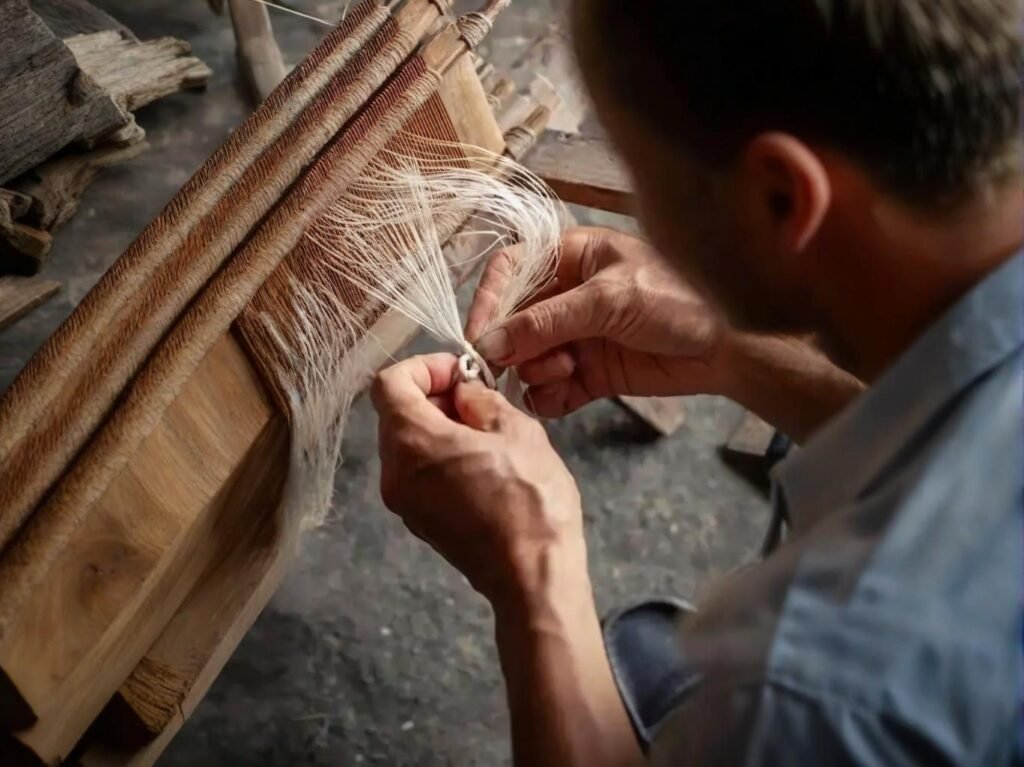
In textile terms, ramie refers to a natural, plant-based bast fiber extracted from the outer bark of the ramie plant (Boehmeria nivea). It is defined by its exceptionally high cellulose content, long and strong fiber structure, low elasticity, and excellent moisture management. Although ramie is grouped with natural fibers, its performance profile clearly distinguishes it from cotton and linen.
This definition may sound technical, but it directly explains why ramie behaves the way it does in fabric, garments, and long-term use.
Breaking Down the Textile Definition of Ramie
In professional textile contexts, fiber names are not marketing labels—they are technical classifications that signal how a material will behave during spinning, weaving, finishing, wearing, and care. Ramie is a good example of a fiber whose name carries very specific performance expectations, even though it is less familiar to general consumers.
Understanding what ramie means in textile terminology helps avoid common misunderstandings, such as assuming it behaves like cotton, linen, or regenerated fibers.
Botanical and Textile Definition
| Aspect | Ramie |
|---|---|
| Plant source | Boehmeria nivea |
| Fiber type | Bast fiber |
| Main component | Cellulose |
| Fiber extraction | From plant stalk bark |
From a botanical perspective, ramie comes from a perennial plant native to East Asia. From a textile perspective, the key point is where the fiber comes from: the outer bark of the plant’s stalk.
In textile classification, this places ramie firmly in the bast fiber category. Bast fibers are obtained from the stem of plants, rather than from seeds, fruits, or leaves. This origin has major implications for fiber length, strength, and surface structure.
What “Bast Fiber” Means in Textile Science
The term bast fiber is not decorative—it describes a group of fibers with shared structural characteristics:
- Extracted from plant stems
- Long fiber length
- High cellulose content
- Low natural elasticity
- Strong axial orientation
Ramie, linen (flax), hemp, and jute all fall into this category. However, sharing a category does not mean identical behavior. Each bast fiber has its own fiber morphology, crystallinity, and processing requirements.
For ramie, bast fiber classification immediately signals:
- High tensile strength
- Crisp hand feel
- Good airflow
- Limited stretch
These expectations are fundamental in textile engineering and fabric selection.
How Ramie Is Classified Among Fibers
| Fiber | Category | Source |
|---|---|---|
| Ramie | Bast fiber | Plant stalk |
| Linen (flax) | Bast fiber | Plant stalk |
| Cotton | Seed fiber | Cotton boll |
| Wool | Protein fiber | Animal hair |
This comparison highlights a common source of confusion. Ramie and linen are often grouped together because they are both bast fibers, while cotton sits in a completely different category as a seed fiber.
Cotton fibers grow as soft, twisted filaments around the cotton seed. This structural difference explains cotton’s softness, flexibility, and lower strength compared to bast fibers.
Ramie’s classification tells textile professionals immediately that it will behave more like linen or hemp than cotton—but with its own distinct characteristics.
Fiber Composition: Why Cellulose Content Matters
Ramie is composed of over 70–75% cellulose, with very low levels of lignin, pectin, and waxes once properly degummed. This high cellulose purity contributes to several defining traits:
- High tensile strength
- Resistance to microbial degradation
- Excellent moisture absorbency
- Clean, smooth fiber surface
In contrast, cotton contains more natural waxes and impurities, which soften the fiber but reduce strength and consistency. Linen contains more residual lignin, contributing to its textured, irregular surface.
Ramie’s cellulose-rich composition places it closer to an “engineered natural fiber” in behavior, even though it is not regenerated like viscose.
Fiber Structure and Mechanical Definition
From a structural standpoint, ramie fibers are:
- Long and straight
- Highly crystalline
- Smooth in cross-section
- Stronger when dry than most other plant fibers
This structure defines ramie’s mechanical behavior. It has very high tensile strength but low elongation at break, meaning it does not stretch much before breaking. In textile terms, this is described as low elasticity.
Low elasticity explains why ramie:
- Feels crisp rather than soft
- Holds shape well
- Wrinkles sharply rather than softly
- Provides structure rather than drape
These traits are neither positive nor negative on their own—they simply define how ramie performs.
Moisture Management as a Defining Characteristic
One of the most important elements of ramie’s textile definition is its moisture behavior.
Ramie fibers:
- Absorb moisture quickly
- Release moisture rapidly
- Swell less than cotton when wet
This combination results in fabrics that feel dry and cool during wear, especially in warm or humid environments. From a technical standpoint, ramie offers high moisture regain with fast desorption, a profile that is highly valued in summer apparel and breathable textiles.
This is why ramie has historically been used in warm-climate garments and why its definition is closely tied to comfort in heat—not softness.
What the Term “Ramie” Does Not Mean
Clear definition also means understanding common misinterpretations.
- It does not mean synthetic
- It does not mean regenerated cellulose (like viscose or modal)
- It does not automatically imply a blend
- It does not equal linen
Ramie is a true natural fiber, not chemically regenerated. Unlike rayon, the cellulose polymer chains in ramie remain in their natural form and are not dissolved and re-extruded.
At the same time, ramie is not interchangeable with linen. While both are bast fibers, ramie’s longer, smoother, and more crystalline fibers give it higher strength and a cleaner surface appearance.
Misusing the word “ramie” often leads to incorrect expectations—particularly around softness, drape, and care.
Why Textile Professionals Use the Term “Ramie”
In professional textile development, fiber names act as shorthand for performance assumptions. When a designer, fabric developer, or sourcing manager specifies ramie, they are signaling several expectations at once:
- High tensile strength relative to weight
- Excellent breathability
- Crisp, defined surface texture
- Lower elasticity than cotton
- Long-term dimensional stability
These expectations guide decisions in:
- Yarn selection
- Weave density
- Garment patterning
- Finishing processes
For example, a ramie fabric may require:
- Softer finishes to improve hand feel
- Looser patterns to accommodate low stretch
- Care instructions that avoid aggressive drying
The term “ramie” is therefore functional language, not descriptive marketing.
Ramie in Fabric Construction and Design
Because of its definition, ramie is rarely used indiscriminately. Its properties make it especially suitable for:
- Summer shirts and blouses
- Structured dresses
- Lightweight jackets
- Tailored warm-weather garments
- Linen-look fabrics with improved durability
Designers choose ramie when they want:
- Airflow and cool touch
- A garment that stands away from the body
- Clean visual lines rather than fluid drape
Cotton may feel softer, but it cannot replicate ramie’s structural clarity without heavy finishing.
Ramie vs. Familiar Comfort Expectations
One reason ramie remains less common than cotton is that its comfort profile differs from what many consumers expect.
Cotton feels soft immediately. Ramie feels cool and firm. This difference is rooted directly in fiber definition, not quality level.
From a textile perspective:
- Cotton comfort = softness and flexibility
- Ramie comfort = dryness and airflow
Neither is inherently superior. They simply deliver comfort in different ways, over different time frames.
This distinction is critical for correct fiber positioning in both design and marketing.
Blending Does Not Change the Definition—Only the Outcome
Even when ramie is blended with cotton, viscose, or polyester, the term ramie still refers to the same bast fiber. Blending modifies fabric behavior, but it does not change ramie’s fundamental definition.
Common reasons to blend ramie include:
- Softening the hand feel
- Reducing wrinkling
- Improving drape
- Enhancing processability
However, the presence of ramie in a blend still contributes strength, breathability, and structure—because those traits originate at the fiber level.
Everyday Interpretation of the Definition
For wearers, the technical definition of ramie translates into tangible experiences:
- A cooler sensation on the skin
- Less fabric cling when sweating
- A garment that feels fresher after hours of wear
- Sharper visual appearance
These are not abstract benefits. They are direct consequences of ramie’s fiber category, structure, and moisture behavior.
Understanding the definition helps consumers understand why a ramie garment feels different—and why that difference can be an advantage in the right context.
Why Ramie Is Often Misunderstood in the Market
Ramie’s definition is clear in textile science but blurred in consumer markets because:
- It is less commonly labeled than cotton
- It is often blended and under-communicated
- It is visually similar to linen
As a result, many people wear ramie without realizing it, especially in garments labeled as “linen blends” or “natural summer fabrics.”
For professionals, this reinforces the importance of using precise fiber terminology rather than aesthetic descriptors alone.
In textile terms, ramie has a precise and non-negotiable meaning: a strong, breathable, cellulose-based bast fiber extracted from the stalk of the ramie plant. Its high fiber length, crystalline structure, and moisture management define how it performs in fabric and garments.
Ramie is neither cotton nor linen, and it cannot be fully substituted by either. Its definition explains its crisp hand feel, excellent airflow, durability, and distinctive comfort profile. For textile professionals, understanding what ramie is—and what it is not—is essential to using it correctly, designing with intention, and setting accurate performance expectations.
How Is Ramie Fiber Produced from Plant to Textile Material?
Ramie fiber is produced by harvesting the stalks of the ramie plant, mechanically separating the outer bark fibers, and then removing natural gums through a controlled degumming process. The refined fibers are washed, neutralized, dried, spun into yarn, and formed into fabric. Processing quality—especially degumming—plays a decisive role in softness, strength, and overall textile performance.
This production path explains why ramie quality can vary so widely across suppliers and why well-made ramie behaves very differently from poorly processed versions.
Ramie is often described simply as a “natural bast fiber,” but that description hides a complex transformation. Unlike cotton, which can be spun relatively soon after harvesting, ramie requires careful, multi-stage processing to unlock its desirable properties. Every step—from cultivation to finishing—directly shapes how the final fabric feels, wears, and performs.
The Production Steps That Shape Ramie’s Meaning
Ramie’s reputation as either a premium summer fiber or a stiff, uncomfortable material depends almost entirely on how well these steps are executed. Understanding the full production chain clarifies why some ramie fabrics feel crisp and luxurious while others feel coarse and brittle.
Step 1: Cultivation of the Ramie Plant
Ramie comes from Boehmeria nivea, a perennial plant traditionally grown in East and Southeast Asia. Its agricultural characteristics already set it apart from many other textile crops.
| Feature | Ramie Plant |
|---|---|
| Plant type | Perennial |
| Harvest cycles | 2–4 per year |
| Growth speed | Very fast |
| Longevity | Multi-year |
Unlike flax or cotton, ramie does not need to be replanted each year. Once established, the same root system produces multiple harvests annually for several years. This regrowth ability:
- Stabilizes fiber supply
- Improves land-use efficiency
- Reduces soil disturbance over time
The stalks reach maturity quickly, often within 45–60 days after cutting, allowing several harvests per year depending on climate and farming practices.
Step 2: Harvesting and Initial Fiber Separation
Once the stalks reach suitable height and fiber maturity, harvesting begins.
After harvesting:
- Leaves are removed to prevent contamination
- Stalks are cut, aligned, and bundled
- The outer bark (where fibers reside) is separated from the woody core
| Output | Condition |
|---|---|
| Raw ramie fiber | Extremely strong but stiff |
| Core material | Discarded or reused (e.g., biomass) |
At this point, the fiber bundles are not yet spinnable. They are rigid, coarse, and bound together by natural gums. Many people encounter poorly processed ramie that never moves beyond this stage in quality—leading to the misconception that ramie is inherently uncomfortable.
Step 3: Degumming (Critical Transformation)
Degumming is the single most important step in ramie fiber production. It is also where the largest quality differences emerge between suppliers.
Ramie fibers naturally contain high levels of:
- Pectins
- Hemicellulose
- Lignin-like gums
These substances bind fibers together and make them stiff.
| Degumming Purpose | Result |
|---|---|
| Remove stiffness | Improve flexibility |
| Expose cellulose | Enable spinning |
| Reduce harshness | Improve comfort |
Degumming methods vary:
- Chemical degumming (alkaline or controlled chemical baths)
- Enzymatic degumming (more environmentally friendly, slower, higher cost)
- Combined mechanical–chemical processes
If degumming is incomplete:
- Fibers remain brittle
- Fabrics feel scratchy
- Yarn breaks during spinning
If degumming is overly aggressive:
- Fibers weaken
- Tensile strength is reduced
- Fabric lifespan shortens
High-quality ramie production depends on precise degumming control, not just removing as much gum as possible.
Step 4: Washing, Neutralizing, and Drying
After degumming, fibers must be carefully stabilized.
| Process | Importance |
|---|---|
| Washing | Remove residual gums and chemicals |
| Neutralization | Ensure skin safety and pH balance |
| Controlled drying | Preserve fiber strength and length |
Residual chemicals left in fibers can:
- Cause skin irritation
- Interfere with dye uptake
- Accelerate fiber degradation over time
Controlled drying is particularly important. Overheating or uneven drying can cause fiber brittleness, while slow, controlled drying preserves ramie’s natural strength and smoothness.
This stage strongly influences:
- Softness
- Dye consistency
- Long-term durability
Step 5: Fiber Preparation and Alignment
Before spinning, ramie fibers are further processed to improve uniformity.
This includes:
- Combing to align long fibers
- Removing short or damaged fibers
- Sorting by length and fineness
Unlike cotton, which is naturally short-staple, ramie fibers are very long. Proper alignment allows producers to spin finer, stronger yarns with fewer weak points.
Poor preparation at this stage results in:
- Uneven yarn thickness
- Increased hairiness
- Reduced fabric quality
Step 6: Spinning into Yarn
Spinning ramie presents different challenges compared to cotton or wool.
| Spinning Aspect | Outcome |
|---|---|
| Fiber length | Enables strong yarn |
| Fiber stiffness | Requires careful tension control |
| Yarn structure | Influences drape and feel |
Ramie can be spun:
- As 100% ramie yarn
- Blended with cotton, viscose, or lyocell for softness
- In different yarn counts depending on end use
Pure ramie yarns emphasize strength, crispness, and airflow. Blended yarns balance those traits with softness and flexibility.
Spinning quality directly affects:
- Fabric smoothness
- Pilling resistance
- Wear comfort
Step 7: Fabric Formation (Weaving or Knitting)
Once yarn is produced, it is formed into fabric through weaving or knitting.
| Method | Typical Result |
|---|---|
| Weaving | Crisp, structured fabrics |
| Knitting | Softer, more flexible textiles |
Ramie is more commonly woven than knitted because its fiber stiffness favors structure. Woven ramie fabrics are used in:
- Summer shirts
- Dresses
- Tailored casual garments
- Linen-like apparel
Knitted ramie exists but is usually blended to improve elasticity and hand feel.
Fabric construction (plain weave, twill, open weave) further determines:
- Breathability
- Wrinkle behavior
- Visual texture
Step 8: Finishing and Surface Treatment
Finishing is where ramie’s final personality is defined.
Common finishing techniques include:
- Enzyme washing for softness
- Mechanical softening
- Calendering for surface smoothness
- Pre-shrinking to improve stability
| Finishing Goal | Effect |
|---|---|
| Softening | Improve comfort |
| Stabilization | Reduce distortion |
| Surface control | Enhance appearance |
This stage often separates premium ramie fabrics from commodity-grade materials. Well-finished ramie feels noticeably smoother and more refined than untreated versions.
Why Processing Quality Matters More for Ramie Than Cotton
Cotton is forgiving. Even average processing produces acceptable fabric. Ramie is not.
Because ramie fibers are:
- Stronger
- Straighter
- Less elastic
Any processing mistake is amplified in the final fabric. This is why ramie has a reputation range from “luxurious summer fiber” to “uncomfortable niche textile,” depending entirely on production discipline.
Ramie Alone vs Ramie Blends
Producers often choose to blend ramie with other fibers after spinning.
Common blends include:
- Ramie–cotton: softness + strength
- Ramie–viscose: drape + breathability
- Ramie–lyocell: smoothness + durability
Blending does not reduce ramie’s value. Instead, it allows designers to tune performance for specific applications while retaining ramie’s climate advantages.
Environmental Implications of the Production Process
Although this section focuses on production mechanics, it is worth noting that:
- Multiple annual harvests improve resource efficiency
- Mechanical separation reduces reliance on heavy chemistry
- Modern enzymatic degumming lowers environmental impact
When responsibly produced, ramie combines agricultural efficiency with long textile lifespan, making processing quality both a performance and sustainability issue.
Why Ramie Quality Varies So Widely in the Market
The variability buyers experience with ramie fabrics usually traces back to:
- Inconsistent degumming
- Rushed drying
- Inadequate fiber alignment
- Minimal finishing
Producers who treat ramie like cotton often fail. Those who respect its unique processing needs unlock its strengths.
Production Takeaway
Ramie fiber does not become a textile by default—it becomes one through careful, disciplined processing. From cultivation through degumming, spinning, and finishing, each step shapes how the fiber performs against the skin and over time.
When processed skillfully, ramie delivers exceptional strength, breathability, and longevity. When processed poorly, those same fibers feel stiff and unforgiving. In ramie textiles, how it is made is inseparable from what it becomes.
Which Key Properties Distinguish Ramie from Other Natural Fibers?
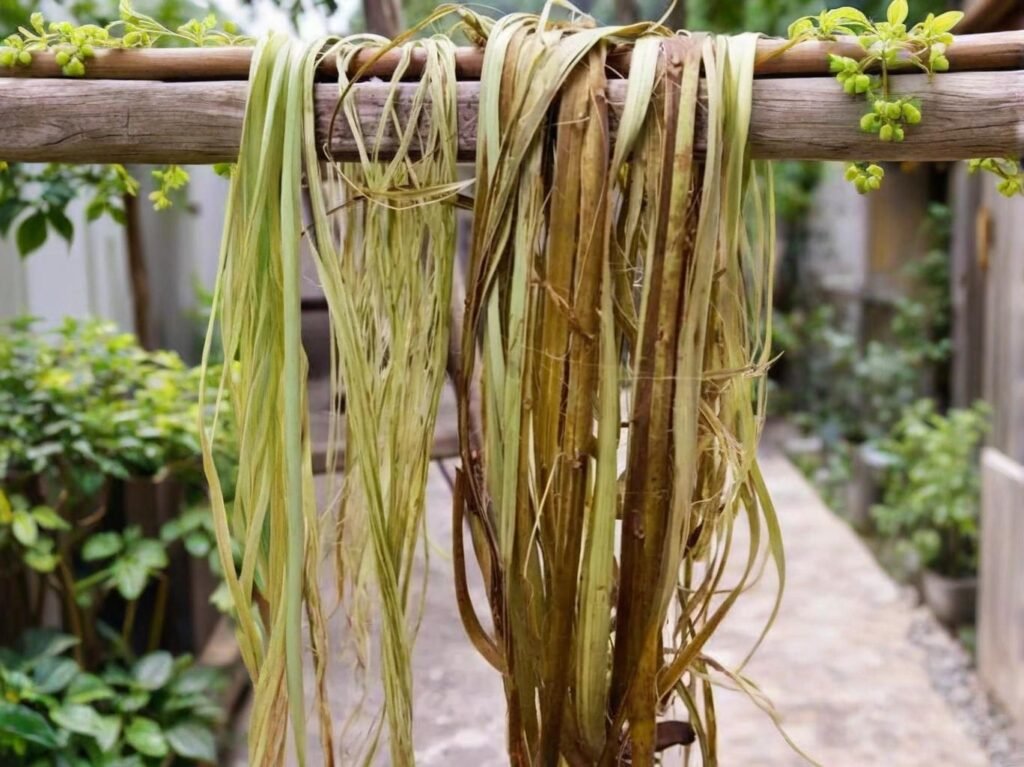
Ramie is distinguished by exceptionally high tensile strength, excellent breathability, rapid moisture absorption and release, low elasticity, and strong resistance to microbial growth. These inherent fiber properties set ramie apart from more commonly used natural fibers such as cotton and linen, particularly in warm-climate, long-wear, and lightweight textile applications where durability and dry comfort matter.
These characteristics are not abstract laboratory metrics—they directly determine how ramie fabrics feel on the body, age over time, and perform under real-world conditions.
The Property Profile That Defines Ramie
Ramie (derived from Boehmeria nivea) is one of the oldest textile fibers in human history, yet it remains relatively niche compared to cotton or wool. This is not because ramie lacks performance—quite the opposite. Its distinct property profile makes it fundamentally different from most plant fibers, and those differences explain both its advantages and its more specialized use.
To understand ramie, it is important to separate fiber-level properties from fabric-level styling. Many of ramie’s defining traits originate in the cellulose structure of the fiber itself and cannot be fully replicated through finishing or blending.
Mechanical Properties
Ramie’s mechanical strength is its most defining feature and the reason it is often described as one of the strongest natural fibers.
| Property | Ramie | Practical Meaning |
|---|---|---|
| Tensile strength | Very high | Lightweight yet durable fabrics |
| Elasticity | Low | Holds shape, limited stretch |
| Fiber length | Long | Smooth, strong yarns |
| Abrasion resistance | High | Reduced fabric wear |
Ramie fibers exhibit very high tensile strength, frequently measured at two to three times that of cotton and often exceeding flax (linen) fibers of comparable fineness. This strength allows manufacturers to produce thin, breathable fabrics that still resist tearing and fatigue.
Low elasticity means ramie does not stretch easily. While this limits its suitability for form-fitting or elastic garments, it provides excellent shape retention. Ramie fabrics resist sagging and deformation, which is particularly valuable in summer garments that are worn for long hours.
The long fiber length of ramie supports the production of smoother yarns with fewer weak points. Combined with high abrasion resistance, this contributes to a longer usable fabric life, even in lightweight constructions.
Strength in Wet Conditions
One often-overlooked advantage of ramie is its performance when wet.
Unlike many natural fibers that lose strength when saturated, ramie retains a high percentage of its tensile strength in wet conditions. This property historically made ramie suitable for ropes, nets, and industrial uses—and it remains relevant in modern apparel exposed to sweat, humidity, and frequent washing.
For wearers, this translates into fabrics that:
- Do not weaken noticeably during perspiration
- Resist tearing during laundering
- Maintain structural integrity in humid climates
This wet-strength stability is a key reason ramie outperforms linen in long-term durability, particularly in lightweight garments.
Moisture and Airflow Behavior
Ramie’s moisture management profile is one of its most distinctive comfort-related advantages.
| Moisture Metric | Ramie | Impact |
|---|---|---|
| Absorption speed | Fast | Quick sweat uptake |
| Moisture retention | Low | Less damp feeling |
| Drying speed | Fast | Cooler wear |
| Air permeability | Excellent | Continuous airflow |
Ramie is hydrophilic, meaning it absorbs moisture readily. However, unlike cotton, which tends to hold water within the fiber, ramie releases moisture quickly. Water spreads along the fiber surface and evaporates efficiently, preventing prolonged dampness.
This rapid absorption–release cycle explains why ramie garments often feel dry and cool even after extended wear. The fabric does not cling heavily to the skin or become noticeably heavier when damp.
High air permeability further enhances this effect. Even in relatively dense weaves, ramie fibers tend to create micro air channels that allow continuous airflow, supporting thermal regulation during wear.
Thermal Comfort Characteristics
The combined effect of strength, airflow, and moisture behavior gives ramie a unique thermal profile.
| Aspect | Ramie Performance |
|---|---|
| Heat buildup | Low |
| Cooling sensation | Noticeable |
| Fabric cling | Minimal |
Ramie fabrics often feel cool on initial contact due to higher thermal conductivity compared to cotton. More importantly, they remain comfortable over time, as moisture does not accumulate and trap heat against the skin.
Cotton, by contrast, can feel comfortable initially but may become heavy and warm as it absorbs sweat. Ramie’s ability to stay light under humid conditions is a major reason it has been used for centuries in traditional summer garments in East and Southeast Asia.
Biological and Chemical Resistance
Another defining feature of ramie is its natural resistance to biological degradation.
Ramie fibers are inherently resistant to:
- Mildew
- Bacterial growth
- Odor development
| Resistance Type | Result |
|---|---|
| Microbial | Improved freshness |
| Chemical | Stable cellulose |
| Environmental | Long lifespan |
This resistance does not make ramie antimicrobial in the technical sense, but it does reduce the conditions that allow microbes to thrive. As a result, ramie garments tend to stay fresher in humid environments and develop odors more slowly than cotton.
Chemically, ramie’s cellulose structure is relatively stable. It tolerates washing and environmental exposure well, contributing to its long lifespan when properly finished and cared for.
Visual and Structural Identity
Ramie’s properties also define its visual character.
| Feature | Ramie |
|---|---|
| Surface | Clean, crisp |
| Luster | Natural sheen |
| Wrinkling | Moderate |
| Shape retention | Good |
Ramie fibers are smooth and straight, which allows light to reflect evenly from the fabric surface. This produces a subtle natural luster, often compared to linen but typically cleaner and more refined.
Wrinkling does occur, but the wrinkles tend to be sharper and more structured rather than soft and collapsed. Visually, ramie reads as intentional and architectural, especially when compared to the relaxed, lived-in look of linen.
This structural clarity makes ramie particularly suitable for garments where silhouette and line matter, even in lightweight summer fabrics.
Comparison with Other Natural Fibers
To understand what truly distinguishes ramie, it helps to contrast it briefly with more familiar fibers.
- Compared to cotton: Ramie is stronger, dries faster, and feels cooler over long wear, but is stiffer and less elastic.
- Compared to linen: Ramie is more durable, retains strength when wet, and ages more slowly, while linen softens faster and offers a more relaxed aesthetic.
- Compared to hemp: Ramie is generally smoother and more lustrous, with higher tensile strength but less natural irregularity.
These differences explain why ramie is rarely a substitute for cotton or linen. Instead, it occupies a distinct functional niche.
Design and Application Implications
Because of its property profile, ramie excels in specific use cases:
- Summer shirts and blouses requiring airflow and structure
- Dresses and skirts that must remain light yet durable
- Travel and resort wear worn for extended periods
- Warm-climate garments where moisture management is critical
At the same time, ramie’s low elasticity and stiffness mean it is less suitable for:
- Close-fitting garments
- Knitwear requiring stretch and recovery
- Soft, drapey silhouettes without blending
Designers often address these limitations through blending with cotton, viscose, or other fibers, softening finishes, or relaxed pattern design.
Longevity and Aging Behavior
One of ramie’s most underappreciated qualities is how it ages.
Rather than thinning and weakening quickly, ramie fabrics tend to:
- Retain structure
- Maintain surface integrity
- Develop a subtle patina rather than visible wear
This makes ramie appealing in garments designed for repeated seasonal use rather than short trend cycles.
Property Takeaway
What distinguishes ramie from other natural fibers is not a single standout trait, but a rare combination of properties:
- Exceptional tensile strength
- High breathability
- Rapid moisture absorption and release
- Low heat buildup
- Resistance to microbial growth
These characteristics are structural, not cosmetic. They come from the fiber itself rather than from coatings or surface treatments.
As a result, ramie offers performance advantages that finishing alone cannot replicate. When used intentionally and in the right applications, it delivers a balance of durability and comfort that few other natural fibers can match—especially in hot, humid, and long-wear conditions.
Why Is Ramie Important in the Textile Industry Today?
Ramie remains important in today’s textile industry because it uniquely combines natural origin with high mechanical strength, breathability, and durability in warm conditions. As brands and manufacturers respond to growing demand for long-lasting, climate-adapted, and lower-impact materials, ramie offers performance advantages that many conventional fibers—natural or synthetic—cannot consistently provide on their own.
Its importance today is practical, functional, and forward-looking, not nostalgic.
Ramie’s Modern Relevance
Ramie is often described as a “heritage fiber,” yet its current relevance has little to do with tradition alone. What makes ramie significant in modern textiles is that it aligns closely with how garments are actually worn today: for longer hours, in warmer climates, across multiple seasons, and under increasing scrutiny for durability and sustainability.
In many ways, ramie addresses modern textile problems that were less visible decades ago.
Performance Demands in Contemporary Textiles
Modern apparel and textile products are expected to do more than simply look good. Across categories—from fashion to uniforms to home textiles—performance expectations have risen.
Today’s textiles increasingly require:
- Breathability for thermal comfort
- Long wear comfort during extended use
- Reduced moisture buildup in humid environments
- Shape stability after repeated wear and washing
Ramie naturally meets many of these requirements without heavy chemical finishes or synthetic modification.
At the fiber level, ramie is:
- Stiff and strong, which supports airflow within the fabric
- Smooth and lustrous, reducing surface friction and linting
- Highly absorbent yet fast-releasing in moisture behavior
These properties make ramie particularly valuable in lightweight constructions, where cotton or linen may need added weight—or synthetic reinforcement—to achieve similar durability.
Strength Without Heaviness: A Key Differentiator
One of ramie’s most important modern advantages is its strength-to-weight ratio.
Ramie fibers are among the strongest natural plant fibers. This allows fabrics to be woven or knitted at lower weights while still maintaining structural integrity. In practical terms, this means:
- Lighter garments that last longer
- Improved airflow without sacrificing lifespan
- Less fabric mass required to achieve durability targets
This is especially relevant in today’s market, where consumers expect summer garments to feel light and breathable but still withstand frequent wear and laundering.
By contrast:
- Cotton often requires higher GSM to achieve durability
- Linen can lose strength and shape more quickly in lightweight forms
Ramie fills this performance gap naturally.
Longevity and Product Lifespan
| Fiber | Typical Lifespan | Wear Degradation |
|---|---|---|
| Ramie | Long | Slow |
| Cotton | Medium | Moderate |
| Linen | Medium | Moderate–fast |
Longevity has become a central concern in the textile industry—not only for cost reasons, but also for sustainability.
Ramie’s fibers resist abrasion, thinning, and fatigue more effectively than many commonly used natural fibers. As a result:
- Garments maintain structure longer
- Fabric thinning appears later in the product lifecycle
- Visual aging is slower and more controlled
This durability reduces replacement frequency, which directly lowers material consumption over time. In an industry increasingly evaluated on cost per wear rather than unit price, this matters.
Warm-Climate and Seasonal Importance
| Climate Condition | Ramie Advantage |
|---|---|
| Hot weather | Cooling effect |
| High humidity | Fast moisture release |
| Extended wear | Reduced discomfort |
Global apparel consumption is shifting toward regions with hotter and more humid climates, including much of Asia, the Middle East, Africa, and parts of the Americas. Even in traditionally temperate regions, longer summers and heat waves are changing how fabrics are evaluated.
Ramie performs particularly well in these conditions because:
- Its stiff fibers create micro-air channels that improve ventilation
- Moisture absorbed by the fiber is released quickly
- Fabric surfaces remain relatively dry during extended wear
This makes ramie especially suitable for:
- Summer shirts and dresses
- Lightweight outerwear
- Warm-climate uniforms
- Home textiles used in non-air-conditioned environments
In these applications, ramie often outperforms heavier cottons and more irregular linens in sustained comfort.
Comfort Beyond Softness
Comfort in textiles is often equated with softness alone. While softness is important, thermal comfort and moisture behavior are equally critical—especially over time.
Ramie may feel crisp initially, but this crispness contributes to:
- Reduced fabric cling
- Improved airflow
- Less dampness against the skin
Over repeated wear and washing, ramie softens gradually without losing its structural benefits. This controlled softening contrasts with cotton, which may soften quickly but also weaken faster.
In modern usage—long workdays, travel, or outdoor wear—this balance between comfort and structure is increasingly valued.
Sustainability Perspective: Durability as an Environmental Asset
Sustainability in textiles is no longer judged solely by whether a fiber is “natural.” Increasingly, the focus is on resource efficiency across the full lifecycle.
Ramie contributes to sustainability in several meaningful ways:
- High yield per hectare: Ramie plants produce large volumes of fiber relative to land use
- Multiple harvests per year: In suitable climates, ramie can be harvested several times annually
- Long garment lifespan: Strong fibers extend product life and reduce turnover
| Sustainability Factor | Ramie |
|---|---|
| Renewability | High |
| Biodegradability | High |
| Land efficiency | High |
Durability is often overlooked in sustainability discussions, yet it is one of the most effective ways to reduce environmental impact. A garment that lasts twice as long typically has a significantly lower footprint per use—even if its initial production impact is similar.
In this context, ramie’s strength and longevity become environmental advantages, not just performance benefits.
Reduced Reliance on Synthetic Reinforcement
Many modern fabrics rely on synthetic fibers to compensate for weaknesses in natural materials—adding polyester for strength, elastane for recovery, or nylon for abrasion resistance.
Ramie reduces the need for such reinforcement in certain applications. Its natural strength allows designers and manufacturers to:
- Maintain natural fiber content at higher levels
- Reduce dependency on petroleum-based fibers
- Simplify fabric structures without compromising performance
This aligns with the growing interest in high-performance natural or natural-dominant textiles, especially in premium and sustainability-focused segments.
Why Ramie Is Often Underused
Despite its advantages, ramie remains underrepresented in mass markets. The reasons are largely structural, not performance-related.
Ramie is often:
- Less familiar to consumers, requiring explanation
- More processing-sensitive, demanding careful handling during spinning and weaving
- Dependent on skilled manufacturing, particularly in fiber extraction and yarn preparation
In addition:
- Supply chains are more geographically concentrated
- Processing knowledge is not as widespread as cotton or polyester
These factors create higher barriers to entry. As a result, ramie tends to be used by manufacturers and brands with deeper material expertise rather than by fast-fashion systems optimized for speed and simplicity.
Ramie as a Differentiation Tool
As apparel markets become increasingly saturated, brands are searching for material differentiation that goes beyond color and silhouette.
Ramie offers:
- A distinctive hand feel and visual clarity
- A clear performance narrative in warm climates
- A credible sustainability story tied to longevity
When positioned correctly, ramie allows brands to:
- Stand apart from cotton-dominated collections
- Offer tangible performance benefits rather than marketing claims
- Justify premium or mid-premium pricing through material substance
This makes ramie especially relevant for brands seeking depth rather than volume.
The Role of Blends in Expanding Ramie’s Reach
While pure ramie has clear advantages, many modern applications use ramie blends to broaden its appeal.
Blending ramie with cotton or linen can:
- Soften initial hand feel
- Reduce stiffness
- Improve familiarity for consumers
These blends allow ramie’s strengths—airflow, strength, durability—to remain present while lowering adoption barriers. As a result, ramie increasingly appears not only as a standalone fiber, but as a performance enhancer within blended fabrics.
Industry Importance Takeaway
Ramie is important in the textile industry today because it addresses real, modern challenges:
- The need for breathable fabrics in warmer climates
- Demand for longer-lasting garments
- Growing emphasis on sustainability through durability
- Desire for natural fibers with genuine performance benefits
It does this without relying on heavy chemical treatments or synthetic reinforcement.
Ramie’s relevance is not driven by trend cycles or heritage appeal. It is driven by function, longevity, and climate reality—factors that are becoming more central, not less, to the future of textiles.
How Does Ramie Compare with Cotton, Linen, and Other Natural Fibers?
Ramie differs from cotton and linen by offering higher tensile strength, faster moisture release, and better shape stability, while cotton prioritizes softness and familiarity and linen emphasizes a relaxed, textured aesthetic. Ramie sits between cotton and linen, combining linen-like breathability with superior durability and a cleaner, more structured appearance.
This comparison explains why ramie is often chosen when performance and longevity matter more than familiarity alone.
Real-World Fiber Comparison
Natural fibers are often grouped together in sourcing discussions, but in real garments they behave very differently. These differences become most visible after repeated wear, washing, and exposure to heat and humidity. Ramie, cotton, and linen share a plant-based origin, yet their fiber morphology, moisture behavior, and mechanical performance lead to distinct use cases in apparel and textiles.
Understanding these distinctions helps designers, developers, and buyers choose fibers intentionally rather than by habit.
Strength and Structural Performance
| Fiber | Relative Strength | Wet Strength | Shape Retention |
|---|---|---|---|
| Ramie | Very high | High | Good |
| Linen | High | Medium | Moderate |
| Cotton | Medium | Low–medium | Good |
Ramie is one of the strongest natural plant fibers used in textiles. Its long, straight fibers and high cellulose crystallinity give it exceptional tensile strength—often two to three times stronger than cotton at comparable fabric weights. This strength is maintained relatively well when wet, an important factor for garments worn in humid climates or washed frequently.
Linen is also strong, but its irregular fiber structure and lower wet strength mean it can lose integrity more quickly over time. Cotton, while durable for everyday use, has lower tensile strength and weakens noticeably when saturated.
From a structural standpoint, ramie allows fabrics to be lighter while still holding shape. Designers can reduce fabric weight without sacrificing durability, which is particularly valuable in warm-weather garments.
Comfort and Moisture Behavior
| Property | Ramie | Linen | Cotton |
|---|---|---|---|
| Breathability | Excellent | Excellent | Good |
| Moisture release | Very fast | Moderate | Slow |
| Damp cling | Minimal | Moderate | High |
| Long-wear comfort | High | Medium | Medium |
Comfort is often misunderstood as softness alone. In reality, comfort over time depends heavily on how a fiber manages moisture and heat.
Cotton absorbs moisture readily but holds it within the fiber. This feels pleasant initially, but over hours of wear the fabric can become heavy, damp, and clingy—especially in warm or humid environments.
Linen absorbs moisture quickly and releases it better than cotton, but its fibers still retain some dampness. Over extended wear, linen can feel cool but slightly stiff or heavy as humidity increases.
Ramie absorbs moisture rapidly and releases it just as fast. Its fibers swell less when wet, allowing air to circulate and moisture to evaporate efficiently. This results in a dry, airy feel even after long periods of wear. In hot climates, this difference becomes especially noticeable.
This is why ramie is often described as “cooler” or “fresher” on the body—not because it is thinner, but because it manages moisture more efficiently.
Texture, Wrinkling, and Appearance
| Aspect | Ramie | Linen | Cotton |
|---|---|---|---|
| Surface feel | Crisp, clean | Slubby, rustic | Soft |
| Wrinkle tendency | Moderate | High | Low–moderate |
| Visual structure | Neat | Relaxed | Casual |
Surface texture plays a major role in how fabrics are perceived visually and emotionally.
Cotton fibers are naturally twisted and slightly fuzzy, producing a soft, matte surface. This softness makes cotton approachable and comfortable, but it also gives garments a more casual appearance.
Linen fibers are irregular, with visible slubs and thickness variation. This creates a textured, rustic look that many designers and consumers associate with authenticity and relaxed summer style. Linen wrinkles easily and visibly, which is often embraced as part of its aesthetic.
Ramie fibers are straighter and more uniform. The resulting fabrics have a smooth, crisp surface with subtle luster. Ramie wrinkles, but less frequently than linen, and the creases tend to be sharper and more linear rather than random. This gives ramie garments a cleaner, more intentional appearance.
From a design perspective, ramie supports structured silhouettes better than linen, while still delivering natural texture.
Drape and Movement on the Body
Cotton drapes naturally around the body. Its flexibility allows garments to move easily with the wearer, making it ideal for T-shirts, casual dresses, and everyday basics.
Linen drapes more loosely but collapses quickly, especially as it wrinkles. This creates a relaxed, lived-in look but limits precision in tailoring.
Ramie holds its shape. It stands slightly away from the body, maintaining airflow and visual structure. While this can feel less cozy than cotton, it enhances comfort in heat by reducing skin contact and improving ventilation.
For garments where silhouette matters—such as tailored summer shirts, lightweight jackets, or structured dresses—ramie often performs better than either cotton or linen.
Durability Over Time
| Aging Factor | Ramie | Linen | Cotton |
|---|---|---|---|
| Fiber thinning | Slow | Faster | Moderate |
| Fabric fatigue | Low | Medium | Medium |
| End-of-life strength | High | Moderate | Low |
Long-term durability is where ramie clearly separates itself from other natural fibers.
Cotton softens over time but gradually thins and weakens, especially in high-friction areas. Linen also softens significantly, but its fibers can break down faster, leading to thinning and seam stress.
Ramie softens only moderately and retains much of its original structure. Fabrics maintain integrity longer, and garments are less likely to lose shape or develop weak spots prematurely.
This aging profile is why ramie garments often feel better after repeated wear without losing their functional performance.
Care Requirements and Real-World Use
Care behavior strongly influences how fibers are perceived by consumers.
Cotton is forgiving. It tolerates machine washing, moderate heat, and imperfect handling. This ease of care contributes heavily to its popularity.
Linen demands attention. It wrinkles easily, shrinks if mishandled, and benefits from gentle washing and air drying. For wearers willing to invest time, linen can be rewarding; for others, it becomes frustrating.
Ramie sits between the two. It prefers gentle care but is more forgiving than linen. It resists shrinkage better and recovers shape more reliably after washing. In mixed-care households or travel scenarios, ramie often proves more practical than linen.
Comparison with Other Natural Fibers
Beyond cotton and linen, ramie is often compared to fibers like hemp and jute.
- Hemp: Strong and breathable, but coarser and stiffer than ramie. Often requires heavy processing to achieve apparel-grade softness.
- Jute: Very strong but coarse, primarily used for industrial or decorative applications rather than clothing.
Compared to these fibers, ramie offers a rare balance: high strength with a relatively refined surface suitable for garments.
When Each Fiber Makes Sense
| Use Case | Best Choice | Why |
|---|---|---|
| Soft everyday basics | Cotton | Immediate comfort |
| Relaxed summer styles | Linen | Texture and character |
| Long-wear warm climates | Ramie | Breathability + durability |
| Lightweight structured wear | Ramie | Strength-to-weight ratio |
This table highlights an important point: fiber choice is about context. No fiber is universally superior; each excels in specific roles.
Cotton dominates where softness and ease matter most. Linen shines when visual texture and tradition are desired. Ramie performs best when garments must remain comfortable, breathable, and structurally stable over long wear.
Why Ramie Is Often Underused
Despite its performance advantages, ramie remains less common than cotton or linen. Several factors contribute to this:
- Lower consumer familiarity
- Higher processing complexity
- Limited marketing emphasis compared to cotton
As a result, ramie is frequently blended or used quietly in “linen-look” fabrics rather than highlighted as a standalone fiber.
For professionals, this presents an opportunity. Ramie can deliver meaningful performance benefits without departing from a natural-fiber narrative.
Blending Strategies and Performance Balance
In practice, many brands blend ramie with other fibers to fine-tune performance:
- Ramie + cotton: Adds softness and flexibility while retaining breathability
- Ramie + linen: Improves strength and reduces extreme wrinkling
- Ramie + viscose: Enhances drape while maintaining airflow
Even in blends, ramie’s contribution is structural. Its presence improves durability and moisture behavior, while other fibers adjust hand feel and appearance.
Market Perception and Consumer Experience
From a wearer’s perspective, the differences between these fibers are often felt before they are understood.
- Cotton feels immediately comfortable and familiar
- Linen feels expressive and relaxed
- Ramie feels cool, crisp, and performance-oriented
Consumers may not recognize ramie by name, but they often notice that garments containing it feel fresher and hold up better over time.
Educating consumers about these differences can increase appreciation and perceived value.
Cotton feels friendly and familiar. Linen feels expressive and traditional. Ramie feels engineered—not in a synthetic sense, but in how naturally it balances airflow, strength, and longevity.
By combining linen-like breathability with superior durability and cleaner structure, ramie occupies a distinct position among natural fibers. It is not a replacement for cotton or linen, but a strategic alternative when long-term performance matters more than immediate softness or rustic character.
For designers and product developers, understanding these trade-offs turns ramie from a niche fiber into a purposeful material choice—one that rewards both wearers and makers over time.
What Are the Challenges and Limitations of Using Ramie in Manufacturing?

The main challenges of using ramie in manufacturing include its naturally low elasticity, the risk of stiffness if degumming and finishing are poorly executed, moderate wrinkling behavior, and a high sensitivity to processing quality. Ramie performs exceptionally well when handled by experienced manufacturers, but it exposes shortcuts quickly when processing control is weak.
In short, ramie rewards skill—and exposes shortcuts.
Ramie is often discussed in terms of its strengths: durability, breathability, and warm-weather performance. However, from a manufacturing perspective, understanding ramie’s limitations is just as important as recognizing its advantages. Many of the negative perceptions surrounding ramie fabrics do not stem from the fiber itself, but from how unforgiving it can be when production discipline is lacking.
Below is a practical, factory-level breakdown of the real challenges ramie presents and how they influence manufacturing decisions.
Understanding Ramie’s Limitations Honestly
Ramie is not a beginner-friendly fiber. It behaves differently from cotton, viscose, or even linen, and it requires adjustments at nearly every stage of the manufacturing process. Brands and factories that approach ramie with cotton-based assumptions often struggle, while those that understand its behavior tend to achieve excellent results.
Low Elasticity and Stretch
One of ramie’s most fundamental limitations is its lack of natural elasticity.
| Aspect | Ramie Behavior |
|---|---|
| Natural stretch | Very low |
| Recovery | Minimal |
| Knit suitability | Limited |
Ramie fibers are long, straight, and crystalline in structure. Unlike wool or certain synthetic fibers, they do not elongate and recover easily. Once stretched beyond their limit, they tend to remain deformed or break.
From a manufacturing standpoint, this means:
- Ramie performs best in woven fabrics, not stretch-dependent garments
- Tight-fitting silhouettes require careful pattern engineering
- Knit applications are possible but usually demand fiber blending
For garments that require flexibility—such as fitted tops, activewear, or body-hugging designs—ramie must be blended with elastane, cotton, or regenerated fibers to provide acceptable comfort and movement.
Initial Stiffness Risk
One of the most common complaints about ramie is that it “feels stiff.” While this perception exists in the market, it is important to understand that stiffness is not an inherent flaw—it is a processing outcome.
Poorly processed ramie can feel:
- Rigid
- Brittle
- Uncomfortable against the skin
| Cause | Solution |
|---|---|
| Incomplete degumming | Enzyme treatment |
| Insufficient washing | Extended wet processing |
| No mechanical softening | Fabric or garment wash |
Degumming is the most critical step in ramie processing. Natural gums bind ramie fibers together, and if they are not properly removed, the fibers cannot flex or drape naturally. Incomplete degumming leaves residues that harden the fiber bundle, creating stiffness that persists even after garment construction.
Equally important is post-degumming washing. Residual chemicals or gums left in the fiber can make the fabric feel harsh and reduce skin comfort. Mechanical softening, enzyme washes, or garment washing are often required to achieve a refined hand feel.
Most stiffness-related complaints can be traced directly to processing shortcuts, not to the fiber itself.
Wrinkling and Care Sensitivity
Ramie occupies a middle ground when it comes to wrinkle behavior.
| Issue | Ramie Response |
|---|---|
| Wrinkle formation | Moderate |
| Heat tolerance | Good |
| Ironing need | Occasional |
Ramie wrinkles less deeply than linen but more readily than cotton. Its fibers are strong and crisp, which helps fabrics hold shape, but that same crispness means creases form when the fabric is bent or compressed.
From a manufacturing and design perspective:
- Wrinkles are more visible in smooth, plain weaves
- Textured or washed finishes reduce wrinkle visibility
- Garment design can embrace structure rather than fluidity
Ramie tolerates heat well, making ironing and pressing easier compared with some regenerated fibers. However, repeated wrinkling at the same stress points can weaken fibers over time if garments are poorly designed.
Designers who expect ramie to behave like cotton often become disappointed. Designers who treat it more like a linen-adjacent structural fiber achieve better results.
Sensitivity to Processing Quality
Ramie is significantly less forgiving than cotton during manufacturing.
| Challenge | Impact |
|---|---|
| Degumming control | Critical |
| Fiber alignment | Affects yarn quality |
| Dye fixation | Needs expertise |
Small deviations in processing parameters can have large consequences in the final fabric.
Examples include:
- Over-degumming weakens fibers and shortens lifespan
- Under-degumming leaves stiffness and poor drape
- Poor fiber alignment leads to uneven yarn and rough surfaces
- Inconsistent dye penetration causes shade variation
Cotton can tolerate a wide range of processing conditions and still produce acceptable fabric. Ramie cannot. This sensitivity increases the technical burden on mills and raises the barrier to entry for new producers.
Limited Knit and Elastic Applications
Although ramie can be knitted, it is not naturally suited to knitwear.
Challenges include:
- Low fiber elasticity causing poor recovery
- Increased risk of yarn breakage during knitting
- Reduced comfort in close-fitting garments
As a result:
- Pure ramie knits are rare
- Blended ramie knits are more common
- Knit structures are usually loose or relaxed
In applications where stretch and recovery are essential, ramie must be combined with other fibers. This blending adds complexity and cost but is often necessary to meet performance expectations.
Dyeing and Color Consistency Challenges
Ramie dyes well, but not easily.
Because ramie fibers are highly crystalline and smooth, dye uptake can be uneven if:
- Fiber preparation is inconsistent
- Residual gums remain
- Dyeing parameters are poorly controlled
Manufacturers often need:
- Longer dyeing cycles
- More precise temperature control
- Specialized pretreatments
This increases processing time and requires technical expertise. Inexperienced dye houses may struggle to achieve consistent color depth across batches, particularly with darker shades or reactive dyes.
Cost vs. Expectation Gap
From a commercial standpoint, ramie presents a unique challenge.
Ramie can be:
- More expensive to process
- Less forgiving of production shortcuts
- More demanding in quality control
At the same time, buyers often compare it directly to cotton or linen on price alone, without accounting for:
- Higher durability
- Longer garment lifespan
- Superior performance in heat and humidity
This creates a cost–expectation gap where:
- Producers feel ramie is undervalued
- Buyers feel ramie is overpriced
Brands that succeed with ramie are those that clearly communicate why it costs more to do well and how that cost translates into tangible benefits for the end user.
Supply Chain and Expertise Limitations
Ramie is not as widely produced as cotton or polyester, which creates practical constraints.
Challenges include:
- Fewer experienced spinning and weaving mills
- Limited global supply base
- Greater variation between suppliers
This makes sourcing more complex and increases the importance of long-term supplier relationships. Switching suppliers frequently—a common practice with commodity fibers—often leads to inconsistent results with ramie.
Design Constraints and Pattern Engineering
Ramie’s low elasticity and crisp structure require thoughtful design.
Poor pattern choices can lead to:
- Restricted movement
- Stress at seams
- Premature fabric failure
Successful ramie garments typically feature:
- Relaxed or straight silhouettes
- Adequate ease
- Construction that distributes stress evenly
Ramie rewards intentional design and penalizes patterns that rely on stretch or forced shaping.
Misuse in the Wrong Applications
Many failures attributed to ramie are actually application errors.
Ramie performs poorly when used for:
- Tight activewear
- High-stretch garments
- Applications requiring drape and cling
It excels when used for:
- Warm-weather shirts and dresses
- Structured casualwear
- Summer tailoring and outer layers
Understanding where ramie belongs is essential to avoiding disappointment.
Managing Expectations Internally
For manufacturers, another challenge is internal alignment.
Production teams, designers, and sales teams must all understand:
- Ramie’s limitations
- Required processing discipline
- Appropriate end-use scenarios
When internal teams treat ramie as a “drop-in replacement” for cotton, problems arise. When they treat it as a specialized fiber with defined strengths and limits, outcomes improve dramatically.
Why Ramie Is Still Worth the Effort
Despite its challenges, manufacturers continue to use ramie because:
- Its durability offsets processing cost over time
- Its climate performance is difficult to replicate
- Its aesthetic sits between linen and cotton in a desirable way
The key is recognizing that ramie is not a shortcut fiber. It does not simplify production—it elevates it.
Ramie’s challenges—low elasticity, processing sensitivity, stiffness risk, and moderate wrinkling—are real, but they are manageable and predictable. Most problems arise not from the fiber itself, but from treating ramie like a forgiving commodity material.
When processed with care, finished properly, and used in the right applications, ramie delivers performance and longevity that justify its complexity. In manufacturing, ramie does not reward shortcuts—but it consistently rewards expertise.
Which Textile Applications and Products Commonly Use Ramie?
Ramie is commonly used in apparel, home textiles, decorative fabrics, linings, and selected industrial or specialty applications where high tensile strength, breathability, moisture efficiency, and long-term durability are required. In contemporary textile markets, ramie is especially valued in warm-weather clothing, premium casual wear, summer shirting, dresses, and natural fabric products designed for repeated wear and humid environments.
Ramie’s use today is intentional rather than mass-market—and that selectivity is precisely where its value lies.
How Ramie Is Applied Across Textile Categories
Ramie is rarely used as a universal, one-size-fits-all fiber. Instead, it appears in applications where its structural strength, cooling behavior, and resistance to degradation solve specific design or performance challenges that other natural fibers struggle to address.
Understanding where ramie is used—and why—helps clarify its role in modern textile engineering and product development.
Apparel and Clothing Applications
Apparel remains the most visible and commercially significant application of ramie, particularly in garments designed for heat management, shape retention, and longevity.
| Apparel Type | Why Ramie Is Used |
|---|---|
| Summer shirts | Breathability + strength |
| Dresses & skirts | Shape stability |
| Lightweight jackets | Structure without bulk |
| Casual premium wear | Crisp appearance |
| Linings | Moisture control |
Summer Shirts and Blouses
Ramie is widely used in summer shirts, especially in markets with hot or humid climates. Its fast moisture absorption and release help garments stay dry during extended wear, while high tensile strength allows fabrics to remain lightweight without becoming fragile.
Compared to cotton, ramie shirts:
- Feel cooler after several hours of wear
- Retain structure instead of collapsing when damp
- Resist fabric thinning over repeated washing
These traits make ramie attractive for button-down shirts, tunics, and relaxed tailoring where airflow and clean lines must coexist.
Dresses and Skirts
In dresses and skirts, ramie’s low elasticity and fiber rigidity support shape stability. Garments hold pleats, panels, and vertical lines more effectively than cotton or viscose alternatives of similar weight.
Designers often choose ramie for:
- A-line and column silhouettes
- Summer dresses requiring airflow but not cling
- Garments where fabric collapse would compromise appearance
Blending ramie with softer fibers is common in this category to balance structure with drape.
Lightweight Jackets and Overshirts
Ramie’s high strength allows it to perform well in lightweight jackets, overshirts, and layering pieces. These garments benefit from:
- Fabric stiffness that creates form
- Breathability suitable for warm seasons
- Durability under frequent wear
Ramie enables designers to create outerwear that feels substantial without trapping heat—an advantage in transitional climates.
Premium Casual Wear
In premium casual segments, ramie is often used as a texture-driven fabric. Its crisp surface, subtle luster, and natural feel communicate quality without heavy construction or decoration.
Brands favor ramie for:
- Minimalist designs
- Seasonal capsules
- Elevated basics where fabric choice carries visual identity
Here, ramie functions as a statement material rather than a background component.
Linings
Ramie also appears in garment linings, particularly in warm-weather tailoring. Used on the inside rather than the exterior, it provides:
- Moisture absorption against the skin
- Improved airflow
- Reduced clamminess
This application leverages ramie’s comfort properties without exposing its stiffness to the garment’s exterior silhouette.
Home Textiles and Interior Fabrics
Beyond apparel, ramie plays a quiet but important role in home textiles and interior applications, especially where appearance stability and humidity resistance are important.
| Product | Ramie Advantage |
|---|---|
| Table linens | Strength + clean look |
| Curtains | Shape retention |
| Decorative fabrics | Natural texture |
| Upholstery blends | Durability |
Table Linens
Ramie is used in tablecloths, placemats, and runners where a crisp, refined appearance is desired. Compared to cotton, ramie table linens:
- Hold their shape better after washing
- Resist sagging and distortion
- Maintain a clean, structured look over time
These qualities make ramie suitable for hospitality, dining, and premium home collections that value presentation consistency.
Curtains and Drapery
In curtains and window treatments, ramie contributes dimensional stability. Fabrics hang straight, resist stretching, and maintain their original length more reliably than softer plant fibers.
Ramie’s mildew resistance is also valuable in:
- Coastal homes
- Humid climates
- Poorly ventilated interiors
This combination of structure and environmental resilience explains its continued use in certain interior textile lines.
Decorative Fabrics
Designers use ramie in decorative fabrics to introduce natural texture without excessive softness. Its crisp hand and subtle sheen make it suitable for:
- Accent panels
- Wall hangings
- Decorative cushions
Here, ramie’s visual clarity supports design elements without overpowering them.
Upholstery Blends
Pure ramie is rarely used alone in upholstery, but ramie blends appear in applications where durability and texture are required. Blending with cotton or synthetics improves flexibility while retaining ramie’s strength and wear resistance.
Industrial and Functional Textiles
Ramie’s reputation as a strong natural fiber is reinforced by its use beyond fashion and interiors.
| Industry | Application |
|---|---|
| Industrial textiles | Reinforcement fabrics |
| Packaging | Natural fiber strength |
| Composite materials | Fiber reinforcement |
| Specialty cords | Tensile resistance |
Historically, ramie was used in ropes, fishing nets, and sails due to its high wet strength and resistance to rot. While synthetic fibers now dominate many of these sectors, ramie still appears in specialty or hybrid applications where natural fiber content is preferred.
In composite materials, ramie fibers are sometimes used as reinforcement where:
- Biodegradability is valued
- Moderate structural strength is sufficient
- Weight reduction is important
These uses underscore ramie’s identity as a performance-oriented natural fiber, not merely a fashion material.
Blended Fabric Applications
Blending is one of the most important strategies for expanding ramie’s usability.
| Blend Type | Purpose |
|---|---|
| Ramie–cotton | Softness + durability |
| Ramie–viscose | Improved drape |
| Ramie–linen | Texture + strength |
Ramie–Cotton Blends
This is one of the most common blends. Cotton softens ramie’s stiffness and improves comfort, while ramie enhances strength, breathability, and drying speed. These blends are widely used in:
- Shirts
- Casual trousers
- Summer dresses
They balance familiarity with performance.
Ramie–Viscose Blends
Viscose adds fluid drape and softness, making the blend suitable for garments that require movement and flow. Ramie provides structure and durability, preventing excessive stretching or deformation over time.
This blend is often found in:
- Women’s wear
- Lightweight fashion pieces
- Draped silhouettes
Ramie–Linen Blends
Ramie–linen blends combine linen’s heritage texture with ramie’s strength and longevity. The result is a fabric that:
- Looks authentically linen-like
- Ages more slowly
- Resists thinning and tearing
These blends are particularly attractive to brands seeking a linen aesthetic with improved performance.
Traditional and Regional Uses
Ramie has deep roots in East and Southeast Asia, where it has been used for centuries in traditional summer garments. In these regions, ramie is valued for:
- Cooling performance
- Resistance to humidity
- Longevity in daily wear
While modern branding may describe ramie fabrics as “linen-like,” many consumers in these markets recognize ramie as a distinct, high-performing material.
Market Reality: Often Used, Rarely Named
An interesting reality of ramie is that many end users wear it without realizing it. Garments may be labeled as:
- “Natural blend”
- “Linen-look fabric”
- “Summer fiber mix”
Yet wearer feedback often highlights:
- Cooler feel
- Faster drying
- Better shape retention
These are classic ramie characteristics. From a market perspective, ramie often functions as a silent performance enhancer rather than a headline fiber.
Why Ramie Is Not Mass-Market
Despite its advantages, ramie remains a niche fiber. This is not due to performance limitations, but to:
- Higher raw material cost
- More complex processing
- Limited elasticity and softness
These factors make ramie less suitable for low-cost, high-volume basics. Instead, it thrives in applications where performance justifies complexity.
Application Takeaway
Ramie is used where natural appearance intersects with functional performance. Its applications span apparel, interiors, and specialty textiles, but its presence is always deliberate.
Designers and manufacturers choose ramie when they need:
- Strength without bulk
- Breathability without fragility
- Structure without heavy synthetics
Ramie’s role is not accidental or decorative. It is a purpose-driven fiber, selected for what it does exceptionally well rather than for universal convenience.
How Should Textile Buyers and Brands Evaluate and Source Ramie for Optimal Use?
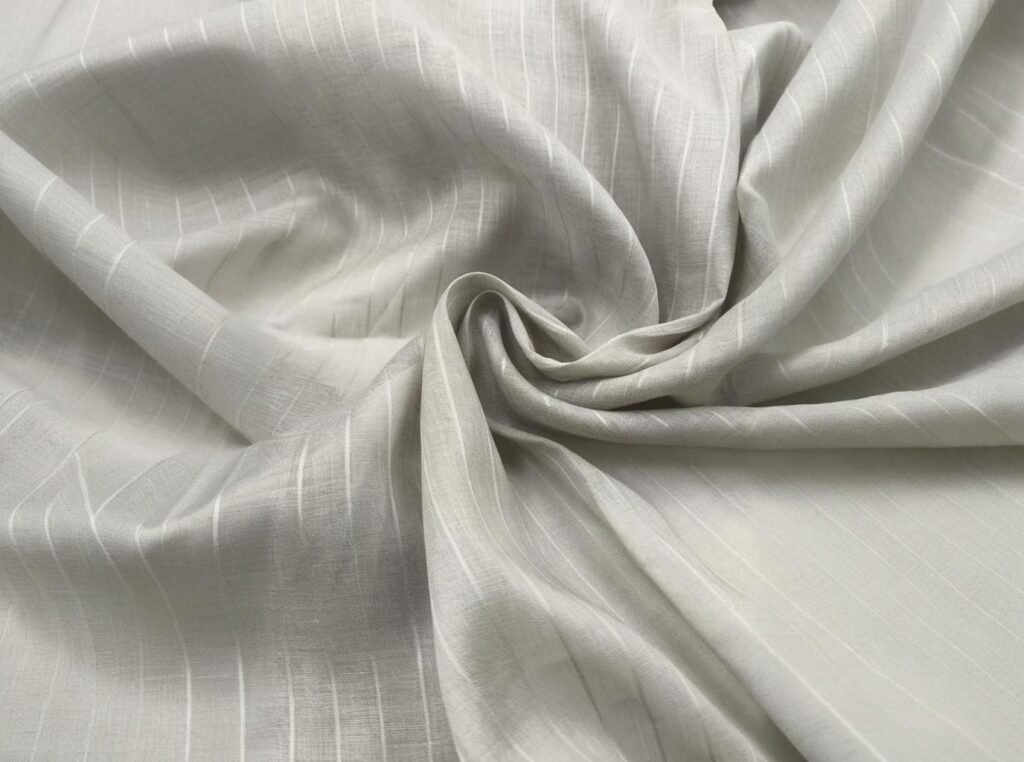
To evaluate and source ramie effectively, buyers and brands must look beyond fiber name and focus on fiber purity, degumming quality, yarn engineering, finishing methods, and—most critically—the supplier’s hands-on experience with ramie. Because ramie is highly sensitive to processing, consistent comfort, durability, and performance depend as much on how the fabric is made as on the raw fiber itself.
In ramie, quality is defined by process discipline, not just material choice.
A Practical Sourcing and Evaluation Framework
Ramie is one of the strongest natural bast fibers available, yet it is also one of the most frequently misunderstood. When sourced and processed well, ramie delivers excellent breathability, strength, and longevity. When handled poorly, it feels stiff, brittle, and uncomfortable—leading many buyers to dismiss it unfairly.
The difference lies almost entirely in evaluation rigor and supplier capability.
Step 1: Define the Intended End Use (Before Asking for Samples)
| Question | Why It Matters |
|---|---|
| Next-to-skin or outer layer? | Determines softness and finishing level |
| Warm or humid climate? | Affects yarn choice and fabric density |
| Frequent washing expected? | Influences yarn twist and construction |
Ramie behaves very differently depending on how and where it is worn. A fabric suitable for a summer overshirt may perform poorly as a next-to-skin top if finishing is insufficient. Likewise, ramie that works beautifully in dry heat may need different construction for humid regions.
Before sourcing, buyers should clarify:
- Contact level: direct skin contact vs layering
- Wear duration: short wear vs all-day use
- Climate exposure: dry heat, humidity, mixed conditions
- Care reality: gentle wash vs regular machine washing
Clear use cases prevent the most common sourcing error: selecting technically “good” ramie that is wrong for the application.
Step 2: Specify Core Fabric Parameters Precisely
| Parameter | Importance |
|---|---|
| Fiber content (%) | Determines stiffness, softness, and durability |
| Yarn count | Balances weight with strength |
| Fabric construction | Controls airflow and drape |
| GSM range | Defines comfort vs longevity |
Ramie varies more than many buyers expect. Two fabrics labeled “100% ramie” can perform entirely differently if yarn count, weave, or finishing diverge.
Fiber content
- 100% ramie maximizes strength and airflow but demands excellent finishing
- Ramie blends (with cotton or linen) soften hand feel and reduce stiffness Buyers should specify not just “ramie,” but acceptable blend ranges.
Yarn count and twist
- Finer yarns improve comfort but require careful control to avoid brittleness
- Excessive twist increases stiffness and reduces drape Yarn engineering determines whether ramie feels crisp or harsh.
Fabric construction
- Plain weaves emphasize structure and airflow
- Twills soften hand feel and improve drape
- Loose constructions enhance breathability but require strong yarn quality
GSM tolerance Ramie’s strength allows lower GSM fabrics to remain durable, but GSM must still align with garment expectations. Clear tolerances (e.g., ±3–5%) are essential for consistency.
Step 3: Evaluate Processing and Finishing Capability (This Is Critical)
| Process | Why It Matters |
|---|---|
| Degumming quality | Determines softness and flexibility |
| Enzyme treatment | Improves next-to-skin comfort |
| Pre-shrinking | Ensures dimensional stability |
| Dye fixation | Affects color fastness and longevity |
Most negative experiences with ramie originate not from the fiber, but from insufficient or inconsistent processing.
Degumming Raw ramie fibers contain natural gums that make them stiff and coarse. Proper degumming removes these gums while preserving fiber strength. Inadequate degumming leaves fabric rigid; over-degumming weakens fibers.
Enzyme and softening treatments Controlled enzyme treatments can significantly improve hand feel without compromising structure. This step is essential for garments worn close to the skin.
Pre-shrinking and stabilization Ramie has low elasticity. Without pre-shrinking and dimensional control, finished garments may distort or change fit after washing.
Dyeing and fixation Ramie dyes well, but poor fixation can result in uneven color or early fading. Buyers should confirm dye fastness performance, not assume it matches cotton standards.
A supplier’s finishing expertise is often the single biggest predictor of successful ramie sourcing.
Step 4: Request Samples—and Test Them in Real Conditions
Paper specifications are necessary, but they are never sufficient for ramie.
Effective evaluation should include:
- Wear testing (at least several hours of continuous wear)
- Multiple wash cycles (5–10 minimum)
- Shrinkage and shape checks
- Side-by-side hand feel comparison with cotton or linen alternatives
Key questions during testing:
- Does the fabric soften pleasantly or become brittle?
- Does it maintain structure after washing?
- Does it feel cool and breathable over time?
- Do wrinkles appear intentional or messy?
Ramie often improves after initial washes—but only if processed correctly. Testing reveals whether that improvement occurs or whether flaws become more apparent.
Step 5: Assess Supplier Experience with Ramie (Not Just Capacity)
Ramie is unforgiving of inexperience. Suppliers who treat it like cotton or linen often produce disappointing results.
An experienced ramie supplier should demonstrate:
- Controlled fiber handling (to avoid breakage)
- Consistent degumming protocols
- Stable yarn spinning for bast fibers
- Understanding of ramie-specific end uses
Buyers should ask:
- How long have you produced ramie fabrics?
- What percentage of your production is ramie?
- How do you control stiffness batch to batch?
- Can you provide references or long-term programs?
Suppliers without deep ramie experience may still offer attractive pricing—but this often translates into inconsistent hand feel, high rejection rates, or customer complaints later.
Step 6: Balance Cost with Cost-Per-Wear Reality
Ramie is often perceived as “expensive” compared to cotton. This comparison is incomplete.
Consider:
- Ramie’s higher strength allows lower fabric weights
- Longer lifespan reduces replacement frequency
- Better shape retention improves perceived quality over time
When evaluated on cost per wear, ramie can be competitive—especially in summer apparel or warm-climate programs where cotton may degrade faster.
Buyers should align pricing strategy with ramie’s performance narrative rather than competing directly with commodity cotton fabrics.
Step 7: Decide When Blends Make More Sense
Pure ramie is not always the best answer. Many brands achieve better results with ramie blends, especially when entering the category for the first time.
Blends can:
- Improve softness and familiarity
- Reduce stiffness complaints
- Expand consumer acceptance
- Simplify care requirements
Common approaches:
- Ramie–cotton for balanced comfort and airflow
- Ramie–linen for texture with improved durability
Blends allow brands to capture ramie’s advantages while reducing risk—particularly in mass or international markets.
Common Evaluation Mistakes to Avoid
- Judging ramie by one poor sample → Often a processing issue, not a fiber flaw.
- Specifying only GSM and fiber name → Ignores yarn, construction, and finishing—the real performance drivers.
- Skipping wash and wear testing → Leads to surprises after production.
- Choosing suppliers based only on price → In ramie, low price often signals low process control.
Avoiding these mistakes dramatically improves sourcing outcomes.
Ramie rewards buyers who are precise, patient, and technically informed.
When you:
- Define end use clearly
- Specify beyond “ramie”
- Evaluate processing quality
- Test in real conditions
- Work with experienced manufacturers
ramie becomes one of the most reliable, high-performing natural fibers available—especially for warm climates and long-wear applications.
What “Ramie” Really Means in Textiles
Ramie is more than a name on a label. In practical textile terms, it represents:
- A strong, cellulose-based bast fiber
- Natural breathability with fast moisture release
- Long fabric lifespan and excellent shape stability
- Performance well suited to heat, humidity, and extended wear
Understanding this reality allows buyers, designers, and brands to move beyond assumptions and use ramie with confidence.
When sourced and engineered correctly, ramie is not a risky alternative—it is a strategic material advantage.
Develop Custom Ramie Fabrics with SzoneierFabrics
If you are exploring ramie for apparel, home textiles, or specialty fabric applications and need:
- Custom ramie fabrics or ramie blends
- Low MOQ development support
- Fast sampling and free design assistance
- Stable quality control and short lead times
- A manufacturer experienced in ramie processing and fabric engineering
SzoneierFabrics helps translate ramie’s true meaning into reliable, production-ready textile solutions.
Share your fabric requirements and performance goals with our team, and we’ll help you develop ramie fabrics that meet both technical needs and market expectations.
Contact SzoneierFabrics today to start your custom ramie fabric inquiry.