Skip to content

At first glance, Oxford shirts and chambray shirts often get grouped together. Both look casual, both are woven, both are widely used in everyday shirts. But treating them as interchangeable fabrics is one of the most common—and costly—mistakes in shirt manufacturing.
Oxford and chambray behave very differently once they enter real production. They respond differently to cutting, sewing, washing, and long-term wear. One holds structure and resists distortion. The other softens, fades, and drapes with time. Choosing the wrong one doesn’t usually cause failure immediately—but it shows up months later in fit complaints, wear issues, or inconsistent reorders. Oxford fabric is a basket-woven, structured shirt fabric known for durability and shape retention, while chambray is a plain-woven fabric with a lighter feel and denim-like appearance that emphasizes softness and breathability. The better choice depends on shirt positioning, wear frequency, and long-term performance expectations.
A shirt designer once said, “Oxford forgives construction mistakes. Chambray exposes them.” That difference starts at the fabric level.
What Is Oxford Fabric and How Is It Used in Shirt Manufacturing?


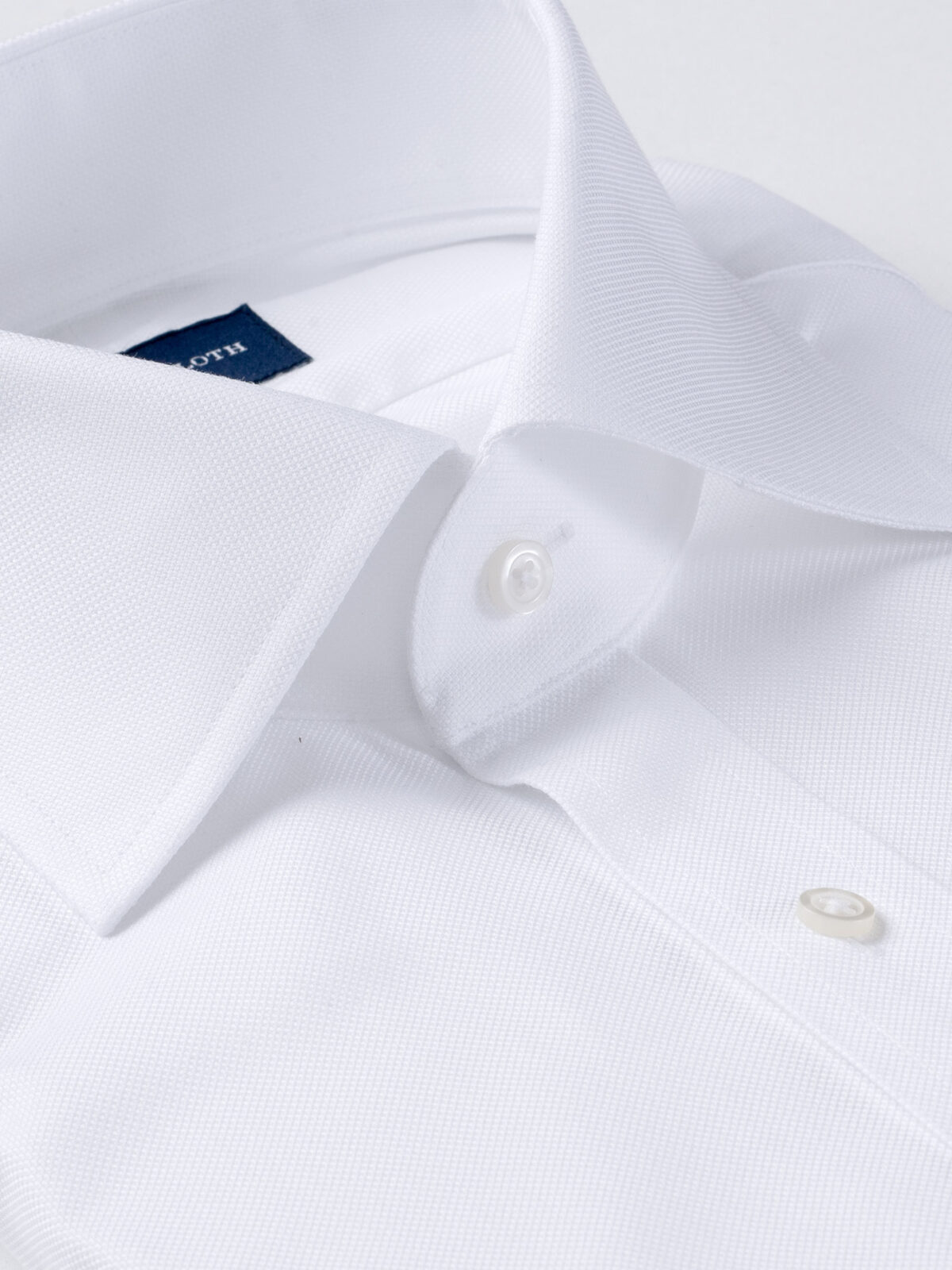
Oxford fabric has occupied a central place in shirt manufacturing for well over a century. Renowned for its distinct basket weave structure, the fabric combines durability, texture, and comfort in a way that few other shirting materials can match. Oxford shirts—whether classic button-down casuals or refined business-casual pieces—are built around this unique textile, which delivers performance both in production and prolonged wear. From loose-fit casual Oxford shirts to finer variations used in semi-formal wardrobes, understanding the fabric’s structure, types, and behavior through manufacturing cycles is essential for designers, mills, and production managers alike.
What Defines Oxford Fabric in Shirts
At its core, Oxford fabric is a woven textile employing a basket weave—a variation of plain weave in which two or more weft threads cross over two or more warp threads. This results in a textured, grid-like surface that distinguishes Oxford from smoother alternatives like poplin or broadcloth. The interplay of yarn sizes—typically finer warp yarns with slightly thicker weft yarns—gives the fabric its signature soft hand feel coupled with dimensional stability.
Historically, Oxford cloth took its name from the prestigious university town in England, where this type of fabric first gained popularity in shirtmaking in the 19th century. Initially adopted for its practicality in everyday wear, it has since become a versatile shirting staple used across casual, business-casual, and even certain semi-formal contexts.
How Basket Weave Affects Performance
The basket weave structure is more than just aesthetic; it directly influences key functional traits of Oxford shirts:
| Feature | Typical Oxford Fabric Response |
|---|---|
| Weave type | Basket weave (multi-yarn interlacing) |
| Surface feel | Soft yet textured grid look |
| Tensile stability | High due to distributed stress points |
| Breathability | Moderate — balances comfort and structure |
Unlike plain weaves where one thread always crosses one other, the basket weave’s two-over, two-under pattern distributes mechanical stress across multiple interlacing points. This makes the fabric less prone to distortion during cutting and sewing, a benefit when scaling up production runs.
Common Oxford Variants in Shirt Production
There are several Oxford fabric types used in shirts, each tailored to different end-use and appearance goals:
| Oxford Type | Typical Characteristics |
|---|---|
| Classic / Plain Oxford | Balanced weight, robust texture |
| Pinpoint Oxford | Finer yarns, smoother finish, slightly higher thread count |
| Royal Oxford | More luxurious sheen, tighter weave, refined texture |
Classic Oxford provides the archetypal look—textured, durable, and forgiving in production. Pinpoint Oxford elevates this by using finer yarns and a tighter weave, yielding a cleaner, smoother surface suitable for business-casual shirts. It stands between casual and formal fabrics and remains highly breathable while improving wrinkle resistance compared to plain Oxford. Royal Oxford, on the other hand, is geared toward shirts meant to carry more presence—often appearing in designs that lean toward upscale dress shirts without losing the signature textured appeal of Oxford weave.
Practical Performance in Manufacturing
Oxford fabric’s construction directly benefits key stages of shirt production:
- Cutting: The stable basket weave resists distortion, helping maintain piece dimensions even in high-speed cutting environments.
- Sewing: Seams hold firm because the weave accommodates needle penetration without excessive thread pull or misalignment.
- Plackets & Collars: The textured fabric retains shape well in structural elements such as button plackets, collars, and cuffs.
This stability makes Oxford a favored textile in large-batch shirt production where consistent quality from unit to unit matters. In mills that emphasize yield and consistent fit across sizes, Oxford’s tolerance for process variation reduces rejects and rework.
Wearing Behavior and Longevity
Shirts made from Oxford fabric are prized not solely for their look, but for how they age with wear. Its basket weave gives the fabric a slightly thicker feel than many plain weaves, helping it:
| Wear Aspect | Oxford Shirt Behavior |
|---|---|
| Shape retention | Strong — holds form over repeated wears |
| Wrinkle resistance | Moderate, better than most plain weaves |
| Softening over time | Gradual — improves comfort with wear |
Because of its construction, Oxford clings less to sharp creases, presenting a relaxed but tidy look even after repeated laundering. While not as wrinkle-resistant as poplin or broadcloth, it maintains an approachable, lived-in aesthetic that users appreciate in casual and smart-casual wardrobes.
Material Constituents and Market Trends
While cotton remains the predominant fiber for Oxford shirting, modern production often blends cotton with polyester or employs finishes to enhance performance without undermining the fabric’s characteristic hand. Cotton-polyester blends can offer improved wrinkle resistance and ease of care, particularly for garments intended for travel or uniform applications.
Furthermore, weight (measured in grams per square meter or GSM) varies across Oxford types used in shirts. A typical cotton Oxford shirting may range between 130–180 GSM, balancing structure with breathability. Variants at the higher end lend themselves to cooler climates or more structured dress shirts.
Oxford Fabric in Global Shirt Markets
Oxford shirts have secured broad market acceptance because they address multiple demands simultaneously. They offer:
- A textured finish that visually differentiates from flat weaves
- Durability for everyday wear
- Ease of care with appropriate finishes
- Versatility across casual to business-casual segments
Retailers often position Oxford shirts as wardrobe staples due to this adaptability, while manufacturers appreciate the relative ease of handling Oxford cloth in high-volume production environments.
Final Insight for Production Planning
In contemporary shirt manufacturing, Oxford fabric is far more than a historical curiosity—it is a practical solution that bridges durability, visual appeal, and production efficiency. Whether deploying classic Oxford for relaxed shirts, pinpoint for more refined finishes, or royal for elevated textured wear, understanding the interplay of weave, yarn, and finishing is key for achieving design goals and delivering garments that perform well in real-world use.
If you have additional draft sections or specific production data you’d like expanded, send them over and I’ll integrate them with calibrated detail for your final article.
What Is Chambray Fabric and How Is It Different from Oxford?
Chambray fabric occupies a distinct niche in shirt manufacturing where comfort, casual aesthetics, and breathable wearability are prioritized. At first glance, chambray may resemble denim due to its colored warp yarn and lighter hue, but its structural DNA and performance traits place it firmly in a separate category—one that’s softer, airier, and more relaxed in appearance compared to the textured robustness of Oxford fabric. For designers and manufacturers aiming to create lifestyle-oriented shirts with a lived-in feel, chambray presents a compelling material choice. Its simplicity in weave belies a complex balance of comfort, appearance evolution, and manufacturing considerations that demand clarity when selecting it over other shirting fabrics.
What Defines Chambray Fabric
Chambray’s identity is rooted in its plain weave structure, which directly influences how the fabric behaves in both production and final wear. Unlike Oxford’s basket weave, chambray’s weave is straightforward: a single yarn passes over and under alternating yarns at right angles, creating a smooth and consistent surface.
| Feature | Chambray |
|---|---|
| Weave | 1×1 Plain weave |
| Yarn interaction | One over, one under |
| Surface appearance | Smooth |
| Drape | Soft and fluid |
This uncomplicated structure usually results in lighter weight fabrics, making chambray shirts inherently breathable and comfortable against the skin. The plain weave also yields a textile that handles moisture and airflow differently than the denser constructions found in Oxford or twill fabrics.
Yarn Color Contrast: Creating the Chambray Look
One of chambray’s most recognizable visual characteristics comes from its contrasting warp and weft color scheme. In most traditional chambray fabrics, the warp yarn (the yarn running lengthwise on the loom) is dyed—often in indigo or other colored hues—while the weft yarn (running crosswise) remains white.
| Yarn Direction | Typical Color |
|---|---|
| Warp | Indigo / Colored |
| Weft | White |
This combination produces a subtle, washed-denim effect without the heavy weight or diagonal ribbing present in actual denim fabrics. The result is a surface with visual depth, a gentle sheen, and a casual aesthetic that resonates with lifestyle and everyday wear categories.
Chambray vs. Denim: Distinct Fabric Categories
Because chambray adopts a similar color approach to denim, it is often mistaken for lightweight denim. However, the two fabrics are fundamentally different in structure and performance.
| Feature | Chambray | Denim |
|---|---|---|
| Weave | Plain | Twill |
| Weight | Light | Heavy |
| Texture | Smooth | Diagonal rib |
| Typical Use | Shirts | Jeans and outerwear |
Denim’s twill construction—where each weft thread passes under two or more warp threads in a staggered pattern—produces the characteristic diagonal line and increased weight. Chambray’s plain weave omits this diagonal pattern entirely, resulting in a smoother hand and lighter weight suitable for shirts rather than trousers.
Production Performance: Challenges and Considerations
In manufacturing workflows, chambray fabric behaves differently from Oxford due to its weave and typical yarn count. While chambray is valued for softness and drape, these same traits can introduce process sensitivities during cutting and sewing operations:
- Fabric skew during cutting: The plain weave can allow panels to shift unless tension is carefully controlled on cutting tables.
- Seam puckering: Minor tension misadjustments at sewing stations can show puckering, particularly with finer yarn chambrays.
- Shrinkage after washing: Chambray’s lighter yarns and relaxed tension may result in measurable dimensional changes post-launder.
Because of these factors, production teams should calibrate cutting and sewing equipment specifically for chambray runs—especially if mixing with other weaves on the same production line.
Wear and Aging Behavior
Chambray shirts exhibit a distinctive evolution through wear and washing cycles—one that many consumers consider part of the fabric’s charm. The following table highlights key performance aspects in use:
| Aspect | Chambray Shirt Behavior |
|---|---|
| Initial Softness | High straight off the line |
| Shape Retention | Moderate — more relaxed than Oxford |
| Fading | Noticeable in dyed warps with repeated washing |
Chambray’s high initial softness makes it instantly comfortable, which contributes to its popularity in casual and resort wear segments. As the shirt ages, the colored warp yarns typically fade subtly, enhancing the material’s character without compromising structural integrity, provided construction quality is high.
However, because chambray does not possess the same dimensional stability as basket-woven fabrics, shirts may relax in fit over time. This can be a design advantage in lifestyle garments where a lived-in feel is desirable, but requires careful pattern allowances to ensure longevity in shape and fit.
Comparing Chambray and Oxford Fabrics
To understand why chambray and Oxford serve different market niches, it’s useful to compare their core attributes side by side:
| Metric | Chambray | Oxford |
|---|---|---|
| Weave | Plain | Basket |
| Weight | Light | Moderate to heavy |
| Texture | Smooth | Subtle textured grid |
| Breathability | High | Moderate |
| Drapability | Soft and relaxed | Structured |
| Suitability | Casual lifestyle shirts | Versatile casual to business-casual |
Chambray’s lighter weight and softer drape make it a natural choice for summer shirts, casual wear collections, and comfort-focused lifestyles. In contrast, Oxford’s structured hand and stability give it broader utility in both casual and business-oriented shirt styling.
Material Selection: When to Choose Chambray
From a manufacturing planner’s perspective, chambray is most effective when the product strategy prioritizes:
- Comfort and breathability for everyday wear
- Visual character that evolves with use
- Casual aesthetic resonance with target audiences
- Layerability without bulk
This makes chambray especially popular in spring/summer collections, resort wear lines, and curated lifestyle wardrobes where the shirt is meant to feel relaxed yet refined.
Tips for Successful Chambray Shirt Production
To achieve consistent quality outcomes in chambray shirt lines:
- Pre-wash fabric panels to stabilize potential shrinkage before cutting.
- Adjust machine tensions to minimize seam puckering.
- Sequence production runs to prevent mix-ups with heavier weaves.
- Monitor dye uniformity to avoid batch color variances, especially in indigo warps.
By calibrating process flows around chambray’s specific characteristics, manufacturers can deliver shirts that not only feel superior in hand but also age with pleasing visual progression.
Chambray may be casual by design, but with the right production insights, it can elevate a garment from a simple shirt to a wardrobe staple that balances comfort, character, and craftsmanship in every wear.
Which Yarn Structures Define the Look and Feel of Oxford vs Chambray?
Oxford and chambray may both sit comfortably in the shirting category, but the way they feel in hand—before washing, finishing, or garment construction—is determined long before the fabric reaches a cutting table. That difference starts at the yarn level. Yarn structure, pairing strategy, count, and twist collectively dictate whether a fabric feels solid and structured or relaxed and fluid. In practice, yarn architecture explains why Oxford shirts hold their shape across years of wear, while chambray shirts soften, drape, and visually evolve with use. Even before finishing treatments are applied, the yarn system alone sets clear boundaries for how each fabric will behave in production and in daily wear.
How Yarn Choices Shape Fabric Behavior
Fabric performance is not an abstract outcome; it is a direct expression of yarn decisions. Weave type matters, but yarn selection defines the limits within which a weave can perform. Bulk, flexibility, recovery, and surface texture are all inherited from the yarn system before loom tension or finishing enters the equation.
Oxford and chambray represent two deliberately different philosophies. Oxford is engineered for stability and tolerance. Chambray is engineered for lightness and movement. Those goals are visible immediately when the yarn structures are examined closely.
Yarn Pairing in Oxford Fabric
Oxford fabric relies on paired yarns, most commonly in the weft direction, to build bulk and stability into the cloth. Instead of using a single yarn, two yarns are laid together or lightly twisted before weaving. In some constructions, pairing also appears in the warp.
Typical Oxford yarn configuration includes:
- Two yarns combined in the weft
- Single or paired yarns in the warp
- Medium yarn counts designed to balance strength and comfort
| Yarn Feature | Oxford Result |
|---|---|
| Paired yarns | Increased bulk and body |
| Larger yarn count | Stronger structural support |
| Even tension | Stable, uniform surface |
This pairing distributes mechanical stress across multiple fibers rather than concentrating it in one strand. During wear, washing, and sewing, stress is absorbed gradually, reducing distortion. This is why Oxford fabrics tolerate aggressive handling during cutting, collar construction, and placket reinforcement without visible deformation.
From a tactile perspective, paired yarns introduce a subtle texture. The fabric does not feel slick or flat; instead, it has a dry, substantial hand that communicates durability. This characteristic alone explains why Oxford shirts feel “reliable” even before they are worn.
Structural Advantages of Paired Yarns
Paired yarn systems offer several functional benefits that extend beyond strength:
- Improved resistance to seam slippage
- Better needle penetration consistency during sewing
- Reduced risk of yarn breakage under tension
- More forgiving response to slight loom or finishing variations
In high-volume shirt manufacturing, these advantages reduce defect rates and increase consistency across batches. Oxford’s yarn system allows factories to maintain quality even when minor process deviations occur—an important consideration for long production runs.
Single-Yarn System in Chambray
Chambray takes the opposite approach. Instead of building mass through pairing, chambray relies on single yarns in both warp and weft. These yarns are typically finer than those used in Oxford, and they are woven in a simple 1×1 plain weave.
Typical chambray yarn configuration includes:
- Single yarns in warp and weft
- Finer yarn counts
- Lower overall bulk
| Yarn Feature | Chambray Result |
|---|---|
| Single yarns | Lightweight, flexible hand |
| Finer count | Smooth surface texture |
| Lower bulk | Enhanced drape and airflow |
This system allows the fabric to respond freely to movement. The shirt follows the body rather than resisting it. From the first wear, chambray feels soft and compliant, which is why it is closely associated with casual and lifestyle garments.
However, freedom of movement comes at a cost. Single-yarn systems concentrate stress within individual fibers, making the fabric more sensitive to tension changes during sewing, washing, and wear.
Yarn Count Comparison and Its Impact
Yarn count is a critical variable in both fabrics. While ranges vary by mill and application, typical values illustrate the contrast clearly.
| Fabric | Warp / Weft Yarn Count |
|---|---|
| Oxford | 20s–40s |
| Chambray | 40s–80s |
Lower yarn counts (thicker yarns) increase durability and structural tolerance. Higher yarn counts (finer yarns) enhance softness and smoothness but reduce resistance to stress.
Oxford’s moderate yarn counts provide a balance between comfort and resilience. Chambray’s higher counts favor comfort and breathability, making it ideal for warm climates and relaxed silhouettes, but less suitable for sharply structured designs.
Yarn Twist and Hand Feel
Twist level plays a decisive role in how yarn behaves once woven. Twist determines not only strength, but also surface friction, softness, and elasticity.
| Twist Level | Effect |
|---|---|
| Low twist | Softer, weaker, more pliable |
| Medium twist | Balanced strength and comfort |
| High twist | Crisp, firm, reduced elasticity |
Chambray typically employs lower twist yarns to enhance softness and achieve its characteristic relaxed hand. These yarns flatten slightly in the weave, increasing surface smoothness and airflow. The trade-off is reduced resistance to abrasion and seam stress.
Oxford fabrics generally use medium twist yarns, preserving strength while avoiding excessive stiffness. The combination of medium twist and yarn pairing produces a fabric that feels substantial without being rigid.
How Yarn Structure Affects Drape and Recovery
Drape is often attributed to weave density, but yarn structure is equally influential. Single-yarn systems bend more easily, allowing chambray to drape fluidly over the body. Paired yarns resist bending, giving Oxford a more upright silhouette.
Recovery—the ability of a fabric to return to its original shape after deformation—is also affected. Oxford recovers better from folding, creasing, and tension, while chambray tends to retain soft wrinkles that contribute to its casual appearance.
This difference explains why Oxford shirts maintain a crisp profile across long workdays, while chambray shirts develop character through subtle creasing and fading.
Implications for Cutting and Sewing
Yarn structure influences how fabric behaves under mechanical stress during garment assembly.
Oxford fabric, with its paired yarn system:
- Resists edge curling during cutting
- Maintains seam alignment under needle pressure
- Supports dense stitching in collars and cuffs
Chambray, with its single-yarn system:
- Requires careful tension control to avoid puckering
- Is more prone to seam slippage if stitch density is too low
- Benefits from finer needles and adjusted feed settings
These differences demand distinct production setups. Treating chambray like Oxford during sewing often results in quality issues—not because the fabric is inferior, but because its yarn structure is optimized for a different outcome.
Long-Term Wear Behavior and Aging
Yarn structure also determines how fabrics age over time. Oxford’s paired yarns wear gradually, maintaining thickness and surface integrity even after repeated laundering. The fabric softens slowly, retaining its original shape and presence.
Chambray’s finer single yarns break in more quickly. Over time, they flatten, relax, and fade—particularly in colored warp yarns. This aging process is often desirable, giving chambray shirts a worn-in appearance that feels personal and authentic.
However, the same aging process can expose construction weaknesses if seam allowances, stitch density, or yarn twist are poorly calibrated.
Choosing the Right Yarn System for the Right Product
The decision between Oxford and chambray is not a matter of quality, but of intent. Yarn structure should align with the garment’s purpose:
- Structured, multi-season shirts benefit from Oxford’s paired yarn stability
- Lightweight, comfort-focused designs align with chambray’s single-yarn flexibility
- High-volume production favors Oxford’s tolerance
- Style-driven collections often embrace chambray’s evolving character
Understanding these yarn-level differences allows designers and manufacturers to make deliberate choices rather than relying on surface appearance alone.
At SzoneierFabrics, yarn architecture is evaluated at the sampling stage, not after bulk production begins. Chambray yarn twist levels are carefully adjusted to reduce seam slippage and edge distortion—issues that rarely appear in Oxford due to its bulkier, paired yarn system. This early control ensures that the fabric’s intended behavior translates cleanly from loom to finished garment.
Yarn structure is not a technical footnote; it is the foundation of fabric identity. Oxford and chambray demonstrate how different yarn systems can produce two fabrics that look similar at a distance, yet behave entirely differently in the hand, on the body, and across years of wear.
How Do Weave Patterns Affect Performance and Aesthetics in Oxford and Chambray Shirts?
When people evaluate shirts, they often focus on color, fit, or branding. Yet beneath all visible design choices lies a far more decisive factor: weave pattern. The weave governs how fabric carries load, responds to motion, absorbs wear, and visually ages over time. Long after yarn selection and finishing fade from attention, the weave continues to dictate how a shirt behaves throughout its lifespan. In the comparison between Oxford and chambray, weave pattern is not a minor technical distinction—it is the structural rulebook that shapes performance, comfort, and aesthetics from the first wear to the hundredth wash.
Weave-Level Performance Differences
At the weave level, Oxford and chambray are engineered for fundamentally different priorities. Oxford’s basket weave emphasizes durability and dimensional control, while chambray’s plain weave prioritizes breathability and softness. These goals influence not only how the fabric feels, but how it survives repeated mechanical stress in manufacturing and daily use.
Basket Weave Performance in Oxford Fabric
Oxford fabric uses a basket weave, typically formed by grouping yarns together so that multiple warp and weft yarns interlace as units rather than as single strands. This structure increases fabric thickness and distributes force across a broader surface area.
| Performance Aspect | Result |
|---|---|
| Tensile strength | High |
| Abrasion resistance | High |
| Wrinkle recovery | Better |
| Visual texture | Subtle grain |
Because stress is shared across paired yarns, basket weave fabrics resist tearing and deformation more effectively than simple weaves. When tension is applied—whether during sewing, buttoning, or body movement—the load does not concentrate at a single yarn intersection. Instead, it spreads outward, reducing fatigue at individual points.
From a production standpoint, this structure improves reliability. Oxford fabric holds its dimensions during cutting, maintains seam alignment during sewing, and supports dense stitching in collars and cuffs without distortion. These properties explain why Oxford is widely used for shirts that require crisp construction and consistent sizing across large production runs.
Durability and Shape Retention in Oxford Shirts
Basket weave contributes directly to shape memory. Oxford shirts tend to maintain collar roll, placket straightness, and overall silhouette even after extended wear. While wrinkles still occur, they recover more easily once the garment is worn or lightly pressed. This makes Oxford particularly suitable for environments where shirts must appear orderly throughout long workdays.
Visually, the basket weave introduces a mild surface texture—often described as a grain or micro-check—that enhances depth without appearing rough. This texture remains stable over time, resisting pilling and surface breakdown better than finer weaves.
Plain Weave Performance in Chambray Fabric
Chambray relies on a 1×1 plain weave, the simplest and most open weave structure in woven textiles. Each warp yarn alternates over and under each weft yarn, creating a uniform grid.
| Performance Aspect | Result |
|---|---|
| Breathability | High |
| Drape | Soft |
| Weight | Light |
| Stress resistance | Lower |
This structure maximizes airflow and flexibility. With fewer yarns working together at each intersection, the fabric bends easily and conforms naturally to body movement. Chambray shirts feel lighter and cooler, particularly in warm or humid conditions.
However, the same simplicity that enhances comfort also concentrates stress at individual crossing points. Under repeated tension—such as at seams, button areas, or shoulders—the fabric has less structural backup. As a result, chambray demands tighter control during sewing and finishing to prevent distortion.
Breathability and Comfort Trade-Offs
Plain weave allows more open spacing between yarns, which improves thermal comfort. Air circulates more freely, moisture dissipates faster, and the fabric rarely feels heavy against the skin. This is why chambray is frequently used for casual, summer, or lifestyle shirts where comfort takes precedence over formal structure.
The trade-off is reduced resistance to mechanical stress. Chambray performs best when garment construction respects its limits—using appropriate stitch density, seam allowances, and reinforcement where needed.
Shrinkage and Stability Behavior
Weave pattern also influences how fabric responds to washing and drying. Stability is not only a yarn issue; it is a weave issue.
| Fabric | Wash Shrinkage Tendency |
|---|---|
| Oxford | Lower |
| Chambray | Higher |
Oxford’s basket weave restrains yarn movement during laundering. Paired yarns resist relaxation, limiting dimensional change. Chambray’s plain weave, combined with lighter yarn tension, allows yarns to settle and relax more noticeably during washing, leading to higher shrinkage if not properly pre-treated.
This difference affects pattern planning. Oxford shirts can be cut closer to finished dimensions, while chambray shirts benefit from allowances that anticipate relaxation and shrinkage after laundering.
Aesthetic Aging Over Time
The way a shirt ages is often as important as how it looks when new. Weave pattern determines whether aging appears controlled or expressive.
| Aspect | Oxford | Chambray |
|---|---|---|
| Color change | Minimal | Noticeable fading |
| Surface evolution | Stable | Soft, worn-in |
| Shape retention | Strong | Looser |
Oxford fabric ages conservatively. Color remains relatively stable, surface texture changes minimally, and the garment retains its original profile. This consistency aligns with expectations for shirts intended to look presentable over long periods.
Chambray, by contrast, is designed to evolve. Colored warp yarns gradually fade, surface softness increases, and the garment relaxes. This evolution is not a defect; it is part of chambray’s appeal. A well-constructed chambray shirt often looks better after months of wear than it did fresh off the line.
Visual Texture and Perceived Quality
Basket weave introduces visual density. Even at lighter weights, Oxford appears more substantial because the grouped yarns catch light unevenly, creating subtle contrast. This visual weight communicates durability and reliability.
Plain weave chambray presents a flatter surface. Visual interest comes not from texture but from color contrast between warp and weft yarns. Over time, as the dyed warp fades, this contrast becomes more pronounced, adding depth through wear rather than structure.
Manufacturing Implications of Weave Choice
Factories consistently favor Oxford for precision-heavy operations. Basket weave tolerates minor variations in machine tension, needle size, and operator handling. This makes it well suited for complex components such as collars, cuffs, and button plackets where accuracy matters.
Chambray requires tighter process discipline. Plain weave fabric is more sensitive to:
- Sewing tension imbalance
- Feed differential during stitching
- Fabric skew during cutting
Without careful control, puckering or misalignment can appear. This does not indicate poor fabric quality, but rather a mismatch between fabric behavior and process settings.
Stitching Density and Seam Performance
Weave pattern affects how stitches interact with fabric. Oxford supports higher stitch density without visible distortion because the basket weave provides structural mass around needle penetrations. Chambray benefits from slightly lower stitch density and finer needles to avoid stress concentration.
Seam durability also differs. Oxford seams resist slippage due to yarn grouping, while chambray seams depend more heavily on yarn twist, stitch balance, and seam allowance design.
Design Intent and Weave Selection
Choosing between Oxford and chambray is ultimately a design decision informed by weave behavior:
- Oxford suits shirts that must hold form, support structure, and maintain a polished appearance
- Chambray suits garments where comfort, breathability, and visual aging are intentional features
Understanding weave-level behavior prevents misapplication. A fabric is not underperforming when it behaves according to its structure; it is simply fulfilling its design logic.
Long-Term Wear Economics
From a lifecycle perspective, Oxford offers predictability. Fit, appearance, and performance remain stable across extended use, reducing variability in customer experience. Chambray offers character. Its value grows as the garment softens and fades, rewarding wear rather than resisting it.
Both outcomes are valid, but they serve different expectations. Problems arise only when a weave is asked to perform outside its structural intent.
Manufacturing Insight
Factories consistently choose Oxford when operations demand repeatable precision across large volumes. Chambray, while equally valuable, requires more attentive handling and construction discipline to deliver its intended aesthetic. When those controls are in place, chambray’s softness and aging behavior become strengths rather than liabilities.
Weave pattern is not merely a technical attribute; it is the silent architect of fabric identity. Oxford and chambray demonstrate how two simple structural choices can produce shirts that feel, perform, and age in entirely different ways—long after trends and colors fade from memory.
What Are the Key Differences in Comfort, Durability, and Wear Between Oxford and Chambray Shirts?
Oxford and chambray shirts are often grouped together in wardrobes and product catalogs, yet their real-world performance tells two very different stories. Comfort, durability, and wear behavior are not abstract qualities; they are the result of structural decisions made at the fabric level. Oxford shirts are engineered to endure frequent wear, repeated laundering, and structured use without losing their form. Chambray shirts, by contrast, are designed to feel good immediately, breathe easily, and relax naturally with time—even if that means accepting faster visual and structural change.
Understanding these differences is critical for designers, merchandisers, and manufacturers who need to match fabric choice with customer expectations. Both fabrics can be comfortable, but the type of comfort they deliver—and how long that comfort lasts—varies significantly.
How Each Fabric Feels and Ages in Real Life
Comfort is often judged in the first few minutes of wear, but durability and shape retention reveal themselves only after months of use. Oxford and chambray approach this timeline differently, prioritizing different stages of the garment’s life.
Comfort Comparison
Oxford and chambray deliver comfort through distinct mechanisms. One relies on gradual adaptation, the other on immediate softness.
| Comfort Factor | Oxford Shirt | Chambray Shirt |
|---|---|---|
| Initial softness | Medium | High |
| Breathability | Moderate | High |
| Skin feel | Firm, structured | Smooth, fluid |
| Break-in time | Longer | Short |
Chambray shirts feel comfortable from the first wear. Their lighter weight, plain weave, and finer yarns allow the fabric to drape easily and move with the body. Airflow is high, making chambray particularly appealing in warm climates or for casual, all-day wear.
Oxford shirts, on the other hand, often feel firmer when new. The basket weave and bulkier yarn structure give the fabric a more substantial hand. Comfort improves over time as the fabric softens through repeated wear and washing. For many users, this gradual break-in creates a sense of reliability rather than instant ease.
Breathability and Thermal Comfort
Chambray’s plain weave leaves more open space between yarns, allowing heat and moisture to dissipate efficiently. This makes it well suited for summer collections, travel shirts, and lifestyle garments worn directly against the skin.
Oxford’s breathability is moderate by comparison. The paired yarns and basket structure slightly restrict airflow, but also provide insulation and structure. This balance works well in transitional seasons and indoor environments where temperature control matters more than maximum ventilation.
Durability Under Repeated Wear
Durability is where Oxford clearly asserts its advantage. The basket weave distributes stress across multiple yarns, reducing localized fatigue at high-friction points such as collars, cuffs, and button plackets.
| Wear Aspect | Oxford | Chambray |
|---|---|---|
| Abrasion resistance | High | Medium |
| Seam strength | Strong | Moderate |
| Collar stability | Excellent | Weaker |
| Button area wear | Slow | Faster |
Oxford shirts withstand repeated abrasion from daily movement, desk contact, and laundering. Seams remain intact, collars stay upright, and button areas resist distortion. This makes Oxford a preferred option for shirts worn several times per week.
Chambray shirts, while not fragile, show wear more quickly. Finer yarns and a plain weave mean that stress concentrates at individual yarn intersections. Over time, this can lead to softening, thinning, and visible wear—especially in areas subjected to frequent friction.
Collar and Cuff Performance
Collars and cuffs are stress-intensive components that reveal fabric limitations quickly. Oxford’s structure supports interfacing well, maintaining shape even after repeated washing. Chambray collars tend to relax faster, particularly if the shirt is designed without heavy reinforcement.
This difference is not inherently negative. In casual designs, a relaxed collar can enhance the garment’s appeal. Problems arise only when customers expect long-term crispness from a fabric that was never designed to provide it.
Shape Retention Over Time
Shape retention is one of the clearest differentiators between Oxford and chambray.
| Issue | Oxford | Chambray |
|---|---|---|
| Collar collapse | Rare | Common |
| Cuff distortion | Low | Medium |
| Overall drape change | Minimal | Noticeable |
Oxford shirts maintain their original silhouette over long periods. Even as the fabric softens, the structure remains intact. Chambray shirts relax more quickly, with noticeable changes in drape and fit after months of wear.
Some customers appreciate this evolution, interpreting it as character and comfort. Others see it as loss of quality. Managing this perception depends heavily on how the product is positioned and marketed.
Visual Aging and Customer Perception
Chambray’s aging process is more visible. Dyed warp yarns fade, surface softness increases, and the garment develops a worn-in look. This visual evolution aligns well with casual and lifestyle branding, where authenticity and comfort are valued.
Oxford ages quietly. Color remains stable, surface texture changes minimally, and the shirt continues to look composed. This consistency supports professional and uniform-style use where predictability matters.
Real Wear Insight from Long-Term Use
Shirt programs monitored over 6–9 months often reveal a clear divergence in performance. Chambray shirts become softer and more relaxed, sometimes losing crisp edges but gaining comfort and visual depth. Oxford shirts retain clean lines and structural clarity, making them suitable for repeated professional wear without frequent replacement.
In environments where shirts are worn daily and laundered frequently, Oxford’s durability reduces replacement cycles. In contrast, chambray excels in collections where rotation is frequent and garments are worn for comfort rather than formality.
Laundering Impact
Oxford’s basket weave limits yarn movement during washing, reducing shrinkage and distortion. Chambray’s lighter construction allows more relaxation, especially if the fabric is not pre-treated. This affects long-term fit consistency and should be considered during pattern development.
Frequent washing accelerates chambray’s aging process, while Oxford remains comparatively stable. This difference influences total cost of ownership from both consumer and brand perspectives.
Comfort vs Longevity: A Strategic Trade-Off
The choice between Oxford and chambray reflects a broader strategic decision. Oxford prioritizes longevity, structure, and consistent appearance. Chambray prioritizes immediate comfort, breathability, and visual evolution.
Neither approach is superior in isolation. The key is alignment between fabric behavior and intended use. Problems arise when chambray is expected to perform like Oxford, or when Oxford is expected to feel like chambray on day one.
Manufacturing Takeaway
At SzoneierFabrics, fabric recommendations are tied directly to wear expectations. Oxford is typically recommended for shirts expected to be worn frequently, washed often, and required to maintain a clean silhouette over time. Chambray is better suited for lifestyle-driven collections where comfort, softness, and aging are integral to the product story.
Comfort is not a single metric. It is a balance of feel, performance, and expectation across time. Oxford and chambray deliver comfort through different philosophies—one through resilience and consistency, the other through softness and evolution. Understanding this distinction ensures that the fabric supports the garment’s purpose rather than working against it.
How Do Weight (GSM/Oz) and Finishing Processes Influence Oxford vs Chambray Fabric Behavior?
When discussing Oxford and chambray fabrics, fiber type often gets the spotlight. In real production and long-term wear, however, weight and finishing processes exert even greater influence on how these fabrics behave. GSM (grams per square meter), ounce weight, and finishing chemistry determine how a shirt feels on the body, how it shrinks after washing, how it wrinkles during wear, and how long it maintains structural integrity. Weight sets the physical baseline; finishing fine-tunes the outcome. Ignoring either leads to mismatched expectations between fabric promise and garment performance.
Weight and Finish as Performance Levers
Weight and finishing act as control knobs that allow manufacturers to push Oxford and chambray fabrics toward different comfort and durability profiles. The same weave can feel dramatically different depending on these variables. Understanding how they interact is essential for aligning fabric choice with intended use.
Typical Fabric Weight Ranges
Oxford and chambray occupy distinct weight categories, reflecting their different design intentions.
| Fabric | GSM Range | Oz Range |
|---|---|---|
| Oxford | 140–190 gsm | 4–5.6 oz |
| Chambray | 90–150 gsm | 2.6–4.4 oz |
Oxford’s higher weight range provides mass and resilience, reinforcing its role as a structured, durable shirting fabric. Chambray’s lighter weights emphasize breathability and ease of wear, making it well suited for warm-weather and casual applications.
Weight alone does not define quality, but it establishes boundaries. A lightweight Oxford will never behave like a heavyweight one, just as a heavy chambray cannot fully replicate the fluidity of a lighter version.
Weight Impact on Wear Behavior
Fabric weight directly affects how a shirt performs in daily use.
| Behavior | Lighter Fabric | Heavier Fabric |
|---|---|---|
| Breathability | Higher | Lower |
| Drape | Softer | Firmer |
| Wrinkle recovery | Lower | Higher |
| Wash stability | Lower | Higher |
Chambray’s lighter weight enhances comfort by allowing heat and moisture to dissipate quickly. The trade-off is reduced resistance to deformation. Heavier Oxford fabrics sacrifice some airflow in exchange for better wrinkle recovery and dimensional stability.
Weight also influences how a fabric responds to body movement. Lighter fabrics follow motion closely, while heavier fabrics resist and recover, maintaining shape.
Weight and Structural Stress
Repeated stress during wear—bending at elbows, pulling at shoulders, pressure at buttons—tests fabric resilience. Heavier fabrics distribute stress across more fiber mass, slowing wear. Lighter fabrics concentrate stress at fewer fibers, accelerating fatigue.
This difference becomes visible over time. Heavier Oxford shirts maintain crispness across years of use, while lightweight chambray shirts soften and relax more quickly. Neither outcome is inherently better; they serve different purposes.
The Role of Finishing Processes
If weight sets the baseline, finishing determines how that baseline is experienced. Finishing processes modify surface feel, dimensional stability, and wrinkle behavior without altering weave structure.
| Finish | Effect |
|---|---|
| Enzyme wash | Softens hand feel |
| Pre-shrinking | Controls size change |
| Resin finish | Improves wrinkle resistance |
| Silicone softener | Smooth surface feel |
Each finish introduces benefits and trade-offs. The key is moderation and alignment with fabric intent.
Enzyme Washing and Hand Feel
Enzyme washing removes surface fibers, reducing stiffness and enhancing softness. Chambray frequently relies on enzyme treatments to deliver its signature smooth, broken-in feel. Oxford may receive lighter enzyme treatment to soften initial rigidity without compromising structure.
Overuse of enzymes weakens fibers, particularly in lighter fabrics. In chambray, excessive enzyme exposure can reduce tensile strength, accelerating seam failure and thinning over time.
Pre-Shrinking and Dimensional Control
Pre-shrinking stabilizes fabric dimensions before garment construction. This process is especially important for chambray, where lighter yarn tension allows more relaxation during washing.
Oxford’s basket weave naturally restricts shrinkage, but pre-shrinking further improves size consistency. Chambray benefits even more, reducing post-wash fit surprises and improving customer satisfaction.
Resin Finishes and Wrinkle Management
Resin finishes enhance wrinkle resistance by cross-linking fibers. Oxford fabrics often accept resin finishes well due to their heavier weight and robust yarn structure. The result is improved wrinkle recovery without significant loss of breathability.
Chambray presents a challenge. While resin can reduce wrinkling, heavy application stiffens the fabric and undermines its casual character. Excess resin also limits airflow, negating one of chambray’s primary advantages.
Silicone Softeners and Surface Feel
Silicone softeners improve slip and smoothness, enhancing perceived comfort. Chambray often uses silicone finishes to amplify softness, especially in lighter weights.
However, silicone does not strengthen fabric. It masks underlying weakness, creating an appealing initial hand feel that may deteriorate quickly once the finish wears off. Oxford uses silicone more sparingly, as its structure already provides a solid hand.
Risks of Over-Finishing
Finishing processes must be calibrated carefully. Over-finishing can compromise long-term performance.
| Issue | Result |
|---|---|
| Excess enzyme | Fiber weakening |
| Heavy resin | Reduced breathability |
| Over-softening | Shortened lifespan |
Chambray is particularly vulnerable. Aggressive finishing can make the fabric feel exceptional at first touch, but the benefits fade rapidly, revealing reduced durability. Oxford is more forgiving, but excessive finishing can still dull texture and reduce longevity.
Interaction Between Weight and Finishing
Weight and finishing do not act independently. A lightweight chambray with heavy finishing may feel similar to a midweight fabric initially, but it will not perform the same over time. Conversely, a heavier Oxford with minimal finishing may feel firm at first but soften gradually while retaining strength.
Understanding this interaction helps avoid common mistakes, such as compensating for low weight with aggressive finishing instead of adjusting fabric selection.
Weight Selection by End Use
Weight decisions should align with how the shirt will be worn:
- Frequent wear, regular laundering: Mid-to-heavy Oxford with controlled finishing
- Casual rotation, warm climates: Lightweight chambray with restrained softening
- Travel or uniform programs: Oxford with wrinkle-control finishes
- Lifestyle collections: Chambray with light enzyme and silicone finishes
Each scenario balances comfort, appearance, and durability differently.
Long-Term Wear Economics
From a lifecycle perspective, heavier fabrics with moderate finishing often outlast lighter fabrics with aggressive finishing. Initial comfort can be misleading if durability suffers. Customers may prefer a shirt that improves gradually over time rather than one that peaks on day one.
Oxford’s approach favors longevity and consistency. Chambray’s approach favors immediate comfort and visual evolution. Weight and finishing determine how successfully each fabric fulfills its role.
Manufacturing Insight
At SzoneierFabrics, weight selection precedes finishing decisions. Chambray finishing recipes are deliberately conservative to preserve fiber strength, accepting a slightly firmer initial hand in exchange for longer service life. Oxford finishing focuses on wrinkle control and dimensional stability, leveraging the fabric’s inherent strength rather than masking it.
Weight and finishing are not secondary considerations; they are defining forces. When aligned correctly, they amplify the strengths of Oxford and chambray. When misaligned, they create fabrics that feel promising at first touch but disappoint over time. Understanding these levers ensures that fabric behavior matches design intent from the cutting table to years of wear.
Which Shirt Styles and Markets Are Best Suited for Oxford vs Chambray Fabric?
Fabric selection does more than determine how a shirt feels—it quietly defines how the garment is perceived, worn, and positioned in the market. Oxford and chambray fabrics are often discussed in technical terms, but their most meaningful differences emerge at the style and market level. Each fabric carries built-in signals about structure, durability, comfort, and aging. When those signals align with the shirt’s design intent and target audience, the product feels coherent. When they don’t, even well-made shirts can feel mismatched or disappointing.
Oxford excels where structure, repeat wear, and visual consistency matter. Chambray thrives where ease, softness, and lived-in character are part of the appeal. Understanding where each fabric performs best helps brands build clearer collections and avoid forcing one material to serve an unsuitable role.
Matching Fabric to Shirt Style and Market
Shirt styles are not neutral vessels. Collar construction, silhouette, and intended use all place demands on the fabric. Oxford and chambray respond very differently to those demands.
Shirt Style Alignment
Different shirt styles favor different structural behaviors, and fabric choice determines how well those styles hold up in real use.
| Shirt Style | Oxford | Chambray |
|---|---|---|
| Button-down collars | Excellent | Fair |
| Dress-casual shirts | Strong | Limited |
| Workwear-inspired styles | Good | Strong |
| Summer casual shirts | Fair | Excellent |
| Overshirts | Strong | Medium |
Oxford’s basket weave supports shape-critical designs. Button-down collars retain roll and symmetry, plackets stay straight, and cuffs resist collapse. This makes Oxford a natural fit for shirts that need to look composed throughout the day.
Chambray favors styles where relaxation is intentional. In workwear-inspired or casual silhouettes, its softness and drape enhance authenticity. The fabric supports looser fits and informal detailing better than sharply tailored elements.
Structured vs Relaxed Design Intent
Oxford reinforces structure. It complements tailored cuts, reinforced collars, and defined plackets. Chambray softens structure. It works best when design allows movement, drape, and visual evolution.
Designers who attempt highly structured shirts in chambray often compensate with heavy interfacing or stiff finishes, which can undermine the fabric’s natural appeal. Conversely, overly relaxed designs in Oxford can feel unnecessarily rigid.
Climate and Seasonal Fit
Climate plays a decisive role in fabric suitability. Breathability, thermal comfort, and layering behavior differ markedly between Oxford and chambray.
| Climate | Better Choice |
|---|---|
| Warm / humid | Chambray |
| Temperate | Both |
| Cool / layered | Oxford |
Chambray’s lighter weight and plain weave allow heat and moisture to escape efficiently, making it ideal for hot or humid environments. Oxford’s denser structure offers more thermal balance, working well in cooler or air-conditioned settings and under layers.
Seasonal collections often reflect this divide. Spring and summer ranges favor chambray for its airflow and softness, while fall and transitional seasons lean toward Oxford for its versatility and layering compatibility.
Customer Expectation Differences
Customer satisfaction depends on whether fabric behavior matches expectations. Oxford and chambray attract different assumptions from wearers.
| Expectation | Oxford Shirt | Chambray Shirt |
|---|---|---|
| Crisp appearance | High | Low |
| Soft hand feel | Medium | High |
| Long wear life | High | Medium |
| Visible aging | Low | High |
Oxford buyers generally expect shirts to look similar months later as they did when purchased. Chambray buyers often welcome fading, softening, and relaxed drape as part of the garment’s story.
Problems arise when expectations are not managed. A chambray shirt sold as a “clean” or “sharp” option may be judged harshly as it ages, while an Oxford shirt marketed as ultra-soft casual wear may feel stiff to first-time users.
Market Positioning and Use Cases
Oxford and chambray occupy distinct but sometimes overlapping market segments. Understanding where each fabric naturally performs best helps brands position products effectively.
Oxford dominates in:
- Uniform programs
- Hospitality and service industries
- Education and institutional apparel
- Corporate casual and repeat-wear wardrobes
These markets value consistency, durability, and appearance stability. Oxford’s ability to withstand frequent washing and daily use makes it reliable in these environments.
Chambray performs better in:
- Lifestyle and casual fashion brands
- Creative and design-oriented markets
- Seasonal or limited collections
- Warm-climate or resort-focused ranges
Here, comfort and character are valued more than long-term crispness. Chambray’s aging behavior becomes a feature rather than a flaw.
Retail vs Program-Based Markets
In retail-driven fashion cycles, chambray benefits from storytelling. Its fading and softening reinforce authenticity and individuality. In program-based markets—such as uniforms or large-scale corporate orders—Oxford’s predictability reduces complaints and replacement rates.
This distinction influences not only fabric choice, but also inventory planning and after-sales support.
Overshirts and Transitional Pieces
Overshirts occupy a middle ground between shirts and light outerwear. Oxford performs well here due to its weight range and structural support. Heavier Oxford fabrics maintain shape and resist sagging when worn open or layered.
Chambray overshirts can work in lighter, casual interpretations, but they tend to lose definition faster. This makes them better suited for seasonal fashion pieces rather than long-term staples.
Branding and Storytelling Implications
Fabric choice shapes brand identity. Oxford communicates reliability, professionalism, and longevity. Chambray communicates ease, creativity, and approachability.
Brands that clearly separate core styles from seasonal experiments often use Oxford as the foundation and chambray as a way to introduce freshness. This approach balances stability with visual interest across collections.
Pricing and Value Perception
Oxford’s durability supports higher perceived value over time, particularly for customers who prioritize longevity. Chambray’s value is often felt immediately through comfort and softness, even if wear life is shorter.
Aligning price points with these perceptions helps avoid disappointment. Chambray is best positioned as a comfort-driven choice rather than a long-term workhorse.
Regional Market Preferences
Regional climate and cultural norms also influence fabric success. Hot, humid regions show stronger acceptance of chambray, while cooler or more formal markets favor Oxford. International brands often adjust fabric mix by region rather than applying a single strategy globally.
Manufacturing Perspective
From a production standpoint, Oxford supports consistent output across large volumes. Its tolerance for process variation simplifies scaling. Chambray requires tighter control and is often better suited to smaller or more curated runs.
At SzoneierFabrics, brands are frequently advised to use Oxford for core, repeat styles that anchor a collection, and chambray for limited or seasonal drops where visual change and softness add value. This strategy reduces risk while preserving creative flexibility.
Strategic Fabric Allocation
Effective collections use both fabrics intentionally rather than interchangeably. Oxford provides the backbone—styles customers return to year after year. Chambray adds movement—styles that feel fresh, seasonal, and expressive.
The fabric choice quietly defines the shirt’s identity long before the customer reads a label. When Oxford or chambray is selected with clear intent, the shirt feels honest, performs as expected, and earns its place in the wardrobe.
How Should Brands Choose Between Oxford and Chambray for Commercial Shirt Manufacturing?
In commercial shirt manufacturing, fabric choice is rarely just about appearance. It is a strategic decision that influences production stability, cost control, customer satisfaction, and brand reputation over time. Oxford and chambray may appear interchangeable to non-specialists, but in reality they support very different product lifecycles. The wrong choice can increase defect rates, shorten garment lifespan, and create misalignment between marketing promises and real-world performance. The right choice quietly reinforces everything a brand wants a shirt to represent.
Oxford and chambray should not be evaluated as competing fabrics in the same role. They are tools designed for different jobs. Brands that treat fabric selection as part of long-term planning rather than launch-season styling consistently achieve better outcomes in both quality and customer retention.
A Practical Fabric Selection Framework
Choosing between Oxford and chambray becomes straightforward when decisions are anchored in use behavior, structure expectations, production realities, and aging outcomes. The following framework reflects how experienced manufacturers approach this decision in practice.
Step 1: Define Real-World Usage
The first and most revealing step is understanding how the shirt will actually be worn. Usage frequency and laundering intensity expose whether a fabric’s strengths align with the product’s demands.
| Question | Oxford | Chambray |
|---|---|---|
| Worn weekly or daily? | Yes | Maybe |
| Multiple washes per month? | Yes | Limited |
| Needs crisp silhouette? | Yes | No |
Oxford is engineered for repetition. Its basket weave and heavier yarn system tolerate frequent washing, daily wear, and sustained friction without rapid degradation. Chambray can handle regular use, but its lighter construction means visible changes occur sooner, especially in high-stress areas.
When usage patterns are unclear, brands often default to Oxford because it reduces risk. Chambray performs best when wear frequency is moderate and rotation is expected.
Understanding Wear Frequency Risk
High-frequency wear magnifies small weaknesses. In chambray, fine yarns and plain weave intersections experience cumulative stress that accelerates softening and shape change. In Oxford, stress is distributed across paired yarns, slowing fatigue. This difference matters most in commercial programs where garments are expected to perform reliably across months or years.
Step 2: Match Structure Expectations
Structure is not an abstract design preference; it is a functional requirement embedded in the garment’s architecture. Certain design elements demand fabric support.
| Requirement | Best Fit |
|---|---|
| Collar stability | Oxford |
| Relaxed drape | Chambray |
| Sharp plackets | Oxford |
| Soft fold lines | Chambray |
Oxford naturally supports structure. Collars remain upright, plackets stay aligned, and cuffs resist distortion. Chambray excels where structure is intentionally relaxed. Its drape softens lines and enhances movement.
Trying to force structure from chambray usually leads to over-interfacing or heavy finishing, both of which undermine the fabric’s natural comfort. Likewise, forcing Oxford into ultra-soft silhouettes can make garments feel stiff or overbuilt.
Design Integrity and Fabric Honesty
Strong collections respect fabric intent. When structure and fabric behavior align, garments feel coherent. When they conflict, customers may sense something is “off” even if they cannot articulate why. Fabric honesty builds trust.
Step 3: Consider Production Stability
From a manufacturing perspective, fabric choice directly affects yield, defect rates, and scalability. Oxford and chambray behave very differently under industrial conditions.
| Factor | Oxford | Chambray |
|---|---|---|
| Cutting tolerance | High | Lower |
| Sewing forgiveness | High | Medium |
| Shrinkage control | Easier | More sensitive |
Oxford’s stability makes it forgiving. Minor variations in cutting tension, sewing speed, or operator handling rarely cause visible defects. This makes Oxford well suited for large-volume programs and repeat orders.
Chambray requires tighter control. Plain weave fabrics are more sensitive to skew, puckering, and dimensional change. While these challenges are manageable, they demand more attention and consistency across production lines.
Scaling Considerations
As order volume increases, production variability becomes more costly. Oxford’s tolerance reduces risk during scale-up. Chambray is often better suited to smaller or more curated runs where process control can be closely monitored.
Step 4: Plan for Aging, Not Just Launch
Many fabric decisions focus on how garments look at delivery. Experienced brands plan for how shirts will look after months of wear.
| Aging Outcome | Preference |
|---|---|
| Looks similar after months | Oxford |
| Looks better with wear | Chambray |
Oxford ages quietly. It maintains shape, color stability, and surface integrity. Chambray ages visibly. It softens, fades, and relaxes. Neither outcome is superior; success depends on whether the brand narrative supports that evolution.
Problems arise when aging behavior contradicts marketing. Chambray sold as a crisp, long-term staple often disappoints. Oxford sold as ultra-casual comfort wear may feel rigid at first touch.
Aligning Aging With Brand Story
Brands that explicitly embrace chambray’s evolution often receive positive feedback, as customers interpret change as character. Brands that emphasize reliability and uniformity naturally gravitate toward Oxford.
Cost, Value, and Lifecycle Economics
Fabric cost alone does not determine value. Oxford may carry a higher upfront material cost, but its longevity reduces replacement rates in repeat-wear programs. Chambray may feel like better value initially due to comfort and softness, but its shorter visual lifespan should be reflected in pricing and positioning.
Lifecycle economics matter most in commercial programs, uniforms, and core collections where consistency is critical.
Climate and Geographic Strategy
Climate strongly influences fabric success. Chambray performs exceptionally well in warm and humid regions due to airflow and light weight. Oxford adapts better to temperate and cooler climates, especially where layering is common.
Global brands often vary fabric selection by region rather than adopting a single approach. This flexibility improves customer satisfaction without altering core design language.
How SzoneierFabrics Supports Shirt Fabric Decisions
SzoneierFabrics supports commercial shirt manufacturing programs by aligning fabric engineering with real-world expectations rather than surface trends. This includes:
- Engineering Oxford and chambray fabrics to match target wear behavior
- Adjusting yarn structure, weight, and finishing based on climate and use case
- Running wash, shrinkage, and wear simulations during development
- Supporting low MOQ sampling for testing before scale-up
- Delivering consistent fabric performance across repeat production cycles
This approach ensures fabric decisions are validated against time, not just initial appearance.
Oxford and Chambray Are Not Substitutes
Oxford and chambray may sit side by side in shirt collections, but they are not interchangeable. They solve different problems and support different expectations.
Oxford offers reliability, structure, and consistency across time. Chambray delivers softness, breathability, and visual character that evolves with wear.
The strongest commercial shirt programs do not choose one fabric universally. They assign each fabric where it naturally excels. When fabric choice aligns with usage, structure, production realities, and aging expectations, shirts perform as promised—and brands earn long-term trust rather than short-term approval.
Start Your Custom Shirt Fabric Development with SzoneierFabrics
If you’re developing shirt programs and deciding between Oxford and chambray fabrics, SzoneierFabrics can support you with:
- Custom Oxford and chambray fabric development
- Weight, yarn, and finishing optimization
- Wash, shrinkage, and durability testing
- Low MOQ sampling and fast iteration
- Stable bulk production for repeat programs
Share your shirt concept, target wearer, and performance expectations. Our team will help you select the fabric that fits the shirt’s life—not just its look.
When you’re ready, contact SzoneierFabrics to request samples or a tailored quotation.
oxford shirt fabric, chambray fabric, oxford vs chambray, oxford shirt vs chambray shirt, oxford fabric characteristics, chambray fabric characteristics, oxford weave fabric, chambray weave fabric, oxford fabric for shirts, chambray fabric for shirts, oxford shirt material, chambray shirt material, oxford fabric durability, chambray fabric comfort, oxford fabric weight gsm, chambray fabric weight gsm, oxford fabric vs chambray manufacturing, oxford shirt fabric supplier, chambray fabric supplier, custom oxford fabric, custom chambray fabric, shirt fabric comparison guide, commercial shirt fabric selection, oxford fabric manufacturer china, chambray fabric manufacturer china, oxford vs chambray shirt manufacturing, oxford chambray difference, oxford shirt production fabric