Skip to content
Oxford shirts are often treated as a single category, but in real product development, they are anything but uniform. A cotton Oxford, a cotton-poly blend Oxford, and a performance Oxford may look similar on a rack, yet they behave very differently once worn, washed, and lived in. This is where many sourcing decisions quietly go wrong—not because the fabric is “bad,” but because the fabric type doesn’t match the intended lifestyle. An Oxford shirt refers to a shirt made from Oxford weave fabric, but its real characteristics depend on fiber composition. Cotton Oxford shirts prioritize natural comfort and breathability, blended Oxford shirts balance durability and easy care, while performance Oxford shirts use technical fibers to enhance moisture control, stretch, and shape retention. Choosing between them is less about style and more about how the shirt is expected to perform over time.
At SzoneierFabrics, we’ve seen brands succeed—or struggle—based on this single choice. One label insisted on 100% cotton Oxford for a travel-focused collection and later faced ironing complaints. Another quietly switched to a blended Oxford and saw repeat orders rise. The shirts looked the same. The experience didn’t. That difference is what this guide unpacks.
What is an Oxford Shirt, and How Does Oxford Fabric Differ from Other Shirt Fabrics?
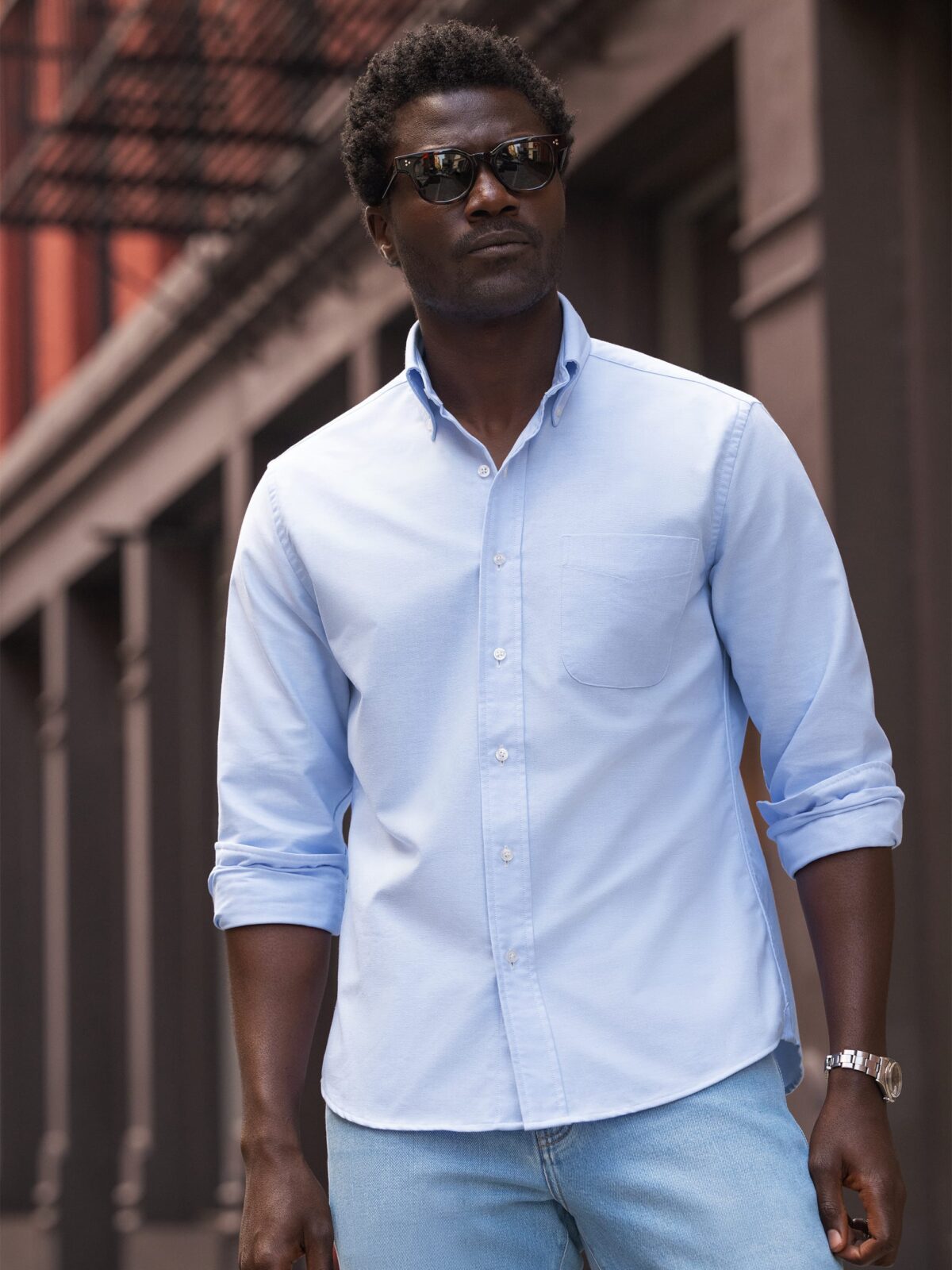

An Oxford shirt is one of the most recognizable staples in both men’s and women’s wardrobes, yet its identity isn’t defined by the cut of the garment, the presence of buttons, or even the style of the collar. Instead, what truly makes an Oxford shirt distinctive is the fabric structure — specifically the Oxford weave. This fabric distinguishes itself from other shirting cloths with its unique texture, durability, and air-permeable performance in everyday wear.
In this article, we’ll unpack what exactly an Oxford shirt is, how the Oxford weave fundamentally differs from other common shirt fabrics, and why this matters to both buyers and end wearers. You’ll gain a nuanced understanding of the fabric, backed by real textile characteristics and practical comparisons to other shirting materials.
What Does “Oxford Fabric” Actually Mean?
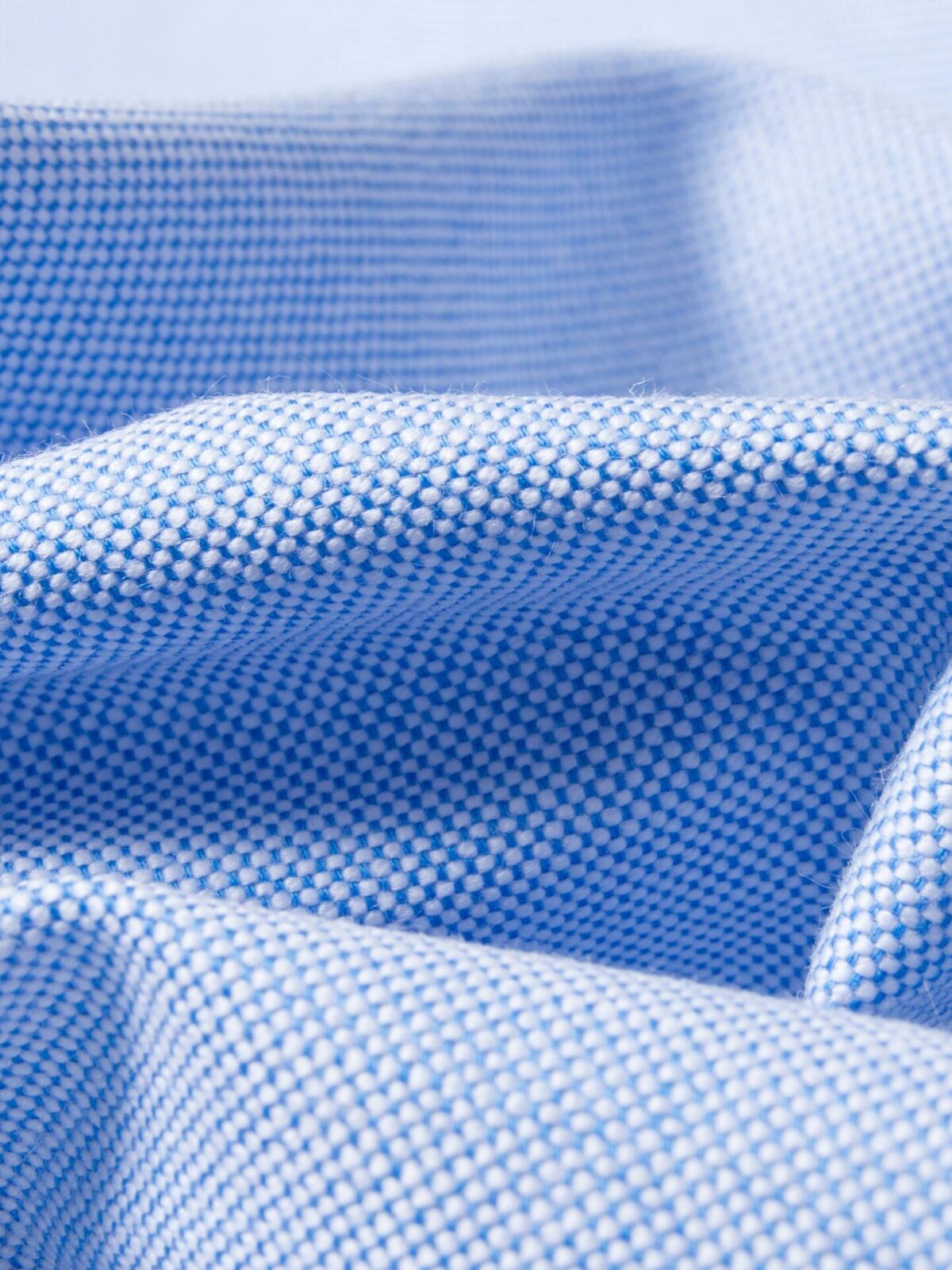
At its core, Oxford fabric is defined by a basket weave construction. In weaving terminology, a basket weave is a variation of the plain weave where two or more yarns are interlaced as one in both the warp and weft directions. This creates a slightly raised, dimensional texture that is immediately visible and tactile.
Unlike flat, strictly aligned weaves such as poplin, an Oxford weave has:
- Paired yarns that give the weave a subtle grid appearance
- Small air pockets that enhance breathability
- A grainier surface that feels softer to the touch yet remains robust
This structure influences how the fabric performs — from how it drapes to how it breathes and how it wears over time.
Oxford Weave: Between Casual Ease and Structural Integrity
Oxford fabric sits comfortably between classic dress shirting and robust workwear fabrics. It doesn’t aim for the pristine crispness of formal poplin shirts nor the heavyweight ruggedness of canvas, but rather a balanced middle ground:
- It’s structured enough to hold its shape when buttoned and tucked
- Yet it’s relaxed enough to feel approachable in less formal settings
- Its texture signals casual refinement instead of formal stiffness
This is why Oxford shirts have flourished as a smart-casual wardrobe mainstay — fitting both workplace-casual environments and weekend wear with equal ease.
How Oxford Fabric Compares with Other Common Shirt Materials
To fully appreciate what makes Oxford fabric special, it helps to see it alongside other popular shirting fabrics. The table below highlights key textile differences in weave, hand feel, and typical uses:
| Fabric Type | Weave Structure | Hand Feel | Typical Use | Performance Attributes |
|---|---|---|---|---|
| Oxford | Basket weave | Textured, slightly cushioned | Casual & smart-casual shirts | Breathable, durable, softens gracefully |
| Poplin | Plain weave | Smooth, crisp | Formal dress shirts | Sharp appearance, less textured |
| Twill | Diagonal weave | Soft, drapey | Dress & premium shirts | Durable, hides wrinkles better |
| Chambray | Plain weave (colored warp) | Lightweight, airy | Casual summer shirts | Cool feel, denim-like look |
Looking at the table above, you can see how Oxford fabric’s basket weave creates a distinct identity. Its weave pattern forms tiny air pockets that improve both airflow and strength compared to flatter weaves. This structural complexity also contributes to how the shirt ages — a quality many wearers and stylists prize.
Why Oxford Shirts Age Differently
If you’ve owned both a poplin dress shirt and an Oxford shirt, you’ve likely noticed how they behave as they are worn and washed over time.
- Poplin shirts tend to maintain a crisp appearance immediately after laundering and pressing, but they can look worn quickly if not ironed meticulously.
- Oxford shirts, by contrast, age gracefully. The weave structure allows the fabric to soften without losing its fundamental body. Over months and years, an Oxford shirt develops character — the texture becomes more pronounced, the fabric slightly more supple, and yet it retains enough integrity to avoid looking frayed or untidy.
This quality makes Oxford shirts a favorite among buyers who want garments that feel “broken in” without sacrificing refinement.
At SzoneierFabrics, when we explain the behavior of Oxford cloth to clients, we often use an analogy:
“Poplin wants to look perfect. Oxford wants to look lived in.”
This encapsulates the textile’s personality — a purposeful imperfection that feels authentic rather than sloppy.
The Role of Fiber Content in Oxford Fabric
While the weave defines Oxford fabric, the fiber composition determines how that fabric actually performs in real environments. It’s a common mistake among buyers to assume that all Oxford shirts behave the same, but nothing could be further from the truth.
Here’s how different fiber choices influence Oxford fabric:
- 100% Cotton Oxford – Offers a classic hand feel with excellent breathability. Cotton fibers absorb moisture well, which is great for comfort but can lead to more wrinkling.
- Cotton-Polyester Blend – Adds wrinkle resistance and faster drying, while reducing shrinkage. However, higher polyester content may compromise the soft, natural feel.
- Oxford with Stretch Fibers – Incorporates a small percentage of spandex or elastane for added ease of movement, particularly useful for tailored or slim-fit shirt designs.
Understanding this interplay between weave and fiber allows buyers to better specify fabrics based on end-use needs. For example, a hospitality uniform shirt may benefit from a cotton-polyester blend Oxford for easy care, while a premium casual shirt aimed at boutique retailers might use 100% long-staple cotton for a luxurious hand.
Common Misunderstandings Among Buyers
There are several prevalent misconceptions about Oxford fabric that often lead to mismatches between buyer expectations and actual product performance:
- “Oxford shirts don’t wrinkle.” The weave doesn’t prevent wrinkles — the fiber content does. A 100% cotton Oxford will wrinkle more than a cotton-poly blend.
- “All Oxford fabrics have the same weight.” Weave structure is constant, but yarn weight and finish vary widely. Lightweight Oxford fabrics exist for summer shirts, while heavier variants are used for rugged shirts.
- “Oxford is too casual for office wear.” The truth is that an Oxford shirt can be tailored and styled to suit business-casual environments. It’s the cut, color, and finishing that influence formality, not just the weave.
- “The weave determines comfort.” Comfort arises from a combination of weave, fiber, yarn twist, finishing processes, and garment construction — not the weave alone.
How Oxford Weave Enhances Fabric Performance
Beyond the aesthetics and hand feel, Oxford fabric has performance advantages rooted in its weave. Here are some of them:
- Enhanced Breathability: The basket weave traps more air within the fabric structure, improving airflow through the material.
- Greater Durability: The doubled yarns in the weave make the fabric more resistant to abrasion and tearing compared to plain weaves of equivalent weight.
- Softening Without Weakening: As the shirt is worn and washed, the weave relaxes but retains structural integrity.
- Visual Texture: The fabric surface has a subtle grid-like texture that hides minor wrinkles better than flat, smooth weaves.
These benefits help explain why Oxford shirts endure not just seasonal trends but years of use.
Practical Considerations When Specifying Oxford Fabric
If you’re sourcing Oxford shirts or specifying fabrics for production, it pays to consider the following practical points:
- Yarn Count and Ply: Higher yarn counts and plied yarns generally indicate finer feel and increased strength.
- Finishings: Mercerization, sanforization, or enzyme washing can improve sheen, stability, and hand feel.
- Weave Density: Measured as ends per inch (EPI) and picks per inch (PPI), higher density can produce a smoother, tighter Oxford cloth.
- Color Fastness: Particularly in dyed or heathered Oxford fabrics, color performance under washing matters for long-term appeal.
These technical metrics are often overlooked in casual discussions about shirting, yet they directly impact how the final garment performs.
Oxford Shirts in Contemporary Wardrobes
Today, Oxford shirts appear in a wide variety of contexts:
- Business casual offices where they replace stricter dress shirts
- Smart weekend outfits paired with chinos or denim
- Layered looks under sweaters or blazers
- Uniform programs where durability and comfort are priorities
This versatility stems from the fabric’s balanced character — refined but resilient, breathable yet meaningful in texture.
The Oxford Shirt’s Enduring Value
In summary, an Oxford shirt is not defined by its collar style, cut, or button placement — it is defined by the fabric warp and weft that give it life. The Oxford weave, with its basket-style interlacing, creates a textured, breathable, and durable cloth that stands apart from other shirting fabrics like poplin, twill, and chambray.
When you choose an Oxford shirt, you’re choosing fabric that:
- Breathes well in everyday conditions
- Ages with character rather than theatrical crispness
- Offers a tactile surface that elevates casual and smart-casual looks
Understanding the weave is only the beginning. The true artistry and performance of Oxford fabric emerge when you bring fiber choice, yarn quality, finishing processes, and garment construction together.
For buyers and designers alike, this is where Oxford fabric becomes more than a textile — it becomes a deliberate choice in garment performance and wearer experience.
What is a Cotton Oxford Shirt, and Why Is It Considered the Classic Standard?

A cotton Oxford shirt is more than just a garment — it’s the touchstone for an entire category of casual and smart-casual shirting. When most people think of an Oxford shirt, what they picture mentally is almost always a 100% cotton version. That’s because cotton Oxford shirts have shaped the emotional, tactile, and stylistic baseline by which all other Oxford shirts are judged.
This article explores what makes cotton Oxford shirts distinct, why they are considered the classic standard, and how their fiber-driven performance impacts wearer experience. We’ll break this down through technical textile insights, practical comparisons, and real-world considerations that serious buyers and designers care about.
What Makes Cotton Oxford Shirts the “Reference Point”?
Unlike blended or performance fabrics that might prioritize convenience or durability, a cotton Oxford shirt emphasizes a natural textile experience. Its character comes directly from the properties of cotton fibers woven in the signature Oxford basket structure:
- Open, breathable structure for superior airflow
- Soft handfeel that evolves with wear
- Visual texture that communicates relaxed refinement
This natural combination of comfort and visual appeal has defined the Oxford category for generations, particularly in wardrobes where a timeless look is valued over performance features like wrinkle resistance or rapid drying.
Key Characteristics of Cotton Oxford Shirts
Below is a high-level snapshot of how cotton Oxford shirts perform across essential shirt fabric attributes:
| Attribute | Performance |
|---|---|
| Breathability | Excellent — thanks to natural fiber and open weave |
| Handfeel | Soft and comfortable; improves with wear |
| Wrinkle Resistance | Moderate — cotton’s tendency to wrinkle is noticeable |
| Moisture Absorption | High — cotton readily absorbs sweat and humidity |
| Shape Retention | Medium — retains form but relaxes with time |
From this table, several patterns emerge: cotton’s natural breathability and comfort are unmatched, but it also carries some trade-offs in wrinkle behavior and moisture management that synthetic blends seek to solve.
Why Cotton Became the Benchmark for Oxford Shirts
The rise of cotton as the default choice for Oxford shirts is a historical and practical phenomenon:
- Historical Textile Availability — Cotton was long the most accessible breathable fiber for apparel, predating many synthetics.
- Consumer Perception of Comfort — Wearers equate cotton with softness and natural comfort, especially for garments worn close to the skin.
- Visual Tradition — The soft sheen and subtle texture of cotton in an Oxford weave has become visually synonymous with the classic Oxford shirt.
In practical terms, when buyers or retailers talk about “authentic” Oxford shirts, they are almost always referring to 100% cotton fabrics unless otherwise specified.
The Role of Yarn Quality in Cotton Oxford Fabric
Not all cotton Oxford fabrics are created equal. In high-performing shirts, cotton fiber quality has a dramatic impact on both look and longevity. Below is a comparison of common cotton types used in Oxford shirting and how they influence the final fabric:
| Cotton Type | Result in Oxford Fabric |
|---|---|
| Carded cotton | Rougher surface, more pilling potential |
| Combed cotton | Cleaner, smoother yarns; better wearer perception |
| Long-staple cotton | Stronger yarns, less fuzz, better durability |
- Carded cotton represents the most basic level of fiber processing. Short fibers and impurities remain, making the surface feel more textured but also more prone to pilling over time.
- Combed cotton removes many of these shorter fibers, resulting in a smoother, cleaner appearance that feels more refined against the skin.
- Long-staple cotton (such as Egyptian or Sea Island cottons) pushes comfort and durability even further, because longer fibers twist into stronger, more resilient yarns.
At SzoneierFabrics, our premium Oxford programs usually specify combed or long-staple cotton intentionally. The visual difference may be subtle at first glance, but over repeated wear and washes the gap in appearance and performance becomes clear: smoother, less fuzzy, and longer-lasting fabric.
The Cotton Oxford Trade-Off: Comfort Versus Convenience
Cotton Oxford shirts offer a distinct set of advantages — and they come with trade-offs that any serious buyer must understand. The table below highlights this balance:
| Strength | Limitation |
|---|---|
| Natural feel | Wrinkles easily |
| Breathable and comfortable | Slower drying compared to synthetics |
| Tradition and appearance | Requires more maintenance (ironing/pressing) |
For many wearers, the natural feel and breathability outweigh issues like easy wrinkling. This is especially true in wardrobes where classic style and tactile comfort matter more than rapid-dry performance or travel-ready convenience.
However, those limitations are precisely why textile innovators introduced blends and performance variants of Oxford fabric — including cotton-polyester mixes or stretch-enhanced constructions — to address specific use cases like travel, uniforms, or active office environments.
Real-World Examples: Why Use Case Matters
A common scenario in the apparel industry illustrates this trade-off well. A heritage brand once committed to using 100% cotton Oxford shirts for a commuter collection aimed at professionals. Customer feedback praised:
- The comfort and natural feel
- The classic look that matched work wardrobes
But the same feedback also revealed frustration with:
- Wrinkles appearing during long commutes
- Increased ironing requirements
Here, the garment wasn’t inherently flawed — but the use case collided with the fabric’s limitations. Cotton’s tendency to wrinkle and absorb moisture made it less suitable for high-mobility lifestyles unless paired with finishing technologies or fabric blends tailored for that environment.
Practical Insights for Buyers and Designers
If you’re specifying cotton Oxford shirts for a production line, retail collection, or uniform program, consider the following practical points:
- Define Use Case Clearly — Classic wardrobes, hospitality, and lifestyle brands benefit from 100% cotton. — Travel, corporate uniforms, and performance wear may favor blends.
- Choose Yarn Quality Strategically — Long-staple and combed cotton translate directly into perceived value.
- Anticipate Care Expectations — Communicate ironing/care requirements honestly to end users.
Understanding these nuances helps prevent mismatches between customer expectations and product performance — a common challenge in global sourcing and retail planning.
Why Cotton Oxford Remains the Standard
Despite the emergence of performance textiles and blended fabrics, the cotton Oxford shirt remains a cultural and commercial benchmark for several reasons:
- Aesthetic tradition that signals refinement without formality
- Comfort grounded in natural fiber performance
- Tactile softness that improves with age
- Versatility across wardrobe contexts
This is why fashion historians, menswear editors, and serious buyers alike refer back to cotton Oxford as the archetype of what an Oxford shirt should feel and look like.
The Timeless Appeal of Cotton Oxford
When you choose a cotton Oxford shirt, you’re choosing a fabric that has been refined over generations, defined by the interplay of natural fiber properties and a distinctive weave structure. While it carries trade-offs — particularly in wrinkle behavior and care needs — its comfort, breathability, and classic character keep it at the center of shirting traditions worldwide.
For designers, buyers, and product developers, cotton Oxford is not just a material choice — it’s a statement about values: about enduring quality, timeless style, and a preference for authentic textile performance over synthetic convenience.
Which Blended Oxford Fabrics Are Most Commonly Used, and What Problems Do They Solve?
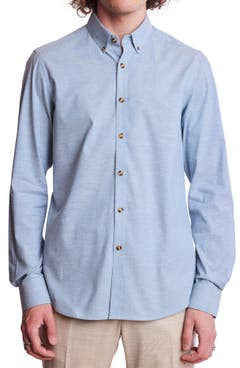
Blended Oxford fabrics didn’t emerge to replace 100% cotton — they were developed to address the shortcomings inherent in pure cotton Oxford shirts. As modern lifestyles shifted toward more movement, longer wear times, and less careful garment maintenance, traditional cotton Oxford began to show weaknesses: excessive wrinkling, slower drying, and challenges with shape retention.
Today’s most common blended Oxfords pair cotton with one or more synthetic fibers — such as polyester or elastane — to improve performance traits while preserving much of the classic Oxford aesthetic. These blends strike a practical balance between comfort, durability, and ease of care.
In this article, we will explore the most frequently used Oxford fabric blends, the specific problems they solve, and practical insights from real production environments.
Why Blended Oxford Fabrics Matter
Blended Oxford fabrics are not a novelty trend. Instead, they’re a functional evolution grounded in real-world wear patterns and end-user expectations. While 100% cotton excels in breathability and natural handfeel, it has limitations in performance contexts that involve:
- All-day wear
- Frequent laundering
- Minimal maintenance expectations
- Motion-intensive use
In these scenarios, blended fabrics often offer noticeable advantages without compromising the iconic Oxford look.
The Most Common Oxford Fabric Blends
Below are the major blended Oxford fabric types that appear in commercial shirting programs today, along with an explanation of what each blend delivers in performance.
Cotton–Polyester Oxford (The Workhorse Blend)
Cotton–polyester blends are the most widely adopted in blended Oxford shirts due to their well-rounded performance improvements and cost effectiveness. By combining natural and synthetic fibers, these blends help mitigate many of cotton’s limitations while keeping the classic texture and visual identity of Oxford cloth.
| Blend Ratio | Typical Benefit |
|---|---|
| 80% cotton / 20% polyester | Better wrinkle control, slight improvement in drying speed |
| 65% cotton / 35% polyester | Faster drying, improved durability, less shrinkage |
| 50% cotton / 50% polyester | Maximum easy-care performance, minimal maintenance |
Why these blends work:
- Polyester adds strength and resilience, which reduces puckering and wrinkling.
- Higher polyester percentages lower overall moisture absorption, accelerating drying times.
- Shape retention improves thanks to polyester’s lower relaxation under stress.
At SzoneierFabrics, 65/35 blends are often the sweet spot for uniforms, corporate casual programs, and other high-volume product lines that demand consistent performance with minimal care fuss.
Cotton–Elastane Oxford (Comfort-Driven Blend)
While cotton–poly blends focus on performance and care, adding elastane introduces stretch — a feature that modern wearers increasingly value for comfort and mobility.
| Elastane Content | Result |
|---|---|
| 2–3% elastane | Light stretch that improves range of movement |
| 4–5% elastane | Noticeable flexibility with minimal change to visual texture |
What stretch adds:
- Enhanced comfort during activities like sitting, reaching, or commuting
- Improved fit retention over the course of the day
- Better garment drape without losing Oxford structure
Elastane content in this range generally doesn’t change the signature Oxford look, but it fundamentally alters the wearer experience in a positive way.
Other More Specialized Blends
Although less common than the two categories above, some brands experiment with additional synthetic fibers like nylon, modal, or performance-treated yarns for specific use cases:
- Nylon-blended Oxford — Adds abrasion resistance and reduced pilling for rugged daily wear
- Modal or rayon blends — Softens handfeel further while maintaining a textile identity close to cotton
- Performance-treated yarns — Offer antimicrobial or moisture-wicking properties for demanding wear scenarios
These specialized blends tend to appear in premium or niche markets where specific fabric attributes are prioritized.
How Blended Oxford Fabrics Solve Real Problems
The tables below demonstrate how blending cotton with synthetics addresses common limitations of pure cotton Oxford, especially in everyday performance contexts:
| Cotton Limitation | Blend Solution |
|---|---|
| Heavy wrinkling | Increased polyester content helps reduce visible creases and surface tension issues |
| Shape loss over time | Synthetic fiber memory (especially polyester and elastane) improves resilience |
| Long drying time | Lower moisture absorption accelerates drying compared to pure cotton |
| Frequent care requirements | Polyester’s dimensional stability reduces ironing frequency |
These performance enhancements become especially noticeable in environments where shirts are worn for extended periods, washed repeatedly, or expected to look acceptable with minimal post-laundry care.
Practical Outcomes from Production
Real-world feedback from apparel programs often confirms that blended Oxfords “work quietly” — wearers don’t comment on the fiber content; they simply notice the convenience.
For example, one corporate client transitioned a commuter shirt program from 100% cotton Oxford to a 65/35 cotton–polyester blend without changing the pattern or garment weight. Post-launch feedback didn’t focus on textile specifics. Instead, customers consistently appreciated:
- Reduced ironing requirements
- Fewer visible wrinkles after a long day
- Shirts that looked presentable after machine drying
This shift highlights a key point: functionality can feel invisible and still be impactful. Buyers often don’t care what’s in the fabric — they care about how it performs in daily use.
Comparing Blended and Pure Cotton Oxfords
To make informed sourcing or design decisions, it’s critical to view blended Oxfords not as replacements, but as complements to pure cotton. Here’s a performance snapshot:
| Feature | 100% Cotton Oxford | Blended Oxford (e.g., 65/35) |
|---|---|---|
| Breathability | Excellent | Very good |
| Handfeel | Natural, soft | Slightly less natural due to synthetics |
| Wrinkle Resistance | Low | Moderate to high |
| Shape Retention | Medium | High |
| Ease of Care | Lower | Higher |
| Drying Time | Slower | Faster |
This comparison helps explain why blended Oxfords have made inroads where convenience and performance matter more than pure fiber authenticity.
How to Choose the Right Blend for Your Needs
If you are specifying fabrics for a shirt line, uniform program, or retail collection, consider these practical criteria:
- Usage context — Will the shirts be worn in high-activity scenarios? Are minimal wrinkles and easy care priorities?
- Care expectations — Is ironing acceptable, or do you need mostly wrinkle-free performance?
- Climate considerations — Higher polyester content may reduce moisture comfort in hot, humid conditions.
- Brand positioning — Pure cotton may signal tradition and authenticity, whereas blends communicate practicality and performance.
Experienced fabric specifiers often create tiered programs where pure cotton serves classic or premium lines while blended variants support performance or uniform segments.
Practical Balance, Not Radical Change
Blended Oxford fabrics didn’t supplant cotton — they expanded what the Oxford category could do. By combining natural fibers with engineered synthetics, these blends offer performance traits that align with modern lifestyles: reduced care burden, better shape retention, and comfort under motion — all while retaining the visual identity and innate texture that define Oxford shirts.
In practice, this isn’t about novelty or fashion; it’s about solving everyday problems without sacrificing the fabric’s heritage. Whether for corporate apparel, travel-friendly shirts, or everyday office wear, blended Oxford fabrics have found a meaningful role in balancing tradition with practicality.
What Are Performance Oxford Shirts, and How Do Technical Fibers Change Fabric Behavior?

Performance Oxford shirts represent a clear shift in intent. They are not designed to recreate the traditional cotton Oxford experience, nor to gently improve it as blends do. Instead, they are engineered to perform under conditions where cotton — and even cotton blends — begin to fail.
As work environments, travel habits, and daily routines have evolved, shirts are expected to do more than look appropriate at 9 a.m. They are worn for longer hours, through movement, temperature changes, commuting, and repeated washing with minimal care. Performance Oxford fabrics exist because traditional materials were never designed for those demands.
A performance Oxford shirt uses technical fibers — such as moisture-wicking polyester, recycled synthetics, elastane, or nylon — to deliver fast drying, wrinkle resistance, and shape stability, while preserving the visual language of an Oxford weave. The surface still reads as Oxford. The behavior does not.
Performance Oxford fabric fundamentally resets expectations.
What Makes an Oxford Shirt “Performance”
A performance Oxford shirt is not defined by appearance alone. It is defined by how the fabric behaves under stress: moisture, motion, compression, and time.
Several elements must come together for an Oxford fabric to be considered performance-driven:
- Fiber behavior that manages moisture rather than absorbing it
- Dimensional stability that resists wrinkling and shape collapse
- Engineered stretch or recovery for movement
- Durability under frequent washing
- Low maintenance expectations
Unlike cotton, which absorbs moisture into the fiber itself, technical fibers are designed to move moisture along the yarn surface, allowing it to evaporate quickly. This single shift changes nearly every downstream performance characteristic.
The result is a fabric that looks familiar but behaves closer to activewear than traditional shirting.
Common Fibers Used in Performance Oxford Fabrics
Different technical fibers contribute different performance advantages. Most performance Oxfords use combinations rather than single-fiber constructions.
| Fiber Type | Function |
|---|---|
| High-tenacity polyester | Durability, fast drying, wrinkle resistance |
| Recycled polyester | Sustainability with equivalent performance |
| Elastane / spandex | Stretch, recovery, comfort in motion |
| Nylon blends | Strength, abrasion resistance, resilience |
Each of these fibers behaves differently from cotton at a molecular level. None of them rely on absorption for comfort. Instead, they control moisture and structure through engineered geometry and surface chemistry.
How Technical Fibers Change Fabric Behavior
To understand why performance Oxford shirts feel so different in use, it helps to compare how fibers interact with moisture, movement, and stress.
Cotton fibers:
- Absorb water into the fiber core
- Become heavier when wet
- Relax and wrinkle under moisture and heat
- Dry slowly
Technical fibers:
- Repel or channel moisture along the surface
- Maintain consistent weight
- Retain yarn structure when damp
- Dry rapidly
This difference explains why a cotton Oxford shirt may feel comfortable initially but degrade in appearance over a long day, while a performance Oxford maintains its shape and comfort well into extended wear.
Performance Characteristics Compared
The table below highlights how performance Oxford fabrics differ from cotton and blended versions across key functional attributes:
| Attribute | Cotton Oxford | Blended Oxford | Performance Oxford |
|---|---|---|---|
| Drying speed | Slow | Medium | Fast |
| Wrinkle resistance | Low | Medium | High |
| Shape retention | Medium | High | Very high |
| Moisture control | Absorbs | Mixed | Wicks |
These differences become most apparent after real-world use — not in the showroom, but after hours of wear, travel, or repeated washing.
Where Performance Oxford Shirts Are Most Effective
Because performance Oxfords prioritize function, they naturally fit environments where shirts are subjected to real stress rather than occasional wear.
They are increasingly specified for:
- Travel-focused collections where fast drying and wrinkle resistance matter
- Tech and hybrid offices with long wear hours and movement
- Hospitality and service uniforms requiring frequent laundering
- Trade shows and field sales roles where appearance must hold all day
In these contexts, traditional cotton Oxford shirts often look best only briefly. Performance Oxfords are designed to look acceptable — and feel comfortable — for much longer periods.
The Look Versus Feel Question
One of the most common concerns around performance Oxford shirts is that they feel “synthetic.” That concern was valid in early generations of technical shirting.
Early performance fabrics often:
- Felt slick or plastic
- Lacked surface texture
- Looked flat or shiny under light
Modern fabric engineering has largely closed that gap.
At SzoneierFabrics, performance Oxford development focuses on three critical technical controls:
- Yarn cross-section design to improve moisture movement without slickness
- Surface texture engineering to recreate Oxford’s visual grain
- Balanced weave density to maintain breathability without stiffness
The objective is not to imitate cotton fiber by fiber, but to deliver Oxford appearance with technical behavior. When executed correctly, the difference is felt during wear — not immediately at first touch.
Why Performance Oxfords Feel Different During Wear
Many wearers report that performance Oxford shirts feel “normal” at first, but noticeably better over time. This is because the advantages are cumulative:
- Less moisture buildup during the day
- Fewer creases forming at elbows, back, and waist
- Consistent shape even after sitting or travel
- Faster overnight drying after washing
These benefits often become obvious only after hours of use — which is precisely where cotton begins to struggle.
A Real Development Scenario
A practical example illustrates this clearly.
A client developing shirts for frequent business travelers tested three fabric types using identical patterns and weights:
- 100% cotton Oxford
- Cotton-poly blended Oxford
- Performance Oxford with technical polyester and stretch
On day one, the cotton Oxford looked the best on a hanger and during initial wear. After a 12-hour travel day followed by overnight hotel drying, the outcome shifted dramatically.
- The cotton shirt retained wrinkles and felt damp longer
- The blended shirt improved but still showed compression marks
- The performance Oxford dried completely overnight and retained shape
Once the shirts were used as intended, the decision became obvious. The fabric that performed best under real conditions won — even if it wasn’t the most traditional choice at first glance.
Performance Oxford Is Not for Every Use Case
It’s important to note that performance Oxford shirts are not universal replacements for cotton or blended versions. They solve specific problems, and they introduce different trade-offs.
Performance Oxfords may be less suitable when:
- Heritage authenticity is central to brand identity
- Natural fiber storytelling matters
- Maximum breathability in extreme heat is required
For these reasons, experienced brands often maintain multiple Oxford fabric tiers rather than choosing one material for all applications.
How Buyers Should Evaluate Performance Oxford Fabrics
When sourcing or specifying performance Oxford shirts, buyers should evaluate beyond surface appearance:
- Wear testing rather than static inspection
- Drying time after washing, not just moisture feel
- Wrinkle recovery after compression
- Long-term shape retention over repeated laundering
Performance fabrics reveal their value through use, not first impressions.
How Performance Oxfords Are Changing Expectations
Performance Oxford shirts have quietly changed what wearers expect from everyday shirting. Once consumers experience a shirt that dries overnight, resists wrinkles after travel, and stays comfortable for long hours, their tolerance for traditional limitations drops quickly.
This shift doesn’t eliminate cotton Oxford shirts — it redefines when and why each fabric makes sense.
Cotton Oxford remains the emotional and historical standard. Blended Oxford balances comfort and convenience. Performance Oxford prioritizes function under modern conditions.
Each has a role. The mistake is treating them as interchangeable.
Oxford Appearance, Technical Behavior
Performance Oxford shirts represent a modern reinterpretation of a classic fabric. By using technical fibers and engineered yarn systems, they preserve the visual identity of Oxford weave while delivering behavior that cotton simply cannot.
They are not designed to feel nostalgic. They are designed to work.
For travel, extended wear, uniforms, and modern work environments, performance Oxford fabrics offer a clear functional advantage — not loudly, but consistently. And in real-world use, that quiet reliability often matters more than tradition.
How Do Cotton, Blended, and Performance Oxford Shirts Differ in Comfort, Durability, and Care?
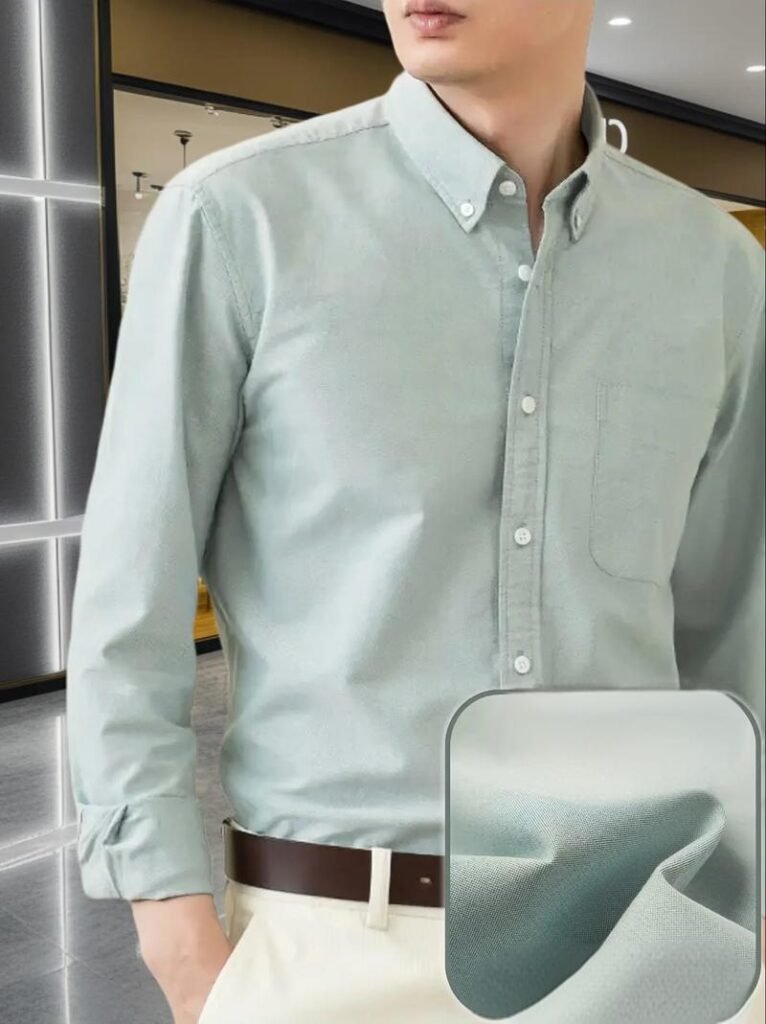

When people describe one Oxford shirt as “better” than another, they are usually referring to comfort over time rather than just textile theory. Real-world comfort includes how the shirt feels after six or eight hours of wear, how it behaves after repeated wash cycles, and how it responds to being pulled from a dryer or suitcase. A shirt can feel great initially but perform poorly after one day of wear — and that difference is where buy-side decisions are truly made.
In this article, we’ll break down how cotton, blended, and performance Oxford shirts compare across comfort, durability, and care. These categories each optimize different aspects of wearer experience; knowing which strengths matter most in context will help you make better sourcing, design, and specification decisions.
Comfort Is More Than Softness
Most consumers equate comfort with softness, but comfort also includes breathability, moisture management, and how the fabric feels on the skin over time. The table below highlights how each Oxford category performs across key comfort metrics:
| Comfort Factor | Cotton Oxford | Blended Oxford | Performance Oxford |
|---|---|---|---|
| Initial handfeel | Very soft, natural | Soft, familiar | Smooth, consistent |
| Breathability | Excellent | Good | Good–Very Good |
| Moisture handling | Absorbs into fiber | Partial absorb/wick | Wicks moisture away |
| Skin feel over time | Natural, cool at rest | More stable | Dry and controlled |
Cotton Oxford delivers the most recognizable natural comfort — its fiber structure readily absorbs moisture and allows air to circulate, keeping the skin cool and feeling “natural.” However, that same absorbency can become a liability after extended daily activity or humidity build-up.
Blended Oxfords aim for a middle ground. Breathability remains acceptable while moisture management improves, reducing the soggy feel that cotton can develop under strain.
Performance Oxfords shift comfort definition further: initial handfeel may feel slightly different from cotton, but after movement, heat, and moisture build-up, performance fabrics frequently feel more comfortable because they move moisture away from the skin and dry quickly, helping maintain a stable internal microclimate.
Durability Over Repeated Use
Durability isn’t just about how long a shirt lasts; it means how it retains appearance and performance through everyday wear and laundry cycles. In this area, blended and performance fabrics typically outperform pure cotton — sometimes quietly, sometimes significantly.
| Durability Aspect | Cotton | Blended | Performance |
|---|---|---|---|
| Pilling resistance | Medium | High | Very high |
| Shape retention | Medium | High | Excellent |
| Seam stability | Medium | High | Very high |
| Color stability | Medium | High | High |
Cotton Oxford performs admirably in many respects, but natural fibers are inherently more prone to pilling and shape changes over time, especially in high-contact regions like collars and cuffs.
Blended fabrics — particularly those with polyester — resist abrasion and pilling more effectively, thanks to polyester’s higher tensile strength. This means shirts look fresher longer, and seams maintain structure after repeated stress.
Performance fabrics extend these improvements further. High-tenacity polyester and elastane contribute to excellent shape retention and seam stability even under motion. In rigorous uniform programs or high-frequency wear situations (like daily travel), performance Oxfords often maintain a “newer” look and feel far beyond cotton.
Care and Maintenance Reality
While aesthetics and comfort matter, actual care requirements are often where buyers feel the strain of maintaining shirts — especially in busy wardrobes or retail programs. The table below summarizes how each shirt type behaves under typical care scenarios:
| Care Scenario | Cotton Oxford | Blended Oxford | Performance Oxford |
|---|---|---|---|
| Machine wash | Acceptable | Excellent | Excellent |
| Ironing need | High | Medium | Low |
| Drying time | Long | Medium | Short |
| Travel readiness | Low | Medium | High |
Cotton Oxford shirts require more careful laundering. Their high moisture absorption and natural fiber structure mean they are slower to dry, more prone to wrinkles, and typically need ironing or pressing to look crisp. This isn’t a flaw — it’s a natural fiber characteristic — but it does set expectations for maintenance.
Blended Oxfords reduce iron dependency and dry more quickly, which makes them more convenient for everyday wear or work programs where garments are laundered often.
Performance Oxfords make care even easier. Wrinkle resistance is high due to synthetic fiber memory and engineered structure, drying times are short, and travel readiness improves dramatically. Shirts can often be worn directly from a cruise cycle or suitcase with minimal adjustment.
Real Buyer Feedback: Comfort Ratings Over Time
In practice, comfort evolves with time — and real customer feedback often highlights this dynamic clearly. One client tracked satisfaction ratings across cotton, blended, and performance Oxford shirts over three months. Initial comfort scores were similar at purchase, but:
- Cotton shirt ratings declined due to wrinkling and slight shrinkage
- Blended shirts maintained comfort and appearance
- Performance shirts steadily improved in user perception as their low-maintenance behavior became noticeable
This illustrates a key point: comfort is not static. It is cumulative. What feels great at first may feel less comfortable after repeated use if the fabric doesn’t recover or hold its shape.
When Each Oxford Type Makes Sense
Understanding the practical differences between shirt types helps in recommending fabrics based on use case:
Cotton Oxford Best for:
- Classic wardrobes with iron-on or press expectations
- Brands where natural fiber storytelling matters
- Seasonal collections in moderate climates
Advantages:
- Authentic cotton feel
- Excellent breathability
- Natural aging and soft hand development
Trade-offs:
- Higher care demands
- Longer drying time
- Prone to visible wrinkles
Blended Oxford Best for:
- Everyday wear with moderate care expectations
- Corporate or uniform programs where convenience matters
- Collections balancing classic look with practicality
Advantages:
- Better wrinkle control
- Faster drying than cotton
- Improved durability
Trade-offs:
- Slightly less “natural” feel
- Potentially reduced breathability compared to pure cotton
Performance Oxford Best for:
- Travel wardrobes and long-wear scenarios
- Active work environments
- Situations where low maintenance is critical
Advantages:
- Excellent wrinkle resistance
- Rapid moisture movement and drying
- Strong shape retention and durability
Trade-offs:
- Some variation in handfeel compared to cotton
- Perceived as “technical” by traditional buyers
Beyond Fabric: Fit and Construction Matter Too
While fabric choice plays an outsized role in comfort and durability, fit and garment construction also influence wearer experience. Key factors that work alongside textile selection include:
- Pattern engineering (ease through movement points like shoulders and arms)
- Seam placement and reinforcement
- Collar and cuff interfacing choices
- Button and placket design
A performance Oxford shirt engineered with poor patterning will not feel comfortable, and likewise, a cotton shirt with thoughtful construction can feel better than a poorly made performance piece.
Sources of discomfort often stem more from fit and cut than from fiber itself — but fabric sets the baseline.
Balancing Comfort, Durability, and Care
Cotton, blended, and performance Oxford fabrics each represent a strategic choice along a continuum of comfort, durability, and care. There is no single “best” option — only the choice that aligns with user expectations and use case:
- Cotton offers natural tactile comfort and breathable softness.
- Blends balance comfort with improved durability and ease of care.
- Performance fabrics deliver modern behavior for travel, active environments, and long days.
Choosing the right Oxford shirt type means understanding how comfort evolves over time, not just how it feels at first touch.
Which Oxford Shirt Fabric Type Works Best for Different End Uses and Wearing Scenarios?

Oxford shirts are no longer confined to a single setting or role. What was once a clearly defined garment—worn primarily in academic, office, or traditional casual environments—has evolved into a highly flexible wardrobe item. Today, the same Oxford shirt might be worn to the office, on a plane, during a client meeting, and later at dinner. As a result, fabric choice now matters as much as design, if not more.
The key mistake many buyers and brands still make is choosing Oxford shirt fabrics based on tradition rather than real usage patterns. Cotton, blended, and performance Oxford fabrics are not interchangeable. Each is optimized for different environments, care expectations, and physical demands. The “best” fabric is not universal—it depends on how and where the shirt will actually be worn.
This section breaks down Oxford shirt fabric selection through the lens of end use, climate, and lifestyle behavior, not nostalgia.
Why Usage Patterns Should Lead Fabric Selection
Most dissatisfaction with Oxford shirts does not come from poor styling or poor fit. It comes from misaligned expectations. A fabric that feels ideal in a fitting room may perform poorly after a full day of wear, travel, or repeated laundering.
Fabric performance affects:
- How the shirt feels after hours of movement
- How it looks after sitting, commuting, or packing
- How much effort is required to keep it presentable
- Whether it feels appropriate across different environments
When fabric choice aligns with real usage, satisfaction remains high. When it doesn’t, even a well-made shirt feels “wrong.”
End Use × Fabric Type Matrix
The table below summarizes which Oxford fabric types perform best across common wearing scenarios and why.
| Wearing Scenario | Best Choice | Why |
|---|---|---|
| Office casual | Cotton / Blended | Balanced comfort and appearance |
| Business travel | Performance | Wrinkle resistance and moisture control |
| Uniform programs | Blended | Durability, wash consistency |
| Hospitality / service | Performance | Long wear, fast drying |
| Weekend casual | Cotton | Natural feel and relaxed comfort |
This matrix highlights an important reality: trying to force one fabric to cover all scenarios usually leads to compromise. Successful shirt programs often use multiple fabric tiers instead of a single “do-everything” solution.
Office Casual: Comfort and Visual Familiarity
In office-casual environments, especially those that still value traditional aesthetics, cotton Oxford shirts remain highly effective. Their natural handfeel, breathable structure, and familiar texture align well with indoor, climate-controlled settings.
Cotton Oxford works best when:
- Wear time is moderate
- Ironing or light pressing is acceptable
- Visual authenticity matters
Blended Oxfords are increasingly common in office settings as well, especially where dress codes allow slightly more relaxed performance-driven materials. They maintain a familiar look while reducing wrinkles and improving durability through repeated weekly wear.
Business Travel: Performance Becomes Non-Negotiable
Business travel exposes Oxford shirts to their harshest conditions:
- Long hours of wear
- Compression in luggage
- Temperature swings
- Limited access to ironing
In this context, performance Oxford fabrics outperform all others. Their ability to resist wrinkling, dry overnight, and maintain shape after sitting or packing makes them ideal for travel-heavy professionals.
Cotton Oxfords may look best on day one, but performance fabrics look better on day three—and that distinction matters to frequent travelers.
Uniform Programs: Consistency Over Character
Uniform programs prioritize consistency, durability, and predictable care over personal preference. Shirts are worn frequently, washed often, and expected to look acceptable with minimal intervention.
This is where blended Oxford fabrics excel. Cotton–poly blends offer:
- Reduced shrinkage
- Better color stability
- Higher resistance to pilling
- More uniform appearance across large programs
Pure cotton may feel better initially, but it introduces variability over time. Performance fabrics may exceed requirements, but cost and handfeel considerations often make blends the more practical choice for uniforms.
Hospitality and Service: Performance Under Pressure
Hospitality, retail, and service environments place unique stress on shirts:
- Continuous movement
- Heat and humidity
- Frequent laundering
- Long shifts
In these scenarios, performance Oxford fabrics are the most reliable option. Moisture-wicking behavior keeps wearers comfortable, while fast drying and wrinkle resistance reduce maintenance demands.
Cotton struggles here—not because it lacks quality, but because its strengths are mismatched with the environment.
Weekend Casual: Where Cotton Still Shines
For relaxed, low-pressure use—weekends, social settings, and casual wear—cotton Oxford shirts remain unmatched in feel. Their softness, breathability, and natural aging align perfectly with informal contexts.
When appearance perfection is less critical and comfort is the primary goal, cotton delivers the most emotionally satisfying experience.
Climate Matters More Than Most Expect
Fabric performance is also heavily influenced by climate. The same Oxford shirt can feel excellent in one environment and uncomfortable in another.
| Climate | Recommended Fabric |
|---|---|
| Hot & humid | Performance |
| Mild | Cotton or blended |
| Cold / dry | Cotton |
Cotton’s moisture absorption works well in dry or cool climates, where evaporation is efficient. In humid environments, however, absorbed moisture lingers, leading to discomfort. Performance fabrics manage moisture more effectively in heat, keeping the skin drier.
Blended fabrics sit between these extremes, offering flexibility across moderate climates.
The Impact of Daily Movement
Modern lifestyles involve constant transitions:
- Walking outdoors
- Sitting in vehicles or trains
- Standing in meetings
- Moving between temperature zones
Many Oxford shirts were originally designed for static, indoor use. Today’s wearers are dynamic. As movement increases, fabric behavior becomes more noticeable.
Performance fabrics tend to feel better as activity increases. Cotton feels best at rest. Blended fabrics offer a compromise that works for moderate activity levels.
Understanding how much movement is involved in a typical day is critical when selecting fabric.
A Practical Question That Changes Everything
At SzoneierFabrics, Oxford fabric development rarely starts with fiber percentages or yarn counts. It usually starts with a single question:
“Where will this shirt spend most of its time?”
- In an office?
- In transit?
- On the wearer’s body for 12 hours?
- In a laundry cycle twice a week?
Once that question is answered honestly, the appropriate fabric type becomes obvious.
Avoiding the “One-Fabric” Trap
Brands often attempt to simplify collections by using a single Oxford fabric across all products. While this seems efficient, it often leads to customer dissatisfaction because no single fabric can excel in every scenario.
Experienced brands instead:
- Use cotton Oxfords for heritage or casual lines
- Use blended Oxfords for daily workwear
- Use performance Oxfords for travel and high-demand use
This approach aligns fabric behavior with wearer expectations rather than forcing compromise.
Fabric Choice Shapes Perceived Quality
Interestingly, perceived quality is not always tied to fiber purity. A performance Oxford shirt that stays crisp and comfortable all day is often rated higher by wearers than a pure cotton shirt that wrinkles and feels damp.
Quality, from the wearer’s perspective, is outcome-based, not material-based.
The Right Oxford Depends on Real Life
Oxford shirts today live many lives. They move through offices, airports, cafes, meetings, and weekends. Fabric choice should reflect that reality.
- Cotton Oxford shirts excel in classic, relaxed, and low-pressure environments.
- Blended Oxford shirts offer dependable performance for daily wear and frequent washing.
- Performance Oxford shirts thrive in travel, service, and long-wear scenarios.
No fabric is universally superior. The best Oxford shirt is the one whose fabric matches the life it’s worn in.
When fabric selection follows real usage instead of tradition, Oxford shirts stop disappointing—and start doing exactly what they’re supposed to do.
How Do Buyers Evaluate and Compare Cotton vs Blended vs Performance Oxford Shirts in Sourcing?
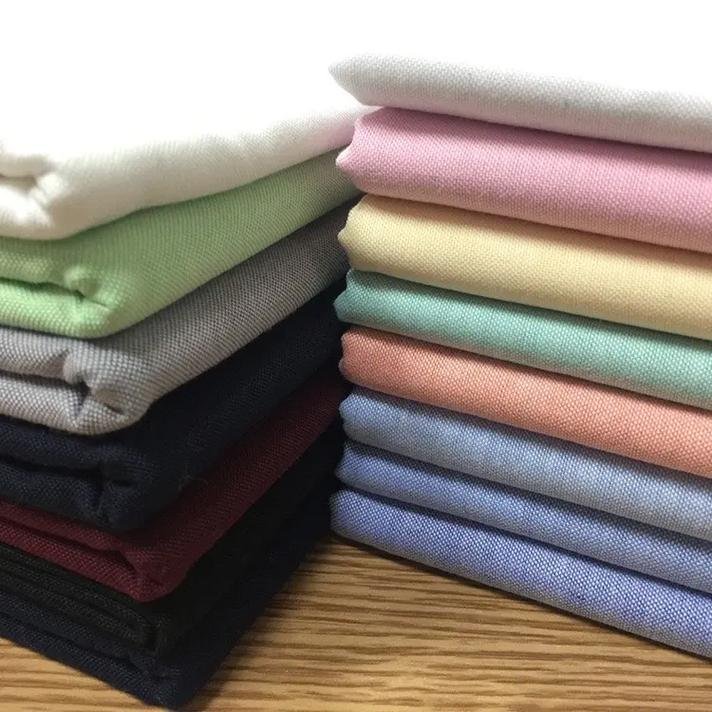
When buyers evaluate Oxford shirts, the most meaningful conclusions are rarely formed at the sampling table. Touch, weight, color, and price all matter—but they are only the entry point. The real differentiation between cotton, blended, and performance Oxford fabrics appears after the fabric is worn, washed, repeated, and scaled into production.
Experienced buyers know this. That is why serious sourcing decisions focus less on first impressions and more on how reliably a fabric performs over time, across batches, and across real-world use. Cotton, blended, and performance Oxfords are not judged by the same standards. Each is evaluated against a different set of expectations based on intended use, customer tolerance, and operational risk.
This section breaks down how professional buyers actually compare these fabrics—and where sourcing decisions are truly won or lost.
How Experienced Buyers Actually Compare Oxford Fabrics
Seasoned buyers rarely ask, “Which fabric is best?” Instead, they ask:
- Which fabric fails least often for this use case?
- Which fabric performs most predictably at scale?
- Which fabric aligns best with customer behavior, not marketing language?
As sourcing programs mature, evaluation shifts from subjective feel to measurable performance indicators: wash stability, dimensional control, appearance retention, and production consistency.
Side-by-Side Wash and Wear Testing
Wash testing is one of the fastest ways to separate perception from reality. Buyers who skip this step often encounter issues months after launch—when returns and complaints start appearing.
| Evaluation Point | Cotton | Blended | Performance |
|---|---|---|---|
| After first wash | Good | Very good | Excellent |
| After 5 washes | Visible wear | Stable | Stable |
| After 10 washes | Shape loss | Minor change | Minimal change |
One wash shows how a fabric reacts. Five washes show how it ages. Ten washes show how it survives.
Cotton Oxford typically performs well initially, but by the fifth to tenth wash, buyers often observe:
- Increased wrinkling
- Relaxed collars and cuffs
- Slight dimensional changes
Blended Oxfords maintain appearance more consistently, while performance Oxfords show the least change over repeated cycles.
This is why experienced buyers rarely approve Oxford fabrics based on single-wash or unwashed samples.
Why Wash Testing Matters More Than Handfeel
Handfeel is immediate and emotional. Wash performance is cumulative and operational.
Many buyers have learned—sometimes the hard way—that a fabric that feels “premium” at first touch may:
- Lose shape after repeated laundering
- Develop surface fuzz or pilling
- Become difficult for end users to maintain
As a result, wash-and-wear testing has become a non-negotiable step for serious Oxford shirt programs, especially in mid-to-high volume production.
Consistency Across Production Lots
Once a fabric moves from sampling to bulk production, consistency becomes more important than absolute quality. A great fabric that varies lot to lot creates downstream problems in cutting, sewing, sizing, and customer perception.
| Risk Area | Cotton | Blended | Performance |
|---|---|---|---|
| Shrinkage variation | Medium | Low | Very low |
| Shade consistency | Medium | High | High |
| Lot-to-lot repeatability | Medium | High | Very high |
Cotton fibers are inherently variable. Differences in crop, fiber length, and processing conditions can introduce fluctuations—even when specifications remain unchanged.
Synthetic fibers behave more predictably. That predictability translates into:
- More consistent garment sizing
- Better color repeatability
- Fewer surprises between production runs
This is one reason blended and performance Oxfords are often favored for large-scale or long-term programs.
At SzoneierFabrics, buyers working with cotton Oxford are encouraged to review bulk fabric test reports, not just lab dip approvals or sample garments. Cotton programs require tighter monitoring to manage natural variability.
Dimensional Stability: The Silent Risk
One of the most underestimated sourcing risks is dimensional drift—small changes in shrinkage or recovery that compound across washes.
Cotton Oxfords:
- Tend to relax under heat and moisture
- Require tighter shrinkage allowances
- Demand clearer care instructions
Blended and performance Oxfords:
- Hold dimensions more reliably
- Reduce pattern adjustments over time
- Simplify size grading consistency
From a buyer’s perspective, fewer size complaints often matter more than fiber purity.
Surface Appearance Over Time
Another key evaluation area is how the fabric surface looks after real use:
- Pilling at contact points
- Fuzzing on collars and cuffs
- Loss of surface definition
Cotton Oxford tends to develop surface character faster. For some brands, this is a feature. For others—especially uniform or professional programs—it is a liability.
Blended and performance fabrics resist surface degradation longer, helping shirts maintain a “newer” appearance deeper into their lifecycle.
Cost vs Outcome Evaluation
Professional buyers do not evaluate Oxford fabrics based solely on cost per meter. They assess total cost of ownership, including downstream effects on users and brands.
| Cost Element | Cotton | Blended | Performance |
|---|---|---|---|
| Fabric price | Lower | Medium | Higher |
| Care cost (user) | High | Medium | Low |
| Replacement rate | Higher | Lower | Lowest |
While performance Oxford fabrics often carry a higher upfront cost, they can:
- Reduce return rates
- Extend garment lifecycle
- Improve customer satisfaction over time
For many brands, these downstream benefits outweigh initial material cost differences—especially in competitive or review-driven markets.
Evaluating Fabric Against Customer Tolerance
An important but often overlooked factor in sourcing is customer tolerance. Different customer groups tolerate different shortcomings.
For example:
- Heritage customers may accept wrinkles but reject synthetic feel
- Travelers may accept a slightly different handfeel in exchange for easy care
- Uniform wearers prioritize consistency over fiber authenticity
Experienced buyers map fabric choice to customer tolerance thresholds rather than idealized fabric definitions.
A Common Buyer Evolution Pattern
Many brands follow a similar sourcing journey:
- Start with 100% cotton Oxford to establish authenticity
- Introduce blended Oxford to reduce care complaints
- Add performance Oxford for travel, uniforms, or active users
This evolution is rarely ideological. It is driven by feedback, returns data, and operational reality.
Importantly, cotton is not abandoned—it is repositioned.
Sample Approval vs Bulk Reality
One of the most frequent sourcing mistakes occurs when buyers approve fabric based solely on:
- Visual inspection
- Initial handfeel
- Short-term testing
In bulk production, variables multiply:
- Dye lots
- Finishing conditions
- Machine calibration
- Environmental humidity
Blended and performance fabrics absorb these variables more gracefully. Cotton requires closer control and stronger supplier discipline.
This does not make cotton inferior—it makes it less forgiving.
How Buyers Reduce Risk Across Fabric Types
To compare Oxford fabrics effectively, experienced buyers often:
- Test multiple washes before approval
- Compare lab data against wear trials
- Request bulk performance records
- Evaluate fabric behavior under compression and heat
- Align fabric choice with user lifestyle
These steps turn fabric selection from a subjective decision into a controlled sourcing process.
The Role of Supplier Transparency
Buyers evaluating cotton, blended, and performance Oxfords increasingly value suppliers who:
- Share bulk test data openly
- Explain trade-offs honestly
- Recommend fabric types based on use, not margin
At SzoneierFabrics, Oxford programs are often reviewed in terms of risk profile, not just fabric category. That shift leads to fewer mismatches between expectation and outcome.
Evaluation Is About Reliability
Cotton, blended, and performance Oxford shirts are not competing versions of the same product. They are solutions to different problems.
Buyers who succeed in sourcing Oxford shirts evaluate fabrics based on:
- How they perform after time
- How consistently they behave at scale
- How well they align with user reality
The most reliable Oxford shirt is not the one that feels best at first touch—it is the one that continues to meet expectations long after the sale.
That is where sourcing decisions earn their value.
How Can Brands Choose the Right Oxford Shirt Fabric Type for Their Market and Product Strategy?

There is no single “best” Oxford shirt fabric. The best choice is the one that behaves the way your customer expects it to behave—not the one that sounds best in a product description or looks most traditional on a spec sheet.
Many brands struggle with Oxford shirt positioning because they treat fabric as a technical decision rather than a strategic one. Cotton, blended, and performance Oxfords are not just material options; they represent different promises to the wearer. When fabric behavior conflicts with brand promise, dissatisfaction follows—even if the shirt is well made.
Brands that succeed with Oxford shirts start by aligning customer reality, wear behavior, care expectations, and climate with fabric performance. When those elements are aligned, the product sells more clearly, performs more consistently, and generates fewer post-purchase complaints.
Why Fabric Choice Is a Strategic Decision, Not a Technical One
Oxford shirts occupy a unique space in apparel: they look familiar, but they are worn in increasingly diverse contexts. One customer may wear an Oxford shirt twice a month and iron it carefully. Another may wear it three days in a row, pack it in a suitcase, and wash it overnight.
If both customers receive the same fabric, one of them will be disappointed.
Fabric choice shapes:
- How the shirt feels after hours of wear
- How it looks after laundering
- How much effort ownership requires
- Whether the shirt matches the brand’s message
Choosing the right Oxford fabric is about reducing friction between expectation and experience.
A Strategic Selection Framework
Rather than starting with fiber composition, successful brands work through a simple but disciplined framework that connects fabric behavior to real use.
Step 1: Define the Customer, Not the Fabric
The most important step is not asking “Which fabric is best?” but asking who the shirt is for and how it will live in their wardrobe.
Key questions brands should answer honestly include:
- How often will this shirt be worn each week?
- Will it be worn for short periods or full days?
- Is it likely to be packed, traveled with, or compressed?
- Will the customer iron regularly—or avoid it entirely?
- Is comfort or convenience the primary value driver?
Once behavior is clearly defined, fabric choice often becomes obvious.
For example:
- A customer who values ritual, appearance, and tradition will tolerate wrinkles.
- A customer who values mobility, speed, and low maintenance will not.
Trying to serve both with one fabric usually fails.
Step 2: Align Fabric Type with Customer Behavior
Each Oxford fabric category naturally aligns with different customer behaviors.
Cotton Oxford
- Best for customers who value authenticity and natural feel
- Performs best in controlled, low-pressure environments
- Assumes willingness to iron and care
Blended Oxford
- Fits customers who want balance
- Designed for regular wear and frequent washing
- Reduces friction without abandoning tradition
Performance Oxford
- Serves customers with high movement and low tolerance for maintenance
- Optimized for travel, long wear, and repeat use
- Prioritizes outcome over nostalgia
Brands that force cotton into performance roles or performance fabrics into heritage storytelling often create confusion rather than clarity.
Step 3: Build a Tiered Offering Instead of One Compromise Fabric
Many of the most successful Oxford shirt programs avoid the “one-fabric-for-everything” trap. Instead, they use tiered fabric strategies that allow each product line to excel at its intended role.
| Product Tier | Fabric Type |
|---|---|
| Heritage / Classic line | Cotton Oxford |
| Core / Everyday line | Blended Oxford |
| Travel / Tech line | Performance Oxford |
This structure accomplishes several things:
- It sets clear customer expectations
- It prevents internal compromises in fabric performance
- It allows marketing to speak honestly about benefits
- It reduces negative reviews caused by misuse
Importantly, this approach does not dilute brand identity. It clarifies it.
Step 4: Let Use Case Define “Quality”
A common mistake in fabric strategy is equating quality with purity. In practice, quality is outcome-based.
A performance Oxford shirt that stays crisp, dries overnight, and resists wrinkles may be perceived as higher quality than a pure cotton shirt that wrinkles heavily and shrinks—even if cotton is traditionally considered “premium.”
Brands that define quality based on:
- Customer satisfaction after purchase
- Longevity of appearance
- Ease of ownership
tend to make better fabric decisions than those focused solely on fiber hierarchy.
Step 5: Test in Real Conditions, Not Just in the Lab
Lab tests are valuable, but they don’t tell the whole story. Many Oxford fabrics pass technical benchmarks yet disappoint in daily use.
At SzoneierFabrics, clients are encouraged to go beyond lab data and:
- Wear test samples during real workdays
- Wash them at home, not just in controlled settings
- Pack them into bags or suitcases
- Observe appearance after drying without ironing
Patterns emerge quickly when fabrics are treated the way customers actually treat them.
Decisions made after real use are rarely regretted.
Step 6: Match Fabric to Climate and Geography
Climate is often underestimated in product strategy, yet it dramatically affects comfort perception.
- Cotton absorbs moisture and feels comfortable in dry climates
- In humid regions, that same absorption leads to discomfort
- Performance fabrics handle humidity far more effectively
Brands selling globally should consider regional fabric strategies rather than universal solutions. What works well in one market may fail quietly in another.
Step 7: Communicate Fabric Choice Honestly
Fabric choice should not be hidden or vague. It should be communicated clearly as part of the product’s value proposition.
For example:
- Cotton Oxford can be positioned as timeless and tactile
- Blended Oxford as reliable and practical
- Performance Oxford as travel-ready and low maintenance
When brands explain why a fabric was chosen, customers align expectations accordingly—and satisfaction improves.
Problems often arise not from fabric choice, but from miscommunication about what the fabric is designed to do.
Step 8: Lock Specifications Early to Protect Strategy
Once the right fabric type is selected, strategic alignment can still fail if specifications drift during production.
Critical elements to lock early include:
- Fiber composition
- Yarn count and ply
- Weave density
- Finishing process
Specification drift—especially in blended or cotton programs—can undermine consistency and erode the product promise.
Brands that treat fabric specification as part of brand strategy, not just sourcing detail, experience fewer surprises at scale.
Avoiding Common Strategic Mistakes
Several recurring mistakes appear across Oxford shirt programs:
- Choosing cotton for performance-driven use cases
- Expecting blended fabrics to feel exactly like cotton
- Overengineering performance fabrics for heritage lines
- Using one fabric to simplify operations at the expense of customer satisfaction
These issues are rarely technical failures. They are strategic misalignments.
A Long-Term View of Product Satisfaction
Brands often focus heavily on launch feedback. More insightful brands track three- to six-month satisfaction, when real behavior patterns emerge.
Over time:
- Cotton satisfaction often declines due to care friction
- Blended satisfaction remains stable
- Performance satisfaction often increases as convenience is experienced
Understanding this curve helps brands decide not only what to launch, but how to balance collections over time.
Fabric Choice Shapes Brand Trust
When customers feel that a product behaves the way the brand promised, trust grows. When it doesn’t, even small frustrations become amplified.
Oxford shirts are everyday garments. Small frustrations—wrinkles, shrinkage, slow drying—compound quickly.
Brands that choose fabric strategically reduce these friction points before they appear.
Strategy Before Fiber
Choosing the right Oxford shirt fabric is not about defending cotton, embracing synthetics, or chasing trends. It is about aligning material behavior with real life.
- Define the customer honestly
- Respect how the shirt will actually be used
- Use multiple fabrics when expectations conflict
- Test beyond the showroom
- Lock specifications to protect consistency
When fabric choice supports brand promise instead of contradicting it, Oxford shirts stop being a compromise and start becoming exactly what customers hoped they would be.
That is when material selection becomes a competitive advantage—not just a sourcing decision.
Oxford Shirts Are Defined by How They Are Lived In
Oxford shirts have survived generations not because they are fashionable, but because they adapt. Cotton Oxford represents tradition and comfort. Blended Oxford represents balance and practicality. Performance Oxford represents modern mobility.
At SzoneierFabrics, Oxford fabrics are developed with use-first thinking:
- How the shirt will be worn
- How often it will be washed
- How it should feel after months, not minutes
We support brands and product teams with:
- Custom cotton, blended, and performance Oxford fabric development
- Yarn, weave, and finish optimization
- Low-MOQ sampling and fast prototyping
- Stable bulk production with consistent performance
If you are planning an Oxford shirt collection and want the fabric to match your customers’ real lives—not just your sample room—reach out to SzoneierFabrics. Share your target market, use scenario, and performance expectations, and our team will help you build the right Oxford shirt fabric from the ground up.
Oxford shirt fabric, what is an Oxford shirt, cotton Oxford shirt fabric, blended Oxford shirt fabric, performance Oxford shirt fabric, Oxford shirt fabric types, Oxford weave shirt fabric, Oxford shirt material comparison, cotton vs blended Oxford shirt, performance Oxford shirt material, Oxford shirt fabric guide, Oxford shirt fabric for travel, Oxford shirt fabric for workwear, Oxford shirt comfort and durability, Oxford shirt fabric breathability, Oxford shirt fabric moisture wicking, Oxford shirt fabric wrinkle resistance, Oxford shirt fabric care guide, Oxford shirt fabric sourcing China, custom Oxford shirt fabric manufacturer, Oxford shirt fabric development, Oxford shirt fabric performance comparison, Oxford shirt fabric for uniforms, Oxford shirt fabric for casual wear, Oxford shirt fabric buyer guide, Oxford shirt fabric selection, Oxford shirt fabric properties, Oxford shirt fabric advantages, Oxford shirt fabric use cases,