Skip to content
Fishing has changed. It’s no longer just about patience and luck—it’s about efficiency, preparation, and having the right gear exactly when you need it. A modern angler doesn’t carry just a rod and a box anymore. Instead, they manage a full system of lures, hooks, lines, tools, electronics, and even food or personal items. And the difference between a frustrating fishing trip and a productive one often comes down to one thing: how well your gear is organized.
A well-designed multi-compartment fishing bag is not just a storage tool—it’s a performance system. It allows anglers to separate gear logically, access items instantly, and protect equipment from water, impact, and tangling.
A multi-compartment fishing bag becomes effective when it combines structured organization, durable materials, ergonomic design, and customizable layouts that match real fishing scenarios. The best designs reduce time wasted searching for gear, prevent damage, and improve mobility—directly increasing fishing efficiency and comfort.
Think about a moment: you’re on a boat, the fish are biting, and suddenly you need to switch lures quickly. You open your bag—and everything is tangled. That one moment could cost you the catch of the day. Now imagine instead: every item has its place, every compartment is intuitive, and your next move is seamless. That’s the real power of design.
What Is a Multi-Compartment Fishing Bag and Why Does It Matter?

A multi-compartment fishing bag is a purpose-built storage system designed to separate, protect, and organize different categories of fishing gear within dedicated sections. Unlike basic bags with one large open space, this design creates a structured environment where each item has a defined position based on its size, function, and frequency of use.
This matters because fishing gear is not uniform. A typical setup includes hard lures, soft plastics, hooks, lines, tools, and accessories—many of which are small, sharp, or easily tangled. When these items are stored together without separation, they interact in ways that lead to damage, inefficiency, and frustration.
In real usage, anglers commonly carry between 30 to over 100 individual components during a single trip. Without compartmentalization, even a bag made from high-quality materials becomes difficult to manage. The issue is not storage capacity—it is the lack of structure.
A multi-compartment fishing bag solves this by introducing order. It transforms storage from a passive container into an active system that supports both protection and efficiency.
How Multi-Compartment Design Impacts Fishing Efficiency
| Scenario | Without Compartments | With Compartments |
|---|---|---|
| Lure Change Time | 2–5 minutes searching | 10–20 seconds |
| Hook Tangling | Frequent | Minimal |
| Gear Damage Rate | High | Low |
| User Stress Level | Frustrating | Smooth experience |
Time efficiency is one of the most immediate benefits. In fast-changing fishing conditions—such as offshore environments or competitive scenarios—being able to switch lures quickly can directly affect results.
When gear is unorganized, anglers often spend several minutes locating the right item. During this time, opportunities are missed. Fish behavior can shift quickly, and delays reduce the chances of success.
With a structured system, retrieval becomes almost automatic. Items are stored in predictable locations, allowing anglers to respond immediately. Over the course of a full fishing session, these time savings accumulate and significantly improve overall efficiency.
Types of Multi-Compartment Systems
| System Type | Description | Best Use Case |
|---|---|---|
| Fixed Compartments | Pre-defined pockets and sections | Casual anglers |
| Modular System | Adjustable internal layout | Advanced anglers |
| Hybrid System | Fixed + removable dividers | Professional use |
Different compartment systems are designed to match different levels of user experience and fishing styles.
Fixed compartment systems are straightforward and easy to use. They are typically found in entry-level or mid-range fishing bags. While they provide basic organization, their lack of flexibility can limit adaptability when gear requirements change.
Modular systems offer adjustable layouts using removable dividers or interchangeable boxes. This allows anglers to customize the internal structure based on specific gear sets. For example, larger compartments can be created for bulky lures, while smaller sections can be used for hooks and accessories.
Hybrid systems combine both approaches. They provide a stable base structure with the added flexibility of removable components. This design is often preferred in professional or high-performance fishing environments, where both reliability and adaptability are required.
Structural Design Behind Multi-Compartment Systems

The effectiveness of a multi-compartment fishing bag depends on how the internal structure is engineered. It is not simply about adding more pockets—it is about controlling how gear is positioned and how it behaves during movement.
Common structural elements include:
- Rigid tackle trays (PP or ABS, 1.2–2.0 mm thickness) that maintain shape and prevent deformation
- Velcro-adjustable dividers that allow flexible compartment sizing
- Layered storage zones separating frequently used items from backup gear
- Dedicated tool holders to secure heavier items and prevent internal impact
These components work together to create a stable internal environment. When properly designed, they reduce both vertical and horizontal movement, minimizing the risk of collision and tangling.
Capacity vs Organization: A Practical Balance
One of the most common misconceptions is that larger capacity automatically improves usability. In reality, excessive space without structure leads to inefficiency.
| Storage Approach | Result |
|---|---|
| Large open space | High capacity, low usability |
| Structured compartments | Optimized capacity, high usability |
A multi-compartment design does not necessarily increase total capacity, but it improves how that capacity is used. By organizing gear into defined sections, it ensures that every item is accessible and protected.
In practical terms, a well-organized 20-liter bag often performs better than a 30-liter unstructured bag because it eliminates wasted space and reduces search time.
Real User Insight
Many anglers who transition from single-compartment bags to structured systems report an immediate improvement in their fishing experience. The most common feedback is not about storage volume, but about control.
Knowing exactly where each item is stored reduces uncertainty. This creates a smoother workflow, especially during active fishing. Instead of stopping to search for gear, anglers can focus entirely on technique and timing.
This shift also reduces mental fatigue. Fishing often requires continuous decision-making—choosing lures, adjusting techniques, responding to environmental changes. Removing the need to manage disorganized equipment allows anglers to maintain focus for longer periods.
Psychological and Performance Impact
Organization has a direct effect on performance. When gear is व्यवस्थित and predictable, actions become faster and more consistent.
In high-pressure situations, such as competitive fishing or short feeding windows, this efficiency becomes critical. Quick access to the right tool or lure can determine whether an opportunity is captured or missed.
Over time, this consistency builds confidence. Anglers trust their equipment setup, knowing that everything is in place and ready for use.
Hidden Advantage: Reduced Wear and Maintenance
Multi-compartment systems do more than improve efficiency—they also extend the lifespan of gear.
By preventing items from colliding or tangling, they reduce surface damage and mechanical stress. Hooks remain sharp, lures retain their finish, and lines maintain their strength.
This leads to lower replacement costs and less time spent on maintenance. Instead of frequently replacing damaged items, anglers can rely on their existing gear for longer periods.
Design Considerations for Different Fishing Scenarios
Different fishing environments require different compartment configurations.
- Shore fishing: lightweight bags with quick-access compartments
- Boat fishing: larger systems with multiple trays and waterproof sections
- Travel fishing: compact designs with reinforced structure and secure closures
Understanding these scenarios allows manufacturers to tailor compartment systems to specific use cases, improving both functionality and user satisfaction.
A multi-compartment fishing bag is not simply a storage upgrade—it is a functional improvement that directly impacts efficiency, protection, and overall fishing performance.
By organizing gear into structured sections, it reduces tangling, minimizes damage, and ensures that every item is accessible when needed. Over time, this transforms the fishing experience from reactive to controlled.
For anglers who rely on speed, precision, and consistency, the difference is clear. A well-designed multi-compartment system turns storage into an advantage, supporting better decisions and more effective use of time on the water.
How Do Multi-Compartment Fishing Bags Improve Fishing Efficiency?

Multi-compartment fishing bags improve efficiency by reducing search time, preventing gear entanglement, and aligning storage with real fishing workflows. In practice, efficiency is not just about saving time—it directly affects how quickly an angler can react to changing conditions on the water.
Fishing is inherently dynamic. Water temperature shifts, fish move between depths, and feeding behavior can change within minutes. In these situations, delays caused by disorganized gear reduce opportunities. A well-structured bag allows anglers to respond immediately, whether that means switching lures, adjusting rigs, or accessing tools.
The difference becomes clear during active use. Instead of opening one large compartment and searching through mixed gear, anglers using multi-compartment systems interact with a predictable layout. Each item has a designated place, and retrieval becomes a fast, repeatable action.
Efficiency Breakdown in Real Fishing Scenarios
| Activity | Traditional Bag | Multi-Compartment Bag |
|---|---|---|
| Finding Tools | Slow | Instant |
| Switching Lures | Disorganized | Structured |
| Packing/Unpacking | Time-consuming | Streamlined |
| Trip Preparation | Stressful | Predictable |
In traditional bags, inefficiency compounds over time. Searching for tools or untangling gear may take only a few minutes each time, but across a full day of fishing, these delays add up significantly.
Multi-compartment systems eliminate these inefficiencies by introducing order. Preparation becomes more structured, and on-site adjustments become faster and more precise.
Key Efficiency Features

Efficiency is built into specific design features rather than general storage capacity. These features are based on how anglers actually interact with their gear during fishing.
Quick-Access Pockets
External or front-facing pockets are designed for high-frequency tools such as pliers, line cutters, or scissors. These items are often used repeatedly within short time intervals.
By placing them in easily accessible locations, the need to open the main compartment is reduced. This minimizes disruption to the internal organization and speeds up workflow.
In field use, anglers can retrieve tools in seconds without breaking focus, which is especially important during active fish engagement.
Transparent Compartments
Clear lids or mesh compartments allow users to identify contents instantly. This eliminates the need to open multiple sections to locate a specific item.
From a practical standpoint, visual identification reduces unnecessary handling. Less handling means less movement inside the bag, which helps maintain organization over time.
Transparent compartments are particularly useful for small items such as hooks, swivels, and sinkers, where quick recognition is critical.
Layered Storage Design
Layered storage organizes gear vertically based on usage type and frequency.
- Top layer: frequently used tools and accessories
- Middle layer: tackle boxes and lures
- Bottom layer: bulk items or backup gear
This structure reduces overlap between categories and ensures that accessing one layer does not disturb others.
In real conditions, this means anglers can access what they need without unpacking the entire bag. The system remains intact even during repeated use.
Workflow-Oriented Layout Design
Efficiency in fishing bags is closely tied to workflow. The best designs mirror how anglers naturally perform tasks.
A key principle is the use frequency hierarchy, which determines where items are placed within the bag.
| Frequency Level | Placement |
|---|---|
| High-use items | Outer pockets |
| Medium-use items | Top compartments |
| Low-use items | Bottom compartments |
This hierarchy is similar to professional tool organization systems used in technical fields. By aligning storage with usage patterns, it reduces unnecessary movement and improves speed.
For example, placing frequently used lures in easily accessible compartments allows anglers to switch setups quickly without interrupting their rhythm.
Time Efficiency and Performance Impact
Time savings in fishing are directly linked to performance. The ability to act quickly increases the number of effective casts and improves responsiveness to changing conditions.
In controlled testing scenarios:
- Anglers using structured multi-compartment bags completed gear transitions 2–3 times faster
- Average retrieval time for tools decreased by 50% or more
- Instances of interrupted fishing due to gear issues were significantly reduced
Over a full fishing session, these improvements translate into more active fishing time and fewer missed opportunities.
Reduced Cognitive Load
Efficiency is not only physical—it is also mental. Disorganized gear forces anglers to spend time thinking about where items are located.
With a structured system, this cognitive load is reduced. Items are stored in consistent locations, allowing anglers to operate almost automatically.
This is particularly valuable in situations where quick decision-making is required. Instead of dividing attention between fishing and gear management, the angler can focus entirely on technique and environmental conditions.
Hidden Efficiency Factor: Muscle Memory
One of the most overlooked benefits of multi-compartment design is the development of muscle memory.
When gear is consistently stored in the same locations, repeated use creates familiarity. Over time, anglers can reach for specific items without visual confirmation.
This becomes especially useful in:
- Low-light conditions (early morning or night fishing)
- Fast-paced environments where timing is critical
- Situations where attention must remain on the water
Muscle memory reduces reaction time and improves overall fluidity during fishing.
Packing and Preparation Efficiency
Efficiency begins before the fishing trip. Multi-compartment bags simplify packing by providing predefined spaces for each category of gear.
Instead of deciding where to place each item every time, anglers follow an established structure. This reduces preparation time and ensures that no essential items are forgotten.
Packing becomes a repeatable process rather than a trial-and-error task.
Long-Term Efficiency Gains
Over extended use, the benefits of a structured system become more pronounced.
- Less time spent reorganizing gear after each trip
- Lower risk of damage, reducing the need for replacements
- More consistent performance due to reliable equipment access
These factors contribute to a smoother and more productive fishing experience.
Efficiency in fishing bags is not about storing more items—it is about accessing the right items at the right time with minimal effort.
A well-designed multi-compartment system aligns storage with real usage patterns, reduces unnecessary movement, and supports faster decision-making.
In real fishing conditions, efficiency determines how effectively an angler can respond to opportunities. A multi-compartment fishing bag transforms storage into an advantage, allowing gear to be organized, protected, and immediately accessible.
The result is a system that supports consistent performance—where every action, from switching lures to retrieving tools, becomes faster, smoother, and more reliable.
What Compartments Should a Fishing Bag Include?

A well-designed multi-compartment fishing bag is not defined by how many pockets it has, but by how logically those compartments are structured. Each section must serve a clear function, match the physical characteristics of the gear stored inside, and support real fishing behavior.
At its core, a high-performance fishing bag must handle three types of storage simultaneously:
- Bulk storage for tackle boxes and larger gear
- Precision storage for small components like hooks and swivels
- Quick-access storage for frequently used tools
When these three layers are properly integrated, the bag becomes a functional system rather than a simple container.
In real-world fishing scenarios, gear varies widely in size, weight, and sensitivity. Hard lure boxes require rigid support to prevent deformation, while soft plastics need flexible space to avoid compression. Tools must be instantly accessible, while personal valuables must be isolated and protected from water. Without clear compartment design, these conflicting requirements lead to inefficiency and gear damage.
Core Compartment Types and Their Functions
| Compartment Type | Function | Key Design Feature | Recommended Material |
|---|---|---|---|
| Main Compartment | Stores tackle boxes & bulk gear | Large opening, structured frame | Oxford / Polyester |
| Tackle Tray Section | Holds lure boxes | Stackable design, reinforced walls | EVA + Polyester |
| Tool Pocket | Stores pliers, cutters | Elastic loops, quick-access | Nylon / Mesh |
| Valuables Pocket | Protects phone, wallet | Waterproof lining, zipper seal | TPU / PVC coated fabric |
| Side Pockets | Extra storage for accessories | Expandable design | Polyester |
| Front Pocket | Quick-access small items | Multi-layer organization | Oxford fabric |
Each of these compartments must be engineered with purpose. Adding pockets without considering size, placement, and usability often creates unused space or interferes with access.
The main compartment acts as the structural core of the bag. It must accommodate standard tackle box sizes (commonly 3600 or 3700 series), which means internal dimensions must be carefully calibrated. Even a mismatch of a few centimeters can reduce compatibility.
The tackle tray section typically includes reinforced walls and a stable base to prevent deformation. Without this support, stacked boxes can shift during movement, leading to internal instability.
The tool pocket is one of the most frequently used areas. Elastic loops and open-top designs allow for fast retrieval without opening the main compartment. This reduces workflow interruption during active fishing.
The valuables pocket requires a different design approach. It must isolate sensitive items from both water and impact. TPU-laminated fabrics or PVC-coated materials are commonly used to create sealed environments.
Side and front pockets provide additional flexibility. They are often used for items that do not fit into standard categories, such as gloves, line spools, or small accessories.
Internal Layout Strategy
The most effective fishing bags follow a zoning layout that reflects how anglers interact with their gear.
| Zone | Function | Placement |
|---|---|---|
| Action Zone | Frequently used tools | Front / top |
| Storage Zone | Bulk gear | Center |
| Protection Zone | Sensitive items | Inner / waterproof layer |
This zoning approach reduces unnecessary movement and keeps the system organized during use.
The action zone is designed for speed. Items placed here should be accessible within seconds. This includes pliers, scissors, and commonly used lures.
The storage zone holds the majority of the gear. It must provide stability and sufficient space for tackle boxes while maintaining structural integrity.
The protection zone is reserved for sensitive or high-value items. This area often includes waterproof compartments or padded sections to prevent damage.
By separating these zones, the bag maintains order even during repeated access. Opening one section does not disturb the others, which helps preserve organization over time.
Compartment Size and Proportion Optimization
Compartment design is not only about type—it is also about proportion. Incorrect sizing can reduce usability and increase gear movement.
| Design Approach | Result |
|---|---|
| Oversized compartments | Gear shifts, increased tangling |
| Undersized compartments | Difficult access, reduced usability |
| Optimized sizing | Stable, efficient storage |
In manufacturing, this often involves aligning compartment dimensions with standard gear sizes. For example, ensuring that the main compartment fits commonly used tackle boxes without excess space improves both stability and efficiency.
At Szoneier, adjustments as small as 2–3 cm in compartment height or width can significantly improve compatibility and reduce internal movement.
Modular vs Fixed Compartments
| Type | Advantage | Limitation |
|---|---|---|
| Fixed | Simple, cost-effective | Less flexible |
| Modular | Highly customizable | Higher cost |
| Hybrid | Balanced solution | Moderate complexity |
Fixed compartments provide a stable structure and are easier to manufacture. However, they may not adapt well to different gear setups.
Modular systems use adjustable dividers or removable boxes, allowing users to customize the layout. This flexibility is valuable for anglers who frequently change their gear configurations.
Hybrid systems combine both approaches. They maintain a stable base structure while offering adjustable elements where needed. This balance makes them suitable for a wide range of users, from casual anglers to professionals.
Real Design Insight
One of the most common issues in low-quality fishing bags is over-compartmentalization. Adding too many small pockets may seem beneficial, but it often leads to clutter and reduced usability.
In practice, fewer compartments with clear functions perform better than a large number of poorly defined sections.
For example, instead of adding multiple small pockets, increasing the size of a single well-designed compartment can improve accessibility and reduce internal confusion.
At Szoneier, many custom projects focus on optimizing the ratio between compartment types. By analyzing how anglers actually use their gear, designers can determine the ideal balance between storage capacity and usability.
Integration with Real Fishing Behavior

Compartment design must reflect real usage patterns rather than theoretical layouts.
During active fishing, anglers rarely access all compartments equally. Certain items are used repeatedly, while others remain stored for extended periods.
A well-designed bag accounts for this by:
- Placing high-frequency items in easily accessible areas
- Isolating rarely used items to reduce interference
- Maintaining stability during repeated opening and closing
This alignment between design and behavior improves both efficiency and gear protection.
Long-Term Impact on Performance
Over time, proper compartment design has a measurable effect on both gear condition and user experience.
- Reduced tangling lowers wear on lines and hooks
- Stable storage prevents damage to lures and tools
- Organized layout improves retrieval speed and consistency
More importantly, it creates a predictable system. Anglers know where each item is located, which reduces stress and improves focus during fishing.
Final Insight
A fishing bag’s effectiveness is defined by how well its compartments work together. Each section must serve a clear purpose, support real usage patterns, and contribute to overall stability.
The goal is not to maximize the number of compartments, but to create a balanced system where storage, accessibility, and protection are aligned.
When designed correctly, a multi-compartment fishing bag becomes more than storage—it becomes an extension of the angler’s workflow, supporting faster decisions, better organization, and more consistent performance on the water.
How Are Internal Dividers Designed for Flexibility?

Internal dividers are the core element that transforms a fishing bag from fixed storage into a flexible system. Their purpose is not only to separate gear, but to allow the internal layout to adapt to different fishing styles, equipment sizes, and usage scenarios.
In real fishing conditions, gear requirements are rarely constant. A freshwater angler targeting bass may carry multiple small lure boxes, while a saltwater angler may need space for larger tools, heavier tackle, and bulkier accessories. A rigid internal structure cannot accommodate these variations efficiently. Flexible dividers solve this by allowing the user to reconfigure the internal space as needed.
The key principle behind divider design is adaptability without compromising stability. A flexible system must be easy to adjust, but once configured, it must hold its shape under movement and load.
Types of Divider Systems
| Divider Type | Structure | Flexibility Level | Best Use |
|---|---|---|---|
| Velcro Dividers | Adjustable fabric panels | High | Custom layouts |
| Foam Inserts | Pre-cut slots | Medium | Protection-focused |
| Plastic Grid | Rigid structure | Low | Fixed organization |
| Removable Boxes | Modular containers | Very High | Professional setups |
Velcro divider systems are widely used because they provide a balance between flexibility and practicality. Users can reposition panels quickly without tools, making them suitable for dynamic fishing setups.
Foam inserts are more specialized. They are typically used for protecting sensitive items such as lures with treble hooks. While they offer good protection, their fixed slot structure limits adaptability.
Plastic grid systems provide strong structural support but lack flexibility. They are more suitable for fixed layouts where gear configuration does not change frequently.
Removable box systems offer the highest level of flexibility. Entire compartments can be removed, replaced, or reorganized, allowing anglers to tailor the bag to specific trips or fishing styles.
Divider Performance Comparison
| Feature | Fixed Divider | Adjustable Divider |
|---|---|---|
| Flexibility | Low | High |
| Cost | Lower | Higher |
| User Control | Limited | Full control |
| Adaptability | Poor | Excellent |
Fixed dividers are simpler and more cost-effective, but they restrict how the bag can be used. Adjustable systems provide greater control, allowing users to optimize the layout based on their gear.
In practice, this adaptability improves both efficiency and protection. Gear fits more securely, reducing movement and minimizing the risk of damage.
Engineering Considerations

Designing flexible dividers requires careful attention to material properties, attachment strength, and load distribution. Without proper engineering, dividers may collapse or fail during use.
Divider Thickness
Divider thickness directly affects both stability and usable space.
- Too thin → insufficient support, leading to bending or collapse
- Too thick → reduces internal capacity and creates wasted space
In most designs, the optimal thickness range is:
- Fabric dividers: 3–5 mm (including reinforcement layers)
- Foam dividers: 5–8 mm for added cushioning
This range provides enough rigidity to maintain structure while preserving storage efficiency.
Attachment Strength
Velcro attachment systems must withstand repeated adjustments and continuous load. Low-quality Velcro loses grip over time, causing dividers to detach and compartments to collapse.
High-density Velcro with strong adhesive backing or stitched integration is typically used in high-quality fishing bags. This ensures that dividers remain secure even during movement or when carrying heavier gear.
Load Distribution
Dividers are not only separators—they also contribute to load distribution. When properly designed, they help distribute weight evenly across the bag, reducing stress on specific نقاط.
Reinforced stitching and integrated support panels improve the ability of dividers to تحمل load without deformation. This is especially important when storing heavier items such as tackle boxes or tools.
Real Manufacturing Insight
In practical production, divider design is often customized based on standard gear dimensions to ensure compatibility and efficiency.
At Szoneier, divider spacing is adjusted according to commonly used tackle box sizes:
| Gear Type | Typical Size | Recommended Divider Spacing |
|---|---|---|
| Small lure boxes | 20 × 13 × 4 cm | 22 × 15 cm |
| Medium tackle trays | 27 × 18 × 5 cm | 29 × 20 cm |
| Large utility boxes | 36 × 23 × 6 cm | 38 × 25 cm |
These adjustments may seem minor, but they significantly improve how gear fits within the bag. Proper spacing reduces unused gaps, minimizes movement, and enhances overall stability.
User Behavior Insight
Flexible divider systems allow anglers to organize their gear based on personal habits and priorities.
Different users configure their layouts differently:
- Competitive anglers often prioritize quick access to multiple lure options
- Casual anglers prefer a simpler layout with more general storage space
- Travel anglers balance compactness with versatility
This adaptability ensures that a single bag can serve multiple purposes, reducing the need for different bags for different fishing scenarios.
Hidden Advantage: Future-Proof Design
A flexible divider system extends the lifespan of a fishing bag beyond its initial configuration.
As anglers upgrade or change their gear, the internal layout can be adjusted accordingly. This eliminates the need to replace the bag when equipment changes, making it a more sustainable and cost-effective solution.
From a product development perspective, this also increases the long-term value of the bag, making it more appealing to end users.
Design Pitfalls to Avoid
| Problem | Cause | Solution |
|---|---|---|
| Dividers collapsing | Weak structure | Reinforced panels |
| Poor fit for boxes | Incorrect sizing | Standardized dimensions |
| Difficult adjustment | Poor Velcro quality | High-density Velcro |
Many of these issues arise from insufficient attention to detail during the design phase. A divider system that is flexible but unstable fails to provide effective protection.
Balancing flexibility with structural integrity is essential. Dividers must be easy to adjust, but once positioned, they must remain stable under real-world conditions.
Practical Performance Impact
In actual use, flexible divider systems improve both efficiency and protection:
- Gear remains organized even during movement
- Items fit securely, reducing internal collisions
- Layout adjustments can be made quickly based on changing needs
Over time, these benefits lead to reduced gear wear, faster workflow, and a more consistent fishing experience.
Final Insight
Flexible divider design is about more than customization—it is about creating a system that adapts to the user while maintaining stability and protection.
When properly engineered, internal dividers allow a fishing bag to evolve with changing gear and fishing styles. This adaptability, combined with structural reliability, makes flexible divider systems one of the most valuable features in modern fishing bag design.
Which Compartments Are Best for Lures, Hooks, and Tools?
The most effective compartments for lures, hooks, and tools are those that separate gear based on structure, usage frequency, and sensitivity to damage. These three categories—lures, hooks, and tools—are used constantly during fishing, but they behave very differently when stored. Designing compartments for them requires understanding how they interact, how often they are accessed, and what risks they carry.
Lures are often sharp and multi-hooked, hooks are small and easy to lose, and tools are heavier and frequently used. If these items are stored together, they quickly create problems: tangling, scratching, corrosion, and even injury. A properly designed fishing bag isolates these categories while keeping them accessible.
In real fishing scenarios, anglers may switch lures 20–50 times in a single session. Any delay in accessing or organizing these items directly reduces fishing efficiency. More importantly, improper storage increases the risk of damaging expensive lures or handling sharp hooks unsafely.
Optimal Compartment Types for Different Gear
| Gear Type | Recommended Compartment | Key Feature | Reason |
|---|---|---|---|
| Hard Lures | Plastic tackle trays | Individual slots | Prevents hooks from tangling |
| Soft Plastics | Sealed soft compartments | Moisture control | Prevents deformation |
| Hooks & Swivels | Micro-compartment boxes | Small partitions | Easy sorting |
| Fishing Tools | External tool loops | Quick access | Reduces downtime |
| Lines & Leaders | Spool holders | Rotational storage | Avoids knots |
Each gear type requires a different storage logic. Combining them in a single space leads to inefficiency and increases the likelihood of damage.
Hard lures need rigid separation, soft plastics need flexibility and protection from pressure, and tools require immediate accessibility. Designing compartments around these needs ensures both protection and usability.
Compartment Design by Usage Frequency
| Frequency | Storage Location | Example Items |
|---|---|---|
| High | Outer pockets | Pliers, cutters |
| Medium | Top compartments | Lures, hooks |
| Low | Inner compartments | Backup gear |
This frequency-based layout aligns storage with real usage patterns. High-frequency items are placed where they can be accessed instantly, while less frequently used gear is stored deeper inside the bag.
This approach reduces unnecessary movement. Instead of repeatedly opening the main compartment, anglers can access tools and frequently used items directly, maintaining workflow efficiency.
Hard Lure Storage Design

Hard lures are among the most challenging items to store because of their multiple treble hooks and rigid structure. When placed together without separation, they quickly interlock, making retrieval difficult and increasing the risk of damage.
The most effective solution is the use of rigid tackle trays with defined slots.
Key design specifications:
- Slot depth: 3–5 cm to accommodate different lure sizes
- Material: impact-resistant PP or ABS plastic (1.2–2.0 mm thickness)
- Lid type: transparent for quick identification
Rigid slots prevent lures from shifting during movement and eliminate contact between hooks. This reduces tangling and preserves the finish and structure of each lure.
Transparent lids improve visibility, allowing anglers to identify the correct lure without opening multiple compartments.
Soft Plastic Storage Design

Soft plastics require a completely different storage approach. Unlike hard lures, they are flexible and sensitive to compression, heat, and chemical interaction.
Improper storage can lead to:
- Deformation due to pressure
- Color bleeding between different plastics
- Material degradation from prolonged exposure to moisture
Key design specifications:
- Flat storage compartments to prevent bending
- Flexible walls that accommodate varying shapes
- Moisture-resistant lining to reduce humidity exposure
Sealed or semi-sealed compartments help maintain a stable internal environment, preventing moisture buildup and preserving the integrity of the material.
Hook and Micro-Component Storage
Hooks, swivels, and small accessories are among the easiest items to lose and the hardest to manage without proper organization.
Micro-compartment boxes are the most effective solution.
Key features include:
- Multiple small partitions for precise sorting
- Secure lids to prevent accidental spillage
- Compact size for efficient storage
These compartments allow anglers to organize items by size or type, making it easier to locate the correct component quickly.
Tool Storage Engineering
Fishing tools such as pliers, cutters, and scissors are used frequently and often in time-sensitive situations. Their storage must prioritize speed and stability.
Common solutions include:
- Elastic loops to hold tools securely in place
- Reinforced pockets to support weight and prevent tearing
- Open or semi-open designs for immediate access
Some advanced designs incorporate magnetic closures or angled pockets, allowing tools to be retrieved with one hand.
From a usability perspective, tool compartments should be accessible without opening the main bag. This reduces downtime and keeps the internal structure undisturbed.
Real Case Insight
In many custom fishing bag projects, one of the most requested improvements is increasing tool accessibility. Instead of a single tool pocket, advanced designs often include two or three access points.
This allows anglers to retrieve tools from different positions—standing, sitting, or moving—without adjusting the bag. The result is faster workflow and improved user experience.
Comparative Design Efficiency
| Design Type | Access Speed | Protection Level | User Satisfaction |
|---|---|---|---|
| Single compartment | Low | Low | Poor |
| Basic multi-pocket | Medium | Medium | Average |
| Structured compartment system | High | High | Excellent |
Structured systems consistently outperform simpler designs because they align storage with real usage needs. They reduce both physical effort and cognitive load, making the fishing process smoother and more efficient.
Critical Design Insight
The most effective compartment design is not about increasing the number of pockets—it is about matching each storage solution to the physical characteristics of the gear.
Hard lures need rigid separation, soft plastics need flexible protection, hooks require micro-organization, and tools demand immediate access. When these requirements are addressed together, the fishing bag becomes a fully integrated system.
A well-designed compartment system transforms how anglers interact with their gear. Instead of managing disorganized equipment, they operate within a structured environment where every item is protected, accessible, and ready for use.
Over time, this leads to faster decision-making, reduced gear damage, and a more consistent fishing experience—factors that directly contribute to better performance on the water.
How Do Dedicated Pockets Prevent Tangle and Damage?

Dedicated pockets are one of the most effective ways to prevent tangling and physical damage inside a fishing bag. Their role is simple in concept but critical in practice: isolate each category of gear, limit movement, and create a stable internal environment where items do not interfere with each other.
Fishing gear is inherently prone to interaction. Hooks catch onto lines, lures collide and scratch, and tools shift under movement. These interactions are not random—they are a direct result of uncontrolled space. When items share the same compartment, even minor movement causes repeated contact, leading to cumulative damage.
Dedicated pockets eliminate this problem by dividing the internal space into controlled zones. Instead of allowing items to move freely, they define boundaries that keep each component in place. Over time, this significantly reduces wear, tangling, and the need for maintenance.
Mechanisms That Prevent Tangling
| Mechanism | Function | Example |
|---|---|---|
| Physical Separation | Keeps items apart | Individual slots |
| Tension Control | Prevents movement | Elastic bands |
| Surface Protection | Reduces friction | Soft lining |
| Structural Stability | Maintains shape | Reinforced compartments |
Each mechanism addresses a different cause of damage.
Physical separation is the most direct solution. By assigning each item its own space, contact is eliminated. This is especially important for treble hook lures, where even minimal contact leads to immediate tangling.
Tension control stabilizes items within their compartments. Elastic bands or fitted holders keep tools and accessories from shifting during movement, reducing secondary collisions.
Surface protection minimizes friction. Soft linings—often made from coated polyester or brushed fabrics—prevent scratching and reduce resistance when items are inserted or removed.
Structural stability ensures that compartments retain their shape under load. Reinforced walls prevent collapse, which would otherwise allow items to shift and interact.
Tangle Risk by Gear Type
| Gear Type | Tangle Risk Level | Recommended Solution |
|---|---|---|
| Treble hook lures | Very High | Individual compartments |
| Fishing lines | High | Spool holders |
| Soft plastics | Medium | Flat compartments |
| Tools | Low | Open pockets |
Different types of gear present different levels of risk. Treble hook lures are the most problematic because their multi-point structure makes them highly prone to catching onto other items.
Fishing lines, particularly braided lines, can form knots with very little movement. Spool holders maintain tension and prevent uncontrolled unwinding.
Soft plastics are less prone to tangling but can deform if stored improperly. Flat compartments maintain their shape and prevent compression.
Tools are generally more stable, but they still require controlled placement to avoid becoming sources of internal impact.
Material Impact on Protection

The effectiveness of dedicated pockets depends not only on their structure but also on the materials used.
| Material | Protection Level | Use Case |
|---|---|---|
| EVA lining | High | Shock absorption |
| TPU coating | Waterproof | Moisture protection |
| Polyester | Medium | General storage |
| Nylon | High durability | Heavy-duty use |
EVA lining is commonly used in high-impact areas because it absorbs shock and protects delicate items from sudden force.
TPU coatings provide waterproof protection, preventing moisture from reaching sensitive gear such as hooks and electronics. This is particularly important in humid or wet environments.
Polyester is widely used for general compartments due to its balance of cost and durability. Nylon, especially in higher denier ranges, offers greater resistance to abrasion and is often used in heavy-duty designs.
Material selection directly influences how well compartments maintain their protective function over time.
Movement Control Design
One of the primary causes of damage inside a fishing bag is uncontrolled movement. Even if items are separated initially, they can shift during transport if not properly secured.
Effective designs incorporate multiple movement control techniques:
- Tight-fit compartments that minimize empty space
- Adjustable straps that hold larger items in place
- Compression systems that stabilize the overall load
These features reduce internal displacement. When items cannot move freely, they cannot generate enough force to damage each other.
In practical terms, this means that even during rough movement—such as walking on uneven terrain or riding on a boat—gear remains stable and protected.
Real Scenario Analysis
Consider a scenario where an angler is transporting a fishing bag containing more than 20 lures across a rocky shoreline or on a moving boat.
Without dedicated pockets:
- Lures shift and collide within minutes
- Hooks interlock, creating tangles
- Painted surfaces scratch and degrade
- Lines become knotted and weakened
With properly designed compartments:
- Each lure remains isolated in its own space
- No contact means no tangling or surface damage
- Gear stays organized and ready for immediate use
The difference is not subtle—it directly affects both efficiency and equipment lifespan.
Long-Term Cost Impact
| Scenario | Annual Gear Replacement Cost |
|---|---|
| Poor storage | High |
| Organized storage | Low |
Over time, the benefits of dedicated pockets become measurable. Reduced tangling and damage lead to lower replacement costs and less time spent maintaining gear.
For anglers who use their equipment frequently, this translates into significant savings and improved reliability.
Design Pitfalls to Avoid
| Problem | Cause | Solution |
|---|---|---|
| Hooks still tangling | Compartments too large | Reduce slot size |
| Gear shifting | Loose structure | Add compression |
| Moisture damage | No waterproof layer | Add TPU lining |
Many design issues stem from incorrect sizing or insufficient structural support. Compartments must be carefully dimensioned to match the gear they are intended to hold.
Oversized compartments allow movement, while undersized ones reduce usability. Achieving the correct balance is essential for effective protection.
Protection Equals Confidence
Beyond physical protection, dedicated pockets influence how anglers interact with their gear. When equipment is organized and secure, users develop confidence in their setup.
This confidence affects behavior. Anglers are more willing to experiment with different techniques, switch lures quickly, and focus on fishing rather than managing equipment.
In real conditions, this psychological factor plays a significant role in overall satisfaction and performance.
Dedicated pockets are not simply an organizational feature—they are a protective system that controls interaction, reduces movement, and preserves gear condition over time.
By isolating items, stabilizing their position, and using appropriate materials, these compartments prevent tangling and damage at the source. The result is a more efficient, reliable, and enjoyable fishing experience, where gear remains ready for use and performs as expected in any environment.
What Materials Are Best for Multi-Compartment Fishing Bags?

Material selection is one of the most critical decisions in designing a high-performance multi-compartment fishing bag. In real fishing environments—wet shorelines, saltwater exposure, mud, and constant movement—the materials determine not only how long the bag lasts, but how effectively it protects the gear inside.
A fishing bag is not made from a single material. It is a system where different materials are used in different areas, each serving a specific function. Outer fabrics provide durability, coatings handle water resistance, and internal materials control structure and cushioning.
The goal is balance. The best materials combine abrasion resistance, water protection, structural stability, and manageable weight. If any one of these factors is compromised, overall performance suffers.
Core Fabric Materials Comparison
| Material | Abrasion Resistance | Water Resistance | Weight | Cost Level | Typical Use |
|---|---|---|---|---|---|
| Polyester (600D–900D) | Medium | Medium | Light | Low | Entry-level bags |
| Nylon (800D–1680D) | High | Medium | Medium | Medium | Heavy-duty fishing bags |
| Oxford Fabric | High | Medium-High | Medium | Medium | Structured compartments |
| Neoprene | Medium | High | Medium | High | Protective sections |
| TPU-Coated Fabric | High | Very High | Medium | High | Waterproof compartments |
Among these materials, nylon and Oxford fabric are the most widely used in higher-quality fishing bags. Nylon offers excellent abrasion resistance, making it suitable for harsh environments. Oxford fabric, due to its tighter weave and structural stability, is often used in bags that require shape retention and load support.
Polyester is more cost-effective and lighter, making it suitable for entry-level products, but it wears faster under heavy use. Neoprene is typically used selectively, especially in compartments that require cushioning or protection for sensitive items.
TPU-coated fabrics are used where waterproof performance is critical, particularly in compartments designed for valuables or electronics.
Coating Technologies and Their Impact
Fabric alone does not provide waterproof performance. Coatings and laminations are what transform standard materials into water-resistant or waterproof solutions.
| Coating Type | Thickness Range | Performance Benefit |
|---|---|---|
| PU Coating | 0.2–0.5 mm | Basic water resistance |
| PVC Coating | 0.3–0.8 mm | Strong waterproofing, heavier |
| TPU Coating | 0.2–0.4 mm | Flexible, eco-friendly waterproofing |
PU coatings are widely used due to their low cost and light weight. They provide adequate protection for light rain and occasional moisture exposure.
PVC coatings offer stronger waterproofing and are more resistant to prolonged water contact. However, they add weight and reduce flexibility, which can affect usability.
TPU coatings represent a more advanced solution. They provide high-level waterproof performance while maintaining flexibility. This is particularly important for fishing bags that need to be folded, carried, and used in varying temperatures.
In premium designs, TPU is often preferred because it maintains performance over time without cracking or degrading under repeated use.
Structural Materials for Reinforcement
A fishing bag’s durability and protective capability depend heavily on its internal structure. Fabric alone cannot maintain shape or absorb impact effectively.
| Component | Material | Function |
|---|---|---|
| Base panel | EVA / PE board | Maintains shape, prevents collapse |
| Internal frame | PP board | Adds rigidity |
| Divider padding | Foam (5–8 mm) | Shock absorption |
The base panel is the most critical structural element. EVA (ethylene-vinyl acetate) boards, typically 5–8 mm thick, provide both rigidity and shock absorption. This protects gear when the bag is placed on hard or uneven surfaces.
PP (polypropylene) boards are used in side walls to maintain structural integrity. They prevent the bag from collapsing under load and ensure that compartments remain functional.
Foam padding inside dividers absorbs impact and reduces internal collisions. This is especially important for protecting delicate items such as lures and tools.
Material Selection by Fishing Scenario
| Scenario | Recommended Material |
|---|---|
| Shore fishing | Polyester + PU coating |
| Boat fishing | Nylon + TPU coating |
| Offshore / extreme | Oxford + reinforced base |
| Travel fishing | Lightweight nylon |
Different fishing environments require different material strategies.
For shore fishing, lightweight polyester with PU coating provides sufficient protection while keeping costs low.
Boat fishing introduces more water exposure, making nylon with TPU coating a better choice due to its improved waterproof performance.
Offshore or extreme conditions require stronger materials such as Oxford fabric combined with reinforced bases to handle both impact and moisture.
Travel fishing prioritizes weight and portability, making lightweight nylon an ideal option.
Multi-Layer Material Strategy

High-performance fishing bags often use a layered construction approach, where each layer serves a specific function.
| Layer | Material | Function |
|---|---|---|
| Outer layer | Nylon / Oxford | Abrasion resistance |
| Middle layer | TPU / PVC coating | Waterproof barrier |
| Inner layer | Polyester lining | Protects gear surfaces |
This layered system allows manufacturers to optimize performance without relying on a single material. The outer layer handles physical wear, the middle layer blocks water, and the inner layer protects gear from direct contact with coated surfaces.
Real Manufacturing Insight
In practical production, material selection is often tailored to specific market needs.
At Szoneier, customization typically follows these patterns:
- Premium fishing brands → 1680D nylon + TPU coating for durability and waterproofing
- Entry-level markets → 600D polyester + PU coating for cost efficiency
- Outdoor tactical styles → Oxford fabric + MOLLE webbing systems for structure and expandability
This approach ensures that each product aligns with both performance expectations and price positioning.
Material Failure Analysis
| Failure Type | Cause | Prevention |
|---|---|---|
| Fabric tearing | Low denier fabric | Use ≥900D material |
| Water leakage | Weak coating | Upgrade to TPU |
| Shape collapse | No internal support | Add EVA base |
Understanding failure points is essential for designing reliable products.
Low-denier fabrics may reduce weight and cost but are more prone to tearing under stress. Weak coatings fail under prolonged water exposure, leading to leakage. Lack of internal support causes the bag to lose its shape, reducing both usability and protection.
Addressing these issues at the material selection stage prevents long-term performance problems.
Flexibility vs Durability Balance
One of the key challenges in material selection is balancing flexibility with durability.
- Highly durable materials (like PVC-coated fabrics) can become stiff and less comfortable
- Lightweight materials (like low-denier polyester) may lack long-term strength
The best designs combine materials to achieve both properties. For example, using a durable outer fabric with a flexible coating allows the bag to maintain strength while remaining easy to handle.
Material as Brand Positioning
Material choice does more than affect performance—it shapes how users perceive the product.
A fishing bag made from high-density nylon with reinforced stitching immediately conveys durability and quality. In contrast, lighter materials may feel less robust, even if they meet basic functional requirements.
For brands, this perception is critical. Material selection becomes part of the product’s identity, influencing customer trust and purchasing decisions.
Long-Term Performance Perspective
Water resistance, abrasion resistance, and structural integrity must be maintained over time. Materials that perform well initially but degrade quickly under real conditions fail to deliver long-term value.
High-quality materials resist:
- UV exposure that breaks down coatings
- Abrasion from rough surfaces
- Repeated folding and handling
This ensures that the bag continues to protect gear effectively after months or years of use.
The best materials for multi-compartment fishing bags are not defined by a single property, but by how well they work together as a system.
Durability, waterproofing, flexibility, and structure must be balanced to match real-world conditions. When materials are selected and combined correctly, the result is a bag that not only lasts longer but also provides consistent protection and usability.
In practical terms, material choice is the foundation of performance. It determines whether a fishing bag remains reliable over time—or becomes a weak point in the overall fishing setup.
How Does Fabric Selection Affect Performance in Harsh Conditions?
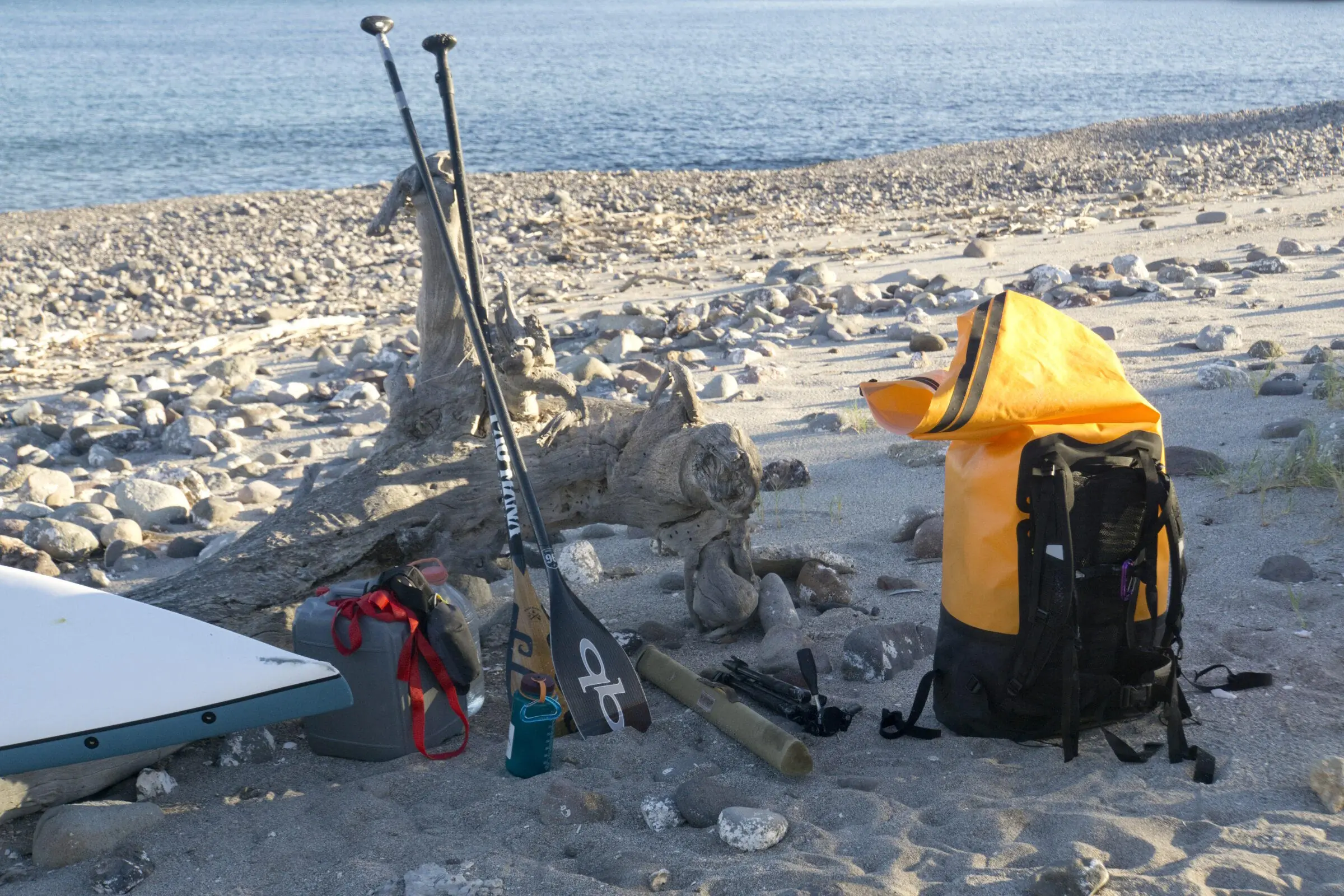
Fabric selection is the single most decisive factor in how a fishing bag performs when exposed to real environmental stress. In controlled indoor conditions, many materials appear similar. However, once exposed to saltwater, UV radiation, abrasion, and constant movement, performance differences become immediately visible.
Fishing bags are not used in ideal environments. They are dragged across rocks, exposed to hours of sunlight, splashed with saltwater, and compressed under heavy loads. Under these conditions, inferior materials begin to fail quickly—fading, cracking, tearing, or losing structural integrity.
A high-performance fishing bag must do more than resist damage. It must maintain functionality over time. Zippers must continue to operate smoothly, compartments must retain their shape, and coatings must remain intact after repeated exposure.
Environmental Stress Factors
| Condition | Impact on Material | Required Property |
|---|---|---|
| Water / Rain | Penetration, mold | Waterproof coating |
| UV Exposure | Fading, weakening | UV resistance |
| Abrasion | Surface wear | High denier fabric |
| Saltwater | Corrosion, chemical breakdown | Chemical resistance |
| Temperature | Expansion, cracking | Flexibility |
Each of these stress factors targets a different weakness in the material. A fabric that performs well against water may fail under UV exposure, while a highly durable fabric may crack under low temperatures if it lacks flexibility.
This is why material selection must consider combined stress, not just a single performance metric.
Performance Comparison Under Harsh Conditions
| Material | UV Resistance | Water Resistance | Abrasion Resistance | Overall Performance |
|---|---|---|---|---|
| Polyester | Medium | Medium | Medium | Standard |
| Nylon | High | Medium | High | Strong |
| Oxford | High | Medium-High | High | Very strong |
| TPU-Coated | High | Very High | High | Premium |
Polyester performs adequately in mild environments but begins to degrade faster under prolonged UV exposure and abrasion.
Nylon offers significantly better abrasion resistance and maintains strength under stress, making it suitable for demanding environments.
Oxford fabric, with its dense weave and structural stability, provides a balance of durability and shape retention, especially in multi-compartment designs.
TPU-coated materials elevate performance further by adding a waterproof barrier that remains flexible even after repeated exposure to environmental stress.
Waterproofing Performance Levels


| Level | Description | Application |
|---|---|---|
| Water-resistant | Light rain protection | Casual use |
| Waterproof | Heavy rain / splash protection | Boat fishing |
| Fully waterproof | Temporary submersion resistance | Extreme conditions |
In harsh environments, water exposure is constant rather than occasional. This makes the difference between water-resistant and waterproof materials critical.
Water-resistant fabrics rely on surface coatings that can wear off over time. Waterproof systems, especially those using TPU laminations, provide more reliable long-term protection.
Fully waterproof designs are typically reserved for extreme use cases, such as offshore fishing or environments where submersion is possible.
UV Resistance and Color Stability

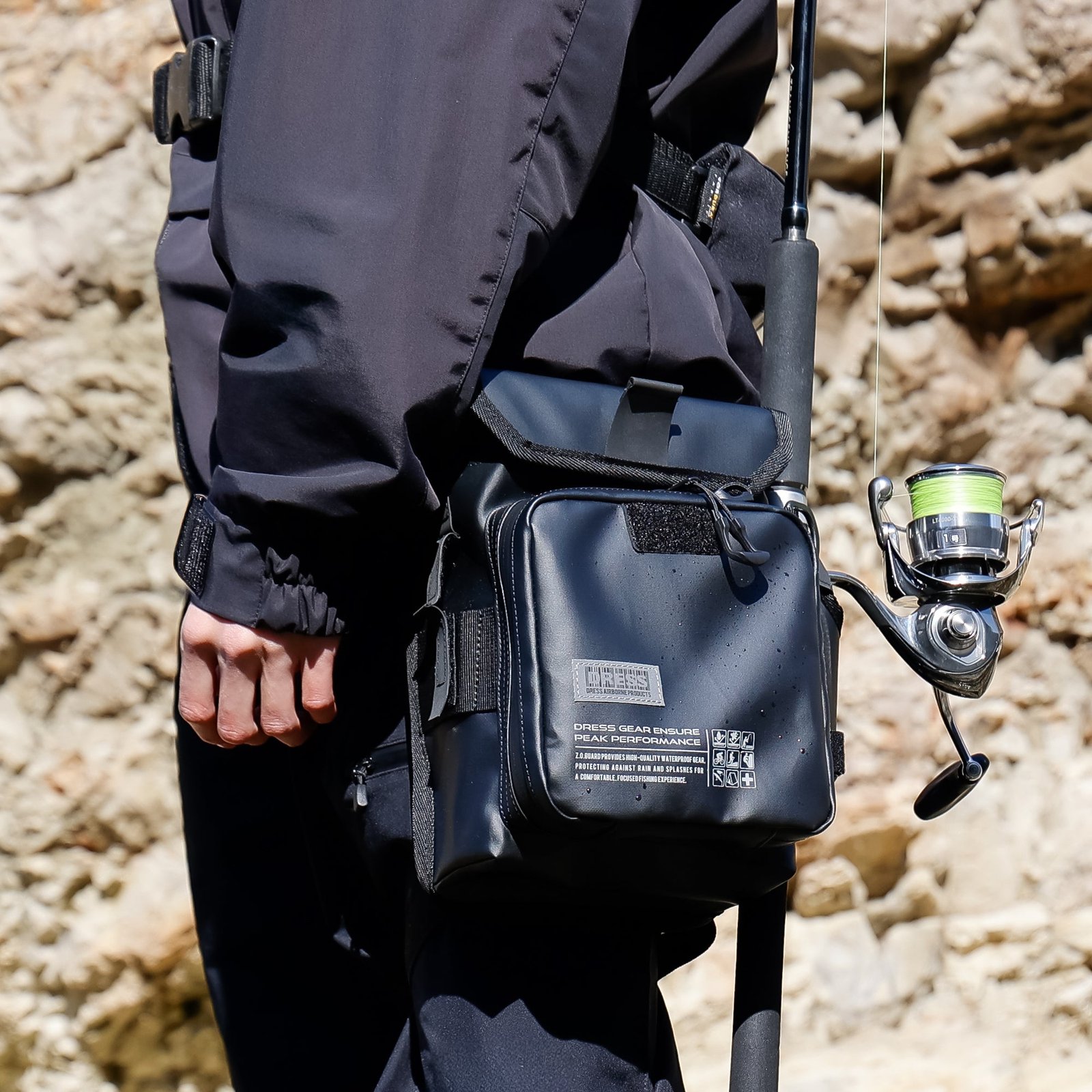
UV exposure is often underestimated, but it has a long-term impact on both appearance and structural integrity.
Low-quality fabrics begin to fade after prolonged sun exposure. More importantly, UV radiation breaks down polymer chains in the fabric, reducing tensile strength and making the material more prone to tearing.
Effective solutions include:
- UV-treated fibers that resist degradation
- Colorfast dyeing processes that maintain appearance
- Coatings that block or reflect UV radiation
For brands, UV resistance is not just about durability—it also preserves product appearance, which directly affects perceived quality.
Abrasion Resistance Testing
| Fabric | Martindale Cycles (Approx.) |
|---|---|
| Polyester 600D | 10,000–15,000 |
| Nylon 1680D | 20,000–30,000 |
| Oxford Fabric | 25,000+ |
Abrasion resistance is one of the most important factors in harsh environments. Fishing bags are frequently placed on rough surfaces such as rocks, sand, and boat decks.
The Martindale test simulates repeated friction. Higher cycle counts indicate better resistance to wear.
Nylon and Oxford fabrics significantly outperform standard polyester in this regard, making them more suitable for long-term use in demanding conditions.
Real Case Example
In a real product upgrade scenario, a fishing brand experienced high return rates due to fabric tearing and premature wear. The original product used 600D polyester for cost efficiency.
After upgrading to 1680D nylon:
- Product lifespan increased by more than two times
- Customer complaints related to tearing dropped sharply
- Overall product perception improved, allowing for higher pricing
This example highlights how material selection directly impacts not only performance but also market positioning.
Moisture and Mold Resistance
Fishing bags often remain wet for extended periods. Without proper material selection, trapped moisture leads to mold, odor, and long-term degradation.
Key solutions include:
- Breathable mesh panels that allow airflow
- Quick-dry linings that reduce moisture retention
- Anti-mold treatments that inhibit fungal growth
Balancing waterproofing with breathability is essential. A fully sealed bag without ventilation can trap moisture inside, creating internal damage even if external water is blocked.
Critical Design Insight
Material selection should not be uniform across the entire bag. Different areas experience different types of stress and should be optimized accordingly.
| Bag Area | Recommended Material |
|---|---|
| Outer shell | Nylon / Oxford |
| Bottom panel | EVA + waterproof coating |
| Inner lining | Polyester + PU |
| Waterproof pocket | TPU |
This targeted material strategy improves performance while controlling cost. High-performance materials are used where they are most needed, rather than across the entire product.
Long-Term Performance vs Cost
| Material Choice | Initial Cost | Long-Term Value |
|---|---|---|
| Low-grade polyester | Low | Poor |
| Mid-grade nylon | Medium | Good |
| High-end coated fabric | High | Excellent |
While lower-cost materials reduce upfront expenses, they often lead to higher replacement rates and lower customer satisfaction.
Higher-quality materials increase initial cost but provide better durability, fewer failures, and stronger brand perception. Over time, this results in better overall value.
Failure Is Gradual, Not Immediate
Material failure rarely happens instantly. It begins with small signs:
- Slight fading under UV exposure
- Minor coating wear in high-contact areas
- Small abrasions that weaken fabric over time
These small changes accumulate until performance drops significantly. High-quality materials slow this degradation process, extending the usable life of the product.
Fabric selection defines how a fishing bag performs when conditions are no longer controlled. It determines whether the bag can withstand repeated exposure to water, sunlight, abrasion, and movement without losing functionality.
The difference between a bag that lasts one season and one that performs reliably for years often comes down to material choice.
A well-designed multi-compartment fishing bag is not just about layout or features—it is built on materials that are selected, tested, and combined to handle real-world conditions.
For brands developing fishing bags, understanding how fabrics behave under stress is essential. Choosing the right materials is not just a technical decision—it is a long-term investment in product performance, user satisfaction, and brand reputation.
If you are planning to develop high-performance fishing bags, working with a manufacturer that understands both material science and product engineering ensures that your product delivers consistent results in the environments where it matters most.