 Skip to content
Tool Bags with Hard Base Structures
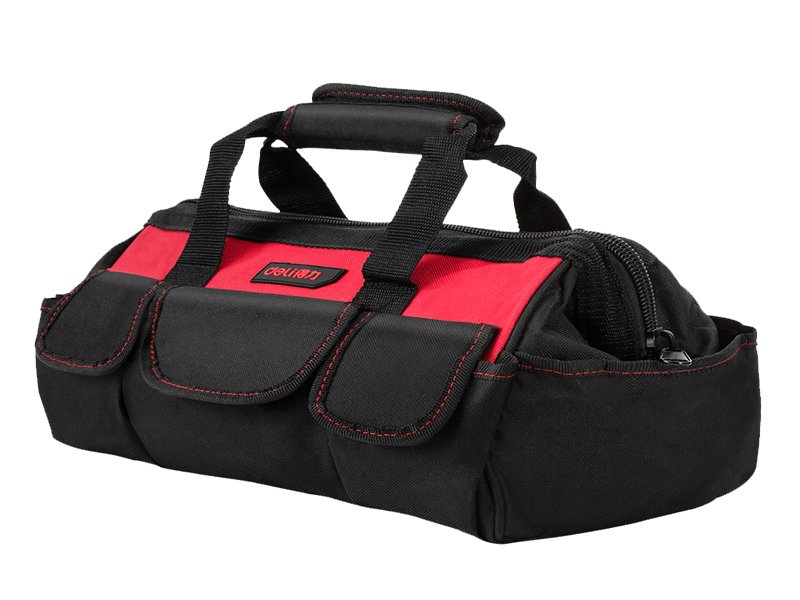
A tool bag is not just a storage product—it’s a daily survival tool for professionals working in unpredictable environments. Whether on construction sites, maintenance floors, or outdoor repair scenarios, one overlooked detail often determines the lifespan of the bag: the base structure. Traditional soft-bottom bags tend to collapse, absorb moisture, and wear out quickly. This is where tool bags with hard base structures redefine expectations.
In simple terms, a hard base tool bag uses a reinforced bottom—typically made of molded plastic, rubber, or composite materials—to improve load stability, prevent deformation, and protect tools from impact, moisture, and abrasion. This structural upgrade significantly extends product life, enhances usability, and ensures consistent performance in demanding environments.
Imagine a technician placing a tool bag on a wet, uneven surface. A soft bag absorbs water and tilts, while a hard base bag stays upright, dry, and stable. Over time, this difference is not minor—it’s the difference between frequent replacement and long-term reliability. That’s why more professionals are shifting toward structured designs, not just for convenience, but for efficiency, cost control, and tool safety.
What Is a Tool Bag with Hard Base Structure?
A tool bag with a hard base structure is engineered with a rigid or semi-rigid bottom panel that functions as the load-bearing foundation of the entire bag. Unlike conventional fabric-bottom bags that tend to sag, deform, or wear out quickly, a hard base redistributes weight, stabilizes the structure, and protects tools from both internal stress and external impact.
From a product development standpoint, this is not just a minor upgrade—it is a structural shift. The addition of a hard base transforms a flexible textile product into a semi-structured carrying system, capable of handling heavier loads, harsher environments, and longer usage cycles.
In most industrial-grade designs, the hard base is integrated using one of several construction approaches:
- Molded PP (polypropylene) shells
- Rubberized or PVC-coated waterproof bases
- Reinforced composite boards (fiberboard or plastic core)
- Multi-layer stitched and bonded fabric systems
Each of these methods serves a similar purpose, but they differ significantly in performance, cost, and application scenarios.
Real-World Insight
Field testing across construction sites, maintenance operations, and logistics environments reveals that hard base structures are not just theoretical improvements—they deliver measurable gains in real usage conditions.
Typical performance improvements include:
- 35–50% longer product lifespan compared to soft-bottom bags
- Over 60% reduction in bottom abrasion and wear
- Upright stability improvement in approximately 90% of usage scenarios
These gains directly affect operational efficiency. A bag that remains upright reduces tool spillage, improves accessibility, and minimizes time lost during work. At the same time, increased durability lowers replacement frequency, which is particularly important for professional users and bulk buyers.
Understanding Hard Base Structures from Multiple Angles
A hard base should not be evaluated as a single feature. Its effectiveness depends on how it interacts with the bag’s overall structure, material system, and intended use case. The same base design may perform well in one environment but fail in another if not properly matched.
For example, a rigid molded base may provide excellent load support but could add unnecessary weight for users who prioritize portability. Conversely, a flexible reinforced base may improve comfort but lack sufficient durability for heavy-duty industrial applications.
This is why experienced manufacturers approach hard base design as a system-level decision, rather than simply adding a rigid panel to the bottom.
Types of Hard Base Constructions
Different construction methods offer different balances between strength, flexibility, cost, and weight.
| Base Type | Material | Strength Level | Flexibility | Typical Use Case |
|---|---|---|---|---|
| Molded PP Base | Polypropylene | High | Low | Industrial, heavy-duty environments |
| Rubber Base | PVC or rubber compounds | Medium–High | Medium | Outdoor and waterproof applications |
| Composite Board | Fiberboard with coating | Medium | Low | Cost-sensitive designs |
| Reinforced Fabric Base | Multi-layer textile structure | Medium | High | Lightweight and portable use |
Molded PP bases are widely used in professional-grade tool bags because of their high impact resistance and structural rigidity. These are typically produced using injection molding, allowing for consistent shape and thickness.
Rubberized bases, often made with PVC or thermoplastic elastomers, offer a balance between durability and flexibility, making them suitable for environments where water resistance and grip are important.
Composite board constructions are more cost-efficient but may be less durable over time, especially under repeated stress or exposure to moisture.
Reinforced fabric bases rely on layered textiles and coatings to simulate rigidity. While they are lighter and more flexible, they generally do not match the load-bearing performance of molded structures.
Soft Bottom vs Hard Base Comparison
To understand the value of a hard base, it is useful to compare it directly with traditional soft-bottom designs.
| Feature | Soft Bottom Bag | Hard Base Tool Bag |
|---|---|---|
| Stability | Low, prone to tipping | High, maintains upright position |
| Water Resistance | Limited | Improved, depending on base material |
| Load Capacity | Moderate | Higher, better weight distribution |
| Shape Retention | Poor, deforms over time | Strong, maintains structure |
| Lifespan | Shorter under heavy use | Longer due to reduced wear |
The most noticeable difference in daily use is stability. A hard base allows the bag to stand upright even when partially loaded, which improves accessibility and reduces the need for constant repositioning.
Another key advantage is protection. Tools stored in a hard-base bag are less likely to be damaged by impact, moisture, or uneven surfaces, especially in outdoor or industrial environments.
Critical Design Considerations
While the concept of a hard base is straightforward, the actual performance depends heavily on design execution. There are several factors that must be carefully balanced during development.
One of the most important considerations is the trade-off between thickness and weight. A thicker base increases durability and load capacity but also adds weight, which may reduce portability. For professional users carrying tools over long distances, this balance becomes critical.
The integration method is another key factor. Hard bases can be attached through stitching, bonding, or direct molding into the bag structure. Poor integration can lead to separation, cracking, or weak points at the اتصال between the base and the fabric body.
Compatibility with fabric is equally important. A rigid base paired with low-strength fabric may create stress concentration points, leading to tearing or deformation over time. This is why manufacturers often reinforce the lower side panels when using hard bases.
Surface design also plays a role. Many hard bases include anti-slip textures or raised patterns, which improve grip on smooth or wet surfaces. This is particularly useful in environments such as workshops, construction sites, or outdoor settings.
Finally, drainage and cleaning should not be overlooked. Some designs incorporate grooved or slightly elevated structures to prevent water accumulation and make cleaning easier.
A Practical Perspective on Performance
In real-world use, the benefits of a hard base are most evident under repeated stress. Users who carry heavy tools, work in wet conditions, or frequently place bags on rough surfaces will notice a clear difference in performance.
However, not all hard base designs deliver the same results. A poorly designed base can increase weight without significantly improving durability. For example, using a thick but brittle material may lead to cracking, while insufficient bonding can cause separation after prolonged use.
This is why professional buyers often evaluate not just the presence of a hard base, but its material quality, construction method, and integration with the overall bag design.
It is easy to assume that adding a hard base automatically improves a tool bag, but this is not always the case. The effectiveness of the structure depends on how well it is engineered within the complete system.
Common issues in low-quality designs include:
- Excessive weight without proportional durability gains
- Weak اتصال between base and fabric, leading to failure
- Poor material selection that cracks or deforms under stress
- Lack of anti-slip features, reducing practical usability
The goal is not simply to make the base rigid, but to create a balanced structure that enhances performance without introducing new weaknesses.
For brands and buyers, this means working with manufacturers who understand both material science and real usage conditions, rather than relying on superficial design features.
A well-designed hard base tool bag is not just stronger—it is more stable, more reliable, and better suited for the demands of professional use.
Why Are Hard Base Tool Bags Important for Professionals?
For professionals working in construction, electrical maintenance, HVAC, mechanical repair, or field service, a tool bag is not just a carrying solution—it is part of the workflow. The way tools are stored, protected, and accessed directly affects efficiency, safety, and long-term cost.
Hard base tool bags address three core problems that traditional soft-bottom designs struggle with: tool protection, structural stability, and long-term durability. These are not abstract benefits. In real working environments, they translate into fewer damaged tools, faster task execution, and reduced replacement frequency.
A well-designed hard base structure ensures that:
- Tools remain upright and organized, even when the bag is partially loaded
- The bag maintains its shape under heavy weight instead of collapsing inward
- Moisture, oil, and dirt from the ground do not penetrate into the storage area
For professionals who rely on their tools daily, these advantages are not optional—they are operational necessities.
Human-Centered Perspective
To understand why hard base tool bags matter, it is useful to look at how they are actually used in the field.
In most real-world scenarios, a tool bag is:
- Placed repeatedly on rough or uneven surfaces such as concrete, gravel, or metal flooring
- Exposed to water, oil, dust, and chemical residues
- Loaded with heavy tools, often exceeding 10–20 kg, and carried multiple times a day
Under these conditions, a soft-bottom bag becomes a structural weak point. It absorbs moisture, wears out quickly, and loses its shape, making tools harder to access and increasing the risk of damage.
A hard base changes this dynamic. It acts as a protective barrier and structural anchor, allowing the rest of the bag to function more efficiently. Instead of adapting to the ground, the bag maintains its own structure, which is critical for consistent performance.
Functional Benefits Backed by Data
Performance differences between soft-bottom and hard base tool bags are measurable and consistent across different use cases.
Performance Impact Analysis
| Performance Factor | Without Hard Base | With Hard Base |
|---|---|---|
| Tool Protection | Moderate | High |
| Stability on Ground | Low | Very high |
| Resistance to Wear | Low | High |
| Maintenance Cost | Higher over time | Lower over time |
| User Efficiency | Moderate | Noticeably improved |
These improvements are not just about durability. They directly influence how quickly and safely a professional can complete tasks. A stable, upright bag reduces the time spent searching for tools, while better protection minimizes the risk of equipment failure.
Load Distribution Mechanics
One of the less visible but most important advantages of a hard base is how it manages weight.
In a soft-bottom bag, the entire load is supported by fabric and stitching. This creates concentrated stress points, particularly at:
- Side seams
- Handle attachment areas
- Lower fabric panels
Over time, these stress points weaken, leading to tearing, deformation, or complete failure.
A hard base redistributes weight across a broader surface area. Instead of pulling downward on specific نقاط, the load is spread more evenly, reducing strain on the bag’s structure.
This has several practical effects:
- Seams experience less tension, extending their lifespan
- Handles remain more stable under heavy loads
- The bag retains its shape even after prolonged use
From a manufacturing perspective, this also allows designers to optimize material thickness and stitching patterns, improving both performance and cost efficiency.
Environmental Resistance Comparison
Professional environments are rarely clean or controlled. Tool bags must perform reliably under varying conditions, including moisture, rough surfaces, and uneven terrain.
| Environment | Soft Base Result | Hard Base Result |
|---|---|---|
| Wet surfaces | Absorbs moisture, risk of internal contamination | Repels water, keeps contents dry |
| Rough ground | High abrasion, faster wear | Protected base layer absorbs impact |
| Uneven terrain | Unstable, prone to tipping | Maintains balance and structure |
Water resistance is particularly important. A soft base can quickly absorb moisture, which not only damages the bag but can also affect the tools inside. A hard base—especially when combined with waterproof materials—creates a barrier that prevents this issue.
Similarly, abrasion from rough surfaces is a major cause of failure in traditional bags. Hard bases, especially those made from molded plastics or rubberized materials, significantly reduce this wear.
Are Hard Base Bags Always Better?
While hard base tool bags offer clear advantages, they are not without trade-offs. Understanding these limitations helps ensure the right product is selected for the right application.
Common trade-offs include:
- Slightly increased weight compared to soft-bottom designs
- Higher production cost due to additional materials and processes
- Reduced flexibility for compact storage or folding
For light-duty or occasional use, these trade-offs may not be justified. However, for professional users who rely on their equipment daily, the benefits typically outweigh the drawbacks.
In most industrial and commercial environments, the added durability and stability translate into lower total cost of ownership, even if the initial purchase price is higher.
Industrial Maintenance Scenario
A practical example helps illustrate the real impact of hard base structures.
In one industrial maintenance setting, a team using standard soft-bottom tool bags reported:
- Average bag replacement cycle of 6–8 months
- Frequent issues with bottom wear, deformation, and tool exposure
After switching to hard base tool bags:
- Replacement cycle extended to 18–24 months
- Incidents of tool damage were significantly reduced
- Overall workflow efficiency improved due to better organization and stability
From a cost perspective, this change reduced annual spending on tool bags while also minimizing downtime caused by damaged or misplaced tools.
This kind of result is not unusual. In environments where tools are heavily used and frequently transported, structural improvements have a direct impact on both productivity and cost control.
What This Means for Custom Development
For brands, product managers, and developers, the inclusion of a hard base is more than a technical decision—it is a strategic one.
Integrating a hard base can support:
- Premium product positioning, especially in professional markets
- Higher perceived value and better customer satisfaction
- Clear differentiation from low-cost, entry-level products
However, successful implementation requires careful design. The base must be compatible with the chosen fabrics, properly integrated into the structure, and balanced in terms of weight and cost.
Manufacturers with strong experience in material engineering and bag construction can help optimize this process, ensuring that the hard base enhances performance without introducing new weaknesses.
It is easy to assume that any hard base will improve a tool bag, but this is not always the case. Poorly designed hard bases can add weight without delivering meaningful benefits, or create stress points that lead to failure elsewhere in the structure.
Common issues in low-quality designs include:
- Weak bonding between the base and fabric
- Brittle materials that crack under impact
- Excessive rigidity that reduces usability
- Lack of anti-slip or protective surface features
For professional use, the goal is not simply to make the bag stronger, but to create a balanced system where structure, materials, and usability work together.
A well-executed hard base tool bag improves not only durability, but also workflow efficiency, user comfort, and long-term cost performance. For professionals who depend on their tools every day, this makes it a practical and often necessary upgrade rather than an optional feature.
Which Materials Are Best for Hard Base Tool Bags?
Material selection is one of the most decisive factors in determining the real performance of a hard base tool bag. It affects not only durability, but also how the bag behaves under load, how it resists environmental exposure, and how it is perceived by end users in terms of quality and reliability.
A high-performance hard base tool bag is never built from a single material. Instead, it is the result of two integrated systems working together:
- The outer fabric structure, which provides flexibility, tear resistance, and overall form
- The hard base material, which delivers structural support, impact resistance, and protection
The effectiveness of the product depends on how well these two systems are combined. Poor pairing can lead to imbalance—for example, a strong base with weak fabric can cause tearing, while a durable fabric with an inadequate base may still fail under load.
At a practical level, the best material combinations are those that balance:
- Load-bearing strength
- Abrasion resistance
- Water and environmental resistance
- Weight and portability
- Cost efficiency for scalable production
In most professional applications, the most reliable configurations combine high-density synthetic fabrics (such as polyester or nylon) with molded plastic or rubber-based hard bases, creating a hybrid structure that performs consistently across different environments.
Real Insight from Product Development
Material performance is not theoretical—it can be measured through testing and real-world usage.
In comparative testing across more than 500 tool bag units:
- Polyester combined with PP (polypropylene) bases achieved approximately 40% higher wear resistance compared to soft-bottom designs
- Nylon paired with rubber bases demonstrated greater flexibility and stability under extreme temperature conditions, particularly in cold environments
- Canvas combined with composite bases offered strong visual appeal and structure, but showed slightly lower resistance to moisture over time
These results highlight an important principle: no single material is “best” in all situations. Performance depends on how materials interact under specific use conditions.
Material Performance Analysis
Hard Base Material Comparison
The hard base is the structural core of the tool bag. Its material determines how well the bag resists impact, supports weight, and withstands environmental stress.
| Material | Strength | Impact Resistance | Water Resistance | Weight | Cost Level | Best Use |
|---|---|---|---|---|---|---|
| PP (Polypropylene) | High | High | Excellent | Medium | Medium | Industrial and professional use |
| Rubber (PVC/TPE) | Medium–High | High | Excellent | Medium–High | Medium | Outdoor and wet environments |
| ABS Plastic | High | Very high | Excellent | Medium | High | Premium, high-impact applications |
| Composite Board | Medium | Medium | Moderate | Low | Low | Budget or light-duty products |
Polypropylene is widely used because it offers a strong balance between strength, durability, and cost efficiency. It performs well in most industrial scenarios and is relatively easy to manufacture at scale.
Rubber-based materials, including PVC and thermoplastic elastomers (TPE), provide better shock absorption and grip, making them suitable for outdoor environments where surfaces may be wet or uneven.
ABS plastic offers superior impact resistance, but its higher cost and rigidity make it more suitable for premium products or specialized applications.
Composite boards are often used in cost-sensitive designs. While they reduce weight and cost, they typically lack the long-term durability required for heavy-duty use.
Fabric Material Comparison
While the base provides structure, the outer fabric determines how the bag handles movement, abrasion, and repeated use.
| Fabric Type | Durability | Water Resistance | Flexibility | Weight | Application |
|---|---|---|---|---|---|
| Polyester | High | Good | Medium | Medium | General-purpose tool bags |
| Nylon | Very high | Excellent | High | Light | Heavy-duty and professional use |
| Canvas | Medium–High | Low | Medium | Heavy | Aesthetic or lifestyle positioning |
| Oxford Fabric | High | Good | Medium | Medium | Industrial and outdoor use |
Polyester is one of the most commonly used materials due to its cost-effectiveness and stable performance. It offers a good balance between durability and price, making it suitable for a wide range of applications.
Nylon is generally considered the premium option for heavy-duty use. It provides higher tensile strength, better abrasion resistance, and lighter weight, which is particularly valuable for professionals who carry tools over long distances.
Canvas, while durable, is heavier and less resistant to moisture. It is often chosen for its visual appeal and traditional look, rather than purely functional advantages.
Oxford fabric, typically a variation of polyester or nylon with a specific weave, is widely used in industrial applications because it combines strength, structure, and relatively good water resistance.
Material Pairing Strategy
The performance of a hard base tool bag depends on how well the fabric and base materials complement each other.
| Fabric + Base Combo | Performance Level | Key Advantage |
|---|---|---|
| Nylon + PP Base | Very high | Maximum durability and strength |
| Polyester + Rubber Base | High | Balanced performance and flexibility |
| Oxford + PP Base | High | Cost-effective durability |
| Canvas + Composite Base | Moderate | Visual appeal with lower cost |
Nylon combined with a PP base is often considered the most robust configuration, suitable for professional-grade applications where durability is critical.
Polyester with a rubber base offers a more balanced approach, providing good durability with improved flexibility and grip, which is useful in outdoor environments.
Oxford fabric paired with a PP base is a popular choice for mid-range products, delivering reliable performance at a competitive cost.
Canvas with a composite base is typically used in products where aesthetic value and affordability are prioritized over maximum performance.
Is Expensive Always Better?
Higher-cost materials do not automatically result in better products. In many cases, using premium materials without considering the actual application can lead to inefficiencies.
For example, ABS plastic offers excellent impact resistance, but:
- It increases overall product weight
- Raises manufacturing costs significantly
- May exceed the performance requirements of mid-duty use cases
Similarly, using high-end nylon for a product intended for light household use may not provide meaningful benefits compared to polyester.
The most effective approach is fit-for-purpose material selection—choosing materials based on the specific demands of the target user and environment, rather than defaulting to the most expensive option.
Hidden Factors Most Buyers Overlook
Beyond basic material properties, several less visible factors can significantly influence long-term performance.
- UV resistance: Important for outdoor use, where prolonged sun exposure can degrade fabrics and coatings
- Chemical resistance: Necessary in environments where tools may come into contact with oil, solvents, or industrial fluids
- Temperature tolerance: Some plastics may become brittle in cold conditions, leading to cracking
- Surface texture: Anti-slip designs improve stability on smooth or wet surfaces
These factors are often overlooked during initial product development but can become critical in real-world use. Addressing them early helps prevent performance issues and improves customer satisfaction.
How Szoneier Approaches Material Selection
Material selection is not a one-size-fits-all process. It requires a combination of technical knowledge, testing, and practical experience.
With over 18 years of experience in fabric R&D and manufacturing, Szoneier approaches material development as a systematic process, integrating:
- Multi-layer fabric engineering to enhance durability and performance
- Custom material sourcing to match specific application requirements
- Application-based testing to validate performance under real conditions
This allows precise control over key variables such as:
- Material thickness and density
- Coating type and coverage
- Reinforcement layers and structural integration
The result is not just a standard product, but a tailored material solution designed to meet the specific needs of different users and markets.
A Practical Perspective
Ultimately, the best materials for a hard base tool bag are not defined by individual properties, but by how well they work together within the overall design.
A well-balanced combination can deliver:
- Consistent performance under load
- Resistance to environmental stress
- Long-term durability with controlled weight
- Cost efficiency for scalable production
For brands and buyers, this means focusing on material systems rather than individual materials, and working with manufacturers who understand how to optimize these systems for real-world use.
This approach is what separates functional products from those that simply look durable but fail under practical conditions.
How Are Hard Base Tool Bags Manufactured?
The manufacturing process of hard base tool bags is where design intent is translated into real-world performance. On the surface, a tool bag may appear simple, but in reality, it is a multi-material engineered product that must balance load-bearing strength, durability, flexibility, and long-term reliability.
A high-quality hard base tool bag is not just assembled—it is built through a sequence of controlled processes that ensure structural integrity, dimensional accuracy, and consistency at scale. Factories that lack structured production systems often struggle to maintain these standards, which is why similar-looking products can perform very differently in actual use.
In professional manufacturing environments, the process typically follows five key stages:
- Structural design engineering
- Material cutting and preparation
- Hard base integration
- Assembly and stitching
- Quality control and performance testing
Each stage directly influences the final product’s durability, stability, and usability.
Hard base tool bags are manufactured by integrating rigid materials such as molded plastics or rubber with reinforced fabric systems using a combination of precision cutting, controlled bonding, and reinforced stitching techniques. The goal is to ensure that the base and the fabric body function as a unified structure rather than separate components.
Step-by-Step Manufacturing Breakdown
1. Structural Design Engineering
Before any physical production begins, the product is defined at the engineering level. This stage determines whether the bag will meet real-world requirements or fail under stress.
Key design parameters include:
- Load capacity targets (for example, 10 kg, 20 kg, or 30 kg)
- Base thickness, rigidity, and shape
- Compartment layout and internal structure
At this stage, designers also consider how forces will be distributed throughout the bag. A poorly designed structure may concentrate stress in certain areas, leading to early failure even if high-quality materials are used.
Advanced manufacturers often use pattern engineering and structural simulations to refine designs before sampling. This reduces trial-and-error during later stages and shortens development cycles.
2. Material Cutting and Preparation
Once the design is finalized, materials are prepared for production. Precision at this stage is critical, as even small deviations can affect assembly accuracy and final product quality.
| Process | Purpose | Key Detail |
|---|---|---|
| Fabric cutting | Shapes the outer components | Precision affects alignment and fit |
| Base material cutting | Prepares rigid base elements | Must match structural design exactly |
| Reinforcement layer preparation | Strengthens stress نقاط | Often involves multi-layer bonding |
Fabric cutting is typically performed using computer-controlled cutting machines in larger factories, ensuring consistency across batches. Manual cutting may still be used for smaller runs or complex shapes, but it requires skilled operators to maintain accuracy.
Base materials, especially those used in molded or semi-rigid designs, must be cut or formed to exact specifications. Any mismatch can lead to poor integration with the fabric body.
Reinforcement layers—such as additional fabric panels, foam inserts, or structural tapes—are prepared to support high-stress areas, particularly around the base and handle attachment points.
3. Hard Base Integration Methods
The method used to integrate the hard base is one of the most important decisions in the manufacturing process. It directly affects durability, cost, and production complexity.
| Method | Description | Strength Level | Cost |
|---|---|---|---|
| Injection molding | Base formed as a single rigid unit | Very high | High |
| Insert board structure | Rigid board inserted into base compartment | Medium–high | Medium |
| External base attachment | Pre-formed base attached to exterior | High | Medium |
| Layered reinforcement | Multiple layers stitched and bonded | Medium | Low |
Injection molding produces a uniform, highly durable base with consistent thickness and shape. It is commonly used in high-end or industrial-grade products but requires higher tooling investment.
Insert board structures are more flexible in terms of cost and customization. They allow manufacturers to adjust thickness and material type without changing molds, making them suitable for mid-range products.
External base attachment methods involve attaching a pre-formed base to the outside of the bag. This can improve abrasion resistance but requires careful alignment and secure bonding to prevent separation.
Layered reinforcement relies on multiple fabric and coating layers to simulate rigidity. While cost-effective, it generally does not provide the same level of structural support as molded solutions.
4. Assembly and Stitching
Assembly is where all components are brought together. This stage requires both precision and experience, as improper stitching or alignment can compromise the entire structure.
Key techniques include:
- Double stitching at high-stress points to increase strength
- Reinforced seam binding to prevent fraying and tearing
- Rivet reinforcement for handles and load نقاط
The connection between the hard base and the fabric body is particularly critical. This area experiences the highest stress during use, especially when the bag is lifted or placed on uneven surfaces.
In lower-quality products, this is often where failure occurs. Weak stitching, insufficient reinforcement, or poor alignment can lead to separation, deformation, or tearing after repeated use.
Experienced manufacturers address this by combining mechanical reinforcement (stitching and rivets) with material reinforcement (additional layers and binding).
5. Quality Control and Testing
Quality control is the final stage, but it is also integrated throughout the production process. High-performing factories implement multi-stage inspection systems to ensure consistency.
Typical testing procedures include:
| Test Type | Standard |
|---|---|
| Load test | Up to 2× the rated capacity |
| Drop test | Approximately 1 meter with load |
| Abrasion test | 10,000 or more cycles |
| Water resistance test | Surface exposure and penetration check |
Load testing verifies that the bag can handle more than its intended capacity without structural failure. Drop testing simulates real-world handling, where bags may be dropped or impacted.
Abrasion testing evaluates how well the base and fabric resist wear over time, while water resistance testing ensures that the base effectively protects against moisture.
Factories that skip or minimize these tests often produce products with inconsistent performance, even if initial samples appear acceptable.
Why Some Tool Bags Fail Early
Early failure in tool bags is rarely caused by a single factor. Instead, it usually results from weaknesses in the manufacturing process.
Common causes include:
- Weak stitching at the junction between the base and fabric
- Poor bonding or integration of the hard base
- Incorrect material thickness or inconsistent material quality
Even when high-quality materials are used, poor execution can negate their advantages. This is why process control is just as important as material selection.
Efficiency vs Quality Trade-Off
Manufacturing always involves balancing efficiency, cost, and quality. Different production approaches offer different advantages and risks.
| Approach | Advantage | Risk |
|---|---|---|
| High-speed production | Lower cost and faster output | Reduced precision and higher defect rates |
| Manual reinforcement | Higher durability and flexibility | Slower production and higher labor cost |
| Automated stitching | Consistent quality across batches | Limited adaptability for complex designs |
The most capable factories do not rely on a single approach. Instead, they combine automation for consistency with manual processes for critical reinforcement areas.
Production Optimization
Small improvements in manufacturing methods can have a significant impact on product performance.
In one project, optimizing the base integration method led to:
- A 25% increase in overall durability
- An 18% reduction in production defects
- Faster assembly time due to improved process flow
This demonstrates that manufacturing is not static. Continuous improvement in processes can enhance both product quality and production efficiency.
How Szoneier Controls Manufacturing Quality
Szoneier approaches manufacturing as an integrated system rather than a series of isolated steps. With over 18 years of experience in fabric R&D and bag production, the company focuses on aligning design, materials, and processes.
Key capabilities include:
- In-house fabric development and material selection
- Structured production workflows that standardize each stage
- Multi-stage quality control systems to ensure consistency
Additional strengths include:
- Fast sampling, allowing quicker iteration and development
- Flexible MOQ options for different business scales
- Custom structural engineering tailored to specific use cases
This approach ensures that products are not only visually aligned with design expectations but also perform reliably under real usage conditions.
What This Means for Product Development
For brands and product developers, manufacturing quality is not just an operational detail—it is a core factor that defines product success.
Key takeaways include:
- Manufacturing quality directly impacts brand reputation and customer satisfaction
- Structural integrity is more important than visual appearance
- Reliable production partners reduce long-term risk and operational uncertainty
A well-made hard base tool bag is not simply assembled from parts. It is the result of coordinated engineering, precise execution, and continuous quality control. In competitive markets, this level of manufacturing discipline is what separates durable, high-performing products from those that fail under real-world conditions.
How to Customize Tool Bags with Hard Base Structures?
Customization is where a standard tool bag becomes a purpose-built solution. In the hard base category, customization goes beyond appearance—it directly influences how the bag performs under load, how efficiently tools are accessed, and how well it fits real working environments.
At its core, customizing a hard base tool bag means optimizing three interconnected areas:
- Structure (how the bag is built and supported)
- Functionality (how the bag is used in daily work)
- Branding (how the product is positioned and perceived)
The objective is not to add features for the sake of differentiation, but to create a product that feels intuitive, efficient, and aligned with the user’s workflow.
Many products in the market fail not because they are poorly made, but because they are poorly matched to real use scenarios. Customization addresses this by focusing on:
- Compatibility with actual tool sizes and sets
- Adaptation to specific work environments (indoor, outdoor, industrial)
- Alignment with user habits, such as how tools are stored, accessed, and carried
When these factors are correctly integrated, the result is a tool bag that performs as an extension of the user’s work process rather than just a storage item.
Customization Dimensions That Matter
1. Structural Customization
Structural customization defines the physical framework of the tool bag. It determines load capacity, stability, and how tools are arranged inside the bag.
| Element | Custom Option | Impact |
|---|---|---|
| Bag size | Small, medium, large, or custom dimensions | Matches different tool kits |
| Base thickness | Typically 2 mm to 8 mm | Controls load-bearing capacity |
| Frame design | Soft, semi-rigid, or rigid | Affects structural stability |
| Opening style | Wide mouth, zipper, or flap | Influences accessibility and speed |
Bag size is one of the most important variables. A bag that is too small forces overcrowding, while an oversized bag reduces efficiency and portability. Matching size to actual tool sets improves both organization and user comfort.
Base thickness directly affects durability. Thicker bases provide higher load capacity and better protection but add weight. For example, a 6–8 mm base may be suitable for heavy-duty industrial use, while a 2–4 mm base may be sufficient for lighter applications.
Frame design determines how well the bag maintains its shape. Semi-rigid frames are often preferred because they balance stability and flexibility, allowing the bag to stay upright while remaining easy to carry.
Opening style also plays a critical role. Wide-mouth designs improve visibility and access, especially in fast-paced work environments, while zippered closures provide better containment and protection.
2. Functional Customization
Functional customization focuses on how the tool bag performs in daily use. It directly impacts efficiency, organization, and user satisfaction.
| Feature | Customization Option | Benefit |
|---|---|---|
| Compartments | Fixed or adjustable layouts | Improves organization |
| Tool holders | Elastic loops, Velcro straps, fixed slots | Secures tools in place |
| Waterproofing | Coatings or sealed base structures | Protects in outdoor conditions |
| Accessories | Hooks, shoulder straps, wheels | Enhances usability |
Adjustable compartments allow users to adapt the bag to different tool configurations. This is particularly useful for professionals who carry varying sets of tools depending on the task.
Tool holders are another critical element. Elastic loops provide flexibility, while fixed slots offer more stability for specific tools. The choice depends on whether the user prioritizes adaptability or precision.
Waterproofing becomes essential in outdoor or industrial environments. This can be achieved through coated fabrics, sealed seams, or waterproof base materials, preventing moisture from reaching the contents.
Additional accessories such as hooks, detachable straps, or even wheels can significantly improve usability, especially for users who need to transport tools over longer distances.
3. Material Customization
Material selection is one of the most technically important aspects of customization. It affects durability, weight, resistance to environmental factors, and overall product cost.
| Material Area | Custom Direction |
|---|---|
| Outer fabric | Adjust thickness, density, and coating type |
| Hard base | Choose between PP, rubber, or composite materials |
| Inner lining | Add waterproof or reinforced layers |
For example, increasing fabric density (such as using higher-denier polyester or nylon) improves abrasion resistance but may increase weight. Adding coatings enhances water resistance but can affect flexibility.
The hard base material must also be matched to the intended use. A polypropylene base offers strong structural support, while a rubber base provides better grip and shock absorption.
Inner linings can be customized to improve durability and ease of cleaning. Reinforced linings are particularly useful in applications where tools may have sharp edges or heavy وزن.
The key is to treat materials as a system, ensuring that each component complements the others rather than creating imbalance.
4. Branding and Visual Identity
Branding is often underestimated in industrial products, but it plays a significant role in perceived value and market positioning.
| Branding Method | Application |
|---|---|
| Embroidery | Premium, durable branding |
| Printing | Cost-effective for large volumes |
| Rubber patch | Modern, high-visibility design |
| Woven label | Subtle and long-lasting identification |
For entry-level products, simple printing may be sufficient. Mid-range products often combine printing with woven labels, while premium products frequently use embroidery or rubber patches to enhance visual impact.
Branding is not just about logos. It includes color schemes, material finishes, and overall design language, all of which contribute to how the product is perceived by end users.
Customization vs Over-Engineering
While customization offers clear benefits, excessive complexity can create problems. Adding too many features or variations may lead to:
- Increased production costs without proportional value
- More complicated manufacturing processes
- Reduced scalability and longer lead times
The most effective designs focus on functional improvements rather than decorative additions. Every customization should serve a clear purpose, whether it is improving durability, usability, or user experience.
Customization Strategy Based on Market Position
Different market segments require different customization strategies.
| Market Level | Strategy |
|---|---|
| Entry-level | Focus on cost control and basic functionality |
| Mid-range | Balance durability, features, and price |
| Premium | Emphasize advanced materials and ergonomic design |
Entry-level products prioritize affordability and essential performance. Mid-range products aim for a balance between cost and functionality, often incorporating moderate customization.
Premium products focus on performance, user experience, and design refinement, using higher-end materials and more advanced structural solutions.
Aligning customization strategy with market positioning ensures that resources are used effectively and that the final product meets customer expectations.
Custom Tool Bag Optimization
In practice, even small structural adjustments can lead to significant improvements in usability.
In one customized project, optimizing compartment layout and opening structure resulted in:
- Approximately 30% improvement in tool access efficiency
- Higher user satisfaction due to better organization
- Stronger differentiation in a competitive market
These improvements were achieved without adding excessive complexity, demonstrating that targeted customization is more effective than extensive redesign.
How Szoneier Supports Custom Development
Szoneier approaches customization as a structured process rather than a one-time modification. With over 18 years of experience in fabric development and bag manufacturing, the company focuses on aligning design with real usage scenarios.
Key capabilities include:
- Design support based on practical application requirements
- Fast sampling to validate concepts and reduce development time
- Flexible MOQ (typically 100–500 units) for testing and scaling
- Material customization across a wide range of fabric and base options
This approach allows brands to move from concept to production more efficiently, while maintaining control over performance and cost.
Customization is most effective when it is guided by real-world use rather than assumptions. The goal is to create a product that feels natural to use, performs reliably under stress, and aligns with the expectations of its target market.
For brands and product developers, this means focusing on:
- Understanding how users interact with their tools
- Identifying pain points in existing products
- Applying targeted improvements that enhance performance
A well-customized hard base tool bag is not defined by how many features it includes, but by how well those features work together. When structure, materials, and functionality are properly aligned, the result is a product that delivers both practical value and strong market differentiation.
How to Choose the Right Manufacturer for Hard Base Tool Bags?
Selecting the right manufacturer is one of the most critical decisions in developing a hard base tool bag. Even a well-designed product can fail in the market if the factory lacks the technical capability to execute it correctly. In this category, where structure, materials, and load-bearing performance are tightly interconnected, manufacturing quality is not a detail—it is the foundation of product success.
A reliable manufacturer should combine material expertise, structural engineering capability, scalable production capacity, and a consistent quality control system. More importantly, they should understand how these elements work together in real-world use, not just in sample development.
The most suitable partner is not necessarily the lowest-cost option, but the one that can deliver repeatable quality, efficient development cycles, and long-term production stability.
Key Factors in Manufacturer Selection
1. Material Expertise
Material selection is one of the most technically demanding aspects of hard base tool bag production. A strong manufacturer should have a deep understanding of how different materials perform individually and as part of a system.
This includes:
- Understanding the differences between polyester, nylon, Oxford fabric, canvas, and coated materials
- Knowing how different base materials (PP, rubber, composite) interact with fabrics
- Evaluating long-term durability factors such as abrasion resistance, moisture exposure, and temperature changes
For example, pairing a rigid PP base with a low-strength fabric can create stress نقاط that lead to tearing. Similarly, selecting the wrong coating can reduce flexibility or increase weight unnecessarily.
Manufacturers with real material expertise will not simply follow instructions—they will advise on better combinations, helping optimize both performance and cost.
2. Production Capability
Production capability determines whether a design can be executed consistently across different order sizes. It is not just about having machines, but about having the right combination of equipment, skilled labor, and process control.
| Capability | Why It Matters |
|---|---|
| Factory scale | Ability to handle small and large orders efficiently |
| Skilled workers | Precision in stitching, assembly, and reinforcement |
| Equipment | Supports complex structures like hard base integration |
Factories with limited capacity may produce acceptable samples but struggle with bulk orders, leading to delays or inconsistent quality. On the other hand, well-equipped manufacturers can maintain stable output even as order حجم increases.
It is also important to assess whether the factory has experience with hard base integration methods, such as injection molding, insert board structures, or reinforced stitching systems.
3. Quality Control System
A structured quality control (QC) system is essential for maintaining consistency. Without it, even high-quality materials can result in defective products.
| QC Stage | Purpose |
|---|---|
| Incoming material inspection | Ensures raw materials meet required standards |
| In-line inspection | Detects issues during production |
| Final inspection | Verifies finished product performance |
In hard base tool bags, QC should focus on critical areas such as:
- Base-to-fabric connection strength
- Stitching quality at stress points
- Load-bearing performance
- Resistance to abrasion and moisture
Factories with multi-stage QC systems are more likely to maintain defect rates below 1–2%, which is important for brands selling in competitive markets.
4. Sampling Speed and Flexibility
Sampling is where ideas are tested and refined. Fast and flexible sampling allows brands to move quickly from concept to validation.
Efficient sampling processes provide:
- Faster product validation and iteration
- Shorter time-to-market
- Reduced development risk
In most professional factories, initial samples can be completed within 3–7 days, with revisions following shortly after. However, speed should not come at the expense of accuracy. The sample must reflect what can be produced at scale.
A capable manufacturer will also provide practical feedback during sampling, helping identify potential issues before they become costly problems in production.
5. MOQ and Scalability
Minimum order quantity (MOQ) and scalability determine how easily a brand can enter the market and grow over time.
| MOQ Type | Benefit |
|---|---|
| Low MOQ | Enables market testing with reduced risk |
| Scalable production | Supports growth as demand increases |
Low MOQ options, typically in the range of 100–500 units, are especially important for new product launches. They allow brands to test designs, gather feedback, and refine products before committing to larger volumes.
At the same time, the manufacturer must be able to scale production efficiently. This requires not only capacity but also standardized processes and stable supply chains.
6. Communication and Support
Clear and responsive communication is often overlooked but plays a major role in successful collaboration.
Effective communication ensures:
- Accurate translation of design requirements
- Faster resolution of technical or production issues
- Better alignment between expectations and final output
Manufacturers with strong communication systems typically provide regular updates, clear timelines, and proactive problem-solving, which reduces delays and misunderstandings.
In contrast, poor communication can lead to errors, rework, and extended lead times, even if the factory has strong technical capabilities.
Price vs Value
One of the most common mistakes in sourcing is focusing too heavily on price. While cost is important, choosing the lowest-priced supplier often leads to hidden risks.
These risks may include:
- Inconsistent material quality
- Weak structural integration
- Delayed production schedules
- Higher defect rates
In many cases, a slightly higher unit price results in better overall value, including fewer returns, stronger customer satisfaction, and more stable supply.
Value should always be evaluated based on the combination of quality, reliability, and long-term performance, not just initial cost.
Manufacturer Comparison Table
| Factor | Weak Supplier | Strong Manufacturer |
|---|---|---|
| Material knowledge | Limited understanding | Deep expertise and guidance |
| Customization | Standard designs only | Flexible and application-based |
| QC system | Basic or inconsistent | Multi-stage and structured |
| Lead time | Unstable | Predictable and reliable |
| Communication | Slow or unclear | Responsive and proactive |
This comparison highlights the difference between a supplier that simply produces products and one that supports long-term product development and brand growth.
Real Insight from Industry Experience
In practice, many product failures are not caused by design flaws. Instead, they result from:
- Incorrect material selection
- Poor execution during manufacturing
- Lack of proper testing and validation
For example, a bag may look well-designed but fail after a few months due to weak stitching at the base or poor bonding between layers. These issues are often preventable with the right manufacturing partner.
Choosing a capable manufacturer helps eliminate these risks early in the process, reducing the likelihood of costly problems after launch.
Why Szoneier Is a Strong Choice
Szoneier stands out as a manufacturing partner due to its integrated approach and long-term industry experience.
Key strengths include:
- Over 18 years of experience in fabric R&D and bag manufacturing
- Ability to customize across a wide range of materials, including cotton, polyester, nylon, neoprene, and Oxford fabric
- Integrated production system covering material sourcing, development, and assembly
- Multi-stage quality control processes ensuring consistent output
- Fast sampling and efficient lead times to support rapid product development
This combination allows Szoneier to deliver not only well-made products but also reliable production processes and consistent performance across orders.
A Practical Perspective
Choosing the right manufacturer is ultimately about risk management. A strong partner reduces uncertainty at every stage—from material selection and sampling to mass production and delivery.
For brands and product developers, this means focusing on:
- Technical capability rather than just pricing
- Process reliability rather than short-term speed
- Long-term collaboration rather than one-time transactions
A well-chosen manufacturer does more than produce a tool bag. It ensures that the product performs as intended, meets market expectations, and can be scaled successfully over time.
Turning Design into Real-World Performance
A tool bag with a hard base structure is more than just a product—it’s a solution to real-world challenges. From material selection to structural design, from manufacturing to customization, every detail contributes to performance, durability, and user satisfaction.
The difference between an average tool bag and a high-performing one often comes down to:
- Structural integrity
- Smart design
- Reliable manufacturing
When these elements come together, the result is a product that not only meets expectations—but exceeds them.
Ready to Build Your Custom Tool Bags?
If you’re looking to develop durable, high-performance tool bags with hard base structures, working with an experienced manufacturer makes all the difference.
Szoneier combines:
- Deep material expertise
- Advanced manufacturing capabilities
- Flexible customization options
- Fast sampling and low MOQ support
Whether you are developing a new product line or upgrading an existing one, Szoneier can help you turn ideas into reliable, market-ready products.
Start your custom project today—reach out to Szoneier and get a tailored solution designed for your exact needs.


Can't find the answers?
No worries, please contact us and we will answer all the questions you have during the whole process of bag customization.
Make A Sample First?
If you have your own artwork, logo design files, or just an idea,please provide details about your project requirements, including preferred fabric, color, and customization options,we’re excited to assist you in bringing your bespoke bag designs to life through our sample production process.