Skip to content
Most people hear the word “neoprene” and immediately think of wetsuits, water sports, beach gear, or flexible protective sleeves. So it is easy to assume that a neoprene bag must be waterproof. The reality is more interesting. Neoprene as a material has excellent water-resistant behavior, but a finished neoprene bag is only as water-protective as its weakest construction point. A beautifully made neoprene laptop sleeve may resist splashes very well, while a poorly designed neoprene pouch may let water enter through the zipper or stitched seams within minutes.
Neoprene bags are generally water-resistant, not fully waterproof, unless they are specially engineered with sealed seams, waterproof-style zippers, protective flaps, suitable lining, and tested closure construction. The neoprene material itself can resist moisture because of its synthetic rubber and closed-cell foam structure, but once it is cut, stitched, zippered, bound, printed, and turned into a bag, water can still enter through needle holes, seams, zipper teeth, openings, and stress points. For daily use such as light rain, bottle condensation, beach splashes, lunch spills, cosmetic leakage, or gym moisture, neoprene performs very well. For submersion, heavy rain, boating, or dry-bag-level protection, standard stitched neoprene bags are usually not enough without special waterproof construction.
This is why the question is not simply “Is neoprene waterproof?” A smarter question is “What level of water protection does my bag actually need?” A laptop sleeve needs splash protection and zipper coverage. A cooler bag needs insulation, leak control, and easy-clean lining. A beach tote needs moisture resistance, sand-friendly structure, and strong handles. A bottle sleeve mainly needs condensation control and stretch fit. When buyers understand these differences, they can avoid overpaying for unnecessary features and avoid underbuilding products that customers expect to protect valuable items.
Think about a customer walking from a parking lot to the office during light rain. Their laptop is inside a neoprene sleeve. The sleeve itself handles moisture well, but rain touches the zipper line. If that zipper has no flap, water may creep inward. The customer does not care whether the fabric supplier said “neoprene is water-resistant.” They care whether their laptop stays safe. That small detail is where material knowledge turns into real product quality. For brands developing custom neoprene bags, waterproof performance should be designed, not assumed.
What Makes Neoprene Water-Resistant?
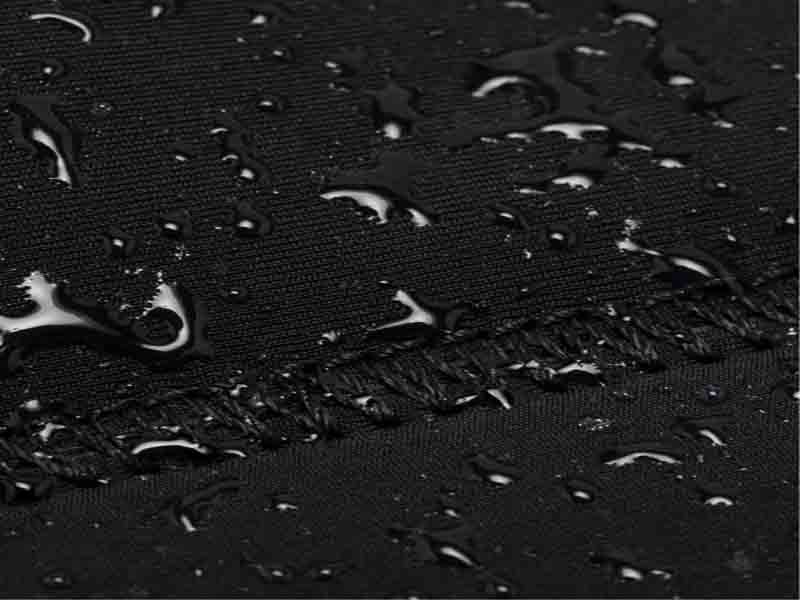
Neoprene is water-resistant because it is based on synthetic rubber with a closed-cell foam structure that limits water absorption and slows moisture penetration. In bag design, this means neoprene can handle splashes, condensation, light rain, and everyday moisture better than many untreated woven fabrics. However, water resistance comes from the material structure, surface lamination, thickness, density, and finished construction working together. Neoprene fabric can resist water, but the finished bag still needs proper seams, zippers, closures, and lining to protect contents effectively.
The main reason neoprene performs well around water is its closed-cell foam structure. Closed-cell foam contains many tiny sealed air cells. These cells help reduce direct water movement through the foam body. This also gives neoprene its cushioning, insulation, and soft rebound. That is why the material is commonly used for sleeves, bottle holders, cooler bags, sports accessories, wetsuit-related products, and protective soft goods.
For bag buyers, the important point is simple: neoprene gives you a strong starting material for water-resistant products, but it does not automatically create a fully waterproof bag. The final performance depends on how the material is laminated, cut, sewn, closed, tested, and used.
Szoneier works with neoprene and many other fabric categories, including cotton, canvas, polyester, nylon, jute, linen, Oxford fabric, and custom treated materials. For customers developing water-resistant bags, this material range is valuable because not every product should use neoprene alone. Some projects need neoprene as the main body. Some need neoprene combined with lining, Oxford fabric, coated polyester, webbing, zipper flaps, or waterproof-style accessories.
The Material Structure Behind Neoprene
Neoprene fabric used in bags is usually not just one simple layer. It is commonly a composite material. The core is neoprene foam, and the outer surface is often laminated with textile fabric such as polyester jersey, nylon jersey, spandex fabric, printed fabric, or other customized surfaces. The textile surface provides appearance, touch, printability, and sewing stability. The neoprene foam core provides cushioning, water resistance, insulation, and flexibility.
This layered structure is what makes neoprene so useful in bag design. A thin woven fabric may dry quickly but cannot cushion a laptop. A thick foam may cushion well but look unfinished. A coated waterproof fabric may block water but feel stiff. Neoprene sits between these categories by offering soft protection, flexibility, and moisture resistance in one material system.
| Neoprene Layer | Main Function | Why It Matters in Bags |
|---|---|---|
| Outer Textile Surface | Appearance, color, texture, printing support | Determines the product’s visible quality and brand feel |
| Neoprene Foam Core | Cushioning, insulation, water resistance, stretch | Provides the main performance value |
| Inner Surface or Backing | Soft touch, lining support, durability | Protects contents and improves user experience |
| Lamination Adhesive | Bonds textile and foam layers | Affects long-term durability and peeling resistance |
| Optional Lining | Cleaning, insulation, waterproof support | Useful for cooler bags, lunch bags, cosmetic bags, and premium sleeves |
This structure also explains why two neoprene bags can perform differently. A 3mm neoprene bag with weak lamination may look fine at first but bubble or peel after repeated use. A 3mm neoprene bag with stable lamination, strong surface fabric, and proper stitching may perform much better. Buyers should not evaluate neoprene only by thickness. The full material structure matters.
Why Closed-Cell Foam Helps Resist Water
Closed-cell foam is important because each tiny cell is separated from the others. This makes it harder for water to travel through the material compared with open-cell foam, where connected pores can absorb liquid more easily. In daily bag use, this means neoprene does not behave like cotton canvas or untreated linen, which can absorb moisture quickly.
That said, water resistance is not the same as water invisibility. The surface fabric laminated onto neoprene may still become damp. Moisture may sit on the surface. Water may enter through seams or zipper areas. The foam core may resist water, but the bag construction still needs to be designed properly.
| Material Type | Water Absorption Behavior | Bag Design Meaning |
|---|---|---|
| Cotton Canvas | Absorbs water unless treated | Needs coating or lining for water resistance |
| Linen Fabric | Absorbs moisture naturally | Better for breathable lifestyle products, not wet use |
| Jute Fabric | Absorbs moisture and may deform | Best for dry packaging or natural-style bags |
| Polyester Fabric | Resists moisture better than natural fibers | Good for lightweight water-resistant bags with coating |
| Nylon Fabric | Good water resistance with coating | Suitable for outdoor and travel bags |
| Oxford Fabric | Strong with PU/PVC coating options | Common for backpacks, tool bags, and outdoor bags |
| Neoprene Fabric | Resists water through foam rubber core | Strong for splash-resistant, insulated, protective bags |
| TPU/PVC Coated Fabric | Can support stronger waterproof designs | Better for dry bags and heavy waterproof applications |
This comparison helps buyers see where neoprene fits. It is not the only water-resistant material, but it offers a special combination of moisture resistance, cushioning, insulation, stretch, and soft hand feel.
Neoprene Water Resistance in Real Life
In real daily use, neoprene performs best against common moisture events. These include bottle condensation, light rain, gym sweat, beach splashes, cosmetic leaks, lunch bag moisture, wet tables, and travel spills. These are exactly the situations where users appreciate neoprene without needing full waterproof construction.
For example, a neoprene bottle sleeve does not need to survive underwater submersion. It needs to reduce cold condensation, improve grip, protect the bottle from small knocks, and keep the user’s hand comfortable. A neoprene cosmetic pouch does not need to float in water. It needs to resist minor spills, protect small bottles, and clean more easily than absorbent fabric. A neoprene laptop sleeve should not be marketed as a dry bag, but it can provide practical splash resistance during daily commuting.
| Real-Life Situation | How Neoprene Helps | What Still Needs Attention |
|---|---|---|
| Cold bottle condensation | Reduces moisture contact and improves grip | Sleeve size and seam strength |
| Light rain commute | Resists short-term surface moisture | Zipper and seam exposure |
| Cosmetic leakage | Slows absorption and protects other items | Inner lining and cleaning method |
| Gym sweat exposure | Handles damp environments better than many fabrics | Odor control and cleaning instructions |
| Beach splashes | Performs well around casual water exposure | Sand handling, open top, zipper protection |
| Lunch container moisture | Supports insulation and splash resistance | Food-safe or easy-clean lining |
| Wet table surface | Protects contents from direct damp contact | Bottom seam and panel design |
This is where neoprene creates user confidence. It does not need to promise impossible performance. It needs to perform reliably in the small messy moments that happen every day.
Why Surface Lamination Changes Performance
The outer surface of neoprene affects how water behaves. A smooth laminated surface may allow water to bead or wipe away more easily. A textile jersey surface may feel soft and comfortable but can temporarily hold surface moisture. A printed surface may look beautiful but needs testing for wet rubbing, colorfastness, and long-term appearance.
Lamination also affects durability. If the outer surface separates from the neoprene core, the product may lose both appearance and performance. Peeling, bubbling, wrinkling, or fabric separation can make the bag look low quality and reduce customer trust.
| Surface Type | Water Behavior | Best Use | Buyer Consideration |
|---|---|---|---|
| Polyester Jersey Surface | Moderate water resistance, soft touch | General bags, pouches, sleeves | Good balance of cost and appearance |
| Nylon Jersey Surface | Stronger surface feel | Sports pouches, protective sleeves | Better durability feel |
| Smooth Laminated Surface | Easier wiping | Cosmetic bags, lunch products | Check print and scratch performance |
| Printed Fabric Surface | Strong visual branding | Retail bags, gift bags, beach products | Test wet colorfastness |
| Textured Surface | Premium hand feel | Lifestyle totes, premium pouches | May hold moisture on surface |
| Easy-Clean Inner Lining | Better cleaning and spill control | Lunch bags, cooler bags, cosmetic bags | Adds cost but improves function |
For custom waterproof or water-resistant neoprene bags, surface selection should match the use scenario. A beauty pouch and a beach tote may both use neoprene, but they should not automatically use the same surface.
Thickness and Water Resistance
Thickness can influence water resistance, but it does not automatically make a bag waterproof. A thicker neoprene sheet may provide more cushioning, insulation, and material body. It may also slow moisture movement through the material. However, if the bag has open seams, standard zippers, and no protective closure, water can still enter.
This is one of the most common misunderstandings in neoprene product development. Buyers sometimes request thicker neoprene because they want more waterproof performance. A thicker material may improve the feel of protection, but construction is still the key factor.
| Thickness | Water-Related Benefit | Limitation |
|---|---|---|
| 2mm | Light splash resistance, flexible handling | Less cushioning and insulation |
| 3mm | Balanced water resistance, structure, and comfort | Still depends on seams and zipper |
| 4mm–5mm | Better insulation and protective feel | Bulkier seams may need better finishing |
| 6mm+ | Stronger cushioning and thermal support | Not automatically waterproof; harder to sew |
For a laptop sleeve, 4mm to 5mm may offer a better protective feel. For a cosmetic pouch, 2mm to 3mm may be more comfortable and easier to clean. For a cooler bag, 3mm to 5mm with proper lining may make more sense than simply increasing neoprene thickness.
Water Resistance Is a System, Not a Single Feature
A strong neoprene bag is not water-resistant because of one thing. It is water-resistant because multiple design choices work together. Material, thickness, lamination, seam design, zipper choice, lining, closure, and testing all influence final performance.
| Design Element | Contribution to Water Resistance | Risk If Ignored |
|---|---|---|
| Neoprene Foam Core | Resists moisture and provides cushioning | Material may still not protect through seams |
| Surface Fabric | Controls surface wetting, appearance, and cleaning | Surface may stain, absorb, or fade |
| Lamination | Keeps layers stable under use | Peeling or bubbling after moisture exposure |
| Thickness | Adds body, insulation, and protective feel | Overthickness creates bulky seams |
| Seams | Determines leakage risk at stitch lines | Water enters through needle holes |
| Zippers | Controls opening protection | Standard zippers leak easily |
| Lining | Improves cleaning, insulation, and spill management | Interior may be hard to maintain |
| Closure Design | Reduces water entry from openings | Open-top bags cannot be waterproof |
| Testing | Confirms real performance | Marketing claims may fail in customer use |
This table is especially important for custom product buyers. Waterproof performance is not something a factory should guess after production. It should be defined during design.
Neoprene vs Coated Waterproof Fabrics
Neoprene is excellent for soft, protective, and water-resistant bags. But for dry-bag-level waterproofing, coated fabrics such as TPU-coated nylon, PVC tarpaulin, welded fabric, or waterproof Oxford fabric may be more appropriate. The best material depends on product purpose.
| Material | Strong Point | Weak Point | Best Application |
|---|---|---|---|
| Neoprene | Cushioning, stretch, insulation, water resistance | Standard stitched bags are not fully waterproof | Sleeves, pouches, cooler bags, bottle holders |
| TPU-Coated Nylon | Lightweight waterproof potential | Less cushioning without padding | Outdoor dry bags, rain covers |
| PVC Tarpaulin | Strong waterproof and rugged | Heavier and stiffer | Heavy-duty waterproof bags |
| PU-Coated Oxford | Durable, structured, cost-effective | Limited stretch | Backpacks, tool bags, school bags |
| Polyester With Coating | Lightweight and economical | Coating quality varies | Shopping bags, travel bags |
| EVA | Shape and cushioning | Less flexible, molded appearance | Protective cases |
| Canvas With Treatment | Natural look with improved resistance | Still more absorbent than synthetics | Lifestyle totes and casual bags |
This is where Szoneier’s wider fabric capability becomes useful. Customers do not have to force neoprene into every waterproof product. They can compare neoprene with nylon, polyester, Oxford fabric, coated materials, canvas, and mixed-material constructions to choose the right solution.
Why Buyers Should Avoid Absolute Claims Too Early
Words like “waterproof,” “leakproof,” and “rainproof” sound attractive, but they can create risk if the product is not engineered and tested for that level of performance. A buyer may want strong marketing language, but customers will judge the claim in real use.
| Claim | Customer Expectation | Risk Level | Better Use Case |
|---|---|---|---|
| Water-Resistant | Handles light moisture and splashes | Low | Most neoprene bags |
| Splash-Resistant | Handles surface splashes | Low | Beach pouches, cosmetic bags, lunch bags |
| Moisture-Resistant | Good around condensation or damp environments | Low | Bottle sleeves, sports pouches |
| Weather-Resistant | Handles some outdoor exposure | Medium | Outdoor pouches with better closure |
| Waterproof | Prevents water entry under defined conditions | High | Tested products with sealed construction |
| Leakproof | Prevents liquid escaping or entering | High | Requires special lining or sealed design |
| Dry Bag Level | Protects contents in serious wet conditions | Very high | Usually welded TPU/PVC-style products |
A more honest claim often sells better in the long run because it protects reviews, repeat orders, and brand reputation. Customers dislike exaggerated claims more than modest claims that perform well.
How Neoprene Supports Product Value Beyond Water Resistance
Water resistance is important, but neoprene’s full value is broader. It also offers cushioning, insulation, stretch, comfort, and a premium soft feel. These features often matter as much as moisture protection.
| Feature | User Benefit | Product Example |
|---|---|---|
| Water Resistance | Handles splashes and moisture | Beach pouch, lunch bag |
| Cushioning | Protects against scratches and small bumps | Laptop sleeve, camera pouch |
| Insulation | Slows temperature change | Cooler bag, bottle sleeve |
| Stretch | Creates snug fit | Bottle holder, phone pouch |
| Soft Hand Feel | Improves comfort and perceived value | Tote bag, cosmetic pouch |
| Shape Recovery | Maintains cleaner appearance | Travel pouch, daily sleeve |
| Printability | Supports branding | Promotional bag, private label pouch |
| Lightweight Protection | Protects without hard case bulk | Tech accessory bag |
For many brands, this combination is why neoprene is worth considering. The product does not simply “resist water.” It feels useful, protective, and enjoyable in daily life.
What Buyers Should Ask Before Choosing Neoprene
Before selecting neoprene for a water-resistant bag project, buyers should answer practical questions. These questions help the factory recommend the right structure and avoid unnecessary sample revisions.
| Buyer Question | Why It Matters |
|---|---|
| Will the bag face light splashes or heavy rain? | Defines required protection level |
| Does the bag need to protect electronics? | May require zipper flap and soft lining |
| Will the bag carry food or drinks? | May require easy-clean or insulated lining |
| Will the bag be used at the beach or gym? | Surface, zipper, and cleaning matter |
| Does the product need to be washable? | Logo method and material surface must be tested |
| Will users carry heavy contents? | Handle and seam reinforcement are needed |
| Is waterproof wording required for marketing? | Testing and construction must support the claim |
| What price level is expected? | Controls material, zipper, lining, and packaging choices |
These questions are simple, but they prevent costly mistakes. Good waterproof performance starts with clear product expectations.
Is a Neoprene Bag Waterproof?
A standard neoprene bag is usually water-resistant, not fully waterproof. The neoprene material itself can resist moisture well, but a finished bag may still leak through stitched seams, zipper teeth, open tops, handle attachment points, binding edges, or areas where the fabric has been cut and sewn. A neoprene bag can protect contents from splashes, condensation, damp surfaces, and light rain, but it should only be called waterproof if the full construction has been specially designed and tested to prevent water entry.
This answer may sound less exciting than “Yes, neoprene bags are waterproof,” but it is far more useful for product development. The difference between water-resistant and waterproof is not just a technical detail. It affects customer expectations, product reviews, return rates, and brand trust.
For example, a neoprene bottle sleeve may perform perfectly when used for condensation. A neoprene beach tote may handle wet towels, sunscreen bottles, and poolside splashes with no problem. A neoprene cosmetic pouch may protect other items from small spills. But if a customer expects a standard zippered neoprene laptop sleeve to protect a laptop during heavy rain for thirty minutes, that expectation may be unrealistic unless the sleeve includes better zipper protection and seam planning.
Water-Resistant Is Often the Right Claim
For many neoprene bags, water-resistant is not a weak claim. It is the correct claim. Most customers do not need full waterproof protection for daily pouches, bottle holders, cosmetic bags, lunch bags, and casual totes. They need practical resistance against ordinary moisture.
Water-resistant neoprene bags are suitable for many common scenarios:
| Use Scenario | Is Water-Resistant Neoprene Suitable? | Why |
|---|---|---|
| Bottle condensation | Yes | Neoprene reduces moisture contact and improves grip |
| Cosmetic spills | Yes | Material resists quick absorption; lining can improve cleaning |
| Light rain commute | Usually yes | Better with zipper flap or protected closure |
| Beach splash | Yes | Good for casual moisture exposure |
| Gym sweat | Yes | Useful for sports pouches and accessories |
| Lunch bag moisture | Yes | Better with easy-clean lining |
| Heavy rain | Sometimes | Needs stronger construction |
| Water submersion | Usually no | Requires waterproof engineering beyond standard neoprene stitching |
This distinction helps buyers choose better wording and better construction. A product can be successful without being fully waterproof.
Why Finished Bag Construction Changes Everything
When neoprene is still a fabric sheet, it can resist water well. But once it becomes a bag, the material is cut into panels, stitched together, fitted with zippers, attached to handles, bound at edges, and sometimes lined or printed. Every one of these steps can affect water protection.
A stitched seam creates needle holes. A zipper creates a long opening. A handle attachment creates stress points and stitch holes. Binding can expose edges. A top opening allows direct water entry. A lining may trap moisture if not designed properly. This is why finished product testing matters more than material assumptions.
| Bag Component | Water Risk | Improvement Method |
|---|---|---|
| Stitched Seams | Needle holes allow water entry | Seam tape, binding, better seam placement, or sealed design |
| Standard Zipper | Water enters through teeth and tape | Water-resistant zipper or zipper flap |
| Open Top | Direct water entry | Zipper, flap, snap, or roll-top style |
| Handle Stitching | Multiple holes and stress | Reinforced but protected attachment design |
| Edge Binding | Moisture may enter exposed edges | Better binding and edge finishing |
| Logo Area | Some print methods may crack or weaken | Flexible ink or tested heat transfer |
| Lining | Can improve or trap moisture | Choose suitable lining for use case |
A good factory will not say “neoprene is waterproof” and stop there. It will ask how the bag will be used, what level of protection is required, and which construction details need improvement.
Can Neoprene Bags Protect Laptops From Rain?
Neoprene laptop sleeves can protect laptops from light splashes and short exposure to moisture, but they should not be treated as fully waterproof laptop protection unless specially designed. The biggest risk areas are zipper openings, seams, corners, and the top closure. If rainwater reaches the zipper line, it may enter the sleeve even if the neoprene panels resist moisture.
For laptop products, protection should be designed in layers. The neoprene panel provides cushioning and water resistance. The inner surface protects from scratches. The zipper or closure controls water entry. The sleeve fit keeps the laptop stable. Packaging and instructions set realistic expectations.
| Laptop Sleeve Feature | Basic Protection | Improved Protection |
|---|---|---|
| Neoprene Thickness | 3mm–5mm panels | 4mm–5mm with stable density |
| Inner Surface | Standard backing | Soft lining or brushed fabric |
| Zipper | Standard zipper | Water-resistant zipper or covered zipper |
| Seam Design | Standard stitched seam | Better seam placement or protective binding |
| Top Closure | Zipper only | Zipper flap or overlapping structure |
| Marketing Claim | Water-resistant | Splash-resistant or enhanced water protection after testing |
For a premium laptop sleeve, the best design may not be the thickest neoprene. It may be the right balance of thickness, zipper protection, soft lining, accurate size, and clean seam construction.
Do Neoprene Cooler Bags Leak?
Neoprene cooler bags are water-resistant and insulating, but whether they leak depends heavily on lining and seam construction. If the inside is only stitched neoprene without a sealed lining, liquid can escape through seams. If the bag includes an easy-clean or insulated lining, leak control improves, but the final result still depends on how the lining is joined and finished.
A cooler bag has two different water challenges. First, it may need to resist outside moisture. Second, it may need to manage internal spills, melting ice packs, or condensation from food containers. These are not the same problem.
| Cooler Bag Need | Design Requirement | Neoprene Role |
|---|---|---|
| Outside splash resistance | Water-resistant outer material | Neoprene performs well |
| Temperature retention | Insulation and closure | Neoprene helps, lining improves |
| Internal spill control | Easy-clean lining and seam design | Neoprene alone may not be enough |
| Leak prevention | Sealed or well-finished lining | Requires construction planning |
| Carry strength | Reinforced handles and bottom | Neoprene needs support for heavy loads |
For lunch bags and cooler totes, customers should define whether they need casual insulation, easy cleaning, leak resistance, or stronger cooler performance. These levels require different structures.
Are Neoprene Beach Bags Waterproof?
Neoprene beach bags are usually splash-resistant and water-friendly, but not fully waterproof if they have open tops, stitched seams, or standard zippers. For beach use, full waterproofing is not always the main priority. Customers often care more about soft feel, color, sand handling, splash resistance, easy cleaning, lightweight structure, and carrying comfort.
A beach tote may actually benefit from an open-top design because users want quick access to towels, sunscreen, sunglasses, bottles, and swim items. But that same open-top design means the bag cannot be waterproof. This is not a flaw. It is a design choice.
| Beach Bag Feature | User Benefit | Waterproof Limitation |
|---|---|---|
| Open Top | Easy access | Water can enter directly |
| Neoprene Body | Splash resistance and soft structure | Seams still matter |
| Large Capacity | Holds towels and beach items | Heavy loads need reinforcement |
| Bright Colors | Strong retail appeal | Colorfastness should be tested |
| Easy-Clean Surface | Better after sand and splashes | Surface texture affects cleaning |
| Zipper Pocket | Protects small items | Zipper may need flap for moisture |
The right claim for most neoprene beach bags is water-resistant, splash-friendly, or beach-ready, not fully waterproof.
Do Neoprene Cosmetic Bags Resist Spills?
Neoprene cosmetic bags are well suited for minor spills because the material does not absorb moisture as quickly as natural fabrics. However, cosmetics include oils, creams, powders, alcohol-based products, and pigments, so cleaning performance depends on surface type and lining. A water-resistant material does not automatically resist every cosmetic stain.
For beauty brands, lining is often important. A wipeable inner lining can make the product easier to maintain. Darker lining may hide stains better. A wider opening may make cleaning easier. Zipper quality matters because cosmetic bags are opened frequently.
| Cosmetic Bag Issue | Neoprene Benefit | Extra Design Advice |
|---|---|---|
| Small liquid leaks | Slower absorption | Add lining for easy cleaning |
| Glass bottle protection | Soft cushioning | Use 2mm–3mm or more depending on size |
| Travel compression | Flexible structure | Avoid over-rigid design |
| Makeup stains | Surface may resist some moisture | Choose lining carefully |
| Frequent opening | Soft body and zipper | Use reliable zipper |
| Gift presentation | Smooth, premium feel | Add private label packaging |
Cosmetic bags are a good example of why “waterproof” is not always the most useful word. For this category, spill resistance, easy cleaning, soft protection, and appearance may matter more.
Waterproof Expectations by Bag Category
Different neoprene bags need different water protection levels. Buyers should not apply one standard to every product.
| Bag Category | Typical Water Exposure | Recommended Claim | Design Priority |
|---|---|---|---|
| Bottle Sleeve | Condensation, drink spills | Moisture-resistant | Stretch fit and grip |
| Laptop Sleeve | Light rain, desk spills | Water-resistant | Zipper protection and soft lining |
| Cosmetic Bag | Product leaks and bathroom moisture | Spill-resistant | Lining and cleaning |
| Lunch Bag | Food moisture and condensation | Water-resistant, easy-clean | Lining and insulation |
| Cooler Bag | Ice packs, condensation, outdoor use | Water-resistant, insulated | Lining, closure, handles |
| Beach Tote | Splash, wet towels, sand | Splash-resistant | Open access, cleaning, reinforcement |
| Sports Pouch | Sweat and light rain | Moisture-resistant | Comfort and seam strength |
| Outdoor Pouch | Rain, mud, heavy use | Enhanced water resistance | Zipper, seams, testing |
This table helps customers match their product claim to real use. A bottle sleeve does not need dry-bag-level protection. An outdoor electronics pouch may need much more than standard neoprene.
Water Resistance Level Guide for Custom Orders
A useful way to plan a custom neoprene project is to define water protection levels before sampling.
| Level | Protection Goal | Suitable Products | Construction Recommendation |
|---|---|---|---|
| Level 1 | Handles dry use with occasional moisture | Gift pouches, light sleeves | Standard neoprene and stitching |
| Level 2 | Handles condensation and small splashes | Bottle sleeves, cosmetic pouches | Good neoprene, clean seams, suitable surface |
| Level 3 | Handles light rain or beach splash | Laptop sleeves, beach pouches | Zipper flap or better closure |
| Level 4 | Handles frequent wet environments | Cooler bags, outdoor pouches | Lining, reinforced seams, water-resistant zipper |
| Level 5 | Aims for waterproof or dry protection | Specialty outdoor bags | Sealed/welded construction, testing, possibly other materials |
For many neoprene products, Level 2 or Level 3 is enough. Trying to force Level 5 performance into a product that does not need it may increase cost and make the bag less comfortable.
Common Reasons Neoprene Bags Leak
When neoprene bags leak, the fabric is not always the problem. More often, the issue comes from construction, closure, or unrealistic use.
| Leak Cause | What Happens | Prevention |
|---|---|---|
| Standard Stitching | Water enters through needle holes | Use better seam planning or sealing if required |
| Standard Zipper | Water enters through zipper teeth | Add flap or water-resistant zipper |
| Open-Top Design | Water enters directly | Use closure if protection is needed |
| Poor Lining Joint | Internal liquid escapes | Improve lining structure |
| Weak Lamination | Surface bubbles after wet use | Use stable material and test samples |
| Overloaded Bag | Seams stretch and open gaps | Reinforce stress points |
| Wrong Marketing Claim | Customer uses bag beyond design | Use accurate product description |
| No Sample Testing | Problems appear after bulk production | Test finished samples before approval |
This is why Szoneier recommends discussing the product’s intended water exposure early. When the requirement is clear, the design can be adjusted before production.
When a Different Material May Be Better Than Neoprene
Neoprene is excellent for water-resistant soft bags, but it is not always the best choice for fully waterproof products. If the goal is to keep items dry during kayaking, heavy rain, boating, or wet outdoor storage, coated and welded materials may be better.
| Product Goal | Neoprene Suitability | Better Alternative If Needed |
|---|---|---|
| Water-resistant laptop sleeve | High | Neoprene with zipper protection |
| Splash-friendly beach tote | High | Neoprene or coated polyester |
| Fully waterproof dry bag | Low to medium | TPU/PVC coated fabric with welded seams |
| Leak-resistant lunch cooler | Medium to high | Neoprene with lining or coated fabric |
| Heavy-duty waterproof tool bag | Medium | PVC tarpaulin or coated Oxford |
| Flexible bottle sleeve | Very high | Neoprene |
| Outdoor rain pouch | Medium | Coated nylon or TPU with sealed construction |
| Premium cosmetic pouch | High | Neoprene with lining |
A professional factory should guide customers toward the most suitable material, not simply sell one fabric. Since Szoneier works with many fabric types, it can help customers compare options and decide whether neoprene, coated nylon, Oxford fabric, polyester, canvas, or a mixed-material solution is best.
How to Write Accurate Product Descriptions for Neoprene Bags
Product descriptions should be clear, attractive, and honest. Instead of saying “100% waterproof neoprene bag” for a standard stitched product, brands can use more accurate and persuasive wording.
| Risky Wording | Better Wording |
|---|---|
| Fully waterproof neoprene laptop sleeve | Water-resistant neoprene sleeve for daily splash protection |
| Leakproof neoprene lunch bag | Insulated neoprene lunch bag with easy-clean lining |
| Waterproof beach tote | Splash-resistant neoprene beach tote for poolside and travel use |
| Rainproof cosmetic pouch | Water-resistant cosmetic pouch for travel and bathroom use |
| Waterproof bottle sleeve | Moisture-resistant neoprene bottle sleeve for condensation control |
| No water can enter | Designed to resist everyday splashes and light moisture |
Better wording reduces complaint risk and still communicates value. Customers appreciate products that do what they promise.
How Szoneier Helps Buyers Choose the Right Waterproof Level
Szoneier can help customers define the right waterproof level by reviewing product type, use scenario, target market, expected price, quantity, branding method, and packaging requirements. If a customer needs a standard neoprene cosmetic pouch, the recommendation may focus on surface fabric, zipper, lining, and logo method. If a customer needs a more protective outdoor pouch, the recommendation may include stronger closure, seam planning, water-resistant zipper, or even alternative coated materials.
This consultative process is important because water protection is not one-size-fits-all. A product can be underbuilt, overbuilt, or correctly built. Correctly built is the goal. It gives the user enough protection, keeps cost under control, and supports a better customer experience.
How Do Seams Affect Waterproofing?

Seams are one of the biggest reasons a neoprene bag may lose waterproof performance. Even when the neoprene fabric itself resists water well, stitched seams create needle holes, gaps, and stress points where moisture can enter. For standard neoprene bags, seams are usually suitable for splash resistance and daily moisture protection, but they should not be treated as fully waterproof unless special seam sealing, seam taping, welding, or protective construction is used and tested.
This is where many buyers get surprised. They may select a high-quality neoprene material, approve a nice logo, choose a good thickness, and still find that water enters through the bag after rain exposure. The issue is not necessarily the neoprene. It is often the seam system.
A bag is not a flat material sheet. It is a three-dimensional product made from panels. Every panel connection matters. The more complex the bag structure, the more seams it has. More seams can mean better shape, pockets, gussets, and capacity, but they can also create more potential water entry points. That is why waterproof performance must be considered during pattern development, not only after the sample is finished.
For custom neoprene bags, Szoneier can help customers evaluate whether standard stitching is enough or whether the product needs improved seam placement, reinforced binding, seam coverage, lining, or alternative construction. A neoprene bottle sleeve may only need basic seams. A laptop sleeve may need better zipper and seam protection. A cooler bag may need inner lining and improved bottom seam control. An outdoor pouch may need more advanced waterproof planning.
Why Stitched Seams Can Leak
Stitching works by passing a needle and thread through the material. That process creates tiny holes. In normal dry-use bags, this is not a problem. In water-resistant bags, it becomes important. If water sits on the seam, pressure builds around the stitch holes, or the seam is stretched, moisture can move through those small openings.
Neoprene’s foam core resists water, but stitch lines interrupt the material surface. Thread can also absorb or guide moisture depending on type and construction. If the seam is placed at the bottom of a bag, water may collect there. If the seam is on a corner or curve, tension may open small gaps. If the bag is overloaded, seam holes may widen.
| Seam Issue | Why It Happens | Water Risk | Product Example |
|---|---|---|---|
| Needle Holes | Sewing punctures the neoprene | Water can pass through stitch points | Laptop sleeves, pouches |
| Thread Wicking | Thread may carry moisture along the seam | Moisture moves inward slowly | Outdoor pouches, cooler bags |
| Seam Tension | Stretch opens small gaps | Leakage risk increases when filled | Cosmetic bags, tote bags |
| Bottom Seam Exposure | Bag sits on wet surfaces | Water has longer contact time | Lunch bags, cooler bags |
| Curved Seam Stress | Curves are harder to sew evenly | Uneven pressure and gaps | Round pouches, bottle carriers |
| Handle Stitching | Multiple stitch rows create more holes | Moisture and stress combine | Totes, wine carriers |
This is why a simple “fabric waterproof” claim does not guarantee finished product performance. The seam system needs to match the product’s water exposure.
Standard Seams for Daily Water Resistance
Standard stitched seams are acceptable for many neoprene products. Bottle sleeves, cosmetic pouches, sports pouches, simple laptop sleeves, and promotional bags often use standard stitching because the product only needs to resist casual moisture, not immersion or heavy rain.
For daily-use products, the goal is often practical water resistance. The bag should handle small splashes, condensation, damp hands, bathroom counters, gym lockers, beach chairs, and short exposure to light rain. In these cases, standard seams can work well if the stitching is clean, tension is controlled, and the product is not overclaimed as fully waterproof.
| Product Type | Standard Seam Suitability | Reason |
|---|---|---|
| Bottle Sleeve | High | Mainly handles condensation, not water pressure |
| Cosmetic Pouch | High | Needs spill resistance and easy cleaning |
| Simple Laptop Sleeve | Medium | Works for light moisture, zipper still matters |
| Beach Tote | Medium to high | Splash-friendly but open-top limits protection |
| Sports Pouch | Medium | Sweat and movement require stronger seams |
| Lunch Bag | Medium | Lining may be needed for internal moisture |
| Outdoor Pouch | Low to medium | Rain exposure may require improved seams |
| Waterproof Storage Bag | Low | Standard stitching is usually not enough |
The question is not whether standard seams are bad. They are often perfectly suitable. The question is whether they match the product claim and use case.
Seam Placement Matters
Where the seam is placed can be just as important as how it is stitched. A seam on the top side of a bag may face less water exposure than a bottom seam that sits on wet surfaces. A seam hidden under a flap may be better protected than one exposed directly to rain. A side seam may perform differently from a curved bottom corner.
For example, a neoprene lunch bag with a bottom seam may face more moisture risk if users place it on damp tables, grass, or cooler surfaces. A laptop sleeve with a seam along the lower edge may face water contact if placed on a wet bench. A bottle sleeve seam may be fine on the side but could feel uncomfortable or weaken if placed poorly.
| Seam Location | Water Exposure Risk | Design Consideration |
|---|---|---|
| Bottom Seam | High | Avoid direct water pooling; consider reinforcement |
| Side Seam | Medium | Good stitching and binding can be enough |
| Top Opening Seam | Medium to high | Closure design affects protection |
| Curved Corner Seam | Medium | Needs tension control |
| Back Panel Seam | Low to medium | Often less exposed |
| Handle Attachment Seam | Medium | Must balance strength and water risk |
| Zipper Seam | High | Needs zipper protection if water resistance matters |
| Internal Pocket Seam | Low | Mostly affects organization, not exterior water entry |
Better seam placement can improve water resistance without dramatically increasing cost. Sometimes small pattern changes make a big difference.
Seam Binding and Edge Protection
Binding is commonly used on neoprene bags to cover raw edges, strengthen seams, and improve appearance. It can help make a product look cleaner and more durable. However, binding does not automatically make a seam waterproof. It may reduce exposure, protect edges, and improve durability, but water can still enter if the seam underneath is stitched and unsealed.
For many custom neoprene products, binding is valuable because it improves both visual quality and edge stability. It is especially useful for totes, sleeves, pouches, bottle carriers, and cooler bags.
| Binding Choice | Benefit | Water Protection Role |
|---|---|---|
| Polyester Binding | Economical and versatile | Protects edge but not fully waterproof |
| Nylon Binding | Stronger and smoother | Better durability for sports and travel |
| Elastic Binding | Supports stretch | Useful for sleeves and flexible edges |
| Contrast Color Binding | Adds design appeal | Mainly visual, still protects edge |
| Wider Binding | Covers thicker seams better | Useful for 4mm–5mm neoprene |
| Reinforced Binding | Adds strength | Good for high-stress areas |
Binding selection should match material thickness. If the binding is too narrow for thick neoprene, edges may look bulky or uneven. If it is too stiff, it may reduce comfort. If it is too soft, it may not protect the seam well.
Sealed Seams and Seam Taping
For higher waterproof performance, seam sealing or seam taping may be considered. These methods are designed to cover stitch holes and reduce water entry. However, they are not always suitable for every neoprene product. They can add cost, change the feel of the bag, require special equipment, and may not work well with every surface or structure.
Seam sealing is more common in technical outdoor products, rainwear, waterproof gear, and certain coated fabrics. For neoprene bags, it may be used selectively when water protection is important, but the whole product structure must be compatible.
| Seam Method | Water Protection | Cost Impact | Best Use |
|---|---|---|---|
| Standard Stitching | Low to medium | Low | Daily neoprene bags |
| Binding Over Seam | Medium | Low to medium | Totes, sleeves, pouches |
| Seam Tape | Medium to high | Medium | Selected water-resistant products |
| Liquid Seam Sealant | Medium to high | Medium | Small areas and specialty items |
| Welded Seam | High | High | Coated waterproof materials, dry bags |
| Seamless Molded Design | High | High | Specialty protective cases |
For many neoprene bags, a combination of smart seam placement, binding, lining, and zipper protection may be more practical than full seam sealing. The best method depends on the required protection level.
Lining and Internal Water Control
Lining can help improve internal water management, especially for lunch bags, cooler bags, cosmetic bags, and toiletry bags. A lining does not automatically make the bag waterproof, but it can create an easier-to-clean inner surface and reduce direct contact between liquid and neoprene seams.
For cooler bags, lining is often critical. If the bag needs to handle ice packs, food moisture, or internal condensation, the lining material and seam construction matter. For cosmetic bags, lining can make cleaning easier and protect the outer neoprene from stains.
| Lining Type | Main Benefit | Suitable Product |
|---|---|---|
| Polyester Lining | Clean finish and better structure | Pouches, travel organizers |
| PEVA Lining | Easy cleaning and moisture support | Lunch bags, cosmetic bags |
| Aluminum Foil Lining | Insulation support | Cooler bags, food bags |
| Waterproof-Coated Lining | Better internal spill resistance | Toiletry bags, wet-use pouches |
| Soft Brushed Lining | Scratch protection | Laptop sleeves, electronics pouches |
| Mesh Lining | Organization and drainage | Sports and travel pouches |
Lining should be selected according to the product’s real use. A laptop sleeve may not need a waterproof lining, but it may need a soft scratch-resistant lining. A lunch bag may not need a luxury lining, but it needs one that cleans easily.
Dive Deeper
How Seam Design Changes by Bag Type
Different neoprene bags require different seam strategies. A single seam standard cannot cover every product.
| Bag Type | Main Seam Risk | Recommended Seam Strategy |
|---|---|---|
| Laptop Sleeve | Water entry at zipper and edge seams | Use clean edge binding, zipper protection, soft lining |
| Cosmetic Bag | Curved seams and cleaning difficulty | Use stable stitching, lining, and tested logo placement |
| Cooler Bag | Internal moisture and bottom seams | Add lining, reinforce bottom, improve closure |
| Beach Tote | Open top and handle stress | Reinforced handles, durable binding, accurate claim |
| Bottle Sleeve | Side seam tension | Control diameter and seam placement |
| Wine Carrier | Bottom load and handle pull | Reinforce base and handle seam |
| Sports Pouch | Movement and sweat exposure | Strong stitch, flexible seam, durable zipper |
| Outdoor Pouch | Rain exposure | Consider seam protection and water-resistant zipper |
This table shows why custom projects need product-specific engineering. The seam system for a bottle sleeve is not the seam system for a cooler bag.
How Seam Complexity Affects Cost and Risk
More seams can create more shape and function, but also more production cost and leakage risk. A box-shaped cooler bag may stand better than a flat pouch, but it has more seams and corners. A multi-pocket organizer may be more useful, but each pocket adds stitching and potential stress points.
| Design Choice | Functional Benefit | Cost Impact | Water Risk Impact |
|---|---|---|---|
| Simple Two-Panel Sleeve | Easy production, slim shape | Low | Low to medium |
| Gusseted Pouch | More capacity | Medium | Medium |
| Box-Shaped Bag | Better standing and volume | Medium to high | Medium to high |
| Multi-Pocket Organizer | Better storage | High | Higher due to more stitching |
| Reinforced Handle | Better load support | Medium | More stitch points |
| Internal Lining | Easier cleaning | Medium | Can improve internal moisture control |
| Seam Tape | Better protection | Medium to high | Lower leakage risk |
| Waterproof Zipper + Flap | Better closure protection | Medium to high | Lower zipper leakage risk |
The design goal should determine the right complexity. More complex is not always better. Better is better.
Seam Testing for Neoprene Bags
Finished samples should be tested based on their intended use. A standard neoprene bottle sleeve does not need the same test as a laptop sleeve or cooler bag. But every water-related product should be checked in practical conditions.
| Test Method | What It Reveals | Best For |
|---|---|---|
| Splash Test | Whether seams allow immediate moisture entry | Cosmetic bags, pouches, sleeves |
| Light Rain Simulation | Zipper and seam performance under falling water | Laptop sleeves, outdoor pouches |
| Fill Test | Seam behavior when the bag is packed | Totes, cooler bags, cosmetic bags |
| Bottom Wet Surface Test | Whether bottom seams absorb moisture | Lunch bags, laptop sleeves |
| Internal Spill Test | Lining and inner seam behavior | Cooler bags, toiletry bags |
| Handle Stress Test | Stitch strength under load | Totes, wine carriers, cooler bags |
| Stretch Recovery Test | Seam stability after expansion | Bottle sleeves, sports pouches |
| Wet Rub Test | Surface and logo colorfastness | Printed neoprene bags |
These practical tests help buyers approve samples with confidence. They also reduce the risk of returns after launch.
What Happens When Seams Are Overbuilt?
Overbuilding seams can also create problems. Heavy seam tape, thick binding, dense stitching, or too much reinforcement may improve durability but make the product bulky, stiff, or unattractive. For a premium cosmetic pouch or slim laptop sleeve, bulky seams can reduce perceived quality.
| Overbuilt Feature | Possible Problem | Better Balance |
|---|---|---|
| Too Much Binding | Bulky edges | Match binding width to neoprene thickness |
| Dense Stitching | Material puckering | Use proper stitch density |
| Heavy Seam Tape | Stiff hand feel | Use only where needed |
| Excess Reinforcement | Less flexibility | Reinforce stress points selectively |
| Thick Lining | Reduced internal space | Choose lining based on function |
| Large Waterproof Zipper | Harder opening and heavier look | Match zipper to product size |
Waterproof performance should not destroy user experience. A good product balances protection, comfort, appearance, and cost.
How Szoneier Helps With Seam Decisions
Szoneier can help customers choose seam structures based on product use, material thickness, target water resistance, and market positioning. For a standard water-resistant neoprene pouch, clean stitching and proper binding may be enough. For a laptop sleeve, zipper and edge protection may need more attention. For a cooler bag, lining and bottom seam structure may become priorities. For outdoor wet-use products, Szoneier may recommend higher-level seam protection or alternative waterproof materials.
This approach helps customers avoid both common mistakes: underbuilding products that need protection and overbuilding products that only need daily moisture resistance. The result is a more practical product, better cost control, and fewer surprises during sampling.
Which Zippers Improve Water Protection?
Zippers improve water protection only when they are chosen and positioned correctly. Standard zippers are convenient and cost-effective, but they are not waterproof because water can enter through zipper teeth, zipper tape, stitching holes, and zipper ends. For neoprene bags that need stronger moisture protection, water-resistant zippers, zipper flaps, reverse coil zippers, coated zippers, protected zipper garages, or alternative closures can reduce water entry. However, no zipper should be assumed fully waterproof unless it is specifically designed, installed, and tested for that level of protection.
The zipper is often the most vulnerable part of a neoprene bag. A buyer may choose a good water-resistant neoprene material, but if the zipper is exposed, water can still move through the opening. This is especially important for laptop sleeves, tech pouches, outdoor accessories, lunch bags, cooler bags, and travel organizers.
A zipper is also a user experience detail. It must open smoothly, feel strong, match the bag style, support branding, and survive repeated use. A waterproof-style zipper may improve water protection but may also feel stiffer or cost more. A zipper flap may improve protection but may change the design look. A standard zipper may be enough for cosmetic bags and simple pouches. The best choice depends on how much water exposure the product will actually face.
Why Standard Zippers Are Not Waterproof
Standard zippers are designed mainly for opening and closing. They are not designed to block water. Water can pass through the tiny gaps between teeth, seep along the zipper tape, collect near zipper ends, or enter through the stitching that attaches the zipper to the neoprene panel.
For many products, this is acceptable. A standard zipper is fine for dry-use pouches, simple cosmetic bags, light travel organizers, and promotional neoprene products. But for products that carry electronics, food, or moisture-sensitive items, the zipper deserves more careful planning.
| Zipper Area | Water Entry Risk | Why It Matters |
|---|---|---|
| Zipper Teeth | Water can pass through gaps | Main weakness in standard zippers |
| Zipper Tape | Fabric tape may absorb moisture | Water can move along the tape |
| Stitch Line | Needle holes beside zipper | Leakage risk increases in rain |
| Zipper Ends | Gaps at start and stop points | Common leak point |
| Puller Area | Opening around slider | Water can collect and enter |
| Curved Zipper Path | Uneven tension | May create gaps or stiffness |
This is why a product cannot be called waterproof just because the main neoprene panels resist moisture. The zipper must be considered part of the waterproof system.
Water-Resistant Zippers
Water-resistant zippers usually include a coated surface or special construction that helps reduce water penetration. They are often used in outdoor bags, rain jackets, protective cases, and premium travel accessories. For neoprene bags, they can improve moisture protection, especially for laptop sleeves, outdoor pouches, and travel products.
However, water-resistant zippers are not perfect. They may be more expensive, stiffer to open, and more sensitive to sewing quality. They also need proper zipper ends and seam integration. A water-resistant zipper installed poorly may still leak.
| Zipper Type | Water Protection | Cost | Best Use |
|---|---|---|---|
| Standard Coil Zipper | Low | Low | Cosmetic bags, simple pouches |
| Reverse Coil Zipper | Low to medium | Low to medium | Cleaner appearance, light protection |
| Coated Water-Resistant Zipper | Medium to high | Medium to high | Laptop sleeves, travel pouches, outdoor accessories |
| Waterproof-Style Zipper | High when correctly used | High | Specialty protective products |
| Metal Zipper | Low | Medium | Fashion look, not water-focused |
| Plastic Molded Zipper | Low to medium | Medium | Casual bags, outdoor styling |
For many neoprene bags, a coated water-resistant zipper is a good upgrade when the product needs stronger protection but does not require dry-bag-level performance.
Zipper Flaps
A zipper flap is a fabric or material cover placed over the zipper to reduce direct water exposure. This is one of the most practical ways to improve water protection without relying entirely on a specialized zipper. A flap can help rain or splashes run over the zipper instead of directly into it.
Zipper flaps are especially useful for laptop sleeves, cooler bags, lunch bags, outdoor pouches, and travel organizers. They can be designed as an external flap, internal flap, storm flap, or overlapping material structure.
| Flap Type | Protection Level | Design Effect |
|---|---|---|
| Small External Flap | Medium | Simple splash protection |
| Wide Storm Flap | Medium to high | Better rain coverage |
| Internal Zipper Guard | Medium | Protects contents and improves finish |
| Overlapping Closure | Medium to high | Good for sleeves and soft cases |
| Decorative Flap | Low to medium | More style than performance |
| No Flap | Low | Depends entirely on zipper |
A flap must be designed carefully. If it is too small, it does little. If it is too stiff, it affects usability. If it looks bulky, it may not suit premium lifestyle products. The goal is protection without ruining the design.
Zipper Direction and Placement
Zipper placement affects water resistance. A zipper placed on the top of a bag is more exposed to rain than a zipper placed under a flap or slightly recessed. A zipper that curves around corners may be convenient but can create more leakage points and sewing complexity. A zipper near the bottom of a bag may be exposed when the bag sits on wet surfaces.
| Zipper Placement | Benefit | Water Risk |
|---|---|---|
| Top Zipper | Easy access | High exposure to rain |
| Front Zipper | Good for organization | Medium exposure |
| Side Zipper | Clean sleeve opening | Medium exposure |
| Bottom Zipper | Rare, special use | High wet-surface risk |
| Recessed Zipper | Better protection | More complex construction |
| Curved Zipper | Wider opening | Higher sewing and tension risk |
| Zipper Under Flap | Better water resistance | More material and labor |
For laptop sleeves and electronics pouches, zipper placement should be tested with the actual device. A zipper that is convenient but touches the device may create scratch risk. A zipper that improves access may reduce water protection. Design is always a trade-off.
Alternative Closures
A zipper is not always the best closure. Depending on the product, alternatives may include flap closure, magnetic snap, hook-and-loop, drawstring, roll-top, buckle, button, or open-top design. Each has different water protection and user experience.
| Closure Type | Water Protection | Best Use | Limitation |
|---|---|---|---|
| Standard Zipper | Low to medium | Pouches, sleeves, cosmetic bags | Not waterproof |
| Water-Resistant Zipper | Medium to high | Outdoor pouches, laptop sleeves | Higher cost and stiffness |
| Flap Closure | Medium | Sleeves, messenger-style pouches | Slower access |
| Magnetic Snap | Low | Fashion totes | Not water protective |
| Hook-and-Loop | Medium | Sports and utility pouches | Noise and wear over time |
| Drawstring | Low to medium | Casual bags | Gaps remain |
| Roll-Top | High when designed well | Waterproof-style bags | Changes product look |
| Open Top | Very low | Beach totes, shopping bags | No water protection |
A beach tote may not need a zipper. A laptop sleeve usually does. A cooler bag benefits from a zipper or flap. A bottle sleeve may need no closure at all. The closure should serve the product, not just follow a trend.
Custom Zipper Pullers and Branding
Zipper pullers are small details that can improve product quality and brand recognition. Custom pullers may be made from fabric, rubber, metal, silicone, PU, or molded plastic. They can make the bag easier to use and more visually branded.
However, puller design should not interfere with water protection. A large puller may look premium but may also create a gap if the zipper garage is poorly designed. A metal puller may feel nice but add weight. A fabric puller may be comfortable but absorb moisture.
| Puller Type | Brand Effect | Water/Use Consideration |
|---|---|---|
| Fabric Puller | Soft and lightweight | May absorb moisture |
| Rubber Puller | Sporty and durable | Good for active products |
| Metal Puller | Premium look | Heavier and may scratch surfaces |
| Silicone Puller | Flexible and colorful | Good for lifestyle and sports |
| PU Puller | Fashion feel | Needs durability testing |
| Branded Molded Puller | Strong identity | May require tooling and MOQ |
For custom neoprene bags, zipper pullers are a smart branding detail when the product is retail-focused or private label.
Dive Deeper
Zipper Choice by Product Type
Different neoprene products need different zipper strategies. Choosing the same zipper for every bag may save time, but it can weaken performance or waste cost.
| Product Type | Recommended Zipper Option | Reason |
|---|---|---|
| Laptop Sleeve | Water-resistant zipper or zipper flap | Protects electronics from light moisture |
| Cosmetic Bag | Standard or smooth coil zipper | Easy opening and cost control |
| Cooler Bag | Standard zipper with flap or improved zipper | Supports insulation and spill control |
| Beach Pouch | Reverse coil or water-resistant zipper | Better splash handling |
| Sports Pouch | Durable zipper with easy puller | Handles movement and frequent use |
| Travel Organizer | Smooth zipper with stable tape | Good daily usability |
| Outdoor Pouch | Water-resistant zipper and flap | Better rain protection |
| Premium Gift Bag | High-quality zipper and branded puller | Improves perceived value |
This table helps buyers avoid overengineering simple products and underengineering protective ones.
Zipper Protection vs User Convenience
Better water protection often reduces convenience. A covered zipper may be slightly harder to access. A waterproof-style zipper may be stiffer. A roll-top closure may protect better but takes longer to open. A standard zipper is easy but less protective.
| Design Priority | Best Closure Choice | Trade-Off |
|---|---|---|
| Fast Access | Standard zipper or open top | Lower water protection |
| Better Splash Protection | Zipper flap or reverse coil zipper | Slightly more structure |
| Stronger Rain Protection | Water-resistant zipper plus flap | Higher cost |
| Dry Storage | Roll-top or sealed closure | Less casual appearance |
| Premium Appearance | Hidden zipper or clean puller | More precise sewing |
| Low Cost | Standard zipper | Limited protection |
The best choice depends on user behavior. A lunch bag used every day should open easily. A laptop sleeve should protect. A beach tote should allow quick access. A travel pouch should balance security and convenience.
Zipper Testing for Neoprene Bags
Zippers should be tested on finished samples, not only as separate accessories. The same zipper may perform differently depending on neoprene thickness, seam tension, curve, lining, and product shape.
| Test | What It Checks | Why It Matters |
|---|---|---|
| Opening Test | Smooth zipper movement | Affects daily usability |
| Filled Bag Test | Zipper function under pressure | Shows real-use performance |
| Light Spray Test | Water entry at zipper | Confirms protection level |
| Puller Strength Test | Puller durability | Prevents breakage |
| Zipper End Check | Gap and finishing quality | Common leak and failure point |
| Curve Test | Zipper behavior around corners | Prevents snagging and uneven appearance |
| Wet Use Test | Zipper after moisture exposure | Checks rust, stiffness, or tape behavior |
A zipper can make a product feel premium or cheap within seconds. Users interact with it constantly, so it deserves serious attention.
When Waterproof Zippers Are Worth the Cost
Waterproof or water-resistant zippers cost more than standard zippers. They are worth considering when the product protects valuable contents, faces outdoor use, or supports a premium price point. They may not be necessary for simple promotional pouches or basic bottle sleeves.
| Situation | Upgrade Worth It? | Reason |
|---|---|---|
| Laptop sleeve for commuting | Yes | Electronics need better protection |
| Outdoor travel pouch | Yes | Rain exposure is likely |
| Cosmetic gift pouch | Usually no | Standard zipper may be enough |
| Beach electronics pouch | Yes | Splash risk is higher |
| Bottle sleeve | No | Usually no zipper needed |
| Lunch cooler bag | Sometimes | Depends on lining and closure |
| Premium retail bag | Sometimes | Improves perceived value |
| Low-cost giveaway pouch | Usually no | Cost may outweigh benefit |
This helps customers make practical cost decisions. A more expensive zipper is not automatically better. It is better only when the use case justifies it.
How Zippers Affect Product Claims
The zipper can determine what claim is safe. A neoprene bag with a standard zipper should usually avoid strong waterproof claims. A bag with a water-resistant zipper and flap can support stronger moisture-resistance language if tested. A roll-top or sealed system may support higher protection claims depending on construction.
| Construction | Safer Product Claim |
|---|---|
| Neoprene body + open top | Splash-friendly or water-resistant body |
| Neoprene body + standard zipper | Water-resistant for daily use |
| Neoprene body + zipper flap | Improved splash protection |
| Neoprene body + water-resistant zipper | Enhanced water resistance |
| Water-resistant zipper + flap + tested seams | Designed for light rain protection |
| Sealed/welded waterproof construction | Waterproof only after appropriate testing |
Claim accuracy protects customer trust. It also helps sales teams, product pages, and packaging communicate honestly.
How Szoneier Supports Zipper and Closure Selection
Szoneier can help customers choose zippers and closures based on product function, target price, water exposure, branding style, and manufacturing requirements. For simple neoprene pouches, standard smooth zippers may be practical and cost-effective. For laptop sleeves, Szoneier may recommend zipper guards, flaps, or water-resistant zipper options. For cooler bags, lining and closure structure may be developed together. For outdoor pouches, zipper choice should be reviewed together with seam protection and testing.
Customers can also customize zipper color, puller material, logo pullers, contrast zipper tape, hidden zipper style, and accessory details. These small choices can make a neoprene bag feel more complete, more useful, and more aligned with the brand’s market position.
Which Neoprene Bags Need Waterproof Features?

Neoprene bags that carry moisture-sensitive items, food, drinks, cosmetics, electronics, sports gear, or beach essentials usually need some level of waterproof or water-resistant feature. Laptop sleeves, cooler bags, lunch bags, cosmetic pouches, beach totes, sports pouches, bottle sleeves, travel organizers, and outdoor accessory bags all benefit from moisture protection, but they do not need the same level of waterproof performance. The right design depends on what the bag carries, where it is used, how long it may be exposed to water, and what customers expect when they read the product description.
A laptop sleeve needs protection from light rain and desk spills because the contents are valuable. A bottle sleeve mainly needs condensation control because the water is usually outside the bottle. A cooler bag may need insulation, easy-clean lining, and internal leak control. A beach tote may need splash resistance and quick cleaning, but an open-top design means it cannot be fully waterproof. A cosmetic pouch needs spill resistance and stain management. A sports pouch needs sweat resistance, flexible seams, and comfortable body contact.
The key is not to make every neoprene bag “more waterproof.” The smarter goal is to design the correct water protection level for each product. Overbuilding a simple bottle sleeve with expensive waterproof zippers would waste cost. Underbuilding a laptop sleeve that claims rain protection could create customer complaints. Szoneier helps customers match neoprene material, thickness, seam construction, lining, zipper, and packaging to the actual product scenario so the finished bag performs well in real life.
Laptop Sleeves and Tech Pouches
Laptop sleeves and tech pouches need higher water protection than many other neoprene products because they carry electronics. The main concern is not submersion; it is daily accidental exposure. Light rain during commuting, water on a desk, coffee splashes, damp backpacks, and travel moisture can all create risk.
Neoprene is a strong material choice because it provides cushioning, scratch protection, and water resistance. However, the zipper and seams are critical. A standard zipper may be enough for a basic sleeve, but a premium commuter sleeve may need a zipper flap, water-resistant zipper, soft inner lining, and careful seam placement.
| Tech Bag Feature | Basic Option | Better Water-Protection Option | Why It Matters |
|---|---|---|---|
| Neoprene Thickness | 3mm | 4mm–5mm | Better cushioning and protective feel |
| Inner Surface | Standard backing | Soft brushed lining | Reduces scratch risk |
| Zipper | Standard zipper | Water-resistant zipper or flap | Reduces rain entry |
| Seam | Standard stitched seam | Bound seam or protected seam | Improves edge durability |
| Closure Area | Exposed zipper | Covered zipper line | Better splash resistance |
| Product Claim | Water-resistant | Splash-resistant or light rain protection after testing | Sets correct expectations |
For tech products, buyers should avoid exaggerated waterproof claims unless the product has been tested. A sleeve that performs well in light rain can be highly valuable without promising full waterproof protection.
Cooler Bags and Lunch Bags
Cooler bags and lunch bags need water-resistant features because they deal with condensation, ice packs, food containers, spills, and temperature control. Neoprene supports insulation and flexible structure, but internal moisture control depends heavily on lining and seam construction.
A neoprene lunch tote used for daily office meals may only need a water-resistant outer body and easy-clean lining. A picnic cooler bag may need thicker neoprene, better zipper closure, reinforced handles, and insulated lining. A bag used with ice may require stronger internal leak control than a standard stitched neoprene bag can provide.
| Cooler Bag Requirement | Neoprene Contribution | Additional Design Need |
|---|---|---|
| Temperature Retention | Foam structure supports insulation | Lining and closure improve performance |
| External Splash Resistance | Neoprene resists moisture | Seam and zipper protection still matter |
| Internal Spill Control | Limited if neoprene is stitched | Easy-clean or sealed lining recommended |
| Carry Strength | Soft body comfort | Reinforced handles and bottom |
| Cleaning | Surface may wipe better than natural fabric | Inner lining should match food use |
| Brand Appearance | Soft, colorful, modern | Printing, labels, and packaging enhance value |
A cooler bag’s success is often decided by small user moments. Does the zipper open smoothly? Does the lining wipe clean? Does the handle feel strong when the bag is full? Does the bag keep its shape with containers inside? These questions matter more than simply saying “waterproof.”
Beach Bags and Poolside Totes
Neoprene beach bags are popular because they feel soft, colorful, water-friendly, and easy to carry. They are suitable for towels, sunscreen, bottles, swimwear, sandals, and casual poolside items. However, most beach totes are not fully waterproof because they often have open tops, standard seams, and large access openings.
For beach products, the best features are usually splash resistance, sand-friendly structure, easy cleaning, bright color options, reinforced handles, and comfortable body feel. A fully sealed waterproof beach bag may not be necessary unless the product is designed for boating, kayaking, or wet outdoor storage.
| Beach Bag Feature | User Value | Waterproof Reality |
|---|---|---|
| Open-Top Design | Easy access to towels and beach items | Cannot block rain or splashes from above |
| Neoprene Body | Soft, splash-resistant, flexible | Seams still affect water entry |
| Large Capacity | Holds bulky beach items | Heavy loads need reinforcement |
| Colorful Surface | Strong retail and resort appeal | Wet colorfastness should be tested |
| Inner Pocket | Protects small items | Pocket zipper may need better closure |
| Reinforced Handle | Better carrying comfort | Stitching adds stress points |
For resort brands, travel brands, beach retailers, and promotional projects, a neoprene beach tote can be a high-appeal product. But its product page should use accurate language such as splash-resistant, water-friendly, beach-ready, or moisture-resistant instead of fully waterproof unless the construction supports it.
Cosmetic Bags and Toiletry Pouches
Cosmetic bags and toiletry pouches need moisture protection because they are often used in bathrooms, luggage, hotels, gyms, salons, and travel kits. They may hold liquids, creams, makeup, brushes, skincare bottles, shampoo, or small containers. Neoprene is useful because it cushions contents, resists quick absorption, and provides a soft premium feel.
However, cosmetic stains are different from water. Foundation, oil, lipstick, sunscreen, and skincare products can stain or damage surfaces if the material and lining are not chosen correctly. A water-resistant neoprene outer body helps, but an easy-clean lining may be more important for the user.
| Cosmetic Bag Issue | Neoprene Advantage | Recommended Detail |
|---|---|---|
| Liquid Leaks | Slower absorption than natural fabrics | Add wipeable lining |
| Bottle Protection | Soft cushioning | Use 2mm–3mm or thicker for premium feel |
| Travel Compression | Flexible body | Avoid overly rigid structure |
| Bathroom Moisture | Water-resistant outer surface | Choose suitable zipper |
| Makeup Stains | Outer body may resist some moisture | Dark or wipeable lining helps |
| Gift Presentation | Smooth, soft, modern look | Add custom packaging and logo |
For beauty and skincare brands, neoprene cosmetic bags can be excellent private label accessories. The design should focus on hand feel, clean color, zipper quality, lining, logo placement, and packaging. Waterproof language is less important than practical spill resistance and easy cleaning.
Sports Pouches and Gym Bags
Sports pouches, running belts, phone holders, gym accessory bags, and fitness pouches benefit from moisture resistance because users expose them to sweat, damp towels, locker rooms, outdoor activities, and frequent movement. Neoprene’s stretch and soft touch make it especially useful for body-contact products.
A sports pouch must be comfortable and stable. Water protection matters, but so does stretch recovery, seam strength, zipper smoothness, odor management, and cleaning. A pouch worn against the body needs soft edges and controlled stretch. A gym pouch carried in a damp bag needs better moisture resistance and durable stitching.
| Sports Product | Moisture Challenge | Design Focus |
|---|---|---|
| Running Phone Pouch | Sweat and movement | Soft stretch, secure closure, durable seam |
| Gym Toiletry Pouch | Damp locker room and product spills | Water-resistant body and easy-clean lining |
| Yoga Accessory Bag | Light moisture and daily use | Soft feel and clean appearance |
| Cycling Tool Pouch | Outdoor exposure and vibration | Strong zipper and reinforced seam |
| Sports Bottle Holder | Condensation and grip | Accurate size and handle strength |
| Fitness Gift Pouch | Branding and practical use | Logo durability and packaging |
For sports products, the bag should be tested when filled and moved. A sample that looks good on a table may shift, stretch, or rub during active use.
Bottle Sleeves and Drink Holders
Bottle sleeves and drink holders are one of the best neoprene applications because they use the material’s water resistance, stretch, insulation, and cushioning together. These products mainly need condensation control, grip, and light protection rather than full waterproofing.
A bottle sleeve should fit snugly, feel comfortable, and reduce direct contact with cold or wet surfaces. For branding, it offers a strong visible area for logos, prints, or event graphics. Bottle sleeves can be made for water bottles, wine bottles, baby bottles, beer cans, coffee cups, sports bottles, and promotional drinkware.
| Drink Product | Water-Related Need | Neoprene Solution |
|---|---|---|
| Water Bottle | Condensation control | Stretch sleeve and moisture-resistant body |
| Wine Bottle | Cushioning and gift presentation | Thicker neoprene and reinforced handle |
| Baby Bottle | Temperature support and grip | Soft sleeve and safe design |
| Beer Can | Cold handling | Can cooler structure |
| Coffee Cup | Heat comfort | Thin sleeve with clean edge |
| Sports Bottle | Outdoor grip | Durable seam and handle |
A bottle sleeve usually does not need expensive waterproof zippers or complex sealing. The most important details are sizing, seam comfort, logo quality, and material thickness.
Outdoor Pouches and Travel Organizers
Outdoor pouches and travel organizers may need stronger water-resistant features depending on use. A simple travel cable pouch may only need splash resistance. A camping accessory pouch may need better zipper protection. A passport pouch may need moisture resistance and slim structure. An outdoor electronics pouch may need higher-level protection and more careful testing.
| Product Type | Water Exposure | Recommended Design |
|---|---|---|
| Cable Organizer | Light travel moisture | 2mm–3mm neoprene, zipper |
| Passport Sleeve | Damp hands, travel conditions | Thin neoprene, clean edge |
| Outdoor Accessory Pouch | Rain and dirt | Water-resistant zipper, stronger seams |
| Travel Toiletry Bag | Liquid spills | Easy-clean lining |
| Camera Accessory Pouch | Moisture and impact | Thicker neoprene and protected closure |
| Camping Pouch | Outdoor wet exposure | Improved seam and zipper planning |
For outdoor products, neoprene may be used alone or combined with coated nylon, Oxford fabric, TPU, or other materials. The best choice depends on the expected exposure.
Waterproof Feature Priority by Bag Type
Different bags need different waterproof-related features. This table helps buyers prioritize.
| Bag Type | Waterproof Priority | Must-Have Feature | Optional Upgrade |
|---|---|---|---|
| Laptop Sleeve | High | Zipper protection and soft lining | Water-resistant zipper |
| Cooler Bag | High | Easy-clean lining and closure | Reinforced bottom and better insulation |
| Beach Tote | Medium | Splash-resistant body and strong handles | Inner zipper pocket |
| Cosmetic Bag | Medium | Lining and smooth zipper | Stain-resistant interior |
| Sports Pouch | Medium | Sweat-friendly material and strong seams | Water-resistant zipper |
| Bottle Sleeve | Low to medium | Accurate stretch fit | Handle or all-over print |
| Travel Organizer | Medium | Zipper and flexible body | Internal compartments |
| Outdoor Pouch | High | Protected closure and seam planning | Alternative coated material |
This makes product planning more efficient. Buyers can spend budget where it matters most.
Product Claim Guide by Bag Type
The right product claim should match the design. Strong claims can sell, but inaccurate claims can hurt reviews.
| Bag Type | Safer Claim | Claim to Avoid Unless Tested |
|---|---|---|
| Laptop Sleeve | Water-resistant neoprene sleeve for daily protection | Fully waterproof laptop case |
| Cooler Bag | Insulated neoprene cooler bag with easy-clean lining | Leakproof cooler bag |
| Beach Tote | Splash-resistant neoprene beach tote | Waterproof beach bag |
| Cosmetic Bag | Water-resistant cosmetic pouch | Waterproof makeup bag |
| Sports Pouch | Sweat-resistant neoprene sports pouch | Rainproof running pouch |
| Bottle Sleeve | Moisture-resistant bottle sleeve | Waterproof bottle bag |
| Travel Organizer | Water-resistant travel pouch | Dry storage bag |
| Outdoor Pouch | Enhanced water-resistant pouch | Submersible waterproof pouch |
This language still sounds attractive while staying realistic. It also improves trust.
How Usage Frequency Changes Design Requirements
A bag used once at an event does not need the same construction as a bag used daily for commuting. Usage frequency affects seam strength, zipper quality, lining, and material choice.
| Usage Frequency | Product Example | Design Recommendation |
|---|---|---|
| One-Time Event | Promotional bottle sleeve | Simple 2mm–3mm neoprene, printed logo |
| Occasional Use | Gift cosmetic pouch | Attractive surface and basic lining |
| Weekly Use | Lunch tote or sports pouch | Better zipper and seam quality |
| Daily Use | Laptop sleeve or gym pouch | Stronger material and tested construction |
| Heavy Use | Outdoor accessory pouch | Reinforced seams and improved closure |
| Premium Retail | Private label bag | Full design review, packaging, inspection |
This helps customers avoid overpaying for simple projects or underbuilding products intended for frequent use.
How Szoneier Matches Bag Type to Waterproof Design
Szoneier can help customers identify the right level of waterproof design by reviewing the product type, usage scenario, customer expectations, target cost, and brand positioning. For a bottle sleeve, Szoneier may focus on stretch fit and printing. For a laptop sleeve, the focus may shift to thickness, lining, zipper protection, and size accuracy. For a cooler bag, lining, insulation, and handle strength become more important. For an outdoor pouch, seam and closure protection may require deeper testing.
Because Szoneier supports neoprene, polyester, nylon, Oxford fabric, canvas, and other materials, customers can also explore hybrid designs. A neoprene body can be combined with webbing handles, coated lining, water-resistant zipper, reinforced binding, or alternative waterproof panels. This gives more flexibility than choosing a single material solution.
How Does Thickness Affect Water Resistance?
Neoprene thickness can improve cushioning, insulation, structure, and the feeling of water protection, but it does not automatically make a bag waterproof. A thicker neoprene panel may slow moisture movement through the material and provide a stronger protective feel, but water can still enter through seams, zippers, stitch holes, openings, and poorly finished edges. For waterproof performance, thickness must work together with lamination quality, density, seam design, zipper selection, lining, and finished product testing.
This is one of the most common misunderstandings in neoprene bag development. Buyers often ask for thicker neoprene because they want the product to be more waterproof. In reality, increasing thickness may help with insulation and protection, but it may also create bulkier seams, higher cost, heavier products, and more difficult sewing. If the construction is not improved, a 5mm neoprene bag with a standard zipper can still leak faster than a 3mm neoprene bag with a better zipper flap and seam design.
The best thickness is not the thickest option. The best thickness is the one that matches the product’s purpose. A 2mm bottle sleeve may work perfectly for condensation control. A 3mm cosmetic bag may offer the right mix of flexibility and structure. A 4mm or 5mm laptop sleeve may provide stronger cushioning. A cooler bag may need 3mm to 5mm neoprene plus lining and closure design. Szoneier helps customers choose neoprene thickness based on function, comfort, cost, branding, and real water exposure.
2mm Neoprene for Light Moisture Use
2mm neoprene is lightweight, flexible, and cost-effective. It is often used for bottle sleeves, can coolers, promotional pouches, simple cosmetic bags, light travel accessories, and soft protective covers. For water-related performance, 2mm neoprene is suitable for condensation, small splashes, and light moisture exposure.
The advantage of 2mm neoprene is easy handling. It feels soft, folds easily, and works well for products that do not need strong cushioning. However, it provides less insulation and less structure than thicker neoprene.
| Product Type | Why 2mm Works | Water-Resistance Role | Limitation |
|---|---|---|---|
| Bottle Sleeve | Flexible and easy to grip | Controls condensation | Less cushioning |
| Can Cooler | Lightweight insulation | Handles cold surface moisture | Limited temperature retention |
| Promotional Pouch | Lower cost and easy branding | Resists casual moisture | Not for heavy rain |
| Light Cosmetic Bag | Soft and flexible | Handles small spills | Lining may be needed |
| Travel Sleeve | Compact and foldable | Light splash resistance | Limited protection |
| Gift Bag | Soft hand feel | Basic moisture resistance | Less structure |
For simple products, 2mm neoprene may be the smartest choice. Making the material thicker may not improve customer satisfaction enough to justify the cost.
3mm Neoprene for Balanced Protection
3mm neoprene is one of the most versatile options for water-resistant bag design. It offers more body than 2mm while staying flexible and comfortable. It works well for cosmetic bags, lunch pouches, tablet sleeves, small totes, travel organizers, sports pouches, and bottle carriers.
For water resistance, 3mm neoprene provides a stronger material feel, better cushioning, and better insulation than 2mm. However, it still needs proper seams and zippers if the product faces rain or internal liquid exposure.
| Product Type | Why 3mm Works | Water-Related Benefit | Design Note |
|---|---|---|---|
| Cosmetic Bag | Better shape and softness | Spill-resistant outer body | Add lining for cleaning |
| Lunch Pouch | Insulation and flexibility | Handles food moisture | Use easy-clean interior |
| Tablet Sleeve | Light protection | Splash-resistant body | Zipper protection matters |
| Small Tote | Soft structure | Splash-friendly use | Reinforce handles |
| Sports Pouch | Comfort and movement | Sweat resistance | Seam strength matters |
| Travel Organizer | Flexible storage | Light moisture protection | Use smooth zipper |
3mm neoprene is often a good starting point for custom projects because it balances cost, feel, flexibility, and performance.
4mm to 5mm Neoprene for Higher Protection
4mm to 5mm neoprene is usually selected when the bag needs stronger cushioning, insulation, or premium protective feel. Laptop sleeves, cooler bags, wine bottle carriers, camera accessory pouches, and premium travel cases often use this range.
For water resistance, thicker neoprene may improve the material’s moisture barrier feel, but the main benefits are cushioning and insulation. If a 5mm laptop sleeve has an exposed standard zipper, the zipper remains the weak point. If a cooler bag uses 5mm neoprene but has no lining, internal leaks can still be a problem.
| Product Type | Why 4mm–5mm Works | Water-Related Benefit | Risk |
|---|---|---|---|
| Laptop Sleeve | Stronger cushioning | Better daily splash confidence | Bulky zipper seams |
| Cooler Bag | Better insulation | Slows temperature exchange | Lining still needed |
| Wine Carrier | Bottle protection | Handles condensation | Bottom support required |
| Camera Pouch | Impact protection | Protects from light moisture | Closure must be improved |
| Premium Tech Case | Higher perceived value | Strong protective feel | Cost and weight increase |
| Outdoor Pouch | Better structure | More durable feel | Seams and zipper still limit waterproofing |
This thickness range is useful when users expect protection. But it should be engineered carefully to avoid bulky edges and poor sewing quality.
6mm and Above for Specialty Protection
6mm or thicker neoprene is usually used for specialty products, heavy cushioning, sports protection, or industrial soft cases. It may provide strong padding and insulation, but it is rarely necessary for ordinary neoprene bags.
For waterproof performance, 6mm neoprene still does not solve seam and zipper leakage. In fact, thicker neoprene can make seam finishing more difficult. If a product needs true waterproof protection, alternative materials or special construction may be better than simply increasing neoprene thickness.
| Use Case | When 6mm+ Makes Sense | Concern |
|---|---|---|
| Heavy Protective Case | Strong soft padding needed | Bulky construction |
| Specialty Sports Gear | Impact cushioning required | Less flexible shape |
| Industrial Pouch | Equipment protection | May need reinforced fabric |
| Premium Bottle Carrier | High cushioning and structure | Higher cost |
| Outdoor Protective Insert | Padding layer inside another bag | Not a waterproof solution alone |
Thick neoprene should be chosen for cushioning and structure, not as a shortcut to waterproofing.
Lamination Matters as Much as Thickness
Lamination quality can affect water resistance, durability, appearance, and product lifespan. If the textile surface separates from the neoprene foam core, water may enter between layers, the surface may bubble, and the product may look defective. High-quality lamination helps the material remain stable during cutting, sewing, printing, folding, and repeated use.
| Lamination Issue | What Happens | Product Risk |
|---|---|---|
| Weak Bonding | Surface separates from foam | Peeling and poor appearance |
| Uneven Adhesive | Wrinkles or bubbles form | Lower perceived quality |
| Poor Wet Stability | Layers loosen after moisture exposure | Shorter product life |
| Surface Shift | Fabric moves during sewing | Distorted shape |
| Print Instability | Artwork cracks or distorts | Branding failure |
| Edge Separation | Raw edges open | Durability and water risk |
For water-resistant neoprene bags, lamination should be tested under realistic conditions. This includes folding, stitching, wet exposure, and logo application.
Density and Compression Recovery
Thickness tells you how thick the material is. Density tells you how the material feels and performs. A high-density neoprene may feel firmer, recover better, and provide stronger structure. A lower-density neoprene may feel softer and more flexible but may compress more easily.
For bags, density affects user perception. A laptop sleeve should feel protective. A cosmetic pouch should feel soft but not weak. A tote should feel flexible but not saggy. A bottle sleeve should stretch but recover.
| Density Feature | Product Impact | Best Use |
|---|---|---|
| Softer Density | Comfortable and flexible | Wearable pouches, cosmetic bags |
| Medium Density | Balanced feel | Daily bags, sleeves, pouches |
| Firmer Density | Better structure and recovery | Laptop sleeves, totes, protective bags |
| Low Recovery | May become loose over time | Avoid for fitted sleeves |
| High Recovery | Maintains snug fit | Bottle sleeves, tech sleeves |
A good material recommendation should include both thickness and density, especially for custom private label projects.
Thickness vs Waterproof Performance
Thickness helps, but it is not the whole story. This table shows the relationship clearly.
| Factor | Does It Improve Water Resistance? | Does It Make Bag Waterproof Alone? | Notes |
|---|---|---|---|
| Thicker Neoprene | Somewhat | No | Helps material body, not seam leakage |
| Higher Density | Somewhat | No | Better structure and recovery |
| Better Lamination | Yes | No | Prevents layer problems |
| Sealed Seams | Yes | Not always alone | Must match closure and material |
| Water-Resistant Zipper | Yes | No | Zipper ends and stitching still matter |
| Zipper Flap | Yes | No | Reduces direct exposure |
| Easy-Clean Lining | Helps internal moisture control | No | Useful for spills |
| Waterproof Coated Fabric | Yes | Not alone if stitched | Construction still matters |
| Welded Construction | Strongly | Often yes if designed well | More common in dry bags |
This table helps buyers understand that waterproofing is a system. Thickness is one part of the system, not the final answer.
Thickness Choice by Water Exposure
| Water Exposure | Suggested Thickness | Additional Construction |
|---|---|---|
| Condensation | 2mm–3mm | Accurate fit and clean seam |
| Minor Spills | 2mm–3mm | Easy-clean lining if needed |
| Beach Splash | 3mm–5mm | Strong handles and colorfast surface |
| Light Rain | 3mm–5mm | Zipper flap or water-resistant zipper |
| Food Moisture | 3mm–5mm | Lining and closure |
| Outdoor Rain | 4mm–5mm or alternative material | Seam and zipper protection |
| Submersion Risk | Neoprene alone not ideal | Welded coated material may be better |
This approach helps customers choose thickness based on use instead of guessing.
Thickness Choice by Product Claim
| Desired Claim | Suggested Material Strategy | Construction Needed |
|---|---|---|
| Moisture-resistant | 2mm–3mm neoprene | Standard clean stitching |
| Splash-resistant | 2mm–5mm neoprene | Better seam and zipper awareness |
| Water-resistant | 3mm–5mm neoprene | Closure and lining matched to product |
| Enhanced water protection | 4mm–5mm neoprene or hybrid fabric | Zipper flap, lining, seam planning |
| Waterproof | Neoprene may not be enough alone | Sealed/welded design and testing |
| Leak-resistant interior | Neoprene plus lining | Lining seams must be controlled |
This table can guide product pages and quotation requests. It also helps prevent inaccurate marketing promises.
Thickness and Sewing Quality
Thicker neoprene is harder to sew cleanly. It can create bulky seams, uneven zipper lines, and difficult corners. If the product has many curves or small panels, excessive thickness may reduce quality.
| Thickness | Sewing Difficulty | Common Issue | Solution |
|---|---|---|---|
| 2mm | Low to medium | Material may shift | Control tension |
| 3mm | Medium | Good balance | Standard production control |
| 4mm–5mm | Medium to high | Bulky edges and zipper seams | Pattern and binding adjustment |
| 6mm+ | High | Thick corners and poor flexibility | Simplify design or use special equipment |
A thinner material with cleaner construction may outperform a thicker material with poor seams. This is especially true for premium retail products.
Thickness and Shipping Cost
Thickness can also affect shipping. Thicker neoprene increases product volume and weight. For large orders, carton size and freight cost matter. A 5mm tote bag may take more carton space than a 3mm tote. A thick laptop sleeve may increase shipping weight.
| Thickness Decision | Shipping Impact | Planning Tip |
|---|---|---|
| Thin Neoprene | Lower volume and weight | Good for promotional orders |
| Medium Thickness | Balanced logistics | Good for retail products |
| Thick Neoprene | Higher carton volume | Plan packaging carefully |
| Folded Packing | Saves space | May create creasing if too thick |
| Flat Packing | Protects shape | Uses more carton space |
| Gift Box Packing | Better presentation | Higher shipping volume |
For international buyers, material cost is only one part of total cost. Shipping and packaging should also be considered.
How Szoneier Helps Choose Neoprene Thickness
Szoneier can help customers choose neoprene thickness by reviewing the product’s use, required water resistance, protection level, quantity, target price, logo method, packaging, and delivery schedule. For a bottle sleeve, Szoneier may recommend 2mm to 3mm. For a cosmetic pouch, 2mm to 3mm with lining may work well. For a laptop sleeve, 4mm to 5mm with soft lining and zipper protection may be better. For a cooler bag, 3mm to 5mm plus easy-clean or insulated lining may be more practical.
Customers can provide reference samples, drawings, size charts, product photos, or simple ideas. Szoneier can then support material selection, sample development, logo testing, seam review, packaging planning, and quality inspection. The goal is to create a neoprene bag that feels right, performs correctly, and supports the customer’s market positioning.
How to Test Neoprene Bag Waterproofing?

Neoprene bag waterproofing should be tested on the finished bag, not only on the fabric sheet. A neoprene material swatch may resist water well, but the completed product includes seams, zippers, lining, handles, openings, logo areas, and stress points that can change water performance. Practical tests such as splash testing, light rain simulation, condensation testing, wet rub testing, filled bag testing, zipper inspection, and lining leak checks help confirm whether the bag matches its intended water-resistance claim.
Testing does not always mean complicated laboratory testing. For many custom neoprene bag projects, practical sample testing is enough to catch the most common problems before bulk production. A bottle sleeve should be tested with a real bottle and condensation. A laptop sleeve should be tested with a device model, light spray, zipper inspection, and seam review. A cooler bag should be tested with ice packs, food containers, internal moisture, and carrying weight. A cosmetic pouch should be tested with small spills, wet wiping, and zipper use.
The important point is that testing should match the product’s real use. A neoprene beach tote does not need the same test as an outdoor electronics pouch. A promotional can cooler does not need the same test as a premium insulated lunch bag. Szoneier can help customers define suitable sample tests based on the final product type, water exposure level, material structure, and market claim.
Splash Testing
Splash testing checks how the finished bag handles direct surface water. This test is useful for cosmetic pouches, beach bags, travel organizers, sports pouches, lunch bags, and laptop sleeves. The purpose is not to prove the product is fully waterproof. It is to confirm whether the material surface, seams, zipper areas, and logo areas can handle everyday splashes without immediate failure.
A simple splash test may involve spraying or splashing water on the exterior surface, waiting for a short period, wiping the surface, and checking whether moisture entered the interior. For more accurate review, the bag should be filled as it would be in real use because tension can affect seams and zipper gaps.
| Test Item | What to Check | Why It Matters |
|---|---|---|
| Exterior Surface | Water beading, absorption, wiping behavior | Shows surface water resistance |
| Seam Line | Moisture entry along stitching | Identifies weak stitch areas |
| Zipper Area | Water entry through teeth or tape | Common failure point |
| Logo Area | Cracking, peeling, or color transfer | Protects branding quality |
| Interior Surface | Moisture penetration | Confirms user-level protection |
| Filled Condition | Water behavior when bag is stretched | More realistic than empty testing |
Splash testing is especially valuable for product pages that use words like water-resistant, splash-resistant, or moisture-resistant. If the bag cannot handle a basic splash test, the wording should be adjusted or the construction should be improved.
Light Rain Simulation
Light rain simulation is useful for neoprene bags that may be used outdoors or during commuting. Laptop sleeves, travel pouches, sports pouches, camera accessory bags, and outdoor organizers often need this kind of test. The test should focus on whether water enters through the zipper, top opening, seams, or corners.
A light rain test can be performed by exposing the finished sample to controlled water spray from above and from angles that mimic real use. The bag should not be blasted with high pressure unless the product is designed for that. After exposure, the interior should be checked carefully, especially near zipper ends, seam corners, and bottom areas.
| Product Type | Rain Test Priority | Key Area to Inspect |
|---|---|---|
| Laptop Sleeve | High | Zipper line, top closure, corners |
| Outdoor Pouch | High | Zipper, seams, flap, bottom |
| Sports Pouch | Medium | Zipper and body-contact seams |
| Travel Organizer | Medium | Main zipper and side seams |
| Beach Tote | Low to medium | Open top, inner pocket, bottom |
| Cosmetic Bag | Low to medium | Zipper and lining |
| Bottle Sleeve | Low | Side seam and bottom seam |
| Cooler Bag | Medium | Zipper, lining, bottom seam |
For rain-related claims, testing should be done on the finished construction. A water-resistant neoprene panel does not prove a water-resistant bag.
Condensation Testing
Condensation testing is important for bottle sleeves, can coolers, wine carriers, lunch bags, cooler bags, and drink holders. In many drink-related products, the main water issue is not rain. It is condensation from cold bottles, cans, or containers.
A good condensation test uses a chilled bottle or can placed inside the sleeve or bag. The product should be observed over time to see whether moisture forms, how the sleeve handles dampness, whether the seam becomes uncomfortable, and whether the outer surface stays easy to grip.
| Product | Condensation Concern | What to Test |
|---|---|---|
| Water Bottle Sleeve | Wet outer bottle surface | Grip, seam comfort, moisture transfer |
| Can Cooler | Cold metal condensation | Fit, insulation, surface dampness |
| Wine Carrier | Cold bottle and gift presentation | Cushioning, handle strength, appearance |
| Lunch Bag | Cold containers and ice packs | Lining, bottom seam, cleaning |
| Cooler Tote | Multiple cold items | Interior moisture and carry strength |
| Baby Bottle Sleeve | Temperature and grip | Softness, cleaning, safe structure |
Condensation testing is practical because it reflects how customers actually use these products. A sleeve that looks good when empty may feel slippery or weak when wrapped around a cold bottle.
Lining Leak Testing
Lining leak testing is important for cooler bags, lunch bags, toiletry bags, cosmetic bags, and any product that may contain liquids. The goal is to check whether internal moisture stays controlled or leaks through seams, corners, or bottom areas.
For casual lunch bags, the goal may be easy cleaning rather than complete leakproof performance. For cooler bags, the requirement may be stronger. Buyers should define this clearly before testing.
| Lining Type | Test Focus | Suitable Products |
|---|---|---|
| Polyester Lining | General finish and cleanliness | Pouches, organizers |
| PEVA Lining | Wipeability and spill handling | Lunch bags, cosmetic bags |
| Foil Lining | Insulation and moisture behavior | Cooler bags |
| Waterproof-Coated Lining | Internal liquid resistance | Toiletry bags, wet-use pouches |
| Soft Lining | Scratch protection | Laptop sleeves, tech pouches |
| No Lining | Material surface performance | Simple sleeves, bottle holders |
A lining may look neat, but the seam where lining panels meet can still leak. For products involving liquid, the lining construction should be tested as part of the finished bag.
Wet Rub and Colorfastness Testing
Wet rub testing checks whether color, print, or logo transfers when the surface is damp and rubbed. This matters for printed neoprene bags, colorful beach totes, cosmetic pouches, sports pouches, and promotional products with large logos.
A bag may resist water but still fail if the print fades, smears, cracks, or transfers onto clothing. This is especially important for dark colors, bright colors, all-over prints, and heat transfer logos.
| Surface or Logo Type | Wet Rub Risk | Testing Need |
|---|---|---|
| Dark Dyed Surface | Color transfer | Rub with damp white cloth |
| Bright Printed Surface | Fading or bleeding | Check wet and dry rubbing |
| Heat Transfer Logo | Edge lifting or cracking | Test after bending and rubbing |
| Screen Print | Ink cracking under stretch | Test on filled product |
| Embroidery | Thread color transfer | Check after moisture exposure |
| Rubber Patch | Adhesion weakness | Check after wet handling |
| Woven Label | Low risk but still check | Inspect stitching and color |
For retail products, colorfastness is part of perceived quality. A customer may forgive a splash-resistant product that is not fully waterproof, but they will not forgive a logo that stains their clothes.
Filled Bag Testing
Filled bag testing is one of the most practical tests for neoprene products. Neoprene stretches, compresses, and changes shape when packed. A seam that looks secure on an empty bag may pull open when the bag is filled. A zipper that looks straight may wave when the pouch is full. A logo may distort when the front panel stretches.
| Filled Test Item | What It Reveals | Product Example |
|---|---|---|
| Seam Tension | Whether seams open under load | Cosmetic bags, totes |
| Zipper Movement | Whether zipper closes smoothly when full | Lunch bags, pouches |
| Logo Distortion | Whether branding stays clean | Printed neoprene bags |
| Shape Recovery | Whether bag returns after unloading | Travel pouches, sleeves |
| Handle Strength | Whether handles stretch or tear | Cooler bags, beach totes |
| Bottom Support | Whether bag sags or leaks at bottom | Lunch bags, wine carriers |
For water-resistant products, filled testing should be combined with splash or light rain testing because real water exposure often happens when the bag is in use, not when it is empty.
Zipper and Closure Testing
Zippers and closures are major water entry points. Testing should check smooth opening, water exposure, zipper end gaps, puller strength, and performance when the bag is filled.
| Closure Type | What to Test | Common Issue |
|---|---|---|
| Standard Zipper | Smoothness and water entry | Water enters through teeth |
| Water-Resistant Zipper | Coating and stiffness | Harder pulling or zipper end leakage |
| Zipper Flap | Coverage and usability | Flap too small or bulky |
| Magnetic Snap | Closure alignment | Low water protection |
| Roll-Top | Folding and sealing consistency | User must close correctly |
| Hook-and-Loop | Holding strength after moisture | Wear and noise |
| Drawstring | Gap size | Water can enter from opening |
| Open Top | Splash exposure | Not waterproof by design |
A closure should be tested by the same type of user who will use the product. If a lunch bag zipper is too stiff, users may dislike it even if water protection improves.
Testing Levels by Product Claim
Testing should match the words used in product descriptions. Stronger claims require stronger testing.
| Product Claim | Suggested Test Level | Suitable Products |
|---|---|---|
| Moisture-Resistant | Condensation test and surface wipe test | Bottle sleeves, can coolers |
| Splash-Resistant | Splash test and seam inspection | Cosmetic bags, beach pouches |
| Water-Resistant | Splash test, light spray, zipper review | Laptop sleeves, lunch bags |
| Enhanced Water Protection | Light rain simulation, filled test, zipper test | Outdoor pouches, tech bags |
| Leak-Resistant Interior | Lining leak test and filled test | Cooler bags, toiletry bags |
| Waterproof | Controlled waterproof testing and sealed construction review | Specialty bags only |
This table helps buyers avoid using claims that the product has not earned. It also helps factories recommend realistic improvements.
Testing by Bag Category
| Bag Category | Most Important Test | Secondary Test |
|---|---|---|
| Laptop Sleeve | Light rain simulation | Zipper and inner moisture check |
| Cosmetic Bag | Splash and wet wipe test | Lining stain review |
| Cooler Bag | Lining leak test | Filled carry test |
| Lunch Bag | Interior wipe and spill test | Zipper and handle test |
| Beach Tote | Splash and wet rub test | Handle stress test |
| Bottle Sleeve | Condensation test | Fit and stretch recovery |
| Sports Pouch | Sweat/moisture handling | Movement and seam test |
| Outdoor Pouch | Rain simulation | Closure and seam inspection |
| Travel Organizer | Splash test | Zipper and filled test |
Different products fail in different ways. Testing should target the most likely failure point.
Practical Testing vs Laboratory Testing
Not every project requires formal laboratory testing, but some do. Practical in-house testing is often enough for ordinary daily-use products. Laboratory testing may be needed for products with strict performance claims, retail compliance requirements, or high-value use cases.
| Testing Type | Best For | Advantage | Limitation |
|---|---|---|---|
| Practical Sample Testing | Daily bags, pouches, sleeves | Fast and realistic | Less standardized |
| Internal QC Testing | Bulk production consistency | Checks every production batch | Depends on factory process |
| Third-Party Lab Testing | Retail claims, formal specifications | More authoritative | Higher cost and longer time |
| Customer Field Testing | Real user feedback | Reveals actual use issues | Takes more time |
| Comparative Testing | Choosing between materials | Helps decision-making | Needs clear criteria |
For many custom neoprene bag projects, practical testing plus factory quality inspection gives a strong balance of speed, cost, and reliability.
What Testing Can and Cannot Prove
Testing is useful, but it must be interpreted correctly. A bag passing a splash test does not mean it is waterproof under submersion. A bag passing a light rain test does not mean it can handle heavy rain for hours. A lining passing a short spill test does not mean it is permanently leakproof.
| Test Result | What It Means | What It Does Not Mean |
|---|---|---|
| Passes splash test | Handles casual surface water | Fully waterproof |
| Passes light spray test | Suitable for short rain exposure | Safe in heavy rain or submersion |
| Passes condensation test | Good for bottles and cold items | Leakproof for liquids |
| Passes lining wipe test | Easy to clean | Stain-proof against all cosmetics |
| Passes zipper test | Closure works under tested conditions | Water cannot enter at all |
| Passes filled test | Structure handles expected load | Safe for overloading |
Clear interpretation protects both the manufacturer and the brand.
Common Testing Mistakes
Many product failures happen because testing is too simple or unrealistic. Testing only the material swatch, testing the empty bag, ignoring zipper ends, approving logo without wet rub testing, or skipping filled testing can all lead to problems later.
| Mistake | Result | Better Practice |
|---|---|---|
| Testing fabric only | Finished bag may still leak | Test completed sample |
| Testing empty bag only | Filled product may deform | Test with real contents |
| Ignoring zipper ends | Water enters at small gaps | Inspect closure details |
| Skipping wet rub test | Logo or color transfer appears later | Test printed surface when damp |
| Overusing strong claims | Customer complaints | Match claim to test result |
| Testing too gently | Problems appear in real use | Simulate actual customer behavior |
| Testing too harshly | Rejects suitable daily-use design | Match test to product purpose |
| Not documenting results | Hard to compare samples | Record findings and improvement points |
Good testing is not about making the product pass every possible condition. It is about confirming that the product performs under the conditions customers will reasonably expect.
How Szoneier Supports Waterproof Testing
Szoneier can support sample review and practical water-resistance testing based on the product’s intended use. For neoprene bottle sleeves, the focus may be condensation, fit, and stretch recovery. For laptop sleeves, Szoneier can help review zipper protection, seam quality, material thickness, and inner surface. For cooler bags, the focus may include lining, insulation, carrying weight, and internal moisture control. For printed neoprene products, surface durability and wet rub behavior can be reviewed before bulk production.
Customers can also request adjustments after sample testing, such as changing zipper type, adding a flap, improving lining, adjusting thickness, changing binding, moving seams, modifying logo placement, or selecting another fabric option. This reduces bulk production risk and helps the final product match its market promise.
How to Customize Waterproof Neoprene Bags?
To customize waterproof or water-resistant neoprene bags, buyers should define the product type, water exposure level, target use, material thickness, surface fabric, lining, seam method, zipper type, logo method, handle structure, packaging, and required testing before sampling. The best custom neoprene bag is not simply made from thicker material. It is engineered around the user’s real environment: rain, spills, condensation, gym sweat, beach splashes, food moisture, cosmetics, or outdoor use.
A custom neoprene laptop sleeve may need 4mm to 5mm neoprene, soft inner lining, zipper protection, and accurate device sizing. A neoprene cooler bag may need 3mm to 5mm material, insulated lining, reinforced handles, and easy-clean interior. A beach tote may need splash-resistant neoprene, strong binding, bright colorfast fabric, and reinforced carry points. A cosmetic pouch may need 2mm to 3mm neoprene, wipeable lining, smooth zipper, and clean logo placement.
Customization is where material knowledge becomes product value. Buyers do not need to know every technical detail before contacting Szoneier. But the more clearly they describe how the bag will be used, the faster Szoneier can recommend the right fabric, construction, logo method, and packaging.
Define the Waterproof Level First
Before choosing thickness, zipper, or logo method, customers should define the water protection level they need. This avoids unnecessary cost and prevents weak product claims.
| Waterproof Level | Product Situation | Recommended Direction |
|---|---|---|
| Basic Moisture Resistance | Bottle sleeves, gift pouches | Standard neoprene and clean stitching |
| Splash Resistance | Cosmetic bags, beach pouches | Neoprene body, good zipper, optional lining |
| Daily Water Resistance | Laptop sleeves, lunch bags | Better closure, lining, seam review |
| Enhanced Rain Protection | Outdoor pouches, travel tech bags | Water-resistant zipper, flap, improved seams |
| Leak-Resistant Interior | Cooler bags, toiletry bags | Easy-clean lining and internal seam control |
| Full Waterproof Goal | Dry storage or heavy wet use | Consider sealed construction or alternative coated materials |
This decision shapes the whole product. A simple gift pouch does not need a premium waterproof zipper. A laptop sleeve should not rely only on standard open construction.
Choose the Right Neoprene Thickness
Thickness should match the function. Thicker neoprene may improve cushioning and insulation, but it cannot solve zipper or seam leakage alone.
| Product Type | Suggested Thickness | Why |
|---|---|---|
| Can Cooler | 2mm–3mm | Flexible, cost-effective, handles condensation |
| Bottle Sleeve | 2mm–3mm | Stretch fit and grip |
| Cosmetic Bag | 2mm–3mm | Soft, flexible, easy to carry |
| Travel Pouch | 2mm–3mm | Lightweight and compressible |
| Lunch Bag | 3mm–5mm | Better insulation and structure |
| Beach Tote | 3mm–5mm | Soft structure and stronger body |
| Laptop Sleeve | 4mm–5mm | Better cushioning and device protection |
| Outdoor Pouch | 4mm–5mm or hybrid | More structure, but closure still matters |
For custom projects, Szoneier can provide recommendations based on sample use, target market, and budget.
Select Surface Fabric and Lamination
Surface fabric affects water behavior, appearance, logo result, and hand feel. A smooth surface may be easier to wipe. A jersey surface may feel softer. A printed fabric surface may improve retail appeal. A textured surface may look premium but may hold surface moisture longer.
| Surface Option | Best For | Custom Benefit |
|---|---|---|
| Polyester Jersey | General bags and pouches | Balanced cost and appearance |
| Nylon Jersey | Sports and protective products | Stronger surface feel |
| Smooth Surface Lamination | Cosmetic and lunch bags | Easier wiping |
| Printed Fabric Lamination | Retail and promotional bags | Strong brand visuals |
| Textured Surface | Premium lifestyle products | Better hand feel |
| Soft Inner Backing | Laptop sleeves | Scratch protection |
| Easy-Clean Lining | Food, cosmetics, toiletries | Better maintenance |
| Foil Lining | Cooler bags | Insulation support |
Lamination quality should be checked during sample approval because weak lamination can cause peeling, bubbling, or surface separation.
Improve Seams and Closures
If the product needs stronger water resistance, seams and closures must be improved. This may include protected seam placement, binding, lining, zipper flaps, water-resistant zippers, or alternative closure structures.
| Design Area | Basic Option | Improved Option |
|---|---|---|
| Side Seams | Standard stitching | Binding or protected seam |
| Bottom Seam | Standard stitched bottom | Reinforced or raised seam |
| Zipper | Standard zipper | Water-resistant zipper |
| Zipper Exposure | Exposed zipper | Zipper flap or covered zipper |
| Opening | Open top | Zipper, flap, or roll-top |
| Interior | No lining | Easy-clean or insulated lining |
| Handle | Simple stitch | Reinforced stitch or webbing support |
| Edge | Raw or simple edge | Bound edge for durability |
For many products, a few targeted improvements are better than overengineering the whole bag.
Customize Logo Without Reducing Performance
Logo customization must work with neoprene’s stretch and water exposure. A printed logo should not crack when the bag is filled. A heat transfer logo should not peel after moisture exposure. Embroidery should not distort the panel or create unnecessary water entry points in sensitive areas.
| Logo Method | Best Use | Water-Related Consideration |
|---|---|---|
| Screen Printing | Simple logos | Use flexible ink and test wet rub |
| Heat Transfer | Detailed graphics | Check adhesion after bending |
| Embroidery | Premium branding | Adds stitch holes and tension |
| Woven Label | Stable branding | Low risk and clean appearance |
| Rubber Patch | Sporty premium look | Check adhesion and flexibility |
| All-Over Print | Retail visual impact | Test colorfastness |
| Custom Puller | Subtle branding | Ensure closure still works smoothly |
Logo placement should be reviewed on the filled product. If the panel stretches, the logo may distort.
Add Lining for Function
Lining can make a neoprene bag easier to clean, better insulated, softer inside, or more protective. It is especially useful for lunch bags, cooler bags, cosmetic bags, toiletry pouches, and laptop sleeves.
| Lining Goal | Recommended Lining Direction | Product Example |
|---|---|---|
| Easy Cleaning | PEVA or wipeable lining | Cosmetic bags, lunch bags |
| Insulation | Foil or insulated lining | Cooler bags |
| Scratch Protection | Soft brushed lining | Laptop sleeves |
| Better Structure | Polyester lining | Travel pouches |
| Internal Organization | Mesh or pocket lining | Tech organizers |
| Moisture Control | Coated lining | Toiletry bags |
The lining should be selected for the user, not just for appearance. A beauty pouch and a cooler bag need very different interiors.
Plan Packaging and Labels
Packaging supports sales, shipping, and customer experience. For custom neoprene bags, packaging may include polybags, hang tags, paper boxes, belly bands, insert cards, woven labels, barcode stickers, care labels, and private label cartons.
| Packaging Type | Best For | Benefit |
|---|---|---|
| Polybag | Bulk orders and simple products | Cost-effective protection |
| Hang Tag | Retail products | Communicates features |
| Paper Box | Premium accessories | Better presentation |
| Belly Band | Folded pouches and totes | Clean retail look |
| Insert Card | Care instructions | Reduces misuse |
| Woven Label | Private label branding | Long-term brand presence |
| Barcode Sticker | Retail and warehouse use | Inventory support |
| Custom Carton | Export shipments | Easier logistics control |
Care instructions are especially useful for water-resistant products. They help customers understand cleaning, drying, and proper use.
Customization Strategy by Product Type
| Product Type | Material Focus | Waterproof Focus | Branding Focus |
|---|---|---|---|
| Laptop Sleeve | 4mm–5mm neoprene, soft lining | Zipper protection and seam review | Minimal logo or patch |
| Cooler Bag | 3mm–5mm neoprene, insulated lining | Interior leak control and closure | Large logo or retail label |
| Cosmetic Bag | 2mm–3mm neoprene, wipeable lining | Spill resistance and cleaning | Elegant print or small logo |
| Beach Tote | 3mm–5mm neoprene | Splash resistance and handle strength | Bright color and large visual branding |
| Bottle Sleeve | 2mm–3mm neoprene | Condensation control | Full-color print or event logo |
| Sports Pouch | 2mm–3mm neoprene | Sweat resistance and seam strength | Durable print or rubber patch |
| Outdoor Pouch | 4mm–5mm or hybrid fabric | Rain protection and closure | Functional branding |
| Travel Organizer | 2mm–3mm neoprene | Light moisture resistance | Clean logo and inner label |
This table helps customers decide where to invest customization budget.
What Buyers Should Provide for a Custom Quote
To receive an accurate quote and practical recommendation, customers should provide product details as clearly as possible.
| Information Needed | Example |
|---|---|
| Product Type | Laptop sleeve, cooler bag, cosmetic pouch, beach tote |
| Size | Length, width, height, capacity, target item size |
| Water Requirement | Splash-resistant, water-resistant, leak-resistant, waterproof goal |
| Material Preference | Neoprene thickness, surface, lining |
| Logo File | AI, PDF, SVG, PNG, Pantone color |
| Logo Method | Printing, embroidery, label, rubber patch |
| Quantity | Trial order, low MOQ order, repeat order estimate |
| Use Scenario | Travel, beach, gym, office, food, cosmetics, outdoor |
| Packaging | Polybag, hang tag, box, private label package |
| Timeline | Sample deadline and bulk delivery schedule |
Customers do not need perfect technical drawings to begin. A reference image, target size, usage description, and logo file are often enough for Szoneier to start material and structure recommendations.
Cost Control for Waterproof Neoprene Bags
Better water protection usually increases cost. The goal is to spend money where users will notice the difference.
| Cost Driver | Why It Increases Cost | When It Is Worth It |
|---|---|---|
| Thicker Neoprene | More material and harder sewing | Laptop sleeves, cooler bags |
| Water-Resistant Zipper | Higher accessory cost | Tech and outdoor products |
| Zipper Flap | More material and labor | Rain-exposed products |
| Easy-Clean Lining | Additional material and sewing | Food, cosmetics, toiletries |
| Seam Protection | More process time | Outdoor and higher-protection bags |
| Custom Printing | Artwork setup and production control | Retail and brand-focused products |
| Custom Packaging | Higher presentation cost | Premium or private label products |
| Testing | Time and possible third-party cost | Strong claims or retail requirements |
A practical design does not use every upgrade. It uses the right upgrades.
Quality Inspection Points Before Bulk Shipment
Before shipment, neoprene bags should be checked for material consistency, stitching, water-related features, logo quality, size, packaging, and overall finish.
| Inspection Point | What to Check |
|---|---|
| Material Thickness | Matches approved sample |
| Surface Quality | No peeling, bubbling, stains, or wrinkles |
| Seam Quality | Straight stitching, no loose thread |
| Zipper Function | Smooth opening and closing |
| Lining | Clean, secure, no obvious defects |
| Logo | Correct color, position, size, and adhesion |
| Size | Within approved tolerance |
| Handle Strength | Reinforced and stable |
| Water Feature | Matches agreed construction |
| Packaging | Correct label, bag, carton, and quantity |
Quality inspection protects the buyer’s market reputation. A water-resistant product should look consistent and perform consistently across the order.
When to Choose a Hybrid Material Design
Sometimes the best waterproof neoprene bag is not 100% neoprene. Hybrid construction can improve performance, reduce cost, or create a better user experience.
| Hybrid Design | Benefit |
|---|---|
| Neoprene + Oxford Fabric | Better structure and abrasion resistance |
| Neoprene + Polyester Lining | Cleaner interior and lower cost |
| Neoprene + PEVA Lining | Better cleaning for food or cosmetics |
| Neoprene + Foil Lining | Better cooler bag insulation |
| Neoprene + Webbing Handles | Stronger carrying performance |
| Neoprene + TPU Panel | Better water resistance in key areas |
| Neoprene + Mesh Pocket | Better organization and ventilation |
| Neoprene + Rubber Patch | Premium sports-style branding |
Szoneier’s wide material capability makes hybrid designs easier to develop. Customers can compare neoprene with cotton, canvas, polyester, nylon, Oxford fabric, jute, linen, and coated materials to choose the best final solution.
How Szoneier Supports Custom Waterproof Neoprene Bag Projects
Szoneier supports custom water-resistant neoprene bag projects from concept to delivery. The process can include product consultation, fabric selection, neoprene thickness recommendation, surface lamination, lining selection, zipper and closure planning, seam review, logo customization, sample development, packaging support, quality inspection, and export coordination.
With more than 18 years of experience in fabric R&D, finished product manufacturing, and custom export projects, Szoneier helps customers create neoprene laptop sleeves, cooler bags, lunch bags, cosmetic pouches, bottle sleeves, sports pouches, travel organizers, beach totes, and private label bag lines. Low MOQ customization, free design support, fast sampling, sample support, short lead times, and 100% quality assurance make the development process more flexible for both growing brands and established buyers.
FAQs About Waterproof Neoprene Bags
Are neoprene bags waterproof or water-resistant?
Most neoprene bags are water-resistant rather than fully waterproof. The neoprene material itself resists moisture well, but finished bags may allow water through seams, zippers, stitch holes, openings, and poorly sealed edges. A neoprene bag should only be called waterproof if the complete structure is designed and tested for that level of protection.
Can neoprene bags protect laptops from rain?
Neoprene laptop sleeves can help protect laptops from light splashes and short exposure to moisture, especially when made with suitable thickness, soft lining, and better zipper protection. However, a standard stitched neoprene laptop sleeve with a normal zipper should not be treated as fully waterproof in heavy rain.
Do neoprene cooler bags leak?
Neoprene cooler bags may leak if they use standard stitching without a leak-resistant lining. For cooler bags and lunch bags, the inner lining, bottom seam, zipper closure, and construction method are critical. Neoprene supports insulation and water resistance, but internal leak control requires additional design planning.
What is the best zipper for waterproof neoprene bags?
For stronger water protection, water-resistant zippers, covered zippers, zipper flaps, or protected zipper structures are better than standard zippers. However, zipper performance depends on installation, zipper ends, seam stitching, and finished product testing.
Are stitched neoprene seams waterproof?
Standard stitched neoprene seams are not fully waterproof because needle holes can allow water to enter. They are usually suitable for daily splash resistance, but stronger water protection may require seam taping, sealing, protective binding, lining, or alternative construction.
Is thicker neoprene better for water protection?
Thicker neoprene can improve cushioning, insulation, structure, and perceived protection, but it does not automatically make the bag waterproof. Water can still enter through seams, zippers, openings, and stitch holes. Thickness should be chosen based on product function, not waterproof claims alone.
Can neoprene bags be used at the beach?
Yes, neoprene bags are suitable for beach and poolside use because they are soft, splash-resistant, flexible, colorful, and comfortable to carry. Most neoprene beach bags are not fully waterproof, especially if they have open tops or standard seams, but they are excellent for casual moisture exposure.
Can neoprene bags be washed?
Many neoprene bags can be gently cleaned or wiped, but washing instructions depend on the surface fabric, logo method, lining, zipper, and structure. Printed logos, embroidery, heat transfer graphics, and special linings should be tested before recommending machine washing.
Can Szoneier make custom waterproof neoprene bags?
Szoneier can develop custom water-resistant neoprene bags and support enhanced waterproof design features such as material selection, thickness recommendation, lining, zipper protection, seam review, logo testing, packaging, and sample development. For full waterproof goals, Szoneier can also help evaluate whether neoprene, coated fabric, Oxford fabric, nylon, TPU, or hybrid material construction is more suitable.
What information is needed for a custom neoprene bag project?
Customers should provide product type, size, target use, water protection requirement, quantity, logo file, color reference, preferred thickness, packaging needs, and expected delivery schedule. Reference photos, drawings, or existing samples are also helpful.
Start Your Custom Waterproof Neoprene Bag Project With Szoneier
Waterproof performance in neoprene bags is not decided by one material name. It is created through material selection, thickness, density, lamination, seam construction, zipper choice, lining, logo method, testing, and honest product positioning. A good neoprene bag does not need to promise everything. It needs to perform correctly in the situations customers actually face: light rain, bottle condensation, food moisture, beach splashes, gym sweat, cosmetic spills, travel use, and daily carrying.
Szoneier helps customers turn these real-use requirements into practical custom products. As a China-based factory with more than 18 years of experience in fabric R&D, finished product manufacturing, and export customization, Szoneier supports neoprene bags, cotton bags, canvas bags, polyester bags, nylon bags, Oxford fabric products, jute items, linen products, and mixed-material designs for many industries, including bags, apparel, medical-related soft goods, outdoor products, promotional items, and specialty fabric applications.
Whether you need custom neoprene laptop sleeves, water-resistant cosmetic bags, insulated cooler bags, bottle sleeves, beach totes, sports pouches, travel organizers, or private label waterproof-style fabric bags, Szoneier can help with free design support, low MOQ customization, fast sampling, sample support, logo customization, quality inspection, private label packaging, and short lead times.
To start your project, send Szoneier your product idea, reference image, size, logo file, target quantity, preferred color, water-resistance requirement, packaging plan, and delivery schedule. The Szoneier team can help recommend the right fabric, structure, zipper, lining, and production solution for your market.
Contact Szoneier today to develop custom neoprene bags that are water-resistant, practical, brand-ready, and built for real everyday use.