Skip to content
Neoprene is one of those materials most people recognize by feeling before they recognize by name. You may have touched it on a laptop sleeve, a soft bottle holder, a lunch tote, a cosmetic pouch, a sports waist bag, or a beach tote that feels smooth, slightly stretchy, and protective. It has a soft rubber-like body, but it often looks like fabric. It bends easily, resists moisture, protects against small bumps, and gives everyday bags a more functional feel than ordinary cloth. That is exactly why brands use it: neoprene can make a simple bag feel more useful, more comfortable, and more durable in daily life.
Neoprene material used in bags is a synthetic rubber foam, usually laminated with polyester, nylon, spandex, or printed textile surfaces. It is commonly used for bags because it offers water resistance, cushioning, insulation, flexibility, stretch, and a soft hand feel in one material system. In custom bag manufacturing, neoprene is widely used for lunch bags, bottle holders, laptop sleeves, cosmetic pouches, beach bags, sports pouches, wine carriers, cooler bags, and promotional products. Its final performance depends on thickness, density, surface fabric, lamination quality, seams, zippers, lining, and overall construction.
For customers developing custom bags, neoprene is attractive because it solves several practical problems at once. A bottle holder made from neoprene can reduce condensation, improve grip, and protect the bottle from small knocks. A laptop sleeve can feel slim but still provide cushioning. A lunch bag can be soft, insulated, and easy to carry. A cosmetic pouch can resist bathroom moisture while protecting bottles and jars inside luggage. This is why neoprene has become popular not only for sports and outdoor products, but also for beauty, travel, gift, lifestyle, and private label product lines.
Still, neoprene is not magic. It is water-resistant, not automatically fully waterproof. It is cushioned, but not a hard protective case. It stretches, but that also means logo placement and seam design must be considered carefully. It insulates, but not like a vacuum bottle or professional cooler. The real value comes from understanding what neoprene does well, where it has limits, and how to design the finished bag around the user’s real-life habits.
Szoneier is a Chinese factory with more than 18 years of experience in fabric research, finished product manufacturing, and custom product development. The company works with many material categories, including cotton fabric, canvas fabric, polyester fabric, nylon fabric, neoprene fabric, jute fabric, linen fabric, Oxford fabric, and treated functional materials. For customers developing neoprene bags, this broad material background matters because the best custom product may use neoprene alone, neoprene with lining, neoprene with nylon surface, neoprene with Oxford reinforcement, or another material combination based on the product’s use.
Think about a customer who wants to launch a custom neoprene lunch bag. At first, the product sounds simple: soft body, zipper, logo, handle. But once development begins, important questions appear quickly. Should the neoprene be 3mm or 5mm? Should the inner lining be PEVA or aluminum foil? Should the handle be cut from the body or sewn with webbing? Should the logo be screen printed, heat transferred, or placed on a woven label? Should the product be described as insulated, water-resistant, easy-clean, or leakproof? The answers decide whether the final bag feels ordinary or genuinely professional. That is why understanding neoprene material is the first step toward creating a better bag.
What Is Neoprene Material?
Neoprene material is a synthetic rubber, also known as chloroprene rubber, that is often processed into closed-cell foam sheets and laminated with textile fabrics for bag production. In bags, neoprene is not usually used as raw rubber alone. It normally has a foam rubber core with outer fabric layers such as polyester jersey, nylon jersey, spandex fabric, printed textile, or other custom surfaces. This structure gives neoprene bags their soft touch, cushioning, water resistance, insulation, stretch, and clean visual appearance.
The easiest way to understand neoprene is to see it as a flexible protective material. It sits somewhere between fabric, foam, and rubber. It is softer than hard plastic, more protective than thin polyester, more water-resistant than untreated cotton, and more elastic than canvas. This combination makes it suitable for products that need comfort, protection, and style at the same time.
In bag manufacturing, neoprene is valued because it can become many different products without requiring heavy molded tooling. It can be cut, printed, stitched, laminated, bound, lined, and shaped into sleeves, pouches, totes, holders, lunch bags, bottle carriers, and soft cases. This gives brands more room to create practical custom products under their own logo.
What Neoprene Is Made From
Neoprene is made from chloroprene polymer, a synthetic rubber material originally developed for resistance to oil, weather, heat, and moisture. For bag use, it is commonly produced as foam sheets. These sheets contain many tiny closed cells, which help reduce water absorption and provide cushioning. The foam sheet is then laminated with fabric to improve appearance, comfort, durability, and printability.
This matters because a commercial neoprene bag material is usually a composite, not a single plain rubber layer. The foam core creates the performance. The textile surface creates the visible look and branding surface. The lamination adhesive holds the layers together. If any one layer is weak, the finished bag may not perform well.
| Neoprene Component | Main Role | Why It Matters in Bags |
|---|---|---|
| Chloroprene Rubber Foam | Provides cushioning, insulation, stretch, and moisture resistance | Creates the core performance of the bag |
| Closed-Cell Structure | Reduces water absorption and slows heat transfer | Helps with water resistance and temperature control |
| Outer Textile Layer | Adds color, texture, touch, and printability | Determines how the product looks and feels |
| Inner Textile Layer | Protects contents and improves finish | Important for laptop sleeves, pouches, and cases |
| Lamination Adhesive | Bonds fabric to foam | Poor bonding can cause peeling or bubbling |
| Optional Lining | Adds cleaning, insulation, or scratch protection | Useful for lunch bags, cosmetic bags, and tech sleeves |
| Edge Binding | Covers raw edges and reinforces seams | Improves durability and appearance |
For customers, this layered structure explains why two “3mm neoprene bags” can feel completely different. One may feel smooth, dense, and durable. Another may feel loose, weak, and cheap. The difference may come from foam density, surface fabric quality, lamination strength, or finishing details.
Is Neoprene a Rubber or a Fabric?
Neoprene is technically a synthetic rubber, but the neoprene material used in bags often behaves like a fabric because it is laminated with textile layers. This is why people sometimes call it neoprene fabric. The core is rubber foam, while the outer surface may be polyester, nylon, spandex, or printed textile.
This dual identity is one reason neoprene is so useful. It has rubber-like performance, but fabric-like appearance. It can be soft and flexible like fabric, but it also provides cushioning and water resistance like foam rubber. For bag designers, that creates many product possibilities.
| Feature | Rubber-Like Side | Fabric-Like Side |
|---|---|---|
| Structure | Foam rubber core | Laminated textile surface |
| Performance | Cushioning, stretch, water resistance | Color, printability, texture |
| Processing | Cut and sewn like thick material | Printed and branded like fabric |
| User Feel | Soft, flexible, protective | Comfortable and visually finished |
| Common Use | Wetsuits, braces, insulation | Bags, sleeves, pouches, covers |
A buyer may ask, “Is neoprene fabric?” The practical answer is yes for bag manufacturing, but with an important note: neoprene fabric is usually a laminated rubber foam material. That is what gives it different properties from woven fabrics like cotton, canvas, polyester, or nylon.
How Neoprene Fabric Is Structured
Neoprene fabric used for bags is usually built in layers. The most common structure is outer textile plus neoprene foam plus inner textile. Some products add special linings, coatings, printed layers, or backing materials. The chosen structure depends on product type.
For example, a simple promotional bottle sleeve may use basic polyester-laminated neoprene. A premium laptop sleeve may use thicker neoprene with soft inner lining. A lunch bag may use neoprene with PEVA or aluminum foil lining. A beach tote may use printed neoprene with reinforced webbing handles. The material structure changes based on use.
| Bag Type | Common Neoprene Structure | Reason |
|---|---|---|
| Bottle Sleeve | 2mm–3mm neoprene with polyester surface | Flexible, printable, cost-effective |
| Laptop Sleeve | 4mm–5mm neoprene with soft backing | Cushioning and scratch protection |
| Lunch Bag | 3mm–5mm neoprene with easy-clean lining | Insulation and food-use convenience |
| Cosmetic Pouch | 2mm–3mm neoprene with smooth lining | Soft protection and cleaning |
| Beach Tote | Printed neoprene with reinforced handles | Visual appeal and splash resistance |
| Sports Pouch | Flexible neoprene with durable surface | Comfort, sweat resistance, movement |
| Wine Carrier | 3mm–5mm neoprene with handle reinforcement | Bottle protection and carrying strength |
| Cooler Bag | Thick neoprene with thermal lining | Temperature retention and structure |
This is why Szoneier usually reviews the full product use before recommending material. The best neoprene structure for a beach bag is not automatically the best structure for a laptop sleeve.
Why Neoprene Is Laminated
Neoprene is laminated because raw neoprene foam alone is not ideal as an outer bag surface. Lamination adds fabric to the foam, improving appearance, strength, touch, printing performance, and sewing stability. It also allows custom colors, textures, patterns, and branding effects.
Without lamination, the foam may look unfinished, tear more easily, collect marks, or perform poorly during sewing. With lamination, the material becomes more suitable for finished products.
| Lamination Purpose | Benefit for Bag Manufacturing |
|---|---|
| Improves Appearance | Gives the bag a clean, finished surface |
| Supports Printing | Allows logos, patterns, and graphics |
| Adds Strength | Helps stabilize the foam during sewing |
| Improves Touch | Makes the surface softer or smoother |
| Controls Color | Allows standard or custom color options |
| Enhances Durability | Reduces surface wear and tearing |
| Supports Private Label Design | Makes branded products easier to develop |
| Improves Edge Handling | Helps panels cut and sew more cleanly |
Lamination quality is very important. Poor lamination may cause bubbling, peeling, wrinkling, or delamination after bending, packing, or wet exposure. For custom products, lamination should be checked before bulk production, especially for retail bags and high-end private label orders.
What Makes Neoprene Different From Woven Fabric?
Neoprene is different from woven fabric because it is foam rubber-based, not yarn-based. Cotton, canvas, polyester, nylon, linen, jute, and Oxford fabric are made by weaving or knitting fibers. Neoprene is made from rubber foam and usually laminated with textile surfaces. This gives neoprene a thicker, softer, more cushioned body.
The difference is easy to feel. A canvas bag feels firm and textile-like. A polyester bag feels light and thin. A nylon bag feels smooth and strong. A neoprene bag feels soft, slightly springy, and protective.
| Material | Structure | Main Strength | Main Limitation |
|---|---|---|---|
| Neoprene | Rubber foam with fabric lamination | Cushioning, insulation, stretch, water resistance | Less breathable, not fully waterproof when stitched |
| Cotton | Natural woven fiber | Soft, natural, printable | Absorbs moisture easily |
| Canvas | Heavy woven cotton or blend | Durable, structured, natural look | Heavier, lower water resistance unless treated |
| Polyester | Synthetic woven or knitted fabric | Lightweight, economical, printable | Needs coating or padding for stronger function |
| Nylon | Synthetic woven fabric | Strong, abrasion-resistant, lightweight | Higher cost than polyester |
| Jute | Natural plant fiber | Rustic eco-style look | Rough texture and moisture sensitivity |
| Linen | Natural woven fiber | Premium texture, breathable | Wrinkles and absorbs moisture |
| Oxford Fabric | Basket weave synthetic fabric | Durable, structured, coating-friendly | Less soft and elastic than neoprene |
This comparison helps customers make better material choices. Neoprene is not “better” than every other fabric. It is better for certain functions: soft protection, water resistance, insulation, and stretch. For breathable tote bags, canvas or cotton may be better. For heavy-duty outdoor backpacks, Oxford or nylon may be stronger. For fully waterproof dry bags, TPU or PVC-coated fabric may be more suitable.
Neoprene Is a Material System, Not a Single Specification
Many buyers ask for “neoprene material” as if it has one fixed quality level. In reality, neoprene can vary by thickness, density, surface fabric, lamination strength, stretch, color, texture, odor, and finishing. These differences directly affect how the final bag feels and performs.
| Specification Factor | Low-End Version | Higher-Quality Version | User Impact |
|---|---|---|---|
| Foam Density | Soft, collapses easily | Firmer, recovers better | Better structure and durability |
| Thickness | Thin and light | Thicker and more protective | Better cushioning and insulation |
| Surface Fabric | Basic polyester | Nylon, spandex, textured, printed | Better touch or performance |
| Lamination | Weak bonding | Strong tested bonding | Lower peeling risk |
| Color Control | Approximate color | Pantone-matched or approved color | Better brand consistency |
| Odor Control | Strong rubber or glue smell | Lower odor after airing and material control | Better unboxing experience |
| Stretch Recovery | Stretches out easily | Returns to shape well | Better fit for sleeves and pouches |
| Edge Finish | Rough or exposed | Clean binding or finished edges | Better appearance and durability |
For custom bag buyers, this means the cheapest neoprene is not always the best choice. The right material depends on the product’s use, price point, and brand positioning.
Why Density Matters as Much as Thickness
Thickness is easy to measure, so buyers often focus on it first. But density can matter just as much. A low-density 5mm neoprene may feel soft and weak, while a higher-density 3mm neoprene may feel more stable and premium. Thickness tells you how thick the sheet is. Density tells you how solid and supportive it feels.
| Performance Area | Thickness Influence | Density Influence |
|---|---|---|
| Cushioning | Thicker material gives more padding | Higher density gives better support |
| Shape Recovery | Some improvement with thickness | Strongly affected by density |
| Hand Feel | Thicker feels more substantial | Higher density feels more premium |
| Durability | Thicker may resist compression better | Higher density reduces collapse |
| Sewing Difficulty | Thicker is harder to sew | Higher density may sew more cleanly |
| Cost | Usually increases with thickness | Usually increases with better density |
For a laptop sleeve, both thickness and density matter. For a simple promotional sleeve, thickness may be less important if the product only needs light protection. For a premium cosmetic pouch, density and surface feel may matter more than maximum thickness.
Neoprene Surface Choice Changes Product Positioning
The surface fabric can change the whole personality of a neoprene bag. A basic polyester surface feels practical and affordable. A nylon surface feels stronger and more performance-oriented. A printed surface feels more retail and lifestyle-driven. A textured surface can feel more premium.
| Surface Type | Product Feeling | Suitable Products |
|---|---|---|
| Polyester Jersey | Practical, soft, economical | Promotional bags, lunch bags, bottle holders |
| Nylon Jersey | Stronger, smoother, sportier | Laptop sleeves, sports pouches, outdoor accessories |
| Spandex Blend | Flexible and fitted | Bottle sleeves, wearable pouches |
| Printed Polyester | Colorful and lifestyle-focused | Beach totes, cosmetic bags, retail products |
| Smooth Surface | Clean and modern | Beauty pouches, lunch bags |
| Textured Surface | Premium and tactile | Fashion totes, gift products |
| Reflective Surface | Safety and sport function | Running pouches, cycling bags |
This is why material selection should not be separated from brand strategy. A yoga brand, a skincare brand, a school product brand, and an outdoor brand may all use neoprene, but they should not necessarily use the same surface.
Neoprene and Sustainability Considerations
Neoprene is synthetic rubber, so it is not usually promoted as a natural eco-material like cotton, jute, or linen. However, product sustainability is not only about raw material origin. It also includes durability, reusability, product lifespan, packaging choices, low-defect production, and whether the product replaces disposable alternatives.
For example, a reusable neoprene lunch bag or bottle sleeve may reduce reliance on single-use packaging. A durable laptop sleeve that protects a device may extend accessory life. A well-made promotional bag that users keep for years is better than a cheap giveaway that is thrown away after one event.
| Sustainability Angle | Neoprene Consideration |
|---|---|
| Material Origin | Synthetic rubber, not a natural fiber |
| Reusability | Strong advantage when product is durable |
| Product Lifespan | Good if lamination and stitching are controlled |
| Waste Reduction | Accurate sampling and QC reduce defective production |
| Packaging | Can use reduced, recyclable, or paper-based packaging |
| Replacement Value | Can replace disposable sleeves, wraps, or single-use bags |
| Hybrid Options | Can combine with recycled polyester or alternative fabrics |
| Honest Marketing | Avoids misleading eco claims |
For customers with strong sustainability goals, Szoneier can help compare neoprene with cotton, canvas, jute, linen, recycled polyester, coated fabrics, and hybrid material options. The best choice depends on the product’s real function and market positioning.
How Neoprene Material Affects Customer Experience
Customers do not usually talk about foam density or lamination adhesive. They talk about how the product feels. They notice whether the bag is soft, whether the zipper works, whether the logo looks clean, whether the product smells, whether it protects contents, and whether it feels worth keeping.
| Technical Detail | Customer Experience |
|---|---|
| Foam Density | “This feels solid and protective.” |
| Surface Fabric | “This feels smooth and comfortable.” |
| Lamination Quality | “The material still looks new after use.” |
| Thickness | “This protects my bottle or laptop well.” |
| Logo Method | “The branding looks professional.” |
| Lining | “This is easy to clean.” |
| Seam Quality | “The bag feels well made.” |
| Odor Control | “The product feels safe and fresh when opened.” |
| Packing Method | “It arrived clean and in good shape.” |
This is why professional material selection matters. It turns invisible technical choices into visible customer satisfaction.
What Buyers Should Ask Before Choosing Neoprene
Before choosing neoprene for a custom bag, buyers should ask practical questions. The goal is not just to choose a material, but to choose the right material structure.
| Buyer Question | Why It Matters |
|---|---|
| What will the bag carry? | Determines thickness, lining, and structure |
| Will the product face water, sweat, or spills? | Affects surface, seam, and zipper decisions |
| Does the bag need insulation? | Determines foam thickness and lining |
| Does the bag need to stretch? | Affects logo method and seam placement |
| Is the product for promotion or retail sale? | Changes material and packaging quality |
| What is the target price? | Guides thickness, accessories, and finishing |
| What logo effect is required? | Determines printing or patch method |
| Does the product need private label packaging? | Affects tags, labels, and carton planning |
| What order quantity is expected? | Helps define MOQ and cost efficiency |
| Is neoprene truly the best option? | Prevents material mismatch |
Szoneier can help answer these questions during product development, especially when customers only have an idea, sketch, reference photo, or early-stage product concept.
Why Is Neoprene Used in Bags?
Neoprene is used in bags because it combines water resistance, cushioning, insulation, flexibility, stretch, softness, and a modern appearance in one material. This makes it especially useful for products that need to protect contents, feel comfortable, resist daily moisture, and support custom branding. It is widely used for laptop sleeves, bottle holders, lunch bags, cooler bags, cosmetic pouches, beach totes, sports pouches, wine carriers, travel organizers, and promotional products.
The strongest reason brands choose neoprene is that it adds function without making the product feel hard or bulky. A neoprene bag can be soft enough to fold, thick enough to protect, flexible enough to fit different shapes, and smooth enough to carry a logo. That is a rare combination. Many other fabrics can offer one or two of these benefits, but neoprene offers several at the same time.
For real users, this creates practical everyday value. A cold bottle no longer wets the hand as much. A laptop feels better protected in a backpack. A cosmetic pouch can handle bathroom moisture. A lunch bag feels lighter and softer than a hard cooler. A beach tote can handle splashy, sandy, casual environments. These are not abstract material features. They are small moments that make people keep using the product.
Is Neoprene Water-Resistant?
Neoprene is water-resistant because its closed-cell foam structure reduces water absorption and slows moisture movement through the material. This makes it suitable for bags exposed to splashes, condensation, light rain, gym sweat, beach moisture, bathroom counters, and everyday spills. However, the finished bag’s water protection also depends on seams, zippers, openings, lining, and construction.
This distinction matters. Neoprene material itself can resist water, but a stitched neoprene bag is not automatically waterproof. Water may enter through zipper teeth, stitch holes, open tops, handle attachments, or exposed seams. For most daily bag products, water resistance is enough. For dry-bag-level waterproofing, other materials or sealed construction may be needed.
| Situation | Neoprene Suitability | Extra Design Needed |
|---|---|---|
| Bottle Condensation | Very suitable | Accurate sleeve fit and seam comfort |
| Light Splash | Suitable | Clean seams and suitable surface |
| Bathroom Moisture | Suitable | Wipeable lining for cosmetics |
| Gym Sweat | Suitable | Odor control and cleaning guidance |
| Beach Use | Suitable | Strong handles and colorfast surface |
| Light Rain | Sometimes suitable | Zipper flap or better closure |
| Internal Food Spill | Suitable with lining | PEVA or easy-clean lining |
| Heavy Rain | Limited unless improved | Protected zipper and seam planning |
| Submersion | Not suitable for standard stitched bags | Sealed waterproof construction or different material |
For product descriptions, words like water-resistant, splash-resistant, moisture-resistant, and easy-clean are usually safer and more accurate than fully waterproof. Accurate wording protects customer trust and reduces return risk.
Does Neoprene Protect Contents?
Neoprene protects contents because its foam core provides cushioning against light impact, scratches, pressure, and daily bumps. It is especially useful for laptops, tablets, bottles, cosmetics, cameras, small electronics, wine bottles, lunch containers, and travel accessories. It does not replace a hard protective case, but it provides excellent lightweight protection for everyday use.
The cushioning effect works because the foam compresses when pressure is applied and then recovers. This helps reduce direct impact. It also creates a soft barrier between the contents and the outside environment.
| Product | Protection Need | How Neoprene Helps |
|---|---|---|
| Laptop Sleeve | Protects against scratches and light bumps | Foam padding and soft surface |
| Bottle Holder | Reduces dents, scratches, and knocking | Stretch and cushioning |
| Cosmetic Pouch | Protects glass bottles and jars | Soft body reduces collision |
| Wine Carrier | Helps protect glass bottle during carrying | Thick foam and reinforced handle |
| Camera Pouch | Adds soft daily protection | Foam barrier and flexible fit |
| Sports Pouch | Protects phone during movement | Soft body-contact cushioning |
| Travel Organizer | Reduces friction in luggage | Flexible protective layer |
For products carrying valuable items, design details become more important. A laptop sleeve should not only use thicker neoprene; it may also need soft inner lining, zipper protection, and accurate sizing. A wine carrier should not only look nice; it needs handle reinforcement and bottom support. Neoprene provides the base protection, but the product structure completes the job.
How Does Neoprene Provide Insulation?
Neoprene provides insulation because its closed-cell foam traps air and slows heat transfer. This helps cold drinks stay cool longer, reduces condensation contact, and provides a temperature buffer for food and beverages. That is why neoprene is widely used for bottle sleeves, can coolers, lunch bags, cooler totes, wine carriers, baby bottle sleeves, and picnic bags.
Neoprene insulation is not the same as vacuum insulation or thick hard cooler insulation. But for soft bags and daily-use products, it performs well enough to improve comfort and usability. It can make a bottle easier to hold, keep lunch more stable for short daily routines, and make promotional drinkware more useful.
| Product Type | Insulation Benefit | Design Upgrade |
|---|---|---|
| Bottle Sleeve | Reduces condensation and slows warming | Snug fit and proper thickness |
| Can Cooler | Keeps drink comfortable to hold | 2mm–3mm flexible neoprene |
| Lunch Bag | Helps maintain food temperature | Add PEVA or foil lining |
| Cooler Tote | Improves soft cooler performance | Use thicker neoprene and better closure |
| Wine Carrier | Adds light temperature buffer | Use 3mm–5mm neoprene |
| Baby Bottle Sleeve | Helps maintain drink temperature | Soft safe structure and easy cleaning |
For stronger temperature control, neoprene can be combined with aluminum foil lining, PEVA lining, foam layers, or other insulation systems. Szoneier can help customers choose the right structure based on whether the product is for daily lunch, outdoor use, beverage promotion, or retail gift packaging.
Is Neoprene Soft and Flexible?
Neoprene is soft and flexible, which makes it comfortable to hold, carry, fold, stretch, and use in different bag shapes. It can bend around bottles, wrap around laptops, compress inside luggage, and move with the body in sports products. This flexibility is one reason neoprene is often preferred for sleeves, pouches, and body-contact accessories.
Unlike rigid materials, neoprene does not feel harsh. It has a soft, slightly springy hand feel. For products like phone pouches, running belts, bottle sleeves, and lunch totes, this comfort matters. Users are more likely to keep using a product that feels easy and pleasant.
| Flexibility Benefit | Product Example | User Value |
|---|---|---|
| Stretch Fit | Bottle sleeve, can cooler | Holds product snugly |
| Soft Carrying | Tote, lunch bag | Comfortable in hand |
| Body Comfort | Sports pouch, waist bag | Moves with the body |
| Easy Packing | Travel pouch, cosmetic bag | Fits into luggage |
| Shape Recovery | Sleeve, pouch | Looks cleaner after use |
| Folding Ability | Promotional bags | Easier storage and shipping |
However, flexibility also creates design challenges. A logo may stretch. A seam may distort. A zipper may wave if installed poorly. A handle may pull the panel if not reinforced. Good manufacturing turns flexibility into an advantage instead of a defect.
Why Do Brands Like Neoprene Bags?
Brands like neoprene bags because they offer real user value while supporting custom colors, logos, labels, prints, patches, zippers, handles, and packaging. A neoprene bag can be practical and promotional at the same time. It is useful enough for customers to keep, and visible enough to carry brand identity.
This is especially important for private label products, retail accessories, corporate gifts, beauty promotions, sports merchandise, lifestyle collections, and travel goods. Customers are more likely to keep a product that solves a daily problem. A thin giveaway pouch may be forgotten quickly. A neoprene bottle sleeve, lunch bag, or cosmetic pouch may stay in use for months or years.
| Brand Goal | How Neoprene Supports It |
|---|---|
| Create a useful giveaway | Product has practical daily function |
| Build private label identity | Supports custom logo, label, color, and packaging |
| Improve perceived value | Soft thickness feels more premium than thin fabric |
| Support retail sales | Functional material creates stronger product story |
| Offer product protection | Useful for tech, beauty, food, and drink products |
| Create lifestyle appeal | Works for beach, sport, travel, and wellness markets |
| Encourage repeat use | Durable, comfortable products stay in circulation |
| Support custom collections | Colors, prints, sizes, and structures can be varied |
For Szoneier customers, neoprene is often attractive because it can be customized without losing function. The product can carry a logo and still be genuinely useful.
Neoprene’s Value Comes From Combined Performance
Neoprene is rarely chosen for only one reason. Its real value comes from combined performance. A material that is only water-resistant may not be cushioned. A material that is only cushioned may not be printable. A material that is only printable may not insulate. Neoprene brings several features together.
| Feature | User Benefit | Product Example |
|---|---|---|
| Water Resistance | Handles splashes and condensation | Bottle sleeve, beach tote |
| Cushioning | Protects contents from small bumps | Laptop sleeve, cosmetic pouch |
| Insulation | Slows temperature change | Lunch bag, can cooler |
| Stretch | Fits items snugly | Bottle holder, phone pouch |
| Soft Touch | Feels comfortable and premium | Tote, cosmetic bag |
| Shape Recovery | Looks better after use | Sleeve, pouch |
| Printability | Supports custom branding | Promotional products |
| Lightweight Protection | Adds function without hard case bulk | Travel organizer, tech sleeve |
This combined value is why neoprene is so common in custom bag projects. It allows one product to solve several small daily problems.
Neoprene vs Ordinary Fabric Bags
Compared with ordinary fabric bags, neoprene offers more protection, moisture resistance, and insulation. However, it may be less breathable and more expensive than simple cotton or polyester fabrics. The right choice depends on product purpose.
| Feature | Neoprene Bag | Ordinary Fabric Bag |
|---|---|---|
| Cushioning | Strong | Usually weak unless padded |
| Water Resistance | Good for daily moisture | Depends on fabric and coating |
| Insulation | Good for soft bags | Usually low |
| Stretch | Good | Depends on fabric type |
| Breathability | Low | Often better |
| Structure | Soft but thicker | Can be thin or structured |
| Cost | Medium | Low to medium |
| Branding | Good with proper surface | Very good for many fabrics |
| Best Use | Protective, insulated, water-resistant products | Totes, shopping bags, breathable lifestyle bags |
A customer creating a reusable shopping tote may prefer canvas. A customer creating a bottle holder may prefer neoprene. A customer creating an outdoor backpack may prefer Oxford or nylon. Material selection should follow use, not trend.
When Neoprene Improves Product Reviews
Neoprene can improve product reviews when the customer feels its benefits during use. Reviews often come from practical moments: the sleeve fits well, the lunch bag is easy to carry, the cosmetic pouch protects bottles, the bottle holder reduces condensation, the beach bag feels soft and stylish.
| Positive Review Trigger | Neoprene Contribution |
|---|---|
| “Feels high quality” | Soft thickness and stable density |
| “Protects my laptop well” | Cushioning and accurate fit |
| “Keeps my bottle cold longer” | Foam insulation |
| “Easy to carry” | Soft flexible body |
| “Good for beach days” | Splash resistance and light structure |
| “Logo looks great” | Smooth printable surface |
| “Useful gift” | Practical daily function |
| “Not cheap-looking” | Clean lamination and finishing |
But neoprene can also create negative reviews if poorly made.
| Negative Review Trigger | Likely Cause |
|---|---|
| “Smells bad” | Poor material or packed too soon |
| “Logo cracked” | Wrong print method for stretch |
| “Not waterproof” | Overstated product claim |
| “Zipper stuck” | Poor zipper or sewing alignment |
| “Handle ripped” | Weak reinforcement |
| “Surface peeled” | Poor lamination |
| “Too bulky” | Wrong thickness for product |
| “Doesn’t fit” | Poor pattern development |
This is why Szoneier focuses on material selection, sample development, logo testing, and quality control before bulk production.
Water Resistance Should Be Marketed Carefully
Water resistance is one of neoprene’s most attractive features, but it should be described accurately. Overpromising can hurt customer trust. For most neoprene bags, “water-resistant” is more accurate than “waterproof.”
| Product Claim | Suitable For | Risk Level |
|---|---|---|
| Moisture-Resistant | Bottle sleeves, sports pouches | Low |
| Splash-Resistant | Beach bags, cosmetic pouches | Low |
| Water-Resistant | Lunch bags, sleeves, totes | Low to medium |
| Weather-Resistant | Outdoor pouches with better closure | Medium |
| Waterproof | Only tested sealed designs | High |
| Leakproof | Only special lining and sealed construction | High |
| Dry Bag Level | Welded waterproof materials | Very high |
A better claim can still sell well. “Water-resistant neoprene cosmetic pouch for travel and bathroom use” sounds practical and trustworthy. “Fully waterproof makeup bag” may sound stronger, but it creates risk if the product is stitched and zippered like a normal pouch.
How Neoprene Supports Custom Product Lines
Neoprene works well for product lines because one material can be adapted into many related products. A brand can create a matching set: lunch bag, bottle sleeve, cosmetic pouch, laptop sleeve, tote, and travel organizer. This helps create a stronger brand collection.
| Product Line Idea | Neoprene Product Options |
|---|---|
| Wellness Brand | Yoga pouch, bottle holder, lunch tote |
| Beauty Brand | Cosmetic pouch, toiletry bag, travel organizer |
| Tech Brand | Laptop sleeve, tablet case, cable pouch |
| Beverage Brand | Can cooler, bottle sleeve, wine carrier |
| Beach Brand | Tote, wet pouch, sunscreen pouch |
| Corporate Gift Line | Laptop sleeve, bottle holder, document pouch |
| Kids and School Line | Lunch bag, bottle holder, pencil pouch |
| Sports Brand | Phone pouch, running belt, bottle carrier |
For customers building private label collections, this is useful because the same material language can create a consistent product family.
Why Work With a Multi-Material Factory
A factory that only offers neoprene may push neoprene for every project. A multi-material factory can give more balanced recommendations. Szoneier works with cotton, canvas, polyester, nylon, neoprene, jute, linen, Oxford fabric, and treated fabrics, so it can help customers compare materials based on real product needs.
| Customer Goal | Possible Material Direction |
|---|---|
| Soft protective sleeve | Neoprene |
| Natural reusable tote | Cotton or canvas |
| Lightweight promotional bag | Polyester |
| Durable outdoor product | Nylon or Oxford fabric |
| Eco-style gift bag | Jute or linen |
| Water-resistant school bag | Coated Oxford fabric |
| Insulated lunch bag | Neoprene with lining |
| Waterproof dry storage | TPU/PVC-coated fabric |
| Premium lifestyle pouch | Neoprene, canvas, PU, or hybrid material |
This broader view helps customers avoid choosing a material only because it is popular. The best material is the one that matches the product’s job, price, market, and brand identity.
Which Bags Use Neoprene?
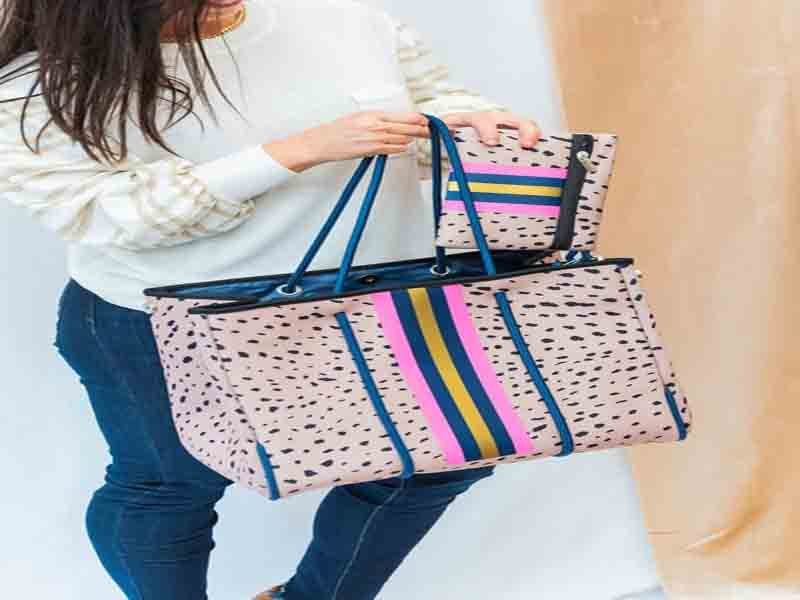
Neoprene is used in bags that need softness, cushioning, water resistance, insulation, flexibility, and a modern tactile feel. The most common neoprene bag categories include tote bags, lunch bags, bottle holders, laptop sleeves, cosmetic pouches, beach bags, sports pouches, wine carriers, cooler bags, travel organizers, and promotional bags. These products use neoprene because it protects contents better than thin fabric, feels lighter and softer than hard cases, and supports custom colors, logos, prints, labels, zippers, handles, and private label packaging.
The reason neoprene appears across so many bag types is simple: it fits real daily routines. People carry cold drinks, lunch containers, laptops, skincare bottles, gym accessories, beach towels, wine bottles, and travel items every day. These items need a bag that is not only attractive, but also comfortable, protective, and practical. Neoprene gives brands a material that feels useful in the hand, not just good in a product photo.
For custom product development, each neoprene bag category has different requirements. A bottle sleeve needs stretch and fit accuracy. A laptop sleeve needs cushioning and inner softness. A lunch bag needs insulation and easy cleaning. A beach tote needs handle strength and splash-friendly performance. A cosmetic pouch needs stain control and zipper quality. This means buyers should not use one neoprene specification for every product. The best result comes from matching thickness, surface, lining, zipper, handle, logo method, and packaging to the exact bag type.
Szoneier supports custom neoprene bag development for customers who want their own logo, size, color, structure, packaging, and product line. Because the company also works with cotton, canvas, polyester, nylon, jute, linen, Oxford fabric, and treated materials, customers can compare neoprene with other materials when needed. This helps avoid forcing neoprene into products where another fabric may perform better.
What Are Neoprene Tote Bags Used For?
Neoprene tote bags are used for beach trips, shopping, travel, fitness, daily commuting, resort products, lifestyle retail, promotional gifts, and private label fashion accessories. They are popular because they feel soft and modern while offering more body and splash resistance than many ordinary cloth totes.
A neoprene tote usually has a larger panel area, which makes it suitable for bold colors, all-over prints, large logos, woven labels, rubber patches, and custom handles. Compared with cotton or canvas totes, neoprene totes feel thicker and more protective. Compared with leather or PU totes, they feel lighter, sportier, and more casual.
| Neoprene Tote Use | Key Benefit | Manufacturing Focus |
|---|---|---|
| Beach Tote | Splash-friendly, soft, colorful | Handle reinforcement, colorfast surface |
| Shopping Tote | Reusable, comfortable, structured | Bottom strength and panel stability |
| Travel Tote | Soft and easy to pack | Zipper, pockets, and handle comfort |
| Fitness Tote | Holds towel, bottle, accessories | Moisture resistance and easy cleaning |
| Resort Gift Bag | Premium casual feel | Branding, color, and packaging |
| Retail Lifestyle Bag | Strong visual identity | Surface texture and logo method |
| Promotional Tote | Useful and visible | Cost control and print clarity |
For tote bags, handle structure is critical. Neoprene itself is flexible, so heavy loads may stretch the handle area if reinforcement is weak. Webbing handles, rope handles, wider stitching, bartack reinforcement, or stronger top-edge finishing may be needed depending on expected load.
Are Neoprene Lunch Bags Popular?
Neoprene lunch bags are popular because they combine softness, insulation, water resistance, and easy carrying. They are widely used for office meals, school lunches, meal-prep containers, picnic snacks, baby food, drink bottles, and promotional food-related products. Neoprene helps slow temperature change and makes the bag more comfortable than rigid lunch boxes.
A standard neoprene lunch bag may use 3mm to 5mm neoprene, zipper closure, handle or strap, and sometimes PEVA or aluminum foil lining. The lining choice depends on whether the customer wants casual insulation, easy cleaning, spill control, or stronger cooler performance.
| Lunch Bag Requirement | Neoprene Contribution | Additional Design Need |
|---|---|---|
| Temperature Support | Foam structure slows heat transfer | PEVA or foil lining can improve performance |
| Moisture Resistance | Handles condensation and light spills | Seam and zipper design still matter |
| Easy Carrying | Soft, lightweight body | Strong handle and comfortable grip |
| Daily Cleaning | Outer surface resists moisture | Wipeable inner lining recommended |
| Food Container Fit | Flexible structure | Pattern must match real container sizes |
| Brand Presentation | Large printable surface | Logo and packaging customization |
For lunch bags, the biggest mistake is focusing only on the outside appearance. Users care about whether the bag fits their containers, whether the zipper closes when filled, whether the lining wipes clean, whether the handle feels strong, and whether the bag smells fresh after unpacking. These details should be checked during sampling.
Which Bottle Bags Use Neoprene?
Neoprene is widely used for water bottle sleeves, wine bottle carriers, baby bottle holders, beer can coolers, coffee cup sleeves, sports bottle holders, and promotional drink sleeves. It is one of the best materials for bottle-related products because it stretches, grips, cushions, insulates, and resists condensation.
Bottle products are a strong match for neoprene because the material wraps closely around round shapes. A snug fit reduces sliding, improves grip, and creates a clean branded surface. For beverage promotions, neoprene sleeves are also useful because customers keep them and reuse them.
| Bottle Product | Common Neoprene Thickness | Key Function |
|---|---|---|
| Water Bottle Sleeve | 2mm–3mm | Condensation control and grip |
| Wine Bottle Carrier | 3mm–5mm | Cushioning and gift presentation |
| Baby Bottle Holder | 2mm–3mm | Temperature support and soft touch |
| Beer Can Cooler | 2mm–3mm | Cold handling and branding |
| Coffee Cup Sleeve | 2mm | Heat comfort and logo display |
| Sports Bottle Holder | 3mm | Grip, stretch, and durability |
| Promotional Drink Sleeve | 2mm–3mm | Low-cost brand visibility |
Fit accuracy is the most important point for bottle products. If the sleeve is too loose, it slips. If it is too tight, the user struggles to insert the bottle. If the seam is poorly placed, it feels uncomfortable in the hand. If the logo is printed on a high-stretch area, it may distort. A good manufacturer tests the sleeve with real bottle sizes before mass production.
Are Neoprene Laptop Sleeves Protective?
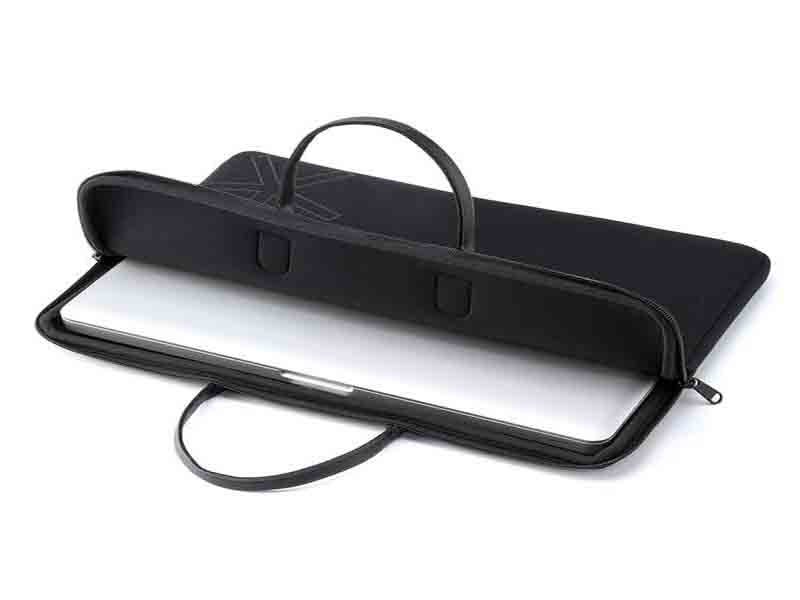
Neoprene laptop sleeves are protective for daily use because the foam body provides cushioning, scratch resistance, and light moisture protection. They are suitable for commuting, office use, school, travel, and corporate gifts. A neoprene laptop sleeve does not replace a hard protective case, but it offers a strong balance of slimness, softness, and everyday protection.
Laptop sleeves usually require thicker neoprene than bottle sleeves or cosmetic pouches. Common thickness ranges from 3mm to 5mm, depending on the protection level and product style. Inner surface selection is also important because the laptop should not be scratched by rough fabric, zipper teeth, or seams.
| Laptop Sleeve Feature | Basic Option | Better Option |
|---|---|---|
| Thickness | 3mm neoprene | 4mm–5mm neoprene |
| Inner Surface | Standard backing | Soft brushed lining |
| Closure | Standard zipper | Water-resistant zipper or zipper flap |
| Edge Finish | Simple stitching | Clean binding or protected seam |
| Logo | Screen print | Woven label, patch, debossed logo |
| Fit | General size | Device-specific sizing |
| Packaging | Bulk pack | Individual retail packaging |
The most common risk for laptop sleeves is overclaiming water protection. A neoprene sleeve can resist light moisture, but a standard zippered sleeve is usually not fully waterproof. If the customer wants stronger rain protection, the design should include better zipper placement, flap construction, seam review, and finished sample testing.
Do Cosmetic Bags Use Neoprene?
Cosmetic bags use neoprene because it is soft, protective, flexible, water-resistant, and visually clean. It works well for makeup, skincare bottles, travel toiletries, salon kits, beauty gift sets, and private label accessories. Neoprene protects small bottles and jars from light impact while resisting bathroom moisture better than many untreated natural fabrics.
However, cosmetics create a different challenge from water. Makeup products may include oils, powders, creams, alcohol-based liquids, sunscreen, foundation, lipstick, and pigments. These can stain surfaces. That is why lining selection is important for neoprene cosmetic bags.
| Cosmetic Bag Need | Neoprene Benefit | Recommended Design Detail |
|---|---|---|
| Protect Bottles | Soft foam body reduces impact | 2mm–3mm neoprene or thicker if premium |
| Resist Moisture | Better than cotton or linen | Smooth surface or lining |
| Clean Interior | Helps after small spills | PEVA or wipeable lining |
| Gift Appearance | Soft and premium touch | Custom logo and packaging |
| Travel Flexibility | Compresses inside luggage | Strong zipper and stable shape |
| Brand Identity | Supports prints, labels, patches | Logo method based on surface |
Beauty customers often care deeply about color, touch, lining, zipper smoothness, and packaging. A cosmetic pouch may be small, but it reflects the brand’s quality. Szoneier can help customers choose surface fabric, lining, logo position, and packaging to match skincare, makeup, wellness, or travel product lines.
Which Sports Bags Use Neoprene?
Sports bags use neoprene for phone pouches, running belts, gym pouches, cycling tool bags, bottle holders, yoga accessory pouches, swimming pouches, fitness gift bags, and small protective organizers. Neoprene is suitable for sports products because it stretches, feels soft against the body, resists sweat exposure, and cushions small items.
Sports products must be tested differently from ordinary pouches. They move with the user. They may rub against clothing. They may be exposed to sweat, outdoor air, rain, gym lockers, damp towels, and repeated handling. The seam must be comfortable, the zipper must open smoothly, and the product must not bounce or shift too much.
| Sports Product | Key Neoprene Advantage | Design Concern |
|---|---|---|
| Running Phone Pouch | Stretch and body comfort | Secure fit and sweat exposure |
| Gym Toiletry Pouch | Moisture resistance | Lining and zipper durability |
| Cycling Tool Pouch | Cushioning and compact shape | Seam strength and vibration |
| Sports Bottle Holder | Grip and condensation control | Strap and fit accuracy |
| Yoga Pouch | Soft lifestyle feel | Color and surface quality |
| Swim Accessory Pouch | Splash-friendly material | Drainage or lining choice |
| Fitness Gift Bag | Useful branded accessory | Logo durability and packaging |
For sports products, the logo method should also be tested. A thick printed logo may crack if the product stretches often. Rubber patches, flexible heat transfers, or woven labels may work better depending on the design.
Different Bag Types Need Different Neoprene Specifications
One of the most common mistakes in neoprene bag sourcing is using the same material specification across different product types. A 3mm neoprene may be great for a cosmetic pouch, but too thin for a laptop sleeve and too thick for a coffee cup sleeve. Product function should guide thickness, density, lining, and accessories.
| Bag Type | Recommended Thickness | Surface Focus | Extra Component |
|---|---|---|---|
| Can Cooler | 2mm–3mm | Printable polyester | Clean edge stitching |
| Bottle Sleeve | 2mm–3mm | Stretch-friendly surface | Comfortable seam |
| Cosmetic Pouch | 2mm–3mm | Smooth or printed surface | Wipeable lining |
| Lunch Bag | 3mm–5mm | Durable outer surface | PEVA or foil lining |
| Laptop Sleeve | 4mm–5mm | Premium surface | Soft inner lining |
| Beach Tote | 3mm–5mm | Colorful printed surface | Reinforced handles |
| Wine Carrier | 3mm–5mm | Gift-friendly surface | Strong handle and base |
| Sports Pouch | 2mm–3mm | Flexible durable surface | Reliable zipper or strap |
This table helps customers avoid overbuilding simple products and underbuilding protective products.
Product Category Affects Logo Choice
The best logo method depends on how the bag is used. A beach tote can carry bold all-over prints. A laptop sleeve may need a subtle logo. A sports pouch needs a logo that survives movement and sweat. A bottle sleeve needs flexible branding because the material stretches.
| Bag Type | Recommended Logo Method | Reason |
|---|---|---|
| Promotional Sleeve | Screen printing | Cost-effective and clear |
| Beach Tote | Sublimation or all-over print | Strong visual appeal |
| Cosmetic Pouch | Heat transfer, woven label, small print | Clean beauty-brand look |
| Laptop Sleeve | Woven label, patch, debossed logo | Professional appearance |
| Sports Pouch | Rubber patch or flexible print | Better durability |
| Lunch Bag | Screen print or woven label | Practical and economical |
| Wine Carrier | Printed logo or leather/PU patch | Gift presentation |
| Cooler Bag | Logo patch or durable print | Handles frequent use |
A logo should never be chosen only from a catalog. It should be tested on the actual material surface and product shape.
Neoprene Bag Applications by Market
Neoprene bags are popular across many industries because the material can be adapted to different user needs.
| Market | Popular Neoprene Products | Main Selling Point |
|---|---|---|
| Food and Beverage | Lunch bags, can coolers, bottle sleeves | Insulation and moisture resistance |
| Beauty and Skincare | Cosmetic pouches, toiletry bags | Soft protection and premium touch |
| Tech Accessories | Laptop sleeves, tablet cases, cable pouches | Cushioning and scratch protection |
| Sports and Fitness | Phone pouches, bottle holders, gym pouches | Stretch and sweat-friendly use |
| Travel | Organizers, wet pouches, protective sleeves | Lightweight protection |
| Beach and Resort | Totes, swim pouches, sunscreen bags | Splash-friendly lifestyle appeal |
| Corporate Gifts | Logo sleeves, pouches, laptop cases | Practical brand visibility |
| Wine and Gift | Wine carriers and bottle bags | Cushioning and presentation |
| School Products | Lunch bags, pencil pouches, bottle holders | Colorful and useful daily items |
| Outdoor Lifestyle | Small pouches and holders | Soft protection and moisture resistance |
For Szoneier customers, these categories can also be developed as product collections. A beverage brand may order bottle sleeves, can coolers, and wine carriers. A beauty brand may order cosmetic pouches and travel organizers. A wellness brand may order bottle holders, yoga pouches, and lunch totes.
When Neoprene Is the Right Material for a Bag
Neoprene is the right material when the product needs soft protection, light moisture resistance, insulation, stretch, and a premium hand feel. It is less ideal when the product needs high breathability, very heavy load capacity, rigid structure, or full waterproof sealing.
| Product Requirement | Is Neoprene a Good Fit? | Comment |
|---|---|---|
| Soft cushioning | Yes | One of neoprene’s strongest advantages |
| Condensation control | Yes | Excellent for bottles and cans |
| Insulation | Yes | Good for soft lunch bags and sleeves |
| Full waterproofing | Sometimes | Needs special construction or other materials |
| Heavy-duty load bearing | Sometimes | Requires reinforcement or another fabric |
| Breathability | No | Foam structure is not breathable |
| Luxury natural texture | Sometimes | Canvas, linen, or leather may fit better |
| Low-cost giveaway | Sometimes | Depends on quantity and thickness |
| Premium tech sleeve | Yes | Strong fit when thickness and lining are correct |
| Beach lifestyle product | Yes | Very suitable with color and handle control |
A multi-material manufacturer can help customers choose honestly. Szoneier can recommend neoprene when it fits and compare other fabrics when the product needs different performance.
How Szoneier Can Customize Neoprene Bag Types
Szoneier can customize neoprene bag types by size, thickness, surface fabric, color, logo method, lining, zipper, handle, pocket, label, packaging, and structure. The company can support low MOQ custom orders, fast sampling, free design support, free sample options, OEM/ODM production, and private label customization.
| Custom Option | Available Direction |
|---|---|
| Size | Custom dimensions for bottles, laptops, lunch boxes, cosmetics |
| Thickness | 2mm, 3mm, 4mm, 5mm or project-based selection |
| Surface | Polyester, nylon, printed fabric, textured surface |
| Logo | Screen print, heat transfer, sublimation, patch, label |
| Lining | PEVA, foil, polyester, soft lining, waterproof-coated lining |
| Zipper | Standard, colored, water-resistant, custom puller |
| Handle | Cut-out, webbing, rope, padded, adjustable strap |
| Pockets | Inner pocket, front pocket, zipper pocket, mesh pocket |
| Packaging | Polybag, hang tag, insert card, retail box, carton |
| Product Line | Matching sets across different neoprene bag categories |
This gives customers flexibility to build products that match their target market instead of buying generic stock designs.
How Does Neoprene Perform?
Neoprene performs well in bags because it provides water resistance, cushioning, insulation, stretch, flexibility, and moderate durability for daily use. It handles condensation, light splashes, small impacts, temperature changes, and repeated handling better than many untreated woven fabrics. However, its performance depends on thickness, density, lamination, surface fabric, seam design, zipper choice, lining, and finished product construction. Neoprene is a strong material for soft protective bags, but it should be used with realistic expectations.
In practical terms, neoprene performs best in everyday situations rather than extreme ones. It is excellent for keeping a cold bottle comfortable to hold, protecting a laptop from light bumps, cushioning cosmetic bottles in luggage, making a lunch bag softer and more insulated, or giving a beach tote a splash-friendly body. It is not automatically suitable for underwater use, heavy rain protection, high-load tool bags, or breathable summer sacks.
For custom manufacturing, performance should be defined before sampling. A customer who asks for a “durable neoprene bag” may mean many different things. Durable against what? Daily carrying? Water exposure? Zipper use? Stretching? Heavy weight? Sunlight? Cosmetic stains? The answer changes material and construction decisions.
How Water-Resistant Is Neoprene?
Neoprene is water-resistant because its closed-cell foam structure limits water absorption. It can handle splashes, condensation, damp surfaces, gym sweat, bathroom moisture, and light rain better than many untreated natural fabrics. However, a finished neoprene bag may still allow water through seams, zippers, openings, stitch holes, or handle attachment points.
This means neoprene is usually suitable for water-resistant products, not automatically waterproof products. The difference is important for marketing and customer satisfaction.
| Water Situation | Neoprene Material Performance | Finished Bag Risk |
|---|---|---|
| Condensation | Strong performance | Seam comfort and fit matter |
| Light Splash | Good performance | Zipper and seams may allow entry |
| Damp Counter | Good performance | Bottom seam may absorb moisture |
| Gym Sweat | Good performance | Cleaning and odor control matter |
| Beach Splash | Good performance | Open-top designs cannot block water |
| Light Rain | Moderate performance | Zipper and seam protection needed |
| Heavy Rain | Limited without improved design | Water may enter through openings |
| Submersion | Not suitable for standard bags | Requires sealed waterproof construction |
For accurate product language, customers should choose words based on construction. A standard neoprene cosmetic pouch can be described as water-resistant or splash-resistant. A lunch bag with lining may be described as easy-clean and insulated. A laptop sleeve with a protected zipper may be described as offering daily splash protection. But “fully waterproof” should only be used when the complete product is designed and tested for that claim.
Is Neoprene Durable for Daily Use?
Neoprene is durable for many daily-use bags when the material quality, lamination, stitching, and accessories are well controlled. It resists ordinary wear better than many thin fabrics and provides a soft protective body. However, durability is not only about the neoprene sheet. The finished bag must also have strong seams, suitable zipper, reinforced handles, stable lamination, and appropriate edge finishing.
A neoprene bag may fail because of weak construction even when the material itself is acceptable. Common durability problems include surface peeling, logo cracking, handle tearing, zipper failure, seam puckering, edge wear, and shape deformation.
| Durability Factor | Good Performance Requires | Common Failure If Ignored |
|---|---|---|
| Foam Density | Stable recovery and support | Bag collapses or feels weak |
| Lamination | Strong bonding | Surface peels or bubbles |
| Surface Fabric | Suitable abrasion resistance | Fabric wears or pills |
| Stitching | Correct tension and thread | Seam opens or puckers |
| Handle Reinforcement | Strong attachment | Handle tears or stretches |
| Zipper Quality | Smooth durable zipper | Jamming or broken puller |
| Logo Method | Flexible and surface-compatible | Cracking or peeling |
| Edge Binding | Proper width and stitching | Raw edge wear |
For daily-use retail products, durability should be tested under realistic conditions. A lunch bag should be filled and carried. A laptop sleeve should be tested with a real device. A bottle holder should be stretched over the target bottle. A beach tote should be loaded with towels and bottles. Real-use testing is more valuable than only checking appearance.
Does Neoprene Stretch Well?
Neoprene stretches well and recovers its shape when the foam density and surface fabric are suitable. This makes it excellent for bottle sleeves, can coolers, phone pouches, sports holders, and products that need a snug fit. Stretch helps the bag adapt to contents and improves user comfort.
However, stretch can also create challenges. If the pattern is too small, the product may overstretch. If the logo method is too rigid, it may crack. If the seam is poorly placed, it may feel uncomfortable or become weak. If the material density is low, the product may stretch out and lose shape.
| Stretch Application | Benefit | Risk |
|---|---|---|
| Bottle Sleeve | Snug fit and better grip | Too tight or logo distortion |
| Phone Pouch | Secure holding | Seam pressure and user discomfort |
| Sports Belt | Body comfort | Overstretch and bounce |
| Can Cooler | Easy insertion | Loose fit if recovery is poor |
| Cosmetic Pouch | Flexible packing | Shape may look less structured |
| Travel Organizer | Compresses in luggage | Overloading may stress seams |
Stretch should be designed, not guessed. The pattern must account for material thickness and elasticity. Logo placement should avoid high-stretch areas unless the print method is flexible enough.
How Does Neoprene Handle Heat and Cold?
Neoprene handles normal daily temperature changes well and provides insulation by slowing heat transfer. It helps cold drinks stay cooler longer and reduces the uncomfortable feeling of holding very cold or warm containers. It is also useful in lunch bags and cooler bags where moderate temperature control is needed.
However, neoprene is not a high-temperature industrial material in normal bag applications. Extreme heat, prolonged sun exposure, poor storage, or unsuitable printing processes may affect the material, adhesive, surface fabric, or logo. For outdoor or vehicle-storage products, material and surface testing may be needed.
| Temperature Scenario | Neoprene Performance | Design Consideration |
|---|---|---|
| Cold Bottle | Strong benefit | Reduces condensation and cold touch |
| Lunch Bag | Good daily insulation | Add lining for better performance |
| Hot Coffee Sleeve | Useful comfort layer | Use suitable thickness |
| Outdoor Beach Use | Generally suitable | Test colorfastness and surface heat exposure |
| Car Heat Storage | Risk depends on material and adhesive | Avoid weak lamination |
| High-Heat Printing | Requires control | Prevent surface or foam damage |
| Freezer/Cold Use | Flexible in many casual settings | Test if special use is required |
For most consumer bags, neoprene handles normal use well. For special environments, Szoneier can help review material and construction before production.
Is Neoprene Easy to Clean?
Neoprene is relatively easy to clean for light daily dirt, splashes, and moisture, especially when the surface is smooth or laminated with suitable fabric. Many neoprene bags can be wiped with a damp cloth, and some can be hand washed depending on construction and logo method. However, cleaning performance depends on surface fabric, lining, stitching, printing, and the type of stain.
Food, cosmetics, oil, sunscreen, ink, and makeup can stain more seriously than plain water. For lunch bags and cosmetic pouches, an easy-clean lining is often more important than the outer neoprene body.
| Product Type | Cleaning Need | Recommended Design |
|---|---|---|
| Bottle Sleeve | Wipe condensation and light dirt | Simple neoprene surface |
| Lunch Bag | Food spills and moisture | PEVA or foil lining |
| Cosmetic Bag | Makeup and skincare stains | Wipeable or darker lining |
| Beach Tote | Sand, sunscreen, water | Durable surface and strong seams |
| Sports Pouch | Sweat and body contact | Smooth surface and care instructions |
| Laptop Sleeve | Dust and light marks | Soft lining and gentle exterior cleaning |
| Travel Pouch | Mixed contents | Lining and zipper quality |
Care instructions should be realistic. If the logo method or accessories are not suitable for machine washing, the product should be described as wipe-clean or hand-clean only. Honest care guidance improves product lifespan and customer satisfaction.
Performance Depends on the Finished Bag, Not Only the Material
Buyers often ask, “Is neoprene water-resistant?” or “Is neoprene durable?” The better question is, “Is this finished neoprene bag designed for my use?” The material is only one part of performance.
| Performance Area | Material Influence | Construction Influence |
|---|---|---|
| Water Resistance | Closed-cell foam resists absorption | Seams, zippers, openings determine leakage |
| Cushioning | Thickness and density provide padding | Fit and lining affect protection |
| Durability | Surface fabric and lamination matter | Stitching, binding, handles, zipper matter |
| Insulation | Foam slows heat transfer | Lining and closure improve results |
| Stretch | Foam and fabric elasticity matter | Pattern and seam placement control fit |
| Cleaning | Surface fabric affects wiping | Lining and logo method affect maintenance |
| Appearance | Color and surface create first impression | Sewing and packaging preserve shape |
This is why Szoneier reviews the full product structure, not only the material roll.
Neoprene Performance Compared With Other Materials
Neoprene should be compared with other fabrics based on the product’s job. It is not always the strongest, cheapest, most breathable, or most waterproof option. But it is excellent for soft protective use.
| Feature | Neoprene | Polyester | Nylon | Canvas | Oxford Fabric |
|---|---|---|---|---|---|
| Cushioning | High | Low unless padded | Low unless padded | Low to medium | Low unless padded |
| Water Resistance | Good | Medium, better with coating | Good with coating | Low unless treated | Good with coating |
| Insulation | Good | Low unless layered | Low unless layered | Low | Low unless layered |
| Stretch | Good | Low to medium | Low | Low | Low |
| Breathability | Low | Medium | Medium | Medium | Low to medium |
| Durability | Good | Medium to good | Very good | Good | Very good |
| Structure | Soft and flexible | Lightweight | Strong and light | Firm and natural | Strong and structured |
| Cost | Medium | Low to medium | Medium to high | Medium | Medium |
| Best Use | Sleeves, pouches, lunch bags, bottle holders | Promotional and lightweight bags | Outdoor and travel bags | Totes and lifestyle bags | Backpacks and utility bags |
This comparison helps customers decide whether neoprene is truly the best choice. If cushioning and insulation are important, neoprene is strong. If breathability or heavy-duty structure is more important, another fabric may be better.
Common Performance Misunderstandings
Misunderstandings can lead to wrong material choices or poor product claims.
| Misunderstanding | Reality |
|---|---|
| Thicker neoprene always means better quality | Density, lamination, surface, and sewing also matter |
| Neoprene bags are fully waterproof | Standard stitched bags are usually water-resistant only |
| Neoprene does not need lining | Lining may be important for lunch, cosmetics, and tech |
| Any logo method works on neoprene | Stretch and surface affect logo durability |
| Neoprene is always better than polyester | Polyester may be better for lightweight low-cost bags |
| Neoprene is too heavy for all bags | Correct thickness can be lightweight and practical |
| Neoprene is only for sports products | It is also used in beauty, food, tech, travel, and lifestyle |
| A sample photo proves quality | Real-use testing is needed |
A professional manufacturer should help customers understand these trade-offs instead of overselling the material.
How to Define Performance Before Sampling
Before sampling, customers should define what performance means for their product. This makes the sample more accurate and reduces revision cycles.
| Performance Goal | What to Tell the Factory |
|---|---|
| Better water resistance | Exposure level: splash, rain, condensation, spills |
| Stronger protection | Contents: laptop, bottle, cosmetics, glass, electronics |
| Insulation | Use time: office lunch, outdoor picnic, drink sleeve |
| Premium feel | Desired touch, thickness, surface, packaging |
| Low cost | Target price and acceptable simplifications |
| Fast launch | Deadline and willingness to use standard materials |
| Private label | Logo, label, packaging, brand color requirements |
| Daily heavy use | Expected weight, frequency, and stress points |
| Easy cleaning | Stain type: food, makeup, sweat, sand |
| Retail appearance | Display method and packaging requirements |
This table is useful for preparing inquiries to Szoneier. Clear performance goals help the factory recommend the right material and structure quickly.
Testing Neoprene Bag Performance
Testing should match the product’s real use. A bottle sleeve does not need the same test as a laptop sleeve. A cosmetic pouch does not need the same test as a cooler bag.
| Test | What It Checks | Suitable Products |
|---|---|---|
| Fit Test | Correct size and usability | Sleeves, bottle holders, pouches |
| Stretch Test | Recovery and logo durability | Bottle sleeves, sports pouches |
| Load Test | Handle and seam strength | Totes, lunch bags, wine carriers |
| Splash Test | Water resistance | Beach bags, cosmetic pouches |
| Wet Surface Test | Bottom seam moisture | Lunch bags, laptop sleeves |
| Insulation Check | Temperature control | Lunch bags, coolers, bottle sleeves |
| Zipper Cycle Test | Smooth opening and durability | All zippered bags |
| Rub Test | Surface and logo durability | Printed bags |
| Cleaning Test | Wipeability and stain behavior | Lunch and cosmetic bags |
| Odor Check | Unboxing experience | Retail and gift products |
For customers planning bulk orders, sample testing is a small step that can prevent large problems later.
How Szoneier Helps Improve Performance
Szoneier helps improve neoprene bag performance by reviewing material selection, thickness, density, surface fabric, lining, logo method, seam design, zipper choice, handle structure, quality testing, and packaging. Instead of simply producing a generic bag, the team can recommend changes based on the product’s real use.
| Performance Need | Szoneier Support |
|---|---|
| Water resistance | Material, seam, zipper, and lining review |
| Better cushioning | Thickness and density recommendation |
| Insulation | Neoprene thickness plus PEVA or foil lining |
| Soft premium feel | Surface fabric and finishing options |
| Stronger carrying | Handle reinforcement and seam testing |
| Better branding | Print, patch, label, and packaging selection |
| Lower cost | Practical material and structure optimization |
| Fast sampling | Standard material and efficient sample process |
| Private label | Custom logo, label, tag, and packaging |
| Long-term consistency | QC checks from material to packed goods |
For customers, this support makes product development easier. You do not need to know every technical answer before contacting the factory. You need to explain your product idea, use scenario, quantity, logo, and target market. Szoneier can help translate that into a workable material and bag structure.
What Are Neoprene’s Limits?

Neoprene is a strong material for soft protective bags, but it is not perfect for every product. Its main limits are that standard neoprene bags are usually water-resistant rather than fully waterproof, the material is not very breathable, thicker neoprene can add weight and bulk, low-quality neoprene may have odor, and stitched construction can reduce water protection. Neoprene works best when customers understand these limits early and design around them with the right thickness, surface fabric, lining, zipper, seam structure, handle reinforcement, and product wording.
This is important because many product problems do not come from neoprene being “bad.” They come from using neoprene in the wrong way. A standard neoprene laptop sleeve may be excellent for daily commuting, but not suitable for heavy rain protection unless the zipper and seams are improved. A neoprene lunch bag may be comfortable and insulated, but not leakproof unless the lining and seams are designed for spill control. A neoprene beach tote may be perfect for splash-friendly use, but cannot be fully waterproof if it has an open top.
For customers, the smarter question is not “Is neoprene good or bad?” The better question is “Does neoprene match this product’s real use?” If yes, it can create a high-value, practical bag. If not, another material such as coated nylon, Oxford fabric, TPU-coated fabric, PVC tarpaulin, canvas, polyester, or a hybrid material system may perform better. Szoneier’s advantage is that it works with multiple fabric categories, so customers can compare options instead of forcing neoprene into every product.
Is Neoprene Fully Waterproof?
Neoprene material is water-resistant, but most standard neoprene bags are not fully waterproof. The foam core can resist moisture well, but finished bags usually have stitched seams, zipper openings, cut edges, handle attachments, and sometimes open tops. These areas can allow water to enter. A neoprene bag should only be described as waterproof if the full construction has been specially designed and tested for that claim.
This difference matters for customer trust. A buyer may think “neoprene is used in wetsuits, so a neoprene bag must be waterproof.” That sounds logical, but bags and wetsuits are not made or used in the same way. Wetsuits are designed to manage water around the body. Bags are expected to protect contents from water entry. A stitched bag with a zipper has weak points that the material sheet alone cannot solve.
| Product Claim | What It Means | Suitable for Standard Neoprene Bags? | Risk |
|---|---|---|---|
| Moisture-Resistant | Handles damp hands, condensation, light moisture | Yes | Low |
| Splash-Resistant | Handles casual splashes | Yes | Low |
| Water-Resistant | Handles everyday moisture exposure | Usually yes | Low to medium |
| Weather-Resistant | Handles some outdoor exposure | Sometimes, with better closure | Medium |
| Waterproof | Prevents water entry under defined conditions | Not unless specially constructed and tested | High |
| Leakproof | Prevents liquid from escaping or entering | Not without sealed lining or special design | High |
| Dry Bag Level | Protects contents in serious wet environments | Usually no; coated/welded fabrics are better | Very high |
For most neoprene products, water-resistant language is more accurate and more sustainable for long-term reviews. Customers appreciate products that do what they promise. Overclaiming may create short-term sales interest, but it can damage repeat orders and product ratings.
Is Neoprene Breathable?
Neoprene is not very breathable because its foam rubber structure is designed to resist moisture and trap air, not to allow airflow. This is useful for insulation and water resistance, but it can be a limitation for products that touch the body for long periods or need ventilation.
For example, a neoprene running phone pouch may feel comfortable at first, but if it sits tightly against the skin during long exercise, heat and sweat can build up. A neoprene sports bag used for damp gym clothes may trap odor if there is no ventilation. A neoprene pouch for wet swim items may need mesh panels or drainage features if the contents need to dry.
| Product Situation | Breathability Concern | Design Solution |
|---|---|---|
| Running Pouch | Sweat buildup against body | Add breathable backing or mesh panel |
| Gym Bag | Damp clothes create odor | Use ventilation eyelets or mesh sections |
| Swim Pouch | Wet items may stay damp | Add drainage or breathable pocket |
| Shoe Bag | Odor and moisture retention | Use mesh, polyester, or hybrid design |
| Medical Support Bag | Heat-sensitive contents | Consider breathable fabric or lining |
| Baby Product Bag | Hygiene and cleaning needs | Use easy-clean lining and ventilation if needed |
This does not mean neoprene is unsuitable for sports or active products. It means the product should be designed correctly. A body-contact pouch may need softer edges, breathable back panels, and easy-clean surfaces. A gym pouch may need lining or ventilation. A shoe bag may be better with polyester mesh or Oxford fabric rather than full neoprene.
Can Neoprene Feel Heavy or Bulky?
Neoprene can feel heavier or bulkier than thin woven fabrics, especially when thickness increases to 4mm, 5mm, or more. This is not always a problem. For laptop sleeves, cooler bags, wine carriers, and protective pouches, extra thickness may improve value. But for foldable shopping bags, lightweight promotional bags, or compact travel items, too much neoprene can make the product less convenient.
Bulk also affects sewing. Thick neoprene creates larger seam edges, especially at corners, zipper ends, and folded areas. If the pattern is not adjusted, the finished bag may look bulky or uneven. This is why thickness should be chosen based on function, not simply because thicker feels more premium.
| Thickness Choice | Advantage | Possible Limitation |
|---|---|---|
| 2mm | Light, flexible, easy to fold | Less cushioning and insulation |
| 3mm | Balanced hand feel and function | May not be enough for heavy protection |
| 4mm | Better cushioning and structure | More seam bulk |
| 5mm | Stronger protective and insulated feel | Heavier, harder to sew |
| 6mm+ | Specialty protection | Usually too bulky for normal bags |
A practical example: a 5mm neoprene laptop sleeve may feel protective and premium. But a 5mm neoprene cosmetic pouch may feel too stiff, reduce internal capacity, and create bulky corners. For a cosmetic pouch, 2mm to 3mm may offer a better user experience. For a lunch bag, 3mm to 5mm may be appropriate if paired with the right lining and zipper.
Does Neoprene Have Odor?
Neoprene can have odor, especially if low-grade foam, poor adhesive, fresh lamination, unsuitable ink, or rushed sealed packaging is used. Some rubber-like smell is common in many neoprene products, but strong or unpleasant odor can hurt customer experience, especially for retail, beauty, food, baby, and gift products.
Odor control starts with material selection and continues through lamination, printing, airing, storage, and packing. If products are packed in sealed polybags immediately after production, odor can become trapped and stronger when the customer opens the package.
| Odor Source | Why It Happens | Control Method |
|---|---|---|
| Low-Grade Neoprene Foam | Strong rubber smell | Choose better material grade |
| Lamination Adhesive | Glue smell remains after bonding | Allow proper curing and ventilation |
| Printing Ink | Ink not fully dried or unsuitable | Use suitable ink and drying process |
| Heat Transfer Film | Chemical smell from film or adhesive | Test before bulk production |
| Lining Material | Plastic odor from low-quality lining | Select better PEVA, polyester, or foil lining |
| Sealed Packing | Odor trapped inside packaging | Air products before packing |
| Warehouse Conditions | Heat and poor airflow intensify smell | Control storage environment |
For products used near food or cosmetics, odor is a serious quality point. A lunch bag that smells strong may make users uncomfortable even if the material is safe. A cosmetic pouch with odor may feel low-end. For high-end customers, Szoneier can help review material grade, airing time, printing process, and packaging method to reduce odor risk.
When Should Buyers Choose Another Fabric?
Buyers should choose another fabric when the product needs high breathability, full waterproof protection, heavy-duty load strength, rigid shape, very low cost, natural eco-style appearance, or strong abrasion resistance in harsh outdoor use. Neoprene is excellent for soft protective products, but it is not always the best option.
Because Szoneier works with multiple materials, customers can choose based on product function instead of guessing. Cotton, canvas, polyester, nylon, Oxford fabric, jute, linen, TPU-coated fabric, and hybrid structures each have different strengths.
| Product Requirement | Neoprene Fit | Better Option |
|---|---|---|
| Fully Waterproof Dry Bag | Limited | TPU-coated fabric or PVC tarpaulin |
| Heavy-Duty Backpack | Limited alone | Oxford fabric or nylon |
| Breathable Sports Sack | Poor | Mesh, polyester, nylon |
| Natural Eco Gift Bag | Not ideal | Cotton, canvas, jute, linen |
| Ultra-Light Shopping Bag | Not ideal | Polyester or nylon |
| Formal Premium Fashion Bag | Sometimes | Leather, PU, canvas, structured fabric |
| Tool Bag with Heavy Load | Limited | Oxford fabric, canvas, reinforced nylon |
| Foldable Giveaway Bag | Sometimes too bulky | Polyester or non-woven fabric |
| Rugged Outdoor Pouch | Sometimes | Coated nylon, Oxford, TPU hybrid |
A good manufacturer should not always say yes to neoprene. Sometimes the better advice is, “Use neoprene for the protective part, but add Oxford fabric at the bottom,” or “Use polyester for the outer shell and foam for insulation,” or “Use TPU-coated fabric if waterproofing is the main requirement.”
How Can Design Reduce Neoprene’s Weaknesses?
Design can reduce neoprene’s weaknesses by adding lining, ventilation, zipper flaps, seam reinforcement, better binding, suitable thickness, odor control, accurate product claims, and hybrid material structures. Many neoprene limitations can be managed if they are considered early.
For example, breathability can be improved with mesh panels. Water protection can be improved with zipper flaps and better seam placement. Carry strength can be improved with webbing handles. Cleaning can be improved with PEVA lining. Bulk can be reduced by choosing 2mm or 3mm material instead of 5mm. Odor can be reduced through better material and airing.
| Neoprene Limit | Design Improvement |
|---|---|
| Not Fully Waterproof | Add zipper flap, lining, seam planning, or use coated material |
| Low Breathability | Add mesh panels or ventilation holes |
| Bulk at Seams | Adjust pattern, trim seam allowance, choose suitable thickness |
| Odor Risk | Use better material, proper curing, airing before packing |
| Stretch Distortion | Place logo away from high-stretch zones |
| Handle Stretch | Add webbing, reinforcement, or stronger stitch |
| Cleaning Difficulty | Add wipeable lining |
| Shape Collapse | Use higher-density foam or structure support |
| Surface Wear | Select stronger surface fabric |
| Overheating in Sports Use | Use breathable backing or hybrid design |
This is where Szoneier’s product development support can be valuable. The customer does not need to solve every issue alone. The factory can suggest practical structure changes before sampling.
The Biggest Risk Is Not the Material, It Is the Claim
The most common neoprene problem is not that the product fails as a material. It is that the product is described incorrectly. If a standard neoprene bag is sold as fully waterproof, customers may use it in conditions it was never designed for. This creates disappointment even if the bag is well made.
| Product Type | Safer Claim | Claim to Avoid Unless Tested |
|---|---|---|
| Bottle Sleeve | Moisture-resistant bottle sleeve | Waterproof bottle bag |
| Cosmetic Pouch | Water-resistant cosmetic pouch | Fully waterproof makeup bag |
| Lunch Bag | Insulated neoprene lunch bag with easy-clean lining | Leakproof lunch bag |
| Beach Tote | Splash-resistant beach tote | Waterproof beach bag |
| Laptop Sleeve | Water-resistant laptop sleeve for daily protection | Rainproof laptop case |
| Sports Pouch | Sweat-resistant sports pouch | Waterproof running pouch |
| Wine Carrier | Cushioned neoprene wine carrier | Leakproof wine bag |
| Travel Pouch | Water-resistant travel pouch | Dry storage pouch |
Good wording protects the brand. It also improves customer satisfaction because the product is judged against realistic expectations.
Neoprene Weaknesses by Product Category
Different products expose different weaknesses. A beach tote faces water and sun. A sports pouch faces sweat and movement. A lunch bag faces food moisture and odor. A laptop sleeve faces zipper and fit concerns.
| Product Type | Main Neoprene Limit | How to Improve |
|---|---|---|
| Beach Tote | Open top means not waterproof | Use splash-friendly claim and strong handles |
| Lunch Bag | Internal spills may leak | Add PEVA or foil lining |
| Laptop Sleeve | Zipper and seams may allow water | Add zipper protection and soft lining |
| Cosmetic Pouch | Makeup stains can be hard to clean | Add wipeable or dark lining |
| Sports Pouch | Sweat and heat buildup | Use breathable panels or easy-clean surface |
| Bottle Sleeve | Logo may stretch | Use flexible logo method |
| Wine Carrier | Bottle weight stresses seams | Reinforce handle and base |
| Cooler Bag | May not be leakproof | Use lining and better closure design |
This table helps buyers identify product-specific risks before sampling.
Neoprene vs Waterproof Coated Fabrics
For water-related projects, neoprene is often compared with coated fabrics. The correct choice depends on whether the customer needs splash resistance, insulation, cushioning, or full waterproofing.
| Material | Water Performance | Cushioning | Flexibility | Best Use |
|---|---|---|---|---|
| Neoprene | Water-resistant | High | High | Sleeves, lunch bags, bottle holders |
| TPU-Coated Nylon | Strong waterproof potential | Low unless padded | Good | Dry bags, outdoor pouches |
| PVC Tarpaulin | Very strong waterproof potential | Low unless padded | Medium | Heavy-duty waterproof bags |
| PU-Coated Oxford | Good water resistance | Low unless padded | Medium | Backpacks, school bags, tool bags |
| Coated Polyester | Moderate to good | Low unless padded | Good | Promotional and travel bags |
| Canvas with Coating | Moderate | Low to medium | Medium | Lifestyle totes |
If the goal is full waterproofing, neoprene may not be the first choice. If the goal is soft protection with water resistance and insulation, neoprene is usually excellent.
How to Decide Whether Neoprene Is Worth the Cost
Neoprene usually costs more than simple thin polyester or non-woven fabric, so it should add value that users can feel. It is worth the cost when cushioning, insulation, stretch, moisture resistance, or premium touch matters.
| Product Goal | Is Neoprene Worth It? | Reason |
|---|---|---|
| Basic giveaway shopping bag | Sometimes no | Polyester or non-woven may be cheaper |
| Bottle sleeve with logo | Yes | Stretch, insulation, and branding value |
| Laptop sleeve | Yes | Cushioning and protection matter |
| Lunch bag | Yes | Insulation and soft carry matter |
| Cosmetic pouch | Yes | Soft protection and moisture resistance |
| Heavy tool bag | Usually no alone | Oxford or canvas may be stronger |
| Beach tote | Yes | Splash-friendly and lifestyle appeal |
| Foldable travel bag | Sometimes no | Nylon or polyester may be lighter |
The best material choice is always connected to what the user will notice and appreciate.
How Szoneier Helps Avoid Neoprene Misuse
Szoneier helps customers avoid neoprene misuse by reviewing product purpose, water exposure, weight load, cleaning needs, target price, logo method, packaging, and market position before production. If neoprene is suitable, the team can recommend the right thickness, density, surface, lining, zipper, seam, and branding method. If another material is better, Szoneier can compare alternatives.
| Customer Concern | Szoneier Support |
|---|---|
| Unsure whether neoprene is suitable | Compare neoprene with other fabric options |
| Need better water resistance | Recommend zipper, lining, seam, or coated material |
| Worried about odor | Review material grade and packing process |
| Need lightweight product | Suggest thinner neoprene or other fabrics |
| Need strong load capacity | Add reinforcement or recommend Oxford/canvas |
| Need premium feel | Improve surface, density, logo, and packaging |
| Need accurate claims | Help match wording to construction |
| Need low MOQ testing | Use available materials and practical custom options |
This prevents costly mistakes and helps customers build products that match real user expectations.
Which Neoprene Thickness Is Best?
The best neoprene thickness for bags depends on the product’s purpose. 2mm neoprene is best for lightweight sleeves, can coolers, and promotional items. 3mm neoprene is a balanced choice for cosmetic bags, bottle holders, lunch bags, and general pouches. 4mm to 5mm neoprene is better for laptop sleeves, cooler bags, wine carriers, and protective products that need more cushioning or insulation. Thicker neoprene does not automatically mean better quality; density, lamination, surface fabric, sewing, lining, and final construction are equally important.
Thickness affects almost everything: hand feel, weight, protection, insulation, sewing difficulty, seam bulk, cost, and packaging. Customers often ask for thicker material because they want premium quality. But premium quality is not always about thickness. A well-made 3mm pouch may feel more professional than a poorly made 5mm pouch. A 2mm can cooler may perform perfectly because it does not need heavy padding. A 5mm laptop sleeve may be excellent if the zipper, lining, and edge finishing match the thickness.
For custom projects, thickness should be chosen after understanding what the bag will carry, how often it will be used, whether it needs insulation, whether it needs to stretch, and how it will be branded. Szoneier helps customers choose thickness based on product function rather than guesswork.
What Is 2mm Neoprene Used For?
2mm neoprene is used for lightweight, flexible, cost-efficient products such as can coolers, coffee cup sleeves, simple bottle sleeves, promotional pouches, light cosmetic bags, small travel organizers, and soft covers. It is easy to fold, comfortable to hold, and suitable when the product does not need strong cushioning.
The main advantage of 2mm neoprene is flexibility. It works well for products where low weight, lower cost, and easy handling matter. It also reduces seam bulk, making it suitable for small products.
| 2mm Neoprene Product | Why It Works | Limitation |
|---|---|---|
| Can Cooler | Flexible and easy to grip | Less insulation than thicker neoprene |
| Coffee Cup Sleeve | Thin and comfortable | Limited protection |
| Promotional Pouch | Cost-effective | Less premium feel |
| Light Bottle Sleeve | Easy to stretch | Less cushioning |
| Small Cosmetic Bag | Soft and compact | May lack structure |
| Phone Cover | Slim and flexible | Less impact protection |
| Event Giveaway | Budget-friendly | Not ideal for heavy use |
2mm neoprene is not weak by default. It is simply designed for lighter use. If the product’s main purpose is branding, comfort, and basic moisture resistance, 2mm may be enough.
When Is 3mm Neoprene Better?
3mm neoprene is often the most balanced thickness for many custom bag projects. It provides better cushioning and insulation than 2mm while still remaining flexible, comfortable, and cost-effective. It is commonly used for bottle holders, cosmetic pouches, lunch bags, wine sleeves, travel pouches, sports pouches, and general custom bags.
For many customers, 3mm is the safest starting point because it offers a good balance of hand feel and manufacturability. It feels more substantial than 2mm but does not create as much bulk as 5mm.
| 3mm Neoprene Product | Main Benefit | Design Focus |
|---|---|---|
| Cosmetic Pouch | Soft protection and good structure | Lining and zipper quality |
| Bottle Holder | Grip, cushioning, condensation control | Fit and seam comfort |
| Lunch Bag | Moderate insulation | Add lining if needed |
| Sports Pouch | Flexible and protective | Sweat and seam durability |
| Wine Sleeve | Better bottle protection | Handle reinforcement |
| Travel Organizer | Protective but not bulky | Zipper and compartments |
| Gift Bag | Better perceived value | Logo and packaging |
3mm neoprene is often suitable for low MOQ custom projects because it is common and versatile. It can be adapted to many products without extreme cost or sewing difficulty.
Which Bags Need 4mm or 5mm Neoprene?
4mm to 5mm neoprene is used for bags that need stronger cushioning, insulation, shape, or premium hand feel. Common products include laptop sleeves, tablet cases, cooler bags, lunch bags, wine carriers, camera pouches, protective organizers, and high-end bottle holders.
These thicknesses make the product feel more protective, but they also increase cost and seam bulk. The design must account for thicker edges, zipper alignment, and folded corners. If handled poorly, the product may look bulky rather than premium.
| 4mm–5mm Neoprene Product | Why Thicker Material Helps | Manufacturing Concern |
|---|---|---|
| Laptop Sleeve | Better cushioning and device protection | Accurate fit and zipper clearance |
| Tablet Case | More protective feel | Soft lining and edge finish |
| Cooler Bag | Better insulation | Lining and closure design |
| Wine Carrier | Stronger bottle protection | Handle and bottom reinforcement |
| Camera Pouch | More padding | Zipper and inner surface |
| Premium Bottle Holder | Better structure | Seam comfort |
| Lunch Tote | More insulation and shape | Bulk and capacity control |
For protective products, thickness should be matched with density. A higher-density 4mm material may feel better than a low-density 5mm material. Customers should not compare thickness alone.
Does Thicker Neoprene Mean Better Quality?
Thicker neoprene does not automatically mean better quality. Quality depends on thickness, density, lamination strength, surface fabric, odor control, cutting accuracy, sewing quality, edge finishing, zipper selection, lining, and packaging. Thicker material can improve cushioning and insulation, but it can also create bulk, heavier weight, sewing difficulty, and higher cost.
A product should use the thickness that matches its purpose. Too thin can feel weak. Too thick can feel clumsy. The best specification is the one that makes the final product easy to use and reliable.
| Factor | Why It Matters |
|---|---|
| Thickness | Controls padding, insulation, and body |
| Density | Controls support, recovery, and durability |
| Lamination | Prevents peeling and surface defects |
| Surface Fabric | Affects touch, printing, and appearance |
| Sewing Quality | Controls seam strength and shape |
| Edge Binding | Improves finish and durability |
| Zipper Choice | Affects daily user experience |
| Lining | Improves cleaning, insulation, or scratch protection |
| Pattern Design | Controls fit and capacity |
| Packing Method | Prevents deformation during shipping |
A simple example: a customer asks for a 5mm cosmetic pouch because they want “premium.” But after sampling, the pouch looks bulky and has less internal space. A 3mm pouch with a better zipper, clean lining, and custom label may feel much more premium. This is why product function must guide thickness.
How Does Density Affect Performance?
Density affects how firm, supportive, and durable neoprene feels. Two materials with the same thickness can perform differently if their density is different. Higher-density neoprene usually offers better compression recovery, stronger structure, and a more premium feel. Lower-density neoprene may be softer and cheaper, but it can collapse, deform, or feel less durable.
| Density Level | Feel | Best Use | Risk |
|---|---|---|---|
| Low Density | Very soft, lighter feel | Simple promotions, low-cost items | May collapse or feel cheap |
| Medium Density | Balanced support and flexibility | General bags and pouches | Good all-around choice |
| Higher Density | Firm, stable, premium | Laptop sleeves, retail products, protective bags | Higher cost |
Density is especially important for laptop sleeves, wine carriers, cooler bags, and premium retail products. For bottle sleeves and can coolers, medium density may be enough. For short-term promotional items, lower density may be acceptable if the customer understands the trade-off.
How Should Buyers Choose Thickness?
Buyers should choose neoprene thickness based on product type, contents, protection level, insulation need, flexibility, target price, logo method, and packaging. The best approach is to tell the manufacturer the use scenario first, then confirm thickness through sampling.
| Product Goal | Recommended Thickness Direction |
|---|---|
| Lightweight giveaway | 2mm |
| Can cooler or drink sleeve | 2mm–3mm |
| Bottle holder | 2mm–3mm |
| Cosmetic pouch | 2mm–3mm |
| General lunch bag | 3mm |
| Better insulated lunch bag | 3mm–5mm with lining |
| Laptop sleeve | 4mm–5mm |
| Wine carrier | 3mm–5mm |
| Beach tote | 3mm–5mm depending on structure |
| Sports pouch | 2mm–3mm |
| Protective camera pouch | 4mm–5mm |
| Premium retail pouch | 3mm with better density and finishing |
Sampling is the best way to confirm. A material that sounds right on paper may feel different in a finished product. Szoneier can prepare samples and help customers compare options before bulk production.
Thickness Changes Cost, Weight, and User Experience
Thickness affects more than protection. It changes price, packing volume, sewing speed, seam bulk, and how the customer uses the product.
| Thickness | Cost Impact | Weight Impact | User Experience |
|---|---|---|---|
| 2mm | Lower | Light | Flexible, simple, easy to store |
| 3mm | Medium | Moderate | Balanced feel and function |
| 4mm | Higher | Heavier | More protective and structured |
| 5mm | Higher | Heavier | Premium protection but bulkier |
| 6mm+ | Highest | Heavy | Specialty use only |
A buyer should consider whether users will carry the product often. A thicker bag may feel premium in the hand, but if it becomes too heavy or bulky, users may not enjoy it.
Thickness and Logo Method Must Work Together
Logo durability can be affected by thickness and stretch. Thin neoprene may stretch more easily in some products, while thick neoprene may create more curves and seam bulk. The logo method must match the surface and use.
| Product Situation | Logo Risk | Better Method |
|---|---|---|
| Stretchy bottle sleeve | Logo cracking | Flexible ink or sublimation |
| Thick laptop sleeve | Logo near seam distortion | Woven label or patch on flat area |
| Lunch bag with cleaning | Logo wear from wiping | Durable print or label |
| Beach tote with sun and water | Color fading or rub | Tested sublimation or patch |
| Sports pouch with sweat | Print degradation | Rubber patch or flexible transfer |
| Cosmetic pouch in handbag | Surface rubbing | Heat transfer or woven label |
Logo testing should happen on the actual thickness and surface, not only on a sample swatch.
Thickness and Seam Design
Thicker neoprene creates thicker seams. This can make products look bulky if the pattern and binding are not adjusted. Seam design becomes more important as thickness increases.
| Thickness | Seam Design Concern | Suggested Control |
|---|---|---|
| 2mm | Edge may feel thin | Clean stitching or narrow binding |
| 3mm | Balanced seam control | Standard binding often works |
| 4mm | Bulk begins at corners | Trim allowance and use proper binding |
| 5mm | Zipper and corners need careful planning | Wider binding and adjusted pattern |
| 6mm+ | Standard sewing may be difficult | Specialty construction needed |
A thick material with poor seam design does not look premium. It looks clumsy. This is why experienced production matters.
Thickness and Product Category Match
Thickness should create value the user can feel. If the user does not benefit from the added thickness, it may only increase cost.
| Product Category | Too Thin Problem | Too Thick Problem |
|---|---|---|
| Bottle Sleeve | Poor insulation and weak feel | Hard to insert bottle |
| Laptop Sleeve | Poor protection | Bulky and heavy |
| Cosmetic Pouch | Weak structure | Less internal space |
| Lunch Bag | Limited insulation | Harder to fold or pack |
| Beach Tote | Weak body | Heavy and bulky |
| Sports Pouch | Low protection | Less comfortable on body |
| Wine Carrier | Poor bottle protection | Bulky gift presentation |
| Can Cooler | Weak insulation | Less flexible and higher cost |
The right thickness is the one that supports the product’s main job without hurting usability.
How Szoneier Helps Customers Test Thickness
Szoneier can help customers test neoprene thickness through sample comparison. Customers can compare 2mm, 3mm, 4mm, and 5mm options based on hand feel, fit, cost, logo effect, packing volume, and product function. This is especially useful for customers developing new products or private label collections.
| Customer Need | Szoneier Thickness Support |
|---|---|
| Unsure which thickness to choose | Recommend based on product use |
| Need low cost | Suggest thinner or standard material options |
| Need premium feel | Compare density, surface, and thickness |
| Need protection | Suggest thicker neoprene and lining |
| Need insulation | Recommend thickness plus lining structure |
| Need stretch fit | Test pattern and recovery |
| Need fast sample | Use available common thickness |
| Need private label quality | Balance thickness with finishing and packaging |
The best thickness decision usually comes after touching and testing the sample. Szoneier can guide that process so customers avoid unnecessary cost and get a product that feels right to the end user.
How Can Neoprene Bags Be Customized?
Neoprene bags can be customized by size, thickness, color, surface fabric, printing method, logo placement, zipper, handle, lining, pocket structure, edge binding, labels, tags, packaging, and product shape. This is one of the biggest reasons neoprene is popular for custom bag projects: it gives customers both functional performance and strong brand expression. A brand can create a simple logo bottle sleeve, a colorful beach tote, a premium laptop sleeve, a wipeable cosmetic pouch, an insulated lunch bag, or a full private label product line using the same core material family.
Customization should not be treated as decoration only. In neoprene bag manufacturing, every custom choice affects usability. A logo method must match the surface and stretch. A zipper must match water-resistance expectations. A lining must match cleaning or insulation needs. A handle must match load weight. A color must match brand positioning and production feasibility. A packaging method must match retail channel and shipping requirements. Good customization makes the product look better and work better at the same time.
For customers, the goal is not simply to “add a logo.” The real goal is to create a product people will keep using. If a neoprene bag looks attractive but the zipper jams, the logo cracks, the lining stains, or the handle feels weak, the custom design loses value. A strong manufacturer helps customers choose custom details that support the product’s real-life use.
Szoneier supports custom neoprene bag projects through free design, low MOQ customization, fast sampling, free sample support, OEM/ODM production, private label development, and multiple material options. Since the company also works with cotton, canvas, polyester, nylon, jute, linen, Oxford fabric, and treated materials, customers can also explore hybrid designs when neoprene alone is not enough.
Can Neoprene Be Printed?
Neoprene can be printed, but the best printing method depends on the surface fabric, artwork style, stretch level, order quantity, color requirement, and product use. Common printing methods include screen printing, sublimation printing, heat transfer, digital print on laminated fabric, and specialty logo applications such as rubber patches, woven labels, embroidery, embossing, and debossing.
For simple logos, screen printing is often practical and cost-effective. For full-color graphics or all-over patterns, sublimation printing is often better when the neoprene surface is polyester-based. For detailed logos or smaller runs, heat transfer may be suitable. For premium branding, rubber patches, silicone labels, PU patches, or woven labels may create a stronger visual effect.
| Printing Method | Best For | Strength | Limitation |
|---|---|---|---|
| Screen Printing | Simple logos, bold graphics | Cost-effective and clear | Limited color complexity |
| Sublimation Printing | Full-color patterns, all-over designs | Bright and smooth on polyester surface | Requires suitable surface fabric |
| Heat Transfer | Detailed logos and smaller runs | Clean edges and flexible design | Must test stretch durability |
| Digital Printed Fabric | Custom surface patterns | Strong visual customization | Requires material preparation |
| Rubber Patch | Sporty premium branding | Durable and dimensional | Higher cost, may need mold |
| Woven Label | Private label identity | Clean and professional | Smaller logo area |
| Embroidery | Textured premium effect | Strong perceived quality | May be difficult on some neoprene structures |
| Embossing/Debossing | Subtle premium branding | Minimalist and elegant | Depends on surface compatibility |
Printing should always be tested on the actual neoprene surface. A logo that looks beautiful on a flat artwork file may behave differently on a stretchy bottle sleeve or curved cosmetic pouch. The material surface, thickness, and stretch direction all affect final results.
Which Logo Methods Work Best?
The best logo method depends on the product category. A neoprene can cooler may only need a simple screen-printed logo. A beach tote may benefit from all-over sublimation. A premium laptop sleeve may look better with a woven label, rubber patch, or debossed PU patch. A sports pouch may need a durable, flexible logo that can handle sweat, rubbing, and movement.
| Product Type | Recommended Logo Method | Why It Works |
|---|---|---|
| Bottle Sleeve | Screen print, sublimation, flexible heat transfer | Works on curved and stretchable surfaces |
| Can Cooler | Screen print or sublimation | Good for promotions and beverage branding |
| Laptop Sleeve | Woven label, rubber patch, debossed patch | Professional and premium |
| Cosmetic Pouch | Heat transfer, woven label, small print | Clean beauty-brand look |
| Lunch Bag | Screen print, woven label, rubber patch | Practical and durable |
| Beach Tote | Sublimation, all-over print, rubber patch | Strong visual lifestyle appeal |
| Sports Pouch | Rubber patch, reflective print, flexible transfer | Handles sweat and movement better |
| Wine Carrier | Screen print, PU patch, woven label | Gift-ready appearance |
| Cooler Bag | Rubber patch or durable print | Better for repeated use |
Logo placement is just as important as logo method. Placing a rigid logo on a high-stretch area can cause cracking or distortion. Placing a delicate label near a high-friction edge can cause wear. Placing a large logo across a curved seam can reduce the clean appearance. A good sample review should check logo position under real use, not only when the bag is empty.
Can Colors and Patterns Be Customized?
Colors and patterns can be customized through solid-color neoprene, laminated colored fabrics, sublimation printing, custom printed surfaces, contrast binding, colored zippers, custom labels, and private label packaging. Color customization helps brands create product identity, seasonal collections, retail series, promotional campaigns, or matching accessory sets.
However, color customization has practical requirements. Standard colors are easier, faster, and better for low MOQ projects. Custom Pantone colors may require higher MOQ, longer material preparation, or special dyeing and lamination. Full-pattern designs may require printing layout control and color testing.
| Color Option | Best Use | Production Consideration |
|---|---|---|
| Standard Black | Tech, sports, office, premium basics | Easy sourcing and stable production |
| Standard Solid Colors | Promotions, lunch bags, pouches | Good for low MOQ customization |
| Pantone-Matched Color | Brand-specific products | May require higher MOQ or longer lead time |
| All-Over Pattern | Beach bags, fashion totes, retail lines | Requires artwork and print alignment |
| Contrast Binding | Sporty or playful design | Binding color must match material |
| Colored Zipper | Lifestyle and private label products | Zipper availability must be confirmed |
| Custom Lining Color | Premium hidden detail | Adds coordination and brand feel |
| Seasonal Color Set | Retail collections | Needs planning for material consistency |
For customers building a product line, color strategy matters. A beauty brand may want soft neutral tones. A sports brand may prefer black, gray, neon, or reflective details. A beach brand may want bright patterns. A corporate gift buyer may want logo colors. Szoneier can help choose production-friendly color options based on MOQ, lead time, and target market.
Can Linings and Zippers Be Changed?
Linings and zippers can be customized according to product function. Linings can improve cleaning, insulation, scratch protection, moisture control, and product appearance. Zippers can improve closure, security, water resistance, and user experience. For many neoprene bags, lining and zipper choices are just as important as the outer material.
A lunch bag may need PEVA or aluminum foil lining. A cosmetic pouch may need wipeable lining. A laptop sleeve may need soft brushed lining. A travel organizer may need polyester lining and inner pockets. A sports pouch may need lightweight lining or no lining to maintain flexibility.
| Lining Type | Main Benefit | Suitable Product |
|---|---|---|
| No Lining | Lightweight and lower cost | Bottle sleeves, simple pouches |
| Polyester Lining | Clean interior finish | Travel pouches, cosmetic bags |
| PEVA Lining | Easy cleaning and moisture resistance | Lunch bags, toiletry bags |
| Aluminum Foil Lining | Better insulation | Cooler bags, food bags |
| Soft Brushed Lining | Scratch protection | Laptop sleeves, tablet cases |
| Waterproof-Coated Lining | Better spill control | Toiletry pouches, wet-use bags |
| Mesh Lining | Organization and ventilation | Sports and travel bags |
Zippers also vary by product need.
| Zipper Type | Best Use | Key Consideration |
|---|---|---|
| Standard Coil Zipper | Cosmetic bags, pouches, lunch bags | Cost-effective and smooth |
| Reverse Coil Zipper | Clean surface appearance | Better visual finish |
| Water-Resistant Zipper | Laptop sleeves, outdoor pouches | Higher cost and may feel stiffer |
| Metal Zipper | Fashion-style products | Heavier and not water-focused |
| Plastic Molded Zipper | Casual or sporty bags | Strong visual style |
| Custom Puller | Private label products | Improves brand detail |
| Zipper Flap | Better splash protection | Adds structure and sewing complexity |
The zipper is one of the most-used parts of any bag. A beautiful neoprene pouch with a weak zipper will still feel cheap. For retail and private label products, upgrading the zipper or puller can improve perceived value immediately.
Can Neoprene Bags Support Private Label?
Neoprene bags are very suitable for private label projects because they support custom logo methods, custom sizes, unique colors, product labels, hang tags, care labels, inner labels, custom zipper pullers, branded packaging, and coordinated product collections. A private label neoprene bag can be designed as a standalone product or as an accessory for another product line.
Private label customization usually includes more than the visible logo. It may include product naming, packaging card, barcode label, care instructions, retail display style, material description, carton label, and repeat-order consistency. These details help the product feel complete and ready for sale.
| Private Label Element | Purpose | Example |
|---|---|---|
| Main Logo | Brand recognition | Screen print, patch, woven label |
| Side Label | Subtle identity | Small woven brand tag |
| Inner Label | Product information | Size, material, care instruction |
| Hang Tag | Retail storytelling | Brand message and product features |
| Custom Packaging | Shelf or online presentation | Polybag, paper sleeve, box |
| Custom Zipper Puller | Premium detail | Rubber, silicone, metal, PU |
| Color System | Product line consistency | Matching seasonal colors |
| Carton Mark | Warehouse handling | SKU, quantity, destination |
| Insert Card | Customer education | Cleaning, usage, brand story |
For small and medium customers, private label support is useful because they may not have full packaging and product development resources. Szoneier can help turn a simple idea into a more complete branded product.
How Does Szoneier Support OEM/ODM Projects?
Szoneier supports OEM/ODM neoprene bag projects by helping customers develop product designs, select materials, customize logos, create samples, improve structures, test quality, manage production, and arrange packaging. Customers can provide a photo, sketch, sample, drawing, or idea, and Szoneier can help turn it into a producible custom product.
OEM projects are suitable when the customer already has a design or reference. ODM projects are useful when the customer needs support with product development, material recommendation, structure design, and branding options.
| Project Type | Customer Provides | Szoneier Supports |
|---|---|---|
| OEM Production | Design, sample, drawing, logo | Manufacturing according to approved specs |
| ODM Development | Idea, market direction, target use | Design, material, structure, sample support |
| Private Label | Brand logo and packaging direction | Labels, tags, packaging, product details |
| Low MOQ Custom | Small trial order requirements | Practical material and logo options |
| Fast Sampling | Launch deadline or urgent review | Quick sample development using available materials |
| Product Upgrade | Existing sample with problems | Improve fit, material, zipper, lining, logo |
| Multi-SKU Collection | Product line concept | Matching materials, colors, packaging |
For custom neoprene bags, Szoneier’s wider material capability is valuable. If neoprene is not enough, the team can recommend hybrid structures using polyester, nylon, Oxford fabric, webbing, lining, coated fabric, or other materials.
Customization Should Begin With User Behavior
The best custom design starts by asking how the product will be used. A logo-first approach may create a beautiful product that does not perform well. A user-first approach creates a bag that is both useful and branded.
| User Behavior | Custom Design Response |
|---|---|
| Carries a cold bottle daily | Use snug neoprene fit and flexible logo |
| Packs lunch for office | Add easy-clean lining and strong zipper |
| Stores makeup in luggage | Use wipeable lining and protective shape |
| Carries laptop in backpack | Add thicker neoprene and soft inner surface |
| Goes to beach or pool | Use splash-friendly surface and reinforced handles |
| Runs with phone pouch | Use soft edges and sweat-resistant design |
| Buys as a gift | Improve packaging and logo presentation |
| Uses for promotion | Keep cost efficient and logo visible |
This mindset helps customers avoid adding features that look good but do not improve the product.
Custom Options Affect MOQ and Lead Time
Not all custom options have the same production impact. Some are easy to add. Others require higher MOQ, longer lead time, or tooling.
| Custom Option | MOQ/Lead Time Impact | Notes |
|---|---|---|
| Standard Logo Print | Low to medium | Good for low MOQ |
| Standard Color Neoprene | Low | Faster if available |
| Custom Pantone Material | Higher | May require special material order |
| All-Over Sublimation | Medium | Requires artwork and print setup |
| Custom Rubber Patch | Medium to high | May require mold |
| Custom Zipper Puller | Medium to high | Depends on material and tooling |
| Custom Lining | Medium | Depends on lining availability |
| Retail Box Packaging | Medium | Requires packaging design and production |
| Complex Bag Structure | Medium to high | Requires pattern and sample testing |
| Multi-Color Collection | Medium | Needs color control across SKUs |
If fast delivery is important, customers should use standard materials and practical logo methods. If brand uniqueness is the priority, custom material, custom accessories, and packaging may be worth the additional development time.
How to Choose the Right Logo Method
A good logo method should balance appearance, durability, cost, quantity, and product use. Customers should not choose based only on visual preference.
| Priority | Best Logo Direction | Reason |
|---|---|---|
| Low Cost | Screen printing | Simple and efficient |
| Full-Color Design | Sublimation | Best for patterns and vivid graphics |
| Premium Feel | Rubber patch, PU patch, woven label | Adds texture and perceived value |
| Small Quantity | Heat transfer | Flexible for lower MOQ |
| Sports Use | Rubber patch or flexible print | Better for movement and sweat |
| Beauty Product | Subtle heat transfer or woven label | Clean and refined |
| Corporate Gift | Screen print or woven label | Professional and practical |
| Outdoor Use | Patch or tested durable print | Better resistance to rubbing |
A physical sample is the safest way to confirm. The logo should be checked after bending, stretching, rubbing, and packing.
Custom Packaging Can Increase Product Value
Packaging is often underestimated. For online sales, retail displays, gifts, and private label products, packaging affects the first impression before the customer even touches the bag.
| Packaging Type | Best Use | Benefit |
|---|---|---|
| Bulk Pack | Cost-sensitive wholesale | Lower cost |
| Individual Polybag | Basic protection | Keeps product clean |
| Paper Belly Band | Retail and eco-style presentation | Simple brand display |
| Hang Tag | Retail and gift products | Adds product story |
| Insert Card | Instructions and brand message | Improves customer education |
| Retail Box | Premium gift or online sales | Stronger presentation |
| Drawstring Dust Bag | Premium private label | Reusable and elegant |
| Custom Carton Mark | Warehouse and distribution | Easier logistics |
For neoprene products, packaging should also prevent deformation and odor trapping. Soft products can be compressed, but over-compression may cause creasing. Freshly produced items may need airing before sealed packing.
Customization Mistakes Buyers Should Avoid
Customization can improve a product, but too many poorly planned details can create cost, delays, and quality risks.
| Mistake | Result | Better Approach |
|---|---|---|
| Choosing thick material for every product | Bulky and expensive bags | Match thickness to use |
| Placing logo on high-stretch area | Logo cracking or distortion | Test logo placement |
| Using weak zipper to save cost | Poor daily experience | Choose reliable zipper |
| Adding lining without purpose | Higher cost and wrinkles | Use lining only when useful |
| Overcomplicating small pouch design | Higher labor and defect risk | Keep structure efficient |
| Requesting custom colors for tiny order | Higher MOQ and delay | Use standard colors for testing |
| Calling bag waterproof without testing | Customer complaints | Use accurate claims |
| Ignoring packaging | Poor unboxing or deformation | Plan packing early |
A good factory helps customers simplify where needed and upgrade where it matters most.
How Szoneier Turns Custom Ideas Into Products
Szoneier can help customers move from concept to finished product through a clear development path. The process usually starts with product idea review, material recommendation, design adjustment, logo method selection, sample making, sample revision, bulk production, quality inspection, packaging, and delivery.
| Development Step | What Happens |
|---|---|
| Idea Review | Customer shares product type, use, size, quantity, logo |
| Material Recommendation | Szoneier suggests neoprene thickness, surface, lining, or alternatives |
| Design Support | Shape, structure, zipper, handle, and branding are reviewed |
| Sample Making | Prototype is produced for approval |
| Sample Revision | Fit, logo, lining, or structure can be adjusted |
| Bulk Production | Materials, cutting, printing, sewing, and assembly are managed |
| Quality Control | Finished goods are checked against approved sample |
| Packaging | Private label or standard packing is completed |
| Shipment | Products are prepared for delivery |
This support is especially valuable for customers who want custom products but do not have full technical specifications yet.
How to Choose Neoprene for Bags?

Choosing neoprene for bags starts with understanding the product’s real use. Buyers should consider what the bag will carry, how much protection it needs, whether it will face water, whether insulation matters, how much stretch is required, what logo method will be used, what price level is expected, and whether the product needs retail packaging or private label details. The best neoprene bag is not always the thickest or most expensive one. It is the one that fits the user’s routine, performs reliably, and matches the brand’s market position.
The biggest mistake is choosing material from appearance alone. Neoprene may look similar across products, but a bottle sleeve, laptop case, lunch bag, cosmetic pouch, and beach tote need different specifications. A buyer who only asks for “3mm neoprene with logo” may miss important details like density, lining, zipper, seam, handle, stretch, odor, colorfastness, and packaging.
A more professional approach is to define the product scenario first. Is it for food, electronics, sports, beauty, travel, or promotion? Will it be sold as a premium retail item or used as a giveaway? Will users carry heavy contents? Will the product touch sweat, water, sand, makeup, or food? Will the logo stretch during use? These answers help the manufacturer recommend the correct material and construction.
Szoneier helps customers choose neoprene and other fabrics based on product function, target price, customization needs, MOQ, sampling timeline, and quality expectations. Because the company works with multiple material categories, customers can compare neoprene with nylon, polyester, canvas, Oxford fabric, cotton, jute, linen, and coated materials before making a decision.
What Should Buyers Check First?
Buyers should first check product type, contents, usage environment, required protection level, target price, order quantity, branding method, and packaging needs. These factors determine whether neoprene is suitable and what specification should be used.
| Buyer Checkpoint | Why It Matters |
|---|---|
| Product Type | Defines structure and material direction |
| Contents | Determines thickness, size, lining, and protection |
| Water Exposure | Affects seam, zipper, lining, and product claim |
| Insulation Need | Determines thickness and inner lining |
| Stretch Requirement | Affects pattern and logo method |
| Load Weight | Determines handle and seam reinforcement |
| Logo Style | Determines printing, patch, label, or transfer |
| Target Price | Guides material and accessory choices |
| Order Quantity | Affects MOQ, custom material, and cost |
| Packaging Channel | Affects retail presentation and packing method |
A clear inquiry does not need to be complicated. A customer can start by saying: “We need a 3mm neoprene cosmetic pouch for skincare travel kits, 1,000 pcs, with one-color logo, wipeable lining, zipper closure, and individual packaging.” That gives the factory enough information to provide a more accurate recommendation.
Which Use Scenario Matters Most?
The use scenario matters most because it determines what the customer will actually notice. A bag used at the beach must handle splashes, sand, and carrying comfort. A laptop sleeve must fit accurately and protect from scratches. A lunch bag must clean easily and insulate. A sports pouch must handle sweat and movement. A cosmetic pouch must resist stains and look premium.
| Use Scenario | Main Customer Concern | Neoprene Design Direction |
|---|---|---|
| Office Laptop Use | Protection, slimness, professional look | 4mm–5mm neoprene, soft lining |
| Daily Lunch Use | Insulation, cleaning, zipper, handle | 3mm–5mm neoprene with PEVA or foil lining |
| Beach Travel | Splash resistance, color, capacity | Printed neoprene, reinforced handles |
| Sports Activity | Sweat, comfort, stretch, stability | Flexible neoprene, strong seams |
| Beauty Travel | Soft protection, stain control, appearance | 2mm–3mm neoprene with wipeable lining |
| Bottle Promotion | Condensation, grip, logo visibility | 2mm–3mm neoprene, flexible print |
| Wine Gift | Protection and presentation | 3mm–5mm neoprene, strong handle |
| Corporate Gift | Practicality and branding | Balanced thickness, clear logo, clean packaging |
When the use scenario is clear, customization becomes easier. The factory can recommend the right thickness, lining, logo method, zipper, and packaging without unnecessary guessing.
How Does Neoprene Compare With Nylon?
Neoprene and nylon are both popular bag materials, but they serve different purposes. Neoprene is better for cushioning, insulation, stretch, and soft protection. Nylon is better for lightweight strength, abrasion resistance, outdoor durability, and structural bags. If a product needs soft fitted protection, neoprene is often better. If it needs rugged outdoor strength with low weight, nylon may be better.
| Feature | Neoprene | Nylon |
|---|---|---|
| Cushioning | High | Low unless padded |
| Insulation | Good | Low unless layered |
| Stretch | Good | Usually low |
| Water Resistance | Good material resistance | Good with coating |
| Abrasion Resistance | Medium to good | Very good |
| Weight | Medium | Light |
| Structure | Soft and flexible | Strong and lightweight |
| Breathability | Low | Medium depending on weave |
| Best Use | Sleeves, pouches, lunch bags, bottle holders | Outdoor bags, backpacks, travel bags |
| Custom Branding | Good | Very good |
A hybrid design can also work well. A bag may use neoprene for cushioning and nylon for the outer layer or reinforcement. This can create a stronger product for outdoor, sports, or travel use.
How Does Neoprene Compare With Polyester?
Neoprene is more cushioned, insulated, and protective than standard polyester fabric. Polyester is usually lighter, cheaper, easier to source, and excellent for printing. If a product needs low-cost promotional use or lightweight foldability, polyester may be better. If it needs protection, insulation, or stretch, neoprene may be better.
| Feature | Neoprene | Polyester |
|---|---|---|
| Cost | Medium | Low to medium |
| Cushioning | High | Low unless padded |
| Insulation | Good | Low unless layered |
| Water Resistance | Good | Medium, better with coating |
| Printing | Good with proper surface | Excellent |
| Weight | Medium | Light |
| Foldability | Medium | High |
| Stretch | Good | Usually low |
| Best Use | Protective and insulated bags | Promotional, shopping, travel bags |
| Product Feel | Soft and premium | Lightweight and practical |
Polyester can also be laminated onto neoprene as the surface fabric. This gives customers the benefits of neoprene foam plus polyester printability. For all-over printed neoprene bags, polyester surface is often a strong choice.
How Does Neoprene Compare With Canvas?
Neoprene and canvas have very different personalities. Neoprene feels soft, modern, protective, and water-resistant. Canvas feels natural, structured, durable, and classic. Canvas is excellent for reusable totes, lifestyle bags, wine bags, tool bags, and eco-style products. Neoprene is better for cushioning, insulation, stretch, and splash-friendly products.
| Feature | Neoprene | Canvas |
|---|---|---|
| Material Type | Synthetic rubber foam with textile surface | Heavy woven cotton or blend |
| Appearance | Modern, sporty, soft | Natural, classic, structured |
| Cushioning | High | Low unless padded |
| Water Resistance | Good | Low unless waxed or coated |
| Insulation | Good | Low |
| Breathability | Low | Medium |
| Load Strength | Medium unless reinforced | Good |
| Printability | Good | Excellent |
| Best Use | Sleeves, lunch bags, bottle holders, pouches | Totes, shopping bags, wine bags, utility bags |
| Eco-Style Appeal | Moderate | Stronger |
A brand choosing between neoprene and canvas should think about product emotion. If the product should feel natural, earthy, and reusable, canvas may be better. If it should feel soft, protective, and modern, neoprene is stronger.
Why Work With Szoneier?
Working with Szoneier gives customers access to fabric R&D experience, finished product manufacturing, custom design support, low MOQ customization, fast sampling, free sample support, OEM/ODM production, private label service, quality assurance, and broad material selection. For neoprene bag projects, this means customers can develop products with the right thickness, surface, lining, logo, zipper, handle, packaging, and performance level.
Szoneier is especially useful for customers who are not sure which fabric to choose. The team can compare neoprene with cotton, canvas, polyester, nylon, Oxford fabric, jute, linen, and treated materials. This helps customers avoid material mismatch and build products that match their market.
| Customer Need | Szoneier Support |
|---|---|
| Need material advice | Compare neoprene with multiple fabric options |
| Need custom design | Free design support based on product use |
| Need small test order | Low MOQ customization |
| Need fast validation | Quick sampling and sample support |
| Need own logo | Printing, patch, label, and packaging options |
| Need private label | Custom tags, labels, packaging, and product details |
| Need quality assurance | Material, cutting, sewing, logo, and packing checks |
| Need shorter lead time | Integrated production and delivery coordination |
| Need product improvement | Structure and material recommendations |
| Need long-term supply | OEM/ODM support for repeat orders and product lines |
For customers building a custom neoprene bag line, the value is not only production. It is having a partner who can help you make better material and structure decisions before production begins.
Decision Matrix for Choosing Neoprene
A decision matrix can help buyers decide whether neoprene is the right material.
| Question | If Yes | Material Direction |
|---|---|---|
| Does the product need cushioning? | Yes | Neoprene is a strong option |
| Does it need insulation? | Yes | Neoprene with lining may work well |
| Does it need stretch fit? | Yes | Neoprene is suitable |
| Does it face splashes or condensation? | Yes | Neoprene is suitable |
| Does it need full waterproofing? | Yes | Consider TPU/PVC coated fabric |
| Does it need high breathability? | Yes | Consider mesh, cotton, polyester |
| Does it carry heavy tools? | Yes | Consider Oxford, canvas, nylon |
| Does it need natural eco-style appearance? | Yes | Consider cotton, canvas, jute, linen |
| Does it need low-cost giveaway pricing? | Yes | Compare polyester or non-woven |
| Does it need premium soft protection? | Yes | Neoprene is a strong option |
This table helps customers make a practical first decision before contacting the factory.
Neoprene vs Other Fabrics for Custom Bags
| Material | Best Strength | Best Product Match | When Not to Use |
|---|---|---|---|
| Neoprene | Cushioning, insulation, stretch | Sleeves, lunch bags, bottle holders, cosmetic pouches | High breathability or full waterproofing |
| Polyester | Lightweight, low cost, printing | Promotional bags, shopping bags, travel pouches | Products needing strong cushioning |
| Nylon | Strength, abrasion resistance | Outdoor bags, travel bags, sports gear | Soft insulated sleeves unless padded |
| Canvas | Natural look, durability | Totes, wine bags, lifestyle products | Wet or highly insulated products |
| Oxford Fabric | Structure and coating options | Backpacks, tool bags, school bags | Soft flexible pouches |
| Cotton | Soft natural feel | Simple totes and gift bags | Water-resistant or protective bags |
| Jute | Rustic eco appearance | Gift packaging and natural-style bags | Wet or soft protective use |
| Linen | Premium natural texture | Boutique lifestyle products | Heavy-duty or wet-use bags |
| TPU/PVC Coated Fabric | Waterproof potential | Dry bags and wet outdoor storage | Soft cushioned feel unless padded |
The right fabric is not universal. It is tied to the product’s job, market, price, and user expectation.
How to Prepare a Neoprene Bag Inquiry
A good inquiry helps Szoneier give a faster and more accurate recommendation. Customers should include product type, size, quantity, logo method, usage scenario, material preference, packaging needs, target price, and timeline.
| Inquiry Detail | Example |
|---|---|
| Product Type | Neoprene lunch bag, bottle sleeve, cosmetic pouch |
| Size | 25 x 18 x 8 cm, or fit 13-inch laptop |
| Quantity | 500 pcs, 1,000 pcs, 5,000 pcs |
| Thickness | 2mm, 3mm, 5mm, or need recommendation |
| Surface | Solid color, printed, polyester, nylon |
| Logo | Screen print, sublimation, patch, woven label |
| Lining | No lining, PEVA, foil, soft lining |
| Accessories | Zipper, handle, pocket, strap, puller |
| Packaging | Bulk pack, polybag, hang tag, retail box |
| Use Scenario | Beach, lunch, sports, beauty, laptop, promotion |
| Target Price | Economy, standard, premium |
| Delivery Need | Sample date and bulk delivery date |
Even if customers do not know all details, they can send a product photo or reference sample. Szoneier can help fill in the technical gaps.
Common Buyer Mistakes When Choosing Neoprene
| Mistake | Why It Causes Problems | Better Approach |
|---|---|---|
| Choosing thickness only by feeling | Can create unnecessary cost or bulk | Match thickness to product use |
| Assuming neoprene is waterproof | Finished bags may leak through seams or zippers | Use accurate claims and test samples |
| Ignoring density | Material may feel weak despite thickness | Check density and recovery |
| Using wrong logo method | Logo may crack, peel, or distort | Test logo on actual surface |
| Skipping lining discussion | Product may be hard to clean or protect | Choose lining based on contents |
| Choosing cheapest zipper | Poor user experience | Upgrade zipper where it matters |
| Not testing with real contents | Size and function may fail | Fill and use the sample |
| Over-customizing small orders | MOQ and cost increase | Start with practical custom options |
| Ignoring packaging | Product arrives creased or low-end | Plan packaging early |
| Asking for full waterproofing without structure changes | Customer complaints | Use sealed construction or alternate material |
Avoiding these mistakes can make the development process faster and the final product much stronger.
How Szoneier Supports Custom Neoprene Bag Development
Szoneier supports custom neoprene bag development from concept to delivery. Customers can start with a simple idea, reference picture, sample, or technical drawing. The team can help review material options, recommend thickness, design the structure, choose logo methods, prepare samples, revise details, produce bulk goods, inspect quality, and arrange packaging.
| Development Stage | Szoneier Role |
|---|---|
| Concept Review | Understand use, market, quantity, and target product |
| Material Selection | Recommend neoprene or compare other fabrics |
| Design Support | Help with shape, size, structure, and practical details |
| Logo Planning | Suggest print, patch, label, or packaging method |
| Sampling | Produce sample for fit, appearance, and function review |
| Revision | Adjust size, logo, lining, zipper, or structure |
| Bulk Production | Manage cutting, printing, sewing, and assembly |
| Quality Control | Check material, stitching, logo, zipper, packing |
| Packaging | Support private label and export packing |
| Delivery | Prepare products for shipment according to customer needs |
This process helps customers reduce uncertainty and move faster from idea to finished product.
Start Your Custom Neoprene Bag Project With Szoneier
If you are planning to create custom neoprene bags for your brand, retail collection, promotional campaign, product packaging, sports line, beauty kit, food accessory, travel collection, or private label project, Szoneier can help you develop the right product from the beginning. Whether you need neoprene tote bags, lunch bags, cosmetic pouches, bottle holders, laptop sleeves, beach bags, wine carriers, cooler bags, or sports pouches, the team can support material selection, free design, fast sampling, low MOQ customization, logo application, quality control, packaging, and delivery.
Szoneier works with neoprene as well as cotton, canvas, polyester, nylon, jute, linen, Oxford fabric, and custom-treated materials. This means you do not have to guess which fabric is right. You can compare materials, review product goals, and choose the most suitable structure for your target market.
To get a custom quotation, prepare your product type, size, quantity, logo file, preferred material, target use, packaging needs, and delivery timeline. If you already have a reference photo or sample, send it to Szoneier for review. The team can help you turn your idea into a practical, brand-ready neoprene bag with the right balance of function, appearance, cost, and quality.