Skip to content
A clear backpack looks simple at first glance. A student puts notebooks, lunch, sports gear, pens, and a laptop inside a see-through bag, walks through the school gate, and security staff can scan the contents faster. Easy, right? Not quite. The moment schools begin requiring transparent backpacks, a small product becomes part of a much bigger conversation: student safety, privacy, comfort, durability, replacement cost, parent acceptance, district rules, and product compliance. A clear backpack is no longer only a school supply. It becomes a security tool, a daily-use carrying product, and a public-facing symbol of how a school wants to manage risk.
Clear backpacks for school security policies are transparent or highly visible backpacks designed to help school staff inspect bag contents more quickly while keeping students’ daily supplies organized. Most school policies require the main body and pockets to be fully see-through, often made from clear PVC, vinyl, TPU, or mesh materials. A well-designed clear backpack should balance visibility, strength, comfort, privacy protection, and policy compliance. For schools, distributors, and brands, the best clear backpack is not simply the cheapest transparent bag. It should use the right panel thickness, reinforced stitching, stable zippers, comfortable straps, safe edges, and clear construction rules that match each school district’s policy.
Here is the part many sourcing teams learn the hard way. A clear backpack that looks acceptable in a product photo may fail in real school use within two weeks. Corners crack. Zippers split. Shoulder straps tear away from the back panel. Parents complain because students need to replace bags too often. Some schools reject bags because the material is tinted, the back panel is padded, or the logo is too large. Szoneier works with fabric development, material selection, product manufacturing, and custom OEM/ODM programs, so the real question is not only “Can we make a clear backpack?” The stronger question is: “Can the backpack survive school life while meeting policy rules, student needs, and brand expectations?”
What Are Clear Backpacks?
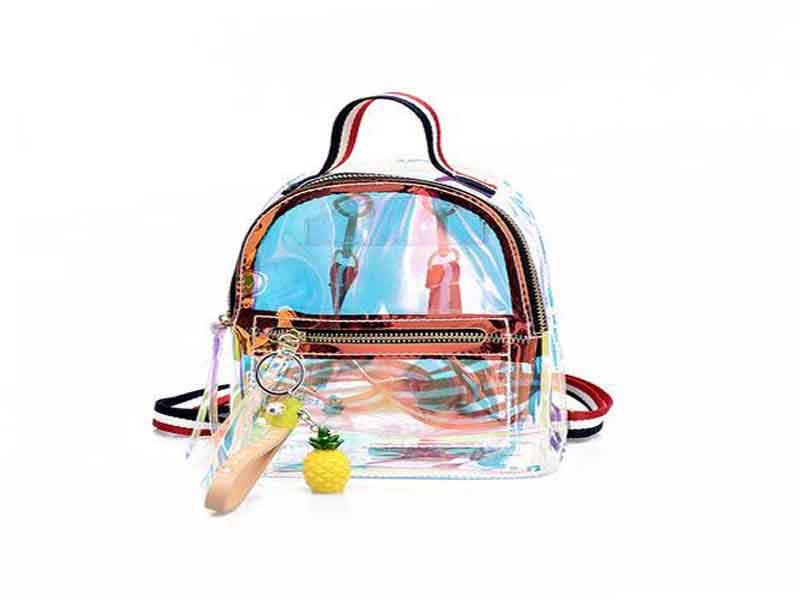
Clear backpacks are school bags made with transparent or highly visible materials so the contents can be seen without fully opening the bag. In school security programs, they are usually designed for faster visual inspection at entrances, classrooms, buses, and campus events. A good clear backpack should make the main compartment, front pocket, and side sections easy to view while still giving students enough carrying capacity for books, stationery, electronics, water bottles, and personal items.
The key point is visibility. School policies often use words such as “clear,” “transparent,” “see-through,” or “visible from all angles.” In product development, those words are not casual descriptions. They directly affect material selection, panel structure, color, pocket design, logo size, stitching position, binding tape, and packaging claims. A tinted clear bag, frosted clear bag, or transparent bag with a large graphic may look stylish online, but it can be rejected by strict school rules. For custom programs, the safest direction is usually a fully transparent front, back, side, and pocket structure, with only the bottom, straps, zipper tape, edge binding, and small logo area using non-transparent materials when allowed.
What Is a Clear Backpack?
A clear backpack is usually a backpack with transparent panels made from PVC, vinyl, TPU, or similar clear plastic film. The structure may include a main compartment, one front pocket, side bottle pockets, adjustable shoulder straps, top handle, zipper closure, and reinforced bottom. Some schools also allow mesh backpacks because mesh fabric allows staff to see the contents from outside. However, mesh and fully transparent plastic are not the same product. Mesh offers better airflow and flexibility, while clear plastic provides better visual clarity and a cleaner policy-friendly appearance.
From a manufacturing angle, clear backpacks are more technical than many people expect. Regular fabric backpacks hide seam allowance, reinforcement tape, inner lining, foam, and unfinished edges. Clear backpacks expose almost everything. The sewing line must be neat. The reinforcement layout must look clean. The inside pocket design must not block visibility. Even the color of binding tape can influence how “clear” the bag appears after production.
For school security programs, a clear backpack usually needs four basic qualities. It must be visible, strong, comfortable, and easy to inspect. A product that is transparent but weak will create parent complaints. A product that is strong but too opaque may fail policy checks. A product that is compliant but uncomfortable may be hated by students. A product that is cheap but cracks in cold weather can damage a brand’s reputation quickly.
What Materials Are Used?
Most clear backpacks use PVC, clear vinyl, TPU, or mesh. Some designs combine clear front panels with Oxford fabric, polyester webbing, nylon binding, reinforced bottom fabric, and foam-free straps. The material choice depends on price target, durability target, school policy, climate, product grade, and expected carrying weight.
PVC is common because it is affordable, transparent, easy to process, and widely used in clear bags. Clear vinyl is often used as a commercial term for flexible PVC sheet. TPU is a higher-grade option with better flexibility, cold resistance, abrasion performance, and a softer hand feel, but it usually costs more. Mesh backpacks are usually made from polyester mesh or nylon mesh. Oxford fabric may appear in straps, bottom reinforcement, zipper flaps, or edge binding, but it should not block required visibility when the school policy is strict.
The right material thickness is especially important. Too thin, and the bag may wrinkle, tear, or deform under books. Too thick, and the bag becomes stiff, heavy, expensive, and harder to sew. For school clear backpacks, many custom programs fall into a practical range of about 0.25 mm to 0.50 mm clear film thickness, depending on size and structure. Lightweight promotional clear bags may use thinner film, while middle school and high school backpacks often need thicker panels and better reinforcement because students carry heavier loads.
A transparent backpack for elementary students does not need the same build as a high school backpack loaded with textbooks, a Chromebook, a water bottle, and sports clothing. That is why Szoneier normally recommends matching material thickness, seam reinforcement, and strap design to the age group and real carrying weight instead of choosing material only by unit price.
Are Clear Backpacks Fully Transparent?
Not always. The word “clear” can mean different things in retail listings, but school policies are usually more specific. Some districts require the entire backpack to be clear except for the bottom. Some allow colored straps and small logos. Some allow mesh. Some reject tinted, iridescent, frosted, patterned, or cartoon-printed transparent materials. Some allow a small privacy pouch for personal hygiene items or medical supplies. For sourcing teams, policy interpretation matters as much as product appearance.
A fully transparent backpack usually means the main body, pockets, and side panels are see-through. The bottom may use a reinforced non-transparent strip if allowed. Straps are usually not transparent because they need strength, webbing, padding, and adjusters. Zippers, binding tape, sliders, pullers, buckles, and stitching are also commonly non-transparent. However, those components should not cover large areas or block the visual inspection purpose.
This creates a design tension. Students want privacy and style. Schools want visibility and consistency. Brands want logo exposure. Parents want durability and reasonable cost. The product must sit in the middle of all four needs.
One useful development rule is the “visibility-first layout.” Keep large panels transparent. Place logos on small woven labels, zipper pullers, hang tags, or allowed small print zones. Avoid large opaque patches. Avoid full-cover back padding if the school may reject it. Use clear front pockets rather than solid organizer panels. Add a small removable privacy pouch only when the policy allows it. That gives the backpack a better chance of passing school inspection while still feeling like a finished retail product.
What Sizes Are Common?
Clear backpacks for school normally follow age and grade needs. Elementary school sizes often sit around 15 to 16 inches in height. Middle school and high school backpacks often range from 16 to 18 inches. Larger models may reach 19 inches for sports, laptops, and heavier textbooks, but oversized bags may conflict with some school rules or create comfort issues.
A useful size plan should start with what students actually carry. Younger students may carry folders, pencil cases, small books, lunch, and a water bottle. Older students may carry a laptop, charger, notebooks, binders, sportswear, calculators, and larger water bottles. If the school uses lockers, bag load may be lighter. If students carry everything all day, the backpack needs stronger stitching, wider straps, and better zipper performance.
Size also affects transparency. A large clear backpack filled with loose items can look messy and visually overwhelming. Some schools like clear bags because contents can be inspected quickly, but if the bag has too many compartments, colored organizers, or inner pouches, visual inspection slows down. A balanced clear backpack usually has one main compartment, one front pocket, two side pockets, and optional internal divider made from clear or mesh material.
The table below shows common sizing logic for school clear backpack programs.
| Student Group | Common Height Range | Common Capacity Direction | Suggested Clear Panel Thickness | Design Notes |
|---|---|---|---|---|
| Elementary School | 15–16 in | Light books, folders, lunch, pencil case | 0.25–0.35 mm | Keep weight low, rounded edges, simple zipper path |
| Middle School | 16–17 in | Books, notebooks, water bottle, tablet | 0.30–0.45 mm | Reinforce strap joints and bottom corners |
| High School | 17–18 in | Laptop, binders, textbooks, sports items | 0.40–0.50 mm | Stronger zipper, wider straps, better bottom structure |
| Campus Events | 12–16 in | Small personal items, event entry use | 0.25–0.35 mm | Follow clear bag event rules, fewer pockets |
| Promotional School Kits | 14–16 in | Light daily supplies | 0.20–0.30 mm | Cost-focused, suitable for giveaways, not heavy loads |
A clear backpack should not be designed only around a catalog size. The better approach is to define grade level, carrying weight, daily use frequency, allowed pocket structure, and school policy details before sample development.
How Are Clear Bags Different?
Clear backpacks, clear totes, clear sling bags, and clear stadium bags are often placed in the same product category, but they solve different problems. A clear backpack is designed for daily carrying on both shoulders. A clear tote is usually for event entry or light carrying. A clear stadium bag is often smaller and follows venue size restrictions. A clear drawstring bag may be cheaper and lighter, but it usually offers less structure and lower durability.
For schools, a backpack format is more useful than a tote because students need hands-free carrying, shoulder comfort, and enough volume for school supplies. However, the backpack structure creates more pressure points. The shoulder straps pull against the back panel. The bottom corners carry concentrated weight. The zipper bends around filled contents. A clear tote may only need basic seam strength, while a clear school backpack needs reinforced engineering.
The difference matters when schools, wholesalers, or private label brands request quotations. Two clear bags may use the same material thickness, but the backpack may require more labor, stronger webbing, reinforcement patches, heavier zipper tape, binding, edge finishing, and quality testing. If the sourcing brief simply says “clear bag,” the quote may become inaccurate. A better brief says “clear school backpack, 17 inches, fully transparent main body and pockets, 0.40 mm PVC or TPU option, reinforced shoulder straps, two side mesh pockets, small logo only, target load 6–8 kg, packed individually.”
Material and Structure Comparison
| Product Type | Main Use | Visibility Level | Durability Demand | Comfort Demand | Best Fit |
|---|---|---|---|---|---|
| Clear Backpack | Daily school use | High | High | High | School policy programs, retail school supplies |
| Clear Tote Bag | Event entry, light carrying | High | Medium | Low | Stadiums, school events, giveaways |
| Clear Drawstring Bag | Budget programs | Medium to High | Low to Medium | Medium | Short-term use, promotional kits |
| Mesh Backpack | School use where allowed | Medium | Medium | Medium | Warmer climates, flexible policies |
| Clear Sling Bag | Small personal carry | High | Medium | Medium | Campus events, staff use, visitors |
| Clear Lunch Bag | Food carrying | Medium to High | Medium | Low | Students, workers, event venues |
Buyer Insight: Clear Does Not Mean Simple
Many procurement teams assume transparent bags are easier than regular backpacks because there is less fabric, less lining, and fewer hidden compartments. In production, the opposite can be true. Clear materials show scratches, wrinkles, dust, seam mistakes, and stress marks more easily. Workers must handle panels carefully. Cutting must be accurate. Stitching tension must be controlled so the film does not tear or pucker. Packaging must prevent compression marks.
Clear PVC and TPU also behave differently from woven fabrics. They do not stretch like canvas. They can stick together in humid storage if packed poorly. They can become stiff in cold environments depending on formulation. They may show whitening at folded stress points. The material edge can feel sharp if not bound properly. All of these issues affect student comfort and product reviews.
For Szoneier, the advantage sits in material and finished product integration. Because the company works across cotton, canvas, polyester, nylon, neoprene, jute, linen, Oxford, and other material systems, clear backpack programs can be developed with the right mix of transparent film, reinforced webbing, Oxford support zones, zipper systems, edge binding, and school-safe construction. A transparent backpack is not only a plastic shell. It is a material engineering product used by students every school day.
Why Do Schools Use Clear Backpacks?
Schools use clear backpacks to make bag contents easier to see, support faster visual checks, reduce hidden storage space, and create a more consistent campus entry process. Clear backpack policies are often introduced after safety reviews, security incidents, parent concerns, or district-wide updates to school entry procedures. The goal is usually not to replace trained security staff or emergency planning. The goal is to make one layer of campus screening easier, faster, and more visible.
A clear backpack is best understood as one part of a broader school safety system. It can support visual inspection, but it does not solve every security concern by itself. A student could still hide small items in clothing, lunch boxes, personal pouches, instrument cases, or sports equipment. Clear backpacks also create privacy concerns because students carry personal hygiene items, medical supplies, family notes, or personal belongings. For that reason, strong clear backpack programs usually include policy details, exception rules, privacy pouch allowances, communication with families, and a realistic product standard.
Do Clear Backpacks Improve Security?
Clear backpacks can improve the speed and visibility of basic bag checks, but they should not be treated as a complete school security solution. Their strongest value is deterrence and inspection efficiency. When contents are visible, staff can scan bags faster and notice large restricted items more easily. Clear bags may also reduce the need to open every backpack during routine checks, which can help morning entry move more smoothly.
However, clear backpacks have limits. They do not detect all prohibited items. They do not replace metal detectors, trained staff, visitor management, student support systems, reporting channels, emergency planning, or mental health resources. A clear backpack policy can make security feel more visible, but schools must be careful not to create a false sense of safety.
For product development and sourcing, this means the backpack should serve the policy’s actual purpose: visibility. Too many opaque panels, large decorative graphics, heavy back padding, or hidden organizers weaken that purpose. A clear backpack made for school policy should help staff see contents quickly from the front, back, and sides. The more a product looks like a regular backpack with a clear window, the less useful it becomes for strict security programs.
How Do They Support Bag Checks?
Clear backpacks support bag checks by reducing the number of steps needed to inspect basic contents. Instead of asking every student to unzip every pocket, staff can often see books, notebooks, water bottles, electronics, and larger items from outside. This can save time at entrances, especially in schools with hundreds or thousands of students arriving within a short period.
The inspection benefit depends heavily on design. A clear backpack with a fully visible main compartment works better than one with dark lining, solid back padding, or opaque organizer pockets. A clear front pocket helps staff view smaller items. Side mesh bottle pockets are usually acceptable when they do not hide contents. A clear internal divider can organize books without blocking the view.
Morning entry speed matters. If each student inspection takes only 5–10 seconds longer because a bag has hidden pockets, the delay becomes huge. For example, if 800 students enter through controlled points and each check takes an extra 8 seconds, the school could add more than 100 minutes of total inspection time across all students. In real life, multiple staff members share the work, but the pressure is still clear: bag design affects operational flow.
A clear backpack should therefore be designed around a “quick scan” idea. Staff should be able to glance at the main compartment, front pocket, and side zones without fighting with the bag. This is also helpful for students, because fewer manual searches can feel less invasive.
Are They Required by Schools?
Clear backpack requirements vary by school district, grade level, event type, and region. Some schools require them for all students from pre-kindergarten through grade 12. Some only require them for middle and high school students. Some use clear backpacks for daily classroom attendance, while others require clear bags only for athletic events, stadiums, extracurricular activities, or visitors. Some allow mesh backpacks, while others require fully transparent plastic or vinyl.
This variation is extremely important for brands and distributors. A product that passes one district’s rule may fail another district’s rule. For example, one policy may allow mesh backpacks visible from all angles. Another may require clear plastic or vinyl only. One may allow a small logo and colored straps. Another may reject large logos, cartoon patterns, tinted panels, and padded backs. Some schools allow small non-transparent personal pouches, often around 6 x 9 inches, while others write different exception rules.
The best sourcing approach is to collect policy examples before finalizing a design. If the program targets a specific school district, use that district’s written rule as the design standard. If the program targets retail distribution across many school markets, choose the safest broad-compliance design: fully clear body, clear pockets, no tint, no large graphics, no opaque back panel, modest logo, and optional small privacy pouch sold separately or included only where allowed.
What Items Are Still Restricted?
Clear backpacks do not automatically make every item acceptable. Schools may still restrict weapons, vaping products, alcohol, drugs, sharp objects, fireworks, large electronics, outside food in certain areas, or other prohibited items based on district rules. Some schools may also restrict non-transparent bags, oversized pouches, large purses, camera bags, gym bags, or cases unless approved for sports, band, medical, or disability-related needs.
From a product communication angle, brands should avoid claiming that clear backpacks “guarantee safety” or “prevent dangerous items.” Those claims are too broad and can create legal and trust problems. Safer wording focuses on supporting visual inspection, helping schools align with clear bag requirements, and improving entry efficiency.
For private label and school supply programs, instruction cards can help. A hang tag or insert can explain:
The bag is designed for school clear backpack policies.
Students should confirm local school requirements before use.
Small personal pouches may be allowed depending on school rules.
The backpack is still subject to inspection.
Restricted items remain prohibited.
This small communication detail can reduce returns and parent confusion. It also makes the product feel more responsible and policy-aware.
School Security Value and Limitations
| Security Question | What Clear Backpacks Help With | What They Do Not Fully Solve | Product Design Implication |
|---|---|---|---|
| Can staff see bag contents faster? | Yes, if panels and pockets are transparent | Not if contents are hidden inside opaque pouches | Use clear main body, clear front pocket, limited opaque zones |
| Can they reduce entry delays? | Often, by supporting visual scans | Not if the bag has too many hidden compartments | Keep pocket layout simple and visible |
| Can they prevent all prohibited items? | No, they may deter some visible items | Small items can still be concealed elsewhere | Avoid overclaiming safety benefits |
| Can they reduce manual searches? | Sometimes, for routine visual checks | Staff may still inspect bags when needed | Use zipper access that opens easily |
| Can they improve policy consistency? | Yes, if schools define clear rules | Confusion remains if policies are vague | Design around strict common requirements |
Parent and Student Concerns Matter
Security is the official reason for many clear backpack policies, but parent and student acceptance often determines whether the program feels successful. Parents may ask: Will my child’s personal items be exposed? Will the bag break quickly? Will the school provide bags, or must families pay? Will younger students feel embarrassed? Will medical supplies remain private? Will replacement costs become a burden?
Students may have different concerns. Some dislike the lack of privacy. Some worry about appearance. Some find clear plastic stiff or noisy. Some complain when straps dig into shoulders. Some feel the bag looks cheap. Older students may care more about style and privacy, while younger students may care more about comfort and fun details.
A strong clear backpack design respects those concerns without breaking policy rules. For example, the backpack can use softer edge binding, stronger straps, smoother zipper pullers, a cleaner silhouette, and a small allowed logo. It can include a removable privacy pouch if permitted. It can use thicker clear panels for older students and lighter panels for younger students. It can offer color through straps and zipper tape instead of tinted clear panels, when policy allows.
Human-Centered Design View
| Concern | Why It Happens | Poor Design Response | Better Design Response |
|---|---|---|---|
| Privacy | Personal items become visible | Add large opaque pockets that violate policy | Offer small removable pouch where allowed |
| Durability | Clear film cracks or tears under load | Use thin low-cost film for all grades | Match thickness and reinforcement to grade level |
| Comfort | Plastic body feels stiff, straps pull | Narrow straps, weak back panel | Wider straps, smooth binding, reinforced joints |
| Style | Students dislike plain plastic look | Add large prints that may fail policy | Use neat trim, small logo, clean shape |
| Cost | Families worry about replacement | Cheapest construction, short life | Better seam strength and tested materials |
Why Clear Backpack Programs Need Better Manufacturing Standards
Many clear backpack complaints are not really about the idea of clear backpacks. They are about bad products. A weak clear backpack makes the policy feel unfair because families must replace bags again and again. A stiff clear backpack makes students feel punished. A poorly designed clear backpack makes staff checks harder instead of easier. In other words, product quality affects policy acceptance.
Manufacturing standards should include material thickness checks, transparency review, seam strength testing, zipper cycle testing, strap pull testing, corner reinforcement review, odor control, edge safety, carton packing, and sample approval under realistic load. For school programs, it is reasonable to test the backpack with 5–8 kg of load for middle school and high school use, depending on the intended market. Stress points should be inspected after hanging, carrying, and zipper opening cycles.
Szoneier can support this process through material selection, structure development, fast sampling, free design support, low MOQ customization, and OEM/ODM production for school supply brands, distributors, promotional programs, and private label projects. Instead of selling one generic clear backpack to every market, the better model is to develop the right version for each use case: elementary school, middle school, high school, campus events, stadium entry, staff use, or branded school kits.
Policy-Ready Clear Backpack Development Checklist
| Development Item | Why It Matters | Recommended Direction |
|---|---|---|
| Transparency Level | Determines policy acceptance | Fully clear body and pockets for strict school rules |
| Material Type | Affects cost, flexibility, durability | PVC for cost efficiency, TPU for higher-grade programs |
| Panel Thickness | Controls strength and hand feel | 0.25–0.50 mm based on grade and load |
| Logo Size | Large logos may be rejected | Small woven label, zipper pull logo, or small print area |
| Strap Design | Comfort and load strength | Reinforced webbing, adjustable length, secure bar-tack |
| Bottom Structure | High stress and abrasion area | Clear reinforced panel or allowed non-transparent bottom |
| Privacy Option | Reduces parent complaints | Small pouch only where rules permit |
| Pocket Layout | Affects inspection speed | One main pocket, one front pocket, visible side pockets |
| Packaging | Prevents scratches and deformation | Individual polybag, flat packing, carton pressure control |
| Testing | Reduces returns and failures | Load test, zipper test, seam test, transparency inspection |
Clear backpacks are used by schools because they are visible, understandable, and relatively easy to implement. But the product must be built with more care than a basic promotional bag. Security policy may start the demand, but daily student use decides whether the backpack succeeds.
Which Policies Need Clear Backpacks?
Clear backpack policies are usually needed in school environments where administrators want faster bag visibility, more consistent entry rules, and fewer hidden storage areas inside student backpacks. A clear backpack policy may apply to daily classroom attendance, school buses, campus events, athletic venues, summer programs, or visitor entry. The most important point for schools, distributors, and product developers is simple: clear backpack rules are not universal. Every school district may define “clear” differently, so a backpack must be designed around the exact policy language, not around a general online product description.
A school policy may require clear plastic, vinyl, mesh, or fully transparent material. It may allow only the bottom panel to be non-transparent. It may restrict logos, patterns, tinted materials, decorative patches, or padded back panels. Some schools allow a small privacy pouch for personal items. Some require all pockets, including front and side pockets, to be visible. Some allow lunch boxes separately; others require them to be clear as well. For custom clear backpack programs, product development should begin with policy mapping before size, material, and logo decisions are finalized.
What Do School Rules Require?
Most school rules focus on visibility, bag type, allowed exceptions, and prohibited alternatives. Visibility is the main requirement. A policy may state that the backpack must be clear enough for contents to be visible from the outside. Some districts go further and require the backpack to be clear on all sides except the bottom. Others require the main compartment and all external pockets to be transparent. This detail matters because many retail clear backpacks still use opaque front organizers, padded backs, colored panels, or printed graphics that may fail stricter school rules.
Bag type also matters. Some policies allow clear backpacks, clear tote bags, clear cinch bags, or mesh backpacks. Some only allow clear plastic backpacks. Some allow small handbags or pouches under a certain size. Some allow non-clear bags for sports, band, medical needs, or special education support, but those bags may need separate inspection. A school district may also write rules for lunch bags, pencil cases, laptop sleeves, purses, diaper bags for teen parents, or religious and medical items.
For sourcing teams, the safest approach is to build a “policy matrix” before sample development. This avoids a common mistake: producing a stylish clear backpack that looks great online but gets rejected because the logo is too large, the transparent material is tinted, or the padded back blocks visibility. When the product targets multiple school markets, the design should follow stricter common rules rather than the most flexible rule.
| Policy Requirement | Common School Expectation | Product Development Risk | Safer Design Direction |
|---|---|---|---|
| Clear main body | Contents must be visible without opening the bag | Frosted, tinted, or cloudy panels may be rejected | Use fully transparent PVC or TPU panels |
| Clear pockets | Front and side pockets should not hide contents | Opaque organizer pockets slow inspection | Use clear front pocket and mesh or clear side pockets |
| Limited non-clear zones | Straps, zippers, bottom, and trim may be allowed | Large fabric panels may violate policy | Keep opaque material narrow and functional |
| Small logo | Brand marks should not block visibility | Large print or patch can fail school review | Use small label, zipper puller, or approved logo area |
| Privacy pouch | Personal items may need limited privacy | Oversized pouch may hide restricted items | Include small removable pouch only if allowed |
| Bag size | Oversized bags may create inspection and storage issues | Large backpacks can look non-compliant | Match grade level and district rules |
| Alternative bags | Mesh, lunch bags, and sports bags may have separate rules | One product may not cover every use case | Develop different SKUs for school, lunch, event, and sports use |
A clear backpack policy is usually written for safety, but students live with the product every day. That is why policy-compliant design must also consider comfort, daily load, climate, and age group. A policy may say “clear backpack required,” but a product brief should say “fully visible 17-inch school backpack with reinforced shoulder straps, clear front pocket, side bottle pockets, 0.40 mm panel thickness, small logo, and policy-safe trim.”
Are Logos Allowed?
Logos are often allowed, but the size and placement must be controlled. A large logo can block visibility and cause the backpack to fail a strict policy check. Some schools allow small logos on straps, zipper pullers, bottom trim, or a small front area. Others may not write logo rules clearly, which creates uncertainty for brands and distributors. In that situation, smaller is safer.
Logo placement should never fight the main purpose of the product. A clear backpack is supposed to show what is inside. A large printed front panel, oversized rubber patch, full-width woven label, or big mascot graphic can turn a compliant bag into a questionable one. For school programs, branding should feel neat, controlled, and secondary to visibility.
There are smarter ways to keep brand identity without blocking inspection. A small woven label on the bottom corner, embossed zipper puller, printed hang tag, branded inner care label, or color-matched zipper tape can create a professional look while keeping transparent areas open. If the clear backpack is part of a private label school supply line, packaging can carry stronger branding while the backpack itself remains policy-friendly.
| Logo Method | Visibility Impact | Policy Risk | Best Use |
|---|---|---|---|
| Large front screen print | High blockage | High | Avoid for strict school programs |
| Rubber patch | Medium to high blockage | Medium to high | Only if small and placed on trim |
| Small woven label | Low blockage | Low | Good for private label clear backpacks |
| Zipper pull logo | Very low blockage | Low | Good for subtle branding |
| Hang tag | No backpack visibility impact | Low | Good for retail and school kits |
| Printed packaging insert | No backpack visibility impact | Low | Good for brand storytelling |
| Strap logo | Low to medium impact | Medium | Works when straps are allowed non-clear |
| Bottom trim logo | Low impact | Low to medium | Good if bottom trim is allowed |
For Szoneier, logo development can be handled as part of OEM/ODM customization. Brand owners can choose woven labels, rubber labels, zipper pullers, heat transfer logos, screen printing, embroidery on trim zones, or packaging-based branding. The recommendation for school security products is to keep the bag clean and let packaging, labels, and accessories carry most of the brand message.
Are Pockets Allowed?
Pockets are usually allowed when they remain visible and do not create hidden storage areas. A standard school clear backpack often includes one main compartment, one front clear pocket, and two side pockets for bottles or umbrellas. More pockets can make the bag useful, but too many compartments may slow down visual inspection and create policy concerns.
Pocket design is one of the most important parts of clear backpack development. A regular backpack may use hidden organizer pockets, inner zip pockets, laptop sleeves, pen slots, and anti-theft compartments. In a clear backpack, those features can reduce visibility. A front pocket made with clear material usually works well. A side mesh pocket may also work because staff can still see the item. A solid fabric pocket, dark organizer, or padded laptop sleeve may cause rejection if the school requires full visibility.
A balanced design should support student organization without turning the bag into a hiding place. For example, a clear internal divider can separate books from electronics. A clear front pocket can hold pens and calculators. A small detachable pouch can hold personal hygiene items if school policy allows it. Side mesh pockets can hold water bottles without blocking the main compartment.
| Pocket Type | Student Value | Security Visibility | Design Recommendation |
|---|---|---|---|
| Clear front pocket | Easy access to small items | High | Recommended for most school backpacks |
| Clear inner divider | Better organization | High | Good for notebooks and electronics |
| Mesh side pocket | Water bottle storage | Medium to high | Use open mesh, not solid fabric |
| Opaque organizer panel | Pens, cards, small items | Low | Avoid in strict school policies |
| Padded laptop sleeve | Protects electronics | Low to medium | Use only where policy permits |
| Hidden back pocket | Anti-theft feature | Very low | Avoid for school security programs |
| Removable privacy pouch | Personal item protection | Low inside pouch | Keep small and policy-dependent |
A strong product brief should define pocket visibility before sample making. Instead of saying “with front pocket,” say “front pocket must be fully clear and visible from outside.” Instead of saying “with side pockets,” say “side pockets use mesh or transparent material and must not hide contents.” Small wording changes prevent expensive sample revisions.
What About Lunch Bags?
Lunch bags are a major policy question because students often carry food separately from backpacks. Some school districts allow regular lunch boxes. Some require clear lunch bags. Some allow lunch bags but inspect them. Some allow small non-clear containers for medical, dietary, or allergy-related needs. Since lunch policies vary, brands and distributors should not assume a clear backpack automatically solves lunch carrying requirements.
From a product development perspective, clear lunch bags can become an additional SKU in a school security collection. A complete school kit may include a clear backpack, clear lunch tote, small privacy pouch, pencil pouch, and water bottle holder. This is especially useful for retailers, school supply distributors, and private label brands serving districts with strict bag rules.
Clear lunch bags have different requirements from clear backpacks. Food storage needs wipe-clean surfaces, leak resistance, odor control, and sometimes insulation. A fully clear lunch bag without insulation may meet visibility needs but may not keep food fresh. An insulated lunch bag may require foam, aluminum lining, or thick fabric, which reduces visibility. This creates a policy conflict. The solution depends on school rules. Some schools may allow non-clear lunch boxes. Others may require a clear outer lunch bag but allow food containers inside.
| Lunch Carry Option | Visibility | Food Protection | Policy Fit | Product Notes |
|---|---|---|---|---|
| Clear PVC lunch tote | High | Low to medium | Good for strict visibility rules | Easy to inspect, wipe-clean |
| Clear insulated lunch bag | Medium | High | Depends on policy | Insulation may reduce visibility |
| Mesh lunch bag | Medium | Low | Depends on policy | Breathable but less spill protection |
| Regular lunch box | Low | High | Only if allowed | May require separate inspection |
| Clear backpack only | High | Low for food | Not ideal | Food may leak into books |
For school supply brands, lunch accessories should be designed as separate products rather than forced into the main backpack design. A clear backpack should carry school supplies. A lunch bag should handle food. Combining both into one backpack can create odor, leakage, and cleaning problems.
How Do District Rules Vary?
District rules vary because school security needs, community expectations, student age groups, campus layouts, and local incidents vary. One district may require clear backpacks for all students. Another may apply the rule only to secondary schools. One district may allow mesh. Another may reject mesh because smaller items can be harder to identify. One school may permit small clutch-style pouches. Another may restrict all non-clear bags except medical exceptions.
This variation creates a sourcing challenge. A distributor selling into several states or regions needs a design that can pass many policies. The best broad-market design usually follows a stricter standard: clear body, clear pockets, no tint, no oversized logo, no opaque back panel, no hidden compartments, and modest size options. Then optional accessories can be added based on local rules.
A useful product strategy is to create three compliance levels.
| Compliance Level | Product Design | Best Market Use | Risk Level |
|---|---|---|---|
| Strict School Policy Version | Fully clear body and pockets, minimal opaque trim, small logo only | District supply programs, school contracts | Lowest rejection risk |
| Flexible School Version | Clear body with mesh side pockets, colored straps, small branding | Retail school supply channels | Medium |
| Lifestyle Clear Backpack | Tinted clear panels, larger logo, fashion trim, extra pockets | Casual retail, events, travel | Higher for school policy use |
The strict version may look less decorative, but it is the safest for school security programs. The lifestyle version may sell well in fashion or event channels, but it should not be marketed as universally school-policy compliant unless tested against target district rules.
Policy Mapping Before Manufacturing
Clear backpack sourcing should begin with policy mapping, not product photos. Schools and distributors should answer several questions before requesting samples. What grade level will use the bag? Does the policy require clear plastic, or is mesh allowed? Are tinted panels allowed? Are logos restricted? Are padded backs allowed? Are lunch bags included? Are privacy pouches allowed? What size is acceptable? Will the backpack be used daily or only for events?
Once those answers are clear, material selection becomes much easier. Daily school use often needs stronger construction than event bags. High school use usually needs better strap reinforcement than elementary use. Strict policies need more transparent surface area than general retail designs. Private label programs need logo placement that does not block inspection.
| Development Question | Why It Matters | Recommended Product Decision |
|---|---|---|
| Which school level? | Determines size and load | 15–16 in for younger students, 17–18 in for older students |
| Daily or event use? | Determines durability | Daily use needs stronger seams and straps |
| Clear plastic or mesh? | Determines material family | PVC/TPU for clear plastic, polyester mesh for mesh version |
| Are tinted panels allowed? | Affects appearance | Use non-tinted clear panels for broad compliance |
| Are logos restricted? | Affects branding | Keep logo small and outside major viewing zones |
| Are pockets visible? | Affects inspection | Use clear or mesh pocket materials |
| Is privacy pouch allowed? | Affects accessory design | Offer small removable pouch as optional item |
| Is lunch bag included? | Affects product range | Develop separate clear lunch bag if needed |
For Szoneier, this policy-first development process can shorten sampling time and reduce revision costs. A brand can share a school district’s written requirements, target size, logo file, expected order quantity, packaging plan, and delivery schedule. Szoneier can then recommend material thickness, structure, trim, pocket layout, and sample direction more accurately.
How Should Clear Backpacks Be Designed?

Clear backpacks should be designed around four priorities: visibility, strength, comfort, and policy acceptance. The bag must be transparent enough for school inspection, strong enough for daily student loads, comfortable enough for repeated wear, and simple enough to avoid policy disputes. A good clear backpack is not just a transparent version of a normal backpack. It needs a structure built for clear material behavior, visible sewing, exposed stress points, and school-specific use.
The best design starts with age group and carrying load. Elementary students need lighter bags with soft edges and easy zippers. Middle school students need stronger strap joints and larger capacity. High school students often need laptop space, heavier book capacity, and reinforced bottom corners. A clear backpack used for school events may need less structure, while a daily-use backpack needs better construction and quality testing.
What Size Works for Students?
The right size depends on grade level, body size, school schedule, and daily load. A backpack that is too small forces students to overstuff it, which stresses zippers and seams. A backpack that is too large becomes uncomfortable, looks bulky, and may create policy or storage problems. For most school clear backpack programs, 15–18 inches covers the main demand.
Elementary students usually do better with 15–16 inch backpacks. The bag should fit folders, small books, pencil cases, snacks, and light supplies without overwhelming the student’s back. Middle school students often need 16–17 inch bags. High school students may need 17–18 inch bags, especially when carrying laptops, binders, and heavier books.
The size should also match material thickness. A larger clear backpack made with thin film may collapse, wrinkle, or tear faster. A smaller backpack made with overly thick film may feel stiff and uncomfortable. Material, structure, and size must work together.
| Grade Level | Suggested Backpack Height | Typical Load Type | Design Priority |
|---|---|---|---|
| Elementary | 15–16 in | Folders, light books, lunch, stationery | Lightweight body, easy zipper, soft trim |
| Middle School | 16–17 in | Notebooks, books, tablet, water bottle | Reinforced straps, stronger bottom, visible pockets |
| High School | 17–18 in | Laptop, binders, textbooks, sports items | Higher load strength, thicker panels, durable zipper |
| Staff or Visitor Use | 12–16 in | Personal items, documents, small supplies | Simple structure, quick inspection |
| Event Security | 12–16 in | Wallet, phone, small personal items | Clear visibility, lower cost, lighter construction |
A clear backpack should be tested with realistic items, not empty. Many sample approvals happen with an empty bag on a table. That tells very little about real performance. A better sample test uses books, a laptop dummy, a water bottle, and repeated zipper opening. The bag should keep shape, straps should not pull loose, and corners should not whiten or crack under pressure.
Which Strap Design Is Better?
The best strap design for clear school backpacks uses reinforced webbing, secure stitching, adjustable length, smooth edges, and enough width to reduce shoulder pressure. Clear plastic cannot carry shoulder load by itself as well as woven fabric structures, so strap attachment points are critical. Most clear backpack failures happen around straps, bottom corners, zipper ends, and seams.
Shoulder straps should be attached with reinforcement patches, bar-tack stitching, box stitching, or additional webbing support. For heavier student loads, strap webbing can extend deeper into the back panel or connect to bottom reinforcement zones. A narrow strap may reduce cost, but it can dig into shoulders and create complaints. Wider straps improve comfort but add material and labor cost.
Padded straps are tricky. Students like padded straps because they are more comfortable. However, school policies may reject large opaque padding if it blocks visibility from the back. The safest solution is moderate strap padding only on the straps themselves, not a large opaque padded back panel. Some strict programs may prefer unpadded webbing straps to keep the design simple and compliant.
| Strap Feature | Student Benefit | Policy Risk | Manufacturing Recommendation |
|---|---|---|---|
| Adjustable webbing | Fits different body sizes | Low | Standard for most school backpacks |
| Wider shoulder straps | Better comfort | Low to medium | Good for middle/high school models |
| Heavy padding | Better shoulder comfort | Medium | Keep padding limited to strap area |
| Opaque back padding | Comfort and structure | High in strict policies | Avoid unless policy allows |
| Reinforced stitching | Prevents strap failure | Low | Essential for daily-use bags |
| Top carry handle | Quick grabbing | Low | Reinforce with webbing and stitching |
A good strap system should be tested by hanging the loaded backpack for a set period, then checking stitch movement, panel tearing, and strap deformation. For high school programs, strap testing matters because students may carry 5–8 kg or more during the day.
How Strong Should Seams Be?
Seams should be strong enough to handle repeated load, bending, and pulling without tearing the clear film. Clear materials do not behave like woven fabrics. Needle holes can weaken the material if stitching tension, stitch density, or seam allowance is poorly controlled. If the seam is too close to the edge, it may tear. If stitches are too dense, perforation can create a tear line. If stitching is too loose, the seam may split.
A clear backpack needs careful seam engineering. Binding tape can protect edges and distribute stress. Reinforcement patches can strengthen strap joints. Rounded corners can reduce cracking. Zipper ends should be secured because students often pull zippers under pressure when the bag is overfilled. Bottom seams should receive extra attention because textbooks create downward force.
| Seam Area | Stress Level | Common Failure | Better Construction |
|---|---|---|---|
| Shoulder strap joint | Very high | Strap tears from back panel | Reinforcement patch, bar-tack, box stitching |
| Bottom corners | Very high | Cracking, whitening, seam split | Rounded corner, thicker panel, binding tape |
| Zipper ends | High | Zipper tape pulls loose | End reinforcement and controlled stitching |
| Side seams | Medium to high | Panel tearing under load | Wider seam allowance and edge binding |
| Front pocket seams | Medium | Pocket pulls away | Clear material reinforcement |
| Top handle seam | Medium to high | Handle loosens | Webbing reinforcement |
Seam strength is not only about adding more stitches. Too many stitches can damage clear film. The factory must balance needle size, thread type, stitch spacing, material thickness, and reinforcement method. This is where experienced sample development matters. Szoneier’s manufacturing team can adjust the construction based on whether the backpack uses PVC, TPU, mesh, Oxford trim, polyester binding, or mixed materials.
What Zipper Type Lasts Longer?
For school clear backpacks, durable coil zippers or molded plastic zippers are common choices. Coil zippers are flexible, smoother around curved backpack openings, and suitable for lightweight to medium backpacks. Molded zippers can look stronger and work well for heavier use, but they may be stiffer. Metal zippers are less common for school clear backpacks because they add weight, cost, and may feel less suitable for student products.
Zipper size should match bag size and expected load. A small zipper may reduce cost but fail faster when students overpack. A larger zipper adds strength and improves handling. For daily school use, a #5 zipper is often a practical baseline, while heavier versions may use stronger zipper tape and larger pullers. Pullers should be easy for younger students to use and not sharp.
Zipper sewing quality is just as important as zipper type. If the zipper tape is poorly attached to clear plastic, the zipper may separate from the panel before the zipper teeth fail. Zipper corners should be designed with smooth curves. Sharp zipper turns make opening harder and increase stress on the material.
| Zipper Type | Strength | Flexibility | Cost | Best Fit |
|---|---|---|---|---|
| Nylon coil zipper | Medium to high | High | Medium | Most school clear backpacks |
| Molded plastic zipper | High | Medium | Medium to high | Heavier school models |
| Metal zipper | High | Low to medium | High | Less common for student clear bags |
| Waterproof zipper | Medium | Medium | High | Special programs, usually not needed |
| Budget zipper | Low to medium | Medium | Low | Promotional or short-term bags |
A strong clear backpack should open and close smoothly after the bag is filled. Testing should include repeated zipper cycles with realistic load, not only zipper movement on an empty sample. If the zipper catches the clear film, bends sharply, or separates under pressure, the design should be adjusted before bulk production.
How Much Weight Can They Carry?
The carrying capacity depends on backpack size, material thickness, seam construction, strap reinforcement, zipper quality, and bottom design. A small lightweight clear backpack may be suitable for 2–4 kg of daily load. A stronger middle or high school version may be designed for 5–8 kg. Heavy-duty programs may need reinforced structure, thicker clear film, wider straps, and stronger bottom corners.
Sourcing teams should be careful with exaggerated load claims. A clear backpack may survive a one-time static load test but still fail after weeks of daily school use. Real use includes swinging, dropping, overpacking, dragging, zipper pulling, bus travel, locker storage, and temperature changes. A more honest development approach is to define a target daily load and then test the product around that use.
| Backpack Grade | Suggested Daily Load Target | Material Direction | Reinforcement Direction |
|---|---|---|---|
| Lightweight promotional | 2–3 kg | 0.20–0.30 mm clear film | Basic binding and standard stitching |
| Elementary daily use | 3–5 kg | 0.25–0.35 mm clear film | Reinforced handle and strap joints |
| Middle school daily use | 4–6 kg | 0.30–0.45 mm clear film | Stronger bottom and strap reinforcement |
| High school daily use | 5–8 kg | 0.40–0.50 mm clear film | Wider straps, reinforced corners, stronger zipper |
| Heavy-duty custom | 8 kg+ | Custom material evaluation | Enhanced webbing, bottom support, load testing |
A backpack designed for high school students should not be quoted against the same construction as a low-cost giveaway bag. They may look similar in photos, but the internal engineering and lifespan are different. For importers and school supply brands, this distinction protects margins and reduces after-sale complaints.
Design Details That Reduce Complaints
Small design details often decide whether students and parents accept clear backpacks. Soft edge binding can reduce scratching and discomfort. Smooth zipper pullers make the bag easier for younger students. A stable flat bottom helps the bag stand better and reduces corner wear. Side pockets should hold common bottle sizes without stretching too much. Straps should adjust easily and stay in place. The bag should not have a strong plastic odor when opened.
Odor is a real issue with some clear plastic bags. Low-grade materials, poor storage, or insufficient ventilation can create an unpleasant smell that parents notice immediately. Material selection, supplier control, and packaging time all affect odor. For school products, odor control should be included in sample review.
Scratch control also matters. Clear panels can show scuffs during cutting, sewing, packing, and shipping. If bags are packed too tightly, panels may stick, wrinkle, or develop pressure marks. Individual polybags, tissue separation, careful carton loading, and temperature-aware storage can improve final appearance.
| Complaint | Possible Cause | Design or Production Fix |
|---|---|---|
| Bag smells too strong | Low-grade clear film or poor ventilation | Use better material, allow airing, improve packaging |
| Corners crack | Sharp corners, thin film, cold stiffness | Rounded corners, thicker panel, better material |
| Straps tear | Weak attachment or low seam allowance | Reinforcement patch and bar-tack stitching |
| Zipper splits | Small zipper or overfilled bag | Larger zipper and better zipper path |
| Bag feels stiff | Thick or low-flexibility material | Use balanced thickness or TPU option |
| Contents too exposed | No privacy option | Add small allowed pouch or clear organizer plan |
| Bag scratches easily | Poor handling or packing | Protective packing and QC inspection |
Sample Development Before Bulk Production
A clear backpack sample should be reviewed from more angles than a regular fabric backpack. The sample team should inspect transparency, panel flatness, seam neatness, zipper smoothness, odor, edge feel, strap strength, logo size, pocket visibility, and packing condition. The sample should be filled with realistic school items and worn by someone close to the target student body size if possible.
A good sample review can prevent bulk problems. For example, if the front pocket wrinkles badly after loading, the pocket pattern may need adjustment. If the bottom corner turns white after bending, the material may be too stiff or the corner angle too sharp. If the zipper is hard to pull around the top curve, the zipper path may need a wider radius. If the logo looks larger than expected on the clear panel, it may need to move to trim or packaging.
| Sample Check Item | What to Review | Acceptable Direction |
|---|---|---|
| Transparency | Can contents be seen clearly? | Clear panels, no heavy tint, no cloudy surface |
| Structure | Does the bag hold shape when filled? | Stable without excessive wrinkling |
| Comfort | Do straps feel secure and wearable? | Smooth edges, adjustable straps, no sharp points |
| Load | Does it carry target weight? | No seam tearing or strap movement |
| Zipper | Does it open smoothly under load? | No catching, splitting, or hard corners |
| Odor | Is plastic smell acceptable? | Mild or controlled after airing |
| Logo | Does branding block visibility? | Small and policy-safe |
| Packing | Are panels scratched or pressed? | Clean surface, low deformation |
Szoneier supports custom sampling for clear backpack programs with material selection, design adjustment, logo placement, packaging review, and production planning. For school security products, faster sampling is useful, but accurate sampling is more important. The first sample should already reflect the real policy, real grade level, and real carrying load. That saves time and avoids the expensive “almost correct” sample trap.
Better Clear Backpack Design Is Quietly Technical
A well-designed clear backpack may not look complicated, and that is part of the charm. It should look clean, transparent, and easy to use. But behind the simple appearance, a strong product requires careful material choice, seam control, reinforcement planning, zipper selection, comfort testing, and policy interpretation.
For schools, the design should make inspection faster. For parents, it should last long enough to feel fair. For students, it should be comfortable and not embarrassing. For brands and distributors, it should reduce returns, pass school requirements, and create repeat orders. That is why clear backpack development should never stop at “make it transparent.” The better request is: “Make it transparent, policy-ready, comfortable, and strong enough for daily school life.”
Which Materials Work Best?
The best materials for clear backpacks depend on how the bag will be used, how strict the school policy is, how much weight students carry, and what price level the brand wants to reach. For most school security policies, clear PVC and clear vinyl are the most common choices because they offer good transparency, stable processing, and cost control. TPU is a stronger premium option when flexibility, cold resistance, softer hand feel, and longer product life matter more than the lowest unit cost. Polyester mesh can work when schools allow mesh backpacks, while Oxford fabric, polyester webbing, nylon binding, and reinforced trim are usually used in functional areas such as straps, edges, zipper panels, and bottom support.
A clear backpack material should not be selected only by transparency. It must also handle bending, stitching, load pressure, temperature changes, odor control, abrasion, yellowing, and packaging compression. A very clear material may look great in a sample room but crack at the corner after one month of school use. A thick material may feel strong but become stiff and uncomfortable. A low-cost material may reduce the first purchase price but increase replacements, complaints, and returns. For school programs, the best material is the one that matches policy visibility and daily student use at the same time.
Is PVC Good for Clear Backpacks?
PVC is one of the most widely used materials for clear backpacks because it is transparent, flexible enough for sewing, easy to source, and cost-efficient for school supply programs. Many clear school bags, stadium bags, cosmetic bags, document pouches, and promotional transparent bags use PVC or vinyl material. For brands and distributors that need clear backpacks at practical price points, PVC is often the first material to evaluate.
PVC works well when the product needs clear visibility, consistent shape, and reasonable cost. It can be cut, stitched, heat-pressed, printed, embossed, and combined with polyester binding, webbing, zipper tape, and Oxford trim. For school backpacks, PVC thickness often needs to be chosen carefully. A thin PVC panel may reduce cost and weight but can wrinkle, tear, or deform under books. A thick PVC panel can improve structure but may increase stiffness and sewing difficulty.
The main concerns with PVC are odor, cold-weather stiffness, environmental perception, and long-term yellowing. Not all PVC materials are the same. Better PVC formulations can reduce smell, improve clarity, and provide better flexibility. Lower-grade PVC may have stronger odor, uneven transparency, surface marks, or poor performance after folding. For school supply brands, material grade should be confirmed through samples, not just supplier claims.
| PVC Factor | Why It Matters | Better Sourcing Direction |
|---|---|---|
| Thickness | Controls strength, stiffness, and cost | Use 0.30–0.50 mm for most daily school backpacks |
| Transparency | Affects policy acceptance | Choose clear, non-frosted, non-tinted panels for strict rules |
| Odor | Affects parent and student acceptance | Request low-odor material and proper airing before packing |
| Flexibility | Affects comfort and cracking risk | Test bending at corners and zipper areas |
| Sewing behavior | Affects seam strength | Match needle, thread, and stitch density to film thickness |
| Surface quality | Affects retail appearance | Inspect scratches, bubbles, pressure marks, and haze |
| Compliance needs | Affects school and retail acceptance | Confirm material safety requirements for target market |
PVC is good for clear backpacks when cost efficiency, clear appearance, and stable mass production are important. It is not automatically the best choice for every program. For premium school lines, cold regions, or stronger long-life requirements, TPU may deserve serious attention.
Is TPU a Better Option?
TPU can be a better option for higher-grade clear backpacks because it generally offers stronger flexibility, better cold resistance, softer feel, and improved tear performance compared with many standard PVC materials. TPU is often used where products need durability, elasticity, abrasion resistance, and a more premium touch. For clear backpacks, TPU can help reduce cracking risk and improve student comfort, especially when the bag is used daily and exposed to temperature changes.
However, TPU usually costs more than PVC. It may also require different processing control during cutting, sewing, welding, or packaging. For brands selling to price-sensitive school programs, TPU may be too expensive for entry-level products. For premium private label programs, district supply contracts with durability requirements, or branded school accessory collections, TPU can create a stronger quality story.
The decision between PVC and TPU should not be treated as “cheap versus good.” It is better to compare use case, budget, expected lifespan, and target market. A well-made PVC backpack can perform well for many school applications. A poorly specified TPU backpack can still fail if seams, zippers, and straps are weak. Material matters, but structure matters just as much.
| Material Comparison | PVC / Clear Vinyl | TPU |
|---|---|---|
| Cost Level | Lower to medium | Medium to high |
| Transparency | Good to very good | Good to very good |
| Flexibility | Medium, depends on formulation | High |
| Cold Resistance | Medium | Better |
| Odor Control | Depends heavily on grade | Often better, but still needs testing |
| Tear Resistance | Medium | Usually stronger |
| Premium Feel | Medium | Higher |
| Best Use | Cost-efficient school programs, retail supply lines | Premium school bags, cold climates, durability-focused programs |
| Development Risk | Odor, stiffness, lower-grade yellowing | Higher cost, processing control |
TPU is worth considering when the product promise includes longer use, better flexibility, improved hand feel, or higher-end positioning. A distributor may offer PVC for standard school programs and TPU for premium clear backpack collections. This two-level material strategy allows different price points without forcing every client into one solution.
How Thick Should Clear Panels Be?
Clear panel thickness should be chosen according to backpack size, student age, carrying weight, material type, and price target. For clear school backpacks, a practical range often sits around 0.25 mm to 0.50 mm. Lightweight event bags or promotional school kits may use thinner panels. Daily-use backpacks for middle school and high school students usually need thicker panels and stronger reinforcement.
Thickness affects more than strength. It also affects weight, stiffness, sewing difficulty, transparency, folding behavior, shipping cost, and user comfort. A thicker panel may feel more durable but can make the bag harder to compress, less comfortable against the body, and more likely to show stress whitening if the material is not flexible enough. A thinner panel may feel lighter but may collapse or tear when students carry heavy books.
The best thickness is not always the maximum thickness. It is the correct balance. For example, a 0.35 mm high-quality flexible material with proper reinforcement may perform better than a 0.50 mm stiff material with poor seam design. Also, the backpack can use different thicknesses in different areas. The main body may use one thickness, while bottom reinforcement or corner zones may use additional layers.
| Clear Panel Thickness | Common Use Direction | Strength Level | Flexibility | Cost Impact | Notes |
|---|---|---|---|---|---|
| 0.20–0.25 mm | Event bags, giveaways, light use | Low to medium | High | Low | Not ideal for heavy daily school loads |
| 0.25–0.30 mm | Elementary school, light daily use | Medium | Medium to high | Low to medium | Good when load is controlled |
| 0.30–0.40 mm | Middle school, standard daily use | Medium to high | Medium | Medium | Common balanced range |
| 0.40–0.50 mm | High school, heavier use | High | Medium to low | Medium to high | Needs good pattern and seam control |
| 0.50 mm+ | Heavy-duty custom programs | Very high | Lower | High | Can feel stiff; test carefully |
A clear backpack should be tested with real load before final thickness selection. If the bag is too thin, the front panel may sag and zipper edges may deform. If the bag is too thick, students may dislike the stiffness. A sample review with actual books, a laptop dummy, a water bottle, and repeated zipper opening is much more useful than checking thickness alone.
Are Oxford Fabrics Useful?
Oxford fabric is useful in clear backpacks when it is used in the right places and does not block required visibility. Oxford fabric is commonly used for reinforcement, bottom support, zipper connection zones, edge binding, strap attachment areas, and trim. It can add strength and improve sewing stability because woven fabric handles stitching and load better than clear plastic film alone.
However, Oxford fabric must be used carefully in school security products. If a school policy requires the backpack to be clear on all sides, large Oxford panels can create rejection risk. A fully opaque Oxford bottom may be allowed in some policies but not in others. Opaque side panels, back panels, or large front trims may reduce visibility too much. The role of Oxford fabric should be structural support, not visual coverage.
Oxford fabric can be especially helpful for shoulder strap connections. Clear plastic film alone may tear when straps pull under heavy load. A hidden or narrow Oxford reinforcement strip can spread stress and improve durability. Binding tape made from polyester or nylon can protect edges and reduce cracking. Bottom trim can help the bag stand and resist abrasion, but the size should remain policy-safe.
| Oxford Fabric Use Area | Benefit | Policy Risk | Recommended Use |
|---|---|---|---|
| Bottom reinforcement | Improves abrasion resistance | Medium | Use only if bottom opacity is allowed |
| Strap attachment patch | Strengthens high-stress area | Low to medium | Keep compact and functional |
| Edge binding | Protects clear film edge | Low | Recommended for most clear backpacks |
| Zipper tape support | Improves sewing stability | Low | Useful around openings |
| Full back panel | Improves comfort and structure | High | Avoid for strict school policies |
| Side panels | Adds strength | High | Use clear or mesh instead when visibility matters |
| Decorative trim | Improves appearance | Medium | Keep narrow and not blocking inspection |
Szoneier has experience with Oxford, polyester, nylon, canvas, cotton, neoprene, jute, linen, and other material systems, so mixed-material structures can be engineered according to school policy. The goal is not to remove all fabric from the backpack. The goal is to use fabric only where it adds real function and does not defeat transparency.
Can Materials Resist Yellowing?
Clear backpack materials can yellow over time due to UV exposure, heat, low-grade formulations, plasticizer migration, poor storage, chemical contact, or long-term oxidation. Yellowing is a major issue because a clear backpack is judged by appearance. A bag that turns yellow can look dirty, old, or unsafe even if it still functions. For school programs and retail brands, yellowing can create quality complaints and reduce repeat orders.
Yellowing resistance depends on material grade and additives. Better PVC and TPU materials can be developed with improved clarity stability, UV resistance, and anti-yellowing performance. However, no clear material is completely immune to aging. Storage and packaging also matter. Bags stored in hot warehouses, exposed to sunlight, or packed under pressure for long periods may show faster appearance changes.
For brands, the safest way to manage yellowing is to set realistic expectations and test materials before bulk orders. Sample testing can include UV exposure, heat aging, folding stress, surface cleaning, and comparison after storage. For school use, bags may be exposed to sunlight during walking, outdoor lunch, sports practice, bus stops, and storage in cars. A material that looks clear indoors may age differently in real use.
| Yellowing Cause | How It Happens | Prevention Direction |
|---|---|---|
| UV exposure | Sunlight affects clear film over time | Use better-grade material with UV resistance if needed |
| Heat storage | High warehouse or vehicle temperature accelerates aging | Control storage and shipping conditions |
| Low-grade formulation | Poor material quality ages faster | Choose tested PVC or TPU grade |
| Chemical contact | Cleaners, markers, oils, or cosmetics react with material | Provide cleaning guidance |
| Plasticizer migration | Material components move over time | Use stable formulation and proper packing |
| Long compression | Panels stick or mark during storage | Use protective packing and avoid extreme pressure |
A clear backpack that resists yellowing longer can support a stronger quality position. For higher-end school supply lines, anti-yellowing and low-odor material options can become selling points, especially when parents compare cheap clear bags that look worn quickly.
Material Selection by Use Case
Different clear backpack programs need different material decisions. A low-cost event bag does not need the same material as a high school daily-use backpack. A school district kit may value policy consistency and durability. A fashion retail clear backpack may value color, shape, and visual style. A private label school supply brand may need a balanced option that looks good, passes rules, and controls cost.
| Use Case | Recommended Material Direction | Key Reason |
|---|---|---|
| Elementary school program | 0.25–0.35 mm PVC or TPU | Lighter weight, easier use |
| Middle school daily use | 0.30–0.45 mm PVC or TPU | Balanced strength and comfort |
| High school daily use | 0.40–0.50 mm PVC or TPU | Heavier books and electronics |
| Premium private label | TPU or high-grade PVC | Better hand feel and durability story |
| Promotional giveaway | Thinner PVC | Cost control for short-term use |
| Stadium or event bag | PVC or clear vinyl | High visibility, simple structure |
| Mesh-allowed school policy | Polyester mesh with fabric trim | Breathability and flexibility |
| Cold climate program | TPU or flexible high-grade PVC | Lower cracking risk in cold weather |
The smarter sourcing question is not “Which material is cheapest?” It is “Which material fits the student, the school policy, the climate, and the expected product life?” That question leads to fewer failures and stronger product-market fit.
Material Claims Need Proof
Clear backpack marketing often uses words like heavy-duty, premium, school-approved, odorless, tear-resistant, and durable. These words can help sell products, but they need proof behind them. A serious brand should ask for material thickness, sample testing, load performance, zipper quality, seam details, odor review, and packaging method. “Heavy-duty” without thickness and reinforcement details is only a label.
The same is true for “school-approved.” Unless a school district has reviewed and approved the exact bag, a safer phrase is “designed for common clear backpack policy requirements.” That avoids overpromising. A product can be policy-ready, but school rules vary. Responsible product language builds trust with parents, schools, and distributors.
For Szoneier, material selection can be supported with sample comparison. A client can request PVC and TPU versions, different thickness levels, several trim options, and logo placement samples. The final decision can then be based on actual feel, transparency, weight, structure, cost, and target market—not guesswork from a catalog.
How Durable Are Clear Backpacks?

Clear backpacks can be durable when they use the correct material thickness, reinforced stress points, quality zippers, proper seam construction, and realistic load testing. They become weak when manufacturers treat them like simple plastic promotional bags. Daily school use is demanding. Students overpack bags, drag them across floors, drop them near lockers, squeeze them under desks, pull zippers at bad angles, and carry water bottles, laptops, binders, and sports gear. A clear backpack must survive that routine without tearing, cracking, splitting, or becoming uncomfortable.
Durability is not only about the transparent panel. The strongest clear film will not save a backpack if the shoulder straps are poorly attached. A thick front panel will not matter if the zipper tape separates. A reinforced bottom will not help if the side seams are too close to the edge. Durability comes from the full system: material, pattern, stitching, reinforcement, zipper, binding, and quality control. For school supply programs, product lifespan directly affects parent trust, return rates, and brand reputation.
Do Clear Backpacks Tear Easily?
Clear backpacks can tear easily when the material is too thin, the seam design is poor, or the bag is used beyond its intended load. Clear plastic film does not have the same woven structure as polyester or nylon fabric, so once a tear starts, it may spread quickly if the construction is weak. Needle holes can also become tear lines if stitch spacing is too dense or seam allowance is too narrow.
However, a properly engineered clear backpack should not tear easily during normal school use. The material must match the expected load. The seam must be set far enough from the edge. Binding tape should protect exposed edges. Strap areas should be reinforced. Corners should be rounded or strengthened. The bag should be tested while filled, not only inspected empty.
The most common tear areas are shoulder strap joints, bottom corners, zipper ends, side seams, and front pocket edges. These areas experience repeated pulling and bending. Students rarely treat backpacks gently. A design that passes a flat appearance check may still fail after daily use.
| Tear Area | Why It Tears | Prevention Method |
|---|---|---|
| Shoulder strap joint | Load pulls against clear back panel | Reinforcement patch, bar-tack, wider stress distribution |
| Bottom corner | Books push downward and outward | Rounded corner, thicker panel, bottom binding |
| Zipper end | Students pull zipper hard when bag is full | Zipper end reinforcement and smoother zipper path |
| Side seam | Bag expands under load | Wider seam allowance, controlled stitch density |
| Front pocket edge | Small items pull pocket outward | Reinforced pocket opening and clear material thickness |
| Top handle area | Bag lifted with full load | Strong webbing and multiple stitch lines |
A low-cost clear backpack may look similar to a stronger one in online photos, but the difference becomes obvious after real use. One may survive a school year. Another may fail before the first semester ends. For brands, durability is not an invisible feature. It appears in reviews, returns, warranty claims, and reorder decisions.
How Are Stress Points Reinforced?
Stress points are reinforced by adding stronger materials, better stitching, wider seam allowance, binding tape, webbing support, and smarter pattern shapes. The goal is to spread force across a larger area so the clear material does not tear at one small point. In backpack manufacturing, the highest stress points are where straps, handles, zippers, pockets, and bottom corners connect to the main body.
For clear backpacks, reinforcement must be strong but not overly opaque. This creates a design challenge. A large fabric patch may improve strength but reduce transparency. A tiny patch may look compliant but fail under load. The best solution is usually compact functional reinforcement placed only where needed.
Strap reinforcement can use polyester webbing, Oxford fabric patches, double stitching, box stitching, or bar-tack sewing. Bottom reinforcement can use thicker clear film, double-layer clear panels, narrow Oxford trim, or bound edges. Zipper reinforcement can use stronger zipper tape and extra stitch control at ends. Pocket reinforcement can use folded clear material or binding at the opening.
| Stress Point | Reinforcement Option | Visibility Impact | Best Practice |
|---|---|---|---|
| Shoulder strap top | Webbing extension, bar-tack, Oxford patch | Low to medium | Keep patch compact and load-focused |
| Shoulder strap bottom | Webbing anchor, reinforced seam | Low to medium | Connect strap force to bottom structure |
| Top handle | Webbing loop with extra stitching | Low | Use strong webbing and secure seam |
| Bottom panel | Thicker clear layer or narrow trim | Low to medium | Avoid large opaque coverage unless allowed |
| Zipper end | Extra stitch and tape reinforcement | Low | Prevent zipper separation |
| Side pocket opening | Binding tape or elastic mesh edge | Low | Use visible pocket materials |
A good reinforcement plan should be visible enough for quality control but not so large that it violates school policy. For strict clear backpack programs, clear reinforcement layers may be better than opaque fabric patches in some areas. For flexible policies, Oxford trim can improve durability and appearance.
Are Corners Easy to Crack?
Corners are one of the easiest places for clear backpacks to crack because they concentrate pressure and bending. When books push against the bottom and side panels, the corners take repeated stress. If the material is stiff, thin, sharply folded, or poorly sewn, cracks or white stress marks may appear. Cold temperatures can make some clear materials more brittle, increasing the risk.
Corner cracking is especially common in backpacks with sharp square corners. A rounded corner spreads stress more smoothly. Binding tape can protect the edge. A double-layer clear panel can strengthen the area. A better zipper path can reduce pulling stress near top corners. The pattern design matters as much as the material.
Students also create corner stress through real behavior. They drop bags on the floor. They shove backpacks under desks. They pull them from lockers. They sit them on rough concrete. They overfill the main compartment. A clear backpack must be built for those habits, not just for clean product photos.
| Corner Problem | Cause | Design Improvement |
|---|---|---|
| White stress marks | Repeated bending or stiff material | Use more flexible material and rounded corners |
| Cracks near bottom | Heavy books push outward | Add bottom reinforcement and thicker corner zones |
| Seam splitting | Stitch line too close to edge | Increase seam allowance and use binding |
| Zipper corner strain | Sharp zipper curve | Use smoother zipper radius |
| Abrasion damage | Bag placed on rough surfaces | Reinforced bottom edge or protective trim |
| Cold-weather cracking | Material becomes stiff | Use TPU or better flexible PVC grade |
For school programs in colder regions, material flexibility should be tested at lower temperatures. A clear backpack that works well in a warm sample room may not perform the same during winter bus stops or outdoor activities. TPU or flexible high-grade PVC may reduce this risk.
How Can Factories Test Strength?
Factories can test clear backpack strength through load testing, strap pull testing, seam inspection, zipper cycle testing, drop simulation, corner bending, abrasion review, and packing pressure checks. For school products, testing should reflect how students actually use the bag. A backpack should not only look good when empty. It should carry weight, open smoothly, and resist stress after repeated handling.
A simple but useful test is a loaded hanging test. Fill the backpack with a target weight, hang it by the shoulder straps and handle, and inspect strap joints, seam movement, and panel deformation. Another useful test is repeated zipper opening with the bag filled, because zippers often fail when the bag is under pressure. A drop or shake test can show whether corners and seams hold up. A carton compression review can reveal packing marks or panel deformation after shipping.
Quality inspection should happen at several stages: incoming material inspection, cutting inspection, sewing line inspection, in-process reinforcement check, final appearance inspection, load spot test, packing inspection, and pre-shipment review. Clear materials show defects easily, so QC needs careful lighting and clean handling.
| Test Type | What It Checks | Why It Matters |
|---|---|---|
| Material thickness check | Confirms panel specification | Prevents thinner-than-approved bulk production |
| Transparency inspection | Reviews clarity, haze, tint, scratches | Supports policy compliance and retail appearance |
| Load test | Checks bag under expected weight | Finds weak straps, seams, and bottom issues |
| Strap pull test | Tests shoulder strap strength | Prevents common daily-use failure |
| Zipper cycle test | Tests repeated opening and closing | Reduces zipper complaints |
| Corner bend test | Checks cracking and whitening | Important for clear plastic durability |
| Seam inspection | Reviews stitch quality and seam allowance | Prevents tearing along stitch lines |
| Odor review | Checks plastic smell | Important for parent acceptance |
| Packing pressure test | Reviews shipping deformation | Protects product appearance after transport |
For brands ordering custom clear backpacks, factory testing standards should be discussed before production. This is especially important for school district supply, private label school accessories, and retail programs with return risk. Szoneier can support inspection communication for material, structure, logo placement, packaging, and product consistency before shipment.
Durability by Material and Structure
Durability should be judged by material and construction together. A thick panel with poor stitching may fail faster than a medium-thick panel with strong reinforcement. A TPU bag may offer better flexibility, but it still needs strong straps. A PVC bag can be durable if the material grade and structure are well developed.
| Material / Structure Choice | Durability Strength | Main Risk | Best Improvement |
|---|---|---|---|
| Thin PVC with basic stitching | Low cost, lightweight | Tears under books | Use only for light or event use |
| Medium PVC with reinforced seams | Good balance | May stiffen in cold climates | Test flexibility and corner stress |
| Thick PVC with strong trim | Good structure | Can feel stiff or heavy | Use ergonomic straps and smooth pattern |
| TPU with reinforced seams | Strong flexibility and premium feel | Higher unit cost | Position as longer-life option |
| Mesh with fabric trim | Flexible, breathable | Lower visibility than clear plastic | Use only where mesh is allowed |
| Clear body with Oxford reinforcement | Stronger stress areas | Too much opacity may fail policy | Keep reinforcement compact |
A good school backpack is not indestructible. No daily-use student bag is. But it should last long enough for parents to feel the purchase was fair and for schools to avoid complaints. That requires realistic material choice and honest durability standards.
Replacement Cost and Parent Trust
Durability has a human side. When a school announces a clear backpack policy, some families may need to buy new bags immediately. If the bag breaks quickly, the policy feels like an extra financial burden. Parents may blame the school, the retailer, or the brand. That is why product quality matters beyond normal retail performance.
A cheap clear backpack may look attractive for initial purchase, especially when schools need fast compliance. But if the backpack fails in a few weeks, the total cost becomes higher. Families may buy two or three replacements in one school year. Retailers may deal with negative reviews. Distributors may lose school program opportunities. Better durability can reduce these hidden costs.
| Product Level | Estimated Use Case | Parent Perception | Brand Risk |
|---|---|---|---|
| Ultra-low-cost clear bag | Short-term event or emergency replacement | Cheap but not trusted for daily school | High complaints if sold for daily use |
| Standard school clear backpack | Normal daily school use | Acceptable if it lasts a semester or school year | Medium, depends on construction |
| Reinforced school clear backpack | Heavier daily use | Better value and fewer complaints | Lower if tested properly |
| Premium TPU clear backpack | Longer-life private label or higher-end retail | More comfortable and durable | Higher price must be justified |
The strongest clear backpack programs are honest about product level. A promotional clear backpack should not be positioned as a heavy-duty high school bag. A reinforced school backpack should explain why it costs more: thicker material, stronger zipper, reinforced straps, better edge binding, and quality inspection.
Durability Should Not Fight Visibility
A common design mistake is adding too much opaque reinforcement in the name of durability. The bag becomes stronger, but it may stop being policy-friendly. Another mistake is removing reinforcement to keep the bag fully clear, then the product fails under real load. The best design finds a middle path: reinforce stress points without covering large viewing areas.
For strict school policies, clear reinforcement layers can help. For example, bottom corners may use double-layer clear film rather than a large opaque patch. Strap anchors may use compact reinforcement zones that do not block the whole back panel. Edge binding can protect seams without hiding contents. Zippers can be stronger without adding large fabric panels.
Durability and transparency are not enemies if the design is engineered correctly. They only conflict when the product is copied from a regular backpack or simplified into a basic plastic shell.
Durability Checklist for Custom Orders
Before placing a custom clear backpack order, brands and distributors should confirm the following details with the factory.
| Checklist Item | Why It Matters | Better Specification |
|---|---|---|
| Material type | Affects flexibility, cost, and lifespan | PVC, TPU, mesh, or mixed material |
| Panel thickness | Affects strength and comfort | Specify thickness by use case |
| Strap reinforcement | Prevents common failure | Bar-tack, box stitch, reinforcement patch |
| Zipper size | Affects daily usability | Use suitable zipper size for bag capacity |
| Corner shape | Affects cracking risk | Prefer rounded or reinforced corners |
| Pocket material | Affects policy compliance | Clear or mesh pockets |
| Load target | Affects structure | Define expected kg range |
| Logo placement | Affects visibility | Small, policy-safe branding |
| Odor control | Affects first impression | Request low-odor material and proper packing |
| QC plan | Affects bulk consistency | Confirm inspection points before production |
Szoneier can help clients turn these details into a sample-ready development brief. With more than 18 years of experience in fabric development and finished product manufacturing, the company can support clear backpack customization from material selection to sample review, logo application, packaging, and bulk production. For school security products, durability is not a luxury detail. It is the difference between a bag that only looks compliant and a bag that actually works in daily campus life.
What Do Parents and Students Care About?
Parents and students care about more than whether a clear backpack meets a school rule. They care about privacy, comfort, durability, replacement cost, appearance, smell, weight, and whether the bag feels fair for daily life. A school may introduce clear backpacks for safety reasons, but families experience the policy through the actual product. If the backpack feels stiff, breaks quickly, exposes personal items, or makes students feel embarrassed, the policy becomes harder to accept. If the backpack is comfortable, strong, clean-looking, and designed with small privacy solutions, families are more likely to support it.
Clear backpack programs work best when product design respects the student’s day. A student is not carrying a display case. They are carrying homework, lunch, a water bottle, personal care items, sports clothes, chargers, notes, and sometimes medical supplies. Parents want safety, but they also want dignity and value. A well-made clear backpack should help school staff check contents without making students feel overly exposed or forcing families to replace cheap bags again and again.
Are Clear Backpacks Private Enough?
Clear backpacks are not fully private because visibility is the purpose of the product. That creates the biggest emotional concern for students and parents. Personal hygiene products, medication, family papers, counseling notes, religious items, or personal belongings may become visible to classmates. For younger students, privacy may be less of a social issue. For middle school and high school students, privacy can become a serious concern because peer attention is stronger.
The best design approach is not to hide the whole bag. That would defeat the school policy. The better approach is controlled privacy. Many school policies allow a small non-transparent pouch for personal items. When allowed, a compact privacy pouch can reduce embarrassment while keeping the main backpack visible. The pouch should be small enough to match common school policy limits and should not become a large hidden compartment. A size around 6 x 9 inches is often seen in school policy examples, but the final size should always follow the target district’s rule.
Privacy can also be improved through organization. A clear backpack with one simple main compartment can make everything look messy. A clear divider, clear pencil pouch, or mesh organizer can help items stay neat while remaining visible. Students may feel less exposed when their bag looks organized rather than chaotic.
| Privacy Concern | Why It Matters | Poor Product Response | Better Product Response |
|---|---|---|---|
| Personal hygiene items | Students may feel embarrassed | Large opaque inner pocket | Small removable pouch where allowed |
| Medication | Health privacy and safety | No storage guidance | Small labeled pouch or policy-approved medical exception |
| Personal documents | Family or school papers may show | Fully loose storage | Clear folder or document sleeve |
| Peer pressure | Students may dislike exposed belongings | Overdecorated opaque bag | Clean layout with organized compartments |
| Mixed school rules | Some districts restrict pouches | Include oversized pouch in every bag | Offer pouch as optional accessory |
A privacy pouch can also become a useful custom accessory for brands. It can match the backpack trim color, carry a small logo, and be packed inside the bag. For Szoneier, this kind of accessory can be developed as part of a complete school security product set, including clear backpack, clear pencil pouch, clear lunch tote, clear document pouch, and small privacy pouch.
Do Students Like Clear Bags?
Student opinions are mixed. Some students do not care much, especially if the backpack is comfortable and easy to use. Others dislike clear backpacks because they feel less stylish, less private, or less mature than regular backpacks. Older students often care more about appearance and peer perception. Younger students may care more about comfort, color accents, and whether the zipper works easily.
A clear backpack does not need to look cheap. Even when the body is transparent, trim color, zipper quality, strap shape, handle design, edge binding, and overall silhouette can make the bag feel more finished. Students may reject a bag that looks like a basic plastic giveaway, but accept one that feels like a proper school backpack. The difference sits in proportion, construction, and small design details.
Brands should be careful with decoration. A fashionable tinted clear panel may appeal to students, but some schools reject tinted or colored transparent materials. Large printed graphics may look fun, but they can block visibility. A safer design strategy is to keep the main panels clear while using color on straps, zipper tape, edge binding, zipper pullers, and small labels when policy allows. This gives the bag more personality without creating compliance problems.
| Design Feature | Student Appeal | Policy Risk | Best Direction |
|---|---|---|---|
| Colored straps | Medium to high | Low to medium | Good if school allows color trim |
| Tinted clear panel | High | Medium to high | Avoid for strict policies |
| Large cartoon print | High for younger students | High | Use packaging or removable tag instead |
| Small logo label | Medium | Low | Good for brand identity |
| Smooth zipper pullers | High | Low | Improves daily use |
| Soft edge binding | Medium | Low | Improves comfort and appearance |
| Clean rectangular shape | Medium | Low | Good for broad school use |
| Large opaque back panel | Medium comfort value | High | Avoid unless policy allows |
The strongest student-friendly clear backpacks do not try too hard. They look clean, reliable, and easy to carry. They offer just enough color and detail to feel personal without turning into a policy problem.
Are They Comfortable to Wear?
Comfort depends on strap width, strap material, weight balance, edge finishing, back feel, and how the bag carries books. Clear plastic panels can feel stiffer than fabric, so the design must prevent sharp corners, hard edges, and awkward pressure points. A clear backpack that is technically compliant but painful to wear will create complaints quickly.
Shoulder straps are the biggest comfort factor. Wider straps spread weight better than narrow straps. Adjustable straps help students of different heights. Soft webbing edges reduce rubbing. Padding can improve comfort, but large padded back panels may reduce visibility and may not be allowed under strict rules. For policy-sensitive designs, moderate strap padding or better webbing may be safer than a full opaque foam back.
Weight balance also matters. If the bag is too deep, books may lean backward and pull on the shoulders. If the bottom is weak, items sag and create pressure. If the front pocket is overloaded, the bag can pull forward and strain the zipper. A good school clear backpack should keep common supplies close to the back while maintaining visibility.
| Comfort Factor | Student Impact | Design Recommendation |
|---|---|---|
| Strap width | Reduces shoulder pressure | Use wider straps for middle/high school models |
| Strap adjustability | Fits different body sizes | Use stable adjusters that do not slip easily |
| Edge binding | Prevents sharp plastic contact | Bind all exposed clear panel edges |
| Back structure | Affects how load sits | Keep structure stable without large opaque padding |
| Bag weight | Heavy material tires students | Match panel thickness to grade level |
| Bottom shape | Prevents sagging | Reinforce bottom and corners |
| Zipper smoothness | Reduces daily frustration | Use suitable zipper size and smooth pullers |
A useful comfort test is simple: fill the sample with realistic school items, let someone wear it for several minutes, adjust the straps, open and close the zipper, then check how the bag sits. Many comfort issues appear immediately. The strap may twist. The bottom may sag. The zipper may rub against the hand. The top handle may feel too narrow. Small fixes at the sample stage can greatly improve user experience.
How Much Do Replacements Cost?
Replacement cost is one of the most important parent concerns. A clear backpack may seem affordable at first, but if it tears after a few weeks, families must buy another one. When a school policy requires clear backpacks, replacement is not optional. This makes durability a fairness issue, not only a product quality issue.
Low-cost clear backpacks may use thinner material, weaker zippers, narrow straps, and less reinforcement. They can work for events or light use, but daily school life is tougher. If students carry books, laptops, water bottles, and supplies every day, a weak bag may fail quickly. Parents then feel they are paying repeatedly for a rule they did not choose.
For brands and distributors, the best pricing strategy is not always the lowest unit price. A slightly stronger backpack may reduce returns, negative reviews, and complaints from school programs. A reinforced clear backpack can be positioned as a better-value product because it lasts longer and carries heavier school loads.
| Product Level | Common Construction | Likely Parent Reaction | Best Sales Channel |
|---|---|---|---|
| Budget clear bag | Thin panels, basic zipper, minimal reinforcement | Good price, lower trust for daily use | Events, emergency kits, short-term use |
| Standard school backpack | Medium panels, clear pocket, reinforced straps | Acceptable balance | Retail school supply, school programs |
| Reinforced daily-use backpack | Thicker panels, stronger zipper, better strap support | Higher trust, fewer replacement concerns | Private label, district supply, premium retail |
| Premium TPU backpack | Flexible clear material, refined trim, better hand feel | Higher price but better experience | Higher-end school accessory line |
A brand can explain value through specific details: reinforced shoulder straps, stronger zipper, thicker clear panels, rounded corners, low-odor material, and load-tested construction. Parents understand quality when the explanation is concrete. “Durable clear backpack” is vague. “Reinforced shoulder straps and 0.40 mm clear panel for daily school use” is more convincing.
Can Design Reduce Complaints?
Yes. Many common complaints can be reduced through better design before production begins. Privacy complaints can be reduced with small policy-compliant pouches. Durability complaints can be reduced with stronger stress points. Comfort complaints can be reduced with wider straps and smooth edges. Appearance complaints can be reduced with clean trim and better proportions. Odor complaints can be reduced with better material selection and packing control.
The product should be developed from the viewpoint of a student using it every day, not only from a policy checklist. A student grabs the bag in the morning, throws it on the bus, carries it between classes, places it under a desk, pulls out books, stuffs in a jacket, drops it at sports practice, and brings it home. A clear backpack must survive those ordinary moments.
| Complaint Type | Common Cause | Design Solution |
|---|---|---|
| “The bag broke too fast.” | Thin film, weak stitching, poor strap attachment | Reinforced stress points and realistic load testing |
| “Everyone can see my private items.” | No privacy solution | Small pouch if school allows |
| “It hurts my shoulders.” | Narrow straps or poor weight balance | Wider adjustable straps and stable structure |
| “It smells like plastic.” | Low-grade material or rushed packing | Low-odor material and airing time |
| “It looks cheap.” | Poor trim, wrinkles, rough stitching | Clean pattern, neat binding, controlled sewing |
| “The zipper gets stuck.” | Weak zipper or sharp corner curve | Better zipper and smoother opening path |
| “The corners cracked.” | Stiff material, sharp corner design | Rounded corners and flexible material option |
Szoneier can support these improvements through custom design, material evaluation, sample adjustment, and production control. Since the company works across fabric R&D and finished product manufacturing, the team can help clients compare PVC, TPU, mesh, Oxford trim, zipper types, strap systems, and packaging methods before bulk production. That reduces guesswork and helps the final product feel more suitable for real school life.
Parent-Centered Product Messaging
Product messaging should speak to parent concerns directly. Instead of focusing only on “clear backpack for school policy,” the content should explain what the backpack solves. Parents want to know whether the bag meets school rules, carries daily supplies, protects basic privacy, and lasts long enough to justify the purchase.
A strong product description might mention clear front and main panels for visual inspection, reinforced straps for daily school use, smooth zippers for easy access, side pockets for bottles, and optional small pouch for personal items where permitted. It should also remind families to check local school rules because policies vary.
| Parent Question | Better Product Answer |
|---|---|
| Will this meet my school’s policy? | Designed with fully clear main panels and visible pockets for common clear backpack requirements; families should confirm local rules. |
| Will it last? | Reinforced strap joints, bound edges, and stronger zipper options support daily student use. |
| Is it comfortable? | Adjustable shoulder straps and smooth edge binding improve everyday carrying. |
| Can my child keep personal items private? | A small privacy pouch can be included where school rules allow. |
| Is it easy to clean? | Wipeable clear panels help remove dust and light stains. |
| Is it too heavy? | Material thickness can be selected by grade level to balance strength and weight. |
This kind of messaging is useful for retail listings, school procurement materials, Amazon product pages, distributor catalogs, and private label packaging. It answers real concerns before they become objections.
Student-Centered Design Is Not Optional
Clear backpack policies are written by adults, but students carry the product. That is why student-centered design matters. If students dislike the bag, they may overstuff it, decorate it with large stickers, cover contents with folders, switch to non-compliant bags, or complain to parents. A better product can reduce resistance.
Student-centered design does not mean ignoring security. It means making the compliant product easier to live with. Smooth zipper movement, lighter weight, comfortable straps, organized pockets, softer trim, clean shape, and optional privacy accessories can make the policy feel less harsh. Even small improvements matter when a student uses the backpack 180 school days per year.
For brands, this is also a commercial opportunity. Many clear backpacks look almost identical. A product that feels better, lasts longer, and respects student privacy can stand out without breaking school rules. The winning design is not the loudest one. It is the one that parents trust, students tolerate or even like, and schools can inspect quickly.
How to Source Custom Clear Backpacks?

To source custom clear backpacks successfully, brands, distributors, school supply companies, and promotional product teams should prepare a clear development brief before requesting samples. The brief should include target school policy, bag size, material preference, transparency level, logo method, pocket layout, load requirement, packaging style, order quantity, delivery schedule, and target market. Clear backpack sourcing becomes much smoother when the factory knows whether the product is for elementary students, high school students, district programs, retail shelves, campus events, or private label school kits.
A custom clear backpack is not only a transparent bag with a logo. It is a product that must satisfy school rules, parent expectations, student comfort, and brand margin. The best sourcing process starts with policy interpretation, then moves into material selection, sample development, durability review, logo approval, packaging design, quality inspection, and shipping planning. Szoneier can support this full process through fabric R&D, material sourcing, product design, sampling, finished product manufacturing, logo customization, low MOQ programs, and OEM/ODM production.
What Should Brands Prepare?
Brands should prepare a clear product brief with enough details for accurate sampling and quotation. A vague request such as “clear backpack with logo” may lead to the wrong material, wrong size, wrong pocket layout, or wrong price. A strong brief helps the factory understand the real use case and recommend better options.
The most important detail is the target policy. If the backpack must meet a school district rule, share that rule with the factory. If the product targets broad retail sales, define the safest common compliance direction. The second detail is user group. Elementary students, middle school students, high school students, staff, and event visitors need different sizes and strength levels. The third detail is material expectation. A brand may want cost-efficient PVC, premium TPU, mesh, or a mixed-material structure.
Logo files should also be prepared early. Vector files such as AI, EPS, PDF, or SVG are easier for production. The brand should decide whether the logo appears on a small woven label, zipper puller, trim area, hang tag, packaging insert, or printed panel. For strict school programs, small branding is safer.
| Brief Item | What to Provide | Why It Matters |
|---|---|---|
| Target use | School daily use, event entry, retail, district supply | Determines structure and durability level |
| Grade level | Elementary, middle, high school, staff | Determines size and load target |
| Policy rule | Clear plastic, mesh allowed, logo limit, pouch rules | Prevents non-compliant samples |
| Bag size | Height, width, depth, capacity | Controls pattern and material consumption |
| Material choice | PVC, TPU, mesh, Oxford trim | Affects price, feel, flexibility, and durability |
| Panel thickness | Target mm or factory recommendation | Affects strength and weight |
| Pocket layout | Main compartment, front pocket, side pockets | Affects inspection and usability |
| Logo file | AI, EPS, PDF, SVG, or high-resolution file | Supports accurate branding |
| Packaging | Polybag, hang tag, insert card, carton mark | Affects retail and shipping |
| Quantity | Trial order, low MOQ, bulk order | Affects unit price and production planning |
| Delivery time | Sample deadline and launch date | Supports production schedule |
The more complete the brief, the faster the project can move. Szoneier can also help clients who do not have a full technical file. A client can share reference photos, target size, policy requirement, logo, and expected quantity. The team can help convert those details into a sample-ready plan.
How Does OEM Sampling Work?
OEM sampling for clear backpacks usually starts with requirement confirmation, material selection, pattern development, logo method review, first sample production, sample testing, feedback, revised sample, approval, and bulk production preparation. The sampling stage is where most product risks should be found and solved. For clear backpacks, sample review should include transparency, material thickness, seam strength, zipper movement, strap comfort, logo size, odor, pocket visibility, and packing condition.
A first sample is not only for appearance. It should answer practical questions. Can staff see the contents clearly? Does the bag carry the target weight? Does the zipper move smoothly when the bag is full? Do the straps feel secure? Are the corners too sharp? Does the clear panel scratch easily? Does the logo block visibility? Does the product smell too strong when unpacked?
For private label projects, sampling may include several versions. One version may use standard PVC for cost control. Another may use TPU for premium positioning. One sample may use 0.35 mm clear panel, while another uses 0.45 mm. A brand may compare small woven label versus zipper puller logo. This comparison helps buyers choose based on real product experience instead of assumptions.
| Sampling Stage | Main Work | Key Output |
|---|---|---|
| Requirement review | Confirm policy, size, material, logo, quantity | Product direction |
| Material selection | Compare PVC, TPU, mesh, trim options | Material plan |
| Pattern development | Build shape, pocket layout, strap structure | Sample pattern |
| Logo method test | Check label, print, puller, packaging | Branding solution |
| First sample | Produce physical sample | Appearance and structure review |
| Functional review | Load, zipper, seam, odor, comfort checks | Improvement list |
| Revised sample | Adjust weak points | Approval-ready sample |
| Pre-production sample | Confirm final material and workmanship | Bulk production standard |
| Bulk preparation | Material booking, QC plan, packaging | Production launch |
For school clear backpack programs, sampling should not be rushed past the real-use test. Fast sampling is valuable, but the sample must still be evaluated with actual school items. A few days saved in sampling can become thousands of defective units if the design is not checked properly.
What MOQ Is Suitable?
MOQ depends on material availability, logo method, packaging, product complexity, and factory production planning. Szoneier supports low MOQ customization compared with many large-volume factories, which can help small and medium overseas clients test market demand before committing to large inventory. For clear backpack programs, MOQ may vary depending on whether the product uses standard materials, custom color trim, custom logo hardware, special packaging, or new material development.
A simple clear backpack using available PVC, standard zipper, standard trim, and small logo label can usually be developed with a lower MOQ than a fully custom TPU backpack with special color trim, custom zipper pullers, printed retail packaging, and multiple accessory pouches. Custom materials, special colors, custom molds, or unique hardware often increase MOQ because suppliers require minimum production runs.
The best MOQ strategy is to match order scale with business stage. A new brand may start with a trial order to test sales. A distributor serving a school district may need a bulk order before the school year. A private label retail line may need multiple colors or sizes, so MOQ must be planned by SKU. A promotional program may need a larger quantity but simpler construction.
| Order Type | Product Direction | MOQ Consideration | Good Strategy |
|---|---|---|---|
| Trial market order | Standard clear backpack with small logo | Lower MOQ possible with existing materials | Test one size and one trim color first |
| School district supply | Policy-ready daily-use backpack | Quantity depends on student count | Confirm policy before bulk production |
| Private label retail | Branded backpack with packaging | MOQ affected by logo and packaging | Start with core SKU, expand after sales |
| Premium TPU line | Higher-grade material and trim | MOQ may be higher due to material | Use fewer SKUs and stronger positioning |
| Promotional program | Cost-focused clear bag | Larger quantity often improves price | Keep structure simple |
| Multi-SKU collection | Backpack, lunch bag, pouch | MOQ by item and material | Plan shared trim and packaging style |
Low MOQ is useful, but it should not lead to poor planning. Even a small order needs a clear policy target, accurate sample, and quality standard. A poorly developed low-MOQ product can still damage a brand. A well-developed low-MOQ product can become the first step toward repeat orders.
How Long Does Production Take?
Production time depends on sample approval, material sourcing, order quantity, logo process, packaging, inspection, and shipping method. For many custom backpack projects, sampling may take several days to two weeks depending on complexity, while bulk production may take several weeks after final approval and material readiness. Clear backpacks with standard materials and simple logos can move faster than projects requiring special TPU, custom colors, custom packaging, or multiple accessory items.
Timing is especially important for school products because demand is seasonal. Back-to-school programs, district policy changes, and school year launches create fixed deadlines. A backpack arriving after school starts loses much of its value. Brands and distributors should plan earlier than they think, especially if they need custom packaging, multiple SKUs, or ocean shipping.
A realistic schedule should include buffer time for sample revision, material lead time, production inspection, packing, customs, and domestic delivery. Many delays happen because the first sample is not aligned with policy or because logo files and packaging artwork are not ready. Preparing files early can shorten the timeline.
| Project Stage | Common Time Direction | Main Risk | How to Reduce Delay |
|---|---|---|---|
| Requirement confirmation | 1–3 days | Policy details unclear | Share written rules and reference photos |
| Material selection | 1–5 days | Material not available | Use stocked materials when possible |
| Sample making | 5–10 days for many standard designs | Complex structure or new material | Confirm design before sampling |
| Sample revision | 3–7 days per revision | Feedback not specific | Provide marked photos and clear comments |
| Logo and packaging approval | 3–10 days | Artwork delay | Prepare vector files early |
| Bulk production | 20–35 days depending on order | Material, labor, QC workload | Approve pre-production sample early |
| Inspection and packing | 2–5 days | Defects or carton issues | Set QC requirements before production |
| Shipping | Depends on express, air, sea, DDP | Seasonal freight delays | Choose shipping plan by deadline |
For urgent school policy programs, clients can ask Szoneier about available clear materials, existing backpack patterns, and fast sample options. Using an existing structure with custom logo and trim may shorten development compared with creating a completely new design.
Why Choose Szoneier?
Szoneier is suitable for custom clear backpack projects because the company combines fabric development, material sourcing, finished product manufacturing, customization, quality control, and export support. With more than 18 years of experience, Szoneier can support products across cotton, canvas, polyester, nylon, neoprene, jute, linen, Oxford, clear materials, and mixed-material structures. For clear backpack programs, this matters because the final product often uses more than one material: transparent panels, webbing straps, zipper tape, binding, Oxford reinforcement, mesh pockets, labels, and packaging.
The company can help overseas brands, school supply distributors, promotional product companies, private label clients, and high-end brands develop clear backpacks with custom size, logo, material thickness, pocket structure, trim color, packaging, and accessory options. Szoneier’s strengths include free design support, low MOQ customization, fast sampling, free sample support depending on project details, short delivery time, and 100% quality assurance mindset.
For clients who already have a technical file, Szoneier can follow the specification and optimize production details. For clients who only have a reference picture or market idea, Szoneier can help develop a more complete product plan. This is especially useful for clear backpacks because school policies are detailed, and small design mistakes can affect compliance.
| Szoneier Support Area | How It Helps Clear Backpack Projects |
|---|---|
| Material R&D | Compare PVC, TPU, mesh, Oxford trim, webbing, and binding options |
| Custom Design | Adjust size, pocket layout, strap system, logo placement, and accessories |
| OEM/ODM Production | Manufacture private label clear backpacks for school and retail programs |
| Low MOQ Customization | Support trial orders and market testing |
| Fast Sampling | Help clients review structure before bulk production |
| Logo Solutions | Woven label, zipper puller, trim logo, printing, packaging branding |
| Quality Control | Check material, stitching, zipper, transparency, odor, and packing |
| Packaging Support | Develop retail polybag, hang tag, insert card, carton mark, and kit packaging |
| Export Experience | Support overseas clients with production and delivery planning |
The biggest benefit is development flexibility. A client can request a cost-efficient PVC school backpack, a reinforced high school version, a premium TPU version, a clear backpack and lunch bag set, or a private label back-to-school collection. Szoneier can help turn those ideas into samples and production-ready products.
Custom Options for Clear Backpack Programs
Custom clear backpacks can include many options, but each option should be reviewed against school policy. More customization is not always better. The right customization improves usability, durability, and brand identity without blocking visibility or increasing rejection risk.
| Custom Option | Available Direction | Policy Note |
|---|---|---|
| Material | PVC, TPU, mesh, mixed material | Use clear or visible material for main panels |
| Thickness | Light, standard, reinforced | Match grade level and load |
| Size | Elementary, middle school, high school, event size | Avoid oversized design for strict schools |
| Trim color | Black, navy, gray, school color, custom color | Usually safer than tinted clear panels |
| Logo | Small label, zipper puller, hang tag, packaging | Avoid large front prints |
| Pocket layout | Main pocket, front pocket, side pockets, divider | Keep pockets visible |
| Strap style | Webbing, padded strap, reinforced strap | Avoid large opaque back padding if restricted |
| Bottom | Clear reinforced bottom or allowed trim | Confirm policy before using opaque bottom |
| Accessories | Privacy pouch, pencil pouch, lunch bag | Follow local school rules |
| Packaging | Retail bag, hang tag, insert card, school kit | Useful for brand communication |
A strong custom program starts with a core compliant backpack, then adds optional accessories. This is better than overloading the main bag with features that may create policy risk.
Cost Factors in Custom Clear Backpacks
Clear backpack cost is affected by material type, panel thickness, size, zipper quality, strap structure, reinforcement, logo method, packaging, order quantity, and inspection requirements. TPU costs more than standard PVC. Thicker panels cost more than thinner panels. A reinforced high school backpack costs more than a simple event bag. Custom zipper pullers, printed packaging, and accessory pouches add cost but may improve retail value.
The most important sourcing decision is cost versus lifespan. A lower unit price may look attractive, but if the bag fails quickly, the real cost becomes higher. For school programs, durability and policy acceptance should not be sacrificed too aggressively.
| Cost Factor | Low-Cost Direction | Higher-Grade Direction | Business Impact |
|---|---|---|---|
| Clear material | Thin PVC | High-grade PVC or TPU | Affects durability and hand feel |
| Panel thickness | 0.20–0.30 mm | 0.40–0.50 mm | Affects load strength |
| Zipper | Basic zipper | Stronger coil or molded zipper | Affects daily use |
| Straps | Narrow webbing | Wider reinforced straps | Affects comfort and failure rate |
| Reinforcement | Minimal | Extra stress-point support | Affects lifespan |
| Logo | Simple label | Custom puller or packaging set | Affects brand value |
| Packaging | Basic polybag | Retail-ready packaging | Affects shelf appeal |
| QC | Basic inspection | More detailed load and appearance review | Affects return risk |
For brands, the smartest quote request includes a target price level and a target quality level. Instead of asking only for the cheapest price, ask for two or three versions: standard, reinforced, and premium. This helps buyers compare real value.
Shipping and Back-to-School Planning
Clear backpacks often follow school calendars, so shipping planning is critical. Back-to-school demand can peak before the school year starts, and late delivery can hurt sales. Brands should plan sample approval, bulk production, packaging, inspection, freight booking, customs clearance, warehouse delivery, and retail distribution backward from the launch date.
Air shipping is faster but more expensive. Sea shipping is more economical for larger orders but requires longer planning. Express shipping may work for samples or urgent small batches. DDP shipping can simplify delivery for some clients because taxes, customs, and final delivery can be handled through logistics arrangements depending on destination and project details.
| Shipping Method | Speed | Cost | Best Use |
|---|---|---|---|
| Express | Fastest | Highest | Samples, urgent small batches |
| Air freight | Fast | High | Urgent back-to-school replenishment |
| Sea freight | Slow | Lower | Bulk school supply orders |
| DDP service | Varies | Medium to high | Clients needing easier landed delivery |
| FOB shipping | Standard export model | Depends on buyer forwarder | Experienced importers |
| EXW | Flexible pickup | Buyer controls logistics | Clients with China logistics partner |
A well-planned clear backpack program should lock final samples early enough to avoid rushed production. Rushed production increases defect risk, especially with clear materials that show scratches, wrinkles, and sewing mistakes easily.
Final Sourcing Checklist
Before placing a custom clear backpack order, confirm the following points.
| Checklist Item | Confirmed Details |
|---|---|
| Target school policy | Clear plastic, mesh allowed, logo rules, pouch rules |
| User group | Elementary, middle school, high school, staff, event |
| Size | Height, width, depth, capacity |
| Material | PVC, TPU, mesh, Oxford trim, webbing |
| Thickness | Panel thickness by area |
| Pocket layout | Main pocket, front pocket, side pockets, divider |
| Strap design | Width, padding, reinforcement, adjuster |
| Zipper | Type, size, puller, opening path |
| Logo | Method, size, position, artwork file |
| Privacy accessory | Included, optional, or excluded |
| Packaging | Polybag, hang tag, insert, carton mark |
| Load target | Expected daily carrying weight |
| QC standard | Transparency, seam, zipper, odor, packing |
| Timeline | Sample date, approval date, bulk delivery date |
A clear backpack project becomes much easier when these details are handled before production. It also gives the factory room to suggest improvements based on material behavior and manufacturing experience.
Request Custom Clear Backpacks from Szoneier
Clear backpacks for school security policies need more than a transparent shell. They need policy-aware design, durable material selection, comfortable straps, clean construction, controlled logo placement, and reliable production. For schools, the bag should support faster visual checks. For parents, it should feel worth buying. For students, it should be usable every day. For brands and distributors, it should reduce returns, pass common policy expectations, and create a product line with real market value.
Szoneier can help develop custom clear backpacks for school programs, retail school supply collections, campus security products, promotional projects, and private label brands. The team can support material comparison, free design guidance, low MOQ customization, fast sampling, logo application, packaging development, quality inspection, and bulk production. Options can include PVC clear backpacks, TPU clear backpacks, mesh school backpacks, reinforced clear backpacks, clear lunch bags, privacy pouches, pencil pouches, and complete school accessory sets.
If you are preparing a clear backpack program for school security policies, send Szoneier your target size, school rule, logo file, material preference, expected quantity, packaging idea, and delivery schedule. Szoneier can help turn the requirement into a sample-ready plan and provide a custom quotation based on your market, product level, and launch timeline.