Skip to content
A camera bag looks simple from the outside. A zipper, a handle, a few pockets, maybe a clean black surface that blends into travel, street photography, outdoor work, or a studio day. Yet inside that bag sits a much bigger problem: expensive gear, fragile lenses, batteries, memory cards, cables, tripods, filters, laptops, chargers, microphones, drones, and sometimes a full day of work. For a photographer, a camera bag is not only a carrying product. It is mobile protection, workflow planning, storage engineering, comfort design, material science, and brand positioning packed into one product. A poorly designed bag can make a lens knock against a camera body, make shoulders hurt after two hours, soak equipment in unexpected rain, or waste time during a fast shoot. A well-designed camera bag helps the user move faster, protect gear better, and look more professional in front of clients.
A camera bags manufacturer produces protective carrying solutions for cameras, lenses, accessories, laptops, tripods, drones, and photography gear. Core products include camera backpacks, sling bags, shoulder bags, hard cases, padded inserts, lens pouches, rolling camera bags, outdoor camera packs, and private label photography bags. A professional factory also develops fabric structures, padding systems, waterproof treatments, divider layouts, zipper solutions, logo applications, packaging, sampling, and bulk production for brands, retailers, e-commerce sellers, outdoor companies, and creative equipment suppliers.
The demand behind camera bags is changing. People are no longer buying bags only for classic DSLR kits. Mirrorless cameras, compact cameras, creator gear, drones, portable lights, travel laptops, action cameras, and hybrid work setups have changed the product. A travel creator may carry one mirrorless camera, two lenses, a 14-inch laptop, a mini tripod, a microphone, a power bank, and a water bottle. A wedding photographer may need two camera bodies, four lenses, flash units, memory cards, and a rain cover. A hiking photographer may need waterproof fabric, reinforced shoulder straps, breathable back padding, and stable tripod fixation. The same word “camera bag” now covers many different product needs.
For brands, choosing a camera bag manufacturer is not only about who can sew a bag. The real question is whether the factory understands material performance, internal structure, protection logic, usage scenarios, and brand-level customization. Szoneier, with more than 18 years of experience in fabric research, product manufacturing, and custom fabric-based goods, supports camera bag projects using cotton fabric, canvas fabric, polyester fabric, nylon fabric, neoprene fabric, jute fabric, linen fabric, Oxford fabric, and other material systems. With free design support, low MOQ customization, fast sampling, free sample support, private label options, OEM/ODM service, and 100% quality control, Szoneier helps overseas brands turn a rough product idea into a camera bag line that feels useful, durable, and ready for market.
One small story explains the product better than any definition. A photographer once packed a new mirrorless camera into a regular backpack with a hoodie wrapped around the lens. It worked for one subway ride. It failed during a crowded airport transfer. The lens cap cracked, the camera body took a hit, and the photographer spent the rest of the trip carrying the camera by hand. That is exactly where a professional camera bag begins: not with fabric alone, but with the hidden risks users face before they even take the first photo.
What Does a Camera Bags Manufacturer Produce?
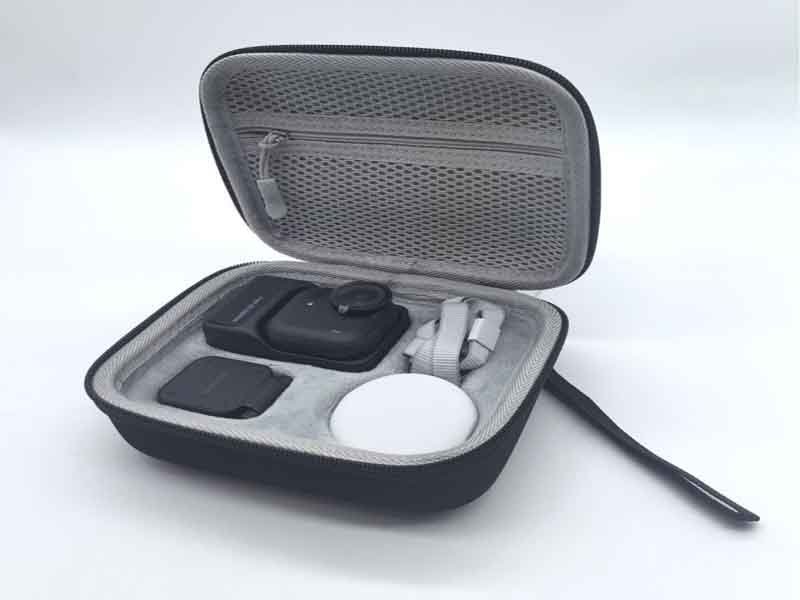
A camera bags manufacturer produces a full range of protective carrying products designed around cameras, lenses, accessories, digital devices, and shooting workflows. The factory’s work usually includes product planning, fabric selection, padded structure design, divider development, sample making, logo customization, packaging, quality inspection, and bulk production. A strong manufacturer does not simply copy a backpack shape and add foam. It studies how users open the bag, how gear moves inside, how weight sits on the shoulders, how rain touches the surface, how zippers perform after repeated use, and how a brand wants the product to look on a shelf or online listing.
Camera bags sit between several industries. They borrow durability ideas from outdoor bags, organization logic from tool bags, comfort design from travel backpacks, and visual style from lifestyle accessories. For this reason, manufacturers need to understand both soft goods production and equipment protection. A regular bag may only need to hold clothing, books, or daily items. A camera bag must protect hard, expensive, irregularly shaped objects that can break, scratch, shift, or become useless after water exposure.
The most common products include camera backpacks, camera sling bags, camera shoulder bags, lens pouches, padded camera inserts, drone bags, tripod carrier bags, rolling camera cases, hard-shell camera cases, waterproof outdoor camera bags, and hybrid laptop camera backpacks. Some projects are built for professional photographers. Some are designed for travel creators, outdoor explorers, vloggers, journalists, students, e-commerce sellers, or premium lifestyle brands. The manufacturer’s role is to match product structure with user behavior, not only with product category names.
What Are Camera Bags Used For?
Camera bags are used to carry, organize, protect, and access photography and video equipment during travel, outdoor shooting, studio work, events, and daily movement. A good camera bag reduces impact risk, keeps lenses separated, protects gear from dust and moisture, supports comfortable carrying, and improves shooting efficiency when users need to change equipment quickly.
The real use case is often more complex than “carry a camera.” Many users carry a mixed kit. A photographer may need a camera body, one attached lens, two spare lenses, a battery charger, filters, cleaning cloth, SD cards, phone, wallet, laptop, and tripod. A content creator may also carry a microphone, light panel, drone controller, cables, power bank, gimbal, and personal items. A manufacturer must build space around real gear combinations, not around one camera illustration.
From a product development angle, camera bags solve four major problems: protection, organization, mobility, and identity. Protection comes from foam, fabric, lining, base reinforcement, zipper coverage, waterproof treatment, and internal dividers. Organization comes from pocket planning and modular layouts. Mobility comes from straps, handles, back panels, weight balance, and quick-access openings. Identity comes from color, shape, logo, material texture, packaging, and brand story.
The use cases below show why one camera bag style cannot serve every market.
| Use Scenario | Common Gear Load | Key Bag Need | Manufacturing Focus | Product Risk If Poorly Designed |
|---|---|---|---|---|
| Street photography | 1 body, 1–2 lenses, phone, wallet | Fast access, low-profile look | Side opening, slim body, soft padding | Missed shots, bulky appearance |
| Wedding photography | 2 bodies, 3–5 lenses, flash, cards | Large capacity, strong protection | Divider stability, shoulder comfort | Gear collision, slow lens changes |
| Travel content | Camera, drone, laptop, tripod | Hybrid storage, light weight | Laptop sleeve, tripod strap, pockets | Poor organization, airport inconvenience |
| Outdoor shooting | Camera, lenses, jacket, water bottle | Weather resistance, comfort | Coated fabric, ergonomic straps | Wet gear, back fatigue |
| Studio transport | Camera body, lens set, lighting accessories | Modular storage | Thick padding, removable dividers | Scratches, broken accessories |
| E-commerce creator kit | Camera, mic, mini light, cables | Small organized compartments | Elastic loops, mesh pockets | Tangled accessories |
| Drone photography | Drone, controller, batteries, camera | Molded or partitioned space | Custom compartments, EVA support | Battery movement, controller damage |
| Premium lifestyle market | Compact camera, daily items | Design-led protection | Fabric texture, branding, silhouette | Product looks too technical |
A useful camera bag should feel invisible when the user is working. The photographer should not need to fight the zipper, dig through a messy pocket, worry about rain, or feel the strap cutting into the shoulder. A manufacturer who understands use scenarios can develop bags that feel natural instead of forced.
What Products Can a Factory Make?
A professional camera bag factory can make more than one product type. The full product range often includes backpacks, sling bags, shoulder bags, messenger bags, waist bags, lens pouches, padded inserts, hard cases, rolling cases, waterproof dry-style camera bags, drone bags, tripod bags, cable organizers, battery pouches, and accessory storage kits. For brand programs, several products can be developed as a matching collection with the same fabric, color system, logo position, zipper style, and packaging direction.
Szoneier can support camera bag projects across fabric and finished product manufacturing. Because the company works with cotton, canvas, polyester, nylon, neoprene, jute, linen, Oxford fabric, and functional fabric treatments, camera bag development can begin from the material level instead of only the sewing level. For example, a rugged outdoor camera backpack may use high-density Oxford fabric with water-resistant coating. A soft compact camera pouch may use neoprene for cushioning and flexibility. A lifestyle camera tote may use canvas with padded insert construction. A premium private label line may combine textured polyester, custom lining, branded pullers, and woven label details.
The table below shows common camera bag products and how manufacturers usually position them.
| Product Type | Main User | Typical Capacity | Key Materials | Common Custom Options | Best Market Fit |
|---|---|---|---|---|---|
| Camera backpack | Travel, outdoor, professional shooting | 10L–35L | Nylon, polyester, Oxford fabric | Dividers, laptop sleeve, tripod holder | Photography brands, travel gear brands |
| Camera sling bag | Street, daily creator use | 5L–12L | Nylon, polyester, canvas | Side access, logo patch, inner layout | Creator brands, compact gear lines |
| Camera shoulder bag | Event, city, classic photography | 4L–15L | Canvas, polyester, nylon | Shoulder pad, flap, metal hardware | Lifestyle camera accessories |
| Camera insert bag | Backpack conversion, travel | Small to medium | Polyester lining, foam, nylon | Size, divider layout, handle | Add-on accessory programs |
| Lens pouch | Lens protection | Single lens | Neoprene, polyester, velvet lining | Drawstring, zipper, logo | Camera accessory brands |
| Hard camera case | Heavy-duty transport | Custom | EVA shell, PU, Oxford cover | Molded interior, zipper, handle | Drone, lens, equipment protection |
| Rolling camera bag | Large gear kit | 30L–60L | Polyester, nylon, hard base | Wheels, telescopic handle | Event and studio professionals |
| Drone camera bag | Drone, controller, batteries | Model-based | EVA, nylon, polyester | Custom compartments, battery slots | Drone accessory sellers |
| Waterproof camera bag | Outdoor and marine shooting | 10L–30L | TPU-coated fabric, nylon, Oxford | Roll-top, sealed pocket, rain cover | Outdoor, fishing, travel markets |
| Camera tote bag | Lifestyle and female users | 8L–18L | Canvas, cotton, polyester | Hidden padding, insert, logo | Fashion-accessory crossover |
The product decision should start from the user’s gear kit and movement habit. A brand that targets travel creators may not need a heavy professional rolling case. A brand targeting wedding photographers should not make a thin lifestyle sling bag as its main product. A factory with real development experience can help avoid this mismatch early.
What Makes Camera Bags Different?
Camera bags are different because they are built around impact protection, gear separation, moisture resistance, fast access, and weight management. A normal backpack can hold a camera, but it usually cannot prevent gear from hitting other items inside the bag. A camera bag uses foam padding, removable dividers, protective lining, reinforced base panels, smart openings, and accessory compartments to keep fragile equipment stable.
The internal structure is the biggest difference. A regular bag often has one large compartment. A camera bag needs multiple zones. The camera body may need one padded section. Lenses need vertical or horizontal slots. A laptop needs a suspended sleeve. Batteries need small pockets. Memory cards need secure storage. A tripod needs outside fixation. A water bottle needs separation from electronics. If the layout is wrong, the product may look nice but fail in real use.
Another difference is how the bag opens. Many camera bags use side openings, back openings, top openings, or full clamshell openings. Each opening style changes how quickly users can reach gear and how safe the bag feels in crowded places. A side access backpack is useful for street shooting because the user can swing the bag forward and take out the camera quickly. A back-opening camera backpack can reduce theft risk because the main camera compartment touches the user’s back while worn. A full clamshell opening is useful for studio or travel packing because users can see everything at once.
Manufacturers must also think about the tension between protection and comfort. More foam can improve protection but increase weight and reduce usable volume. Thicker fabric may improve durability but make the bag stiff. More pockets can improve organization but make production more expensive. More zippers can improve access but add failure points. A good camera bag is not the one with the most features. It is the one where each feature earns its space.
| Design Factor | Regular Backpack | Camera Bag | Why It Matters |
|---|---|---|---|
| Internal space | Open storage | Padded divided storage | Prevents gear collision |
| Foam use | Limited or none | Body, base, sides, dividers | Absorbs daily impact |
| Opening logic | Top opening | Side, back, front, clamshell | Improves shooting speed |
| Laptop protection | Basic sleeve | Suspended padded sleeve | Reduces drop impact |
| Weather handling | Basic fabric | Coating, rain flap, water-resistant zipper | Protects electronics |
| Base structure | Soft base | Reinforced base | Reduces ground impact |
| Strap system | General carrying | Load-aware shoulder and chest support | Improves comfort |
| Pocket planning | Daily items | Cards, batteries, filters, cables | Keeps small gear organized |
| Tripod support | Rare | Side or front fixation | Supports full shooting kit |
| Brand value | Lifestyle carry | Functional equipment product | Higher perceived value |
Many brands underestimate the manufacturing difficulty. Camera bags often require more sewing steps than standard bags because of foam lamination, lining assembly, divider stitching, internal binding, hidden seams, reinforced stress points, and structured panels. A small measurement error in a divider can make the camera fit poorly. A weak bottom panel can make the whole bag feel cheap. A rough zipper path can slow down access. These details are where factory experience becomes visible.
Are Camera Bags Only for Photographers?
Camera bags are not only for photographers. They are also used by video creators, vloggers, drone pilots, journalists, outdoor travelers, designers, students, livestream teams, product reviewers, social media creators, and anyone who carries fragile digital equipment. As cameras, drones, audio gear, lighting tools, and laptops become part of daily content work, camera bags are moving from a niche photography product into a broader creator-equipment category.
This shift matters for product design. Traditional photographers often care most about lens protection and fast camera access. Content creators may care about mixed storage for microphones, mini tripods, cables, lights, chargers, and power banks. Drone users need battery protection and controller storage. Travel creators need carry-on friendly dimensions, anti-theft openings, and laptop compartments. Lifestyle users may want camera protection without looking like they are carrying expensive gear.
For brands, this creates a larger opportunity. A camera bag line can be positioned as photography equipment, creator gear, outdoor travel gear, tech carry, or premium lifestyle accessory. The same factory can produce different versions with small structural changes. For example, a 20L camera backpack can become an outdoor photography backpack with a rain cover and tripod straps, a creator backpack with cable pockets and laptop space, or a lifestyle camera backpack with softer colors and hidden divider sections.
| User Group | Main Need | Product Direction | Design Detail That Matters |
|---|---|---|---|
| Professional photographers | Fast access and heavy gear protection | Larger backpack or shoulder bag | Strong dividers, reinforced straps |
| Travel creators | Hybrid storage and carry comfort | Camera laptop backpack | Laptop sleeve, luggage strap |
| Drone users | Molded gear organization | Drone camera bag | EVA compartments, battery pockets |
| Vloggers | Small gear organization | Sling bag or compact backpack | Microphone and cable pockets |
| Outdoor users | Weather protection and stability | Waterproof camera backpack | Coated fabric, rain cover, tripod holder |
| Students | Affordable protection | Camera insert or small bag | Low MOQ, lighter materials |
| Premium brands | Visual identity and retail appeal | Private label camera line | Fabric texture, logo, packaging |
| E-commerce sellers | Clear listing features | Functional camera bag series | Product photos, size options |
A factory like Szoneier can help brands build camera bag products for these different users. Because Szoneier supports custom material selection, post-treatment processes, free design assistance, low MOQ development, fast sampling, free samples, and OEM/ODM customization, brands can test a focused product idea before scaling into a full collection. That is important because the camera bag market rewards precise fit. A bag designed for everyone often becomes exciting to no one.
The most important question is not “Can the factory make camera bags?” The better question is “Can the factory translate user behavior into a product structure?” A camera bag is a small piece of engineering disguised as soft goods. Buyers often compare price first, but experienced brands compare fit, padding density, material hand feel, zipper movement, divider quality, stitching strength, and user flow.
A low-cost camera bag can look acceptable in photos but fail after several weeks of real use. Common failures include bent dividers, loose stitching at strap roots, weak zipper sliders, foam compression, water leakage, thin lining, poor tripod balance, and uncomfortable carrying. These failures damage not only the product but also the brand selling it.
The following development checklist helps brands evaluate whether a manufacturer is thinking like a product partner or only like a sewing supplier.
| Evaluation Point | Basic Supplier Answer | Professional Manufacturer Answer | Why Brands Should Care |
|---|---|---|---|
| Gear layout | “Send size, we make it.” | “What camera body, lens length, laptop size, tripod type, and access style do users need?” | Structure must match real equipment |
| Fabric choice | “Nylon or polyester both okay.” | “Outdoor use may need coated nylon or Oxford; lifestyle use may need canvas or textured polyester.” | Material changes performance and price |
| Padding | “We add foam.” | “Different panels need different foam thickness and density.” | Protection must be placed correctly |
| MOQ | “MOQ is fixed.” | “Low MOQ can support market testing before larger orders.” | Reduces launch risk |
| Sample | “Sample after payment.” | “Sample confirms layout, size, foam, zipper, logo, and packaging before bulk.” | Prevents mass production mistakes |
| Quality control | “Inspection included.” | “Check stitching, zipper, strap pull, dimensions, divider fit, logo, packing, and carton.” | Camera bags have many hidden defects |
| Branding | “Logo can be added.” | “Logo method depends on fabric, price level, wash risk, and visual style.” | Branding affects perceived value |
| Production support | “We make bags.” | “We support fabric, design, sampling, manufacturing, packaging, and shipment.” | One-stop service reduces communication loss |
For a brand preparing a camera bag project, the first step should be building a product brief. The brief does not need to be perfect, but it should include target user, bag type, gear list, target capacity, fabric preference, logo method, packaging idea, target order quantity, and expected retail positioning. With this information, Szoneier can help recommend material direction, structure, sample plan, MOQ route, and possible cost adjustments.
A useful camera bag is never only a bag. It is a promise to protect the user’s work. When a customer puts a camera into the product, they trust the brand with equipment, memories, jobs, and creative plans. That is why manufacturing experience matters.
Which Camera Bag Types Are Common?
The most common camera bag types are camera backpacks, sling bags, shoulder bags, messenger bags, insert bags, lens pouches, hard cases, rolling camera bags, drone camera bags, and waterproof outdoor camera bags. Each type solves a different carrying problem. Backpacks handle heavier kits and travel. Sling bags offer fast access for street shooting. Shoulder bags suit classic daily photography. Insert bags turn normal backpacks into camera-safe storage. Hard cases protect valuable equipment during transport. The right type depends on gear size, shooting style, travel distance, access speed, and brand positioning.
A good camera bag collection usually does not rely on one shape. Many successful brands build a small system: one compact sling, one daily camera backpack, one large professional backpack, one padded insert, and one accessory pouch. This creates more price points and helps different users find the right fit. For factories, it also allows fabric, zippers, lining, logo elements, and packaging to stay consistent across the series, which improves brand recognition.
Camera bag type selection should be based on use, not trend. A popular camera backpack may not be suitable for every brand. If the target user is a city creator carrying one mirrorless camera and one lens, a 30L backpack may feel excessive. If the target user is a wedding photographer, a small sling may not protect enough gear. If the target user is an outdoor landscape photographer, a fashion camera tote may not survive rough environments. The best product type is the one that fits the user’s day.
What Is a Camera Backpack?
A camera backpack is a two-shoulder carrying bag with padded internal compartments for cameras, lenses, accessories, and often laptops or tripods. It is one of the most common camera bag types because it balances capacity, protection, and comfort. Camera backpacks are especially useful for travel, outdoor photography, professional shoots, drone work, and full-day content production.
The main advantage of a camera backpack is weight distribution. Carrying two camera bodies, several lenses, a laptop, batteries, and a tripod on one shoulder can quickly become uncomfortable. A backpack spreads weight across both shoulders and often includes padded shoulder straps, breathable back panels, chest straps, waist belts, and reinforced handles. For larger gear kits, this matters a lot.
Camera backpacks can be designed in different ways. Some use a full camera compartment. Some use a half-camera, half-personal-item layout. Some open from the back for anti-theft protection. Some open from the side for fast access. Some have front clamshell openings for full gear visibility. Some include removable inserts so the bag can work as a normal backpack when camera dividers are removed.
| Backpack Type | Best For | Common Capacity | Access Style | Key Manufacturing Details |
|---|---|---|---|---|
| Compact camera backpack | City creators, students | 10L–16L | Side or top access | Slim padding, light fabric, small dividers |
| Travel camera backpack | Travel creators, vloggers | 18L–25L | Side and back access | Laptop sleeve, luggage strap, tripod holder |
| Outdoor camera backpack | Landscape, hiking, field work | 20L–35L | Back or front opening | Water-resistant fabric, back support, rain cover |
| Professional camera backpack | Wedding, studio, commercial work | 25L–40L | Full clamshell | Thick dividers, strong zippers, heavy-duty straps |
| Hybrid daily backpack | Work and camera mix | 15L–25L | Top and front access | Removable insert, laptop and personal zones |
The biggest mistake in backpack development is overloading features without controlling weight. A 25L camera backpack with too much foam, too many pockets, heavy hardware, and thick fabric can become uncomfortable before gear is even packed. A professional manufacturer should help balance protection, weight, and cost.
For Szoneier camera backpack projects, fabric can be selected based on use. Polyester or Oxford fabric can support cost-effective daily camera backpacks. High-density nylon can support lightweight outdoor use. Canvas can support retro lifestyle products. Neoprene can be used for internal cushioning parts or compact protective pockets. For brands that want a stronger premium feel, customized lining, branded zipper pullers, embossed patches, woven labels, and molded back padding can improve perceived value.
What Is a Camera Sling Bag?
A camera sling bag is a single-strap bag designed for fast access and compact carrying. It usually sits across the body and can be rotated from back to front without fully removing it. This makes it popular among street photographers, travel creators, vloggers, and users carrying a small mirrorless or compact camera setup.
The key value of a sling bag is speed. A photographer walking through a city may not want to take off a backpack every time a photo opportunity appears. With a sling bag, the user can pull the bag forward, unzip a side or top opening, take out the camera, shoot, and close the bag quickly. This behavior should drive the structure. The zipper path, divider angle, opening width, and strap position all matter.
Most camera sling bags have lower capacity than backpacks. That can be a strength. Many modern camera users prefer lighter gear and minimal carry. A sling can hold one camera body with lens attached, one spare lens, batteries, cards, phone, wallet, and small accessories. Some versions include tablet space, hidden pockets, water-resistant zippers, or bottom straps for a mini tripod.
| Sling Bag Size | Typical Gear Fit | Target User | Strength | Limitation |
|---|---|---|---|---|
| 3L–5L | Compact camera, small lens, phone | Daily street user | Very light | Limited lens space |
| 6L–8L | Mirrorless body, 1–2 lenses | Travel creator | Good balance | Not for large DSLR kits |
| 9L–12L | Camera, 2 lenses, small tablet | Hybrid creator | More flexible | Can feel bulky on one shoulder |
| 12L+ | Camera, lenses, drone accessories | Gear-heavy sling users | Higher capacity | Shoulder fatigue risk |
Manufacturing a good sling bag is not as easy as shrinking a backpack. The strap angle must feel stable. The bag should not swing too much while walking. The access opening should not let gear fall out when rotated. The internal dividers need to hold equipment at an angle. The back panel should feel comfortable against the body. The zipper should move smoothly with one hand.
Szoneier can develop camera sling bags for different brand positions. A lightweight polyester sling can suit entry-level online sales. A nylon water-resistant sling can suit travel and outdoor creators. A canvas sling can suit retro camera brands. A neoprene-lined compact sling can suit soft protective daily carry. For private label programs, small design changes such as logo patch placement, zipper pull style, lining color, and packaging can make the product feel more brand-owned rather than generic.
What Is a Camera Shoulder Bag?
A camera shoulder bag is a classic carry style worn on one shoulder or across the body, usually with a flap, zipper, or top opening. It is popular among photographers who want quick access, a traditional camera look, and easier gear changes without placing the bag on the ground. Shoulder bags work well for city photography, event photography, documentary work, compact professional kits, and lifestyle camera accessories.
The shoulder bag format has a long history in photography because it keeps gear close to the user’s hands. Compared with backpacks, shoulder bags are faster to open. Compared with sling bags, they often offer a wider top opening and clearer internal view. The trade-off is comfort. A heavy shoulder bag can strain one side of the body, especially during long shoots.
This is why camera shoulder bag design must be honest about capacity. A small shoulder bag can be excellent for one camera body and one spare lens. A medium version can carry two lenses and accessories. A large version can hold more gear, but it needs a wide padded shoulder strap, reinforced side rings, a stable base, and strong stitching. If the bag is too large without good support, users will feel the problem immediately.
| Shoulder Bag Type | Style Direction | Common Material | Best Use | Important Detail |
|---|---|---|---|---|
| Compact shoulder bag | Minimal daily carry | Canvas, polyester, nylon | One camera and one lens | Soft padded insert |
| Classic flap bag | Retro photography style | Canvas, cotton blend, PU trim | Street and travel | Flap closure and silent access |
| Professional shoulder bag | Work gear carry | Nylon, Oxford fabric | Events and commercial shoots | Thick strap and divider system |
| Messenger camera bag | Lifestyle and work | Canvas, polyester | Camera plus laptop/tablet | Laptop section and organizer pockets |
| Premium shoulder bag | Retail and gift market | Textured fabric, leather-like trims | High-end compact camera users | Logo, hardware, lining quality |
For brands, shoulder bags offer strong visual identity. A backpack is often judged by function first. A shoulder bag is judged by both function and style. Fabric texture, flap shape, hardware color, stitch line, logo method, and lining color can change the product’s market level. A canvas shoulder bag with a padded insert can feel warm and lifestyle-driven. A black nylon shoulder bag can feel technical and professional. An Oxford fabric shoulder bag can feel more rugged and outdoor-ready.
Szoneier’s material range gives brands room to develop different shoulder bag styles. Cotton and canvas can support vintage-inspired camera bags. Polyester can support cost-controlled online collections. Nylon and Oxford fabric can support higher durability and water resistance. Neoprene can be used for removable internal sleeves or lens protection. The manufacturer can also support custom logo, private label packaging, size adjustment, divider design, color matching, and sample improvement before bulk production.
What Is a Camera Insert Bag?
A camera insert bag is a padded inner organizer that can be placed inside a regular backpack, tote bag, travel bag, or outdoor pack. It protects cameras and lenses without requiring users to buy a dedicated camera bag. Inserts are popular with travelers, students, casual photographers, e-commerce sellers, and brands that want a lower-cost accessory product.
The insert bag solves a very real user problem. Many people already own backpacks they like. They do not always want a camera bag that looks technical or expensive. A padded insert lets them convert an existing bag into a camera-safe storage space. It also gives brands an easier entry product because inserts are smaller, lighter, and often simpler to produce than full camera backpacks.
A good insert should have a stable shape, soft lining, adjustable dividers, a smooth zipper or drawstring opening, and enough structure to protect gear when placed inside another bag. The outside does not always need heavy-duty fabric because it is usually carried inside another product, but the internal padding and divider quality matter greatly.
| Insert Type | Common Use | Structure | Cost Level | Best Brand Strategy |
|---|---|---|---|---|
| Small insert | One camera, one lens | Simple padded box | Lower | Entry accessory |
| Medium insert | Camera, 2–3 lenses | Adjustable dividers | Medium | Travel and daily users |
| Large insert | Camera kit, drone gear | Structured panels | Medium-high | Professional add-on |
| Foldable insert | Light casual use | Soft flexible foam | Lower | Gift or bundle item |
| Premium insert | High-end camera gear | Thick foam and soft lining | Higher | Premium accessory line |
Camera inserts also work well as part of bundled sales. A brand may sell a canvas camera tote with a removable padded insert. Another brand may sell a hiking backpack and add a camera insert for photographers. An e-commerce seller may offer multiple insert sizes to match popular backpack dimensions. Because inserts have lower shipping volume and simpler construction, they can help test market demand before launching bigger bag styles.
Szoneier can produce camera inserts using polyester, nylon, soft lining fabrics, foam padding, and customized divider systems. Logo can be added through woven labels, rubber patches, heat transfer, embroidery, or printed tags depending on the fabric and brand position. For buyers with uncertain demand, low MOQ customization and fast sampling are helpful because inserts can be tested in different sizes before committing to a larger camera bag line.
What Is a Hard Camera Case?
A hard camera case is a structured protective case designed for stronger impact resistance during transport, storage, drone carrying, lens protection, or equipment delivery. It may use EVA molded shells, hard plastic, reinforced fabric covers, foam inserts, or semi-hard panels. Hard cases are common for drones, action cameras, lenses, microphones, gimbals, lighting accessories, and specialized camera equipment.
Hard cases are different from soft camera bags because they focus more on shape retention and crush resistance. A backpack protects through padding and compartment control. A hard case protects through shell structure, molded foam, and fixed equipment positions. This makes hard cases useful when the product must protect expensive gear inside luggage, cars, shipping cartons, or crowded travel conditions.
The challenge is flexibility. A hard case protects well but may be heavier, less comfortable, and less adaptable than a soft bag. For this reason, some brands choose semi-hard solutions: EVA front panels, molded bottom sections, hard-shell accessory cases, or removable molded inserts inside a soft backpack. This hybrid approach can improve protection without making the product feel like industrial equipment.
| Hard Case Format | Best For | Protection Level | Flexibility | Manufacturing Focus |
|---|---|---|---|---|
| EVA camera case | Small camera, action camera, accessories | Medium-high | Medium | Molded shell, zipper quality |
| Drone hard case | Drone, controller, batteries | High | Low-medium | Molded compartments |
| Lens hard case | Telephoto lenses, premium lenses | High | Low | Foam fit, inner lining |
| Semi-hard backpack | Travel and outdoor camera kits | Medium-high | High | Shell panel plus soft structure |
| Accessory hard pouch | Batteries, cards, cables, filters | Medium | High | Small compartment planning |
For brands selling higher-value gear accessories, hard cases can improve perceived product quality. A camera accessory kit packed in a molded EVA case feels more professional than the same items placed in a thin pouch. Drone users especially value fixed storage because batteries, propellers, controllers, and cables can move around easily.
Szoneier can support semi-hard and soft-hard hybrid camera bag development depending on project needs. For example, a brand may request a soft Oxford fabric camera backpack with an EVA-reinforced front panel. Another may need a neoprene-lined hard pouch for compact lenses. Another may want a drone accessory case with custom internal compartments and branded zipper pullers. The key is to match protection level with real use, not simply choose the hardest structure possible.
Choosing the right camera bag type is partly a product decision and partly a market decision. A professional photographer may judge a bag by capacity and protection. A travel creator may judge it by comfort and airport convenience. A young compact-camera user may judge it by style. A drone user may judge it by compartment fit. A premium brand may judge it by material texture, logo quality, and retail packaging.
Many brands make the mistake of starting with a competitor photo and asking the factory to make something similar. That can work for basic development, but it often leads to average products. A stronger method is to start with user scenes and build the product from there.
| Product Question | Weak Development Method | Better Development Method | Impact on Final Product |
|---|---|---|---|
| What size should we make? | Copy competitor dimensions | Match real gear list and target user height | Better capacity and comfort |
| What material should we use? | Choose cheapest fabric | Match durability, water resistance, texture, and price level | Better user satisfaction |
| How many pockets? | Add many pockets | Add pockets for specific gear | Less clutter, better usability |
| What opening style? | Use standard zipper opening | Match shooting speed and security need | Better workflow |
| How much padding? | Add thick foam everywhere | Place foam by impact zones | Better protection and lighter weight |
| What bag type? | Follow trending style | Match market segment and channel | Stronger product-market fit |
| How to brand it? | Print logo anywhere | Choose logo method by fabric and price tier | More premium look |
| How to control cost? | Reduce material only | Adjust structure, fabric, lining, accessories, and packaging carefully | Keeps value while managing budget |
A useful product range can be planned in layers. For example, a new camera accessories brand may start with a compact sling bag, a padded insert, and a lens pouch. A travel gear brand may start with a 20L camera backpack and a matching accessory pouch. A premium lifestyle brand may start with a canvas shoulder bag and removable insert. A drone accessory seller may start with EVA hard cases and a compact backpack.
The table below shows how different brand strategies can shape product selection.
| Brand Strategy | Recommended First Products | Why It Works | Possible Upgrade Later |
|---|---|---|---|
| Entry-level online store | Insert bag, lens pouch, compact sling | Lower cost, easier shipping, clear function | Backpack series |
| Travel creator brand | Camera backpack, sling bag, cable pouch | Covers daily and travel use | Waterproof outdoor version |
| Outdoor photography brand | Waterproof backpack, tripod bag, rain cover | Strong scene fit | Larger hiking camera pack |
| Premium lifestyle brand | Canvas shoulder bag, camera tote, insert | Style-driven and giftable | Leather-trimmed collection |
| Drone accessory brand | EVA case, drone backpack, battery pouch | Strong equipment fit | Custom molded storage system |
| Photography retailer | Backpack, shoulder bag, inserts, pouches | Broad customer coverage | Private label collection |
Szoneier’s advantage for camera bag projects comes from combining fabric development knowledge with finished goods manufacturing. Many buyers only think about the finished bag. But the finished bag begins much earlier: fabric density, coating, lining, foam choice, webbing strength, zipper selection, logo method, and sample testing. A factory with fabric and product experience can help brands avoid weak material decisions before they become expensive bulk problems.
For a camera bag brand, product type should never be random. It should answer a real user sentence: “I need to carry two cameras all day without shoulder pain.” “I need to take out my camera in three seconds.” “I need to protect a drone in my travel luggage.” “I need a camera bag that does not look like a camera bag.” When the product answers that sentence clearly, the chance of selling it becomes much higher.
What Materials Are Used?
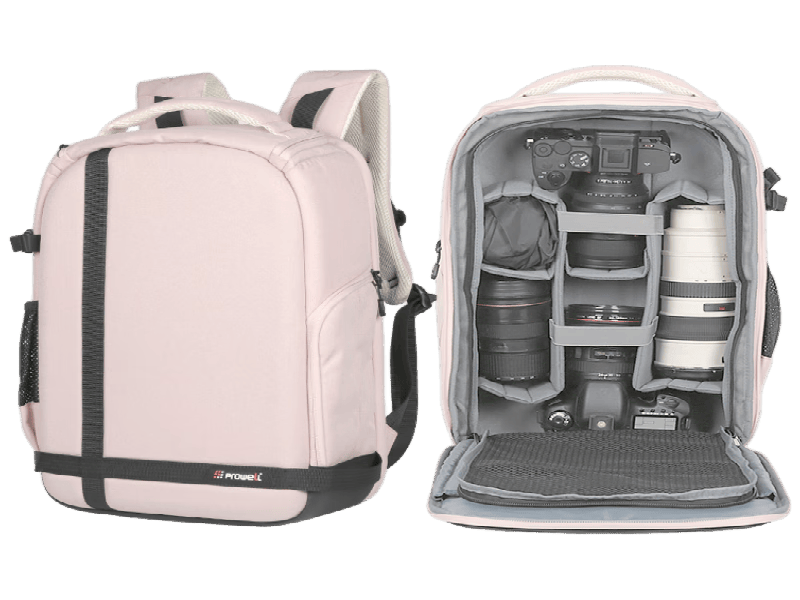
Camera bag materials are selected according to protection level, weather resistance, weight, texture, price point, and brand positioning. Common materials include nylon, polyester, Oxford fabric, canvas, cotton fabric, neoprene, EVA, TPU-coated fabric, PU coating, mesh, velvet lining, brushed lining, foam padding, webbing, and reinforced bottom panels. A professional camera bags manufacturer does not choose fabric only by appearance. It studies abrasion resistance, tear strength, water repellency, hand feel, color stability, coating performance, sewing difficulty, padding compatibility, and target selling channel before recommending a material solution.
Material choice is one of the most important decisions in camera bag development because it directly affects user trust. Cameras and lenses are expensive, sensitive, and easy to damage. A bag made with thin fabric, weak lining, low-density foam, or poor coating may look acceptable in photos but fail in rain, travel, or daily use. On the other hand, using the heaviest and most expensive fabric is not always smart either. A small mirrorless sling does not need the same material structure as a 35L outdoor photography backpack. A lifestyle camera tote does not need to look like military equipment. The right material should match the user’s scene, the brand’s price level, and the product’s real function.
For Szoneier, material development is a major advantage because the company has more than 18 years of experience in fabric research, finished product manufacturing, and custom fabric-based product development. Camera bag projects can be built from cotton fabric, canvas fabric, polyester fabric, nylon fabric, neoprene fabric, jute fabric, linen fabric, Oxford fabric, and other functional materials. Different post-treatment options can also be applied, including water-repellent finishing, PU coating, TPU coating, PVC coating, anti-scratch treatment, lamination, quilting, embossing, printing, embroidery, heat transfer, and special lining combinations. This allows brands to design camera bags for outdoor protection, urban lifestyle, premium retail, creator kits, travel use, or private label programs without being locked into one generic material.
Which Fabric Protects Gear Best?
The best fabric for camera bag protection is not one single material. Protection usually comes from a material system: outer fabric, coating, foam padding, lining, base reinforcement, divider fabric, zipper coverage, and structural sewing. Nylon, Oxford fabric, and high-density polyester are commonly used for camera bag shells because they can provide good durability, water resistance, and shape support. Neoprene and foam are often used in internal protection because they absorb shock and cushion fragile equipment. Soft lining fabrics help reduce scratches on camera bodies and lenses.
When brands ask which fabric protects gear best, the answer should begin with use environment. Outdoor camera backpacks need abrasion resistance, water resistance, and tear strength. Studio camera cases need structured padding and divider stability. Travel camera bags need lightweight strength and stain resistance. Lifestyle camera bags need texture, comfort, and hidden protection. A strong manufacturer should explain these trade-offs rather than pushing one material for every product.
Camera bag fabric protection can be evaluated from several angles.
| Material System | Protection Role | Suitable Products | Strengths | Watch Points |
|---|---|---|---|---|
| High-density nylon | Outer shell | Outdoor camera backpacks, travel bags | Lightweight, strong, water-resistant with coating | Higher cost than basic polyester |
| Polyester | Outer shell and lining | Entry to mid-range camera bags | Cost stable, printable, color flexible | Lower abrasion resistance than premium nylon |
| Oxford fabric | Outer shell | Rugged backpacks, outdoor bags, utility cases | Durable texture, good structure, coating-friendly | Can feel stiff if density is too high |
| Canvas | Outer shell | Lifestyle shoulder bags, camera totes | Natural texture, strong visual identity | Needs treatment for water resistance |
| Neoprene | Cushioning and pouch structure | Lens pouches, camera sleeves, inner pads | Flexible, shock-absorbing, soft hand feel | Not ideal as main shell for large backpacks |
| EVA | Molded protection | Hard cases, semi-hard panels, drone cases | Shape retention, impact protection | Requires tooling for molded designs |
| TPU-coated fabric | Waterproof layer | Waterproof camera bags, outdoor dry-style bags | Strong water resistance | Higher cost and different welding/sewing needs |
| Soft velvet lining | Scratch protection | Inner compartments, lens sections | Gentle surface, premium feel | Needs good bonding and sewing control |
| Foam padding | Shock absorption | Panels, dividers, base, laptop sleeves | Essential for protection | Density and thickness must be selected carefully |
| Reinforced webbing | Load support | Handles, straps, tripod holders | Improves carrying strength | Poor stitching can cause failure |
A buyer may see “waterproof nylon” in a product description and assume the bag is fully waterproof. That can be misleading. Fabric may be water-resistant while seams, zippers, and openings still allow water to enter. For electronic equipment, this distinction matters. A camera bag can use water-repellent fabric, PU-coated fabric, waterproof zipper, seam binding, rain cover, or roll-top structure depending on the target protection level. A professional manufacturer should clarify the difference between water-resistant, water-repellent, weather-resistant, and waterproof construction.
For many camera bag projects, a balanced construction works best. For example, a travel camera backpack may use 600D or 900D polyester with PU coating, 210D or 420D lining, 8–12mm foam padding in main panels, 5–8mm foam dividers, reinforced bottom fabric, and water-resistant zipper on key openings. A premium outdoor version may use higher-density nylon or Oxford fabric, stronger coating, thicker bottom reinforcement, breathable mesh back padding, and a rain cover. A lifestyle shoulder bag may use canvas outside and padded polyester insert inside. The outer look can feel casual while the inner structure still protects gear.
Is Nylon Good for Camera Bags?
Nylon is good for camera bags because it offers a strong balance of durability, lightweight performance, abrasion resistance, flexibility, and water resistance when paired with proper coating. It is especially suitable for outdoor camera backpacks, travel camera bags, professional sling bags, and premium lightweight designs. For users carrying valuable cameras for long periods, nylon can provide better strength-to-weight performance than many basic fabrics.
Nylon is often favored in technical bags because it can handle daily friction, bending, and movement. A camera backpack may rub against jackets, car seats, airport floors, rocks, tripods, and luggage carts. Outer fabric must survive these repeated contacts without looking worn too quickly. Nylon performs well in these situations when the correct denier, weave, and finish are selected.
However, nylon is not automatically better for every camera bag. It usually costs more than common polyester. It can also feel more technical, which may not suit vintage or lifestyle designs. Some nylon fabrics may wrinkle or show creases depending on weave and coating. Color matching can also require careful control in production. For brands targeting a rugged outdoor or premium travel segment, nylon is often worth considering. For budget-friendly online camera bags, polyester or Oxford fabric may be more cost-efficient.
| Nylon Option | Common Use | Product Feel | Main Benefit | Better For |
|---|---|---|---|---|
| 210D nylon | Lightweight lining or inner pockets | Thin and smooth | Reduces weight | Inner structures |
| 420D nylon | Light outer shell or lining | Flexible | Good balance | Compact sling bags |
| 500D nylon | Premium outdoor bags | Technical and durable | Strong abrasion resistance | Travel and outdoor backpacks |
| 840D nylon | Heavy-duty panels | Tough and structured | Higher strength | Reinforced zones |
| Ripstop nylon | Outdoor and travel bags | Lightweight grid texture | Tear resistance | Hiking camera bags |
| Coated nylon | Weather-resistant designs | Slightly firmer | Better water resistance | Outdoor and rainy climates |
For a camera bag brand, nylon can also help with storytelling. A product listing can explain that the bag uses durable nylon fabric, water-resistant coating, reinforced stress points, and protective padding for daily shooting and travel. This gives customers a clear reason to trust the product. But claims must match reality. If the bag uses nylon only on a small decorative panel while the main body is basic polyester, the product description should be honest.
Szoneier can help brands choose nylon based on product level, budget, order quantity, and use scene. A compact creator sling may use lighter nylon to reduce weight. A professional camera backpack may use higher-density nylon with reinforced bottom panels. A travel camera bag may combine nylon shell fabric with polyester lining, foam padding, and mesh back support. This material planning is where OEM/ODM development becomes valuable.
Is Polyester Durable Enough?
Polyester can be durable enough for many camera bags when the correct density, coating, lining, and construction are used. It is widely used in backpacks, travel bags, laptop bags, outdoor bags, and camera accessories because it offers stable cost, good color control, print compatibility, wrinkle resistance, and broad availability. For entry-level and mid-range camera bags, polyester is often a smart choice.
The key is not simply whether the material is polyester. The real question is what type of polyester, what denier, what weave, what coating, and what structure. A thin low-density polyester may not be suitable for a protective camera backpack. A higher-density polyester with PU coating, strong lining, reinforced base, and quality foam can perform well for daily use, e-commerce products, creator bags, and private label programs.
Polyester is also useful for brands that need wider color choices or printed patterns. Nylon can be more technical and sometimes more expensive. Canvas may have a natural look but needs better water treatment. Polyester sits in the middle: flexible, scalable, and cost-efficient. It works well for brands that want to launch multiple SKUs or test the market with lower MOQ.
| Polyester Level | Typical Use | Strength | Limitation | Suggested Camera Bag Use |
|---|---|---|---|---|
| 210D polyester | Lining, pockets | Lightweight and cost-friendly | Not strong enough for main shell | Internal lining |
| 300D polyester | Light bags | Smooth, printable | Limited heavy-duty use | Compact pouches |
| 600D polyester | Main shell | Good cost-performance | Less premium than nylon | Camera sling bags, shoulder bags |
| 900D polyester | Stronger shell | Better structure | Slightly heavier | Backpacks, outdoor-style bags |
| 1200D polyester | Heavy-duty shell | Strong and rugged | Can feel stiff | Base panels, utility camera bags |
| PU-coated polyester | Water-resistant shell | Better rain handling | Coating quality varies | Travel and daily camera bags |
A polyester camera bag can be excellent when design and quality control are strong. The problem appears when brands only chase the lowest price. A low-cost polyester bag may use thin foam, weak stitching, rough zippers, and loose dividers. Customers may blame “polyester,” but the real issue is poor construction. A professional manufacturer should help brands separate material quality from overall product engineering.
For many Szoneier camera bag projects, polyester can be used as a practical base material for custom private label development. It supports logo printing, embroidery, woven patches, rubber labels, custom lining colors, and packaging customization. For online sellers, polyester camera bags can achieve a good balance between retail price, function, and production cost. For higher-end products, polyester can also be upgraded through density, coating, texture, lining, hardware, and structural details.
What Is Oxford Fabric?
Oxford fabric is a woven fabric known for its durability, textured surface, and good structure. It is commonly used in backpacks, luggage, outdoor bags, tool bags, medical bags, military-style bags, and camera bags. For camera bag manufacturing, Oxford fabric is often selected when the product needs a tougher appearance, better shape retention, and stronger daily wear resistance.
Oxford fabric can be made from polyester or nylon yarns, and it can be finished with PU, PVC, TPU, or water-repellent coating. The material is available in different densities, such as 300D, 420D, 600D, 900D, 1200D, and higher. A 600D Oxford fabric may be suitable for general camera backpacks and shoulder bags. A 900D or 1200D Oxford fabric may be used for rugged outdoor or professional gear bags. A coated Oxford fabric can improve weather resistance.
The woven texture of Oxford fabric gives camera bags a structured, reliable feel. It is less delicate than some fashion fabrics and more rugged than many smooth polyester fabrics. This makes it useful for brands targeting outdoor, travel, equipment, or utility-style product lines.
| Oxford Fabric Type | Product Use | Surface Feel | Main Advantage | Common Camera Bag Application |
|---|---|---|---|---|
| 300D Oxford | Light bags and lining | Smooth-light texture | Lower weight | Small camera pouches |
| 420D Oxford | Daily camera bags | Moderate structure | Flexible and durable | Sling bags, compact backpacks |
| 600D Oxford | Standard camera bags | Textured and firm | Good cost-performance | Backpacks, shoulder bags |
| 900D Oxford | Outdoor gear bags | Stronger structure | Better abrasion resistance | Travel camera backpacks |
| 1200D Oxford | Heavy-duty bags | Rugged and stiff | Higher strength | Base panels, tool-camera hybrid bags |
| PU-coated Oxford | Weather-resistant bags | Slightly coated hand feel | Better water resistance | Outdoor camera bags |
| PVC-coated Oxford | Utility bags | Firmer surface | Stronger waterproof layer | Equipment cases |
| TPU-coated Oxford | Waterproof-focused bags | Technical finish | Higher water resistance | Dry-style camera bags |
Oxford fabric is useful, but brands should avoid choosing overly heavy material for small camera bags. A compact sling made from very heavy Oxford fabric may feel stiff and uncomfortable. A large outdoor backpack made from thin Oxford fabric may lack support. Material selection should always be linked to size and function.
Szoneier’s experience with Oxford fabric, nylon, polyester, canvas, neoprene, and other materials can help brands build more accurate product specifications. Instead of simply writing “Oxford camera bag,” the specification can define denier, coating, lining, foam thickness, color, logo method, and expected use scenario. This makes quotation more accurate and reduces sample revision.
How Does Neoprene Help Protection?
Neoprene helps camera bag protection by providing soft cushioning, flexibility, shock absorption, and gentle contact with equipment. It is widely used for lens pouches, camera sleeves, insert pads, divider covers, protective wraps, strap pads, and small accessory cases. Neoprene is especially useful when the product needs close-fitting protection without a hard structure.
Neoprene is a synthetic rubber material often laminated with fabric on one or both sides. It has a soft, elastic feel and can compress slightly under pressure. This makes it suitable for protecting compact cameras, lenses, filters, hard drives, microphones, and small electronics. Unlike rigid foam, neoprene can wrap around shapes more naturally. Unlike thin fabric, it adds cushioning.
Neoprene is not usually the best main outer material for large camera backpacks because it can be too soft and flexible for structured load carrying. But as an internal or accessory material, it is extremely useful. A neoprene lens pouch can protect a lens inside a larger backpack. A neoprene camera sleeve can protect a compact camera inside a tote. A neoprene divider layer can reduce friction between equipment and hard panels.
| Neoprene Use | Product Example | Protection Benefit | Brand Value |
|---|---|---|---|
| Lens pouch | Single-lens protective bag | Soft shock absorption | Easy add-on product |
| Camera sleeve | Compact camera cover | Close-fitting scratch protection | Good for lifestyle users |
| Divider padding | Internal camera bag compartments | Reduces gear movement and friction | Improves perceived quality |
| Strap pad | Shoulder strap comfort | Pressure reduction | Better user experience |
| Accessory case | Filter, cable, hard drive pouch | Flexible protection | Useful bundle item |
| Insert side panel | Padded internal structure | Extra cushioning | Better protection inside normal bags |
Neoprene also works well for low MOQ product testing because small pouches and sleeves can be developed quickly. Brands can use neoprene accessories as entry products, bundles, gift items, or add-ons for camera bag collections. For example, a camera backpack line can include matching neoprene lens pouches. A compact camera brand can sell a neoprene sleeve with logo printing. A creator accessories seller can develop a neoprene cable and battery pouch set.
Szoneier has experience with neoprene fabric products and can customize thickness, fabric lamination, color, printing, logo method, stitching, binding, and packaging. For camera-related products, common neoprene thickness may vary according to use, such as thinner neoprene for soft wraps and thicker neoprene for lens pouches. The goal is to protect without making the accessory bulky.
Material selection is one of the areas where brands often need more critical thinking. Many product descriptions use attractive words such as waterproof, durable, premium, shockproof, military-grade, or professional. These words can help marketing, but they must be supported by real material and structural choices. A camera bag does not become waterproof because the fabric has a coating. It does not become shockproof because one foam layer is added. It does not become premium because the logo is printed in gold.
A better way to evaluate material is to ask what risk the material is solving.
| Risk | Material Solution | Structural Solution | Testing or Inspection Focus |
|---|---|---|---|
| Rain exposure | PU-coated nylon, coated Oxford, rain cover | Covered zipper, flap, seam control | Water spray check, coating review |
| Lens scratches | Soft lining, velvet lining, brushed fabric | Smooth divider edges | Lining feel and seam inspection |
| Drop impact | Foam, neoprene, EVA | Reinforced base and side panels | Padding thickness and compression |
| Heavy gear load | High-density fabric, strong webbing | Reinforced strap roots | Pull strength and stitching check |
| Daily abrasion | Nylon, Oxford, reinforced panels | Double-layer bottom | Surface wear and stress point review |
| Gear movement | Divider fabric, hook-and-loop system | Adjustable internal layout | Divider fit and holding strength |
| Heat and travel stress | Stable lining and coating | Better shape retention | Material bonding and deformation review |
| Brand perception | Canvas, textured polyester, premium nylon | Clean sewing and logo placement | Visual consistency inspection |
For camera bags, material cost should not be reduced blindly. If a brand lowers cost by choosing thinner foam, weaker zippers, or poor lining, customers may feel the downgrade immediately. But cost can be optimized intelligently. A manufacturer may suggest using stronger fabric only on the base and high-wear zones, while using lighter fabric on side panels. It may suggest standard lining color to reduce MOQ. It may recommend a simpler divider layout for a starter product. It may use a rain cover instead of expensive fully waterproof construction if the target user only needs weather resistance.
The following table shows how material decisions can be matched with product positioning.
| Product Position | Suggested Shell Material | Inner Protection | Logo Method | Packaging Direction |
|---|---|---|---|---|
| Entry online camera pouch | 300D–600D polyester | Light foam or neoprene | Woven label or print | Polybag with label |
| Mid-range sling bag | 600D polyester or 420D Oxford | 5–8mm foam dividers | Rubber patch or woven patch | Custom hangtag |
| Travel camera backpack | 600D–900D polyester or nylon | 8–12mm foam panels | Embroidery, patch, custom puller | Branded carton or dust bag |
| Outdoor camera backpack | Nylon or coated Oxford | Reinforced foam and base | Rubber patch, heat transfer | Rain cover and instruction card |
| Premium lifestyle shoulder bag | Canvas, textured polyester | Removable padded insert | Leather-like patch or embroidery | Dust bag and branded box |
| Drone hard case | EVA with fabric cover | Molded insert | Print, molded logo, woven label | Color box or sleeve |
| Waterproof camera bag | TPU-coated fabric, coated nylon | Sealed or protected compartments | Heat transfer or rubber logo | Outdoor-style packaging |
A strong camera bag material plan should answer these questions before sampling: What gear does the bag protect? Where will users carry it? How much rain or dust may it face? How heavy is the loaded bag? What price level should the final product reach? What visual style does the brand need? What MOQ is realistic for launch? What claims will be used in product listings?
Szoneier can support these decisions from both the fabric side and the finished product side. That is important because material and construction cannot be separated. A beautiful fabric may fail if it does not sew well with foam. A strong coating may crack if folded incorrectly. A thick lining may make dividers bulky. A premium logo may not bond well on rough texture. Early material discussion saves time, sample cost, and production risk.
How Are Camera Bags Designed?
Camera bags are designed by studying gear layout, access method, protection zones, carrying comfort, material behavior, user movement, and brand appearance. The design process usually begins with target user research and gear list planning, then moves into bag type, dimensions, compartment structure, padding thickness, divider system, zipper path, strap position, tripod holder, laptop sleeve, pocket layout, logo placement, sample making, and revision. A professional camera bag design should make the user feel that every pocket, strap, opening, and divider has a reason.
Good camera bag design is not about adding as many features as possible. It is about removing friction from the user’s day. A photographer should know where the spare battery is without searching. A travel creator should be able to pass through airport security without unpacking the entire bag. A drone user should not feel batteries rolling around. A wedding photographer should change lenses quickly without worrying about the second camera body shifting inside the bag. These small moments define whether a camera bag becomes a product people recommend or a product they regret buying.
For manufacturers, camera bag design requires close attention to dimensions. Camera bodies, lenses, tablets, laptops, tripods, drones, chargers, and water bottles all have different shapes. A few centimeters can change the user experience. If the camera compartment is too shallow, the zipper may press against the gear. If the divider is too low, lenses may hit each other. If the laptop sleeve is not suspended above the base, a drop can transfer impact directly to the laptop. If the tripod holder is placed too low, the bag may swing. If the side opening is too small, fast access becomes frustrating.
How Are Compartments Planned?
Camera bag compartments are planned according to the gear list, access order, weight distribution, protection level, and user workflow. The main camera area should protect the body and lenses. Smaller pockets should store batteries, memory cards, filters, cables, and cleaning tools. A separate laptop sleeve should protect digital devices. External zones may hold tripods, water bottles, jackets, or personal items. The best compartment plan helps users find gear quickly while keeping fragile items from colliding.
The first step is defining the gear load. A product brief should answer whether the bag needs to hold a DSLR or mirrorless body, how many lenses, what lens length, whether a drone is included, whether a laptop is needed, whether the user carries a tripod, and whether personal storage is required. Without this information, the factory can only guess. Guessing often leads to oversized bags, wasted pockets, or poor fit.
A common approach is to divide the bag into three zones: camera zone, digital zone, and personal zone. The camera zone holds body and lenses. The digital zone holds laptop, tablet, hard drive, memory cards, and cables. The personal zone holds clothes, wallet, keys, snacks, documents, or travel items. Some professional bags prioritize the camera zone. Some travel bags split space more evenly. Some lifestyle bags hide the camera zone inside a normal-looking exterior.
| Compartment Zone | Common Items | Design Need | Manufacturing Detail |
|---|---|---|---|
| Main camera zone | Camera body, lenses | Thick padding, divider control | Foam panels, lining, hook-and-loop dividers |
| Quick access zone | Camera with attached lens | Fast opening | Side zipper, zipper guard, angled divider |
| Laptop zone | 13–16 inch laptop | Suspended protection | Padded sleeve raised from base |
| Accessory zone | Batteries, cards, filters | Small secure pockets | Mesh, elastic loops, zipper pockets |
| Cable zone | Chargers, cables, power bank | Tangle control | Elastic bands, mesh divider |
| Tripod zone | Tripod or monopod | External fixation | Strap, buckle, side pocket |
| Personal zone | Jacket, wallet, travel items | Flexible storage | Top compartment or front pocket |
| Security zone | Passport, wallet, cards | Hidden access | Back pocket or inner zipper pocket |
Weight distribution should be considered from the beginning. Heavy items should sit close to the back and near the center of gravity. If lenses are placed too far from the body, the backpack may pull backward. If the tripod is placed only on one side without balance, the bag may feel uneven. If the laptop sleeve is too far back without proper support, it may press uncomfortably against the user.
Szoneier can help brands plan compartments based on target use. For a creator backpack, the design may include a lower camera compartment, upper personal space, side access, laptop sleeve, and cable organizer. For a professional camera backpack, the full main compartment may be dedicated to cameras and lenses. For a lifestyle shoulder bag, the design may use a removable padded insert so the bag can work as both a camera bag and daily bag.
How Do Dividers Protect Lenses?
Dividers protect lenses by separating equipment, absorbing light impact, reducing movement, and allowing users to customize internal space. Most camera bag dividers use foam padding covered with soft fabric and hook-and-loop edges. They can be repositioned to fit different cameras, lenses, flash units, drones, and accessories. Good dividers should be firm enough to stand upright but soft enough to cushion gear.
Lens protection depends heavily on divider quality. A divider that is too thin may bend and allow lenses to hit each other. A divider that is too thick may waste internal space. A divider with weak hook-and-loop may shift during movement. A divider with rough edge binding may scratch equipment. A divider that is too low may not separate tall lenses properly.
Different camera users need different divider systems. A mirrorless user may prefer smaller flexible sections. A DSLR user may need deeper compartments. A drone user may need fixed or semi-fixed shapes. A wedding photographer may need a full open layout with adjustable dividers. A travel creator may want a half-camera layout that leaves room for clothes and personal items.
| Divider Type | Best Use | Advantage | Limitation |
|---|---|---|---|
| Standard straight divider | General camera bags | Simple and adjustable | Limited shape flexibility |
| Foldable divider | Lenses and bodies | Better wraparound support | Slightly higher sewing complexity |
| Thick foam divider | Professional gear | Stronger separation | Reduces internal volume |
| Thin flexible divider | Compact bags | Saves space | Less impact resistance |
| Molded divider | Drone and equipment kits | Precise fit | Less flexible for different gear |
| Hook-and-loop divider | Custom layouts | Easy repositioning | Needs strong attachment fabric |
| Padded insert divider | Removable camera cubes | Versatile | Must fit outer bag well |
Divider layout should be tested with real or dummy equipment. A product drawing may look correct, but actual gear can reveal problems. Lens diameter, lens hood size, camera grip height, viewfinder position, and strap bulk all affect fit. The user may also need to store the camera with lens attached, which requires a longer compartment. If a camera bag cannot hold the gear in a ready-to-shoot position, it may feel less useful.
Szoneier can support adjustable divider development with different foam thicknesses, lining fabrics, binding methods, and internal layout options. For brands launching multiple bag sizes, divider systems can be standardized to reduce production complexity while still allowing flexible user setups. Custom lining colors and branded divider labels can also improve the product’s perceived quality.
How Is Laptop Space Added?
Laptop space is added through a padded sleeve, usually placed against the back panel or inside a separate compartment. A good laptop section should be padded on both sides, suspended above the bottom, sized accurately for target devices, and easy to access without disturbing camera gear. Many modern camera bags include laptop space because photographers and creators often edit, transfer, upload, or present work while traveling.
Laptop protection is different from camera protection. A camera body and lens can be separated by dividers. A laptop needs flat, stable protection. The sleeve should prevent pressure points and reduce impact when the bag is placed on the ground. A suspended laptop sleeve is especially important because the bottom of a backpack often hits floors, car trunks, and luggage racks. If the laptop sleeve reaches the very bottom without padding, impact can transfer directly to the device.
Laptop size should be defined clearly during development. A “laptop compartment” may mean 13-inch, 14-inch, 15.6-inch, or 16-inch devices. Different brands and models have different dimensions. If the product listing claims 16-inch laptop support but the sleeve is tight, customers may complain. If the sleeve is too loose for smaller devices, the laptop may move during carrying. For OEM/ODM camera bag projects, Szoneier can help confirm dimensions before sampling.
| Laptop Size | Common User | Design Suggestion | Watch Point |
|---|---|---|---|
| 11–12 inch tablet | Compact creators | Slim padded sleeve | Avoid oversized compartment |
| 13 inch laptop | Travel and students | Lightweight sleeve | Good for small bags |
| 14 inch laptop | Modern creators | Balanced size | Common for camera backpacks |
| 15.6 inch laptop | Editing and work users | Wider sleeve | Needs stronger back panel |
| 16 inch laptop | Professional creators | Large suspended sleeve | Adds bag height and weight |
| Laptop plus tablet | Hybrid workers | Double sleeve | More padding and thickness needed |
Laptop access style also matters. Some camera backpacks allow laptop access from the back. Some use a side opening. Some put the laptop in a separate rear zipper compartment. For airport or travel users, separate laptop access can be a selling point. For outdoor users, a fully separate laptop compartment may increase zipper exposure, so weather protection must be considered.
A camera bag with laptop space should not sacrifice camera protection. If the laptop sleeve presses into the camera compartment, it can reduce internal depth. If the bag becomes too flat, lenses may not fit comfortably. If the laptop weight sits too far from the user’s back, carrying comfort declines. Good design keeps laptop weight close to the body and camera gear stable.
How Are Tripod Holders Designed?
Tripod holders are designed with side pockets, adjustable straps, buckles, bottom loops, front straps, or hidden attachment systems. The goal is to keep the tripod stable, balanced, and easy to remove without damaging the bag or disturbing camera gear. A poor tripod holder can make the bag swing, lean, scratch, or feel uncomfortable during walking.
Tripods vary greatly in size and weight. A mini tripod for vlogging is small and light. A carbon fiber travel tripod may be medium-sized. A professional tripod with a fluid head can be heavy and bulky. The holder design should match the target user’s tripod type. For compact camera bags, a bottom strap or side elastic pocket may be enough. For outdoor camera backpacks, a side pocket plus upper compression strap is more stable. For professional bags, front-center attachment can balance weight better.
| Tripod Holder Type | Best For | Advantage | Risk If Poorly Made |
|---|---|---|---|
| Side pocket plus strap | Travel tripods | Easy to use | Bag may lean to one side |
| Front-center straps | Outdoor backpacks | Better balance | Slower access |
| Bottom straps | Compact tripod | Saves side space | Tripod may swing |
| Hidden tripod pocket | Lifestyle bags | Cleaner appearance | Limited size support |
| Buckle strap system | Heavier tripods | Stronger fixation | Adds cost and complexity |
| Elastic side pocket | Mini tripod | Lightweight and simple | Weak support for heavy tripod |
Tripod holder placement affects comfort. A side-mounted tripod can interfere with arm movement or water bottle storage. A front-mounted tripod can make the bag deeper and harder to place under seats. A bottom-mounted tripod can swing if straps are loose. The best solution depends on the bag type and target use. For travel creators, convenience may matter most. For hiking photographers, stability matters more.
Manufacturing details are also important. The strap root should be reinforced. Buckles should match the expected load. Elastic pockets should not loosen too quickly. Stitching at stress points should be secure. If the tripod holder uses webbing, the webbing width and thickness should match the product level. A premium outdoor camera backpack should not use weak narrow straps for a heavy tripod.
Szoneier can customize tripod holder structure based on target tripod size and bag design. For example, a camera backpack can include side tripod straps, front webbing loops, hidden bottom straps, or removable accessory straps. A camera sling may use a small bottom strap for a mini tripod. A shoulder bag may include side loops for compact tripod attachment. These details can be adjusted during sample development.
How Is Quick Access Built?
Quick access is built through side openings, top openings, front panels, magnetic flaps, clamshell zippers, pull tabs, and internal gear positioning. The goal is to let users reach the camera quickly without fully unpacking the bag. Quick access is especially important for street photography, travel, events, journalism, wildlife, and creator work where moments can disappear in seconds.
A side access camera backpack allows the user to swing the bag forward and take out the camera from one side. A top access bag lets users grab the camera from above. A front clamshell opening shows the full gear layout. A flap shoulder bag allows fast top access. A sling bag can rotate across the body for quick shooting. Each access style changes the user’s workflow.
The challenge is balancing access with security. A large side opening may be fast but can also expose gear if not designed carefully. A back-opening camera backpack can be safer in crowds but slower for fast shooting. Magnetic flaps can be quiet but may not feel secure enough for heavy gear. Zippers are secure but need smooth operation. A professional manufacturer should help brands choose an access style based on user scene.
| Access Style | Best User Scene | Strength | Limitation |
|---|---|---|---|
| Side access | Street and travel photography | Fast camera removal | Needs good internal angle |
| Top access | Daily carry and compact kits | Simple and intuitive | Limited view of full gear |
| Back access | Travel and anti-theft use | Safer in crowds | Slower access |
| Front clamshell | Studio and full gear organization | Full visibility | Requires more space to open |
| Flap access | Shoulder bags | Fast and classic | Closure must be secure |
| Dual access | Hybrid users | Flexible workflow | More zippers and cost |
Quick access should be tested with one hand. Can the user open the zipper smoothly? Can the camera be removed without catching on the divider? Does the bag stay stable when rotated? Does the zipper puller feel easy to find? Does gear stay inside if the opening is not fully closed? These questions are practical but often ignored in low-end development.
Szoneier can help improve quick access through sample testing and revision. Side opening size, zipper length, divider angle, lining smoothness, puller design, and strap position can all be adjusted before bulk production. For private label brands, quick access can become a strong selling point when demonstrated clearly in product photos and videos.
Camera bag design should always begin from user behavior rather than factory convenience. A factory may know how to produce a standard backpack quickly, but a camera bag requires more thinking. The product must support how people actually shoot, move, wait, travel, unpack, repack, and protect gear. This is why detailed product development is valuable.
The following table shows how different users need different design logic.
| User Type | Main Behavior | Design Priority | Wrong Design Choice |
|---|---|---|---|
| Street photographer | Walks often, shoots quickly | Side access, compact size | Large heavy backpack |
| Wedding photographer | Carries heavy gear all day | Capacity, dividers, strap comfort | Thin shoulder strap |
| Travel creator | Mixes gear and personal items | Laptop sleeve, hybrid compartments | Full camera-only layout |
| Outdoor photographer | Moves through rough weather | Weather resistance, stable tripod holder | Weak coating and poor straps |
| Drone user | Carries shaped equipment | Molded or fixed compartments | Loose open storage |
| Student creator | Needs affordability and light carry | Compact insert or sling | Expensive overbuilt product |
| Premium compact camera user | Values style and protection | Lifestyle exterior, hidden padding | Too technical appearance |
| Studio photographer | Organizes gear between jobs | Large clamshell access | Small side-access-only bag |
A useful camera bag is full of small design decisions. A zipper that opens 3cm wider can make a camera easier to remove. A divider that is 1cm taller can stop lenses from touching. A laptop sleeve lifted 2cm above the bottom can reduce drop risk. A tripod strap moved slightly upward can improve balance. A handle reinforced with better webbing can prevent long-term failure. These details are not glamorous, but they shape the user’s daily experience.
For brand owners, the design stage should include a realistic checklist.
| Design Question | Why It Matters | What to Confirm Before Sampling |
|---|---|---|
| What camera body must fit? | Defines compartment depth | Body size with attached lens |
| How many lenses are carried? | Defines divider layout | Lens diameter and length |
| Is fast access required? | Defines opening style | Side, top, back, or front access |
| Is laptop storage required? | Defines bag height and back panel | Device size and sleeve padding |
| Is tripod carrying needed? | Defines external straps | Tripod size and weight |
| Will users carry personal items? | Defines hybrid layout | Camera space vs daily storage |
| Is rain exposure likely? | Defines fabric and zipper solution | Coating, rain cover, flap design |
| What price level is targeted? | Defines material and features | Cost-control priorities |
| What brand style is needed? | Defines color, logo, hardware | Visual direction and packaging |
| What sales channel is used? | Defines product explanation | Online listing, retail, distributor |
One important point: the best design is not always the most complex design. A simple camera insert with excellent padding and clean stitching may satisfy users better than a complicated backpack with weak zippers and awkward pockets. A compact sling with one smart side opening may sell better than a large bag with too many features. Critical thinking helps brands avoid feature overload.
Szoneier supports brands during this stage with free design assistance, custom material guidance, low MOQ development, fast sampling, free samples, and OEM/ODM manufacturing. For camera bag projects, brands can provide sketches, reference photos, logo files, size targets, gear lists, material preferences, or only a rough idea. The factory can help turn those inputs into a sample plan and refine the product before bulk production.
Good design makes the camera bag feel like a quiet assistant. It does not demand attention. It lets the user work faster, move easier, and worry less. That is the real standard camera bag manufacturers should aim for.
What Protection Features Matter?

The most important protection features in a camera bag are padding thickness, shock absorption, water resistance, scratch-resistant lining, reinforced base panels, secure dividers, strong zippers, stable strap construction, anti-theft access, and reliable compartment planning. Camera equipment is not only expensive; it is also sensitive to impact, moisture, dust, pressure, and poor organization. A camera bag manufacturer must design protection as a complete system rather than one single feature. A thick foam panel alone cannot protect gear if the zipper leaks, the dividers collapse, the base is weak, or the tripod holder pulls the bag off balance.
A professional camera bag protects gear in three ways. First, it reduces impact through foam, neoprene, EVA, padded dividers, and reinforced panels. Second, it reduces movement through fitted compartments, adjustable dividers, elastic loops, and stable pocket planning. Third, it reduces environmental risk through water-resistant fabrics, coated materials, rain covers, zipper flaps, and dust-resistant closures. When these elements work together, users feel safe carrying cameras through airports, outdoor trails, crowded streets, studios, classrooms, cars, trains, and event venues.
For brands, protection features also influence customer trust and product reviews. A bag may look stylish online, but users judge it after real use. Did the camera stay in place? Did the zipper feel smooth? Did the lens touch another lens? Did the shoulder strap feel safe under weight? Did rain enter the main compartment? Did the laptop sleeve hit the ground when the bag was placed down? Did the inner lining scratch the camera body? These questions shape repeat purchases and brand reputation.
Szoneier supports protection-focused camera bag development through fabric selection, foam planning, divider design, coating options, reinforced sewing, custom lining, water-resistant structures, and quality inspection. Because the company works with nylon, polyester, Oxford fabric, canvas, neoprene, cotton fabric, jute, linen, and functional fabric treatments, brands can choose the right balance of protection, cost, appearance, and target use.
Is Padding Thickness Important?
Padding thickness is important, but thickness alone does not guarantee protection. A camera bag needs the right foam density, placement, compression resistance, panel structure, lining fabric, and divider design. In many camera bags, main body padding may range from about 5mm to 15mm depending on product type, while laptop sleeves, base panels, shoulder straps, and internal dividers may use different thicknesses. A compact sling may need lighter padding to stay slim. A professional camera backpack may need thicker foam in the base, side walls, and divider system.
The common mistake is assuming more padding always means better quality. Heavy padding can make a bag bulky, reduce usable space, increase shipping volume, and make daily carrying uncomfortable. Thin padding can make the product light but may not protect gear well enough. The best solution is zone-based padding. High-risk zones such as the bottom, side panels, front panel, laptop sleeve, and divider edges need stronger protection. Low-impact zones can use lighter padding to save weight and cost.
| Bag Area | Common Padding Need | Suggested Focus | Risk If Ignored |
|---|---|---|---|
| Bottom panel | Higher padding and reinforcement | Foam plus durable base fabric | Impact when placed on floor |
| Side panels | Medium to high padding | Protect side hits and crowd pressure | Lens or camera body impact |
| Front panel | Medium padding | Protect external pressure | Gear compression |
| Back panel | Comfort plus structure | Breathable mesh and foam support | Poor comfort and uneven load |
| Laptop sleeve | Medium-high padding | Suspended design above base | Device impact during drop |
| Dividers | Medium padding | Firm but adjustable separation | Gear collision |
| Shoulder straps | Comfort padding | Load distribution | Shoulder fatigue |
| Handle area | Reinforcement more than foam | Webbing and stitching strength | Handle tearing |
Foam density also matters. A low-density foam may feel thick at first but compress quickly after use. A higher-density foam can provide better support with less bulk. Some bags use EVA foam, PE foam, EPE foam, sponge foam, or mixed structures depending on cost and protection goals. For semi-hard cases, EVA molded shells may be used for stronger shape retention. For soft pouches, neoprene can provide flexible cushioning.
A professional manufacturer should help brands decide padding based on gear value and use scenario. A lens pouch may use neoprene or foam with soft lining. A camera insert may use foam panels covered with brushed fabric. A travel backpack may use different foam thicknesses in the camera compartment, laptop sleeve, back panel, and strap system. A drone case may use molded EVA or structured foam inserts.
Szoneier can customize padding thickness, foam density, lining fabric, divider structure, and reinforced base design according to the project. For brands preparing a private label camera bag, sample testing should include real equipment placement. The bag should be packed, carried, opened, rotated, and placed on the ground several times. Only after this kind of use test can the padding design be judged properly.
How Does Waterproofing Work?
Waterproofing in camera bags works through fabric coating, water-repellent finishing, zipper protection, seam design, rain covers, roll-top structures, welded construction, or waterproof material systems. However, many camera bags described as waterproof are more accurately water-resistant or weather-resistant. This difference is critical because camera equipment can be damaged by moisture. A professional camera bag manufacturer should define the protection level clearly instead of using vague claims.
Water resistance begins with the outer fabric. Nylon, polyester, and Oxford fabric can receive PU coating, PVC coating, TPU coating, or DWR-style water-repellent treatment. Coating helps reduce water penetration through the fabric surface. But water can still enter through needle holes, seams, zipper teeth, puller gaps, and poorly covered openings. For higher protection, the design may need zipper flaps, water-resistant zippers, sealed seams, roll-top closures, inner dry compartments, or a separate rain cover.
The right waterproofing method depends on the use case. A city camera sling may only need water-repellent fabric for light rain. A travel camera backpack may need PU-coated fabric and a rain cover. An outdoor photography backpack may need stronger coated nylon or Oxford fabric, covered zippers, reinforced base, and waterproof bottom treatment. A marine or fishing camera bag may need TPU-coated fabric and more advanced waterproof construction.
| Protection Level | Suitable Scene | Material Solution | Structural Solution | Claim Should Say |
|---|---|---|---|---|
| Basic splash resistance | Daily city use | Water-repellent polyester | Standard zipper | Water-repellent |
| Light rain protection | Travel and commuting | PU-coated nylon or Oxford | Zipper flap | Water-resistant |
| Outdoor weather resistance | Hiking and field work | Coated nylon or coated Oxford | Rain cover, reinforced base | Weather-resistant |
| Strong water protection | Wet outdoor use | TPU-coated fabric | Roll-top or sealed pocket | Waterproof construction, if tested |
| Internal moisture protection | Electronics storage | Coated outer plus inner lining | Separate protected compartment | Protected camera compartment |
Brands should be careful with marketing wording. Customers may forgive light rain exposure if the product says water-resistant. They may not forgive leakage if the product says waterproof. For electronics, trust is fragile. A safer approach is to describe the exact structure: water-resistant coated fabric, covered zipper, reinforced bottom, and included rain cover. This sounds more credible than broad claims.
Waterproofing also affects cost and production method. TPU-coated waterproof fabrics may require different sewing, welding, or seam handling. Water-resistant zippers cost more than standard zippers. Rain covers add material and packing cost but can be an efficient way to improve weather protection without fully changing the bag structure. Covered zippers can improve protection but may slow access if designed poorly.
Szoneier can support camera bag waterproofing based on realistic use. For a daily creator backpack, a PU-coated Oxford fabric with zipper flaps may be enough. For an outdoor camera backpack, stronger coated nylon, rain cover, reinforced base, and protected zipper paths may be better. For a waterproof pouch or dry-style camera bag, TPU-coated fabric can be considered. The final decision should match the target market, not only the most aggressive marketing claim.
Are Shockproof Panels Needed?
Shockproof panels are needed when the camera bag carries fragile or high-value equipment that may face impact, compression, vibration, or rough transport. These panels can include EVA foam, PE foam, reinforced board, molded EVA shells, padded dividers, semi-hard panels, or thickened base structures. They are especially important in camera backpacks, hard camera cases, drone bags, lens cases, laptop camera bags, and outdoor photography bags.
The word shockproof should be used carefully. A soft camera bag cannot guarantee full protection against every drop or heavy impact. But it can reduce impact risk through better padding, shape control, and gear separation. In product development, it is more accurate to think in terms of shock absorption, impact reduction, and structural reinforcement.
Impact often happens in predictable areas. The bottom hits the ground. The sides bump against door frames, seats, people, or luggage. The front panel may be compressed in overhead bins. The laptop compartment may receive pressure when the bag is packed tightly. The camera body may move inside if dividers are loose. Shockproof design should target these risk zones.
| Impact Risk | Common Cause | Protection Feature | Manufacturing Detail |
|---|---|---|---|
| Bottom impact | Bag placed on floor or dropped | Reinforced base panel | Thicker foam, durable bottom fabric |
| Side hit | Crowds, travel, car storage | Side padding | Foam panel and firm structure |
| Front compression | Luggage bins, stacked bags | Semi-hard front panel | EVA or structured foam |
| Lens collision | Movement inside bag | Dividers | Stable hook-and-loop attachment |
| Laptop impact | Bag set down heavily | Suspended sleeve | Raised bottom and padded wall |
| Drone damage | Shape-specific movement | Molded compartments | EVA insert or fixed divider system |
| Strap stress | Heavy load | Reinforced webbing | Bartack stitching and stress patches |
Shockproof panels should be planned according to bag weight. A small camera pouch may only need neoprene or light foam. A professional backpack may need reinforced bottom and side walls. A drone case may need molded EVA. A rolling camera case may need semi-hard panels and stronger corner support. Too much rigidity can make a bag uncomfortable, while too little structure can make users anxious about gear safety.
A common design upgrade is a reinforced base. The bottom of a camera bag takes more abuse than most brands realize. Users place bags on concrete, grass, car floors, airport security trays, studio floors, and outdoor terrain. A durable base fabric, thicker foam, and raised laptop sleeve can greatly improve perceived protection. Some products also use bottom feet, coated bottom panels, or double-layer fabric.
Szoneier can develop shock-absorbing structures based on the project type. For example, a camera backpack can use thickened foam at the base and sides, a semi-hard front panel, and firm adjustable dividers. A lens pouch can use neoprene plus soft lining. A drone case can use molded EVA structure. During sampling, brands should check whether the protection feels stable when the bag is fully loaded, not empty.
What Zippers Are Better?
Better zippers for camera bags are smooth, durable, appropriately sized, corrosion-resistant, and matched with the bag’s protection level. For camera bags, zippers are not a small accessory. They control access, security, weather protection, and daily user satisfaction. A cheap zipper can make even a well-padded bag feel unreliable. A strong zipper with a smooth path can make the product feel more premium and easier to use.
Camera bags usually need zippers that can handle repeated opening and closing. Photographers open their bags often during shoots. Sling bags and side-access backpacks may be opened dozens of times in one day. Zipper failure can stop the product from being usable. Pullers, sliders, teeth, tape, stitching, and zipper curve design all matter.
Different bag areas may need different zipper choices. The main camera compartment may need a larger, stronger zipper. Internal accessory pockets can use smaller zippers. Laptop compartments may need smooth zippers with reliable sliders. Outdoor bags may need water-resistant zippers or zipper flaps. Premium products may use branded pullers or custom pull tabs for better visual identity.
| Zipper Area | Suggested Feature | Why It Matters | Common Issue If Poor |
|---|---|---|---|
| Main camera opening | Larger durable zipper | Frequent use and gear access | Jamming or teeth separation |
| Side quick access | Smooth one-hand operation | Fast shooting workflow | Hard to open while moving |
| Laptop compartment | Reliable smooth zipper | Protects digital device access | Slider failure |
| Front pocket | Medium zipper | Daily accessory access | Weak puller |
| Inner mesh pocket | Lightweight zipper | Small item storage | Overbuilt zipper adds weight |
| Outdoor opening | Water-resistant zipper or flap | Rain protection | Water entry |
| Premium bag exterior | Custom puller | Brand recognition | Generic appearance |
Zipper size must match the product. Using a very large zipper on a small pouch can feel rough and heavy. Using a small zipper on a professional camera backpack can feel weak. Zipper curves also need careful sewing. If the zipper path turns too sharply, it may become difficult to open. Quick-access openings should be tested with one hand and with the bag loaded.
Water-resistant zippers are useful but not magic. They improve protection but can feel stiffer than standard zippers. They also cost more. For some camera bags, a standard high-quality zipper with a protective flap may be more practical. For outdoor products, water-resistant zipper plus coated fabric plus rain cover can create stronger weather protection.
Szoneier can customize zipper type, size, puller shape, pull tab material, zipper color, logo puller, and zipper path according to the brand’s product level. A private label camera bag can feel much more distinctive with custom pullers, matching zipper tape, and clean stitching. These small details often influence how customers judge quality before they even use the bag.
How Is Gear Theft Reduced?
Gear theft risk is reduced through back-opening compartments, hidden pockets, lockable zipper pullers, anti-theft zipper placement, discreet appearance, secure flap design, RFID-style pockets where needed, and internal organization that keeps valuable items away from easy access points. Camera bags often carry expensive equipment, so security is an important design factor, especially for travel, city photography, airports, public transport, and crowded events.
Not every camera bag needs heavy anti-theft construction. A studio shoulder bag may prioritize speed. A travel camera backpack may prioritize security. A street photography sling may need a balance between quick access and low-profile design. The design should match the user scene.
Back-opening camera backpacks are popular for travel because the main camera compartment sits against the user’s back when worn. This makes it harder for someone behind the user to unzip the camera compartment. Hidden rear pockets can protect passports, wallets, phones, and memory cards. Lockable zipper pullers can add extra security for travel. A bag that does not look obviously like a camera bag can also reduce attention.
| Anti-Theft Feature | Best Use | Benefit | Trade-Off |
|---|---|---|---|
| Back opening | Travel backpacks | Main gear protected while worn | Slower access |
| Hidden rear pocket | Passport, wallet, phone | Keeps valuables close to body | Limited capacity |
| Lockable zipper pullers | Airport and travel use | Adds security | Adds hardware cost |
| Discreet exterior | Street and city users | Less attention | Less technical visual style |
| Covered zipper path | Outdoor and travel | Hides access points | May slow opening |
| Internal card pocket | Memory cards and small valuables | Protects small items | Needs clear organization |
| Flap over zipper | Shoulder bags | More secure closure | Adds opening steps |
Security design should not make the bag annoying to use. If every pocket is hidden or locked, users may become frustrated. A good camera bag protects valuable gear while keeping daily workflow smooth. For example, the main camera section can use back access for security, while the side opening can provide limited quick access to one camera. Or a shoulder bag can use a flap with a zipper underneath for both speed and security.
Szoneier can help brands create security-focused camera bag designs using back access panels, hidden zipper pockets, secure pullers, flap structures, reinforced pocket placement, and low-profile exterior styling. For premium travel camera backpacks, anti-theft features can be strong selling points when explained clearly in product listings and product videos.
Protection features should be judged as a system. Many camera bag products fail because brands overemphasize one visible feature while ignoring hidden weak points. A thick foam panel does not help if the dividers move. A waterproof fabric does not help if the zipper leaks. A strong zipper does not help if the seam stitching is weak. A reinforced base does not help if the laptop sleeve sits directly on the bottom. A secure back opening does not help if the side pocket exposes expensive accessories.
A stronger approach is to evaluate protection from the user’s real risk journey.
| User Moment | Possible Risk | Design Response | Manufacturing Check |
|---|---|---|---|
| Packing gear at home | Wrong fit | Adjustable dividers | Test with real gear dimensions |
| Walking to shoot | Gear movement | Stable compartment layout | Shake and carry test |
| Taking public transport | Theft risk | Back opening and hidden pockets | Zipper placement review |
| Shooting outdoors | Rain | Coated fabric and rain cover | Water resistance review |
| Changing lens | Gear collision | Divider height and soft lining | Internal layout test |
| Placing bag down | Bottom impact | Reinforced base | Bottom padding inspection |
| Carrying all day | Shoulder fatigue | Ergonomic straps | Load comfort review |
| Traveling by plane | Compression | Semi-hard panels | Structure test |
| Opening many times | Zipper failure | Durable zipper and smooth path | Zipper operation test |
| Repacking quickly | Small item loss | Organized pockets | Pocket function review |
Brands should also distinguish between marketing protection and manufacturing protection. Marketing protection is the promise printed in product descriptions. Manufacturing protection is the structure built into the product. The second must come first.
| Marketing Claim | Real Structure Needed | Weak Version | Strong Version |
|---|---|---|---|
| Shock-absorbing | Foam, dividers, base reinforcement | Thin foam only | Zone-based foam and stable dividers |
| Weather-resistant | Coated fabric, zipper flap, rain cover | Coated fabric only | Coated fabric plus protected openings |
| Anti-theft | Hidden access and secure zippers | One hidden pocket | Back opening plus lockable pullers |
| Professional protection | Strong materials and layout | Large size only | Full gear-specific compartment planning |
| Laptop safe | Padded sleeve | Flat sleeve touching bottom | Suspended padded sleeve |
| Outdoor ready | Durable fabric and straps | Rugged look only | Fabric, coating, straps, tripod support |
| Premium quality | Clean materials and details | Logo only | Fabric, zipper, lining, stitching, packaging |
For Szoneier camera bag development, protection planning can begin with a simple conversation: what gear needs protection, where will the bag be used, how long will users carry it, what weather may appear, what price level should the product reach, and what claims will the brand make? Once these are clear, the factory can recommend fabric, foam, dividers, zippers, lining, reinforcement, logo method, and packaging direction.
A camera bag earns trust when users stop worrying about what is inside. That trust is created by dozens of small manufacturing decisions that most customers never see but immediately feel.
Which Custom Options Can Brands Choose?
Brands can customize camera bags through size, shape, fabric, color, logo, compartment layout, padding thickness, divider system, zipper type, strap design, tripod holder, laptop sleeve, lining, hardware, packaging, labels, hangtags, instruction cards, and full OEM/ODM product development. A professional camera bags manufacturer can produce private label products based on drawings, reference samples, product ideas, market positioning, or detailed technical files. Custom options allow brands to create camera bags that fit their target users instead of selling generic products with only a printed logo.
Customization matters because the camera bag market is not one flat category. Some customers want rugged outdoor backpacks. Some want soft compact sling bags. Some want premium canvas shoulder bags. Some want lightweight camera inserts. Some want drone cases. Some want creator backpacks with laptop, microphone, light, and cable storage. A brand that understands its audience can use customization to create a clearer product advantage.
For many overseas brands, Szoneier can support custom camera bag development with free design assistance, low MOQ customization, fast sampling, free sample support, short lead times, private label options, logo customization, material selection, packaging design, and OEM/ODM manufacturing. Because Szoneier has experience in fabric research and finished product manufacturing, customization can go deeper than surface branding. Brands can adjust material performance, inner structure, user access, protection level, style direction, and packaging presentation.
Can Logo Be Added?
Yes, a logo can be added to camera bags through embroidery, woven labels, rubber patches, leather-like patches, heat transfer printing, screen printing, metal plates, zipper pullers, jacquard webbing, inner labels, hangtags, and packaging. The best logo method depends on fabric type, product price level, brand style, order quantity, durability needs, and visual effect.
Logo customization is often the first request from brands, but it should not be treated casually. A logo is not just decoration. It tells customers whether the product feels professional, technical, outdoor-ready, premium, minimal, or mass-market. A poorly placed logo can make a good bag look cheap. A well-made patch or subtle embroidery can increase perceived value.
Different materials require different logo methods. Canvas works well with embroidery, woven labels, leather-like patches, and screen printing. Nylon and polyester can support heat transfer, rubber patches, woven labels, and embroidery depending on coating and surface texture. Oxford fabric can support rubber patches, woven patches, embroidery, and heat transfer. Neoprene can support heat transfer, screen printing, and stitched labels. TPU-coated fabric may require special logo application due to surface properties.
| Logo Method | Best For | Visual Style | Durability | Watch Point |
|---|---|---|---|---|
| Embroidery | Canvas, polyester, some Oxford | Classic and textured | High | Not ideal on very thin or coated fabric |
| Woven label | Most fabrics | Clean and flexible | High | Needs good placement |
| Rubber patch | Outdoor and technical bags | Durable and modern | High | Mold cost may apply |
| Leather-like patch | Premium lifestyle bags | Warm and premium | Medium-high | Material color must match style |
| Heat transfer | Polyester, nylon, neoprene | Clean and flat | Medium-high | Surface compatibility matters |
| Screen printing | Canvas, cotton, some polyester | Cost-friendly | Medium | Wear risk on high-friction zones |
| Metal plate | Premium hard cases or luxury bags | Strong visual identity | High | Adds weight and cost |
| Custom zipper puller | Premium private label bags | Subtle brand detail | High | Tooling or MOQ may apply |
| Inner woven label | All bag types | Private label identity | High | Must be positioned neatly |
| Hangtag | Retail and e-commerce | Brand story and specs | Medium | Paper quality affects impression |
Logo placement should be planned with product photos in mind. Online customers often see the front view first. Retail customers may see side tags, zipper pullers, handles, and packaging. A camera bag used in public should not always show a huge logo. Some premium users prefer subtle branding. Outdoor and technical users may accept stronger logo placement if it feels functional.
Szoneier can help brands choose logo methods based on material and order plan. For low MOQ testing, woven labels, embroidery, heat transfer, or standard patches may be suitable. For larger private label orders, custom rubber patches, branded zipper pullers, jacquard webbing, and customized packaging can build a stronger product identity.
Can Size Be Customized?
Yes, camera bag size can be customized according to camera type, lens quantity, laptop size, tripod size, drone model, user height, carrying style, retail positioning, and shipping requirements. Size customization is one of the most important parts of camera bag development because even small dimension errors can affect gear fit, comfort, appearance, and product reviews.
Camera bags should not be designed only by liter capacity. A 20L bag from one brand may fit differently from a 20L bag from another brand because internal depth, divider layout, padding thickness, laptop sleeve position, and opening style change usable space. A camera body with lens attached may need more depth than expected. A 16-inch laptop may require a taller back panel. A drone controller may need a wider compartment. A tripod may require stronger side structure.
Brands should define size from real usage. The development brief should include target camera body, lens length, number of lenses, laptop size, tripod size, accessory list, and whether personal items need separate space. If the brand does not know exact gear, the factory can design around common camera kit categories.
| Bag Size Range | Typical Product | Common Gear Fit | Best Market |
|---|---|---|---|
| 2L–4L | Lens pouch, mini sling | Compact camera or single lens | Entry accessory |
| 5L–8L | Small sling bag | Mirrorless body and one lens | Street photography |
| 9L–12L | Medium sling or shoulder bag | Camera and 2 lenses | Travel and daily creators |
| 13L–18L | Compact backpack | Camera kit plus tablet | Students and city users |
| 19L–25L | Travel camera backpack | Camera, lenses, laptop, tripod | Creator and travel market |
| 26L–35L | Outdoor/pro camera backpack | Multi-lens kit and personal items | Professional and outdoor use |
| 36L+ | Rolling or large gear bag | Full professional kit | Studio and event work |
Size also affects shipping cost. Larger camera bags take more carton space, especially when foam structure prevents compression. A product that looks profitable by unit cost may become expensive after freight. Folding design, removable inserts, efficient carton packing, and optimized sample dimensions can help reduce shipping pressure.
Szoneier can support size customization from simple dimension changes to full product restructuring. A brand may request a 20L camera backpack adjusted for 16-inch laptops. Another may need a compact sling sized for mirrorless camera kits. Another may want a shoulder bag that fits a removable padded insert. Sample development allows size and fit to be tested before bulk order.
Can Color Be Matched?
Yes, camera bag color can be matched based on Pantone references, fabric swatches, existing brand colors, sample products, seasonal collections, or market positioning. Common camera bag colors include black, charcoal, gray, navy, army green, khaki, beige, brown, olive, sand, and muted lifestyle tones. Brighter colors can be used for lining, zipper pullers, inner dividers, logo details, or limited-edition products.
Color is more strategic than many brands realize. Black camera bags feel professional and safe. Gray feels modern and urban. Olive and khaki feel outdoor-ready. Canvas brown feels vintage. Beige and cream tones can suit lifestyle markets. Bright inner lining can help users find small items quickly. A brand can also use signature lining color to make the product recognizable.
Color matching depends on fabric type. Polyester generally offers broad dyeing and printing flexibility. Nylon can require more careful dye control. Canvas may show natural texture and slight variation. Coated fabrics may shift color because coating changes surface reflection. Neoprene lamination may also affect color appearance. For private label production, sample confirmation is important before bulk dyeing or material ordering.
| Color Direction | Best Product Type | User Impression | Manufacturing Note |
|---|---|---|---|
| Black | Professional backpacks, hard cases | Technical, safe, universal | Easy market acceptance |
| Charcoal gray | Travel and creator bags | Modern and clean | Good alternative to black |
| Olive green | Outdoor camera bags | Rugged, nature-focused | Works well with Oxford and nylon |
| Khaki | Travel and lifestyle bags | Casual and warm | Good for canvas or polyester |
| Navy | Premium daily bags | Calm and professional | Good for urban markets |
| Brown canvas | Retro shoulder bags | Vintage photography style | Canvas texture matters |
| Beige or sand | Lifestyle camera totes | Soft and fashionable | Stain resistance should be considered |
| Bright lining | Backpacks, slings | Easier item finding | Needs colorfastness control |
| Two-tone color | Travel and retail bags | More designed appearance | Panel matching needs accuracy |
Color customization should also consider sales channel. Online products need strong photo appeal. Retail products need shelf presence. Outdoor products need colors that hide dirt. Premium products need colors that remain elegant after use. Bright exterior colors may attract attention but can also make the bag look less professional for certain photography users.
Szoneier can support fabric color selection, custom lining color, zipper color matching, logo color matching, webbing color, puller color, and packaging color direction. For lower MOQ projects, brands may choose from available stock fabric colors to control cost and speed. For larger orders, custom dyeing and more precise brand color matching can be arranged.
Can Packaging Be Private Label?
Yes, camera bag packaging can be private label through branded polybags, hangtags, barcode labels, instruction cards, dust bags, color boxes, carton marks, woven labels, care labels, product manuals, insert cards, and retail display packaging. Packaging is important because it shapes the first impression before the customer touches the bag. It also supports e-commerce fulfillment, warehouse management, retail presentation, and brand storytelling.
For camera bags, packaging should balance protection and cost. A large backpack may not need a rigid color box because shipping volume would increase greatly. A premium shoulder bag may benefit from a dust bag and branded hangtag. A lens pouch or neoprene sleeve can be packed in a printed paper box or header card. A drone hard case may fit well in a color box with product specifications. An online seller may need barcode labels, SKU stickers, warning labels, or carton marks.
Private label packaging should also support product education. Camera bags have many features: waterproof fabric, quick access, laptop sleeve, divider system, tripod holder, hidden pocket, reinforced base, and customizable compartments. An instruction card or feature card can help customers understand the product and reduce returns caused by misunderstanding.
| Packaging Type | Best For | Brand Effect | Cost Impact |
|---|---|---|---|
| Clear polybag with sticker | Basic online orders | Simple and cost-friendly | Low |
| Branded polybag | Private label products | Cleaner identity | Low-medium |
| Hangtag | Most camera bags | Shows features and brand story | Low |
| Care label | All bags | Professional and compliant | Low |
| Dust bag | Premium shoulder bags and backpacks | Higher perceived value | Medium |
| Color box | Pouches, hard cases, accessories | Strong retail presentation | Medium-high |
| Instruction card | Bags with dividers or features | Reduces confusion | Low |
| Barcode/FNSKU label | E-commerce fulfillment | Warehouse ready | Low |
| Custom carton mark | Wholesale shipping | Better logistics control | Low |
| Retail sleeve | Accessory pouches | Shelf-friendly | Medium |
Packaging can also improve trust for high-end camera bag products. A customer who receives a bag in clean branded packaging, with a feature card and neat labels, may feel the brand is more serious. For online sellers, good packaging improves unboxing experience and can support better customer reviews.
Szoneier can help brands with private label packaging based on order quantity and sales channel. For low MOQ projects, simple branded labels, hangtags, and polybags may be enough. For mature product lines, color boxes, dust bags, printed instruction cards, custom cartons, and branded packaging systems can be developed.
Can Function Be Redesigned?
Yes, camera bag function can be redesigned through compartment layout, access style, divider system, strap structure, handle position, tripod holder, laptop sleeve, waterproofing, anti-theft design, accessory pockets, removable insert, expandable capacity, modular attachments, and hybrid use. Functional redesign is where OEM/ODM development becomes much more valuable than simple logo customization.
Many brands begin with a reference bag and ask for changes. Common requests include adding a laptop sleeve, increasing camera compartment depth, changing a top opening to side access, adding tripod straps, improving padding, changing the divider system, adding hidden pockets, making the bag more waterproof, reducing weight, or creating a more lifestyle appearance. These changes may look simple, but they often affect the whole structure.
For example, adding a laptop sleeve may require changing the back panel height, padding thickness, zipper placement, and inner structure. Adding side access may require repositioning dividers and strengthening the opening edge. Adding a tripod holder may require reinforced stitching and load balance adjustment. Making a bag more waterproof may require coated fabric, zipper flaps, rain cover, and seam review. Functional redesign needs technical discussion.
| Redesign Request | What Changes | Hidden Impact |
|---|---|---|
| Add laptop sleeve | Back panel, padding, zipper | Bag height and weight increase |
| Add side access | Side zipper, divider angle | Security and gear fit change |
| Add tripod holder | Side pocket, straps, webbing | Balance and stitching strength affected |
| Increase padding | Foam and panel thickness | Usable space may decrease |
| Add removable insert | Internal dimensions | Bag must hold insert securely |
| Add anti-theft pocket | Back panel or hidden seam | Sewing sequence changes |
| Change to waterproof fabric | Material and zipper solution | Cost and sewing process change |
| Add expandable space | Zipper gusset or roll structure | Shape control becomes harder |
| Add modular attachment | Webbing loops, buckles | Outdoor look becomes stronger |
| Reduce weight | Fabric, foam, hardware | Protection may need redesign |
A good manufacturer should explain these trade-offs before making a sample. If every requested feature is added without adjustment, the bag can become heavy, expensive, and awkward. Functional redesign should protect the product’s purpose. A street camera sling should stay fast and compact. A professional backpack should stay stable and protective. A lifestyle shoulder bag should not become too technical. An outdoor camera bag should not sacrifice weather protection for style alone.
Szoneier can support functional redesign through free design assistance and sample revision. Brands can provide reference photos, sketches, product problems, target users, and feature priorities. The factory can help translate these into structure, materials, dimensions, and sample details. This is especially helpful for brands that know their market but do not have an in-house bag engineering team.
Customization should create real user value, not only decoration. Many private label products fail because they look customized but function the same as generic products. A logo alone does not create a brand moat. A custom color alone does not solve a user problem. Strong customization connects brand identity with user experience.
A better way to plan camera bag customization is to divide decisions into four layers: visual identity, functional structure, protection system, and sales readiness.
| Custom Layer | What It Includes | Why It Matters | Example |
|---|---|---|---|
| Visual identity | Logo, color, fabric texture, zipper puller | Helps brand recognition | Rubber patch on outdoor backpack |
| Functional structure | Compartments, access, tripod holder | Improves user workflow | Side access for travel creators |
| Protection system | Foam, lining, dividers, waterproofing | Builds user trust | Reinforced base and suspended laptop sleeve |
| Sales readiness | Packaging, labels, instruction card | Helps retail and online selling | Feature card explaining divider setup |
Brands should also think about launch stage. A new brand may not need the most complex customization immediately. Low MOQ testing can begin with fabric selection, logo, color, packaging, and small structure changes. Once sales data becomes clearer, the brand can invest in custom molds, branded hardware, unique divider systems, and full product family development.
| Brand Stage | Recommended Custom Level | Reason |
|---|---|---|
| First test order | Logo, standard color, minor layout change | Lower risk and faster sample |
| Early growth | Custom color, lining, packaging, divider layout | Better brand identity |
| Mature product line | Custom structure, zipper puller, patch, packaging | Stronger differentiation |
| Premium collection | Fabric development, hardware, full OEM design | Higher perceived value |
| Outdoor specialist | Waterproofing, reinforced structure, tripod system | Performance-led positioning |
| Creator gear brand | Cable pockets, laptop sleeve, quick access | Workflow-led positioning |
Customization also affects MOQ, price, and lead time. Stock fabrics and standard accessories usually support faster development. Custom dyed fabric, molded rubber patches, special zipper pullers, EVA molded cases, and printed color boxes may require higher MOQ or longer preparation. Brands should decide which custom elements truly matter for launch.
The table below shows a realistic customization priority plan.
| Custom Option | Priority for New Brands | Priority for Established Brands | Notes |
|---|---|---|---|
| Logo label | High | High | Basic private label identity |
| Fabric choice | High | High | Affects product function |
| Inner layout | High | High | Defines user experience |
| Packaging label | High | High | Needed for sales channel |
| Custom lining color | Medium | High | Good brand detail |
| Custom zipper puller | Medium | High | Strong premium touch |
| Rubber patch mold | Medium | High | Better for larger orders |
| Custom color dyeing | Medium | High | MOQ may apply |
| EVA molded insert | Low-medium | High | Best for drone or hard cases |
| Full original structure | Medium | High | Needs deeper development |
Szoneier’s custom camera bag service can support brands at different stages. For smaller overseas buyers and high-end brand clients, the company can provide custom, private label, OEM, and ODM production with flexible development support. Free design, low MOQ customization, fast sampling, free samples, short lead time, and 100% quality assurance make it easier to test camera bag ideas without carrying unnecessary production risk.
The strongest camera bag customization does not scream for attention. It quietly solves problems better than generic products. A better zipper puller helps fast access. A better divider saves a lens. A better tripod strap improves walking comfort. A better lining protects the camera finish. A better logo position makes the brand feel intentional. These are the details that turn a bag into a product customers remember.
How Does OEM Production Work?

OEM camera bag production works by turning a brand’s product idea, reference sample, drawing, logo file, material preference, or technical specification into a manufacturable camera bag through design review, material selection, quotation, sample development, sample testing, revision, bulk production, quality inspection, packaging, and shipment. A professional camera bags manufacturer does not begin with sewing alone. It begins by understanding the target user, gear capacity, protection level, price position, sales channel, and brand requirements. Only then can the factory recommend the right fabric, structure, padding, dividers, zippers, logo method, packaging, and production route.
OEM production is especially valuable for brands that want to sell camera bags under their own logo, launch a private label photography accessory line, create a custom backpack for creators, develop a travel camera bag collection, or upgrade an existing product that has poor reviews. Instead of buying generic inventory, the brand can control size, layout, function, material, color, logo, and packaging. This control helps the final product feel more relevant to the intended customer.
For Szoneier, OEM/ODM camera bag production can be supported from fabric to finished product. The company has more than 18 years of experience in fabric research, product development, manufacturing, and sales, with material options such as cotton fabric, canvas fabric, polyester fabric, nylon fabric, neoprene fabric, jute fabric, linen fabric, Oxford fabric, and other functional materials. For camera bag projects, Szoneier can help with free design support, low MOQ customization, fast sampling, free sample support, private label service, short production lead times, and 100% quality assurance.
A strong OEM process protects both sides. The brand avoids unclear product expectations. The factory avoids production errors caused by missing information. The customer receives a bag that matches real use, not only a beautiful product photo.
What Files Should Brands Provide?
Brands should provide logo files, product reference photos, target dimensions, camera gear list, material preferences, color references, packaging requirements, order quantity estimate, and any technical drawings if available. The more complete the information, the faster a manufacturer can evaluate feasibility, estimate cost, prepare a sample, and reduce revision rounds. However, brands do not need a perfect technical package to start. A professional factory can also work from rough ideas, sketches, competitor references, or market positioning.
The most important file is not always the logo. For camera bags, the gear list is often more important. A manufacturer needs to know what the bag should carry: DSLR body, mirrorless camera, lens length, laptop size, tripod type, drone model, microphone, battery charger, cables, or personal items. Without this information, the internal layout becomes guesswork.
Logo files should ideally be provided in vector formats such as AI, EPS, SVG, or PDF. These formats allow better control for embroidery, woven labels, rubber patches, heat transfer, screen printing, and packaging printing. If only PNG or JPG files are available, the factory may need to redraw the logo before production. For accurate color matching, Pantone references or physical color samples are helpful.
| File or Information | Why It Matters | Best Format | Common Problem If Missing |
|---|---|---|---|
| Logo file | Needed for branding | AI, EPS, SVG, PDF | Logo edges become unclear |
| Product reference photo | Shows style direction | Clear front, side, back images | Factory may misunderstand shape |
| Target size | Controls capacity and fit | Length × width × height | Bag may become too small or bulky |
| Gear list | Defines compartment layout | Camera and lens dimensions | Dividers may not fit real equipment |
| Laptop size | Defines sleeve height and width | 13, 14, 15.6, or 16 inch | Laptop compartment may fail |
| Material preference | Controls cost and function | Nylon, polyester, Oxford, canvas | Quotation may be inaccurate |
| Color reference | Supports brand consistency | Pantone or sample | Bulk color may not match expectation |
| Packaging request | Supports sales channel | Polybag, hangtag, box, barcode | Product may not be retail-ready |
| Order quantity | Affects price and MOQ | Estimated first order | Quote may not reflect realistic cost |
| Market positioning | Helps design decisions | Entry, mid-range, premium | Factory may overbuild or underbuild |
Brands should also provide examples of what they do not want. This can be surprisingly useful. For example, a brand may say it does not want a bulky outdoor look, does not want visible tactical webbing, does not want heavy metal hardware, does not want bright lining, or does not want an obvious camera bag appearance. These notes help the factory avoid wrong directions during design.
A clear product brief can be simple but powerful. It may say: “We need a 20L camera backpack for travel creators, fitting one mirrorless camera with attached lens, two extra lenses, 14-inch laptop, mini tripod, microphone, battery pouch, and personal items. Exterior should be water-resistant black Oxford fabric, low-profile appearance, side quick access, hidden back pocket, and private label logo patch.” With this level of detail, Szoneier can move much faster toward a practical sample.
How Is a Sample Made?
A camera bag sample is made through design confirmation, pattern development, material preparation, cutting, sewing, padding assembly, divider production, logo application, hardware installation, finishing, inspection, and sample review. Sampling is the bridge between concept and bulk production. It shows whether the size works, whether the gear fits, whether the zipper path is smooth, whether the padding feels strong enough, whether the fabric looks right, and whether the logo position matches brand expectations.
The sample stage should never be treated as a formality. Camera bags have many hidden details that only appear when the product is physically tested. A drawing cannot fully show whether the side access opening feels natural. A quotation cannot show whether the shoulder strap feels comfortable. A photo cannot show whether the dividers hold lenses firmly. The sample is where product truth appears.
A typical sampling process may include several steps.
| Sampling Step | What Happens | What Brands Should Check |
|---|---|---|
| Product brief review | Factory studies requirements | Gear list, bag type, target function |
| Material suggestion | Fabric, lining, foam, zipper options are discussed | Cost, texture, protection, weather resistance |
| Pattern development | Bag structure and panels are prepared | Size, shape, opening style |
| Material cutting | Fabric, lining, foam, webbing are cut | Material accuracy |
| Sewing and assembly | Bag body, compartments, straps, and pockets are built | Stitching, structure, alignment |
| Divider making | Internal padded dividers are produced | Fit, thickness, adjustability |
| Logo application | Label, patch, embroidery, or print is added | Position, size, color |
| Hardware installation | Zippers, buckles, pullers, rings are added | Smoothness and strength |
| Final finishing | Loose threads, shape, cleaning are handled | Appearance and hand feel |
| Sample inspection | Factory reviews sample before sending photos or shipping | Dimensions and basic quality |
| Brand feedback | Brand tests sample and sends comments | Fit, comfort, protection, design changes |
For camera bag samples, brands should test the sample with real gear or accurate dummy items. A sample should be packed with the intended camera body, lenses, laptop, tripod, batteries, and accessories. The brand should open and close the bag repeatedly, carry it for a short period, place it on the ground, check zipper movement, adjust dividers, test quick access, and review pocket logic. Feedback should be specific. Instead of saying “make it better,” say “increase side opening by 3cm,” “move tripod strap 5cm higher,” “make laptop sleeve fit 16-inch MacBook Pro,” or “use thicker foam on bottom panel.”
Sampling also helps confirm whether cost and design are aligned. If the first sample becomes too expensive because of many custom parts, the factory can suggest adjustments. For example, a custom zipper puller may be delayed until the second order. A special lining color may be replaced by available stock lining for the first batch. A fully waterproof structure may be changed to water-resistant fabric plus rain cover if the target market does not require extreme waterproofing.
Szoneier supports fast sampling and design revision for custom camera bag projects. Brands can use the sample stage to check materials, structure, logo, packaging direction, and user experience before bulk production. This reduces production risk and helps the final product feel more complete.
How Long Does Sampling Take?
Sampling time for camera bags usually depends on design complexity, material availability, logo method, custom hardware, packaging requirements, and whether a new pattern must be developed. Simple camera pouches, lens sleeves, and insert bags can often be sampled faster than complex camera backpacks, waterproof outdoor bags, EVA hard cases, or fully customized OEM designs. For many fabric-based custom products, fast sample development can be arranged when materials are available and product requirements are clear.
Sampling should not be rushed blindly. A fast sample that ignores structure may create bigger problems later. The goal is not only speed; the goal is accurate confirmation. A simple logo camera insert may need fewer decisions. A professional camera backpack with laptop sleeve, side access, waterproof fabric, tripod holder, hidden pocket, and custom divider system needs more review.
| Product Type | Sampling Complexity | Main Factors Affecting Time | Brand Preparation That Helps |
|---|---|---|---|
| Lens pouch | Low | Neoprene thickness, logo method | Provide lens size and logo file |
| Camera insert | Low-medium | Foam, divider layout, size | Provide target backpack size |
| Compact sling bag | Medium | Zipper path, divider fit, strap angle | Provide gear list and access style |
| Shoulder camera bag | Medium | Flap, insert, logo, hardware | Provide style reference |
| Travel camera backpack | Medium-high | Laptop sleeve, side access, tripod holder | Provide full gear list |
| Outdoor camera backpack | High | Coating, rain cover, straps, structure | Provide use scene and material needs |
| EVA hard case | High | Molded structure, compartment fit | Provide equipment dimensions |
| Full OEM collection | High | Multiple SKUs, consistent branding | Provide line plan and priorities |
Brands can shorten sampling time by preparing clear requirements before contacting the factory. The most useful information includes bag type, target size, gear list, material direction, color, logo file, order quantity, and reference photos. If the brand is unsure, Szoneier can help organize the concept into a sample direction.
Sampling time can also be affected by custom materials. Stock fabrics are usually faster. Custom-dyed fabrics, special coatings, custom molded rubber patches, custom zipper pullers, printed boxes, or EVA molded structures may require more preparation. For a first test order, brands can often use available materials and standard accessories to speed up development, then upgrade customization after market response is proven.
For camera bag projects, speed matters because product launch cycles are shorter than before. E-commerce sellers need fast product testing. Outdoor brands need seasonal planning. Creator gear brands need trend response. Retail programs need enough time for sampling, photography, listing, packaging, production, and shipment. A reliable manufacturer helps brands move quickly without sacrificing product logic.
How Is Bulk Quality Checked?
Bulk camera bag quality is checked through material inspection, cutting inspection, sewing inspection, inline production checks, size measurement, logo inspection, zipper testing, strap reinforcement review, divider fit check, padding inspection, final appearance review, packaging inspection, carton inspection, and pre-shipment inspection. Camera bags require careful quality control because many defects are functional, not only visual.
A camera bag may look acceptable at first glance but still fail in use. A divider may not attach firmly. A zipper may jam at the corner. A shoulder strap may have weak stitching. A laptop sleeve may be too narrow. A tripod strap may be placed unevenly. A logo patch may be tilted. A waterproof coating may be damaged during sewing. A pocket may be too small for the intended accessory. These problems can create returns, poor reviews, and brand damage.
Quality control should cover both appearance and function.
| QC Item | What to Check | Why It Matters |
|---|---|---|
| Fabric surface | Stains, scratches, coating marks, color difference | Affects first impression and durability |
| Dimensions | Length, width, height, compartment size | Ensures gear and laptop fit |
| Stitching | Straightness, skipped stitches, loose threads | Affects appearance and strength |
| Strap roots | Reinforcement and bartack quality | Prevents carrying failure |
| Zippers | Smooth opening, teeth alignment, puller strength | Controls daily usability |
| Dividers | Foam thickness, hook-and-loop strength, lining finish | Protects gear |
| Padding | Correct placement and thickness | Supports impact protection |
| Laptop sleeve | Size, padding, suspended bottom | Protects digital devices |
| Tripod holder | Strap strength and position | Prevents imbalance |
| Logo | Position, color, clarity, sewing | Protects brand image |
| Inner lining | Cleanliness and softness | Prevents scratches |
| Waterproof features | Coating, zipper flap, rain cover | Supports product claims |
| Packaging | Labels, barcode, hangtag, polybag, carton | Supports sales channel |
| Carton | Quantity, marks, strength | Protects shipment |
For private label camera bags, quality consistency is especially important. Customers may buy based on brand trust, not factory name. If one batch has good stitching and the next batch has poor zipper quality, the brand loses control over its reputation. This is why manufacturers should maintain clear production standards and inspect before shipment.
Szoneier emphasizes 100% quality assurance and can support inspection communication for custom orders. For camera bags, the factory can review materials, stitching, dimensions, logo details, function, packaging, and shipment preparation. Brands can request photos, sample confirmation, inspection notes, and specific quality requirements before goods leave the factory.
A smart brand should also define acceptable tolerances. Soft goods naturally have small measurement variation because fabric, foam, padding, and sewing structure are flexible. However, key functional dimensions such as laptop sleeve width, divider depth, camera compartment height, and strap length should be controlled carefully. Clear standards reduce arguments and improve production stability.
How Are Orders Shipped?
Camera bag orders are shipped by express, air freight, sea freight, rail, truck, or combined logistics depending on quantity, delivery deadline, destination country, carton volume, budget, and sales channel. Small sample orders usually ship by express. Urgent medium-sized orders may ship by air. Large bulk orders often ship by sea because camera bags can take significant carton space, especially when padded or structured.
Shipping camera bags requires attention to volume. A camera backpack with foam and structured panels cannot always be compressed like simple fabric goods. Hard cases and EVA structures take even more space. Carton planning affects freight cost. A slightly oversized bag or inefficient packing method can increase shipping cost noticeably. For this reason, carton size and packing method should be considered during product development, not only after production.
| Shipping Method | Best For | Advantage | Watch Point |
|---|---|---|---|
| Express | Samples, small urgent orders | Fast and door-to-door | Higher cost per unit |
| Air freight | Urgent commercial orders | Faster than sea | Higher cost than sea |
| Sea freight | Large bulk orders | Best cost for volume | Longer transit time |
| Rail freight | Some Europe routes | Balance between time and cost | Route availability varies |
| Truck or local delivery | Regional logistics | Flexible | Depends on destination |
| Combined shipping | Multi-stage delivery | Cost and timing balance | Needs coordination |
Trade terms also matter. Brands may use EXW, FOB, CIF, DAP, DDP, or other arrangements depending on experience and destination. New importers may prefer more supported logistics options. Experienced importers may arrange their own freight forwarders. E-commerce sellers may need carton labels, SKU labels, barcode stickers, Amazon-style warehouse preparation, or destination-specific packaging rules.
Camera bag packaging should protect shape during shipment. Over-compression can deform foam panels, bend dividers, crush front panels, or affect product appearance. Large backpacks may need tissue stuffing, shaped packing, or controlled carton arrangement. Pouches and inserts can be packed more efficiently. Hard cases need scratch prevention and carton protection.
Szoneier can support different shipment routes according to buyer needs and order size. For overseas brands, the company can help coordinate sample shipment, bulk order packing, carton marks, and delivery preparation. A clear shipping plan helps brands estimate total landed cost before placing larger orders.
OEM production succeeds when brand expectations and factory execution meet clearly. Many production problems begin not in the sewing workshop but in the early communication stage. If the product brief is vague, the sample becomes vague. If the sample feedback is unclear, revision becomes slow. If bulk standards are not confirmed, inspection becomes subjective. A strong OEM process turns uncertainty into controlled steps.
The following table shows how brands can reduce risk at each production stage.
| Production Stage | Common Risk | Better Control Method | Result |
|---|---|---|---|
| Inquiry | Vague product idea | Provide use scene, gear list, target style | Faster quotation |
| Quotation | Price not comparable | Confirm material, size, logo, packaging | More accurate cost |
| Sampling | Sample misses expectations | Share reference, dimensions, priorities | Fewer revisions |
| Sample review | Feedback too general | Use photos, measurements, clear comments | Faster improvement |
| Pre-production | Bulk differs from sample | Confirm approved sample and specs | Better consistency |
| Material purchasing | Wrong fabric or color | Confirm swatches and color references | Lower color risk |
| Production | Sewing defects | Inline inspection | Earlier correction |
| Final QC | Hidden functional issues | Check zippers, dividers, straps, fit | Fewer returns |
| Packaging | Wrong labels or cartons | Confirm packing list and label files | Sales-channel readiness |
| Shipment | Freight cost surprise | Estimate carton volume early | Better budget control |
For camera bags, OEM success also depends on prioritization. Brands often want everything: premium fabric, waterproof zipper, custom hardware, low price, fast delivery, low MOQ, complex structure, color box packaging, and full private label service. Some of these can be achieved together, but not always at the same cost and timeline. A good manufacturer helps brands decide what matters most.
| Priority | If It Matters Most | What to Optimize | What May Need Compromise |
|---|---|---|---|
| Lowest launch cost | First market test | Stock fabric, simple logo, standard packaging | Less unique structure |
| Fast launch | Urgent sales plan | Available materials and simple sampling | Fewer custom parts |
| Premium image | Higher retail price | Fabric, zipper, logo, packaging | Higher MOQ or cost |
| Outdoor function | Weather and durability | Coating, straps, rain cover, base | Slightly heavier product |
| Creator workflow | Daily usability | Access, laptop sleeve, cable pockets | More structure complexity |
| Professional protection | Expensive gear | Padding, dividers, base, zippers | Higher material and shipping volume |
| Brand uniqueness | Long-term product line | ODM structure and custom hardware | Longer development time |
Szoneier can support different paths. A small brand may begin with a low MOQ camera insert or sling bag. A mature outdoor brand may develop a coated Oxford or nylon camera backpack with tripod support and rain cover. A premium retailer may build a canvas shoulder camera bag with a removable padded insert, custom lining, branded patch, dust bag, and retail hangtag. A drone accessory seller may develop a semi-hard EVA case with custom compartments. OEM production is flexible when the factory understands both material and finished goods.
The strongest OEM camera bag projects are built like a conversation between the user’s problem and the factory’s solution. The user says, “I need to carry expensive gear safely and move quickly.” The bag answers through padding, access, dividers, fabric, comfort, and small thoughtful details. That is what makes manufacturing feel less like buying a product and more like building a brand asset.
Do Brands Need a Camera Bag Manufacturer?
Brands need a camera bag manufacturer when they want to create protective, functional, customized, and market-ready camera bags under their own logo instead of selling generic products. A manufacturer is especially important when the product requires custom materials, padded structures, divider systems, laptop compartments, tripod holders, waterproof treatments, private label packaging, low MOQ testing, or OEM/ODM development. Camera bags are not simple cut-and-sew products. They must protect expensive equipment, match real user workflows, and support brand positioning.
A brand may be able to buy ready-made camera bags from trading suppliers, but that approach often limits differentiation. Many generic bags use similar shapes, similar fabrics, similar pockets, and similar descriptions. Customers can compare them quickly by price. A manufacturer gives brands more control over product identity and user experience. The product can be made lighter, stronger, more stylish, more protective, more travel-friendly, more affordable, or more premium depending on the target market.
A camera bag manufacturer is also useful when brands need problem-solving. Maybe customers complain that the laptop sleeve is too tight. Maybe the old bag looks too bulky. Maybe the tripod holder is weak. Maybe the zipper leaks in rain. Maybe the internal dividers are not stable. Maybe the brand wants a camera bag that fits mirrorless users rather than older DSLR kits. A capable manufacturer can translate those problems into material and structure changes.
For Szoneier, the goal is to help overseas small and medium buyers, high-end brands, creator gear companies, outdoor product sellers, photography accessory brands, and private label clients develop camera bags that match real demand. With fabric research, custom manufacturing, free design, low MOQ customization, fast sampling, free samples, short delivery, and 100% quality assurance, Szoneier can support brands from idea to shipment.
Do Startups Need Low MOQ?
Startups often need low MOQ because they must test market demand before committing to large inventory. Camera bags involve many variables: style, size, material, padding, layout, color, logo, price, and sales channel. A new brand may not know which version will sell best until customers respond. Low MOQ customization allows brands to validate a product idea with less financial pressure.
For a startup, the biggest risk is not only production cost. It is unsold inventory. A camera backpack with the wrong size, poor feature mix, or weak visual identity can sit in storage for months. Low MOQ development gives brands a safer way to test a focused product. They can begin with one sling bag, one insert bag, one camera backpack, or one accessory pouch, then expand after sales data and customer feedback are clear.
| Startup Challenge | Low MOQ Benefit | Product Strategy |
|---|---|---|
| Unsure market demand | Reduces inventory risk | Start with one focused SKU |
| Limited budget | Controls first investment | Use stock materials and simple branding |
| Need fast launch | Speeds testing | Choose available fabric and standard accessories |
| No technical team | Factory design support helps | Provide reference photos and target user |
| Need brand identity | Private label possible | Add logo, label, hangtag, packaging |
| Need reviews | Better sample testing | Improve product before larger order |
| Multiple ideas | Test small batches | Compare sling, insert, backpack demand |
Low MOQ does not mean careless production. Even a small order should have clear specifications, confirmed sample, material approval, logo confirmation, and packaging details. A startup should avoid changing too many things at once. The first product should have a strong core value: lightweight creator sling, durable outdoor camera insert, compact mirrorless shoulder bag, or affordable camera backpack with laptop space.
Szoneier’s low MOQ customization can help startups enter the camera bag market with less pressure. The company can support free design suggestions, fast sampling, material recommendations, private label branding, and practical cost control. For first-time camera bag brands, this support can prevent expensive mistakes.
Do Outdoor Brands Need OEM?
Outdoor brands often need OEM camera bag manufacturing because outdoor photography requires stronger materials, better weather resistance, stable carrying systems, reinforced tripod holders, and more durable construction than regular daily bags. Outdoor users may carry camera gear through rain, dust, rocks, forests, mountains, fishing spots, campsites, beaches, or long travel routes. A generic camera bag may not survive these conditions well.
Outdoor camera bags must balance protection and mobility. They need water-resistant or weather-resistant fabric, reinforced bottom panels, breathable back padding, secure shoulder straps, chest straps or waist support, tripod attachment, rain cover, and stable compartments. Some outdoor users also need space for jackets, water bottles, snacks, first-aid items, maps, or personal gear. A full camera-only layout may not suit hiking.
OEM manufacturing allows outdoor brands to create camera bags that match their existing product style. A fishing gear brand may need waterproof camera pouches for content creators and anglers. A hiking brand may want a camera backpack with tripod straps and rain cover. A hunting or tactical outdoor brand may prefer rugged Oxford fabric, reinforced webbing, muted colors, and modular attachment points. A travel outdoor brand may prefer lighter nylon and cleaner styling.
| Outdoor Use Case | Recommended Product | Key Features |
|---|---|---|
| Hiking photography | Outdoor camera backpack | Rain cover, tripod holder, breathable back |
| Fishing content | Waterproof camera pouch or dry-style bag | TPU-coated fabric, water-resistant closure |
| Camping creator kit | Hybrid camera backpack | Camera space plus personal storage |
| Wildlife photography | Larger camera backpack | Long lens compartment, strong straps |
| Adventure travel | Travel camera backpack | Laptop sleeve, anti-theft pocket, luggage strap |
| Drone outdoor shooting | Drone camera backpack | Battery pockets, controller compartment |
| Field work | Rugged camera shoulder bag | Oxford fabric, reinforced base |
| Outdoor retail line | Private label camera series | Consistent color, logo, packaging |
Outdoor products also need honest marketing. A weather-resistant camera backpack is not the same as a fully waterproof dry bag. A rain cover improves protection but does not make every seam waterproof. A coated fabric helps, but zipper and seam design still matter. A professional manufacturer should help outdoor brands define claims correctly.
Szoneier can support outdoor camera bag development using nylon, Oxford fabric, polyester, TPU-coated fabric, waterproof treatments, reinforced webbing, foam padding, and custom carrying structures. For outdoor brands, the factory can help create products that fit both gear protection and field movement.
Are E-Commerce Sellers Suitable?
E-commerce sellers are suitable for camera bag manufacturing when they want products with clear features, strong photos, private label branding, stable quality, and practical pricing. Camera bags sell well online when the product explains itself visually: padded compartments, laptop sleeve, tripod holder, quick access, waterproof fabric, hidden pocket, removable dividers, and capacity examples. A manufacturer can help sellers create products that are easier to photograph, describe, and differentiate.
Online customers cannot touch the bag before buying, so product structure must be clear. Photos should show camera fit, lens compartments, laptop sleeve, side access, tripod holder, padding, back panel, zipper, size reference, and packaging. A generic-looking bag with vague features may struggle. A well-designed private label bag with clear benefits can perform better in marketplaces, Shopify stores, social commerce, and photography accessory sites.
For e-commerce sellers, product consistency matters greatly. Returns and negative reviews can happen when dimensions are inaccurate, zippers fail, dividers are weak, color differs from photos, or packaging is poor. A reliable manufacturer reduces these risks by confirming samples, controlling production, checking quality, and preparing packaging correctly.
| Online Sales Need | Manufacturing Support | Why It Helps |
|---|---|---|
| Clear product photos | Structured features and clean sample | Better listing conversion |
| Accurate size claims | Dimension confirmation | Fewer returns |
| Brand trust | Logo, label, packaging | Better customer recognition |
| Feature explanation | Instruction card or hangtag | Reduces confusion |
| Multiple SKUs | Material and color planning | Easier product expansion |
| Fast restock | Stable production process | Keeps listings active |
| Lower first risk | Low MOQ customization | Easier market testing |
| Review protection | QC inspection | Fewer defects |
E-commerce sellers should begin with a focused product, not a huge collection. A compact camera sling for mirrorless users, a travel camera backpack with laptop space, a padded insert for regular backpacks, or a neoprene lens pouch set can be easier to launch than many unrelated products at once. Once reviews and sales data confirm demand, sellers can develop more sizes or colors.
Szoneier can support e-commerce sellers with low MOQ, private label, packaging labels, custom hangtags, sample photos support, material advice, and stable manufacturing. For sellers targeting overseas markets, the factory can also help prepare product specifications that make listings more accurate and credible.
Are Premium Brands Suitable?
Premium brands are suitable for custom camera bag manufacturing when they need stronger material control, refined appearance, cleaner stitching, better hardware, subtle branding, custom packaging, and more thoughtful user experience. Premium camera bag customers often care about more than function. They also judge texture, silhouette, hand feel, zipper sound, lining color, logo restraint, packaging, and how the bag fits their lifestyle.
A premium camera bag does not always need to look expensive in a loud way. In many markets, premium means quiet confidence. The product may use matte nylon, textured polyester, waxed-style canvas, soft lining, custom metal pullers, leather-like patches, clean stitching, hidden camera compartments, and a dust bag. The logo may be subtle. The exterior may look like a stylish travel or work bag while the inside protects cameras properly.
Premium brands should focus on details that customers feel immediately.
| Premium Detail | Customer Perception | Manufacturing Requirement |
|---|---|---|
| Clean fabric texture | Higher quality | Stable material selection |
| Smooth zipper | Reliable and refined | Better zipper and sewing path |
| Soft lining | Gear-friendly and premium | Lining quality control |
| Custom puller | Brand-owned feeling | Mold or custom accessory planning |
| Subtle patch | Tasteful branding | Accurate logo placement |
| Reinforced handle | Strong and trustworthy | Webbing and stitch control |
| Structured shape | More expensive look | Foam and panel support |
| Custom packaging | Giftable and retail-ready | Dust bag, hangtag, box, card |
| Consistent color | Professional collection | Color matching and batch control |
| Better divider finish | User confidence | Clean binding and foam selection |
Premium camera bags also benefit from story. A product made with durable Oxford fabric, water-resistant finish, soft brushed lining, adjustable padded dividers, reinforced base, and custom zipper pullers sounds more credible than one described only as “luxury.” The story should be specific and tied to use.
Szoneier can support premium camera bag projects through material selection, custom design, private label details, logo methods, packaging, and strict quality control. A premium brand may develop a complete collection: camera backpack, shoulder bag, sling, insert, lens pouch, and accessory case with consistent material and branding. This gives the brand a stronger identity across channels.
How Can Szoneier Support Projects?
Szoneier can support camera bag projects through fabric research, material selection, free design service, low MOQ customization, fast sampling, free sample support, OEM/ODM production, private label branding, post-treatment processes, quality inspection, packaging customization, and shipment coordination. The company’s strength is not only making bags but helping brands connect material, function, structure, and market needs.
For camera bag products, Szoneier can help with many development directions: nylon camera backpacks, Oxford fabric outdoor camera bags, polyester camera sling bags, canvas shoulder camera bags, neoprene lens pouches, padded camera inserts, waterproof camera pouches, drone cases, laptop camera backpacks, tripod camera bags, and private label photography accessory collections. Each product can be adjusted by size, color, lining, logo, compartments, padding, zipper, strap, packaging, and target price.
A typical Szoneier support path may look like this.
| Project Stage | Szoneier Support | Brand Benefit |
|---|---|---|
| Idea discussion | Understand target user and product direction | Clearer development plan |
| Material recommendation | Suggest nylon, polyester, Oxford, canvas, neoprene, or coated fabrics | Better function and cost balance |
| Design support | Help refine structure, size, and features | Easier product development |
| Quotation | Estimate based on specs, material, logo, and quantity | Better budget planning |
| Sampling | Create sample for review | Physical confirmation before bulk |
| Sample revision | Adjust size, layout, logo, padding, or material | Better product fit |
| Logo customization | Embroidery, patch, woven label, print, puller | Private label identity |
| Packaging support | Polybag, hangtag, label, carton, card, dust bag | Sales-channel readiness |
| Bulk production | Manufacture approved design | Stable supply |
| Quality assurance | Inspect materials, sewing, size, function, packaging | Lower defect risk |
| Shipment support | Coordinate packing and delivery preparation | Smoother import process |
Szoneier is especially suitable for brands that want flexible customization rather than rigid mass production. Small and medium buyers can start with low MOQ. High-end brands can develop more refined materials and details. Outdoor brands can request durable and weather-resistant structures. E-commerce sellers can focus on feature-rich designs and private label packaging. Photography accessory companies can build product families with consistent branding.
A strong camera bag project usually begins with one clear need. “We want a lightweight sling for mirrorless creators.” “We need a waterproof outdoor camera backpack.” “We want a canvas camera shoulder bag for lifestyle retail.” “We need a padded insert for regular backpacks.” “We want a drone case with custom compartments.” Szoneier can help turn these needs into sample-ready specifications.
Whether a brand needs a camera bag manufacturer depends on ambition. If the goal is only to resell generic products, a trading supplier may be enough. If the goal is to build a recognizable product line, improve user experience, control quality, and create private label value, a manufacturer becomes much more important.
The difference becomes clear in the table below.
| Business Goal | Generic Supplier | Camera Bag Manufacturer |
|---|---|---|
| Buy ready stock | Stronger advantage | Possible but not main value |
| Add simple logo | Limited customization | Full private label support |
| Change size or layout | Often difficult | Custom pattern and sample development |
| Choose fabric system | Limited options | Nylon, polyester, Oxford, canvas, neoprene, coatings |
| Improve protection | Limited control | Foam, dividers, lining, base, zipper planning |
| Build product family | Harder to control consistency | Matching materials, colors, packaging |
| Fix customer complaints | Slow or limited | Structure redesign possible |
| Launch premium line | Often generic appearance | Custom details and packaging |
| Test small order | Depends on stock | Low MOQ customization possible |
| Long-term brand building | Weak | Stronger product ownership |
Brands should also understand what kind of manufacturer they need. Some factories are good at basic backpacks but not camera protection. Some are good at hard cases but not soft bag comfort. Some are good at low-cost production but weak in design support. Some are good at materials but not finished goods. Szoneier’s value comes from combining fabric knowledge with finished product manufacturing, which is useful for camera bags because protection begins with material and ends with structure.
A brand can evaluate a camera bag manufacturer with practical questions.
| Question to Ask | Why It Matters | Strong Answer Should Include |
|---|---|---|
| What materials do you recommend? | Tests material knowledge | Use scene, fabric, coating, cost |
| Can you adjust compartments? | Tests OEM ability | Pattern and divider customization |
| Can you support low MOQ? | Tests launch flexibility | Small-order development route |
| Can you make samples quickly? | Tests development speed | Clear sample process |
| Can you add our logo? | Tests private label support | Multiple logo methods |
| Can you improve waterproofing? | Tests function knowledge | Fabric plus structure options |
| Can you help with packaging? | Tests sales readiness | Labels, hangtags, bags, boxes |
| How do you inspect quality? | Tests reliability | Sewing, dimensions, zipper, function |
| Can you ship overseas? | Tests export support | Packing and logistics coordination |
| Can you develop a product line? | Tests long-term support | Matching SKUs and brand system |
Camera bag brands should also avoid one common trap: thinking only from the brand side. The final product must serve the user’s daily behavior. Users do not care how difficult the production was. They care whether the bag protects gear, opens smoothly, feels comfortable, looks good, and lasts. A manufacturer should help the brand stay close to these user truths.
For Szoneier, custom camera bag manufacturing can support many product goals: lower-risk startup launch, private label expansion, outdoor product development, creator gear collections, premium retail programs, and OEM/ODM camera accessory lines. The most successful projects are usually the ones where the brand shares clear product direction and the factory contributes practical manufacturing solutions.
A camera bag manufacturer produces more than backpacks, slings, inserts, and cases. It produces confidence. Confidence that a lens will not scratch. Confidence that a laptop will not hit the ground. Confidence that a photographer can change gear quickly. Confidence that rain will not ruin the day. Confidence that a brand’s product will look and feel worth buying.
If you are planning to develop custom camera bags, camera backpacks, sling bags, padded inserts, lens pouches, drone cases, or private label photography accessories, Szoneier can help turn your idea into a real product. Share your target user, product type, gear list, size requirements, material preference, logo file, packaging plan, and estimated order quantity with the Szoneier team. You can request material suggestions, free design support, low MOQ customization, fast sample development, and OEM/ODM production guidance for your next camera bag project.
A better camera bag starts with a better conversation. Contact Szoneier to discuss custom camera bag manufacturing and build a product your customers can trust every time they carry their gear.