Skip to content
A ski bag looks simple until it fails at the airport, on a frozen parking lot, or in the back of a crowded shuttle bus. One bag may need to hold junior skis in December, adult carving skis in January, wider powder skis in February, and rental demo skis during a resort partnership campaign. A fixed-length bag can protect one size well, but it often leaves too much empty space for shorter skis or not enough room for longer skis. Adjustable length design solves that annoying middle ground where real skiers, rental teams, resorts, retailers, and outdoor brands actually live.
Ski bags with adjustable length designs are travel and storage bags built with roll-top ends, folding panels, compression straps, telescopic sections, or expandable zones so one bag can fit multiple ski lengths more securely. A good adjustable ski bag does not only “get longer.” It controls extra space, protects ski tips and tails, reduces internal movement, supports airport handling, and gives brands more flexibility when selling to skiers with different equipment sizes. For custom manufacturing, the key is to balance fit range, fabric strength, padding layout, closure reliability, weight, production cost, and brand presentation.
Szoneier works from the material side first, which matters more than many people realize. Adjustable length ski bags are not only sewing projects; they are fabric engineering projects. Cotton, canvas, polyester, nylon, neoprene, jute, linen, Oxford fabric, coated fabric, reinforced webbing, foam, lining, zipper tape, binding, and printed panels all behave differently under cold weather, moisture, abrasion, edge pressure, and repeated folding. For a ski bag program to feel premium in real use, every material choice has to work together.
Imagine a skier arriving at a mountain airport after two flights. The bag comes off the belt twisted, wet, and slightly compressed under heavier luggage. If the ski tips are still centered, the tail area is not torn, the zipper still runs smoothly, and the strap has not ripped away from the side panel, the design has done its job. That is the standard adjustable ski bag projects should aim for: not just nice product photos, but confident use when the trip gets messy.
What Is an Adjustable Ski Bag?
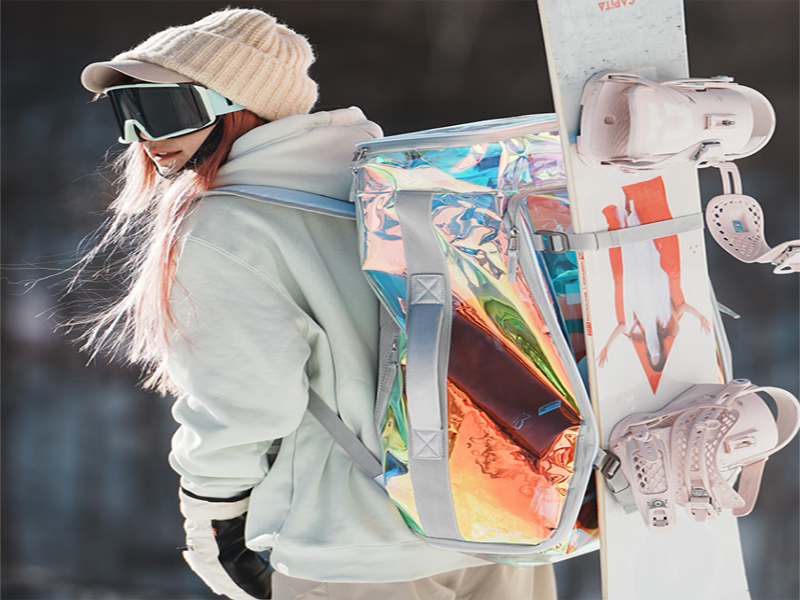
An adjustable ski bag is a ski transport bag designed to change its usable length so it can fit skis of different sizes more closely. Instead of leaving a long empty tail area when shorter skis are packed, or forcing longer skis into a tight fixed case, the bag adjusts through a roll-top end, folding extension, compression strap system, expandable panel, or modular closure. The best designs keep skis stable, reduce fabric drag, protect the tip and tail zones, and make the bag easier to carry through airports, resorts, hotels, and storage rooms.
For brands planning a custom ski bag, the word “adjustable” should be treated carefully. A loose oversized sleeve with a strap is not the same as a properly engineered adjustable ski bag. True adjustable length design controls three things at the same time: internal length, external volume, and load stability. If a skier uses 150cm park skis, the bag should not feel like a floppy 200cm tube. If another skier uses 188cm all-mountain skis, the bag should not strain at the zipper or compress the ski tips. That balance is where fabric development, pattern engineering, and production experience become important.
Szoneier can support adjustable ski bag programs across different material structures, including polyester fabric, nylon fabric, Oxford fabric, coated waterproof fabric, reinforced webbing, foam padding, soft lining, and brand-specific trims. Since the company has over 18 years of experience in fabric R&D, finished product manufacturing, and custom OEM/ODM development, adjustable ski bag projects can be built from both performance and brand-positioning angles. A value-focused rental bag, a premium retail ski travel bag, and a private label resort merchandise bag may all need adjustable length, but they should not use the same fabric weight, padding layout, zipper specification, or logo method.
What does adjustable length really mean?
Adjustable length means the bag can change its effective storage length after the skis are placed inside. The adjustment may happen at one end or both ends. In most ski bag projects, one-end adjustment is more common because it is easier to manufacture, easier for users to understand, and more stable under load. The adjustment zone is usually placed at the tail end or top end of the bag, depending on whether the design is horizontal carry, wheeled luggage, or soft sleeve style.
A roll-top adjustable ski bag works much like a dry bag. Extra fabric folds down and secures with buckles, straps, or hook-and-loop closure. This structure is popular because it reduces empty space and can create a handle-like end when rolled tightly. A fold-over end design uses a flap or panel that folds back and locks into place. A compression strap design uses external straps to tighten the bag around shorter skis. A telescopic fabric panel uses a hidden or extended section that can be released for longer skis.
The mistake many new programs make is treating adjustment as a simple size trick. In real use, every adjustment system changes pressure distribution. A roll-top section adds folded layers, which can improve end protection if built well, but it can also create bulk and uneven carrying balance if the fabric is too stiff. Compression straps can stabilize short skis, but if strap anchors are weak, they may tear during airport handling. Telescopic sections look clean, but they require accurate sewing and reinforced seams to avoid weak transition points.
| Adjustable System | Best Use Case | Main Advantage | Main Risk | Manufacturing Note |
|---|---|---|---|---|
| Roll-top end | Travel bags, rental bags, outdoor retail bags | Wide size range and simple user operation | Bulky end if fabric is too heavy | Needs balanced coating, flexible fabric, strong buckle points |
| Fold-over end | Entry and mid-range ski sleeves | Easy to sew and cost-friendly | Less refined appearance if not shaped well | Works well with polyester or Oxford fabric |
| Compression straps | Bags for multiple ski sizes | Reduces internal movement | Strap stress can damage stitching | Anchor points need bar-tack reinforcement |
| Telescopic panel | Premium travel bags | Clean structure and controlled expansion | Higher cost and more pattern complexity | Requires accurate sampling and seam testing |
| Zippered extension | Retail products needing clear size options | Easy for users to understand | Zipper becomes a stress point | Needs high-quality zipper and protective flap |
For Szoneier, adjustable length design can be developed around the target product tier. A lightweight sleeve may use a fold-over end and two compression straps. A premium ski travel bag may use roll-top adjustment, reinforced end padding, full-length zipper access, inner straps, and waterproof coating. A resort rental program may require thicker bottom panels, color-coded size labels, and easy-clean lining. The right answer depends on who will use the bag and how rough the use environment will be.
How does a roll-top design work?
A roll-top design uses extra fabric length at one end of the ski bag. After the skis are inserted, the user folds or rolls the extra fabric down until the internal length matches the skis more closely. The rolled section is then fixed with buckles, webbing straps, hook-and-loop tape, or side-release clips. When designed correctly, the rolled section reduces dead space, keeps skis from sliding, and adds a layered fabric buffer around the tip or tail area.
Roll-top construction has several advantages for ski bags. First, it gives a flexible length range without adding hard parts. Second, it can improve water resistance because the rolled fabric creates a layered barrier. Third, it gives the product a technical outdoor look, similar to dry bags, waterproof duffels, and expedition gear. For outdoor brands, that visual language matters because it signals weather protection and rugged use.
However, roll-top is not automatically better. If the fabric is too soft, the rolled end may collapse and look cheap. If the fabric is too rigid, users may struggle to roll it tightly in cold conditions. If the coating cracks after repeated folding, the bag may lose its premium feel. If the webbing is placed too high or too low, the roll may not stay tight. Good roll-top ski bag manufacturing requires fabric testing, folding simulation, strap placement checks, and sample revisions.
| Roll-Top Design Factor | Poor Execution | Better Execution |
|---|---|---|
| Fabric hand feel | Too floppy or too stiff | Firm enough to hold shape, flexible enough to roll |
| Coating | Cracks after repeated folding | PU, PVC, TPU, or other coating matched to fold use |
| Strap position | Loose roll and uneven tension | Straps aligned with folded end thickness |
| Buckle size | Too small for gloved hands | Easy-grip buckle suitable for winter use |
| End reinforcement | Ski tips press through fabric | Added foam or reinforcement at pressure zones |
| Visual finish | Wrinkled, uneven roll | Clean folded shape with consistent seam allowance |
For brands working with Szoneier, roll-top development can begin with ski length range, fabric preference, target price, and brand image. For example, a brand selling to casual ski travelers may prefer a lighter 600D polyester or Oxford fabric with PU coating and moderate padding. A premium mountain gear label may prefer heavier nylon, reinforced bottom fabric, thicker webbing, and upgraded hardware. A resort merchandise line may choose custom colors, logo printing, and flexible MOQ testing before scaling into larger seasonal orders.
Is it different from fixed-size ski bags?
Yes, adjustable ski bags and fixed-size ski bags solve different problems. A fixed-size ski bag works well when the ski length is known and stable. For example, a brand may sell a 175cm padded ski bag for one common ski size. The structure is simple, cost is easier to control, and the bag can look clean on retail shelves. Adjustable ski bags are better when one product needs to serve many ski lengths, reduce inventory complexity, or fit different user groups.
Fixed-size designs are often more predictable in production. Pattern dimensions are stable, fabric consumption is easy to calculate, and padding placement does not need to account for multiple length positions. Adjustable designs require more development because the bag must perform when short, medium, and long skis are packed. This means more testing during sampling. Szoneier usually recommends checking the bag with at least three reference ski lengths during development: the shortest expected length, the average selling length, and the maximum supported length.
| Design Type | Best For | Strength | Weakness | Brand Strategy |
|---|---|---|---|---|
| Fixed-size sleeve | Simple storage, low-cost retail, basic transport | Lower cost and clean shape | Poor fit for varied ski lengths | Good for single-size SKU programs |
| Fixed-size padded bag | Dedicated ski owners, retail travel gear | Stable protection and easy padding layout | More SKUs needed for size coverage | Good for premium size-specific ranges |
| Adjustable soft bag | Multi-size use, rental, entry travel | Flexible and easy to store | Less structure if underbuilt | Good for accessible outdoor products |
| Adjustable padded bag | Travel, resorts, private label programs | Better protection across sizes | More development and material cost | Good for higher perceived value |
| Adjustable wheeled bag | Long-distance travel, airports | Best handling for heavy gear | Highest cost and more components | Good for premium travel collections |
One important point: adjustable does not always mean more expensive in the long run. A brand may spend more per unit on an adjustable design, but reduce the number of SKUs needed. For example, instead of producing separate 160cm, 175cm, and 190cm bags, one adjustable model may cover the range. This can simplify inventory, product photography, warehouse handling, and seasonal forecasting. For growing brands, that flexibility can be worth more than a slightly lower unit price.
Why do skiers prefer flexible sizing?
Skiers prefer flexible sizing because ski length changes with ability, terrain, gender, age, snow style, and personal preference. A beginner may start with shorter skis. A stronger skier may move into longer all-mountain skis. A powder skier may use wider and longer skis for flotation. A family may own several ski sizes. A rental shop may handle many lengths in one day. A resort shop may want one bag that fits most common skis without creating a confusing size wall.
Flexible sizing also makes travel easier. Skiers often pack more than skis inside the bag: poles, gloves, base layers, tuning tools, small accessories, or soft clothing used as extra padding. If the bag is adjustable, the user can manage that load more tightly. Less empty space means less sliding, fewer pressure points, and better handling. A bag that feels controlled at 165cm and still works at 190cm has a clear everyday advantage.
From a brand perspective, flexible sizing also reduces purchase hesitation. A shopper looking at a fixed 175cm ski bag may wonder: “Will my next pair fit?” With an adjustable length bag, the product feels safer to buy because it can adapt. That is especially helpful for online sales, where product returns may happen if sizing information is unclear. For wholesale, resort, or private label programs, adjustable sizing can also make the product easier for sales teams to explain.
What makes an adjustable ski bag successful?
A successful adjustable ski bag is not the one with the longest claimed size range. It is the one that stays stable, looks clean, protects gear, and feels easy to use across the full advertised range. Many products fail because the spec sheet sounds good but the user experience is poor. A 150–210cm range may look impressive, but if the bag becomes floppy at 150cm or over-stressed at 210cm, the design will create complaints.
The first critical question is length range. A wider range gives more market coverage, but also more design complexity. A narrower range may be easier to engineer and feel more premium. For example, a 160–190cm adjustable bag may be more stable than a 140–210cm model. Brands should not chase range only for marketing value. They should match the range to the target user.
The second question is the adjustment method. Roll-top systems feel technical and outdoor-oriented. Compression straps are intuitive and cost-effective. Fold-over ends are simple and reliable. Zippered extensions are easy to understand but increase zipper stress. Telescopic panels can look premium but need more careful sampling. Szoneier can help evaluate each method based on fabric type, MOQ, target price, and intended use.
The third question is protection. Adjustable length should never remove attention from padding. Ski tips and tails are hard pressure points. Metal edges can cut lining. Bindings add height and create uneven load. If the bag is designed only around length, it may still fail during travel. The best adjustable ski bags combine length control with reinforced end zones, binding-area support, abrasion-resistant bottom fabric, and smooth lining.
| Success Factor | Why It Matters | Low-End Approach | Better Custom Approach |
|---|---|---|---|
| Size range | Determines who can use the bag | Broad claim with weak fit | Tested range based on real ski lengths |
| Fabric body | Controls durability and appearance | Thin polyester with weak coating | 600D/900D polyester, nylon, or Oxford fabric with suitable coating |
| End protection | Protects tips and tails | Same fabric everywhere | Reinforced end panels plus foam or extra layers |
| Internal control | Reduces sliding | No inner straps | Adjustable inner straps or shaped compartments |
| Carry comfort | Affects travel satisfaction | One basic handle | Balanced handles, padded grip, optional shoulder strap |
| Closure reliability | Prevents failure in transit | Small zipper or weak buckle | Larger zipper, covered seam, glove-friendly buckle |
| Branding area | Impacts retail value | Logo added as an afterthought | Logo placement planned into pattern design |
| Production consistency | Protects brand reputation | Loose tolerances | Sample approval, QC checkpoints, pre-shipment inspection |
A useful way to think about adjustable ski bags is to treat them like “soft equipment cases,” not ordinary long bags. They carry long, narrow, sharp-edged, often expensive gear through wet and rough environments. That means every design decision has a job. The outer fabric resists abrasion. The coating handles moisture. The lining protects ski surfaces. The padding absorbs impact. The straps control movement. The closure adapts to length. The logo area supports brand value. The QC process ensures each bag performs the same way in bulk production.
For a custom program, Szoneier can work from a simple reference product, hand sketch, tech pack, product photo, or functional requirement. A brand may say, “We need one ski bag that fits 160–200cm skis, works for air travel, uses black waterproof fabric, has our logo on both sides, and keeps MOQ flexible.” From there, the factory can develop fabric suggestions, pattern structure, sample options, logo method, packaging, and production timeline. The point is not to copy an existing market product, but to build a ski bag that fits the brand’s market, price level, and end users.
Why Does Ski Bag Length Matter?
Ski bag length matters because poor length fit creates movement, pressure, fabric stress, and user frustration. If the bag is too long, skis slide inside, tips can hit the end repeatedly, and the bag becomes harder to carry. If the bag is too short, the zipper, seams, and end panels take too much pressure, increasing the risk of tearing or shape distortion. The right length range keeps skis secure without forcing the bag structure, especially during airline travel, resort transfers, storage, and repeated seasonal use.
Length is one of the first details users notice, but it is also one of the easiest details to underestimate during product development. Many ski bags are purchased online, where shoppers compare size charts, product photos, and review comments. If the length recommendation is unclear, users hesitate. If the bag arrives and does not fit well, returns and complaints can follow. A well-designed adjustable length ski bag reduces that friction because it gives users more confidence before purchase and more control after purchase.
For custom manufacturing, ski bag length also affects fabric usage, carton size, shipping cost, padding layout, zipper length, webbing length, cutting efficiency, and final retail positioning. A longer bag consumes more fabric and may increase freight volume. A heavily padded long bag may become expensive to ship. A wheeled long bag requires stronger bottom structure. A compact adjustable design may reduce SKU complexity and improve storage efficiency. In other words, length is not only a size issue; it is a cost, performance, and user-experience issue.
What ski lengths need support?
Ski lengths vary widely. Adult recreational skis often sit somewhere around the skier’s chin to head height, while advanced skiers, freeride skiers, and powder skiers may choose longer skis. Junior skis can be much shorter. Rental fleets may include a broad range from children’s skis to adult all-mountain skis. For ski bag design, this creates a practical challenge: one bag may need to support multiple equipment profiles.
A common custom design range for adjustable ski bags is around 160–190cm or 160–210cm, depending on the target market. A 160–190cm range may suit many recreational adult users and reduce excess bulk. A 160–210cm range gives broader coverage and may appeal to travel-focused skiers, rental operations, and premium outdoor gear programs. For junior or family-oriented bags, a smaller range may be more appropriate.
| User Group | Typical Ski Bag Need | Suggested Bag Length Strategy | Design Priority |
|---|---|---|---|
| Junior skiers | Shorter skis, lighter load | Smaller fixed or adjustable range | Lightweight fabric, easy carry, lower cost |
| Beginner adults | Moderate ski lengths | 150–180cm or 160–185cm range | Simple adjustment, clear size guidance |
| Recreational adults | Common resort ski lengths | 160–190cm range | Balanced padding and travel comfort |
| Advanced skiers | Longer carving or all-mountain skis | 170–200cm range | Strong end protection and compression control |
| Powder skiers | Longer and wider skis | 180–210cm range | Wider body, reinforced fabric, extra padding |
| Rental shops | Multiple ski sizes | Wider adjustable range | Durability, easy cleaning, color labels |
| Travel retailers | Broad consumer fit | 160–210cm range | Retail appeal, wheels, logo area, packaging |
A critical point for brands: length support should be planned together with bag width and height. A bag that fits 200cm skis in length may still fail if it cannot handle wider skis, bindings, or two pairs. Ski length is only one dimension. The bag must also account for ski width, brake width, binding height, pole storage, and whether users will pack clothing around the skis.
Szoneier can help brands create size logic before sampling. For example, a single ski sleeve may target one pair of skis plus poles. A double ski bag may need space for two pairs, internal dividers, and extra padding around bindings. A wheeled travel bag may need a longer zipper opening and stronger bottom panel. By defining the use case first, the length specification becomes more accurate and less likely to cause problems later.
How much extra space is safe?
Extra space is safe only when it is controlled. A ski bag can have a little extra room at the ends, but too much empty space allows the skis to slide during handling. Sliding increases impact at the tips and tails, especially when the bag is dropped, dragged, or stacked under other luggage. In soft bags, extra space can also make the bag fold awkwardly, which makes carrying uncomfortable.
For adjustable ski bags, the goal is not to eliminate all empty space. A small buffer is useful because users may pack ski straps, pole baskets, gloves, or soft clothing. The goal is to prevent uncontrolled movement. External compression straps, internal securing straps, shaped end panels, foam blocks, fold-over zones, and roll-top closures can all help manage extra room.
| Extra Space Level | User Experience | Risk Level | Design Recommendation |
|---|---|---|---|
| 0–5cm | Very tight fit | Medium risk if zipper is stressed | Use only when fabric and zipper are reinforced |
| 5–10cm | Comfortable fit | Low risk | Often ideal for padded travel bags |
| 10–20cm | Acceptable if controlled | Medium risk | Add compression straps or inner hold-down straps |
| 20–30cm | Loose fit | High risk without adjustment | Use roll-top or fold-over structure |
| Over 30cm | Poor fit for most travel use | Very high risk | Redesign size range or add stronger adjustment system |
From a manufacturing perspective, the safe extra space also depends on fabric stiffness and padding. A soft unpadded sleeve with 20cm extra room will feel floppy. A padded bag with structured end panels may handle the same extra room better. A roll-top bag can convert extra length into folded protection. A compression-strap bag can tighten the body but may not fully protect the tips unless the end panel is reinforced.
A good custom sample should be tested with real skis, not only measured flat on a table. When skis are inside, bindings create lift, poles change pressure points, and the bag shape changes. Szoneier can develop samples based on actual use conditions: one pair, two pairs, with poles, with soft clothing, or with packaging inserts. This approach helps brands avoid the common mistake of approving a sample that looks fine empty but feels wrong when loaded.
Do short skis need tighter storage?
Yes, short skis benefit from tighter storage because they move more inside oversized bags. Junior skis, park skis, and shorter recreational skis can slide forward and backward if the bag is too long. That movement may seem minor at home, but during travel it can create repeated impact against the bag ends. Over time, the fabric may wear, the lining may tear, or the tips may push through weak corners.
Tighter storage also improves carrying. A long floppy bag with short skis inside is awkward. It bends, swings, and catches on doorways, luggage carts, car trunks, and shuttle steps. For family travel, this becomes even more annoying because parents may already be carrying boots, helmets, jackets, and children’s gear. A shorter controlled shape feels easier and safer.
For brands targeting family ski travel, rental programs, junior gear, or resort shops, adjustable length can be a strong selling point. A parent may not want to buy a new ski bag every time a child moves up in ski length. A rental shop may not want separate bags for every size. A flexible bag with visible size markings, easy straps, and durable fabric can feel practical without looking cheap.
| Short Ski Challenge | Why It Happens | Better Design Response |
|---|---|---|
| Skis slide inside the bag | Too much empty length | Roll-top or fold-over end to reduce internal space |
| Bag bends during carry | Load does not fill bag | Compression straps placed near empty zones |
| Tips hit fabric repeatedly | No end control | Reinforced tip/tail panels and soft inner lining |
| User cannot find right size | Size range unclear | Printed size guide or woven label on bag |
| Product looks oversized | Poor proportion | Pattern designed to keep shape when shortened |
Short ski storage also creates branding opportunities. A bag that adjusts neatly can show a logo more cleanly, because the body does not wrinkle as much. The end roll, strap system, and side panel can become part of the visual design. For private label projects, Szoneier can help align the adjustment structure with logo placement, color blocking, and packaging so the product feels intentional rather than improvised.
Are longer skis harder to protect?
Longer skis are harder to protect because they create more leverage, more fabric tension, and more handling difficulty. A 190–210cm loaded bag is not easy to maneuver through airports or train stations. The longer the bag, the more likely it is to drag, bend, twist, or hit corners. If the bag is under-padded or poorly reinforced, longer skis can stress the zipper, end panels, handles, and seams.
Longer skis also need better balance. If the handle position is wrong, the bag will tip down at one end. If wheels are added without enough bottom support, the bag may sag between the wheels and the handle. If the zipper opening is too short, loading long skis becomes frustrating. If the internal straps are poorly placed, the skis may shift toward one end. These small details decide whether the bag feels premium or tiring.
For longer adjustable ski bags, reinforcement becomes more important. The end panels should be stronger. The bottom fabric should resist abrasion. The zipper should be protected by a flap or placed away from the highest impact zone. Handles should be attached with reinforced stitching. Webbing should wrap or anchor into stronger seam areas rather than being sewn lightly onto the surface.
| Longer Ski Design Area | Risk | Recommended Improvement |
|---|---|---|
| End panels | Tip and tail pressure | Add foam, reinforcement fabric, or double-layer panels |
| Bottom panel | Dragging and abrasion | Use higher-denier fabric or coated Oxford/nylon |
| Handles | Tearing under heavy load | Reinforced webbing, bar-tack stitching, wider anchor area |
| Zipper | Strain from long rigid gear | Larger zipper, protected path, smooth curve design |
| Wheels | Sagging and poor balance | Rigid base strip or reinforced wheel zone |
| Internal straps | Gear shifts during travel | Adjustable straps near binding and tail areas |
| Carton packing | Higher shipping volume | Foldable pattern or optimized packing method |
Szoneier’s fabric background is useful here because longer ski bags are especially sensitive to material choice. A fabric may look strong in a swatch, but perform poorly when stretched across a long loaded bag. Nylon can offer excellent strength and abrasion resistance. Polyester can provide good durability and print performance at controlled cost. Oxford fabric can give a structured hand feel and rugged look. Neoprene may be used in selected protective areas or padded handle zones, not usually as the main body for long ski bags. The final fabric plan should match real use, not just appearance.
How should brands define ski bag length before production?
Brands should define ski bag length through a use-case matrix instead of choosing a number randomly. The right length depends on product category, target skier, sales channel, transport method, and price level. A ski bag for a budget retail chain does not need the same structure as a premium wheeled ski travel bag. A rental fleet bag does not need the same branding finish as a private label outdoor collection. A snowboard-and-ski hybrid bag may need a different shape altogether.
A smart development process begins with four questions. First, what ski lengths should the bag fit? Second, how many pairs will the bag carry? Third, where will the bag be used: home storage, car travel, train travel, airline travel, resort operations, or retail resale? Fourth, what level of protection is expected? These answers guide every later specification.
| Development Question | Why It Matters | Example Decision |
|---|---|---|
| What length range should the bag cover? | Controls pattern and adjustment system | 160–190cm for recreational line, 160–210cm for travel line |
| How many skis will it carry? | Controls width, height, padding, zipper | Single-pair sleeve vs double-pair travel bag |
| Will users fly with it? | Adds need for stronger padding and handles | Full padding, reinforced end zones, luggage tag window |
| Does it need wheels? | Changes bottom structure and cost | Wheeled model for premium travel SKU |
| What is the target retail tier? | Controls material and hardware level | 600D polyester for mid-range, nylon/Oxford upgrade for premium |
| Is private label branding needed? | Affects logo method and packaging | Embroidery, rubber patch, woven label, printed carton |
| What MOQ is planned? | Influences sample strategy and fabric sourcing | Low MOQ pilot run before seasonal expansion |
One useful approach is to build a “minimum, ideal, maximum” length framework. The minimum length tells the factory the shortest skis that must fit neatly. The ideal length represents the most common user size. The maximum length defines the longest supported ski without forcing the bag. During sampling, all three should be tested. If the bag performs only at the ideal length, it is not truly adjustable.
| Length Framework | Meaning | Sample Test |
|---|---|---|
| Minimum length | Shortest ski the bag should carry without flopping | Pack short skis and check empty space control |
| Ideal length | Most common size for target market | Check appearance, comfort, and logo position |
| Maximum length | Longest ski the bag can support safely | Check zipper strain, end pressure, and carry balance |
| Over-limit length | Size not recommended | Confirm product label clearly avoids misuse |
Critical thinking is important here. A wider size range may look better in marketing, but it can reduce perceived quality if the bag becomes messy at shorter lengths. A narrower range may look less impressive, but it can deliver a cleaner fit and stronger user satisfaction. Brands should ask whether they want “maximum coverage” or “best experience.” Sometimes the best-selling product is not the one that claims to fit every ski, but the one that fits the most common skis really well.
For Szoneier projects, length planning can be combined with brand strategy. A startup outdoor label may begin with one adjustable model to control inventory. A resort chain may need color-coded bags for rental categories. A premium sports brand may build a full collection: one single adjustable sleeve, one padded double ski bag, and one wheeled travel model. A retailer may want low MOQ testing in one color first, then expand into seasonal colors after market feedback.
The most important lesson is simple: ski bag length is not a line in a size chart. It is the foundation of the product experience. When the length works, the bag feels secure, easy, and trustworthy. When it fails, every other feature feels less valuable. That is why adjustable length designs deserve serious development before bulk production.
Which Designs Adjust Best?

The best adjustable ski bag design is the one that changes length without losing shape, protection, or ease of use. In real product development, the strongest options are usually roll-top ends, fold-over panels, external compression straps, zippered extension sections, and hybrid systems that combine two or more adjustment methods. A roll-top structure gives the widest flexibility and a rugged outdoor look. Compression straps control movement and improve carrying balance. Fold-over ends are simple and cost-efficient. Zippered extensions look clean but need stronger hardware. The right design depends on travel use, target price, ski length range, fabric stiffness, padding level, and how much abuse the bag must survive.
A ski bag with adjustable length should never feel like a “one-size-fits-all compromise.” The purpose is not only to fit more skis, but to make each size feel intentional. When a 165cm ski is packed, the bag should tighten neatly. When a 190cm ski is packed, the seams should not strain. When the bag is carried through an airport, the center of gravity should stay manageable. When the bag is stored after the season, the adjustable structure should not create awkward bulk. That is where pattern design becomes more important than decoration.
For Szoneier, adjustable structure is normally discussed together with fabric body, foam layout, lining, webbing strength, zipper type, logo placement, and packing method. A ski bag can look excellent in a flat product photo but fail when loaded with skis, poles, and accessories. A good development process tests the structure under real-use conditions: shorter skis, longer skis, one pair, two pairs, wet fabric, gloved hands, folded storage, and repeated strap tension. The best design is not always the most complicated design. It is the one that solves the most user problems with the least unnecessary friction.
Which closure systems work well?
Closure systems decide how users interact with the bag every time they pack or unpack skis. A ski bag may have strong fabric and thick padding, but if the closure is annoying, weak, or hard to use in cold weather, the whole product feels poorly designed. For adjustable ski bags, closure systems do more than open and close the bag. They also help control the bag length, reduce movement, and protect gear from moisture and dirt.
The most common closure systems include long zippers, roll-top buckles, hook-and-loop flaps, compression straps, side-release buckles, drawcords, and mixed closures. Long zippers are convenient because users can load skis easily. Roll-top buckles help with length adjustment and outdoor styling. Hook-and-loop flaps are simple, but they may collect snow, lint, or dirt over time. Compression straps add control, but they must be reinforced properly. Drawcords can work for lightweight sleeves, but they are less suitable for premium travel bags because they provide limited protection.
| Closure System | Best Application | User Benefit | Possible Weakness | Better Manufacturing Choice |
|---|---|---|---|---|
| Full-length zipper | Padded travel ski bags | Easy loading and unloading | Higher zipper cost and more stress points | Use larger zipper size, smooth zipper path, protective flap |
| Half-length zipper | Simple ski sleeves | Lower cost and clean body | Harder to load longer skis | Suitable for lightweight storage bags |
| Roll-top buckle | Adjustable travel bags | Strong length control and outdoor look | Can be bulky if overbuilt | Use flexible coated fabric and glove-friendly buckles |
| Hook-and-loop flap | Entry-level adjustable bags | Simple and quick closure | Can weaken with dirt and repeated use | Combine with straps for stronger hold |
| Compression straps | Multi-length ski bags | Reduces sliding and controls shape | Weak anchors can tear | Add bar-tack stitching and reinforced patches |
| Drawcord end | Lightweight sleeves | Low cost and fast operation | Weak impact protection | Best for low-risk storage, not airport travel |
| Zippered extension | Premium adjustable bags | Clean size expansion | Zipper may become stress point | Use covered zipper and reinforced extension seams |
One of the biggest mistakes in ski bag development is placing a zipper where the ski tips or tails press hardest. Hard pressure against zipper teeth can cause jamming, separation, or early wear. Better designs move the zipper away from the highest impact zones, use curved loading openings, or add fabric guards. When full-length access is needed, a protective flap can reduce abrasion and improve water resistance.
For an adjustable length ski bag, Szoneier often recommends thinking of closure in two layers. The first layer is access: how the user gets skis into the bag. The second layer is adjustment: how the bag tightens around the ski length. A full zipper may handle access, while roll-top and straps handle adjustment. This layered thinking creates a stronger user experience than expecting one closure system to do everything.
What is a fold-over end?
A fold-over end is an adjustable structure where extra bag length folds back and secures with straps, buckles, hook-and-loop tape, or stitched loops. It is one of the most practical solutions for brands that want adjustable length without making the bag too complex. The fold-over section can shorten the bag for smaller skis and open out for longer skis. It works especially well for soft ski sleeves, mid-range padded bags, resort storage bags, and private label products where cost control matters.
Compared with a roll-top structure, a fold-over end usually looks flatter and simpler. It does not create as much round bulk, which can be helpful for carton packing and shelf display. Compared with a zippered extension, it has fewer hardware failure points. Compared with compression straps alone, it gives better length reduction because fabric physically folds away rather than only tightening the bag body.
However, fold-over ends need careful shape control. If the fold line is not planned well, the bag can look wrinkled or uneven. If the securing straps are too weak, the folded section may open during handling. If the fabric is too thick, the folded area may become bulky. If the fabric is too thin, the fold may collapse and look cheap. This is why sample testing matters. A fold-over end can be economical, but it should not feel like a shortcut.
| Fold-Over End Factor | Good Result | Poor Result | Development Advice |
|---|---|---|---|
| Fold length | Fits common ski sizes neatly | Too much loose fabric | Match fold zone to target size range |
| Strap placement | Holds folded end securely | Uneven tension and slipping | Place straps across folded thickness |
| Fabric stiffness | Keeps shape after folding | Wrinkles or collapses | Choose structured polyester, Oxford, or nylon |
| End padding | Protects ski tips/tails | Creates bulky fold | Use targeted padding instead of heavy full foam |
| Logo placement | Stays visible when folded | Logo disappears or bends badly | Plan branding around both length positions |
| Carton packing | Folds neatly for shipping | Adds irregular bulk | Test folded product packing before bulk |
A fold-over end can also support brand storytelling. For example, a private label ski bag may use a contrast-color folded end to show the adjustment zone clearly. A resort program may print size markings near the fold positions. A premium outdoor line may use reinforced webbing and molded buckles to make the fold feel technical. A more lifestyle-oriented ski travel bag may hide the fold structure for a cleaner appearance.
Szoneier can customize fold-over designs using different fabrics, coatings, trims, logo methods, and cost levels. A simple 600D polyester fold-over ski sleeve may work for entry-level retail. A heavier Oxford fabric version with foam lining and reinforced straps may suit travel programs. A nylon version with waterproof coating and premium hardware may suit performance outdoor brands. The design idea stays similar, but the final feel changes greatly through material choice.
How do compression straps help?
Compression straps help by pulling excess fabric closer to the skis, reducing internal movement, improving carrying balance, and keeping the bag shape cleaner. For adjustable length ski bags, compression straps are almost always useful because length adjustment alone does not fully control volume. Even if the bag length is shortened, width and height may still leave room for skis to shift. Straps solve this by tightening the loaded body.
A good compression system should be easy to adjust, strong enough for repeated pulling, and placed where movement actually happens. Many low-quality ski bags add straps for appearance, but the straps do not meaningfully improve stability because they are placed in the wrong areas or attached with weak stitching. Functional straps should usually be positioned near the tip zone, binding zone, and tail zone. The binding zone is especially important because bindings create the highest part of the load and can make the bag twist if not controlled.
Compression straps also improve the perceived quality of a ski bag. When users tighten the straps and feel the bag become compact, the product feels more secure. This small action creates trust. It tells the user, “Your skis are not floating inside.” That feeling is valuable for online reviews, repeat purchases, and brand reputation.
| Strap Position | Function | Common Problem | Better Solution |
|---|---|---|---|
| Tip-end strap | Controls front movement | Too close to weak end seam | Anchor into reinforced side panel |
| Binding-area strap | Stabilizes thickest load area | Strap cannot compress binding height | Use wider webbing and strong buckle |
| Tail-end strap | Reduces sliding and tail impact | Too far from actual ski tail | Align with expected length range |
| Center carry strap | Helps lift and balance | Pulls fabric out of shape | Reinforce handle and strap intersection |
| Cross-body strap | Improves shoulder carry | Strain on side seam | Use padded shoulder pad and box stitching |
| Internal strap | Holds skis inside | Hard to adjust when loaded | Use simple buckle with accessible placement |
For ski bags with wheels, compression straps become even more important. When a wheeled bag is pulled, the load shifts toward the wheel end. If skis move internally, the bag may sag or become unstable. Internal straps and external compression can work together to hold the skis close to the base. For non-wheeled bags, compression helps keep the product easier to shoulder-carry and place in vehicles.
From a manufacturing view, the strap material and sewing method matter as much as the strap design. Webbing should have enough tensile strength. Buckles should not crack easily in cold conditions. Stitching should be reinforced with bar-tacks, box stitches, or extra fabric patches. Szoneier can adjust webbing width, buckle type, strap count, and reinforcement method based on the intended product level. A bag for occasional home-to-car use does not need the same strap system as a bag expected to survive multiple flights each season.
Are telescopic panels useful?
Telescopic panels can be useful for premium adjustable ski bags, especially when brands want a cleaner appearance than roll-top or fold-over designs. A telescopic panel is an expandable section that extends or collapses to change the usable length. It may be hidden inside the body, released with a zipper, or shaped through layered fabric construction. When done well, it creates a neat extension without making the bag look loose or folded.
The advantage of telescopic design is visual control. It can look more refined than a roll-top end and more structured than compression-only adjustment. For retail brands selling higher-priced ski luggage, this can be attractive. A telescopic extension can also make size adjustment easier to explain: zipped closed for shorter skis, opened for longer skis. Users understand that quickly.
The challenge is production complexity. Telescopic panels add seams, layers, and possible stress points. If the extension seam is weak, it may tear when longer skis push against it. If the zipper is low quality, it may fail. If the panel fabric is not matched to the main body, the extended section may look like an afterthought. If padding does not continue properly into the extension zone, longer skis may be less protected than shorter skis.
| Telescopic Panel Feature | Advantage | Risk | Suitable Product Level |
|---|---|---|---|
| Hidden extension panel | Clean appearance | More sewing complexity | Premium travel bags |
| Zippered length extension | Easy user operation | Zipper stress under load | Mid-to-premium retail |
| Layered fabric tunnel | Stronger structure | Higher material use | Heavy-duty ski bags |
| Padded extension zone | Better protection for long skis | Increased bulk | Airline travel products |
| Color-blocked extension | Clear visual function | May look less premium if mismatched | Resort or youth lines |
| Same-fabric extension | Seamless appearance | Harder to show adjustment feature | Premium private label |
Telescopic panels are best when the brand has a clear reason to use them. If the goal is a low-cost adjustable sleeve, a fold-over or roll-top system may be better. If the goal is a premium ski travel bag with clean lines, telescopic expansion can work well. Szoneier can support telescopic sampling, but it should be tested carefully with the maximum ski length, because that is where the extension takes the most pressure.
A useful development tip is to avoid making the telescopic section too long. A small extension can improve flexibility without weakening the structure. A large extension may create a soft, unstable end. In many cases, combining a moderate telescopic panel with compression straps gives a better result than relying on a long extension alone.
Which design suits travel use?
For travel use, the best adjustable ski bag design usually combines a strong access zipper, reinforced end panels, internal securing straps, external compression straps, water-resistant fabric, and either roll-top or structured fold-over length control. If the bag is intended for airline travel or long-distance trips, wheels, padded handles, thicker bottom fabric, and full or partial padding become more important. Travel exposes ski bags to rougher handling than home storage, so every component needs a stronger reason to exist.
A travel ski bag must handle dragging, lifting, stacking, moisture, cold weather, and pressure from other luggage. The bag may be pulled across airport floors, loaded onto buses, placed in hotel storage rooms, and pushed into car trunks. A simple sleeve can work for local transport, but frequent travel usually requires more structure.
| Use Scenario | Recommended Adjustable Design | Key Features | Cost Level |
|---|---|---|---|
| Home storage | Fold-over sleeve | Lightweight fabric, simple closure, dust protection | Low |
| Car travel | Compression strap adjustable bag | Moderate padding, handles, coated fabric | Low to mid |
| Resort rental | Fold-over plus compression | Durable fabric, easy-clean lining, size labels | Mid |
| Airline travel | Roll-top padded adjustable bag | Reinforced ends, full zipper, inner straps | Mid to high |
| Premium ski travel | Wheeled adjustable padded bag | Wheels, full padding, telescopic or roll-top, strong base | High |
| Retail private label | Hybrid adjustable design | Strong branding area, packaging, balanced cost | Flexible |
| Team or club use | Multi-pair adjustable bag | Larger capacity, name window, durable webbing | Mid to high |
For travel use, user convenience matters as much as protection. A bag that is very strong but hard to carry will still disappoint. Handle placement should match the loaded center of gravity. Shoulder straps should not twist. Wheels should roll smoothly under long loads. Zippers should be easy to operate with cold hands. The bag should open wide enough so users do not fight with their skis every time.
Szoneier can help brands design travel-focused ski bags by starting with the expected trip type. A weekend car-trip bag can stay lighter. A flight-ready ski bag needs stronger padding and handles. A resort rental bag needs durability and easy cleaning. A premium outdoor brand may want waterproof coating, molded zipper pulls, rubber patches, and a more technical silhouette. The adjustable length system should be selected after the travel scenario is clear.
How should brands compare adjustable design options?
Brands should compare adjustable ski bag designs through performance, cost, usability, manufacturing complexity, and brand fit. A design that looks strong on paper may not suit the target market. A design that feels premium may be too costly for a seasonal promotion. A design that reduces inventory may require more sample development. The best decision comes from comparing trade-offs honestly rather than choosing the feature that sounds most advanced.
The first comparison is between simplicity and control. Fold-over ends and compression straps are simple and cost-friendly. Roll-top systems offer better length control and outdoor styling. Telescopic panels look cleaner but require more accurate production. Zippered extensions are easy to understand but add hardware risk. None of these is universally best. Each design has a natural place.
| Design Option | Length Control | User Ease | Durability Potential | Cost Control | Visual Appeal | Best Match |
|---|---|---|---|---|---|---|
| Fold-over end | Medium | High | Medium to high | Strong | Simple | Entry to mid-level bags |
| Roll-top end | High | Medium to high | High if reinforced | Medium | Technical outdoor | Travel and outdoor brands |
| Compression straps only | Medium | High | Depends on anchors | Strong | Sporty | Multi-size sleeves |
| Zippered extension | Medium to high | High | Depends on zipper quality | Medium | Clean | Retail adjustable bags |
| Telescopic panel | High | Medium | High if well built | Lower | Premium | High-end travel products |
| Hybrid system | Highest | Medium | Highest if tested | Variable | Strong | Serious custom programs |
The second comparison is between claimed flexibility and real stability. A product may advertise a large length range, but if it performs poorly at the shortest setting, users will notice. Stability should be tested by loading real skis and shaking, carrying, dragging, folding, and opening the bag. The sample should be judged loaded, not empty.
| Test Item | What to Check | Why It Matters |
|---|---|---|
| Short-length load test | Does the bag sag or flop? | Shows whether adjustment really works |
| Maximum-length load test | Are seams and zipper under stress? | Reveals structural limits |
| Strap pull test | Do anchors hold under tension? | Prevents tearing complaints |
| End impact test | Do tips press through fabric? | Protects skis and bag body |
| Wet handling test | Does fabric absorb too much water? | Important for snow environments |
| Gloved-hand operation | Can buckles and zippers be used easily? | Real winter use condition |
| Carton packing test | Does the bag pack efficiently? | Affects shipping and storage cost |
The third comparison is between manufacturing cost and lifetime value. A cheaper adjustable bag may win a first order but lose repeat sales if users complain. A more expensive structure may reduce claims, improve reviews, and create stronger brand loyalty. For brands selling outdoor gear, the bag is not only a product. It is a trust signal. If a ski bag protects expensive equipment well, users begin to trust the brand for other gear too.
Szoneier’s advantage is that adjustable design can be developed from material selection through finished product production. Since the factory works with fabric R&D, post-processing, sampling, manufacturing, and quality control, the design can be adjusted at several levels. If a roll-top feels too stiff, fabric coating can be changed. If a compression strap causes wrinkles, pattern and strap placement can be revised. If a telescopic panel adds too much cost, a fold-over hybrid may be suggested. Good custom development is not about saying yes to every feature. It is about finding the structure that will actually work in the market.
What Fabrics Are Best?
The best fabrics for adjustable ski bags are strong, abrasion-resistant, water-resistant, fold-tolerant, and stable enough to hold shape after repeated use. Common choices include 600D polyester, 900D polyester, nylon fabric, ripstop nylon, Oxford fabric, coated polyester, TPU or PU laminated fabric, and reinforced bottom panels. Polyester offers cost control, printability, and good durability. Nylon improves tear strength and abrasion resistance. Oxford fabric gives a structured hand feel and rugged appearance. Waterproof coatings matter because ski bags often touch snow, wet ground, car trunks, and airport floors. The best fabric is not one material alone, but a matched system of outer shell, coating, padding, lining, binding, and reinforcement.
Fabric choice affects almost every part of an adjustable ski bag. A roll-top design needs fabric that folds cleanly. A telescopic panel needs fabric that does not distort at extension seams. A wheeled travel bag needs stronger bottom material. A printed retail bag needs fabric with good surface consistency. A rental bag needs fabric that is easy to wipe and difficult to tear. A premium private label bag may need a distinctive texture, matte coating, color stability, and upgraded trims.
Szoneier’s material-driven background is especially relevant here. With experience across cotton fabric, canvas fabric, polyester fabric, nylon fabric, neoprene fabric, jute fabric, linen fabric, Oxford fabric, coated materials, and finished fabric goods, the factory can help brands avoid one of the biggest mistakes in ski bag sourcing: choosing fabric only by denier number or appearance. Denier matters, but coating quality, weave density, tear resistance, abrasion performance, cold flexibility, sewing behavior, lining compatibility, and production consistency matter too.
Is 600D polyester durable enough?
600D polyester can be durable enough for many adjustable ski bags, especially mid-range travel bags, retail ski sleeves, resort merchandise bags, and private label programs that need a balance of strength, cost, and printability. It is one of the most widely used materials in sports bags because it offers good abrasion resistance, stable appearance, manageable weight, and flexible customization options. With PU, PVC, or other water-resistant coatings, 600D polyester can handle normal snow travel, car transport, storage, and moderate airport use.
However, 600D polyester should not be treated as one fixed quality level. Two fabrics may both be called 600D polyester but perform very differently. Yarn quality, weave tightness, coating thickness, backing, dye quality, and finishing process all influence performance. A low-grade 600D fabric may scratch, fray, fade, or delaminate faster. A better-grade 600D polyester with proper coating and reinforcement can be a reliable choice.
| 600D Polyester Factor | Why It Matters | Better Specification Direction |
|---|---|---|
| Yarn quality | Affects tear strength and surface life | Choose stable yarn with consistent weave |
| Coating | Improves water resistance and structure | PU coating for balanced feel, PVC for stronger body, TPU for premium waterproof needs |
| Backing | Controls stiffness and durability | Match backing to roll-top or padded construction |
| Color fastness | Protects brand appearance | Test dark colors and contrast panels |
| Print surface | Affects logo clarity | Use suitable surface for screen print, heat transfer, or sublimation |
| Abrasion resistance | Important for airport floors and car trunks | Add reinforced bottom fabric for heavy use |
| Cold flexibility | Prevents cracking or stiff handling | Test fold areas if roll-top design is used |
For many Szoneier ski bag projects, 600D polyester works well as the main body fabric when paired with stronger reinforcement in high-wear areas. For example, the side panels may use 600D polyester with PU coating, while the bottom panel and end zones use 900D polyester or Oxford fabric. This material zoning controls cost without weakening the areas that take the most abuse.
Brands should also consider user expectations. A casual skier may find a well-made 600D polyester adjustable bag more than sufficient. A premium ski traveler may expect thicker fabric, smoother lining, stronger padding, and wheels. A rental operation may need higher abrasion resistance because bags are used repeatedly by different people. Fabric choice should follow product tier, not only price target.
How strong is nylon fabric?
Nylon fabric is often stronger than polyester in tear resistance and abrasion performance, making it a strong option for premium adjustable ski bags, travel-focused products, and heavy-duty outdoor gear. Nylon also has a technical feel that many outdoor brands like. It can be woven as plain nylon, ripstop nylon, ballistic-style nylon, or coated nylon, depending on the target product. For ski bags that face frequent travel, dragging, rough handling, and heavy loads, nylon can justify a higher price point.
The main advantage of nylon is toughness relative to weight. A well-selected nylon fabric can feel lighter than a bulky polyester while still offering excellent strength. Ripstop nylon can help reduce tearing if the fabric is punctured. Coated nylon can improve water resistance and shape. Heavier nylon options can be used in bottom zones, end panels, handle anchors, and reinforcement patches.
Nylon also has trade-offs. It can be more expensive than polyester. Some nylon fabrics may absorb slightly more moisture if not coated properly. Dyeing and color consistency may require more careful control. Printing may need different treatment depending on surface texture and coating. For brands that need bold all-over prints, polyester may sometimes be easier. For brands that need rugged performance, nylon may be worth the investment.
| Nylon Fabric Type | Strength | Best Use | Caution |
|---|---|---|---|
| Standard nylon | Good tear strength and flexible feel | Mid-to-premium ski bags | Needs coating for stronger water resistance |
| Ripstop nylon | Tear control and lightweight strength | Technical travel bags | Thin versions need backing or lining |
| Heavy nylon | Strong abrasion resistance | Bottom panels, end zones, wheeled bags | Higher cost and heavier feel |
| Coated nylon | Water resistance and structure | Premium outdoor bags | Coating must handle folding |
| Nylon Oxford | Rugged texture and good body | Travel and equipment bags | Surface may affect logo method |
For Szoneier, nylon can be used as the main fabric or as reinforcement. A cost-balanced design may use polyester for the body and nylon/Oxford reinforcement in high-wear areas. A premium design may use coated nylon across the main shell, with thicker bottom protection, padded lining, and technical trims. A minimalist ski sleeve may avoid nylon if price control is the main goal.
Nylon is especially useful when the ski bag must carry more than one pair of skis. Two-pair ski bags have more weight, more binding pressure, and more internal friction. If the bag also has wheels, nylon or heavy Oxford bottom panels become more attractive. The more serious the travel use, the stronger the case for nylon becomes.
Is Oxford fabric a good option?
Oxford fabric is a very good option for adjustable ski bags because it provides a structured hand feel, strong surface texture, good abrasion resistance, and broad coating compatibility. It is widely used in luggage, backpacks, sports bags, tool bags, outdoor covers, and equipment cases. For ski bags, Oxford fabric can help the product feel sturdier and more shaped, especially in fold-over, roll-top, and wheeled designs.
Oxford fabric is not a single material. It refers to a weave structure and can be made from polyester or nylon. Common options include 300D Oxford, 600D Oxford, 900D Oxford, 1200D Oxford, and other specifications. The higher-denier versions can be used for heavy-duty bags, while lighter versions can be used for sleeves or lining-related structures. Coated Oxford fabric can add water resistance and body.
One reason Oxford fabric works well for adjustable length designs is shape retention. When a ski bag is shortened, rolled, folded, or compressed, the fabric needs to keep a clean form. Very soft fabrics may sag. Very stiff fabrics may fold poorly. Oxford fabric often sits in the useful middle, depending on coating and denier.
| Oxford Fabric Option | Best Use | Feel | Design Benefit |
|---|---|---|---|
| 300D Oxford | Lightweight sleeves, inner sections | Light and flexible | Cost-friendly, easy folding |
| 600D Oxford | Standard ski bags | Balanced structure | Good for main body panels |
| 900D Oxford | Reinforced travel bags | Stronger and thicker | Useful for bottom and end panels |
| 1200D Oxford | Heavy-duty equipment bags | Rugged and firm | Best for high-abrasion zones |
| PU-coated Oxford | Water-resistant ski bags | Flexible with backing | Good for roll-top and fold-over structures |
| PVC-coated Oxford | Stronger waterproof feel | Firm and structured | Good for durable travel bags |
| TPU-laminated Oxford | Premium waterproof programs | Smooth and technical | Good for higher-end outdoor products |
Oxford fabric also supports brand aesthetics. A matte coated Oxford can look modern and premium. A textured Oxford can look rugged and practical. A contrast Oxford bottom panel can create a strong outdoor identity. For ski bags, where the product is long and visually simple, fabric texture can make the design feel more expensive without overly complicated decoration.
Szoneier can help brands select Oxford specifications based on use case. A resort rental ski bag may use heavier Oxford for durability and easy cleaning. A retail adjustable ski sleeve may use 600D Oxford for balanced cost. A premium travel bag may combine nylon Oxford, waterproof coating, reinforced handles, and padded lining. Material planning should start with real handling conditions, not only swatch appearance.
Do waterproof coatings matter?
Waterproof and water-resistant coatings matter a lot because ski bags live around snow, slush, wet parking lots, icy sidewalks, car trunks, airport floors, and damp storage rooms. Even when a bag does not need to be fully waterproof like a dry bag, it should resist moisture well enough to protect skis, reduce fabric absorption, and keep the product from feeling soggy or heavy. Coating also affects fabric stiffness, fold behavior, appearance, cleaning, and long-term durability.
Common coating options include PU, PVC, TPU, and other laminated or treated finishes. PU coating is widely used because it offers a good balance of water resistance, flexibility, cost, and hand feel. PVC coating can create a stronger, more structured waterproof surface, but it may feel heavier and less flexible depending on thickness. TPU is often used for higher-end waterproof products because it can offer strong performance with a cleaner technical feel, though cost is higher.
The coating choice should match the adjustable design. Roll-top sections need coatings that can fold repeatedly without cracking. Bottom panels need coatings that resist abrasion. Printed panels need coatings compatible with logo application. Padded panels need coatings that sew cleanly without excessive needle damage. A coating that looks impressive on a flat fabric sample may not perform well after repeated folding and cold exposure.
| Coating Type | Strength | Best Use | Consideration |
|---|---|---|---|
| PU coating | Balanced water resistance and flexibility | Most mid-range ski bags | Good all-around choice |
| PVC coating | Strong structure and water barrier | Heavy-duty bags, bottom panels | Can feel heavier or stiffer |
| TPU lamination | Premium waterproof performance | Higher-end outdoor bags | Higher cost, needs careful production |
| Water-repellent finish | Light moisture protection | Entry-level sleeves | Less protective than coated backing |
| Double coating | Stronger moisture control | Travel and rental bags | Adds weight and cost |
| Matte coating | Premium appearance | Private label retail | Must test scratch resistance |
For ski bags, waterproof performance should be understood practically. Most soft ski bags are not designed to be submerged. The real goal is to resist wet surfaces, melting snow, short exposure to rain, and damp gear. If a brand wants a ski bag marketed as waterproof, seam construction, zipper coverage, coating quality, and closure design all need to support that claim. A coated fabric alone does not make the whole bag waterproof.
Szoneier can help brands define the correct language and performance level: water-resistant, waterproof fabric, coated waterproof shell, wet-weather travel protection, or fully sealed waterproof construction. Clear wording protects brand trust. Overclaiming waterproof performance can create complaints if users expect dry-bag-level sealing. Honest, well-engineered product descriptions usually perform better in the long run.
Which lining protects ski edges?
The best lining for ski bags should be smooth enough to protect ski surfaces, strong enough to resist metal edges, and stable enough to handle repeated loading. Common lining choices include polyester lining, 210D or 420D lining fabric, coated lining, tarpaulin-style inner panels, PE board-supported lining areas, foam-backed lining, and reinforced divider fabric. For padded ski bags, lining is not just cosmetic. It protects the skis and prevents the outer shell from being cut from inside.
Ski edges are sharp. Bindings are bulky. Poles can scratch. If the lining is too thin, edges may cut through after repeated use. If the lining is too rough, it may scratch ski topsheets. If the lining absorbs moisture, the bag may smell or dry slowly. If the lining is loose, it may catch on ski tips during loading. A good lining should match the bag’s protection level.
| Lining Option | Best Use | Benefit | Risk if Poorly Chosen |
|---|---|---|---|
| 210D polyester lining | Lightweight sleeves | Low cost and smooth surface | May be too thin for heavy travel |
| 420D lining | Padded ski bags | Better durability | Slightly higher cost |
| Coated lining | Wet gear and easy cleaning | Moisture control | Can crack if low quality |
| Tarpaulin-style lining | Rental and heavy-use bags | Easy wipe and strong surface | Heavier and less soft |
| Foam-backed lining | Travel bags | Adds cushioning | Needs good quilting or bonding |
| Divider fabric | Two-pair ski bags | Prevents ski-to-ski rubbing | Must resist edge cuts |
For double ski bags, internal dividers become important. Two pairs of skis can rub against each other during travel. A divider panel or padded separator protects surfaces and reduces noise. Internal straps can hold each pair in place. For premium bags, brands may add separate pole sleeves, binding pads, or removable padded dividers. For cost-controlled products, a simple reinforced divider may be enough.
Szoneier can customize lining by use case. A rental shop may prefer easy-clean coated lining because bags return wet and dirty. A premium retail brand may prefer smooth fabric lining with foam padding. A resort merchandise bag may choose a balance: coated inner bottom area plus standard side lining. The best lining is not always the thickest. It is the one that protects the right pressure points without adding unnecessary weight.
How should brands build a fabric system instead of choosing one fabric?
Brands should think in terms of a fabric system, not one fabric. A ski bag is long, load-bearing, exposed to moisture, and subject to abrasion. Different areas experience different stress. The bottom panel is dragged. The end panels receive ski tip and tail pressure. The side panels carry brand visuals. The zipper area handles repeated opening. The handle anchors carry weight. The inner lining faces metal edges. A single fabric specification rarely solves every area perfectly.
A stronger approach is material zoning. This means using different materials for different stress zones. For example, the main body can use 600D polyester for cost and appearance, while the bottom panel uses 900D Oxford for abrasion resistance. The tip and tail zones can use extra reinforcement. The lining can use 420D polyester or coated fabric. The handle zones can include reinforcement patches. This gives better performance without making the entire bag too expensive.
| Bag Area | Stress Type | Suggested Material Direction |
|---|---|---|
| Main body | General wear, brand appearance | 600D polyester, 600D Oxford, coated nylon |
| Bottom panel | Dragging, floor contact, abrasion | 900D Oxford, 1200D Oxford, heavy coated nylon |
| Tip/tail zones | Hard pressure from ski ends | Reinforced fabric plus foam or double layer |
| Binding zone | Height pressure, impact | Foam padding, stronger lining, inner straps |
| Zipper area | Opening stress | Reinforced seam tape, larger zipper, protective flap |
| Handle anchors | Load-bearing tension | Webbing reinforcement, bar-tack stitching |
| Inner lining | Edge friction, moisture | 420D lining, coated lining, divider fabric |
| Logo panel | Visual branding | Smooth printable fabric or patch-ready area |
This system-based thinking also helps with cost control. Many brands assume durability means using the heaviest fabric everywhere. That can make the bag too heavy, too stiff, too expensive, and harder to fold. A smarter design uses heavier material only where needed. A ski bag can feel premium without becoming overbuilt. Users want strength, but they also want the bag to carry well, store easily, and look clean.
Another key point is coating compatibility. A roll-top adjustable bag needs a coating that folds well. A wheeled bag needs a bottom coating that resists abrasion. A printed logo area needs a surface that supports the selected logo method. A bag using heat transfer logos may need different surface conditions than one using embroidery or rubber patches. Szoneier can coordinate fabric, coating, and logo process together instead of treating them as separate decisions.
| Brand Goal | Fabric Strategy | Best Match |
|---|---|---|
| Lower entry price | 600D polyester main body, simple lining | Basic adjustable ski sleeve |
| Balanced retail quality | 600D Oxford or polyester body, reinforced ends | Mid-range padded ski bag |
| Premium travel feel | Nylon or heavy Oxford body, stronger coating | Travel ski bag with wheels |
| Resort durability | Heavy coated Oxford, easy-clean lining | Rental or resort operation bag |
| Strong visual branding | Smooth polyester body, contrast panels | Private label retail collection |
| Waterproof positioning | TPU/PU coated fabric, covered zipper, sealed details | Higher-end outdoor gear |
| Lightweight storage | Lower denier polyester, limited padding | Home and car transport sleeve |
Critical thinking also matters when evaluating sustainability. Some brands may want recycled polyester or lower-impact material options. That can be a smart direction, especially for outdoor markets where environmental values influence purchase behavior. But recycled content should still meet durability needs. A ski bag that fails early is not sustainable in a practical sense. Longevity, repairability, packaging reduction, and responsible material selection should be considered together.
Szoneier can support fabric development and finished bag manufacturing, which helps brands test the whole product instead of buying fabric separately and hoping it works later. The company can work with polyester, nylon, Oxford fabric, neoprene components, canvas accents, webbing, coated fabrics, and post-processing options. For adjustable ski bags, this integrated approach reduces the risk of mismatch between material and structure.
The best fabric choice for an adjustable ski bag is the one that matches how the bag will actually be used. A weekend skier needs convenience and fair protection. A frequent traveler needs stronger padding and abrasion resistance. A resort needs easy cleaning and durability. A private label outdoor brand needs performance plus a recognizable look. When fabric decisions follow real use, the final product feels more honest, more reliable, and easier to sell.
How Should Padding Be Built?
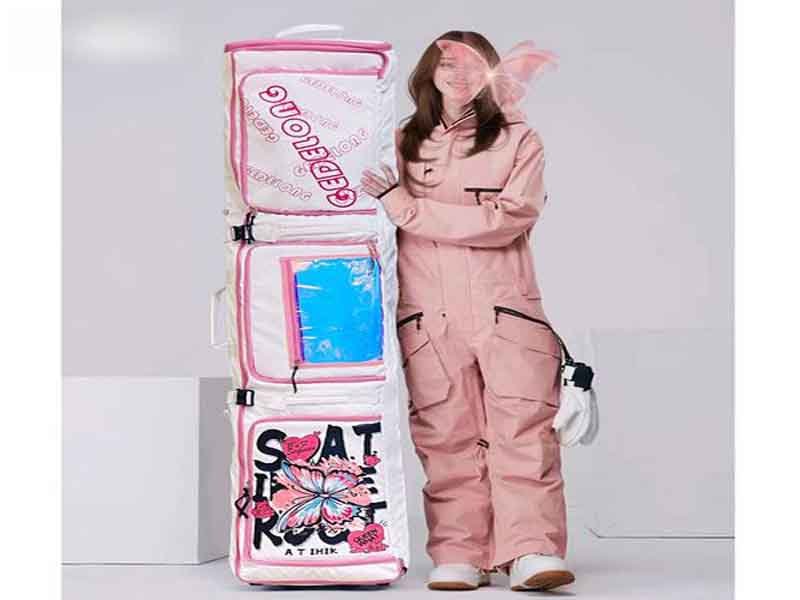
Padding should be built around real impact zones, not added evenly just to make a ski bag look thicker. In an adjustable ski bag, the most important padded areas are the tip zone, tail zone, binding zone, bottom panel, side walls, handle anchor area, and any fold or roll section that receives pressure when the bag is shortened. A well-built padded ski bag uses foam thickness, fabric reinforcement, lining strength, and internal straps together. The goal is simple: stop skis from hitting hard surfaces, reduce rubbing from sharp edges, protect the bag from internal cuts, and keep the product comfortable to carry without making it unnecessarily heavy.
Many ski bag complaints come from poor padding logic. A bag may say “fully padded,” but the foam may be too thin, too soft, badly placed, or missing from the places that suffer the most impact. Another bag may use thick padding everywhere, but become bulky, expensive, and awkward to fold. Adjustable length designs make this more complicated because the bag may be used at different length positions. When the bag is shortened, the folded end becomes thicker. When it is extended, the tip and tail zones move toward different pressure points. This means padding must be planned as part of the pattern, not treated as a last-minute insert.
For Szoneier, padding development can be combined with outer fabric selection, foam type, lining choice, stitching pattern, reinforcement fabric, and quality control testing. Since the company works with fabric R&D and finished product manufacturing, the padding system can be adjusted according to use level: lightweight storage, car travel, airline travel, resort rental, premium outdoor retail, or private label ski gear collections. A ski bag made for home storage does not need the same foam structure as a ski bag expected to survive airport belts, snow slush, shuttle transfers, and repeated winter trips.
What areas need more padding?
The areas that need more padding are the places where skis create hard pressure or receive outside impact. Tip and tail zones are the first priority because ski ends press against the bag during movement. The binding zone is also critical because bindings are bulky, hard, and raised above the ski surface. The bottom panel needs protection because the bag may be dragged or placed on rough ground. Side panels need enough cushioning to reduce impact when the bag is stacked under luggage or stored in a vehicle.
A smart padding layout is based on stress mapping. This means asking where the ski actually touches the bag when loaded. A flat empty bag does not reveal much. Once skis are placed inside, the bindings lift the center, tips push into one end, tails press into the other, and poles may create side pressure. If the bag carries two pairs, the internal pressure doubles and ski-to-ski rubbing becomes a problem. For adjustable designs, the pressure points also shift depending on how much length is folded, rolled, or compressed.
| Bag Area | Padding Priority | Main Risk Without Padding | Recommended Approach |
|---|---|---|---|
| Tip zone | Very high | Ski tips puncture or wear through fabric | Foam padding plus reinforced end fabric |
| Tail zone | Very high | Tail impact during dragging or dropping | Extra end padding and abrasion-resistant shell |
| Binding zone | Very high | Hard bindings press into side walls | Thicker foam panel or shaped protection zone |
| Bottom panel | High | Dragging, abrasion, water contact | Dense foam plus heavy Oxford or nylon fabric |
| Side walls | Medium to high | Luggage impact and ski edge rubbing | Moderate foam with durable lining |
| Zipper edge | Medium | Zipper stress and edge pressure | Move zipper away from pressure points or add flap |
| Handle anchors | Medium | Fabric tearing under loaded carry | Reinforcement patches rather than soft foam only |
| Fold or roll zone | High for adjustable bags | Bulk, cracking, uneven protection | Flexible foam or targeted padding layers |
The biggest mistake is padding only the visible surface and forgetting internal movement. A ski bag may look padded from the outside, but if skis can slide freely, the tips will still hit the ends. Padding and internal control must work together. Internal straps, elastic loops, divider panels, and compression straps help hold skis in the correct position so the padding can do its job.
For Szoneier custom ski bag development, different protection levels can be created. A basic adjustable sleeve may use end-zone padding only. A mid-range padded ski bag may use full side padding with reinforced ends. A premium travel bag may use full padding, inner divider, binding-area reinforcement, dense bottom panel, and padded handle sections. By designing protection levels clearly, brands can build several price points without confusing users.
How thick should foam be?
Foam thickness should match the use case, the ski value, the travel environment, and the expected retail level. For lightweight ski sleeves, thin foam or partial padding may be enough. For regular travel bags, moderate foam thickness gives better protection without creating too much bulk. For airline travel, premium retail, or two-pair ski bags, thicker and denser foam should be used in key zones, especially around tips, tails, bindings, and bottom panels.
There is no single perfect foam thickness for every ski bag. A 3mm foam layer may improve shape but offer limited impact protection. A 5mm foam layer can work for moderate protection. An 8mm to 10mm layer can feel more protective for travel. Thicker foam may be useful around bindings or end panels, but using thick foam everywhere can make the bag harder to fold, roll, pack, and ship. Density also matters. A dense 5mm foam may protect better than a soft 8mm foam.
| Foam Thickness | Best Use | Protection Level | Trade-Off |
|---|---|---|---|
| 2–3mm | Light storage sleeves, dust protection | Low | Keeps cost and weight low, limited impact protection |
| 4–5mm | Basic padded ski bags | Low to medium | Good balance for casual car travel |
| 6–8mm | Mid-range travel ski bags | Medium | Better feel, moderate added bulk |
| 8–10mm | Airline travel and premium bags | Medium to high | Stronger protection, higher cost and volume |
| 10mm+ targeted zones | Binding, tip, tail, wheel base zones | High | Best used only where impact is concentrated |
| Multi-layer foam | Premium protective structures | High | Requires careful sewing and quality control |
Foam should also be selected by type and behavior. EPE foam is commonly used in bags because it is light, economical, and easy to sew. EVA foam can provide better structure and resilience, but it costs more and may be less flexible depending on thickness. PE board or semi-rigid sheets can be used in selected zones for stronger shape, especially around wheeled bases or hard-wear panels. Soft sponge-like foam may feel comfortable but may compress too easily under pressure.
| Padding Material | Main Benefit | Best Area | Caution |
|---|---|---|---|
| EPE foam | Lightweight, economical, easy to process | Side panels, general padding | Choose proper density to avoid weak protection |
| EVA foam | Better resilience and structure | Binding zone, handle padding, premium panels | Higher cost and may reduce flexibility |
| PE board | Shape support and impact spread | Wheel base, bottom structure, end support | Not suitable for all fold zones |
| Sponge foam | Soft hand feel | Handle grips, shoulder pads | Can compress under heavy impact |
| Foam plus lining | Smooth inner protection | Full padded ski bags | Lining must resist ski edges |
| Foam plus reinforced shell | Strong impact resistance | Tip, tail, bottom panels | Adds sewing complexity |
For adjustable length ski bags, foam flexibility is especially important. A roll-top end cannot use the same stiff padding structure as a fixed hard end, or the user will struggle to roll it. A fold-over section needs padding that bends cleanly. A telescopic extension needs padding that does not bunch at the extension seam. This is why sample testing should include repeated folding, rolling, and compression, not only visual approval.
Szoneier can help brands build different foam structures for different price tiers. A low MOQ pilot order may start with 5mm foam and reinforced ends. A premium winter travel line may upgrade to 8mm foam, denser binding panels, and improved lining. A resort rental line may prioritize abrasion resistance and easy cleaning over soft luxury feel. Foam thickness should support the product promise, not simply chase a “thicker is better” idea.
Do tip and tail zones need reinforcement?
Yes, tip and tail zones need reinforcement because they receive concentrated pressure from the hardest ends of the skis. During travel, skis can slide, bounce, and press into the bag ends. If the end panels are only made from the same fabric as the body, wear can happen quickly, especially when the bag is dragged, dropped, or packed tightly. Reinforced tip and tail zones are one of the clearest signs of a well-developed ski bag.
Reinforcement can be created in several ways. The outer fabric can be upgraded in the end zones. A second fabric layer can be added. Foam can be increased locally. Binding tape can be strengthened. A protective inner patch can be added where ski edges touch. A shaped end cap can help spread pressure. For premium models, semi-rigid inserts may be used in targeted areas, though they should not make the bag too heavy or difficult to fold.
| Reinforcement Method | Benefit | Best Use | Cost Impact |
|---|---|---|---|
| Double-layer fabric | Simple durability upgrade | Entry to mid-range bags | Low |
| Heavy Oxford end panel | Strong abrasion resistance | Travel and rental bags | Medium |
| Foam end pad | Impact cushioning | Padded ski bags | Medium |
| Inner protective patch | Resists edge cuts | Ski tip and tail contact zones | Low to medium |
| Binding tape reinforcement | Stronger seam edge | Long-term repeated use | Low |
| Semi-rigid insert | Spreads hard pressure | Premium travel bags | Medium to high |
| Shaped end pattern | Better pressure distribution | Higher-quality custom bags | Development cost, strong result |
In adjustable designs, the reinforcement must work at multiple length positions. If the bag is shortened, the ski tips may no longer rest at the original end panel. They may sit near a fold line or inside a rolled section. If the bag is extended, the skis may reach a different pressure zone. A good pattern should predict these positions and reinforce accordingly.
This is one reason “adjustable” should never be added to a fixed bag without redesigning the protection system. A fixed-size padded bag may protect one length well. Once the length becomes adjustable, the pressure map changes. Szoneier can test samples with multiple reference ski lengths so the reinforcement is placed where it actually helps.
Reinforced tips and tails also improve perceived value. Users often check the ends of a ski bag when judging quality. Thick end panels, clean binding, strong stitching, and firm padding make the bag feel trustworthy. If a brand wants to position a ski bag as travel-ready, these details matter more than large decorative logos.
Is full padding always necessary?
Full padding is not always necessary. The right padding level depends on how the bag will be used. A lightweight ski sleeve for home storage or short car trips may only need partial padding or reinforced ends. A ski bag for airline travel should use more complete padding. A two-pair travel bag usually needs full padding plus internal dividers. A rental fleet bag may need targeted padding and tough fabric more than luxury cushioning. Full padding can improve protection, but it also adds cost, weight, bulk, and shipping volume.
This is where brands need to think critically. Many product descriptions use “fully padded” as a selling point, but full padding is only valuable if the foam density, coverage, lining, and internal control are good. A poorly built fully padded bag may still fail. A smart partial-padding design may perform better if it reinforces the right areas. Protection should be judged by performance, not wording.
| Padding Strategy | Best Use | Advantage | Limitation |
|---|---|---|---|
| No padding | Dust storage, very low-cost sleeves | Light and inexpensive | Poor impact protection |
| End padding only | Car travel, basic adjustable sleeves | Protects tips and tails | Side impact still limited |
| Partial strategic padding | Mid-range ski bags | Balanced cost and protection | Requires good stress mapping |
| Full side padding | Travel ski bags | Better all-around protection | More weight and bulk |
| Full padding plus dividers | Double ski bags, premium travel | Strong gear separation | Higher cost and packing volume |
| Hybrid foam density | Premium custom projects | Protection where needed, weight control | More development complexity |
For adjustable ski bags, partial strategic padding can be very effective. For example, a bag may use 8mm foam at the tip and tail zones, 5mm foam along side walls, and stronger lining around bindings. This gives targeted protection without making the roll-top or fold-over area too stiff. A wheeled bag may use dense foam and PE board near the wheel base, but lighter padding in upper panels.
Szoneier can help develop a padding map before sampling. The map identifies each area of the ski bag and assigns material structure: outer fabric, foam thickness, lining, reinforcement, stitching, and closure relation. This is a more professional approach than saying “add padding everywhere.” It gives brands control over cost and performance at the same time.
How can padding reduce shipping damage?
Padding reduces shipping damage by absorbing impact, limiting internal movement, spreading pressure from ski tips and bindings, and protecting both the skis and the bag structure. For retail products, padding also helps the bag maintain shape during delivery, warehouse handling, and display. For ski travel, padding is even more important because checked luggage is often stacked, dropped, dragged, and compressed.
Damage can happen from outside or inside. Outside damage comes from rough handling, hard surfaces, other luggage, conveyor belts, and vehicle loading. Inside damage comes from skis moving, metal edges cutting lining, bindings pressing into the shell, or poles rubbing against fabric. Good padding reduces both types.
| Damage Type | Cause | Padding Response |
|---|---|---|
| Tip puncture | Ski tips push into end panel | Reinforced end padding and inner patches |
| Tail abrasion | Bag dragged on ground | Dense bottom padding plus abrasion-resistant outer fabric |
| Binding pressure marks | Hard bindings press into side | Thicker binding-area foam |
| Edge cuts | Metal edges rub lining | Strong lining and internal straps |
| Zipper strain | Gear presses near zipper | Padding and pattern keep pressure away from zipper |
| Shape collapse | Bag compressed in shipping | Structured foam or reinforced panels |
| Product return complaints | Gear arrives scratched or bag damaged | Better padding map and QC checks |
Padding also supports brand trust after purchase. Ski equipment is expensive. When users place their skis inside a bag, they are trusting the bag to protect something they care about. If the bag feels thin, they may add towels or clothing for protection. If the bag feels well padded, they relax. That emotional confidence matters. It affects reviews, repeat orders, and whether the product feels worth its price.
For brands shipping ski bags as finished retail products, packaging should also be considered. A heavily padded ski bag may need compressed packing, folded packing, or carton optimization. A bag with wheels needs protection around the wheel area. A bag with structured panels may need careful folding to avoid permanent creases. Szoneier can support packaging planning so the product arrives clean and presentable.
How should brands create a padding specification?
Brands should create a padding specification by defining the bag’s protection level, use environment, target retail tier, and stress zones. Instead of asking for “thick padding,” a stronger specification explains where padding is needed, what foam type should be used, how thick each zone should be, what lining protects the foam, and how internal straps keep skis in place.
A professional padding specification can include a simple zone chart. This helps the factory, designer, sampling team, and quality team understand the same product. It also helps prevent misunderstandings during quotation. Without a clear padding map, two factories may quote very different products while using the same words.
| Zone | Outer Fabric | Padding | Inner Lining | Reinforcement | Purpose |
|---|---|---|---|---|---|
| Tip end | Heavy Oxford or reinforced polyester | 8–10mm foam | 420D lining or coated patch | Double layer | Protect ski tips from impact |
| Tail end | Heavy Oxford or nylon | 8–10mm foam | Reinforced lining | Abrasion patch | Protect against dragging and tail pressure |
| Side body | 600D polyester or Oxford | 5–8mm foam | Smooth polyester lining | Optional | General impact protection |
| Binding zone | Main fabric plus patch | 8–10mm dense foam | Strong lining | Inner strap | Control hard binding pressure |
| Bottom panel | 900D/1200D Oxford | Dense foam or PE support | Coated lining | Extra seam tape | Resist abrasion and wet ground |
| Fold zone | Flexible coated fabric | 3–5mm flexible foam | Smooth lining | Strap support | Maintain adjustability |
| Handle anchor | Reinforced shell fabric | Optional thin foam | Inner backing | Webbing patch | Prevent tearing under load |
The next step is performance testing. A sample should be loaded with skis and handled the way users handle it. Carry it by the main handle. Pull it by the end strap. Place it on rough ground. Fold the adjustable section. Tighten compression straps. Open and close the zipper repeatedly. Check whether the foam shifts, wrinkles, tears, or blocks function. These simple tests reveal problems early.
| Sample Test | What It Reveals | What to Improve |
|---|---|---|
| Loaded carry test | Handle balance and foam stability | Adjust handle placement and reinforcement |
| Drop simulation | End and side impact resistance | Add foam or stronger end panels |
| Drag test | Bottom abrasion performance | Upgrade bottom fabric or coating |
| Fold/roll test | Padding flexibility in adjustable zone | Reduce foam thickness or change foam type |
| Binding pressure test | Protection around highest load point | Add dense foam or inner strap |
| Edge rub test | Lining durability | Upgrade lining or add protective patch |
| Packing test | Shipping and storage practicality | Change folding method or foam layout |
Critical thinking is needed because more protection can create new problems. Thick foam can make a bag safer, but it can also make it heavier and more expensive. Heavy padding may reduce foldability in adjustable designs. Dense bottom structure improves durability but may increase carton volume. Full padding improves perceived quality but may exceed target price. A good ski bag specification balances protection and usability.
Szoneier’s role in padding development can include free design support, sample development, material suggestions, foam comparison, reinforcement layout, logo placement coordination, and quality inspection. With low MOQ customization and quick sampling, brands can test one or two padding structures before placing larger seasonal orders. This reduces risk and helps the final ski bag feel more deliberate.
For adjustable ski bags, padding should never be random. It should tell a story of how the bag will be used: where the skier lifts it, where the skis press, where the floor rubs, where water collects, where the logo sits, where the closure folds, and where the product must survive the roughest moments. When padding follows that story, the bag feels professional even before the user reads the product description.
What Features Improve Travel?
Travel-friendly ski bag features include wheels, balanced handles, padded shoulder straps, internal securing straps, compression straps, luggage ID windows, wide zipper openings, waterproof coating, reinforced bottom panels, smooth lining, pole storage, inner dividers, and clear length adjustment systems. The best travel ski bags are not overloaded with features; they include the details that make airports, vehicles, hotels, resort transfers, and storage easier. A strong travel design protects skis, reduces carrying stress, handles wet surfaces, keeps long gear stable, and helps users move confidently through messy winter trips.
A ski trip involves more friction than most people expect. Skis are long. Boots are heavy. Gloves disappear. Airport counters are crowded. Snow melts into cars. Hotel storage rooms are narrow. Shuttle drivers are impatient. A ski bag that works well in these situations earns loyalty quickly. A ski bag that twists, drags, jams, or slips becomes a frustration before the skier even reaches the mountain.
For custom manufacturing, travel features should be selected according to product tier. A lightweight car-trip bag may only need handles, straps, and water-resistant fabric. A flight-ready ski bag should include stronger padding, reinforced ends, durable zippers, and better carry balance. A premium wheeled model may need wheels, base reinforcement, multiple grab handles, compression straps, and internal organization. Szoneier can help brands build travel features into the pattern from the beginning so they feel integrated rather than added on later.
Are wheels worth adding?
Wheels are worth adding when the ski bag is designed for frequent travel, longer skis, heavier loads, two-pair capacity, or premium retail positioning. A loaded ski bag can be awkward because of its length, even when the weight is not extreme. Wheels reduce shoulder strain and make airports, train stations, hotels, and parking areas easier. For users carrying skis, poles, boots, jackets, helmets, and luggage, wheels can turn a frustrating journey into a manageable one.
However, wheels are not always necessary. They add cost, weight, parts, and production complexity. They also require a stronger base structure. If wheels are attached to a weak bottom panel, the bag may sag, twist, or tear around the wheel area. A wheeled ski bag should be designed as a wheeled product from the beginning, not converted from a soft sleeve by simply adding wheels.
| Wheel Decision Factor | Wheels Recommended | Wheels Not Necessary |
|---|---|---|
| Travel frequency | Frequent flights or long transfers | Occasional car trips |
| Bag capacity | Two pairs of skis or heavy gear | One lightweight pair |
| Product tier | Premium travel collection | Entry-level storage sleeve |
| User group | Families, instructors, resorts, frequent travelers | Casual local skiers |
| Bag length | 180–210cm range | Shorter compact sleeve |
| Fabric structure | Reinforced bottom and stable body | Very soft lightweight construction |
| Target price | Higher retail value accepted | Strict low-cost program |
Wheel quality matters. Small weak wheels may look fine in product photos but perform poorly on rough pavement, wet parking lots, or uneven resort surfaces. The wheel housing should be reinforced. The base should spread load across the bag. The opposite end should have a strong pull handle or grab handle. The bottom fabric should resist abrasion because even wheeled bags are often dragged.
| Wheel Component | Function | Better Design Choice |
|---|---|---|
| Wheel diameter | Affects rolling over uneven surfaces | Use practical size for airport and resort floors |
| Wheel housing | Protects wheel attachment | Reinforced plastic or structured fabric base |
| Base panel | Supports long load | Dense fabric, foam, PE support, or reinforced strip |
| Pull handle | Controls rolling direction | Strong webbing handle with comfortable grip |
| End bumper | Protects wheel-end fabric | Extra abrasion patch or molded reinforcement |
| Stitching | Holds wheel structure | Reinforced seams and bar-tack support |
| Water exposure | Wheels contact wet ground | Use corrosion-resistant parts where possible |
Szoneier can develop wheeled ski bags with reinforced Oxford or nylon bottom panels, water-resistant coatings, strong webbing, and custom logo areas. For brands testing the market, it may be smart to begin with a non-wheeled adjustable padded bag, then add a wheeled premium model after demand is proven. For established outdoor gear programs, a wheeled model can immediately signal higher value.
How should handles be placed?
Handles should be placed according to the loaded balance point of the ski bag, not only where they look symmetrical. A ski bag is long and uneven once skis, bindings, poles, and accessories are inside. If the main handle is too far forward or too far back, the bag will tip, swing, or drag. If handles are too narrow, the bag is uncomfortable to lift. If webbing anchors are weak, the fabric may tear. Good handle placement makes the bag feel lighter, even when the actual weight has not changed.
Most travel ski bags benefit from multiple handles: a central carry handle, end grab handles, side lift handles, and possibly a padded shoulder strap. The central handle is used for normal carrying. End handles help users pull the bag from car trunks or luggage belts. Side handles help lift the bag into vehicles or storage racks. For wheeled bags, a pull handle at the non-wheel end becomes important.
| Handle Type | Best Position | Main Use | Design Detail |
|---|---|---|---|
| Central carry handle | Near loaded balance point | Hand carry | Padded grip and reinforced webbing |
| End grab handle | Tip or tail end | Pulling from vehicles or belts | Strong stitching and abrasion patch |
| Side lift handle | Along side panel | Two-hand lifting | Useful for heavy or double ski bags |
| Shoulder strap | Side body, balanced anchors | Longer walking distance | Padded, adjustable, removable option |
| Wheel pull handle | Opposite wheel end | Rolling control | Comfortable grip and strong anchor |
| Auxiliary loop | Near adjustment zone | Quick handling | Useful for resort staff or rental bags |
Handle reinforcement is critical. Ski bags are long, and users often lift them at awkward angles. A handle may carry the full load suddenly when the bag is pulled from a conveyor belt. The webbing should be attached to reinforced areas, not just sewn onto a single layer of fabric. Box stitching, bar-tacks, backing patches, and webbing that wraps around the body can improve durability.
Adjustable length creates another handle challenge. The balance point changes depending on ski length and how much the bag is rolled or folded. A bag carrying 160cm skis may balance differently from the same bag carrying 200cm skis. This does not mean every length needs a separate handle position, but it does mean the design should be tested at multiple lengths. Compression straps can also help shift and stabilize the load.
For Szoneier custom projects, handle placement can be adjusted through sample testing. A brand can request a loaded sample with target skis, then revise handle position before bulk production. This is a small development step with a big impact on user satisfaction. A ski bag that carries well feels more premium immediately.
Do shoulder straps improve carrying?
Shoulder straps improve carrying when the ski bag is not too heavy, when the user needs to walk through parking areas or resort spaces, and when the bag is designed with balanced anchor points. A padded shoulder strap can make a long ski bag easier to carry, especially for one-pair bags and lightweight travel designs. For heavier two-pair or wheeled bags, shoulder straps may be less important than wheels and side handles.
A shoulder strap should not be added just because it sounds useful. Poorly placed shoulder strap anchors can make the bag hang at a bad angle. A narrow strap can dig into the shoulder. Weak hardware can bend or break. A non-removable strap can get caught during airport handling. For premium travel bags, a removable adjustable shoulder strap with a padded section often works better.
| Shoulder Strap Feature | Good Design | Poor Design |
|---|---|---|
| Strap width | Wide enough for comfort | Thin webbing that cuts into shoulder |
| Padding | Soft pad with anti-slip surface | No pad or loose pad |
| Adjustability | Fits different user heights | Fixed length |
| Anchor position | Balanced when loaded | Bag tips forward or backward |
| Hardware | Strong swivel hooks or buckles | Weak plastic parts |
| Removability | Can detach for airline travel | Gets caught on belts or carts |
| Reinforcement | Anchors backed by strong fabric | Stitching tears under load |
For adjustable ski bags, shoulder strap performance should be tested at short and long settings. When the bag is shortened, extra fabric may change the shape. When extended, the weight distribution may stretch out. If the shoulder strap only feels good at one length, the product needs revision.
A useful strategy is to pair shoulder straps with compression straps. Compression reduces body movement, making shoulder carry more stable. A padded handle wrap can also improve comfort for short-distance carrying. For resort rental or club use, shoulder straps may need to be simpler and more durable because many different users will handle the bag.
Szoneier can customize shoulder straps with padded neoprene sections, woven webbing, rubber grip details, metal or plastic hardware, detachable hooks, and brand labels. Neoprene can be useful for shoulder pads and handle wraps because it provides cushioning and grip. Since Szoneier has experience with neoprene products as well as other fabric goods, these comfort details can be integrated into the ski bag design.
How many skis can one bag hold?
One ski bag can usually hold one pair or two pairs of skis, depending on its width, height, padding, divider structure, zipper opening, and intended use. Single-pair ski bags are lighter, easier to carry, and simpler to adjust. Two-pair ski bags are more useful for travel, couples, families, instructors, and serious skiers, but they require stronger fabric, better padding, internal dividers, and stronger handles. Some oversized travel bags may hold skis, poles, and soft gear, but brands should avoid encouraging overload beyond what the structure can safely handle.
Capacity should be honest. A bag may physically fit two pairs, but if the bindings press too hard, the zipper strains, or the skis rub badly, it is not a good two-pair bag. Proper two-pair design needs enough height for bindings and enough internal control to prevent equipment from grinding together.
| Capacity Type | Best User | Main Benefit | Design Requirement |
|---|---|---|---|
| One pair | Casual skiers, retail sleeve users | Lightweight and easy to carry | Moderate padding, simple straps |
| One pair plus poles | Most common travel use | Practical for trips | Pole sleeve or side space |
| Two pairs | Couples, instructors, frequent travelers | Better travel efficiency | Wider body, divider, stronger zipper |
| Two pairs plus poles | Premium travel bags | Full gear packing | Internal organization and strong handles |
| Rental multi-use | Resorts and clubs | Flexible operations | Durable fabric and easy ID marking |
| Oversized soft gear bag | Long trips | Extra clothing can add padding | Must avoid overloading structure |
Adjustable length becomes more complex as capacity increases. A single-pair bag is easier to shorten because the load is narrow. A two-pair bag has more volume, so compression and internal straps become more important. If two pairs shift inside an oversized adjustable bag, the product can feel unstable. Internal dividers help keep skis separated and reduce movement.
For brands developing custom ski bags, capacity should be decided before pattern development. Changing from one pair to two pairs after sampling usually requires major changes to width, zipper, padding, handles, and carton size. Szoneier can develop one-pair and two-pair versions as part of the same collection, using shared fabric, color, logo method, and packaging style to create a consistent product line.
What details help airport handling?
Airport handling improves when the ski bag has reinforced handles, wheels or strong end pulls, luggage ID windows, durable zippers, compression straps, smooth exterior surfaces, abrasion-resistant bottom panels, and clear weight-conscious construction. Airports are rough on long sports equipment. Bags may be dragged, stacked, leaned against walls, pushed through oversized luggage areas, and lifted quickly by staff. A travel ski bag should expect this treatment.
A luggage ID window is a small but valuable feature. Ski bags often look similar, especially black padded models. An ID window helps users identify their bag faster and may reduce mix-ups. A bright logo patch, contrast webbing, or custom color panel can also help. For private label brands, airport visibility can become part of the product identity.
| Airport Handling Feature | Why It Helps | Design Advice |
|---|---|---|
| Reinforced end handles | Easier to pull from conveyor belts | Add strong webbing and backing patches |
| Wheels | Reduces carrying strain | Reinforce wheel base and bottom fabric |
| Luggage ID window | Helps identify bag quickly | Place where visible but protected |
| Compression straps | Keeps bag compact | Use strong buckles and strap keepers |
| Durable zipper | Prevents opening failure | Use larger zipper and protective flap |
| Abrasion bottom panel | Handles floors and dragging | Use Oxford, nylon, or coated reinforcement |
| Smooth exterior | Avoids snagging | Keep loose straps controlled |
| Clear logo area | Brand visibility and recognition | Plan logo position around carry orientation |
Strap management is often overlooked. Loose straps can catch on luggage belts, carts, doors, and vehicle corners. Strap keepers, elastic loops, or clean routing help the bag look better and function better. Zipper pulls should be easy to grip but not so large that they snag. Buckles should be strong but not unnecessarily bulky.
For airline travel, weight also matters. A bag with too much heavy fabric, thick foam, oversized hardware, and unnecessary parts can become annoying before gear is even packed. Brands should balance durability with carry weight. A premium bag can be strong without becoming overbuilt. Material zoning, targeted padding, and smart hardware selection help.
How should brands choose travel features without overloading the bag?
Brands should choose travel features by ranking user problems, not by adding every possible option. A ski bag does not become better just because it has more pockets, more straps, more panels, and more hardware. Too many features can increase cost, weight, production time, and failure points. The best travel ski bags feel thoughtful. Every feature earns its place.
A useful method is to separate features into three groups: essential, upgrade, and optional. Essential features are needed for the bag to perform its main function. Upgrade features improve comfort, durability, or premium feel. Optional features help certain markets but may not be necessary for every product.
| Feature Level | Features | Suitable For |
|---|---|---|
| Essential | Strong fabric, secure closure, end protection, carry handle, basic water resistance | Almost every ski bag |
| Strong upgrade | Compression straps, better padding, reinforced bottom, inner straps, wider zipper | Travel and retail-quality bags |
| Premium upgrade | Wheels, full padding, dividers, luggage ID, removable shoulder strap | Airline travel and higher-priced products |
| Market-specific | Custom pockets, resort labels, color coding, transparent card holder | Rental, club, resort, team, private label programs |
| Optional decoration | Contrast stitching, rubber patch, custom zipper pull, special webbing | Brand identity and retail shelf appeal |
This framework helps brands avoid feature overload. For example, a one-pair adjustable sleeve may need fabric strength, water resistance, fold-over adjustment, and compression straps. It may not need wheels, heavy dividers, or large pockets. A premium two-pair travel bag may need wheels, inner dividers, full padding, strong handles, and ID window. It may not need many exterior pockets that can catch during travel.
Another critical question is repair and failure risk. Every additional zipper, buckle, wheel, and seam can improve function, but it can also become a failure point if not specified well. A minimal bag with excellent materials can outperform a feature-heavy bag with weak components. Brands should ask: “Will this feature still work after 30 trips, wet handling, cold storage, and rough loading?” If the answer is uncertain, the feature needs stronger materials or should be removed.
| Feature | Common Failure | Prevention |
|---|---|---|
| Wheels | Cracking, poor rolling, torn base | Reinforced housing and proper base support |
| Zipper | Jamming, separation, broken puller | Larger zipper, smooth path, protected flap |
| Buckles | Cracking in cold or under tension | Use stronger buckle material and suitable size |
| Shoulder strap | Anchor tearing | Reinforced patches and better placement |
| Exterior pocket | Snagging or overloading | Low-profile design and clear use limit |
| ID window | Clouding or tearing | Use durable transparent material and protected placement |
| Compression strap | Stitch failure | Bar-tack stitching and strong webbing |
Szoneier can help brands build travel feature packages for different markets. A “local ski day” model may focus on lightweight carry and waterproof fabric. A “resort rental” model may focus on easy-clean lining, reinforced ends, and color-coded labels. A “flight travel” model may focus on wheels, full padding, compression, and luggage ID. A “premium brand” model may add custom patches, upgraded fabric texture, detachable shoulder strap, and refined packaging.
Travel design should also consider product photography and online conversion. Features that users can understand quickly tend to sell better. A visible roll-top adjustment, clear compression straps, strong wheels, padded handle, and organized interior can be shown in product images. If the feature is hidden or hard to explain, it may still be useful, but the product page needs strong detail images and simple wording.
| Feature | Best Product Image Angle | Sales Message |
|---|---|---|
| Adjustable length | Show short and long settings | Fits multiple ski lengths with cleaner storage |
| Compression straps | Show tightened loaded bag | Reduces sliding during travel |
| Wheels | Show rolling angle and wheel base | Easier airport movement |
| Reinforced ends | Close-up of tip/tail panels | Better protection for ski ends |
| Interior straps | Open-bag image | Holds skis in place |
| Divider panel | Two-pair packing image | Protects skis from rubbing |
| Waterproof fabric | Wet surface or coating close-up | Built for snow and slush exposure |
| Logo patch | Lifestyle or retail angle | Strong private label presentation |
The travel feature strategy should always return to the skier’s journey. The user packs at home, loads the car, checks in at the airport, waits at oversized baggage, rides to the resort, stores the bag, repacks wet gear, and travels home tired. Every feature should make one of those moments easier. When the product is designed from that journey, it feels natural. When features are added only for a spec list, the bag feels busy and less convincing.
Szoneier’s custom manufacturing support can cover fabric selection, free design input, low MOQ development, sample making, logo customization, private label packaging, quality inspection, and production planning. For travel ski bags, this is valuable because small details decide whether the bag feels dependable. A reinforced handle, a better zipper path, a stronger bottom panel, or a more comfortable strap may not sound dramatic, but those details are exactly what users remember when carrying long skis through a crowded winter airport.
How Can Brands Customize?
Brands can customize adjustable length ski bags through fabric selection, color planning, logo application, padding structure, length range, closure system, wheel design, inner organization, private label packaging, and retail-ready presentation. A strong custom ski bag should not look like a generic long sleeve with a logo added at the end. The best custom programs begin with user needs: what ski lengths the bag must fit, where the bag will travel, how much protection users expect, what price level the brand wants to reach, and how the product should feel when a skier picks it up. From there, customization becomes more meaningful, more controlled, and easier to sell.
For ski bags with adjustable length designs, customization has to balance function and identity. A brand may want a bold logo, seasonal color palette, premium zipper pulls, and branded packaging, but the product still has to survive wet snow, airport belts, sharp ski edges, cold hands, and repeated folding. The most successful ski bag programs connect appearance with use. A contrast roll-top panel can show the adjustable function. A rubber patch can signal outdoor durability. A printed inner size guide can help users pack correctly. A reinforced bottom panel can become part of the visual design rather than looking like a repair patch.
Szoneier supports custom fabric product development from material selection through finished manufacturing. With over 18 years of experience in fabric R&D, finished goods manufacturing, and OEM/ODM service, the factory can help brands develop adjustable ski bags using polyester, nylon, Oxford fabric, coated fabric, neoprene padding details, reinforced webbing, custom lining, logo processes, packaging, and low MOQ trial production. For brands entering the ski travel category, that flexibility matters because the first version often needs market testing before seasonal expansion.
What logo methods work best?
The best logo method depends on the bag fabric, target price, expected durability, brand style, and order quantity. For adjustable ski bags, common logo methods include screen printing, heat transfer printing, embroidery, woven labels, rubber patches, leather patches, PVC patches, reflective printing, and jacquard webbing. Each method creates a different feeling. A screen-printed logo feels clean and cost-efficient. A rubber patch feels technical and outdoor-oriented. Embroidery feels textured and premium, but may not suit every coated fabric. Reflective printing can improve visibility and add a modern sports look.
Logo placement is just as important as the logo method. A ski bag is long, narrow, and often carried sideways, dragged, or placed on racks. If the logo is placed only for flat product photography, it may disappear in real use. The logo should be visible when the bag is carried, rolled, shortened, extended, stored, and photographed. For adjustable length designs, brands must also check whether the logo folds into the roll-top zone or gets hidden when the bag is shortened.
| Logo Method | Best For | Visual Feel | Durability Level | Key Manufacturing Note |
|---|---|---|---|---|
| Screen printing | Polyester and Oxford ski bags | Clean, direct, cost-friendly | Medium to high if ink is matched well | Works best on smooth coated or uncoated panels |
| Heat transfer | Detailed logos and multi-color artwork | Sharp and modern | Medium | Needs fabric compatibility testing |
| Embroidery | Premium fabric panels and lifestyle models | Textured and high-value | High on suitable fabric | Avoid thick embroidery near fold zones |
| Woven label | Subtle private label branding | Professional and neat | High | Good for seams, handles, or side tabs |
| Rubber patch | Outdoor and technical bags | Rugged and premium | High | Needs strong stitching or heat bonding |
| PVC patch | Sporty retail designs | Bold and dimensional | High | Good for cold-weather visual identity |
| Reflective print | Night travel and safety-inspired designs | Technical and visible | Medium to high | Best used as accent branding |
| Jacquard webbing | Premium straps and handles | Integrated and refined | High | Higher MOQ may apply depending on webbing style |
| Leather patch | Lifestyle winter collections | Warm and premium | Medium | Avoid heavy wet-use zones unless treated |
For adjustable ski bags, Szoneier often recommends planning at least two branding areas. The first is the main visible logo area on the long side panel. The second is a smaller brand detail on the handle, zipper pull, end panel, woven label, or inner lining. Large side branding helps online and retail recognition. Smaller repeated branding makes the bag feel more finished and private-label ready.
A critical mistake is choosing a logo process without testing fabric finish. Coated Oxford, matte polyester, TPU-laminated fabric, PVC-backed panels, and textured nylon may react differently to print or heat transfer. A logo that looks perfect on one fabric may peel, crack, blur, or fade on another. For premium programs, a pre-production logo test is worth doing before bulk production. It protects the brand from one of the most visible quality failures: a bag that still works but looks worn too quickly.
Which colors match outdoor branding?
Outdoor ski bag colors should match the brand’s positioning, target market, and use environment. Black, charcoal, navy, dark green, grey, and deep blue are common because they hide dirt and feel durable. Bright colors such as orange, red, lime, cobalt, and yellow help visibility at airports and resort storage rooms. Earth tones create a premium outdoor lifestyle feeling. Two-tone panels can make the adjustable structure easier to understand. For private label ski bags, color is not only decoration; it can help users identify the bag quickly and remember the brand.
Ski bags are often used in dirty, wet, and crowded places. A pure white bag may look attractive in product photos but show stains quickly. A full black bag is practical but may look similar to every other ski bag at oversized baggage claim. A color-blocked design can solve both issues. For example, a dark main body with a brighter roll-top panel, contrast zipper pull, or colored webbing gives visibility without making the product look too loud.
| Color Direction | Best Market Fit | Strength | Possible Weakness | Custom Design Advice |
|---|---|---|---|---|
| Black and charcoal | Broad retail, travel, rental | Dirt-resistant and easy to match | Can look generic | Add contrast logo, zipper pull, or webbing |
| Navy and deep blue | Premium outdoor and resort programs | Clean and professional | Less visible than bright colors | Pair with reflective logo or lighter lining |
| Forest green and olive | Outdoor lifestyle brands | Natural and rugged | May feel niche | Works well with matte fabric and rubber patch |
| Red and orange accents | Airport visibility and sport identity | Easy to identify | Can feel too strong if overused | Use as end panels, pullers, or straps |
| Grey and silver | Modern technical look | Premium and neutral | Light grey can show dirt | Choose mid-grey and coated finish |
| Earth tones | Lifestyle winter collections | Warm and distinctive | Less traditional for ski gear | Pair with leather-look or woven labels |
| Bright full-body colors | Youth, rental, resort, team bags | High visibility | Stains more visible | Use durable coating and easy-clean fabric |
| Two-tone panels | Custom retail collections | Strong shelf appeal | More cutting and sewing complexity | Align color blocks with functional zones |
Color also affects logo choice. A dark matte fabric may suit reflective print, light embroidery, or rubber patches. A bright fabric may need a neutral patch to keep branding readable. A textured Oxford fabric may look better with a woven or rubber label than with detailed screen printing. A technical nylon bag may look premium with tonal branding, while a resort rental bag may benefit from high-contrast size labels.
For Szoneier custom production, color planning can include body fabric, bottom reinforcement, lining, zipper tape, zipper pull, webbing, buckle, stitching, logo patch, and packaging. Many brands focus only on the outer shell color, but trim color often decides whether the product feels standard or custom. A black bag with custom webbing and a molded logo patch can look far more branded than a bag with only a printed side logo.
Can inner pockets be customized?
Yes, inner pockets can be customized, but they should be designed around real ski travel behavior. Useful internal features may include pole sleeves, goggle pockets, glove pockets, ski strap storage, tuning tool pockets, binding protection pads, divider panels, name card pockets, and wet-accessory zones. The goal is to organize small gear without creating clutter, bulk, or pressure points that damage skis.
Skiers often pack more than skis inside a ski bag. Poles are common. Gloves, base layers, ski straps, wax, small tools, neck warmers, and soft clothing may also be packed. Some users deliberately pack clothing around skis for extra protection. A good inner layout allows extra items without letting hard objects scratch skis or press against the zipper.
| Inner Feature | Best Use | User Benefit | Design Caution |
|---|---|---|---|
| Pole sleeve | One-pair and two-pair bags | Keeps poles from scratching skis | Must fit common pole lengths |
| Mesh pocket | Gloves and soft accessories | Easy visibility and light weight | Avoid placing near sharp ski edges |
| Zippered pocket | Tools, straps, labels | Secure small items | Keep away from high-pressure binding zone |
| Padded divider | Two-pair ski bags | Prevents ski-to-ski rubbing | Must be edge-resistant |
| Binding pad | Travel bags | Reduces hard pressure | Needs correct placement after loading |
| Wet pocket | Damp gloves or small items | Separates moisture | Requires coated lining or drainage thinking |
| Name card pocket | Rental and team use | Easy identification | Use durable transparent material |
| Inner compression straps | All travel bags | Holds skis in place | Must be easy to access when loaded |
| Removable divider | Premium bags | Flexible packing | Adds cost and needs secure attachment |
Inner pockets should not fight the adjustable length system. If a pocket sits in a fold-over or roll-top zone, it may become unusable when the bag is shortened. If a pocket is placed where skis slide, it may tear. If a hard object pocket is placed near the outer side panel, it may create a pressure point during luggage stacking. The best inner organization is usually simple, flat, and positioned around the natural load.
For private label brands, inner details can also carry brand value. A printed lining, woven care label, size guide, QR code label, or branded divider panel can make the bag feel more thoughtful. However, every inner feature should still be easy to manufacture consistently. Overly complex inner structures can slow production, raise cost, and create quality variation. Szoneier can help brands compare a clean standard interior against an upgraded organized interior before final sampling.
Do private label ski bags need packaging?
Private label ski bags should have packaging that matches the sales channel and brand position. Packaging does not need to be excessive, but it should protect the product, present the brand clearly, and make warehouse handling easier. Common packaging options include polybags, recycled polybags, hangtags, barcode labels, carton marks, care cards, instruction cards, retail sleeves, kraft paper bands, and custom cartons. For online sales, packaging should support clean delivery and scanning. For retail stores, packaging should help display. For resort or team orders, labeling and carton organization may matter more than decorative packaging.
Ski bags are long and often folded for shipping. Poor packaging can create deep creases, dirty surfaces, bent patches, or compressed padding. If wheels are included, wheel areas need protection. If the bag has a rubber patch or printed logo, the logo surface should not be scratched during packing. If the bag is sold online, barcode and SKU labels should be easy to scan.
| Packaging Option | Best Use | Benefit | Cost Level |
|---|---|---|---|
| Standard polybag | Basic shipping and storage | Keeps product clean | Low |
| Recycled polybag | Sustainability-focused brands | Better environmental positioning | Low to medium |
| Hangtag | Retail and private label | Shows brand story and features | Low |
| Care card | Premium and travel bags | Explains adjustment and maintenance | Low |
| Barcode label | Online and warehouse sales | Supports SKU handling | Low |
| Kraft paper band | Lifestyle retail presentation | Cleaner shelf look | Low to medium |
| Custom printed bag | Premium private label | Strong brand presentation | Medium |
| Color box | Gift or retail display | High perceived value | High and usually not ideal for long ski bags |
| Master carton marks | Wholesale and resort programs | Improves logistics control | Low |
A useful packaging detail for adjustable ski bags is an instruction card or small printed diagram. Some users may not immediately understand how to roll, fold, compress, or extend the bag. A simple visual guide can reduce misuse and improve satisfaction. It can show supported ski length range, how to secure straps, how to pack poles, and how to store the bag after use.
Szoneier can support private label packaging according to order size and channel needs. For low MOQ trial runs, a branded hangtag, care card, and barcode label may be enough. For established seasonal programs, custom packaging, carton marks, retail labels, and multi-language inserts can be added. The packaging should make the product easier to sell and easier to manage, not simply more expensive.
How does OEM sampling work?
OEM sampling for adjustable ski bags usually starts with a product idea, reference image, size requirement, logo file, material preference, and target use case. The factory then develops a sample plan covering length range, fabric, coating, padding, lining, zipper, webbing, handle placement, logo method, packaging, and estimated production cost. After the first sample is made, the brand checks fit, appearance, handling, protection, branding, and packing. Revisions may adjust dimensions, fabric stiffness, strap position, foam thickness, pocket layout, color, or logo placement before bulk production.
For adjustable ski bags, sampling is especially important because flat measurements do not tell the whole story. The sample should be loaded with real or reference skis at different lengths. A 160cm ski, 180cm ski, and 200cm ski may all create different fit behavior. The roll-top, fold-over, compression straps, zipper, lining, and handle balance should be tested at each position.
| Sampling Stage | Main Work | What Brands Should Check |
|---|---|---|
| Concept confirmation | Define use case, length range, capacity, target price | Is the product for storage, car travel, airline travel, rental, or retail? |
| Material selection | Choose body fabric, coating, lining, foam, webbing | Does the fabric match durability and brand feel? |
| Pattern development | Create bag structure and adjustment design | Does the adjustable system make sense for real skis? |
| First sample | Produce physical sample | Does it fit short, average, and long skis properly? |
| Fit testing | Load skis and accessories | Do straps, padding, and handles work under load? |
| Branding test | Apply logo and label details | Is logo visible when bag is shortened and carried? |
| Revision | Adjust structure or materials | Are problems solved before bulk order? |
| Pre-production sample | Final approved version | Does it match production requirement and packaging? |
| Bulk production | Cut, sew, inspect, pack | Are quality checkpoints clear? |
A good sample review should include practical questions. Can a user open the zipper with gloves? Does the bag stand up to compression strap tension? Does the folded end stay secure? Is the shoulder strap balanced? Does the bag drag at one end? Does the logo crease when rolled? Does the lining catch ski tips? Does the product still look good after being packed in a carton?
Szoneier offers free design support, low MOQ customization, quick sampling, and sample support for qualified projects. For brands developing a new ski bag line, this makes it possible to test material and structure before committing to a large run. A sample is not only a visual approval item. It is the first real conversation between the product idea and the skier’s actual use.
How should brands build a custom ski bag program?
Brands should build a custom ski bag program by connecting product strategy, user scenario, material structure, adjustment design, brand identity, packaging, and quality control. A custom product should not start with decoration. It should start with a clear market role. Is the bag for casual skiers, resort shops, rental fleets, premium travel retail, youth ski programs, team orders, or private label outdoor collections? Each market needs a different product.
The first step is defining the product tier. A basic adjustable ski sleeve may focus on low weight, simple closure, and cost control. A mid-range padded ski bag may focus on strong fabric, better foam, compression straps, and private label branding. A premium wheeled travel bag may focus on full padding, wheels, reinforced base, inner dividers, upgraded zippers, and refined packaging.
| Product Tier | Core Features | Suggested Materials | Branding Strategy |
|---|---|---|---|
| Entry adjustable sleeve | Fold-over end, basic handle, water-resistant shell | 300D–600D polyester or Oxford | Screen print or woven label |
| Mid-range padded bag | Compression straps, end padding, full zipper | 600D polyester/Oxford with PU coating | Screen print, rubber patch, hangtag |
| Travel-ready padded bag | Roll-top, reinforced ends, inner straps, better foam | 600D/900D Oxford, nylon reinforcement | Rubber patch, custom zipper pull, care card |
| Premium wheeled bag | Wheels, full padding, dividers, reinforced base | Nylon, heavy Oxford, TPU/PU coating | Patch, jacquard webbing, retail packaging |
| Resort rental bag | Easy-clean lining, color labels, durable bottom | Heavy coated Oxford or polyester | Size label, resort logo, carton coding |
| Team or club bag | Name window, strong handles, multi-size support | 600D/900D polyester or nylon | Logo print plus ID panel |
The second step is building a feature hierarchy. Many brands want every feature at once, but ski bags become better when the feature list is disciplined. Choose the features that solve real problems for the target user. A resort rental bag may need easy cleaning more than luxury packaging. A premium travel bag may need wheels more than exterior pockets. A youth ski program may need color coding more than heavy full padding.
| User Problem | Feature Response | Manufacturing Detail |
|---|---|---|
| Multiple ski lengths | Roll-top, fold-over, or telescopic adjustment | Test minimum, average, and maximum ski lengths |
| Skis slide inside | Internal straps and compression system | Reinforce strap anchors |
| Airport carrying is difficult | Wheels, end handles, balanced carry handles | Strengthen bottom and handle zones |
| Gear gets wet | Coated fabric and water-resistant zipper flap | Match coating to folding behavior |
| Ski edges cut lining | Stronger lining and divider panels | Use 420D lining or coated patches |
| Product looks generic | Custom colors, patches, zipper pulls, lining | Plan branding during pattern stage |
| Online returns from sizing confusion | Printed size guide and clear product tag | Add care card or inner label |
| Seasonal demand uncertainty | Low MOQ pilot production | Test one model before expanding colors |
The third step is planning quality checks. Adjustable ski bags should be inspected for dimensions, fabric quality, stitching, zipper function, logo position, strap strength, padding placement, lining cleanliness, hardware function, and packaging. For longer bags, dimension tolerance matters because a small pattern error can affect fit. For private label products, logo consistency and color matching also matter.
| QC Area | What to Inspect | Why It Matters |
|---|---|---|
| Length range | Shortened and extended dimensions | Confirms advertised fit |
| Stitching | Seam strength, skipped stitches, bar-tacks | Prevents tearing under load |
| Zipper | Smooth running and alignment | Avoids user frustration |
| Strap anchors | Pull strength and placement | Supports compression and carry |
| Padding | Thickness, position, smoothness | Protects skis consistently |
| Lining | Tears, loose threads, edge resistance | Prevents internal damage |
| Logo | Position, color, adhesion, embroidery quality | Protects brand presentation |
| Coating | Surface defects, cracking, consistency | Supports water resistance |
| Packaging | Folding method, label, carton mark | Protects delivery and logistics |
A serious custom program should also consider future expansion. One adjustable ski bag can become a collection. A brand may start with one single-pair adjustable padded bag, then add a wheeled travel model, a double ski bag, a junior ski bag, a snowboard bag, a boot bag, and matching accessory pouches. Using consistent fabrics, colors, webbing, zipper pulls, and logo details helps the collection feel coherent.
Szoneier’s material and manufacturing resources make this collection approach easier. Since the company can work across fabric types and finished goods, brands can build related products from shared material systems. A ski bag can match a boot bag, helmet bag, gear pouch, or winter travel duffel. For outdoor brands, this can turn one seasonal product into a more complete winter equipment line.
How Do You Choose a Manufacturer?

You choose a ski bag manufacturer by checking material capability, product development experience, sample accuracy, low MOQ flexibility, quality control, logo customization, production lead time, communication clarity, and the ability to support private label or OEM/ODM projects from idea to finished product. Adjustable length ski bags require more than basic sewing. The manufacturer must understand fabric behavior, padding layout, reinforced seams, zipper stress, strap placement, length testing, and user handling. A good factory helps refine the product before bulk production instead of simply copying a drawing.
For brands developing ski bags, the manufacturer becomes part of the product strategy. A weak factory may offer a low price but ignore pressure zones, fabric coating issues, zipper strain, or logo durability. A stronger manufacturer will ask questions: What ski lengths should the bag support? Will users fly with it? How many pairs will it carry? Should it be waterproof or water-resistant? What logo method is needed? Does the bag need wheels? What target MOQ and budget should the sample follow? Those questions protect the final product.
Szoneier is a China-based fabric R&D, finished goods manufacturing, and sales-integrated factory with more than 18 years of experience. The company can customize products made from cotton fabric, canvas fabric, polyester fabric, nylon fabric, neoprene fabric, jute fabric, linen fabric, Oxford fabric, and other materials. For ski bag projects, this means brands can develop outer shell fabric, coating, reinforcement, padding, lining, logo details, and packaging through one coordinated process. Szoneier supports 100% quality assurance, free design, low MOQ customization, quick sampling, free sample support for suitable projects, short lead times, and custom/private label/OEM/ODM production for overseas growing brands and high-end clients.
What factory capabilities matter?
The most important factory capabilities for adjustable ski bags are material sourcing, fabric development, pattern engineering, sample making, sewing quality, reinforcement knowledge, padding assembly, logo processing, packaging support, and quality inspection. A ski bag may look simple, but its long shape exposes weak workmanship quickly. Poor seams twist. Weak handles tear. Cheap zippers jam. Thin lining gets cut. Bad coating cracks in fold zones. A capable factory understands these risks before production begins.
For adjustable length designs, pattern capability is especially important. The factory must know how the bag behaves when shortened, extended, loaded, folded, and carried. A regular long sleeve pattern is not enough. The roll-top, fold-over, compression, or telescopic structure must be integrated into the whole bag. Handle placement, strap anchors, logo zones, padding, and zipper paths all need to work with the adjustment system.
| Capability | Why It Matters | What to Ask the Factory |
|---|---|---|
| Fabric R&D | Determines durability, coating, hand feel, and appearance | Can you suggest fabric options for different price levels? |
| Pattern engineering | Controls fit and adjustable structure | Can you test short, average, and long ski lengths? |
| Sample workshop | Turns idea into physical product | How fast can the first sample be made? |
| Padding experience | Protects skis during travel | Can padding be zoned by tip, tail, binding, and bottom? |
| Reinforcement sewing | Prevents handle and strap failure | Do you use bar-tacks, backing patches, or box stitching? |
| Logo processing | Builds private label identity | Which logo methods suit coated fabric? |
| Quality control | Protects consistency in bulk | What inspection steps are used before shipment? |
| Packaging support | Helps online, retail, and logistics needs | Can you add hangtags, barcode labels, care cards, and carton marks? |
| Low MOQ support | Helps new programs test the market | What MOQ is available for custom material and logo options? |
Another useful test is how the factory responds to a product brief. A good manufacturer will not only quote quickly; it will notice missing details. If a brand says, “We need an adjustable ski bag,” the factory should ask about length range, number of skis, fabric preference, padding, waterproof level, logo method, packaging, and target price. If no questions are asked, the quotation may be based on assumptions rather than a real product plan.
Szoneier’s advantage is its material-driven manufacturing base. Because the company works with many fabric types and finished goods, it can help match structure and material instead of forcing every project into one standard fabric. Adjustable ski bags benefit from this because small fabric changes can greatly improve folding, coating durability, abrasion resistance, and perceived quality.
Do material options affect quality?
Yes, material options strongly affect quality. The same ski bag pattern can feel cheap, mid-range, or premium depending on the fabric, coating, lining, foam, webbing, zipper, thread, buckle, and reinforcement material. A strong design with weak materials will fail. Good materials used without proper pattern engineering can also disappoint. Quality comes from matching materials to the bag’s actual use.
Material choice affects durability, water resistance, weight, folding behavior, logo clarity, color fastness, abrasion resistance, and hand feel. For adjustable length ski bags, fold behavior is especially important. A fabric that works on a fixed bag may not work well on a roll-top design. A coating that looks waterproof may crack after repeated folding. A lining that feels smooth may still be too weak against ski edges. Every material needs to be checked in the context of the whole product.
| Material Part | Quality Impact | Better Choice for Ski Bags |
|---|---|---|
| Outer shell | Durability, appearance, water resistance | 600D polyester, nylon, Oxford fabric, coated fabric |
| Bottom panel | Abrasion and dragging resistance | 900D/1200D Oxford, heavy nylon, coated reinforcement |
| Coating | Moisture protection and fabric structure | PU, PVC, TPU, or water-repellent finish matched to use |
| Foam | Impact protection and shape | EPE, EVA, dense foam, targeted thickness |
| Lining | Edge protection and cleanliness | 210D/420D polyester, coated lining, reinforced divider |
| Webbing | Carry strength and compression | Strong polyester or nylon webbing |
| Zipper | Access and long-term function | Larger zipper, smooth track, durable puller |
| Buckles | Adjustment and strap control | Cold-resistant, glove-friendly hardware |
| Thread | Seam durability | Strong thread matched to fabric thickness |
| Logo material | Brand appearance | Print, embroidery, rubber patch, woven label, PVC patch |
Brands should also think about material consistency in bulk production. A sample may look good, but bulk fabric shade, coating thickness, foam density, and zipper quality must remain consistent. A reliable manufacturer controls sourcing and inspection. For private label products, this protects repeat orders and reduces the risk of customer complaints.
Szoneier’s fabric capability allows brands to compare material options before finalizing the ski bag. For example, a brand can review polyester versus nylon, Oxford versus standard woven fabric, PU coating versus TPU lamination, 5mm foam versus 8mm foam, screen print versus rubber patch, and standard lining versus reinforced lining. These comparisons help brands make decisions based on performance and price, not guesswork.
Is low MOQ useful for new programs?
Low MOQ is very useful for new ski bag programs because winter sports products are seasonal, sizing-sensitive, and often influenced by market testing. A brand may not know which color, length range, padding level, or price tier will sell best until the first batch reaches users. Low MOQ customization allows brands to test a product without tying up too much inventory. It also helps resort shops, boutique outdoor brands, startup gear labels, event programs, team orders, and private label sellers launch more carefully.
Adjustable ski bags are especially suitable for low MOQ testing because one design can cover multiple ski lengths. Instead of producing many fixed-size SKUs, a brand may test one adjustable model in one or two colors. If the market response is strong, the brand can expand into more colors, upgraded wheels, double capacity, or matching boot bags.
| Low MOQ Scenario | Why It Helps | Suggested Product Strategy |
|---|---|---|
| New outdoor brand launch | Reduces inventory pressure | Start with one adjustable padded model |
| Resort merchandise test | Tests guest interest before peak season | Use logo print, practical fabric, mid-range padding |
| Retail private label trial | Checks online conversion and reviews | Choose clear size range and strong product photos |
| Team or club order | Supports smaller customized quantity | Add name window, team logo, and durable handles |
| Seasonal color test | Identifies best-selling color | Use same structure with different panels |
| Premium upgrade test | Tests willingness to pay | Compare non-wheeled and wheeled samples |
| Regional market test | Adapts to local ski habits | Adjust length range and padding level |
Low MOQ does not mean quality should be low. It means the production plan should be flexible. A brand can begin with available fabric colors, standard hardware, and efficient logo methods, then move toward custom-dyed fabric or special trims after demand becomes clearer. This staged approach is often smarter than investing heavily in a fully customized product before the market has spoken.
Szoneier supports low MOQ customization and quick sampling, which helps brands test adjustable ski bag designs with less risk. The factory can help suggest practical ways to control MOQ, such as using stock fabric colors, standard zipper options, standard webbing, and efficient logo methods at the beginning. Once the product proves itself, more customized material and packaging options can be added.
How fast can samples be made?
Sample timing depends on design complexity, material availability, logo method, padding structure, and whether special hardware or custom fabric is needed. A simple adjustable ski sleeve using available fabric can usually move faster than a wheeled padded travel bag with custom coating, rubber patch, inner divider, and retail packaging. For planning purposes, brands should separate sample development into concept confirmation, material selection, pattern making, sewing, logo application, review, and revision.
Fast sampling is valuable, but speed should not replace testing. An adjustable ski bag sample should be checked with real ski lengths and actual loading conditions. If a sample is rushed and approved only by appearance, problems may appear in bulk production or user reviews. The goal is not simply to make the first sample quickly; the goal is to reach an approved sample that performs correctly.
| Sample Type | Typical Complexity | Key Review Focus |
|---|---|---|
| Basic fabric mockup | Low | Size, shape, adjustment structure |
| First functional sample | Medium | Fit, closure, straps, padding, handle balance |
| Logo sample | Medium | Logo size, position, color, adhesion, embroidery quality |
| Material comparison sample | Medium | Fabric hand feel, coating, stiffness, folding |
| Padded travel sample | Medium to high | Foam thickness, lining, tip/tail protection |
| Wheeled ski bag sample | High | Base structure, wheel strength, rolling balance |
| Pre-production sample | High importance | Final approval before bulk production |
A useful sample review checklist includes several simple actions. Load the bag with the shortest supported skis. Load it with the longest supported skis. Tighten the straps. Carry it by every handle. Open and close the zipper multiple times. Fold or roll the adjustable end. Check the logo after adjustment. Place the bag on the floor and drag it lightly. Inspect the lining after loading. These tests can catch problems before production.
Szoneier can support quick sample development for custom ski bag projects, especially when materials are available and the design direction is clear. Brands that provide reference photos, target dimensions, logo files, color direction, material preference, and intended use can usually move faster. Clear input helps the factory avoid unnecessary back-and-forth and produce a more accurate first sample.
Why choose Szoneier for custom ski bags?
Szoneier is a strong choice for custom ski bags because the company combines fabric knowledge, product manufacturing, custom development, quality control, and flexible service under one factory system. Adjustable length ski bags require a manufacturer that understands both materials and finished product behavior. Szoneier can support polyester, nylon, Oxford fabric, coated fabric, neoprene details, webbing, lining, foam, custom logo processing, private label packaging, and OEM/ODM product development.
For brands, the value is not only production. It is the ability to turn a product idea into a practical, manufacturable, market-ready ski bag. A brand may come with a rough concept: “We need an adjustable ski travel bag for 160–210cm skis, water-resistant fabric, reinforced ends, logo patch, and low MOQ for the first order.” Szoneier can help translate that into fabric options, structure suggestions, sample development, packaging choices, and production planning.
| Szoneier Capability | Value for Ski Bag Projects |
|---|---|
| 18+ years fabric and finished goods experience | Stronger understanding of material behavior and bag construction |
| Wide material options | Polyester, nylon, Oxford, neoprene details, coated fabrics, and more |
| Custom OEM/ODM support | Helps brands create original private label ski bag programs |
| Free design support | Useful for brands without complete tech packs |
| Low MOQ customization | Helps test ski bag designs before scaling |
| Quick sampling | Speeds up development and seasonal planning |
| Free sample support for suitable projects | Reduces early development friction |
| 100% quality assurance | Supports consistent shipment quality |
| Short lead time | Helps seasonal winter product planning |
| Logo and packaging customization | Builds stronger private label presentation |
| Post-processing support | Enables waterproof coating, printing, reinforcement, and finishing options |
Szoneier is especially suitable for brands that want more than a catalog product. If a brand needs a standard long bag with a logo, many suppliers may be able to quote. If a brand wants a thoughtful adjustable ski bag with the right fabric, padding, length system, logo, and packaging, material and development ability matter more. Szoneier’s experience across fabric categories and custom finished products gives brands more room to build something specific.
What should a sourcing checklist include?
A sourcing checklist for adjustable ski bags should cover product strategy, material specification, structure, size range, protection, branding, packaging, compliance expectations, sampling, MOQ, lead time, and QC. A clear checklist helps brands communicate with the factory and compare quotations fairly. Without one, different suppliers may quote very different products under the same product name.
| Checklist Area | Questions to Confirm | Why It Matters |
|---|---|---|
| Target user | Casual skier, traveler, resort, rental, team, premium brand? | Defines the correct product level |
| Ski length range | What minimum and maximum ski lengths must fit? | Controls adjustable structure |
| Capacity | One pair, two pairs, poles, accessories? | Controls width, height, padding, zipper |
| Fabric | Polyester, nylon, Oxford, coated fabric? | Controls durability and cost |
| Waterproof level | Water-resistant or higher waterproof structure? | Controls coating, zipper flap, seam planning |
| Padding | End padding, partial padding, full padding, divider? | Controls protection and price |
| Closure | Roll-top, fold-over, zipper, straps, hybrid? | Controls user experience |
| Handles | Central, side, end, shoulder, wheel pull? | Controls carrying comfort |
| Wheels | Needed or not? | Controls cost and base structure |
| Logo | Print, embroidery, rubber patch, woven label? | Controls brand presentation |
| Packaging | Polybag, hangtag, care card, barcode, carton marks? | Controls channel readiness |
| MOQ | Trial order or seasonal production? | Controls development strategy |
| Sample timing | How many sample rounds are expected? | Controls launch schedule |
| QC | What inspection points are required? | Protects consistency |
The quotation should be based on a defined specification, not only a product photo. Product photos do not show foam density, lining quality, fabric coating, reinforcement method, zipper size, or stitching standard. A cheap quotation may hide weaker materials. A higher quotation may include better fabric and construction. Brands should compare what is actually included.
| Quotation Item | Low-Detail Quote Risk | Better Quote Requirement |
|---|---|---|
| Fabric | Generic “polyester” with unknown weight | Specify denier, coating, color, and use area |
| Padding | Vague “padded” wording | Specify foam thickness and zones |
| Zipper | Unknown zipper size and quality | Specify zipper type, size, and puller |
| Webbing | Weak or narrow straps | Specify width and reinforcement |
| Logo | Logo cost not clear | Confirm method, size, position, and color |
| Packaging | Only basic packing included | Confirm hangtag, barcode, care card, carton marks |
| Sample | No revision plan | Confirm sample process and review points |
| QC | No inspection details | Confirm dimension, stitching, logo, and packing checks |
Brands should also evaluate communication. A good manufacturer will explain trade-offs. For example, if a brand asks for heavy fabric, full padding, wheels, premium patch, and very low target price, the factory should explain cost impact and suggest alternatives. If a brand asks for full waterproof performance with ordinary zipper and simple seams, the factory should clarify realistic water-resistance language. Honest communication protects both sides.
A strong manufacturer also helps brands think ahead. Can the ski bag become part of a winter collection? Can the fabric match boot bags or travel duffels? Can the logo system be shared across products? Can packaging be standardized for warehouse efficiency? Can a low MOQ first order lead into larger seasonal production? These questions move the project from one product to a more scalable line.
Build a Ski Bag People Trust Before the Trip Starts
A ski bag earns trust before the skier reaches the mountain. The moment a user packs their skis, tightens the straps, lifts the handle, rolls the bag through an airport, or places it in a wet shuttle storage area, the design is being judged. Adjustable length makes the product more flexible, but flexibility only works when the fabric, padding, closure, straps, handles, lining, logo, and packaging all support the same purpose.
For brands planning a custom ski bag program, the best starting point is not “What is the cheapest long bag we can make?” A better question is, “What experience should our skier have from home storage to airport travel to resort arrival?” That question leads to better decisions. It helps define the length range, fabric, reinforcement, padding, wheel option, logo method, and packaging style. It also helps the final product feel more original and more useful.
Szoneier can help develop ski bags with adjustable length designs for private label, custom logo, OEM, and ODM projects. Whether the goal is a lightweight adjustable sleeve, a padded travel ski bag, a roll-top ski bag, a wheeled ski bag, a resort rental bag, or a complete winter gear collection, Szoneier can support material selection, free design, low MOQ customization, quick sampling, fabric post-processing, logo application, packaging, quality inspection, and finished product manufacturing.
If you are planning a new adjustable ski bag project, send Szoneier your target ski length range, reference style, fabric preference, logo file, expected quantity, and usage scenario. The team can help turn the idea into a practical sample and a production-ready product built around real ski travel, real users, and real brand value.