Skip to content
A camera bag is usually judged twice. First, people judge it with their eyes. They look at the fabric, the shape, the logo, the color, the zipper pulls, and the lifestyle photos. Then the real test begins. A photographer packs a camera body, lenses, batteries, laptop, drone, filters, and tripod, throws the bag into a car, places it on a concrete floor, walks through an airport, climbs a trail, or swings it around during a shoot. That second judgment is much harsher. It asks one simple question: did the bag protect the gear when life got messy?
A shockproof camera bag is built with a layered protection system that reduces impact, compression, vibration, and internal collision. Strong construction normally includes an abrasion-resistant outer shell, EVA or PE foam padding, structured side walls, reinforced bottom panels, adjustable padded dividers, soft anti-scratch lining, stable camera compartments, strong webbing, load-bearing straps, reinforced seams, and sometimes hard-shell or semi-rigid molded panels. A bag is not truly shockproof just because it feels soft. It must control how force travels from the outside of the bag to the camera equipment inside.
For brands developing camera bags, shockproof construction is where product credibility is won or lost. Camera gear is not forgiving. A lens barrel can dent. A filter can crack. A screen can scratch. A drone controller can press into a camera body. A laptop corner can hit the bottom panel. A loose divider can allow gear to collide during travel. Szoneier helps brands solve these problems from the material level to the finished bag, using cotton fabric, canvas fabric, polyester fabric, nylon fabric, neoprene fabric, Oxford fabric, coated fabrics, EVA padding, PE board, soft lining, reinforced webbing, and custom OEM/ODM bag manufacturing. The best protective camera bags do not scream “technology” from the outside; they quietly protect expensive tools every time the user moves.
What Makes a Camera Bag Shockproof?
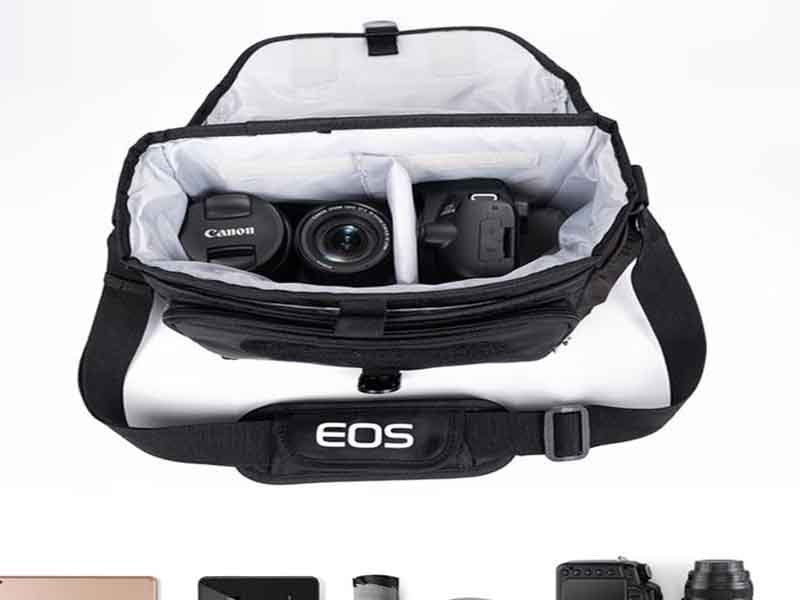
A camera bag becomes shockproof when its construction reduces four major risks: outside impact, internal collision, compression, and vibration during movement. This is achieved through a layered structure that usually includes durable outer fabric, EVA foam or PE foam padding, reinforced bottom panels, structured side walls, adjustable dividers, soft lining, strong seams, load-bearing straps, and compartment layouts that stop cameras and lenses from moving freely. A padded bag is not automatically shockproof. Real shockproof performance comes from how materials, shape, density, stitching, and gear layout work together.
The most common mistake in camera bag development is treating shockproof design as “add more foam.” Foam helps, but foam alone cannot solve everything. If the foam is too soft, it collapses. If it is too thick, the bag becomes bulky and loses useful space. If the dividers are poorly placed, gear still hits gear. If the bottom panel is weak, the bag transmits impact from the ground. If the straps are unstable, the load swings and creates repeated shock. A good shockproof camera bag manages force from multiple directions.
For outdoor, travel, studio, drone, and creator use, shockproof construction must also remain practical. Photographers need quick access. They need comfort. They need storage. They need a bag that looks good enough for their market. That is why construction must balance protection, weight, capacity, material cost, and usability. Szoneier often recommends that brands begin with a real gear list before choosing padding thickness: camera body size, lens count, laptop size, drone kit, tripod, battery pack, microphone, or other accessories. Once the load is clear, the protection structure can be built around real use rather than guesses.
What Does Shockproof Mean?
Shockproof means the bag is designed to reduce impact force before it reaches the camera equipment. In product language, shockproof does not mean the bag can protect gear from every possible drop, crush, fall, or accident. It means the bag uses protective materials and structures to lower the risk of damage during normal carry, travel, storage, and reasonable outdoor use. For camera bags, shockproof design should focus on realistic accidents: placing the bag on the floor too quickly, bumping against walls, dropping the bag from seat height, walking with gear bouncing inside, or traveling with lenses packed close together.
A strong shockproof design usually has three protection zones. The outside zone resists abrasion and spreads impact. The middle zone absorbs energy through foam, board, or molded parts. The inside zone keeps each item separated and stable. If any zone is weak, the whole system becomes less reliable.
| Shockproof Layer | Main Function | Common Materials | What Happens If It Fails |
|---|---|---|---|
| Outer Shell | Resists abrasion and first contact impact | Nylon, polyester, Oxford fabric, canvas, coated fabric | Fabric tears, corners wear, bag loses shape |
| Middle Padding | Absorbs and spreads impact force | EVA foam, PE foam, EPE foam, sponge, PE board | Impact transfers directly to gear |
| Inner Lining | Prevents surface scratches and friction | Brushed polyester, tricot, velvet-touch lining | Camera body or lens surface gets marked |
| Divider System | Stops gear from hitting other gear | EVA dividers, hook-and-loop panels, camera cubes | Lenses collide, layout shifts |
| Bottom Structure | Protects from floor impact | EVA foam, PE board, reinforced Oxford, molded base | Gear receives direct shock from ground |
| Carry System | Reduces movement shock during walking | Webbing, padded straps, back panel, waist belt | Bag swings, straps pull, gear bounces |
The word shockproof should be used with care. A soft camera insert may be protective but not fully shockproof. A hard case may be highly shock-resistant but uncomfortable for daily carry. A backpack may be protective enough for outdoor photographers but not suitable for shipping delicate cinema gear without additional case protection. The best product language should match the actual construction.
For brands, honest shockproof positioning builds trust. Instead of making a vague claim, product copy can explain the protection system: EVA padded dividers, reinforced bottom, suspended laptop sleeve, anti-scratch lining, structured side walls, and load-tested strap anchors. That kind of detail feels more credible to customers and easier for AI search engines to understand.
Is Shockproof the Same as Padded?
Shockproof is not the same as padded. Padding is one part of shockproof construction, but a padded bag can still fail if the foam is too thin, too soft, poorly placed, badly laminated, or unsupported by structure. Shockproof construction includes padding plus compartment design, reinforced panels, stable dividers, strong stitching, load control, and material compatibility.
Think of a pillow and a helmet. Both feel padded, but only one is engineered to manage impact in a controlled way. Camera bags do not need to become helmets, but the same idea applies. Softness alone is not enough. Protection requires density, thickness, shape, recovery, and correct placement.
A padded camera bag may use simple sponge around the shell. That can protect against light scratches and minor bumps. A shockproof camera bag uses targeted padding where impact is most likely: bottom, corners, side walls, front panel, laptop sleeve, divider edges, and camera compartment base. It may also use PE board or semi-rigid panels to spread pressure.
| Comparison Point | Padded Camera Bag | Shockproof Camera Bag |
|---|---|---|
| Main Purpose | Adds softness and basic protection | Controls impact, movement, and compression |
| Foam Quality | May use basic sponge or thin foam | Uses EVA, PE foam, EPE foam, or layered materials |
| Bottom Protection | Often light or same as side padding | Usually thicker or reinforced |
| Divider Stability | May be soft and flexible | Designed to stay upright and separate gear |
| Gear Movement Control | Limited | Stronger layout and compartment planning |
| Structure | May collapse when empty | Holds shape better with panels or foam density |
| Best Use | Light camera kits, casual storage | Travel, outdoor, professional, drone, heavy gear |
For example, a budget mirrorless pouch may be padded enough for daily storage. But a travel camera backpack carrying a DSLR, telephoto lens, laptop, drone, and tripod needs shockproof planning. The bottom panel should resist hard surfaces. The dividers should hold their shape. The laptop sleeve should be suspended. The straps should stop the bag from bouncing.
Szoneier can help brands choose the right level. Not every product needs maximum protection. A light camera sling should not feel like a hard case. A professional outdoor camera backpack should not feel like a thin school bag. The right answer depends on target user, gear value, bag size, and retail position.
Do Soft Bags Protect Cameras?
Soft bags can protect cameras well when they are built with the right foam, dividers, lining, and structure. A soft camera bag does not need a hard plastic shell to be protective. Many professional camera backpacks and slings use soft exterior fabrics with strong internal padding systems. The advantage is comfort, flexibility, lighter weight, easier access, and more natural carry.
Soft bags protect cameras by absorbing impact and limiting movement. EVA foam dividers separate lenses and bodies. Padded side walls reduce bumps. Reinforced bottoms protect against floor impact. Soft lining prevents scratches. Strong webbing and straps keep the bag stable during movement. When designed correctly, a soft bag can be an excellent choice for outdoor photography, travel, and daily creator use.
However, soft bags have limits. They are less crush-resistant than hard cases. If a soft bag is placed under heavy luggage or checked on a flight without extra protection, gear can still be damaged. Soft camera backpacks are great for carrying equipment on the body, but hard cases may be better for cargo, shipping, or heavy transport.
| Soft Bag Type | Protection Strength | Best Use | Main Limitation |
|---|---|---|---|
| Camera Sling | Medium | Quick shoots, mirrorless kits, travel walks | One-shoulder carry, limited space |
| Camera Backpack | Medium to high | Outdoor, travel, professional daily carry | Less crush-resistant than hard case |
| Camera Shoulder Bag | Medium | City, wedding, lifestyle photography | Less stable for long walks |
| Camera Insert | Medium | Converts normal bag into camera storage | Protection depends on parent bag |
| Padded Lens Pouch | Light to medium | Individual lens protection | Not full system protection |
| Semi-Rigid Soft Case | High | Drone, lens, equipment kits | Bulkier than flexible bags |
A soft bag is often the best commercial choice because it balances protection with comfort. Most photographers do not want to carry a hard case every day. They want a bag that protects gear while still feeling usable at airports, on trails, in studios, and in city streets.
For Szoneier custom production, soft camera bags can be upgraded with higher-density EVA, PE board base support, reinforced Oxford bottom, coated nylon shells, water-resistant zippers, breathable back panels, and custom divider systems. These upgrades improve protection without turning the bag into a heavy hard case.
What Damage Risks Matter Most?
The most important damage risks for camera bags are drops, bumps, compression, internal collision, bottom impact, strap failure, zipper pressure, moisture exposure, dust, scratches, and vibration during travel. Shockproof construction must address the risks that actually happen in daily use. A bag that protects against one risk but ignores others may still disappoint customers.
Internal collision is one of the most underestimated problems. Many users think damage only happens when the bag hits the ground. In reality, cameras and lenses can damage each other inside the bag if dividers are weak or the layout is loose. A lens cap, charger, battery, tripod plate, or microphone can scratch or press into camera gear during walking.
Bottom impact is another major risk. Users often place bags on floors, car trunks, stairs, rocks, wooden decks, or wet ground. If the bottom panel is too soft, the equipment inside receives a direct shock. The same applies to side walls when a user bumps into a door, wall, tree, or suitcase.
| Damage Risk | Common Situation | Protective Construction |
|---|---|---|
| Bottom Impact | Bag placed or dropped on hard floor | Thick EVA, PE board, reinforced bottom fabric |
| Side Bump | Bag hits wall, rock, car door, luggage | Padded side walls and structured shell |
| Internal Collision | Lenses and bodies move inside | Adjustable EVA dividers and tight layout |
| Compression | Bag placed under heavy items | Semi-rigid panels or hard case design |
| Strap Shock | Bag swings while walking | Stable straps, chest strap, waist belt |
| Surface Scratches | Gear rubs against rough lining or accessories | Soft lining and separate pockets |
| Laptop Pressure | Camera gear presses into laptop | Dedicated padded laptop sleeve |
| Tripod Abrasion | Tripod rubs outer shell | Reinforced side panel and webbing |
| Vibration | Travel, cycling, motorcycle, hiking | Dense foam and stable compartment fit |
Different products need different risk priorities. A compact camera pouch mainly needs scratch and bump protection. A hiking camera backpack needs bottom, side, strap, tripod, and internal collision protection. A drone camera case needs shaped compartments and compression resistance. A travel roller camera case may need hard-shell structure, reinforced corners, and smooth wheel shock control.
Szoneier can help brands identify these risks early during product development. A simple risk map can prevent expensive mistakes: what is the heaviest item, where does it sit, where will impact happen, how does the user carry it, and which part of the bag touches the ground first? The answers shape the construction.
Which Materials Absorb Impact?
The best impact-absorbing materials for camera bags include EVA foam, PE foam, EPE foam, sponge foam, neoprene, molded EVA, PE board, honeycomb board, soft lining, and layered composite structures. Each material has a different job. EVA foam provides cushioning and structure. PE foam offers firmness and lightweight support. EPE foam gives cost-effective shock absorption. Sponge improves comfort in straps and back panels. Neoprene adds soft flexible cushioning. PE board spreads pressure and improves shape. Lining reduces surface friction and scratches.
Impact absorption is not only about choosing one foam. It is about creating a material sandwich that behaves correctly. For example, a bottom panel may use reinforced Oxford fabric outside, EVA foam in the middle, PE board for pressure spreading, and soft lining inside. A shoulder strap may use nylon webbing for strength, EVA or sponge for comfort, and spacer mesh for breathability. A camera divider may use EVA foam laminated with brushed polyester and hook-and-loop edges.
For brands, the right impact material depends on gear value, target weight, price level, and product style. A lightweight camera sling may use thinner EVA and soft lining. A professional outdoor camera backpack may need thicker EVA, PE board, and reinforced side walls. A drone bag may need molded EVA or shaped foam. A budget camera insert may use EPE or PE foam with simple lining. The goal is not to choose the most expensive foam, but to place the right material in the right zone.
Is EVA Foam Best?
EVA foam is often the best all-around padding material for camera bags because it offers a strong balance of cushioning, structure, flexibility, durability, and clean processing. It is widely used in camera dividers, bottom panels, side walls, molded cases, shoulder straps, handle grips, laptop sleeves, and protective inserts. EVA can absorb impact while still helping the bag keep shape, making it especially useful for camera gear that needs both softness and stability.
The strength of EVA foam is controlled by thickness, density, hardness, and lamination. A 5 mm EVA divider may be enough for small mirrorless lenses. An 8–10 mm EVA divider may be better for DSLR lenses or heavier equipment. A bottom panel may need 10–15 mm EVA plus PE board to reduce floor impact. EVA can also be molded into semi-rigid shapes for drone cases, lens cases, or hardier camera inserts.
However, EVA is not always the only answer. Higher-density EVA can feel stiff and add cost. Lower-density EVA can collapse under heavy gear. Very thick EVA reduces internal storage space. The best EVA choice depends on the actual function.
| EVA Use Area | Recommended Role | Common Thickness Direction | Key Design Note |
|---|---|---|---|
| Camera Dividers | Separate and cushion gear | 5–10 mm | Needs soft lining and hook-and-loop |
| Bottom Panel | Reduce floor impact | 8–15 mm | Often better with PE board |
| Side Walls | Protect against bumps | 5–12 mm | Must not make bag too bulky |
| Laptop Sleeve | Protect flat electronics | 5–10 mm | Smooth lining matters |
| Shoulder Straps | Reduce pressure | 5–12 mm | Combine with mesh or fabric |
| Molded Insert | Shaped gear protection | Varies by mold | Useful for drones and special gear |
| Handle Grip | Improve lifting comfort | 3–8 mm | Pair with strong webbing |
EVA is especially useful for adjustable dividers because it can be cut, laminated, folded, and sewn into modular shapes. A good EVA divider can bend without collapsing and stand upright without feeling too hard. This balance is critical for camera bags because users often reconfigure the interior.
Szoneier can help brands compare EVA options by density, thickness, surface lamination, color, flexibility, and cost. For custom camera bags, EVA should be selected after defining the gear list, not before. The foam must serve the camera equipment, not the other way around.
How Does PE Foam Work?
PE foam works by providing lightweight cushioning and firmer support than many soft sponge materials. It is commonly used in protective packaging, bag padding, inserts, and structural panels. In camera bags, PE foam can be used for dividers, side walls, bottom panels, laptop sleeves, and internal support zones where brands need a controlled balance of cost, structure, and protection.
PE foam is often firmer than sponge and may provide good resistance to compression. It can be useful when the bag needs shape but should remain light. Compared with EVA, PE foam may be more cost-effective in some applications, though EVA often feels more premium and resilient. The best choice depends on the product level and required performance.
PE foam can also work with PE board or other structural layers. For example, a bottom panel may use PE foam for cushioning and a board layer for pressure distribution. A divider may use PE foam laminated with soft lining to create a cost-controlled protective partition. A laptop sleeve may use PE foam where a flatter and firmer surface is preferred.
| PE Foam Feature | Benefit | Limitation | Best Camera Bag Use |
|---|---|---|---|
| Lightweight | Reduces total bag weight | May feel less premium than EVA | Travel bags and inserts |
| Firmness | Helps structure panels | Can feel hard if not lined well | Side walls and bottom panels |
| Cost Control | Often economical | Performance varies by quality | Entry to mid-range bags |
| Lamination | Works with lining fabrics | Bonding quality must be checked | Dividers and sleeves |
| Compression Resistance | Supports heavier items | Needs correct density | Bottom and back panels |
| Clean Cutting | Easy panel shaping | Edges need good finishing | Inserts and partitions |
PE foam is not automatically better or worse than EVA. It is a different tool. For a budget camera insert, PE foam may be practical. For a premium outdoor backpack, EVA may offer a better feel. For a structural bottom, PE foam plus board may work well. For a comfort strap, sponge or EVA may feel better.
Szoneier can help brands choose between EVA, PE foam, EPE foam, sponge, and composite layers based on the final product. Foam selection should always be reviewed with sample construction because the same foam can feel different once covered, stitched, compressed, and packed with gear.
Is EPE Foam Useful?
EPE foam is useful for cost-effective cushioning, lightweight protection, and simple camera inserts or protective packaging. EPE, or expanded polyethylene, has a closed-cell structure that provides shock absorption and low weight. It is often used in packaging, protective cases, inserts, and some bag padding applications. In camera bags, EPE can be used when the project needs affordable protection and lower weight.
EPE foam can help reduce impact, but it may not always provide the same premium feel or long-term structure as higher-quality EVA. It can be a good choice for entry-level camera bags, promotional camera pouches, simple inserts, packaging protection, and accessory cases. For heavy professional camera gear, EVA or layered foam may be more suitable.
One advantage of EPE is that it can be shaped and layered. It can be used inside a camera cube, side wall, or insert panel. It can also be combined with soft lining to improve hand feel. However, brands should test compression and recovery because low-grade foam may flatten over time.
| EPE Foam Application | Benefit | Risk to Check | Better Use Case |
|---|---|---|---|
| Entry Camera Insert | Lightweight and economical | May compress with heavy lenses | Small mirrorless kits |
| Protective Packaging | Strong shipping cushioning | Not a finished bag feel | Camera bag packaging sets |
| Side Wall Padding | Light shock absorption | Less premium structure | Budget bags |
| Accessory Case | Soft protection for small items | Shape may be less refined | Chargers, batteries, cables |
| Layered Panel | Adds cushioning without much weight | Needs stable lamination | Travel camera bags |
| Temporary Sample | Fast development option | Not always final-grade | Early prototype review |
EPE is best when used honestly. It can support value-focused camera bags, but premium product pages should not overstate its performance. For outdoor professional gear, brands usually need stronger material planning.
Szoneier can help brands decide whether EPE is enough or whether EVA, PE foam, molded EVA, or composite board should be used instead. The decision should be based on gear weight, target price, and expected user behavior.
Do Molded Panels Help?
Molded panels help when a camera bag needs stronger shape, impact resistance, and premium protective structure. Molded EVA panels, compression-molded shells, semi-rigid front panels, and shaped inserts can protect gear better than flat foam in certain areas. They are especially useful for drone bags, hardier camera cases, lens cases, tech organizers, and premium protective backpacks.
A molded panel can spread impact across a wider area and help the bag keep its shape. For example, a molded front shell can protect a drone controller. A molded bottom can reduce floor impact. A molded camera insert can fit specific equipment better than a generic divider layout. Molded panels can also give the product a more technical and premium appearance.
The trade-off is development cost and flexibility. Molded parts may need tooling, longer sampling, higher MOQ, and more precise size planning. They may also reduce flexibility if users carry different gear setups. For many camera backpacks, flat EVA dividers are more adaptable. For specific equipment kits, molded panels can be excellent.
| Molded Protection Type | Best Use | Benefit | Limitation |
|---|---|---|---|
| Molded EVA Front Panel | Drone bags, tech camera cases | Better pressure protection | Higher development cost |
| Molded Bottom Panel | Outdoor and travel bags | Stronger base structure | Adds weight and stiffness |
| Shaped Camera Insert | Dedicated gear kits | Better fit and stability | Less flexible for mixed gear |
| Semi-Rigid Shell | Premium protective bags | Stronger impact control | More bulky than soft panels |
| Molded Lens Case | Individual lens storage | Good shape and cushioning | Limited size compatibility |
| Molded Organizer | Batteries, cards, cables | Cleaner layout | May reduce open storage |
Molded panels are most useful when the product has a clear gear target. A drone bag designed for a specific drone system can benefit from molded structure. A universal camera backpack may need more adjustable dividers. A premium outdoor bag can use molded panels only in high-risk zones while keeping the interior modular.
Szoneier can support molded and semi-rigid protective structures depending on project needs. For smaller orders or faster launches, cut-and-sewn EVA may be more practical. For premium or specialized programs, molded panels can create stronger product differentiation.
Which Lining Protects Gear?
The best lining for shockproof camera bags is soft, low-shedding, anti-scratch, colorfast, and compatible with dividers. Common choices include brushed polyester, tricot, velvet-touch fabric, microfiber-like lining, soft polyester lining, and laminated loop fabric for hook-and-loop divider systems. Lining does not absorb major impact, but it protects gear surfaces from scratches, friction, dust, and color transfer.
A camera bag lining should feel safe the moment the user touches it. Rough lining can mark camera bodies or lens barrels. Loose fibers can stick to equipment. Dark interiors can make small black accessories hard to find. Weak lining may tear when dividers are adjusted. Good lining improves both protection and user experience.
The lining must work with the divider system. If removable dividers use hook-and-loop edges, the wall lining must hold them firmly. If the lining is too smooth, dividers shift. If it is too fuzzy, it may pill or collect dust. If it is too delicate, repeated adjustments can damage it.
| Lining Type | Protection Benefit | Best Use | Watch Point |
|---|---|---|---|
| Brushed Polyester | Soft, scalable, cost-effective | Main camera compartments | Check pilling and shedding |
| Tricot Lining | Smooth and refined | Lens and laptop sections | Needs good lamination |
| Velvet-Touch Fabric | Premium soft feel | Luxury inserts and cases | May attract dust |
| Microfiber-Like Lining | Anti-scratch surface | Premium lens zones | Cost and colorfastness |
| Loop Fabric | Divider attachment | Adjustable camera walls | Must hold hook-and-loop well |
| 210D Polyester | Lightweight general lining | Accessory pockets | Less premium for direct gear contact |
Lining color also matters. Light grey, beige, orange, blue, or soft green interiors help users find small accessories faster. Black lining looks clean but can hide black lens caps, batteries, cables, and SD card cases. For outdoor users, a mid-tone lining often balances cleanliness and visibility.
Szoneier can help brands customize lining texture, color, lamination, divider compatibility, and logo labels. A camera bag may be sold from the outside, but it is trusted from the inside.
How Are Camera Compartments Built?

Camera compartments are built by combining padded walls, adjustable dividers, soft lining, stable bottom support, gear-specific slots, and controlled compartment geometry. A strong camera compartment should do three things at the same time: absorb shock from outside, stop gear from moving inside, and make equipment easy to access without causing scratches or pressure. The best camera bag interior is not simply “many pockets.” It is a protective map for real camera gear.
A camera compartment must be designed around the size, weight, and shape of the equipment. A mirrorless camera with two lenses needs a different layout from a DSLR kit, drone system, cinema camera, telephoto lens, or laptop-camera hybrid setup. If the compartment is too loose, gear moves and collides. If it is too tight, users struggle to take equipment out quickly. If the dividers are weak, the layout collapses. If the lining is rough, surfaces can scratch. If the bottom is thin, impact reaches the gear directly.
Good camera compartment construction usually includes EVA foam dividers, hook-and-loop attachment areas, soft brushed or tricot lining, a reinforced bottom, optional PE board, accessory pockets, laptop separation, and carefully planned opening direction. For outdoor and travel bags, the compartment also needs to handle movement: walking, running, cycling, lifting, and repeated packing. Szoneier can help brands design camera compartments based on actual gear lists, target bag size, use environment, and custom brand positioning.
How Do Padded Dividers Work?
Padded dividers work by creating cushioned walls between cameras, lenses, drones, chargers, and accessories. They prevent gear from hitting each other during movement and help users organize the interior based on their shooting setup. Most camera bag dividers are made from EVA foam, PE foam, EPE foam, or layered foam laminated with soft lining fabric. Many use hook-and-loop edges so they can attach to the compartment walls and be repositioned.
The divider must be soft enough to protect gear but firm enough to stand upright. A divider that collapses under lens weight is nearly useless. A divider that is too hard may reduce flexibility and make packing uncomfortable. A good divider has controlled stiffness, clean edge binding, reliable attachment, and enough thickness for the target gear.
Divider height also matters. If dividers are too low, lenses may roll or jump over them when the bag moves. If they are too high, users may struggle to grab gear quickly. For backpacks, dividers often need to fit the full depth of the camera compartment. For sling bags, shorter dividers may allow faster access. For camera cubes, divider height should match the insert wall height.
| Divider Feature | Why It Matters | Better Construction Choice |
|---|---|---|
| Foam Thickness | Controls cushioning and structure | 5–10 mm EVA for most camera sections |
| Foam Density | Prevents collapse under load | Medium to high-density EVA for heavier gear |
| Edge Binding | Prevents fraying and improves appearance | Soft fabric binding with clean stitching |
| Hook-and-Loop Grip | Holds divider position | Strong but not overly aggressive attachment |
| Divider Height | Controls gear movement | Match compartment depth and gear height |
| Fold Lines | Supports flexible layouts | Add stitched fold points for camera bodies |
| Lining Surface | Prevents scratches | Brushed polyester, tricot, or velvet-touch fabric |
Dividers should also be tested with real gear shapes. A camera body with a lens attached needs a different divider curve than a spare lens. A drone controller may require a flatter slot. A telephoto lens needs longer support. A battery charger should not float freely in the same space as a camera body.
For brands, padded dividers are an easy place to create perceived quality. Customers notice when dividers feel dense, clean, and stable. They also notice when dividers feel flimsy. Szoneier can customize divider thickness, shape, lining color, foldability, logo label, pull tab, and hook-and-loop strength for different product tiers.
Are Removable Inserts Better?
Removable inserts are better when a camera bag needs flexibility, modular use, easy cleaning, or multi-purpose positioning. A removable camera insert, also called a camera cube, allows users to convert a normal backpack, tote, sling, or travel bag into a camera bag. It can also let users remove camera gear from the main bag and use the outer bag for daily carry.
For brands, removable inserts are useful because they create product versatility. One outer bag can support different use cases: camera setup, drone setup, travel setup, laptop setup, or daily storage. This helps brands build a wider product story without completely redesigning every bag. Inserts also allow customers to choose the level of protection they need.
However, removable inserts must fit well. A loose insert can slide inside the bag and reduce protection. A tight insert can make access difficult. The insert wall height, divider layout, handle position, zipper opening, and outer bag dimensions should be designed together. A removable insert should not feel like an afterthought placed inside a random backpack.
| Insert Type | Best Use | Benefit | Risk to Control |
|---|---|---|---|
| Open-Top Camera Insert | Quick access inside tote or backpack | Easy gear reach | Lower dust and rain protection |
| Zippered Camera Cube | Travel and modular backpacks | Better enclosed protection | Slower access |
| Side-Access Insert | Camera backpacks and slings | Supports fast shooting | Needs precise alignment |
| Drone Insert | Drone, controller, batteries | Better shaped storage | Less flexible for camera gear |
| Foldable Insert | Lightweight travel use | Saves space when empty | Lower structure |
| Semi-Rigid Insert | Higher protection | Strong shape retention | More weight and bulk |
A removable insert is better for customers who value flexibility. It may be less ideal for users who want the fastest access and a fully integrated camera compartment. Integrated compartments can feel cleaner and more stable because the padding is built into the bag walls. Removable inserts feel more versatile but require more careful fit control.
Szoneier can develop removable camera inserts with EVA foam, PE foam, soft lining, hook-and-loop dividers, zipper closures, handles, mesh pockets, and brand labels. For private label programs, inserts can also be sold as separate accessories or bundled with waterproof backpacks, travel bags, or canvas totes.
How Should Lens Slots Be Designed?
Lens slots should be designed to keep lenses upright or stable, prevent rolling, avoid pressure on glass areas, and separate each lens from hard accessories. A lens is one of the most sensitive items inside a camera bag. It has glass elements, focus rings, metal or plastic barrels, caps, filter threads, and sometimes delicate switches. A good lens slot should protect the lens body while making it easy to grab quickly.
Small prime lenses can sit in compact vertical slots. Standard zoom lenses need wider padded channels. Telephoto lenses need longer support and stronger bottom padding. Wide-angle lenses may need more careful surface protection because of larger front elements. Lens hoods may increase required slot width. A lens with tripod collar may need a special divider angle.
The slot should not be too tight. Users should not scrape the lens when pulling it out. It should not be too loose either, because the lens can bounce or tilt during movement. Soft lining, stable divider height, and enough bottom cushioning are essential.
| Lens Type | Slot Design Need | Suggested Construction |
|---|---|---|
| Small Prime Lens | Compact vertical storage | Slim EVA divider, soft lining |
| Standard Zoom Lens | Medium-width padded channel | 5–8 mm EVA divider |
| Telephoto Lens | Long stable compartment | Thick divider and reinforced bottom |
| Wide-Angle Lens | Scratch-safe surface | Soft lining and wider opening |
| Lens with Hood | Larger adjustable space | Foldable divider design |
| Macro Lens | Separate dust-safe slot | Soft lining with snug divider |
| Filter Kit | Flat protected pocket | Soft zip pocket or organizer panel |
Lens slots should also consider weight distribution. Heavy lenses should sit closer to the user’s back in a backpack to improve balance. If heavy lenses are placed far from the body, the bag pulls backward and feels heavier. In a sling bag, lens placement should prevent twisting. In a shoulder bag, lenses should sit low and stable so the bag does not swing awkwardly.
A strong lens layout makes the bag feel professional. When users open the compartment and see each lens has a clear home, they trust the product faster. Szoneier can support lens-slot planning based on common camera setups, such as mirrorless kits, DSLR kits, drone creator kits, or professional outdoor lens setups.
Do Camera Cubes Add Protection?
Camera cubes add protection when they are designed with enough padding, stable dividers, soft lining, and a snug fit inside the parent bag. They create a dedicated protective zone for camera gear and allow users to move gear between bags. A camera cube can turn a regular backpack, travel duffel, tote bag, or waterproof roll-top bag into a camera-carrying system.
The main benefit of a camera cube is modularity. Users can remove the cube at home, place it in another bag, or use it as a storage insert. For brands, camera cubes can also create accessory sales and product bundles. A waterproof backpack with a removable camera cube can appeal to outdoor users who want both dry storage and gear protection.
But a camera cube is only protective if it is constructed properly. Thin foam, weak dividers, loose lining, and poor zipper structure reduce its value. The cube must also match the outer bag. If it slides around inside a backpack, the whole protection system weakens. Anchor points, snug dimensions, or anti-slip surfaces can improve stability.
| Camera Cube Element | Protection Role | Better Design Choice |
|---|---|---|
| Outer Cube Wall | First layer of insert protection | EVA or PE foam with durable fabric |
| Inner Dividers | Gear separation | Adjustable EVA dividers |
| Top Cover | Dust and pressure protection | Padded lid with zipper or flap |
| Handle | Easy removal | Reinforced webbing handle |
| Lining | Scratch reduction | Soft brushed or tricot lining |
| Size Fit | Prevents cube movement | Match parent bag dimensions |
| Attachment | Stabilizes cube inside bag | Hook-and-loop, straps, or snug fit |
Camera cubes are especially useful for waterproof bags because the outer waterproof shell and inner shockproof cube can be developed separately. A roll-top TPU bag may provide water protection, while the camera cube provides impact protection. This hybrid is practical for fishing, kayaking, hiking, travel, and outdoor content creation.
Szoneier can produce camera cubes as standalone accessories or integrated components inside custom backpacks. Brands can choose different cube sizes, foam thicknesses, lining colors, divider layouts, zipper styles, and labels to match product collections.
How Can Compartments Stop Movement?
Compartments stop movement by fitting gear closely, using adjustable dividers, adding elastic support, creating shaped slots, using padded lids, and controlling empty space. Movement is one of the biggest causes of damage inside camera bags. Even if the outer shell is strong, gear that moves freely can collide with other equipment.
A well-designed compartment should hold gear in place during walking, turning, bending, lifting, and placing the bag down. Dividers should touch the gear without squeezing it. Pockets should hold accessories instead of letting them float. Elastic loops can secure batteries or cables. Padded flaps can hold a camera body in place. Mesh pockets can separate small items.
The challenge is flexibility. Users carry different gear every day. A compartment that is too fixed may not fit changing setups. A compartment that is too open may allow too much movement. Adjustable dividers solve this by allowing users to tune the layout.
| Movement Risk | Construction Solution | Customer Benefit |
|---|---|---|
| Lens rolling | Vertical padded slots | Stable lens storage |
| Camera body shifting | Foldable divider support | Better fit around body shape |
| Small items floating | Mesh pockets and zip pockets | Less scratching and easier search |
| Drone controller pressing gear | Shaped padded section | Prevents pressure points |
| Laptop hitting camera zone | Separate padded sleeve | Reduces cross-compartment pressure |
| Bag bouncing while walking | Tight compartment fit and stable straps | Less vibration |
| Empty space around gear | Adjustable dividers | Custom fit for different kits |
A practical way to test movement is to pack the sample with dummy gear, close the bag, and gently shake or walk with it. If gear shifts, dividers collapse, or the bag shape changes too much, the interior needs adjustment. This simple real-world test often reveals issues that flat drawings do not show.
Szoneier can help brands develop compartment layouts for specific customer groups: mirrorless creators, DSLR photographers, drone users, outdoor photographers, travel videographers, and laptop-camera hybrid users. The right compartment system makes the bag feel safer and more premium.
What Outer Structures Improve Protection?
Outer structures improve camera bag protection by spreading impact, resisting abrasion, keeping the bag shape stable, reinforcing high-risk zones, and protecting the inner padded compartment. A shockproof camera bag needs more than soft foam inside. The outer construction must support the protective system. This includes the shell fabric, bottom panel, side walls, corners, frame support, zipper placement, seam reinforcement, and exterior attachment points.
A camera bag is often hit from the outside before the padding can do its job. The bag may bump against a car door, scrape against rocks, fall against concrete, slide under an airplane seat, or rub against a tripod. The outer structure decides how much force reaches the inside. A weak shell collapses too easily. A strong but overly stiff shell may feel uncomfortable. The goal is controlled structure: strong where needed, flexible where helpful.
Common protective outer structures include hard-shell panels, semi-rigid EVA panels, reinforced Oxford bottoms, coated nylon shells, 1680D abrasion panels, corner guards, PE board layers, molded EVA parts, compression-resistant side walls, and high-strength webbing anchors. Szoneier can help brands build these structures into camera backpacks, sling bags, shoulder bags, drone bags, protective cases, and waterproof shockproof camera bags.
Is a Hard Shell Better?
A hard shell is better when crush protection, transport safety, and shape retention matter more than softness, flexibility, or lightweight carry. Hard-shell or semi-hard camera bags can protect gear from pressure and impact better than fully soft bags in certain situations. They are useful for drone bags, lens cases, equipment cases, travel cases, and professional gear transport.
Hard shells may use molded EVA, ABS, PC, PE board, composite panels, or other rigid materials. Semi-rigid camera bags often use molded EVA or PE board inside fabric layers. These structures help spread force and prevent the bag from collapsing under pressure. For a drone controller, gimbal, or delicate lens, this can be valuable.
However, hard shell is not always better for everyday camera bags. It can add weight, reduce flexibility, increase cost, and limit internal customization. A hard-shell backpack may feel bulky during travel. A hard case may be excellent for transport but inconvenient for quick shooting. Many outdoor photographers prefer soft or semi-rigid backpacks because they are easier to wear for long periods.
| Structure Type | Protection Level | Comfort Level | Best Use |
|---|---|---|---|
| Full Hard Case | Very high crush protection | Low for carrying | Transport, shipping, storage |
| Molded EVA Case | High shape protection | Medium | Drone bags, lens cases |
| Semi-Rigid Backpack | Medium to high | Medium to high | Outdoor and travel camera bags |
| Soft Padded Backpack | Medium | High | Hiking, daily carry |
| Soft Sling Bag | Light to medium | Medium to high | Quick access, light gear |
| Camera Cube | Medium | Depends on parent bag | Modular storage |
A smart design can use hard structure only where needed. For example, a backpack can have a molded front panel, reinforced bottom, and soft padded back panel. A camera sling can have a semi-rigid front shell but flexible sides. A drone bag can have molded compartments inside a soft outer shell.
Szoneier can help brands decide whether hard shell, semi-rigid structure, or soft padded construction best fits the target product. The decision should consider user movement, gear value, shipping method, price point, and product appearance.
Do Reinforced Bottoms Matter?
Reinforced bottoms matter a lot because the bottom of a camera bag takes frequent impact, abrasion, moisture, and compression. Users place bags on floors, rocks, car trunks, wet grass, stairs, sidewalks, and airport surfaces. A weak bottom panel can transmit shock directly to cameras and lenses. It can also wear out faster than the rest of the bag.
A reinforced bottom usually includes stronger outer fabric, thicker foam, board support, extra stitching, and sometimes waterproof or abrasion-resistant coating. Materials such as 1680D Oxford, high-denier nylon, PVC-coated fabric, TPU panels, rubberized fabric, EVA foam, and PE board are often used in bottom construction.
The bottom panel should protect against three things: impact, abrasion, and moisture. Impact protection comes from foam and board. Abrasion protection comes from durable outer fabric. Moisture protection comes from coating or waterproof material. A good outdoor camera bag bottom should combine all three.
| Bottom Construction | Function | Recommended Use |
|---|---|---|
| Same Fabric as Body | Basic structure | Light camera bags |
| Double-Layer Fabric | Better abrasion resistance | Daily backpacks and slings |
| 1680D Oxford Bottom | Strong wear protection | Outdoor camera backpacks |
| TPU/PVC Bottom Panel | Water and mud protection | Wet environments |
| EVA Foam Bottom | Shock absorption | Most padded camera bags |
| PE Board Support | Pressure spreading | Heavy gear backpacks |
| Rubber Feet or Pads | Reduces direct contact | Premium cases and structured bags |
Reinforced bottoms should not be too stiff unless the product requires it. A very rigid bottom may protect well but can make the bag uncomfortable or bulky. For many camera backpacks, EVA plus PE board plus strong outer fabric gives a good balance. For waterproof outdoor bags, a coated or laminated bottom panel can add extra protection.
Szoneier can customize bottom construction based on use case. A city camera sling may need a light reinforced base. A hiking backpack may need 1680D Oxford plus EVA. A fishing camera bag may need TPU or PVC bottom material. A drone case may need molded EVA or rigid panel support.
How Do Side Walls Protect Gear?
Side walls protect gear by absorbing side impact and keeping the camera compartment from collapsing. Camera bags are often bumped from the side while walking, traveling, cycling, or placing the bag beside other luggage. Side walls must protect lenses and camera bodies from these lateral impacts.
Good side walls usually use EVA foam, EPE foam, PE foam, or layered padding between outer fabric and inner lining. For larger camera backpacks, side walls may also include PE board or semi-rigid structure. For side-access designs, the side wall is especially important because the opening area may be weaker than a continuous panel.
Side wall thickness should match the bag style. A compact sling may use thinner side padding to stay light. A professional backpack may use thicker side walls around the camera compartment. A drone bag may use shaped side protection to hold equipment more securely.
| Side Wall Area | Protection Need | Better Construction |
|---|---|---|
| Main Camera Compartment | Prevents side bumps | EVA foam plus soft lining |
| Side Access Door | Protects zipper opening zone | Foam panel with water-resistant zipper |
| Tripod Side Panel | Resists abrasion and pulling | Reinforced Oxford or nylon |
| Laptop Side Edge | Protects electronics | Foam and suspended sleeve |
| Bottom-Side Corner | High impact zone | Extra foam and strong fabric |
| Sling Outer Wall | Protects during body rotation | Semi-rigid or dense foam |
Side walls also affect shape. A camera bag with weak side walls may look collapsed when empty and feel unsafe when full. A well-structured side wall helps the bag stand better, photograph better, and protect better. However, too much stiffness can reduce comfort and make the bag feel boxy.
Szoneier can help brands test side wall structures during sampling. The sample should be packed, pressed from the side, opened and closed repeatedly, and checked for shape recovery. This practical testing helps avoid a common issue: a bag that looks good in photos but feels weak in real use.
Are Corner Guards Useful?
Corner guards are useful for camera bags that face frequent bumps, drops, or rough surfaces. Corners are high-risk areas because impact force often concentrates there. When a bag is placed down quickly or hits a hard object, the corner may take the first contact. Reinforcing corners can reduce wear and improve perceived durability.
Corner protection can be achieved in several ways. Some bags use extra fabric layers at corners. Some use PU, TPU, rubber, or leather patches. Some use molded EVA or plastic corner structures. Some use piping, binding, or reinforced seam construction. The best method depends on product style.
For outdoor camera bags, corner reinforcement should be functional and visually integrated. A rugged backpack can use rubberized or TPU corner guards. A canvas camera shoulder bag may use leather corner patches. A minimalist camera sling may use hidden internal reinforcement rather than visible guards.
| Corner Guard Type | Best Style | Benefit | Watch Point |
|---|---|---|---|
| Extra Fabric Layer | Backpacks and slings | Simple abrasion protection | Must match appearance |
| TPU/Rubber Patch | Outdoor technical bags | Strong wear resistance | Adds sporty look |
| Leather Patch | Canvas and lifestyle bags | Premium heritage detail | Needs care in wet use |
| Molded EVA Corner | Semi-rigid cases | Better impact spreading | Adds cost and structure |
| Piping Reinforcement | Soft bags | Shape and edge protection | Stitch quality matters |
| Hidden Internal Layer | Minimalist bags | Clean appearance | Less visible selling point |
Corner guards are especially useful on bottom corners, front corners, and side-access edges. These zones often receive the most contact during use. If a tripod holder is attached near the side, that area may also need reinforcement.
Szoneier can customize visible or hidden corner protection based on brand style. A premium outdoor bag may use molded protective details. A lifestyle camera bag may use leather. A budget camera backpack may use double-layer Oxford fabric. The protection should feel natural to the design, not randomly added.
Which Fabric Supports Structure?
Fabrics that support camera bag structure include high-denier Oxford fabric, nylon, polyester Oxford, canvas, coated fabrics, TPU-laminated fabric, PVC tarpaulin, and reinforced woven materials. The best structural fabric depends on whether the bag needs softness, rigidity, abrasion resistance, waterproofing, or premium appearance.
Oxford fabric is commonly used because it offers good structure and durability at practical cost. 600D Oxford can support daily camera backpacks. 900D or 1200D Oxford can support outdoor bags. 1680D Oxford works well on bottom panels and wear zones. Nylon gives a premium technical feel and good outdoor performance. Canvas gives a structured lifestyle look, especially when waxed or reinforced. TPU and PVC materials support waterproof structures but may feel stiffer.
Fabric structure should be matched with foam. A strong outer fabric with weak padding may still fail. Strong padding with weak fabric may wear out quickly. A camera bag needs both external durability and internal cushioning.
| Fabric Type | Structure Level | Best Use | Design Note |
|---|---|---|---|
| 600D Polyester Oxford | Medium | Daily camera bags | Good cost-performance |
| 900D Oxford | Medium-high | Outdoor backpacks | Stronger shell support |
| 1200D Oxford | High | Heavy-duty bags | Adds weight |
| 1680D Oxford | Very high abrasion resistance | Bottom and side wear zones | Best for reinforcement |
| Nylon | Medium to high | Premium outdoor bags | Needs coating for water resistance |
| Canvas | Medium | Lifestyle camera bags | Use with inner padding |
| Waxed Canvas | Medium-high | Heritage outdoor style | Heavier but premium |
| TPU/PVC Fabric | High waterproof structure | Dry-bag camera bags | Can feel stiff |
For camera bag construction, fabric should also hold stitching well. Strap anchors, handles, tripod holders, and zipper areas need fabric that resists tearing around seams. Coated fabrics may need special sewing consideration because needle holes and coating damage can affect waterproof performance.
Szoneier’s fabric background is valuable here. The company can help brands compare cotton fabric, canvas, polyester, nylon, neoprene, Oxford fabric, coated fabrics, and mixed-material structures, then connect those fabrics to actual bag construction. This makes the product stronger from the shell inward.
How Do Bags Protect During Carry?

Camera bags protect gear during carry by controlling weight, reducing movement, stabilizing the bag against the body, strengthening load-bearing areas, and preventing repeated vibration from reaching the equipment inside. Shockproof construction is not only about what happens when a bag drops. A lot of gear stress happens while the bag is being worn: walking through airports, hiking trails, climbing stairs, cycling through city streets, or moving between shoot locations. Every step creates small movement. If the carry system is weak, that movement turns into repeated impact inside the bag.
A protective camera bag should feel stable when packed. The shoulder straps should carry weight without stretching too much. The back panel should support the load and reduce pressure points. The handle should lift the full packed bag safely. The webbing should connect high-stress areas with reinforced stitching. A chest strap or waist belt can reduce bouncing during outdoor use. If the carry system fails, even a well-padded compartment can become less protective because gear shifts, bounces, tilts, and presses against dividers.
For brands, carry protection is often overlooked because customers first ask about foam and compartments. But once the product is used outdoors, carry comfort and gear stability become central. A camera backpack that swings side to side during hiking can create internal collision. A sling bag with a narrow strap can pull the camera body into one side wall. A weak handle can tear at the anchor point when the user lifts a fully loaded bag from a car trunk. Shockproof design must include the human body, not just the bag body.
Szoneier can help brands design camera bag carry systems around real gear loads, using reinforced webbing, EVA strap padding, neoprene handle grips, breathable mesh, PE board back support, bartack stitching, strong buckles, ergonomic strap curves, and balanced compartment placement. When the bag carries better, the gear inside also stays safer.
How Should Straps Support Weight?
Straps should support weight by spreading pressure across the shoulder, keeping the bag close to the body, connecting securely to reinforced anchor points, and reducing bouncing during movement. A camera bag strap is not only a comfort part. It is a protection part. If the strap is too narrow, too soft, poorly stitched, or badly positioned, the bag moves more. More movement means more internal shock.
Camera backpack straps usually need a layered construction. The outer fabric gives appearance and abrasion resistance. EVA or sponge foam provides cushioning. Spacer mesh or air mesh improves comfort against the shoulder. Nylon or polyester webbing carries the main load. Buckles allow adjustment. Bartack stitching reinforces the anchor areas. Each layer has a job.
Sling bag straps need special attention because one shoulder carries most of the weight. A sling strap should be wider and more stable than a light fashion strap. It may need a secondary stabilizer strap to reduce bouncing. Shoulder bags may use a movable padded shoulder pad on webbing. Small camera pouches can use lighter webbing, but the strap still needs enough strength for the packed gear.
| Strap Type | Common Load Condition | Better Construction | Protection Value |
|---|---|---|---|
| Backpack Shoulder Strap | Medium to heavy gear carried for long periods | EVA or sponge padding, spacer mesh, nylon webbing, reinforced anchor | Spreads weight and reduces body movement |
| Sling Strap | One-shoulder load with fast rotation | Wide webbing, EVA or neoprene padding, stabilizer strap option | Reduces bouncing and shoulder pressure |
| Shoulder Bag Strap | Side carry with frequent access | Strong webbing, movable padded pad, metal or reinforced plastic hardware | Keeps bag stable and easier to lift |
| Small Pouch Strap | Light camera or lens carry | Polyester webbing, simple adjustment buckle | Suitable for compact protection |
| Waist Belt Strap | Heavy hiking camera backpack | Wide webbing, padded wings, strong buckle | Transfers weight to hips and reduces bounce |
| Chest Strap | Outdoor backpack stability | Adjustable webbing and sliding buckle | Keeps shoulder straps from spreading |
Strap width should match bag size. A compact camera sling may use 25–38 mm webbing. A heavy outdoor backpack may need 38–50 mm load-bearing webbing in specific areas. A waist belt may require even wider support. But width alone does not guarantee quality. The strap anchor, sewing reinforcement, foam density, and adjustment hardware matter just as much.
A practical development method is to test the bag fully loaded. Pack the sample with target gear weight, wear it for movement, rotate it if it is a sling, lift it from the handle, and check whether the straps shift, twist, stretch, or create pressure. Szoneier can adjust strap padding, webbing width, buckle quality, and anchor reinforcement based on the result.
Do Back Panels Reduce Shock?
Back panels reduce shock by supporting the bag’s shape, stabilizing the load against the body, and preventing hard gear from pressing into the user’s back. In camera backpacks, the back panel is one of the most important protective structures because it sits between the user and the camera compartment. If the back panel is weak, the bag can collapse inward, gear can press against the body, and the whole bag can feel unstable.
A good back panel usually combines foam, structure, and breathable material. EVA foam or sponge gives cushioning. PE board or a semi-rigid sheet provides shape support. Spacer mesh or air mesh improves airflow. Stitch channels or molded foam zones can help reduce heat and improve comfort. For heavy camera backpacks, the back panel may also work with shoulder straps, chest strap, and waist belt to distribute load.
Back panel shock protection is especially important during hiking, travel, and long outdoor shoots. Every step creates small vertical movement. A stable back panel reduces bouncing and helps the bag move with the body instead of swinging independently. That reduces internal gear movement.
| Back Panel Layer | Material Option | Main Function | Design Note |
|---|---|---|---|
| Outer Contact Layer | Spacer mesh, air mesh, breathable fabric | Comfort and airflow | Should feel soft against clothing |
| Cushion Layer | Sponge foam, EVA foam | Reduces pressure | Density must match load |
| Structure Layer | PE board, thin composite sheet | Holds bag shape | Useful for heavy gear backpacks |
| Ventilation Channel | Molded foam or stitched channels | Reduces heat buildup | Important for outdoor use |
| Lumbar Support | Thicker foam zone | Improves long-carry comfort | Best for larger backpacks |
| Inner Gear Wall | EVA or PE foam | Protects camera compartment | Should not collapse under gear weight |
Back panels are not only for user comfort. They also help product appearance. A camera backpack with a strong back panel keeps its shape better in photos and in use. A weak back panel may wrinkle, collapse, or make the bag feel cheap even if the outer fabric looks good.
For Szoneier custom camera backpacks, the back panel can be adjusted for target use. A lightweight travel backpack may use lighter foam and mesh. A professional outdoor camera backpack may use layered EVA, PE board, spacer mesh, and lumbar shaping. A waterproof roll-top camera backpack may need extra comfort because TPU or PVC shells can feel stiffer than ordinary fabric.
Are Handles Load-Bearing?
Handles should be load-bearing when they are used to lift a packed camera bag. This sounds obvious, but many bag failures happen at handle anchors because the handle looks strong but is not built for the real weight inside. Camera gear is dense. A medium backpack loaded with camera bodies, lenses, laptop, batteries, and accessories can become much heavier than a normal daily backpack of the same size. The top handle, side handle, or grab loop must be designed accordingly.
A load-bearing handle usually includes strong webbing as the core structure, reinforced anchor points, multiple stitching lines, bartack reinforcement, and sometimes padding or neoprene wrap for comfort. The decorative outer material should not be the only load path. If a handle is made mainly from soft fabric without reinforced webbing, it may stretch or tear when the bag is lifted repeatedly.
Handles also affect shock. When a user lifts a bag quickly from the floor, car trunk, luggage rack, or studio table, the handle anchor receives sudden force. If the handle stretches too much, the bag may swing and the gear inside may shift. A stable handle gives better control.
| Handle Type | Best Use | Construction Need | Risk if Weak |
|---|---|---|---|
| Top Grab Handle | Lifting backpack from floor or car | Reinforced webbing core, bartack stitching | Tearing at top panel |
| Side Handle | Carrying like a briefcase or loading luggage | Strong anchor patches, padded grip | Uneven pulling and seam stress |
| Neoprene Handle Grip | Comfort for heavy loads | Neoprene wrap over webbing | Comfort without strength if no webbing core |
| Padded Fabric Handle | Daily camera backpack | EVA or sponge padding plus webbing | Compression and fabric wear |
| Low-Profile Loop | Light pouches or inserts | Short webbing loop | Not suitable for heavy bag lifting |
| Dual Handle System | Larger cases and cubes | Balanced anchor design | Uneven load if badly placed |
A handle should be tested with the bag fully packed. Lift repeatedly, hold for a few seconds, and check whether the panel deforms, stitching stretches, or the handle twists. For larger camera bags, side handles can also improve usability because users often load the bag into cars, overhead shelves, or luggage compartments.
Szoneier can customize handles with nylon or polyester webbing, neoprene padding, EVA grip, leather or PU trim, reinforced stitching, rubber pull tabs, and brand labels. A handle is a small part visually, but it sends a big quality signal when the user picks up the bag.
How Does Webbing Add Strength?
Webbing adds strength by carrying load across straps, handles, tripod holders, compression systems, waist belts, buckle connections, and attachment points. In camera bag construction, webbing is one of the main structural materials. It often carries more load than the outer fabric itself. Strong webbing helps keep the bag stable and prevents stress from concentrating in weak seams.
Nylon and polyester webbing are the most common choices. Polyester webbing offers good color stability, lower moisture absorption, and cost control. Nylon webbing can feel strong and flexible, often used in higher-stress outdoor applications. Both can work well when quality and width are chosen correctly.
Webbing should be integrated into the bag structure, not simply sewn onto the surface. For example, a tripod holder should connect into reinforced side panels. A shoulder strap should anchor into multiple layers. A waist belt should connect to the back panel support, not only a thin side seam. A handle should have webbing running deep enough into the top panel.
| Webbing Application | Function | Common Width Direction | Construction Note |
|---|---|---|---|
| Shoulder Strap Adjustment | Controls fit and load | 25–38 mm | Must slide smoothly through buckle |
| Sling Main Strap | Carries one-shoulder load | 38–50 mm | Wider strap improves stability |
| Top Handle Core | Supports lifting | 25–50 mm | Needs bartack reinforcement |
| Tripod Holder | Secures external gear | 20–38 mm | Needs abrasion-resistant placement |
| Compression Strap | Stabilizes bag volume | 20–25 mm | Helps reduce bouncing |
| Waist Belt | Transfers load to hips | 38–50 mm or more | Better for hiking backpacks |
| Chest Strap | Stabilizes shoulder straps | 15–20 mm | Adjustable height helps comfort |
| Accessory Loops | Attaches small gear | 15–25 mm | Should not overload thin panels |
Webbing quality affects both performance and appearance. Cheap webbing can feel rough, fade, stretch, or fray. Premium webbing can make the bag feel more refined. Color matching also matters. A black camera bag with mismatched black webbing, zipper tape, and buckles can look less professional than expected. For private label camera bags, webbing can also be customized with jacquard logos, reflective lines, or contrast color details.
Szoneier can help brands choose webbing strength, width, material, texture, color, and placement based on the bag type. For heavy camera backpacks and outdoor models, webbing reinforcement should be planned early because it affects pattern design and sewing order.
Do Waist Belts Help Outdoors?
Waist belts help outdoor camera bags by transferring part of the load from the shoulders to the hips, reducing bouncing, improving stability, and making long carry more comfortable. For hiking photographers, wildlife photographers, travel creators, and drone users carrying heavy gear, a waist belt can make a big difference. It also helps reduce repeated movement shock inside the bag.
A simple waist strap can stabilize a small backpack, but a padded waist belt is better for heavier loads. The belt may use EVA foam, sponge padding, spacer mesh, strong webbing, and a durable buckle. Some waist belts include zip pockets for batteries, lens caps, filters, or snacks. For outdoor camera backpacks above a certain capacity, waist belt planning becomes a serious comfort feature.
However, waist belts are not necessary for every camera bag. A compact city camera backpack may look bulky with a large waist belt. A lightweight sling does not need one. A premium urban camera bag may prioritize clean style over hiking support. Brands should match waist belt design with user scenario.
| Bag Type | Waist Belt Need | Recommended Approach |
|---|---|---|
| Compact Camera Backpack | Low | Removable light waist strap if needed |
| Travel Camera Backpack | Medium | Slim stabilizing belt |
| Hiking Camera Backpack | High | Padded waist belt with strong buckle |
| Wildlife Camera Backpack | Very high | Wide load-bearing padded belt |
| Drone Backpack | Medium to high | Stabilizing belt for heavier kits |
| Urban Creator Backpack | Low | Avoid bulky belt unless removable |
| Outdoor Roll-Top Camera Bag | Medium to high | Padded belt if capacity is large |
Waist belts also affect bag pattern and appearance. If they are removable, brands should ensure the attachment points look clean when the belt is removed. If they are fixed, they should not interfere with luggage handles, back-panel comfort, or side-access openings.
Szoneier can customize waist belts for different camera backpack tiers. Entry-level outdoor backpacks may use a simple webbing belt. Premium hiking camera backpacks may use padded ergonomic belts with pockets and reinforced anchors. This choice should match expected gear weight and target market.
Which Bag Style Offers Better Protection?
The bag style that offers better protection depends on how the camera gear will be carried, accessed, stored, and exposed to impact. A backpack usually offers the best balance of protection, comfort, and capacity for outdoor and travel photography. A sling bag offers faster access but lower load capacity. A shoulder bag can protect well with a good padded insert but is less stable for long carry. A hard case offers stronger crush protection but lower mobility. A camera cube adds modular protection inside another bag. There is no single best style for every user.
Protection is not only about hard versus soft. A soft camera backpack with high-quality EVA dividers, reinforced bottom, structured side walls, and stable carry system can protect better in daily use than a hard case that users avoid because it is inconvenient. A hard case may protect better during shipping or rough transport but may be too heavy for hiking. A sling bag may protect a mirrorless kit perfectly but fail for a heavy telephoto setup.
For brands, the better question is: which style protects the target user’s gear in their real routine? A travel creator needs camera, laptop, drone, charger, and personal storage. A wildlife photographer needs telephoto support and hiking comfort. A wedding photographer needs fast access and professional appearance. A fishing photographer may need water-resistant or waterproof construction. The product style should follow the use case.
Szoneier can manufacture a wide range of protective camera bag styles, including backpacks, sling bags, shoulder bags, inserts, camera cubes, hard-shell EVA cases, drone bags, tripod bags, and outdoor waterproof-shockproof hybrid bags. Each style can use different fabric, foam, lining, and structure packages.
Is a Backpack More Protective?
A backpack is more protective for many users because it offers more space for padding, dividers, back support, laptop separation, bottom reinforcement, and balanced carry. It can distribute weight across both shoulders and keep gear closer to the body. For outdoor photography, travel photography, drone kits, and professional camera setups, backpacks often provide the strongest all-around protection.
Camera backpacks can include multiple protection layers: reinforced shell fabric, EVA side walls, PE board back support, thick bottom padding, adjustable dividers, suspended laptop sleeve, rain cover, tripod holder, and padded shoulder straps. This makes them suitable for users carrying heavier or more varied gear.
The limitation is access speed. Backpacks can be slower than slings unless designed with side access, rear access, or quick top access. Larger backpacks can also become heavy if overbuilt. A protective backpack should not become a padded box with straps. It should still move comfortably with the user.
| Backpack Protection Feature | Benefit | Design Risk | Better Solution |
|---|---|---|---|
| Large Padded Compartment | Fits multiple cameras and lenses | Can become bulky | Use modular divider layout |
| Reinforced Bottom | Protects from floor impact | Adds weight | Use targeted EVA and PE board |
| Back Panel Support | Stabilizes load | Can feel hot | Add spacer mesh and channels |
| Laptop Sleeve | Protects electronics | Adds size | Use suspended sleeve |
| Side Access | Fast shooting | Creates zipper weakness | Use protected zipper construction |
| Tripod Holder | Outdoor support | Side stress | Reinforce webbing anchors |
| Waist Belt | Better hiking comfort | Bulky for urban users | Make removable when suitable |
A backpack is especially protective when the gear load is heavy or diverse. It is less necessary for a small camera kit. Brands should avoid making every camera bag a large backpack just because backpacks look professional. The size should fit the customer.
Szoneier can help brands develop compact, mid-size, and professional camera backpacks with different shockproof levels. Material combinations may include coated nylon, 900D Oxford, 1680D reinforced bottom, EVA dividers, PE board support, mesh back panels, and custom logo details.
Are Sling Bags Safe?
Sling bags are safe for light to medium camera kits when they are built with proper padding, stable dividers, strong strap structure, and protected openings. They are popular because they allow quick access and easy rotation from back to front. For mirrorless cameras, compact DSLR kits, travel creators, and city photography, a shockproof camera sling can be an excellent product.
The challenge is that sling bags carry weight on one shoulder. If the gear is too heavy, the bag may pull, bounce, or twist. This movement can increase internal shock and reduce comfort. A safe sling bag should have a wide padded strap, strong webbing, stable body shape, adjustable dividers, and possibly a stabilizer strap.
Sling bags also need careful compartment planning because space is limited. Every divider and pocket must earn its place. Over-padding can reduce storage. Under-padding can risk gear. A well-designed sling usually carries one camera body, one or two lenses, batteries, cards, and a few accessories.
| Sling Bag Need | Protective Solution | Customer Benefit |
|---|---|---|
| One-Shoulder Load | Wide strap with EVA or neoprene padding | Less pressure and better stability |
| Fast Access | Side or front camera opening | Quick shooting |
| Gear Stability | Adjustable EVA dividers | Less internal movement |
| Compact Protection | Dense foam in key areas | Protection without bulk |
| Body Rotation | Curved strap and stable shape | Smooth carry movement |
| Weather Exposure | Coated fabric and zipper flap | Better outdoor use |
| Small Accessories | Mesh or zip pockets | Prevents loose items scratching gear |
Sling bags are not ideal for large telephoto lenses, multiple camera bodies, or heavy drone kits unless the bag becomes large enough to lose its easy-carry advantage. For heavier users, a backpack is safer and more comfortable.
Szoneier can customize camera slings with nylon, polyester, Oxford fabric, neoprene strap padding, EVA dividers, soft lining, water-resistant zippers, and custom logo patches. A good sling should feel fast, stable, and protective rather than simply compact.
Do Shoulder Bags Need Inserts?
Shoulder bags need inserts when the outer bag is not already built with integrated camera padding. Many camera shoulder bags use removable EVA inserts to protect cameras while keeping the outer style clean. This is especially common in canvas camera messenger bags, lifestyle shoulder bags, camera totes, and premium urban photography bags.
A shoulder bag without an insert may protect against light scratches if it has lining, but it does not properly separate camera gear. Lenses can roll, batteries can scratch equipment, and the camera body can hit the side wall. A padded insert solves this by creating a dedicated protective compartment inside the bag.
The insert should fit the shoulder bag closely. If it is too small, it slides around. If it is too large, it distorts the outer shape. The insert should also match the bag opening. A top-access shoulder bag may use an open-top insert with dividers. A flap messenger may use a padded insert with top cover. A premium tote may use a removable zippered camera cube.
| Shoulder Bag Style | Insert Need | Better Insert Type |
|---|---|---|
| Canvas Messenger | High | Removable EVA insert with dividers |
| Camera Tote | High | Open-top or zippered camera cube |
| Urban Shoulder Bag | Medium to high | Slim padded insert |
| Dedicated Camera Shoulder Bag | Already integrated | Built-in dividers or removable insert |
| Luxury Leather-Trim Bag | High | Soft-lined premium insert |
| Small Camera Satchel | Medium | Compact divider insert |
The insert also improves product flexibility. A customer can remove the camera insert and use the bag as a daily shoulder bag. This is valuable for lifestyle brands because the product serves more than one purpose.
Szoneier can produce shoulder bags with built-in padding or removable camera inserts using canvas, waxed canvas, polyester, Oxford fabric, nylon, PU leather trims, genuine leather trims, EVA foam, brushed lining, and custom logo labels. The right choice depends on whether the brand wants a technical camera bag or a lifestyle bag with hidden camera protection.
Are Hard Cases Worth It?
Hard cases are worth it when maximum crush protection, transport safety, drone storage, professional equipment protection, or rough handling resistance is more important than lightweight comfort. Hard cases can protect gear from pressure, stacking, and stronger impact better than most soft bags. They are useful for studio transport, vehicle travel, shipping, drone kits, lens sets, and professional field equipment.
However, hard cases are not always the best choice for daily outdoor photography. They can be heavy, bulky, and slower to access. A photographer walking for hours may prefer a soft or semi-rigid backpack. A travel creator may need a bag that fits under a seat or carries like a backpack. A hard case may protect gear very well but reduce user convenience.
Semi-rigid designs can offer a middle path. Molded EVA cases, structured camera cubes, reinforced backpacks, and semi-hard front panels can improve protection without becoming full hard cases.
| Case Type | Protection Strength | Mobility | Best Use |
|---|---|---|---|
| Full Hard Case | Very high | Low | Shipping, storage, vehicle transport |
| Hard-Shell Rolling Case | High | Medium | Professional gear transport |
| Molded EVA Case | Medium to high | Medium | Drone and lens kits |
| Semi-Rigid Backpack | Medium to high | High | Travel and outdoor use |
| Soft Padded Backpack | Medium | High | Daily photography |
| Camera Cube | Medium | High when paired with bag | Modular carry |
Hard cases are worth it when the customer expects case-level protection. They are less suitable if the customer expects fast shooting, soft carry, or stylish daily use. The product should be positioned honestly.
Szoneier can support semi-rigid and molded EVA protective solutions for brands that want stronger protection without moving fully into heavy hard cases. For many custom projects, this gives a better balance between market appeal and protective performance.
Which Style Fits Travel?
The best travel camera bag style is usually a protective backpack, compact sling, or modular camera cube system depending on the user’s gear load. Travel requires shock protection, comfort, lightweight materials, laptop storage, quick access, weather resistance, and good organization. It also needs a bag that works in airports, cars, hotels, city streets, and outdoor scenes.
A travel camera backpack is best for larger gear kits. It can carry a laptop, camera body, several lenses, drone, chargers, and personal items. A sling is best for lighter city travel or day shooting. A camera cube is best for users who want to place camera gear inside different travel bags. A hard case is best for professional transport but less convenient for walking.
Travel bags should control both shock and fatigue. If the bag is too heavy empty, users will dislike it. If the padding is too thin, gear is at risk. If access is poor, the bag becomes frustrating. Travel camera bags need balance.
| Travel Style | Best Bag Type | Protection Strategy |
|---|---|---|
| City Travel Creator | Sling or compact backpack | Lightweight EVA padding and quick access |
| International Photographer | Camera backpack | Laptop sleeve, dividers, reinforced bottom |
| Drone Travel | Drone backpack or camera cube | Shaped compartments and battery pockets |
| Outdoor Travel | Weather-resistant backpack | Coated fabric, rain cover, strong straps |
| Minimal Travel | Camera cube inside luggage | Modular padded insert |
| Professional Transport | Hard case or rolling case | Crush protection and organized foam |
For travel camera bags, brands should check airline-friendly sizing, laptop fit, luggage pass-through, anti-theft access, rain protection, and comfortable straps. These details can make a product more competitive.
Szoneier can help brands develop travel camera bags with lightweight nylon, polyester, Oxford fabric, EVA dividers, suspended laptop sleeves, luggage straps, quick-access openings, custom lining, and private label branding. The ideal travel bag should protect gear without slowing the user down.
How Should Shockproof Bags Be Tested?
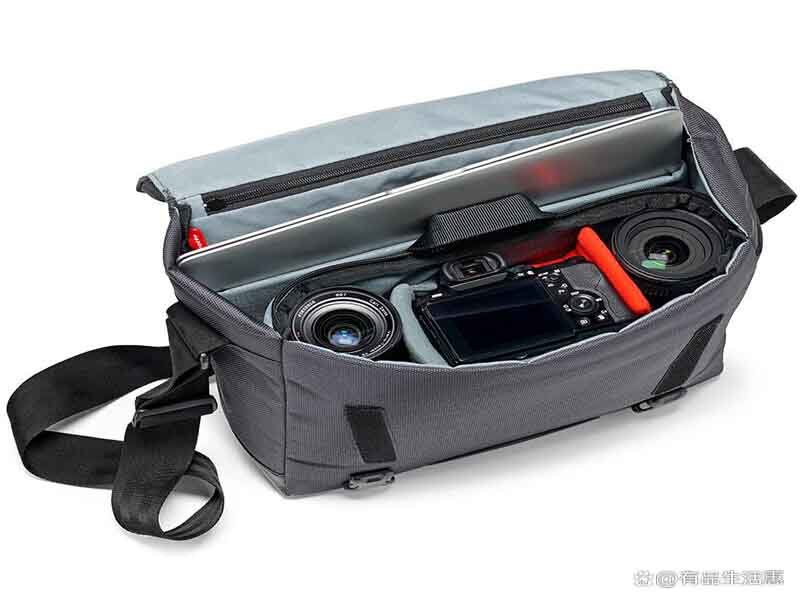
Shockproof camera bags should be tested by checking drop resistance, foam compression, divider stability, seam strength, strap load, bottom impact, zipper tension, lining abrasion, and real gear fit. A camera bag can look strong on a product photo, but real protection only becomes clear when the bag is packed, lifted, carried, bumped, opened, closed, and placed on hard surfaces. Testing helps brands confirm whether the construction actually protects cameras, lenses, laptops, drones, and accessories in daily use.
The most important testing principle is simple: test the complete bag, not only the material. A piece of EVA foam may perform well by itself, but once sewn into a divider, laminated with lining, attached by hook-and-loop, and loaded with a heavy lens, the result may change. A strong outer fabric may still fail if the seam anchor is weak. A thick bottom panel may protect well, but if the camera divider leaves empty space, gear can still collide inside. Shockproof testing must look at the whole system.
For custom camera bag development, testing should happen at sample stage before bulk production. A good sample review should include loaded carry testing, simulated drops from reasonable daily-use heights, bottom panel compression, side impact observation, divider shift checks, strap anchor pull checks, handle lift tests, zipper operation under packed pressure, and lining friction review. For premium or professional camera bags, brands may request more formal test standards or third-party checks depending on the target market.
Testing does not mean every bag must survive extreme abuse. A compact mirrorless sling does not need the same test level as a hard professional camera case. A drone bag needs shaped compartment and vibration checks. A travel backpack needs bottom impact, laptop sleeve, and strap stability checks. A hard case needs stronger compression and drop resistance. The test plan should match the product promise.
What Drop Tests Are Useful?
Useful drop tests for camera bags should simulate realistic daily accidents: dropping the packed bag from seat height, placing it firmly on the floor, tipping it sideways, letting it fall from a table edge, or bumping it against a wall. The purpose is not to destroy the sample for drama. The purpose is to understand how shock travels through the shell, bottom, side walls, dividers, and gear layout.
A simple sample-stage drop test can use dummy camera gear, foam blocks, weighted lens shapes, or non-working camera bodies. The bag is packed as intended, closed, and dropped from controlled heights onto different surfaces such as wood, tile, rubber mat, or concrete-style test flooring. After each drop, the inner layout is checked. Did dividers collapse? Did gear shift? Did the bottom foam compress too much? Did the zipper open? Did the strap anchor pull? Did the shell deform?
For commercial development, brands should define the test height realistically. A daily camera sling may be tested for low-height drops and side bumps. A professional camera backpack may need stronger bottom and corner testing. A hard case may need more demanding drop and compression evaluation. It is better to test product claims honestly than to create unrealistic expectations.
| Drop Test Scenario | What It Simulates | What to Check | Construction Insight |
|---|---|---|---|
| Bottom Drop | Bag placed down too hard | Bottom foam, PE board, gear movement | Confirms base protection |
| Side Drop | Bag tips over or hits wall | Side wall padding, divider shift | Checks lateral impact resistance |
| Corner Drop | Bag lands on bottom corner | Corner reinforcement, stitching, fabric wear | Reveals high-risk stress points |
| Front Drop | Bag falls forward | Front panel, zipper pressure, camera compartment | Important for front-access bags |
| Back Drop | Backpack hits ground from rear | Back panel, laptop sleeve, PE board | Important for laptop-camera bags |
| Handle Drop | Bag slips while being lifted | Handle anchor, top seam, internal movement | Checks load-bearing handle safety |
| Packed Movement Test | Walking vibration and bouncing | Divider stability and strap control | Reveals real carry protection |
Drop testing should always include inspection after the test. It is not enough to see whether the bag still looks okay outside. The inside matters more. If the camera mockup has moved into another compartment, the divider system needs adjustment. If the laptop sleeve shifts downward, the sleeve suspension may need reinforcement. If the bottom panel bends too much, EVA density or PE board support may need upgrading.
Szoneier can help brands create practical sample tests based on the target product. For many private label camera bag projects, even a clear internal sample test process can prevent future complaints and help the product page describe protection more confidently.
How Is Foam Compression Checked?
Foam compression is checked by applying pressure to the foam and observing how much it deforms, how quickly it recovers, and whether it loses thickness after repeated use. Foam is the heart of shockproof camera bag construction, but not all foam performs the same. A foam layer may feel thick at first touch but collapse under real camera gear. Another foam may feel thinner but recover better and protect more consistently.
Camera bag foam should be checked in three ways: initial feel, loaded performance, and long-term compression behavior. Initial feel tells whether the foam is too soft or too hard. Loaded performance shows how the foam behaves under camera bodies, lenses, laptop corners, and tripod pressure. Long-term behavior shows whether the foam flattens after repeated packing and use.
Foam compression is especially important in dividers, bottom panels, side walls, back panels, and straps. Dividers must not collapse under lens weight. Bottom foam must protect gear from hard surfaces. Strap foam must stay comfortable after carrying. Laptop sleeve foam must protect flat electronics without becoming too bulky.
| Foam Area | Compression Risk | Better Testing Method | Possible Upgrade |
|---|---|---|---|
| Divider Foam | Collapses under heavy lenses | Press with lens-weight mockup | Higher-density EVA |
| Bottom Foam | Flattens when bag is placed down | Loaded bottom pressure check | EVA plus PE board |
| Side Wall Foam | Bends too easily | Side pressure test | Thicker EVA or layered foam |
| Strap Foam | Loses comfort over time | Loaded wear and bend test | Better EVA or sponge density |
| Back Panel Foam | Feels hard or collapses | Loaded carry test | Layered foam plus mesh |
| Laptop Sleeve Foam | Too thin for corners | Laptop mockup pressure test | Suspended sleeve and EVA padding |
| Molded EVA | Cracks or deforms | Bend and impact review | Adjust mold density or thickness |
Brands should not choose foam only by thickness. Density, hardness, resilience, lamination, and placement are equally important. A 10 mm soft foam may protect less than an 8 mm higher-density EVA panel. A bottom panel with 8 mm EVA plus PE board may outperform a 15 mm low-density sponge layer.
During sample review, Szoneier can prepare different foam options for comparison. Brands can physically feel the difference between a lightweight option, standard option, and professional protection option. This is especially useful when developing products for different price tiers.
Do Dividers Need Stress Tests?
Dividers need stress tests because they are constantly adjusted, pressed, bent, loaded, and pulled by users. A divider may look fine when the bag is empty, but when it holds a heavy lens or camera body during travel, it may collapse, detach, curl, or shift. Since dividers are responsible for preventing internal collision, their stability is critical.
Divider stress testing should check attachment strength, bending recovery, edge stitching, foam density, lining durability, and hook-and-loop performance. If the hook-and-loop is too weak, the layout changes during movement. If it is too aggressive, it can damage the lining. If the divider is too thin, lenses hit each other. If it is too stiff, users cannot configure the space easily.
A good divider should survive repeated repositioning. Photographers often change layouts for different shoots. One day they carry a camera and two lenses. Another day they carry a drone and controller. Another day they remove a divider for a large lens. The divider system should support this behavior without looking worn after a few uses.
| Divider Test | What It Checks | Failure Sign | Improvement Direction |
|---|---|---|---|
| Pull Test | Hook-and-loop grip | Divider detaches too easily | Stronger loop lining or wider attachment |
| Bend Test | Flexibility and recovery | Divider cracks or stays bent | Better EVA density |
| Load Test | Support under lens weight | Divider collapses | Thicker or firmer foam |
| Reposition Test | Long-term adjustment durability | Lining pills or tears | Stronger lining fabric |
| Edge Test | Stitching and binding quality | Edge frays or opens | Better binding and sewing |
| Shake Test | Internal movement control | Gear shifts between sections | Improve divider height and fit |
| Fold Test | Foldable divider performance | Fold line weakens | Reinforced fold stitching |
Divider testing should use realistic gear sizes. A divider that works for a small prime lens may fail with a telephoto lens. A drone controller may press differently from a camera body. Brands should test the divider system with the gear category the bag is designed for.
Szoneier can customize divider structure by product level: slim dividers for lightweight mirrorless bags, medium EVA dividers for travel backpacks, thick dividers for professional gear, foldable dividers for camera-with-lens setups, and shaped dividers for drone or video equipment. Testing helps choose the right system before production.
How Is Seam Strength Tested?
Seam strength is tested by checking whether stitched areas can resist pulling, weight, repeated movement, and stress concentration. In camera bags, seam strength is especially important because the bag carries heavy and expensive equipment. A seam failure at a strap, handle, tripod holder, or bottom corner can cause serious damage.
Common seam strength checks include pull testing, repeated lift testing, stitch inspection, bartack review, seam slippage observation, fabric tear check, and load-bearing anchor testing. The highest-risk areas are shoulder strap anchors, top handles, side handles, waist belts, tripod holders, compression straps, zipper ends, bottom corners, and laptop sleeve anchors.
Seam quality depends on fabric, thread, needle, stitch density, reinforcement layers, and sewing technique. A strong fabric can still fail if stitch density is too low. A thick padded panel can create bulky seams that are difficult to sew cleanly. Coated fabrics need careful needle and thread selection because holes can affect both strength and water resistance.
| Seam Area | Main Stress | Test Method | Better Construction |
|---|---|---|---|
| Shoulder Strap Anchor | Heavy carry load | Pull and loaded wear test | Bartack plus reinforced patch |
| Top Handle | Sudden lifting force | Repeated lift test | Webbing core and box stitching |
| Tripod Holder | Side pulling and abrasion | Pull and rubbing test | Reinforced panel and webbing |
| Bottom Corner | Impact and abrasion | Drop and wear check | Extra fabric layer and stronger stitching |
| Zipper End | Opening tension | Repeated open-close test | Zipper garage and reinforced seam |
| Waist Belt Anchor | Outdoor load transfer | Pull test under packed weight | Strong webbing connection |
| Laptop Sleeve Seam | Device weight and pressure | Loaded sleeve test | Reinforced stitch and suspended base |
Seam strength should be tested with the final material stack. A seam through nylon behaves differently from a seam through TPU-coated fabric, Oxford fabric, canvas, EVA foam, and lining. Thick structures may require process adjustments. For waterproof shockproof camera bags, seam construction must balance strength and water resistance.
Szoneier can help brands define seam reinforcement for each stress area. For heavy camera backpacks, bartack stitching and reinforced anchor patches are highly recommended. For premium camera bags, seam strength should be hidden cleanly without making the bag look rough.
What QC Checks Matter Most?
The most important QC checks for shockproof camera bags include fabric inspection, foam thickness, foam density, divider fit, lining softness, stitching strength, strap anchor reinforcement, zipper smoothness, bottom structure, handle load, hardware quality, logo placement, compartment size, laptop sleeve fit, rain cover fit if included, and final packed-product review.
Quality control should begin before sewing. Incoming materials should match approved samples. Foam thickness should be checked. Lining should be inspected for shedding, pilling, and color transfer risk. Webbing should be checked for strength, width, and color. Zippers and buckles should be tested for smooth use. Fabric should be checked for defects, coating quality, and shade variation.
During production, QC should focus on construction accuracy. Dividers must match the approved layout. The bag should not twist. Zippers should close smoothly even when the bag is packed. Stitching should be clean and reinforced at stress points. The bottom should feel stable. The handle should lift the packed bag safely. The interior should not have loose threads, sharp edges, or rough surfaces.
| QC Stage | Key Check | Why It Matters |
|---|---|---|
| Material Inspection | Fabric, foam, lining, webbing, zipper quality | Prevents weak components entering production |
| Cutting Inspection | Panel size, grain direction, coating side | Controls shape and fit |
| Foam Inspection | Thickness, density, recovery | Confirms protection level |
| Divider Inspection | Size, grip, lining, stitching | Protects gear organization |
| Sewing Inspection | Stitching, bartacks, seam alignment | Ensures strength and clean appearance |
| Strap Inspection | Anchor strength, padding, adjustment | Supports safe carry |
| Zipper Inspection | Smoothness, tension, end finishing | Protects usability and access |
| Bottom Check | Reinforcement, padding, flatness | Protects against impact |
| Final Fit Check | Camera/laptop dummy loading | Confirms real-use layout |
| Packing Check | Shape protection during shipping | Prevents deformation before delivery |
A final packed-product review is especially valuable. Put sample gear or dummy gear inside the finished bag and use it like a customer would. Open the side access. Remove a lens. Lift the handle. Wear the backpack. Close the zipper. Place it on the floor. Check whether the product still feels protective and easy to use.
Szoneier supports 100% quality assurance and can help brands create QC points for custom shockproof camera bag orders. For camera products, quality control should be seen as part of the product value, not only a factory step.
How Can Szoneier Customize Shockproof Camera Bags?
Szoneier can customize shockproof camera bags by combining fabric development, foam selection, compartment engineering, lining choice, waterproof or abrasion-resistant treatments, strap systems, reinforced construction, logo customization, and finished bag manufacturing. With more than 18 years of experience in fabric research and development, finished product manufacturing, and sales, Szoneier can help brands create camera backpacks, sling bags, shoulder bags, camera cubes, drone bags, travel camera bags, outdoor camera bags, waterproof shockproof camera bags, and private label protective gear.
A shockproof camera bag project usually begins with the customer’s gear and use scenario. What camera system will the bag carry? Is the product for travel, hiking, studio, drone use, cycling, fishing, wedding photography, or daily creators? Does it need laptop storage? Does it need waterproof fabric? Should the style feel technical, premium, minimalist, rugged, or lifestyle-driven? Once these questions are clear, Szoneier can recommend materials and structures that fit the target.
Customization can cover nearly every visible and hidden part of the bag: outer fabric, coating, EVA foam, PE board, divider layout, lining color, webbing strength, zipper style, rain cover, laptop sleeve, tripod holder, handle system, back panel, logo patch, label, zipper puller, packaging, and product dimensions. The goal is to help brands build a camera bag that feels protective, looks aligned with the brand, and can be produced with practical MOQ and lead time.
What Materials Can Szoneier Offer?
Szoneier can offer a wide material range for shockproof camera bags, including nylon, polyester, Oxford fabric, canvas, waxed canvas, neoprene, cotton fabric, TPU-coated fabric, PU-coated fabric, PVC tarpaulin, ripstop fabric, mesh, EVA foam, PE foam, EPE foam, sponge, PE board, soft lining, webbing, buckles, zipper systems, rubber patches, leather or PU patches, woven labels, and custom packaging materials.
For protective camera bags, materials should be selected by function. The shell fabric protects against abrasion and weather. Foam protects against impact. Board layers spread pressure. Lining protects surfaces. Webbing carries load. Zippers control access. Logo materials create brand recognition. Szoneier can help combine these into a balanced material package.
| Bag Component | Szoneier Material Options | Function |
|---|---|---|
| Outer Shell | Nylon, polyester, Oxford, canvas, coated fabric | Abrasion resistance and appearance |
| Waterproof Layer | PU coating, TPU coating, PVC tarpaulin | Rain and moisture resistance |
| Padding | EVA, PE foam, EPE foam, sponge | Shock absorption |
| Structural Support | PE board, molded EVA, reinforced panels | Shape and compression control |
| Inner Lining | Brushed polyester, tricot, velvet-touch lining | Anti-scratch gear protection |
| Strap System | Nylon or polyester webbing, mesh, EVA padding | Carry strength and comfort |
| Bottom Panel | 1680D Oxford, TPU/PVC panel, EVA + PE board | Ground impact protection |
| Branding | Rubber patch, woven label, embroidery, PU patch | Private label identity |
A good custom camera bag does not need the most expensive material in every part. It needs the right material in the right place. Szoneier can help brands create entry, standard, outdoor, and premium versions based on product positioning.
Which Foam Options Fit Your Bag?
The right foam option depends on bag type, gear weight, protection level, and target cost. EVA foam is usually the best all-around choice for dividers, bottom panels, side walls, and protective inserts. PE foam can support structure and cost control. EPE foam works for lightweight and budget cushioning. Sponge foam is useful for comfort areas such as straps and back panels. Neoprene is helpful for soft flexible protection, handle grips, and shoulder pads. Molded EVA works well for drone bags and semi-rigid protective cases.
Foam selection should start with the equipment list. A small mirrorless camera sling can use thinner EVA dividers and lighter padding. A professional outdoor backpack needs denser EVA, reinforced bottom padding, and possibly PE board. A drone bag may need molded or shaped foam. A travel camera backpack may need balanced foam to reduce weight while protecting gear.
| Product Type | Recommended Foam Package | Reason |
|---|---|---|
| Compact Camera Sling | 5–8 mm EVA dividers, soft lining | Lightweight protection |
| Daily Camera Backpack | 5–10 mm EVA, padded bottom, soft lining | Balanced protection and comfort |
| Outdoor Camera Backpack | Higher-density EVA, PE board bottom, sponge back panel | Stronger impact and carry support |
| Drone Camera Bag | Molded EVA or shaped dividers | Gear-specific stability |
| Camera Cube | EVA or PE foam walls, adjustable dividers | Modular protection |
| Shoulder Camera Bag | Removable EVA insert | Hidden protection in lifestyle shell |
| Lens Pouch | EVA, neoprene, or EPE foam | Compact lens cushioning |
| Harder Protective Case | Molded EVA, PE board, structured panels | Better compression resistance |
Brands can request different foam versions during sampling. This is often the best way to make a decision because foam feel is hard to judge only from a description. Szoneier can prepare foam thickness and density options based on target price and protection level.
How Can Branding Stay Protective?
Branding can stay protective by choosing logo methods and placements that do not weaken the bag structure or interfere with waterproofing, padding, stitching, or user comfort. A logo should improve brand recognition without creating a damage point. This is especially important for shockproof camera bags because some decorative methods add needle holes, stiff patches, or rough surfaces near sensitive areas.
Outdoor and protective camera bags often use rubber patches, silicone patches, woven labels, embossed PU patches, reflective prints, heat transfer logos, custom zipper pullers, jacquard webbing, or debossed panels. The best method depends on shell fabric. Rubber patches work well on nylon and Oxford fabric. Leather or PU patches work well on canvas and lifestyle bags. Heat transfer may work on polyester or coated materials but needs adhesion testing. Embroidery can look premium, but it creates stitching holes and should be placed away from critical waterproof zones when needed.
Logo placement matters. A front panel logo may look strong but should not pierce a waterproof compartment without backing. A side logo may rub against tripod straps. A handle label may experience heavy wear. Inner woven labels can add premium detail without affecting structure.
| Branding Method | Best Use | Protective Consideration |
|---|---|---|
| Rubber Patch | Outdoor and technical camera bags | Durable and weather-friendly |
| Woven Label | Budget to premium bags | Low cost and easy placement |
| PU/Leather Patch | Canvas or lifestyle bags | Avoid high-moisture stress zones |
| Embroidery | Fabric panels and premium styles | Adds needle holes |
| Heat Transfer | Smooth polyester or coated fabric | Needs adhesion test |
| Reflective Print | Outdoor backpacks | Adds safety visibility |
| Custom Zipper Pull | High-touch branding | Must remain smooth and strong |
| Jacquard Webbing | Premium straps | Must maintain webbing strength |
| Inner Label | Camera compartment branding | Does not weaken outer shell |
Szoneier can help brands choose logo methods based on fabric, MOQ, budget, and appearance. For shockproof camera bags, branding should feel integrated rather than pasted on. The best logo details survive use, rain, friction, packing, and repeated handling.
How Can MOQ Stay Flexible?
MOQ can stay flexible by using available fabrics, standard foam options, existing lining colors, standard zipper systems, common webbing colors, proven patterns, and practical logo methods. For first-time camera bag projects, a brand does not always need custom-dyed fabric, custom molded EVA, custom zipper tape, special hardware, and retail packaging all at once. A smart first version can still feel custom through shape, divider layout, logo patch, color matching, and functional details.
Special materials often increase MOQ. Custom fabric color, special coating, molded EVA tools, custom metal hardware, jacquard webbing, printed lining, and unique zipper tape may require higher quantities. These upgrades can be introduced after the design is validated.
| Custom Area | Flexible MOQ Option | Higher MOQ Upgrade |
|---|---|---|
| Outer Fabric | In-stock Oxford, nylon, polyester, canvas | Custom-dyed fabric or special weave |
| Foam | Standard EVA or PE foam | Molded EVA or special density |
| Lining | Available grey, black, orange, beige | Custom printed lining |
| Logo | Woven label or standard rubber patch | Custom molded patch or metal logo |
| Zipper | Standard color zipper | Custom tape and branded puller |
| Webbing | Stock color webbing | Jacquard logo webbing |
| Hardware | Standard buckle | Custom molded or metal hardware |
| Packaging | Polybag and export carton | Retail box and custom insert |
| Divider System | Standard adjustable dividers | Fully shaped gear-specific insert |
A flexible MOQ strategy helps brands test the market faster. Instead of investing heavily in every custom detail, the brand can focus on the most important product features: protection, comfort, appearance, and logo identity. Once the product sells well, more custom materials can be added.
Szoneier supports low MOQ customization, free design guidance, fast sampling, and private label production. This is useful for foreign small and medium buyers, online sellers, outdoor gear brands, and premium camera accessory brands that want a reliable custom manufacturer without starting with overly large material commitments.
How Should Brands Request a Quote?
Brands should request a quote by sharing the camera bag type, target size, gear list, protection level, fabric preference, foam requirement, divider layout, laptop size, waterproof need, logo method, color direction, quantity, packaging, and reference images. The more specific the request, the more accurate the quotation and material recommendation will be.
A vague request such as “I need a shockproof camera bag” can lead to many unknowns. A compact sling with 5 mm EVA and polyester fabric costs very different from a professional outdoor backpack with coated nylon, 10 mm EVA dividers, PE board bottom, water-repellent zippers, tripod holder, suspended laptop sleeve, and rubber logo patch. Both may be called shockproof, but the construction and price are not the same.
A strong quote request should also explain the use case. Is the bag for mirrorless cameras, DSLR gear, drone kits, hiking photography, travel creators, wedding photographers, or professional outdoor use? Will it carry heavy lenses? Does it need a waterproof shell? Does it need a laptop sleeve? Will users carry it for long periods?
| Quote Detail | Why It Matters | Example |
|---|---|---|
| Bag Style | Defines construction and labor | Backpack, sling, shoulder bag, cube, hard case |
| Size and Capacity | Controls material usage | 15L, 25L, 16-inch laptop fit |
| Gear List | Guides dividers and padding | 1 camera, 3 lenses, drone, laptop |
| Protection Level | Defines foam and structure | Light, standard, outdoor, professional |
| Fabric | Affects appearance, durability, cost | Nylon, Oxford, canvas, TPU-coated fabric |
| Foam | Defines shockproof performance | EVA, PE foam, molded EVA |
| Waterproof Need | Affects coating and zipper | Water-resistant, waterproof-style, rain cover |
| Logo Method | Affects branding and setup | Rubber patch, woven label, embroidery |
| Quantity | Affects price and material options | 300, 500, 1,000, 5,000 pcs |
| Packaging | Affects final presentation | Polybag, hangtag, retail box |
| Target Price | Helps optimize material choice | Entry, mid-range, premium |
Szoneier can help even if the brand does not yet have a complete tech pack. A sketch, reference photos, gear list, and target market are enough to begin the first recommendation. From there, Szoneier can support material selection, free design assistance, low MOQ customization, fast sample development, private label branding, and OEM/ODM production.
A shockproof camera bag succeeds when the customer stops thinking about protection. They simply pack their gear, carry the bag, move through the day, and trust that everything inside is safe. If you are developing custom camera backpacks, shockproof camera slings, camera cubes, drone bags, outdoor photography bags, or private label protective camera products, contact Szoneier to request material suggestions, sample support, and a custom quotation for your next product line.