Skip to content
The tactical bag market has a habit of turning simple choices into identity statements. Backpack users sometimes see sling bags as small accessories that cannot handle serious equipment. Sling users often see backpacks as oversized boxes that must be removed every time something is needed. Both views contain a little truth, and both miss the real question.
A tactical bag is not better because it looks more rugged, carries more MOLLE webbing, or appears in more outdoor photographs. It is better when its carrying architecture matches the equipment, access pattern, movement, and wearing time of the user.
A two-strap backpack places the load across both shoulders and can transfer part of the weight toward the torso or hips when it includes a properly designed sternum strap, hip belt, frame sheet, or internal frame. A tactical sling bag uses one main strap across the body, allowing the bag to rotate quickly from the back to the chest. This makes small equipment easier to reach, but it also places the load asymmetrically and becomes less comfortable as weight, size, and carrying time increase.
The most useful answer is straightforward: choose a tactical backpack for heavier loads, longer wear, hydration, laptops, clothing, medical supplies, or equipment that needs stable two-shoulder support. Choose a tactical sling bag for compact everyday gear, rapid access, short-distance movement, vehicle use, and situations where the bag must move from the back to the front without being removed. Neither format is universally better. The correct choice depends on load weight, capacity, access frequency, duration, body size, and activity.
Research into load carriage supports this distinction. Studies comparing symmetrical and asymmetrical carrying methods have found that one-shoulder carriage can alter gait and posture at lower loads than two-shoulder carriage. Other research shows that strap configuration and the use of supporting belts can change pressure distribution across the shoulders and torso. These findings do not mean that every sling bag is harmful or that every backpack is comfortable. They show that the structure of the carrying system matters, especially as load and wearing time increase.
The choice becomes even more complicated because tactical backpacks and tactical sling bags are no longer simple fabric containers. Both may include laser-cut MOLLE panels, concealed compartments, hydration routing, laptop sleeves, modular organizers, ambidextrous straps, quick-release buckles, compression systems, reinforced handles, and weather-resistant coatings.
A 10-liter sling may be more useful than a 25-liter backpack for a technician who needs a scanner, gloves, notebook, and several small tools while moving in and out of a vehicle. A 20-liter backpack may be far more comfortable for someone carrying the same weight through an airport or across a long trail. The difference is not only volume. It is how the load moves with the body.
Imagine two people leaving for the same twelve-hour working day. One carries a compact sling containing a phone, charger, radio, gloves, notebook, flashlight, and first-aid pouch. Everything is accessible in seconds, and the bag rarely leaves the body. The other carries a laptop, rain shell, water, food, spare clothing, documents, cables, and medical supplies. A sling large enough for that load would become deep, heavy, and awkward. For the first person, a backpack may be unnecessary. For the second, the sling would solve the wrong problem.
That is where the comparison should begin: not with the bag, but with the day.
What Is the Main Difference?
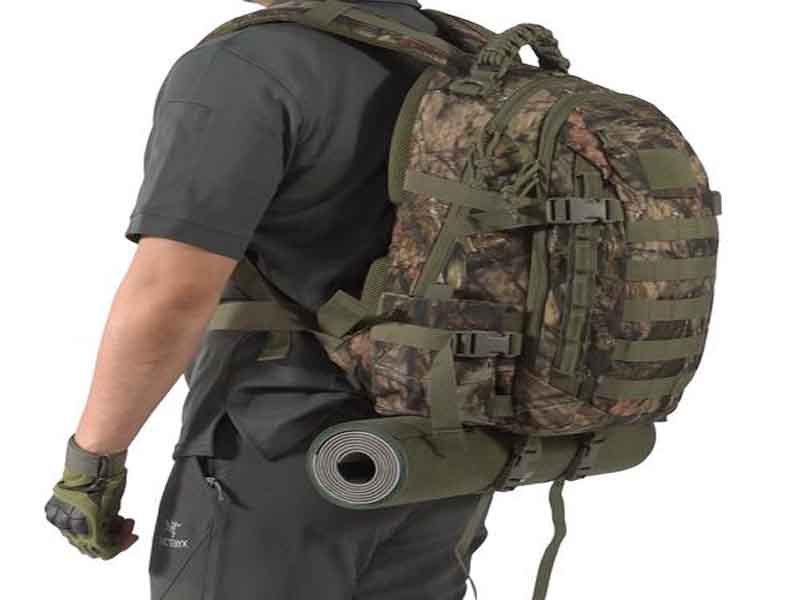
The main difference between a tactical backpack and a tactical sling bag is the way each product carries and accesses the load. A backpack uses two shoulder straps and normally holds the load vertically against the back. A sling bag uses one crossbody strap and is designed to rotate from the back or side to the chest. Backpacks prioritize stability, capacity, and load distribution, while sling bags prioritize speed, mobility, and access to compact gear.
The difference affects almost every design decision, including bag shape, zipper orientation, pocket layout, harness construction, maximum practical weight, MOLLE placement, laptop protection, and user movement.
| Design Factor | Tactical Backpack | Tactical Sling Bag |
|---|---|---|
| Main carrying method | Two shoulder straps | One crossbody strap |
| Load distribution | Shared across both shoulders | Concentrated on one shoulder and diagonal torso path |
| Typical strength | Capacity and stability | Rapid access |
| Practical load type | Medium to heavy | Light to moderate |
| Access method | Often removed or partly shifted | Rotates to the chest |
| Body movement | Stable during walking and running | More movement unless stabilized |
| Common capacity | Medium to large | Compact to medium |
| Laptop suitability | Strong across many sizes | Best for tablets and smaller laptops |
| Hydration integration | Common | Limited but possible |
| MOLLE area | Larger front and side zones | Smaller controlled zones |
| Best wearing duration | Medium to long | Short to medium |
| Vehicle use | Can be bulky | Usually convenient |
These are general tendencies rather than fixed rules. A poorly designed backpack may be less comfortable than a well-engineered sling. A small two-strap daypack may offer less usable access than a large sling. Product quality, fit, materials, and load planning remain decisive.
What Defines a Tactical Backpack?
A tactical backpack is a two-shoulder load-carrying bag designed around durability, organized equipment storage, stable movement, and adaptable use. It normally has a vertical body, padded shoulder straps, multiple compartments, reinforced stress points, and an exterior or interior attachment system.
Many tactical backpacks include MOLLE or PALS-compatible zones, compression straps, hydration routing, hook-and-loop identification areas, clamshell openings, reinforced carry handles, and separate equipment compartments.
The word tactical should describe function rather than decoration. Black fabric and webbing do not automatically make a backpack suitable for field, patrol, medical, outdoor, or technical use.
A properly developed tactical backpack should answer several practical questions:
Does the harness match the expected load?
Can dense equipment be positioned close to the back?
Can the main compartment open without attached pouches blocking it?
Are frequently used items accessible?
Does the bag remain stable when partly filled?
Can the materials handle abrasion and weather exposure?
Are the attachment panels reinforced?
Does the size work in vehicles and narrow spaces?
The two-strap system gives the backpack its main mechanical advantage. Load can be shared across both shoulders, while sternum straps help control strap position. Larger packs may use a hip belt to transfer part of the load away from the shoulders. Research on backpack harness configurations has shown that load location and supporting strap systems influence shoulder pressure and carrying behavior.
Backpacks also allow greater structural development. A frame sheet can stop hard equipment from pressing into the back. Aluminum stays or an internal frame can preserve shape under heavier loads. A padded hip belt can support longer carrying periods. Load-lifter straps can help position the upper section of a larger pack.
The internal layout can divide equipment by weight and access.
Dense items belong close to the back panel.
Frequently used items belong near the top or front.
Light clothing can fill outer areas.
Hydration can sit in a dedicated vertical sleeve.
A laptop can remain in a suspended padded compartment.
The design challenge is that backpacks tempt users to carry more than necessary. Additional volume often becomes filled volume. A 35-liter pack may be chosen for flexibility and then carried every day with equipment that would fit comfortably in 20 liters.
A larger bag also takes longer to search when the interior lacks meaningful organization. Clamshell openings and modular pouches improve visibility, but too many dividers can add weight and reduce flexibility.
A tactical backpack is most appropriate when equipment volume, carrying duration, and load stability matter more than instant access to every item.
What Defines a Tactical Sling Bag?
A tactical sling bag is a compact one-strap bag worn diagonally across the torso and designed to move between the back, side, and chest. Its primary advantage is access. The user can pull the bag forward, open the main compartment, retrieve equipment, and return the bag to the back without fully removing it.
The format works especially well for small everyday carry kits, communication equipment, compact medical supplies, cameras, tablets, documents, personal electronics, and light tools.
A tactical sling normally includes:
One padded crossbody strap
A quick-release buckle
One or more stabilizer points
A compact vertical or horizontal body
Front or side access zippers
Internal organizers
Limited MOLLE or laser-cut attachment
Hook-and-loop identification zones
A reinforced top handle
Ambidextrous or reversible strap hardware in better designs
The shape should support rotation. A bag that becomes comfortable only when tightly fixed against the back may be difficult to swing forward. A bag that rotates easily may move too much while running.
This tension between access and stability defines sling-bag engineering.
| Sling-Bag Requirement | Design Response |
|---|---|
| Fast rotation | Smooth crossbody strap path |
| Controlled movement | Removable stabilizer strap |
| Front access | Zippers oriented for rotated position |
| One-handed use | Large zipper pulls and controlled opening |
| Shoulder comfort | Wide padded strap |
| Left/right adaptability | Reversible strap anchors |
| Compact organization | Shallow compartment and visible pockets |
| Equipment retention | Mesh covers, elastic loops, or sleeves |
A sling is most successful when it remains compact. Increasing its capacity without redesigning the harness creates a bag that looks like a small backpack but carries like a heavy shoulder bag.
Depth is particularly important. A wide, shallow sling stays closer to the torso. A deep sling pulls outward and can swing during movement. A tall sling may provide useful organization but become difficult to rotate under the arm.
The strap anchor position affects how the bag sits. An upper anchor near one corner and a lower anchor near the opposite side create the diagonal carrying path. The lower connection should be positioned to avoid pressure against the ribs or hip.
Ambidextrous designs allow the main strap to connect on either side. This gives users a choice of shoulder and access direction. The internal layout and zipper opening should also work in both configurations. A reversible strap is less valuable when all internal pockets face the wrong way after the bag is switched.
A tactical sling bag is not simply a backpack with one strap removed. It needs a different pattern, balance, zipper layout, and center of gravity.
How Do Their Carry Styles Differ?
A backpack carries its weight symmetrically across two shoulder straps. A sling carries its weight asymmetrically through one shoulder and a diagonal strap path across the torso.
This difference changes posture and movement.
When a backpack is fitted correctly, the bag remains centered on the back. Shoulder straps share the vertical load, and the user can add a sternum strap or hip belt for greater control. The bag should move with the torso rather than swing independently.
A sling sits toward one side, even when the bag body is positioned in the middle of the back. The strap loads one shoulder more heavily and creates diagonal pressure across the chest. The user may raise one shoulder, lean slightly, or adjust the torso to control the bag when it becomes heavy.
Studies of asymmetric carrying have reported changes in trunk movement, gait, and postural symmetry, while one-shoulder backpack carriage has produced gait alterations at lower loads than two-shoulder carriage in experimental conditions. Strap length also matters: a long single strap can permit more bag movement and greater lateral trunk compensation.
That does not make all asymmetrical carrying unacceptable. A light sling used for a short commute creates a very different load from an overloaded one-shoulder bag carried for hours.
| Carry Condition | Backpack Response | Sling Response |
|---|---|---|
| Walking slowly | Stable when fitted | Comfortable with light load |
| Fast walking | Low movement with compression | May bounce without stabilizer |
| Running | Better with sternum and waist control | Needs tight fit and secondary strap |
| Sitting in a vehicle | Often requires removal | Can rotate to front or side |
| Cycling | Stable with chest control | Convenient but may rotate |
| Entering narrow spaces | Width controlled; depth may be high | Compact when lightly loaded |
| Reaching contents | Often requires removal | Rotates forward quickly |
| Long standing period | Shared shoulder pressure | One shoulder bears more load |
| Frequent security checks | Slower access | Fast front presentation |
The backpack’s weakness is accessibility. A user may need to remove one shoulder strap, swing the pack around, or place it on a surface. Side-access zippers can improve this, but they do not provide the same front-working position as a sling.
The sling’s weakness is sustained load. The same feature that allows rotation—a single flexible strap path—limits balanced weight distribution.
Some sling designs use a broad shoulder pad that slides independently on the strap. This allows the pad to remain on the shoulder while the webbing moves during rotation. Others fix the padding to the strap, which may twist or move away from the pressure point.
The ideal system depends on how often the user accesses the bag compared with how long the bag is worn.
Who Should Use Each Bag?
A tactical backpack suits users carrying more equipment, traveling longer distances, or needing stable two-shoulder support. A tactical sling suits users carrying a compact kit that must remain accessible while standing, walking short distances, sitting in vehicles, or working in crowded environments.
| User or Scenario | Better Starting Choice | Reason |
|---|---|---|
| Daily laptop commuter | Backpack | Better laptop support and balanced weight |
| Compact EDC user | Sling | Faster access to small essentials |
| Day hiker | Backpack | Water, clothing, and food capacity |
| Vehicle-based technician | Sling | Easy seated access |
| Patrol user with moderate gear | Backpack | Stable organized carriage |
| Photographer with one compact camera | Sling | Rapid equipment access |
| Photographer with multiple lenses | Backpack | Better weight distribution |
| Medical responder with full kit | Backpack | Capacity and modular organization |
| Personal first-aid carrier | Sling | Compact, visible access |
| Frequent traveler | Depends on load | Sling for documents; backpack for full carry-on kit |
| Cyclist with light essentials | Sling or small backpack | Stability determines choice |
| Field worker carrying tools | Backpack | Dense equipment needs bilateral support |
The choice may also depend on the user’s primary bag. A sling can act as a secondary access layer when larger equipment remains in a vehicle or main backpack. It does not always need to replace the backpack.
For example, a medical team may use a backpack for the primary kit and a detachable sling for assessment tools. A photographer may carry a backpack during transport and use a small sling during active shooting. A traveler may place a sling inside a larger pack and use it after arriving.
This two-level system can be more practical than designing one bag to perform every role.
Brands developing a product range can use the same visual language and materials across both formats while assigning clear jobs:
A 6-liter sling for compact EDC
A 10-liter sling for tablets and technical accessories
A 20-liter backpack for commuting and patrol
A 30-liter backpack for hiking, medical, or field equipment
Matching pouches, labels, hardware, and colors can create a coordinated collection without forcing one carrying style to cover every capacity.
Which Bag Is More Comfortable?
A tactical backpack is generally more comfortable for heavier loads and longer wearing periods because two shoulder straps distribute pressure more evenly. A tactical sling bag can be very comfortable with a light, compact load and may feel less restrictive in short-duration use. As weight and time increase, however, the one-shoulder design is more likely to create localized pressure, asymmetrical posture, and repeated strap adjustment.
Comfort is not determined by strap count alone. Bag shape, weight placement, padding, strap width, ventilation, body size, clothing, movement, and fit all influence the result.
A badly fitted backpack can pull backward and create pressure at the neck. A well-designed sling can carry a small EDC kit comfortably for hours. The important question is whether the harness is appropriate for the load.
How Do Backpacks Spread Weight?
Backpacks spread weight through two shoulder straps positioned on either side of the neck and upper torso. Better designs add a sternum strap, hip belt, frame sheet, load lifters, or padded back structure to control where the load sits.
The shoulder straps carry most of the weight in small daypacks. As bag size and load increase, a supportive hip belt can transfer part of the force toward the pelvis. A sternum strap does not carry a large portion of the vertical load by itself, but it helps keep the shoulder straps correctly positioned and can reduce outward movement.
Recent experimental work has reported that chest and hip belt use can change shoulder pressure distribution, while earlier research has shown that harness configuration and load placement affect strap tension and pressure at the shoulder interface.
| Backpack Component | Main Comfort Function | Common Design Error |
|---|---|---|
| Shoulder straps | Share vertical load | Too narrow or widely spaced |
| Sternum strap | Stabilizes shoulder straps | Positioned too high or low |
| Hip belt | Transfers part of load | Decorative belt without structure |
| Frame sheet | Prevents hard contents pressing inward | Too flexible for load |
| Load lifters | Adjust upper pack angle | Added where pack geometry cannot support them |
| Back padding | Controls pressure points | Thick foam traps heat |
| Air channel | Improves ventilation | Reduces contact support when exaggerated |
| Compression straps | Pull load toward the body | Blocked by exterior pouches |
Shoulder-strap shape should match the intended user. Straight straps are simple but may press against the neck or chest. Contoured S-shaped straps can follow the torso more naturally. Wider straps spread pressure but may restrict movement when they become excessive.
Foam density matters more than thickness alone. Very soft foam feels comfortable in the showroom but compresses under load. Extremely firm foam may create hard edges. Laminated foam systems can combine a supportive inner layer with a softer contact layer.
The back panel needs enough structure to prevent dense objects from creating pressure points. A frame sheet or padded laptop sleeve can help, but every added layer increases weight and reduces airflow.
Load placement is equally important. Heavy equipment should sit close to the back. A well-padded pack still feels uncomfortable when the densest items are placed in the outer front compartment.
Backpacks spread load effectively only when both straps are used. Carrying a backpack on one shoulder removes its main advantage and turns it into an asymmetrical load.
Do Sling Bags Cause Shoulder Strain?
Sling bags can cause shoulder strain when they are overloaded, worn for long periods, fitted with narrow straps, or allowed to hang too low. The one-strap design concentrates more pressure on one shoulder and may encourage the user to adjust posture to stabilize the bag.
The risk is influenced by four factors:
Total weight
Wearing duration
Strap width and padding
Distance between the bag and the body
A compact sling carrying a phone, keys, wallet, notebook, and small first-aid kit may remain comfortable. Add a laptop, full bottle, camera, power bank, tools, and several MOLLE pouches, and the same carrying architecture becomes inefficient.
Research on one-shoulder and long-strap carriage has observed greater asymmetry in trunk movement and gait under experimental loads. These studies reinforce a practical design principle: single-strap products should remain compact, fitted close to the body, and appropriately loaded.
| Sling Comfort Factor | Better Design | Poor Design |
|---|---|---|
| Strap width | Broad enough to spread pressure | Narrow webbing under dense load |
| Padding | Supportive and tapered | Thick edge that cuts into neck |
| Bag depth | Shallow and close to torso | Deep box pulling outward |
| Strap length | Adjustable for close fit | Long loose carry position |
| Stabilizer | Removable for active movement | No control during running |
| Load position | High and close to back | Low near hip |
| Hardware | Smooth and away from pressure zones | Buckle sitting on collarbone |
| Ambidextrous setup | Allows shoulder switching | Fixed to one side only |
The buckle position deserves special attention. A large quick-release buckle placed directly over the collarbone can create discomfort. It should remain accessible without becoming the main pressure point.
The strap’s lower anchor affects bag rotation. A low anchor may keep the bag close but create pressure around the ribs. A high anchor can increase movement.
Users often tighten a sling excessively to stop bouncing. This improves stability but may increase diagonal pressure across the chest and shoulder. A stabilizer strap can control movement without relying entirely on main-strap tension.
Alternating shoulders can reduce continuous localized loading, but many sling bags are not truly reversible. An ambidextrous design should provide symmetric anchors and usable zipper orientation on both sides.
A sling should not be marketed as ideal for heavy all-day loads simply because its fabric and hardware are strong. Material strength and ergonomic suitability are different questions.
Are Stabilizer Straps Effective?
Stabilizer straps are effective when they prevent a sling bag from bouncing, rotating, or sliding during active movement. They typically connect the bag’s lower corner to the main strap or opposite side of the torso, creating a three-point system.
This turns the sling from a freely rotating bag into a more stable carrying platform.
| Use Condition | Main Strap Only | Main Strap with Stabilizer |
|---|---|---|
| Standing | Usually stable | Additional control unnecessary |
| Normal walking | Acceptable with light load | More controlled with moderate load |
| Fast walking | Some movement | Reduced bounce |
| Cycling | May rotate forward | Better body connection |
| Running | Significant bounce possible | Strong improvement |
| Climbing | Bag may shift sideways | More stable |
| Front access | Rotates immediately | Stabilizer must be released or loosened |
The trade-off is access speed. A sling designed to rotate quickly cannot do so while a tight stabilizer anchors it to the body. The user needs a simple release or adjustment system.
A small side-release buckle allows the stabilizer to disconnect. A sliding adjustment can provide enough slack for rotation. The hardware should be operable with gloves when required.
The stabilizer strap should remain removable. Not every user or activity needs it, and loose unused webbing creates clutter.
Its attachment points require reinforcement because the strap receives repeated lateral force. Sewing a stabilizer loop onto unsupported shell fabric can distort the bag.
A stabilizer does not increase the practical weight capacity of the shoulder strap. It controls movement but does not turn a sling into a two-strap backpack.
Which Bag Suits Long Wear?
A tactical backpack usually suits long wear better because it distributes the load symmetrically and offers more options for transferring and stabilizing weight. A sling can suit long wear when the load remains light and the user values mobility more than capacity.
Long wear should be evaluated in hours, not minutes. A bag that feels comfortable during a product trial may produce pressure, heat, or posture changes later.
| Wearing Situation | Backpack Advantage | Sling Advantage |
|---|---|---|
| Long walking commute | Balanced load | Lighter and less back coverage |
| All-day field work | Supports more equipment | Quick access to compact tools |
| Airport travel | Carries laptop and clothing | Easy document access |
| Vehicle patrol | Stable outside vehicle | Easier seated access |
| Hot climate | Larger back contact area | Less back coverage |
| Frequent bag removal | More adjustment steps | Fast on/off access |
| Uneven terrain | Better stability | Suitable only with light load |
| Standing event work | Balanced moderate load | Convenient small kit |
Heat is one area where sling bags can feel more comfortable. They cover less of the back and allow more airflow. A backpack may trap heat across a large padded panel.
Ventilation channels and mesh help but do not eliminate contact. Thick sculpted padding can actually hold more heat and add weight.
Backpacks also create inconvenience when users repeatedly sit down, enter vehicles, or pass through security. The bag may need to be removed each time.
A sling remains accessible and can often move to the chest while seated. For vehicle-based work, this practical convenience may outweigh the ergonomic advantage of two straps, provided the load remains controlled.
The best long-wear design therefore depends on the working rhythm. Continuous walking favors a backpack. Repeated short movement with frequent access may favor a sling.
How Does Body Size Affect Fit?
Body size affects shoulder-strap spacing, bag length, chest clearance, strap range, stabilizer position, and access angle. A tactical bag designed around one average body may fit other users poorly.
Backpack torso length determines where the bag sits. A pack that is too long may press against the belt or hips. A pack that is too short may concentrate weight high on the shoulders.
Shoulder width affects strap angle. Straps placed too widely can slide outward. Straps placed too closely can press against the neck.
Chest shape influences sternum-strap comfort and adjustment range. A sternum strap should move vertically or be offered in a position that works across different users.
Sling fit is even more sensitive to torso circumference and shoulder angle. The strap must adjust enough to fit over light clothing, winter layers, or protective equipment.
| Fit Dimension | Backpack Effect | Sling Effect |
|---|---|---|
| Torso length | Controls vertical bag position | Controls rotation path |
| Shoulder width | Affects strap spacing | Affects shoulder-pad position |
| Chest circumference | Influences sternum strap | Determines main-strap range |
| Height | Affects bag-to-hip contact | Influences lower anchor position |
| Clothing layers | Requires strap adjustment | Changes buckle and pad placement |
| Body armor | Needs wider harness clearance | May limit smooth rotation |
| Dominant hand | Affects side access preference | Influences strap orientation |
Brands developing bags for international users should include a broad adjustment range and test on several body types. Product photographs on one model are not sufficient fit validation.
A sling intended for ambidextrous use should be tested on both shoulders. A backpack should be tested with different torso lengths and clothing conditions.
The bag should also be evaluated while loaded. An empty harness may sit correctly, then shift when the center of gravity changes.
Comfort is not a decorative layer added after capacity and appearance are complete. It begins with bag geometry, load assumptions, and user fit. Once those foundations are defined, the next decision is how much capacity the user genuinely needs and whether the chosen format can carry that volume without losing its main advantage.
Which Capacity Do You Need?
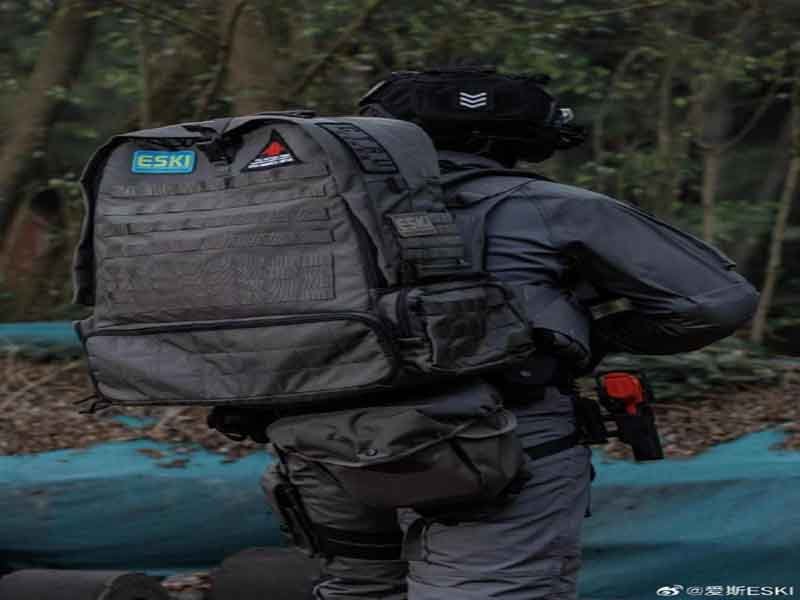
The right capacity depends on the volume, shape, and weight of the equipment rather than the number printed on the product label. Tactical sling bags are usually most effective when they carry a compact daily kit, while tactical backpacks are better when the load includes water, clothing, food, laptops, medical supplies, or equipment needed for a full day. A bag should provide enough room for the planned load without encouraging unnecessary packing or allowing equipment to move uncontrollably.
Capacity is normally expressed in liters, but liter ratings should be treated as approximate. Two bags marked as 15 liters may provide very different usable space. A tall narrow compartment may hold documents and a tablet efficiently but perform poorly with a camera or medical pouch. A wide clamshell body may organize equipment well but lose volume to dividers, foam, and zipper structure.
The carrying format also changes how much capacity remains practical. A 15-liter backpack can stay relatively close to the body because its load is divided across two straps. A 15-liter sling may become deep and heavy, shifting its center of gravity away from the wearer.
This is why a sling should not be selected only because the equipment technically fits inside. The complete load must remain stable, accessible, and comfortable after the bag is filled.
| Capacity Range | Common Sling Use | Common Backpack Use |
|---|---|---|
| 3–5L | Minimal personal items and compact medical kit | Small hydration or accessory pack |
| 6–10L | EDC, tablet, camera, radio, or tools | Compact daypack |
| 11–15L | Larger EDC or technical kit | Daily essentials and light clothing |
| 16–20L | Upper practical range for many slings | Commuting, patrol, or short hiking |
| 21–30L | Usually too large for efficient sling carry | Full-day hiking, work, medical, or travel |
| 31L and above | Rare specialist designs | Field, emergency, or multi-day equipment |
These ranges are not rules. Fabric structure, harness design, user size, and equipment density can shift the practical limit. However, they provide a useful starting point.
The bag should be tested with the intended contents rather than soft filler. Ten liters of clothing behaves differently from ten liters of batteries, tools, water, or camera equipment.
Is 5–15L Enough for EDC?
A capacity of 5–15 liters is enough for most everyday carry setups when the equipment is selected carefully. This range can hold a phone, wallet, keys, small first-aid kit, charger, notebook, flashlight, compact bottle, and selected work accessories without turning the bag into a mobile storage room.
The lower end of the range suits users who want only immediate essentials.
A 5-liter sling may carry:
A phone and wallet
Keys
A small power bank
A compact flashlight
Earphones
A folded shopping bag
A personal medical pouch
A slim notebook
This configuration remains light and easy to rotate.
A 10-liter sling can add:
A tablet
A small camera
A larger medical kit
A compact bottle
Gloves
Communication equipment
Several cables
A light rain layer
A 15-liter sling can fit even more, but the question becomes whether it should. The extra capacity often encourages users to add dense objects that would be more comfortable in a backpack.
| EDC Item | Approximate Space Demand | Weight Concern |
|---|---|---|
| Phone and wallet | Very low | Minimal |
| Power bank and cables | Low | Can become dense |
| Compact IFAK | Low to medium | Moderate |
| Small tablet | Medium flat volume | Moderate |
| 500 ml bottle | Medium | Adds roughly half a kilogram of water |
| Compact camera | Medium | Dense and impact-sensitive |
| Notebook and documents | Low flat volume | Minimal |
| Light jacket | High soft volume | Low weight |
| Small tool kit | Low volume | Potentially heavy |
This table illustrates why capacity and weight must be considered separately. A lightweight jacket may fill a large part of the bag while contributing little weight. A small pouch of metal tools may occupy little space while making a sling uncomfortable.
A useful EDC bag should retain a small amount of free volume. Packing every compartment tightly makes it harder to return items, add temporary objects, or see what is inside.
The user should also consider the shape of the equipment. A tablet requires flat internal height and width. A bottle needs vertical depth. A camera needs padding and a wider opening.
A single general compartment may technically fit everything but create poor access. Internal sleeves and elastic retainers improve organization, although too many fixed dividers reduce flexibility.
For most users, a sling in the 6–12-liter range offers the best balance between access and manageable weight. A small backpack in the 12–20-liter range provides more flexibility when water, electronics, and clothing are carried together.
Which Size Fits Daily Gear?
The right daily size is the smallest bag that holds the normal load with enough space for organization and occasional additions. Choosing a bag around the largest possible emergency load often results in carrying an oversized product every day.
A useful capacity-planning process begins by placing the complete daily kit on a table. The user can then divide the equipment into four groups:
Items used several times a day
Items used occasionally
Emergency items
Items carried only because space is available
The final group should be questioned. Unused objects increase weight and make urgent equipment harder to find.
| Daily Load | Recommended Starting Format | Suggested Capacity |
|---|---|---|
| Phone, wallet, keys, charger | Compact sling | 3–6L |
| Tablet, EDC, compact medical kit | Sling | 6–10L |
| Small camera and daily accessories | Structured sling | 8–12L |
| Laptop, bottle, charger, documents | Backpack | 15–22L |
| Laptop, clothing, food, and tools | Backpack | 20–28L |
| Patrol or technical equipment | Reinforced backpack | 20–30L |
| Full medical response kit | Modular backpack | Application-specific |
A daily commuter carrying a 14-inch laptop, charger, one-liter bottle, documents, headphones, and lunch may need only 18–22 liters. A 30-liter backpack would add unused bulk unless clothing or travel items are frequently included.
A photographer carrying one compact camera and one spare lens may prefer a 10-liter sling. Add two larger lenses, a tripod, a laptop, and water, and the backpack becomes the more practical format.
A technician carrying a scanner, gloves, compact tools, and a notebook while entering and exiting vehicles may benefit from a sling. A technician walking long distances with several heavy tools should use a backpack.
The bag’s external dimensions matter as much as the liter rating. A narrow 20-liter backpack may fit behind a vehicle seat better than a wide 15-liter sling. A deep sling can project farther from the body than expected.
Daily carry should also account for seasonal variation. Winter gloves, rainwear, and additional clothing require more volume. The harness should adjust over thicker clothing.
A product line can address these differences through coordinated sizes rather than one universal bag. For example:
A compact 6-liter sling for essentials
A 10-liter sling for tablets and technical EDC
An 18-liter backpack for daily commuting
A 25-liter backpack for patrol, hiking, or travel
This gives customers a clear progression based on real load rather than visual preference.
When Is 20–30L Necessary?
A capacity of 20–30 liters is useful when the load includes equipment for a full working day, hiking trip, patrol period, emergency response, or short journey. This range is generally better suited to a backpack because the volume often carries enough weight to require two-shoulder support.
A 20-liter pack can hold:
A laptop or hydration reservoir
A jacket
Food
A bottle
Electronics
A compact medical kit
Documents
A few task-specific tools
A 25–30-liter pack can add:
More clothing
Larger medical modules
Protective equipment
Additional water
Camera equipment
Technical tools
Overnight essentials
The added volume should be organized around weight. Heavy items should remain near the back panel, while soft items can occupy outer areas.
| Scenario | Why 20–30L Helps | Design Priority |
|---|---|---|
| Day hiking | Water, food, layers, and first aid | Stable harness and hydration |
| Patrol use | Communication, medical, documents, and supplies | Access and durability |
| Medical response | Multiple categorized modules | Clamshell opening and visibility |
| Technical fieldwork | Tools, electronics, and protection | Reinforced compartments |
| Air travel | Laptop, documents, clothing, and accessories | Efficient dimensions |
| Camera work | Body, lenses, batteries, and laptop | Padding and load balance |
| Emergency kit | Water, shelter items, and medical supplies | Modular organization |
This capacity is not automatically necessary for tactical use. A bag becomes less efficient when it carries large unused compartments. Equipment can move, the shell may collapse, and the user may add unnecessary objects to fill the space.
Compression straps help stabilize partial loads. Internal dividers can separate equipment, but they should be removable when the load changes.
For vehicle-based roles, a 30-liter backpack may be too bulky even when the contents fit. A smaller backpack combined with a separate vehicle organizer may provide better access.
For travel, the external dimensions should be compared with airline or transport requirements. A heavily structured 30-liter tactical bag may occupy more physical space than a softer travel pack with the same nominal volume.
The 20–30-liter range is best understood as a working capacity. It supports a complete day’s equipment without becoming an expedition pack.
Can Sling Bags Carry Laptops?
Sling bags can carry laptops when the computer fits the internal dimensions, the sleeve provides adequate padding, and the total loaded weight remains comfortable. Tablets and compact laptops usually suit sling architecture better than large 15- or 16-inch devices.
Laptop compatibility should not be based only on screen size. Two laptops with the same screen measurement can have different body dimensions and thickness.
The compartment should be specified using:
Maximum device width
Maximum device height
Maximum device thickness
Required corner protection
Opening width
Suspension distance above the bag bottom
A suspended sleeve protects the laptop from direct impact when the bag is set down. Bottom foam should be firm enough to control impact without consuming excessive space.
| Device Type | Sling Suitability | Main Concern |
|---|---|---|
| Small tablet | Excellent | Basic scratch protection |
| Large tablet | Very good | Opening size |
| 11–13 inch laptop | Good in structured sling | Loaded weight |
| 14-inch laptop | Possible in larger sling | Body width and shoulder comfort |
| 15–16 inch laptop | Usually better in backpack | Size, weight, and rotation difficulty |
| Rugged field tablet | Good with custom sleeve | Thickness and corner protection |
The laptop should sit close to the wearer’s body. Placing it in the outer front compartment increases leverage and provides less impact protection.
A sling carrying a laptop should use a broad padded strap. The buckle should not sit on the shoulder pressure zone. A removable stabilizer can help control movement when walking quickly or cycling.
The rotation function must also be tested. A large laptop creates a rigid panel that may make the bag difficult to move beneath the arm. A sling can hold the device successfully while losing the quick-access advantage that justified the format.
For frequent laptop commuting, a two-strap backpack is generally the safer choice. It provides better load distribution and usually has more room for chargers, documents, water, and clothing.
A sling remains useful when the device is small, the journey is short, and rapid access is important.
How Much Weight Is Practical?
Practical weight depends on user size, carrying duration, strap design, body condition, activity, and load position. A sling should remain noticeably lighter than a backpack because its load is supported asymmetrically.
Instead of defining one universal maximum, product developers should create design targets based on the use case.
| Carry Format | Practical Design Approach |
|---|---|
| Small sling | Prioritize compact lightweight equipment |
| Medium sling | Control dense items and provide stabilizer |
| Large sling | Test carefully; consider converting to backpack |
| Small backpack | Suitable for moderate daily load |
| Medium backpack | Add structure, sternum strap, and compression |
| Heavy-duty backpack | Consider hip belt, frame, and load lifters |
A sling may feel comfortable with a low-density 4-kilogram clothing load yet uncomfortable with a smaller dense load that sits far from the body. Total weight alone does not explain the experience.
The designer should evaluate:
Weight per compartment
Distance from the body
Left-right balance
Bag depth
Strap width
Pressure distribution
Movement during walking
Carrying time
A practical prototype test should begin with the normal load and gradually add weight. Testers should walk, climb stairs, sit in a vehicle, rotate the bag forward, and wear it over different clothing.
Warning signs include:
Frequent shoulder adjustment
Numbness or concentrated pressure
Bag movement during normal walking
The user leaning to one side
The strap cutting into the neck
Difficulty rotating the bag
The buckle pressing against the collarbone
A backpack can carry more comfortably, but it also has limits. A soft daypack without a frame may deform under dense equipment. A decorative hip belt may provide little load transfer.
The carrying structure must develop together with capacity. Stronger fabric does not make a heavy bag ergonomic.
Which Bag Gives Faster Access?
A tactical sling bag usually provides faster access because it can rotate from the back to the chest without being removed. A tactical backpack offers greater capacity and organization but often requires the user to remove one or both shoulder straps. Side-access zippers, clamshell openings, and front organizer pockets can improve backpack access, although they rarely match the working position of a sling.
Access speed should not be measured only by how quickly a zipper can be opened. The user must also be able to see the contents, identify the correct item, remove it without spilling other equipment, and return it securely.
A good access system combines bag movement, opening direction, internal organization, and closure control.
How Do Sling Bags Rotate Forward?
A sling bag rotates forward when the user pulls the bag body along the main crossbody strap from the back, under the arm, and onto the chest. The strap remains on the shoulder while the bag changes position.
This movement works best when the strap path is smooth and the bag remains relatively shallow.
Several design details affect rotation:
The shoulder pad should not catch on clothing.
The buckle should pass smoothly across the torso.
The lower anchor should guide the bag under the arm.
The bag corners should not be excessively rigid.
The stabilizer strap must release easily.
The zipper should face the correct direction after rotation.
| Rotation Factor | Good Design | Poor Design |
|---|---|---|
| Main strap | Smooth adjustment path | Rough webbing catching on clothing |
| Shoulder pad | Stays near pressure point | Twists beneath the strap |
| Bag depth | Slides close to body | Catches under arm |
| Lower anchor | Guides controlled arc | Allows bag to flip |
| Stabilizer | Quick release | Requires complete removal |
| Zipper direction | Opens upward on chest | Opens downward and spills contents |
| Handle position | Remains clear | Hooks onto clothing |
Some slings use a movable shoulder pad through which the main webbing slides. This allows the padded area to remain on the shoulder as the bag rotates. Fixed padding can rotate with the strap and end up away from the pressure point.
The strap should not be made excessively loose simply to improve rotation. A low-hanging sling moves more during walking and creates greater leverage.
One-handed rotation is valuable for photographers, technicians, travelers, and users who need to hold another object. The pull point should be intuitive. A small handle or reinforced edge can help move the bag forward without pulling on a zipper.
A stabilizer strap improves movement control but must be released before rotation. The release buckle should remain reachable with the preferred hand.
The bag should be tested over a jacket and other clothing. Textured fabrics, loose straps, and layered garments can change the rotation path.
Are Backpacks Slower to Open?
Backpacks are often slower to access because the main compartment sits behind the wearer. However, the difference can be reduced through side openings, top access, front organizer pockets, and one-shoulder rotation.
A backpack may offer several access speeds within one product.
Immediate-access items remain in shoulder, belt, or upper-front pockets.
Frequent items remain in the top or front organizer.
Main equipment stays in the clamshell compartment.
Rarely used items remain at the bottom.
This hierarchy can prevent the user from removing the bag for every small task.
| Backpack Opening | Access Speed | Best Use |
|---|---|---|
| Top zipper | Fast | Jacket, food, or general items |
| Front admin pocket | Fast | Documents and electronics |
| Side access | Fast while partly worn | Camera or laptop |
| Full clamshell | Slower but highly visible | Medical or organized equipment |
| Bottom compartment | Slow | Sleeping gear or rain cover |
| Roll top | Moderate | Flexible capacity |
| Drawstring top | Fast but less secure | Bulky lightweight contents |
A clamshell backpack is not necessarily slow once it is placed on a surface. It can expose the complete interior more efficiently than a narrow sling. This matters for medical, technical, and camera applications.
The practical comparison depends on the task.
A sling is faster for retrieving one small item while standing.
A clamshell backpack is faster for viewing and managing twenty organized items after the bag is opened.
A side-access backpack can work well for photographers. The user removes one shoulder strap, rotates part of the pack, and opens the side panel.
The opening should remain secure when the bag is upright. Large clamshell zippers can open unexpectedly when pulls meet at the top and are not locked or positioned carefully.
Backpack access should therefore be designed as a system of priorities rather than one large opening.
Which Pockets Need Quick Access?
Quick-access pockets should hold frequently used, time-sensitive, or identity-related items. These can include a phone, transit card, flashlight, gloves, notebook, travel documents, basic medical supplies, and communication accessories.
Items that are valuable but rarely used should not automatically occupy the easiest pocket. A visible quick-access compartment may be more exposed to theft, impact, or weather.
| Item | Access Priority | Suitable Location |
|---|---|---|
| Phone | High | Protected upper pocket |
| Keys | High but secure | Internal tethered pocket |
| Flashlight | High | Side or upper organizer |
| Transit card | High | Small body-side sleeve |
| Passport | High during travel | Concealed zip compartment |
| Basic medical kit | Urgent | Clearly marked front or side module |
| Power bank | Medium | Internal organizer |
| Laptop | Medium | Separate body-side sleeve |
| Rain cover | Weather-dependent | Lower external pocket |
| Spare clothing | Low | Main compartment |
Quick-access pockets should be shallow enough for the contents to remain visible. A deep front pocket becomes a collection area where small items disappear.
Key clips should have enough length for use without complete removal. They should not hang where metal keys scratch electronics.
Fleece-lined pockets protect glasses and screens but can collect dirt. A smooth soft lining may be easier to clean.
Medical access needs special consideration. A personal IFAK may be placed externally for identification, but weather and snagging risks increase. A concealed internal module offers better protection but slower access.
The correct answer depends on whether the pouch is intended for personal use, team access, or general emergency storage.
Pockets should be positioned according to the bag’s working orientation. A sling organizer should remain upright when rotated to the chest. A backpack top pocket should not dump contents when the bag lies flat.
Can Either Bag Work One-Handed?
Both tactical backpacks and sling bags can support one-handed access when the opening, structure, and internal layout are designed carefully. Sling bags have a natural advantage because the user can move the bag to the chest while keeping it supported by the strap.
One-handed performance requires more than large zipper pulls.
The bag needs enough structure to resist collapsing.
The zipper path should move smoothly around corners.
The opening should not fall downward.
Items should remain retained inside.
The user should be able to close the bag without changing grip repeatedly.
| One-Handed Feature | Design Benefit |
|---|---|
| Large textured zipper pull | Easier grip with gloves |
| Semi-rigid opening | Holds shape during access |
| Two-way zipper | Allows preferred opening point |
| Internal mesh cover | Prevents items spilling |
| Elastic equipment loops | Keeps tools in position |
| Magnetic assistance | Fast alignment in light-duty uses |
| Quick-release buckle | Immediate access |
| Controlled flap | Prevents complete uncontrolled opening |
A clamshell compartment is difficult to use one-handed unless it opens partially and has internal retention. A full panel falling forward may spill equipment.
A sling can use a half-clamshell opening. When positioned on the chest, the lower panel forms a small work surface. Internal elastic loops keep equipment visible.
Backpack side-access pockets can also work one-handed after one shoulder strap is removed. The zipper should open toward the user, and the contents should not fall out when the bag is tilted.
Magnetic closures can provide fast operation but should be evaluated around sensitive equipment and high-load uses. They may also release under impact if not combined with mechanical retention.
Hook-and-loop is easy to use with one hand but creates noise and can collect debris.
Buckles provide positive closure, though some require squeezing from both sides. Hardware selection should match glove use and hand strength.
The bag should be tested by both right- and left-handed users. A one-handed feature positioned only for one dominant hand limits the audience.
How Does Opening Direction Matter?
Opening direction determines whether contents remain inside, how easily the user sees them, and which hand operates the zipper. It is especially important for sling bags because the bag changes orientation when rotated forward.
A zipper that opens safely while the bag is on the back may face downward when the sling is on the chest. Opening it fully can cause loose items to fall.
Designers should identify the bag’s primary working position before drawing the zipper path.
| Bag Position | Better Opening Direction | Main Reason |
|---|---|---|
| Sling on chest | Upward or controlled side opening | Prevents spills |
| Backpack standing | Top or upper side | Maintains content retention |
| Backpack lying flat | Clamshell opening | Provides full visibility |
| Side-access camera pack | Toward the wearer | Supports quick retrieval |
| Vehicle bag | Top-facing panel | Accessible from seat |
| Medical bag | Full-opening panel with retainers | Displays organized supplies |
Two-way zippers provide flexibility. Users can position the pulls at the safest access point. They also allow cables or hydration tubes to exit through a small controlled opening.
The position of the pulls during carry affects security. Zippers meeting at the top may be easy to find but can open under downward pressure if they are not secured. Pulls meeting at the side may be less exposed.
Internal gussets control how far a compartment opens. A gusseted sling pocket can open wide enough for visibility without dropping downward.
Clamshell backpacks often use internal zippered mesh panels or elastic retainers. These allow the bag to open fully while keeping equipment in place.
Opening direction also affects waterproofing. Zippers placed directly on horizontal upper surfaces receive more rain. Covered or reversed zippers can reduce exposure, although they may be stiffer to operate.
Access design should follow actual human movement. The user should not need to turn the bag upside down, change hands repeatedly, or hold the opening with one hand while searching with the other.
The faster bag is not always the one with the shortest zipper. It is the one that presents the right item in a stable, visible, and repeatable position.
Which Features Matter Most?

The most important features are the ones that improve carrying stability, equipment access, organization, and durability without adding unnecessary weight or complexity. Tactical backpacks usually benefit from compression straps, structured laptop or hydration compartments, reinforced handles, and a well-fitted harness. Tactical sling bags benefit more from ambidextrous strap anchors, controlled rotation, quick-access openings, stabilizer straps, and compact internal organization.
A feature should solve a defined problem. MOLLE webbing is useful when users genuinely need removable pouches. A hydration compartment matters for hiking or field work but may add little value to an urban sling. A quick-release buckle is valuable when the bag needs to come off quickly, but poor buckle placement can create a pressure point directly over the collarbone.
The strongest design is not the one with the longest feature list. It is the one where every component supports the bag’s intended role.
| Feature | Backpack Value | Sling-Bag Value | Main Trade-Off |
|---|---|---|---|
| MOLLE panel | Supports several external modules | Supports limited compact pouches | Adds weight and tactical appearance |
| Hydration sleeve | Highly useful for outdoor and field use | Possible in larger designs | Uses internal capacity |
| Laptop sleeve | Common and practical | Best for tablets or compact laptops | Adds padding and stiffness |
| Stabilizer strap | Useful for cycling or running | Often essential for active movement | Reduces rotation speed |
| Sternum strap | Improves harness stability | Usually not applicable | Adds hardware |
| Hip belt | Helps larger loads | Rarely practical | Adds bulk |
| Clamshell opening | Excellent for organized loads | Useful in controlled half-opening form | Requires content retention |
| Quick-release buckle | Speeds removal | Supports rapid on/off use | Can create weak or uncomfortable point |
| Ambidextrous strap | Not normally needed | Important for broader fit | Adds anchors and complexity |
| Compression straps | Stabilize partial loads | Useful on larger slings | Can block openings |
Feature selection should begin with the user’s movement. Someone walking long distances has different needs from someone working mainly inside a vehicle. A traveler handling documents and electronics values secure access. A medical responder values visible organization. A photographer values protective dividers and fast side access.
It is also helpful to separate features into three groups.
Essential features directly affect function and safety.
Application features support a particular use.
Decorative features mainly influence appearance.
This distinction prevents a bag from becoming visually complex without becoming more useful.
Is MOLLE Useful on Both Bags?
MOLLE can be useful on both tactical backpacks and tactical sling bags, but the amount and placement should match the carrying format. Backpacks can support larger attachment areas and heavier modules because the load is distributed across two shoulders. Sling bags should use smaller MOLLE zones for lightweight pouches and accessories so the one-shoulder system does not become overloaded.
A backpack may use MOLLE on the front, sides, hip belt, and interior. This provides room for medical pouches, bottle carriers, utility modules, radio holders, and detachable organizers.
A sling usually performs better with a limited front or side panel. Suitable additions include:
A compact medical pouch
A flat admin organizer
A flashlight holder
A small radio pouch
A lightweight glove pouch
An identification panel
Large bottle pouches, heavy tool modules, and deep utility pouches can quickly make a sling unstable.
| MOLLE Use | Backpack Suitability | Sling Suitability |
|---|---|---|
| Compact IFAK | Excellent | Good when weight is controlled |
| Admin pouch | Excellent | Very good |
| Bottle pouch | Good on reinforced side | Limited due to side imbalance |
| Tool pouch | Good with structural support | Poor for dense tools |
| Radio pouch | Good | Suitable if compact |
| Large sustainment pouch | Good on larger packs | Usually unsuitable |
| Identification panel | Excellent | Excellent |
| Internal organizer | Excellent | Excellent |
MOLLE also changes the bag’s visual language. Full rows of sewn webbing create a military or field-oriented appearance. Laser-cut slots produce a cleaner and more contemporary profile.
For an urban tactical sling, a small laser-cut panel may provide enough attachment flexibility without making the product look excessively technical.
The panel location needs to preserve the bag’s main advantage. A sling covered with protruding pouches may no longer rotate smoothly beneath the arm. A backpack with large front modules may no longer open flat.
Attachment weight should be calculated with the contents included. An empty pouch appears harmless, but a full medical or electronics module changes balance significantly.
MOLLE is most valuable when the user expects to change equipment categories. When the same items remain in the same location every day, fixed pockets may be lighter, simpler, and easier to use.
Do Hydration Systems Matter?
Hydration systems matter when users walk, hike, patrol, cycle, or work for long periods without convenient bottle access. They are more naturally integrated into tactical backpacks because a vertical reservoir can sit close to the back and distribute water weight centrally.
A hydration system normally includes:
An internal reservoir sleeve
A hanging tab
A hose exit port
Shoulder-strap hose routing
A drainage or moisture-control strategy
Protection from sharp internal equipment
A sling bag can include a small reservoir, but the design becomes more difficult. The water adds substantial weight, and the hose must route across a one-shoulder strap without interfering with bag rotation.
| Hydration Method | Backpack Performance | Sling Performance |
|---|---|---|
| Internal reservoir | Excellent | Limited to larger structured slings |
| External bottle pouch | Good when balanced | Can create strong side pull |
| Internal bottle sleeve | Good | Suitable for compact bottle |
| Soft flask | Useful in front or side pocket | Good for light compact carry |
| Detachable hydration module | Flexible | Often too bulky |
Water is dense. One liter weighs approximately one kilogram before the reservoir, hose, and compartment are counted.
This makes reservoir position important. It should remain close to the spine and avoid placing pressure on hard equipment. A separate sleeve also protects the rest of the contents from small leaks.
The reservoir should hang from a reinforced point rather than collapsing at the bottom. The sleeve height should match the intended reservoir shape.
Hose routing should work on either shoulder where possible. Fixed routing may be acceptable for a standard backpack, but a reversible sling needs a more adaptable solution.
Hydration compartments also need cleaning access. Moisture can collect inside the sleeve, particularly after condensation or leakage. A removable liner, drainage opening, or wipe-clean coating may help.
Not every tactical bag needs hydration compatibility. For commuting, office work, or short vehicle-based tasks, an ordinary bottle may be easier to clean and refill.
A hydration system adds the most value when the user needs hands-free drinking during continuous movement.
Which Compartments Improve Organization?
The most effective compartments separate equipment by frequency, shape, protection needs, and weight. A good tactical bag does not divide every available space into tiny pockets. It creates a clear hierarchy so users can locate equipment without searching through unrelated items.
For backpacks, a useful organization structure may include:
A main compartment for larger equipment
A body-side laptop or hydration sleeve
An upper quick-access pocket
A front admin compartment
One or two internal zippered pockets
Side bottle or utility zones
A concealed document pocket
For sling bags, organization should remain simpler:
A main compartment with visible sleeves
A front quick-access pocket
A body-side security pocket
A tablet or document sleeve
Several elastic loops
A key tether
Too many layers make a sling thick and difficult to rotate.
| Compartment Type | Best Contents | Design Risk |
|---|---|---|
| Main compartment | Clothing, equipment, or larger modules | Becomes cluttered without structure |
| Laptop sleeve | Computer or rigid documents | Excess padding reduces volume |
| Admin panel | Pens, cables, cards, and notebook | Too many tiny loops |
| Mesh pocket | Visible light items | Snagging or stretching |
| Elastic loops | Tools, batteries, and accessories | Fixed sizes limit flexibility |
| Body-side pocket | Passport, wallet, or valuables | Difficult access when tightly worn |
| Top pocket | Phone, glasses, or snacks | Contents may press into main compartment |
| Hidden pocket | Documents or cash | Users may forget location |
| Removable organizer | Task-based equipment | Adds component weight |
Visibility matters. Dark equipment inside a black compartment is difficult to identify. A gray, tan, orange, or other contrasting lining can improve access without changing the external appearance.
The opening should expose the organization. Deep stacked pockets hide equipment behind other equipment. Shallow, vertical layouts often work better.
Retention should match the bag’s orientation. A backpack organizer that stays upright may use open sleeves. A sling rotated to the chest may need covered mesh pockets or elastic retainers to stop items falling out.
Removable organizers are valuable when a complete task kit moves between bags. A medical insert, cable board, camera cube, or tool roll can transfer independently.
The trade-off is weight. Every removable pouch has its own outer fabric, zipper, binding, and attachment layer.
Organization should reduce search time and movement. When it merely creates more compartments to remember, it becomes a burden.
Are Ambidextrous Straps Necessary?
Ambidextrous straps are highly valuable on sling bags because users differ in dominant hand, shoulder preference, body shape, and access habits. A reversible strap allows the bag to be worn over either shoulder and can reduce repeated pressure on one side.
A truly ambidextrous sling needs more than two lower attachment loops.
The zipper direction should work from both sides.
The internal organizer should remain upright.
The shoulder pad should slide or reverse.
The quick-release buckle should stay accessible.
The stabilizer strap should connect in either configuration.
The carry handle should not interfere with the reversed setup.
| Ambidextrous Element | Why It Matters |
|---|---|
| Dual lower anchors | Allows shoulder switching |
| Reversible stabilizer | Controls movement on either side |
| Two-way zippers | Supports both access directions |
| Symmetric internal layout | Prevents contents turning upside down |
| Movable shoulder pad | Keeps padding on pressure point |
| Central handle | Avoids directional conflict |
| Balanced buckle position | Maintains access and comfort |
Ambidextrous design broadens the market and improves user choice, but it adds hardware and development complexity. Extra anchors require reinforcement. Unused straps or buckles need to be controlled so they do not create snag points.
Some sling bags use a central lower strap that can connect to either side. Others provide a detachable strap with two reinforced corner loops.
A fixed strap can still be appropriate when the product serves a specialized workflow and the preferred access direction is known. Camera slings, for example, may be optimized for one shoulder to keep the opening oriented safely.
For general retail or private-label EDC products, reversible construction usually adds meaningful value.
Backpacks do not require ambidextrous shoulder straps because both straps are used together. They may still benefit from symmetric side access, hose routing, and modular panels.
Which Zippers and Buckles Last?
Durable zippers and buckles are selected according to load, opening frequency, environment, glove use, and bag structure. Larger hardware is not automatically better. A zipper that is too heavy can make a small sling stiff, while a lightweight zipper may be unsuitable for a heavily packed backpack.
Zipper performance depends on:
Chain size
Slider quality
Tape material
Teeth or coil construction
Opening geometry
Sewing accuracy
Water-resistant treatment
Pull design
| Hardware Area | Better Choice | Common Failure |
|---|---|---|
| Main backpack opening | Medium or heavy-duty two-way zipper | Slider separates under overpacking |
| Sling main opening | Smooth two-way zipper | Tight corners create resistance |
| Small admin pocket | Lightweight zipper | Oversized chain adds stiffness |
| Quick-release strap | Reinforced side-release buckle | Buckle presses into shoulder |
| Compression strap | Adjustable buckle with good grip | Webbing slips under load |
| Stabilizer strap | Compact quick-release buckle | Difficult one-handed operation |
| Laptop compartment | Protected zipper path | Hard device presses against chain |
| Wet environment | Corrosion-resistant components | Metal parts rust or bind |
Coil zippers follow curves well and are common on backpacks and sling bags. Molded-tooth zippers provide a more structured appearance but need a larger turning radius.
Water-resistant zippers reduce rain entry through the chain but are often stiffer. They are not fully waterproof unless the complete seam and bag construction are sealed.
The zipper should not be used as a structural compression device. When users must pull the panels together forcefully before closing, the compartment is overloaded or poorly patterned.
Two-way sliders improve access and allow users to position the opening. On sling bags, the sliders should be arranged so the compartment does not accidentally open downward when rotated.
Zipper pulls should be large enough for gloves but not so long that they catch. Cord pulls are light and quiet. Molded pulls provide stronger branding and a consistent grip.
Buckles should be positioned away from pressure points. A large side-release buckle over the shoulder or collarbone may be convenient to reach but uncomfortable under load.
Compression buckles need enough webbing friction to resist slipping. Smooth webbing and poorly matched hardware can loosen gradually during movement.
Hardware should be tested after dirt, moisture, low temperature, and repeated cycles. A buckle that works smoothly in the sample room may become difficult with gloves or debris.
Which Materials Perform Best?
The best material depends on abrasion exposure, target weight, weather, product structure, color requirements, and cost. High-tenacity nylon is often preferred for demanding field backpacks because it offers strong abrasion and tear resistance. Polyester Oxford is widely used for tactical backpacks and sling bags because it provides structure, color stability, water-resistant coating options, and efficient production value.
Material should be selected by panel rather than choosing one fabric for the entire product. The main shell, bottom, back panel, lining, MOLLE area, internal sleeves, and reinforcement zones perform different jobs.
A lightweight sling may use 400D or 500D material for the body and heavier fabric only at the base. A field backpack may use 500D nylon throughout with 1000D reinforcement at high-wear zones. A structured patrol bag may use 600D or 900D polyester Oxford.
| Material Need | Backpack Priority | Sling Priority |
|---|---|---|
| Abrasion resistance | High on base and front | High on outer corners |
| Tear strength | Important under heavier loads | Important around strap anchors |
| Low empty weight | Moderate to high | Very high |
| Shape retention | Depends on application | Important for rotation and access |
| Water resistance | Important | Important |
| Flexibility | Needed for comfort and compression | Needed for body fit |
| Color stability | Important for uniforms and branding | Important for daily use |
| Laminating ability | Useful for structure | Useful for laser-cut panels |
A material that looks rugged may still perform poorly if the weave is loose, coating is weak, or seam strength is low. Fiber type and denier are only starting points.
Is Nylon Better Than Polyester?
Nylon is often better for severe abrasion, repeated flexing, and high strength-to-weight requirements. Polyester is often better for UV resistance, dimensional stability, low moisture absorption, and cost-controlled structured bags.
Neither is universally superior.
| Performance Factor | Nylon | Polyester |
|---|---|---|
| Abrasion resistance | Often excellent | Good to strong |
| Tear strength | Strong in high-tenacity grades | Depends on construction |
| UV resistance | Moderate without treatment | Generally stronger |
| Moisture absorption | Higher | Very low |
| Flexibility | Often softer | Often more structured |
| Color stability | Good | Usually very good |
| Cost | Often higher | Frequently more economical |
| Heat-transfer printing | Requires process control | Broad compatibility |
Nylon works well for packs that are dragged, compressed, bent, and exposed to rough surfaces. It is commonly selected for military, outdoor, and severe-duty applications.
Polyester works well for urban tactical, patrol, medical, promotional, and general-use products. Its dimensional stability supports bags that need to hold shape.
The same fiber can produce very different fabrics. High-tenacity nylon with a dense weave may be dramatically stronger than low-grade nylon. A tightly woven polyester Oxford with a reliable PU coating can outperform a poorly specified nylon fabric.
The bag format also affects selection. Sling bags benefit from lower weight because all load rests on one shoulder. A lighter high-performance nylon may justify its cost in a premium sling.
Backpacks can accept slightly more material weight but still benefit from strategic mapping. Using heavy fabric everywhere may create a stiff, hot, and unnecessarily heavy product.
Nylon and polyester components may show different shades. A nylon shell, polyester webbing, zipper tape, thread, and molded buckle all need physical color approval.
Which Denier Is Strong Enough?
The correct denier depends on yarn quality, weave density, coating, expected load, and panel location. Denier describes yarn mass rather than complete fabric durability.
Common practical options include:
210D–300D for linings and lightweight internal pockets
400D–500D for premium lightweight shells
600D polyester for general tactical and patrol bags
900D for structured utility products
1000D for high-wear panels and severe-duty construction
| Denier Range | Backpack Use | Sling-Bag Use |
|---|---|---|
| 210D–300D | Lining and internal organizers | Lining and light internal pockets |
| 400D–500D | Lightweight technical shell | Strong premium main shell |
| 600D | General tactical backpack | Structured medium-duty sling |
| 800D–900D | Heavy utility and patrol pack | Heavy sling, used selectively |
| 1000D | Base, front panel, or severe-duty shell | Usually too heavy for full sling body |
| Above 1000D | Industrial equipment transport | Rarely justified |
A 1000D sling may appear extremely durable, but its empty weight and stiffness can undermine the advantages of the format. Heavy fabric makes the bag harder to rotate and less comfortable against the torso.
A 500D high-tenacity nylon sling can provide a better strength-to-weight balance.
For backpacks, using 1000D material throughout is sometimes unnecessary. A 500D shell with heavier bottom and attachment panels may provide sufficient durability with lower weight.
The specification should include:
Fiber type
Denier
Fabric weight
Weave
Coating
Abrasion target
Tear target
Colorfastness
Water-resistance target
Seam-performance requirement
Denier should never be used as the only quality claim.
Is Oxford Fabric Durable?
Oxford fabric is durable when the yarn, weave density, coating, and backing are matched to the application. It is commonly used for tactical backpacks, sling bags, medical bags, tool bags, and outdoor equipment because it provides a practical balance of structure, abrasion resistance, coating compatibility, and cost.
Oxford describes a basket-style woven construction rather than one specific fiber or quality level. It may be made from polyester, nylon, cotton blends, or other yarns.
Polyester Oxford is especially common in 600D and 900D tactical products.
| Oxford Fabric Type | Typical Use | Main Character |
|---|---|---|
| 300D polyester Oxford | Lightweight bags and lining | Light and flexible |
| 600D polyester Oxford | General tactical bags | Structured and economical |
| 900D polyester Oxford | Tool and patrol bags | Heavier and abrasion resistant |
| Nylon Oxford | Premium outdoor and tactical bags | Tough and flexible |
| PU-coated Oxford | Water-resistant bag shell | Balanced protection |
| PVC-coated Oxford | Structured utility products | Heavy and easy to wipe |
Durability depends on yarn quality. Recycled polyester can also perform well when the supply and testing are controlled.
Coating contributes to structure and moisture resistance. A thicker coating may improve barrier performance but make the fabric stiff and more likely to crease.
Oxford fabric is suitable for private-label tactical products because it accepts many finishing processes:
Water-repellent treatment
PU coating
PVC backing
Printing
Embroidery
Heat transfer
Lamination
Flame-retardant treatment where properly specified
Antimicrobial finishing for selected medical applications
The finishing process should match the final use and regulatory requirements. A treatment should not be added only as a marketing phrase.
Are Coated Fabrics Waterproof?
Coated fabrics can be highly water resistant, but the finished bag is not automatically waterproof. Water can enter through seams, zipper chains, needle holes, attachment panels, hose ports, and openings.
Common coating and laminate options include:
PU coating
PVC backing
TPU lamination
Water-repellent surface treatment
Multi-layer waterproof composites
| Water-Control Method | Benefit | Limitation |
|---|---|---|
| Durable water-repellent finish | Reduces surface wetting | Performance decreases with wear |
| PU coating | Flexible and relatively light | Seams remain vulnerable |
| PVC backing | Strong barrier and structure | Heavy and less flexible |
| TPU laminate | High-performance barrier | Higher cost and process demands |
| Water-resistant zipper | Reduces zipper leakage | Stiffer and not fully waterproof |
| Seam tape | Covers selected stitch lines | Difficult around thick structures |
| Rain cover | Protects complete exterior | Slows access |
| Internal dry pouch | Protects critical equipment | Adds a separate component |
Traditional MOLLE webbing introduces many stitch holes. A fully waterproof sewn MOLLE panel is difficult to achieve unless the interior is sealed or protected by another layer.
Laser-cut panels reduce some stitching but introduce cut edges and still need attachment to the shell.
For most tactical backpacks and sling bags, a realistic claim is water resistant rather than waterproof.
A practical protection strategy may include:
A water-repellent outer surface
PU-coated shell fabric
Covered zipper design
Water-resistant internal electronics pocket
Drainage in bottle compartments
A removable rain cover
Separate dry bags for critical items
Sling bags rotate across the body and may expose different panels to rain. A body-side pocket can also collect moisture from sweat.
Backpacks cover a larger area and may remain exposed for longer periods. Their back padding can retain moisture and dry slowly.
Weather testing should include spray, prolonged rain exposure, wet abrasion, and drying behavior. The bag should be inspected for water paths rather than relying only on fabric data.
Where Is Reinforcement Needed?
Reinforcement is needed at shoulder-strap anchors, sling-strap connections, handles, MOLLE panels, zipper ends, bottom corners, compression anchors, laptop compartment edges, and other areas that receive concentrated force.
Sling bags require particular attention at the upper and lower main-strap anchors because the entire load passes through a small number of points.
Backpacks distribute the load across more components, but shoulder-yoke and handle areas still experience strong repeated tension.
| Reinforcement Zone | Backpack Stress | Sling-Bag Stress |
|---|---|---|
| Upper strap anchor | Vertical load and pulling | Primary full-load connection |
| Lower strap anchor | Harness stabilization | Diagonal full-load connection |
| Carry handle | Lifting complete bag | Lifting and rotation |
| Bottom panel | Ground impact | Ground and hip contact |
| MOLLE panel | External pouch force | Compact localized pouch force |
| Zipper end | Overpacking tension | Repeated one-handed opening |
| Laptop sleeve base | Device impact | Device impact during rotation |
| Buckle anchor | Compression or release force | Quick-release and stabilizer force |
Reinforcement should spread force beyond the visible stitch point. A small patch placed directly under one anchor may create a hard stress boundary.
Webbing extensions can continue from the strap anchor into a broader seam. Internal backing can distribute force across the panel. Box-and-cross stitching or tested bar-tack patterns may secure the connection.
Too much reinforcement creates stiffness. A heavily reinforced sling corner may press into the ribs. A rigid backpack shoulder yoke may restrict movement.
The correct construction balances strength with body contact.
Prototype testing should inspect for:
Fabric whitening
Elongated stitch holes
Webbing distortion
Loose bar tacks
Coating cracks
Panel rippling
Foam compression
Buckle rotation
Seam separation
Szoneier can develop tactical backpacks and tactical sling bags using nylon, polyester, Oxford fabric, coated textiles, laminated panels, custom webbing, molded hardware, and application-specific reinforcement. Material weight, harness structure, MOLLE layout, opening direction, laptop protection, hydration compatibility, and internal organization can be adjusted around the actual equipment and carrying scenario rather than copied from a generic tactical pattern.
Which Bag Fits Each Activity?
The better bag depends on how far the user moves, how often equipment is accessed, how much weight is carried, and whether the bag must remain stable during active movement. Tactical sling bags are generally better for compact everyday gear, short trips, vehicle-based tasks, and frequent front access. Tactical backpacks are usually better for hiking, patrol, emergency equipment, laptops, hydration, and any load carried for several hours.
An activity should not be assigned to one bag type based only on appearance. A six-liter sling may be perfect for a short urban photography session but inadequate for a full-day hike. A 25-liter backpack may be ideal for medical or field equipment but unnecessarily large for carrying a phone, wallet, radio, and notebook.
The selection process should compare four conditions:
How much equipment is required?
How dense is the equipment?
How long will it be carried?
How frequently must it be accessed?
The relationship between access and carrying time is especially important. Sling bags improve access but become less efficient as load and duration increase. Backpacks distribute weight better but make some items slower to reach.
| Activity | Better Starting Choice | Main Reason |
|---|---|---|
| Compact daily carry | Tactical sling bag | Fast access and low bulk |
| Laptop commute | Tactical backpack | Balanced electronics load |
| Day hiking | Tactical backpack | Water, food, and clothing capacity |
| Vehicle patrol | Sling or compact backpack | Depends on equipment volume |
| Foot patrol | Tactical backpack | Stable long-duration carriage |
| Urban travel | Sling for essentials; backpack for full kit | Different access and capacity needs |
| Photography | Sling for compact kit; backpack for full system | Equipment quantity determines format |
| Personal emergency kit | Sling or small backpack | Depends on response scope |
| Medical response | Tactical backpack | Organized multi-module capacity |
| Technical fieldwork | Backpack for heavy tools; sling for light scanner kit | Equipment density matters |
The final choice should be made with the complete equipment list rather than a general activity label. Two people can both describe their use as “travel” while carrying completely different loads. One needs only a passport, phone, charger, and compact camera. The other carries a laptop, clothing, water, food, medicine, and multiple electronics.
Which Bag Is Better for EDC?
A tactical sling bag is usually better for compact EDC because it keeps frequently used items close and allows the user to rotate the bag forward without removing it. A tactical backpack becomes the better EDC choice when the daily load includes a laptop, large water bottle, spare clothing, food, or several dense accessories.
Everyday carry should focus on what is genuinely used during the day. The word EDC can easily become an excuse to carry equipment for every possible situation, resulting in a heavy and cluttered bag.
A compact sling works well for:
Phone
Wallet
Keys
Earphones
Power bank
Small flashlight
Notebook
Pens
Compact personal medical kit
Transit card
Small tablet
The sling’s internal layout should keep these items visible. A shallow main compartment with two or three sleeves is usually more useful than a deep cavity with many tiny pockets.
A backpack is more appropriate when daily gear includes:
A 14- to 16-inch laptop
Laptop charger
One-liter bottle
Lunch container
Rain jacket
Headphones
Documents
Gym clothing
Larger medical supplies
Work tools
| EDC Load | Recommended Bag | Suggested Features |
|---|---|---|
| Phone, wallet, keys, charger | 3–6L sling | Two pockets and key tether |
| Tablet and compact accessories | 6–10L sling | Padded sleeve and organizer |
| Compact camera kit | 8–12L sling | Padded dividers and front access |
| Laptop and documents | 15–20L backpack | Suspended sleeve and admin panel |
| Laptop, water, and clothing | 18–24L backpack | Compression and bottle storage |
| Dense tools and electronics | Reinforced backpack | Structured base and internal retention |
Security also affects the decision. A sling can be moved to the front in crowds, making zippers easier to monitor. A backpack places most access points behind the user, so concealed zippers, lockable pulls, or body-side pockets may be valuable.
A sling can also remain on the body while sitting at a café, using public transport, or passing through a crowded area. A backpack often needs to be removed.
Backpacks provide better organization for users moving between office, gym, and travel environments. Separate laptop, clothing, and food compartments prevent equipment from mixing.
The best EDC bag should remain light enough that the user does not think about it constantly. Frequent strap adjustment, shoulder fatigue, and searching through several compartments are signs that the format or capacity is wrong.
Which Works Best for Hiking?
A tactical backpack works better for most hiking because it distributes water, food, clothing, first-aid supplies, and outdoor equipment across both shoulders. It can also integrate hydration, compression, a supportive hip belt, and attachment points for temporary gear.
A sling bag can work for a short local walk with a light load, but it becomes less stable on uneven ground and less comfortable when filled with water.
Hiking equipment often includes a combination of low-density and high-density items:
Water is dense.
Clothing is bulky but light.
Food varies in weight.
First-aid supplies need protection.
Rain gear needs quick access.
Navigation tools need frequent access.
The backpack allows these items to be distributed around the body’s centerline.
| Hiking Duration | Better Bag | Typical Capacity |
|---|---|---|
| Short urban or park walk | Sling or compact backpack | 5–12L |
| Half-day trail | Small backpack | 12–20L |
| Full-day hike | Tactical or outdoor backpack | 20–30L |
| Technical day hike | Structured backpack | 25–35L |
| Overnight use | Larger framed backpack | Application-specific |
A hiking backpack should include enough compression to stabilize the load as food and water are consumed. A partly empty pack without compression allows equipment to shift.
Side pockets should hold bottles securely without making the pack too wide. An internal reservoir positions water close to the back and supports hands-free drinking.
A hip belt becomes more valuable as load and duration increase. It should connect to the bag structure rather than functioning as a decorative strap.
Ventilation is another consideration. A sling covers less of the back, which feels cooler in hot weather. A backpack creates a larger contact area. Mesh, air channels, and suspended back systems can improve airflow, although every ventilation solution involves trade-offs in weight, structure, and load position.
A sling may suit a photographer or guide who carries only a compact camera and small accessories during a short hike. A stabilizer strap is important because the bag may swing during climbing.
For hiking, access should be planned in layers. Water, snacks, navigation, and rain protection should remain reachable. Clothing and emergency equipment can stay in the main compartment.
A bag that requires full unpacking to reach a rain jacket or first-aid kit is poorly organized for outdoor use.
Which Suits Patrol or Field Use?
Tactical backpacks generally suit foot patrol and extended field use because they support communication equipment, medical supplies, water, protective items, documentation, and sustainment gear. Tactical sling bags suit shorter vehicle-based or low-equipment roles where fast access is more important than capacity.
Patrol and field use are broad categories. A law-enforcement officer working mainly from a vehicle has different requirements from a field technician walking several kilometers. A medical responder has different organization needs from a communications specialist.
| Patrol or Field Role | Better Format | Design Focus |
|---|---|---|
| Vehicle patrol | Sling or compact backpack | Fast seated access |
| Foot patrol | Backpack | Stability and hydration |
| Medical support | Modular backpack | Visible categorized pouches |
| Communications technician | Backpack for full kit; sling for light kit | Cable and battery organization |
| Search team | Backpack | Water and emergency equipment |
| Site inspector | Sling | Tablet and document access |
| Tool-based field repair | Reinforced backpack | Dense-load support |
| Event security | Compact sling | Radio, notebook, and gloves |
A patrol backpack may use a clamshell opening so the complete equipment layout is visible. Internal loop panels allow pouches to be changed between roles.
A vehicle-oriented sling may use a front-opening organizer for documents, radio accessories, gloves, and a small medical pouch. It can rotate forward while the user remains seated.
External MOLLE should be limited according to the working environment. A bag used inside vehicles can snag on seats and door hardware when overloaded with pouches.
Low-profile appearance may also matter. Laser-cut attachment slots and concealed compartments can provide modularity without creating a full military profile.
Field equipment is often dense. Batteries, meters, metal tools, and communication devices should remain close to the body. A backpack supports this more efficiently than a sling.
Quick-release features require careful consideration. A buckle allows rapid removal but must not open accidentally when pressed against vehicle seats or protective equipment.
Reflective panels, identification patches, and high-visibility interiors can improve usability for rescue and medical teams. These features may need to be removable when discretion is required.
Are Sling Bags Good for Travel?
Sling bags are excellent for travel essentials, airport documents, personal electronics, compact cameras, and items that need to remain under direct control. They are less suitable as the only bag when the traveler carries clothing, a large laptop, water, and multiple devices.
A sling can function as:
A personal item
A document bag
A destination day bag
A camera bag
A secondary organizer stored inside a larger backpack
This last use is especially practical. The traveler carries a backpack through the airport and uses a compact sling after reaching the destination.
| Travel Item | Sling Suitability | Backpack Suitability |
|---|---|---|
| Passport and wallet | Excellent | Good in secure pocket |
| Phone and charger | Excellent | Good |
| Compact camera | Excellent | Good |
| Tablet | Very good | Excellent |
| Large laptop | Limited | Excellent |
| Water bottle | Moderate | Excellent |
| Jacket | Limited by volume | Excellent |
| Change of clothing | Poor to moderate | Excellent |
| Travel documents | Excellent | Good |
| Multiple electronics | Moderate | Excellent |
Security design matters during travel. Body-side pockets can protect passports, cash, and cards. Zipper pulls can be positioned together for a small lock or clip. The bag should not use so many external straps that it catches on luggage racks and seats.
A sling can be moved to the front in crowded stations. This improves control and makes it easier to access travel documents.
The internal organizer should support quick inspection. Electronics, cables, liquids, and documents should be easy to separate without emptying the complete bag.
A tactical backpack works better for one-bag travel. A 20–30-liter design can hold a laptop, clothing, toiletries, and daily equipment. Its exterior dimensions should remain suitable for the intended transportation rules.
Travel backpacks should avoid excessive depth. A heavily loaded front MOLLE panel may create problems in aircraft cabins, trains, and crowded areas.
A removable sling module can be integrated into a backpack. It may attach to the interior or front panel during transport and detach for daily use. The connection needs to remain secure without adding excessive hardware.
Which Bag Fits Emergency Gear?
The best bag for emergency gear depends on whether the kit is personal, family-based, medical, vehicle-based, or intended for evacuation. A compact sling can carry personal medical and immediate-response items. A backpack is better for water, food, clothing, shelter, communication equipment, and larger medical supplies.
Emergency gear should be organized according to response sequence.
Immediate-use equipment should remain visible and accessible.
Medical supplies should be categorized.
Water and dense equipment should sit close to the body.
Shelter and clothing can occupy outer sections.
Documents and electronics need moisture protection.
| Emergency Kit | Better Bag | Capacity Direction |
|---|---|---|
| Personal first-aid kit | Sling | 5–10L |
| Vehicle emergency module | Sling or duffel-style response bag | 8–20L |
| Family evacuation kit | Backpack | 25L and above |
| Medical response kit | Modular backpack | Equipment-specific |
| Earthquake preparedness kit | Backpack | Water and protection capacity |
| Search-and-rescue kit | Backpack | Structured high-capacity design |
| Workplace response bag | Backpack or sling | Depends on assigned equipment |
A personal emergency sling may include a compact IFAK, flashlight, gloves, phone power, identification, and communication items. It can remain close to the body and move quickly.
A larger evacuation kit requires a backpack because water alone creates significant weight. Two liters of water adds approximately two kilograms before other supplies are included.
Emergency bags should use clear internal organization. Color-coded pouches can separate medical, communication, food, and utility supplies.
External labels can identify the bag, but sensitive or valuable contents may need discreet packaging.
The bag should remain easy to inspect. Emergency supplies expire, batteries lose charge, and equipment can be removed without being replaced. Removable inventory cards and transparent internal pockets simplify routine checks.
Weather protection is important. Documents, electronics, and medical supplies may need independent waterproof pouches even when the bag uses coated fabric.
The emergency bag should also be tested by every intended user. A fully loaded family kit may be too heavy for one person. Adjustable harnesses and divided equipment may allow the load to be shared.
How Do You Choose or Customize?

Choose or customize a tactical backpack or sling bag by starting with the equipment, practical load, wearing time, access pattern, and environment. The bag format should follow those requirements. Backpacks are usually the right platform for higher capacity and long-duration carriage. Sling bags are usually the right platform for compact gear and frequent access. Custom features should strengthen that role rather than blur the distinction.
A successful development process moves through five stages:
Define the user and scenario.
List and measure the equipment.
Select the carrying format and capacity.
Develop the layout and materials.
Test the loaded prototype.
Skipping the second stage is one of the most common causes of weak bag design. A bag can be visually attractive yet fail to fit the laptop, bottle, radio, medical pouch, or tool it was intended to carry.
The product should be developed around a realistic normal load and a defined maximum load.
| Development Question | Why It Matters |
|---|---|
| What equipment is carried? | Determines compartments and capacity |
| What does the equipment weigh? | Determines harness and reinforcement |
| How often is each item used? | Determines access hierarchy |
| How long is the bag worn? | Influences backpack versus sling choice |
| How does the user move? | Determines stability features |
| What weather is expected? | Determines fabric and coating |
| Is third-party MOLLE compatibility needed? | Determines panel geometry |
| Which logo and colors are required? | Influences material sourcing |
| What testing is required? | Determines sample validation |
| What order volume is planned? | Influences tooling and customization |
What Gear Will You Carry?
The equipment list is the foundation of tactical bag development. Each item should be recorded with its dimensions, weight, quantity, protection needs, and access frequency.
A simple list of product names is not enough. A “radio” may be compact or large, with different antenna and cable requirements. A “laptop” may vary significantly in width, thickness, and charger size.
The development sheet should record:
Equipment name
Length
Width
Thickness
Weight
Quantity
Access priority
Moisture sensitivity
Impact sensitivity
Required orientation
Whether it changes between users
| Equipment Type | Main Design Requirement |
|---|---|
| Laptop or tablet | Suspended padded sleeve |
| Water bottle | Reinforced vertical pocket |
| Medical supplies | Visible organized module |
| Radio | Antenna and cable clearance |
| Metal tools | Reinforced base and retention |
| Camera equipment | Padded adjustable dividers |
| Documents | Flat protected sleeve |
| Clothing | Flexible unstructured space |
| Batteries | Individual retention and terminal protection |
| Cables | Loops or removable organizer |
The complete load should then be divided into essential, frequent, occasional, and optional equipment.
Essential equipment defines the minimum bag.
Frequent equipment defines quick-access pockets.
Occasional equipment defines the main compartment.
Optional equipment defines expansion.
This process prevents the bag from being designed around rare scenarios while becoming oversized for daily use.
Equipment density should guide the carrying format. A small number of dense tools can require a backpack even when they occupy only eight liters. A large quantity of lightweight clothing may fit comfortably in a sling by volume but still make the bag awkward because of its physical size.
Physical samples are ideal. When they are unavailable, accurate three-dimensional drawings or equivalent objects should be used during pattern development.
Which Layout Fits Your Use?
The layout should follow the order in which the user reaches equipment. Fast-access items belong near the opening. Dense equipment belongs near the body. Fragile equipment requires padding. Wet or dirty items need separation.
A tactical backpack can use layered organization:
Body-side laptop, hydration, or dense-equipment zone
Central main compartment
Front admin or medical area
Top quick-access pocket
Side hydration or utility zones
External modular expansion
A tactical sling should remain simpler:
Body-side tablet or document sleeve
Main equipment zone
Front organizer
Small security pocket
Limited external attachment
| Use Case | Recommended Layout |
|---|---|
| Urban EDC sling | One main compartment, front organizer, secure rear pocket |
| Camera sling | Padded main zone, battery pocket, quick side opening |
| Technical sling | Structured tool sleeves, tablet slot, stabilizer |
| Laptop backpack | Suspended sleeve, admin panel, bottle pockets |
| Patrol backpack | Clamshell opening, internal modular wall, external IFAK zone |
| Hiking backpack | Hydration sleeve, compression, top access, side pockets |
| Medical backpack | Color-coded removable modules, full-opening panel |
| Tool backpack | Reinforced lower area, fitted tools, strong frame sheet |
The layout should be tested in the bag’s working orientation. Sling pockets must remain usable after the bag rotates to the chest. Backpack modules should remain visible when the bag lies flat.
Zippers and flaps should not open downward and spill contents. Internal covers or gussets can control the opening.
The layout should also preserve unused flexibility. A product filled with fixed pockets may become obsolete when equipment changes.
Hook-and-loop panels, removable dividers, or interchangeable organizers can support future variation.
However, every modular component adds weight. The balance between fixed and removable organization should reflect how often the load changes.
How Should Weight Be Tested?
Weight should be tested with realistic equipment in normal, maximum, and uneven configurations. The bag should be worn for enough time to reveal pressure, movement, heat, and adjustment problems.
The test should not use only soft filler. Metal tools, water, electronics, and camera equipment create concentrated loads that behave differently.
A practical testing plan includes:
Normal daily load
Maximum approved load
Partly filled load
One-sided external load
Wet-condition load
Repeated access
Walking and stair movement
Vehicle entry and exit
One-handed opening
Loaded handle lifting
| Test | Backpack Evaluation | Sling Evaluation |
|---|---|---|
| Normal walk | Harness balance | Shoulder pressure and movement |
| Fast walk | Compression and bounce | Need for stabilizer |
| Stair climbing | Load position | Side rotation |
| Vehicle use | Overall bulk | Rotation and seated access |
| One-hour wear | Shoulder and back pressure | Localized shoulder fatigue |
| Loaded rotation | Not normally required | Strap path and zipper orientation |
| Handle lift | Structural anchors | Strap and handle reinforcement |
| Uneven packing | Lateral balance | Strong one-side pull |
| Maximum load | Frame and harness | Practical format limit |
Pressure points should be identified specifically. The buckle may press against the collarbone. The sling edge may contact the ribs. A backpack strap may rub the neck. A frame sheet may create a hard lower edge.
The bag should be tested on several body sizes and over different clothing. Winter layers change strap length and buckle position. Protective equipment can limit rotation.
Material testing should accompany ergonomic testing. Strap anchors, MOLLE panels, handles, and zipper ends should be inspected after loaded use.
A bag that remains intact but causes constant adjustment has not succeeded.
What Custom Features Add Value?
Custom features add value when they improve fit, access, protection, durability, or brand identity. They should not be added only to make the product specification appear longer.
High-value backpack features may include:
Adjustable sternum strap
Supportive hip belt
Frame sheet
Suspended laptop sleeve
Hydration routing
Clamshell opening
Compression straps
Reinforced modular panels
Removable internal organizers
Rain cover
High-value sling features may include:
Ambidextrous anchors
Sliding shoulder pad
Removable stabilizer
One-handed front opening
Body-side security pocket
Tablet sleeve
Compact laser-cut panel
Quick-release buckle
Controlled gusset opening
| Custom Feature | Best Format | User Value |
|---|---|---|
| Laser-cut MOLLE | Backpack or sling | Low-profile modularity |
| Sewn MOLLE | Backpack | Heavy-duty pouch support |
| Removable organizer | Both | Flexible equipment categories |
| High-visibility lining | Both | Faster item identification |
| Reflective panel | Both | Emergency visibility |
| Concealable reflective panel | Both | Visibility when required |
| RFID-style shielded pocket | Travel designs | Selected document protection |
| Custom molded pull | Both | Grip and branding |
| Reversible strap | Sling | Left/right use |
| Hydration sleeve | Backpack | Hands-free drinking |
| Padded device sleeve | Both | Electronics protection |
| Reinforced tool base | Backpack | Dense-equipment durability |
Branding can use embroidery, woven labels, printed logos, rubber patches, heat transfer, laser-cut logos, custom zipper pulls, and branded lining.
The method should match the fabric and use. Embroidery is durable but creates needle holes. Rubber patches add thickness. Heat transfer supports detail but must be compatible with the coating.
Custom colors require physical material approval. Nylon, polyester, webbing, zipper tape, thread, and molded hardware can show slightly different shades.
Packaging should also reflect the product. Structured bags may need internal support during transport. Sling straps should be folded without permanently creasing foam. Removable accessories should be packed and labeled clearly.
How Do You Choose a Manufacturer?
Choose a manufacturer that understands fabric performance, carrying ergonomics, pattern development, hardware, reinforcement, sampling, and loaded testing. A factory should not simply reproduce a reference image without asking what equipment the bag will carry.
A capable manufacturer should ask about:
User group
Application
Capacity
Equipment dimensions
Equipment weight
Laptop or hydration requirements
MOLLE compatibility
Wearing duration
Expected environment
Logo method
Color
Order quantity
Testing
Packaging
| Manufacturer Capability | Why It Matters |
|---|---|
| Fabric development | Matches material to weight and environment |
| Pattern engineering | Controls fit, volume, and access |
| Harness development | Protects comfort under load |
| MOLLE knowledge | Maintains pouch compatibility |
| Hardware sourcing | Improves buckle and zipper reliability |
| Reinforced sewing | Protects strap anchors and handles |
| Sample revisions | Solves practical issues |
| Loaded testing | Validates comfort and structure |
| Production templates | Maintains dimensional consistency |
| In-line inspection | Checks hidden reinforcement |
| Final quality control | Confirms function and appearance |
| Packaging development | Protects shape during delivery |
The lowest quotation may achieve savings by reducing foam density, backing layers, stitch operations, zipper quality, or webbing strength. These changes may not be obvious in an empty sample.
The sample should be packed with representative equipment. Sling rotation, backpack balance, one-handed access, zipper operation, strap comfort, and MOLLE attachment should all be checked.
The manufacturer should maintain revision control. Every sample change should update the technical file, material list, and version number.
Production quality control should include:
Material identification
Color inspection
Panel dimensions
Strap length
Anchor reinforcement
Zipper operation
Buckle function
MOLLE spacing
Logo placement
Loaded handle test
Packing inspection
Szoneier combines more than 18 years of experience in fabric research, finishing, product development, and finished-bag manufacturing. Tactical backpacks and tactical sling bags can be customized using nylon, polyester, Oxford fabric, canvas, coated textiles, laminated panels, custom webbing, foam, linings, zippers, buckles, and reinforced sewing structures.
Available development options include compact EDC slings, ambidextrous tactical sling bags, laptop backpacks, patrol backpacks, hydration-compatible packs, medical bags, tool backpacks, MOLLE systems, laser-cut panels, removable organizers, custom pouches, private-label logos, custom colors, and coordinated packaging.
To request a tactical backpack or tactical sling bag quotation, send Szoneier the intended use, target capacity, equipment list, loaded weight, preferred materials, laptop or hydration requirements, MOLLE layout, reference images, logo files, colors, order quantity, and required testing. Szoneier can support free design assistance, material selection, rapid sampling, sample evaluation, OEM or ODM manufacturing, private-label development, quality inspection, and production planning for bags built around real carrying needs rather than generic tactical styling.