 Skip to content
Slim Briefcases vs Large Business Briefcases
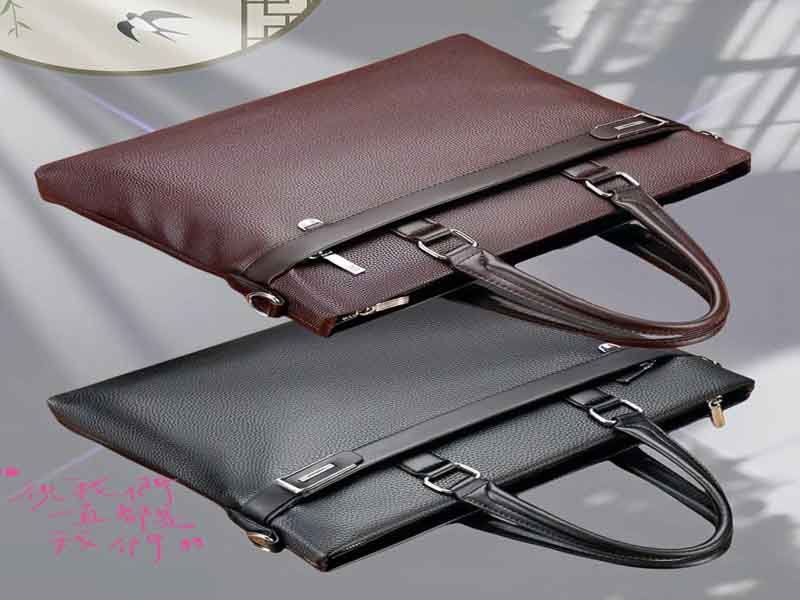
Briefcase size is often treated like a style preference, but it quietly changes the way an entire workday feels. A slim case can make a professional look organized and intentional, yet it becomes frustrating when a charger creates a visible bulge or a presentation folder bends against the zipper. A large business briefcase solves the capacity problem, but it may encourage overpacking, increase shoulder strain, and look more like overnight luggage than a polished work accessory.
The right choice depends on the equipment you carry regularly, the size of your laptop and documents, the distance you travel, and how formal the bag needs to appear. A slim briefcase is usually best for a laptop, compact charger, notebook, phone, and a limited number of files. A large business briefcase is more suitable when you carry several devices, thick folders, product samples, headphones, travel accessories, or changing daily loads. An expandable briefcase can bridge the gap when extra capacity is needed only occasionally.
The important phrase is “carry regularly.” Many people choose a bag for the busiest day they can imagine, then carry that oversized shape through hundreds of lighter days. Others buy the thinnest briefcase they can find, only to discover that the laptop fits but the rest of the job does not. Picture an executive arriving for a meeting with a compact case that opens smoothly and presents every item in order. Now picture the same case stretched around a power adapter, water bottle, and three folders. The difference between elegant and inconvenient may be only a few centimeters of depth.
What Is the Main Difference?
The main difference between a slim briefcase and a large business briefcase is usable depth and the type of load each one is designed to manage. Slim briefcases protect a focused set of work essentials while preserving a clean profile. Large briefcases provide greater capacity, more compartment separation, and flexibility for bulky or changing contents. The best option is not the one with the most space; it is the one that holds the normal load without distortion, wasted volume, or unnecessary weight.
Slim and large are relative terms rather than fixed product standards. One brand may describe an 8-centimeter-deep case as slim, while another uses the same word for a 10-centimeter model. Large briefcases may range from moderately deep multi-compartment bags to expandable cases that approach compact overnight luggage.
For practical comparison, the following dimensions provide a useful starting point:
| Briefcase Category | Approximate External Depth | Typical Daily Load | Main Strength | Main Risk |
|---|---|---|---|---|
| Ultra-slim case | 4–6 cm | Laptop, phone, thin notebook | Minimal appearance | Almost no room for accessories |
| Slim briefcase | 6–9 cm | Laptop, charger, notebook, light documents | Balanced professional profile | Bulging when overloaded |
| Standard briefcase | 9–13 cm | Laptop, files, tablet, accessories | Flexible everyday organization | Moderate empty weight |
| Large business briefcase | 13–18 cm | Multiple devices, thick files, samples | High practical capacity | Heavier and visually bulky |
| Expandable briefcase | 9–13 cm closed, 14–18 cm expanded | Variable work and travel load | Adapts to changing capacity | Extra zippers and overpacking |
These ranges are approximate because panel structure, pocket construction, foam thickness, and expansion systems influence how the bag feels in use. A structured 10-centimeter briefcase may hold less than a flexible case with the same exterior depth. A bag with three padded compartments may appear large externally while offering limited open space internally.
What Makes a Briefcase Slim?
A briefcase is slim when its body depth is deliberately restricted and its internal layout is designed for flat, essential items rather than bulky accessories. The silhouette remains close to the body, the front and back panels stay relatively parallel, and the bag does not rely on large gusseted pockets or multiple deep compartments.
The best slim briefcases are not simply larger bags compressed into a narrower shape. They are designed around a different carrying philosophy: take what is necessary, give each object a controlled position, and protect the clean exterior profile.
A typical slim briefcase may carry:
| Item | Suitable for Slim Design? | Design Requirement |
|---|---|---|
| 13–14-inch laptop | Yes | Fitted padded compartment |
| Slim 15-inch laptop | Often | Exact dimension check required |
| Compact charger | Yes | Small gusseted or shaped pocket |
| Phone | Yes | Shallow quick-access pocket |
| Thin notebook | Yes | Full-width document sleeve |
| A few documents | Yes | Flat divider |
| Tablet | Sometimes | Separate thin padded sleeve |
| Full-size headphones | Usually difficult | Creates excessive depth |
| Large water bottle | Usually unsuitable | Changes profile and balance |
| Thick binder | Usually unsuitable | Distorts slim body |
| Clothing | No | Requires open flexible capacity |
| Product samples | Only if flat | Custom pocket dimensions needed |
Panel structure plays an important role. A slim case needs enough stiffness to keep the laptop from defining the exterior shape, but too much reinforcement consumes internal space. Thin high-density foam, PE board, felt, and tightly woven fabrics are often used to provide controlled structure without adding excessive thickness.
Pocket design must also be disciplined. A flat pocket is ideal for a card, passport, or document, but not for a charger. If the charger is pushed into a flat front pocket, it creates a hard visible lump and may press into the laptop screen. A better slim layout uses one small gusseted section where accessory volume is expected.
Slim briefcases often use one main zipper and a limited number of external openings. This reduces visual clutter and keeps the edges clean. Excess zippers, oversized pulls, thick metal hardware, and padded exterior pockets can make the case look heavier than its dimensions suggest.
The concept works particularly well for people who rely primarily on digital files. A consultant who carries a lightweight laptop, compact USB-C charger, phone, and notebook may find a slim case ideal. A lawyer carrying three case files and a power adapter probably will not.
A slim briefcase should pass a simple shape test. When packed with the intended contents, the front panel should remain flat, the zipper should close without force, and the base should sit level. If the bag becomes rounded or the seams are pulled outward, the design is no longer functioning as a slim briefcase, even if its original dimensions say otherwise.
Slimness also affects access. Narrow bodies leave less space for the user’s hand to reach between compartments. A wide top opening or three-sided zipper can make a slim interior easier to use. Without adequate opening clearance, removing a laptop may disturb every other object in the bag.
A professionally designed slim case feels efficient because nothing moves unnecessarily. The laptop is held closely, the charger has a defined pocket, documents stay flat, and frequently used items remain visible. Its limited capacity becomes an advantage when the layout is honest about what the user carries.
What Defines a Large Briefcase?
A large business briefcase is defined by greater internal depth, stronger load-bearing construction, and enough compartment volume to carry several devices, substantial documents, accessories, or occasional travel items without stretching the exterior panels. It normally includes broader gussets, a stronger base, reinforced handles, and more structured organization than a slim model.
Large does not necessarily mean oversized. A well-proportioned large briefcase can still look professional when the width, height, depth, handle scale, and hardware remain balanced. The problem is not capacity itself; it is uncontrolled capacity.
A large business briefcase may support:
| Load Category | Typical Contents | Structural Need |
|---|---|---|
| Multiple devices | Laptop, tablet, second screen | Separate padded compartments |
| Document-heavy work | Folders, contracts, reports | Full-width reinforced file zones |
| Sales activity | Samples, brochures, catalogs | Open capacity and adjustable dividers |
| Technical work | Adapters, tools, measurement devices | Reinforced pockets and strong base |
| Business travel | Headphones, passport, charger, toiletries | Expansion and trolley sleeve |
| Medical use | Devices, literature, hygiene supplies | Wipe-clean separated compartments |
| Executive load | Laptop, files, personal accessories | Controlled structure and refined materials |
Depth alone does not create useful capacity. The interior should be divided according to object type. Flat items such as laptops and documents should remain separated from three-dimensional objects such as chargers, headphones, glasses cases, and bottles.
Large briefcases often use two or three main compartments. One may protect the laptop and tablet, another may hold files, and a third may organize accessories or samples. This separation improves access but increases material consumption, zipper length, lining, foam, seams, and empty weight.
The base must support the increased load. A soft bottom that works in a slim case may sag when the bag carries a laptop, files, and several kilograms of accessories. Larger designs may use PE or PP board, EVA foam, layered fabric, molded support, or reinforced corner construction.
Handles also require stronger engineering. The visible handle tabs should connect to internal webbing or reinforcement panels that distribute force into the body. Shoulder-strap anchors need broader structural support because the user may carry significantly more weight than with a slim case.
A large business briefcase should remain stable when placed beside a chair. If it falls forward every time the front organizer is filled, the weight distribution is wrong. If it collapses when partially empty, the panel structure may be too soft.
The visual challenge is keeping a large bag from looking like luggage. Several design choices help:
| Design Choice | Effect on Appearance |
|---|---|
| Controlled depth-to-width ratio | Prevents a box-like silhouette |
| Clean front panel | Reduces visual bulk |
| Hidden or reverse zippers | Creates a smoother profile |
| Dark neutral colors | Makes depth less visually dominant |
| Proportionate handles | Keeps the top line balanced |
| Limited external pockets | Avoids a tactical appearance |
| Tonal stitching | Reduces visual fragmentation |
| Restrained hardware | Prevents decorative weight |
| Structured corners | Maintains professional geometry |
| Minimal logo | Keeps attention on form and material |
Large briefcases work best for users who genuinely use their capacity. A sales manager carrying samples, brochures, two devices, and travel equipment may gain enormous value from the additional space. A digital-first manager carrying only a laptop and phone may find the same bag unnecessarily cumbersome.
One hidden benefit of a large briefcase is organizational separation. The user does not need to stack documents against a charger or place headphones on top of a laptop. The larger body allows each object to occupy an appropriate type of space.
The hidden disadvantage is behavioral: empty space tends to be filled. A bag that can carry eight kilograms often ends up carrying eight kilograms, even when half the contents are rarely used. Capacity should therefore be connected to packing discipline.
How Does Capacity Affect Shape?
Capacity affects shape because every object pushes against the panels, gussets, zipper tracks, base, and internal dividers. A slim briefcase maintains a professional appearance only when its contents remain within the planned volume. A large briefcase needs stronger structural control so it does not sag when lightly packed or bulge when fully loaded.
Capacity is not only measured in liters. The shape of the available space determines what the bag can carry successfully.
A 12-liter briefcase with one open compartment can accept bulky headphones or a small sample box. Another 12-liter case divided into three thin padded sections may hold laptops and documents well but struggle with irregular objects. Both products have similar volume, yet they support different workdays.
| Capacity Type | Best for | Shape Behavior |
|---|---|---|
| Flat layered capacity | Laptops, tablets, documents | Maintains slim rectangular profile |
| Open central capacity | Headphones, samples, personal items | More flexible but prone to shifting |
| Gusseted pocket capacity | Chargers and three-dimensional accessories | Creates controlled local depth |
| Expandable capacity | Temporary documents or travel items | Changes depth and center of gravity |
| Modular capacity | Equipment or product samples | Requires dividers to maintain order |
| Compressed capacity | Soft clothing or textiles | Can distort professional silhouette |
A briefcase underfilled and a briefcase overfilled create different quality problems.
An underfilled large case may collapse, wrinkle, or allow contents to move. The user may feel that the bag is larger than necessary. Internal dividers, base boards, foam, piping, and panel backing help maintain shape.
An overfilled slim case creates zipper tension, bulging panels, distorted handles, and pressure against the laptop. The bag may technically close, but repeated strain reduces service life.
Capacity also changes the center of gravity. A charger placed in a deep front pocket pulls the bag forward. Heavy documents positioned entirely on one side cause twisting. A water bottle in an external pocket can make the base unstable.
| Packing Condition | Visible Sign | Likely Structural Effect |
|---|---|---|
| Correctly packed | Flat panels and smooth zipper | Load remains within design capacity |
| Slightly underfilled | Minor internal movement | May need dividers or elastic control |
| Heavily underfilled | Collapsing sides | Bag may be too large for user |
| Slightly overfilled | Rounded front panel | Zipper and divider under pressure |
| Heavily overfilled | Distorted seams and handles | Accelerated structural wear |
| Front-heavy | Bag tips forward | Poor accessory positioning |
| Side-heavy | Bag leans or twists | Uneven load distribution |
| Top-heavy | Base unstable | Heavy contents stored too high |
The material affects how capacity appears. Soft nylon can flex around contents but may show their outlines. Dense canvas maintains a stronger body but becomes bulky at folded seams. Leather can hold a refined shape yet stretch permanently when overloaded. Oxford fabric can be engineered with different coatings and backing to balance flexibility and structure.
A custom briefcase should be developed using a packing model. Every regular item is measured and arranged. The designer then calculates the required internal width, height, and depth while allowing clearance for lining, foam, seams, and access.
An illustrative development case shows the value of this process. A company requested an 8-centimeter slim briefcase for a 15.6-inch laptop, charger, tablet, catalog, and full-size headset. A paper layout showed that the flat items fit easily, but the charger and headset required more than the available depth. Instead of increasing the entire bag to 13 centimeters, the design used a 9-centimeter body with one controlled expandable section. The normal silhouette remained slim, while occasional bulk had a defined place.
The lesson is that capacity should be shaped, not simply increased.
Are Expandable Briefcases a Middle Ground?
Expandable briefcases can be an effective middle ground because they maintain a slimmer everyday profile while providing additional depth for documents, samples, headphones, or short-trip items when necessary. They work best for users whose load changes regularly but not constantly. The expansion should be controlled, reinforced, and tested so the bag remains balanced and professional in both modes.
An expandable system normally uses a zipper around part or most of the body. When opened, a folded gusset increases the main compartment depth. The additional capacity may range from a few centimeters to a substantial travel-oriented expansion.
| Expansion Type | Capacity Change | Best Use | Main Limitation |
|---|---|---|---|
| Partial front expansion | Adds local accessory space | Chargers, documents, small samples | Can make bag front-heavy |
| Main-compartment expansion | Adds broad central capacity | Changing daily load | More zipper and gusset weight |
| Full-perimeter expansion | Increases most of the body | Short business trips | Can resemble luggage |
| File-section expansion | Creates document volume | Legal, consulting, or audit work | Limited use for bulky objects |
| Compression-panel expansion | Flexible soft capacity | Clothing or textiles | Less structured appearance |
The strongest reason to choose expansion is frequency. If additional capacity is needed several times per month, the system can replace a second bag. If it is required once or twice a year, the user may be carrying unnecessary zipper, fabric, lining, and reinforcement during every ordinary commute.
Expansion affects appearance. When closed, the zipper track should sit flat and the gusset should fold neatly. Poorly designed expansion panels wrinkle, catch in the zipper, or create a visible ridge around the briefcase.
When open, the bag should retain controlled proportions. A slim 7-centimeter case that expands to 16 centimeters may become unstable because the capacity changes too dramatically. A moderate increase from 9 to 13 centimeters is often easier to manage.
Weight distribution must be tested in expanded mode. The user tends to place extra items in the new outer volume, shifting the load away from the body. Shoulder anchors and handles may need to be positioned around the expanded center of gravity rather than the closed shape alone.
The expansion zipper carries structural tension. Its chain, tape, stitching, and end points require reinforcement. The track should avoid sharp corners that become difficult to operate when the bag is full.
An expandable briefcase can also affect travel compatibility. The bag may fit under an airline seat when closed but become too deep when expanded. Product specifications should list both dimensions.
Expansion should not compromise laptop protection. The device compartment should remain stable when surrounding volume changes. A firm divider prevents additional documents or travel items from pushing against the laptop screen.
The following questions help determine whether expansion is worthwhile:
| Question | Expansion Is Useful When… | Fixed Size Is Better When… |
|---|---|---|
| Does daily load change? | Contents vary several times per month | Contents remain almost identical |
| Are bulky items occasional? | Headphones or samples are sometimes added | Bulky items are carried every day |
| Is travel frequent? | Bag supports short trips regularly | Travel uses separate luggage |
| Is empty weight important? | Moderate extra weight is acceptable | Every gram matters |
| Is a slim appearance required? | Bag stays closed most days | User always needs full depth |
| Is organization important? | Expanded area has a defined purpose | Extra area would become a general dumping space |
An expandable briefcase is not automatically the best of both worlds. Poor execution can create a heavier slim case and an unstable large case. Good execution creates a controlled transition between two clearly defined loads.
Which Size Fits Your Daily Load?
The right briefcase size is determined by the items carried on a normal day, not by the largest possible load. Begin with the laptop’s actual dimensions, then add documents, charger, tablet, accessories, and any job-specific equipment. A slim briefcase is appropriate when the complete load remains flat and selective. A large business briefcase is more suitable when several items need separate depth, protection, or rapid access.
The decision becomes easier when the daily load is divided into three groups:
| Load Group | Description | Suitable Briefcase Direction |
|---|---|---|
| Essential load | Laptop, charger, phone, notebook | Slim briefcase |
| Standard professional load | Laptop, tablet, documents, accessories | Standard or moderately large case |
| Extended load | Multiple devices, thick files, samples, travel items | Large or expandable briefcase |
Many users overestimate what they carry occasionally and underestimate the volume of small daily objects. A laptop is easy to measure. Chargers, cables, glasses cases, headphones, keys, batteries, adapters, and personal items create irregular thickness that is harder to see in a specification.
A packing audit provides a more reliable answer than choosing by appearance.
What Do You Carry Each Day?
To choose the correct briefcase size, place every item you carry on an ordinary working day on a table and separate it by size, weight, access frequency, and protection need. This simple exercise reveals whether the load is flat enough for a slim case or varied enough to require a larger structure.
A useful inventory includes items people frequently forget during planning:
| Category | Possible Contents |
|---|---|
| Primary device | Laptop and protective shell |
| Secondary device | Tablet, e-reader, or portable monitor |
| Power equipment | Charger, cable, adapter, power bank |
| Work materials | Notebook, folders, contracts, brochures |
| Communication | Phone, headset, earbuds |
| Personal items | Wallet, keys, glasses, medication |
| Travel items | Passport, tickets, travel adapter |
| Job-specific items | Samples, tools, measuring equipment |
| Food and drink | Bottle, coffee cup, snack |
| Clothing | Scarf, gloves, compact umbrella |
Each item should be assigned an access level:
| Access Frequency | Example Items | Recommended Position |
|---|---|---|
| Immediate | Phone, transit card, keys | Secure external or upper pocket |
| Frequent | Pen, notebook, charger | Front organizer |
| Main work | Laptop, tablet, files | Protected central sections |
| Occasional | Spare adapter, medicine | Internal zipper pocket |
| Sensitive | Passport, wallet, data drive | Hidden rear or inner pocket |
A slim briefcase works when most contents are flat and the three-dimensional objects are small. A large case becomes necessary when several bulky items must be carried together.
Consider two load profiles.
A financial adviser carries a 14-inch laptop, a compact charger, one notebook, two document folders, phone, keys, and wallet. The objects are mostly flat. A slim briefcase with one gusseted charger pocket can handle the load well.
A regional sales representative carries a 15.6-inch laptop, tablet, charger, full-size headphones, brochures, product samples, power bank, notebook, phone, water bottle, and travel documents. The load requires multiple forms of volume and separation. A large or expandable briefcase is more suitable.
| Load Profile | Approximate Packed Character | Recommended Size |
|---|---|---|
| Laptop-only professional | Thin and flat | Ultra-slim or slim |
| Digital office worker | Mostly flat with one charger | Slim |
| Document-focused professional | Flat but heavier | Standard structured case |
| Consultant traveler | Mixed flat and bulky items | Standard or expandable |
| Sales representative | Mixed and frequently accessed | Large organized case |
| Technician | Heavy and irregular equipment | Custom large structure |
| Executive traveler | Devices plus personal travel items | Expandable travel briefcase |
| Medical representative | Separated devices and samples | Custom compartment case |
The user should also remove items that are carried out of habit rather than need. A large bag often becomes storage for old receipts, unused cables, duplicate pens, and documents that should have been removed weeks ago.
Daily-load analysis is not only about capacity. It improves organization. Once every item is identified, each can be assigned a pocket or compartment designed around its dimensions.
For custom team briefcases, this process can be completed with several representative employees. The design should support the shared essential load and provide controlled flexibility for role-specific differences.
How Much Space Does a Laptop Need?
A laptop needs enough compartment space for its full body dimensions, protective shell, padding, seams, and smooth removal. Screen size alone is not a reliable guide because it measures the display diagonally rather than the outer computer body. The usable sleeve dimensions should be compared with the laptop’s width, depth, and thickness.
Typical body-width directions are:
| Laptop Class | Approximate Body Width | Approximate Body Depth | Briefcase Direction |
|---|---|---|---|
| 12–13-inch laptop | 28–31 cm | 19–22 cm | Compact slim case |
| 13–14-inch laptop | 30–33 cm | 21–23 cm | Slim or standard case |
| 15-inch slim laptop | 33–35 cm | 23–24 cm | Medium slim or standard case |
| 15.6-inch laptop | 35–37 cm | 23–26 cm | Standard or large case |
| 16-inch professional laptop | 35–37 cm | 24–26 cm | Reinforced standard or large case |
| 17-inch laptop | 38–42 cm | 26–29 cm | Large specialist case |
These are approximate ranges. The exact model should always be measured because aspect ratio, bezel width, keyboard layout, cooling system, and protective shell affect the body.
Laptop fit also consumes more briefcase volume than the computer dimensions suggest. A compartment may include:
| Construction Layer | Space It Uses |
|---|---|
| Front padding | Several millimeters |
| Back padding | Several millimeters |
| Side foam | Reduces usable width |
| Lining | Adds folded seam volume |
| Piping | Occupies edge space |
| Zipper curvature | Reduces opening clearance |
| Raised base | Uses internal height |
| Top restraint | Requires closing clearance |
| Divider structure | Reduces adjoining compartment depth |
A laptop should enter without force. If the computer must be tilted sharply or pushed past the zipper, the sleeve is too small even when the device can technically sit inside.
The sleeve should not be excessively large either. Movement allows the laptop to strike the sides and corners during walking. A 13-inch computer carried in a loose 17-inch pocket may receive less effective protection than in a fitted slim case.
Large laptops change the size decision in two ways. They require more width and they add more weight. A 16- or 17-inch professional device may weigh considerably more than a compact notebook. The briefcase needs stronger handles, shoulder anchors, base construction, and foam.
A slim case can still work for a large laptop if the user carries few other items. The bag will be wide but not necessarily deep. A large briefcase becomes necessary when the large device is combined with bulky accessories and documents.
The charger should be measured separately. Large workstation adapters may be several centimeters thick and substantially heavier than compact USB-C chargers. They often determine whether a bag remains slim.
For a custom briefcase, device dimensions can be converted into a physical dummy block. The sample is tested around the block to confirm loading, clearance, and protection before production.
Do Documents Need Separate Storage?
Documents need separate storage when they must remain flat, confidential, organized by project, or accessible without removing the laptop. A dedicated file section prevents paper from bending around chargers and keeps folders from pressing against the computer screen. Document quantity often determines whether a slim briefcase is sufficient.
A few loose sheets consume very little depth. Presentation folders, envelopes, plastic sleeves, and binders require more space than the paper itself.
A4 paper measures 210 × 297 millimeters, while US Letter measures approximately 216 × 279 millimeters. The compartment must be larger than these dimensions because users rarely carry uncovered sheets.
| Document Type | Capacity Character | Briefcase Requirement |
|---|---|---|
| Loose sheets | Very thin | Basic full-width sleeve |
| Thin notebook | Flat and moderate | Slim divider |
| Presentation folder | Wider and thicker | Additional edge clearance |
| Multiple client files | Heavy and layered | Reinforced document section |
| Legal folder | Large and structured | Taller, broader compartment |
| Catalog | Thick and sometimes heavy | Standard or large depth |
| Binder | Rigid and bulky | Large briefcase |
| Rolled plans | Nonstandard shape | Specialist custom design |
Documents also add weight quickly. A stack of paper may weigh more than expected, concentrating force along the base and handles. A document-heavy slim briefcase can remain visually thin but still become uncomfortable.
A separate section prevents files from sliding into the laptop compartment. The divider should be firm enough to keep paper flat without becoming excessively rigid.
Large business briefcases often provide multiple file sections. This is useful for lawyers, auditors, consultants, educators, and sales teams who need to separate projects. The benefit should be balanced against empty weight and internal complexity.
A slim design may use one full-width sleeve with a flexible divider. The user can carry a small number of folders while preserving the profile. Expansion can be added specifically to the document section when file volume changes.
Security also matters. Confidential papers should sit behind the main closure rather than in an exposed external pocket. Lockable zipper pulls or concealed inner sections may provide additional control, although a textile briefcase should not be treated as a secure safe.
A practical test involves placing the actual folders into the sample and opening the bag while standing. Documents should be removable without bending their corners or pulling the laptop outward.
For custom development, the document specification should state more than “fits A4.” The manufacturer should know whether the user carries folders, binders, clipboards, envelopes, or catalogs and how many are expected.
Are Chargers and Accessories Bulky?
Chargers and accessories are often the main reason a slim briefcase becomes overloaded. They are irregular, three-dimensional objects that occupy far more depth than laptops and documents. A power adapter, coiled cable, mouse, glasses case, headphones, power bank, and travel adapter can together require more volume than the computer.
Accessory bulk varies dramatically:
| Accessory | Typical Capacity Effect | Best Storage |
|---|---|---|
| Compact USB-C charger | Small but hard | Gusseted pocket |
| Large laptop adapter | Thick and heavy | Central lower compartment |
| Charging cable | Flexible but tangled | Mesh zipper pocket |
| Mouse | Rounded volume | Shaped organizer pocket |
| Power bank | Dense and heavy | Reinforced pocket near center |
| Earbuds | Small | Shallow quick-access slot |
| Full-size headphones | Large but light | Open compartment or molded zone |
| Glasses case | Rigid and rounded | Protected gusseted pocket |
| Travel adapter | Irregular and hard | Separate accessory pouch |
| Portable monitor stand | Flat but rigid | Document-style sleeve |
| Presentation remote | Small and easily lost | Elastic loop |
| External drive | Small and sensitive | Padded zipper pocket |
Flat organizer pockets often fail because they are designed visually rather than dimensionally. A charger pushed into a flat pocket creates a bulge and transfers pressure to nearby items.
A slim briefcase should contain at least one controlled three-dimensional pocket. This allows the charger and cable to occupy volume without distorting the entire front panel.
Large briefcases provide more accessory space but can become disorganized if the items are placed in one open compartment. Gusseted pockets, removable tech pouches, mesh sections, and elastic retention help maintain visibility.
Heavy accessories should sit near the center and lower part of the bag. A power bank placed high in a front pocket pulls the case outward. A charger placed beside the laptop screen creates a pressure point.
Headphones often determine whether a user needs a larger case. Earbuds occupy almost no space. Full-size noise-canceling headphones in a protective case may require 8 to 12 centimeters of local depth. A slim briefcase cannot accommodate them without expansion or exterior distortion.
An umbrella creates similar problems. A compact model is long and cylindrical, while a wet surface introduces moisture. A dedicated external sleeve may be appropriate for travel designs but unnecessary for formal office cases.
Accessory needs should be reviewed over the full product lifespan. Chargers are becoming more compact in some categories, while users increasingly carry power banks, hubs, adapters, and multiple cables. Flexible pockets adapt better than shapes designed around one accessory generation.
Is Extra Capacity Really Necessary?
Extra capacity is necessary when the user regularly carries items that cannot fit without compression, mixing, or repeated repacking. It is unnecessary when the space serves only rare situations and encourages everyday overpacking. The best briefcase provides a small amount of controlled reserve capacity rather than large unused volume.
A practical reserve may be approximately 10 to 20 percent beyond the normal load. This allows for a temporary folder, small sample, or travel document without making the bag permanently oversized.
| Capacity Decision | Advantage | Risk |
|---|---|---|
| Exact daily fit | Light and compact | No room for unexpected items |
| Small reserve capacity | Flexible without much bulk | Requires disciplined packing |
| Moderate expansion | Adapts to changing days | Adds weight and hardware |
| Large fixed capacity | Always ready for heavy load | Encourages overpacking |
| Separate travel bag | Keeps work briefcase focused | Requires two bags |
| Modular removable pouch | Adds occasional volume | Extra component management |
The decision should be based on frequency.
If extra items appear daily, the larger capacity is not extra; it is necessary.
If they appear weekly, an expandable briefcase may be appropriate.
If they appear once every few months, a separate tote, travel bag, or sample case may be better.
Large capacity has hidden costs. It increases material usage, lining, reinforcement, shipping volume, and potentially product price. It may also affect the perceived professionalism of the bag.
A large briefcase carried half empty can feel awkward. Contents move, panels collapse, and the user carries unnecessary structure. A slim briefcase overloaded every day is equally unsuitable.
A useful decision matrix is:
| Question | Choose Slim When… | Choose Large When… |
|---|---|---|
| How many devices? | One laptop | Laptop plus tablet or monitor |
| How many documents? | A few thin folders | Thick files or catalogs |
| What charger type? | Compact adapter | Large power supply and multiple cables |
| Are samples carried? | No or flat samples | Bulky samples |
| Are headphones carried? | Earbuds | Full-size headset |
| Is travel frequent? | Short local commute | Airports and overnight trips |
| Is formal appearance critical? | Yes | Capacity takes priority |
| Is walking distance long? | Lighter load preferred | Large bag may need backpack conversion |
| Does load change? | Rarely | Frequently |
| Is expansion useful? | Not necessary | Occasional extra space needed |
The customer should choose a large briefcase because its capacity has a job, not because it appears more valuable. More material and more pockets do not automatically create a better product.
For customized briefcases, Szoneier can develop two related sizes around the same design language. A slim model can serve light daily work, while a larger or expandable version supports travel, samples, or document-heavy roles. Matching fabric, colors, hardware, lining, and logo treatment allow the products to appear as one coordinated collection rather than unrelated bags.
The best size is the one that remains calm under pressure. It closes smoothly on an ordinary day, accepts a small amount of change, protects the laptop, and does not ask the user to carry empty space everywhere they go.
Which Briefcase Looks More Professional?
A professional briefcase looks proportionate to the user, appropriate for the workplace, and controlled when it is fully packed. Slim briefcases often appear more formal because their narrow profiles suggest selective packing and visual restraint. Large business briefcases can look equally credible when their depth is balanced by clean panels, stable structure, discreet hardware, and a clear reason for the additional capacity. Professional appearance depends less on size alone than on whether the bag retains its intended shape during real use.
People tend to judge a briefcase before they understand its features. They notice whether the handles sit evenly, whether the front panel bulges, whether the zipper follows a smooth line, and whether the bag complements the user’s clothing. These observations happen quickly and often unconsciously. A bag that appears organized can strengthen the impression that its owner is prepared, while a visibly overloaded case may suggest that the working routine itself is difficult to control.
Slim briefcases have an immediate visual advantage because there is less material and fewer visible layers. Their front and back panels remain close together, creating a clean rectangular silhouette. Large briefcases require more deliberate design because deeper gussets, extra zippers, multiple compartments, and larger hardware can make the body appear fragmented.
| Visual Factor | Slim Briefcase | Large Business Briefcase |
|---|---|---|
| Overall impression | Minimal, focused, contemporary | Capable, practical, travel-ready |
| Formality potential | Naturally high | High when carefully structured |
| Panel complexity | Usually low | Often moderate to high |
| Risk when packed | Visible bulging | Excessive volume or luggage-like appearance |
| Hardware scale | Small to medium | Medium to large |
| Best visual strength | Restraint | Organized capacity |
| Common visual weakness | Looks strained when overloaded | Looks oversized when underfilled |
| Suitable professional setting | Meetings, office, legal, finance | Consulting, sales, travel, technical work |
Professional design is not the same as conservative design. A dark nylon briefcase with matte hardware can look highly professional in a modern technology company. A waxed-canvas case may suit a designer or architect. A large leather document case may be appropriate for a lawyer carrying substantial files. The strongest result comes when material, capacity, and workplace expectations support one another.
Is a Slim Briefcase More Formal?
A slim briefcase usually appears more formal because its narrow body, limited pocket count, and controlled proportions resemble traditional document cases. It suggests that the user carries carefully selected essentials rather than an entire day’s personal belongings. However, a slim shape is only professional when the contents fit without creating pressure, distortion, or visible lumps.
The formal appeal comes from geometry. Straight lines, a narrow side profile, and limited external depth coordinate naturally with tailored clothing. A slim briefcase is less likely to collide with furniture, occupy excessive space beside a chair, or dominate the user’s appearance.
| Slim Design Element | Formal Visual Effect |
|---|---|
| Narrow gusset | Creates a clean side profile |
| Flat front panel | Keeps attention on material and proportion |
| Limited external pockets | Reduces visual clutter |
| Tonal stitching | Maintains a quiet appearance |
| Small logo | Supports understated branding |
| Balanced top handles | Creates a controlled upper line |
| Hidden zipper teeth | Produces smoother edges |
| Structured corners | Preserves document-case geometry |
| Neutral lining | Completes the professional interior |
| Removable strap | Allows cleaner meeting-room use |
Slim cases work particularly well with leather because the material can provide structure and refinement without requiring many external components. A full-grain or top-grain leather case with a single main opening and restrained hardware can look highly formal even when its design is relatively simple.
Synthetic materials can achieve a similar effect. Fine Oxford fabric, matte-coated polyester, dense nylon, and microfiber leather can create a slim professional briefcase that weighs less and resists changing weather more effectively than full leather.
The challenge is keeping necessary accessories from damaging the formal profile. A laptop and documents are flat, but chargers, mice, power banks, glasses cases, and headphones are not. If these objects press against the exterior, the bag loses the visual control that made it attractive.
A slim briefcase therefore needs honest capacity planning. It should include one or two strategically gusseted areas rather than several decorative flat pockets. The charger pocket may sit near the base, where its volume is less visible. A cable organizer can use flexible mesh rather than a thick padded panel.
A formal slim case should also avoid excessively long shoulder straps, oversized hooks, visible backpack straps, or large technical buckles. These components may be useful, but they change the visual language. A detachable strap allows the user to remove them before entering a more formal meeting.
Color contributes to formality. Black, dark brown, navy, charcoal, and deep taupe usually support a controlled appearance. Burgundy and dark olive can also work when the material and workplace allow slightly more personality.
Slim does not always mean formal. A very soft unstructured sleeve with bright zippers may look casual. A narrow bag covered with external technical pockets may look like equipment storage. Formality comes from proportion and execution, not from depth alone.
The strongest slim briefcase creates an impression of ease. It does not look as if the user has sacrificed practical needs for appearance. The zipper closes naturally, the panels remain smooth, and the handles sit upright without pulling outward.
Do Large Briefcases Look Too Bulky?
Large business briefcases can look too bulky when their depth is disproportionate to their width and height, when external pockets project from every surface, or when the body collapses and expands unpredictably. They can still look highly professional when the capacity is integrated into a stable, clean structure and the exterior avoids unnecessary visual layers.
The visual problem is rarely the exact number of centimeters. It is how those centimeters are expressed. A 15-centimeter-deep bag with smooth panels and hidden compartments may look more refined than a 12-centimeter case with several protruding pockets, straps, and decorative seams.
| Design Choice | Makes a Large Case Look Cleaner | Makes a Large Case Look Bulkier |
|---|---|---|
| Main body | Broad, uninterrupted panels | Multiple stacked external pockets |
| Zippers | Reverse coil or concealed tracks | Thick contrasting chains |
| Gussets | Structured and evenly tensioned | Wrinkled or collapsing fabric |
| Color | Tonal or restrained palette | Several contrasting colors |
| Hardware | Proportionate and coordinated | Oversized mixed finishes |
| Logo | Small or integrated | Large central badge |
| Handles | Scaled to the body | Short handles on a deep case |
| Base | Stable and flat | Sagging or rounded bottom |
| Compartments | Hidden internal separation | Visible layered sections |
| Expansion | Neat when closed | Loose folded gusset |
A large briefcase looks most professional when its capacity clearly serves the user’s role. A sales representative carrying samples and catalogs can make a large organized case appear intentional. A consultant traveling with a laptop, tablet, files, and headphones can use a structured expandable briefcase without looking unprepared.
The same bag may look excessive when carried almost empty. Empty compartments collapse, the handles appear oversized, and the user seems to be carrying more bag than work. This is one reason large briefcases benefit from removable dividers, moderate panel structure, and compression features.
Material affects visual bulk. Thick leather creates strong edges but also increases seam thickness. Heavy canvas can make corners and folds appear substantial. Fine nylon or polyester can reduce visual weight, although very soft fabrics may wrinkle. Oxford fabric offers several density and coating options that can balance structure with a smoother exterior.
Dark materials reduce the apparent size of a large briefcase, but color alone cannot correct poor proportions. Designers should consider the relationship between width, height, and depth. Increasing width slightly may make a deep bag look more balanced, while a short, deep body can appear box-like.
Rounded side gussets can soften the visual mass, while square corners create a more architectural appearance. Neither is always better. Rounded forms work well for travel and commuter products, while straight corners suit formal document-heavy cases.
Large briefcases should also control the top opening. A wide zipper may curve outward when the bag is full, making the entire product appear swollen. Internal reinforcement, correct zipper length, and gusset patterning help preserve the top line.
The shoulder strap should not remain draped awkwardly around the body when the bag is carried by hand. Removable or neatly attachable straps create a cleaner arrival at meetings.
Large does not have to mean visibly complicated. Some of the most professional high-capacity bags appear simple outside because the organization is concentrated inside.
Which Size Matches Business Attire?
Slim briefcases generally match formal suits, tailored jackets, and minimalist office clothing because their controlled profile mirrors the clean lines of the outfit. Large business briefcases work better with travel tailoring, business-casual clothing, technical uniforms, and roles where visible capacity feels appropriate. The bag should match the formality, proportion, and practical demands of the clothing rather than follow rigid color rules.
A briefcase interacts physically with clothing. The back panel touches a jacket, the shoulder strap crosses a shirt or coat, and the handles sit beside trousers or a skirt. The bag should not only look coordinated; it should avoid damaging or distorting the outfit.
| Clothing Context | Better Briefcase Direction | Why |
|---|---|---|
| Formal suit | Slim structured briefcase | Matches clean tailoring lines |
| Executive travel suit | Standard or expandable case | Supports documents and travel items |
| Business casual | Slim or medium soft case | Allows more material flexibility |
| Creative workwear | Canvas or mixed-material case | Texture supports expressive styling |
| Technical uniform | Large nylon or Oxford case | Capacity and cleaning matter more |
| Medical sales attire | Structured wipe-clean case | Combines presentation and function |
| Winter overcoat | Medium briefcase with longer strap | Requires additional clearance |
| Smart-casual commuter wear | Convertible briefcase | Supports walking and office use |
| Hospitality uniform | Refined slim textile case | Maintains coordinated appearance |
| Field jacket or outdoor clothing | Large technical briefcase | Matches rugged working context |
A formal suit and a very deep briefcase can create a visual imbalance. The bag may pull the jacket, strike the user’s leg, or appear more suitable for overnight travel. A slim leather or fine-textile case usually integrates more naturally.
However, a slim case worn with a suit is not useful if the user must carry a second tote for documents or samples. Two mismatched bags can look less professional than one carefully designed large briefcase. Practical completeness is part of appearance.
Shoulder straps can affect tailored clothing. Narrow straps create sharp creases and place pressure on the shoulder. Rough webbing or exposed hardware may damage delicate fabric. A removable padded strap allows the user to carry the bag comfortably during transit and remove it before a meeting.
Leather color does not need to match shoes exactly. A dark brown briefcase can work with navy clothing and black shoes when the overall palette is controlled. Black remains the safest formal choice, while charcoal, navy, espresso, burgundy, and deep olive provide more individuality.
Large textile briefcases work well with modern business-casual clothing because they communicate practicality without the weight of full leather. Matte fabric, tonal webbing, and restrained metal fittings create a professional travel appearance.
Body proportion also matters. A very wide briefcase may overwhelm a smaller user, while a compact case may appear visually lost beside a tall person wearing a long coat. Custom dimensions allow the same design language to be offered in more than one size.
For corporate programs, one exterior design can be developed in slim and large formats. Employees can choose according to role while the fabric, colors, handles, logo, and hardware remain consistent. This avoids forcing every user into the same capacity.
The bag should support the clothing rather than become the most noticeable object in the room. The best match feels natural because the briefcase belongs to both the job and the person carrying it.
How Does Structure Affect Appearance?
Structure affects appearance by controlling whether the briefcase retains straight lines, stable corners, a flat base, and balanced panels when it is empty, partly filled, or fully packed. Slim cases need enough structure to hide the outline of the laptop, while large cases need additional support to prevent sagging and uncontrolled expansion.
Structure can be created with fabric density, coating, foam, piping, backing, board, molded panels, seam design, and internal dividers. The appropriate system depends on the desired visual character.
| Structural Method | Visual Effect | Suitable Briefcase |
|---|---|---|
| Thin high-density foam | Smooth, lightly structured panels | Slim professional case |
| PE board | Straight and controlled body | Formal or document-focused bag |
| PP board | Stronger base and panel support | Large business briefcase |
| EVA panel | Defined shape with cushioning | Travel and technical case |
| Piping | Reinforced edge outline | Slim and large structured designs |
| Dense Oxford fabric | Moderate natural structure | Commuter and corporate bags |
| Coated canvas | Firm heritage appearance | Creative and premium cases |
| Molded panel | Precise technical shape | Protective specialist products |
| Internal divider | Prevents panel collapse | Multi-compartment briefcases |
| Removable base board | Stable bottom with flexible shipping | Large textile cases |
An unstructured slim case can look like a laptop sleeve with handles. That may suit a casual workplace, but it does not provide the crisp appearance many professionals expect. Light foam and a controlled base can add shape without making the product rigid.
A large case needs stronger support because gravity acts across deeper side panels. The front and rear panels may bow inward when empty and outward when full. Side gussets can collapse or twist. A structured base and internal dividers reduce these changes.
Too much structure creates different problems. The briefcase becomes heavy, inflexible, and difficult to store. Rigid boards may produce hard edges that contact the laptop. Thick foam consumes internal capacity. The product may look formal but feel like a transport case.
The best structure is selective. High-risk and visually important areas receive support, while lower-risk areas remain flexible.
| Area | Structure Priority | Reason |
|---|---|---|
| Laptop-facing panel | High | Protects device and maintains flat exterior |
| Base | High | Controls standing and load distribution |
| Handle attachment | High | Supports weight and top-line shape |
| Front decorative panel | Moderate | Prevents logo and pockets from sagging |
| Side gussets | Moderate | Maintains depth without excessive rigidity |
| Expansion section | Flexible but controlled | Must fold and open repeatedly |
| Pocket flaps | Light | Needs clean shape without weight |
| Shoulder pad | Cushioned | Comfort is more important than rigidity |
| Lining | Low to moderate | Should remain stable and smooth |
| Document divider | Moderate to high | Keeps files flat and separates pressure |
Structure should be tested under several packing conditions. A briefcase may look excellent when filled with photography foam but collapse when used with real contents. The sample should be examined empty, half full, normally packed, and at maximum intended capacity.
Temperature can affect structure. Some foam and coatings soften in heat or stiffen in cold. Products shipped internationally may experience hot containers, humid warehouses, and cold outdoor use. Aging and flex tests help reveal changes.
Material combinations allow designers to control appearance more precisely. A soft nylon body can use a structured front panel and reinforced base. Leather may be used only around the top opening and handles. Canvas can be backed in the front while the gussets remain flexible.
A professional briefcase should retain enough of its designed shape to look intentional without resisting every movement of the user.
Is Minimal Branding More Professional?
Minimal branding is generally more professional because it allows the briefcase’s proportion, material, and workmanship to communicate quality. A small debossed logo, tonal embroidery, woven label, discreet metal badge, or custom zipper pull can establish identity without making the user feel like a moving advertisement.
Branding should match the bag size. A logo that looks balanced on a large business case may dominate a slim briefcase. The available front-panel area, pocket placement, seam lines, and material texture should guide the final dimensions.
| Branding Method | Slim Briefcase Suitability | Large Briefcase Suitability |
|---|---|---|
| Tonal embroidery | Excellent | Excellent |
| Small metal badge | Excellent with reinforcement | Excellent |
| Debossed leather patch | Excellent | Excellent |
| Woven side label | Subtle and practical | May appear too small |
| Custom zipper pull | Integrated and discreet | Can be repeated across compartments |
| Large screen print | Usually too promotional | Suitable only for defined programs |
| Rubber patch | Modern but less formal | Works well on technical cases |
| Printed lining | Strong hidden branding | Strong hidden branding |
| Custom webbing | Limited visual area | Useful on handles and straps |
| Foil logo | Premium on leather | Requires restrained scale |
Slim briefcases benefit from quiet branding because their visual strength comes from simplicity. A large central logo competes with the controlled geometry and can make the bag appear promotional.
Large business briefcases provide more surface area, but that does not mean the logo should grow proportionally. The additional space may be better used to create visual calm. A small badge on a broad front panel can communicate confidence.
Corporate employee bags sometimes require clear identification. In that case, logo visibility can be increased through color contrast while keeping the size moderate. Branding may also appear inside the bag, on the shoulder pad, or on the zipper pull.
The material determines which method looks professional. Embroidery works well on Oxford fabric and canvas but may pucker lightweight textiles without backing. Debossing suits leather and selected synthetic materials. Metal logos need internal reinforcement. Rubber patches fit technical nylon designs but may feel too casual on a formal leather case.
Tonal branding is an effective compromise. Black thread on black fabric or dark brown embossing on brown leather remains visible at close range without dominating from across the room.
The logo should be tested under normal use. A large metal badge may strike furniture or pull the panel forward. A printed logo may rub against clothing. An embroidered area may become stiff and cause the panel to curve.
Private-label development can create brand identity through more than the front logo. Coordinated lining, pullers, labels, webbing, edge paint, hardware finish, and packaging produce a more complete result.
Professional branding communicates ownership without asking for attention. The user should carry the briefcase, rather than the briefcase appearing to carry the brand message.
How Do They Compare for Comfort?
Slim briefcases are generally lighter, easier to keep close to the body, and more comfortable during short professional journeys. Large business briefcases can carry more, but the additional material and available capacity increase total weight and one-sided strain. Comfort depends on the packed load, handle shape, strap width, anchor placement, empty bag weight, and carrying distance rather than size alone.
A large bag is not automatically uncomfortable, and a slim bag is not automatically easy to carry. A slim leather case with heavy metal hardware may weigh more than a larger nylon model. An overloaded slim case may press awkwardly against the body, while a well-balanced large briefcase with a wide strap can remain comfortable for moderate travel.
The most important variable is total packed weight:
Total packed weight = empty briefcase + laptop + charger + documents + accessories + personal items
A user may focus on the difference between an 800-gram and 1.4-kilogram bag while ignoring a two-kilogram laptop, one-kilogram bottle, and several kilograms of paper. Every component contributes to the load the hand or shoulder must support.
| Comfort Factor | Slim Briefcase | Large Briefcase |
|---|---|---|
| Empty weight | Usually lower | Usually higher |
| Distance from body | Close | Greater outward leverage |
| Overpacking risk | High because space is limited | High because space is available |
| Hand-carry comfort | Good for light loads | Requires wider grip |
| Shoulder comfort | Good with moderate strap | Requires wider padded strap |
| Crossbody stability | Usually strong | Can swing if deep |
| Standing balance | Easy with structured base | Requires careful load distribution |
| Walking comfort | Better for shorter routes | Depends heavily on load |
| Vehicle use | Very convenient | Convenient but occupies more space |
| Airport use | Light and compact | Better capacity but often needs trolley sleeve |
Comfort is also psychological. A well-organized bag feels easier to carry because the user does not repeatedly stop, rearrange, or search. A bag that tips, twists, or pulls away from the body feels heavier than another product with the same measured weight.
Is a Slim Briefcase Lighter?
A slim briefcase is usually lighter because it uses less outer material, lining, foam, zipper length, structural board, and hardware. Its limited capacity also discourages the user from adding unnecessary items. However, material selection can reverse this advantage. A slim full-leather case may weigh more than a larger polyester or nylon briefcase.
Approximate empty-weight directions can help frame the comparison:
| Briefcase Construction | Approximate Empty-Weight Direction |
|---|---|
| Slim polyester case | 0.6–1.0 kg |
| Slim nylon case | 0.7–1.2 kg |
| Slim canvas case | 0.9–1.4 kg |
| Slim leather case | 1.2–2.0 kg |
| Standard textile briefcase | 1.0–1.6 kg |
| Large polyester or nylon case | 1.2–2.0 kg |
| Large canvas case | 1.5–2.3 kg |
| Large leather case | 2.0–3.0 kg |
| Rigid attaché case | 2.0 kg or more |
| Convertible large briefcase | 1.5–2.5 kg |
These ranges are general design directions rather than fixed market standards. Foam density, hardware, compartment count, expansion, molded components, and reinforcement can change the final weight significantly.
A slim bag achieves its weight advantage only when the construction remains disciplined. Thick leather handles, a metal frame, oversized buckles, multiple padded dividers, and a heavy base board can turn a narrow case into a surprisingly demanding product.
Lightweight design should not mean weak construction. Removing handle reinforcement to save weight creates a false economy. A better approach uses lighter materials in low-stress panels and strong components around load-bearing zones.
| Area | Safe Weight Reduction | Unsafe Weight Reduction |
|---|---|---|
| Front panel | Lighter backing | Removing all structure |
| Lining | Durable lightweight polyester | Extremely thin tear-prone fabric |
| Hardware | Engineered polymer components | Undersized weak hooks |
| Foam | Thin high-density material | Soft low-density padding |
| Base | Lightweight reinforced board | No base support |
| Handles | Strong narrow webbing core | Decorative outer attachment only |
| Pockets | Fewer purposeful pockets | Removing necessary charger storage |
| Zippers | Appropriate lighter chain | Using a zipper too small for the load |
Slim briefcases also reduce the chance of carrying unrelated personal items. There is less space for water bottles, large headphones, extra cables, food, clothing, and old documents. This can make the actual daily weight meaningfully lower.
The downside is that users sometimes solve insufficient capacity by carrying a second bag. A slim briefcase plus an additional tote may create more total weight and inconvenience than one well-designed standard case.
The best choice should account for the complete carrying system, not only the briefcase label.
How Does Weight Distribution Differ?
Slim briefcases usually keep weight closer to the body because the laptop, documents, and accessories occupy a narrow horizontal space. Large briefcases place some contents farther outward, increasing leverage on the hand or shoulder. Good internal planning can reduce this effect by placing heavy items near the body-side panel and lower center of the bag.
The physical principle is straightforward: the farther a heavy object sits from the user, the more it pulls and rotates. A charger or bottle placed in a deep front pocket can make a large case feel significantly heavier even when the total load remains unchanged.
| Item | Better Position | Reason |
|---|---|---|
| Laptop | Rear body-side sleeve | Keeps primary weight close |
| Tablet | Beside laptop | Maintains flat centralized load |
| Documents | Middle compartment | Distributes broad weight |
| Charger | Lower central pocket | Reduces outward pull |
| Power bank | Near the base and center | Controls dense concentrated weight |
| Water bottle | Isolated lower side pocket | Reduces leak risk and top-heavy balance |
| Headphones | Upper flexible space | Bulky but relatively light |
| Phone | Upper quick-access pocket | Light and frequently used |
| Keys | Secured inside organizer | Prevents movement and scratches |
| Samples | Evenly divided or centrally positioned | Avoids side imbalance |
Slim cases have less space for objects to move. This can improve stability but also concentrates pressure when the layout is wrong. A charger directly in front of the laptop may feel balanced while creating screen risk.
Large briefcases allow better separation, but the user has more freedom to pack poorly. One side may fill with documents while the other contains light headphones. A large bottle in an exterior pocket can cause the bag to lean.
Handle placement should match the loaded center of gravity. Geometric center is not always the same as load center. A laptop compartment near the rear panel shifts the weight backward, while a deep organizer moves it forward.
Shoulder anchors also affect balance. High anchors hold the bag upright. Low side anchors can cause the top to rotate away from the body. The rear and front attachment positions may require slight adjustment rather than perfect visual symmetry.
The base should remain flat. A soft base allows heavy objects to settle into one corner. A structured board or molded insert distributes the load across a broader area.
Large expandable briefcases need separate balance testing when closed and expanded. The expansion volume often sits toward the front, changing the center of gravity. A trolley sleeve that works well in closed mode may become unstable when the bag is expanded and fully packed.
A comfort test should involve realistic contents and at least several minutes of walking, turning, climbing stairs, sitting, and opening the bag. Tabletop inspection cannot reveal how the load shifts during movement.
Good weight distribution makes a bag feel lighter because the user does not constantly correct it.
Are Shoulder Straps Necessary?
Shoulder straps are not always necessary for slim briefcases used during short car-to-office or meeting-room transfers. They become highly valuable when the user walks longer distances, carries a laptop heavier than a compact notebook, uses public transport, or needs both hands free. Large briefcases generally need a strong removable shoulder strap because their packed weight can become uncomfortable in one hand.
A shoulder strap should be designed according to expected load, not added as a standard accessory after the briefcase is finished.
| Packed Weight | Strap Direction |
|---|---|
| Under 3 kg | Slim adjustable strap may be sufficient |
| 3–5 kg | Wider webbing and moderate pad recommended |
| 5–7 kg | Broad padded strap and reinforced anchors needed |
| More than 7 kg | Consider backpack conversion or trolley use |
These values are practical design guidance rather than medical thresholds. Individual comfort, body size, walking distance, and physical condition vary.
Slim briefcases often use 25–32-millimeter straps. These preserve the refined visual scale and support moderate loads. Large cases may require 38–50-millimeter webbing and a wider shoulder pad.
The strap pad should remain under the load point. Pads that slide along smooth webbing leave the narrow strap pressing into the shoulder. A textured underside, curved profile, or controlled attachment can improve stability.
| Shoulder Pad Material | Main Benefit | Possible Limitation |
|---|---|---|
| EVA-backed fabric | Durable and structured | May feel firm |
| Neoprene | Flexible and cushioning | Retains heat |
| Sponge-backed fabric | Soft and economical | Can flatten |
| Leather-covered pad | Premium appearance | May slip and add weight |
| Rubberized underside | Strong grip | Can catch delicate clothing |
| Breathable mesh | Better airflow | Technical appearance |
Hooks should swivel to prevent twisting. The gate must close securely, and the rotating joint should remain smooth. Metal hooks feel premium but increase weight. Engineered polymer hooks can reduce weight and corrosion but may look less formal.
The strap should be removable. A user can carry it during the commute and detach it before a formal meeting. Attachment loops should remain discreet when unused.
Slim cases without straps can look exceptionally clean, but they place the entire load in one hand. Even a moderate three-kilogram load becomes tiring during a long walk.
Large briefcases without shoulder straps are practical mainly for vehicle-based travel or very short movement. Their handles and grip need to be especially comfortable.
A trolley sleeve can reduce dependence on the shoulder strap during airport travel. The strap should then be removable or secured so it does not drag or tangle around luggage.
Do Large Briefcases Cause Fatigue?
Large briefcases can cause fatigue because they normally weigh more, encourage heavier packing, and hold part of the load farther from the body. The one-sided carrying method places repeated pressure on a hand, shoulder, and side of the torso. Fatigue can be reduced through lower empty weight, balanced compartments, wide straps, comfortable handles, trolley attachment, and disciplined packing.
The key problem is often not the size itself but the behavior it encourages. Users fill available space. A large briefcase may accumulate duplicate chargers, old documents, heavy catalogs, bottles, and personal items that are not needed every day.
A simple load audit can reduce fatigue immediately:
| Item | Keep Daily | Carry Only When Needed |
|---|---|---|
| Primary laptop | Yes | |
| Main charger | Yes | |
| Tablet | Depends on role | When presentation requires it |
| Old documents | Remove regularly | |
| Full catalog set | Carry for relevant meetings | |
| Large headphones | Depends on travel | Use earbuds on lighter days |
| Water bottle | Depends on route | Carry smaller size |
| Spare power bank | Depends on device use | Carry only for travel |
| Duplicate cables | Remove | |
| Personal clothing | Use separate travel bag | |
| Product samples | Select by appointment | |
| Heavy notebook collection | Carry one active notebook |
The carrying distance should influence the size choice. A large case may be comfortable for a three-minute walk from a car park but tiring during a thirty-minute train commute.
A wide strap distributes pressure but does not eliminate one-sided load. Alternating shoulders can reduce repeated pressure, although it may feel awkward. Crossbody carrying improves stability but still loads one side.
Convertible backpack straps are useful when heavy loads must be carried farther. They distribute weight across both shoulders, but they add material and may reduce formal appearance.
Trolley sleeves are valuable for frequent travelers. They transfer the bag’s weight to rolling luggage through airports and stations. The sleeve must remain stable when the briefcase is fully packed.
Handle comfort matters during transitions. A user may carry the bag by the shoulder on the street and by hand inside a building. Rounded grips, adequate width, and correct handle spacing reduce discomfort.
Large bags should also include a stable base. A case that tips or collapses requires constant correction, adding small physical effort throughout the day.
Fatigue can be reduced during product development by setting a target empty weight. Materials and features can then be evaluated against that target. Removing unnecessary metal feet, duplicate compartments, heavy decorative panels, and oversized hardware may save meaningful weight.
The product should be tested with realistic maximum load rather than an arbitrary heavy block. The distribution of laptops, paper, chargers, and accessories affects comfort differently from one solid weight.
Which Handle Design Feels Better?
The most comfortable briefcase handle has enough width to spread pressure, a rounded or padded grip, smooth edges, adequate hand clearance, and internal reinforcement that keeps the bag level. Slim briefcases can use refined compact handles, while large cases need broader grips and stronger attachment structures.
Handle comfort is highly personal, but several construction principles apply across most users.
| Handle Feature | Comfort Benefit |
|---|---|
| Broad contact area | Reduces concentrated pressure |
| Rounded underside | Fits the fingers naturally |
| Soft edge finish | Prevents cutting into the hand |
| Moderate grip thickness | Adds cushioning without becoming difficult to hold |
| Correct drop height | Allows hand, glove, or forearm clearance |
| Centered attachment | Keeps the bag level |
| Handle keeper | Joins paired handles |
| Stable internal core | Prevents twisting or flattening |
| Non-slip surface | Improves control |
| Reinforced base tabs | Distributes the packed load |
Slim briefcase handles should remain proportionate. Oversized padded grips can visually overwhelm a narrow body. Layered leather, wrapped webbing, microfiber, or slim molded cores can provide comfort without excessive volume.
Large cases need wider grips because the packed load is higher. A narrow decorative leather strip may look refined but become painful. The internal core can include rope, foam, folded webbing, molded material, or layered leather.
Handle drop is the vertical clearance between the top of the bag and the underside of the grip. A very short drop supports a formal appearance but may be difficult for larger hands. A longer drop allows forearm carrying but can make the handles fall outward.
Paired handles should come together naturally. If they are positioned too far apart, the user must squeeze them throughout carrying. A snap or wrap can join them, although it should be easy to release.
Edges deserve careful attention. Painted leather edges may crack or feel sharp when the finish is too thick. Folded edges feel smoother but increase material layers. Webbing handles should not expose stiff cut edges.
Internal reinforcement determines longevity. The handle should connect to webbing or structural panels beneath the outer fabric. Decorative tabs alone are not enough for a large business briefcase.
| Handle Failure | Likely Cause |
|---|---|
| Grip becomes flat | Weak internal core |
| Attachment pulls upward | Insufficient panel reinforcement |
| Bag tilts | Incorrect handle position |
| Edge paint cracks | Excessive bending or poor preparation |
| Webbing twists | Low stiffness or incorrect stitching |
| Handles spread apart | Poor placement or no keeper |
| Outer fabric wrinkles | Concentrated load |
| Hardware squeaks | Loose fitting or high friction |
Handle testing should include repeated lifting, suspended load, hand carrying, and inspection after the bag has been packed for several hours. The sample should remain level, and the attachment panels should not stretch visibly.
Szoneier can adjust handle width, drop, core material, covering, reinforcement, color, and branding according to briefcase size and expected load. A slim executive model may use refined leather-wrapped grips, while a large travel briefcase may use padded webbing handles with leather trim.
The best handle rarely attracts attention. It simply allows the user to carry the bag without changing grip every few steps.
Which Briefcase Is Better for Travel?
A slim briefcase is usually better for short business trips, airport movement, and travelers who carry one laptop with a focused set of essentials. A large business briefcase is more suitable when the trip involves several devices, thick documents, full-size headphones, samples, chargers, or personal items. The best travel size is the smallest bag that holds the complete travel load without compression, while still remaining comfortable, organized, and compatible with the traveler’s luggage routine.
Travel reveals every weakness in a briefcase. A bag may feel perfectly manageable during a short office commute but become uncomfortable after walking through a large airport. A zipper that is acceptable at a desk may feel painfully slow when a laptop must be removed at security. A spacious front pocket may become unstable once a passport holder, charger, power bank, and headphones are packed inside.
Slim and large briefcases solve different travel problems:
| Travel Requirement | Slim Briefcase | Large Business Briefcase |
|---|---|---|
| Fast airport movement | Excellent | Good if attached to luggage |
| Under-seat storage | Generally easier | Depends on packed dimensions |
| Laptop removal | Fast with simple layout | Good with separate device section |
| Document capacity | Limited | Strong |
| Accessory storage | Moderate | High |
| Short overnight use | Limited | Possible |
| Shoulder comfort | Better with light load | Depends on total packed weight |
| Trolley stability | Usually strong | Requires careful sleeve position |
| Professional arrival | Clean and controlled | Professional when not overpacked |
| Changing travel load | Limited unless expandable | Strong |
The choice should reflect the trip rather than the traveler’s job title. An executive carrying one slim laptop and digital documents may need less space than a field technician with a modest title but several adapters, testing devices, and printed forms.
A useful travel packing test should include everything carried between leaving home and reaching the destination, not only the items used during the meeting. Passports, headphones, travel adapters, charging cables, power banks, medication, glasses, keys, and snacks all consume capacity.
Does a Slim Briefcase Fit Under Seats?
A slim briefcase is generally more likely to fit beneath an airline or train seat because its restricted depth and controlled shape require less space. However, compatibility depends on the complete external dimensions, how the bag is packed, and the transport provider’s current rules. A briefcase that looks slim while empty can become much deeper once exterior pockets and expansion sections are filled.
Under-seat fit is affected by more than width and height:
| Fit Factor | Why It Matters |
|---|---|
| Packed depth | Front pockets may add several centimeters |
| Handle shape | Upright handles can catch against seat frames |
| Base structure | Rigid panels cannot compress |
| Metal feet | Add fixed height and can snag |
| Shoulder strap | Loose webbing can catch during storage |
| Expansion | Changes the travel dimensions significantly |
| External bottle pocket | Creates irregular side volume |
| Laptop position | Seat pressure should not reach the screen |
| Zipper pulls | Large pulls can catch on nearby structures |
| Corner shape | Rounded corners fit irregular spaces more easily |
A slim briefcase usually contains a laptop, charger, notebook, and a few travel documents. That limited load helps the bag maintain predictable dimensions. It can often be placed under a seat without forcing the body or putting pressure on the device.
The laptop should sit near the rear panel, with a firm divider between the computer and any external pressure. If the bag is pushed beneath a seat, shoes, seat supports, or another item may press against the front panel. A structured divider helps stop that pressure from reaching the screen.
The sleeve should also remain raised above the base. Aircraft and train floors may be damp or dirty, and the bag may be moved roughly during boarding. A suspended laptop compartment creates a protective gap between the device and the floor-facing seam.
Slim briefcases with rigid leather bodies or metal frames may be less adaptable than soft textile models. Although their measurements are compact, they cannot compress around seat supports. Semi-structured nylon, polyester, canvas, or Oxford fabric often provides a useful balance between shape and flexibility.
The shoulder strap should be removable or secured before the bag is placed under a seat. Loose straps can catch when the traveler tries to remove the briefcase quickly.
Travelers should check the current personal-item rules for the selected airline or carrier. A product should not claim universal under-seat compliance because aircraft layouts, fares, and baggage policies vary.
For a custom travel briefcase, the packed dimensions can be specified and measured during sampling. The sample should be loaded with the intended laptop, charger, documents, and accessories before the final depth is confirmed.
Is a Large Briefcase Better for Trips?
A large business briefcase is better for trips when the traveler needs several devices, substantial files, presentation materials, product samples, headphones, or limited overnight items. It can reduce the need for a second personal bag, but it becomes less comfortable and less visually professional when capacity is used without a clear packing plan.
The main advantage is separation. A large briefcase can divide the travel load into protected zones instead of stacking everything around the laptop.
| Travel Item | Large-Case Advantage |
|---|---|
| Laptop | Dedicated padded compartment |
| Tablet | Separate secondary sleeve |
| Documents | Full-width file section |
| Charger | Gusseted organizer pocket |
| Headphones | Open three-dimensional volume |
| Passport | Hidden quick-access storage |
| Power bank | Reinforced lower pocket |
| Samples | Adjustable or structured compartment |
| Toiletries | Isolated removable pouch |
| Spare shirt | Flexible central space |
| Travel adapter | Dedicated accessory pocket |
| Bottle | Separated lined storage |
This organization becomes valuable on multi-stage trips. A traveler may need the passport at check-in, laptop at security, headphones during the flight, documents at the meeting, and charger at the hotel. Placing everything in one open compartment creates repeated searching.
The large briefcase must still remain focused. A business bag that carries shoes, several clothing changes, large toiletries, and heavy personal items may no longer function well as a briefcase. The laptop can become surrounded by soft but unstable contents, and the bag may look like small luggage.
Large cases also create higher total weight. A briefcase weighing 1.7 kilograms empty may hold a 2-kilogram laptop, 500-gram tablet, 700-gram charger and cable set, one kilogram of documents, headphones, a power bank, and personal accessories. The total can approach or exceed 7 kilograms.
| Example Travel Load | Approximate Weight Direction |
|---|---|
| Large empty briefcase | 1.3–2.2 kg |
| 15–16-inch laptop | 1.7–2.5 kg |
| Tablet | 0.4–0.8 kg |
| Charger and cables | 0.4–1.0 kg |
| Documents | 0.5–1.5 kg |
| Headphones | 0.25–0.5 kg |
| Power bank | 0.2–0.5 kg |
| Personal items | 0.3–1.0 kg |
| Possible packed total | 5.0–10.0 kg |
These values are broad practical directions rather than fixed specifications. The calculation shows why a large briefcase needs a trolley sleeve, reinforced handles, and a wide shoulder strap.
A large case is most useful when the trip requires its capacity on most travel days. If extra space is needed only occasionally, an expandable standard briefcase or separate packing pouch may provide better everyday comfort.
The professional appearance should be checked when the bag is fully packed. If the front panels bulge, expansion fabric hangs loosely, or the top line curves under tension, the briefcase may arrive at the meeting looking more like soft luggage.
The best large travel briefcase keeps the laptop and meeting materials clearly separated from personal travel items. A removable pouch can hold toiletries or cables, allowing the professional sections to remain organized.
Is a Trolley Sleeve Essential?
A trolley sleeve is not essential for every traveler, but it becomes one of the most valuable features when the briefcase is large, heavily packed, or used frequently with rolling luggage. It transfers the load from the shoulder to the suitcase and keeps the bag accessible during movement through airports, stations, and hotel corridors.
Slim briefcases usually remain more stable on luggage because their center of gravity stays close to the suitcase handle. Large cases require more careful sleeve positioning because their depth pulls the load outward.
| Trolley-Sleeve Factor | Slim Briefcase | Large Briefcase |
|---|---|---|
| Required sleeve width | Moderate | Broad for stronger control |
| Rotation risk | Lower | Higher |
| Front-heavy risk | Low to moderate | High when organizer is filled |
| Expansion effect | Limited | Can significantly change balance |
| Rear-panel reinforcement | Important | Essential |
| Suitcase stability | Usually good | Must be tested fully packed |
| Sleeve-pocket combination | Easy to integrate | Requires stronger construction |
A narrow horizontal strap can work for a light slim case. A large travel briefcase normally benefits from a broad fabric sleeve that distributes force across more of the rear panel.
The sleeve should fit common telescopic luggage handles without becoming excessively loose. A loose attachment allows the briefcase to rotate when the suitcase turns. A tight sleeve becomes difficult to use and may catch on padded or double-rail handles.
Vertical placement is critical. If the sleeve sits too high, the briefcase can raise the center of gravity and tip the suitcase backward. If it sits too low, the bag may rest awkwardly on the luggage body or interfere with the wheels and top handle.
A zippered bottom can allow the sleeve to function as a rear pocket when it is not attached to luggage. This is practical, but the zipper must remain clear of the suitcase handle and should not create a hard ridge against the user’s clothing.
The sleeve construction should connect to the structural back panel. It should not rely only on lining fabric because travelers pull, twist, and lift the attached combination during normal use.
Testing should include:
| Test | What to Observe |
|---|---|
| Empty briefcase on luggage | Basic sleeve fit |
| Normally packed briefcase | Rotation and handle clearance |
| Fully packed briefcase | Suitcase stability |
| Expanded briefcase | Center-of-gravity change |
| Fast turning | Side movement |
| Lifting over a step | Sleeve and seam stress |
| Handle retraction | Fabric or zipper interference |
| Long rolling test | Abrasion and gradual slipping |
For frequent travelers, a large briefcase without a trolley sleeve may place too much repeated load on one shoulder. A slim lightweight case can be manageable without one, but the sleeve still improves convenience.
The feature should remain visually discreet. A clean rear panel preserves the professional appearance when the bag is carried by hand.
Which Works Better at Security?
A slim briefcase usually works better at airport security because it has fewer compartments, a narrower opening, and less surrounding content to disturb when the laptop is removed. A large business briefcase can work equally well when it has a separate device section that opens widely and keeps cables, documents, liquids, and accessories in clearly defined zones.
Screening procedures vary by airport and equipment, so a travel briefcase should support easy removal rather than assume the laptop can remain inside.
| Security Need | Slim Briefcase Advantage | Large Briefcase Advantage |
|---|---|---|
| Laptop removal | Direct and simple | Separate device section can open fully |
| Accessory visibility | Fewer items to manage | More organized storage options |
| Repacking speed | Fast with a light load | Fast when compartments are clearly defined |
| Tablet removal | May require shared sleeve access | Dedicated second-device pocket |
| Cable control | Limited but simple | Mesh organizer and tech pouch |
| Passport access | Compact external pocket | Several security-position options |
| Stability when open | Usually strong | Requires balanced panels |
| Risk of leaving items | Lower item count | Visibility depends on lining and layout |
A slim case should provide an opening wider than the laptop body. If the computer must be angled sharply, its corners may scrape against zipper teeth and the traveler may struggle during a rushed screening process.
A three-sided opening can improve access while preserving a slim shape. The zipper should move around broad corner radii and the lining should remain clear of the slider.
A large case can use a fully separate laptop section. The traveler opens only that compartment, removes the device, and leaves documents and personal items undisturbed. This is particularly useful when the main section contains samples or clothing.
Light-colored or contrasting lining improves visibility. Small black accessories disappear inside a deep black interior, increasing the chance that a cable, drive, or phone is left in a tray.
Mesh pockets can organize power banks, adapters, and cables. They should remain smooth enough that connectors do not snag. A detachable tech pouch can simplify security by keeping all charging items together.
The bag should remain stable when placed on a screening table. A large clamshell panel may fall backward or occupy too much space if its hinge angle is uncontrolled. Base structure and balanced opening geometry reduce this problem.
Passport pockets should be secure but reachable. Hiding a passport at the bottom of the main compartment creates unnecessary delay. A rear body-side zipper pocket often provides a useful compromise.
The best security layout allows the traveler to remove one device, identify all important accessories, and repack without reorganizing the entire briefcase.
Can a Large Briefcase Replace an Overnight Bag?
A large business briefcase can replace an overnight bag for a short trip when it has enough open capacity for one clothing change, toiletries, and work equipment without compressing or contaminating the laptop and documents. It is not a good replacement when the trip requires shoes, several outfits, large toiletries, or bulky personal items.
The main question is whether the briefcase can separate work and personal contents.
| Overnight Item | Can It Fit? | Storage Requirement |
|---|---|---|
| One folded shirt | Usually | Flat or compression area |
| Underwear and socks | Yes | Small fabric pouch |
| Compact toiletries | Yes | Leak-resistant removable pouch |
| Travel-size skincare | Yes | Isolated lined area |
| Large shoes | Usually unsuitable | Separate luggage preferred |
| Full-size toiletry bottles | Unsuitable | Leak and volume risk |
| Second suit or jacket | Unsuitable | Requires garment luggage |
| Sleepwear | Often | Flexible central compartment |
| Laptop and charger | Yes | Dedicated protected zones |
| Documents | Yes | Kept separate from clothing |
| Headphones | Yes | Controlled open volume |
| Water bottle | Yes with caution | Isolated pocket |
A large briefcase used this way should include a removable personal pouch. Clothing and toiletries can be lifted out at the hotel, returning the bag to a normal professional layout for the meeting.
Toiletries create the greatest risk. A leaking bottle can damage the laptop, documents, lining, and foam. An isolated TPU- or PEVA-lined pouch is safer than placing liquids directly in the main compartment.
Clothing can also transfer lint, odor, or moisture. A zippered fabric packing cube helps keep the work area clean.
The briefcase should still close without visible strain. A shirt compressed against the front panel may create a rounded shape that reduces the professional appearance. Expansion can provide temporary volume, but the bag should return to a controlled profile after personal items are removed.
Replacing an overnight bag makes sense for a one-night, highly selective trip. It is less sensible when the traveler must carry the overloaded briefcase throughout the entire day.
A separate rolling case may provide better comfort for longer trips while the work briefcase remains focused and light. The trolley sleeve then connects both products into one travel system.
For custom development, an overnight-capable briefcase can use a divided layout: one rear device section, one central document section, and one expandable front compartment with a removable personal pouch.
The product should still be marketed honestly. A “business briefcase with short-trip capacity” is more accurate than suggesting it can replace general luggage for every traveler.
Which Materials Work Best?
The best material for a slim briefcase is usually one that provides structure at low thickness, such as leather, fine Oxford fabric, coated polyester, or dense nylon. Large business briefcases benefit from materials with a high strength-to-weight ratio, abrasion resistance, and coating compatibility, including nylon, polyester, Oxford fabric, and reinforced canvas. Material choice should balance appearance, empty weight, load, weather exposure, maintenance, and construction—not simply perceived luxury.
A slim briefcase needs material that can hide the outline of the laptop without consuming too much internal space. A large case needs material that supports heavy loads and repeated flexing without making the empty bag uncomfortably heavy.
| Material | Slim Briefcase Strength | Large Briefcase Strength | Main Limitation |
|---|---|---|---|
| Leather | Formal structure and premium appearance | Strong visual value | High weight and maintenance |
| Canvas | Natural character | Supports rugged larger structures | Absorbs moisture unless treated |
| Nylon | Lightweight and abrasion-resistant | Excellent travel performance | Technical appearance |
| Polyester | Stable color and cost | Scalable and customizable | Quality varies widely |
| Oxford fabric | Controlled structure | Broad denier and coating options | Specification labels can be misleading |
| Neoprene | Flexible internal protection | Useful for sleeves and dividers | Bulky as full exterior |
| Linen blend | Refined lifestyle appearance | Suitable for lighter large cases | Requires backing and reinforcement |
| Recycled textile | Strong sustainability positioning | Available in several constructions | Content and durability need verification |
The complete material system may combine several textiles. A bag can use fine Oxford fabric on the upper body, heavy polyester on the base, microfiber around handles, EVA inside the laptop sleeve, recycled lining, and strong webbing beneath the handle attachments.
Is Leather Better for Slim Cases?
Leather is particularly effective for slim briefcases because it provides natural structure, a refined surface, and visual depth without requiring numerous exterior pockets or decorative components. Its formal character supports executive, legal, consulting, and finance settings. However, leather can make even a narrow case heavy, and its stiffness must be carefully controlled around zippers, gussets, and laptop openings.
A slim leather briefcase works best when the construction remains simple:
| Design Area | Effective Slim-Leather Approach |
|---|---|
| Main body | Broad clean panels |
| Compartments | One or two controlled sections |
| Hardware | Small coordinated fittings |
| Handles | Layered and internally reinforced |
| Laptop protection | Thin high-density foam |
| Lining | Microfiber or smooth polyester |
| Logo | Debossing or small metal badge |
| Edge treatment | Flexible paint, folding, or burnishing |
| Shoulder strap | Removable and proportionate |
| Base | Light structure rather than heavy feet |
Full-grain and top-grain leather provide natural character and strong premium positioning. Corrected leather creates greater visual consistency across larger orders. Microfiber leather and high-quality synthetic leather can reduce natural variation and improve water resistance.
Leather thickness must match the structure. Thick firm leather supports a clean slim body but creates bulky seams and adds weight. Thin soft leather requires backing or foam to prevent the laptop outline from appearing on the exterior.
The handle area needs particular care. The grip bends repeatedly, while the attachment points carry the complete load. A webbing or layered-leather core can distribute force beneath the visible surface.
The laptop compartment should not use hard unpadded leather directly against the device. A smooth lining and protective foam reduce scratching and pressure.
Leather is vulnerable to overpacking. Once stretched around a charger or thick file, the material may not fully return to its original shape. A slim leather case should therefore include carefully designed accessory volume rather than asking the outer panels to flex.
Water resistance is limited. Surface treatment can protect against light rain, but prolonged exposure may create darkening, marks, stiffness, or edge damage. A water-resistant internal layer protects the laptop even when the outer leather becomes damp.
A slim leather briefcase can become uncomfortable when heavy metal zippers, locks, feet, and badges are added. Restraint improves both appearance and usability.
Leather trim can provide a practical alternative. Nylon, polyester, or Oxford fabric forms the main body, while leather appears on the handles, front panel, corners, zipper pulls, and logo patch. This produces a polished appearance with lower weight.
Leather is therefore better for slim cases when formality and tactile quality matter more than minimum weight or severe-weather performance.
How Does Canvas Handle Large Loads?
Canvas can handle large loads effectively when the fabric is dense, the stress points are reinforced, and the base, handles, and strap anchors distribute force through webbing or structural panels. Heavy cotton canvas creates a strong, distinctive body, while cotton-polyester blends improve dimensional stability, drying speed, and shape retention.
The word “canvas” does not guarantee one strength level. Fabric weight, yarn size, weave density, fiber composition, coating, and backing all influence performance.
| Canvas Construction | Load Direction | Suitable Use |
|---|---|---|
| Lightweight cotton canvas | Light | Promotional or document case |
| Medium cotton canvas | Moderate | Everyday business briefcase |
| Heavy cotton canvas | High | Large heritage work case |
| Cotton-poly canvas | Moderate to high | Travel and commuter bags |
| Waxed canvas | Moderate to high | Outdoor-inspired business products |
| PU-backed canvas | High with good structure | Large laptop and travel cases |
| Laminated canvas | High and controlled | Structured professional products |
Heavy canvas offers excellent tactile character, but it adds weight. A large briefcase using dense canvas, leather trim, metal hardware, multiple compartments, and a strong base may become heavy before it is packed.
Blended canvas can solve some of this problem. Polyester improves dimensional stability and reduces water absorption, while cotton maintains a natural hand feel.
Handle reinforcement is essential. The visible handle tabs should connect to internal webbing that extends into the body. Concentrating a heavy load around a small stitched patch can cause even dense canvas to tear.
Seam construction needs careful control. Canvas can fray at cut edges, and thick folded seams create bulk. Binding, folding, overlocking, coating, or heat-cut synthetic components may be used depending on the composition.
| High-Stress Area | Reinforcement Direction |
|---|---|
| Top handles | Internal webbing and box stitching |
| Shoulder anchors | Broad patches and bar tacks |
| Bottom corners | Double layers or coated reinforcement |
| Zipper ends | Backing patches |
| Front pocket corners | Bar tacks |
| Trolley sleeve | Full rear-panel connection |
| Expansion gusset | Flexible reinforced seams |
| Base | Board, foam, or double-layer canvas |
Waxed canvas provides better resistance to light rain and develops visible fold marks. These marks are part of the intended character but should be explained to customers. The material may also transfer wax to clothing when the formulation or finishing is poorly controlled.
PU-backed canvas creates more structure and improves water resistance. The backing should remain flexible so it does not crack around deep gussets and expansion folds.
Canvas works especially well for large briefcases aimed at creative professionals, architects, field consultants, outdoor-oriented brands, and heritage collections. It feels less formal than smooth leather but more distinctive than basic synthetic fabric.
A smooth lining should separate the coarse canvas from the laptop. High-contact interior zones may use microfiber, brushed polyester, or felt over foam.
Large canvas cases should be tested under full intended load. Inspectors should check handle deformation, seam opening, base sag, corner abrasion, and color transfer.
Canvas handles large loads well when the strength is built into the entire structure rather than assumed from the outer fabric.
Are Nylon and Polyester Lighter?
Nylon and polyester are generally lighter than leather and heavy cotton canvas at comparable briefcase sizes. Their high strength-to-weight ratio makes them particularly suitable for large business and travel briefcases, where the laptop, documents, and accessories already create a substantial load. Actual weight depends on denier, weave, coating, padding, compartment count, and hardware.
Nylon is known for strong abrasion resistance and toughness. Polyester offers stable color, good ultraviolet resistance, broad print options, and scalable cost.
| Material Factor | Nylon | Polyester |
|---|---|---|
| Strength-to-weight | Excellent | Good to excellent |
| Abrasion resistance | Generally very high | Strong in quality constructions |
| Color consistency | Good | Excellent |
| UV stability | Good | Generally stronger |
| Water absorption | Slightly higher | Lower |
| Printability | Good | Excellent |
| Technical appearance | Common | Broad appearance range |
| Cost direction | Moderate to high | Broad |
| Recycled options | Available | Widely available |
| Large-bag suitability | Excellent | Excellent |
A 420D nylon or 600D polyester body can remain significantly lighter than thick leather while supporting similar external dimensions. Heavier deniers such as 900D or 1680D provide more abrasion resistance but increase weight and stiffness.
Denier alone should not be used as the quality decision. A tightly woven 420D material with high-quality yarn and backing may outperform a loosely woven 600D fabric.
Coating changes the calculation. Heavy PVC backing can make a polyester fabric thick and heavy. Flexible PU or TPU can provide water resistance at lower weight, depending on the specification.
Large briefcases can use material zoning:
| Bag Area | Material Direction |
|---|---|
| Main upper panels | Lightweight nylon or polyester |
| Base | Heavier abrasion-resistant textile |
| Corners | Reinforced coated fabric |
| Handles | Strong webbing with comfort wrap |
| Laptop sleeve | EVA or PE foam with soft lining |
| Organizer | Lightweight polyester lining and mesh |
| Trolley sleeve | Reinforced body fabric |
| Decorative trim | Leather or microfiber |
| Shoulder pad | Neoprene or EVA-backed textile |
This approach keeps the bag light without sacrificing high-risk areas.
Nylon may be preferable for frequent travel and demanding abrasion. Polyester may be preferable for corporate color matching, printed branding, and controlled pricing. Both materials can be developed in refined matte finishes that avoid a cheap or overly technical appearance.
The empty-weight target should be defined early. If a large briefcase is intended to carry a two-kilogram laptop and several accessories, saving 300 to 500 grams in the bag body can meaningfully improve comfort.
Lightweight outer fabric should not lead to weak handles or base construction. Hidden reinforcement is still required.
Is Oxford Fabric Durable?
Oxford fabric is durable when its yarn, weave density, coating, backing, and construction are appropriate for the intended load. Its basket-like weave gives the surface a controlled texture and makes it suitable for both slim and large briefcases. Polyester Oxford supports color consistency and cost control, while nylon Oxford can provide stronger abrasion performance.
Common Oxford specifications include:
| Oxford Specification | General Character | Suitable Briefcase Direction |
|---|---|---|
| 210D | Lightweight and flexible | Lining or light outer case |
| 300D | Fine and professional | Slim briefcase |
| 420D | Balanced strength and weight | Commuter briefcase |
| 600D | Structured and widely used | Standard or large business case |
| 900D | Heavy-duty appearance | Technical briefcase |
| 1680D | Dense and luggage-focused | Base panels and heavy travel cases |
| PU-backed Oxford | Water-resistant and stable | Daily commuting |
| TPU-laminated Oxford | Strong barrier performance | Medical or technical use |
These categories provide a starting point, not a performance guarantee. Two 600D fabrics may differ significantly in yarn strength, weave density, coating thickness, abrasion resistance, and hand feel.
Oxford fabric is useful for slim cases because a fine dense construction can provide structure without the bulk of heavy canvas. It also works for large cases because heavier versions support abrasion and repeated handling.
Coating can improve water resistance and panel stability. Poor-quality coating may become sticky, powdery, cracked, or separated after heat and humidity exposure. Flex and aging tests help assess long-term behavior.
The fabric should also be tested around seams. Seam slippage occurs when yarns move away from the stitching under load. A strong face fabric can still fail around handle tabs if the weave is loose or the seam allowance is insufficient.
| Oxford Quality Test | What It Reveals |
|---|---|
| Abrasion test | Surface wear resistance |
| Tensile test | Resistance to pulling force |
| Tear test | Control of existing cuts |
| Seam-slippage test | Yarn movement around stitches |
| Colorfastness test | Dye transfer and fading |
| Water-spray test | Face repellency |
| Hydrostatic test | Barrier performance |
| Coating-adhesion test | Backing durability |
| Flex test | Cracking around moving sections |
| Aging test | Heat and humidity stability |
Oxford fabric supports many branding processes, including embroidery, printing, heat transfer, woven labels, rubber patches, and metal badges. The surface texture should be considered because very fine logo details can become less clear on coarser weaves.
A matte Oxford fabric with coordinated webbing and reverse zippers can look highly professional. A shiny loosely woven fabric may look promotional even at a higher denier.
Szoneier can customize Oxford fabric through denier, color, coating, lamination, printing, anti-stain treatment, water repellency, lining, and structural backing. This makes it one of the most adaptable materials for slim, large, and expandable briefcases.
Which Material Resists Rain?
Nylon, polyester, and Oxford fabrics with suitable PU or TPU backing generally provide the most practical rain resistance for business briefcases. Coated canvas can protect against light or moderate rain, while treated leather offers limited short-term resistance but requires more care. The complete bag is only as water-resistant as its seams, zippers, base, logo attachments, and pocket openings.
Material rain performance can be compared broadly:
| Material System | Rain Resistance Direction | Main Consideration |
|---|---|---|
| Untreated cotton canvas | Low | Absorbs water |
| Waxed canvas | Moderate | Requires maintenance |
| PU-coated canvas | Moderate to high | Flex and adhesion matter |
| Standard polyester | Low to moderate | Depends on weave and treatment |
| PU-backed polyester | Moderate to high | Common commuter solution |
| Standard nylon | Moderate | Depends on density |
| PU-backed nylon | High for normal travel | Strong balance of weight and performance |
| TPU-laminated textile | High | Higher cost and stiffness |
| Finished leather | Light rain only | Water may mark the surface |
| Synthetic leather | Moderate | Seam entry remains possible |
| Waterproof technical laminate | Very high fabric barrier | Requires sealed construction |
A water-resistant outer fabric does not make a waterproof briefcase. Needle holes, standard zipper chains, handle seams, and external pockets allow water entry.
| Entry Point | Protective Design |
|---|---|
| Main zipper | Reverse coil, coated zipper, or fabric flap |
| Top handle seams | Internal water-resistant patch |
| Bottom panel | Coated fabric or molded base |
| Corners | Reinforced laminated material |
| External pocket | Covered zipper opening |
| Expansion panel | Flexible coated gusset |
| Logo posts | Sealed backing |
| Shoulder-anchor seams | Internal barrier and reinforcement |
| Laptop sleeve | Raised above base |
| Bottle pocket | Isolated leak-resistant lining |
Slim cases can provide better rain control because they have fewer seams and external openings. Large cases contain more zippers, compartments, gussets, and attachment points, increasing potential entry areas.
Large travel briefcases may compensate with coated materials and protected zipper tracks. The bottom panel should receive stronger protection because it contacts wet floors and pavement.
The laptop sleeve should remain raised even when the fabric is water-resistant. This protects the device from moisture collecting around the lowest seam.
Water repellency also changes with use. Surface finishes wear through abrasion, dirt, folding, and cleaning. Users may need to reapply treatment on waxed canvas or selected textiles.
Claims should remain specific. “Water-resistant for ordinary commuting rain” is more credible than “waterproof” when the seams are sewn and the zippers are standard.
For medical, military, marine, or severe-weather applications, welded seams, roll-top closures, waterproof zippers, or molded protective cases may be more appropriate than a conventional business briefcase.
Material selection should support the actual exposure. A lawyer moving between a car and an office does not need the same construction as a field representative walking between outdoor locations.
The strongest rain-resistant business briefcase combines a coated synthetic outer fabric, protected opening, reinforced base, raised laptop sleeve, and controlled seam placement without making the product excessively stiff or technical.

Can't find the answers?
No worries, please contact us and we will answer all the questions you have during the whole process of bag customization.
Make A Sample First?
If you have your own artwork, logo design files, or just an idea,please provide details about your project requirements, including preferred fabric, color, and customization options,we’re excited to assist you in bringing your bespoke bag designs to life through our sample production process.