Skip to content
A crossbody bag can look beautifully proportioned on a product page and still feel completely wrong after twenty minutes of walking. The bag may bounce against the thigh, pull across the neck, trap the wearer’s jacket, or sit so high that opening the zipper becomes awkward. In many cases, the problem is not the shape of the bag itself. It is the relationship between the shoulder strap, the bag’s weight, and the wearer’s body.
Crossbody bags with adjustable shoulder straps should be chosen by evaluating usable strap range, wearing position, strap width, material, hardware, bag capacity, and expected load. A well-designed strap should allow the bag to sit securely between the lower ribs and upper hip, remain easy to reach, accommodate different body sizes and clothing layers, and resist slipping or loosening during movement. The best design is not simply the one with the longest strap. It is the one whose adjustment range matches the bag’s size, intended user, and carrying purpose.
That distinction matters because “adjustable” is often treated as a feature rather than a fit system. A slider buckle may technically move, but the strap can still be too short for winter clothing, too narrow for the filled bag, or positioned so that the hardware presses against the collarbone. Good product development therefore begins with real wearing conditions rather than a flat technical drawing.
Imagine two customers buying the same crossbody bag. One is wearing a thin summer shirt and carrying a phone, cardholder, and keys. The other is wearing a padded coat and carrying a tablet, power bank, water bottle, and travel documents. The same bag may serve both customers, but only when its strap, hardware, attachment points, and weight distribution have been developed as one connected system.
What Are Crossbody Bags with Adjustable Straps?
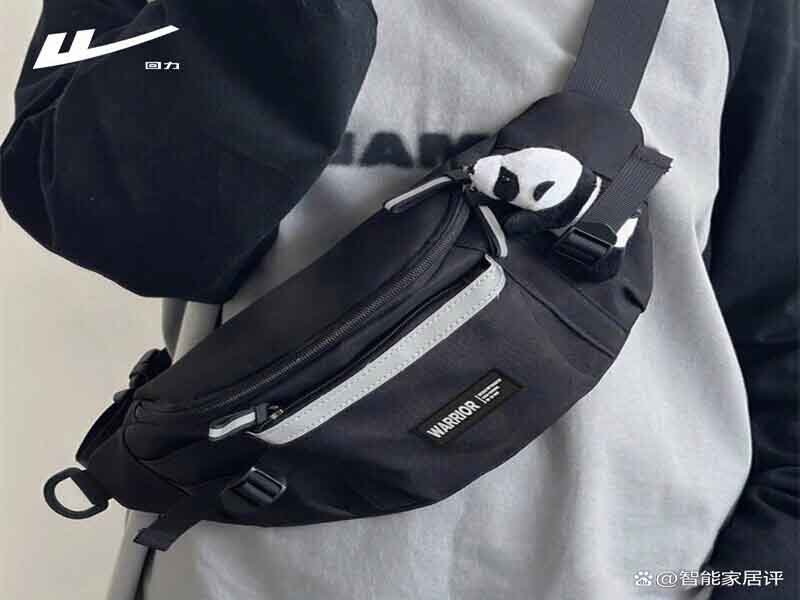
Crossbody bags with adjustable straps are bags designed to be worn diagonally across the torso, with the strap length shortened or extended to change the bag’s position. Their main advantage is not simply hands-free carrying. Adjustability allows one design to accommodate different body proportions, clothing layers, carrying preferences, and use scenarios. A successful crossbody bag should remain close to the body without pulling sharply on the shoulder, restricting movement, or swinging excessively while the wearer walks.
The diagonal wearing position can improve stability compared with a loose shoulder bag because the strap crosses the torso and helps limit movement. However, a crossbody bag still places most of its load through one strap and one shoulder area. It should not be assumed that diagonal wear automatically eliminates asymmetrical loading. Research on single-strap bags has found that bag type, load position, and load magnitude can influence posture and balance, especially when the carried weight becomes excessive.
For users, this means comfort depends on more than fashion. For product developers, it means the strap cannot be selected at the final stage as a decorative accessory. Strap range, attachment angle, width, surface texture, buckle position, and bag capacity should be considered from the first sample.
What Defines an Adjustable Crossbody Bag?
An adjustable crossbody bag normally includes four functional elements: a bag body, two secure strap attachment points, an adjustable shoulder strap, and a length-control component such as a tri-glide slider or ladder-lock buckle. Some designs also use detachable swivel hooks, removable shoulder pads, side-release buckles, snap-adjustment systems, or double-layer webbing.
The defining characteristic is that the strap can change the vertical and horizontal position of the bag on the body. When the strap becomes shorter, the bag usually sits higher and closer to the chest or upper waist. When it becomes longer, the bag drops toward the hip or upper thigh. This adjustment affects more than appearance. It changes access, movement, perceived weight, strap angle, and how strongly the bag swings.
A genuinely functional adjustable strap should provide enough usable movement between its shortest and longest settings. A slider that changes the strap by only a few centimeters may be adequate for styling, but it will not accommodate a broad range of heights, body shapes, or outerwear.
The following characteristics separate a functional adjustable crossbody design from a strap that is merely technically adjustable.
| Design Element | Basic Function | Better Product-Development Target | Common Failure |
|---|---|---|---|
| Adjustment range | Changes strap length | Supports shoulder, crossbody, and layered-clothing use where appropriate | Range is too narrow to create a meaningful fit change |
| Slider buckle | Holds selected length | Moves smoothly by hand but resists slipping under load | Slides during walking or scratches adjacent material |
| Strap attachment | Connects strap to bag | Aligns with the bag’s center of gravity | Attachment angle makes the bag tilt forward |
| Strap surface | Contacts clothing and body | Balances smooth adjustment with controlled grip | Strap twists, curls, slips, or damages clothing |
| Reinforcement | Transfers load into bag body | Uses box stitching, bar tacks, backing layers, or reinforced panels | Fabric tears around the attachment point |
| Hardware position | Controls fit and removability | Avoids direct pressure against the neck or collarbone | Buckle sits on the shoulder at common strap settings |
An adjustable crossbody bag may be made from nylon, polyester, canvas, cotton, leather, synthetic leather, neoprene, Oxford fabric, or a combination of shell, lining, reinforcement, and webbing materials. The shell fabric influences appearance and environmental resistance, while the strap construction often has a stronger effect on day-to-day comfort.
For example, a soft cotton canvas body may create a relaxed lifestyle look, but pairing it with thin, rigid webbing can make the finished product feel cheaper and less comfortable than the visual design suggests. Conversely, a lightweight recycled nylon bag can feel secure and premium when it uses dense webbing, smooth adjustment hardware, clean reinforcement, and carefully positioned strap anchors.
How Is It Different from a Shoulder Bag?
A shoulder bag is generally carried from one shoulder with the bag hanging on the same side of the body. A crossbody bag uses a longer strap that travels from one shoulder to the opposite side of the torso. The distinction sounds simple, but it changes the required strap range, attachment geometry, access position, and expected movement of the bag.
A shoulder bag often prioritizes quick removal, elegant drape, and short-distance carrying. A crossbody bag usually prioritizes hands-free movement, closer body contact, and greater stability. Convertible products attempt to provide both functions, although successful conversion requires more than simply adding extra strap length.
| Feature | Crossbody Bag | Shoulder Bag | Convertible Design |
|---|---|---|---|
| Typical wearing path | Diagonal across torso | Vertical from one shoulder | Can switch between diagonal and vertical wear |
| Bag position | Chest, waist, hip, or upper thigh | Underarm or beside hip | Depends on adjustment and attachment system |
| Strap requirement | Longer, highly adjustable | Shorter or medium length | Wide adjustment range or removable straps |
| Movement control | Usually more stable against the body | More likely to slide or swing off the shoulder | Stability depends on selected configuration |
| Access | Front, side, or hip access | Direct side access | Access changes with carrying mode |
| Best suited to | Travel, commuting, walking, events, daily essentials | Formal use, short trips, fashion styling | Multi-use collections and flexible wardrobes |
| Main design risk | Neck pressure, bouncing, excessive strap length | Shoulder slipping, uneven load, limited mobility | Added hardware, bulk, and complicated adjustment |
The strap attachment angle is one of the most overlooked differences. On a traditional shoulder bag, attachment points may sit close to the upper corners and pull mainly upward. On a crossbody bag, the strap pulls upward and inward at an angle. If the reinforcement panels and seams were developed only for vertical loading, repeated diagonal tension may distort the bag opening or rotate the bag away from the body.
Convertible bags require even more careful engineering. A bag that looks balanced with a short shoulder strap may lean forward when the strap is extended for crossbody use. This can happen when the bag’s center of gravity is positioned too far from the attachment line or when the anchors are mounted too low.
For this reason, designers should test the filled sample in every promoted carrying configuration. A convertible claim should not be approved solely because the strap can physically reach the required length. The bag must also hang correctly, open conveniently, and remain comfortable in each mode.
Why Does Strap Adjustability Matter?
Strap adjustability matters because people do not carry bags under identical conditions. Height is only one variable. Torso length, chest shape, shoulder slope, preferred wearing side, clothing thickness, bag load, mobility, and personal access habits can all change the ideal strap setting.
A commuter may shorten the strap so the bag remains close while moving through a crowded station. A traveler may position it toward the front for easier monitoring. A cyclist may wear it higher across the back. A customer wearing a winter coat may need considerably more length than the same customer wearing a T-shirt.
Adjustability also helps control the bag’s center of mass. A bag worn too low can swing like a pendulum, especially when it contains a bottle, camera, or power bank. A bag worn too high may press against the ribs, restrict arm movement, or make the zipper difficult to see. The ideal setting normally keeps the load close enough to the torso to limit movement without forcing the strap tightly across the neck.
Current products illustrate how widely adjustment systems can vary. One UNIQLO crossbody style lists a strap range of approximately 50.5 to 106 centimeters, while another mini bag lists a range of roughly 77 to 134 centimeters. A BAGGU crescent model uses a maximum strap length of about 119 centimeters. These figures are not interchangeable standards; they show how bag volume, intended position, and styling direction influence the selected range.
The following matrix shows how wearing conditions change strap requirements.
| Wearing Condition | Likely Adjustment Need | Design Implication |
|---|---|---|
| Thin summer clothing | Shorter effective strap length | Slider should not create excessive loose tail |
| Heavy coat or layered outfit | Additional circumference and strap length | Maximum setting must be tested over bulky garments |
| Front-of-body travel wear | Medium or shorter setting | Bag opening and zipper direction should remain accessible |
| Low hip styling | Longer strap setting | Strap must resist twisting and bag should not bounce |
| High chest or back wear | Shorter setting | Hardware should not sit directly on the shoulder |
| Shared or unisex use | Broad adjustment range | Test across different torso sizes, not only model height |
| Filled bag with dense items | Greater load and downward pull | Slider grip, seam reinforcement, and strap width become more important |
| Frequent adjustment | Repeated slider movement | Hardware edges and webbing surface require abrasion evaluation |
A practical mistake is to determine the strap length using an empty sample. Once the bag is filled, the body may sag, the strap may settle, and the bag may sit several centimeters lower. Soft fabrics, unstructured constructions, and narrow straps can exaggerate this effect.
Development teams should therefore evaluate at least three conditions: empty display shape, normal daily load, and maximum recommended load. The preferred adjustment range should work under all three, even if the visual position changes slightly.
Who Should Use an Adjustable Crossbody Bag?
Adjustable crossbody bags are useful for people who need hands-free access, flexible wearing positions, and compact storage. They are particularly suitable for commuters, travelers, event visitors, retail staff, photographers, parents, cyclists, students, medical workers, and customers who frequently move between indoor and outdoor environments.
The design can also serve users who want to reposition the bag without removing it. A traveler may rotate the bag from the back to the front before entering a crowded area. A retail employee may move a utility pouch toward the side while working. A parent may shorten the strap when carrying a child. These actions depend on smooth, one-handed adjustment and hardware that remains secure afterward.
Not every adjustable crossbody bag is suitable for every user, however. A very small fashion bag may have an adjustable strap but lack the width and reinforcement needed for heavier daily items. A large messenger-style crossbody may hold a tablet and documents but feel uncomfortable for a user with shoulder sensitivity. A technical sling may fit closely during movement but provide less elegant styling for formal environments.
The product should therefore be selected according to use rather than the presence of an adjustable buckle alone.
| User or Scenario | Useful Bag Capacity | Recommended Wearing Character | Important Strap Features |
|---|---|---|---|
| Minimal daily carry | 1–3 L | High waist or hip | Lightweight strap, compact buckle, easy shortening |
| Urban commuting | 3–7 L | Close to side or front | Stable webbing, smooth slider, reinforced anchors |
| Travel documents and phone | 2–5 L | Front or high hip | Secure adjustment, low-profile hardware, zipper access |
| Camera or electronics | 4–10 L | Close to torso | Wider strap, optional padding, strong attachment structure |
| Retail or work utility | 2–6 L | Side or front | Fast adjustment, abrasion resistance, washable materials |
| Fashion collection | Varies | Based on silhouette | Hardware finish, drape, color matching, controlled strap tail |
| Outdoor walking | 3–8 L | High and stable | Moisture resistance, secure buckle, anti-slip surface |
| Shared household use | 2–7 L | Multiple positions | Broad adjustment range and intuitive hardware |
For brands developing a new product, the target user should be described in physical and behavioral terms. “Young urban customer” is too vague to guide strap engineering. A more useful profile might be: carries a large phone, cardholder, keys, earphones, and a 500-milliliter bottle; walks or takes public transport; wears light jackets for part of the year; prefers the bag at the upper hip; and expects to adjust it quickly.
That level of detail helps determine capacity, strap length, strap width, compartment position, closure direction, reinforcement, and material choice. It also produces a bag that feels intentional rather than assembled from unrelated components.
How Do You Choose the Right Strap Length?
The right strap length allows the crossbody bag to reach its intended wearing zone without forcing the user to use the buckle at its absolute minimum or maximum setting. For most general-purpose designs, the bag should be testable at the lower chest, waist, upper hip, and hip positions. The final range must account for wearer height, torso circumference, garment thickness, bag dimensions, attachment-point location, and how much the bag drops when filled.
There is no single universal strap length that fits every crossbody bag. Market guides commonly describe approximately 114 to 137 centimeters as a general crossbody range, while actual branded products may be shorter or longer depending on whether the design is a compact sling, crescent bag, camera bag, mini pouch, or convertible shoulder bag.
The practical goal is not to copy a popular measurement. It is to develop a usable adjustment window around the target wearing position.
What Is the Standard Strap Length?
A commonly referenced full crossbody strap length is approximately 110 to 140 centimeters, measured from one attachment end to the other. However, calling this a standard can be misleading because brands do not always measure straps in the same way.
Some measurements include swivel hooks and end fittings. Others measure only the webbing or leather section. Some products list the maximum usable length, while others list the total cut length before assembly. Crescent and sling bags may use shorter straps because the bag body itself wraps partly around the torso. Small rectangular camera bags often require a longer free-hanging strap.
The bag’s attachment points also affect the effective drop. A strap connected to the top edge of a tall bag does not create the same final position as the same strap connected to the side panels of a shallow crescent bag.
The following ranges can be used as development starting points rather than fixed rules.
| Product Type | Suggested Prototype Range | Typical Wearing Position | Development Notes |
|---|---|---|---|
| Mini phone pouch | 100–130 cm | Chest to upper hip | Keep hardware compact relative to bag size |
| Small fashion crossbody | 105–135 cm | Waist to hip | Check fit with dresses, shirts, and light jackets |
| Camera-style crossbody | 110–140 cm | Upper hip to hip | Test zipper access and bag tilt when filled |
| Crescent crossbody | 75–125 cm | Underarm to waist | Curved bag body may reduce required strap length |
| Travel crossbody | 105–145 cm | Front torso to hip | Allow for outerwear and front-of-body positioning |
| Messenger crossbody | 115–150 cm | Hip to upper thigh | Wider strap and heavier-load testing are often needed |
| Convertible shoulder bag | 65–140 cm or detachable system | Underarm to hip | A single very wide range may create excess strap tail |
| Compact sling | 65–115 cm | Chest or back | Torso circumference matters more than vertical drop alone |
A broad range is not automatically better. Excessively long straps create additional webbing that must be managed. The loose tail may hang from the buckle, curl, catch on surrounding objects, or interrupt the visual design. Some systems use elastic keepers, folded strap ends, double-back routing, or hidden adjustment channels to control excess length.
Very short minimum settings can also be misleading. If shortening the strap causes several layers of webbing to stack under the buckle, the strap may become stiff and bulky. For a premium product, adjustment should look clean at the middle setting and remain acceptable near both ends of the range.
How Do You Measure Strap Drop?
Strap drop is the vertical distance from the top of the strap at the shoulder to the top edge or reference point of the bag. It is different from total strap length.
A shopper may describe the desired fit by saying, “I want the bag to sit at my hip,” while a factory needs measurable points. Converting that preference into a repeatable specification requires measuring the wearer, bag, and strap together.
A reliable measurement method follows these steps:
First, place a soft measuring tape on the intended shoulder.
Second, run the tape diagonally across the torso to the desired top edge of the bag.
Third, continue the tape around the side or lower attachment path when the product construction requires a complete end-to-end strap measurement.
Fourth, record whether the measurement includes hooks, rings, tabs, and buckles.
Fifth, repeat the measurement while wearing typical outerwear.
Sixth, test the physical sample with a representative load.
A body measurement should not be transferred directly to the production strap without considering bag height and attachment position. If the desired bottom of the bag is 55 centimeters below the shoulder, and the bag itself is 20 centimeters tall, the top-edge strap drop will be different from the bottom-edge wearing position.
The following specification format helps prevent confusion between design, sample, and production teams.
| Measurement | Example Specification | Why It Matters |
|---|---|---|
| Total strap length | 82–136 cm | Defines overall adjustable range |
| Strap-only length | 76–130 cm | Excludes hooks or end hardware |
| Hardware contribution | 3 cm per side | Clarifies total assembled dimension |
| Strap width | 30 mm | Affects hardware compatibility and comfort |
| Target bag-top drop | 48–63 cm | Describes expected vertical wearing zone |
| Attachment location | Upper side seam, 20 mm below zipper | Controls bag angle and effective drop |
| Adjustment method | Metal tri-glide slider | Defines routing and testing method |
| Measurement tolerance | ±10 mm | Provides production-control limit |
Photographs should be added to the technical package to show the measurement path. A written number without a reference image can be interpreted differently by the designer, pattern maker, material supplier, and quality inspector.
For removable straps, measurements should clearly state whether snap hooks are included. For fixed straps, the specification should identify the seam line or attachment edge from which the length begins. For knotted rope straps, adjustment may depend on knot position rather than a conventional buckle, requiring a different inspection method.
Which Length Suits Different Heights?
Height can provide a starting point, but it should never be the only fitting variable. Two people of the same height may have different torso lengths, shoulder widths, chest measurements, and preferred bag positions. Clothing can also change the required setting more than a small difference in height.
For initial sample evaluation, a manufacturer may use a height-based matrix combined with body and clothing tests.
| Wearer Height | Useful Starting Strap Range | Likely Midpoint Setting | Key Fit Check |
|---|---|---|---|
| Under 155 cm | 95–125 cm | 108–115 cm | Bag should not fall below the upper thigh |
| 155–165 cm | 100–132 cm | 112–120 cm | Check waist and hip positions |
| 165–175 cm | 105–138 cm | 118–126 cm | Test both front and side access |
| 175–185 cm | 110–145 cm | 124–134 cm | Confirm fit over jackets |
| Over 185 cm | 115–155 cm | 130–142 cm | Ensure maximum setting is not fully extended |
| Broad or layered fit | Add approximately 5–15 cm for testing | Depends on clothing | Check comfort over chest and outerwear |
These figures are development references, not universal sizing or medical guidance. The bag shape and wearing direction can shift the required length significantly. A compact sling worn high across the chest may use a much shorter strap than a rectangular bag worn at the hip, even for the same person.
The midpoint setting deserves particular attention. The target wearer should ideally achieve the preferred fit without moving the slider to the extreme end. Leaving adjustment available in both directions allows the user to accommodate clothing changes and alternate wearing positions.
A good fit trial should include more than a standing mirror check. The wearer should walk, sit, bend, reach, climb stairs, open the bag, remove a phone, and rotate the bag from front to back. These movements reveal problems that static photography hides.
For example, a bag may appear correctly positioned at the hip while standing but move upward and press into the ribs when the wearer sits. Another may feel comfortable while empty but pull downward once a power bank and bottle are added. These observations should be recorded during sampling rather than left for customer reviews after launch.
Where Should a Crossbody Bag Sit?
For general daily use, a crossbody bag often works best between the lower ribs and upper hip. This zone keeps the bag relatively close to the torso, makes the main compartment accessible, and reduces excessive swinging. However, the ideal position changes with the product’s purpose.
A travel bag may sit toward the front so passports and phones remain visible. A fashion bag may sit lower on the hip to complement the silhouette of an outfit. A cycling or outdoor sling may sit high across the back to limit movement. A work utility pouch may sit at the side so the wearer can reach tools without rotating the entire bag.
| Bag Position | Main Advantage | Main Risk | Suitable Uses |
|---|---|---|---|
| Upper chest | Strong visibility and quick access | Can feel restrictive or visually bulky | Events, security-focused travel, compact slings |
| Lower chest or rib area | Stable and close to body | May interfere with arm movement | Cycling, festivals, active commuting |
| Waist | Balanced access and reduced swing | Can overlap jacket hems or belts | Daily errands, phone bags, compact utility bags |
| Upper hip | Natural reach and versatile appearance | May bounce if strap is too long | Everyday crossbody bags, camera bags |
| Low hip | Relaxed styling and greater torso space | Increased swing and perceived weight | Fashion bags and lightweight contents |
| Upper thigh | Maximum visual drop | More movement and contact with the leg | Styling-led designs with very light loads |
| High back | Good movement clearance | Zippers are less visible and accessible | Cycling, walking, technical slings |
The bag should not repeatedly strike the leg, pull across the throat, or force the wearer to lift the shoulder. These are signs that the position, strap length, attachment angle, or load is unsuitable.
Research on asymmetrical load carriage should also be interpreted carefully. Studies involving school bags and heavier loads show that one-sided carrying and increasing load can change posture, gait, shoulder forces, and balance. Those findings do not establish one exact safe weight for every adult crossbody bag, but they support a practical design principle: keep the product’s own weight reasonable, position dense items close to the body, and avoid giving a narrow strap more carrying capacity than it can comfortably support.
For a brand developing a crossbody collection, the intended wearing position should be photographed and documented before finalizing the strap. Technical drawings should show the target midpoint position, shortest acceptable position, and longest acceptable position. The sample should then be tested on multiple wearers and over at least two clothing conditions.
This process turns strap length from a guessed dimension into a controlled product feature. It also helps reduce fit-related returns, negative comfort feedback, and last-minute changes after production materials have already been ordered.
Which Strap Width Is Most Comfortable?
The most comfortable strap width depends on the filled weight of the bag, the firmness of the webbing, the duration of wear, and the size of the contact area on the shoulder. For lightweight crossbody bags, a strap around 20 to 30 millimeters wide is often sufficient. Medium-capacity daily bags commonly benefit from 30 to 40 millimeters, while heavier camera, travel, or utility bags may require 40 to 50 millimeters or a padded shoulder section. Wider is not automatically better, however. A strap that is too wide can rub the neck, resist natural body movement, or look visually out of proportion with a compact bag.
Comfort is largely a pressure-management problem. When the same load is distributed across a wider contact area, localized pressure can decrease. Research into load-carrying systems has found that wider shoulder straps can reduce shoulder pressure, particularly when the load is positioned higher, while peak pressure and strap force are strongly associated with perceived discomfort. These studies focus mainly on backpacks and controlled load-carriage systems rather than fashion crossbody bags, but the underlying principle remains useful: concentrated force usually feels less comfortable than properly distributed force.
The important word is properly. A wide strap made from stiff webbing with sharp edges may feel worse than a narrower strap with a soft hand feel and rounded edge construction. Likewise, a padded strap may look technical but fail to provide real comfort if the padding slides away from the shoulder or compresses completely after several minutes.
How Does Strap Width Affect Comfort?
Strap width determines how the carrying force is spread across the shoulder, chest, and back. When a narrow strap supports a relatively dense load, the pressure is concentrated over a smaller area. The user may describe the result as cutting, digging, pinching, or pulling, particularly where the strap passes close to the neck or collarbone.
A wider strap increases the contact area, but width alone does not guarantee even pressure. The strap must lie flat. If it twists, folds, curls at the edges, or becomes narrower where it passes through the buckle, the actual contact area can be much smaller than the nominal width.
For example, a 38-millimeter strap that twists into a folded shape may behave more like a 15-millimeter cord at the pressure point. The technical specification still says 38 millimeters, but the wearer experiences a much narrower load path.
The following ranges provide useful prototype starting points.
| Filled Bag Weight | Suggested Strap Width | Typical Product Type | Comfort Priority |
|---|---|---|---|
| Under 0.5 kg | 10–20 mm | Mini pouch, phone bag, decorative crossbody | Lightness and visual proportion |
| 0.5–1.0 kg | 20–25 mm | Small fashion bag, compact travel pouch | Soft edges and stable adjustment |
| 1.0–2.0 kg | 25–32 mm | Daily crossbody, camera-style bag | Balanced pressure and hardware strength |
| 2.0–3.5 kg | 32–40 mm | Tablet bag, commuter bag, medium messenger | Wider contact area and low-slip webbing |
| 3.5–5.0 kg | 38–50 mm | Camera bag, equipment bag, large messenger | Padding, reinforcement, and load testing |
| Over 5.0 kg | 50 mm or specialized support | Technical equipment carrier | Crossbody-only construction may not be ideal |
These figures are design-development references rather than universal safety limits. The user’s body, wearing time, walking speed, clothing, strap stiffness, and bag position can all change the experience. A two-kilogram load carried for five minutes is not the same as the same load carried through an airport for two hours.
The relationship between strap width and bag scale also matters visually. A 50-millimeter webbing strap may feel secure on a large utility bag but overwhelm a small leather crossbody. Conversely, a 12-millimeter leather strap can look elegant on a compact fashion bag but feel unsuitable when the bag has enough capacity for a tablet and bottle.
A good development process therefore uses both a weight target and a visual target. The design team should specify the expected filled weight before selecting the strap width. Without that number, strap selection becomes a matter of appearance alone.
A practical product specification may define three loading conditions:
| Load Condition | Example Contents | Purpose |
|---|---|---|
| Display load | Tissue paper or light filler | Evaluates retail shape and photography |
| Normal-use load | Phone, wallet, keys, charger, small cosmetics | Evaluates daily comfort and access |
| Maximum intended load | Densest reasonable combination of approved contents | Evaluates slipping, deformation, seams, and hardware |
The strap should remain flat and stable in all three conditions. If the bag is comfortable only when nearly empty, its capacity and strap system are poorly matched.
Are Wide Straps Better for Heavy Bags?
Wide straps are generally more suitable for heavier crossbody bags because they can spread force over a larger shoulder area. They also provide more surface area for padding, printed graphics, embroidery, woven branding, reflective details, or anti-slip finishes.
However, there is a point where simply making the strap wider stops solving the problem. A large crossbody bag still places an asymmetrical load on the body. Research involving different bag configurations has shown that bag weight, strap length, load position, and support features can affect strap forces and pressure. Increasing the bag’s capacity without controlling its expected load can therefore create a product that appears comfortable but encourages users to carry more than the strap system handles well.
A wider strap is most effective when four other conditions are met.
The strap should remain flat across the shoulder.
The webbing should not stretch excessively under load.
The adjustment buckle should hold its selected position.
The bag’s attachment points should align with its center of gravity.
If one of these conditions fails, the added width may offer little benefit. For instance, a 50-millimeter strap attached too low on the bag can make the top edge tip outward. The user then tightens the strap to stabilize the bag, increasing pressure across the torso.
Heavy bags also require consideration of the transition area where the wide strap connects to narrower hardware or side tabs. A comfortable 50-millimeter shoulder section may taper into a 20-millimeter attachment loop. That narrow transition can become the structural weak point.
| Construction Area | Common Risk | Better Design Approach |
|---|---|---|
| Shoulder contact zone | Localized pressure | Use adequate width, soft hand feel, or controlled padding |
| Slider buckle | Slippage under load | Match webbing thickness and texture to buckle geometry |
| Strap taper | Stress concentration | Use gradual tapering and reinforced stitching |
| Side tab | Fabric tearing | Add backing material or internal reinforcement |
| Swivel hook | Rotation or opening | Select hardware with suitable load margin |
| Ring connection | Abrasion and noise | Match ring diameter, finish, and strap angle |
| Main bag seam | Seam distortion | Extend reinforcement beyond the visible attachment point |
A wide strap can also change how a bag behaves during movement. Greater surface contact may reduce sliding, which is useful for active or travel products. Yet too much grip can prevent the bag from rotating smoothly from the back to the front. This is particularly important for travelers who frequently reposition the bag to access documents or monitor valuables.
The right solution may be a two-zone strap. The shoulder area can be wider and softer, while the adjustment area remains narrower for smooth movement through the buckle. This construction can improve comfort without forcing the entire hardware system to use oversized components.
For a medium travel crossbody expected to hold approximately 2.5 kilograms, a reasonable prototype might use a 38-millimeter polyester webbing strap with a 55-millimeter removable shoulder pad. A lighter fashion version of the same bag could use a 25-millimeter woven strap without padding. The bag shape may remain similar, but the intended load changes the strap engineering.
This is why brands should not select one “standard strap” and apply it to every item in a collection. A phone pouch, crescent bag, tablet bag, and camera bag may share colors and materials while requiring different strap widths.
Do Padded Straps Reduce Shoulder Pressure?
Padded straps can reduce the sensation of concentrated pressure by increasing the contact area and adding a compressible layer between the webbing and shoulder. Their effectiveness depends on padding density, thickness, coverage, shape, and stability.
Soft foam may feel comfortable during the first few minutes but flatten quickly under load. Very firm foam may preserve its shape but create hard edges. Thick padding can also trap heat, appear bulky, and interfere with adjustment.
The most useful shoulder pad is not necessarily the thickest one. It should maintain enough structure to spread pressure without becoming rigid. It should also stay in the intended shoulder zone as the user walks.
Common padding materials include EVA foam, polyethylene foam, neoprene, spacer mesh, felt, sponge, and layered nonwoven materials.
| Padding Material | Typical Strength | Potential Limitation | Suitable Application |
|---|---|---|---|
| EVA foam | Resilient and shape-stable | Can feel firm in higher densities | Camera and equipment bags |
| PE foam | Lightweight and economical | May feel less premium | Promotional and utility bags |
| Neoprene | Flexible, soft, and slightly grippy | Can trap heat and add thickness | Sports and casual crossbody bags |
| Spacer mesh | Breathable and cushioned | Technical appearance may not suit fashion styles | Travel and outdoor bags |
| Felt | Soft and easy to laminate | May absorb moisture and compress | Lifestyle and wool-blend designs |
| PU sponge | Soft initial hand feel | Quality varies and may degrade over time | Fashion bags with moderate loads |
| Multi-layer composite | Performance can be tuned | More production steps and higher cost | Premium travel and technical bags |
Padding shape matters as much as padding material. A rectangular pad with abrupt ends may create two pressure transitions where the padding begins and ends. A tapered pad can produce a smoother change in thickness.
The pad should also be long enough to remain under the shoulder throughout the expected adjustment range. If the user shortens the strap and the pad moves toward the chest, it no longer performs its main function. Fixed pads avoid this movement but limit adjustability. Sliding pads offer flexibility but may drift during wear.
A product developer can compare shoulder-pad constructions using a controlled wear test.
| Evaluation Item | Test Method | Acceptable Observation |
|---|---|---|
| Initial comfort | Wear normal load for 10 minutes | No sharp pressure point |
| Extended comfort | Walk with normal load for 45–60 minutes | Pressure remains broadly distributed |
| Compression recovery | Remove load after use | Pad regains most of its original thickness |
| Pad migration | Walk, sit, and rotate bag | Pad stays near shoulder zone |
| Heat and moisture | Wear over light clothing | No excessive heat buildup for intended use |
| Edge comfort | Move arms naturally | Pad edges do not scratch neck or skin |
| Appearance | Test at short and long settings | Pad remains visually aligned |
For compact fashion bags carrying less than one kilogram, padding may be unnecessary and visually distracting. A softer webbing, folded fabric strap, or wider leather construction may provide sufficient comfort. Padding becomes more relevant as the weight, wearing duration, and technical expectations increase.
A useful rule is to solve the load problem before adding padding. If the bag carries too much weight for a one-shoulder system, padding may hide the problem rather than fix it. Capacity, bag weight, and contents should first be controlled.
How Do Strap Edges Prevent Rubbing?
Strap edges affect comfort whenever the strap contacts the neck, shoulder, arm, chest, or exposed skin. Rough yarn ends, heat-cut edges, stiff coatings, poorly folded seams, and sharp hardware corners can create irritation even when the strap width is appropriate.
The edge construction depends on the strap material.
Woven webbing may use heat-sealed cut ends, but these should normally remain inside a folded or stitched assembly rather than contact the body directly.
Fabric straps may use turned edges, binding, piping, or folded multi-layer construction.
Leather straps may use painted edges, folded edges, burnished edges, or raw edges depending on the leather type and desired style.
Synthetic leather straps often require careful edge paint or folded construction because a cut edge may expose the backing fabric.
Cotton webbing may feel soft but can become fuzzy or distorted if the weave density and finishing are insufficient.
The side edges along the full strap length also matter. Some webbings have firm woven selvedges that maintain shape, while others feel abrasive against the neck. The problem may only appear after repeated movement, especially with sleeveless clothing.
| Edge Problem | Likely Cause | Product-Development Solution |
|---|---|---|
| Neck scratching | Hard webbing edge or poor slider position | Use softer selvedge and reposition hardware |
| Skin irritation | Rough fibers or protruding thread | Improve yarn quality and trimming |
| Hard cut end | Excessive heat sealing | Enclose cut end inside fold or cover |
| Peeling edge paint | Poor paint compatibility or flex resistance | Use layered edge coating and flex testing |
| Curled strap | Unbalanced tension or unsuitable lamination | Adjust construction and material grain direction |
| Bulky folded edge | Too many layers at seam | Skive, taper, or reduce reinforcement locally |
| Fraying | Low-density weave or insufficient sealing | Improve weave specification and end treatment |
| Clothing damage | Rough hardware or coating | Use smooth plating and inspect contact surfaces |
Edge comfort should be evaluated with the actual production hardware. A soft strap can still rub if the slider forces it to bend at a steep angle. The point where the strap exits the buckle may become harder and thicker than the rest of the strap.
One useful test is to run the assembled strap repeatedly over a delicate reference fabric and inspect both surfaces. Another is to wear the bag over a sleeveless top, a fine knit, and a thick jacket. These conditions expose different problems.
Factories should also inspect the back side of the strap, not only the visible face. The underside often contacts the user and may contain joint seams, label edges, embroidery backing, rivet ends, or uneven lamination.
For custom collections, Szoneier can develop the strap as a complete component rather than treating webbing, padding, hardware, and stitching as separate purchases. This allows the shoulder feel, visual proportion, load requirement, and brand styling to be evaluated together during sampling.
Which Strap Materials Work Best?

The best strap material depends on the bag’s weight, intended appearance, climate, exposure to moisture, cleaning requirements, branding method, and price target. Nylon is often selected for strength, flexibility, and abrasion resistance. Polyester performs well where color stability, moisture management, printing, and cost control are important. Cotton offers a softer, more natural feel. Leather creates a premium appearance but needs careful thickness, edge, and hardware development. Recycled polyester and recycled nylon can perform reliably when their source, yarn quality, construction, and certification are properly controlled.
Material names alone do not predict finished performance. “Nylon strap” can describe a soft apparel-style tape, dense seatbelt webbing, high-tenacity technical webbing, or a decorative jacquard construction. The fiber is only one part of the result. Yarn denier, filament type, weave density, thickness, finish, coating, and hardware compatibility may be equally important.
Is Nylon Better Than Polyester?
Nylon is not universally better than polyester. Nylon is often favored for high strength, flexibility, and resistance to repeated abrasion. Polyester is often preferred for lower moisture absorption, stable color, UV exposure, printable surfaces, and consistent cost. The correct choice depends on where and how the bag will be used.
High-tenacity nylon fabrics are widely used in performance bags because they can provide strong tear and abrasion resistance at a manageable weight. CORDURA’s official material descriptions, for example, identify nylon 6,6 constructions for applications requiring resistance to tears, scuffs, and abrasion. The company also offers polyester constructions designed for printing, water repellency, and resistance to everyday wear, which illustrates that performance is not limited to one fiber category.
Nylon webbing commonly has a smoother, denser, and slightly more flexible feel. It can be suitable for premium travel bags, camera bags, military-inspired products, equipment carriers, and products requiring repeated flexing.
Polyester webbing is widely used in everyday bags because it offers reliable strength, good dimensional stability, broad color availability, and compatibility with sublimation or woven branding. It is often a practical choice for promotional bags, casual collections, outdoor products, and private-label programs that require consistent color across multiple production runs.
| Property | Nylon Webbing | Polyester Webbing | Product Impact |
|---|---|---|---|
| Abrasion performance | Often excellent in high-tenacity constructions | Good to excellent depending on yarn and weave | Important for hardware contact and daily rubbing |
| Moisture response | Can absorb more moisture | Generally absorbs less moisture | Polyester may dry and stabilize more predictably |
| UV and color stability | Depends on formulation and dyeing | Often preferred for outdoor color stability | Relevant for bright and dark colors |
| Hand feel | Often smooth and flexible | Can range from soft to firm | Must match bag style and comfort target |
| Stretch under load | May show slightly more elasticity | Often more dimensionally stable | Affects bag bounce and strap length |
| Printing | Possible, but process-dependent | Often well suited to sublimation | Useful for full-color branded straps |
| Dye depth | Can produce rich colors | Strong commercial color range | Lab-dip approval still required |
| Cost | Often higher in comparable premium grades | Frequently more economical | Depends on width, density, and volume |
| Typical positioning | Technical, premium, equipment-oriented | Lifestyle, promotional, outdoor, fashion | Both can cross categories |
This table describes common tendencies, not guaranteed performance. A dense high-tenacity polyester webbing may outperform a lightweight nylon tape. Material decisions should be based on test results and construction rather than fiber names alone.
The buckle is another deciding factor. A smooth nylon webbing may slide through a polished metal buckle more easily than expected, while a textured polyester strap may hold more securely. Changing the fiber or weave after buckle selection can alter adjustment force and slippage.
During sampling, the factory should evaluate three properties:
How easily the user can adjust the strap by hand.
Whether the buckle holds the selected length under load.
Whether repeated adjustment damages the webbing surface.
A strap that is impossible to adjust is frustrating. A strap that adjusts too easily may lengthen while the user walks. The best system sits between those extremes.
How Do Cotton Straps Perform?
Cotton straps provide a soft, natural, and casual appearance that works well with canvas, linen, jute, washed fabric, and lifestyle collections. They can feel more comfortable against the skin than stiff synthetic webbing and accept dyeing, screen printing, embroidery, and woven patterns.
Their limitations are moisture absorption, dimensional change, staining, and lower abrasion performance compared with some technical synthetic constructions. Cotton can become heavier when wet and may dry more slowly. Light colors can show dirt around the shoulder and adjustment buckle. Dark colors may require testing for rubbing and color transfer.
Cotton webbing quality varies substantially. The specification should include fiber composition, width, thickness, weave, weight per meter, colorfastness, shrinkage, and finishing method. “100% cotton webbing” is not enough to ensure consistent production.
| Cotton Strap Factor | Recommended Check | Why It Matters |
|---|---|---|
| Fiber composition | Confirm cotton or cotton-blend percentage | Blends may change hand feel and strength |
| Width tolerance | Measure across multiple rolls | Hardware fit depends on consistent width |
| Thickness | Check compressed and uncompressed thickness | Thick webbing may jam in sliders |
| Weave density | Inspect light transmission and yarn movement | Loose weaves stretch and distort |
| Shrinkage | Test after intended cleaning method | Strap length may change |
| Dry and wet rubbing | Test against light-colored fabric | Reduces risk of dye transfer |
| Surface fuzzing | Simulate repeated wear | Affects appearance and skin comfort |
| Water exposure | Wet, dry, and remeasure | Reveals distortion and recovery |
| Stitching response | Inspect needle penetration and seam puckering | Dense cotton can require needle adjustment |
Cotton-polyester blends can offer a compromise between natural touch and dimensional stability. A cotton face can preserve the desired appearance while synthetic content improves strength and drying behavior. However, the actual result depends on yarn placement and weave structure.
For a washed canvas crossbody bag, a cotton strap may support the relaxed aesthetic better than shiny nylon. For a medical accessory or outdoor travel bag requiring frequent cleaning, polyester may be more practical.
Cotton straps can also be laminated over internal reinforcement. A decorative cotton outer layer may wrap around a polyester webbing core. This construction preserves the visible material story while improving load performance. It does, however, add thickness and production complexity.
Are Leather Straps More Durable?
Leather straps can be highly durable when made from suitable leather, correctly reinforced, and maintained under appropriate conditions. They also offer a premium hand feel, natural grain, edge finishing, and visual aging that synthetic webbing cannot exactly reproduce.
However, leather durability varies by hide quality, tanning method, thickness, fiber structure, surface finish, and construction. A thick strap is not automatically strong. Loose fiber structure, excessive splitting, poor edge paint, or incorrectly positioned holes can cause stretching and cracking.
Leather straps are commonly made from full-grain leather, top-grain leather, corrected leather, split leather, bonded leather, or leather laminated with textile reinforcement. These categories should not be treated as equivalent.
| Leather Construction | Main Advantage | Main Risk | Suitable Use |
|---|---|---|---|
| Full-grain leather | Natural character and strong surface | Higher cost and natural variation | Premium long-life bags |
| Top-grain leather | Consistent appearance and good durability | Finish may hide quality differences | Fashion and business collections |
| Corrected leather | Uniform surface and color | Less natural feel | Large-volume structured programs |
| Split leather | Lower material cost | Lower tear resistance and edge stability | Decorative or lightly loaded straps |
| Bonded leather | Consistent surface and low cost | Limited flex durability | Entry-level fashion products |
| Leather over webbing | Premium appearance with internal strength | Added thickness and labor | Travel and premium utility bags |
| Synthetic leather strap | Broad colors and easy matching | Peeling, hydrolysis, or cracking risk | Fashion programs with controlled lifespan |
Leather straps may stretch over time, especially when they are long, narrow, and heavily loaded. Internal reinforcement can reduce this change. A woven tape or microfiber layer can be laminated between the leather faces without becoming visible.
Adjustment methods also differ. Leather straps often use punched holes and pin buckles rather than continuous sliders. This creates fixed adjustment increments. The hole spacing should be close enough to provide useful fit options without weakening the strap.
Edge finishing is critical. Poor edge paint may crack at the buckle, peel near the holes, or become sticky under heat and humidity. Folded leather edges can improve durability but require skiving and precise assembly. Raw edges can work with suitable vegetable-tanned leather but may not suit softer chrome-tanned materials.
A leather strap should be flexed around the buckle repeatedly during development. The surface should also be inspected after heat, humidity, rubbing, and loaded hanging. This is particularly important for products shipped between climates.
Leather is therefore not automatically the most durable choice. A high-quality polyester or nylon webbing may outperform low-grade leather in water exposure, abrasion, and repeated adjustment. Leather should be selected because its appearance and aging behavior fit the product, not because the word itself implies superior quality.
Which Materials Resist Water and Abrasion?
High-tenacity nylon and dense polyester are strong options for water-resistant and abrasion-resistant crossbody straps, particularly when combined with suitable coatings, water-repellent finishes, and corrosion-resistant hardware. Yet water repellency, water resistance, and waterproof construction are different claims.
Water repellency describes the tendency of water to bead and roll from a surface.
Water resistance describes the material’s ability to resist penetration under defined conditions.
Waterproof performance usually requires a complete system that controls shell fabric, seams, zippers, needle holes, coatings, and openings.
A strap may absorb little water while the bag body leaks through the zipper. Conversely, a coated bag body may resist water while a cotton strap becomes soaked. Product claims should reflect the complete bag rather than one material.
International test methods help brands define performance more accurately. ISO 811 specifies a hydrostatic-pressure method for measuring fabric resistance to water penetration. AATCC TM22 evaluates surface wetting through a spray test. Abrasion can be evaluated through methods such as ISO 12947 using the Martindale approach or ASTM D3884 using a rotary-platform abrader. These methods measure different aspects of performance, so results from different methods should not be compared as though they were identical.
A crossbody-bag material plan may use the following testing logic.
| Product Claim | Relevant Evaluation | What the Result Helps Determine |
|---|---|---|
| Water-repellent surface | Spray test | Whether water beads or wets the surface |
| Water-resistant fabric | Hydrostatic-pressure test | Resistance to water penetration |
| Abrasion-resistant strap | Martindale or rotary abrasion method | Surface wear and material breakdown |
| Colorfast strap | Dry and wet rubbing tests | Risk of color transfer |
| Durable adjustment | Repeated buckle-cycling test | Wear caused by hardware movement |
| Secure load carrying | Static and dynamic load test | Slippage and structural deformation |
| Outdoor suitability | UV and weathering evaluation | Color and strength retention |
| Washable construction | Cleaning-cycle test | Shrinkage, distortion, and coating change |
The testing level should match the product claim and intended use. A small city bag described as “suitable for light rain” does not require the same test plan as a technical outdoor bag marketed for prolonged exposure.
Abrasion often occurs in specific zones rather than evenly across the strap. High-risk areas include the slider buckle, swivel hook, shoulder contact zone, side rings, and points where the strap rubs against the bag body.
For this reason, laboratory fabric testing should be combined with assembled-product testing. A material may achieve a strong abrasion result when tested flat but still fray rapidly when pulled through a buckle with a sharp edge.
Are Recycled Straps a Reliable Choice?
Recycled polyester and recycled nylon straps can be reliable when they are produced from controlled feedstocks, spun into consistent yarn, woven to an appropriate density, and verified through testing. Recycled content does not automatically make a strap weaker, just as virgin content does not automatically make it high quality.
The practical challenge is traceability and consistency. Brands should verify the percentage of recycled input, certification scope, transaction documentation, supplier identity, and whether the finished webbing—not only the raw fiber supplier—is covered by the relevant chain of custody.
The Global Recycled Standard and Recycled Claim Standard are widely used to verify recycled material content and trace recycled inputs through the supply chain. The GRS also includes additional requirements related to processing, chemicals, and social practices.
Recycled polyester is currently more widely available than recycled nylon. Textile Exchange reported that recycled polyester production reached approximately 9.3 million tonnes in 2024, although its share of the total polyester market was about 12 percent. Earlier reporting showed that recycled nylon represented a much smaller portion of total nylon production, reflecting tighter supply and technical recycling limitations.
This difference can affect price, color availability, minimum production quantities, and lead time.
| Recycled Strap Option | Availability | Main Advantage | Development Consideration |
|---|---|---|---|
| Recycled polyester webbing | Broad | Good color range and scalable supply | Confirm recycled percentage and dye consistency |
| Bottle-derived rPET | Broad | Recognizable material story | Avoid implying bottles were collected from oceans without evidence |
| Textile-to-textile polyester | Emerging | Supports textile circularity | Supply and colors may be limited |
| Recycled nylon 6 | Moderate to limited | Suitable for technical applications | Verify source and performance |
| Recycled nylon 6,6 | More specialized | High-performance potential | Higher cost and fewer suppliers |
| Mixed recycled blend | Variable | Can balance properties and cost | Recycling claims become more complex |
| Recycled webbing with virgin sewing thread | Common | Practical production solution | Claim should describe actual component content |
Some performance material suppliers already offer recycled nylon and recycled polyester constructions for bags, luggage, equipment, and accessories. CORDURA, for example, describes recycled nylon 6, nylon 6,6, and high-tenacity recycled polyester options designed for durable applications.
The brand should still approve the physical strap rather than relying on the fiber certificate. Important tests include tensile strength, elongation, buckle slippage, abrasion, colorfastness, thickness, width tolerance, and loaded aging.
A reliable recycled-strap development process can follow these steps:
Confirm the required recycled-content percentage.
Select the certification or documentation requirement.
Approve yarn and webbing suppliers before sampling.
Match the strap to the actual slider buckle.
Test color under daylight and artificial lighting.
Evaluate rubbing against light-colored garments.
Perform static and repeated-load testing.
Retain approved reference samples for bulk inspection.
Check production certificates and transaction records where required.
Claims should be precise. “Made with 100% recycled polyester webbing” is clearer than “100% recycled bag” when the bag also contains virgin thread, foam, coatings, zippers, and metal hardware.
Brands should also consider longevity. A durable bag that remains useful for years may support a stronger product story than a recycled-content bag that fails early. Material origin and usable life should be evaluated together rather than presented as competing priorities.
Szoneier can develop adjustable straps from nylon, polyester, cotton, canvas, leather-compatible constructions, neoprene composites, and recycled webbing. During custom development, the strap material can be matched with the shell fabric, lining, hardware finish, logo method, intended carrying load, and target market. Samples can then be evaluated for comfort, color, adjustment, abrasion, and structural performance before mass production.
What Hardware Makes Straps Reliable?
Reliable strap hardware must hold the selected length, move smoothly during adjustment, resist corrosion, and transfer the bag’s load without opening, twisting, cracking, or cutting into the strap. The most important components are usually the slider buckle, swivel hooks, D-rings, rectangular rings, side-release buckles, rivets, and reinforced attachment tabs. Good hardware is not defined by weight or shine alone. It must be correctly matched to the strap width, thickness, surface texture, expected load, and intended environment.
A metal buckle may look premium but perform poorly if its slot is too wide for the webbing. A plastic slider may appear less luxurious but provide excellent grip, low weight, and better resistance to saltwater exposure. The strongest hook can still fail if it is attached to a weak fabric tab. Strap reliability therefore comes from the complete connection system rather than one impressive component.
For customers, the most frustrating hardware problems usually appear after the bag has already been used for several weeks. The strap slowly becomes longer while walking. A swivel hook begins squeaking. A plated buckle loses color where it rubs against the webbing. A side ring rotates and makes the bag tilt forward. These failures are rarely visible in an untouched showroom sample, which is why hardware must be tested under repeated movement and realistic loading.
Which Buckles Adjust Most Smoothly?
Tri-glide sliders, ladder-lock buckles, cam buckles, pin buckles, and side-release buckles are commonly used to control crossbody strap length. Each system produces a different balance between adjustment speed, holding strength, appearance, weight, and cost.
A tri-glide slider is one of the most common choices for everyday crossbody bags. The strap passes through three sections of the buckle, creating friction that helps hold the selected length. It offers continuous adjustment rather than fixed holes, making it suitable for webbing, woven straps, and many fabric-covered straps.
A ladder-lock buckle usually creates stronger directional grip. It is frequently used on outdoor, utility, military-inspired, and sports bags. It can be easy to tighten by pulling the loose strap end, although loosening may require lifting or rotating the buckle.
A cam buckle uses a moving clamping section that presses against the strap. It can provide quick adjustment, but the teeth or clamping surface must not damage the webbing. This type is more common in technical products than refined fashion bags.
A pin buckle is often used with leather or synthetic leather straps. It creates a familiar premium appearance and gives clear fixed positions. Its disadvantage is that the user can adjust only according to the spacing between holes.
| Buckle Type | Adjustment Style | Main Advantage | Main Limitation | Suitable Bag Type |
|---|---|---|---|---|
| Tri-glide slider | Continuous | Simple, clean, widely available | Can slip if poorly matched to webbing | Daily crossbody and fashion bags |
| Ladder-lock buckle | Continuous with directional grip | Secure under movement | More technical appearance | Outdoor and utility bags |
| Cam buckle | Quick clamp adjustment | Fast and secure when correctly designed | May mark or damage soft webbing | Technical travel and equipment bags |
| Pin buckle | Fixed holes | Premium appearance and clear settings | Limited adjustment increments | Leather and structured fashion bags |
| Side-release buckle | Quick opening rather than fine adjustment | Easy removal and active styling | Adds bulk and possible accidental release risk | Sling and sports bags |
| Snap-button adjustment | Fixed positions | Minimal hardware appearance | Limited range and lower load suitability | Lightweight fashion bags |
| Knot or rope adjuster | Manual or sliding knot | Casual handmade appearance | Less precise and may loosen | Resort and lifestyle bags |
Smooth adjustment depends on the relationship between the buckle slot and the strap. If the slot is too narrow, adjustment becomes difficult and the strap edges may curl. If it is too wide, the buckle may not create enough friction and the strap can slip.
Webbing thickness is equally important. A buckle designed for a 1.2-millimeter strap may not work correctly with a soft 0.8-millimeter tape or a padded 2.5-millimeter strap. The buckle and strap should therefore be sampled together rather than sourced independently.
Surface texture changes adjustment behavior as well. Smooth seatbelt-style webbing can glide easily but may require a tighter buckle geometry. Coarse cotton webbing may hold well but feel difficult to adjust. Printed straps can become slightly thicker after ink or coating is applied, while embroidered areas may not pass through the slider at all.
A practical development check should include the following observations:
| Evaluation Point | Desired Result | Warning Sign |
|---|---|---|
| Initial adjustment | Strap moves with firm, controlled hand pressure | User must pull excessively hard |
| Holding strength | Selected length remains stable under normal load | Strap slowly extends while walking |
| Edge behavior | Strap stays flat through the buckle | Edges fold or curl |
| Surface wear | No visible cutting after repeated cycles | Fuzzing, polishing, or broken yarns appear |
| Noise | Minimal squeaking or clicking | Hardware rubs loudly during movement |
| Temperature response | Adjustment remains usable in heat and cold | Plastic becomes brittle or soft |
| Visual alignment | Buckle sits flat and parallel | Buckle rotates or stands away from strap |
One useful sample test is to mark the strap position with removable chalk, load the bag, and walk for thirty to sixty minutes. If the mark moves away from the buckle, the strap is slipping. This simple test often reveals problems that are not obvious during a brief fitting.
For premium products, adjustment force should also be consistent across production. If one batch of webbing is slightly thinner or smoother than the approved sample, the same buckle may behave differently. Bulk inspection should therefore include webbing thickness, width, surface feel, and slider holding performance.
Are Metal Sliders Better Than Plastic?
Metal sliders are not automatically better than plastic sliders. Metal provides a premium appearance, strong dimensional stability, and a wide range of finishes. Plastic reduces weight, avoids plating wear, performs quietly, and can be better suited to sports, outdoor, children’s, medical, or water-exposed products.
The choice should reflect the bag’s intended use and brand positioning.
Metal hardware is commonly made from zinc alloy, steel, brass, aluminum, or stainless steel. Zinc alloy is widely used for fashion bags because it can be molded into complex shapes and finished in many colors. Steel offers strength but may require careful corrosion protection. Brass creates a premium appearance and develops a distinctive aged finish. Aluminum is lightweight but can scratch or deform depending on thickness. Stainless steel is corrosion resistant but often more expensive and visually technical.
Plastic sliders are commonly made from acetal, nylon, polypropylene, or other engineering polymers. Acetal hardware is valued for dimensional stability, strength, and smooth movement. Nylon components can offer toughness and flexibility. Polypropylene is economical and lightweight, although it may not suit higher-load applications.
| Hardware Material | Strength | Weight | Corrosion Behavior | Visual Character | Common Use |
|---|---|---|---|---|---|
| Zinc alloy | Medium to high | Medium to heavy | Depends on plating quality | Fashionable and premium | Handbags and lifestyle bags |
| Steel | High | Heavy | Requires protective finishing | Industrial or classic | Utility and messenger bags |
| Brass | High | Heavy | Good with suitable finish | Heritage and luxury | Leather bags |
| Aluminum | Medium | Light | Generally good | Modern and technical | Travel and outdoor bags |
| Stainless steel | High | Medium to heavy | Excellent | Clean and technical | Marine, medical, and premium utility |
| Acetal plastic | Good | Very light | Excellent | Functional and understated | Sports and outdoor products |
| Nylon plastic | Good | Light | Excellent | Soft technical appearance | Lightweight bags |
| Polypropylene | Moderate | Very light | Excellent | Basic and economical | Promotional and casual bags |
Metal hardware may feel more valuable in the hand, but additional weight can be noticeable on a small bag. A compact crossbody body weighing 250 grams can feel unbalanced if its hooks, rings, chain, buckle, and logo plate add another 150 grams.
Plating durability is another concern. Black, gunmetal, antique brass, gold, nickel, matte silver, and custom finishes can all change through friction, sweat, salt, moisture, cosmetics, or cleaning products. Dark plated finishes often show wear more visibly because the base metal contrasts with the surface color.
Plastic hardware avoids plating loss but can develop whitening, scratches, deformation, or brittleness. Low-quality plastic buckles may crack at the corners or deform under sustained load. Color matching can also be challenging when plastic hardware must coordinate precisely with dyed webbing and shell fabric.
The following decision matrix helps match material to the product.
| Product Requirement | Better Starting Choice | Reason |
|---|---|---|
| Premium fashion appearance | Zinc alloy, brass, or stainless steel | Refined finish and solid feel |
| Lightweight daily bag | Acetal or aluminum | Reduces total product weight |
| Outdoor rain exposure | Acetal, aluminum, or stainless steel | Good corrosion resistance |
| Leather heritage style | Brass or antique-finished metal | Complements natural leather |
| Children’s accessory | Rounded plastic hardware | Lower weight and softer contact |
| Medical or washable bag | Plastic or stainless steel | Better cleaning and corrosion control |
| Promotional program | Plastic or standard zinc alloy | Cost and color flexibility |
| Heavy equipment carrier | Steel or reinforced engineering plastic | Higher structural requirement |
| Quiet-use product | Plastic hardware | Reduces metal-on-metal noise |
| Luxury mini bag | Small custom metal fittings | Supports visual positioning |
The hardware surface should be checked carefully. Mold seams, sharp plating edges, rough hook openings, unfinished corners, and burrs can damage the strap or scratch the user. A white cloth rubbing test can help reveal unstable surface coatings or polishing residue.
For products sold in humid coastal markets, rainy climates, or travel categories, corrosion testing becomes especially important. The development team should also consider exposure to sweat, sunscreen, hand cream, perfume, and cleaning chemicals. Hardware that looks perfect after a standard dry storage test may react differently in real use.
How Do Swivel Hooks Prevent Twisting?
Swivel hooks allow the strap connection to rotate independently from the bag. This helps release twist as the wearer moves, puts the bag on, or changes the wearing side. Without rotation, a detachable strap can become twisted into a narrow rope-like shape, reducing comfort and making the bag hang unevenly.
A typical swivel hook includes a spring-loaded gate, hook body, rotating joint, and strap loop. For the system to work correctly, the swivel joint must rotate smoothly under light load without becoming loose or unstable.
The size of the hook should match both the strap and the attachment ring. An oversized hook can look clumsy and strike the bag body. A hook that is too small may bind against the ring and prevent rotation. The gate opening must be wide enough for the ring but not so wide that the connection becomes insecure.
| Swivel Hook Feature | Recommended Check | Common Failure |
|---|---|---|
| Rotation | Turns freely through full range | Joint sticks or grinds |
| Gate spring | Closes completely after repeated opening | Gate remains partially open |
| Hook opening | Fits ring without forcing | Opening is too narrow |
| Strap loop width | Matches webbing width | Strap bunches or folds |
| Joint clearance | No excessive side movement | Hook wobbles visibly |
| Surface finish | Smooth around all contact areas | Burrs abrade webbing |
| Load direction | Aligns naturally with ring | Hook twists sideways under load |
| Noise | Limited clicking and squeaking | Metal parts strike continuously |
Swivel hooks reduce twisting, but they do not solve every alignment problem. If the D-rings are positioned incorrectly, the bag can still tilt or rotate. The hook may also turn freely while the strap itself remains twisted because the webbing was stitched into the hook loop in the wrong orientation.
During assembly, the operator must confirm that both hooks face the correct direction before sewing the strap ends. A surprisingly common defect is a strap assembled with one hook facing inward and the other facing outward. The strap can still be attached, but it naturally twists when worn.
Detachable hooks create flexibility because users can replace straps, switch colors, or convert the product from crossbody to shoulder carry. However, they also add potential failure points. A fixed strap avoids gate opening and hook wear, making it suitable for simple lightweight products or designs where removability is unnecessary.
A travel bag intended for crowded environments may use locking swivel hooks or a gated design that requires two movements to open. This can reduce accidental detachment, although it also makes the strap slower to remove.
For fashion collections, the hook shape contributes strongly to the product identity. Rounded hooks create a softer appearance. Angular hooks look more modern or technical. Large trigger hooks can become a visual feature, while hidden narrow hooks keep attention on the bag body.
Whatever the style, the hook must be evaluated as a moving load-bearing component rather than a decorative piece.
What Stitching Secures Strap Ends?
Strap-end stitching must transfer the load from the strap into the bag structure without tearing the webbing, pulling out of the seam, or concentrating stress in one small area. Common reinforcement methods include box stitching, box-and-cross stitching, bar tacks, multiple parallel stitch rows, folded tabs, rivets combined with stitching, and internal backing patches.
A simple straight seam across the strap end is usually not sufficient for a loaded crossbody bag. When the user walks, the strap experiences repeated dynamic movement rather than one steady downward force. Each step produces small pulling and twisting actions at the attachment point.
Box-and-cross stitching is widely used because it distributes load through several directions. Bar tacks add dense reinforcement in a compact area. Multiple parallel rows can work well on leather or structured tabs where a box pattern may not match the design.
| Reinforcement Method | Main Benefit | Limitation | Suitable Use |
|---|---|---|---|
| Box stitch | Spreads load around a defined area | Less resistant to diagonal force alone | Lightweight and medium bags |
| Box-and-cross stitch | Handles multiple force directions | Requires precise sewing | Daily and travel crossbody bags |
| Bar tack | Dense localized reinforcement | Can cut weak fabric if over-dense | Webbing ends and side tabs |
| Parallel stitch rows | Clean visual appearance | Load may remain directional | Leather and structured products |
| Rivet plus stitching | Adds mechanical reinforcement | Rivet can loosen or damage material | Leather and fashion bags |
| Folded webbing tab | Creates multiple material layers | Can become bulky | Utility and outdoor bags |
| Internal backing patch | Spreads force into bag panel | Hidden and requires extra operation | Soft or lightweight shell fabrics |
| Seam-integrated anchor | Transfers load into structural seam | Difficult to repair or modify | Large messenger and equipment bags |
Stitch density should be selected carefully. More stitches do not always create greater strength. If the needle holes are too close together, they can perforate the material like a tear line. This is especially important with coated fabrics, synthetic leather, thin nylon, and delicate leather.
Thread selection also matters. Polyester thread is common because it provides strong, stable performance and good resistance to moisture. Bonded nylon thread is often used in leather goods and heavy bags because of its strength and abrasion resistance. The thread size must match the needle, material thickness, and visual requirement.
The attachment area should be reinforced behind the visible shell. A webbing strap stitched directly onto a single layer of lightweight fabric may pull out even when the stitching itself remains intact. In that case, the failure is not the thread; the surrounding fabric tears.
An internal reinforcement patch can be made from webbing, dense woven fabric, microfiber, synthetic leather, nonwoven reinforcement, or thin plastic sheet. The correct material depends on the shell, bag weight, washability, and flexibility target.
A typical crossbody attachment specification may include:
| Specification Item | Example |
|---|---|
| Strap width | 32 mm |
| Strap material | High-density polyester webbing |
| Attachment tab | Double-folded webbing |
| Stitch pattern | 28 × 32 mm box-and-cross |
| Thread | High-tenacity polyester |
| Reinforcement | Internal 600D woven patch |
| Seam allowance | 10 mm minimum |
| Load direction | Upward and inward diagonal pull |
| Visual requirement | No exposed loose thread |
| Test condition | Filled bag under repeated walking and hanging load |
A real-world case illustrates why reinforcement must extend beyond the visible seam. A brand developed a small crossbody bag using a lightweight coated nylon shell and a strong 25-millimeter webbing strap. During early testing, the webbing and stitches remained intact, but the shell fabric began tearing around the attachment corners. The solution was not thicker thread. The factory added a wider internal backing patch and moved the attachment slightly closer to a structural seam. The revised sample distributed the load over a larger area and remained stable.
This is the kind of correction that should happen during sampling rather than after the bag reaches customers.
How Is Strap Hardware Tested?
Strap hardware should be tested through static loading, repeated loading, adjustment cycling, opening-and-closing cycles, abrasion checks, corrosion evaluation, and finished-product wear trials. Laboratory numbers are useful, but the complete bag must also be tested because failures often occur where different materials meet.
Static load testing checks whether the strap, hooks, rings, stitching, and shell can support a defined weight for a specified period. Dynamic testing adds repeated movement, which better represents walking and handling.
A practical test program may include the following stages.
| Test | Sample Method | Main Purpose |
|---|---|---|
| Static hanging load | Hang filled bag for 24–72 hours | Detect stretching, slipping, and deformation |
| Dynamic lifting | Repeatedly lift and lower loaded bag | Evaluate shock at attachment points |
| Walking trial | Wear bag with normal contents for 1–2 hours | Check comfort, noise, twisting, and buckle movement |
| Slider cycling | Adjust strap repeatedly | Evaluate wear and holding consistency |
| Hook cycling | Open and close gate repeatedly | Check spring recovery |
| Swivel cycling | Rotate joint under light load | Detect sticking or looseness |
| Abrasion inspection | Examine webbing at hardware contact | Identify yarn breakage and surface wear |
| Corrosion exposure | Evaluate hardware under moisture or salt conditions | Check plating and base material |
| Drop simulation | Drop loaded bag from controlled height | Assess shock resistance |
| Cold and heat conditioning | Condition hardware before use | Check brittleness and deformation |
Test loads should reflect the actual product rather than applying one number to every bag. A mini phone pouch should not be tested under the same conditions as a camera messenger bag, but it should still include a safety margin above its expected normal load.
A useful internal guideline is to define three load levels:
Normal load represents the weight customers are expected to carry regularly.
Maximum intended load represents the heaviest reasonable use that the bag is designed to support.
Validation load is higher than the maximum intended load and is used to check structural margin during development.
The final marketing language should not encourage customers to exceed the intended use. A bag may survive a heavy laboratory load and still be uncomfortable or unsuitable for carrying that weight every day.
Inspection after testing is as important as whether the strap breaks. The team should check:
Whether the slider moved.
Whether the hooks remained fully closed.
Whether the swivel joints became loose.
Whether plating changed color.
Whether the D-rings rotated permanently.
Whether stitching holes enlarged.
Whether the shell fabric wrinkled around the attachment.
Whether the strap edges became rough.
Whether the bag started hanging at an angle.
A component can pass a basic strength test but still create a poor customer experience. For example, a metal slider may remain intact while repeatedly scraping dark marks onto a light-colored strap. A hook may hold the load but squeak with every step. Reliability therefore includes usability, appearance, and sound—not only breaking strength.
How Do You Choose Bag Size and Storage?

The right crossbody bag size should hold the user’s real daily essentials without creating unused bulk or encouraging an uncomfortable load. Capacity should be chosen by mapping the intended contents, measuring the largest item, estimating the total filled weight, and dividing the interior into accessible zones. A well-organized three-liter bag can be more useful than a poorly designed six-liter bag because storage efficiency depends on opening size, compartment dimensions, visibility, and access—not volume alone.
Customers often choose a bag by its outside dimensions, then discover that the zipper opening is too short for the item they expected to carry. A bag may appear large enough for a tablet, but thick seam allowances, padding, curved corners, and internal pockets reduce the usable interior. Product development should therefore distinguish external dimensions from usable dimensions.
A good size decision starts with a contents list rather than a visual sketch. The design team should identify what the user carries, how frequently each item is accessed, and which items should remain separated.
What Size Fits Daily Essentials?
For minimal daily use, a capacity of approximately one to three liters can hold a phone, cardholder, keys, earbuds, and a few personal items. Three to six liters suits many everyday and travel needs, including a larger wallet, power bank, sunglasses, small bottle, cosmetics, and compact umbrella. Bags above six liters can carry tablets, notebooks, cameras, or additional travel items, but strap width and weight distribution become increasingly important.
Capacity figures should be treated as approximate because bag shape changes usable space. A flat rectangular bag may have a stated volume of four liters but become difficult to close when filled with bulky objects. A gusseted crescent bag may hold irregular items more efficiently.
| Approximate Capacity | Typical Contents | Suitable Bag Style | Main Design Concern |
|---|---|---|---|
| 1–2 L | Phone, cards, keys, earbuds | Phone pouch or mini bag | Opening access and pocket thickness |
| 2–3 L | Phone, wallet, keys, small cosmetics | Small daily crossbody | Avoid over-dividing interior |
| 3–5 L | Power bank, sunglasses, bottle, travel documents | Daily and travel crossbody | Balance storage and bag thickness |
| 5–7 L | Small umbrella, notebook, larger bottle | Medium crossbody or crescent | Strap comfort and load control |
| 7–10 L | Small tablet, camera, light layer | Messenger or technical bag | Reinforcement and wide strap |
| 10–15 L | Tablet, documents, equipment, travel kit | Large messenger | Crossbody load may become demanding |
A product-development contents map can be created before pattern making.
| Item | Approximate Size | Access Frequency | Storage Requirement |
|---|---|---|---|
| Smartphone | 160 × 80 × 10 mm | Very high | One-handed access |
| Passport | 125 × 88 mm | Medium | Secure and flat |
| Power bank | 145 × 70 × 20 mm | Medium | Padded or separate pocket |
| Sunglasses case | 170 × 70 × 55 mm | Medium | Protected from compression |
| 500 ml bottle | Around 210–240 mm high | Low to medium | Vertical or horizontal control |
| Compact umbrella | 180–260 mm long | Low | Moisture-resistant zone preferred |
| Small tablet | Around 220–260 mm wide | Medium | Padded sleeve |
| Keys | Variable | High | Clip or isolated pocket |
| Earbuds | Around 60 × 50 × 30 mm | High | Small accessible pocket |
| Cosmetics | Variable | Medium | Wipe-clean pocket or pouch |
The largest object usually controls the main compartment dimensions. However, the opening must also be large enough to insert and remove it. A 220-millimeter-wide tablet cannot enter comfortably through a rigid 200-millimeter zipper opening, even if the interior panel width is larger.
A useful rule is to create additional clearance around rigid items. For soft fabric bags, approximately 10 to 20 millimeters of extra space may be sufficient. For structured bags with binding, foam, piping, or thick lining, more clearance may be required.
The bag should also be tested with mixed contents rather than perfect geometric blocks. Real customers do not pack items in laboratory alignment. Charging cables tangle, keys move to the bottom, and a bottle changes the bag’s center of gravity.
A realistic load trial helps reveal whether the bag becomes lumpy, tips forward, or loses zipper access.
Which Compartments Improve Organization?
The most useful compartments separate items according to access frequency, security, size, cleanliness, and risk of damage. More pockets do not automatically make a bag better. Too many small compartments add weight, cost, seam bulk, and confusion.
A practical crossbody bag usually benefits from one main compartment, one quick-access pocket, and one secure pocket. Additional dividers should have a specific purpose.
| Compartment | Best Use | Design Priority |
|---|---|---|
| Main compartment | Large mixed essentials | Wide opening and visibility |
| Front zipper pocket | Phone, tickets, or small daily items | Fast access |
| Rear body-side pocket | Passport, cards, or cash | Security and comfort |
| Internal zipper pocket | Valuable small items | Controlled separation |
| Slip pocket | Phone or notebook | Easy one-handed use |
| Key clip | Keys or access card | Prevents searching |
| Padded sleeve | Tablet or electronics | Protection and fit |
| Bottle divider | Upright bottle or umbrella | Movement control |
| Mesh pocket | Visible small items | Quick identification |
| Wipe-clean pocket | Cosmetics or medical items | Easy maintenance |
| RFID-lined pocket | Contactless cards or passports | Specialized security claim |
| Detachable pouch | Cosmetics, cables, or cash | Flexible organization |
Pocket location affects how the bag carries. A heavy power bank placed in an outer front pocket can pull the bag away from the body. Dense items should generally sit close to the wearer and near the structural center of the bag.
Pocket openings must also be proportional to hand size and item size. A deep pocket with a narrow opening can trap objects. A shallow open pocket may release them when the wearer bends forward.
Color contrast inside the bag can improve visibility. A black lining in a deep black bag makes small objects difficult to find. A lighter grey, beige, blue, or branded printed lining can help users identify contents more quickly.
The following organization principles usually produce a better user experience:
Place frequently accessed items near the opening.
Keep valuables closer to the body.
Separate scratch-sensitive items from keys.
Prevent bottles from falling across the interior.
Avoid creating narrow spaces that cannot be cleaned.
Ensure zipper sliders remain reachable when the bag is full.
Limit pocket depth when users need quick one-handed access.
Use elastic only where its recovery and lifespan are appropriate.
A real product example shows the value of simplifying storage. A client initially requested eight internal pockets for a compact three-liter crossbody bag. The first sample felt heavy and crowded, and the pockets overlapped when the bag was filled. During revision, the layout was reduced to one rear zipper pocket, two slip pockets, and one key clip. The interior became easier to see, production became cleaner, and the bag held more usable contents despite having fewer compartments.
The lesson is simple: organization should reduce effort, not advertise complexity.
How Does Bag Weight Affect Comfort?
The empty weight of the bag contributes directly to what the user carries. Heavy shell fabrics, metal hardware, thick foam, multiple pockets, leather trims, decorative chains, and oversized zippers can consume a large portion of the comfortable carrying allowance before any personal items are added.
For small crossbody bags, reducing empty weight often improves comfort more effectively than adding thicker shoulder padding. Customers notice the total load, not the technical reason behind it.
| Bag Category | Practical Empty-Weight Target | Typical Filled Weight | Development Focus |
|---|---|---|---|
| Mini phone pouch | 100–250 g | 300–700 g | Light hardware and simple lining |
| Small fashion crossbody | 250–500 g | 700 g–1.5 kg | Balance decoration and comfort |
| Daily fabric crossbody | 300–650 g | 1–2.5 kg | Strap width and organized storage |
| Travel crossbody | 400–800 g | 1.5–3 kg | Security features without excess bulk |
| Camera-style bag | 500–1,000 g | 2–4 kg | Padding and load distribution |
| Medium messenger | 700–1,300 g | 3–6 kg | Wide strap and reinforced structure |
These are development references rather than universal limits. Leather products may naturally be heavier, while technical nylon products may be significantly lighter. The appropriate target depends on the customer’s expectations and product purpose.
Weight should be measured after the final hardware, lining, reinforcement, logo, shoulder pad, pullers, and packaging components are approved. Early samples may appear lighter because temporary plastic fittings or incomplete pockets were used.
The development team can reduce unnecessary weight by reviewing each component.
| Component | Weight-Reduction Option | Potential Trade-Off |
|---|---|---|
| Shell fabric | Use lighter denier or construction | May reduce stiffness or abrasion resistance |
| Lining | Select lighter woven lining | May feel less substantial |
| Foam | Reduce thickness or limit padded zones | Less structure or protection |
| Metal hooks | Use smaller metal or engineering plastic | Changes visual positioning |
| Zipper | Use coil zipper instead of heavy metal teeth | Different appearance |
| Pockets | Remove duplicated layers | Less compartmentalization |
| Reinforcement | Apply only in load zones | Requires precise pattern planning |
| Logo plate | Use print, embroidery, or lighter badge | Changes premium impression |
| Strap | Use high-strength lighter webbing | Material cost may increase |
Weight distribution matters alongside total weight. A compact bag with a heavy metal logo plate on the front can tilt outward. A bottle placed at one side can rotate the bag. A tablet sleeve positioned too far from the body can increase the feeling of pull.
The bag should therefore be tested with contents arranged in several realistic ways. The most uncomfortable configuration often reveals where dividers or elastic holders are needed.
Do Travel Bags Need Security Pockets?
Travel crossbody bags usually benefit from at least one body-side or internal secure pocket. This gives users a more controlled location for passports, cards, tickets, cash, and identification. However, a security pocket should remain accessible enough that the user does not need to remove the entire bag at every checkpoint or payment.
A rear body-side zipper pocket is popular because it is less visible and pressed against the wearer. Its position must be comfortable, especially if the contents are rigid. A passport, phone, or large metal zipper can press into the body when the bag is filled.
An internal zipper pocket offers greater concealment but requires opening the main compartment. This can be inconvenient in airports, stations, or retail environments.
| Security Feature | Benefit | Limitation | Best Use |
|---|---|---|---|
| Rear body-side zipper pocket | Hidden and close to wearer | Rigid items may press against body | Passport, cards, and cash |
| Internal zipper pocket | Concealed inside main compartment | Slower access | Backup documents and valuables |
| Lockable zipper pullers | Can accept small lock or clip | Adds steps and hardware | Travel and event bags |
| Covered zipper | Less visible and weather protected | May be slower to open | Urban travel |
| Magnetic flap over zipper | Quick visual concealment | Magnet may open under force | Lifestyle travel bags |
| Internal key leash | Prevents loss | Does not stop unauthorized access | Keys and small tools |
| RFID-blocking pocket | Helps reduce unauthorized scanning claims | Requires verified material and careful marketing | Contactless cards and passports |
| Cut-resistant layer | Adds security against slashing | Increases weight and cost | High-security travel products |
| Locking hook | Reduces accidental strap removal | Less convenient for quick changes | Crowded travel environments |
Security claims should be precise. A hidden pocket improves concealment but does not make a bag theft-proof. A cut-resistant panel may protect one surface while leaving seams, zippers, or straps exposed. Marketing should describe the actual feature rather than making absolute promises.
Zipper direction matters as well. When the bag is worn toward the front, the main zipper pull should rest in a position the user can see and control. Double zipper sliders can offer flexible access but create two possible opening points.
For right-handed and left-handed users, access direction may differ. Some brands solve this with symmetrical double sliders. Others offer reversible strap attachment so the bag can be worn from either shoulder.
A travel security design should be tested through common actions:
Standing in a queue.
Sitting in an airplane or train seat.
Passing through a security checkpoint.
Removing a passport with one hand.
Rotating the bag from back to front.
Opening the main compartment without spilling contents.
Wearing the bag over a heavy jacket.
A feature that looks secure in a flat drawing may become awkward in these situations.
Is an External Phone Pocket Useful?
An external phone pocket is useful when it allows quick access without making the phone easy to lose, exposing it to impact, or creating an uncomfortable hard surface against the body. The ideal phone pocket depends on phone dimensions, case thickness, wearing position, and closure method.
Modern phones vary widely in size. The pocket should be tested with representative large devices, not only a basic dummy block. A thick protective case may add several millimeters to every dimension.
| Phone Pocket Type | Access Speed | Security | Main Consideration |
|---|---|---|---|
| Open front slip pocket | Very fast | Low | Phone may fall out |
| Magnetic flap pocket | Fast | Medium | Magnet strength and alignment |
| Zippered front pocket | Medium | High | Zipper can scratch phone |
| Rear body-side slip pocket | Fast | Medium | Phone may press against wearer |
| Rear zip pocket | Medium | High | Comfort and moisture exposure |
| Internal slip pocket | Medium | Medium | Requires main compartment access |
| Elastic side pocket | Fast | Low to medium | Can loosen over time |
| Hidden top-entry pocket | Fast | Medium to high | Opening must remain visible |
A phone pocket should provide enough depth to cover most of the device. If only half the phone sits inside, it can fall out when the wearer bends. If the pocket is too deep, the user may struggle to grip the device.
The opening should allow fingers to reach the phone without scraping against a zipper. Soft microfiber, brushed tricot, or smooth lining can reduce scratching, but these materials may attract dust or increase cost.
A body-side phone pocket can improve security but may trap heat and moisture. It can also create a rigid pressure point. Front phone pockets are more comfortable but more visible. The best position depends on whether the product prioritizes access, security, or comfort.
For many everyday bags, a zippered external pocket approximately 15 to 25 millimeters wider than the target phone provides a practical balance. The exact allowance depends on the zipper construction, binding, lining, and phone case.
A product team should also consider future phone sizes. Designing a pocket around one current device can make the bag feel outdated quickly. It is usually better to define a maximum device envelope and verify it with several models.
Szoneier can support custom crossbody bag development from the initial contents map through fabric selection, adjustable strap engineering, hardware matching, pocket layout, sample revision, and production inspection. Cotton, canvas, polyester, nylon, neoprene, linen, jute, Oxford fabric, coated fabrics, recycled materials, and mixed-material constructions can be developed according to the intended style and performance requirements.
Brands can provide a sketch, reference bag, technical package, material idea, logo file, or simply a list of what the customer should carry. Szoneier’s development team can then recommend bag dimensions, strap range, webbing width, hardware type, lining, reinforcement, logo process, and compartment layout before producing a sample.
Which Crossbody Bag Suits Each Use?
The most suitable crossbody bag depends on what the user carries, how long the bag is worn, how frequently items are accessed, and how much movement is involved. Commuters usually need quick access, stable organization, and weather-resistant materials. Travelers often prioritize security, lightweight construction, and passport-sized pockets. Fashion collections may focus more heavily on silhouette, hardware finish, and strap styling. A good crossbody bag is therefore not simply a smaller shoulder bag. Its materials, capacity, strap geometry, pockets, and closures should be developed around a defined daily situation.
The same dimensions can produce very different products. A five-liter crossbody made from soft cotton canvas may suit relaxed city use, while a five-liter coated nylon version with hidden zippers and a wide webbing strap may be better for travel. A structured synthetic leather version may fit business or fashion collections, even though the internal volume remains similar.
The best starting point is to describe the user’s routine rather than choose a style name. Ask what the user carries, where the bag is worn, how long it stays on the shoulder, what weather it may encounter, and whether the bag needs to look formal, technical, casual, or sporty.
Which Styles Work for Daily Commuting?
Daily commuting crossbody bags should remain comfortable during walking, public transport, cycling, and repeated access throughout the day. A practical commuter design normally includes a secure main closure, one quick-access pocket, a stable adjustable strap, and enough space for a phone, wallet, keys, charger, travel card, and small personal items.
For users who carry a tablet, notebook, bottle, or compact umbrella, the bag should use a wider strap and more structured internal organization. The bag should sit close to the body without becoming so tight that the user cannot open it easily.
| Commuting Requirement | Recommended Design Response |
|---|---|
| Frequent phone access | External zipper pocket or top-entry slip pocket |
| Public transport use | Body-side secure pocket and controlled zipper direction |
| Long walking periods | 25–40 mm adjustable strap with smooth edges |
| Rain exposure | Coated nylon, polyester, Oxford fabric, or treated canvas |
| Electronics | Padded sleeve and soft lining |
| Small daily items | Key clip and two to three organized pockets |
| Crowded spaces | Compact shape with limited outward projection |
| Office use | Neutral colors, quiet hardware, and clean structure |
| Cycling | Higher wearing position and anti-slip strap surface |
| Changing clothing layers | Wide adjustment range with secure slider |
Bag shape affects commuting comfort. A slim rectangular crossbody sits close to the torso and can fit documents or tablets efficiently. A crescent bag follows the body more naturally and often feels softer during walking. A boxy camera-style bag offers better protection but may project farther from the body.
For crowded trains and buses, a bag that can rotate easily from the side to the front is useful. The strap should therefore allow controlled movement rather than gripping clothing too strongly. At the same time, it should not slide so freely that the bag swings while walking.
The opening should remain usable while the bag is worn. A zipper that runs along the full top edge is usually more accessible than one hidden beneath a deep flap. Flaps can improve appearance and provide additional weather protection, but they add an extra step every time the customer reaches for a phone or card.
A commuter bag should also be quiet. Large metal chains, loose rings, and hard zipper pullers can produce repeated noise during movement. This may seem like a minor detail during sampling, but it strongly affects the daily experience.
For brands targeting office commuters, the visual design should work with both casual and professional clothing. Matte hardware, balanced proportions, subtle branding, and controlled color combinations often perform better than highly seasonal detailing.
What Features Are Best for Travel?
Travel crossbody bags should be lightweight, secure, easy to access, and comfortable over long periods. They should provide specific locations for passports, phones, cards, boarding documents, power banks, and small personal items without becoming bulky.
A travel bag is often repositioned many times. It may be worn at the front in a crowded station, at the side during walking, and across the back when moving through an open area. The strap should adjust smoothly and the bag should remain balanced in each position.
| Travel Feature | Main Benefit | Development Consideration |
|---|---|---|
| Body-side zipper pocket | Keeps passport and cards close | Avoid rigid pressure against the body |
| Double zipper sliders | Flexible opening direction | Sliders should remain easy to locate |
| Lightweight shell | Reduces total carrying load | Maintain enough structure for organization |
| Wide strap | Improves comfort during long wear | Match width to bag size |
| Water-resistant surface | Helps during light rain and spills | Seams and zippers may still require protection |
| Lockable zipper pullers | Adds controlled access | Avoid overly complicated use |
| Internal key leash | Prevents small-item loss | Clip should not scratch electronics |
| High-contrast lining | Improves visibility | Color should resist rubbing |
| Passport-sized pocket | Keeps travel documents flat | Verify different passport and case sizes |
| Detachable strap | Allows replacement or alternate styling | Hooks must be secure and tested |
| Cut-resistant reinforcement | Adds security in selected zones | Increases weight and material cost |
| RFID-related pocket | Supports specific travel positioning | Claims should be verified and clearly described |
Travel bags should avoid unnecessary empty weight. Thick metal hardware, multiple decorative layers, and oversized logo plates may reduce comfort without improving function. Lightweight polyester, nylon, Oxford fabric, or coated recycled materials can provide a good balance of durability and packability.
The bag should also fit inside a larger backpack or suitcase. Compressible construction is useful, but excessive softness can make organization difficult. A lightly padded back panel and structured opening can help the bag maintain shape without adding much weight.
Security features should support normal behavior rather than force users into awkward movements. A passport pocket that is extremely hidden but difficult to reach may be ignored. A front pocket that opens quickly but has no closure may be convenient yet insecure.
Travel design should be tested during realistic sequences:
Removing a passport at a counter.
Returning it without looking inside the bag.
Sitting with the bag still worn.
Walking through a crowded space.
Passing through airport security.
Connecting a power bank to a phone.
Wearing the bag over a jacket.
Packing the bag into carry-on luggage.
These actions reveal whether pocket locations and zipper directions truly work.
A common travel-product mistake is adding too many “security” features. Locking clips, hidden pockets, cable channels, covered zippers, and internal dividers can make the bag heavy and complicated. The better approach is to identify the three or four highest-value features and execute them cleanly.
Are Small Crossbody Bags Practical?
Small crossbody bags are practical when they are developed around a realistic contents list. They work particularly well for phones, cards, keys, earbuds, tickets, and compact personal items. Their main advantages are low weight, easy movement, and simple access.
Their limitations appear when the exterior size is reduced without adjusting the construction. Thick foam, bulky binding, large hardware, and multiple pocket layers can consume much of the internal volume.
A small bag should therefore use compact components.
| Small-Bag Element | Better Design Direction |
|---|---|
| Strap hardware | Low-profile slider and small hooks |
| Zipper | Fine coil zipper or compact metal teeth |
| Lining | Lightweight woven fabric |
| Reinforcement | Localized rather than full-panel |
| Pockets | One or two purposeful compartments |
| Logo | Print, embroidery, small badge, or narrow plate |
| Strap width | Usually 15–25 mm depending on weight |
| Bag depth | Enough for phone case and small objects |
| Opening | Wide enough for hand access |
| Closure | Simple and easy to operate |
The phone is usually the controlling object. Product teams should measure several current large phones with protective cases. The pocket or main compartment should provide enough clearance for easy removal.
Small bags can still feel uncomfortable if the hardware is disproportionately heavy. A chain strap or large metal hooks may weigh almost as much as the bag body. This can cause the product to tilt and pull.
A compact crossbody bag should also avoid overpromising. A product described as a phone pouch should not imply that it comfortably carries a bottle, umbrella, and power bank. Clear product photography showing realistic contents helps customers understand the intended capacity.
For fashion brands, small bags offer strong visual opportunities. Strap colors, woven patterns, embroidery, jacquard branding, contrast piping, and custom hardware can create identity without changing the basic body pattern.
They also work well in coordinated collections. One shell material can be used across a mini phone bag, medium crossbody, and larger tote, giving customers several size options while maintaining a consistent design language.
How Do Unisex Designs Differ?
Unisex crossbody designs generally use balanced proportions, broad strap adjustment, neutral or adaptable colors, and practical organization. They should fit a wider range of body sizes and styling preferences without appearing overly specialized.
The strap range is especially important. A narrow adjustment window may fit the model used in photography but fail for taller users, broader torsos, or heavy outerwear.
| Unisex Design Factor | Recommended Approach |
|---|---|
| Strap range | Test across several heights and body shapes |
| Strap width | 25–40 mm for most daily styles |
| Color palette | Black, grey, navy, olive, beige, brown, or controlled seasonal colors |
| Hardware | Matte or low-gloss finishes |
| Logo scale | Subtle or proportionate branding |
| Bag shape | Rectangular, crescent, sling, or compact messenger |
| Pocket layout | Practical and symmetrical where possible |
| Wearing direction | Support left- and right-shoulder use |
| Size options | Offer compact and medium versions |
| Material | Canvas, nylon, polyester, Oxford, leather, or mixed constructions |
Unisex does not mean removing all character. It means avoiding assumptions that restrict who can use the product. A bright strap, bold print, or distinctive texture can still work when the fit and function are broadly accessible.
Reversible strap attachment can improve flexibility. Detachable hooks allow the strap to be repositioned, although the D-rings should remain balanced. Double zipper sliders can also support access from either direction.
The bag’s marketing images should show several wearing positions and body types. This gives customers a better understanding of scale and adjustment than a single front-facing image.
For custom development, the target size range should be defined early. A brand may decide that one strap fits most users or offer two strap lengths. Providing an extended strap can be useful for larger body sizes and winter clothing, but it requires inventory planning.
A single extremely long strap is not always the best solution. Excess length can create a loose tail and make the bag look unfinished on smaller users. Detachable standard and extended strap options may provide a cleaner result.
Which Straps Suit Fashion Collections?
Fashion collections can use the shoulder strap as a major visual element rather than a purely functional component. Wide woven straps, printed polyester webbing, leather straps, chain sections, braided cords, contrast colors, jacquard logos, and mixed-material constructions can transform a simple bag body.
The strap must still perform reliably. A visually dramatic strap that slips, scratches the neck, or overwhelms the bag reduces the perceived quality of the entire product.
| Strap Style | Visual Effect | Best Application | Technical Consideration |
|---|---|---|---|
| Narrow leather strap | Refined and minimal | Mini and structured bags | Stretch and edge durability |
| Wide woven strap | Casual and modern | Canvas and nylon bags | Pattern alignment and colorfastness |
| Printed polyester strap | Graphic and customizable | Streetwear and promotional collections | Print durability |
| Chain and leather combination | Premium and decorative | Fashion handbags | Weight and shoulder comfort |
| Braided rope strap | Resort and handcrafted feel | Linen and canvas bags | Knot security and fraying |
| Jacquard logo strap | Strong brand visibility | Lifestyle and sports collections | Weave clarity and minimum quantity |
| Padded technical strap | Performance-oriented | Travel and outdoor collections | Bulk and adjustability |
| Detachable contrast strap | Flexible and collectible | Multi-season collections | Hook strength and hardware compatibility |
Wide branded straps have become popular because they create immediate recognition. They can be produced with woven logos, geometric patterns, stripes, or custom colors. Yet the pattern should be designed around the buckle routing. Important logo details can disappear where the strap folds or passes through the slider.
Printed straps provide more color freedom and can reproduce gradients or detailed artwork. The print method should be selected according to the fiber. Polyester is commonly used for sublimation-style printing, while cotton and nylon may require other processes.
Leather straps require color matching with the bag body, edge paint, and hardware. Small differences in tone can become obvious when the strap sits directly beside the shell material. Natural leather may also vary from batch to batch, which should be considered part of the material character or controlled through selection.
Chain straps create a premium appearance but add weight and can be uncomfortable during long wear. A leather or fabric shoulder section can improve comfort. The chain link shape should be checked for hair pulling, clothing snagging, and noise.
A fashion strap should also be tested with the intended outfit types. Rough glitter surfaces, exposed studs, or sharp decorative hardware may damage knitwear. Dark straps may transfer color to light garments if dyeing and finishing are not stable.
The most successful fashion collections balance visual impact with normal use. A customer may first notice the pattern, hardware, or color, but they will remember whether the strap stayed comfortable and secure.
How Are Custom Crossbody Bags Made?
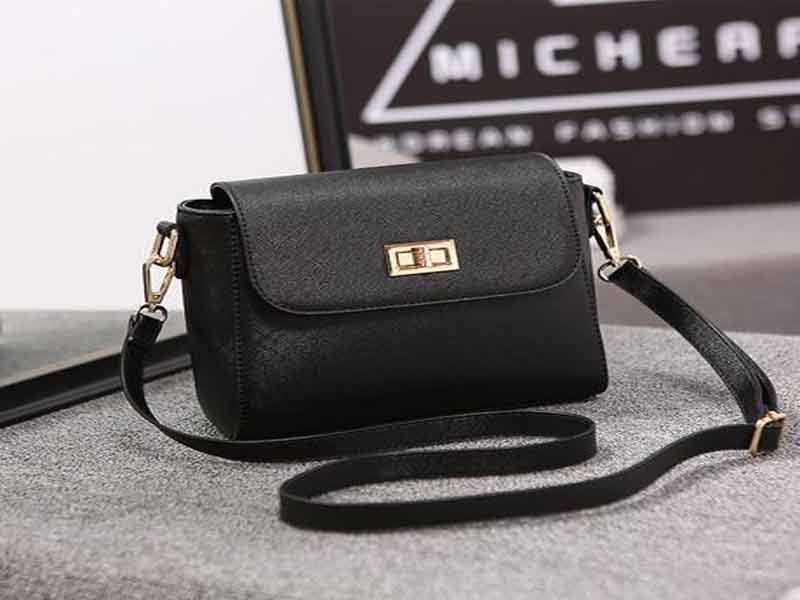
Custom crossbody bags are made through a structured process that connects user needs, bag dimensions, fabric selection, strap engineering, hardware, pocket layout, logo application, sampling, testing, and production quality control. The process usually begins with a design brief or reference product, followed by material recommendations, technical specifications, pattern development, prototype sampling, fit testing, revisions, pre-production approval, and mass production.
The strongest custom projects do not begin with a request to “make this bag in our color.” They begin with clear information about the target customer, intended contents, carrying weight, preferred price position, sales market, and visual direction. These details allow the manufacturer to recommend the right shell fabric, lining, strap width, adjustment range, reinforcement, zipper, and construction method.
A crossbody bag may appear simple, but it combines many interacting parts. Changing the shell fabric can affect structure. Changing the strap width can require different hooks and sliders. Adding a padded tablet sleeve can change the internal volume. A larger logo can interfere with pockets or seams. Each design decision should therefore be reviewed as part of the complete product.
How Do Brands Choose Shell Fabrics?
Brands should choose shell fabric by comparing appearance, hand feel, weight, durability, weather exposure, cleaning requirements, structure, logo process, and target cost. The same bag pattern can look casual in cotton canvas, technical in nylon, premium in leather, natural in linen, or protective in neoprene.
| Shell Material | Main Characteristics | Suitable Crossbody Use |
|---|---|---|
| Cotton canvas | Natural texture, printable, durable | Lifestyle and casual bags |
| Polyester | Stable color, broad finishes, economical | Daily, promotional, and travel bags |
| Nylon | Lightweight, strong, technical appearance | Travel, outdoor, and premium utility bags |
| Oxford fabric | Structured woven appearance and good durability | Commuter, medical, and equipment bags |
| Neoprene | Cushioned, flexible, and protective | Electronics, sports, and bottle bags |
| Linen | Natural and refined texture | Resort and lifestyle collections |
| Jute | Rustic and environmentally focused appearance | Gift and casual bags |
| PU synthetic leather | Uniform surface and broad colors | Fashion and structured bags |
| Genuine leather | Premium feel and natural aging | Luxury and long-life products |
| Recycled polyester | Scalable recycled-content option | Travel, lifestyle, and branded programs |
| Coated fabric | Water resistance and wipe-clean surface | Travel, medical, and outdoor products |
| Ripstop fabric | Lightweight with reinforced grid | Technical and packable bags |
Canvas weight should be matched to the bag structure. Lightweight canvas may work for a soft foldable design, while heavier canvas provides a more substantial appearance. Thick canvas can increase seam bulk and make small bags difficult to turn during sewing.
Polyester and nylon can be produced in many deniers, weaves, coatings, and textures. A 210D lightweight lining-style fabric behaves differently from 600D Oxford. The specification should include more than the fiber name.
A useful shell-fabric specification may contain:
Fiber composition.
Yarn denier or yarn count.
Fabric weight.
Weave structure.
Width.
Coating type.
Water-repellent finish.
Colorfastness requirement.
Abrasion requirement.
Tear strength.
Shrinkage.
Surface finish.
Approved color reference.
Logo compatibility.
The target market also affects material choice. A medical accessory may require wipe-clean surfaces and stable color. A fashion bag may prioritize hand feel and finish. A military-inspired utility bag may focus on abrasion, reinforcement, and modular attachments.
Brands should request physical swatches before selecting materials from photographs. Lighting, screen color, surface reflection, and fabric drape are difficult to judge online. A swatch can also be tested with the actual webbing and hardware.
Szoneier can source and develop cotton, canvas, polyester, nylon, neoprene, jute, linen, Oxford fabric, coated textiles, recycled fabrics, and mixed-material constructions. Material recommendations can be adjusted according to the bag’s intended use and price positioning.
Which Linings and Coatings Work Best?
Linings improve appearance, protect the shell interior, hide seams, support pockets, and make the bag easier to clean. Coatings can increase water resistance, structure, abrasion performance, and surface protection.
The lining should be selected according to the bag’s use rather than treated as an invisible cost-saving component.
| Lining Type | Main Advantage | Suitable Use |
|---|---|---|
| 190T polyester | Lightweight and economical | Small fashion and promotional bags |
| 210D polyester | More durable and structured | Daily and travel crossbody bags |
| Nylon lining | Smooth, lightweight, and strong | Premium and technical products |
| Cotton lining | Natural hand feel | Canvas and leather lifestyle bags |
| Twill lining | Substantial and refined | Structured fashion bags |
| Microfiber lining | Soft and protective | Electronics and premium interiors |
| Brushed tricot | Scratch protection | Phone, glasses, and camera compartments |
| TPU-coated lining | Wipe-clean and water resistant | Medical, cosmetics, and travel products |
| PEVA lining | Moisture control and easy cleaning | Food, cosmetics, and wet-item storage |
| Recycled polyester lining | Supports recycled-content programs | Sustainable collections |
The lining color can improve usability. Light or contrasting colors make the interior easier to see. Printed linings can strengthen brand identity, although print alignment and rubbing should be tested.
Dark linings are practical for hiding stains but can make small items disappear. Bright linings look attractive but may show dirt. The final choice should reflect how the product is used.
Coatings may be applied to the shell or lining. PU coatings are commonly used to improve water resistance and hand feel. PVC coatings can provide stronger surface protection but may add weight and stiffness. TPU films can offer flexibility and performance but usually increase material cost.
| Coating or Finish | Main Function | Potential Trade-Off |
|---|---|---|
| PU coating | Water resistance and flexible hand feel | Performance varies by formulation |
| PVC coating | Strong barrier and wipe-clean surface | Heavier and less flexible |
| TPU lamination | Flexible waterproof layer | Higher cost |
| DWR finish | Helps water bead from surface | May reduce over time |
| Acrylic coating | Adds structure and stability | Can feel stiff |
| Foam backing | Adds body and cushioning | Increases thickness |
| Flame-retardant finish | Supports specific technical applications | Requires controlled testing and documentation |
| Antimicrobial treatment | Supports hygiene-related positioning | Claims require verification |
| UV-resistant finish | Helps outdoor color stability | Depends on exposure and formulation |
Water resistance should be evaluated at the complete bag level. Needle holes, seams, zipper openings, and attachment points can allow water entry even when the fabric itself performs well.
For improved protection, the design may use covered zippers, seam taping, welded seams, coated threads, or fewer exterior stitch lines. These processes increase complexity and should be discussed before pricing.
What Printing Methods Can Be Used?
Custom crossbody bags can use screen printing, heat transfer, sublimation, digital printing, embroidery, woven labels, rubber patches, leather patches, metal logo plates, debossing, embossing, and jacquard webbing.
The correct method depends on the fabric, logo detail, color count, surface texture, order quantity, and desired appearance.
| Logo Method | Best For | Main Advantage | Limitation |
|---|---|---|---|
| Screen printing | Simple logos and solid colors | Durable and economical | Limited fine gradients |
| Heat transfer | Detailed graphics | Strong color detail | Surface compatibility required |
| Sublimation | Polyester straps and panels | Full-color and long-lasting | Works mainly on suitable polyester |
| Digital printing | Complex fabric artwork | High design freedom | Cost and color control vary |
| Embroidery | Premium textile branding | Strong texture and durability | Adds stiffness and backing |
| Woven label | Small detailed branding | Clean and consistent | Requires label attachment seam |
| Rubber patch | Sports and outdoor style | Durable and dimensional | Adds weight and thickness |
| Leather patch | Heritage and lifestyle style | Premium natural appearance | Color and edge variation |
| Metal plate | Luxury and fashion positioning | Strong visual presence | Weight, scratching, and plating |
| Debossing | Leather and synthetic leather | Minimal and refined | Limited visibility on textured surfaces |
| Embossing | Raised logo effect | Distinct tactile appearance | Requires suitable material |
| Jacquard strap | Repeating logo or pattern | High brand visibility | Higher setup and quantity requirements |
Logo position should be checked with the filled bag. A centered front logo may become distorted if the bag bulges. Embroidery can tighten the shell fabric and create puckering. Large rubber patches can make a lightweight panel sag.
For adjustable straps, logos should be positioned so they remain visible at common settings. A repeating jacquard pattern often works better than one isolated logo that may disappear under the buckle.
Color approval should be performed on the final material. The same ink can appear different on cotton, polyester, nylon, and coated fabric. Dark backgrounds may require an underbase layer.
Logo durability should be tested through rubbing, bending, heat, moisture, and cleaning where relevant. A logo may look excellent on a flat panel but crack after the bag is repeatedly flexed.
Szoneier can help select the process according to the desired visual effect, material, order size, and cost target. Samples can compare several methods before final approval.
How Are Adjustable Straps Tested?
Adjustable straps should be tested for fit, comfort, slippage, strength, abrasion, hardware movement, and attachment security. Testing should include both component-level checks and complete-bag trials.
The strap should first be measured at its shortest, middle, and longest settings. Each position should be tested on representative users and over different clothing layers.
| Test Area | Practical Evaluation |
|---|---|
| Length range | Confirm intended wearing positions |
| Slider holding | Mark position and check for movement under load |
| Comfort | Wear with normal contents for extended periods |
| Strap twist | Walk and rotate bag between positions |
| Hardware alignment | Check whether hooks and rings sit naturally |
| Attachment strength | Apply static and repeated load |
| Surface abrasion | Inspect strap after adjustment cycles |
| Color transfer | Rub against light-colored fabric |
| Edge comfort | Wear over skin and delicate clothing |
| Noise | Listen for squeaking and metal contact |
| Corrosion | Expose hardware to moisture where relevant |
| Production consistency | Compare several bulk samples |
The test weight should reflect the intended contents. A small phone bag may only require a light load, while a camera or travel bag needs a more demanding program.
The slider should not move during normal use. It should still remain adjustable without tools. This balance depends on the buckle shape and webbing properties.
The strap attachment should be inspected after testing. Enlarged needle holes, fabric whitening, seam distortion, fraying, and ring rotation are early warning signs.
Testing should also include repeated use. A strap may perform well when new but change after hundreds of adjustments. Webbing can become smoother, coatings can wear, and buckle edges can polish.
For custom projects, Szoneier can adjust the strap material, width, buckle, reinforcement, and attachment method after the first sample. This revision stage is essential because comfort cannot always be predicted from drawings alone.
How Do OEM and ODM Projects Begin?
OEM projects usually begin with a customer’s completed design, technical drawing, specification, or reference sample. The manufacturer develops the product according to the supplied requirements and applies the customer’s logo, materials, colors, packaging, and labels.
ODM projects begin with a broader product idea or market need. The manufacturer supports design development, material selection, structure, dimensions, pockets, strap system, and appearance.
Private-label projects often use an existing or modified product structure with the customer’s branding, colors, packaging, and selected details.
| Project Type | Customer Provides | Manufacturer Supports |
|---|---|---|
| OEM | Detailed design and specifications | Sampling, sourcing, manufacturing, and quality control |
| ODM | Product idea, target market, and requirements | Design, structure, materials, sampling, and production |
| Private label | Logo, colors, packaging, and selected changes | Existing or modified product solution |
| Full custom | User profile, contents, style, and performance goals | Complete development from concept to shipment |
A clear inquiry should include as much of the following information as possible:
Bag type.
Target dimensions.
Intended contents.
Estimated order quantity.
Preferred fabric.
Color requirements.
Logo file and logo process.
Strap style and length.
Pocket requirements.
Hardware finish.
Target market.
Packaging method.
Compliance requirements.
Target delivery date.
Reference images or samples.
A customer does not need to know every technical answer. Szoneier can recommend materials and construction based on the intended use. However, the more clearly the customer describes the user and sales scenario, the more accurate the development will be.
A typical custom-development process follows these stages.
| Stage | Main Work |
|---|---|
| Requirement review | Confirm use, size, materials, quantity, and target market |
| Material recommendation | Select shell, lining, webbing, hardware, and reinforcement |
| Cost evaluation | Prepare an initial quotation |
| Technical development | Create dimensions, patterns, and construction details |
| Sample production | Produce the first physical prototype |
| Sample review | Check fit, appearance, pockets, strap, and logo |
| Revision | Adjust materials, structure, or workmanship |
| Pre-production approval | Confirm final sample and specifications |
| Material preparation | Order and inspect production materials |
| Mass production | Cutting, printing, sewing, assembly, and finishing |
| Quality inspection | Inspect dimensions, appearance, function, and packaging |
| Packing and shipment | Prepare cartons, labels, and shipping documents |
Sampling is not simply a step to confirm appearance. It is the stage where bag balance, opening access, strap comfort, pocket dimensions, hardware behavior, and production feasibility are evaluated.
A first sample may reveal that the strap is too narrow, the bag tilts, the phone pocket is too tight, or the selected canvas creates excessive seam bulk. These findings should be recorded and corrected before production.
Szoneier offers rapid sampling and can support material swatches and sample development for custom crossbody bag projects. Depending on the design complexity, the development team can recommend practical changes that preserve the visual concept while improving durability and production consistency.
Quality control should continue throughout production. Incoming fabrics and hardware should be inspected before cutting. Printed and embroidered panels should be checked before sewing. Strap attachments, zipper operation, dimensions, stitching, and appearance should be monitored during assembly. Finished bags should be reviewed before packing.
A final inspection checklist can include:
Correct shell and lining color.
Bag dimensions within tolerance.
Strap length and width.
Smooth adjustment.
Secure hook and buckle operation.
Balanced hanging position.
Correct pocket size.
Zipper movement.
Logo position and color.
Stitching quality.
Reinforced attachment points.
Clean interior and exterior.
Correct labels and packaging.
Carton quantity and markings.
A reliable crossbody bag is the result of many small decisions being made correctly. The strap must fit the body, the hardware must hold, the fabric must suit the use, and the storage layout must support real daily habits. When these elements are developed together, the finished product feels natural from the first moment it is worn.
Szoneier has more than 18 years of experience in fabric development, finished-product manufacturing, and international custom production. The company can develop crossbody bags using cotton, canvas, polyester, nylon, neoprene, jute, linen, Oxford fabric, recycled textiles, coated fabrics, leather-compatible materials, and mixed constructions.
Whether you need a lightweight travel crossbody, a structured fashion bag, a canvas lifestyle design, a medical utility pouch, or a private-label collection with adjustable branded straps, Szoneier can support fabric selection, free design assistance, rapid sampling, logo customization, low-MOQ development, OEM, ODM, and private-label production.
Send Szoneier your reference images, dimensions, intended contents, preferred materials, logo file, and estimated quantity. The development team can recommend a suitable fabric, strap range, hardware system, pocket layout, construction method, and sampling plan for your project.
Contact Szoneier today to request a custom crossbody bag quotation and begin developing a product that looks right, carries comfortably, and performs reliably in real daily use.