Skip to content
Most people do not need a bigger everyday bag. They need a better-edited one. A bag becomes inconvenient not only when it is too small, but also when it encourages the wearer to carry objects that are rarely used, hides important items beneath unnecessary compartments, or places too much weight on one narrow strap. The best everyday crossbody bag works less like a miniature suitcase and more like a carefully organized control panel: the things used most often remain immediately accessible, while valuables, keys, electronics, and personal items each have a logical place.
To choose a crossbody bag for everyday carry essentials, first list what you genuinely use during a normal day. Select a capacity that holds those items with approximately 10–20% spare room, then compare pocket access, empty bag weight, strap width, strap adjustment, security, fabric durability, and weather resistance. The bag should remain comfortable when filled, allow one-handed access to frequent-use items, and prevent dense objects from collecting at the bottom.
This method is more reliable than choosing by external dimensions alone. Two bags measuring 24 × 17 × 8 centimeters can provide very different usable space because zipper length, corner shape, lining, foam, seams, dividers, and pockets consume internal volume. One may hold a phone, wallet, compact umbrella, and power bank comfortably. The other may look nearly identical yet become difficult to close once the same objects are placed inside.
Imagine leaving home with your phone at 70% battery, a wallet, two sets of keys, earbuds, hand sanitizer, sunglasses, a charging cable, tissues, medication, and a small notebook. At first, everything seems manageable. Twenty minutes later, the keys have scratched the sunglasses, the cable is tangled around the wallet, and the phone is somewhere beneath the notebook. The problem is not the number of possessions. It is that the bag was never designed around the order in which real people reach for them.
What Is an Everyday Carry Crossbody Bag?
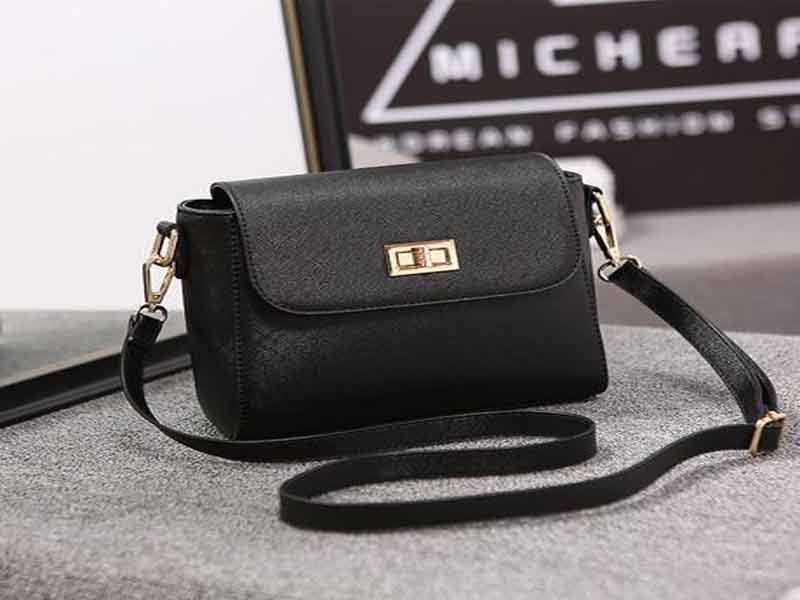
An everyday carry crossbody bag is a compact, hands-free bag designed to hold the small items a person regularly needs outside the home. It is normally worn diagonally across the torso and prioritizes access, organization, comfort, and secure storage. Unlike a large travel or emergency bag, an EDC crossbody should support a normal daily routine without encouraging unnecessary weight. Its ideal capacity, strap construction, and pocket layout depend on the wearer’s habits rather than on one universal checklist.
Current everyday-carry guides describe crossbody and sling bags as useful for commuting, city movement, travel, and quick access because they keep essentials close without the bulk of a backpack. However, there is no single bag that suits every routine; the correct design depends on what the user carries, where the bag is worn, and how frequently items are accessed.
What Does Everyday Carry Mean?
Everyday carry, often shortened to EDC, refers to the items a person chooses to keep available during ordinary daily activities. For one person, that may mean a phone, cardholder, keys, earbuds, and lip balm. For another, it may include medication, glasses, a portable charger, notebook, identification, or work access cards.
EDC is not a fixed product category and does not automatically mean tactical equipment. It is better understood as a personal system built around three questions:
What problems do you encounter regularly?
Which objects solve those problems?
Which of those objects are important enough to carry every day?
A useful everyday-carry system normally contains three layers.
| Carry Layer | Meaning | Typical Examples | Bag-Design Implication |
|---|---|---|---|
| Core essentials | Needed almost every time the user leaves home | Phone, payment method, identification, keys | Must remain easy to locate and access |
| Personal necessities | Important to the individual’s health, comfort, or routine | Medication, glasses, hearing accessories, hygiene items | Need protected or clearly assigned storage |
| Situational items | Useful only for certain trips, weather, or activities | Compact umbrella, power bank, notebook, transit documents | Require flexible spare space |
| Redundant items | Duplicate objects carried without a clear reason | Multiple cables, excess cards, several batteries | Often create avoidable weight and clutter |
| Emergency support | Compact items used when something goes wrong | Contact information, small first-aid items, emergency cash | Should be proportionate to the bag and local needs |
This distinction helps prevent an everyday crossbody bag from becoming a portable storage drawer. If an object has not been used for several weeks and is not safety-critical, it may not deserve permanent space in the bag.
EDC should also be separated from a full emergency-preparedness kit. Government emergency guidance may include water, food, a radio, lighting, first-aid supplies, batteries, sanitation items, and other resources intended for prolonged disruption. Those recommendations serve a different purpose from a compact daily crossbody and should not be compressed into a small bag simply because they are all described as “essentials.”
A practical crossbody bag can still include a few personalized emergency items. A customer may carry prescribed medication, an emergency contact card, a small bandage pack, or backup cash. The point is to select them deliberately rather than fill every pocket with “just in case” objects.
The most useful design brief therefore begins with a behavior map rather than a generic EDC list.
| Daily Situation | Item Usually Needed | Access Speed | Suggested Storage |
|---|---|---|---|
| Entering home or office | Keys or access card | Immediate | Key clip or dedicated top pocket |
| Paying in a store | Phone, cardholder, or cash | Immediate | Front or upper internal pocket |
| Commuting | Transit pass and earbuds | Frequent | Quick-access compartment |
| Phone charging | Cable and power bank | Occasional | Separate organized pocket |
| Reading or note-taking | Glasses, pen, notebook | Occasional | Main compartment or padded slot |
| Personal care | Tissues, sanitizer, medication | Variable | Small internal pocket |
| Unexpected rain | Compact umbrella | Infrequent | Main compartment with moisture control |
| Travel checkpoint | Passport and identification | Periodic but urgent | Secure body-side pocket |
This approach creates a bag that reflects real actions. A pocket is not useful because it exists; it is useful because it reduces the time and effort needed to complete a common task.
How Is It Different from a Sling Bag?
Crossbody bag and sling bag are overlapping terms rather than perfectly separated categories. Both can be worn diagonally across the torso, both provide hands-free carrying, and both may use adjustable straps. The difference is usually found in the bag’s shape, wearing position, attachment geometry, and intended movement.
A traditional crossbody bag often hangs from the shoulder toward the opposite hip. It may have a rectangular, crescent, pouch, camera-bag, or messenger shape. A sling bag generally follows the torso more closely and is often worn higher across the chest or back.
| Feature | Everyday Crossbody Bag | Sling Bag |
|---|---|---|
| Common position | Waist, hip, or lower torso | Chest, upper back, or ribs |
| Typical body shape | Rectangular, crescent, pouch, or camera style | Curved, tapered, or anatomical |
| Strap attachment | Two side or upper-corner points | Often asymmetrical or integrated |
| Access method | Top, front, or flap opening | Rotated from back to front |
| Normal capacity | Approximately 1–8 L for daily designs | Approximately 1–10 L depending on style |
| Visual character | Fashion, lifestyle, travel, or business | Sport, streetwear, travel, or technical |
| Main comfort issue | Strap pressure and low-position swinging | Neck proximity and torso compression |
| Best use | Organized everyday essentials | Active movement and quick front access |
These capacity ranges are practical product-development references rather than fixed industry standards. Brands use the two names in different ways, and the same product may be marketed as a crossbody bag, sling, chest bag, shoulder pouch, or belt-sling hybrid.
The label is less important than the wearing behavior. A product should be judged by asking:
Does it remain stable while walking?
Can it be moved from front to back without removing it?
Is the zipper opening visible when the bag is worn?
Does the strap cross the neck or rest securely on the shoulder?
Can both right-handed and left-handed users access it?
Does the shape remain balanced when the bag is full?
A sling-shaped bag may provide excellent stability for commuters or cyclists but feel too tight for customers who prefer a relaxed hip position. A traditional crossbody may offer more versatile styling but swing more when worn too low.
Convertible products attempt to offer both modes. To work properly, they need enough strap range, secure hardware, carefully positioned attachment points, and a bag shape that remains balanced at high and low settings. Simply installing a longer strap does not create a successful convertible product.
Why Are Crossbody Bags Practical?
Crossbody bags are practical because they combine hands-free movement with faster access than most backpacks. The user can often rotate the bag toward the front, retrieve an item, and return it to the side without taking the bag off. This makes the format useful for commuting, errands, events, sightseeing, retail work, and daily city movement.
Recent crossbody and sling-bag guides continue to emphasize quick access, compact organization, adjustable fit, lightweight construction, and hands-free convenience as core reasons people select these formats.
The diagonal strap also helps keep the bag attached to the wearer more securely than a loose shoulder bag. However, this should not be mistaken for proof that any crossbody load is automatically comfortable. Studies of shoulder bags and other asymmetrical load-carriage systems have found that bag type, position, and load can influence posture, balance, shoulder pressure, and gait. These studies do not establish one universal safe weight for every adult bag, but they support a sensible development principle: the bag should remain lightweight, the load should stay close to the body, and the strap should match the expected filled weight.
A practical crossbody bag balances six functions.
| Function | What the User Experiences | Design Requirement |
|---|---|---|
| Hands-free movement | Both hands remain available | Stable diagonal strap system |
| Fast access | Phone, wallet, or keys can be reached quickly | Logical opening and pocket location |
| Compact storage | Daily items stay together without a large bag | Capacity based on actual contents |
| Controlled organization | Objects do not collect in one pile | Purposeful pockets and dividers |
| Security | Valuables remain close to the body | Reliable closures and body-side storage |
| Flexible styling | Bag position changes with clothing and activity | Adjustable strap and balanced shape |
The advantage disappears when the product is badly proportioned. A bag with too much capacity invites overpacking. A narrow opening makes everyday access irritating. Excessively deep compartments create a “black hole” effect. Too many pockets add weight and make users forget where items are stored.
A well-designed EDC crossbody should reduce friction in small daily actions. The user should not need to stop walking to find a transit card, remove the bag to reach a phone, or empty the main compartment to locate keys.
A representative development scenario shows the difference. Consider a compact 3.5-liter bag intended for urban commuters. The first sample contains six internal pockets, a thick padded lining, two heavy metal hooks, and a decorative front plate. Although the external size is appropriate, the pocket layers reduce usable space, while the hardware and padding increase the empty weight.
A revised sample removes three low-value pockets, replaces one metal fitting with a lighter component, moves the key clip toward the opening, and uses padding only behind the phone and electronics zones. The external dimensions do not change, but the revised bag holds more, weighs less, and becomes easier to use. Better everyday carry often comes from subtraction rather than expansion.
Who Should Use an EDC Crossbody Bag?
An EDC crossbody bag suits people who carry more than pockets can handle but less than a backpack justifies. It is especially useful for commuters, travelers, students, parents, retail employees, event visitors, content creators, walkers, cyclists, and customers who need regular access to a phone, wallet, keys, or personal equipment.
The correct design varies by user.
| User Type | Common Carry Needs | Suitable Capacity | Priority Features |
|---|---|---|---|
| Minimalist commuter | Phone, cards, keys, earbuds | 1–2.5 L | Low weight and fast access |
| Office commuter | Phone, wallet, charger, notebook, glasses | 2.5–5 L | Organized pockets and clean styling |
| Urban traveler | Passport, phone, cards, power bank, small bottle | 3–6 L | Security and adjustable positioning |
| Student | Phone, wallet, stationery, charger | 3–7 L | Durable fabric and flexible storage |
| Parent | Phone, wipes, snacks, keys, small personal items | 4–8 L | One-handed access and washable lining |
| Retail employee | Phone, scanner, keys, notebook, tools | 2–5 L | Reinforced pockets and secure key storage |
| Photographer or creator | Phone, batteries, compact camera, cables | 4–8 L | Padding and wider strap |
| Cyclist or walker | Phone, wallet, glasses, compact layer | 2–5 L | Close fit and movement stability |
| Medical or field worker | Personal equipment, gloves, notes, identification | 3–8 L | Wipe-clean materials and defined compartments |
| Fashion-focused user | Phone, cards, cosmetics, small accessories | 1.5–4 L | Shape, hardware, and strap styling |
A crossbody bag may be less suitable for people who regularly carry a large laptop, several heavy books, bulky equipment, or substantial quantities of water. At that point, a backpack or balanced two-strap system may provide better load distribution.
It may also be unsuitable when the wearer has specific shoulder, neck, mobility, or medical concerns. Product descriptions should avoid suggesting that a crossbody format solves every comfort problem. The honest position is that it provides convenient access and compact storage when the load remains appropriate.
Brands should define the target user more precisely than “people who need a daily bag.” A useful user profile might read:
The customer commutes by train, walks for thirty minutes per day, carries a 6.7-inch phone, compact wallet, office key card, earbuds, glasses, tissues, charging cable, and 10,000 mAh power bank. The customer wears light clothing in summer and a padded jacket in winter and prefers the bag at the upper hip.
That profile immediately helps determine:
The minimum internal dimensions.
The required zipper opening.
The strap adjustment range.
The strap width.
The location of the key card pocket.
The need for electronics separation.
The expected filled weight.
The most suitable shell and lining.
The design becomes much harder when the customer profile is reduced to age, gender, or fashion style. Daily behavior is more useful than demographic labels because it describes what the bag must actually do.
What Essentials Should You Carry?
An everyday crossbody bag should carry the smallest reliable set of items needed for identification, communication, access, payment, personal wellbeing, and the day’s planned activities. For most users, that means a phone, payment or identification, keys, and a small number of personalized necessities. Electronics, hygiene items, medication, and weather accessories should be added only when they solve a regular need. The goal is readiness without turning the bag into permanent storage.
A useful selection rule is to review every item according to frequency, consequence, and replaceability.
Frequency asks how often the object is used.
Consequence asks what happens if it is unavailable.
Replaceability asks whether it can be purchased, borrowed, or accessed digitally during the day.
An object used rarely may still deserve space when the consequence of not carrying it is serious. Prescribed medication is an obvious example. A third charging cable, however, may be easy to remove because it is rarely needed and easily replaced.
Which Items Are Daily Essentials?
Daily essentials generally fall into six categories: communication, identity, access, payment, health, and activity-specific tools. Not every user needs an object from every category, but these categories provide a more disciplined starting point than copying another person’s EDC photograph.
| Category | Common Item | Carry Priority | Storage Requirement |
|---|---|---|---|
| Communication | Smartphone | Very high | Fast, protected access |
| Identity | ID card, driver’s license, passport where needed | Very high | Secure and flat |
| Payment | Cardholder, wallet, cash | Very high | Quick but controlled access |
| Access | Home, vehicle, or office keys | Very high | Isolated from scratch-sensitive items |
| Health | Prescribed medication or required aid | Personal but potentially critical | Clearly assigned pocket |
| Vision | Glasses or contact-lens supplies | User-dependent | Protected from pressure |
| Power | Small power bank or charging cable | Medium | Separate from keys and liquids |
| Hygiene | Tissues, sanitizer, wipes | Medium | Easy to clean and contain |
| Weather | Compact umbrella or sunglasses | Situational | Adequate length or protective compartment |
| Notes | Pen and small notebook | Situational | Flat pocket |
| Audio | Earbuds or earplugs | Medium | Small pocket near opening |
| Personal care | Lip balm, cosmetics, menstrual products | Personal | Clean, discreet storage |
A sensible EDC list often begins with four objects:
A phone.
A method of payment and identification.
Keys or access credentials.
Any personal item that would create a serious problem if forgotten.
Everything else should earn its place through repeated use.
A customer who works primarily from home may not need a large daily kit. A traveler moving through airports may need a passport, backup payment, power bank, cable, tissues, pen, and medication. A retail worker may need a key set, access card, small notebook, scanner, and hand sanitizer. Calling all three bags “EDC crossbodies” is reasonable, but their pocket layouts should be different.
The following scoring method can help users and product developers evaluate each item.
| Question | Score 0 | Score 1 | Score 2 |
|---|---|---|---|
| How often is it used? | Rarely | Weekly | Daily |
| What happens if it is missing? | Minor inconvenience | Disruption | Serious problem |
| Can it be replaced during the day? | Easily | With effort | No |
| Does it require protection? | No | Some | High |
| Does it need quick access? | No | Occasionally | Frequently |
An object scoring eight to ten points is likely a core essential. Five to seven points suggests a situational item. A score below five suggests the object should be reconsidered unless it has a specific safety purpose.
This is not a scientific standard. It is a decision tool that helps separate genuine need from habit.
Do You Need a Wallet Pocket?
A dedicated wallet pocket is useful when payment cards, identification, cash, or travel documents need to remain secure and easy to locate. It is especially valuable in bags with a deep main compartment, where a small wallet would otherwise settle beneath larger objects.
The wallet pocket should match the way customers pay. Some users carry a traditional bifold wallet, while others rely on a slim cardholder or phone-based payments. Designing a large wallet compartment for a customer who carries only two cards wastes space.
| Payment Style | Likely Storage Need | Suitable Pocket |
|---|---|---|
| Phone-based payment | Phone access matters most | External or upper slip pocket |
| Slim cardholder | Small secure compartment | Internal zipper or fitted slip pocket |
| Bifold wallet | Wider pocket with easy hand access | Main internal pocket |
| Long wallet | Full-width compartment | Medium or large bag body |
| Cash and coins | Separation and closure | Zippered pocket |
| Passport and cards | Flat, secure storage | Body-side or internal zipper pocket |
| Multiple work cards | Organized slots | Card panel or removable holder |
A wallet pocket should not be so tight that cards are difficult to remove. It should not be so loose that a cardholder flips vertically and becomes hard to grip. The opening should remain accessible when the bag is filled.
Body-side rear pockets are often chosen for valuables because they sit close to the wearer. However, the contents should remain comfortable. A thick wallet pressed between the bag and the hip can create a hard contact point.
Internal zipper pockets provide better concealment but require opening the main compartment. For a commuter repeatedly using a transit card, that extra step may become annoying. A shallow upper slip pocket with controlled retention may be more practical.
Pocket design should therefore balance three competing needs:
Access speed.
Protection from loss.
Comfort against the body.
No single position maximizes all three.
A useful custom design may include a fast-access card slot for one transit or office card and a separate secure pocket for the main wallet. This reflects how people actually use credentials rather than forcing every financial item into the same compartment.
How Should You Carry Keys?
Keys should be isolated from phones, glasses, coated electronics, and other scratch-sensitive items. The best storage options are a key leash, spring clip, small zipper pocket, or dedicated reinforced compartment near the bag opening.
Loose keys create several problems. They collect at the lowest point, produce noise, scratch nearby objects, and require the user to search through the bag at the exact moment access is needed.
A key clip solves part of the problem, but its position matters.
| Key Storage Method | Advantage | Limitation | Best Use |
|---|---|---|---|
| Short internal key clip | Easy to locate | Keys may remain inside bag during use | Compact daily bag |
| Long key leash | Keys can reach lock without removal | Cord may tangle | Commuter or work bag |
| Small zipper pocket | Quiet and separated | Slower access | Vehicle or backup keys |
| External clip | Immediate access | Greater loss and theft exposure | Controlled work environments |
| Magnetic key dock | Fast attachment | Magnet and retention need testing | Premium organized interiors |
| Elastic keeper | Lightweight | Elastic may weaken | Small key set |
| Removable key pouch | Flexible and organized | Adds another component | Multi-use collections |
The leash length should match the intended action. A leash that reaches only the zipper opening may help users find the keys but still require detachment before opening a door. A longer leash may reach the lock while the bag remains worn, but it can become tangled around other contents.
Hardware should remain proportionate. A heavy metal key clip may be excessive in a lightweight bag. A very small plastic hook may be difficult to operate while wearing gloves.
The attachment point should also be reinforced. Keys are repeatedly pulled outward and dropped back into the bag, creating a different load pattern from static pocket contents. A clip sewn to a weak lining seam may tear even though the keys themselves are light.
For work or utility crossbody bags, keys may be among the most important contents. Retail employees, property managers, technicians, medical staff, and hospitality workers may carry multiple access keys. These designs may need:
A reinforced tether.
Separate key groups.
Color-coded tabs.
Silent storage.
One-handed release.
A replaceable cord.
In a fashion-oriented mini bag, a small internal ribbon with a lightweight hook may be enough. The correct solution depends on the actual key set, not the assumption that all customers carry one small house key.
Which Tech Items Are Useful?
Useful everyday tech items include a smartphone, earbuds, charging cable, and a compact power bank when the user regularly spends long periods away from power. Additional adapters, drives, cameras, or batteries should be carried only when they support the day’s planned activities.
Tech items are often denser than their size suggests. A small power bank may add more weight than tissues, cosmetics, cards, and keys combined. Product developers should therefore map both dimensions and weight.
The following table provides approximate planning allowances rather than fixed product specifications.
| Tech Item | Approximate Planning Envelope | Approximate Weight Range | Storage Priority |
|---|---|---|---|
| Large smartphone with case | 175 × 90 × 18 mm | 180–280 g | Fast access and scratch protection |
| Wireless earbuds case | 70 × 60 × 35 mm | 40–90 g | Small upper pocket |
| Compact power bank | 150 × 75 × 25 mm | 180–300 g | Close to body and low in bag |
| Short charging cable | 100 × 70 × 25 mm when coiled | 20–60 g | Elastic loop or pouch |
| Wall charger | 70 × 60 × 40 mm | 60–150 g | Protected from impact |
| USB drive or memory card case | 80 × 50 × 20 mm | Under 50 g | Small zipper pocket |
| Compact camera | 125 × 80 × 60 mm | 250–600 g | Padded area |
| Small e-reader | 180 × 125 × 15 mm | 160–250 g | Flat padded sleeve |
Actual dimensions and weights vary by model, so a custom bag should be developed around confirmed reference items whenever electronics are a major selling point.
A power bank should usually sit close to the wearer rather than in an outer front pocket. Placing dense objects far from the body increases the tendency of the bag to tilt outward. It can also make the front panel look distorted.
Cables need containment. An open internal pocket may work for one short cable. Several cables require a small pouch, elastic loops, or a compartment that prevents tangling.
Electronics should remain separated from:
Keys and sharp tools.
Liquid containers.
Unprotected cosmetics.
Metal hardware with rough edges.
Wet umbrellas.
Food items that may leak.
A bag advertised for electronics may need soft lining, foam, a suspended sleeve, or reinforced corners. However, excessive padding reduces usable volume. The protective level should reflect the item. A phone requires less structure than a compact camera or tablet.
A representative product-development issue occurs when a brand adds a padded power-bank pocket to the front wall of a small bag. The pocket protects the device, but its weight pulls the front panel outward and makes the bag hang at an angle. Moving the pocket to the rear internal wall, closer to the wearer, improves balance without changing capacity.
This illustrates a broader rule: dense items determine carrying behavior. Their placement deserves more attention than lightweight objects that occupy more visual space.
What Personal Items Should Fit?
Personal items should fit according to the customer’s health, hygiene, climate, work, and comfort needs. There is no universal personal-care list, and brands should avoid assuming that all users carry the same products.
Common items include:
Prescribed medication.
Tissues.
Hand sanitizer.
Lip balm.
Menstrual products.
Glasses or contact-lens supplies.
Sunscreen.
Small cosmetics.
Earplugs.
A face covering where personally needed.
Emergency contact information.
A small bandage pack.
The bag should support these items discreetly and hygienically.
| Personal Item | Main Storage Risk | Better Compartment Approach |
|---|---|---|
| Medication | Heat, moisture, loss, or crushing | Defined protected pocket |
| Glasses | Scratching or pressure | Rigid case space or soft-lined pocket |
| Hand sanitizer | Leakage | Upright or wipe-clean compartment |
| Tissues | Crushing or contamination | Shallow accessible pocket |
| Cosmetics | Leakage and staining | Wipe-clean pouch |
| Lip balm | Heat and loss | Small upper pocket |
| Menstrual products | Damage and lack of privacy | Clean discreet compartment |
| Sunscreen | Leakage | Separate sealed pocket or pouch |
| Contact-lens supplies | Crushing and contamination | Protected small compartment |
| Bandages | Bending and moisture | Flat zipper pocket |
| Emergency card | Loss or exposure | Secure internal slot |
Medication and personal medical supplies are individual needs, not optional style accessories. The bag should provide reliable storage, but product copy should not claim that an ordinary crossbody controls temperature or provides medical-grade protection unless the design has been specifically developed and tested for that purpose.
Leak control deserves particular attention. Hand sanitizer, sunscreen, cosmetics, and eye drops can damage lining, labels, electronics, or documents. A removable wipe-clean pouch is sometimes more practical than permanently coating the entire interior.
Personal-item pockets should also be cleanable. Deep narrow compartments collect dust and are difficult to turn out. Light-colored linings improve visibility but show stains. Dark linings hide marks but make small objects harder to find.
A balanced daily carry may look like this:
| Carry Level | Example Contents | Estimated Combined Load Before Bag Weight |
|---|---|---|
| Minimal | Phone, cardholder, keys, earbuds | 350–650 g |
| Standard | Minimal set plus tissues, sanitizer, cable, small power bank | 650 g–1.2 kg |
| Extended | Standard set plus glasses, notebook, cosmetics, compact umbrella | 1.2–2.0 kg |
| Equipment-focused | Extended set plus camera, batteries, or tablet | 2.0 kg and above |
These ranges are planning estimates, not universal measurements. They show how quickly a small collection of dense objects can increase total load.
The empty bag weight must be added to the contents. A 900-gram structured bag carrying 1.5 kilograms of personal items creates a total load of 2.4 kilograms. A 400-gram fabric bag carrying the same contents feels very different even before strap width and body position are considered.
The right EDC system should therefore be reviewed as a complete equation:
Contents needed.
Contents weight.
Bag weight.
Capacity.
Organization.
Access.
Strap comfort.
A bag is not successful merely because every object can be forced inside. It is successful when those objects remain accessible, protected, and comfortable during an ordinary day.
Which Crossbody Bag Size Is Best?

The best crossbody bag size is the smallest capacity that holds the user’s real daily essentials without forcing tight packing. For most everyday carry needs, one to three liters works for phones, cards, keys, earbuds, and small personal items, while three to six liters provides room for a power bank, glasses, compact umbrella, notebook, or small bottle. External dimensions alone are unreliable because padding, curved corners, seams, pockets, and zipper openings reduce usable capacity.
A practical size decision should begin with the contents rather than the product category. “Small,” “medium,” and “large” are marketing labels, not dependable measurements. One brand’s small crossbody may hold two liters, while another product with the same label may hold five liters.
The right capacity should provide a little spare room after the normal load is packed. A bag filled to its absolute limit every day becomes difficult to open, distorts more quickly, and places additional stress on zippers and seams. Approximately 10–20% unused space is usually helpful for temporary items such as receipts, sunglasses, gloves, snacks, or a charging cable.
| Everyday Carry Level | Suggested Capacity | Typical Contents | Main Design Priority |
|---|---|---|---|
| Pocket replacement | 0.5–1.5 L | Phone, cards, keys, earbuds | Thin shape and fast access |
| Minimal daily carry | 1.5–3 L | Phone, wallet, keys, tissues, lip balm | Simple organization |
| Standard daily carry | 3–5 L | Power bank, glasses, sanitizer, cable, small notebook | Balanced pockets and comfort |
| Extended daily carry | 5–7 L | Compact umbrella, bottle, larger wallet, personal-care pouch | Wider strap and load control |
| Work or equipment carry | 7–10 L | Small tablet, camera, tools, notebook | Padding and reinforcement |
| Large messenger use | 10 L and above | Documents, tablet, bottle, light clothing | Crossbody comfort may become limited |
Capacity should always be considered together with filled weight. A five-liter bag containing tissues and a lightweight jacket may feel easy to carry. The same volume filled with batteries, a power bank, camera equipment, and metal tools can become uncomfortable.
What Fits in a 1-Liter Bag?
A one-liter crossbody bag is suitable for a very compact everyday carry. It can usually hold a smartphone, slim cardholder, small key set, earbuds, and one or two small personal items. It is best treated as a pocket replacement rather than a general storage bag.
The exact contents depend heavily on the bag shape. A flat one-liter phone pouch may hold a large phone and cards but struggle with thick objects. A deeper one-liter pouch can hold earbuds and keys more comfortably but may project farther from the body.
| Item | Approximate Space Requirement | Likely Fit in 1 L |
|---|---|---|
| Large smartphone with case | 0.15–0.25 L including access clearance | Yes |
| Slim cardholder | 0.03–0.08 L | Yes |
| Small key set | 0.05–0.15 L | Yes |
| Earbuds case | 0.05–0.10 L | Yes |
| Lip balm | Under 0.03 L | Yes |
| Small sanitizer bottle | 0.05–0.10 L | Usually |
| Compact power bank | 0.15–0.25 L | Possible, but adds weight |
| Glasses case | 0.20–0.35 L | May dominate the compartment |
| Small notebook | 0.15–0.25 L | Depends on internal dimensions |
| Compact umbrella | 0.5 L or more | Usually no |
| Water bottle | 0.5 L or more | No |
These volume estimates include more than the object’s mathematical dimensions because the user needs space to insert, grip, and remove it. A bag that holds an object only when it is forced into one exact position is not truly practical.
A successful one-liter design should avoid excessive internal construction. Thick foam, several layered pockets, heavy binding, and oversized labels can consume a large percentage of the available space.
For a compact bag, two storage zones are often enough:
A main compartment for the phone and cardholder.
A small isolated pocket or key clip for keys and earbuds.
Adding five or six pockets to a one-liter bag may create the appearance of organization while making each compartment too small to use.
The zipper opening is especially important. The bag may be physically wide enough for a large phone, but the device will not fit if the zipper tape, seam allowance, and corner shape reduce the opening. A phone compartment should be tested with the intended device and protective case, not only with a technical drawing.
A one-liter bag works well for events, quick errands, walking, nightlife, and users who rely heavily on phone-based payments. It is less suitable for customers who regularly carry glasses, chargers, cosmetics, or weather accessories.
Is a 3-Liter Bag Enough?
A three-liter crossbody bag is enough for many everyday routines. It can usually hold a phone, wallet, keys, earbuds, power bank, charging cable, tissues, sanitizer, and a few personal-care items while remaining compact.
Three liters is a useful middle ground because it provides more flexibility than a phone pouch without encouraging the load of a messenger bag. The bag can still sit close to the torso and remain easy to rotate toward the front.
A typical three-liter contents plan may look like this.
| Storage Zone | Example Contents | Estimated Load |
|---|---|---|
| Quick-access pocket | Phone and transit card | 200–350 g |
| Main compartment | Wallet, power bank, tissues, sanitizer | 400–750 g |
| Small organizer pocket | Earbuds, cable, lip balm | 80–180 g |
| Key attachment | Home or office keys | 50–150 g |
| Total contents | Complete standard daily set | 730 g–1.43 kg |
The empty bag may add another 250–600 grams depending on the material, hardware, lining, and structure. The complete carrying load may therefore reach approximately one to two kilograms.
A three-liter bag is usually enough when the user carries:
A phone.
A compact wallet.
A small set of keys.
Earbuds.
A compact power bank.
One charging cable.
Tissues or wipes.
One or two personal-care items.
It may not be enough when the user needs:
A large glasses case.
A long wallet.
A full-size notebook.
A water bottle.
A compact umbrella.
A camera.
Several work tools.
A tablet.
A common design mistake is assuming that three liters means three liters of useful rectangular storage. In practice, pockets, curves, closures, and soft materials divide the space into irregular zones.
For example, a heavily curved crescent bag may feel roomy because the center expands, but it may not hold a rectangular notebook. A structured camera-style bag uses space more predictably but may feel bulkier on the body.
Three-liter designs should generally include no more than three or four meaningful storage functions. One main compartment, one phone pocket, one secure pocket, and one key-management feature are often sufficient.
A realistic sample test should pack the intended contents, close the bag, and then evaluate whether the user can still:
Remove the phone with one hand.
Open the wallet pocket.
Reach the keys.
Return the power bank without rearranging everything.
Close the zipper without compressing the contents.
Wear the bag without visible bulging.
If these actions remain easy, three liters is likely sufficient. If every item requires careful placement, the design needs either more volume or less internal structure.
Which Size Fits a Water Bottle?
A crossbody bag that carries a water bottle generally needs at least four to six liters of practical capacity, depending on bottle size, orientation, and the other contents. A 350-milliliter bottle can fit into some compact bags, while a 500-milliliter bottle usually requires a deeper or longer main compartment.
The bottle’s shape matters as much as its volume. A short wide bottle behaves differently from a tall narrow one.
| Bottle Type | Approximate Dimensions | Suggested Bag Capacity | Preferred Storage |
|---|---|---|---|
| Slim 250–300 ml bottle | 180–210 mm high | 3–4 L | Vertical or diagonal |
| 350 ml bottle | 190–230 mm high | 4–5 L | Vertical with divider |
| Standard 500 ml bottle | 210–250 mm high | 5–7 L | Vertical or horizontal |
| Wide insulated bottle | 190–260 mm high, wider diameter | 6–9 L | Dedicated sleeve |
| Collapsible bottle | Variable | 3–5 L | Flexible main compartment |
| Small beverage can | Around 120 mm high | 3–4 L | Upright controlled pocket |
A bottle should not simply be dropped into the main compartment. It can shift the bag’s center of gravity, crush lighter items, and create a leakage risk.
A vertical divider or elastic bottle sleeve can keep it controlled. However, the sleeve should not consume the entire compartment when the bottle is absent. Fold-flat dividers and stretch pockets provide more flexibility.
Horizontal storage can work in crescent and messenger shapes, but it creates several issues:
The bottle may roll from side to side.
Leakage can spread across a larger area.
The bag may become rigid against the hip.
The bottle can block access to smaller items.
Vertical storage is usually more stable, provided the bag is tall enough and the closure clears the bottle cap.
Bottle weight matters. A full 500-milliliter bottle adds approximately half a kilogram before the bottle itself is considered. This can represent one-third or more of the total load in a small everyday bag.
A bag intended to carry water should therefore include:
A strap width suitable for the added load.
Reinforced attachment points.
A washable or water-resistant lining.
A compartment that controls bottle movement.
Separation from electronics and documents.
Enough height or length for the target bottle.
A leak-resistant bottle cannot be guaranteed by the bag manufacturer unless the bottle is supplied and tested as part of the product. The bag can manage risk, but it cannot prevent failure of an unrelated closure.
Some customers prefer an external bottle pocket. This keeps moisture away from internal contents but can make the bag asymmetrical. A bottle placed on only one side may cause the bag to rotate. Dual side pockets create balance but can be excessive on a compact crossbody.
For most urban EDC bags, an internal bottle zone near the center or body-side panel provides better balance.
How Do You Measure Usable Capacity?
Usable capacity is the space that customers can realistically fill and access after accounting for the bag’s shape, lining, padding, seams, pockets, closures, and opening size. It is different from the theoretical volume calculated from external dimensions.
The basic rectangular volume formula is:
Length × height × depth.
A bag measuring 24 × 17 × 8 centimeters has a theoretical rectangular volume of 3,264 cubic centimeters, or approximately 3.26 liters.
In practice, the usable capacity may be lower because the bag is not a perfect box.
| Capacity Reduction Factor | Typical Effect |
|---|---|
| Rounded corners | Removes usable rectangular space |
| Curved top zipper | Reduces height near both ends |
| Thick foam | Shrinks internal width and depth |
| Seam allowances | Reduce every internal dimension |
| Binding and piping | Consume corner space |
| Internal pockets | Add layers and restrict expansion |
| Structured panels | Prevent outward flexibility |
| Zipper opening | May limit entry of large items |
| Tapered bag shape | Creates narrow lower or upper zones |
| Soft fabric collapse | Makes capacity difficult to organize |
Three methods can be used during product development.
The geometric method estimates capacity from internal pattern dimensions. It is quick but less accurate for curved or soft bags.
The filling method uses measured plastic beads, packing material, or another controlled medium to estimate the volume the bag can physically hold. It provides a closer volume estimate but may fill spaces that real objects cannot use efficiently.
The contents method packs the intended items and evaluates access, closure, and shape. It is the most useful method for an everyday carry bag because users carry objects, not loose filling material.
| Measurement Method | Main Advantage | Main Limitation |
|---|---|---|
| External calculation | Fast and simple | Often overstates practical capacity |
| Internal calculation | More accurate than external size | Still struggles with curves |
| Bead or filler test | Measures physical volume | Does not represent rigid objects |
| Water test with sealed container | Accurate for simple waterproof shapes | Usually unsuitable for finished textile bags |
| Real-contents test | Reflects user experience | Results depend on selected contents |
| 3D digital simulation | Useful before sampling | Requires accurate models and assumptions |
The best product specification combines several measures:
External dimensions.
Internal reference dimensions.
Zipper opening length.
Approximate capacity.
Maximum target item size.
Recommended contents.
Expected filled weight.
This gives customers and production teams a more realistic understanding of the bag.
The opening dimension is often more important than total capacity. A four-liter bag may have enough internal space for a tablet, but the tablet cannot enter if the zipper opening is too short.
For rigid objects, the product team should check the diagonal insertion path. Sometimes an object wider than the opening can still enter at an angle. However, this should not require force or risk scratching the item.
Capacity should also be tested after internal pockets are filled. A power bank placed in a rear pocket may reduce the available width of the main compartment. Two pockets can compete for the same physical space even though they appear separate in the pattern.
A well-developed bag should not advertise the theoretical maximum as though every liter were equally usable. Honest capacity information improves customer expectations and reduces dissatisfaction.
Does Bag Shape Affect Storage?
Bag shape strongly affects storage efficiency, object compatibility, comfort, and access. A rectangular bag works well with flat items, while a crescent bag handles soft and irregular objects more naturally. A vertical pouch suits phones and passports, while a messenger shape supports notebooks, tablets, and documents.
| Bag Shape | Storage Strength | Storage Limitation | Suitable Contents |
|---|---|---|---|
| Rectangular camera shape | Predictable internal space | Can project from body | Wallet, power bank, camera, notebook |
| Crescent | Flexible and body-following | Poor fit for rigid rectangular items | Cosmetics, glasses, soft personal items |
| Vertical phone pouch | Efficient for phone and cards | Limited width for larger objects | Phone, passport, keys |
| Flat envelope | Slim and elegant | Very low three-dimensional capacity | Documents, cards, phone |
| Box pouch | Excellent use of measured volume | Can feel bulky | Electronics and organized daily items |
| Mini messenger | Good for notebooks and tablets | Flap adds weight and access steps | Work and commuter contents |
| Sling shape | Stable during movement | Space may taper sharply | Travel and active essentials |
| Barrel or cylindrical | Fits rounded objects | Difficult internal organization | Bottle, compact clothing, sports items |
Rectangular bags offer the easiest capacity planning. Their flat walls allow pockets and dividers to be positioned accurately. They work well for customers carrying chargers, wallets, notebooks, or electronics.
Crescent bags conform better to the body and often feel less rigid. Their widest area is usually at the center, while the ends become narrow. They can hold many soft objects but may waste space around rigid cases.
Vertical bags are efficient for phones and passports but may become top-heavy when dense items are stacked. The strap attachment must prevent the bag from tipping outward.
Flat bags look clean and minimal, but product images can create misleading expectations. Their length and height may appear generous even though the depth provides almost no room for thick objects.
Soft bags can expand around contents, increasing apparent capacity. This flexibility is useful, but overfilling can create an uncontrolled shape. Structured bags preserve appearance but require more precise object planning.
Bag shape also changes how weight sits on the body. A wide flat bag spreads the load across a larger area. A deep box-shaped bag places the contents farther from the torso, increasing outward pull. A long narrow bag can swing against the leg when worn low.
The best shape should therefore be chosen by combining:
The largest intended item.
The average contents.
The wearing position.
The desired visual silhouette.
The target filled weight.
The opening method.
The preferred level of structure.
A brand developing an everyday carry collection may use one material and color system across several shapes. A vertical mini pouch can serve phone-only users, a three-liter crescent can suit minimal daily carry, and a five-liter rectangular bag can support commuters. This creates choice without forcing one shape to solve every need.
How Should Pockets Be Organized?
Crossbody bag pockets should be organized by access frequency, security, object weight, and risk of damage. Frequently used items belong near the opening, valuables should sit close to the body, dense electronics should remain near the bag’s center of gravity, and keys or liquids should be separated from scratch-sensitive items. Most compact everyday bags work best with one main compartment, one quick-access pocket, one secure pocket, and one or two simple organizers.
Good pocket design reduces the number of actions required to retrieve an item. Poor pocket design adds extra zippers, layers, and decisions without improving usability.
A customer should be able to form a stable habit: phone here, keys there, wallet in one protected location. If every pocket looks and feels the same, the user must search by trial and error.
| Pocket Role | Recommended Contents | Ideal Position |
|---|---|---|
| Immediate access | Phone, transit card, earbuds | Front or upper opening |
| Secure access | Wallet, passport, cash | Body-side or internal zipper pocket |
| Dense-item storage | Power bank, charger | Rear internal wall or lower center |
| Scratch-risk isolation | Keys, tools | Dedicated clip or small pocket |
| Personal-care storage | Tissues, sanitizer, cosmetics | Separate wipe-clean zone |
| Flat storage | Notebook, documents | Rear sleeve |
| Flexible overflow | Temporary receipts, gloves, snacks | Main compartment |
| Small-item control | Cable, lip balm, memory cards | Mesh or organizer pocket |
Pocket organization should begin with the normal contents list. Adding features because competitors use them often creates unnecessary complexity.
Which Items Need Quick Access?
Quick-access storage should be reserved for objects used repeatedly while the bag remains worn. Common examples include phones, transit cards, office access cards, earbuds, keys, and small payment methods.
Quick access does not mean completely open storage. The pocket should still prevent items from falling out during walking, sitting, bending, or rotating the bag.
| Item | Typical Access Frequency | Suitable Pocket |
|---|---|---|
| Smartphone | Very high | External zipper, magnetic, or fitted slip pocket |
| Transit card | Very high | Shallow card slot or upper pocket |
| Office access card | Very high | Separate card sleeve |
| Earbuds | High | Small upper zipper pocket |
| Keys | High | Key leash near opening |
| Wallet | Medium to high | Secure but reachable compartment |
| Tissues | Medium | Open internal slip pocket |
| Hand sanitizer | Medium | Upright accessible pocket |
| Charging cable | Low to medium | Internal organizer |
| Passport | Periodic but urgent | Secure body-side pocket |
| Medication | User-dependent | Clearly assigned pocket |
The phone pocket is often the most important. It should allow the device to be removed with one hand without forcing the user to open the main compartment.
A front external zipper pocket offers security but adds an opening step. A magnetic pocket is faster but requires careful magnet strength and alignment. An open slip pocket is convenient but may release the phone when the bag is inverted.
The best solution depends on the intended activity. A city commuter may prefer a secure zipper. A retail employee who checks a phone repeatedly may value a fast open pocket. A traveler may prioritize a body-side opening.
Quick-access pockets should remain usable when the main compartment is full. A common defect occurs when internal contents push against the pocket and reduce its opening. The phone fits in the empty sample but becomes difficult to insert after the bag is packed.
Pocket depth should allow the user to grip the item. If the phone disappears below the opening, quick access is lost. A curved thumb notch, short pull tab, or controlled pocket depth can improve retrieval.
Transit and office cards may need separation from other contactless cards to prevent accidental reading conflicts. The bag cannot always control the behavior of different card systems, but dedicated placement can reduce confusion.
Quick access should also be tested while:
Standing.
Walking.
Sitting.
Wearing gloves.
Carrying something in the other hand.
Wearing the bag on either side.
A design that works only on a table is not ready for daily use.
Do You Need a Hidden Pocket?
A hidden pocket is useful for cash, identification, passports, backup cards, or small valuables that do not require constant access. It is especially helpful for travel, commuting, festivals, and crowded public spaces.
A hidden pocket improves concealment, but it does not make the bag theft-proof. Security depends on the complete system, including strap strength, zipper design, wearing position, and user behavior.
| Hidden Pocket Type | Security Level | Access Speed | Main Consideration |
|---|---|---|---|
| Rear body-side zipper | High concealment | Medium | Contents may press against wearer |
| Internal zipper pocket | High | Slow to medium | Requires main compartment access |
| Flap-covered pocket | Medium | Medium | Flap can add bulk |
| Seam-hidden opening | High visual concealment | Medium | Opening must remain easy to locate |
| False-bottom compartment | High concealment | Slow | Reduces usable capacity |
| Strap pocket | High for small items | Medium | Limited size and added thickness |
| Detachable inner pouch | Flexible | Medium | Can be removed or misplaced |
| Hidden card sleeve | Moderate | Fast | Best for flat items only |
A rear body-side pocket is one of the most practical solutions because it is concealed by the wearer. However, rigid contents can create discomfort. A passport is usually flat enough, while a thick wallet or key set may press into the hip.
The zipper should not scratch the wearer or catch clothing. Low-profile zipper heads, protective fabric garages, and careful positioning can improve comfort.
An internal hidden pocket offers better concealment but slower access. It works well for backup cash, spare cards, and documents that are not used repeatedly.
Hidden pockets should not be placed where users forget them. A security feature that is so concealed that customers leave valuables behind may create another problem. The product instructions and photography should explain the location without publicly exaggerating security.
Brands should avoid absolute claims such as:
Theft-proof.
Pickpocket-proof.
Completely secure.
These claims are difficult to guarantee. More accurate descriptions include:
Body-side secure pocket.
Concealed internal compartment.
Lockable zipper pullers.
Cut-resistant panel in selected areas.
Security features should be described according to what has actually been constructed and tested.
How Many Compartments Are Useful?
Most compact everyday crossbody bags need three to five functional storage zones. More compartments can be useful for technical work, travel documents, medical supplies, or electronics, but every added pocket should solve a specific problem.
Too few pockets create a mixed pile. Too many create fragmentation, reduce capacity, increase weight, and make the interior difficult to understand.
| Bag Capacity | Useful Number of Storage Zones | Recommended Structure |
|---|---|---|
| Under 1.5 L | 2–3 | Main compartment, phone pocket, key control |
| 1.5–3 L | 3–4 | Main, quick access, secure pocket, organizer |
| 3–5 L | 4–6 | Main, front, rear, two organizers, key clip |
| 5–7 L | 5–8 | Main, bottle control, secure pocket, electronics zone, organizers |
| 7–10 L | 6–10 | Main, padded sleeve, accessory pockets, bottle zone, document storage |
| Technical work bag | Based on equipment list | Tool-specific compartments |
These numbers refer to meaningful zones, not every card slot or elastic loop.
A useful test is to ask what happens when a pocket is removed. If the remaining layout still organizes everything clearly, the pocket may not be necessary.
Pocket layers also compete for the same space. A front pocket and an internal pocket sewn back-to-back may both appear roomy when empty, but they cannot both expand fully at the same time.
The pattern maker should consider pocket interaction:
Does filling one pocket block another?
Does the zipper remain accessible?
Do thick seams create hard pressure points?
Does the lining pull when the pocket is loaded?
Does the bag bulge unevenly?
Can the user see inside?
A compact bag often performs well with the following arrangement:
One main compartment.
One external phone pocket.
One body-side secure pocket.
Two open internal organizers.
One key clip.
This provides six functions without excessive partitioning.
For a work or medical utility bag, more compartments may be necessary because objects must remain separated. In that case, labels, contrasting pocket shapes, transparent mesh, or color-coded elastic can help users identify storage quickly.
A real development example involved a five-liter commuter bag originally designed with eleven pockets. The first sample looked impressive in photographs, but the interior felt narrow and difficult to pack. Three pockets were too small for modern phones, and two were hidden beneath other layers.
The revised layout used six storage zones. Usable capacity increased, sewing became cleaner, empty weight decreased, and customers could understand the organization immediately. Pocket count was reduced, but practical value improved.
Where Should Electronics Be Stored?
Electronics should be stored close to the wearer, protected from keys and liquids, and positioned so their weight does not pull the bag outward. Phones need quick access, while power banks, chargers, cameras, and tablets benefit from controlled pockets or padded zones.
Dense electronics should generally sit against the rear internal wall or near the lower center of the bag. This keeps the center of gravity closer to the body.
| Electronic Item | Recommended Position | Protection Level |
|---|---|---|
| Smartphone | External or upper internal pocket | Soft lining and controlled closure |
| Power bank | Rear internal or lower central pocket | Light padding and stable fit |
| Earbuds | Small upper organizer | Minimal padding |
| Charging cable | Elastic loop or zip pouch | Tangling control |
| Wall charger | Internal pocket away from phone screen | Moderate protection |
| Small tablet | Rear padded sleeve | Full-panel padding |
| Compact camera | Central padded compartment | Stronger foam and dividers |
| Memory cards | Small zipper pocket | Protection from loss and moisture |
Electronics should not share uncontrolled space with:
Keys.
Metal tools.
Unsealed liquids.
Wet umbrellas.
Loose cosmetics.
Sharp zipper ends.
The lining material should match the protection need. Brushed tricot and microfiber reduce scratching, while dense polyester provides durable general storage. Foam should be selected according to impact risk.
A phone pocket may need only a soft lining. A tablet sleeve requires controlled dimensions and padding. A camera compartment may need denser foam, adjustable dividers, and reinforced corners.
Padding should not be added everywhere. Full interior foam increases weight and reduces capacity. Strategic padding around the electronics zone is usually more efficient.
Cable ports are sometimes added to allow charging while the power bank remains inside. These features should be approached carefully. A permanent hole can allow water entry, collect dirt, and become outdated as connector habits change. Many users prefer simply routing the cable through a partly opened zipper.
Electronics storage should also account for heat. Power banks and phones can warm during use. A tightly sealed insulated pocket may trap heat. The bag manufacturer should not make thermal-control claims unless the system has been designed and tested for that purpose.
The most reliable method is to request reference devices during development or use accurate dimension samples. Product names alone are insufficient because protective cases, camera grips, and charger shapes change the required space.
Are Key Clips Worth Adding?
Key clips are worth adding when customers use keys or access credentials frequently. They reduce searching, isolate sharp objects, and help prevent keys from falling out when the main compartment is opened.
The component is inexpensive compared with its practical value, but poor placement can make it useless.
A good key clip should be:
Near the opening.
Easy to operate with one hand.
Long enough for the intended use.
Short enough to avoid tangling.
Attached to a reinforced point.
Proportionate to the bag.
Smooth enough not to scratch other items.
| Key-Clip Design | Main Benefit | Main Limitation |
|---|---|---|
| Short fixed ribbon | Simple and lightweight | Keys must be detached for use |
| Long fabric leash | Reaches locks easily | Can tangle |
| Retractable reel | Fast repeated access | Adds bulk and mechanical failure risk |
| Detachable mini hook | Flexible and replaceable | Small hooks may be difficult to operate |
| Magnetic dock | Fast attachment | Requires retention testing |
| Elastic tether | Lightweight and quiet | Elastic loses recovery |
| Coiled cord | Extends without loose length | Technical appearance |
| Removable key pouch | Keeps keys silent and separated | Adds cost and volume |
The ideal leash length depends on the behavior.
For simple storage, 80–120 millimeters may be sufficient.
For reaching a nearby door lock while the bag remains worn, approximately 200–350 millimeters may be more practical.
For work keys used repeatedly, a retractable or extendable system may be useful.
These figures are development references and should be tested on the physical sample.
Key clips should not be sewn only to the lining. Repeated pulling can tear lightweight fabric. The attachment should connect to a seam, webbing loop, or reinforced backing.
The hook opening should fit the intended key ring. A tiny fashion hook may look clean but fail with thick split rings. A large technical hook may feel excessive in a compact lifestyle bag.
Noise is another factor. Multiple metal keys attached to a metal hook can rattle. A soft fabric pocket around the key zone or a small removable pouch can reduce noise.
Key clips are less valuable when the target user does not carry physical keys. Some modern customers rely on digital access or carry one flat card. In those cases, a secure card slot may be more useful than a tether.
The best decision comes from the target contents list. Features should be added because the customer needs them, not because they are inexpensive.
Szoneier can help develop crossbody bag capacity and pocket organization from real everyday-carry requirements. Customers can provide a contents list, target dimensions, reference product, sketches, logo, or intended user scenario. The development team can then recommend the most suitable capacity, shape, zipper opening, pocket layout, key-management system, lining, reinforcement, and adjustable strap construction before sampling.
Which Materials Work for Daily Carry?

The best material for an everyday carry crossbody bag depends on the expected weight, climate, cleaning needs, visual style, and amount of abrasion the bag will experience. Nylon is often chosen for lightweight technical bags, polyester provides dependable color and cost control, and canvas offers a natural, substantial appearance. Coatings can improve water resistance, while recycled fibers can provide reliable performance when yarn quality, weave density, finishing, and traceability are properly controlled.
Material selection should begin with use rather than fashion alone. A soft cotton canvas may feel perfect for a relaxed lifestyle collection but absorb rain and show dirt more quickly. A coated nylon may perform well during commuting and travel but feel too technical for a heritage-inspired design. There is no universally superior fabric. There is only a material that is more or less suitable for a defined product.
A practical shell specification should include fiber content, construction, weight, thickness, coating, surface finish, colorfastness, abrasion target, tear strength, and cleaning method. Descriptions such as “premium nylon” or “heavy canvas” are not precise enough for reliable sampling or production.
| Material | Main Strength | Main Limitation | Suitable Daily Carry Use |
|---|---|---|---|
| Nylon | Lightweight, flexible, abrasion resistant | Can look technical and vary in UV performance | Commuting, travel, sling, and utility bags |
| Polyester | Stable color, broad availability, low moisture absorption | Some constructions feel stiff or basic | Everyday, promotional, and lifestyle bags |
| Cotton canvas | Natural texture and strong visual character | Absorbs moisture and can become heavier | Casual, heritage, and fashion collections |
| Oxford fabric | Structured surface and practical durability | Appearance can feel utilitarian | Work, medical, commuter, and equipment bags |
| Neoprene | Flexible cushioning and soft structure | Adds bulk and can retain heat | Electronics, sports, and protective pouches |
| Linen blend | Refined natural texture | Wrinkles and may need reinforcement | Resort and premium lifestyle bags |
| Jute blend | Rustic appearance and strong material story | Rough hand feel and limited weather performance | Gift, seasonal, and natural-style collections |
| Recycled polyester | Scalable recycled-content option | Quality depends on yarn and finishing | Travel, fashion, and branded everyday bags |
| Coated textile | Improved water and stain resistance | Coating can crack, peel, or add stiffness | Travel, medical, and outdoor bags |
| Synthetic leather | Uniform appearance and easy color matching | Heat, flexing, and hydrolysis can affect lifespan | Structured fashion crossbody bags |
The shell is only one layer of the finished product. Lining, foam, reinforcement, thread, webbing, binding, zippers, and hardware can change the way the bag feels and performs. A strong shell fabric does not compensate for weak strap attachments, just as a durable lining does not make an unprotected zipper water resistant.
Is Nylon Good for Everyday Use?
Nylon is a strong choice for everyday carry when the bag needs to remain lightweight, flexible, and resistant to repeated rubbing. It is widely used in travel bags, technical slings, camera pouches, and commuter products because suitable nylon constructions can provide good strength without excessive material weight.
The term nylon covers a broad range of fabrics. A lightweight 70D or 210D nylon is very different from a dense 500D or 1000D construction. Yarn type, weave, coating, and finishing determine much of the actual performance.
| Nylon Construction | Typical Character | Suitable Application |
|---|---|---|
| 70D–100D nylon | Very light and packable | Linings, foldable bags, internal pockets |
| 210D nylon | Lightweight with moderate structure | Compact daily crossbody bags |
| 420D nylon | Balanced weight and durability | Commuter and travel bags |
| 500D nylon | Stronger technical character | Utility, tactical-inspired, and camera bags |
| 840D nylon | Dense and highly substantial | Equipment and premium luggage-style bags |
| 1000D nylon | Heavy-duty and abrasion focused | Industrial and military-style products |
| Ripstop nylon | Reinforced grid limits tear growth | Lightweight outdoor and active bags |
| Ballistic-style nylon | Dense basket-type weave | Premium equipment and travel products |
These denier references indicate yarn size, not guaranteed quality. A poorly woven high-denier fabric can perform worse than a well-engineered lighter material. Denier should therefore be combined with fabric weight, weave density, tear strength, and abrasion testing.
Nylon is especially useful when the bag must conform to the body. Softer constructions can wrap around the torso without creating hard pressure points. This is valuable for crescent bags and slings worn high across the chest or back.
The fabric may also recover well after being compressed into luggage. However, very soft nylon can make organization difficult. Phones, wallets, and power banks may settle at the bottom unless the lining or internal structure adds control.
A nylon EDC bag often benefits from:
A lightly structured rear panel.
Localized foam around electronics.
Dense woven reinforcement at strap anchors.
A smooth but secure zipper.
A lining with enough contrast for visibility.
A durable water-repellent or coated finish when light rain protection is needed.
The surface can range from matte and soft to glossy and crisp. Brands should review physical swatches because photographs rarely show hand feel accurately.
Nylon can also create noise. Some coated or high-density fabrics produce a crisp rustling sound during movement. This may suit technical products but feel distracting in an office or premium lifestyle bag.
Color consistency should be checked across the shell, webbing, zipper tape, binding, and lining. Black nylon components from different suppliers may appear blue, brown, or grey under daylight.
How Does Polyester Perform?
Polyester performs well in everyday carry bags because it offers stable dimensions, broad color availability, relatively low moisture absorption, and compatibility with many printing and coating methods. It is often the most practical option for products that require consistent appearance, scalable production, and controlled cost.
Like nylon, polyester covers many different constructions. Lightweight woven polyester can be used for linings, while dense Oxford fabric and high-tenacity webbing can support demanding daily use.
| Polyester Type | Common Benefit | Suitable Use |
|---|---|---|
| 190T polyester | Lightweight and economical | Linings and small internal pockets |
| 210D polyester | Balanced lining or lightweight shell | Compact crossbody bags |
| 300D polyester | Smooth printable surface | Promotional and branded products |
| 600D polyester Oxford | Structure and broad availability | Daily, work, school, and travel bags |
| 900D polyester | Heavier and more robust | Utility and equipment products |
| Recycled polyester | Recycled-content positioning | Lifestyle and travel collections |
| Mélange polyester | Textile-like visual texture | Fashion and office products |
| Polyester twill | Refined woven appearance | Premium casual bags |
| Sublimation polyester | Supports full-color printing | Graphic straps and panels |
Polyester is frequently selected when branding is a major feature. Printed panels, sublimated straps, woven logos, and custom colors can be developed with good consistency when the process matches the fabric.
Its lower moisture absorption can make polyester easier to dry than cotton. However, the finished product’s weather performance still depends on coatings, seams, zippers, and openings.
Polyester can feel less flexible than comparable nylon, especially in dense Oxford constructions. That stiffness may be beneficial for structured rectangular bags but less comfortable for body-hugging slings.
A 600D polyester bag is often described as durable, but that statement alone is incomplete. The development team should also examine:
Fabric weight per square meter.
Backing or coating thickness.
Yarn density.
Abrasion performance.
Tear strength.
Colorfastness.
Surface pilling.
Cold-crack resistance where coated.
Seam slippage.
Some low-cost polyester fabrics use a heavy visible coating to create apparent thickness. The face fabric may still have low yarn density. After flexing, the coating can crack or separate. A better specification evaluates both the textile and coating.
Polyester is a strong choice for multi-color collections because dye lots can be managed across many shades. Even so, the shell and strap may be produced using different dyeing systems, so color approval should use assembled samples rather than isolated swatches.
Are Canvas Bags Durable?
Canvas bags can be durable when the fabric weight, weave density, fiber quality, seam construction, and reinforcement match the intended load. Canvas is valued for its natural hand feel, visible weave, printability, and ability to develop character through use.
Cotton canvas is not a single specification. It may be lightweight, medium weight, heavy, washed, waxed, coated, blended, or laminated. Each version behaves differently.
| Canvas Type | Visual and Physical Character | Suitable Use |
|---|---|---|
| Lightweight cotton canvas | Soft and flexible | Mini bags and lightweight fashion products |
| Medium-weight canvas | Balanced structure and natural texture | Everyday crossbody bags |
| Heavy canvas | Substantial and durable | Utility and heritage bags |
| Washed canvas | Soft, casual, slightly aged | Lifestyle collections |
| Waxed canvas | Weather-resistant heritage appearance | Outdoor-inspired and premium bags |
| Cotton-polyester canvas | Natural feel with improved stability | Scalable daily carry products |
| Recycled cotton canvas | Recycled-content story and varied texture | Casual sustainable collections |
| Coated canvas | Structured and easier to clean | Fashion and travel bags |
| Printed canvas | Strong decorative potential | Branded and seasonal collections |
Canvas durability depends heavily on construction. A thick fabric can still tear around a narrow strap anchor if the reinforcement is inadequate. Dense fabric can also become difficult to sew at folded corners, creating skipped stitches or needle damage.
The material’s natural absorbency should be considered. Untreated cotton canvas may absorb water, oils, and stains. It can also shrink or distort during cleaning. Prewashing, finishing, waxing, or blending with polyester may improve stability.
Dark canvas colors require dry and wet rubbing tests because loose dye can transfer onto clothing. This is particularly important for crossbody bags, where the shell and strap repeatedly rub against shirts, jackets, and coats.
Canvas also changes over time. The surface may soften, crease, fade, or polish at contact points. Some customers appreciate this aging. Others expect the bag to maintain a clean new appearance. Product positioning should reflect the expected behavior.
A durable canvas crossbody usually uses:
Reinforced upper corners.
Backing panels behind strap attachments.
Strong thread with suitable stitch density.
Bound or clean-finished internal seams.
A lining that controls stretching.
Appropriate zipper support.
Metal or high-quality plastic hardware matched to the load.
A medium-weight canvas bag can feel heavier than a nylon bag of the same size. The empty weight should be checked before adding metal trims, leather patches, and thick lining.
Canvas works especially well when the product story emphasizes tactility, craftsmanship, natural materials, or casual daily use. It is less suitable when the bag must be highly packable, quick drying, or easy to wipe clean.
Which Fabrics Resist Water?
Coated nylon, coated polyester, Oxford fabric, laminated textiles, and selected synthetic materials can provide useful water resistance for everyday carry bags. However, a water-resistant fabric does not automatically produce a water-resistant finished bag. Seams, zipper teeth, needle holes, pockets, and open edges may still allow moisture inside.
The product claim should match the level of protection.
| Claim | Practical Meaning | Typical Construction |
|---|---|---|
| Water-repellent | Water beads temporarily on the surface | Surface finish such as DWR |
| Water-resistant | Fabric slows penetration during light exposure | PU-coated nylon or polyester |
| Highly water-resistant | Fabric and major openings provide stronger protection | Coated shell, covered zipper, controlled seams |
| Waterproof material | Material itself blocks water under defined conditions | TPU or PVC-laminated textile |
| Waterproof bag | Complete construction controls seams and openings | Welded or sealed seams and waterproof closures |
A normal sewn crossbody bag with coated fabric and standard zipper should generally be described as water resistant rather than waterproof.
Common water-resistant options include:
| Material System | Main Benefit | Main Trade-Off |
|---|---|---|
| PU-coated polyester | Flexible, widely available, economical | Coating quality varies |
| PU-coated nylon | Lightweight and technical | May feel soft or less structured |
| TPU-laminated textile | Flexible and strong barrier | Higher material and processing cost |
| PVC-coated fabric | Easy to wipe and strong barrier | Heavy and less flexible |
| Waxed canvas | Heritage appearance and improved repellency | Requires maintenance and changes with use |
| DWR-treated fabric | Water beads from surface | Finish may reduce over time |
| Synthetic leather | Wipe-clean surface | Seams and edges remain vulnerable |
| Tarpaulin-style fabric | Strong weather protection | Technical appearance and stiffness |
For daily commuting, a useful weather-resistant design may include:
A coated shell.
A zipper flap or reversed zipper.
Limited top-facing seams.
A lining that does not absorb water quickly.
Protected external pocket openings.
Raised bag bottom or durable lower panel.
A water-resistant treatment should be tested after flexing and abrasion, not only when the fabric is new. The areas around folds, corners, and zippers experience repeated movement.
Water can also enter when the customer opens the bag in rain. A wide uncovered opening may expose the entire interior. A flap adds protection but slows access. A zipper garage can shield the slider ends while preserving a clean design.
Brands should decide what the customer actually needs. A city bag may only require protection during a short walk between buildings. A cycling or outdoor bag may need more demanding construction.
Overstating the claim creates dissatisfaction. Clear language such as “helps protect everyday essentials from light rain and splashes” is more credible than claiming full waterproof protection without sealed construction.
Do Recycled Materials Last?
Recycled polyester and recycled nylon can last well when their yarn strength, weave, coating, and finishing meet the same product requirements applied to virgin materials. Recycled content does not determine durability by itself.
The material source may be recycled, but the finished fabric must still be evaluated for:
Abrasion.
Tear strength.
Colorfastness.
Seam stability.
Coating adhesion.
Flex resistance.
Width and weight consistency.
Weather performance.
A recycled polyester fabric can be suitable for daily bags, linings, webbing, and printed components. Recycled nylon is often used where lighter technical performance is desired, although availability, cost, and color selection may be more limited.
| Recycled Material | Typical Advantage | Development Risk |
|---|---|---|
| Recycled polyester shell | Broad availability and scalable production | Quality varies among suppliers |
| Recycled nylon shell | Lightweight technical performance | Higher cost or narrower supply |
| Recycled polyester lining | Easy way to increase recycled content | Must still meet colorfastness needs |
| Recycled webbing | Visible material claim | Buckle compatibility must be tested |
| Recycled cotton canvas | Natural texture and recycled-content story | Fiber length may affect strength |
| Recycled mixed-fiber fabric | Can balance cost and appearance | Composition and recycling claims become complex |
Recycled cotton deserves special attention. Mechanical recycling can shorten cotton fibers, which may reduce yarn strength. Blending recycled cotton with virgin cotton or polyester can improve stability.
Recycled synthetic fabrics may perform similarly to virgin equivalents, but this should be demonstrated through testing rather than assumed. A certificate confirms material content or chain of custody; it does not guarantee the finished bag’s strength.
Brands should also consider product longevity as part of responsible material selection. A bag containing recycled fiber but failing after a short period offers limited practical value. Strong stitching, replaceable straps, reliable zippers, repairable hardware, and timeless design may extend useful life more effectively than material claims alone.
Accurate communication matters. A bag with a recycled polyester shell but virgin lining, foam, thread, zipper, and hardware should not be described as entirely recycled. Component-specific language is clearer.
Szoneier can develop crossbody bags using recycled polyester, recycled nylon, recycled cotton blends, and mixed-material constructions. Material swatches, documentation requirements, performance targets, color standards, and logo methods can be reviewed before sampling.
How Do You Improve Carrying Comfort?
Carrying comfort improves when the bag’s filled weight, strap width, strap length, body position, and material flexibility are designed as one system. A lightweight bag worn close to the torso with a stable adjustable strap usually feels better than a heavy bag hanging low from a narrow strap. Padding can help with denser loads, but it cannot correct excessive weight, poor balance, or badly positioned attachment points.
Comfort should be evaluated with the bag filled, not empty. An empty sample may appear balanced, while a power bank, bottle, wallet, and keys change the center of gravity and make the bag pull forward.
The wearer should be able to walk, sit, bend, reach, and rotate the bag without the strap cutting into the neck or the bag striking the hip repeatedly.
| Comfort Factor | Better Design Direction | Common Failure |
|---|---|---|
| Empty bag weight | Remove unnecessary layers and hardware | Bag feels heavy before packing |
| Strap width | Match width to total filled load | Narrow strap creates pressure |
| Adjustment range | Allow several wearing positions | Strap fits only one body type |
| Bag position | Keep load close to torso | Low bag swings and pulls |
| Attachment angle | Align with center of gravity | Bag tilts outward |
| Strap surface | Balance grip and smooth movement | Strap slips or catches clothing |
| Padding | Use where load justifies it | Decorative padding moves away |
| Bag depth | Limit outward projection | Deep bag increases leverage |
| Internal organization | Keep dense items close to body | Weight collects in front pocket |
| Hardware location | Avoid shoulder and neck contact | Buckle creates a pressure point |
Which Strap Width Is Comfortable?
A comfortable strap width depends on total load and wearing duration. Lightweight mini bags can use narrow straps, while standard everyday carry bags usually benefit from widths between 25 and 40 millimeters. Bags carrying bottles, tablets, cameras, or equipment may need wider webbing or a padded shoulder section.
| Total Filled Weight | Useful Strap Width | Typical Application |
|---|---|---|
| Under 0.5 kg | 10–20 mm | Phone pouch and mini fashion bag |
| 0.5–1.0 kg | 20–25 mm | Minimal daily crossbody |
| 1.0–2.0 kg | 25–32 mm | Standard EDC bag |
| 2.0–3.5 kg | 32–40 mm | Travel and commuter bag |
| 3.5–5.0 kg | 38–50 mm or padded section | Camera and equipment bag |
| Above 5.0 kg | Wider support or alternative bag type | Heavy messenger or technical carry |
These ranges are product-development references, not universal health rules. Body shape, clothing, strap stiffness, and wearing time influence the result.
A strap must lie flat to use its full width. If it twists, curls, or folds through the buckle, the effective contact area becomes much smaller.
The edge construction is equally important. A wide strap with hard woven edges may rub the neck more than a narrower strap with a soft finish. The underside should be reviewed because it contacts the user more often than the decorative face.
For fashion bags, strap width also changes visual proportion. A 50-millimeter strap may make a small bag look sporty or oversized. A narrow leather strap may look elegant but limit comfortable capacity.
A two-zone design can solve this conflict. The shoulder section can be wider while the adjustment and hook sections remain narrower. The transition should be gradual and reinforced.
Strap width should be approved after the contents weight has been estimated. Choosing the strap first and allowing capacity to expand later is a common cause of discomfort.
How Long Should the Strap Be?
The strap should be long enough to position the bag from the lower ribs to the hip for the intended users, while leaving adjustment available for clothing layers and alternate carrying positions. Many daily crossbody designs use an overall adjustable range of approximately 100 to 140 centimeters, but compact slings, crescent bags, tall pouches, and plus-size fits may require different ranges.
The measurement method must be defined clearly. Some specifications include swivel hooks, while others measure only the webbing. This can create errors of several centimeters.
| Strap Measurement | What It Describes |
|---|---|
| Total assembled length | Full distance from one connection end to the other |
| Webbing-only length | Strap material without hooks or end fittings |
| Minimum usable length | Shortest functional setting |
| Maximum usable length | Longest secure setting |
| Strap drop | Vertical distance from shoulder to bag reference point |
| Loose tail length | Remaining free webbing after adjustment |
| Hardware contribution | Length added by hooks, rings, and buckles |
A useful starting range by product type is:
| Product Type | Prototype Strap Range |
|---|---|
| Mini phone bag | 100–130 cm |
| Small daily crossbody | 105–135 cm |
| Three- to five-liter EDC bag | 105–145 cm |
| Travel crossbody | 110–150 cm |
| Crescent bag | 75–130 cm |
| Compact sling | 65–115 cm |
| Messenger bag | 115–155 cm |
| Convertible shoulder bag | 65–140 cm or dual-strap system |
The target user should reach the preferred position near the middle of the adjustment range. This leaves room to shorten the strap over light clothing or lengthen it over a coat.
A very broad range creates its own problems. Excess webbing may hang loose, fold awkwardly, or interfere with the bag’s appearance. Elastic keepers, double-back routing, or detachable extended straps can help control the tail.
The strap should be tested on several wearers, not only one fit model. Height alone is not enough. Chest measurement, torso length, shoulder slope, and clothing thickness all change the required length.
A complete fit trial should include:
A thin shirt.
A sweater or jacket.
Front-of-body wear.
Side hip wear.
High chest wear where appropriate.
Sitting and standing.
Right- and left-shoulder use.
A strap that reaches the desired position only at its absolute maximum is too short for the target user.
Does Empty Bag Weight Matter?
Empty bag weight matters because it becomes part of the load before the customer adds anything. A heavy shell, thick lining, metal hooks, chain, foam, multiple pockets, and decorative trims can make a small bag surprisingly demanding.
For an EDC bag, reducing unnecessary empty weight often improves comfort more than adding extra padding.
| Bag Type | Practical Empty-Weight Range |
|---|---|
| Phone pouch | 100–250 g |
| Minimal crossbody | 180–400 g |
| Three- to five-liter fabric bag | 300–650 g |
| Travel crossbody | 400–800 g |
| Structured synthetic leather bag | 500–900 g |
| Genuine leather crossbody | 600–1,200 g |
| Camera or equipment crossbody | 700–1,300 g |
These ranges are design references. Material thickness, hardware, and intended protection can move the result outside them.
A customer may carry approximately one kilogram of daily essentials. If the bag itself weighs 900 grams, nearly half of the total load comes from the product rather than the contents.
Weight can be reduced through careful component selection.
| Component | Weight-Reduction Method | Possible Trade-Off |
|---|---|---|
| Shell | Use lighter yarn or localized reinforcement | Reduced structure |
| Lining | Choose lighter woven material | Less substantial hand feel |
| Foam | Pad only electronics zones | Less all-over shape |
| Hardware | Use smaller metal or engineering plastic | Different visual positioning |
| Zippers | Use coil zipper | Less decorative impact |
| Pockets | Remove duplicate layers | Fewer organizers |
| Logo | Use print or embroidery instead of plate | Different premium effect |
| Strap | Use high-strength lightweight webbing | Higher material cost |
| Binding | Reduce unnecessary width and layers | Requires precise sewing |
The weight should be measured on the final approved sample with all components included. Early prototypes may use temporary hardware, substitute fabric, or incomplete pockets.
Distribution is as important as total weight. A heavy front plate or power bank in an outer pocket makes the bag pull away from the body. Moving dense components closer to the rear panel can improve comfort without changing the scale reading.
The product page can state the empty weight when it helps customers compare options. This is especially useful for travel and lightweight collections.
How Should the Bag Sit?
An everyday crossbody bag usually sits most comfortably between the lower ribs and upper hip. This position provides good access while keeping the load close enough to reduce swinging. The ideal location changes with bag shape, activity, clothing, and personal preference.
| Wearing Position | Main Advantage | Main Limitation |
|---|---|---|
| Upper chest | High visibility and security | May feel restrictive |
| Lower chest | Stable during movement | Can interfere with arm swing |
| Waist | Good access and low swing | May conflict with belts or jackets |
| Upper hip | Natural reach and versatile styling | Requires balanced strap length |
| Low hip | Relaxed appearance | Greater bouncing and perceived weight |
| Upper back | Good for cycling and walking | Slower access |
| Front torso | Strong control in crowded spaces | Can feel visually prominent |
The bag should remain close to the body without being compressed tightly. If the strap is too short, it may cross the neck, restrict breathing comfort, or make the zipper difficult to view. If it is too long, the bag can strike the leg and feel heavier.
Bag depth affects the position. A deep bag projects farther from the torso and creates more leverage. A flat bag feels more stable but may not hold bulky objects.
Attachment points control the hanging angle. If they are mounted too low or too close together, the bag may tilt outward. If one side carries a bottle or heavy item, the bag may rotate.
The sample should be evaluated with the actual pocket layout filled. An empty bag may sit perfectly, while a loaded front pocket changes the angle.
A useful wearing test includes:
Walking at normal and fast speeds.
Climbing stairs.
Sitting in a chair.
Bending to pick something up.
Opening the main zipper with one hand.
Rotating the bag from back to front.
Wearing the bag under and over a jacket.
The correct position is the one that preserves access, stability, and natural movement for the intended use.
Are Padded Straps Necessary?
Padded straps are useful for heavier daily carry, long wearing periods, cameras, tablets, bottles, and technical equipment. They are usually unnecessary for lightweight phone bags and minimal fashion crossbodies.
Padding increases the contact area and reduces the feeling of concentrated pressure. Its success depends on density, thickness, length, shape, and whether it stays under the shoulder.
| Padding Material | Main Benefit | Main Limitation |
|---|---|---|
| EVA foam | Stable and resilient | Can feel firm |
| PE foam | Lightweight and economical | May compress more quickly |
| Neoprene | Soft, flexible, and slightly grippy | Can retain heat |
| Spacer mesh | Breathable and technical | Appearance may not suit fashion bags |
| Felt | Soft and natural | Absorbs moisture |
| PU sponge | Comfortable initial feel | Quality and aging vary |
| Multi-layer composite | Tunable support | More labor and cost |
A sliding shoulder pad offers flexibility but may move away from the shoulder. A fixed pad remains stable but limits where the strap can be adjusted. A contoured pad can improve fit but may suit only one wearing direction.
The pad should taper at both ends. Abrupt thick edges create new pressure points.
Padding should be evaluated after thirty to sixty minutes of wear. Very soft foam can feel excellent during the first few minutes and then compress completely.
A padded strap should also be checked for:
Heat buildup.
Edge rubbing.
Migration during walking.
Compression recovery.
Appearance at short and long settings.
Compatibility with the buckle.
Washability or cleaning.
The first response to an uncomfortable bag should not always be adding padding. The team should first review total weight, bag depth, strap width, and wearing position. Padding works best after those factors are already under control.
For a standard three- to five-liter EDC bag carrying up to approximately two kilograms, a soft 25- to 38-millimeter webbing strap may be sufficient without padding. For a camera or equipment bag carrying three kilograms or more, a wider padded section becomes more valuable.
Szoneier can develop shell fabrics, linings, adjustable straps, padding structures, webbing, and hardware as one coordinated system. During sampling, different material weights, strap widths, adjustment ranges, and carrying loads can be compared before the final construction is approved.
Which Features Improve Daily Use?
The most useful crossbody bag features are the ones that reduce effort during repeated daily actions. A well-positioned phone pocket, reliable zipper, visible lining, stable key clip, protected electronics sleeve, and water-resistant shell usually add more practical value than decorative hardware or a large number of tiny compartments. Each feature should support a specific user behavior, remain easy to operate with one hand, and continue working when the bag is fully packed.
Everyday usability is often decided by details that look insignificant in a technical drawing. A zipper pull that is easy to grip can save time dozens of times per day. A light-colored lining can prevent the user from emptying the bag to find a black charging cable. A rear pocket can protect a passport, but if it presses against the body, the customer may stop using it.
The strongest product designs therefore test features in real sequences rather than evaluating them separately.
| Daily Action | Useful Feature | Poorly Designed Alternative |
|---|---|---|
| Checking a phone | Accessible fitted pocket | Phone buried beneath main contents |
| Entering a building | Key clip near opening | Loose keys at bottom of bag |
| Paying quickly | Upper card or wallet pocket | Deep hidden wallet compartment |
| Charging a device | Organized power-bank and cable zone | Cable tangled around other items |
| Walking in light rain | Coated shell and protected zipper | Untreated absorbent shell |
| Finding small objects | Contrasting lining and mesh pocket | Dark, deep undivided interior |
| Carrying electronics | Localized padding and soft lining | Heavy full-bag padding |
| Wearing in crowds | Body-side pocket and secure closure | Open external pocket |
| Cleaning spills | Wipe-clean lining or removable pouch | Absorbent untreated interior |
| Adjusting fit | Stable slider and manageable strap tail | Buckle that slips during walking |
A useful feature should pass three questions.
Does it solve a frequent problem?
Does it remain convenient when the bag is full?
Does its benefit justify the extra weight, cost, and construction?
When the answer to one of these questions is no, the feature may be decorative rather than functional.
Are External Phone Pockets Useful?
External phone pockets are useful when they provide quick access without allowing the device to fall out, become scratched, or press uncomfortably against the wearer. The correct pocket type depends on how frequently the phone is used, where the bag sits, and how secure the product needs to feel.
A modern phone pocket should be developed around a realistic device envelope rather than one specific phone model. Protective cases can add several millimeters to the phone’s width, height, and thickness. A pocket that fits a bare device may become unusable with a rugged case.
A reasonable development envelope for large smartphones may allow approximately:
175–185 millimeters in height.
88–95 millimeters in width.
15–22 millimeters in thickness.
These are planning references rather than universal phone dimensions. The final pocket should be tested with several representative devices and cases.
| Phone Pocket Type | Access Speed | Security | Best Use |
|---|---|---|---|
| Open front slip pocket | Very fast | Low | Controlled indoor or work environments |
| Magnetic flap pocket | Fast | Medium | Lifestyle and fashion bags |
| Front zipper pocket | Medium | High | Commuting and travel |
| Rear body-side slip pocket | Fast | Medium | City bags with close body contact |
| Rear zipper pocket | Medium | High | Travel and crowded spaces |
| Internal upper pocket | Medium | Medium to high | Clean exterior designs |
| Vertical side-entry pocket | Fast | Medium | Sling and active products |
| Hidden top-entry pocket | Fast | Medium to high | Minimal travel designs |
An open pocket needs enough depth and tension to retain the phone during movement. If less than roughly two-thirds of the device sits below the opening, the risk of falling increases when the customer bends or rotates the bag.
A zipper pocket provides better retention but introduces new considerations. The zipper teeth and slider should not scratch the screen or case. A protective zipper garage or soft binding can reduce direct contact.
Magnetic closures provide smooth access, but magnet strength must be controlled. A weak magnet can open unintentionally, while a very strong one can make one-handed use difficult. The closure should align automatically without requiring precise placement.
The pocket should remain usable when the main compartment is full. If a power bank or wallet pushes outward from behind, the phone opening may become too tight. This interaction should be tested with all surrounding compartments loaded.
Pocket location also affects comfort. A body-side pocket feels more secure but can place a hard phone against the ribs or hip. A front pocket avoids body pressure but exposes the device to impact and visibility.
For products aimed at commuters, travelers, or event visitors, a zippered or covered pocket often provides the best balance. For retail employees or users who check their phone repeatedly, a fitted open pocket may provide greater practical value.
Do You Need Secure Zippers?
Secure zippers are useful when the bag carries wallets, identification, travel documents, electronics, or other valuables. Security does not require an elaborate locking system in every case. A dependable zipper with a visible closing position, smooth operation, and puller that stays close to the body can provide meaningful everyday control.
The zipper type should match the bag’s materials and use.
| Zipper Type | Main Advantage | Main Limitation | Suitable Application |
|---|---|---|---|
| Nylon coil zipper | Lightweight, flexible, and smooth | Less decorative than metal | Daily, travel, and sports bags |
| Reverse coil zipper | Cleaner exterior and some weather protection | Can feel slightly stiffer | Technical and commuter bags |
| Molded plastic zipper | Strong visual teeth and good outdoor use | Bulkier on small bags | Utility and outdoor products |
| Metal zipper | Premium appearance and tactile feel | Heavy and potentially abrasive | Fashion and leather bags |
| Water-resistant coated zipper | Improved weather protection | Higher cost and more adjustment force | Travel and outdoor crossbody bags |
| Double-slider zipper | Flexible access from either direction | Creates two opening points | Travel and unisex designs |
| Lockable zipper pull | Accepts a clip or small lock | Slower access | Travel products |
| Concealed zipper | Clean and discreet appearance | Harder to locate quickly | Minimal fashion designs |
The zipper opening direction should correspond with the wearing position. When the bag is worn toward the front, the closed puller should ideally rest where the user can see or control it.
Double sliders can improve left- and right-handed access, but they should meet at a clearly defined position. If they separate while walking, the opening may gradually widen.
A secure zipper should also remain easy to operate. Customers may use the bag while holding a phone, coffee, umbrella, or child’s hand. Large pull tabs, textured cords, leather pullers, and molded grips can make opening easier.
The zipper should be tested under several conditions:
With the bag empty.
With the bag fully loaded.
While the bag is worn.
When the fabric is under tension.
After repeated opening cycles.
After exposure to dust or light moisture.
With gloves where relevant.
A zipper that works smoothly on a flat empty sample may become difficult when the bag is filled and the opening curves under pressure.
Zipper security also depends on the surrounding construction. A strong zipper sewn into weak fabric can tear away from the panel. A covered zipper can improve concealment, but the cover must not catch the slider.
Product descriptions should avoid overstating protection. Terms such as secure zipper, lockable pullers, and concealed opening are more accurate than theft-proof unless the complete product has been specifically designed and evaluated for that claim.
Which Features Protect Electronics?
Electronics are best protected through controlled fit, soft contact surfaces, localized padding, separation from hard objects, and placement close to the wearer. A daily crossbody bag does not need the same protective structure as a professional camera case, but phones, power banks, earbuds, tablets, and compact devices still benefit from thoughtful storage.
Protection should respond to the most likely risks.
| Risk | Design Response |
|---|---|
| Scratching | Soft lining and separation from keys |
| Minor impact | EVA, PE foam, or layered padding |
| Compression | Structured panel or semi-rigid divider |
| Moisture | Coated fabric and liquid separation |
| Movement | Fitted pocket or elastic retention |
| Cable tangling | Loops, pouch, or organizer pocket |
| Edge impact | Padded corners and raised base |
| Weight imbalance | Position dense devices near rear panel |
| Accidental loss | Zipper or controlled closure |
| Heat buildup | Avoid excessive sealed insulation |
Phones generally need a soft pocket with enough clearance for a protective case. Full foam enclosure may be unnecessary and can slow access.
Power banks are dense and should remain close to the wearer. A fitted rear-wall pocket can prevent them from sliding across the bag. The pocket should not be so tight that different battery sizes cannot fit.
Small tablets and e-readers usually require a padded sleeve. The sleeve should be suspended slightly above the bag bottom if drop protection is part of the design. A device resting directly against the lower seam receives little protection from a thin rear panel.
Compact cameras need stronger padding and may require adjustable dividers. At that point, the product is moving from a general EDC bag toward a specialized equipment bag, and strap width, bag weight, and reinforcement should be reconsidered.
| Electronic Type | Suggested Protection |
|---|---|
| Smartphone | Soft lining and secure opening |
| Earbuds | Small upper pocket |
| Power bank | Fitted pocket near body-side panel |
| Wall charger | Separate from screen surfaces |
| E-reader | Lightly padded flat sleeve |
| Small tablet | Structured padded sleeve |
| Compact camera | Denser foam and internal divider |
| Memory cards | Small sealed zipper pocket |
| Charging cables | Elastic loops or removable pouch |
Liquids should never share uncontrolled space with electronics. A sanitizer bottle, sunscreen tube, or drink container may leak even when properly closed. A wipe-clean pocket or removable pouch reduces the consequences.
Padding material should be chosen carefully. Soft sponge creates a pleasant hand feel but can compress permanently. EVA foam offers greater shape recovery. PE foam is light and economical. Neoprene provides flexibility and cushioning but adds thickness.
More padding is not always better. A heavily padded three-liter bag may provide less usable storage than an unpadded two-liter design. Protection should be concentrated around confirmed electronics zones.
A practical sample test should load the bag with reference devices and assess:
Whether items move during walking.
Whether hard objects contact screens.
Whether the bag closes without pressure on devices.
Whether dense items cause the bag to tilt.
Whether the pocket remains usable with the device inside a case.
Whether the protective layers add excessive weight.
A bag should never be marketed as shockproof based only on the presence of foam. Strong protection claims require defined testing and complete construction support.
Is a Water-Resistant Bag Necessary?
A water-resistant crossbody bag is useful for commuters, travelers, cyclists, outdoor workers, and anyone who carries electronics or documents in changing weather. It may be less important for short indoor trips or dry-climate fashion use. The level of protection should match the customer’s actual exposure rather than adding heavy coatings to every product.
For ordinary daily carry, protection from light rain, splashes, and brief surface moisture is usually more relevant than full waterproof construction.
A practical everyday water-resistant system may include:
Coated polyester or nylon shell.
Durable water-repellent surface treatment.
Reverse or covered zipper.
Limited top-facing seams.
Protected pocket openings.
Water-resistant lining.
Raised or reinforced lower panel.
Wipe-clean personal-care pocket.
| Exposure Scenario | Recommended Protection |
|---|---|
| Short walk in light rain | Water-repellent shell |
| Daily urban commuting | Coated shell and protected zipper |
| Cycling in variable weather | Stronger coating and controlled seams |
| Outdoor travel | Water-resistant shell and major openings |
| Medical or work use | Wipe-clean and stain-resistant surfaces |
| Beach or poolside use | Moisture-resistant materials and corrosion-resistant hardware |
| Prolonged heavy rain | Specialized sealed construction |
| Full water immersion | Waterproof bag system, not ordinary sewn crossbody |
The zipper is often the weakest point. Standard coil zippers allow water to pass through the teeth. A flap, reversed construction, or coated zipper can improve protection.
Needle holes also create possible entry points. Seam sealing or welding may be needed for stronger claims, but these processes change the cost, materials, and appearance.
Water resistance can decline over time as coatings flex, surfaces abrade, and finishes wear. Testing only a new fabric roll is not enough. The assembled sample should be evaluated after folding, rubbing, and repeated opening.
Hardware should also match the environment. Untreated steel can corrode, while poor-quality plating may discolor after moisture or sweat exposure. Plastic, aluminum, stainless steel, or well-finished alloy hardware may be more appropriate for wet conditions.
The most trustworthy product language is specific. Examples include:
Water-resistant coated polyester shell.
Designed to help protect contents from light rain.
Wipe-clean interior lining.
Covered main zipper.
These phrases describe actual construction without promising more than the bag can provide.
How Does Lining Improve Usability?
Lining improves usability by making the interior easier to see, protecting the shell, supporting pockets, hiding seams, controlling stretching, and simplifying cleaning. It can also change the bag’s perceived quality more than many customers expect.
An unlined bag may be lighter and simpler, but exposed seams can catch small objects, raw coatings may wear, and interior organization becomes harder to construct cleanly.
| Lining Function | User Benefit |
|---|---|
| Covers internal seams | Cleaner appearance and fewer snag points |
| Adds color contrast | Easier item visibility |
| Supports pockets | Better organization |
| Protects shell backing | Longer interior lifespan |
| Provides soft surface | Reduces scratching |
| Controls stretching | Maintains bag shape |
| Improves cleaning | Helps contain stains |
| Adds branding | Printed pattern or woven identity |
| Creates specialized zones | Wipe-clean or padded compartments |
Common lining options include:
| Lining Material | Main Character | Suitable Use |
|---|---|---|
| 190T polyester | Lightweight and economical | Mini and fashion bags |
| 210D polyester | More durable and structured | Standard EDC bags |
| Nylon lining | Smooth and strong | Technical and premium bags |
| Cotton twill | Natural and substantial | Canvas and leather products |
| Microfiber | Soft and protective | Electronics and premium interiors |
| Brushed tricot | Scratch resistant | Phones, glasses, and cameras |
| TPU-coated textile | Wipe-clean and moisture resistant | Medical and personal-care zones |
| PEVA | Easy-clean moisture barrier | Wet or cosmetic compartments |
| Recycled polyester | Recycled-content option | Lifestyle and travel programs |
| Printed polyester | Strong brand identity | Fashion and private-label collections |
Color affects the experience. A dark lining hides stains but makes small black objects difficult to find. A light lining improves visibility but shows marks. Medium grey, beige, blue, olive, and patterned linings often provide a practical compromise.
The lining should not be too loose. Excess fabric can pull into the zipper or bunch at the bottom. It should also not be so tight that it prevents the shell from expanding naturally.
Pocket openings need reinforcement. Repeated phone and wallet access can stretch lightweight lining fabric. Binding, turned edges, elastic, or backing strips may improve stability.
For removable lining or pouch systems, the attachment should remain intuitive. Snaps, hook-and-loop tape, or zippers add flexibility but also increase components and cleaning steps.
A lining can also communicate quality. Printed logos, subtle patterns, contrasting binding, and organized pockets create a polished interior. However, decorative features should not make the inside noisy or difficult to understand.
Szoneier can coordinate shell fabrics, coatings, linings, zippers, phone pockets, electronics protection, and security features during one development process. This helps prevent common conflicts, such as a padded pocket blocking the main compartment, a coating making sewing difficult, or a zipper finish damaging the surrounding fabric.
How Are Custom EDC Crossbody Bags Made?

Custom EDC crossbody bags are developed by converting a user routine into measurable product requirements. The process starts with an item list, wearing scenario, target dimensions, expected filled weight, material direction, and brand positioning. These inputs guide the bag shape, capacity, pocket layout, adjustable strap, hardware, reinforcement, logo method, sample testing, and production inspection. Strong custom development focuses on how the customer uses the bag rather than copying an exterior appearance.
A product can be inspired by a reference bag without reproducing its weaknesses. The customer may like the shape but need a wider phone pocket, lighter hardware, a longer strap, improved lining, or a more secure passport compartment.
Custom manufacturing should therefore be treated as a problem-solving process, not simply a color-and-logo change.
| Development Input | Product Decision Influenced |
|---|---|
| Intended contents | Capacity and pocket dimensions |
| Largest object | Opening and internal size |
| Expected filled weight | Strap width and reinforcement |
| Wearing position | Strap length and attachment angle |
| Climate | Fabric, coating, and hardware |
| Customer style | Shape, color, and finish |
| Target price | Material and construction selection |
| Sales market | Labeling, testing, and documentation |
| Branding method | Panel construction and logo position |
| Order quantity | Material sourcing and production process |
| Packaging | Foldability and shape protection |
| Delivery date | Sampling and production plan |
The strongest projects provide both functional and visual information. A sketch shows what the product should look like, while a contents list explains what it must do.
How Do Brands Choose Bag Dimensions?
Brands should choose bag dimensions by measuring the largest intended item, arranging the normal contents, defining the desired wearing proportion, and adding enough clearance for seams, lining, padding, and access. Exterior size should be the result of the contents plan rather than the starting point.
The process can follow five stages.
Identify the largest rigid object.
Measure the normal group of contents.
Choose the preferred orientation.
Add internal access clearance.
Add construction allowances to create the external dimensions.
For example, consider an EDC bag intended to hold:
A large smartphone.
A compact wallet.
A 10,000 mAh power bank.
Earbuds.
Keys.
Tissues.
Hand sanitizer.
A small notebook.
The largest flat object may be the notebook, while the power bank and sanitizer determine the required depth. The bag should be sized around the combined arrangement, not one object alone.
| Measurement Area | Example Development Target |
|---|---|
| External width | 230–260 mm |
| External height | 160–190 mm |
| External depth | 65–90 mm |
| Main zipper opening | 200–230 mm |
| Phone pocket opening | 95–110 mm |
| Internal secure pocket | 140–180 mm wide |
| Strap width | 25–38 mm |
| Strap range | 105–145 cm |
| Expected capacity | Approximately 3–5 L |
| Expected filled weight | Approximately 1–2 kg |
These values illustrate one possible standard EDC design. They should be adjusted for the actual objects and user profile.
The bag’s appearance must also be evaluated on the body. A dimension that works internally may look too wide on a small frame or too small on a broad torso.
Three-dimensional prototypes are useful because flat drawings do not show how depth projects from the body. A paper or fabric mock-up can reveal scale before expensive materials are cut.
The opening should receive special attention. A bag may have enough internal width but remain unusable if the zipper is too short or the corners are too tight.
Dimensions should be recorded with reference points. The technical package should state whether measurements are taken:
From seam to seam.
Across the widest external point.
With the bag empty or filled.
Including piping.
At the front or rear panel.
With or without hardware.
Clear measurement diagrams reduce disputes during sample review and bulk inspection.
Which Fabrics and Hardware Work Best?
The best fabrics and hardware are those that meet the expected weight, weather exposure, visual style, cleaning requirement, and target cost. A lightweight technical EDC bag may use coated nylon, plastic or aluminum hardware, and polyester webbing. A heritage lifestyle bag may combine cotton canvas, leather trims, antique brass hardware, and cotton-blend straps.
A useful material selection matrix is shown below.
| Product Direction | Shell | Strap | Hardware | Lining |
|---|---|---|---|---|
| Lightweight commuter | 210D–420D nylon | Polyester or nylon webbing | Acetal or aluminum | 210D polyester |
| Urban travel | Coated polyester or nylon | 30–38 mm webbing | Zinc alloy, acetal, or aluminum | Contrasting polyester |
| Canvas lifestyle | Medium canvas | Cotton or polyester-cotton webbing | Antique alloy or brass-style finish | Cotton or polyester |
| Outdoor utility | 500D nylon or dense Oxford | High-density webbing | Acetal, steel, or aluminum | Coated polyester |
| Medical or work use | Wipe-clean coated fabric | Polyester webbing | Plastic or stainless steel | TPU-coated lining |
| Fashion crossbody | Synthetic leather or textile blend | Leather, webbing, or chain mix | Custom zinc alloy | Twill or printed lining |
| Recycled collection | Recycled polyester or nylon | Recycled webbing | Selected metal or plastic | Recycled polyester |
| Electronics-focused | Nylon, polyester, or neoprene | Wide soft webbing | Lightweight hardware | Microfiber and padded sleeve |
Hardware should be selected after the strap material. The buckle slot, webbing thickness, and surface texture must work together.
A tri-glide slider may hold dense textured webbing securely but slip on very smooth tape. A hook designed for 25-millimeter webbing may distort a 38-millimeter strap.
Material approval should include physical samples because specifications cannot fully describe:
Hand feel.
Surface reflection.
Noise.
Drape.
Color under different lighting.
Interaction with clothing.
Perceived quality.
Testing priorities may include:
Abrasion.
Tear strength.
Seam stability.
Colorfastness.
Coating adhesion.
Water resistance.
Buckle slippage.
Hook operation.
Corrosion.
Loaded hanging.
The chosen materials should also support production. Very thick canvas, several foam layers, and narrow curved seams may look attractive in a drawing but create difficult sewing conditions. The factory should review feasibility before the final quotation.
Szoneier can recommend alternative constructions when the original combination creates unnecessary cost or risk. For example, a brand may replace full-panel foam with localized reinforcement, use a lighter metal fitting, or select a polyester-cotton webbing that preserves the desired natural appearance while improving stability.
How Are Pocket Layouts Developed?
Pocket layouts are developed by ranking items according to access frequency, security, dimensions, weight, and compatibility. Each pocket is assigned a purpose, then tested to ensure that filled compartments do not compete for the same space.
The process often begins with a contents map.
| Item | Access Level | Security Level | Weight | Recommended Position |
|---|---|---|---|---|
| Phone | Very high | Medium | Medium | External or upper pocket |
| Transit card | Very high | Medium | Very low | Shallow card slot |
| Keys | High | Medium | Low to medium | Key clip near opening |
| Wallet | Medium | High | Medium | Body-side or internal secure pocket |
| Power bank | Medium | Medium | High | Rear internal wall |
| Earbuds | High | Medium | Low | Small upper organizer |
| Cable | Low | Low | Low | Elastic loop or pouch |
| Medication | User-dependent | High | Low | Defined secure compartment |
| Sanitizer | Medium | Low | Medium | Wipe-clean upright pocket |
| Notebook | Low to medium | Low | Medium | Flat rear sleeve |
The initial layout can be drawn as zones rather than detailed pockets.
Zone one contains high-frequency items.
Zone two contains valuables.
Zone three contains dense electronics.
Zone four contains personal-care items.
Zone five provides flexible overflow.
This keeps the design logical before seams and closures are added.
Pocket dimensions should include finger clearance. A pocket that matches the object exactly may be difficult to use. Stretch materials can reduce the required allowance, but elastic recovery must be tested.
The designer should also consider visual and tactile identification. Customers can find items faster when pockets differ through:
Mesh.
Color.
Opening shape.
Elastic edge.
Zipper pull style.
Position.
Material texture.
A completely uniform black interior makes every compartment harder to recognize.
Pocket prototypes should be tested with the bag fully loaded. The team should check whether:
The phone still fits.
The wallet zipper opens.
The power bank causes bulging.
The key leash tangles.
The bottle blocks another pocket.
The lining pulls away from the shell.
The main zipper closes smoothly.
The bag hangs evenly.
A useful rule is that each pocket must justify its material, labor, and lost volume. Removing an unnecessary pocket can improve capacity, reduce weight, simplify production, and lower cost simultaneously.
How Are Samples Tested?
Samples are tested for dimensions, capacity, access, comfort, balance, hardware operation, strap slippage, sewing quality, material performance, branding, and packaging. The first prototype is not only a visual approval sample. It is a working model that reveals how the design behaves when filled and worn.
A complete sample review can be divided into five stages.
| Review Stage | Main Questions |
|---|---|
| Visual review | Does the product match the design direction? |
| Dimensional review | Do the bag, pockets, and strap meet specifications? |
| Functional review | Can each item be stored and accessed easily? |
| Wear review | Is the filled bag comfortable and balanced? |
| Construction review | Can the product be manufactured consistently? |
A practical EDC test load should use real objects rather than only weights. A one-kilogram metal block does not behave like a phone, wallet, keys, and power bank.
The following wear trial can be used.
Pack the normal contents.
Adjust the strap to the preferred position.
Walk for thirty to sixty minutes.
Sit and stand repeatedly.
Rotate the bag from side to front.
Open every pocket with one hand.
Remove and return the phone.
Use the key leash.
Check whether the strap length changes.
Inspect the bag’s hanging angle.
Repeat over light and heavy clothing.
Structural tests may include:
Static hanging load.
Repeated lifting.
Strap-pull testing.
Hook and buckle cycling.
Zipper cycling.
Abrasion checks.
Color-rubbing tests.
Water-exposure evaluation.
Drop tests where relevant.
Seam and reinforcement inspection.
The acceptance criteria should be defined before testing. Without clear targets, one team may consider minor slider movement acceptable while another treats it as failure.
A sample review sheet can record:
Issue.
Location.
Severity.
Required correction.
Responsible party.
Revision deadline.
Final verification.
Photographs should accompany comments. Statements such as “pocket too small” are less useful than “increase pocket opening by 12 millimeters and depth by 8 millimeters to fit reference phone with case.”
A second or third sample may be necessary for complex products. Skipping revision to save a few days can create much larger problems during mass production.
Pre-production samples should use the final approved materials wherever possible. Substitute webbing, hardware, foam, or lining can change the product’s fit and performance.
How Do OEM and ODM Projects Start?
OEM and ODM crossbody bag projects start with a clear inquiry and a development review. OEM is generally suitable when the customer already has drawings, specifications, or a physical reference. ODM is more appropriate when the customer has a market idea, user profile, or product direction but needs support with structure, materials, and detailed design.
Private-label development may use an existing or modified bag structure with the customer’s logo, colors, labels, packaging, and selected functional changes.
| Project Type | Customer Usually Provides | Szoneier Can Support |
|---|---|---|
| OEM | Technical package, dimensions, materials, and artwork | Sampling, sourcing, manufacturing, and inspection |
| ODM | Product concept, target user, contents, and style | Design, dimensions, pockets, materials, and development |
| Private label | Logo, colors, packaging, and preferred model | Branding and selected customization |
| Full custom | User scenario and performance goals | Complete product development |
| Material-led project | Preferred fabric or sustainability target | Bag structure developed around the material |
| Reference-sample project | Existing bag for evaluation | Modification and construction improvement |
A useful initial inquiry includes:
Product type.
Reference images or physical sample.
Target dimensions.
Expected contents.
Estimated order quantity.
Preferred shell and lining.
Logo file.
Required logo process.
Strap width and adjustment range.
Pocket requirements.
Hardware color.
Target market.
Packaging requirement.
Compliance or testing needs.
Target delivery date.
Price positioning.
Not every customer knows these details. The manufacturer can recommend them, but the intended user and application should be explained clearly.
A typical project flow may include:
| Stage | Main Output |
|---|---|
| Requirement discussion | Confirmed project brief |
| Initial recommendation | Proposed materials and structure |
| Quotation | Estimated product and development cost |
| Material selection | Approved swatches and hardware |
| Technical development | Dimensions, patterns, and details |
| First sample | Physical prototype |
| Review and revision | Corrected specification |
| Pre-production sample | Final approved construction |
| Material inspection | Verified bulk inputs |
| Mass production | Cutting, printing, sewing, and assembly |
| In-process control | Dimensional and workmanship checks |
| Final inspection | Product, packaging, and quantity review |
| Shipment preparation | Cartons, labels, and documents |
The quotation should state the assumptions used. Material grade, quantity, logo process, packaging, testing, and delivery terms can all affect cost.
Changes made after sample approval may require new pricing or additional development. A structured specification helps control these changes and prevents misunderstandings.
Quality control should begin before sewing. Fabric, lining, webbing, zippers, hardware, and printed panels should be checked before they enter assembly.
During production, inspectors can monitor:
Cut-part dimensions.
Logo position.
Pocket size.
Strap length.
Stitch density.
Reinforcement.
Zipper movement.
Hardware installation.
Bag symmetry.
Color matching.
Finished products should be inspected for:
Correct dimensions.
Clean appearance.
Smooth zipper operation.
Secure strap adjustment.
Balanced hanging.
Functional pockets.
Correct labels.
Correct packaging.
Carton quantity.
Shipping marks.
Szoneier has more than 18 years of experience in fabric development, finished-product manufacturing, and international custom production. The company can develop everyday carry crossbody bags using cotton, canvas, polyester, nylon, neoprene, jute, linen, Oxford fabric, recycled textiles, coated materials, and mixed constructions.
Whether you need a lightweight commuter bag, compact phone crossbody, organized travel pouch, canvas lifestyle design, medical utility bag, or private-label EDC collection, Szoneier can support material selection, free design assistance, rapid sampling, logo customization, low-MOQ development, OEM, ODM, and private-label production.
Send Szoneier your reference images, intended contents, target dimensions, preferred material, logo artwork, estimated quantity, and target market. The development team can recommend the appropriate bag capacity, pocket layout, strap range, hardware, lining, reinforcement, logo process, and sample plan.
Contact Szoneier today to request a custom EDC crossbody bag quotation and develop a product that keeps everyday essentials organized, protected, comfortable, and easy to reach.