 Skip to content

Shoulder Bags for Fashion Brands

A shoulder bag can look remarkably simple from across a showroom: a body, a strap, a closure, perhaps a logo and a few pieces of hardware. On the factory floor, however, those apparently simple components interact in ways that can determine whether a collection feels polished or disappointing. Change a canvas from 280 GSM to a noticeably heavier construction and the silhouette may become too rigid. Replace nylon with a softer version and a carefully designed bag may collapse when displayed. Move the strap attachment only a few centimeters and the bag may hang differently against the body. Fashion brands are not really developing isolated bag shapes; they are engineering a combination of material, proportion, structure, comfort and visual identity.
Current fashion reinforces that point. Vogue’s 2026 handbag coverage has highlighted both highly relaxed slouchy silhouettes and larger shoulder bags designed to carry significantly more than traditional compact styles. Fall 2026 collections also show shoulder bags being scaled up while retaining the under-arm character that distinguishes them from conventional totes. At the same time, fashion reporting continues to emphasize texture, craftsmanship and distinctive silhouettes rather than treating the handbag as a purely functional container.
For a fashion brand, designing and manufacturing a successful shoulder bag therefore means translating a visual concept into a repeatable product specification. The process normally includes defining the target customer and use scenario, selecting an appropriate silhouette, matching the outer fabric to the desired handfeel and structure, engineering straps and reinforcement, developing pockets and closures, selecting trims and hardware, building prototypes, correcting proportions, establishing quality tolerances and finally converting the approved sample into controlled production files. The strongest collections connect these decisions instead of treating material, style, cost and manufacturing as separate conversations.
That distinction matters because two bags based on almost identical reference images can perform very differently in the market. Imagine two brands developing the same relaxed crescent shoulder bag. One chooses a soft fabric because it photographs beautifully but ignores stretch at the shoulder attachment; after loading the bag, the top edge begins to deform. The other develops the fabric, reinforcement and strap geometry together. On the table the two samples may initially look similar. Six months later, they are very different products. Understanding what happens between those two outcomes is where shoulder bag development becomes interesting.
What Shoulder Bag Styles Are Fashion Brands Choosing?
Fashion brands are currently working across a wider range of shoulder bag silhouettes rather than relying on one dominant shape. Relaxed slouchy bags, enlarged under-arm bags, east-west proportions, compact flap designs, soft pouches and cleaner structured forms can all be commercially relevant. The right choice depends less on copying the season’s most visible trend and more on matching silhouette, carrying capacity, material behavior, target retail price and the way the customer is expected to wear the product. A fashionable shape only becomes a viable product when it also works physically.
The 2026 market illustrates this diversity particularly well. Vogue has identified slouchy bags, roomy totes and larger shoulder-carried formats as important directions, while other fashion reporting shows renewed attention to structured shapes, tactile surfaces and embellished bags. In other words, the market is not moving in one straight line from structured to soft. Consumers are seeing several aesthetics at once, which gives brands more creative freedom but also makes product positioning more important.
Which Shoulder Bag Shapes Are Popular?
The most commercially useful way to look at shoulder bag trends is through silhouette families rather than individual viral products. A brand can then interpret the proportion, material and details in its own visual language without producing something that feels like a copy of an existing designer bag.
Slouchy shoulder bags remain especially visible in 2026. Their appeal comes from movement. Instead of holding a fixed geometric form, the body changes slightly as the bag is carried, creating a relaxed and tactile appearance. Vogue described the season’s slouchier bags as intentionally undone, with soft leathers, suede-like surfaces and relaxed openings appearing across multiple collections. ELLE has similarly documented the continuing return of softer, less angular handbag silhouettes.
East-west shoulder bags approach the category from another direction. Their width is noticeably greater than their height, creating a long horizontal profile that sits close beneath the arm. This shape can look minimalist even when the bag has useful internal capacity. The manufacturing challenge is controlling the long upper edge. Without suitable interfacing, seam reinforcement or carefully selected fabric weight, the mouth of the bag can distort after repeated use.
Compact flap bags remain useful for brands seeking a cleaner, more recognizable structure. The front flap creates a natural area for hardware, embossing, embroidery or logo placement and can make even a textile bag feel more intentional. Larger flap versions can shift from occasion styling toward everyday use.
Soft pouch and gathered styles are another direction worth watching. They provide more volume than their dimensions initially suggest and work particularly well with supple fabrics. Recent fashion coverage has continued to feature pouch forms, including compact versions alongside the broader movement toward larger bags.
Oversized shoulder bags sit at the opposite end of the spectrum. They answer a straightforward consumer problem: people actually carry things. A larger shoulder bag may need to accommodate a tablet, water bottle, cosmetics, charger, notebook and sometimes even a laptop while still reading visually as fashion rather than luggage.
The following comparison is more useful for early collection planning than simply asking which silhouette is fashionable.
| Shoulder Bag Style | Visual Character | Typical Capacity | Material Direction | Key Development Risk | Best Collection Role |
|---|---|---|---|---|---|
| Slouchy bag | Relaxed, soft, casual-luxury | Medium to large | Soft nylon, polyester, washed canvas, supple coated fabric | Excessive collapse or stretching | Everyday fashion |
| East-west bag | Long, slim, modern | Small to medium | Structured woven fabric, coated textile, canvas | Top-edge distortion | Trend-led collection |
| Flap shoulder bag | Defined, polished | Small to medium | Canvas, nylon, polyester, textured woven fabric | Flap alignment and closure position | Core fashion line |
| Crescent bag | Curved, body-hugging | Small to medium | Nylon, soft polyester, canvas | Seam puckering around curves | Casual and street fashion |
| Pouch bag | Soft, tactile, expressive | Small to medium | Soft woven fabric, padded textile | Opening and shape consistency | Fashion statement |
| Oversized shoulder bag | Relaxed, functional | Large | Durable nylon, polyester, canvas | Strap load and base deformation | Commuter or everyday line |
| Structured shoulder bag | Clean, architectural | Small to medium | Heavy canvas, coated textile, laminated fabric | Excess stiffness or corner wear | Premium-looking range |
These categories should be treated as development starting points rather than rigid definitions. A single design can combine several ideas. A horizontal shoulder bag may have a softly padded body. A structured flap bag can use washed cotton canvas to make it less formal. A large nylon bag can be deliberately slouchy but use internal reinforcement only around its base, zipper and shoulder attachments.
That combination is often where a brand develops something recognizable rather than simply another version of a familiar silhouette.
Are Slouchy or Structured Bags Better?
Neither is inherently better. They solve different fashion, functional and manufacturing problems.
A slouchy bag prioritizes movement, softness and visual ease. Consumers often associate it with casual styling because it adapts to the body rather than remaining rigid. From a textile perspective, this means the outer material has to bend repeatedly without creating unattractive permanent creases. The lining should move with the shell instead of fighting against it, and reinforcement normally needs to be localized rather than applied across the entire bag.
That last point is easy to overlook. A brand may ask for a soft bag and assume that all reinforcement should therefore be removed. In practice, the zipper opening, strap anchors, magnetic closure area and bottom corners may still require additional support. The goal is controlled softness, not uncontrolled deformation.
Structured bags reverse those priorities. Their visual identity depends on consistent dimensions, clean panels and stable edges. This can require heavier fabrics, bonded constructions, backing materials, foam, nonwoven reinforcement or other internal components depending on the design.
The decision can be framed more practically.
| Development Question | Slouchy Construction | Structured Construction |
|---|---|---|
| Should the bag change shape when filled? | Usually yes | Usually very little |
| Is soft handfeel important? | High priority | Secondary to stability |
| Is reinforcement required? | Localized | More extensive |
| Are wrinkles part of the aesthetic? | Sometimes acceptable | Usually undesirable |
| Is edge definition important? | Moderate | High |
| Does fabric drape matter? | Critical | Less critical |
| Is empty-display shape important? | Moderate | Very important |
| Main production concern | Inconsistent drape | Uneven stiffness or warping |
Fashion trends can make one direction temporarily more visible, but a brand should resist choosing structure from photographs alone. An e-commerce image shows the bag from one angle for a fraction of a second. The customer experiences it for hours at a time.
A shoulder bag that looks beautifully relaxed but constantly slips from the shoulder is not a successful soft bag. A structured bag that keeps its silhouette but feels like a box pressed beneath the arm is not a successful structured bag either.
For development teams, the better question is therefore: how much shape should the bag retain when empty, partially filled and fully loaded?
That question can be tested during sampling instead of debated abstractly.
Which Bag Sizes Fit Different Markets?
Bag dimensions should come from an intended carry scenario rather than from arbitrary small, medium and large labels. Two suppliers may both call a bag “medium” while one has almost twice the usable volume of the other.
A fashion-led mini shoulder bag may only need space for a smartphone, cardholder, keys and lipstick. An everyday model may need a phone, long wallet, sunglasses, cosmetics and small accessories. A commuter shoulder bag may need significantly more room, potentially including an A4 notebook, tablet or laptop.
The size also changes how the product behaves on the body. A 22 cm-wide bag and a 38 cm-wide bag cannot simply use the same strap construction scaled proportionally. The larger bag carries more weight, creates greater leverage at the attachment points and may require wider webbing, reinforcement patches or a different attachment geometry.
Brands developing size families should therefore treat each size as a separate engineering variation.
| Market Position | Approximate Width Range | Typical Contents | Strap Priority | Structural Priority |
|---|---|---|---|---|
| Mini fashion | 16–22 cm | Phone, cards, keys | Visual proportion | Shape precision |
| Compact everyday | 22–28 cm | Phone, wallet, cosmetics | Comfort and styling | Moderate |
| Standard shoulder | 28–36 cm | Daily essentials, small tablet | Comfort under load | Medium to high |
| Large shoulder | 36–45 cm | Notebook, bottle, tablet | Strong attachment | High |
| Oversized carryall | 45 cm+ | Work and travel essentials | Load distribution | Very high |
These dimensions are development ranges, not industry standards. A crescent bag, for example, may appear larger than a rectangular bag while offering less usable internal space because curved seams reduce the practical interior.
Opening size also matters. A bag can have generous overall dimensions but become frustrating if the zipper opening is too short for the items it is supposed to carry. During sampling, Szoneier can evaluate finished dimensions together with opening length, gusset depth, pocket position, strap drop and the intended load rather than treating width and height as isolated numbers.
That kind of dimensional thinking is especially helpful when a fashion brand wants several sizes based on one visual design. Instead of mathematically scaling every component, each version can be tuned to preserve the same visual personality.
How Do Fashion Trends Affect Bag Design?
Trends should influence the design language, not replace product strategy.
The strongest signals from 2026 handbag coverage are not simply “make a slouchy bag.” They point toward several broader preferences: more tactile materials, relaxed volume, useful capacity, revived archival proportions, distinctive hardware and a greater willingness to let bags become expressive parts of an outfit. Vogue has simultaneously highlighted roomy carryalls, super shoulder bags and relaxed silhouettes, while Harper’s Bazaar describes shoppers as paying attention to texture, shape, quality and craftsmanship.
For a fashion brand, those signals can be translated rather than copied.
A trend toward suede does not mean every brand needs actual suede. A textile-focused collection might translate the same visual warmth through brushed polyester, peach-finished microfiber, washed canvas or another tactile woven material.
An oversized-bag trend does not mean simply increasing every dimension by 30 percent. A larger version may need a wider shoulder strap, stronger anchors, a different zipper gauge, additional lining support and a revised internal pocket layout.
An embellished-bag trend does not mean covering the product in decorative trims. Beads, tassels, embroidery, patches, metal logos or contrast webbing can be applied selectively according to brand positioning.
This is an important distinction between fashion observation and product development. The runway tells you what visual conversation is happening. Sampling tells you whether your interpretation actually works.
How Should Brands Build a Style Direction?
A useful shoulder bag range rarely consists of six unrelated fashionable shapes. Collection planning becomes stronger when the styles share visual DNA.
A brand might begin with one hero silhouette and derive the collection around it. A 30 cm crescent bag could become a 22 cm mini version and a 38 cm everyday version. The same curved seam, custom zipper pull, webbing construction and lining color can carry across all three.
Another strategy is to hold the silhouette relatively constant while changing textile expression. One shoulder bag pattern could be developed in cotton canvas for a natural lifestyle collection, recycled-look polyester for an urban collection and technical nylon for a performance-inspired capsule.
This approach helps simplify development because certain components can be shared while the brand still creates visible assortment.
From a manufacturing standpoint, it can also reduce unnecessary complexity. Fewer zipper specifications, standardized hardware finishes and shared webbing dimensions can make purchasing and quality control easier. From a branding standpoint, repeated details make the collection easier to recognize.
The objective is not to eliminate variation. It is to decide which differences are valuable to the customer and which differences simply add operational noise.
That is usually the point where a fashion bag stops being a sketch and starts becoming a collection.
Which Materials Work Best for Shoulder Bags?
The best material for a shoulder bag is the one that produces the required appearance, handfeel, durability, weight, structure, decoration quality and price at the same time. Cotton canvas works well for natural and substantial styles; nylon is useful when low weight, flexibility and durability matter; polyester offers wide options for color, printing and performance finishing; linen and jute create distinctive natural textures; and neoprene provides softness, thickness and cushioning. The fiber name alone, however, is never enough to specify a fashion bag fabric.
Two polyester fabrics can look and behave completely differently. One may be a lightweight plain weave intended for lining, while another is a dense Oxford construction with coating and enough body for a main bag shell. The same is true of cotton, nylon and almost every other material category.
This is why Szoneier’s combined fabric development and finished-product manufacturing capability can be useful during shoulder bag development. Instead of selecting fabric from appearance alone, the material can be considered together with sewing, reinforcement, logo processes, lining, hardware, intended bag structure and final use.
Is Canvas Good for Fashion Shoulder Bags?
Canvas is one of the most versatile choices for textile shoulder bags because it can sit almost anywhere between casual utility and refined fashion depending on yarn, weave, weight, washing, coating, color and trim selection.
The word “canvas” describes a construction rather than one exact specification. Modern canvas is commonly made from cotton, but canvas constructions can also involve linen and other fibers. The fabric’s relatively substantial plain weave makes it suitable for products requiring more body than lightweight apparel cloth. CottonWorks also identifies canvas accessories among the applications for cotton technologies designed to improve properties such as strength and abrasion resistance.
For fashion brands, cotton canvas offers several advantages. It has a recognizable natural handfeel, accepts dye and printing well, pairs naturally with cotton webbing and embroidery, and can create a premium casual aesthetic without relying on leather. It can be used for minimalist shoulder bags, workwear-inspired designs, resort collections, utility styles, shopping-oriented bags and fashion pieces with contrast trims.
The important variable is weight.
A relatively light canvas can create a relaxed shoulder bag that folds naturally against the body. Increase the weight and weave density and the same basic fiber begins to feel more architectural. Add backing or lamination and the fabric can support an even more structured silhouette.
Typical development ranges may look like this:
| Canvas Direction | Approximate Development Range | Handfeel | Suitable Shoulder Bag Style |
|---|---|---|---|
| Light canvas | 200–280 GSM | Flexible | Soft casual bags |
| Medium canvas | 280–380 GSM | Substantial | Everyday shoulder bags |
| Heavy canvas | 380–500+ GSM | Firm | Structured fashion bags |
| Washed canvas | Varies by base fabric | Soft, lived-in | Slouchy and vintage styles |
| Coated canvas | Varies | Smooth, more resistant surface | Urban and premium-look bags |
These figures are useful development ranges rather than universal standards. Weave density, yarn size, fiber composition and finishing can change performance considerably even at similar GSM.
Untreated cotton also has limitations. It absorbs moisture more readily than many synthetic alternatives, and a natural surface can show creasing or color variation differently from polyester or nylon. Neither characteristic automatically makes it inferior. In some collections, that natural aging is exactly the point.
The real decision is whether that behavior matches the brand promise.
A heritage-inspired shoulder bag may become more attractive as the canvas softens. A pristine minimalist fashion bag expected to remain visually uniform may need a different construction or finish.
Are Nylon and Polyester Good Choices?
Nylon and polyester are extremely useful for fashion shoulder bags, but describing either material simply as “synthetic fabric” misses most of what matters.
Nylon is often selected when a brand wants a combination of low weight, flexibility and strong wear performance. High-tenacity nylon constructions are widely used in demanding equipment and bag applications. CORDURA, for example, describes its high-tenacity nylon 6,6 multifilament materials in terms of resistance to abrasion, tears and scuffs, and its recycled nylon fabric ranges specifically include bags, packs, luggage and accessories among intended applications.
That does not mean every nylon automatically provides this performance. A lightweight fashion nylon and a high-tenacity technical nylon are very different materials. Denier, filament type, weave, coating, finishing and backing all change the result.
For fashion bags, nylon can produce several different identities. A smooth 210D nylon may feel light and refined. A denser 420D or 500D construction can move toward technical utility. Crinkle finishing creates a completely different visual story, while a dull or semi-dull yarn can make nylon look quieter and less obviously sporty.
Polyester offers even broader visual flexibility. It can be woven into Oxford, twill, plain weave, ripstop, jacquard and many other constructions. It supports extensive color development and digital or transfer-print applications depending on fabric preparation and printing method. It can also be laminated or coated when a bag requires additional structure or moisture resistance.
A simple comparison helps clarify where each material tends to fit.
| Factor | Nylon | Polyester |
|---|---|---|
| Typical aesthetic | Technical, sleek, lightweight | Highly variable |
| Abrasion potential | Excellent in suitable constructions | Good to excellent depending on construction |
| Printing flexibility | Moderate to high | High |
| Color options | Broad | Very broad |
| Weight efficiency | Excellent | Good |
| Cost flexibility | Moderate | Very broad |
| Soft slouchy styles | Excellent | Excellent |
| Structured Oxford styles | Good | Excellent |
| Technical-fashion positioning | Excellent | Excellent |
| Recycled options | Available | Widely available |
A fashion brand choosing between nylon and polyester should therefore begin with the desired surface and use scenario rather than with fiber reputation.
Suppose the brief calls for a lightweight black shoulder bag with subtle sheen, a soft body and a premium technical feel. Nylon may be the stronger starting direction.
If the project requires five printed seasonal colorways, more aggressive cost control and a firmer Oxford appearance, polyester may provide greater development flexibility.
If the product needs both technical appearance and heavy decoration, the decision may come down to coating adhesion, print results, embroidery distortion and how the fabric behaves after sewing rather than to the fiber itself.
This is why material selection should happen before the production sample is locked. Changing from polyester to nylon after the pattern, reinforcement and sewing settings have already been approved can alter the entire bag.
How Do Cotton and Linen Change the Look?
Cotton and linen move a shoulder bag away from the visual language of technical equipment and toward texture, craft and lifestyle.
Cotton is particularly flexible because it can appear clean and commercial, rugged and workwear-inspired, washed and vintage, or soft and understated depending on construction and finish. It also combines comfortably with embroidery, screen printing, woven labels, patches and contrast webbing.
Linen creates a more irregular, visibly natural surface. That can be especially attractive for resort collections, warm-weather products, lifestyle labels and brands that want the material itself to become part of the design.
The trade-off is consistency.
Natural-looking materials often contain more visible surface character than smooth synthetic fabrics. Slight slubs, yarn variation and tonal differences may be part of the desired aesthetic, but a brand needs to decide where character ends and defect begins.
That distinction should ideally be established with approved material references before bulk cutting begins.
For example, a fashion brand may approve a natural linen-blend shoulder bag because the prototype has subtle slub variation. If the production specification merely says “beige linen,” the factory does not have enough information. The controlled standard should identify fiber composition, color reference, weight, weave or article code, finish, acceptable surface character and any backing required for construction.
This becomes particularly important when a collection will be reordered.
A good first order is valuable. A repeatable second and third order are what turn the material into a workable brand standard.
Is Neoprene Suitable for Fashion Bags?
Neoprene and neoprene-like laminated materials can work very well for particular shoulder bag concepts because they provide properties that conventional woven fabrics do not naturally offer: thickness, softness, cushioning and a distinctive rounded appearance.
A neoprene shoulder bag often feels visually modern because edges and panels have more volume. The material can support clean geometric forms without requiring the same internal reinforcement strategy as a thin woven shell.
That makes it attractive for sporty fashion, travel-inspired collections, wellness products, beach accessories and soft structured bags.
Thickness should be chosen carefully. A small change can significantly affect the finished product because the material occupies more space inside seams than a normal woven fabric.
A 1.5 mm material can create a relatively flexible body. Around 2–3 mm, depending on the foam and face fabric, the bag can feel much more substantial. Thicker material is not automatically better. Excess thickness can create bulky seams, make zipper installation difficult and produce awkward corners.
The construction method may also need to change.
A pattern originally developed for canvas cannot always be transferred directly to neoprene. Seam allowance, turning method, binding, zipper insertion and edge construction may all need adjustment.
This is one reason brands benefit from evaluating material and prototype together. Choosing neoprene from a swatch only tells you how the material feels in your hand. It does not tell you how a 35 cm shoulder bag made from that material will hang from the body.
Which Materials Create a Premium Feel?
Premium feel is not a fiber category.
A relatively inexpensive textile can look sophisticated when the weave, surface finish, lining, reinforcement, stitching and hardware are coordinated well. An expensive material can look disappointing when those decisions conflict.
Fashion customers judge quality with their hands before they understand technical specifications. They notice whether the fabric feels thin, whether the bag collapses in the wrong place, whether the zipper feels smooth, whether the lining pulls out with their belongings and whether hardware feels disproportionately light.
This makes perceived quality a system.
| Premium Cue | Material Decision | Construction Decision | What the Customer Notices |
|---|---|---|---|
| Rich handfeel | Dense weave or refined surface finish | Appropriate backing | Substance when touched |
| Clean silhouette | Stable fabric | Controlled reinforcement | Bag holds intended shape |
| Soft luxury | Supple textile | Minimal localized support | Natural drape |
| Smooth opening | Compatible zipper tape | Accurate zipper installation | Easy daily use |
| Refined interior | Suitable lining | Clean pocket construction | Finished appearance |
| Quality strap | Dense webbing or reinforced fabric | Strong anchor structure | Comfort and confidence |
| Strong visual identity | Custom texture or color | Consistent trim selection | Recognizable design |
The fabric surface is only the beginning. A cotton canvas shell with a rough low-density lining, lightweight zipper and generic plastic hardware will rarely feel premium. Upgrade only the metal logo and the problem remains.
Likewise, a soft nylon shell can feel sophisticated when combined with a controlled matte finish, padded handle construction, smooth lining, carefully specified hardware and restrained branding.
The relationship between materials often matters more than the price of any individual component.
A useful sample review therefore asks more than “Do we like this fabric?”
Does the fabric have the right drape?
Does it recover after being folded?
Does the color change noticeably under different lighting?
Does the coating crease?
Does embroidery pull the surface?
Does the seam pucker?
Does the fabric stretch around the strap attachment?
Does the lining feel appropriate against the shell?
Does the finished bag still feel light enough?
These questions convert a swatch into a product decision.
For Szoneier, this is also where having access to cotton, canvas, polyester, nylon, neoprene, jute, linen, Oxford fabrics and multiple post-finishing options becomes relevant to fashion bag development. A brand does not have to approach material selection as a choice between a handful of stock swatches. The project can begin with the desired look, touch, structure, color, decoration and performance target, then narrow the fabric specification around the finished product.
A useful development brief might say: “We want a soft east-west shoulder bag that feels substantial but not heavy, has a slightly washed surface, holds its top line when carried, supports embroidery without puckering and fits an everyday retail collection.”
That is a much stronger starting point than saying, “We need a 12-ounce canvas bag.”
The first statement describes an experience. The second describes only one variable.
And in fashion accessories, customers ultimately purchase the experience.
How Do Brands Design a Shoulder Bag Collection?
A successful shoulder bag collection is designed as a system rather than a group of unrelated products. Brands first define the intended customer, carrying scenario, price position and visual identity, then translate those decisions into silhouette, dimensions, strap geometry, compartment layout, closures, fabrics, linings, reinforcement and hardware. The strongest collections usually share recognizable design language while giving each style a distinct purpose. This makes the range easier to understand, easier to manufacture consistently and easier for customers to recognize.
A useful development process starts with what the customer will actually do with the bag. A compact fashion shoulder bag may only need to hold a smartphone, cardholder, cosmetics and keys. An everyday model may also need sunglasses, a power bank and a small bottle. A work-oriented shoulder bag may need a tablet, notebook or even a compact laptop. Once these carrying requirements are clear, the design team can work backward into dimensions, opening size, pockets, strap width and structural reinforcement.
This sounds straightforward, but many expensive development mistakes begin because the process runs in the opposite direction. A brand sees an appealing reference image, approves a shape, chooses a fabric and only later realizes that the opening is too narrow, the strap is uncomfortable, the bag tips forward when filled or the internal pocket blocks usable space.
Good shoulder bag design is therefore not simply about drawing something attractive. It is about making attractive decisions survive real use.
How Do You Define the Bag Silhouette?
Silhouette is the first thing customers notice and one of the last things a factory can correct cheaply once a project moves too far into sampling.
The silhouette is determined by far more than width and height. Side depth, bottom shape, top opening, corner radius, gusset construction, seam location, reinforcement and fabric behavior all influence how the finished bag appears.
Consider two shoulder bags measuring 32 cm wide and 22 cm high. One uses a 7 cm rectangular gusset and a firm canvas shell. The other uses curved side panels, soft nylon and almost no bottom reinforcement. Their front dimensions may be identical, yet the finished products can look completely unrelated.
Brands should therefore define silhouette using several checkpoints rather than only a flat technical drawing.
The development team should examine the bag when it is empty, lightly filled and loaded to its intended everyday capacity. This reveals whether the design behaves as expected.
A soft crescent bag, for example, may look attractive while stuffed with tissue paper during photography but collapse awkwardly when carrying a phone and wallet. A structured rectangular bag may stand beautifully on a table but become uncomfortable under the arm because the side panel is too deep.
The pattern must connect visual proportion with body interaction.
| Silhouette Factor | What It Controls | Common Problem | Development Response |
|---|---|---|---|
| Width-to-height ratio | Overall visual character | Bag looks too tall or too flat | Adjust panel proportions |
| Gusset depth | Capacity and body projection | Bag feels bulky under arm | Reduce depth or reshape gusset |
| Bottom width | Stability | Bag tips or collapses | Add base structure |
| Corner radius | Visual softness | Corners look too sharp or difficult to sew | Adjust radius and seam allowance |
| Top opening | Access | Customer cannot reach contents easily | Extend zipper or opening |
| Side curve | Body fit | Bag sits away from body | Refine curve geometry |
| Reinforcement | Shape retention | Bag loses intended silhouette | Add localized support |
| Fabric drape | Movement | Shape becomes too loose or too rigid | Change fabric or backing |
One of the most useful questions during development is not “Does the sample match the drawing?” but “Does the sample create the same visual impression the drawing promised?”
A technical drawing is two-dimensional. A shoulder bag is worn on a moving human body.
That difference is where experienced pattern development matters.
Which Strap Length and Width Work Best?
The shoulder strap is one of the most important functional components in the entire product because it controls comfort, bag position, load distribution and visual proportion.
Strap length should not be selected by copying another bag. It should be related to the body position the brand wants to create.
A short shoulder strap places the bag close under the arm and often creates a more fashion-focused look. A medium drop allows easier access and works well for everyday shoulder bags. Longer adjustable straps can expand the wearing options and sometimes allow the same product to function as both a shoulder bag and crossbody bag.
The required strap drop also changes with bag depth. A shallow east-west bag can sit comfortably close to the body. A thick padded bag with the same drop may feel crowded under the arm.
Strap width influences both appearance and pressure.
A narrow strap may look elegant on a compact bag, but once the finished product becomes larger and heavier, the load is concentrated over a smaller area of the shoulder. A wider strap distributes that load more effectively.
The following ranges are useful as development references rather than fixed standards.
| Strap Type | Typical Width Range | Typical Application | Main Advantage | Main Risk |
|---|---|---|---|---|
| Slim fashion strap | 10–20 mm | Mini bags | Elegant appearance | Limited comfort under load |
| Standard shoulder strap | 20–35 mm | Everyday bags | Balanced look and comfort | Can look heavy on small bags |
| Wide fashion strap | 35–50 mm | Medium and large bags | Better load distribution | Can dominate silhouette |
| Utility webbing strap | 38–60 mm | Casual or technical bags | Strong and comfortable | May look overly sporty |
| Padded shoulder strap | 40–70 mm | Large carry bags | High comfort | Adds bulk and complexity |
Attachment geometry deserves equal attention.
A strap sewn into the upper side seam behaves differently from one attached with a metal ring. A D-ring allows movement and can help the bag rotate naturally against the body. A direct stitched attachment creates a cleaner appearance but concentrates stress in one area.
For larger bags, reinforcement behind the strap attachment may be more important than the visible stitching.
An outer bartack can look strong, but if it only passes through a lightweight shell fabric and thin lining, the surrounding material may tear before the stitching fails. Internal reinforcement should spread the load across a wider area of the bag body.
During sampling, brands should evaluate the strap with realistic weight inside the bag. Wearing an empty sample for thirty seconds tells very little about how it will feel after twenty minutes of use.
A simple wear test with the intended load can reveal problems that technical drawings never show: strap twisting, hardware rotation, edge pressure, slipping from the shoulder and uncomfortable bag height.
How Do Pockets Improve Bag Function?
Pockets add value only when their position, size and opening match what customers actually want to store.
More pockets do not automatically create a better shoulder bag. Too many internal divisions can reduce usable capacity, complicate production and make the interior harder to navigate.
The best pocket layouts usually divide belongings according to frequency of use.
A phone, transit card or keys need quick access. Small cosmetics may need organization. A passport or wallet may benefit from a secure zipper pocket. A bottle or bulky object normally requires open space rather than another compartment.
This suggests a useful hierarchy.
| Pocket Type | Best Use | Recommended Design Focus |
|---|---|---|
| External slip pocket | Phone, ticket | Fast access |
| External zipper pocket | Keys, valuables | Security |
| Internal zipper pocket | Wallet, passport | Controlled storage |
| Internal slip pocket | Phone, cards | Organization |
| Divider pocket | Documents, tablet | Separation |
| Elastic pocket | Bottle or loose items | Retention |
| Hidden pocket | Travel valuables | Discreet access |
Pocket position also affects balance.
If a heavy smartphone sits in an external pocket on one side of a very soft bag, the shell may sag toward that side. Moving the pocket inward or adding local reinforcement may improve both appearance and stability.
Lining construction matters as well. A pocket should not pull the lining away from the outer shell whenever the customer removes an item. Large internal pockets sometimes require additional stitching or anchoring so the entire lining system remains controlled.
For compact fashion bags, pocket openings must also be checked against modern smartphone sizes. A visually neat 13 cm opening may look fine in a sketch but become impractical when customers try to insert a device with a case.
This is where prototypes should be tested with real objects rather than hypothetical measurements.
A useful sample-review kit can include several common phone sizes, a long wallet, cardholder, sunglasses case, cosmetics, charger, keys, small bottle, tablet and notebook. The design team can then physically test access, capacity and balance.
That turns vague statements such as “the interior feels small” into actionable corrections.
Which Closures Fit Different Designs?
Closures influence security, visual style, production complexity and how quickly customers can access the bag.
A zipper creates stronger security and usually works well for everyday or travel-oriented shoulder bags. Magnetic snaps create a cleaner and faster opening experience. Flap closures make hardware part of the visual design. Drawcords and gathered openings produce softer shapes. Hook-and-loop closures are highly functional but usually better suited to utility-oriented aesthetics.
The closure also interacts with the material.
A zipper installed into lightweight nylon requires careful tension control because the fabric can ripple along the zipper tape. A magnetic snap attached to cotton canvas may need reinforcement behind the fabric so repeated pulling does not enlarge the mounting holes.
A large metal lock on a soft fabric flap can cause the flap to droop. In that situation, either the flap must be reinforced or the hardware weight reduced.
| Closure | Security | Ease of Access | Visual Character | Manufacturing Attention |
|---|---|---|---|---|
| Coil zipper | High | Good | Clean, practical | Zipper alignment and tape tension |
| Metal zipper | High | Good | Premium, decorative | Weight and scratch control |
| Magnetic snap | Medium | Excellent | Minimal | Reinforcement around snap |
| Turn lock | Medium to high | Moderate | Structured, fashion-led | Precise flap alignment |
| Drawcord | Medium | Good | Casual, soft | Cord channel consistency |
| Buckle | High | Slower | Utility or heritage | Strap length and hole position |
| Flap only | Low | Excellent | Relaxed | Shape and drape |
A closure should be tested while the bag is both empty and full.
Zippers that move smoothly on an empty sample can become difficult when the bag is packed because the opening changes shape. Magnetic snaps may align perfectly when the product is new but shift slightly when the fabric stretches.
One particularly useful test is one-handed opening. Customers often open a shoulder bag while it is still hanging on the body. If the bag needs to be held with one hand while the other struggles with the closure, the design may be visually attractive but inconvenient in everyday use.
How Do You Balance Style and Practicality?
Fashion and practicality are often discussed as if one has to defeat the other. Strong product development usually finds a third option.
The design team can preserve the visible fashion idea while solving functional issues through components customers barely notice.
A soft slouchy bag can keep its relaxed appearance while adding reinforcement only behind the strap anchors.
A narrow minimalist top opening can retain its visual proportions while using a longer hidden zipper underneath.
An oversized bag can remain visually lightweight while adding a removable base board instead of making the whole shell rigid.
A decorative front pocket can retain its visual placement while an internal phone pocket handles actual daily access.
This is one of the most valuable stages of sample development because many improvements should not announce themselves visually.
The customer should notice that the product feels easy to use, not necessarily understand every engineering decision that made it easy.
Brands can evaluate this balance using a simple product-development scorecard.
| Evaluation Area | Key Question | Weak Sample | Strong Sample |
|---|---|---|---|
| Visual identity | Does it look distinctive? | Generic silhouette | Recognizable proportion and detailing |
| Comfort | Is it comfortable when loaded? | Strap cuts or slips | Stable shoulder position |
| Access | Can contents be reached easily? | Narrow or awkward opening | Natural access |
| Capacity | Does usable space match expectations? | Large outside, small inside | Efficient interior volume |
| Stability | Does it hang correctly? | Tilts or twists | Balanced |
| Organization | Are pockets useful? | Decorative or undersized | Sized for real objects |
| Weight | Is the empty bag appropriate? | Excessively heavy | Weight matches category |
| Durability | Are stress areas reinforced? | Visible strain | Controlled structure |
For Szoneier, this stage can combine fabric selection with actual bag construction rather than treating them as separate purchasing decisions. If a shoulder bag needs more shape without becoming visibly stiff, the solution might come from changing fabric weight, adding backing, modifying seam structure or adjusting reinforcement rather than simply replacing the entire material.
That flexibility matters because the best design correction is often the one that preserves the original creative direction.
How Do Brands Customize Shoulder Bags?
Fashion brands can customize shoulder bags through fabric, color, printing, embroidery, woven labels, patches, hardware, zipper pulls, webbing, linings, internal labels, packaging and structural details. The strongest custom programs do not simply add a logo to an existing bag. They build recognizable brand cues into multiple parts of the product while keeping those details compatible with manufacturing, durability and target cost.
A customer may consciously remember the logo, but brand recognition often comes from a wider combination: a particular fabric texture, a recurring strap shape, a recognizable zipper pull, a lining color, a signature stitch or a distinctive proportion.
That means customization is most effective when it is planned as a hierarchy.
The hero detail might be a custom metal logo. Supporting details could include a matching zipper pull, repeated hardware finish, branded lining and coordinated packaging.
This gives the product identity without making every component compete for attention.
Which Logo Methods Work Best?
The right logo technique depends on fabric construction, logo complexity, desired appearance, order quantity, durability expectations and cost.
Embroidery works especially well on canvas, cotton and many polyester fabrics because it creates a tactile, durable mark. However, very lightweight fabric may pucker unless it is stabilized during embroidery.
Screen printing is efficient for clean graphics and can work well on cotton, canvas and suitable synthetic fabrics. Multi-color designs require more process steps, and the surface treatment of the fabric can affect ink adhesion.
Heat-transfer techniques can reproduce detailed graphics and gradients, but the appearance differs from embroidery or screen printing. Sublimation is especially useful for suitable polyester constructions because the design becomes part of the dyed surface rather than forming a heavy layer on top.
Woven labels offer consistent branding across different bag materials and can be sewn externally or internally. Rubber and silicone patches create a more technical or sporty identity. Metal plaques provide a more formal appearance but introduce cost, weight and attachment requirements.
| Logo Method | Best For | Visual Effect | Main Advantage | Main Development Concern |
|---|---|---|---|---|
| Embroidery | Canvas, cotton, polyester | Textured | Durable and premium-looking | Puckering and thread density |
| Screen printing | Flat woven surfaces | Clean graphic | Efficient for bold designs | Ink adhesion |
| Heat transfer | Detailed artwork | Smooth, detailed | Good color reproduction | Heat compatibility |
| Sublimation | Polyester | Integrated print | Excellent full-color design | Limited to suitable polyester |
| Woven label | Most bag types | Refined textile branding | Consistent across materials | Label size and positioning |
| Rubber patch | Technical bags | Modern, dimensional | Strong identity | Weight and attachment |
| Metal logo | Fashion bags | Premium, structured | Strong visual focus | Cost and backing reinforcement |
| Debossed patch | Fashion or heritage bags | Subtle | Understated branding | Material suitability |
Logo size should be judged on the finished bag rather than on a computer screen.
A 50 mm logo may appear subtle on an oversized shoulder bag and excessive on a mini bag. Placement also interacts with pockets, seams and the natural folding behavior of soft materials.
For slouchy bags, placing a rigid metal plaque across an area that frequently folds can create an awkward tension point. Moving it slightly toward a more stable panel can preserve both branding and fabric movement.
Embroidery density is another example.
A large, densely stitched logo can turn a soft woven surface into a stiff patch. If the design concept depends on drape, reducing stitch density, using a smaller mark or choosing a woven label may create a better overall result.
The best branding method is therefore not the most expensive one. It is the one that feels intentional on that particular bag.
How Do Custom Colors Strengthen Branding?
Color can become one of the most recognizable elements in a shoulder bag collection, particularly when the same tone appears across multiple products and seasons.
Custom color development should begin with a physical reference whenever possible. Pantone references are useful communication tools, but the finished appearance still changes according to fiber, yarn, weave, coating and surface texture.
The same target color can look different on cotton canvas, smooth polyester and high-sheen nylon.
This is why color approval should happen on the actual production material rather than relying only on a digital rendering.
For custom-dyed fabrics, a common development process may include lab dips or small material samples for review. The brand evaluates the color under appropriate lighting before approving the bulk material direction.
Consistency becomes more complicated when one bag uses several different materials.
Imagine a monochrome olive shoulder bag containing:
outer nylon shell
polyester lining
polypropylene webbing
nylon zipper tape
polyester sewing thread
coated metal hardware
rubber logo patch
Calling all of them “olive green” will not make them match automatically.
Different fibers absorb or reproduce color differently. Some components may need to be intentionally slightly darker or lighter so the finished product looks harmonious rather than accidentally mismatched.
A useful color control document can therefore record both the target reference and the approved physical component.
| Component | Color Control Method | Common Risk |
|---|---|---|
| Main fabric | Approved swatch or lab dip | Lot-to-lot variation |
| Lining | Approved fabric swatch | Different undertone |
| Webbing | Physical tape approval | Fiber affects shade |
| Zipper tape | Sample approval | Limited stock color match |
| Sewing thread | Thread card reference | Contrast under light |
| Metal hardware | Plating reference | Finish variation |
| Rubber patch | Approved physical sample | Molded color mismatch |
| Packaging | Print proof | Paper changes appearance |
Brands should also consider whether perfect matching is actually desirable.
A tonal design may intentionally use several nearby shades. A black shoulder bag may look richer with matte black fabric, gunmetal hardware and charcoal lining than if every component attempts to reproduce one identical black.
Color strategy is therefore partly technical and partly creative.
The key is that differences should look deliberate.
Which Hardware Details Can Be Customized?
Hardware can change the perceived value of a shoulder bag more quickly than almost any other component.
Common customizable elements include zipper sliders, zipper pullers, buckles, D-rings, O-rings, snap hooks, rivets, magnetic closures, turn locks, metal logo plaques and strap adjusters.
Customization can happen through shape, engraving, debossing, plating, enamel filling or other surface treatments depending on the hardware type.
The first decision should be functional.
A decorative snap hook still needs to carry the load expected from the strap. A custom zipper pull needs enough clearance to move naturally around the slider. A metal logo plate should not bend the fabric panel it is attached to.
Hardware weight is also important.
On a small shoulder bag, several heavy metal pieces can substantially increase the overall product weight. They can also pull on soft fabric and change the way the bag hangs.
For this reason, hardware selection should consider the complete system rather than evaluating components individually.
| Hardware Detail | Customization Option | Functional Check |
|---|---|---|
| Zipper pull | Custom shape, engraved logo | Grip and pull strength |
| Buckle | Shape, finish, engraving | Adjustment stability |
| D-ring | Shape and plating | Load strength |
| Snap hook | Shape, finish | Opening action and strength |
| Metal logo | Engraving, embossing, enamel | Attachment security |
| Magnetic snap | Finish and size | Closing strength |
| Rivet | Color and head design | Pull resistance |
| Strap adjuster | Shape and plating | Slippage under load |
Finish consistency should also be controlled.
If the zipper pull is brushed nickel but the strap hardware is shiny silver, the difference may make the product look unintentionally mixed. Hardware specifications should therefore define the plating or finish family for all components.
For repeat orders, retaining approved hardware samples becomes particularly useful because descriptions such as “light gold” or “gunmetal” can vary among suppliers.
A physical approved reference makes expectations much clearer.
How Do Custom Linings Add Brand Identity?
The lining is one of the easiest places to make a shoulder bag feel more developed without changing the outer silhouette.
A basic solid polyester lining is practical, but brands can go further with custom color, jacquard, printed patterns, repeating logos, contrast binding, woven labels, printed care information or distinctive internal pockets.
The visual impact appears when customers open the bag.
This creates a useful moment of discovery. The exterior can remain restrained while the interior carries stronger branding.
Custom lining also helps separate products that use similar outer fabrics.
Two black nylon shoulder bags may look close from the outside, but one can feel significantly more branded if the interior uses a recognizable color and a custom woven pattern.
The lining still has to function.
A fashion lining should be sufficiently dense to avoid snagging on objects, compatible with pocket construction, stable during sewing and appropriate for the overall weight of the bag.
Very thin lining can reduce cost but may create a poor customer experience if it tears around pockets or pulls away from the shell.
Very heavy lining creates the opposite problem. It can add unnecessary weight and interfere with the movement of a deliberately soft outer bag.
The lining specification can therefore include:
fiber composition
fabric construction
weight
color
printing or jacquard details
shrinkage expectations
pocket reinforcement
seam requirements
label placement
care information
For premium-looking textile bags, the interior is especially important because customers naturally use it as evidence of whether the brand paid attention to details they could not see in the advertisement.
A polished interior tells them that somebody thought about the whole product.
What Packaging Options Support a Fashion Brand?
Packaging should protect the bag, preserve its shape, communicate the brand and match the sales channel without creating unnecessary volume or cost.
A shoulder bag sold through e-commerce has different packaging priorities from one displayed in a boutique.
Online orders need protection during warehousing and transportation. Retail products may require hangtags, barcodes and packaging that is easy for store staff to handle. Gift-oriented collections may place more emphasis on presentation.
Common options include protective polybags, recyclable-style bags, tissue wrapping, dust bags, paper sleeves, hangtags, printed cards, branded boxes and shipping cartons.
The right combination depends on product value and distribution method.
| Packaging Element | Primary Purpose | Best Fit |
|---|---|---|
| Protective bag | Dust and moisture protection | Most products |
| Tissue paper | Surface and shape protection | Fashion accessories |
| Dust bag | Reusable storage | Premium collections |
| Hangtag | Branding and product information | Retail |
| Barcode label | Inventory control | Retail and warehouses |
| Insert card | Brand story or instructions | Direct-to-consumer orders |
| Gift box | Presentation | Premium products |
| Master carton | Transportation | All bulk production |
Packaging dimensions should be established only after the approved bag sample is available.
A box designed too early may be larger than necessary, increasing freight cost. A package that is too tight may compress padded handles, deform structured panels or crease coated materials.
Soft shoulder bags can often be packed efficiently, but folding method should still be tested.
A large nylon bag might tolerate controlled folding. A structured canvas bag may develop permanent creases if compressed too aggressively.
Hardware also requires protection.
Metal buckles, zipper pulls and logo plates can rub against the fabric during transport. Tissue, sleeves or protective films may be needed around selected components.
For brands selling directly online, packaging also influences the first physical interaction with the customer.
The bag may have been designed for months, sampled several times and inspected carefully, yet the customer’s first impression can still be damaged by a crushed carton, heavily wrinkled product or poorly positioned tag.
Packaging belongs in product development for that reason. It is not merely something added after manufacturing is finished.
How Do Brands Build a Consistent Custom Identity?
The strongest customization programs repeat a small number of deliberate details instead of changing everything.
A brand might use the same matte hardware finish across five shoulder bag styles. Another may repeat one distinctive webbing construction. Another might develop a proprietary lining pattern and carry it through multiple collections.
These repeated elements can become recognizable design codes.
From a manufacturing perspective, repetition also creates practical advantages. Using shared zipper specifications, hardware finishes, labels or webbing across several SKUs can simplify sourcing and reduce the number of components that need independent approval.
The brand still has freedom in silhouette, fabric and color, but certain details remain stable.
A simple collection system might look like this:
Hero identity: distinctive silhouette and main fabric
Secondary identity: signature hardware finish
Repeated brand cue: custom zipper pull
Interior identity: custom lining color or pattern
Information layer: woven label and care label
Presentation layer: consistent hangtag and packaging
This is often more effective than placing a large logo on every visible surface.
Customers may recognize a product because of how its strap joins the body, how its zipper pull is shaped or what color appears when the bag opens. Those signals become more valuable as the collection grows.
Szoneier can support this development from fabric selection and post-finishing through sampling, sewing, logo application, hardware integration, lining construction and packaging. For fashion brands developing private label, OEM or ODM shoulder bag programs, that means the conversation can begin with an idea rather than a completely finished specification.
A reference image may define the starting direction. A sketch may define the silhouette. A material swatch may communicate the desired texture. From there, the project can be translated into dimensions, patterns, fabrics, reinforcement, hardware, decoration and production requirements.
The goal is not simply to place a brand name onto a bag.
It is to build enough recognizable details into the product that the bag still feels like it belongs to the brand even if the logo is covered.
How Are Custom Shoulder Bags Developed?
Custom shoulder bag development turns a visual idea into a repeatable manufacturing specification. A dependable process usually moves through product brief, reference analysis, material selection, pattern development, prototype sampling, fitting and functional review, revisions, final sample approval, production-file release and bulk manufacturing. The purpose of sampling is not simply to produce one attractive bag. It is to remove ambiguity so hundreds or thousands of finished bags can reproduce the same approved appearance, dimensions, handfeel and performance.
This distinction becomes particularly important for fashion brands. A designer may describe a bag as “soft,” “premium,” “slightly oversized” or “minimal.” Those words communicate creative intent, but they are not manufacturing instructions. A production team eventually needs measurable information: finished width and height, gusset depth, strap drop, fabric specification, lining weight, zipper type, reinforcement position, stitch density, logo dimensions, hardware finish and acceptable tolerances.
A good development process connects those two languages.
The creative team should not be expected to think like sewing engineers, and the factory should not reinterpret the design purely according to convenience. Sampling becomes the bridge between them.
That is why a first sample should rarely be judged only by whether it “looks good.” It should answer whether the design is manufacturable, whether the intended material actually works, whether the bag carries comfortably, and whether the same construction can be repeated consistently in production.
What Information Does a Factory Need?
The factory needs enough information to understand what the bag should look like, how it should function, which details are fixed and which can still be optimized.
A fully developed technical pack is ideal, but it is not always necessary at the first conversation. Fashion brands may approach Szoneier with a sketch, reference images, an existing physical sample, material swatches or even a detailed concept description.
What matters is progressively converting that information into a controlled product specification.
A strong initial brief should normally cover the following areas.
| Development Item | Useful Information | Why It Matters |
|---|---|---|
| Product type | Shoulder bag, crescent bag, flap bag, pouch | Establishes basic construction |
| Dimensions | Width, height, depth | Controls scale and capacity |
| Target use | Fashion, commuting, travel, lifestyle | Guides material and structure |
| Main fabric | Fiber, weave, weight, finish | Controls appearance and performance |
| Lining | Composition, weight, color | Affects interior quality |
| Strap | Width, drop, fixed or adjustable | Determines comfort and proportion |
| Closure | Zipper, magnet, buckle, flap | Affects security and construction |
| Pockets | Number, size, position | Controls organization |
| Hardware | Finish, size, shape | Influences function and visual identity |
| Branding | Logo method, dimensions, placement | Determines setup and manufacturing method |
| Colorways | Main and trim colors | Influences sourcing and MOQ |
| Packaging | Bag, tag, card, box | Influences final cost and logistics |
| Quantity | Units per style and color | Influences quotation and procurement |
| Target market | Intended selling region/channel | Helps define testing and labeling needs |
A manufacturer can sometimes begin with less, but missing information should eventually be resolved before a meaningful quotation or production release.
This explains why quotations based only on a reference photograph can vary so much.
One supplier may assume a standard polyester lining and stock zipper. Another may assume a heavier custom-colored lining, branded zipper pull and reinforced strap anchors. Their prices are not necessarily comparing the same product.
A detailed RFQ improves price accuracy because it reduces assumptions.
Fabric deserves particular attention for Szoneier projects because terms such as “canvas,” “Oxford fabric,” “nylon” or “polyester” cover enormous specification ranges.
Instead of stating only “black canvas,” a more useful brief could specify:
100% cotton canvas
approximately 320–360 GSM
soft washed handfeel
matte appearance
deep black color
suitable for embroidery
moderate body without rigid lamination
That description gives the material development team a much clearer target.
The same principle applies to appearance.
Rather than asking for “a premium shoulder bag,” explain what premium means visually and physically. Does the customer expect dense fabric, smooth hardware, padded touch, crisp edges, soft drape, minimal stitching or an exceptionally clean interior?
Manufacturing becomes easier when adjectives are converted into observable characteristics.
How Is a Shoulder Bag Sample Made?
Sampling normally begins after the design direction, approximate dimensions, materials and major components are understood.
The first physical sample performs several jobs simultaneously. It tests the pattern, confirms scale, reveals fabric behavior, exposes difficult sewing areas, verifies hardware position and allows the design team to evaluate the product on an actual body.
A simplified development sequence looks like this:
Concept or technical brief
Material and trim review
Pattern construction
Panel cutting
Logo process preparation
Sewing and assembly
Hardware installation
Lining installation
Finishing
Measurement check
Functional review
Sample feedback
Revision
Each stage can reveal information that was invisible in a rendering.
Consider an east-west shoulder bag with a curved upper opening. On screen, the curve may look elegant and straightforward. During sewing, however, the combination of curved seams, zipper tape and a soft outer fabric may cause rippling along the opening.
The solution could involve changing seam allowance, adjusting zipper installation technique, adding narrow reinforcement or modifying the curve slightly.
This is exactly what a prototype is supposed to discover.
The first sample should therefore be treated as an engineering conversation rather than a pass-or-fail examination.
A useful sample review can be divided into five categories.
| Review Area | What to Check |
|---|---|
| Appearance | Silhouette, proportions, color, drape, symmetry |
| Dimensions | Width, height, depth, opening, strap drop |
| Construction | Seams, reinforcement, zipper, corners, lining |
| Function | Access, pocket usability, closure, adjustment |
| Wear experience | Balance, comfort, strap position, loaded behavior |
Photographs alone are not always enough.
For example, a bag may appear perfectly proportioned in front-view photography but sit too far away from the body because its gusset is too deep. The strap may look elegant but feel uncomfortable once the bag contains several kilograms of belongings.
Physical handling reveals these issues.
For that reason, brands should evaluate samples with the type of contents customers are expected to carry.
A compact fashion bag might be tested with a smartphone, wallet, keys and cosmetics. A larger everyday shoulder bag might be tested with a water bottle, tablet, sunglasses, charger, notebook and personal accessories.
The prototype should experience something reasonably close to real life before it is approved.
How Do Brands Review and Revise Samples?
Sample revision works best when feedback is specific, measurable and prioritized.
Comments such as “make it more premium,” “the shape feels wrong” or “the strap looks strange” describe a reaction, but they leave too much interpretation to the factory.
A better comment identifies the location, problem and desired change.
Instead of:
“Make the strap shorter.”
Use:
“Reduce finished shoulder drop from 31 cm to 27 cm while maintaining the current strap width and attachment position.”
Instead of:
“The body is too soft.”
Use:
“Maintain the current outer canvas but increase support in the bottom and zipper opening while keeping the side panels flexible.”
Instead of:
“Move the logo slightly.”
Use:
“Move the logo center 12 mm upward relative to the lower front seam.”
That level of precision dramatically reduces misunderstanding.
Brands should also distinguish between critical corrections and optional preferences.
A zipper that cannot open smoothly is a functional issue.
A 3 mm change in logo position may be a visual preference.
A strap attachment beginning to deform under load is a structural problem.
A slightly warmer lining shade may be a color refinement.
When every comment is treated as equally urgent, development cycles become slower because the team can lose sight of what actually prevents approval.
A practical revision matrix can help.
| Priority | Example | Recommended Action |
|---|---|---|
| Critical | Strap attachment fails under load | Must correct before approval |
| High | Finished dimensions outside intended fit | Revise pattern |
| High | Zipper opening is difficult to use | Revise construction |
| Medium | Pocket position feels inconvenient | Evaluate and adjust |
| Medium | Handfeel slightly too firm | Adjust fabric/backing |
| Low | Stitch color preference | Correct if commercially worthwhile |
| Cosmetic | Minor non-functional visual refinement | Review against cost/timing |
Another valuable practice is version control.
If Sample 1 has a better body shape but Sample 2 has a better strap, simply telling the factory to “combine the best parts” can create confusion several weeks later.
Each version should have a date or identifier, and comments should identify which sample or photograph they refer to.
This becomes even more important when teams operate across countries and time zones.
A useful approval trail might contain:
Sample version number
Date received
Photographs
Measurement sheet
Material reference
Comment file
Revision status
Final approval date
Approved sample identifier
It sounds administrative, but this record protects the design.
Once manufacturing begins, the factory should not be asking which of three earlier samples had the correct pocket height.
Is OEM or ODM Better for Your Collection?
OEM and ODM solve different development problems.
OEM is generally more suitable when the fashion brand already owns a defined product concept and wants the factory to manufacture it according to its specifications. The design may arrive as a technical pack, pattern, physical sample or detailed drawing.
ODM is more useful when the brand wants to develop from an existing manufacturing platform, modify a proven construction or work collaboratively with the supplier to create the product.
Neither model is automatically more premium.
The better choice depends on how much of the product has already been defined and how much development the brand wants the manufacturer to contribute.
| Development Situation | OEM May Fit Better | ODM May Fit Better |
|---|---|---|
| Fully developed tech pack | Yes | Usually unnecessary |
| Original proprietary silhouette | Yes | Possible with deeper development |
| Existing approved physical sample | Yes | Sometimes |
| Need quick concept development | Possible | Yes |
| Want to modify an existing platform | Possible | Yes |
| Need material recommendations | Yes | Yes |
| Need factory design input | Moderate | Strong |
| Want maximum design control | Strong | Moderate to strong |
A fashion company developing a signature shoulder bag with unique panel geometry, custom hardware and detailed specifications will usually need an OEM-style workflow with substantial engineering control.
A company developing a seasonal canvas shoulder bag may prefer to start from an existing construction, modify dimensions, select new fabric, add custom pockets and introduce its own branding.
That second path can reduce development work without making the finished product generic.
The meaningful question is not whether OEM sounds more sophisticated than ODM.
It is how much of the product needs to be invented.
Szoneier’s ability to work with fabric development as well as finished-product manufacturing makes this decision more flexible. A project can begin with a familiar bag construction but create differentiation through custom canvas weight, nylon texture, coating, color, printing, embroidery, lining or other post-processing.
Conversely, a completely original bag can use relatively standardized fabrics and concentrate the development budget on pattern engineering and hardware.
Customization does not have to happen everywhere simultaneously.
How Does a Sample Move Into Production?
An approved sample is not enough by itself.
Before bulk manufacturing starts, the physical sample needs to be connected to a production specification that workers, material purchasers, quality inspectors and packaging teams can follow.
This production package may include:
approved pattern set
finished measurement specification
bill of materials
main fabric code
lining code
webbing specification
zipper specification
hardware references
logo artwork and placement
stitch instructions
reinforcement locations
label files
packaging specifications
quality requirements
approved physical sample
Only controlled versions should be released.
This matters because custom products often change during development.
Sample 1 may use 300 GSM canvas.
Sample 2 may change to 340 GSM.
Sample 3 may keep the 340 GSM canvas but add backing only to the bottom.
If production staff receive an old message saying “add backing to the bag,” they may reinforce the entire body and accidentally recreate a problem that was already solved.
The approved sample and released specification should therefore agree with each other.
Pre-production verification is particularly useful for more complex shoulder bags.
The team can confirm:
bulk fabric color
fabric handfeel
hardware finish
zipper color
webbing shade
logo dimensions
finished measurements
sewing method
reinforcement
packing method
Only after those items are stable should cutting proceed at scale.
The underlying principle is simple: sampling creates knowledge; production files preserve that knowledge.
Industry manufacturing guidance similarly emphasizes that material minimums, pattern preparation, cutting setup and sewing-line preparation all influence how a custom bag moves from prototype into repeatable production.
For a fashion brand planning repeat orders, this documentation becomes even more valuable the second time.
The next order should not need to rediscover the bag.
What Determines Shoulder Bag Cost and MOQ?
Shoulder bag cost and MOQ are determined by the complete specification rather than by size alone. Fabric consumption and finish, lining, hardware, zipper construction, number of panels, sewing complexity, logo processes, custom colors, packaging, order quantity and supplier minimums all influence the final price. MOQ is especially affected by upstream requirements such as fabric dye lots, custom webbing, zipper colors, hardware molds and printed packaging. As a result, the lowest practical MOQ is often determined by one specific component rather than by the sewing factory itself.
This is why asking “How much does a custom shoulder bag cost?” without a specification is a little like asking how much a car costs.
A simple unlined cotton shoulder bag and a padded fashion bag with custom nylon, printed lining, proprietary metal zipper pulls and individual retail packaging may have similar external dimensions but completely different cost structures.
Good cost engineering starts by understanding which details create genuine customer value.
The goal is not to make every component cheaper.
It is to spend money where customers can see, feel or depend on the difference.
How Does Material Affect Unit Cost?
Material affects shoulder bag cost through more than price per meter.
The actual calculation includes material price, consumption per bag, cutting efficiency, defect allowance, minimum purchase quantity and any finishing or customization required before the fabric reaches the sewing line.
A simplified material calculation can be thought of as:
Material cost per bag = effective fabric price × actual consumption + cutting loss + related treatment
But “actual consumption” is where design starts affecting economics.
Rectangular panels can often be nested efficiently during cutting. Large curved pieces may leave more unusable space between panels. Directional prints, one-way pile or strongly directional textures can reduce cutting flexibility further because pattern pieces cannot simply be rotated to fit available fabric.
A material that appears only slightly more expensive per meter can therefore become meaningfully more expensive in the finished bag.
The same issue appears with color.
Using an available stock shade may allow the factory to purchase exactly what is required for production. A custom-dyed fabric may involve a mill minimum that exceeds the fabric consumption of the bag order.
If a project requires 400 meters but the dyeing minimum is 800 meters, somebody has to account for the remaining 400 meters.
Possible solutions include:
increasing order quantity
purchasing and storing excess material
using a close stock color
combining multiple products that use the same fabric
changing to a supplier with a smaller dye lot
The best option depends on whether that custom color is central to the brand.
Material selection should therefore consider both product performance and procurement architecture.
| Material Choice | Cost Influence | MOQ Influence | Typical Reason |
|---|---|---|---|
| Stock polyester | Low to moderate | Lower | Widely available |
| Stock nylon | Moderate | Lower to moderate | Specification dependent |
| Custom-dyed fabric | Moderate to high | Higher | Dye-lot minimum |
| Custom woven fabric | High | Higher | New yarn/weave setup |
| Printed fabric | Moderate to high | Moderate to high | Printing setup |
| Laminated fabric | Moderate to high | Moderate | Additional processing |
| Heavy canvas | Moderate | Moderate | Higher material consumption |
| Specialty finish | Higher | Moderate to high | Separate finishing process |
Fabric weight also changes freight indirectly.
A 450 GSM canvas bag can weigh considerably more than a 210D nylon bag of similar dimensions. Multiply that difference across thousands of units and the shipping impact can become material.
This is why unit manufacturing cost should never be the only comparison.
Total landed economics may point toward a different fabric than the factory price alone suggests.
Do Bag Size and Structure Change Pricing?
Yes, but the relationship is not linear.
A bag that is 20 percent larger does not necessarily cost exactly 20 percent more.
Larger dimensions increase fabric consumption, lining consumption, reinforcement and sometimes zipper length. They may also reduce how efficiently pieces fit across the fabric width.
Structure often has an even greater effect than size.
Compare two 35 cm shoulder bags.
Bag A uses:
two main shell panels
one simple gusset
unlined construction
one zipper
one webbing strap
screen-printed logo
Bag B uses:
six outer panels
full lining
internal zipper pocket
two slip pockets
padded base
foam reinforcement
adjustable strap
two D-rings
two snap hooks
custom zipper pull
metal logo
Both are 35 cm wide.
They clearly do not belong at the same manufacturing price.
Sewing operations are a major reason.
Each additional panel may require cutting, alignment, sewing, trimming and inspection. Curved seams require more operator control than long straight seams. Binding adds additional passes through the machine. Piping introduces material and labor. Internal pockets add preparation and assembly steps before the bag shell is even closed.
The cost effect can be considered through an operation map.
| Design Feature | Material Impact | Labor Impact | Typical Cost Pressure |
|---|---|---|---|
| Larger body | High | Low to moderate | Material consumption |
| Extra gusset panels | Moderate | Moderate | Cutting and sewing |
| Internal zipper pocket | Low | Moderate | More operations |
| Binding | Moderate | High | Material plus sewing |
| Piping | Moderate | High | Preparation and precision |
| Foam padding | Moderate | Moderate | Material and assembly |
| Complex curves | Low | High | Slower sewing |
| Multiple compartments | Moderate | High | Many internal operations |
| Reinforced strap anchor | Low | Moderate | Extra layers/stitches |
| Structured base | Moderate | Moderate | Additional components |
For fashion bags, removing construction indiscriminately can damage perceived quality.
A more intelligent approach is to simplify parts of the product that customers do not value.
For example, a collection may not need three internal zipper pockets. One secure zipper pocket and one useful slip pocket might deliver a better user experience while reducing labor.
Likewise, a complicated five-panel gusset may be replaced with a simpler construction if the visual difference is minimal.
Cost engineering works best when designers and manufacturing teams review the product together before the pattern becomes fixed.
How Do Hardware and Logos Affect Cost?
Hardware can influence cost through three separate mechanisms: component price, tooling and MOQ.
A standard metal D-ring in an available finish may be inexpensive and easy to procure. A proprietary D-ring shaped around the brand’s logo may require drawing development, tooling, sampling and a supplier production minimum.
The same difference applies to zipper pulls.
Using a standard zipper slider with an available puller keeps the component relatively simple.
Adding a custom engraved pull can involve additional setup.
Creating a completely new three-dimensional branded pull may require tooling.
Custom components therefore introduce fixed costs that need to be distributed across the order quantity. Industry cost guides commonly describe this relationship as one reason unit costs fall when tooling and setup charges are amortized across larger runs.
Consider a purely illustrative example.
A custom tooling charge of $600 allocated across different order quantities would create the following mathematical effect:
| Order Quantity | Tooling Cost Allocated Per Bag |
|---|---|
| 100 pcs | $6.00 |
| 300 pcs | $2.00 |
| 500 pcs | $1.20 |
| 1,000 pcs | $0.60 |
| 3,000 pcs | $0.20 |
The numbers are an illustration, not a quotation, but the principle explains why low-volume custom hardware can feel disproportionately expensive.
Logo methods behave differently.
Embroidery may involve digitizing or setup, followed by a cost related to stitch count and production time.
Screen printing may involve screen setup and additional screens for multiple colors.
Heat transfer may involve artwork and transfer preparation.
Metal branding may involve tooling plus component cost.
A woven label has its own production minimum.
A fashion brand trying to control cost should therefore ask a more useful question than “What is the cheapest logo?”
Ask:
Which logo process gives us the visual result we need at our expected quantity?
A large metallic plate may be important on a structured fashion bag because it functions as the visual focal point.
On a soft washed-canvas bag, subtle embroidery may actually feel more premium and more appropriate to the design.
Reducing cost does not always mean downgrading the product.
Sometimes it means choosing a process that fits the design better.
What Determines the Minimum Order Quantity?
MOQ is rarely one universal number.
A finished shoulder bag may have one practical sewing MOQ, while its materials and components each have separate upstream minimums.
Those can include:
fabric minimum per color
custom dye-lot minimum
printed fabric minimum
custom webbing minimum
zipper-tape minimum
hardware plating minimum
metal mold minimum
woven label minimum
printed packaging minimum
This explains a common situation.
A manufacturer may be technically willing to sew 300 bags, but the custom-colored zipper supplier may require enough zipper tape for 1,000 units.
The true constraint is therefore not sewing capacity.
It is the zipper.
Current custom bag manufacturing guides repeatedly identify upstream material, dyeing, hardware, zipper, printing, tooling and packaging minimums as the main reasons the practical MOQ of a custom bag changes from project to project.
Color splitting makes this even more important.
Suppose a brand orders 1,000 bags.
That sounds like a substantial quantity.
But the order contains:
250 black
250 beige
250 green
250 pink
If the material requires a minimum per custom color, the procurement problem may effectively resemble four smaller orders rather than one 1,000-piece run.
The same applies to multiple artworks or hardware finishes.
MOQ should therefore be discussed at the SKU and component level.
| MOQ Driver | What Creates the Minimum | Possible Alternative |
|---|---|---|
| Custom fabric color | Dye-lot size | Use stock color |
| Custom weave | Mill setup | Use existing construction |
| Custom zipper tape | Dye quantity | Choose nearest stock shade |
| Custom hardware mold | Tooling/run requirement | Use standard shape with engraving |
| Custom plating | Plating batch | Share finish across SKUs |
| Printed lining | Printing minimum | Use solid lining |
| Custom webbing | Dye/weaving minimum | Use stock webbing |
| Retail box | Printer minimum | Use standard box + label |
| Multiple colors | Fragmented quantity | Consolidate colorways |
This is where Szoneier’s low-MOQ customization approach can be most useful when the specification is planned intelligently. Lower quantities are generally easier to accommodate when brands use available fabric constructions, established colors and standard hardware platforms while concentrating customization on processes such as logo application, labels or selected details.
More proprietary projects may still be possible, but custom material development or bespoke hardware can create their own upstream minimums.
A transparent manufacturing discussion should identify those constraints early instead of promising that every customization is equally flexible.
How Can Brands Control Cost Without Losing Quality?
Cost control should remove waste before it removes value.
That sounds obvious, yet product teams often start cost reduction by asking for a thinner fabric, cheaper zipper or less reinforcement.
Those changes may lower the quotation but can also weaken exactly the qualities customers notice.
A better process separates cost into three categories.
Customer-visible value
Functional value
Manufacturing complexity
Customer-visible value includes fabric handfeel, silhouette, hardware appearance and branding.
Functional value includes strap strength, zipper reliability, seam integrity and useful pockets.
Manufacturing complexity includes operations that may be expensive without contributing meaningfully to either of the first two categories.
That third category is usually where cost optimization should begin.
Suppose a fashion shoulder bag contains:
four internal pockets
custom zipper tape
custom metal slider
custom D-rings
custom adjuster
three hardware finishes
printed lining
embroidered outer logo
premium gift box
If the target price needs to fall, replacing the main fabric immediately may be a poor first decision.
The brand could instead evaluate whether every hardware component needs a proprietary mold, whether four pockets are necessary, whether three finishes can become one, or whether the first production run really needs a rigid gift box.
A practical cost-control matrix looks like this.
| Cost Reduction Option | Potential Saving | Brand Impact | Risk |
|---|---|---|---|
| Use shared hardware across styles | Moderate | Low | Low |
| Reduce unnecessary pockets | Moderate | Low if planned well | Low |
| Use stock zipper tape | Low to moderate | Low | Low |
| Consolidate colorways | Moderate | Moderate | Low |
| Simplify packaging | Moderate | Low for online products | Low |
| Improve cutting efficiency | Moderate | None visually | Low |
| Change logo method | Moderate | Moderate | Low to moderate |
| Reduce fabric weight | Moderate | Potentially high | Medium to high |
| Remove reinforcement | Low to moderate | High functional impact | High |
| Use lower-grade zipper | Low | High functional impact | High |
Notice what sits near the bottom.
Weakening components that directly influence durability often creates relatively poor savings.
A zipper might represent only a small percentage of the total bag cost, yet zipper failure can make the entire product unusable.
Likewise, eliminating reinforcement behind a heavily loaded strap attachment may save very little material while substantially increasing product risk.
The best savings usually come from simplification, standardization and volume planning.
Using one hardware finish across several designs can consolidate purchasing.
Sharing the same lining across a capsule collection may reduce fragmented material orders.
Using one custom zipper pull across several SKUs spreads tooling expense across more units.
Combining production of related colors may improve material purchasing efficiency.
These decisions can lower cost while strengthening collection consistency at the same time.
How Should Brands Compare Factory Quotations?
Factory quotations should be compared specification against specification, not number against number.
If Supplier A quotes $9.80 and Supplier B quotes $7.60, the immediate question should not be which factory is cheaper.
The question is whether both prices describe the same bag.
Check:
main fabric composition and weight
fabric finishing
lining specification
reinforcement
zipper brand or grade
hardware material and finish
logo process
pocket construction
stitching details
packaging
inspection assumptions
order quantity
color split
delivery terms
A lower price may simply be based on different assumptions.
One factory may quote a 300 GSM canvas while another uses 240 GSM.
One may include reinforcement around the strap anchor while another does not.
One may assume custom metal hardware while another assumes stock alloy components.
One may include individual packaging and another only bulk packing.
Industry guidance on custom bag quotation similarly recommends defining material, structure, branding, quantity breakdown and packaging before comparing prices because apparently similar quotations can represent materially different specifications.
A useful quotation comparison can therefore look like this:
| Comparison Point | Supplier A | Supplier B | Supplier C |
|---|---|---|---|
| Main fabric | Specification | Specification | Specification |
| Fabric weight | Confirmed | Confirmed | Confirmed |
| Lining | Confirmed | Confirmed | Confirmed |
| Zipper | Confirmed | Confirmed | Confirmed |
| Hardware | Confirmed | Confirmed | Confirmed |
| Reinforcement | Included? | Included? | Included? |
| Logo | Method included | Method included | Method included |
| Packaging | Included | Included | Included |
| MOQ | Per style/color | Per style/color | Per style/color |
| Sample terms | Confirmed | Confirmed | Confirmed |
| Production lead time | Confirmed | Confirmed | Confirmed |
This comparison prevents false savings.
The cheapest bag at quotation stage can become expensive if the brand later has to upgrade fabric, replace hardware, modify construction or remake an unsatisfactory sample.
For fashion collections, predictability is valuable.
A slightly higher quotation that accurately reflects the approved specification can be commercially safer than an attractive opening price that changes after every detail is confirmed.
Should Brands Always Push for the Lowest MOQ?
Not necessarily.
A lower MOQ reduces inventory commitment, but it does not automatically reduce business risk.
At very low quantities, fixed development and setup costs are divided across fewer units. Material choices may become more limited. Custom hardware can become disproportionately expensive. Packaging may need to use standardized formats.
Conversely, ordering substantially more product only to reach a lower unit price can create its own problems.
Inventory occupies cash.
Slow-moving colors may require discounting.
Fashion seasons change.
Warehousing costs money.
The correct order quantity is therefore an economic balance, not a badge of scale.
Consider a simplified example.
| Order Strategy | Unit Cost | Inventory Commitment | Customization Freedom | Commercial Risk |
|---|---|---|---|---|
| Very small run | Higher | Low | Limited to moderate | Low inventory, high unit cost |
| Moderate run | Balanced | Moderate | Good | Balanced |
| Larger run | Lower | High | Strong | Higher inventory exposure |
| Very large run | Lowest potential | Very high | Strong | High if demand is uncertain |
These figures are conceptual rather than universal because actual pricing varies by project.
The important idea is that the lowest unit price does not always produce the highest profit.
If increasing an order from 500 to 1,500 units saves $1 per bag but creates 1,000 additional units that the brand cannot sell at full price, the “saving” disappears quickly.
MOQ planning should therefore combine manufacturing economics with realistic sales expectations.
For a developing collection, one practical strategy is to concentrate differentiation where it matters most. Use a distinctive silhouette, carefully selected fabric, strong color palette and recognizable logo treatment while standardizing less visible components where appropriate.
As demand becomes clearer, later orders can introduce custom-dyed webbing, proprietary hardware or additional packaging details.
This staged approach allows a shoulder bag to develop commercially instead of forcing every possible customization into the first purchase order.
Ultimately, the best factory conversation about price should not begin with “How cheap can you make this?”
It should begin with “Here is the product experience we need to preserve. Where can we make the specification more efficient without changing that experience?”
That question gives a manufacturer something useful to solve.
How Is Shoulder Bag Quality Controlled?
Shoulder bag quality control should follow the product from incoming materials through cutting, sewing, assembly, finishing and final inspection rather than relying on a single check after production is complete. A good QC plan verifies fabric appearance and performance, dimensions, seam construction, strap attachments, zippers, hardware, logo placement, lining, workmanship, packaging and finished-bag function against the approved sample and released specification. The most important principle is simple: inspect problems at the stage where they can still be corrected efficiently.
This matters because quality failures rarely appear from nowhere at the end of production. A crooked zipper may begin with inaccurate cutting. Uneven bag dimensions may come from uncontrolled seam allowance. Strap failures may originate in reinforcement that was positioned incorrectly before the lining concealed it. Shade variation may already exist between material rolls before a single panel is cut.
Waiting until finished inspection to discover these problems is expensive.
Fashion shoulder bags add another challenge because quality is not purely mechanical. Customers judge symmetry, handfeel, drape, surface appearance, color harmony, stitching, hardware feel and how naturally the bag hangs from the body. A product can technically remain intact yet still feel poorly made.
For that reason, Szoneier can approach quality from both perspectives: measurable construction requirements and the visual/tactile standard represented by the approved sample.
How Are Fabrics and Colors Inspected?
Fabric inspection should happen before bulk cutting because once a material problem has been converted into hundreds of bag panels, the cost of correcting it rises dramatically.
For shoulder bag production, incoming fabric can be reviewed for characteristics such as width, weight, color, handfeel, surface defects, weaving defects, coating consistency, printing, contamination, creasing and obvious lot-to-lot differences. The exact inspection criteria depend on the material.
A washed cotton canvas should not be judged exactly like a smooth polyester Oxford.
Some surface variation may be intentionally accepted in natural or washed materials, while the same variation could be unacceptable on a clean technical-fashion bag.
The approved swatch therefore becomes particularly important.
A specification that says only “beige canvas” provides little protection against interpretation. A controlled material reference gives the purchasing, warehouse, cutting and inspection teams something physical to compare against.
Color should also be reviewed before fabrics from different lots are mixed.
Imagine a shoulder bag requiring several hundred front panels and back panels. If the front panels are cut from one dye lot and the backs from another slightly different lot, the difference might not appear obvious when the rolls are inspected separately. Once assembled into the same bag, however, the mismatch can become immediately visible.
Shade management is especially important for dark colors, neutrals and fabrics whose appearance changes with surface direction or lighting.
A basic incoming-material control framework can look like this:
| Inspection Area | What Is Checked | Why It Matters to the Finished Bag |
|---|---|---|
| Fabric identity | Material code and composition | Prevents wrong material use |
| Width | Usable fabric width | Affects cutting and consumption |
| Weight | GSM or relevant specification | Influences handfeel and structure |
| Shade | Approved reference and lot consistency | Prevents panel mismatch |
| Surface | Marks, slubs, holes, weaving defects | Controls visible appearance |
| Finish | Washing, coating, lamination, brushing | Affects touch and performance |
| Position, clarity, color | Controls branding/design | |
| Direction | Grain, texture or nap direction | Prevents visual inconsistency |
| Handfeel | Approved physical reference | Maintains intended product character |
Material testing can go further when the product specification or market requires it.
ASTM D5034, for example, covers grab and modified-grab procedures for measuring breaking strength and elongation of many textile fabrics. Abrasion can be evaluated through methods such as ASTM D3884, while AATCC maintains standardized textile methods covering areas including crocking, water exposure and light-related colorfastness.
Not every fashion shoulder bag needs every available laboratory test.
That would add unnecessary cost and time.
The better approach is risk-based testing.
A dark shoulder bag expected to rub repeatedly against light-colored clothing may justify stronger attention to crocking. A coated outdoor-oriented fabric may need water-performance evaluation. A heavily loaded utility-fashion shoulder bag may place greater emphasis on tensile and abrasion behavior.
The test plan should follow the actual product.
That is a much more useful principle than collecting test reports simply because they look impressive in a supplier folder.
Colorfastness deserves particular attention because fashion bags constantly interact with clothing.
A beautifully dyed dark-blue shoulder bag becomes a serious customer problem if substantial pigment transfers onto a light jacket after friction. AATCC specifically maintains methods such as TM8 for colorfastness to crocking, alongside methods addressing water, perspiration and light exposure.
For printed or coated materials, inspection should also consider what happens after folding.
A surface may look perfect while lying flat on a roll but develop whitening, cracking or visible stress marks when bent sharply around a bag corner.
A practical material review can therefore include simple prototype-level handling:
Fold the material.
Rub the surface.
Bend coated areas.
Sew through representative layers.
Apply the intended embroidery or print.
Compare appearance under different lighting.
This is not a substitute for laboratory testing where formal testing is required. It is an efficient way to identify obvious incompatibilities before development proceeds too far.
How Are Seams and Strap Attachments Tested?
Seams and strap attachments should be evaluated according to the loads and movements the finished bag will experience, because a shoulder bag generally fails at a connection point before the center of a fabric panel suddenly breaks.
The shoulder strap is especially important.
When the bag is carried, the load is transferred through the strap into a relatively small area of the shell. If that connection is poorly engineered, the material can stretch, stitching can pull out or the surrounding fabric can tear even when the webbing itself remains perfectly strong.
That is why the question “How strong is the strap?” is incomplete.
The real question is:
How strong is the entire strap attachment system?
That system can include:
outer shell fabric
internal reinforcement
webbing or fabric strap
seam construction
stitch type
bartack
hardware
D-ring loop
thread
lining interaction
One weak element can become the failure point.
Consider a large everyday shoulder bag designed to carry several kilograms of belongings. Installing very strong webbing does not solve much if the webbing is sewn directly onto a lightweight shell with insufficient backing.
The webbing may survive.
The fabric around it may not.
A stronger construction spreads force over a larger area through reinforcement and appropriate stitch geometry.
ASTM D1683/D1683M is an example of a standardized method used to evaluate failure in sewn seams of woven fabrics by applying force perpendicular to the seam. It illustrates an important manufacturing principle: seam performance depends on the interaction between fabric and sewn assembly, not merely on thread strength.
Fashion bag development can apply the same thinking even when the finished-product test method is customized to the bag.
| Stress Area | Potential Failure | What Should Be Reviewed |
|---|---|---|
| Strap-to-body joint | Fabric tearing | Reinforcement area |
| D-ring loop | Stitch failure | Stitch pattern and material |
| Shoulder strap | Webbing/fabric damage | Material strength |
| Main side seam | Seam opening | Seam allowance and stitch |
| Bottom seam | Load-related separation | Construction and reinforcement |
| Zipper end | Fabric tearing | End reinforcement |
| Pocket corners | Stitch pull-out | Bartack or reinforcement |
| Handle connection | Progressive loosening | Attachment structure |
Static load testing is useful, but dynamic use matters too.
A customer does not normally hang the bag motionless from a hook. The bag moves while walking, is lifted from chairs, pulled from car seats, placed on the ground, packed unevenly and sometimes carried well beyond the weight the designer imagined.
Repeated-load testing can therefore expose weaknesses that a one-time pull does not.
For example, imagine an internal development requirement for a medium shoulder bag expected to carry around 4 kg in normal use. The development team might choose to test substantially above that normal-use load and repeat lifting or suspension cycles according to its own risk standard.
The exact load, duration and cycle count should be set according to the product category, construction, target market and customer requirement rather than copied blindly from another bag.
That distinction matters.
A mini fashion bag and an oversized commuter shoulder bag should not automatically share the same performance specification.
Stitch appearance must also be inspected because seam quality is both structural and visual.
Inspection can include:
stitch consistency
skipped stitches
loose thread
seam puckering
backstitching
bartack position
seam allowance
alignment between panels
thread color
exposed raw edges
A technically strong seam can still make a premium fashion bag look inexpensive if it wanders visibly across the panel.
The opposite is also true: a beautifully straight seam is not enough if the stitches are too close to the fabric edge and tear out under load.
Quality needs both sides.
How Is Hardware Quality Checked?
Hardware quality control should verify appearance, dimensions, finish, function, attachment and compatibility with the rest of the bag.
Common shoulder bag hardware includes zipper sliders, zipper pullers, D-rings, buckles, snap hooks, magnetic snaps, rivets, adjusters and metal logo plates.
Each component creates different risks.
A zipper slider needs to travel smoothly without excessive resistance.
A snap hook should open and return correctly.
An adjuster should hold the strap instead of allowing gradual slippage.
A magnetic closure should align properly through the finished layers.
A metal logo should remain secure without distorting the panel.
A plating finish should remain visually consistent across components.
Hardware inspection should therefore go beyond counting pieces.
| Hardware Component | Appearance Check | Functional Check | Common Failure |
|---|---|---|---|
| Zipper slider | Finish and scratches | Smooth movement | Jamming |
| Zipper pull | Logo and finish | Pull resistance | Breakage |
| D-ring | Shape and plating | Load behavior | Deformation |
| Snap hook | Surface | Opening/closing | Spring failure |
| Adjuster | Finish | Strap holding | Strap slipping |
| Magnetic snap | Alignment | Closing force | Pull-out |
| Rivet | Surface and placement | Attachment | Loosening |
| Metal logo | Finish and logo clarity | Fixing strength | Rotation or detachment |
Finish consistency can become surprisingly difficult on fashion bags.
A design may use a zipper pull, two D-rings, an adjuster, four rivets and a logo plate. If those parts come from several suppliers, “gold” can become five slightly different golds.
The differences might appear acceptable when each component is viewed separately.
Once assembled on one black shoulder bag, they can look obvious.
For that reason, the approved hardware board or approved finished sample should establish the visual target.
Hardware also needs to be protected during manufacturing.
Metal components can scratch one another in storage or during sewing. Protective films may need to remain in place until finishing. Workers should avoid allowing heavy metal parts to drag across coated or light-colored fabric panels.
A quality system that checks perfect hardware only after the hardware has already scratched the product is working too late.
Zippers deserve special attention because customers operate them repeatedly.
A zipper is one of those small components that can determine the perceived quality of the entire bag within seconds.
Customers notice:
Does it open smoothly?
Does it catch the lining?
Does the slider feel loose?
Can the puller be gripped naturally?
Does the zipper curve smoothly around the bag?
Does the tape ripple?
Are both ends finished cleanly?
A fashion brand can spend heavily on custom fabric and metal branding, yet an unpleasant zipper can make the whole product feel cheap.
This is a recurring theme in shoulder bag manufacturing: cost percentage and customer importance are not the same thing.
What Should Be Checked Before Shipment?
Final inspection should confirm that finished products match the approved standard in appearance, dimensions, function, quantity, labeling and packaging before shipment.
The approved sample should normally be available as a comparison reference.
Inspectors can review finished bags for workmanship, measurements, color, logo placement, hardware, zippers, straps, pockets, lining, loose threads, stains, surface damage and packaging accuracy.
The inspection should also check assortments.
If a purchase order includes three styles and four colors, quality does not end with inspecting individual bags. Carton quantities, color ratios, SKU labels and barcode information must also match the order.
A practical final inspection framework may include the following.
| Inspection Category | Typical Check |
|---|---|
| Appearance | Shape, symmetry, cleanliness |
| Dimensions | Finished measurements against tolerance |
| Fabric | Shade, defects, direction |
| Logo | Method, size, location, orientation |
| Sewing | Stitching, seams, loose threads |
| Straps | Length, adjustment, attachment |
| Zippers | Operation and alignment |
| Hardware | Finish, quantity, function |
| Lining | Construction and cleanliness |
| Pockets | Size, position, operation |
| Function | Closure, fit and basic use |
| Labels | Content and position |
| Packaging | Correct bag, tag and protection |
| Assortment | SKU, color and quantity |
| Cartons | Marks, count and packing configuration |
The measurement specification is particularly useful here.
Instead of asking whether a bag “looks approximately correct,” inspectors can compare defined measurement points with tolerances.
Those tolerances should be realistic.
Textile products are sewn from flexible materials. Expecting every dimension on every soft shoulder bag to be identical to the tenth of a millimeter would be meaningless.
At the same time, tolerances cannot be so broad that the product visibly changes shape.
Critical measurements might include:
bag width
finished height
gusset depth
zipper opening
strap width
minimum and maximum adjustable length
strap drop
pocket opening
logo position
The acceptable tolerance should reflect how sensitive each dimension is to function and appearance.
A few millimeters at an internal pocket may make little difference.
The same variation around a small centered metal logo could be highly visible.
This is another reason one universal tolerance should not automatically be applied to every measurement.
How Should Quality Be Controlled During Production?
The most effective quality system pushes inspection upstream.
Instead of producing an entire order and then separating good products from defective ones, manufacturing should try to prevent defects from multiplying in the first place.
A simplified control sequence can work like this:
Incoming material inspection
Cut-panel verification
First-piece sewing approval
In-line workmanship inspection
Key-operation verification
Assembly inspection
Finished-product inspection
Packing verification
Pre-shipment inspection
The first-piece stage is especially valuable.
Suppose a bulk order contains 3,000 shoulder bags and the operator begins installing the front zipper 8 mm too low.
If the first few units are checked immediately, the problem can be corrected before it spreads.
If the error is discovered after 1,000 bags have been assembled, repair becomes much more complicated.
The same principle applies to logo positioning, pocket height, strap attachment and hardware orientation.
In-line inspection also helps uncover process drift.
A sewing operation may be correct in the morning but become inconsistent later as operators change, materials are replenished or machine settings shift.
Periodic checking reduces the chance that one approved first piece creates false confidence for the entire run.
For higher-risk products, brands may also choose third-party inspection or independent laboratory testing according to their own internal standards, retailer requirements or destination-market expectations.
The factory’s internal QC and an external inspection do different jobs.
Internal QC controls production continuously.
Third-party inspection independently verifies selected requirements.
One should not be treated as a replacement for the other.
Ultimately, quality assurance is strongest when the requirements are defined before production begins.
If a brand waits until final inspection to decide what counts as an acceptable shade difference, acceptable seam appearance or acceptable dimensional tolerance, the disagreement has arrived too late.
How Do You Choose a Shoulder Bag Manufacturer?
Choose a shoulder bag manufacturer by evaluating whether it can reliably convert your design into consistent production, not simply whether it can sew a similar-looking bag at the lowest quoted price. A strong manufacturing partner should understand fabrics, pattern development, sampling, reinforcement, hardware, decoration, quality control, material sourcing and repeat-order management. For fashion brands, the most revealing evidence is often not the factory’s product gallery but how clearly its team handles technical questions before an order is placed.
This becomes especially important when the bag is textile-led.
A supplier can be excellent at assembling simple promotional bags yet struggle with the subtle drape of a fashion shoulder bag.
Another factory may produce beautiful structured handbags but have limited experience adapting cotton canvas, technical nylon, Oxford fabrics, washed textiles or neoprene to different silhouettes.
The best supplier is therefore not necessarily the largest factory or the supplier with the longest catalog.
It is the factory whose capabilities align with the product you are actually trying to build.
What Manufacturing Capabilities Should You Check?
Start by looking at the production processes your design requires.
A simple canvas shoulder bag might need cutting, printing, sewing, zipper installation and packaging.
A more developed fashion bag may require:
fabric development
custom dyeing
coating or post-finishing
pattern engineering
precision cutting
embroidery
printing
lamination
foam or backing application
piping
binding
zipper installation
custom hardware
complex lining
multiple compartments
quality testing
retail packaging
A manufacturer does not necessarily need to perform every process inside one building.
Specialized material treatment, metal hardware, printing and some forms of testing are commonly supported through specialist supply partners.
What matters is whether the factory can control the chain.
When evaluating suppliers, ask what happens when something goes wrong.
If a custom nylon shade does not match the approved sample, who communicates with the mill?
If embroidery puckers the fabric, can the factory change backing, hooping or stitch parameters?
If a custom zipper pull is too heavy, will someone flag the problem before production?
If the shoulder bag loses shape after the first prototype, can the team recommend structural changes?
These questions reveal more than a machine list.
A factory’s real capability is its ability to solve manufacturing problems before those problems become bulk defects.
| Capability | Why It Matters | Useful Evidence |
|---|---|---|
| Pattern development | Converts concept into construction | Samples and technical discussion |
| Material sourcing | Expands feasible fabric options | Swatches and material records |
| Fabric development | Creates differentiated surfaces | Custom color/finish capability |
| Sampling | Tests design before production | Structured revision process |
| Sewing | Determines construction consistency | Production examples |
| Decoration | Controls branding | Process samples |
| Hardware sourcing | Supports functional details | Approved component references |
| QC | Prevents repeated defects | Inspection procedures |
| Testing support | Verifies relevant performance | Test capability or lab coordination |
| Packaging | Protects finished product | Packaging-development examples |
| Documentation | Supports repeat production | BOM/specification control |
A factory tour or video call can be useful, but do not judge capability only by whether the workshop looks busy.
Busy does not necessarily mean controlled.
Ask how materials are identified.
Ask how sample revisions are recorded.
Ask what reference production follows.
Ask how QC separates approved products from products requiring repair.
Ask how different SKUs and colorways are managed.
Systems matter more than theatrical footage of sewing machines.
Which Material Capabilities Matter Most?
For textile shoulder bags, material capability can become one of the largest differences between manufacturers.
A factory that mainly purchases finished stock fabric may be perfectly suitable for straightforward projects.
A brand requiring proprietary texture, custom color, special handfeel, coating or repeated seasonal development needs deeper material support.
The first capability to evaluate is variety.
Can the supplier work comfortably with cotton, canvas, polyester, nylon, neoprene, linen, jute, Oxford fabrics and combinations of those materials?
The second is specification.
Can the team explain the difference between several constructions rather than simply saying one is “better”?
The third is finishing.
Depending on material type, useful options can include:
dyeing
printing
washing
brushing
peaching
water-repellent treatment
coating
lamination
bonding
embroidery-compatible preparation
surface texturing
The fourth is repeatability.
A beautiful one-off swatch is not enough for a commercial collection.
The manufacturer needs a way to identify the approved material for repeat orders through material codes, physical references or supplier records.
Imagine a brand approves a specific washed olive canvas because its slightly faded appearance becomes a central part of the collection.
Six months later, the brand reorders.
If the material record simply says “olive cotton canvas,” the next production could technically satisfy those words while looking noticeably different.
A stronger material record might include:
supplier or mill
material code
fiber composition
weight
weave
approved color reference
finish
approved swatch
order history
This turns a visual preference into something that can be purchased again.
Szoneier’s background in both fabric development and finished-product manufacturing is relevant here. Shoulder bag development can begin with the product experience and then work backward into fabric rather than forcing every project to fit whatever stock material happens to be available.
For example, a fashion brand could bring a reference bag and say:
“We like this silhouette, but we want the fabric softer, less shiny, slightly heavier and suitable for embroidered branding.”
Instead of merely searching for an approximate existing fabric, development can evaluate fiber, weave, weight and finishing combinations that move toward those characteristics.
That relationship between textile development and bag manufacturing becomes particularly useful for brands where fabric is part of the visual identity.
How Do You Compare Sampling and Lead Times?
Sample speed matters, but sample usefulness matters more.
A factory that produces a prototype extremely quickly but repeatedly misunderstands the design can ultimately delay a collection more than a factory that takes a little more care during the first development round.
Sampling should therefore be evaluated through both time and iteration quality.
Ask:
How quickly can available materials be sourced?
What happens if custom material development is required?
How long does pattern development take?
How are comments recorded?
How many revision rounds are common?
Can several colorways share one construction sample?
When is a pre-production sample required?
How soon can bulk production begin after approval?
A typical development timeline is influenced heavily by customization.
A bag made from available fabric, standard hardware and an existing construction can usually move more quickly than a product requiring new fabric, custom-dyed webbing and molded metal hardware.
The following table explains the relative effect better than any universal promise of a fixed number of days.
| Development Choice | Sample Complexity | Lead-Time Pressure |
|---|---|---|
| Stock fabric | Low | Low |
| Existing color | Low | Low |
| New pattern | Moderate | Moderate |
| Custom dye | Moderate | Moderate to high |
| Custom printing | Moderate | Moderate |
| Custom embroidery | Low to moderate | Low to moderate |
| New hardware mold | High | High |
| Custom lining print | Moderate | Moderate |
| Multiple prototype rounds | High | High |
| Extensive testing | Moderate | Depends on test |
| Complex packaging | Moderate | Moderate |
Brands can shorten development without compromising quality by making approvals efficiently.
One common source of delay is fragmented feedback.
The merchandising team comments on size on Monday.
The designer comments on the logo on Wednesday.
The founder changes the fabric on Friday.
The sample is revised.
Then the team discovers that the new fabric changes the silhouette and wants to return to Monday’s proportions.
A consolidated comment round is much more efficient.
Decision-making speed on the brand side can be just as important as sewing speed on the factory side.
Another useful strategy is to separate what needs a physical sample from what can be approved digitally.
A major silhouette change should usually be seen physically.
A simple correction to care-label artwork may not require shipping another full shoulder bag around the world.
Developing this approval logic can remove days from a project without taking shortcuts.
What Should You Ask About Quality Control?
Ask questions that reveal how quality is controlled rather than simply asking, “Do you have QC?”
Almost every factory will answer yes.
More useful questions include:
What does incoming fabric inspection cover?
How are approved color references stored?
How is the first production piece approved?
When are in-line inspections performed?
Which dimensions are checked?
How are strap attachments verified?
How are zipper and hardware functions checked?
How are defective units identified and repaired?
How are finished products compared with the approved sample?
Can you support third-party inspection?
How are quality records kept for repeat orders?
The quality plan should match the design.
For example, a large shoulder bag with a heavily loaded adjustable strap deserves more attention around strap anchors and adjustment hardware than a tiny occasion bag.
A pale cotton canvas bag may need more stringent cleanliness control than a black technical nylon bag because small stains become much easier to see.
A printed fashion bag may require print-position control.
A symmetrical structured bag may require tighter dimensional monitoring than a deliberately irregular slouchy pouch.
The approved sample should remain central.
Written specifications are essential, but tactile products contain qualities that are difficult to express entirely with numbers.
How soft is “soft”?
How washed should washed canvas look?
How much natural slouch is intended?
How much shine is acceptable on hardware?
A physical approval sample answers these questions more effectively than paragraphs of adjectives.
Quality control becomes strongest when the sample and the written specification support one another.
How Do You Evaluate a Long-Term Manufacturing Partner?
A long-term shoulder bag manufacturer should make later collections easier to develop, not force the brand to restart from zero every season.
The first order tells you whether the factory can produce a bag.
Repeat orders tell you whether it can maintain a product.
New developments tell you whether it can grow with the brand.
Look for continuity in material records, patterns, BOMs, color references, hardware standards, packaging specifications and quality expectations.
Suppose a brand develops three shoulder bags during its first season:
a washed-canvas crescent bag
a lightweight nylon shoulder bag
a structured polyester Oxford bag
During the next season, the company wants to expand each concept.
A strong manufacturing partner should already understand which canvas handfeel was approved, which hardware finish belongs to the collection, what lining construction was used, which strap width customers liked and where earlier samples required reinforcement.
That accumulated product knowledge has commercial value.
It shortens future conversations and reduces the risk of repeating old mistakes.
Communication is another major indicator.
Good manufacturing communication is specific.
Instead of:
“The fabric cannot do.”
A useful supplier explains:
“This 210D fabric is too light for the silhouette without backing. We can keep the fabric and add reinforcement to these panels, or move to a heavier construction. Here is how each option changes handfeel and cost.”
Instead of:
“MOQ too low.”
A useful supplier explains:
“The sewing quantity is workable, but the custom zipper color has a higher supplier minimum. If you use this stock zipper shade, the smaller production quantity becomes more practical.”
That difference is enormous.
The first answer reports a problem.
The second helps solve it.
A useful supplier scorecard can therefore look beyond unit price.
| Evaluation Area | Question to Ask | Strong Signal |
|---|---|---|
| Product understanding | Do they understand the intended use? | Questions go beyond dimensions |
| Material knowledge | Can they explain alternatives? | Trade-offs are clearly described |
| Sampling | Are revisions controlled? | Changes are documented |
| Technical support | Can they identify construction risks? | Problems are flagged early |
| Pricing | Is the quote transparent? | Specification matches price |
| MOQ | Can they explain the constraint? | Component-level explanation |
| Quality | Is there a defined process? | Controls occur throughout production |
| Communication | Are answers specific? | Recommendations include consequences |
| Documentation | Can designs be reproduced? | Approved records are maintained |
| Scaling | Can future SKUs share systems? | Components can be standardized |
| Problem solving | What happens when something fails? | Root cause is addressed |
| Repeat orders | Can previous standards be reproduced? | References are retained |
Price still matters.
Fashion brands operate under margin targets and cannot ignore manufacturing economics.
But the best supplier comparison considers total project cost.
That includes:
sample revisions
material waste
production defects
missed launch dates
rework
inspection failures
unexpected component upgrades
airfreight caused by delays
customer complaints
repeat-order inconsistency
A quotation that is twenty cents cheaper can become extremely expensive if it causes one of these problems at scale.
This is why experienced product teams increasingly judge manufacturers by predictability as well as price.
What Does a Strong Shoulder Bag Partnership Look Like?
A strong relationship starts before the purchase order.
The manufacturer should be able to challenge parts of the design constructively.
If a 12 mm shoulder strap looks elegant but is inappropriate for the intended load, that concern should be raised during sampling.
If a custom fabric finish will make embroidery difficult, the team should test or recommend alternatives.
If a heavy metal logo is likely to distort a slouchy front panel, the problem should be discussed before hundreds of components are ordered.
This does not mean the factory should redesign the product according to its own preferences.
The brand owns the creative direction.
The manufacturer’s job is to help that direction survive manufacturing.
That distinction is important.
A useful manufacturing partner says:
“We understand the look you want. Here are two ways to achieve it reliably.”
A poor one says either:
“We cannot make it,”
or:
“Yes, no problem,”
before actually understanding the problem.
The second answer can be more dangerous than the first.
For fashion brands working with Szoneier, the project can begin at different levels of readiness. Some teams already have detailed technical packs and need precise OEM production. Others have reference images, sketches, existing samples or an early collection concept and need more development support. Material choices can include cotton, canvas, polyester, nylon, neoprene, jute, linen, Oxford fabrics and other constructions, with suitable post-finishing, decoration and structural treatments selected according to the intended shoulder bag.
The key is to define what must remain distinctive and where manufacturing can be optimized.
A signature silhouette might be non-negotiable.
A custom Pantone color may be essential.
A proprietary zipper pull may be part of the brand identity.
Meanwhile, an internal pocket construction could potentially be simplified.
The lining might use an available specification.
Several SKUs might share one hardware finish.
Those decisions protect the parts customers care about while making production more manageable.
That is what a productive manufacturing relationship should deliver: not simply a factory capable of following instructions, but a development process that turns creative intent into a commercially repeatable product.
From Fashion Concept to a Shoulder Bag Customers Want to Carry
The most successful fashion shoulder bags rarely depend on one spectacular feature. They work because dozens of smaller decisions agree with one another.
The silhouette suits the customer.
The material behaves the way the design requires.
The strap sits naturally on the shoulder.
The opening is large enough for everyday use.
The pockets are where people instinctively reach for them.
The fabric and reinforcement create the intended balance between softness and structure.
The zipper feels smooth.
The hardware has the right visual weight.
The branding is recognizable without looking forced.
The lining feels considered.
The finished product survives the way customers actually use it.
And when the next production order begins, the manufacturer can reproduce those qualities rather than trying to remember how the previous order was made.
That is the difference between making a shoulder bag and developing a shoulder bag program.
A fashion trend may provide the initial spark. Perhaps it is a relaxed oversized silhouette, a long east-west proportion, a compact crescent shape or a tactile canvas surface. But translating that idea into a commercial product requires decisions about fabric construction, GSM, drape, lining, reinforcement, strap geometry, hardware, decoration, pattern engineering, MOQ, cost and quality control.
None of those decisions exists independently.
A softer fabric may require different reinforcement.
A larger bag changes strap loading.
A custom color can change material MOQ.
A new hardware shape can change tooling cost and lead time.
A heavier lining can alter handfeel.
Even moving a zipper can change how the finished bag hangs.
That interconnectedness is precisely why fashion brands benefit from involving manufacturing and material development early rather than treating the factory as the final step after the design is finished.
Szoneier brings more than 18 years of experience across fabric development and finished-product manufacturing, supporting custom projects using cotton, canvas, polyester, nylon, neoprene, jute, linen, Oxford fabric and other material constructions. Brands can develop private-label, OEM and ODM shoulder bags with customized materials, colors, structures, logos, hardware, linings, finishing processes and packaging according to the requirements of the collection.
If you already have a tech pack, Szoneier can review it against material and manufacturing requirements. If you have a physical reference sample, the team can evaluate its construction and develop a customized version around your brand. If your project is still at the sketch, mood-board or material-selection stage, development can begin there and move through fabric selection, design support, sampling and production step by step.
Send Szoneier your shoulder bag drawings, reference images, desired dimensions, material preferences, target quantity, logo artwork and intended market. If some of those details have not been decided yet, that is also workable. The first objective is to understand the product you want customers to carry, then determine the materials and manufacturing route that can reproduce that experience consistently.
A shoulder bag may begin with one sketch on a screen.
The real work is making the thousandth bag feel like the idea behind the first one.

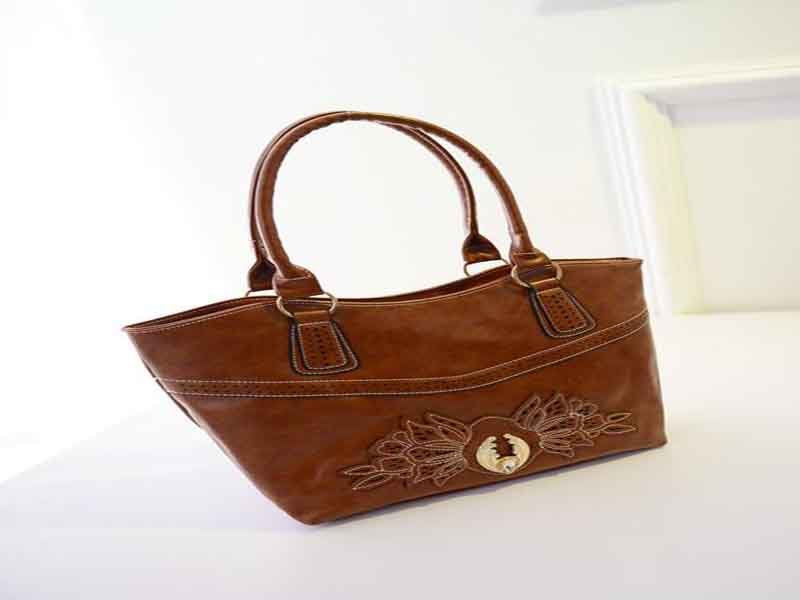
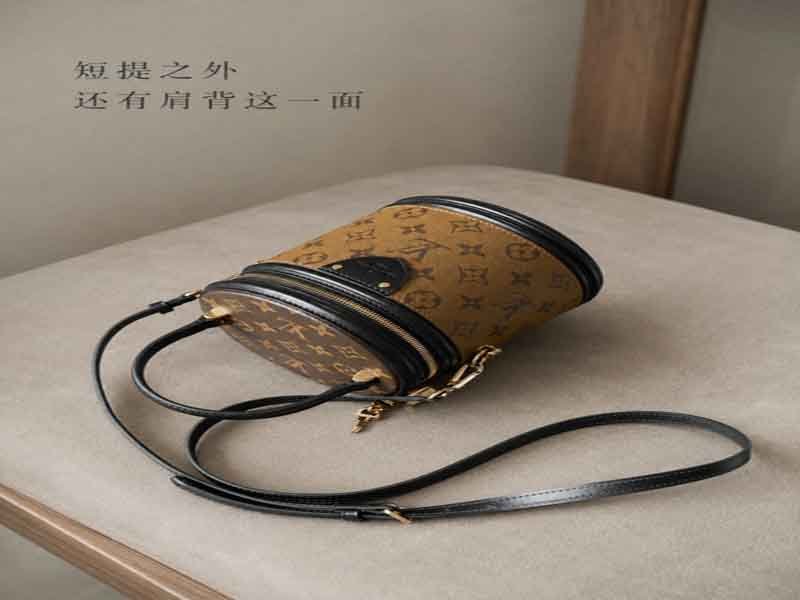
Can't find the answers?
No worries, please contact us and we will answer all the questions you have during the whole process of bag customization.
Make A Sample First?
If you have your own artwork, logo design files, or just an idea,please provide details about your project requirements, including preferred fabric, color, and customization options,we’re excited to assist you in bringing your bespoke bag designs to life through our sample production process.