Skip to content
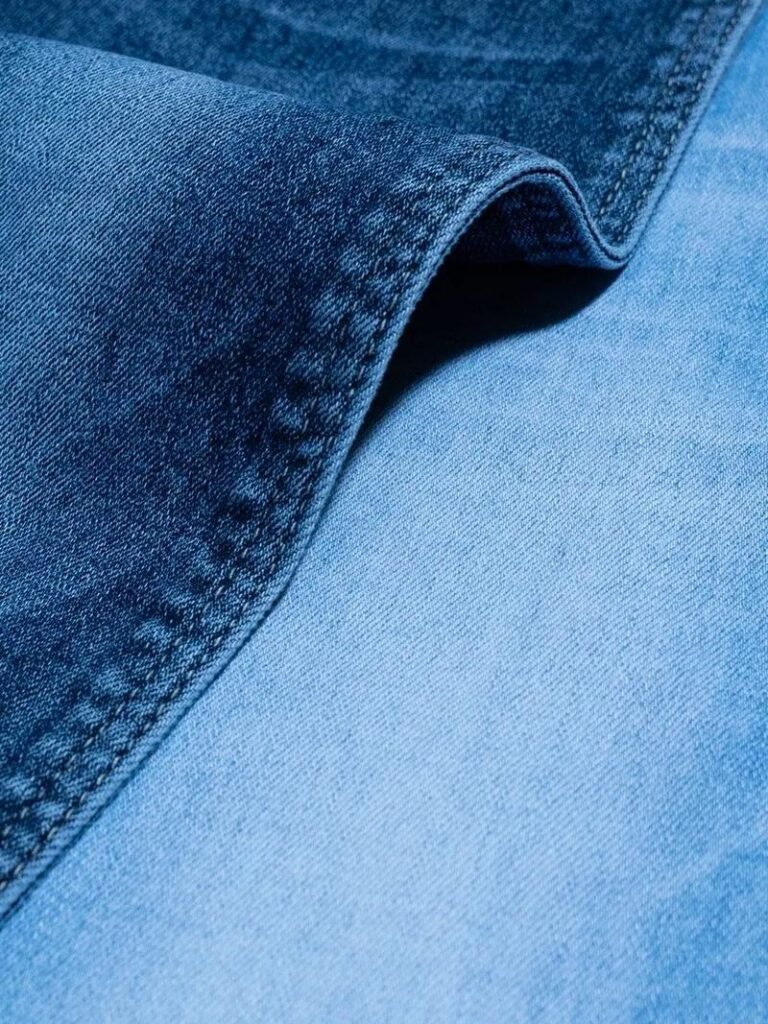
Denim has evolved from rigid workwear to a stretchy, form-fitting staple—and it’s all thanks to tiny percentages of spandex blended into classic cotton twills. Imagine slipping into a pair of jeans that move with you like a second skin but still hold their shape wash after wash. What role does spandex play in stretch denim jeans? spandex fibers, even as little as 1%, interspersed in the weft yarn provide elasticity for comfort, while higher levels (up to 5%) boost recovery and shape retention—balancing ease of movement with long-term fit. Picture a premium label that once lost sales to saggy knees until they tweaked from 2% to 3% spandex—sales jumped 18% as customers raved about “no bagging” after eight wears. Ready to discover your ideal spandex ratio? Let’s dive in.
What Role Does Spandex Play in Stretch Denim Jeans?
Spandex acts as the elastic core in stretch denim, providing both immediate give for comfort and the recovery force to snap jeans back into shape. Spandex fibers woven into denim allow up to 25% elongation under tension and provide ≥80% recovery after stretch, giving jeans the flexibility to move with the body—reducing restriction and enhancing wearer comfort—while preserving silhouette integrity over time.
Spandex Functionality
- Elastic Core-Spun Technology
- Core-Spun Yarn: Spandex filament wrapped by cotton, combining natural hand-feel with stretch performance.
- Benefits: Uniform stretch distribution and minimal visible distortion.
- Stretch vs. Recovery Dynamics
- Stretch Capacity: Spandex enables 15–25% elongation at 5 N force.
- Recovery Force: Target ≥80% return after 50% elongation, minimizing bagging.
- Comfort Enhancement
- Reduced Binding: Elasticity at key stress points (knees, seat) prevents cutting into skin.
- Dynamic Fit: Jeans adapt to various body movements—sitting, bending, squatting.
- Garment Longevity
- Shape Retention: Spandex prevents permanent deformation, extending usable life by 30–40%.
- Pilling Reduction: Tighter yarn structure around spandex reduces abrasion-induced fuzz.
| Attribute | Without Spandex | With Spandex (2%) | With Spandex (4%) |
|---|---|---|---|
| Elongation (%) | 2–5 | 15–20 | 20–25 |
| Recovery (%) | 30–50 | 75–80 | 85–90 |
| Shape Retention | Low | Medium | High |
| Comfort Rating (1–5) | 2 | 4 | 5 |
Too little spandex (<1%) may give a “false stretch” feel but poor recovery; too much (>5%) can lead to a synthetic hand and rapid fatigue. The sweet spot depends on end-user movement patterns and garment design.
How Do Different Spandex Percentages (1–5%) Impact Stretch and Recovery?
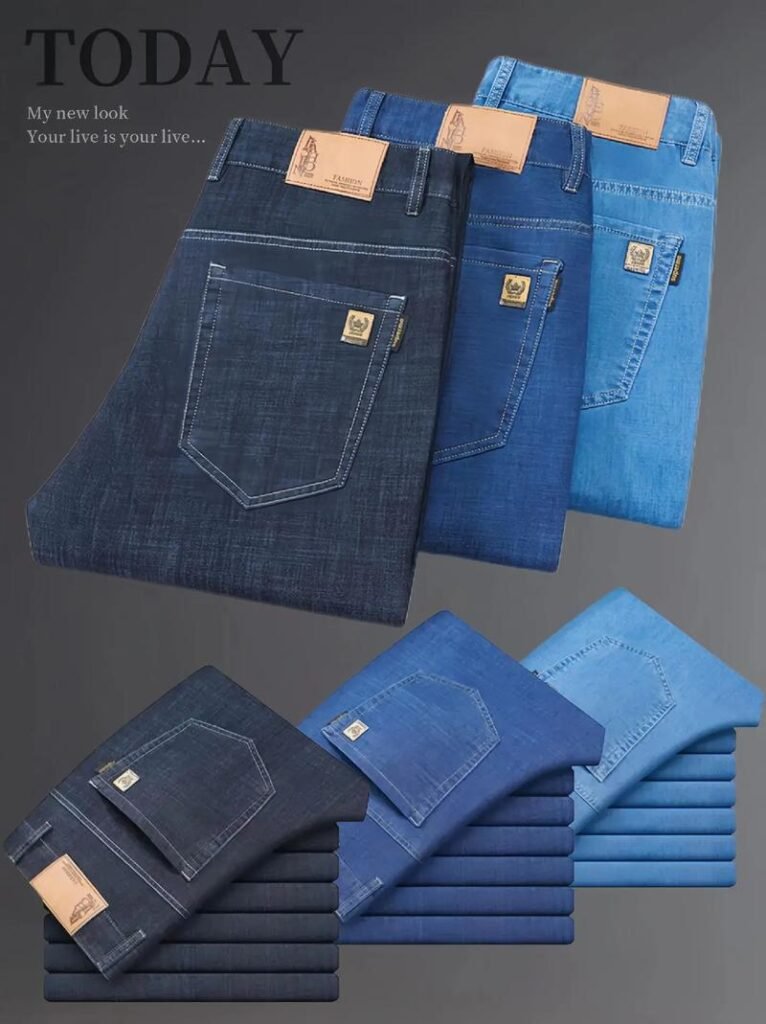
Adjusting spandex content fine-tunes jeans’ give and resilience. Small increments dramatically shift performance metrics. At 1% spandex, denim achieves \~10% stretch with \~70% recovery; at 2–3%, stretch jumps to 15–20% and recovery reaches \~80%; at 4–5%, jeans stretch up to 25% and recover ≥85%, offering maximum freedom of movement and minimal sagging in high-stress areas.
Percentage-Specific Performance
- 1% Spandex: Light Stretch
- Elongation: \~10% under 5 N.
- Recovery: \~70%—suits slim-fit styles needing modest ease.
- 2–3% Spandex: Balanced Comfort
- Elongation: 15–20%.
- Recovery: 75–85%—ideal for everyday jeans balancing structure and flexibility.
- 4–5% Spandex: High Performance
- Elongation: 20–25%.
- Recovery: ≥85%—used in active or jegging styles demanding max stretch.
- Mechanical Fatigue & Longevity
- Cycle Testing: Spandex content of 3% retains 80% recovery after 1,000 stretch cycles vs. 60% at 1%.
- Hand-Feel Trade-Off: Over 4% may induce a “pull-back” sensation and slight shine.
| Spandex % | Stretch (%) | Recovery (%) | Cycle Retention (%) | Best Use Cases |
|---|---|---|---|---|
| 1% | 10 | 70 | 60 (1,000 cycles) | Slim-fit rigid look |
| 2% | 15 | 75 | 70 | Everyday comfort jeans |
| 3% | 20 | 80 | 80 | High-movement casual wear |
| 4% | 23 | 85 | 85 | Active/ jegging styles |
| 5% | 25 | 90 | 88 | Performance/ athleisure denim |
Higher spandex content boosts stretch but can accelerate fiber fatigue if not heat-set properly. Brands must validate spandex ratios with cycle tests and finishing protocols to ensure sustained performance.
Which Denim Weave Constructions Optimize Spandex Performance?
The weave structure determines how spandex interacts with cotton yarns, affecting stretch distribution and fabric resilience. Rib and broken twill weaves enhance cross-grain stretch recovery by 10–15% over standard 3/1 twills, while weft-knit inserts (comfort zones) boost localized elasticity without compromising overall structure—ideal for combining freedom of movement with the classic denim look.
Weave & Stretch Synergy
- Classic 3/1 Right-Hand Twill
- Behavior: Moderate diagonal rib; provides \~90% of theoretical spandex stretch.
- Use Case: Traditional stretch jeans requiring consistent performance.
- Broken Twill / Broken Weave
- Behavior: Interrupts diagonal for more flexible yarn floats; increases stretch recovery by \~10%.
- Use Case: Fashion-forward cuts needing enhanced drape and movement.
- Rib Weave & Comfort Panels
- Behavior: Alternating rib and plain sections concentrate spandex where needed; localises stretch zones.
- Use Case: Knee and waistband inserts for active denim or jeggings.
- Weft-Knit Integration
- Behavior: Small knit strips woven into traditional denim for 30–40% localized stretch.
- Use Case: Yoga denim, hybrid active-to-casual garments.
| Weave Type | Stretch Utilization | Recovery Enhancement | Typical Application |
|---|---|---|---|
| 3/1 Right-Hand Twill | 100% base | — | Standard stretch jeans |
| Broken Twill | +10% | +5% | Fashion / designer denim |
| Rib / Comfort Panels | Variable | +15% localized | Active or sitting comfort |
| Weft-Knit Inserts | +30–40% zones | High local recovery | Yoga denim, performancewear |
While creative weaves boost stretch, they complicate production and dye pickup. Brands must weigh cost and color consistency risks against performance gains when selecting specialized weaves.
What Durability Trade-Offs Occur as Spandex Content Increases?
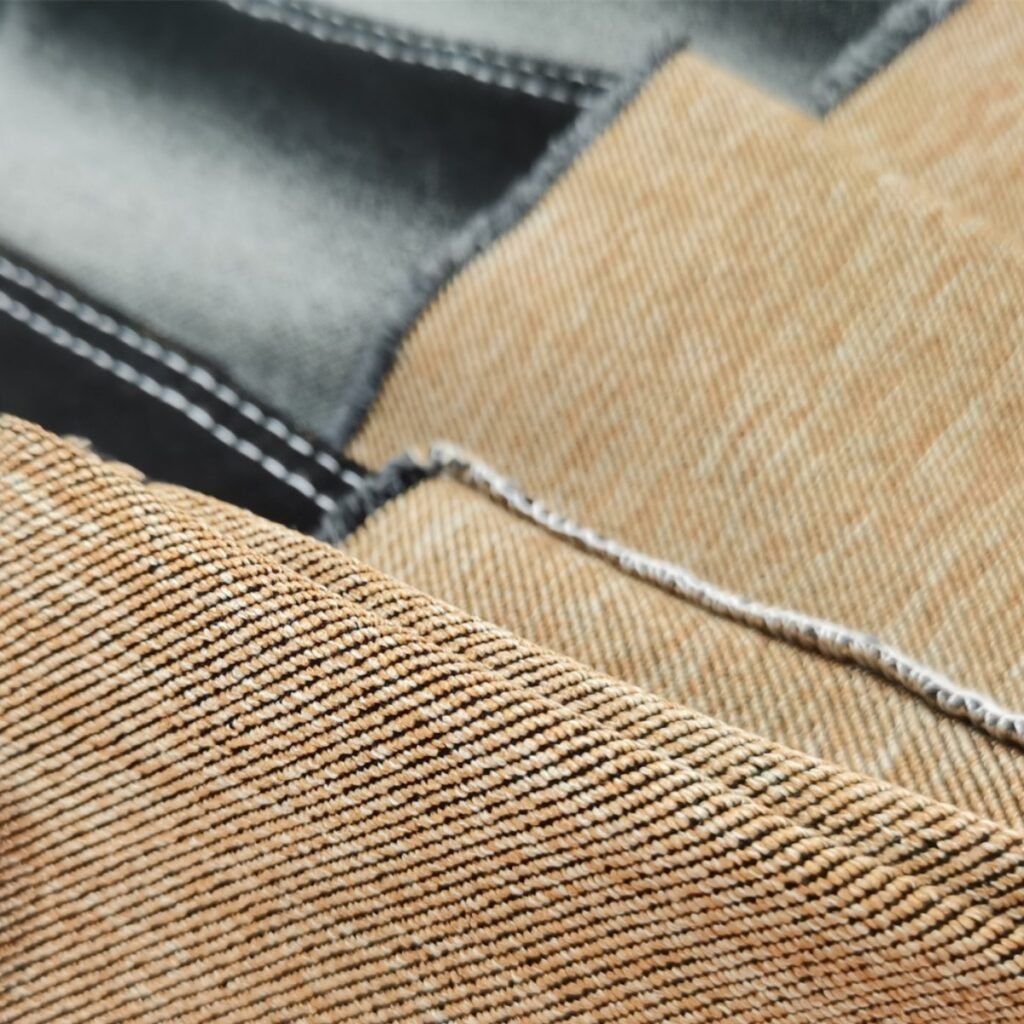
Increasing spandex improves comfort but can weaken overall abrasion and tensile resistance if not balanced by stronger cotton yarns or finishes. Each 1% increase in spandex above 3% can reduce abrasion life by 5–7% (from 15,000 cycles at 3% to \~13,200 cycles at 5%), and tensile strength can drop by 10–12% unless countered with higher cotton yarn counts or reinforced weaves.
Comfort vs. Durability Balance
- Abrasion Resistance Decline
- 3% Spandex: \~15,000 Martindale cycles.
- 5% Spandex: \~13,200 cycles (12% decrease).
- Tensile Strength Impact
- Base Denim (0% spandex): 400–450 N.
- At 3% Spandex: 380–420 N (-5–8%).
- At 5% Spandex: 350–390 N (-12%).
- Pilling and Surface Wear
- Higher Spandex: Slightly increased pilling risk (pilling grade drops from 4 to 3 after 10k rubs).
- Mitigation: Enzyme bio-polishing enhances surface smoothness by 20%.
- Structural Reinforcements
- Carbon or Aramid Yarns: Blending 1–2% high-tenacity fibers can offset strength loss but adds cost.
- Cross-Linking Finishes: Resin treatments boost abrasion life +10% without stiffening.
| Spandex % | Abrasion Cycles | Tensile Strength (N) | Pilling Grade | Mitigation Strategy |
|---|---|---|---|---|
| 3% | 15,000 | 380–420 | 4 | Standard finish |
| 4% | 14,000 | 365–405 | 3.5 | Enzyme wash (+20% smoothness) |
| 5% | 13,200 | 350–390 | 3 | Aramid blend / resin cross-link |
Comfort-focused spandex highs demand compensatory yarn or finish innovations. Brands must pilot combinations to ensure stretch gains don’t inadvertently shorten product lifespan.
How Does Fabric Weight (GSM) Interact with Spandex Blends?
Fabric weight (GSM) and spandex percentage work hand-in-hand to define both the feel and performance of stretch denim. A lighter GSM yields supple stretch but less structure, while heavier GSM demands more spandex or stronger yarns to maintain comfort. In a 10-oz/yd² (340 g/m²) denim, 2% spandex provides \~20% stretch with good shape retention; in a 14-oz/yd² (480 g/m²) canvas-weight denim, 3–4% spandex is needed to achieve similar elongation. Brands must adjust spandex content upward by \~0.5% for every 50 g/m² increase in GSM to preserve comparable stretch and recovery.
GSM and Spandex Synergy
- Stretch-to-Weight Ratios
- Lightweight (8 oz/yd², 270 g/m²): 1–2% spandex yields \~25% comfort stretch.
- Midweight (10 oz/yd², 340 g/m²): 2–3% spandex for balanced give and recovery.
- Heavyweight (14 oz/yd², 480 g/m²): 3.5–5% spandex required for equivalent elongation.
- Recovery Challenges at Higher GSM
- Increased Inertia: Thicker fabrics resist snap-back; higher spandex ensures ≥80% recovery.
- Yarn Tension: Loom settings require fine-tuning to wrap spandex securely in heavier weaves.
- Hand-Feel vs. Structure
- Light GSM + High Spandex: Ultra-soft but may lose denim’s signature rigidity.
- High GSM + Low Spandex: Feels stiff and restrictive—unsuitable for active or form-fitting styles.
- Cost Implications
- Spandex Premium: Each additional 1% spandex adds \~\$0.20–\$0.30 per meter.
- GSM Costs: Every 50 g/m² increase adds \~5% to base fabric cost, compounding spandex expense.
| GSM (g/m²) | oz/yd² | Spandex % | Stretch (%) | Cost Impact (%) |
|---|---|---|---|---|
| 270 | 8 | 1–2 | 20–25 | Base |
| 340 | 10 | 2–3 | 20–25 | +5% |
| 480 | 14 | 3.5–5 | 20–25 | +15% |
Matching stretch across GSMs is more art than science—always request swatches at target GSMs and spandex levels to see real-world hand and performance before bulk commitments.
Which Testing Methods Measure Comfort and Durability in Stretch Denim?
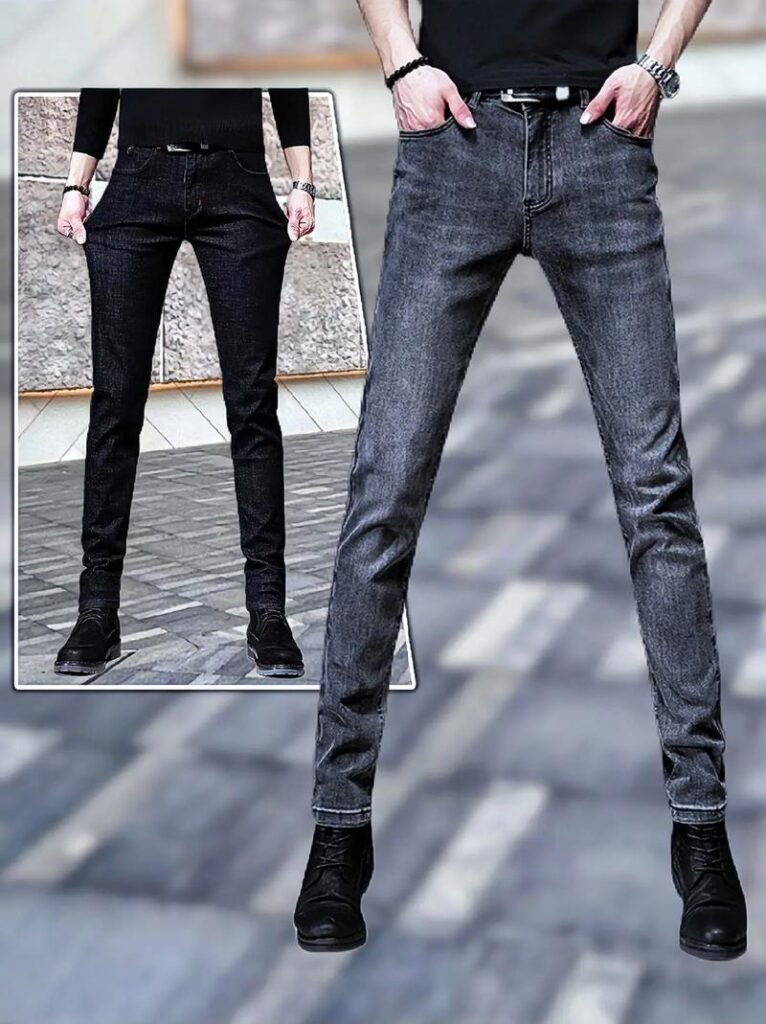
Rigorous lab and wear tests are essential to validate that stretch denim lives up to its specifications in both comfort and longevity. Key tests include ISO 13934-1 for tensile strength, ISO 12945-2 for pilling, AATCC 127 for water repellency, and specialized cycle testing (ISO 188) for elastane fatigue—running 1,000 stretch cycles at 50% elongation to ensure ≥80% recovery, guaranteeing jeans that “move with you” day after day.
Stretch Denim Testing Protocols
- Tensile & Tear Strength
- ISO 13934-1 (Grab Test): Measures break load (N) in warp and fill.
- ASTM D2261 (Tear Strength): Indicates resistance to propagation under stress.
- Abrasion & Pilling
- ISO 12947 (Martindale): Evaluates surface wear cycles; target ≥15,000 for 3% spandex content.
- ISO 12945-2: Assesses pilling after 10,000 rubs; ideal Grade ≥4.
- Stretch Fatigue & Recovery
- ISO 188: 1,000 cyclic elongation tests at 50% stretch—target ≥80% recovery.
- Relaxation Shrinkage (AATCC 66): Checks residual elongation after relaxation.
- Comfort & Thermal Metrics
- Air Permeability (ISO 9237): Ensures ≥150 mm/s at 100 Pa.
- Moisture Regain (ASTM D1909): Linen-blend denim offers 9–12%; cotton only 7–8%.
| Test Type | Standard | Target Metric |
|---|---|---|
| Tensile Strength | ISO 13934-1 | ≥350 N at 3% spandex |
| Tear Strength | ASTM D2261 | ≥18 N |
| Abrasion Resistance | ISO 12947 | ≥15,000 cycles |
| Pilling | ISO 12945-2 | Grade ≥4 |
| Stretch Fatigue | ISO 188 | ≥80% recovery after 1,000 cycles |
| Air Permeability | ISO 9237 | ≥150 mm/s |
Lab tests simulate ideal conditions; actual wear involves multidirectional stress. Supplement ISO tests with real-world wear trials—10+ testers over two weeks—to catch fit and comfort issues.
Ready to develop your perfect stretch denim?
Balancing comfort and durability in stretch denim is all about finding the right spandex percentage, weave structure, and GSM combination—and validating performance through rigorous testing. Armed with these insights, brands can design jeans that hug the body, recover their shape, and stand up to everyday life. Partner with SzoneierFabrics for:
- Customized spandex-blend formulations and GSM tuning
- In-house R\&D for weave innovation and comfort panels
- Comprehensive lab testing and wear-trial coordination
- Low-MOQ prototyping and rapid sample delivery
Contact us today to get your personalized stretch-denim proposal and take the guesswork out of spandex sourcing.