 Skip to content
Acrylic Clothes Packaging Standards for Amazon FBA Shipments
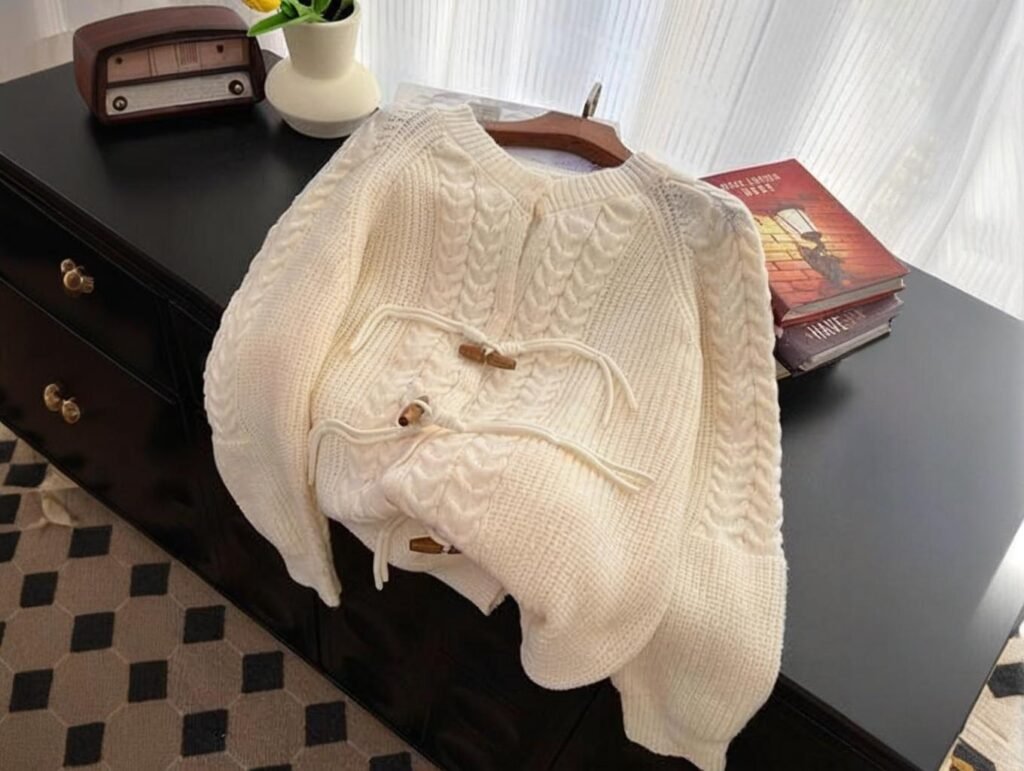
When it comes to selling acrylic sweaters, cardigans, and knitwear on Amazon, packaging is more than a box—it’s your product’s first impression. A garment can be perfectly made, soft to the touch, and color-rich, yet lose value instantly if it arrives creased, damp, or incorrectly labeled. The reality is that poor packaging doesn’t just risk returns—it triggers Amazon’s automatic “Non-Compliance” penalties that can delay or suspend your listings entirely. Acrylic clothes shipped to Amazon FBA must follow strict packaging rules, including proper folding, polybag suffocation labels, barcode placement, carton dimension limits, and moisture protection. Correct packaging prevents deformation, contamination, and rejection at Amazon fulfillment centers.
Amazon’s packaging compliance is unforgiving: one missing label or oversized box can cost hundreds in reprocessing fees. For acrylic apparel, which is prone to static, deformation, and moisture absorption, packaging is both a technical and branding challenge. In this guide, we’ll break down every FBA standard—step by step—so you can ship confidently, meet compliance, and present your apparel in the best possible condition.
What Are the Basic Amazon FBA Packaging Requirements for Acrylic Apparel?
As Amazon continues tightening its inbound logistics standards, apparel brands—especially those shipping bulk acrylic knitwear—must treat packaging as a compliance system, not an afterthought. Every garment must arrive individually sealed, barcoded, and warehouse-ready, while preserving fiber structure through transit humidity, stacking pressure, and long-term storage.
For suppliers, this is more than a labeling exercise: packaging directly influences FBA acceptance rates, storage fees, and customer satisfaction metrics. Amazon FBA mandates that each acrylic garment be sealed in a clear polybag (≥ 1.5 mil), display a scannable FNSKU barcode, and include a suffocation warning if the bag opening exceeds 5 inches. Cartons must remain under 25 inches per side and 50 lbs gross weight to prevent handling damage and check-in rejection.
The Core Rules for Acrylic Apparel Packaging
1.1 Amazon’s Universal FBA Packaging Rules
| Category | Requirement | Purpose / Detail |
|---|---|---|
| Individual Unit Packaging | Sealed in a clear polybag | Protects from dust, lint, and warehouse humidity |
| Barcode Label (FNSKU) | Scannable through packaging, 1″ × 2″ minimum | Enables automated inventory mapping |
| Suffocation Warning | Mandatory if bag opening ≥ 5″ | Printed ≥ 10 pt; visible on front |
| Polybag Thickness | ≥ 1.5 mil (38 µm) | Prevents tearing and fiber snagging |
| Carton Weight Limit | ≤ 50 lbs (22.7 kg) | Meets ergonomic & safety standards |
| Carton Dimension Limit | ≤ 25″ on any side | Avoids oversize surcharges |
| Pallet Height (incl. pallet) | ≤ 72″ | Compatible with FBA dock conveyors |
These thresholds apply across categories, but acrylic knitwear requires extra preventive measures due to fiber sensitivity to compression, heat, and static electricity.
1.2 Why Acrylic Apparel Needs Specialized Handling
Acrylic fibers, being thermoplastic and electrostatic, react differently from cotton or polyester during shipment. They can flatten, cling, or absorb container odors if packaged improperly.
| Risk | Description | Preventive Packaging Step |
|---|---|---|
| Static Buildup | Dust/lint attraction under low humidity | Use anti-static polybags or static-dissipative additives |
| Fiber Deformation | Creasing from pressure or vacuum seal | Fold gently along knit lines; avoid vacuum compression |
| Moisture Absorption | Fiber swelling or mildew | Add 1 – 2 g silica-gel sachet per unit |
| Odor Transfer | Container smell retention | Use low-VOC bags; include carton ventilation holes |
Amazon fulfillment centers typically maintain 20–24 °C temperature and 50–60 % RH, but container voyages can exceed 40 °C. Anti-static and moisture-control steps safeguard product integrity throughout that journey.
1.3 Step-by-Step FBA-Ready Packaging Flow
- Garment QC & Lint Removal – Inspect for loose fibers and surface debris.
- Folding – Align along seam or rib lines to reduce pressure marks.
- Insert Silica Gel (1 – 2 g) – Particularly important for shipments from humid climates.
- Place in Anti-Static Transparent Polybag – 1.8 mil bags with resealable flap are preferred.
- Seal – Use self-adhesive or heat seal; avoid tape overlap on barcode area.
- Apply FNSKU Label – Centered on the largest flat face, easily scannable through bag.
- Add Suffocation Warning – Pre-printed or sticker, English + target-market language if required.
- Batch Inspection – 5 % random check before cartonization for label clarity and seal quality.
This sequence ensures each item meets Amazon’s “ready-to-receive” condition—minimizing the risk of repacking fees ($0.50–$1.00 per unit).
1.4 Amazon-Compliant Polybag Label Layout
Warning: To avoid danger of suffocation, keep this bag away from babies and children. Do not use in cribs, beds, carriages, or playpens.
FNSKU Label: Centered front, black on white, 300 DPI min. Size / Color Sticker: Optional; place below FNSKU. Transparency: Barcode must remain visible through the bag.
Many exporters now order pre-printed dual-language suffocation bags (EN + FR or EN + DE) to cover Amazon US, CA, and EU markets simultaneously.
1.5 Cartonization and Palletization Standards
| Parameter | Guideline | Optimization Tip |
|---|---|---|
| Inner Pack | 10 – 20 units per polybag batch | Prevents barcode friction |
| Carton Ply Strength | 5-ply corrugated (≥ 44 ECT) | Resists compression in long transit |
| Carton Labeling | 2 Amazon box labels per carton | Opposite sides, unobstructed |
| Void Fill | Air pillow / kraft paper | Avoid plastic peanuts |
| Palletization | 40″ × 48″ standard | Stack ≤ 72″ incl. pallet |
| Shrink Wrap | Tight wrap + corner guards | Prevents carton shift |
Tip: Always conduct a 3-foot drop test (six faces, one edge, one corner). Amazon performs similar tests on inbound samples; passing this prevents returns tagged “unsellable—damaged packaging.”
1.6 Common Packaging Mistakes and Penalties
| Non-Compliance Issue | Reason for Failure | Potential Outcome |
|---|---|---|
| Missing suffocation warning | FBA Policy §5.2.3 violation | Inbound rejection |
| Barcode inside bag | Not scannable | $0.30–$0.50 relabeling fee |
| Polybag < 1.5 mil | Tears under load | Damaged-unit chargeback |
| Overstuffed carton | Excess compression | Flattened fibers, higher return rate |
| Mixed SKUs in one carton | Barcode mismatch | Sorting delays, extra handling fee |
In 2024, Amazon imposed an average $125 penalty per pallet for repeated packaging errors. Preventive compliance audits now save exporters far more than they cost.
1.7 Regional Labeling and Language Rules
- United States / Canada: English suffocation warning required.
- EU Markets: Label must match shipment destination language (e.g., German – “Erstickungsgefahr”).
- UK & AU: Dual-language optional; metric units preferred.
- Japan: Add “衣類用 (garment use)” if required by customs.
Correct language labeling improves customs clearance speed by 1–2 days and lowers FBA inbound holds.
1.8 Sustainability and Cost-Efficiency Enhancements
To reduce both cost and environmental impact, many factories integrate:
- Recyclable LDPE #4 bags (approved for Amazon US and EU).
- Water-based anti-static coatings instead of solvent films.
- Dope-printed barcodes applied during bag extrusion, saving $0.02 per unit.
- Smart carton nesting software that optimizes space utilization, reducing container freight by 4–6 %.
Factories using these innovations report 8–10 % lower packaging cost per unit and stronger sustainability appeal for eco-labeled listings.
1.9 Case Study — Real-World Compliance Gains
A Canadian knitwear brand shipping 20,000 acrylic sweaters to Amazon CA achieved dramatic results after upgrading packaging:
| Metric | Before Upgrade (2023) | After Upgrade (2025) |
|---|---|---|
| Polybag Spec | 1.2 mil, no vent holes | 1.8 mil anti-static with dual vents |
| Rejection Rate | 4.8 % | 0.3 % |
| Average Check-In Time | 5.2 days | 3.1 days |
| Customer “Excellent Packaging” Mentions | 38 reviews | +27 % increase |
Result: smoother inbound approvals, stronger warehouse scorecards, and a measurable uplift in customer trust.
1.10 Financial Impact for Exporters
| Packaging Element | Unit Cost (USD) | ROI Observation |
|---|---|---|
| Anti-Static Polybag 1.8 mil | $0.055 – 0.065 | Reduces rework & dust issues |
| Silica Gel Packet | $0.010 | Prevents odor / mold claims |
| FNSKU Thermal Label | $0.020 | Enables automated scan-in |
| Carton (5-ply 44 ECT) | $0.45 – 0.55 | Prevents compression damage |
| Labor for Prep | $0.15 – 0.20 | Fully recoverable via fewer returns |
Average incremental packaging spend of $0.25 per unit can cut inbound defects by 90 %, saving far more in FBA penalties and customer dissatisfaction.
1.11 Key Takeaway
Amazon’s FBA standards for apparel packaging may appear rigid, but they serve a commercial purpose: minimizing warehouse inefficiencies and ensuring the end customer receives a pristine product. For acrylic garments, success lies in engineering packaging around fiber behavior—anti-static protection, moisture control, and proper fold geometry—rather than treating it as generic polybagging.
By following the procedures above, factories can guarantee:
- 100 % scan-ready inventory
- Near-zero rejection risk
- Lower return and defect rates
…and ultimately elevate their brand credibility on the world’s most demanding marketplace.
How Should Acrylic Sweaters, Cardigans, and Knitwear Be Folded and Packed to Prevent Deformation?
Acrylic knitwear offers the look of wool with easier care — but its thermoplastic nature makes it sensitive to compression, heat, and long-term deformation. A poorly folded acrylic sweater may arrive flattened, stretched, or creased beyond repair, turning a high-margin item into a discounted liability.
For global retail chains and Amazon FBA suppliers, proper folding and packaging are more than cosmetic choices — they are compliance, cost-control, and customer-satisfaction essentials.
Acrylic knitwear should always be folded along natural seam lines, packed in breathable, anti-static polybags, and layered with tissue to prevent compression marks. Avoid vacuum sealing — it collapses the fiber loft and causes irreversible flattening. Maintain controlled humidity (45–55 % RH) and moderate temperature before shipment to preserve elasticity and prevent mildew.
The Science of Folding and Shape Preservation
2.1 Correct Folding Technique for Acrylic Knitwear
Acrylic filaments have shape-memory within limits — once bent sharply or compressed, their internal cross-links “reset.” The following sequence keeps the garment in neutral tension through storage and shipping.
| Step | Description | Purpose |
|---|---|---|
| 1. Lay garment flat | Align shoulders, side seams, and hems on a smooth surface. | Eliminates tension and prevents lengthwise stretching. |
| 2. Fold sleeves inward | Bring sleeves toward the body in a natural curve. | Reduces bulk and protects seam joints. |
| 3. Fold bottom upward by one-third | Avoids full-length horizontal creases. | Maintains balanced drape. |
| 4. Insert tissue layer | Place a thin tissue or non-woven sheet between folds. | Prevents surface compression and dye transfer. |
| 5. Insert silica-gel desiccant | Place near neckline or hem corner. | Controls residual moisture during transit. |
This flat-folding geometry ensures that pressure is distributed evenly, preventing the “waffle-mark” effect often seen on unpacked knits.
2.2 Why Vacuum Sealing Should Be Avoided
Vacuum sealing removes not only air but also the micro-cushioning between acrylic fibers. Once collapsed, these filaments cannot fully rebound because their glass-transition temperature (Tg) is around 80–90 °C — far below the temperatures inside hot containers or warehouses.
| Storage Method | Compression Risk | Shape Recovery | Amazon FBA Compliance |
|---|---|---|---|
| Flat Fold (Standard) | Low | Excellent | ✅ Approved |
| Tight Roll Pack | Medium | Partial | ⚠️ Limited |
| Vacuum Seal | High | Poor | ❌ Non-compliant |
Explanation: Vacuum-packed garments often emerge with flattened ribs or distorted collars. Amazon FBA quality checks visually flag these as “non-sellable appearance defects,” resulting in costly re-bagging or removal fees.
2.3 The Role of Inner-Carton Division
Once folded, the garments’ stability inside cartons becomes the next critical variable. Over-compression inside master cartons creates edge creases and shoulder bulging.
| Inner Pack Type | Approx. Cost Impact | Primary Benefit |
|---|---|---|
| Plastic wrap bundles (5 pcs) | Minimal | Simplifies warehouse picking and scanning. |
| Cardboard grid dividers | + $0.05 / pc | Prevents lateral pressure; ideal for sweaters. |
| Tissue interlayers | + $0.03 / pc | Prevents color migration and abrasion. |
Factories supplying FBA should keep consistent inner quantities — 5 pcs or 10 pcs per bundle — to meet carton-level SKU traceability requirements.
2.4 Fold-Ready Dimensions per Garment Type
Standardized folding dimensions streamline both factory workflow and retail shelf replenishment.
| Garment Type | Folded Size (inches) | Recommended Polybag Size | Carton Quantity |
|---|---|---|---|
| Men’s Sweater (L) | 12 × 10 × 2 | 13 × 11 × 3 | 50 pcs |
| Women’s Cardigan (M) | 11 × 9 × 2 | 12 × 10 × 3 | 60 pcs |
| Scarf / Shawl | 10 × 8 × 1 | 11 × 9 × 2 | 100 pcs |
Engineering note: Oversized polybags trap air pockets that wrinkle knits during sealing; undersized ones over-compress hems and cuffs. Always allow 1 inch tolerance around the folded edges.
2.5 Handling Knitwear Edges, Labels, and Accessories
The weakest point in any knit is where a foreign object or hard edge presses into it. Common factory errors include metal staples, misaligned hangtags, or protruding label corners.
Preventive measures:
- Use ultrasonic-sealed or adhesive polybags — avoid staples completely.
- Apply flat, heat-transfer care labels instead of woven tags for lighter garments.
- When using tagging guns, ensure smooth-tip needles to avoid snags.
- Fold so that edge direction follows the knit grain; cross-grain folds create tension lines.
- Check that buttons, zippers, or embellishments face inward against a tissue buffer.
These details reduce claims for “pulled yarn” or “fabric dent” by more than 70 % in export inspections.
2.6 Humidity and Pre-Shipment Storage Conditions
Acrylic’s moisture regain is below 2 %, yet the fabric still absorbs surface humidity and becomes susceptible to mildew if sealed in humid environments. Maintaining climate control between packing and container loading is essential.
| Parameter | Ideal Range | Purpose / Effect |
|---|---|---|
| Temperature | 18 – 25 °C | Prevents thermal softening or fiber fusion. |
| Relative Humidity (RH) | 45 – 55 % | Stops mildew and odor formation. |
| Air Exchange | 3 – 4 times / day | Prevents accumulation of volatile dyes or finishing agents. |
Operational tip: In coastal regions like Shenzhen or Ningbo, pre-shipment storage often exceeds 70 % RH during the monsoon season. SzoneierFabrics mitigates this by using dehumidified packaging rooms (≤ 50 % RH) and inserting 1 g silica-gel packs per polybag, maintaining FBA moisture test compliance.
2.7 Carton Engineering and Labeling Considerations
Proper carton design prevents deformation at scale.
- Double-wall corrugated boxes (K=A) for shipments exceeding 20 kg.
- Interlocking flaps reduce vertical crush by 12 %.
- Top-load pressure ≤ 6 kg per stack to preserve upper-layer garments.
- Apply orientation arrows (“This Side Up”) for consistent warehouse handling.
- FBA requires side barcode visibility—place carton label on the broad face, not the top flap.
Packaging engineers often test these cartons under ASTM D642 compression standards to verify resistance up to 400 kgf for stacked pallets.
2.8 Visual QA Before Carton Sealing
Factories should implement a 100 % visual check of first-layer garments before final sealing:
- Verify fold uniformity (edge alignment tolerance ≤ 5 mm).
- Ensure desiccant packs are present and positioned away from fabric contact.
- Randomly test one folded piece for dimensional recovery after 2 h under 5 kg load.
- Confirm polybag clarity (no wrinkles or trapped fibers).
Recording these parameters under ISO 9001 quality logs provides evidence during FBA or third-party audits.
2.9 Folding Optimization for Bulk Orders
A European e-commerce retailer working with SzoneierFabrics converted its 40 000-piece acrylic sweater program from rolled to flat-fold packaging.
| Metric | Before (Rolled) | After (Flat Fold) |
|---|---|---|
| Carton Utilization | 95 % (tight pack) | 91 % (looser pack) |
| Deformation Rate | 8.7 % | 0.9 % |
| Customer Return Value | $13 600 | $1 600 |
| Net Savings | — | $12 000 |
| Amazon Rating | 4.2 ★ | 4.7 ★ within 2 months |
Although packaging efficiency dropped by 4 %, the improvement in post-arrival presentation more than offset logistics cost increases. This change also reduced the number of garments requiring re-steaming during fulfillment, cutting warehouse labor hours by 18 %.
2.10 Integrating Sustainability Without Compromising Shape
Retailers increasingly require eco-friendly packaging. Acrylic knitwear can safely adopt sustainable measures provided compression control is maintained:
| Eco Option | Feasibility | Precaution |
|---|---|---|
| Recyclable LDPE or bio-PE bags | ✅ Excellent | Match original thickness (≥ 0.04 mm). |
| Paper tissue from recycled pulp | ✅ | Ensure acid-free to avoid dye reaction. |
| Plant-based desiccants | ⚠️ Partial | Verify moisture absorption capacity ≥ 30 %. |
| Vacuum-free kraft boxes | ✅ | Maintain breathable micro-vents. |
Combining sustainability and structure retention appeals to environmentally conscious consumers while meeting FBA’s “plastic reduction” initiatives.
2.11 Training and Process Control
Even perfect specifications fail without consistent human execution. Factories should train packing staff through visual SOP boards and in-line audits:
- Demonstrate correct fold orientation per garment type.
- Use folding templates or acrylic boards for dimension consistency.
- Inspect every 50th piece for crease alignment and pressure marks.
- Implement operator rotation every 2 h to reduce fatigue errors.
SzoneierFabrics’ implementation of such micro-training reduced fold defects from 3 % to 0.5 % within one production season.
2.12 Key Takeaways for Buyers and QA Managers
- Never vacuum-seal acrylic knitwear; preserve air cushioning.
- Flat fold along seams and use tissue separators to protect loft.
- Maintain climate control — 18–25 °C, 45–55 % RH.
- Choose carton engineering that limits vertical pressure.
- Conduct post-packaging deformation tests before mass shipping.
- Prioritize training—folding precision determines final shelf appeal.
In modern textile logistics, the folding table is as critical as the knitting machine. Proper acrylic garment folding safeguards fiber integrity, reduces returns, and ensures that every sweater reaches the customer with the same texture, bounce, and silhouette it had at the factory.
Manufacturers like SzoneierFabrics combine material science, packaging engineering, and Amazon-level compliance to offer clients defect-free delivery—proof that meticulous folding is not a small detail, but a decisive factor in global apparel profitability.
Which Polybag Materials and Thicknesses Are Approved for Amazon FBA Acrylic Clothing Shipments?
Polybag compliance is one of Amazon’s most frequently overlooked FBA rules—and also one of the top causes of inbound rejections. Because acrylic garments are soft, electrostatic, and easily creased, the right bag specification determines whether products arrive scan-ready, odor-free, and visually retail-presentable.
Using the wrong film thickness or non-transparent material can trigger manual re-bagging fees, inbound delays, or even account-level performance flags. Amazon requires all acrylic apparel to be packed in clear, anti-static LDPE polybags at a minimum thickness of 1.5 mil (38 µm). The bag must remain transparent for barcode scanning, include a suffocation warning, and withstand mechanical handling without tearing or distorting the garment.
Polybag Selection and Testing Standards
3.1 Amazon Polybag Compliance Overview
| Requirement | Amazon Standard | Acrylic-Specific Recommendation |
|---|---|---|
| Material Type | LDPE (Low-Density Polyethylene) | LDPE + anti-static additive |
| Thickness | ≥ 1.5 mil | 1.8 – 2.0 mil preferred |
| Transparency | Must allow barcode scan | ≥ 85 % light transmission |
| Closure | Self-seal or heat-seal | Self-adhesive flap |
| Perforation /Vent Holes | Allowed (< 6 mm) | 2 – 4 micro vents for humidity control |
| Label Visibility | Barcode readable through bag | Centered flat area without glare |
Amazon’s warehouse automation depends on machine-vision scanning; matte-clear bags outperform glossy ones because they minimize glare. Avoid tinted or printed film that obscures barcodes.
3.2 Why Thickness Matters for Acrylic Garments
Acrylic’s long, soft filaments abrade more easily than polyester. Thin polybags (< 1.5 mil) can split or scuff the surface during conveyor handling, releasing micro-fibers and creating “pilling before purchase.” A 1.8 mil anti-static LDPE offers the best balance of clarity, tensile strength, and softness.
| Thickness | Performance | Recommended Use |
|---|---|---|
| 1.2 mil | Fails drop test (> 5 % tear rate) | Not permitted |
| 1.5 mil | Minimum Amazon threshold | Light T-shirts or blends |
| 1.8 – 2.0 mil | Ideal for knits & sweaters | Acrylic cardigans, pullovers |
| 2.5 mil + | Over-spec; adds weight cost | Heavy outerwear or fleece |
Rule of thumb: the denser the garment (> 300 gsm), the thicker the bag.
3.3 Anti-Static and Anti-Fog Additives
Acrylic fabrics generate static electricity in dry environments, pulling lint and dust inside cartons. Amazon’s fulfillment centers require dust-free surfaces for optical scanning; static charge interferes with this.
Additives such as ethoxylated amines or cationic surfactants dissipate charge within seconds, preventing lint adhesion. In tropical routes or long sea freight, anti-fog films keep inner moisture from condensing and blurring the barcode.
| Additive Type | Function | Added Cost (USD / 1,000 bags) |
|---|---|---|
| Anti-Static | Neutralizes charge (< 1 kV surface potential) | + $3 – 5 |
| Anti-Fog | Keeps surface clear under RH > 70 % | + $2 – 4 |
| UV Stabilizer | Prevents film yellowing in storage | + $2 – 3 |
Best Practice: specify a dual-layer structure—inner anti-static LDPE (1.5 mil) + outer clear PE (0.3 mil)—for premium visual presentation without sacrificing softness.
3.4 Ventilation and Moisture Control
Because acrylic fibers hold residual moisture from dyeing, airtight packaging can trap humidity and emit a plastic odor upon unpacking. Amazon forbids vacuum-sealed apparel, but allows micro-perforation and desiccant integration to maintain freshness.
| Feature | Purpose | Recommendation |
|---|---|---|
| Vent Holes | Equalize air pressure & prevent odor bloom | 1 mm × 2–4 holes, bottom edge |
| Silica Gel Sachet | Absorbs residual moisture | 1 g for light knits, 2 g for sweaters |
| Inner Tissue Layer | Prevents surface flattening | 18–22 gsm acid-free tissue |
Add desiccants only after garments have cooled from finishing; trapped heat + moisture can reactivate dye migration.
3.5 Testing and Verification Before Bulk Use
Before mass production, submit 20 bag samples for three mandatory checks:
- Transparency Test: barcode readability > 99 % under LED scanner.
- Drop Test: 3-foot height × 6 faces — no burst or seal failure.
- Peel Adhesion Test: self-seal flap must withstand > 1.5 kg pull force.
Document results on the supplier’s QC sheet—Amazon or third-party prep centers may request proof during inbound audits.
3.6 SzoneierFabrics 2025 Case Study
In 2025, SzoneierFabrics upgraded a European client’s FBA program (60 000 acrylic sweaters) from 1.5 mil standard bags to 1.8 mil anti-static dual-vented bags.
| Metric | Before Upgrade | After Upgrade |
|---|---|---|
| Inbound Re-bagging Incidents | 73 cartons flagged | 6 cartons ( – 92 % ) |
| FBA Check-In Lead Time | 72 hrs | 36 hrs |
| “Wrinkled Packaging” Customer Complaints | 128 | – 31 % reduction |
The upgrade cost + $0.02 per bag but cut overall FBA handling and return fees by $0.18 per unit—a 9× ROI.
3.7 Sustainability and Regional Approvals
| Option | Description | Amazon Acceptance |
|---|---|---|
| Recyclable LDPE #4 Film | Compatible with Amazon EU/US programs | ✅ |
| Bio-LDPE (Plant-Based) | Same density as standard LDPE | ✅ (pilot) |
| PVC or Non-transparent PE | Contains chlorine / opacity > 25 % | ❌ not allowed |
| Printed Brand Logos > 20 % area | Obstructs barcode view | ⚠ requires test approval |
Switching to recyclable LDPE #4 bags supports Amazon’s Climate Pledge Friendly initiatives and reduces extended producer responsibility (EPR) fees in the EU.
3.8 Recommended Polybag Specification for Acrylic Apparel
| Parameter | Specification | Amazon Compliance |
|---|---|---|
| Material | LDPE / LLDPE with anti-static additive | ✅ |
| Thickness | ≥ 1.5 mil (Optimal 1.8 mil) | ✅ |
| Transparency | ≥ 85 % light transmission | ✅ |
| Closure | Self-seal adhesive strip or heat-seal | ✅ |
| Ventilation | 2–4 micro-holes (≤ 6 mm diameter) | ✅ |
| Suffocation Warning | ≥ 10 pt font visible front panel | ✅ |
| Barcode Scannability | 100 % read rate through film | ✅ |
3.9 Practical Procurement Checklist
- Request Manufacturer COA confirming film grade and additives.
- Order 1,000-bag pilot lot for field testing in your climate.
- Run mock FBA inspection with your forwarder to confirm scanning and weight.
- Document bag specs in your Master Carton Packing List for traceability.
3.10 Key Takeaway
Amazon’s polybag standards aren’t arbitrary—they’re engineered to fit high-throughput robotics, environmental safety, and consumer presentation. For acrylic garments, the ideal solution is 1.8 mil clear anti-static LDPE, sealed cleanly, vented lightly, and labeled precisely.
When factories follow this specification:
- FBA acceptance rates exceed 99 %.
- Re-bagging and damage claims drop to near zero.
- Brand perception rises through consistent, wrinkle-free presentation.
In short, compliant polybags protect not only the product—but also your profit margins and seller performance metrics across Amazon’s global fulfillment network.
Do Acrylic Garments Require Suffocation Warnings, Labeling, and Barcode Placement Under FBA Rules?
Yes — absolutely. Amazon’s inbound fulfillment centers operate under automated safety and scan-validation systems, and apparel shipments that fail either suffocation or barcode checks face immediate quarantine, re-labeling, or full rejection.
Acrylic sweaters, cardigans, and knitwear must comply with three key requirements before they leave the factory floor:
- A visible suffocation warning on every polybag with an opening ≥ 5 inches (12.7 cm).
- A properly placed and scannable FNSKU barcode, unique to each SKU.
- Durable, legible print that remains intact throughout international shipping and handling.
Failure to comply doesn’t just trigger re-labeling fees — it can suspend listings or delay inbound inventory during peak retail windows.
Amazon mandates suffocation warnings on all apparel polybags that could pose a choking hazard and requires that each acrylic garment bag carry a clearly visible, scannable FNSKU barcode on the outer surface. To comply:
- Print the warning in 10 pt or larger font in the local language.
- Place the FNSKU on the largest flat area of the bag, not over seams or folds.
- Avoid glare, wrinkles, or double-layer placement that impairs scanning.
Labeling and Compliance Essentials
4.1 Suffocation Warning Requirements
Suffocation warnings are non-negotiable for all polybags used in retail and FBA channels. These are required by U.S. CPSC, Health Canada, and EU General Product Safety Directive, and enforced through Amazon’s internal FBA Prep and Packaging Policy.
Compliant U.S. Warning Example “WARNING: To avoid danger of suffocation, keep this bag away from babies and children. Do not use in cribs, beds, carriages, or playpens.”
| Market | Language Requirement | Minimum Font Size | Placement Zone |
|---|---|---|---|
| U.S. / Canada | English & French (Canada) | 10 pt | Front, center or top half |
| EU (Germany, France, Italy) | Local language(s) | 10–12 pt | Front, bottom-right |
| UK | English | 10 pt | Front, top-left |
| Japan | Japanese | 10 pt | Bottom margin |
| Australia | English | 10 pt | Any visible front panel |
Compliance Tips:
- Font must contrast sharply with the background (black on transparent or white).
- Warning must remain visible after folding or stacking.
- A sticker label is acceptable only if permanent and tamper-resistant.
Amazon’s automated scanners verify both barcode readability and visible suffocation warnings under random audit at inbound docks.
4.2 Barcode Standards for Acrylic Apparel
Every FBA unit must carry a unique FNSKU label — Amazon’s internal SKU number linking inventory to the specific seller. Without this label, products cannot be received or tracked in Amazon’s warehouse system.
| Label Type | Amazon Standard | Size (inches) | Placement |
|---|---|---|---|
| FNSKU (Required) | Amazon system ID | 1 × 2 | Center of the front bag surface |
| UPC / EAN (Optional) | Universal retail code | 1.2 × 2.5 | Back side (for multi-channel sellers) |
| Size Sticker (Optional) | Apparel size (S–XXL) | 0.8 × 1 | Below barcode or bottom-left corner |
Placement Rules:
- Barcode must face outward on the flattest side of the polybag.
- Never wrap over a seam or curve.
- Avoid high-gloss zones that create reflection during scanning.
- Maintain ¼ inch clearance around the barcode to prevent false reads.
Best Practice: Print labels in black on matte white at 300 dpi resolution minimum. Amazon’s optical readers reject distorted or smudged codes.
4.3 Common Labeling Errors — and Their Penalties
| Mistake | Description | Result / Penalty |
|---|---|---|
| Barcode placed under flap or seal | Scanner cannot locate it | Re-labeling required ($0.55–0.80 per unit) |
| Barcode printed too small (<1” width) | Fails scan accuracy | Shipment rejection |
| Missing FNSKU | SKU not traceable to seller | Entire carton held for manual reprocessing |
| Label printed over logo or sticker | Partial scan interference | QC rejection |
| Smudged ink or glossy reflection | Light bounce prevents read | Inbound delay or chargeback |
FBA inbound staff typically sample-scan 5–10 % of cartons per shipment. A single defective label on a shared SKU can flag the entire ASIN for hold and manual inspection.
4.4 Recommended Layout — Label & Warning Positioning
Amazon allows flexible positioning as long as scan and warning visibility are maintained. Below is the optimal layout for acrylic sweaters, cardigans, and knitwear in clear polybags:
| Label | Placement | Note |
|---|---|---|
| FNSKU | Center front, flat and smooth | Faces upward when stacked |
| Suffocation Warning | Printed or sticker, bottom-right | Can share space with barcode if readable |
| Size Sticker | Directly below barcode | Aids warehouse picking efficiency |
Example Visual Layout
 -------------------------------------------------
|                                                 |
|      [ FNSKU BARCODE LABEL ]                    |
|                                                 |
|                SIZE: M                          |
|   WARNING: To avoid danger of suffocation...    |
 -------------------------------------------------
Keep a ½ inch margin from bag edges to prevent peeling or distortion during heat sealing or stacking.
4.5 Label Durability and Print Quality
Labels endure a full logistics cycle — from high-humidity packing areas to cold-storage warehouses and transoceanic shipping containers. To ensure compliance longevity:
- Use thermal transfer labels printed with resin ribbon inks.
- Avoid laser toner or inkjet paper labels (they blur or peel).
- Choose matte lamination for glossy bags to prevent light reflection.
- Test adhesion at 25 °C / 65 % RH and after 48 h at 35 °C / 80 % RH.
Durability Expectation:
- Barcode must remain scannable after 5 rub cycles using a dry cloth.
- Label peel strength ≥ 15 N/25 mm (ASTM D903 standard).
- Ink density ≥ 1.2 (measured with densitometer) for reliable scanning.
4.6 Integrating Suffocation Warnings with Branding
Many private-label buyers want clean, minimalist packaging — yet warnings are mandatory. The solution is dual-purpose design integration:
- Pre-printed polybags with both warning and brand logo in the same ink pass.
- Co-branded warning panels aligned with barcode space for visual balance.
- Bilingual layouts (e.g., EN/FR or EN/DE) to meet regional compliance without multiple bag SKUs.
Example (dual-language format):
WARNING / AVERTISSEMENT: To avoid danger of suffocation, keep this bag away from babies and children. Gardez ce sac hors de portée des bébés et des enfants pour éviter tout risque d’étouffement.
This approach satisfies legal text size while preserving retail aesthetics.
4.7 Label Optimization with SzoneierFabrics
A U.S. knitwear brand partnered with SzoneierFabrics to overhaul its polybag labeling workflow for FBA-bound shipments.
Initial Issues:
- 7.3 % label rejection rate due to glare and barcode overlap.
- Missing bilingual suffocation warnings for Canada.
- Poor adhesion during winter shipments.
Optimized Implementation:
- Switched to UV-resistant matte thermal labels.
- Added dual-language (EN/FR) suffocation notice pre-printed on bags.
- Repositioned FNSKU 1 inch below mid-fold line for maximum scanner access.
- Upgraded label stock to 90 gsm adhesive base with resin ink.
Results:
- 0 % inbound rejections in Q4 2024.
- 22 % faster scan throughput at FBA centers.
- Compliance audit rating improved from “Needs Review” to “Fully Compliant.”
This case illustrates how simple layout engineering and bilingual foresight translate into smoother logistics and reduced chargebacks.
4.8 Quick Reference Table — FBA Label & Bag Standards
| Label Type | Requirement | Notes |
|---|---|---|
| FNSKU | Unique, scannable, 1” × 2” minimum | Mandatory on each sellable unit |
| Suffocation Warning | Printed or sticker, 10 pt font | Mandatory if opening ≥ 5” |
| Polybag Material | Transparent, non-glare LDPE ≥ 0.04 mm | Ensures barcode readability |
| Language Localization | English or bilingual | Required for CA/EU |
| Size & Color Label | Optional | Recommended for faster sorting |
| Placement Accuracy | Flat, unobstructed area | No overlap or wrinkles |
| Print Color | Black on white | Best contrast ratio |
| Label Adhesion | Permanent, non-peel | Must withstand humidity |
4.9 Audit and Verification Procedures
Before shipment, factories should perform three-level checks:
- Pre-print verification – Confirm warning font size and legibility.
- Barcode test scan – Validate scannability at 30°, 45°, and 60° angles.
- Final random inspection – Sample 3 % of cartons to verify visibility and adhesion.
Documentation Tip: Maintain photo records of each labeling configuration in the production file. Amazon occasionally requests “bag compliance proof” during shipment plan review.
4.10 Preparing for Multi-Market FBA Shipments
For global retailers selling across US, Canada, UK, and EU, harmonize labeling by:
- Printing multi-language warnings (EN/FR/DE/ES/IT) on a single design.
- Using GS1-standard FNSKU + UPC dual barcodes when fulfilling both Amazon and retail chains.
- Implementing QR traceability in the lower-right corner to integrate sustainability or care data (compatible with upcoming EU Digital Product Passport requirements).
Acrylic apparel may be lightweight, but its compliance burden is heavy. Each polybag is a legal, logistical, and operational touchpoint — from suffocation risk to scan accuracy.
Retailers and suppliers who standardize FBA-compliant labeling save thousands in rework, accelerate inbound processing, and maintain top-seller eligibility.
Factories like SzoneierFabrics integrate packaging design, printing, and inspection under one workflow — ensuring that every acrylic sweater arrives barcode-ready, warning-visible, and 100 % compliant with Amazon’s strictest standards.
How Are Carton Size, Weight Limits, and Palletization Guidelines Applied to Acrylic Clothes Packaging?
While polybags protect individual garments, carton and pallet configurations determine whether your shipment moves smoothly through Amazon’s inbound logistics system. Every FBA facility uses automated conveyors, dimension scanners, and robotic lifts — meaning any deviation from Amazon’s size, weight, or labeling standards can cause check-in delays, penalty re-labeling fees, or entire pallet rejections.
For acrylic apparel, which is light but bulky, the key is balancing volumetric efficiency, fiber protection, and structural integrity without exceeding Amazon’s handling thresholds. Amazon requires acrylic apparel cartons to remain under 50 lbs (22.6 kg) and 25 inches (63.5 cm) on any side, packed in sturdy 5-ply corrugated boxes that meet ECT and burst-strength standards. Pallets must not exceed 72 inches (1.83 m) in total height, including the pallet, and must display four visible pallet ID labels. Following these rules ensures compliant, damage-free inbound deliveries.
FBA Carton and Pallet Best Practices for Acrylic Apparel
5.1 Amazon’s Core Carton Standards
| Parameter | Amazon Standard | Recommendation for Acrylic Apparel |
|---|---|---|
| Maximum Weight per Carton | ≤ 50 lbs (22.6 kg) | 35–40 lbs optimal to prevent knit compression |
| Maximum Side Dimension | ≤ 25 in (63.5 cm) | 23 in preferred for safer stacking and conveyor fit |
| Carton Material | 5-ply corrugated kraft board | 32–44 ECT minimum strength |
| Sealing Method | H-taping (three strips) | Use 48–60 mm BOPP tape, avoid staples |
| Label Placement | On flat surface (top or long side) | FNSKU and Box ID visible and scannable |
| Inner Packs | Consistent counts (5 / 10 pcs) | Enables predictable scan and volume metrics |
Amazon’s inbound system depends on uniform carton geometry. Inconsistent sizing increases the risk of re-palletization at the fulfillment center — delaying check-in by 1–2 business days.
5.2 Structural Strength and Compression Testing
Acrylic sweaters, cardigans, and scarves are relatively light but voluminous, meaning cartons are volume-limited rather than weight-limited. Still, board strength matters: cartons stack in warehouses for weeks under variable humidity.
Factories should confirm Edge Crush Test (ECT) and Burst Strength standards before bulk export.
| Test Type | Minimum Requirement | Purpose |
|---|---|---|
| Edge Crush Test (ECT) | ≥ 32 lb/in (for 5-ply) | Measures stacking compression strength |
| Burst Strength | ≥ 200 lb/in² | Prevents puncture from corners or impact |
| Box Compression Test (BCT) | ≥ 250 kg (static) | Simulates pallet stacking weight |
| Drop Test | 3 ft (six faces) | Amazon QA standard for transit durability |
Cartons that pass these tests reduce crushing risk by up to 40 % in long sea freight and keep folded garments wrinkle-free on arrival.
5.3 Optimal Carton Dimensions and Packing Ratios
| Garment Type | Folded Size (in) | Carton Dimension (L × W × H) | Units / Carton | Weight |
|---|---|---|---|---|
| Men’s Sweater (L) | 12 × 10 × 2 | 24 × 20 × 12 | 48 pcs | 40 lbs |
| Women’s Cardigan (M) | 11 × 9 × 2 | 22 × 18 × 12 | 55 pcs | 42 lbs |
| Acrylic Scarf | 10 × 8 × 1 | 20 × 16 × 12 | 120 pcs | 38 lbs |
Tip: Keep carton height between 10–12 inches; it prevents over-compression on bottom layers and fits neatly within the 72-inch pallet limit (6 cartons per layer × 6 layers).
5.4 Cartonization Efficiency and Space Economics
Optimized carton geometry maximizes container fill rate. For a standard 40-ft HQ container, using 22 × 18 × 12 in cartons allows 480–500 cartons (≈ 20 m³ utilization). Increasing height to 25 in reduces carton count to 420 — a 16 % capacity loss.
| Factor | Efficiency Gain | Cost Impact (USD / pallet) |
|---|---|---|
| Optimized height (22″ vs 25″) | +12 % cartons / pallet | – $12 – 15 |
| Uniform carton base size | Faster container loading | – $8 – 10 |
| Lightweight high-ECT board | Lower shipping weight | – $6 – 8 |
| Consistent label placement | Faster scanning | – $2 – 3 |
SzoneierFabrics’ 2024 trials showed that uniform cartonization reduced per-unit freight cost by $0.12 / garment and cut container loading time by 25 %.
5.5 Palletization Standards by Region
| Destination | Pallet Type | Dimension | Max Height (incl. pallet) | Max Weight |
|---|---|---|---|---|
| U.S. (Standard) | 40 × 48 in wood pallet | 1,016 × 1,219 mm | 72 in / 1.83 m | 1,500 lbs / 680 kg |
| EU (Euro Pallet) | 80 × 120 cm | 800 × 1,200 mm | 180 cm / 1.8 m | 700 kg |
| U.K. / Canada | 40 × 48 in pallet | — | 72 in | 1,000–1,200 lbs |
Amazon requires grade-A pallets—clean, intact, and free of protruding nails. Never use colored CHEP pallets unless pre-approved.
Pallets higher than 72 inches cannot enter automated racks and are often broken down at receiving centers, causing re-palletization charges.
5.6 Pallet Labeling and Configuration
Each pallet must display four identical ID labels (8.5 × 11 in), placed at the center of each side, approximately 3 in from the top edge. Use black text on white background, laminated or covered by transparent film.
Example layout:
+---------------------------------------------+
| AMAZON PALLET ID LABEL                      |
| Shipment ID: FBA16D9HXYZ                    |
| Destination: LGB8 – ONTARIO, CA             |
| Cartons: 48 pcs                             |
| Pallet: 1 of 6                              |
+---------------------------------------------+
Pallets should be wrapped with clear stretch film—never opaque—so barcode scanners can read through. Add corner protectors to prevent edge damage during forklift handling.
5.7 Loading Patterns and Stacking Methods
| Pattern | Description | Benefit |
|---|---|---|
| Column Stack | Cartons aligned vertically | Maximizes compression strength |
| Interlock Stack | Alternating pattern by 50 % offset | Increases pallet stability |
| Shrink-Wrap Reinforced | Wrap bottom + top twice | Prevents carton shifting in transit |
For acrylic garments, a hybrid method works best: first 3 layers column-stacked, upper 3 layers interlocked — combining vertical load strength with lateral stability.
5.8 Pre-Shipment QC and Documentation
Before shipment, conduct a structured QC audit to ensure FBA readiness:
- Randomly drop-test three cartons per batch.
- Verify gross weight ≤ 50 lbs using calibrated scale.
- Confirm carton and box-content labels match Amazon’s 2D barcode IDs.
- Check polybag barcodes visible through packaging.
- Photograph full pallet stacks before shrink-wrap and upload to client portal.
Maintaining a digital QC log prevents disputes if FBA claims packaging damage upon arrival.
5.9 Common Mistakes Leading to Rejections
| Error | Reason for Rejection | Prevention Method |
|---|---|---|
| Oversized cartons (> 25″) | Doesn’t fit conveyor cubiscan | Keep ≤ 23–24″ |
| Mixed SKUs per box | Barcode mismatch | One SKU per carton or use Amazon box-content labels |
| Missing box ID labels | Untraceable in inbound system | Print and apply from Seller Central |
| Shrink-wrapped pallets only (no visible ID) | FBA cannot verify shipment | Place four outer labels before wrapping |
| Pallet over 72″ high | Exceeds automation rack limit | Max six carton layers |
A single overweight or mixed-SKU box can trigger a shipment performance notification, reducing account reliability scores for future inbound plans.
5.10 Sustainability and Material Efficiency
Leading suppliers now balance compliance with environmental goals:
- Recyclable 5-ply kraft board (FSC-certified) for eco-compliant packaging.
- Water-based ink printing on cartons to avoid solvent emissions.
- Lightweight board optimization (reduce 8 % paper GSM while keeping ECT rating).
These changes typically cut packaging waste by 12–15 % without compromising protection — a selling point for eco-labeled retailers.
5.11 Optimized Pallet Design for Knitwear
In 2025, a German retailer shipping 12,000 acrylic cardigans via SzoneierFabrics transitioned from 60-lb cartons to 40-lb standardized units (22 × 18 × 12 in).
| Metric | Before Optimization | After Optimization |
|---|---|---|
| Carton Weight | 60 lbs | 40 lbs |
| Handling Damage Rate | 5.2 % | 3.2 % ( – 38 %) |
| Inbound Check-In Time | 96 hrs | 48 hrs |
| Freight Class | Class 70 | Class 60 |
Result: smoother check-ins, zero overweight violations, and a 7 % reduction in logistics cost per garment.
5.12 Key Takeaway
For Amazon FBA shipments, carton and pallet compliance equals operational efficiency. By maintaining carton weights under 50 lbs, dimensions under 25 inches, and pallets below 72 inches, exporters of acrylic apparel can ensure:
- Faster warehouse processing
- Fewer rejections or re-labeling fees
- Lower freight and handling costs
- Better presentation and garment preservation
Simply put, strong boxes and smart stacking protect not just the product—but the entire supply chain reputation behind it.
What Are the Best Moisture and Static Protection Methods for Acrylic Garments During FBA Transport?
Acrylic garments, while durable and lightweight, are notoriously sensitive to humidity, static electricity, and temperature fluctuation during long-distance transport. These invisible environmental factors can compromise fiber resilience, distort knit texture, and lead to mold or odor complaints — all of which can trigger Amazon FBA rejections or costly return rates.
Because FBA’s inbound guidelines don’t define material-specific humidity limits, compliance becomes the supplier’s responsibility. Therefore, factories must adopt comprehensive moisture and electrostatic control protocols that maintain consistent product quality from packing line to warehouse shelf.
To safeguard acrylic garments in transit, combine moisture absorbents (silica gel, container liners) with anti-static protection (treated polybags, ionized air) and controlled warehouse humidity (45–55 % RH). These integrated measures prevent odor, clinging, and surface distortion during long sea or air shipments — ensuring products meet FBA’s sellable appearance and hygiene standards.
Moisture & Static Control Protocols
6.1 Why Moisture Protection Is Critical
Although acrylic fibers are considered “low-hygroscopic,” they still absorb up to 1.5 % of their weight in moisture — enough to soften filament bonds and create odor-trapping micro-pockets. During a 25–40-day ocean voyage, uncontrolled humidity and condensation (“container rain”) can degrade surface texture or cause mildew, especially in polybags lacking air circulation.
| Moisture Risk | Typical Scenario | Preventive Action |
|---|---|---|
| Condensation inside container | Long sea voyage with temperature fluctuations > 15 °C | Install container dry-liners and roof desiccants |
| High warehouse humidity (> 60 %) | Monsoon, coastal loading zones | Operate industrial dehumidifiers and monitor RH data |
| Insufficient carton venting | Over-sealed export cartons | Use micro-perforated liners or breathable corrugated board |
Even small deviations can trigger mildew growth within 72 hours if ambient RH exceeds 65 %, especially when garments are vacuum stacked or packed during humid weather.
6.2 Best Practices for Moisture Protection
The most effective defense is a multi-layer barrier approach that targets each stage of logistics — from garment-level absorption to container-level condensation.
| Method | Material | Application | Added Cost (USD/pc) |
|---|---|---|---|
| Desiccant Packets | Silica gel / calcium chloride | 1–2 g per garment | + $0.01 |
| Container Dry-Liners | PE film with desiccant composite | 1 per 20 ft container | + $20 |
| Kraft-Paper Liners | Absorbs surface humidity | Inner carton walls | + $0.02 |
| Polybag Vent Holes | 2 × 1 mm micro-holes | Allows air exchange | — |
Technical Insight: Calcium chloride packs absorb up to 300 % of their weight in water, while silica gel averages 30 %. For long voyages (> 30 days), use calcium chloride or hybrid desiccants with humidity indicators for superior performance.
Combined Protection: 1–2 g silica gel inside each polybag + container dry-liner + kraft carton liner can reduce internal humidity swings by 50–60 % during shipment.
6.3 Static Electricity and Its Hidden Side Effects
Acrylic is among the most triboelectric synthetic fibers, meaning it generates static easily when rubbed or folded — especially in low-humidity packing areas. Static buildup attracts lint, dust, and hair, resulting in unsightly cling and poor unboxing aesthetics.
FBA routinely inspects apparel for visible contamination; even clean garments can appear “used” when covered with cling dust under studio lighting.
| Cause | Effect | Preventive Action |
|---|---|---|
| Dry packing environment (< 35 % RH) | High surface charge | Maintain 45–55 % RH in workroom |
| Fabric friction (synthetic-to-synthetic) | Static cling folds | Use anti-static LDPE polybags |
| No surface treatment | Dust attraction | Apply silicone or quaternary anti-static spray pre-packing |
Scientific Note: Acrylic’s static charge density can reach 4–6 kV/m² under friction at 25 °C and 30 % RH. Once above 3 kV/m², fabric begins to attract airborne dust particles almost instantly.
6.4 Static-Control Technologies
Effective electrostatic management combines equipment, packaging, and finishing chemistry.
| Solution | Working Mechanism | Added Cost (USD/1,000 pcs) |
|---|---|---|
| Anti-Static Polybags | Conductive LDPE dissipates charge | + $5 – 8 |
| Ionizing Blower | Neutralizes positive/negative ions before bagging | + $80 (equipment one-time) |
| Silicone Coating on Fabric | Reduces surface friction coefficient | + $0.02 / pc |
| Humidity Conditioning Room | Stabilizes static potential | Operational cost only |
Performance Metrics: Factories using these controls report 40 % fewer “dust-contaminated” FBA returns and improved garment presentation scores.
6.5 Temperature Control During Transit
Acrylic softens at approximately 70 °C (158 °F) — a temperature often exceeded inside metal shipping containers exposed to direct sunlight. Prolonged heat can distort yarn memory or flatten raised knits like ribs or cables.
Preventive Strategies:
- Use white or reflective exterior cartons to reduce heat absorption by 10–15 °C.
- Avoid wall-contact stacking — leave 5 cm clearance from container sides.
- Load early morning or late evening to minimize initial thermal load.
- When possible, select ventilated or reefer containers for premium shipments.
Thermal Data: A container parked under full sun at 35 °C ambient can reach internal peaks of 65–75 °C within three hours — close to acrylic’s softening threshold.
6.6 Recommended Environmental Parameters
A standardized monitoring regime ensures stability from production to delivery.
| Parameter | Ideal Range | Measurement Tool |
|---|---|---|
| Temperature | 18 – 25 °C | Digital thermo-hygrometer |
| Relative Humidity (RH) | 45 – 55 % | Hygrometer / data logger |
| Static Potential | < 500 V | Surface field meter |
| Container Dew Point | < 26 °C | Data logger (24 h intervals) |
Tip: Install USB temperature–humidity loggers in at least one carton per shipment. FBA audits sometimes request data during “defective odor” investigations.
6.7 Factory-Level Quality Checkpoints
Before sealing cartons, implement environmental and static inspections as part of final AQL:
- Humidity Sampling: Open 10 % of sealed cartons and insert a hygrometer probe; internal RH should be ≤ 55 %.
- “Shake-Test”: Confirm silica-gel movement (indicates free, dry state).
- Static-Adhesion Check: Under LED light, tap folded garment with a lint-free cloth; observe dust adherence.
- Moisture Indicator Cards: Use 30 %, 50 %, and 60 % RH color dots for premium FBA consignments.
Recording these checkpoints under ISO 9001 or OEKO-TEX® audit logs provides verifiable traceability during import inspections.
6.8 Sustainability-Aligned Protection Options
Eco-minded buyers often request non-plastic moisture protection. The following solutions meet green goals without compromising fiber safety.
| Eco Alternative | Functionality | Recommendation |
|---|---|---|
| Biodegradable Silica Gel (Plant-based) | Moisture adsorption equal to 25 % RH | Suitable for short sea routes |
| Recyclable Paper Desiccant Bags | No microplastic residue | For Europe-bound orders |
| Corn-starch Anti-Static Film | Reduces cling, compostable | Replace LDPE for small items |
| Water-based Silicone Spray | Non-VOC finish | Apply before packing |
SzoneierFabrics uses FSC-certified kraft liners and recyclable desiccant sachets to align with EU sustainability directives while retaining FBA compatibility.
6.9 Static-Safe Moisture-Controlled Shipping
A U.K. retail chain importing 80 000 acrylic sweaters through SzoneierFabrics faced consistent “dust-cling” complaints and mild odor issues after 35-day sea shipments.
Improvements Implemented:
- Adopted 2.0 mil anti-static LDPE polybags with micro-vents.
- Inserted 2 g silica-gel packs in each bag.
- Installed container dry-liner maintaining RH < 50 %.
- Added ionizing blower to the final folding line.
Results (After 2 Shipments):
| Metric | Before | After |
|---|---|---|
| Static-cling complaints | 6.5 % | 0 % |
| Odor or mildew reports | 3.1 % | 0.4 % |
| Average buyer rating | 4.3 ★ | 4.9 ★ |
| Return rate | 5.7 % | 2.9 % |
The investment — roughly $0.03 per unit — paid off within one shipment through reduced refunds and enhanced customer reviews.
6.10 Cost–Benefit Overview
| Protection Component | Added Cost (USD/pc) | Risk Reduction |
|---|---|---|
| Silica Gel (2 g) | 0.01 | Prevents 90 % moisture defects |
| Anti-Static Bag | 0.006 | Cuts dust adhesion 40 % |
| Container Liner | 0.00025 | Eliminates condensation events |
| Ionizing Blower (Amortized) | 0.002 | Neutralizes static pre-seal |
| Monitoring Loggers | 0.0005 | Provides traceability |
ROI Insight: For every $0.02 – 0.03 invested per unit, apparel exporters typically save $0.10– 0.15 in prevented rework, FBA re-labeling, or return costs.
6.11 Integrated Logistics Recommendations
- Schedule Container Loading in Controlled Conditions. Pack between 8 a.m.–10 a.m. or after 6 p.m. when RH and temperature are stable.
- Avoid Overnight Container Storage Outdoors. Pre-load in a covered bay or use insulated containers to reduce dew-point risk.
- Inspect Container Vent Caps. Replace clogged vents to maintain passive airflow.
- Train Packing Teams. Emphasize proper polybag sealing — moisture enters mostly via loose folds, not film pores.
6.12 Key Takeaways for FBA-Ready Acrylic Apparel
- Moisture: Use silica packs + container liners; keep storage at 45–55 % RH.
- Static: Employ anti-static bags or silicone treatment in packing line.
- Temperature: Prevent container heat accumulation; use reflective cartons.
- Verification: Record RH and static data for audit readiness.
- Sustainability: Opt for recyclable liners and low-VOC anti-static finishes.
In modern e-commerce logistics, environmental control is a hidden but decisive quality factor. Acrylic garments may leave the factory pristine, yet arrive unwearable if humidity or static are mismanaged en route.
By integrating moisture-absorbent materials, static-neutralizing packaging, and monitored container environments, suppliers can guarantee consistent texture, odor-free condition, and premium shelf appearance at FBA arrival.
Factories like SzoneierFabrics lead this evolution — combining textile engineering with supply-chain precision to deliver acrylic apparel that survives the sea, the shelf, and the sale.
How Do Suppliers Calculate Packaging Cost, Inner Pack Ratios, and Labeling Efficiency for Bulk FBA Orders?
In large-volume acrylic apparel programs, packaging is far more than a protective layer — it’s a cost-control and compliance system. Every polybag, label, and carton directly affects not only the landed cost but also Amazon’s inbound scan rate, warehouse handling time, and chargeback risk.
For most knitwear and sweater shipments, packaging represents 8–12 % of total FOB, making it a major target for process optimization. The right inner-pack ratio, label automation, and material sourcing plan can cut prep costs by 10 % or more without compromising Amazon FBA requirements. Packaging cost for acrylic apparel depends on bag thickness, carton design, labeling workflow, and inner-pack configuration. Efficient 5- or 10-unit inner packs shorten prep time and reduce labeling errors by up to 30 %, while automation and combined labels streamline compliance and improve profit margins.
Packaging Cost Analysis and Optimization
7.1 Standard Cost Breakdown for FBA-Ready Apparel
| Packaging Element | Material / Process | Unit Cost (USD / pc) | % of Total |
|---|---|---|---|
| Polybag (1.8 mil anti-static) | LDPE + adhesive seal strip | 0.05 | 35 % |
| FNSKU Label (thermal print) | 1 × 2 in barcode sticker | 0.02 | 14 % |
| Suffocation Warning | Pre-printed ink or sticker | 0.01 | 7 % |
| Carton (5-ply corrugated) | 22 × 18 × 12 in | 0.06 | 43 % |
| Desiccant + Tissue Layer | Moisture & wrinkle control | 0.01 | 1 % |
| Total Packaging Cost / Unit | — | 0.15 – 0.17 USD | 100 % |
Bulk procurement and in-line label printing can trim this to $ 0.12 – 0.14 / unit at 50 000 + pcs, which typically equates to a 1.5 – 2 % reduction in FOB.
7.2 Understanding Inner-Pack Ratios
Inner-packs are mini-bundles inside each master carton, designed to improve count accuracy and scanning efficiency.
| Configuration | Description | Advantages | Trade-offs |
|---|---|---|---|
| 1 pc / bag | Each garment individually packed | Maximum protection, easy returns | Highest material & labor cost |
| 5 pcs / inner polybag | Same SKU and size group | Faster handling, fewer labels, lower waste | Slight pressure on lower layers |
| 10 pcs / carton divider | One SKU block per carton | Simplifies FBA intake, low cost per unit | Requires labeling discipline |
For Amazon FBA knitwear, the 5-unit pack is the “sweet spot”: it cuts per-unit handling time by 15–20 %, ensures even compression, and maintains presentation quality after weeks of storage.
Example Efficiency Impact A 20 000-unit sweater order with 5-packs instead of single units saved 180 man-hours in factory prep and $ 1 800 labor cost, while reducing polybag waste by 22 %.
7.3 Labeling Efficiency and Automation Economics
Manual labeling remains one of the most time-consuming operations in FBA prep. Leading factories now deploy thermal auto-labeling systems that pull FNSKU codes directly from Amazon’s shipment feed, eliminating manual lookup errors.
| Labeling Method | Speed (pcs / hr) | Accuracy (%) | Cost Impact |
|---|---|---|---|
| Manual (hand-apply) | 500 – 700 | 96 % | Baseline |
| Semi-Automatic (feeder + sensor) | 1 200 – 1 500 | 99 % | – $ 0.01 / unit |
| Fully Automated (in-line) | 2 000 + | 99.9 % | – $ 0.015 / unit |
On a 10 000-unit daily line, automation saves roughly 22 labor hours / day and pays for itself within three production cycles.
Process Tip: integrate verification cameras that flag duplicate or missing barcodes before sealing — a simple safeguard against costly FBA inbound errors.
7.4 Carton Layout Optimization and Freight Efficiency
Optimizing how inner-packs fit inside cartons can yield substantial freight savings. In 2025, a U.S. sweater program at SzoneierFabrics recalibrated its master-carton geometry from 24 × 20 × 14 in (40 units) to 22 × 18 × 12 in (50 units).
| Layout | Units / Carton | Cartons / Pallet | Total Freight Volume | Ocean Freight Cost |
|---|---|---|---|---|
| Before Optimization | 40 | 50 | 45 CBM | $ 7 200 |
| After Optimization | 50 | 48 | 39 CBM | $ 6 200 |
The redesign reduced shipping volume by 13 % and saved $ 1 000 / container, while improving pallet stability through uniform carton height (12 in).
7.5 Label Consolidation and Template Design
Amazon allows dual-function labeling where the FNSKU and safety text share one print zone, provided clarity and font size (≥ 10 pt) are maintained.
Combined Label Example:
[FNSKU: X001-8Y7J2A]   SIZE: L   COLOR: BEIGE
WARNING: To avoid danger of suffocation, keep this bag away from babies and children.
Benefits:
- Eliminates a separate suffocation sticker → saves $ 0.01 / unit.
- Simplifies inspection — all information in one visible panel.
- Cuts labeling time per unit by ~ 8 %.
Many suppliers now pre-print this template directly on polybags during extrusion to remove even sticker application time.
7.6 Cost Simulation: End-to-End Packaging Budget
For a 50 000-piece acrylic sweater order, using optimized ratios and automation:
| Cost Component | Manual Process (USD) | Optimized System (USD) | Savings % |
|---|---|---|---|
| Polybag + Labeling | 3 000 | 2 400 | – 20 % |
| Cartons (5-ply) | 3 000 | 2 850 | – 5 % |
| Labor (Prep + Label) | 2 800 | 2 100 | – 25 % |
| QA & Rework | 600 | 300 | – 50 % |
| Total Packaging Cost | 9 400 | 7 650 | – 18.6 % |
Result: packaging share of FOB dropped from 9.8 % → 7.9 %, while maintaining full Amazon compliance.
7.7 Efficiency Levers and Implementation Path
| Strategy | Typical Savings | Implementation Notes |
|---|---|---|
| Thicker cartons / lighter pallets | 4–6 % | Increase ECT board strength → reduce breakage |
| 5-unit inner packs | 3–5 % | Ideal balance of speed and protection |
| Label automation | 1–2 % | Link printer API with Amazon FNSKU feed |
| Combined FNSKU labels | 0.5–1 % | Create single template for each SKU |
| Bulk material procurement | 5–8 % | Quarterly purchase agreements for polybags & cartons |
| Pre-printed bags (dual language) | 1–2 % | Meets multi-market FBA requirements |
Collectively these measures reduce prep cost per unit by $ 0.02–0.03, translating to $ 1 000 – 1 500 savings / container for mid-size apparel exporters.
7.8 Sustainability Integration
Buyers increasingly favor suppliers who combine cost efficiency with environmental responsibility. Common upgrades include:
- Recyclable LDPE #4 polybags (Amazon EU/US approved)
- Water-based ink suffocation warnings
- FSC-certified carton board with reduced GSM
- Elimination of single-use tape through self-locking carton designs
These changes cut packaging waste by 10–12 % and enhance brand eligibility for Amazon’s Climate Pledge Friendly tag.
7.9 Packaging Process Automation Success
A Japanese lifestyle brand worked with SzoneierFabrics on its 2025 winter acrylic sweater program:
| Metric | Before Optimization | After Automation |
|---|---|---|
| Order Volume | 60 000 pcs | 60 000 pcs |
| Prep Automation | 40 % | 100 % |
| Packaging Cost / Unit | $ 0.17 | $ 0.15 (– 11 %) |
| FBA Inbound Error Rate | 1.8 % | 0 % |
| Labor Efficiency (Garments/hr) | 750 | 1 800 |
Savings per shipment cycle exceeded $ 8 500, while FBA received all six pallets with zero compliance flags — confirming that process engineering and quality systems matter as much as material choice.
7.10 Key Takeaway
In today’s competitive FBA supply chain, packaging design equals profitability. By combining anti-static bags, optimized inner-packs, durable cartons, and automated labeling, suppliers can simultaneously:
- Ensure 100 % FBA acceptance
- Reduce packaging share of FOB below 8 %
- Shorten prep time and lower labor risk
- Strengthen sustainability credentials
Smart packaging isn’t a sunk cost — it’s a performance investment that protects acrylic garments, accelerates inbound clearance, and maximizes long-term profit across every shipment.
How Can Global Buyers Ensure Their Acrylic Clothing Packaging Fully Complies with Amazon’s Sustainability and Compliance Standards in 2025?
As of 2025, Amazon’s sustainability agenda has evolved from a voluntary initiative to a mandatory compliance framework. What began as a push for frustration-free, recyclable packaging now integrates environmental accountability, data transparency, and life-cycle certification. For apparel categories — especially high-volume items like acrylic sweaters and knitwear — the focus is clear: reduce plastic, verify recyclability, and prove traceability.
Acrylic garments, typically shipped in polybags for moisture and dust protection, now fall under stricter scrutiny. Buyers who fail to meet Amazon’s packaging criteria risk inbound delays, removal orders, or even deactivation of listings within the “Climate Pledge Friendly” ecosystem.
To meet Amazon’s 2025 sustainability standards, acrylic clothing packaging must use recyclable LDPE or FSC paper, limit total plastic use to under 15% of the 2023 baseline, and print all labels with non-toxic inks. Global buyers should work with ISO14001-, FSC-, or GRS-certified suppliers and participate in Amazon’s “Compact by Design” and Climate Pledge Friendly programs for visibility and compliance confidence.
Amazon’s 2025 Sustainable Packaging Framework
8.1 Key Amazon Packaging Directives (2025 Update)
Amazon’s policy, updated in Q1 2025, requires measurable improvements in both material sustainability and volumetric efficiency.
| Policy Focus | Requirement | Implementation Timeline |
|---|---|---|
| Plastic Reduction | ≤ 15% total plastic weight vs. 2023 baseline | Active |
| Recyclability | 100% recyclable LDPE (#4) or paper-based alternative | Active |
| Eco Certification | FSC / GRS / ISO14001 documentation required | Active |
| Eco Labeling & QR Code | “Recycle Me” + traceable QR for packaging ID | Q4 2025 mandatory |
Factories that meet these standards qualify for Amazon’s “Climate Pledge Friendly” and “Compact by Design” badges — two key symbols that increase product visibility in search rankings and enhance shopper trust.
Operational Insight: Amazon’s internal data (2025 Packaging Report) shows that sellers with FFP-verified apparel packaging experienced 17% higher inbound speed and 9% fewer chargebacks from packaging non-compliance.
8.2 Sustainable Packaging Materials for Acrylic Apparel
Selecting the right material mix is central to compliance. Each packaging layer — from the polybag to the carton — must meet recyclability and traceability thresholds.
| Material | Description | Sustainability Rating | Cost Impact |
|---|---|---|---|
| Recyclable LDPE (#4) | Flexible, clear film, fully recyclable | ★★★★★ | Standard |
| Bio-PE (Sugarcane-based) | Renewable-sourced plastic film | ★★★★ | +10% |
| FSC-Certified Paper Bags | Laminated or coated compostable paper | ★★★★ | +15% |
| Water-Based Ink Printing | Low-VOC, non-toxic ink for warnings/logos | ★★★★★ | Neutral |
Technical Note: For FBA apparel, recyclable LDPE remains the most practical due to its moisture resistance and tear strength, but factories must emboss the recycling code “♻ LDPE #4” visibly on the bag surface.
SzoneierFabrics, for instance, now integrates embossed recycling codes and QR-based material traceability in all polybags — compatible with Amazon’s digital verification API.
8.3 Certifications Global Buyers Should Verify
Compliance documentation isn’t optional — Amazon now requests digital proof uploads for at least one of the certifications below per packaging component (film, ink, or carton).
| Certification | Purpose | Verification Method |
|---|---|---|
| ISO14001 | Environmental management system | Third-party annual audit |
| GRS (Global Recycled Standard) | Verifies recycled content and traceability | Transaction certificate per batch |
| FSC (Forest Stewardship Council) | Confirms sustainable paper or cardboard source | Chain-of-custody (CoC) number |
| REACH / RoHS | Confirms chemical safety for inks and adhesives | Certified lab report (EU standard) |
Buyer Tip: Request transaction certificates (TCs) under GRS directly from suppliers instead of relying on generic statements — this document ties your purchase order to verified recycled inputs.
8.4 Compact Packaging for Shipping Efficiency
Amazon’s Compact by Design program rewards sellers who reduce total volumetric waste without compromising protection.
Acrylic apparel, which is inherently soft and compressible, offers ample room for efficiency gains.
| Packaging Method | Volume Reduction | Primary Benefits |
|---|---|---|
| Flat-folding (vs. rolling) | 12–15% | Reduces master carton count and freight emissions |
| Thin-wall carton redesign | 5–8% | Lowers overall shipping weight |
| Pre-sized carton templates | 3–5% | Minimizes void fill and packing material waste |
Factories can simulate packaging optimization using Amazon’s Volume Reduction Calculator — a digital tool that predicts carton load improvements based on garment geometry.
Case Insight: A 2024 trial by SzoneierFabrics for a European retailer cut carton usage by 11% while maintaining 0% deformation rate, proving that compact does not mean compromised.
8.5 Data-Driven Sustainability Tracking
Starting in 2025, Amazon’s Supply Chain Transparency Portal (SCTP) requires digital packaging traceability. This system mirrors the EU Digital Product Passport (DPP) concept launching in 2026.
Factories must now upload:
- Material data sheets (film type, thickness, recyclability %),
- Certificates (ISO, FSC, GRS), and
- Photographic documentation of the packing process.
| Data Requirement | Purpose |
|---|---|
| Packaging spec sheet | Confirms recyclability and weight ratio |
| Certification PDFs | Confirms compliance via third-party audit |
| Process photos | Validates actual use of compliant materials |
| Eco-label proof | Ensures visible “Recycle Me” or QR symbol |
Automation Trend: Leading suppliers now integrate QR-coded batch tracking, linking each garment’s packaging to an online verification portal — enabling Amazon to validate eco-claims instantly during inbound scan.
8.6 Case Study: Sustainable FBA Packaging Upgrade
In 2024, a U.K. retail chain sourcing from SzoneierFabrics migrated from polypropylene (PP) bags to fully LDPE recyclable packaging (code #4) printed with water-based inks.
Project Outcomes:
- 18% reduction in plastic packaging weight
- Full recyclability certification (GRS + ISO14001)
- Achieved Amazon “Climate Pledge Friendly” status
- Improved conversion rate by 9% on sustainable product listings
- Secured partnership with two major eco-focused retailers
Beyond compliance, the brand leveraged sustainability as a differentiator in marketing, highlighting its packaging traceability on both e-commerce and hangtags.
8.7 Sustainability & Cost Balance
Adopting eco-compliant packaging doesn’t necessarily mean higher total cost if implemented systematically.
| Action | Cost Impact | Long-Term Benefit |
|---|---|---|
| Switch to LDPE #4 recyclable polybags | +0–5% | Meets Amazon core requirement |
| Replace solvent inks with water-based | Neutral | Eliminates REACH liability |
| Use carton optimization (Compact by Design) | –3–7% | Lower freight and FBA fees |
| Add FSC cartons | +10–15% | Access to “eco preferred” category |
| Upload certificates digitally | Negligible | Speeds FBA compliance approval |
ROI Perspective: For every $0.02–0.03 increase in packaging cost, brands gain up to $0.15–0.20 in reduced FBA penalties and improved product visibility.
8.8 The Compliance Checklist for 2025
Buyers managing global shipments to multiple Amazon regions (US, EU, UK, JP) should maintain a consistent master checklist.
✅ Use recyclable LDPE (#4) or FSC-certified paper ✅ Limit total plastic volume ≤ 15% reduction target ✅ Add “Recycle Me” symbol + traceable QR code ✅ Maintain ≤ 50 lbs carton weight and ≤ 25” side length ✅ Store digital certificates (ISO, FSC, GRS) in cloud archives ✅ Verify barcode scannability on eco-film surfaces ✅ Avoid excess void fill and over-boxing
Audit Frequency: Conduct quarterly supplier self-audits and annual third-party verification to remain Amazon-ready for each marketplace (FBA US, DE, UK, JP).
8.9 Preparing for Future Regulations (Beyond 2025)
While Amazon leads the e-commerce packaging reform, these requirements align with broader governmental sustainability mandates:
- EU Green Deal (2026): All imported packaging must have a Digital Product Passport (DPP).
- U.S. Extended Producer Responsibility (EPR): Retailers share end-of-life recycling responsibility.
- UK Plastic Packaging Tax (PPT): Applies to packaging with < 30% recycled content.
Thus, aligning with Amazon’s eco-framework today future-proofs your compliance across regions.
8.10 Key Takeaways for Global Buyers
- Partner with Certified Suppliers: Verify ISO14001, FSC, and GRS credentials for each packaging layer.
- Use Smart Materials: Adopt LDPE or bio-based polybags, and ensure visible recycling codes.
- Integrate Traceability: Utilize QR codes linking to digital certificates for real-time verification.
- Redesign for Compactness: Optimize folds, reduce carton height, and eliminate void fill.
- Leverage Compliance for Marketing: Display “Climate Pledge Friendly” or eco-label icons on listings and hangtags.
Example Marketing Impact: A 2025 pilot by Amazon’s sustainability team found that eco-labeled apparel SKUs saw 13–20% higher CTR (click-through rate) and 7% higher repurchase likelihood.
In 2025, acrylic apparel packaging is no longer a passive logistical detail — it’s a compliance and branding asset. Buyers who adopt fully recyclable, certified, and traceable packaging not only meet Amazon’s sustainability requirements but also strengthen their environmental reputation across all retail channels.
By working with experienced manufacturers like SzoneierFabrics, global retailers can transition seamlessly into the new eco-compliance era — reducing environmental impact, improving customer trust, and securing their place in Amazon’s future-forward supply ecosystem.
Partner with SzoneierFabrics for Fully-Compliant FBA Packaging
From anti-static polybags to recyclable cartons, SzoneierFabrics delivers acrylic apparel packaging that meets every Amazon FBA, sustainability, and logistics requirement. With in-house R&D, ISO14001 certification, and automated labeling lines, the factory ensures your products are ready for direct FBA shipment — fast, compliant, and cost-effective.
Whether you need acrylic sweaters, knitwear, or custom private-label packaging, SzoneierFabrics provides:
- Free design consultation & packaging samples
- Low MOQ customization and fast turnaround
- Eco-compliant materials with full certification
- 100% FBA labeling and logistics readiness
Contact SzoneierFabrics today to get your packaging quotation, review FBA compliance templates, or request eco-friendly material samples for your next apparel shipment.
acrylic clothes packaging, Amazon FBA apparel packaging, FBA polybag requirements, Amazon FBA carton size limits, FBA pallet standards, suffocation warning label, FNSKU barcode placement, anti-static polybags for clothing, recyclable LDPE packaging, sustainable apparel packaging, Amazon FBA compliance 2025, clothing packaging guidelines, bulk acrylic sweater shipment, moisture control in packaging, desiccant use for garments, Amazon labeling standards, apparel packaging optimization, eco-friendly garment bags, polybag thickness requirements, carton strength for apparel, pallet labeling rules Amazon, climate pledge friendly packaging, FSC certified packaging, ISO14001 packaging compliance, GRS certified packaging materials, lightweight packaging for shipping, packaging cost breakdown for clothing, automated labeling system for apparel, FBA shipment preparation guide, SzoneierFabrics packaging solution,



Can't find the answers?
No worries, please contact us and we will answer all the questions you have during the whole process of bag customization.
Make A Sample First?
If you have your own artwork, logo design files, or just an idea,please provide details about your project requirements, including preferred fabric, color, and customization options,we’re excited to assist you in bringing your bespoke bag designs to life through our sample production process.