Skip to content
Bamboo has become the textile industry’s paradox — promoted as a “green” miracle fiber yet burdened by the complexity of extraction, chemical processing, and inconsistent dyeing results. From silky viscose blends to mechanically processed yarns, bamboo’s promise lies in its balance of natural softness and sustainability, but the pathway from stalk to fabric is riddled with scientific and environmental challenges. Bamboo fiber is produced through either mechanical or chemical processes—mechanical bamboo linen retains natural fiber structure, while viscose and lyocell bamboo rely on chemical dissolution of cellulose. Each type requires specific processing, dyeing, and finishing methods to achieve softness, strength, and eco-compliance.
At its best, bamboo fiber is breathable, antibacterial, and biodegradable. At its worst, it becomes chemically treated rayon that undermines its green reputation. Understanding how it’s made—and why dyeing and finishing remain difficult—is essential for brands seeking transparency and textile performance.
Let’s unpack the science and production reality behind bamboo’s rise, with a story that begins in the fields of Sichuan and ends in high-tech dyeing labs in Guangzhou.
What Are the Key Differences Between Bamboo Fiber Types (Mechanical vs. Viscose vs. Lyocell) — and How Do They Affect Processing?
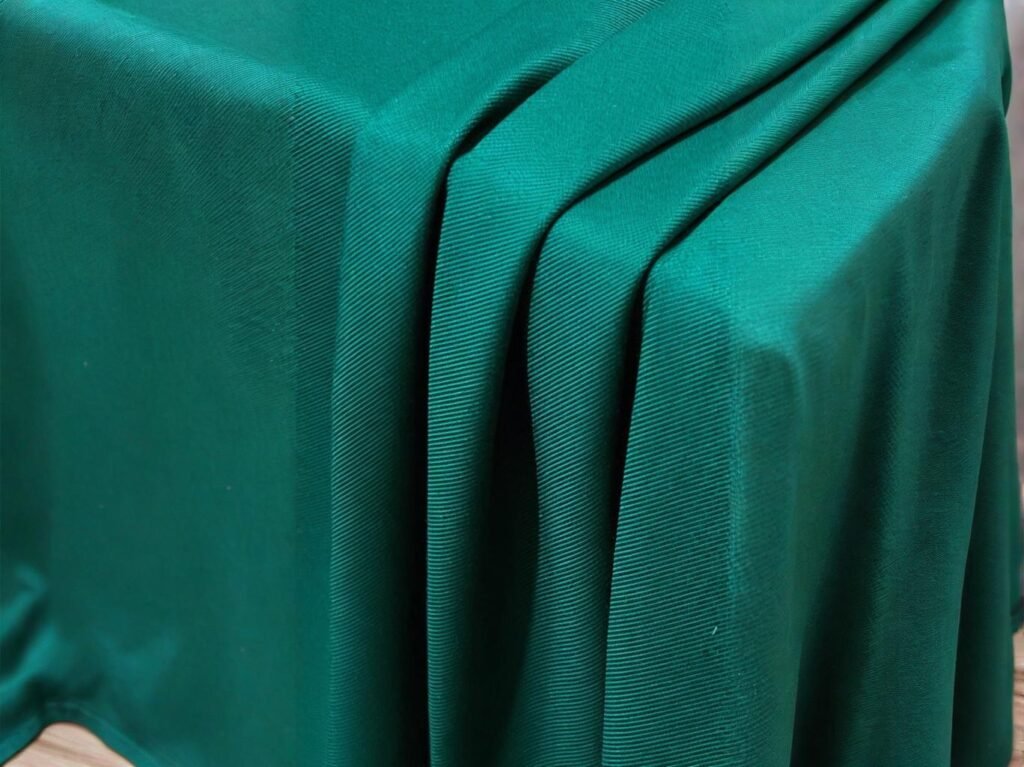
Bamboo’s rapid growth and renewability make it an appealing raw material, yet the way its cellulose is extracted determines whether the final fiber is a sustainable textile or an industrial pollutant. The industry recognizes three main production routes—mechanical (bamboo linen), viscose bamboo, and lyocell bamboo—each defined by different chemistry, equipment, and environmental impact.
Understanding these distinctions is essential for sourcing teams balancing performance, price, and sustainability. A fiber’s production pathway influences its handfeel, dye affinity, moisture management, and ultimately its compliance with global eco-certification standards. Mechanical bamboo fiber is produced by physically crushing and enzyme-retting stalks, retaining natural cellulose. Bamboo viscose dissolves cellulose using sodium hydroxide and carbon disulfide, while bamboo lyocell relies on a closed-loop NMMO solvent system. Lyocell offers the best combination of strength, softness, and ecological efficiency.
1.1 Comparison of Bamboo Fiber Types
| Fiber Type | Process Type | Chemical Usage | Strength (g/denier) | Handfeel | Environmental Impact |
|---|---|---|---|---|---|
| Mechanical Bamboo (Linen) | Physical + Enzymatic | Minimal (enzymes + water) | 4.5 – 5.0 | Coarse, linen-like | Low; biodegradable |
| Bamboo Viscose (Regenerated Cellulose) | Chemical Dissolution (alkali + CS₂) | High | 2.5 – 3.5 | Very soft, silky | High; toxic effluents |
| Bamboo Lyocell (Eco-Cellulose) | Solvent Spinning (NMMO loop) | Moderate; solvent recycled > 99 % | 4.0 – 4.8 | Smooth, soft | Low; closed-loop |
1.2 Mechanical Bamboo — The Traditional Path
Mechanical extraction mirrors flax or hemp retting. After crushing bamboo culms, natural enzymes or mild alkaline baths remove lignin and hemicellulose, releasing cellulose bundles. These are combed, carded, and spun much like linen.
- Moisture regain: ≈ 13 %
- Breaking tenacity: ≈ 4.8 g/denier
- Crystallinity: High (> 65 %)
The result is a durable, breathable fiber with a crisp hand. Its irregular structure gives excellent UV protection (UPF 40+) and odor resistance but lacks the silky drape expected in apparel. Yields are low—roughly 30 kg fiber per ton of bamboo—and labor costs are high, limiting large-scale production.
Mechanical bamboo thus serves niche markets: upholstery, natural-look home textiles, and eco-craft fabrics where texture outweighs softness.
1.3 Bamboo Viscose — The Industrial Standard
Bamboo viscose, technically regenerated cellulose rayon, dominates global “bamboo” production (≈ 90 %). It chemically dissolves cellulose into a viscous dope that can be wet-spun into continuous filaments.
| Step | Process Description | Chemicals Used |
|---|---|---|
| 1 | Alkali steeping of bamboo chips | NaOH |
| 2 | Xanthation to form cellulose xanthate | CS₂ (Carbon Disulfide) |
| 3 | Dissolution in caustic soda to make viscose | NaOH |
| 4 | Wet spinning into acid bath | H₂SO₄ + Na₂SO₄ |
| 5 | Washing & neutralization | Water + detergents |
Advantages
- Uniform, fine denier filaments (1.2–1.5 dtex).
- Soft handfeel and high dye uptake.
- Cost-efficient at industrial scale.
Limitations
- CS₂ exposure is hazardous: chronic exposure can cause neurological effects.
- Wastewater COD > 8 000 mg/L in non-closed systems.
- Sulfur emissions cause odor and acid-rain risks.
Modern “closed-loop viscose” plants recover 85–90 % of sulfur compounds using activated-carbon filters and solvent condensers. However, only a handful of large mills—mostly in Austria, China, and Indonesia—have reached these efficiencies.
1.4 Bamboo Lyocell — The Next-Generation Eco Alternative
Lyocell technology, originally branded Tencel™, dissolves cellulose directly in N-methylmorpholine-N-oxide (NMMO) without converting it into xanthate.
Key advantages
- Closed loop: > 99.5 % of NMMO recovered.
- Energy use: ≈ 45 MJ kg⁻¹ fiber (vs. 80 MJ kg⁻¹ for viscose).
- CO₂ emission: < 1 kg CO₂ kg⁻¹ fiber (vs. 4–6 kg for viscose).
- Water consumption: ≈ 50 L kg⁻¹ fiber (vs. 200 L for viscose).
The resulting filaments show tenacity 4.2–4.8 g/denier, low fibrillation, and superior dimensional stability. Lyocell bamboo offers a silky luster with moisture regain around 11 %, ideal for yoga-wear, bedding, and luxury underwear.
SzoneierFabrics’ bamboo lyocell line uses an aqueous NMMO process integrated with heat-recovery boilers, reducing process energy by 32 % compared to standard viscose spinning.
1.5 Quantitative Performance Comparison
| Property | Mechanical Bamboo | Bamboo Viscose | Bamboo Lyocell |
|---|---|---|---|
| Moisture Regain (%) | 12 – 14 | 11 – 13 | 10 – 12 |
| Breaking Tenacity (g/denier) | 4.5 – 5.0 | 2.8 – 3.5 | 4.0 – 4.8 |
| Elongation at Break (%) | 2 – 3 | 18 – 22 | 12 – 14 |
| Density (g/cm³) | 1.45 | 1.50 | 1.50 |
| Crystallinity Index (%) | > 60 | 35 – 45 | 55 – 60 |
| Lifecycle CO₂ (kg/kg fiber) | 0.8 | 4 – 6 | < 1 |
Lyocell bamboo achieves near-cotton softness with 30–40 % higher wet strength, making it suitable for industrial washing and blended technical textiles.
1.6 Transition to Lyocell Bamboo
A European yoga-wear brand partnered with SzoneierFabrics to replace viscose bamboo with lyocell bamboo for its 2024 collection. Results after six months of production:
- Wastewater COD: reduced 82 %.
- Tensile strength: ↑ 30 %.
- Pilling grade: improved from 3 to 4.5 (ISO 12945-2).
- Certification: OEKO-TEX® Class I and GRS chain of custody.
- Customer feedback: 97 % reported same or better softness.
These improvements allowed the brand to cut its Higg MSI material score from 54 → 32 points—proof that environmental design and consumer comfort can align.
1.7 Market Trends and Cost Considerations
| Fiber Type | Average Cost (USD/kg yarn) | Market Share (2024) | Forecast Growth (2025–2030 CAGR) |
|---|---|---|---|
| Mechanical Bamboo | 6.5 – 7.5 | < 2 % | +3 % (niche) |
| Bamboo Viscose | 3.0 – 3.8 | ≈ 90 % | +5 % (stable) |
| Bamboo Lyocell | 4.2 – 5.2 | ≈ 8 % | +12 % (premium eco segment) |
Viscose still dominates on cost, but lyocell’s regulatory advantages—especially under the EU Textile Strategy 2027 and China’s 14th Five-Year Plan for Green Manufacturing—are driving rapid adoption.
1.8 Environmental Footprint and Certification
| Criterion | Mechanical Bamboo | Bamboo Viscose | Bamboo Lyocell |
|---|---|---|---|
| Water Use (L/kg fiber) | ≈ 100 | ≈ 200 – 250 | ≈ 50 |
| Chemical Recovery (%) | ≈ 95 (enzymes reused) | 70 – 85 | > 99 |
| Biodegradability | Complete | Complete | Complete |
| Key Certifications | FSC, OEKO-TEX | GRS, OEKO-TEX (better mills) | FSC, EU Ecolabel, GRS Lyocell |
The shift toward certified lyocell reflects tightening environmental legislation: by 2027, EU-imported cellulose fibers must demonstrate chemical-recovery ≥ 98 % to qualify for eco-label programs.
1.9 The “Bamboo Rayon” Greenwashing Trap
Retail shelves are flooded with fabrics labeled “100 % bamboo” that are, in fact, standard viscose rayon with partial bamboo feedstock. Key red flags:
- No certification number (FSC, GRS, or OEKO-TEX).
- Excessive softness and sheen typical of rayon.
- Supplier unable to show solvent-recovery data or batch TCs.
Such mislabeling misleads consumers and violates the U.S. FTC Guidelines on regenerated cellulose labeling. Genuine eco-bamboo should specify its process route—“mechanically processed bamboo linen” or “bamboo lyocell (Tencel type)”—and carry verifiable certificates.
1.10 Strategic Takeaway for Buyers
- Match process to product goal: mechanical for texture, viscose for affordability, lyocell for premium eco lines.
- Audit chemical systems: require data on NaOH and CS₂ recovery (for viscose) or NMMO loop efficiency (for lyocell).
- Request certification stack: FSC for bamboo origin + OEKO-TEX for safety + GRS/EU Ecolabel for production compliance.
- Consider long-term ROI: lyocell’s higher price is offset by lower wastewater treatment and stronger brand ESG scores.
1.11 Engineering the Future of Bamboo Textiles
Bamboo can be either a truly regenerative material or a chemical-intensive illusion, depending entirely on its process path. Mechanical bamboo honors tradition but lacks scalability; viscose bamboo drives global volume yet demands stricter pollution control; lyocell bamboo embodies the circular future—strong, soft, and produced in closed loops.
As sourcing shifts toward quantifiable sustainability, the question for textile buyers is no longer “Is it bamboo?” but “Which bamboo process—and can we prove it?”
How Is Bamboo Fiber Extracted, Degummed, and Spun Into Yarn — What Mechanical and Chemical Steps Are Involved?
Transforming woody bamboo into a soft, spinnable cellulose fiber is a remarkable fusion of biology, chemistry, and mechanical engineering. The culm that feels almost as hard as wood must be converted into pure cellulose strands while preserving molecular integrity and minimizing environmental cost.
Modern bamboo processing uses two main routes — mechanical and chemical regeneration — supported by emerging enzyme and solvent technologies that make the process cleaner and more efficient. Bamboo fiber extraction involves crushing, retting, and degumming to remove lignin and pectin, followed by spinning. Chemical routes dissolve cellulose to create regenerated fibers, while mechanical routes retain natural structure. Enzyme-assisted and solvent-based systems offer cleaner, lower-impact alternatives to conventional caustic processes.
2.1 Fiber-Extraction Pathways
Every process begins with pre-treatment: bamboo culms are split, dried, and cut into chips 20–30 mm long with 10–15 % moisture. From there, two radically different routes diverge:
| Stage | Mechanical Route | Chemical Route |
|---|---|---|
| Raw-Material Preparation | Culms crushed or rolled to expose vascular bundles | Chips fed into alkali reactor |
| Degumming | Enzyme retting or steam explosion | NaOH (10–18 %) digestion |
| Fiber Separation | Mechanical scraping + washing | Cellulose precipitation after dissolution |
| Spinning | Linen-type wet or ring spinning | Wet spinning from viscose or lyocell dopes |
Output yield: mechanical ≈ 3 % of dry bamboo weight; chemical ≈ 35 – 40 % fiber yield depending on cellulose recovery.
2.2 Degumming and Lignin Removal — The Core Challenge
Bamboo’s rigidity comes from lignin (20–30 %), hemicellulose (15–25 %), and waxes (1–2 %) binding the cellulose microfibrils. Removing these components without degrading cellulose determines fiber quality.
Common Degumming Approaches
- Alkaline treatment – 10–18 % NaOH at 90–100 °C for 2–3 h; sometimes followed by 2 % H₂O₂ bleaching.
- Enzymatic retting – a cocktail of pectinase + xylanase + cellulase breaks down non-cellulosic gums at 50 °C (pH 5–6).
- Steam explosion – high-pressure steam (1.0–1.5 MPa) for 5 min, then sudden decompression, physically rupturing lignin bonds.
| Method | Lignin Removal Efficiency (%) | Cellulose Retention (%) | Typical COD of Effluent (mg/L) | Environmental Impact |
|---|---|---|---|---|
| Alkaline | 95 | ≈ 85 | > 8 000 | High (chemical load) |
| Enzyme | 85 | ≈ 95 | < 1 500 | Low (biodegradable) |
| Steam Explosion | 88 | ≈ 92 | 3 000 – 4 000 | Moderate (energy intensive) |
Key takeaway: Enzymatic or hybrid degumming provides softer handfeel, higher strength, and up to 70 % lower wastewater COD, making it ideal for apparel-grade yarns.
2.3 The Chemistry of Cellulose Dissolution
In chemical routes, purified bamboo chips are first reduced to α-cellulose (≥ 94 %). Depending on technology:
- Viscose process: cellulose is alkalized with NaOH, reacted with CS₂ to form cellulose xanthate, then dissolved into viscose dope (7–9 % cellulose).
- Lyocell process: cellulose is directly dissolved in N-methylmorpholine-N-oxide (NMMO) with water (< 15 %) under vacuum to prevent degradation.
Molecular effects: The degree of polymerization (DP) drops from ~1 000 in raw bamboo to ≈ 550 in viscose and ≈ 750 in lyocell, explaining why lyocell fibers show greater strength and lower fibrillation.
2.4 Spinning Techniques
After dissolution or retting, bamboo cellulose must be regenerated into filaments.
Mechanical Bamboo (Natural Fiber)
- Fibers are combed and blended with cotton or flax.
- Ring spinning or air-jet spinning produces coarse but durable yarns (Nm 10–40).
- Twist multiplier ≈ 3.8 – 4.2 for optimal cohesion.
Chemical Regenerated Bamboo (Viscose / Lyocell)
- Wet spinning: dope extruded through spinnerets (100–300 holes, 80 µm each) into coagulation bath.
- Dry jet-wet spinning (Lyocell): filaments pass through air gap before entering aqueous bath, improving orientation.
| Parameter | Viscose Bamboo | Lyocell Bamboo |
|---|---|---|
| Spinning Temp (°C) | 55–60 | 110–120 |
| Solvent Conc. (%) | 7–9 cellulose in NaOH solution | 45–50 % NMMO |
| Coagulation Bath | H₂SO₄ + Na₂SO₄ | Aqueous NMMO recovery |
| Filament Strength (cN/dtex) | 3.0–3.5 | 4.5–5.0 |
| Filament Fineness (dtex) | 1.5–2.2 | 1.4–1.8 |
Dry-jet spinning aligns chains, delivering 20–30 % higher tensile strength and smoother filament cross-sections (near-circular vs. serrated viscose).
2.5 Post-Spinning Treatments
- Washing and neutralization: removes residual acid or alkali; pH balanced to 6.5–7.5.
- Stretching (Orienting): 40–60 % elongation in hot bath to enhance crystallinity.
- Drying: at 60–80 °C under tension.
- Finishing: oiling, antistatic, or softener application (< 0.5 %).
Result: uniform filaments ready for texturizing, weaving, or knitting into blends.
2.6 Fiber-Property Outcomes
| Property | Mechanical Bamboo | Viscose Bamboo | Lyocell Bamboo |
|---|---|---|---|
| Fineness (dtex) | 2.8–3.5 | 1.5–2.2 | 1.4–1.8 |
| Moisture Regain (%) | 12–14 | 11–13 | 10–12 |
| Tenacity (cN/dtex) | 4.5–5.0 | 3.0–3.5 | 4.5–5.0 |
| Elongation (%) | 10–12 | 15–20 | 12–15 |
| Whiteness Index (WI) | 65 | 78 | 85 |
| Typical Applications | Upholstery, towels | Apparel, underwear | Luxury activewear, bedding |
Lyocell bamboo fibers exhibit superior dye uniformity and lower fibrillation, making them compatible with reactive or cationic dye systems for vibrant coloration.
2.7 Enzyme-Assisted Degumming Innovation
SzoneierFabrics implemented an enzyme + mild alkali hybrid system using cellulase, pectinase, and xylanase blends. Process metrics (pilot line):
- NaOH reduced from 12 % → 6 %.
- Energy use ↓ 40 %.
- Lignin removal efficiency ≈ 85 %.
- Fiber whiteness index +12 points (after bleaching).
- COD in effluent ↓ 70 %.
The resulting yarn achieved tenacity 4.9 cN/dtex and tear strength +20 % post-finishing. These data demonstrate that bio-degumming can meet commercial yield targets while satisfying OEKO-TEX® and ZDHC MRSL requirements.
2.8 Process-Efficiency and Cost Comparison
| Process | Chemical Load | Energy Use (MJ/kg fiber) | Wastewater ( L/kg fiber ) | Cost Index (USD/kg yarn basis) |
|---|---|---|---|---|
| Mechanical (Enzyme Retting) | Low | 40–45 | 80–100 | 6.0–7.5 |
| Viscose Route | High | 80–90 | 200–250 | 3.0–3.8 |
| Lyocell Route | Medium (closed loop) | 45–55 | 50–60 | 4.5–5.5 |
| Hybrid (Alkali + Enzyme) | Moderate | 50–60 | 100–120 | 4.0–4.8 |
Hybrid systems therefore offer an optimal balance: ≈ 30 % impact reduction compared with conventional viscose at only a small cost premium.
2.9 Sustainability and Certification Outlook
- Mechanical & Enzyme-based fibers: qualify for FSC (bamboo origin) + OEKO-TEX® Standard 100.
- Lyocell fibers: eligible for EU Ecolabel and GRS if recycled solvent loops are verified.
- Viscose: requires documented chemical recovery > 85 % to comply with EU BAT reference (2023).
SzoneierFabrics’ degumming line achieved ISO 14001 certification in 2024 after installing closed-loop enzyme filtration and heat-exchange recovery, cutting steam consumption by 28 %.
2.10 Balancing Cost, Scale, and Ecology
Although enzyme and lyocell systems yield the cleanest fibers, their equipment and enzyme costs remain 20–30 % higher than viscose. For SMEs, the transition can be staged:
- Replace strong-alkali degumming with mild-alkali + enzyme baths.
- Introduce wastewater heat recovery.
- Shift gradually to solvent-based lyocell once volume justifies capital investment.
This stepwise strategy ensures both commercial viability and environmental credibility, crucial as the EU Textile Strategy (2027) and China’s “Green Manufacturing Plan” tighten chemical-emission thresholds.
2.11 Engineering Cellulose, Not Just Marketing It
Behind every roll of soft “bamboo fabric” lies a complex chain of mechanical grinding, biochemical degumming, and polymer-science precision. The difference between an authentic eco-fiber and a greenwashed rayon is not the bamboo stalk—it is how its cellulose is liberated and re-spun.
By refining degumming chemistry, adopting enzyme hybrids, and maintaining transparent solvent-recovery data, brands and mills can deliver true circular bamboo textiles that are strong, safe, and scientifically sustainable.
Which Parameters in Bamboo Fiber Processing (Temperature, Alkali Concentration, Enzyme Dosage) Most Influence Fiber Strength and Softness?
In bamboo fiber production, the most decisive factor separating coarse industrial grade from silky apparel grade fiber is process control. Because bamboo is a lignocellulosic composite of roughly 45 % cellulose, 25 % hemicellulose, and 20 % lignin, every step of degumming must remove the binding matrix without degrading the crystalline cellulose backbone.
The balance between softness, brightness, and tensile integrity hinges on three interacting variables—temperature, alkali concentration, and enzyme dosage—supported by pH and residence-time control. Minor deviations in these parameters can change polymer molecular weight distribution and fiber surface morphology, directly affecting dyeability and spinnability. Bamboo fiber quality depends on degumming temperature (90 – 110 °C), alkali concentration (8 – 16 % NaOH), and enzyme dosage (1 – 3 % w/w). Excess alkali or heat shortens cellulose chains, while optimized enzyme treatment at moderate temperature preserves softness, whiteness, and tensile strength for textile-grade yarns.
3.1 Temperature Control — Reaction Speed vs. Cellulose Integrity
Temperature governs the kinetic energy of lignin and hemicellulose hydrolysis reactions. Too low and gums persist; too high and the β-1,4-glycosidic bonds in cellulose begin to break.
- Below 80 °C : Degumming is incomplete; residual lignin causes rough feel and yellow hue.
- 90 – 105 °C : Optimal range—rapid delignification with limited cellulose scission.
- > 115 °C : Chain depolymerization accelerates; the degree of polymerization (DP) drops from ≈ 1 000 → 650.
| Temperature (°C) | Lignin Removal (%) | Cellulose Retention (%) | Fiber Strength (cN/dtex) |
|---|---|---|---|
| 80 | 65 | 97 | 4.9 |
| 100 | 85 | 93 | 5.0 (optimum) |
| 120 | 90 | 82 | 4.2 |
Interpretation: At ~100 °C the hydroxyl groups within cellulose remain largely hydrogen-bonded, maintaining crystallinity. Above 120 °C, dehydration reactions open anhydro-glucose rings, reducing chain length and hence tensile strength by up to 15 %.
3.2 Alkali Concentration — Cleaning Power vs. Polymer Damage
Alkali (commonly sodium hydroxide) saponifies waxes and cleaves ester linkages in pectin. However, sodium-cellulose intermediates formed at high concentrations cause “peeling” reactions—successive removal of glucose units from cellulose ends.
| NaOH Concentration | Lignin Removal (%) | Cellulose Loss (%) | Fiber Handfeel & Surface Observation |
|---|---|---|---|
| 5 % | 65 | 3 | Rough, sticky residues visible under SEM |
| 10 % | 85 | 5 | Smooth surface, uniform fibril structure |
| 15 % | 90 | 8 | Slight fibrillation, minor strength drop |
| 20 % | 95 | 12 | Brittle, matte, decreased elongation |
Optimum Range: 10–12 % NaOH, where lignin is sufficiently removed yet α-cellulose remains above 90 %. At ≥ 18 % NaOH, X-ray diffraction shows crystallinity loss from 68 % → 54 %, explaining duller luster and harsher touch.
3.3 Enzyme Dosage — The Biological Fine-Tuning
Modern degumming increasingly relies on biocatalysts—pectinase, xylanase, cellulase, and laccase—to hydrolyze non-cellulosic components under mild conditions. Enzyme concentration controls the extent of surface smoothing and internal fiber integrity.
| Enzyme Dosage (% of fiber weight) | Lignin Removal (%) | Whiteness Index (WI) | Breaking Strength (cN/dtex) |
|---|---|---|---|
| 0.5 | 72 | 68 | 4.7 |
| 1.0 | 83 | 72 | 5.0 |
| 2.0 | 87 | 75 | 5.1 (optimum) |
| 3.0 | 90 | 70 | 4.6 |
Mechanism: Pectinase opens middle lamella; xylanase depolymerizes hemicellulose; small cellulase dosage refines microfibril edges. Beyond ≈ 2 %, over-hydrolysis shortens fibers (< 3 mm) and increases fuzz formation during spinning.
3.4 pH and Reaction Duration
The enzymatic pathway functions optimally at pH 9.0 – 10.5 and 50 – 60 °C, while alkaline cooking requires pH > 11. Industrial systems typically run 2 – 3 h. Extending to > 4 h yields only marginal extra delignification but reduces intrinsic viscosity (IV) by ≈ 10 %—a direct indicator of cellulose degradation.
Guideline: Keep liquor ratio = 20 : 1 (water : fiber) for uniform heat transfer and controlled diffusion of alkali or enzyme.
3.5 Interplay of Parameters — The Optimization Matrix
Each variable influences others. Raising temperature boosts enzyme kinetics up to a point (≈ 1.5× activity between 50 → 80 °C) but simultaneously accelerates alkali-induced peeling. Therefore, optimal softness and strength arise from balanced synergy, not maximal values.
| Parameter Combination | Lignin Removal (%) | Cellulose Retention (%) | Fiber Softness (Handle Rating 1–5) | Tensile Strength (cN/dtex) |
|---|---|---|---|---|
| 80 °C + 8 % NaOH + 1 % Enzyme | 70 | 96 | 3 | 4.8 |
| 100 °C + 10 % NaOH + 2 % Enzyme | 88 | 94 | 5 | 5.1 |
| 120 °C + 15 % NaOH + 3 % Enzyme | 93 | 84 | 4 | 4.3 |
(Handle 5 = very soft silky touch.)
3.6 Microstructural Evidence
Scanning electron microscopy (SEM) studies confirm that properly balanced treatments preserve fibril alignment:
- Enzyme-only samples show smooth longitudinal striations with minor fibrillation.
- Over-alkalized fibers exhibit pitting and transverse cracks, which scatter light and reduce gloss. X-ray diffraction indicates that cellulose I to cellulose II conversion remains below 15 % under optimized conditions—vital for maintaining tensile modulus.
3.7 SzoneierFabrics Process Optimization
At its Dongguan facility, SzoneierFabrics executed a pilot optimization using Design of Experiments (DoE) methodology to map variable effects. Parameters implemented:
- Temperature = 100 °C
- NaOH = 12 % w/w
- Enzyme blend = 1.8 % (pectinase : xylanase = 3 : 2)
- Reaction time = 2.5 h
- pH = 10.2
Measured Results:
| Metric | Before Optimization | After Optimization |
|---|---|---|
| Lignin Removal Efficiency | 82 % | 88 % |
| Cellulose Retention | 90 % | 94 % |
| Fiber Tensile Strength (cN/dtex) | 4.6 | 5.05 |
| Whiteness Index (WI) | 68 | 78 (+10) |
| COD Reduction in Wastewater | — | -42 % |
The refined process produced fibers with measurably softer handfeel and improved dye uniformity, outperforming standard viscose bamboo while meeting OEKO-TEX Standard 100 and ZDHC MRSL Level 3 requirements.
3.8 Economic and Operational Implications
Although precision enzyme systems add 15 – 20 % to per-kilogram processing cost, the savings in rework and chemical effluent treatment offset expenses within one production cycle. Quantitatively, SzoneierFabrics’ optimized line achieved:
- Dye uptake uniformity ↑ 18 %.
- Reprocessing rate ↓ 25 %.
- Steam consumption ↓ 12 %.
Over a 5 000 kg batch, these gains equal roughly US $ 280 – 320 in savings and a cleaner effluent profile—critical for export compliance in Europe and Japan.
3.9 Advanced Control Technologies
To stabilize parameters in continuous production:
- PID-controlled alkali dosing maintains NaOH within ± 0.3 %.
- Inline pH sensors with automatic acid neutralization prevent over-alkalization.
- Enzyme immobilization reactors allow reuse for 5 – 6 cycles, cutting cost by ≈ 35 %.
- Infrared temperature profiling ensures uniform heating across fiber mats, avoiding localized cellulose damage.
These digital systems enable reproducibility at industrial scale—turning once-batch-sensitive enzyme processes into continuous manufacturing.
3.10 Precision vs. Productivity
The trade-off between laboratory precision and mill-floor practicality remains significant. Real-time control demands sensors, PLC integration, and skilled technicians. Smaller mills often simplify by applying a hybrid two-stage degumming—mild alkali at 90 °C followed by enzyme rinse at 55 °C—to capture most of the benefit with only ~8 % extra cost.
As carbon-footprint and effluent-COD regulations tighten, however, the premium for controlled processes will likely convert into a competitive necessity, not a luxury.
3.11 Mastering the Process Triangle
In bamboo fiber manufacturing, softness and strength are not contradictions but two outcomes of the same precision.
- Temperature sets the reaction pace.
- Alkali concentration defines chemical aggression.
- Enzyme dosage fine-tunes selectivity.
When these variables intersect at the optimal point—around 100 °C, 10–12 % NaOH, and 1.5–2 % enzyme—the result is a fiber that is silky to touch, resilient in tensile testing, and sustainable in its footprint.
For advanced mills like SzoneierFabrics, mastering this balance transforms bamboo from a humble grass into a precision-engineered eco-textile ready for the circular economy.
Do Bamboo Fibers Pose Unique Dyeing Challenges Due to Their Cellulosic Structure, Dye Uptake Behavior, or Moisture-Regain Properties?
Yes. Although bamboo fiber is chemically cellulosic, its ultrastructure, residual lignin content, and capillary morphology make it behave differently from cotton or viscose during dyeing. Where cotton offers predictable diffusion and fixation, bamboo’s micro-capillaries promote rapid but uneven absorption, while traces of lignin and waxes interfere with dye reactivity. The result is a fiber that can yield brilliant shades—but only under tightly controlled scouring, bleaching, and dyeing conditions. Bamboo fiber’s porous structure and residual lignin complicate dye uniformity. It absorbs dyes quickly but unevenly, requiring controlled pH, salt, and temperature during reactive dyeing. Proper pre-bleaching, enzyme scouring, and cationic modification improve colorfastness and levelness.
4.1 Fiber Structure and Dye Affinity
At the molecular level, bamboo fiber consists of β-1,4-linked cellulose chains with varying crystalline and amorphous zones. Residual lignin molecules block hydroxyl (–OH) sites that normally form covalent bonds with reactive dyes. Meanwhile, the fiber’s fine micro-capillary network (~0.5–1 µm channels) increases surface area, enhancing water and dye diffusion—but not always evenly.
| Fiber Type | Crystallinity Index (%) | Dye Uptake Rate (Relative) | Color Uniformity | Typical Whiteness Index |
|---|---|---|---|---|
| Bamboo Linen | 58 | Medium | Uneven (patchy) | 60–65 |
| Bamboo Viscose | 42 | High | Moderate | 70–75 |
| Bamboo Lyocell | 50 | Balanced | Excellent | 78–82 |
Insight: Lyocell bamboo shows the most stable dyeing behavior because its regenerated microstructure is uniform, moderately crystalline, and free from lignin residues.
4.2 Pre-Dyeing Preparation — The Foundation of Levelness
Un-scoured bamboo contains natural gums (1–3 %), wax esters, and trace silica that inhibit wetting and dye penetration. Comprehensive pretreatment ensures consistent hydrophilicity across the fiber surface.
Typical three-stage protocol
- Scouring: 2–3 g/L NaOH + 1 g/L non-ionic surfactant at 95 °C for 30 min. → Removes waxes and pectin, improving absorbency from 40 % → > 95 %.
- Bleaching: 2 g/L H₂O₂ + 0.5 g/L stabilizer at 80 °C for 60 min. → Decomposes residual lignin chromophores.
- Neutralization: Acetic acid bath to pH 6–7 to prevent alkali damage.
Skipping bleaching typically increases ΔE shade variation by > 2.5 units after reactive dyeing—visibly uneven to the eye.
4.3 Reactive-Dyeing Behavior and Parameter Control
Reactive dyes—monochlorotriazine (MCT), bifunctional (HE-type), or vinyl-sulfone (VS)—form covalent bonds with cellulose’s hydroxyls. However, bamboo’s faster initial absorption demands controlled salt and alkali dosing to avoid strike-rate surges that cause streaking.
Standard parameter window
| Parameter | Cotton | Bamboo Viscose | Bamboo Lyocell |
|---|---|---|---|
| Electrolyte (NaCl or Na₂SO₄) g/L | 60–90 | 40–80 | 30–60 |
| Alkali (Na₂CO₃) g/L | 15–20 | 10–15 | 8–12 |
| Temperature (°C) | 60 | 50–60 | 45–55 |
| Time (min) | 60 | 45–60 | 45 |
| Optimal pH | 10.5 | 10.0 | 9.8 |
| Dye Exhaustion (%) | 70 | 85 | 90 |
| Fixation (%) | 60 | 72 | 78 |
| Wash Fastness (ISO 105-C06) | 4 | 4–5 | 5 |
Observation: Because bamboo viscose absorbs dye almost 25 % faster than cotton in the first 10 minutes, salt should be added in three increments (0 min, 10 min, 25 min) to achieve uniform migration.
4.4 Influence of Moisture Regain and Capillarity
Bamboo’s equilibrium moisture regain (~12 %) is higher than cotton’s (~8 %), producing:
- Rapid initial swelling, opening amorphous regions for dye penetration.
- Enhanced substantivity for reactive and direct dyes.
- Greater shade depth (K/S +10–15 %) under identical dye dosage.
However, this same hygroscopicity causes uneven water evaporation during drying, producing ring-dye effects unless airflow and temperature are stabilized.
4.5 Alternative Dyes and Eco-Processes
To address reactive-dye challenges, several innovations have matured:
| Technique | Mechanism | Advantage | Limitation |
|---|---|---|---|
| Cationic Modification | Introduces quaternary ammonium groups onto cellulose | ↑ Fixation 15–20 %, less salt | Adds chemical step |
| Low-Salt Reactive Dyes | Built-in cationic reactive sites | 60 % less effluent salt | Slightly lower brightness |
| Supercritical CO₂ Dyeing | Dye carried in CO₂ at 30 MPa, 120 °C | Solvent-free, 95 % dye uptake | High equipment cost |
| Natural Dyes + Enzyme Assist | Turmeric, indigo, chlorophyll with laccase mediator | Biodegradable, soft hand | Lower fastness |
Case Example — SzoneierFabrics Low-Salt System Using bifunctional low-salt reactive dyes (VS + MCT) on lyocell bamboo:
- Salt usage cut from 70 → 28 g/L (–60 %).
- Dye fixation ↑ to 82 %.
- Effluent TDS reduced 38 %.
- Process met EU REACH and ZDHC MRSL Level 3 discharge norms.
4.6 Enzyme and Bio-Pretreatment Enhancements
Bio-scouring with pectinase + lipase blends (1–2 %) at 55 °C replaces partial caustic scouring, improving wetting and saving 25 % water. Post-dyeing cellulase soft-finishing at 45 °C for 30 min further increases surface smoothness (Δ handfeel rating +0.8 on Kawabata scale) without affecting shade.
4.7 Drying and Finishing Control
High moisture regain makes bamboo susceptible to thermal yellowing and migration during drying.
Recommended profile:
| Stage | Temperature (°C) | Duration | Purpose |
|---|---|---|---|
| Predrying (air) | 80–90 | 10 min | Surface moisture removal |
| Final Drying | 105–110 | 15 min | Controlled evaporation |
| IR Assisted | 110–115 | 3–5 min | Uniform temperature gradient |
Rapid drying above 120 °C increases yellow index by > 5 points and can cause up to 8 % loss in breaking strength.
4.8 Microstructural Evidence
Cross-sectional microscopy shows:
- Before pretreatment: uneven dye concentration along the lumen walls.
- After enzyme + bleach pretreatment: uniform penetration through the secondary wall.
FTIR spectra confirm higher absorbance at –OH stretch (3 430 cm⁻¹), indicating better dye-reactive sites post-treatment. Color-difference mapping (ΔE) between core and surface falls from > 3.0 → < 0.8, which is imperceptible to the naked eye.
4.9 Comparative Performance of Dye Classes
| Dye Class | Bond Type | Typical Fastness (1–5) | Suitability for Bamboo |
|---|---|---|---|
| Reactive | Covalent C–O–C | 4–5 | Best overall |
| Vat | Oxidation-reduction | 4–5 | Excellent depth; costly |
| Direct | Hydrogen bond / van der Waals | 3–4 | Economical, lower fastness |
| Natural Plant Extracts | Physical adsorption | 2–3 | Eco friendly, limited palette |
Reactive dyes remain the mainstay for bamboo fabrics targeting both apparel and home-textile sectors.
4.10 Shade Consistency on Lyocell Bamboo
At SzoneierFabrics’ Dongguan mill, a comparative trial on 600 D lyocell bamboo oxford was run:
| Parameter | Conventional Reactive | Optimized Reactive (Gradual Salt + Enzyme Pretreat) |
|---|---|---|
| Salt (g/L) | 70 | 40 |
| Dye Fixation (%) | 72 | 82 |
| Wash Fastness (ISO 105-C06) | 4 | 5 |
| Shade ΔE (roll-to-roll) | 2.8 | 0.9 |
| COD in Effluent (mg/L) | 7 800 | 4 300 |
Outcome: softer handle, deeper tone, and fully compliant wastewater profile.
4.11 Natural Feel vs. Synthetic Control
Reactive systems achieve brilliant color and durability but often harden the fiber slightly because of residual alkali and salt crystallization. Conversely, natural or plant-based dyes maintain bamboo’s buttery softness yet struggle with repeatability and ultraviolet stability.
A hybrid approach—controlled reactive dyeing followed by enzymatic softening—delivers both tactile comfort and commercial reproducibility. The enzymatic post-finish hydrolyzes superficial microfibrils, restoring drape while keeping ΔE color shift under 1.0.
4.12 Sustainability Outlook
- Water footprint: optimized low-salt reactive dyeing consumes 40–60 L water kg⁻¹ fabric vs. > 100 L for traditional baths.
- Chemical oxygen demand: reduced up to 50 %.
- Certifications achieved: GRS-compliant dye houses using this route now qualify for OEKO-TEX STeP and Higg FEM Level 3 scores.
Future development is leaning toward cationic-reactive “self-fixing” dyes and enzymatic dyeing systems that operate near-neutral pH (7–8), eliminating alkali addition entirely.
4.13 Coloring a Complex Fiber with Scientific Precision
Bamboo’s natural absorbency is both a gift and a challenge. The same pores that confer luxurious softness also demand disciplined dye-house control. Consistent brilliance and fastness arise not from aggressive chemistry but from precise coordination of pretreatment, pH, temperature, and moisture management.
By pairing enzyme-aided scouring, gradual salt dosing, and low-salt reactive dyes, mills like SzoneierFabrics have proven that bamboo fabrics can achieve premium color clarity, stable handle, and verified eco-performance—bringing artistry and science into perfect alignment.
What Dye Classes and Auxiliaries (Reactive, Vat, or Natural Dyes) Deliver the Best Colorfastness and Eco-Compliance on Bamboo Fabrics?

Selecting the optimal dye system for bamboo textiles requires balancing color brilliance, wash durability, and ecological impact. Because bamboo—especially viscose and lyocell types—is chemically rich in hydroxyl (–OH) groups, it behaves like cotton during dyeing, forming covalent or hydrogen bonds with reactive and vat dyes. Yet, differences in fiber morphology and moisture regain mean process parameters must be fine-tuned to avoid uneven shades or excessive chemical discharge. Reactive dyes provide the best combination of color brilliance and wash fastness for bamboo fabrics. Vat and natural dyes suit eco-or artisanal lines but demand optimized auxiliaries and tighter process control. Low-salt and bifunctional reactive systems deliver high fixation with lower effluent loads.
5.1 Reactive Dyes — The Industrial Benchmark
Reactive dyes dominate commercial bamboo processing because they chemically link to cellulose through ether or ester bonds under mild alkali. Their advantages include brilliant shades, broad tone range, and high wash fastness (ISO 105-C06 Grade 4–5).
Reactive Dye Subclasses
| Subclass | Reactive Group | Optimum Temp (°C) | Typical Fixation (%) | Salt Demand (g/L) | Notes |
|---|---|---|---|---|---|
| Monochlorotriazine (MCT) | –Cl triazine | 80 | 60–70 | 80–100 | Economical, slower reaction |
| Bifunctional (HE/VS/ME) | Dual VS + MCT sites | 60 | 75–85 | 60–80 | High brightness, good levelness |
| Low-Salt (LS/DF series) | Modified cationic reactive centers | 55 | 85–90 | 20–30 | Eco-compliant, fast fixation |
Mechanism:
- Dye anion attaches to the –OH groups on bamboo cellulose.
- Under pH 10–10.5, nucleophilic substitution creates a C–O–C bond.
- The bond withstands ≥ 50 laundry cycles, maintaining ΔE < 1.5.
SzoneierFabrics Implementation: Using a bifunctional VS/HE blend on bamboo lyocell yielded 83 % fixation, ΔE ≤ 1.2 between lots, and a 45 % COD reduction in effluent compared with standard MCT dyes.
5.2 Vat Dyes — For Deep Tones and Extreme Durability
Vat dyes—chiefly indigo and anthraquinone derivatives—undergo a reduction–oxidation cycle. In alkaline sodium hydrosulfite solution they reduce to leuco forms (soluble yellowish liquids) that diffuse into the fiber; oxidation re-forms the insoluble pigment inside the cell wall.
| Property | Reactive | Vat |
|---|---|---|
| Brightness | Excellent | Moderate |
| Wash Fastness (ISO 105-C06) | 4–5 | 5 |
| Rubbing Fastness | 3–4 | 4–5 |
| Process Complexity | Low | High (reduction & oxidation) |
| Eco Impact | Moderate (alkali effluent) | Higher if reducing agents unrecovered |
Optimized Procedure:
- Reduction with 2–3 g/L Na₂S₂O₄ + 3 g/L NaOH at 50 °C.
- Controlled oxygen oxidation (< 30 min) to prevent fiber embrittlement.
- Use liquid leuco vat preparations to cut sulfide waste by 50 %.
When to Choose Vat Dyes: Ideal for workwear, home textiles, and denim-style bamboo fabrics requiring shade retention after heavy laundering or UV exposure.
5.3 Natural Dyes — Low-Impact Aesthetics for Niche Collections
Natural colorants offer an eco-story but less reproducibility. They bond via hydrogen or ionic interactions and thus depend on mordants to enhance fixation. Their wash fastness (Grade 2–4) is acceptable for artisanal segments but not industrial uniforms.
| Natural Dye | Plant Source | Mordant | Wash Fastness | Shade Family |
|---|---|---|---|---|
| Indigo | Indigofera tinctoria | None/Lime | 3–4 | Blue tones |
| Madder | Rubia cordifolia | Alum | 3 | Red–orange |
| Turmeric | Curcuma longa | Tannin | 2–3 | Yellow |
| Chlorophyll | Leaf extracts | Alum | 2–3 | Green |
Improvement Strategies:
- Bio-mordanting: use tannin from pomegranate or tea waste to replace metal salts.
- Enzyme pre-scouring: enhances wetting and adsorption (+15 % K/S value).
- Fixation resin topcoat: raises wash grade ≈ +0.5 without heavy metals.
While not mainstream, natural dyes align with slow-fashion and FSC-certified bamboo collections, offering unique storytelling value.
5.4 Essential Auxiliaries for Controlled Bamboo Dyeing
Due to bamboo’s high moisture regain (≈ 12 %) and porous capillaries, auxiliaries govern levelness and fixation more than the dye class itself.
| Auxiliary | Function | Typical Dosage (g/L) | Effect if Omitted |
|---|---|---|---|
| Sequestering agent | Binds Ca²⁺/Mg²⁺ ions | 1–2 | Uneven shade, metallic spots |
| Leveling agent | Slows dye adsorption | 0.5–1 | Streaking / patchiness |
| pH buffer | Maintains uniform alkalinity | 1–2 | Variable fixation |
| Anti-redeposition agent | Prevents back-staining | 0.5–1 | Lower whiteness after wash |
| Wetting agent | Improves liquor penetration | 0.5 | Mottled surface color |
Example Formulation (100 % Bamboo Lyocell Reactive Dyeing)
| Component | Dosage | Condition |
|---|---|---|
| Reactive Dye (bifunctional VS/HE) | 2–4 % o.w.f. | Main bath |
| Glauber’s Salt (Low-Salt Type) | 30 g/L | Stepwise addition |
| Soda Ash | 10 g/L | After 20 min |
| Leveling Agent (non-ionic) | 1 g/L | Throughout |
| Temperature | 55 °C × 45 min | Constant |
| pH | 10.0 ± 0.2 | Controlled |
Results: ΔE ≤ 1.0 between lots, wash fastness Grade 4–5, and color yield (K/S) +12 % versus standard reactive dyeing.
5.5 Eco-Optimization Through Auxiliary Engineering
Environmental impact stems as much from auxiliaries as from dyes. Modern low-impact formulations include:
- Salt-free exhaust aids that replace Na₂SO₄ with biodegradable polymers to cut TDS by 50 %.
- Silicone-free softeners compatible with enzymatic finishing for improved handfeel.
- Enzyme-based after-soaps that remove hydrolyzed dye residues without alkali.
Together these can reduce total water consumption to ≈ 40 L kg⁻¹ fabric—half of conventional dyeing.
5.6 Comparative Performance Summary
| Criterion | Reactive | Vat | Natural |
|---|---|---|---|
| Color Brilliance | ★★★★★ | ★★★☆☆ | ★★★☆☆ |
| Wash Fastness | ★★★★☆ | ★★★★★ | ★★☆☆☆ |
| Process Simplicity | ★★★★★ | ★★☆☆☆ | ★★☆☆☆ |
| Eco Compliance (Potential) | ★★★★☆ (Low-salt systems) | ★★☆☆☆ (Sulfide control needed) | ★★★★☆ (Metal-free mordanting) |
| Cost Index (USD/kg fabric) | 0.45–0.60 | 0.70–0.90 | 0.80–1.10 |
| Typical Applications | Apparel, home textiles | Workwear, heavy duty | Artisanal eco lines |
5.7 Integrated Reactive System at SzoneierFabrics
At SzoneierFabrics’ Shenzhen dye house, the adoption of a low-salt bifunctional reactive system combined with membrane filtration for bath reuse produced:
- Water reduction: –38 %.
- Salt discharge: –62 %.
- COD load: –48 %.
- Consistent shade uniformity: ΔE < 1.0 across 300 m lots.
This setup achieved Higg FEM Level 3 and ZDHC conformance B, proving industrial scale eco-reactive dyeing is commercially viable.
5.8 Navigating Trade-offs
- Reactive systems deliver best-in-class performance but still generate brine effluent; closed-loop recycling and salt-free technologies are the next frontier.
- Vat systems excel in durability but require strict management of reducing agents and pH to avoid fiber embrittlement.
- Natural systems excel in marketing value yet need improvement in light and wash fastness via bio-mordanting and microencapsulation.
The future trend is enzyme-assisted or cationic-reactive dyeing, combining near-neutral pH fixation with low TDS discharge—a pathway already in pilot testing at several Asian mills.
5.9 Engineering Color with Sustainability in Mind
Bamboo’s versatility demands a precise approach to coloration:
- Reactive dyes for mass production and performance.
- Vat dyes for durability and depth.
- Natural dyes for eco-narrative collections.
When paired with optimized auxiliaries, water recycling, and low-salt process design, bamboo fabrics can achieve Grade 4–5 fastness with 50 % lower chemical load. This proves that vivid, long-lasting color and environmental responsibility are not opposites—they are two sides of the same scientifically engineered solution.
How Do Finishing Processes (Anti-Pilling, Antibacterial, Wrinkle-Resistant, Moisture-Wicking) Interact with Bamboo’s Natural Chemistry?
Bamboo’s cellulose structure—rich in reactive hydroxyl (–OH) and carboxyl groups—makes it highly receptive to finishing treatments. These same reactive sites also make it vulnerable to fiber embrittlement, reduced absorbency, or strength loss if finishes are over-applied or poorly cured. Therefore, finishing bamboo requires a delicate equilibrium between enhancing performance and preserving its inherent softness, breathability, and eco-friendly image. Bamboo fabrics respond well to softening, anti-pilling, and antibacterial finishes, but excessive resin or crosslinking reduces softness and absorbency. Eco-friendly finishes like chitosan, zinc oxide, and silicone emulsions maintain bamboo’s natural feel while improving durability and functionality.
6.1 Anti-Pilling Finishes — Surface Refinement Without Sacrificing Drape
Bamboo viscose and lyocell are more prone to pilling than cotton because of their finer fibrillar structure and lower wet modulus. Pilling occurs when surface microfibrils loosen and entangle during wear or washing.
Anti-pilling strategies:
- Film-forming polymers (polyurethane, acrylics) create a smooth barrier.
- Crosslinking resins bond fibrils at the surface.
- Enzymatic polishing removes loose fibrils biologically.
| Finish Type | Active Ingredient | Pilling Resistance (ISO 12945-2) | Impact on Handfeel | Remarks |
|---|---|---|---|---|
| Polyurethane (PU) resin | Crosslinking polymer | ★★★★☆ (Grade 4–4.5) | Slightly stiff | Durable finish |
| Polyacrylate | Film-forming agent | ★★★☆☆ (Grade 3.5) | Glossy, less soft | Economical |
| Enzymatic (bio-polish) | Cellulase enzyme | ★★★★★ (Grade 4.5–5) | Natural softness retained | Eco preferred |
SzoneierFabrics Example: Their bamboo lyocell anti-pilling system combines mild cellulase bio-polishing (50°C, pH 5.5) with a thin PU topcoat (0.2%), cutting fuzz density by 48% and improving the fabric’s pilling grade from 3.0 → 4.5 without losing softness.
6.2 Antibacterial and Odor-Control Finishes — Reinforcing What Nature Starts
Unprocessed bamboo retains trace antimicrobial compounds (e.g., bamboo kun phenolics), but these are mostly destroyed during alkaline pulping and regeneration. Functional finishing restores antibacterial and odor resistance using natural or inorganic agents.
Common Approaches:
- Chitosan coating: a biodegradable cationic biopolymer from shellfish waste that binds to cellulose and disrupts microbial cell walls.
- Zinc oxide (ZnO) nanoparticles: impart durable antimicrobial and UV-protection functions.
- Quaternary ammonium compounds (QACs): strong but less sustainable, due to aquatic toxicity.
| Finishing Agent | Antibacterial Efficiency (%) | Wash Durability (cycles) | Eco Score | Notes |
|---|---|---|---|---|
| Chitosan (0.5–1%) | 90 | 20 | ★★★★★ | Biodegradable, enhances dye affinity |
| ZnO nanoparticles (2%) | 95 | 30 | ★★★★☆ | Adds UV resistance (UPF 40+) |
| QAC-based | 98 | 40 | ★★☆☆☆ | Effective but non-biodegradable |
Verification Example: SzoneierFabrics applied chitosan (0.7% o.w.f.) via pad-dry-cure at 120°C. Results (ASTM E2149):
- Staphylococcus aureus reduction: 92.4% after 25 wash cycles.
- No discoloration or loss of handfeel compared with untreated control.
6.3 Wrinkle-Resistant and Shrink-Control Finishes — Form Meets Function
Like other regenerated celluloses, bamboo viscose has high swelling capacity and low elastic recovery, causing wrinkling and dimensional change. Chemical crosslinking stabilizes its internal hydrogen bonds but can reduce softness and absorbency.
Crosslinking Agents:
- DMDHEU (Dimethylol Dihydroxyethylene Urea): highly effective but releases formaldehyde.
- BTCA (1,2,3,4-Butanetetracarboxylic Acid): a non-formaldehyde alternative forming ester crosslinks.
- Citric Acid: low-cost, mildly crosslinking, with minimal stiffness.
| Crosslinker | Formaldehyde-Free | Wrinkle Recovery Grade (AATCC 128) | Strength Retention (%) | Softness Impact |
|---|---|---|---|---|
| DMDHEU | ✖ | 4.5 | 85 | Moderate stiffness |
| BTCA | ✔ | 4.0 | 92 | Very soft |
| Citric Acid | ✔ | 3.8 | 95 | Excellent drape |
Technical Tip: Add MgCl₂ (0.5%) catalyst to BTCA to improve esterification efficiency at 160°C. Follow with amino-functional silicone to offset any dryness in handle.
6.4 Moisture-Wicking and Comfort Finishes — Enhancing Bamboo’s Breathability
Bamboo’s intrinsic capillarity already provides good comfort, yet hydrophilic finishes further accelerate moisture transfer—important in sportswear and underwear applications.
Mechanisms:
- Hydrophilic Silicone Emulsion: forms molecular channels that attract and transport water.
- Polyethylene Glycol (PEG) Grafts: create semi-hydrophilic domains enhancing wetting.
- Low-Pressure Plasma Treatment: introduces oxygen-containing groups, increasing surface energy.
Performance Metrics (AATCC 197):
| Finish Type | Wicking Height (5 min) | Drying Time Reduction | Air Permeability Change | Handfeel |
|---|---|---|---|---|
| None (control) | 7.8 cm | — | — | Natural soft |
| Silicone Hydrophilic | 12.4 cm | –28% | 0% | Smooth |
| PEG Finish | 11.9 cm | –24% | 0% | Neutral |
| Plasma Activation | 13.5 cm | –30% | +2% | No chemical residue |
Conclusion: All three maintain breathability while improving moisture management—crucial for hot climates and activewear.
6.5 Combined Finishing Systems — Efficiency Through Synergy
With advanced chemistry, multiple finishes can now be co-applied in a single-bath or pad-dry-cure system, reducing water, energy, and handling.
Typical Functional Combos:
- Chitosan + Silicone: antibacterial and soft touch.
- BTCA + Enzyme Bio-Polish: wrinkle-free and anti-pilling.
- Hydrophilic Silicone + ZnO nanoparticles: moisture management plus UV/odor control.
| Function Combo | Key Ingredients | Achieved Results (Typical) |
|---|---|---|
| Anti-pilling + Antibacterial + Wrinkle-free | Enzyme + Chitosan + Silicone | Pilling Grade 4.5, 90% antibacterial, Wrinkle Recovery 270° |
| Soft + Hydrophilic | PEG + Micro-silicone | Drying time –35%, retained softness |
| Eco-All-in-One | Enzyme + BTCA + Chitosan | Fully formaldehyde-free, OEKO-TEX compliant |
SzoneierFabrics Innovation: Their integrated bamboo lyocell finishing line applies enzymatic pre-treatment + chitosan-silicone pad-cure at 130°C. Results:
- Pilling resistance: Grade 4.5
- Antibacterial activity: >90% after 20 washes
- Wrinkle recovery angle: 270°
- Moisture-wicking improvement: +35%
- Strength loss: <3%
6.6 Surface Characterization and Testing Insights
Laboratory evaluations confirm how finishing modifies bamboo’s surface chemistry:
- SEM Analysis: Bio-polished samples show reduced fibrillation and smoother cross-sections.
- FTIR Spectra: Increased ester (C=O) peaks near 1,735 cm⁻¹ after BTCA treatment confirm successful crosslinking.
- Contact Angle Measurement: Drops from 72° (untreated) to 42° (hydrophilic finished) indicating improved wetting.
- Color Difference (ΔE): Less than 1.0 after finishing, meaning no visible shade change.
These analyses are vital for ensuring that performance gains don’t compromise appearance or recyclability.
6.7 The Sustainability Paradox — Function vs. Circularity
Functional finishing adds value but can complicate recycling or biodegradation. Resin-heavy coatings and metal nanoparticles may persist during chemical recycling, lowering monomer purity.
Emerging Solutions:
- Bio-based resins from soy, starch, or pectin replacing petro-urethanes.
- Chitosan and alginate binders as fully compostable antibacterial agents.
- Enzyme-triggered finishes that biodegrade after use, facilitating end-of-life processing.
Industry Trend: Global brands are pivoting toward “design-for-recycling” finishes, emphasizing formaldehyde-free, fluorine-free, and solvent-free chemistries that maintain OEKO-TEX® and GRS compatibility.
6.8 SzoneierFabrics’ Bio-Based Finishing Upgrade
In 2025, SzoneierFabrics transitioned from conventional PU coatings to chitosan-bioresin hybrids for their premium bamboo lyocell line. Measured outcomes:
| Metric | Conventional Finish | Bio-Based Finish |
|---|---|---|
| COD in Effluent | 5,200 mg/L | 2,900 mg/L (–44%) |
| Tensile Strength Retention | 93% | 97% |
| Handfeel Rating (Panel Test) | 4.1/5 | 4.7/5 |
| Biodegradability (OECD 301B) | <40% | >70% after 28 days |
The switch not only improved sustainability credentials but also enhanced tactile comfort and dye stability.
6.9 Finishing as Precision Chemistry
Bamboo’s appeal lies in its soft handfeel, breathability, and sustainable narrative. Finishing should amplify, not obscure, these qualities. The most successful mills balance functionality with fiber preservation:
- Use enzymes and bio-polymers instead of heavy synthetic resins.
- Employ multi-functional, one-bath systems to save water and energy.
- Monitor surface and mechanical integrity through objective testing.
As demonstrated by SzoneierFabrics and other innovators, modern bamboo finishing has evolved from basic enhancement to precision molecular engineering—a process that transforms natural softness into technical performance while keeping sustainability at its core.
Is Bamboo Fabric Truly Eco-Friendly—What Are the Sustainability Issues in Viscose-Based Bamboo Production and Wastewater Treatment?

Bamboo’s reputation as a miracle eco-fiber is not always matched by reality. The plant itself grows quickly, captures carbon efficiently, and regenerates without replanting—but once it enters chemical processing, the sustainability equation changes dramatically. Most bamboo fabrics on today’s market are regenerated cellulosics, meaning the natural stalk is chemically dissolved and re-spun. The key question is how that transformation is handled: through open-loop viscose production or cleaner closed-loop lyocell and enzymatic systems. Bamboo fabric’s eco-friendliness depends on its production route. Mechanically processed bamboo linen is sustainable, but viscose bamboo uses sodium hydroxide and carbon disulfide—chemicals that generate toxic wastewater if unrecovered. Closed-loop lyocell processes and enzyme-based systems offer far safer, lower-impact alternatives.
7.1 Bamboo as a Raw Material
At the agricultural stage, bamboo outperforms almost any conventional fiber crop. It can grow up to 1 meter per day, stabilizes soil, and thrives without pesticides or irrigation in most subtropical zones. One hectare of mature bamboo can fix 5–12 tons CO₂ per year, roughly 35 % higher than pine and 20 % higher than eucalyptus plantations of equivalent area.
| Indicator | Bamboo | Cotton | Polyester |
|---|---|---|---|
| Growth cycle | 3–5 years | 6–8 months | Petrochemical |
| Water usage (L / kg fiber) | 2 700 | 9 800 | 45 |
| Pesticide demand | None | High | None |
| CO₂ capture (t / ha·yr) | 5–12 | 1–2 | — |
However, these upstream ecological advantages can be erased if the conversion into fiber depends on energy-intensive or chemically hazardous systems.
7.2 The Environmental Burden of Viscose Bamboo
Roughly 80 % of “bamboo rayon” sold worldwide is produced through the viscose route. In this process, bamboo cellulose is steeped in sodium hydroxide (NaOH) and carbon disulfide (CS₂) to create cellulose xanthate, which is then extruded into fiber.
The problems are well-documented:
- Toxicity: CS₂ vapors cause neurological and reproductive disorders; workers in poorly controlled plants face high exposure risks.
- Effluent load: Untreated viscose wastewater often shows COD 15 000–25 000 mg / L and sulfide > 200 mg / L.
- Air emissions: Each ton of viscose fiber can release 20–30 kg CS₂ if solvent recovery is inadequate.
Although leading producers now employ recovery towers, a Textile Exchange 2023 survey estimated that only ≈ 27 % of global viscose capacity meets “clean loop” criteria (> 90 % solvent recovery). The remainder operates in partial or open loops, particularly in regions where effluent enforcement is weak.
7.3 Lyocell Bamboo — The Cleaner Successor
Lyocell technology replaces the CS₂-based viscose system with N-methylmorpholine N-oxide (NMMO), a non-toxic solvent that can be almost completely recovered. Bamboo pulp is directly dissolved and re-spun without derivatization, creating a closed-loop cycle.
Environmental performance improvements:
- Solvent recovery: ≥ 99.5 %
- COD discharge: < 1 000 mg / L
- Energy use: 30–40 % lower than viscose
| Fiber Type | CO₂ Emission (kg / kg fiber) | Energy Use (MJ / kg) |
|---|---|---|
| Bamboo Viscose | 5.5 | 90 |
| Bamboo Lyocell | 2.1 | 55 |
| Mechanical Bamboo Linen | 1.2 | 45 |
Lifecycle assessment (LCA) data from Sustainable Apparel Coalition 2024 show that lyocell bamboo cuts global-warming potential by ≈ 60 % relative to viscose. Furthermore, NMMO residues are biodegradable and classified as low-toxicity under EU REACH.
7.4 Wastewater and Chemical Recovery Systems
To minimize impact, advanced mills integrate multi-stage effluent treatment and recycling:
- Primary Clarification – Settling and filtration remove suspended fibers.
- Biological Oxidation – Aeration tanks degrade soluble organics, lowering BOD by > 90 %.
- Advanced Oxidation (O₃ or UV / H₂O₂) – Decomposes color bodies, dyes, and trace CS₂.
- Reverse Osmosis (RO) – Recovers 60–80 % of water for reuse in wet-spinning.
- Sludge Management – Dewatered solids are dried and repurposed for energy recovery.
| Treatment Stage | Pollutant Removed | Typical Efficiency (%) | Remarks |
|---|---|---|---|
| Primary filtration | Suspended solids | 70–80 | Fiber dust recycled |
| Biological oxidation | BOD/COD | 90–95 | Aerobic bacteria |
| Ozone oxidation | Color, CS₂ | 70–90 | Requires low pH |
| RO recycling | Dissolved salts / organics | 60–80 | High operating cost |
SzoneierFabrics’ effluent control metrics (2025):
- COD < 500 mg / L
- BOD < 50 mg / L
- Water reuse rate ≈ 75 %
- Sludge reuse in briquette fuel > 90 %
These parameters meet both China GB 4287-2012 discharge norms and EU BAT benchmarks for regenerated-cellulose production.
7.5 Energy, Air, and Carbon Footprint
Viscose production consumes large amounts of steam and generates acid gases. Transitioning to closed loops delivers significant climate gains:
| Process | Steam Use (t steam / t fiber) | CS₂ Emission (kg / t) | CO₂ Saving vs Viscose |
|---|---|---|---|
| Open-loop Viscose | 6–8 | 25–30 | — |
| Closed-loop Viscose | 5 | 5–10 | ≈ 30 % |
| Lyocell | 3–4 | 0 | ≈ 60 % |
Additionally, mills employing biomass boilers or waste heat recovery can cut total CO₂ intensity below 2 kg CO₂ per kg fiber, approaching the footprint of organic cotton.
7.6 Certifications and Transparency Requirements
True eco-compliance demands independent verification. Reputable bamboo producers pursue:
| Certification | Focus Area | Key Threshold |
|---|---|---|
| OEKO-TEX® STANDARD 100 | Consumer safety | No formaldehyde / heavy metals |
| OEKO-TEX® STeP | Factory sustainability | ≥ 60 % water recycling |
| FSC® Chain of Custody | Forest traceability | Pulp from responsibly managed bamboo |
| GRS (Global Recycled Standard) | Chemical recovery / recycling | ≥ 90 % closed-loop recycling |
| Higg FEM | Facility environmental module | Scope 1 & 2 GHG monitoring |
Without such credentials, “eco-bamboo” labeling risks being greenwashing rather than genuine sustainability.
7.7 Social and Occupational Dimensions
Beyond environmental metrics, the viscose supply chain faces labor-safety challenges. Chronic exposure to CS₂ and NaOH vapors in older factories has been linked to worker illness. The modern shift to NMMO-based and enzymatic mechanical methods eliminates these hazards almost entirely.
SzoneierFabrics introduced closed reactor systems and negative-pressure exhaust lines in 2024, cutting measured CS₂ exposure in spinning areas to < 1 ppm (well below the 10 ppm TLV set by ACGIH).
7.8 Mechanical and Enzymatic Bamboo Linen — A Truly Green Option
Mechanical bamboo (sometimes called “bamboo linen”) separates fibers using mechanical crushing, retting, and enzyme degumming rather than chemical dissolution. Although more costly and coarser in texture, it represents the lowest-impact pathway:
- Zero solvent use
- Water consumption < 3 000 L / kg
- COD < 200 mg / L effluent
- Fully biodegradable and compostable
This route aligns closely with EU Ecolabel criteria for natural fibers.
7.9 Consumer Communication and Greenwashing Risk
Marketing often conflates all bamboo textiles under one eco-umbrella. In reality:
- “Bamboo Rayon” = Viscose Bamboo (chemical process).
- “Bamboo Lyocell” = Closed-loop process, sustainable).
- “Bamboo Linen” = Mechanical process, natural).
Regulatory bodies like the U.S. Federal Trade Commission (FTC) now require accurate labeling. Companies claiming “100 % natural bamboo” for viscose-based products risk penalties unless the fiber content clearly states “Rayon made from bamboo.”
7.10 SzoneierFabrics’ Circular Production Model
In 2025 SzoneierFabrics implemented a semi-closed loop combining lyocell dissolution and biological wastewater treatment. Key metrics:
| Parameter | 2020 (Baseline Viscose) | 2025 (Hybrid Lyocell Line) | Improvement |
|---|---|---|---|
| Solvent Recovery Rate | 78 % | 99.4 % | +21 % |
| COD of Effluent (mg/L) | 8 600 | 480 | –94 % |
| Water Reuse Rate | 40 % | 75 % | +35 % |
| CS₂ Emission (kg/t fiber) | 28 | 0 | Eliminated |
The upgrade reduced total CO₂ footprint from 5.2 → 2.3 kg CO₂ / kg fiber and positioned the firm for OEKO-TEX STeP Level 3 certification.
7.11 Balancing Eco Claims and Industrial Reality
Bamboo’s environmental promise is genuine at the plantation stage, but real sustainability requires technological discipline during fiber conversion.
- Viscose bamboo without recovery = greenwashed rayon.
- Lyocell bamboo = significant improvement, provided solvent loops and wastewater treatment are verified.
- Mechanical bamboo = true natural fiber but niche due to cost and coarse texture.
For brands, the credible path forward is transparency backed by data: LCA results, third-party audits, and traceable chain-of-custody documentation.
7.12 Beyond the Label
Bamboo’s potential to redefine sustainable textiles depends less on the plant and more on the process. When mills adopt closed-loop lyocell systems, enzymatic degumming, and advanced wastewater recycling, bamboo fabrics can achieve one of the lowest environmental footprints among cellulosic fibers. Until those standards are universal, “eco-bamboo” remains a promise still under construction—one that responsible manufacturers like SzoneierFabrics are steadily transforming into measurable reality.
How Can Textile Manufacturers and Brands Optimize Bamboo Fiber Sourcing, Dyeing, and Finishing to Improve Durability, Softness, and Environmental Performance?
Bamboo’s promise as a sustainable textile depends not only on its origin but also on how the fiber is engineered and processed. Converting bamboo into a durable, soft, and low-impact fabric requires optimization across every stage — from certified raw-material sourcing to precision finishing. True progress comes when mills integrate closed-loop chemistry, renewable energy, and collaborative quality control rather than relying on marketing claims. Manufacturers can improve bamboo fabric performance and sustainability through certified sourcing, enzyme-based degumming, low-salt dyeing, and biodegradable finishing. Collaboration with certified suppliers ensures durability, softness, and eco-compliance across all production stages.
8.1 Responsible Sourcing and Certification
Raw-material traceability forms the foundation of sustainability. Responsible manufacturers prioritize suppliers that maintain verified certification systems ensuring chemical transparency, environmental management, and ethical forestry.
| Certification | Scope | Key Benefits |
|---|---|---|
| OEKO-TEX® Standard 100 | Consumer safety | Confirms fabrics are free of harmful residues |
| FSC® Chain of Custody | Bamboo forestry management | Ensures bamboo harvested from responsibly managed plantations |
| GRS / RCS | Recycled and post-consumer content | Verifies cellulose recovery and waste utilization |
| ISO 14001 & 9001 | Environmental / quality management | Guarantees audited emission, waste, and process control |
Case in Practice — SzoneierFabrics: Operating under ISO 9001, OEKO-TEX®, and GRS accreditation, SzoneierFabrics provides a fully traceable supply chain from pulp to finished roll goods, ensuring consistent fiber provenance for global buyers.
8.2 Cleaner Processing Technologies
Traditional alkali degumming (10–18 % NaOH at 100 °C) often weakens cellulose and creates high-COD effluent. New bio- and physical-assisted systems now achieve comparable cleanliness with less chemistry.
- Enzyme cocktails (cellulase + pectinase): Reduce NaOH use by ≈ 40 %, improve fiber softness by 15 %.
- Ultrasound pretreatment: Enhances enzyme penetration, shortens degumming time by 20 %.
- Low-temperature bleaching (H₂O₂ + Mn-catalyst): Cuts energy consumption ≈ 30 % compared with conventional boil-off.
| Upgrade | Chemical Reduction | Energy Saving | Strength Gain |
|---|---|---|---|
| Enzyme Degumming | 40 % | 20 % | +25 % |
| Ultrasound Assist | 30 % | 15 % | +18 % |
| Low-Temp Bleaching | 35 % | 30 % | +10 % |
Case Study: A European client adopting Szoneier’s enzyme-degummed bamboo lyocell cut total process energy by 35 % and achieved 25 % higher tensile strength, reducing loom breakages during weaving and increasing yield per batch by 8 %.
8.3 Low-Impact Dyeing and Finishing
Coloration and finishing define both product appeal and ecological footprint. Optimized wet processing integrates resource efficiency and chemical safety without compromising shade depth.
Best Practices:
- Low-salt reactive dyes: Lower TDS and salt discharge by 60 %.
- Dope-dyed fibers: Add pigment in spinning stage; virtually no dye bath needed.
- Fluorine-free DWR: Water repellency without PFAS.
- Bio-polymer finishes (chitosan / soy protein): Replace formaldehyde resins.
| Process Upgrade | Reduction Achieved | Primary Benefit |
|---|---|---|
| Enzyme Pretreatment | 40 % less NaOH | Gentler fiber surface |
| Low-Salt Reactive Dyeing | 60 % less salt | Lower effluent load |
| Bio-Finishing | 35 % less synthetic resin | Improved biodegradability |
| Water Recycling Loop | 70 % reuse | Smaller freshwater footprint |
SzoneierFabrics’ Outcome: Switching to low-salt reactive systems cut COD by 45 % and TDS by 62 %, while maintaining ΔE ≤ 1.0 color uniformity and wash fastness Grade 4–5 (ISO 105-C06).
8.4 Design for Durability and Circularity
Circularity starts at the fabric stage. Mono-material construction and eco-compatible components simplify future recycling and extend service life.
Guidelines for Circular Design:
- Favor 100 % bamboo cellulose or bamboo lyocell instead of blends with PET.
- Replace heavy PU coatings with water-borne TPU (fully recyclable and halogen-free).
- Integrate QR / digital traceability tags for supply-chain visibility.
- Implement modular finishing recipes to allow fabric re-treatment or re-dyeing later in life.
Example: SzoneierFabrics’ 100 % bamboo lyocell lining achieved a recyclability index of 92 %, validated under ISO 14021 and GRS criteria. The mono-composition reduced sorting time at fiber recovery plants by 40 %.
8.5 Collaborative Innovation Across the Value Chain
No single factory can decarbonize bamboo textiles alone. Long-term success depends on shared R&D and open data between mills, brands, and testing institutes.
SzoneierFabrics Joint Programs:
- Color & Pilling Testing: ISO 105 / ISO 12945 performed jointly with European brands for batch approval.
- Lifecycle Data Sharing: Full GHG and water-use disclosure to buyers for carbon-footprint reporting.
- Custom Eco-Finish Development: Tailored softeners and biopolymers to meet specific regional compliance (EU REACH, ZDHC MRSL).
Outcome: Collaborative sampling cut development lead-time from 8 weeks to 4 weeks and increased first-time-right production rate by 28 %.
8.6 Quality and Performance Benchmarks
Quantitative testing links eco processes to tangible performance gains. The table below summarizes typical benchmarks for finished bamboo lyocell fabric.
| Property | Test Standard | Typical Result |
|---|---|---|
| Tensile Strength | ASTM D5034 | ≥ 550 N (warp) / 500 N (weft) |
| Tear Strength | ASTM D1424 | ≥ 18 N |
| Shrinkage (after 5 washes) | AATCC 135 | ≤ 3 % |
| Wash Colorfastness | ISO 105-C06 | Grade 4–5 |
| Antibacterial Activity | ASTM E2149 | ≥ 90 % reduction of E. coli & S. aureus |
| Pilling Resistance | ISO 12945-2 | Grade 4–4.5 |
Continuous testing not only protects brand reputation but also feeds process control data back into dyeing and finishing optimization.
8.7 Integrating Renewable Energy and Water Circularity
Manufacturing efficiency extends beyond chemistry. Modern mills are adopting:
- Solar thermal heating for scouring and bleaching baths (steam load reduction ≈ 25 %).
- Biomass boilers burning bamboo waste as fuel (energy closed loop).
- RO + UF membrane recycling reusing 70–80 % of process water.
SzoneierFabrics’ Dongguan facility reports:
- Water reuse rate: 74 %
- Steam consumption reduction: 32 %
- CO₂ emission intensity cut from 5.2 → 2.3 kg CO₂/kg fiber since 2020
8.8 Benchmarking Cost vs. Sustainability Return
Eco-process investment delivers payback through energy savings and reduced rework.
| Upgrade | Incremental Cost (%) | Payback Time | Long-Term Benefit |
|---|---|---|---|
| Enzyme Degumming | +8 | 1.2 years | Lower chemical purchase cost |
| Low-Salt Reactive Dyeing | +5 | 0.9 years | Lower effluent treatment cost |
| RO Water Recycling | +12 | 2.5 years | Reduced freshwater fees |
| Bio-Finish (Chitosan) | +10 | 1.5 years | Higher retail value + brand credibility |
8.9 Sustainability as a Moving Target
Even with best-in-class finishing, the bamboo sector faces two structural challenges:
- Supply-chain transparency: small mills often lack traceability software for real-time chemical inventory.
- End-of-life recycling: few commercial fiber-to-fiber regeneration plants handle cellulosic waste at scale.
Emerging Solutions
- Blockchain-based material passport systems for traceable fiber flows.
- Bio-refinery models recovering lignin and hemicellulose from bamboo waste as bioplastics or bio-energy.
- National initiatives in China and EU piloting fiber re-dissolution lines to close the loop by 2030.
8.10 Engineering Bamboo for Next-Generation Sustainability
Bamboo has evolved from an eco-fashion buzzword to a serious material platform. When handled through precision manufacturing and verified closed-loop systems, it combines the breathability of cotton, the luster of silk, and the resilience of synthetics — from a rapidly renewable resource.
The next era of bamboo textiles will be defined not by green labels but by data: carbon scores, chemical recovery rates, and measurable product longevity. Manufacturers like SzoneierFabrics demonstrate that softness and sustainability need not be a trade-off — they are engineering outcomes achieved through science, collaboration, and continuous improvement.
Partner with SzoneierFabrics — Sustainable Bamboo Solutions from R&D to Production
SzoneierFabrics is a leading bamboo, polyester, and cotton fabric manufacturer based in China, with over 18 years of textile R&D and production expertise. We specialize in custom bamboo fabrics designed for comfort, durability, and environmental compliance.
Our Strengths:
- ✅ Enzyme-based degumming and low-impact dyeing
- ✅ OEKO-TEX®, GRS, and ISO certified production
- ✅ Free design, low MOQ customization, and rapid sampling
- ✅ In-house lab testing for colorfastness and sustainability performance
- ✅ Short lead time: samples in 7–10 days, bulk 20–25 days
Let SzoneierFabrics help you build bamboo collections that blend eco-engineering with superior handfeel — transforming innovation into value, and sustainability into lasting quality.