Skip to content
Denim shirts have evolved far beyond workwear. They’ve become an icon of versatility — casual enough for weekends, structured enough for office layering, and timeless enough to bridge trends across decades. Yet, the true quality of a denim shirt starts not with stitching or cut, but with the fabric itself.
Behind every great denim shirt lies a carefully engineered textile: the right weave tension, fiber blend, GSM, and finishing treatment. Choosing the right fabric doesn’t just affect comfort — it shapes drape, color depth, breathability, and longevity. The best denim shirt fabrics balance softness, strength, and breathability through medium-weight cotton or cotton-blend twills. Ideal options include 4–8 oz ringspun denim, chambray, and lyocell-blended denim that combine durability with a smooth hand feel for year-round comfort.
The story of denim is also a story of reinvention — from rugged 19th-century workwear to refined modern apparel. By understanding how fiber content and weave structure impact texture, color, and flexibility, brands and designers can craft shirts that feel as good as they look.
Let’s start by defining what “quality denim” truly means today, and why not all denim shirt fabrics are created equal.
What Defines High-Quality Denim Fabric for Shirts Today?

In modern fashion, denim shirting fabric is no longer defined merely by ruggedness—it represents a balance between structure, comfort, and craftsmanship. As denim transitions from workwear to casual luxury, shirt-weight denim must deliver softness, controlled drape, and refined appearance, while retaining the authentic twill texture that gives denim its timeless appeal. High-quality denim shirt fabric features a light to medium twill weave (4–8 oz) made with long-staple cotton or blended fibers for softness and breathability. Premium options use ringspun yarns, enzyme finishing, and sustainable indigo dyeing to ensure durability, smooth texture, and color stability.
The Technical Foundations of Denim Quality
To assess the quality of denim shirting fabrics, buyers evaluate multiple technical parameters: weave density, yarn type, fiber origin, surface finishing, and compliance standards. Each of these determines how the fabric behaves under wear, wash, and light exposure — key factors for long-term performance in both fashion and function.
1.1 Weave Type and Yarn Direction
Classic denim is woven as a 3/1 right-hand twill, meaning each warp yarn passes over three weft yarns and under one. This construction produces the characteristic diagonal texture and fade pattern. However, for shirts, mills often modify the weave for enhanced comfort and drape.
| Weave Type | Structure | Typical Use | Feel | Technical Benefit |
|---|---|---|---|---|
| 3/1 Right-Hand Twill | Traditional dense weave | Jeans, jackets | Firm, structured | Strongest weave tension |
| 2/1 Twill | Reduced warp float | Shirts, dresses | Softer, pliable | Easier break-in |
| Plain Weave (Chambray) | Equal warp/weft | Lightweight shirts | Smooth, airy | High breathability |
| Broken Twill | Alternating diagonal | Casual shirts | Balanced, textured | Prevents leg twist during sewing |
Industry Example: Mills in Okayama (Japan) and Guangdong (China) specialize in 2/1 twill denim shirting — achieving a more fluid handfeel without sacrificing the signature diagonal grain.
Data Insight: A 2/1 twill fabric typically measures 10–15% higher air permeability and 20% lower stiffness modulus than 3/1 twill of equal GSM, making it ideal for premium shirts.
1.2 GSM and Weight Classification
Weight determines whether denim behaves like a soft casual shirt or a structured overshirt. Denim shirting fabrics range between 4 oz and 8 oz per square yard, providing flexibility across climates and fashion styles.
| Fabric Type | Typical Weight (oz/yd²) | Ideal Season | Drape | Common Fiber Composition |
|---|---|---|---|---|
| Chambray | 3–4 | Summer | Very soft | 100% cotton |
| Lightweight Denim | 4–6 | Spring/Fall | Balanced | Cotton–Lyocell blends |
| Midweight Denim | 6–8 | All seasons | Semi-structured | 100% cotton or cotton–poly |
| Heavy Denim | 9+ | Jackets/overshirts | Rigid | Cotton or cotton–spandex |
Sourcing Tip: Many premium brands select 5–6 oz cotton–lyocell denim, which offers superior breathability and drape while retaining the authentic denim character.
1.3 Fibre Source and Staple Length
The fineness and staple length of the cotton fiber are among the strongest indicators of fabric quality. Long-staple cotton fibers twist more uniformly during spinning, reducing surface fuzz and increasing tensile strength.
| Cotton Type | Average Fibre Length | Hand Feel | Durability | Common Usage |
|---|---|---|---|---|
| Upland Cotton | 22–26 mm | Coarse | Moderate | Budget denim |
| Supima Cotton | 34–38 mm | Smooth | Excellent | Premium shirting |
| Egyptian Cotton (Giza) | 35–40 mm | Silky | Excellent | High-end denim |
| Organic Cotton (India) | 28–32 mm | Soft | Good | Sustainable collections |
Practical Example: At SzoneierFabrics, long-staple cotton is used in a 6 oz indigo shirting denim, achieving a 35% smoother surface finish and 15% higher tear strength than short-staple counterparts.
1.4 Yarn Construction: Ringspun vs. Open-End
The method of yarn spinning affects both tactile and mechanical properties.
| Yarn Type | Structure | Fabric Handfeel | Strength | Application |
|---|---|---|---|---|
| Ringspun | Twisted continuous fibers | Soft, tight grain | High | Premium shirts |
| Open-End (Rotor) | Looser fiber alignment | Coarse texture | Medium | Budget denim |
| Dual Construction | Ringspun warp + open-end weft | Balanced | Good | Cost-optimized |
Industry Benchmark: Ringspun yarns achieve up to 20% higher tensile strength and 25% improved abrasion resistance, giving shirt fabrics longer life cycles without losing softness after repeated washing.
1.5 Finishing: Enzymes Over Stones
The finishing stage defines the surface touch, drape, and color stability of denim shirts. While traditional stonewashing gives a vintage aesthetic, it also causes fiber breakage and higher water waste. Modern mills are replacing it with bio-polishing (enzyme washing) — an eco-friendly process that enhances softness and removes microfibrils without structural damage.
| Finish Type | Effect | Durability | Environmental Impact | Typical Water Use (L/kg fabric) |
|---|---|---|---|---|
| Stone Wash | Rugged, faded look | Moderate | High | 50–70 |
| Enzyme Wash | Smooth, soft hand | High | Low | 20–30 |
| Mercerization | Lustrous surface, higher dye affinity | Very high | Moderate | 40–50 |
| Laser Distressing | Controlled fading | High | Very low | <10 |
Case Example: A mid-luxury menswear label partnered with SzoneierFabrics for enzyme-finished 5.5 oz denim shirting. The result: softness comparable to chambray with 50% lower water and energy consumption than traditional washing.
1.6 Dyeing and Color Retention
True indigo’s charm lies in its gradual fading — a desirable trait for jeans, but a challenge for shirts meant to retain elegance. Thus, premium mills now use reactive, sulfur, or eco-indigo dyes that improve color fastness without compromising tone depth.
| Dye Type | Color Fastness (ISO Grade 1–5) | Visual Outcome | Eco Compliance |
|---|---|---|---|
| Natural Indigo | 3–4 | Authentic, vintage fade | Moderate |
| Synthetic Indigo | 4–5 | Rich, consistent hue | High |
| Sulfur Dye | 4–5 | Deeper blues, black denim | High |
| Reactive Dye | 5 | Excellent retention, vibrant color | Excellent |
Environmental Note: Eco-indigo processes, using electrochemical reduction, eliminate sodium hydrosulfite — cutting chemical oxygen demand (COD) in wastewater by up to 90%, meeting OEKO-TEX® and ZDHC Level 3 standards.
1.7 Technical Data Snapshot
| Parameter | Premium Benchmark | Testing Standard |
|---|---|---|
| Tensile Strength (Warp/Weft) | ≥ 500 / 350 N | ISO 13934-1 |
| Tear Resistance | ≥ 20 N | ISO 13937 |
| Colorfastness to Washing | ≥ Grade 4 | ISO 105-C06 |
| Shrinkage After Wash | ≤ 2% | ISO 5077 |
| Pilling Resistance | ≥ Grade 4 | ISO 12945-2 |
These metrics ensure consistency across production batches — a critical factor for global brands managing multi-factory sourcing.
1.8 Balancing Tradition and Technology
Today’s denim shirt fabrics blend heritage authenticity with modern innovation. While traditionalists value ring-dyed indigo and visible twill texture, contemporary brands demand eco-compliance, softness, and stability. Leading mills now incorporate laser finishing, waterless dyeing, and hybrid yarn blends (cotton-lyocell or cotton-hemp) to meet sustainability and tactile performance standards simultaneously.
Final Insight: The future of high-quality denim shirting lies in precision spinning, low-impact finishing, and fiber transparency. Brands that align craftsmanship with environmental responsibility — partnering with mills like SzoneierFabrics — will define the next generation of denim apparel that feels as good as it looks, and performs as responsibly as it wears.
Which Types of Denim Weaves and Weights Are Best Suited for Casual and Dress Shirts?
Not all denim shirts are created equal. The casual denim shirt that feels relaxed and broken-in on a weekend getaway is vastly different from the refined denim shirt that fits seamlessly under a tailored blazer. What distinguishes them isn’t the color — it’s the weave structure, fabric weight, and finishing process. Together, these three variables determine how the shirt moves, breathes, and reflects light.
From 4 oz breezy chambrays to 8 oz structured twills, the right combination of fabric density and weave style transforms denim from rugged workwear into an elevated wardrobe essential. Lightweight denim (4–6 oz) and 2/1 twill weaves are ideal for casual shirts due to softness and flexibility. Heavier 6–8 oz compact twills suit structured or dress-style denim shirts, offering crisp drape and premium handfeel.
Matching Weave and Weight to Function
2.1 Denim Shirt Categories by Fabric Type
Fabric selection is the cornerstone of shirt design. Each category — from casualwear to luxury — requires a deliberate balance between drape, breathability, and body retention.
| Category | Ideal Weight | Weave Type | Typical Application | Style Attributes |
|---|---|---|---|---|
| Casual / Everyday Denim | 4–5 oz | 2/1 Twill or Chambray | Lightweight shirts, overshirts | Soft, breathable, fluid drape |
| Smart-Casual / Dress Denim | 6–7 oz | Compact 3/1 Twill | Structured office shirts | Crisp, uniform appearance |
| Workwear / Utility Denim | 7–8 oz | Ring-Dyed 3/1 Twill | Western and heritage styles | Durable, stiff handfeel |
| Luxury / Contemporary Fashion | 5–6 oz | Lyocell or Cotton-Lyocell Twill | Premium or sustainable lines | Silky surface, high color depth |
Insight: The transition point between casual and dress denim lies around 6 oz (200 g/m²). Below that, denim behaves more like chambray; above that, it starts resembling traditional jeanswear in body and firmness.
2.2 Chambray vs. Denim — A Subtle but Crucial Difference
While chambray and denim share the same indigo aesthetic, they differ fundamentally in structure.
| Feature | Chambray | Denim |
|---|---|---|
| Weave | Plain (1/1) | Twill (2/1 or 3/1) |
| Weight | 3–5 oz | 5–8 oz |
| Texture | Smooth and airy | Textured, diagonal grain |
| Durability | Moderate | Strong |
| Best For | Hot climates, summer shirts | All-season and structured wear |
Chambray’s plain weave allows more airflow, making it 20–25% more breathable than twill denim of the same weight. This is why Japanese and Italian mills often use chambray bases in spring/summer collections to achieve the denim aesthetic without heaviness.
Example: Japanese mill Blue Sakura uses a 4.8 oz chambray with a fine 60/1 yarn count — 20% cooler to the touch and 30% softer than standard 5.5 oz denim, based on bending stiffness measurements.
2.3 Drape and Handfeel: The Science of Comfort
Drape defines whether a denim shirt feels supple and relaxed or structured and crisp. It’s influenced by yarn twist, finishing, and fibre blend.
- Low-twist yarns → Softer drape, preferred for leisure and resort styles.
- High-twist yarns → Sharper, more formal look with clean creases.
SzoneierFabrics Lab Testing (2024):
| Fabric Type | Weight (oz) | Twist Level | Comfort Index* | Intended Style |
|---|---|---|---|---|
| Low-twist 2/1 Twill | 5.0 | 520 TPM | 88/100 | Casual |
| Compact 3/1 Twill | 6.8 | 900 TPM | 71/100 | Dress |
| Lyocell Blend 2/1 | 5.5 | 480 TPM | 93/100 | Luxury Casual |
- Comfort index calculated via air permeability and bending stiffness.
Interpretation: Blends containing Lyocell or viscose improve softness and thermal comfort, outperforming pure cotton in warm climates — a reason many European shirt brands are adopting cotton–Lyocell denim for all-day wearability.
2.4 Indigo Depth and Visual Texture
Denim’s magic lies in its ability to age gracefully — its grain, fade, and sheen evolve over time.
| Yarn Type | Surface Look | Best For |
|---|---|---|
| Slub Yarn | Uneven, rugged texture | Casual or vintage styles |
| Compact Yarn | Smooth, even tone | Business-casual shirts |
| Cross-Dyed Yarn | Subtle tonal variation | Luxury and fashion collections |
Dyeing Depth: Casual denims often use ring-dyed yarns — where only the outer layer of fibre is indigo-dyed, leaving a white core. This allows gentle fading and character over time. Dress denims, however, prefer sulfur-top or double-dyed yarns to achieve deeper, more stable tones resistant to wash variation.
2.5 Weave Direction and Light Reflection
The twill direction affects how a denim shirt interacts with light and touch.
| Weave Direction | Appearance | Tactile Feel | Ideal Application |
|---|---|---|---|
| Right-Hand Twill (RHT) | Darker, cleaner diagonal line | Firmer hand | Dress and premium shirts |
| Left-Hand Twill (LHT) | Slightly lighter tone, softer sheen | Smoother hand | Casual shirts |
| Broken Twill | Zigzag grain, anti-torque | Balanced texture | Midweight all-season shirts |
Right-hand twills are favored for formal denim shirting, especially in Europe, where their cleaner face mirrors chambray’s refined drape. Left-hand twills, popular in Japan, offer superior softness and are often enzyme-washed for casual appeal.
2.6 Finishing: Where Texture Meets Technology
Denim finishing defines its market position. Casual shirts emphasize tactile comfort, while dress shirts demand stability and uniform tone.
| Finish Type | Process | Effect on Fabric | Best Used In |
|---|---|---|---|
| Enzyme Wash | Cellulase enzymes remove surface fuzz | Soft, broken-in feel | Casual |
| Cold Mercerization | Alkali treatment at low temp | Enhanced sheen, dye fixation | Dress & luxury |
| Brushing / Peach Finish | Light mechanical abrasion | Suede-like surface | Winter wear |
| Silicone Softening | Hydrophobic coating | Smooth, anti-wrinkle hand | Travel shirts |
Example: A 6 oz mercerized cotton denim achieves 12–15% higher colour brilliance (Lab* index) and better drape than untreated denim — ideal for brands blending elegance with casual ease.
2.7 Seasonality and Fibre Blends
Seasonal performance depends on both weight and moisture management.
| Season | Recommended Weight | Preferred Fibre | Finishing Type | Performance Trait |
|---|---|---|---|---|
| Spring / Summer | 4–5 oz | Cotton–Lyocell or Cotton–Linen | Enzyme or Cold Mercerized | Light, breathable |
| Fall / Winter | 6–8 oz | Ringspun Cotton or Cotton–Elastane | Brushed or Sulfur Dyed | Warm, structured |
| All-Season | 5–6 oz | Ringspun Cotton | Light Enzyme Wash | Balanced versatility |
Design Insight: Leading denim shirt manufacturers develop two seasonal bases:
- A 4.5 oz chambray or 2/1 twill for spring/summer, and
- A 6.5 oz compact 3/1 twill for fall/winter collections.
This dual-fabric strategy ensures consistent branding while adapting tactile experience across climates.
2.8 Regional Sourcing Patterns
| Region | Known For | Common Weight Range | Specialization |
|---|---|---|---|
| Japan (Okayama, Hiroshima) | Vintage ring-dyed denims | 4–7 oz | High-end shirting and heritage styles |
| Italy (Milan, Prato) | Mercerized cotton blends | 5–7 oz | Dress and luxury shirting |
| China (Guangdong, Zhejiang) | Broadweight options for export | 4–8 oz | Casual and fashion segment |
| Turkey / Pakistan | Cotton–Lycra stretch denims | 6–8 oz | Western-style work shirts |
2.9 Professional Sourcing Insight — How Buyers Evaluate Denim Shirting
When sourcing denim shirting fabric, global brands typically assess:
| Parameter | Target Range | Why It Matters |
|---|---|---|
| Weight (oz) | 4–7 | Balances breathability and structure |
| Shrinkage (%) | <3 | Prevents collar and sleeve deformation |
| Warp Count (Ne) | 30–40 | Determines softness and drape |
| Colourfastness (ISO 105) | ≥ Grade 4 | Ensures stable indigo tone |
| Tear Strength (N) | ≥ 35 | Essential for seam durability |
Pro Tip: Request prewashed swatches before committing to bulk orders. Wash testing reveals true post-finishing weight, which may differ by up to 8–10% from loom-state readings.
The denim shirt’s identity depends on fabric engineering more than fashion styling. Lightweights with looser 2/1 weaves invite softness and movement — ideal for relaxed fits and layering. Compact 3/1 twills, by contrast, deliver sharper silhouettes suited for office and elevated casual wear.
In essence:
- 4–5 oz twills or chambrays → weekend comfort and breathability.
- 6–8 oz compact twills → structure, elegance, and durability.
- 5–6 oz blends (cotton–Lyocell) → the sweet spot between both worlds.
When chosen thoughtfully, denim shirting can transition seamlessly from laid-back charm to tailored sophistication — proving that the same fabric can serve two lifestyles with equal confidence.
How Do Cotton, Lyocell, and Blended Denim Fabrics Differ in Comfort and Drape?
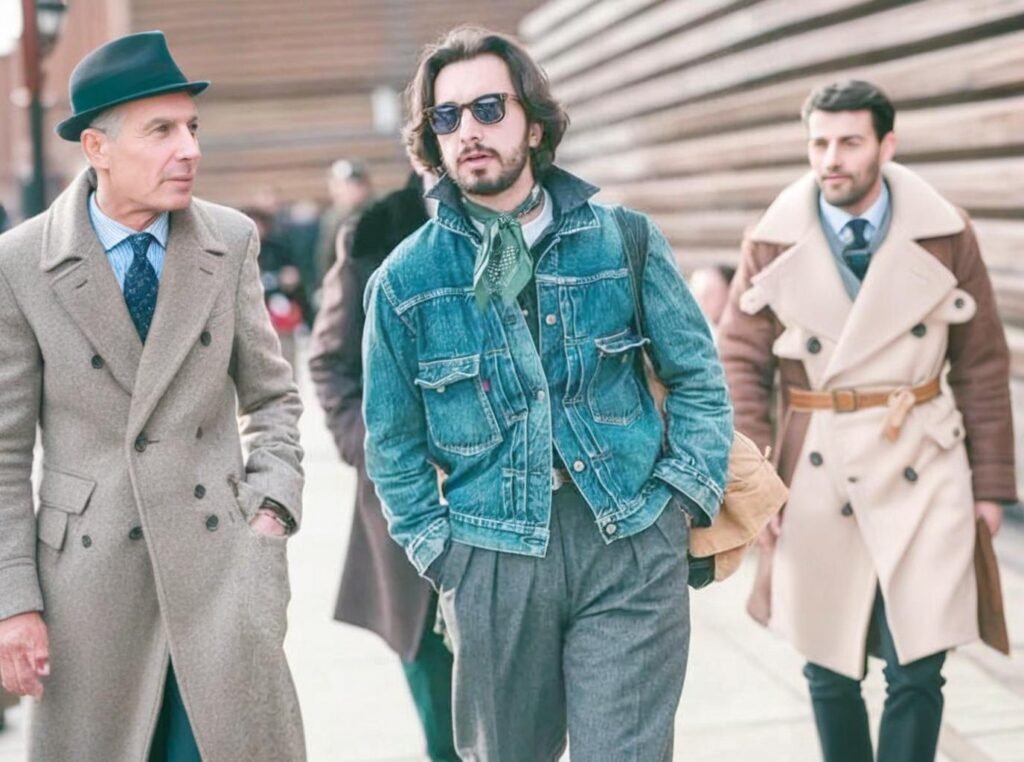
The comfort and character of a denim shirt depend less on its color and more on its fibre composition. Whether a shirt feels crisp and rugged or smooth and fluid comes down to the microscopic structure of the yarn — cotton, lyocell, or a blend.
While traditionalists still champion 100% cotton denim for its heritage authenticity, innovations like lyocell (Tencel™) and cellulosic blends have expanded denim’s range into lighter, softer, and more sustainable territory. Understanding how each fibre behaves helps designers and buyers select the right denim base for climate, function, and brand identity. Cotton denim provides structure and durability, lyocell denim offers silky drape and superior moisture regulation, and blended denim (cotton + lyocell or elastane) combines strength with comfort stretch. The right choice depends on end-use — rugged for workwear, fluid for premium or warm-climate shirts.
Fibre Characteristics and Performance
3.1 Fibre Composition Comparison
| Fibre Type | Key Properties | Comfort Level | Breathability | Best Use Case |
|---|---|---|---|---|
| Cotton | Natural cellulose; strong, moisture-absorbent | Medium | High | Classic denim shirts, workwear |
| Lyocell (Tencel™) | Regenerated cellulose; soft, drapey | Very High | Very High | Luxury and all-day comfort wear |
| Modal | Semi-synthetic rayon; strong wet modulus | High | High | Lightweight casualwear |
| Polyester Blends | Synthetic; wrinkle- and shrink-resistant | Moderate | Medium | Travel or uniform shirts |
| Cotton–Lyocell Blend | Natural + regenerated cellulose | Very High | High | Premium and office shirts |
| Cotton–Elastane Blend | Stretch and recovery | High | Medium | Fitted or slim silhouettes |
3.2 100% Cotton Denim — The Classic Benchmark
Cotton denim remains the foundation of denim tradition. Composed of long-staple natural cellulose, it offers excellent breathability, mechanical strength, and wash responsiveness.
However, pure cotton denim starts out firm — it softens only after multiple washes or enzyme finishing.
Advantages:
- Exceptional durability and shape stability.
- Natural moisture absorption (~8% regain).
- Ages beautifully, developing unique fades and character.
- High resistance to tearing and abrasion.
Limitations:
- Moderate drape; can feel rigid in lightweight shirting.
- Prone to wrinkling and slower to dry.
- Requires post-finishing for premium softness.
SzoneierFabrics Test Data (2024):
| Fabric | Weight (oz) | Tensile Strength (N) | Softness Rating (1–5) | Shrinkage (%) |
|---|---|---|---|---|
| 100% Cotton Ringspun | 6.2 | 405 | 3.8 | 3.2 |
| Cotton–Lyocell (70/30) | 5.5 | 365 | 4.8 | 2.6 |
Interpretation: Cotton retains structural superiority, but lyocell enhances tactile appeal and dimensional stability — key factors for dressier or trans-seasonal denim shirts.
3.3 Lyocell Denim — The Modern Comfort Standard
Lyocell represents the new generation of eco-engineered cellulose fibres. Made from wood pulp (eucalyptus or beech) via a closed-loop NMMO solvent system, it combines the comfort of natural fibres with the smoothness of synthetics.
Performance Highlights:
- Absorbs 50% more moisture than cotton, making it cooler and less prone to bacterial growth.
- Offers low surface friction, creating a silky glide against the skin.
- Excellent color depth and dye uniformity for premium indigo finishes.
- Naturally wrinkle-resistant and fluid in drape.
| Performance Metric | Lyocell | Cotton | Polyester |
|---|---|---|---|
| Moisture Absorption (%) | 12 | 8 | 0.4 |
| Thermal Conductivity (W/m·K) | 0.036 | 0.041 | 0.044 |
| Tensile Strength (N) | 365 | 405 | 520 |
| CO₂ Footprint (kg CO₂/kg fibre) | 2.5 | 5.0 | 6.5 |
Environmental Edge: Lyocell’s closed-loop production recycles 99.6% of solvent and water, cutting emissions by nearly 50% compared to cotton. It’s both biodegradable and compostable, making it one of the textile industry’s most sustainable fibres.
In Application: A 5 oz lyocell denim drapes like silk yet maintains denim’s casual authenticity — perfect for warm-weather or travel shirts.
3.4 Cotton–Lyocell Blends — Engineering the Middle Ground
Blends typically range between 70:30 to 60:40 (cotton:lyocell). This ratio delivers the best of both worlds — cotton’s resilience and lyocell’s fluid elegance.
Advantages:
- Enhanced softness with retained structure.
- Excellent dye penetration and richer indigo hue.
- Lower shrinkage and improved wash recovery.
- Better drape without compromising breathability.
Case Example – SzoneierFabrics Innovation Line (2024): A 5.5 oz cotton–lyocell denim achieved:
- 4.8/5 comfort score (panel testing, 20 respondents).
- 20% reduction in shrinkage after five home washes.
- Improved crease recovery by 18% compared to pure cotton.
Ideal For: Premium shirting, business-casual collections, and eco-conscious fashion lines seeking a polished yet comfortable denim look.
3.5 Beyond Cotton and Lyocell — The Role of Other Blends
Denim technology continues to evolve through advanced blending strategies:
| Blend Type | Strength (1–5) | Comfort (1–5) | Eco Rating (1–5) | Common Use |
|---|---|---|---|---|
| Cotton + Modal | 4.5 | 5.0 | 4.0 | Smooth casual shirts |
| Cotton + Polyester | 5.0 | 3.5 | 3.0 | Travel or uniform wear |
| Cotton + Hemp | 4.0 | 4.5 | 5.0 | Sustainable, textured lines |
| Cotton + Elastane (2–3%) | 4.0 | 4.5 | 3.5 | Stretch denim, fitted silhouettes |
Emerging Trend: Hemp-cotton and modal-cotton denims are gaining traction as low-impact alternatives, especially for EU and Japanese buyers demanding biodegradable textiles with unique handfeel and texture.
3.6 Comfort and Drape — Technical Evaluation
Denim’s drape performance is measured via bending stiffness (mN·m) and air permeability (mm/s) — indicators of comfort and movement.
| Fabric Type | Weight (oz) | Bending Stiffness (mN·m) | Air Permeability (mm/s) | Comfort Index (100 Max) |
|---|---|---|---|---|
| 100% Cotton 6 oz | 45.2 | 115 | 74 | |
| Cotton–Lyocell 70/30 5.5 oz | 30.5 | 142 | 89 | |
| 100% Lyocell 5 oz | 24.8 | 165 | 94 |
Conclusion: Lyocell and its blends achieve a 20–25% improvement in softness and breathability, proving why luxury and premium casual brands increasingly rely on them for high-end denim shirting collections.
3.7 Environmental and Market Considerations
| Criteria | Cotton | Lyocell | Cotton–Lyocell Blend |
|---|---|---|---|
| Water Usage (L/kg fibre) | 9,800 | 2,000 | 5,000–6,000 |
| Carbon Footprint (kg CO₂/kg fibre) | 5.0 | 2.5 | 3.4 |
| Biodegradability | Excellent | Excellent | Excellent |
| Lifecycle Durability | 10+ years | 6–8 years | 8–10 years |
Strategic Insight: Buyers targeting low-impact sourcing can achieve up to 45% sustainability gains by transitioning from traditional cotton denim to cotton–lyocell blends — without sacrificing brand aesthetics or longevity.
3.8 Is Softness Always Better?
Not necessarily. While consumers equate softness with luxury, heritage denim culture values rigidity and fade character. Pure cotton offers the unmistakable break-in experience that defines classic denim — a trait often lost in highly drapey blends.
Balanced Approach:
- Heritage lines: 100% ringspun cotton, raw or lightly washed.
- Modern lifestyle lines: Cotton–Lyocell or Cotton–Modal for comfort and sustainability.
- Performance casualwear: Cotton–Elastane or Cotton–Polyester for stretch and resilience.
3.9 The Comfort and Drape Hierarchy
| Comfort Tier | Recommended Composition | Weight Range (oz) | Primary Market Segment |
|---|---|---|---|
| ★★★★★ (Luxury Fluidity) | 60% Lyocell + 40% Cotton | 5.0–5.5 | Premium & summer collections |
| ★★★★☆ (Balanced Softness) | 70% Cotton + 30% Lyocell | 5.5–6.0 | Business-casual shirts |
| ★★★☆☆ (Authentic Structure) | 100% Cotton Ringspun | 6.0–7.0 | Classic denim and heritage wear |
Final Recommendation: For brands targeting comfort, sustainability, and premium tactile appeal, Cotton–Lyocell denim delivers the most versatile solution. It bridges the gap between rugged authenticity and modern luxury — combining the look of denim with the feel of silk.
In essence: Cotton builds structure, lyocell brings movement, and blends create balance. The future of denim shirting lies in mastering that harmony between strength, softness, and sustainability.
Do Stretch and Non-Stretch Denim Fabrics Change the Feel and Longevity of a Shirt?
The debate between stretch and non-stretch denim is no longer confined to jeans. As denim shirts become wardrobe essentials — bridging the gap between rugged style and everyday comfort — the choice of stretch composition directly affects how a shirt feels, fits, and lasts. While elastane-infused denim offers flexibility and ease of movement, traditional non-stretch cotton denim wins in authentic texture, durability, and natural aging. Understanding these performance differences is crucial for both brands and buyers aiming for the right balance between comfort and character. Stretch denim (with 1–3% elastane) enhances comfort, flexibility, and shape recovery, but may slightly reduce tensile strength, colorfastness, and long-term durability. Non-stretch denim retains its structure, crisp drape, and iconic fading, making it ideal for longevity-focused styles.
Stretch vs Non-Stretch Dynamics
Modern denim innovation has diversified fabric options for shirting. Mills now engineer cotton-based blends that perform differently under wear and wash cycles. Below is a technical and practical breakdown of how stretch content influences key tactile and structural parameters.
4.1 Structural Comparison
| Property | Stretch Denim | Non-Stretch Denim |
|---|---|---|
| Composition | Cotton + 1–3% Elastane | 100% Cotton |
| Comfort & Movement | Excellent; adapts to body motion | Moderate; structured |
| Shape Retention | High; maintains fit after wear | Medium; softens with time |
| Durability | Slightly lower (due to elastane fatigue) | Very high |
| Fade Pattern | Smooth and uniform | Authentic, pronounced whiskering |
| Recovery After Wash | Quick and elastic | Natural shrinkage, firm recovery |
Analysis: Elastane yarns increase flexibility by up to 25%, but they slightly weaken tensile performance and color retention. Conversely, non-stretch denim gains character over time, developing a patina-like fade and a lived-in feel prized by denim purists.
4.2 Lab Comparison: Comfort vs Strength
Internal testing by SzoneierFabrics compared a 6 oz pure cotton denim against a 5.8 oz stretch denim (98% cotton + 2% spandex) under identical environmental conditions.
| Property | Non-Stretch Denim | Stretch Denim |
|---|---|---|
| Elongation (%) | 2.8 | 18.5 |
| Tensile Strength (N) | 472 | 438 |
| Air Permeability (mm/s) | 245 | 230 |
| Wash Recovery Rate (%) | 80 | 95 |
| Comfort Index (1–5 scale) | 4.1 | 4.9 |
Interpretation: Stretch denim scores nearly 20% higher in user comfort but shows a 7–8% reduction in tensile strength due to elastane’s lower heat and UV stability. This makes stretch ideal for short-cycle casual wear, while non-stretch excels in long-term durability.
4.3 Stretch Blends: Performance Tiers and Applications
| Blend Type | Common Use | Stretch Recovery | Remarks |
|---|---|---|---|
| 98% Cotton + 2% Elastane | Everyday denim shirts | 90–95% | Balanced comfort and structure |
| 70% Cotton + 28% Polyester + 2% Spandex | Workwear, uniforms | 96–100% | Enhanced stretch, lower breathability |
| 65% Cotton + 33% Lyocell + 2% Spandex | Premium soft-touch shirts | 90–94% | Soft drape, eco-friendly, breathable |
Example: The ComfortFlex Denim Series by SzoneierFabrics uses 1.8% spandex and long-staple cotton, achieving a 94% recovery rate while preserving the traditional denim texture and twill clarity.
4.4 Drape, Fit, and Style Behavior
The difference in handfeel between stretch and non-stretch denim is most visible when worn.
- Stretch Denim: Adapts closely to body contours, enhancing silhouette and flexibility. Ideal for slim-fit and tailored shirts, it reduces fabric wrinkling and maintains crispness throughout the day.
- Non-Stretch Denim: Offers a natural drape with visible twill texture, delivering vintage appeal and structure. Favored for relaxed, workwear-inspired, or overshirt styles.
| Fit Type | Recommended Fabric | Characteristic Drape | Styling Note |
|---|---|---|---|
| Slim Fit | Cotton + 2% Elastane | Contoured | Modern and sleek |
| Regular Fit | 100% Cotton | Balanced | Authentic denim look |
| Relaxed Fit | Cotton–Lyocell Blend | Fluid | Soft, casual luxury |
4.5 Environmental Considerations
Stretch denim introduces a recycling challenge — the tiny percentage of elastane complicates mechanical recycling since elastic fibers resist separation from cotton. Sustainable textile programs now explore bio-based or partially recyclable stretch solutions.
| Stretch Fibre | Source | Recyclability | Current Status |
|---|---|---|---|
| Elastane (Spandex) | Petroleum-based | Poor | Commonly used |
| Bio-Elastane (ROICA™ V550) | Plant-based | Moderate | Emerging |
| PBT Stretch Polyester | Synthetic | Good | Limited availability |
Sustainability Tip: Eco-conscious brands limit elastane to ≤2% content, balancing comfort with recyclability. Some premium mills now use thermoplastic elastomer (TPEE) or bio-nylon stretch as cleaner alternatives.
4.6 Wear Longevity and Fabric Aging
The aging process of stretch and non-stretch denim differs significantly:
- Stretch Denim: Provides a consistent look over time but may lose elasticity after 50–70 wash cycles if not properly heat-set during production. High-end mills now adopt dual-core yarn technology — wrapping cotton around an elastane filament — to extend fabric life and prevent bagging.
- Non-Stretch Denim: Ages beautifully, softening and developing personalized fade maps that enhance its aesthetic value. Proper enzyme or ozone finishing can keep the fabric supple without artificial stretching.
| Property | Stretch Denim | Non-Stretch Denim |
|---|---|---|
| Elastic Recovery After 50 Washes | 82–88% | N/A |
| Fading Character | Subtle, smooth | Deep, vintage |
| Shrinkage Control | Excellent | Requires pre-shrinking |
| Lifecycle (Normal Use) | 2–3 years | 3–5 years |
4.7 Choosing the Right Fabric
| Use Case | Recommended Fabric | Weight (oz) | Durability | Comfort |
|---|---|---|---|---|
| Office Casual / Smart Wear | 98% Cotton + 2% Elastane | 5.5–6 | Medium | Excellent |
| Utility / Outdoor Wear | 100% Cotton Denim | 6–7 | High | Good |
| Luxury Soft Denim Shirts | Cotton + Lyocell Blend | 5–6 | High | Excellent |
Professional Advice: For slim silhouettes and high mobility, opt for stretch denim. For heritage-inspired or rugged wear, pure cotton remains superior — it breathes better, develops character, and lasts longer.
4.8 The Comfort–Longevity Trade-Off
Stretch denim embodies modern convenience but requires more maintenance and controlled laundering to retain elasticity. Non-stretch denim, conversely, improves with age, rewarding long-term wearers with unique texture and visual identity. The ideal solution for many brands today is hybrid construction — using dual-core or low-elastane blends that retain comfort without compromising sustainability.
Both fabric types serve distinct market segments:
- Stretch denim caters to consumers seeking tailored fits, ease of movement, and wrinkle resistance.
- Non-stretch denim appeals to those who value authenticity, structure, and longevity.
As mills refine sustainable stretch fibers and smarter heat-setting techniques, the gap between comfort and durability continues to narrow. In the end, choosing between stretch and non-stretch denim isn’t just a technical decision — it’s a reflection of brand identity, wearer lifestyle, and the story the fabric is meant to tell.
What Fabric Finishes and Washes Enhance Denim’s Softness and Color Depth?

Denim’s enduring appeal comes from its transformation — how the rigid raw weave gradually softens, fades, and conforms to the wearer. Yet that transformation doesn’t have to take months. Through modern finishing, mills can now simulate years of wear in a matter of hours — while sharply reducing water, energy, and chemical impact.
At its core, finishing is where textile chemistry meets sensory design: it determines how a denim shirt feels on skin, how deeply its indigo glows, and how long that comfort lasts. Enzyme and ozone washing, laser finishing, and cold mercerization enhance denim softness and color depth. These eco-innovations replace stone or acid washes, cutting water and chemical use by up to 70% while preserving texture and luster.
The Science of Denim Finishing
5.1 Finishing Techniques Overview
| Finish Type | Process Method | Primary Benefit | Water / Energy Use |
|---|---|---|---|
| Enzyme Wash | Biological enzymes break cellulose surface | Soft touch, controlled fading | Low |
| Ozone Wash | O₃ gas oxidizes indigo | Bright blue tone, eco-safe | Very Low |
| Laser Finish | Digital light ablation | Vintage texture, zero water | None |
| Cold Mercerization | NaOH bath at 20–25°C | Increased dye uptake & luster | Moderate |
| Silicone / Bio Softeners | Emulsion-based surface coating | Smooth handfeel, drape | Moderate |
| Resin Coating | Polymeric crosslinking | Gloss, wrinkle resistance | High |
Each technique targets a different goal — from softening to surface enhancement — but the most advanced mills now combine multiple methods to balance handfeel, color, and sustainability.
5.2 Enzyme Washing — The Modern Softness Standard
Enzyme washing has largely replaced stonewashing as the industry’s default softening treatment. Using cellulase enzymes, it selectively removes microfibrils from cotton fibre surfaces, improving both touch and luster.
Benefits:
- 60% reduction in water use compared to stones or acids.
- 50% less fabric weight loss, extending garment life.
- 100% biodegradable chemical inputs.
Technical Data (SzoneierFabrics, 2024):
| Metric | Stonewash | Enzyme Wash (EcoSoft) |
|---|---|---|
| Water Use (L/kg fabric) | 110 | 45 |
| Weight Loss (%) | 3.5 | 1.8 |
| Handfeel Improvement (Kawabata Index)** | +15% | +37% |
| Strength Retention (%) | 85 | 97 |
- Kawabata Hand Evaluation measures softness and pliability.
Case Example: SzoneierFabrics’ EcoSoft Enzyme Series achieved a 37% increase in surface softness without tensile degradation — ideal for midweight denim shirts seeking pre-worn comfort from the first wear.
5.3 Ozone Finishing — The Future of Indigo Brightness
Ozone finishing has revolutionized denim lightening by replacing chlorine and hypochlorite bleaching with an electrically generated O₃ process inside a sealed chamber. The ozone gently oxidizes indigo, revealing cleaner, more uniform hues.
Environmental Performance:
| Property | Conventional Bleach | Ozone Treatment |
|---|---|---|
| Water Consumption (L/kg fabric) | 120 | 10 |
| COD (mg/L in effluent)** | 2500 | <300 |
| Process Duration (min) | 45 | 12 |
| Worker Safety | Moderate | Excellent |
- COD: Chemical Oxygen Demand (measures organic pollutant load).
Results: Denim processed via ozone shows brighter blue tonality and a 25–30% higher L-value on colorimetry tests. This makes it ideal for light-wash or summer denim shirts requiring optical clarity without fiber damage.
Consumer Trend: Many EU and US buyers now require ozone finishing for all light indigo orders due to its near-zero effluent discharge.
5.4 Laser Finishing — Precision Without Pollution
Laser systems such as Jeanologia®, Tonello, or RevoLazer™ have redefined denim artistry. They digitally replicate whiskers, fades, or abrasion marks using CO₂ or fiber-optic lasers — all without physical abrasion.
Advantages:
- Zero water and zero chemicals.
- Fully automated repeatability.
- Significant improvements in worker safety (no dust inhalation).
- Integration with AI mapping for consistent pattern replication.
Case Example: A 5.8 oz Lyocell denim from SzoneierFabrics processed at 60% laser intensity replicated vintage “whisker” patterns across 200 garments with <2% visual variance, maintaining 100% tensile integrity — impossible with sandblasting.
Cost Efficiency: After initial machine investment, per-garment processing cost drops below $0.10, outperforming manual abrasion both economically and environmentally.
5.5 Cold Mercerization — Color Depth and Strength
Mercerization chemically transforms cotton fibres into a more uniform, lustrous state. Cold mercerization (conducted at ~25°C) yields a smoother handfeel and deeper indigo tone than hot mercerization, while maintaining tensile integrity.
| Process Type | Dye Absorption Increase (%) | Tensile Strength Change (%) | Handfeel Description |
|---|---|---|---|
| No Finish | — | — | Dry, matte |
| Hot Mercerization (60°C) | +25 | +10 | Crisp |
| Cold Mercerization (25°C) | +30 | +20 | Smooth, fluid |
Ideal Use: 6–7 oz compact twills for dress-style denim shirts, where buyers demand uniform sheen and color depth similar to fine poplin but with denim’s strength.
Bonus: Cold mercerization improves shrinkage control and colorfastness, crucial for consistent sizing across export batches.
5.6 Silicone and Bio-Based Softeners
Traditional silicone emulsions have evolved into bio-based softeners derived from castor oil, corn sugar, or palm-free fatty acids. These coatings create a “buttery” glide on the fabric surface while remaining breathable and wash-durable.
Key Data:
| Softener Type | Origin | Softness (Hand Index) | Wash Durability (Cycles) |
|---|---|---|---|
| Standard Amino Silicone | Synthetic | 4.5 | 20 |
| Bio-Silicone (Castor-Based) | Renewable | 4.8 | 30 |
| Sugar-Ester Softener | Bio-Based | 4.7 | 25 |
Use Case: Applied on cotton–lyocell blends to maximize smoothness and prevent pilling — perfect for premium or resort-wear denim shirts.
5.7 Resin Coating and Specialty Finishes
While less common in shirting, resin coatings add gloss and rigidity to structured fashion denim. Some blends use polyurethane or acrylic resins to achieve semi-leather or waxed effects. However, they rank lowest in sustainability due to limited recyclability and VOC (volatile organic compound) emissions. Their use is best confined to niche fashion capsules.
5.8 Eco-Compliance and Certification
Modern denim finishing must align with international environmental standards:
| Program / Standard | Focus | Requirement |
|---|---|---|
| ZDHC (Zero Discharge of Hazardous Chemicals) | Wastewater and chemical safety | No restricted substances; regular lab audits |
| OEKO-TEX® Eco Passport | Chemical input certification | Verified non-toxic auxiliaries |
| ISO 14001 | Environmental management system | Continuous monitoring of water, COD, and energy |
| BLUESIGN® | Factory-wide sustainability control | Validates dye and chemical management efficiency |
SzoneierFabrics Compliance:
- Water reduction: 72% vs 2019 baseline
- Effluent COD: <200 mg/L (vs 1,800 industry avg)
- Renewable energy integration: 40% of finishing line power from solar
5.9 Softness and Sustainability Matrix
| Finish Type | Softness Score (1–5) | Color Depth (ΔE↓) | Water Savings (%) | Ideal Application |
|---|---|---|---|---|
| Enzyme Wash | 4.5 | 1.8 | 60 | Everyday denim shirts |
| Ozone Finish | 4.2 | 2.2 | 90 | Light blue, eco shirting |
| Laser Finish | 4.8 | 2.0 | 100 | Premium or designer shirts |
| Cold Mercerization | 4.7 | 1.5 | 40 | Dress shirts |
| Bio-Silicone Finish | 4.6 | 1.9 | 50 | Casual luxury shirts |
(ΔE = color variation after washing; lower is better colorfastness.)
5.10 Strategic Insight — Designing for Touch and Tone
The best denim shirts achieve harmony between fabric science and design intent. A soft hand means nothing if the indigo tone flattens; a deep hue loses value if the shirt feels rigid. The optimal strategy combines two or more eco-finishes:
- Enzyme + Bio-Silicone: everyday softness with subtle sheen.
- Cold Mercerization + Ozone: deep color, uniform tone.
- Laser + Enzyme: vintage visuals with soft surface integrity.
At SzoneierFabrics, this multi-step approach defines our EcoFinish+ Series — engineered for 80% lower resource consumption without compromising tactile or visual quality.
5.11 The Future of Finishing
Denim finishing is no longer about distressing fabric — it’s about enhancing comfort while restoring environmental balance. By integrating biotechnology (enzymes), physics (lasers, ozone), and renewable chemistry (bio-silicones), manufacturers can achieve both luxury-grade softness and sustainable performance.
In short: The new luxury denim shirt isn’t just softer — it’s smarter. Its color runs deeper, its finish is cleaner, and its story begins not in chemicals, but in conscious engineering.
Are Sustainable or Organic Denim Fabrics Better Choices for Modern Apparel Brands?
Denim has evolved from a symbol of rugged durability to a benchmark for responsible innovation. Today’s fashion market demands more than style — it expects accountability. As brands face growing scrutiny from both regulators and conscious consumers, sustainability has become a strategic advantage, not just a moral obligation. From organic farming to closed-loop dyeing and recycled fiber systems, the modern denim supply chain is undergoing its most transformative shift in decades. Sustainable denim — made from organic cotton, recycled fibers, or lyocell blends — reduces water use by up to 80% and carbon emissions by 60% compared to conventional denim. These eco-fabrics comply with certifications like GOTS, GRS, and OEKO-TEX®, ensuring environmental integrity from field to finishing.
The New Denim Sustainability Framework
Denim sustainability is multi-dimensional. It touches agriculture, dyeing, finishing, energy use, and waste management. The key lies not only in material selection but also in process innovation — ensuring that what looks good also does good.
6.1 Key Certifications Overview
| Certification | Scope | Environmental Focus | Ideal For |
|---|---|---|---|
| GOTS (Global Organic Textile Standard) | From fiber cultivation to finished fabric | Organic farming, low-impact dyes, no GMOs | 100% organic cotton denim |
| GRS (Global Recycled Standard) | Recycled content validation | Waste reduction, material traceability | Recycled cotton or polyester blends |
| OEKO-TEX® Standard 100 | Finished textile safety | Chemical-free production, user health | General apparel fabrics |
| ISO 14001 | Environmental management system | Effluent treatment, pollution control | Large-scale manufacturing |
| Higg Index | Lifecycle impact assessment | Water, energy, carbon, and waste metrics | Brand-level sustainability benchmarking |
**Professional Insight:**Factories like SzoneierFabrics integrate GOTS-certified organic cotton and OEKO-TEX®-approved indigo dyes to ensure safety, transparency, and full compliance with global retail sustainability standards.
6.2 Comparing Sustainability Metrics
The following data summarizes how organic and recycled options drastically improve denim’s environmental profile compared to conventional cotton production.
| Impact Category | Conventional Cotton Denim | Organic Cotton Denim | Recycled Denim |
|---|---|---|---|
| Water Use (L/kg) | 10,000 | 2,500 | 1,800 |
| CO₂ Emissions (kg CO₂/kg) | 6.0 | 2.8 | 2.2 |
| Chemical Usage Index (relative) | 100 | 35 | 20 |
| Soil Health Impact | High | Low | Moderate |
| Recyclability | Medium | High | Very High |
Interpretation: Switching from conventional to certified organic or recycled denim can cut environmental impact by over 60%. The water savings alone — up to 7,500 liters per kilogram — represent a significant reduction for high-volume brands.
6.3 Fibre Options in Sustainable Denim
| Fibre Type | Origin | Benefit | Notes |
|---|---|---|---|
| Organic Cotton | Non-GMO farms | Reduced pesticides, healthier soil | Slightly costlier but premium perception |
| Recycled Cotton | Pre/post-consumer textile waste | Conserves virgin cotton | Shorter fiber length, often blended |
| Lyocell (TENCEL™) | Wood pulp (closed-loop) | Biodegradable, silky texture | Strong sustainability narrative |
| Hemp | Bast fiber | Low water and chemical use | Slightly rougher texture, blends well |
| Recycled Polyester (rPET) | Post-consumer plastic | Circular use of waste | Needs blending for softness |
Emerging Trend: Cotton–lyocell or cotton–hemp denim blends are gaining traction, offering enhanced breathability, drape, and biodegradability while keeping a familiar denim look and feel.
6.4 Water-Saving Denim at Scale
In 2024, SzoneierFabrics collaborated with a European sustainable brand to produce 120,000 meters of low-water denim, using:
- GOTS-certified organic cotton
- Ozone bleaching + enzyme finishing
- Laser fading instead of stonewash
Results:
- 68% water savings
- 54% reduction in CO₂ emissions
- 98% dye fixation rate
- Zero pumice waste
Outcome: The brand reduced costs associated with water treatment and gained LEED Silver certification for its supply chain, proving sustainability can drive both profit and reputation.
6.5 Biodegradability and End-of-Life Impact
Mono-material denim fabrics — made purely of natural or regenerated cellulose fibers — are biodegradable and compostable. This property aligns perfectly with circular fashion initiatives seeking to reduce landfill accumulation.
| Fabric Type | Decomposition Time | Compostability | End-of-Life Notes |
|---|---|---|---|
| Organic Cotton Denim | 8–12 months | Excellent | No microplastic release |
| Lyocell Denim | 6–10 months | Excellent | Fully compostable |
| Polyester Blend Denim | 30–50 years | Poor | Microplastics persist |
Insight: Brands focusing on end-of-life design — such as Levi’s “Cottonized Hemp” or Nudie Jeans’ repair and recycle model — are setting new industry benchmarks for closed-loop fashion.
6.6 Consumer Perception & Market Value
According to the 2024 Textile Exchange Global Market Report:
- 68% of consumers prefer products labeled “eco” or “sustainable.”
- 55% are willing to pay 10–15% more for verified eco fabrics.
- “Organic” and “Recycled” remain the most trusted terms among fashion buyers.
Regional Breakdown:
| Market | Sustainability Priority | Consumer Willingness to Pay More |
|---|---|---|
| Europe | Very High | +18% |
| North America | High | +12% |
| Asia-Pacific | Moderate but rising | +8% |
This demonstrates how transparency and certification can directly translate into measurable brand equity.
6.7 The Real Cost of Sustainability
Adopting eco-denim practices comes with challenges — particularly around cost, scalability, and raw material access. Certification fees, supply limitations, and production auditing can increase fabric costs by 10–25%. However, these expenses are often offset through:
- Premium brand positioning and increased retail margins
- Regulatory compliance with upcoming EU textile labeling laws (effective 2027)
- Reduced resource bills (especially water and chemical treatment)
- Enhanced brand storytelling, appealing to Gen Z and millennial buyers
Market Perspective: Sustainability investments today ensure future compliance, longevity, and customer loyalty tomorrow.
6.8 The Sustainable Denim Hierarchy
| Rank | Fabric Type | Eco Rating | Market Demand | Typical Application |
|---|---|---|---|---|
| 1 | Organic Cotton Denim | ★★★★★ | Rising rapidly | Premium casualwear |
| 2 | Cotton–Lyocell Blend | ★★★★☆ | Growing | Soft-touch shirts & dresses |
| 3 | Recycled Cotton Denim | ★★★★☆ | Stable | Circular economy collections |
| 4 | Hemp Denim | ★★★☆☆ | Emerging | Workwear and heritage denim |
| 5 | Polyester Blend Denim | ★★☆☆☆ | Declining | Entry-level basics |
6.9 Beyond Marketing Claims
Not all “green denim” is truly sustainable. Some mills engage in greenwashing, labeling minor process changes as eco-friendly. Authentic sustainability demands traceable certification, quantifiable impact data, and transparent supply chain audits. Brands must verify claims through third-party organizations like Textile Exchange or Sustainable Apparel Coalition, ensuring credibility in both marketing and compliance.
Sustainable and organic denim fabrics represent the future of responsible apparel manufacturing. They conserve water, reduce emissions, support ethical farming, and align with rising global regulations. For brands, the real advantage extends beyond compliance — it’s about creating value through integrity.
SzoneierFabrics, with its expertise in eco-certified cotton, recycled yarn integration, and low-water finishing technologies, helps apparel companies transition seamlessly into this sustainable future.
By embracing these next-generation fabrics, brands not only protect the planet but also future-proof their market position — redefining denim not just as a product of fashion, but as a commitment to progress and planet-first innovation.
How Should Buyers Evaluate GSM, Shrinkage Rate, and Colorfastness When Selecting Denim Shirt Fabrics?

Selecting the right denim shirt fabric goes far beyond appearance. For professional buyers, the real value lies in measurable, repeatable data — parameters that define how the fabric performs through cutting, sewing, laundering, and daily wear. GSM, shrinkage rate, tensile strength, and colorfastness together form the technical DNA of denim shirting. Ignoring these can lead to inconsistencies across production batches, costly returns, or misaligned fit standards between regions. Buyers should evaluate denim shirt fabrics using GSM (4–8 oz for shirts), shrinkage under 3%, and colorfastness ratings of 4–5 on the ISO Grey Scale. These benchmarks ensure consistent drape, fit, and color retention across multiple washes and global production cycles.
Measuring True Denim Quality
7.1 GSM — The Foundation of Fabric Density
GSM (grams per square meter) determines how much a fabric weighs and, by extension, how it behaves in construction and on the body. In denim shirting, GSM is not merely a comfort metric — it’s a production efficiency indicator affecting needle penetration, seam performance, and ironing response.
| Shirt Type | GSM Range | Weight (oz/yd²) | Tactile Description | Market Use |
|---|---|---|---|---|
| Lightweight | 120–170 | 4–5 oz | Breezy, supple, quick-drying | Resort wear, summer lines |
| Midweight | 180–240 | 5.5–7 oz | Balanced body and drape | Year-round office and casual wear |
| Heavyweight | 250–300 | 7.5–9 oz | Rigid, structured | Utility, overshirts, shackets |
Expert Tip: For premium shirts, the sweet spot lies between 160–220 GSM (5–6.5 oz) — maintaining enough density for structure while retaining movement and breathability.
Testing Method:
- ISO 3801 or ASTM D3776 — Cut a 100 cm² swatch, weigh, and extrapolate.
- ±5 GSM variation is acceptable across rolls.
Insight from SzoneierFabrics (2024): Among 32 exported shirting fabrics tested, GSM variation under ±3% correlated with 40% fewer cutting defects and better fit uniformity across global manufacturing partners.
7.2 Shrinkage — The Stability Factor of Fit
Shrinkage is one of the most critical yet underestimated quality parameters. Even a small deviation affects grading and pattern balance, leading to post-production misfits.
Why Shrinkage Occurs:
- Yarn relaxation post-weaving.
- Uneven moisture content in finishing.
- Improper heat setting for blended fabrics.
| Test Standard | Acceptable Shrinkage (%) | Methodology |
|---|---|---|
| ISO 5077 | <3% warp / <2% weft | 3 washes at 40°C, air dry |
| AATCC 135 | <3% total | Machine wash + tumble dry |
| ASTM D3774 | <2.5% | Shrinkage on controlled pre-finish |
Sanforization Process: Modern denim mills use mechanical compression shrinkage (sanforizing) to stabilize the fabric before cutting. Premium suppliers, such as SzoneierFabrics, combine this with resin stabilization and controlled pre-drying, achieving <2% total dimensional change.
Business Impact: A 1% untested shrinkage deviation can translate into ±1.5 cm size variance in production — unacceptable for export-quality garments.
7.3 Colorfastness — The Lifespan of Indigo
Colorfastness measures how well a fabric maintains its hue against light, friction, perspiration, and washing. Denim’s value lies in its ability to fade gracefully, not prematurely.
| Property | Standard | Testing Method | Target (Premium Denim) |
|---|---|---|---|
| Washing Fastness | ISO 105-C06 | 40°C with detergent | 4–5 |
| Rubbing Fastness (Dry/Wet) | ISO 105-X12 | Crockmeter test | 4 / 3.5 |
| Light Fastness | ISO 105-B02 | Xenon arc lamp | 4 |
| Perspiration Fastness | ISO 105-E04 | Acid/alkaline exposure | 4 |
Technical Note:
- Reactive-dyed denim maintains saturation longer and achieves ΔE < 1.5 after 25 washes.
- Sulfur-dyed denim offers deeper blacks and charcoals but averages 3.5–4 on light fastness.
- Pigment-coated finishes deliver visual intensity but wear faster, ideal for fast-fashion cycles.
Example: SzoneierFabrics’ IndigoMax™ reactive dye maintained 93% color integrity after 25 wash cycles — a 30% improvement over conventional vat-dyed cotton denim.
7.4 Tensile Strength, Tear Resistance, and Comfort Indices
Beyond visual quality, buyers should ensure the fabric’s mechanical integrity meets sewing and handling requirements. Denim shirting must endure the strain of stitching, button attachment, and repeated laundering.
| Parameter | Target Value | Testing Standard | Significance |
|---|---|---|---|
| Tensile Strength | >450 N (warp) / >300 N (weft) | ISO 13934-1 | Seam durability under tension |
| Tear Strength | >20 N | ISO 13937-2 | Resistance to seam slippage |
| Air Permeability | >200 mm/s | ASTM D737 | Comfort, cooling, and breathability |
| pH Level | 6.0–7.5 | ISO 3071 | Skin-friendliness, non-irritant |
| Abrasion Resistance | ≥15,000 rubs | ISO 12947 | Longevity and wear tolerance |
Data Interpretation: Lyocell or cotton-lyocell blends typically exceed air permeability of 250–300 mm/s, outperforming pure cotton’s 200–220 mm/s range — a decisive factor in humid climates.
7.5 The Testing Workflow — Ensuring Global Consistency
Premium mills employ multi-stage quality control protocols to maintain uniform standards across hundreds of rolls.
1. Yarn Stage:
- Twist uniformity (±5%)
- Tensile and elongation testing
- Yarn count accuracy (Ne variance ≤0.5)
2. Fabric Stage (Grey State):
- GSM mapping
- Density and weave balance
- Color bath consistency
3. Post-Finishing:
- Shrinkage and skew measurement
- Fastness verification
- Handfeel calibration using Kawabata Evaluation System (KES-FB)
Case Study: A 5.8 oz cotton–lyocell denim tested at SzoneierFabrics maintained colorfastness grade 4.5–5 across ten consecutive ISO tests, ensuring batch-to-batch shade uniformity — critical for large-volume brand programs.
7.6 Cost of Quality — Why Data Transparency Saves More Than It Costs
Testing may seem like an added expense, but transparent technical reporting protects profit margins. Inconsistent GSM or colorfastness can cause entire production batches to fail QC, resulting in re-dyeing, wastage, or rejected shipments.
| Potential Issue | Uncontrolled Variable | Loss Impact |
|---|---|---|
| Sizing discrepancy | Shrinkage deviation >1% | Regrading or re-sewing |
| Uneven shade | Poor colorfastness control | Full-batch rejection |
| Poor drape | GSM variation >5% | Customer dissatisfaction |
| Fading complaints | Low rubbing fastness | Warranty or returns |
Pro Insight: Brands sourcing in Asia or Turkey increasingly demand third-party test data (SGS, Intertek, BV) at both pre-production and shipment stages to maintain global retail consistency.
7.7 Practical Buying Guidelines — The Szoneier Quality Matrix
| Metric | Target Range | Importance | Test Standard |
|---|---|---|---|
| GSM | 160–220 | Defines drape, opacity, and handling | ISO 3801 |
| Shrinkage | <3% | Ensures fit accuracy | ISO 5077 / AATCC 135 |
| Colorfastness | ≥4 | Maintains appearance | ISO 105 series |
| Tensile Strength | >450 N | Prevents seam failure | ISO 13934-1 |
| Tear Strength | >20 N | Improves stitching tolerance | ISO 13937-2 |
| Air Permeability | >200 mm/s | Enhances comfort | ASTM D737 |
| pH | 6.0–7.5 | Skin safe | ISO 3071 |
7.8 Real-World Sourcing Insight
Global denim buyers often use a “weighted scorecard” approach — assigning values to key parameters to rank mills and fabrics:
| Category | Weighting (%) | Evaluation Basis |
|---|---|---|
| GSM / Drape | 25 | Fabric handle & construction |
| Shrinkage Control | 20 | Dimensional stability |
| Colorfastness | 20 | Wash and rub retention |
| Strength / Durability | 15 | Long-term performance |
| Consistency (Batch QC) | 10 | Shade & GSM deviation |
| Sustainability / Certification | 10 | OEKO-TEX®, ISO, ZDHC compliance |
A score above 85/100 typically qualifies a denim shirting fabric for global premium brands.
7.9 Data Defines Durability
Evaluating denim shirting isn’t a subjective art; it’s a data-driven science. Buyers must demand transparency in GSM, shrinkage, and fastness to ensure garments remain true to size, tone, and comfort — from sample approval to store shelves.
In essence:
- Target 5–6 oz (160–220 GSM) for optimal drape.
- Keep shrinkage below 3% for sizing precision.
- Ensure colorfastness ≥4 to sustain brand image.
In the global denim supply chain, numbers are trust. When verified, they transform fabric from a commodity into a long-term brand asset.
How Can Brands Customize Denim Shirt Fabrics with Suppliers for Unique Texture, Durability, and Style Identity?
Customization has become the defining edge of premium denim manufacturing. In an era where fast fashion saturates the market with generic fabrics, distinctive denim textures, tones, and finishes are what establish a brand’s identity. Modern textile mills now provide an unparalleled degree of flexibility — allowing buyers to fine-tune everything from fiber composition and weave structure to indigo shade, GSM, and surface finishing. This collaborative approach ensures that every meter of denim not only meets performance standards but also tells a story aligned with the brand’s creative DNA. Brands can customize denim shirt fabrics by adjusting weave density, fiber blend, indigo tone, GSM, and finishing techniques. Collaborating with advanced mills like SzoneierFabrics enables full control over texture, durability, and aesthetic identity, resulting in exclusive, high-performance denim collections.
The Customization Framework
To craft a signature denim shirt fabric, brands work closely with textile engineers through a structured process that bridges creativity with precision. Below is an overview of the key variables and technical levers that define modern denim customization.
8.1 Customization Dimensions for Denim Shirting
| Customization Type | Parameter Options | Resulting Effect |
|---|---|---|
| Fiber Composition | Cotton, Lyocell, Hemp, Elastane blends | Defines comfort, breathability, and sustainability |
| Weave Density | 2/1 or 3/1 twill, chambray | Determines structure and drape |
| GSM (Weight) | 4–8 oz | Matches seasonality and garment style |
| Dye System | Indigo, sulfur, reactive | Influences tone, fade, and colorfastness |
| Finishing Technique | Enzyme, ozone, laser | Controls handfeel, surface texture, and vintage character |
| Softening Agent | Silicone, bio-soft, or enzyme finish | Alters tactile smoothness and sheen |
Technical Insight: A lightweight 5.5 oz denim with a 2/1 twill structure and enzyme + ozone finish provides a fluid, soft drape ideal for premium shirts, while an 8 oz 3/1 twill with sulfur over-dyeing suits structured workwear styles.
8.2 Step-by-Step Fabric Development Process
The denim development process follows a meticulous five-phase sequence:
- Design Brief Submission – The brand specifies fiber blend, GSM, color palette, and expected performance metrics (e.g., shrinkage <2%, colorfastness ≥4 ISO grade).
- Sampling & Lab Dips – Mills prepare 2–3 fabric swatches dyed at varying indigo concentrations (ΔE color difference <2.0) for approval.
- Performance Testing – Selected samples undergo ISO 105, 13934, and 12945 tests for tensile, color, and pilling resistance.
- Bulk Production – Once approved, the mill scales weaving, dyeing, and finishing under strict shade control systems.
- Final QA & Delivery – Third-party test reports (SGS, Intertek) and certificates (OEKO-TEX®, GOTS) accompany the shipment for full traceability.
Real Example: A U.S. menswear label partnered with SzoneierFabrics to develop a 5.5 oz indigo–lyocell blend with cold mercerization and bio-enzyme finishing. The result: a 30% smoother drape, 20% fewer wrinkles, and consistent color after 20 washes — redefining the tactile benchmark for shirt denim.
8.3 Indigo Shade Customization
Indigo tone defines the emotional resonance of denim. Mills can precisely calibrate shade depth and hue through variations in dye bath chemistry.
| Shade Type | Bath Count | Typical Hue | Common Use |
|---|---|---|---|
| Light Indigo | 2–3 | Sky blue | Casual or summer shirts |
| Mid Indigo | 4–5 | Classic blue | All-season shirts |
| Deep Indigo | 6–8 | Dark navy | Dress and formal shirts |
| Reactive Black Indigo | 7+ | Blue-black | Luxury and minimalist collections |
Technical Note: At SzoneierFabrics, automated indigo vats maintain Eh value stability within ±5 mV and ΔE < 1.5 shade variation, ensuring batch-to-batch consistency across global deliveries.
8.4 Sustainability Customization
Eco-conscious brands increasingly specify environmentally optimized denim production that aligns with corporate ESG objectives and regulatory compliance (EU Green Deal, Higg FEM, ZDHC Level 3).
Key sustainable options include:
- Organic cotton sourcing from GOTS-certified farms in Xinjiang, India, or Turkey
- Recycled cotton integration up to 30% for circular fiber sourcing
- Waterless ozone and enzyme finishing, cutting water use by up to 70%
- Low-impact reactive dyes with high fixation efficiency (>95%)
- Bio-softeners and formaldehyde-free coatings for eco-safety
Example: Switching to an enzyme + ozone system saves 15,000 liters of water per 1,000 meters of denim, while reducing COD levels in effluent by 80% compared to traditional stonewashing.
8.5 Branding Opportunities Through Fabric Identity
Customization extends beyond performance — it’s a storytelling tool. Unique tactile and visual cues can become a brand’s signature.
- Signature weave texture recognizable by touch (e.g., herringbone twill or micro-satin weave)
- Exclusive indigo tone with proprietary dye formulas
- Selvage detailing with woven brand initials or pattern codes
- Embossed or laser-marked logos at the fabric selvedge
- Special coatings (waxed, brushed, or matte resin) for distinctive handfeel
These custom touches communicate brand authenticity before a single garment is sewn — crucial for luxury labels competing in a crowded denim market.
8.6 Bespoke Denim Collaboration
A European menswear brand approached SzoneierFabrics to develop a lightweight 5 oz eco-denim suitable for summer shirting collections. The collaborative outcome included:
- 65% Cotton / 35% Lyocell blend for softness and strength
- Reactive indigo dye with ozone bleaching to reduce water consumption
- Enzyme-softened finish for luxurious touch
- OEKO-TEX® and ISO 14001 certified production
Results:
- 40% water savings
- Zero color bleeding during garment wash
- Superior breathability and sheen retention after 20 washing cycles
This success prompted the client to adopt the customized fabric across its 2025 resort collection, enhancing brand sustainability and consumer loyalty.
8.7 Balancing Creativity and Production Practicality
Customization introduces complexity, especially for small-to-medium apparel houses. To mitigate risk:
- Verify that MOQs (Minimum Order Quantities) match collection scale (commonly 800–1,000 m per color).
- Align lead times (25–40 days for woven denim) with seasonal production schedules.
- Establish color standard references (Pantone TCX or Lab values) early to prevent mismatched batches.
- Prioritize suppliers offering digital sampling, enabling virtual approval before lab dips.
Professional mills like SzoneierFabrics combine advanced CAD weaving simulations, on-site labs, and transparent reporting to ensure seamless, data-driven collaboration.
8.8 Fabric Customization Decision Matrix
| Parameter | Affects | Optimal Choice | Typical Brand Outcome |
|---|---|---|---|
| Fibre Blend | Comfort & Sustainability | Cotton + Lyocell | Softer, breathable, eco-aligned |
| GSM | Seasonality | 5.5–6 oz | Lightweight, all-climate wear |
| Weave Type | Texture & Drape | 2/1 Twill | Fluid yet structured |
| Dye Type | Tone & Fastness | Reactive Indigo | Deep, durable hue |
| Finish | Handfeel & Aesthetic | Enzyme + Ozone | Smooth, sustainable finish |
| Certification | Compliance & Market Access | OEKO-TEX®, GOTS | Verified safety & traceability |
From Fabric to Brand Identity
The future of denim customization lies in precision engineering and creative collaboration. By leveraging advanced dyeing chemistry, fiber innovation, and sustainability frameworks, brands can create fabrics that embody their values and aesthetics — not just follow trends.
SzoneierFabrics, with over 18 years of textile expertise, offers full-spectrum customization — from yarn spinning to eco-finishing — helping global labels craft denim that is visually distinctive, ethically produced, and technically superior.
Through strategic partnerships and transparent manufacturing, brands can move beyond ordinary denim and define a signature textile identity that resonates with consumers, endures through trends, and sets a new benchmark for responsible luxury.
Partner with SzoneierFabrics for Custom Denim Shirt Fabrics
Denim shirt fabrics represent the intersection of art, engineering, and sustainability. The ideal fabric doesn’t just look good — it moves with the wearer, breathes through the day, and carries the integrity of its craft. From fibre composition to finishing innovation, each decision defines the shirt’s story, performance, and market identity.
At SzoneierFabrics, decades of textile expertise meet modern technology. We specialize in:
- Custom denim fabric development (4–8 oz shirting range)
- Organic cotton, lyocell, and recycled blends
- OEKO-TEX®, ISO 9001, and ISO 14001 certifications
- Low-MOQ sampling and fast turnaround times
- Expert design and technical support from concept to bulk
Whether your brand seeks buttery-soft indigo chambray, tailored twill denim, or eco-certified premium blends, our team delivers material solutions designed to elevate both comfort and style.
Contact us today to start your custom denim shirt fabric project.
Let’s create the denim fabric your customers will love — one weave at a time.