Skip to content
If you’ve ever carried a fully loaded tool bag across a job site, you already know one truth: not all fabrics are built the same. Some tear at the seams after a few weeks. Others fade, crack, or fail exactly when you need them most. Choosing the right fabric is not just about material—it’s about reliability, safety, and long-term cost efficiency.
The best heavy-duty fabrics for tool bags are typically high-denier nylon, reinforced polyester, and industrial-grade canvas, often enhanced with coatings like PU, PVC, or TPU. These materials provide a balance of abrasion resistance, tear strength, load-bearing capacity, and environmental durability. Advanced options like ballistic nylon, Cordura, and ripstop fabrics further improve performance in demanding conditions.
Think about a contractor climbing scaffolding with a 20kg tool bag. Or a field technician working under extreme weather conditions. In those moments, the fabric is not just a material—it becomes a critical part of the workflow. And that’s where the real story begins.
What Makes a Fabric “Heavy-Duty” for Tool Bags?

A fabric becomes “heavy-duty” not because of a single specification, but because of how it performs under continuous, real-world stress. In the context of tool bags, this means resisting abrasion from rough surfaces, تحمل sharp tool edges, supporting heavy loads without deformation, and maintaining performance under exposure to moisture, dust, and temperature variation.
In manufacturing and product development, heavy-duty is a functional classification rather than a marketing term. Engineers and buyers evaluate fabrics based on measurable performance metrics and how those metrics translate into long-term reliability. A fabric that performs well in controlled testing but fails under repeated field use cannot be considered truly heavy-duty.
In practical applications, heavy-duty fabrics are expected to maintain structural integrity after thousands of cycles of use—being dragged across concrete, loaded with metal tools, exposed to outdoor conditions, and compressed during transport. This is why professional buyers rarely rely on appearance alone; they focus on measurable indicators and construction methods.
Key Performance Indicators That Define Heavy-Duty Fabrics
Fabric performance can be quantified through a set of standardized metrics. These indicators provide a baseline for comparing materials and predicting how they will perform in demanding environments.
| Property | Description | Typical Heavy-Duty Range |
|---|---|---|
| Denier (D) | Thickness of individual fibers | 600D – 1680D+ |
| Tensile Strength | Resistance to pulling force | 2000N+ |
| Tear Strength | Resistance to propagation of cuts | 150N+ |
| Abrasion Resistance | Ability to withstand friction cycles | 10,000+ cycles |
| Coating Thickness | Protective surface layer | 0.2–0.5 mm |
Denier is often the most visible specification, but it is frequently misunderstood. A higher denier indicates thicker fibers, which generally increases strength, but it also adds weight and reduces flexibility. For example, 1680D nylon is extremely durable and commonly used in high-end tool bags, yet it may not be suitable for applications where lightweight mobility is a priority.
Tensile strength and tear strength are equally important. A fabric may resist pulling forces but still fail when a small cut expands under stress. In tool bags, where sharp edges and repeated loading are common, tear resistance becomes a critical factor in preventing catastrophic failure.
Abrasion resistance is often the defining metric in real-world performance. Tool bags are rarely used in clean environments; they are placed on rough surfaces, dragged across floors, and exposed to constant friction. Fabrics that cannot withstand these conditions will degrade quickly, regardless of their initial strength.
Why Durability Is More Than Just Strength
A common misconception is that stronger fabrics automatically last longer. In reality, durability is a combination of multiple properties working together over time.
A fabric with high tensile strength but low abrasion resistance may hold heavy loads but wear down quickly on the surface. Conversely, a fabric with excellent abrasion resistance but low tear strength may resist surface damage but fail when subjected to sharp stress points.
In practical use, durability is defined by how a fabric behaves under repeated cycles rather than isolated tests. For example, a tool bag used by a mechanic may experience constant friction against concrete floors. Even if the fabric can تحمل significant weight, poor abrasion resistance will cause fibers to break down, leading to thinning and eventual tearing.
Environmental factors also play a role. Exposure to moisture, UV light, and temperature changes can degrade fibers over time. Fabrics treated with coatings—such as polyurethane (PU) or thermoplastic polyurethane (TPU)—are better equipped to resist these conditions, extending the product’s lifespan.
How Fabric Structure Affects Performance
Beyond raw material properties, the way fibers are constructed into fabric has a significant impact on performance. Weaving patterns determine how stress is distributed across the material and how it responds to external forces.
- Tight weaves increase resistance to punctures and abrasion by reducing gaps between fibers
- Looser weaves improve flexibility but may compromise strength under heavy loads
- Reinforced patterns, such as ripstop grids, prevent small tears from spreading
Oxford fabric, commonly used in tool bags, is a good example of balanced design. Its basket weave structure interlocks fibers in a way that distributes stress evenly, offering a combination of durability and flexibility. This makes it suitable for applications where both strength and adaptability are required.
In higher-end products, manufacturers often combine multiple structures. For example, a tool bag may use tightly woven fabric for the main body and reinforced panels for high-wear areas such as the base or corners. This targeted reinforcement improves overall performance without adding unnecessary weight.
Multi-Dimensional Fabric Performance Analysis
Different fabric types offer distinct advantages, and selecting the right one depends on the intended application rather than a single performance metric.
| Factor | Nylon | Polyester | Canvas |
|---|---|---|---|
| Strength | Very high, excellent load capacity | High, stable under stress | Medium, depends on thickness |
| Weight | Relatively light | Moderate | Heavier |
| Flexibility | Excellent, adapts well to movement | Good balance | Limited, more rigid |
| Water Resistance | High with coating | High with coating | Low unless treated |
| Cost | Higher due to performance | Moderate | Lower |
Nylon is widely regarded as the premium option for heavy-duty tool bags. Its high strength-to-weight ratio and flexibility make it suitable for demanding environments where both durability and mobility are required. However, its higher cost can be a limiting factor for budget-sensitive applications.
Polyester offers a balanced alternative. While slightly less strong than nylon, it provides good durability, better UV resistance, and more stable performance in outdoor conditions. This makes it a common choice for mid-range tool bags.
Canvas, traditionally used in tool storage, offers natural durability and a rugged appearance. However, it is heavier and less resistant to water unless treated, which can limit its performance in modern applications.
A Practical Perspective on Fabric Selection
In real-world product development, no single fabric is considered universally “best.” Instead, the selection process involves balancing multiple factors: strength, weight, flexibility, cost, and environmental resistance.
For example, a construction worker handling heavy tools in abrasive conditions may prioritize high-denier nylon with reinforced coatings. A field technician who moves frequently may choose a lighter polyester-based fabric to reduce fatigue while still maintaining adequate durability.
Manufacturers often combine materials to optimize performance. A common approach is to use high-strength fabric for the main body, reinforced panels for high-wear zones, and coated layers for water resistance. This multi-material strategy ensures that each part of the tool bag is engineered for its specific function.
The concept of “heavy-duty” is not absolute—it is contextual. A fabric that performs exceptionally well in one environment may underperform in another. This is why experienced buyers and product developers focus on matching material properties to actual usage conditions rather than relying on a single specification.
Ultimately, a heavy-duty fabric is defined by its ability to maintain performance over time. It must resist wear, handle stress, and adapt to environmental challenges without compromising functionality. When these factors are aligned, the result is a tool bag that not only survives demanding conditions but continues to support efficient, reliable work.
Which Fabrics Are Most Commonly Used for Tool Bags?

The global tool bag market has largely standardized around three primary fabric categories: nylon, polyester, and canvas. These materials are not dominant by coincidence—they represent decades of material evolution, manufacturing optimization, and real-world validation across industries such as construction, electrical maintenance, and industrial repair.
Each fabric brings a distinct balance of performance, cost, and manufacturability. Over time, advancements in coatings, weaving techniques, and reinforcement methods have significantly improved their capabilities, allowing modern tool bags to perform under conditions that older materials could not withstand.
From a product development perspective, the selection of fabric is rarely about choosing the “strongest” option. Instead, it involves balancing multiple factors: durability, weight, flexibility, environmental resistance, and cost efficiency. This is why even within the same category—such as nylon—different grades and constructions are used depending on the intended application.
Nylon, Polyester, and Canvas as Industry Standards
These three materials dominate because they address different performance priorities while remaining scalable for mass production.
Nylon is widely regarded as the premium choice in heavy-duty applications. Its high tensile strength and excellent flexibility make it ideal for tool bags that must handle heavy loads while maintaining structural integrity. High-denier nylon fabrics, such as 1000D or 1680D, are commonly used in professional-grade products where durability is critical.
Polyester serves as a balanced alternative. While slightly less strong than nylon, it offers better dimensional stability and UV resistance, making it suitable for outdoor use. Its lower cost and consistent performance make it a preferred choice for mid-range tool bags and large-scale production.
Canvas represents a more traditional approach. Typically made from cotton or blended fibers, it provides a natural rigidity and rugged appearance that some users prefer. Although it lacks the inherent water resistance of synthetic materials, treated canvas can still perform effectively in certain environments, particularly where aesthetics and structure are valued.
From a manufacturing standpoint, these materials are not mutually exclusive. Many modern tool bags combine them strategically—for example, using nylon for high-stress areas and polyester for secondary panels—to optimize both performance and cost.
Synthetic vs Natural Fabrics: A Practical Comparison
The distinction between synthetic and natural fabrics highlights broader differences in performance characteristics and application suitability.
| Category | Synthetic (Nylon/Polyester) | Natural (Canvas) |
|---|---|---|
| Durability | High, engineered for stress resistance | Medium, depends on thickness and treatment |
| Water Resistance | Excellent with coatings | Low unless treated |
| Cost | Moderate, varies by grade | Generally lower |
| Environmental Impact | Higher due to petroleum-based fibers | Lower, especially with natural cotton |
| Maintenance | Easy, resistant to stains and moisture | Moderate, may require care |
Synthetic fabrics dominate modern tool bag production because they offer predictable performance across a wide range of conditions. They resist moisture, maintain strength under repeated stress, and can be engineered to meet specific requirements through coatings and reinforcements.
Canvas, while less common in high-performance applications, retains value in niche markets. Its natural texture and rigidity provide a different user experience, and in some cases, it offers sufficient durability for less demanding tasks.
Why Reinforced Woven Materials Dominate
Standard fabrics alone are rarely sufficient for professional-grade tool bags. Reinforcement has become a defining feature of modern designs, transforming base materials into high-performance systems.
Common reinforcement techniques include:
- Double-layer construction in high-wear areas such as the base and corners
- Backing materials such as PVC or PU coatings to enhance water resistance and structural stability
- Reinforced stitching zones using techniques like bar-tacking to prevent seam failure
These enhancements address the most common failure points in tool bags. For example, the base of a tool bag is frequently exposed to abrasion and moisture. By adding a secondary layer or a molded reinforcement panel, manufacturers significantly extend the product’s lifespan.
From an engineering perspective, reinforcement is not applied uniformly. High-quality designs focus on targeted reinforcement—strengthening only the areas that experience the most stress. This approach maintains overall durability while minimizing unnecessary weight.
Real-World Fabric Usage by Industry
Different industries place different demands on tool bags, and fabric selection reflects these requirements.
| Industry | Preferred Fabric | Reason |
|---|---|---|
| Construction | 1680D Nylon | Maximum durability and abrasion resistance |
| Electrical | Polyester | Lightweight and cost-efficient for mobility |
| Mechanical | Canvas or reinforced polyester | Structural stability and load support |
| Outdoor/Field Work | Ripstop Nylon | High tear resistance and weather adaptability |
In construction environments, tool bags are subjected to heavy loads, rough surfaces, and frequent movement. High-denier nylon provides the necessary strength and resistance to abrasion.
Electrical work often involves frequent movement and lighter tool sets. Polyester offers sufficient durability while reducing weight, making it easier to carry over long distances.
Mechanical applications may favor canvas or structured fabrics because they provide stability when storing heavier tools in a fixed location. The rigidity of canvas helps maintain shape under load.
Outdoor environments introduce additional challenges such as moisture, UV exposure, and uneven terrain. Ripstop nylon, with its reinforced grid structure, prevents small tears from spreading, making it particularly effective in these conditions.
A Manufacturing Perspective on Material Selection
From a production standpoint, fabric selection is closely tied to both performance requirements and cost targets. Manufacturers rarely rely on a single material. Instead, they develop hybrid constructions that combine the strengths of different fabrics.
For example, a high-performance tool bag may use:
- 1680D nylon for the main body to provide strength
- TPU-coated fabric for waterproof sections
- Reinforced polyester for internal compartments to balance cost and weight
This layered approach allows manufacturers to fine-tune performance without over-engineering the entire product. It also enables customization based on client requirements, whether the priority is durability, weight reduction, or cost efficiency.
The most important takeaway is that there is no universally “best” fabric for tool bags. Each material excels under specific conditions, and the optimal choice depends on how the bag will be used.
A construction worker handling heavy tools in abrasive environments will prioritize strength and reinforcement. A technician moving between job sites may prioritize lightweight materials and flexibility. A workshop user may value structure and stability over mobility.
In professional product development, the focus is not on selecting a single superior material, but on creating a balanced system. By combining fabrics, applying targeted reinforcements, and aligning design with real-world usage, manufacturers can deliver tool bags that perform reliably across a wide range of conditions.
This approach—matching material properties to actual application—is what ultimately defines quality in modern tool bag manufacturing.
How Does Nylon Fabric Perform in Heavy-Duty Tool Bags?

Nylon has become the benchmark material for heavy-duty tool bags, not simply because it is strong, but because it offers a rare combination of mechanical performance and practical usability. In demanding environments—construction sites, industrial maintenance zones, and field service operations—materials are judged not by isolated lab results, but by how they perform under continuous stress. Nylon consistently proves reliable in these conditions.
What sets nylon apart is its ability to maintain structural integrity under repeated loading, friction, and movement while remaining relatively lightweight. Tool bags are not static storage units; they are carried, dropped, dragged, and exposed to varying conditions throughout the day. A fabric that is too rigid becomes uncomfortable and prone to stress fractures, while one that is too soft lacks durability. Nylon sits in a balanced middle ground, combining strength with flexibility.
In real-world usage, high-denier nylon fabrics—particularly in the range of 1000D to 1680D—have demonstrated long service life even under harsh conditions. Field testing data often shows that 1680D ballistic nylon can withstand more than 20,000 abrasion cycles before visible degradation, a level of performance that exceeds most alternative materials used in tool bags.
Strength-to-Weight Ratio: Nylon’s Core Advantage
One of nylon’s most significant advantages is its strength-to-weight efficiency. For professionals who carry tools for extended periods, weight is not a secondary consideration—it directly affects fatigue, mobility, and productivity.
| Fabric Type | Weight (g/m²) | Tensile Strength (N) | Strength-to-Weight Efficiency |
|---|---|---|---|
| 600D Nylon | 220–260 | 1500–2000 | High |
| 1000D Nylon | 300–350 | 2500–3500 | Very High |
| 1680D Ballistic Nylon | 400–450 | 4000+ | Excellent |
This data highlights why nylon is widely adopted across professional-grade tool bags. Even at higher denier levels, the increase in weight is relatively moderate compared to the gain in strength. This allows manufacturers to design products that can handle heavy loads without becoming impractical to carry.
From an ergonomic perspective, this balance is critical. A tool bag that is too heavy can reduce efficiency over time, regardless of how durable it is. Nylon enables a design approach where durability does not come at the expense of usability.
Ballistic Nylon vs Standard Nylon
While nylon as a category performs well, not all nylon fabrics are engineered for the same level of stress. Ballistic nylon represents a specialized subset designed for extreme durability.
| Feature | Standard Nylon | Ballistic Nylon |
|---|---|---|
| Weave Type | Plain weave | Basket weave |
| Abrasion Resistance | High | Extremely high |
| Cost | Moderate | Higher |
| Typical Use | General-purpose tool bags | Industrial and heavy-duty applications |
The difference lies primarily in the weave structure. Ballistic nylon uses a basket weave, where fibers are interlaced in a way that distributes stress more evenly across the surface. This reduces the likelihood of localized failure, particularly in areas exposed to repeated friction or heavy loads.
In practical terms, this means that ballistic nylon is better suited for environments where tool bags are subjected to continuous abrasion—such as being placed on rough surfaces or dragged across construction materials. Standard nylon, while still durable, may show wear more quickly under these conditions.
However, the increased performance of ballistic nylon comes with higher cost and slightly reduced flexibility. This is why it is typically reserved for high-end or specialized applications rather than being used universally.
Resistance to Environmental Factors
Heavy-duty performance is not limited to mechanical strength. Environmental resistance is equally important, especially for tool bags used outdoors or in industrial settings.
Nylon performs well across a range of environmental conditions, particularly when enhanced with coatings:
- Water resistance is strong when treated with polyurethane (PU) or thermoplastic polyurethane (TPU) coatings, preventing moisture from penetrating the fabric
- Chemical resistance is generally good, allowing nylon to withstand exposure to oils, greases, and common industrial solvents
- UV resistance is moderate, meaning prolonged exposure to sunlight can gradually degrade fibers if not treated
The limitation in UV resistance is one of nylon’s few weaknesses. Over time, direct sunlight can break down polymer chains, leading to reduced strength and discoloration. To address this, manufacturers often apply UV-resistant coatings or combine nylon with other materials to improve outdoor performance.
In environments where both moisture and UV exposure are present, such as construction sites or utility work, these treatments are essential for maintaining long-term durability.
Nylon Performance Trade-Off Analysis
While nylon offers strong overall performance, different variants are optimized for different use cases. Understanding these trade-offs helps in selecting the right specification.
| Performance Factor | Strength | Flexibility | Cost | Longevity |
|---|---|---|---|---|
| Standard Nylon | High | Excellent | Medium | High |
| Ballistic Nylon | Very high | Good | High | Very high |
| Ripstop Nylon | Medium–high | Excellent | Medium | High |
Ripstop nylon, for example, incorporates a reinforced grid pattern that prevents small tears from spreading. This makes it particularly useful in environments where punctures are more likely than abrasion. However, it may not offer the same level of surface durability as ballistic nylon.
Ballistic nylon, while extremely durable, can be over-specified for certain applications. Using it in low-stress environments may increase cost without providing meaningful performance benefits. Standard nylon often delivers sufficient durability for general professional use at a more balanced price point.
A Practical Perspective on Nylon in Tool Bag Design
In product development, nylon is rarely used in isolation. Manufacturers often combine different grades and treatments to optimize performance across the entire bag.
For example, a well-designed heavy-duty tool bag might use:
- 1680D ballistic nylon for the base and high-wear zones
- 1000D nylon for the main body to balance strength and weight
- Coated layers for water resistance and environmental protection
This targeted approach ensures that each part of the bag is engineered for its specific function, rather than applying a single material uniformly. It also helps control costs while maintaining high performance.
Nylon’s reputation as a leading material for heavy-duty tool bags is well deserved, but its effectiveness depends on how it is specified and applied. Simply choosing the highest denier or the most expensive variant does not guarantee better results.
The key is alignment between material properties and actual usage conditions. A technician who prioritizes mobility may benefit more from 600D or 1000D nylon, while a construction worker handling heavy tools in abrasive environments may require 1680D ballistic nylon for maximum durability.
From a manufacturing and customization perspective, the most effective strategy is to match nylon specifications to real-world demands rather than defaulting to the highest grade. This ensures that performance, weight, and cost are balanced in a way that supports both durability and usability.
Ultimately, nylon performs exceptionally well because it adapts to different requirements. Its versatility allows it to serve as the foundation for a wide range of tool bag designs, making it one of the most reliable and widely used materials in the industry.
Is Polyester Fabric Strong Enough for Tool Bags?

Polyester is often viewed as the “middle-ground” material in tool bag manufacturing—positioned between premium nylon and traditional canvas. However, this perception can be misleading. When engineered correctly, polyester is not only strong enough for many tool bag applications, but in some scenarios, it becomes the more practical and cost-efficient choice.
The key lies in understanding how polyester behaves under real-world conditions. While it does not match nylon’s peak strength or abrasion resistance, it offers a highly stable structure, strong resistance to environmental factors, and predictable performance in large-scale production. These characteristics make it especially valuable for brands balancing durability requirements with cost control.
In practical terms, polyester is widely used in mid-range and even heavy-duty tool bags, particularly when reinforced with coatings and structural enhancements. Its performance is less about raw strength and more about consistency and adaptability across different environments.
Cost vs Performance Balance
One of polyester’s strongest advantages is its ability to deliver reliable performance at a competitive cost. This makes it a preferred material for large-scale manufacturing and products targeting a broad market.
| Fabric Type | Cost Index | Durability | Typical Use Case |
|---|---|---|---|
| 600D Polyester | Low | Medium | Light-duty or entry-level tool bags |
| 900D Polyester | Medium | Medium–High | General-purpose professional use |
| 1200D Polyester | Medium–High | High | Reinforced or heavy-duty applications |
From a commercial perspective, this scalability is critical. Brands can adjust denier levels and reinforcement strategies to meet different price points without fundamentally changing the production process. This flexibility allows polyester-based tool bags to cover a wide range of market segments.
In many real-world scenarios, a well-designed 900D or 1200D polyester tool bag provides sufficient durability for daily professional use, especially when combined with reinforcement in high-stress areas.
Dimensional Stability and Shape Retention
One of polyester’s defining characteristics is its dimensional stability. Unlike nylon, which tends to stretch under load, polyester maintains its shape more consistently.
- It exhibits minimal elongation when subjected to tension
- It resists deformation over time, even with repeated loading
- It supports structured designs where compartments must remain fixed
This makes polyester particularly suitable for tool organizers and structured tool bags. In applications where internal layout matters—such as separating tools by category or maintaining consistent pocket positioning—shape retention becomes a functional advantage.
For example, in a technician’s tool bag with multiple compartments, maintaining the integrity of those compartments ensures that tools remain organized and accessible. A fabric that stretches excessively can compromise this structure, leading to inefficiency over time.
UV and Weather Resistance
Polyester performs exceptionally well in outdoor environments, largely due to its resistance to ultraviolet radiation and environmental degradation.
| Property | Nylon | Polyester |
|---|---|---|
| UV Resistance | Moderate | High |
| Color Retention | Medium | Excellent |
| Moisture Resistance | High (with coating) | High (with coating) |
In prolonged outdoor use, nylon can gradually degrade when exposed to sunlight, losing strength and becoming brittle. Polyester, by contrast, maintains its structural integrity and color over time, making it more suitable for applications involving consistent sun exposure.
This characteristic is particularly important for industries such as construction, utilities, and outdoor maintenance, where tool bags are frequently exposed to open environments. A fabric that resists fading and degradation not only lasts longer but also maintains a professional appearance.
Moisture resistance is comparable between polyester and nylon when both are treated with coatings such as PU or PVC. However, polyester’s inherent stability under environmental stress gives it an edge in long-term outdoor performance.
Polyester Limitations and Optimization
Despite its advantages, polyester is not without limitations. Understanding these constraints—and how they can be addressed—is essential for achieving optimal performance.
| Limitation | Impact | Solution |
|---|---|---|
| Lower tensile strength | Reduced load capacity under extreme stress | Use higher denier (e.g., 1200D+) or reinforce structure |
| Reduced flexibility | Slightly stiffer handling compared to nylon | Apply softer coatings or combine with flexible panels |
| Lower abrasion resistance | Faster wear on high-friction surfaces | Add PVC/TPU coatings or reinforced base panels |
These limitations are not necessarily drawbacks—they are design considerations. In modern manufacturing, polyester is rarely used in its basic form. Instead, it is enhanced through coatings, lamination, and targeted reinforcement.
For example, adding a PVC or TPU coating can significantly improve abrasion resistance and water protection. Reinforcing the base of a tool bag with an additional layer or molded panel can compensate for wear in high-contact areas. By addressing these نقاط strategically, manufacturers can elevate polyester’s performance to meet demanding requirements.
A Practical Perspective on Polyester Performance
In real-world applications, polyester often proves to be more versatile than expected. Its consistent performance, resistance to environmental factors, and cost efficiency make it a reliable choice for a wide range of tool bag designs.
For professionals who require extreme durability—such as those handling heavy industrial tools—nylon may still be the preferred option. However, for many users, polyester provides a more balanced solution. It offers sufficient strength for daily use while reducing weight and cost, making it particularly attractive for mobile professionals and large-scale production.
From a manufacturing standpoint, polyester also offers advantages in processing. It is easier to dye, maintains color consistency, and performs well in automated production systems. These factors contribute to lower production costs and more predictable product quality.
Polyester is often underestimated because it is positioned as a cost-effective alternative. In reality, its value lies in its balance. It may not lead in every performance category, but it performs well across multiple dimensions—strength, stability, environmental resistance, and affordability.
The effectiveness of polyester depends on how it is specified and engineered. A low-denier, uncoated polyester fabric may only be suitable for light-duty use, while a high-denier, reinforced, and coated version can handle demanding conditions with confidence.
From a product development perspective, the goal is not to replace nylon, but to use polyester where it makes the most sense. By aligning material properties with actual usage scenarios, manufacturers can create tool bags that deliver strong performance without unnecessary cost.
In many cases, this balanced approach is what defines a successful product—one that meets real-world demands while remaining accessible and scalable.
Are Canvas Fabrics Still Relevant for Tool Bags?
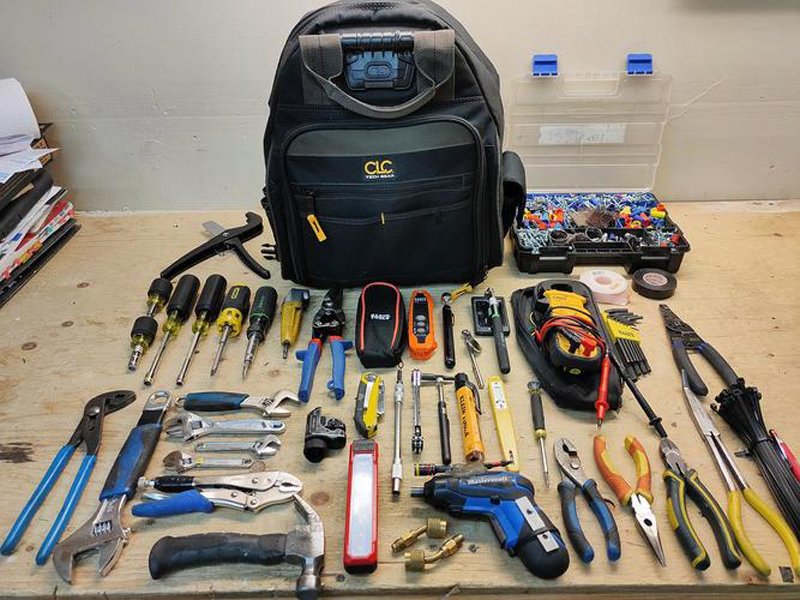
Canvas has not disappeared from modern tool bag manufacturing—it has simply found a more specialized role. While nylon and polyester dominate high-volume production due to their lightweight properties and engineered performance, canvas continues to hold strong relevance in applications where structure, puncture resistance, and long-term durability under load are critical.
What makes canvas unique is not just its strength, but the way it behaves under real working conditions. Unlike synthetic fabrics that rely heavily on coatings and engineered fibers, canvas derives its durability from the density of its weave and the thickness of its yarns. This gives it a natural rigidity that allows tool bags to maintain shape even when empty, a characteristic many professionals still value.
In workshops, garages, and industrial environments, this structural stability translates into better organization and load handling. Tools remain in place, compartments do not collapse, and the bag itself becomes a stable platform rather than a flexible container. For many electricians and mechanics, this predictability is more important than reducing weight.
Natural Strength and Load Stability
Canvas is typically produced from cotton fibers woven into a dense structure, often referred to as “cotton duck.” The weight of the fabric—measured in ounces per square yard—directly correlates with its durability and load-bearing capacity.
| Canvas Weight | Thickness | Load Capacity | Typical Use |
|---|---|---|---|
| 12oz Canvas | Medium | Moderate | Light-duty or general-purpose bags |
| 16oz Canvas | Thick | High | Standard professional tool bags |
| 20oz–24oz Canvas | Very thick | Very high | Heavy-duty industrial applications |
Heavier canvas fabrics provide exceptional resistance to deformation. When loaded with metal tools, they maintain their structure rather than sagging, which improves both usability and longevity. This is particularly important in environments where tool bags are frequently opened and accessed without being fully supported.
Another advantage is puncture resistance. The dense weave of canvas makes it less susceptible to damage from sharp tool edges compared to lighter synthetic fabrics. In practical terms, this reduces the likelihood of small cuts developing into larger tears over time.
Waxed and Treated Canvas Performance
One of the historical limitations of canvas has been its sensitivity to moisture. Untreated cotton fibers absorb water, which can lead to increased weight and potential degradation. Modern treatments, however, have significantly expanded canvas’s performance range.
- Waxed canvas introduces a water-resistant layer that repels moisture while maintaining flexibility
- Oil-treated canvas improves both weather resistance and pliability, making the fabric less prone to cracking
- PU-coated canvas combines traditional structure with modern protective performance, offering higher resistance to water and abrasion
| Treatment Type | Water Resistance | Flexibility | Durability |
|---|---|---|---|
| Untreated Canvas | Low | Medium | High |
| Waxed Canvas | Medium–High | Good | Very high |
| PU-Coated Canvas | High | Medium | Very high |
Waxed canvas, in particular, has gained renewed popularity because it balances performance with aesthetics. Over time, it develops a patina—a visual aging effect that reflects usage rather than damage. For many users, this characteristic adds perceived value, as the product evolves with use instead of appearing worn out.
These treatments allow canvas to compete more effectively with synthetic materials, especially in environments where moderate water resistance is sufficient.
Advantages in Heavy-Load Environments
Canvas performs exceptionally well in conditions where structural integrity under load is more important than lightweight mobility. Its characteristics make it particularly suitable for specific professional contexts.
- It maintains shape under heavy loads, preventing internal collapse
- It resists punctures from sharp tools, reducing risk of failure
- It tolerates higher temperatures without melting, unlike many synthetic fabrics
In industrial settings where tools are large, heavy, and frequently handled, these advantages become significant. A canvas tool bag can function as a stable storage system, allowing tools to be placed and retrieved without constant repositioning.
Another often overlooked factor is thermal resistance. In environments involving heat—such as welding or mechanical repair—synthetic fabrics can soften or degrade. Canvas, being cotton-based, does not melt, which adds a layer of safety in such conditions.
Canvas vs Synthetic Fabrics in Real Use
Comparing canvas with nylon and polyester highlights how each material serves different priorities.
| Performance Factor | Canvas | Nylon | Polyester |
|---|---|---|---|
| Structure retention | Excellent | Good | Good |
| Abrasion resistance | High | Very high | High |
| Water resistance | Low (unless treated) | High | High |
| Weight | Heavy | Light | Medium |
| Aesthetic appeal | High | Moderate | Moderate |
Canvas stands out in structure and aesthetics, while synthetic fabrics lead in weight reduction and water resistance. This reinforces the idea that canvas is not a replacement for modern materials, but a complementary option suited to specific needs.
A Practical Perspective on Canvas Usage
In real-world applications, canvas is often chosen by professionals who prioritize stability over mobility. Mechanics working in fixed locations, for example, benefit from a tool bag that holds its shape and keeps tools accessible without collapsing. Electricians who prefer a more rigid structure may also favor canvas for similar reasons.
At the same time, the heavier weight of canvas can be a disadvantage in mobile scenarios. Carrying a fully loaded canvas tool bag over long distances requires more effort compared to lighter synthetic alternatives. This is why canvas is less common in roles that involve frequent movement, such as field service or outdoor maintenance.
From a product development standpoint, canvas is increasingly used in combination with synthetic materials rather than as a standalone solution. Hybrid designs allow manufacturers to leverage the strengths of each material.
Hybrid Material Strategies
Modern tool bag design often integrates canvas with synthetic reinforcements to achieve a balanced performance profile.
For example:
- Canvas is used for the main body to provide structure and durability
- Nylon or polyester is added to high-wear areas such as the base to improve abrasion resistance
- Coated interiors enhance water resistance without compromising external texture
This approach allows manufacturers to maintain the traditional advantages of canvas while addressing its limitations. The result is a tool bag that combines structural stability with improved environmental performance.
Canvas is not outdated—it is specialized. Its relevance lies in applications where rigidity, load stability, and resistance to puncture or heat are more important than lightweight design or maximum water resistance.
The key to using canvas effectively is understanding its role within a broader material system. It performs best when aligned with specific use cases rather than being treated as a universal solution.
For professionals working in controlled or semi-controlled environments, canvas remains a reliable and durable choice. For those operating in highly mobile or weather-exposed conditions, synthetic fabrics may offer better overall performance.
From a manufacturing perspective, the most effective strategy is not to choose between canvas and synthetic materials, but to combine them intelligently. By doing so, it is possible to create tool bags that deliver both traditional durability and modern functionality—meeting the evolving demands of professional users without compromise.
What Advanced Fabrics Improve Tool Bag Durability?

As tool bag applications become more demanding, standard fabrics are often no longer sufficient on their own. This has led to the development and adoption of advanced fabrics—materials engineered not just for strength, but for controlled performance under stress. These fabrics are designed to reduce failure risks, extend product lifespan, and maintain reliability in environments where conventional textiles would degrade quickly.
What differentiates advanced fabrics from standard ones is not only their raw strength, but their structural intelligence. Instead of simply resisting force, they are designed to manage stress distribution, limit damage propagation, and maintain integrity even after partial failure. This shift—from reactive durability to proactive durability—is what makes advanced fabrics particularly valuable in heavy-duty tool bags.
In practical terms, materials such as ripstop nylon, Cordura®, ballistic nylon, and composite laminates have become key components in high-performance designs. Each of these materials addresses specific weaknesses found in traditional fabrics, allowing manufacturers to build tool bags that perform reliably under extreme conditions.
Ripstop Fabrics: Tear Prevention Technology
Ripstop fabrics represent one of the most efficient ways to improve durability without significantly increasing weight. Their defining feature is a reinforced grid pattern woven into the base fabric.
| Feature | Benefit |
|---|---|
| Reinforced grid structure | Stops tears from spreading across the fabric |
| Lightweight construction | Maintains flexibility and portability |
| Damage containment | Extends usable life after puncture |
The advantage of ripstop construction becomes clear in real-world scenarios. Tool bags are frequently exposed to sharp edges—pliers, screwdrivers, metal parts—that can create small punctures. In a standard fabric, these punctures may expand under stress, eventually leading to failure. In ripstop fabrics, the grid structure isolates the damage, preventing it from spreading.
This characteristic makes ripstop nylon particularly suitable for mobile professionals who need a balance between durability and lightweight performance. It is often used in panels where flexibility is required but tear resistance remains critical.
Cordura® Fabric: Industrial Benchmark
Cordura® has established itself as a benchmark material in industries where durability is non-negotiable. Originally developed for military applications, it has since been widely adopted in industrial and professional-grade products.
| Property | Cordura 1000D | Standard Nylon 1000D |
|---|---|---|
| Abrasion Resistance | Very high | High |
| Tear Strength | Very high | High |
| Longevity | Excellent | Very good |
Cordura’s performance comes from both fiber composition and manufacturing processes. The fibers are engineered for higher resistance to wear, and the fabric is woven and finished in a way that enhances durability without sacrificing usability.
In tool bag applications, Cordura is particularly effective in high-contact areas—such as outer panels, corners, and base sections—where abrasion is most severe. Its ability to withstand repeated friction makes it ideal for environments like construction sites or industrial workshops.
However, this performance comes at a higher cost, which is why Cordura is typically used selectively rather than across the entire product.
Ballistic Nylon: High-Impact Durability
Ballistic nylon is another advanced material designed for extreme conditions. Its dense basket weave structure distributes stress more evenly across the surface, reducing the likelihood of localized failure.
Compared to standard nylon, ballistic variants offer:
- Superior resistance to abrasion and surface wear
- Enhanced load-bearing capacity
- Improved durability under repeated impact
This makes ballistic nylon particularly suitable for heavy-load tool bags where both strength and longevity are critical. It is commonly used in applications involving frequent contact with rough surfaces or heavy tools.
While highly durable, ballistic nylon is heavier and more expensive than standard nylon. As with Cordura, its use is most effective when targeted to areas that experience the highest stress.
Composite and Reinforced Fabrics
Beyond individual materials, modern tool bag design increasingly relies on composite constructions. These involve layering different materials to create a system that performs better than any single fabric alone.
Common approaches include:
- Double-layer fabrics to increase overall strength and resistance to penetration
- Reinforced bottoms using PVC, rubber, or molded panels to protect against abrasion and moisture
- Cut-resistant fibers integrated into specific zones for industrial safety applications
These composite structures allow manufacturers to address multiple performance requirements simultaneously. For example, a tool bag may need to resist abrasion on the outside, remain flexible during transport, and protect tools from impact. By combining materials, each layer can be optimized for a specific function.
This multi-layer approach is particularly effective in extreme environments where single-material solutions would fail prematurely.
Advanced Fabric Cost vs Performance Analysis
Selecting advanced fabrics involves balancing performance gains against cost implications. Not every application requires the highest level of durability.
| Fabric Type | Cost Level | Durability | Best Use Case |
|---|---|---|---|
| Ripstop Nylon | Medium | High | Lightweight, mobile applications |
| Cordura® | High | Very high | Industrial and heavy-use environments |
| Ballistic Nylon | High | Extremely high | Heavy-load, high-abrasion conditions |
| Composite Fabrics | Very high | Maximum | Specialized or extreme applications |
A critical insight is that advanced fabrics deliver the most value when applied strategically. Over-engineering—using the most expensive materials in all areas—can increase costs without significantly improving real-world performance.
For example, a tool bag used in moderate conditions may not benefit from full ballistic nylon construction. Instead, combining standard nylon with reinforced panels in high-wear areas can achieve similar performance at a lower cost.
A Practical Approach to Material Selection
In professional product development, the goal is not to maximize specifications, but to optimize performance. This involves understanding where stress occurs and applying advanced materials only where they provide measurable benefits.
A well-designed heavy-duty tool bag might use:
- Ripstop nylon for flexible panels that require tear resistance
- Cordura® for external surfaces exposed to abrasion
- Ballistic nylon for load-bearing zones
- Reinforced composite materials for the base and structural نقاط
This targeted approach ensures that each material contributes to overall durability without unnecessary weight or cost.
Advanced fabrics are not inherently better—they are more specialized. Their value lies in their ability to address specific failure modes, such as tearing, abrasion, or structural fatigue. When used correctly, they significantly extend product lifespan and improve reliability.
However, their effectiveness depends on alignment with real-world usage. A material that performs exceptionally well in one context may offer little advantage in another. This is why experienced manufacturers focus on matching fabric technology to actual working conditions rather than relying on specifications alone.
From a broader perspective, durability is no longer defined by a single material choice. It is the result of a system—where fabric selection, structural design, and reinforcement strategies work together. Advanced fabrics play a key role in this system, enabling tool bags to meet the evolving demands of modern professional environments while maintaining efficiency and practicality.
How Do Fabric Coatings and Treatments Enhance Performance?

In tool bag construction, the base fabric often gets most of the attention—denier, weave, and fiber type. Yet in real-world performance, coatings and treatments are frequently the deciding factor between a product that lasts a few months and one that performs reliably for years. They function as a protective interface between the fabric and its environment, modifying how the material reacts to water, abrasion, chemicals, and long-term exposure.
Two tool bags made from the same nylon or polyester fabric can behave very differently depending on how they are finished. A coated version may resist moisture, maintain structural integrity under friction, and withstand environmental stress, while an uncoated version may absorb water, degrade faster, and show early signs of wear. This is why professional-grade tool bags almost always incorporate some form of coating or treatment.
From an engineering standpoint, coatings do not simply “add protection.” They fundamentally change the interaction between the fabric and external forces. They can reduce friction, block liquid penetration, reinforce fiber bonding, and even improve load distribution. In many cases, a well-selected coating can increase abrasion resistance by two to three times and significantly extend the product’s usable lifespan.
Common Coating Types and Their Functions
Different coatings are designed to solve different problems. Selecting the right one depends on how the tool bag will be used—whether mobility, waterproofing, flexibility, or durability is the primary concern.
| Coating Type | Key Function | Performance Level | Typical Application |
|---|---|---|---|
| PU (Polyurethane) | Water resistance, flexibility | High | General-purpose and mid-range tool bags |
| PVC (Polyvinyl Chloride) | Full waterproofing, rigidity | Very high | Heavy-duty industrial and outdoor use |
| TPU (Thermoplastic Polyurethane) | Elastic durability, premium performance | Premium | High-end and technical tool bags |
| Wax Coating | Water resistance, aesthetic finish | Medium | Canvas-based and traditional designs |
PU coatings are widely used because they provide a strong balance between performance and usability. They improve water resistance without significantly affecting flexibility, making them suitable for most everyday applications.
PVC coatings deliver a higher level of waterproofing and structural reinforcement. However, they add weight and stiffness, which can reduce comfort in mobile scenarios. For tool bags that are frequently exposed to harsh outdoor conditions or heavy loads, this trade-off is often acceptable.
TPU represents a more advanced solution. It combines high durability with flexibility, offering strong protection without the rigidity associated with PVC. This makes it particularly suitable for premium tool bags where both performance and user comfort are priorities.
Wax coatings, commonly used on canvas, provide a more traditional approach. They enhance water resistance while preserving the natural texture of the fabric. Over time, waxed surfaces develop a patina, which is often seen as a desirable feature rather than a defect.
Waterproofing vs Breathability Trade-Off
One of the most important—and often overlooked—considerations in coating selection is the balance between waterproofing and breathability. Increasing one often reduces the other.
| Feature | PU Coating | PVC Coating | TPU Coating |
|---|---|---|---|
| Waterproof Level | High | Very high | Very high |
| Flexibility | Excellent | Low | Excellent |
| Breathability | Moderate | Low | Moderate |
| Weight Impact | Low | High | Medium |
PVC coatings create a near-impermeable barrier, which is effective for preventing water ingress but can trap moisture inside the bag. This can lead to condensation, particularly in humid environments, potentially affecting tools over time.
PU and TPU coatings offer a more balanced approach. While not completely breathable, they allow limited moisture exchange, reducing the risk of internal buildup. This is particularly important for tool bags used in environments where temperature changes are frequent.
From a usability perspective, flexibility also plays a role. A heavily coated fabric may resist water effectively but become stiff and difficult to handle. This is why coating thickness and formulation must be carefully controlled.
Anti-UV, Anti-Mildew, and Chemical Resistance
Beyond waterproofing, advanced treatments address a range of environmental challenges that affect long-term durability.
- Anti-UV treatments protect fibers from degradation caused by prolonged sunlight exposure, preserving both strength and color
- Anti-mildew coatings prevent the growth of mold in humid conditions, which is essential for outdoor and marine environments
- Oil and chemical resistance treatments protect fabrics from industrial substances such as lubricants, solvents, and cleaning agents
These treatments are particularly valuable in professional settings where tool bags are exposed to harsh conditions on a daily basis. Without them, even high-quality fabrics can degrade prematurely.
For example, in outdoor construction environments, UV exposure can weaken untreated fibers over time. In industrial settings, exposure to oils and chemicals can break down fabric surfaces, reducing durability. Treatments mitigate these risks, ensuring consistent performance.
Coating Impact on Long-Term Durability
The cumulative effect of coatings and treatments can be seen in how they influence key performance factors over time.
| Performance Factor | Uncoated Fabric | PU Coated | PVC Coated | TPU Coated |
|---|---|---|---|---|
| Water Resistance | Low | High | Very high | Very high |
| Abrasion Resistance | Medium | High | Very high | High |
| Flexibility | High | High | Low | High |
| Lifespan (years) | 1–2 | 2–4 | 3–5 | 3–6 |
These figures illustrate that coatings act as performance multipliers rather than simple enhancements. A fabric that might last one to two years in its uncoated form can achieve significantly longer service life when properly treated.
However, there is a point of diminishing returns. Excessive coating thickness can reduce flexibility, increase weight, and negatively impact user experience. A tool bag that is overly stiff or heavy may be durable but impractical in daily use.
A Practical Perspective on Coating Selection
In real-world product development, the goal is not to maximize every performance metric, but to achieve balance. Coatings should be selected based on actual usage conditions rather than theoretical performance.
For example:
- A mobile technician may benefit from a PU-coated fabric that offers water resistance while maintaining flexibility
- A construction worker operating in wet and abrasive conditions may require PVC reinforcement in high-wear areas
- A premium product may use TPU coatings to deliver both durability and comfort
Manufacturers often apply coatings selectively rather than uniformly. High-wear zones such as the base and corners may receive heavier coatings, while other areas remain lighter to preserve flexibility. This targeted approach improves overall performance without unnecessary trade-offs.
Coatings and treatments are not secondary features—they are integral to how a tool bag performs over time. They determine how the fabric interacts with its environment, how it resists wear, and how long it remains functional under real conditions.
At the same time, more is not always better. Over-engineering can lead to products that are durable but difficult to use. The most effective designs are those where coatings enhance performance without compromising usability.
Ultimately, the value of a coating lies in its alignment with actual working conditions. When selected and applied correctly, it transforms a standard fabric into a high-performance system—one that supports durability, efficiency, and long-term reliability in demanding professional environments.
Which Fabric Is Best for Different Tool Bag Applications?
Choosing the right fabric for a tool bag is not about finding the most advanced or most expensive material—it is about alignment. The fabric must match how the tool bag will be used, the environment it will operate in, and the expectations of the user. A mismatch between material and application is one of the most common reasons for product failure, even when high-quality fabrics are used.
In professional product development, fabric selection is approached as a system decision rather than an isolated choice. Load requirements, frequency of use, environmental exposure, and user behavior all influence which material will perform best over time. This is why there is no universal “best fabric,” only the most suitable one for a given scenario.
Fabric Selection by Industry Use Case
Different industries impose different types of stress on tool bags. Understanding these patterns helps identify which materials are most appropriate.
| Industry | Recommended Fabric | Key Reason |
|---|---|---|
| Construction | 1680D Ballistic Nylon | Maximum strength and abrasion resistance |
| Electrical | 900D–1200D Polyester | Lightweight, stable, and cost-efficient |
| Mechanical | 16oz–20oz Canvas | Structural rigidity and puncture resistance |
| Outdoor/Field Work | Ripstop Nylon + TPU Coating | Tear resistance and weather protection |
In construction environments, tool bags are subjected to heavy loads, rough surfaces, and constant movement. High-denier ballistic nylon provides the durability needed to withstand these conditions without premature wear.
Electrical work, by contrast, often involves lighter tools but frequent movement. Polyester offers a practical balance—lightweight enough for mobility while maintaining sufficient durability for daily use.
Mechanical environments, such as workshops and garages, benefit from the structure of canvas. The fabric holds its shape under load, making it easier to organize and access tools without the bag collapsing.
Outdoor and field applications introduce additional challenges, including moisture, uneven terrain, and potential tearing. Ripstop nylon combined with TPU coatings addresses these issues by preventing tear propagation and providing strong water resistance.
Lightweight vs Ultra Heavy-Duty Requirements
Not every user requires maximum durability. In many cases, over-specifying materials leads to unnecessary weight, higher costs, and reduced usability.
| Requirement Level | Fabric Type | Benefit |
|---|---|---|
| Light Duty | 600D Polyester | Cost-effective, lightweight, easy to carry |
| Medium Duty | 1000D Nylon | Balanced strength and flexibility |
| Heavy Duty | 1680D Ballistic Nylon | Maximum durability for extreme conditions |
For light-duty applications, such as occasional use or carrying smaller tools, 600D polyester is often sufficient. It keeps costs low and improves portability without compromising basic functionality.
Medium-duty applications benefit from materials like 1000D nylon, which provide a strong balance between durability and weight. This category covers a wide range of professional uses.
Heavy-duty environments, where tools are large, heavy, or frequently exposed to abrasion, require higher-grade materials such as 1680D ballistic nylon. These fabrics are engineered to handle extreme stress but come with increased weight and cost.
Understanding actual usage patterns is critical. Selecting a heavier fabric than necessary does not improve performance—it may reduce efficiency by making the tool bag harder to carry.
Environmental Considerations
Environmental conditions play a significant role in fabric performance. Ignoring these factors can shorten product lifespan, regardless of material quality.
- Wet environments require waterproof or water-resistant coatings such as PU or TPU
- Hot environments may benefit from materials like canvas, which do not melt under heat
- Outdoor exposure demands UV-resistant fabrics, where polyester often performs better than nylon
For example, a tool bag used in a humid outdoor environment must resist both water penetration and mold growth. A coated synthetic fabric may perform well, but without proper treatment, it could still degrade over time.
Similarly, in environments with high sun exposure, UV resistance becomes critical. Polyester’s inherent stability under UV light makes it a strong candidate for these conditions, while nylon may require additional treatment to maintain performance.
Multi-Factor Fabric Selection Matrix
Comparing materials across multiple dimensions highlights how each fabric serves different priorities.
| Factor | Nylon | Polyester | Canvas | Advanced Fabrics |
|---|---|---|---|---|
| Durability | Very high | High | High | Extremely high |
| Weight | Light | Medium | Heavy | Varies |
| Cost | Medium–High | Medium | Low | High |
| Weather Resistance | High (with coating) | High (with coating) | Low (unless treated) | Very high |
| Customization | Excellent | Excellent | Good | Excellent |
This matrix reinforces a key principle: performance is multi-dimensional. A fabric that excels in one category may have trade-offs in another. For example, canvas offers excellent structure but adds weight, while advanced fabrics deliver maximum durability at a higher cost.
The goal is not to maximize every attribute, but to find the right balance for the intended application.
A Practical Approach to Fabric Selection
In real-world product development, fabric selection is rarely a single decision. Instead, it often involves combining materials to optimize performance.
A tool bag designed for demanding use might include:
- Ballistic nylon for high-wear external areas
- Polyester panels to reduce overall weight and cost
- Reinforced or coated base materials for abrasion and moisture resistance
This hybrid approach allows manufacturers to tailor performance without over-engineering the entire product. It also ensures that each component of the bag is optimized for its specific function.
How to Make the Right Choice for Custom Tool Bags
When developing a custom tool bag, several factors should guide material selection:
- The weight and type of tools being carried
- Frequency and intensity of use
- Environmental exposure, including moisture, heat, and UV conditions
- Budget constraints and production scale
- Branding, aesthetics, and user experience expectations
These considerations must be evaluated together rather than in isolation. A fabric that meets technical requirements but fails to support usability will not deliver long-term value.
This is where experienced manufacturing support becomes critical. Companies with deep expertise in fabric development can translate application requirements into practical material solutions, ensuring that performance, cost, and usability are aligned.
With over 18 years of experience in fabric R&D and manufacturing, Szoneier approaches material selection as a problem-solving process rather than a fixed formula. By combining nylon, polyester, canvas, and advanced composite fabrics, each product is tailored to match real-world usage conditions.
The result is not just a tool bag that meets specifications, but one that performs consistently in the environments it was designed for. For brands and buyers looking to develop or upgrade tool bag products, this approach ensures that material choices are driven by function, not assumption—delivering durability, efficiency, and long-term reliability where it matters most.