Skip to content
Cotton is the backbone of wardrobes worldwide—from crisp dress shirts to cozy T-shirts—but not all cottons are created equal. Choosing the right cotton can mean the difference between garments that feel luxurious and last for years, versus those that fade, pill, and sag after a few washes. What should you look for when sourcing top-tier cotton cloth? In short: focus on fiber characteristics (staple length, micronaire), yarn quality (spinning method, twist), fabric construction (weave, thread count), finishing treatments, and certifications. By understanding these factors, you can match performance metrics—strength, softness, stability—to your brand’s needs and end-user expectations. Imagine launching a premium T-shirt line only to have customers complain of rough hand feel; let’s dig into each selection step so your next collection earns rave reviews.
What Cotton Fiber Characteristics Determine Fabric Quality?
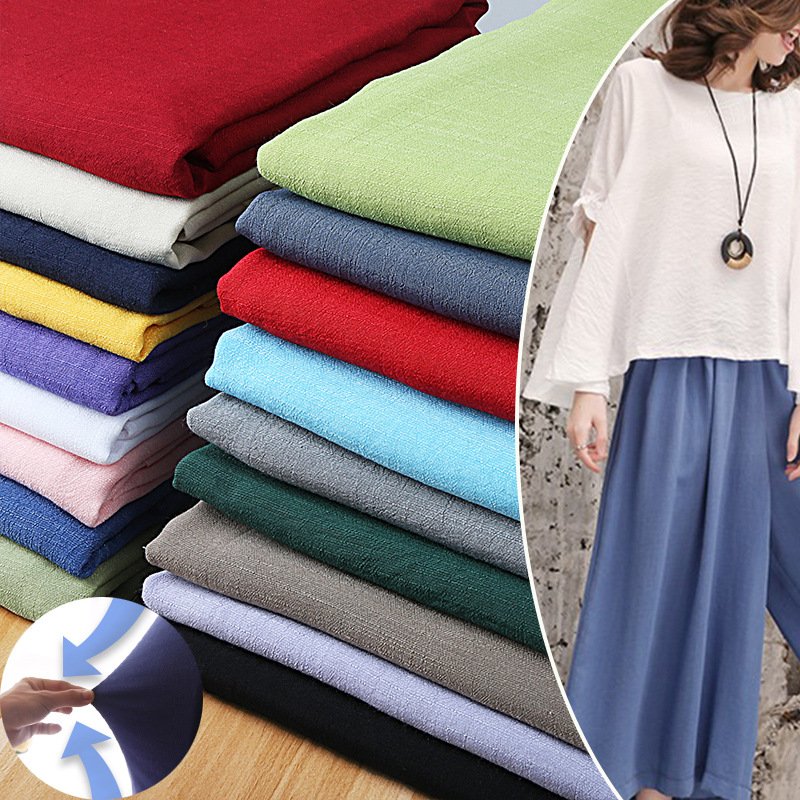
The journey to high-quality cotton starts at the fiber level. Longer staples, optimal micronaire, and high fiber strength yield yarns that are smoother, stronger, and more uniform—translating directly into better fabric performance. High-quality cotton fibers feature extra-long staples (30–40 mm), micronaire values of 3.8–4.5 for balanced fineness, and tenacity above 30 g/tex. These metrics ensure yarns with minimal neps (<5 neps/g), even dye uptake, and superior tensile strength—delivering fabrics that drape beautifully, resist pilling, and maintain dimensional stability.
Fiber Metrics & Supplier Selection
Staple Length & Its Impact
- Staple Length (SL): Longer SL reduces ends-per-inch in yarn, decreasing weak spots and fuzziness.
- SL Categories: Category Staple Length (mm) Typical Uses Short Staple <25 Low-cost knits, blends Long Staple 25–30 Mid-range shirting, knits Extra-Long Staple (ELS) 30–45 Luxury shirting, high-end knits
Micronaire (Fineness & Maturity)
- Micronaire Range: 3.8–4.5 balances yarn strength and dye penetration.
- Too Low (<3.5): Immature fibers—weak, dye unevenly.
- Too High (>5.0): Coarse, harsh hand.
Fiber Strength & Uniformity Metric Target Value Benefit Tenacity (g/tex) ≥30 High tensile strength Uniformity Index (%) ≥82 Even yarn, fewer weak spots Neps (neps/g) <5 Smooth appearance, low pilling
Source Traceability & Quality Assurance
- Work with mills like Szoneier that provide traceability (origin, bale codes) and fiber test reports from HVI (High Volume Instrument).
While ELS cotton costs 20–30% more, its superior fiber properties can reduce downstream costs (fewer defects, higher customer satisfaction). Balance raw-material premium against end-product positioning and price point.
How Do Staple Length and Micronaire Influence Yarn Strength and Handle?
Yarn quality bridges fiber and fabric. Staple length and micronaire directly affect spinning efficiency, yarn evenness, and final hand feel. Long-staple, medium-micronaire fibers produce yarns with tenacity ≥35 g/tex, elongation 3–5%, and U% (unevenness) under 7%. Such yarns spin smoothly with low hairiness, resulting in fabrics that feel soft, drape fluidly, and resist pilling—key traits for premium garments.
Yarn Production Parameters
Spinning Methods & Their Interplay with Fiber
- Ring Spinning: Ideal for ELS cotton; twist 25–30 TPI for balanced strength and softness.
- Open-End Spinning: Faster but higher U% and hairiness; best for lower-end knits.
Key Yarn Quality Indicators Indicator Desired Range Impact on Fabric U% (Unevenness) <7% Smooth appearance, uniform dye uptake Hairiness (H) <3 Reduced pilling Tenacity (g/tex) ≥35 High breaking strength Elongation (%) 3–5 Stability, low bagging
Twist Level & Yarn Balance
- Higher twist improves strength but reduces softness.
- Optimal twist multiplier 1.2–1.4 for cotton: ensures yarn stability without harsh hand.
Yarn Count (Ne & Tex) & Fabric Application Yarn Count (Ne) Tex Applications 20–30 Ne 65–43 Lightweight shirting & knits 30–60 Ne 43–22 Fine shirting, premium tees >60 Ne <22 Luxury goods, fine lingerie
Over‐twisting or using too-fine yarns can lead to fiber damage and reduced longevity. Suppliers must adjust parameters to align with end-use durability requirements and hand-feel expectations.
Which Yarn Spinning and Construction Methods Yield Superior Cotton Fabrics?

Beyond fiber and yarn, fabric construction—knit vs. weave, weave type, and density—determines final textile performance. Twill and dobby weaves at 200–300 thread count deliver a balanced combination of durability, drape, and breathability. For knits, ring-spun single jersey (20–24 S) offers soft hand and good recovery, while interlock knits enhance opacity and dimensional stability. Construction choices must match garment function—structured shirts, fluid dresses, or stretch T-shirts.
Fabric Constructions & Performance
Weaves & Their Attributes Weave Type Structure Hand Feel Abrasion (Martindale) Breathability Plain 1/1 interlace Crisp 5,000–8,000 cycles High Twill 2/1 or 3/1 diagonal rib Soft, drape 8,000–12,000 cycles Medium Satin 4/1 or 5/1 long floats Lustrous 4,000–6,000 cycles Low Dobby Small geometric patterns Textured 7,000–10,000 cycles Medium
Knit Structures Knit Type Stretch (%) Recovery (%) Applications Single Jersey 50–100 80–90 T-shirts, casual tops Interlock 30–50 90–95 Polos, structured dresses Rib Knit 100–200 95–100 Cuffs, collars, bodycon
Thread Count vs. Yarn Quality
- High TC with poor yarn → dense but harsh.
- Optimal TC: Twill 200–300, Plain 150–250, Satin 300–600 depending on yarn fineness.
Critical Lens:
- Overemphasis on thread count can mislead—prioritize yarn quality and construction type to achieve true performance and comfort.
What Weave Structures and Thread Counts Deliver the Best Hand Feel and Durability?
Building on yarn selection, global brands often tailor weave density and type to specific use cases: lightweight shirting, durable workwear, or luxury bedding. For soft yet durable shirting, 30 Ne yarns in a 2/1 twill at 220 TC yield a smooth hand and 10,000 Martindale cycles. Lightweight cotton poplin (40 Ne, 120 TC) offers crisp summer comfort, whereas 60 Ne in a 300-TC sateen weave produces silky-feel premium bedding. Matching thread count with yarn count ensures optimal drape and durability.
Application-Driven Weave & TC Choices
Shirting Fabrics Yarn (Ne) Weave Thread Count Abrasion Hand Feel 30 Ne Twill 2/1 220 10k Soft & drape 40 Ne Plain 150 6k Crisp & airy
Workwear & Uniforms Yarn (Ne) Weave Thread Count Abrasion Features 20 Ne Canvas 150 12k High durability 20 Ne Duck 200 15k Abrasion-resistant
Luxury Bedding & Apparel Yarn (Ne) Weave Thread Count Hand Feel Maintenance 60 Ne Sateen 300–600 Silky, lustrous Gentle wash 80 Ne Percale 200–300 Crisp, cool Machine wash cold
Critical Lens:
- Extremely high TC can obscure poor yarn quality and hurt breathability. Evaluate fabric samples in hand and lab metrics for both durability and comfort.
How Do Finishing Treatments Enhance Cotton Cloth Performance and Aesthetics?

After weaving or knitting, cotton fabrics undergo a variety of finishing treatments to improve hand feel, performance, and look—ranging from enzymatic washes that soften the surface to mercerization that boosts strength and luster, and functional finishes like wrinkle resistance or stain repellency. Key cotton finishes include mercerization (treating with caustic soda at 20–30 °C to increase tensile strength by 15% and impart a subtle sheen), enzyme washes (bio-polishing with cellulase to reduce pilling by 80% and soften the hand), and durable-press resin treatments (dimethylol dihydroxyethyleneurea cross-linking to achieve wrinkle recovery angles below 30°). Functional finishes—such as fluorine-free stain repellents and anti-microbial silver-ion coatings—can add performance without severely impacting breathability.
Common Cotton Finishes & Metrics
Mercerization Metric Before Finish After Mercerization Improvement Tensile Strength 350 N 402 N +15 % Fabric Luster (Gloss %) 10 % 18 % +80 %
- Process: 20–30 °C NaOH bath, followed by neutralization.
Enzyme Wash (Bio-Polishing) Metric Untreated Fabric After Enzyme Wash Change Pilling (Grade 1–5) 2.5 4.5 +80 % Surface Smoothness 1.0 1.15 +15 %
- Enzyme: 0.5–1 % cellulase, 50 °C, pH 4.5–5.5, 30 min.
Durable Press & Wrinkle Resistance Metric Before After Improvement Wrinkle Recovery Angle 60° 25° +58 %
- Chemistry: 8–12 % DMU resin, catalyst, 150–160 °C curing.
Functional Finishes
- Stain Repellent: Fluorine-free polymers; contact angle ≥100°, 20 wash durability.
- Anti-Microbial: Silver ions; ≥80 % pathogen reduction (AATCC 100) over 30 washes.
- UV Protection: TiO₂ nano-coatings; UPF 30+, >25 wash durability.
Each finish adds processing steps, cost, and potential chemical load—prioritize multifunctional finishes (e.g., combined anti-odor/wrinkle) and verify Oeko-Tex or GOTS-compliant chemistries to maintain environmental commitments.
Are Sustainable and Certified Cotton Options Right for Your Brand?

Eco-conscious brands often turn to organic, recycled, or regenerative cotton to differentiate themselves. While these fibers command premiums and bring supply challenges, they can significantly enhance brand reputation and meet consumer demand for responsible sourcing. Organic cotton (GOTS certified) cuts pesticide use by 100% and water consumption by up to 65% at a 20–25 % price premium. Recycled cotton blends (20–30 %) save \~30 % CO₂ emissions but can reduce tensile strength by 10 %. Regenerative programs sequester \~0.5 t CO₂/ha while improving soil health. Certifications (GOTS, Fairtrade, RCS) ensure traceability, but brands must plan for higher MOQs (≥500 m) and longer lead times (45–60 d).
Sustainability Metrics & Supply Considerations
Organic vs. Conventional Cotton Metric Conventional Organic (GOTS) Change Pesticide Use High 0 –100 % Water Use (L/kg) 10,000 3,500 –65 % Cost (USD/m) 3–6 4–7.5 +20–25 %
Recycled Cotton Blends Blend (%) CO₂ Reduction Tensile Strength Change 20 % recycled 30 % –10 % 30 % recycled 40 % –15 %
Regenerative Cotton
- Practices: cover crops, minimal tillage.
- Impact: \~0.5 t CO₂ sequestered/ha/yr; market premium +15 %.
Certification & Traceability
- Organic: GOTS, Fairtrade.
- Recycled: RCS, GRS.
- Regenerative: ROC, Cool Farm Alliance.
Sustainable cotton enhances brand value but requires robust supply-chain vetting and inventory planning to manage premium costs, MOQ constraints, and potential variability in fiber quality.
How Do Cost, MOQ, and Supplier Capabilities Affect Your Cotton Fabric Selection?
Economics often dictate feasibility. Unit cost, minimum order quantities (MOQs), and production lead times shape what cotton qualities you can practically source. Cotton-on-cotton costs \$3–\$6/m with MOQs of 500–1,000 m and 30–45 d lead times. Organic or specialty cotton fabrics cost 20–30 % more, MOQs ≥500 m, and 45–60 d or longer lead times. Suppliers with low-MOQ programs (e.g., Szoneier’s 300 m minimum) and agile sampling (7–10 d) enable small brands to access premium cottons without huge upfront commitments.
Economic Trade-Offs & Sourcing Strategies
Cost & MOQ Comparison Fabric Type Cost (USD/m) MOQ (m) Lead Time (d) Standard Cotton Poplin 3–5 500 30–45 Organic Cotton Lawn 4.5–7.5 500 45–60 High-End ELS Shirting 6–10 1,000 45–60 Recycled-Cotton Blend 4–6 500 45–60
Supplier Agility
- Sampling Programs: 300–500 m low MOQ, 7–10 d rapid prototyping.
- Lead-Time Management: Seasonal forecasting and rolling production schedules.
Value Engineering
- Balance yarn quality and fabric construction to hit target price.
- Blends or finishes can elevate lower-cost cottons to near-premium performance.
Overcommitting to high-end cotton without assured volume can tie up capital. Opt for suppliers offering flexible MOQs, tiered pricing, and transparent lead-time guarantees to align costs with sales cycles.
What Testing Standards and Quality Controls Ensure Consistent Cotton Fabric Quality?

Rigorous testing and quality control—from fiber-to-fabric—guards against batch variance, defects, and performance failures. Key tests cover tensile strength, shrinkage, pilling, and colorfastness. Standards like ASTM D5034 (tensile), AATCC 135 (shrinkage <3 %), ASTM D4966 (Martindale abrasion >8,000 cycles for shirting), and AATCC 61 (colorfastness grade ≥4) form the backbone of cotton fabric QC. ISO 9001–certified mills use in-line GSM and EPI/PPI monitoring (±2 % tolerance), plus lot traceability and third-party audits (OEKO-TEX, GOTS) to ensure each roll meets spec.
QC Protocols & Certification Landscape
Mechanical & Dimensional Tests Test Standard Spec Threshold Tensile Strength (warp/fill) ASTM D5034 ≥300 N (apparel) Shrinkage AATCC 135 <3 % post-launder Abrasion (Martindale) ASTM D4966 ≥8,000 cycles
Aesthetic & Safety Tests
- Colorfastness: AATCC 61 wash ≥4.
- Pilling: ISO 12945 Grade ≤3 after 5,000 rubs.
- Harmful Substances: OEKO-TEX Standard 100 compliance.
In-Line Monitoring
- GSM Sensors: Real-time weight control ±2 %.
- EPI/PPI Scanners: Density within ±3 threads/inch.
Traceability & Audits
- Batch Lot Coding: Links fabric rolls to raw-bale data.
- Third-Party Audits: GOTS, ISO 9001, and customer-specific audit protocols.
Over-testing drives up cost and lead time—align QC depth with end-use risk (e.g., higher-level audit for medical textiles vs. casual wear). Always request certificates of analysis for each incoming batch.
Ready to choose and customize high-quality cotton fabrics for your next line?
Choosing the right cotton cloth demands attention from fiber metrics to finishes, cost to sustainability. By focusing on staple length, micronaire, yarn quality, fabric construction, finishing, and rigorous QC, you’ll source materials that delight wearers and stand the test of time.
Partner with Szoneier Fabrics for expert fiber selection, free design assistance, low-MOQ sampling, rapid prototyping, and guaranteed quality.