 Skip to content
Is Linen Made of Cotton? Water Usage & Carbon Footprint Comparison (2024 LCA)
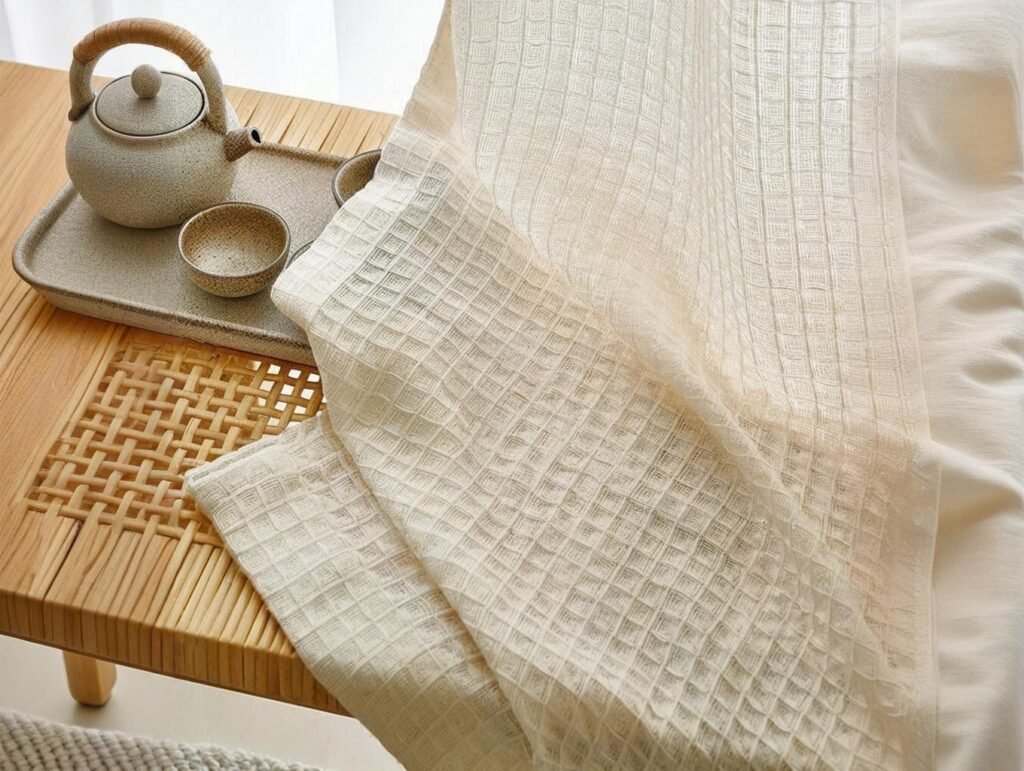
Linen and cotton often sit side by side on fabric labels, marketing campaigns, and showroom shelves—but are they actually the same? While both are plant-based and celebrated for breathability, their origins, structure, and environmental behavior couldn’t be more distinct. The assumption that linen is just another variety of cotton stems from their similar uses in shirts, home textiles, and casual fashion. However, this misunderstanding can lead to poor material decisions, especially for brands looking to cut emissions or optimize fabric lifecycle performance. No, linen is not made of cotton. Linen is derived from the flax plant, while cotton comes from the cotton plant. They differ in fiber structure, moisture absorption, durability, and environmental impact throughout their lifecycle.
To better understand why this matters, imagine sourcing a breathable fabric for a summer collection in a region experiencing water scarcity. Choosing linen over cotton—based on fiber properties and LCA performance—might result in a drastically smaller water footprint. Let’s unpack the foundational differences to lay the groundwork for this sustainability discussion.
Key Differences Between Linen and Cotton Fibers
- Fiber Origin Table
| Property | Linen | Cotton |
|---|---|---|
| Source Plant | Flax (Linum usitatissimum) | Cotton plant (Gossypium spp.) |
| Fiber Length | Long staple | Medium to long staple |
| Fiber Texture | Crisp, coarse, structured | Soft, fluffy, pliable |
| Growth Conditions | Less water, resilient climate | More water, warmer climate |
- Moisture Management Linen is known for its moisture-wicking and fast-drying capabilities, whereas cotton tends to retain moisture longer.
- Durability Over Time Linen fibers strengthen when wet and soften with wear; cotton can degrade faster when subjected to frequent washing.
- Visual Characteristics Linen often shows natural slubs, giving it a textured, organic look, while cotton typically has a smoother, uniform appearance.
- Biodegradability & Processing Chemicals Linen generally requires fewer pesticides and synthetic fertilizers compared to cotton, which is one of the most chemically intensive crops in the world.
By understanding these differences, fabric buyers can select materials not just by look and feel, but by performance and sustainability factors that align with their product goals.
2. How Much Water Does Linen vs Cotton Use in Fabric Production?
One of the key differentiators between linen and cotton lies in their water footprint. When sourcing fabric for markets with increasing drought risks or limited irrigation infrastructure, understanding how much water each crop demands becomes critical. Based on 2024 LCA (Life Cycle Assessment) data, the contrast is stark. Linen uses significantly less water than cotton during its lifecycle. Cotton can consume up to 10,000 liters of water per kilogram of fiber, while linen requires only 2,500–3,000 liters per kilogram.
This fourfold difference is not just theoretical—it plays out in real-world supply chain decisions, especially in water-stressed regions like Central Asia or parts of India.
Water Usage Data, Lifecycle Impacts, and Irrigation
- Water Usage Table
| Metric | Cotton (conventional) | Linen (flax-based) |
|---|---|---|
| Irrigation Required (Y/N) | Yes (heavily) | No or minimal |
| Average Water Use per kg fiber | 10,000–20,000 liters | 2,500–3,000 liters |
| Water Pollution Risk | High | Low |
| Common Growing Regions | India, China, USA | Europe, China |
- Regional Case Example: Uzbekistan vs France Cotton cultivation in Uzbekistan has led to severe depletion of the Aral Sea. In contrast, flax farms in Northern France operate largely rainfed and require minimal irrigation, preserving water tables and reducing runoff.
- Rainwater Dependency and Grey Water Index Linen scores higher in terms of green water usage (rainfall), while cotton’s dependency on blue water (irrigation) increases its water stress index.
- Sustainable Certifications Linen producers are increasingly adopting certifications like European Flax® and Oeko-Tex, which verify sustainable water use. Cotton farms, although evolving, still lag in universal low-water certifications.
Choosing linen over cotton for water-critical applications isn’t just about numbers—it’s a step toward building a fabric strategy resilient to climate shocks.
3. What Is the Carbon Footprint of Linen vs Cotton in 2024?
Carbon emissions from textile production are now under heavy scrutiny, especially in light of global commitments to reduce greenhouse gas emissions. Fabric buyers and sourcing professionals are increasingly factoring in the carbon footprint of materials into their decision-making process. Comparing linen and cotton through the lens of Life Cycle Assessment (LCA) in 2024 reveals critical insights. In 2024, linen has a lower carbon footprint than cotton due to its less energy-intensive farming, minimal irrigation, and fewer chemical inputs. Linen emits approximately 2.1–2.5 kg CO₂e per kilogram of fiber, while cotton emits 3.8–4.5 kg CO₂e.
Analyzing Emission Hotspots and Processing Energy
- Carbon Emission Comparison Table
| Lifecycle Stage | Cotton (kg CO₂e/kg) | Linen (kg CO₂e/kg) |
|---|---|---|
| Cultivation | 1.8 | 0.8 |
| Harvesting & Retting | 0.2 | 0.4 |
| Spinning & Weaving | 1.0 | 0.6 |
| Dyeing & Finishing | 1.5 | 0.7 |
| Total (approximate) | 4.5 | 2.5 |
- Soil Carbon Storage (Carbon Sequestration Potential) Flax crops can improve soil health and even store carbon due to crop rotation practices, while cotton monoculture tends to degrade soil and release more greenhouse gases.
- Use of Fertilizers and Agrochemicals Cotton farming relies heavily on synthetic fertilizers and pesticides, whose production and use contribute significantly to its emissions. In contrast, most flax fields use fewer inputs, especially in Europe.
- Transport & Global Supply Chains Flax is often processed closer to where it is grown (e.g., Belgium, France), minimizing transport emissions. Cotton frequently travels long distances from growing regions to spinning mills and garment factories, increasing its overall footprint.
When considering sustainable fabric sourcing in 2024, linen’s lower CO₂e profile makes it a compelling choice for brands looking to align with carbon-neutral targets.
4. How Does Thread Processing Affect Sustainability?
Fiber selection is just the beginning. What happens after harvesting — including retting, spinning, and weaving — significantly shapes the environmental profile of any fabric. Linen and cotton diverge again in these post-harvest stages, not just in energy consumption but in water pollution, chemical use, and even labor intensity.
Thread processing affects sustainability through its energy, chemical, and water demands. Linen processing is generally less resource-intensive than cotton, especially in spinning and dyeing phases, resulting in lower environmental impact.
Breaking Down Processing Impacts by Stage
- Retting and Fiber Separation Techniques
| Process Type | Linen (Flax) | Cotton |
|---|---|---|
| Natural Retting | Dew retting or water | Not applicable |
| Chemical Use | Minimal | High (bleaching, etc) |
| Wastewater Risk | Low | High |
- Spinning and Yarn Production
- Linen uses a wet spinning process, which is slower but uses less electricity and fewer synthetic lubricants.
- Cotton spinning requires carding and combing, both of which are energy-intensive.
- Dyeing & Finishing
- Cotton fibers absorb dyes easily but require pre-treatment with alkaline baths and mordants.
- Linen’s natural hue is often preferred undyed or lightly toned, reducing chemical use and wastewater discharge.
- Energy Consumption Table by Phase
| Processing Stage | Cotton (kWh/kg) | Linen (kWh/kg) |
|---|---|---|
| Spinning | 2.5 | 1.6 |
| Weaving | 1.2 | 1.0 |
| Finishing | 1.8 | 0.9 |
- Labor and Working Conditions Linen production, especially in European contexts, is often more regulated with higher labor standards. Cotton fields in developing countries are frequently associated with labor exploitation and pesticide exposure.
Choosing a fabric should always go beyond fiber origin. Processing transparency is now a differentiator for ethical sourcing — and linen continues to outperform cotton in this dimension.
5. Which Fabric Is More Sustainable Based on 2024 LCA?
As sustainability reporting becomes standardized, Life Cycle Assessments (LCAs) are now the go-to method for brands and manufacturers to evaluate environmental impact. In the 2024 LCA comparison of linen and cotton, linen consistently emerges as the more sustainable material when assessed across water usage, carbon emissions, land degradation, and chemical input. Based on 2024 LCA data, linen is more sustainable than cotton due to its significantly lower water usage, carbon footprint, and chemical input, as well as its regenerative farming benefits and lower end-of-life impact.
Comparing Sustainability Indicators
- LCA Sustainability Scorecard (2024 Global Benchmarks)
| Impact Category | Cotton | Linen |
|---|---|---|
| Water Usage | High | Very Low |
| Carbon Emissions | Higher | Lower |
| Agrochemical Dependence | Extensive | Minimal |
| Soil Health Impact | Degrading | Restorative |
| Land Use Efficiency | Medium | High |
| Biodiversity Support | Poor | Strong |
| End-of-Life Biodegradability | High | High |
- Sustainability Certifications & Transparency
- Linen manufacturers are increasingly certified by GOTS, Oeko-Tex, and European Flax™.
- Cotton, though heavily used, still lags in traceability unless it’s certified organic or Fairtrade.
- Brand Case Study Comparison (2024 Trends)
- H\&M Conscious Collection has shifted 40% of its linen sourcing to Belgian flax due to water and energy savings.
- Patagonia has reduced conventional cotton sourcing in favor of linen and hemp for climate-conscious apparel.
- Consumer Perception (2024 Data)
| Material Preference | Sustainability-Aware Consumers |
|---|---|
| Linen | 62% |
| Organic Cotton | 28% |
| Conventional Cotton | 10% |
The LCA evidence is clear: while cotton still dominates in volume, linen aligns far better with the demands of sustainable fashion, hospitality textiles, and green-certified interiors in 2024.
6. What Role Do Blends (Like Cotton-Linen) Play in Environmental Impact?
Blended fabrics are increasingly being adopted to balance comfort, durability, and environmental performance. Cotton-linen blends have emerged as a favored option, especially for mid-weight garments and home textiles. However, how do these blends fare in terms of sustainability? Cotton-linen blends offer moderate sustainability benefits, combining linen’s environmental strengths with cotton’s softness and affordability, but they complicate recycling and biodegradation due to mixed fiber structures.
Pros, Cons, and Environmental Implications of Blended Textiles
- Performance Matrix of Cotton-Linen Blends
| Feature | Cotton | Linen | Cotton-Linen Blend |
|---|---|---|---|
| Comfort | Soft | Crisp | Balanced |
| Breathability | Good | Excellent | Excellent |
| Sustainability | Medium | High | Moderate to High |
| Recyclability | Easy (mono) | Easy (mono) | Difficult (mixed fibers) |
| Market Cost (2024) | Low | Medium to High | Medium |
- Challenges in Recycling Blended Fabrics
- Most textile recycling technologies cannot yet separate cellulose blends efficiently.
- Chemical recycling (e.g., Infinited Fiber, Evrnu) is emerging but still in pilot stages.
- Brands using blends must invest in take-back programs or fiber-to-fiber circularity pilots to manage end-of-life responsibly.
- Sourcing Trends
- In 2024, 41% of linen apparel in Europe is made from cotton-linen blends, mainly to meet durability and price expectations.
- Blends with more than 60% linen tend to retain better moisture-wicking and cooling properties, making them ideal for warmer climates.
- Case Insight: Home Textiles vs Apparel
- Cotton-linen is highly favored in bedsheets and curtains for its texture and easy care.
- In apparel, it bridges the gap between casual and premium, especially in resortwear and everyday shirts.
Blended fabrics are not a shortcut to sustainability but a nuanced solution. Their environmental success depends on thoughtful design, fiber ratio optimization, and investment in post-use solutions.
7. How Can Brands Reduce Impact When Sourcing Linen or Cotton?
Sustainable sourcing doesn’t stop at choosing linen over cotton—it extends to how, where, and from whom brands source these fibers. Even the most sustainable materials can have outsized environmental footprints if procurement, production, or logistics are mismanaged. Brands can reduce impact by sourcing certified fibers, prioritizing local suppliers, selecting regenerative practices, and designing for end-of-life. Transparency, traceability, and third-party certifications are critical in 2024 sourcing.
Sustainable Sourcing Strategies for Cotton & Linen
- 1. Choose Certified Fibers and Mills
| Certification | Applicable To | Environmental Focus |
|---|---|---|
| GOTS | Cotton, Linen | Organic farming, chemical restriction |
| OEKO-TEX Standard 100 | Cotton, Linen | Harmful substance testing |
| European Flax™ | Linen only | Origin transparency, low water input |
| Fair Trade | Cotton | Worker rights, community development |
- 2. Prioritize Regional Procurement
- Reduces carbon footprint from transportation.
- Improves supply chain responsiveness.
- Example: European brands using Belgian linen or Turkish cotton avoid emissions tied to Asian shipping.
- 3. Work with Regenerative Farms
- Regenerative cotton farming improves soil health and sequesters carbon.
- Pilot projects in India and the US have shown 20–30% GHG reduction compared to conventional cotton.
- 4. Support Closed-Loop Partnerships
- Brands can create take-back programs for linens (used in hotels, spas, etc.) and work with recyclers or composters.
- Eileen Fisher and Coyuchi have adopted take-back models for linens and cottons alike.
- 5. Digital Tools & Blockchain for Traceability
- Brands like Stella McCartney use blockchain to map cotton from farm to retail.
- Traceability platforms: TextileGenesis, TrusTrace, Sourcemap.
By investing in smarter sourcing, even brands that work with cotton can significantly minimize their ecological footprint, especially when compared to industry averages. Linen remains the stronger baseline, but thoughtful cotton sourcing has its place too.
8. What Should Buyers Know When Comparing Fiber Origin and Regional LCA?
Not all linen or cotton is created equal. The country of origin, agricultural practices, and regional processing infrastructure all affect the total environmental impact. 2024 Life Cycle Assessments show stark differences across geography. Buyers should evaluate fiber origin by considering regional water scarcity, agricultural input, energy sources, and transport emissions. European flax linen and organic Indian cotton currently score best in regional LCAs.
Regional Impact Comparison of Cotton vs Linen
- LCA-Based Performance by Region (2024)
| Region | Material | Water Usage | GHG Emissions | Chemical Use | Transport Footprint |
|---|---|---|---|---|---|
| Belgium | Linen | Very Low | Low | Minimal | Low (EU-local use) |
| China | Linen/Cotton | Medium | Medium | Moderate | High (export-driven) |
| India | Organic Cotton | Low | Medium | Low | High |
| US | Conventional Cotton | High | High | High | Medium |
| Turkey | Cotton/Linen | Medium | Medium | Medium | Medium |
- Why European Linen Outperforms
- Grows with rainwater (no irrigation).
- Mechanically retted, not chemically processed.
- Uses renewable energy in processing.
- Understanding Cotton’s Regional Differences
- US cotton is heavily irrigated and chemically dependent.
- Indian organic cotton is hand-picked, uses less energy, but faces water stress.
- Turkish cotton offers balance, especially for EU-based production.
- Tips for Fiber-Origin Conscious Buyers
- Ask suppliers for LCA summaries or certifications with country-of-origin traceability.
- Consider supplier transparency tools like Sedex or Higg Index Modules.
- Evaluate your own logistics—sourcing from closer regions may offset minor fiber impacts.
Understanding fiber origin adds a layer of complexity—but also power—to your sustainability decisions. The same fiber can have drastically different impacts based on where and how it’s made.
Source Smarter, Communicate Transparently
Understanding the environmental differences between linen and cotton requires more than just material selection. Life Cycle Assessment shows that linen outperforms cotton in nearly all major categories—especially water usage and emissions—but blend choices, sourcing methods, and fiber origins play decisive roles.
For brands, designers, and suppliers looking to deliver sustainable textile solutions, aligning with high-performing materials like European flax linen—and supporting certified, traceable cotton—can turn climate goals into actionable impact.
Looking to develop custom linen or cotton-based fabrics that align with your sustainability goals? SzoneierFabrics offers expert material sourcing, custom blending, and fast sampling for international buyers. Our textile solutions are backed by years of technical experience and a commitment to environmental responsibility.
Contact us now to discuss your next eco-conscious fabric project—whether you need lightweight linen shirting or certified cotton-linen blends, we’re here to help.
linen vs cotton, is linen made from cotton, linen fabric sustainability, cotton vs linen carbon footprint, linen water consumption, cotton water usage comparison, flax vs cotton environmental impact, sustainable textile materials, eco-friendly fabric choices, life cycle assessment cotton linen, linen LCA 2024, cotton LCA 2024, linen vs cotton GHG emissions, organic cotton vs linen, linen fabric carbon footprint, environmental impact of linen, low water fabrics, sustainable fashion fabrics, linen textile sourcing, cotton textile sustainability, flax linen origin, linen from Belgium, sustainable fabric comparison, cotton vs linen farming impact, energy use in cotton production, greenhouse gas emissions textiles, climate impact of fabric, certified organic cotton suppliers, European flax certification, cotton linen blend sustainability



Can't find the answers?
No worries, please contact us and we will answer all the questions you have during the whole process of bag customization.
Make A Sample First?
If you have your own artwork, logo design files, or just an idea,please provide details about your project requirements, including preferred fabric, color, and customization options,we’re excited to assist you in bringing your bespoke bag designs to life through our sample production process.