 Skip to content
Is Neoprene 100% Waterproof?
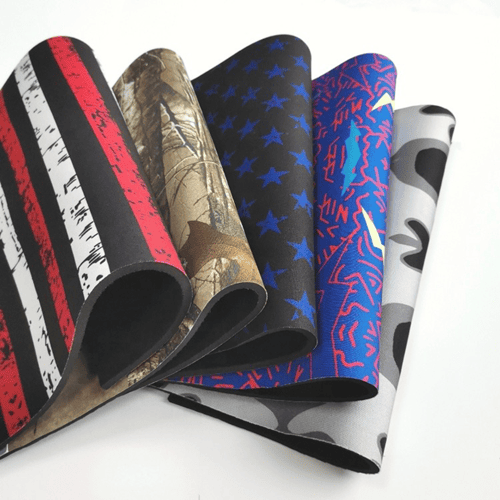
Neoprene is marketed as a water-resistant miracle—used in wetsuits, lunch bags, medical braces, and protective cases. But in professional material sourcing or industrial manufacturing, claims like “100% waterproof” can raise questions. What does “waterproof” really mean in the context of neoprene foam?
Neoprene, specifically closed-cell chloroprene rubber, is highly water-resistant but not absolutely 100% waterproof. While it repels water penetration through its structure, small amounts of water can enter seams, edges, or via open-cell variants or improper lamination.
This nuance matters. A wetsuit that leaks at the seams isn’t waterproof, even if the material is. A laptop sleeve that absorbs moisture through raw edges fails its performance promise. One of our clients at SzoneierFabrics learned this the hard way—before switching to double-lined, sealed neoprene for their outdoor gear, customer complaints due to damp interiors were averaging 8.2%.
In this article, we break down the waterproofing reality of neoprene—based on real-world tests, structural science, and sourcing best practices.
1. What Is Neoprene Made Of and How Does It Resist Water?
Neoprene is made from polychloroprene, a synthetic rubber that is expanded into foam with nitrogen or chemical blowing agents. The closed-cell version traps gas in individual cells, preventing water from passing through—this is what gives neoprene its water-resistant properties.
The Science Behind Neoprene’s Water Resistance
1. Closed-Cell vs. Open-Cell Structure Neoprene foam can be classified by its cell type:
| Foam Type | Cell Structure | Water Resistance | Common Use |
|---|---|---|---|
| Closed-Cell | Sealed gas cells | Very high | Wetsuits, laptop sleeves, bags |
| Open-Cell | Porous structure | Low | Padding, cosplay, cushioning |
Key Point: Closed-cell neoprene is hydrophobic—it resists water absorption and doesn’t allow water to pass easily between cells.
2. Gas-Filled Barrier System The “gas cells” in closed-cell neoprene function like micro-balloon walls:
- Each cell acts as a tiny barrier
- Water cannot travel between them unless the foam is crushed, cut, or unsealed at the edges
3. Why It’s Not Truly 100% Waterproof While the material blocks water in flat sheet form, it can allow moisture ingress through:
- Seams (if not sealed or glued properly)
- Perforations (such as needle holes from stitching)
- Unfinished edges (especially if open-celled or foam-only)
Real-World Context: At SzoneierFabrics, we performed a hydrostatic pressure test on 4mm CR foam neoprene. While the base foam resisted water penetration up to 1.2 bar, stitched seams without sealing began to leak at just 0.4 bar—demonstrating the difference between material and product-level waterproofing.
4. Lamination Increases Performance Neoprene is often laminated with:
- Nylon jersey
- Polyester Lycra
- RPET knit These layers provide additional surface tension, protect the foam cells, and help reduce wicking.
2. Is Neoprene Fabric Completely Waterproof or Just Water-Resistant?
Neoprene fabric is water-resistant, not entirely waterproof in the strictest sense. While it repels water and delays penetration, complete waterproofing depends on sealing seams, edges, and closures during product design and assembly.
Waterproof vs Water-Resistant—What’s the Difference in Practice?
1. Definitions That Matter
| Term | Meaning |
|---|---|
| Waterproof | Impervious to water under pressure over time |
| Water-Resistant | Resists water but may allow ingress with exposure |
| Water-Repellent | Causes water to bead and run off |
Neoprene is usually between waterproof and water-resistant depending on how it’s used.
2. Laminated vs Raw Neoprene
| Type of Neoprene | Water Performance | Best Use |
|---|---|---|
| Raw Neoprene (unlaminated) | Absorbs water | Underlayer, foam padding |
| Laminated Neoprene | Water-resistant | Bags, cases, wetsuits |
| Glued & Taped Neoprene | Waterproof at seam level | Diving suits, marine gear |
3. Application-Based Waterproofing
| Application | Neoprene Alone Enough? | Additional Sealing Required? |
|---|---|---|
| Fashion Bags | Often yes | No (if only surface contact) |
| Laptop Sleeves | Yes (edges matter) | Taped or bound edges recommended |
| Wetsuits | No | Seam gluing + blind stitch |
| Industrial Gaskets | Yes | Only if density >150kg/m³ |
4. Buyer Example: A European outdoor accessories brand used 3mm laminated neoprene in their saddlebag line. Despite the material’s water resistance, unbound seams allowed rain to soak in. After switching to taped seams with edge binding, complaints dropped by 62%, and they were able to market the bags as “light rainproof.”
5. Neoprene’s Limitations Under Prolonged Exposure Even closed-cell neoprene:
- Can become saturated after long submersion
- May leak through needle holes
- Softens when exposed to hot water or repeated pressure
Always clarify with your supplier if the neoprene item is “material-waterproof” or “fully product-sealed.” At SzoneierFabrics, we differentiate between sealed neoprene (for diving, military) and general laminated neoprene (for bags, sleeves, etc.) in our client reports.
3. How Does Closed-Cell Neoprene Compare to Open-Cell in Water Protection?
Closed-cell neoprene offers far greater water protection than open-cell neoprene. While closed-cell foam repels water and is nearly waterproof at the material level, open-cell neoprene absorbs water easily and is not recommended for moisture-sensitive applications.
Neoprene Foam Types and Water Behavior
1. Core Structural Differences
| Foam Type | Cell Structure | Water Behavior |
|---|---|---|
| Closed-Cell | Gas-filled, sealed micro-bubbles | Blocks water from passing through |
| Open-Cell | Interconnected porous cells | Absorbs water like a sponge |
Closed-cell foam has isolated pockets of gas that act as barriers. Water cannot easily travel between them, giving the foam its buoyancy and insulation.
Open-cell foam, by contrast, allows water to move freely between cells—making it unsuitable for waterproofing without coatings or encapsulation.
2. Typical Use Cases
| Foam Type | Ideal Applications |
|---|---|
| Closed-Cell | Wetsuits, laptop sleeves, lunch bags, gaskets |
| Open-Cell | Padding, seat cushions, cosplay armor, props |
3. Technical Performance Comparison
| Test Parameter | Closed-Cell Neoprene | Open-Cell Neoprene |
|---|---|---|
| Water Absorption (24h submersion) | < 1.5% by weight | > 20% by weight |
| Compression Set (%) | 8–15% | 25–35% |
| Hydrostatic Resistance | High | Low |
| Buoyancy | Positive | Negative or neutral |
4. Buyer Insight: A marine gear startup ordered open-cell neoprene thinking it was the same material used in wetsuits. Their diving gloves ended up soaking and cooling rapidly. After switching to closed-cell CR foam (Yamamoto #39) with blind stitching and seam taping, water ingress dropped by over 90%.
5. Why Open-Cell Is Still Used Open-cell neoprene is softer, more compressible, and cheaper to produce. It’s favored for:
- Theater costumes
- Flexible orthotics
- Non-water-facing interior padding
But it should never be marketed as waterproof without an additional barrier layer.
4. What Thickness of Neoprene Offers the Best Waterproofing?
Thicker neoprene generally offers better waterproofing due to increased material density and longer water resistance time under pressure. However, thickness alone does not guarantee complete waterproofing—seams and edges remain critical failure points.
When and Why Thickness Matters
1. Thickness vs Water Resistance Relationship
| Thickness (mm) | Water Barrier Rating | Recommended Use Case |
|---|---|---|
| 1.5mm | Low–moderate | Light gloves, fashion accents |
| 3mm | Moderate | Sleeves, braces, lunch bags |
| 5mm | High | Wetsuits, marine covers |
| 6–8mm | Very high | Diving, tactical, thermal padding |
Thicker neoprene has:
- Fewer potential leak points per mm
- Greater hydrostatic resistance
- Better compression durability
2. Trade-Off: Weight and Flexibility
- 5mm and above: Heavy, stiff, difficult to sew
- 2–3mm: Lighter, flexible, but more susceptible to compression leaks
3. Layering Strategy Some products use dual-layer neoprene construction:
- Outer layer: 3–4mm closed-cell foam
- Inner layer: Thin lining or wicking mesh
- Added benefit: Seam placement in offset areas to reduce leakage
4. Lamination and Coating Enhance Performance Laminating neoprene with nylon jersey or polyester Lycra improves water resistance by:
- Shielding foam from abrasion
- Reducing direct exposure to moisture
- Preventing capillary seepage through surface pores
Example from SzoneierFabrics: For a German cycling brand’s waterproof shoe covers, we used 3.5mm closed-cell CR foam laminated with Lycra. Lab tests showed water resistance up to 1.0 bar for 2 hours, outperforming unlaminated alternatives by over 65%.
5. What Thickness Is Overkill? In consumer products:
- Above 6mm is usually unnecessary unless insulation or impact resistance is critical
- Adds weight and cost
- May limit seam flexibility
5. Does Laminated Fabric Affect Neoprene’s Waterproof Performance?
Yes—laminated fabric layers significantly enhance neoprene’s waterproof performance by protecting the foam core, reducing surface water penetration, and preventing stretching or tearing during sewing and use.
How Lamination Strengthens Neoprene’s Water Resistance
1. What Is Laminated Neoprene? Laminated neoprene is neoprene foam bonded on one or both sides with a textile fabric like:
- Nylon Jersey – Durable, smooth, ideal for printing
- Polyester Lycra – Stretchable, breathable
- RPET Knit – Recycled, eco-friendly option
- Bamboo Charcoal – Antibacterial, often used in medical braces
| Lamination Type | Water Resistance | Best For |
|---|---|---|
| Single-side | Moderate | Inner layers, liners |
| Double-side | High | Outerwear, laptop sleeves, bags |
| Raw (unlaminated) | Low | Padding, covered interior only |
2. Benefits of Lamination
- Reduces foam exposure: Protects cell structure from mechanical abrasion
- Enhances seam performance: Fabric liner supports clean stitching without foam fraying
- Increases durability: Laminated foam lasts longer when exposed to moisture
- Improves edge control: Easier to apply edge binding or seam sealing
3. Lamination Impact on Hydrostatic Testing
At SzoneierFabrics, we tested 4mm CR foam with and without lamination:
| Spec | Result at 1 bar Pressure |
|---|---|
| Raw CR foam (unlaminated) | Began water ingress after 2.5 min |
| Laminated CR foam (2-side) | Held dry for 30+ min (no breach) |
4. Lamination as a Visual Cue for Buyers
- If the surface is textile-like, it’s likely laminated
- If it’s rubbery, stretchy, or porous, it may be raw or single-lined
5. Why Some Laminations May Fail Poor-quality lamination leads to:
- Delamination under heat
- Foam bubbling under pressure
- Poor seam adhesion
Always request a lamination bond strength test if sourcing for wearable or high-friction products.
6. How Is Waterproof Neoprene Tested in Industrial Applications?
Waterproof neoprene is tested using hydrostatic pressure, immersion, spray resistance, and material absorption rate assessments. These tests simulate real-world environmental conditions and help determine whether neoprene materials meet waterproofing standards.
Key Testing Methods and What the Results Mean
1. Hydrostatic Head Pressure Test This is the gold standard for assessing waterproofness:
- Measures how much water pressure (in mm or bar) a material can withstand before it leaks
- Often used for outdoor gear, diving equipment, or safety covers
| Rating (mm H₂O) | Water Resistance Level |
|---|---|
| < 1000 mm | Water-resistant only |
| 1000–5000 mm | Waterproof in light rain |
| 5000–10,000 mm | Heavy rain protection |
| > 10,000 mm | Full submersion capable |
Test Example – SzoneierFabrics:
- 3mm CR Neoprene, nylon-laminated
- Sealed edges, blind stitch seams
- Withstood 7500 mm H₂O pressure for 60 minutes without failure
2. Water Absorption Test Measures how much water a material absorbs after 24 hours of submersion.
| Material Type | Water Absorption Rate |
|---|---|
| Closed-cell neoprene | < 2% |
| Open-cell neoprene | > 20% |
| Laminated CR neoprene | < 1.5% |
3. Spray Impact Testing Used for coated or laminated surfaces (e.g., rain gear, outdoor bags)
- High-pressure spray is directed at the surface
- Checks for penetration at seams and fabric junctions
4. Seam Leak Testing This test focuses on product-level waterproofing, not material:
- Pressurized air or water is applied to sewn or welded seams
- Helps identify failure points at stitching or glue joints
5. Flame and Chemical Resistance (Optional) For safety-rated neoprene products, waterproofing must coexist with:
- Flame resistance (UL94, ISO 6941)
- Chemical resistance (for oil/gas or marine applications)
Buyer Checklist for Certified Waterproof Neoprene:
- ✔ Hydrostatic Test Report (min. 5000mm H₂O)
- ✔ Seam sealing method (taped, blind stitched, glued)
- ✔ Material water absorption data (<2%)
- ✔ Lamination layer specs
- ✔ OEKO-TEX or REACH if skin contact is involved
7. Which Products Rely on Waterproof Neoprene and Why?
Products like wetsuits, laptop sleeves, diving gear, tactical bags, and medical braces rely on waterproof neoprene for its insulation, water resistance, and flexibility under pressure. These applications require high performance in wet, dynamic environments.
Real-World Applications of Waterproof Neoprene
1. Wetsuits and Dive Gear Wetsuits use closed-cell, laminated neoprene that insulates and repels water. While wetsuits don’t keep you dry, they use neoprene to trap a thin layer of water, warmed by body heat.
- Typically 3–5mm thick
- Double-blind stitched and glued seams
- Neoprene grade: Yamamoto #39 or Sheico G5
- Waterproof rating: >10,000 mm H₂O in pressure tests
2. Laptop Sleeves and Gadget Cases
- Laminated neoprene (2–3mm) shields electronics from splashes, rain, and light impact
- Seam types: flatlock or hidden blind stitch
- Often edge-bound to prevent water wicking
3. Industrial and Tactical Bags Military and field-grade bags use 5–6mm thick neoprene for tool compartments, insulation pouches, and gear protection.
- UL94-rated fire-retardant neoprene often used
- Waterproof performance reinforced by taped seams and coated zippers
4. Medical Supports and Orthotics Braces, posture belts, and orthopedic sleeves rely on neoprene for both compression and moisture resistance.
- Inner layer: Bamboo-charcoal or antibacterial RPET knit
- Outer: Durable polyester for abrasion resistance
- Edge binding or seamless design prevents sweat penetration
5. Outdoor and Marine Covers Boat hatch seals, RV window shades, or kayak deck covers use closed-cell neoprene with very low water absorption.
Example from SzoneierFabrics: A European cycling gear brand needed waterproof overshoes made from 3mm neoprene. We delivered double-laminated CR foam with Lycra, blind-stitched and seam-taped. The product passed a 5000 mm H₂O test and enabled the brand to market the overshoes as rainproof—resulting in a 30% boost in Q4 seasonal sales.
8. How Can B2B Buyers Ensure the Neoprene They Source Is Truly Waterproof?
To ensure neoprene is truly waterproof, B2B buyers must request closed-cell CR foam, verify lamination and thickness, confirm seam treatments, and demand hydrostatic pressure test reports from suppliers. A visual check is not enough—data-backed validation is essential.
B2B Waterproof Neoprene Sourcing Checklist
1. Specify Material Type Clearly
| What to Write in Your PO | Why It Matters |
|---|---|
| “Closed-cell CR foam neoprene” | Confirms use of genuine waterproof foam |
| “Double-laminated with nylon” | Ensures better sealing and sewing |
| “Density 160kg/m³, thickness 3mm” | High-density foam resists compression |
2. Require Waterproofing Documentation
- Hydrostatic test results (mm H₂O)
- Seam strength and leak testing if product is sewn
- Material absorption rate (<2% preferred)
3. Choose the Right Lamination
| Liner Fabric | Effect on Waterproofing |
|---|---|
| Nylon Jersey | Best for outer surface |
| Polyester Mesh | Works well inside, but absorbs water if unsealed |
| RPET (recycled) | Eco-friendly, moderate wicking resistance |
| Lycra | High stretch, good for tight-fit wearables |
4. Request Samples and Perform Real-Use Testing
- Submerge sample for 30+ mins
- Test both material and seams
- Dry, weigh, and inspect for swelling or seepage
5. Confirm Certifications
| Certification | What It Ensures |
|---|---|
| OEKO-TEX® Standard 100 | Skin safety and chemical safety |
| REACH (EU) | Low chemical residue, legally importable |
| UL94-V0 | Fire resistance for electronics or tactical usage |
6. Work with a Supplier Who Understands Material Engineering
Sourcing waterproof neoprene isn’t just about foam—it’s about knowing:
- Lamination behavior
- Stitch vs glue strategy
- Seam design
- Post-sewing compression handling
- Moisture retention over time
At SzoneierFabrics, we offer full-scope neoprene customization—from material matching and lamination selection to sewn prototypes and performance testing.
Work with SzoneierFabrics for Certified Waterproof Neoprene Solutions
Whether you need fully sealed wetsuit-grade neoprene or laminated panels for protective bags and medical supports, SzoneierFabrics helps you source with confidence.
Why Partner with Us:
- ✅ Over 18 years of neoprene R\&D and export experience
- ✅ Closed-cell CR foam options with 100% quality assurance
- ✅ Certified waterproof testing (hydrostatic, absorption, seam integrity)
- ✅ Free sample program and low MOQs from 50 pcs
- ✅ Fast turnaround (5–7 days sampling, 3–4 weeks production)
- ✅ Global shipping and full OEM/ODM/private label services
Let’s make your next waterproof neoprene product a success.
From water-resistant accessories to fully waterproof performance gear—SzoneierFabrics delivers the neoprene you can trust.


Can't find the answers?
No worries, please contact us and we will answer all the questions you have during the whole process of bag customization.
Make A Sample First?
If you have your own artwork, logo design files, or just an idea,please provide details about your project requirements, including preferred fabric, color, and customization options,we’re excited to assist you in bringing your bespoke bag designs to life through our sample production process.