 Skip to content
Linen Fabric Wholesale Price Trends 2025: Global Market Analysis
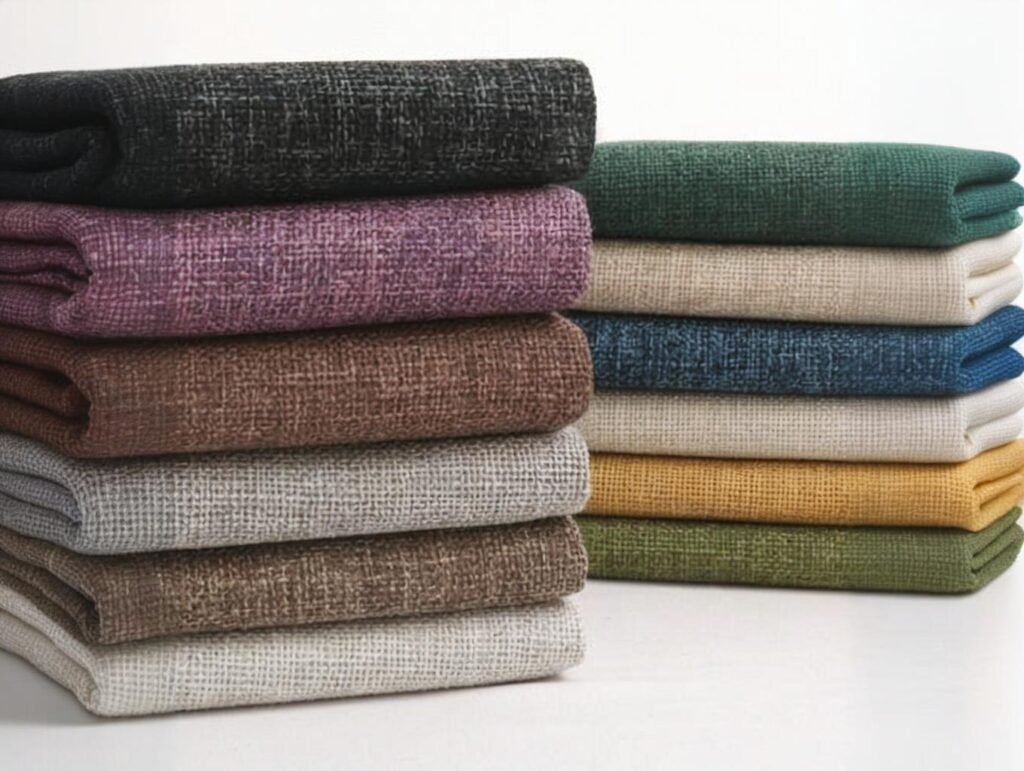
Linen fabric has long held a reputation for its natural texture, breathable weave, and luxurious feel. But in 2025, its value has become more than just tactile—it now represents a volatile commodity shaped by global climate shifts, sustainability movements, and fluctuating supplier capabilities. For manufacturers, designers, and sourcing agents, keeping track of how linen prices move across continents and what causes the shifts isn’t just good practice—it’s a competitive necessity.
In 2025, global wholesale linen fabric prices are primarily driven by regional flax yield, fiber processing costs, GSM specifications, and evolving demand from luxury, hospitality, and apparel industries.
This article breaks down exactly what affects those prices, how regional players compare, and what smart buyers should be watching in their negotiation and sourcing calendars. Whether you’re looking for 100% linen or cost-effective blends, a solid understanding of market dynamics can help you avoid overpaying and secure more stable supply lines.
Let’s begin by zooming out and identifying the global macro factors shaking up linen’s wholesale landscape—and how they directly influence your cost per yard.
1. What Are the Key Global Factors Driving Linen Fabric Prices in 2025?
Linen fabric prices in 2025 are being pushed by climate instability, energy costs, labor shifts in Europe and Asia, and an evolving regulatory environment around eco-friendly fibers. Add in fluctuating demand from homeware and fashion segments, and the pricing dynamics are anything but simple. In 2025, linen fabric wholesale prices are influenced by flax crop yields, energy and labor costs, GSM density, and shifting demand in fashion and hospitality. These combined factors are creating noticeable price disparities between regions.
1.1 Climate Volatility in Flax-Growing Regions
- Western Europe (notably France and Belgium) remains the primary source of high-quality flax. However, unpredictable rainfall and heatwaves have caused inconsistent harvests.
- Example: The 2024 summer drought in Normandy reduced flax output by 17%, pushing 2025 prices up by $0.80–$1.20 per yard.
1.2 Labor and Energy Costs
- Energy-intensive wet spinning and dyeing processes contribute to fabric cost.
- Labor shortages in Eastern Europe have raised weaving costs by 8–15% compared to 2023.
1.3 Supply Chain & Transportation Delays
- With container shortages easing slightly in 2025, logistics is stabilizing, but fuel surcharges still apply.
- A delay from Lithuanian mills in Q1 caused spot prices to jump by 10% in U.S. ports.
1.4 Fluctuations in Demand Across Industries
| Industry Segment | 2023 Demand Growth | 2024–2025 Forecast |
|---|---|---|
| Hotel Textiles | +12.5% | +8% |
| Fashion Apparel | +7.8% | +6% |
| Home Decor | +10.2% | +9.5% |
1.5 Regulatory Push for Sustainability
- EU mandates around traceability and chemical usage (e.g. REACH) are driving compliance costs.
- Brands are demanding GOTS-certified linen, which is priced 12–20% higher than conventional equivalents.
2. How Have Wholesale Linen Prices Changed from 2022 to 2025?
Between 2022 and 2025, the global average wholesale price of linen fabric has increased by approximately 15–22%, with sharper spikes in premium grades. The increase is not uniform—price trajectories differ by GSM range, region, and yarn type. From 2022 to 2025, global linen fabric wholesale prices rose by 15–22%, mainly due to energy hikes, climate-impacted flax harvests, and rising demand for eco-certified fabrics.
2.1 Historical Linen Fabric Price Table by GSM
| GSM Range | Avg Price 2022 (USD/yd) | Avg Price 2025 (USD/yd) | % Change |
|---|---|---|---|
| 120–150 | $5.20 | $6.35 | +22.1% |
| 150–180 | $6.75 | $7.90 | +17.0% |
| 180–220 | $8.10 | $9.45 | +16.6% |
2.2 Impact of Finishing Treatments on Price
- Enzyme washed linen saw higher price hikes (+23%) due to added processing stages.
- Pre-shrunk linen costs more but remains a high seller for garment makers due to reduced post-production losses.
2.3 Yarn Type Shift
- Linen/viscose blends have increased in popularity, holding price hikes at 10–12%.
- 100% linen yarn prices rose sharply in Q2 2024, tightening 2025 contracts.
2.4 Import Tariffs and Geopolitical Effects
- U.S.-EU textile trade remained stable, but changes in port duties affected Turkish and Indian linen imports.
- Brexit-related customs challenges still add $0.40–$0.60 per yard for buyers shipping from Europe to the UK.
3. Which Regions Offer the Most Competitive Wholesale Linen Prices in 2025?
In 2025, the most competitive regions for sourcing linen fabrics are Eastern Europe (notably Lithuania and Belarus), parts of South Asia (India and Pakistan), and increasingly, China. Each region balances cost, quality, and sustainability in different ways, influencing their appeal to global buyers. Lithuania, India, and China offer the most competitive linen fabric prices in 2025, with cost advantages linked to local flax production, labor rates, and production scale.
3.1 Regional Price Benchmark Table (2025, 150–180 GSM Range)
| Region | Avg Price (USD/yd) | Lead Time (days) | Eco Cert. Rate | Strengths |
|---|---|---|---|---|
| Lithuania | $7.20 | 30–40 | High | Premium long-staple flax, EU compliance |
| India | $6.10 | 25–35 | Medium | Competitive labor, fast production |
| China | $6.40 | 20–30 | High | Scalable output, blended linen options |
| Pakistan | $5.90 | 30–45 | Low | Cost efficiency, weaker finishing |
| Turkey | $7.90 | 25–35 | High | Luxury finishing, strong branding |
3.2 Supplier Country Insights
- Lithuania: A trusted source of EU-certified 100% linen, known for craftsmanship and natural finish.
- India: Excels in linen blends and yarn-dyed production with low MOQ options.
- China: Invested in automation and dye consistency, offering both high-volume runs and sustainable options.
3.3 Total Cost of Ownership vs. Unit Price Cheaper unit prices in South Asia often come with longer transit times, which may increase overall costs. European sources may appear more expensive per yard but lower risk in compliance audits and shipping reliability.
3.4 Sustainability-Driven Buyer Preference Brands targeting eco-conscious consumers are increasingly favoring European sources due to higher rates of OEKO-TEX and GOTS certifications.
4. How Does GSM Affect Linen Fabric Pricing and Application?
GSM, or grams per square meter, is a crucial factor in linen pricing because it directly relates to the weight, durability, and end-use of the fabric. Higher GSM means more fiber content per yard, translating to higher cost but also more robust performance. Linen fabrics with higher GSM (grams per square meter) cost more due to increased material density, but they offer enhanced durability and structure for upholstery and garments.
4.1 GSM vs. Price Correlation Table (Global Average 2025)
| GSM Range | Typical Application | Avg Price (USD/yd) | Durability Rating |
|---|---|---|---|
| 100–130 | Lightweight shirts, scarves | $5.10 | Low |
| 130–160 | Blouses, summer dresses | $6.30 | Medium |
| 160–200 | Shirts, uniforms, bedding | $7.60 | High |
| 200–250 | Tablecloths, jackets, tote bags | $9.00 | Very High |
4.2 Real-World Application Scenarios
- A U.S. boutique hotel chain switched from 140 GSM to 180 GSM linen sheets in 2024. The unit price increased by 16%, but sheet replacement cycles dropped by 40% over 12 months, saving over $38,000 annually.
- A Japanese fashion label chose 120 GSM yarn-dyed linen for its summer blouse line due to its airy drape, despite it being slightly more expensive than rayon alternatives.
4.3 Thread Density and Shrinkage Behavior
- Higher GSM fabrics typically shrink less post-wash if pre-treated.
- Lower GSM fabrics are often more prone to puckering if not properly stabilized.
4.4 Practical Guidance
| Application | Recommended GSM | Reason |
|---|---|---|
| Hotel Sheets | 160–200 | Durability, smoothness |
| Casual Wear | 130–150 | Comfort, drape |
| Aprons & Uniforms | 180–220 | Stiffness, wear-resistance |
| Upholstery | 220–250 | Maximum strength & thickness |
5. Do Certified Linen Fabrics Carry a Price Premium in 2025?
Yes—certifications like OEKO-TEX, GOTS, and European Flax™ significantly influence linen fabric pricing in 2025. Certified fabrics assure traceability, eco-friendliness, and social compliance, which are vital for brands focused on ethical sourcing and sustainable product lines. Certified linen fabrics cost 10–30% more in 2025 due to sustainability standards, traceability, and global buyer demand for eco-compliant textiles.
5.1 Comparative Price Table: Certified vs. Non-Certified Linen (Global 2025)
| Certification | Avg Price (USD/yd) | % Premium | Key Buyer Regions |
|---|---|---|---|
| OEKO-TEX Standard 100 | $7.80 | +12% | Europe, North America |
| GOTS Organic Linen | $9.20 | +28% | Scandinavia, Japan, Australia |
| European Flax™ | $8.60 | +19% | Germany, UK, Netherlands |
| Non-certified Linen | $6.90 | – | Price-driven emerging markets |
5.2 Why Certifications Matter to Buyers
- Retail Compliance: Certified linen is essential for European retailers who require proof of sustainability in private-label sourcing.
- Consumer Trust: 66% of Gen Z shoppers consider certifications when buying clothing or home goods.
- Brand Storytelling: “Organic” and “low-impact dyeing” have become effective marketing hooks in high-end home and fashion segments.
5.3 Real Buyer Case Study A Canadian home textile company sourced OEKO-TEX-certified linen pillowcases from Turkey at $8.30/yd vs. $6.40/yd uncertified from India. Despite higher cost, their product line saw a 17% increase in retail sales after launching a “green label” collection with certified logos.
5.4 Long-Term Cost vs. Brand Value The upfront cost of certification premiums is often offset by higher end-user price points, longer customer retention, and fewer issues during audits.
6. What MOQ and Lead Time Structures Do Linen Suppliers Offer in 2025?
Minimum order quantity (MOQ) and lead time are major decision factors in wholesale linen sourcing. In 2025, suppliers are more flexible with small orders and sample runs, but these often come at a higher cost per unit and longer production cycles. MOQs for linen fabric in 2025 vary from 200 to 1,000 yards depending on finish, blend, and region, while lead times range from 14 to 45 days based on stock and dyeing requirements.
6.1 MOQ Comparison Table (By Supplier Type and Fabric Finish)
| Supplier Location | MOQ (yds) | Finish Type | Customization Level |
|---|---|---|---|
| China | 300 | Yarn-dyed, pre-washed | High |
| India | 200 | Greige, bleached | Medium |
| Turkey | 500 | Reactive dyed, softened | High |
| Lithuania | 600 | Enzyme washed, printed | Very High |
| Pakistan | 400 | Plain-woven | Low |
6.2 Lead Time Ranges by Production Type
| Process Type | Avg Lead Time (days) |
|---|---|
| In-stock greige fabric | 7–14 |
| Reactive dyeing | 15–20 |
| Yarn dyeing | 20–25 |
| Printed and pre-washed | 25–35 |
| Enzyme finish + QC | 30–45 |
6.3 MOQ Flexibility: Cost vs. Scalability
- Pros of Low MOQ: Ideal for testing markets, limited collections, and design flexibility.
- Cons: Higher per-unit costs, longer prep time for setup and dye batching.
6.4 Supplier Strategy Trends in 2025
- Sample Runs: Many suppliers offer sample orders from 50–100 yards with surcharge.
- Tiered MOQ Pricing: Discounts offered at 500+, 1,000+, and 3,000+ yard thresholds.
- Digital Dye Trials: AI-driven swatch simulation helps cut sampling time by 20–30%.
7. Which Linen Fabric Blends and Finishes Influence Wholesale Prices Most?
Blends and finishing techniques play a significant role in shaping linen fabric pricing. In 2025, buyers increasingly request specialty finishes like stonewashing or enzyme washing, as well as cotton-linen, rayon-linen, and Tencel-linen blends, each affecting the final cost per yard. Blended linen fabrics such as linen-cotton or linen-rayon cost 10–20% less than pure linen, while premium finishes like enzyme washing or reactive printing can increase prices by 15–35%.
7.1 Comparative Table: Fabric Blend vs. Avg Price (2025)
| Fabric Type | Avg Price (USD/yd) | Durability | Popular Use Cases |
|---|---|---|---|
| 100% Linen | $7.80 | High | Premium garments, bedding |
| Linen-Cotton Blend | $6.50 | Medium | Casual shirts, napkins |
| Linen-Rayon Blend | $6.10 | Lower | Flowing apparel, dresses |
| Linen-Tencel Blend | $7.20 | High | Sustainable fashion, bedding |
7.2 Common Finishing Options and Their Pricing Effects
| Finish Type | Price Uplift (%) | Fabric Feel |
|---|---|---|
| Reactive dyeing | +10–12% | Colorfast, vibrant |
| Enzyme washing | +15–20% | Softer, premium handle |
| Stonewashing | +20–25% | Textured, vintage look |
| Anti-wrinkle coating | +8–12% | Crisp, easier to iron |
7.3 Buyer Example: European Apparel Brand A Swedish brand shifted from 100% linen ($8.00/yd) to a linen-rayon blend ($6.10/yd) for a summer blouse line, improving drape and reducing cost by 23% while maintaining aesthetics. Their return rate dropped by 12% due to improved garment comfort.
7.4 Key Insight While 100% linen is favored for luxury positioning, blends are gaining momentum due to their cost-efficiency, softness, and design flexibility. Finishing choices also impact consumer perception and resale margins.
8. What Strategies Can Buyers Use to Optimize Linen Wholesale Purchasing in 2025?
In 2025, smart linen sourcing is all about balancing quality, speed, sustainability, and pricing. Buyers need actionable strategies to lock in long-term supplier relationships, manage stock levels, and remain competitive in a volatile raw material market. Buyers can optimize linen sourcing by diversifying suppliers, securing contracts during off-peak seasons, negotiating flexible MOQ terms, and prioritizing blended fabrics or in-stock items.
8.1 Sourcing Strategies Table: Tactics vs. Outcomes
| Strategy | Effect | Best For |
|---|---|---|
| Supplier diversification | Risk reduction, negotiation leverage | Mid to large-scale orders |
| Pre-booking off-season | Lower pricing, faster delivery | Apparel collections |
| MOQ tier negotiation | Better per-yard pricing | Brands scaling production |
| Opting for in-stock fabric | Shorter lead times, consistent quality | Fast fashion, promotional buyers |
| Using local warehouses/distributors | Speed + cost reduction on shipping | US & EU-based garment factories |
8.2 Case Study: Linen Optimization for Home Textiles A mid-sized Australian importer collaborated with an Indian supplier to pre-book 5,000 yards of stonewashed linen at $7.30/yd vs. $8.10 market price. The strategy included warehousing in Hong Kong for faster APAC delivery, cutting lead time by 28%.
8.3 Technology Integration
- Forecast Tools: Many buyers are using demand prediction algorithms to pre-order quantities more precisely.
- Digital Twin Sampling: Simulating finishes like stonewash or yarn-dye in 3D before production reduces sampling waste.
- Loom Booking Software: Automates weaving schedule allocation, improving planning reliability.
8.4 Humanized Takeaway Behind every great wholesale linen strategy is a blend of relationship building, market literacy, and flexible production cycles. Sourcing isn’t just about price—it’s about fitting fabric to purpose, narrative, and demand rhythm.
Time to Optimize Your Linen Sourcing with Confidence
As 2025 unfolds, the linen market continues to reward agility, knowledge, and conscious decision-making. From understanding thread count and certification premiums to analyzing blend trends and supplier lead times, buyers who act on data and build partnerships will outpace the competition.
At SzoneierFabrics, we offer everything global buyers need for successful linen procurement:
- 100% quality-assured materials
- Free design support and sampling
- Short lead times
- Low MOQ
- Global shipping
- Full customization from weaving to finishing
Ready to elevate your linen fabric sourcing strategy? Contact SzoneierFabrics today for a custom quotation, fabric consultation, or to request free samples tailored to your upcoming projects.
linen fabric wholesale, linen fabric price trends 2025, wholesale linen suppliers, linen fabric cost per yard, global linen fabric market, linen vs cotton price, bulk linen fabric, linen fabric manufacturer, linen textile suppliers, European linen fabric wholesale, sustainable linen fabric, linen fabric certification, organic linen material, linen fabric thread count, linen fabric durability, premium linen fabric, affordable linen fabric, certified linen producers, linen fabric pricing factors, stonewashed linen wholesale, linen fabric GSM comparison, linen blend fabric prices, best linen fabric for apparel, natural linen fabric prices, linen fabric for home textiles, low MOQ linen fabric, custom linen fabric supplier, OEKO-TEX linen fabric, linen fabric sourcing strategies, cheap linen fabric by the yard

Can't find the answers?
No worries, please contact us and we will answer all the questions you have during the whole process of bag customization.
Make A Sample First?
If you have your own artwork, logo design files, or just an idea,please provide details about your project requirements, including preferred fabric, color, and customization options,we’re excited to assist you in bringing your bespoke bag designs to life through our sample production process.