Skip to content
A laptop bag looks simple from the outside, but the real protection is hidden inside. Most customers touch the fabric first, check the zipper second, then open the bag and press the laptop compartment with their fingers. That small press test often decides whether the product feels reliable or cheap. For a student, the bag may be thrown onto a classroom floor. For an office worker, it may be squeezed in a subway. For a traveler, it may sit under an airplane seat with chargers, documents, and other hard objects pressing around it. The padding is what stands between a normal day and an expensive repair.
The best padding materials for laptop bags include EVA foam, PE foam, EPE foam, PU foam, memory foam, neoprene, sponge foam, felt, microfiber lining, tricot lining, and quilted fabric layers. EVA foam is strong for structure and impact resistance, PE and EPE foam are lightweight and cost-effective, PU foam feels softer, memory foam improves surface cushioning, and neoprene is excellent for slim sleeves. The best protection usually comes from layered construction, not one material alone.
For brands developing custom laptop bags, padding should never be treated as a small internal detail. It affects protection, weight, thickness, comfort, hand feel, pricing, customer reviews, and long-term trust. A bag can use premium nylon or Oxford fabric outside, but if the inner laptop compartment is thin, loose, or poorly lined, customers will feel the weakness immediately. A well-designed padding system is quiet. It does not shout on the product page, but it is what makes people say, “This bag feels safe.”
What Padding Is Used in Laptop Bags?
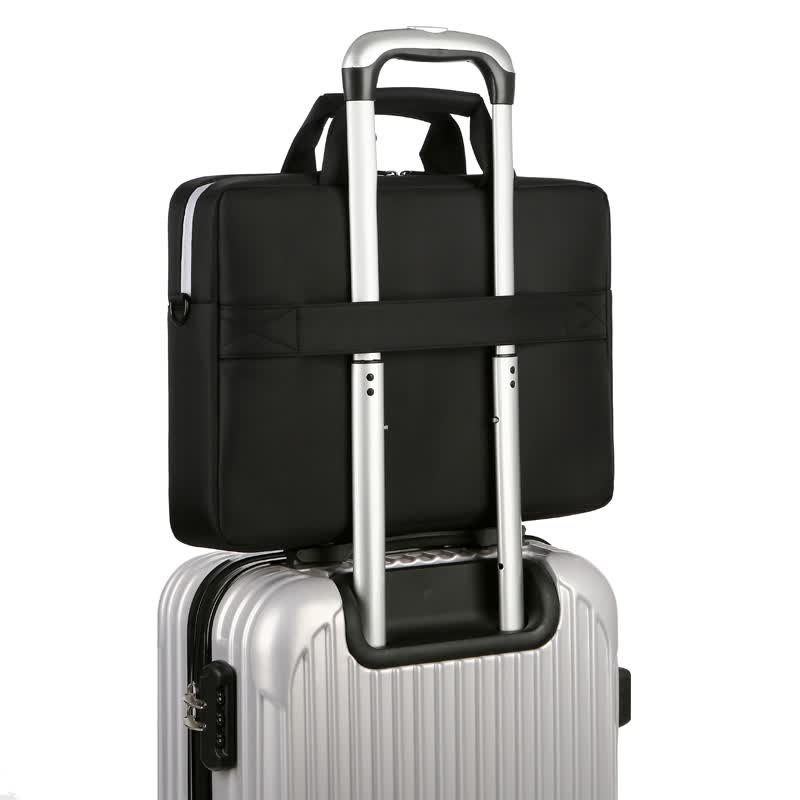
Laptop bag padding is the protective material placed around the laptop compartment, back panel, bottom panel, shoulder straps, side walls, front panel, and sometimes the outer shell. Its job is to reduce shock, prevent scratches, manage pressure, keep the laptop stable, and improve carrying comfort. Common laptop bag padding materials include EVA foam, PE foam, EPE foam, PU foam, memory foam, sponge foam, neoprene, felt, microfiber lining, tricot lining, quilted padding, and reinforced board layers. In professional manufacturing, padding is usually combined with outer fabric, lining, stitching, and structure to create a full protection system.
What Laptop Bag Padding Really Does
Many customers think padding only means “soft foam.” That is only part of the story. A laptop bag does not protect a laptop by softness alone. It protects through shock absorption, pressure spreading, scratch prevention, device separation, and fit control.
A laptop is vulnerable in several areas. The screen panel can be damaged by pressure. The corners can dent after impact. The surface can scratch against zippers or rough lining. The hinge area can suffer when the laptop moves inside a loose compartment. The bottom edge can hit the floor when a backpack is dropped. Good padding reduces these risks by creating a controlled space around the device.
A proper padding system should answer five questions:
Is the laptop protected from scratches?
Is the laptop protected from light impact?
Is the laptop separated from hard accessories?
Is the laptop held securely without being squeezed?
Is the bag still comfortable and practical for daily use?
If the answer to any of these questions is weak, the padding system needs improvement.
| Padding Function | What It Protects Against | Common Material Choice | Why It Matters |
|---|---|---|---|
| Shock absorption | Light bumps, accidental knocks, desk impact | EVA foam, PE foam, EPE foam, PU foam, neoprene | Reduces direct force on the laptop body |
| Scratch prevention | Metal zipper teeth, rough fabric, internal friction | Microfiber, tricot, velvet, soft polyester lining | Protects aluminum and painted laptop surfaces |
| Pressure distribution | Books, chargers, luggage compression | EVA foam, PE foam, board layer, molded panels | Spreads force across a wider surface |
| Bottom protection | Bag dropped onto floor, laptop hitting ground | EVA block, thick foam, suspended pocket | Protects the most impact-prone area |
| Corner support | Edge dents and corner impact | EVA corner block, reinforced foam, padded binding | Corners are often the first impact zone |
| Shape support | Bag collapse and laptop movement | PE foam, EVA sheet, PP board, quilted panels | Keeps the laptop compartment stable |
| Carry comfort | Shoulder pressure, back pressure, handle strain | PU foam, EVA foam, breathable mesh padding | Improves user experience |
| Fit control | Laptop sliding inside the pocket | Elastic strap, padded divider, snug sleeve design | Prevents internal movement |
A laptop bag with smart padding does not have to be extremely thick. In fact, over-padding can create a bulky product that users avoid carrying. The better goal is controlled padding: enough protection in the right zones, without unnecessary weight.
Padding and Lining Are Not the Same
Padding and lining are often confused, but they serve different roles. Padding absorbs shock and adds structure. Lining touches the laptop surface and prevents scratches. A good laptop compartment needs both.
For example, EVA foam may sit behind the lining to absorb impact. Microfiber or tricot lining may cover the inside surface to protect the laptop finish. If a bag has thick foam but rough lining, it can still scratch the laptop. If a bag has soft lining but no foam, it may feel nice but offer weak impact protection.
| Layer | Main Role | Common Materials | Customer Experience |
|---|---|---|---|
| Outer fabric | Abrasion, style, weather resistance | Nylon, polyester, Oxford, canvas, neoprene | First visual and touch impression |
| Padding layer | Shock absorption and structure | EVA, PE, EPE, PU, memory foam, sponge | Makes the bag feel protective |
| Reinforcement layer | Shape support and pressure spreading | PP board, PE board, EVA sheet | Keeps laptop zone stable |
| Inner lining | Scratch prevention and soft contact | Microfiber, tricot, velvet, soft polyester | Protects laptop surface |
| Stitching and binding | Holds layers together | Nylon thread, binding tape, quilting | Controls durability and finishing |
Szoneier’s laptop bag production guidance notes that foam or EVA padding is commonly attached to lining panels to prevent shifting during long-term use, using methods such as quilting, edge stitching, glue lamination, and heat pressing. That matters because loose padding can move, bunch, or collapse after daily use, creating weak spots inside the bag. (定制包制造商)
Where Padding Is Used in a Laptop Bag
Laptop padding is not only inside the laptop sleeve. It can appear in different zones of the bag, and each zone needs a different material strategy.
| Bag Area | Padding Purpose | Common Material | Design Note |
|---|---|---|---|
| Laptop compartment back wall | Protects laptop from user’s back or outer pressure | PE foam, EVA foam, PU foam | Should feel stable but not too stiff |
| Laptop compartment front wall | Protects laptop from accessories or outer impact | PE foam, EVA, EPE, sponge | Important if front pocket holds charger |
| Bottom panel | Protects against floor impact | EVA block, dense PE foam, foam board | One of the most important protection zones |
| Side walls | Protects laptop edges | EVA strips, PE foam, binding padding | Useful for 15.6-inch and 16-inch laptops |
| Corners | Protects against edge dents | EVA corner blocks, dense foam | Often overlooked in low-cost bags |
| Back panel | Comfort and laptop stability | EVA, PU foam, breathable mesh | Important for backpacks |
| Shoulder straps | Carry comfort | EVA foam, PU foam, sponge, mesh | Padding should not collapse quickly |
| Handle | Hand comfort and load support | EVA, PU foam, wrapped webbing | Needs strong stitching and reinforcement |
| Front panel | Light impact and shape support | EPE, PE foam, quilted padding | Helps bag keep clean shape |
| Divider pocket | Separates laptop from tablet or documents | Thin foam, felt, microfiber lining | Prevents device-to-device friction |
A simple laptop sleeve may only need padding around the main compartment. A travel laptop backpack may need multi-zone padding: suspended laptop sleeve, bottom EVA support, back panel foam, strap padding, front organizer padding, and reinforced side walls.
Why Padding Must Match the Product Type
Different laptop products need different padding. A slim sleeve, business briefcase, laptop backpack, travel bag, and school bag should not use the same structure.
| Product Type | Padding Priority | Recommended Direction |
|---|---|---|
| Slim laptop sleeve | Scratch and light bump protection | Neoprene, EVA sheet, memory foam, soft lining |
| Laptop backpack | Full compartment protection and comfort | PE/EVA foam panels, suspended pocket, back padding |
| Business laptop briefcase | Clean shape and moderate protection | Dense thin foam, structured panels, soft lining |
| Travel laptop bag | Stronger impact and pressure protection | EVA bottom, PE foam panels, reinforced corners |
| Student laptop bag | Cost-effective daily protection | EPE or PE foam, Oxford fabric, reinforced bottom |
| Premium laptop case | Hand feel and device protection | EVA shell, memory foam, microfiber lining |
| Outdoor laptop bag | Weather and impact resistance | Coated fabric, EVA/PE foam, waterproof zipper options |
| Corporate laptop gift | Practical protection and logo value | Polyester/Oxford fabric with medium foam padding |
A 13-inch office laptop sleeve may work well with 3–5mm neoprene or foam. A 16-inch travel backpack needs stronger bottom support, wider compartment tolerance, and better accessory separation. A premium executive laptop briefcase should avoid looking bulky, so it may use thinner but denser foam with a clean structure.
Common Padding Materials Used in Laptop Bags
Laptop bag padding materials each have their own role. The best choice depends on whether the product needs structure, softness, lightweight performance, price control, or premium hand feel.
| Padding Material | Main Strength | Common Use | Limitation |
|---|---|---|---|
| EVA foam | Shape retention, impact resistance, water resistance | Bottom panels, molded cases, laptop compartments, corners | Can feel stiff if too thick |
| PE foam | Lightweight, cost-effective, stable structure | Backpack panels, laptop dividers, general padding | Less premium hand feel than memory foam |
| EPE foam | Light cushioning and cost control | School bags, basic sleeves, packing-style protection | Can compress over time if low density |
| PU foam | Softness and comfort | Shoulder straps, back panels, soft compartments | May collapse faster if low quality |
| Memory foam | Surface conformity and premium cushioning | Premium sleeves, luxury laptop compartments | Higher cost and slower rebound |
| Neoprene | Flexible, soft, water-resistant, sleeve-friendly | Laptop sleeves, slim covers, inner pouches | Less structured for large bags |
| Sponge foam | Soft and affordable | Basic padding and comfort zones | Needs quality control for resilience |
| Felt | Soft touch and scratch protection | Minimal sleeves, inner dividers | Weak water resistance and impact protection |
| Microfiber lining | Scratch prevention | Premium laptop compartments | Not impact padding alone |
| Tricot lining | Soft, smooth, cost-effective lining | Laptop pockets and sleeves | Needs foam behind it for impact protection |
EVA foam is widely recognized for shock absorption, flexibility, and resistance to water and chemicals, which explains why it appears in many protective and comfort products. (FlexiPack) Neoprene is also commonly used in laptop sleeves because it provides cushioning, flexibility, and everyday moisture resistance, though it should not be treated as fully waterproof. (Lention)
The Critical Difference Between Soft Feel and Real Protection
Customers often press the laptop compartment and assume soft means protective. That is not always true. A very soft foam may feel comfortable but compress too easily under pressure. A denser foam may feel less plush but protect better against impact and compression.
This is a common issue in low-cost laptop sleeves. The sleeve feels soft in the hand, but when placed inside a backpack with books and a charger, the padding compresses almost flat. The laptop is technically “inside a padded sleeve,” but the protection is weak.
Good padding should balance three qualities:
Soft enough to protect the laptop surface.
Dense enough to resist compression.
Stable enough to keep its shape after repeated use.
| Foam Feel | Customer First Impression | Real Protection Risk | Best Use |
|---|---|---|---|
| Very soft | Comfortable and plush | May compress too easily | Strap padding, light sleeve lining |
| Medium soft | Balanced and practical | Depends on density | Daily laptop compartments |
| Firm | Protective and structured | May feel stiff or bulky | EVA panels, bottom support |
| Semi-rigid | Strong shape retention | Less flexible for slim bags | Molded EVA cases, corners |
| Slow rebound | Premium cushion feel | Higher cost | Premium sleeves and luxury compartments |
A laptop bag should not be designed only for the first touch. It should be designed for repeated daily pressure. That means testing how the padding performs after loading, carrying, bending, and repeated opening.
Why Fit Is Part of Padding
Padding cannot protect well if the laptop pocket is the wrong size. A pocket that is too tight may press the laptop against the zipper, corners, or seams. A pocket that is too loose allows the laptop to slide and hit the compartment edges.
Good laptop padding needs the right tolerance. The pocket should allow smooth insertion but still hold the laptop securely. For thicker gaming laptops, the depth must be different from slim ultrabooks. A 15.6-inch laptop does not always have the same body size across brands, so actual product dimensions matter more than screen size alone.
| Fit Issue | Result | Better Design Choice |
|---|---|---|
| Pocket too tight | Hard insertion, zipper pressure, corner stress | Add proper width and thickness tolerance |
| Pocket too loose | Laptop slides inside, impact risk | Use elastic strap, padded divider, snug sleeve |
| Pocket too shallow | Laptop edge exposed | Increase compartment height |
| Zipper too close | Risk of scratching laptop | Add zipper guard or recessed zipper path |
| Charger pocket presses laptop | Screen pressure risk | Separate accessory pocket |
| No bottom suspension | Laptop hits floor when bag drops | Raise sleeve above bag bottom |
A well-fitted laptop compartment makes padding more effective. Szoneier can help brands confirm laptop size requirements before sampling, especially for 13-inch, 14-inch, 15.6-inch, 16-inch, and 17-inch product lines.
Padding and User Trust
Padding is also psychological. When a customer opens a laptop bag and sees thin fabric with no foam, they immediately question the product. When they feel stable padding, soft lining, and a reinforced bottom, they relax. That emotional trust can influence reviews, repeat purchases, and brand reputation.
For online stores, padding details should be shown clearly in product images. Customers want to see the inner compartment, lining texture, foam thickness, laptop fit, bottom protection, and accessory separation. A product page that only shows the outside fabric misses one of the biggest decision points.
| Product Page Detail | Why It Helps Customers |
|---|---|
| Close-up of padded laptop pocket | Shows real protection |
| Cross-section style image | Explains layers clearly |
| Laptop fit photo | Builds confidence in size |
| Bottom padding photo | Shows anti-drop structure |
| Lining close-up | Proves scratch protection |
| Accessory pocket layout | Shows charger separation |
| Strap padding photo | Shows comfort |
| Water-resistant fabric image | Supports daily-use claim |
For Szoneier customers creating custom products, this means internal construction should be planned as part of the selling story. Good padding is not hidden value if the brand explains it well.
Practical Padding Recommendation
For a basic laptop sleeve, neoprene or foam with soft lining can be enough. For a daily laptop backpack, PE or EPE foam panels with reinforced bottom padding are more practical. For a premium protective case, EVA foam or molded EVA structure can improve shape and impact resistance. For business laptop bags, dense thin foam can keep the product professional without unnecessary bulk. For travel laptop bags, layered padding with EVA bottom support and accessory separation is usually the safest choice.
| Product Goal | Best Padding Direction |
|---|---|
| Slim and light | Neoprene, thin EVA, soft lining |
| Stronger protection | EVA foam, PE foam, reinforced corners |
| Cost control | EPE foam, polyester lining, Oxford fabric |
| Premium feel | Memory foam, microfiber lining, dense EVA |
| Travel durability | EVA bottom, PE panels, suspended laptop pocket |
| Student daily use | EPE/PE foam, reinforced bottom, Oxford fabric |
| Office style | Thin dense foam, clean lining, structured panels |
| Outdoor use | EVA/PE foam with coated fabric and stronger zipper |
| Corporate gifts | Medium foam padding with logo-friendly fabric |
| Private label collection | Layered padding customized by price level |
For Szoneier, the best padding solution starts with the user scenario. A brand should provide the laptop size, product type, target price, preferred fabric, expected protection level, and logo plan. From there, padding can be adjusted to create a laptop bag that feels protective, looks professional, and fits the intended market.
Which Foam Protects Laptops Best?
No single foam is best for every laptop bag. EVA foam is often the best choice for structure, compression resistance, and molded protection. PE foam is strong for lightweight, cost-controlled padding. EPE foam is useful for affordable cushioning and panel support. PU foam is better for soft comfort zones. Memory foam provides a premium cushion feel and surface conformity. Neoprene works especially well for slim laptop sleeves because it is flexible, soft, and water-resistant. The best laptop protection usually comes from combining foams by function: firm foam for impact zones, soft foam for contact zones, and lining for scratch prevention.
Why Foam Choice Should Match the Damage Risk
A laptop bag can face different kinds of damage. One foam cannot solve all of them perfectly. A firm foam may resist pressure well but feel less soft. A soft foam may feel premium but flatten under compression. A lightweight foam may control cost but may not provide strong corner protection. That is why foam selection should start from risk.
| Damage Risk | Better Foam Choice | Why It Works |
|---|---|---|
| Light bumps | PE, EPE, PU, neoprene | Provides general cushioning |
| Screen pressure | EVA, PE, board-supported foam | Spreads pressure better |
| Corner impact | EVA blocks, dense PE foam | Resists localized force |
| Bottom drop | EVA, dense PE, reinforced foam | Protects high-impact zone |
| Surface scratches | Foam plus microfiber or tricot lining | Foam alone is not enough |
| Backpack compression | EVA, PE, structured panels | Holds shape better |
| Premium sleeve feel | Memory foam, neoprene, soft lining | Better hand feel |
| Lightweight daily use | PE, EPE, neoprene | Keeps product easy to carry |
| Travel use | EVA + PE layered system | Better structure and cushioning |
| Budget product | EPE, PE, sponge foam | Controls cost while adding basic protection |
A smart laptop bag may use different foam in different areas. For example, EVA at the bottom, PE foam on the back wall, PU foam in the shoulder straps, and microfiber lining inside the laptop pocket. That layered approach is more professional than using one foam everywhere.
EVA Foam: Best for Structure and Impact Zones
EVA foam is one of the most important padding materials in laptop bag manufacturing. It has a semi-firm feel, good shape retention, shock absorption, flexibility, and moisture resistance. EVA foam is a closed-cell material, which means its internal structure helps resist water absorption better than open-cell foams. Recent material guides describe EVA foam as lightweight, durable, cushioning, and water-resistant due to its closed-cell air-pocket structure. (大毛科技)
In laptop bags, EVA is commonly used in:
Bottom panels
Side panels
Molded laptop cases
Corner reinforcements
Structured sleeves
Back panels
Shoulder straps
Protective laptop compartments
EVA is especially useful when the bag must feel stable. A laptop backpack with EVA-reinforced bottom padding feels more protective than one with only soft sponge. A molded EVA laptop case can keep a clean shell shape and resist compression better than a soft sleeve.
| EVA Foam Feature | Benefit in Laptop Bags | Possible Concern |
|---|---|---|
| Semi-rigid structure | Helps maintain shape | May feel stiff if overused |
| Shock absorption | Reduces light impact | Needs correct thickness |
| Closed-cell structure | Resists moisture better | Finished bag still depends on seams and zipper |
| Lightweight | Good protection without heavy weight | Thicker EVA adds bulk |
| Moldability | Useful for shaped cases and panels | Custom molds may increase development cost |
| Durability | Handles repeated use well | Low-grade EVA may deform |
| Clean cutting | Good for panels and blocks | Needs accurate pattern control |
| Heat forming | Supports 3D structure | Requires proper manufacturing process |
EVA foam’s biggest advantage is that it feels protective. Customers can press the laptop compartment and immediately notice the structure. For premium laptop cases, travel bags, and anti-drop laptop backpacks, EVA is often a strong choice.
PE Foam: Best for Lightweight Structure and Cost Balance
PE foam, or polyethylene foam, is commonly used in bags, packaging, cases, and protective products because it is lightweight, durable, and cost-effective. It is often firmer than PU foam and can provide stable panel support without making the bag too heavy.
PE foam works well for laptop backpack panels, laptop dividers, side padding, and general internal structure. It is a practical choice when the product needs protection but must stay slim, light, and affordable.
| PE Foam Feature | Benefit in Laptop Bags | Possible Concern |
|---|---|---|
| Lightweight | Good for backpacks and daily bags | May need layering for high protection |
| Cost-effective | Useful for larger orders | Not as premium-feeling as memory foam |
| Stable structure | Helps panels keep shape | Can feel plain if used alone |
| Good resilience | Handles normal daily use | Quality varies by density |
| Water resistance | Better than absorbent open-cell materials | Not a full waterproof system |
| Easy processing | Good for cutting and sewing | Needs secure attachment |
PE foam is often the hidden workhorse of laptop bags. It may not sound as premium as memory foam or as protective as EVA, but it is extremely useful in balanced manufacturing. For a mid-range laptop backpack, PE foam can provide good structure without pushing the product into a heavy or expensive category.
EPE Foam: Best for Light Cushioning and Affordable Protection
EPE foam, or expanded polyethylene foam, is lightweight and cushion-friendly. It is commonly used in packaging and protective layers because it can absorb light impact while keeping cost under control. In laptop bags, EPE foam is useful for school bags, basic sleeves, promotional laptop cases, and cost-sensitive products.
EPE can add volume and soft protection, but it may not always provide the same premium feel or long-term compression resistance as denser EVA or PE foam. Its quality depends heavily on density and thickness.
| EPE Foam Feature | Benefit in Laptop Bags | Possible Concern |
|---|---|---|
| Very lightweight | Good for school and daily bags | May compress if low density |
| Affordable | Helps control product cost | Less premium hand feel |
| Cushioning | Good for light bump protection | Not ideal for heavy impact alone |
| Easy to process | Suitable for large production | Needs stable stitching or lamination |
| Flexible | Works in many bag shapes | May lack strong structure |
| Good for layering | Can combine with lining or fabric | Better with reinforcement in key zones |
EPE foam is best when the product needs basic protection at a friendly price. It should not be oversold as heavy-duty protection unless combined with stronger materials and structural design.
PU Foam: Best for Soft Comfort Areas
PU foam, or polyurethane foam, is often used where softness and comfort matter. In laptop bags, it is useful for shoulder straps, handles, back panels, and soft-touch areas. It can also be used inside laptop compartments when the goal is a cushioned feel.
However, PU foam varies widely. Low-quality PU foam may collapse, flatten, or lose resilience over time. For laptop protection, it is often better as a comfort layer rather than the only protective layer.
| PU Foam Feature | Benefit in Laptop Bags | Possible Concern |
|---|---|---|
| Soft hand feel | Comfortable touch | May compress over time |
| Good for straps | Reduces shoulder pressure | Needs enough density |
| Flexible | Easy to sew into curved areas | Less structured than EVA |
| Comfortable back panel | Improves wearing experience | Needs breathable mesh if used on backpacks |
| Cost range | Available in many grades | Low grades feel cheap quickly |
| Good for quilting | Creates soft padded appearance | Not always strong against impact |
PU foam is important because laptop bags are carried, not just stored. A backpack with strong laptop padding but uncomfortable straps will still disappoint users. For daily-use laptop bags, comfort padding and protection padding should be planned together.
Memory Foam: Best for Premium Cushion Feel
Memory foam provides a slow-rebound cushion that conforms to pressure. In laptop sleeves and premium laptop compartments, it can create a soft, high-end hand feel. It is especially useful for customers who value tactile comfort and a premium opening experience.
Memory foam is not always necessary for every product. It costs more and may not provide the same structural support as EVA. It works best as part of a layered system, especially in premium sleeves or soft laptop compartments.
| Memory Foam Feature | Benefit in Laptop Bags | Possible Concern |
|---|---|---|
| Slow rebound | Premium cushioning feel | Higher cost |
| Surface conformity | Wraps laptop gently | Not strong structure alone |
| Soft protection | Reduces surface pressure | Needs lining and support layer |
| Premium perception | Improves customer experience | May be unnecessary for budget bags |
| Comfortable touch | Good for sleeves | Can add thickness |
| Better fit feel | Helps laptop feel secure | Needs accurate sizing |
A premium laptop sleeve might combine outer nylon or neoprene, memory foam padding, and microfiber lining. This creates a soft, protective, retail-friendly product. But for a heavy-duty travel backpack, memory foam alone is not enough. It should be combined with EVA or PE support.
Neoprene: Best for Slim Sleeves and Flexible Protection
Neoprene is widely used for laptop sleeves because it is soft, flexible, stretchable, cushioning, and water-resistant in everyday conditions. It can fit closely around a laptop and protect against scratches, light bumps, and minor splashes. Neoprene product guides often describe it as moisture-repellent but not fully waterproof, which is an important distinction for accurate product claims.
Neoprene is especially suitable for:
Laptop sleeves
Slim inner covers
Soft protective cases
Travel insert sleeves
Minimal laptop pouches
Promotional laptop sleeves
Colorful printed sleeves
Neoprene is less suitable when the product needs rigid structure, heavy load carrying, or many compartments. It is a sleeve material more than a full backpack structure material.
| Neoprene Feature | Benefit in Laptop Sleeves | Possible Concern |
|---|---|---|
| Flexibility | Snug laptop fit | Less structure for full bags |
| Cushioning | Good daily bump protection | Not heavy-duty impact protection |
| Water resistance | Helps against light moisture | Not fully waterproof |
| Lightweight | Easy to carry | Thickness affects protection |
| Soft feel | Good user experience | Can stretch over time if low quality |
| Printability | Good for brand designs | Print quality needs control |
| Slim profile | Easy to put inside another bag | Limited accessory storage |
| Cost flexibility | Useful for logo projects | Premium neoprene costs more |
For Szoneier, neoprene is useful when brands want custom laptop sleeves with low-profile protection, logo printing, quick sampling, and flexible design options.
Foam Comparison Table for Custom Laptop Bags
| Foam Type | Protection Level | Structure Level | Comfort Level | Weight | Cost | Best Use |
|---|---|---|---|---|---|---|
| EVA foam | High | High | Medium | Light to medium | Medium | Protective panels, corners, molded cases |
| PE foam | Medium to high | Medium to high | Medium | Light | Low to medium | Backpack panels, dividers, laptop compartments |
| EPE foam | Medium | Medium | Medium | Very light | Low | Basic padding, school bags, cost-sensitive products |
| PU foam | Medium | Low to medium | High | Light | Low to medium | Shoulder straps, back panels, soft padding |
| Memory foam | Medium | Low to medium | High | Medium | Medium to high | Premium sleeves, luxury laptop compartments |
| Neoprene | Medium | Medium | High | Light | Medium | Slim sleeves and flexible laptop covers |
| Sponge foam | Low to medium | Low | Medium | Light | Low | Basic comfort padding |
| EVA + lining | High | High | Medium to high | Medium | Medium | Premium protective compartments |
| PE + microfiber | Medium to high | Medium | High | Light | Medium | Business laptop bags |
| Neoprene + memory foam | Medium to high | Medium | High | Medium | Medium to high | Premium laptop sleeves |
The best foam depends on the product promise. If the product says “shockproof laptop backpack,” EVA or dense PE should be included in key zones. If it says “slim laptop sleeve,” neoprene or memory foam may be more appropriate. If it says “business laptop briefcase,” thin dense foam with soft lining can protect the laptop without making the bag look bulky.
Layered Foam Works Better Than One Thick Layer
One thick foam layer is not always the best solution. Layering can create better performance. A firm layer can spread pressure, a softer layer can cushion the laptop surface, and lining can prevent scratches.
For example:
Outer Oxford fabric + PE foam + soft polyester lining creates a practical daily laptop compartment.
Nylon fabric + EVA bottom block + microfiber lining creates better impact protection.
Neoprene outer material + memory foam + soft lining creates a premium sleeve feel.
Canvas outer fabric + PE foam + tricot lining creates a lifestyle laptop tote with basic protection.
| Layered Structure | Protection Style | Best Product |
|---|---|---|
| Oxford + EPE + polyester lining | Basic daily protection | Student laptop backpack |
| Nylon + PE foam + microfiber | Balanced professional protection | Office laptop bag |
| Coated fabric + EVA + tricot lining | Stronger travel protection | Travel laptop backpack |
| Neoprene + memory foam + velvet lining | Soft premium protection | Laptop sleeve |
| Canvas + PE foam + cotton lining | Lifestyle protection | Laptop tote |
| EVA shell + microfiber lining | Molded protection | Hard laptop case |
| Polyester + sponge + tricot | Cost-controlled cushioning | Promotional sleeve |
| Ripstop nylon + EVA + PE board | Outdoor durability | Technical laptop bag |
Layering also allows brands to control cost. Instead of using expensive foam everywhere, the factory can place higher-grade material in important impact zones and use cost-effective padding in lower-risk areas.
How Foam Density Affects Protection
Thickness is easy to see. Density is harder to see but just as important. A 5mm low-density foam may compress more easily than a 3mm higher-density foam. That is why brands should not judge padding by thickness alone.
Foam density affects:
Compression resistance
Long-term shape retention
Shock absorption
Hand feel
Weight
Cost
Durability
| Foam Specification | Likely Result | Best Use |
|---|---|---|
| Thin low-density foam | Light, cheap, basic protection | Promotional sleeves |
| Thin high-density foam | Slim but stable | Business laptop compartments |
| Medium-density foam | Balanced protection and comfort | Daily laptop bags |
| High-density EVA | Stronger impact zones | Bottom and corner protection |
| Soft low-density PU | Comfortable but may flatten | Shoulder strap comfort |
| Memory foam | Premium surface feel | Premium sleeves |
| Thick low-density foam | Bulky but not always protective | Avoid for premium laptop products |
| Layered foam | Balanced performance | Better custom laptop bags |
For custom development, it is useful to create samples with different foam densities and thicknesses. Szoneier can help brands compare hand feel, structure, weight, cost, and protection before confirming the final specification.
Which Foam Is Best for Laptop Backpacks?
Laptop backpacks usually need a mix of PE foam, EVA foam, and comfort foam. The laptop compartment needs structure. The bottom needs stronger impact protection. The back panel and shoulder straps need comfort. The front panel may need light padding for shape.
| Backpack Area | Recommended Foam | Reason |
|---|---|---|
| Laptop back wall | PE foam or EVA sheet | Stable support |
| Laptop front wall | PE/EPE foam | Separates laptop from accessories |
| Bottom support | EVA foam or dense PE | Reduces floor impact |
| Corners | EVA block or dense foam | Protects laptop edges |
| Shoulder straps | PU foam or EVA foam | Carry comfort |
| Back panel | EVA/PU foam with breathable mesh | Comfort and structure |
| Front panel | EPE or PE foam | Shape and light protection |
| Tablet divider | Thin PE foam and soft lining | Prevents friction |
A good laptop backpack should also include a suspended laptop pocket. This means the laptop compartment does not touch the bottom of the bag directly. If the backpack is dropped on the floor, the laptop is less likely to hit the ground through the bottom panel.
Which Foam Is Best for Laptop Sleeves?
Laptop sleeves need a different approach. They should be slim, protective, and easy to slide into another bag. Neoprene, EVA sheet, memory foam, and soft lining are common choices.
| Sleeve Type | Recommended Padding | Best For |
|---|---|---|
| Basic sleeve | Neoprene or EPE foam | Light protection and low cost |
| Slim business sleeve | Thin EVA or PE foam with microfiber lining | Professional daily use |
| Premium soft sleeve | Memory foam with microfiber lining | Higher-end retail |
| Water-resistant sleeve | Neoprene or coated polyester with foam | Commute and travel |
| Molded sleeve | EVA shell with soft lining | Stronger protection |
| Canvas sleeve | PE foam with cotton or tricot lining | Lifestyle market |
For sleeves, the key is balance. Too much foam makes the sleeve bulky. Too little foam makes it feel unsafe. A sleeve is often carried inside another bag, so the padding should protect against scratches, light bumps, and accessory pressure.
Foam Choice by Price Level
Brands often need to balance protection and cost. A premium foam system may be unnecessary for a low-cost promotional product. A basic foam system may be unacceptable for a premium laptop bag.
| Price Level | Foam Direction | Suitable Product |
|---|---|---|
| Entry level | EPE, sponge foam, basic polyester lining | Promotional sleeves, simple school bags |
| Budget daily | PE foam, EPE, Oxford fabric | Student laptop backpacks |
| Mid-range | PE foam, EVA bottom, soft lining | Office bags, commuter bags |
| Upper mid-range | EVA + PE layered system | Travel backpacks, business bags |
| Premium | EVA, memory foam, microfiber lining | Premium sleeves and executive bags |
| Technical | EVA blocks, PE board, coated fabric | Outdoor and travel laptop bags |
A smart product does not always use the most expensive material. It uses the right material in the right place. For example, adding EVA to the bottom and corners may improve protection more than using expensive memory foam across the whole compartment.
Foam Choice by Laptop Size
Larger laptops need stronger padding because they are heavier and create more stress on the bag. A 16-inch laptop compartment should not simply be a scaled-up version of a 13-inch sleeve. It needs better bottom support, wider padding, and stronger stitching.
| Laptop Size | Padding Recommendation |
|---|---|
| 11–13 inch | Neoprene, thin EVA, PE foam, soft lining |
| 14 inch | PE foam, EVA bottom, microfiber or tricot lining |
| 15.6 inch | Medium PE/EVA padding, bottom support, secure fit |
| 16 inch | Stronger EVA/PE structure, reinforced corners |
| 17 inch | Dense foam, suspended pocket, reinforced bottom and straps |
| Gaming laptop | Extra depth, stronger bottom padding, heat and weight consideration |
| Tablet/laptop combo | Separate padded compartments |
| MacBook-style slim laptop | Soft lining and scratch prevention are especially important |
For custom orders, actual device dimensions should be confirmed. Screen size alone is not enough.
Final Foam Recommendation
For most laptop bags, EVA foam is the best choice for structure and high-impact zones. PE foam is the best balanced option for lightweight daily protection. EPE foam is suitable for cost-effective cushioning. PU foam is best for comfort areas such as straps and back panels. Memory foam is best for premium sleeves and soft-touch compartments. Neoprene is best for slim, flexible laptop sleeves.
| Product Goal | Best Foam Choice |
|---|---|
| Strong impact protection | EVA foam |
| Lightweight daily protection | PE foam |
| Cost-effective padding | EPE foam |
| Soft comfort | PU foam |
| Premium cushion feel | Memory foam |
| Slim flexible sleeve | Neoprene |
| Travel laptop backpack | EVA + PE foam |
| Business laptop bag | Thin dense PE foam + soft lining |
| Student laptop bag | EPE/PE foam + reinforced bottom |
| Premium laptop sleeve | Memory foam + microfiber lining |
Szoneier can help brands test different foam combinations before production. Instead of guessing, brands can compare samples by hand feel, thickness, weight, structure, laptop fit, and target cost. That is the safest way to build a laptop bag that customers actually trust.
How Thick Should Laptop Bag Padding Be?
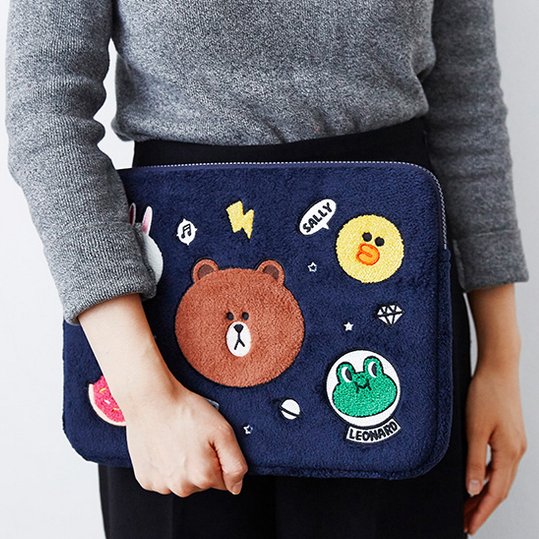
Laptop bag padding should be thick enough to absorb daily bumps, reduce pressure, and protect laptop corners, but not so thick that the bag becomes bulky, heavy, or hard to use. Slim laptop sleeves often use about 3–5mm padding for scratch and light bump protection, while laptop backpacks, travel bags, and reinforced laptop compartments may use thicker foam layers, EVA bottom support, suspended pockets, or multi-layer padding systems. The best padding thickness depends on laptop size, product style, user scenario, foam density, and how the laptop compartment is built.
Thickness Alone Does Not Decide Protection
Many customers believe thicker padding automatically means better protection. That sounds logical, but it is not always true. A thick low-density foam can flatten quickly under pressure. A thinner high-density EVA or PE foam layer may protect better because it resists compression and spreads force more effectively. Padding thickness must always be judged together with foam density, structure, lining, and fit.
For example, a 5mm soft sponge sleeve may feel nice at first touch, but if it compresses flat when a charger presses against it, the laptop is not well protected. A 3mm dense EVA layer with soft lining may feel thinner but offer better pressure resistance. For backpacks, a suspended laptop pocket can improve real protection more than simply adding more foam everywhere.
| Padding Factor | Why It Matters | Better Design Thinking |
|---|---|---|
| Thickness | Adds cushioning distance between laptop and impact | Useful, but not enough alone |
| Density | Controls compression resistance | Higher density may protect better than extra thickness |
| Foam type | Determines softness, rebound, shape, and durability | EVA, PE, EPE, PU, memory foam, and neoprene behave differently |
| Layering | Combines firmness and softness | Firm foam outside, soft lining inside often works better |
| Fit | Keeps laptop stable | Loose pockets reduce padding effectiveness |
| Bottom structure | Protects laptop from floor impact | Suspended pocket or EVA bottom block matters |
| Corner design | Protects vulnerable edges | Extra corner padding may be more useful than full-panel thickness |
| User scenario | Defines real risk | Travel bags need more protection than office sleeves |
A smart laptop bag does not simply add foam until it feels thick. It places protection where the laptop needs it most: bottom, corners, front and back panels, and separation from hard accessories.
Common Padding Thickness by Product Type
Different laptop bag styles need different padding thickness. A slim sleeve should stay compact. A travel backpack should protect against more movement and pressure. A business briefcase should look clean and professional. A student backpack should balance protection, price, and weight.
| Product Type | Common Padding Direction | Protection Goal | Practical Note |
|---|---|---|---|
| Thin laptop sleeve | 2–3mm foam or neoprene | Scratch and very light bump protection | Best when used inside another bag |
| Standard laptop sleeve | 3–5mm foam or neoprene | Daily scratch and bump protection | Good for office and school use |
| Premium laptop sleeve | 5–8mm layered foam or memory foam | Better hand feel and cushioning | Needs slim pattern to avoid bulk |
| EVA laptop case | Molded EVA shell or 3–6mm EVA layer | Shape and compression resistance | Thickness depends on shell design |
| Laptop briefcase | 4–8mm dense foam in laptop zone | Clean protection and structure | Avoid over-padding for professional look |
| Student laptop backpack | 5–10mm foam in compartment and bottom | Daily school protection | Bottom reinforcement is important |
| Travel laptop backpack | 8–12mm layered padding in key zones | Stronger impact and pressure protection | Suspended laptop compartment recommended |
| Outdoor laptop bag | Dense foam, EVA blocks, reinforced panels | Abrasion, impact, and weather use | Padding must work with coated fabric |
| Corporate laptop gift | 3–6mm foam or neoprene | Useful protection at controlled cost | Logo and price matter |
| Premium work backpack | Layered EVA/PE foam with soft lining | Structure, comfort, and trust | Quality details affect value |
These ranges are not fixed rules. They are practical starting points. The final specification should be confirmed through sampling because foam type, density, outer fabric, lining, and sewing structure change the final feeling.
Is 3mm Padding Enough?
3mm padding can be enough for a slim laptop sleeve used inside another bag. It is usually not enough for a main laptop backpack or travel bag unless combined with stronger structure. A 3mm neoprene sleeve may protect against scratches and light bumps, but it should not be expected to protect against serious drops or heavy compression.
3mm padding works best when:
The laptop is already carried inside a backpack or tote.
The main risk is scratch protection.
The product needs to stay thin and lightweight.
The laptop is slim and not too heavy.
The target price must stay controlled.
The product is used for corporate gifts or simple daily carry.
3mm padding may be too weak when:
The laptop is carried alone.
The user carries chargers in the same compartment.
The product is for travel.
The laptop is 15.6-inch or larger.
The bag may be placed on floors or under heavy items.
The brand wants a strong protection message.
| 3mm Padding Use Case | Suitable? | Reason |
|---|---|---|
| Slim 13-inch sleeve | Yes | Good for light protection |
| 15.6-inch daily backpack | Not enough alone | Needs stronger compartment structure |
| Corporate giveaway sleeve | Yes | Cost-controlled and useful |
| Travel laptop backpack | No | Too light for travel risk |
| Neoprene sleeve inside tote | Yes | Sleeve acts as an inner layer |
| Laptop briefcase | Maybe | Works only with dense foam and structured panels |
| Outdoor laptop bag | No | Needs stronger padding and reinforcement |
| Premium retail sleeve | Maybe | Needs better foam quality and lining |
If a brand wants a very slim product, 3mm can work. If the brand wants customers to feel strong protection immediately, 3mm may feel too light unless the foam is dense and the lining is premium.
Is 5mm Padding Better?
5mm padding is a common middle-ground choice for many laptop sleeves and daily laptop compartments. It gives a more protective feel than 3mm while still keeping the product reasonably slim. For many office, school, and commuter products, 5mm foam or neoprene can be a practical option.
But again, foam density matters. A 5mm low-density foam may feel less protective than a 4mm high-density EVA or PE foam. For laptop bags, 5mm is often best when paired with a soft lining and good pocket fit.
| 5mm Padding Advantage | Practical Value |
|---|---|
| Better hand feel than 3mm | Customers feel more protection when pressing the compartment |
| Still relatively slim | Good for sleeves and briefcases |
| Cost manageable | Suitable for mid-range products |
| Works with many foams | EVA, PE, EPE, PU, neoprene |
| Good for daily protection | Handles normal bumps and friction |
| Easy to sew | Does not create too much bulk at seams |
| Good for logo products | Balances price and usability |
5mm padding is often a safe starting point for laptop sleeves, office bags, and simple backpacks. For travel backpacks, large laptops, or higher-protection claims, it should be combined with bottom reinforcement, corner padding, or suspended compartment design.
When Does Padding Become Too Thick?
Too much padding can create problems. A bulky laptop compartment may reduce storage space, make the bag look heavy, increase shipping volume, and make the product feel less elegant. Thick padding can also create sewing challenges, especially around corners, zipper seams, and pocket openings.
For laptop sleeves, too much thickness can make the sleeve hard to insert into another bag. For business briefcases, excessive padding can destroy the clean professional shape. For backpacks, too much padding in the wrong place can make the bag stiff and uncomfortable.
| Over-Padding Problem | Customer Experience | Better Solution |
|---|---|---|
| Bag feels bulky | Customer avoids daily use | Use denser foam instead of thicker foam |
| Laptop pocket becomes tight | Laptop hard to insert | Add proper tolerance |
| Product looks heavy | Less professional appearance | Use thin structured foam |
| Shipping cost increases | Higher logistics cost | Control panel thickness |
| Seams become thick | Poor sewing finish | Reduce foam at seam allowance |
| Storage space decreases | Less useful daily bag | Use targeted padding zones |
| Weight increases | Less comfortable carry | Use lightweight PE/EPE or zoned EVA |
| Product cost rises | Lower price competitiveness | Upgrade only key protection areas |
The goal is not maximum thickness. The goal is intelligent protection. A 10mm foam layer everywhere may look impressive in a product description, but it may not be the best product for real users.
Padding Thickness by Laptop Size
Laptop size affects padding needs. A larger laptop is heavier and creates more pressure at the bottom and corners. A 13-inch laptop sleeve can stay relatively slim. A 16-inch or 17-inch laptop bag needs stronger structure because the device is larger, heavier, and more likely to hit the bottom of the bag.
| Laptop Size | Padding Direction | Key Concern |
|---|---|---|
| 11–13 inch | 3–5mm foam or neoprene | Slim protection and scratch prevention |
| 14 inch | 4–6mm foam with soft lining | Daily office and school use |
| 15.6 inch | 5–8mm foam with bottom support | More weight and wider panel area |
| 16 inch | 6–10mm foam with reinforced corners | Expensive laptops need better edge protection |
| 17 inch | 8–12mm layered padding and strong structure | Heavy device, stronger stress points |
| Gaming laptop | Thick compartment with depth tolerance | Bulk, weight, and charger separation |
| Tablet and laptop combo | Separate padded layers | Prevents device-to-device scratches |
| Slim ultrabook | Soft lining and precise fit | Surface scratches and zipper contact |
Screen size is not enough for production. A 15.6-inch business laptop and a 15.6-inch gaming laptop can have very different thickness and weight. Szoneier can help brands confirm inner dimensions, pocket tolerance, and padding thickness based on actual device measurements.
Padding Thickness by User Scenario
The same laptop size may need different padding depending on how the product is used. An office user walking from car to desk faces lower risk than a student carrying books and chargers all day. A traveler faces airport, luggage, and under-seat pressure. An outdoor worker faces dust, abrasion, and weather.
| User Scenario | Suggested Padding Strategy | Reason |
|---|---|---|
| Office desk-to-desk use | Thin dense foam and soft lining | Keeps bag clean and professional |
| Daily subway commute | Medium foam, bottom support, accessory separation | Handles crowd pressure and daily movement |
| University use | Medium foam, reinforced bottom, stronger stitching | Books and frequent floor placement create risk |
| Business travel | Layered foam, suspended laptop pocket, strong zipper | Travel pressure and quick access |
| Outdoor work | Dense EVA/PE foam, coated fabric, reinforced seams | Higher abrasion and impact risk |
| Corporate gift | Medium foam or neoprene | Practical protection with cost control |
| Premium retail | Memory foam or EVA with microfiber lining | Better hand feel and perceived value |
| Minimal sleeve carry | Slim neoprene or EVA | Lightweight and simple |
| Cycling commute | Stronger back support and secure compartment | Movement and weather risk |
| Heavy charger carry | Separate accessory pocket and front padding | Prevents charger pressure on screen |
Padding is not only about the laptop. It is about everything around the laptop during use.
Bottom Padding Is More Important Than Many Brands Realize
The bottom of a laptop compartment takes a lot of abuse. Users place bags on floors, drop backpacks onto chairs, slide briefcases under desks, and set travel bags on airport surfaces. If the laptop pocket touches the bottom directly, even a small drop can transfer force to the laptop edge.
A suspended laptop pocket is one of the best design choices for backpacks and travel bags. It means the laptop sleeve ends slightly above the bag bottom, creating a gap between the laptop and the floor impact zone.
| Bottom Protection Method | Protection Level | Best For |
|---|---|---|
| No bottom padding | Low | Not recommended for laptop bags |
| Thin foam bottom | Basic | Light sleeves and simple bags |
| Thick EVA bottom | Strong | Travel and student backpacks |
| Suspended laptop pocket | Strong | Backpacks and travel bags |
| Foam block corners | Strong | Larger laptops and premium bags |
| Reinforced base panel | Strong | Outdoor and heavy-use bags |
| Rubber feet or bottom strips | Medium to high | Briefcases and travel bags |
| Double-layer bottom | High | Heavy laptop backpacks |
For 15.6-inch and 16-inch laptop bags, bottom protection should be treated as a priority. A product can have good side padding but still fail if the laptop hits the floor through the bottom.
Padding Thickness and Comfort
Padding is also used for comfort, especially in shoulder straps and back panels. Comfort padding follows a different logic from laptop compartment padding. A shoulder strap should feel soft and spread pressure. A laptop compartment should protect and hold structure. A back panel should balance cushioning, breathability, and support.
| Bag Area | Ideal Padding Feel | Common Material |
|---|---|---|
| Laptop compartment | Stable and protective | EVA, PE, EPE, memory foam |
| Bottom panel | Firm and impact-resistant | EVA, dense PE |
| Shoulder straps | Soft but resilient | PU foam, EVA foam, sponge, mesh |
| Back panel | Cushioned and breathable | EVA/PU foam with mesh |
| Handle | Comfortable and reinforced | PU foam, EVA, wrapped webbing |
| Front panel | Light structure | EPE, PE, quilted foam |
| Divider pocket | Thin and smooth | PE foam, felt, microfiber |
| Side panel | Moderate firmness | EVA strips, PE foam |
A thick shoulder strap that collapses after two weeks is not good comfort. A moderately thick strap with resilient foam and strong stitching is better. For backpacks, breathable mesh can improve comfort because foam against the back can feel hot.
Padding Thickness and Cost Control
Padding affects cost in several ways: material cost, cutting waste, sewing difficulty, product weight, packaging size, and shipping volume. A brand does not always need to choose the thickest padding to create a quality product.
Cost can be controlled by placing stronger padding only in high-risk zones and using lighter padding elsewhere.
| Cost Strategy | How It Works | Best Use |
|---|---|---|
| Zone padding | Use EVA at bottom, PE elsewhere | Travel and commuter bags |
| Layered padding | Combine affordable foam with soft lining | Mid-range laptop bags |
| Standard thickness | Use common foam thickness for efficiency | Large production orders |
| Stock materials | Use available foam and lining options | Fast sampling and low MOQ |
| Reduced seam bulk | Thin foam near sewing edges | Cleaner finish and lower labor issues |
| Premium touch only inside | Use microfiber lining in laptop pocket | Improves value without full upgrade |
| Reinforce stress points | Add support where needed only | Better durability without high cost |
| Use standard laptop sizes | Avoid too many custom dimensions | Better production efficiency |
For custom projects, Szoneier can help balance protection and cost by adjusting foam type, thickness, density, lining, fabric, pocket design, and reinforcement placement.
How to Judge Padding in a Sample
A sample should be tested like a real product, not only inspected on a table. Brands should put a laptop inside, add daily items, carry the bag, open and close it, place it down, and check pressure points.
| Sample Check | What to Look For |
|---|---|
| Press test | Does the padding resist pressure or collapse too easily? |
| Fit test | Does the laptop slide, squeeze, or sit securely? |
| Bottom test | Does the laptop touch the bag bottom directly? |
| Zipper test | Does the zipper rub against the laptop? |
| Accessory test | Does the charger press into the laptop area? |
| Carry test | Does the bag feel comfortable when loaded? |
| Weight test | Is the bag too heavy after padding is added? |
| Shape test | Does the bag keep a clean profile? |
| Lining test | Is the laptop surface protected from scratches? |
| Repeated use test | Does the padding shift or wrinkle after use? |
A sample may look good empty but fail when loaded. Real testing should always include laptop weight and accessory storage.
Final Padding Thickness Recommendation
For slim sleeves, 3–5mm padding is often enough if the sleeve will be placed inside another bag. For daily laptop bags, 5–8mm padding with proper lining and bottom support is usually more practical. For travel backpacks and larger laptops, 8–12mm layered protection in key zones can be useful, especially when combined with suspended pockets and reinforced corners. For premium products, foam quality and structure matter more than simply increasing thickness.
| Product Goal | Recommended Padding Approach |
|---|---|
| Thin laptop sleeve | 3–5mm neoprene or foam |
| Standard sleeve | 5mm foam with soft lining |
| Premium sleeve | 5–8mm memory foam or EVA layered padding |
| Business briefcase | 4–8mm dense foam with clean structure |
| Student backpack | 5–10mm PE/EVA padding with bottom support |
| Travel backpack | 8–12mm layered padding in key zones |
| Outdoor laptop bag | Dense EVA/PE padding and reinforced base |
| Corporate gift sleeve | 3–5mm foam or neoprene |
| 16-inch laptop bag | Stronger bottom and corner padding |
| Gaming laptop bag | Extra depth and reinforced support |
The best way to decide is through sampling. Szoneier can create sample options with different foam thicknesses and structures so brands can compare protection, appearance, comfort, cost, and market fit before bulk production.
What Is EVA Foam Padding?

EVA foam padding is a lightweight, flexible, semi-rigid foam made from ethylene-vinyl acetate. In laptop bags, it is used to improve shock absorption, shape retention, bottom protection, corner support, and molded structure. EVA is popular because it offers a useful balance of protection, weight, water resistance, and durability. It is especially valuable in laptop cases, travel backpacks, premium sleeves, protective panels, shoulder straps, and reinforced laptop compartments.
Why EVA Foam Is So Common in Protective Products
EVA foam appears in many product categories because it is practical. It is used in footwear, sports gear, protective cases, packaging, floor mats, marine products, bags, and equipment storage. The reason is simple: it cushions, bends, resists moisture, and can be shaped into different forms.
For laptop bags, EVA has a strong advantage because laptops need both cushioning and structure. A very soft foam may feel nice but collapse. A hard plastic panel may protect against pressure but feel uncomfortable or heavy. EVA sits between those extremes. It can be firm enough to protect but light enough for daily carry.
| EVA Foam Feature | Meaning for Laptop Bags |
|---|---|
| Lightweight | Adds protection without making the bag too heavy |
| Semi-rigid | Helps the compartment keep shape |
| Shock-absorbing | Reduces light impact and vibration |
| Water-resistant | Helps resist moisture at material level |
| Flexible | Can bend without cracking easily |
| Moldable | Can be shaped into cases and panels |
| Cuttable | Works for custom panels, strips, and blocks |
| Durable | Suitable for repeated daily use |
| Comfortable | Can be used in straps and back panels |
| Versatile | Works with nylon, polyester, canvas, Oxford, neoprene, and lining |
EVA is not always the cheapest foam, but it often gives a more protective feeling than very soft or low-density padding.
Where EVA Foam Is Used in Laptop Bags
EVA can be used in many areas of a laptop bag. It does not always need to cover the entire product. In many cases, EVA is best used in the areas that face the highest risk.
| Bag Area | Why EVA Works |
|---|---|
| Laptop compartment wall | Adds structure and pressure resistance |
| Bottom panel | Reduces impact when bag touches the floor |
| Side panels | Protects laptop edges |
| Corner blocks | Supports vulnerable laptop corners |
| Front panel | Helps bag hold shape |
| Back panel | Adds comfort and structure |
| Shoulder straps | Provides resilient padding |
| Handle padding | Improves grip comfort |
| Molded outer shell | Creates semi-hard laptop cases |
| Accessory pocket | Protects chargers, hard drives, and cables |
A travel laptop backpack may use EVA in the bottom and back panel, PE foam in the main compartment, and PU foam in the shoulder straps. A molded laptop case may use EVA as the main shell with a soft inner lining. A slim sleeve may use thin EVA sheet to create a cleaner structure.
EVA Foam vs Soft Sponge Foam
Soft sponge foam feels comfortable, but it may not give the same structure as EVA. EVA usually feels firmer and more stable. That makes it better for pressure resistance and shape retention. Sponge foam may be better for comfort areas where softness matters more than structure.
| Comparison Point | EVA Foam | Soft Sponge Foam |
|---|---|---|
| Structure | Better shape retention | Softer, less structured |
| Compression resistance | Stronger if density is suitable | Can flatten more easily |
| Hand feel | Firm and protective | Soft and comfortable |
| Best use | Laptop panels, bottom, corners | Straps, comfort padding, light cushioning |
| Durability | Generally stronger | Quality varies widely |
| Water resistance | Better due to closed-cell structure | Depends on sponge type |
| Premium perception | Protective and stable | Comfortable but may feel less protective |
| Cost | Usually higher than basic sponge | Usually lower |
A good laptop bag may use both. EVA can protect the laptop zone, while softer foam improves shoulder comfort.
EVA Foam vs PE Foam
EVA and PE foam are both common protective materials. EVA often feels more flexible and premium, while PE foam can offer good lightweight structure and cost balance. The choice depends on the product’s protection target and price level.
| Feature | EVA Foam | PE Foam |
|---|---|---|
| Structure | Strong and flexible | Stable and lightweight |
| Hand feel | More rubber-like, protective | Firmer or more basic depending on density |
| Moldability | Very good | More limited depending on type |
| Cost | Medium | Low to medium |
| Water resistance | Good | Good |
| Impact zones | Excellent | Good |
| Panel support | Good | Very good |
| Premium cases | Strong choice | Useful but less premium-feeling |
| Daily backpacks | Good for key zones | Good for main panels |
For cost-controlled laptop backpacks, PE foam may be used in larger panels while EVA is used at the bottom or corners. For premium protective laptop cases, EVA may become the main material.
EVA Foam vs Memory Foam
EVA and memory foam solve different problems. EVA gives structure. Memory foam gives soft, slow-rebound cushioning. EVA feels protective; memory foam feels comfortable and premium.
| Feature | EVA Foam | Memory Foam |
|---|---|---|
| Protection style | Firm support and impact resistance | Soft pressure relief |
| Shape retention | Strong | Moderate |
| Hand feel | Structured | Soft and premium |
| Best use | Panels, corners, molded cases | Premium sleeves and soft compartments |
| Cost | Medium | Medium to high |
| Compression resistance | Stronger | Softer and slower rebound |
| Visual structure | Helps bag keep shape | Less structural |
| Best combination | EVA outside + soft lining inside | Memory foam inside + support layer outside |
A premium laptop sleeve can combine both: EVA or PE for structure, memory foam for soft cushion, and microfiber lining for scratch protection.
Is EVA Foam Waterproof?
EVA foam itself is water-resistant because of its closed-cell structure, but a laptop bag using EVA foam is not automatically waterproof. Water can still enter through fabric seams, zipper openings, stitching holes, and lining layers. This distinction is important for product claims.
EVA can help resist moisture, but the final water resistance of a laptop bag depends on the whole construction:
Outer fabric
Coating
Zipper type
Seam design
Lining
Stitching
Edge binding
Opening direction
If a brand wants a water-resistant laptop bag, EVA can be part of the solution, but it should be combined with coated fabric, water-repellent finishing, zipper protection, and smart seam placement.
| Water Exposure | EVA Foam Performance | Finished Bag Concern |
|---|---|---|
| Light splash | Good | Zipper may still leak |
| Surface moisture | Good | Outer fabric may absorb water |
| Short rain exposure | Helpful but not enough alone | Seams and openings matter |
| Heavy rain | Not enough alone | Need coated fabric and zipper protection |
| Immersion | Not suitable for normal laptop bags | Requires specialized waterproof construction |
| Wet floor contact | Useful in bottom panel | Bottom seam must be considered |
For accurate customer communication, most laptop bags with EVA padding should be described as water-resistant or moisture-resistant, not fully waterproof, unless tested as a waterproof product.
EVA Foam and Molded Laptop Cases
One of EVA’s biggest strengths is moldability. It can be heat-formed into semi-rigid shells, which makes it suitable for molded laptop cases and hard-shell style sleeves. A molded EVA case can hold a clean shape and create a stronger protective impression.
Molded EVA cases are useful for:
Slim laptop hard cases
Travel laptop protection
Device-specific cases
Premium electronics kits
Corporate laptop sets
Protective storage cases
Hybrid fabric-covered cases
Molded accessory organizers
| Molded EVA Design Element | Benefit |
|---|---|
| Raised shell edge | Helps protect laptop corners |
| Curved surface | Spreads pressure and improves appearance |
| Fabric-covered shell | Makes the case look softer and more premium |
| Soft inner lining | Prevents scratches |
| Elastic holding strap | Keeps laptop stable |
| Mesh pocket | Holds flat accessories |
| Recessed zipper path | Reduces scratch risk |
| Molded handle zone | Improves carry convenience |
| Custom logo area | Supports branding |
| Structured thickness | Creates protective feel |
Molded EVA may require mold development if the shape is custom. For small trial orders, brands may choose existing molds or simpler EVA sheet constructions. For stable repeat production, a custom EVA mold can create stronger product identity.
EVA Foam Thickness in Laptop Bags
EVA foam can be used in different thicknesses depending on the product. Thin EVA can add structure to a sleeve. Medium EVA can support panels and compartments. Thicker EVA can protect corners, bottom panels, and molded cases.
| EVA Thickness Direction | Best Use |
|---|---|
| 1–2mm EVA | Light structure, lining support, decorative panels |
| 3mm EVA | Slim sleeves, basic laptop compartments |
| 4–6mm EVA | Daily laptop protection, panels, bottom support |
| 6–8mm EVA | Stronger compartments, travel bags, reinforced panels |
| 8–12mm EVA | Bottom blocks, corner protection, heavy-use areas |
| Molded EVA shell | Laptop hard cases and protective shells |
| Layered EVA | Premium protection zones |
| EVA + PE foam | Balanced structure and cost |
| EVA + microfiber lining | Premium laptop compartment |
| EVA + coated fabric | Water-resistant protective bag |
Thickness should be tested with the actual laptop size. Too much EVA can make the bag stiff and bulky. Too little EVA may not create enough protection. The right choice depends on density, product style, and use scenario.
EVA Foam and Laptop Corner Protection
Corners need special attention because they often hit surfaces first. EVA is useful for corner protection because it can be cut, shaped, or molded into protective blocks. For large laptops, corner protection becomes even more important.
| Corner Protection Method | EVA Role |
|---|---|
| EVA corner blocks | Absorb edge impact |
| Raised molded shell | Keeps laptop away from direct impact |
| EVA side strips | Protect laptop edges |
| Bottom EVA bar | Reduces floor impact |
| Padded binding | Softens seam edges |
| Suspended sleeve with EVA base | Keeps laptop above impact zone |
| EVA-reinforced divider | Prevents accessories pressing corners |
| Hybrid EVA-fabric panel | Adds hidden protection |
A laptop bag with corner padding feels more reliable than one with only flat foam panels. Customers may not always describe it technically, but they notice when the laptop sits securely.
EVA Foam and Weight Control
EVA is lightweight compared with many rigid protective materials, but it can still add weight if used excessively. A full EVA shell, thick bottom blocks, and heavy outer fabric can make a bag feel bulky. The best design uses EVA where needed most.
| EVA Use Strategy | Weight Result | Protection Result |
|---|---|---|
| EVA only in bottom | Low weight increase | Good bottom protection |
| EVA in corners and bottom | Moderate weight | Stronger edge protection |
| EVA full laptop panel | Moderate | Better structure |
| Thick EVA throughout bag | Higher weight | May be overbuilt |
| EVA + lightweight PE | Balanced | Good protection and weight |
| Molded EVA case | Light to medium | Strong shape protection |
| EVA with heavy canvas | Medium to high | Durable but heavier |
| EVA with nylon/Oxford | Balanced | Good for daily use |
For travel and commuter products, weight matters. Users may carry the bag for long periods. Szoneier can help adjust EVA placement to maintain protection without making the product unpleasant to carry.
EVA Foam and Sustainability Questions
Some customers are starting to ask more about material sustainability. EVA is durable and long-lasting, but it is still a synthetic foam. Brands that want an eco-positioned laptop bag may consider using recycled polyester outer fabric, responsible packaging, longer-lasting construction, and repair-friendly design. Sustainability is not only about one material; it is also about product life, waste reduction, and avoiding disposable low-quality products.
| Sustainability Angle | Practical Consideration |
|---|---|
| Longer product life | Durable padding reduces early replacement |
| Better protection | Fewer damaged laptops and fewer returns |
| Efficient material use | Put EVA only where needed |
| Recycled outer fabric | RPET polyester can support eco story |
| Packaging choices | Reduce unnecessary plastic where possible |
| Quality control | Fewer defective products reduce waste |
| Modular design | Simple, durable structures last longer |
| Honest claims | Avoid vague green wording without proof |
For brands, a long-lasting laptop bag with stable padding may be a stronger sustainability story than a cheap product that fails quickly.
EVA Foam Customization Options
EVA can be customized in many ways depending on product requirements.
| Custom Option | What It Changes |
|---|---|
| Thickness | Protection level and bulk |
| Density | Firmness and compression resistance |
| Mold shape | Product structure and appearance |
| Surface covering | Style and abrasion resistance |
| Inner lining | Scratch protection and hand feel |
| Color | Mostly hidden unless visible or uncovered |
| Perforation | Flexibility and breathability in some zones |
| Lamination | Bonding with fabric or lining |
| Cutting shape | Panels, blocks, strips, corners |
| Logo process | Debossing, patch, print, fabric label |
Szoneier can combine EVA with nylon, polyester, canvas, neoprene, Oxford fabric, coated textiles, microfiber lining, tricot lining, and private label branding. This flexibility allows brands to create products at different price levels and style directions.
When Should Brands Choose EVA Foam?
EVA foam is a strong choice when the laptop bag needs visible or hidden structure. It is especially useful for premium protection, travel products, larger laptops, molded cases, and reinforced compartments.
| Brand Requirement | Should Use EVA? | Reason |
|---|---|---|
| Stronger laptop protection | Yes | EVA resists compression better than soft foam |
| Slim promotional sleeve | Maybe | Thin EVA may work, but neoprene or EPE may cost less |
| Premium laptop case | Yes | EVA gives structure and protective feel |
| Travel backpack | Yes | Useful in bottom, corners, and panels |
| Student backpack | Yes, in key zones | Bottom support improves durability |
| Ultra-light sleeve | Maybe | Too much EVA can add stiffness |
| Soft luxury feel | Combine with memory foam | EVA alone may feel too firm |
| Outdoor laptop bag | Yes | Works well with coated fabric |
| Low-cost bag | Limited use | Use EVA only where most needed |
| Hybrid product | Yes | Fabric outside, EVA inside works well |
EVA is not always the answer for every zone, but it is one of the most valuable materials for laptop protection when used correctly.
Final EVA Foam Recommendation
EVA foam is best for laptop bag areas that need structure, compression resistance, bottom protection, molded shape, or corner support. It should be combined with soft lining to prevent scratches and with suitable outer fabric to achieve the right appearance and durability. For slim sleeves, EVA can be used in thinner layers. For travel bags and larger laptops, EVA should be used more strategically in high-impact zones.
| Product Goal | EVA Use Recommendation |
|---|---|
| Slim laptop sleeve | Thin EVA layer with soft lining |
| Molded laptop case | EVA shell with microfiber lining |
| Daily laptop backpack | EVA bottom and PE foam panels |
| Business briefcase | Thin EVA or dense PE for structure |
| Travel backpack | EVA corners, bottom, and back support |
| Student laptop bag | EVA bottom reinforcement |
| Outdoor laptop bag | EVA with coated fabric and reinforced stitching |
| Premium sleeve | EVA + memory foam + microfiber |
| Corporate laptop kit | EVA case or EVA-reinforced sleeve |
| Custom private label line | EVA placement customized by price level |
For brands working with Szoneier, EVA foam can be tested in different thicknesses, densities, and structures before production. That makes it possible to create a laptop bag that feels protective, looks clean, controls cost, and fits the customer’s real daily use.
What Padding Is Used in Laptop Bags?
Laptop bag padding is the protective material placed around the laptop compartment, back panel, bottom panel, shoulder straps, side walls, front panel, and sometimes the outer shell. Its job is to reduce shock, prevent scratches, manage pressure, keep the laptop stable, and improve carrying comfort. Common laptop bag padding materials include EVA foam, PE foam, EPE foam, PU foam, memory foam, sponge foam, neoprene, felt, microfiber lining, tricot lining, quilted padding, and reinforced board layers. In professional manufacturing, padding is usually combined with outer fabric, lining, stitching, and structure to create a full protection system.
What Laptop Bag Padding Really Does
Many customers think padding only means “soft foam.” That is only part of the story. A laptop bag does not protect a laptop by softness alone. It protects through shock absorption, pressure spreading, scratch prevention, device separation, and fit control.
A laptop is vulnerable in several areas. The screen panel can be damaged by pressure. The corners can dent after impact. The surface can scratch against zippers or rough lining. The hinge area can suffer when the laptop moves inside a loose compartment. The bottom edge can hit the floor when a backpack is dropped. Good padding reduces these risks by creating a controlled space around the device.
A proper padding system should answer five questions:
Is the laptop protected from scratches?
Is the laptop protected from light impact?
Is the laptop separated from hard accessories?
Is the laptop held securely without being squeezed?
Is the bag still comfortable and practical for daily use?
If the answer to any of these questions is weak, the padding system needs improvement.
| Padding Function | What It Protects Against | Common Material Choice | Why It Matters |
|---|---|---|---|
| Shock absorption | Light bumps, accidental knocks, desk impact | EVA foam, PE foam, EPE foam, PU foam, neoprene | Reduces direct force on the laptop body |
| Scratch prevention | Metal zipper teeth, rough fabric, internal friction | Microfiber, tricot, velvet, soft polyester lining | Protects aluminum and painted laptop surfaces |
| Pressure distribution | Books, chargers, luggage compression | EVA foam, PE foam, board layer, molded panels | Spreads force across a wider surface |
| Bottom protection | Bag dropped onto floor, laptop hitting ground | EVA block, thick foam, suspended pocket | Protects the most impact-prone area |
| Corner support | Edge dents and corner impact | EVA corner block, reinforced foam, padded binding | Corners are often the first impact zone |
| Shape support | Bag collapse and laptop movement | PE foam, EVA sheet, PP board, quilted panels | Keeps the laptop compartment stable |
| Carry comfort | Shoulder pressure, back pressure, handle strain | PU foam, EVA foam, breathable mesh padding | Improves user experience |
| Fit control | Laptop sliding inside the pocket | Elastic strap, padded divider, snug sleeve design | Prevents internal movement |
A laptop bag with smart padding does not have to be extremely thick. In fact, over-padding can create a bulky product that users avoid carrying. The better goal is controlled padding: enough protection in the right zones, without unnecessary weight.
Padding and Lining Are Not the Same
Padding and lining are often confused, but they serve different roles. Padding absorbs shock and adds structure. Lining touches the laptop surface and prevents scratches. A good laptop compartment needs both.
For example, EVA foam may sit behind the lining to absorb impact. Microfiber or tricot lining may cover the inside surface to protect the laptop finish. If a bag has thick foam but rough lining, it can still scratch the laptop. If a bag has soft lining but no foam, it may feel nice but offer weak impact protection.
| Layer | Main Role | Common Materials | Customer Experience |
|---|---|---|---|
| Outer fabric | Abrasion, style, weather resistance | Nylon, polyester, Oxford, canvas, neoprene | First visual and touch impression |
| Padding layer | Shock absorption and structure | EVA, PE, EPE, PU, memory foam, sponge | Makes the bag feel protective |
| Reinforcement layer | Shape support and pressure spreading | PP board, PE board, EVA sheet | Keeps laptop zone stable |
| Inner lining | Scratch prevention and soft contact | Microfiber, tricot, velvet, soft polyester | Protects laptop surface |
| Stitching and binding | Holds layers together | Nylon thread, binding tape, quilting | Controls durability and finishing |
Szoneier’s laptop bag production guidance notes that foam or EVA padding is commonly attached to lining panels to prevent shifting during long-term use, using methods such as quilting, edge stitching, glue lamination, and heat pressing. That matters because loose padding can move, bunch, or collapse after daily use, creating weak spots inside the bag. (定制包制造商)
Where Padding Is Used in a Laptop Bag
Laptop padding is not only inside the laptop sleeve. It can appear in different zones of the bag, and each zone needs a different material strategy.
| Bag Area | Padding Purpose | Common Material | Design Note |
|---|---|---|---|
| Laptop compartment back wall | Protects laptop from user’s back or outer pressure | PE foam, EVA foam, PU foam | Should feel stable but not too stiff |
| Laptop compartment front wall | Protects laptop from accessories or outer impact | PE foam, EVA, EPE, sponge | Important if front pocket holds charger |
| Bottom panel | Protects against floor impact | EVA block, dense PE foam, foam board | One of the most important protection zones |
| Side walls | Protects laptop edges | EVA strips, PE foam, binding padding | Useful for 15.6-inch and 16-inch laptops |
| Corners | Protects against edge dents | EVA corner blocks, dense foam | Often overlooked in low-cost bags |
| Back panel | Comfort and laptop stability | EVA, PU foam, breathable mesh | Important for backpacks |
| Shoulder straps | Carry comfort | EVA foam, PU foam, sponge, mesh | Padding should not collapse quickly |
| Handle | Hand comfort and load support | EVA, PU foam, wrapped webbing | Needs strong stitching and reinforcement |
| Front panel | Light impact and shape support | EPE, PE foam, quilted padding | Helps bag keep clean shape |
| Divider pocket | Separates laptop from tablet or documents | Thin foam, felt, microfiber lining | Prevents device-to-device friction |
A simple laptop sleeve may only need padding around the main compartment. A travel laptop backpack may need multi-zone padding: suspended laptop sleeve, bottom EVA support, back panel foam, strap padding, front organizer padding, and reinforced side walls.
Why Padding Must Match the Product Type
Different laptop products need different padding. A slim sleeve, business briefcase, laptop backpack, travel bag, and school bag should not use the same structure.
| Product Type | Padding Priority | Recommended Direction |
|---|---|---|
| Slim laptop sleeve | Scratch and light bump protection | Neoprene, EVA sheet, memory foam, soft lining |
| Laptop backpack | Full compartment protection and comfort | PE/EVA foam panels, suspended pocket, back padding |
| Business laptop briefcase | Clean shape and moderate protection | Dense thin foam, structured panels, soft lining |
| Travel laptop bag | Stronger impact and pressure protection | EVA bottom, PE foam panels, reinforced corners |
| Student laptop bag | Cost-effective daily protection | EPE or PE foam, Oxford fabric, reinforced bottom |
| Premium laptop case | Hand feel and device protection | EVA shell, memory foam, microfiber lining |
| Outdoor laptop bag | Weather and impact resistance | Coated fabric, EVA/PE foam, waterproof zipper options |
| Corporate laptop gift | Practical protection and logo value | Polyester/Oxford fabric with medium foam padding |
A 13-inch office laptop sleeve may work well with 3–5mm neoprene or foam. A 16-inch travel backpack needs stronger bottom support, wider compartment tolerance, and better accessory separation. A premium executive laptop briefcase should avoid looking bulky, so it may use thinner but denser foam with a clean structure.
Common Padding Materials Used in Laptop Bags
Laptop bag padding materials each have their own role. The best choice depends on whether the product needs structure, softness, lightweight performance, price control, or premium hand feel.
| Padding Material | Main Strength | Common Use | Limitation |
|---|---|---|---|
| EVA foam | Shape retention, impact resistance, water resistance | Bottom panels, molded cases, laptop compartments, corners | Can feel stiff if too thick |
| PE foam | Lightweight, cost-effective, stable structure | Backpack panels, laptop dividers, general padding | Less premium hand feel than memory foam |
| EPE foam | Light cushioning and cost control | School bags, basic sleeves, packing-style protection | Can compress over time if low density |
| PU foam | Softness and comfort | Shoulder straps, back panels, soft compartments | May collapse faster if low quality |
| Memory foam | Surface conformity and premium cushioning | Premium sleeves, luxury laptop compartments | Higher cost and slower rebound |
| Neoprene | Flexible, soft, water-resistant, sleeve-friendly | Laptop sleeves, slim covers, inner pouches | Less structured for large bags |
| Sponge foam | Soft and affordable | Basic padding and comfort zones | Needs quality control for resilience |
| Felt | Soft touch and scratch protection | Minimal sleeves, inner dividers | Weak water resistance and impact protection |
| Microfiber lining | Scratch prevention | Premium laptop compartments | Not impact padding alone |
| Tricot lining | Soft, smooth, cost-effective lining | Laptop pockets and sleeves | Needs foam behind it for impact protection |
EVA foam is widely recognized for shock absorption, flexibility, and resistance to water and chemicals, which explains why it appears in many protective and comfort products. (FlexiPack) Neoprene is also commonly used in laptop sleeves because it provides cushioning, flexibility, and everyday moisture resistance, though it should not be treated as fully waterproof. (Lention)
The Critical Difference Between Soft Feel and Real Protection
Customers often press the laptop compartment and assume soft means protective. That is not always true. A very soft foam may feel comfortable but compress too easily under pressure. A denser foam may feel less plush but protect better against impact and compression.
This is a common issue in low-cost laptop sleeves. The sleeve feels soft in the hand, but when placed inside a backpack with books and a charger, the padding compresses almost flat. The laptop is technically “inside a padded sleeve,” but the protection is weak.
Good padding should balance three qualities:
Soft enough to protect the laptop surface.
Dense enough to resist compression.
Stable enough to keep its shape after repeated use.
| Foam Feel | Customer First Impression | Real Protection Risk | Best Use |
|---|---|---|---|
| Very soft | Comfortable and plush | May compress too easily | Strap padding, light sleeve lining |
| Medium soft | Balanced and practical | Depends on density | Daily laptop compartments |
| Firm | Protective and structured | May feel stiff or bulky | EVA panels, bottom support |
| Semi-rigid | Strong shape retention | Less flexible for slim bags | Molded EVA cases, corners |
| Slow rebound | Premium cushion feel | Higher cost | Premium sleeves and luxury compartments |
A laptop bag should not be designed only for the first touch. It should be designed for repeated daily pressure. That means testing how the padding performs after loading, carrying, bending, and repeated opening.
Why Fit Is Part of Padding
Padding cannot protect well if the laptop pocket is the wrong size. A pocket that is too tight may press the laptop against the zipper, corners, or seams. A pocket that is too loose allows the laptop to slide and hit the compartment edges.
Good laptop padding needs the right tolerance. The pocket should allow smooth insertion but still hold the laptop securely. For thicker gaming laptops, the depth must be different from slim ultrabooks. A 15.6-inch laptop does not always have the same body size across brands, so actual product dimensions matter more than screen size alone.
| Fit Issue | Result | Better Design Choice |
|---|---|---|
| Pocket too tight | Hard insertion, zipper pressure, corner stress | Add proper width and thickness tolerance |
| Pocket too loose | Laptop slides inside, impact risk | Use elastic strap, padded divider, snug sleeve |
| Pocket too shallow | Laptop edge exposed | Increase compartment height |
| Zipper too close | Risk of scratching laptop | Add zipper guard or recessed zipper path |
| Charger pocket presses laptop | Screen pressure risk | Separate accessory pocket |
| No bottom suspension | Laptop hits floor when bag drops | Raise sleeve above bag bottom |
A well-fitted laptop compartment makes padding more effective. Szoneier can help brands confirm laptop size requirements before sampling, especially for 13-inch, 14-inch, 15.6-inch, 16-inch, and 17-inch product lines.
Padding and User Trust
Padding is also psychological. When a customer opens a laptop bag and sees thin fabric with no foam, they immediately question the product. When they feel stable padding, soft lining, and a reinforced bottom, they relax. That emotional trust can influence reviews, repeat purchases, and brand reputation.
For online stores, padding details should be shown clearly in product images. Customers want to see the inner compartment, lining texture, foam thickness, laptop fit, bottom protection, and accessory separation. A product page that only shows the outside fabric misses one of the biggest decision points.
| Product Page Detail | Why It Helps Customers |
|---|---|
| Close-up of padded laptop pocket | Shows real protection |
| Cross-section style image | Explains layers clearly |
| Laptop fit photo | Builds confidence in size |
| Bottom padding photo | Shows anti-drop structure |
| Lining close-up | Proves scratch protection |
| Accessory pocket layout | Shows charger separation |
| Strap padding photo | Shows comfort |
| Water-resistant fabric image | Supports daily-use claim |
For Szoneier customers creating custom products, this means internal construction should be planned as part of the selling story. Good padding is not hidden value if the brand explains it well.
Practical Padding Recommendation
For a basic laptop sleeve, neoprene or foam with soft lining can be enough. For a daily laptop backpack, PE or EPE foam panels with reinforced bottom padding are more practical. For a premium protective case, EVA foam or molded EVA structure can improve shape and impact resistance. For business laptop bags, dense thin foam can keep the product professional without unnecessary bulk. For travel laptop bags, layered padding with EVA bottom support and accessory separation is usually the safest choice.
| Product Goal | Best Padding Direction |
|---|---|
| Slim and light | Neoprene, thin EVA, soft lining |
| Stronger protection | EVA foam, PE foam, reinforced corners |
| Cost control | EPE foam, polyester lining, Oxford fabric |
| Premium feel | Memory foam, microfiber lining, dense EVA |
| Travel durability | EVA bottom, PE panels, suspended laptop pocket |
| Student daily use | EPE/PE foam, reinforced bottom, Oxford fabric |
| Office style | Thin dense foam, clean lining, structured panels |
| Outdoor use | EVA/PE foam with coated fabric and stronger zipper |
| Corporate gifts | Medium foam padding with logo-friendly fabric |
| Private label collection | Layered padding customized by price level |
For Szoneier, the best padding solution starts with the user scenario. A brand should provide the laptop size, product type, target price, preferred fabric, expected protection level, and logo plan. From there, padding can be adjusted to create a laptop bag that feels protective, looks professional, and fits the intended market.
Which Foam Protects Laptops Best?
No single foam is best for every laptop bag. EVA foam is often the best choice for structure, compression resistance, and molded protection. PE foam is strong for lightweight, cost-controlled padding. EPE foam is useful for affordable cushioning and panel support. PU foam is better for soft comfort zones. Memory foam provides a premium cushion feel and surface conformity. Neoprene works especially well for slim laptop sleeves because it is flexible, soft, and water-resistant. The best laptop protection usually comes from combining foams by function: firm foam for impact zones, soft foam for contact zones, and lining for scratch prevention.
Why Foam Choice Should Match the Damage Risk
A laptop bag can face different kinds of damage. One foam cannot solve all of them perfectly. A firm foam may resist pressure well but feel less soft. A soft foam may feel premium but flatten under compression. A lightweight foam may control cost but may not provide strong corner protection. That is why foam selection should start from risk.
| Damage Risk | Better Foam Choice | Why It Works |
|---|---|---|
| Light bumps | PE, EPE, PU, neoprene | Provides general cushioning |
| Screen pressure | EVA, PE, board-supported foam | Spreads pressure better |
| Corner impact | EVA blocks, dense PE foam | Resists localized force |
| Bottom drop | EVA, dense PE, reinforced foam | Protects high-impact zone |
| Surface scratches | Foam plus microfiber or tricot lining | Foam alone is not enough |
| Backpack compression | EVA, PE, structured panels | Holds shape better |
| Premium sleeve feel | Memory foam, neoprene, soft lining | Better hand feel |
| Lightweight daily use | PE, EPE, neoprene | Keeps product easy to carry |
| Travel use | EVA + PE layered system | Better structure and cushioning |
| Budget product | EPE, PE, sponge foam | Controls cost while adding basic protection |
A smart laptop bag may use different foam in different areas. For example, EVA at the bottom, PE foam on the back wall, PU foam in the shoulder straps, and microfiber lining inside the laptop pocket. That layered approach is more professional than using one foam everywhere.
EVA Foam: Best for Structure and Impact Zones
EVA foam is one of the most important padding materials in laptop bag manufacturing. It has a semi-firm feel, good shape retention, shock absorption, flexibility, and moisture resistance. EVA foam is a closed-cell material, which means its internal structure helps resist water absorption better than open-cell foams. Recent material guides describe EVA foam as lightweight, durable, cushioning, and water-resistant due to its closed-cell air-pocket structure. (大毛科技)
In laptop bags, EVA is commonly used in:
Bottom panels
Side panels
Molded laptop cases
Corner reinforcements
Structured sleeves
Back panels
Shoulder straps
Protective laptop compartments
EVA is especially useful when the bag must feel stable. A laptop backpack with EVA-reinforced bottom padding feels more protective than one with only soft sponge. A molded EVA laptop case can keep a clean shell shape and resist compression better than a soft sleeve.
| EVA Foam Feature | Benefit in Laptop Bags | Possible Concern |
|---|---|---|
| Semi-rigid structure | Helps maintain shape | May feel stiff if overused |
| Shock absorption | Reduces light impact | Needs correct thickness |
| Closed-cell structure | Resists moisture better | Finished bag still depends on seams and zipper |
| Lightweight | Good protection without heavy weight | Thicker EVA adds bulk |
| Moldability | Useful for shaped cases and panels | Custom molds may increase development cost |
| Durability | Handles repeated use well | Low-grade EVA may deform |
| Clean cutting | Good for panels and blocks | Needs accurate pattern control |
| Heat forming | Supports 3D structure | Requires proper manufacturing process |
EVA foam’s biggest advantage is that it feels protective. Customers can press the laptop compartment and immediately notice the structure. For premium laptop cases, travel bags, and anti-drop laptop backpacks, EVA is often a strong choice.
PE Foam: Best for Lightweight Structure and Cost Balance
PE foam, or polyethylene foam, is commonly used in bags, packaging, cases, and protective products because it is lightweight, durable, and cost-effective. It is often firmer than PU foam and can provide stable panel support without making the bag too heavy.
PE foam works well for laptop backpack panels, laptop dividers, side padding, and general internal structure. It is a practical choice when the product needs protection but must stay slim, light, and affordable.
| PE Foam Feature | Benefit in Laptop Bags | Possible Concern |
|---|---|---|
| Lightweight | Good for backpacks and daily bags | May need layering for high protection |
| Cost-effective | Useful for larger orders | Not as premium-feeling as memory foam |
| Stable structure | Helps panels keep shape | Can feel plain if used alone |
| Good resilience | Handles normal daily use | Quality varies by density |
| Water resistance | Better than absorbent open-cell materials | Not a full waterproof system |
| Easy processing | Good for cutting and sewing | Needs secure attachment |
PE foam is often the hidden workhorse of laptop bags. It may not sound as premium as memory foam or as protective as EVA, but it is extremely useful in balanced manufacturing. For a mid-range laptop backpack, PE foam can provide good structure without pushing the product into a heavy or expensive category.
EPE Foam: Best for Light Cushioning and Affordable Protection
EPE foam, or expanded polyethylene foam, is lightweight and cushion-friendly. It is commonly used in packaging and protective layers because it can absorb light impact while keeping cost under control. In laptop bags, EPE foam is useful for school bags, basic sleeves, promotional laptop cases, and cost-sensitive products.
EPE can add volume and soft protection, but it may not always provide the same premium feel or long-term compression resistance as denser EVA or PE foam. Its quality depends heavily on density and thickness.
| EPE Foam Feature | Benefit in Laptop Bags | Possible Concern |
|---|---|---|
| Very lightweight | Good for school and daily bags | May compress if low density |
| Affordable | Helps control product cost | Less premium hand feel |
| Cushioning | Good for light bump protection | Not ideal for heavy impact alone |
| Easy to process | Suitable for large production | Needs stable stitching or lamination |
| Flexible | Works in many bag shapes | May lack strong structure |
| Good for layering | Can combine with lining or fabric | Better with reinforcement in key zones |
EPE foam is best when the product needs basic protection at a friendly price. It should not be oversold as heavy-duty protection unless combined with stronger materials and structural design.
PU Foam: Best for Soft Comfort Areas
PU foam, or polyurethane foam, is often used where softness and comfort matter. In laptop bags, it is useful for shoulder straps, handles, back panels, and soft-touch areas. It can also be used inside laptop compartments when the goal is a cushioned feel.
However, PU foam varies widely. Low-quality PU foam may collapse, flatten, or lose resilience over time. For laptop protection, it is often better as a comfort layer rather than the only protective layer.
| PU Foam Feature | Benefit in Laptop Bags | Possible Concern |
|---|---|---|
| Soft hand feel | Comfortable touch | May compress over time |
| Good for straps | Reduces shoulder pressure | Needs enough density |
| Flexible | Easy to sew into curved areas | Less structured than EVA |
| Comfortable back panel | Improves wearing experience | Needs breathable mesh if used on backpacks |
| Cost range | Available in many grades | Low grades feel cheap quickly |
| Good for quilting | Creates soft padded appearance | Not always strong against impact |
PU foam is important because laptop bags are carried, not just stored. A backpack with strong laptop padding but uncomfortable straps will still disappoint users. For daily-use laptop bags, comfort padding and protection padding should be planned together.
Memory Foam: Best for Premium Cushion Feel
Memory foam provides a slow-rebound cushion that conforms to pressure. In laptop sleeves and premium laptop compartments, it can create a soft, high-end hand feel. It is especially useful for customers who value tactile comfort and a premium opening experience.
Memory foam is not always necessary for every product. It costs more and may not provide the same structural support as EVA. It works best as part of a layered system, especially in premium sleeves or soft laptop compartments.
| Memory Foam Feature | Benefit in Laptop Bags | Possible Concern |
|---|---|---|
| Slow rebound | Premium cushioning feel | Higher cost |
| Surface conformity | Wraps laptop gently | Not strong structure alone |
| Soft protection | Reduces surface pressure | Needs lining and support layer |
| Premium perception | Improves customer experience | May be unnecessary for budget bags |
| Comfortable touch | Good for sleeves | Can add thickness |
| Better fit feel | Helps laptop feel secure | Needs accurate sizing |
A premium laptop sleeve might combine outer nylon or neoprene, memory foam padding, and microfiber lining. This creates a soft, protective, retail-friendly product. But for a heavy-duty travel backpack, memory foam alone is not enough. It should be combined with EVA or PE support.
Neoprene: Best for Slim Sleeves and Flexible Protection
Neoprene is widely used for laptop sleeves because it is soft, flexible, stretchable, cushioning, and water-resistant in everyday conditions. It can fit closely around a laptop and protect against scratches, light bumps, and minor splashes. Neoprene product guides often describe it as moisture-repellent but not fully waterproof, which is an important distinction for accurate product claims.
Neoprene is especially suitable for:
Laptop sleeves
Slim inner covers
Soft protective cases
Travel insert sleeves
Minimal laptop pouches
Promotional laptop sleeves
Colorful printed sleeves
Neoprene is less suitable when the product needs rigid structure, heavy load carrying, or many compartments. It is a sleeve material more than a full backpack structure material.
| Neoprene Feature | Benefit in Laptop Sleeves | Possible Concern |
|---|---|---|
| Flexibility | Snug laptop fit | Less structure for full bags |
| Cushioning | Good daily bump protection | Not heavy-duty impact protection |
| Water resistance | Helps against light moisture | Not fully waterproof |
| Lightweight | Easy to carry | Thickness affects protection |
| Soft feel | Good user experience | Can stretch over time if low quality |
| Printability | Good for brand designs | Print quality needs control |
| Slim profile | Easy to put inside another bag | Limited accessory storage |
| Cost flexibility | Useful for logo projects | Premium neoprene costs more |
For Szoneier, neoprene is useful when brands want custom laptop sleeves with low-profile protection, logo printing, quick sampling, and flexible design options.
Foam Comparison Table for Custom Laptop Bags
| Foam Type | Protection Level | Structure Level | Comfort Level | Weight | Cost | Best Use |
|---|---|---|---|---|---|---|
| EVA foam | High | High | Medium | Light to medium | Medium | Protective panels, corners, molded cases |
| PE foam | Medium to high | Medium to high | Medium | Light | Low to medium | Backpack panels, dividers, laptop compartments |
| EPE foam | Medium | Medium | Medium | Very light | Low | Basic padding, school bags, cost-sensitive products |
| PU foam | Medium | Low to medium | High | Light | Low to medium | Shoulder straps, back panels, soft padding |
| Memory foam | Medium | Low to medium | High | Medium | Medium to high | Premium sleeves, luxury laptop compartments |
| Neoprene | Medium | Medium | High | Light | Medium | Slim sleeves and flexible laptop covers |
| Sponge foam | Low to medium | Low | Medium | Light | Low | Basic comfort padding |
| EVA + lining | High | High | Medium to high | Medium | Medium | Premium protective compartments |
| PE + microfiber | Medium to high | Medium | High | Light | Medium | Business laptop bags |
| Neoprene + memory foam | Medium to high | Medium | High | Medium | Medium to high | Premium laptop sleeves |
The best foam depends on the product promise. If the product says “shockproof laptop backpack,” EVA or dense PE should be included in key zones. If it says “slim laptop sleeve,” neoprene or memory foam may be more appropriate. If it says “business laptop briefcase,” thin dense foam with soft lining can protect the laptop without making the bag look bulky.
Layered Foam Works Better Than One Thick Layer
One thick foam layer is not always the best solution. Layering can create better performance. A firm layer can spread pressure, a softer layer can cushion the laptop surface, and lining can prevent scratches.
For example:
Outer Oxford fabric + PE foam + soft polyester lining creates a practical daily laptop compartment.
Nylon fabric + EVA bottom block + microfiber lining creates better impact protection.
Neoprene outer material + memory foam + soft lining creates a premium sleeve feel.
Canvas outer fabric + PE foam + tricot lining creates a lifestyle laptop tote with basic protection.
| Layered Structure | Protection Style | Best Product |
|---|---|---|
| Oxford + EPE + polyester lining | Basic daily protection | Student laptop backpack |
| Nylon + PE foam + microfiber | Balanced professional protection | Office laptop bag |
| Coated fabric + EVA + tricot lining | Stronger travel protection | Travel laptop backpack |
| Neoprene + memory foam + velvet lining | Soft premium protection | Laptop sleeve |
| Canvas + PE foam + cotton lining | Lifestyle protection | Laptop tote |
| EVA shell + microfiber lining | Molded protection | Hard laptop case |
| Polyester + sponge + tricot | Cost-controlled cushioning | Promotional sleeve |
| Ripstop nylon + EVA + PE board | Outdoor durability | Technical laptop bag |
Layering also allows brands to control cost. Instead of using expensive foam everywhere, the factory can place higher-grade material in important impact zones and use cost-effective padding in lower-risk areas.
How Foam Density Affects Protection
Thickness is easy to see. Density is harder to see but just as important. A 5mm low-density foam may compress more easily than a 3mm higher-density foam. That is why brands should not judge padding by thickness alone.
Foam density affects:
Compression resistance
Long-term shape retention
Shock absorption
Hand feel
Weight
Cost
Durability
| Foam Specification | Likely Result | Best Use |
|---|---|---|
| Thin low-density foam | Light, cheap, basic protection | Promotional sleeves |
| Thin high-density foam | Slim but stable | Business laptop compartments |
| Medium-density foam | Balanced protection and comfort | Daily laptop bags |
| High-density EVA | Stronger impact zones | Bottom and corner protection |
| Soft low-density PU | Comfortable but may flatten | Shoulder strap comfort |
| Memory foam | Premium surface feel | Premium sleeves |
| Thick low-density foam | Bulky but not always protective | Avoid for premium laptop products |
| Layered foam | Balanced performance | Better custom laptop bags |
For custom development, it is useful to create samples with different foam densities and thicknesses. Szoneier can help brands compare hand feel, structure, weight, cost, and protection before confirming the final specification.
Which Foam Is Best for Laptop Backpacks?
Laptop backpacks usually need a mix of PE foam, EVA foam, and comfort foam. The laptop compartment needs structure. The bottom needs stronger impact protection. The back panel and shoulder straps need comfort. The front panel may need light padding for shape.
| Backpack Area | Recommended Foam | Reason |
|---|---|---|
| Laptop back wall | PE foam or EVA sheet | Stable support |
| Laptop front wall | PE/EPE foam | Separates laptop from accessories |
| Bottom support | EVA foam or dense PE | Reduces floor impact |
| Corners | EVA block or dense foam | Protects laptop edges |
| Shoulder straps | PU foam or EVA foam | Carry comfort |
| Back panel | EVA/PU foam with breathable mesh | Comfort and structure |
| Front panel | EPE or PE foam | Shape and light protection |
| Tablet divider | Thin PE foam and soft lining | Prevents friction |
A good laptop backpack should also include a suspended laptop pocket. This means the laptop compartment does not touch the bottom of the bag directly. If the backpack is dropped on the floor, the laptop is less likely to hit the ground through the bottom panel.
Which Foam Is Best for Laptop Sleeves?
Laptop sleeves need a different approach. They should be slim, protective, and easy to slide into another bag. Neoprene, EVA sheet, memory foam, and soft lining are common choices.
| Sleeve Type | Recommended Padding | Best For |
|---|---|---|
| Basic sleeve | Neoprene or EPE foam | Light protection and low cost |
| Slim business sleeve | Thin EVA or PE foam with microfiber lining | Professional daily use |
| Premium soft sleeve | Memory foam with microfiber lining | Higher-end retail |
| Water-resistant sleeve | Neoprene or coated polyester with foam | Commute and travel |
| Molded sleeve | EVA shell with soft lining | Stronger protection |
| Canvas sleeve | PE foam with cotton or tricot lining | Lifestyle market |
For sleeves, the key is balance. Too much foam makes the sleeve bulky. Too little foam makes it feel unsafe. A sleeve is often carried inside another bag, so the padding should protect against scratches, light bumps, and accessory pressure.
Foam Choice by Price Level
Brands often need to balance protection and cost. A premium foam system may be unnecessary for a low-cost promotional product. A basic foam system may be unacceptable for a premium laptop bag.
| Price Level | Foam Direction | Suitable Product |
|---|---|---|
| Entry level | EPE, sponge foam, basic polyester lining | Promotional sleeves, simple school bags |
| Budget daily | PE foam, EPE, Oxford fabric | Student laptop backpacks |
| Mid-range | PE foam, EVA bottom, soft lining | Office bags, commuter bags |
| Upper mid-range | EVA + PE layered system | Travel backpacks, business bags |
| Premium | EVA, memory foam, microfiber lining | Premium sleeves and executive bags |
| Technical | EVA blocks, PE board, coated fabric | Outdoor and travel laptop bags |
A smart product does not always use the most expensive material. It uses the right material in the right place. For example, adding EVA to the bottom and corners may improve protection more than using expensive memory foam across the whole compartment.
Foam Choice by Laptop Size
Larger laptops need stronger padding because they are heavier and create more stress on the bag. A 16-inch laptop compartment should not simply be a scaled-up version of a 13-inch sleeve. It needs better bottom support, wider padding, and stronger stitching.
| Laptop Size | Padding Recommendation |
|---|---|
| 11–13 inch | Neoprene, thin EVA, PE foam, soft lining |
| 14 inch | PE foam, EVA bottom, microfiber or tricot lining |
| 15.6 inch | Medium PE/EVA padding, bottom support, secure fit |
| 16 inch | Stronger EVA/PE structure, reinforced corners |
| 17 inch | Dense foam, suspended pocket, reinforced bottom and straps |
| Gaming laptop | Extra depth, stronger bottom padding, heat and weight consideration |
| Tablet/laptop combo | Separate padded compartments |
| MacBook-style slim laptop | Soft lining and scratch prevention are especially important |
For custom orders, actual device dimensions should be confirmed. Screen size alone is not enough.
Final Foam Recommendation
For most laptop bags, EVA foam is the best choice for structure and high-impact zones. PE foam is the best balanced option for lightweight daily protection. EPE foam is suitable for cost-effective cushioning. PU foam is best for comfort areas such as straps and back panels. Memory foam is best for premium sleeves and soft-touch compartments. Neoprene is best for slim, flexible laptop sleeves.
| Product Goal | Best Foam Choice |
|---|---|
| Strong impact protection | EVA foam |
| Lightweight daily protection | PE foam |
| Cost-effective padding | EPE foam |
| Soft comfort | PU foam |
| Premium cushion feel | Memory foam |
| Slim flexible sleeve | Neoprene |
| Travel laptop backpack | EVA + PE foam |
| Business laptop bag | Thin dense PE foam + soft lining |
| Student laptop bag | EPE/PE foam + reinforced bottom |
| Premium laptop sleeve | Memory foam + microfiber lining |
Szoneier can help brands test different foam combinations before production. Instead of guessing, brands can compare samples by hand feel, thickness, weight, structure, laptop fit, and target cost. That is the safest way to build a laptop bag that customers actually trust.
How Thick Should Laptop Bag Padding Be?
Laptop bag padding should be thick enough to absorb daily bumps, reduce pressure, and protect laptop corners, but not so thick that the bag becomes bulky, heavy, or hard to use. Slim laptop sleeves often use about 3–5mm padding for scratch and light bump protection, while laptop backpacks, travel bags, and reinforced laptop compartments may use thicker foam layers, EVA bottom support, suspended pockets, or multi-layer padding systems. The best padding thickness depends on laptop size, product style, user scenario, foam density, and how the laptop compartment is built.
Thickness Alone Does Not Decide Protection
Many customers believe thicker padding automatically means better protection. That sounds logical, but it is not always true. A thick low-density foam can flatten quickly under pressure. A thinner high-density EVA or PE foam layer may protect better because it resists compression and spreads force more effectively. Padding thickness must always be judged together with foam density, structure, lining, and fit.
For example, a 5mm soft sponge sleeve may feel nice at first touch, but if it compresses flat when a charger presses against it, the laptop is not well protected. A 3mm dense EVA layer with soft lining may feel thinner but offer better pressure resistance. For backpacks, a suspended laptop pocket can improve real protection more than simply adding more foam everywhere.
| Padding Factor | Why It Matters | Better Design Thinking |
|---|---|---|
| Thickness | Adds cushioning distance between laptop and impact | Useful, but not enough alone |
| Density | Controls compression resistance | Higher density may protect better than extra thickness |
| Foam type | Determines softness, rebound, shape, and durability | EVA, PE, EPE, PU, memory foam, and neoprene behave differently |
| Layering | Combines firmness and softness | Firm foam outside, soft lining inside often works better |
| Fit | Keeps laptop stable | Loose pockets reduce padding effectiveness |
| Bottom structure | Protects laptop from floor impact | Suspended pocket or EVA bottom block matters |
| Corner design | Protects vulnerable edges | Extra corner padding may be more useful than full-panel thickness |
| User scenario | Defines real risk | Travel bags need more protection than office sleeves |
A smart laptop bag does not simply add foam until it feels thick. It places protection where the laptop needs it most: bottom, corners, front and back panels, and separation from hard accessories.
Common Padding Thickness by Product Type
Different laptop bag styles need different padding thickness. A slim sleeve should stay compact. A travel backpack should protect against more movement and pressure. A business briefcase should look clean and professional. A student backpack should balance protection, price, and weight.
| Product Type | Common Padding Direction | Protection Goal | Practical Note |
|---|---|---|---|
| Thin laptop sleeve | 2–3mm foam or neoprene | Scratch and very light bump protection | Best when used inside another bag |
| Standard laptop sleeve | 3–5mm foam or neoprene | Daily scratch and bump protection | Good for office and school use |
| Premium laptop sleeve | 5–8mm layered foam or memory foam | Better hand feel and cushioning | Needs slim pattern to avoid bulk |
| EVA laptop case | Molded EVA shell or 3–6mm EVA layer | Shape and compression resistance | Thickness depends on shell design |
| Laptop briefcase | 4–8mm dense foam in laptop zone | Clean protection and structure | Avoid over-padding for professional look |
| Student laptop backpack | 5–10mm foam in compartment and bottom | Daily school protection | Bottom reinforcement is important |
| Travel laptop backpack | 8–12mm layered padding in key zones | Stronger impact and pressure protection | Suspended laptop compartment recommended |
| Outdoor laptop bag | Dense foam, EVA blocks, reinforced panels | Abrasion, impact, and weather use | Padding must work with coated fabric |
| Corporate laptop gift | 3–6mm foam or neoprene | Useful protection at controlled cost | Logo and price matter |
| Premium work backpack | Layered EVA/PE foam with soft lining | Structure, comfort, and trust | Quality details affect value |
These ranges are not fixed rules. They are practical starting points. The final specification should be confirmed through sampling because foam type, density, outer fabric, lining, and sewing structure change the final feeling.
Is 3mm Padding Enough?
3mm padding can be enough for a slim laptop sleeve used inside another bag. It is usually not enough for a main laptop backpack or travel bag unless combined with stronger structure. A 3mm neoprene sleeve may protect against scratches and light bumps, but it should not be expected to protect against serious drops or heavy compression.
3mm padding works best when:
The laptop is already carried inside a backpack or tote.
The main risk is scratch protection.
The product needs to stay thin and lightweight.
The laptop is slim and not too heavy.
The target price must stay controlled.
The product is used for corporate gifts or simple daily carry.
3mm padding may be too weak when:
The laptop is carried alone.
The user carries chargers in the same compartment.
The product is for travel.
The laptop is 15.6-inch or larger.
The bag may be placed on floors or under heavy items.
The brand wants a strong protection message.
| 3mm Padding Use Case | Suitable? | Reason |
|---|---|---|
| Slim 13-inch sleeve | Yes | Good for light protection |
| 15.6-inch daily backpack | Not enough alone | Needs stronger compartment structure |
| Corporate giveaway sleeve | Yes | Cost-controlled and useful |
| Travel laptop backpack | No | Too light for travel risk |
| Neoprene sleeve inside tote | Yes | Sleeve acts as an inner layer |
| Laptop briefcase | Maybe | Works only with dense foam and structured panels |
| Outdoor laptop bag | No | Needs stronger padding and reinforcement |
| Premium retail sleeve | Maybe | Needs better foam quality and lining |
If a brand wants a very slim product, 3mm can work. If the brand wants customers to feel strong protection immediately, 3mm may feel too light unless the foam is dense and the lining is premium.
Is 5mm Padding Better?
5mm padding is a common middle-ground choice for many laptop sleeves and daily laptop compartments. It gives a more protective feel than 3mm while still keeping the product reasonably slim. For many office, school, and commuter products, 5mm foam or neoprene can be a practical option.
But again, foam density matters. A 5mm low-density foam may feel less protective than a 4mm high-density EVA or PE foam. For laptop bags, 5mm is often best when paired with a soft lining and good pocket fit.
| 5mm Padding Advantage | Practical Value |
|---|---|
| Better hand feel than 3mm | Customers feel more protection when pressing the compartment |
| Still relatively slim | Good for sleeves and briefcases |
| Cost manageable | Suitable for mid-range products |
| Works with many foams | EVA, PE, EPE, PU, neoprene |
| Good for daily protection | Handles normal bumps and friction |
| Easy to sew | Does not create too much bulk at seams |
| Good for logo products | Balances price and usability |
5mm padding is often a safe starting point for laptop sleeves, office bags, and simple backpacks. For travel backpacks, large laptops, or higher-protection claims, it should be combined with bottom reinforcement, corner padding, or suspended compartment design.
When Does Padding Become Too Thick?
Too much padding can create problems. A bulky laptop compartment may reduce storage space, make the bag look heavy, increase shipping volume, and make the product feel less elegant. Thick padding can also create sewing challenges, especially around corners, zipper seams, and pocket openings.
For laptop sleeves, too much thickness can make the sleeve hard to insert into another bag. For business briefcases, excessive padding can destroy the clean professional shape. For backpacks, too much padding in the wrong place can make the bag stiff and uncomfortable.
| Over-Padding Problem | Customer Experience | Better Solution |
|---|---|---|
| Bag feels bulky | Customer avoids daily use | Use denser foam instead of thicker foam |
| Laptop pocket becomes tight | Laptop hard to insert | Add proper tolerance |
| Product looks heavy | Less professional appearance | Use thin structured foam |
| Shipping cost increases | Higher logistics cost | Control panel thickness |
| Seams become thick | Poor sewing finish | Reduce foam at seam allowance |
| Storage space decreases | Less useful daily bag | Use targeted padding zones |
| Weight increases | Less comfortable carry | Use lightweight PE/EPE or zoned EVA |
| Product cost rises | Lower price competitiveness | Upgrade only key protection areas |
The goal is not maximum thickness. The goal is intelligent protection. A 10mm foam layer everywhere may look impressive in a product description, but it may not be the best product for real users.
Padding Thickness by Laptop Size
Laptop size affects padding needs. A larger laptop is heavier and creates more pressure at the bottom and corners. A 13-inch laptop sleeve can stay relatively slim. A 16-inch or 17-inch laptop bag needs stronger structure because the device is larger, heavier, and more likely to hit the bottom of the bag.
| Laptop Size | Padding Direction | Key Concern |
|---|---|---|
| 11–13 inch | 3–5mm foam or neoprene | Slim protection and scratch prevention |
| 14 inch | 4–6mm foam with soft lining | Daily office and school use |
| 15.6 inch | 5–8mm foam with bottom support | More weight and wider panel area |
| 16 inch | 6–10mm foam with reinforced corners | Expensive laptops need better edge protection |
| 17 inch | 8–12mm layered padding and strong structure | Heavy device, stronger stress points |
| Gaming laptop | Thick compartment with depth tolerance | Bulk, weight, and charger separation |
| Tablet and laptop combo | Separate padded layers | Prevents device-to-device scratches |
| Slim ultrabook | Soft lining and precise fit | Surface scratches and zipper contact |
Screen size is not enough for production. A 15.6-inch business laptop and a 15.6-inch gaming laptop can have very different thickness and weight. Szoneier can help brands confirm inner dimensions, pocket tolerance, and padding thickness based on actual device measurements.
Padding Thickness by User Scenario
The same laptop size may need different padding depending on how the product is used. An office user walking from car to desk faces lower risk than a student carrying books and chargers all day. A traveler faces airport, luggage, and under-seat pressure. An outdoor worker faces dust, abrasion, and weather.
| User Scenario | Suggested Padding Strategy | Reason |
|---|---|---|
| Office desk-to-desk use | Thin dense foam and soft lining | Keeps bag clean and professional |
| Daily subway commute | Medium foam, bottom support, accessory separation | Handles crowd pressure and daily movement |
| University use | Medium foam, reinforced bottom, stronger stitching | Books and frequent floor placement create risk |
| Business travel | Layered foam, suspended laptop pocket, strong zipper | Travel pressure and quick access |
| Outdoor work | Dense EVA/PE foam, coated fabric, reinforced seams | Higher abrasion and impact risk |
| Corporate gift | Medium foam or neoprene | Practical protection with cost control |
| Premium retail | Memory foam or EVA with microfiber lining | Better hand feel and perceived value |
| Minimal sleeve carry | Slim neoprene or EVA | Lightweight and simple |
| Cycling commute | Stronger back support and secure compartment | Movement and weather risk |
| Heavy charger carry | Separate accessory pocket and front padding | Prevents charger pressure on screen |
Padding is not only about the laptop. It is about everything around the laptop during use.
Bottom Padding Is More Important Than Many Brands Realize
The bottom of a laptop compartment takes a lot of abuse. Users place bags on floors, drop backpacks onto chairs, slide briefcases under desks, and set travel bags on airport surfaces. If the laptop pocket touches the bottom directly, even a small drop can transfer force to the laptop edge.
A suspended laptop pocket is one of the best design choices for backpacks and travel bags. It means the laptop sleeve ends slightly above the bag bottom, creating a gap between the laptop and the floor impact zone.
| Bottom Protection Method | Protection Level | Best For |
|---|---|---|
| No bottom padding | Low | Not recommended for laptop bags |
| Thin foam bottom | Basic | Light sleeves and simple bags |
| Thick EVA bottom | Strong | Travel and student backpacks |
| Suspended laptop pocket | Strong | Backpacks and travel bags |
| Foam block corners | Strong | Larger laptops and premium bags |
| Reinforced base panel | Strong | Outdoor and heavy-use bags |
| Rubber feet or bottom strips | Medium to high | Briefcases and travel bags |
| Double-layer bottom | High | Heavy laptop backpacks |
For 15.6-inch and 16-inch laptop bags, bottom protection should be treated as a priority. A product can have good side padding but still fail if the laptop hits the floor through the bottom.
Padding Thickness and Comfort
Padding is also used for comfort, especially in shoulder straps and back panels. Comfort padding follows a different logic from laptop compartment padding. A shoulder strap should feel soft and spread pressure. A laptop compartment should protect and hold structure. A back panel should balance cushioning, breathability, and support.
| Bag Area | Ideal Padding Feel | Common Material |
|---|---|---|
| Laptop compartment | Stable and protective | EVA, PE, EPE, memory foam |
| Bottom panel | Firm and impact-resistant | EVA, dense PE |
| Shoulder straps | Soft but resilient | PU foam, EVA foam, sponge, mesh |
| Back panel | Cushioned and breathable | EVA/PU foam with mesh |
| Handle | Comfortable and reinforced | PU foam, EVA, wrapped webbing |
| Front panel | Light structure | EPE, PE, quilted foam |
| Divider pocket | Thin and smooth | PE foam, felt, microfiber |
| Side panel | Moderate firmness | EVA strips, PE foam |
A thick shoulder strap that collapses after two weeks is not good comfort. A moderately thick strap with resilient foam and strong stitching is better. For backpacks, breathable mesh can improve comfort because foam against the back can feel hot.
Padding Thickness and Cost Control
Padding affects cost in several ways: material cost, cutting waste, sewing difficulty, product weight, packaging size, and shipping volume. A brand does not always need to choose the thickest padding to create a quality product.
Cost can be controlled by placing stronger padding only in high-risk zones and using lighter padding elsewhere.
| Cost Strategy | How It Works | Best Use |
|---|---|---|
| Zone padding | Use EVA at bottom, PE elsewhere | Travel and commuter bags |
| Layered padding | Combine affordable foam with soft lining | Mid-range laptop bags |
| Standard thickness | Use common foam thickness for efficiency | Large production orders |
| Stock materials | Use available foam and lining options | Fast sampling and low MOQ |
| Reduced seam bulk | Thin foam near sewing edges | Cleaner finish and lower labor issues |
| Premium touch only inside | Use microfiber lining in laptop pocket | Improves value without full upgrade |
| Reinforce stress points | Add support where needed only | Better durability without high cost |
| Use standard laptop sizes | Avoid too many custom dimensions | Better production efficiency |
For custom projects, Szoneier can help balance protection and cost by adjusting foam type, thickness, density, lining, fabric, pocket design, and reinforcement placement.
How to Judge Padding in a Sample
A sample should be tested like a real product, not only inspected on a table. Brands should put a laptop inside, add daily items, carry the bag, open and close it, place it down, and check pressure points.
| Sample Check | What to Look For |
|---|---|
| Press test | Does the padding resist pressure or collapse too easily? |
| Fit test | Does the laptop slide, squeeze, or sit securely? |
| Bottom test | Does the laptop touch the bag bottom directly? |
| Zipper test | Does the zipper rub against the laptop? |
| Accessory test | Does the charger press into the laptop area? |
| Carry test | Does the bag feel comfortable when loaded? |
| Weight test | Is the bag too heavy after padding is added? |
| Shape test | Does the bag keep a clean profile? |
| Lining test | Is the laptop surface protected from scratches? |
| Repeated use test | Does the padding shift or wrinkle after use? |
A sample may look good empty but fail when loaded. Real testing should always include laptop weight and accessory storage.
Final Padding Thickness Recommendation
For slim sleeves, 3–5mm padding is often enough if the sleeve will be placed inside another bag. For daily laptop bags, 5–8mm padding with proper lining and bottom support is usually more practical. For travel backpacks and larger laptops, 8–12mm layered protection in key zones can be useful, especially when combined with suspended pockets and reinforced corners. For premium products, foam quality and structure matter more than simply increasing thickness.
| Product Goal | Recommended Padding Approach |
|---|---|
| Thin laptop sleeve | 3–5mm neoprene or foam |
| Standard sleeve | 5mm foam with soft lining |
| Premium sleeve | 5–8mm memory foam or EVA layered padding |
| Business briefcase | 4–8mm dense foam with clean structure |
| Student backpack | 5–10mm PE/EVA padding with bottom support |
| Travel backpack | 8–12mm layered padding in key zones |
| Outdoor laptop bag | Dense EVA/PE padding and reinforced base |
| Corporate gift sleeve | 3–5mm foam or neoprene |
| 16-inch laptop bag | Stronger bottom and corner padding |
| Gaming laptop bag | Extra depth and reinforced support |
The best way to decide is through sampling. Szoneier can create sample options with different foam thicknesses and structures so brands can compare protection, appearance, comfort, cost, and market fit before bulk production.
What Is EVA Foam Padding?
EVA foam padding is a lightweight, flexible, semi-rigid foam made from ethylene-vinyl acetate. In laptop bags, it is used to improve shock absorption, shape retention, bottom protection, corner support, and molded structure. EVA is popular because it offers a useful balance of protection, weight, water resistance, and durability. It is especially valuable in laptop cases, travel backpacks, premium sleeves, protective panels, shoulder straps, and reinforced laptop compartments.
Why EVA Foam Is So Common in Protective Products
EVA foam appears in many product categories because it is practical. It is used in footwear, sports gear, protective cases, packaging, floor mats, marine products, bags, and equipment storage. The reason is simple: it cushions, bends, resists moisture, and can be shaped into different forms.
For laptop bags, EVA has a strong advantage because laptops need both cushioning and structure. A very soft foam may feel nice but collapse. A hard plastic panel may protect against pressure but feel uncomfortable or heavy. EVA sits between those extremes. It can be firm enough to protect but light enough for daily carry.
| EVA Foam Feature | Meaning for Laptop Bags |
|---|---|
| Lightweight | Adds protection without making the bag too heavy |
| Semi-rigid | Helps the compartment keep shape |
| Shock-absorbing | Reduces light impact and vibration |
| Water-resistant | Helps resist moisture at material level |
| Flexible | Can bend without cracking easily |
| Moldable | Can be shaped into cases and panels |
| Cuttable | Works for custom panels, strips, and blocks |
| Durable | Suitable for repeated daily use |
| Comfortable | Can be used in straps and back panels |
| Versatile | Works with nylon, polyester, canvas, Oxford, neoprene, and lining |
EVA is not always the cheapest foam, but it often gives a more protective feeling than very soft or low-density padding.
Where EVA Foam Is Used in Laptop Bags
EVA can be used in many areas of a laptop bag. It does not always need to cover the entire product. In many cases, EVA is best used in the areas that face the highest risk.
| Bag Area | Why EVA Works |
|---|---|
| Laptop compartment wall | Adds structure and pressure resistance |
| Bottom panel | Reduces impact when bag touches the floor |
| Side panels | Protects laptop edges |
| Corner blocks | Supports vulnerable laptop corners |
| Front panel | Helps bag hold shape |
| Back panel | Adds comfort and structure |
| Shoulder straps | Provides resilient padding |
| Handle padding | Improves grip comfort |
| Molded outer shell | Creates semi-hard laptop cases |
| Accessory pocket | Protects chargers, hard drives, and cables |
A travel laptop backpack may use EVA in the bottom and back panel, PE foam in the main compartment, and PU foam in the shoulder straps. A molded laptop case may use EVA as the main shell with a soft inner lining. A slim sleeve may use thin EVA sheet to create a cleaner structure.
EVA Foam vs Soft Sponge Foam
Soft sponge foam feels comfortable, but it may not give the same structure as EVA. EVA usually feels firmer and more stable. That makes it better for pressure resistance and shape retention. Sponge foam may be better for comfort areas where softness matters more than structure.
| Comparison Point | EVA Foam | Soft Sponge Foam |
|---|---|---|
| Structure | Better shape retention | Softer, less structured |
| Compression resistance | Stronger if density is suitable | Can flatten more easily |
| Hand feel | Firm and protective | Soft and comfortable |
| Best use | Laptop panels, bottom, corners | Straps, comfort padding, light cushioning |
| Durability | Generally stronger | Quality varies widely |
| Water resistance | Better due to closed-cell structure | Depends on sponge type |
| Premium perception | Protective and stable | Comfortable but may feel less protective |
| Cost | Usually higher than basic sponge | Usually lower |
A good laptop bag may use both. EVA can protect the laptop zone, while softer foam improves shoulder comfort.
EVA Foam vs PE Foam
EVA and PE foam are both common protective materials. EVA often feels more flexible and premium, while PE foam can offer good lightweight structure and cost balance. The choice depends on the product’s protection target and price level.
| Feature | EVA Foam | PE Foam |
|---|---|---|
| Structure | Strong and flexible | Stable and lightweight |
| Hand feel | More rubber-like, protective | Firmer or more basic depending on density |
| Moldability | Very good | More limited depending on type |
| Cost | Medium | Low to medium |
| Water resistance | Good | Good |
| Impact zones | Excellent | Good |
| Panel support | Good | Very good |
| Premium cases | Strong choice | Useful but less premium-feeling |
| Daily backpacks | Good for key zones | Good for main panels |
For cost-controlled laptop backpacks, PE foam may be used in larger panels while EVA is used at the bottom or corners. For premium protective laptop cases, EVA may become the main material.
EVA Foam vs Memory Foam
EVA and memory foam solve different problems. EVA gives structure. Memory foam gives soft, slow-rebound cushioning. EVA feels protective; memory foam feels comfortable and premium.
| Feature | EVA Foam | Memory Foam |
|---|---|---|
| Protection style | Firm support and impact resistance | Soft pressure relief |
| Shape retention | Strong | Moderate |
| Hand feel | Structured | Soft and premium |
| Best use | Panels, corners, molded cases | Premium sleeves and soft compartments |
| Cost | Medium | Medium to high |
| Compression resistance | Stronger | Softer and slower rebound |
| Visual structure | Helps bag keep shape | Less structural |
| Best combination | EVA outside + soft lining inside | Memory foam inside + support layer outside |
A premium laptop sleeve can combine both: EVA or PE for structure, memory foam for soft cushion, and microfiber lining for scratch protection.
Is EVA Foam Waterproof?
EVA foam itself is water-resistant because of its closed-cell structure, but a laptop bag using EVA foam is not automatically waterproof. Water can still enter through fabric seams, zipper openings, stitching holes, and lining layers. This distinction is important for product claims.
EVA can help resist moisture, but the final water resistance of a laptop bag depends on the whole construction:
Outer fabric
Coating
Zipper type
Seam design
Lining
Stitching
Edge binding
Opening direction
If a brand wants a water-resistant laptop bag, EVA can be part of the solution, but it should be combined with coated fabric, water-repellent finishing, zipper protection, and smart seam placement.
| Water Exposure | EVA Foam Performance | Finished Bag Concern |
|---|---|---|
| Light splash | Good | Zipper may still leak |
| Surface moisture | Good | Outer fabric may absorb water |
| Short rain exposure | Helpful but not enough alone | Seams and openings matter |
| Heavy rain | Not enough alone | Need coated fabric and zipper protection |
| Immersion | Not suitable for normal laptop bags | Requires specialized waterproof construction |
| Wet floor contact | Useful in bottom panel | Bottom seam must be considered |
For accurate customer communication, most laptop bags with EVA padding should be described as water-resistant or moisture-resistant, not fully waterproof, unless tested as a waterproof product.
EVA Foam and Molded Laptop Cases
One of EVA’s biggest strengths is moldability. It can be heat-formed into semi-rigid shells, which makes it suitable for molded laptop cases and hard-shell style sleeves. A molded EVA case can hold a clean shape and create a stronger protective impression.
Molded EVA cases are useful for:
Slim laptop hard cases
Travel laptop protection
Device-specific cases
Premium electronics kits
Corporate laptop sets
Protective storage cases
Hybrid fabric-covered cases
Molded accessory organizers
| Molded EVA Design Element | Benefit |
|---|---|
| Raised shell edge | Helps protect laptop corners |
| Curved surface | Spreads pressure and improves appearance |
| Fabric-covered shell | Makes the case look softer and more premium |
| Soft inner lining | Prevents scratches |
| Elastic holding strap | Keeps laptop stable |
| Mesh pocket | Holds flat accessories |
| Recessed zipper path | Reduces scratch risk |
| Molded handle zone | Improves carry convenience |
| Custom logo area | Supports branding |
| Structured thickness | Creates protective feel |
Molded EVA may require mold development if the shape is custom. For small trial orders, brands may choose existing molds or simpler EVA sheet constructions. For stable repeat production, a custom EVA mold can create stronger product identity.
EVA Foam Thickness in Laptop Bags
EVA foam can be used in different thicknesses depending on the product. Thin EVA can add structure to a sleeve. Medium EVA can support panels and compartments. Thicker EVA can protect corners, bottom panels, and molded cases.
| EVA Thickness Direction | Best Use |
|---|---|
| 1–2mm EVA | Light structure, lining support, decorative panels |
| 3mm EVA | Slim sleeves, basic laptop compartments |
| 4–6mm EVA | Daily laptop protection, panels, bottom support |
| 6–8mm EVA | Stronger compartments, travel bags, reinforced panels |
| 8–12mm EVA | Bottom blocks, corner protection, heavy-use areas |
| Molded EVA shell | Laptop hard cases and protective shells |
| Layered EVA | Premium protection zones |
| EVA + PE foam | Balanced structure and cost |
| EVA + microfiber lining | Premium laptop compartment |
| EVA + coated fabric | Water-resistant protective bag |
Thickness should be tested with the actual laptop size. Too much EVA can make the bag stiff and bulky. Too little EVA may not create enough protection. The right choice depends on density, product style, and use scenario.
EVA Foam and Laptop Corner Protection
Corners need special attention because they often hit surfaces first. EVA is useful for corner protection because it can be cut, shaped, or molded into protective blocks. For large laptops, corner protection becomes even more important.
| Corner Protection Method | EVA Role |
|---|---|
| EVA corner blocks | Absorb edge impact |
| Raised molded shell | Keeps laptop away from direct impact |
| EVA side strips | Protect laptop edges |
| Bottom EVA bar | Reduces floor impact |
| Padded binding | Softens seam edges |
| Suspended sleeve with EVA base | Keeps laptop above impact zone |
| EVA-reinforced divider | Prevents accessories pressing corners |
| Hybrid EVA-fabric panel | Adds hidden protection |
A laptop bag with corner padding feels more reliable than one with only flat foam panels. Customers may not always describe it technically, but they notice when the laptop sits securely.
EVA Foam and Weight Control
EVA is lightweight compared with many rigid protective materials, but it can still add weight if used excessively. A full EVA shell, thick bottom blocks, and heavy outer fabric can make a bag feel bulky. The best design uses EVA where needed most.
| EVA Use Strategy | Weight Result | Protection Result |
|---|---|---|
| EVA only in bottom | Low weight increase | Good bottom protection |
| EVA in corners and bottom | Moderate weight | Stronger edge protection |
| EVA full laptop panel | Moderate | Better structure |
| Thick EVA throughout bag | Higher weight | May be overbuilt |
| EVA + lightweight PE | Balanced | Good protection and weight |
| Molded EVA case | Light to medium | Strong shape protection |
| EVA with heavy canvas | Medium to high | Durable but heavier |
| EVA with nylon/Oxford | Balanced | Good for daily use |
For travel and commuter products, weight matters. Users may carry the bag for long periods. Szoneier can help adjust EVA placement to maintain protection without making the product unpleasant to carry.
EVA Foam and Sustainability Questions
Some customers are starting to ask more about material sustainability. EVA is durable and long-lasting, but it is still a synthetic foam. Brands that want an eco-positioned laptop bag may consider using recycled polyester outer fabric, responsible packaging, longer-lasting construction, and repair-friendly design. Sustainability is not only about one material; it is also about product life, waste reduction, and avoiding disposable low-quality products.
| Sustainability Angle | Practical Consideration |
|---|---|
| Longer product life | Durable padding reduces early replacement |
| Better protection | Fewer damaged laptops and fewer returns |
| Efficient material use | Put EVA only where needed |
| Recycled outer fabric | RPET polyester can support eco story |
| Packaging choices | Reduce unnecessary plastic where possible |
| Quality control | Fewer defective products reduce waste |
| Modular design | Simple, durable structures last longer |
| Honest claims | Avoid vague green wording without proof |
For brands, a long-lasting laptop bag with stable padding may be a stronger sustainability story than a cheap product that fails quickly.
EVA Foam Customization Options
EVA can be customized in many ways depending on product requirements.
| Custom Option | What It Changes |
|---|---|
| Thickness | Protection level and bulk |
| Density | Firmness and compression resistance |
| Mold shape | Product structure and appearance |
| Surface covering | Style and abrasion resistance |
| Inner lining | Scratch protection and hand feel |
| Color | Mostly hidden unless visible or uncovered |
| Perforation | Flexibility and breathability in some zones |
| Lamination | Bonding with fabric or lining |
| Cutting shape | Panels, blocks, strips, corners |
| Logo process | Debossing, patch, print, fabric label |
Szoneier can combine EVA with nylon, polyester, canvas, neoprene, Oxford fabric, coated textiles, microfiber lining, tricot lining, and private label branding. This flexibility allows brands to create products at different price levels and style directions.
When Should Brands Choose EVA Foam?
EVA foam is a strong choice when the laptop bag needs visible or hidden structure. It is especially useful for premium protection, travel products, larger laptops, molded cases, and reinforced compartments.
| Brand Requirement | Should Use EVA? | Reason |
|---|---|---|
| Stronger laptop protection | Yes | EVA resists compression better than soft foam |
| Slim promotional sleeve | Maybe | Thin EVA may work, but neoprene or EPE may cost less |
| Premium laptop case | Yes | EVA gives structure and protective feel |
| Travel backpack | Yes | Useful in bottom, corners, and panels |
| Student backpack | Yes, in key zones | Bottom support improves durability |
| Ultra-light sleeve | Maybe | Too much EVA can add stiffness |
| Soft luxury feel | Combine with memory foam | EVA alone may feel too firm |
| Outdoor laptop bag | Yes | Works well with coated fabric |
| Low-cost bag | Limited use | Use EVA only where most needed |
| Hybrid product | Yes | Fabric outside, EVA inside works well |
EVA is not always the answer for every zone, but it is one of the most valuable materials for laptop protection when used correctly.
Final EVA Foam Recommendation
EVA foam is best for laptop bag areas that need structure, compression resistance, bottom protection, molded shape, or corner support. It should be combined with soft lining to prevent scratches and with suitable outer fabric to achieve the right appearance and durability. For slim sleeves, EVA can be used in thinner layers. For travel bags and larger laptops, EVA should be used more strategically in high-impact zones.
| Product Goal | EVA Use Recommendation |
|---|---|
| Slim laptop sleeve | Thin EVA layer with soft lining |
| Molded laptop case | EVA shell with microfiber lining |
| Daily laptop backpack | EVA bottom and PE foam panels |
| Business briefcase | Thin EVA or dense PE for structure |
| Travel backpack | EVA corners, bottom, and back support |
| Student laptop bag | EVA bottom reinforcement |
| Outdoor laptop bag | EVA with coated fabric and reinforced stitching |
| Premium sleeve | EVA + memory foam + microfiber |
| Corporate laptop kit | EVA case or EVA-reinforced sleeve |
| Custom private label line | EVA placement customized by price level |
For brands working with Szoneier, EVA foam can be tested in different thicknesses, densities, and structures before production. That makes it possible to create a laptop bag that feels protective, looks clean, controls cost, and fits the customer’s real daily use.