 Skip to content
Materials Used in Crossbody Bag Manufacturing

A crossbody bag rarely fails because the designer chose the wrong shade of black. It fails because the shoulder panel stretches, the coating becomes sticky, the lining tears around a pocket, the strap attachment pulls away from the body, or the beautiful outer fabric cannot cope with the way customers actually use the product. Material selection may look like one decision on a specification sheet, but it quietly controls nearly every part of the finished bag: weight, shape, weather resistance, hand feel, sewing difficulty, retail price, lifespan, and customer satisfaction.
The materials most commonly used in crossbody bag manufacturing include nylon, polyester, Oxford fabric, ripstop textiles, canvas, cotton, linen, jute, genuine leather, PU leather, microfiber leather, neoprene, and recycled alternatives. There is no single best material. Nylon is often preferred for abrasion resistance and lightweight performance; polyester offers cost control, color stability, and broad design flexibility; canvas provides natural texture and structure; leather creates premium value; and coated or laminated fabrics improve weather protection. The best choice is the material system that fits the bag’s intended use.
That last phrase—material system—is important. A crossbody bag is not made from one material alone. Even a design described as a “nylon bag” may contain a polyester lining, polyethylene foam, nonwoven reinforcement, polypropylene webbing, zinc-alloy hardware, nylon zipper tape, and several types of coating or adhesive. The outer shell attracts attention, but the hidden materials often decide whether the bag still feels dependable after six months.
Consider two bags that look almost identical in an online product image. Both are black, compact, and advertised for daily commuting. The first uses a soft 210D outer fabric, thin lining, and minimal reinforcement. The second uses a carefully selected 420D body fabric, reinforced strap anchors, an appropriate backing layer, and a lining matched to the pocket load. On the first day, most customers cannot see much difference. After a season of crowded trains, unexpected rain, keys rubbing against the lining, and a power bank pulling on the internal pocket, the difference becomes impossible to ignore.
That is why professional crossbody bag development begins with behavior rather than appearance. What will customers carry? How often will they use the bag? Will it be dragged across a car seat, worn in humid weather, packed inside luggage, or used while cycling? The answers determine whether the bag needs softness, rigidity, breathability, abrasion resistance, stain resistance, dimensional stability, or a combination of these characteristics.
What Are Crossbody Bags Made Of?
Crossbody bags are built from an outer shell, lining, structural reinforcement, strap system, closures, hardware, padding, and surface treatments. The visible material may be nylon, polyester, canvas, leather, or another textile, but lasting performance comes from how all components work together. Manufacturers should therefore evaluate the complete material package rather than choosing the shell fabric in isolation.
What Are the Main Outer Materials?
The outer material creates the first visual and tactile impression, but it also receives the greatest exposure to friction, sunlight, moisture, dirt, and repeated handling. The right shell must support the desired shape while remaining suitable for the customer’s daily routine.
Common outer materials include nylon, polyester, Oxford fabric, ripstop fabric, cotton canvas, linen blends, jute, neoprene, genuine leather, PU leather, and microfiber leather. Each sits in a different position between technical performance, visual character, production cost, and care requirements.
| Outer material | Typical product character | Main strengths | Main limitations | Common crossbody applications |
|---|---|---|---|---|
| Nylon | Technical, lightweight, active | Strong wear performance, flexible, low bulk | Can look overly sporty without refined finishing | Travel, outdoor, commuter and tactical bags |
| Polyester | Versatile, commercial, adaptable | Stable color, broad finish options, cost-efficient | Basic grades may feel less premium | Everyday, promotional, fashion and school bags |
| Oxford fabric | Structured, practical, durable | Useful weave for coated and reinforced constructions | “Oxford” alone does not identify fiber quality | Commuter, utility, travel and laptop bags |
| Ripstop fabric | Technical, outdoor-focused | Reinforcement grid helps control tear propagation | Thin versions may still abrade at contact points | Packable, outdoor and lightweight sling bags |
| Cotton canvas | Natural, casual, substantial | Attractive texture, printable, familiar hand feel | Absorbs moisture unless treated | Lifestyle, retail and heritage-inspired bags |
| Neoprene | Soft, protective, modern | Cushioning, stretch and shape recovery | Can retain heat and add thickness | Device, sports and protective crossbody bags |
| Genuine leather | Premium, traditional, long-lasting | Rich hand feel, distinctive aging and structure | Higher cost, heavier weight, more maintenance | Fashion, business and luxury bags |
| PU leather | Smooth, consistent, accessible | Stable appearance and easy color development | Performance varies greatly by backing and coating | Fashion, promotional and seasonal collections |
| Microfiber leather | Refined, engineered, premium alternative | Consistent surface, good flexibility and durability potential | Higher cost than basic PU leather | Premium fashion and structured lifestyle bags |
A material name alone is not enough for sourcing. “Nylon” could mean lightweight 70D fabric, rugged 1000D high-tenacity textile, smooth filament nylon, textured nylon, or recycled nylon with a coating. CORDURA, for example, offers high-tenacity nylon fabrics in multiple yarn sizes, including 330D, 500D, 700D, and 1000D, with constructions and finishes designed for abrasion, tear resistance, and water repellency. This illustrates why buyers should request a complete specification instead of approving material based only on a general category.
A useful outer-material specification may include:
Fiber composition
Yarn denier
Fabric weight in grams per square meter
Weave or knit construction
Thread density
Coating or lamination type
Coating weight or performance target
Surface finish
Color standard
Abrasion requirement
Tear-strength requirement
Colorfastness requirement
Restricted-substance requirements
Without these details, two suppliers can quote “600D polyester” while offering noticeably different fabrics. One may have a dense construction and balanced PU coating; another may be loosely woven with a heavy surface treatment that hides poor base-fabric quality. The names look identical on a quotation, but the sewing stability, appearance, and service life may be very different.
The material should also match the bag’s scale. A compact phone pouch does not automatically benefit from the same heavy textile used on tactical equipment. A very heavy shell can make a small crossbody bag feel stiff and clumsy. Conversely, a large commuter bag carrying a tablet, bottle, and power bank may need a stronger body fabric or strategic reinforcement to prevent distortion.
A practical starting framework is shown below. These are development ranges rather than universal standards, because final specifications should be verified through physical testing.
| Bag concept | Practical outer-material direction | Why it works |
|---|---|---|
| Packable travel pouch | Lightweight nylon or polyester, often 70D–210D | Reduces folded volume and overall weight |
| Daily phone crossbody | 210D–420D nylon, polyester, coated canvas, or PU leather | Balances comfort, appearance and moderate wear |
| Urban commuter bag | 420D–600D nylon or polyester Oxford | Supports compartments and repeated daily handling |
| Outdoor sling bag | Ripstop nylon, high-tenacity nylon, or coated Oxford | Prioritizes tear control and weather performance |
| Premium fashion bag | Genuine leather, microfiber leather, coated canvas, or mixed materials | Supports structure, tactile value and refined detailing |
| Tactical or equipment bag | 500D–1000D high-tenacity nylon or heavy Oxford | Provides stronger resistance at high-contact areas |
| Soft protective bag | Neoprene laminated with polyester or nylon jersey | Adds cushioning and flexible protection |
The key is proportional engineering. Heavier is not always better, and higher denier is not automatically proof of superior quality. Construction, yarn type, coating, weave density, finishing, stitching, and reinforcement all influence performance.
Which Materials Are Used for Bag Linings?
The lining is often treated as a place to reduce cost because customers may only see it for a few seconds. That is a risky shortcut. The lining rubs against phones, keys, cosmetics, cables, wallets, and metal accessories every time the bag is used. It also supports pockets, zipper openings, labels, and internal dividers.
Common lining materials include 190T or 210T polyester taffeta, 210D polyester or nylon, cotton twill, microfiber fabric, brushed tricot, RPET polyester, and lightweight Oxford fabric. The best choice depends on the contents, desired appearance, cleaning expectations, and pocket construction.
| Lining material | Hand feel | Relative durability | Best use | Development concern |
|---|---|---|---|---|
| Polyester taffeta | Smooth and light | Light to moderate | Small fashion and promotional bags | May puncture near sharp objects |
| 210D polyester | Practical and slightly structured | Moderate | Everyday crossbody bags | Needs proper seam allowance |
| Nylon lining | Smooth and flexible | Moderate to high | Travel and outdoor designs | Can increase cost |
| Cotton twill | Natural and substantial | Moderate | Premium casual and leather bags | Higher moisture absorption |
| Microfiber fabric | Soft and refined | Moderate | Eyewear, device and premium interiors | Can attract dust depending on finish |
| Brushed tricot | Soft and protective | Moderate | Phone, camera and electronic pockets | Not ideal as the only lining in high-load areas |
| Lightweight Oxford | Firm and functional | High | Utility and equipment bags | Adds weight and stiffness |
| RPET lining | Depends on construction | Depends on specification | Sustainability-focused collections | Claims require traceable documentation |
Lining color also affects usability. A black interior may look clean and premium, but it can make small objects difficult to find. Light gray, beige, pale blue, or branded contrast colors improve visibility inside compact compartments. For travel bags, this simple decision can reduce frustration when customers are searching for a passport card, charging adapter, or key in low light.
The lining should be selected around internal hazards. A cosmetics crossbody bag may require a wipe-clean coating. A phone bag may benefit from a softer pocket surface. A travel organizer may need tightly woven lining that resists repeated contact with zipper pulls and plug edges. A camera-oriented bag may require brushed fabric combined with foam, but the soft surface should not be expected to provide structural strength by itself.
Pocket engineering matters just as much as lining selection. An internal pocket holding a 300-gram power bank creates repeated downward force. If the pocket is attached only to a light lining panel, the lining may distort or tear even though the outer shell remains perfect. A better solution is to connect high-load pockets to reinforcement or incorporate them into a structural seam.
Lining tests should focus on the final construction, not only the raw fabric. A fabric may pass an abrasion test as a flat sample but still fail near needle holes, pocket corners, or unfinished edges. ASTM publishes textile methods for evaluating physical and mechanical properties, including abrasion testing methods such as the Martindale method and flexing-and-abrasion procedures. These methods demonstrate why durability should be measured under defined test conditions instead of described with vague terms such as “strong lining.”
What Materials Reinforce the Bag Structure?
Structural reinforcement is the hidden architecture of a crossbody bag. It determines whether the front panel stays smooth, the base sags, the zipper opening collapses, or the strap anchors pull out after repeated use.
Common reinforcement materials include:
PE foam
EVA foam
EPE foam
Nonwoven fabric
Polypropylene sheet
Polyethylene board
Cardboard
Fiberboard
Webbing tape
Backing fabric
Leather split or microfiber reinforcement
Adhesive-backed stabilizer
Each material solves a different problem. Foam provides cushioning and soft structure. Plastic sheet creates firmer shape. Nonwoven backing stabilizes fabric during sewing. Webbing distributes force around straps. Board materials create a crisp silhouette but may reduce washability and flexibility.
| Reinforcement material | Primary role | Advantages | Limitations |
|---|---|---|---|
| PE foam | Light padding and panel body | Lightweight, flexible, easy to laminate | May compress over time |
| EVA foam | Cushioning and shape recovery | More resilient and protective | Adds thickness and cost |
| EPE foam | Economical padding | Light and accessible | Less refined hand feel |
| Nonwoven stabilizer | Sewing and shape support | Thin, useful for fashion panels | Limited load-bearing ability |
| PP or PE board | Firm structure | Maintains flat panels and bases | Can crease or feel rigid |
| Webbing reinforcement | Load distribution | Strong around straps and handles | Must be positioned correctly |
| Backing fabric | Stress control | Integrates well into seams | Adds labor and material layers |
| Cardboard or fiberboard | Crisp low-cost structure | Good initial presentation | Vulnerable to moisture and bending |
The strap connection is usually the most important structural zone because it carries the entire loaded weight of the bag. If a crossbody bag weighs 600 grams and the customer adds 2 kilograms of belongings, the attachment points must manage repeated movement rather than a simple static load. Walking creates swinging, twisting, and short shock loads. A visually neat rectangle of stitching may still fail if it is attached only to the shell fabric.
A stronger construction may use a hidden webbing extension that travels into the side seam or around the body panel. This spreads force across a larger area. For heavier designs, reinforcement patches can be placed behind the shell so the needle stitches do not concentrate stress in a small section of fabric.
Structured fashion bags require a different approach. Their risk is not always catastrophic tearing; it may be gradual loss of shape. A front panel may begin to ripple because the shell, backing, foam, and lining shrink or flex differently. Material compatibility should therefore be assessed before lamination and bulk production.
The following questions should be answered during sampling:
Does the reinforcement recover after bending?
Does adhesive create visible bubbling?
Does foam thickness interfere with seam turning?
Does the board crack in cold conditions?
Does the structure remain stable after humidity exposure?
Can the bag be packed without permanent creasing?
Do reinforcement edges become visible through the outer material?
A well-engineered bag does not feel heavily reinforced. It simply feels balanced. The customer notices that the zipper opens smoothly, the body does not collapse, and the strap sits securely, but the hidden material decisions remain invisible.
How Do Materials Affect Bag Performance?
Material performance is multidimensional. A fabric that scores well for abrasion may feel too rough. A waterproof coating may reduce softness. A thick material may resist tearing but make curved seams difficult to sew. A natural fabric may create beautiful texture while absorbing stains more easily. Product development is therefore an exercise in managing trade-offs rather than maximizing one laboratory value.
| Performance goal | Material factors that matter | Common misunderstanding |
|---|---|---|
| Abrasion resistance | Fiber strength, yarn type, weave, surface texture and finish | High denier alone guarantees durability |
| Tear resistance | Yarn strength, construction and ripstop reinforcement | Thick fabric cannot tear |
| Water resistance | Fiber, weave density, coating, seam design and zipper construction | A coated shell makes the whole bag waterproof |
| Lightweight comfort | Fabric weight, reinforcement, hardware and strap design | Choosing thin shell fabric solves all weight issues |
| Shape retention | Shell stiffness, backing, foam and panel geometry | Heavy fabric always holds shape |
| Color durability | Dye system, fiber type, finish and exposure conditions | Dark colors never fade |
| Premium hand feel | Fiber, yarn, surface finishing and lamination | Expensive material automatically feels premium |
| Clean sewing | Fabric stability, thickness, coating and edge behavior | Any bag factory can sew every textile identically |
Water protection is a good example. A fabric may repel spray, but water can still enter through needle holes, zipper gaps, binding seams, or unprotected pocket openings. AATCC TM22 evaluates surface water repellency through a spray test, while other AATCC methods examine absorption, penetration, and moisture behavior. These tests measure different phenomena, which is why “waterproof,” “water-resistant,” and “water-repellent” should not be used interchangeably without a defined performance requirement.
The same principle applies to abrasion. A bag has several abrasion environments:
The lower corners rub against clothing and furniture.
The back panel contacts the body.
The strap slides against jackets.
The zipper opening rubs against hands and contents.
The lining contacts sharp and irregular objects.
One material does not experience equal wear across all these areas. Designers can therefore use zoned construction: softer fabric near the body, stronger textile at the base, webbing reinforcement at strap anchors, and smoother lining around electronic devices.
Successful material selection asks a more useful question than “Which fabric is strongest?” It asks, “Which combination gives this customer the best performance without unnecessary weight, cost, stiffness, or complexity?”
Which Synthetic Fabrics Work Best?
Nylon is usually the strongest choice for lightweight, abrasion-focused crossbody bags, while polyester often provides better cost control, color stability, and broad commercial flexibility. Oxford and ripstop describe fabric constructions rather than one specific fiber, and either can be made from nylon or polyester. The best synthetic textile should be chosen by verified construction, coating, weight, tear resistance, and intended use—not by fiber name or denier alone.
What Is Nylon Used For?
Nylon is widely used in travel bags, outdoor crossbody bags, tactical slings, commuter products, and lightweight performance accessories. Its popularity comes from the ability to create fabrics that combine relatively low weight with strong resistance to wear, tearing, and repeated flexing.
Not all nylon is equal. Nylon 6 and nylon 6,6 have different polymer structures, and yarns may be standard-tenacity, high-tenacity, textured, smooth filament, recycled, or solution-dyed. The fabric may be woven as plain weave, basket weave, dobby, ballistic construction, or ripstop.
INVISTA describes nylon 6,6 as having qualities including tensile strength, abrasion resistance, tear strength, crease resistance, wear resistance, and dimensional stability. CORDURA’s high-tenacity nylon offerings show how those fiber characteristics are engineered into fabrics for luggage, packs, equipment, and other demanding applications.
| Nylon construction | Product character | Suitable crossbody application | Watch point |
|---|---|---|---|
| 70D–210D nylon | Light, flexible, packable | Compact travel and foldable bags | May require reinforcement at stress points |
| 330D–420D nylon | Balanced and refined | Daily commuter and premium lightweight bags | Confirm coating and weave density |
| 500D nylon | Rugged but manageable | Outdoor, tactical and equipment slings | May feel too technical for fashion products |
| 700D–1000D nylon | Heavy-duty | High-wear and load-bearing bags | Greater weight and sewing bulk |
| Ballistic nylon | Dense, textured and robust | Premium utility and protective bags | Curved shapes can become bulky |
| Ripstop nylon | Light with reinforcement grid | Outdoor and packable bags | Grid does not eliminate surface abrasion |
| Recycled nylon | Sustainability-oriented | Lifestyle and technical collections | Require traceability and consistent quality |
Nylon is particularly useful when the bag must move with the body. A crossbody sling worn while cycling or walking should flex rather than feel like a rigid box. Nylon supports shaped panels, gussets, curved zipper paths, and body-hugging construction.
It also accepts various coatings and laminations. PU coatings may be used to improve water resistance and control fabric hand. TPU films can create cleaner lamination and specialized performance. PVC coatings may offer strong barrier performance but can make the fabric heavier and stiffer. The coating decision should account for climate, required flexibility, odor, appearance, regulatory expectations, and long-term aging.
A common development mistake is choosing extremely heavy nylon because it sounds more durable. For a small crossbody bag, 1000D fabric may create stiff seam intersections, bulky binding, and uncomfortable corners. The product becomes technically rugged but less pleasant to wear. Strategic reinforcement with a lighter shell may provide a better outcome.
The base nylon should be evaluated for:
Abrasion resistance
Tongue or trapezoid tear strength
Tensile strength
Seam slippage
Coating adhesion
Hydrostatic or spray performance where relevant
Colorfastness to rubbing
Colorfastness to light
Dimensional stability
Surface appearance after flexing
CORDURA Classic and Lite product information illustrates the broad range available within one fiber family: high-tenacity nylon fabrics may range from lightweight constructions to 1000D-class rugged materials, with different coating and finishing options. Nylon should therefore be treated as a design platform, not a single specification.
How Does Polyester Perform?
Polyester is one of the most flexible choices for commercial crossbody bag development. It can be woven into smooth lightweight fabric, dense Oxford fabric, textured canvas-like surfaces, ripstop constructions, microfiber materials, and recycled RPET textiles. It is commonly selected for everyday bags, promotional products, fashion accessories, school products, and travel collections.
Polyester fibers generally have low moisture uptake, good dimensional stability, useful wear resistance, and good resistance to stretching and shrinking. These characteristics help polyester fabrics dry quickly and maintain a consistent appearance.
| Polyester advantage | Customer benefit | Product-development implication |
|---|---|---|
| Broad color options | More seasonal and branded colorways | Easier collection planning |
| Dimensional stability | Bag shape remains more predictable | Helpful for printing and panel matching |
| Low moisture uptake | Faster drying after light exposure | Suitable for daily and travel products |
| Cost efficiency | Accessible retail positioning | Supports larger collections |
| Surface versatility | Casual, technical or fashion appearance | One fiber can serve multiple categories |
| RPET availability | Supports recycled-material programs | Documentation and traceability are required |
Polyester often performs well when sunlight and stable color are important. Outdoor crossbody bags may spend hours exposed to daylight, while retail fashion collections need repeatable colors across batches. The dyeing method, pigments, UV exposure, and finish still matter, so polyester should not be described as “fade-proof.” Samples should be tested against the actual colorfastness requirement.
The fiber’s commercial reputation sometimes creates an unfair assumption that all polyester is inexpensive or low quality. In practice, polyester quality varies enormously. Yarn fineness, texturing, weave density, fabric weight, dyeing, coating, lamination, and finishing can produce anything from a basic promotional textile to a refined fabric with a smooth, premium hand.
A tightly woven 600D polyester Oxford with balanced coating may outperform a poorly constructed nylon fabric for a particular everyday bag. Conversely, high-tenacity nylon may be preferable when abrasion and tear resistance are the dominant priorities. Fiber reputation should not replace sample comparison.
For custom development, polyester offers extensive branding methods:
Screen printing
Sublimation printing on suitable constructions
Digital printing
Heat-transfer printing
Embroidery
Woven labels
Rubber patches
Silicone logos
Reflective printing
Embossed laminated surfaces
Sublimation is particularly useful for detailed all-over graphics because the color becomes part of the polyester surface rather than sitting as a thick layer above it. However, the process is normally most suitable for light-colored polyester base fabrics, and color management should be approved through physical strike-offs.
Polyester also supports a wide range of bag linings and mono-material strategies. A bag using polyester shell, polyester lining, polyester webbing, and compatible polyester components may simplify material communication and potentially improve recyclability compared with a highly mixed construction. That does not automatically make the finished product recyclable, because coatings, foams, adhesives, hardware, and local processing infrastructure still matter.
Which Oxford Fabric Is Suitable?
Oxford fabric is often misunderstood as a fiber. It is more accurately a woven fabric construction or commercial fabric category that can be produced from polyester, nylon, cotton, or blended yarns. In bag manufacturing, “Oxford fabric” commonly refers to durable polyester or nylon fabric, often combined with PU, PVC, or other coatings.
The term alone is too broad for purchasing. A specification such as “600D Oxford” is still incomplete because it does not confirm fiber composition, fabric weight, thread density, backing treatment, water-resistance target, or coating quality.
| Oxford specification | Typical character | Common use |
|---|---|---|
| 210D polyester Oxford | Light and economical | Linings and compact casual bags |
| 300D polyester Oxford | Light with moderate structure | Fashion and promotional crossbody bags |
| 420D nylon or polyester Oxford | Balanced strength and flexibility | Daily and travel bags |
| 600D polyester Oxford | Structured and widely available | Commuter, school and utility bags |
| 900D polyester Oxford | Heavier and firmer | Equipment and outdoor bags |
| 1000D nylon Oxford | Rugged and abrasion-focused | Tactical and high-load products |
| 1680D ballistic-style fabric | Dense and substantial | Luggage and protective utility bags |
These categories are market conventions rather than guaranteed performance levels. A good manufacturer should compare physical samples and technical data, because yarn denier cannot reveal weave density or coating quality.
Oxford is useful for crossbody bags because it generally provides a stable surface for cutting, sewing, printing, and reinforcement. Polyester Oxford is frequently chosen for price-sensitive or highly colored designs, while nylon Oxford may be selected for more demanding performance.
The coating changes the material considerably:
| Back treatment | Main purpose | Effect on hand feel | Development concern |
|---|---|---|---|
| PU coating | Water resistance and fabric stability | Usually flexible | Hydrolysis and adhesion should be assessed |
| PVC coating | Strong barrier and structure | Heavier and firmer | Weight, odor and low-temperature flexibility |
| TPU lamination | Specialized waterproof or clean finish | Smooth and flexible when engineered well | Higher material and processing cost |
| Acrylic coating | Stability and light protection | Dry, often firm | Limited barrier compared with heavier coatings |
| No coating | Breathability and natural textile feel | Softer | Lower resistance to water penetration |
“Waterproof Oxford” should never be accepted as a complete claim. The fabric may resist water while the sewn bag leaks through seams and zippers. A development team should define whether it needs surface repellency, water-resistant fabric, hydrostatic pressure performance, seam sealing, or complete product-level protection.
For an urban crossbody bag exposed mainly to light rain, coated fabric plus protected zipper construction may be enough. For a cycling or outdoor bag expected to protect electronics in sustained rain, the requirements become much more demanding and may include laminated material, seam tape or welding, waterproof zippers, and product-level testing.
Is Ripstop Fabric More Durable?
Ripstop fabric uses thicker or stronger reinforcement yarns arranged in a visible or subtle grid. The grid is intended to help limit the spread of a tear after the fabric is punctured or cut. Ripstop can be made from nylon, polyester, cotton blends, or other fibers.
The presence of a grid does not automatically make the fabric superior in every category. Ripstop improves tear management, but abrasion resistance still depends on the surface yarn, weave, finish, and fiber. A very lightweight ripstop may resist tear propagation while wearing through faster than a heavier plain-weave fabric at a high-contact corner.
| Performance question | Ripstop effect |
|---|---|
| Does it prevent all punctures? | No |
| Can it slow an existing tear? | Often, when appropriately engineered |
| Does it guarantee high abrasion resistance? | No |
| Can it reduce fabric weight? | Yes, by adding reinforcement selectively |
| Is the grid always visible? | No, micro-ripstop patterns can be subtle |
| Is it suitable for fashion bags? | Yes, depending on texture and finish |
Ripstop is a strong choice for packable crossbody bags, outdoor slings, cycling pouches, and technical travel products. It offers a recognizable performance story without requiring the entire fabric to become extremely heavy.
Designers should consider the visual scale of the grid. Large ripstop squares create a rugged, technical impression. Micro-ripstop can appear cleaner and more refined. Grid alignment should also be controlled during cutting because distorted lines become noticeable on small front panels.
The sewing process deserves attention. If a very light ripstop is attached to heavy webbing or thick zipper tape, the component mismatch can concentrate stress at the seam. Reinforcement should be tapered or distributed so the thin shell is not forced to carry the entire load.
Ripstop construction is therefore a tool, not an automatic quality mark. The best evaluation combines tear testing, abrasion testing, seam testing, and real-use simulation.
How Does Fabric Denier Matter?
Denier describes yarn linear density: the mass in grams of 9,000 meters of yarn. A higher denier generally indicates a thicker yarn, but it does not directly state the finished fabric’s strength, weight, weave density, coating, or service life.
This is one of the most important sourcing distinctions. Buyers often assume 600D must be stronger than 420D, or 1000D must last twice as long as 500D. Real performance is not that simple.
| Factor | What it tells you | What it does not tell you |
|---|---|---|
| Denier | Approximate yarn thickness | Complete fabric durability |
| GSM | Finished fabric mass per area | Fiber strength or coating quality |
| Thread density | How tightly yarns are arranged | Yarn tenacity |
| Fiber type | Basic material family | Finished construction quality |
| Coating type | Back-surface treatment | Seam waterproofness |
| Abrasion result | Resistance under a defined test | Performance in every real-use condition |
| Tear result | Resistance to tear propagation | Surface wear resistance |
For example, a 500D high-tenacity nylon fabric may outperform a heavier standard-yarn textile in certain tear and abrasion tests. CORDURA’s technical materials emphasize high-tenacity fiber, fabric construction, and finishing—not denier alone—as the basis for abrasion and tear performance.
Denier should be used to narrow options, not to make the final decision. A responsible material review should compare:
Actual fabric weight
Thickness
Surface texture
Flexibility
Tear test results
Abrasion test results
Seam performance
Coating adhesion
Water-resistance results
Appearance after bending
Suitability for selected sewing construction
The ideal denier also depends on product size. A 1000D textile may be appropriate for a tactical sling with heavy hardware, but excessive for a compact women’s phone bag. A 210D or 300D fabric may be elegant and comfortable for a small design, yet under-specified for a large crossbody bag holding a tablet and bottle.
Material choice becomes much clearer when the development team creates a load map. This identifies what the customer will carry, where weight will concentrate, which surfaces will rub, and which panels require structure. The shell denier can then be balanced with reinforcement rather than increased everywhere.
Szoneier’s integrated fabric-development and finished-product experience supports this type of evaluation across nylon, polyester, Oxford, canvas, cotton, neoprene, linen, jute, and mixed-material constructions. Instead of selecting a fabric from a name alone, development should compare hand feel, structure, performance targets, branding process, and the finished-bag experience before bulk production.
Which Natural Fabrics Are Suitable?
Canvas, cotton, linen, and jute can all be used in crossbody bag manufacturing, but they serve different product goals. Canvas is usually the most versatile natural-fabric option because it can provide structure, texture, printability, and dependable everyday performance. Cotton offers a soft, familiar hand feel, linen brings a refined natural appearance, and jute creates a distinctive rustic identity. Their main limitations are moisture absorption, dimensional change, staining, and lower weather resistance compared with coated synthetic fabrics.
Natural materials appeal to customers because they feel familiar, tactile, and visually authentic. A cotton canvas surface communicates something different from smooth nylon. It may suggest craft, casual living, outdoor markets, heritage styling, or a slower approach to fashion. That emotional value can be commercially important, but it should not hide the technical realities of the material.
A natural-fabric crossbody bag still needs to survive repeated opening, body friction, strap tension, dirt, moisture, and changes in temperature. The fabric therefore has to be evaluated as an engineering material, not merely chosen because it looks environmentally responsible or photographs well.
| Natural material | Visual character | Structural ability | Moisture sensitivity | Typical bag positioning |
|---|---|---|---|---|
| Cotton canvas | Casual, substantial, familiar | High in heavier constructions | Moderate to high | Everyday, lifestyle and heritage bags |
| Cotton twill | Smooth, soft, refined | Moderate | Moderate to high | Fashion and lightweight casual bags |
| Linen | Textured, premium, relaxed | Low to moderate | Moderate | Summer, resort and design-led collections |
| Cotton-linen blend | Natural but more stable | Moderate | Moderate | Premium casual and boutique bags |
| Jute | Rustic, coarse, visibly natural | Moderate | High | Gift, promotional and eco-themed bags |
| Jute-cotton blend | Softer and easier to sew | Moderate | Moderate to high | Retail and lifestyle collections |
| Waxed canvas | Rugged, aged, outdoor-inspired | High | Lower than untreated canvas | Travel, heritage and utility bags |
The most suitable natural material depends on the customer’s tolerance for variation. Synthetic fabrics can usually be produced with highly consistent color, texture, and thickness. Natural fibers contain more variation, and that variation can either strengthen the product story or create quality complaints.
A premium lifestyle customer may appreciate small slubs, natural shading, or the changing surface of waxed canvas. A retailer expecting hundreds of units to appear visually identical may require tighter shade control, fabric inspection, and approved tolerance limits.
What Makes Canvas a Popular Choice?
Canvas is popular because it combines a recognizable natural texture with useful strength and structure. It is commonly produced in a plain or basket-style weave and may be made from cotton, polyester, recycled fibers, or blends. CottonWorks identifies canvas as a common plain-weave fabric, illustrating that “canvas” describes a construction category rather than one fixed weight or fiber specification.
For crossbody bags, cotton canvas is often selected when the product needs to feel durable without appearing highly technical. It works well for casual shoulder bags, messenger-style crossbody bags, camera bags, travel organizers, utility pouches, and heritage-inspired fashion products.
Canvas can be specified by grams per square meter, ounces per square yard, weave density, yarn count, composition, and finishing. Buyers should avoid approving “12-ounce canvas” without checking whether that number refers to greige fabric, finished fabric, or a supplier’s approximate commercial description.
The following ranges are practical development references rather than universal standards:
| Approximate canvas weight | General character | Suitable application | Main concern |
|---|---|---|---|
| 180–250 gsm | Light and flexible | Small fashion bags and linings | May need backing or reinforcement |
| 250–340 gsm | Balanced and versatile | Daily crossbody bags and totes | Check seam slippage and shrinkage |
| 340–450 gsm | Firm and substantial | Structured messenger and utility bags | Increased sewing bulk |
| 450 gsm and above | Heavy and rugged | Tool-inspired or heritage products | Weight and stiff seam intersections |
Heavier canvas provides more body, but it does not automatically create a better bag. A compact phone crossbody made from extremely heavy canvas may feel bulky against the body. Thick fabric also creates difficult seam intersections where the gusset, zipper tape, binding, pocket, and strap reinforcement meet.
A more efficient design may use medium-weight canvas for the shell, nonwoven reinforcement behind the front panel, and webbing support around the strap anchors. This provides structure where it is needed without adding unnecessary weight everywhere.
Canvas can receive many finishing treatments:
Garment washing
Enzyme washing
Stone washing
Wax finishing
Water-repellent treatment
Pigment coating
PU backing
Acrylic coating
Flame-retardant treatment where required
Anti-mildew treatment
Printing and embroidery
Each treatment changes more than appearance. Washing can soften the hand and create a relaxed surface, but it may also alter dimensions and color. Wax creates weather resistance and an aged effect, but it can transfer under certain conditions or become softer in heat. A backing coating may improve stability while reducing the natural feel customers expect.
CottonWorks notes that cotton fabrics can become abraded during use and laundering, causing fibers to rise at the surface and weakening their appearance. It also describes finishing technologies intended to improve resistance to abrasion, snagging, tearing, and wear in woven cotton fabrics ranging from twills to heavy canvas. This reinforces the importance of testing the finished canvas rather than assuming natural fiber alone determines durability.
Color is another critical issue. Dark-dyed canvas can transfer color onto light clothing if rubbing fastness is inadequate. A black or navy crossbody bag constantly moves against shirts, jackets, and trousers, creating more severe rubbing than a decorative home textile. Dry and wet crocking tests should therefore be completed before bulk approval.
Canvas development should examine:
Colorfastness to dry rubbing
Colorfastness to wet rubbing
Shrinkage after washing or moisture exposure
Tear strength
Tensile strength
Seam slippage
Abrasion resistance
Pilling and surface fuzzing
Coating adhesion
Odor after finishing
Mildew risk during storage and shipping
A real-world risk often appears during ocean shipping. If cotton canvas is packed with elevated moisture content and sealed inside cartons for several weeks, mildew may develop even though the fabric looked clean during final inspection. Moisture control, drying time after washing, desiccant planning, carton ventilation, and warehouse conditions all influence the final result.
Canvas is especially suitable when customers accept natural aging. A washed canvas bag may become softer, slightly lighter in high-contact areas, and more individual over time. For a heritage product, that can be a selling point. For a tightly controlled corporate collection, the same change may be treated as a defect.
The development team should therefore decide whether the desired appearance is clean and stable or intentionally aged and casual. That decision affects dyeing, washing, finishing, packaging, and customer-care instructions.
Is Cotton Suitable for Daily Bags?
Cotton is suitable for daily crossbody bags when natural hand feel, printability, comfort, and casual styling are more important than maximum weather resistance. It performs best in dense canvas, twill, duck, drill, or blended constructions. Lightweight cotton alone may stretch, soil, or lose shape, so everyday bags often require reinforcement, lining, coating, or a polyester blend.
Cotton is attractive because customers recognize its texture immediately. It does not need a complicated technical story. A cotton bag feels approachable, comfortable, and less industrial than a heavily coated synthetic bag.
However, “100% cotton” is not a complete performance specification. Cotton fiber quality varies, and yarn consistency, weave design, finishing, and dyeing all affect the finished textile. CottonWorks explains that raw cotton bales have different measurable fiber characteristics and that variation can contribute to uneven color or manufacturing problems.
The bag application determines which cotton construction is appropriate:
| Cotton construction | Hand and appearance | Typical use | Development issue |
|---|---|---|---|
| Lightweight poplin | Smooth and soft | Decorative panels or lining | Insufficient structure for most shells |
| Cotton twill | Soft with diagonal texture | Fashion crossbody bags | Can show abrasion at raised yarns |
| Cotton duck | Dense and firm | Utility and everyday bags | May feel stiff before washing |
| Cotton canvas | Textured and substantial | Lifestyle and messenger bags | Moisture absorption and shrinkage |
| Brushed cotton | Soft and warm | Interior pockets and accents | Attracts lint and marks |
| Cotton-polyester blend | More stable and commercial | Daily-use collections | Reduced all-natural positioning |
| Coated cotton | Structured and wipeable | Fashion and weather-resistant bags | Coating can change hand and recyclability |
A cotton-polyester blend can solve several practical problems. Polyester may improve dimensional stability, drying behavior, and consistency, while cotton maintains a natural-looking surface. The exact ratio should be selected around the product claim and required performance rather than following a standard formula.
For example, a bag designed for daily urban use may use a cotton-rich blend outside, polyester lining inside, PE foam in the back panel, and polypropylene webbing in the strap. The product still appears natural, but its performance depends on several synthetic support materials.
This raises an important question: should the bag be described as sustainable simply because the shell is cotton? The answer is no. A credible claim should consider fiber origin, processing, dyeing, durability, product construction, packaging, and traceability.
Organic cotton requires more than a supplier verbally stating that the yarn is organic. Textile Exchange explains that the farm must be certified under an applicable organic standard, while voluntary systems such as the Organic Content Standard or GOTS may be used to track material through the supply chain. Its guidance also notes that every facility handling OCS-certified material from the gin to the final product must meet chain-of-custody requirements, and the final product must be certified up to the brand for an OCS content claim.
A responsible cotton-material review should request:
Fiber composition
Fabric weight
Yarn and weave construction
Dyeing method
Finishing process
Shrinkage results
Colorfastness results
Organic or recycled documentation where claimed
Scope certificates
Transaction certificates where applicable
Restricted-substance test reports
Lot-to-lot shade tolerance
The distinction between “made with organic cotton” and “certified organic product” is commercially important. Customers, customs authorities, marketplaces, and retailers may interpret claims differently. Product descriptions should match the exact certification scope.
Cotton also needs careful pattern planning. Natural woven fabrics may relax after cutting, washing, or exposure to humidity. If front and back panels are cut in different grain directions, the finished bag may twist. Pattern markers should maintain consistent warp direction where dimensional stability matters.
For printed cotton bags, the print method should match the artwork and expected use:
| Print method | Best for | Advantage | Limitation |
|---|---|---|---|
| Screen printing | Bold logos and limited colors | Strong visual impact and efficient volume production | Setup required for each color |
| Pigment digital printing | Detailed artwork and moderate runs | Flexible graphics | Hand feel and wash performance vary |
| Reactive printing | Rich cotton coloration | Good fiber penetration | More complex processing |
| Heat transfer | Small graphics and labels | Fast development | Surface film may change natural hand |
| Embroidery | Premium logos | Strong dimensional appearance | Adds weight and can distort light fabrics |
| Woven patch | Heritage branding | Durable and replaceable | Adds component and sewing cost |
The best cotton bag is not necessarily the one with the thickest shell. It is the one that controls shrinkage, supports stress points, protects the interior, and communicates care expectations honestly.
How Does Linen Perform?
Linen offers a refined natural texture, low visual density, and a relaxed premium character. It can be suitable for lightweight fashion, resort, summer, gift, and boutique crossbody bags, but pure linen is rarely the strongest choice for a heavily loaded everyday bag. Blending linen with cotton, polyester, or viscose can improve sewing stability, abrasion behavior, softness, and cost control.
Linen is produced from flax fiber and is often selected for its visible slubs and irregular natural appearance. The Alliance for European Flax-Linen and Hemp describes linen as a light and strong fiber with notable airflow and thermoregulatory properties. Those characteristics are most frequently discussed for clothing, but they also contribute to the lightweight, dry, natural hand customers value in summer accessories.
For bags, linen creates several advantages:
A sophisticated natural surface
A premium resort or summer identity
Good suitability for embroidery
Attractive neutral and muted colors
Compatibility with cotton and viscose blends
A lightweight visual appearance
Its limitations are equally important:
Surface yarns can abrade
Wrinkles may become permanent visual features
Looser constructions may distort at seams
Light colors show dirt quickly
Pure linen may require backing
Moisture can affect dimensions
Lot variation may be visible
| Linen construction | Appearance | Best use | Recommended support |
|---|---|---|---|
| Lightweight pure linen | Airy and delicate | Decorative panels | Full backing and protective lining |
| Medium linen canvas | Natural and structured | Boutique lifestyle bags | Stress-point reinforcement |
| Linen-cotton blend | Soft and familiar | Daily fashion bags | Moderate backing |
| Linen-polyester blend | More stable and consistent | Retail collections | Depends on shell weight |
| Linen-viscose blend | Fluid and refined | Soft fashion silhouettes | Reinforced straps and openings |
| Coated linen | Clean and more protected | Premium modern bags | Test coating flexibility |
Linen is particularly effective when the design does not fight the material. A soft pouch, gathered crossbody bag, bucket silhouette, or relaxed flap bag can make natural wrinkling feel intentional. A sharply structured geometric design may require extensive backing, lamination, and edge control, reducing the very natural character that justified using linen.
The designer should ask whether linen is the functional material or the storytelling surface. In some products, linen works best as an outer decorative layer laminated to a stronger base. In others, a linen-cotton canvas can form the complete shell.
Color development also needs care. Natural flax tones can vary, and bleaching or dyeing changes the fiber’s character. Undyed-looking fabric is not necessarily untreated; it may have gone through several processing stages to achieve a controlled natural shade.
Certification and traceability may matter for premium collections. The Alliance offers European flax-linen certification systems and describes Masters of LINEN as covering European flax-linen from fiber through yarn and fabric, with optional digital traceability support. Such systems can strengthen a sourcing story, but the exact certified scope should be checked before making a product claim.
Testing should focus on the final visual standard as well as physical strength. A linen bag may remain technically usable while customers reject it because the front panel has developed excessive fuzzing or distortion.
Useful checkpoints include:
Seam slippage
Dimensional change
Wet and dry rubbing fastness
Pilling and fuzzing
Abrasion at lower corners
Surface snagging
Panel distortion
Color consistency
Adhesive show-through
Appearance after packing
Linen should be chosen for products whose customers understand and appreciate natural variation. When the product page promises a highly uniform, stain-resistant, technical bag, linen may create unnecessary conflict between expectation and reality.
Are Jute Bags Durable Enough?
Jute can be durable enough for gift bags, promotional crossbody bags, casual retail products, bottle carriers, event merchandise, and rustic lifestyle collections. Its coarse structure provides useful toughness, but it readily absorbs moisture and is less comfortable against the body than smoother materials. For frequent urban use, jute usually performs better when blended, lined, laminated, or combined with cotton handles and reinforced panels.
The Food and Agriculture Organization identifies jute, cotton, and sisal as traditional plant fibers used for bags. Its guidance describes jute as offering useful toughness and moderate cost, while also noting that the fiber is relatively heavy, coarse, and prone to moisture absorption.
Those characteristics explain why jute works very well for some products and poorly for others.
| Product concept | Jute suitability | Reason |
|---|---|---|
| Promotional event bag | High | Strong natural visual identity |
| Gift packaging crossbody | High | Texture adds perceived authenticity |
| Farmers’ market bag | High | Rustic appearance matches use |
| Fashion mini bag | Moderate | Works with refined lining and trim |
| Daily commuter bag | Low to moderate | Moisture, comfort and abrasion concerns |
| Outdoor technical sling | Low | Limited weather protection |
| Electronics bag | Low without lamination | Fiber dust and moisture require control |
| Resort collection | Moderate to high | Natural texture supports seasonal styling |
Hessian and burlap are terms often associated with jute fabrics, but market terminology differs by region. The development specification should identify composition, fabric weight, weave density, color, lamination, odor requirements, and allowable vegetable matter.
Jute fibers may release small particles, especially around cut edges. Raw edges therefore need controlled sewing, binding, overlocking, coating, or lamination. A fully lined construction prevents the contents from directly contacting the coarse fabric.
Strap design is equally important. A jute strap may feel rough on bare shoulders, particularly in summer. Cotton webbing, padded straps, or a smooth fabric underside can improve comfort without losing the natural appearance.
Common jute finishing options include:
Softening
Dyeing
Printing
Lamination
Starch finishing
Water-repellent treatment
Anti-mildew treatment
Backing with nonwoven material
Combining with cotton canvas
Adding clear or colored coatings
Each finish changes the environmental story. A bag marketed as biodegradable may not remain readily biodegradable if the jute is laminated with plastic film, coated heavily, reinforced with synthetic foam, and fitted with mixed hardware. Claims should describe the actual finished construction, not only the visible fiber.
Jute’s natural odor should also be evaluated. Some customers enjoy its earthy character, while others interpret it as a manufacturing smell. Material airing, finishing, storage, and moisture control all affect odor.
For jute bags shipped internationally, inspection should include:
Moisture level before packing
Mildew prevention
Foreign fiber and vegetable matter
Fabric odor
Color migration
Print adhesion
Edge fraying
Handle pull strength
Lining attachment
Carton dryness
Jute is not a replacement for nylon or leather in every crossbody category. It is a specialized material whose visual identity is often more valuable than its technical performance. Used in the right product, it can create a memorable, tactile design. Used in a high-moisture or high-abrasion application without support, it may produce avoidable complaints.
A useful natural-material decision matrix is shown below:
| Buyer priority | Canvas | Cotton twill | Linen | Jute |
|---|---|---|---|---|
| Daily durability | High | Moderate | Moderate | Moderate |
| Natural texture | High | Moderate | High | Very high |
| Printing flexibility | High | High | Moderate | High |
| Lightweight design | Moderate | High | High | Low to moderate |
| Water resistance untreated | Low | Low | Low | Low |
| Structured shape | High | Moderate | Low to moderate | Moderate |
| Premium fashion image | Moderate | Moderate | High | Niche |
| Low-maintenance use | Moderate | Moderate | Low to moderate | Low |
| Rustic brand identity | High | Moderate | High | Very high |
What Leather Materials Are Available?
Crossbody bags can be made from full-grain, corrected-grain, split, suede, nubuck, aniline, semi-aniline, pigmented, vegetable-tanned, or chrome-tanned leather, as well as PU-coated fabrics, microfiber leather, and emerging bio-based alternatives. Genuine leather usually offers the strongest natural character and aging potential, while engineered alternatives provide more consistent color, surface, yield, and pricing. The best choice depends on product positioning, maintenance expectations, required durability, target cost, and material traceability.
Leather selection is often simplified into “real leather versus fake leather,” but that comparison is too crude for professional product development. Genuine leather itself includes many structures, tannages, finishes, thicknesses, and quality levels. Synthetic alternatives also range from low-cost coated fabric to carefully engineered microfiber composites.
A premium-sounding name does not guarantee suitability. Full-grain leather can be beautiful but too soft for an unsupported geometric bag. A highly pigmented corrected leather may be more consistent and stain-resistant for daily retail use. A microfiber material may outperform basic PU leather in a demanding construction, while a poor-quality synthetic surface may peel before the bag’s stitching shows any wear.
| Material family | Main value | Main risk | Common positioning |
|---|---|---|---|
| Full-grain leather | Natural grain and aging character | Variation, cost and maintenance | Luxury and heritage |
| Corrected-grain leather | Consistency and surface protection | Less natural appearance | Premium commercial |
| Split leather | Cost control and usable leather structure | Lower surface strength without finishing | Mid-market accessories |
| Suede or nubuck | Soft tactile surface | Staining and abrasion visibility | Fashion and lifestyle |
| PU leather | Stable color and economical styling | Hydrolysis, peeling and cracking risk | Fashion and promotional |
| Microfiber leather | Engineered structure and refined consistency | Higher price than basic PU | Premium non-animal collections |
| Plant-content composite | Material innovation story | Variable composition and limited long-term data | Experimental and sustainability-led |
| Recycled leather fiber | Uses processed leather fiber content | Binder content and claim clarity | Accessories and structured panels |
What Is Genuine Leather?
Leather is animal hide or skin whose original fibrous structure remains substantially intact and has been stabilized through tanning. ISO 15115 provides standardized leather vocabulary, while Leather Working Group defines leather as animal-origin hide or skin with its fibrous structure intact and tanned, subject to defined limits on surface coating.
This definition matters because not every leather-looking material can accurately be sold as leather. A textile coated with polyurethane or PVC is a coated fabric. Bonded or recycled leather-fiber materials have different structures and should be described accordingly.
Leather has several layers and classifications:
| Leather term | Practical meaning | Bag application |
|---|---|---|
| Full grain | Grain surface remains without corrective mechanical removal | Premium bags where natural character matters |
| Corrected grain | Grain is partially removed and enhanced with finishing | Consistent retail collections |
| Grain split | Upper layer containing the grain surface | Higher-value leather goods |
| Flesh split | Lower layer separated from the grain | Suede or coated split products |
| Nubuck | Grain side lightly buffed for a velvety surface | Premium tactile fashion bags |
| Suede | Flesh surface mechanically finished to create nap | Soft casual and fashion designs |
| Aniline leather | Natural grain visible with little or no pigmented coating | Luxury products requiring careful use |
| Semi-aniline leather | Light pigment while natural grain remains visible | Balance of natural appearance and protection |
| Pigmented leather | Surface covered with pigmented finish | Consistent color and easier maintenance |
Leather Working Group’s industry terminology distinguishes full grain, corrected grain, splits, aniline, semi-aniline, pigmented leather, nubuck, suede, and coated leather based on the material structure and finish.
The choice affects appearance and cutting yield. Full-grain leather displays natural markings, which may include wrinkles, healed scratches, grain variation, and shade differences. These are part of the hide’s character, but product teams need clear standards for which marks are acceptable on visible panels.
A cutting map for a leather bag may divide components into quality zones:
Front flap and front body: highest visual grade
Back panel: smooth but may allow limited natural variation
Gussets: flexible sections with moderate variation
Strap keepers and small trims: usable offcuts
Hidden reinforcements: lower visual grade where structurally suitable
This approach improves material utilization without lowering the appearance of key surfaces.
Thickness should be selected around construction. The following are practical development ranges, not universal rules:
| Leather thickness | General behavior | Possible application |
|---|---|---|
| 0.6–0.9 mm | Soft and flexible | Small fashion panels, lining or wrapped components |
| 0.9–1.2 mm | Balanced | Mini crossbody and fashion bags |
| 1.2–1.6 mm | Substantial and structured | Messenger, business and heritage bags |
| Above 1.6 mm | Heavy and firm | Straps, bases and rugged components |
Leather may be skived thinner around folds and seam allowances. Without skiving, layered corners can become bulky and difficult to turn. Excessive skiving, however, creates weak edges and visible surface collapse.
The tanning method also affects the material. Leather Working Group defines chrome-tanned, chrome-free, metal-free, and vegetable-tanned leather as different categories. It describes vegetable-tanned leather based on vegetable tanning agents and specified limits for tanning metals.
Vegetable-tanned leather is frequently selected for firm heritage designs, belts, structured panels, and products intended to develop visible patina. Chrome-tanned leather is often softer and available in a broad range of colors and finishes. Leather Naturally notes that tannage influences softness, with chrome-tanned leather generally softer and vegetable-tanned leather generally firmer.
Neither process is automatically better for every bag. The correct question is whether the leather’s flexibility, thickness, finish, color, and aging behavior match the design.
Which Leather Grade Is Best?
There is no universal best leather grade. Full grain is often preferred for products that celebrate natural character and aging, while corrected-grain or pigmented leather may be better for consistent color, stain resistance, and efficient retail production. The best grade is the one that satisfies the bag’s visual standard, structural needs, care expectations, and target price.
The term “top grain” is frequently misunderstood. In commercial use it generally refers to leather from the grain layer, but it can include full-grain and corrected-grain products. Buyers should ask for a precise finish description rather than relying on a broad marketing label.
| Development goal | Suitable leather direction | Reason |
|---|---|---|
| Natural luxury | Full-grain aniline or semi-aniline | Preserves grain and tactile depth |
| Consistent premium retail | Corrected-grain semi-aniline or pigmented leather | Better shade and surface uniformity |
| Heritage structure | Vegetable-tanned full grain | Firm body and visible aging |
| Soft fashion bag | Chrome-tanned or soft milled leather | Flexible drape and soft hand |
| Velvet-like surface | Nubuck or suede | Distinct tactile appearance |
| Cost-controlled leather product | Finished split or corrected leather | Improves material yield |
| Weather-conscious daily bag | Protected pigmented leather | More surface protection |
A full-grain aniline leather may be considered more prestigious, but it is also more exposed. Water spots, oil, scratches, and color changes may appear easily. Those characteristics can be accepted in a luxury heritage bag and rejected in a uniform corporate accessory.
Pigmented leather uses a more protective surface finish. It may offer greater visual consistency and easier care, although the grain feels less natural. For a high-volume retail program with strict shade requirements, that trade-off may be sensible.
The correct grade also depends on panel size. Large smooth front panels require better cutting yield than small patchwork components. A leather with many natural marks may be suitable for small accessories but costly for a minimalist bag with a large uninterrupted flap.
Quality approval should examine:
Hide origin and species
Tannage type
Thickness range
Average usable area
Grain consistency
Shade variation
Finish adhesion
Flex resistance
Colorfastness to rubbing
Water spotting
Cold-crack behavior
Tear strength
Chemical compliance
Traceability documentation
Leather testing should reflect the finish and use. ISO 11644 specifies a method for assessing finish adhesion on suitable finished leathers, while ISO 17233 addresses the cold-crack temperature of leather surface coatings. ASTM also publishes methods for leather flexibility, finish adhesion, abrasion, and colorfastness.
Traceability and tannery performance are increasingly relevant during supplier evaluation. Leather Working Group’s current manufacturer audit assesses areas including water and energy use, waste and effluent, emissions, chemical management, traceability, health and safety, and restricted-substance controls. Certification is not a guarantee that every finished bag will meet its quality requirements, but it provides structured information about the leather-manufacturing facility.
A material should therefore be approved through two parallel reviews:
Responsibility review: source, tannery, traceability, chemicals, documentation
Performance review: thickness, grain, finish, flexing, abrasion, color, sewing and final-bag testing
One cannot replace the other.
How Does PU Leather Compare?
PU leather is typically a textile or nonwoven backing coated with polyurethane layers and embossed to create a leather-like surface. It offers stable color, consistent grain, efficient cutting yield, easy cleaning, and broad pricing options. Its main risks are surface peeling, hydrolysis, cracking, poor low-temperature flexibility, and weak bonding between layers if the construction is under-specified.
ISO terminology distinguishes a coated fabric as a textile covered with a polymer or plastic coating such as polyurethane or PVC. This is structurally different from leather, even when the surface appearance is very similar.
A PU material may contain:
Textile or nonwoven backing
Adhesive or bonding layer
Foamed polyurethane layer
Compact polyurethane skin
Printed or embossed grain
Topcoat
Color and performance additives
The backing controls much of the mechanical strength. The surface controls appearance, touch, stain behavior, and initial wear. A supplier can make two materials that look nearly identical while using very different backing density, resin chemistry, coating thickness, and topcoat quality.
| PU variable | Effect on finished bag |
|---|---|
| Backing type | Strength, stretch, sewing stability and tear behavior |
| PU formulation | Flexibility, aging and hydrolysis resistance |
| Coating thickness | Surface body and abrasion potential |
| Grain embossing | Visual style and tactile character |
| Topcoat | Colorfastness, stain resistance and touch |
| Foam structure | Softness, recovery and risk of collapse |
| Adhesion | Resistance to delamination and peeling |
| Solvent or water-based processing | Influences processing and environmental profile |
Basic PU leather may be sufficient for short seasonal programs, promotional accessories, or fashion collections with moderate use. Higher-performance PU can be developed for repeated flexing and longer service, but the specification and test requirements must reflect that expectation.
A product team should avoid using “PU leather” as the full purchase description. A stronger specification may include:
Total thickness
Width
Backing composition and weight
Surface coating type
Color standard
Grain pattern
Tensile strength
Tear strength
Peel strength
Abrasion cycles and failure definition
Flex cycles and failure definition
Hydrolysis-aging requirement
Cold-crack temperature
Colorfastness to rubbing
Flame requirements where applicable
Restricted-substance requirements
Hydrolysis is particularly important in humid climates. Polyurethane chemistry can degrade under heat and moisture, causing the surface to become sticky, crack, or separate. Accelerated aging does not perfectly predict real life, but it helps compare materials before committing to production.
Cold performance matters for products sold in winter markets. A material that remains flexible in a warm sample room may crack when bent at low temperature. The bag should therefore be tested around the expected market conditions.
Construction techniques should also match PU behavior. Needle holes do not close as they may in some textile structures. If stitching is too close to an edge, the material may tear along the perforation line. Excessive reverse stitching can create a row of weakened holes. Reinforcement and stitch length should be established through sampling.
Edge finishing options include:
Turned edges
Painted edges
Folded and stitched edges
Raw-cut edges on suitable microfiber materials
Binding
Piping
Heat-sealed or coated edges
Each option creates different costs and failure risks. Edge paint can look premium but may crack if the substrate bends sharply. Turned edges conceal the cut structure but create additional thickness. Raw edges are only appropriate when the material remains stable and visually clean after cutting.
PU is not automatically a lower-quality choice. It is an engineered material whose performance depends on construction. The problem arises when a fashion-grade material is used for a heavy daily bag without testing.
Is Microfiber Leather More Durable?
Microfiber leather can be more durable than basic PU leather because it uses a dense synthetic microfiber substrate designed to imitate the interlocking structure and flexibility of natural leather. It often provides improved tear resistance, dimensional consistency, edge stability, and surface performance. However, “microfiber leather” is still a broad category, and durability depends on fiber structure, resin formulation, coating, finishing, and test results.
Unlike traditional PU leather built on ordinary woven, knitted, or low-density nonwoven backing, microfiber leather generally uses very fine synthetic fibers formed into a dense nonwoven base and combined with polyurethane. Current research continues to develop PU-based microfiber synthetic leather by changing fiber networks, polymer structures, porosity, and surface treatment to improve mechanical performance, moisture behavior, and durability.
| Comparison factor | Basic PU leather | Microfiber leather |
|---|---|---|
| Base structure | Textile or general nonwoven backing | Dense microfiber nonwoven structure |
| Surface consistency | High | High |
| Edge appearance | Often shows layered backing | Can be cleaner depending on construction |
| Tear-performance potential | Moderate | Moderate to high |
| Flexibility | Varies widely | Often more leather-like |
| Cutting yield | High | High |
| Relative price | Lower | Higher |
| Premium positioning | Entry to mid-market | Mid to premium |
| Performance certainty | Requires testing | Still requires testing |
Microfiber leather is useful for structured fashion bags, professional accessories, premium non-animal collections, handles, straps, trim panels, and products requiring uniform grain across large production quantities.
It can offer several production advantages:
Consistent thickness across rolls
Predictable cutting yield
Stable color matching
Fewer natural surface defects
Compatibility with embossing
Clean skiving on suitable constructions
Potentially stronger edge performance
Repeatable grain across seasons
Yet consistency can create its own challenge. Natural leather customers often value uniqueness, while microfiber customers may expect every unit to look identical. This increases pressure on dye-lot consistency, surface gloss, embossing depth, and topcoat uniformity.
The correct test program is similar to PU leather but may use stricter performance targets:
Abrasion resistance
Flex resistance
Peel strength
Tear strength
Tensile strength
Seam strength
Hydrolysis aging
Cold-crack resistance
Colorfastness
Surface adhesion
Yellowing resistance for light colors
Chemical compliance
A manufacturer should also test the complete edge construction. Microfiber material may appear excellent as a flat sheet but behave differently after skiving, folding, adhesive application, edge painting, and repeated bending.
The decision between natural leather and microfiber should not be based only on the question of animal origin. Other factors include product lifespan, repairability, coating chemistry, end-of-life options, maintenance, processing energy, and customer expectations. Sustainability requires a complete material and product assessment rather than a single label.
What Are Plant-Based Leather Alternatives?
Plant-based leather alternatives are materials that incorporate biomass such as pineapple leaf fiber, cactus, apple-processing residue, grape residue, cork, mycelium, or other agricultural inputs to create a leather-like sheet. Many commercial versions still contain polyurethane, polyester backing, adhesives, or protective coatings, so “plant-based” does not necessarily mean plastic-free, biodegradable, compostable, or entirely made from plants.
These materials are attracting attention because they can use agricultural by-products, introduce new textures, and provide a distinctive innovation story. However, their composition and performance vary significantly.
| Alternative input | Possible material story | Critical question |
|---|---|---|
| Pineapple leaf fiber | Uses agricultural leaf residue | What percentage is plant fiber? |
| Apple residue | Uses by-products from juice processing | What polymer binds the material? |
| Grape residue | Uses wine-industry by-products | How is the surface protected? |
| Cactus biomass | Uses plant-derived content | Is the backing synthetic? |
| Mycelium | Grown fungal structure | Is production commercially scalable? |
| Cork | Harvested bark surface | How does it flex at seams? |
| Corn-derived polymer | Partially bio-based coating | What is the verified bio-based percentage? |
| Recycled leather fiber | Reuses leather particles | What binder and leather percentage are present? |
The product-development team should request a full composition statement. A supplier may market a material using the name of one plant ingredient even though that ingredient represents only part of the finished sheet.
Important questions include:
What percentage of the total material is bio-based?
Is the backing polyester, cotton, or another material?
Does it contain PU or PVC?
Is the stated percentage measured by weight?
Is the claim verified by an independent test?
Can the material be recycled in existing systems?
Is it biodegradable under defined conditions?
What happens to the coating at end of life?
How many flex and abrasion cycles can it withstand?
Can the same material be reordered consistently?
Plant-content alternatives should undergo the same performance discipline as traditional materials. A compelling environmental story cannot compensate for a crossbody bag that cracks around the flap or delaminates near the zipper.
The material should be tested for:
Flex cracking
Surface abrasion
Peel strength
Tear strength
Seam strength
Water spotting
Stain resistance
Humidity aging
Cold bending
Color migration
Odor
Storage stability
The most responsible approach is to describe the material precisely. “Contains cactus-derived content” is more credible than “100% cactus leather” when the material also contains polyurethane and textile backing.
Emerging alternatives may be valuable for limited collections, storytelling-focused designs, experimental products, and customers prepared to accept new material behavior. For large recurring programs, supply continuity, batch consistency, minimum-order quantities, lead times, and long-term test data should be reviewed before launch.
Leather and leather-like material selection can be summarized through the following decision matrix:
| Product priority | Genuine leather | PU leather | Microfiber leather | Plant-content alternative |
|---|---|---|---|---|
| Natural grain character | Very high | Low | Moderate | Varies |
| Surface consistency | Moderate | High | High | Varies |
| Aging and patina | High | Low | Low to moderate | Varies |
| Cutting yield | Moderate | High | High | Moderate to high |
| Low entry cost | Low | High | Moderate | Low to moderate |
| Premium positioning | High | Moderate | High | Innovation-led |
| Easy color matching | Moderate | High | High | Varies |
| Performance predictability | High with specification | Varies widely | Moderate to high | Developing |
| Low maintenance | Moderate | High initially | High | Varies |
| Traceability importance | High | High | High | Very high |
The best material should survive both a laboratory test and the customer’s routine. A leather flap may be bent thousands of times. A PU strap may absorb sweat and body heat. A microfiber edge may rub against clothing. A plant-content panel may experience humidity during shipping. Material approval is only complete when the finished bag has been assembled, loaded, worn, flexed, rubbed, packed, and examined after realistic use.
Which Materials Resist Water and Wear?
Coated nylon, coated polyester Oxford, laminated technical textiles, treated leather, and selected synthetic leather materials can all resist water and wear, but they do so in different ways. Fabric composition affects strength and moisture behavior, while weave density, coating chemistry, surface treatment, seam construction, zipper design, reinforcement, and testing determine how the completed crossbody bag performs. A water-resistant shell alone does not make the entire bag waterproof.
The most reliable material is not necessarily the one with the highest laboratory value. It is the one that provides enough protection for the intended use without making the bag unnecessarily stiff, heavy, expensive, difficult to sew, or uncomfortable against the body.
A compact fashion crossbody bag used for restaurants and short city trips does not need the same protection as a cycling sling expected to carry a phone through sustained rain. Similarly, a rugged 1000D fabric may resist surface damage extremely well but feel excessive on a small bag designed to hold only a passport and wallet.
Material selection should therefore begin with an exposure profile:
How much rain will the bag encounter?
How long will the exposure last?
Will water arrive as droplets, spray, or pressure?
Will the bag rub against clothing, concrete, luggage, or equipment?
How much weight will the strap attachments carry?
Will the surface contact sunscreen, sweat, oil, or cosmetics?
Does the customer expect the bag to age naturally or remain visually unchanged?
Once these questions are answered, the manufacturer can select the correct combination of shell fabric, coating, seam design, reinforcement, hardware, lining, and testing methods.
Which Fabric Is Most Water Resistant?
Laminated synthetic textiles generally provide the strongest fabric-level resistance to water penetration, while PU-coated nylon and polyester offer a practical balance for everyday crossbody bags. PVC-coated fabric can create a strong barrier but often adds weight and stiffness. Untreated canvas, linen, cotton, and jute absorb more moisture, although waxes, coatings, laminations, and water-repellent finishes can improve their performance.
The phrase “most water resistant” needs context because several different properties are commonly confused:
Surface repellency describes whether droplets bead and roll away.
Water penetration resistance describes how much pressure the fabric can withstand before water passes through.
Water absorption describes how much moisture the material takes up.
Drying behavior describes how quickly the material returns to a usable condition.
Product waterproofness describes the performance of the assembled bag, including seams, zippers, openings, and attachments.
ISO 811:2018 specifies a hydrostatic-pressure method for determining a fabric’s resistance to water penetration and applies to fabrics intended to be water resistant, whether or not they have received a water-resistant or water-repellent finish. AATCC TM22 evaluates surface water repellency through a spray test. These methods measure different properties and should not be treated as interchangeable.
| Material construction | Surface repellency potential | Water-penetration potential | Weight effect | Typical crossbody use |
|---|---|---|---|---|
| Untreated cotton canvas | Low | Low | Moderate to high | Casual lifestyle bags |
| Waxed canvas | Moderate to high | Moderate | Moderate to high | Heritage and utility bags |
| PU-coated polyester Oxford | High | Moderate to high | Moderate | Daily commuter and travel bags |
| PU-coated nylon | High | Moderate to high | Low to moderate | Lightweight travel and outdoor bags |
| TPU-laminated nylon | High | High | Low to moderate | Technical and rain-focused bags |
| PVC-coated polyester | High | High | High | Utility, work and wipe-clean bags |
| Coated ripstop nylon | High | Moderate to high | Low | Packable and technical slings |
| Neoprene composite | Moderate | Moderate | Moderate | Protective phone and sports bags |
| Treated genuine leather | Moderate | Low to moderate | High | Premium daily and business bags |
| PU or microfiber leather | Moderate to high | Moderate at the surface | Moderate | Fashion and structured bags |
The ratings above are directional. Final performance depends on material thickness, coating amount, backing construction, seam design, finish quality, and aging behavior.
For ordinary urban use, the best solution is often not the most technically waterproof material. A soft PU-coated nylon or polyester may protect against short periods of rain while remaining comfortable, quiet, and easy to sew. A heavily laminated textile may achieve stronger barrier performance but feel too rigid for a fashion-oriented silhouette.
A useful development approach is to establish product-level protection categories before choosing the material.
| Intended protection level | Typical customer expectation | Appropriate material direction | Construction requirement |
|---|---|---|---|
| Accidental splash protection | Light rain, spills and damp surfaces | Densely woven synthetic fabric or treated canvas | Covered opening and basic seam control |
| Everyday water resistance | Commuting through short rain exposure | PU-coated nylon or polyester Oxford | Protected zipper and reinforced seams |
| Rain-focused performance | Longer outdoor exposure | Laminated nylon or technical polyester | Water-resistant zipper and controlled seam design |
| High-level weather protection | Cycling, outdoor work or sensitive contents | High-barrier laminate | Seam sealing, welded construction or equivalent |
| Submersion protection | Temporary immersion under defined conditions | Specialized waterproof construction | Fully sealed assembly and validated closures |
These categories should not be used as marketing claims without testing. They are design starting points that help prevent overengineering and underengineering.
A daily crossbody bag may fail even when the shell fabric performs well in a hydrostatic-pressure test. Water often enters first through:
Zipper teeth
Zipper ends
Stitch holes
Binding seams
Top openings
Magnetic closures
Strap attachment seams
Decorative panels
Logo stitch lines
Unprotected pocket openings
This is why a manufacturer should test both the raw fabric and the assembled bag. Fabric-level results are useful for comparing materials, but the completed product reveals whether the pattern and sewing construction protect the customer’s belongings.
Natural fabrics require a different strategy. Waxed canvas can shed rain effectively when new, but the wax finish may develop creases, lighten at folds, or require renewal over time. Customers who enjoy visible aging may see this as character. Customers expecting a perfectly uniform surface may see it as damage.
Leather can tolerate occasional moisture when appropriately finished, but water protection varies greatly. Aniline leather exposes more of the natural surface and may spot easily. Pigmented leather has a more protective finish but still contains seams, cut edges, and openings that allow moisture to enter. Leather should not be presented as waterproof merely because droplets bead on a new sample.
Synthetic leather also needs product-level evaluation. A PU surface may initially prevent water absorption, but cut edges, stitch holes, backing material, and long-term flexing can create weak points. A bag can therefore appear waterproof from the outside while allowing moisture to migrate through seams.
How Do PU and PVC Coatings Work?
PU and PVC coatings create a polymer layer on the back or surface of a textile. The layer reduces the pathways through which water can move, stabilizes the fabric, changes stiffness, and may improve resistance to dirt or fraying. PU is generally chosen when flexibility and lighter hand are important, while PVC is often selected when a heavier barrier, firm structure, or wipe-clean surface is required.
A coating is not simply painted onto fabric as a decorative finish. Its performance depends on:
Base fabric cleanliness
Fiber composition
Surface preparation
Resin formulation
Coating thickness
Application method
Curing conditions
Adhesion between layers
Plasticizers or performance additives
Topcoat chemistry
Storage and aging conditions
| Coating type | Typical hand | Main strengths | Main limitations | Suitable products |
|---|---|---|---|---|
| Light PU backing | Soft and flexible | Fabric stability and light moisture resistance | Limited barrier under pressure | Fashion and lightweight daily bags |
| Medium PU coating | Balanced | Practical weather resistance and sewing control | May degrade if chemistry is unsuitable | Commuter and travel bags |
| Heavy PU coating | Firmer | Stronger penetration resistance | Greater weight and reduced drape | Outdoor and utility bags |
| TPU film lamination | Smooth and technical | Flexible barrier and clean appearance | Higher cost and processing demands | Technical and rain-focused products |
| PVC coating | Firm and substantial | Strong barrier and wipe-clean performance | Weight, stiffness and aging concerns | Work, utility and equipment bags |
| Acrylic coating | Dry and stable | Dimensional support and light protection | Lower barrier than heavier polymer systems | Fashion and printed fabrics |
The coating must match the base textile. A lightweight fabric with an excessively heavy coating may curl, feel plastic, crack at folds, or become difficult to sew. A heavy woven fabric with an inadequate coating may remain porous and absorb water through the yarn structure.
PU is popular for crossbody bags because it can preserve a relatively textile-like hand. It allows the fabric to bend around gussets, zipper curves, and body-contoured panels. The precise formulation matters because polyurethane materials differ in resistance to humidity, heat, repeated flexing, and hydrolysis.
PVC-coated fabric often feels more rigid and substantial. It can be useful for work bags, medical pouches, outdoor organizers, and products that need a wipe-clean surface. However, its additional mass should be calculated together with the lining, foam, hardware, webbing, and accessories. A small increase per square meter can noticeably affect a bag worn for several hours.
Coating weight should be considered alongside fabric weight. Two fabrics may both be sold as 600D polyester, but one may contain a lightweight flexible backing while the other carries a heavy coating. The second material may appear stronger because it feels thicker, yet the underlying yarn construction may not be better.
A practical material-approval table can prevent this confusion:
| Approval item | Why it matters | What to inspect |
|---|---|---|
| Finished fabric weight | Reveals total material mass | Lot average and tolerance |
| Coating adhesion | Helps prevent peeling | New material and aged material |
| Flex resistance | Simulates folds and repeated movement | Whitening, cracking and delamination |
| Hydrolysis resistance | Evaluates heat-and-humidity aging | Stickiness, surface breakdown and strength loss |
| Cold flexibility | Assesses winter-market performance | Cracking after low-temperature bending |
| Water penetration | Measures barrier performance | Defined pressure and endpoint |
| Surface repellency | Measures wetting behavior | New and aged samples |
| Sewing behavior | Predicts production consistency | Needle marks, puckering and feed |
| Odor | Influences customer experience | Fresh roll, finished bag and packed product |
| Color transfer | Protects clothing and contents | Dry and wet rubbing |
Coating adhesion should also be tested after aging. A newly produced fabric may look excellent because the layers remain fresh and flexible. Weakness sometimes appears only after exposure to heat and humidity or after thousands of bends.
The bag’s folding points deserve special attention:
Flap hinge
Zipper corners
Bottom gusset
Side folds
Strap tabs
Bound edges
Rolled openings
A coating that survives flat abrasion may crack at these locations because the material bends repeatedly around a small radius. Sample evaluation should therefore include loaded opening-and-closing cycles rather than relying on a flat fabric test alone.
What Is a Durable Water-Repellent Finish?
A durable water-repellent finish is a surface treatment intended to reduce wetting so that droplets bead rather than immediately spreading into the textile. It does not normally seal the gaps between yarns and does not by itself make a crossbody bag waterproof. Its value is that the shell absorbs less surface moisture, dries more quickly, and remains more comfortable during light exposure.
AATCC TM22 is designed to assess water repellency through a spray procedure and is applicable to textile fabrics whether or not they have received a water-repellent finish. The test focuses on surface wetting, not resistance to water under hydrostatic pressure.
This distinction matters in product descriptions.
Water repellent means the surface discourages wetting.
Water resistant means the material or product slows water entry under defined conditions.
Waterproof implies a much stronger barrier and should be supported by a clear test method, construction, and use condition.
A bag may have excellent spray repellency but poor resistance to sustained rain because water eventually passes through the weave. Another fabric may not bead dramatically but may contain a strong internal membrane that prevents penetration. Appearance during a spray test does not reveal the complete protection system.
| Finish or construction | Surface beading | Pressure resistance | Typical role |
|---|---|---|---|
| DWR on uncoated fabric | High when fresh | Low | Light rain and stain reduction |
| DWR plus PU backing | High | Moderate | Daily commuter protection |
| DWR plus technical laminate | High | High | Outdoor and performance products |
| Waxed natural fabric | Moderate to high | Moderate | Heritage weather resistance |
| PVC-coated textile | High | High | Barrier and wipe-clean use |
| Untreated dense weave | Moderate | Low to moderate | Light incidental exposure |
Durability is the critical word. Surface repellency can decline because of:
Abrasion
Dust and oil contamination
Cleaning
Folding
Heat exposure
Improper finishing
Long storage
Contact with skin-care products
Repeated rubbing against clothing
A material should therefore be tested when new and after the aging or cleaning conditions relevant to the product. A travel bag may rarely be machine washed but will experience heavy rubbing. A children’s crossbody bag may be wiped repeatedly. A medical pouch may encounter disinfectants. Different products need different durability simulations.
The finished color can influence the visual result. Dark fabric may hide temporary wetting, while pale fabric may reveal water marks. Water-repellent performance should therefore be reviewed across representative colors rather than approved only on black.
A water-repellent finish can also change hand feel, surface gloss, and print adhesion. The treatment should be applied before approving printing or logo processes, because ink behavior on finished fabric may differ from untreated fabric.
A common development sequence is:
Approve greige fabric construction.
Apply dyeing and coating.
Apply the selected surface finish.
Test repellency and penetration resistance.
Complete printing or branding trials.
Sew a representative bag sample.
Evaluate seams and openings.
Repeat tests after defined aging.
This prevents a situation where the fabric passes initially but fails after printing, sewing, or heat application.
How Is Abrasion Resistance Tested?
Abrasion resistance is evaluated by rubbing a material under controlled conditions and measuring breakdown, mass loss, surface change, color change, coating damage, or another defined endpoint. The Martindale method is widely used for textiles, but test results are meaningful only when the abrading material, pressure, inspection interval, endpoint, and specimen preparation are clearly stated.
ISO 12947 includes procedures for assessing fabric abrasion by the Martindale method. Part 2 addresses specimen breakdown, Part 3 addresses mass loss, and Part 4 addresses appearance change. A result should therefore identify which procedure and endpoint were used rather than presenting only an unexplained cycle number.
A material can remain physically intact while becoming commercially unacceptable. For example:
A black coating may turn gray.
A printed surface may lose detail.
A synthetic leather grain may become polished.
Canvas may develop fuzzing.
A laminated film may whiten.
A leather finish may rub away.
A water-repellent treatment may stop working.
This is why appearance change can be as important as fabric breakdown for fashion and consumer bags.
| Abrasion outcome | What it reveals | Customer impact |
|---|---|---|
| Yarn breakage | Structural wear | Holes and reduced protection |
| Coating loss | Surface-layer weakness | Water-resistance decline |
| Color change | Finish or dye wear | Bag looks old prematurely |
| Pilling or fuzzing | Fiber movement | Untidy appearance |
| Grain polishing | Surface flattening | Loss of premium texture |
| Delamination | Layer-bond failure | Peeling and cracking |
| Mass loss | Progressive material removal | Thinning at contact zones |
The table below provides illustrative development bands for comparing candidate fabrics. These are not universal industry pass/fail standards; the correct target depends on the test method, load, abrasive, end use, and brand requirement.
| Illustrative performance band | Possible development use | Important qualification |
|---|---|---|
| Below 10,000 cycles | Decorative or low-contact components | Not recommended for unprotected high-wear zones |
| 10,000–20,000 cycles | Light fashion use | Appearance should be checked closely |
| 20,000–40,000 cycles | General daily-use development | Verify seams, coating and color separately |
| 40,000–80,000 cycles | Frequent commuter or travel use | May still require reinforcement at corners |
| Above 80,000 cycles | Rugged or high-contact development | Extra cycles do not guarantee whole-bag durability |
A high cycle result does not prove that the bag will last for a particular number of years. Laboratory rubbing is controlled and repetitive, while real-life wear includes dirt, body oil, edges, irregular pressure, moisture, sunlight, and impact.
Bag abrasion is also highly localized. Common high-wear zones include:
Lower front corners
Bottom edge
Back panel
Strap surface
Strap-adjuster contact area
Zipper opening
Hardware attachment points
Phone pocket interior
Binding edges
The development team can improve durability without selecting a heavier material for the entire bag. Options include:
Adding corner overlays
Using a stronger base panel
Applying protective piping
Changing seam position
Increasing binding quality
Reinforcing the back panel
Using smoother hardware contact surfaces
Adding an internal pocket lining
Changing strap webbing construction
Colorfastness to rubbing should be tested separately from physical abrasion. ISO 105-X12:2016 specifies a method for determining resistance to color rubbing off and staining other materials. This is particularly relevant for dark canvas, suede, leather, coated fabrics, and heavily pigmented textiles worn against light clothing.
A bag can pass structural abrasion and still create a serious customer complaint by transferring black, navy, red, or denim-like color onto a white shirt. Wet rubbing is especially important because perspiration and rain can increase transfer risk.
A practical wear-validation program may include:
Raw-material abrasion testing
Dry and wet rubbing fastness
Finished-panel abrasion
Loaded tumbling or transport simulation
Strap cycling
Zipper cycling
Corner rubbing
Pocket loading
Surface cleaning
Heat-and-humidity aging
Final appearance assessment
Testing should reflect the commercial promise. A lightweight fashion phone pouch and a tactical equipment sling should not share the same specification simply because both use crossbody straps.
Do Waterproof Seams Really Matter?
Waterproof or water-resistant seams matter whenever the bag is expected to protect sensitive contents during sustained exposure. Every sewing needle creates holes through the shell material, and conventional seams contain channels through which water can travel. Seam tape, seam sealing, welding, folding geometry, protective flaps, and reduced stitch exposure can improve performance.
A coated fabric may resist significant water pressure as a flat specimen under ISO 811, but that fabric-level result does not evaluate the finished bag’s stitch holes, zipper ends, or closure geometry.
The right seam solution depends on the product category.
| Seam approach | Protection level | Advantages | Limitations |
|---|---|---|---|
| Conventional sewn seam | Low | Familiar, flexible and economical | Needle holes allow penetration |
| Bound seam | Low to moderate | Clean interior and edge protection | Binding does not automatically seal holes |
| Folded seam | Moderate | Reduces direct exposure | Adds bulk |
| Covered seam | Moderate | Shields stitch line from direct rain | Depends on orientation and construction |
| Seam-sealing liquid | Moderate | Can improve selected areas | Appearance and consistency require control |
| Seam tape | High when compatible | Creates continuous barrier | Needs suitable coating and heat process |
| High-frequency welding | High | No needle holes in welded zone | Limited to compatible materials |
| Ultrasonic welding | Moderate to high | Clean, fast and low bulk | Material and shape restrictions |
| Fully welded construction | High | Strong product-level barrier potential | Specialized tooling and design constraints |
Seam tape requires material compatibility. Heat, pressure, and dwell time must activate the tape without damaging the shell. A tape that bonds well to one PU coating may peel from another. Curved seams, thick intersections, and sharp corners can be difficult to seal uniformly.
Welded construction also has limitations. The material must contain compatible thermoplastic layers, and the product pattern must allow the welding equipment to reach each seam. Decorative shapes, pockets, hardware anchors, and multilayer intersections can complicate the process.
The opening often remains the weakest area. A fully sealed body with a standard zipper may still allow water entry. Zipper options include:
Standard coil zipper
Reverse-coil zipper
Water-resistant coated zipper
Molded waterproof zipper
Roll-top closure
Overlapping flap closure
Magnetic closure with protective storm flap
A coated zipper improves protection but is not automatically waterproof. Water can enter at the slider, zipper ends, stitching, and garage area. Product claims should reflect tested performance rather than component descriptions.
For an everyday commuter bag, a practical combination may include:
PU-coated outer fabric
Reverse-coil or coated zipper
Zipper flap
Covered top seam
Reinforced but minimized needle exposure
Raised internal device pocket
This may protect a phone from ordinary rain without the cost or stiffness of fully welded construction.
For higher-risk products, product-level testing should simulate realistic orientation. A crossbody bag is rarely held flat under rain. It hangs at an angle, swings, and allows water to collect near zipper ends. Testing should therefore examine the bag while loaded and worn or suspended in the intended position.
The useful question is not simply, “Is the fabric waterproof?” It is, “Where will water go when this bag is worn in rain for twenty minutes?”
How Do Materials Affect Bag Design?
Materials determine whether a crossbody bag looks soft or structured, feels light or substantial, accepts detailed printing or understated embossing, and supports curves, folds, pleats, welding, edge paint, or traditional stitching. The designer cannot separate appearance from engineering: every silhouette, pocket, seam, strap, logo, and reinforcement must match the material’s thickness, stretch, surface, recovery, and manufacturing behavior.
Two bags can share the same pattern dimensions yet look completely different when made from nylon and leather. Soft nylon may collapse into natural folds, while vegetable-tanned leather may create a rigid architectural shape. Neoprene rounds the edges and adds volume. Cotton canvas makes the bag feel casual and tactile. Microfiber leather creates clean panels and controlled structure.
Good development does not force every material into the same design. It adjusts the pattern and construction to let the selected material perform naturally.
Which Materials Hold Their Shape?
Leather, microfiber leather, heavy canvas, coated Oxford fabric, neoprene composites, and laminated textiles can all hold shape, but they create different types of structure. Leather provides natural body, canvas provides textile firmness, coated Oxford offers controlled stiffness, neoprene creates soft three-dimensional volume, and reinforcement layers allow lighter fabrics to appear structured.
Shape retention comes from several interacting variables:
Material bending stiffness
Thickness
Fabric weight
Stretch
Recovery after compression
Backing layer
Foam density
Panel geometry
Seam placement
Piping
Edge construction
Hardware weight
| Material | Natural structure | Recovery after compression | Best silhouette |
|---|---|---|---|
| Lightweight nylon | Low | High | Soft pouch and body-hugging sling |
| Heavy coated nylon | Moderate | Moderate | Technical and utility bags |
| Polyester Oxford | Moderate to high | Moderate | Boxy commuter and organizer bags |
| Cotton canvas | Moderate to high | Moderate | Casual messenger and heritage shapes |
| Linen | Low to moderate | Low to moderate | Relaxed and gathered designs |
| Neoprene | High soft volume | High | Rounded protective bags |
| Full-grain leather | Moderate to high | Depends on tannage | Premium structured or semi-soft bags |
| Vegetable-tanned leather | High | Moderate | Architectural and heritage bags |
| PU leather | Low to moderate | Depends on backing | Fashion bags with reinforcement |
| Microfiber leather | Moderate | Moderate to high | Clean structured fashion bags |
A structured bag does not necessarily require a heavy outer material. A lightweight shell can be laminated to foam or nonwoven stabilizer, reinforced around the base, and controlled with piping. This often creates a lighter product than using a very heavy shell throughout.
Panel geometry can improve structure without extra material. Curved gussets, boxed corners, darts, center seams, and piping create three-dimensional stability. A flat rectangular panel may need significant backing, while a shaped panel supports itself through construction.
The opening must also be considered. A heavily reinforced bag with a soft zipper tape can collapse around the top. A firm zipper tape or support strip may be needed to maintain smooth operation. Conversely, an overly stiff opening can make a small bag difficult to access.
Shape retention should be assessed after:
Empty storage
Full loading
Compression inside a carton
Repeated opening
Heat exposure
Humidity exposure
Long strap suspension
Drop testing
Removal of packing material
A bag that looks perfect when filled with tissue paper may collapse after the customer removes the packaging. Samples should therefore be photographed and evaluated empty, lightly loaded, and fully loaded.
Packing strategy affects structure as well. Strongly structured bags may require individual stuffing, molded inserts, or larger cartons to prevent creasing. Soft bags can be nested or folded more efficiently, reducing shipping volume. Material selection therefore influences not only the product but also logistics cost and warehouse efficiency.
What Materials Create Lightweight Bags?
Lightweight crossbody bags are usually built from low-denier nylon, lightweight polyester, ripstop fabric, thin microfiber materials, lightweight spacer mesh, and carefully selected reinforcement. The shell matters, but hardware, zippers, foam, webbing, lining, pockets, and decorative components often contribute just as much to total weight.
A bag’s weight budget should be calculated component by component.
| Component | Typical weight driver | Lightweight strategy |
|---|---|---|
| Outer shell | GSM and coating weight | Use targeted reinforcement rather than heavy fabric throughout |
| Lining | Dense woven construction | Choose lighter lining in low-load zones |
| Foam | Thickness and density | Pad only areas requiring protection |
| Webbing | Width and thickness | Match strap specification to actual load |
| Hardware | Metal size and alloy | Reduce unnecessary metal or use engineered polymer components |
| Zippers | Gauge and length | Use the smallest suitable gauge |
| Pockets | Number and layering | Combine functions and remove redundant panels |
| Logos | Metal plates and thick patches | Use print, woven label or lightweight molded mark |
| Structure | Board and backing | Use shaped seams and localized reinforcement |
| Packaging | Stuffing and inserts | Design a bag that recovers after efficient packing |
Fabric denier is only part of the answer. A lightweight 210D nylon shell may require more internal support if the design contains a large tablet pocket. A slightly heavier 420D fabric could reduce the need for additional backing and produce a similar total weight.
Hardware is often underestimated. Large zinc-alloy buckles, decorative chains, oversized zipper pulls, and multiple D-rings can add more mass than changing the shell fabric. A designer seeking a lightweight bag should review the bill of materials instead of focusing only on the textile.
The strap has a direct effect on comfort. A very narrow strap lowers material weight but increases pressure on the shoulder. A lightweight bag with poor pressure distribution may feel less comfortable than a slightly heavier bag with an appropriate strap width and soft underside.
A useful evaluation is loaded comfort rather than empty weight:
| Bag type | Empty-weight priority | Loaded-comfort priority |
|---|---|---|
| Phone crossbody | Very high | Moderate |
| Travel passport pouch | Very high | High |
| Daily commuter bag | High | Very high |
| Camera crossbody | Moderate | Very high |
| Fashion mini bag | Moderate | Moderate |
| Tactical sling | Moderate | Very high |
Lightweight design should not remove reinforcement from critical zones. The strongest weight-saving approach is usually selective engineering:
Light body fabric
Reinforced base corners
Internal webbing at strap anchors
Foam only around devices
Light lining in general compartments
Stronger pocket fabric where sharp objects are stored
This creates a bag that feels light without becoming fragile.
How Do Fabrics Affect Color and Texture?
Fiber type, yarn construction, weave, dyeing method, coating, embossing, washing, and surface finishing determine how a crossbody bag displays color and texture. Polyester supports broad, stable color development and detailed sublimation on suitable fabrics; nylon can create rich technical surfaces; canvas emphasizes natural texture; leather develops depth and variation; coated materials offer controlled gloss and embossed grain.
Color is experienced through the surface, not through a digital reference alone. The same color standard can look different on:
Matte nylon
Glossy polyester
Washed canvas
Nubuck leather
Pigmented leather
Microfiber leather
Neoprene jersey
Embossed PU
Surface reflection changes perceived saturation and darkness. A glossy black often appears deeper than a matte black. A rough canvas scatters light and may look lighter. Embossed grain creates highlight and shadow, causing the same base color to appear more complex.
| Material | Color character | Texture options | Main control issue |
|---|---|---|---|
| Nylon | Rich and technical | Plain, twill, ripstop, crinkle and sheen | Dye-lot variation and heat sensitivity |
| Polyester | Broad and consistent | Oxford, canvas-like, smooth and printed | Metamerism and print matching |
| Cotton canvas | Soft and natural | Washed, brushed, waxed and raw | Rubbing fastness and shade change |
| Linen | Muted and organic | Slub, open weave and blended texture | Natural variation |
| Genuine leather | Deep and individual | Grain, nubuck, suede and embossing | Hide-to-hide variation |
| PU leather | Controlled and repeatable | Smooth, pebbled, saffiano and custom grain | Surface aging and batch gloss |
| Microfiber leather | Refined and consistent | Smooth, fine grain and embossed | Topcoat uniformity |
| Neoprene | Saturated jersey surface | Smooth, perforated and embossed | Lamination and edge appearance |
Color approval should use physical material under defined lighting. Digital screens are not reliable enough for final approval because display settings, cameras, and ambient light alter appearance.
A strong color-management process includes:
Standard color reference
Initial laboratory dip or strike-off
Review under multiple light sources
Approval of hue, depth and gloss
Bulk roll inspection
Lot segregation
Finished-bag comparison
Rubbing-fastness testing
Lightfastness testing where relevant
Material direction influences brand identity. Bright ripstop nylon suggests outdoor energy. Black ballistic fabric suggests toughness. Washed olive canvas suggests heritage utility. Smooth cream microfiber leather suggests modern minimalism. Natural linen suggests resort or craft.
Texture also affects care. Deep-grain surfaces hide scratches but collect dirt. Smooth glossy surfaces wipe clean but reveal scuffs. Suede feels luxurious but shows rubbing and water marks. Crinkle nylon disguises wrinkles and supports packable designs.
The most commercially successful texture is not always the one that looks best in a close-up photograph. It should also remain attractive after the customer touches, folds, wears, and cleans the bag.
Which Materials Support Logo Customization?
Polyester, nylon, canvas, leather, PU leather, microfiber leather, neoprene, and coated textiles all support branding, but they require different logo techniques. Printing works well on stable textile surfaces, embroidery suits woven fabrics, embossing and debossing suit leather-like materials, and molded patches or metal plates can be applied across several constructions.
The logo process should be selected after the final material finish is confirmed. A technique that works on untreated fabric may fail on a water-repellent or heavily coated surface.
| Logo method | Best material match | Main advantage | Main risk |
|---|---|---|---|
| Screen printing | Canvas, polyester and nylon | Strong color and efficient production | Adhesion varies with coatings |
| Sublimation | Light polyester | Detailed all-over graphics | Limited to compatible polyester surfaces |
| Heat transfer | Many textiles | Flexible artwork and smaller runs | Film edge and heat marks |
| Embroidery | Canvas, Oxford and stable nylon | Premium dimensional appearance | Puckering and water-entry needle holes |
| Woven label | Most textiles | Fine detail and consistent branding | Additional sewing component |
| Rubber or silicone patch | Nylon, polyester and canvas | Technical, durable appearance | Patch weight and edge lifting |
| Embossing | Leather, PU and microfiber | Refined, subtle branding | Visibility depends on grain and pressure |
| Debossing | Leather and leather alternatives | Premium recessed mark | Can weaken thin material |
| Foil stamping | Leather and PU | Metallic luxury effect | Adhesion and wear must be tested |
| Laser engraving | Selected leather and coated materials | Precise permanent detail | Color and odor vary |
| Metal plate | Structured bags | High perceived value | Added weight and potential surface wear |
| Jacquard weaving | Custom fabric or webbing | Branding integrated into material | Higher setup and minimum quantities |
Logo size should match the material’s visual behavior. Fine text may disappear in coarse jute or deep-grain leather. Large solid prints may crack when placed over fold lines. Embroidery can distort lightweight nylon unless backing is added.
Heat-sensitive materials require controlled trials. Excessive temperature may:
Flatten nylon texture
Gloss polyester
Shrink coated fabric
Damage PU leather
Discolor light synthetic leather
Compress neoprene
Activate unwanted adhesive marks
A logo should also be tested after abrasion and flexing. Branding is often positioned at the center front, one of the bag’s highest-contact areas. A beautiful foil logo that disappears after repeated rubbing will make the product appear old even when the bag remains functional.
For rain-focused bags, every needle-based branding process creates additional holes. Alternatives such as welded patches, transfer logos, or integrated jacquard branding may preserve protection better than embroidery.
Branding should therefore be treated as part of engineering, not added after the bag is designed.
How Are Mixed-Material Bags Designed?
Mixed-material crossbody bags combine two or more materials to allocate performance, appearance, and cost more efficiently. Common combinations include nylon with leather trim, canvas with PU reinforcement, neoprene with polyester mesh, microfiber leather with recycled polyester lining, and Oxford fabric with rubberized base panels.
A mixed-material design works best when each material has a clear role.
| Bag zone | Useful material direction | Functional reason |
|---|---|---|
| Main body | Nylon, polyester, canvas or leather | Establishes weight, hand and visual identity |
| Base | Coated fabric, rubberized textile or leather | Handles dirt and abrasion |
| Back panel | Soft nylon, mesh or neoprene | Improves body comfort |
| Strap anchors | Leather, microfiber or reinforced webbing | Distributes load |
| Front trim | Leather, PU or molded patch | Adds premium visual detail |
| Gusset | Flexible woven fabric | Supports opening and movement |
| Device pocket | Brushed tricot plus foam | Protects contents |
| Lining | Polyester, nylon or cotton twill | Organizes and protects interior |
| Strap | Nylon or polyester webbing | Carries repeated tensile load |
| Weather panel | Laminated textile | Adds local protection |
The classic example is a nylon bag with leather trim. Nylon reduces weight and improves weather performance, while leather adds tactile value around the flap, zipper pulls, and strap tabs. This can create a premium product without the weight and cost of an all-leather construction.
However, mixed-material bags introduce compatibility risks:
Different shrinkage rates
Different flex behavior
Different dye-lot variation
Color migration
Adhesive incompatibility
Uneven seam thickness
Different care requirements
Galvanic or surface reaction around hardware
Uneven aging
Recycling complexity
A canvas body and leather trim may age attractively together if both develop character. A white synthetic leather panel attached to dark canvas may face color transfer. A rigid PU overlay on soft nylon may cause stress at the seam because the two materials move differently.
Pattern design should reduce abrupt stiffness transitions. A hard reinforcement ending at the middle of a soft panel can create a visible ridge. A thick leather patch sewn onto lightweight ripstop can pull the fabric and create puckering. Tapered backing, wider seam allowances, and intermediate reinforcement can smooth the transition.
Edge construction must also be coordinated. A leather panel may use painted edges, while a textile panel requires binding or turned seams. Where the two meet, the design should establish one clean visual language rather than combining unrelated finishing methods.
A material-compatibility sample should examine:
Seam puckering
Layer movement
Adhesive bonding
Color migration
Surface marking
Flexing at transitions
Edge thickness
Hardware pressure
Cleaning response
Appearance after heat and humidity
Mixed materials can also help control cost. Premium material may be reserved for the areas customers touch and see most, while functional textiles form the hidden or high-wear sections. This is not automatically a compromise. It can be a smarter allocation of resources.
For example, a premium commuter crossbody bag might use:
Microfiber leather front panel
420D nylon gusset and back
Polyester lining
EVA device padding
Nylon webbing strap
Leather zipper pull
Coated base overlay
The front provides a refined appearance, the nylon keeps the bag flexible and light, the base handles abrasion, and the internal system protects electronic devices.
Mixed-material design also creates storytelling opportunities, but claims should remain precise. A bag with a recycled polyester shell and virgin synthetic reinforcement should not be described as entirely recycled. A bag with leather trim should not be marketed as vegan. Every material claim should match the complete bill of materials.
For custom development, Szoneier can compare material combinations at the sample stage rather than locking the project into a single fabric too early. Testing multiple shells, backing structures, linings, logo methods, and reinforcement layouts makes it easier to identify the version that balances appearance, weight, durability, weather protection, and production cost.
The strongest mixed-material bag does not use the greatest number of materials. It uses the fewest materials necessary to give each zone the performance the customer actually needs.
Are Sustainable Materials Better?
Sustainable materials are becoming increasingly important in crossbody bag development, but the question of whether they are “better” depends on how sustainability is measured. A recycled nylon bag, organic cotton bag, RPET polyester bag, or plant-based leather alternative may reduce certain environmental impacts, but the complete product should also be evaluated through durability, production processes, chemical management, transportation, repairability, and end-of-life options.
Sustainable crossbody bag materials are not automatically better simply because they contain recycled or natural ingredients. The best sustainable material is one that combines responsible sourcing, verified claims, long service life, suitable performance, and transparent manufacturing. A durable bag that customers use for many years can often create more value than a short-lived product made from a material with a greener marketing message.
Sustainability has become more complex because customers increasingly ask deeper questions:
Is the recycled content verified?
How much recycled material does the product actually contain?
Does the coating reduce recyclability?
Will the bag last longer because of the chosen material?
Can the material be repaired or reused?
Does the certification cover the entire product or only one component?
For crossbody bags, sustainability is not only a material decision. It is a system decision.
A bag made from recycled polyester but discarded after one season because the zipper fails may have a poorer overall impact than a well-made bag used for five years. Likewise, a natural fiber bag may sound environmentally attractive but require intensive finishing, coatings, or replacements if it cannot survive normal use.
A practical sustainability evaluation should consider:
Material origin
Fiber content
Manufacturing energy
Water usage
Chemical management
Durability
Repair potential
Packaging
Shipping efficiency
End-of-life pathway
| Sustainability factor | Why it matters | Example consideration |
|---|---|---|
| Recycled content | Reduces demand for virgin resources | Verify percentage and certification |
| Durability | Extends product lifespan | Strong seams reduce replacement frequency |
| Chemical management | Protects workers and users | Check restricted substance compliance |
| Production efficiency | Reduces waste | Optimize cutting and material utilization |
| Repairability | Keeps products in use longer | Replaceable straps or hardware |
| Transparency | Prevents misleading claims | Document supplier chain |
| End-of-life | Determines future impact | Consider material separation |
The future of sustainable crossbody bags will likely not be dominated by one “perfect” material. Instead, brands will increasingly combine responsible materials with better engineering.
A recycled nylon bag with reinforced stress points, repairable hardware, and long-lasting construction may represent a stronger sustainability strategy than a fragile product made only to satisfy a material trend.
What Is Recycled Nylon?
Recycled nylon is produced by converting existing nylon waste into usable nylon fibers. Sources may include discarded fishing nets, industrial waste, textile waste, or other nylon-based materials. The goal is to reduce dependence on virgin fossil-based raw materials while maintaining the performance characteristics that make nylon valuable for technical products.
Recycled nylon is especially attractive for crossbody bags because nylon already has a strong reputation for durability. A recycled version can support the same product categories where conventional nylon is commonly used:
Travel bags
Outdoor slings
Performance crossbody bags
Tactical-style products
Lightweight commuter bags
However, recycled nylon quality depends on the recycling process, purification method, polymer consistency, yarn production, and final fabric construction.
| Recycled nylon factor | Development consideration |
|---|---|
| Waste source | Determines traceability and story |
| Recycling method | Influences polymer quality |
| Fiber consistency | Affects fabric performance |
| Yarn type | Influences strength and hand feel |
| Dyeing process | Affects color range and impact |
| Fabric construction | Determines final durability |
| Certification | Supports claim verification |
A recycled nylon label alone does not define product quality. A 420D recycled nylon fabric and a 1000D recycled nylon fabric may serve completely different purposes.
Brands should also understand the difference between recycled content and complete product sustainability. A crossbody bag may contain recycled nylon fabric but still include:
Virgin polyester lining
Synthetic foam padding
Metal hardware
Adhesive layers
Plastic zipper components
This does not make the product unsuccessful, but sustainability claims should accurately describe the actual composition.
Certifications such as the Global Recycled Standard (GRS) and Recycled Claim Standard (RCS) are commonly used to verify recycled content and chain-of-custody systems. Textile Exchange explains that GRS verifies recycled content, social and environmental practices, chemical restrictions, and chain-of-custody requirements, while RCS focuses on verifying recycled material content. (textileexchange.org)
For brands developing recycled nylon crossbody bags, important questions include:
What percentage of the fabric is recycled nylon?
Is the recycled claim certified?
Is the certification valid for the specific supplier and product?
Does the recycled fiber maintain required strength?
Does the fabric pass abrasion and tear testing?
Does the color meet commercial expectations?
Is the coating compatible with sustainability goals?
Performance testing remains essential. A recycled nylon bag should still be evaluated for:
Tensile strength
Tear strength
Abrasion resistance
Colorfastness
Water resistance
Coating adhesion
Flex durability
Seam performance
The strongest sustainability message is often not “made from recycled material.” It is “made responsibly and designed to remain useful.”
How Is RPET Polyester Produced?
RPET refers to recycled polyethylene terephthalate polyester, commonly produced from used PET bottles and other polyester waste streams. The material is cleaned, processed into recycled polymer, converted into fibers, and woven or knitted into new textiles.
RPET polyester has become popular in bags because polyester is already widely used in commercial textile production. It can support many existing manufacturing methods, including:
Woven fabrics
Oxford fabrics
Ripstop constructions
Linings
Webbing
Mesh
Printed textiles
| RPET polyester advantage | Product benefit |
|---|---|
| Recycled PET source | Supports circular-material storytelling |
| Polyester performance | Maintains familiar textile behavior |
| Color capability | Supports broad product collections |
| Existing manufacturing compatibility | Easier production integration |
| Lightweight options | Supports travel products |
| Printing compatibility | Useful for branded designs |
RPET can be used in many crossbody bag components:
Outer fabric
Lining
Mesh pockets
Webbing
Labels
Accessories
However, the recycled content percentage matters. A product containing 10% recycled polyester and 90% virgin polyester is different from one containing 100% recycled polyester fabric.
A responsible product description should specify:
The percentage of recycled content
The certified standard if applicable
Which components contain recycled material
Whether coatings or laminations are included
Textile Exchange states that recycled polyester claims should be supported through appropriate certification and transaction documentation to ensure traceability through the supply chain. (textileexchange.org)
From a manufacturing perspective, RPET polyester can be highly practical because it behaves similarly to conventional polyester. This means factories can often use existing equipment for:
Cutting
Sewing
Printing
Lamination
Quality inspection
The challenge is maintaining consistent appearance. Recycled polymers may require careful control to achieve stable color, surface texture, and mechanical performance.
A brand developing an RPET crossbody bag should still compare:
Recycled polyester vs virgin polyester
Same weight comparison
Same coating comparison
Same finishing comparison
Same performance testing
Otherwise, the comparison is not meaningful.
For example, a lightweight recycled polyester with a weak coating should not be compared against a premium virgin polyester with stronger construction. The difference may come from fabric engineering rather than recycled content.
Is Organic Cotton Suitable for Bags?
Organic cotton can be suitable for crossbody bags when customers value natural materials, responsible sourcing, and soft textile aesthetics. However, organic cotton is not automatically stronger, more water-resistant, or more durable than conventional cotton. The final performance depends on fabric construction, finishing, reinforcement, and bag design.
Organic cotton is most commonly used in:
Canvas bags
Lifestyle crossbody bags
Fashion collections
Natural-material products
Eco-focused accessories
Its advantages include:
Natural fiber identity
Soft hand feel
Compatibility with printing
Consumer familiarity
Certification potential
Its limitations include:
Moisture absorption
Potential shrinkage
Need for reinforcement
Lower weather resistance
Higher care requirements
| Material comparison | Conventional cotton | Organic cotton |
|---|---|---|
| Fiber origin | Conventional farming | Certified organic farming |
| Hand feel | Similar depending on quality | Similar depending on quality |
| Strength | Depends on construction | Depends on construction |
| Water resistance | Low without treatment | Low without treatment |
| Sustainability claim | Requires separate evaluation | Requires certification |
| Suitable bag uses | Broad | Lifestyle and sustainability-focused products |
Organic cotton certification is important because “organic” is not simply a visual characteristic. Textile Exchange explains that organic cotton certification verifies production practices and chain-of-custody requirements through recognized standards. (textileexchange.org)
For bags, the strongest approach is usually not lightweight organic cotton alone. Instead, manufacturers often combine:
Organic cotton canvas shell
Reinforced stitching
Durable lining
Strong webbing
Quality hardware
Protective finishing
This creates a product that customers can use longer.
A common misunderstanding is that natural fiber automatically equals environmentally superior. In reality, product lifespan matters greatly. A durable organic cotton canvas bag used for years may provide more value than a poorly constructed product replaced repeatedly.
The finishing process should also be considered. A natural canvas bag treated with heavy synthetic coatings may change its environmental profile. The final material system matters more than the marketing name of the outer fiber.
Which Certifications Should Brands Check?
Certifications help verify material claims, manufacturing practices, chemical safety, and responsible sourcing. However, certifications are only useful when brands understand what each one actually covers.
A certification for recycled fiber does not automatically certify factory labor conditions. A factory social audit does not automatically prove material traceability. A chemical compliance report does not automatically guarantee long product life.
Brands should match certifications with the specific claim they want to make.
| Certification / standard | Main focus | Relevant bag application |
|---|---|---|
| GRS | Recycled content and chain of custody | RPET and recycled nylon claims |
| RCS | Recycled material verification | Recycled fiber confirmation |
| GOTS | Organic textile processing and chain of custody | Organic cotton bags |
| OCS | Organic material content tracking | Organic fiber products |
| OEKO-TEX Standard 100 | Harmful substance testing | Fabrics, linings and components |
| REACH | Chemical substance regulation in EU markets | Materials and coatings |
| RoHS | Restriction of certain hazardous substances | Hardware and electronic components |
| FSC | Responsible forestry-related materials | Paper packaging and some cellulose materials |
| ISO 9001 | Quality management system | Manufacturing process control |
| BSCI / SMETA | Social compliance frameworks | Factory responsibility evaluation |
The right certification depends on the product story.
A recycled polyester travel bag may prioritize GRS.
An organic cotton lifestyle bag may prioritize GOTS or OCS.
A children’s accessory may require stronger chemical safety verification.
A leather product may require tannery responsibility documentation.
Certifications should be reviewed together with actual production controls:
Incoming material inspection
Batch traceability
Color management
Production records
Final inspection
Packaging control
Complaint handling
A certificate is a supporting document, not a substitute for quality management.
How Do Materials Affect Product Lifespan?
Material durability is one of the most important sustainability factors because the longest-lasting product often creates the greatest value. A crossbody bag that survives years of daily use reduces replacement frequency, resource consumption, and customer frustration.
Product lifespan depends on:
Material strength
Construction quality
Hardware durability
Maintenance requirements
Repair possibility
User behavior
Environmental exposure
| Lifespan factor | Material influence | Manufacturing influence |
|---|---|---|
| Surface wear | Fiber and coating choice | Reinforcement placement |
| Strap failure | Webbing and leather strength | Stitch pattern and load distribution |
| Shape loss | Shell and reinforcement | Pattern engineering |
| Water damage | Material treatment | Seam and closure design |
| Zipper failure | Component quality | Installation accuracy |
| Interior damage | Lining material | Pocket construction |
| Aging appearance | Surface material | Finishing quality |
Sustainability and quality therefore overlap. A better-made bag may require more material investment initially but create better value over time.
For brands, the strongest product strategy is often:
Choose appropriate material.
Design for real usage.
Test critical failure points.
Control manufacturing quality.
Provide repair or care guidance where possible.
The goal is not simply to make a bag from a “green” material. The goal is to make a bag customers continue choosing.
How Should Brands Choose Bag Materials?
Choosing the right crossbody bag material requires balancing customer needs, product positioning, manufacturing capability, budget, performance expectations, and brand identity. There is no universal winner between nylon, polyester, canvas, leather, microfiber, recycled materials, or natural fibers. The correct material is the one that creates the best relationship between appearance, function, durability, and production reliability.
Brands should choose crossbody bag materials by starting with the customer’s actual use scenario, then matching material performance, construction requirements, customization options, and cost expectations. A successful material decision considers not only the outer fabric but the complete system: shell, lining, reinforcement, hardware, coating, testing, and manufacturing process.
Many unsuccessful products begin with the wrong question:
“What is the cheapest material?”
A better question is:
“What material combination creates the best customer experience at the target market position?”
A premium business crossbody bag, a waterproof travel sling, a casual canvas lifestyle bag, and a promotional giveaway product all require different decisions.
What Material Fits the Target Customer?
The customer profile should guide the first material selection.
| Customer type | Preferred material direction | Reason |
|---|---|---|
| Outdoor enthusiasts | Nylon, ripstop, coated polyester | Weather resistance and durability |
| Urban commuters | Nylon, polyester Oxford, hybrid materials | Lightweight and practical |
| Fashion customers | Leather, microfiber leather, refined textiles | Appearance and tactile value |
| Students | Polyester, canvas, affordable nylon | Function and cost balance |
| Luxury customers | Genuine leather, premium alternatives | Craftsmanship and exclusivity |
| Eco-conscious users | Certified recycled or natural materials | Sustainability expectations |
| Business professionals | Leather, microfiber, structured nylon | Professional image |
Customer expectations should influence every detail.
A travel customer may appreciate a hidden passport pocket.
A fashion customer may care about texture and hardware.
A business user may require tablet protection.
A sustainability-focused customer may expect transparent certification.
Material selection begins with understanding these expectations.
Which Material Matches Each Use?
The intended environment is often the strongest material indicator.
| Application | Recommended materials | Key requirements |
|---|---|---|
| Travel crossbody bag | Nylon, ripstop, coated polyester | Lightweight, weather resistance, organization |
| Daily commuter bag | Nylon, Oxford polyester, canvas | Comfort, durability, storage |
| Fashion mini bag | Leather, PU, microfiber leather | Appearance, texture, structure |
| Outdoor sling bag | High-tenacity nylon, ripstop | Abrasion and weather performance |
| Camera bag | Neoprene, padded nylon, microfiber lining | Protection and cushioning |
| Medical utility bag | Coated polyester, nylon, wipe-clean materials | Hygiene and durability |
| Promotional bag | Polyester, canvas | Cost efficiency and branding |
| Premium gift bag | Leather, microfiber, refined canvas | Perceived value |
A material should solve the customer’s problem.
If customers complain that a bag feels heavy, changing from leather to nylon may help.
If customers complain that a bag looks cheap, upgrading from basic polyester to premium microfiber or leather details may help.
If customers complain about rain damage, improving seams and closures may matter more than changing the entire fabric.
Material selection is problem solving.
How Does Material Affect Production Cost?
Material cost is only one part of total production cost. The chosen material influences cutting efficiency, sewing difficulty, equipment requirements, quality control time, waste rate, packaging, and shipping volume.
| Cost factor | Material influence |
|---|---|
| Raw material price | Leather usually costs more than textiles |
| Cutting yield | Natural leather requires careful nesting |
| Sewing difficulty | Thick materials require specialized handling |
| Reinforcement needs | Thin fabrics may need extra support |
| Hardware compatibility | Heavy materials may require stronger components |
| Sampling time | Complex finishes require more testing |
| Quality inspection | Premium materials require stricter standards |
| Packaging | Structured bags may need more protection |
| Shipping | Heavy materials increase logistics cost |
A cheaper fabric can become expensive if it creates:
High defect rates
Slow production
Poor yield
More repairs
Customer complaints
Returns
Likewise, an expensive material can create better value if it supports premium pricing and customer loyalty.
Professional material planning evaluates total product economics, not only fabric price.
What Should Be Tested Before Production?
Before mass production, materials should be evaluated both individually and as a finished bag system.
Recommended testing areas include:
| Test category | Purpose |
|---|---|
| Fabric composition | Confirms material specification |
| Weight and thickness | Controls consistency |
| Tensile strength | Measures pulling resistance |
| Tear strength | Evaluates damage resistance |
| Abrasion resistance | Predicts surface wear |
| Colorfastness | Prevents fading and transfer |
| Water resistance | Confirms moisture performance |
| Coating adhesion | Prevents peeling |
| Flex testing | Evaluates folding durability |
| Seam strength | Checks construction reliability |
| Hardware testing | Confirms component durability |
| Load testing | Simulates real carrying conditions |
A good sample is not only a visual prototype. It is a performance experiment.
The sample should answer:
Does the strap stay comfortable when loaded?
Does the zipper operate smoothly?
Does the body maintain shape?
Does the lining handle daily objects?
Do corners survive friction?
Does the logo remain attractive after use?
Testing early prevents expensive production corrections later.
How Can a Manufacturer Support Development?
The ideal manufacturing partner provides more than production capacity. Material selection, design improvement, sample development, process control, and quality management are all connected.
Szoneier has more than 18 years of experience in fabric development, finished product manufacturing, and customized textile solutions. The company works with a wide range of materials, including:
Cotton fabric
Canvas fabric
Polyester fabric
Nylon fabric
Neoprene fabric
Jute fabric
Linen fabric
Oxford fabric
Custom blended materials
This allows brands to evaluate different material directions before production rather than selecting blindly from limited options.
A complete development process may include:
Material consultation
Fabric recommendation
Design review
Prototype development
Logo and finishing testing
Sample adjustment
Production preparation
Quality inspection
Packaging coordination
For example:
A travel brand may need lightweight nylon with water-resistant finishing.
A fashion brand may need microfiber leather with premium hardware.
A lifestyle brand may need washed canvas with natural texture.
A sustainable collection may need recycled polyester or certified organic materials.
Each project requires a different material strategy.
Szoneier supports custom, private label, OEM, and ODM development for customers seeking customized crossbody bags and textile products with their own designs, logos, and specifications. With fabric expertise across multiple industries including bags, apparel, medical applications, and protective products, Szoneier helps transform material concepts into practical finished products.
The best crossbody bag begins long before stitching begins. It starts with choosing the right material, understanding the customer, and building every layer of the product around real-world use.
If you are planning to develop custom nylon, canvas, polyester, leather-style, neoprene, or other material-based crossbody bags, contact Szoneier for professional material recommendations, custom development support, and manufacturing solutions tailored to your product goals.
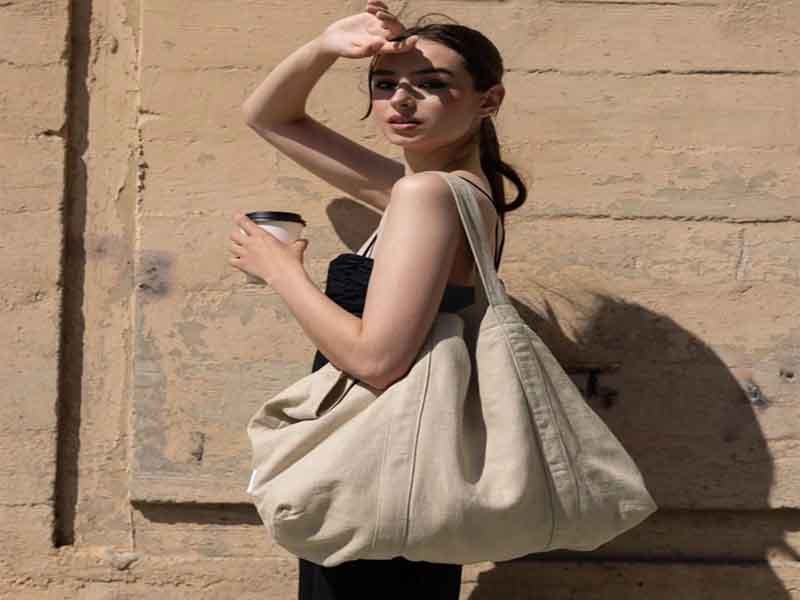
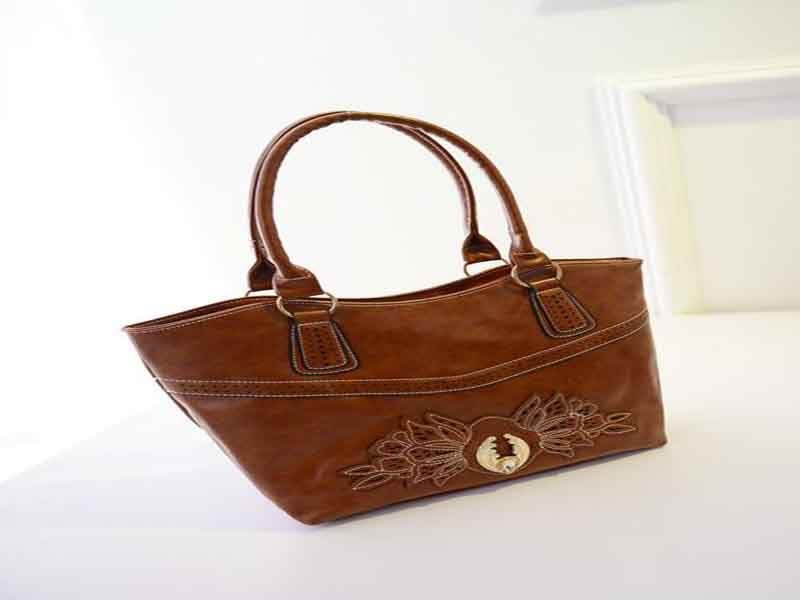
Can't find the answers?
No worries, please contact us and we will answer all the questions you have during the whole process of bag customization.
Make A Sample First?
If you have your own artwork, logo design files, or just an idea,please provide details about your project requirements, including preferred fabric, color, and customization options,we’re excited to assist you in bringing your bespoke bag designs to life through our sample production process.