Skip to content
A beach trip often begins with excitement—sunlight, ocean air, and the simple promise of relaxation. But within minutes of arriving, reality appears: wet towels dripping in the car, sand filling every corner of your backpack, goggles tangled with sunscreen bottles, and swim fins sticking out awkwardly from overloaded bags. This is where most people realize that a regular tote or backpack is not actually designed for beach and swim life.
Mesh bags change this experience completely because they are not built like sealed containers—they are engineered like ventilation systems. Instead of trapping moisture, sand, and odor inside, they allow everything to pass through or escape naturally. Air flows in from multiple directions, water drains instantly, and sand falls out as the bag moves.
At a functional level, the best mesh bags for beach and swim gear are lightweight, quick-draining carriers designed with open-structure fabrics such as polyester or nylon mesh. They typically include reinforced seams, breathable panels, and structured capacity to hold items like towels, goggles, fins, snorkels, wetsuits, and wet swimwear without retaining water or odor. Unlike waterproof bags that lock moisture inside, mesh systems actively reduce dampness and prevent sand accumulation.
But here’s the deeper insight most users miss: the performance of a mesh swim bag is not defined only by its “breathability,” but by how it manages the transition between wet and dry environments. A good mesh bag acts like a buffer zone—protecting dry items while letting wet items naturally dry during transport.
Imagine a family leaving the beach at sunset. One child throws wet goggles inside without rinsing, another stuffs a sandy towel on top of snacks, and someone else drops dripping swimwear at the bottom. In a poorly designed bag, this becomes chaos. But in a well-engineered mesh system, water drains downward, sand falls through the mesh structure, and airflow begins drying everything before they even reach the car.
That moment—when the bag quietly “resets” itself while you’re still on the road—is where the real value of mesh design becomes obvious.
Now let’s break down how this system actually works, starting from the most fundamental question: what exactly is a mesh beach and swim gear bag, and why does its structure matter more than most people realize?
What Is a Mesh Beach Bag?
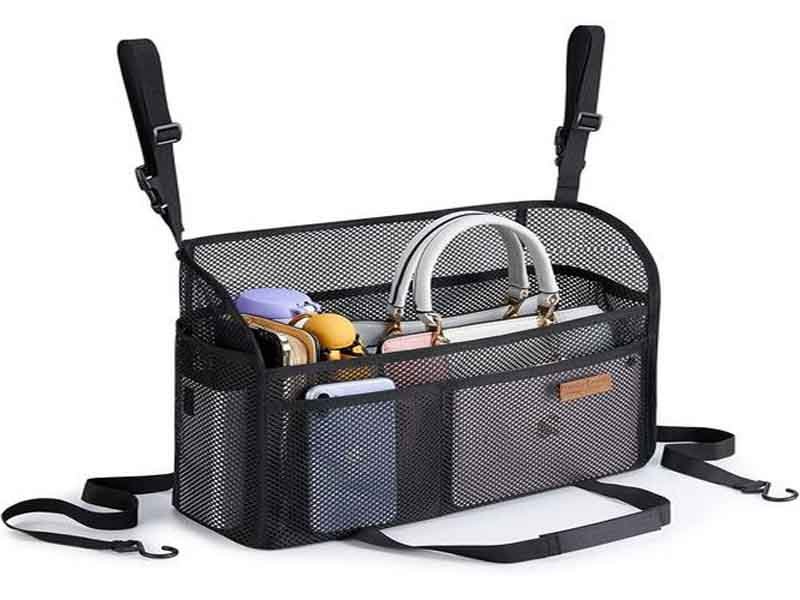
A mesh beach bag is a lightweight carrying system built from open-weave or knitted mesh fabric designed specifically to transport wet, sandy, and water-exposed items. Unlike traditional bags that rely on solid textiles to contain contents, mesh bags are constructed with intentionally open structures that prioritize airflow, drainage, and debris release. This makes them especially effective for beach environments, swimming pools, water sports, and outdoor recreation.
The core idea is simple but powerful: instead of fighting against water and sand, the bag works with them. Water passes through the fabric immediately, sand is released through mesh gaps, and air circulation helps reduce odor buildup and accelerate drying. This transforms the bag from a sealed container into a dynamic drying and cleaning system.
In real-world use, mesh beach bags are commonly used to carry swimwear, towels, goggles, snorkels, fins, sunscreen, water bottles, flip-flops, and sometimes even light wetsuits or training equipment. The structure allows wet items to coexist with dry ones more safely than in conventional bags, although separation practices are still important.
However, not all mesh bags behave the same. The performance difference between a poorly made mesh bag and a well-engineered one can be dramatic, especially in sand-heavy or high-moisture environments.
To understand this properly, we need to break down three key mechanisms:
Airflow dynamics
Sand particle release behavior
Water drainage speed
What Is a Mesh Gear Bag?
A mesh gear bag is a functional transport system designed to carry sports or recreational equipment while maintaining airflow and drainage. In beach and swim applications, it focuses specifically on managing wetness and sand exposure.
Unlike general sports bags, mesh gear bags are engineered with larger load variability. A single bag may carry rigid items like fins and snorkels alongside soft items like towels and swimwear. This requires a balance between structural strength and fabric openness.
A key engineering difference is load distribution. Mesh gear bags often use reinforced seams and structured base panels to prevent deformation when heavy wet items accumulate at the bottom. Without reinforcement, water absorption in towels or suits can create uneven weight distribution, causing strain on stitching points.
A simplified comparison helps clarify the difference:
| Feature | Mesh Beach Bag | Standard Sports Bag |
|---|---|---|
| Water drainage | Immediate | None |
| Sand removal | Passive through mesh | Retained |
| Drying speed | High | Low |
| Odor control | Strong | Weak |
| Structural rigidity | Medium | High |
| Moisture retention | Low | High |
The key takeaway is that mesh gear bags are not designed for containment in the traditional sense—they are designed for environmental interaction.
How Does Mesh Release Sand?
Sand release is one of the most important performance features of a beach mesh bag, and it depends entirely on mesh aperture size, fiber stiffness, and movement-based friction.
When a bag is lifted, shaken, or moved, sand particles are naturally dislodged due to gravity and vibration. Open mesh structures allow these particles to pass through rather than becoming trapped inside fabric layers. This is especially important for fine beach sand, which tends to embed itself in tightly woven textiles.
The effectiveness of sand release can be measured by mesh density:
| Mesh Type | Opening Size | Sand Release Efficiency | Ideal Use |
|---|---|---|---|
| Fine mesh (small openings) | 1–2 mm | Moderate | Goggles, small items |
| Medium mesh | 2–4 mm | High | Towels, mixed gear |
| Large mesh | 4–8 mm | Very high | Fins, bulky wet items |
However, sand behavior is not only about mesh size. Fiber stiffness also plays a major role. Stiffer synthetic fibers (such as polyester monofilament) prevent sand from sticking to surfaces, while softer fibers may trap particles in micro-gaps.
Another overlooked factor is wet sand adhesion. When sand is wet, it behaves almost like a sticky substance. Mesh bags that dry quickly reduce this adhesion cycle, allowing sand to fall away as moisture evaporates.
In practical use, this means:
After swimming, wet gear is placed into the bag
Sand begins drying and loosening during transport
Vibration from walking or driving dislodges particles
Sand exits through mesh openings naturally
This passive cleaning process is one of the biggest advantages of mesh over solid fabric systems.
How Does Mesh Improve Drainage?
Drainage is the most visible benefit of mesh bags. Unlike waterproof bags that trap water inside, mesh structures allow immediate release of liquid through gravity and airflow interaction.
When a wet towel or swimsuit is placed inside a mesh bag, water does not accumulate. Instead, it flows downward through mesh openings and exits the system almost instantly. This prevents the “pooling effect” common in sealed bags, where moisture collects at the bottom and creates odor, mildew risk, and weight imbalance.
Drainage efficiency depends on three structural elements:
Fabric openness (mesh density)
Gravity alignment (vertical flow paths)
Surface tension break points (fiber spacing)
A useful way to understand this is through a simple behavior model:
| Condition | Solid Bag | Mesh Bag |
|---|---|---|
| Wet towel added | Water trapped inside | Water drains immediately |
| Post-swim storage | Moist environment persists | Airflow reduces moisture |
| Odor formation | High risk | Low risk |
| Drying time | Slow | Fast |
A real-life example comes from swimming teams. Many competitive swimmers use mesh bags not only for convenience but for hygiene control. After training sessions, wet suits and towels stored in mesh bags dry partially during transit, significantly reducing odor buildup in locker rooms and vehicles.
However, drainage also introduces design challenges. A mesh bag must ensure that while water exits easily, essential items do not fall out. This requires careful balancing of mesh aperture size and structural containment zones.
This is where material engineering becomes critical. At Szoneier, different fabric types such as polyester mesh, nylon mesh, and coated hybrid meshes are often tested to balance drainage speed with load security. For example:
Polyester mesh: fast drainage, stable structure, widely used for beach gear
Nylon mesh: softer feel, higher abrasion resistance, premium applications
PVC-coated mesh: controlled water flow, semi-water-resistant zones
Each material changes how the bag behaves under real beach conditions.
Are Beach and Swim Bags Different?
Although often grouped together, beach bags and swim gear bags serve slightly different functional needs.
A beach bag is typically designed for lifestyle use. It carries towels, sunscreen, snacks, sunglasses, and casual items for a day at the beach. A swim gear bag, on the other hand, is more performance-oriented. It is designed to hold training equipment such as fins, kickboards, pull buoys, goggles, caps, and wetsuits used in swimming practice or competitions.
The structural differences can be summarized as follows:
| Feature | Beach Bag | Swim Gear Bag |
|---|---|---|
| Primary use | Leisure & lifestyle | Training & sports |
| Load type | Light to medium | Medium to heavy wet load |
| Gear structure | Soft items | Mixed rigid + soft equipment |
| Drainage priority | Moderate | High |
| Durability demand | Medium | High |
| Organization need | Low | High |
Swim gear bags often require compartmentalization because equipment is more technical. Fins need long vertical space, goggles require protection from scratches, and wetsuits need maximum drainage space. Beach bags, by contrast, prioritize simplicity and quick access.
Another important difference is frequency of use. Swim gear bags are often used multiple times per week in training environments, meaning abrasion resistance and seam durability become more critical than in occasional beach-use bags.
From a material engineering perspective, this is where fabric selection becomes important:
Polyester mesh works well for general use due to balance of strength and cost
Nylon mesh is preferred for high-frequency training environments
Reinforced Oxford or canvas bottoms are sometimes added for load stability
Neoprene panels may be integrated for wet gear separation
This hybrid approach is increasingly common in professional-grade swim bags.
Understanding these distinctions helps explain why a “one-size-fits-all” mesh bag often fails in real-world use. A beach bag that works for towels and sunscreen may collapse under the weight of wet fins and training equipment, while a heavy-duty swim bag may feel unnecessarily bulky for casual beach outings.
This difference becomes even more important when designing or sourcing custom mesh bags for different user groups—a topic we will expand further in the next sections, where material choice and design structure become central to performance outcomes.
Which Mesh Material Is Best?
Choosing the best mesh material for beach and swim gear bags is not just about durability—it is about how the fabric behaves in saltwater, chlorine, sand abrasion, UV exposure, and repeated wet-dry cycles. A bag used in a swimming pool faces very different stress compared to one used on a windy beach with fine sand and strong sunlight. This is why material selection becomes the foundation of performance, not just a cost decision.
The most commonly used materials include polyester mesh, nylon mesh, PVC-coated mesh, and recycled synthetic meshes. Each behaves differently in real environments, and understanding these differences helps explain why some bags last one summer while others survive years of training and travel.
At a functional level, the best mesh material for beach and swim gear must satisfy four core requirements:
Fast drainage of water
Resistance to saltwater and chlorine
UV stability under sunlight exposure
Structural integrity under repeated wet load
When these four conditions are balanced, the bag becomes not just a container, but a reliable outdoor system.
Is Polyester Mesh More Durable?
Polyester mesh is one of the most widely used materials for beach and swim gear bags because it offers a strong balance between cost, durability, and environmental resistance. Polyester fibers have low water absorption, which means they do not retain moisture even after full submersion. This property allows the bag to dry quickly and prevents long-term odor buildup.
In real-world usage, polyester mesh performs especially well in beach environments where sand, salt, and sun exposure occur simultaneously. The fiber structure resists stretching when wet, meaning the bag maintains its shape even after carrying heavy towels or water-filled swimwear.
However, durability is not absolute—it depends heavily on mesh construction. For example:
Monofilament polyester mesh is stiffer and more abrasion-resistant
Multifilament polyester mesh is softer but slightly less resistant to snagging
Heat-set polyester mesh maintains better dimensional stability over time
A key advantage of polyester is UV resistance. While not completely immune to sun damage, it degrades significantly slower than natural fibers such as cotton or linen. This makes it suitable for outdoor storage, beach exposure, and poolside environments.
Is Nylon Mesh Good for Swim Gear?
Nylon mesh is often considered a premium option for swim gear bags because of its high tensile strength, flexibility, and abrasion resistance. Compared to polyester, nylon feels softer and more elastic, which allows it to absorb shock better when heavy or irregular items are placed inside the bag.
In swim training environments, nylon mesh is particularly effective because equipment like fins, kickboards, and pull buoys frequently rub against each other. Nylon’s smooth surface reduces friction damage and extends product lifespan under repetitive use.
However, nylon has one important limitation: it absorbs more moisture than polyester. This means it may take slightly longer to dry after heavy exposure to water. In humid environments, this can lead to mild odor retention if the bag is not properly ventilated.
Despite this, nylon remains a preferred choice for high-performance swim gear bags due to its combination of toughness and flexibility.
What Is PVC-Coated Mesh?
PVC-coated mesh is a hybrid material where a mesh base (often polyester) is coated with a layer of polyvinyl chloride. This coating changes the behavior of the fabric significantly by reducing airflow and increasing surface resistance.
Unlike traditional open mesh, PVC-coated mesh does not allow free water flow. Instead, it slows drainage and provides partial water resistance. This makes it suitable for specific zones in a swim bag rather than full-bag construction.
For example, PVC-coated panels are often used for:
Bottom reinforcement layers
Wet separation compartments
Sand-resistant storage zones
Equipment protection sections
The advantage of PVC coating is structural stability. It prevents stretching and deformation under heavy loads. It also provides a smoother surface that resists sand sticking.
However, it also reduces breathability. This means PVC-coated mesh should not be used for the entire bag if fast drying is a priority.
Are Recycled Mesh Fabrics Suitable?
Recycled mesh fabrics, particularly recycled polyester (rPET), are increasingly used in beach and swim gear bags due to sustainability requirements in global markets. These materials are produced from post-consumer plastic bottles or industrial waste, which are reprocessed into polyester fibers.
From a performance perspective, recycled polyester behaves very similarly to virgin polyester in terms of:
Water resistance
Drying speed
UV stability
General strength
However, quality consistency depends heavily on the recycling process. Lower-grade recycled fibers may show slight variations in texture or color uniformity, while high-grade recycled materials can perform nearly identically to virgin polyester.
In beach and swim applications, recycled mesh is suitable for:
Eco-conscious retail collections
Private label sports brands
Promotional swim gear bags
Sustainable travel accessories
The main limitation is cost stability and supply chain consistency, especially for large-volume production.
Which Material Handles Chlorine Best?
Chlorine exposure is one of the most overlooked stress factors for swim gear bags, especially those used in pool training environments. Chlorinated water can gradually weaken fibers, affect color stability, and reduce material flexibility over time.
Among common materials:
Polyester mesh shows the highest resistance to chlorine degradation
Nylon mesh performs well but may slowly lose elasticity under prolonged exposure
Cotton-based mesh is the least suitable due to high moisture absorption and fiber breakdown
PVC-coated mesh provides surface protection but may degrade if coating cracks under repeated folding
In practical swimming environments, polyester mesh is often the most stable long-term choice due to its chemical resistance and low water absorption. This is why it is frequently used in professional swim team bags and school training equipment carriers.
A comparative overview helps clarify material behavior:
| Material Type | Saltwater Resistance | Chlorine Resistance | UV Resistance | Drying Speed | Long-Term Durability |
|---|---|---|---|---|---|
| Polyester Mesh | High | High | High | Fast | High |
| Nylon Mesh | High | Medium-High | Medium | Medium | High |
| PVC-Coated Mesh | Medium | Medium | Medium | Slow | Medium |
| Recycled Polyester | High | High | High | Fast | High (varies by grade) |
From a design perspective, the best solution is often not a single material but a hybrid system. For example, a bag may use:
Polyester mesh body for airflow and drainage
Reinforced Oxford base for load stability
Nylon straps for comfort and strength
PVC-coated compartment for wet separation
This multi-material approach allows engineers to optimize performance for real-world beach and swim conditions rather than relying on one material to solve all problems.
In high-quality manufacturing environments such as Szoneier’s fabric development system, material testing often includes saltwater immersion, chlorine exposure simulation, UV aging, and repeated wet-dry cycling. These tests ensure that the final mesh bag is not only functional on day one but remains stable across multiple seasons of use.
Ultimately, the “best” mesh material is not universal—it depends on whether the priority is lightweight travel, professional training, family beach use, or sustainable branding. The correct material choice always starts with understanding how the bag will actually be used in water, sand, sun, and motion.
Which Size Should You Choose?

Mesh bags for beach and swim gear are often underestimated in one key area: size is not just about capacity, it directly affects usability, drying efficiency, load balance, and how well equipment behaves during transport. A bag that is too small compresses wet gear and slows drying. A bag that is too large creates internal chaos where fins, towels, goggles, and wetsuits move freely and damage each other.
The right size depends on three core factors: type of activity (casual beach use vs swim training), number of users (individual vs family), and equipment type (soft gear vs rigid gear). Once these are understood, size selection becomes much more precise.
A well-designed mesh swim bag does not simply “hold things”—it organizes moisture flow, distributes weight, and maintains airflow even when fully loaded.
What Size Fits Daily Swim Gear?
For individual swimmers or daily training use, medium mesh bags are typically the most efficient choice. These usually accommodate essentials such as goggles, swim caps, towels, training fins, and a water bottle without becoming bulky.
A key insight from swim training environments is that compactness improves discipline. When the bag is too large, equipment tends to scatter inside, increasing retrieval time and reducing organization efficiency. Medium-sized bags help keep gear grouped and accessible.
Typical dimensions for daily swim use:
| Size Category | Approx. Dimensions | Typical Contents | Functional Behavior |
|---|---|---|---|
| Small | 25–30 cm height | Goggles, cap, small towel | High portability, limited capacity |
| Medium | 35–45 cm height | Full training kit | Balanced organization + airflow |
| Large | 45–55 cm height | Full gear + wet suit | High capacity, slower drying if overfilled |
Medium bags remain the most widely used because they balance airflow with structure. They also reduce unnecessary weight accumulation from oversized empty space.
Which Capacity Suits Family Beach Trips?
Family beach trips introduce a completely different requirement profile. Instead of one swimmer’s equipment, the bag must handle multiple towels, snacks, sunscreen, toys, inflatable items, and sometimes wet clothing from several people.
In this scenario, large mesh tote-style bags become more appropriate. The goal is not only storage but also separation of wet and dry zones within a shared system.
A typical family beach bag may include:
3–5 towels
Multiple sets of swimwear
Beach toys
Water bottles
Light snacks
Sunscreen and accessories
However, overloading is a common mistake. When a mesh bag is too large, items compress at the bottom, reducing airflow and increasing drying time. This defeats one of the core advantages of mesh construction.
A practical design principle is “structured fullness”—the bag should feel filled but not compressed.
How Do You Measure Long Swim Fins?
Swim fins are one of the most dimensionally challenging pieces of equipment in bag design because they are long, rigid, and slightly curved. Standard bag sizing often fails to account for fin length, leading to protrusion, bending, or awkward diagonal placement.
Typical fin lengths:
Short training fins: 30–45 cm
Standard swim fins: 45–60 cm
Professional diving fins: 60–75 cm+
For proper fit, the internal vertical height of the bag should exceed fin length by at least 10–15 cm to allow comfortable insertion and removal.
A comparison helps clarify fit issues:
| Fin Type | Required Bag Height | Fit Risk if Undersized |
|---|---|---|
| Short fins | 40–50 cm bag | Low |
| Standard fins | 55–65 cm bag | Medium bending |
| Long fins | 70+ cm bag | High deformation or sticking |
One overlooked issue is diagonal packing. Users often try to insert long fins diagonally into shorter bags, which creates pressure on mesh seams and reduces structural lifespan. A properly sized vertical compartment prevents this problem entirely.
Is an Extra-Large Bag Necessary?
Extra-large mesh bags are often marketed as “all-in-one beach solutions,” but in practical use, they are only necessary under specific conditions. These include group beach trips, competitive swim teams, or situations involving multiple full-size towels and bulky equipment.
The advantage of extra-large bags is obvious: maximum capacity. However, the drawback is equally important—reduced structural control.
When a mesh bag becomes too large:
Items shift excessively during movement
Wet towels compress at the bottom
Airflow becomes uneven
Drying efficiency decreases in overloaded areas
Carrying comfort is reduced due to weight distribution
In many cases, users are better served with two medium-large bags instead of one oversized bag. This improves organization and allows separation of wet and dry gear.
A useful breakdown:
| Use Case | Recommended Size Strategy | Reason |
|---|---|---|
| Solo swimmer | Medium bag | Efficiency and portability |
| Couple beach trip | One medium + one large | Separation of wet/dry items |
| Family outing | Two large bags | Load distribution |
| Swim team | Multiple medium bags | Equipment categorization |
Extra-large bags are most effective when they are not filled beyond 70–80% of their capacity. This preserves airflow and prevents internal compression.
How Much Weight Can Mesh Carry?
Weight capacity in mesh bags is not defined solely by fabric strength—it depends on seam construction, strap design, load distribution, and moisture content of the items inside. Wet beach towels can weigh two to three times more than dry ones, which significantly changes load expectations.
A standard performance range for mesh beach and swim bags is:
| Bag Type | Recommended Working Load | Max Test Load (Design Range) |
|---|---|---|
| Small mesh bag | 2–3 kg | 5 kg |
| Medium swim bag | 5–7 kg | 10 kg |
| Large beach tote | 8–12 kg | 15 kg |
| Heavy-duty gear bag | 12–18 kg | 20+ kg |
However, real-world failure rarely comes from fabric tearing alone. It usually occurs at stress concentration points:
Handle stitching zones
Drawstring exit points
Bottom seam corners
Mesh-to-panel transitions
Wet load imbalance is especially important. A single soaked towel can weigh over 1 kg. Multiply that by several items, and the load distribution becomes uneven, increasing stress on one side of the bag.
This is why reinforced seam engineering is critical. At Szoneier’s manufacturing level, high-load mesh bags often integrate:
Double-stitched seam lines
Reinforced bottom panels (Oxford or canvas)
Bar-tack stitching at handle joints
Load-spread strap geometry
Controlled mesh elasticity zones
These features ensure that the bag does not simply “hold weight,” but distributes it safely across multiple structural points.
Another important factor is dynamic load. Walking, running, or carrying the bag over uneven surfaces creates movement-based stress. A bag that holds 10 kg statically may fail at 7–8 kg under motion if poorly engineered.
This is where material pairing becomes essential:
Polyester mesh provides lightweight structure
Oxford fabric stabilizes load-bearing zones
Nylon straps improve comfort under tension
Reinforced stitching prevents seam creep
A well-balanced system ensures that even fully wet beach gear can be transported safely without deformation or failure.
Ultimately, size and load capacity must be designed together—not independently. A large bag with weak seams performs worse than a medium bag with engineered reinforcement. The best design is always a balance between volume, structure, and real-world movement behavior.
Which Bag Design Works Best?
The effectiveness of a mesh beach and swim gear bag is not determined by size or material alone—it is fundamentally shaped by design architecture. Design controls how weight is distributed, how quickly items dry, how sand exits the system, and how comfortably the bag behaves during movement. A poorly designed mesh bag can fail even when made from high-quality fabric, while a well-designed structure can dramatically improve performance with the same material.
In real-world beach and swim scenarios, the bag is constantly exposed to motion, moisture, and irregular loads. Towels shift, water drains, fins protrude, and sand accumulates unevenly. The design must respond to all of these conditions simultaneously.
A strong design system usually focuses on four pillars: carrying structure, load stability, airflow optimization, and wet-dry behavior control.
Is a Mesh Tote Easy to Carry?
Mesh totes are the most common design for beach use because they offer simplicity, fast access, and large open capacity. They typically use two handles and a wide top opening, making them ideal for quick packing and unpacking during beach trips.
However, comfort depends heavily on handle design. A mesh tote filled with wet towels and swim gear can become significantly heavier than expected. If handles are too thin or poorly positioned, pressure concentrates on the hands and shoulders, making the bag uncomfortable over longer distances.
Key design factors affecting carry comfort:
Handle width (too narrow increases pressure points)
Handle material (soft webbing vs rigid tape)
Handle drop length (affects posture during walking)
Attachment reinforcement (prevents tearing under wet load)
A well-designed mesh tote distributes weight evenly across both handles and prevents sagging at the center. Without reinforcement, the bag tends to “collapse inward” when wet gear accumulates at the bottom, making it harder to carry and reducing airflow inside.
Are Mesh Backpacks More Comfortable?
Mesh backpacks are increasingly used for swim training because they offer superior weight distribution compared to tote-style bags. By shifting load from the hands to the shoulders, backpacks reduce fatigue and improve mobility—especially when carrying heavier wet equipment.
In swim training environments, backpacks are often preferred because athletes may carry:
Wet towels
Training fins
Kickboards
Resistance tools
Multiple swim sets
A backpack structure stabilizes movement during walking or cycling, which is especially important for athletes commuting between pools, gyms, or training facilities.
However, comfort depends on internal organization. Without proper compartments, gear can shift inside the backpack, creating uneven pressure on the back.
A comparison helps clarify:
| Feature | Mesh Tote | Mesh Backpack |
|---|---|---|
| Carry comfort | Medium | High |
| Load distribution | Hand-based | Shoulder-based |
| Gear stability | Low–Medium | Medium–High |
| Accessibility | Very high | Medium |
| Training suitability | Casual use | Professional use |
Backpacks are generally better for heavier or more frequent use, while totes are better for casual beach environments where quick access is more important than structural support.
Do Drawstring Bags Hold Gear Securely?
Drawstring mesh bags are widely used for swim gear because they allow quick opening and closing, lightweight construction, and flexible capacity adjustment. However, their security depends on cord quality, locking mechanism, and mesh elasticity.
A simple drawstring without a lock may loosen during movement, especially when carrying heavy wet items. A cord lock system improves stability by maintaining tension on the opening.
But drawstring design also introduces trade-offs:
Less structural rigidity
Reduced protection against spillage
Limited load stability for heavy items
More dependence on user tightening behavior
Drawstring bags are best suited for:
Goggles and caps
Light towels
Training accessories
Secondary gear storage
They are less suitable for:
Heavy wet towels
Long fins
Bulk equipment loads
Professional swim sets
A hybrid design (drawstring + reinforced upper band) often performs better in real-world use because it balances flexibility with structure.
Which Strap Style Reduces Pressure?
Strap design plays a critical role in user comfort, especially when bags are filled with wet gear that increases weight significantly. Strap width, material softness, and attachment geometry all influence how pressure is distributed across the body.
Common strap types include:
Thin cord straps (lightweight but high pressure concentration)
Flat webbing straps (balanced comfort and durability)
Padded straps (high comfort but increased weight and drying time)
Reinforced shoulder straps (used in backpacks for heavy loads)
Pressure distribution is especially important in beach environments where users may walk long distances from parking areas or transport wet gear for extended periods.
A simplified comfort comparison:
| Strap Type | Comfort Level | Load Suitability | Drying Speed |
|---|---|---|---|
| Thin cord | Low | Light loads only | Very fast |
| Webbing strap | Medium–High | Medium loads | Fast |
| Padded strap | High | Heavy loads | Slow |
| Reinforced backpack strap | Very high | Professional use | Medium |
A key design insight is that strap comfort is not only about softness—it is about load spreading. A wider strap reduces pressure per square centimeter, which significantly improves carrying experience when the bag is fully wet.
Is a Reinforced Bottom Important?
A reinforced bottom is one of the most important structural features in a high-performance mesh swim or beach bag. Wet towels, fins, and gear naturally accumulate at the bottom due to gravity, creating a concentrated load zone.
Without reinforcement, this area experiences:
Mesh stretching
Seam distortion
Uneven weight distribution
Reduced bag lifespan
Reinforcement materials such as Oxford fabric, canvas, or coated mesh are often used to stabilize the base. These materials do not need to be fully waterproof—they simply need to provide structural support and resist deformation.
A reinforced bottom improves:
Load stability when carrying wet gear
Durability under repeated use
Shape retention during transport
Protection against abrasion from sand and rough surfaces
Design comparison:
| Bottom Type | Stability | Sand Resistance | Durability |
|---|---|---|---|
| Pure mesh | Low | High drainage | Medium–Low |
| Reinforced Oxford base | High | Medium | High |
| Canvas base | Very high | Medium–Low | Very high |
| Coated mesh base | Medium | Medium–High | Medium |
In professional swim environments, reinforced bottoms are almost standard because gear is consistently wet and heavy. In casual beach use, they provide added durability and extend product lifespan significantly.
A well-designed mesh bag does not rely on a single feature—it combines structure, straps, and reinforcement into a unified system that adapts to real beach and swim behavior. When these elements work together, the bag becomes not just a carrier, but a reliable tool that manages water, sand, and motion naturally.
How Should Swim Gear Be Organized?

Good mesh bag performance is not only about material or size—it is also about internal organization. Beach and swim equipment behaves very differently inside a moving bag: goggles are fragile, fins are rigid and long, towels are heavy when wet, and small accessories disappear easily into mesh openings. Without structure, even a high-quality bag becomes chaotic.
Organization in a mesh swim bag is essentially a system of “micro-environments,” where each type of gear is placed according to moisture level, fragility, and frequency of use. The goal is to prevent damage, speed up drying, and make retrieval effortless even when the bag is fully packed.
A well-organized swim bag improves three key outcomes:
Faster packing and unpacking
Reduced equipment damage
Better drying efficiency during transport
Which Pockets Keep Small Items Safe?
Small swim accessories such as goggles, earplugs, nose clips, swim caps, and keys require secure containment because they are easily lost in open mesh structures. A single main compartment is not sufficient for these items, especially when the bag contains wet towels and large equipment.
The most effective design solution is integrated secondary pockets. These can be internal zip compartments, semi-transparent mesh pouches, or solid fabric panels sewn into the main structure.
Small-item organization typically includes:
Waterproof mini pockets for keys and cards
Semi-mesh pockets for goggles and caps
Zippered compartments for valuables
Quick-access external slots for sunscreen
A comparison of pocket types helps clarify function:
| Pocket Type | Security Level | Visibility | Best Use |
|---|---|---|---|
| Zippered solid pocket | Very high | Low | Keys, wallet, phone |
| Mesh pocket | Medium | High | Goggles, caps |
| Waterproof pocket | Very high | Medium | Electronics, cash |
| Open slot pocket | Low | High | Sunscreen, quick items |
A key insight is that small items should never be stored in the same open mesh space as wet towels. Moisture transfer and pressure damage are the most common causes of loss or breakage.
How Do You Separate Wet and Dry Gear?
Separation between wet and dry items is one of the most important functions of a swim gear bag. Even though mesh bags allow drainage, they do not automatically prevent moisture transfer between items.
Without separation, a dry change of clothes can become damp within minutes of being placed next to a soaked towel. This reduces comfort after swimming and increases odor risk.
Effective separation strategies include:
Dedicated dry compartment (solid fabric zone)
Internal mesh divider panels
Removable waterproof pouch
Top-bottom zoning (dry top, wet bottom)
External attachment pockets for wet items
A structured separation system can be visualized like this:
| Zone | Purpose | Recommended Items |
|---|---|---|
| Upper dry zone | Protect clean items | Clothes, towels for after swim |
| Middle neutral zone | Mixed-use storage | Snacks, bottles, accessories |
| Lower wet zone | Drainage area | Wet swimsuits, towels, fins |
Gravity-based design is especially important. Since water naturally flows downward, placing wet items at the bottom allows controlled drainage without contaminating dry gear above.
Some advanced designs even include semi-separated liners that allow water to pass through but slow direct contact between fabrics.
Where Should Goggles and Swim Caps Go?
Goggles and swim caps are high-frequency-use items that require protection from both physical damage and contamination. In many cases, goggles are scratched not during swimming, but during transport inside crowded bags.
The ideal storage location for goggles is a semi-rigid protective pocket with soft lining. This prevents lens scratching while allowing quick access before training.
Swim caps, depending on material, should be stored in breathable compartments to avoid moisture buildup. Silicone caps, for example, may stick to other items if stored in enclosed wet environments.
Recommended placement strategy:
Goggles → padded or semi-rigid pocket near top of bag
Caps → mesh pocket or ventilated compartment
Earplugs → small sealed pouch with zipper
This organization reduces pre-swim friction—literally and operationally. Athletes can quickly access gear without digging through wet items.
Do Fins Need a Separate Compartment?
Swim fins are one of the most structurally challenging items in any swim gear bag due to their length, rigidity, and curved shape. When stored incorrectly, they can bend other items or distort the bag structure.
A dedicated fin compartment is highly recommended, especially for training or professional use. This compartment is usually vertical, reinforced, and positioned along the side or center of the bag.
Key design considerations:
Length compatibility (typically 45–70 cm)
Structural reinforcement to prevent bending
Drainage-friendly mesh or hybrid construction
Separation from soft items
A comparison of storage methods:
| Storage Method | Safety | Space Efficiency | Risk |
|---|---|---|---|
| Dedicated fin slot | Very high | Medium | Low |
| Main compartment vertical placement | Medium | High | Medium deformation |
| Diagonal placement | Low | High | High stress on seams |
| External strap carry | High | Medium | Exposure to environment |
Fins should never be forced into undersized compartments. This creates long-term deformation and increases seam stress at the bag base.
How Can Water Bottles Be Stored?
Water bottles are essential for both beach and swim training environments, but they introduce weight and leakage considerations. A full water bottle can shift balance inside the bag if not properly secured.
The best storage options include:
External side mesh pocket (quick access)
Reinforced internal sleeve (stability)
Elastic strap holder (flexible fit)
Leak-resistant compartment (for capped bottles)
External pockets are convenient but expose bottles to sand and heat. Internal sleeves provide better protection but reduce access speed. The best solution depends on usage scenario.
A practical breakdown:
| Storage Type | Convenience | Stability | Protection |
|---|---|---|---|
| External mesh pocket | Very high | Medium | Low |
| Internal sleeve | Medium | Very high | High |
| Elastic strap holder | High | Medium | Medium |
| Insulated bottle compartment | Medium | High | Very high |
In hot beach environments, insulated compartments can significantly improve hydration comfort by slowing temperature change.
A well-designed swim bag does not treat water bottles as an afterthought—they are integrated into the balance system of the entire bag.
Are Mesh Bags Sand-Free and Quick-Drying?
Mesh bags are often described as “sand-free” and “quick-drying,” but the reality is more nuanced. They do not completely prevent sand from entering, nor do they eliminate moisture instantly. Instead, they manage both sand and water through passive environmental interaction.
The effectiveness depends on mesh aperture size, airflow, movement, and fabric stiffness. When these factors are optimized, mesh bags dramatically reduce sand retention and accelerate drying compared to solid fabric bags.
The key concept is not elimination—it is controlled release.
Do Mesh Bags Keep Sand Out?
Mesh bags do not fully block sand from entering. Instead, they allow sand to pass through and exit naturally. This is fundamentally different from sealed bags, which trap sand inside until manual cleaning is required.
When beach gear is placed in a mesh bag, sand behaves dynamically:
Dry sand falls through openings immediately
Wet sand clings temporarily but loosens during drying
Movement shakes sand out during walking or transport
Airflow helps separate fine particles from fabric
The effectiveness depends heavily on mesh size:
| Mesh Size | Sand Blocking | Sand Release | Best Use |
|---|---|---|---|
| Fine mesh | Medium entry | High release | Goggles, small items |
| Medium mesh | Low entry | Very high release | Towels, mixed gear |
| Large mesh | Very low entry | Instant release | Fins, bulky items |
One important insight is that “sand-free” performance improves over time during movement. A bag sitting still on the beach may collect sand, but a bag carried or shaken naturally clears itself.
However, no mesh structure can fully prevent micro-sand infiltration in extremely fine beach environments. This is why post-use shaking or rinsing is still recommended.
Which Mesh Size Releases Sand Faster?
Sand release speed is directly related to mesh aperture and fiber stiffness. Larger openings allow faster sand exit, but they also reduce containment security. Smaller openings improve containment but slow sand removal.
This creates a design trade-off:
| Mesh Type | Sand Exit Speed | Containment Strength | User Scenario |
|---|---|---|---|
| Fine mesh | Medium | High | Urban pools, light beach use |
| Medium mesh | High | Medium | General beach and swim use |
| Open mesh | Very high | Low | Heavy sand environments |
Medium mesh is often the most balanced option because it allows efficient sand release while still containing smaller accessories.
Fiber stiffness also matters. Stiffer synthetic mesh prevents sand from embedding into fibers, while softer mesh may trap particles until washing.
How Does Airflow Reduce Odor?
Odor formation in beach and swim gear bags is primarily caused by trapped moisture combined with organic residue from saltwater, chlorine, sweat, and sunscreen. When moisture is sealed inside a non-breathable bag, bacteria growth accelerates.
Mesh bags solve this by enabling continuous airflow. Air circulation reduces humidity levels inside the bag, preventing the stagnant conditions that lead to odor buildup.
The airflow mechanism works in three stages:
Water evaporates from wet items
Air passes through mesh openings
Humidity is released into the environment
This prevents the “closed environment effect” typical of waterproof bags.
A comparison illustrates the difference:
| Condition | Mesh Bag | Solid Bag |
|---|---|---|
| Moisture retention | Low | High |
| Odor buildup | Slow | Fast |
| Drying speed | High | Low |
| Ventilation | Continuous | None |
However, airflow alone is not enough. If wet towels are tightly compressed, airflow is blocked internally. This is why proper packing structure is essential.
Can Wet Towels Dry Inside the Bag?
Wet towels can partially dry inside a mesh bag, but full drying depends on thickness, environmental conditions, and airflow exposure. A thin microfiber towel may dry significantly during transport, while a thick cotton beach towel may only partially dry.
Key influencing factors include:
Ambient temperature
Wind exposure
Bag openness
Towel thickness
Humidity level
A typical drying scenario:
| Environment | Drying Effect |
|---|---|
| Hot, dry weather | High evaporation rate |
| Windy beach | Very fast drying |
| Humid coastal air | Slow drying |
| Enclosed transport (car) | Minimal drying |
Mesh bags are most effective during the transition phase—between beach and home. They begin the drying process early, reducing total moisture load by the time items are stored indoors.
Is Mesh Better Than Waterproof Fabric?
Mesh and waterproof fabrics serve completely different functions, and neither is universally better. The correct choice depends on whether the priority is containment or ventilation.
Mesh bags excel in:
Sand release
Airflow
Quick drying
Odor reduction
Wet gear management
Waterproof bags excel in:
Leak prevention
Dry item protection
Electronics safety
Rain resistance
Controlled storage
A direct comparison shows the trade-off:
| Feature | Mesh Bag | Waterproof Bag |
|---|---|---|
| Sand removal | Excellent | Poor |
| Drying speed | Fast | Slow |
| Moisture containment | Low | High |
| Gear protection | Medium | High |
| Odor control | High | Medium |
In real beach and swim scenarios, the most effective solution is often a combination system:
Mesh bag for wet and sandy gear
Waterproof pouch for electronics and dry clothes
This hybrid approach ensures that each material is used for what it does best rather than forcing one system to solve all problems.
A well-engineered beach setup is not about choosing mesh or waterproof—it is about integrating both into a balanced gear ecosystem that adapts to real environmental conditions.
How Do You Clean a Mesh Swim Bag?
Cleaning a mesh swim bag is not just a hygiene step—it is part of maintaining its structural performance in environments filled with chlorine, saltwater, sunscreen, sand, and sweat. Unlike ordinary bags, mesh structures actively interact with water and debris, which means residues can settle in seams, cord channels, and fiber intersections even when the surface looks clean.
A properly maintained mesh bag can last multiple seasons, while a poorly maintained one may begin to smell, stiffen, or weaken within weeks. The key is understanding that cleaning frequency, method, and drying behavior all work together as a system.
A well-cleaned mesh swim bag achieves three goals:
Removes chlorine and salt buildup
Prevents odor formation from trapped moisture
Maintains fiber flexibility and seam strength
How Often Should the Bag Be Rinsed?
Rinsing frequency depends heavily on exposure conditions. A bag used in chlorinated pools behaves very differently from one used at the ocean.
In swimming environments, chlorine residues gradually weaken synthetic fibers over time. At the beach, salt crystals and fine sand accumulate in mesh openings and accelerate abrasion during movement.
A practical rinsing guideline:
| Usage Condition | Recommended Cleaning Frequency | Reason |
|---|---|---|
| Daily pool training | Rinse after every use | Chlorine residue control |
| Weekly swim sessions | Rinse 1–2 times per week | Moderate chemical exposure |
| Beach use | Rinse after each trip | Salt and sand removal |
| Mixed casual use | Clean when visibly soiled | Prevent odor buildup |
A key insight is that rinsing is more important than deep washing in most cases. A quick freshwater rinse immediately after use removes the majority of chlorine and salt before they crystallize inside fibers.
If these residues are left untreated, they can gradually cause:
Fiber brittleness
Color fading
Stiffened mesh texture
Reduced elasticity in seams
Early odor development
How Do You Remove Chlorine and Salt?
Chlorine and salt behave differently on synthetic fabrics, but both can become embedded in mesh fibers if not removed promptly.
Chlorine is chemically active and continues to react with fibers even after swimming ends. Salt, on the other hand, crystallizes as water evaporates, leaving abrasive particles within the mesh structure.
Effective removal involves three stages:
Freshwater rinse immediately after use
Mild detergent wash when needed
Complete drying in ventilated conditions
For deeper cleaning cycles, a gentle soak in cool water with mild detergent helps break down chlorine residues and salt deposits. Harsh chemicals such as bleach are unnecessary and may damage mesh fibers.
A comparison of cleaning agents:
| Cleaning Method | Chlorine Removal | Salt Removal | Fabric Safety |
|---|---|---|---|
| Freshwater rinse | Medium | Medium | Very high |
| Mild detergent wash | High | High | High |
| Bleach solution | High | High | Low (fiber damage risk) |
| Hot water wash | Medium | High | Medium (shrink risk for some fabrics) |
One important but often overlooked step is agitation. Light manual movement of the bag during rinsing helps dislodge sand and salt trapped in mesh openings.
Is Machine Washing Safe?
Machine washing can be safe for mesh swim bags, but only when the material, stitching, and accessories are designed for mechanical stress. Not all mesh bags are built for repeated drum rotation, spinning, and friction with other garments.
Polyester mesh typically performs well in gentle cycles due to its stable fiber structure and low water absorption. Nylon mesh can also handle machine washing but may require more careful temperature control to avoid deformation.
Key precautions include:
Use a gentle or delicate cycle
Avoid high-temperature washing
Place the bag inside a laundry mesh bag
Close all zippers and loosen drawstrings
Avoid mixing with heavy items like jeans or shoes
A risk comparison:
| Material Type | Machine Wash Suitability | Main Risk |
|---|---|---|
| Polyester mesh | High | Minimal shrinkage risk |
| Nylon mesh | Medium–High | Elastic deformation under heat |
| Cotton mesh | Medium | Shrinkage and shape distortion |
| Hybrid mesh bags | Varies | Weakest component determines durability |
Machine washing is especially effective for removing sunscreen residue, sweat buildup, and fine sand particles that are difficult to eliminate manually.
However, repeated aggressive washing cycles can affect:
Cord lock durability
Stitch tension stability
Print adhesion
Edge binding integrity
For long-term use, alternating between rinsing and occasional machine washing is ideal.
How Should the Bag Be Dried?
Drying is one of the most important steps in maintaining mesh swim bag performance. Because mesh fabrics are highly breathable, they dry faster than solid fabrics—but only if airflow is not blocked.
Improper drying can lead to odor buildup even after cleaning, especially if moisture remains trapped in seams or folded sections.
Best drying practices include:
Shake out excess water immediately after washing
Hang the bag fully open to maximize airflow
Avoid folding or compressing during drying
Place in a well-ventilated or shaded area
Ensure internal seams are fully dry before storage
A comparison of drying environments:
| Drying Condition | Speed | Odor Risk | Fabric Impact |
|---|---|---|---|
| Outdoor shade with airflow | Fast | Low | Optimal |
| Indoor ventilated space | Medium | Low | Safe |
| Direct sunlight exposure | Very fast | Low–Medium | Possible fading over time |
| Closed room drying | Slow | High | Odor risk |
One common mistake is assuming the surface is dry while internal seams remain damp. Drawstring channels and reinforced bottom panels are particularly prone to moisture retention.
Over time, trapped moisture in these areas can cause:
Musty odors
Localized fabric weakening
Mold development in extreme cases
This is why full expansion during drying is critical.
When Should a Mesh Bag Be Replaced?
Mesh swim bags do not fail suddenly—they degrade gradually. Knowing when to replace them helps prevent equipment loss and hygiene issues.
A replacement is usually needed when structural or hygiene performance drops below usable levels.
Key replacement indicators include:
Visible holes in mesh fabric
Fraying at seam intersections
Weak or slipping drawstring systems
Loss of shape or structural collapse
Persistent odor after thorough cleaning
Discoloration combined with fiber stiffness
A practical evaluation checklist:
| Condition | Action |
|---|---|
| Minor surface wear | Continue use |
| Small mesh holes | Monitor or repair if possible |
| Broken cord lock | Replace component or bag |
| Seam separation | Replace bag |
| Persistent odor | Deep clean or replace |
| Structural collapse | Replace immediately |
One often overlooked factor is performance fatigue. Even if a bag appears intact, repeated exposure to chlorine, salt, and UV radiation gradually reduces fiber elasticity. This may not be visible but affects long-term durability.
For professional swimmers or frequent beach users, replacing bags periodically ensures consistent performance and hygiene safety.
How Are Custom Mesh Bags Made?
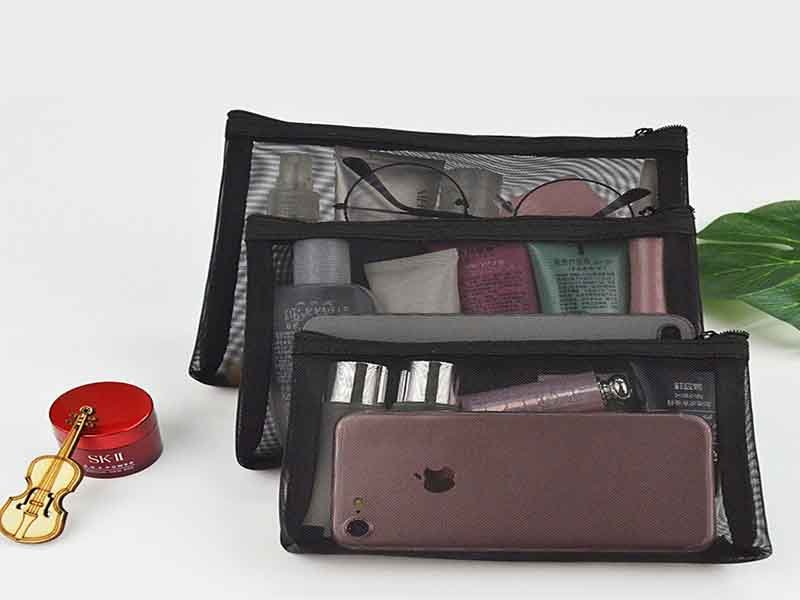
Custom mesh beach and swim gear bags are developed through a structured process that combines material engineering, functional design, prototype validation, and controlled manufacturing. Unlike standard retail products, custom bags are built around specific use cases—such as swim training, beach travel, school sports programs, or branded recreational kits.
A successful custom project does not start with color or logo. It starts with understanding how the bag will behave in real environments filled with water, sand, chlorine, motion, and repeated loading.
A complete development cycle typically includes:
Requirement analysis
Material selection
Structural design
Sampling and prototyping
Performance testing
Mass production
Quality inspection
Packaging and delivery
Each stage reduces uncertainty and ensures the final product behaves consistently under real-world conditions.
Which Specifications Should Be Confirmed?
Specification clarity is the foundation of any successful mesh bag project. Without precise definitions, even high-quality materials may produce inconsistent results.
Key specifications usually include:
Bag type (tote, backpack, drawstring, hybrid)
Target use (beach, swim training, school sports)
Dimensions (height, width, depth)
Mesh density (fine, medium, open)
Fabric type (polyester, nylon, recycled blends)
Reinforcement areas (bottom, straps, seams)
Load requirement (wet and dry gear weight)
Closure system (drawstring, zipper, hybrid)
Pocket structure (wet/dry separation)
A simplified specification structure:
| Category | Key Decision | Impact |
|---|---|---|
| Size | Capacity & usability | Determines gear fit |
| Material | Durability & drying | Affects lifespan |
| Mesh type | Sand & airflow control | Affects performance |
| Reinforcement | Load safety | Prevents failure |
| Closure | Security | Prevents spillage |
| Structure | Organization | Improves usability |
One important insight is that specification conflicts often appear late in development. For example, increasing bag size without strengthening seams can lead to failure under wet load conditions.
What Colors and Sizes Can Be Customized?
Color and size customization are key elements of branding and functional design. However, in mesh products, color is not just visual—it also affects usability, especially in outdoor environments.
Common customization options include:
Standard mesh colors: black, white, grey, navy, neon tones
Custom dyed mesh for brand identity
Transparent or semi-transparent structures
Two-tone combinations for functional zoning
Size ranges typically include:
Small (personal swim essentials)
Medium (training gear)
Large (beach family use)
Extra-large (team or bulk equipment)
A structured size strategy:
| Size Category | Use Case | Typical Contents |
|---|---|---|
| Small | Quick swim sessions | Goggles, cap, towel |
| Medium | Daily training | Full swim kit |
| Large | Beach trips | Towels, clothes, gear |
| Extra-large | Groups/teams | Multiple sets of equipment |
Color can also support function:
Blue for pool training gear
Green for general swim use
Orange for beach equipment
Grey for storage and transport
However, mesh material behaves differently under dyeing processes. Polyester and nylon may show slightly different shades even when using the same color formula, which must be considered during production approval.
How Can Logos and Labels Be Added?
Logo application in mesh bags requires careful consideration because open structures affect print clarity, durability, and washing resistance.
Common branding methods include:
Screen printing on solid panels
Heat transfer printing
Woven labels sewn into seams
Rubber or silicone badges
Jacquard webbing straps
Printed storage pouches
Among these, woven labels and reinforced panels are often the most stable for long-term use in wet environments.
A comparison:
| Method | Durability | Clarity | Best Use |
|---|---|---|---|
| Screen print | Medium | High | Simple logos |
| Heat transfer | Medium | High detail | Multi-color designs |
| Woven label | High | Medium | Branding + info |
| Silicone badge | High | High | Premium branding |
| Printed panel | High | High | Structured zones |
Placement also matters. Logos placed on high-stress areas may degrade faster due to folding and stretching. Reinforced upper panels are usually the most stable location.
Which Seams and Handles Need Reinforcement?
Reinforcement is essential in mesh bags because wet gear creates uneven load distribution. Without reinforcement, failure usually occurs at stress concentration points rather than the mesh itself.
Critical reinforcement areas include:
Handle attachment points
Bottom seams
Drawstring exit channels
Side seam intersections
For swim and beach gear, wet load can significantly increase stress. A single saturated towel can weigh multiple times its dry weight.
Common reinforcement techniques:
Bar-tack stitching at stress points
Double seam construction
Webbing handle integration
Oxford fabric base panels
Cross-stitch reinforcement layers
A structural breakdown:
| Area | Risk Level | Reinforcement Method |
|---|---|---|
| Handles | High | Webbing + bar-tack |
| Bottom | High | Oxford/canvas panel |
| Drawstring exit | Medium | Reinforced stitching |
| Side seams | Medium | Double stitching |
Reinforced design ensures that the bag maintains integrity even when fully loaded with wet equipment.
How Is Finished Quality Tested?
Quality testing ensures that custom mesh bags perform consistently under real-world conditions such as swimming pools, beaches, and travel environments.
Testing usually covers:
Load capacity (dry and wet conditions)
Seam strength
Mesh durability under abrasion
Colorfastness under chlorine and sunlight
Zipper and cord lock performance
Drying behavior
Dimensional stability after washing
A sample test matrix:
| Test Type | Purpose | Failure Risk Detected |
|---|---|---|
| Load test | Strength validation | Seam breakage |
| Wet load test | Real use simulation | Deformation |
| Abrasion test | Sand resistance | Fiber wear |
| Wash test | Maintenance durability | Shrinkage/fading |
| UV test | Outdoor exposure | Color fading |
Real-world simulation is especially important. A bag may pass static load tests but fail when carried while wet and moving. This is why dynamic testing is critical for beach and swim applications.
At manufacturing level, companies like Szoneier integrate fabric selection, mesh engineering, reinforcement design, sampling, and final inspection into one system. With over 18 years of experience in fabric R&D and finished product manufacturing, materials such as polyester, nylon, canvas, Oxford fabric, neoprene, jute, and linen can be engineered into application-specific mesh systems.
A well-developed custom mesh bag is not just a product—it is a system designed for water, sand, motion, and repeated use.
To start a custom project, clients typically provide:
Target usage scenario
Preferred materials
Size requirements
Logo artwork
Load expectations
Quantity and packaging needs
Destination market requirements
From there, a full prototype and production plan can be developed, ensuring the final mesh bag performs reliably in real beach and swim environments.
How Do You Clean a Mesh Swim Bag?
Cleaning a mesh swim bag is not just a hygiene step—it is part of maintaining its structural performance in environments filled with chlorine, saltwater, sunscreen, sand, and sweat. Unlike ordinary bags, mesh structures actively interact with water and debris, which means residues can settle in seams, cord channels, and fiber intersections even when the surface looks clean.
A properly maintained mesh bag can last multiple seasons, while a poorly maintained one may begin to smell, stiffen, or weaken within weeks. The key is understanding that cleaning frequency, method, and drying behavior all work together as a system.
A well-cleaned mesh swim bag achieves three goals:
Removes chlorine and salt buildup
Prevents odor formation from trapped moisture
Maintains fiber flexibility and seam strength
How Often Should the Bag Be Rinsed?
Rinsing frequency depends heavily on exposure conditions. A bag used in chlorinated pools behaves very differently from one used at the ocean.
In swimming environments, chlorine residues gradually weaken synthetic fibers over time. At the beach, salt crystals and fine sand accumulate in mesh openings and accelerate abrasion during movement.
A practical rinsing guideline:
| Usage Condition | Recommended Cleaning Frequency | Reason |
|---|---|---|
| Daily pool training | Rinse after every use | Chlorine residue control |
| Weekly swim sessions | Rinse 1–2 times per week | Moderate chemical exposure |
| Beach use | Rinse after each trip | Salt and sand removal |
| Mixed casual use | Clean when visibly soiled | Prevent odor buildup |
A key insight is that rinsing is more important than deep washing in most cases. A quick freshwater rinse immediately after use removes the majority of chlorine and salt before they crystallize inside fibers.
If these residues are left untreated, they can gradually cause:
Fiber brittleness
Color fading
Stiffened mesh texture
Reduced elasticity in seams
Early odor development
How Do You Remove Chlorine and Salt?
Chlorine and salt behave differently on synthetic fabrics, but both can become embedded in mesh fibers if not removed promptly.
Chlorine is chemically active and continues to react with fibers even after swimming ends. Salt, on the other hand, crystallizes as water evaporates, leaving abrasive particles within the mesh structure.
Effective removal involves three stages:
Freshwater rinse immediately after use
Mild detergent wash when needed
Complete drying in ventilated conditions
For deeper cleaning cycles, a gentle soak in cool water with mild detergent helps break down chlorine residues and salt deposits. Harsh chemicals such as bleach are unnecessary and may damage mesh fibers.
A comparison of cleaning agents:
| Cleaning Method | Chlorine Removal | Salt Removal | Fabric Safety |
|---|---|---|---|
| Freshwater rinse | Medium | Medium | Very high |
| Mild detergent wash | High | High | High |
| Bleach solution | High | High | Low (fiber damage risk) |
| Hot water wash | Medium | High | Medium (shrink risk for some fabrics) |
One important but often overlooked step is agitation. Light manual movement of the bag during rinsing helps dislodge sand and salt trapped in mesh openings.
Is Machine Washing Safe?
Machine washing can be safe for mesh swim bags, but only when the material, stitching, and accessories are designed for mechanical stress. Not all mesh bags are built for repeated drum rotation, spinning, and friction with other garments.
Polyester mesh typically performs well in gentle cycles due to its stable fiber structure and low water absorption. Nylon mesh can also handle machine washing but may require more careful temperature control to avoid deformation.
Key precautions include:
Use a gentle or delicate cycle
Avoid high-temperature washing
Place the bag inside a laundry mesh bag
Close all zippers and loosen drawstrings
Avoid mixing with heavy items like jeans or shoes
A risk comparison:
| Material Type | Machine Wash Suitability | Main Risk |
|---|---|---|
| Polyester mesh | High | Minimal shrinkage risk |
| Nylon mesh | Medium–High | Elastic deformation under heat |
| Cotton mesh | Medium | Shrinkage and shape distortion |
| Hybrid mesh bags | Varies | Weakest component determines durability |
Machine washing is especially effective for removing sunscreen residue, sweat buildup, and fine sand particles that are difficult to eliminate manually.
However, repeated aggressive washing cycles can affect:
Cord lock durability
Stitch tension stability
Print adhesion
Edge binding integrity
For long-term use, alternating between rinsing and occasional machine washing is ideal.
How Should the Bag Be Dried?
Drying is one of the most important steps in maintaining mesh swim bag performance. Because mesh fabrics are highly breathable, they dry faster than solid fabrics—but only if airflow is not blocked.
Improper drying can lead to odor buildup even after cleaning, especially if moisture remains trapped in seams or folded sections.
Best drying practices include:
Shake out excess water immediately after washing
Hang the bag fully open to maximize airflow
Avoid folding or compressing during drying
Place in a well-ventilated or shaded area
Ensure internal seams are fully dry before storage
A comparison of drying environments:
| Drying Condition | Speed | Odor Risk | Fabric Impact |
|---|---|---|---|
| Outdoor shade with airflow | Fast | Low | Optimal |
| Indoor ventilated space | Medium | Low | Safe |
| Direct sunlight exposure | Very fast | Low–Medium | Possible fading over time |
| Closed room drying | Slow | High | Odor risk |
One common mistake is assuming the surface is dry while internal seams remain damp. Drawstring channels and reinforced bottom panels are particularly prone to moisture retention.
Over time, trapped moisture in these areas can cause:
Musty odors
Localized fabric weakening
Mold development in extreme cases
This is why full expansion during drying is critical.
When Should a Mesh Bag Be Replaced?
Mesh swim bags do not fail suddenly—they degrade gradually. Knowing when to replace them helps prevent equipment loss and hygiene issues.
A replacement is usually needed when structural or hygiene performance drops below usable levels.
Key replacement indicators include:
Visible holes in mesh fabric
Fraying at seam intersections
Weak or slipping drawstring systems
Loss of shape or structural collapse
Persistent odor after thorough cleaning
Discoloration combined with fiber stiffness
A practical evaluation checklist:
| Condition | Action |
|---|---|
| Minor surface wear | Continue use |
| Small mesh holes | Monitor or repair if possible |
| Broken cord lock | Replace component or bag |
| Seam separation | Replace bag |
| Persistent odor | Deep clean or replace |
| Structural collapse | Replace immediately |
One often overlooked factor is performance fatigue. Even if a bag appears intact, repeated exposure to chlorine, salt, and UV radiation gradually reduces fiber elasticity. This may not be visible but affects long-term durability.
For professional swimmers or frequent beach users, replacing bags periodically ensures consistent performance and hygiene safety.
How Are Custom Mesh Bags Made?
Custom mesh beach and swim gear bags are developed through a structured process that combines material engineering, functional design, prototype validation, and controlled manufacturing. Unlike standard retail products, custom bags are built around specific use cases—such as swim training, beach travel, school sports programs, or branded recreational kits.
A successful custom project does not start with color or logo. It starts with understanding how the bag will behave in real environments filled with water, sand, chlorine, motion, and repeated loading.
A complete development cycle typically includes:
Requirement analysis
Material selection
Structural design
Sampling and prototyping
Performance testing
Mass production
Quality inspection
Packaging and delivery
Each stage reduces uncertainty and ensures the final product behaves consistently under real-world conditions.
Which Specifications Should Be Confirmed?
Specification clarity is the foundation of any successful mesh bag project. Without precise definitions, even high-quality materials may produce inconsistent results.
Key specifications usually include:
Bag type (tote, backpack, drawstring, hybrid)
Target use (beach, swim training, school sports)
Dimensions (height, width, depth)
Mesh density (fine, medium, open)
Fabric type (polyester, nylon, recycled blends)
Reinforcement areas (bottom, straps, seams)
Load requirement (wet and dry gear weight)
Closure system (drawstring, zipper, hybrid)
Pocket structure (wet/dry separation)
A simplified specification structure:
| Category | Key Decision | Impact |
|---|---|---|
| Size | Capacity & usability | Determines gear fit |
| Material | Durability & drying | Affects lifespan |
| Mesh type | Sand & airflow control | Affects performance |
| Reinforcement | Load safety | Prevents failure |
| Closure | Security | Prevents spillage |
| Structure | Organization | Improves usability |
One important insight is that specification conflicts often appear late in development. For example, increasing bag size without strengthening seams can lead to failure under wet load conditions.
What Colors and Sizes Can Be Customized?
Color and size customization are key elements of branding and functional design. However, in mesh products, color is not just visual—it also affects usability, especially in outdoor environments.
Common customization options include:
Standard mesh colors: black, white, grey, navy, neon tones
Custom dyed mesh for brand identity
Transparent or semi-transparent structures
Two-tone combinations for functional zoning
Size ranges typically include:
Small (personal swim essentials)
Medium (training gear)
Large (beach family use)
Extra-large (team or bulk equipment)
A structured size strategy:
| Size Category | Use Case | Typical Contents |
|---|---|---|
| Small | Quick swim sessions | Goggles, cap, towel |
| Medium | Daily training | Full swim kit |
| Large | Beach trips | Towels, clothes, gear |
| Extra-large | Groups/teams | Multiple sets of equipment |
Color can also support function:
Blue for pool training gear
Green for general swim use
Orange for beach equipment
Grey for storage and transport
However, mesh material behaves differently under dyeing processes. Polyester and nylon may show slightly different shades even when using the same color formula, which must be considered during production approval.
How Can Logos and Labels Be Added?
Logo application in mesh bags requires careful consideration because open structures affect print clarity, durability, and washing resistance.
Common branding methods include:
Screen printing on solid panels
Heat transfer printing
Woven labels sewn into seams
Rubber or silicone badges
Jacquard webbing straps
Printed storage pouches
Among these, woven labels and reinforced panels are often the most stable for long-term use in wet environments.
A comparison:
| Method | Durability | Clarity | Best Use |
|---|---|---|---|
| Screen print | Medium | High | Simple logos |
| Heat transfer | Medium | High detail | Multi-color designs |
| Woven label | High | Medium | Branding + info |
| Silicone badge | High | High | Premium branding |
| Printed panel | High | High | Structured zones |
Placement also matters. Logos placed on high-stress areas may degrade faster due to folding and stretching. Reinforced upper panels are usually the most stable location.
Which Seams and Handles Need Reinforcement?
Reinforcement is essential in mesh bags because wet gear creates uneven load distribution. Without reinforcement, failure usually occurs at stress concentration points rather than the mesh itself.
Critical reinforcement areas include:
Handle attachment points
Bottom seams
Drawstring exit channels
Side seam intersections
For swim and beach gear, wet load can significantly increase stress. A single saturated towel can weigh multiple times its dry weight.
Common reinforcement techniques:
Bar-tack stitching at stress points
Double seam construction
Webbing handle integration
Oxford fabric base panels
Cross-stitch reinforcement layers
A structural breakdown:
| Area | Risk Level | Reinforcement Method |
|---|---|---|
| Handles | High | Webbing + bar-tack |
| Bottom | High | Oxford/canvas panel |
| Drawstring exit | Medium | Reinforced stitching |
| Side seams | Medium | Double stitching |
Reinforced design ensures that the bag maintains integrity even when fully loaded with wet equipment.
How Is Finished Quality Tested?
Quality testing ensures that custom mesh bags perform consistently under real-world conditions such as swimming pools, beaches, and travel environments.
Testing usually covers:
Load capacity (dry and wet conditions)
Seam strength
Mesh durability under abrasion
Colorfastness under chlorine and sunlight
Zipper and cord lock performance
Drying behavior
Dimensional stability after washing
A sample test matrix:
| Test Type | Purpose | Failure Risk Detected |
|---|---|---|
| Load test | Strength validation | Seam breakage |
| Wet load test | Real use simulation | Deformation |
| Abrasion test | Sand resistance | Fiber wear |
| Wash test | Maintenance durability | Shrinkage/fading |
| UV test | Outdoor exposure | Color fading |
Real-world simulation is especially important. A bag may pass static load tests but fail when carried while wet and moving. This is why dynamic testing is critical for beach and swim applications.
At manufacturing level, companies like Szoneier integrate fabric selection, mesh engineering, reinforcement design, sampling, and final inspection into one system. With over 18 years of experience in fabric R&D and finished product manufacturing, materials such as polyester, nylon, canvas, Oxford fabric, neoprene, jute, and linen can be engineered into application-specific mesh systems.
A well-developed custom mesh bag is not just a product—it is a system designed for water, sand, motion, and repeated use.
To start a custom project, clients typically provide:
Target usage scenario
Preferred materials
Size requirements
Logo artwork
Load expectations
Quantity and packaging needs
Destination market requirements
From there, a full prototype and production plan can be developed, ensuring the final mesh bag performs reliably in real beach and swim environments.
How Can Mesh Bags Be Optimized for Real Beach Conditions?

Designing a mesh bag for beach and swim gear is not only about selecting the right material or size—it is about optimizing how the bag behaves in real environments where wind, saltwater, sand, heat, and movement interact simultaneously. A bag that looks perfect in a studio may perform poorly on a crowded beach if it cannot handle these combined conditions.
Real-world optimization focuses on environmental adaptability. The goal is to ensure that the bag continues to perform even when conditions change rapidly—from dry walking paths to wet sand zones, from poolside tiles to saltwater exposure, and from static storage to dynamic movement.
A well-optimized mesh bag responds to five environmental stress factors:
Sand intrusion
Saltwater exposure
UV radiation
Wind-driven movement
Heat and humidity cycles
Each factor influences material choice, structural design, and user behavior.
How Does Wind Affect Mesh Bag Performance?
Wind may seem irrelevant, but it plays a major role in beach environments. Strong coastal winds can cause lightweight mesh bags to shift, collapse, or lose stability when not properly loaded.
Wind interacts with mesh in two ways:
It passes through the fabric structure
It applies dynamic pressure on empty or partially filled sections
When a mesh bag is empty, wind resistance is minimal. But when partially filled, uneven airflow can cause the bag to twist or shift, especially if the base is lightweight.
Design strategies to improve wind stability include:
Wider base geometry for balance
Reinforced bottom panels for weight anchoring
Structured side seams to reduce collapse
Strategic load distribution zones
A comparison illustrates stability differences:
| Bag Structure | Wind Resistance | Stability When Empty | Stability When Loaded |
|---|---|---|---|
| Pure mesh tote | Low | Low | Medium |
| Reinforced base tote | Medium | Medium | High |
| Backpack mesh system | High | High | Very High |
Wind optimization is especially important for beach users who leave bags on open sand while swimming or playing. A poorly balanced bag can tip over, exposing contents to sand and moisture.
How Does Saltwater Exposure Affect Durability?
Saltwater is one of the most aggressive environmental factors for mesh bags. It affects fibers, stitching, and metal or plastic components over time.
Salt crystals form when seawater evaporates, leaving behind abrasive residues that can weaken mesh fibers and increase stiffness. If not rinsed properly, salt can accumulate in seams and accelerate wear.
Key effects of salt exposure:
Fiber surface abrasion
Increased stiffness in synthetic mesh
Metal corrosion in accessories
Color fading in dyed materials
Reduced flexibility in coated fabrics
Material response varies:
| Material | Salt Resistance | Long-Term Effect |
|---|---|---|
| Polyester mesh | High | Minimal degradation |
| Nylon mesh | Medium–High | Slight stiffness over time |
| Cotton mesh | Low | Fiber breakdown risk |
| PVC-coated mesh | Medium | Coating wear over time |
Salt management is not only about material selection—it is about user behavior. Immediate rinsing after beach use significantly extends product lifespan.
How Does UV Exposure Impact Mesh Bags?
UV radiation is a constant but often underestimated stress factor in beach environments. Prolonged sunlight exposure can gradually weaken fibers, fade colors, and reduce material flexibility.
Mesh bags are particularly exposed because they are often left on open sand or carried outdoors for extended periods.
UV effects include:
Color fading
Fiber brittleness
Loss of elasticity in synthetic mesh
Surface micro-cracking in coatings
Material differences are significant:
Polyester offers strong UV resistance
Nylon degrades faster under prolonged exposure
Natural fibers are highly sensitive to sunlight
A performance comparison:
| Material Type | UV Resistance | Color Stability | Structural Impact |
|---|---|---|---|
| Polyester mesh | High | High | Low degradation |
| Nylon mesh | Medium | Medium | Moderate weakening |
| Cotton mesh | Low | Low | High degradation |
| Blended mesh | Medium | Medium | Variable |
UV-resistant coatings can extend lifespan but must be carefully balanced, as heavy coatings may reduce airflow and drying performance.
How Can Heat and Humidity Affect Gear Storage?
Heat and humidity are especially important in tropical beach environments or poolside locker rooms. When moisture, warmth, and limited airflow combine, odor formation and microbial growth accelerate.
Mesh bags naturally mitigate this by allowing airflow, but performance depends on usage behavior. If wet towels are compressed tightly inside a bag and left in a hot environment, airflow cannot fully compensate.
Key issues include:
Odor buildup from trapped moisture
Fabric stiffness due to heat cycles
Accelerated microbial growth in damp zones
Deformation of plastic components (cord locks, zippers)
Design improvements include:
Open-structure mesh zones
Ventilation spacing between compartments
Quick-drain base panels
Minimal internal lining layers
A simple environmental comparison:
| Condition | Mesh Bag Performance | Solid Bag Performance |
|---|---|---|
| Hot + dry | Excellent drying | Poor ventilation |
| Hot + humid | Moderate | Poor odor control |
| Shaded + windy | Optimal | Moderate |
| Closed storage | Depends on dryness | High odor risk |
The key insight is that mesh bags perform best when combined with airflow—not when sealed or compressed after use.
What Design Features Improve Real Beach Usability?
Beyond material and environment, real usability depends on how easily users interact with the bag under beach conditions. Sand-covered hands, wet surfaces, and strong sunlight all affect usability.
Important usability features include:
Wide-mouth opening for quick access
High-contrast interior visibility
Sand-resistant zipper or drawstring systems
Quick-grip handles for wet hands
Lightweight structure for mobility
A comparison of usability impact:
| Feature | User Benefit | Beach Scenario |
|---|---|---|
| Wide opening | Fast packing | Post-swim loading |
| High visibility interior | Easy item location | Sunlight glare conditions |
| Quick-grip handles | Better control | Wet or sandy hands |
| Lightweight structure | Reduced fatigue | Long walking distances |
Usability is often underestimated in design, but in real beach environments, it becomes one of the most important performance indicators.
How Do Mesh Bags Compare to Other Beach Storage Options?
Mesh bags are only one solution among several beach storage systems, and understanding their relative performance helps clarify when they should be used—and when they should not.
Other common storage options include waterproof bags, canvas totes, plastic containers, insulated bags, and hybrid sports backpacks. Each system solves a different problem, but none can handle all beach conditions equally well.
The key difference lies in functional priority:
Mesh focuses on ventilation and drainage
Waterproof bags focus on containment
Canvas focuses on structure and aesthetics
Insulated bags focus on temperature control
Are Waterproof Bags Better for Wet Gear?
Waterproof bags are designed to fully block water ingress and leakage. This makes them excellent for protecting electronics, dry clothes, and valuables. However, for wet swim gear, they often create a major drawback: trapped moisture.
When wet towels or swimsuits are placed inside a waterproof bag, water has nowhere to escape. This creates a sealed humid environment that encourages odor development and bacterial growth.
Comparison:
| Feature | Mesh Bag | Waterproof Bag |
|---|---|---|
| Drainage | Excellent | None |
| Odor control | High | Low |
| Drying ability | Fast | Very slow |
| Protection of dry items | Medium | Very high |
Waterproof bags are best used as secondary storage for dry items—not for wet swim gear.
Is Canvas Better for Beach Use?
Canvas bags offer strong structural stability and aesthetic appeal, making them popular in lifestyle beach fashion. However, canvas is a tightly woven natural fabric that absorbs water and sand rather than releasing it.
This leads to:
Slower drying time
Higher odor retention
Heavier weight when wet
Difficult sand removal
Canvas works well for dry items such as snacks, clothing, or accessories, but performs poorly for wet swim gear unless combined with mesh or waterproof lining systems.
Can Plastic Containers Replace Mesh Bags?
Plastic containers provide rigid protection and full containment. They are excellent for preventing crushing and isolating items but are not practical for beach environments due to bulk, weight, and lack of ventilation.
Their main limitations include:
No airflow
No sand release
Limited flexibility
Bulk storage inefficiency
Plastic containers are more suitable for transport of sensitive items such as electronics or food—not for wet beach gear.
What Is the Best Hybrid System?
The most effective beach gear setup is rarely a single bag type. Instead, it is a system of complementary storage solutions:
Mesh bag for wet swim gear
Waterproof pouch for electronics
Canvas tote for dry lifestyle items
Insulated bag for drinks and food
This hybrid system allows each material to perform its intended function without compromise.
A performance comparison:
| System Type | Wet Gear Handling | Dry Gear Protection | Sand Management |
|---|---|---|---|
| Mesh only | Excellent | Medium | Excellent |
| Waterproof only | Poor | Excellent | Poor |
| Canvas only | Weak | Medium | Weak |
| Hybrid system | Excellent | Excellent | Excellent |
The hybrid approach reflects real beach behavior more accurately than any single-material solution.
Custom Mesh Beach & Swim Bags from Szoneier
Mesh bags are not just simple carriers—they are engineered systems that interact with water, sand, motion, and environment. The right combination of mesh material, structural design, reinforcement, and organization features determines whether a bag performs well or fails under real beach and swim conditions.
Szoneier, with over 18 years of experience in fabric development and finished product manufacturing, provides full customization for mesh beach and swim gear bags. With capabilities across cotton, polyester, nylon, canvas, Oxford fabric, neoprene, jute, and blended materials, solutions can be tailored for beach recreation, swim training, sports programs, and private label collections.
Custom options include:
Mesh material selection (polyester / nylon / recycled mesh)
Reinforced base and seam engineering
Wet/dry compartment design
Custom sizing and load optimization
Logo printing, woven labels, and branding systems
Color customization and set packaging
OEM / ODM development with sampling support
Whether for retail beach collections, swim clubs, or branded sports programs, Szoneier can support full development from concept to production.
To develop a custom mesh beach or swim gear bag, simply provide your required size, material preference, usage scenario, logo file, and order quantity. The engineering team will assist with fabric selection, sampling, and production planning to create a solution tailored to real-world beach performance.