Skip to content
A shoe bag may look like one of the simplest products in a travel or footwear collection: a piece of fabric, a closure, and enough space for one pair of shoes. Yet small design decisions quickly change how the product performs. A soft cotton pouch can protect polished leather from dust, but it cannot contain wet football boots. A waterproof zipper case may isolate muddy soles inside luggage, but without ventilation it can trap heat and odor. A lightweight travel organizer saves suitcase space, while a structured basketball shoe case must protect a much larger and heavier pair.
A shoe bag manufacturer produces far more than basic drawstring pouches. Product ranges can include zippered travel organizers, breathable sports cases, golf shoe carriers, boot bags, luxury footwear dust covers, washing-machine bags, waterproof wet-shoe pouches, multi-pair organizers, and integrated shoe compartments for backpacks or duffel bags. Each type can be developed in different sizes, fabrics, coatings, closures, internal structures, logo methods, colors, labels, and packaging formats.
The manufacturer’s real work is not simply sewing fabric around footwear. It is deciding how the bag should control dust, moisture, abrasion, odor, pressure, and user access. That requires matching material behavior with the intended shoe, storage period, cleaning method, and carrying environment.
Imagine two products arriving at an airport check-in counter. One contains dry leather shoes packed beside formal clothing. The other holds damp running shoes after a morning race. Both are called shoe bags, yet almost every important specification should be different. Understanding what manufacturers actually produce helps turn a vague request into a product that works after the first trip, the twentieth training session, and the hundredth zipper cycle.
What Shoe Bags Are Produced?
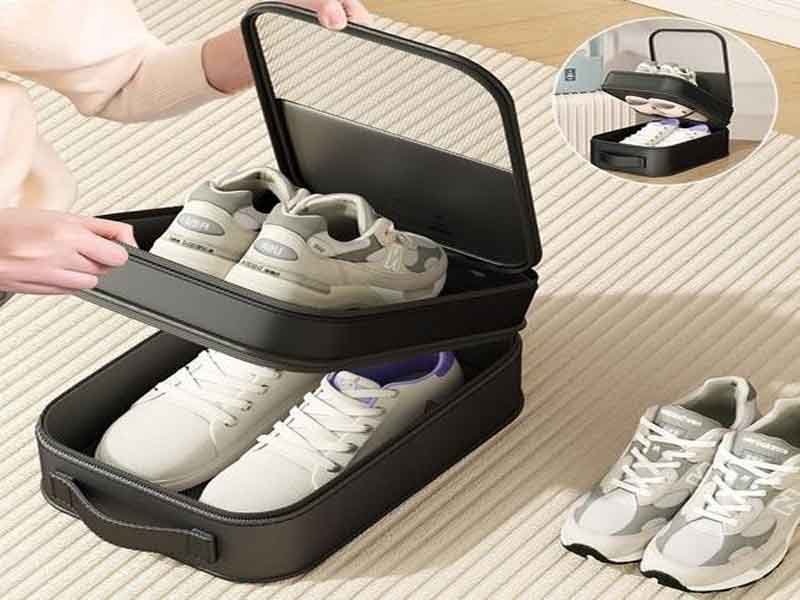
A professional shoe bag manufacturer can produce soft pouches, zippered organizers, semi-structured cases, ventilated sports carriers, waterproof wet-shoe bags, footwear dust covers, multi-pair storage systems, and compartments integrated into larger bags. The product type is normally selected according to the footwear size, contamination risk, required protection, carrying method, and expected retail position.
The most basic designs focus on dust protection and low packing volume. More advanced products add gussets, linings, handles, mesh panels, dividers, reinforced bases, padding, waterproof coatings, or welded sections. No structure is universally best. A successful design solves the problems created by a specific shoe and use environment without adding unnecessary weight or complexity.
What Are Drawstring Shoe Bags?
Drawstring shoe bags are soft pouches closed by pulling one or two cords through a top channel. They are among the most widely produced shoe-bag formats because the construction is simple, lightweight, easy to fold, and compatible with many natural and synthetic fabrics.
A basic design uses two rectangular fabric panels, a folded cord channel, side seams, and one drawcord. More refined versions may use double cords, metal eyelets, reinforced corners, French seams, cotton rope, satin ribbon, cord locks, or an internal protective flap.
Drawstring bags are commonly developed for:
Retail footwear packaging
Leather shoe protection
Hotel slippers
Dance shoes
Formal footwear
Home storage
Event kits
Travel sets
Children’s indoor shoes
Lightweight promotional accessories
Their main advantage is the large uninterrupted branding area. A logo can be printed, embroidered, heat transferred, woven into a label, or placed on a leather or rubber patch. The flat construction also keeps cutting waste, sewing time, and shipping volume relatively controlled.
The limitation is the opening. A cord closure gathers fabric rather than creating a complete seal. Fine dust, moisture, or odor can pass through the folds, particularly when the pouch is compressed. A drawstring bag should therefore not be described as fully waterproof unless an additional roll-top, inner liner, or sealed closure system has been engineered.
| Drawstring Construction | Main Material Options | Protection Level | Best Use | Important Limitation |
|---|---|---|---|---|
| Single-cord flat pouch | Cotton, nonwoven, polyester | Light | Dust protection and packaging | Opening does not close evenly |
| Double-cord pouch | Cotton, canvas, satin, polyester | Light to medium | Premium shoes and travel | Still not liquid-tight |
| Gusseted drawstring bag | Canvas, Oxford, polyester | Medium | Sneakers and casual sports shoes | More fabric and sewing required |
| Drawstring backpack style | Polyester, nylon, Oxford | Medium | School and gym use | Cords may feel uncomfortable under load |
| Lined luxury pouch | Cotton, flannel, microfiber | Medium to high surface protection | Leather shoes and designer footwear | Slow drying if packed damp |
| Coated drawstring wet bag | PU-coated polyester or nylon | Medium water control | Short transport of damp shoes | Gathered opening remains vulnerable |
Fabric choice changes the character of the same structure. A lightweight nonwoven pouch may suit short-life retail packaging. A 200–300 gsm cotton bag feels more substantial and can support premium embroidery. A polyester drawstring pouch is lighter, dries faster, and accepts colorful printing. A coated Oxford version can hold athletic shoes, although the cord opening still limits full containment.
Cord selection matters as well. Thin polypropylene cord reduces cost but can cut into the user’s hand. Cotton rope feels softer and complements natural fabrics, though it absorbs moisture. Flat woven tape distributes weight better on larger pouches. Cord ends should be knotted, heat sealed, capped, or stitched to prevent fraying.
The cord channel is a frequent failure point. If the channel is too narrow, the cord will bind. If the fabric is weak, repeated pulling can tear the upper corners. Reinforcement at the cord exits, suitable seam allowance, and smooth cord movement should be checked during sampling.
Drawstring bags are most effective when the design brief prioritizes softness, foldability, straightforward branding, and dust protection. They are less suitable when shoes are wet, muddy, heavy, strongly odorous, or expected to remain inside luggage for extended periods.
Which Shoe Bags Use Zippers?
Zippered shoe bags provide more secure closure, easier containment, and greater structural flexibility than drawstring pouches. They range from simple flat sleeves to box-shaped travel organizers with wide clamshell openings.
The zipper can run across the top, around three sides, diagonally across the front, or around the full perimeter. Its position determines how easily shoes enter the compartment and how much dirt touches the opening.
A narrow top zipper requires less sewing but can make bulky shoes difficult to insert. A U-shaped zipper opens a large panel and allows the user to place shoes inside without forcing them. A clamshell zipper provides the best visibility and cleaning access, although it uses more zipper length and requires accurate corner sewing.
Common zippered products include:
Travel shoe packing cubes
Sneaker cases
Gym shoe carriers
Golf shoe bags
Basketball shoe bags
Cycling shoe cases
Dance shoe organizers
Boot bags
Wet-shoe pouches
Shoe laundry bags
Dual-compartment organizers
Structured footwear cases
| Zipper Layout | Access Level | Containment | Production Complexity | Suitable Product |
|---|---|---|---|---|
| Straight top zipper | Medium | Medium | Low | Flat travel pouch |
| Front diagonal zipper | Medium to high | Medium | Medium | Casual sneaker bag |
| U-shaped zipper | High | Medium to high | Medium | Travel and sports organizer |
| Three-sided clamshell zipper | Very high | Medium to high | High | Structured shoe case |
| Dual zipper sliders | High | Medium | Medium | Wide-opening travel case |
| Coated reverse zipper | High | High splash resistance | Medium to high | Water-resistant shoe bag |
| Zipper beneath storm flap | High | High | High | Outdoor and wet-weather use |
| Zippered mesh construction | High | Low liquid containment | Medium | Washing and drying bag |
Zipper size should match product weight and use frequency. A lightweight dust sleeve may perform adequately with a small coil zipper. A boot bag carrying wet, heavy footwear needs a larger chain, stronger slider, durable zipper tape, and reinforced end stops.
The zipper should not be selected only by appearance. Important factors include:
Chain strength
Slider smoothness
Tape compatibility with the fabric
Colorfastness
Corner performance
Puller grip
Corrosion resistance
Resistance to sand and dirt
Water resistance where required
Repair or replacement feasibility
Sports users often open bags with damp hands or gloves, so an extended fabric, cord, rubber, or molded puller improves usability. Travel users may prefer low-profile pullers that do not catch on surrounding luggage.
Internal zipper guards can prevent laces, mesh uppers, and shoe tongues from catching in the teeth. Such guards are inexpensive compared with the frustration caused by a jammed zipper. External flaps help shield the chain from rain and dust but require careful pattern design so they do not interfere with slider movement.
For waterproof or wet-use products, a coated zipper improves splash resistance but does not automatically make the finished bag leakproof. Stitch holes along the zipper tape and gaps at the slider ends remain possible leakage routes. If the product must contain standing water, zipper position, seam sealing, and the height of the waterproof base become critical.
What Are Structured Shoe Cases?
Structured shoe cases use foam, piping, rigid board, molded components, reinforced fabric, or shaped side panels to maintain their form. They protect shoes from crushing and provide a cleaner presentation than soft pouches.
They are commonly produced for:
Premium sneakers
Basketball shoes
Golf footwear
Cycling shoes
High-value leather shoes
Collectible footwear
Travel gift sets
Professional team kits
Luxury retail packaging
A semi-structured case may use 2–5 mm foam laminated between exterior fabric and lining. A more rigid design can use EVA sheets, polypropylene board, PE board, molded EVA shells, or reinforced honeycomb panels.
The structure must be chosen according to how much protection is needed and how the bag will be shipped. A rigid case protects footwear well but occupies the same volume whether full or empty. A soft case folds easily but offers little compression protection. Semi-structured construction often provides the most balanced result for travel and sports.
| Structure Level | Construction | Shape Retention | Packability | Typical Application |
|---|---|---|---|---|
| Soft | Single-layer or lined fabric | Low | Excellent | Dust bag and basic travel pouch |
| Lightly supported | Piping and gusset panels | Medium | Good | Sneaker organizer |
| Foam laminated | Fabric, foam, and lining | Medium to high | Medium | Golf and premium travel case |
| Board reinforced | Fabric with removable or fixed board | High | Low to medium | Retail presentation and boots |
| Molded EVA shell | Heat-molded structure | Very high | Low | Collectible or high-value footwear |
| Hybrid collapsible | Reinforced base with soft sides | High when loaded | Good | Sports and travel crossover |
Structure also affects airflow and cleaning. Thick foam slows drying if moisture enters through seams. Cardboard reinforcement should not be used in products intended for washing or wet footwear. Removable plastic or EVA panels are easier to clean and can be taken out before washing the fabric shell.
Piping creates a defined edge and helps panels maintain shape. It can also protect seam edges from abrasion. However, piping must bend smoothly around corners, and the internal cord or plastic core should not become exposed after repeated use.
A structured case should provide enough internal clearance to protect the shoe rather than press against it. If the internal dimensions are too tight, the case may look neat on a shelf while compressing tongues, heel counters, or decorative uppers.
Premium footwear cases may include:
Soft microfiber lining
Individual shoe sleeves
Padded dividers
Removable shoe forms
Ventilated side panels
Reinforced carrying handles
Luggage sleeves
Name-card pockets
Accessory compartments
Lockable zipper pullers
The more structure and components a design includes, the more important accurate pattern development becomes. Small dimensional errors can twist the case, create zipper waves, or reduce internal capacity. Prototype fitting should use the actual shoe models or accurate three-dimensional measurements.
Do Manufacturers Make Shoe Compartments?
Yes. A shoe bag manufacturer may also produce removable or integrated shoe compartments for duffel bags, backpacks, suitcases, golf bags, garment bags, team bags, and travel organizers. These compartments isolate footwear within a larger carrying product.
An integrated shoe compartment normally has an external zipper opening, a flexible inner sleeve, and a coated or wipeable lining. It may extend into the main bag when occupied and collapse when empty.
The main advantage is convenience. Users do not need to carry a separate pouch, and the footwear remains accessible without opening the main compartment. The challenge is space efficiency: the shoe section shares internal volume with clothing or equipment.
Common integrated structures include:
Side-entry shoe tunnels in duffel bags
Bottom shoe compartments in backpacks
Rear shoe sleeves in golf bags
Ventilated footwear pockets in team bags
Waterproof wet zones in outdoor bags
Collapsible shoe chambers in weekenders
Removable zip-in shoe modules
An integrated compartment needs careful engineering because contamination can spread through internal seams or lining joins. The compartment should be positioned so dirty soles do not press directly against clean clothing.
| Compartment Style | Access | Space Efficiency | Cleaning | Main Use |
|---|---|---|---|---|
| Side-entry tunnel | High | High when empty | Medium | Duffel and gym bags |
| Bottom compartment | Medium | Medium | Medium | Backpacks |
| Removable inner shoe pouch | High | High | High | Travel bags |
| Fixed waterproof chamber | High | Medium | Medium | Outdoor and sports bags |
| Fold-flat divider compartment | Medium | High | Medium | Weekend bags |
| External attached shoe pod | High | Low | High | Team and cycling bags |
Ventilation must be planned without exposing clean contents. Mesh placed on the external wall can release humidity. Mesh between the shoe compartment and the main chamber may transfer odor and dust into clothing, defeating the purpose of separation.
The lining should turn easily for cleaning or provide enough opening for a cloth to reach the deepest corners. Dark, narrow tunnels are notoriously difficult to clean when mud collects at the far end. A removable insert or accessible zipper panel can solve that problem.
The zipper opening should be wide enough for the largest intended shoe. A compartment designed around low-top sneakers may not accept basketball shoes or work boots even when the overall bag appears large.
An integrated compartment is not simply an added pocket. It changes the bag’s balance, internal capacity, pattern, and load distribution. Manufacturers should test the complete product both with and without shoes inside.
Which Bags Hold Multiple Pairs?
Multi-pair shoe bags are designed to carry two or more pairs in one product. They may use stacked layers, side-by-side chambers, removable dividers, individual sleeves, or modular cubes.
These products serve travelers, families, athletes, footwear collectors, home-storage users, dancers, and sales representatives carrying samples.
Common designs include:
Two-layer travel organizers
Four-pair under-bed storage bags
Stacked sneaker cases
Multi-slot hanging organizers
Divided boot and shoe carriers
Modular shoe packing cubes
Sample presentation bags
The key challenge is preventing dirty soles from touching clean uppers. A large undivided chamber may technically hold several pairs, but it offers limited protection and organization.
| Multi-Pair Format | Capacity | Protection | Best Use | Main Concern |
|---|---|---|---|---|
| Large single chamber | 2–3 pairs | Low | Casual family travel | Shoes rub together |
| Fixed fabric divider | 2 pairs | Medium | General travel | Limited flexibility |
| Padded removable divider | 1–2 pairs | High | Premium sneakers | Adds weight |
| Separate zippered layers | 2 pairs | High | Clean and used footwear | More zippers and sewing |
| Individual sleeves in outer case | 2–4 pairs | Very high | Luxury travel or samples | Higher component count |
| Rigid multi-slot organizer | 4–12 pairs | High | Home storage | Bulky for shipping |
| Modular cubes | Flexible | High | Travel collections | More individual items to manage |
Capacity should be stated honestly. “Fits three pairs” means little without naming the footwear category. Three pairs of sandals require far less volume than three pairs of men’s basketball shoes.
An accurate capacity description should specify:
Maximum internal length
Usable width
Compartment height
Footwear category
Suggested size range
Whether pairs are stacked or separated
Whether accessories reduce shoe capacity
Dividers should be positioned according to shoe geometry. Equal rectangular compartments may waste space because toe boxes, heels, and soles do not form regular blocks. Heel-to-toe arrangements often use volume more efficiently.
Multi-pair products also need stronger handles and base panels. Doubling the footwear quantity may more than double the stress because heavier products swing during carrying. Reinforcement should be calculated around the loaded product, not the empty sample.
What Does Each Product Type Actually Solve?
Shoe bag formats are best understood by the problem they solve, not by appearance alone.
A cotton drawstring pouch solves dust and surface-scratch concerns.
A coated travel cube solves luggage contamination.
A ventilated sports case manages humid footwear.
A reinforced boot bag handles weight, mud, and abrasion.
A padded sneaker case protects shape and collectible finishes.
A transparent pouch improves visual identification.
A washing bag protects footwear and reduces direct impact during cleaning.
A multi-pair organizer improves sorting and storage density.
| User Problem | Suitable Product | Essential Feature | Feature That May Be Unnecessary |
|---|---|---|---|
| Dust on stored leather shoes | Soft drawstring pouch | Lint-controlled lining | Heavy waterproof coating |
| Dirty soles beside clothing | Zippered travel bag | Coated or wipeable interior | Thick padding |
| Damp gym shoes | Ventilated sports case | Covered mesh or eyelets | Fully sealed chamber |
| Muddy cleats | Reinforced wet-zone bag | Washable tray-style base | Delicate soft lining |
| Valuable sneakers | Padded structured case | Divider and shape protection | Large open mesh |
| Shoes in washing machine | Mesh laundry bag | Reinforced zipper and cushioning | Waterproof laminate |
| Several pairs at home | Divided organizer | Shape-retaining compartments | Carry strap |
| Wet water shoes | Drainable or sealed pouch | Rinseable material | Absorbent cotton fabric |
This problem-based approach prevents overdesign. A heavier bag is not automatically better. A more expensive coating is not valuable when the footwear remains dry. Large ventilation panels may help sports shoes but undermine dirt containment inside a suitcase.
The manufacturer should begin by asking what the shoes will do before, during, and after they enter the bag.
Which Uses Do Shoe Bags Serve?
Shoe bags serve four broad functions: protecting footwear, protecting surrounding belongings, organizing shoes, and presenting a product or brand. Manufacturers adapt the structure for travel, sports, retail packaging, luxury footwear, household storage, laundry, team equipment, and wet-shoe transport.
The same pair of shoes may require different bags in different situations. A sneaker stored on a retail shelf needs dust protection and attractive presentation. The same sneaker packed after a rainy walk needs moisture isolation and easy cleaning. Intended use should therefore be established before material, size, or logo method is selected.
What Bags Are Made for Travel?
Travel shoe bags separate footwear from clean clothing, toiletries, and electronics while keeping luggage organized. They should be light enough to carry, compact when empty, and easy to open inside a limited suitcase space.
Common travel formats include:
Flat zippered pouches
Gusseted shoe cubes
Foldable shoe cases
Double-layer organizers
Individual shoe sleeves
Water-resistant packing bags
Compression-style footwear organizers
Luggage sets with coordinated shoe pouches
A travel bag should follow the dimensions of common footwear rather than becoming a generic oversized rectangle. Excess empty volume wastes luggage space, while insufficient height compresses shoe uppers.
Useful starting dimensions vary by shoe style, but product development normally considers these approximate internal ranges:
| Footwear Type | Suggested Internal Length | Suggested Internal Width | Suggested Internal Height |
|---|---|---|---|
| Flats or children’s shoes | 25–29 cm | 18–22 cm | 8–12 cm |
| Women’s casual sneakers | 28–32 cm | 20–24 cm | 12–16 cm |
| Men’s standard sneakers | 32–36 cm | 22–26 cm | 14–18 cm |
| Chunky or high-top sneakers | 34–38 cm | 24–28 cm | 18–22 cm |
| Mid-height hiking shoes | 36–42 cm | 25–30 cm | 20–26 cm |
These figures are development starting points, not universal standards. Sole shape, upper padding, shoe size, pair orientation, and lining thickness all affect usable capacity.
Travel bags commonly use 190T, 210D, 300D, or similar lightweight polyester and nylon constructions. The exact yarn size alone does not determine performance. Weave density, coating, fabric weight, tear strength, seam quality, and zipper construction matter just as much.
Important travel features include:
Low empty weight
Smooth interior surfaces
Wide opening
Reliable zipper
Water-resistant lower panels
Side or top grab handle
Fold-flat construction
Simple identification
Machine-wash or wipe-clean care
Ventilation positioned away from clothing contact
A shoe bag should fit logically into luggage. Rectangular designs align well with packing cubes. Excessive external pockets and thick handles can create irregular shapes that waste suitcase volume.
For airline travel, the bag may remain closed for ten hours or longer. Damp shoes should therefore have controlled airflow or be dried before packing. A sealed bag protects clothing but can intensify odor when warm footwear is enclosed.
A travel product can also be developed as part of a coordinated range with laundry bags, cosmetic pouches, packing cubes, electronics organizers, and garment covers. Matching fabric, zipper, color, and logo placement creates a consistent collection while allowing each item to retain its own functional structure.
Which Bags Suit Sports Shoes?
Sports shoe bags are developed for footwear exposed to sweat, mud, grass, rubber particles, water, sand, and repeated abrasion. They usually require stronger materials, better ventilation, reinforced stress points, and easier cleaning than ordinary travel pouches.
Different sports create very different requirements.
Running shoes need airflow and low weight.
Football boots need mud containment and stud protection.
Golf shoes need structure, ventilation, and space for accessories.
Basketball shoes need more internal height.
Cycling shoes need protection around hard cleats.
Dance shoes need lightweight breathability and soft surfaces.
Water shoes need drainage or sealed wet containment.
| Sport | Main Footwear Condition | Suitable Bag Structure | Recommended Design Focus |
|---|---|---|---|
| Running | Warm and sweaty | Lightweight ventilated case | Airflow and quick drying |
| Gym training | Damp with used socks | Compact zippered bag | Separate accessory pocket |
| Football | Muddy, wet, studded | Reinforced Oxford case | Washable base and wide opening |
| Rugby | Heavy contamination | Structured wet-zone bag | Strong handle and abrasion resistance |
| Golf | Grass, soil, moisture | Semi-structured ventilated carrier | Shape retention and accessory storage |
| Basketball | Large padded footwear | High-volume case | Height and zipper clearance |
| Cycling | Rigid sole and cleats | Shaped protective case | Reinforced cleat area |
| Hiking | Mud, grit, rainwater | Large coated boot bag | Durable base and easy cleaning |
| Dance | Sweat with limited soil | Soft breathable pouch | Lightweight fabric and identification |
| Water sports | Soaked and sandy | Drainable mesh or sealed wet bag | Rinseability and rapid drying |
A single “sports shoe bag” specification is too broad. A 210D pouch may suit dance slippers but fail quickly under football studs. A heavy 600D boot bag may protect cleats but feel excessive for running shoes.
Ventilation is one of the main design decisions. Large mesh panels release humidity but also allow dirt and water to escape. Covered mesh, metal eyelets, perforated panels, or upper-side vents provide more controlled airflow.
The base should be treated as a separate engineering zone. It receives concentrated pressure from soles and studs and is most likely to contact wet floors. A manufacturer may combine a 300D upper with a 600D reinforced base, laminated lining, removable insert, or tray-style waterproof panel.
Handles must support dynamic rather than static weight. Wet footwear can be significantly heavier than dry footwear, and walking creates repeated shock loads at the handle seams. Full-wrap webbing, backing patches, box stitching, and bartacks distribute force more effectively than a small handle attached to one fabric layer.
A sports case should open widely enough that muddy shoes do not scrape across the zipper tape. U-shaped and clamshell openings simplify loading and cleaning.
Accessory pockets should be selected by sport. A golf bag may need a small reinforced pocket for spikes or a tool. A football bag may include a ventilated section for shin guards. A running case may only need a slim sleeve for spare laces. Adding every possible pocket increases weight and creates more corners where dirt can collect.
What Bags Protect Luxury Footwear?
Luxury footwear bags prioritize surface protection, presentation, material feel, and brand consistency. They are often used inside shoe boxes, luggage, retail packaging, or wardrobes.
Suitable materials include:
Combed cotton
Organic cotton
Brushed cotton
Flannel
Microfiber
Satin
Velvet-touch fabric
Soft canvas
Fine polyester
Recycled soft-touch fabrics
The inner surface should not scratch polished leather, suede, metallic finishes, embroidery, crystals, hardware, or printed uppers. Fabric lint, dye transfer, rough seams, and exposed cord ends should all be controlled.
Luxury shoe bags are commonly produced as individual sleeves rather than one pouch for a pair. Separate sleeves prevent one sole from rubbing against the other shoe’s upper.
| Luxury Feature | Functional Purpose | Development Risk |
|---|---|---|
| Soft brushed lining | Reduces surface abrasion | May hold dust and dry slowly |
| Individual shoe sleeves | Prevents sole-to-upper contact | Doubles component count |
| Double drawstring | Balanced closure and premium feel | Cord channel must remain smooth |
| Satin or cotton rope | Improves tactile quality | Color and fraying need control |
| Embroidered logo | Creates durable premium identity | Needle holes and puckering |
| Woven label | Adds subtle branding | Rough label edges may touch shoes |
| Hidden seams | Creates clean interior | More complex sewing |
| Custom color matching | Coordinates with footwear packaging | Shade variation across materials |
| Rigid gift box | Supports presentation | Higher shipping volume |
A premium bag should not merely use heavier fabric. Weight, softness, drape, weave clarity, color depth, and finishing quality must work together.
Cotton fabric may be specified by finished weight rather than vague descriptions such as “thick cotton.” A lighter fabric creates an elegant drape but may show the shoe shape and feel less protective. Heavier canvas provides structure but can feel too rough for delicate surfaces unless lined.
Logo placement should account for how the pouch folds around the shoe. A large print may crease or become hidden after closure. Embroidery should be supported with suitable backing so the fabric does not pucker.
Dye fastness is particularly important when dark bags contact pale leather, white knit, or suede. Material testing should evaluate dry and damp rubbing, because shoes may carry residual moisture.
Luxury packaging projects also require strict consistency. Differences in cord length, logo position, fabric shade, or bag dimensions become visible when products are displayed together. Production tolerances should therefore be confirmed before cutting begins.
Do Retail Shoes Need Dust Bags?
Not every retail shoe requires a dust bag, but a well-designed pouch can protect the product, improve presentation, and remain useful after purchase. Dust bags are particularly valuable for leather footwear, formal shoes, limited-edition sneakers, travel footwear, bridal shoes, and products with delicate decoration.
The dust bag may serve several roles:
Protecting shoes during transport
Preventing abrasion inside the box
Improving the unboxing experience
Communicating care instructions
Providing reusable travel storage
Extending brand visibility after purchase
Separating returned or tried-on footwear
A retail dust bag should fit the shoe box and packaging process. An oversized thick pouch can increase box volume, packing time, and shipping cost. A very small pouch creates an awkward presentation and may crease the footwear.
Retail projects often use cotton, nonwoven polypropylene, lightweight polyester, satin, or recycled polyester. Material choice should align with product position and expected reuse.
| Footwear Position | Suitable Dust Bag | Main Objective |
|---|---|---|
| Entry-level casual shoes | Lightweight nonwoven pouch | Basic protection |
| Mid-range sneakers | Printed polyester or cotton bag | Reusable branding |
| Formal leather shoes | Soft cotton or flannel sleeves | Surface protection |
| Designer footwear | Premium individual dust bags | Luxury presentation |
| Children’s shoes | Colorful washable pouch | Reuse and identification |
| Bridal shoes | Satin or soft woven bag | Presentation and delicate protection |
| Outdoor footwear | Coated reusable pouch | Dirt separation after purchase |
| Limited-edition sneakers | Structured or padded bag | Collectible value |
The environmental value of a dust bag depends on whether it is durable and reused. A weak pouch included only for appearance may become immediate waste. A stronger design that functions as a travel bag, laundry pouch, or storage organizer provides more lasting utility.
Care information can be printed directly on the bag or added through a label or insert. The manufacturer should check whether ink, embroidery backing, labels, or cords might touch and mark the shoes.
Which Bags Hold Wet Footwear?
Wet-footwear bags are designed to contain water, mud, sand, or dampness during short-term transport. They are used for swimming shoes, rain-soaked sneakers, muddy boots, football cleats, beach footwear, and other products that cannot be fully dried before packing.
These bags normally use:
PU-coated polyester or nylon
TPU-laminated fabric
PVC-coated fabric
PEVA or EVA lining
Transparent TPU or PVC film
Weldable waterproof textiles
Coated Oxford fabric
The correct structure depends on whether the product must resist outside rain, contain moisture inside, drain water, or perform all three functions.
A sealed pouch is useful when the priority is protecting a vehicle or suitcase. A mesh drainage bag is better when the product can remain outside luggage and needs to dry. A dual-mode design may use a waterproof outer bag for transport and a removable mesh inner pouch for drying.
| Wet-Footwear Condition | Suitable Design | Main Benefit | Main Trade-Off |
|---|---|---|---|
| Slightly damp soles | Coated zippered travel bag | Light moisture control | Limited airflow |
| Rain-soaked sneakers | Lined waterproof base bag | Protects surrounding items | Requires prompt drying |
| Muddy cleats | Reinforced washable case | Contains soil and abrasion | Heavier construction |
| Water shoes | Mesh drainage bag | Rapid drying | Cannot protect luggage |
| Saltwater footwear | Rinseable TPU or mesh bag | Easy cleaning | Hardware must resist corrosion |
| Snow-covered boots | Tray-style boot bag | Holds melting snow | Large storage volume |
| Fully soaked footwear in luggage | Sealed wet pouch | Strong containment | High odor and humidity risk |
A wet bag should not be marketed as long-term footwear storage. Even when liquid cannot escape, moisture remains inside the shoes and can encourage odor, material damage, or mildew. Care instructions should tell the user to remove the footwear promptly after transport.
Seam structure is critical. Waterproof face fabric can still leak through needle holes. Options include seam tape, welded seams, bound seams positioned above the wet zone, or a molded tray-style base.
Zippers are another weak point. A water-resistant zipper beneath a flap may control splashes, but a roll-top closure or welded top opening provides stronger liquid containment. Product claims should clearly describe whether the bag is splash-resistant, water-resistant, or intended to hold wet items without leakage.
How Does End Use Change the Specification?
End use changes almost every part of the specification: fabric, coating, size, closure, ventilation, reinforcement, lining, care method, logo process, and packaging.
| Specification Area | Luxury Retail | Travel | Sports | Wet Footwear |
|---|---|---|---|---|
| Main priority | Surface protection | Luggage organization | Durability and airflow | Moisture containment |
| Preferred fabric | Cotton, flannel, microfiber | Polyester or nylon | Oxford and mesh | TPU or coated fabric |
| Closure | Drawstring | Zipper | Wide zipper | Sealed zipper or roll-top |
| Structure | Soft | Foldable or semi-structured | Reinforced | Tray-style or welded |
| Ventilation | Limited | Controlled | Medium to high | Low during transport |
| Interior | Soft | Wipeable | Washable | Rinseable |
| Branding | Embroidery or subtle print | Print or transfer | Bold print or patch | Surface print with minimal puncture |
| Cleaning | Gentle | Wipe or hand wash | Frequent wash | Rinse after use |
| Packaging | Shoe box presentation | Compact folded pack | Retail sleeve or carton | Care-focused packaging |
This comparison explains why copying an existing shoe bag without understanding its purpose often leads to a poor result. The external shape may look correct while the material and construction fail under real use.
A productive custom project begins with a simple question: What happens to the footwear immediately before the bag is used? The answer usually reveals whether the design should emphasize softness, airflow, water containment, abrasion resistance, presentation, or compact packing.
Szoneier can develop product structures around that end-use sequence rather than forcing every project into one standard model. With experience in cotton, canvas, polyester, nylon, neoprene, jute, linen, Oxford fabric, coated materials, mesh, and post-processing, the factory can combine different materials across the body, lining, base, ventilation zone, handle, and branding area.
The strongest shoe bag is not the one with the longest feature list. It is the one whose fabric, structure, and details solve the user’s actual footwear problem with the least unnecessary complexity.
Which Materials Are Used?
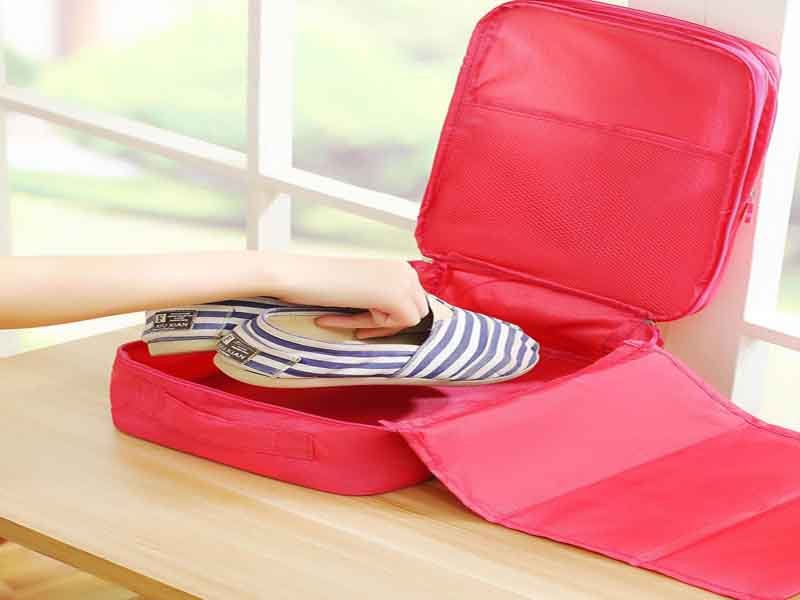
Shoe bag manufacturers use cotton, canvas, polyester, nylon, Oxford fabric, neoprene, mesh, nonwoven fabric, recycled textiles, coated fabrics, and laminated waterproof materials. The right choice depends on whether the bag must protect delicate footwear, contain wet soles, ventilate sports shoes, fold into luggage, survive frequent washing, or support premium retail presentation.
Material selection should never stop at a fiber name. Two polyester fabrics may perform very differently because of yarn size, weave density, finished weight, coating, lining, and surface treatment. A 210D polyester pouch can be light and packable, while a 600D polyester Oxford case can hold its shape and resist abrasion. Cotton may feel natural and premium, but it absorbs moisture. Nylon may be light and tough, but coating quality determines its resistance to water.
A complete material specification should consider:
Fiber composition
Yarn denier or yarn count
Weave structure
Finished fabric weight
Tensile and tear strength
Abrasion resistance
Water absorption
Coating or lamination
Colorfastness
Print compatibility
Sewing behavior
Cleaning method
Odor after sealed storage
Chemical requirements for the destination market
The strongest material is not always the best material. A lightweight travel pouch should not become bulky simply because a heavier fabric appears more durable. A luxury dust bag should not use a rough technical textile when softness is the main purpose. Good manufacturing begins by matching fabric behavior to the shoes and their environment.
Is Cotton Good for Shoe Bags?
Cotton is a good choice for dry footwear, retail dust bags, premium packaging, hotel slippers, leather shoes, formal shoes, and reusable home-storage pouches. It has a natural appearance, soft hand feel, and strong compatibility with printing and embroidery.
Cotton is less suitable for wet sports footwear because it absorbs moisture, dries slowly, and may retain dirt or odor. It can still be used for casual travel bags when shoes are dry, but a cotton product should not be presented as waterproof unless it includes a separate coated lining or barrier layer.
Common cotton options include:
Lightweight plain-weave cotton
Cotton muslin
Cotton twill
Brushed cotton
Cotton canvas
Organic cotton
Recycled cotton blends
Cotton-polyester blends
Each creates a different product impression. Muslin feels light and natural. Twill offers a cleaner surface and better structure. Brushed cotton feels soft against polished leather. Canvas supports heavier footwear and larger printed logos.
| Cotton Construction | Approximate Finished Weight | Hand Feel | Suitable Use | Main Limitation |
|---|---|---|---|---|
| Lightweight muslin | 90–140 gsm | Soft and light | Slippers, dust covers, retail inserts | Limited durability |
| Plain cotton | 120–180 gsm | Smooth and flexible | Everyday shoe pouches | Moderate structure |
| Cotton twill | 180–260 gsm | Dense and refined | Premium footwear bags | Higher weight |
| Light cotton canvas | 200–280 gsm | Firm but foldable | Travel and retail bags | Absorbs moisture |
| Heavy cotton canvas | 300–450 gsm | Strong and structured | Boots and reusable cases | Bulky and slow-drying |
| Brushed cotton | 160–260 gsm | Soft surface | Leather and luxury shoes | Collects lint and dust |
| Cotton-polyester blend | 150–300 gsm | Balanced | Branded reusable bags | Less natural feel |
| Recycled cotton blend | Varies | Textured | Sustainability-led collections | Shade and fiber consistency need control |
Cotton quality should be evaluated for shrinkage, dye transfer, surface lint, weave defects, and dimensional stability. A bag that fits correctly before washing may become too small after shrinkage if fabric finishing is not controlled.
Dark cotton fabrics should be tested before they touch pale leather or white knit uppers. Damp rubbing can transfer color even when dry rubbing appears acceptable.
Cotton also reacts differently to printing methods. Screen printing works well on most smooth constructions. Digital printing can produce detailed graphics but depends on pretreatment and ink compatibility. Embroidery creates a premium effect but can distort lightweight cotton unless stabilizing material is used behind the logo.
A cotton shoe bag may be lined with polyester, microfiber, or a coated fabric to add structure or make the interior easier to clean. Such combinations improve performance but also change recycling, washing, and cost considerations.
Which Canvas Weight Works Best?
The best canvas weight depends on shoe size, bag structure, carrying method, and desired appearance. Light canvas works well for foldable pouches. Medium canvas suits reusable travel and retail bags. Heavy canvas is better for boots, large cases, and products that must hold their shape.
Canvas should be selected by finished fabric weight and construction rather than by a vague term such as “thick canvas.” Two fabrics with the same weight may feel different because of yarn thickness, weave density, finishing, and fiber blend.
| Canvas Weight | Structure | Suitable Product | Main Advantage | Main Trade-Off |
|---|---|---|---|---|
| 180–220 gsm | Soft | Drawstring dust bag | Easy folding and printing | Limited support |
| 220–280 gsm | Medium-soft | Travel shoe pouch | Balanced weight and durability | Absorbs moisture |
| 280–340 gsm | Medium-firm | Zippered shoe case | Better shape retention | Higher shipping weight |
| 340–420 gsm | Firm | Boot bag or reinforced sports case | Strong and durable | Slow drying |
| Above 420 gsm | Very firm | Heavy-duty specialty case | High structure | Bulky and harder to sew |
Light canvas can wrinkle and collapse around a zipper. Piping, a gusset, or a thin lining may improve shape without moving to a much heavier material.
Heavy canvas places more strain on sewing needles, thread, seam intersections, and zipper attachment. A manufacturer may need heavier thread, stronger needles, reinforced corners, and more powerful machinery.
Canvas may also be waxed or treated with a water-repellent finish. Waxed canvas provides a heritage appearance and handles light rain, but it is not equivalent to a sealed waterproof fabric. The finish can mark, change color when folded, and require special care.
For premium footwear, a cotton canvas exterior can be paired with a soft microfiber interior. For travel use, a canvas-polyester blend may reduce shrinkage and improve drying speed. For sports use, a coated polyester Oxford usually performs better than pure cotton canvas because it is easier to wipe clean.
Canvas is most valuable when the product requires a natural, durable, reusable appearance rather than maximum water containment.
Are Nylon and Polyester Durable?
Both nylon and polyester can produce durable shoe bags. Durability depends on construction, denier, weave density, coating, reinforcement, and intended use.
Nylon offers excellent toughness relative to weight and is commonly used for lightweight technical bags. Polyester provides good dimensional stability, lower moisture absorption, broad color availability, and efficient printing options. Polyester is widely used in travel organizers, sports cases, retail bags, and promotional shoe pouches.
| Property | Polyester | Nylon |
|---|---|---|
| Moisture absorption | Lower | Higher |
| Drying speed | Generally faster | Fast in light constructions |
| UV resistance | Generally strong | Depends on finish |
| Abrasion resistance | Good | Often very good |
| Stretch under load | Lower | Higher |
| Dimensional stability | Strong | Moderate to strong |
| Print compatibility | Broad | Requires suitable process |
| Cost availability | Usually economical | Often higher |
| Premium technical feel | Moderate | Often strong |
| Common shoe-bag use | Travel and sports | Lightweight technical cases |
Denier is frequently used to compare these fabrics, but denier only describes yarn linear density. It does not directly measure finished fabric strength. A tightly woven 300D fabric may perform better than a loosely woven 600D fabric with weak coating adhesion.
Common polyester and nylon options include:
70D lightweight nylon
190T polyester
210D polyester or nylon
300D polyester Oxford
420D nylon
600D polyester Oxford
900D or 1200D heavy-duty Oxford
Ripstop nylon or polyester
The most suitable ranges are usually:
70D–210D for lightweight travel pouches
210D–300D for general travel and gym use
300D–420D for frequent sports use
420D–600D for cleats, hiking shoes, and boots
600D and above for heavy-duty structured cases
Higher denier increases body and abrasion resistance but also increases weight and bulk. Using 900D fabric for a pair of lightweight indoor shoes would add little practical value.
The bottom panel can use a heavier fabric than the upper body. This targeted construction is often more efficient than using heavy fabric everywhere.
A travel shoe bag may use:
210D coated polyester upper panels
300D Oxford base
Light polyester lining
Mesh ventilation zone
Webbing handle
A field-sport bag may use:
600D Oxford exterior
TPU-coated base
PEVA or coated polyester lining
Reinforced mesh panel
Full-wrap webbing handle
Material mapping allows the manufacturer to place strength, water resistance, and softness where they are actually needed.
What Does Oxford Fabric Add?
Oxford fabric gives a shoe bag body, abrasion resistance, and a recognizable woven texture. It is commonly used for sports, travel, golf, football, hiking, work boots, and structured sneaker cases.
Oxford is a weave category rather than one specific material. It can be made from polyester, nylon, recycled polyester, or blended yarns. It may be uncoated, PU coated, PVC coated, or TPU laminated.
The main advantages include:
Good support for handles and zippers
Strong resistance to repeated handling
Better shape retention than thin plain weave
Broad color and coating options
Compatibility with printing and patches
Suitability for reinforced bases
Ability to support foam lamination
| Oxford Type | Typical Use | Structure | Water Performance |
|---|---|---|---|
| 210D Oxford | Foldable travel bags | Light | Depends on coating |
| 300D Oxford | Everyday sports bags | Medium | Good with PU backing |
| 420D Oxford | Technical shoe cases | Medium to strong | Good with coating |
| 600D Oxford | Cleat and boot bags | Strong | Medium to high |
| 900D Oxford | Heavy-duty footwear cases | Very strong | High with suitable backing |
| Recycled polyester Oxford | Travel and lifestyle collections | Varies | Depends on construction |
| TPU-laminated Oxford | Wet footwear containment | Strong and flexible | High panel barrier |
Oxford fabric can fray during cutting and sewing if the edges are not controlled. Binding, hot cutting, ultrasonic cutting, seam allowances, and coating all influence edge stability.
The surface texture may also affect logo clarity. Fine text prints more sharply on smooth 300D fabric than on coarse 900D Oxford. Embroidery and molded patches can work better on heavily textured materials.
What Does Neoprene Protect?
Neoprene provides cushioning, flexibility, shape recovery, and a soft protective feel. It is often used for sneaker sleeves, golf shoe covers, cycling footwear cases, travel pouches, and protective footwear accessories.
Neoprene is a composite material. It normally combines a foam layer with laminated surface fabrics such as polyester or nylon jersey. The foam thickness and surface fabric determine how the finished product feels and performs.
Common thicknesses include:
1.5–2 mm for lightweight sleeves
2–3 mm for general protective bags
3–5 mm for padded cases or specialty footwear protection
| Neoprene Thickness | Cushioning | Flexibility | Suitable Use |
|---|---|---|---|
| 1.5 mm | Light | Very high | Compact shoe sleeve |
| 2 mm | Light to medium | High | Travel sneaker pouch |
| 3 mm | Medium | High | Golf or cycling shoe case |
| 4 mm | High | Medium | Protective premium case |
| 5 mm | Very high | Medium to low | Specialty impact protection |
Neoprene protects shoes from:
Light impact
Surface abrasion
Minor compression
Contact with hard objects
Scratching inside luggage
Temperature change to a limited degree
It is not automatically waterproof as a finished bag. The foam itself may resist water penetration, but sewn seams, zipper tape, and laminated textile surfaces can absorb or transmit moisture.
Neoprene also has limitations:
It is heavier than thin woven fabric.
It can hold odor when packed damp.
It takes longer to dry than lightweight polyester.
Some constructions have a noticeable material smell.
Thick seams can be difficult to sew cleanly.
Compression during shipping may create temporary creases.
Material formulation and market requirements need review.
For a premium sneaker travel case, neoprene may form the body while a reinforced coated base handles dirt and abrasion. For a lightweight shoe sleeve, 2 mm neoprene may provide enough protection without a separate foam layer.
Perforated neoprene can improve airflow, but perforations also reduce liquid containment. The feature should match the intended use.
Which Sustainable Fabrics Are Available?
Sustainable shoe-bag development may use recycled polyester, recycled nylon, organic cotton, recycled cotton blends, jute, linen, lower-impact dyeing, reduced packaging, or durable reusable construction.
No material should be described as sustainable without clarifying the basis of the claim. A recycled face fabric may still be combined with virgin coating, foam, zipper tape, thread, lining, and plastic hardware. The complete product is therefore more complex than one material label suggests.
Common options include:
GRS-certified recycled polyester where certification is required
Recycled nylon
Organic cotton
Recycled cotton blends
Cotton-linen blends
Natural linen
Jute blends
Recycled nonwoven polypropylene
Solution-dyed polyester
Undyed natural fabric
Material-efficient single-layer construction
| Material Direction | Main Benefit | Suitable Shoe Bag | Key Consideration |
|---|---|---|---|
| Recycled polyester | Uses recycled feedstock | Travel and sports bags | Certification and coating need verification |
| Recycled nylon | Technical performance | Lightweight premium cases | Availability and cost |
| Organic cotton | Natural premium positioning | Dust bags and retail packaging | Moisture absorption |
| Recycled cotton blend | Lower virgin cotton input | Lifestyle pouches | Fiber strength and shade consistency |
| Linen | Natural texture and breathability | Premium dry-shoe bags | Wrinkling and abrasion |
| Jute blend | Distinct natural appearance | Gift and retail packaging | Roughness near delicate shoes |
| Solution-dyed polyester | Lower dyeing impact potential | Sports and travel bags | Color range and order planning |
| Single-material polyester design | Simpler material stream | Lightweight organizers | Performance limitations may remain |
Durability is part of sustainable product development. A reusable bag that survives years of travel may provide more value than a weak pouch made from a fashionable material but discarded after several uses.
Design choices can improve product life:
Reinforce handles and base panels.
Use replaceable odor inserts.
Add removable washable liners.
Select reliable zippers.
Avoid unnecessary decorative parts.
Provide accurate washing instructions.
Choose a suitable fabric weight rather than the lightest possible option.
Reduce packaging volume.
Sustainability claims should remain precise. Examples include:
“Body fabric made with recycled polyester.”
“Organic cotton outer fabric.”
“Reusable shoe bag designed for repeated travel.”
“Packaging made from recyclable paper.”
These statements are clearer than broad claims about an entire product being environmentally harmless.
How Do Coatings Change Material Performance?
Coatings and laminates change water resistance, structure, cleaning, weight, flexibility, and sewing behavior.
PU coating is widely used because it can provide a flexible water-resistant barrier while keeping the fabric relatively light.
PVC coating provides a stronger, heavier, wipeable surface but may feel stiffer and requires careful chemical-compliance review.
TPU lamination creates a flexible high-barrier surface suitable for wet footwear and premium technical products.
Acrylic backing can improve stability and light water resistance but is not designed for strong wet containment.
Water-repellent surface treatment helps droplets bead on the exterior but does not seal seams or create a complete waterproof barrier.
| Treatment | Main Effect | Flexibility | Weight | Suitable Use |
|---|---|---|---|---|
| Water-repellent finish | Reduces surface wetting | High | Very low | Light rain and travel |
| Light PU coating | Improves water resistance | High | Low | General shoe bags |
| Heavy PU coating | Stronger barrier | Medium to high | Medium | Sports and wet soles |
| PVC coating | Strong wipeable barrier | Medium to low | High | Heavy-duty cases |
| TPU lamination | High flexible barrier | High | Medium | Wet footwear bags |
| Acrylic backing | Adds body and stability | Medium | Low | Structured dry-use products |
| Film lining | Creates separate barrier layer | Varies | Medium | Washable internal compartments |
A coating can make fabric harder to sew. Needle holes remain after stitching, and some surfaces cause feeding problems or seam puckering. The manufacturer may need seam tape, binding, welded construction, specialized presser feet, or adjusted needle selection.
Coating adhesion should be checked after folding, rubbing, cleaning, heat exposure, and humid storage. A material that appears good in a fresh swatch may peel after repeated flexing.
What Features Can Be Added?
A shoe bag manufacturer can add waterproof coatings, ventilation panels, easy-clean linings, dividers, pockets, reinforced bases, carrying handles, padding, identification windows, reflective trim, luggage straps, drainage openings, and custom closure systems.
Useful features should solve problems created by the footwear. Wet shoes need containment. Sweaty shoes need airflow. Luxury shoes need soft separation. Cleats need puncture-resistant bases. Travel shoes need compact packing. Adding features without a clear purpose increases cost, weight, and production complexity.
The strongest design usually combines a few carefully selected details rather than every available option.
How Is Waterproofing Added?
Waterproofing can be added through coated fabric, laminated film, sealed seams, welded construction, waterproof linings, covered zippers, roll-top closures, and raised tray-style bases.
A product may be water-repellent, water-resistant, or designed for stronger liquid containment. These levels should not be confused.
Water-repellent means droplets bead on the surface.
Water-resistant means the product slows water penetration during normal exposure.
Waterproof construction requires the full product, including seams and closure, to resist water under defined conditions.
| Waterproof Component | Function | Main Limitation |
|---|---|---|
| PU-coated fabric | Blocks light to moderate moisture | Stitch holes may leak |
| TPU-laminated fabric | Provides stronger flexible barrier | Higher material cost |
| PVC-coated fabric | Creates wipeable water barrier | Heavy and potentially stiff |
| PEVA lining | Contains dampness internally | Can crease or tear at seams |
| Seam tape | Covers stitch holes | Requires compatible coating |
| Welded seam | Joins panels without sewing holes | Limited by material compatibility |
| Covered zipper | Shields zipper from splashes | Not immersion-proof |
| Waterproof zipper | Improves closure protection | Slider ends may still leak |
| Roll-top closure | Strong moisture containment | Slower access |
| Tray-style base | Moves seams above pooled water | Adds pattern complexity |
The base is the most important wet zone. Water collects at the lowest point, so seams placed across the bottom are exposed to greater pressure. A tray-style base extends waterproof material upward before connecting to other panels.
Manufacturers can also create hybrid products. The lower half may use TPU-laminated material for containment, while the upper half uses coated Oxford and covered ventilation. This provides a better balance than sealing the entire bag.
Testing should evaluate the finished product, not only the fabric. Practical tests may include:
External spray exposure
Internal water-holding check
Loaded compression
Seam leakage observation
Repeated folding
Cleaning cycles
Zipper-end inspection
Corner leakage inspection
A product intended to hold wet shoes should state that purpose clearly. A bag designed only for light rain should not be promoted as leakproof.
Do Mesh Panels Reduce Odor?
Mesh panels reduce humidity and help warm shoes cool, but they do not remove the source of odor. Odor management still depends on cleaning, drying, lining choice, and how long footwear remains enclosed.
Mesh can be placed on:
Upper side panels
Top lid
Front panel
Covered external vents
Internal divider
Accessory pocket
Base drainage zone
The position should reflect contamination risk. A large mesh panel beside muddy soles may release dirt into luggage. Upper ventilation is usually safer.
| Ventilation Method | Airflow | Dirt Containment | Water Containment | Suitable Use |
|---|---|---|---|---|
| Small metal eyelets | Low | High | High | Golf and travel |
| Fine mesh panel | Medium | Medium to high | Low | Running shoes |
| Open mesh panel | High | Low | Very low | External drying |
| Covered mesh vent | Medium | High | Medium | Travel and sports |
| Perforated coated panel | Low to medium | High | Medium | Technical cases |
| Adjustable flap vent | Adjustable | High | Adjustable | Multi-use products |
| Drainage mesh base | High drainage | Low | None | Water shoes |
Mesh quality matters. Weak mesh can snag on cleats, zipper teeth, or rough soles. Reinforced polyester mesh, spacer mesh, and power mesh offer different combinations of structure and airflow.
The seam joining mesh to coated fabric is a common stress point. Rounded corners, wider seam allowances, binding, and reinforcement tape improve durability.
For a shoe bag packed inside clothing luggage, covered vents are often more practical than open mesh. For a bag carried separately from a gym, larger mesh panels may be acceptable.
Which Linings Are Easy to Clean?
Easy-clean linings have smooth surfaces, low moisture absorption, stable coatings, and accessible corners. PU-coated polyester, TPU-laminated fabric, PEVA film, and smooth polyester are common options.
The best lining depends on footwear condition.
Dry leather shoes need a soft non-abrasive lining.
Running shoes need a quick-drying surface.
Muddy cleats need a wipeable or rinseable interior.
Wet water shoes need a stronger liquid barrier.
| Lining | Cleaning | Moisture Control | Surface Protection | Best Application |
|---|---|---|---|---|
| Plain polyester | Hand wash | Low | Medium | Dry sneakers |
| PU-coated polyester | Wipe or hand wash | Medium | Medium | Travel and gym |
| TPU-laminated fabric | Wipe or rinse | High | Medium | Wet sports footwear |
| PEVA film | Wipe clean | High | Medium | Muddy shoes |
| Microfiber | Gentle clean | Low | High | Luxury footwear |
| Brushed fabric | Spot clean | Low | Very high | Polished leather |
| Mesh | Wash and air-dry | Very low containment | Medium | Running and drying |
| Removable liner | Wash separately | Adjustable | Adjustable | Team and heavy-use bags |
Internal corners should be rounded and reachable. Deep folded corners trap mud and detergent residue. A removable liner or base insert makes cleaning easier, especially in cleat and boot bags.
The lining should also remain stable after repeated cleaning. Poor coatings may become sticky, peel, crack, or transfer onto shoes.
Light-colored linings reveal dirt, helping users know when cleaning is needed. Dark linings hide staining but can make residue harder to detect.
Are Dividers and Pockets Useful?
Dividers and pockets are useful when they separate clean items, protect shoe uppers, or organize sport-specific accessories. They become unnecessary when they reduce capacity, trap dirt, or make cleaning difficult.
Dividers can separate:
Left and right shoes
Clean and worn footwear
Shoes and socks
Footwear and shin guards
Leather uppers and dirty soles
Two different pairs
Pocket options include:
External zipper pocket
Internal mesh pocket
Wet-item pocket
Name-card window
Tool pocket
Shoe-care pocket
Odor-insert sleeve
Elastic accessory band
| Feature | Useful For | Main Benefit | Possible Problem |
|---|---|---|---|
| Fixed divider | Two standard shoes | Prevents rubbing | Limits flexibility |
| Removable divider | Different shoe sizes | Adjustable capacity | Attachment collects dirt |
| Padded divider | Premium shoes | Better surface protection | Adds bulk |
| Waterproof divider | Wet and dry zones | Controls contamination | More seams |
| Mesh pocket | Insoles and laces | Airflow | Limited dirt control |
| External pocket | Clean socks or documents | Easy access | Changes bag balance |
| Reinforced tool pocket | Golf spikes or cleat tools | Puncture protection | Adds weight |
| Odor insert sleeve | Replaceable deodorizer | Keeps insert positioned | Requires maintenance |
A clean sock pocket should not share direct contact with muddy footwear. Used socks need a washable or ventilated area.
Dividers should not press against delicate uppers. A divider that looks neat when empty may compress shoes after the bag is closed. Sample testing should evaluate the loaded product.
For simple travel pouches, one main compartment is often enough. For sport-specific bags, carefully designed pockets can add real value.
How Do Reinforced Bases Work?
A reinforced base uses stronger fabric, multiple layers, a waterproof laminate, removable insert, or molded panel to resist abrasion, puncture, moisture, and deformation.
The base receives the greatest wear because it contacts floors and supports hard soles. Cleats and boots create concentrated pressure that can damage lightweight material.
| Base Construction | Abrasion Resistance | Water Control | Cleaning | Suitable Use |
|---|---|---|---|---|
| Single 210D layer | Low | Low to medium | Easy | Light travel |
| Double 300D layer | Medium | Medium | Easy | Frequent travel |
| 600D Oxford base | High | Medium to high | Easy | Sports shoes |
| TPU-laminated base | High | High | Very easy | Wet footwear |
| Removable EVA insert | High | Depends on cover | Very easy | Cleats and boots |
| Plastic board reinforcement | Very high | High | Easy | Structured cases |
| Molded tray base | Very high | Very high | Very easy | Heavy-duty wet bags |
A good reinforced base may extend several centimeters up the sidewall. This reduces seam exposure where liquid pools.
Removable inserts should have rounded edges so they do not cut the lining. They should also be easy to remove without touching the dirty surface excessively.
Base reinforcement should not make the bag unstable. A rigid bottom with very soft walls may tip when carried. Handle position and upper structure should support the full loaded shape.
Which Closures Can Be Added?
Closures affect access, containment, water resistance, appearance, and cost. Available options include drawstrings, standard zippers, coated zippers, roll tops, hook-and-loop flaps, snaps, magnetic closures, and buckle systems.
| Closure | Access | Containment | Water Resistance | Best Use |
|---|---|---|---|---|
| Drawstring | High | Low | Low | Dust bags |
| Standard coil zipper | High | Medium | Low to medium | Travel organizers |
| Coated zipper | High | High | Medium to high | Sports and outdoor |
| Covered zipper | High | High | High splash resistance | Wet-weather use |
| Roll top | Medium | Very high | High | Wet footwear |
| Hook-and-loop flap | High | Medium | Low to medium | Simple sports pouches |
| Snap closure | Medium | Low | Low | Lifestyle bags |
| Buckle closure | Medium | High | Depends on body | Outdoor technical designs |
A closure should match the product opening. Bulky boots need a wide opening. Luxury dust bags can use soft cords. Water shoes may need a roll top or welded zipper pouch.
Closures should also be tested for repeated cycles. Zippers can jam with sand. Hook-and-loop collects lint. Drawcords may fray. Buckles can crack under impact. The manufacturer should evaluate the real environment rather than only the showroom appearance.
How Do Handles and Straps Improve Use?
Handles and straps turn a packing pouch into a stand-alone carrier. Options include short webbing loops, padded handles, shoulder straps, luggage sleeves, side grab tabs, and full-wrap support webbing.
A handle should be designed for loaded weight. Wet boots or cleats place more stress on seams than dry sneakers.
Reinforcement methods include:
Box stitching
Cross stitching
Bartacks
Internal backing patches
Full-wrap webbing
Double-layer attachment panels
Handle comfort also matters. Thin tape can feel sharp when carrying heavy footwear. Wider webbing or padding distributes pressure.
For airport use, a luggage sleeve lets the shoe case slide over a suitcase handle. For team sports, a detachable shoulder strap may be more useful. For compact travel pouches, a small side loop is enough.
Can Padding Be Added?
Padding protects footwear from crushing, impact, and surface abrasion. It is useful for premium sneakers, cycling shoes, golf shoes, leather shoes, and collectible footwear.
Padding options include:
Foam-laminated panels
Spacer mesh
Felt
Closed-cell EVA
Molded EVA shell
Removable padded divider
Soft quilted lining
Padding should be used selectively. Thick foam around muddy footwear absorbs water through seams and takes longer to dry. A structured lid and sidewalls with an unpadded washable base may perform better.
Closed-cell foam is generally more suitable for damp environments because it absorbs less water than open-cell foam.
Padding adds shipping volume and may prevent the product from folding flat. The benefit should justify the cost and bulk.
Which Features Should Be Prioritized?
Feature priority depends on the product category.
| Product Type | First Priority | Second Priority | Third Priority |
|---|---|---|---|
| Luxury dust bag | Soft lining | Colorfast fabric | Premium closure |
| Travel organizer | Correct size | Low weight | Wide zipper |
| Running shoe bag | Ventilation | Quick-dry lining | Foldability |
| Football boot bag | Reinforced base | Washable interior | Strong handle |
| Golf shoe case | Structure | Ventilation | Accessory pocket |
| Wet-shoe pouch | Liquid containment | Easy cleaning | Secure closure |
| Multi-pair bag | Dividers | Handle strength | Identification |
| Retail packaging bag | Presentation | Logo quality | Packing efficiency |
The best product does not need every available feature. It needs the right sequence of features.
Szoneier can combine cotton, canvas, polyester, nylon, neoprene, Oxford fabric, mesh, linings, coatings, and reinforcement materials according to the intended footwear. Custom development can also cover waterproofing, ventilation, dividers, pockets, padding, handles, windows, labels, printing, embroidery, and packaging.
A strong sample should be evaluated with the actual shoes, not only as an empty bag. Once loaded, the manufacturer can see whether the zipper closes smoothly, the base remains stable, the handle feels balanced, the ventilation stays exposed, and the lining can be cleaned easily.
How Are Shoe Bags Customized?
Shoe bags can be customized through size, shape, fabric, lining, closure, ventilation, reinforcement, pockets, handles, logo application, color, labels, and packaging. The most effective customization begins with the footwear and use scenario rather than with decoration. A bag for polished leather shoes may need soft individual sleeves, while a football boot bag may require a washable base, strong handle, and covered ventilation.
A manufacturer should translate the product idea into measurable specifications. “A large waterproof shoe bag” is too vague for accurate sampling. The development brief should identify the shoe category, maximum shoe size, expected moisture level, preferred carrying method, cleaning routine, logo style, order quantity, and destination market.
Good customization does not mean adding every possible feature. It means selecting the combination that makes the bag easier to use, more durable, and better suited to the footwear inside.
Which Sizes Can Be Produced?
A shoe bag manufacturer can produce compact pouches for slippers, standard cases for sneakers, high-volume bags for basketball shoes, reinforced carriers for boots, and multi-pair organizers for travel or storage.
Sizing should be based on usable internal dimensions rather than external measurements. Seams, foam, piping, lining, and dividers reduce the space available inside the finished product.
The three main dimensions are:
Length for heel-to-toe clearance
Width for the combined width of the pair
Height for midsoles, padded collars, tongues, and high-top uppers
A product developer should also consider how the shoes will be arranged. A heel-to-toe arrangement usually uses space more efficiently than placing both shoes in the same direction. Sole-to-sole packing improves dirt control but creates a thicker central area.
| Footwear Category | Common Internal Length | Common Internal Width | Common Internal Height | Main Sizing Risk |
|---|---|---|---|---|
| Slippers and flats | 24–28 cm | 16–21 cm | 6–10 cm | Bag may be unnecessarily bulky |
| Children’s shoes | 22–30 cm | 16–22 cm | 8–13 cm | Wide variation by age |
| Women’s casual shoes | 27–32 cm | 20–24 cm | 10–16 cm | Heel shape and decoration |
| Men’s sneakers | 31–36 cm | 22–27 cm | 13–19 cm | Thick soles and wide toe boxes |
| Running shoes | 30–36 cm | 23–28 cm | 14–20 cm | Foam midsoles increase volume |
| High-top sneakers | 33–39 cm | 24–29 cm | 18–24 cm | Collar compression |
| Basketball shoes | 35–41 cm | 25–31 cm | 20–27 cm | Large upper and sole volume |
| Golf shoes | 31–37 cm | 23–28 cm | 14–20 cm | Spike or outsole clearance |
| Football cleats | 31–37 cm | 22–27 cm | 13–19 cm | Stud pressure on base |
| Hiking shoes | 35–42 cm | 25–31 cm | 20–27 cm | Heavy sole and rigid structure |
| Work or winter boots | 38–48 cm | 28–36 cm | 24–38 cm | Shaft height and wet weight |
These ranges are starting points rather than universal finished specifications. Actual development should use the largest intended shoe or a detailed shoe measurement chart.
A useful size brief should state:
Maximum shoe length
Maximum sole width
Maximum shoe height
Target user group
Number of shoes or pairs
Preferred packing orientation
Whether socks or accessories are included
Whether the bag must fit inside a specific suitcase or carton
Whether foam, dividers, or inserts reduce internal space
A bag should normally provide some clearance around the footwear. Extremely tight sizing causes several problems:
The zipper presses against the upper.
The shoe tongue catches in the closure.
Wet shoes become harder to insert.
The bag deforms when loaded.
Airflow is reduced.
Internal lining experiences greater abrasion.
Clearance should still remain controlled. An oversized bag allows shoes to move excessively and consumes more luggage space. The right fit should permit easy loading without turning the product into a loose storage sack.
For footwear collections with several sizes, one universal bag may not be the most efficient solution. A two-size or three-size system can improve fit while keeping production manageable.
For example:
Small for children’s shoes, flats, and low-profile footwear
Medium for standard women’s and men’s sneakers
Large for high-tops, basketball shoes, or boots
Color coding, woven size labels, or different zipper pullers can help distinguish sizes during packing and retail handling.
Multi-pair bags require a different sizing approach. Capacity should be calculated around the compartment layout rather than simply multiplying the size of one bag. Dividers, zipper layers, and shoe orientation can significantly change the final volume.
What Closures Are Available?
Shoe bags can use drawstrings, standard zippers, reverse-coated zippers, roll-top systems, hook-and-loop flaps, snaps, buckles, magnetic closures, or combinations of these methods.
The closure affects four main areas:
How quickly the bag opens
How well dirt and moisture stay inside
How easily bulky footwear enters
How the product looks and feels
Drawstrings remain popular for dust bags because they are soft, light, and visually clean. Zippers provide better containment and access for travel and sports. Roll tops offer stronger wet-item control but require more handling.
| Closure Type | Opening Speed | Dirt Containment | Moisture Control | Best Application |
|---|---|---|---|---|
| Single drawstring | High | Low | Low | Lightweight dust pouch |
| Double drawstring | High | Low to medium | Low | Premium retail shoe bag |
| Straight zipper | High | Medium | Medium | Flat travel organizer |
| U-shaped zipper | Very high | High | Medium | Sneaker and sports case |
| Clamshell zipper | Very high | High | Medium | Structured footwear case |
| Reverse-coated zipper | High | High | Medium to high | Outdoor and wet-weather bag |
| Covered zipper | High | High | High against splashes | Sports and hiking use |
| Roll top with buckle | Medium | Very high | High | Wet shoe transport |
| Hook-and-loop flap | High | Medium | Low to medium | Simple sports pouch |
| Buckle flap | Medium | High | Medium | Outdoor technical style |
| Snap closure | Medium | Low | Low | Lifestyle and retail packaging |
A closure should be evaluated when the bag is fully loaded. A zipper may run smoothly on an empty sample but become difficult when the shoes press against the lid.
Important zipper specification details include:
Zipper chain size
Coil or molded teeth
Single or double sliders
Slider material
Puller shape
Zipper tape color
Reverse or standard orientation
Water-resistant coating
End-stop construction
Corner radius
Internal zipper guard
External storm flap
Double sliders are useful on wide openings, but they create a meeting point where water and fine dirt can pass. For products requiring stronger moisture control, the sliders can close beneath a small zipper garage or protective flap.
The zipper path should avoid sharp corners. Tight turns increase friction and can cause wave-shaped sewing, slider resistance, or chain damage. Rounded corners create smoother operation.
Drawstring systems also require careful specification. The cord should move freely through the channel without cutting or bunching the fabric. Options include:
Cotton rope
Polyester cord
Nylon cord
Flat woven tape
Satin ribbon
Elastic cord
Reflective cord
Cord locks
Metal or plastic end caps
A natural cotton cord may suit canvas packaging but absorb moisture. A synthetic cord dries faster and is more suitable for sports or outdoor use.
Roll-top closures are effective for wet footwear because folding the top creates a longer barrier path than a simple zipper. However, the user must fold the top several times and secure the buckle correctly. The design also requires additional fabric height.
A hybrid closure can solve competing needs. For example, a sports bag may use a wide zipper for access and an outer buckle strap for compression. A premium dust bag may use a drawstring plus an internal flap to improve dust control.
How Are Logos Applied?
Logos can be applied through screen printing, heat transfer, sublimation, embroidery, woven labels, rubber patches, leather patches, reflective transfers, silicone printing, metal plates, or custom zipper pullers.
The best method depends on:
Fabric texture
Coating type
Logo detail
Number of colors
Required durability
Order quantity
Waterproofing needs
Desired product position
Cleaning method
Logo size and placement
| Logo Method | Detail Level | Suitable Fabrics | Durability | Main Consideration |
|---|---|---|---|---|
| Screen printing | Medium to high | Cotton, canvas, polyester, Oxford | High | Ink must match coating and fabric |
| Heat transfer | High | Polyester, nylon, coated fabrics | Medium to high | Adhesion and cracking need testing |
| Sublimation | Very high | Suitable light-colored polyester | High | Not suitable for every fabric color |
| Embroidery | Medium | Cotton, canvas, Oxford, polyester | Very high | Creates needle holes |
| Woven label | High | Most materials | High | Edge softness and placement |
| Rubber patch | Medium | Oxford, neoprene, technical fabrics | High | Attachment method affects waterproofing |
| Leather patch | Medium | Canvas and lifestyle bags | High | Material consistency and care |
| Reflective transfer | Medium | Polyester and nylon | High | Heat compatibility |
| Silicone print | Medium to high | Smooth technical fabrics | High | Surface preparation |
| Metal plate | Medium | Structured cases | High | Weight and reinforcement |
| Custom zipper puller | Medium | Zippered bags | High | Tooling and color matching |
Screen printing is one of the most flexible options for simple logos and solid colors. Ink formulation should be selected according to the base material. Cotton absorbs ink differently from PU-coated polyester. A print that performs well on canvas may peel from a smooth waterproof coating.
Heat transfer works well for detailed logos, gradients, small text, and multicolor artwork. The transfer temperature and pressure must be compatible with the fabric and coating. Excessive heat can distort TPU film, flatten foam, or leave a visible press mark.
Sublimation is suitable for polyester fabrics and full-surface artwork. The dye becomes part of the fabric rather than sitting on top. It is useful for team graphics, patterns, and colorful retail collections. The process works best on light-colored polyester and does not provide the same result on cotton or dark base fabric.
Embroidery adds texture and perceived value. It is suitable for cotton, canvas, Oxford, and structured products. However, every embroidery needle creates holes. Embroidery should be positioned away from the waterproof base or sealed chamber.
Embroidery also affects fabric behavior. Lightweight fabric may pucker unless backing material is used. Dense stitching can make a soft pouch stiff in one area. The logo should be digitized according to the actual fabric rather than copied directly from another product.
Rubber, silicone, woven, and leather patches add a three-dimensional identity. They can be sewn, heat bonded, or attached with adhesive. Sewn patches are durable but create additional needle holes. Heat-bonded patches require adhesion testing.
Logo position should be considered on the loaded bag. A centered logo may move visually when the bag expands around the shoes. Logos placed too close to a zipper, seam, or fold can appear distorted.
A logo approval process should include:
Vector artwork review
Color reference confirmation
Size and placement drawing
Logo sample on actual fabric
Adhesion or stitch inspection
Rubbing test
Cleaning test
Loaded-product appearance check
Production placement tolerance
For waterproof designs, surface-applied methods are usually preferable in the wet zone because they avoid puncturing the barrier. Embroidery or sewn patches can be placed on an exterior dry panel.
Which Colors and Prints Are Possible?
Shoe bags can be produced in solid colors, contrasting panel combinations, all-over prints, camouflage patterns, geometric graphics, gradients, reflective details, or coordinated color systems.
Color can be created through:
Stock-dyed fabric
Custom dyeing
Solution-dyed yarn
Sublimation printing
Screen printing
Digital textile printing
Heat-transfer graphics
Laminated printed film
The color method should match the order size, material, artwork, and required consistency.
Stock colors are efficient when speed and flexibility matter. Custom dyeing provides greater control but usually requires more preparation and material commitment.
A complete color system may include:
Body fabric
Base reinforcement
Lining
Mesh
Zipper tape
Slider
Thread
Webbing
Binding
Cord
Logo
Patch
Label
Packaging
Matching every component to one exact shade may be difficult because different materials reflect light differently. Polyester webbing may look darker than nylon mesh even when both are described by the same color reference.
| Color Direction | Main Benefit | Main Risk | Suitable Product |
|---|---|---|---|
| Single solid color | Clean and simple | Component shade differences | Travel and retail bags |
| Contrast base panel | Hides dirt and adds structure | More cutting and sewing | Sports bags |
| Color-coded sizes | Easy identification | More inventory control | Multi-size programs |
| All-over sublimation | Strong visual impact | Requires compatible polyester | Team and promotional bags |
| Camouflage print | Outdoor appearance | Pattern placement variation | Military, hiking, and tactical use |
| Reflective accents | Improved low-light visibility | Higher material cost | Running and cycling |
| Transparent panel | Easy identification | Scratching and condensation | Team and storage use |
| Neutral natural tones | Premium lifestyle look | Dirt may be more visible | Cotton and canvas dust bags |
Colorfastness is important because shoe bags may contact wet footwear, light-colored shoes, or damp clothing. Testing may include:
Dry rubbing
Wet rubbing
Water exposure
Perspiration exposure
Washing
Light exposure
Migration between materials
Dark lining against white shoes deserves particular attention. Even a small amount of dye transfer can create a serious complaint.
Print scale should match the bag dimensions. A large repeating pattern may look balanced on a roll of fabric but become awkward when cut into small panels. Pattern placement should be reviewed on the finished shape.
For collections, color can support function. A darker base hides mud, while a brighter upper panel improves identification. Different zipper pullers may distinguish shoe sizes or family members without changing the full body color.
What Labels and Packaging Can Be Added?
Custom labels and packaging communicate product identity, care instructions, material information, size, origin, and retail presentation.
Label options include:
Woven brand label
Printed satin label
Heat-transfer care label
Cotton label
Size label
Country-of-origin label
Compliance label
Name label
QR-code label
Hangtag
Barcode sticker
The label should be positioned where it does not scratch the shoes or interfere with cleaning. A rough woven label inside a soft luxury pouch may damage delicate footwear. An external side-seam label is often safer.
Care information may include:
Wipe clean only
Hand wash
Gentle machine wash
Do not bleach
Air dry
Do not tumble dry
Remove insert before washing
Do not store wet shoes for long periods
Open and dry after use
Packaging options include:
Individual polybag
Recycled-content polybag
Paper sleeve
Kraft paper band
Printed cardboard box
Window box
Drawer box
Reusable pouch
Header card
Retail hanger packaging
Master-carton-only bulk packing
| Packaging Type | Presentation | Protection | Shipping Volume | Suitable Use |
|---|---|---|---|---|
| Simple individual bag | Low | Medium | Low | Bulk and online orders |
| Paper band | Medium | Low | Very low | Foldable retail products |
| Printed sleeve | Medium to high | Medium | Low | Travel accessories |
| Header card | Medium | Medium | Low | Hanging retail display |
| Folding box | High | High | Medium | Gift and premium products |
| Rigid box | Very high | Very high | High | Luxury footwear accessories |
| Reusable outer pouch | High | High | Medium | Premium travel sets |
| Bulk carton packing | Low | Medium | Lowest | Distribution and repacking |
Packaging should protect logo surfaces, transparent windows, zipper coatings, foam panels, and structured shapes. A heavily compressed case may arrive with permanent creases. A soft foldable pouch can be packed more tightly.
Carton planning should consider:
Folded product dimensions
Units per carton
Gross weight
Carton strength
Moisture protection
Compression risk
Barcode position
Assortment packing
Retail labeling
Destination requirements
A packaging concept should also consider the user’s opening experience. A premium shoe case packed loosely in an oversized carton feels wasteful. A waterproof bag sealed in multiple plastic layers may contradict a sustainability-focused product message.
How Should a Custom Brief Be Prepared?
A clear custom brief reduces sample revisions, quotation changes, and production misunderstandings.
The brief should include:
Product reference or sketch
Intended footwear
Maximum shoe size
Target internal dimensions
Required materials
Color references
Logo artwork
Closure type
Ventilation requirement
Waterproof expectation
Lining and base structure
Handles and pockets
Labels
Packaging
Order quantity
Destination market
Testing or certification needs
Target delivery schedule
The waterproof requirement should be described in practical terms. Useful descriptions include:
Resist light rain during carrying
Contain damp soles inside luggage
Hold wet shoes for a short trip
Prevent leakage under light compression
Allow water drainage after swimming
Survive repeated hand washing
These descriptions give the manufacturer more useful direction than “make it completely waterproof.”
The design brief should separate fixed requirements from flexible preferences.
Fixed requirements might include:
Maximum product size
Logo position
Market compliance
Footwear capacity
Specific color
Packaging format
Flexible preferences might include:
Exact zipper chain size
Mesh shape
Internal binding color
Handle width
Minor pattern changes
This distinction allows the manufacturer to recommend solutions without changing the core concept.
How Are Shoe Bags Manufactured?
Shoe bag manufacturing usually includes requirement analysis, design development, material sourcing, pattern making, sampling, testing, fabric inspection, cutting, printing or embroidery, sewing or welding, in-process inspection, final cleaning, quality control, packing, and shipment preparation.
The process changes according to product complexity. A single-layer cotton drawstring pouch may require only a few operations. A waterproof sports case with foam, mesh, piping, lining, pockets, and reinforced handles may involve dozens of components and sewing steps.
Manufacturing quality depends on how well each stage connects to the next. A good design can fail if material shrinkage is ignored. Accurate cutting cannot compensate for a weak zipper. Strong fabric cannot prevent leakage if seams are placed in standing-water zones.
How Is the Design Developed?
Design development begins by converting the product idea into measurable construction details.
The first stage usually covers:
End-use analysis
Footwear dimensions
Target bag shape
Material direction
Opening method
Carrying method
Water and dirt exposure
Cleaning requirements
Branding
Packaging
Target cost
A design may begin from a physical sample, photograph, sketch, technical drawing, or verbal description. The manufacturer should not copy dimensions blindly from a reference because the intended footwear or material may differ.
Pattern development translates the three-dimensional bag into flat fabric pieces. Components may include:
Front panel
Back panel
Side gusset
Base
Lid
Lining panels
Mesh panel
Pocket pieces
Divider
Handle reinforcement
Zipper guards
Binding strips
Piping strips
Label tabs
Foam or board inserts
Pattern makers need to account for:
Seam allowance
Material thickness
Foam compression
Zipper radius
Fabric stretch
Coating stiffness
Binding width
Panel matching
Print placement
Finished internal volume
A technical specification normally records:
Finished measurements
Measurement points
Material codes
Component descriptions
Color references
Stitch type
Stitch density
Seam type
Logo position
Label position
Packing method
Tolerance
A product drawing can show front, back, side, top, bottom, and internal views. More complex cases may need exploded diagrams that identify every component.
| Development Input | What It Helps Define | Possible Limitation |
|---|---|---|
| Physical reference sample | Shape and construction | May not fit new footwear |
| Hand sketch | General concept | Lacks exact measurements |
| Technical drawing | Precise dimensions | May not reflect material behavior |
| Actual pair of shoes | Real fit and volume | Covers only one model or size |
| 3D model | Shape visualization | Still requires physical sampling |
| Material swatches | Appearance and hand feel | Does not show finished-bag behavior |
| Written use scenario | Functional requirements | Needs translation into construction |
A good manufacturer may recommend changing a reference design when the requested material behaves differently. Thick neoprene cannot be sewn with the same seam structure as thin polyester. Heavy canvas needs different corner treatment from TPU film. A rigid insert may require a removable opening.
Design development should also identify production risks early. Examples include:
Logo crossing a zipper seam
Mesh placed beneath dirty soles
Handle attached to one weak fabric layer
Waterproof seam running through the base
Pocket reducing internal shoe capacity
Foam trapping moisture
Clear film folding sharply
Zipper path turning too tightly
The development stage is where most expensive production problems can be prevented.
What Happens During Sampling?
Sampling turns the specification into a physical product that can be measured, loaded, opened, carried, cleaned, and reviewed.
A first sample may focus on:
Overall dimensions
Shoe fit
Opening size
Material combination
Structure
Handle position
Pocket capacity
Logo scale
Visual proportion
The first sample does not always need final production materials if the main goal is to verify shape. However, waterproofing, printing, coating behavior, color, and hand feel should eventually be tested using the actual materials.
A typical review process includes:
Measure the finished sample.
Place the intended shoes inside.
Check zipper operation.
Carry the loaded bag.
Inspect balance.
Test pocket access.
Observe shape retention.
Review logo position.
Examine seam quality.
Test cleaning access.
Evaluate ventilation.
Pack the bag inside luggage or retail packaging.
| Sample Review Area | Question to Ask | Common Revision |
|---|---|---|
| Internal size | Do shoes enter without force? | Increase gusset or height |
| Opening | Can bulky shoes pass through? | Extend zipper path |
| Shape | Does the loaded bag remain balanced? | Adjust panels or base |
| Handle | Is carrying comfortable? | Change position or width |
| Ventilation | Are vents exposed when packed? | Move mesh upward |
| Base | Does it resist stud pressure? | Add insert or reinforcement |
| Lining | Can corners be cleaned? | Simplify seams |
| Logo | Is it centered when loaded? | Adjust placement |
| Does it reduce shoe space? | Change depth or location | |
| Packaging | Does the product crease? | Revise fold or carton |
Sample revisions should be documented clearly. Each change should identify:
Original condition
Required change
New measurement or construction
Reason for revision
Approval status
Scattered comments such as “make it slightly bigger” create confusion. A clear revision might state: “Increase finished internal height from 16 cm to 19 cm to fit high-top footwear without collar compression.”
Waterproof products require more than visual review. The sample can be tested with damp footwear, internal water, external spray, and light compression. Weak points often appear at:
Zipper ends
Base corners
Handle attachments
Label seams
Mesh joins
Fold lines
Welded edges
A pre-production sample should represent the confirmed materials, logo, dimensions, workmanship, labels, and packaging. It becomes the reference for production inspection.
How Are Fabrics Cut and Printed?
Before cutting, fabric should be inspected for:
Shade variation
Weave defects
Coating defects
Holes
Stains
Wrinkles
Width consistency
Lamination bubbles
Surface scratches
Material odor
Roll-to-roll differences
Fabric may need relaxation before cutting, especially when tightly rolled or laminated. Relaxation allows tension to stabilize and reduces dimensional changes after cutting.
Cutting methods include:
Manual cutting
Straight-knife cutting
Band-knife cutting
Die cutting
Laser cutting
Ultrasonic cutting
CNC cutting
Hot cutting
The best method depends on the material and quantity.
| Cutting Method | Suitable Material | Main Benefit | Main Risk |
|---|---|---|---|
| Hand cutting | Samples and small quantities | Flexible | Lower consistency |
| Straight knife | Stacked woven fabrics | Efficient | Heat and edge movement |
| Band knife | Precise shaped pieces | Accuracy | More handling |
| Die cutting | Repeated small components | Fast and consistent | Tooling required |
| Laser cutting | Synthetic fabrics and details | Accurate sealed edge | Heat marks or discoloration |
| Ultrasonic cutting | Synthetic and coated materials | Sealed clean edge | Equipment compatibility |
| Hot cutting | Webbing and synthetic strips | Prevents fraying | Melted edge can feel hard |
| CNC cutting | Complex patterns | Digital accuracy | Setup and material control |
Pattern placement matters when fabric has:
Directional print
Camouflage pattern
Stripes
Plaid
Logo repeat
Surface grain
Color gradient
Reflective layout
Panels may need to be cut in the same direction to maintain consistent appearance and stretch behavior.
Printing and embroidery are often completed before assembly because flat panels are easier to position and process.
The process may include:
Artwork separation
Screen preparation
Color mixing
Test print
Positioning jig
Bulk printing
Curing
Inspection
Embroidery digitizing
Backing application
Thread setup
Stitching
Trimming
Logo quality checks should examine:
Color
Size
Position
Edge clarity
Ink coverage
Adhesion
Cracking
Puckering
Thread density
Loose threads
Backing residue
On coated materials, test printing is essential. Some inks may not bond well to PU, TPU, or water-repellent finishes. Surface treatment or specialized ink may be required.
Sublimation printing is often completed before cutting when the design covers the whole panel. Printed fabric should be checked for color consistency, pattern scale, and alignment.
How Are Bags Sewn or Welded?
Most shoe bags are assembled through industrial sewing, while certain waterproof products may use heat welding, high-frequency welding, ultrasonic welding, or adhesive bonding.
Common sewing operations include:
Panel joining
Zipper insertion
Mesh attachment
Pocket assembly
Handle attachment
Lining construction
Binding
Piping
Label insertion
Topstitching
Bartacking
Divider installation
Stitch selection depends on the material and function. Straight lockstitch is common for general assembly. Overlock controls raw edges. Double-needle stitching adds reinforcement and appearance. Bartacks strengthen high-stress points.
| Construction Method | Best Use | Main Advantage | Main Limitation |
|---|---|---|---|
| Lockstitch sewing | General bag assembly | Strong and controlled | Creates needle holes |
| Overlock sewing | Raw-edge finishing | Prevents fraying | Limited waterproofing |
| Binding | Interior edge finishing | Clean and durable | Adds thickness |
| Double stitching | Reinforced seams | Extra strength | More sewing time |
| Bartacking | Handle and stress points | Concentrated reinforcement | Can damage weak fabric |
| Seam taping | Waterproof seam protection | Covers stitch holes | Requires compatible coating |
| Heat welding | Waterproof panels | No sewing holes | Material-specific |
| High-frequency welding | PVC and suitable TPU | Strong sealed seams | Specialized tooling |
| Ultrasonic welding | Synthetic materials | Clean and fast | Limited thickness range |
| Adhesive bonding | Specialty construction | Smooth appearance | Bond durability must be tested |
Sewing parameters may include:
Needle type
Needle size
Thread type
Thread thickness
Stitch density
Presser-foot pressure
Machine tension
Seam allowance
Reinforcement length
These settings should match the material. A large needle can create visible holes in coated fabric. A small needle may break when sewing through heavy Oxford, foam, webbing, and binding.
Thread selection affects strength and appearance. Polyester thread is widely used because of its durability and color range. Bonded nylon thread may suit heavy-duty cases. Thread should be compatible with washing, abrasion, and outdoor exposure.
Waterproof construction requires special attention. If panels are sewn, seam tape may be applied to cover the holes. The tape, coating, temperature, pressure, and machine speed must work together.
Welded products require material with a weldable surface. Not every PU-coated or TPU-laminated fabric can be welded successfully. The manufacturer should test:
Weld strength
Edge appearance
Film distortion
Peeling
Heat damage
Water leakage
Flexing after welding
Hybrid construction is common. A wet-zone liner may be welded, while the outer Oxford shell is sewn. Such a design combines strong moisture containment with handles, pockets, and a structured exterior.
How Are Finished Bags Packed?
Before packing, finished shoe bags should be cleaned, trimmed, inspected, shaped, and matched with inserts, labels, hangtags, or accessories.
Finishing operations may include:
Thread trimming
Surface cleaning
Chalk-mark removal
Zipper check
Shape correction
Logo inspection
Label inspection
Insert placement
Folding
Individual packing
Barcode application
Carton packing
Structured cases may need internal support during packing to prevent collapse. Foam or paper inserts can help maintain shape, though unnecessary packaging should be avoided.
Foldable bags should be folded along approved lines. Random folding may crease transparent windows, crack prints, or damage coatings.
| Product Type | Recommended Packing Method | Main Risk |
|---|---|---|
| Cotton drawstring pouch | Flat folded | Wrinkling |
| Polyester travel bag | Controlled compact fold | Zipper pressure marks |
| Structured sports case | Light internal support | Shape deformation |
| Neoprene sleeve | Loose fold or flat pack | Compression creases |
| TPU wet bag | Rolled or softly folded | Sharp laminate creasing |
| Clear-window case | Protected flat packing | Scratching |
| Padded sneaker case | Shape-supported packing | High carton volume |
| Multi-pair organizer | Collapsed by approved method | Divider distortion |
Carton loading should avoid excessive pressure. Overpacked cartons can deform foam, crush piping, mark logos, and place permanent folds in coated fabric.
Carton specifications may include:
Carton dimensions
Units per carton
Gross weight
Net weight
Protective inner packaging
Assortment ratio
Shipping marks
Barcode labels
Handling symbols
Moisture protection
Carton strength
A packing trial can help calculate actual carton capacity rather than relying only on theoretical dimensions. Structured bags often occupy more volume than expected because they do not compress evenly.
Finished packaging should be reviewed for the complete user experience. The product should arrive clean, correctly shaped, clearly labeled, and easy to remove without cutting or scratching the bag.
A professional manufacturing process connects design, material, workmanship, quality control, and packaging. Szoneier can support custom shoe bag projects from initial concept and fabric selection through sample development, printing, sewing, waterproof construction, inspection, and packing. The strongest results come from confirming the footwear, end use, material performance, and finished-product details before mass cutting begins.