Skip to content
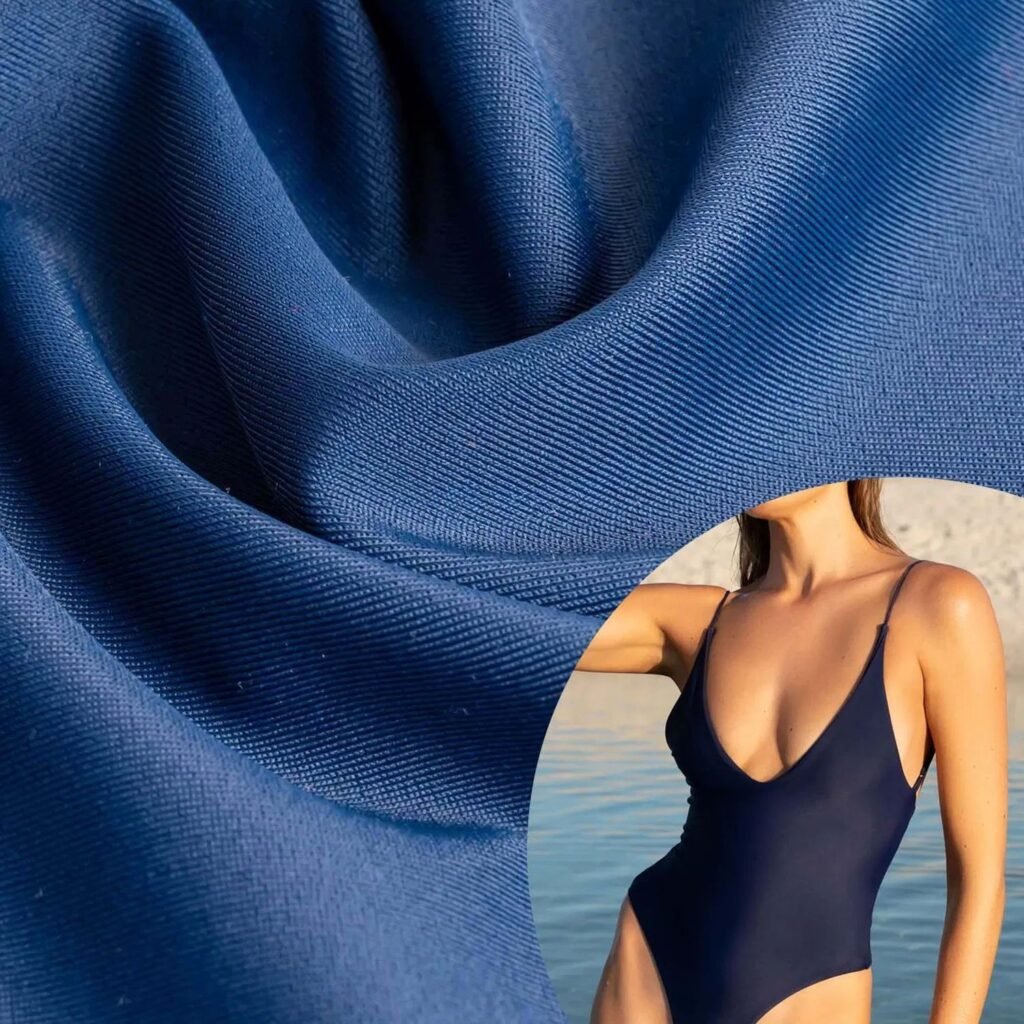
If you’ve ever owned a swimsuit that looked perfect in the store but lost its shape or color after a few weeks in the pool, you’ve already experienced the real impact of chlorine on fabric. Chlorine doesn’t just fade colors—it attacks fibers, weakens elasticity, and slowly changes how a swimsuit fits and feels. That’s why swimwear fabric choice is less about softness on day one and more about chemical resistance over time.
Polyester and polyamide (often called nylon) dominate modern swimwear. Both stretch, both look sleek, and both can be blended with elastane for comfort. Yet in chlorinated water, their behavior diverges in important ways. One tends to hold color and structure longer; the other offers a softer, lighter feel but may degrade faster under constant exposure. For swimwear exposed to chlorine, polyester consistently outperforms polyamide in long-term resistance. Polyester fibers resist chemical attack, retain color, and maintain shape longer in pools. Polyamide offers superior softness and drape but absorbs more water and degrades faster in chlorine unless heavily engineered. Real durability depends on fiber choice, elastane blend, knit structure, dyeing, and finishing—not fiber alone.
If you’re designing or sourcing swimwear for real pool use—not just occasional beach days—understanding how chlorine interacts with fabric chemistry is essential. Let’s start by defining what “chlorine resistance” actually means and how it’s tested.
1. What does “chlorine resistance” mean for swimwear fabrics, and how is it tested?

Chlorine resistance in swimwear is often misunderstood as a simple yes-or-no property. In reality, it describes how slowly a fabric degrades under repeated chemical attack, not whether it survives a single swim. A swimsuit that looks perfect after one afternoon in the pool may lose fit, strength, and color after a few weeks of regular use. Chlorine resistance is therefore a measure of durability over time, not immediate performance.
From a materials perspective, chlorine resistance answers three practical questions: How long does the fabric keep its shape? How long does it keep its color? And how long does it retain enough strength to feel supportive and secure? These outcomes depend on fiber chemistry, yarn construction, elastomer choice, dye systems, and finishing—not just on the label.
Direct answer: Chlorine resistance refers to a swimwear fabric’s ability to retain mechanical strength, elasticity, and color after repeated exposure to chlorinated water. It is evaluated using accelerated laboratory tests that simulate pool conditions through controlled chlorine concentration, temperature, and cycling, measuring strength loss, elastic recovery degradation, and color change over time.
What chlorine really does to swimwear
A) Chlorine as a chemical stressor
Chlorine is not just “harsh water.” It is a strong oxidizing agent designed to kill microorganisms. Unfortunately, the same oxidative reactions that disinfect pool water also attack textile polymers.
| Effect | Result on Fabric |
|---|---|
| Oxidation | Breaks polymer chains |
| Repeated wet/dry cycles | Accelerates fatigue |
| Heat + chlorine | Speeds degradation |
Unlike saltwater, which mainly causes physical abrasion and mineral residue, chlorine actively reacts with fibers at the molecular level. Over time, this reaction shortens polymer chains, reducing tensile strength and elasticity. In fabrics containing elastomeric fibers, chlorine damage is often first visible as loss of stretch recovery rather than tearing.
This is why chlorine damage is cumulative. Each exposure causes a small amount of chemical harm. The wearer notices the result only after enough cycles have accumulated.
B) Why swimwear fails differently than everyday apparel
Swimwear fabrics operate under unusually harsh conditions compared to typical clothing.
They are:
- Constantly stretched during wear
- Fully immersed in chemically treated water
- Exposed to UV radiation at the same time
- Dried repeatedly, often in warm environments
These combined stresses amplify chlorine’s effect. A fabric that performs well in normal laundering may fail quickly in a pool because chlorine attacks while the fabric is under tension, which accelerates molecular damage.
This is why chlorine resistance is considered a category-specific requirement, not a general textile property.
C) What “chlorine resistant” actually implies
No textile is immune to chlorine. “Chlorine resistant” means slower degradation, not immunity.
In practical terms, a chlorine-resistant fabric:
- Loses elasticity gradually instead of abruptly
- Retains acceptable color after many cycles
- Maintains fabric density and hand feel longer
A non-resistant fabric may:
- Bag out within weeks
- Turn dull, yellowish, or uneven
- Feel thinner and weaker even before visible damage
Understanding this distinction prevents unrealistic expectations at both design and consumer levels.
D) Common laboratory tests for chlorine resistance
Because real-time testing would take months or years, labs use accelerated methods that compress repeated pool exposure into controlled test cycles.
| Test Method | What It Measures |
|---|---|
| Chlorinated water soak | Fiber and yarn durability |
| Colorfastness to chlorine | Fading and yellowing |
| Stretch & recovery cycling | Elastic fatigue |
| Tensile loss after exposure | Structural degradation |
Each test targets a different failure mode. No single test defines chlorine resistance on its own.
E) Chlorinated water soak tests
This test exposes fabric samples to water with a controlled chlorine concentration, often at elevated temperature, for a defined period.
Key variables include:
- Free chlorine concentration
- Water temperature
- Exposure duration
- Number of cycles
The goal is to simulate dozens or hundreds of pool uses. After exposure, fabrics are evaluated for strength loss, hand feel change, and visible damage.
This test is especially revealing for elastomer-containing fabrics, where chlorine attack often shows up as brittleness or reduced rebound.
F) Colorfastness to chlorine
Color change is one of the earliest consumer-visible failures.
Colorfastness tests measure:
- Shade change (ΔE)
- Yellowing or graying
- Uneven fading
Even when fibers remain structurally intact, dyes may degrade or migrate under chlorine exposure. Some colors—particularly bright reds, oranges, and neons—are more vulnerable.
A fabric that meets strength requirements but fails colorfastness expectations may still be rejected for commercial swimwear use.
G) Stretch and recovery testing
For swimwear, elasticity is as important as strength. Chlorine attacks elastic fibers aggressively, especially under tension.
Stretch-recovery tests typically involve:
- Repeated elongation to a set percentage
- Exposure to chlorinated water between cycles
- Measurement of permanent deformation
Loss of recovery shows up to the wearer as:
- Looser fit
- Reduced support
- Fabric “creep” during use
This is often the primary failure mode in chlorine-heavy environments.
H) Tensile strength loss after exposure
Tensile testing before and after chlorine exposure quantifies structural damage.
The test measures:
- Breaking force reduction
- Elongation at break changes
Significant strength loss indicates polymer chain scission. While swimwear rarely fails by tearing first, tensile loss correlates strongly with thinning feel and reduced durability.
I) Why accelerated tests are imperfect but necessary
Accelerated tests are approximations. They standardize conditions that are highly variable in real life.
Real pools differ in:
- Chlorine concentration control
- pH balance
- Water temperature
- Frequency of water replacement
Some pools run consistently hot with high chlorine levels. Others fluctuate daily. A fabric that barely passes lab criteria may perform poorly in aggressive pool environments.
For this reason, experienced developers treat lab results as comparative tools, not absolute guarantees.
J) Interpreting test results realistically
Passing a chlorine resistance test does not mean the fabric will look new forever.
More meaningful questions include:
- How much performance is lost after the test?
- Is degradation gradual or abrupt?
- Which property fails first—color, stretch, or strength?
A fabric that loses 10–15% elasticity after testing but stabilizes may outperform one that looks fine initially but degrades rapidly afterward.
K) The role of elastomer choice in chlorine resistance
Most swimwear fabrics rely on elastomeric fibers for fit. These fibers are often the weakest link under chlorine exposure.
Chlorine resistance depends heavily on:
- Elastomer chemistry
- Yarn covering method
- Percentage of elastomer in the fabric
Tests often reveal that the elastic component fails first, even when the main fabric fiber remains intact. This is why chlorine resistance is evaluated at the fabric level, not just fiber level.
L) Fabric construction effects on chlorine testing
Construction influences how chlorine reaches and attacks fibers.
- Dense knits may slow penetration
- Looser structures expose more surface area
- Yarn twist affects chemical access
Two fabrics made from the same fibers can show different test outcomes simply due to construction differences.
M) Why “passing a test” is not the end point
Testing establishes a baseline, not a guarantee. Smart swimwear development uses test results to guide material selection and positioning, not to promise unlimited lifespan.
A fabric that passes chlorine resistance testing should still be:
- Positioned for appropriate use frequency
- Matched with suitable care instructions
- Designed with realistic replacement expectations
Overpromising chlorine resistance leads to dissatisfaction even when materials perform as designed.
N) User perspective: how chlorine damage is perceived
From the wearer’s point of view, chlorine damage is rarely described in technical terms.
Users notice:
- The suit feels looser than before
- The fabric looks dull or uneven
- The material feels thinner or weaker
By the time these signs appear, significant chemical damage has already occurred at the molecular level.
Understanding chlorine resistance helps brands and designers align expectations with material reality, reducing perceived quality failures.
O) Practical takeaway
Chlorine resistance is not about surviving a single swim—it is about managing degradation over repeated exposure. It is measured through accelerated lab tests that simulate chemical attack, elastic fatigue, and color loss, but these tests are indicators, not guarantees.
Fabrics that perform well in chlorine do so because their fibers, elastomers, dyes, and constructions are chosen to degrade slowly and predictably. Recognizing chlorine resistance as a time-based durability property allows smarter material choices, more honest product positioning, and better long-term satisfaction for swimmers who rely on their gear week after week.
2. Which fiber lasts longer in pool water: polyester or polyamide?
At the fiber level, polyester and polyamide age very differently in chlorinated water, and this difference becomes obvious only after repeated pool use. One or two swims reveal almost nothing. Twenty, fifty, or a hundred exposure cycles reveal everything. This is why competitive swimwear, training suits, and rental or institutional pool garments increasingly standardize on polyester-based fabrics. Polyester lasts significantly longer than polyamide in chlorinated pool water. Polyester’s ester-based polymer structure is more resistant to oxidative attack, while polyamide’s amide bonds are more vulnerable to chlorine, leading to faster loss of strength, elasticity, and color over repeated exposure.
Fiber chemistry meets pool reality
A) Chemical stability and molecular vulnerability
The root of the difference lies in polymer chemistry.
| Fiber | Chlorine Resistance |
|---|---|
| Polyester | High |
| Polyamide (nylon) | Moderate–Low |
Polyester is built from ester linkages that are relatively stable in chlorinated environments. Chlorine still attacks polyester over time, but the reaction rate is slow and gradual.
Polyamide, by contrast, contains amide bonds that are more chemically reactive. Chlorine readily attacks these sites, causing chain scission. Once these bonds break, the fiber loses strength and elasticity permanently.
This difference explains why polyamide fabrics often feel “fine” at first, then suddenly lose performance over a short period of heavy pool use.
B) Water absorption amplifies chlorine damage
Chemical resistance alone does not tell the whole story. Water absorption determines how long chlorine stays in contact with the fiber.
| Property | Polyester | Polyamide |
|---|---|---|
| Water absorption | ~0.4% | 3–7% |
| Chlorine uptake | Lower | Higher |
| Drying speed | Faster | Slower |
Polyamide absorbs several times more water than polyester. That absorbed water contains chlorine, which means:
- Chlorine penetrates deeper into the fiber
- Contact time increases dramatically
- Oxidative reactions continue even after the swimmer leaves the pool
Polyester, with very low absorption, sheds chlorinated water quickly. Less chlorine is retained, and chemical attack slows once the garment is rinsed and dried.
In real pool use, this difference compounds week after week.
C) What “lasting longer” actually looks like in practice
Fiber degradation rarely appears as a clean break. It shows up as performance drift.
| Behavior After Repeated Swims | Polyester | Polyamide |
|---|---|---|
| Shape retention | Strong | Gradually weakens |
| Surface thinning | Minimal | Noticeable |
| Color stability | Excellent | Moderate |
| Elastic recovery | Stable longer | Drops earlier |
Polyamide swimwear typically fails in a predictable sequence:
- Elastic recovery weakens
- Fabric begins to bag out
- Surface feels thinner and less supportive
- Color dulls or yellows
- Structural damage becomes visible
Polyester-based swimwear follows the same sequence, but much more slowly. The wearer experiences months of stable performance instead of weeks.
D) Why competitive and training swimwear favors polyester
Competitive and training swimmers expose suits to chlorine far more frequently than casual users. Five to ten swims per week is common.
In this context, polyester offers:
- Predictable fit retention
- Slower elastic fatigue
- Better long-term color consistency
- Lower replacement frequency
This is why many products labeled “training,” “team,” or “chlorine-resistant” are polyester-dominant or 100% polyester knits.
The decision is not about luxury or softness. It is about life-cycle performance.
E) Polyamide’s advantages—and their cost
Polyamide is not used by accident. It offers real benefits.
Despite lower chlorine resistance, polyamide provides:
- Softer hand feel
- Better drape and fluidity
- Lower fabric weight at equal coverage
- More fashion-forward aesthetics
For resort swimwear, fashion swim, or occasional pool use, these traits are desirable. The fabric feels better on the body and looks better in static conditions.
The trade-off is lifespan. Polyamide-based swimwear is designed for lower exposure frequency, not daily pool training.
F) Elastic fibers: where failure often starts
Most swimwear fabrics are not single-fiber systems. They include elastomeric fibers to provide stretch and compression.
Chlorine attacks elastomers aggressively, but the host fiber influences how fast that damage spreads.
In polyester-based fabrics:
- The base fiber remains stable
- Elastic failure is more gradual
- Fabric retains structure even as stretch declines
In polyamide-based fabrics:
- Base fiber degradation compounds elastic loss
- Fabric thins and relaxes more quickly
- Loss of support feels more dramatic
This is why two suits with the same elastomer content can age very differently depending on the main fiber.
G) The role of fabric structure and yarn engineering
Fiber choice sets the baseline, but structure modifies the outcome.
Factors that can extend or shorten pool life include:
- Knit density
- Yarn twist and filament count
- Covering of elastic yarns
- Heat-setting quality
A tightly engineered polyamide fabric can outperform a poorly designed polyester fabric in the short term. Over long exposure cycles, polyester remains more forgiving of design imperfections.
This forgiveness is one reason polyester is favored for institutional and high-volume programs.
H) Color stability as a secondary signal
Color fading is often the first visible sign of chlorine damage.
Polyester:
- Resists dye oxidation better
- Maintains brightness longer
- Shows more uniform aging
Polyamide:
- Loses vibrancy faster
- May yellow or gray
- Shows uneven fading
While color loss does not immediately affect function, it strongly influences perceived quality. Many users replace swimwear due to appearance before structural failure occurs.
I) Drying behavior and post-swim degradation
What happens after swimming matters as much as what happens in the pool.
Polyamide’s higher water absorption means:
- Chlorine remains active during drying
- Damage continues outside the pool
- Warm drying environments accelerate aging
Polyester dries faster and retains less residual chlorine, reducing post-use degradation. This difference is especially important for swimmers who train daily and dry suits indoors.
J) Why blends do not cancel out fiber differences
Some assume that blending polyester and polyamide “averages out” performance. In practice, chlorine attacks the weakest component first.
If polyamide is present:
- It will degrade faster
- Structural changes affect the whole fabric
- Elastic stress increases elsewhere
Blends can be useful, but they do not eliminate the fundamental chemical vulnerability of polyamide.
K) How brands position fiber choice honestly
Experienced swimwear brands align fiber choice with use case.
- Training and team swimwear: polyester-dominant
- Recreational pool wear: blended or polyamide
- Fashion swimwear: polyamide-dominant
- Performance longevity claims: polyester-backed
Problems arise when polyamide suits are marketed for heavy pool use without managing expectations.
L) What “longer lasting” means to the user
From the swimmer’s perspective, longevity is not abstract.
They notice:
- The suit still fits after many swims
- The fabric still feels supportive
- The color still looks acceptable
- Replacement is not constantly needed
Polyester delivers these outcomes more reliably in chlorinated pools.
M) Critical nuance to remember
Polyester is not chlorine-proof. It degrades too—just more slowly and more predictably. Polyamide is not unusable in pools—it simply demands lower exposure frequency and gentler expectations.
Fiber choice sets the baseline behavior. Construction, elastomer selection, and finishing determine how close the fabric gets to that baseline.
N) Practical takeaway
In chlorinated pool environments, polyester consistently outlasts polyamide at the fiber level. Its chemical stability, low water absorption, and slower elastic degradation make it the preferred choice for frequent swimming and long service life. Polyamide remains valuable for comfort, drape, and fashion-driven designs, but it pays a clear durability penalty under repeated chlorine exposure.
Understanding this trade-off allows designers, buyers, and swimmers to choose the right fabric for how the suit will actually be used—not how it looks on day one.
3. How do elastane (spandex) blends change chlorine resistance and shape retention?
Modern swimwear would not exist without elastane. Stretch, compression, recovery, and that “second-skin” fit all come from elastane’s extraordinary elasticity. At the same time, elastane is the most chlorine-sensitive component in a swimsuit. In real pool use, fabric failure almost always starts with elastane degradation, not with the base fiber.
What determines lifespan is not whether elastane is used—because it almost always is—but how it is blended, protected, and stressed. Base fiber choice, elastane percentage, yarn covering method, and fabric structure together decide whether a swimsuit keeps its shape for months or loses support in weeks. Elastane improves comfort and fit but reduces chlorine resistance. Polyester–elastane blends retain shape significantly longer than polyamide–elastane blends because polyester absorbs less water and limits chlorine exposure to the elastane component. Blend design, elastane percentage, and yarn construction strongly influence how quickly shape loss occurs.
Why elastane fails first—and how to slow it down
A) Elastane vs chlorine: a fragile chemical relationship
Elastane is a polyurethane-based elastomer. Its molecular structure provides extreme stretch, but that same structure is highly vulnerable to oxidative attack.
| Effect of Chlorine on Elastane | Result |
|---|---|
| Polymer chain scission | Permanent loss of elasticity |
| Surface embrittlement | Reduced rebound, bagging |
| Repeated stretch in chlorine | Accelerated deformation |
Chlorine breaks elastane chains irreversibly. Unlike polyester or polyamide, elastane cannot “recover” once its polymer backbone is damaged. Even small amounts of degradation translate into noticeable fit changes.
This is why swimsuits often look intact but feel loose—the elastane has failed while the base fabric still appears sound.
B) Why base fiber choice matters more than many expect
Elastane rarely exists alone. It is almost always embedded within or alongside a base fiber system. That system determines how much chlorine reaches the elastane and how long it stays there.
| Blend Type | Shape Retention After Repeated Swims |
|---|---|
| Polyester + elastane | High |
| Polyamide + elastane | Moderate–Low |
Polyester’s low water absorption (~0.4%) means:
- Less chlorinated water penetrates the fabric
- Chlorine drains and dries faster
- Elastane exposure time is reduced
Polyamide absorbs 3–7% water, holding chlorine in close contact with elastane for longer periods—even after the swimmer leaves the pool. That extended exposure accelerates elastane breakdown.
This is the single most important reason polyester–elastane blends dominate training and team swimwear.
C) Elastane percentage: more stretch, shorter life
It is tempting to increase elastane content to improve compression and fit. In chlorine environments, this often backfires.
| Elastane % | Effect |
|---|---|
| 5–8% | Light stretch, better durability |
| 10–15% | Balanced fit and comfort |
| 18%+ | High compression, faster degradation |
Higher elastane content means:
- More chlorine-sensitive material in the fabric
- Greater reliance on elastane for shape retention
- Faster and more noticeable failure once degradation begins
In frequent pool use, reducing elastane slightly and compensating with knit density and structure often yields better long-term fit than simply increasing elastane percentage.
D) Covered vs bare elastane yarns
Not all elastane is equally exposed. Yarn construction plays a major protective role.
| Elastane Type | Performance in Chlorine |
|---|---|
| Covered elastane | Better protection, longer life |
| Bare elastane | Faster degradation |
Covered elastane yarns wrap the elastane core with polyester or polyamide filaments. This covering:
- Acts as a physical barrier to chlorine
- Reduces direct chemical contact
- Improves abrasion resistance
In polyester-covered elastane, protection is maximized: low absorption base fiber plus physical shielding. Bare elastane, by contrast, is directly exposed to chlorinated water and fails quickly under repeated use.
This is why high-quality chlorine-resistant swim fabrics almost always specify covered elastane, not bare.
E) Knit structure as a load-sharing system
Elastane should not carry all the stretch demand. Fabric structure can share that load.
Structural strategies that reduce elastane stress include:
- Higher stitch density
- Multi-directional knit architectures
- Yarns with higher filament counts
- Controlled fabric compression from structure, not elastane alone
When knit structure contributes to fit, elastane experiences lower peak strain during wear. Lower strain slows chemical and mechanical fatigue, extending usable life.
This approach is common in long-life training suits, which may feel firmer initially but maintain shape far longer.
F) Why polyamide–elastane still feels better at first
Despite shorter lifespan, polyamide–elastane blends remain popular for good reasons.
They offer:
- Softer, silkier hand feel
- Better drape and fluidity
- Lighter fabric weight at equal coverage
In early use, these suits often feel superior. The problem is not immediate performance—it is performance decay.
For fashion swimwear, resort wear, or occasional pool use, this trade-off is acceptable. For daily training, it is not.
G) Failure sequence in elastane-containing swimwear
Understanding how failure unfolds helps explain user complaints.
Typical sequence:
- Elastane loses recovery
- Fabric bags at stress points
- Compression and support decrease
- Fit feels unstable during movement
- Fabric may still look intact
By the time thinning or tearing appears, elastane failure is already advanced. This is why chlorine damage often feels “sudden” to users.
H) Heat, chlorine, and elastane: a dangerous combination
Chlorine damage accelerates dramatically with heat.
Common risk factors:
- Hot pools
- Hot tubs (especially damaging)
- Warm indoor drying environments
- Leaving suits wet in bags
Heat increases reaction rates, while trapped moisture keeps chlorine active. Polyester-based systems mitigate this by drying faster; polyamide systems often remain damp longer.
Care practices matter—but fiber and blend choice determine how forgiving the fabric is when care is imperfect.
I) Blends do not cancel elastane vulnerability
Some assume blending fibers “balances out” weaknesses. In chlorine exposure, degradation follows the weakest link.
If elastane fails:
- The entire fabric loses functional shape
- Base fiber strength becomes irrelevant
- Replacement is inevitable
Blends can slow failure, but they cannot eliminate elastane’s sensitivity. The goal is delay and control, not immunity.
J) How competitive swimwear engineers around elastane
High-end training suits often:
- Limit elastane content
- Use polyester-covered elastane
- Increase knit density
- Accept firmer initial fit
The result is a suit that may feel less luxurious at first but retains performance across hundreds of swims. This is a deliberate engineering choice, not a cost-cutting one.
K) Design insight for chlorine-heavy use
For frequent pool swimming:
- Use polyester as the dominant base fiber
- Keep elastane content moderate
- Specify covered elastane yarns
- Rely on structure for shape, not elastane alone
This combination consistently delivers the best balance between comfort, support, and lifespan.
L) Practical takeaway
Elastane is essential for swimwear performance—and the primary driver of chlorine-related failure. Polyester–elastane blends outlast polyamide–elastane blends because polyester limits chlorine exposure and stabilizes the fabric system. Elastane percentage, yarn covering, and knit structure determine how fast degradation appears and how noticeable it feels.
In chlorine-heavy environments, long-lasting shape retention is not achieved by adding more elastane. It is achieved by protecting elastane, sharing load through structure, and choosing base fibers that minimize chemical stress.
4. What knit structures and yarn types perform best in chlorine?

When swimwear fails in chlorinated pools, the cause is often blamed on fiber choice or elastane quality. In practice, knit structure is just as decisive. Structure controls how stress is distributed, how deeply chlorine penetrates, and how well elastane is shielded during repeated stretch-and-soak cycles. Two fabrics made from the same fibers can show dramatically different lifespans purely because of how they are knitted.
For chlorine-heavy environments such as training pools, schools, and competition facilities, structure-level decisions often deliver more durability per cost than changing fibers or adding specialty finishes. Warp-knit structures—especially tricot—consistently outperform weft knits in chlorine resistance. Fine microfilament yarns improve surface stability and color retention, while stable warp-knit architectures reduce bagging, thinning, and elastane exposure over time.
Structure-level decisions that extend swimwear life
A) Warp knit vs weft knit: stress distribution matters
The fundamental difference between warp and weft knitting lies in how loops are formed and connected.
| Knit Type | Chlorine Performance |
|---|---|
| Warp knit (tricot) | Excellent |
| Warp knit (raschel) | Good |
| Weft knit | Moderate–Low |
Warp knits form loops along the length of the fabric, with yarns running vertically through multiple courses. This creates:
- Multiple load paths
- Lower localized strain on any single yarn
- Reduced peak stress on elastane
Weft knits, by contrast, form loops horizontally from a single yarn. Under stretch, that yarn carries a larger share of the load. In chlorine exposure, this concentrated stress accelerates elastane fatigue and fiber degradation.
This structural difference explains why warp knits retain shape longer even when fiber composition is identical.
B) Why tricot dominates chlorine-resistant swimwear
Among warp knits, tricot has become the industry benchmark for pool swimwear.
Tricot fabrics are characterized by:
- Fine, closely spaced wales
- Smooth surface appearance
- High dimensional stability
From a chlorine-resistance perspective, tricot offers several advantages.
First, shape retention. Tricot resists permanent deformation because stress is spread across many interlinked yarns. Even as elastane gradually weakens, the fabric continues to hold form.
Second, elastane protection. In tricot constructions, elastane is embedded within a dense network of filaments. Chlorinated water must diffuse through multiple layers before reaching the elastane, slowing chemical attack.
Third, damage containment. If localized degradation occurs, it does not propagate easily. Tricot resists laddering and distortion, which is critical in garments under constant stretch.
This is why competitive, training, and institutional swimwear overwhelmingly specify tricot—even when softer or lighter options exist.
C) Raschel vs tricot: where raschel fits
Raschel knits are also warp knits, but their structure is more open and varied.
Compared with tricot:
- Raschel allows more design flexibility
- Texture and patterning are easier
- Stretch can feel more relaxed
From a chlorine standpoint, raschel generally performs slightly below tricot but well above weft knits. The more open structure can allow faster chlorine penetration, but stress distribution is still superior to weft systems.
Raschel is often chosen when:
- Visual design matters more
- Slightly softer hand is desired
- Exposure frequency is moderate rather than extreme
For daily training or team use, tricot remains the safer choice.
D) Weft knits: why they degrade faster in pools
Weft knits dominate fashion swimwear because they feel soft, flexible, and drapey. In chlorine-heavy use, those same traits become liabilities.
Weft-knit limitations include:
- Higher localized strain on elastane
- Easier loop distortion under stretch
- Faster bagging at stress points
- More direct chlorine access to yarns
Once elastane begins to fail, weft knits lose shape rapidly. The fabric may still feel soft, but support and fit collapse quickly.
This does not make weft knits “bad.” It makes them unsuited for frequent pool use, which is why they are more common in resort, beach, and occasional swimwear.
E) Yarn fineness and filament count: surface stability in chlorine
Beyond knit structure, yarn construction strongly influences chlorine durability.
| Yarn Type | Effect |
|---|---|
| Microfilament | Smoother surface, better color |
| Standard filament | Higher abrasion tolerance |
Microfilament yarns use many very fine filaments instead of fewer thick ones. This has several chlorine-related benefits:
- Smoother surface reduces abrasion
- Less mechanical damage to dye sites
- More uniform stress distribution
Chlorine attack often accelerates where surface damage already exists. Microfilaments reduce those initiation points, slowing visible degradation such as pilling, fuzzing, and uneven fading.
The trade-off is abrasion resistance. In environments with rough pool edges or frequent contact with abrasive surfaces, slightly thicker filaments may perform better mechanically.
F) Filament count vs denier: why “finer” is not just lighter
Two yarns can have the same denier but very different filament counts.
- High filament count: many fine filaments
- Low filament count: fewer coarse filaments
In chlorine exposure, high filament count yarns age more gracefully. Damage to individual filaments has less impact on overall yarn integrity, and surface appearance remains smoother longer.
This is one reason premium training fabrics often specify microfilament polyester rather than standard filament—even when weight is similar.
G) Knit density and chlorine penetration
Density determines how easily chlorinated water moves through the fabric.
| Density | Result |
|---|---|
| Too loose | Faster chemical penetration |
| Optimized | Balanced durability and comfort |
| Too tight | Stiff hand, stress concentration |
Loose knits allow chlorine to reach elastane and inner filaments quickly. Very tight knits, however, can concentrate stress during stretch, accelerating fatigue.
The most durable swim fabrics use optimized density:
- Tight enough to limit chemical access
- Open enough to distribute strain smoothly
This balance is critical. It is often adjusted by stitch length and machine gauge rather than by changing yarn type.
H) How structure influences color durability
Color loss in chlorine is partly chemical and partly mechanical.
Warp knits, especially tricot:
- Maintain surface smoothness longer
- Reduce micro-abrasion of dyed filaments
- Show more uniform fading
Weft knits and loose structures tend to develop surface fuzz earlier. Chlorine attacks exposed filament ends more aggressively, leading to dull or uneven color.
This is why two fabrics with the same dye system can show very different visual aging purely due to knit structure.
I) Interaction with elastane placement
In high-performance swim fabrics, elastane is often strategically placed rather than evenly distributed.
Warp-knit systems allow:
- Elastane to be laid in specific directions
- Reduced peak elongation per yarn
- Better coverage of elastane by base fibers
This structural shielding significantly delays elastane failure. In weft knits, elastane is often more exposed and experiences higher strain per cycle.
J) Manufacturing tolerance and repeatability
Warp knitting machines offer excellent repeatability once set correctly. This consistency matters for chlorine performance because small variations in density or stitch geometry can change exposure rate.
From a manufacturing standpoint:
- Warp knits produce more uniform batches
- Quality drift is easier to control
- Performance variation is reduced
This reliability is one reason institutional buyers favor warp-knit swim fabrics.
K) Practical manufacturing insight
At SzoneierFabrics, chlorine-resistant swim fabrics are often optimized first through knit structure and density adjustments, before altering fiber chemistry or elastane content. Structural tuning frequently delivers significant lifespan gains without increasing material cost or complicating supply chains.
This approach also preserves hand feel and aesthetics while improving durability—a critical balance in commercial swimwear.
L) Why structure is the most cost-efficient lever
Changing fibers or adding specialty finishes increases cost quickly. Adjusting knit structure often does not.
Structure-level optimization can:
- Extend usable life significantly
- Improve shape retention without more elastane
- Stabilize color appearance over time
For chlorine-heavy use, this makes knit engineering one of the highest return decisions in swimwear development.
M) Practical takeaway
In chlorinated pools, the best-performing swimwear fabrics combine warp-knit structures (especially tricot) with well-chosen yarn constructions. Fine microfilament yarns improve surface durability and color retention, while optimized knit density protects elastane and distributes stress evenly.
Fiber chemistry sets the baseline, but knit structure decides how that chemistry survives real use. For frequent pool exposure, structure is not a secondary detail—it is a primary durability driver.
5. Which fabric specs should you check for swimwear performance in chlorine?
In swimwear development, specs are not marketing decoration—they are early warning signals. In chlorinated pools, fabrics rarely fail randomly. They fail exactly where the numbers predicted they would, if those numbers were understood correctly. Designers who rely only on fiber names or supplier claims often miss the slow, cumulative damage that chlorine causes week after week.
For chlorine-heavy use, the most reliable fabrics are not defined by a single “chlorine-resistant” label, but by a combination of interlocking specifications that together describe how the fabric behaves under chemical, mechanical, and thermal stress. For chlorine-exposed swimwear, prioritize balanced GSM, proven stretch–recovery performance, high colorfastness to chlorine, low pilling and abrasion loss, and certified UPF. These measurable specs predict real pool durability far better than fiber composition alone.
Reading specs the way pools “read” fabric
A) GSM (fabric weight): stability, not heaviness
GSM is often misunderstood. Heavier does not automatically mean better, and lighter does not automatically mean worse. In chlorine environments, GSM primarily reflects structural stability over time.
| GSM Range | Pool Performance |
|---|---|
| <160 GSM | Light feel, fast fatigue |
| 170–200 GSM | Balanced, durable |
| 210+ GSM | Very durable, stiffer hand |
Low-GSM fabrics stretch easily, but chlorine accelerates thinning and elastane loss. Once thinning starts, support disappears quickly. High-GSM fabrics resist chemical thinning but can feel restrictive, especially for competitive or youth swimwear.
The 170–200 GSM range consistently delivers the best balance:
- Enough mass to protect elastane
- Enough density to slow chlorine penetration
- Still flexible enough for comfort and movement
This is why many long-life training suits cluster in this range.
B) Stretch and recovery: what really determines fit longevity
Stretch numbers alone are misleading. Almost any elastane blend can stretch far. What matters is how much of that stretch comes back after repeated exposure.
| Metric | Target for Pool Use |
|---|---|
| Stretch | 20–35% |
| Recovery after cycles | ≥90% |
| Permanent set | ≤5% |
Chlorine attacks elastane first. As elastane degrades, recovery drops even if stretch remains high. A fabric that stretches 50% but only recovers 80% will feel loose within weeks.
Polyester–elastane fabrics typically retain recovery longer than polyamide–elastane fabrics because:
- Less chlorine is absorbed into the fabric
- Elastane is exposed for shorter periods
- Structural recovery carries more of the load
When reviewing lab data, always ask after how many cycles recovery was measured. Single-cycle recovery is almost meaningless for pool use.
C) Colorfastness to chlorine: appearance is a durability signal
Color loss is not just cosmetic. It often correlates with fiber surface damage and chemical breakdown.
| Rating | Meaning |
|---|---|
| Grade 4–5 | Excellent |
| Grade 3 | Acceptable, short lifespan |
| <3 | Rapid fading |
Chlorine-resistant swim fabrics should consistently achieve Grade 4 or higher. Grade 3 fabrics may look acceptable for casual use but fade unevenly in training conditions.
Certain colors are especially revealing:
- Deep blacks turn brown or gray
- Neons dull rapidly
- Reds shift toward orange
Early color instability often signals that elastane and base fibers are also degrading faster than expected.
D) UPF: protection that declines with chemical exposure
UPF is not static. In chlorine, UPF almost always decreases over time as fabric thins and yarns lose integrity.
| UPF Level | Protection |
|---|---|
| 30 | Good |
| 40 | Very good |
| 50+ | Excellent |
A fabric that starts at UPF 30 may drop below acceptable protection after extended pool use. Starting at UPF 40–50+ provides a safety margin as chlorine gradually reduces fabric density.
UPF is influenced by:
- GSM
- Knit density
- Yarn opacity
- Surface condition
As chlorine causes micro-abrasion and thinning, UPF loss accelerates. This is why pool-oriented swimwear often specifies higher initial UPF than beach-focused designs.
E) Pilling resistance: an early-stage warning spec
Pilling is often dismissed as cosmetic, but in chlorine environments it is a functional risk indicator.
| Test | Why It Matters |
|---|---|
| Pilling | Surface stability |
| Abrasion | Thinning and coverage loss |
Once pilling begins:
- Fiber ends are exposed
- Chlorine attacks more aggressively
- Color loss accelerates
- Fabric thins faster
Warp-knit structures and microfilament yarns typically pill less, which indirectly improves chlorine resistance. A fabric with poor pilling performance will almost always show faster chemical degradation.
F) Abrasion resistance: pool reality vs lab assumptions
Pools are abrasive environments:
- Rough pool edges
- Lane ropes
- Deck surfaces
- Repeated sitting and pushing off walls
Abrasion resistance complements chlorine resistance. Fabrics that thin under abrasion expose elastane and inner filaments to chlorine more quickly.
When reviewing abrasion data, look for:
- Consistent performance after finishing
- Minimal mass loss
- No rapid surface fuzz formation
Abrasion and chlorine damage reinforce each other. Weakness in one accelerates failure in the other.
G) Spec interactions: why single numbers mislead
No single spec predicts chlorine performance on its own.
Examples:
- High GSM without good recovery still bags out
- Excellent colorfastness with poor abrasion still thins
- High UPF with loose structure still loses shape
Durability emerges from spec alignment, not from peak values in one category. This is why experienced developers evaluate fabrics as systems rather than as isolated metrics.
H) Lab tests vs real pool behavior
Standardized tests are essential, but they simplify reality.
In real pools, fabrics experience:
- Variable chlorine concentration
- Heat from indoor pools
- UV exposure in outdoor pools
- Mechanical stretch under load
- Incomplete rinsing between uses
Specs should be interpreted as trend indicators, not absolute guarantees. Fabrics that exceed minimum targets tolerate real-world variation better.
I) What specs often get ignored—but shouldn’t
Several useful indicators are often omitted from datasheets unless requested:
- Recovery after extended chlorine cycles
- GSM loss after exposure
- Dimensional stability after soaking
- Visual grading after abrasion + chlorine
Requesting these data early can prevent costly misjudgments later.
J) Practical checklist for chlorine-ready swimwear
For frequent pool use, a fabric that consistently performs well typically shows:
- GSM in the 170–200 range
- Stretch recovery ≥90% after repeated cycles
- Permanent set ≤5%
- Chlorine colorfastness Grade 4 or higher
- UPF 40+ at start
- Low pilling and stable abrasion results
This combination predicts multi-season performance far more reliably than fiber labels alone.
K) Why specs matter more than promises
Many fabrics are sold as “chlorine resistant.” Very few are supported by complete, relevant data. Specs translate marketing claims into measurable risk.
Pools are unforgiving environments. They expose weaknesses slowly but relentlessly. Fabrics that pass on paper but fail in numbers rarely survive a full season.
L) Final perspective
In chlorinated swimwear, specs are not bureaucracy—they are foresight. GSM, recovery, colorfastness, UPF, pilling, and abrasion together describe how a fabric will age, not just how it looks when new.
When these numbers are aligned, swimwear maintains fit, color, and coverage long after the novelty wears off. When they are ignored, failure is not a surprise—it is simply delayed.
6. How do dyeing and finishing choices affect fading, yellowing, and chlorine damage?
In chlorinated pools, color loss is rarely an isolated problem. Fading, yellowing, surface dullness, and fabric weakening usually progress together. The reason is simple: dyeing and finishing are not cosmetic steps. They directly influence how fibers react to chlorine at a molecular level. Two fabrics made from the same yarn, with the same knit structure, can age very differently depending on how they were dyed and finished.
For swimwear intended for frequent pool use, dye chemistry, heat-setting accuracy, and finish selection often matter as much as fiber choice itself. Polyester dyed with high-quality disperse dyes shows significantly better resistance to chlorine fading than polyamide dyed with acid dyes. Proper heat-setting stabilizes both color and structure, while controlled, pool-compatible finishes slow yellowing and fiber degradation. Poorly chosen finishes or shortcuts in dyeing accelerate damage even in otherwise well-designed fabrics.
Color science under chlorine stress
A) Dye systems and how chlorine attacks them
Chlorine does not simply “wash out” color. It reacts chemically with dye molecules and with the fiber surface that holds those dyes in place.
| Fiber | Typical Dye | Chlorine Stability |
|---|---|---|
| Polyester | Disperse dyes | High |
| Polyamide (nylon) | Acid dyes | Moderate–Low |
Disperse dyes, used for polyester, are small, non-ionic molecules. During high-temperature dyeing, they diffuse into the amorphous regions of the polyester polymer. Once locked in, chlorine has limited access to the dye, and fading occurs slowly.
Acid dyes, used for polyamide, bond through ionic interactions with amide groups. These bonds are more exposed and more vulnerable to oxidation. Chlorine can attack both the dye and the fiber-dye bond, leading to faster color loss and uneven fading.
This is why polyester swim fabrics consistently outperform nylon in long-term color retention in pools—even when initial shade depth looks similar.
B) Why depth of dye penetration matters
Color durability depends on how deeply dye molecules are anchored.
Shallow dye penetration leads to:
- Faster surface fading
- Uneven color loss
- Early dulling
Deep penetration:
- Protects dye from direct chlorine contact
- Maintains color even as surface fibers age
- Produces more uniform fading over time
Polyester’s dyeing process inherently promotes deeper penetration because disperse dyes migrate into the fiber under high heat and pressure. Polyamide dyeing occurs at lower temperatures, limiting how deeply dyes can embed.
This structural difference explains why nylon swimsuits often fade “from the outside in,” while polyester fades more slowly and evenly.
C) Heat-setting: the overlooked stabilizer
Heat-setting is often treated as a dimensional control step, but it plays a major role in color and chlorine resistance.
Proper heat-setting:
- Locks polymer chains into a stable configuration
- Reduces internal stress in the fabric
- Prevents dye migration during use
- Improves resistance to repeated wet/dry cycles
Under-set fabrics may look fine initially, but chlorine accelerates relaxation and dye movement. As the fabric relaxes unevenly, color appears patchy, and lighter areas emerge.
Over-setting introduces its own risks:
- Fiber embrittlement
- Reduced elasticity
- Yellowing tendency, especially in elastane-containing fabrics
For chlorine-focused swimwear, heat-setting must be tightly controlled. Small temperature deviations can shorten usable life significantly.
D) Finishes that help in pools
Not all finishes are harmful. Some are specifically designed to improve resistance to chlorinated environments.
| Finish Type | Effect in Pools |
|---|---|
| Anti-chlorine finish | Extends color and fiber life |
| UV stabilizers | Reduce combined UV + chlorine damage |
| Controlled hydrophilic finishes | Improve rinse-out of chlorine |
Anti-chlorine finishes typically work by:
- Neutralizing residual chlorine
- Reducing oxidative attack
- Slowing polymer chain breakdown
These finishes do not make fabrics chlorine-proof, but they delay degradation, especially in polyester-based systems.
E) Finishes that accelerate damage
Some finishes improve initial hand feel or appearance but shorten lifespan in pools.
| Finish | Long-Term Effect |
|---|---|
| Heavy softeners | Increased chlorine uptake |
| Excess silicone | Surface instability |
| Unfixed resins | Yellowing and stiffness |
Softener overload is a common problem in fashion swimwear. While the fabric feels luxurious at first, softeners can:
- Trap chlorinated water
- Interfere with dye-fiber bonds
- Accelerate elastane degradation
The result is faster fading, loss of stretch, and a “washed-out” appearance long before structural failure.
F) Yellowing: a multi-source problem
Yellowing is one of the most visible and least understood chlorine-related issues, especially in whites and light colors.
Common causes include:
- Elastane degradation products
- Residual finishing chemicals
- Incomplete rinsing after dyeing
- Overexposure to heat during setting
Polyester itself is relatively resistant to yellowing, but elastane is not. As elastane breaks down, oxidative byproducts migrate to the surface, creating a yellow cast. This is why light-colored swimsuits often discolor even when colorfastness tests appear acceptable.
Finishing chemistry can either slow or accelerate this process depending on compatibility with elastane.
G) Why polyester yellows less than polyamide
Several factors work in polyester’s favor:
- Lower water absorption reduces chemical retention
- Disperse dyes are less reactive with chlorine
- Heat-setting stabilizes structure more effectively
Polyamide absorbs more water and holds chlorine longer, increasing the chance of chemical reactions that cause yellowing. This is particularly noticeable in white or pastel nylon swimsuits used frequently in pools.
H) The role of rinse quality after dyeing
Incomplete rinsing after dyeing and finishing leaves behind:
- Unfixed dye molecules
- Auxiliary chemicals
- Salts and dispersing agents
In chlorine exposure, these residues react aggressively, accelerating both fading and yellowing. Fabrics that pass lab colorfastness tests but were poorly rinsed often fail prematurely in real pools.
High-quality pool fabrics typically undergo extended rinsing and neutralization, even though this adds cost and time. The payoff is dramatically improved aging behavior.
I) Color choice and dye recipe strategy
Not all colors age equally in chlorine.
High-risk shades:
- Bright reds
- Neons
- Deep blacks
These colors require carefully engineered dye recipes to maintain stability. In pool-focused fabrics, dye strength is sometimes reduced slightly to improve fixation and longevity.
This leads to a counterintuitive reality: A color that looks slightly less vivid when new may look better after 50 swims than a more intense shade that fades quickly.
J) Polyester vs polyamide from a dyeing workflow perspective
Polyester dyeing:
- High temperature
- High pressure
- Deeper dye fixation
- Better reproducibility
Polyamide dyeing:
- Lower temperature
- Greater sensitivity to pH
- Higher risk of shade variation
- Faster chemical aging
From a production standpoint, polyester dyeing is more controllable, which translates into more consistent chlorine performance across batches.
K) Interaction with knit structure and elastane
Dyeing and finishing do not act alone. Their effects interact with:
- Knit density
- Yarn fineness
- Elastane placement
Dense warp knits protect dyed surfaces from abrasion, slowing chemical attack. Covered elastane benefits from stabilized finishes that prevent direct chlorine contact.
Poor finishing choices can negate the advantages of good structure and fiber selection.
L) Why fashion swimwear often fails in pools
Many fashion swimsuits are dyed and finished for:
- Maximum visual impact
- Softest possible hand
- Fast production turnaround
Pool chemistry is rarely a priority. As a result:
- Dye fixation is optimized for appearance, not longevity
- Softener levels are high
- Anti-chlorine finishes are omitted
The fabric looks excellent on the rack and fails quickly in real pool use—not because of fiber choice alone, but because of finishing priorities.
M) Practical evaluation questions to ask suppliers
To assess chlorine durability at the dyeing and finishing level, useful questions include:
- What dye class and recipe are used for this color?
- Was extended heat-setting applied?
- Are anti-chlorine or stabilizing finishes included?
- What rinse and neutralization steps are used?
- How does colorfastness change after repeated chlorine cycles?
Suppliers who can answer these clearly tend to deliver more reliable pool fabrics.
N) Practical takeaway
In chlorine-exposed swimwear, dyeing and finishing decisions often determine how fast a fabric ages. Polyester dyed with high-quality disperse dyes, properly heat-set, and finished with pool-compatible chemistry resists fading and yellowing far better than polyamide systems optimized only for appearance.
Color durability is not an accident. It is engineered through dye selection, thermal control, finish discipline, and process restraint. When those elements are aligned, swimwear maintains its color, fit, and credibility long after the first season in the pool.
7. What are the most common swimwear fabric failure modes in chlorine, and how can you prevent them?

Swimwear almost never fails suddenly. In chlorinated pools, fabric degradation follows a repeatable pattern driven by chemistry, stress, and time. What feels like an unexpected quality issue to consumers is usually the predictable outcome of early material decisions. Understanding these failure modes allows designers, developers, and sourcing teams to prevent problems upstream—where they are cheapest and easiest to control. The most common chlorine-related failures are loss of elasticity (bagging out), fabric thinning and transparency, color fading or yellowing, and surface roughness or pilling. These failures can be prevented by prioritizing chlorine-resistant base fibers, protecting elastane, using stable warp-knit structures, specifying durable dye systems, and avoiding finishes that accelerate chemical attack.
Failure modes, causes, and fixes
A) Bagging out and loss of shape
Loss of shape is the single most common and most damaging swimwear complaint in pool use. The garment may still look intact, but it no longer supports the body or stays in place.
| Cause | Why It Happens | Prevention |
|---|---|---|
| Elastane degradation | Chlorine oxidizes elastane chains | Polyester–elastane blends |
| Excess elastane | Higher chemical exposure | 8–12% elastane |
| Weft-knit structure | Localized strain concentration | Warp knit (tricot) |
Chlorine attacks elastane at a molecular level, breaking polymer chains that provide elastic recovery. Once this happens, stretch may still be present, but recovery is lost. The fabric extends easily and does not return to its original shape.
Structural design plays a major role. Weft knits place higher strain on fewer yarns, accelerating elastane fatigue. Warp knits distribute load across many yarn paths, slowing deformation even as elastane gradually weakens.
Prevention focuses on limiting elastane stress, not eliminating elastane. Moderate elastane percentages combined with structural support from the knit itself consistently outperform high-stretch designs in long-term pool use.
B) Fabric thinning and transparency
Fabric thinning often appears subtly at first, then suddenly becomes obvious when coverage is lost under stretch.
| Cause | Effect |
|---|---|
| Polyamide fiber attack | Reduced fiber strength |
| Abrasion plus chlorine | Accelerated wear |
| Low GSM | Faster material loss |
Chlorine weakens fibers over time, but abrasion determines where thinning appears. Pool edges, lane ropes, and repeated push-offs concentrate mechanical wear. When fibers are already chemically weakened, abrasion removes material quickly.
Low-GSM fabrics are especially vulnerable. Once thinning begins, chlorine penetrates deeper into the fabric, accelerating further degradation. This creates a feedback loop that leads to rapid transparency.
Prevention relies on:
- Moderate GSM levels that resist thinning
- Polyester base fibers that absorb less water and chlorine
- Warp-knit structures that reduce surface abrasion
Thinning is rarely a dyeing problem. It is almost always a fiber durability and construction issue.
C) Color fading and yellowing
Color degradation is one of the most visible failure modes and one of the most brand-damaging.
| Issue | More Common In |
|---|---|
| Fading | Polyamide with acid dyes |
| Yellowing | Elastane degradation |
| Uneven color | Poor heat-setting |
Fading occurs when chlorine breaks down dye molecules or dye–fiber bonds. Acid dyes used on polyamide are more exposed and degrade faster under oxidative attack. Disperse dyes used on polyester are embedded deeper in the polymer matrix and resist chlorine more effectively.
Yellowing often has a different origin. It is frequently caused by elastane breakdown products migrating to the fabric surface. This is why yellowing is most noticeable in whites and light colors, even when base fibers are otherwise stable.
Uneven color loss usually points to inadequate heat-setting or inconsistent dye fixation. Areas under higher stress or stretch fade faster, revealing structural weaknesses in finishing.
Prevention requires aligning fiber, dye system, and thermal processing. High-quality dyes alone are not enough if heat-setting and rinsing are poorly controlled.
D) Surface roughness and pilling
Surface degradation makes swimwear feel old long before it fails structurally.
| Trigger | Outcome |
|---|---|
| Pilling | Exposed fiber ends |
| Surface roughness | Faster chemical attack |
Pilling is not just cosmetic. When fiber ends protrude from the surface, they create more contact area for chlorine and abrasion. This accelerates fading, thinning, and elastane exposure beneath the surface.
Polyamide fabrics are more prone to pilling in chlorine because:
- Fibers absorb more water
- Chemical softening occurs earlier
- Surface strength declines faster
Microfilament polyester yarns and warp-knit structures reduce pilling by maintaining a smoother surface over time.
Once surface roughness develops, fabric aging accelerates noticeably. This is why pilling resistance is a leading indicator of chlorine durability.
E) Elastic edge failure and seam distortion
Another common but often overlooked failure mode appears at edges and seams.
Typical symptoms include:
- Wavy leg openings
- Distorted straps
- Curling or rolling edges
These issues arise when elastane in high-strain zones degrades faster than in the main body. Seams concentrate stress and are often less protected by structure.
Prevention strategies include:
- Reinforcing stress zones with higher denier yarns
- Using wider seam allowances
- Ensuring seam elastics are chlorine-resistant
- Avoiding excessive heat during finishing
Edge stability often determines whether a suit remains wearable even after moderate elastane loss elsewhere.
F) Stiffening and loss of comfort
Some swimwear becomes stiff or boardy rather than loose.
This typically results from:
- Resin or finish breakdown
- Chlorine reacting with finishing chemicals
- Over-heat-setting during production
Stiffening is more common in fabrics treated heavily for initial hand feel. As chlorine strips or alters these finishes, the underlying fabric feels harsher and less flexible.
Prevention favors minimal, pool-compatible finishing rather than heavy softener systems that do not survive chlorine exposure.
G) Why failures appear “sudden” to users
From a user’s perspective, swimwear often seems fine until it suddenly is not. In reality, degradation accumulates quietly.
Typical progression:
- Elastane recovery declines gradually
- Fabric thins microscopically
- Surface damage increases chlorine access
- Visual and fit failure becomes obvious
By the time consumers notice problems, the underlying causes have been active for dozens of swim cycles.
H) How fiber choice shifts the failure timeline
Polyester does not eliminate chlorine damage, but it slows every failure mode:
- Lower water absorption reduces chemical exposure
- Better dye stability delays fading
- Higher dimensional stability protects structure
- Slower elastane degradation preserves fit
Polyamide accelerates the same processes, especially in frequent pool use. This is why polyester-based swimwear often lasts two to three times longer under identical conditions.
I) Preventive design thinking at the material stage
The most durable swimwear fabrics are not over-engineered in one dimension. They balance:
- Moderate elastane content
- Stable warp-knit structures
- Sufficient GSM
- Chlorine-compatible dyeing and finishing
Preventing failure is about system design, not isolated upgrades.
J) Practical takeaway
Most chlorine-related swimwear failures are predictable and preventable. Bagging out, thinning, fading, yellowing, and surface roughness all trace back to elastane exposure, fiber chemistry, knit structure, and finishing discipline.
Designers who address these factors early avoid costly redesigns and customer dissatisfaction later. In chlorinated pools, durability is not accidental—it is engineered through informed material choices that respect how chlorine actually attacks fabric over time.
8. How do you choose and source custom chlorine-resistant swimwear fabrics in 2026?
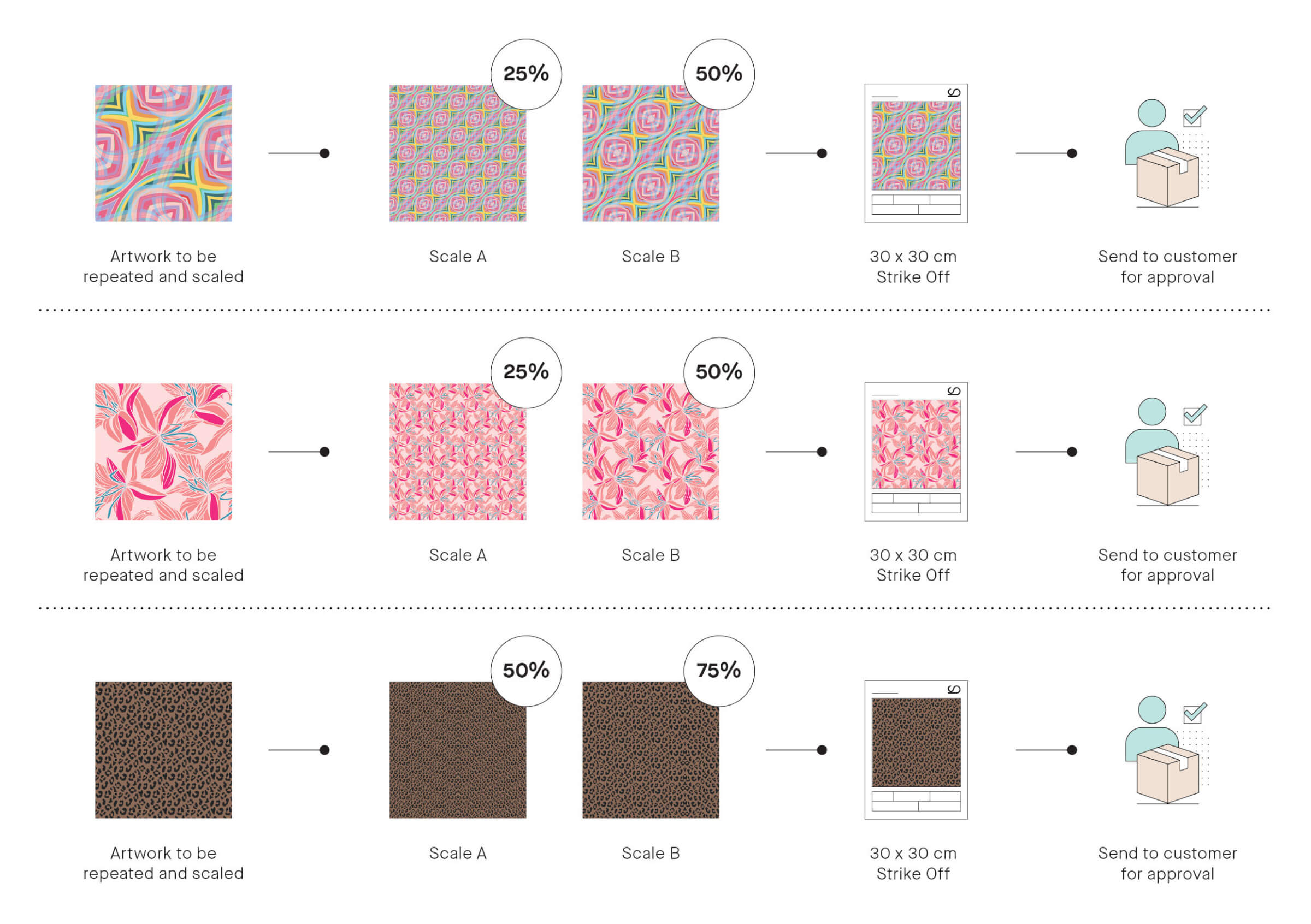
Choosing chlorine-resistant swimwear fabric in 2026 is no longer a question of chasing the “best” fiber. The market already knows the material options. What separates successful programs from failed ones is how accurately the fabric is matched to real chlorine exposure, how early performance is defined, and how tightly the process is controlled from sampling to bulk production.
Chlorine is not a one-time test. It is a repeated chemical stress that compounds over weeks, months, and hundreds of swims. The right sourcing strategy treats chlorine resistance as a lifecycle requirement, not a checkbox. For frequent pool use, polyester-based swimwear fabrics deliver superior chlorine resistance, longer shape retention, and more stable color life. Polyamide remains suitable for fashion or occasional swimwear. Efficient sourcing in 2026 depends on defining chlorine-ready specs early, validating them with relevant lab tests, running fast low-MOQ sampling, and locking construction, dyeing, and finishing parameters before scale.
A future-proof sourcing framework
A) Start with usage reality, not fabric preference
The most common sourcing mistake is choosing fabric based on hand feel or trend, then trying to “fix” durability later. Chlorine exposure should be the first filter.
| Usage Pattern | Best Base Fiber |
|---|---|
| Daily training | Polyester |
| Swim lessons | Polyester |
| School / team swim | Polyester |
| Resort / beach | Polyamide |
| Fashion swim | Polyamide |
Polyamide can look and feel excellent, but in chlorine-heavy use it degrades faster in elasticity, color, and surface integrity. Polyester is more forgiving when care is imperfect and exposure is frequent.
If a swimsuit will see a pool twice a week for months, polyester should be the default unless there is a compelling reason otherwise.
B) Define “chlorine-ready” specs before sampling
Many sourcing problems begin with vague requests such as “chlorine resistant fabric” or “training quality.” These descriptions are too broad to control outcomes.
Clear numerical targets align development, testing, and production.
| Spec | Target |
|---|---|
| Base fiber | Polyester |
| Elastane | 8–12%, covered |
| Knit structure | Warp knit (tricot) |
| GSM | 170–200 |
| Chlorine colorfastness | Grade 4–5 |
| Stretch recovery | ≥90% after cycles |
These specs reflect how chlorine actually damages swimwear: by attacking elastane, thinning fabric, and breaking down dyes. Locking them early prevents costly sample-to-bulk mismatch.
A fabric that feels good but cannot meet these numbers will almost always fail in real pool use.
C) Understand what “custom” really means in 2026
Custom sourcing no longer means inventing entirely new materials. It means optimizing known systems for a specific use case.
Custom levers that matter most:
- Knit density adjustments
- Elastane percentage fine-tuning
- Yarn filament count selection
- Dye recipe and heat-set optimization
- Finish selection compatible with chlorine
In practice, most chlorine-resistant gains come from structure and process, not exotic chemistry. A standard polyester yarn can outperform a premium fiber if it is knitted, dyed, and finished correctly.
D) Validate with the right tests, not generic ones
Not all lab tests predict pool performance. For chlorine-exposed swimwear, validation should mirror real use as closely as possible.
Effective validation includes:
- Accelerated chlorine soak tests at realistic concentrations
- Stretch–recovery testing after repeated exposure
- Colorfastness to chlorine, not just washing
- GSM and thickness loss after soaking cycles
Initial test results matter less than how performance changes after exposure. A fabric that tests well when new but drops quickly after cycling is a poor candidate for training swimwear.
Numbers often reveal weaknesses that first impressions hide.
E) Sample early, iterate fast, and keep samples comparable
In 2026, low-MOQ development is no longer optional. It is how durability is engineered.
Early sampling allows:
- Comparing two knit densities side by side
- Testing 8% vs 10% elastane under chlorine
- Evaluating two dye recipes for the same color
- Measuring recovery loss over time
To be useful, samples must be directly comparable. Changing too many variables at once makes results meaningless. The most effective sampling programs adjust one factor per iteration and measure the outcome.
This disciplined approach shortens development time and avoids late-stage redesign.
F) Lock the process, not just the fabric name
One of the biggest sourcing risks is assuming that once a fabric is approved, performance is guaranteed. In reality, chlorine resistance is highly sensitive to process variation.
Critical elements that must be locked:
- Knit machine settings
- Heat-setting temperature and dwell time
- Dye class and recipe
- Rinsing and neutralization steps
- Finishing chemistry and add-on levels
Reliable partners treat these as controlled parameters, not flexible options. Without process discipline, the same fabric name can behave very differently from batch to batch.
Consistency, not novelty, is what keeps swimwear performing across seasons.
G) Evaluate suppliers on transparency, not promises
In 2026, the best sourcing partners are not the ones who claim the highest performance, but the ones who show their data and explain their trade-offs.
Strong partners typically:
- Share real chlorine test reports
- Explain why certain specs are chosen
- Offer alternatives with clear pros and cons
- Document tolerances and variation limits
Suppliers who cannot explain how chlorine resistance is achieved are unlikely to deliver it consistently.
H) Balance sustainability with chlorine performance realistically
Sustainability remains important, but chlorine exposure imposes constraints.
Recycled polyester (rPET) can perform well in pools, but:
- Polymer quality must be tightly controlled
- Dyeing consistency can vary more
- Heat-setting becomes even more critical
For long-life swimwear, durability itself is a sustainability factor. A swimsuit that lasts three seasons has a lower real footprint than one that fails after a few months, regardless of fiber origin.
Sustainability works best when designed into a stable, long-lasting system rather than layered onto a fragile one.
I) Align garment design with fabric durability
Fabric sourcing cannot be isolated from garment design. Certain design choices dramatically affect how fabric survives chlorine.
Durability-aligned design includes:
- Reinforced stress zones
- Controlled stretch at edges
- Seam constructions that protect elastane
- Avoidance of unnecessary tension points
Even the best fabric will fail prematurely if garment engineering concentrates stress in chlorine-sensitive areas.
J) Timeline planning: where most projects go wrong
Many swimwear programs underestimate how long chlorine validation takes.
A realistic development timeline includes:
- Initial sampling
- Chlorine exposure cycles
- Recovery and color evaluation
- Adjustments and re-sampling
Skipping or compressing this phase often results in post-launch quality complaints that cost far more than the time saved.
In chlorine-resistant sourcing, time invested early reduces risk later.
K) Polyester vs polyamide: choosing without bias
The decision is not ideological. It is situational.
Polyester advantages in chlorine:
- Lower water absorption
- Better elastane protection
- Superior color stability
- Slower performance decay
Polyamide advantages:
- Softer initial hand
- Better drape
- Lighter feel at equal coverage
For pool-focused swimwear, polyester’s advantages align directly with user expectations: fit retention, consistent coverage, and long service life. For fashion-led swimwear, polyamide’s aesthetics may outweigh its shorter lifespan.
L) How experienced teams make the final call
The most effective sourcing teams:
- Define how many swims the garment should survive
- Decide what “end of life” looks like (loss of shape, color, or coverage)
- Choose materials that delay that point the longest
This mindset reframes sourcing from choosing a fabric to designing a performance curve over time.
M) Practical checklist for sourcing in 2026
Before confirming a chlorine-resistant swim fabric, ensure:
- Usage scenario is clearly defined
- Chlorine-ready specs are documented
- Lab validation reflects real pool conditions
- Samples are tested after exposure, not just when new
- Process parameters are locked for bulk
If any of these are missing, risk remains high.
N) Final perspective
Choosing and sourcing chlorine-resistant swimwear fabrics in 2026 is a systems decision. Fiber choice sets the baseline, but structure, elastane protection, dyeing discipline, and process control determine how long performance lasts.
Polyester is not “better” in all cases—but for real pool use, it is the most reliable foundation. When combined with thoughtful specs, realistic testing, and disciplined sourcing, it delivers what swimmers actually care about: a suit that fits, performs, and looks right long after the novelty of the first swim is gone.
Ready to develop chlorine-resistant swimwear fabrics?
SzoneierFabrics is a China-based fabric R&D and manufacturing partner with long-term experience in polyester and polyamide swimwear fabrics, including chlorine-resistant constructions. We support custom projects with:
- Free design and material guidance
- Low-MOQ customization
- Fast development & free samples
- Short, reliable lead times
- 100% quality assurance
If you’re planning a new swimwear line or upgrading existing materials for pool performance, share your target use, fit requirements, and durability goals. Request custom samples or a quotation from SzoneierFabrics—and build swimwear that survives the pool, not just the fitting room.